Article

Niacin Synthesis from 3-Cyanopyridine by Recombinant Escherichia coli: Optimization and Immobilization

School of Pharmacy & School of Biological and Food Engineering, Changzhou University, Changzhou 213164, China
*
Author to whom correspondence should be addressed.
These authors contributed equally to this work.
Processes 2026, 14(16), 2628; https://doi.org/10.3390/pr14162628
Submission received: 17 July 2026 / Revised: 5 August 2026 / Accepted: 6 August 2026 / Published: 18 August 2026
(This article belongs to the Section Chemical Processes and Systems)

Abstract

Niacin (vitamin B3) is a high-value chemical widely used in the pharmaceutical and food industries. In this study, a recombinant Escherichia coli strain expressing nitrilase from Pseudomonas putida CGMCC3830 was evaluated for the whole-cell biotransformation of high-concentration 3-cyanopyridine to niacin. Molecular docking predicted important substrate-interacting residues, including T135, K131, F202, and W166. Under optimized conditions (160 g/L wet cells, pH 8.5), free whole cells completely hydrolyzed 3.0 M 3-cyanopyridine within 8 h. To enhance operational stability, the cells were immobilized in sodium alginate beads containing green zeolite. The resulting catalyst achieved complete conversion of 1.4 M 3-cyanopyridine within 4 h and maintained 96.5% conversion after six cycles. These findings demonstrate the potential of this system for future industrial applications.

1. Introduction

Niacin, or vitamin B3, is an essential water-soluble vitamin and a precursor of the NAD+ and NADP+ coenzymes [1,2]. It participates extensively in redox reactions in the body in the form of coenzymes such as NAD+ and NADP+ [3], and therefore plays important roles in cellular metabolism, energy conversion, and DNA repair [4]. At present, the production of niacin mainly relies on a chemical hydrolysis process using 3-methylpyridine as the raw material [5,6]. This process requires high temperature, high pressure, and strongly acidic or alkaline conditions, leading to harsh reaction conditions, numerous by-products, and severe environmental pollution [7,8]. Therefore, developing a green route for niacin synthesis under mild conditions, high selectivity, and environmental friendliness is of great significance.
Nitrilase (EC 3.5.5.1) is an enzyme that directly catalyzes the hydrolysis of the cyano group in nitrile compounds to the corresponding carboxylic acid with the release of ammonia [9,10]. Its active center contains a Cys-Glu-Lys catalytic triad [11,12]. Many nitrilases exhibit catalytic activity under mild temperature and pH conditions [13]. In addition, nitrilase-mediated hydrolysis provides high atom economy because no additional cofactors are required [14,15]. However, naturally occurring nitrilases generally suffer from low catalytic efficiency and poor substrate tolerance, limiting their industrial application [16,17]. Heterologous expression of the target nitrilase gene in a model host through genetic engineering enables efficient enzyme preparation and performance improvement [18].
Although free whole-cell catalysis avoids enzyme purification, its practical application is limited by cell disruption, poor reusability, and separation difficulties [19,20], which can be significantly overcome by cell immobilization [21,22]. There are various cell immobilization methods. Among them, entrapment confines cells within a polymer network. Due to its mild operational conditions, low cell leakage, and protection against shear damage, this method represents the most widely adopted immobilization strategy [23,24]. The sodium alginate-calcium chloride entrapment method, characterized by its mild operation and good biocompatibility, is one of the most commonly used approaches in this category [25,26]. Recent studies have demonstrated the effectiveness of immobilized cell systems for continuous production and repeated batch operation [27,28,29]. Furthermore, incorporating composite carriers such as green zeolite or diatomite into the alginate matrix can improve the gel network structure, facilitate substrate and product mass transfer, and further enhance catalytic efficiency [30,31]. In this study, several composite carriers were incorporated into the alginate matrix, aiming to boost the mass transfer and mechanical stability of the immobilized beads.
In this work, a recombinant Escherichia coli expressing a nitrilase from Pseudomonas putida CGMCC3830 was constructed to transform 3-cyanopyridine into niacin. First, the whole-cell catalytic conditions (including cell loading, buffer pH, organic solvent, and substrate concentration) were systematically optimized using this recombinant strain. To understand the structural basis of substrate binding, molecular docking simulations were performed. Second, to improve catalyst reusability, an immobilization strategy using the sodium alginate-calcium chloride entrapment method combined with a green zeolite composite carrier was developed. The preparation conditions and reusability of the immobilized beads were evaluated. This work provides a theoretical basis and technical support for the green biosynthesis of niacin using nitrilase catalysis.

2. Materials and Methods

2.1. Materials and Reagents

3-Cyanopyridine was purchased from Shanghai Bide Pharmaceutical Technology Co., Ltd. (Shanghai, China). Niacin, methanol, 2× Rapid Taq Super Mix, D5000 DNA Marker, and other reagents were purchased from Shanghai Adamas Reagent Co., Ltd. (Shanghai, China). For microbial growth, glucose was purchased from Shanghai Titan Chemical Co., Ltd. (Shanghai, China); peptone was purchased from Beijing Aoboxing Bio-Technology Co., Ltd. (Beijing, China); yeast extract was purchased from OXOID Ltd. (Basingstoke, UK); sodium chloride was purchased from Shanghai Titan Chemical Co., Ltd. (Shanghai, China). For the preparation of immobilized beads, sodium alginate and calcium chloride were purchased from Sinopharm Chemical Reagent Co., Ltd. (Shanghai, China); green zeolite was purchased from Jiangsu Xinlei Mineral Products Co., Ltd. (Jiangsu, China); bentonite was purchased from Tianjin Huasheng Chemical Reagent Co., Ltd. (Tianjin, China); diatomite was purchased from Tianjin Juhengda Chemical Co., Ltd. (Tianjin, China); and corncob was purchased from Shandong Fengda Biotechnology Co., Ltd. (Shandong, China).

2.2. Construction and Cultivation of Recombinant Strain E. coli Nitr

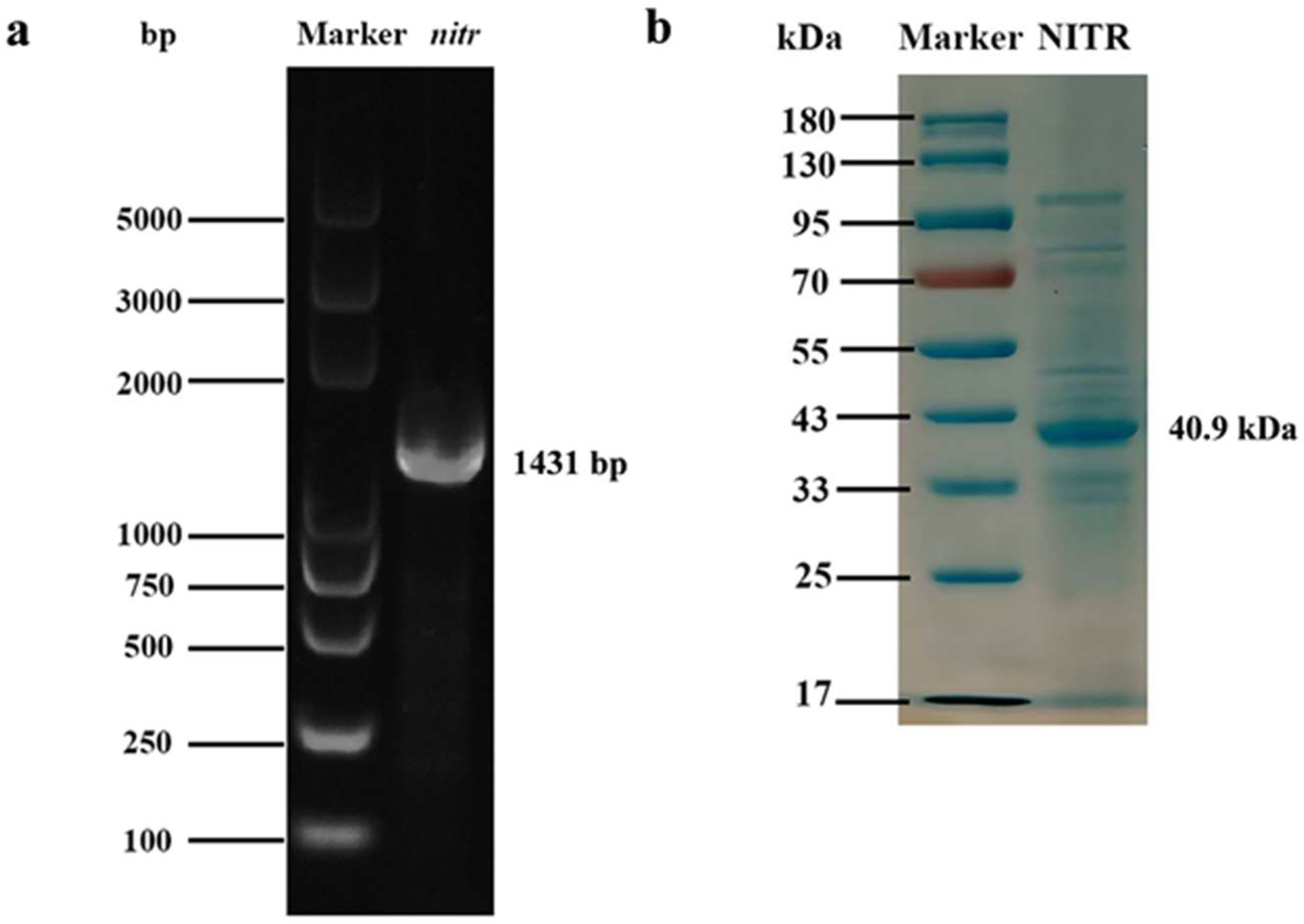
The nitr gene, derived from Pseudomonas putida CGMCC3830, was codon-optimized for E. coli, commercially synthesized, and cloned into the expression vector pMA5 (Thermo Fisher Scientific, Waltham, MA, USA) between the NdeI and MluI restriction sites by Thermo Fisher Scientific (GeneArt Gene Synthesis, Waltham, MA, USA). A recombinant Escherichia coli strain harboring the nitrilase gene nitr was constructed to convert 3-cyanopyridine to niacin. The construction of E. coli Nitr is shown in Figure S1 (see Supplementary Materials). Successful gene cloning and heterologous protein expression were verified by agarose gel electrophoresis (Figure 1a, 1431 bp) and SDS-PAGE analysis (Figure 1b, 40.9 kDa), respectively. The recombinant E. coli cells were suspended in glycerol solution to a final glycerol concentration of 15% (v/v) and stored at −80 °C.
A single colony of E. coli Nitr was picked and inoculated into LB liquid medium containing kanamycin (50 μg/mL) [17,32]. The culture was incubated at 37 °C and 160 rpm for approximately 8 h until the OD600 reached 0.6–0.8. Subsequently, the LB culture was inoculated at 5% (v/v) into TB medium containing kanamycin (50 µg/mL), and incubated at 30 °C and 160 rpm for 36 h. After cultivation, the wet cell pellets were harvested by centrifugation at 8000 rpm for 5 min at 4 °C, washed three times with 0.05 M phosphate buffer (pH 7.0), collected again by centrifugation, and stored at −20 °C for further use.

2.3. Whole-Cell Catalysis and Process Optimization

Whole-cell catalytic reactions were carried out in a 10 mL reaction system containing a certain concentration of E. coli Nitr wet cells, a certain concentration of 3-cyanopyridine, and buffer. The reactions were performed in a shaking incubator at 30 °C and 220 rpm. At scheduled time intervals, samples were taken, filtered through a 0.22 μm membrane, and the concentrations of substrate and product were determined by high-performance liquid chromatography (HPLC).
For one-factor-at-a-time optimization, the effects of cell loading (20–200 g/L), buffer type and pH (6.0–9.0), and substrate concentration (0.6–4.0 M, solid directly weighed without using a cosolvent) on the yield of niacin were investigated. All experiments were performed in triplicate.

2.4. Preparation and Catalysis of Immobilized Beads

Immobilized beads were prepared using the sodium alginate-calcium chloride entrapment method. A certain concentration of sodium alginate was mixed thoroughly with the cell suspension (entrapped cell amount of 20–75 g/L), and the mixture was dropped into a certain concentration of calcium chloride solution using a syringe. After curing for a certain period, the beads were collected, washed with Tris-HCl buffer (pH 8.5), and kept at 4 °C in Tris-HCl buffer (pH 8.5) for further use.
Optimization of preparation conditions: The effects of sodium alginate concentration (2.0–3.0%, w/v), calcium chloride concentration (1.0–3.0%, w/v), immobilization time (30–120 min), and entrapped cell amount (20–75 g/L) on the catalytic activity were investigated using a one-factor-at-a-time approach.
Comparison of composite carriers: Green zeolite, diatomite, bentonite, and corncob (200-mesh powder) were each added separately to sodium alginate to prepare composite beads. Pure sodium alginate beads were used as the control. The catalytic activities of the different beads were compared under the same reaction conditions.
Catalytic reaction: Except for the reusability experiments, all immobilized cells were freshly prepared prior to each catalytic reaction. The reaction was carried out in 0.05 M Tris-HCl buffer (pH 8.5) containing 14% (v/v) methanol as a co-solvent, with a substrate (3-cyanopyridine) concentration of 1.4 M and a bead loading of 100 g/L. The mixture was incubated at 30 °C and 220 rpm for 2 h, and the yield of niacin was determined.

2.5. Reusability of Immobilized Beads

Batch reactions were carried out under the optimal catalytic conditions. After each 2 h reaction, the immobilized beads were separated, washed three times with Tris-HCl buffer, and transferred to fresh reaction medium for the next batch. A total of nine batches were performed, and the niacin yield was determined for each batch.

2.6. Analytical Methods

The concentrations of substrate 3-cyanopyridine and product niacin were determined using a high-performance liquid chromatograph (Vanquish, Thermo Fisher Scientific, Waltham, MA, USA). The separation was performed on an Acclaim 120 C18 column (5 μm × 250 mm × 4.6 mm) with a mobile phase consisting of methanol:water (containing 0.1% formic acid) = 30:70 (v/v) at a flow rate of 1.0 mL/min. The column temperature was maintained at 30 °C, and the detection wavelength was 264 nm.

2.7. Molecular Docking

To explore the interaction mode and binding mechanism between the nitrilase and the substrate 3-cyanopyridine, molecular docking simulations were performed [33]. Molecular docking predicts possible receptor–ligand binding poses and interactions [34].
The three-dimensional structure of the enzyme was established via homology modeling using the SWISS-MODEL online server (PDB ID: 8UXU). Molecular docking was performed using the CDOCKER module in Discovery Studio 2020 (DS) software. Prior to docking, the protein structure was preprocessed using the Prepare Protein module in DS, which included adding hydrogen atoms and assigning bond orders. The 3D structure of the substrate, 3-cyanopyridine, was generated using Gauss software (GaussView 5.0, Gaussian 09) and subsequently subjected to energy minimization. The active binding pocket was defined by centering a binding sphere with a radius of 10.0 Å on the Cys residue of the catalytic triad (Cys-Glu-Lys). All other docking parameters were set to the default values of CDOCKER. Three-dimensional visualization analysis was performed using PyMOL software (2.5.0) to measure the interaction distances between the ligand and the amino acid residues.

3. Results and Discussion

3.1. Molecular Docking of Nitrilase with Substrate 3-Cyanopyridine

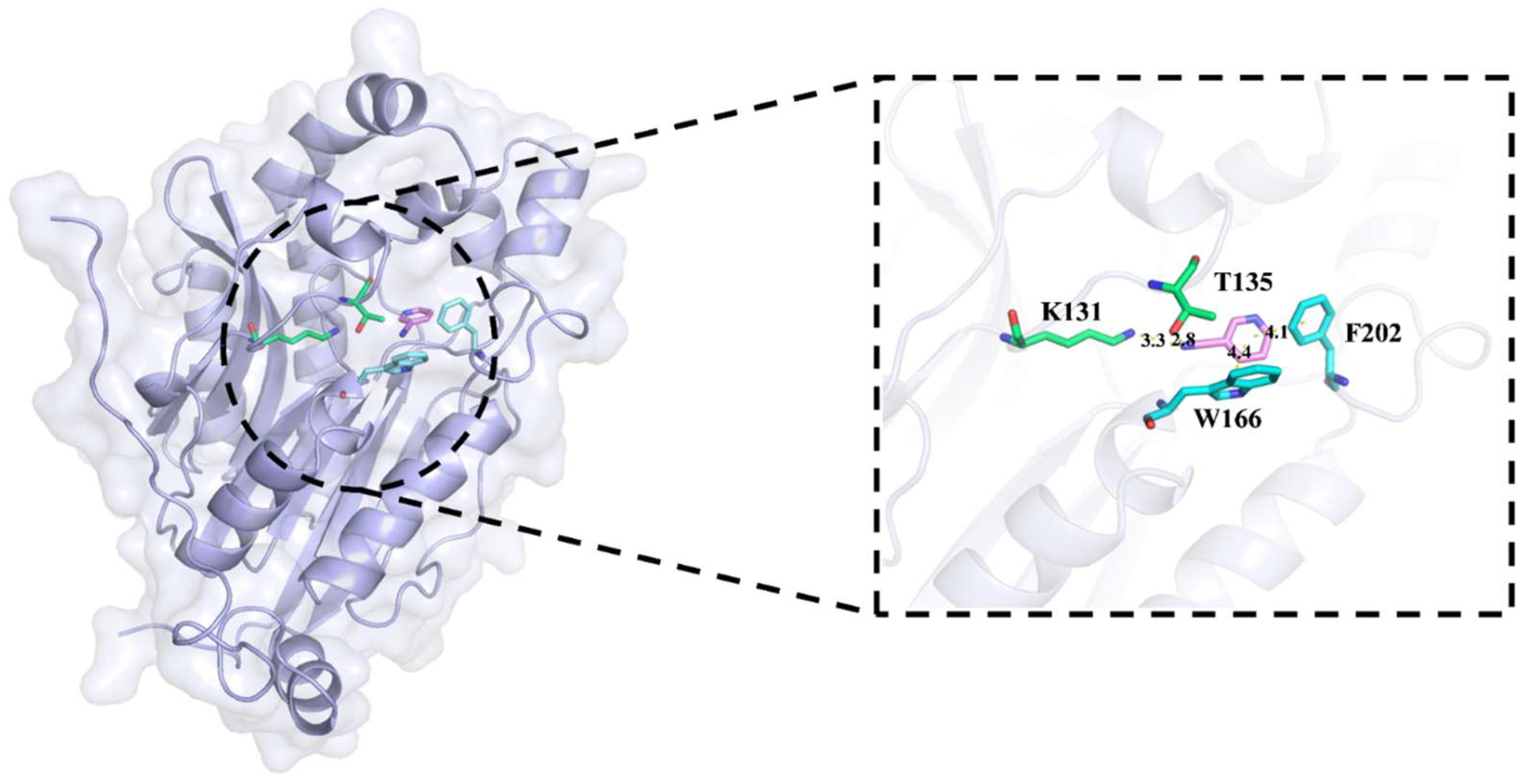
The molecular docking results between the nitrilase and 3-cyanopyridine are shown in Figure 2. It suggested that 3-cyanopyridine adopted a favorable binding pose in the active pocket of the nitrilase through multiple interactions [35]: the hydroxyl group of T135 forms a strong hydrogen bond (2.8 Å) with the cyano group, the amino group of K131 forms a hydrogen bond (3.3 Å) with the substrate, F202 interacts with the pyridine ring via π-π stacking (4.1 Å), and W166 further enhances substrate binding through π-π stacking (4.4 Å). These synergistic interactions orient the cyano group of the substrate precisely near the catalytic triad (Cys-Glu-Lys), potentially positioning the cyano group near the catalytic residues for the nucleophilic attack by Cys, thereby promoting the subsequent hydrolysis reaction.

3.2. Optimization of Whole-Cell Catalytic Conditions for Niacin Synthesis

The use of whole cells can eliminate the need for tedious and expensive protein purification [36]. To optimize the whole-cell catalytic conversion of 3-cyanopyridine to niacin by E. coli Nitr, three key process parameters were systematically investigated: cell loading, buffer pH, and substrate concentration. The structural integrity of the immobilized beads and their subsequent catalytic performance heavily depend on the concentration of the sodium alginate matrix, the effect of cell loading on niacin production was evaluated first.
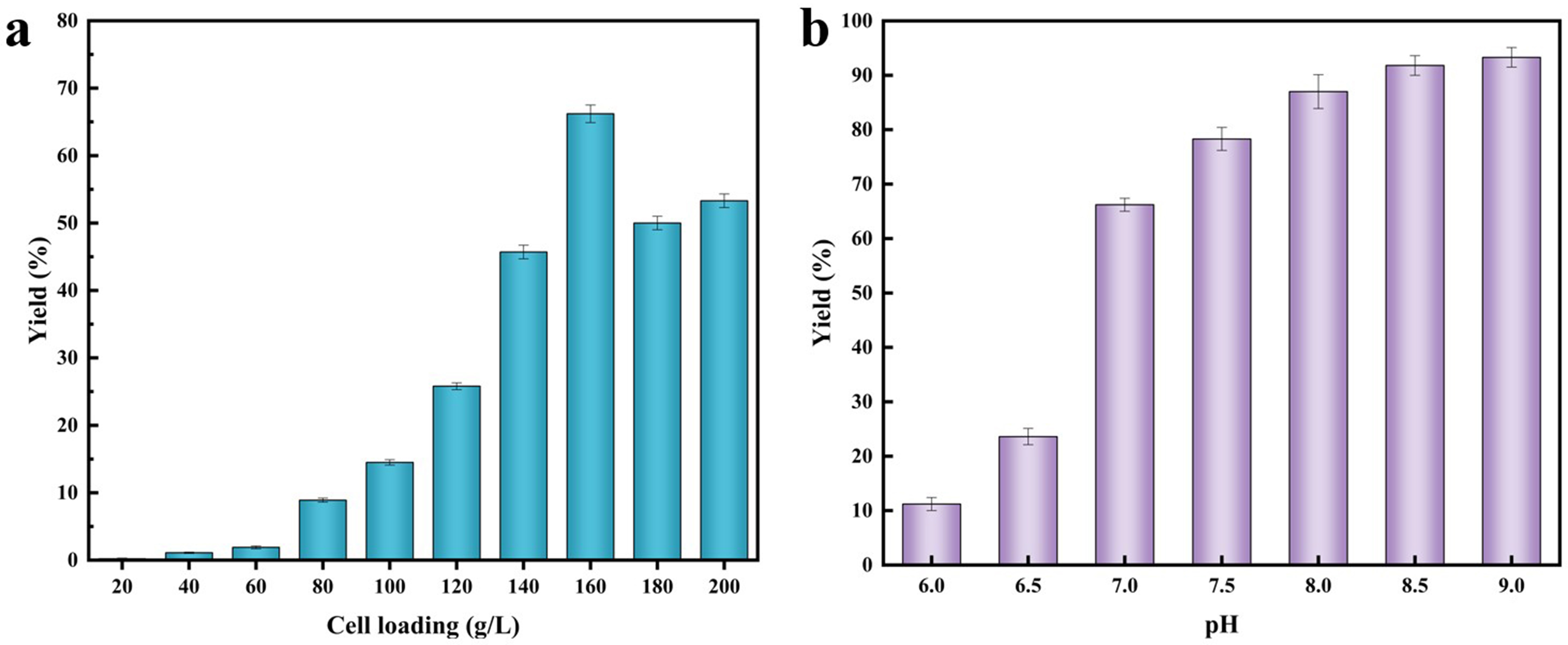
In this work, the cell loading ranged from 20 to 200 g/L. After the reaction, the yield of niacin was determined and calculated. The results are shown in Figure 3a. As the cell loading increased from 20 g/L to 160 g/L, the yield gradually increased, reaching a peak at 160 g/L. With increasing cell loading, the total amount of nitrilase per unit volume increased. Under conditions of relatively sufficient substrate concentration, the reaction system was in an enzyme-limited regime. Excessive cell loading increased viscosity and restricted mass transfer, thereby enhancing the product formation rate per unit time [37]. Furthermore, the increased cell concentration improved the mass transfer efficiency of the substrate. This allowed more substrate molecules to enter the cells and bind to the nitrilase, thereby enhancing biocatalytic efficiency [27,38]. However, when the cell loading was further increased from 160 g/L to 200 g/L, the yield decreased, indicating that excessively high cell loading inhibited the catalytic reaction. This is because excessive cell loading may increase medium viscosity and restrict mass transfer, significantly hindering the diffusion of the substrate toward the intracellular enzyme and the diffusion of the product out of the cells [39]. Accordingly, 160 g/L was selected as the optimal cell loading for subsequent catalytic process optimization.
Buffer pH is an important parameter in whole-cell biocatalysis, as it directly affects enzyme activity in whole cells and the overall catalytic efficiency [40,41]. Most enzymes have a specific optimal pH. For an E. coli whole-cell catalytic system, buffer pH not only directly influences the active site conformation of the intracellular substrate and the dissociation state of the catalytic residues, but also indirectly regulates the transmembrane transport efficiency of the substrate by affecting cell membrane permeability and the transmembrane proton gradient [42,43]. In the present system, the nitrilase-catalyzed conversion of 3-cyanopyridine to niacin involves hydrolysis of the cyano group, a reaction that generally exhibits higher activity under neutral to slightly alkaline conditions [44,45].
Therefore, the effect of buffer pH on the whole-cell conversion of 3-cyanopyridine to niacin by E. coli cells was investigated to select the most suitable buffer pH for subsequent experiments. The buffer systems were set as pH 6.0–9.0), for a total of seven gradients. After the reaction, the quantity of niacin was determined and the yield was calculated. The results are shown in Figure 3b.
As the pH increased from 6.0 to 9.0, the yield gradually increased, reaching a peak with very similar values at pH 8.5 and 9.0. This optimal performance in the alkaline range is consistent with the reported preference of many nitrilases for neutral or mildly alkaline conditions. Furthermore, when the pH increased from 6.0 to 7.0, the yield increased rapidly, whereas from pH 7.0 to 9.0, the increase was slower. This indicates that excessively acidic conditions cause significant enzyme activity inhibition and alter the protonation state of some residues [46,47]. If the pH deviates from the optimal range (e.g., too low), the protonation state of key amino acid residues in the enzyme active site may change, weakening their nucleophilic attack ability and thereby reducing catalytic efficiency. Overly acidic or alkaline conditions may disrupt the three-dimensional conformation of the enzyme, even leading to irreversible inactivation [48,49,50]. As shown in Figure 3b, the enzyme has a much stronger tolerance to alkaline conditions than to acidic conditions; at pH 9.0, the yield still reached approximately 90%. In addition, pH changes can affect the dissociation state of the substrate and product: 3-cyanopyridine, as a weakly basic compound, may exhibit changes in its transmembrane diffusion capacity with varying pH, while the ionization degree of the product niacin differs at different pH values, thereby influencing its distribution inside and outside the cells and possible feedback inhibition effects. Probably, E. coli tolerates neutral to mildly alkaline conditions. Accordingly, Tris-HCl buffer at pH 8.5 was considered more appropriate.
In whole-cell catalytic reactions, substrate concentration is another key factor. affecting catalytic efficiency and product accumulation [51,52]. Insufficient substrate concentrations limit the reaction rate by preventing the full utilization of the enzyme’s catalytic potential [53]. Conversely, excessive substrate concentrations may cause substrate inhibition, thereby decreasing enzyme activity or causing inactivation [54]. Thus, tuning the substrate load is essential to navigate the fine line between maximum reaction efficiency and catalyst inhibition.
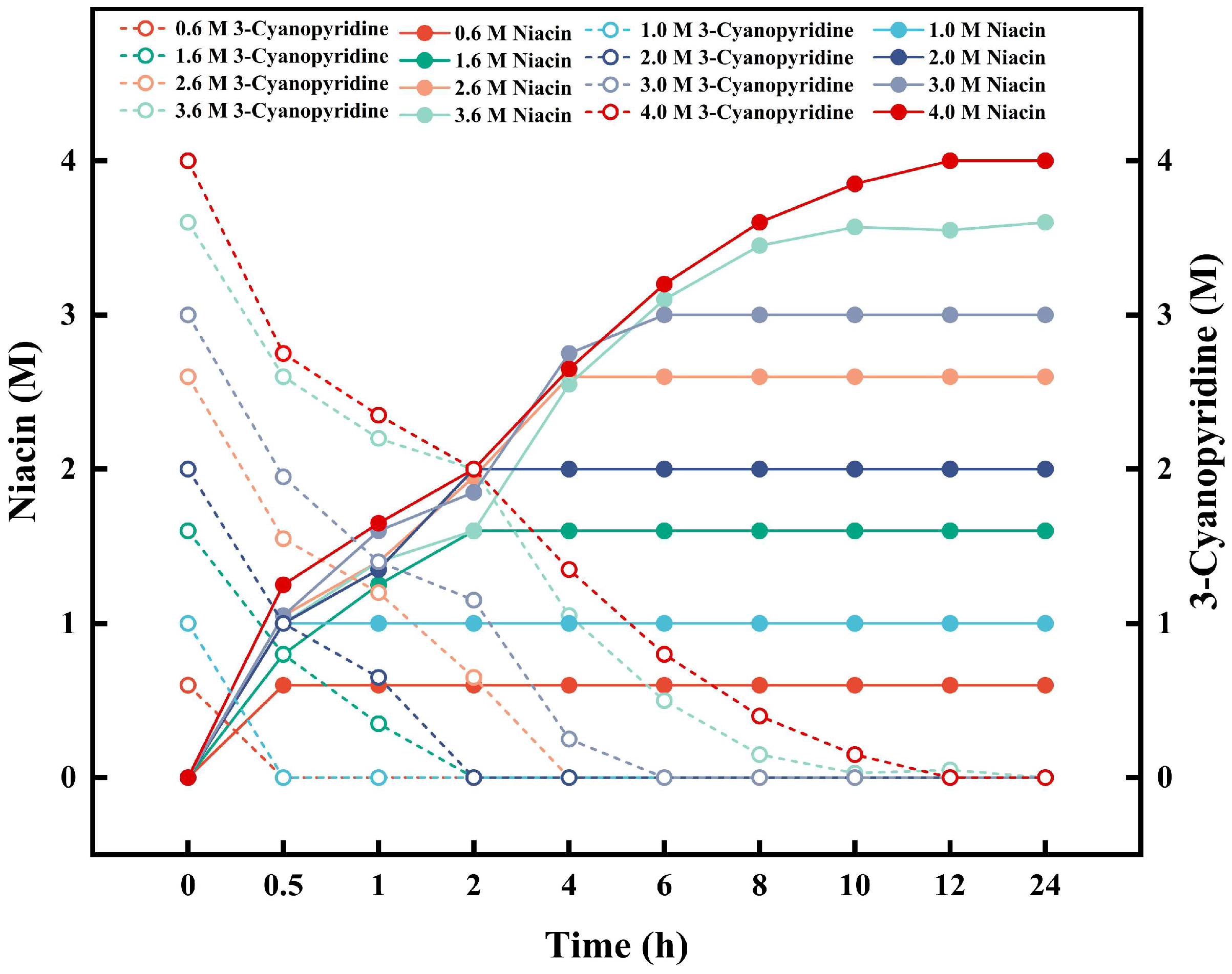
In this work, we evaluated the effects of substrate concentrations ranging from 0.6 to 4.0 M on the whole-cell conversion by tracking product formation and substrate consumption over time (Figure 4). Complete conversion was eventually achieved at substrate concentrations from 0.6 to 4.0 M, although higher substrate loadings significantly prolonged the reaction time. Specifically, at 3.0 M, complete conversion occurred within 8 h, with the yield reaching 99.8% at 6 h. However, further increasing the concentration to 3.6 and 4.0 M significantly extended the required time to 12-24 h, indicating marked inhibition at high substrate levels. The rapid reaction at 0.6–3.0 M is attributed to enhanced substrate-nitrilase contact before reaching the inhibition threshold, thereby accelerating product formation. Conversely, exceeding 3.0 M drastically reduced the reaction rate and require long conversion time from 12 h to 24 h.
This phenomenon may be explained by several factors. First, excessively high substrate concentration may directly inhibit the nitrilase [55,56], reducing its instantaneous catalytic efficiency. Second, high substrate concentrations may negatively affect cellular activity through osmotic stress or substrate inhibition [57,58], damaging membrane integrity and weakening catalytic capacity. Third, rapid intracellular accumulation of niacin under high substrate conditions may cause product accumulation and diffusion limitation, further delaying reaction progress. Nevertheless, achieving nearly complete conversion of 3.6 M and 4.0 M substrate within 24 h demonstrates the high substrate tolerance and robust catalytic potential of this nitrilase.
Product formation kinetics varied substantially across substrate concentrations: lower concentrations (0.6–2.0 M) showed fast initial rates but reached a plateau earlier due to substrate exhaustion, whereas the stability of the product was confirmed as the concentration remained constant during the plateau phase. In contrast, 2.6–3.0 M maintained high rates until complete conversion, displaying optimal catalytic efficiency. At 3.6–4.0 M, reaction rates decelerated in later stages, typical of transient activity loss under substrate stress. Consequently, 3.0 M was identified as the optimal substrate concentration, achieving complete conversion within 8 h and balancing high catalytic efficiency with manageable reaction times for subsequent process optimization.

3.3. Optimization of Immobilized Bead Preparation Conditions

To maximize the catalytic synthesis of niacin using immobilized beads, the preparation conditions of the sodium alginate-calcium chloride entrapment method must be carefully optimized. Key factors such as sodium alginate concentration, calcium chloride concentration, immobilization time, and the amount of entrapped cells play a crucial role in determining the mechanical strength, cell entrapment efficiency, and overall mass transfer properties of the resulting gel network [59,60].
Sodium alginate concentration is one of the key factors affecting the mechanical strength of immobilized beads and the catalytic synthesis of niacin. Suboptimal alginate concentrations yield fragile hydrogels prone to rupture and cell leakage [61]. Conversely, excessive polymer levels create a tightly packed matrix that severely restricts the diffusion of substrates and products, thereby dampening biocatalytic efficiency [62,63].
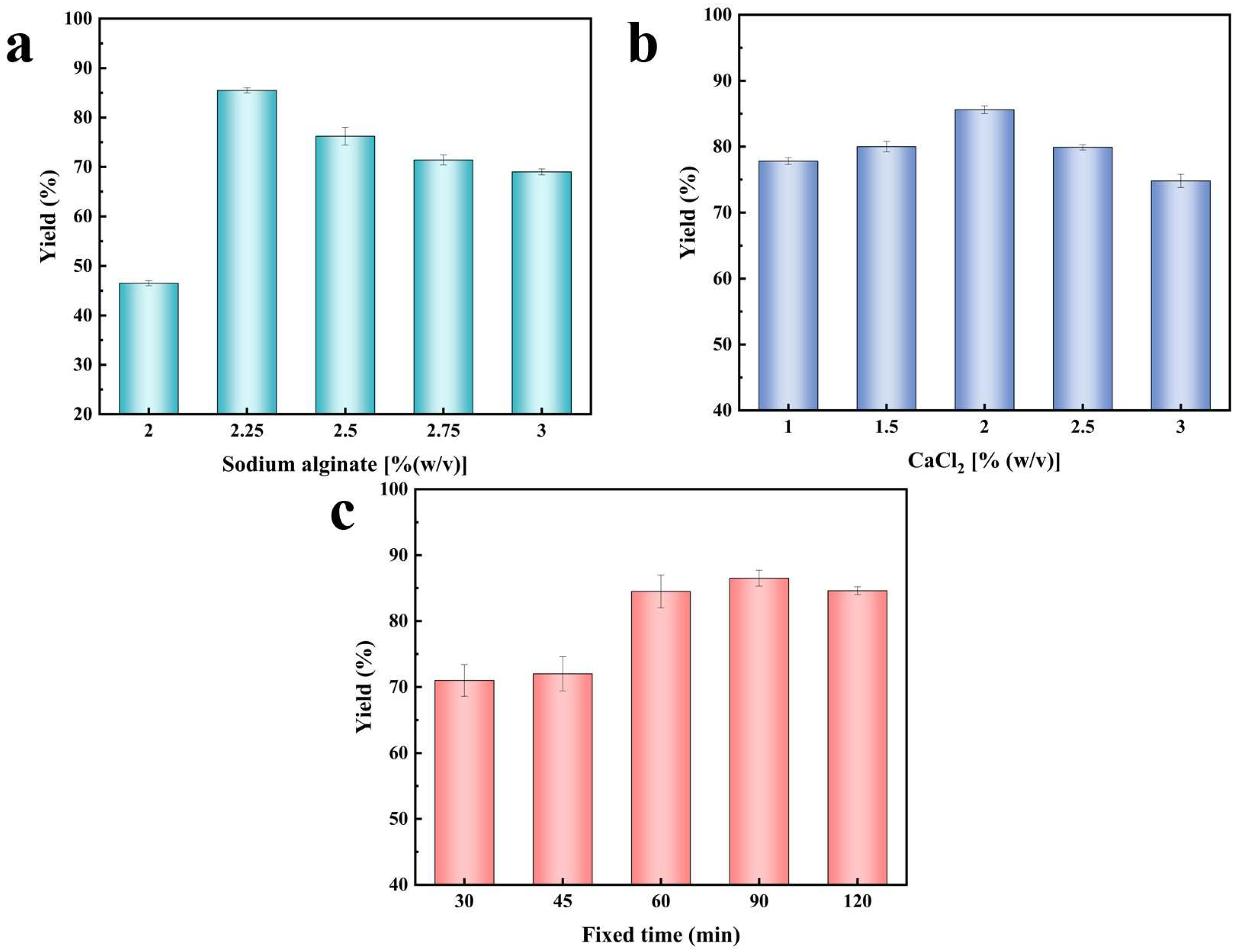
The effect of sodium alginate concentration on the biocatalytic conversion of 3-cyanopyridine to niacin was evaluated using immobilized beads prepared with various sodium alginate concentrations (2.0–3.0%, w/v). The results are shown in Figure 5a. The niacin yield reached its maximum at a sodium alginate concentration of 2.25% (w/v), and decreased when the concentration was either lower or higher than this value. This phenomenon may be related to the influence of the gel structure on cell entrapment efficiency and substrate mass transfer: at lower concentrations, the gel entraps cells insufficiently, leading to cell leakage and a reduction in effective catalyst; at higher concentrations, the gel network becomes too dense, hindering the mass transfer of substrate and product. At a concentration of 2.25% (w/v), a balance between the two effects was achieved, resulting in the best catalytic performance. The effect of sodium alginate concentration on the catalytic reaction results from a trade-off between cell immobilization efficiency and substrate mass transfer efficiency. The optimal sodium alginate concentration for this system was 2.25% (w/v), under which the immobilized beads exhibited both good cell entrapment capacity and high mass transfer efficiency.
Serving as the primary cross-linking agent, calcium chloride dictates the compactness of the gel network and fundamentally shapes the physical properties of the resulting beads. As a cross-linking agent, the concentration of calcium chloride directly influences the degree of cross-linking between sodium alginate and calcium ions, as well as the compactness of the gel network [64]. Inadequate calcium supply curtails ionic cross-linking, compromising the structural integrity and entrapment capacity of the beads. On the other hand, an overabundance of the cross-linker induces excessive matrix shrinkage, erecting substantial mass transfer barriers [65].
The effect of calcium chloride concentration on the biocatalytic conversion of 3-cyanopyridine to niacin was evaluated using immobilized beads prepared with various calcium chloride concentrations (1.0–3.0%, w/v). The results are shown in Figure 5b. The niacin yield reached its maximum at a calcium chloride concentration of 2.0% (w/v), and the yield fluctuated only slightly within the range of 1.0–3.0% (w/v), indicating that the system has a broad tolerance to calcium chloride concentration. This may be because insufficient cross-linking at lower concentrations leads to cell leakage from the gel and a reduction in effective catalyst, while excessive cross-linking at higher concentrations may impede the mass transfer of substrate and product. At a concentration of 2.0% (w/v), a balance between the two effects was achieved, resulting in the best catalytic performance. Overall, the effect of calcium chloride concentration on the catalytic reaction results from a trade-off between the degree of cross-linking and mass transfer efficiency. Considering all factors, 2.0% (w/v) was selected as the optimal calcium chloride concentration for subsequent experiments. Under this concentration, the immobilized beads exhibited both good cell entrapment and appropriate mass transfer efficiency. Moreover, this concentration lies within the peak yield region, providing stable cross-linking conditions for further process optimization.
The duration of the curing process is critical, as it governs the extent of ionic cross-linking and ultimately determines the stability of the hydrogel network [66]. Insufficient curing durations prevent the complete inward diffusion of calcium ions, leaving the core unpolymerized and structurally weak. Prolonged exposure, however, drives hyper-cross-linking and bead contraction, ultimately stalling molecular transport.
The effect of immobilization time on the biocatalytic conversion of 3-cyanopyridine to niacin was evaluated using immobilized beads prepared at various immobilization times ranging from 30 to 120 min. The results are shown in Figure 5c. As the immobilization time increased from 30 min to 90 min, the niacin yields gradually increased; when the time was further extended to 120 min, the yield decreased, reaching a peak at 90 min. This phenomenon may be related to the influence of the cross-linking degree on cell entrapment efficiency and substrate mass transfer. When the immobilization time was short, the cross-linking reaction between calcium ions and sodium alginate was insufficient, leading to cell leakage and a reduction in effective catalyst. As the time increased to 90 min, the cross-linking reaction became complete, achieving a balance between entrapment efficiency and mass transfer, resulting in the highest yield. When the immobilization time was too long, excessive cross-linking may have hindered the mass transfer of substrate and product, leading to a decrease in yield. The effect of immobilization time on the catalytic reaction results from a trade-off between the adequacy of cross-linking and mass transfer efficiency. The optimal immobilization time for this system was 90 min. Under this condition, the gel network provided an appropriate balance between bead stability and substrate diffusion, providing both good cell entrapment capacity and high mass transfer efficiency.
To balance enzyme loading with efficient mass transfer, it was necessary to determine the optimal density of cells confined within the polymer matrix [67]. Sparse cell distribution inherently limits the volumetric reaction rate due to a deficit of active sites. In contrast, oversaturating the beads with cells crowds the internal microenvironment; this physical packing obstructs reactant diffusion and triggers localized product inhibition. Consequently, identifying an optimal cell density is vital to strike a balance between biocatalyst loading and mass transfer dynamics.
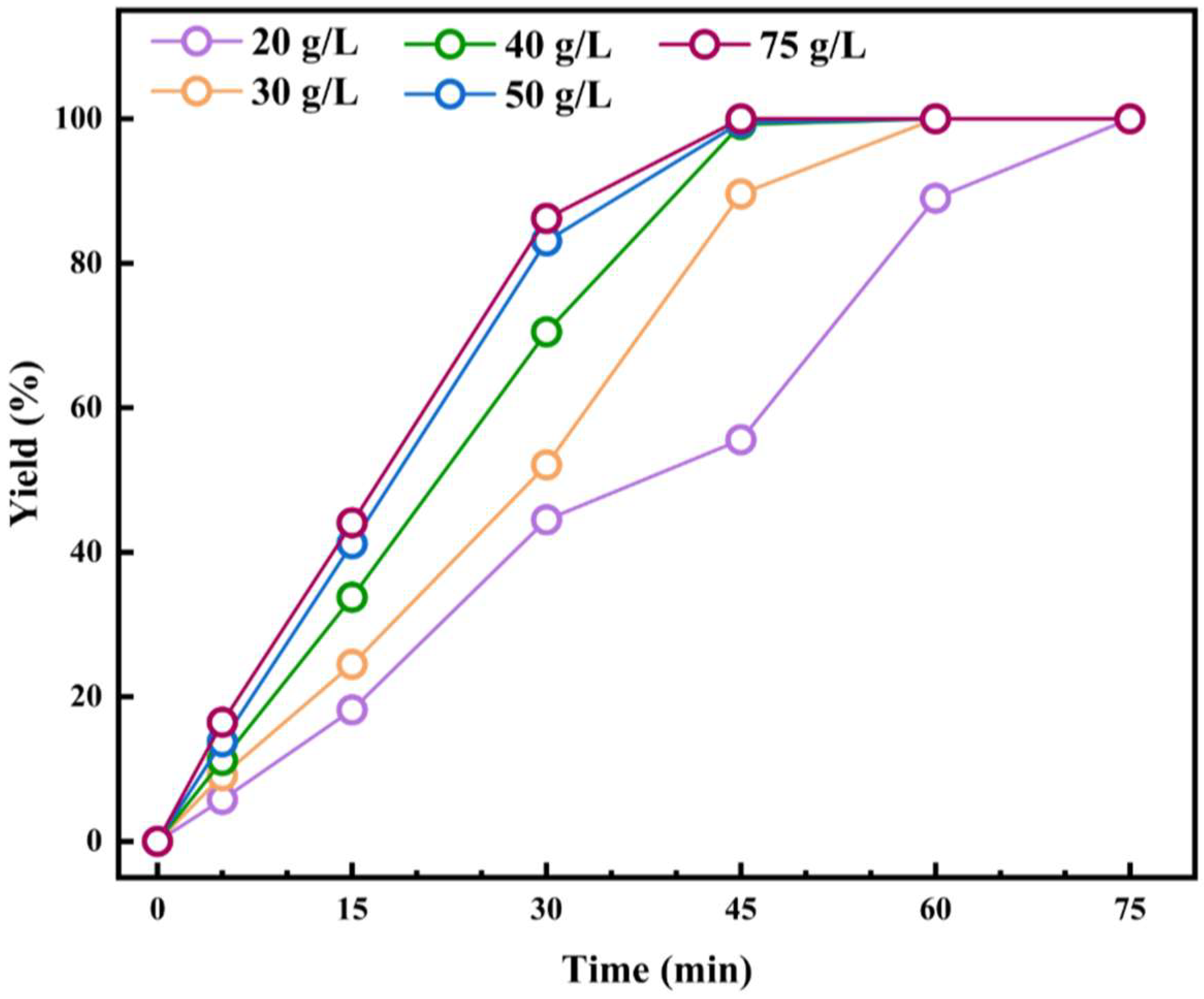
The effect of entrapped cell amount on the biocatalytic conversion of 3-cyanopyridine to niacin was investigated using immobilized beads prepared with cell loadings ranging from 20 to 75 g/L. The results are shown in Figure 6. The entrapped cell amount markedly affected both the reaction rate and complete conversion time. At 20 g/L, complete substrate conversion required 75 min, which decreased to 60 min at 30 g/L and 45 min at 40 g/L. Further increasing the cell amount to 50 and 75 g/L led to distinct biphasic kinetics: during 0–30 min, higher cell loadings accelerated the reaction; however, the rates noticeably decelerated after 30 min. Nevertheless, complete conversion was achieved within 45 min in all experimental groups with a cell concentration of ≥40 g/L.
This phenomenon is closely related to intrabead enzyme supply and microenvironmental conditions. At 20 g/L, low active-site density restricted the overall rate. Increasing the cell amount to 30 and 40 g/L enhanced the catalytic capacity, thereby accelerating substrate turnover. At higher cell amounts (50 and 75 g/L), abundant initial active sites drove a faster early reaction rate. However, excessive cell packing caused rapid local substrate depletion and product accumulation within the beads, inducing product feedback inhibition and mass-transfer limitations after 30 min [68].
Although mass-transfer constraints slowed the late-stage reaction rate in the 50 and 75 g/L groups, total conversion was successfully reached at 45 min. Considering that 40 g/L achieved full conversion within the same timeframe while saving biological resources and lowering preparation costs, 40 g/L was selected as the optimal entrapped cell amount. Under this condition, the immobilized beads balanced high catalytic efficiency with low cell consumption.

3.4. Effect of Substrate Concentration on the Catalytic Synthesis of Niacin by Immobilized Beads

Assessing the immobilized biocatalyst’s tolerance to varying substrate loads provides crucial insights into its operational stability and overall industrial applicability [69]. For immobilized cell systems, substrate concentration not only affects the reaction rate and final yield but also relates to the stability and service life of the catalyst. While dilute substrate environments underutilize the biocatalyst’s kinetic capacity, supersaturated conditions risk inducing severe osmotic stress and substrate inhibition, sharply degrading enzymatic throughput. The effect of substrate concentration on the biocatalytic conversion of 3-cyanopyridine to niacin by immobilized beads is shown in Figure 7.
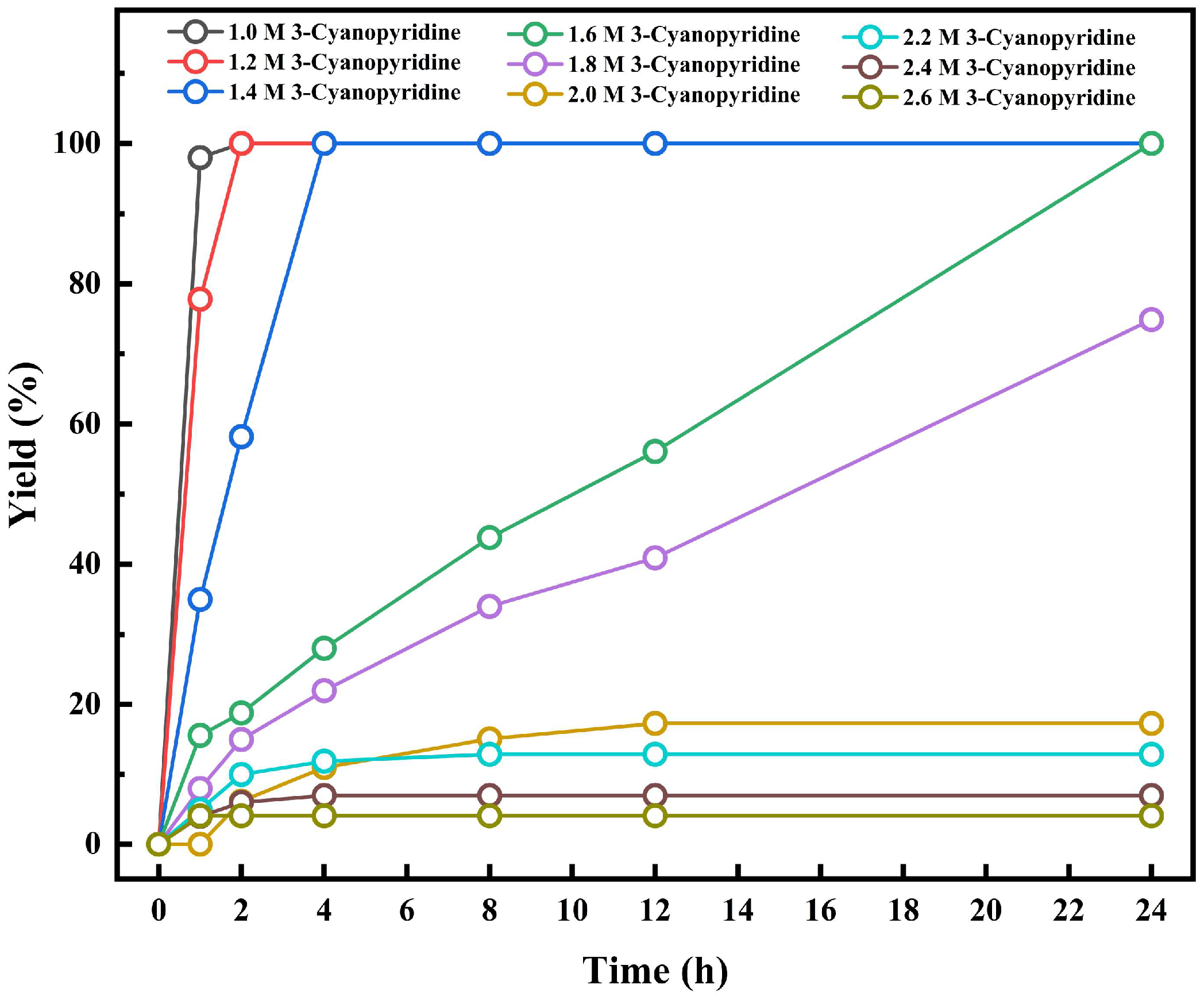
Substrate concentration had a significant effect on the conversion of 3-cyanopyridine to niacin by the immobilized beads. When the substrate concentration was in the range of 1.0–1.4 M, complete conversion was achieved within 4 h, indicating high catalytic efficiency. When the substrate concentration was increased to 1.6 M, the time required for complete conversion was prolonged to 24 h, and the catalytic efficiency decreased markedly. When the substrate concentration exceeded 1.6 M, complete conversion could not be achieved within 24 h: at 1.8 M, the niacin yield after 24 h was 74.9%; at 2.0–2.6 M, the yields after 24 h were all below 20%, representing a sharp decline in catalytic efficiency. This marked activity loss under high substrate concentrations may be attributed to a combination of mass transfer limitations inside the gel beads, direct substrate inhibition, and potential cosolvent inhibition. In the immobilized cell system, the substrate must diffuse from the liquid phase to the bead surface and then penetrate into the gel network to contact the nitrilase. At low substrate concentrations (1.0–1.4 M), diffusion was sufficient to meet catalytic demand without exceeding the inhibitory threshold, achieving complete conversion within 4 h. However, as the substrate concentration was progressively raised, the accompanying increase in methanol content (used to solubilize the substrate) introduced a notable co-inhibitory effect. Elevated levels of methanol can denature or deform the tertiary structure of nitrilase, impair membrane permeability, and disrupt internal enzymatic stability.
Furthermore, at substrate concentrations exceeding 1.6 M, this organic solvent toxicity combined synergistically with direct substrate inhibition and mass transfer resistance inside the gel matrix. Compared with the free cell system (optimal substrate concentration 3.0 M), the optimal substrate concentration for the immobilized beads decreased to 1.4 M, reflecting the impact of mass transfer resistance imposed by the gel network on substrate tolerance. Consequently, this work selected 1.4 M as the optimal substrate concentration for the immobilized beads. Under this concentration, complete conversion of the substrate was achieved within 4 h, offering both a high reaction rate and high substrate utilization, thus providing suitable reaction conditions for subsequent reusability studies.

3.5. Effect of Sodium Alginate Composite Carrier on the Catalytic Synthesis of Niacin by Immobilized Beads

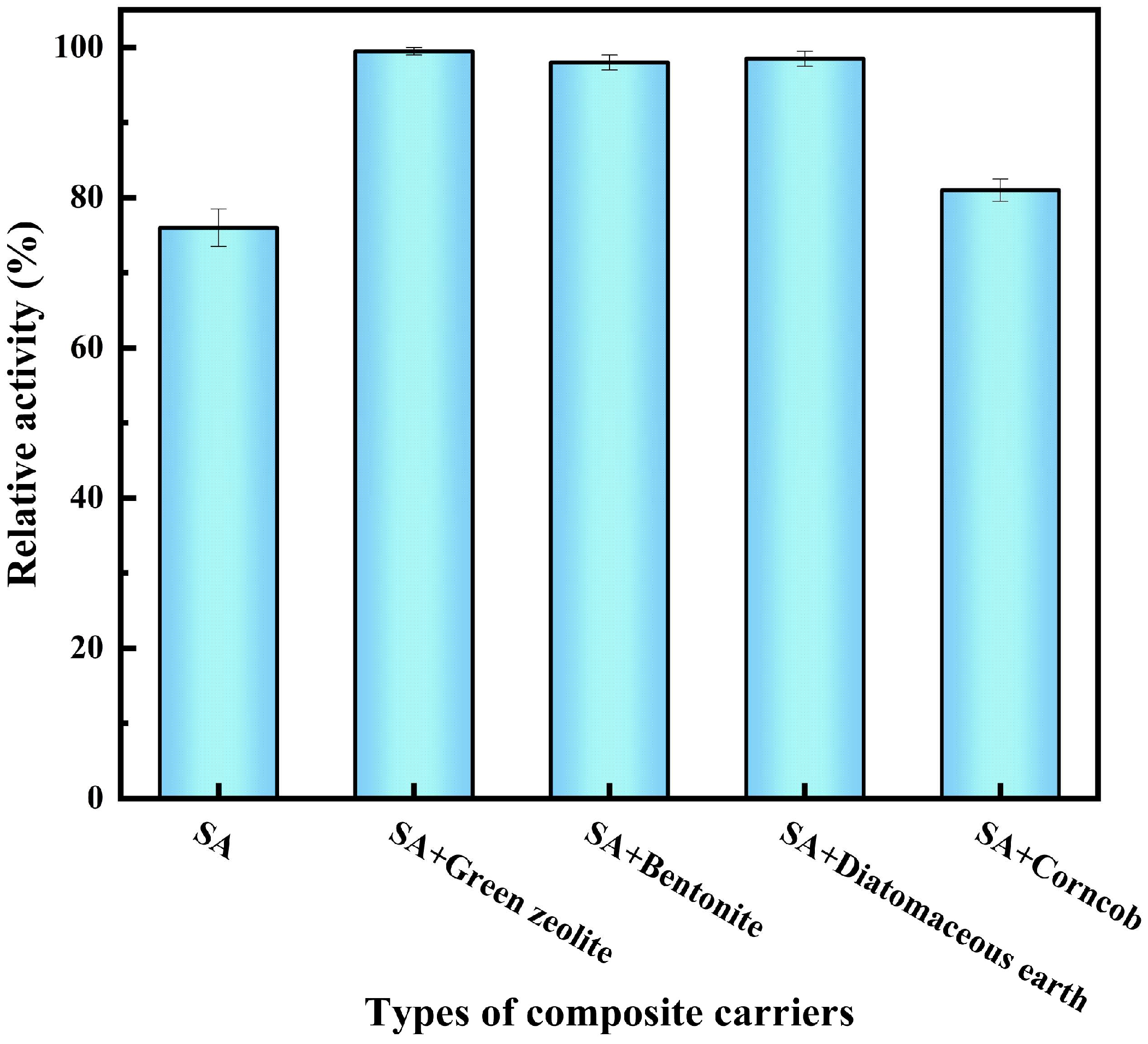
Incorporating composite materials into the pure alginate matrix offers a robust strategy to overcome mass transfer limitations and reinforce the mechanical durability of the biocatalyst [70]. Although pure sodium alginate beads possess good biocompatibility and entrapment performance, their gel network structure is homogeneous, which may lead to insufficient mechanical strength or limited mass transfer during long-term reactions. By adding materials such as green zeolite, bentonite, diatomite, and corncob, a composite carrier system can be constructed. Leveraging the unique physicochemical properties of each material, the internal pore structure of the beads can be optimized, mass transfer efficiency can be improved, and the stability of cell entrapment can be enhanced [71]. To this end, we screened several natural composite materials to identify the optimal carrier matrix for our whole-cell system. Figure 8 shows the experimental results of each material at a 2% (w/v) addition level.
The sodium alginate–green zeolite composite beads achieved complete conversion of 3-cyanopyridine to niacin within 2 h, and their relative activity was defined as 100%. The order of relative activities among the other composites was: diatomite > bentonite > corncob, with pure sodium alginate beads showing the lowest activity. Notably, the diatomite and bentonite composites exhibited very similar activities.
The catalytic performance of each composite depends on its physicochemical properties and its ability to modify the gel structure. Green zeolite, a natural aluminosilicate, effectively reinforces the gel network, improves cell immobilisation, and facilitates substrate/product mass transfer, thus giving the highest activity. Diatomite also provides good structural enhancement, placing it second. Bentonite possesses some ion-exchange capacity, but its structural role within the gel is comparable to that of diatomite, resulting in close activities. Corncob, being a biomass material, offers limited structural improvement and therefore lower activity. Plain alginate beads, lacking any filler, have a homogeneous network that relies solely on the gel for entrapment, leading to the poorest mass transfer and catalytic performance.
Overall, the incorporation of composite carriers significantly boosts the catalytic synthesis of niacin. Among the four materials tested, green zeolite gave the best results, followed by diatomite and bentonite, with corncob being the least effective. Consequently, sodium alginate–green zeolite was chosen as the composite carrier for subsequent reusability studies.

3.6. Reusability of Immobilized Cells

In industrial production processes, the utilization rate of free cells is often low. Typically, the catalytic activity of cells declines rapidly after a single use, and because cells are difficult to separate from the reaction system, the recovery of enzyme activity is low, making repeated use less feasible. Immobilized cell technology offers an effective solution to these problems. By entrapping cells in carrier materials, not only is the operational stability of the cells improved, but the catalyst can also be reused multiple times, thereby reducing production costs. Therefore, investigating the reusability of immobilized cells is of great significance for evaluating their potential for industrial application.
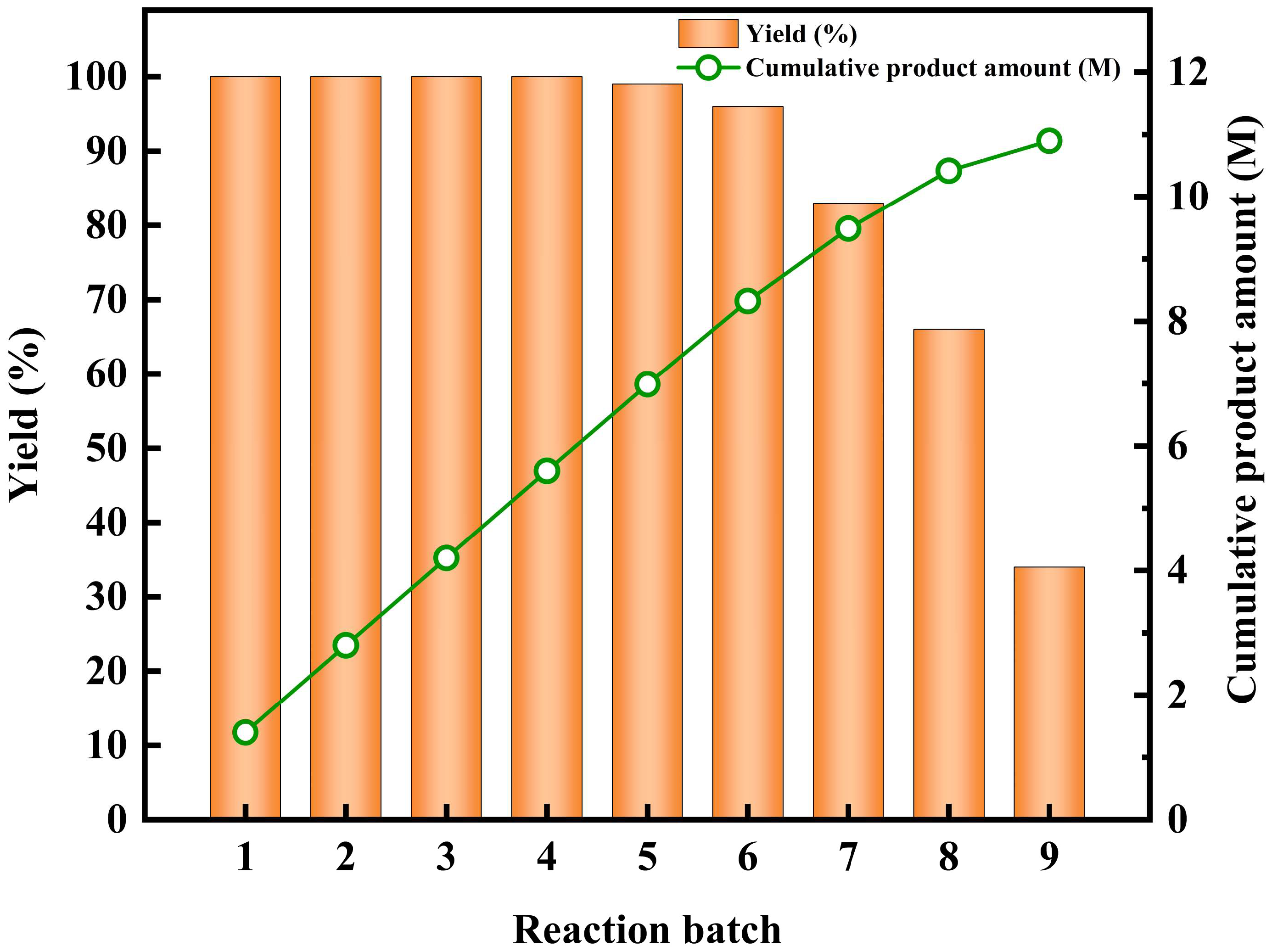
The schematic diagram of immobilized bead preparation and the catalytic reaction process is illustrated in Figure S2 (see Supplementary Materials). Based on the optimized conditions, sodium alginate–green zeolite composite beads were prepared by incorporating an appropriate amount of green zeolite, and their reusability was evaluated. After each batch reaction, the beads were separated from the reaction mixture, gently washed with buffer, and transferred to fresh reaction medium for the next batch. A total of nine batches were performed, and the niacin yield was determined and calculated for each batch.
The results are shown in Figure 9. The experimental results demonstrated that the sodium alginate-green zeolite composite beads exhibited good reusability. In the first four batches, the composite beads achieved complete conversion of the substrate within 2 h, with a niacin yield of 100%. Starting from the fifth batch, the yield decreased slightly but remained at a high level: 99.5% in the fifth batch, and 96.5% in the sixth batch. The yield decreased to 83.3% in the seventh batch, 66.2% in the eighth batch, and 34.5% in the ninth batch. This phenomenon may be attributed to the loss of enzyme activity and cell leakage during repeated use of the composite beads. In the first four batches, the gel network structure was stable, effectively entrapping the cells and maintaining good mass transfer performance, thus allowing stable and complete substrate conversion. As the number of batches increased, a small number of cells may have gradually leaked from the gel under mechanical agitation, leading to a reduction in the effective biocatalyst and a consequent decline in catalytic efficiency. In addition, during repeated use, the nitrilase entrapped inside the beads may have suffered some degree of activity loss, which also contributed to the more pronounced decrease in yield after the seventh batch. Nevertheless, the sodium alginate-green zeolite composite beads still showed good reusability. Compared with the single use of free cells, the immobilized beads significantly improved the utilization efficiency of the catalyst and showed promising potential for industrial application. The immobilized cells achieved 1.4 M substrate conversion in 4 h, compared to 8 h for free cells at 3.0 M. This time reduction is mainly attributed to lower substrate inhibition at 1.4 M, combined with enhanced mass transfer facilitated by the porous zeolite-alginate matrix. Despite lower single-batch substrate loading, the 4 h cycle time and high reusability (96.5% conversion after 6 cycles) significantly improve overall process productivity.
In a concise conclusion, the sodium alginate-green zeolite composite beads could be stably reused for at least six batches under the experimental conditions described, exhibiting good operational stability and reusability. Subsequent work may further optimize the reaction conditions or explore methods for bead regeneration to improve the number of reuse batches.

4. Conclusions

In this work, a recombinant E. coli strain expressing nitrilase was successfully constructed for hydrolysis of 3-cyanopyridine to niacin. Molecular docking revealed that the substrate 3-cyanopyridine was stably bound in the active pocket through hydrogen bonds and π-π stacking interactions. Under optimal free cell catalysis conditions (cell loading of 160 g/L, pH 8.5, and substrate concentration of 3.0 M), complete conversion was achieved within 8 h. After immobilization using a sodium alginate-green zeolite composite carrier, the optimal substrate concentration was 1.4 M, and complete conversion was achieved within 4 h. The immobilized beads maintained 96.5% conversion after six reuse cycles. The immobilized system combined high catalytic efficiency with excellent operational stability, offering a technically promising solution for the green biosynthesis of niacin with industrial potential.

Supplementary Materials

The following supporting information can be downloaded at: https://www.mdpi.com/article/10.3390/pr14162628/s1, Figure S1: Construction and validation process of E. coli Nitr; Figure S2: Schematic diagram of immobilized beads preparation and catalytic reaction.

Author Contributions

Conceptualization, methodology, and writing—original draft, Z.W.; data curation, software, resources, and writing—original draft, J.Z.; conceptualization, methodology, and investigation, B.F.; conceptualization, writing—review & editing and supervision, Y.-C.H. All authors have read and agreed to the published version of the manuscript.

Funding

This work is kindly supported by the Frontier Technology Research and Development Plan of Jiangsu Province (BF2025080) and the Postgraduate Research & Practice Innovation Program of Jiangsu Province.

Data Availability Statement

The data presented in this study are available on request.

Acknowledgments

The authors thank the Analysis and Testing Center (Changzhou University) for the analysis of samples.

Conflicts of Interest

The authors declare no conflicts of interest.

References

  1. Gasperi, V.; Sibilano, M.; Savini, I.; Catani, M.V. Niacin in the central nervous system: An update of biological aspects and clinical applications. Int. J. Mol. Sci. 2019, 20, 974. [Google Scholar] [CrossRef] [Scilit] [PubMed]
  2. Campbell, J.M. Supplementation with NAD+ and its precursors to prevent cognitive decline across disease contexts. Nutrients 2022, 14, 3231. [Google Scholar] [CrossRef] [Scilit] [PubMed]
  3. Chen, J.; Yang, Z.; Dong, G. Niacin nutrition and rumen-protected niacin supplementation in dairy cows: An updated review. Br. J. Nutr. 2019, 122, 1103–1112. [Google Scholar] [CrossRef] [Scilit]
  4. Huang, Z.; Wang, X.; Li, N.; Song, F.; Zhou, J. Systematic engineering of Escherichia coli for efficient production of nicotinamide riboside from nicotinamide and 3-cyanopyridine. Bioresour. Technol. 2023, 377, 128953. [Google Scholar] [CrossRef] [Scilit] [PubMed]
  5. Raja, R.; Thomas, J.M.; Greenhill-Hooper, M.; Ley, S.V.; Almeida Paz, F.A. Facile, one-step production of niacin (vitamin B3) and other nitrogen-containing pharmaceutical chemicals with a single-site heterogeneous catalyst. Chemistry 2008, 14, 2340–2348. [Google Scholar] [CrossRef] [Scilit] [PubMed]
  6. Lisicki, D.; Nowak, K.; Orlińska, B. Methods to produce nicotinic acid with potential industrial applications. Materials 2022, 15, 765. [Google Scholar] [CrossRef] [Scilit] [PubMed]
  7. Yin, Z.; Cao, Y.; Sun, W.; Chen, G.; Fang, X.; He, L. 3-Methylpyridine: Synthesis and applications. Chem.—Asian J. 2024, 19, e202400467. [Google Scholar] [CrossRef] [Scilit] [PubMed]
  8. Zhu, X.Y.; Gong, J.S.; Li, H.; Lu, Z.-M.; Zhou, Z.-M.; Shi, J.-S.; Xu, Z.-H. Characterization and functional cloning of an aromatic nitrilase from Pseudomonas putida CGMCC3830 with high conversion efficiency toward cyanopyridine. J. Mol. Catal. B Enzym. 2013, 97, 175–183. [Google Scholar] [CrossRef] [Scilit]
  9. Stolz, A.; Eppinger, E.; Sosedov, O.; Kiziak, C. Comparative analysis of the conversion of mandelonitrile and 2-phenylpropionitrile by a large set of variants generated from a nitrilase originating from Pseudomonas fluorescens EBC191. Molecules 2019, 24, 4232. [Google Scholar] [CrossRef] [Scilit] [PubMed]
  10. Shen, J.D.; Cai, X.; Liu, Z.Q.; Zheng, Y.G. Nitrilase: A promising biocatalyst in industrial applications for green chemistry. Crit. Rev. Biotechnol. 2021, 41, 72–93. [Google Scholar] [CrossRef] [Scilit]
  11. Brenner, C. Catalysis in the nitrilase superfamily. Curr. Opin. Struct. Biol. 2002, 12, 775–782. [Google Scholar] [CrossRef] [Scilit] [PubMed]
  12. Zhou, S.P.; Xue, Y.P.; Zheng, Y.G. Maximizing the potential of nitrilase: Unveiling their diversity, catalytic proficiency, and versatile applications. Biotechnol. Adv. 2024, 72, 108352. [Google Scholar] [CrossRef] [Scilit] [PubMed]
  13. Wang, H.; Li, G.; Li, M.; Wei, D.; Wang, X. A novel nitrilase from Rhodobacter sphaeroides LHS-305: Cloning, heterologous expression and biochemical characterization. World J. Microbiol. Biotechnol. 2014, 30, 245–252. [Google Scholar] [CrossRef] [Scilit] [PubMed]
  14. Monika; Sheetal; Thakur, N.; Bhalla, T.C. An improved process for synthesis of nicotinic acid using hyper induced whole cell nitrilase of Gordonia terrae MTCC8139. 3 Biotech 2022, 12, 303. [Google Scholar] [CrossRef] [Scilit] [PubMed]
  15. Singh, R.V.; Kalia, V.C.; Sambyal, K.; Singh, B.; Kumar, A.; Lee, J.-K. Enzymatic approaches to nicotinic acid synthesis: Recent advances and future prospects. Front. Bioeng. Biotechnol. 2025, 13, 1585736. [Google Scholar] [CrossRef] [Scilit] [PubMed]
  16. Bian, S.-Q.; Wang, Z.-K.; Gong, J.-S.; Su, C.; Li, H.; Xu, Z.-H.; Shi, J.-S. Protein engineering of substrate specificity toward nitrilases: Strategies and challenges. J. Agric. Food Chem. 2025, 73, 1775–1789. [Google Scholar] [CrossRef] [Scilit] [PubMed]
  17. Zhou, J.; Fan, B.; Fan, W.; He, Y. Synthesis of niacin from 3-cyanopyridine with recombinant Escherichia coli carrying afnitA nitrilase in a deep eutectic solvent system. Catalysts 2025, 15, 794. [Google Scholar] [CrossRef] [Scilit]
  18. Wang, Z.-K.; Gong, J.-S.; Feng, D.-T.; Su, C.; Li, H.; Rao, Z.-M.; Lu, Z.-M.; Shi, J.-S.; Xu, Z.-H. Geometric remodeling of nitrilase active pocket based on ALF-scanning strategy to enhance aromatic nitrile substrate preference and catalytic efficiency. Appl. Environ. Microbiol. 2023, 89, e00220–00223. [Google Scholar] [CrossRef] [Scilit] [PubMed]
  19. Imam, H.T.; Krasňan, V.; Rebroš, M.; Marr, A.C. Applications of ionic liquids in whole-cell and isolated enzyme biocatalysis. Molecules 2021, 26, 4791. [Google Scholar] [CrossRef] [Scilit] [PubMed]
  20. Jing, W.; Hou, F.; Wu, X.; Zheng, M.; Zheng, Y.; Lu, F.; Liu, F. A critical review on immobilized sucrose isomerase and cells for producing isomaltulose. Foods 2024, 13, 1228. [Google Scholar] [CrossRef] [Scilit] [PubMed]
  21. Bastarrachea, L.J.; Britt, D.W.; Demirci, A. Development of bioactive solid support for immobilized Lactococcus lactis biofilms in bioreactors for the production of nisin. Food Bioprocess Technol. 2022, 15, 132–143. [Google Scholar] [CrossRef] [Scilit]
  22. Nor Ashikin, N.A.L.; Mohd Fuzi, S.F.Z.; Abdul Manaf, S.A.; Manas, N.H.A.; Shaarani, S.M.; Nawi, M.; Illias, R.M. Optimization and characterization of immobilized E. coli for engineered thermostable xylanase excretion and cell viability. Arab. J. Chem. 2022, 15, 103803. [Google Scholar] [CrossRef] [Scilit]
  23. Polakovič, M.; Švitel, J.; Bučko, M.; Filip, J.; Neděla, V.; Ansorge-Schumacher, M.B.; Gemeiner, P. Progress in biocatalysis with immobilized viable whole cells: Systems development, reaction engineering and applications. Biotechnol. Lett. 2017, 39, 667–683. [Google Scholar] [CrossRef] [Scilit] [PubMed]
  24. Vigués, N.; Cantallops-Vilà, C.; Mas, J. Electrochemical assessment of microbial activity using PEDOT:PSS-immobilized cells. Chemosensors 2025, 13, 211. [Google Scholar] [CrossRef] [Scilit]
  25. Abdel-Mageed, H.M.; Abd El Aziz, A.E.; Abdel Raouf, B.M.; Mohamed, S.A.; Nada, D. Antioxidant-biocompatible and stable catalase-based gelatin–alginate hydrogel scaffold with thermal wound healing capability: Immobilization and delivery approach. 3 Biotech 2022, 12, 73. [Google Scholar] [CrossRef] [Scilit] [PubMed]
  26. Łętocha, A.; Miastkowska, M.; Sikora, E. Preparation and characteristics of alginate microparticles for food, pharmaceutical and cosmetic applications. Polymers 2022, 14, 3834. [Google Scholar] [CrossRef] [Scilit] [PubMed]
  27. Liu, X.J.; Ma, B.D.; Wu, X.M.; Xu, Y. Highly efficient biosynthesis of nicotinic acid by immobilized whole cells of E. coli expressing nitrilase in semi-continuous packed-bed bioreactor. Catalysts 2023, 13, 371. [Google Scholar] [CrossRef] [Scilit]
  28. Xiong, N.; Li, Z.Q.; Xu, R.; Guo, K.Q.; Liu, Y.X.; Xue, Y.P.; Zheng, Y.G. Encapsulation of recombinant Escherichia coli cells harboring nitrilase in surface-crosslinked hydrogel particles: A robust and durable biocatalyst for the hydrolysis of nitrile. Process Biochem. 2023, 133, 251–260. [Google Scholar] [CrossRef] [Scilit]
  29. Xiong, N.; Dong, Y.; Xie, D.; Li, Z.-Q.; Xue, Y.-P.; Zheng, Y.-G. Immobilization of Escherichia coli cells harboring a nitrilase with improved catalytic properties though polyethylenemine-induced silicification on zeolite. Int. J. Biol. Macromol. 2021, 193, 1362–1370. [Google Scholar] [CrossRef] [Scilit] [PubMed]
  30. Hasnaoui, I.; Mechri, S.; Dab, A.; Bentouhami, N.E.; Abouloifa, H.; Bellaouchi, R.; Allala, F.; Saalaoui, E.; Jaouadi, B.; Noiriel, A.; et al. Preparation and biochemical characterization of Penicillium crustosum Thom P22 lipase immobilization using adsorption, encapsulation, and adsorption–encapsulation approaches. Molecules 2025, 30, 434. [Google Scholar] [CrossRef] [Scilit] [PubMed]
  31. Sosa Lucio, M.D.; Oh, E.-J.; Ha, J.-H.; Lee, J.; Lee, H.J.; Song, I.H. Effects of processing conditions on the properties of porous diatomite granules prepared by sodium alginate gelation. Appl. Sci. 2023, 13, 9474. [Google Scholar] [CrossRef] [Scilit]
  32. Sambrook, J.; Russell, D.W. Molecular Cloning: A Laboratory Manual, 4th ed.; Cold Spring Harbor Laboratory Press: New York, NY, USA, 2012. [Google Scholar]
  33. Liu, M.Y.; Wang, Y.Y.; Li, H.Z.; Luo, X.M.; Feng, J.X.; Zhao, S. Remodeling of bacterial nitrilase active pocket improves the capability to degrade glucosinolate-derived nitriles. World J. Microbiol. Biotechnol. 2025, 41, 82. [Google Scholar] [CrossRef] [Scilit] [PubMed]
  34. Bazgier, V.; Berka, K.; Otyepka, M.; Banáš, P. Exponential repulsion improves structural predictability of molecular docking. J. Comput. Chem. 2016, 37, 2485–2494. [Google Scholar] [CrossRef] [Scilit] [PubMed]
  35. Jones, L.B.; Wang, X.; Gullapalli, J.S.; Kunz, D.A. Characterization of the Nit6803 nitrilase homolog from the cyanotroph Pseudomonas fluorescens NCIMB 11764. Biochem. Biophys. Rep. 2021, 25, 100893. [Google Scholar] [CrossRef] [Scilit] [PubMed]
  36. Zheng, G.W.; Pan, J.; Yu, H.L.; Ngo-Thi, M.T.; Li, C.X.; Xu, J.H. An efficient bioprocess for enzymatic production of L-menthol with high ratio of substrate to catalyst using whole cells of recombinant E. coli. J. Biotechnol. 2010, 150, 108–114. [Google Scholar] [CrossRef] [Scilit] [PubMed]
  37. Kruschitz, A.; Peinsipp, L.; Pfeiffer, M.; Nidetzky, B. Continuous process technology for glucoside production from sucrose using a whole cell-derived solid catalyst of sucrose phosphorylase. Appl. Microbiol. Biotechnol. 2021, 105, 5383–5394. [Google Scholar] [CrossRef] [Scilit] [PubMed]
  38. Lv, X.; Xue, H.; Qin, L.; Li, C. Transporter engineering in microbial cell factory boosts biomanufacturing capacity. BioDesign Res. 2022, 2022, 9871087. [Google Scholar] [CrossRef] [Scilit] [PubMed]
  39. Hua, X.; Zhou, X.; Du, G.; Xu, Y. Resolving the formidable barrier of oxygen transferring rate (OTR) in ultrahigh-titer bioconversion/biocatalysis by a sealed-oxygen supply biotechnology (SOS). Biotechnol. Biofuels 2020, 13, 1. [Google Scholar] [CrossRef] [Scilit] [PubMed]
  40. Bisirri, E.A.; Kaar, J.L.; Schwartz, D.K. High-throughput screening identifies anionic polymer supports that improve enzyme activity at low pH and high temperature. Langmuir 2025, 41, 5335–5346. [Google Scholar] [CrossRef] [Scilit] [PubMed]
  41. Sun, L.; Bai, Y.; Zhang, X.; Zhou, C.; Zhang, J.; Su, X.; Luo, H.; Yao, B.; Wang, Y.; Tu, T. Characterization of three glutamate decarboxylases from Bacillus spp. for efficient γ-aminobutyric acid production. Microb. Cell Factories 2021, 20, 153. [Google Scholar] [CrossRef] [Scilit] [PubMed]
  42. Silva Teixeira, C.S.; Sousa, S.F.; Cerqueira, N. An unsual Cys-Glu-Lys catalytic triad is responsible for the catalytic mechanism of the nitrilase superfamily: A QM/MM study on Nit2. Chemphyschem 2021, 22, 796–804. [Google Scholar] [CrossRef] [Scilit] [PubMed]
  43. Zhao, M.; Chen, C.; Blankenfeldt, W.; Pessler, F.; Büssow, K. Effect of pH and buffer on substrate binding and catalysis by cis-aconitate decarboxylase. Sci. Rep. 2025, 15, 5076. [Google Scholar] [CrossRef] [Scilit] [PubMed]
  44. Bhatt, A.; Prajapati, D.; Gupte, A. Production, purification and characterization of nitrilase from Bacillus subtilis-AGAB-2 and chemoenzymatic synthesis of acrylic acid from acrylonitrile. Catal. Lett. 2024, 154, 4302–4319. [Google Scholar] [CrossRef] [Scilit]
  45. Gong, J.-S.; Lu, Z.-M.; Li, H.; Shi, J.-S.; Zhou, Z.-M.; Xu, Z.-H. Nitrilases in nitrile biocatalysis: Recent progress and forthcoming research. Microb. Cell Factories 2012, 11, 142. [Google Scholar] [CrossRef] [Scilit] [PubMed]
  46. Díaz, R.E.; Ecker, A.K.; Correy, G.J.; Asthana, P.; Young, I.D.; Faust, B.; Thompson, M.C.; Seiple, I.B.; Van Dyken, S.; Locksley, R.M.; et al. Structural characterization of ligand binding and pH-specific enzymatic activity of mouse Acidic Mammalian Chitinase. eLife 2024, 12, RP89918. [Google Scholar] [CrossRef] [PubMed]
  47. Paiva, P.; Teixeira, L.M.C.; Wei, R.; Liu, W.; Weber, G.; Morth, J.P.; Westh, P.; Petersen, A.R.; Johansen, M.; Sommerfeldt, A.; et al. Unveiling the enzymatic pathway of UMG-SP2 urethanase: Insights into polyurethane degradation at the atomic level. Chem. Sci. 2024, 16, 2437–2452. [Google Scholar] [CrossRef] [Scilit] [PubMed]
  48. He, W.; Chen, B.; Yin, B.; Ye, J.; He, Y. Efficient biosynthesis of Monacolin J through enzymatic hydrolysis using a recombinant Lovastatin hydrolase. Processes 2024, 12, 2006. [Google Scholar] [CrossRef] [Scilit]
  49. Johan, U.U.M.; Rahman, R.N.Z.R.A.; Kamarudin, N.H.; Latip, W.; Ali, M.S.M. Immobilization of hyperthermostable carboxylesterase EstD9 from Anoxybacillus geothermalis D9 onto polymer material and its physicochemical properties. Polymers 2023, 15, 1361. [Google Scholar] [CrossRef] [Scilit] [PubMed]
  50. Bessonnet, T.; Mariage, A.; Petit, J.L.; Pellouin, V.; Debard, A.; Zaparucha, A.; Vergne-Vaxelaire, C.; de Berardinis, V. Purification and characterization of Nit (phym), a robust thermostable nitrilase from Paraburkholderia phymatum. Front. Bioeng. Biotechnol. 2021, 9, 686362. [Google Scholar] [CrossRef] [Scilit] [PubMed]
  51. Sunder, A.V.; Shah, S.; Rayavarapu, P.; Wangikar, P.P. Expanding the repertoire of nitrilases with broad substrate specificity and high substrate tolerance for biocatalytic applications. Process Biochem. 2020, 94, 289–296. [Google Scholar] [CrossRef] [Scilit]
  52. Zhang, X.; Xin, J.; Liu, M.; Zhang, Y.; Luan, H.; Feng, W.; Wang, F.; Xu, W.; Song, P. Cost-effective whole-cell biosynthesis of ursodeoxycholic acid using engineered Escherichia coli with a multienzyme cascade. Front. Microbiol. 2025, 16, 1538237. [Google Scholar] [CrossRef] [Scilit] [PubMed]
  53. Ding, Y.; Perez-Ortiz, G.; Peate, J.; Barry, S.M. Redesigning enzymes for biocatalysis: Exploiting structural understanding for improved selectivity. Front. Mol. Biosci. 2022, 9, 908285. [Google Scholar] [CrossRef] [Scilit] [PubMed]
  54. Zhang, Y.; Chen, M.; Lu, J.; Li, W.; Wolynes, P.G.; Wang, W. Frustration and the kinetic repartitioning mechanism of substrate inhibition in enzyme catalysis. J. Phys. Chem. B 2022, 126, 6792–6801. [Google Scholar] [CrossRef] [Scilit] [PubMed]
  55. Fan, H.Y.; Chen, L.F.; Sun, H.H.; Wang, H.; Liu, Q.; Ren, Y.; Wei, D. Development of nitrilase-mediated process for phenylacetic acid production from phenylacetonitrile. Chem. Pap. 2017, 71, 1985–1992. [Google Scholar] [CrossRef] [Scilit]
  56. Bhalla, T.C.; Thakur, N.; Kumar, V. Arylacetonitrilases: Potential biocatalysts for green chemistry. Appl. Biochem. Biotechnol. 2024, 196, 1769–1785. [Google Scholar] [CrossRef] [Scilit] [PubMed]
  57. Peter, J.K.; Singh, R.; Yadav, A.K.; Kothari, R.; Mehta, P.K. Toxicity of nitriles/amides-based products in the environment and their enzymatic bioremediation. J. Hazard. Mater. Adv. 2024, 13, 100389. [Google Scholar] [CrossRef] [Scilit]
  58. Raczyńska, A.; Jadczyk, J.; Brzezińska-Rodak, M. Altering the stereoselectivity of whole-cell biotransformations via the physicochemical parameters impacting the processes. Catalysts 2021, 11, 781. [Google Scholar] [CrossRef] [Scilit]
  59. Ruiz-Fresneda, M.A.; González-Morales, E.; Gila-Vilchez, C.; Leon-Cecilla, A.; Merroun, M.L.; Medina-Castillo, A.L.; Lopez-Lopez, M.T. Clay–polymer hybrid hydrogels in the vanguard of technological innovations for bioremediation, metal biorecovery, and diverse applications. Mater. Horiz. 2024, 11, 5533–5549. [Google Scholar] [CrossRef] [Scilit] [PubMed]
  60. Choukaife, H.; Doolaanea, A.A.; Alfatama, M. Alginate nanoformulation: Influence of process and selected variables. Pharmaceuticals 2020, 13, 335. [Google Scholar] [CrossRef] [Scilit] [PubMed]
  61. Abasalizadeh, F.; Moghaddam, S.V.; Alizadeh, E.; Akbari, E.; Kashani, E.; Fazljou, S.M.B.; Torbati, M.; Akbarzadeh, A. Alginate-based hydrogels as drug delivery vehicles in cancer treatment and their applications in wound dressing and 3D bioprinting. J. Biol. Eng. 2020, 14, 8. [Google Scholar] [CrossRef] [Scilit] [PubMed]
  62. Farhan, M.; Hasani, I.W.; Khafaga, D.S.R.; Ragab, W.M.; Kazi, R.N.A.; Aatif, M.; Muteeb, G.; Fahim, Y.A. Enzymes as catalysts in industrial biocatalysis: Advances in engineering, applications, and sustainable integration. Catalysts 2025, 15, 891. [Google Scholar] [CrossRef] [Scilit]
  63. Deng, Y.; Wang, X.; Xu, H.; Liu, C.; Li, R.; Zhang, Y.; Qu, C.; Miao, J. Optimization of κ-selenocarrageenase production by Pseudoalteromonas sp. Xi13 and its immobilization. Molecules 2022, 27, 7716. [Google Scholar] [CrossRef] [Scilit] [PubMed]
  64. Lin, Y.; Xu, J. Evaluation of rapid gelation of sodium alginate induced by different calcium sources through rheological and microstructural analysis. J. Food Meas. Charact. 2026, 20, 7811–7827. [Google Scholar] [CrossRef] [Scilit]
  65. Łabowska, M.B.; Skrodzka, M.; Sicińska, H.; Michalak, I.; Detyna, J. Influence of cross-linking conditions on drying kinetics of alginate hydrogel. Gels 2023, 9, 63. [Google Scholar] [CrossRef] [Scilit] [PubMed]
  66. Wang, Y.; Li, L.; Liu, J.; Yan, J.; Wang, C.; Lai, B.; Dong, Y.; Wu, H. Involvement of anion-specific effects in changes in the gelation and thermodynamic properties of calcium alginate hydrogel. Foods 2025, 14, 634. [Google Scholar] [CrossRef] [Scilit] [PubMed]
  67. Robescu, M.S.; Bavaro, T. A comprehensive guide to enzyme immobilization: All you need to know. Molecules 2025, 30, 939. [Google Scholar] [CrossRef] [Scilit] [PubMed]
  68. Xu, Z.; Xiong, N.; Zou, S.P.; Liu, Y.-X.; Liu, Z.-Q.; Xue, Y.-P.; Zheng, Y.-G. Highly efficient conversion of 1-cyanocycloalkaneacetonitrile using a “super nitrilase mutant”. Bioprocess Biosyst. Eng. 2019, 42, 455–463. [Google Scholar] [CrossRef] [Scilit] [PubMed]
  69. Dong, T.T.; Gong, J.S.; Gu, B.C.; Zhang, Q.; Li, H.; Lu, Z.M.; Lu, M.L.; Shi, J.S.; Xu, Z.H. Significantly enhanced substrate tolerance of Pseudomonas putida nitrilase via atmospheric and room temperature plasma and cell immobilization. Bioresour. Technol. 2017, 244, 1104–1110. [Google Scholar] [CrossRef] [Scilit] [PubMed]
  70. Wang, S.Z.; Wang, Z.K.; Gong, J.S.; Qin, J.; Dong, T.T.; Xu, Z.H.; Shi, J.S. Improving the biocatalytic performance of co-immobilized cells harboring nitrilase via addition of silica and calcium carbonate. Bioprocess Biosyst. Eng. 2020, 43, 2201–2207. [Google Scholar] [CrossRef] [Scilit] [PubMed]
  71. Hurtado, A.; Aljabali, A.A.A.; Mishra, V.; Tambuwala, M.M.; Serrano-Aroca, Á. Alginate: Enhancement strategies for advanced applications. Int. J. Mol. Sci. 2022, 23, 4486. [Google Scholar] [CrossRef] [Scilit] [PubMed]
Figure 1. Agarose gel electrophoresis (a) and SDS-PAGE analysis (b).
Processes 14 02628 g001
Figure 2. Molecular docking of nitrilase with 3-cyanopyridine.
Processes 14 02628 g002
Figure 3. Effect of cell loading on whole-cell catalytic synthesis of niacin (2.6 M 3-cyanopyridine, pH 7.0, 30 °C, 220 rpm, 4 h) (a); effect of buffer pH on whole-cell catalytic synthesis of niacin (160 g/L cell loading, 2.6 M 3-cyanopyridine, 30 °C, 220 rpm, 4 h) (b).
Processes 14 02628 g003
Figure 4. Time courses of niacin synthesis at different substrate concentrations (160 g/L cell loading, pH 8.5, 30 °C, 220 rpm).
Processes 14 02628 g004
Figure 5. Effect of sodium alginate concentration on niacin synthesis catalyzed by immobilized beads (100 g/L bead loading, 30 g/L entrapped cells, 1.0 M 3-cyanopyridine, 10% (v/v) methanol, 2.0% (w/v) CaCl2, 60 min immobilization, pH 8.5, 30 °C, 220 rpm, 40 min) (a), effect of calcium chloride concentration on niacin synthesis catalyzed by immobilized beads (100 g/L bead loading, 30 g/L entrapped cells, 1.0 M 3-cyanopyridine, 10% (v/v) methanol, 2.25% (w/v) sodium alginate, 60 min immobilization, pH 8.5, 30 °C, 220 rpm, 40 min) (b), effect of immobilization time on niacin synthesis catalyzed by immobilized beads (100 g/L bead loading, 30 g/L entrapped cells, 1.0 M 3-cyanopyridine, 10% (v/v) methanol, 2.25% (w/v) sodium alginate, 2.0% (w/v) CaCl2, pH 8.5, 30 °C, 220 rpm, 40 min) (c).
Processes 14 02628 g005
Figure 6. Time courses for the synthesis of niacin from 3-cyanopyridine catalyzed by different amounts of entrapped bacteria (100 g/L bead loading, 1.0 M 3-cyanopyridine, 10% (v/v) methanol, 2.25% (w/v) sodium alginate, 2.0% (w/v) CaCl2, pH 8.5, 30 °C, 220 rpm, immobilization time: 90 min, 40 min).
Processes 14 02628 g006
Figure 7. Time courses for the synthesis of niacin from 3-cyanopyridine catalyzed at different substrate concentrations (100 g/L bead loading, 40 g/L entrapped cells, 2.25% (w/v) sodium alginate, 2.0% (w/v) CaCl2, pH 8.5, 30 °C, 220 rpm, immobilization time: 90 min, 40 min).
Processes 14 02628 g007
Figure 8. Comparison of relative catalytic activity for different sodium alginate (SA) composite carriers (100 g/L bead loading, 40 g/L entrapped cells, 1.4 M 3-cyanopyridine, 14% (v/v) methanol, 2.25% (w/v) sodium alginate, 2.0% (w/v) CaCl2, pH 8.5, 30 °C, 220 rpm, immobilization time: 90 min, 40 min).
Processes 14 02628 g008
Figure 9. Evaluation of reusability of sodium alginate-green zeolite composite beads (100 g/L bead loading, 40 g/L entrapped cells, 1.4 M 3-cyanopyridine, 14% (v/v) methanol, 2.25% (w/v) sodium alginate, 2.0% (w/v) CaCl2, pH 8.5, 30 °C, 220 rpm, immobilization time: 90 min, 40 min).
Processes 14 02628 g009
Disclaimer/Publisher’s Note: The statements, opinions and data contained in all publications are solely those of the individual author(s) and contributor(s) and not of MDPI and/or the editor(s). MDPI and/or the editor(s) disclaim responsibility for any injury to people or property resulting from any ideas, methods, instructions or products referred to in the content.