1. Introduction
Metal ion-coordinated self-assembling materials have attracted extensive attention in the fields of chemistry, biology, and materials science, owing to their tunable mechanical strength, dynamic responsiveness, and facile one-pot preparation route [
1,
2,
3]. In the oil and gas industry, in situ crosslinking polymer gels have emerged as the dominant technology for reservoir conformance control and excessive water production management. These gels work by plugging high-permeability water channels, diverting injected fluids to unswept oil-bearing zones, and reducing water cut in production wells. In parallel, nanofluid flooding is a key enhanced oil recovery (EOR) approach for heterogeneous reservoirs, as it modulates reservoir seepage and oil displacement by tuning the thermophysical properties of displacing fluids. Al-Yaari et al. [
4] numerically investigated nanofluid EOR in heterogeneous porous media, demonstrating that optimized SiO
2 nanofluid yields a 27% higher oil recovery factor than water flooding by adjusting nanoparticle volume fraction, inlet temperature, and flow rate. This technology differs fundamentally from polymer gel conformance control. Polymer gels physically plug high-permeability channels via in situ crosslinked networks to realize macroscopic fluid diversion. By contrast, nanofluids improve microscopic oil displacement efficiency mainly through wettability alteration, interfacial tension reduction, and viscosity regulation, and their nanoscale size enables penetration into low-permeability pores unreachable by gels. The two technologies are highly complementary: gels expand the swept volume of subsequent fluids, while nanofluids further lift oil washing efficiency in swept zones, delivering better EOR outcomes in strongly heterogeneous reservoirs when combined.
Among various crosslinking systems, polyvalent metal ions including Cr(III), Zr(IV), and Al(III) are the most widely used crosslinkers, as they can chelate with the carboxylate groups on hydrolyzed polyacrylamide (HPAM) chains to form three-dimensional viscoelastic gel networks [
5,
6,
7]. Polyacrylamide (PAM)-based polymers are the preferred polymer matrix for these systems due to their high chain flexibility, abundant reactive functional groups, low cost, tunable gelation kinetics, and good mechanical strength of the formed gels [
7,
8,
9,
10,
11]. The PAM/Cr(III) system is the most extensively studied and commercially applied gel system for conformance control to date. Early formulations used Cr(VI), which is inert to polymer chelation but can be reduced to reactive Cr(III) in situ via reducing agents to initiate crosslinking [
12]. However, the high toxicity and carcinogenicity of Cr(VI) have led to its global phase-out in oilfield operations. This limitation was subsequently addressed by the development of Cr(III)/acetate/malonate delayed crosslinking systems, where carboxylate ligands temporarily chelate Cr(III) ions to slow down the crosslinking reaction between Cr(III) and polymer chains [
13,
14]. Further delay in gelation can be achieved by using PAM with an ultra-low hydrolysis degree: Sydansk [
15] reported that gelation time can be extended to several days or even weeks using PAM with a hydrolysis degree below 0.1%. Additionally, the PAM/Cr(III) system exhibits good compatibility with formation water and can be formulated in brines with high salinity and a wide pH range (4–12.5) [
16,
17]. Aluminum(III) is another common crosslinker, which is mainly used to prepare colloidal dispersion gels (CDG) with low polymer concentrations. For CDG preparation, the PAM concentration is typically below 800 ppm, with a PAM-to-Al(III) weight ratio ranging from 10:1 to 100:1 [
18]. At such low concentrations, intramolecular crosslinking dominates over intermolecular crosslinking, preventing the formation of bulk gels. While some field applications have reported enhanced oil recovery with CDG technology, its practical application remains controversial: numerous studies have demonstrated that CDG cannot effectively penetrate into the deep reservoir, and its injectivity is severely limited by premature aggregation [
19]. Furthermore, Al(III)-crosslinked gels are extremely sensitive to pH variations, and their thermal stability is inferior to Cr(III)-based systems, with a maximum applicable temperature typically below 80 °C, requiring freshwater with a narrow pH range of 5–8 for gelant preparation. Zirconium(IV), titanium(IV), and borate crosslinkers are primarily used in hydraulic fracturing fluid formulations, owing to their rapid gelation kinetics, excellent self-healing properties, and superior rheological performance under shear [
10]. However, these crosslinkers have an even faster gelation rate than Cr(III) and Al(III), and are highly pH-dependent: borate is only effective in the pH range of 8–11, while Zr(IV) requires acidic conditions and undergoes unavoidable self-hydrolysis even under mild acidic environments [
20,
21,
22]. These inherent drawbacks severely restrict the application of the above gel systems in deep reservoir in-depth fluid diversion, targeted plugging of high-temperature zones, and other complex oilfield operations requiring dynamic control of gel formation and dissociation.
Beyond these conventional metal crosslinkers, cobalt (Co) has been widely used to fabricate self-healing polymer gels for flexible electrodes and strain sensors, leveraging the dynamic and reversible nature of Co-ligand coordination bonds [
23]. However, the application of Co-crosslinked polyacrylamide gels in the oil and gas industry has been rarely reported in the literature. Conway et al. [
10] early reported that Co ions can crosslink polysaccharide polymers, while Hassan et al. demonstrated that high concentrations of Co(II) can crosslink low-molecular-weight polyacrylamide at temperatures above 130 °C, with stronger gel strength formed under alkaline conditions than acidic conditions [
6].
Recently, we found that the Co(II)-crosslinked gel formed at 130 °C can revert to a partially flowing gel at low temperatures, a phase transition behavior that is completely absent in Cr(III), Al(III), and Zr(IV)-crosslinked irreversible gel systems. This unique thermoreversible sol–gel transition property, combined with the delayed gelation performance at high temperatures, unlocks a series of previously unachievable application scenarios in oil and gas development and geothermal energy exploitation:
(1) In-depth conformance control in ultra-deep high-temperature reservoirs: For deep reservoirs with temperatures of 120–130 °C, conventional gel systems suffer from premature gelation in the wellbore or near-wellbore region, even with additional delaying ligands. The Co(II)-based system in this work achieves a gelation time of up to 16 days at 130 °C without any additional chelating agents, enabling the gelant to penetrate into the far-wellbore deep formation before crosslinking, achieving in-depth profile modification and water channel plugging that conventional systems cannot accomplish.
(2) Selective plugging in reservoirs with temperature gradients: Many oil reservoirs exhibit significant temperature differences between the near-wellbore and far-wellbore regions, or between oil-bearing zones and water-producing zones (e.g., low-temperature oil-producing intervals at <90 °C and high-temperature water channels at >120 °C). The thermoreversible nature of the Co(II)-based system allows it to remain as a low-viscosity solution in low-temperature oil zones, avoiding formation damage and accidental plugging of productive intervals, while only crosslinking into a solid gel in the target high-temperature water channels to achieve precise, selective water shutoff.
(3) Reversible fluid control in geothermal reservoirs: Geothermal reservoirs are characterized by high temperatures and complex fluid flow paths, where permanent plugging with conventional gels can hinder subsequent reservoir stimulation and production adjustment. The reversible sol–gel transition of the Co(II)-based system enables temporary plugging of lost circulation zones or high-permeability fluid short-circuit channels during geothermal well operations; after the operation, cold fluid can be injected to reduce the formation temperature, converting the gel back to a flowable solution that can be easily flowed back, achieving non-damaging, reversible reservoir control without the need for additional gel breakers.
(4) Dynamic water shutoff in multistage fractured horizontal wells: Horizontal wells often have uneven temperature distribution along the wellbore, with water-producing intervals typically at higher temperatures than oil-producing intervals. The Co(II)-based system can realize targeted plugging of high-temperature water-producing sections without affecting low-temperature oil-producing sections. Moreover, if the water channeling direction changes during production, the gel can be reversibly dissociated by temperature regulation, allowing for repeated adjustment of the plugging interval, which is impossible with irreversible gel systems.
(5) Removable temporary plugging for well workover and stimulation: During workover, acidizing, or fracturing operations, the Co(II)-based gel can be used as a temporary plugging agent: it forms a gel at the high temperature of the target formation to protect the pay zone or isolate thief zones, and can be fully converted back to a solution and flowed back by injecting cold fluid after the operation, eliminating the risk of formation damage caused by residual gel or incomplete gel breaking.
In recent years, for conformance control in high-temperature reservoirs, AMPS-based copolymers have gradually replaced N-Vinylpyrrolidone (NVP)-based polymers as the preferred polymer matrix, due to their low cost, excellent thickening performance, outstanding hydrolysis resistance, and long-term thermal stability under high-temperature and high-salinity conditions [
24,
25]. However, there is still a lack of systematic research on the gelation behavior, thermoreversible transition performance, and long-term stability of AMPS-rich polymer/Co(II) gel systems, as well as the influence of key reservoir parameters (temperature, salinity, pH) on the system performance. To fill this gap, this work systematically investigates the gelation behavior of AMPS-rich polymer/Co(II) crosslinking systems. The effects of AMPS content, temperature, salinity, pH, and Co(II) concentration on the gelation time, gel strength, sol–gel reversibility, and long-term thermal stability of the system were comprehensively evaluated. A series of commercial high-molecular-weight polymers were tested to determine the critical Co(II) concentration and temperature threshold for gel formation, with the aim of providing experimental basis and theoretical guidance for the field application of this novel thermoreversible gel system in the above-mentioned high-temperature reservoir water control scenarios.
3. Results and Discussions
3.1. Rheological Properties of Polymers with Different AMPS Contents
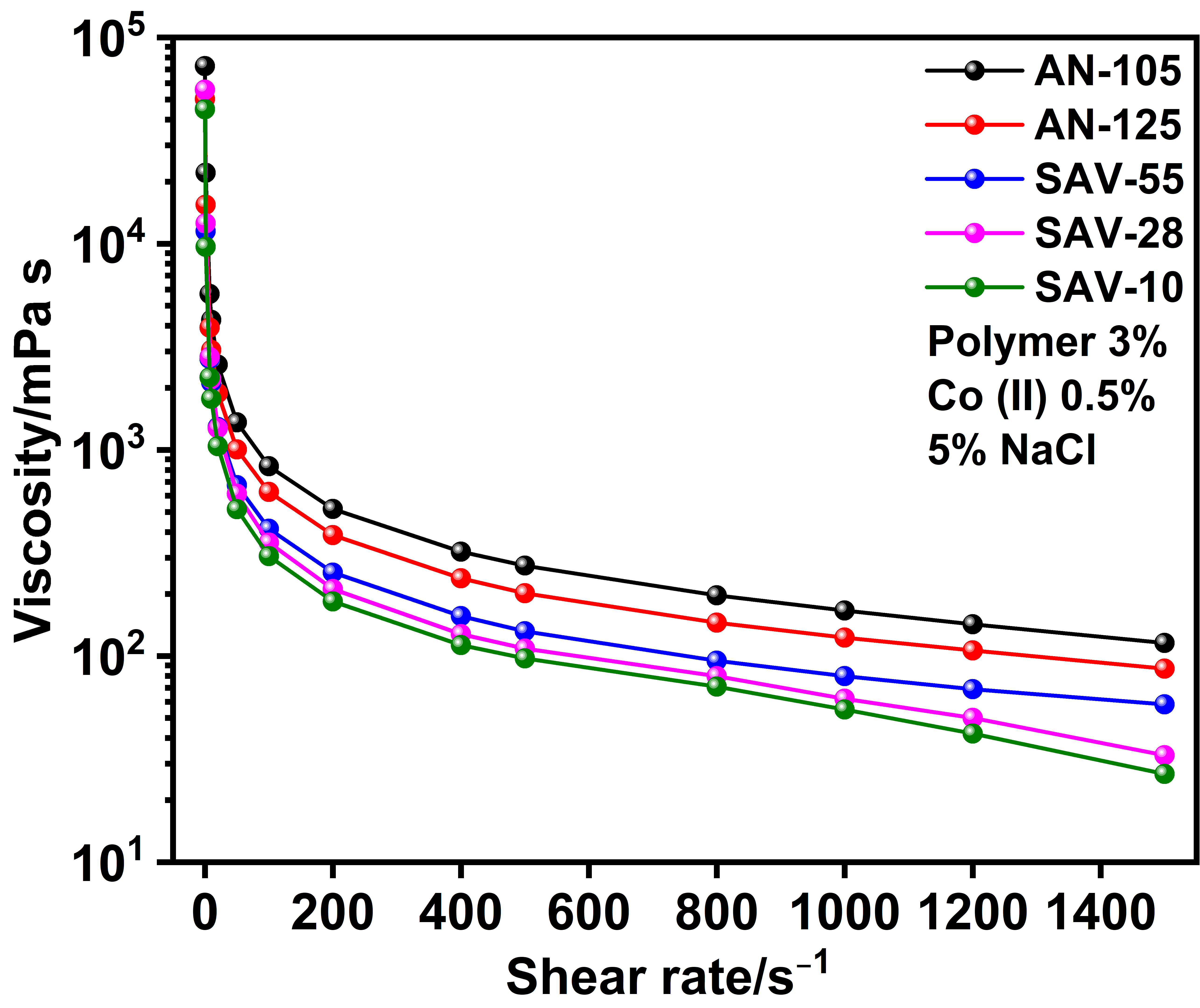
The rheological properties of gelants prepared with polymers having AMPS molar ratios ranging from 5% to 90% were investigated at room temperature. The gelant formulation consisted of 3 wt% polymer, 0.5 wt% Co(II), and 5 wt% NaCl. The viscosity of the gelants as a function of shear rate is presented in
Figure 1. All gelant samples exhibit typical shear-thinning behavior, where the apparent viscosity decreases with increasing shear rate, which is characteristic of flexible polymer solutions in aqueous media.
Among all tested samples, AN-105 shows the highest apparent viscosity across the entire shear rate range, while SAV-10 exhibits the lowest viscosity. This phenomenon can be attributed to the difference in the functional group composition of the polymers. AN-105 has the lowest AMPS content (5 mol%) and the highest acrylamide (AM) content (95 mol%). The amide groups on the AM units undergo partial hydrolysis in aqueous solution, generating negatively charged carboxylate groups. The electrostatic repulsion between these carboxylate groups causes the polymer chains to adopt a more extended conformation in solution, resulting in a larger hydrodynamic volume and thus higher apparent viscosity. In contrast, SAV-10 has an AMPS content exceeding 90 mol%. Although the sulfonate groups on AMPS units are also negatively charged, the bulky 2-methylpropane sulfonic acid side groups of AMPS units create significant steric hindrance, limiting the extension of the polymer backbone. Meanwhile, the ultra-high AMPS content reduces the number of hydrolyzable amide groups, leading to a lower density of carboxylate groups on the polymer chain, and a more compact molecular conformation.
3.2. Gelation Behavior
3.2.1. Effect of Temperature
The effect of temperature on the gelation time of different gelant systems was investigated. The gelant was formulated with 3 wt% polymer, 0.5 wt% Co(II), and 5 wt% NaCl. For all tested polymer systems, no gel formation was observed over a 50-day aging period at 65, 80, and 90 °C, regardless of the Co(II) concentration, with all samples remaining at gel code A after 50 days of aging.
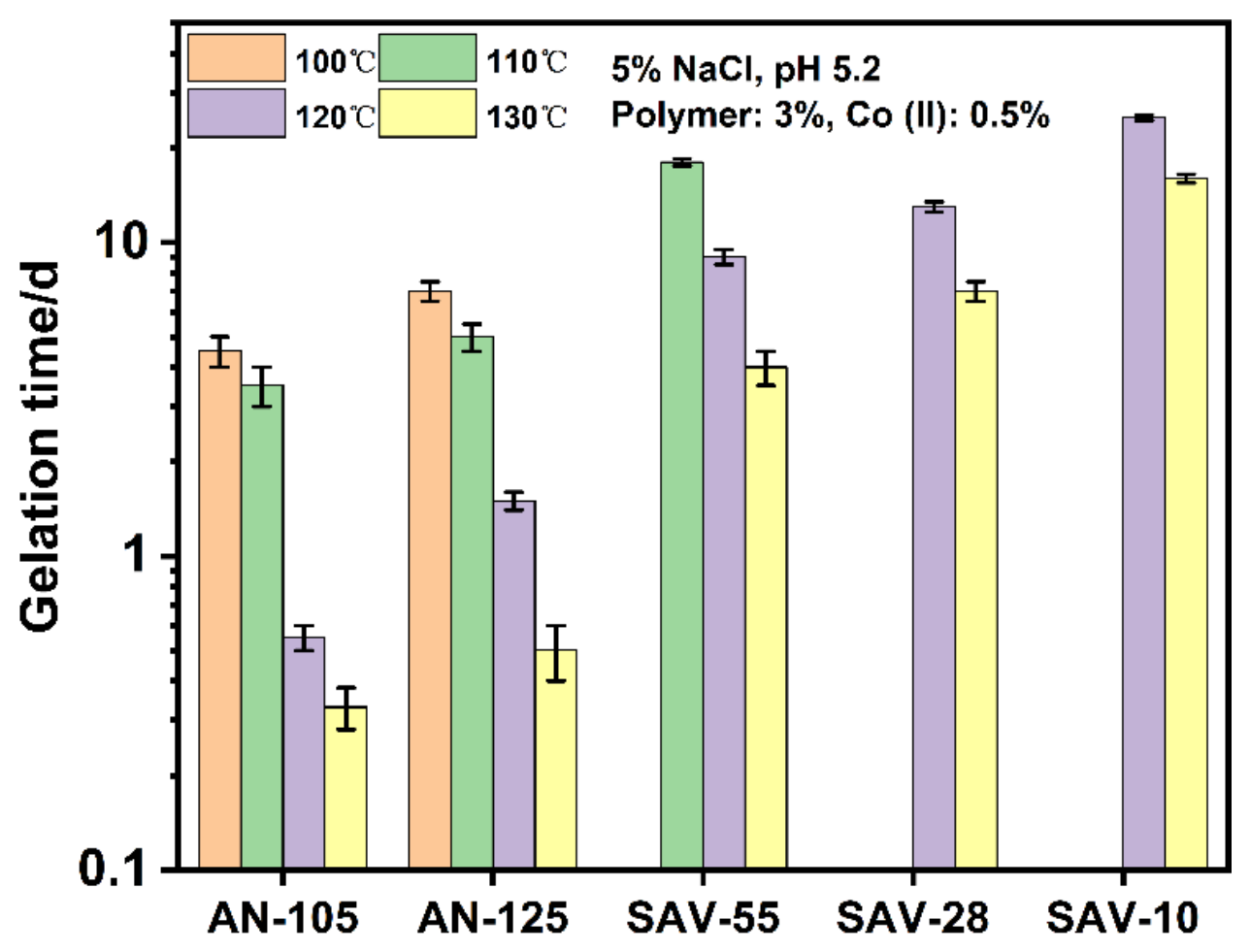
The gelation time of different gelant systems at 100, 110, 120, and 130 °C is shown in
Figure 2. For all polymer systems, the gelation time decreases monotonically with increasing temperature, as elevated temperatures accelerate the hydrolysis of AM and AMPS units to generate carboxylate groups, as well as the coordination crosslinking reaction between Co(II) ions and carboxylate groups. In addition, increasing AMPS content inhibits gelation at lower temperatures (100 and 110 °C). For instance, AN-105- and AN-125-based gelants can form gels across all tested temperatures, while SAV-55 can only form gels at 110 °C and above, and SAV-10 and SAV-28 can only form gels at 120 °C and above.
The gelation time of AN-105/AN-125 gelants at 100–130 °C ranges from 8 h to 4.5 days, while the gelation time of SAV-55/SAV-28/SAV-10 gelants at 110–130 °C ranges from 4 to 25 days. SAV-10, with the highest AMPS content, exhibits the longest gelation time at both 120 °C and 130 °C, with gelation times of 25 days and 16 days, respectively. In comparison, SAV-55 has the shortest gelation time among the three SAV polymers, with gelation times of 18 days, 9 days, and 4 days at 110 °C, 120 °C, and 130 °C, respectively; the gelation time of SAV-28 is 13 days and 7 days at 120 °C and 130 °C, respectively.
The significantly delayed gelation behavior of AMPS-rich polymers can be explained by the gelation mechanism of the polymer/Co(II) system. Gelation is driven by the coordination association between Co(II) ions and carboxylate groups generated by the hydrolysis of amide groups, while the sulfonate groups on AMPS units are inert to Co(II) crosslinking under the test conditions [
6]. AMPS units can undergo hydrolysis at high temperatures, but their hydrolysis rate is much slower than that of AM units in the initial stage, and gradually accelerates as the content of acrylate groups on the polymer chain increases [
26,
27]. Only after sufficient hydrolysis of AM and AMPS units to generate a critical concentration of carboxylate groups can effective intermolecular crosslinking between Co(II) and polymer chains occur to form a bulk gel. Furthermore, previous studies have demonstrated that the hydrolysis resistance and thermal stability of AMPS-based polymers increase dramatically when the AMPS content exceeds 70 mol% [
26,
27]. Therefore, SAV-10, with an AMPS content over 90 mol%, requires a longer aging time at high temperatures to generate enough carboxylate groups to initiate crosslinking, resulting in a significantly prolonged gelation time compared to other polymer systems.
It is worth noting that the SAV-10/SAV-28/Co(II) systems achieve this long delayed gelation without the addition of any organic ligands (such as acetate or malonate), which are commonly used in Cr(III) gel systems to temporarily chelate metal crosslinkers and delay gelation. In contrast, the gelation time of conventional Cr(III)-based gelants at 130 °C is usually less than 1 h without the addition of organic chelating ligands. This inherent delayed gelation property of the Co(II)-based gel system, without the need for additional delaying additives, greatly simplifies the field formulation design and improves the stability of the gelant during injection and placement in deep high-temperature reservoirs.
3.2.2. Effect of Co(II) Concentration
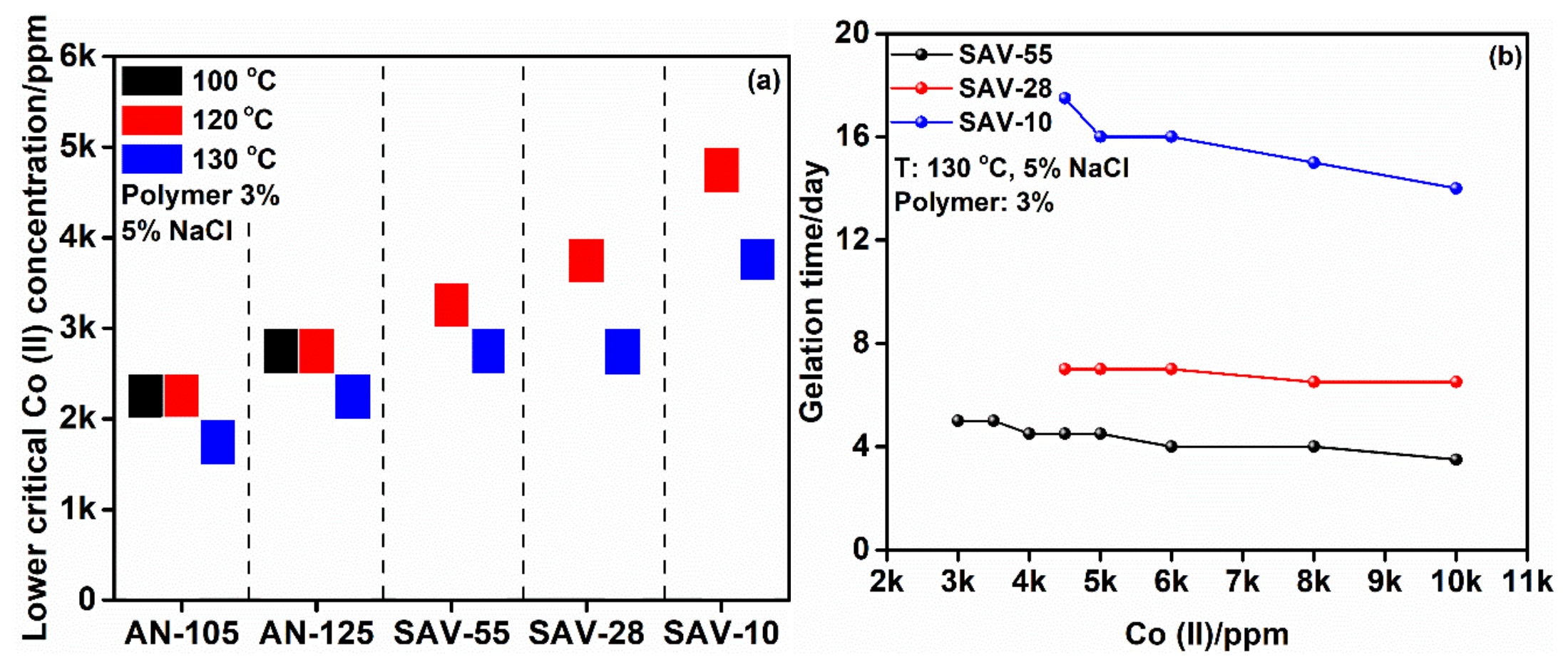
The effect of Co(II) concentration (ranging from 50 ppm to 10,000 ppm) on the gelation behavior of different gel systems at 100, 120, and 130 °C is presented in
Figure 3. The lowest critical (LC) Co(II) concentration required for bulk gel formation is approximately 100 times higher than that of commonly used Cr(III) and Zr(IV) crosslinkers. The LC value increases with increasing AMPS content in the polymer, and decreases with increasing temperature. As shown in
Figure 3a, none of the gelants formed bulk gels when the Co(II) concentration was below 1500 ppm, regardless of the test temperature. For example, the LC of the AN-105 gel system at 100 °C is between 1500 and 2000 ppm, while that of the AN-125 gel system increases to 2500–3000 ppm, and the LC of the SAV-10 gel system reaches 3500 ppm at 130 °C, nearly twice that of the AN-105 system. This is consistent with the delayed gelation mechanism: higher AMPS content results in fewer carboxylate groups available for crosslinking, thus requiring a higher concentration of Co(II) ions to achieve effective intermolecular crosslinking and form a three-dimensional gel network.
When the Co(II) concentration is above the LC value, further increasing the Co(II) concentration slightly reduces the gelation time, as shown in
Figure 3b. For instance, the gelation time of the SAV-10 gelant at 130 °C decreases from 17.5 days to 14 days as the Co(II) concentration increases from 4000 ppm to 10,000 ppm. This is because a higher concentration of Co(II) ions provides more crosslinking sites, accelerating the formation of the gel network, but the effect is not significant, as the gelation rate is mainly controlled by the hydrolysis rate of AM and AMPS units at high temperatures.
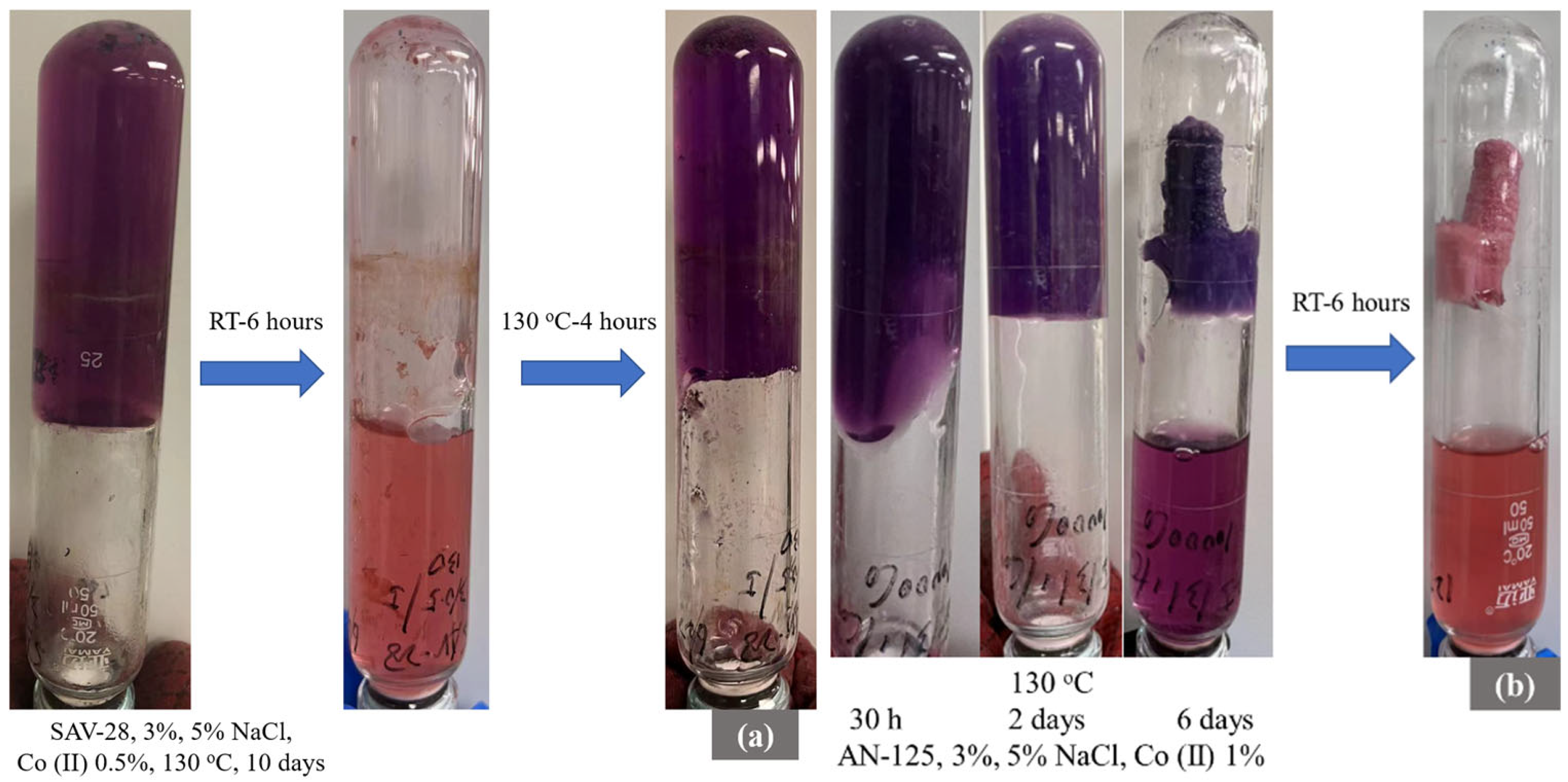
Notably, all SAV-based gels with high AMPS content can fully revert to viscous polymer solutions when the temperature drops below certain degrees, regardless of the Co(II) concentration. To be more precise, the critical sol–gel transition temperatures upon cooling of SAV-55/28/10 were 70–75, 80–85, and 90–95 °C, respectively. In contrast, for polymers with low AMPS content (AN-105/AN-125), the gels lose their sol–gel transition behavior when the Co(II) concentration reaches 1 wt%, accompanied by severe syneresis and dehydration. The excellent phase stability and reversible transition performance of SAV series polymer gels are attributed to their high AMPS content. The steric hindrance of AMPS side groups delays the excessive hydrolysis of amide groups, thereby avoiding or delaying the syneresis caused by over-crosslinking of the gel network [
28,
29].
In addition, as shown in
Figure 4a, the gelation time in the second heating cycle is significantly shorter than that in the first cycle. For example, the gelation time of SAV-28 at 130 °C is 7 days in the first cycle, while it takes less than 4 h to re-form a bulk gel in the second heating cycle. This is because sufficient carboxylate groups are generated via the hydrolysis of AM and AMPS units during the first high-temperature aging cycle, eliminating the rate-limiting hydrolysis step in the second cycle, and allowing the coordination crosslinking between Co(II) and carboxylate groups to occur rapidly at 130 °C. The color change of the sample during the gelation process is related to the change in the hybridization and complexation state of the cobalt ions [
30].
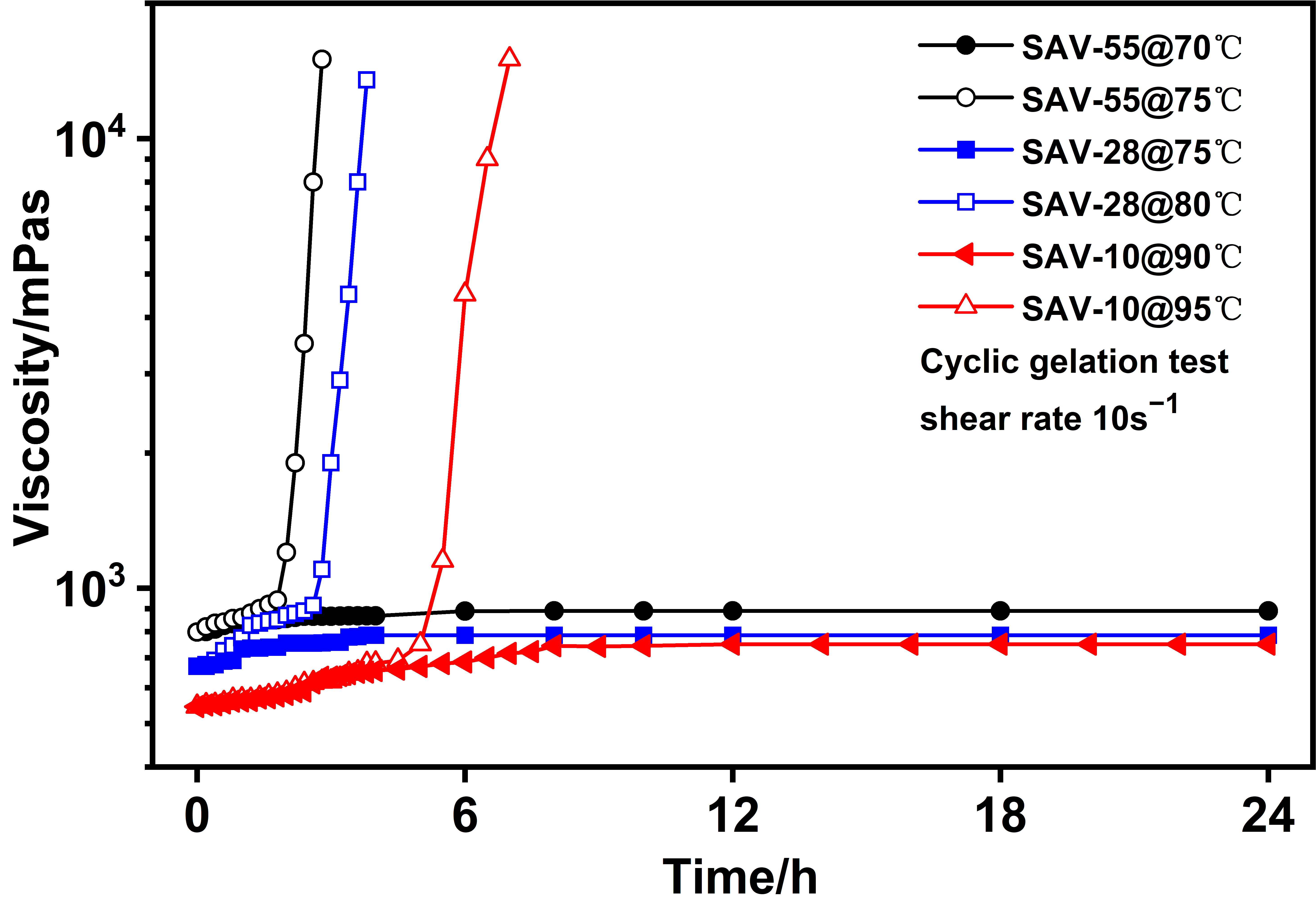
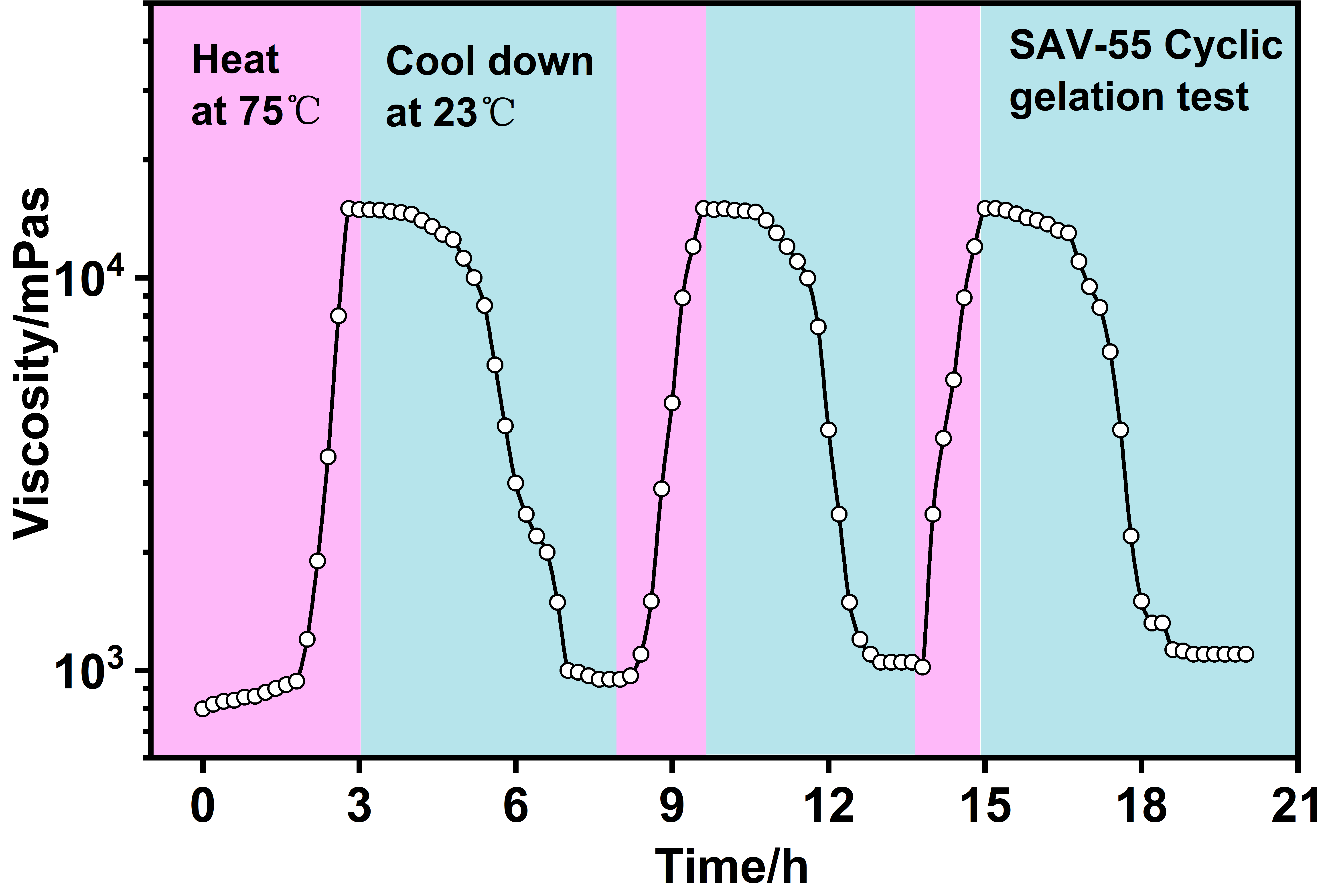
We further studied the viscosity changes during the sol–gel transition process using Haake Mars rheometer, with magnet connection to avoid water evaporation. As shown in
Figure 5 and
Figure 6, gelants with high AMPS content need more time re-gel and the critical re-gel temperature also increases with AMPS content. For example, SAV-55, which cannot gel under 70 °C, could re-gel under 75 °C within 2 h, while SAV-10, which cannot gel under 90 °C, needs around 4 h to re-gel at 95 °C. Additionally, the re-gel time decreases with the increase of re-gelation cycle. SAV-55, which needs 2–3 h to re-gel in the first cycle only, needs less than 1.5 h to re-gel in the second and third cycle.
3.2.3. Effect of Salinity
The effect of salinity on the gelation behavior of SAV-based gelants was investigated at 130 °C. The polymer and Co(II) concentrations were fixed at 3 wt% and 0.5 wt%, respectively. Gelants were prepared using 5 wt%, 10 wt%, and 15 wt% NaCl brines, as well as Ekofisk formation water (EFW), the detailed ionic composition of which can be found in previous work (TDS 76324 ppm, with 2319 ppm of MgCl
2 and 4059 ppm of CaCl
2) [
31].
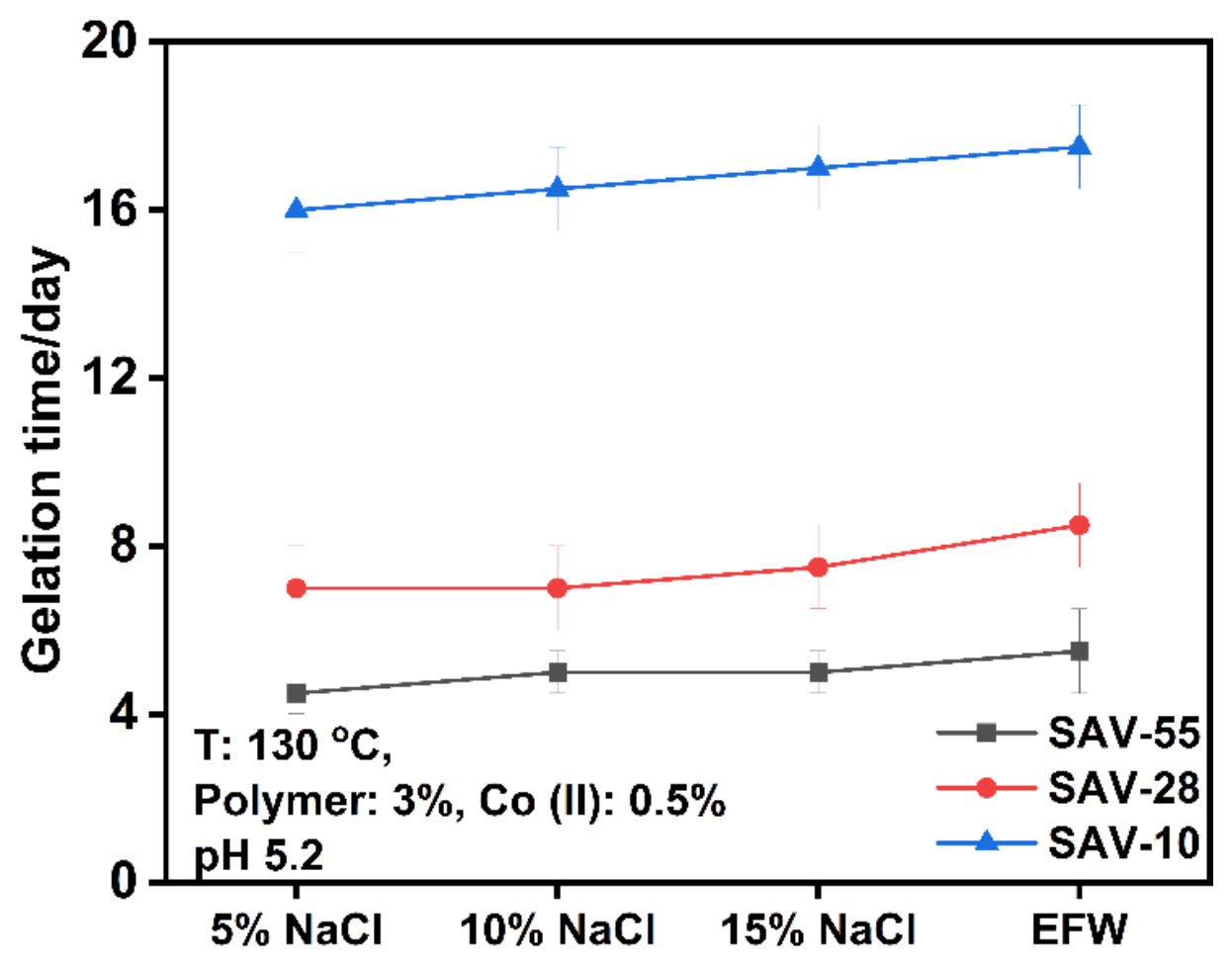
As shown in
Figure 7, the gelation time of all tested gelants fluctuates within a narrow range under different salinity conditions at 130 °C, indicating that the system has good salinity tolerance. For example, the gelation time of SAV-28 increases slightly from 7 days to 8 days as the NaCl concentration increases from 5 wt% to 15 wt%. This slight delay can be attributed to the charge screening effect of high-concentration Na+ ions, which reduces the electrostatic repulsion between carboxylate groups on the polymer chain, leading to a more compact molecular conformation and a slightly reduced probability of effective collision between Co(II) ions and carboxylate groups.
In addition, Ekofisk formation water (containing 0.2 wt% divalent cations Ca
2+/Mg
2+) has a more pronounced effect on delaying gelation than NaCl brine. For instance, the gelation time of SAV-28 is 7 days in 5 wt% NaCl brine and increases to 8.5 days in Ekofisk formation water. A plausible explanation for this phenomenon is that divalent cations (Ca
2+/Mg
2+) compete with Co(II) ions for chelation with carboxylate groups on the polymer chain [
32]. This competitive chelation reduces the number of carboxylate groups available for crosslinking with Co(II), thus requiring a longer aging time to generate sufficient carboxylate groups to form a bulk gel.
3.2.4. Effect of pH
Previous studies have shown that pH has a significant impact on the gelation time of HPAM/metal crosslinker systems, as the hydrolysis and complexation state of the metal crosslinker is strongly pH-dependent. For example, as the pH increases from 4 to 6.4, the structure of the chromium(III) acetate complex gradually changes from a stable cyclic chromium trimer to a more reactive linear trimer with one or two bridging acetate groups, significantly accelerating the crosslinking reaction [
33].
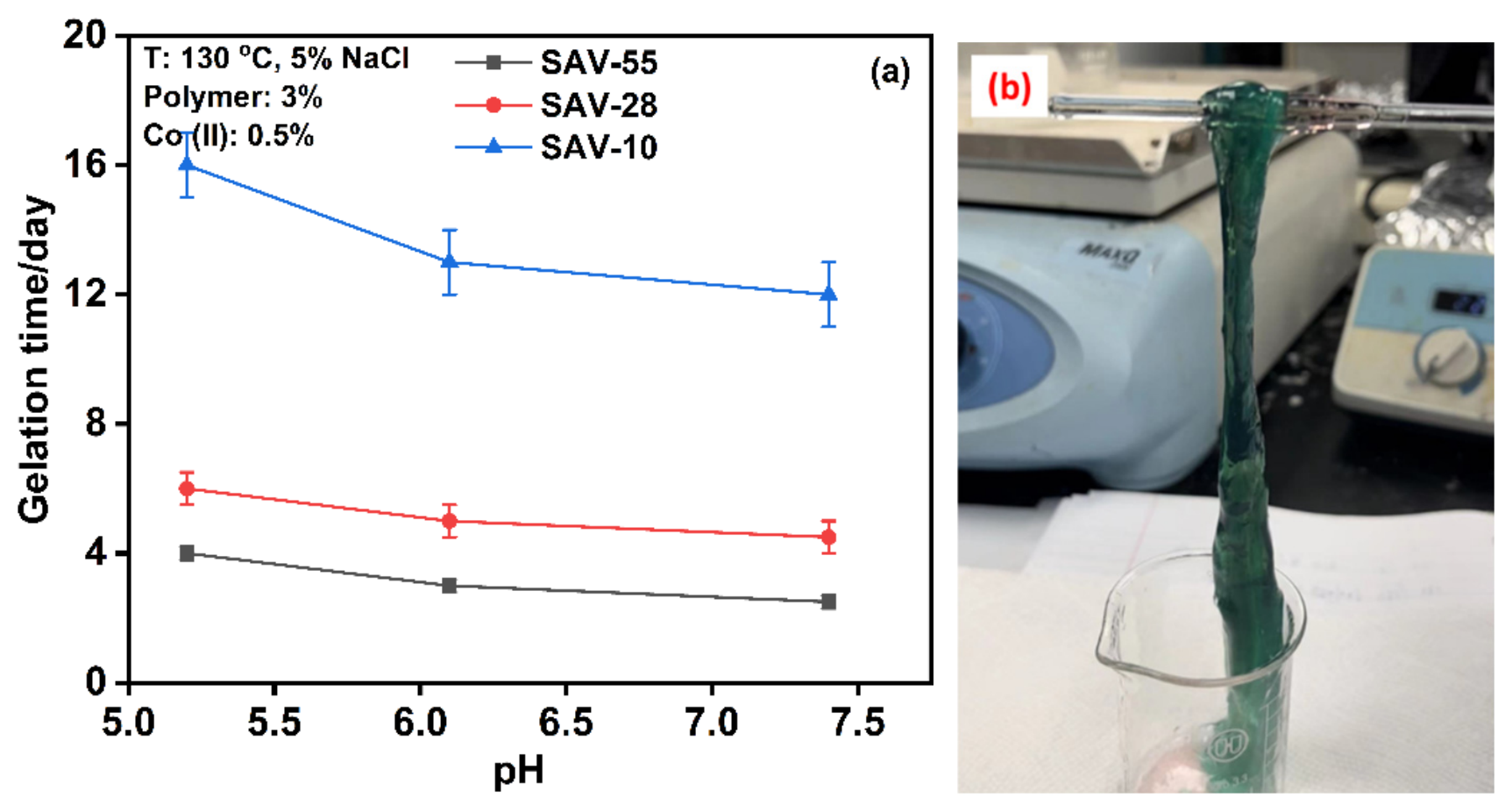
In this section, the effect of pH on the gelation behavior of AMPS-rich polymer/Co(II) gel systems was investigated within the pH range of 5.2–7.4, which covers the pH range of most oil reservoir formation waters. The gelant was formulated with 3 wt% polymer and 0.5 wt% Co(II), with the original pH of the gelant ranging from 5.1 to 5.3. Consistent with Cr(III)-based gel systems, increasing the pH accelerates the gelation rate of the Co(II)-based system. For example, the gelation time of the SAV-28 gelant decreases from 7 days to 4.5 days as the pH increases from 5.2 to 7.4, as shown in
Figure 8a.
It should be emphasized that dilute NaOH solution cannot be added directly to the gelant to adjust the pH to a high value at room temperature. The pink gelant reacts rapidly with NaOH, forming a blue gel or precipitate at room temperature within 1 min when the pH reaches 10.5, as shown in
Figure 8b. This is because Co(II) ions react with OH
− ions to form Co(OH)
2, CoOH
+, and Co(OH)
42− species as the pH increases [
34]. These hydrolysis species are less stable and more reactive than hydrated Co(II) ions, and can rapidly chelate with the anionic groups on the polymer chain to initiate crosslinking at room temperature [
35,
36]. In addition, previous studies have shown that the adsorption of cobalt ions onto clay minerals increases with increasing pH, as the hydrolyzed species CoOH
+ has a stronger interaction with anionic groups (sulfonate and carboxylate) on the polymer chain, further enhancing the association between Co(II) and polymer chains [
37].
3.3. Thermal Stability
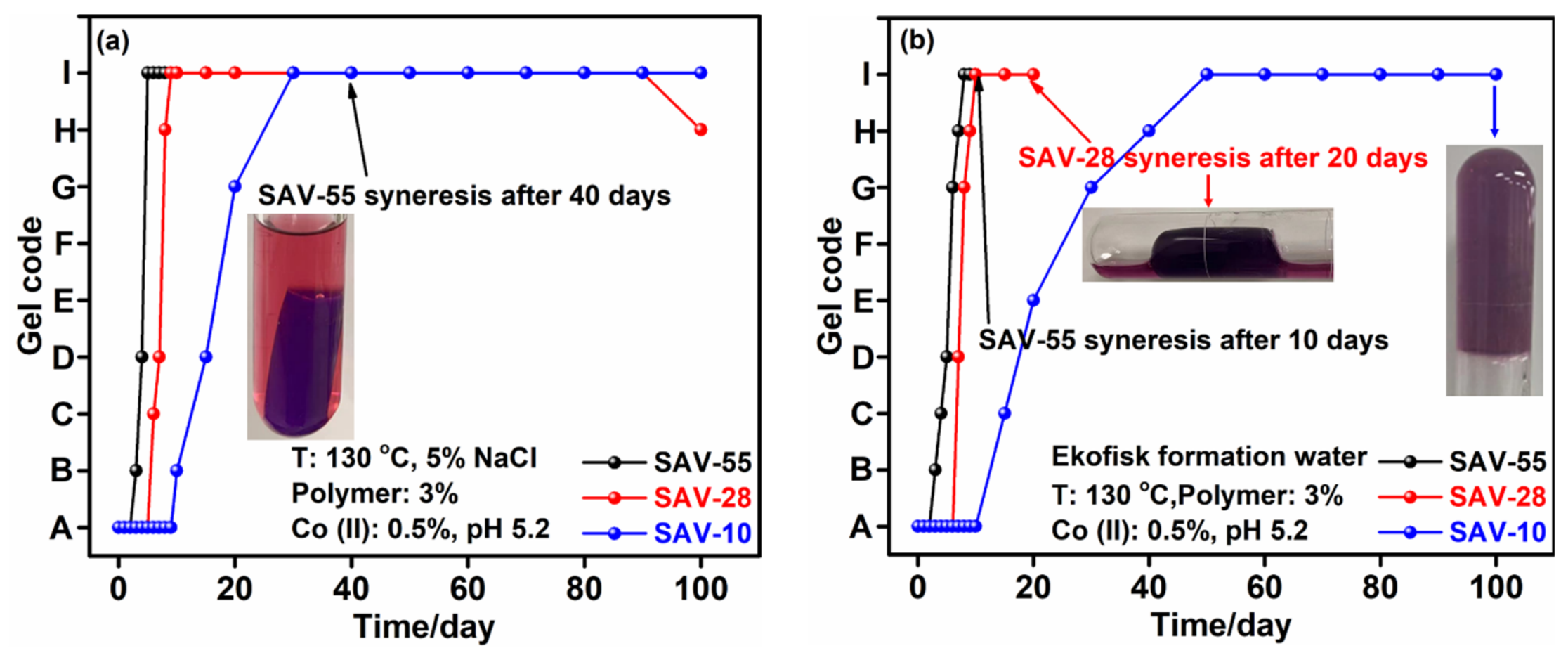
The long-term thermal stability of the crosslinked gels was evaluated by monitoring the changes in gel volume, gel strength, and appearance during high-temperature aging in different brine solutions at 130 °C, with the results presented in
Figure 9.
AN-105/AN-125-based gels exhibit poor thermal stability at 100–130 °C. For example, the AN-105 gel degrades completely to a viscous polymer solution (gel code A) after 11 days of aging at 100 °C, and the AN-125 gel shows severe degradation after 20 days of aging at 100 °C. Both gels degrade completely within 6 days at temperatures above 110 °C. The SAV-55-based gel has moderate thermal stability at 130 °C, with severe syneresis observed after 40 days of aging in 5% NaCl brine and after only 10 days of aging in Ekofisk formation water.
In contrast, both SAV-10 and SAV-28-based gels exhibit excellent long-term thermal stability in 5% NaCl brine at 130 °C. After 100 days of aging, the gel strength code of SAV-10 and SAV-28 remains at code I and code H, respectively, with no significant syneresis. However, the SAV-28 gel is unstable in Ekofisk formation water, with severe syneresis observed after 20 days of aging. SAV-10, with an AMPS content exceeding 90 mol%, is the only gel system that maintains excellent long-term stability in both 5% NaCl brine and Ekofisk formation water throughout the 100-day aging test at 130 °C, with no observable volume loss or syneresis. This outstanding thermal and chemical stability is attributed to the ultra-high AMPS content, which provides excellent hydrolysis resistance and tolerance to high salinity and divalent cations under high-temperature conditions.
3.4. Core Flooding Test
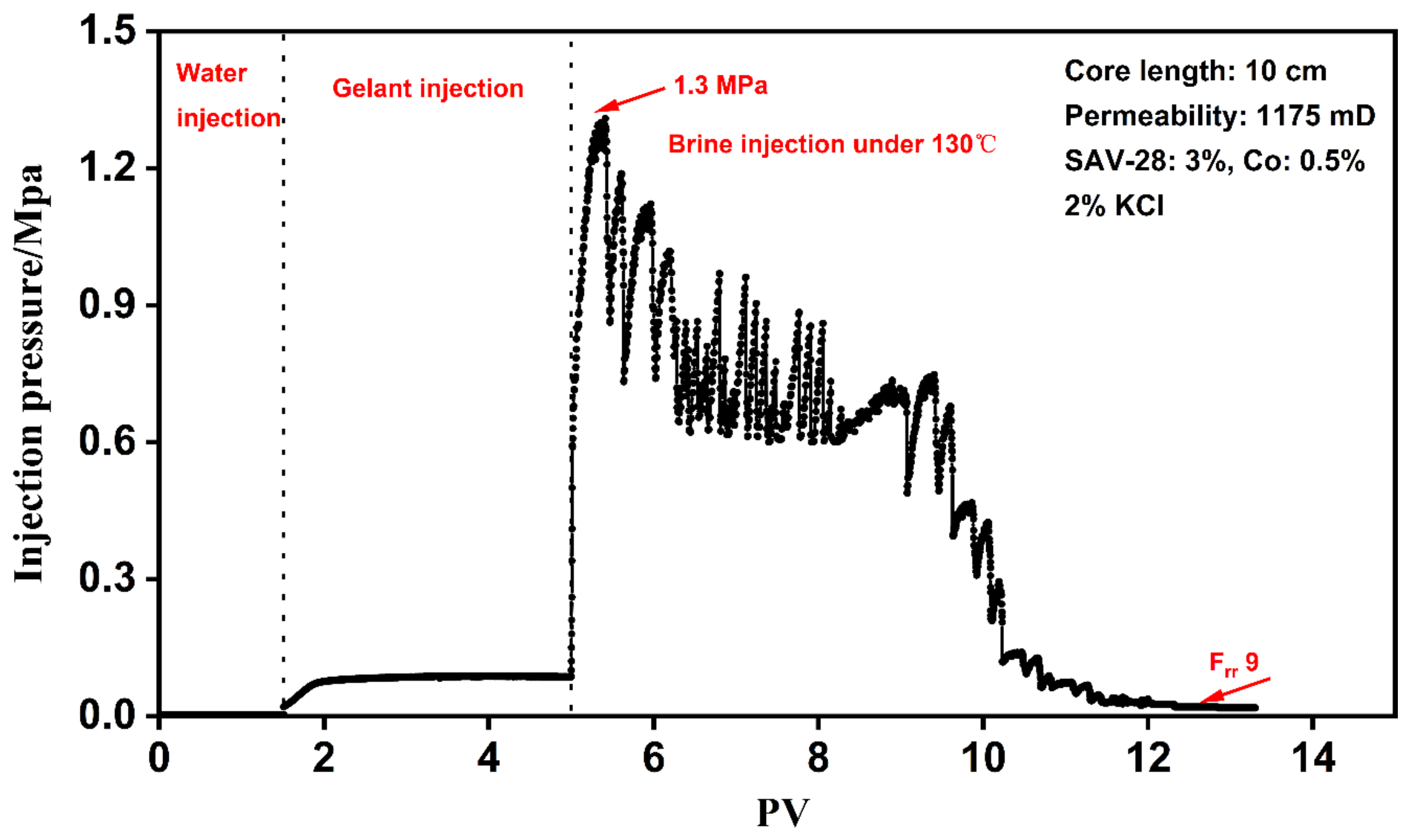
The injection pressure profile during post water injection is presented in
Figure 10. The injection pressure increased rapidly once brine injection was initiated, and reached a peak breakthrough pressure of 1.3 MPa, corresponding to a breakthrough pressure gradient of 13 MPa/m. This result directly demonstrates that the SAV-28/Co gelant achieved effective in situ gelation in the pore space of the high-permeability sandstone core under 130 °C, forming a robust three-dimensional (3D) gel network that created a strong barrier for water flow, thus delivering excellent plugging performance at high reservoir temperatures.
After reaching the breakthrough pressure, the injection pressure exhibited a continuous, gradual decrease with the injection of additional brine. As brine injection proceeded to ~14 PV, the injection pressure stabilized at a near-zero baseline, and the final residual resistance factor (Frr) of the core was calculated to be nine. The residual resistance factor, defined as the ratio of initial brine permeability to the final brine permeability after gel treatment, quantifies the long-term flow resistance of the core after the plugging process. The significant decline in injection pressure and the relatively low final Frr indicate that the initially formed gel structure in the core pore space was gradually disrupted, and the flow capacity of the core was substantially restored. This thermally reversible gel system developed in this work addresses a key limitation of conventional permanent gel systems for conformance control operations. Conventional covalently crosslinked gels form irreversible plugging in the formation, which carries the risk of over-plugging of hydrocarbon pay zones and requires additional chemical breakers for gel removal if needed. In contrast, the SAV-28/Co system achieves efficient plugging at high reservoir temperatures, and can realize spontaneous gel degradation and permeability recovery via temperature reduction without additional chemical additives. The final residual resistance factor of nine indicates that the system maintains moderate flow resistance after reverse transition, avoiding complete loss of conformance control effect while eliminating the risk of permanent formation damage. This unique performance makes the developed system highly promising for temporary water shutoff, fracturing fluid diversion, and other conformance control applications in high-temperature oil and gas reservoirs, where reversible and controllable plugging performance is required.
The present core flooding test provides preliminary proof of in situ gelation and plugging performance, but it was conducted on a single high-permeability homogeneous sandstone core under one formulation, one temperature, and 100% brine-saturated conditions. These simplifications mean the results cannot be directly extrapolated to field-scale conformance control, heterogeneous reservoirs, or geothermal applications. Specifically, the homogeneous core cannot represent permeability heterogeneity and preferential channeling in real reservoirs; the absence of crude oil omits potential wettability and pore-scale interference effects; and the reversible plugging performance under cyclic heating–cooling was not verified in porous media. Furthermore, core-scale tests cannot capture wellbore shear degradation, long-distance transport effects, and interwell-scale flow dynamics. Accordingly, the application scenarios outlined in the introduction represent technical prospects rather than proven field performance. Future work will include heterogeneous/layered core tests, oil–brine two-phase flooding experiments, cyclic temperature core flooding, and numerical upscaling to bridge the gap between laboratory observation and field deployment.