

A Multi-Constraint Integrated Zoning Method for Redevelopment of Mature Shale Gas Well Areas



Abstract
1. Introduction
2. Methods
2.1. Development Status and Redevelopment Potential
2.2. Basic Input Data
2.3. Evaluation Method for Present-Day Geological Conditions in the Study Area
2.4. Evaluation Method for the Present-Day Stress State in the Study Area
2.5. Evaluation Method for Present-Day Natural-Fracture Stability in the Study Area
2.6. Integrated Multi-Factor Evaluation Framework for Remaining-Resource Re-Mobilization
- •
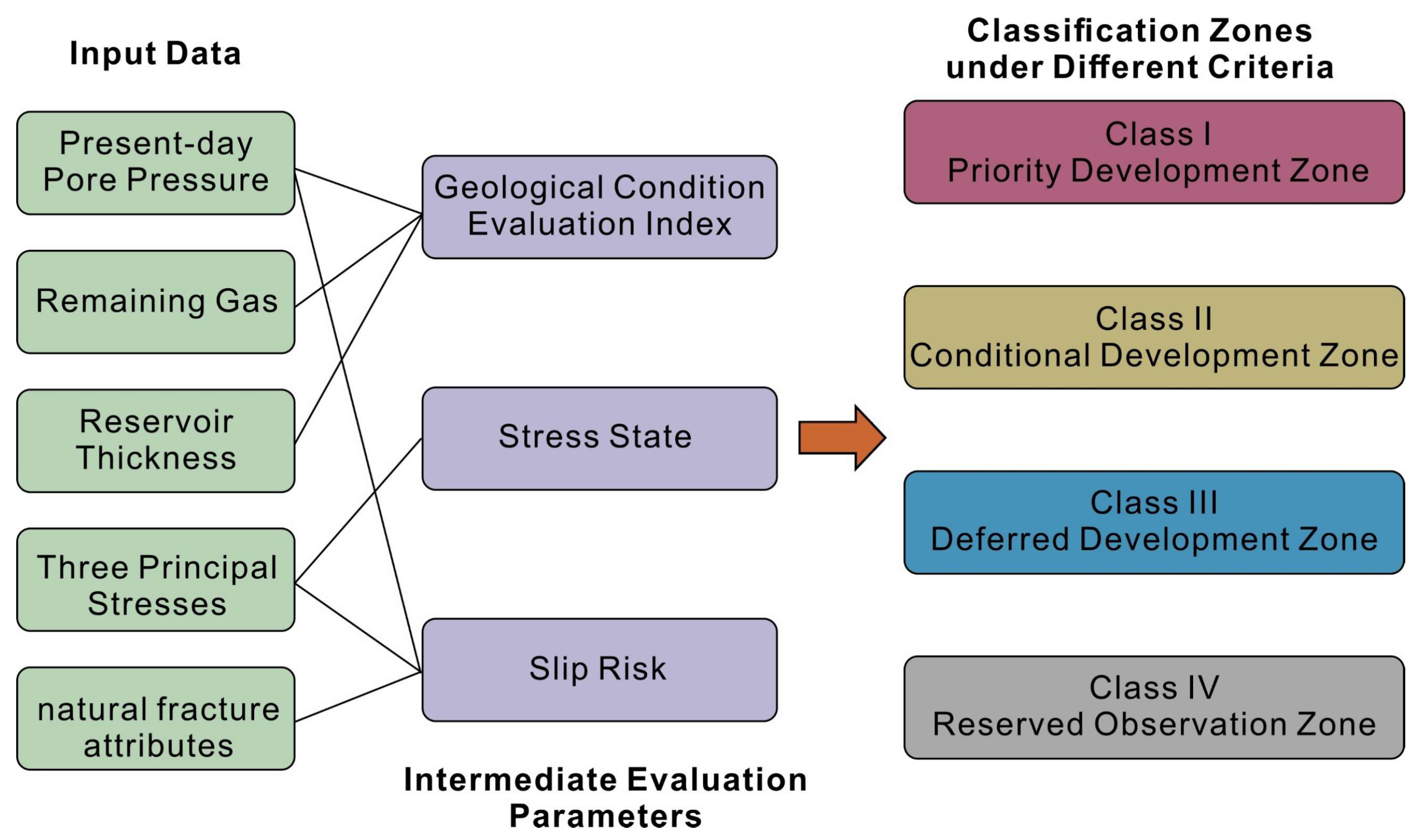
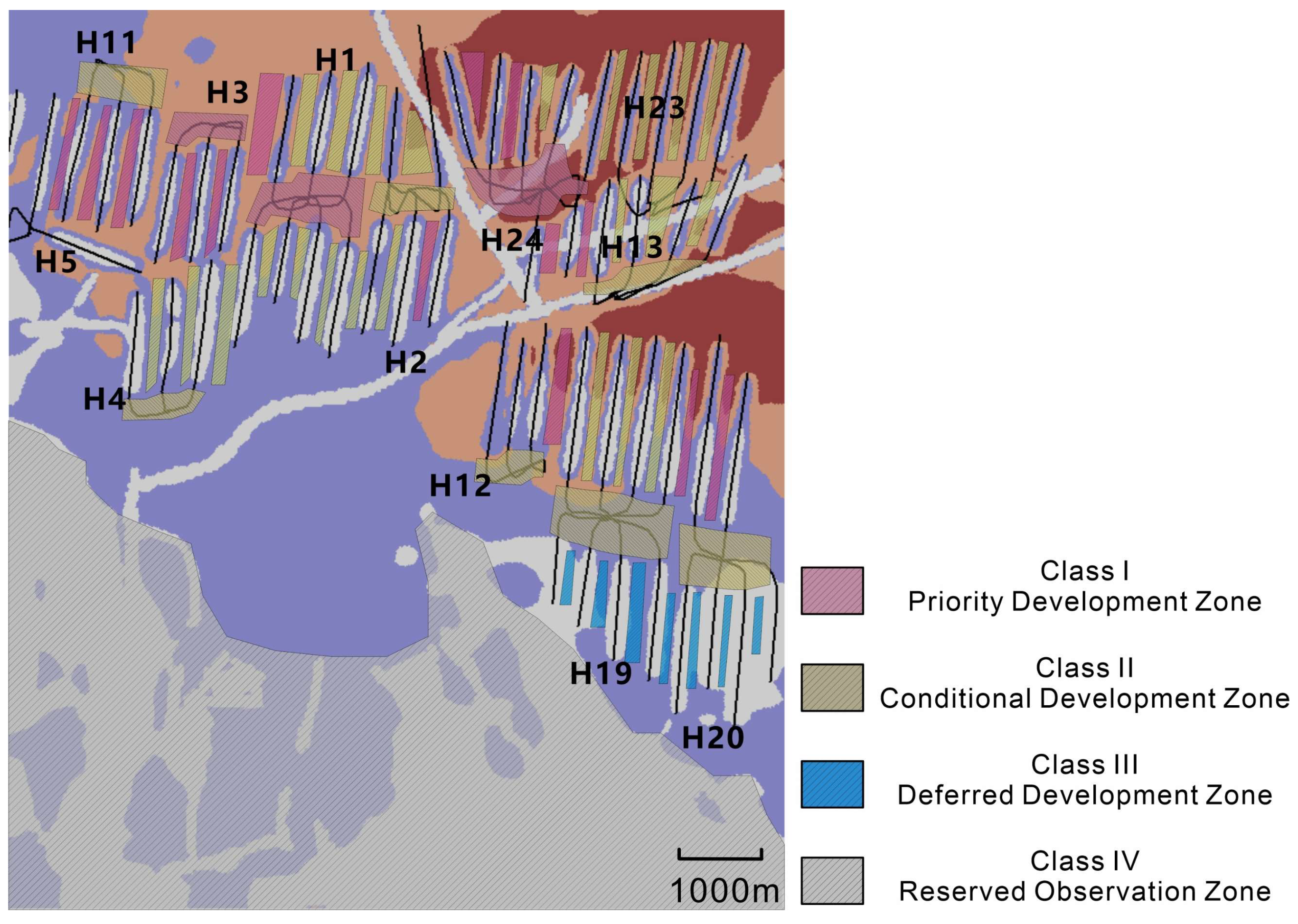
- Type I priority zone: This type of area usually has favorable comprehensive geological conditions, a high remaining-resource basis, favorable formation-energy conditions, and low fracture-slip risk. It has high redevelopment potential and engineering implementability and is the key area for near-term well deployment, hydraulic-fracturing optimization, and production-capacity replacement;
- •
- Type II conditional zone: This type of area has a certain remaining-resource basis and development conditions, but its overall advantages are not sufficiently prominent, or local stress constraints and fracture-stability risks exist. For such areas, detailed evaluation should be conducted by integrating specific geological conditions, and conservative infill or pilot utilization should be implemented in selected favorable sections to further verify the development effect;
- •
- Type III deferred zone: This type of area usually shows relatively weak comprehensive geological conditions, insufficient continuity of remaining resources, or medium-to-high fracture-slip risk, and the development effect and engineering risk have large uncertainties. Therefore, it is not suitable as a priority development target at the current stage and can be re-evaluated in due course according to subsequent geological understanding and development-technology progress;
- •
- Type IV reserve zone: This type of area mostly corresponds to zones with poor comprehensive geological conditions, complex fracture systems, and high slip risk, with limited redevelopment potential and high engineering risk. Such areas should be retained as long-term reserve zones and risk-control zones, and their geological-condition changes and technology adaptability should be continuously monitored to support future development decisions.
3. Results
3.1. Present-Day Geological-Condition Zoning Results Under Different Development Objectives
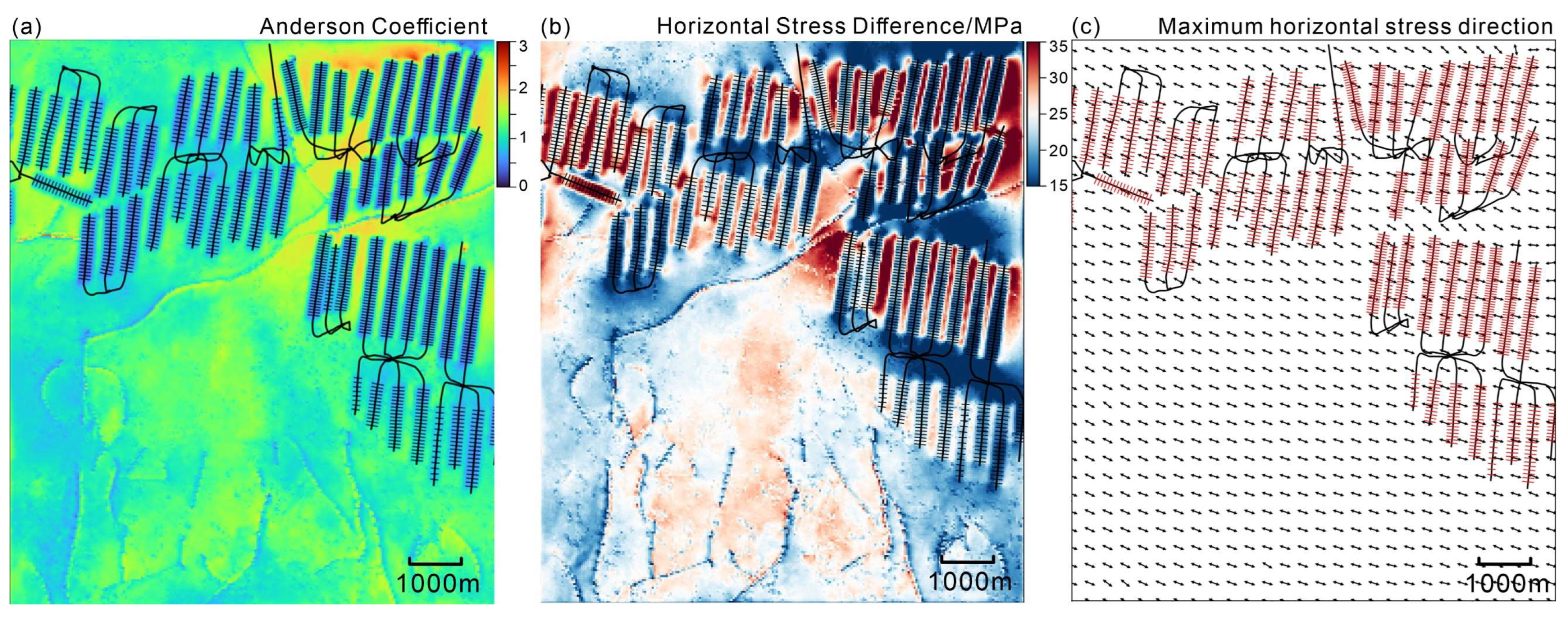
3.2. Present-Day In Situ Stress State in the Study Area
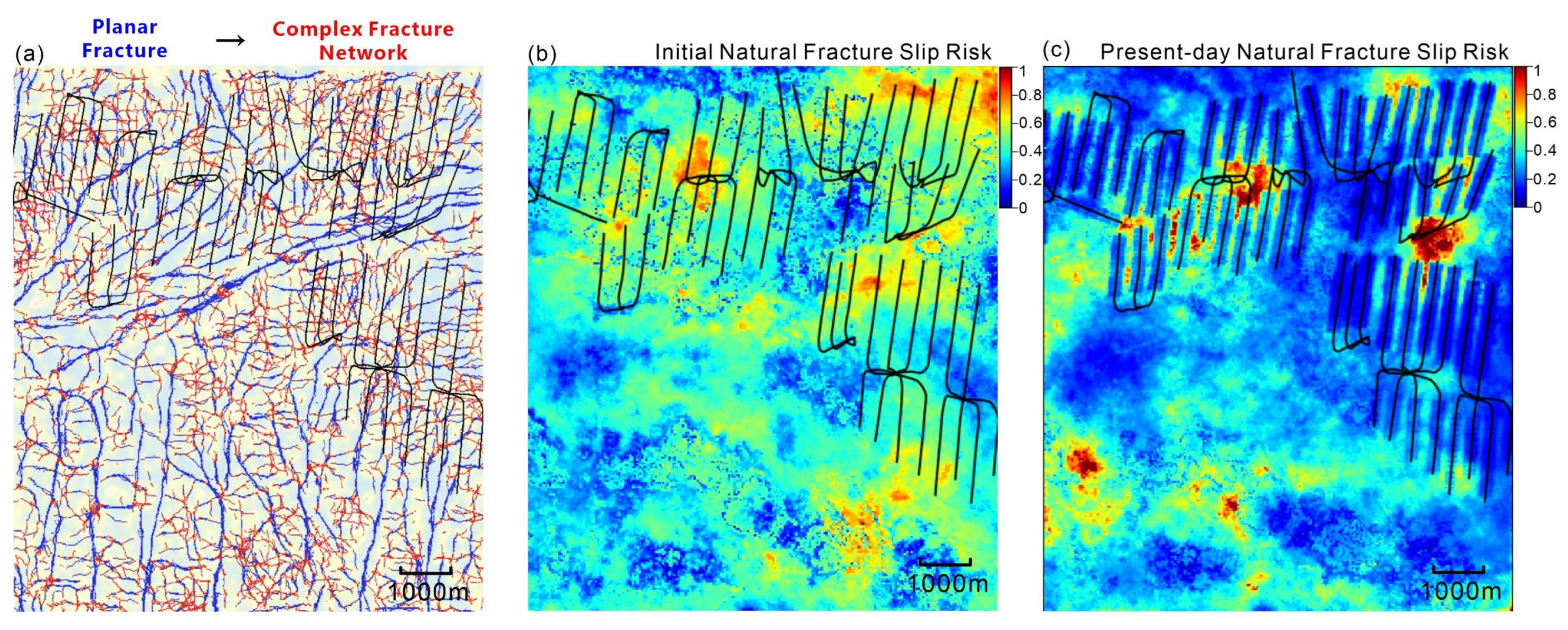
3.3. Present-Day Natural-Fracture Stability in the Study Area
4. Discussion
4.1. Key Findings
4.2. Limitations and Future Work
5. Conclusions
- This study established an integrated zoning workflow for redevelopment of mature shale gas areas. By incorporating present-day geological conditions, stress state, and natural-fracture stability into a unified framework, the proposed method couples remaining-resource identification with engineering implementability evaluation and provides methodological support for infill-well deployment and differentiated hydraulic-fracturing design.
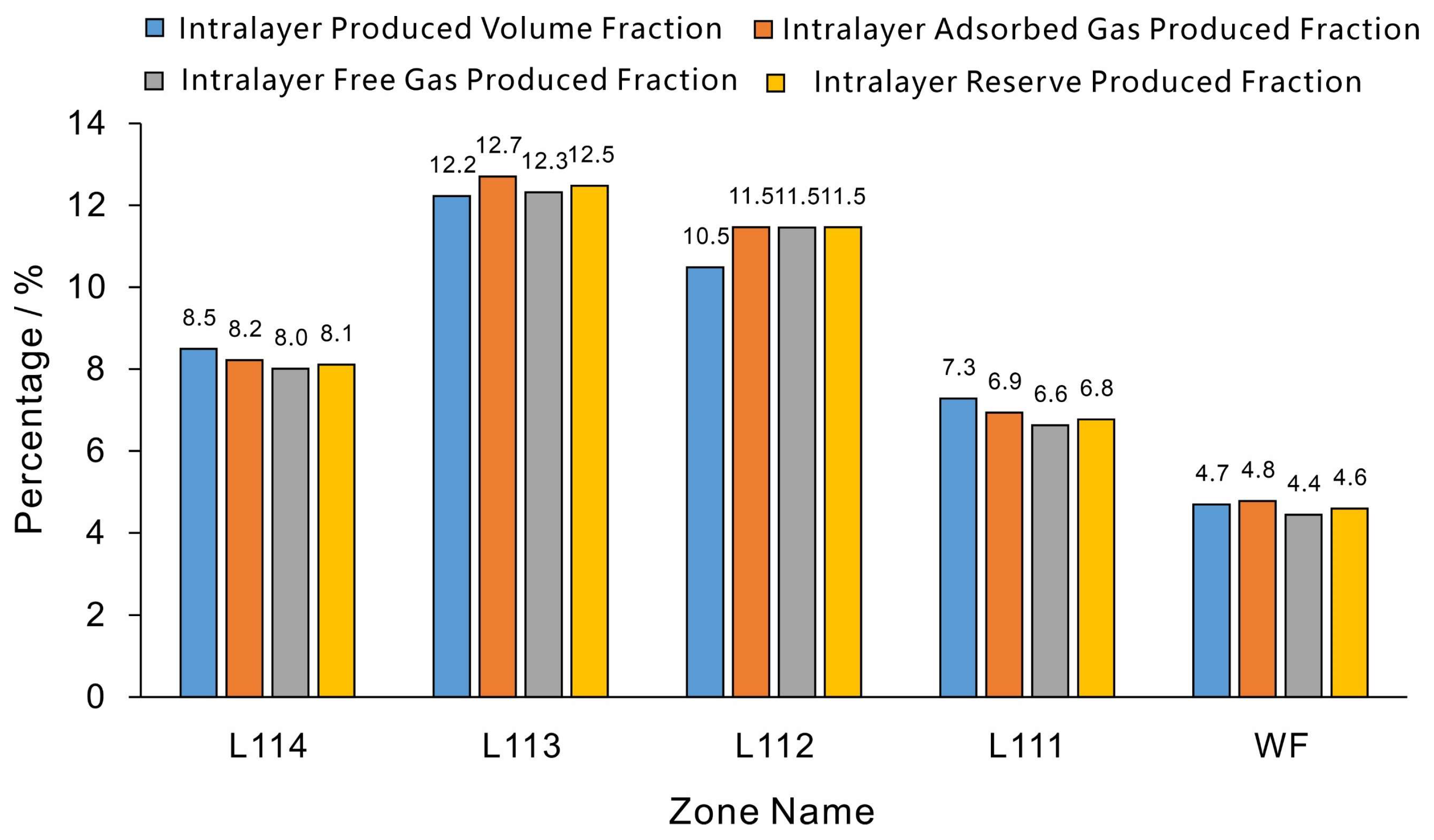
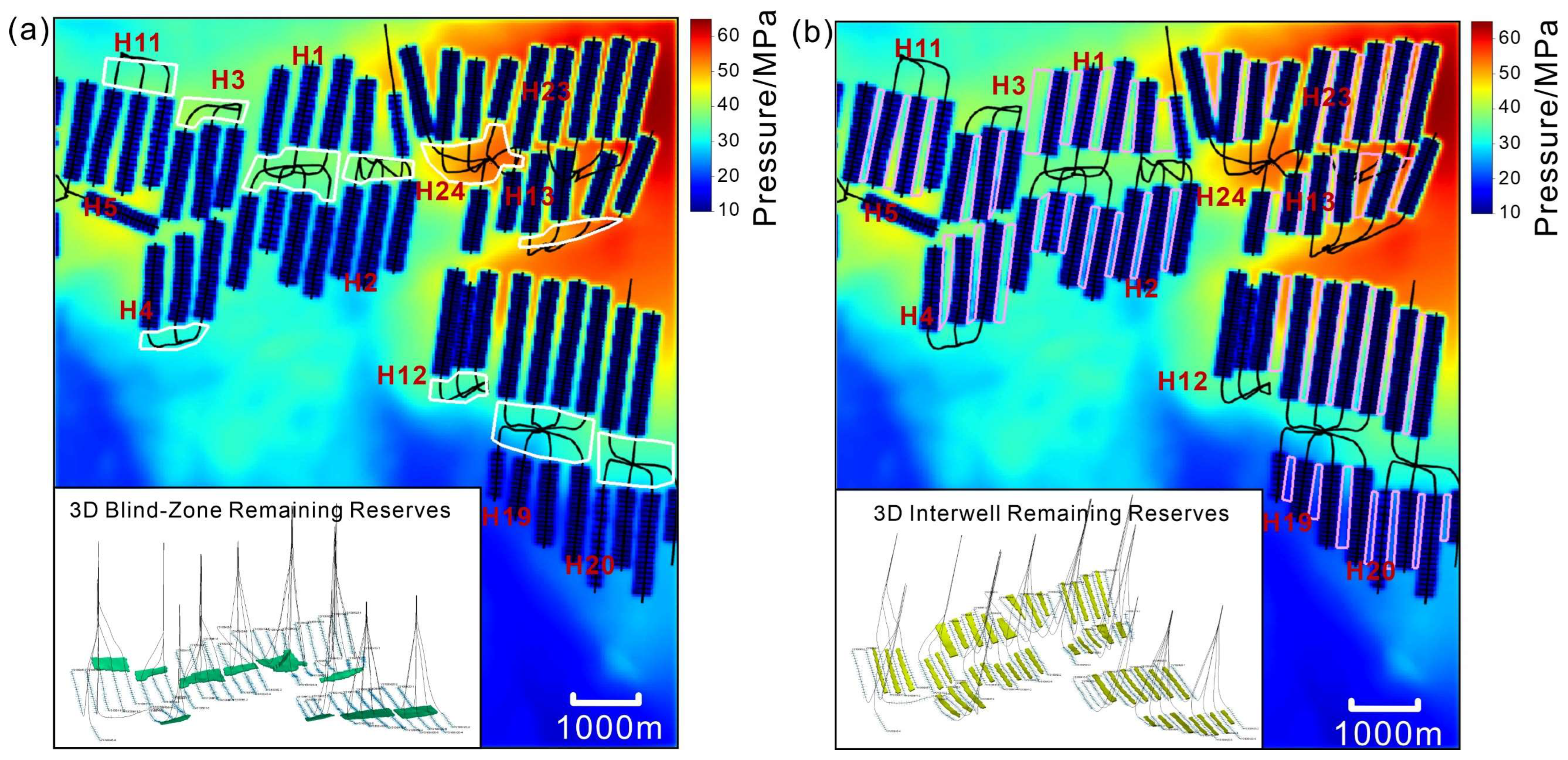
- After approximately 10 years of continuous production, the HuangJinBa YS108 well area still shows considerable redevelopment potential. L113 and L112 are the main depleted sublayers, whereas L114, L111, and the Wufeng Formation retain remaining-resource potential. Two major types of re-mobilization targets were identified: wellbore-control blind-spot resources and inter-well remaining resources, with areas of approximately 5.61 km2 and 6.89 km2, respectively.
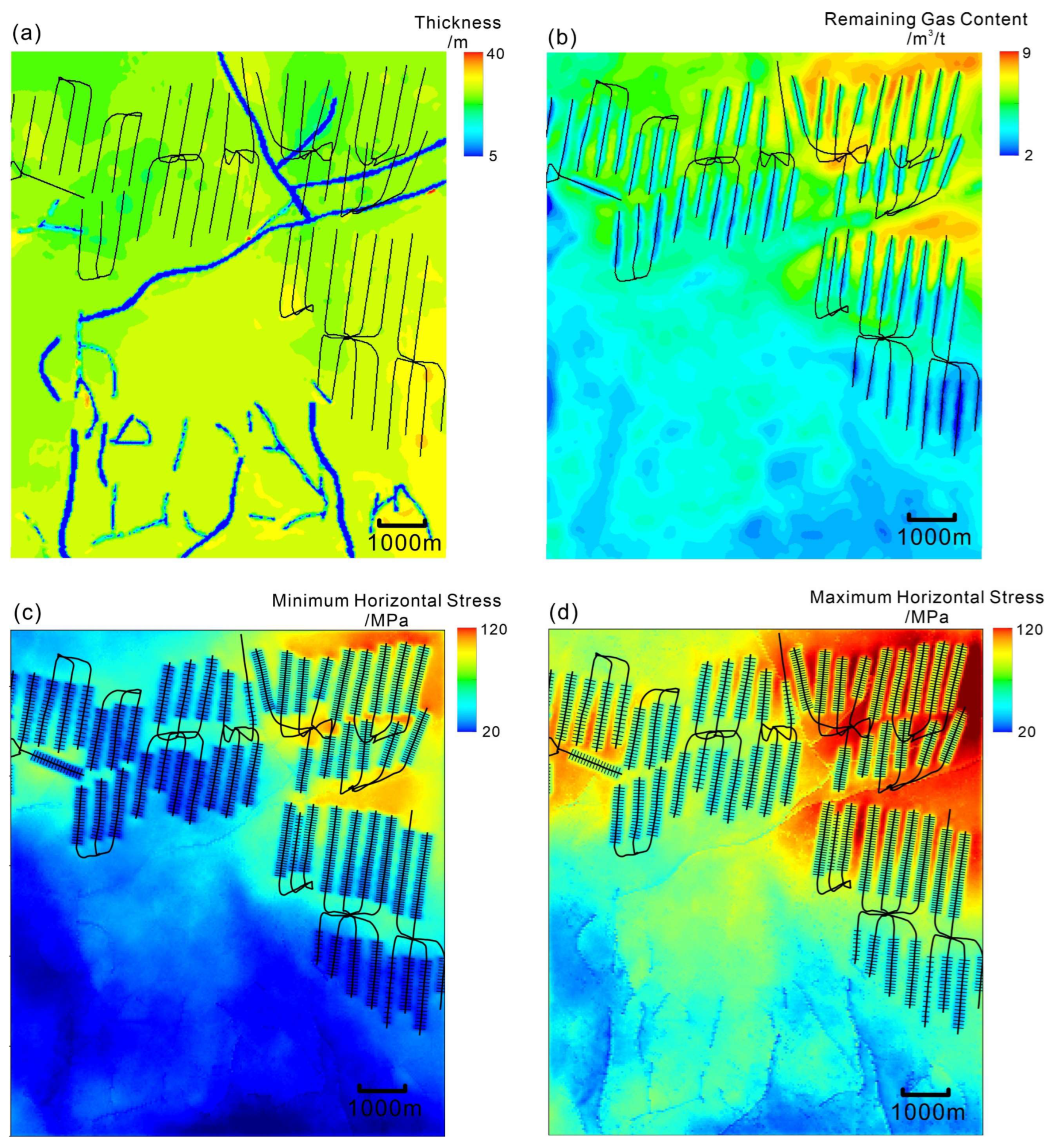
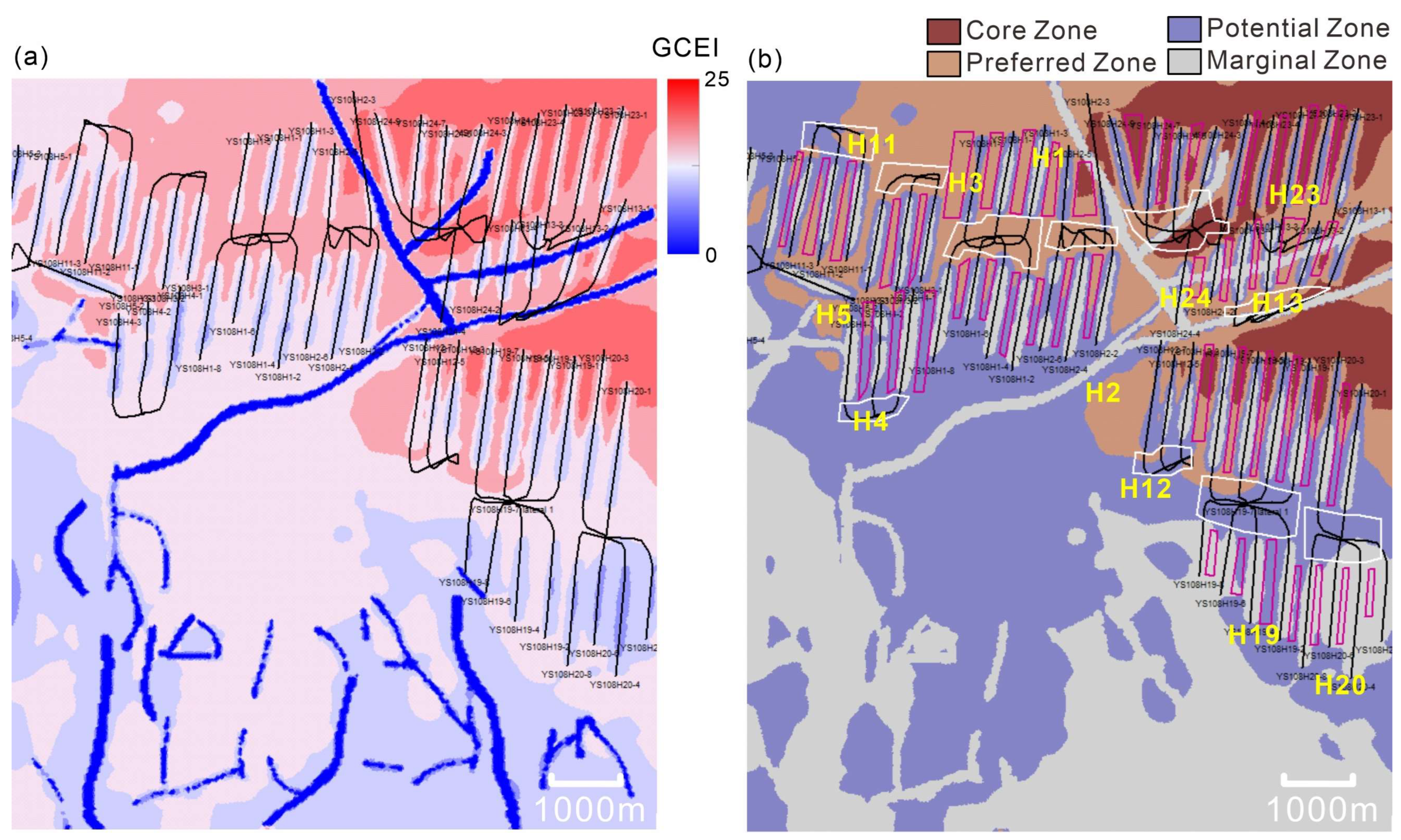
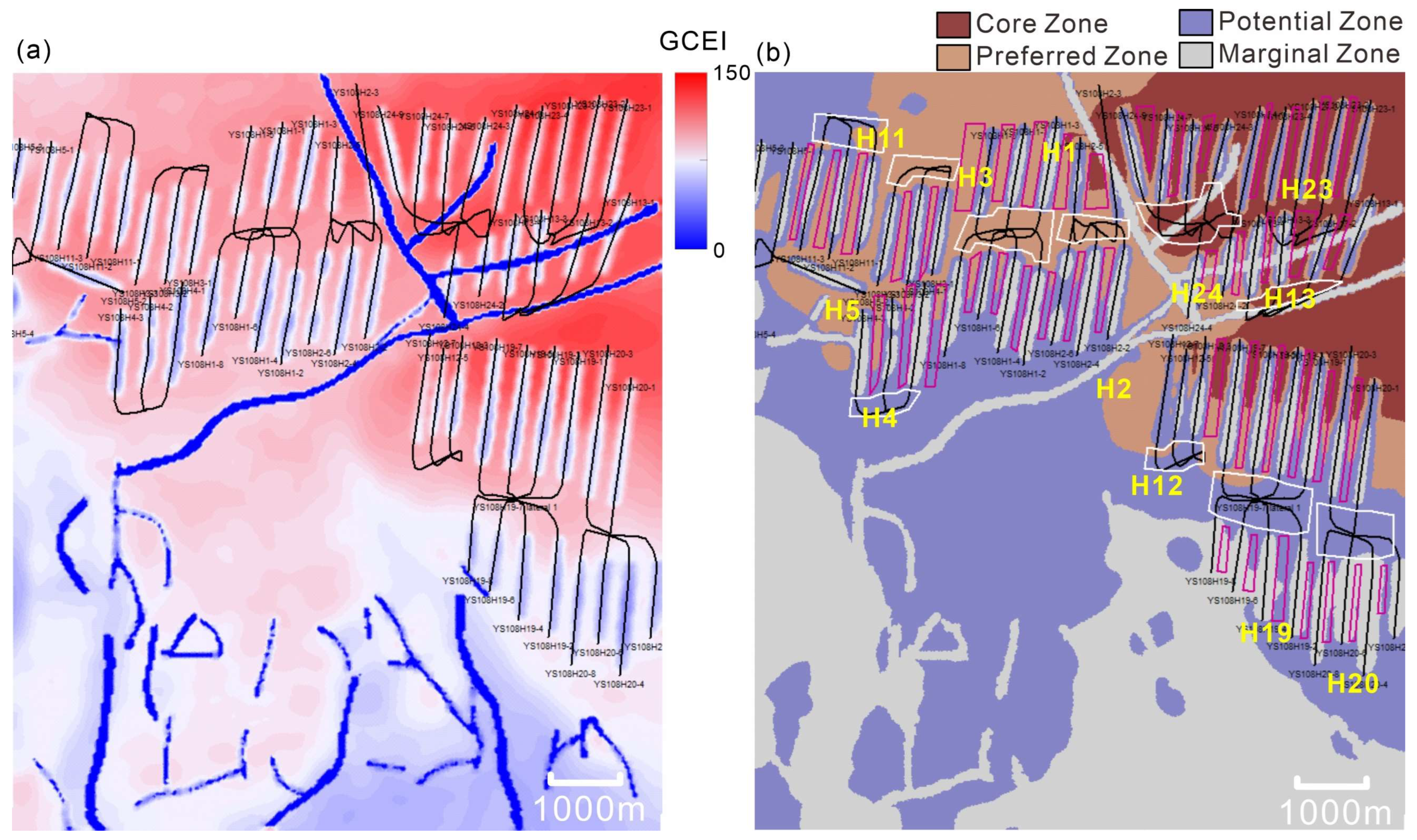
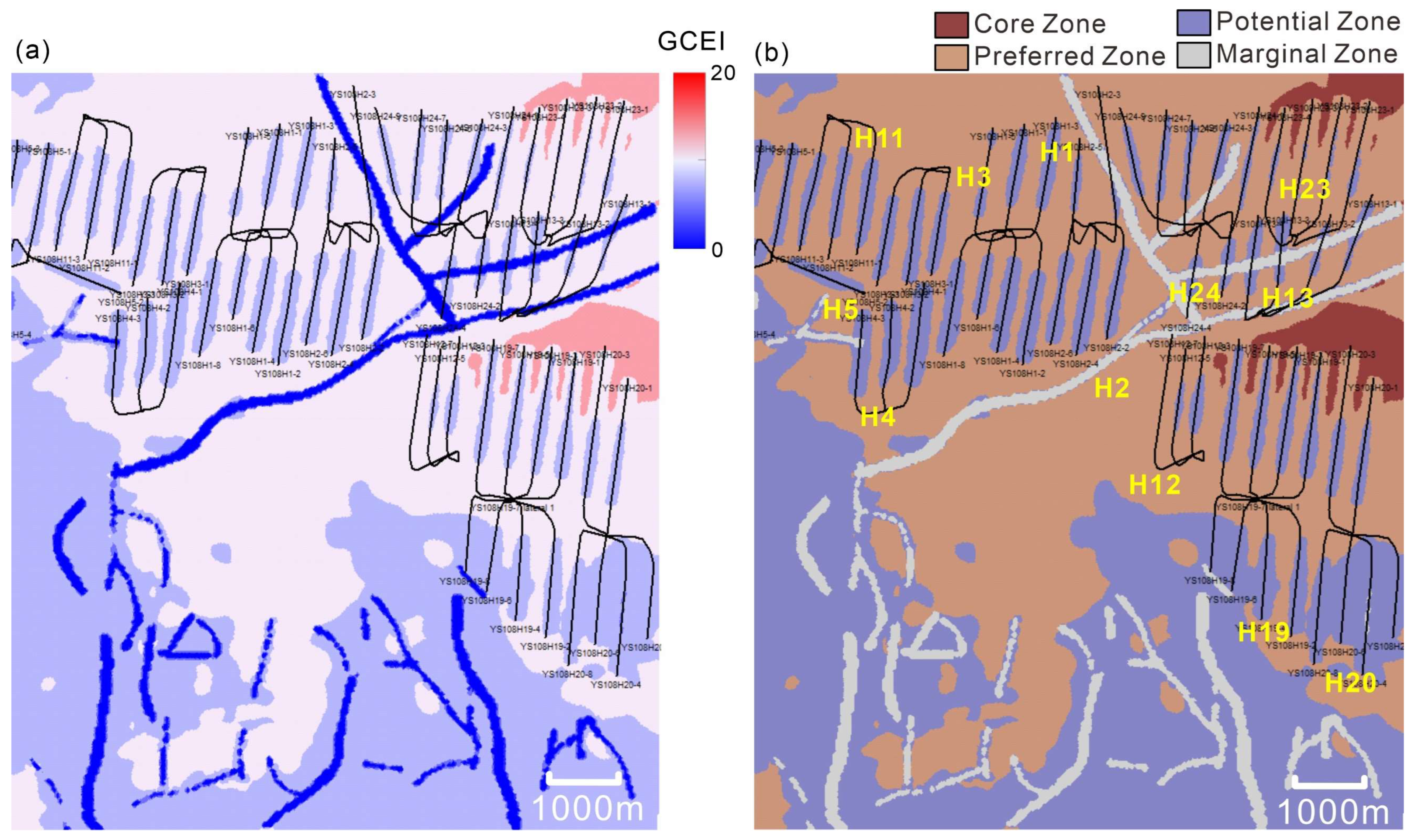
- The present-day geological-condition zoning indicates that favorable redevelopment areas are mainly concentrated in the northern, northeastern, and eastern parts of the study area. Under the balanced weighting scheme, areas around H24, H1, H3, H23, H13, and eastern H20 show relatively good matching between remaining-resource scale and formation-energy conditions and can be regarded as priority screening areas for subsequent redevelopment.
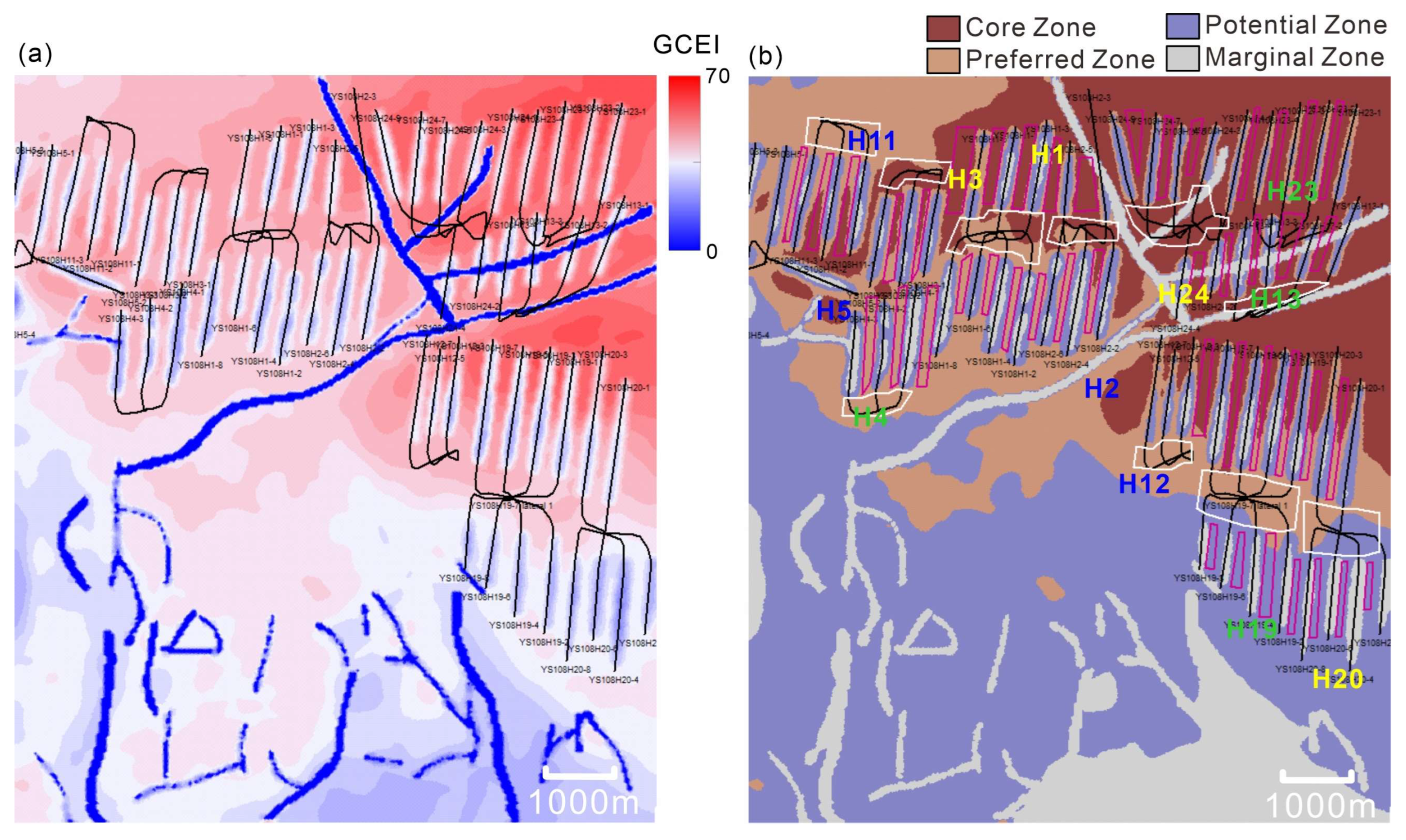
- The present-day stress-state and natural-fracture stability evaluations show that long-term depletion reduces the minimum horizontal principal stress in densely developed well-control areas and generally improves natural-fracture stability, although local fracture intersections and stress-perturbation superposition zones still present elevated slip risk. The final comprehensive zoning results indicate that H1, H3, H24, H13, and H23 have relatively high near-term redevelopment value. Inter-well remaining resources should be developed using conservative infill strategies with controlled fracture length, whereas wellbore-control blind-spot resources can be stimulated more intensively under controllable risk conditions, thereby improving remaining-resource utilization while reducing inter-well interference and fracture instability risk.
Author Contributions
Funding
Data Availability Statement
Acknowledgments
Conflicts of Interest
References
- Liang, X.; Wang, G.; Xu, Z.; Zhang, J.; Chen, Z.; Xian, C.; Lu, H.; Liu, C.; Zhao, C.; Xiong, S. Comprehensive evaluation technology for shale gas sweet spots in the complex marine mountains, South China: A case study from Zhaotong national shale gas demonstration zone. Nat. Gas Ind. B 2016, 3, 27–36. [Google Scholar] [CrossRef]
- Liang, X.; Shan, C.; Wang, W.; Li, Z.; Zhu, D.; Xu, J.; Zhang, Z.; Zhang, Z.; Luo, Y.; Yuan, X. Exploration and development in the Zhaotong national shale gas demonstration area: Progress and prospects. Nat. Gas Ind. B 2023, 10, 44–61. [Google Scholar] [CrossRef]
- Gupta, I.; Rai, C.; Devegowda, D.; Sondergeld, C.H. Fracture hits in unconventional reservoirs: A critical review. SPE J. 2020, 26, 412–434. [Google Scholar] [CrossRef]
- Meng, M.; Li, Z.; Hong, Z.; Bao, J.; Jiang, Q. Quantifying pore size distribution by nuclear magnetic resonance method in tight sandstones: Comparison between water-wet and oil-wet saturated fluids. Int. J. Hydrogen Energy 2026, 197, 152608. [Google Scholar]
- Qin, Z.; Xu, T. Shale gas geological “sweet spot” parameter prediction method and its application based on convolutional neural network. Sci. Rep. 2022, 12, 15405. [Google Scholar] [CrossRef] [PubMed]
- Hong, Z.; Meng, M.; Yuan, B.; Ma, C.; Wang, Q.; Deng, K.; Bao, J.; Yuan, M. Nanopore structure characterization of lacustrine and marine shales: Comparison between small angle neutron scattering and nitrogen adsorption methods. Int. J. Hydrogen Energy 2026, 208, 153565. [Google Scholar] [CrossRef]
- Bao, J.; Meng, M.; Wang, Q.; Yu, S.; Yuan, M.; Hong, Z.; Jiang, Q. Comparison of square-root and logarithmic data treatment for pore connectivity by co-current spontaneous imbibition in lacustrine shales. Int. J. Hydrogen Energy 2026, 229, 154737. [Google Scholar]
- Mesdour, R.; Basri, M.; Temizel, C.; Jama, N. Sweet spot identification in unconventional shale reservoirs. In Physics of Fluid Flow and Transport in Unconventional Reservoir Rocks; Wiley Online Library: Hoboken, NJ, USA, 2023; pp. 333–349. [Google Scholar]
- Liu, S.; Yang, X.; Zhao, S.; Xu, H.; Lei, Y.; Liu, Y.; Cao, L.; Li, B.; He, Y.; Xia, Z.; et al. Evaluation of geological-engineering sweet spots in deep shale gas reservoirs in the North Luzhou Block. Processes 2025. Epub ahead of printing. [Google Scholar] [CrossRef]
- Zhang, M.Y.; Zhou, K.R.; Li, C.X.; Cui, H.; Yuan, X.J.; Su, Z.H.; Xian, C.G. Evolution of natural fracture stability in middle-deep shale reservoirs. Pet. Sci. Bull. 2026, 11, 99–133. [Google Scholar]
- Mezzar, A.; Mehdi, K.M.; Nabila, H.; Abdelmadjid, A. Sweet spots identification: Geological and engineering integrated shale gas: A case study of shale gas Ahnet Basin Algeria. Iraqi Geol. J. 2024, 57, 162–190. [Google Scholar] [CrossRef]
- Ning, W.; Ju, W.; Guo, W. The present-day in-situ stress field and its effect on shale gas development in Zigong area of southern Sichuan Basin. Unconv. Resour. 2024, 4, 100078. [Google Scholar]
- Yong, R.; Wu, J.; Song, Y.; Xu, E.; Xu, B.; Wang, Q.; Wu, L. Investigation of present-day in situ stresses in a shale gas reservoir of Sichuan Basin, China: Field measurement, stress field modeling, and engineering implications. Arab. J. Geosci. 2022, 15, 14. [Google Scholar] [CrossRef]
- Mandal, P.P.; Sarout, J.; Rezaee, R. Triaxial deformation of the Goldwyer gas shale at in situ stress conditions—Part II: Viscoelastic creep/relaxation and frictional failure. Rock Mech. Rock Eng. 2023, 56, 7441–7474. [Google Scholar]
- Zhang, M.; Xian, C.; Huang, X.; Liu, Y.; Liu, Y.; Liu, M.; Wang, J.; Liu, C.; He, Y. Quantitative assessment method and application of natural fracture risk in shallow shale gas based on geomechanics—A case study of Zhaotong shale gas area in southern China. In Proceedings of the Abu Dhabi International Petroleum Exhibition and Conference; SPE: Houston, TX, USA, 2024. [Google Scholar]
- Morrow, C.; Moore, D.E.; Lockner, D. The effect of mineral bond strength and adsorbed water on fault gouge frictional strength. Geophys. Res. Lett. 2000, 27, 815–818. [Google Scholar] [CrossRef]
- Tian, H.; Zeng, L.; Xu, X.; Li, H.; Luo, B.; Dong, S. Factors influencing the in-situ stress orientations in shales: A case study of the Wufeng-Longmaxi formations in the Jiaoshiba area, southeastern Sichuan Basin, China. J. Nat. Gas Sci. Eng. 2021, 94, 104110. [Google Scholar]
- Li, D. Evaluation methods and engineering application of the feasibility of “double sweet spots” in shale gas reservoirs. Pet. Drill. Technol. 2020, 48, 94–99. [Google Scholar]
- Wang, L.; Chen, W.Z.; Zhang, Y.J.; Zhang, X.D.; Vuik, C. Investigating Effects of Heterogeneity and Fracture Distribution on Two-Phase Flow in Fractured Reservoir with Adaptive Time Strategy. Transp. Porous Media 2023, 149, 175–203. [Google Scholar]
- Jiang, J.; Tchelepi, H.A. Nonlinear Acceleration of Sequential Fully Implicit (SFI) Method for Coupled Flow and Transport in Porous Media. Comput. Methods Appl. Mech. Eng. 2019, 352, 246–275. [Google Scholar] [CrossRef]
- Sun, H.; Cai, X.; Hu, D.; Lu, Z.; Zhao, P.; Zheng, A.; Li, J.; Wang, H. Theory, technology and practice of shale gas three-dimensional development: A case study of Fuling shale gas field in Sichuan Basin, SW China. Pet. Explor. Dev. 2023, 50, 651–664. [Google Scholar] [CrossRef]
- Gao, J. Three-dimensional development technologies and countermeasures for shale gas in Weiyuan Block of the Sichuan Basin: A case study on Wei 202A Platform. Nat. Gas. Ind. 2022, 42, 93–99. [Google Scholar] [CrossRef]
- Han, L.; Li, X.; Liu, Z.; Duan, G.; Wan, Y.; Guo, X.; Guo, W.; Cui, Y. Influencing factors and prevention measures of casing deformation in deep shale gas wells in Luzhou block, southern Sichuan Basin, SW China. Pet. Explor. Dev. 2023, 50, 979–988. [Google Scholar] [CrossRef]
- Zhang, M.; Li, C.; Xian, C.; Wang, H.; Liu, Y.; Huang, X. High-resolution in-situ stress modeling integrating scratch test experiments. SPE J. 2026, 31, 2105–2120. [Google Scholar]
- Zoback, M.D. Reservoir Geomechanics; Cambridge University Press: Cambridge, UK, 2010. [Google Scholar]
- Zoback, M.D.; Kohli, A.H. Unconventional Reservoir Geomechanics; Cambridge University Press: Cambridge, UK, 2019. [Google Scholar]
- Anderson, E.M. The Dynamics of Faulting and Dyke Formation with Applications to Britain; Oliver and Boyd: Edinburgh, UK, 1951. [Google Scholar]
- Chen, Z.; Liao, X.; Zhao, X.; Dou, X.; Zhu, L. Performance of horizontal wells with fracture networks in shale gas formation. J. Pet. Sci. Eng. 2015, 133, 646–664. [Google Scholar] [CrossRef]
- Deng, Y.; Feng, X.; Wang, X.; Zhao, Z.; Guo, J.; Zeng, J. Risk analysis of casing deformation in shale gas wells: A case study from the Jingyan Block. In Proceedings of the SPE Advances in Integrated Reservoir Modelling and Field Development Conference and Exhibition; SPE: Houston, TX, USA, 2025; p. D021S011R007. [Google Scholar]
- Huang, H.; Xu, E.; Zhong, G.; Zhang, Z.; Yang, X.; Liu, C.; Yu, W. Analysis of casing deformation in horizontal wells of deep shale gas reservoirs: Causes and mitigation strategies. In Proceedings of the SPE/AAPG/SEG Unconventional Resources Technology Conference; SPE: Houston, TX, USA, 2025; p. D031S066R006. [Google Scholar]
- Li, Y.; Liu, W.; Yan, W.; Deng, J.; Li, H. Mechanism of casing failure during hydraulic fracturing: Lessons learned from a tight-oil reservoir in China. Eng. Fail. Anal. 2019, 98, 58–71. [Google Scholar] [CrossRef]
- Licitra, D.T.; Vittore, F.; Espindola, B. Casing deformation in unconventional developments: Case study Vaca Muerta Formation, Argentina. In Proceedings of the SPE/AAPG/SEG Unconventional Resources Technology Conference; GeoScienceWorld: McLean, VA, USA, 2025; p. D031S049R004. [Google Scholar]
- Wu, J.; Shi, X.; Gou, Q.; Xu, E.; Zhang, D.; Ren, X.; Yu, T.; Wu, K.; Tong, Y.; Wang, L.; et al. Casing deformation risk prediction with numerical simulation during hydraulic fracturing in deep shale gas reservoirs. In Proceedings of the SPE/AAPG/SEG Unconventional Resources Technology Conference; URTEC: Houston, TX, USA, 2024; p. D021S032R002. [Google Scholar]
- Labuz, J.F.; Zang, A. Mohr–Coulomb failure criterion. In The ISRM Suggested Methods for Rock Characterization, Testing and Monitoring: 2007–2014; Springer International Publishing: Cham, Switzerland, 2012; pp. 227–231. [Google Scholar]
- Li, Q.; You, D.; Li, Q.; Wang, F.; Wang, Y.; Yang, Y. Analysis of Sedimentation Behavior and Influencing Factors of Solid Particles in CO2 Fracturing Fluid. Processes 2025, 13, 4049. [Google Scholar] [CrossRef]
- Ao, F.; Li, Q.; Li, Q.; Wu, J.; Wang, F.; Yan, C. Numerical Simulation Investigation of Fracture Propagation Behavior Patterns and Sensitivity Factors of Oil Shale Reservoirs in the Xunyi Region Considering the Influence of Natural Fracture. Geofluids 2025, 2025, 2762142. [Google Scholar] [CrossRef]
- Li, Q.; Li, Q.; Wang, F.; Wu, J.; Wang, Y.; Jin, J. Effects of Geological and Fluid Characteristics on the Injection Filtration of Hydraulic Fracturing Fluid in the Wellbores of Shale Reservoirs: Numerical Analysis and Mechanism Determination. Processes 2025, 13, 1747. [Google Scholar] [CrossRef]
- Dumitrache, L.; Roy, A.; Bird, A.; Goktas, B.; Sorgi, C.; Stanley, R.; De Gennaro, V.; Eswein, E.; Abbott, J. A Multidisciplinary Approach to Production Optimization through Hydraulic Fracturing Stimulation and Geomechanical Modelling in Clair Field. In Proceedings of the International Petroleum Technology Conference, Riyadh, Saudi Arabia; IPTC: Richardson, TX, USA, 2022; p. IPTC-22293-MS. [Google Scholar]



| Zoning Type | Percentile Interval | Zoning Implication |
|---|---|---|
| Core Zone | I > P90 | The zone with the highest comprehensive evaluation index, representing the most favorable target area for redevelopment under current conditions. |
| Preferred Zone | P70 < I ≤ P90 | The zone with relatively favorable comprehensive conditions and high redevelopment potential, which can be regarded as a key preferred area. |
| Potential Zone | P40 < I ≤ P70 | The zone with certain redevelopment potential, but further screening is required by integrating the stress state and fracture stability. |
| Marginal Zone | I ≤ P40 | The zone with relatively weak comprehensive conditions and low development priority at the current stage. |
| GCEI Level | Present-Day Stress Condition | Natural-Fracture-Slip Risk | Final Zoning Type | Engineering Meaning |
|---|---|---|---|---|
| Core/Preferred zone | Favorable | Low to moderate | Type I priority zone | High redevelopment potential and good implementability |
| Core/Preferred zone | Constrained or locally unfavorable | Moderate to high | Type II conditional zone | Resource basis is good, but stimulation parameters should be constrained |
| Moderate zone | Favorable or constrained | Moderate | Type III deferred zone | Redevelopment can be considered after Type I/II zones |
| Low-potential zone | Unfavorable | High | Type IV reserve zone | Low priority under current technical and economic conditions |
| Core zone | High slip risk | High | Type II or Type III, depending on engineering controllability | High resource potential but risk-dominated; conservative stimulation is required |
| Zoning Mode | Weight Combination (a:b:c) | Dominant Factor | Main Evaluation Objective |
|---|---|---|---|
| Resource-Dominated Mode | 0.55:0.20:0.25 | Remaining gas content | To identify areas enriched in remaining gas resources. |
| Formation-Energy-Dominated Mode | 0.30:0.15:0.50 | Remaining pressure | To identify areas with relatively well-preserved formation energy. |
| Geological-Development-Condition-Dominated Mode | 0.35:0.45:0.25 | Effective reservoir thickness | To identify areas suitable for staggered-layer infill drilling and three-dimensional development. |
| Balanced Mode | 0.40:0.20:0.40 | Remaining gas content and remaining pressure | To comprehensively identify priority areas for redevelopment. |
Disclaimer/Publisher’s Note: The statements, opinions and data contained in all publications are solely those of the individual author(s) and contributor(s) and not of MDPI and/or the editor(s). MDPI and/or the editor(s) disclaim responsibility for any injury to people or property resulting from any ideas, methods, instructions or products referred to in the content. |
© 2026 by the authors. Licensee MDPI, Basel, Switzerland. This article is an open access article distributed under the terms and conditions of the Creative Commons Attribution (CC BY) license.
Share and Cite
Yuan, X.; Zhang, M.; Su, Z.; Cui, H.; Xian, C.; Li, C.; Sun, Y.; Li, H.; Zhao, Y. A Multi-Constraint Integrated Zoning Method for Redevelopment of Mature Shale Gas Well Areas. Processes 2026, 14, 2130. https://doi.org/10.3390/pr14132130
Yuan X, Zhang M, Su Z, Cui H, Xian C, Li C, Sun Y, Li H, Zhao Y. A Multi-Constraint Integrated Zoning Method for Redevelopment of Mature Shale Gas Well Areas. Processes. 2026; 14(13):2130. https://doi.org/10.3390/pr14132130
Chicago/Turabian StyleYuan, Xiaojun, Muyang Zhang, Zhanhong Su, Huan Cui, Chenggang Xian, Caoxiong Li, Yingxue Sun, Hangyuan Li, and Yang Zhao. 2026. "A Multi-Constraint Integrated Zoning Method for Redevelopment of Mature Shale Gas Well Areas" Processes 14, no. 13: 2130. https://doi.org/10.3390/pr14132130
APA StyleYuan, X., Zhang, M., Su, Z., Cui, H., Xian, C., Li, C., Sun, Y., Li, H., & Zhao, Y. (2026). A Multi-Constraint Integrated Zoning Method for Redevelopment of Mature Shale Gas Well Areas. Processes, 14(13), 2130. https://doi.org/10.3390/pr14132130