Review

Emerging Perspectives on How Metallic Nanoparticles and Their Oxide Forms Interact with the Tumor Microenvironment

1
Department of Clinical Medicine, Faculty of Health Sciences, UiT-The Arctic University of Norway, 9019 Tromsø, Norway
2
Biomedical Magnetic Resonance Laboratory-BMRL, Andalusian Public Foundation Progress and Health-FPS, 41092 Seville, Spain
3
Biomedical Research Institute of Málaga and Nanomedicine Platform (IBIMA Plataforma BIONAND), 29590 Malaga, Spain
Processes 2026, 14(12), 1977; https://doi.org/10.3390/pr14121977
Submission received: 13 May 2026 / Revised: 11 June 2026 / Accepted: 16 June 2026 / Published: 18 June 2026
(This article belongs to the Special Issue Multiscale Modeling and Control of Biomedical Systems)

Abstract

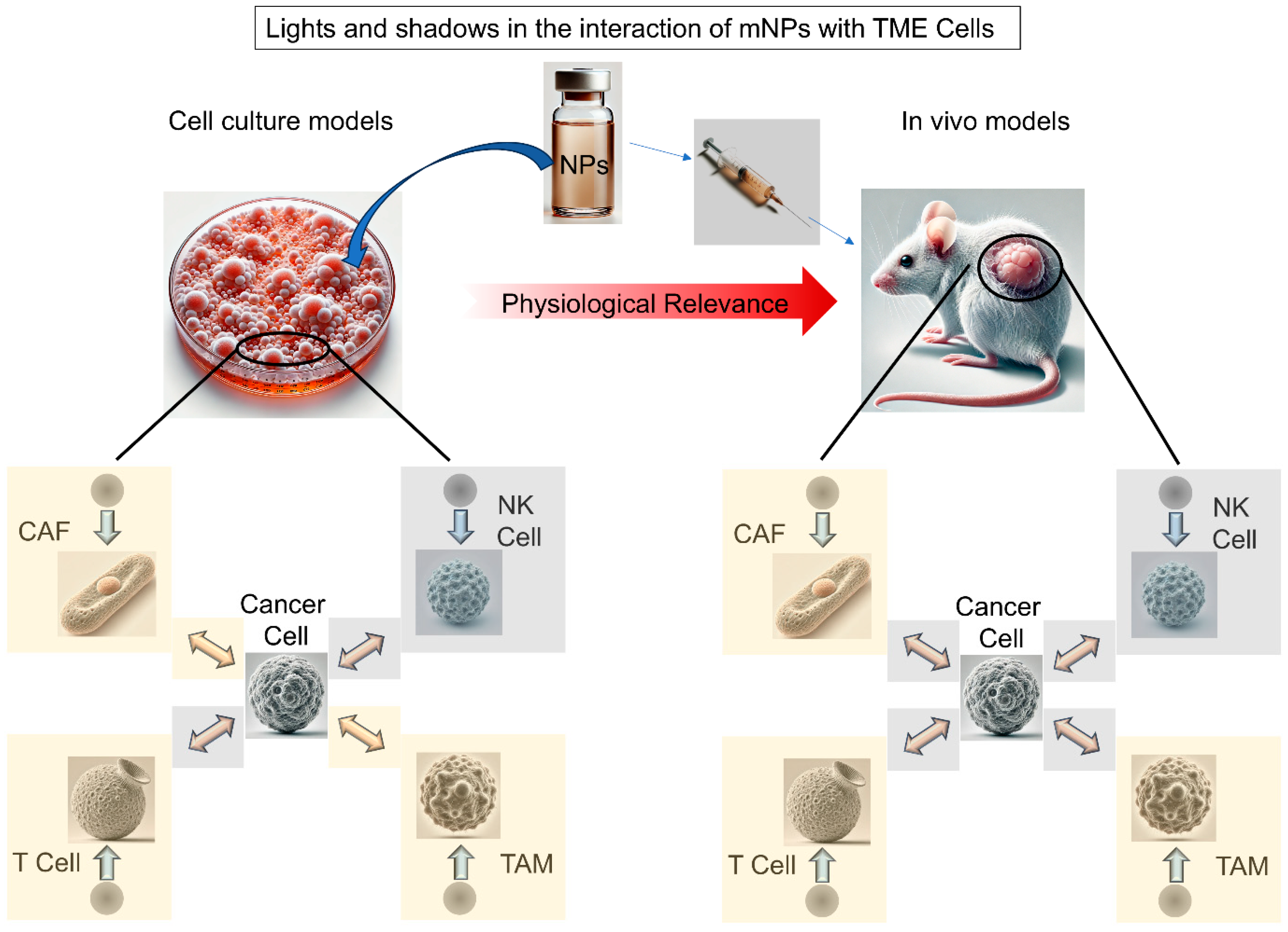
Cancer remains one of the most formidable health challenges worldwide. Extensive research has shown that tumor progression is not driven solely by malignant cells but is profoundly shaped by the tumor microenvironment (TME), which influences cancer initiation, immune evasion, and metastatic spread. Consequently, the TME has become an increasingly compelling therapeutic target. Nanotechnology has transformed cancer diagnostics and therapy, with metallic nanoparticles (mNPs) gaining particular attention due to their distinctive physicochemical properties and broad therapeutic potential. However, their interactions within the TME remain insufficiently understood, particularly with the non-cancerous cellular components, such as Cancer-Associated Fibroblasts (CAFs), Tumor-Associated Macrophages (TAMs), Dendritic Cells (DCs), Natural Killer (NK) cells, and T cells. Most existing reviews emphasize nanoparticle interactions with non-cellular TME components, such as the extracellular matrix, while far less attention has been given to their effects on cellular constituents (a gap this work specifically addresses). Although several molecular pathways through which mNPs modulate TME-resident cells have been identified, these likely represent only a small portion of the underlying mechanisms explored in this review. Progress in the field is further hindered by the limited availability of physiologically relevant experimental models; current in vitro and in vivo systems often fail to capture the complexity and dynamic heterogeneity of the TME. These limitations highlight the urgent need for more comprehensive and mechanistically grounded studies to validate the TME as a viable therapeutic target for nanoparticle-based cancer interventions. In particular, deeper insights into how mNPs influence immune regulation, stromal remodeling, and metabolic reprogramming within the TME will be essential for unlocking their full therapeutic potential in oncology.

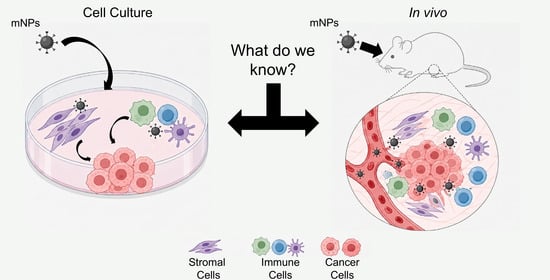
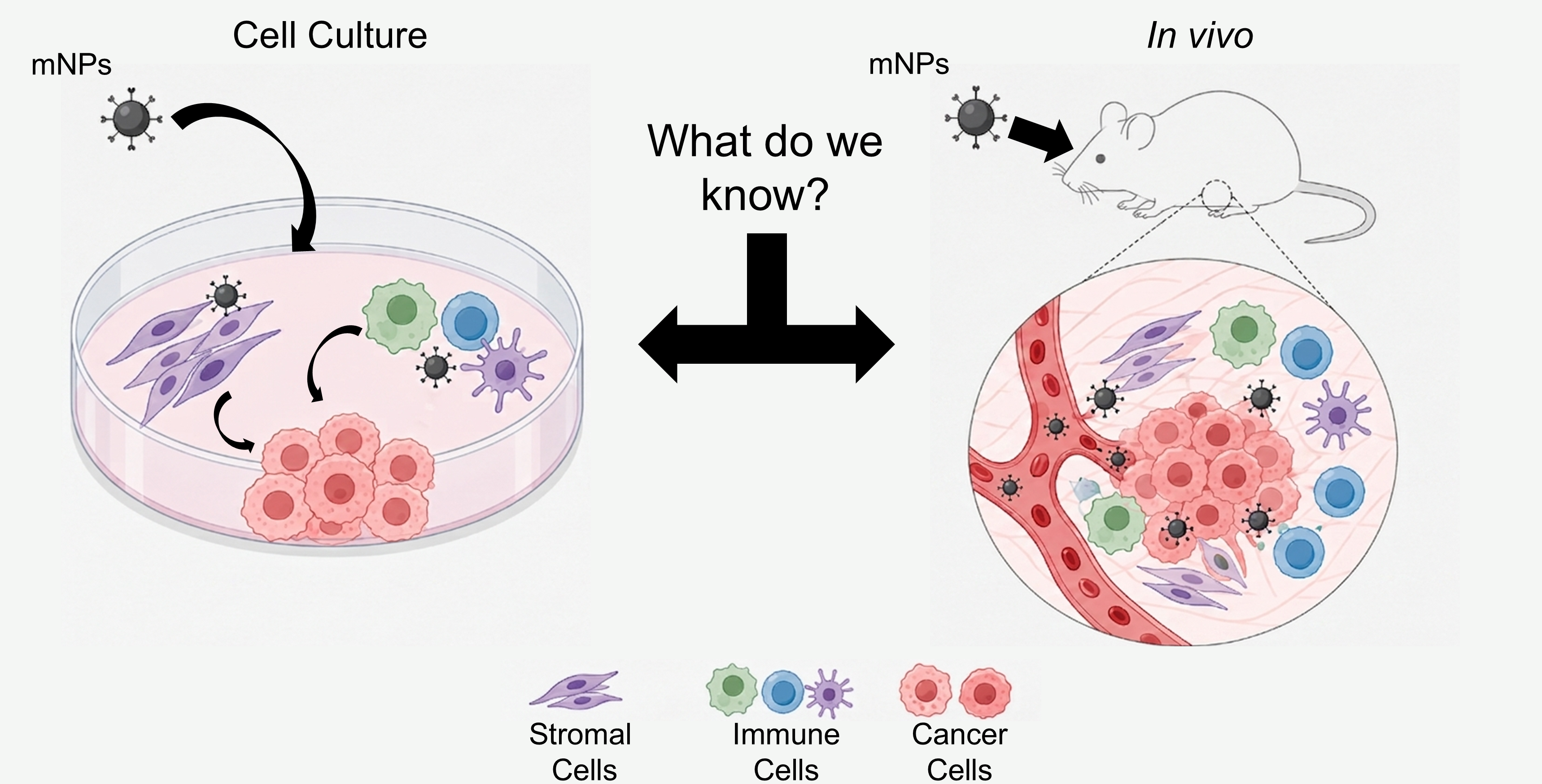
Graphical Abstract

1. Introduction

This review provides a comprehensive, up-to-date analysis of the multifaceted interactions between metallic nanoparticles and their oxides (hereinafter mNPs) and the diverse cellular components of the tumor microenvironment (TME). Understanding these interactions is critical, given the profound influence of TME on tumor behavior and therapeutic response. By examining how mNPs engage stromal and immune cells within the TME (and how these resulting cellular changes subsequently impact cancer cells) this review assesses the potential of mNPs to modulate tumor progression, reshape intercellular communication, and improve therapeutic outcomes. For clarity, the review is structured in two sections: (1) A concise introduction covering fundamental concepts in cancer biology, the role of the TME, and the relevance of nanotechnology. (2) An in-depth analysis of the interactions of mNPs with the cellular components of the TME, deliberately excluding its non-cellular elements. All references analyzed in this work were retrieved from PubMed using the following search criteria: “mNPs AND cellular component of the TME”, “mNPs AND Cancer-Associated Fibroblasts (CAFs)”, “mNPs AND Tumor-Associated Macrophages (TAMs)”, “mNPs AND Dendritic Cells (DCs)”, “mNPs AND Natural Killer (NK) cells”, and “mNPs AND T cells”. Given the scarcity of studies addressing this topic, all eligible articles were included. Only works using cellular models unrelated to the TME, or studies focused exclusively on non-cellular components of the TME, were excluded.

2. Cancer and the Tumor Microenvironment

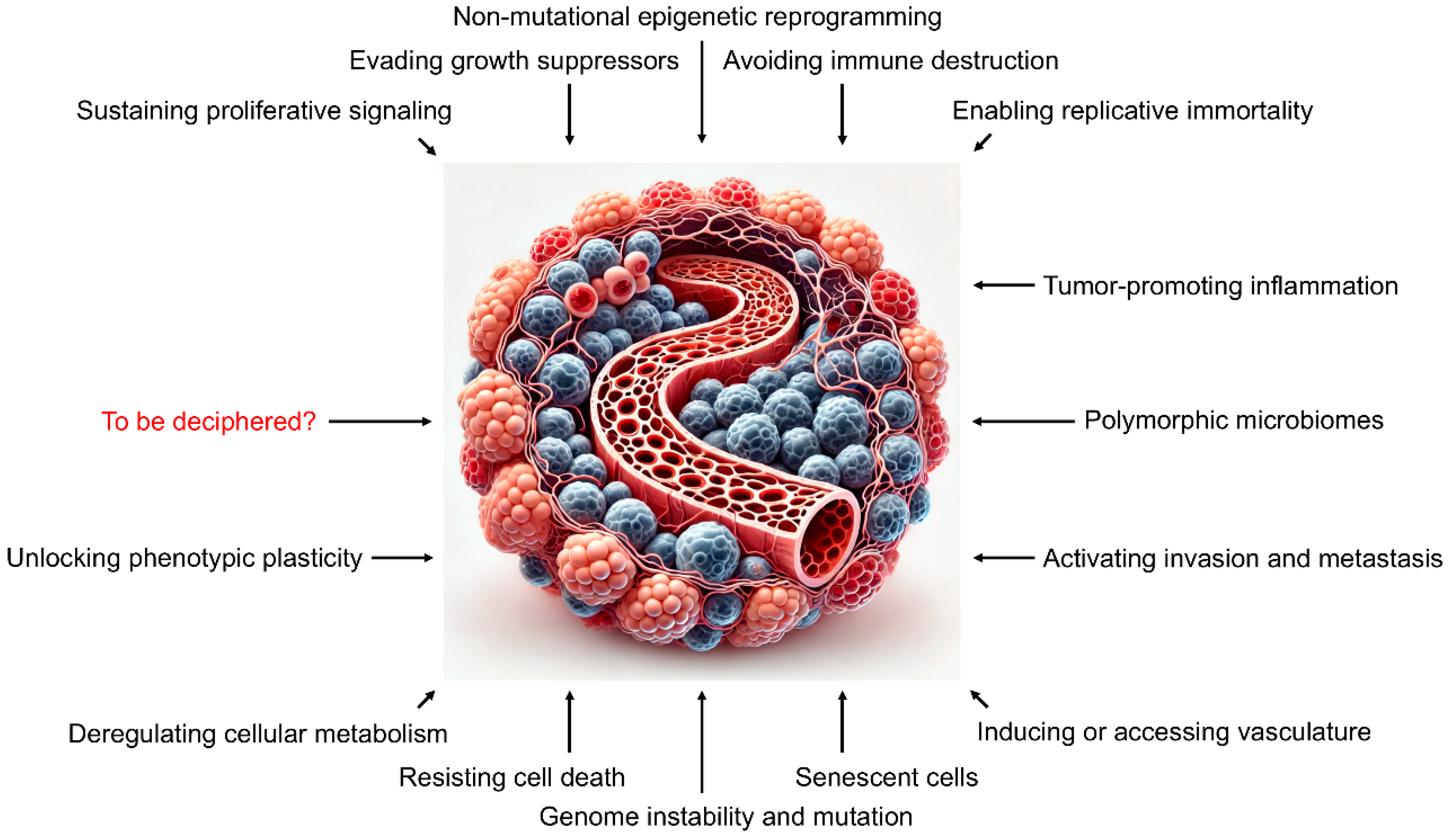
Cancer remains a major global health burden and one of the leading causes of mortality worldwide [1], accounting for approximately 15% of all deaths and around 9% of total disability-adjusted life years (DALYs) in 2021 [2,3]. With its incidence continuing to rise, there is an urgent need for sustained research efforts and more effective therapeutic strategies [4]. This devastating disease is increasingly characterized as a disease of uncontrolled cellular proliferation shaped by Darwinian selection [5], resulting in complex, evolving ecosystems. This selective pressure drives diversification among both malignant and non-malignant cells, yielding substantial intratumoral heterogeneity (both within different regions of the same tumor and across its temporal evolution) [6,7]. When viewed alongside the even greater intertumoral heterogeneity, the profound complexity of cancer biology becomes evident [8]. Although cancer includes many types with distinct molecular and metastatic features [9], most share common biological traits known as the “Hallmarks of Cancer” [10], with exceptions such as hematological malignancies that do not form solid tumors [11] (Figure 1). Notably, the “Hallmarks of Cancer” have evolved from six in 2000 to fourteen in 2022, and it can therefore be hypothesized that additional hallmarks will likely be identified in the future.
Despite major advances, the fundamental origins of cancer remain incompletely understood, highlighting the importance of deepening knowledge of the disease alongside therapeutic development [12,13]. Building on this perspective (and echoing a modern paraphrase of Sun Tzu that “a poor understanding of one’s adversary ensures that every victory is matched by an equivalent loss”) it becomes clear that advancing cancer therapy requires more than the development of new treatments. A central objective of cancer research must be the thorough and precise understanding of the disease in all its dimensions, across every relevant field of study.
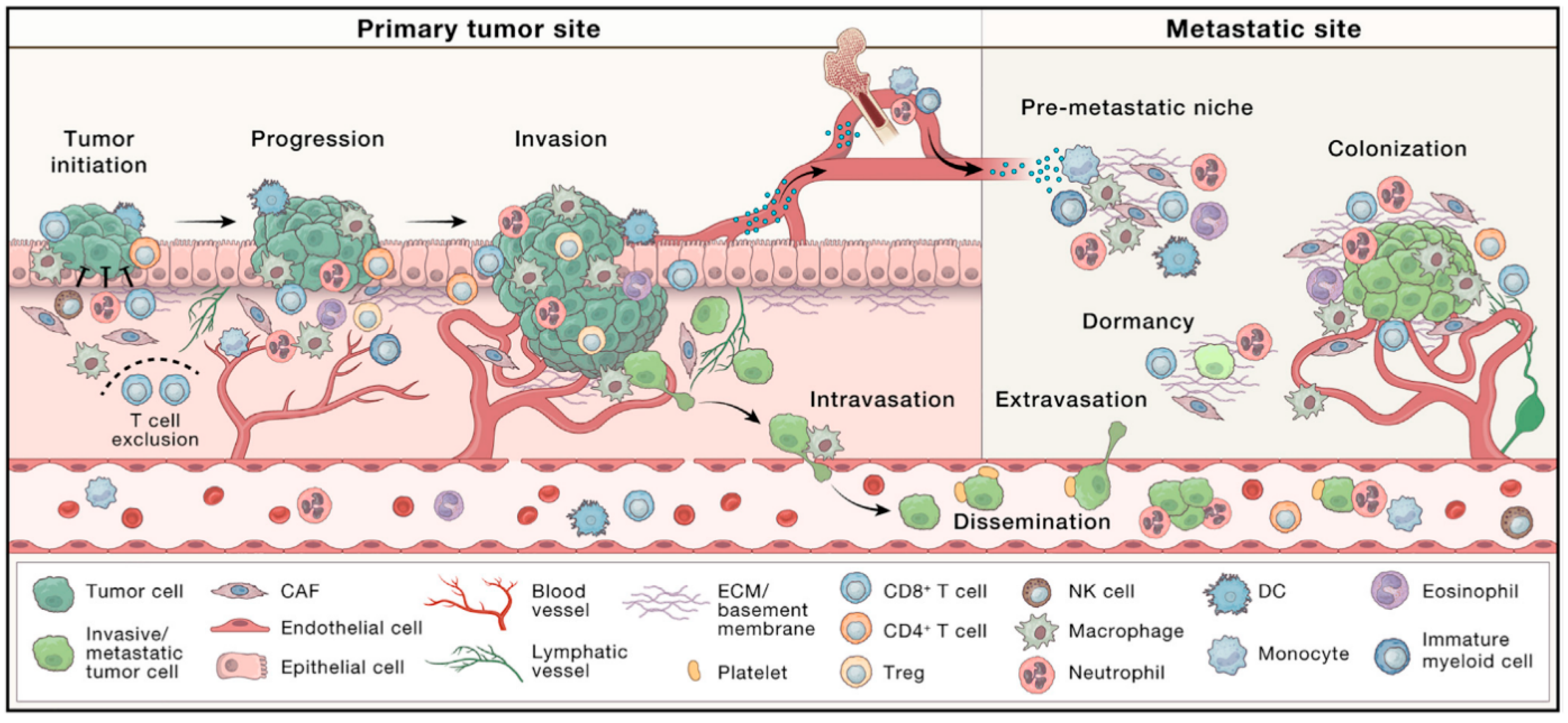
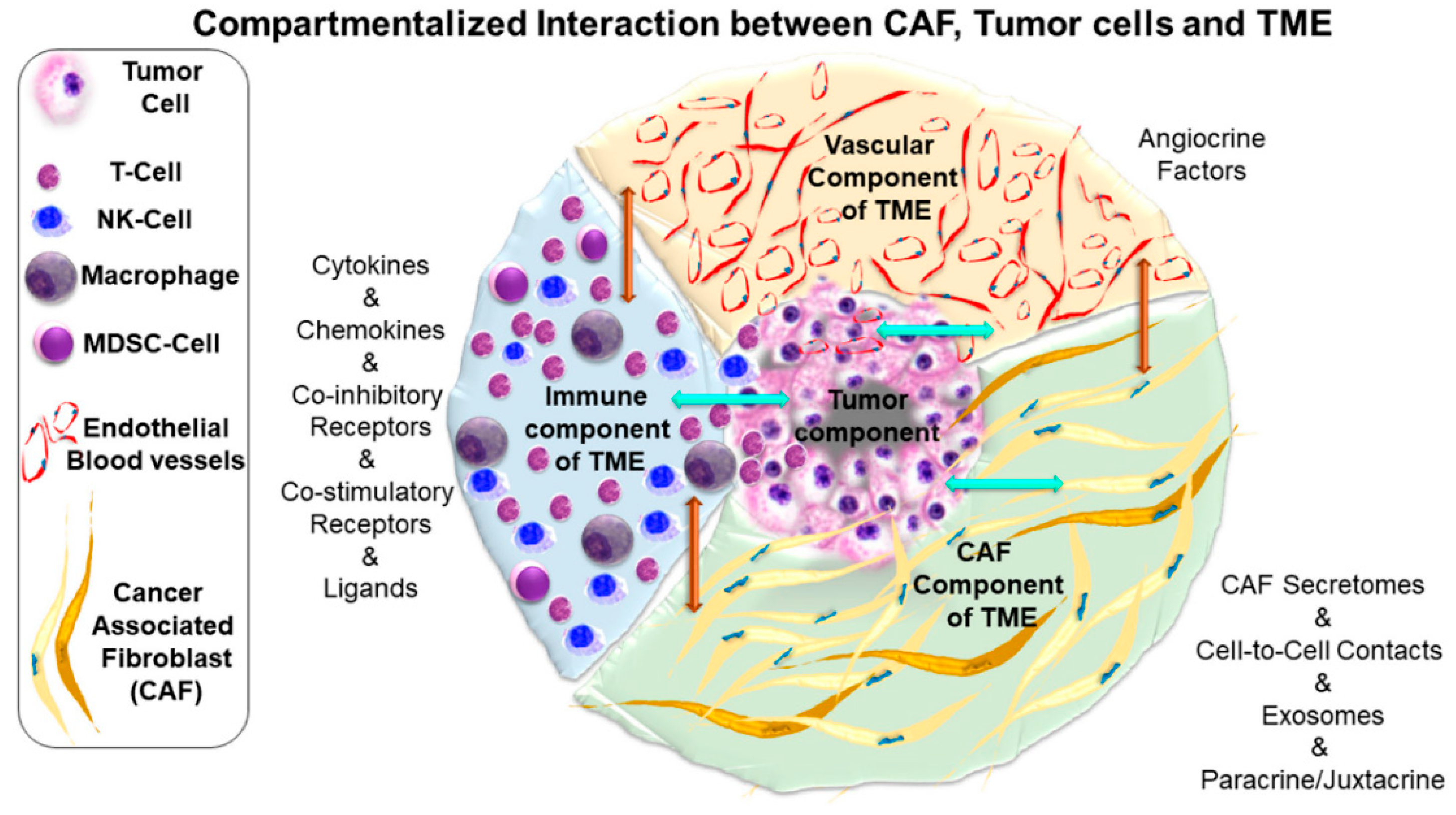
Importantly, tumors should not be considered simple masses of malignant cells, but rather dynamic and heterogeneous ecosystems shaped by the TME [14] (Figure 2). Tumor cells actively reshape their surrounding microenvironment, inducing extensive molecular, cellular, and structural alterations that promote tumor growth and progression [15]. Through intricate signaling networks, cancer cells reprogram both cellular and non-cellular TME components (recruiting and modulating host cells while remodeling the vasculature and extracellular matrix (ECM)) to sustain proliferation, evade immune surveillance, and facilitate metastasis [16]. Emerging evidence reveals further layers of complexity in these interactions, highlighting the need for comprehensive analyses to elucidate tumor-promoting mechanisms and identify novel therapeutic targets. Within this dynamic context, intercellular communication in the TME occurs via multiple pathways, including direct cell–cell contact and paracrine signaling [17].
Figure 2. The TME plays a critical role in cancer progression and metastasis. It consists of various components, including immune cells, CAFs, endothelial cells, and the ECM, which interact with the tumor and evolve alongside it. Initially, the normal tissue environment can suppress tumor growth, but as cancer progresses, it manipulates the TME to support tumor development by promoting cell proliferation, invasion, and spread. The TME also contributes to preparing distant sites for metastasis, aiding cancer cell survival in the bloodstream, and supporting metastatic colonization and outgrowth. Copyright (2023) Elsevier as referenced in [14].
Processes 14 01977 g002
Cells within the TME and their secreted molecules are key contributors to cancer progression, making them important therapeutic targets. Although most treatments have traditionally focused on directly eliminating tumor cells, stromal cells in the TME are genetically more stable and therefore less likely to develop therapeutic resistance [18]. Given the high heterogeneity of cancer cells, targeting the TME represents a promising complementary strategy to overcome resistance and enhance treatment efficacy [19]. For a more detailed overview of TME components and functions, readers are referred to other review articles [20,21].

2.1. Cancer-Associated Fibroblast (CAFs)

CAFs are a heterogeneous population of mesenchymal cells present in solid tumors [22]. They primarily originate from normal fibroblasts activated in proximity to cancer cells and subsequently acquire distinct phenotypic and epigenetic features, with their diversity further shaped by multiple cellular origins and activation pathways [23,24]. Interactions between CAFs and cancer cells are bidirectional, reinforcing tumor progression through reciprocal signaling [25]. Unlike normal fibroblasts, CAFs remain persistently activated [26] and secrete a broad spectrum of cytokines, chemokines, growth factors, enzymes, and ECM components [27] (Figure 3). These factors remodel the TME and promote cancer cell survival, angiogenesis, therapy resistance, invasion, and metastasis [28,29]. Within the tumor tissue, CAFs also regulate immune-cell recruitment and function, contributing to an immunosuppressive environment that facilitates tumor immune evasion [30].
In addition, CAFs drive epithelial-to-mesenchymal transition (EMT), characterized by E-cadherin repression and loss of epithelial polarity, which enhances cancer cell motility and metastatic potential [31,32]. In contrast, normal fibroblasts help maintain an epithelial-like phenotype that restrains metastasis [33]. CAFs can also travel with circulating tumor cells, supporting metastatic colonization by facilitating extravasation and growth at distant sites [34]. Their presence is associated with poor prognosis across several cancers [35].
Single-cell sequencing has revealed that CAFs comprise multiple subtypes [36] with tumor-promoting or tumor-restraining roles, highlighting their functional diversity and plasticity [37,38]. Although this heterogeneity complicates therapeutic targeting, it also offers opportunities for novel interventions, emphasizing the need to better understand CAF-tumor interactions to disrupt tumor–stroma crosstalk and overcome resistance [39]. Hence, a deeper understanding of CAF-mediated interactions within the TME is essential for developing strategies aimed at disrupting tumor-stroma crosstalk and overcoming treatment resistance.

2.2. Tumor-Associated Macrophages (TAMs)

TAMs are macrophages that infiltrate or reside within the TME of solid tumors and play a causal role in cancer initiation through their central involvement in inflammation [40]. They also drive tumor progression by promoting growth, angiogenesis, immune modulation, chemoresistance, and metastasis [41]. While macrophages initially show immune-activating functions during early tumor-associated inflammation, they are progressively reprogrammed toward protumoral phenotypes as tumors develop [42]. TAMs exhibit high plasticity and are commonly described within the M1 (pro-inflammatory, anti-tumor) and M2 (immunosuppressive, pro-tumor) polarization framework [43]. These subsets differ in surface markers, metabolic profiles, and gene expression patterns [44]. This “polarization”, is orchestrated by tumor (and stroma)-derived signals, including cytokines and growth factors [45], although most TAMs do not fit strictly into this binary classification [46]. Although TAMs were traditionally thought to derive mainly from recruited monocytes, evidence now suggests that embryonically derived tissue-resident macrophages can also contribute to TAM populations in certain tumors [47].
TAMs preferentially accumulate in invasive fronts, hypoxic avascular regions [48], and along the abluminal side of blood vessels [49]. Their abundance is strongly associated with poor clinical outcomes [50]. Importantly, TAMs regulate angiogenesis by promoting the angiogenic switch and remodeling tumor vasculature into a leaky, disorganized net-work that supports dissemination, whereas their absence significantly reduces vessel density [51,52]. TAMs also contribute to metastasis by establishing pre-metastatic niches (PMNs), priming distant organs for tumor colonization through immune modulation and ECM remodeling [53,54]. In addition, TAMs facilitate EMT regulation [55] and tumor cell migration [56] by secreting proteases that degrade and reorganize the ECM, enabling cancer cells to move along ECM fibers toward blood vessels and intravasate more efficiently [57,58,59]. TAM-driven tumor-immune hybrid cells have also been linked to disease stage, survival, and treatment response, highlighting their clinical relevance [60,61,62]. Finally, TAMs support metastatic outgrowth by assisting tumor cell attachment to endothelial walls and extravasation at secondary sites [63]. Overall, TAMs regulate multiple key processes within the TME that critically shape prognosis, making them major targets for advanced cancer therapies.

2.3. Immune Cells of the TME

Within TME, multiple immune cell populations interact and collectively shape cancer progression and therapeutic response, including DCs, NK cells, and T cells, which represent key components of both innate and adaptive immunity.
DCs are highly specialized antigen-presenting cells derived from hematopoietic stem cells in the bone marrow and are considered the most potent antigen-presenting cells of the immune system [64]. They initiate and regulate immune responses by activating naïve T cells while also maintaining immune tolerance under homeostatic conditions [65]. In tumors, DCs are essential for generating effective antitumor T-cell responses, but an immunosuppressive TME can impair their function through soluble mediators and direct cell–cell interactions, promoting dysfunction and tolerogenic phenotypes [66]. Importantly, DCs strongly influence responses to immune checkpoint inhibitors (ICIs), making them attractive targets for cancer immunotherapy strategies [67].
NK cells are innate lymphoid effector cells capable of eliminating tumor cells without prior sensitization [68,69]. However, their antitumor activity is often compromised in cancer due to suppression by tumor-derived factors, stromal reprogramming, and direct inhibitory interactions with malignant cells, contributing to tumor growth and metastasis [70]. NK cell dysfunction is further exacerbated by adverse metabolic conditions in the TME, including hypoxia, nutrient deprivation, and lactate accumulation, which promote an acidic and hostile environment [71]. Nevertheless, the overall role of NK cells in cancer remains controversial because their impact varies across tumor types, and even within a single cancer type NK cell heterogeneity is shaped by differences in receptor expression and tumor-intrinsic signaling pathways [72,73].
Regulatory T cells (Tregs) are a specialized T-cell subset required for immune homeo-stasis [74], but within the TME they promote immune suppression and enable tumor immune evasion. Tregs inhibit antitumor immunity through several mechanisms, including secretion of inhibitory cytokines, suppression of cytolytic activity, and induction of metabolic disruption [75]. By limiting the function of effector T cells, NK cells, and dendritic cells, they contribute to immune escape and reduce the effectiveness of cancer immuno-therapies [76,77]. In parallel, chronic antigen exposure and immunosuppressive conditions promote T-cell exhaustion, characterized by impaired cytotoxicity and reduced cytokine production, further driving immune dysfunction and tumor progression [78].

3. Nanotechnology in Cancer Treatment

Standard cancer treatment relies on surgery, chemotherapy, targeted therapies, immunotherapy, and radiotherapy, often combined into multimodal regimens [79,80], tailored to each patient to control primary tumors and limit recurrence or metastasis [81]. Over the past three decades, nanomedicine has become a major contributor to oncology, driving advances in both diagnosis and therapy, including the development of theranostic platforms that integrate these functions [82,83]. Among these technologies, mNPs are widely used due to their strong potential for imaging and/or treatment [84,85,86], with promising preclinical results achieved through optimized nanoparticle design and active targeting strategies [87,88]. However, the concepts of “tumor targeting” and “tumor cell targeting” are frequently conflated, which can lead to suboptimal nanoparticle designs and poor therapeutic outcomes, while targeting the TME rather than tumor cells remains comparatively underexplored [89,90,91].
Concerns have also been raised regarding the clinical translation of increasingly complex nanomaterials, as many designs are difficult to synthesize reproducibly, scale up, or implement in clinical settings [92]. To address these challenges, “smart” cancer nanomedicine has been proposed as a practical framework emphasizing patient stratification, rational drug selection, combination therapies, and immunomodulation to enhance therapeutic performance and translational success [93]. Ultimately, future progress in nanotechnology-based oncology will depend heavily on collaborative, multidisciplinary research efforts spanning multiple levels of healthcare innovation [94].

4. Nanotechnology and the TME

The evidence presented highlights the central role of the TME in cancer progression and its strong influence on the fate of intravenously administered mNPs. Notably, a seminal and pioneering study by Chan and collaborators showed that TAMs sequester most mNPs within tumors, thereby competing with cancer cells for nanoparticle uptake [95]. This biological mechanism has since been further expanded and validated in numerous subsequent studies. This preferential capture is largely explained by TAM localization near tumor blood vessels, meaning that mNPs are more likely to encounter and be internalized by TAMs immediately after extravasation, before reaching malignant cells. These findings emphasize that effective mNP-based therapies must account for TME cellular dynamics rather than focusing solely on cancer cells, to improve tumor uptake and overall nanoparticle efficacy.
Worthy of mention, previous reviews have examined the effects of nanoparticles on the TME; however, most have focused primarily on the non-cellular components, such as the extracellular matrix and soluble signaling factors, among others [96,97,98,99,100,101]. In contrast, the interactions between nanoparticles and the cellular constituents of the TME have been only superficially addressed or mentioned in passing [102,103]. This limited perspective underscores the need for a more comprehensive understanding of how nanoparticles modulate the cellular dynamics within the TME, which is essential for advancing their rational design and therapeutic translation.
Building on this concept, the next section will review current strategies using mNPs to target key non-malignant cellular components of the TME.

4.1. mNPs and CAFs

4.1.1. Gadolinium (Gd) mNPs and CAFs

Gd@C82(OH)22 NPs were investigated in both cell culture and in vivo settings [104]. The in vivo findings, derived from a previous study, demonstrated that specific NPs may significantly enhance the synthesis of collagen types I and III in human pancreatic tumor xenografts, ultimately delaying tumor progression. Subsequently, in a separate set of cell culture experiments using fibrosarcoma and primary lung CAFs, Gd@C82(OH)22 NPs were shown to upregulate transcriptional expression of collagen types I and III in a dose-dependent manner. The underlying mechanism was identified as the activation of the Tumor necrosis factor receptor 2 (TNFR2)/p38 mitogen-activated protein kinase (MAPK) signaling pathway, mediated by enhanced binding of tumor necrosis factor-alpha (TNFα) to TNFR2, leading to increased collagen expression. Nevertheless, there remains a lack of in vivo validation in fibrosarcoma and lung cancer models, and confirming the proposed mechanism within a physiological context would be necessary.

4.1.2. Gold (Au) mNPs and CAFs

In contrast to Gd mNPs, intravenous administration of gold nanoparticles (AuNPs) in a colorectal cancer model led to a reduction in collagen type I, transforming growth factor beta-1 (TGF-β1), connective tissue growth factor (CTGF), vascular endothelial growth factor (VEGF) and CAFs [105]. This tumor-modulating effect also facilitated enhanced accumulation of systemically administered cisplatin, resulting in a significant delay in tumor progression. Cell culture studies (monocultures) further identified that downregulation of TGF-β1, CTGF and VEGF was mediated through an Akt-dependent pathway; however, this mechanism was not validated in vivo. Notably, authors used vernier calipers to monitor the tumor growth, which has several drawbacks compared to imaging techniques such as Magnetic Resonance Imaging (MRI) or Computed Tomography (CT) [106].
As another example, the presence of AuNPs was associated with increased lipid accumulation in CAFs, leading to reversion of activated cells to a quiescent state. This effect was mediated by upregulation of key lipogenesis-related genes, including fatty acid synthase (FASN), sterol regulatory element-binding protein 2 (SREBP2) and fatty acid-binding protein 3 (FABP3), in both immortalized and primary patient-derived CAFs [107]. This transformation could potentially contribute to tumor growth delay, although this effect has not been conclusively confirmed.
To provide another perspective, in a remarkable preclinical study, AuNPs of varying hydrodynamic diameters exhibited a size-dependent effect on CAFs, with smaller (~3 nm) AuNPs demonstrating the highest uptake efficiency [108]. This uptake resulted in significant downregulation of key CAF markers, including Vimentin, α-Smooth Muscle Actin (α-SMA), fibroblast-specific protein-1 (FSP-1) and N-cadherin. Additionally, CAF-mediated secretion of multiple pro-tumorigenic factors, such as hepatocyte growth factor (HGF), VEGF, interleukin-6 (IL-6), interleukin-8 (IL-8), TGF-β1, and platelet-derived growth factor-AA (PDGF-αα), was markedly reduced following AuNP treatment (24 h). Interestingly, conditioned media derived from AuNP-treated CAFs enhanced proliferation and migration rates for oral squamous cell carcinoma (OSCC) cells, suggesting a complex interaction between CAFs and cancer cells. In vivo tumor models were established by co-injecting CAFs and cancer cells, revealing that presence of CAFs significantly promoted tumor engraftment and growth, as described also elsewhere [109], but AuNP treatment reversed this effect by downregulating N-cadherin, Vimentin, α-SMA and FSP-1. Notably, in the same work, in tumor models generated solely with cancer cells, AuNPs failed to inhibit cancer cell proliferation, reinforcing the notion that their primary impact occurs through CAF modulation rather than direct cytotoxicity.
In contrast to all previously described studies on AuNPs and CAFs, the functionalization of these NPs with polyethylene glycol (PEG) and subsequent functionalization with the arginylglycylaspartic acid (RGD) peptide did not cause any damage to CAFs [110]. This necessitated the use of radiotherapy (2 Gy), with no significant difference observed between irradiated cells (in monoculture) exposed to AuNPs and those not exposed, except for some DNA damage. Therefore, these results strongly emphasize that surface coating significantly determines the intracellular behavior, as previously pointed out [111]. The same authors, later, described that these AuNPs were internalized by CAFs at a rate > 10% higher than that of tumor cells in cell culture experiments [112]. The corresponding in vivo study (a heterotopic model of pancreatic cancer) revealed that ~10% of the injected AuNPs accumulated within the tumor 24 h post-injection, whereas an impressive (and striking) > 70% was measured 48 h post-injection. Controversially, these accumulations at 48 h post-injection was two orders of magnitude higher compared to the average (0.7%) accumulation rate described in a meta-analysis encompassing more than 100.000 works [113]. The increased accumulation suggests that the NPs may remain in circulation for an extended period and/or be sequestered by certain organs and subsequently released (either in their intact form or as degradation products). Of note, PEGylated iron oxide nanoparticles (IONPs) have been shown to remain in the circulation for a maximum of 24 h [114]. After exposing a 3D cell culture model (spheroids) to the same AuNPs-PEG-RGD nanostructure along with a single dose of radiotherapy (2 Gy), a significant decrease in diameter was observed in both monoculture (cancer cells or CAFs) and co-culture (cancer cells + CAFs) spheroids compared to using radiation alone. Notably, the results were similar when comparing 3D models composed of cancer cells alone or in combination with CAFs and, consequently, the presence of CAFs in this specific experimental setup did not contribute significantly [115].

4.1.3. Silver (Ag) and Core–Shell Au@Ag mNPs and CAFs

Beyond AuNPs, silver nanoparticles (AgNPs) and core–shell Au@AgNPs were also investigated for their effects on tumor-stroma interactions in a co-culture system of fibroblasts and tumor cells exposed to such NPs for 24 h [116]. In this model, the presence of CAFs significantly enhanced tumor cell migration, whereas treatment with AgNPs or Au@AgNPs effectively suppressed this pro-migratory effect. Additionally, conditioned media from untreated CAFs promoted cancer cell migration, but media derived from nanoparticle-treated CAFs mitigated this effect, indicating a potential impact on CAF-secreted factors. Histological analysis of tumor sections further revealed a higher proliferation of cancer cells in fibroblast-enriched regions, a phenomenon that was significantly reduced following Au@AgNP treatment. These findings suggest that Au@AgNPs can effectively inhibit fibroblast-driven tumor cell proliferation and migration, both in cell culture and in vivo. Nonetheless, there is a lack of analysis regarding pathways involved in the suppression of the migration as well as secreted factors present in the conditioned medium that drive the different cancer cell responses. Furthermore, a comprehensive analysis of the tumor sections is required to elucidate the observed behavior.

4.1.4. Multicomponent mNPs and CAFs

In addition to AuNPs, multicomponent nanoparticles (MCNPs) have gained significant interest because they can integrate the properties of various inorganic materials into a single nanoscale entity [117]. Multifunctional iron oxide nanoflowers decorated with gold nanoparticles (GIONFs) have demonstrated an ability to significantly reduce tumor stiffness and achieve complete tumor regression following three sessions of mild hyperthermia in animal tumor models. This effect was induced by irradiation with a near-infrared (NIR) laser (808 nm, 2 W/cm2) for 10 min [118]. In a co-culture model, GIONFs were preferentially internalized by hTERT-HSC cells and RAW264.7 macrophages, compared to cancer cells. During in vivo settings, their administration led to a reduction in α-SMA expression, a key marker of CAFs. Worth mentioning that hTERT-HSC cells, while used as a CAF model, are immortalized hepatic stellate cells rather than bona fide CAFs.

4.1.5. Metal–Organic Frameworks (MOFs) NPs and CAFs

Very recently, hyaluronic acid (HA)-modified MIL-100 NPs were developed to assess their antimetastatic potential by specifically targeting both cancer cells and CAFs within the TME. In 2D cell culture models, these NPs induced a statistically significant reduction in cell viability, as measured by the CCK-8 assay. Consistent with these findings, in vivo treatment resulted in a significant decrease in tumor volume and reduced fibronectin deposition within the TME following intravenous administration. However, no significant alterations were observed in the key signaling pathways examined, nor was any antimetastatic effect detected [119]. The observed effects on both cancer cells and CAFs following exposure to MOFs may be attributed to their high reactive oxygen species (ROS)-generating capacity via Fenton reactions, as extensively documented in the literature [120].

4.1.6. IONPs and CAFs

Gastrin-functionalized Fe3O4 NPs, designed for enhanced tumor cell targeting, did not alter cell viability in two distinct patient-derived CAF lines under standard cell culture conditions. Cytotoxic effects were only observed upon application of a rotating low-amplitude, low-frequency magnetic field [121].

4.1.7. Summary and Reflections About mNPs and CAFs

In summary, the impact of mNPs on CAFs has been well-documented, with AuNPs demonstrating particularly significant effects. However, these effects primarily target CAFs and, consequently, the ECM, thereby restricting cancer cell migration rather than directly influencing the tumor cells themselves. Notably, conditioned media from NP-treated CAFs lead to uncontrolled cancer cell growth, suggesting that NPs treatment of CAFs could be a double-edged sword. As a result, the potential mechanism underlying interactions between NPs, CAFs and cancer cells remains incompletely understood and requires further investigation. It is worth mentioning that several works have not been mentioned in this review, as the unique CAF-like cells selected were normal fibroblast, which are fundamentally different from tumor resident CAFs. Moreover, most studies have not confirmed the direct accumulation mNPs in tumor tissue (by Inductively Coupled Plasma Mass Spectrometry (ICP-MS) for instance), suggesting that their effects may result from either direct nanoparticle action or indirect systemic responses. As a final point, a methodological concern arises regarding the measurement of tumor growth. The vast majority of studies (nearly all those discussed) rely on caliper-based measurements, which, as previously noted, can introduce substantial inaccuracies and may compromise the reliability of tumor response assessments. Additionally, most studies employed intratumoral drug administration, which, while effective in experimental settings, may limit the translational relevance of the findings to clinical practices.
Table 1. Summary of selected studies describing interactions between mNPs and CAFs discussed in this review. In the first column describing the NPs, the hydrodynamic diameter is provided in brackets when it is reported in the original work. ‘N.A.’ indicates information not available.
NPsCancer TypeCell CultureAnimal
Model
Pathway
/
Mechanism
EffectsRef.
Gd@C82(OH)22 NPsHuman pancreatic, fibrosarcoma and primary lung CAFs2D of primary cells (human) in all casesHeterotopicTNFR2/p38 MAPKIncrease the synthesis of collagen types I and III[104]
AuNPs
(15 nm)
Colorectal cancer2D of SW620 cancer cells (human)HeterotopicAktDecrease in collagen I, CAF density and stromal factors in vivo. Increase the drug-uptake (cisplatin)[105]
AuNPs
(20 nm)
Pancreatic cancer2D of primary CAFs (human) and CAF-19 cells (human)N.A.Lipogenesis-related genesLipid accumulation in CAFs, transforming them to a quiescent state[107]
AuNPs
(3 nm to 80 nm)
Oral squamous cell carcinoma2D of primary CAFs (human)HeterotopicReduction in expression of critical proteins and interleukinsDelay in tumor growth by co-inoculation of CAFs and cancer cells[108]
AuNPs-PEG-RGDCervical cancer2D of Hs.895.T CAFs (human), Hs.895.Sk fibroblast (human) and HeLa cancer cells (human)N.A.N.A.No effects over CAFs[110]
AuNPs-PEG-RGDPancreatic cancer2D of CAF-98 cells (human), primary NPF-98 cells (human) and MIA-PaCa-2 and PANC-1cancer cells (both human)HeterotopicN.A.Higher retention in CAFs in cell culture and within tumor in vivo[112]
AuNPs-PEG-RGDPancreatic cancer3D of CAF-98 cells (human) and MIA-PaCa-2 cancer cells (human)N.A.N.A.No effects due to presence of CAFs[115]
AuNPs
(8 nm), AgNPs and Au@Ag NPs (11 nm)
Breast cancerCo-culture of primary CAFs (human), NIH/3T3 fibroblasts (murine) and 4T1 cancer cells (murine) and human MCF-7 cancer cells (human)OrthotopicN.A.CAFs exposed to NPs or the resulting conditioned media mitigated cancer cell migration[116]
GIONFsDesmoplastic cholangiocarcinoma2D and
Co-culture of hTERT-HSC cells (human), RAW264.7 TAM cells (murine) and EGI-1 cancer cells (human)
HeterotopicN.A.Reduction in tumor stiffness and complete tumor regression[118]
HA-modified MIL-100 NPs
(150 nm)
Colorectal cancer and liver metastasis2D cultures of CT-26 cancer cells (murine) and NIH3T3 fibroblast cells (murine), where NIH3T3 cells were treated to generate CAFsHeterotopicN.A.Decrease in cell viability in vitro and a reduction in tumor volume in vivo, accompanied by decreased fibronectin levels in the TME.[119]
Gastrin-Fe3O4 NPs
(43 nm)
Pancreatic cancer2D cultures human patient derived CAFsN.A.N.A.No effects.[121]

4.2. mNPs and TAMs

4.2.1. Au mNPs and TAMs

One of the most significant preclinical studies in recent years regarding interaction between mNPs and TAMs explored particles based on Human Serum Albumin (HSA)-Au(III) thiosemicarbazone NPs [122]. From a physicochemical perspective, the design and development of these NPs were outstanding. In cell culture, the NPs preferentially accumulated in both cancer cells and TAMs, showing a three-fold increase compared to healthy cells, inducing ROS production in macrophages. This oxidative stress led to significant upregulation of nuclear factor κ-light-chain enhancer of activated B cells (NF-κB) and inducible nitric oxide synthase (iNOS), both of which drive macrophage polarization toward the M1 phenotype. Conversely, expression of myosuppressin receptor 2 (MsR2) and signal transducer and activator of transcription 3 (STAT3), key regulators of M2 polarization, was suppressed. Western blot analysis further confirmed that these NPs significantly downregulated phosphorylated STAT3 (p-STAT3), total STAT3 and Programmed Cell Death Protein 1 (PD-1) (a marker associated with M2 macrophages) while markedly increasing TNF-α levels. In vivo, these NPs exhibited tumor accumulation and potent antitumor effects, alongside suppression of MsR2 and STAT3. However, the absence of data reporting the percentage of accumulation relative to the injected dose makes it difficult to compare these results with those of other studies. Immunohistochemical analysis revealed a significant increase in M1 macrophage infiltration within the TME. It would be valuable to provide details on the methodology used to isolate TAMs and the characterization of their gene expression profile.
Beyond their role as a component of protein-based NPs, AuNPs have also been investigated for their interactions with TAMs. A study explored the effects of 5-fluorouracil-conjugated AuNPs on macrophages and tumor models [123]. Interestingly, cell culture experiments demonstrated that TAMs efficiently internalized these NPs, without causing cellular damage or altering molecular pathways. In contrast, in an in vivo metastatic model, the administration of these NPs via intraperitoneal injection resulted in significant increase in TAMs and a pronounced recruitment of CD3+ T lymphocytes. Moreover, TAMs (with a substantially greater proportion of M1-like macrophages observed compared to controls) exhibited high NP uptake. Despite these promising immunomodulatory effects, the study lacked molecular pathway analyses both in cell culture and in vivo settings.
Similarly, furin-responsive aggregated AuNPs loaded with doxorubicin and hydroxychloroquine, well-known chemotherapy drugs, effectively promoted macrophage repolarization toward the M1 phenotype in cell culture in both IL-4-pretreated bone marrow-derived macrophages (BMDMs) and TAMs [124]. This was evidenced by an increase in CD86 expression, reduction in CD206 expression, decrease in interleukin-10 (IL-10) secretion and elevated secretion of TNF-α and IL-6. These effects over protein expression were also confirmed in vivo following intravenous administration, as well as a significant delay in tumor growth.
Regarding other AuNPs, polyaniline-based glyco-coated AuNPs of varying hydrodynamic diameters (~50 and ~250 nm) were evaluated, with the smallest variant proving most effective at reprogramming M2-polarized macrophages back to the M1 phenotype. This was evidenced by increased CD86 expression (a well-established M1 marker) in IL-4-pretreated RAW264.7 macrophages in cell culture, as well as the highest secretion of interferon-gamma-induced protein 10 (IP-10) and the lowest secretion of IL-10 [125]. Mechanistically, macrophages exposed to these NPs upregulated NF-κB and iNOS, while downregulating signal transducer and activator of transcription 6 (STAT6) and arginase 1 (ARG1), an M2-associated marker. These molecular changes aligned with the observed shift toward an M1 phenotype and the corresponding cytokine secretion profile. In a subcutaneous lung cancer model, these NPs significantly delayed tumor growth. Given their lack of direct cytotoxicity against cancer cells, this effect was attributed to the remodeling of the TME. This was further corroborated by increased CD86 expression and reduced CD206 expression in TAMs, alongside a cytokine shift, characterized by elevated levels of interferon-gamma (IFN-γ), TNF-α and interleukin-12 (IL-12), coupled with decreased secretion of immunosuppressive cytokines IL-4, IL-10 and interleukin-13 (IL-13). Of note, this effect was even more pronounced when these NPs were co-administered with an anti-PD-1 checkpoint inhibitor. Further, in an orthotopic lung cancer model, a similar TME remodeling effect was observed, with TAMs shifting to a M1-like phenotype, increased recruitment of CD8+ T cells and DCs; and a reduction in Tregs.
Finally, another group used macrophages derived from THP-1 (human monocyte-derived macrophages) were co-cultured with two different prostate cancer cell lines. Upon exposure to AuNPs, these macrophages exhibited a decrease in M2-associated markers, including IL-10, TGF-β and ARG1 messenger RNA (mRNA), while M1-associated markers such as IL-6, TNF-α and iNOS mRNA were upregulated [126]. Flow cytometry analysis further confirmed reduction in the proportion of CD163+ macrophages (an M2 marker) in both co-culture systems. Western blot analysis revealed changes in autophagy-related protein expression, including alterations in the LC3-II/GAPDH and SQSTM1/GAPDH ratios. In addition, several autophagy-related genes, including ATG5, ATG7, ATG12 and BECN1, were downregulated in TAMs co-cultured with cancer cells. In vivo, intravenous administration of AuNPs resulted in a decrease in CD68+ CD163+ macrophages (M2 markers) within the TME, alongside a significant tumor growth delay. While the findings are promising, NPs accumulation in tumors peaked at 4 h and declined to baseline within 24 h, which contrasts with the prolonged retention generally expected from the enhanced permeability and retention (EPR) effect [127].

4.2.2. Ag mNPs and TAMs

Recently, aptamer targeting PD-L1 functionalized PEG-AgNPs were developed to selectively target breast cancer cells and TAMs. These NPs exhibited both intrinsic cytotoxic activity; and enhanced PTT efficacy, due to the Surface Plasmon Resonance (SPR) properties of AgNPs. In 2D cell culture using MDA-MB-231 breast cancer cells, unmodified AgNPs exposure resulted in reduced cell viability as measured by the CCK-8 assay, with aptamer-functionalized AgNPs producing a statistically greater reduction than unmodified NPs. Although interpretation is limited by the absence of untreated control groups, fluorescence microscopy–based cell counting and flow cytometry confirmed statistically significant decreases in viable cell numbers along with increased early apoptotic populations. Exposure of RAW264.7 macrophages to unmodified AgNPs also reduced the proportion of M2-polarized cells. In vivo, treatment did not significantly inhibit tumor growth following intravenous administration. Nevertheless, histological analysis demonstrated a statistically significant decrease in Ki67-positive proliferating cells and increased iNOS expression within tumor tissue, suggesting modulation of the TME despite limited primary antitumor efficacy [128].

4.2.3. Multicomponent mNPs and TAMs

Au-manganese oxide (Au-MnO) NPs have demonstrated the ability to reprogram TAMs, specifically reverting the M2 phenotype back to the M1 phenotype. This reprogramming is mediated by a reduction in levels of superoxide (O2), nitric oxide (NO) and ROS in primary TAMs, while having no discernible effect on either healthy or tumor-bearing splenic macrophages [129]. This TAM modulation also resulted in a significant downregulation of hypoxia-inducible factor-1 alpha (HIF-1α), accompanied by a shift in cytokine secretion patterns (specifically, a decrease in IL-10 and TNF-α levels, with a concomitant increase in IL-12).
As another illustration, a multifunctional nanoplatform was developed by coating IONPs with poly(lactic-co-glycolic acid) (PLGA), followed by the formation of AuNPs on the PLGA and functionalization with a programmed death-ligand 1 (PD-L1) antibody (antiPD-L1-IONPs@PLGA@Au). These NPs demonstrated tumor accumulation by MRI and, upon radiotherapy (15 Gy in 1 fraction), effectively modulated the TME, leading to a significant delay in tumor growth in vivo [130]. Under irradiation, these NPs induced an increase in ROS, promoted a shift in TAM polarization towards the M1 phenotype (as evidenced by increased CD86+ and decreased CD206+ cell populations). Furthermore, elevated levels of IFN-γ, TNF-α and IL-12 were detected in the blood serum, collectively contributing to tumor growth inhibition. A critical aspect that warrants further investigation is whether these effects on TAM polarization and TME modulation could be achieved without irradiation, allowing for a more precise evaluation of the intrinsic immunomodulatory properties of these NPs. In addition, the observed ROS dynamics contrast with findings from previous studies, raising an important question regarding the specific ROS thresholds required for effective TAM polarization. Combination therapies appear more promising than monotherapies, given the limited efficacy of monotherapy in clinical settings.

4.2.4. MOFs NPs and TAMs

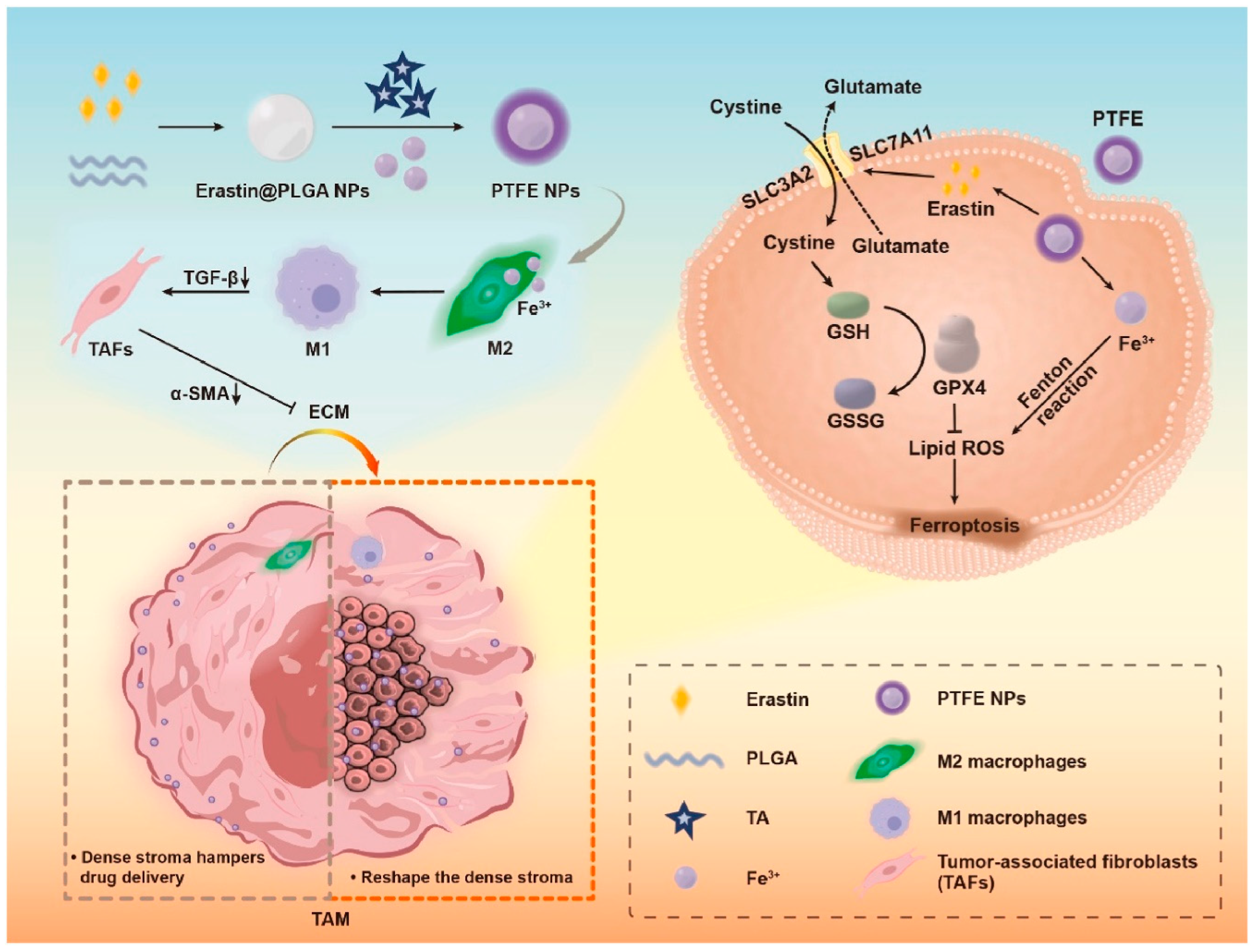
An outstanding study reported the use of iron-containing MOF NPs loaded with erastin to modulate TAMs, which, in turn, regulate CAFs [131]. These iron-based NPs exhibited a dose-dependent cytotoxic effect on cultured cancer cells, driven by two key mechanisms (Figure 4): (1) Erastin-induced ferroptosis via inhibition of System Xc (the cystine/glutamate transporter), leading to reduced intracellular glutathione (GSH) levels and disruption of redox homeostasis, and (2) NP-mediated Fe3+ release, which catalyzed the Fenton reaction, generating ROS and promoting lipid peroxidation, consequently amplifying ferroptosis. These mechanisms were rigorously validated in the study. Additionally, the NPs induced polarization of TAMs from a M2 to M1 phenotype, resulting in decreased secretion of TGF-β. The conditioned medium from these reprogrammed macrophages, when applied to fibroblasts, led to a significant reduction in α-SMA expression, indicative of a shift towards a quiescent CAF/NF state. This transition reduced tumor stiffness, enhanced NP penetration, as confirmed both in cell culture and in vivo through fluorescence imaging. Moreover, polarization of TAMs to the M1 phenotype and a significant tumor growth delay were also observed in vivo. Despite these promising findings, a critical aspect remains unaddressed, as an excessive reduction in ECM density may facilitate metastatic dissemination, which was not explored in the study.
Finally, tannic acid-functionalized ZIF-8 MOFs did not delay tumor growth following intravenous administration, nor did they induce DC maturation or alter proportions of macrophages or T cells (including levels of IFN-β, IFN-γ, IL-6, and TNF-α). Therapeutic effects were only observed upon subsequent coating with the drug polyphyllin II [132].

4.2.5. IONPs and TAMs

Besides previous NPs, IONPs are widely used in biomedical applications, especially those related to cancer, due to their exceptional properties as contrast agents (CA) and/or therapeutic platforms [133] and by far, these NPs are the most widely used to explore their interactions with TAMs. In this context, fluorescent silica-coated F-IONPs have been utilized for labeling TAMs in vitro and for delineating the margins of glioblastoma tissue in vivo. Notably, immunofluorescence analysis of excised tissues confirmed that the majority of these NPs were internalized by TAMs, highlighting their potential as imaging agents for precise tumor margin identification [134].
As another example, HA-modified doxorubicin (DOX)-conjugated IONPs exhibited significantly higher uptake efficiency and cytotoxic effects in both macrophages and cancer cells compared to free DOX and non-modified doxorubicin IONPs, while these modified NPs demonstrated enhanced antitumor and anti-metastatic effects in a breast cancer model, potentially due to in vivo M1 macrophage polarization, although a direct effect on tumor cells cannot be excluded [135].
Building on the application of functionalized IONPs, a study investigated the use of arginine-loaded hollow IONPs to modulate TAMs [136]. These NPs were efficiently internalized by TAMs and successfully promoted their polarization from the M2 to the M1 phenotype. This shift was accompanied by an increase in TNF-α levels and iNOS expression, leading to a subsequent rise in NO production in cell culture. Of note, in a co-culture model, treatment of TAMs with these NPs resulted in elevated TNF-α and NO levels, which in turn reduced cancer cell viability in a dose-dependent manner. In vivo, arginine-loaded hollow IONPs demonstrated remarkable tumor accumulation, even with a core size of >200 nm, but sufficient to induce TAM polarization toward the M1 phenotype while reducing the presence of regulatory Tregs within the TME. These immune modulations ultimately led to effective tumor growth control.
As an additional case, IONPs were co-encapsulated with colony-stimulating factor 1 (CSF-1) inhibitor within liposomes functionalized with the TAT peptide, a well-known cell-penetrating peptide. These NPs effectively promoted polarization of BMDMs in cell culture, as evidenced by increased CD86 expression and reduced CD206 expression. In vivo, under an alternating magnetic field (AMF), these NPs significantly delayed tumor growth and induced an increase in iNOS and TNF-α, further confirming TAM polarization toward the M1 phenotype. Additionally, a decrease in ARG1 was observed, reinforcing the shift in macrophage phenotype [137]. It is worth mentioning that the TAT peptide functions as a general cell-penetrating molecule rather than a tumor-specific targeting ligand, meaning that all cells in the organism were susceptible to increased NPs uptake, potentially affecting biodistribution.
To provide another instance, polyaniline-coated IONPs effectively promoted the polarization of macrophages toward the M1 phenotype, as indicated by increased CD86 expression, in both 2D and 3D cell culture models. The 3D model consisted of co-cultures of cancer cells, fibroblasts and macrophages, but the underlying molecular pathways were not analyzed [138].
As another example, IONPs coated with a catechol-derivative ligand and further functionalized with HA induced macrophage polarization toward the M1 phenotype when exposed to non-pretreated macrophages. This polarization was evidenced by the upregulation of key M1-associated genes, including C-X-C motif chemokine ligand 11 (CXCL11), CD68, CD80, iNOS, interleukin-1β (IL-1β) and TNF-α [139]. In vivo, these NPs promoted a significant increase in protein expression levels of CD80 and CD86, markers indicative of TAM polarization, as well as CD4, suggesting enhanced CD4+ T-helper cell infiltration. Interestingly, the most effective formulation in terms of tumor growth was the larger and non-HA-functionalized NPs (despite the fact that these NPs did not exhibit the most pronounced gene expression changes in cell culture).
Taking it one step further, enzyme-responsive mannose-grafted IONPs exhibited significant cytotoxicity in cell culture, particularly against J774A macrophage cells (a murine TAMs model derived from sarcoma), compared to both cancer cells and healthy fibroblasts [140]. Notably, in M1 macrophages stimulated with lipopolysaccharide (LPS) and IFN-γ, these NPs upregulated IL-6 expression at low doses, whereas higher doses led to a decrease in IL-6 and an increase in ARG1. Interestingly, the opposite trend was observed in M2 macrophages stimulated with IL-4 [141]. No data were provided regarding their impact on untreated macrophages.
By way of illustration, nanodisc-shaped IONPs were investigated. These NPs induced cancer cell death upon NIR irradiation in cell culture. The conditioned medium from these treated cancer cells, when used to culture non-pretreated macrophages, led to increased CD86 and decreased CD206 protein expression (M1 phenotype). This was accompanied by upregulated mRNA levels of CD86, TNF-α and IL-1β, along with a reduction in CD206 and ARG1 mRNA expression. Moreover, the secretion profile revealed increased TNF-α for group receiving IONPs + NIR medium and decreased IL-4 levels for both IONPs alone and IONPs combined with NIR exposure [142]. Of note, conditioned medium from IONPs without NIR exposure resulted in elevated IL-4 and IL-10 mRNA levels, which returned to baseline when using the medium from IONPs + NIR-treated cells. Additionally, IL-6 levels decreased in the presence of IONPs alone but were restored to baseline when NIR was applied. Interestingly, TNF-α secretion remained unaffected by IONPs without NIR irradiation. In vivo, these NPs significantly delayed tumor growth, with the most pronounced effect observed in the group receiving IONPs + NIR in combination with the intraperitoneal administration of BMS-1, a small-molecule inhibitor of PD-1/PD-L1 interaction.
As another example, preconditioning osteosarcoma-bearing mice with an anti-CD47 antibody resulted in a higher tumor accumulation of PEGylated IONPs, as the treatment significantly increased the number of CD80+ macrophages (indicative of the M1 phenotype) compared to CD206+ macrophages, regardless of the administration of IONPs or an iron compound [143]. The authors suggested that anti-CD47 enhances M1 macrophage-mediated phagocytosis of cancer cells. Nonetheless, a previous study discussed in this review indicated that M1 macrophages can also influence CAFs, leading to decreased TME stiffness, which could be an alternative explanation for the enhanced accumulation of IONPs.
Moreover, non-pretreated macrophages were exposed to IONPs, aluminum oxide NP AONPs and zinc oxide NP ZnONPs. Among these, IONPs induced the highest combined secretion of ATP and HMGB1 from macrophages without compromising their viability. Regarding macrophage polarization, all three NPs slightly increased the expression of CD86 and iNOS. However, CD206 expression was only affected by AONPs and ZnONPs. None of the NPs significantly altered the secretion of TNF-α or IL-10. Conditioned media from macrophages incubated with these NPs were then used to treat bone marrow-derived dendritic cells (BMDCs). Notably, only the medium from macrophages exposed to IONP-induced BMDC maturation, as evidenced by increased CD86 and CD80 expression. Furthermore, in a co-culture system of B16F10-OVA cells and BMDCs, only the medium derived from IONP-treated macrophages promoted the expression of H-2Kb/SIINFEKL on the surface of DCs. In vivo, intratumoral injection of BMDMs pre-exposed to IONPs, combined with radiotherapy (5 Gy), led to significant tumor growth delay and TME remodeling. This included an increase in intratumoral M1 macrophages and a reduction in M2 macrophages, enhanced infiltration of cytotoxic T lymphocytes (CTLs) and an increase in mature DCs and activated CTLs [144]. Since data on a non-irradiated control group were not provided, the specific contribution of BMDMs encapsulating IONPs remains unclear.
Finally, a recent study described the use of Fe3O4 NPs functionalized with diethylene glycol (DEG), subsequently encapsulated into exosomes via electroporation, to modulate cancer cells and TAMs. Neither formulation significantly reduced cell viability or in-creased apoptotic cell proportions, nor did they substantially decrease intracellular glutathione peroxidase 4 (GPX4) activity and/or expression. Moreover, both formulations failed to promote calreticulin translocation to the cell surface or significantly induce DC maturation or phagocytosis of cancer cells by macrophages. In in vivo experiments following intravenous administration, neither formulation delayed tumor growth, increased calreticulin translocation, or altered the proportions of DCs, T cells, M1 macrophages, or M2 macrophages [145].

4.2.6. Other mNPs and TAMs

Regarding the application of other types of NPs, bone-targeting immunostimulatory metal–organic framework (BT-isMOF) NPs, functionalized with zoledronic acid (ZOL) and CpG oligonucleotides, effectively induced macrophage polarization toward the M1 phenotype both in cell culture and in vivo, as well as modulated the interleukin secretion profile in cell culture [146]. Because of their strong bone-targeting capability and therapeutic effect, mice were protected from the detrimental effects of bone metastatic osteolysis and destruction while simultaneously reducing tumor growth and progression.
Another study about other type of mNPs presents a well-designed and comprehensive approach using chromium (CrNPs) and small interfering RNA (siRNA) (siYTHDF1) adsorbed onto chitosan (CTS), encased in carboxymethyl mannose (Man-COOH), and decorated with RGD-modified DSPE. The work effectively demonstrates macrophage polarization and TME remodeling in both cell culture and in vivo models. The knockdown of YTHDF1 was expected to reduce M2 phenotype formation, which was later confirmed by Western blot analysis in two different TAM cell lines. In IL-4/IL-13-stimulated THP-1 cells, M1-associated genes (NOS2, TNF-α, IL-1β and IL-12) were significantly upregulated, whereas M2-associated genes (ARG1, IL-10 and TGF-β) showed a downward trend. Similarly, in BMDMs, the absence of YTHDF1 led to an upregulation of M1 inflammatory markers and downregulation of M2 markers specifically in M2 phenotype BMDMs. Gene expression analysis revealed 677 altered genes, with particular relevance to decreased STAT3 expression and phosphorylation, alongside increased STAT1 expression and phosphorylation (both indicative of M1 polarization) [147]. In vivo, the combination of intravenous administration of NPs and NIR irradiation produced the greatest tumor growth delay, accompanied by a proinflammatory shift in the TME, marked by increased M1 TAMs, reduced M2 TAMs and Tregs, elevated proinflammatory cytokines, and decreased IL-10 levels.

4.2.7. Summary and Reflections About mNPs and TAMs

In summary, and from a critical perspective, much of our current understanding of the interaction between mNPs and TAMs is based on experimental models that do not accurately reflect true human TAMs, as they often involve non-human cells (mainly RAW264.7 cells) or macrophages that are not bona fide TAMs. Additionally, macrophages in these studies are frequently conditioned to adopt an M2 phenotype, which does not fully capture the functional heterogeneity of TAMs in the TME. On one hand, TAMs rarely conform strictly to the M1 or M2 phenotypic classification, reflecting their complex and dynamic nature. The in vivo reprogramming of macrophages toward an M1-like phenotype is often observed, partially validating these cell culture models; however, the in vivo molecular pathways involved in these processes have been scarcely elucidated. On the other hand, many studies aim to convert M2 macrophages into M1, assuming that M1 macrophages exert exclusively anti-tumoral effects. This perspective simplifies tumor tissues as a mere combination of cancer cells and TAMs, overlooking critical interactions with other stromal components. Notably, some reports indicate that M1 TAMs can influence CAFs, leading to modifications in the ECM that may promote metastasis [148]. Another crucial observation is that, in many cases, the effects observed in tumors are not directly linked to the confirmed presence of mNPs (for instance, while the fluorescent signal from a specific component of the nanostructure was detected in the tumor, the presence of the metallic core was not confirmed). This raises the question of whether the observed therapeutic effects stem from the entire nanostructure reaching the tumor or from active therapeutic components that are released elsewhere (partial NP degradation?) and later act on the tumor site. Furthermore, the vast majority of studies (nearly all of those discussed in this section) rely on caliper-based measurements to assess tumor growth. Finally, several studies have reported that in vivo polarization toward the M1 phenotype enhances the recruitment of CD4+ and CD8+ T cells.
Table 2. Summary of selected studies describing interactions between mNPs and TAMs discussed in this review. In the first column describing the NPs, the hydrodynamic diameter is provided in brackets when it is reported in the original work. ‘N.A.’ indicates information not available.
NPsCancer TypeCell CultureAnimal
Model
Pathway
/
Mechanism
EffectsRef.
Human Serum Albumin (HSA)−Au(III) thiosemicarbazone NPsGastric cancer2D of RAW264.7 TAM cells (murine) and MGC-803 cancer cells (human)HeterotopicNF-κB, iNOS, MsR2, STAT3, p-STAT3 and PD-1Remarkable tumor accumulation and potent antitumor effects[122]
AuNPs conjugated with 5-fluorouracil
(16 nm)
Colorectal cancer and peritoneal metastasis2D of RAW264.7 TAM cells (murine) and CT26 cancer cells (murine)Heterotopic and a model of metastasisN.A.Following intraperitoneal administration of NPs, noticeable increase in TAMs (polarized to M1 phenotype) and CD3+ T lymphocyte and high uptake of NPs by TAMs, in the metastatic model[123]
Furin-responsive aggregated AuNPs loaded with doxorubicin and hydroxychloroquine
(in the range 40–50 nm)
Breast cancer2D of RAW264.7 TAM cells (murine), primary BMDM cells (murine) and MCF-7 cancer cells (human)HeterotopicTNF-α, IL-6 and IL-10Polarization of TAMs and tumor growth delay[124]
Polyaniline-based glyco-coated AuNPs
(18–32 nm)
Lung cancer2D of RAW264.7 TAM cells (murine), 3T3-L1 cells (murine) and MRC-5 cells (human)Heterotopic and orthotopicCell culture: NF-κB, iNOS, STAT6 and ARG1. Different pattern of interleukins secretionPolarization of TAMs in cell culture and in vivo; tumor growth delay. Increase in CD8+ T cells and DC within the tumor and a reduction in Tregs[125]
AuNPs
(62 nm)
Prostate cancer2D and
Co-culture of THP-1 cancer cells (human), LNCaP cancer cells (human) and PC3 cancer cells (human)
OrthotopicIL-10, TGF-β, ARG1, IL-6, TNF-α, iNOS, CD163, LC3-II, GAPDH, SQSTM1, GAPDH. ATG5, ATG7, ATG12 and BECN1Polarization of TAMs[126]
Aptamer targeting PD-L1 functionalized PEG-AgNPs
(60–140 nm)
Breast cancer2D cultures of MDA-MB-231 cancer cells (human), MCF-7 cancer cells (human), 4T1 cancer cells (murine), and RAW 264.7 TAMs cells (murine).OrthotopiciNOSDecrease in Ki67-positive proliferating cells and increased iNOS expression within tumor tissue.[128]
Au-manganese oxide NPsFibrosarcoma2D of primary murine TAMsHeterotopic (to obtain TAMs)O2, NO, ROS and HIF-1α Different pattern of interleukins secretionPolarization of TAMs[129]
antiPD-L1-IONPs@PLGA@Au
(>300 nm)
Melanoma2D and Co-culture of BMDM (murine), Human Umbilical Vein Endothelial Cells and B16F10 cancer cells (murine)OrthotopicIncreased in ROS levelsApplication of radiotherapy, lead to polarization of TAMs. Increase in CD4+ and CD8+ T cells within the tumor. Tumor growth delay[130]
Iron-containing metal–organic framework (MOF) NPs loaded with erastinPancreatic cancer 3D of RAW264.7 TAM cells (murine), NIH3T3 cells (murine) and KPC1199 cancer cells (murine)HeterotopicAntitumoral effect by composition and polarization of TAMs by different waysThe polarization of TAMs transforms CAFs to a quiescent state, both of which lead to delayed tumor growth in vivo[131]
ZIF-8 MOFs functionalized with tannic acid
(220 nm)
Hepatic cancer2D cultures of HepG2 cancer cells (human).HeterotopicN.A.No effect.[132]
F-IONPsGlioblastoma2D of RAW264.7 TAM cells (murine), CCD-986sk cells (human) and u87 cancer cells (human)HeterotopicN.A.Delineation of tumor margins[134]
Hyaluronic acid-modified doxorubicin IONPs
(>200nm)
Breast cancer2D of RAW264.7 TAM cells (murine) and 4T1 cancer cells (murine)OrthotopicN.A.Higher uptake efficiency and cytotoxic in cell culture. Both antitumor and anti-metastatic effects in vivo[135]
Arginine-loaded hollow IONPs (>200 nm)Breast cancer2D and Co-culture of RAW264.7 TAM cells (murine) and 4T1 cancer cells (murine)HeterotopicCell culture: TNF-α, iNOS and NO.
In vivo: TNF-α and NO
Treated TAMs impact cancer cell viability both in cell culture and in vivo. In vivo, there is an increase in CD4+ and CD8+ T cells within the tumor and a reduction in Tregs[136]
IONPs encapsulated with an inhibitor of CSF-1 in liposomes functionalized with TATColorectal cancer2D of BMDM (murine) and CT26 cancer cells (murine)HeterotopicCD86, CD206, iNOS, TNF-α and ARG1Polarization of TAMs.
Tumor growth delay
[137]
Polyaniline-coated IONPs
(38 nm)
Breast cancer2D and 3D of
fibroblast (hMF) (human), primary monocytes (human) and MCF-7 cancer cells (human)
N.A.CD86Polarization of TAMs[138]
IONPs coated with a catechol ligand and functionalized with HABreast cancer2D of RAW264.7 TAM cells (murine) and 4T1 cancer cells (murine)OrthotopicCell culture:
CXCL11, CD68, CD80, iNOS, IL-1β and TNF-α
Polarization of TAMs.
Tumor growth delay
[139]
Enzyme-responsive mannose-grafted IONPsBreast cancer and hepatic cancer2D of J774A TAM cells (murine), NIH/3T3 fibroblasts (murine), MCF-7 cancer cells (human) and HepG2 cancer cells (human)N.A.IL-6 and ARG1Keep the M1 phenotype at low dose. At high dose, keep the M2 phenotype[140]
nanodisc-shaped IONPsHead and neck squamous carcinoma2D of RAW264.7 TAM cells (murine) and SCC7 cancer cells (murine)HeterotopicCD86, CD206, TNF-α, IL-1β, ARG1 and IL-4.Polarization of TAMs in cell culture. Tumor growth delay in vivo.[142]
PEGylated IONPsMurine and human osteosarcomaN.A.OrthotopicN.A.Polarization of TAMs (induced by anti-CD47 rather than by IONPs)[143]
Macrophages exposed to IONPs, AONPs, ZnONPs
(≈30 nm)
Melanoma2D and
Co-culture of RAW264.7 TAM cells (murine), BMDCs (murine), 4T1 cancer cells (murine), CT26 cancer cells (murine) and B16F10-OVA cancer cells (murine)
OrthotopicCD86 and iNOS.Polarization of TAMs. Tumor growth delay[144]
DEG–Fe3O4 NPs (8 nm)
DEG–Fe3O4 NPs encapsulated inside exosomes
(120 nm)
Breast cancer and Colorectal cancer2D cultures of 4T1 cancer cells (murine), CT26 cells (murine) and RAW 264.7 TAMs cells (murine).Orthotopic and Heterotopic N.A.No effects.[145]
Bone-targeting immunostimulatory metal–organic framework (BT-isMOF) NPs functionalized with zoledronic acid (ZOL) and CpG oligonucleotidesBreast cancer (Bone metastasis in vivo)2D of RAW264.7 TAM cells (murine), BMDM cells (murine) and MDA-MB-231 cancer cells (human)Orthotopic (Metastatic model)N.A.Polarization of TAMs.
Decrease in bone metastatic osteolysis and reduction in tumor growth and progression
[146]
Chromium nanoparticles (Cr NPs) and siYTHDF1 were loaded onto chitosan, coated with carboxymethyl mannose, and functionalized with DSPE-modified RGD.Hepatic cancer2D of RAW264.7 TAM cells (murine), BMDM cells (murine), THP-1 cancer cells (human) and Hepa1–6 cancer cells (murine)HeterotopicNOS2, TNF-α, IL-1β, IL-12, ARG1, IL10, TGF-β, STAT3 and STAT1.Polarization of TAMs.
Tumor growth delay. Increase in CD4+ and CD8+ T cells within tumors
[147]

4.3. mNPs and Other Non-Malignant Cells of the TME

This section will focus primarily on endothelial cells, as only a limited number of studies have examined the direct interactions between mNPs and immune cells within the TME, which play two critical roles in cancer: (1) promoting angiogenesis to supply nutrients and oxygen to the tumor mass, and (2) acting as a physical barrier that impedes the delivery of chemotherapeutic agents and NPs (both organic and inorganic). The process of angiogenesis is tightly regulated by a complex signaling network, in which VEGF is a well-established modulator and a key biological driver [149]. Consequently, the vast majority of therapeutic strategies (whether based on conventional drugs, mNPs, or their combination) have been designed to target the VEGF pathway. These include the use of monoclonal antibodies against VEGF or its receptors (VEGFRs), as well as inhibitors of intracellular tyrosine kinase signaling. This topic has been comprehensively and recently reviewed; therefore, readers are encouraged to consult those works for further details [150]. Nonetheless, a noteworthy study reported that AuNPs of varying sizes could induce endothelial leakiness, thereby enhancing the delivery efficiency of anticancer therapeutics [151]. In cell culture, using a monolayer of endothelial cells as model, smaller-sized AuNPs were shown to increase intercellular gap formation (ranging from 5 to 20 μm) by binding to transmembrane VE-cadherin and disrupting the homophilic interactions of these adherent junction proteins. In vivo, increased vascular permeability and deeper tumor penetration were observed in both orthotopic breast cancer (4T1 cancer cells, murine) and pancreatic cancer (Panc2 cancer cells, human) models, as well as in a subcutaneous breast cancer model.

4.4. Alternative Effects of mNP on the TME

In addition to the intended tumoricidal effects that mNPs may exert on cancer cells, some groups have explored the potential of this treatment modality to trigger activation of anti-tumor immune responses which ultimately could render into enhanced therapeutic effects or could serve to potentiate systemic responses in combination with immunotherapies. Harnessing of the immune system and overcoming peripheral tolerance in the context of cancer treatment normally happens through activation of immunogenic cell death (ICD). ICD is a form of regulated cell death that elicits an immune response against dying cells. Unlike apoptosis, which is typically non-immunogenic, ICD is characterized by the release of tumor specific antigens (antigenicity) and damage-associated molecular patterns (DAMPs) together with the exposure of calreticulin on the cell surface (adjuvanticity). These signals facilitate the recruitment and activation of dendritic cells and other antigen-presenting cells, leading to the presentation of tumor antigens to T cells. Consequently, ICD plays a crucial role in anti-tumor immunity, In the following chapter, we delve into studies that have explored mNP-mediated anti-tumor immune regulation.

4.4.1. AuNPs and the TME

PLGA microspheres co-encapsulating hollow gold nanoshells and metformin were employed in a model of metastatic progression to delay tumor growth in primary and distant tumors [152]. This effect was achieved through intratumoral administration of the NPs into the primary tumor, followed by phototherapy. The treatment triggered release of tumor antigens (TAs) and damage-associated molecular patterns, which induced ICD and subsequently activated DCs and effector T cells. Thus, these NPs did not directly target DCs or T cells. Caution should be taken when the intended use of mNPs is to stimulate the immune system as excessive engagement of the innate immune system in the form of inflammatory reactions could exert detrimental effects on healthy tissue/organ surrounding the tumor lesions. In the presented study, the so-called metastatic model used consisted of implanting two tumors rather than employing a true metastatic model, such as the 4T1 model, which more accurately recapitulates metastatic progression.
As further evidence, Glycoadjuvant@AuNPs promoted BMDC maturation by upregulating major histocompatibility complex class II (MHC II) and CD86 expression in cell culture. In vivo, intratumoral administration of these NPs led to tumor growth delay, along with increased infiltration of CD8+ T cells in the primary tumor and a reduction in metastasis [153]. The treatment also resulted in a decreased population of T reg cells, a polarization of TAMs toward the M1 phenotype, a reduction in myeloid-derived suppressor cells (MDSCs) and elevated concentrations of IFN-γ and TNF-α within the primary tumor. Nevertheless, key mechanistic aspects remain unexplored. The specific role of AuNPs in these effects was not clearly defined, and the temporal sequence of changes within the TME was not analyzed. For instance, it is unclear whether DCs were directly affected by NPs, leading to subsequent TAM polarization, or if TAMs were influenced first, indirectly promoting DC differentiation. Additionally, the source of alterations in the interleukin secretion pattern was not addressed, leaving open questions regarding the exact pathways mediating the observed immune modulation.
As another example, Zwitterion-functionalized dendrimer-entrapped AuNPs loaded with CpG oligodeoxynucleotides enhanced the expression of CD80, CD86 and MHC-II in BMDCs, thereby promoting their maturation. These matured BMDCs, in turn, increased CD4+ and CD8+ expression on the surface of T cells in a co-culture system [154]. In addition, the conditioned medium from these activated T cells exhibited an anti-cancer effect in cell culture.

4.4.2. AgNPs and the TME

As another type of mNPs, β-D-Glucose-reduced AgNPs enhanced CD8+ T cells, memory T cells and innate effector T cells while reducing CD4+ T cells and Tregs in in vivo experiments. Also, these NPs increased TNF-α, IFN-γ and IL-6 levels while decreasing IL-2, IL-4 and IL-10. This immune modulation resulted in tumor growth delay following peritumoral administration [155]. It is worth mentioning that these NPs differed from most studies, as they led to a decrease in CD4+ T cells. Furthermore, the exact mechanism underlying their antitumoral effects remains unclear, whether attributable to a direct action of the NPs themselves or to the resultant immune activation.
As an additional instance, AgNPs of varying sizes (5 nm and 50 nm) and different surface coatings, including polyvinylpyrrolidone (PVP) and citrate, altered the interleukin secretion profile of cancer cells in cell culture. In vivo, these AgNPs increased CD8+ T cell infiltration within the tumor and induced a tumor growth delay, as assessed using 2D imaging techniques [156].

4.4.3. IONPs and the TME

The only study applying IONPs to non-malignant cells within the TME reported that these NPs, functionalized with polydopamine (PDA), RGD and anisamide (AA); and physically adsorbing glucose oxidase (GOx), were capable of maturing BMDCs in a co-culture setup after affecting cancer cells [157]. In vivo, intravenous administration of these NPs, combined with phototherapy and antiPD-L1 treatment, resulted in tumor growth delay. Nonetheless, BMDCs were not exposed to mNPs; the control group receiving phototherapy and antiPD-L1 alone was absent; and the immune response analysis focused on lymph nodes and the spleen rather than the tumor itself.

4.4.4. Manganese (Mn) mNPs the TME

Cancer cells were exposed to a nanostructure composed of MnO2, iron atoms (Fe3+) and doxorubicin encapsulated within PEG-polyphenols. After washing the NPs, these treated cancer cells were co-cultured with BMDCs, leading to a significant increase in DC maturation, as indicated by higher CD11c+CD80+CD86+ expression, along with an elevated secretion of IL-6 and TNF-α [158]. In vivo, these NPs peaked at 8 h post-intravenous administration. Regardless of prior tumor sensitization with anti-PD1 treatment, the NPs promoted DC maturation, increased M1 macrophage phenotype, higher infiltration of CD8+ T cells, CD8+IFN-γ+ T cells and memory T cells, while reducing the number of Tregs.
As an additional instance, Mn molybdate nanodots promoted BMDC maturation (CD80+ and CD86+) in cell culture and, following intravenous administration, increased the number of mature DCs within the tumor in vivo. This was accompanied by TAM polarization toward the M1 phenotype, an increase in CD8+ T cells and decrease in Tregs and MDSCs, ultimately leading to tumor growth delay [159]. Nevertheless, molecular changes were analyzed in serum rather than in tumors or cell cultures. Remarkably, some successful DC maturation experiments were conducted using Mn ions alone, raising questions about whether the observed intratumoral effects were truly mediated by intact mNPs.
To cite another example, MnO2 NPs and attenuated Salmonella were intravenously administered to tumor-bearing mice. The bacteria selectively colonized the TME, leading to recruitment of neutrophils, as evidenced by the increased expression of neutrophil markers CD11b and Ly6G. Concurrently, the Mn ions released from the NPs polarized neutrophils toward an N1 phenotype, as indicated by the upregulation of CD54 and CD95. This polarization was accompanied by recruitment and activation of CD8+ T cells, along with elevated levels of CCL3 and TNF-α within the tumor. Ultimately, this strategy resulted in significant tumor growth delay [160]. However, how will other organs respond to the introduction of even attenuated bacteria or to the exposure to Mn ions? Additionally, will it be possible to achieve sufficient bacterial concentration in the tumor without adversely affecting the surrounding organs?

4.4.5. Other mNPs and the TME

From a novel perspective, tumor lysates processed by DCs were presented to CD8+ T cells, forming adoptive T cell vectors (ATVs). These ATVs were then exposed to mineralized MOFs encapsulating perforin and granzyme B, coupled with a lysosome-targeting aptamer (CD63-aptamer). The ATVs subsequently internalized and processed the NPs, releasing the therapeutic agents and enhancing cancer cell death compared to CD8+ T cells alone [161]. In vivo, higher fluorescence signals were observed in the tumor at 24 h for both ATVs encapsulating NPs and ATVs alone, indicating that NPs internalization did not alter ATV tumor accumulation. Nonetheless, a significant portion of the NPs was cleared by the liver and spleen, surpassing their accumulation in the tumor. Ultimately, the ATV-NP formulation delayed tumor growth and increased CD8+ T cell recruitment, which can be partially due to polarization of TAMs, as mentioned previously in this review.
Regarding other MOFs, these nanostructured loaded with GOx and an indoleamine 2,3-dioxygenase inhibitor (1-methyltryptophan) enhanced the immune response in vivo by increasing the number of CD8+ T cells, matured DCs, B cells and NK cells, while reducing Tregs in orthotopic melanoma and breast cancer models, which lead at the end in a tumor growth control and a decrease in the metastatic lesions, after intravenous administration [162].
Similarly, MOFs functionalized with bovine serum albumin (BSA) and folic acid (FA) and loaded with triptolide (TPL), Fe3+ and tannic acid (TA), promoted an increase in matured DCs as well as CD8+ and CD4+ T cells in vivo after intravenous administration. This immune activation ultimately led to tumor growth delay and a reduction in metastasis [163].
As a further illustration, conditioned medium from cancer cells exposed to TiO2 NPs functionalized with a Ruthenium complex, conjugated with siRNA, and subjected to irradiation (visible light at 525 nm), stimulated IFN-γ expression in both CD4+ and CD8+ T cells derived from peripheral blood mononuclear cells (PBMCs) of patients [164]. Specifically, PBMCs exposed to IL-24 exhibited a similar response. In vivo, the intratumoral administration of these NPs effectively controlled tumor growth in both patient-derived and induced tumor models.

4.4.6. Multicomponent mNPs and the TME

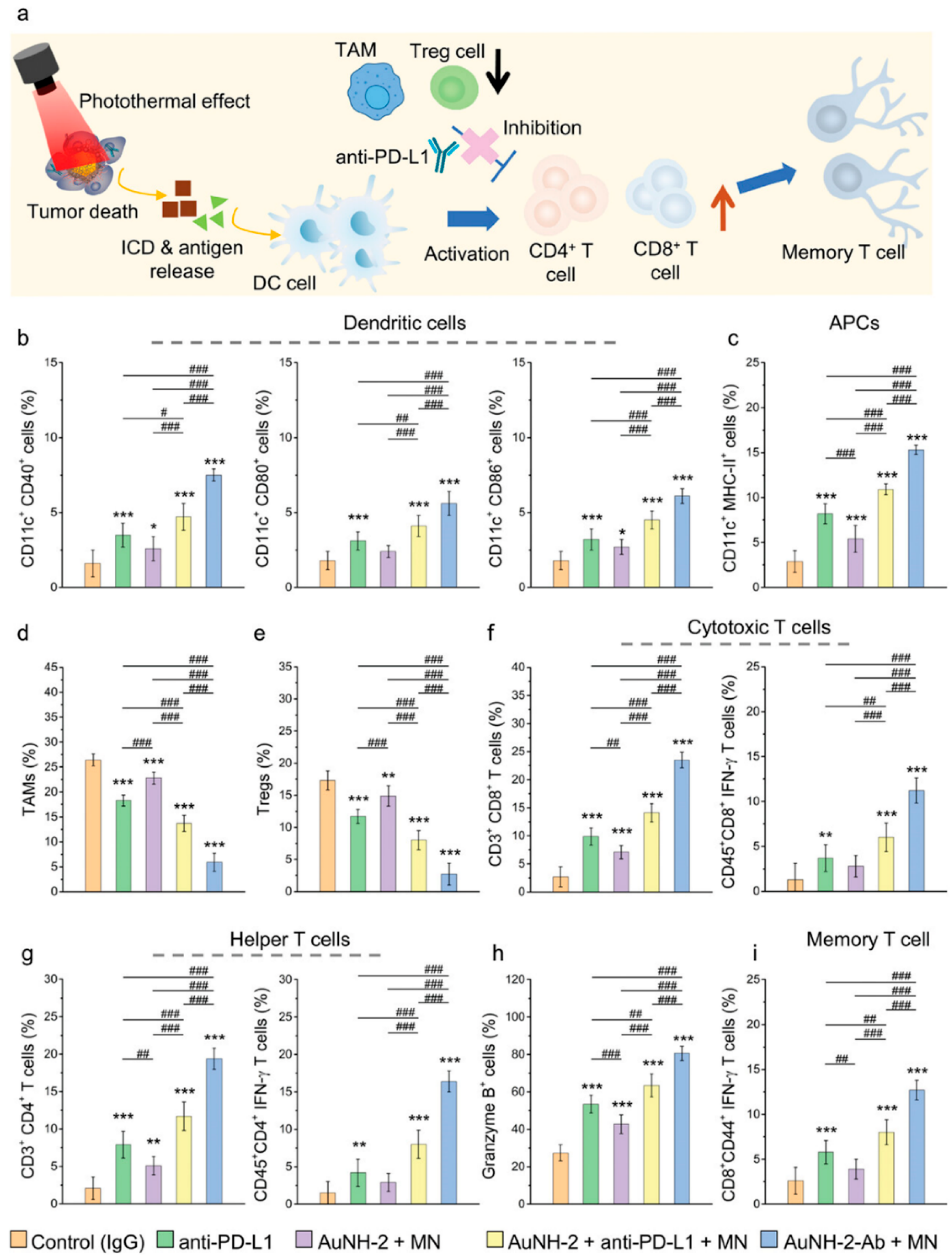
A remarkable study demonstrated the ability of an anti-PD-L1-immobilized magnetic gold nanohut nanostructure to remodel the TME [165]. After 24 h (optimal timeframe for the EPR effect [166]) and the point at which NPs accumulation peaked, as confirmed via gamma counter analysis, tumors were irradiated with an NIR laser (808 nm, 0.2 W/cm2) for 10 min. This weak irradiation triggered two key effects: (1) a localized increase in temperature within the tumor microenvironment (though not directly assessed in tumor cells) and (2) the controlled release of anti-PD-L1. Of note, administering the NPs and anti-PD-L1 separately failed to produce comparable results, underscoring the role of the NPs as a targeted delivery vehicle. The combined effects led to an increase in tumor-infiltrating immune cells (including dendritic cells, antigen-presenting cells, cytotoxic T cells, helper T cells and memory T cells) (Figure 5) and a concurrent decrease in immunosuppressive populations (such as TAMs and Tregs) (Figure 5), ultimately leading to a delayed tumor growth and prolonged survival in treated animals.
Finally, an IONPs core was functionalized with an optimal number of AuNPs, onto which clusters of HER2 B/CD4 T cell epitopes were conjugated, forming the construct known as ACNVax. This nanovaccine promoted B cell antigen presentation and enhanced the activation of CD4+ T cells in cell culture [167]. In vivo, the immune cell composition in draining lymph nodes was analyzed in healthy mice; however, no data were reported for tumor-bearing models. When combined with anti-PD-1 therapy, these NPs significantly delayed tumor growth and induced a marked increase in the frequency of B cells, CD4+ T cells (in contradiction with previous report), CD8+ T cells and memory T cells (both CD4+ and CD8+). Additionally, they reduced Tregs and upregulated expression of genes: B-cell lymphoma 6 (BCL-6), IFN-γ, TNF-α, chemokine receptor type 4 (CXCR4), chemokine receptor type 5 (CXCR5), CC-chemokine receptor 7 (CCR7), L-selectin, CD11a, VLA-4 and IL-21; as well as the levels of chemotactic factors CC motif chemokine ligand 19 (CCL19), chemotactic factors CC motif chemokine ligand 21a (CCL21a), C-X-C motif chemokine ligand 13 (CXCL13) and chemotactic factors CC motif chemokine ligand 2 (CCL2). Despite these promising results, the study did not clarify the route of administration, which is a critical factor for evaluating the translational potential of this approach.

4.4.7. Summary and Reflections About Direct and Indirect Effects of mNP on the TME

Among the topics covered in this review, the molecular pathways underlying the interaction between mNPs and non-macrophage immune cells within the TME remain among the least explored, representing a significant knowledge gap that must be addressed in future research. Collectively, many studies demonstrate adequate engagement of the immune system when mNPs of different natures are used. Observed effects in many instances are related to the induction of ICD or the release of pro-inflammatory factors from tumor cells exposed to mNPs. A number of studies have also shown synergistic effects when mNPs are combined with ICBs, highlighting the potential of this combinatory treatment strategy to boost anti-cancer immune responses.
Table 3. Summary of selected studies describing interactions between NPs and Other non-malignant cells of the TME discussed in this review. In the first column describing the NPs, the hydrodynamic diameter is provided in brackets when it is reported in the original work. ‘N.A.’ indicates information not available.
NPsCancer TypeCell CultureAnimal
Model
Pathway
/
Mechanism
EffectsRef.
PLGA microspheres co-encapsulated with hollow gold nanoshellsMelanoma and lymphoma2D of splenic lymphocytes (murine), B16F10 cancer cells (murine) and EG7-OVA cancer cells (murine)Orthotopic and HeterotopicN.A.Tumor growth delay in the primary and metastatic mass by NPs and phototherapy leading to activation of DC and T cells[152]
Glycoadjuvant AuNPsMelanoma2D of BMDC (murine) and B16-OVA cancer cells (murine)OrthotopicCell culture: MHC II and CD86.
In vivo: IFN-γ and TNF-α
Tumor growth delay and inhibition of metastasis. Polarization of TAMs toward a M1 phenotype. Increased CD8+ T cells.
Decreased T reg cells. Decreased MDSCs.
[153]
Zwitterion-functionalized dendrimer-entrapped AuNPs loaded with CpGBreast cancer2D and Co-culture of BMDCs (murine) and 4T1 cancer cells (murine)N.A.N.A.Maturation of BMDCs and activation of DC. Anti tumoral effect[154]
β-D-Glucose-reduced AgNPsBreast cancerN.A.HeterotopicTNF-α, IFN-γ, IL-6, IL-2, IL-4 and IL-10Tumor growth delay. Increased levels of CD8+ cells, memory T cells and innate effector T cells. Decreased levels of CD4+ cells and Treg[155]
AgNPs (5 nm and 50 nm) coated with PVP or citrateRenal carcinomaN.A.HeterotopicN.A.Tumor growth delay.
Increased levels of CD8+ cells
[156]
IONPs functionalized with PDA, subsequently with RGD and AA; with GOx physically absorbedColorectal CancerCo-culture of BMDCs (murine) and CT26 cancer cells (murine)HeterotopicFerroptosis of cancer cells induced BMDCs maturation in cell cultureBMDCs maturation in cell culture.
Tumor growth delay
[157]
MnO2 + Irom atoms (Fe3+) + Doxorubicin; encapsulated within PEG-polyphenolsMelanoma2D and
Co-culture of BMDCs (murine) and B16–F10 cancer cells (murine)
OrthotopicCD11c, CD80, CD86, IL-6 and TNF-αTumor growth delay and metastatic control[158]
Mn molybdate nanodotsColorectal, melanoma and breast cancerCo-culture of BMDCs (murine), CT26 cancer cells (murine) B16F10 cancer cells (murine), and 4T1 cancer cells (murine)Heterotopic and OrthotopicN.A.DCs maturation, TAM polarization toward the M1 phenotype, increased CD8+ T cells. Decreased Tregs and MDSCs,
Tumor growth delay
[159]
MnO2 NPsBreast cancerN.A.HeterotopicCCL3 and TNF-αRecruitment of neutrophils and their subsequent polarization. Increased CD8+ T cells.
Tumor growth delay
[160]
Mineralized MOF, encapsulating Perforin and Granzyme B, coupled with a lysosome-targeting aptamer (CD63-aptamer)Breast cancer2D of T cells (murine) and 4T1 cancer cells (murine)OrthotopicNovel ATVs to improve NPs drug targeting and increase cancer cell specificityIncreasing cancer cell death in cell culture. Tumor growth delay and higher recruitment of CD8+ T cells[161]
MOFs loaded with GOx and an indoleamine 2,3-dioxygenase inhibitor (1-methyltryptophan)Melanoma and breast cancerN.A.OrthotopicN.A.Increased the number of CD8+ T cell, matured DC, B cells and NK cells and decreased Treg[162]
MOFs functionalized with bovine serum albumin (BSA) and folic acid (FA), and loaded with triptolide (TPL), Fe3+ and tannic acid (TA)MelanomaN.A.OrthotopicN.A.Increased matured DC; CD8+ and CD4+ cells[163]
TiO2 NPs functionalized with a Ruthenium complex, followed by conjugation with siRNAHead and neck squamous cell carcinoma2D of PBMCs (human) and HN6 cancer cells (human)Heterotopic
(patient derived cells) and
Orthotopic
(induced model)
IFN-γTumor growth delay[164]
anti-PD-L1- magnetic gold nanohutHepatocellular carcinoma 2D of Hep55.1c cancer cells (murine)OrthotopicN.A.Direct treatment with NPs and remodeling of the TME in vivo[165]
ACNVaxBreast cancerN.A.HeterotopicBCL-6, IFN-γ, TNF-α, CXCR4, CXCR5, CCR7, L-selectin, CD11a, VLA-4, IL-21, CCL19, CCL21a, CXCL13 and CCL2Tumor growth delay.
Increased of B cells, CD4+ T cells, CD8+ T cells and memory T cells
[167]

5. Conclusions

Regarding mNPs, the translation of preclinical findings into successful clinical outcomes remains limited. Notably, despite extensive research for cancer diagnosis and therapy, only a few have received regulatory approval from the U.S. Food and Drug Administration (FDA), primarily for imaging or adjunctive purposes rather than for direct therapeutic application. One of the main limitations in the fight against cancer is our incomplete understanding of the disease across multiple levels, including cellular populations, metabolism and signaling pathways. Given this complexity, fully elucidating how mNPs influence the TME is an immense challenge that requires significantly greater efforts from the scientific community. As an example, while nearly 5.5 million studies have been published on cancer throughout history (PUBMED), approximately 75.000 focus on NPs in cancer and only 7.300 specifically examine the effects of NPs on the TME. When considering mNPs, this number is even lower. Importantly, no studies were found addressing how mNPs can reprogram tumor cell metabolism through interactions with the cellular components of the TME. This gap explains why metabolic reprogramming is not covered in this review.
Therefore, the first major limitation concerns the lack of a comprehensive assessment of how physicochemical parameters (such as composition, size, shape, surface coating…) determine the cellular responses induced (at multiple levels) by mNPs in the non-cancerous cells of the TME. Accordingly, the review focuses on integrating mechanistic trends and qualitative insights, underscoring a central limitation that continues to constrain progress in the field. Another major challenge lies in the models used for studying mNPs in the TME. For instance, many studies employ normal macrophages or immortalized macrophage cell lines (often from a different species) as models for TAMs, without accounting for the interactions among the diverse cellular populations within the TME. In many cases, researchers attempt to polarize these “TAMs” toward an M1 phenotype, despite evidence that M1 macrophages can influence CAFs, leading to a less dense ECM and potentially promoting metastasis. This highlights the necessity of studying cancer as a complex and dynamic ecosystem rather than as a single-cell lineage. The TME consists of multiple interacting cellular populations in addition to the ECM, all of which must be considered in experimental models. Methodological limitations further hinder progress in this field. Additionally, the frequent use of intratumoral injection may lead to the accumulation of mNPs in necrotic regions (areas of dead tissue that do not require treatment) thus limiting their therapeutic impact and resulting in suboptimal treatment strategies.
Regarding the effects of mNPs on non-tumoral cells within the TME, multiple studies report the upregulation of NF-κB and iNOS gene expression, increased levels of IL-6, TNF-α and IFN-γ; and downregulation of IL-4, IL-10 and TGF-β. However, these findings likely represent only a subset of the mechanisms involved, with many others yet to be identified. Furthermore, it remains largely unknown whether these mNP-induced changes in non-tumoral TME cells directly affect cancer cells. The majority of studies describe ECM modifications (low collagen secretion, changes in the secretion patterns, etc) or tumor size reduction without clarifying the underlying mechanisms or how cancer cells themselves respond. Indeed, there is a lack of preclinical transplantable tumor models that fully recapitulate the complexity and composition of the tumor stroma, which limits our ability to realistically assess how mNPs interact with this critical component of the TME. Finally, and not least important are the administration routes of mNPs, which are often not delivered intravenously (the primary route of administration in clinical settings) and, consequently, delay the potential clinical translation of the findings.
In conclusion, the overall impact of mNPs on the TME and their subsequent effects on cancer cells remain inadequately understood, with numerous unresolved aspects that need to be addressed in the coming years (Figure 6). Given the critical role of the TME in primary tumor progression, future research should prioritize elucidating these complex interactions to enable the development of more effective therapeutic strategies, whether applied individually or in combination. Moreover, integrating multidimensional approaches (such as ultrasensitive single-molecule detection, advanced imaging, multi-omics profiling, and physiologically relevant in vitro/in vivo models) will be essential to unravel the dynamic, context-dependent responses elicited by mNPs within the TME. A deeper understanding of these processes will refine the design of safer, more efficient nanotherapeutics and uncover opportunities for combinatorial treatments targeting both cancer cells and their microenvironment.
Ultimately, tumor size reduction or elimination remains the primary goal of oncology research. Fortunately, a substantial proportion of patients with cancer can achieve durable remission or long-term survival; however, the molecular determinants that govern therapeutic responsiveness remain only partially understood.

Funding

This research received no external funding.

Data Availability Statement

No new data were created or analyzed in this study. Data sharing is not applicable to this article.

Acknowledgments

The authors would like to thank Maria Luisa García Martín for helpful discussions and support. The authors wish to acknowledge the support received from SEPE (Servicio Público de Empleo Estatal) during the development of this work.

Conflicts of Interest

The author declares no conflicts of interest.

Abbreviations

ATVsAdoptive T cell Vectors
AMFAlternating Magnetic Field
AAAnisamide
ARG1Arginase 1
RGDArginylglycylaspartic acid
α-SMAα-Smooth Muscle Actin
BCL-6B-Cell Lymphoma 6
BMDCsBone Marrow-Derived Dendritic Cells
BMDMsBone Marrow-Derived Macrophages
BSABovine Serum Albumin
Man-COOHCarboxymethyl Mannose
CAFsCancer-Associated Fibroblasts
CCR7CC-chemokine receptor 7
CXCR4Chemokine Receptor Type 4
CXCR5Chemokine Receptor Type 5
CCL2Chemotactic Factors CC motif Chemokine Ligand 2
CCL19Chemotactic Factors CC motif Chemokine Ligand 19
CCL21aChemotactic Factors CC motif Chemokine Ligand 21a
CTSChitosan
CSF-1Colony-Stimulating Factor 1
CTComputed Tomography
CTGFConnective Tissue Growth Factor
CAContrast Agents
CXCL11C-X-C motif Chemokine Ligand 11
CXCL13C-X-C motif Chemokine Ligand 13
CTLsCytotoxic T Lymphocytes
DAMPsDamage-Associated Molecular Patterns
DCsDendritic Cells
DEGDiethylene glycol
DALYsDisability-Adjusted Life Years
DOXDoxorubicin
EPREnhanced Permeability and Retention
EMTEpithelial-to-Mesenchymal Transition
ECMExtracellular Matrix
FABP3Fatty Acid-Binding Protein 3
FASNFatty Acid Synthase
FSP-1Fibroblast-Specific Protein-1
FAFolic Acid
GdGadolinium
GOxGlucose Oxidase
GSHGlutathione
GPX4Glutathione Peroxidase 4
AuGold
HGFHepatocyte Growth Factor
HSAHuman Serum Albumin
HAHyaluronic Acid
HIF-1αHypoxia-Inducible Factor-1 alpha
ICIsImmune Checkpoint Inhibitors
ICDImmunogenic Cell Death
iNOSInducible Nitric Oxide Synthase
ICP-MSInductively Coupled Plasma Mass Spectrometry
IFN-γInterferon-Gamma
IP-10Interferon-Gamma-Induced Protein 10
IL-1βInterleukin-1β
IL-6Interleukin-6
IL-8Interleukin-8
IL-10Interleukin-10
IL-12Interleukin-12
IL-13Interleukin-13
IONPsIron Oxide Nanoparticles
LPSLipopolysaccharide
MRIMagnetic Resonance Imaging
MHC IIMajor Histocompatibility Complex Class II
mRNAMessenger RNA
mNPsMetallic Nanoparticles
MOFsMetal–Organic Frameworks
MAPKMitogen-Activated Protein Kinase
MCNPsMulticomponent Nanoparticles
MDSCsMyeloid-Derived Suppressor Cells
MsR2Myosuppressin Receptor 2
NKNatural Killer cells
NIRNear-Infrared
NONitric Oxide
NF-κBNuclear Factor κ-light-chain enhancer of activated B cells
OSCCOral Squamous Cell Carcinoma
PBMCsPeripheral Blood Mononuclear Cells
p-STAT3Phosphorylated STAT3
PDGF-ααPlatelet-Derived Growth Factor-AA
PDAPolydopamine
PEGPolyethylene Glycol
PLGAPoly(Lactic-co-Glycolic Acid)
PVPPolyvinylpyrrolidone
PMNsPre-Metastatic Niches
PD-1Programmed Cell Death Protein 1
PD-L1Programmed Death-Ligand 1
ROSReactive Oxygen Species
TregsRegulatory T cells
STAT3Signal Transducer and Activator of Transcription 3
STAT6Signal Transducer and Activator of Transcription 6
AgSilver
siRNAsmall interfering RNA
SREBP2Sterol Regulatory Element-Binding Protein 2
O2Superoxide
SPRSurface Plasmon Resonance
TATannic Acid
TGF-β1Transforming Growth Factor Beta-1
TPLTriptolide
TAsTumor Antigens
TAMsTumor-Associated Macrophages
TMETumor Microenvironment
TNFαTumor Necrosis Factor-alpha
TNFR2Tumor Necrosis Factor Receptor 2
VEGFVascular Endothelial Growth Factor
VEGFRsVEGF Receptors
ZOLZoledronic Acid

References

  1. Siegel, R.L.; Miller, K.D.; Wagle, N.S.; Jemal, A. Cancer statistics, 2023. CA Cancer J. Clin. 2023, 73, 17–48. [Google Scholar] [CrossRef] [PubMed]
  2. Wu, Z.; Xia, F.; Lin, R. Global burden of cancer and associated risk factors in 204 countries and territories, 1980–2021: A systematic analysis for the GBD 2021. J. Hematol. Oncol. 2024, 17, 119. [Google Scholar] [CrossRef] [PubMed]
  3. Zhu, L.; Zhu, J.; Wang, Q.; Sun, X.; Yuan, Y.; Ding, S.; Zhao, J.; Liu, L.; Hou, S. Global, regional, and national burden of 34 cancer groups across 204 countries and territories, 1990–2021, and projections to 2050: A systematic analysis of the Global Burden of Disease Study 2021. Front. Oncol. 2025, 15, 1660125. [Google Scholar] [CrossRef] [PubMed]
  4. Bizuayehu, H.M.; Ahmed, K.Y.; Kibret, G.D.; Dadi, A.F.; Belachew, S.A.; Bagade, T.; Tegegne, T.K.; Venchiarutti, R.L.; Kibret, K.T.; Hailegebireal, A.H.; et al. Global Disparities of Cancer and Its Projected Burden in 2050. JAMA Netw. Open 2024, 7, e2443198. [Google Scholar] [CrossRef] [PubMed]
  5. Brown, J.S.; Amend, S.R.; Austin, R.H.; Gatenby, R.A.; Hammarlund, E.U.; Pienta, K.J. Updating the Definition of Cancer. Mol. Cancer Res. 2023, 21, 1142–1147. [Google Scholar] [CrossRef] [PubMed]
  6. Vitale, I.; Shema, E.; Loi, S.; Galluzzi, L. Intratumoral heterogeneity in cancer progression and response to immunotherapy. Nat. Med. 2021, 27, 212–224. [Google Scholar] [CrossRef] [PubMed]
  7. Dagogo-Jack, I.; Shaw, A.T. Tumour heterogeneity and resistance to cancer therapies. Nat. Rev. Clin. Oncol. 2018, 15, 81–94. [Google Scholar] [CrossRef] [PubMed]
  8. Proietto, M.; Crippa, M.; Damiani, C.; Pasquale, V.; Sacco, E.; Vanoni, M.; Gilardi, M. Tumor heterogeneity: Preclinical models, emerging technologies, and future applications. Front. Oncol. 2023, 13, 1164535. [Google Scholar] [CrossRef] [PubMed]
  9. Onken, J.S.; Fekonja, L.S.; Wehowsky, R.; Hubertus, V.; Vajkoczy, P. Metastatic dissemination patterns of different primary tumors to the spine and other bones. Clin. Exp. Metastasis 2019, 36, 493–498. [Google Scholar] [CrossRef] [PubMed]
  10. Hanahan, D. Hallmarks of Cancer: New Dimensions. Cancer Discov. 2022, 12, 31–46. [Google Scholar] [CrossRef] [PubMed]
  11. Guha, P.; Heatherton, K.R.; O’Connell, K.P.; Alexander, I.S.; Katz, S.C. Assessing the Future of Solid Tumor Immunotherapy. Biomedicines 2022, 10, 655. [Google Scholar] [CrossRef] [PubMed]
  12. Trosko, J.E. On the potential origin and characteristics of cancer stem cells. Carcinogenesis 2021, 42, 905–912. [Google Scholar] [CrossRef] [PubMed]
  13. Hanahan, D.; Weinberg, R.A. The hallmarks of cancer. Cell 2000, 100, 57–70. [Google Scholar] [CrossRef] [PubMed]
  14. de Visser, K.E.; Joyce, J.A. The evolving tumor microenvironment: From cancer initiation to metastatic outgrowth. Cancer Cell 2023, 41, 374–403. [Google Scholar] [CrossRef] [PubMed]
  15. Baghban, R.; Roshangar, L.; Jahanban-Esfahlan, R.; Seidi, K.; Ebrahimi-Kalan, A.; Jaymand, M.; Kolahian, S.; Javaheri, T.; Zare, P. Tumor microenvironment complexity and therapeutic implications at a glance. Cell Commun. Signal. 2020, 18, 59. [Google Scholar] [CrossRef] [PubMed]
  16. Wang, Q.; Shao, X.; Zhang, Y.; Zhu, M.; Wang, F.X.C.; Mu, J.; Li, J.; Yao, H.; Chen, K. Role of tumor microenvironment in cancer progression and therapeutic strategy. Cancer Med. 2023, 12, 11149–11165. [Google Scholar] [CrossRef] [PubMed]
  17. Dominiak, A.; Chelstowska, B.; Olejarz, W.; Nowicka, G. Communication in the Cancer Microenvironment as a Target for Therapeutic Interventions. Cancers 2020, 12, 1232. [Google Scholar] [CrossRef] [PubMed]
  18. Xiao, Y.; Yu, D. Tumor microenvironment as a therapeutic target in cancer. Pharmacol. Ther. 2021, 221, 107753. [Google Scholar] [CrossRef] [PubMed]
  19. Quail, D.F.; Joyce, J.A. Microenvironmental regulation of tumor progression and metastasis. Nat. Med. 2013, 19, 1423–1437. [Google Scholar] [CrossRef] [PubMed]
  20. Anderson, N.M.; Simon, M.C. The tumor microenvironment. Curr. Biol. 2020, 30, R921–R925. [Google Scholar] [CrossRef] [PubMed]
  21. Baghy, K.; Ladányi, A.; Reszegi, A.; Kovalszky, I. Insights into the Tumor Microenvironment—Components, Functions and Therapeutics. Int. J. Mol. Sci. 2023, 24, 17536. [Google Scholar] [CrossRef] [PubMed]
  22. Pradip, D.; Jennifer, A.; Nandini, D. Cancer-Associated Fibroblasts in Conversation with Tumor Cells in Endometrial Cancers: A Partner in Crime. Int. J. Mol. Sci. 2021, 22, 9121. [Google Scholar] [CrossRef] [PubMed]
  23. Zhang, Z.; Dong, Y.; Wu, B.; Li, Y.; Liu, Z.; Liu, Z.; Gao, Y.; Gao, L.; Song, Q.; Zheng, Z.; et al. Irradiation enhances the malignancy-promoting behaviors of cancer-associated fibroblasts. Front. Oncol. 2022, 12, 965660. [Google Scholar] [CrossRef] [PubMed]
  24. Louault, K.; Li, R.R.; DeClerck, Y.A. Cancer-Associated Fibroblasts: Understanding Their Heterogeneity. Cancers 2020, 12, 3108. [Google Scholar] [CrossRef] [PubMed]
  25. Ansems, M.; Span, P.N. The tumor microenvironment and radiotherapy response; a central role for cancer-associated fibroblasts. Clin. Transl. Radiat. Oncol. 2020, 22, 90–97. [Google Scholar] [CrossRef] [PubMed]
  26. Erez, N.; Truitt, M.; Olson, P.; Hanahan, D. Cancer-Associated Fibroblasts Are Activated in Incipient Neoplasia to Orchestrate Tumor-Promoting Inflammation in an NF-kappaB-Dependent Manner. Cancer Cell 2010, 17, 135–147. [Google Scholar] [CrossRef] [PubMed]
  27. Berzaghi, R.; Gundersen, K.; Dille Pedersen, B.; Utne, A.; Yang, N.; Hellevik, T.; Martinez-Zubiaurre, I. Immunological signatures from irradiated cancer-associated fibroblasts. Front. Immunol. 2024, 15, 1433237. [Google Scholar] [CrossRef] [PubMed]
  28. Davidson, S.; Coles, M.; Thomas, T.; Kollias, G.; Ludewig, B.; Turley, S.; Brenner, M.; Buckley, C.D. Fibroblasts as immune regulators in infection, inflammation and cancer. Nat. Rev. Immunol. 2021, 21, 704–717. [Google Scholar] [CrossRef] [PubMed]
  29. Bhowmick, N.A.; Neilson, E.G.; Moses, H.L. Stromal fibroblasts in cancer initiation and progression. Nature 2004, 432, 332–337. [Google Scholar] [CrossRef] [PubMed]
  30. Monteran, L.; Erez, N. The Dark Side of Fibroblasts: Cancer-Associated Fibroblasts as Mediators of Immunosuppression in the Tumor Microenvironment. Front. Immunol. 2019, 10, 1835. [Google Scholar] [CrossRef] [PubMed]
  31. Lamouille, S.; Xu, J.; Derynck, R. Molecular mechanisms of epithelial-mesenchymal transition. Nat. Rev. Mol. Cell Biol. 2014, 15, 178–196. [Google Scholar] [CrossRef] [PubMed]
  32. Yeung, K.T.; Yang, J. Epithelial–mesenchymal transition in tumor metastasis. Mol. Oncol. 2017, 11, 28–39. [Google Scholar] [CrossRef] [PubMed]
  33. Dumont, N.; Liu, B.; Defilippis, R.A.; Chang, H.; Rabban, J.T.; Karnezis, A.N.; Tjoe, J.A.; Marx, J.; Parvin, B.; Tlsty, T.D. Breast fibroblasts modulate early dissemination, tumorigenesis, and metastasis through alteration of extracellular matrix characteristics. Neoplasia 2013, 15, 249–262. [Google Scholar] [CrossRef] [PubMed]
  34. Duda, D.G.; Duyverman, A.M.; Kohno, M.; Snuderl, M.; Steller, E.J.; Fukumura, D.; Jain, R.K. Malignant cells facilitate lung metastasis by bringing their own soil. Proc. Natl. Acad. Sci. USA 2010, 107, 21677–21682. [Google Scholar] [CrossRef] [PubMed]
  35. Hellevik, T.; Berzaghi, R.; Lode, K.; Islam, A.; Martinez-Zubiaurre, I. Immunobiology of cancer-associated fibroblasts in the context of radiotherapy. J. Transl. Med. 2021, 19, 437. [Google Scholar] [CrossRef] [PubMed]
  36. Ohlund, D.; Elyada, E.; Tuveson, D. Fibroblast heterogeneity in the cancer wound. J. Exp. Med. 2014, 211, 1503–1523. [Google Scholar] [CrossRef] [PubMed]
  37. Dominguez, C.X.; Muller, S.; Keerthivasan, S.; Koeppen, H.; Hung, J.; Gierke, S.; Breart, B.; Foreman, O.; Bainbridge, T.W.; Castiglioni, A.; et al. Single-Cell RNA Sequencing Reveals Stromal Evolution into LRRC15+ Myofibroblasts as a Determinant of Patient Response to Cancer Immunotherapy. Cancer Discov. 2020, 10, 232–253. [Google Scholar] [CrossRef] [PubMed]
  38. Ohlund, D.; Handly-Santana, A.; Biffi, G.; Elyada, E.; Almeida, A.S.; Ponz-Sarvise, M.; Corbo, V.; Oni, T.E.; Hearn, S.A.; Lee, E.J.; et al. Distinct populations of inflammatory fibroblasts and myofibroblasts in pancreatic cancer. J. Exp. Med. 2017, 214, 579–596. [Google Scholar] [CrossRef] [PubMed]
  39. Guo, T.; Xu, J. Cancer-associated fibroblasts: A versatile mediator in tumor progression, metastasis, and targeted therapy. Cancer Metastasis Rev. 2024, 43, 1095–1116. [Google Scholar] [CrossRef] [PubMed]
  40. Zhang, S.; Xiao, X.; Yi, Y.; Wang, X.; Zhu, L.; Shen, Y.; Lin, D.; Wu, C. Tumor initiation and early tumorigenesis: Molecular mechanisms and interventional targets. Signal Transduct. Target. Ther. 2024, 9, 149. [Google Scholar] [CrossRef] [PubMed]
  41. Lin, Y.; Xu, J.; Lan, H. Tumor-associated macrophages in tumor metastasis: Biological roles and clinical therapeutic applications. J. Hematol. Oncol. 2019, 12, 76. [Google Scholar] [CrossRef] [PubMed]
  42. Noy, R.; Pollard, J.W. Tumor-associated macrophages: From mechanisms to therapy. Immunity 2014, 41, 49–61. [Google Scholar] [CrossRef] [PubMed]
  43. Biswas, S.K.; Mantovani, A. Macrophage plasticity and interaction with lymphocyte subsets: Cancer as a paradigm. Nat. Immunol. 2010, 11, 889–896. [Google Scholar] [CrossRef] [PubMed]
  44. Karimova, A.F.; Khalitova, A.R.; Suezov, R.; Markov, N.; Mukhamedshina, Y.; Rizvanov, A.A.; Huber, M.; Simon, H.U.; Brichkina, A. Immunometabolism of tumor-associated macrophages: A therapeutic perspective. Eur. J. Cancer 2025, 220, 115332. [Google Scholar] [CrossRef] [PubMed]
  45. Mantovani, A.; Sozzani, S.; Locati, M.; Allavena, P.; Sica, A. Macrophage polarization: Tumor-associated macrophages as a paradigm for polarized M2 mononuclear phagocytes. Trends Immunol. 2002, 23, 549–555. [Google Scholar] [CrossRef] [PubMed]
  46. Zhang, Y.; Chen, H.; Mo, H.; Hu, X.; Gao, R.; Zhao, Y.; Liu, B.; Niu, L.; Sun, X.; Yu, X.; et al. Single-cell analyses reveal key immune cell subsets associated with response to PD-L1 blockade in triple-negative breast cancer. Cancer Cell 2021, 39, 1578–1593.e8. [Google Scholar] [CrossRef] [PubMed]
  47. Pan, Y.; Yu, Y.; Wang, X.; Zhang, T. Tumor-Associated Macrophages in Tumor Immunity. Front. Immunol. 2020, 11, 583084. [Google Scholar] [CrossRef] [PubMed]
  48. Basak, U.; Sarkar, T.; Mukherjee, S.; Chakraborty, S.; Dutta, A.; Dutta, S.; Nayak, D.; Kaushik, S.; Das, T.; Sa, G. Tumor-associated macrophages: An effective player of the tumor microenvironment. Front. Immunol. 2023, 14, 1295257. [Google Scholar] [CrossRef] [PubMed]
  49. Pollard, J.W. Macrophages define the invasive microenvironment in breast cancer. J. Leukoc. Biol. 2008, 84, 623–630. [Google Scholar] [CrossRef] [PubMed]
  50. Pittet, M.J.; Michielin, O.; Migliorini, D. Clinical relevance of tumour-associated macrophages. Nat. Rev. Clin. Oncol. 2022, 19, 402–421. [Google Scholar] [CrossRef] [PubMed]
  51. Metcalf, S.; Pandha, H.S.; Morgan, R. Antiangiogenic effects of zoledronate on cancer neovasculature. Future Oncol. 2011, 7, 1325–1333. [Google Scholar] [CrossRef] [PubMed]
  52. Lin, E.Y.; Pollard, J.W. Tumor-associated macrophages press the angiogenic switch in breast cancer. Cancer Res. 2007, 67, 5064–5066. [Google Scholar] [CrossRef] [PubMed]
  53. Kaplan, R.N.; Riba, R.D.; Zacharoulis, S.; Bramley, A.H.; Vincent, L.; Costa, C.; MacDonald, D.D.; Jin, D.K.; Shido, K.; Kerns, S.A.; et al. VEGFR1-positive haematopoietic bone marrow progenitors initiate the pre-metastatic niche. Nature 2005, 438, 820–827. [Google Scholar] [CrossRef] [PubMed]
  54. Chen, X.W.; Yu, T.J.; Zhang, J.; Li, Y.; Chen, H.L.; Yang, G.F.; Yu, W.; Liu, Y.Z.; Liu, X.X.; Duan, C.F.; et al. CYP4A in tumor-associated macrophages promotes pre-metastatic niche formation and metastasis. Oncogene 2017, 36, 5045–5057. [Google Scholar] [CrossRef] [PubMed]
  55. Su, S.; Liu, Q.; Chen, J.; Chen, J.; Chen, F.; He, C.; Huang, D.; Wu, W.; Lin, L.; Huang, W.; et al. A positive feedback loop between mesenchymal-like cancer cells and macrophages is essential to breast cancer metastasis. Cancer Cell 2014, 25, 605–620. [Google Scholar] [CrossRef] [PubMed]
  56. Kessenbrock, K.; Plaks, V.; Werb, Z. Matrix metalloproteinases: Regulators of the tumor microenvironment. Cell 2010, 141, 52–67. [Google Scholar] [CrossRef] [PubMed]
  57. Sangaletti, S.; Di Carlo, E.; Gariboldi, S.; Miotti, S.; Cappetti, B.; Parenza, M.; Rumio, C.; Brekken, R.A.; Chiodoni, C.; Colombo, M.P. Macrophage-derived SPARC bridges tumor cell-extracellular matrix interactions toward metastasis. Cancer Res. 2008, 68, 9050–9059. [Google Scholar] [CrossRef] [PubMed]
  58. Barker, T.H.; Baneyx, G.; Cardo-Vila, M.; Workman, G.A.; Weaver, M.; Menon, P.M.; Dedhar, S.; Rempel, S.A.; Arap, W.; Pasqualini, R.; et al. SPARC regulates extracellular matrix organization through its modulation of integrin-linked kinase activity. J. Biol. Chem. 2005, 280, 36483–36493. [Google Scholar] [CrossRef] [PubMed]
  59. Bradshaw, A.D. The role of SPARC in extracellular matrix assembly. J. Cell Commun. Signal. 2009, 3, 239–246. [Google Scholar] [CrossRef] [PubMed]
  60. Lin, D.; Shen, L.; Luo, M.; Zhang, K.; Li, J.; Yang, Q.; Zhu, F.; Zhou, D.; Zheng, S.; Chen, Y.; et al. Circulating tumor cells: Biology and clinical significance. Signal Transduct. Target. Ther. 2021, 6, 404. [Google Scholar] [CrossRef] [PubMed]
  61. Sutton, T.L.; Patel, R.K.; Anderson, A.N.; Bowden, S.G.; Whalen, R.; Giske, N.R.; Wong, M.H. Circulating Cells with Macrophage-like Characteristics in Cancer: The Importance of Circulating Neoplastic-Immune Hybrid Cells in Cancer. Cancers 2022, 14, 3871. [Google Scholar] [CrossRef] [PubMed]
  62. Bates, M.; Mohamed, B.M.; Ward, M.P.; Kelly, T.E.; O’Connor, R.; Malone, V.; Brooks, R.; Brooks, D.; Selemidis, S.; Martin, C.; et al. Circulating tumour cells: The Good, the Bad and the Ugly. Biochim. Biophys. Acta Rev. Cancer 2023, 1878, 188863. [Google Scholar] [CrossRef] [PubMed]
  63. Qian, B.; Deng, Y.; Im, J.H.; Muschel, R.J.; Zou, Y.; Li, J.; Lang, R.A.; Pollard, J.W. A distinct macrophage population mediates metastatic breast cancer cell extravasation, establishment and growth. PLoS ONE 2009, 4, e6562. [Google Scholar] [CrossRef] [PubMed]
  64. Zanna, M.Y.; Yasmin, A.R.; Omar, A.R.; Arshad, S.S.; Mariatulqabtiah, A.R.; Nur-Fazila, S.H.; Mahiza, M.I.N. Review of Dendritic Cells, Their Role in Clinical Immunology, and Distribution in Various Animal Species. Int. J. Mol. Sci. 2021, 22, 8044. [Google Scholar] [CrossRef] [PubMed]
  65. Wculek, S.K.; Cueto, F.J.; Mujal, A.M.; Melero, I.; Krummel, M.F.; Sancho, D. Dendritic cells in cancer immunology and immunotherapy. Nat. Rev. Immunol. 2020, 20, 7–24. [Google Scholar] [CrossRef] [PubMed]
  66. Del Prete, A.; Salvi, V.; Soriani, A.; Laffranchi, M.; Sozio, F.; Bosisio, D.; Sozzani, S. Dendritic cell subsets in cancer immunity and tumor antigen sensing. Cell. Mol. Immunol. 2023, 20, 432–447. [Google Scholar] [CrossRef] [PubMed]
  67. Marciscano, A.E.; Anandasabapathy, N. The role of dendritic cells in cancer and anti-tumor immunity. Semin. Immunol. 2021, 52, 101481. [Google Scholar] [CrossRef] [PubMed]
  68. Stokic-Trtica, V.; Diefenbach, A.; Klose, C.S.N. NK Cell Development in Times of Innate Lymphoid Cell Diversity. Front. Immunol. 2020, 11, 813. [Google Scholar] [CrossRef] [PubMed]
  69. Coenon, L.; Geindreau, M.; Ghiringhelli, F.; Villalba, M.; Bruchard, M. Natural Killer cells at the frontline in the fight against cancer. Cell Death Dis. 2024, 15, 614. [Google Scholar] [CrossRef] [PubMed]
  70. Terren, I.; Borrego, F. Role of NK Cells in Tumor Progression. In Interaction of Immune and Cancer Cells; Springer International Publishing: Cham, Switzerland, 2022; Volume 113, pp. 169–187. [Google Scholar] [CrossRef] [PubMed]
  71. Wu, S.Y.; Fu, T.; Jiang, Y.Z.; Shao, Z.M. Natural killer cells in cancer biology and therapy. Mol. Cancer 2020, 19, 120. [Google Scholar] [CrossRef] [PubMed]
  72. Hinshaw, D.C.; Shevde, L.A. The Tumor Microenvironment Innately Modulates Cancer Progression. Cancer Res. 2019, 79, 4557–4566. [Google Scholar] [CrossRef] [PubMed]
  73. Dorner, B.G.; Smith, H.R.; French, A.R.; Kim, S.; Poursine-Laurent, J.; Beckman, D.L.; Pingel, J.T.; Kroczek, R.A.; Yokoyama, W.M. Coordinate expression of cytokines and chemokines by NK cells during murine cytomegalovirus infection. J. Immunol. 2004, 172, 3119–3131. [Google Scholar] [CrossRef] [PubMed]
  74. Ahn, J.; Kim, B.; Bello, A.B.; Moon, J.J.; Arai, Y.; Lee, S.H. Regenerative Functions of Regulatory T Cells and Current Strategies Utilizing Mesenchymal Stem Cells in Immunomodulatory Tissue Regeneration. Tissue Eng. Regen. Med. 2025, 22, 167–180. [Google Scholar] [CrossRef] [PubMed]
  75. Goldmann, O.; Nwofor, O.V.; Chen, Q.; Medina, E. Mechanisms underlying immunosuppression by regulatory cells. Front. Immunol. 2024, 15, 1328193. [Google Scholar] [CrossRef] [PubMed]
  76. Terme, M.; Chaput, N.; Combadiere, B.; Ma, A.; Ohteki, T.; Zitvogel, L. Regulatory T cells control dendritic cell/NK cell cross-talk in lymph nodes at the steady state by inhibiting CD4+ self-reactive T cells. J. Immunol. 2008, 180, 4679–4686. [Google Scholar] [CrossRef] [PubMed]
  77. Zhang, A.; Fan, T.; Liu, Y.; Yu, G.; Li, C.; Jiang, Z. Regulatory T cells in immune checkpoint blockade antitumor therapy. Mol. Cancer 2024, 23, 251. [Google Scholar] [CrossRef] [PubMed]
  78. Miggelbrink, A.M.; Jackson, J.D.; Lorrey, S.J.; Srinivasan, E.S.; Waibl-Polania, J.; Wilkinson, D.S.; Fecci, P.E. CD4 T-Cell Exhaustion: Does It Exist and What Are Its Roles in Cancer? Clin. Cancer Res. 2021, 27, 5742–5752. [Google Scholar] [CrossRef] [PubMed]
  79. Davern, M.; Lysaght, J. Cooperation between chemotherapy and immunotherapy in gastroesophageal cancers. Cancer Lett. 2020, 495, 89–99. [Google Scholar] [CrossRef] [PubMed]
  80. Pallares, R.M.; Abergel, R.J. Nanoparticles for targeted cancer radiotherapy. Nano Res. 2020, 13, 2887–2897. [Google Scholar] [CrossRef]
  81. Marotta, C.B.; Haber, T.; Berlin, J.M.; Grubbs, R.H. Surgery-Guided Removal of Ovarian Cancer Using Up-Converting Nanoparticles. ACS Appl. Mater. Interfaces 2020, 12, 48371–48379. [Google Scholar] [CrossRef] [PubMed]
  82. Kitsios, K.; Sharifi, S.; Mahmoudi, M. Nanomedicine Technologies for Diagnosis and Treatment of Breast Cancer. ACS Pharmacol. Transl. Sci. 2023, 6, 671–682. [Google Scholar] [CrossRef] [PubMed]
  83. Paez-Munoz, J.M.; Gamez, F.; Fernandez-Afonso, Y.; Gallardo, R.; Pernia Leal, M.; Gutierrez, L.; de la Fuente, J.M.; Caro, C.; Garcia-Martin, M.L. Optimization of iron oxide nanoparticles for MRI-guided magnetic hyperthermia tumor therapy: Reassessing the role of shape in their magnetocaloric effect. J. Mater. Chem. B 2023, 11, 11110–11120. [Google Scholar] [CrossRef] [PubMed]
  84. Sharma, H.; Mishra, P.K.; Talegaonkar, S.; Vaidya, B. Metal nanoparticles: A theranostic nanotool against cancer. Drug Discov. Today 2015, 20, 1143–1151. [Google Scholar] [CrossRef] [PubMed]
  85. Xulu, J.H.; Ndongwe, T.; Ezealisiji, K.M.; Tembu, V.J.; Mncwangi, N.P.; Witika, B.A.; Siwe-Noundou, X. The Use of Medicinal Plant-Derived Metallic Nanoparticles in Theranostics. Pharmaceutics 2022, 14, 2437. [Google Scholar] [CrossRef] [PubMed]
  86. Caro, C.; Guzzi, C.; Moral-Sanchez, I.; Urbano-Gamez, J.D.; Beltran, A.M.; Garcia-Martin, M.L. Smart Design of ZnFe and ZnFe@Fe Nanoparticles for MRI-Tracked Magnetic Hyperthermia Therapy: Challenging Classical Theories of Nanoparticles Growth and Nanomagnetism. Adv. Healthc. Mater. 2024, 13, e2304044. [Google Scholar] [CrossRef] [PubMed]
  87. Munna, S.A.; Hossain, T.; Islam, S.; Mefford, T.; Ahmad, H.; Rahman, M. Multifunctional lanthanide-based iron oxide luminescent–magnetic nanoparticles: Synthesis, properties and biomedical applications. RSC Adv. 2026, 16, 11793–11837. [Google Scholar] [CrossRef] [PubMed]
  88. Caro, C.; Paez-Munoz, J.M.; Pernia Leal, M.; Carayol, M.; Feijoo-Cuaresma, M.; Garcia-Martin, M.L. Metabolically-Driven Active Targeting of Magnetic Nanoparticles Functionalized with Glucuronic Acid to Glioblastoma: Application to MRI-Tracked Magnetic Hyperthermia Therapy. Adv. Healthc. Mater. 2025, 14, e2404391. [Google Scholar] [CrossRef] [PubMed]
  89. Fan, D.; Cao, Y.; Cao, M.; Wang, Y.; Cao, Y.; Gong, T. Nanomedicine in cancer therapy. Signal Transduct. Target. Ther. 2023, 8, 293. [Google Scholar] [CrossRef] [PubMed]
  90. Wang, B.; Hu, S.; Teng, Y.; Chen, J.; Wang, H.; Xu, Y.; Wang, K.; Xu, J.; Cheng, Y.; Gao, X. Current advance of nanotechnology in diagnosis and treatment for malignant tumors. Signal Transduct. Target. Ther. 2024, 9, 200. [Google Scholar] [CrossRef] [PubMed]
  91. Urbano-Gamez, J.D.; Guzzi, C.; Bernal, M.; Solivera, J.; Martinez-Zubiaurre, I.; Caro, C.; Garcia-Martin, M.L. Tumor versus Tumor Cell Targeting in Metal-Based Nanoparticles for Cancer Theranostics. Int. J. Mol. Sci. 2024, 25, 5213. [Google Scholar] [CrossRef] [PubMed]
  92. Lammers, T. Smart drug delivery systems: Back to the future vs. clinical reality. Int. J. Pharm. 2013, 454, 527–529. [Google Scholar] [CrossRef] [PubMed]
  93. van der Meel, R.; Sulheim, E.; Shi, Y.; Kiessling, F.; Mulder, W.J.M.; Lammers, T. Smart cancer nanomedicine. Nat. Nanotechnol. 2019, 14, 1007–1017. [Google Scholar] [CrossRef] [PubMed]
  94. Prasad, R.; Ghosh, A.; Patel, V.; Peng, B.; Mendes, B.B.; Win, E.H.A.; Delogu, L.G.; Wong, J.Y.; Pischel, K.J.; Bellare, J.R.; et al. Voices of Nanomedicine: Blueprint Guidelines for Collaboration in Addressing Global Unmet Medical Needs. ACS Nano 2025, 19, 2979–2991. [Google Scholar] [CrossRef] [PubMed]
  95. Dai, Q.; Wilhelm, S.; Ding, D.; Syed, A.M.; Sindhwani, S.; Zhang, Y.; Chen, Y.Y.; MacMillan, P.; Chan, W.C.W. Quantifying the Ligand-Coated Nanoparticle Delivery to Cancer Cells in Solid Tumors. ACS Nano 2018, 12, 8423–8435. [Google Scholar] [CrossRef] [PubMed]
  96. Jiang, Z.; Xiang, H.; Tang, X. Smart Inorganic Nanomaterials for Tumor Microenvironment Modulation. Inorganics 2025, 13, 337. [Google Scholar] [CrossRef]
  97. Minh Hoang, C.N.; Nguyen, S.H.; Tran, M.T. Nanoparticles in cancer therapy: Strategies to penetrate and modulate the tumor microenvironment—A review. Smart Mater. Med. 2025, 6, 270–284. [Google Scholar] [CrossRef]
  98. Sun, H.; Li, Y.; Xue, M.; Feng, D. Tumor Microenvironment-Responsive Nanoparticles: Promising Cancer PTT Carriers. Int. J. Nanomed. 2025, 20, 7987–8001. [Google Scholar] [CrossRef] [PubMed]
  99. Sabit, H.; Pawlik, T.M.; Radwan, F.; Abdel-Hakeem, M.; Abdel-Ghany, S.; Wadan, A.S.; Elzawahri, M.; El-Hashash, A.; Arneth, B. Precision nanomedicine: Navigating the tumor microenvironment for enhanced cancer immunotherapy and targeted drug delivery. Mol. Cancer 2025, 24, 160. [Google Scholar] [CrossRef] [PubMed]
  100. Jiang, L.; Fu, Z.; Ye, B.; Feng, X.; Chen, Z.; Chen, Q.; Long, Y.; Wang, S.; Deng, G. Metal nanoparticles in cancer theranostics: From synthesis to tumor microenvironment-responsive applications. Drug Deliv. 2025, 32, 2565480. [Google Scholar] [CrossRef] [PubMed]
  101. Chen, Z.Y.; Liu, H.Z.; Shang, Z.J.; Luo, G.F.; Zhang, X.Z. Nanomedicine for targeting cancer-associated fibroblasts in cancer therapy. Theranostics 2026, 16, 1545–1576. [Google Scholar] [CrossRef] [PubMed]
  102. Guo, L.J.; Wu, J.; Lu, W.; Li, J.; Wang, Y.; Yang, H.; Wang, T.Z. Nanoparticles Modulating the Immune Microenvironment in Breast Cancer Treatment. Int. J. Nanomed. 2025, 20, 1367–1382. [Google Scholar] [CrossRef] [PubMed]
  103. Zhang, W.; Hu, X.; Cheng, W.; Zhang, L.; Chen, Y.; Fu, Q.; Liu, L.; Fan, S. Harnessing nanomaterials to precisely regulate the immunosuppressive tumor microenvironment for enhanced immunotherapy. BMEMat 2026, 4, e70019. [Google Scholar]
  104. Liu, J.; Kang, S.G.; Wang, P.; Wang, Y.; Lv, X.; Liu, Y.; Wang, F.; Gu, Z.; Yang, Z.; Weber, J.K.; et al. Molecular mechanism of Gd@C82(OH)22 increasing collagen expression: Implication for encaging tumor. Biomaterials 2018, 152, 24–36. [Google Scholar] [CrossRef] [PubMed]
  105. Zhao, X.; Pan, J.; Li, W.; Yang, W.; Qin, L.; Pan, Y. Gold nanoparticles enhance cisplatin delivery and potentiate chemotherapy by decompressing colorectal cancer vessels. Int. J. Nanomed. 2018, 13, 6207–6221. [Google Scholar] [CrossRef] [PubMed]
  106. Caro, C.; Pourmadadi, M.; Eshaghi, M.M.; Rahmani, E.; Shojaei, S.; Paiva-Santos, A.C.; Rahdar, A.; Behzadmehr, R.; García-Martín, M.L.; Díez-Pascual, A.M. Nanomaterials loaded with Quercetin as an advanced tool for cancer treatment. J. Drug Deliv. Sci. Technol. 2022, 78, 103938. [Google Scholar] [CrossRef]
  107. Hossen, M.N.; Rao, G.; Dey, A.; Robertson, J.D.; Bhattacharya, R.; Mukherjee, P. Gold Nanoparticle Transforms Activated Cancer-Associated Fibroblasts to Quiescence. ACS Appl. Mater. Interfaces 2019, 11, 26060–26068. [Google Scholar] [CrossRef] [PubMed]
  108. Xia, C.; Pan, J.; Wang, J.; Pu, Y.; Zhang, Q.; Hu, S.; Hu, Q.; Wang, Y. Functional blockade of cancer-associated fibroblasts with ultrafine gold nanomaterials causes an unprecedented bystander antitumoral effect. Nanoscale 2020, 12, 19833–19843. [Google Scholar] [CrossRef] [PubMed]
  109. Grinde, M.T.; Vik, J.; Camilio, K.A.; Martinez-Zubiaurre, I.; Hellevik, T. Ionizing radiation abrogates the pro-tumorigenic capacity of cancer-associated fibroblasts co-implanted in xenografts. Sci. Rep. 2017, 7, 46714. [Google Scholar] [CrossRef] [PubMed]
  110. Bromma, K.; Cicon, L.; Beckham, W.; Chithrani, D.B. Gold nanoparticle mediated radiation response among key cell components of the tumour microenvironment for the advancement of cancer nanotechnology. Sci. Rep. 2020, 10, 12096. [Google Scholar] [CrossRef] [PubMed]
  111. Silvestri, A.; Di Silvio, D.; Llarena, I.; Murray, R.A.; Marelli, M.; Lay, L.; Polito, L.; Moya, S.E. Influence of surface coating on the intracellular behaviour of gold nanoparticles: A fluorescence correlation spectroscopy study. Nanoscale 2017, 9, 14730–14739. [Google Scholar] [CrossRef] [PubMed]
  112. Alhussan, A.; Bromma, K.; Bozdogan, E.P.D.; Metcalfe, A.; Karasinska, J.; Beckham, W.; Alexander, A.S.; Renouf, D.J.; Schaeffer, D.F.; Chithrani, D.B. Investigation of Nano-Bio Interactions within a Pancreatic Tumor Microenvironment for the Advancement of Nanomedicine in Cancer Treatment. Curr. Oncol. 2021, 28, 1962–1979. [Google Scholar] [CrossRef] [PubMed]
  113. Wilhelm, S.; Tavares, A.J.; Dai, Q.; Ohta, S.; Audet, J.; Dvorak, H.F.; Chan, W.C.W. Analysis of nanoparticle delivery to tumours. Nat. Rev. Mater. 2016, 1, 16014. [Google Scholar] [CrossRef]
  114. Pernia Leal, M.; Caro, C.; Garcia-Martin, M.L. Shedding light on zwitterionic magnetic nanoparticles: Limitations for in vivo applications. Nanoscale 2017, 9, 8176–8184. [Google Scholar] [CrossRef] [PubMed]
  115. Alhussan, A.; Jackson, N.; Calisin, R.; Morgan, J.; Beckham, W.; Chithrani, D.B. Utilizing Gold Nanoparticles as Prospective Radiosensitizers in 3D Radioresistant Pancreatic Co-Culture Model. Int. J. Mol. Sci. 2023, 24, 12523. [Google Scholar] [CrossRef] [PubMed]
  116. Kovacs, D.; Igaz, N.; Marton, A.; Ronavari, A.; Belteky, P.; Bodai, L.; Spengler, G.; Tiszlavicz, L.; Razga, Z.; Hegyi, P.; et al. Core-shell nanoparticles suppress metastasis and modify the tumour-supportive activity of cancer-associated fibroblasts. J. Nanobiotechnol. 2020, 18, 18. [Google Scholar] [CrossRef]
  117. Christou, E.; Pearson, J.R.; Beltran, A.M.; Fernandez-Afonso, Y.; Gutierrez, L.; de la Fuente, J.M.; Gamez, F.; Garcia-Martin, M.L.; Caro, C. Iron-Gold Nanoflowers: A Promising Tool for Multimodal Imaging and Hyperthermia Therapy. Pharmaceutics 2022, 14, 636. [Google Scholar] [CrossRef] [PubMed]
  118. Nicolas-Boluda, A.; Vaquero, J.; Laurent, G.; Renault, G.; Bazzi, R.; Donnadieu, E.; Roux, S.; Fouassier, L.; Gazeau, F. Photothermal Depletion of Cancer-Associated Fibroblasts Normalizes Tumor Stiffness in Desmoplastic Cholangiocarcinoma. ACS Nano 2020, 14, 5738–5753. [Google Scholar] [CrossRef] [PubMed]
  119. Liu, H.; Xu, C.; Wang, P.; Guo, L.; Yan, X.; Zhou, R.; Tang, Y.; Wang, S.; Chen, J.; Wang, Q.; et al. CRCs-CAFs crosstalk-targeted nano-delivery system reprograms tumor microenvironment for oxaliplatin resistance reversing and liver metastasis inhibition in colorectal cancer. Bioact. Mater. 2025, 54, 126–143. [Google Scholar] [CrossRef] [PubMed]
  120. Ma, H.; Huang, F.; Chen, Y.; Zhe, M.; Qin, L.; Wu, L.; Pei, X.; Yang, G.; Xing, F. Integrated design and application of metal-organic frameworks in ferroptosis-mediated cancer therapy. J. Mater. Chem. B 2026, 14, 423–454. [Google Scholar] [CrossRef] [PubMed]
  121. Lopez, S.; Hallali, N.; Lalatonne, Y.; Hillion, A.; Antunes, J.C.; Serhan, N.; Clerc, P.; Fourmy, D.; Motte, L.; Carrey, J.; et al. Magneto-mechanical destruction of cancer-associated fibroblasts using ultra-small iron oxide nanoparticles and low frequency rotating magnetic fields. Nanoscale Adv. 2022, 4, 421–436. [Google Scholar] [CrossRef] [PubMed]
  122. Zhang, J.; Jiang, M.; Li, S.; Zhang, Z.; Sun, H.; Yang, F.; Liang, H. Developing a Novel Anticancer Gold(III) Agent to Integrate Chemotherapy and Immunotherapy. J. Med. Chem. 2021, 64, 6777–6791. [Google Scholar] [CrossRef] [PubMed]
  123. Mulens-Arias, V.; Nicolas-Boluda, A.; Pinto, A.; Balfourier, A.; Carn, F.; Silva, A.K.A.; Pocard, M.; Gazeau, F. Tumor-Selective Immune-Active Mild Hyperthermia Associated with Chemotherapy in Colon Peritoneal Metastasis by Photoactivation of Fluorouracil-Gold Nanoparticle Complexes. ACS Nano 2021, 15, 3330–3348. [Google Scholar] [CrossRef] [PubMed]
  124. Xie, R.; Ruan, S.; Liu, J.; Qin, L.; Yang, C.; Tong, F.; Lei, T.; Shevtsov, M.; Gao, H.; Qin, Y. Furin-instructed aggregated gold nanoparticles for re-educating tumor associated macrophages and overcoming breast cancer chemoresistance. Biomaterials 2021, 275, 120891. [Google Scholar] [CrossRef] [PubMed]
  125. Su, W.P.; Chang, L.C.; Song, W.H.; Yang, L.X.; Wang, L.C.; Chia, Z.C.; Chin, Y.C.; Shan, Y.S.; Huang, C.C.; Yeh, C.S. Polyaniline-Based Glyco-Condensation on Au Nanoparticles Enhances Immunotherapy in Lung Cancer. ACS Appl. Mater. Interfaces 2022, 14, 24144–24159. [Google Scholar] [CrossRef] [PubMed]
  126. Hao, Y.; Duan, F.; Dong, X.; Bi, R.; Wang, Y.; Zhu, S.; Hu, J. Gold Nanoparticle Inhibits the Tumor-Associated Macrophage M2 Polarization by Inhibiting m(6)A Methylation-Dependent ATG5/Autophagy in Prostate Cancer. Anal. Cell Pathol. 2025, 2025, 6648632. [Google Scholar] [CrossRef] [PubMed]
  127. Sykes, E.A.; Chen, J.; Zheng, G.; Chan, W.C. Investigating the impact of nanoparticle size on active and passive tumor targeting efficiency. ACS Nano 2014, 8, 5696–5706. [Google Scholar] [CrossRef] [PubMed]
  128. Li, Y.; Yin, H.; Gu, K.; Xu, Z.; Si, Y. Aptamer-aptPD-L1 conjugated AgNTs as a photothermal therapeutic medium for programmed death-ligand 1 positive breast cancer and tumor-associated macrophages. Int. J. Biol. Macromol. 2025, 320, 145591. [Google Scholar] [CrossRef] [PubMed]
  129. Nath, A.; Pal, R.; Singh, L.M.; Saikia, H.; Rahaman, H.; Ghosh, S.K.; Mazumder, R.; Sengupta, M. Gold-manganese oxide nanocomposite suppresses hypoxia and augments pro-inflammatory cytokines in tumor associated macrophages. Int. Immunopharmacol. 2018, 57, 157–164. [Google Scholar] [CrossRef] [PubMed]
  130. Du, C.; Jiang, J.; Wan, C.; Pan, G.; Kong, F.; Zhai, R.; Hu, C.; Ying, H. AntiPD-L1 antibody conjugated Au-SPIOs nanoplatform for enhancing radiosensitivity and triggering anti-tumor immune response. Sci. Rep. 2022, 12, 19542. [Google Scholar] [CrossRef] [PubMed]
  131. Huang, A.; Li, Q.; Shi, X.; Gao, J.; Ma, Y.; Ding, J.; Hua, S.; Zhou, W. An iron-containing nanomedicine for inducing deep tumor penetration and synergistic ferroptosis in enhanced pancreatic cancer therapy. Mater. Today Bio 2024, 27, 101132. [Google Scholar] [CrossRef] [PubMed]
  132. Peng, H.; Chang, A.; Zhang, H.; Xu, X.; Wang, W.; Zhang, K.; Yang, J.; Xie, S.; Peng, X.; Yin, X.; et al. A novel biomimetic nanoplatform amplifies ferroptosis for specific cGAS-STING pathway activation to enhance hepatocellular carcinoma chemo-immunotherapy. J. Nanobiotechnol. 2025, 23, 799. [Google Scholar] [CrossRef] [PubMed]
  133. Xie, W.; Guo, Z.; Gao, F.; Gao, Q.; Wang, D.; Liaw, B.S.; Cai, Q.; Sun, X.; Wang, X.; Zhao, L. Shape-, size- and structure-controlled synthesis and biocompatibility of iron oxide nanoparticles for magnetic theranostics. Theranostics 2018, 8, 3284–3307. [Google Scholar] [CrossRef] [PubMed]
  134. Lee, C.; Kim, G.R.; Yoon, J.; Kim, S.E.; Yoo, J.S.; Piao, Y. In vivo delineation of glioblastoma by targeting tumor-associated macrophages with near-infrared fluorescent silica coated iron oxide nanoparticles in orthotopic xenografts for surgical guidance. Sci. Rep. 2018, 8, 11122. [Google Scholar] [CrossRef] [PubMed]
  135. Gong, T.; Dong, Z.; Fu, Y.; Gong, T.; Deng, L.; Zhang, Z. Hyaluronic acid modified doxorubicin loaded Fe3O4 nanoparticles effectively inhibit breast cancer metastasis. J. Mater. Chem. B 2019, 7, 5861–5872. [Google Scholar] [CrossRef] [PubMed]
  136. Wu, X.; Cheng, Y.; Zheng, R.; Xu, K.; Yan, J.; Song, P.; Wang, Y.; Rauf, A.; Pan, Y.; Zhang, H. Immunomodulation of Tumor Microenvironment by Arginine-Loaded Iron Oxide Nanoparticles for Gaseous Immunotherapy. ACS Appl. Mater. Interfaces 2021, 13, 19825–19835. [Google Scholar] [CrossRef] [PubMed]
  137. Fang, Y.; He, Y.; Wu, C.; Zhang, M.; Gu, Z.; Zhang, J.; Liu, E.; Xu, Q.; Asrorov, A.M.; Huang, Y. Magnetism-mediated targeting hyperthermia-immunotherapy in “cold” tumor with CSF1R inhibitor. Theranostics 2021, 11, 6860–6872. [Google Scholar] [CrossRef] [PubMed]
  138. Nascimento, C.; Castro, F.; Domingues, M.; Lage, A.; Alves, E.; de Oliveira, R.; de Melo, C.; Eduardo Calzavara-Silva, C.; Sarmento, B. Reprogramming of tumor-associated macrophages by polyaniline-coated iron oxide nanoparticles applied to treatment of breast cancer. Int. J. Pharm. 2023, 636, 122866. [Google Scholar] [CrossRef] [PubMed]
  139. Hu, A.; Pu, Y.; Xu, N.; Cai, Z.; Sun, R.; Fu, S.; Jin, R.; Guo, Y.; Ai, H.; Nie, Y.; et al. Controlled intracellular aggregation of magnetic particles improves permeation and retention for magnetic hyperthermia promotion and immune activation. Theranostics 2023, 13, 1454–1469. [Google Scholar] [CrossRef] [PubMed]
  140. Darya, G.H.; Zare, O.; Karbalaei-Heidari, H.R.; Zeinali, S.; Sheardown, H.; Rastegari, B. Enzyme-responsive mannose-grafted magnetic nanoparticles for breast and liver cancer therapy and tumor-associated macrophage immunomodulation. Expert Opin. Drug Deliv. 2024, 21, 663–677. [Google Scholar] [CrossRef] [PubMed]
  141. Arnosa-Prieto, A.; Diaz-Rodriguez, P.; Gonzalez-Gomez, M.A.; Garcia-Acevedo, P.; de Castro-Alves, L.; Pineiro, Y.; Rivas, J. Magnetic-driven Interleukin-4 internalization promotes magnetic nanoparticle morphology and size-dependent macrophage polarization. J. Colloid Interface Sci. 2024, 655, 286–295. [Google Scholar] [CrossRef] [PubMed]
  142. Sun, H.; Wang, X.; Guo, Z.; Hu, Z.; Yin, Y.; Duan, S.; Jia, W.; Lu, W.; Hu, J. Fe3O4 Nanoparticles That Modulate the Polarisation of Tumor-Associated Macrophages Synergize with Photothermal Therapy and Immunotherapy (PD-1/PD-L1 Inhibitors) to Enhance Anti-Tumor Therapy. Int. J. Nanomed. 2024, 19, 7185–7200. [Google Scholar] [CrossRef] [PubMed]
  143. Roudi, R.; Pisani, L.; Pisani, F.; Kiru, L.; Daldrup-Link, H.E. Novel Clinically Translatable Iron Oxide Nanoparticle for Monitoring Anti-CD47 Cancer Immunotherapy. Investig. Radiol. 2024, 59, 391–403. [Google Scholar] [CrossRef]
  144. Zhan, S.; Cao, Z.; Li, J.; Chen, F.; Lai, X.; Yang, W.; Teng, Y.; Li, Z.; Zhang, W.; Xie, J. Iron Oxide Nanoparticles Induce Macrophage Secretion of ATP and HMGB1 to Enhance Irradiation-Led Immunogenic Cell Death. Bioconjug. Chem. 2025, 36, 80–91. [Google Scholar] [CrossRef] [PubMed]
  145. Wei, X.; Zhang, Y.; Chen, Y.; Mo, Z.; Jiang, B.; Zhao, J.; Zhou, S. Multifunctional exosome-driven tumor immunotherapy sensitization: Converting intratumoral bacteria into antitumor fighters. Biomaterials 2026, 327, 123729. [Google Scholar] [CrossRef] [PubMed]
  146. Pang, Y.; Fu, Y.; Li, C.; Wu, Z.; Cao, W.; Hu, X.; Sun, X.; He, W.; Cao, X.; Ling, D.; et al. Metal-Organic Framework Nanoparticles for Ameliorating Breast Cancer-Associated Osteolysis. Nano Lett. 2020, 20, 829–840. [Google Scholar] [CrossRef] [PubMed]
  147. Chen, S.; He, Y.; Huang, X.; Shen, Y.; Zou, Q.; Yang, G.; Fu, L.; Liu, Q.; Luo, D. Photosensitive and dual-targeted chromium nanoparticle delivering small interfering RNA YTHDF1 for molecular-targeted immunotherapy in liver cancer. J. Nanobiotechnol. 2024, 22, 348. [Google Scholar] [CrossRef] [PubMed]
  148. Yu, S.; Wang, S.; Wang, X.; Xu, X. The axis of tumor-associated macrophages, extracellular matrix proteins, and cancer-associated fibroblasts in oncogenesis. Cancer Cell Int. 2024, 24, 335. [Google Scholar] [CrossRef] [PubMed]
  149. Shibuya, M. Vascular Endothelial Growth Factor (VEGF) and Its Receptor (VEGFR) Signaling in Angiogenesis: A Crucial Target for Anti- and Pro-Angiogenic Therapies. Genes Cancer 2011, 2, 1097–1105. [Google Scholar] [CrossRef] [PubMed]
  150. Khafaga, A.F.; Gaballa, M.M.S.; Karam, R.; Shoulah, S.A.; Shamma, R.N.; Khalifa, N.E.; Farrag, N.E.; Noreldin, A.E. Synergistic therapeutic strategies and engineered nanoparticles for anti-vascular endothelial growth factor therapy in cancer. Life Sci. 2024, 341, 122499. [Google Scholar] [CrossRef] [PubMed]
  151. Setyawati, M.I.; Wang, Q.; Ni, N.; Tee, J.K.; Ariga, K.; Ke, P.C.; Ho, H.K.; Wang, Y.; Leong, D.T. Engineering tumoral vascular leakiness with gold nanoparticles. Nat. Commun. 2023, 14, 4269. [Google Scholar] [CrossRef] [PubMed]
  152. Luo, L.; Qin, B.; Jiang, M.; Xie, L.; Luo, Z.; Guo, X.; Zhang, J.; Li, X.; Zhu, C.; Du, Y.; et al. Regulating immune memory and reversing tumor thermotolerance through a step-by-step starving-photothermal therapy. J. Nanobiotechnol. 2021, 19, 297. [Google Scholar] [CrossRef] [PubMed]
  153. Xu, X.; Gan, M.; Ge, Y.; Yi, C.; Feng, T.; Liu, M.; Wu, C.; Chen, X.; Zhang, W.; Zhao, L.; et al. Multifaceted glycoadjuvant@AuNPs inhibits tumor metastasis through promoting T cell activation and remodeling tumor microenvironment. J. Nanobiotechnol. 2021, 19, 376. [Google Scholar] [CrossRef] [PubMed]
  154. Chen, H.; Zhang, Y.; Li, L.; Guo, R.; Shi, X.; Cao, X. Effective CpG Delivery Using Zwitterion-Functionalized Dendrimer-Entrapped Gold Nanoparticles to Promote T Cell-Mediated Immunotherapy of Cancer Cells. Biosensors 2022, 12, 71. [Google Scholar] [CrossRef] [PubMed]
  155. Felix-Pina, P.; Franco Molina, M.A.; Garcia Coronado, P.L.; Prado-Garcia, H.; Zarate-Trivino, D.G.; Castro-Valenzuela, B.E.; Moreno-Amador, K.A.; Uscanga Palomeque, A.C.; Rodriguez Padilla, C. β-D-Glucose-Reduced Silver Nanoparticles Remodel the Tumor Microenvironment in a Murine Model of Triple-Negative Breast Cancer. Int. J. Mol. Sci. 2024, 25, 8432. [Google Scholar] [CrossRef] [PubMed]
  156. Sargsian, A.; Koutsoumpou, X.; Girmatsion, H.; Egil, C.; Buttiens, K.; Luci, C.R.; Soenen, S.J.; Manshian, B.B. Silver nanoparticle induced immunogenic cell death can improve immunotherapy. J. Nanobiotechnol. 2024, 22, 691. [Google Scholar] [CrossRef] [PubMed]
  157. Li, Y.; Chen, J.; Xia, Q.; Shang, J.; He, Y.; Li, Z.; Chen, Y.; Gao, F.; Yu, X.; Yuan, Z.; et al. Photothermal Fe3O4 nanoparticles induced immunogenic ferroptosis for synergistic colorectal cancer therapy. J. Nanobiotechnol. 2024, 22, 630. [Google Scholar] [CrossRef] [PubMed]
  158. Xie, L.; Wang, G.; Sang, W.; Li, J.; Zhang, Z.; Li, W.; Yan, J.; Zhao, Q.; Dai, Y. Phenolic immunogenic cell death nanoinducer for sensitizing tumor to PD-1 checkpoint blockade immunotherapy. Biomaterials 2021, 269, 120638. [Google Scholar] [CrossRef] [PubMed]
  159. Lei, H.; Li, Q.; Li, G.; Wang, T.; Lv, X.; Pei, Z.; Gao, X.; Yang, N.; Gong, F.; Yang, Y.; et al. Manganese molybdate nanodots with dual amplification of STING activation for “cycle” treatment of metalloimmunotherapy. Bioact. Mater. 2024, 31, 53–62. [Google Scholar] [CrossRef] [PubMed]
  160. Lu, S.; Mi, Z.; Liu, P.; Ding, J.; Ma, Y.; Yang, J.; Rong, P.; Zhou, W. Repolarizing neutrophils via MnO2 nanoparticle-activated STING pathway enhances Salmonella-mediated tumor immunotherapy. J. Nanobiotechnol. 2024, 22, 443. [Google Scholar] [CrossRef] [PubMed]
  161. Zhao, Q.; Gong, Z.; Li, Z.; Wang, J.; Zhang, J.; Zhao, Z.; Zhang, P.; Zheng, S.; Miron, R.J.; Yuan, Q.; et al. Target Reprogramming Lysosomes of CD8+ T Cells by a Mineralized Metal-Organic Framework for Cancer Immunotherapy. Adv. Mater. 2021, 33, e2100616. [Google Scholar] [CrossRef] [PubMed]
  162. Dai, L.; Yao, M.; Fu, Z.; Li, X.; Zheng, X.; Meng, S.; Yuan, Z.; Cai, K.; Yang, H.; Zhao, Y. Multifunctional metal-organic framework-based nanoreactor for starvation/oxidation improved indoleamine 2,3-dioxygenase-blockade tumor immunotherapy. Nat. Commun. 2022, 13, 2688. [Google Scholar] [CrossRef] [PubMed]
  163. Wang, S.; Guo, Q.; Xu, R.; Lin, P.; Deng, G.; Xia, X. Combination of ferroptosis and pyroptosis dual induction by triptolide nano-MOFs for immunotherapy of Melanoma. J. Nanobiotechnol. 2023, 21, 383. [Google Scholar] [CrossRef] [PubMed]
  164. Zhou, J.Y.; Wang, W.J.; Zhang, C.Y.; Ling, Y.Y.; Hong, X.J.; Su, Q.; Li, W.G.; Mao, Z.W.; Cheng, B.; Tan, C.P.; et al. Ru(II)-modified TiO2 nanoparticles for hypoxia-adaptive photo-immunotherapy of oral squamous cell carcinoma. Biomaterials 2022, 289, 121757. [Google Scholar] [CrossRef] [PubMed]
  165. Cheng, H.W.; Lee, W.; Hsu, F.T.; Lai, Y.H.; Huang, S.R.; Lim, C.S.H.; Lin, Z.K.; Hsu, S.C.; Chiang, C.S.; Jeng, L.B.; et al. Manipulating the Crosstalk between Cancer and Immunosuppressive Cells with Phototherapeutic Gold-Nanohut for Reprogramming Tumor Microenvironment. Adv. Sci. 2024, 11, e2404347. [Google Scholar] [CrossRef] [PubMed]
  166. Caro, C.; Pozo, D. Polysaccharide Colloids as Smart Vehicles in Cancer Therapy. Curr. Pharm. Des. 2015, 21, 4822–4836. [Google Scholar] [CrossRef] [PubMed]
  167. Li, C.; Clauson, R.; Bugada, L.F.; Ke, F.; He, B.; Yu, Z.; Chen, H.; Jacobovitz, B.; Hu, H.; Chuikov, P.; et al. Antigen-Clustered Nanovaccine Achieves Long-Term Tumor Remission by Promoting B/CD 4 T Cell Crosstalk. ACS Nano 2024, 18, 9584–9604. [Google Scholar] [CrossRef] [PubMed]
Figure 1. Hallmarks of cancer, as originally proposed by Hanahan [10], are shown here with minor modifications, including the hypothesis that additional hallmarks may be deciphered in the future as our understanding of cancer molecular biology continues to evolve.
Processes 14 01977 g001
Figure 3. CAFs have dynamic, bidirectional interactions with tumor cells and other TME components (namely, the immune and vascular systems). These interactions, while occurring in close physical proximity, are functionally compartmentalized at the cellular level. Communication occurs through secreted factors (secretomes), autocrine/paracrine/angiocrine signaling, and direct cell-to-cell contact. All three TME components influence each other and the tumor, and these interactions can change in real time (for example), in response to drug treatment (potentially contributing to therapy resistance). The diagram also highlights CAF heterogeneity, showing their complex and distinct roles within the TME. Copyright (2021) MDPI as referenced in [22].
Processes 14 01977 g003
Figure 4. Schematic illustration of the preparation and mechanism of action for the PTFE. Ferroptosis inducer Erastin is encapsulated by a MOF shell formed by Fe3+ coordination with TA to eventually form PTFE. PTFE regulates TAFs and tumor dense stroma by inducing macrophage polarization, thereby improving nanoparticle permeability. Meanwhile, PTFE disrupts the redox balance at the tumor site and induces pronounced ferroptotic damage. Copyright (2024) Elsevier as referenced in [131].
Processes 14 01977 g004
Figure 5. Photoimmunotherapy with AuNH-Ab treatment. (a) Schematic illustration of the immune response during AuNH-2-Ab treatment. Quantitative assessment of immune cells including (b) DC (CD11c+CD40+ CD11c+CD80+ and CD11c+CD86+), (c) APC (CD11c+MHC-II+), (d) TAMs, (e) Tregs, (f) T cytotoxic cells (CD3+CD8+, CD45+CD8+ IFN-γ), (g) T helper cells (CD3+CD4+, CD45+CD4+IFN-γ), (h) Granzyme B+ positive cell, and (i) memory T cells (CD8+CD44+IFN-γ) in the TIME after various treatments at four weeks after tumor inoculation. All data were presented in mean ± SD. One-way ANOVA with Tukey’s post hoc test; n = 6. * p < 0.05, ** p < 0.01, and *** p < 0.001 compared with control group and # p < 0.05, ## p < 0.01 and ### p < 0.001 between groups. Copyright (2024) Wiley as referenced in [165].
Processes 14 01977 g005
Figure 6. A schematic representation highlighting the current, albeit partial, understanding (illustrated by yellow shading) and existing knowledge gaps (depicted by grey shading) regarding the interaction between mNPs and non-malignant cells within the TME, both in cell culture and in vivo, as well as the subsequent effects on cancer cells. In this scheme, the non-cancerous cells of the TME are defined as Cancer-Associated Fibroblasts (CAFs), Tumor-Associated Macrophages (TAMs), Dendritic Cells (DCs), Natural Killer (NK) cells, and T cells.
Processes 14 01977 g006
Disclaimer/Publisher’s Note: The statements, opinions and data contained in all publications are solely those of the individual author(s) and contributor(s) and not of MDPI and/or the editor(s). MDPI and/or the editor(s) disclaim responsibility for any injury to people or property resulting from any ideas, methods, instructions or products referred to in the content.