1. Introduction
Grounding connectors are critical nodes in utility and substation earthing systems since they directly influence touch/step-potential safety and are the system’s most vulnerable point to environment and electrical payload. Their electro-thermal behavior, mechanical integrity, and corrosion resistance jointly determine long-term reliability [
1,
2]. In practice, engineering specifications are often framed with reference to established industry standards (e.g., IEEE 837for qualifying permanent substation grounding connections [
3], IEEE 80 for substation grounding safety [
4], and IEC 62561-1 for connection components [
5]), which emphasize current-carrying capacity, mechanical robustness, and environmental durability [
6]. However, real-world selection still depends on how specific materials and joining processes behave under combined stresses.
In corrosive or moisture-laden environments, corrosion products and surface films (e.g., oxides, sulfides) can increase electrical contact resistance, promote local heating under load, and reduce clamp force via interface degradation or fretting, accelerating failure [
7]. Accelerated salt-spray testing is widely used to screen materials and coatings, yet multiple previous works caution that salt-spray outcomes have limited or context-dependent correlation to field performance; careful protocol control and replication are required for meaningful interpretation [
8,
9].
The electro-thermal response of joints is tightly coupled to electrical contact resistance (ECR) and Joule heating: increases in ECR—due to insufficient tightening, surface films, or post-installation degradation—raise local temperature rise for a given load profile [
10]. Analytical and numerical studies show how contact force, roughness, and wear/corrosion shift resistance and the resulting temperature fields [
11,
12]. In the connector technologies typically used for grounding (mechanical/bolted, compression/crimped, and exothermic/welded), performance under load is therefore strongly dependent on installation quality, conductor condition, and the severity of the applied thermal–mechanical environment [
13,
14]. For instance, thermal cycling has been shown to raise crimped connection resistance above a critical threshold of 24 μΩ (corresponding to approximately 4 W of dissipated power at 400 A), at which point the thermal integrity of the joint is compromised [
13].
Contact behavior is sensitive to tightening torque and contact pressure: controlled experiments and classic measurements show that inadequate torque or poor surface preparation elevates contact resistance and temperature rise, whereas sufficient clamp force reduces constriction resistance and stabilizes thermal behavior [
15,
16]. Materials and coatings (e.g., stainless steels, nickel-plated brass, and engineered carbon/ceramic surface treatments) exhibit markedly different responses in accelerated exposures and electrochemical tests, with concomitant effects on interfacial contact resistance [
17,
18]. Meanwhile, fretting and temperature cycling drive ECR drift and intermittency; the literature documents how corrosion films and mechanical wear increase contact resistance and alter lifetime, particularly under vibration or thermal stress [
19,
20], and how mechanistic/numerical models connect Joule heating and sliding/wear to evolving ECR and thermal fields, providing a theoretical basis to interpret experimental temperature rise curves and degradation trajectories [
21,
22]. In controlled large-current temperature rise tests on ultra-high voltage terminal connectors, reducing the tightening torque from the standard 190 N·m to 40% of this value increased contact resistance from approximately 2 μΩ to 14 μΩ, with junction temperatures exceeding 70 °C under six 250 A loadings [
14]. For example, untreated 316L stainless steel exhibits contact resistivity in the range of 100–800 mΩ·cm
2, which can be reduced to below 10 mΩ·cm
2 through passive film modification—a two-order-of-magnitude improvement that substantially alters interfacial conductance in connector assemblies [
17].
Despite this body of work, there remains limited guidance on integrating heterogeneous metrics into a transparent, reproducible multi-criteria score that enables scenario-based engineering selection (e.g., prioritizing high-current duty vs. highly corrosive sites vs. high-vibration installations). Mature multi-criteria decision methods such as the Analytic Hierarchy Process (AHP) and entropy-based objective weighting offer principled ways to normalize, weight, and synthesize cross-domain metrics; however, they are rarely operationalized end-to-end for grounding connector selection with explicit sensitivity analyses [
23]. To address this gap, the present study establishes a multi-metric indicator system (electro-thermal, mechanical, corrosion) with explicit normalization and implements transparent weighting schemes (equal, AHP, entropy-based) with scenario-weighted analyses, validating the framework on a structured material × process sample matrix to clarify which domains primarily drive rank differences under practical operating conditions.
4. Multi-Factor-Based Grounding Connector Selection Framework
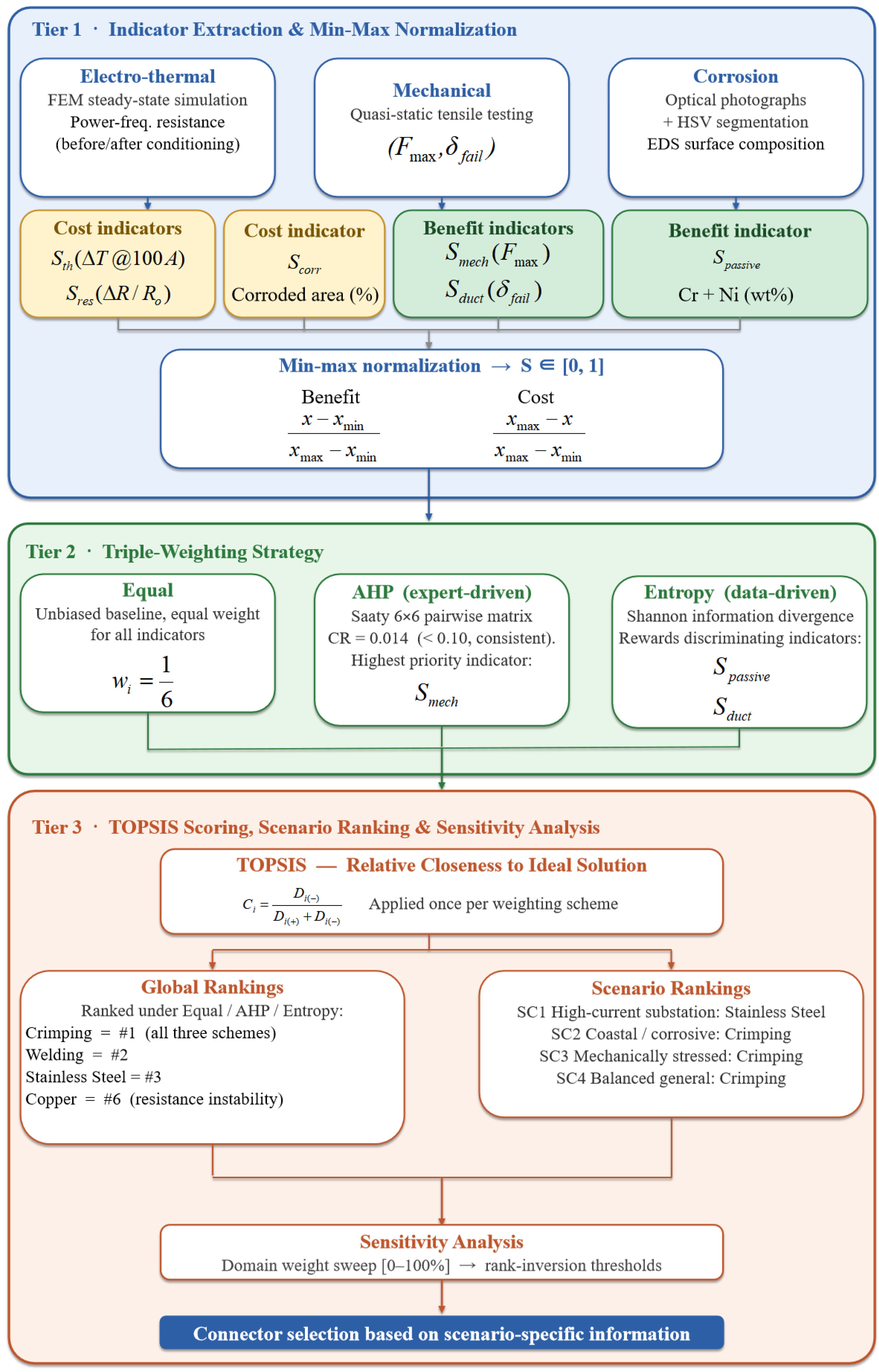
To systematically compare the six connector configurations across their heterogeneous performance domains, a three-tier multi-criteria decision-making (MCDM) framework was developed, as illustrated in
Figure 8, integrating electro-thermal, mechanical, and corrosion metrics into a single quantitative selection tool. The framework proceeds through sequential stages of metric extraction and normalization (Tier 1), multi-criteria weight assignment (Tier 2), and TOPSIS-based scenario ranking (Tier 3), enabling transparent and reproducible scoring under varying deployment conditions.
Six measurable performance indicators were extracted from the experimental and simulation data reported in
Section 3.1,
Section 3.2 and
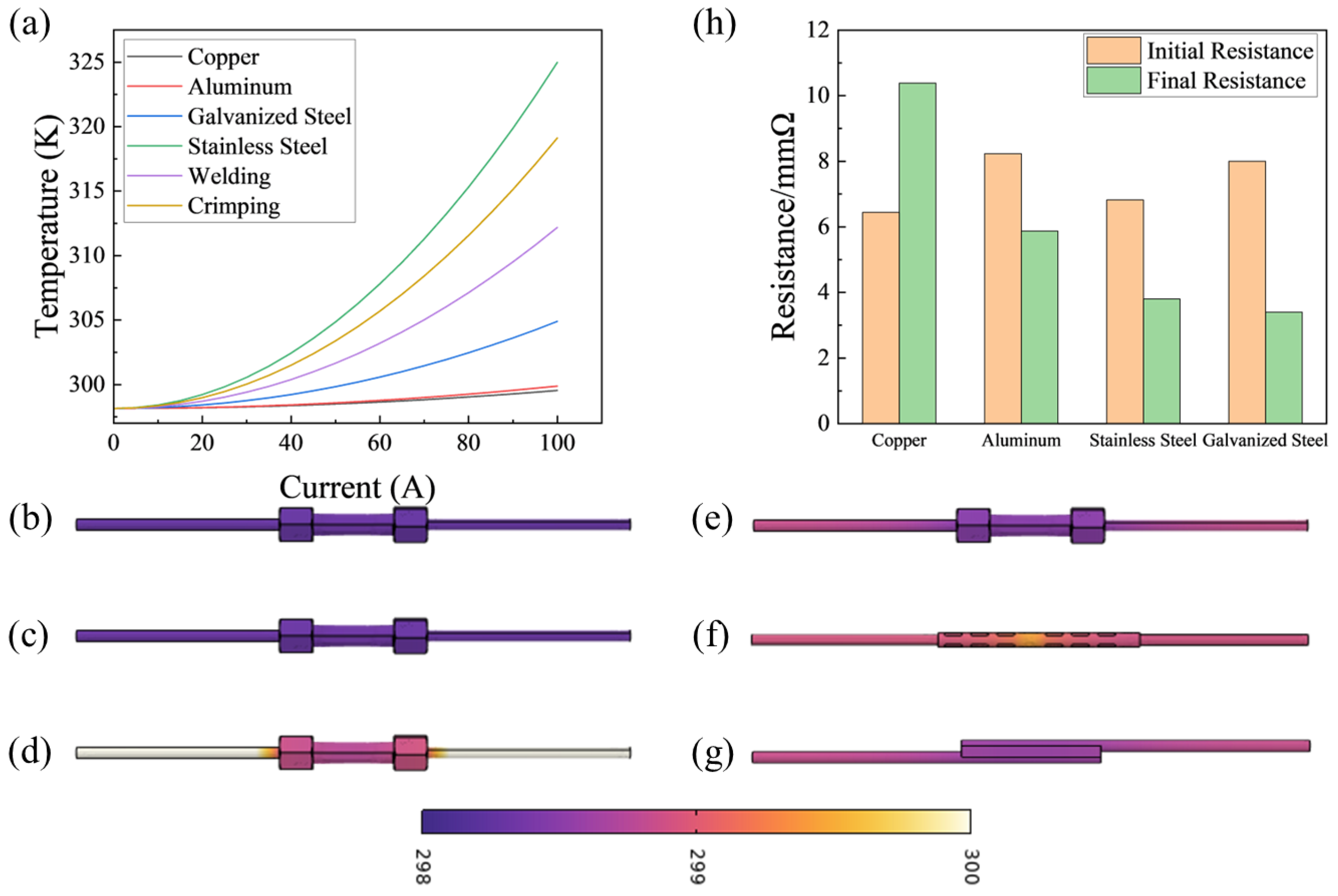
Section 3.3. The electro-thermal domain contributes two indicators: the steady-state temperature rise at 100 A (
), drawn from the FEM-derived temperature–current curves, and the post-conditioning resistance change ratio
(
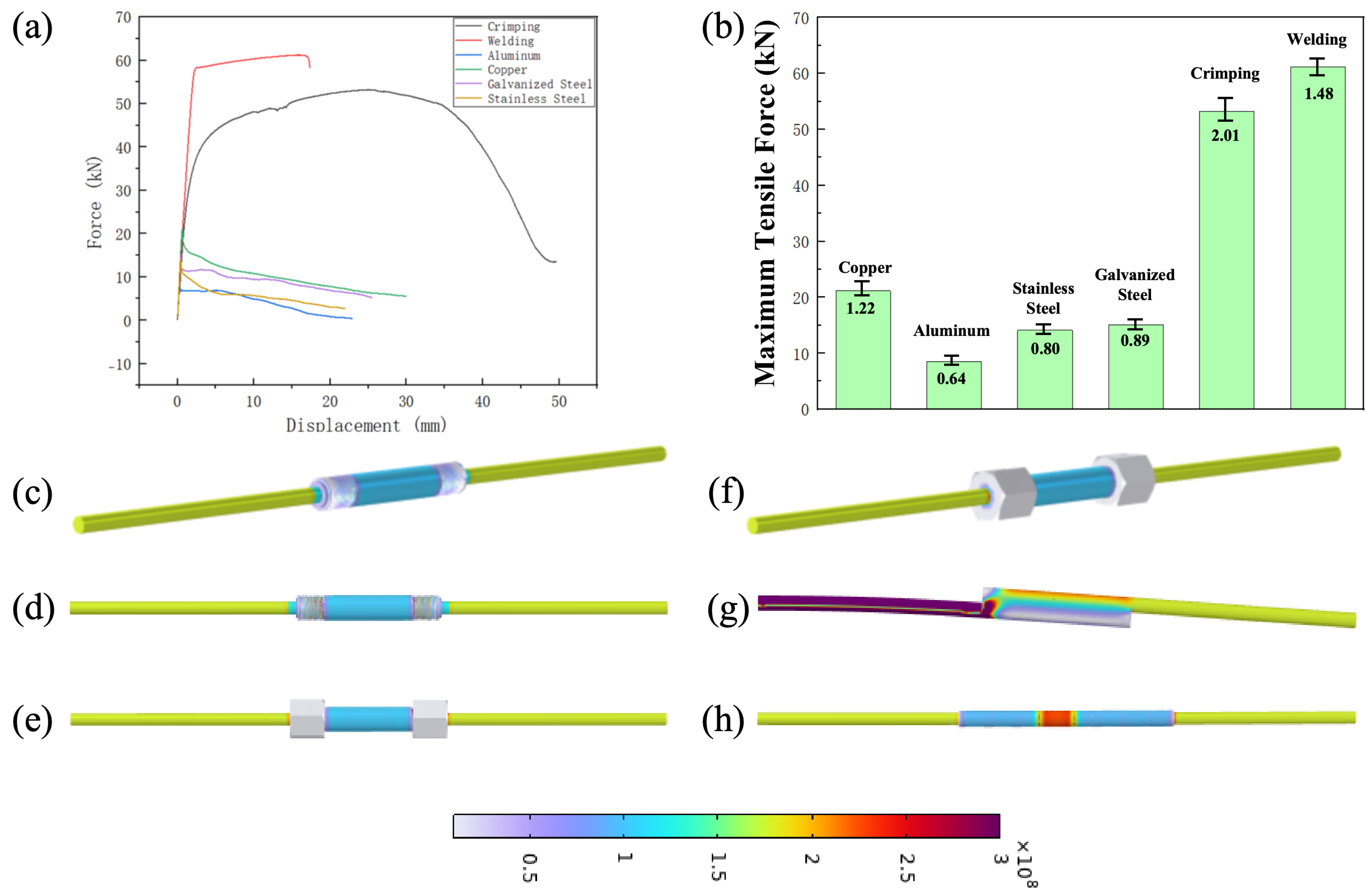
), which captures the degradation or recovery behavior of the contact interface under high-current load. The mechanical domain contributes two further indicators: the maximum tensile force (
) and the displacement at failure (
), both derived from the quasi-static tensile test results. The corrosion domain is represented by the corroded area fraction (
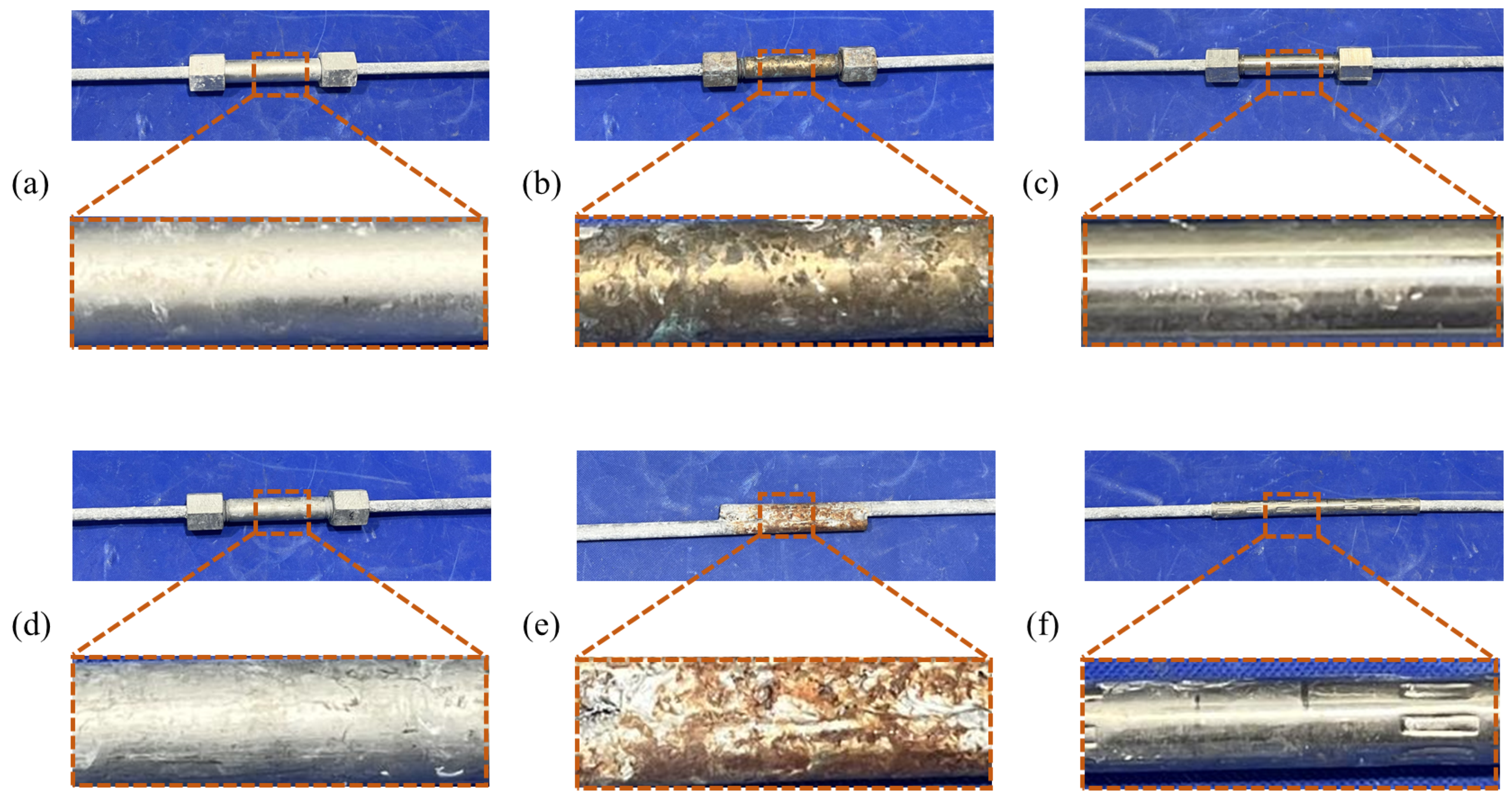
), quantified via HSV color-space thresholding applied to the pre-exposure optical photographs in
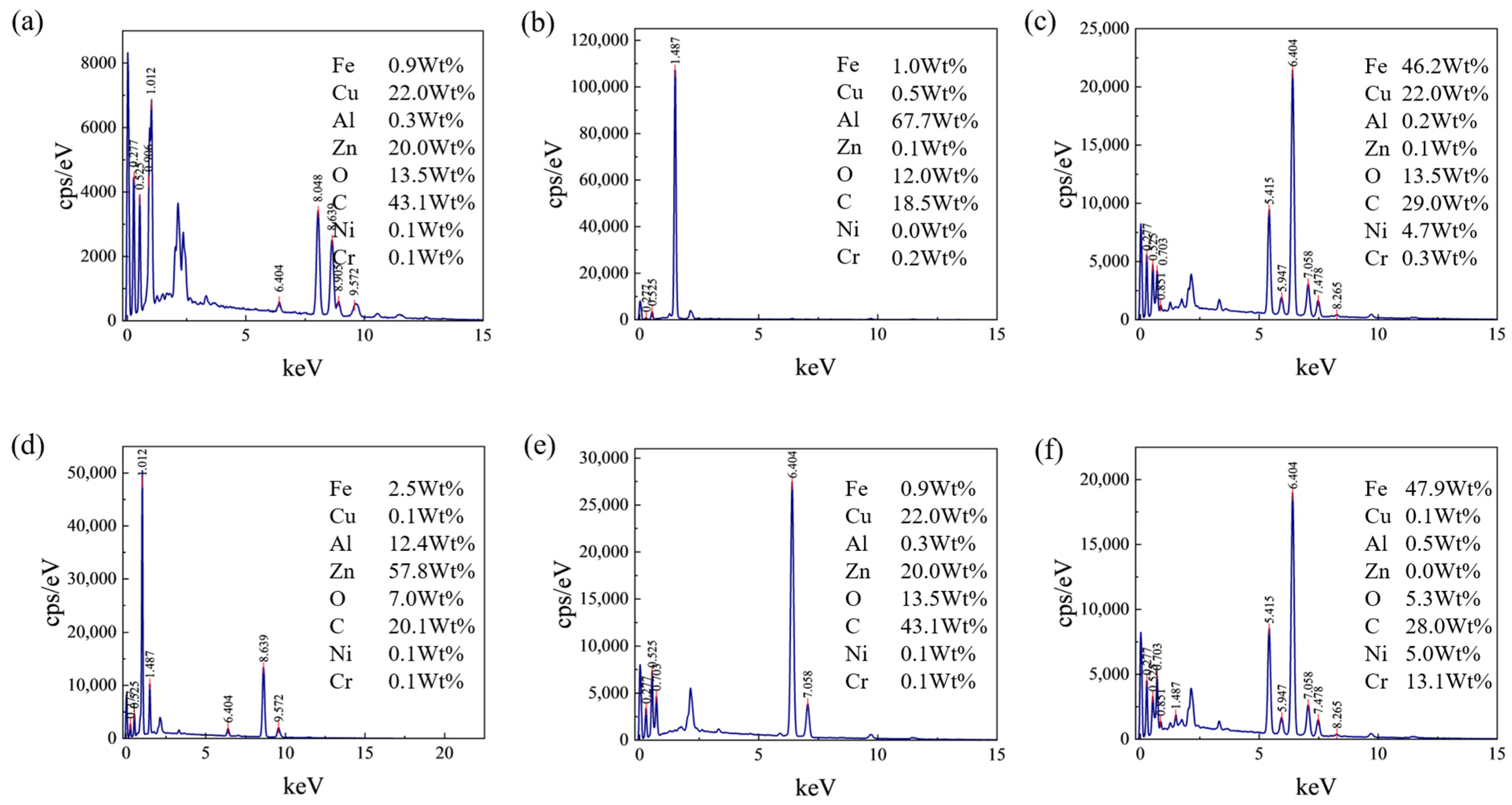
Figure 5, and the Cr + Ni passive film content (
), derived from the EDS surface composition data in
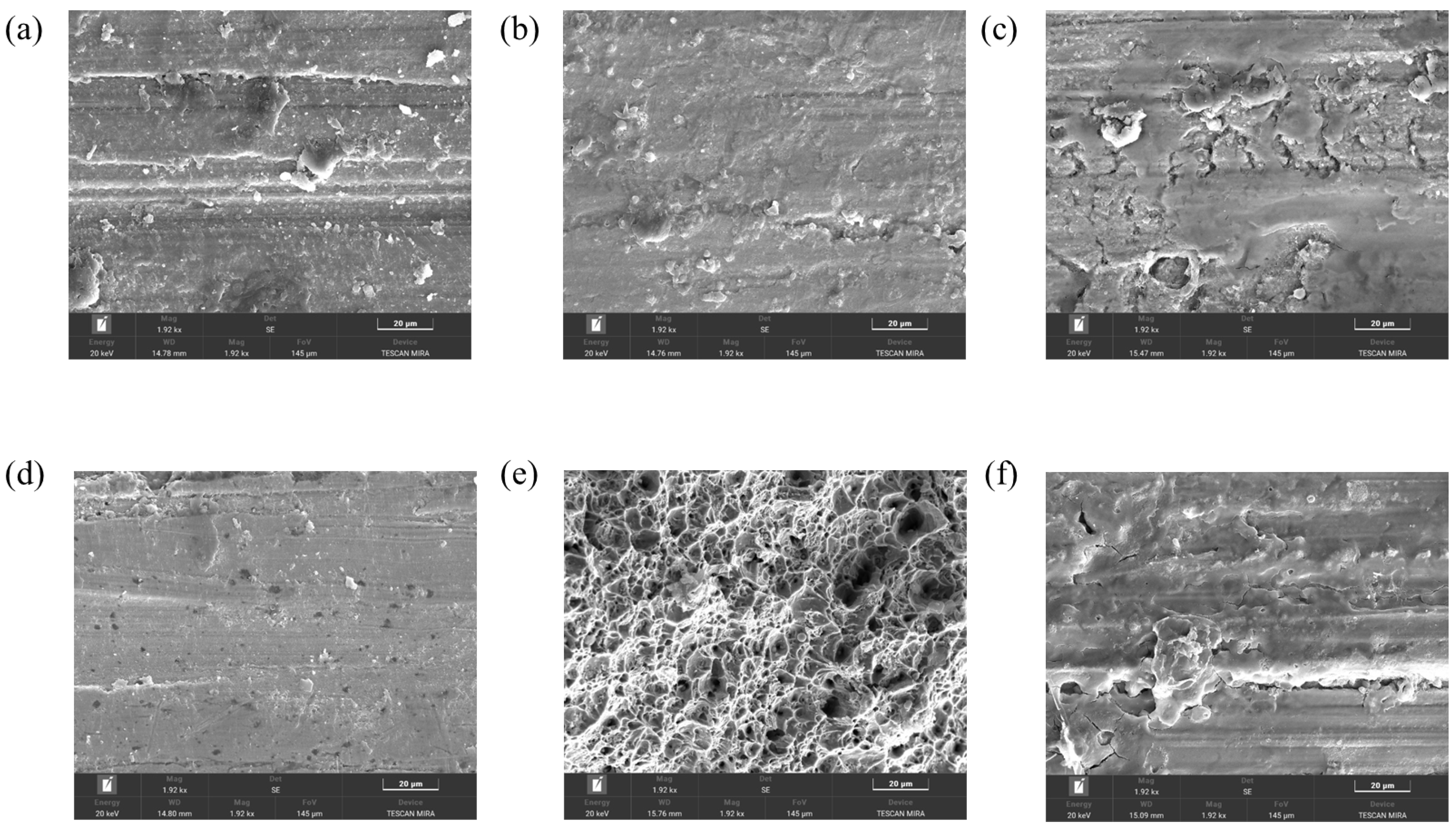
Figure 7. The passive film indicator
is derived from the EDS-measured Cr + Ni surface content (wt%), which serves as a first-order compositional proxy for passive film formation tendency based on the established relationship between chromium content above approximately 9.5 wt% and the spontaneous formation of a protective Cr
2O
3-rich oxide layer in stainless-grade alloys. It is acknowledged that this proxy does not capture the full complexity of passive film stability in chloride environments, where additional factors—including molybdenum content, microstructure (grain boundary sensitization, carbide precipitate distribution), pitting potential, and galvanic coupling between dissimilar metals at the connector–rod interface—each contribute to actual corrosion susceptibility.
should therefore be interpreted as a comparative compositional indicator within the present dataset, not as a comprehensive corrosion resistance descriptor. Electrochemical characterization via potentiodynamic polarization and electrochemical impedance spectroscopy would provide more rigorous passivation metrics and is identified as a direction for future work.
To place these dimensionally disparate metrics on a common [0, 1] scale, min–max normalization was applied column-wise. Benefit-type indicators (
,
,
) are normalized as
, mapping the highest-performing configuration to 1.0. Cost-type indicators (
,
,
) are normalized as
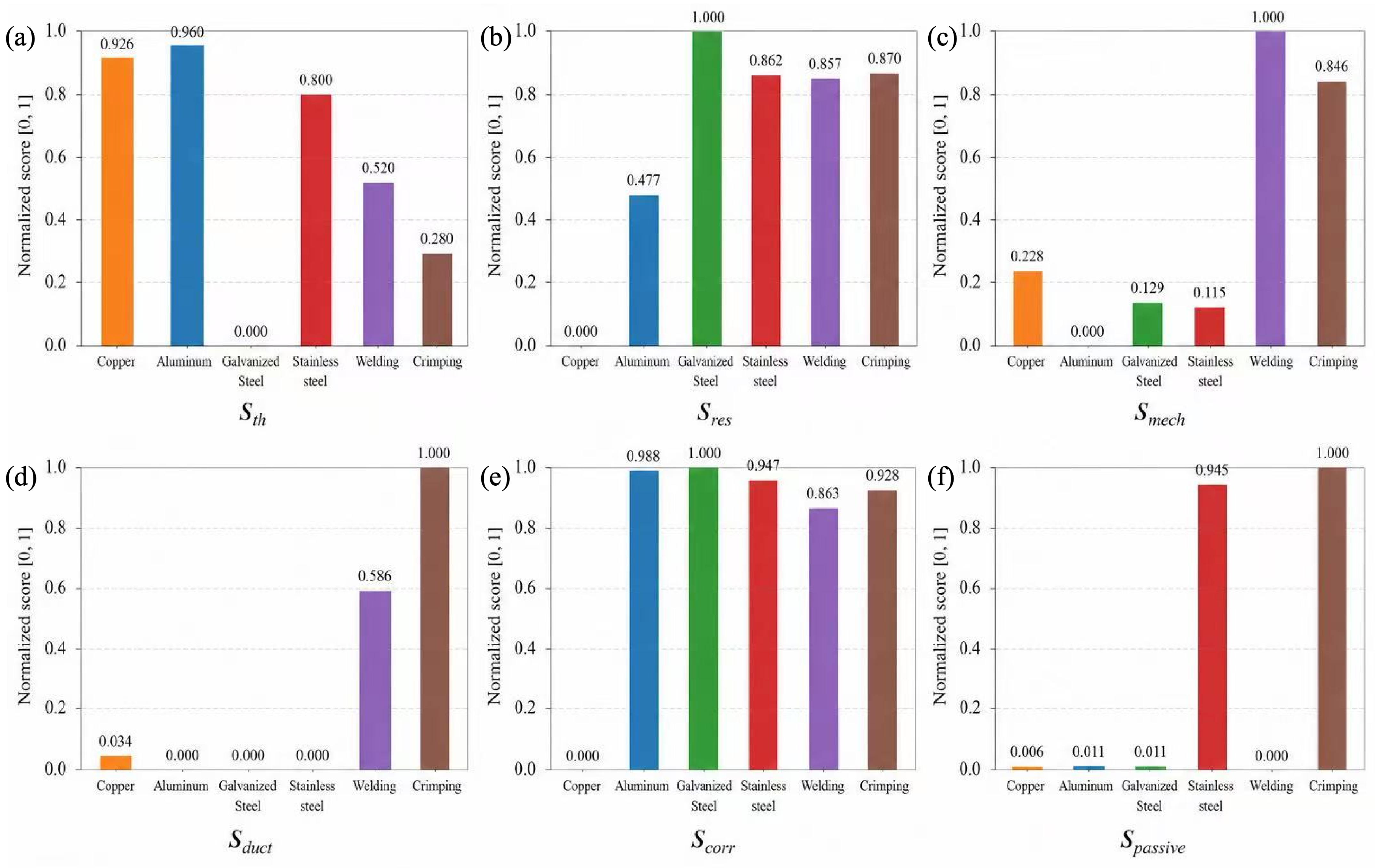
, mapping the lowest-cost configuration likewise to 1.0. The individual indicator scores for each configuration are visualized in
Figure 9. Inspection of
Figure 9 reveals that crimping and welding lead on the mechanical indicators, with
and
values approaching 1.0, consistent with their superior tensile capacity and ductility reported in
Section 3.2. Stainless steel and crimping achieve near-maximum passive film scores (0.944 and 1.0, respectively) owing to their Cr + Ni content of 16.1 and 17.1 wt%—an order of magnitude above the remaining four configurations. Copper scores 0.0 on
, reflecting its anomalous +60% post-conditioning resistance increase. Galvanized steel and aluminum achieve the highest
scores of 1.000 and 0.988, respectively, since both exhibited near-zero corroded area fractions in the baseline photographs.
Three complementary weighting schemes were applied to assess the robustness of the rankings to different expert and data-driven perspectives, with the resulting weight vectors presented in
Table 1. Under equal weighting, each indicator receives a weight of 1/6, establishing an unbiased baseline. For the Analytic Hierarchy Process (AHP) scheme, expert pairwise judgments were encoded in a 6 × 6 reciprocal comparison matrix following the Saaty scale [
13,
14], assigning highest relative importance to tensile performance, reflecting the structural load requirements of earthing joints in service. The consistency of the expert judgment matrix was verified using the Saaty consistency index (CI) and consistency ratio (CR):
where
is the principal eigenvalue of the 6 × 6 pairwise comparison matrix, n = 6 is the number of criteria and RI = 1.24 is the random consistency index for n = 6 [
13,
14]. Second-highest relative to passive film chemistry, and reflecting long-term durability, the derived priority vector satisfies the Saaty consistency criterion, with a consistency ratio CR = 0.0139, well below the accepted threshold of 0.10, confirming acceptable coherence of the expert judgments. The resulting AHP weight vector ranks indicators as
Smech = 0.344 >
Spassive = 0.226 >
Scorr = 0.181 >
Sth = 0.116 >
Sduct = 0.068 >
Sres = 0.065 in descending order. The entropy-based objective weighting scheme derives weights from the Shannon information divergence of each indicator across the six configurations [
15]: indicators with greater discriminating power receive higher weights, independent of expert preference. For each indicator
j, the normalized score proportion, Shannon entropy and objective weight were computed sequentially as:
where
is normalized score of configuration
i on indicator
j,
m = 6 is the number of configurations and n = 6 is the number of indicators.
with
indicating a non-discriminating indicator. Indicators with broader spread across configurations yield lower
and therefore receive higher weights under Equation (12), ensuring that the weighting reflects the actual information content of the data rather than subjective judgment. Under this scheme,
Sduct (0.324) and
Spassive (0.316) emerge as the dominant contributors, since the configurations span a factor of 30 in displacement-to-failure (1–30 mm) and more than two orders of magnitude in Cr + Ni content (0.1–17.1 wt%), providing the greatest inter-configuration discrimination.
Scorr receives the lowest entropy weight (0.057) because the pre-exposure corroded area fractions are clustered near zero for five of the six configurations, limiting discriminating power at this baseline stage.
The AHP pairwise comparison matrices were constructed following Saaty’s eigenvalue method [
22,
23]. Relative importance ratios between the six performance indicators were assigned on the basis of expert pairwise judgment reflecting the structural and durability requirements of earthing joints in service, with highest relative importance assigned to tensile performance (
Smech) and second-highest to passive film chemistry (
Spassive). The consistency ratio CR = 0.0139 confirms logical consistency of the comparisons (CR < 0.10 required; Saaty [
22]). The resulting AHP weight vector, together with the equal-weight and Shannon entropy weight vectors derived independently from indicator data dispersion, is reported in
Table 1 to enable full reproducibility of the ranking calculations.
TOPSIS (Technique for Order of Preference by Similarity to Ideal Solution) was applied to the normalized score matrix under each of the three global weighting schemes, computing the relative closeness
Ci of each configuration to the positive ideal solution. For each configuration i, weighted Euclidean distances to the positive ideal solution A+ and the negative ideal solution A− were computed as:
where
is for benefit indicators and
is for cost indicators;
is defined conversely; is indicator weight under the chosen weighting scheme. The relative closeness of each configuration to the ideal solution is then:
with
;
corresponding to a configuration coinciding with the positive ideal on all indicators simultaneously and
to one coinciding with the negative ideal. Configurations are ranked in descending order of
. The composite scores and rankings are assembled in
Table 2. Under both equal and AHP weighting, crimping ranks first (
Ci = 0.737 and 0.807, respectively), followed by welding (
Ci = 0.594 and 0.622). Stainless steel occupies third position under both schemes (
Ci = 0.568 and 0.486), benefiting from its superior passive film chemistry despite intermediate tensile performance. Copper consistently ranks last (
Ci = 0.326 and 0.260), penalized primarily by its anomalous post-conditioning resistance increase, which imposes the maximum cost on
Sres and reflects a self-reinforcing oxidation mechanism with adverse implications for long-term contact stability. Under entropy weighting, crimping retains first place by a wider margin (
Ci = 0.674) because both
Sduct and
Spassive—the two highest-weight indicators in this scheme—are simultaneously maximized by crimping, while welding retains second (
Ci = 0.580), with stainless steel in third (
Ci = 0.551) owing to its passive film advantage.
TOPSIS was selected for its computational tractability, mathematical transparency, and established validation record in engineering multi-criteria decision-making, including material selection, infrastructure assessment, and power system equipment evaluation. The method requires only the normalized decision matrix and weight vector as inputs and executes via straightforward matrix arithmetic implementable in any standard numerical computing environment or spreadsheet application without specialized optimization software. Extension of the framework to additional connector configurations requires only the addition of new rows to the normalized matrix; inclusion of new performance indicators requires updating the weighting vector accordingly. Computational cost scales linearly with the number of alternatives and indicators, rendering the approach accessible for routine use in engineering specification and procurement workflows. Furthermore, TOPSIS simultaneously measures each alternative’s distance from the positive ideal solution and from the negative ideal solution, thereby satisfying the axiom of rational choice and avoiding the single-reference bias inherent in simpler scoring approaches. TOPSIS also produces continuous ratio-scale closeness coefficients
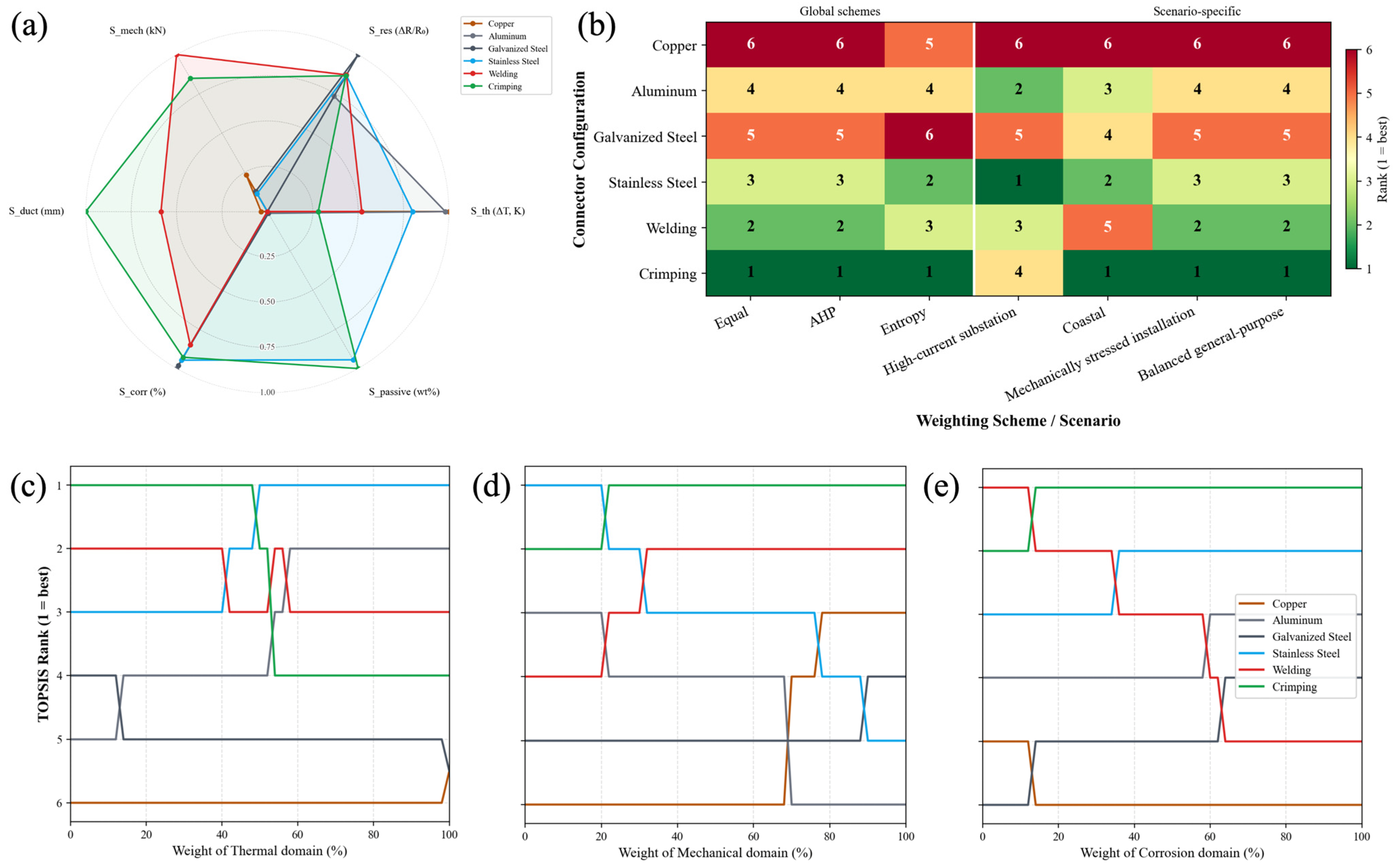
Ci rather than ordinal-only rankings, which allows the magnitude of performance differences across configurations and scenarios to be directly compared. The domain-level sensitivity analysis presented in
Figure 10 further supports this choice: the leading rank positions of crimping and welding under mechanically oriented weighting, and of stainless steel and aluminum under thermally oriented weighting, remain stable across a broad range of weight perturbations, indicating that the principal conclusions of this study are not strongly dependent on the choice of aggregation method. It is acknowledged that indicator-level measurement uncertainty propagation through the TOPSIS computation was not explicitly quantified in this study; this represents a methodological refinement recommended for future work.
To assess performance under differentiated engineering requirements, TOPSIS was re-run with four scenario-specific weight profiles that redistribute emphasis across the three performance domains. The resulting scenario rankings are summarized in
Table 3 and visualized as a heatmap in
Figure 10b. In the high-current substation scenario, where thermal and resistance stability indicators carry fourfold excess weight relative to mechanical and corrosion metrics, stainless steel rises to the top rank owing to its combination of low steady-state temperature rise (7 K at 100 A) and substantial post-conditioning resistance reduction (−44%), while aluminum advances to second place by virtue of its minimal thermal perturbation (2.5 K). This rank inversion from the global result underscores that connector selection under high-current duty must weight thermal efficiency preferentially over structural considerations. In the coastal/corrosive scenario—in which
Scorr and
Spassive together account for two-thirds of the total weight—crimping regains first rank due to its stainless steel sleeve composition (Cr + Ni = 17.1 wt%), with stainless steel in second. The mechanically stressed scenario restores crimping to first and welding to second, reflecting the co-dominance of
Smech (53.5 and 61.5 kN) and
Sduct (30 and 18 mm) under high mechanical weighting. The balanced general-purpose scenario reproduces the equal-weighting result, confirming crimping and welding as the default recommendations in the absence of application-specific constraints.
The normalized performance profiles of all six configurations are rendered in the radar chart in
Figure 10a, in which each configuration is represented as a closed polygon spanning the six indicator axes. The chart graphically confirms that no configuration dominates on all axes simultaneously: welding achieves the largest projection on
Smech, crimping spans both
Sduct and
Spassive jointly, and copper achieves near-maximum reach on Sth alone—an inversion from its last-place TOPSIS rank that illustrates how thermal advantage is insufficient to compensate for resistance degradation in multi-criteria scoring. The near-complete overlap between the stainless steel and crimping polygons on the
Spassive axis visually confirms that passive film protection is the shared advantage of these two stainless-grade configurations and the primary driver of their convergence under corrosion-heavy scenarios. The contraction of all mechanical connector polygons toward the origin on the
Smech and
Sduct axes further illustrates the fundamental performance gap between process-bonded and mechanically bolted assemblies established in
Section 3.2.
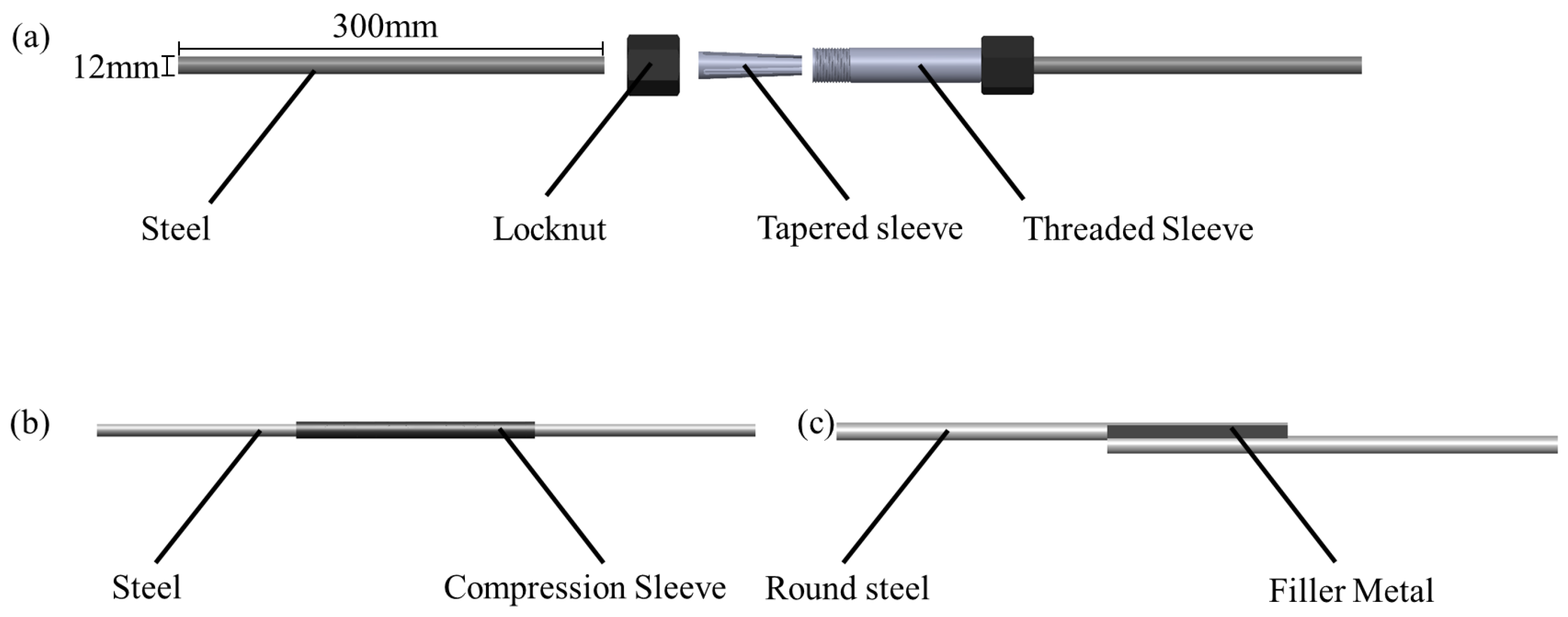
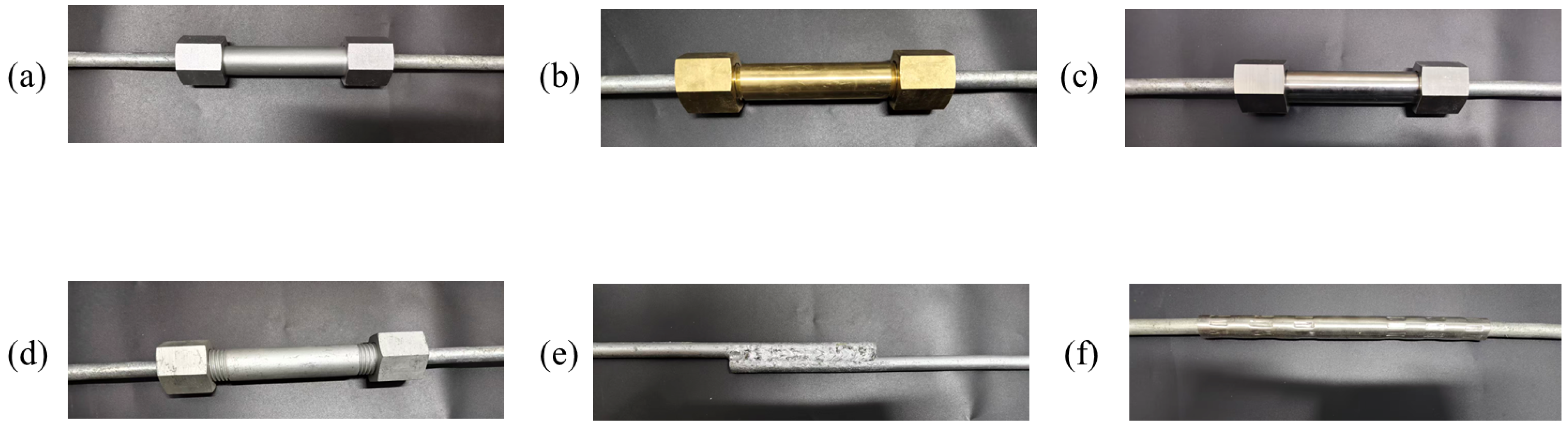
The quantitative TOPSIS rankings should be interpreted alongside the practical installation and operational characteristics of each joining technology. Mechanical bolted connectors (configurations a, b, c, d) are field-adjustable and reusable, requiring no specialized tooling beyond a calibrated torque wrench; however, they are sensitive to installation torque variability and require periodic re-torquing to compensate for contact relaxation induced by thermal cycling under service loads. Compression-crimped connectors (f) require a calibrated hydraulic crimp tool for field assembly; once formed, the crimp produces a permanent, mechanically consistent bond with minimal ongoing maintenance requirements and no susceptibility to torque relaxation. Exothermic welded joints (e) require a trained operator, proprietary thermite charges, and graphite molds; the resulting metallurgical bond is irreversible, maintenance-free under service conditions, and insensitive to fretting corrosion at faying surfaces. These installation and lifecycle characteristics are qualitative factors that practitioners should weight alongside the quantitative TOPSIS scores when applying the framework to specific procurement or specification decisions.
The sensitivity of TOPSIS ranking to domain weight was evaluated by sweeping the weight of each performance domain from 0 to 100%, with the residual weight distributed equally between the remaining two domains. The resulting rank trajectories are displayed in
Figure 10c (thermal domain),
Figure 10d (mechanical domain), and
Figure 10e (corrosion domain).
Figure 10d shows that crimping and welding hold first and second rank for any mechanical domain weight above approximately 30%, indicating a robust hierarchy under a wide range of mechanically oriented weighting profiles.
Figure 10c reveals a sharp rank inversion near a thermal domain weight of 35%, at which point stainless steel and aluminum displace crimping and welding from the leading positions, identifying the crossover threshold beyond which high-current thermal efficiency becomes the decisive criterion for connector selection.
Figure 10e demonstrates that crimping and stainless steel converge to the top two ranks for corrosion domain weights above approximately 55%, reflecting the step-change in passive film content between the stainless-grade and non-stainless configurations. Across all three panels, copper consistently occupies the fifth or sixth rank, and galvanized steel remains in the lower half of the table, confirming the robustness of their relative assessments to changes in weighting strategy. Taken together, the framework results demonstrate that crimping is the highest-ranking configuration under the majority of weighting conditions, while connector selection for specialized environments—particularly high-current substations—requires deliberate reweighting toward domain-specific performance metrics.
Several limitations of the proposed multi-criteria evaluation model should be noted. First, all six performance indicators are derived from a single connector geometry and galvanized steel rod diameter tested at a specified current range; the absolute TOPSIS
Ci scores and scenario rank positions are specific to these conditions and should not be directly extrapolated to other connector designs, conductor cross-sections, or current ratings without repeating the indicator extraction procedure under the relevant service conditions. Second,
Spassive uses EDS-derived Cr + Ni surface content as a first-order compositional proxy and does not capture molybdenum content, microstructural effects, pitting potential, or galvanic coupling between dissimilar metals at the joint interface (as noted in the model limitations discussion above). Third, AHP weights reflect expert judgment under generalized grounding system deployment conditions; while the domain-level sensitivity analysis in
Figure 10 demonstrates that the leading rank positions are robust to weight perturbations, domain-specific applications may require recalibration of the pairwise comparison matrix. Fourth, accelerated salt-spray testing (ASTM B117/ISO 9227) [
24] provides a reproducible comparative ranking but does not constitute a quantitative prediction of absolute long-term field corrosion rates. Fifth, the sensitivity analysis sweeps domain-level AHP weights but does not propagate indicator-level measurement uncertainty through the TOPSIS computation; indicator-level uncertainty propagation represents a methodological refinement recommended for future work.
5. Conclusions
The present study characterizes static mechanical performance under monotonic quasi-static tensile loading; cyclic mechanical loading arising from thermal expansion–contraction cycles, vibration, or repeated fault-current surges is not addressed. The evolution of contact resistance, mechanical integrity, and surface corrosion under cyclic thermomechanical loading and long-term aging conditions represents an important extension of this baseline comparative assessment and is identified as a priority for future investigation.
This study has presented a systematic multi-criteria comparative evaluation of six grounding connector configurations across three conductor materials and three joining technologies. Three principal scientific findings emerge from the combined experimental and analytical program. First, the electro-thermal finite element modeling results demonstrate that electrical conductivity of the connector body material is the dominant driver of steady-state temperature rise under service current: copper (a) and aluminum (b) configurations maintained the lowest operating temperatures, while galvanized steel (d) exhibited the highest, consistent with material resistivity differences. Second, the tensile mechanical analysis confirms that exothermic welding (e) and compression crimping (f) produce joint strengths that exceed the tensile capacity of the galvanized steel rod substrate, whereas mechanical bolted connectors are governed by slip onset at the conductor–barrel contact interface. The exothermic welded joint achieved the highest maximum load; however, both process-bonded configurations outperformed all mechanical bolted alternatives. Third, the corrosion assessment reveals that the stainless steel connector (c) exhibited the lowest corroded area fraction after accelerated salt-spray exposure, attributable to its high Cr + Ni surface content. The exothermic welded configuration (e) exhibited pronounced localized rust in the iron-rich weld zone, yielding a lower total corroded area fraction than the non-stainless mechanical bolted connectors but substantially higher than the stainless steel configuration. The integrated multi-criteria decision-making framework demonstrates that no single configuration is universally optimal: in thermally critical applications, copper and aluminum configurations score highest; in mechanically demanding or maintenance-free applications, exothermic welding and crimping are preferred; in corrosion-critical environments, the stainless steel mechanical connector ranks first. The scenario-specific ranking results and sensitivity analysis provide a transparent, reproducible basis for context-dependent connector selection in engineering practice.
Several limitations of this study should be noted. The quantitative TOPSIS rankings are specific to the tested connector geometry and galvanized steel round rod substrate; direct extrapolation to other conductor cross-sections or connector designs requires repeating the indicator extraction procedure under the relevant conditions. Corrosion performance is assessed by an accelerated salt-spray protocol (ASTM B117/ISO 9227) [
24], which provides a reproducible comparative ranking but does not constitute a prediction of absolute long-term field durability. Under prolonged field exposure, relative rankings may shift due to differences in real atmospheric chloride deposition rates and wetting–drying cycles compared with continuous spray; progressive galvanic coupling effects as corrosion products accumulate at dissimilar-metal interfaces; contact-resistance increases, driven by oxide layer growth under cyclic thermal loading; and localized crevice corrosion develops at the conductor–sleeve interface, which is not captured by short-duration immersion or spray protocols. Cyclic mechanical loading, thermal fatigue, and electrochemical characterization of passivation kinetics lie outside the current scope and are identified as important future directions. Future research should also address: (i) transient electro-thermal analysis under fault-current surge conditions, preceded by a mesh sensitivity study to establish convergence of the steady-state solution and to ensure that absolute temperature predictions meet the accuracy requirements of safety-critical surge assessments; (ii) fatigue and cyclic loading characterization under thermal and vibration excitation; (iii) long-term field monitoring to validate accelerated corrosion outcomes against service exposure data; (iv) electrochemical characterization (electrochemical impedance spectroscopy, potentiodynamic polarization, open-circuit potential evolution) to complement the salt-spray visual assessment; (v) extension of the multi-criteria decision-making framework to additional connector sizes, current ratings, and environmental exposure classes; and (vi) detailed microstructural characterization of joint interfaces using optical metallography, electron backscatter diffraction, or transmission electron microscopy to elucidate bonding mechanisms and microstructure–property relationships.
Finally, formal propagation of material property and boundary condition uncertainty through the electro-thermal finite element modeling predictions was not performed; quantification of absolute temperature prediction uncertainty and its effect on the multi-criteria ranking electro-thermal indicator is identified as a direction for future work.