Article

Numerical Modeling and Experimental Characterization of the Mechanical Impact on a Dissimilar Structured Steel by GMAW


by
Ramsés Chávez Carrillo
,
David Jaramillo
,
César Mendoza
* and
Ricardo Rafael Ambriz
Instituto Politécnico Nacional CIITEC-IPN, Cerrada de Cecati S/N, Col. Sta. Catarina, Azcapotzalco, Mexico City 02250, Mexico
*
Author to whom correspondence should be addressed.
Processes 2026, 14(12), 1938; https://doi.org/10.3390/pr14121938 (registering DOI)
Submission received: 1 May 2026 / Revised: 3 June 2026 / Accepted: 10 June 2026 / Published: 13 June 2026

Abstract

The Charpy impact resistance of monolithic high-strength and dissimilar structured steel was studied. A gas metal arc welding process was used to fabricate the structured steel by depositing a layer of austenitic stainless steel, followed by a layer of hardfacing material over the high-strength steel plate. ANSYS LS-DYNATM was used to simulate pendulum–striker impacts on steel Charpy samples. A Cowper–Symonds constitutive model was employed to capture the strain rate behavior. The corresponding material constitutive model parameters were obtained from the literature for the monolithic materials; an iterative numerical optimization method was used to couple the parameters of the structured steel simulation and experimental results. Numerical simulation results showed close agreement with experimental ones. Simulation is a valuable tool for explaining the fracture mechanism in the Charpy impact test and can be used to efficiently design parts made of structured steel that will be subjected to impacts or high-speed deformations.

1. Introduction

The Charpy impact test allows for the assessment of a material’s impact toughness, that is, its ability to absorb energy when a sudden fracture occurs under an impact load [1]. It is used to determine the ductile-to-brittle transition in ferritic steels as a function of temperature. It consists of a swing pendulum that strikes a standard V-notch specimen as described in ASTM E23 and ISO 148-1 standards [2,3]. Also, it is a low-cost and accessible method for a comparative evaluation of the fracture energy between materials and processes, such as welded joints [4]. Among the advantages of this test, the absorbed energy data is used for material quality control, because it provides general information about mechanical behavior. Large values of absorbed energy are associated with a ductile, tough material. Therefore, research has been conducted to interpret the complex results of an instrumented Charpy test pendulum and to maximize the information obtained from the impact force–time curves as the relation of this test to the fracture toughness obtained by Chaouadi and Gérard [5].
There is currently a lack of information on the fracture phenomenon during impact in layered materials, the effect of the energy applied during welding for their fabrication, and the deformation rate, which represents a technological advantage for repairing metal parts subjected to impact and reducing the consumption of new materials, thereby lowering energy consumption and material savings, specifically on welded joints where the properties of materials mix [6,7].
Nowadays, an important area of technology development is security, including the use of hardened steels as armor for impact protection. Armor steel is preferable to lightweight materials, such as aluminum, titanium, magnesium, and organic composites, because of its low cost, availability, and ductility, which facilitate the fabrication of protective shells. Also, the ballistic performance of multi-layer materials, such as steel–aluminum, has been investigated [8]. The steel used for ballistic protection is usually austenitized, quenched, and tempered (Q&T) to achieve a tempered martensitic matrix as the investigation basis used by Atapek to develop an armor steel [9]. Because the ballistic steel’s main characteristic for protection is its high energy absorption capacity, for welding joints or repairing armored structures, the impact resistance has been investigated by depositing hardfacing alloys (HF) over austenitic stainless steel (ASS) to increase the energy absorption of the welds, mainly by using the flexibility and plasticity of the ASS as well as its high solubility for hydrogen and thus to avoid hydrogen induced cracking (HIC) [10,11,12,13].
Material impact resistance modeling is an important design tool that can be performed using numerical methods, such as the Finite Element Method (FEM), particularly when the shapes of the parts and high-speed deformations pose a highly complex problem, which are in agreement with the findings by Kılıç et al. [14] who used ANSYS LS-DYNATM for the simulation of defeating mechanisms of high hardness perforated plates against armor piercing ammunition. The material parameters used in the constitutive models for FEM analysis can be determined experimentally from tensile and Charpy tests [15,16,17,18,19,20,21,22], Charpy tests coupled with image analysis of the surface of broken samples [23], and ballistic testing [24].
With an accurate constitutive model of a material, a realistic FEM analysis can be used to design structures throughout the manufacturing-to-service-life cycle [25], and this is especially helpful for high-speed deformation processes, where empirical formulae provide limited predictive capability [26,27]. FEM analysis, coupled with experimental calibration, has been used to provide insights into the use of multi-layer materials, including steel, and into the effects of welding parameters on metal joints for impact protection [28,29,30,31].
This research proposes a dissimilar structured steel (DSS) for armoring applications, which comprised a base plate of MARS 500 (Q&T), wire electrodes 309L ASS, and DO*15 HF applied with gas metal arc welding (GMAW). This DSS was analyzed in terms of impact resistance by using a Charpy V-notch test. The swing pendulum was instrumented, and force–time curves were obtained to compare against an explicit finite element simulation with the Cowper–Symonds material constitutive model.

2. Materials and Methods

2.1. Materials

The chemical compositions of the base material MARS 500 (ArcelorMittal, Luxembourg) and 309L ASS (Lincoln Electric Company, Cleveland, OH, USA) and DO*15 HF (Castolin Eutectic GmbH, Kriftel, Germany) are shown in Table 1. The 309L ASS material was used in a presentation of ER309L for bare stainless-steel wire according to AWS A5.9/A5.9M [32,33], and the DO*15 HF material was used in a presentation of a slag-free flux-cored tubular wire with martensitic weld metal and embedded [34,35].
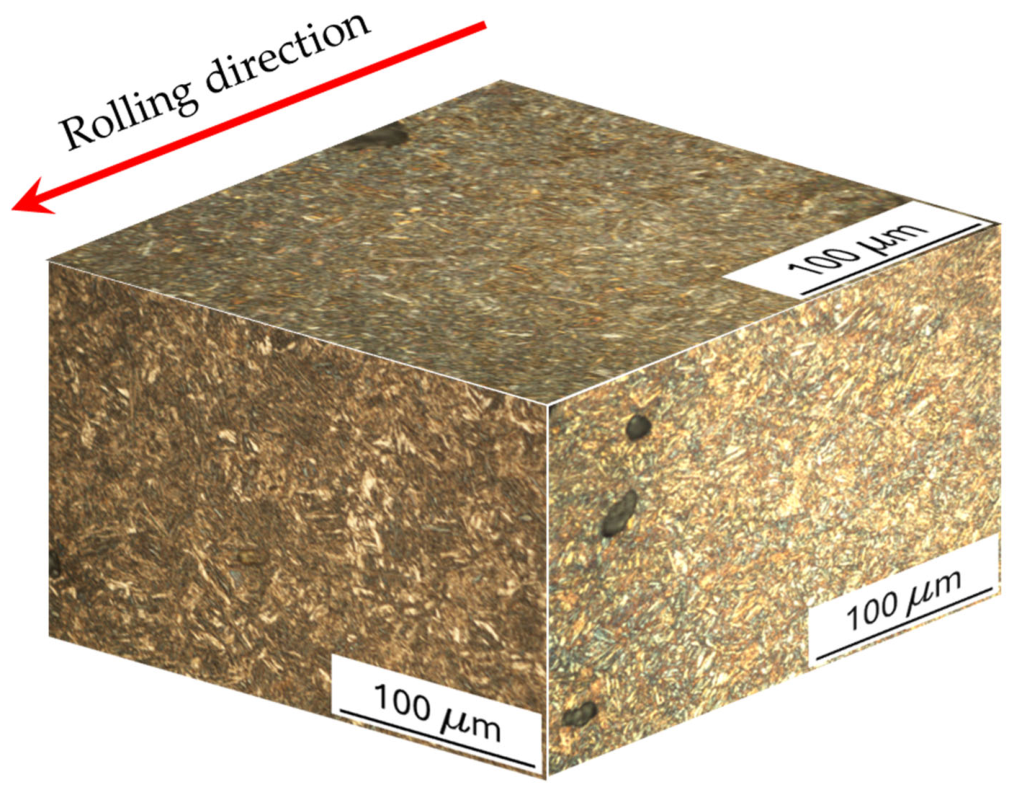
The MARS 500 was obtained in a Q&T condition, with a micro-Vickers hardness of 447 HV0.1. Tensile tests were conducted using subsize sample geometry following the ASTM E8 standard to determine the following properties: a yield strength of 1220 MPa, an ultimate strength of 1536 MPa, and an elongation of 16% [38]. This microstructural analysis of this steel is presented in Figure 1, where the tempered martensite microstructure was isotropic.

2.2. Layer Deposition

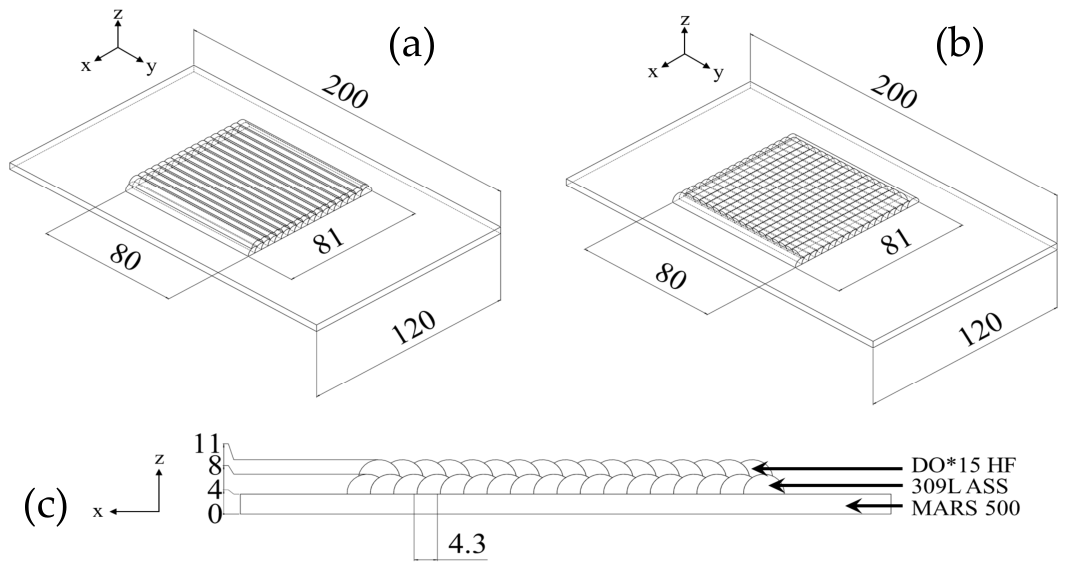
To obtain the DSS, the ER309L ASS and DO*15 HF electrodes were deposited over the MARS 500 (Q&T), with two orientations for the welding beads of the DO*15 HF over the 309L ASS, as schematically shown in Figure 2. Electric arc deposition was performed using GMAW with a Fronius TPS 4000TM powersource (Fronius International GmbH, Wels, Austria), in conjunction with a six-axis KUKA KR AgilusTM robotic arm (Kuka SE & Co. KGaA, Augsburg, Germany), with the parameters listed in Table 2.

2.3. Charpy Impact Tests

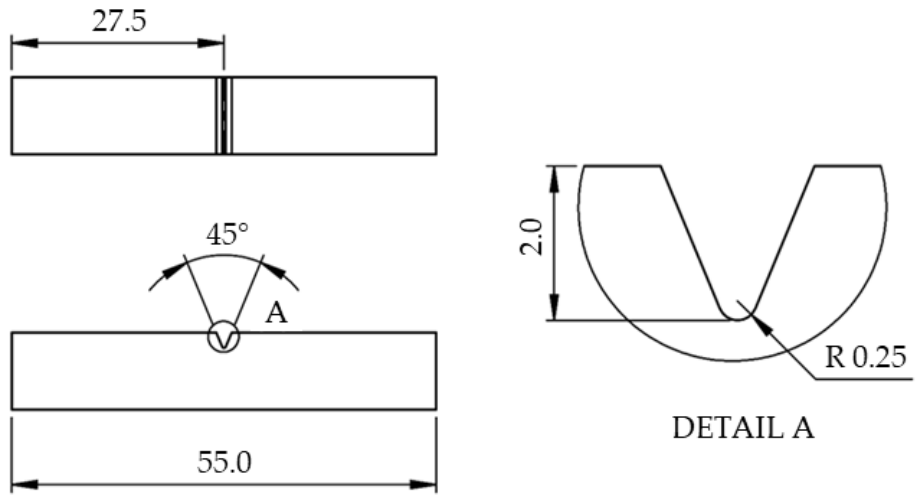
From the DSS, Charpy-type samples were fabricated according to the ASTM E23 [2] standard to evaluate the mechanical behavior associated with an impact loading that produces a stress triaxiality using a notch. Figure 3 presents the notched sample geometry.
The impact resistance of the DSS, 309L ASS, and DO*15 HF deposited materials was determined using an instrumented Charpy pendulum (CIITEC, Mexico City, Mexico). A NI-DAQ 9237 module (National Instruments Corporation, Austin, TX, USA) was used to measure the force–time curve at a 50 k-sample rate, which was then processed to obtain the force–striker displacement curve using Equation (1) [39].
s ( t ) = t 0 t v 0 1 m t 0 t F t d t d t
where s ( t ) is the striker displacement, v 0 is the impact velocity, and m is the mass of the striker. In the experiments, these values were v 0 = 5.24 m⋅s−1 and m = 22 kg.

2.4. Impact FEM Simulation

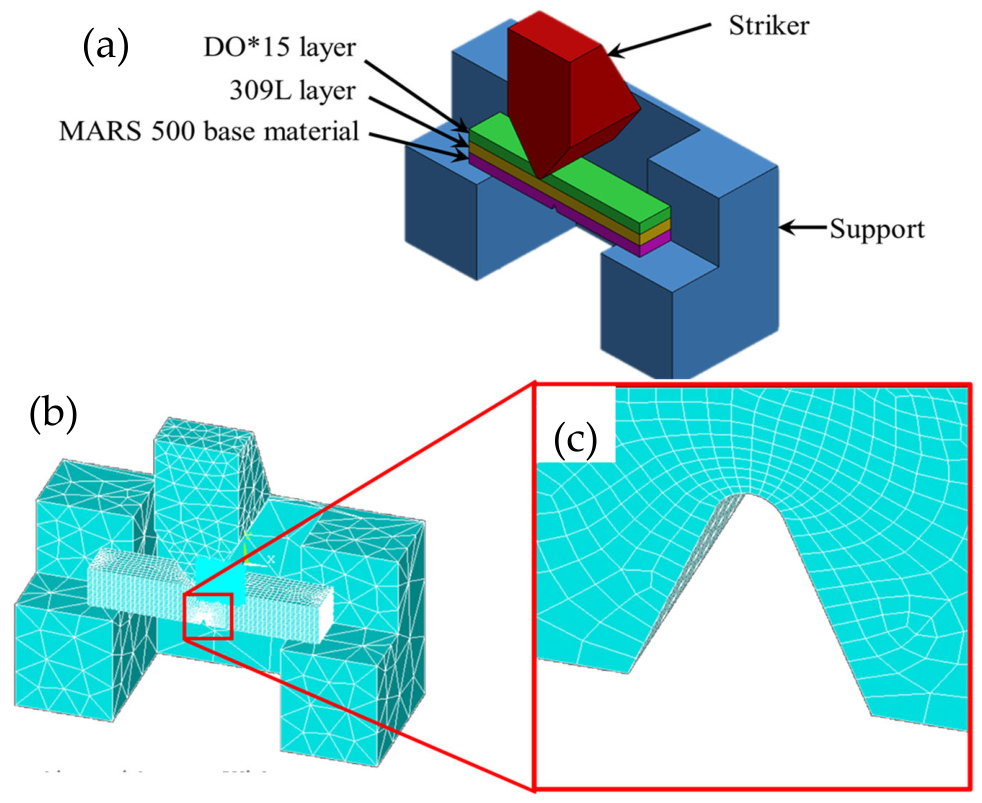
The Charpy pendulum impact on the DSS was simulated in an explicit FEM analysis using ANSYS LS-DYNATM software version 19.2 (Ansys Inc., Canonsburg, PA, USA). The 3D model is shown in Figure 4a. It consisted of the support, striker, and the DSS sample. The mesh used hexahedral solid elements for the DSS (SOLID164), the striker (SOLID168), and the sample support (SOLID168), as shown in Figure 4b,c. In the case of the striker and support, the SOLID168 element type uses a non-deformable formulation to reduce computational cost while remaining compatible with the high stiffness of both the support and striker. The SOLID164 is an 8-node hexahedron/brick element and was selected to reduce the computational cost while maintaining high precision in the calculations [39], which are used for mapped meshing, which allows the mesh refining in the notch and also provides the capacity to simulate bi-material zones [40].
The model boundary conditions were as follows: the support is fixed, the sample is in contact with the support, and no penetration is allowed, while the striker displacement was permitted only in the impact direction, with the same experimental values of initial velocity of 5.24 m⋅s−1 and a mass of 22 kg.
The constitutive model used for the materials in the simulation of the impact test was the Cowper–Symonds model, as shown in Equation (2) [41,42]. The simulation parameters are presented in Table 3.
σ y = 1 + ε ˙ C 1 P σ 0 + β E P ε P e f f
where σ 0 is the initial yield stress, ε ˙ is the strain rate, C and P are the Cowper–Symonds strain rate parameters, β is the strain hardening parameter, ε P e f f is the effective plastic strain and E P is the plastic hardening modulus, obtained using Equation (3).
E P = E t a n E E E t a n
where E is the elastic modulus and E t a n is the tangent elastic modulus.
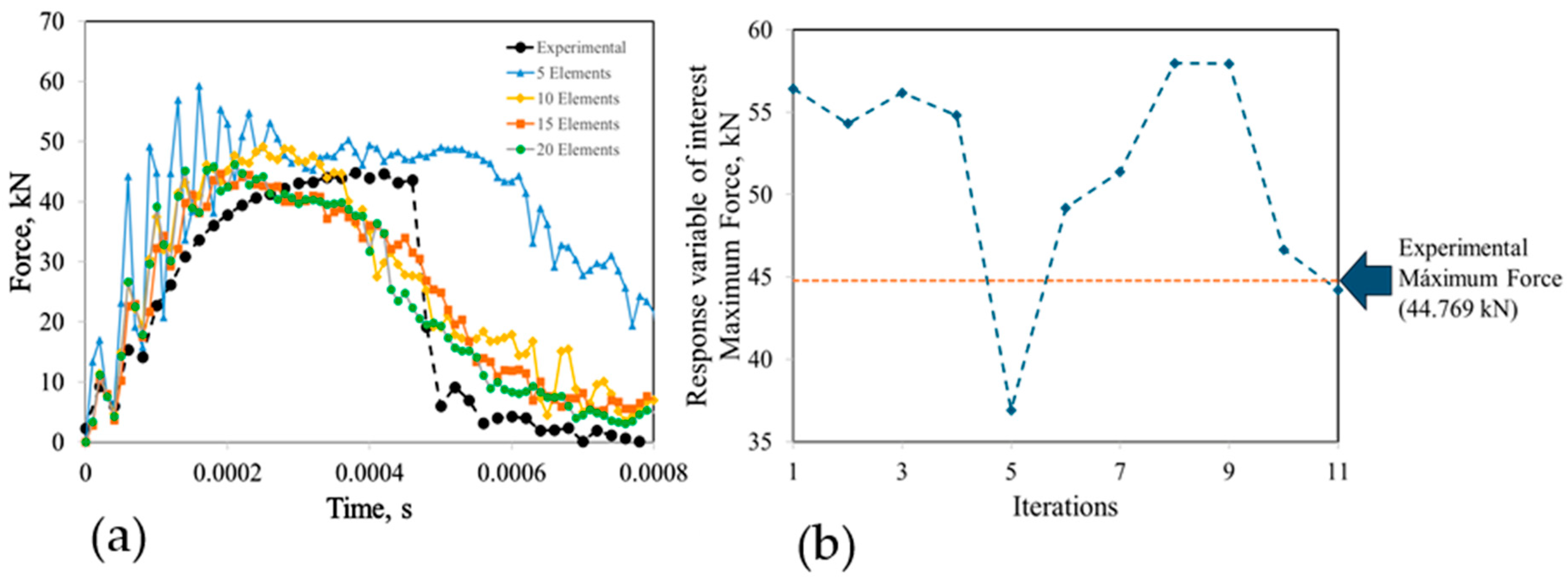
As a first step in the numerical simulation, a mesh convergence study was performed to determine the element size to be used in the present manuscript [43]. This study used the 3D model presented in Figure 5a, where a monolithic MARS 500 (Q&T) geometry was used for the sample instead of the DSS. Figure 5a presents the force as a function of time for the different mesh sizes used in the convergence study, along with the experimental behavior of the MARS 500 (Q&T). It was defined to use the mesh of 15 elements per notch side for the rest of the simulations conducted in this manuscript, as shown in Figure 4c; this refinement corresponds to a 0.13 mm element size.
The parameters of the Cowper–Symonds constitutive model are shown in Table 3. The specific parameter values for the MARS 500 (Q&T) condition were obtained through a mathematical optimization process that coupled the numerical simulation of the monolithic sample using the Steepest Ascent method, considering a Second-Order Response Surface [44]. The maximum force value was set as the objective variable for the optimization process, as shown in Figure 5b. The remaining parameters in Table 3 correspond to MARS 500 (annealed), 309L ASS, and DO*15 HF, which were taken from the literature. The consideration of an annealed condition for the MARS 500 was due to the heat generated during the arc welding deposition of the 309L ASS and DO*15 HF, as demonstrated by the microhardness measurements and metallographic analysis presented in the Results section.
Table 3. Cowper–Symonds parameters used for the FEM simulation [41,45,46,47].
MaterialParameters
σ 0
[Pa]
C P β E t a n [Pa] E
[Pa]
MARS 500
(Q&T)
1.22 × 10931.9 × 1036.320.327.51 × 109200 × 109
MARS 500
(annealed)
310 × 10640.05.00.3763 × 106200 × 109
309L325 × 1060.310.00.5701 × 106210 × 109
DO*151.50 × 109100.02.840.06 × 103200 × 109

3. Results and Discussions

3.1. Charpy Impact Test

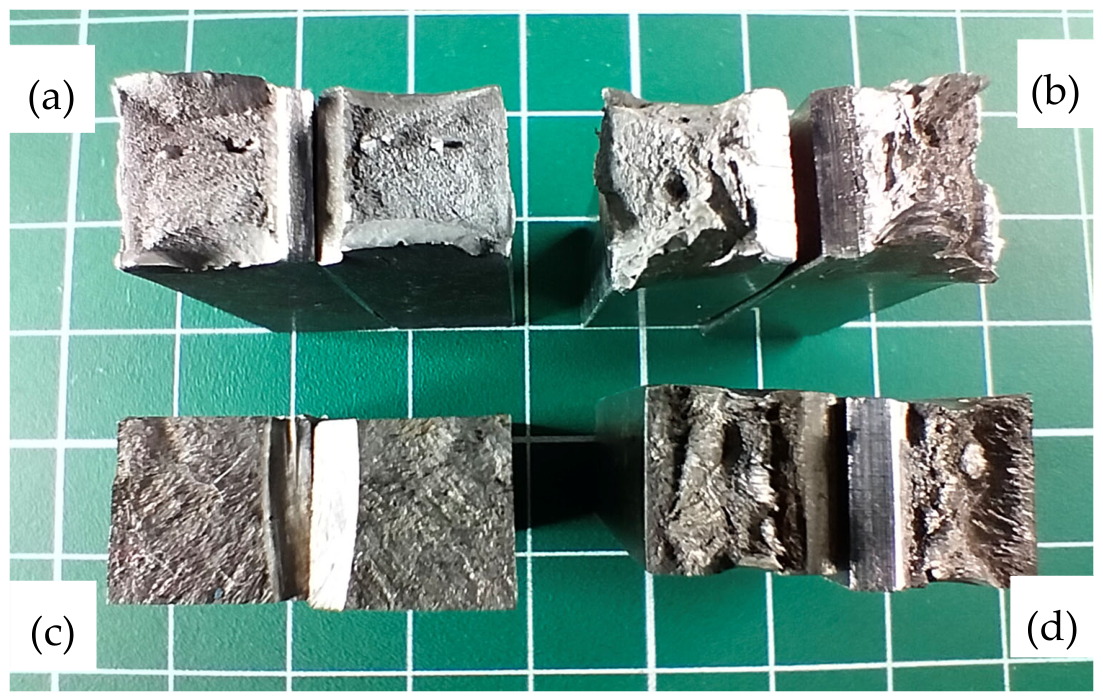
Figure 6 presents the fractured impact test samples. Figure 6a corresponds to the monolithic MARS 500 (Q&T), where a mixed ductile–fragile fracture was observed. It showed a region of unstable fracture that consists of an intimate mixture of cleavage facets and ductile dimples [18]. Also, the shear lip formation on the sides of the fracture surface indicated a ductile fracture region. Figure 6b shows the case for the 309L ASS, where a completely ductile fracture was observed by the characteristic ductile dimple surface morphology. The opposite case was presented for the DO*15 HF impact test sample (Figure 6c), where a completely fragile fracture surface was observed without any deformation or shear lip formation. Finally, Figure 6d shows the fracture surface of the DSS, with three zones: a ductile material one, adjacent to the notch, corresponding to the MARS 500 (annealed); then, there is another ductile region in the middle of the sample, corresponding to the 309L ASS; and finally, a fragile region with DO*15 HF.
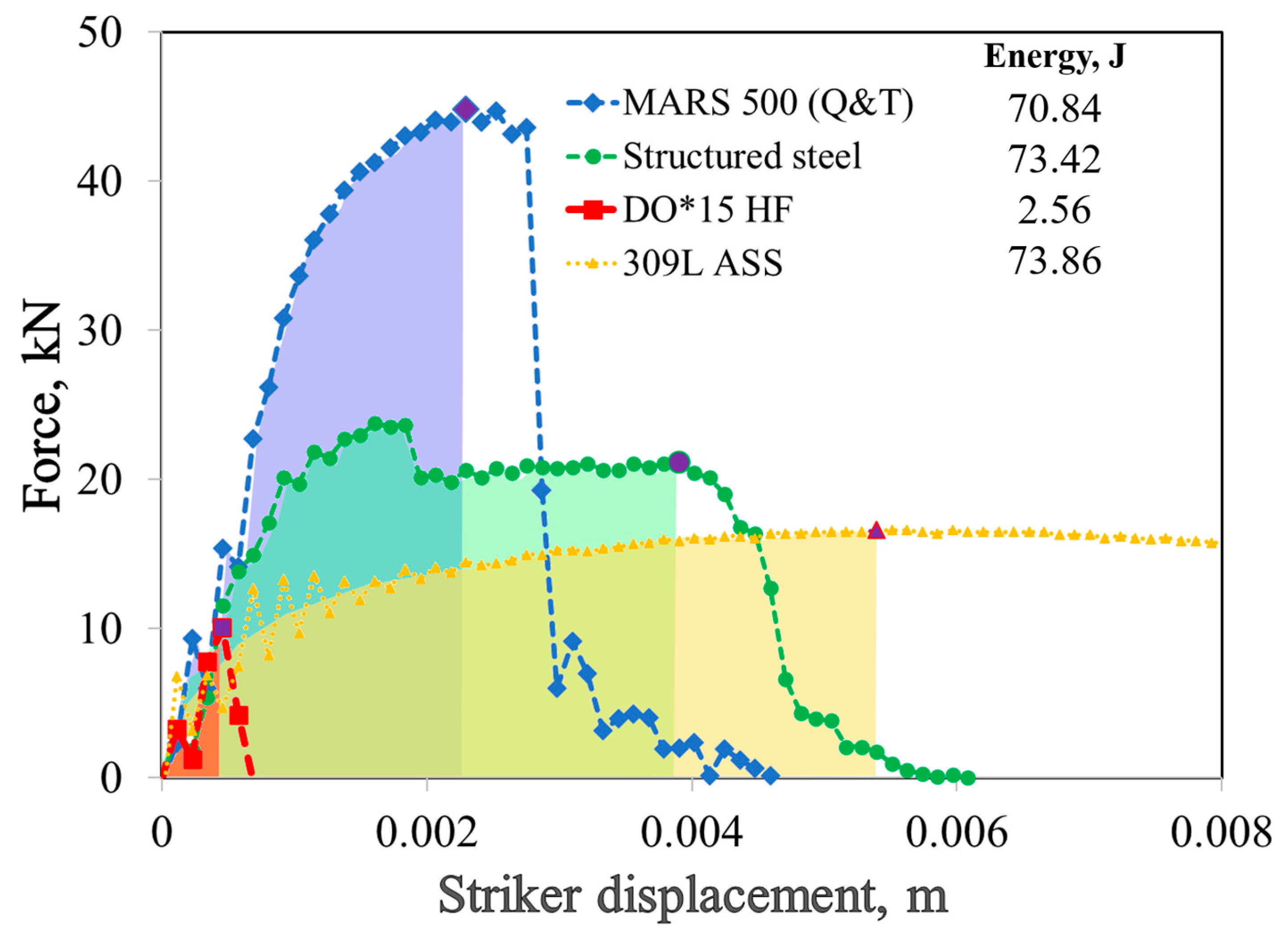
The results of the instrumented Charpy test are shown in Figure 7, where the measured force as a function of time for each test sample shown in Figure 6 was processed with Equation (1) to obtain the force–striker displacement curve. It was observed that the MARS 500 (Q&T) presented the largest impact force with a value of 45 kN, followed by the DSS and ASS (24 and 17 kN), and finally the HF (10 kN). Regarding the absorbed impact energy by the samples, it was considered up to the maximum force before the fracture. The best energy absorption was for the 309L ASS (73.86 J), because of its large number of slipping bands that provide a high ductility capacity. On the contrary, the HF exhibited the minimum force and impact energy values (2.56 J), because of the presence of a large quantity of free carbides, principally chromium ones. Despite these poor values, the HF provided a less sensitive region to the impact compressive deformation, which allowed for the distribution of the impact stresses on a wider region. The three-layer combination represented a DSS with promising mechanical behavior in structural impact applications. Its critical impact force was superior to the DO*15 HF and 309L ASS. Its critical impact energy (73.42 J) was similar to the MARS 500 (Q&T) (70.84 J). Although both the DSS and MARS 500 (Q&T) steels had lower impact energy capacity than the 309L ASS, the latter cannot withstand punctual impact forces [48].

3.2. Metallurgical and Mechanical Characteristics of the DSS

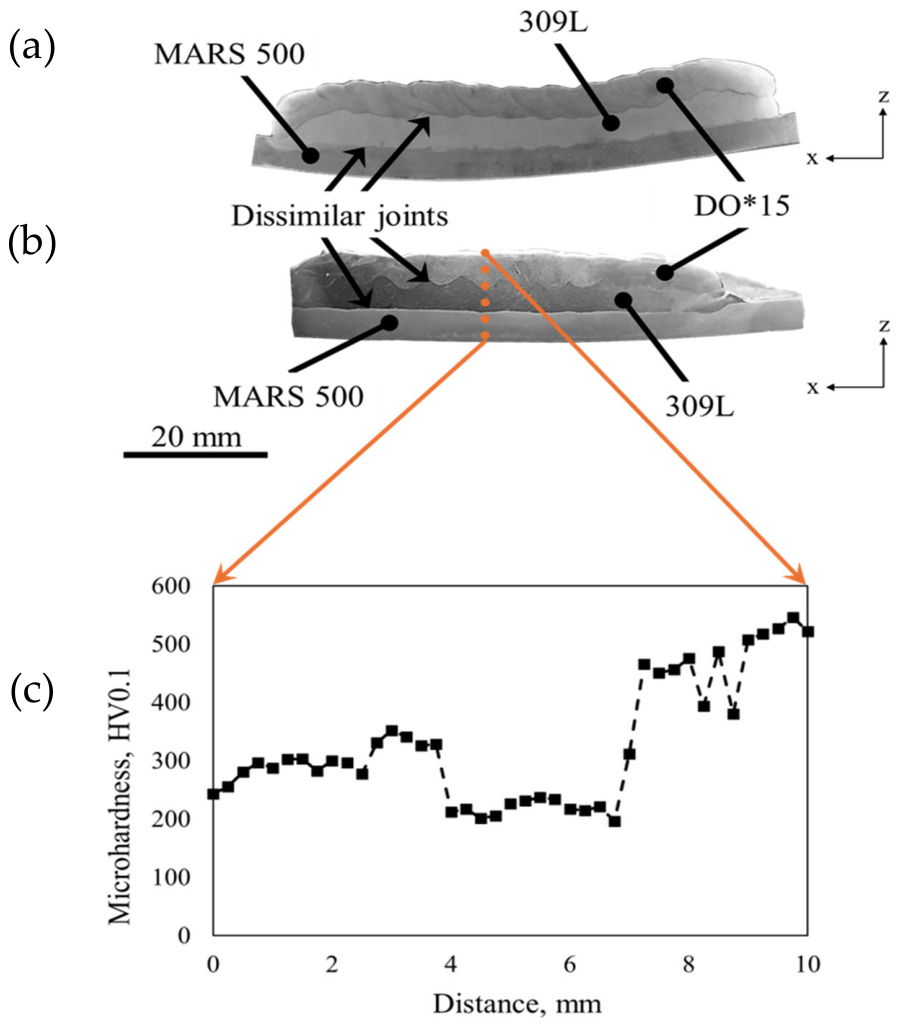
The macrostructure of the DSS obtained by adding the 309L ASS as the intermediate layer and DO*15 HF as the upper layer over the MARS 500 base material is shown in Figure 8a. No pores in between the layers were detected by means of this macroscopic method. The different patterns corresponding to the longitudinal (Figure 8a) and transverse (Figure 8b) deposition of DO*15 HF over 309L ASS were revealed. The different patterns of deposition also produced a larger bending for the longitudinal DSS. Large thermal gradients and impeded shrinkage process produced by welding are associated with the generation of residual stresses. The cooling of the deposited metal generates a contraction driving force, which can be supported by the adjacent base metal. If the restriction is enough, the output is large residual stresses with minimum distortion [49]. The transverse pattern did not exhibit this bending because the material shrinkage was balanced in orthogonal directions. Also, dissimilar welded joints were identified between each material layer because of the crystalline structure mismatch. It was cubic body-centered for the MARS 500 (annealed) and DO*15 HF, while the 309L ASS presented a cubic face-centered structure [50]. The heat input effect of the GMAW on the DSS was measured using microhardness (Figure 8c). Average values of 300, 200, and 500 HV0.1 were present for the MARS 500 (annealed), 309L ASS, and the DO*15 HF layers, respectively. These values indicated the formation of a heat-affected zone (HAZ) in the MARS 500, which modified the Q&T condition to an annealed one. This modification was attributed to the annealing of the initial tempered martensite into ferrite grains due to the thermal cycles in the metal adjacent to the weld seam; this microstructural change is promoted by the stored strain energy in martensite, the annealing temperature and time. After that the grains begin to grow; the driving force for this phenomenon is the surface energy, and the grain boundary area, and also the total surface energy of the base metal can be reduced by fewer and coarser grains [49]. This is further analyzed in Figure 9. The hardness of the 309L ASS was consistent with the larger deformation capacity of the austenite phase [51]. In the case of DO*15 HF, the largest hardness is explained by the presence of free carbides in the dendritic microstructure.
These results are similar to those obtained by applying HF and ASS to ballistic Q&T steel [49,50], in which the microstructure and microhardness agree with the research findings.
Figure 8. Macrostructure of the layers of DSS, (a) in a longitudinal orientation of DO*15 HF over 309L ASS, (b) in a transversal orientation of DO*15 HF over 309L ASS, and (c) microhardness profile of DSS vs Z distance.
Processes 14 01938 g008
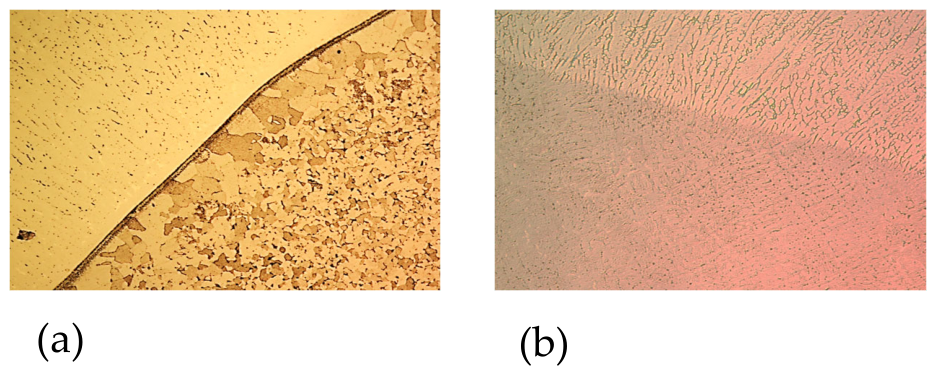
Figure 9a shows the microstructure for the dissimilar welded joint between the MARS 500 (annealed) and 309L ASS, with the left side exhibiting dendritic growth of the 309L ASS and the reconstituted ferritic grains of the MARS 500 (annealed) on the right side. Figure 9b shows the other interface layer between the dendritic growth of the 309L ASS on the top side and a combination of dendritic growth and carbides of the DO*15 HF on the bottom side. As a reference for the as-received MARS 500 (Q&T), Figure 1 presents the initial tempered martensite microstructure.
Figure 9. Optical micrographs of dissimilar welded joints: (a) MARS 500-309L ASS, (b) 309L ASS-DO*15 HF.
Processes 14 01938 g009

3.3. Charpy Impact Test Results of DSS

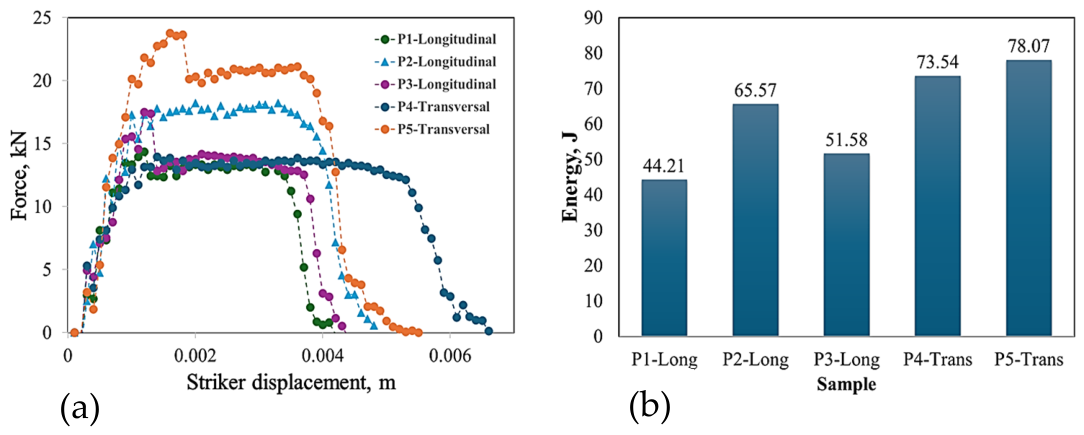
Figure 10a presents the force–striker displacement curves for longitudinal and transverse DSS samples. The largest force was 23.8 kN, obtained in the P5 transversal sample, while the striker displacement was around 5.0 mm. The lower force was observed in the P1 longitudinal sample with a value of 14.4 kN and a striker displacement of around 4.0 mm. The corresponding energy values are shown in Figure 10b. The largest energy values also corresponded to the transverse deposition pattern (Figure 2b). P5 transversal sample presented the largest impact energy value of 78.1 J, while the P1 longitudinal was also the lowest value with 44.2 J. Thus, the transversal pattern exhibited the best mechanical behavior against the striker impact. The DSS impact absorption energy values showed agreement with results from the literature, such as a double-layer ASS-HF material with a value of 60 J [39] and higher values than those reported on high-efficient welding like laser narrow welding technology of monolithic steel with values of around 50 J [13]. Differences in the force–striker displacement curves between the same deposition pattern were attributed to layer-thickness variations, because the weld bead profile presented ripples associated with the arc welding pool.
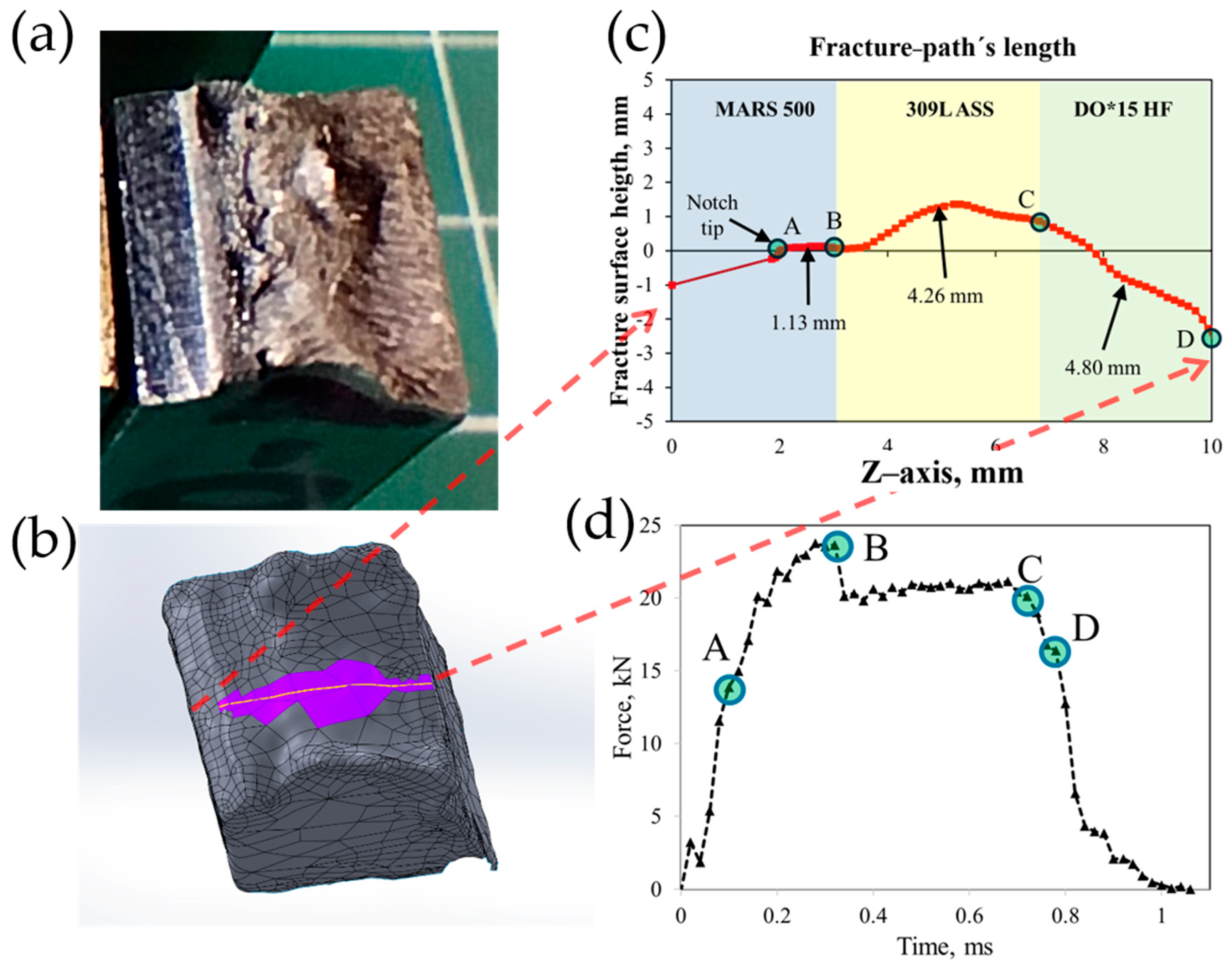
Figure 11a presents the fracture surface of the DSS Charpy sample, which was 3D scanned to measure the fracture surface morphology. Figure 11b shows the scanned surface, with a projected line along the middle of the fracture surface. It was employed to measure the length of the fracture path as a function of the Z-axis sample (Figure 11c), where the layer width of each material in the DSS provided a set of invariant geometric points (A-D). These invariable points were correlated to the force–time curve obtained with the instrumented pendulum (Figure 11d). The A-point corresponded to the notch tip from a geometric point of view, while the behavior of the force–time curve corresponded to the onset of plastic deformation. B-point corresponded to the interface between the MARS 500 and the 309L ASS, and in the force–time curve was associated with the point of the force drop that indicated the final fracture of the MARS 500 layer. C-point correlated the interface of the 309L ASS with the DO*15 HF and the end of the fracture of the 309L ASS layer. Finally, the D-point represented the final fracture of the DO*15 HF layer and the drop force resulting from the complete fracture of the DSS sample. After the D-point in the force–time curve (Figure 11d), the instrumented pendulum measurements corresponded to the striker contact with the fractured sample sections that were pushed along the anvil support.
Additional data obtained from the analysis shown in Figure 11 were the average fracture propagation rate through each layer of the DSS, calculated from the fracture path length between the invariant geometric points (Figure 11c) and the time intervals in the force–time curve (Figure 11d). The fracture propagation rate on each material was: MARS 500 = 5.65 m⋅s−1, 309L ASS = 8.52 m⋅s−1, and DO*15 HF = 160.0 m⋅s−1.

3.4. Charpy Impact Simulation Results

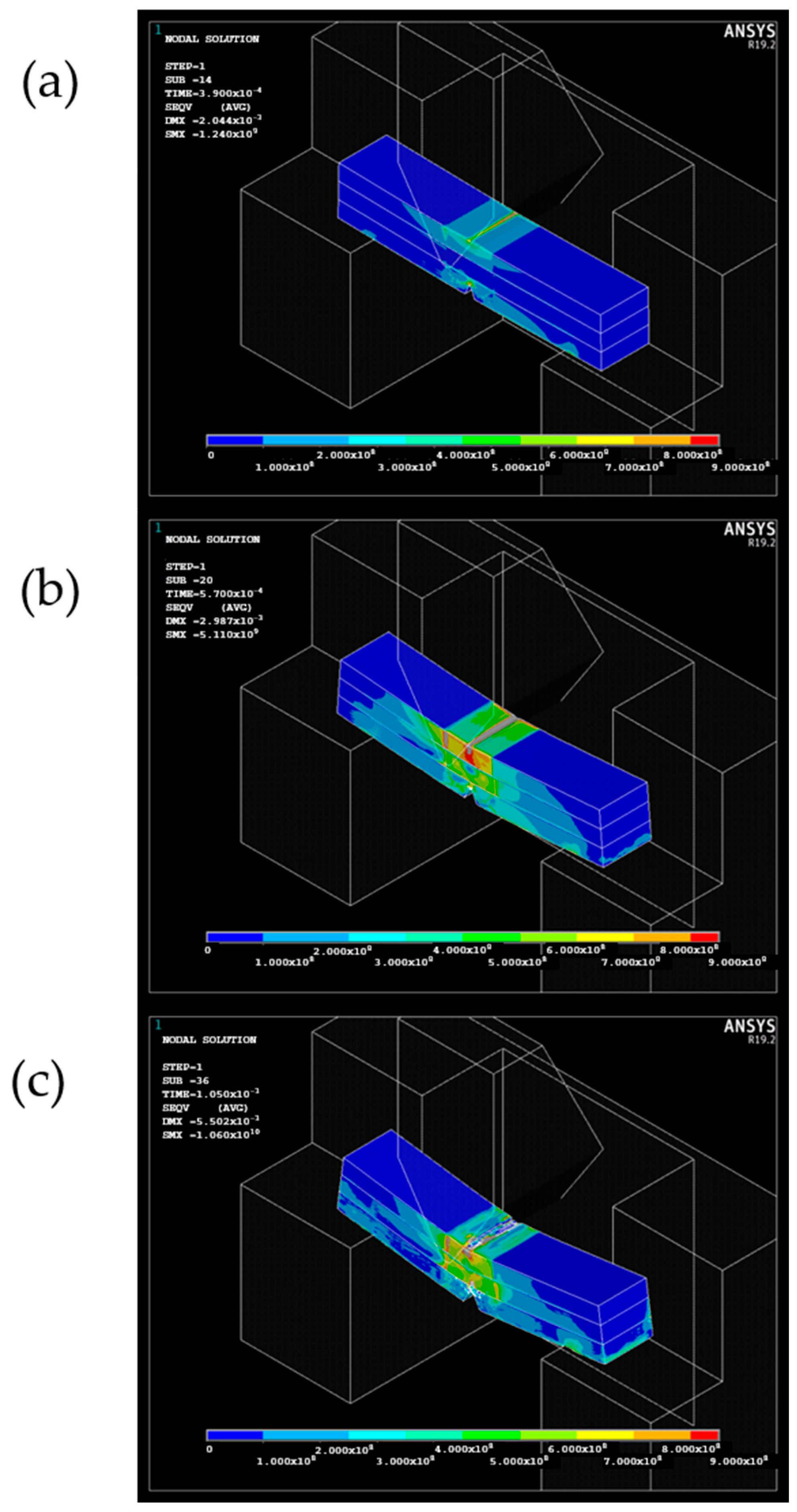
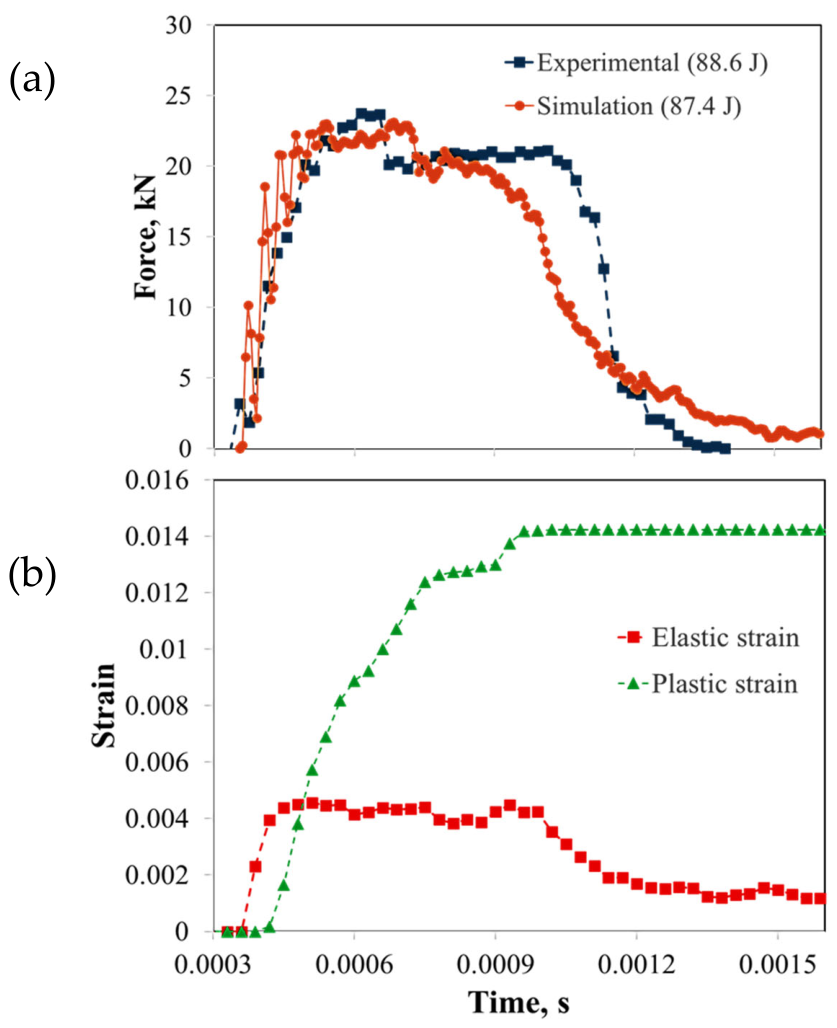
Figure 12 shows contour maps for the equivalent Von Mises stress (SEQV) results from the Charpy impact simulation of the DSS sample, by using the explicit ANSYS LS-DYNATM software. The contour maps corresponded to different time solutions. Figure 12a presents the initial condition for the DSS sample in the impact simulation at 0.00039 s. It was observed that the SEQV was located at the notch tip. The value was around 900 MPa, which was selected as the maximum value for the contour map in all plots presented in Figure 12. The value overpassed the MARS 500 (annealed) yield strength, which activated the failure model (Cowper–Symonds) and defined the location for the crack nucleation that followed. Also at that time, another zone of the SEQV was observed around 900 MPa at the DO*15 HF layer over the impacted region by the striker. However, the Cowper–Symonds model was still not activated for this HF layer, because its yield strength was 1500 MPa. Figure 12b presents the condition after the maximum force induced by the striker impact and the crack propagation to the MARS 500 layer. It was observed that the force applied by the striker already transmitted the impact energy across the three layers, DO*15 HF, 309L ASS, and MARS 500. The 309L ASS layer showed a SEQV of around 600 MPa. Figure 12c shows the condition where the crack propagated to the 309L ASS layer at the specific time of 0.00105 s. The impact force behavior as a function of time indicated a decrement from approximately 20 to 16 kN, as observed in Figure 13a. After this force decrement, the crack propagation resulted in the fracture failure of the DSS sample.
The results of the force–time curves from the impact experimental and numerical simulations are shown in Figure 13a, where the numerical curve exhibited characteristics similar to the experimental one. The initial contact of the striker tip with the DO*15 HF layer in the sample was around 0.00039 s (Figure 12a). The force increased to a maximum of 23 kN at 0.00053 s; then, the MARS 500 layer failed, and the force dropped to about 21.3 kN at 0.00057 s (Figure 12b). After that time and up to 0.00105 s (Figure 12c), the deformation rate of the sample was more stable during the force drop between 20 kN and 16 kN. This stable deformation rate was attributed to the high deformation capacity of the 309L ASS, as previously mentioned. For instance, in the Charpy tests, the absorbed impact energy was 88.6 J in the experimental value, and 87.4 J in the numerical result, as shown in Figure 13a. Figure 13b shows the numerical simulation results for the strain–time curve corresponding to an element located at the center of the 309L ASS layer. The differences between the experimental and simulated results in Figure 13a were attributed to simplifications. Experimental DSS showed rippled interfaces that were not considered in the geometrical model used in the numerical simulation. The constitutive model has limitations in accounting for stress–strain relations under varying strain rates. However, numerical simulations are a useful tool for impact analysis.
Elastic and plastic strain results as a function of time were plotted. The striker impact induced elastic strain that reached a maximum value of 0.0045 at 0.0039 s, where the plastic strain started to accumulate over a period of up to around 0.00105 s. The plastic strain reached the maximum value for the corresponding element, which was equivalent to a failure status for that element.

4. Conclusions

  • The microstructure analysis demonstrated full fusion of the welded layers between the dissimilar metallic alloys, MARS 500 Q&T, 309L ASS, and DO*15 HF; thus, a DSS was successfully manufactured. Also, it showed a microstructural transformation from martensite to ferrite of the MARS 500, due to the welding heat input.
  • The DSS presented a good mechanical behavior in structural impact applications, because it supported impact forces larger than the corresponding ones supported by monolithic 309L ASS and DO*15 HF samples. Also, the DSS absorbed up to 10% more impact energy than the MARS 500 Q&T.
  • The 3D scanning of the fractured DSS Charpy samples was employed to measure the length of the fracture path and correlated it to the force–time curve. This information provided the average fracture propagation rate through each material layer of the sample. The use of this correlation method presents a novel approach used in this research.
  • The convergence analysis indicated that the usage of an element size of 0.13 mm at the notch region was sufficient to obtain adequate results from the finite element simulation. These numerical results showed close agreement with the experimental values.

Author Contributions

Conceptualization, writing—original draft preparation, C.M.; methodology, software and validation, R.C.C.; writing—review, editing and project administration, R.R.A.; supervision, resources and formal analysis, D.J. All authors have read and agreed to the published version of the manuscript.

Funding

This research received no external funding.

Data Availability Statement

The data presented can be made available upon request from the corresponding author.

Acknowledgments

The authors acknowledge financial support from the Secretariat of Science, Humanities, Technology, and Innovation (SECIHTI) of the Mexican Government and from SIP-IPN for conducting this research. Ramsés Chávez would like to thank SECIHTI for the scholarship supporting his doctoral studies.

Conflicts of Interest

The authors declare no conflicts of interest or personal influence arising from financial interests that could have affected the results presented in this paper.

Abbreviations

The following abbreviations are used in this manuscript:
ASSAustenitic stainless steel
ASTMAmerican Society for Testing and Materials
FEMFinite element method
GMAWGas metal arc welding
HAZHeat-affected zone
HFHardfacing
HICHydrogen induced cracking
Q&TQuenched and Tempered
SEQVStress equivalent
List of Abbreviations
F Force
m Mass of the striker
σ y Yield stress
σ 0 Initial yield stress
l Liters
A Ampere
V Voltage
v 0 Impact velocity
sStriker displacement
β Cowper–Symonds strain hardening parameter
C ,   P Cowper–Symonds strain rate parameter
ε ˙ Strain rate
ε P e f f Effective plastic strain
E Young’s modulus
E P Plastic hardening modulus
E t a n Tangent elastic modulus
t Time

References

  1. Barbosa, V.S.; de Godois, L.A.; Bianchi, K.E.; Ruggieri, C. Charpy impact energy correlation with fracture toughness for low alloy structural steel welds. Theor. Appl. Fract. Mech. 2021, 113, 102934. [Google Scholar] [CrossRef]
  2. ASTM E23-24; Standard Test Methods for Notched Bar Impact Testing of Metallic Materials. ASTM: West Conshohocken, PA, USA, 2024.
  3. ISO 148-1; Metallic Materials—Charpy Pendulum Impact Test. Part 1: Test Method. ISO: Geneva, Switzerland, 2016; p. 12.
  4. Ambriz, R.; Jaramillo, D.; García, C.; Curiel, F. Fracture energy evaluation on 7075-T651 aluminum alloy welds determined by instrumented impact pendulum. Trans. Nonferrous Met. Soc. China 2016, 26, 974–983. [Google Scholar] [CrossRef]
  5. Chaouadi, R.; Gérard, R. Development of a method for extracting fracture toughness from instrumented Charpy impact tests in the ductile and transition regimes. Theor. Appl. Fract. Mech. 2021, 115, 103080. [Google Scholar] [CrossRef]
  6. Cabrilo, A.; Sedmak, A.; Burzic, Z.; Perkovic, S. Fracture mechanics and fatigue crack propagation in armor steel welds. In Engineering Failure Analysis; Elsevier: Amsterdam, The Netherlands, 2019; Volume 106. [Google Scholar]
  7. Godzimirski, J.; Komorek, Z.; Komorek, A. An Energy Analysis of Impact Strength Tests Using Pendulum Hammers. Adv. Sci. Technol. Res. J. 2019, 13, 214–222. [Google Scholar] [CrossRef]
  8. Acar, D.; Canpolat, B.H.; Cora, Ö.N. Ballistic performances of Ramor 500, Armox Advance and Hardox 450 steels under monolithic, double-layered, and perforated conditions. Eng. Sci. Technol. Int. J. 2024, 51, 101653. [Google Scholar] [CrossRef]
  9. Atapek, S.H. Development of a New Armor Steel and its Ballistic Performance. Def. Sci. J. 2013, 63, 271–277. [Google Scholar] [CrossRef]
  10. Balakrishnan, M.; Balasubramanian, V.; Reddy, G.M. Microstructural Analysis on Ballistic Tested Armour Steel Joints Fabricated Using Low Hydrogen Ferritic Consumables for Capping Pass. Key Eng. Mater. 2019, 812, 1–8. [Google Scholar] [CrossRef]
  11. Kim, J.-S.; Yi, H.-J. Characteristics of GMAW Narrow Gap Welding on the Armor Steel of Combat Vehicles. Appl. Sci. 2017, 7, 658. [Google Scholar] [CrossRef]
  12. Magudeeswaran, G.; Balasubramanian, V.; Reddy, G.M. Metallurgical characteristics of armour steel welded joints used for combat vehicle construction. Def. Technol. 2018, 14, 590–606. [Google Scholar] [CrossRef]
  13. Kah, P.; Pirinen, M.; Suoranta, R.; Martikainen, J. Welding of Ultra High Strength Steels. Adv. Mater. Res. 2014, 849, 357–365. [Google Scholar] [CrossRef]
  14. KılıÇ, N.; Ekici, B.; Hartomacıoğlu, S. Determination of penetration depth at high velocity impact using finite element method and artificial neural network tools. Def. Technol. 2015, 11, 110–122. [Google Scholar] [CrossRef]
  15. Saxena, A.; Kumaraswamy, A.; Dwivedi, S.P.; Srivastava, A.K.; Maurya, N.K. Experimental and computational investigation on dynamic fracture toughness (J1d) behavior of multi-pass SMA armor steel weldments. Theor. Appl. Fract. Mech. 2020, 106, 102502. [Google Scholar] [CrossRef]
  16. Xin, H.; Veljkovic, M. Evaluation of high strength steels fracture based on uniaxial stress-strain curves. Eng. Fail. Anal. 2021, 120, 105025. [Google Scholar] [CrossRef]
  17. Gangwar, V.; Acharyya, S.; Banerjee, A. Calibration of tensile tests in drop-weight impact machine and implementation in simulation of Charpy impact tests. Procedia Struct. Integr. 2024, 60, 123–135. [Google Scholar] [CrossRef]
  18. Yang, Q.; Wang, Y.; Li, D.; Liu, R.; Wang, C.; Zhao, J. Research on charpy impact test and simulation of laser welded joints in 6252 armor steel. Theor. Appl. Fract. Mech. 2025, 138, 104920. [Google Scholar] [CrossRef]
  19. Seo, K.-W.; Kim, J.-Y.; Kim, Y.-J.; Kim, K.-S. Finite Element Ductile Fracture Simulation of Charpy and Drop Weight Tear Tests for API X52. Theor. Appl. Fract. Mech. 2024, 133, 104629. [Google Scholar] [CrossRef]
  20. Wong, W.J.; Walters, C.L. Damage mechanics model for correlating notch toughness in Charpy impact tests with fracture toughness in cracked static fracture tests. Eng. Fract. Mech. 2025, 320, 111043. [Google Scholar] [CrossRef]
  21. Gangwar, V.; Basu, P.; Acharyya, S.; Dhar, S.; Chakraborty, S.; Banerjee, A. Dynamic deformation and fracture surface investigation of rolled homogenous armor steel through Charpy impact testing. Theor. Appl. Fract. Mech. 2024, 133, 104592. [Google Scholar] [CrossRef]
  22. Kim, H.; Park, J.; Kang, M.; Lee, S. Interpretation of Charpy impact energy characteristics by microstructural evolution of dynamically compressed specimens in three tempered martensitic steels. Mater. Sci. Eng. A 2016, 649, 57–67. [Google Scholar] [CrossRef]
  23. Rosenberger, J.; Tlatlik, J.; Rump, N.; Münstermann, S. Prediction of statistical force–displacement curves of Charpy-V impact tests based on unsupervised fracture surface machine learning. Eng. Fail. Anal. 2025, 175, 109551. [Google Scholar] [CrossRef]
  24. Tria, D.; Trębiński, R. Methodology for experimental verification of steel armour impact modelling. Int. J. Impact Eng. 2017, 100, 102–116. [Google Scholar] [CrossRef]
  25. Sagar, C.K.; Chilukuri, A.; Priyadrashini, A. Determination of Johnson Cook Material Model Constants for 93% WHA and Optimization using Genetic Algorithm. Mater. Today Proc. 2018, 5, 18911–18919. [Google Scholar] [CrossRef]
  26. Baroth, J.; Malecot, Y.; Boukria, Z.; Briffaut, M.; Daudeville, L. Prediction of the perforation of targets impacted by deformable projectiles. Int. J. Impact Eng. 2015, 80, 36–44. [Google Scholar] [CrossRef]
  27. Andreotti, R.; Casaroli, A.; Colamartino, I.; Quercia, M.; Boniardi, M.V.; Berto, F. Ballistic Impacts with Bullet Splash—Load History Estimation for .308 Bullets vs. Hard Steel Targets. Materials 2023, 16, 3990. [Google Scholar] [CrossRef] [PubMed]
  28. Babaei, B.; Shokrieh, M.M.; Daneshjou, K. The ballistic resistance of multi-layered targets impacted by rigid projectiles. Mater. Sci. Eng. A 2011, 530, 208–217. [Google Scholar] [CrossRef]
  29. Holmen, J.K.; Solberg, J.K.; Hopperstad, O.S.; Børvik, T. Ballistic impact of layered and case-hardened steel plates. Int. J. Impact Eng. 2017, 110, 4–14. [Google Scholar] [CrossRef]
  30. Zhang, Q.; Yuan, Y.; Zhang, C.; Zhang, Y.; Chen, P. Enhancing the ballistic resistance of steel/aluminum bilayer armor plates through explosive welding. Mater. Des. 2023, 234, 112346. [Google Scholar] [CrossRef]
  31. Savic, B.; Cabrilo, A. Effect of Heat Input on the Ballistic Performance of Armor Steel Weldments. Materials 2021, 14, 3617. [Google Scholar] [CrossRef]
  32. Lincoln Electric. BLUE MAX MIG 309L. 2025. Available online: https://www.lincolnelectric.com/es-mx/products/bluemaxmig309lsi_gmaw (accessed on 14 October 2025).
  33. AWS A5.9/A5.9M; Specification for Bare Stainless Steel Welding Electrodes and Rods. American Welding Society: Miami, FL, USA, 2012.
  34. Eutectic Castolin. EnDOtec DO*15 Flux-Cored Wire Ø 1.6mm. 2026. Available online: https://shop.castolin.com/en-si/endotec-do-15-flux-cored-wire-1521?srsltid=AfmBOooH4AVu-_Ok3AIPyyBKPkLsaUtpqKtYqjSz1UR9pJ5GVl0Od4is (accessed on 14 October 2025).
  35. EN 14700; Welding Consumables—Welding Consumables for Hard-Facing. Danish Standards Association: Nordhavn, Denmark, 2005.
  36. Mars 500 High Hardness Armor. May 2026. Available online: https://industeel.arcelormittal.com/wp-content/uploads/2026/03/DS-PROTECTION-MARS-500-EN-26.pdf (accessed on 1 May 2026).
  37. Cortés-Rodríguez, R.; López-Morelos, V.H.; Ambriz, R.R.; Cortés-Carrillo, E.; Sanchez Cruz, T.d.N.; Curiel-López, F.F. Sliding wear behavior of AISI 1045 carbon steel plates weld overlay with EnDOTec DO15 using CMT. Surf. Coat. Technol. 2025, 517, 132803. [Google Scholar] [CrossRef]
  38. ASTM E8/E8M-22; Standard Test Methods for Tension Testing of Metallic Materials. ASTM: West Conshohocken, PA, USA, 2022.
  39. Joseph, P.; Babu, M.N.; Albert, S.K. Fracture Behavior of Hardfacing Alloy Coated Over Stainless Steel under Quasi-Static and Dynamic Loads. J. Mater. Eng. Perform. 2024, 33, 13019–13029. [Google Scholar] [CrossRef]
  40. Seetharamu, S.J.T.; Malagi, R.R. Fatigue, Durability, and Fracture Mechanics; Lecture Notes in Mechanical Engineering (LNME); Springer: Berlin/Heidelberg, Germany, 2019. [Google Scholar]
  41. Hernandez, C.; Maranon, A.; Ashcroft, I.; Casas-Rodriguez, J. A computational determination of the Cowper–Symonds parameters from a single Taylor test. Appl. Math. Model. 2013, 37, 4698–4708. [Google Scholar] [CrossRef]
  42. Frutos, J.; Ambriz, R.; García, C.J.; Jaramillo, D. Orthogonal impact load in 6061-T651 and 7075-T651 aluminum alloy plates. J. Mater. Res. Technol. 2023, 26, 4245–4262. [Google Scholar] [CrossRef]
  43. Ansys. Ansys, Guidelines for Mesh Convergence in Ansys Mechanical. 2023. Available online: https://innovationspace.ansys.com/courses/courses/topics-in-meshing-for-structural-analysis/lessons/guidelines-for-mesh-convergence-in-ansys-mechanical/ (accessed on 14 October 2025).
  44. Myers, R.H.; Montgomery, D.C.; Anderson-Cook, C.M. Response Surface Methodology: Process and Product Optimization Using Designed Experiments, 4th ed.; Wiley: Hoboken, NJ, USA, 2016. [Google Scholar]
  45. Škrlec, A.; Klemenc, J. Estimating the Strain-Rate-Dependent Parameters of the Cowper-Symonds and Johnson-Cook Material Models using Taguchi Arrays. J. Mech. Eng. 2016, 62, 220–230. [Google Scholar] [CrossRef]
  46. Škrlec, A.; Panić, B.; Nagode, M.; Klemenc, J. Estimating the Cowper–Symonds Parameters for High-Strength Steel Using DIC Combined with Integral Measures of Deviation. Metals 2024, 14, 992. [Google Scholar] [CrossRef]
  47. Škrlec, A.; Klemenc, J. Parameter identification for a Cowper-Symonds material model using a genetic algorithm combined with a response surface. Eng. Comput. 2017, 34, 921–940. [Google Scholar] [CrossRef]
  48. Zhao, Q.; Xiao, X.; Ge, R.; Zhang, Y.; Chen, X.; Jia, B. Experimental-numerical study on ballistic impact behavior of 316L austenitic stainless steel plates against blunt and ogival projectiles. Int. J. Hydrogen Energy 2023, 48, 8526–8548. [Google Scholar] [CrossRef]
  49. Kou, S. Welding Metallurgy; John Wiley & Sons, Inc.: Hoboken, NJ, USA, 2003. [Google Scholar]
  50. Zhao, X.; Ren, K.; Lu, X.; He, F.; Jiang, Y. Study on fusion boundary microstructure and mechanical properties of austenitic stainless steel-nickel based dissimilar alloy materials welded joints. Eng. Fract. Mech. 2023, 281, 109140. [Google Scholar] [CrossRef]
  51. Wang, W.; Wang, J.; Wang, Q.; Huang, X.; Lu, G.; Liu, Y.; Liu, C. Ferrite-austenite synergistic deformation behavior in a 2205 duplex stainless steel containing equiaxed austenite domains. Mater. Charact. 2023, 205, 113363. [Google Scholar] [CrossRef]
Figure 1. Microstructure of MARS 500 (Q&T) steel.
Processes 14 01938 g001
Figure 2. Geometrical array for the weld deposition of 309L ASS and DO*15 HF over the Mars 500 (Q&T): (a) longitudinal direction, (b) transversal direction, and (c) x-z section showing the layer dimensions for the DSS; cotes in mm.
Processes 14 01938 g002
Figure 3. Charpy impact test sample dimensions; cotes in mm.
Processes 14 01938 g003
Figure 4. (a) 3D model, (b) mesh of the support, striker, and DSS, used for the numerical simulation, and (c) detailed view of the mesh refinement in the notch of the sample.
Processes 14 01938 g004
Figure 5. Convergence analysis and optimization of parameters considering a MARS 500 (Q&T) Charpy sample. (a) Force–time curves for the different element sizes in the FEM simulation and experimental one, and (b) search path for obtaining Cowper–Symonds parameters considering the maximum force as the objective variable.
Processes 14 01938 g005
Figure 6. Broken Charpy test sample of (a) MARS 500 (Q&T), (b) 309L ASS, (c) DO*15 HF, and (d) DSS.
Processes 14 01938 g006
Figure 7. Comparative plot of the experimental force–striker displacement curves of MARS 500 steel (Q&T), DSS, DO*15 HF, and 309L ASS.
Processes 14 01938 g007
Figure 10. Charpy impact result for the DSS samples: (a) force–striker displacement curve, and (b) impact energy before failure.
Processes 14 01938 g010
Figure 11. DSS Charpy sample: (a) fracture surface; (b) scanned fracture surface with a projected line over the middle; (c) projected line profile vs Z-axis of the sample; and (d) force–time curve.
Processes 14 01938 g011
Figure 12. Simulation of Charpy impact test: the von Mises stress (SEQV) as can be seen in the color scale at (a) 0.00039 s, (b) 0.00057 s, and (c) 0.00105 s.
Processes 14 01938 g012
Figure 13. (a) Force–time curve of a DSS sample, obtained by FEM vs the experimental results, and (b) strain–time curve on the notch center volume, estimated in the FEM analysis.
Processes 14 01938 g013
Table 1. Chemical composition of the materials used (wt. %) [32,36,37].
MaterialNiCrMoVMnWCSiSPFe
MARS 5001.810.6-1.0-0.310.50.0020.010Bal
309L13.423.30.04-1.8-0.010.80.020.02Bal
DO*15-4.121.480.360.811.840.360.79-0.02Bal
Table 2. GMAW parameters with robotic arm.
Filler Material309L ASSDO*15 HF
Diameter0.9 mm1.6 mm
Shielding gasAr 100%Ar 100%
Wire feed8.7 m⋅min−15.2 m⋅min−1
Volumetric deposition rate92.2 mm3⋅s−1174.3 mm3⋅s−1
Gas flow20 L⋅min−120 L⋅min−1
Voltage21.1 V20.0 V
Current126 A150 A
Specific energy on the wire28.8 J⋅mm−317.2 J⋅mm−3
Stick out10 mm10 mm
Welding torch travel speed0.3 m⋅min−10.8 m⋅min−1
Disclaimer/Publisher’s Note: The statements, opinions and data contained in all publications are solely those of the individual author(s) and contributor(s) and not of MDPI and/or the editor(s). MDPI and/or the editor(s) disclaim responsibility for any injury to people or property resulting from any ideas, methods, instructions or products referred to in the content.