Article

Research on Sealing Performance and Structural Optimization of Foot-Shaped Slip Ring Seals for Reciprocating Seal Shafts

1
Tarim Oilfield Company, PetroChina, Korla 841000, China
2
R&D Center for Ultra Deep Complex Reservior Exploration and Development, China National Petroleum Corporation, Korla 841000, China
3
Engineering Research Center for Ultra-Deep Complex Reservoir Exploration and Development, Korla 841000, China
4
Xinjiang Key Laboratory of Ultra-Deep Oil and Gas, Korla 841000, China
5
School of Mechatronic Engineering, Southwest Petroleum University, Chengdu 610500, China
*
Author to whom correspondence should be addressed.
Processes 2026, 14(12), 1936; https://doi.org/10.3390/pr14121936 (registering DOI)
Submission received: 21 April 2026 / Revised: 20 May 2026 / Accepted: 29 May 2026 / Published: 13 June 2026
(This article belongs to the Section Petroleum and Low-Carbon Energy Process Engineering)

Abstract

In order to study the optimal size and sealing performance of the foot-shaped slip ring for reciprocating seal, the loading method of fluid pressure penetration is used to simulate the effect of fluid medium pressure on the seal, and the multi-objective optimization of the geometry of the slip ring is carried out based on optimization software to obtain the best combination of parameters for the foot-shaped slip ring. The effects of slip ring geometry, pre-compression and working pressure on Von Mises stress and contact pressure were investigated using the finite element method. The results show that the optimized geometry of the foot-shaped slip ring can reduce the maximum contact stress on the main sealing surface from 108.5 MPa to 75.22 MPa (a reduction of 30.7%) and decrease the maximum Von Mises stress of the slip ring from 62.84 MPa to 41.57 MPa (a reduction of 33.8%), thereby greatly reducing the wear of the slip ring while ensuring reliable sealing. In the static sealing condition, a smaller pre-compression (1.2–1.3 mm) leads to stress concentration in the O-ring, and the recommended pre-compression range is 1.4–1.6 mm. In the dynamic sealing condition, the effect of pre-compression on the sealing performance is greater than that of reciprocating motion speed on the sealing performance, and the foot-shaped slip ring seal is found to be more suitable for low-speed operation at 0.1–0.2 m/s. The optimized design provides a data-driven methodology for enhancing the reliability and service life of reciprocating seals in high-pressure environments.

1. Introduction

The exploration and development of ultra-deep oil and gas reservoirs, represented by those in the Tarim Basin, face extreme downhole environments characterized by ultra-high pressures and high temperatures. Under such conditions, reciprocating shaft seals are critical yet highly vulnerable components, prone to wear, aging, and catastrophic leakage, which can lead to serious safety hazards. The foot slip ring combination seal is a combination of an O-ring with a certain amount of pre-compression and a foot slip ring, which can meet the normal use under an ultra-high-pressure environment. Slip rings are usually made of polytetrafluoroethylene (PTFE) with good wear resistance and low friction factor [1], which can meet the sealing requirements and have good sealing reliability. Due to the better self-sealing effect of O-rings under medium pressure and the lower friction factor between PTFE material and metal, they can achieve a better sealing effect under reciprocal sealing conditions [2]. Compared with other combination seals, the foot-shaped slip ring combination seal has the advantages of high pressure resistance, reliable sealing performance, long life and low friction [3].
Sealing performance is typically regarded as a critical indicator of seal reliability, and numerical analysis, experimental methods, and finite element methods are commonly employed to investigate it. Qiao et al. [4] studied the effect of O-rings on sealing performance at different sealing diameters through finite element analysis and found that the influence of different sealing diameters on sealing performance was negligible. Jia et al. [5] investigated the effect of radial force on static sealing performance through finite element analysis and experimental verification, but did not consider the reciprocating motion conditions that may be encountered in actual use. Su et al. [6] examined the effects of six different parameters on the sealing performance of finger-shaped seals and identified radial clearance as the most influential factor. Jiang et al. [7] studied W-shaped seals in terms of resilience performance, sealing performance, and stability, and established a solution optimization method capable of obtaining the optimal overall performance. Extensive research has been conducted by scholars on sealing grooves and seals with different cross-sectional shapes. Zhang et al. [8] analyzed the influence of different groove shapes on sealing performance, and the results showed that rectangular grooves outperform triangular grooves under the same O-ring strain, with the optimal sealing effect achieved at a triangular groove angle of 45°. Subsequently, Meng et al. [9] analyzed the effect of different T-groove dimensions on sealing performance through ABAQUS simulation, but did not provide an optimal parameter combination for T-grooves. Tian et al. [10] discussed the influence of different operating conditions on the sealing performance of O-rings for hydraulic cylinders under reciprocating seal conditions. Zhang et al. [11] analyzed the effects of four factors on the sealing performance of bearing seals and provided several key design parameters for the sealing mechanism. In the area of novel sealing structure design and optimization, Liu et al. [12] designed a wedge-shaped seal structure and optimized it using ANSYS 2019 R2 (19.2); however, only the influence of a single dimension was considered, and the reciprocating motion in actual use was not addressed. Yu et al. [13] found through experiments and finite element analysis that both O-rings and combination seals could satisfy sealing performance requirements, but O-rings were more susceptible to damage. Chen et al. [14] experimentally verified the ABAQUS simulation results and the theoretically calculated values of friction torque. Zhou et al. [15] studied D-shaped and wedge-shaped combination seals for high-pressure hydrogen storage in terms of the wedge ring, hydrogen pressure, and expansion.
Regarding slip ring combination seals, scholars have explored the subject from various perspectives. Han et al. [16] optimized and improved the dimensions of the stress concentration area to address the stress concentration problem in toothed slip ring seals. Zhang et al. [17] simulated the toothed slip ring using ANSYS and improved the dimensions of the slip ring in the region where the O-ring is prone to extrusion. Zhao et al. [18] analyzed the influence of different factors on the sealing performance of T-shaped slip ring combination seals, but only considered the effect of individual factors without providing reasonable structural dimension parameters. Mao et al. [19] investigated the sealing performance of C-shaped and T-shaped seals under reciprocating conditions through both experiments and simulations. Jiang et al. [20] improved the sealing structure of rubber in dynamic seals to reduce friction between the reciprocating motion and the shaft. Ren et al. [21] performed a multi-objective optimization of the VL seal using Isight software and obtained the optimal dimensions that make the VL seal more suitable for high-speed dynamic sealing. Deng et al. [22] established a numerical computation model for the toothed slip ring seal structure and used the finite element method to analyze the effects of medium pressure, reciprocating speed, friction coefficient, and compression on sealing performance. Zhang et al. [23] developed a thermo-elastohydrodynamic mixed lubrication model for slip ring combination seals considering frictional heat and asperity effects, and revealed the distribution of oil film thickness, pressure, and temperature in the sealing zone.
Significant progress has been made in recent years in the areas of seal aging, detection, and applications under special operating conditions. Hao et al. [24] investigated the surface morphology, elemental migration, and carbonyl absorption of field-aged O-rings with service lives ranging from 8 to 30 years, and proposed the deformation recovery rate as a practical indicator for O-ring recyclability. Zhu et al. [25] developed an ultrasonic method for measuring and analyzing the distribution and formation of oil films in O-ring sealing structures, providing a new means for online monitoring of sealing conditions. Yang et al. [26] studied the influence of structural dimensional parameters on skeleton O-ring seals and completed the development of an optimized sealing structure. Liu et al. [27] designed a non-standard spherical O-ring sealing structure through structural design and finite element analysis, and verified its reliable sealing performance under high pressure through experimental tests. Yang et al. [28] studied the effect of ellipticity on the sealing performance of cylindrical O-ring seals used in buoyancy regulators of underwater gliders and found that sealing failure occurs when the ellipticity exceeds 0.16%. Furthermore, scholars have expanded sealing research from the perspectives of multi-objective optimization, pressure penetration loading, and extreme operating conditions. Kim et al. [29] optimized the geometry of metal C-ring seals using genetic algorithms to improve elastomer sealing performance in vacuum and high-pressure environments. Li et al. [30] established a simulation model for reciprocating shaft O-ring seals under high-pressure environments using finite element software, and studied the effects of compression ratio, static pressure, and reciprocating speed on sealing performance. Zhao et al. [31] investigated the influence of sealing groove angle on the performance of O-ring seals in deep-sea reciprocating applications. Wang et al. [32] studied the effect of wear on the performance of combination seals, providing a theoretical basis for seal life prediction. Zhang et al. [33] used ANSYS to analyze the influence of the structure and operating parameters of square coaxial combination seals on static and dynamic sealing performance, and found that the maximum static contact pressure on the main sealing surface decreases significantly with increasing slip ring thickness. Chen et al. [34] employed the fluid pressure penetration loading method based on ABAQUS to study the effects of O-ring pre-compression ratio, medium pressure, and system temperature on sealing performance; this loading method can automatically and accurately identify the critical point where sealing separation and contact occur. Wang et al. [35] adopted the fluid pressure penetration loading method based on ANSYS Workbench to simulate the effect of medium pressure on the elastomer of piston combination seal rings, and investigated the influence of compression ratio, hardness, and working pressure on sealing performance. Wang et al. [36] proposed a novel combination sealing structure that utilizes the complementary characteristics of X-rings, O-rings, and rectangular rings, achieving a 6.9% reduction in leakage and a 2.5% reduction in friction.
Nowadays, there are many studies on O-rings and other types of combination seals, but most of them study the effects of wedge rings, toothed slip rings, C-shaped and T-shaped slip rings on the sealing performance under different working conditions or the effects of some of their geometric changes on the sealing performance, and few scholars study the effects of foot-shaped slip rings on the sealing performance. The geometry of the foot-shaped slip ring is complex, and the influence of each dimensional parameter on the sealing performance is unclear, so the exploration of the size parameters and structural optimization provides a theoretical basis and quantitative basis for the long-life design of ultra-high-pressure reciprocating seals.
This article systematically analyzes the effects of key foot-shaped slip ring geometric parameters on Von Mises stress and contact pressure, revealing their individual and combined influence on sealing performance. Additionally, performing a multi-objective optimization using the Multi-Island Genetic Algorithm to determine the optimal combination of geometric parameters that can significantly reduce maximum contact stress and mitigate the risk of seal damage while guaranteeing sealing integrity. Traditional design methods cannot accurately determine the actual boundary where fluid pressure acts on the sealing surface. The fluid pressure penetration loading method introduced in this paper can automatically identify the critical point at which pressure ceases to penetrate. On the basis of optimizing the geometric dimensions of the foot-shaped slip ring, this study further analyzes the influences of reciprocating speed, pre-compression, and working pressure on the sealing performance of the optimized geometry, making the simulation more consistent with actual working conditions and yielding more objective results.

2. Finite Element Analysis

2.1. Modeling

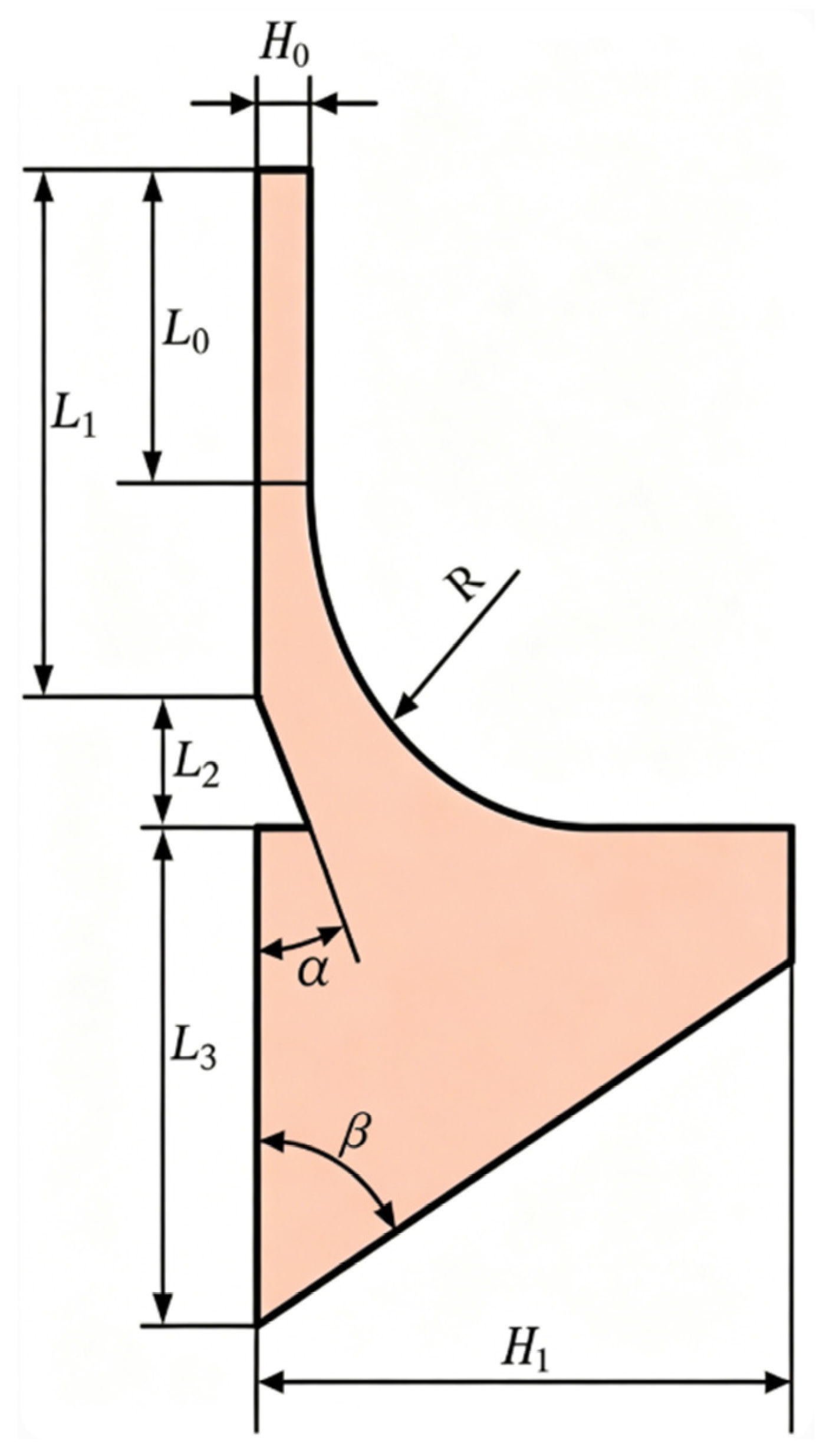
In this paper, the foot-shaped slip ring type combination seal TB2-I 114.3 × 10.0 for reciprocating shafts is selected as the research object. The seal consists of a foot-shaped slip ring made of polytetrafluoroethylene (PTFE) and an energizing O-ring made of nitrile butadiene rubber (NBR). The combined seal is installed in a rectangular groove and maintains contact with the reciprocating shaft. Since the elastic modulus of the steel groove and shaft is several orders of magnitude higher than that of the rubber and PTFE, their deformation under operating loads is negligible; therefore, both are treated as analytical rigid bodies [37] to reduce computational cost without compromising accuracy. By exploiting the symmetry of the geometry, material distribution, and boundary conditions, the three-dimensional structure is simplified into a two-dimensional axisymmetric model, as shown in Figure 1. The cross-sectional dimensions of the slip ring are illustrated in Figure 2, and the initial geometric parameters are listed in Table 1.
Rubber is a hyperelastic material and there are various models that can be used to describe its hyperelastic mechanical behavior, among which the Mooney-Rivlin model can well describe the mechanical behavior of rubber materials under large deformations, assuming that the rubber material is isotropic and volumetrically incompressible, and its functional expression is [38]:
W = C 10 I 1 3 + C 01 I 2 3
where W is strain potential energy; C 10 , C 01 is the Mooney-Rivlin model material constant; I 1 is the first strain tensor invariant; I 2 is second strain tensor invariant.
According to the literature [39], the material constants C10 and C01 of the Mooney-Revlin intrinsic model of the O-ring are taken as 1.87 and 0.47 MPa, respectively. The material of the slip ring is PTFE, which has an elastic modulus of 960 MPa and a Poisson’s ratio of 0.45 according to the literature 17.
Due to the complexity of the properties of rubber materials, their geometrical properties, material properties, and contact properties show nonlinear variations [40]. During the work of the seal, the rubber material will produce stress relaxation or creep with the increase in working time, so it is difficult to make a theoretical study of the O-ring, so the method of finite element analysis is used to analyze the rubber seal, while making the following assumptions [41]:
(1)
The material has a defined modulus of elasticity and Poisson’s ratio;
(2)
Neglecting the stress relaxation properties and creep properties of the rubber material;
(3)
The lateral compression to which the seal is subjected is considered to be caused by the specified displacement of the constrained boundary;
(4)
Ignore the effect of medium temperature change on the seal.
Four contact pairs of shaft and foot-slip ring, foot-slip ring and O-ring, O-ring and groove, and foot-slip ring and groove were established, and the penalty function algorithm was used to analyze the contact between each contact pair. The O-ring adopts the CAX4RH four-node bilinear axisymmetric quadrilateral hybrid cell type, which can effectively simulate the nonlinear variation in NBR under large deformation conditions. CAX4R four-node bilinear axisymmetric quadrilateral is selected as the foot slip ring unit type.

2.2. Fluid Side Pressure Permeation Simulation

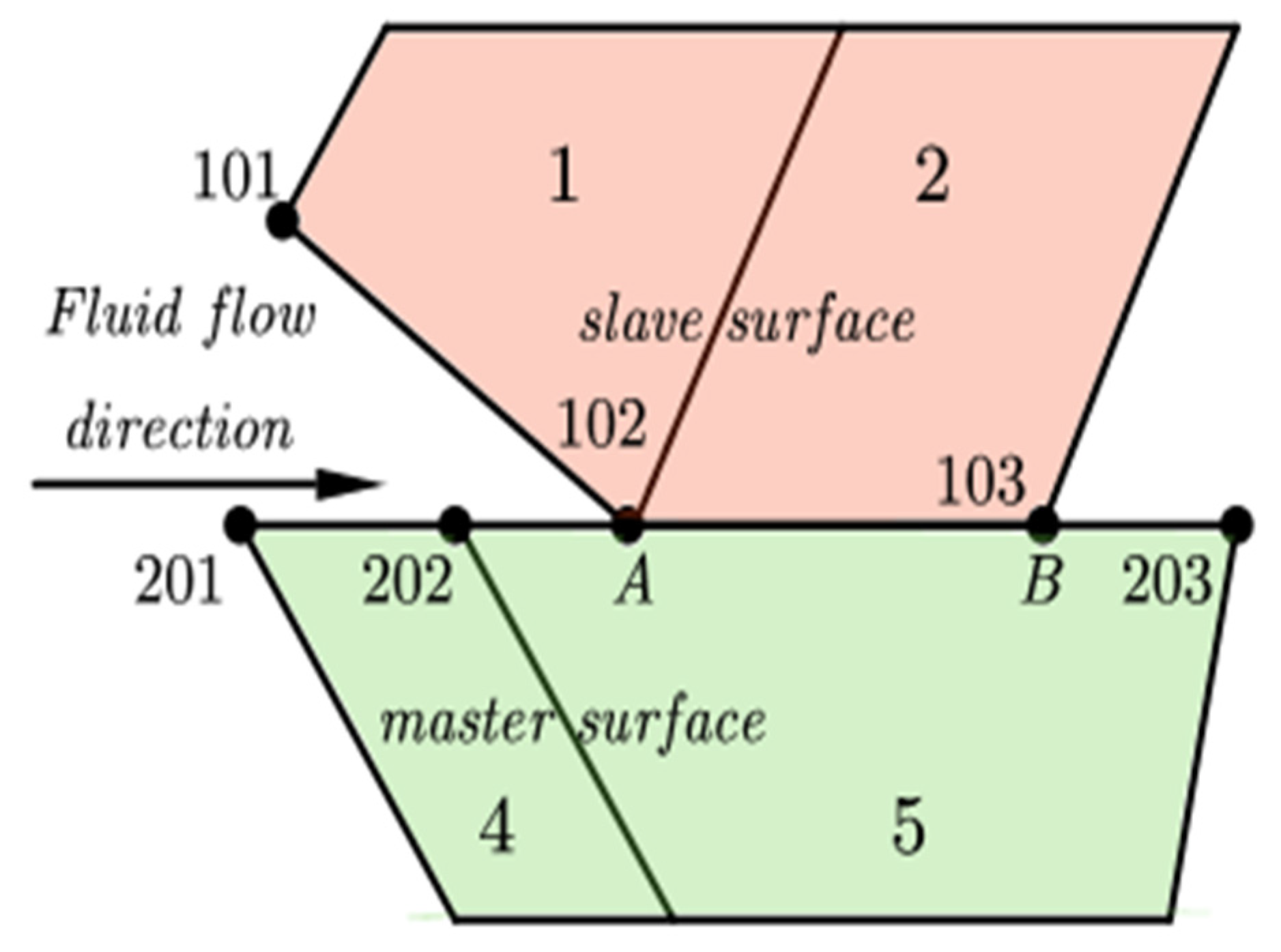
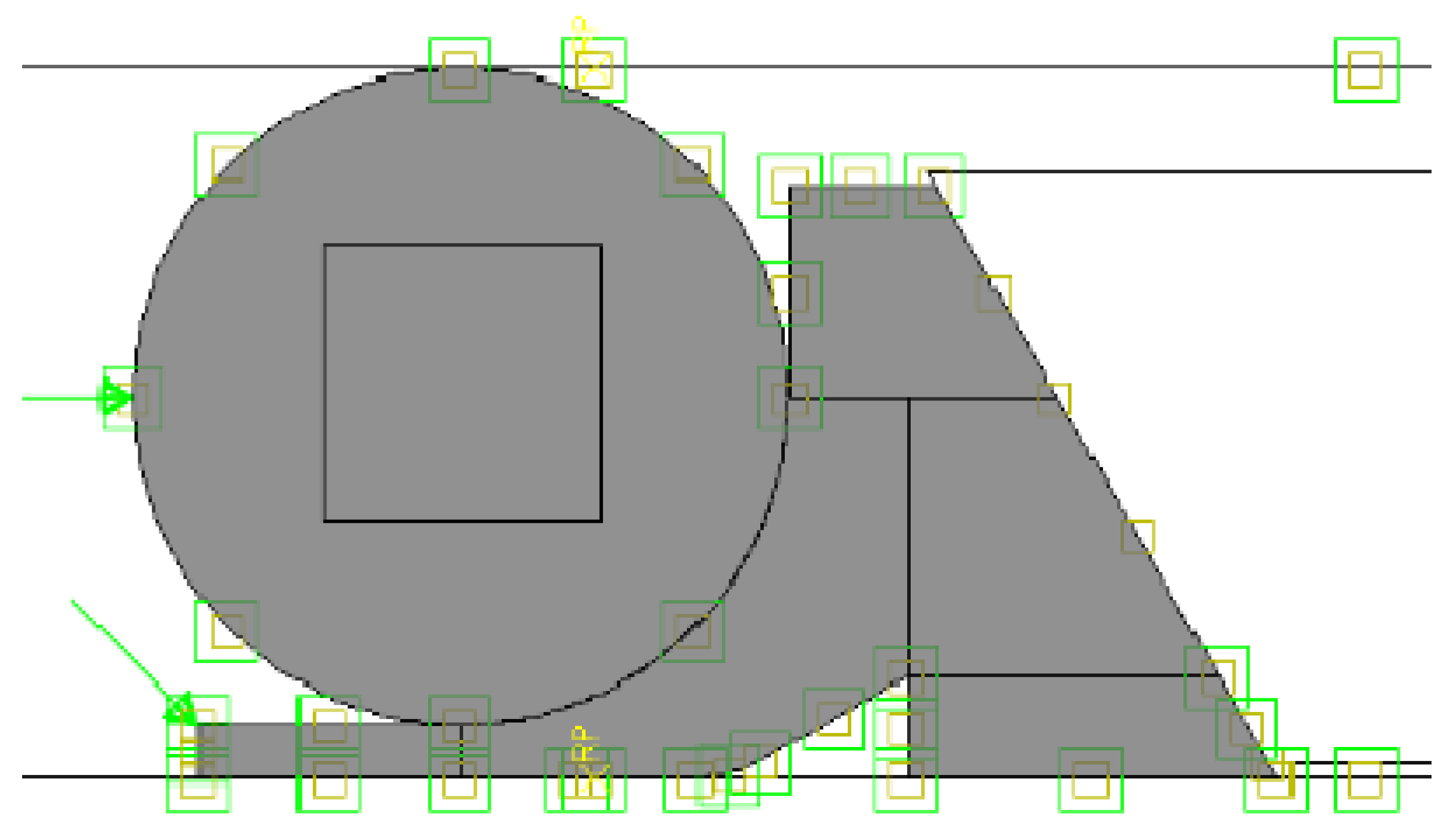
Specifies a starting point that is fully exposed to the fluid by defining the master and slave surfaces. The fluid pressure will load along the starting point toward the contact surface, and if the fluid pressure is greater than the contact pressure at a node, the fluid will continue to load forward.
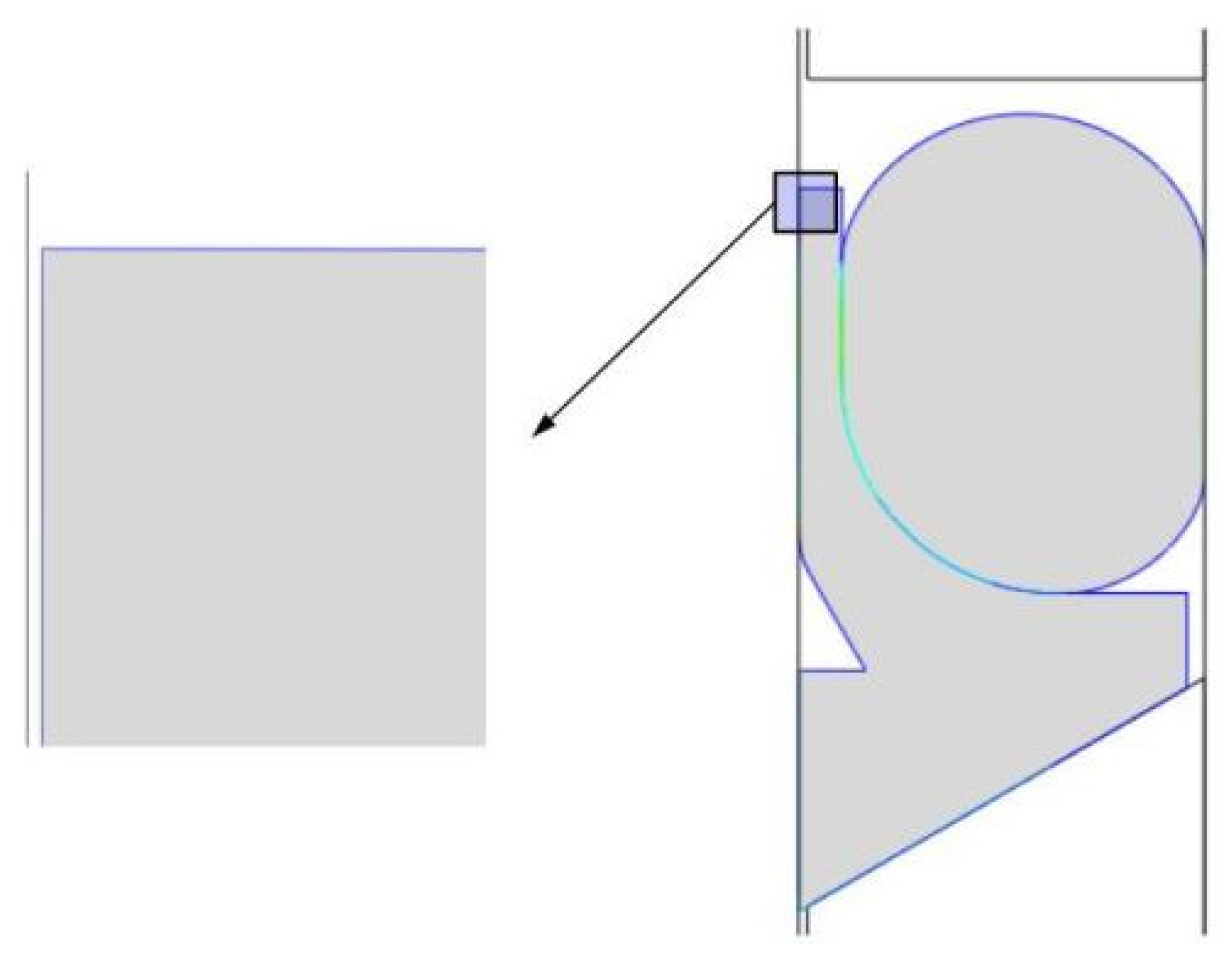
As shown in Figure 3, if the contact pressure at node 102 is greater than the fluid pressure, the fluid will stop loading forward when it reaches the node. Conversely, if the contact pressure at node 102 is less than the fluid pressure, the fluid will continue to load forward and reach node 103 to continue the judgment. By this loading method, the critical point can be found automatically and more objective calculation results can be obtained [42].
The groove is fully fixed via the RP point, while a radial displacement constraint is applied to the reciprocating shaft via the other RP point; under static sealing conditions, the axial displacement of the shaft is additionally constrained. No direct displacement boundary conditions are prescribed for the foot-shaped slip ring or the O-ring. The simulation is carried out in three consecutive load steps: in Step 1, a radial displacement of 1.4 mm toward the O-ring is applied to the reciprocating shaft to establish the initial pre-compression of the slip ring and O-ring; in Step 2, as Figure 4 shows a schematic diagram of the simulation of the fluid pressure penetration method, a fluid pressure of 30 MPa is applied to the left end face of the slip ring and the fluid-contacting areas; in Step 3, axial velocities of 0.1, 0.2, 0.3, 0.4, and 0.5 m/s are respectively applied to the reciprocating shaft to simulate dynamic sealing conditions.

2.3. Grid-Independent Verification

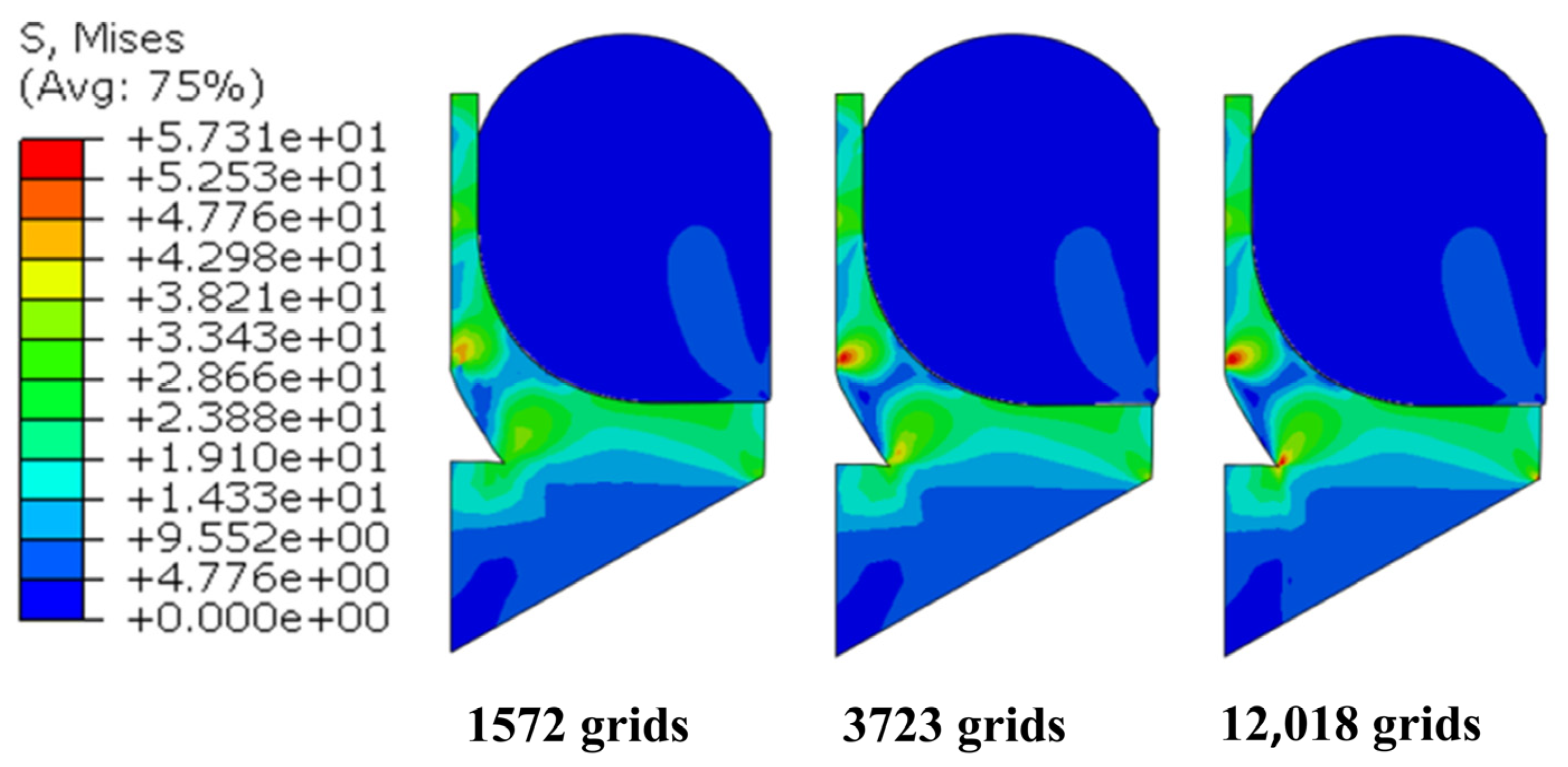
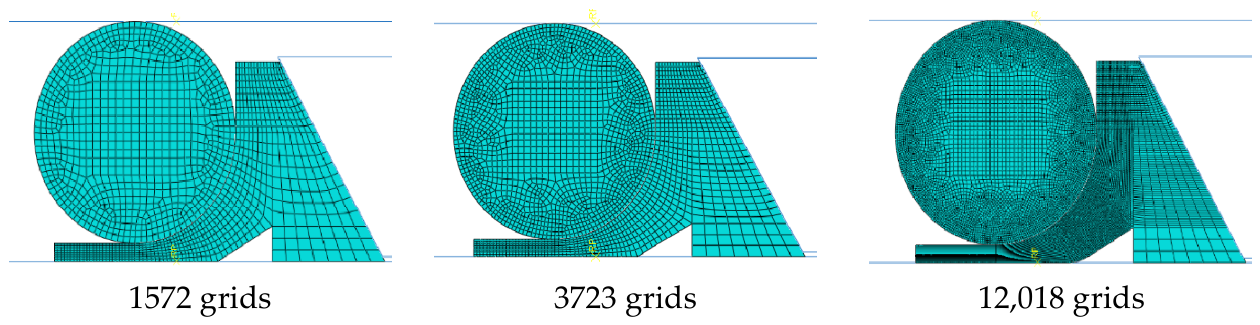
The convergence analysis was performed in Finite Element Method using 1572, 3723 and 12,018 meshes, respectively, and Figure 5 shows the Finite Element Method model with different mesh numbers.
Figure 6 shows the distribution of Von Mises stress clouds for different models. From the figure, we can see that the difference between the maximum stress calculated by 1572 meshes and the maximum stress obtained by 3723 meshes is 15.8%, which is a large error, while the difference between the maximum stress calculated by 3723 meshes and 12,018 meshes is only 2.8%, which can be considered equal.
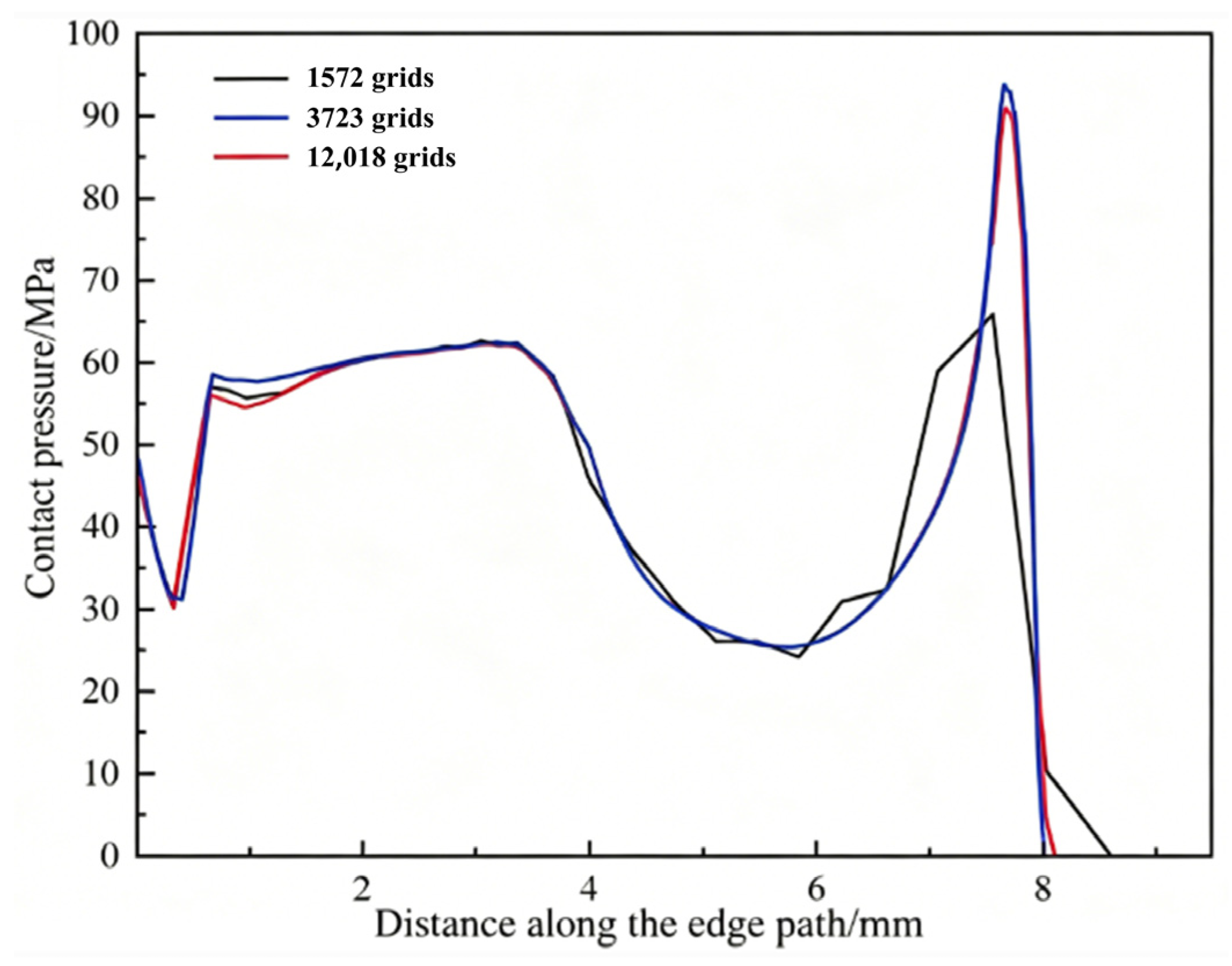
Figure 7 shows the contact stress distribution on the main sealing surface calculated with three different mesh numbers. It can be seen from the figure that when the number of meshes is small, the contact stress error is large and the stress curve is not continuous and smooth enough. As the number of meshes grows from 3723 to 12,018, the contact stress curves almost overlap. However, with the gradual increase in the number of grids, the calculation speed will gradually become slower, but the change in calculation error is not obvious, so the selection of 3723 grids for calculation can get more accurate calculation results, and at the same time, the calculation time spent is not too much.

3. Influence of Slip Ring Size on Sealing Performance

3.1. Slip Ring Thickness H 0

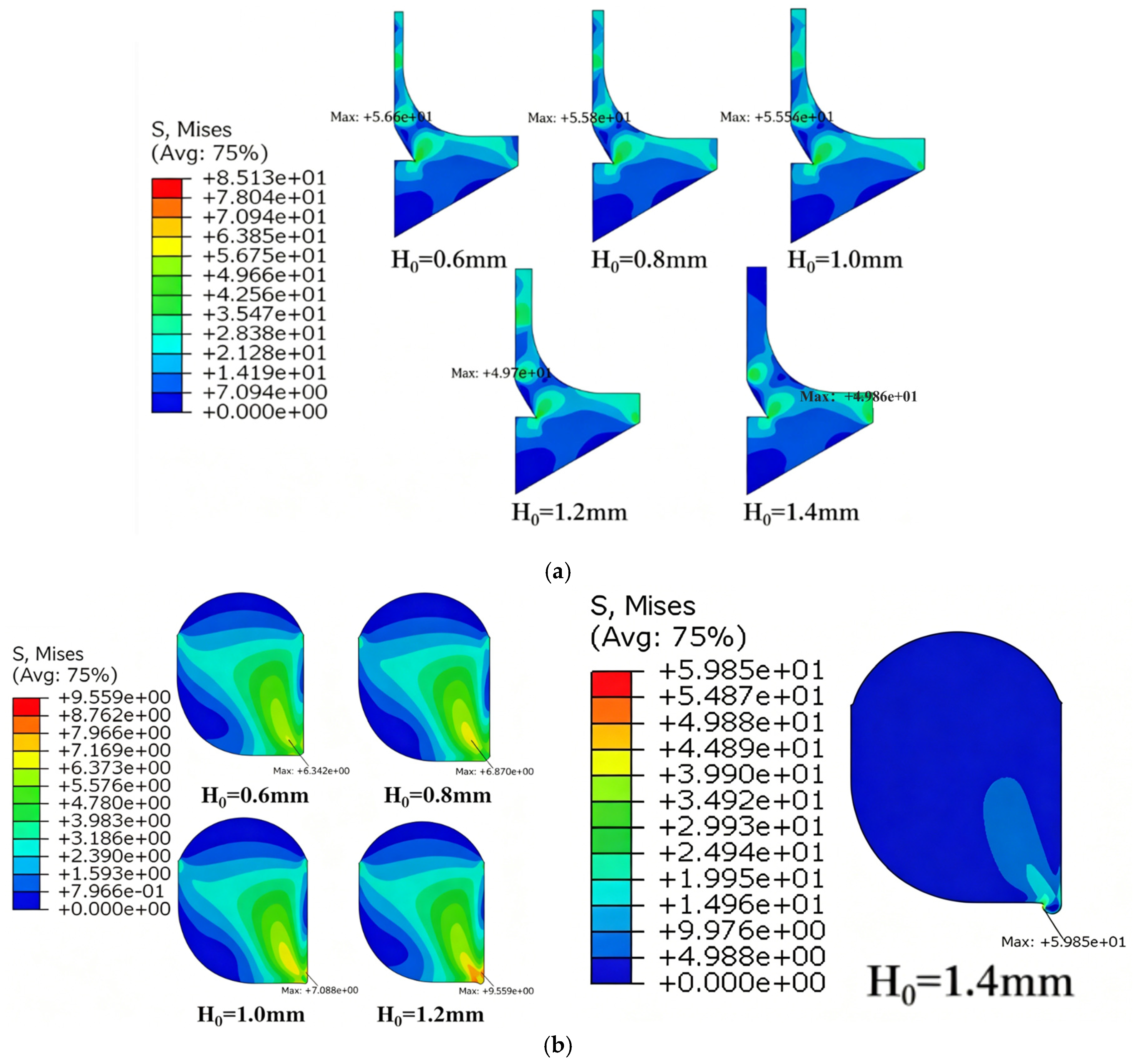
The Von Mises stress distribution of slip ring and O-ring with different slip ring thickness under 30 MPa high pressure in two operating conditions are shown in Figure 8.
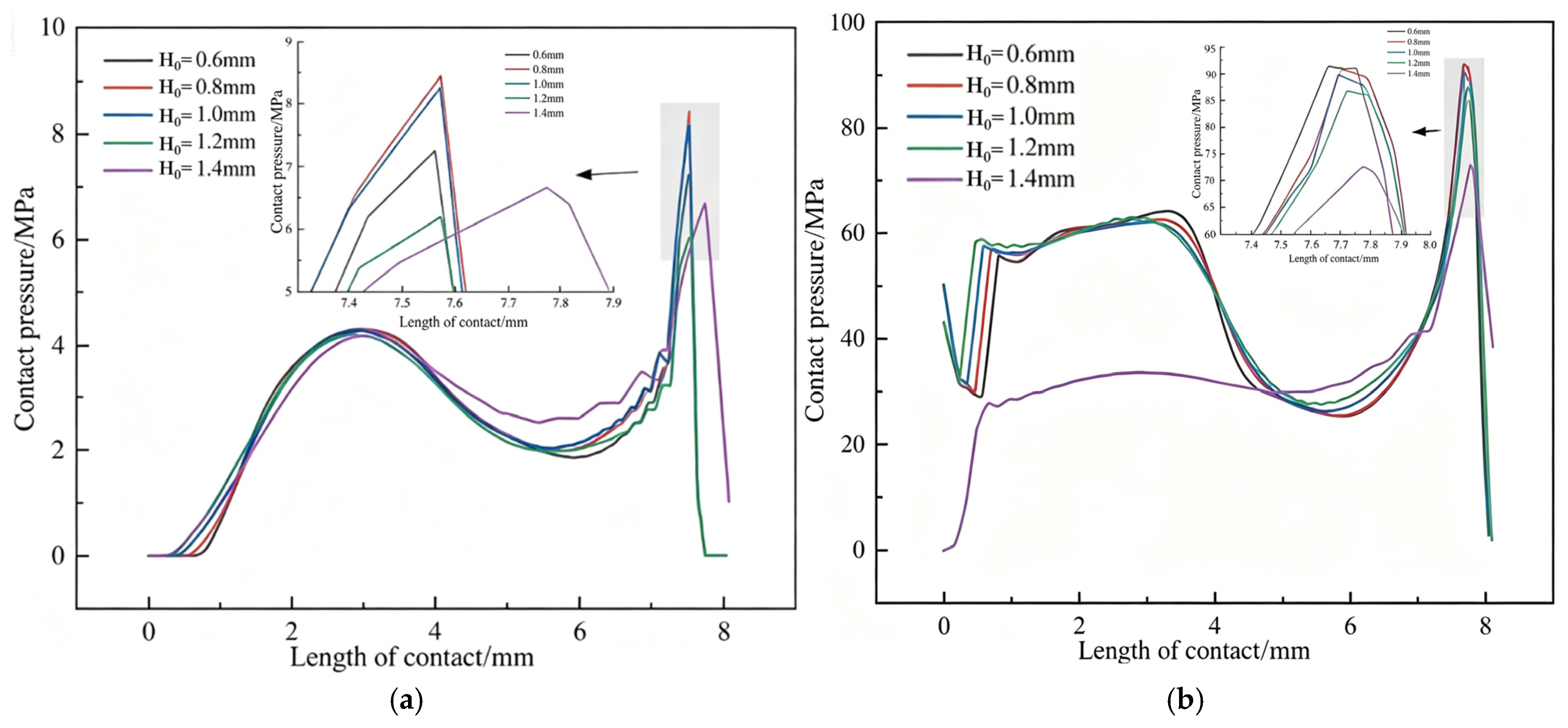
The contact stress distribution along the contact length on the main sealing surface for different thickness of slip rings under 30 MPa high pressure in two operating conditions are shown in Figure 9.
From Figure 9a, it can be seen that when the slip ring thickness varies in the range of 0.6 mm to 1.4 mm, the overall trend of contact stress on the main sealing surface under pre-compression is the same, and the foot-shaped slip ring achieves a larger value at the middle and upper part of the sealing surface and at the triangular groove due to the compression effect of the O-ring. The maximum contact stress on the main sealing surface of the slip ring is larger when the slip ring thickness is 0.6 mm and 0.8 mm.
From Figure 9b, it can be seen that when the slip ring thickness varies in the range of 0.6 mm to 1.2 mm, the overall trend of contact stress on the main sealing surface of the slip ring is the same, and the overall contact stress is greater than the medium pressure of 30 MPa. Under the dual action of fluid medium pressure and O-ring extrusion, the upper middle part of the slip ring and the triangular groove play the role of the main seal.
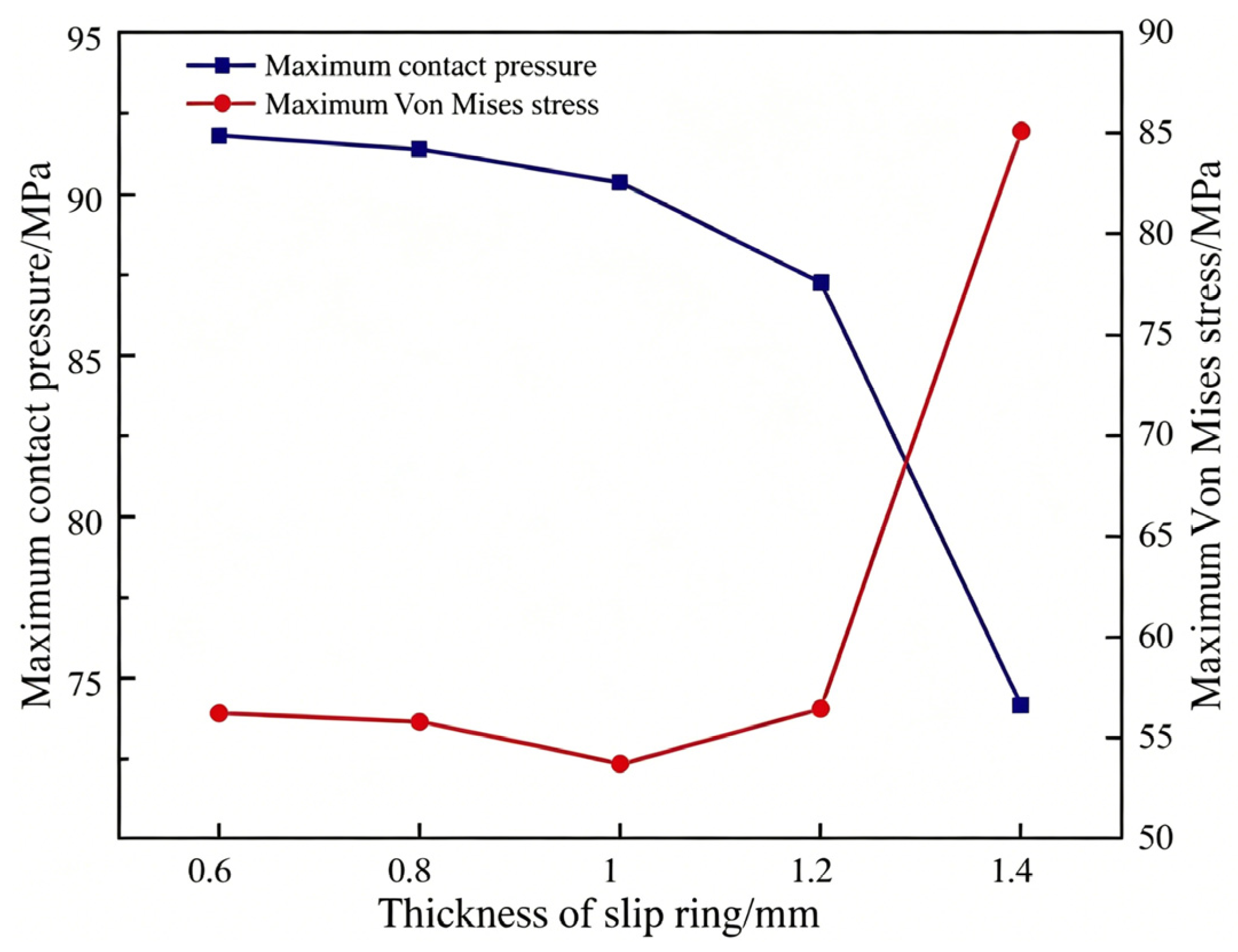
From Figure 10, it can be seen that as the slip ring thickness increases from 0.6 mm to 1.2 mm, the maximum contact stress on the main sealing surface exhibits a slow decreasing trend. However, when the thickness increases to 1.4 mm, the maximum contact stress drops significantly, and the contact stress in the front half of the slip ring even falls below 30 MPa, which is likely to cause seal failure. As the thickness gradually increases from 0.6 mm to 1.0 mm, the maximum Von Mises stress of the slip ring decreases slightly; but when the thickness further increases from 1.0 mm to 1.4 mm, the O-ring is extruded, leading to stress concentration within the slip ring and a sudden rise in the Von Mises stress. The main reason for this phenomenon is that when the slip ring is relatively thin, its stiffness is low, resulting in large deformation under the action of the O-ring and the fluid pressure, and both the contact pressure on the main sealing surface and the Von Mises stress remain at relatively high levels. As the slip ring becomes thicker, it becomes more difficult for the squeezing force of the O-ring to be effectively transmitted to the main sealing surface, and the O-ring is more easily extruded into the gap between the slip ring and the groove under the fluid pressure, causing severe stress concentration in localized regions of the slip ring while the contact pressure on the main sealing surface drops significantly. As shown in Figure 11 (H0 = 1.2 mm, 1.4 mm), this condition is prone to cause local damage to the O-ring and the slip ring. Therefore, the slip ring thickness should not be excessively large and should be controlled at 1.4 mm or less.

3.2. The Bottom Triangle Angle α

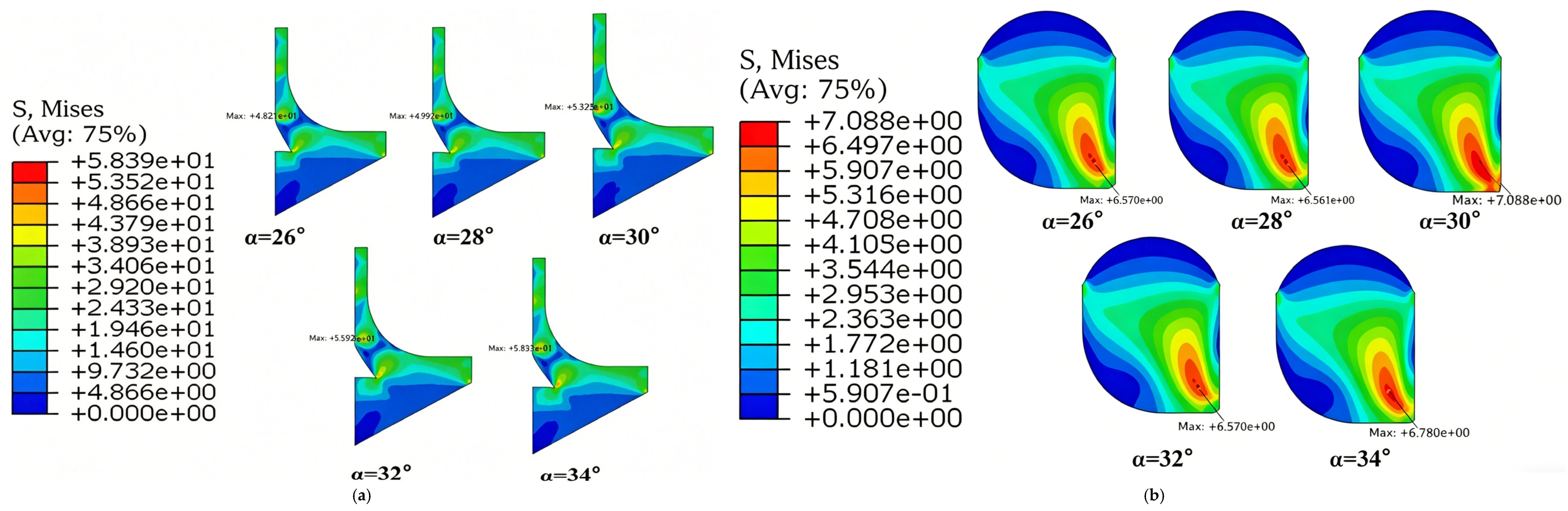
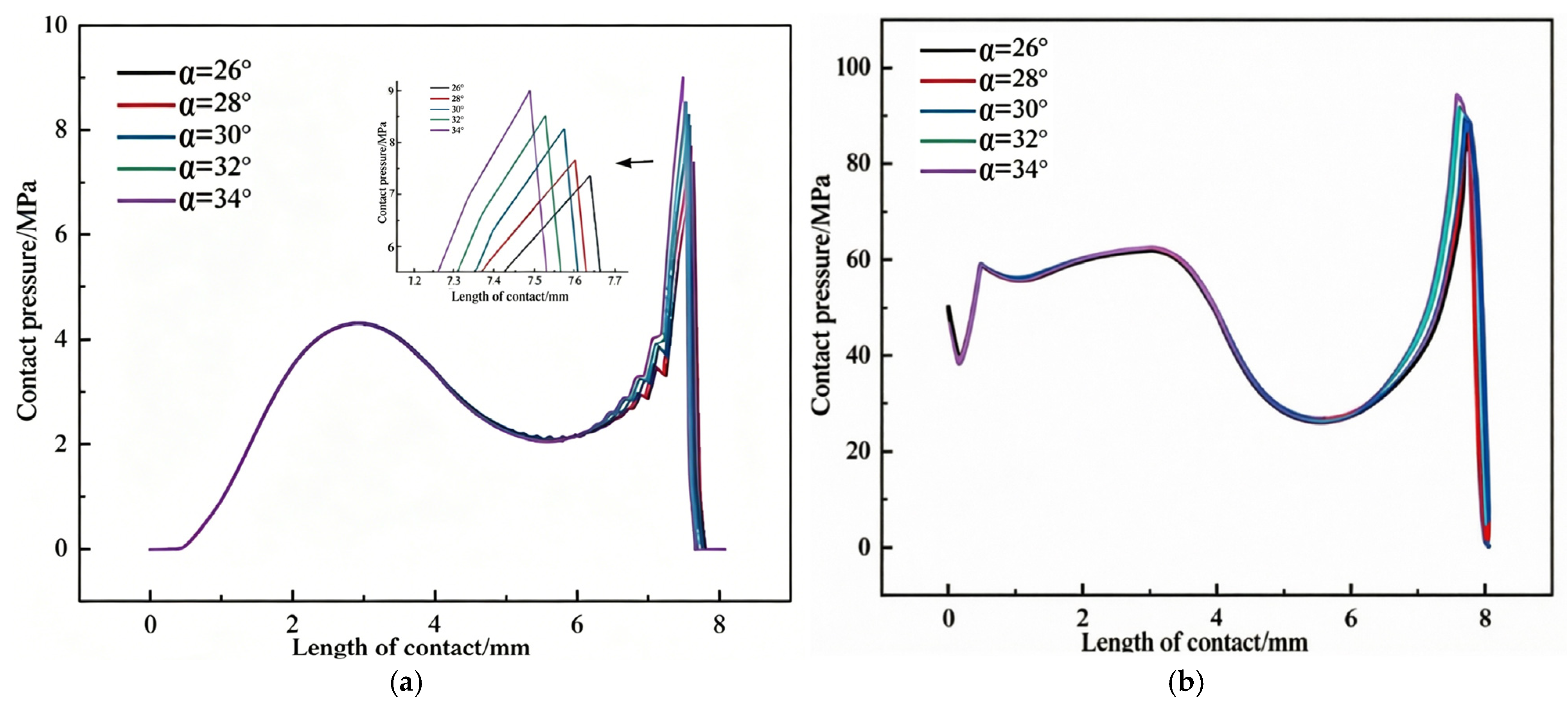
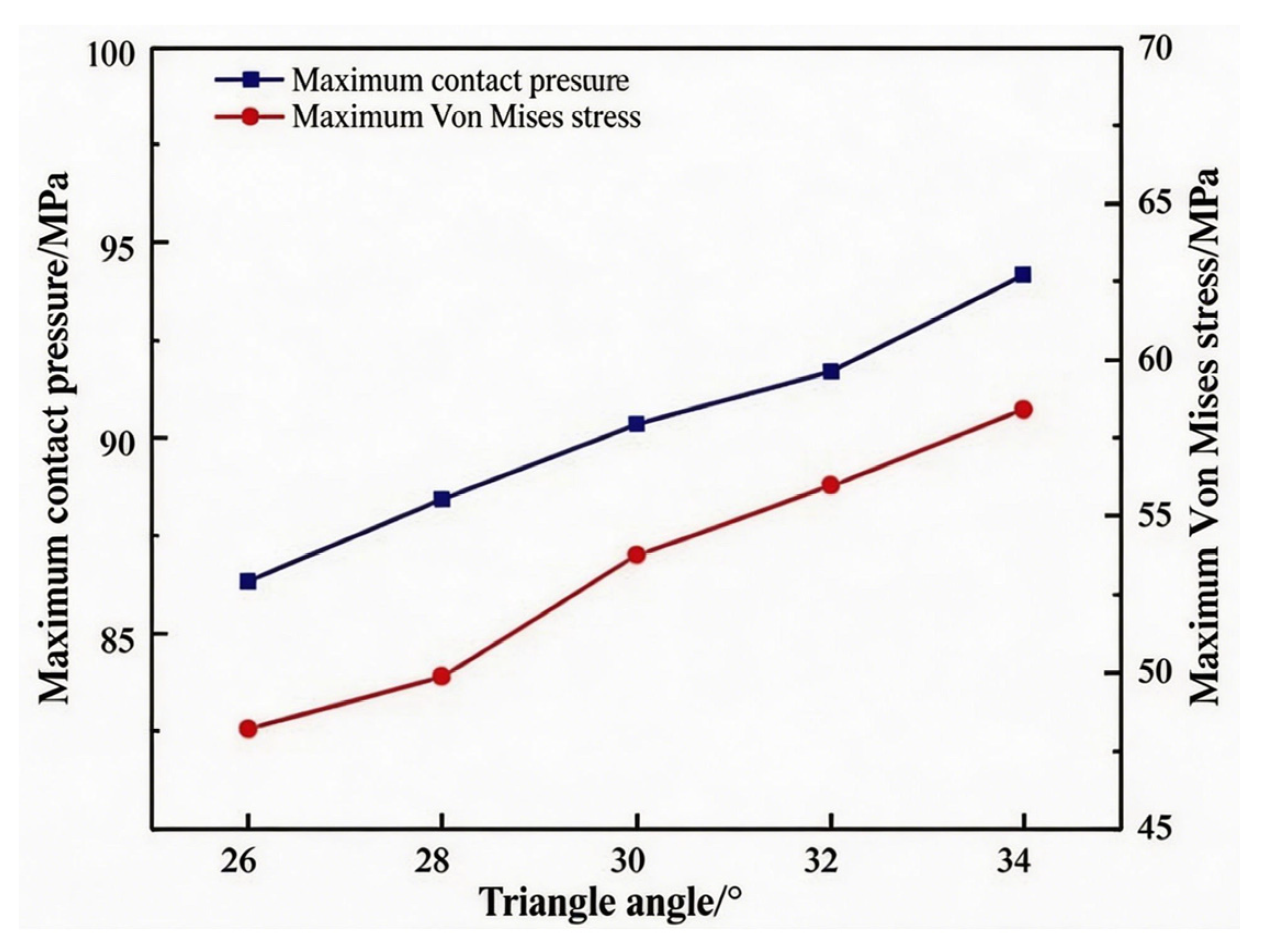
In order to compare the influence of different angles on the stress distribution of the slip ring and O-ring, simulations were conducted using bottom triangular angles of 26°, 28°, 30°, 32°, and 34°. The stress distribution diagrams for different angles are shown in Figure 11. From the figure, it can be observed that as the triangular angle increases, the maximum contact stress rises by 9.1%, and the maximum Von Mises stress of the slip ring also increases with the increase in the triangular angle, with an increase of 21.1%.
Figure 12 illustrates the contact stress on the main sealing surface of the slip ring under pre-compression conditions and under media pressure, respectively. It can be observed from these figures that the angle of the triangle has a significant impact on the maximum contact stress on the main sealing surface under pre-compression conditions; specifically, from Figure 13, as the triangular angle increases, the maximum contact stress on the main sealing surface also increases. To prevent local damage to the slip ring, this parameter should not be excessively large.

3.3. The Distance L 1 of the Bottom Triangle

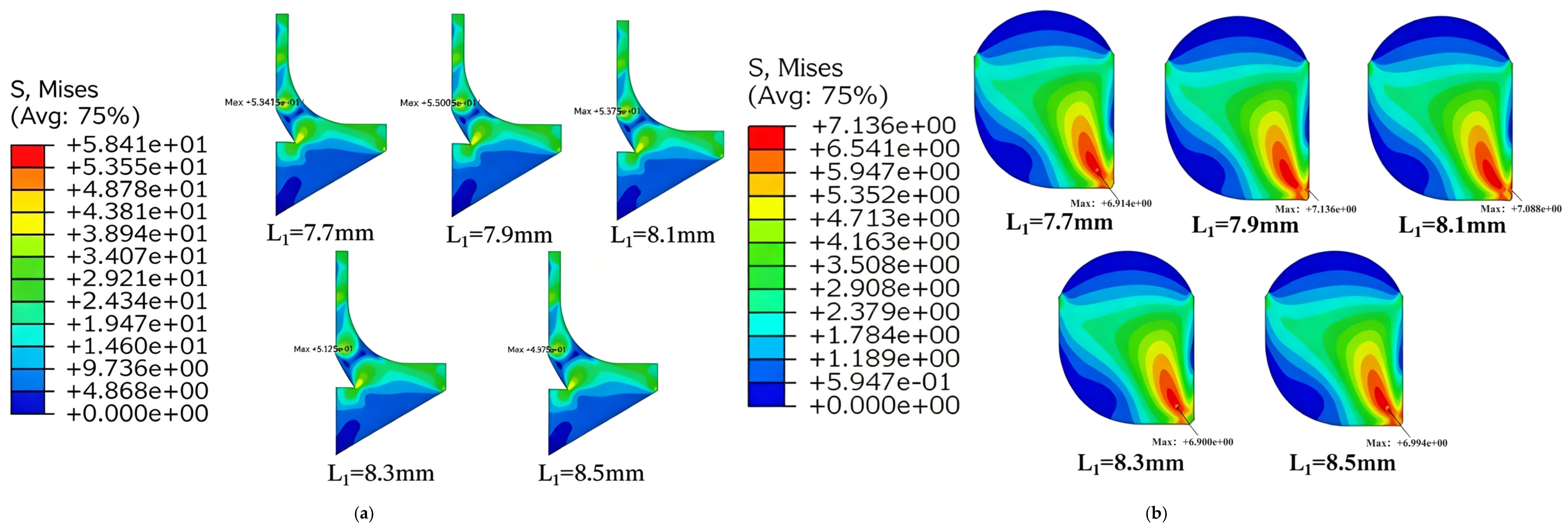
Figure 14 illustrates the stress analysis of a triangular geometry (with varying base dimensions) at different positional distances. It can be observed from the figure that when the distance between the triangular feature and the upper end face of the slip ring varies within the range of 7.7 mm to 8.5 mm, changes in this distance do not affect the locations where the maximum Von Mises stresses occur in the slip ring and the O-ring.
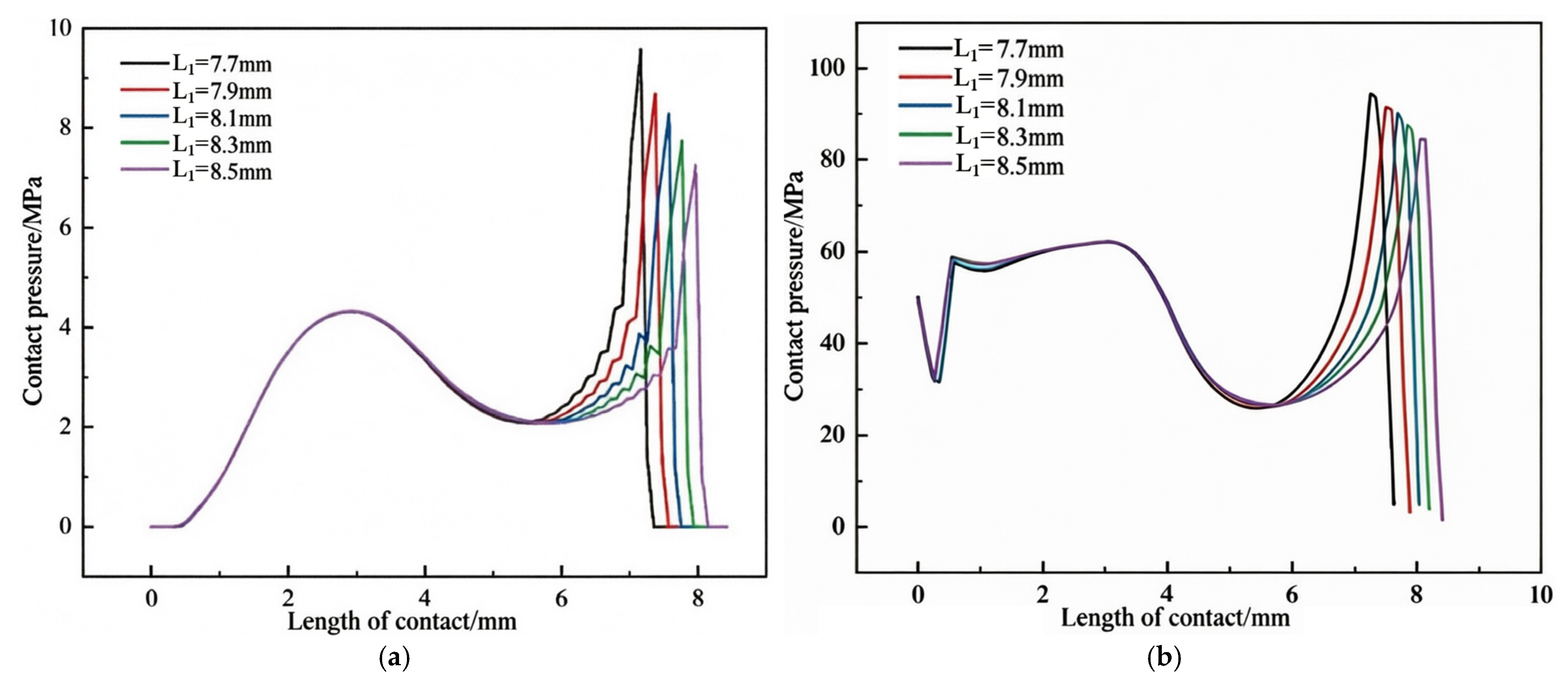
The contact stresses on the main sealing surface of the slip ring under two working conditions are depicted in Figure 15. It can be observed from these figures that different distances influence the position where the maximum contact stress occurs on the slip ring, as well as the value of this maximum contact stress. Specifically, as the distance increases, the position of the maximum contact stress point on the slip ring shifts backward, and the value of the maximum contact stress decreases. However, both values are greater than the fluid pressure of 30 MPa, which is sufficient to meet the sealing requirements. This is because the location of the maximum contact stress on the slip ring occurs near the triangular section at the lower part of the main sealing surface. When the distance between the triangular section and the upper end face of the slip ring increases, the position of this maximum contact stress point also moves farther away from the upper end face of the slip ring, and the area of the main sealing surface expands. Consequently, the position of the maximum contact stress point shifts backward, and the value of the maximum contact stress decreases.
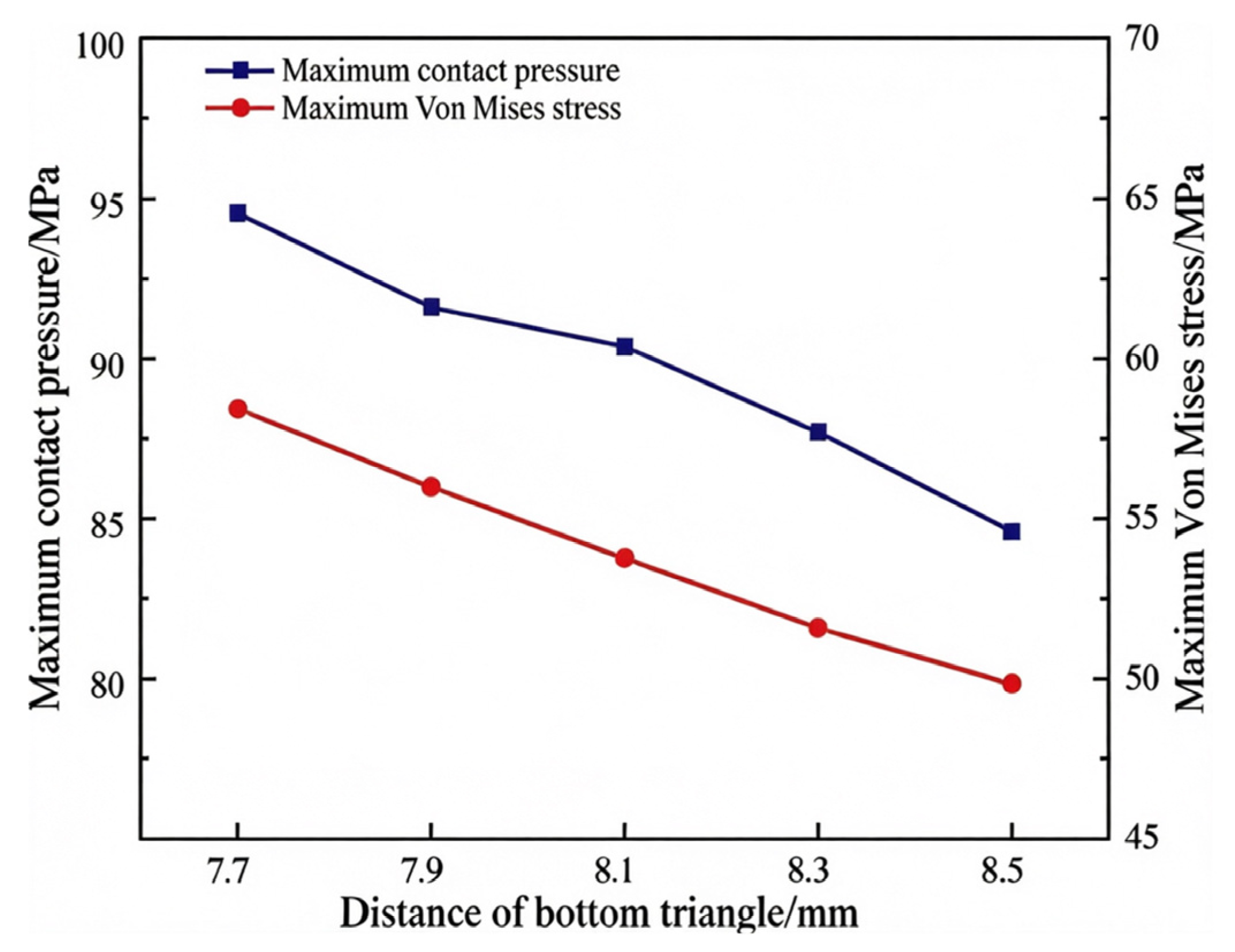
It can be seen from Figure 16 that as the distance increases, the maximum contact stress on the main sealing surface of the slip ring decreases by 11.8%, and the maximum Von Mises stress decreases by 17.2%.

3.4. Bottom Triangle Right Angle Edge Length L 2

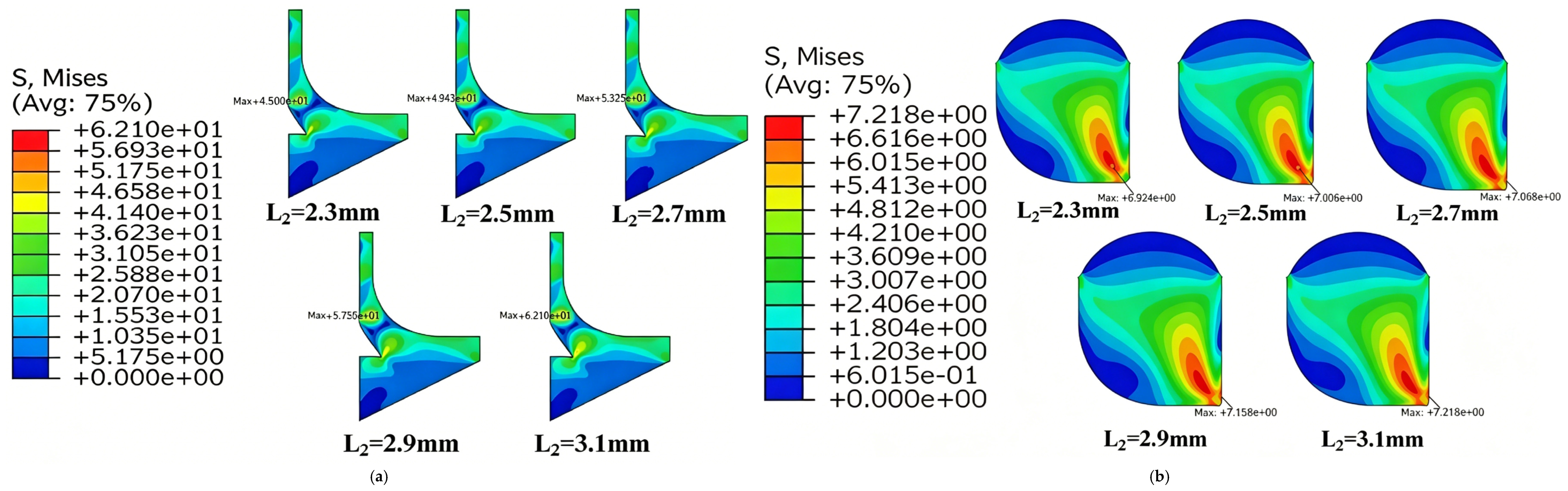
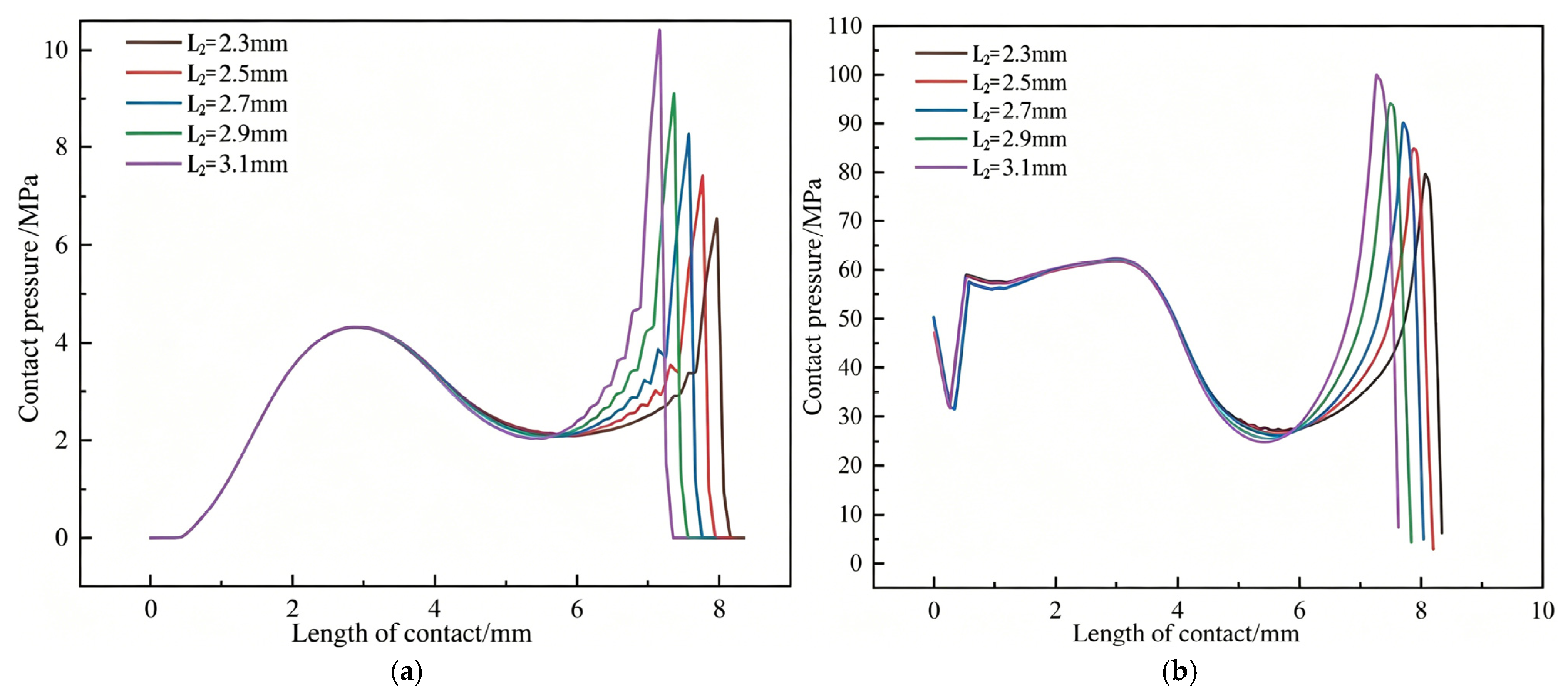
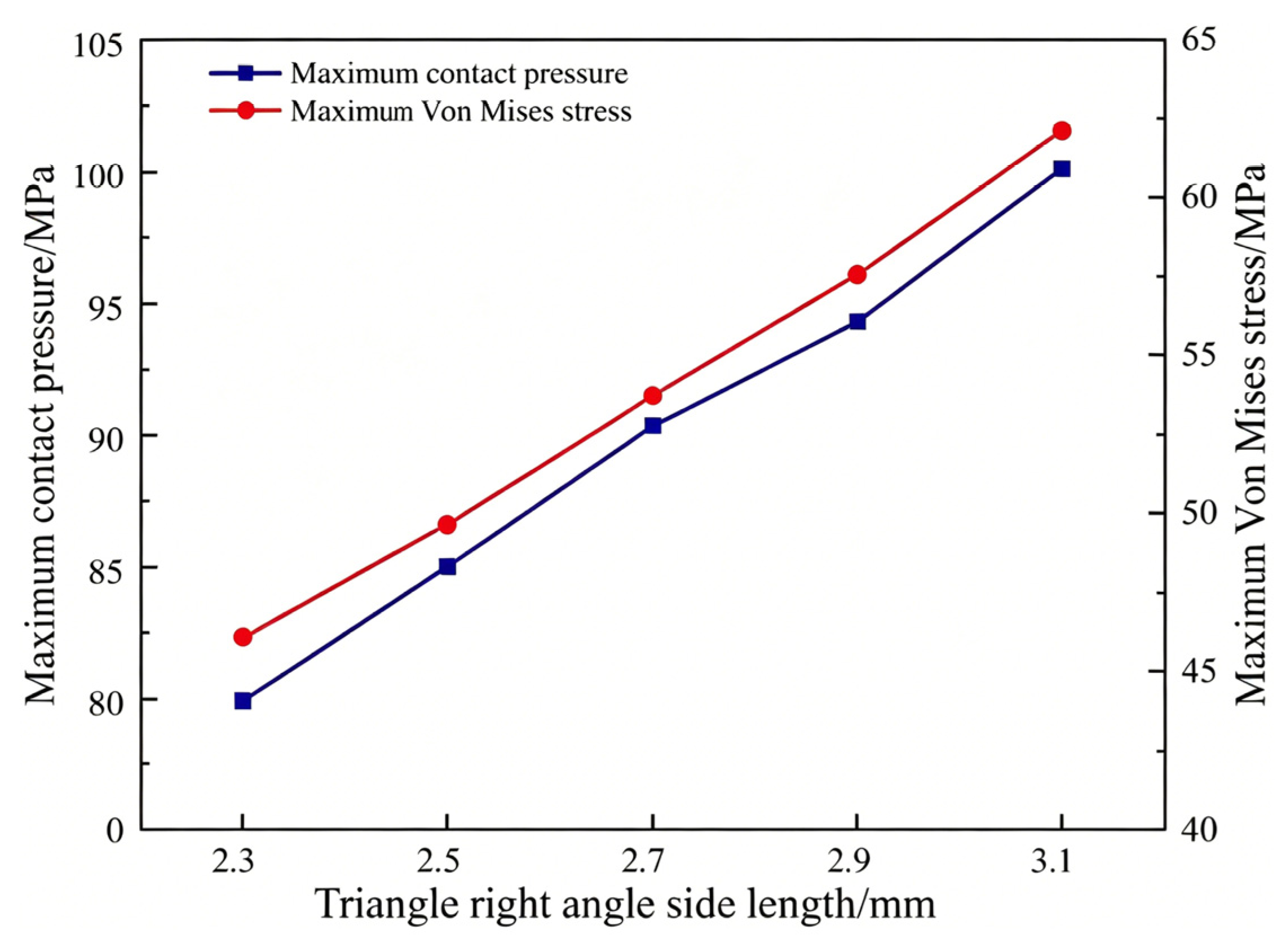
When the length of the right-angle side of the triangle varies in the range of 2.3 mm to 3.1 mm, the contact stress on the main sealing surface of the slip ring in both operating conditions is shown in Figure 17 and Figure 18. It can be seen from the figure that as the length of the right-angle side of the triangle increases, the location of the maximum contact stress point of the slip ring moves forward, and as the length of the right-angle side increases, the value of the maximum contact stress also becomes larger accordingly.
From Figure 19, it can be seen that under the working condition of medium pressure, as the right-angle edge length of the bottom triangle L2 increases from 2.3 mm to 3.1 mm, the maximum contact stress on the main sealing surface of the slip ring increases by 25.3%, and the maximum Von Mises stress increases by 34.7%. The simultaneous increase in these two stresses will aggravate the performance degradation of the slip ring through different mechanisms. In the sealing contact region, the increase in the maximum contact stress implies an increase in the normal contact force. According to the Archard wear theory, this will directly lead to an increase in the wear rate, accelerating material removal from the sealing surface, while the friction force and frictional power dissipation correspondingly rise. Within the slip ring body, the increase in L2 reduces the cross-sectional area near the bottom triangle groove, causing the local stress flow to become more concentrated. The significant rise in the maximum Von Mises stress indicates that the region has entered a higher multiaxial stress state. Under repeated reciprocating loading, such regions are susceptible to plastic deformation accumulation and micro-crack initiation, thereby increasing the risk of subsurface damage such as surface spalling, pitting, and even fatigue fracture. It should be noted that although PTFE may exhibit wear saturation under low-load and well-lubricated conditions due to the formation of a transfer film, under the high-pressure combination sealing conditions investigated in this study, where the contact stress on the sealing surface can reach tens to hundreds of megapascals, a dynamic equilibrium of the transfer film is difficult to establish. Moreover, the subsurface fatigue damage induced by stress concentration is not directly related to the formation of a surface transfer film. Therefore, to avoid the aforementioned risks of aggravated wear and local damage, it is recommended that the right-angle edge length of the bottom triangle be controlled at approximately 2.3 mm.

3.5. Effect of the Length of the Upper Plane of the Slip Ring L 0

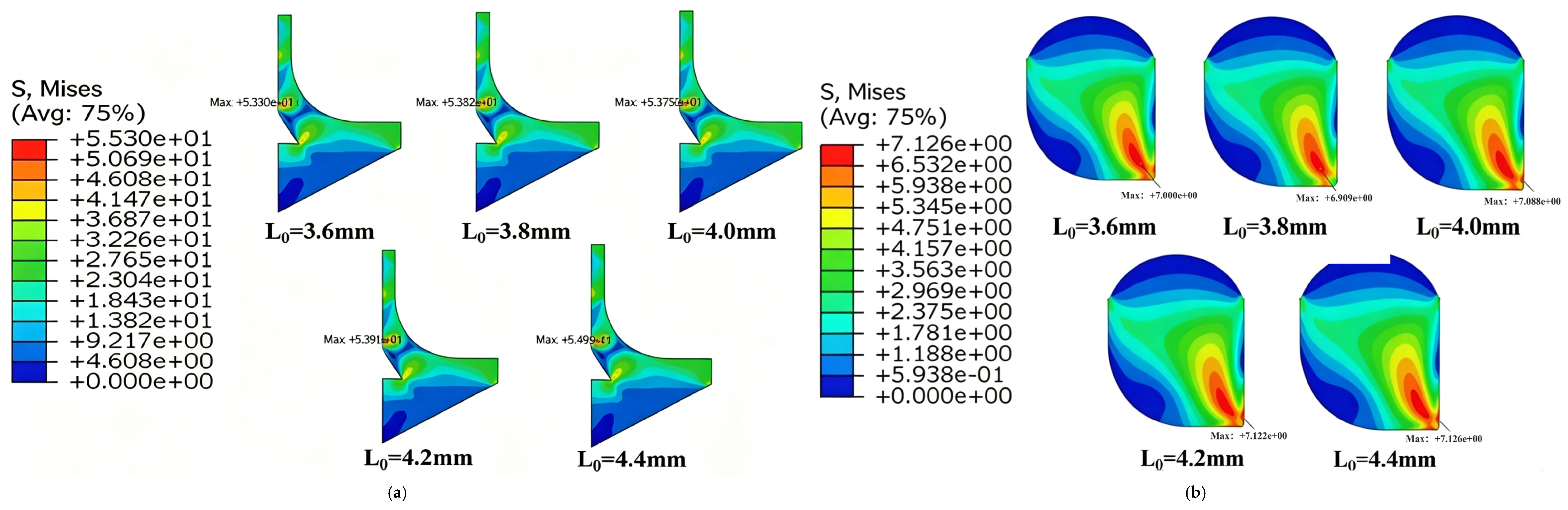
When the length of the upper plane of the slip ring varies from 3.6 mm to 4.4 mm while other conditions remain unchanged, the changes in stress distribution of the slip ring and O-ring are illustrated in Figure 20. As can be seen from Figure 20, the maximum Von Mises stress (equivalent stress) within the slip ring is relatively high at this point.
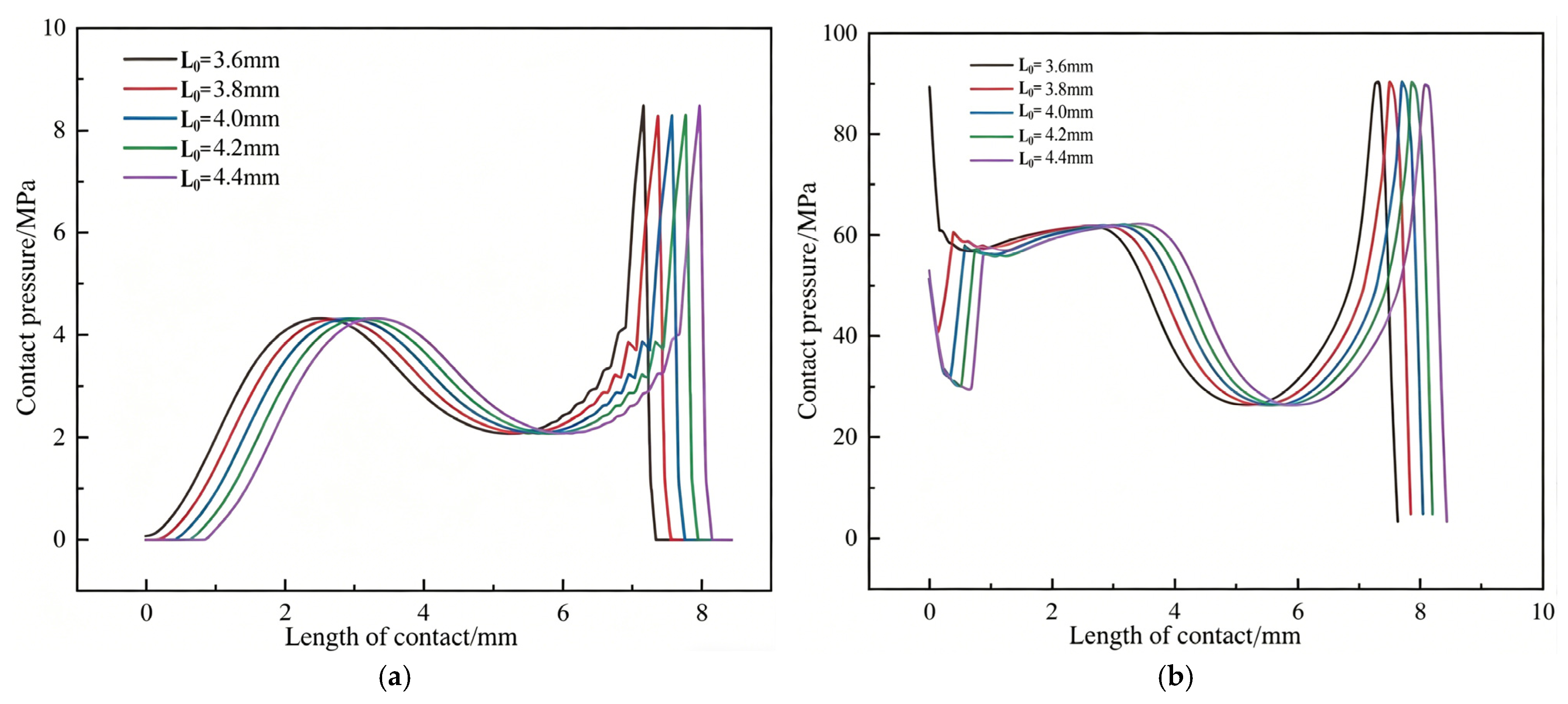
The contact stress conditions on the main sealing surface under the two working conditions are shown in Figure 21, respectively. As observed from Figure 21, the overall trends are generally similar. However, when the length of the upper plane exceeds 3.6 mm, the contact stress at the starting end of the main sealing surface of the slip ring becomes 0 MPa as the length increases.
This phenomenon arises because the position of the O-ring pre-tightening force (pre-compression force) is near the middle and lower parts of the upper plane of the slip ring, leading to a buckling (unstable bending) tendency at the upper end of the slip ring, as illustrated in Figure 22. Due to insufficient O-ring pre-tightening force, minor pressure fluctuations occur in the latter half of the slip ring-shaft contact surface. As the length of the upper plane increases, the contact stress at the starting end of the slip ring sealing surface gradually decreases. When the length of the upper plane is 3.6 mm, there is a sudden rise in the contact stress at the starting end of the sealing surface. This is attributed to the excessively short length of the upper plane, which causes the starting end of the sealing surface to be directly affected by the O-ring pre-tightening force, resulting in a sudden increase in contact stress under the action of the medium pressure.
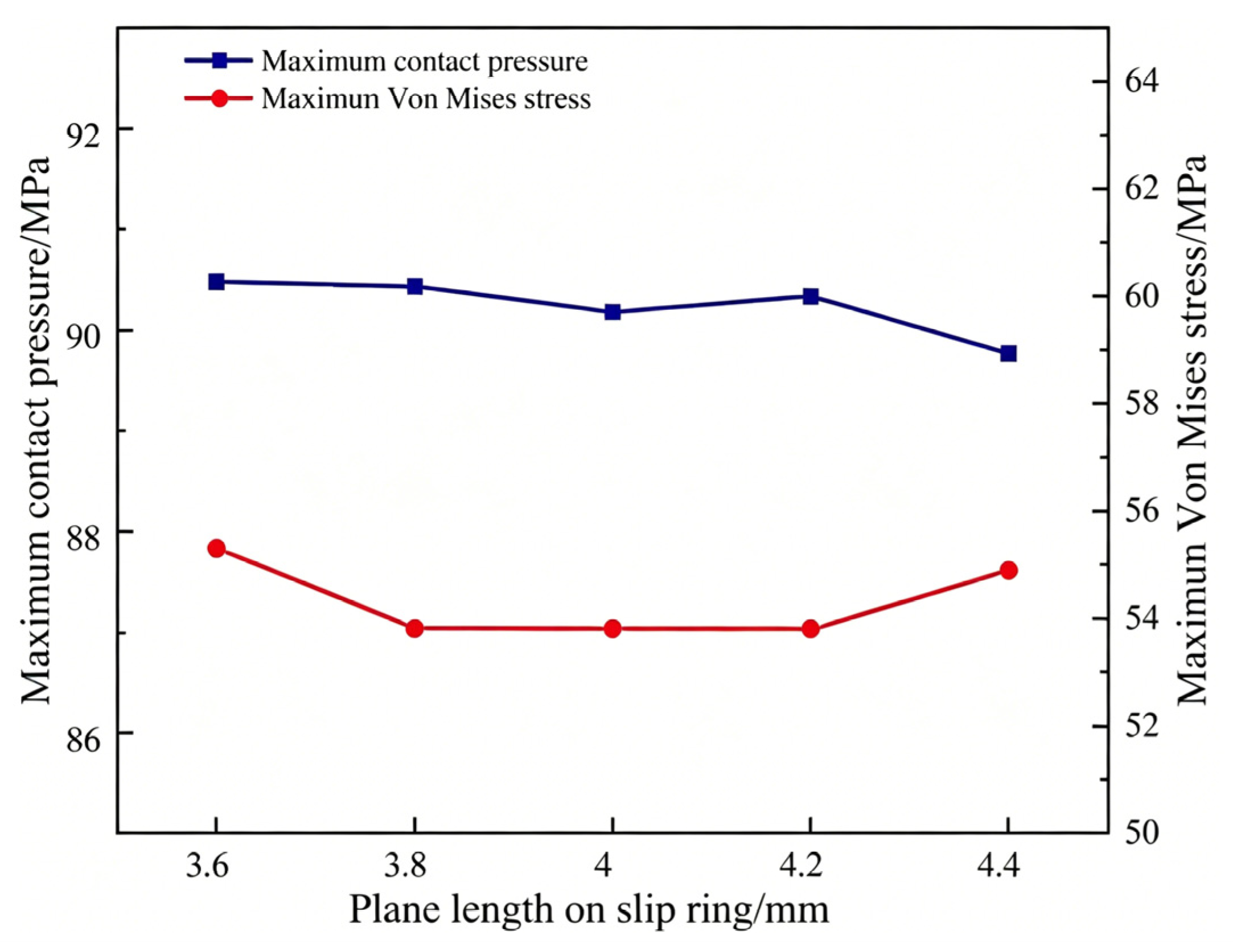
From Figure 23, it can be observed that the maximum variation in contact stress of the slip ring is 2.8%, and the maximum variation in Von Mises stress is 5.4%. Furthermore, the positions of high-stress points within the slip ring and O-ring remain unchanged, indicating that different lengths of the upper plane of the slip ring have a relatively minor impact on sealing performance.

4. Optimization of Sealing Structure

4.1. Foot-Shaped Slip Ring Size Optimization

The optimization objective for the foot-shaped slip ring seal structure is to minimize the maximum Von Mises stress and, under the premise that the contact pressure on the main sealing surface exceeds the fluid pressure to ensure a low leakage rate, to reduce the contact stress between the slip ring and the shaft as much as possible. According to the classical Archard wear theory, a reduction in contact pressure directly translates into a decrease in the frictional wear rate of the sealing surface, with the friction force and frictional power loss being consequently reduced. A multi-objective optimization of the slip ring is performed, using the maximum contact stress on the main sealing surface and the maximum Von Mises stress of the combined seal as the objective function. Based on the results of the previous analysis, H 0 , α , L 0 , L 1 , and L 2 were determined as design variables. Under the compression rate of 16% and oil pressure of 30 MPa, the contact stress peak on the main sealing surface is as small as possible under the condition that it meets the condition of greater than 30 MPa. The mathematical model for the optimal design of the foot-shaped slip ring seal structure is [43]:
Objective   function :   f ( X )
Design   variables :   X = [ H 0   α   L 0   L 1   L 2 ]
Restrictions :   0.6 H 0 1.4 26 α 34 3.6 L 0 4.4 7.7 L 1 8.5 2.3 L 2 3.1
where f ( X ) is the objective function, X is the matrix of design variables, and the initial values of design variables are the structural values of each part in Table 1.
The mathematical model is solved using the optimization algorithm in the Optimization module. The gradient-like algorithm is efficient in solving the problem, but is susceptible to the interference of initial values leading to trapping in local minima. Genetic algorithms are computationally expensive, but they are able to maximize the approximation of the global optimal solution and improve the computational efficiency [43]. After several trial calculations, it was determined that the optimization model of the foot-shaped slip ring seal has non-convex and multi-peaked characteristics [44], so the Multi-Island Genetic Algorithm (MIGA) in the genetic algorithm was selected for the solution.
The maximum Von Mises stress criterion is based on the Von Mises–Hencky theory, also referred to as the shear energy theory or the maximum distortion energy theory. A definitive constitutive relationship exists between the Von Mises stress and material damage, making it the core criterion for assessing whether a material enters a state of yielding and damage under multiaxial stress conditions.
The Von Mises stress synthesizes the three principal stresses into an equivalent scalar stress; the larger its value, the greater the degree to which the material deviates from an elastically safe state. For PTFE slip rings, when the local Von Mises stress in stress-concentrated regions remains persistently high under repeated high-stress loading, plastic deformation accumulates, micro-cracks initiate, and fatigue fracture ultimately occurs. Therefore, as an equivalent stress indicator at the critical location, the magnitude of the maximum Von Mises stress directly determines the risk level of the material entering an irreversible damage state. The stress expression is given by the following equation:
σ m = 1 2 ( σ 1 σ 2 ) 2 + ( σ 2 σ 3 ) 2 + ( σ 3 σ 1 ) 2
where σ m —Von Mises stress; σ 1 , σ 2 , σ 3 —First, second and third principal stresses.
According to the fourth strength theory, the Von Mises stress can be used as a basis for judging material failure with the following strength conditions:
σ m = 1 2 ( σ 1 σ 2 ) 2 + ( σ 2 σ 3 ) 2 + ( σ 3 σ 1 ) 2 [ σ ]
where [ σ ] —The allowable stress of the material.
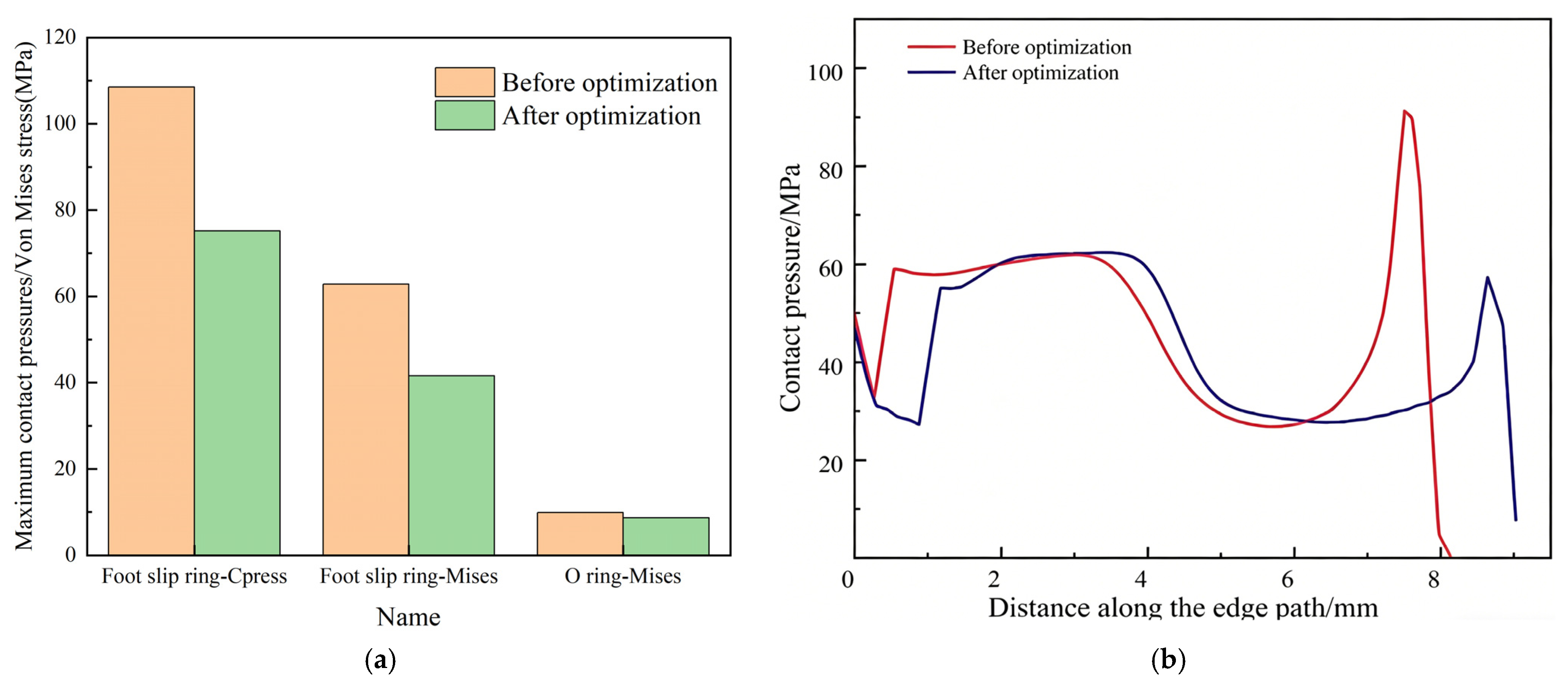
Table 2 shows the size comparison before and after optimization, Table 3 shows the comparison of the results before and after optimization, and the bar graph Figure 24 is drawn according to Table 3. As can be seen from the table, the contact stress of the size-optimized model is 75.22 MPa, which is 33.28 MPa or 30.7% less than the contact stress of 108.5 MPa before optimization. The maximum Von Mises stress of the slip ring is reduced by 33.8%, which reduces the damage at the high stress of the slip ring. The maximum Von Mises stress of the O-ring does not change much.
Figure 24 gives the distribution of contact stresses along the contact path before and after optimization. As can be seen from the figure, after optimization, the peak of the contact stress is shifted back, which is because the length of the upper plane of the slip ring and the distance of the triangle from the top end of the slip ring has changed, and the location of the peak of the contact stress of the slip ring has also changed, but the part where it appears has not changed, that is, the junction of the main contact surface of the slip ring and the bottom triangle, the maximum contact stress is significantly reduced, but it is always much larger than the working pressure, which can meet the seal performance, and because of the reduction in contact stress greatly reduces the wear at the slip ring sealing surface, extending the life of the slip ring.

4.2. Static Seal Performance Analysis

The contact stress of the combined foot slip ring seal consists of the initial contact stress σ o generated by the pre-compression of the O-ring and the contact stress σ p generated by the medium pressure, which can be expressed as [24]:
σ c = σ o + σ p = σ o + k p
where σ c is the total interfacial contact stress, k = v 1 v , v is the material Poisson’s ratio, p is the medium pressure.
According to the sealing theory and the principle of force balance, the condition for the slip ring to be able to seal well is that the contact stress between the slip ring and the main sealing surface is not less than the medium pressure. Therefore, in order to ensure the sealing performance of the foot-shaped slip ring, the conditions that should be met are:
σ c p
It should be noted that the simplified Formula (4) is based on linear elastic assumptions and is provided only for qualitative understanding of the sealing pressure composition; it is not used for quantitative calculation or design. In practice, the sealing structure involves geometric nonlinearity, contact nonlinearity, and material nonlinearity, so the simplified formula cannot accurately predict the distribution or peak values of contact stress. Therefore, this study employs the ABAQUS finite element method for quantitative analysis. The following Figure 25, Figure 26, Figure 27, Figure 28, Figure 29 and Figure 30 present finite element simulation results for different working pressures and pre-compression amounts. These results are consistent with the linear trend revealed by the simplified formula, but the specific numerical values are based on the finite element analysis.

4.2.1. The Effect of Working Pressure on Static Sealing Performance

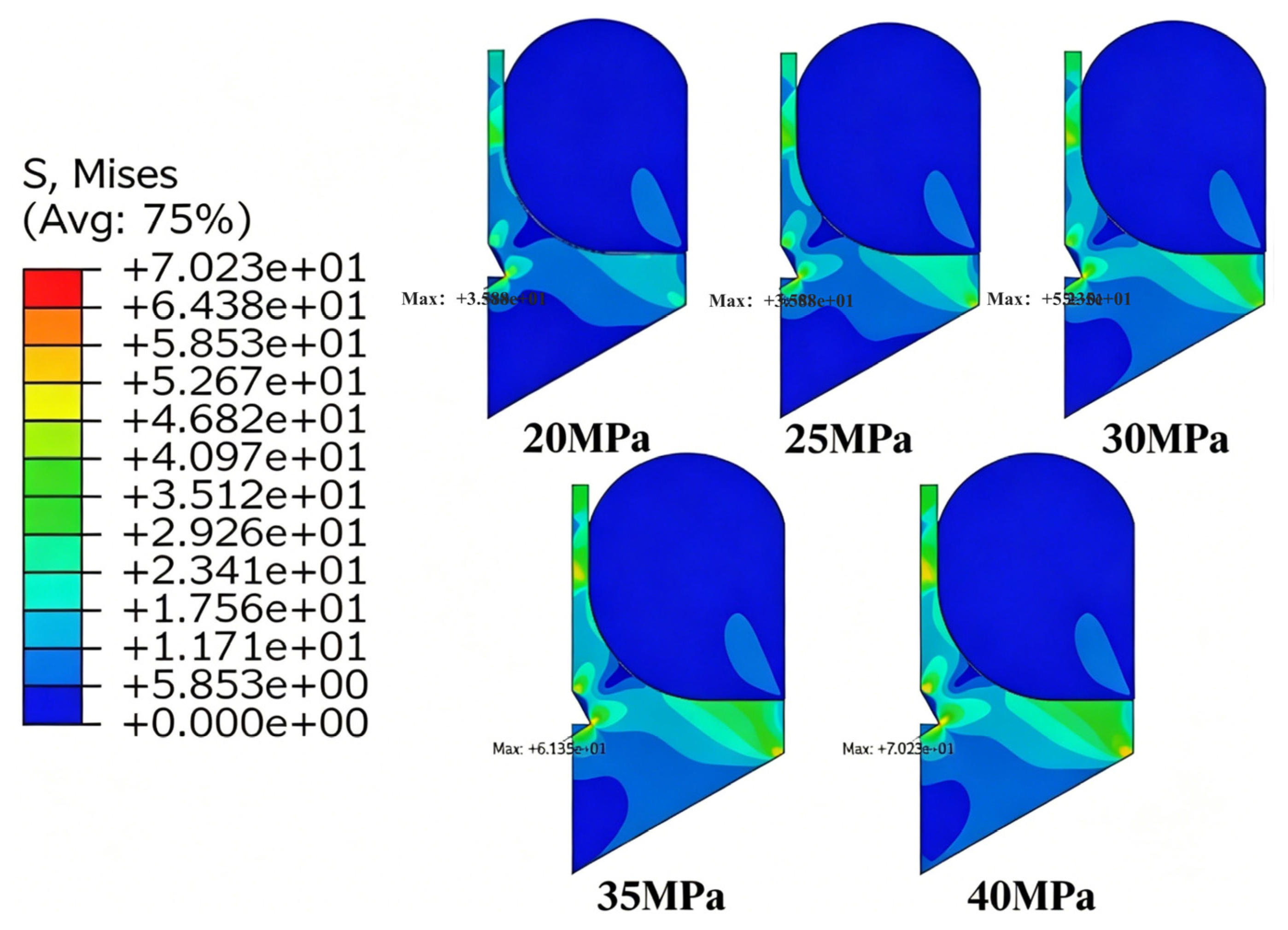
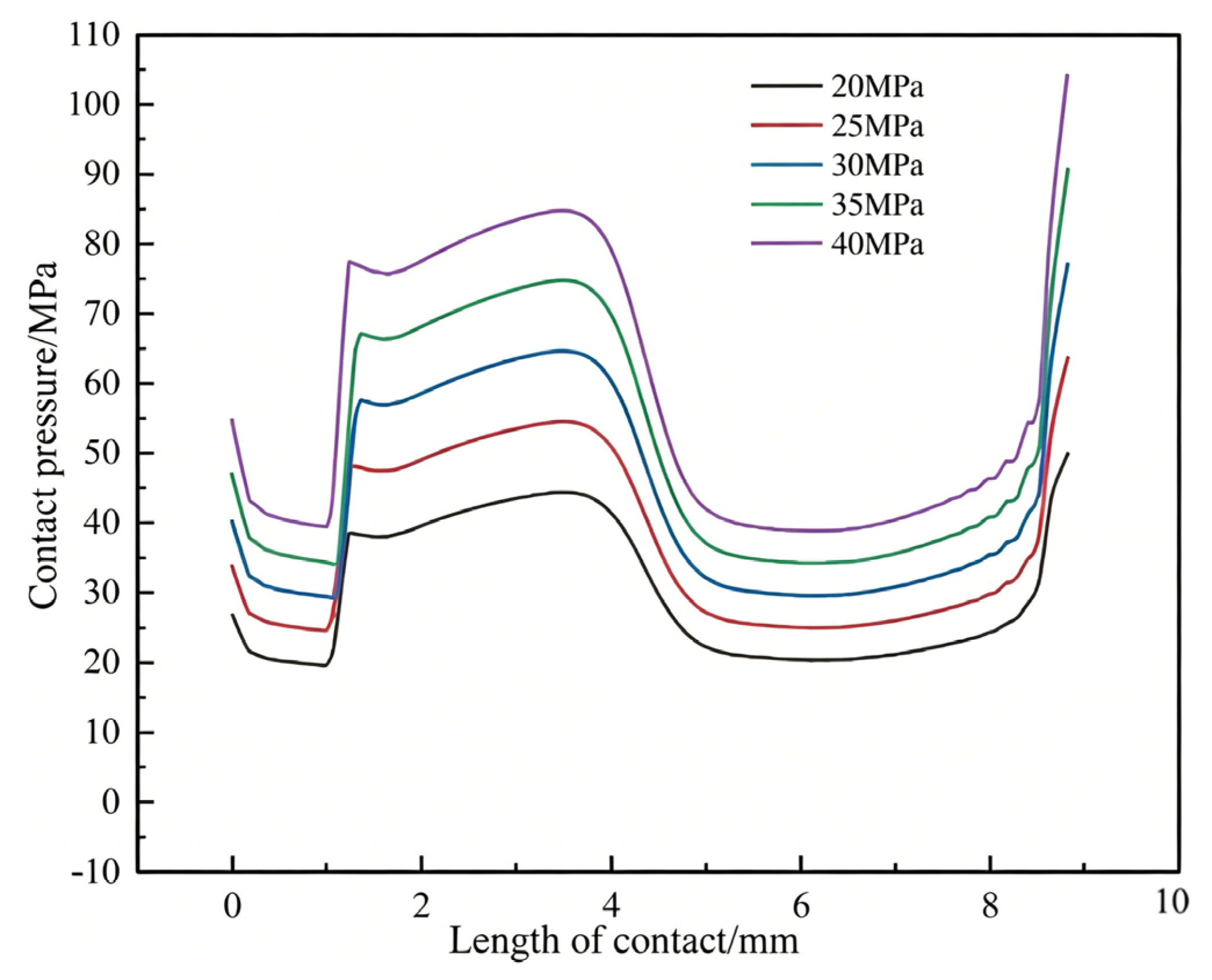
Figure 25 and Figure 26 show the effect of working pressure on the contact stress along the contact length on the main seal surface and the maximum Von Mises stress distribution of the seal for the foot slip ring combination seal operating in the static seal condition, respectively. From Figure 25, it can be seen that the overall trend of contact stress on the main sealing surface at different operating pressures is the same, but as the operating pressure increases, the maximum contact stress on the main sealing surface also increases. Due to the pre-compression of the O-ring and the oil pressure, the contact stress in the middle and upper part of the foot slip ring and the tail part are relatively large, and both are larger than their own working pressure, which can meet the requirements of sealing in high-pressure environment.
From Figure 26, it can be found that the maximum Von Mises stress occurs at the same location under different operating pressures, which indicates that damage is most likely to occur at the triangular slot of the slip ring under high-pressure environmental operating conditions.
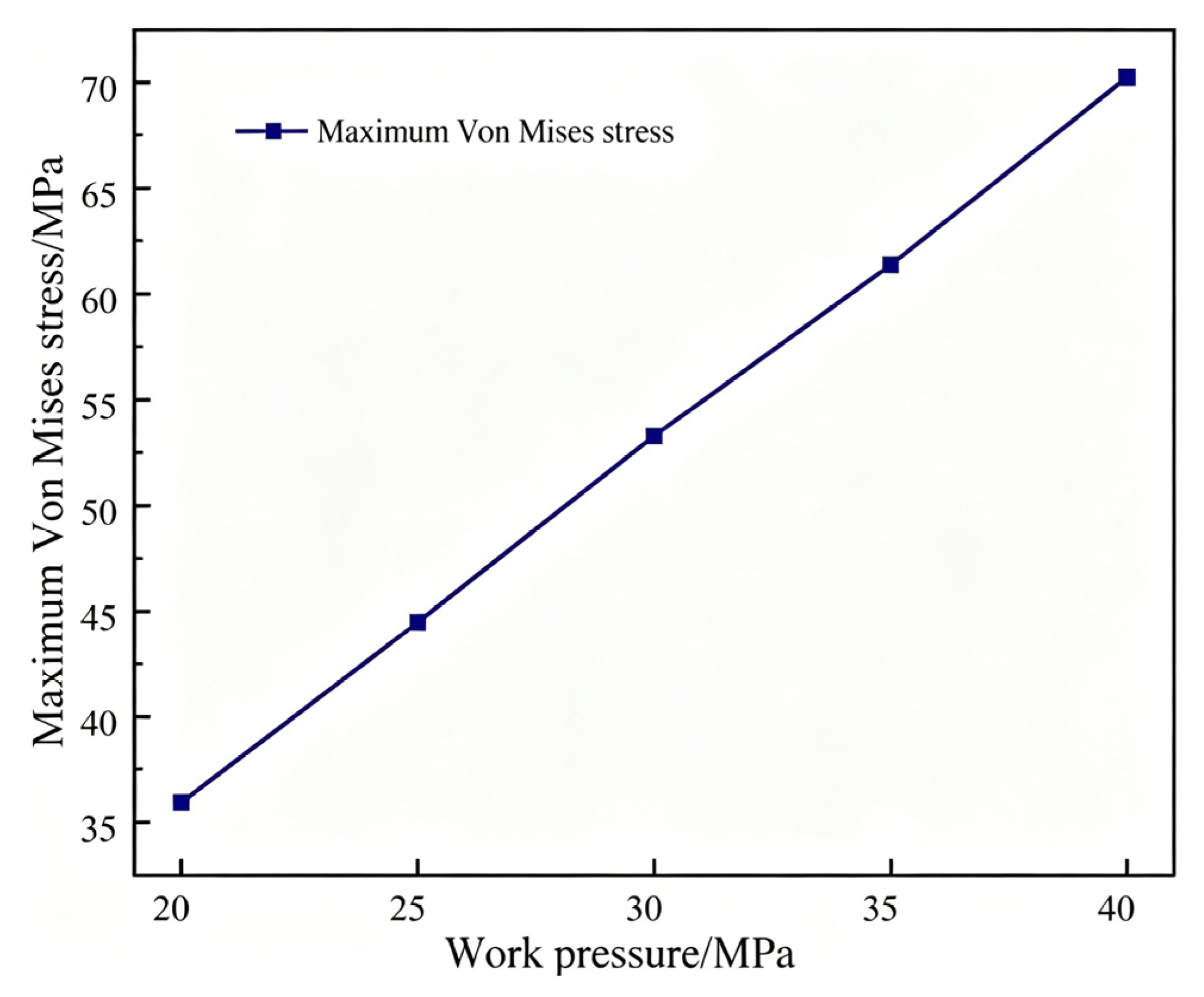
From Figure 27, it can be seen that the maximum Von Mises stress of the slip ring shows an obvious linear relationship with the working pressure, i.e., as the working pressure increases, the maximum Von Mises stress of the slip ring also increases. When the working pressure increases, the slip ring is subjected to an increase in both the squeezing pressure of the O-ring and the medium pressure, which results in the overall axial movement of the slip ring squeezed into the gap.
Summing up the above molecules, it can be found that the maximum Von Mises stress occurs at the same location under different operating pressures, which indicates that damage is most likely to occur at the triangular slot of the slip ring under high-pressure environmental operating conditions.

4.2.2. Effect of Pre-Compression on Static Sealing Performance

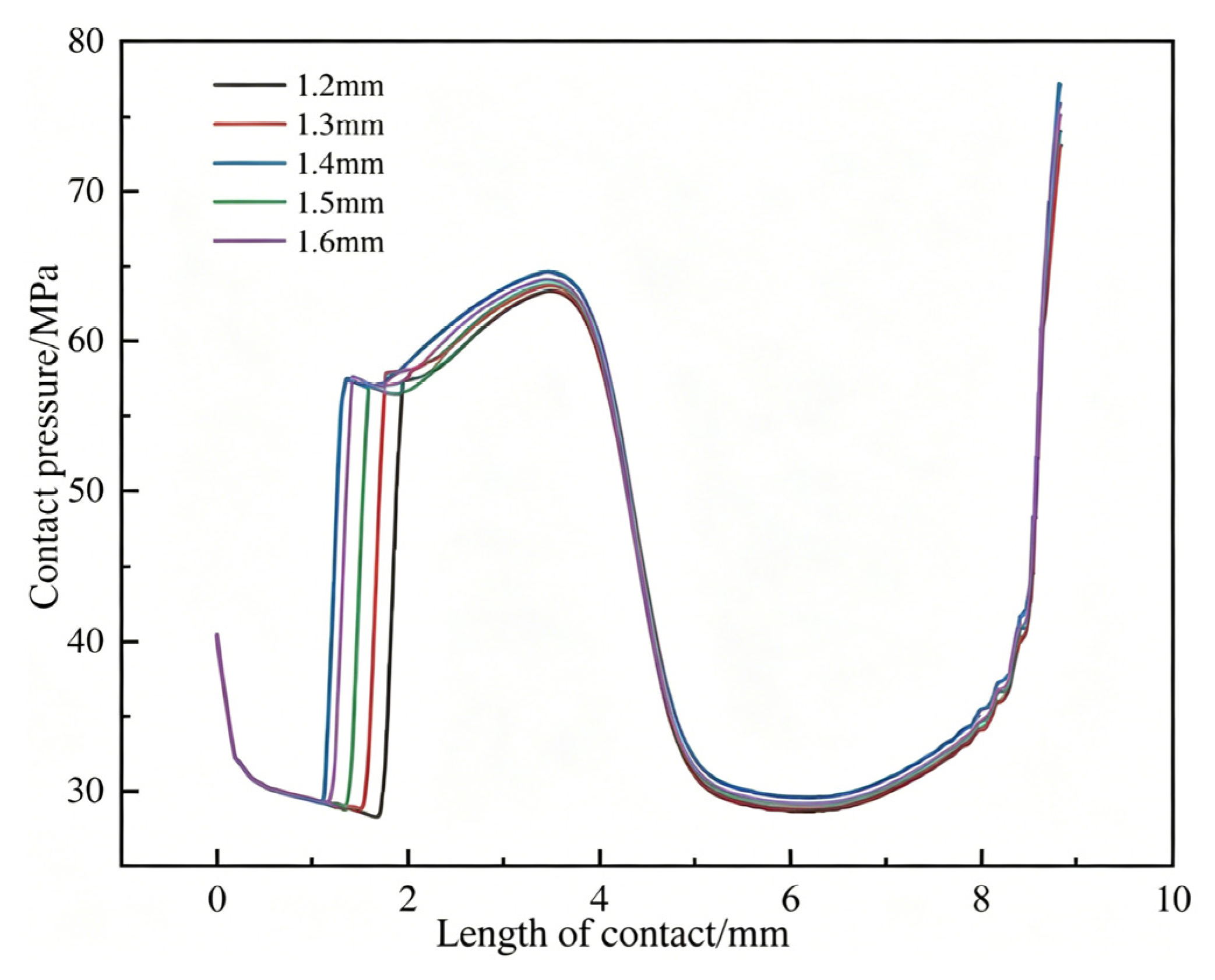
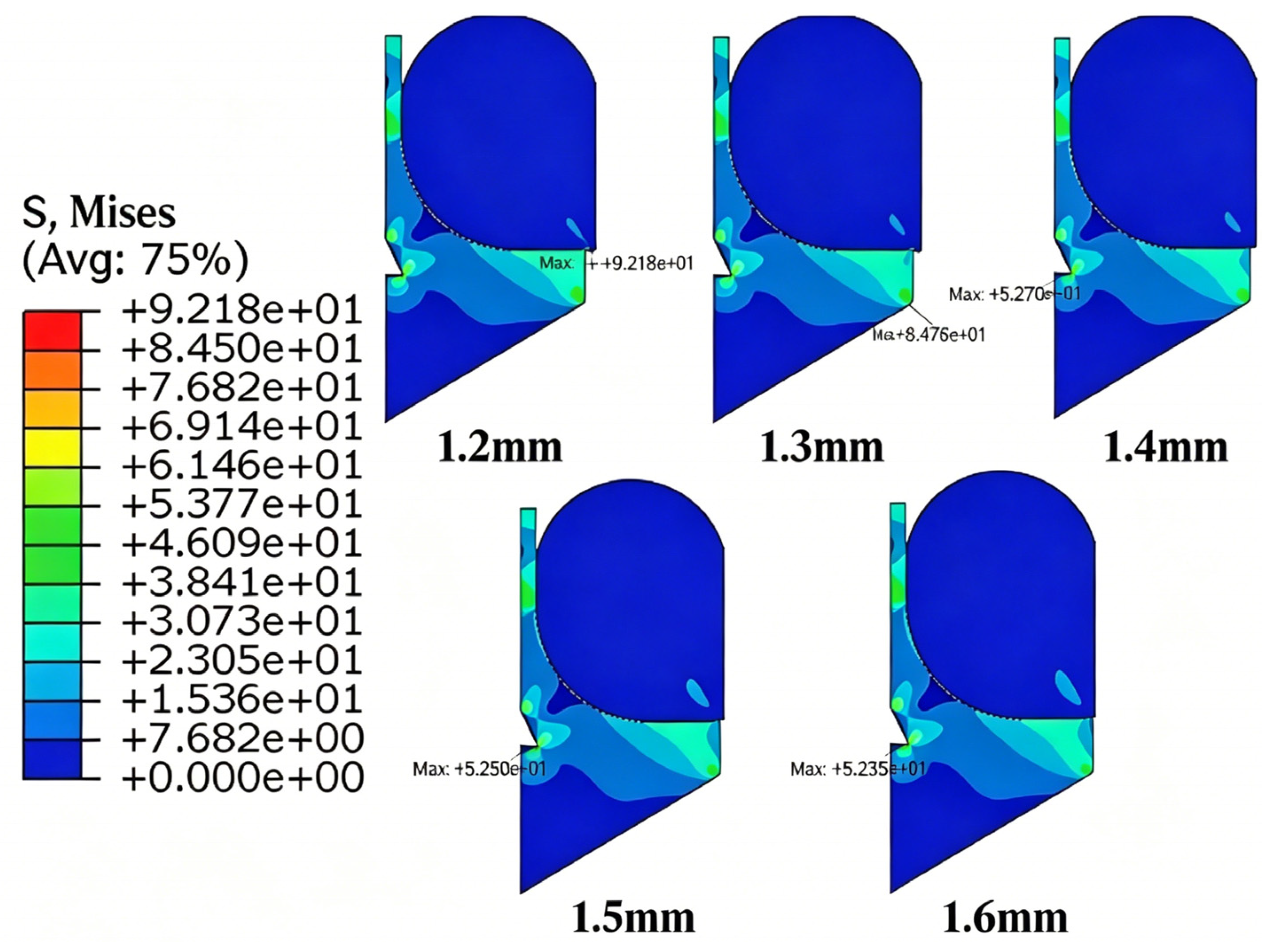
Figure 28, Figure 29 and Figure 30 show the effect of the pre-compression of the O-ring on the contact stress along the contact length on the main sealing surface and the maximum Von Mises stress distribution of the seal for the foot slip ring combination seal operating in the static sealing condition, respectively. As seen in Figure 29, the different O-ring pre-compressions have little effect on the contact stress distribution on the main sealing surface of the slip ring, and only partially affect the location where the contact stress first rises. Due to the different pre-compression of the O-ring, the contact area between the O-ring and the slip ring is not the same, and thus the location where the contact stress rises first is not the same. From Figure 28, it can be seen that when the compression amount is 1.2 mm and 1.3 mm, the O-ring may be extruded under the action of medium pressure and lead to stress concentration in the slip ring, so the pre-compression amount should be controlled within 1.4 mm~1.6 mm as much as possible in the actual use process to avoid the situation of stress concentration due to the extrusion of O-ring and thus increase its life.

4.3. Dynamic Seal Performance Analysis

4.3.1. Contact Stress on the Main Sealing Surface

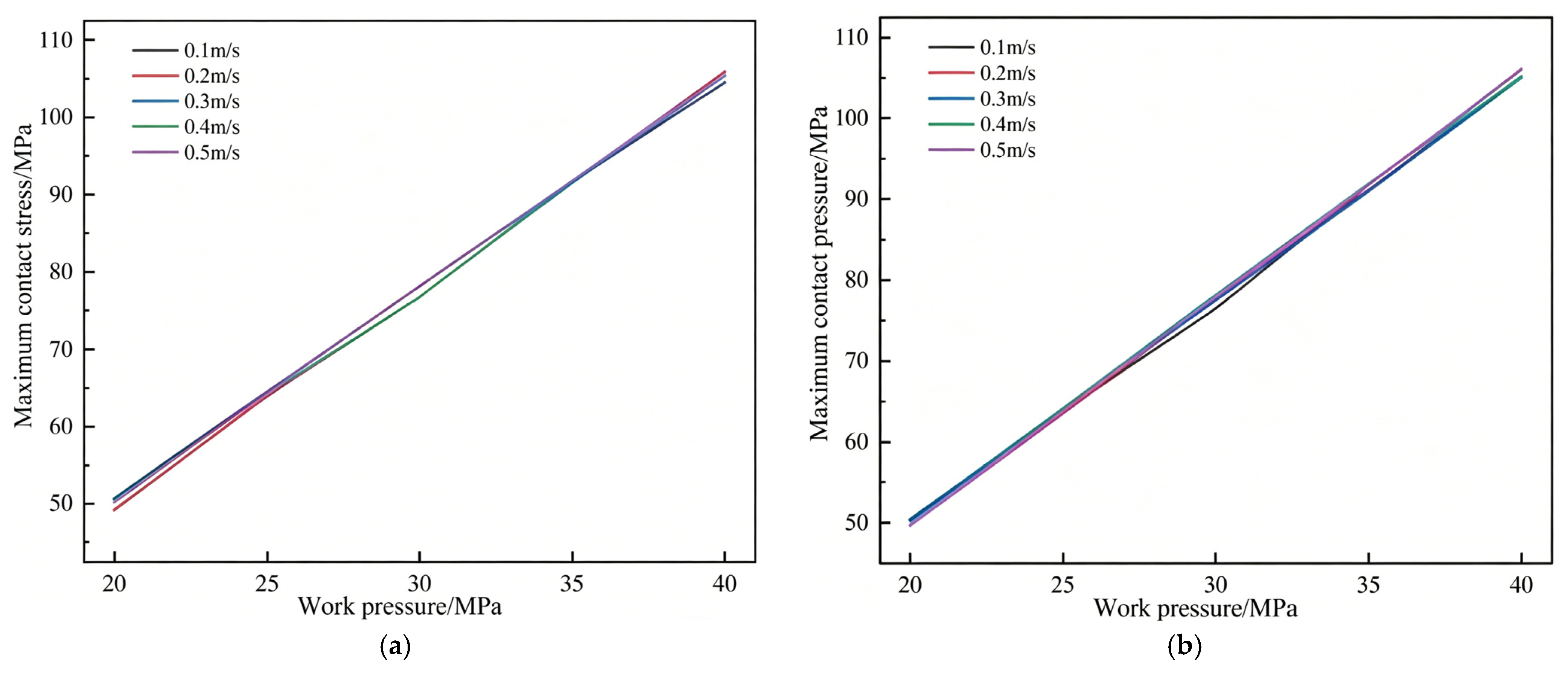
As seen in Figure 31 and Figure 32, their minimum contact stress is greater than the corresponding working pressure at either working pressure as well as the pre-compression, so the foot-shaped slip ring can satisfy the sealing condition. From Figure 31a,b, it can be seen that the maximum contact stress on the main sealing surface grows basically linearly with the working pressure when the working pressure gradually increases from 20 MPa to 40 MPa at internal and external strokes, and the movement speed has basically no effect on the maximum contact stress, which may be caused by the low frictional property of PTFE material.
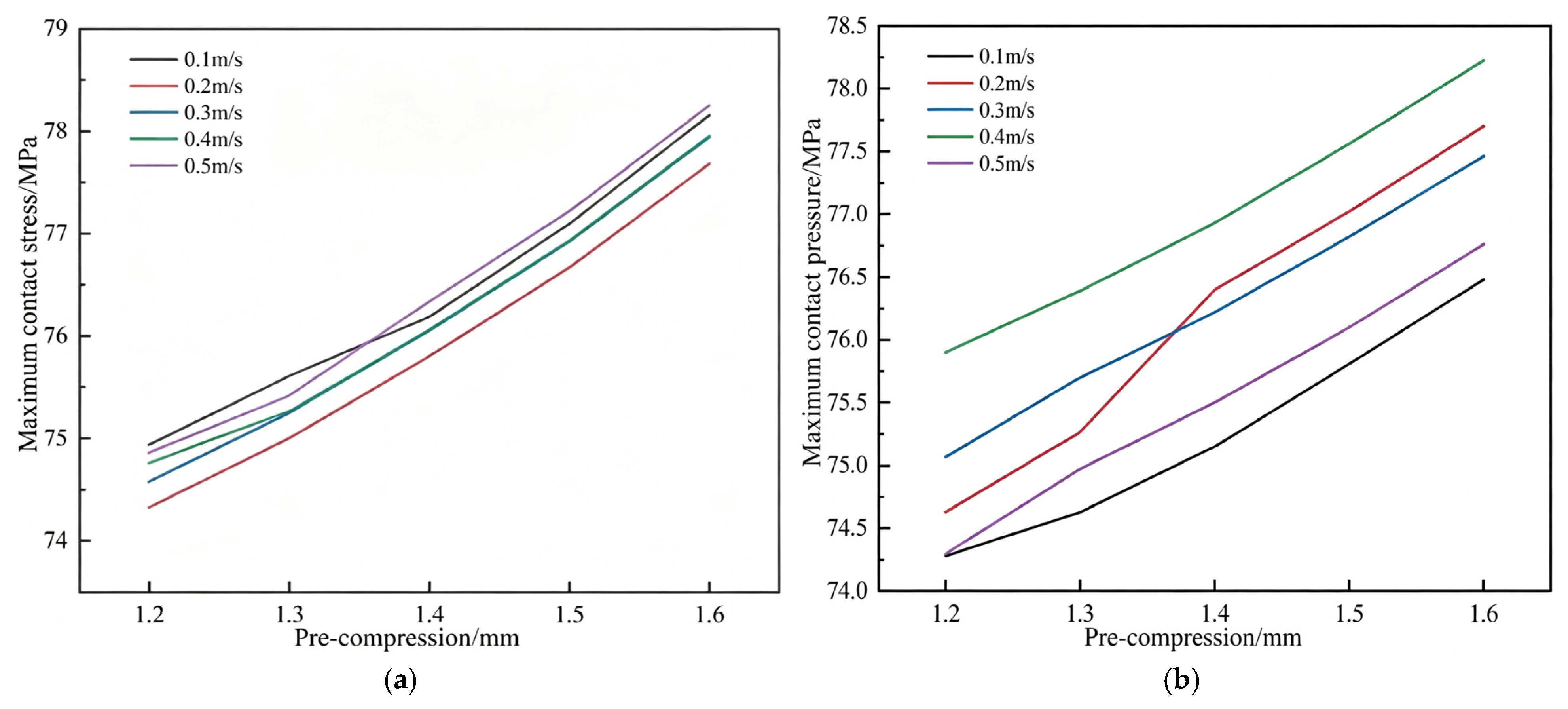
From Figure 32a,b, it can be seen that the maximum contact stress on the main sealing surface is positively related to the amount of pre-compression at internal and external strokes. For the internal stroke, when the movement speed is 0.3 m/s and 0.4 m/s and the pre-compression is greater than or equal to 1.3 mm, the contact stresses of both are basically equal. When the movement speed is 0.2 m/s and the inner stroke, the maximum contact stress on the main sealing surface is relatively low, and the maximum contact stress increases with the increase in pre-compression; when the outer stroke, the maximum contact stress of the slip ring fluctuates more sharply when the pre-compression is in the range of 1.3~1.4 mm. When the motion speed is 0.1 m/s and 0.5 m/s and the pre-compression is between 1.2 mm and 1.4 mm, the contact stress is maximum when the motion speed is 0.1 m/s, and when the pre-compression is more than 1.4 mm, the contact stress is maximum when the motion speed is 0.5 m/s. When the pre-compression is less than 1.4 mm in the outer stroke, the maximum contact stress on the main sealing surface fluctuates, which may be due to the stress concentration caused by the extruded part of the O-ring being extruded in the outer stroke with the sliding of the piston rod due to the small pre-compression. When the pre-compression is greater than 1.4 mm, the maximum contact stress on the main sealing surface increases linearly with the pre-compression, and the contact stress is maximum at a movement speed of 0.4 m/s and minimum at a movement speed of 0.1 m/s.

4.3.2. Maximum Von Mises Stress on the Main Sealing Surface

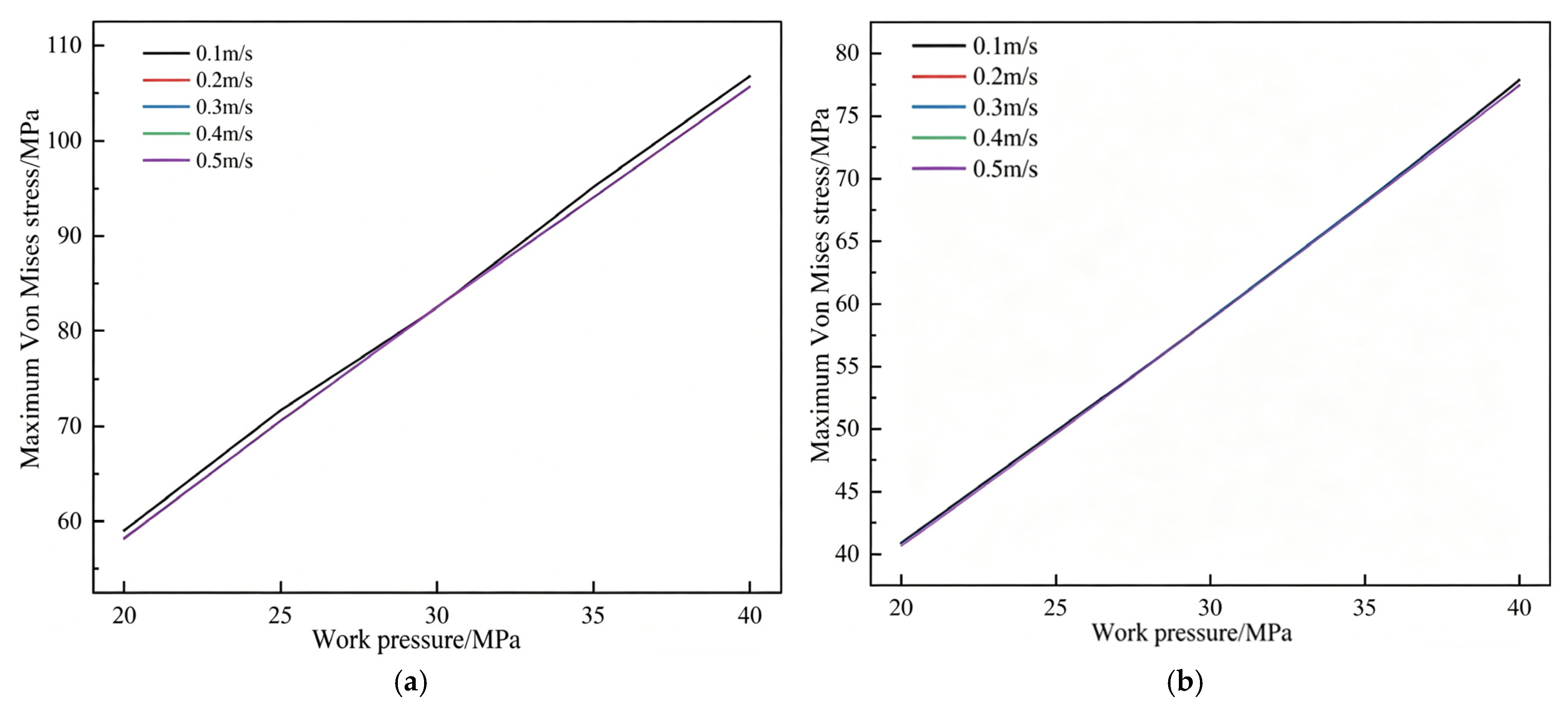
From Figure 33a,b, it can be seen that the maximum Von Mises stress of the foot-shaped slip ring seal increases linearly with the working pressure for both internal and external strokes, and the speed of motion has less effect on the maximum Von Mises stress. The maximum Von Mises stress at the outer stroke is smaller than that at the inner stroke because the volume of the external force on the bottom triangle of the slip ring decreases during the downward movement of the piston rod, and the squeezing force at the triangle groove increases, thus increasing the Von Mises stress. When the piston rod moves upward relative to the slip ring, the squeezed part of the slip ring is released and returns to its original state, and the maximum Von Mises stress is thus reduced.
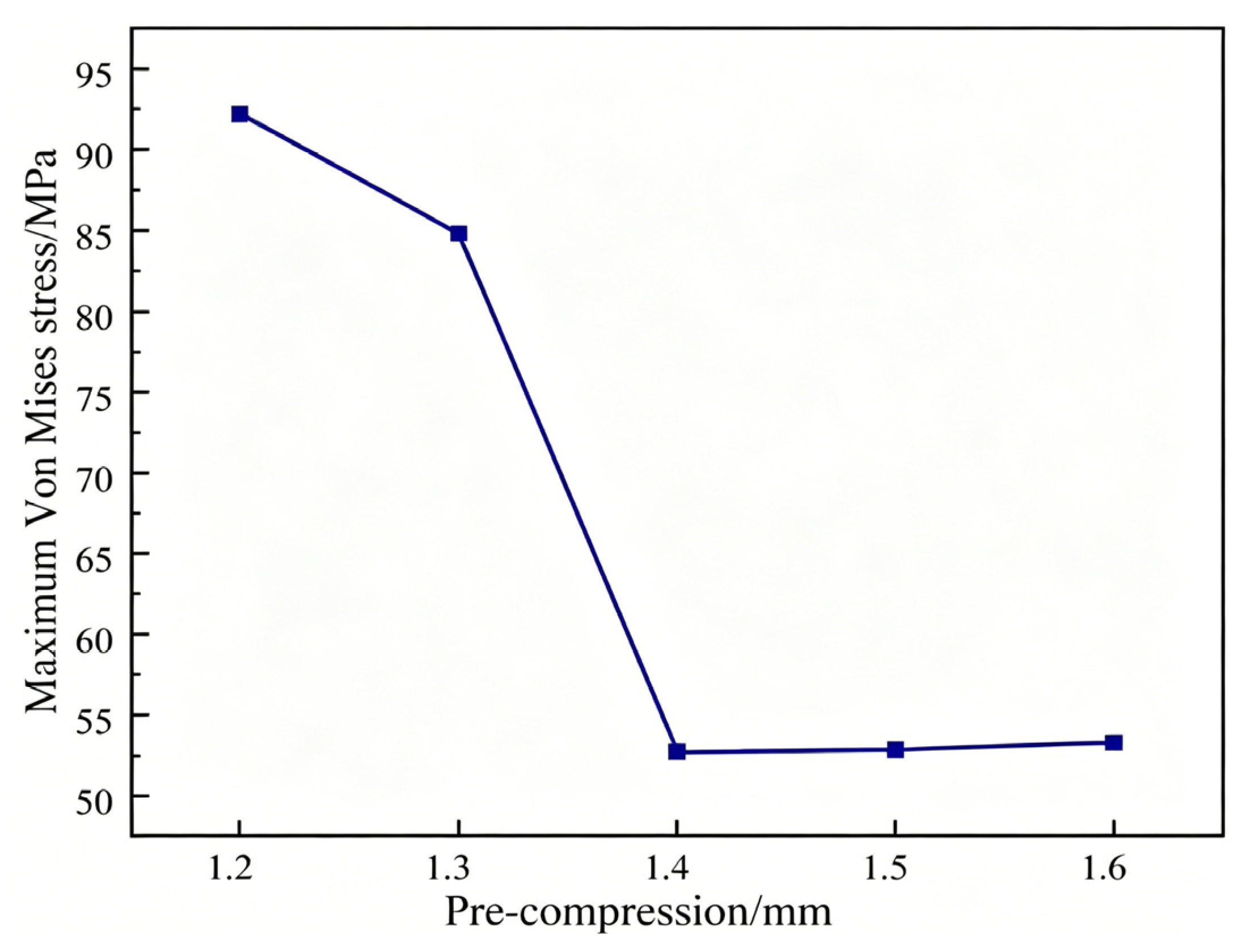
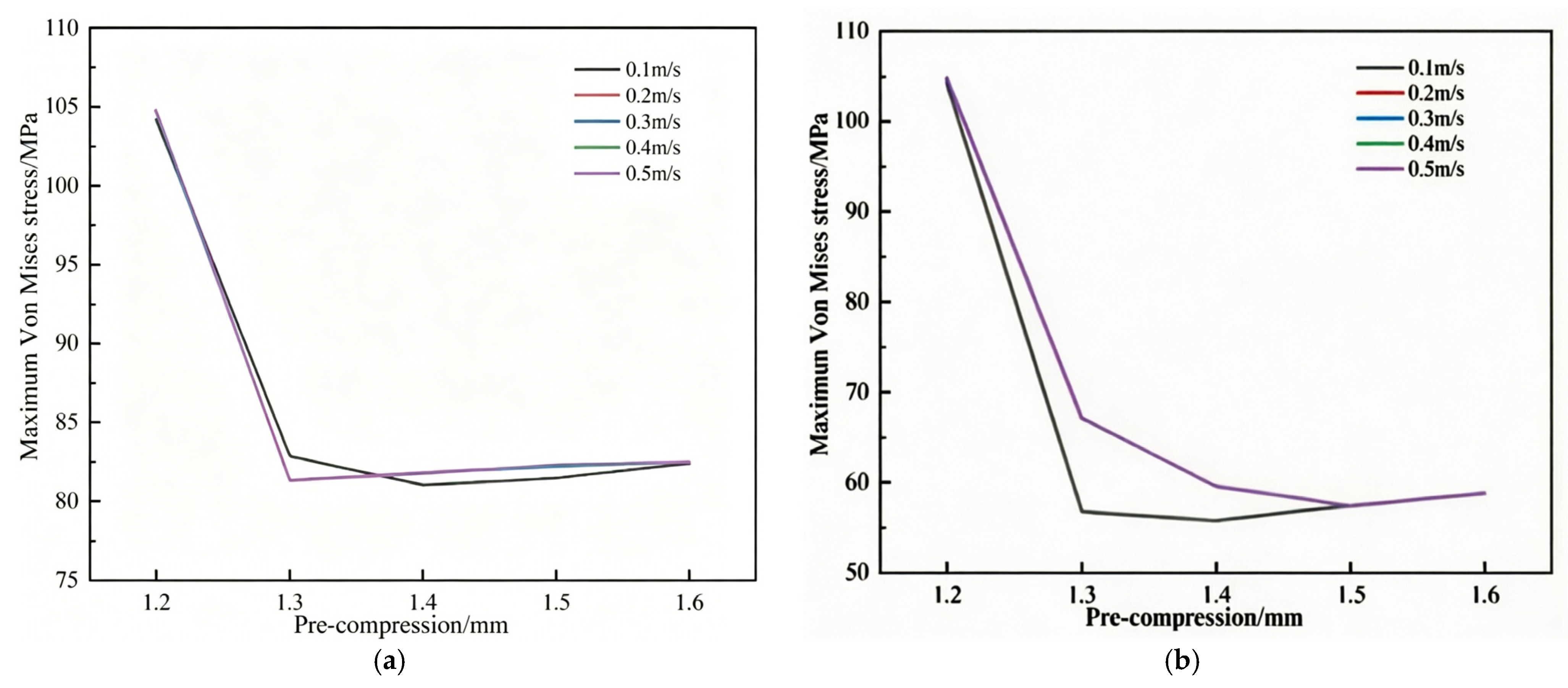
From Figure 34a,b, it can be seen that when the pre-compression of O-ring is increased from 1.2 mm to 1.3 mm, a sudden drop in the maximum Von Mises stress occurs. This is because when the pre-compression is 1.2 mm, the O-ring is extruded from the slip ring under medium pressure, resulting in stress concentration. In addition, it can be found that when the motion speed is greater than 0.1 m/s, the motion speed has basically no effect on the maximum Von Mises stress of the seal; when the motion speed is 0.1 m/s, the maximum Von Mises stress of the seal differs greatly compared with other speeds, especially obvious and low stress values at the outer stroke, which indicates that the foot-shaped slip ring seal is suitable for low-speed operation.

4.4. Validation of the Simulation Methodology

The conclusions of this study are primarily derived from finite element analysis, and direct physical experimental validation has not yet been conducted, which constitutes a limitation of the present work. Nevertheless, the simulation results are systematically supported by the existing literature at multiple levels. At the material parameter level, the PTFE elastic modulus and Poisson’s ratio adopted in this study are consistent with those used by Zhang et al. [17] and Li et al. [30] for similar combination seals, and the Mooney-Rivlin constants for the NBR O-ring have been experimentally calibrated in the independent studies of Wang et al. [39]. At the loading method level, the fluid pressure penetration technique has been independently verified by Chen et al. [34]. At the modeling strategy level, the two-dimensional axisymmetric model, the rigid body assumption, and the contact pair configuration are all consistent with those employed in similar studies [17,22]. At the physical trend level, the effect of slip ring thickness on contact stress revealed by the present simulation agrees with the findings of Zhang et al. [33]; the influence of pre-compression on sealing performance is consistent with the results of Deng et al. [22]; the minimal effect of reciprocating speed is corroborated by the documented low-friction characteristics of PTFE [1]; and the optimization direction is logically consistent with the conclusions of Zhao et al. [31] on the influence of angle parameters and the successful application of genetic algorithms to seal structure optimization reported by Ren et al. [21].
The above comparisons demonstrate that the material models, boundary conditions, and solution strategies adopted in this study have been validated in previous independent investigations, and the reliability of the simulation results enjoys indirect but systematic literature support. On this basis, the optimized parameters and design recommendations obtained in this study can provide guidance for engineering practice, more comprehensive experimental validation will be carried out in future work.

5. Conclusions

(1)
Existing studies on combination seals predominantly focus on common types such as O-rings, toothed slip rings, and C-shaped/T-shaped slip rings, while systematic research specifically on foot-shaped slip ring seals is notably scarce, and the relationship between their geometric parameters and sealing performance has long remained unrevealed. This study reveals that slip ring thickness has the greatest impact on the sealing performance, as the slip ring thickness increases, the contact stress on the main sealing surface gradually decreases, and when the slip ring thickness of 1.4 mm will lead to O-ring in the media pressure is extruded slip ring, resulting in stress concentration.
(2)
This study employs the Multi-Island Genetic Algorithm for global optimization, overcoming the limitations of traditional single-factor trial-and-error methods or local gradient-based algorithms, and providing a data-driven optimization paradigm for the inverse design of sealing structures. Using Isight 2023 optimization software and ABAQUS 2022 finite element analysis software for joint simulation, the foot-shaped slip ring size is optimally solved by multi-island genetic algorithm with the maximum contact stress as the objective function, and a set of optimal design parameters is obtained, which minimizes the contact stress on the main sealing surface, reduces the wear at the sealing surface of the slip ring and improves the service life of the slip ring.
(3)
This study not only obtains an optimal combination of geometric parameters that reduces the maximum contact stress by 30.7% and the Von Mises stress of the slip ring by 33.8%, but also reveals, for the first time, the influence of different reciprocating speeds, pre-compression amounts, and working pressures on the sealing performance of the optimized structure. Static and dynamic seal work, the maximum contact stress on the main sealing surface of the foot-shaped slip ring are greater than the corresponding working pressure to meet the sealing conditions; static seal working condition, the foot-shaped slip ring high stress area mainly occurs at the bottom triangle groove, but when the pre-compression amount is small, the high stress area is mainly for the right end of the slip ring at the upper and lower lip, it is recommended that the pre-compression amount is controlled between 1.4~1.6 mm. It is recommended to control the pre-compression amount between 1.4~1.6 mm to avoid the damage of slip ring caused by stress concentration. In the reciprocating seal state, different movement speeds have basically no effect on the maximum Von Mises stress and the maximum contact on the main sealing surface of the combination seal under different working pressures 0.1~0.2 m/s.

Author Contributions

Conceptualization, Writing—original draft, X.Z.; Resources, Validation, D.C.; Formal analysis, Investigation, Z.Z.; Data curation; Z.J., Visualization, P.C.; Methodology, Supervision, G.W.; Funding acquisition, Writing—review and editing, G.H. All authors have read and agreed to the published version of the manuscript.

Funding

The research is supported by Sichuan Science and Technology Program (No. 2024NSFSC2009).

Data Availability Statement

The original contributions presented in this study are included in the article. Further inquiries can be directed to the corresponding author.

Conflicts of Interest

Authors Xuesong Zhang, Defei Chen, Zhida Zhang, PengCao, and Zihan Jin was employed by the company CNPC, Tarim Oilfield Company. The remaining authors declare that the research was conducted in the absence of any commercial or financial relationships that could be construed as a potential conflict of interest.

References

  1. Li, G.Y.; Ye, S.J.; Wang, P.J. Properties of polytetrafluoroethylene under reciprocating sealing condition. Eng. Plast. Appl. 2020, 48, 108–112. [Google Scholar] [CrossRef]
  2. Chen, S.H. A New Seal in Rotating Shaft-Tooth and Sliding Ring Combined Seal. Mech. Eng. 2000, 8, 19–21. [Google Scholar]
  3. Chen, S.T. The Development and Application of Super-high Pressure Combined Seals. Chin. Hydraul. Pneum. 2002, 11, 47–48. [Google Scholar]
  4. Qiao, L.; Keller, C.; Zencker, U.; Völzke, H. Three-dimensional finite element analysis of O-ring metal seals considering varying material properties and different seal diameters. Int. J. Press. Vessel. Pip. 2019, 176, 103953. [Google Scholar] [CrossRef]
  5. Jia, X.; Guo, F.; Huang, L.; Wang, L.; Gao, Z.; Wang, Y. Effects of the radial force on the static contact properties and sealing performance of a radial lip seal. Sci. China Technol. Sci. 2014, 57, 1175–1182. [Google Scholar] [CrossRef]
  6. Su, H. Performance and Parameter Sensitivity Analysis of Finger Seal with Radial Clearance; Springer: Singapore, 2019; pp. 570–591. [Google Scholar]
  7. Jiang, Y.; Suo, S.F. Comprehensive performance optimal design of metallic W-ring under working conditions. Lubr. Eng. 2019, 44, 76–80. [Google Scholar] [CrossRef]
  8. Haosu, Z.; Zheng, G.; Fei, H. Simulation of O-Sealing Ring in Deep Sea Instrument Cabin. In Proceedings of the 2010 International Conference on Electrical and Control Engineering, Wuhan, China, 25–27 June 2010; pp. 3017–3020. [Google Scholar]
  9. Meng, L.-H.; Shao, J.; Bian, Z.; Huang, S. Finite Element Analysis and Test Verification of T-groove Seal Structure; IEEE: New York, NY, USA, 2019; pp. 996–1001. [Google Scholar]
  10. Tian, X.; Wang, S.; Zhang, C. Performance Degradation of Hydraulic Cylinder Reciprocating Seals; IEEE: New York, NY, USA, 2018; pp. 2117–2122. [Google Scholar]
  11. Zhang, S.; Deng, S.; Zhang, W.; Kang, N. Simulation and experiment on sealing mechanism with rigid-flexible combined seal groove in hub bearing. Tribol. Int. 2019, 136, 385–394. [Google Scholar] [CrossRef]
  12. Liu, T.; Li, X.; Liu, S.; Tian, Y.; Long, J.; Xu, C.; Sun, K. Analysis of Wedge-Shaped Contact Seal in Deep-Sea Sampler. In Proceedings of the OCEANS 2019, Marseille, France, 17–20 June 2019; IEEE: New York, NY, USA, 2019. [Google Scholar] [CrossRef]
  13. Yu, J.Y.; Gao, J.Y.; Lin, W.; Wang, C.G.; Wu, Y.Y.; Xu, J.M. Experimental Study and Finite Element Analysis of the Performance of Reciprocating Seal in Rapping Device of Gasifier. Appl. Mech. Mater. 2010, 42, 48–53. [Google Scholar] [CrossRef]
  14. Chen, J.W.; Li, B.J.; Yang, J.Y.; Zheng, M.H. Friction torque calculation of tooth shape combined slip ring. Ocean. Eng. 2018, 36, 91–98+113. [Google Scholar] [CrossRef]
  15. Zhou, C.; Chen, G.; Liu, P. Finite Element Analysis of Sealing Performance of Rubber D-Ring Seal in High-Pressure Hydrogen Storage Vessel. J. Fail. Anal. Prev. 2018, 18, 846–855. [Google Scholar] [CrossRef]
  16. Han, C.; Hu, Y.; Zhang, J.; Zhang, H.; Xie, J. Mechanical Properties Analysis and Structure Improvement of Tooth and Sliding Ring Combined Seals. Lubr. Eng. 2018, 43, 86–92. [Google Scholar]
  17. Zhang, J.C.; Wang, M.Q.; Li, H.F. The Finite Element Analysis of Tooth and Sliding Ring Combined Seal. Lubr. Eng. 2011, 36, 59–62+88. [Google Scholar] [CrossRef]
  18. Zhao, L.; Liao, Y.; Lian, Z. Sealing Performance of T-sliding Ring Combined Seals. Lubr. Eng. 2019, 44, 27–32+39. [Google Scholar]
  19. Mao, J.; Wang, W.; Liu, Y. Experimental and theoretical investigation on the sealing performance of the combined seals for reciprocating rod. J. Mech. Sci. Technol. 2012, 26, 1765–1772. [Google Scholar] [CrossRef]
  20. Jiang, H. Fault Analysis and Structure Optimization of End Face Seal of Hydraulic Oscillator; Springer: Singapore, 2019; pp. 267–273. [Google Scholar]
  21. Ren, J.; Zhu, H.; Wang, H.; Zhao, C.; Zhong, J. Multi-objective Structural Optimization of VL Seal Ring Based on Isight. J. Phys. Conf. Ser. 2020, 1622, 12031. [Google Scholar] [CrossRef]
  22. Deng, Y.X.; Wang, Z.L. Sealing Performance and Structural Improvement of Tooth Slip Ring Sealing Ring. Hydraul. Pneum. Seals 2022, 42, 100–106. [Google Scholar] [CrossRef]
  23. Zhang, Y.; Lou, Z.; Wei, L.H.W. Hybrid lubrication model study of slip ring combination seal under the influence of frictional heat. J. Eng. Tribol. 2024, 238, 426–449. [Google Scholar] [CrossRef]
  24. Hao, Y.; Peng, J.; Zhang, Z.; Yang, L.; Gao, C.; Zhou, F.; Wang, G. Analyzing the aging profile of serviced GIS O-ring seals under 30-year long-term field aging condition. Eng. Fail. Anal. 2022, 137, 106288. [Google Scholar] [CrossRef]
  25. Zhu, J.; Li, X.; Beamish, S.; Dwyer-Joyce, R.S. An ultrasonic method for measurement of oil films in reciprocating rubber O-ring seals. Tribol. Int. 2022, 167, 107407. [Google Scholar] [CrossRef]
  26. Yang, M.; Xia, Y.M.; Ren, Y.; Zhang, B.W.; Wang, Y. Design of O-ring with skeleton seal of cutter changing robot storage tank gate for large diameter shield machine. Tribol. Int. 2023, 185, 108591. [Google Scholar] [CrossRef]
  27. Liu, D.; Yun, F.; Jiao, K.; Wang, L.; Yan, Z.; Jia, P.; Wang, X.; Liu, W.; Hao, X.; Xu, X. Structural Analysis and Experimental Study on the Spherical Seal of a Subsea Connector Based on a Non-Standard O-Ring Seal. J. Mar. Sci. Eng. 2022, 10, 404. [Google Scholar] [CrossRef]
  28. Yang, Y.Y. Study on Mechanical Properties of O-type Metal Rubber Seal with Large Ring-to-Diameter Ratio. Master’s Thesis, Fuzhou University, Fuzhou, China, 2020. [Google Scholar] [CrossRef]
  29. Kim, G.H.; Her, N.I.; Kim, H.T. A design study on metal C-ring seals. Vacuum 2022, 205, 111401. [Google Scholar] [CrossRef]
  30. Li, Z. Study on the sealing performance of O-ring under high-pressure environment. J. Phys. Conf. Ser. 2023, 2419, 012005. [Google Scholar] [CrossRef]
  31. Zhao, M.; Zhang, X.; Zhu, P.; Fu, L. Influence of groove angle on O-ring reciprocating sealing performance under ultra-high pressure conditions. Eng. Res. Express 2025, 7, 0455c3. [Google Scholar] [CrossRef]
  32. Wang, J.R.; Yan, X.L.; Chang, K. Performance analysis of combination seal considering wear. Chin. Hydraul. Pneum. 2022, 46, 173–180. [Google Scholar]
  33. Zhang, F.Y.; Sun, Y.J.; Jiang, X.M. Optimization of the Structure and Operating Parameters of Rectangular Coaxially Combined Seal. J. Tianjin Univ. Sci. Technol. 2016, 31, 60–64. [Google Scholar] [CrossRef]
  34. Chen, C.; Qian, G.; Xu, X.; Ou, R.; Yuan, P. Simulation study on sealing performance of O-ring seals based on ABAQUS fluid pressure penetration. Hydraul. Pneum. Seals 2021, 41, 86–90. [Google Scholar]
  35. Wang, J.C.; Yuan, H.; Zhang, J.Y. Optimization research on piston combination seal ring based on ANSYS Workbench. Hydraul. Pneum. Seals 2023, 43, 58–64. [Google Scholar]
  36. Wang, X.J.; Chu, X.Y.; Yuan, S.M. Structure design and sealing performance analysis for new combined seal. Chin. Hydraul. Pneum. 2026, 50, 22–27. [Google Scholar]
  37. Zhou, C.; Chen, G.; Xiao, S.; Hua, Z.; Gu, C. Study on fretting behavior of rubber O-ring seal in high-pressure gaseous hydrogen. Int. J. Hydrog. Energy 2019, 44, 22569–22575. [Google Scholar] [CrossRef]
  38. Mooney, M. A Theory of Large Elastic Deformation. J. Appl. Phys. 1940, 11, 582–592. [Google Scholar] [CrossRef]
  39. Wang, G.R.; Hu, G.; He, X.; Dong, S.W.; Chen, B.K. Sealing Performance Analysis of Y-ring Used on Reciprocating Seal Shaft. Mach. Des. Res. 2014, 30, 37–42+46. [Google Scholar] [CrossRef]
  40. Zhou, Z.; Zhang, K.; Li, J.; Xu, T. Finite Element Analysis of Stress and Contact Pressure on the Rubber Sealing O-ring. Lubr. Eng. 2006, 31, 86–89. [Google Scholar] [CrossRef]
  41. Han, C.-J.; Zhang, J. Finite Element Analysis and Optimization of Rectangle Rubber Seal. China Rubber Ind. 2013, 60, 98–103. [Google Scholar]
  42. Du, X.; Chen, G.; Yan, X.; Zhao, Y. Optimization Design of Step Seal-ring Based on ISIGHT Platform. Chin. Hydraul. Pneum. 2017, 14–19. [Google Scholar]
  43. Sun, W.; Cao, W.; Gu, Y. Research on Antenna Cabin Structure Optimization Based on Response Surface and Multi-island Genetic Algorithm. IOP Conf. Ser. Mater. Sci. Eng. 2019, 575, 012018. [Google Scholar] [CrossRef]
  44. Sun, W.; Niu, F.; Wang, X.Y.; Zeng, F.M. Optimization design of sealed-module structure based on isight platform. J. Mech. Strength 2016, 38, 414–418. [Google Scholar] [CrossRef]
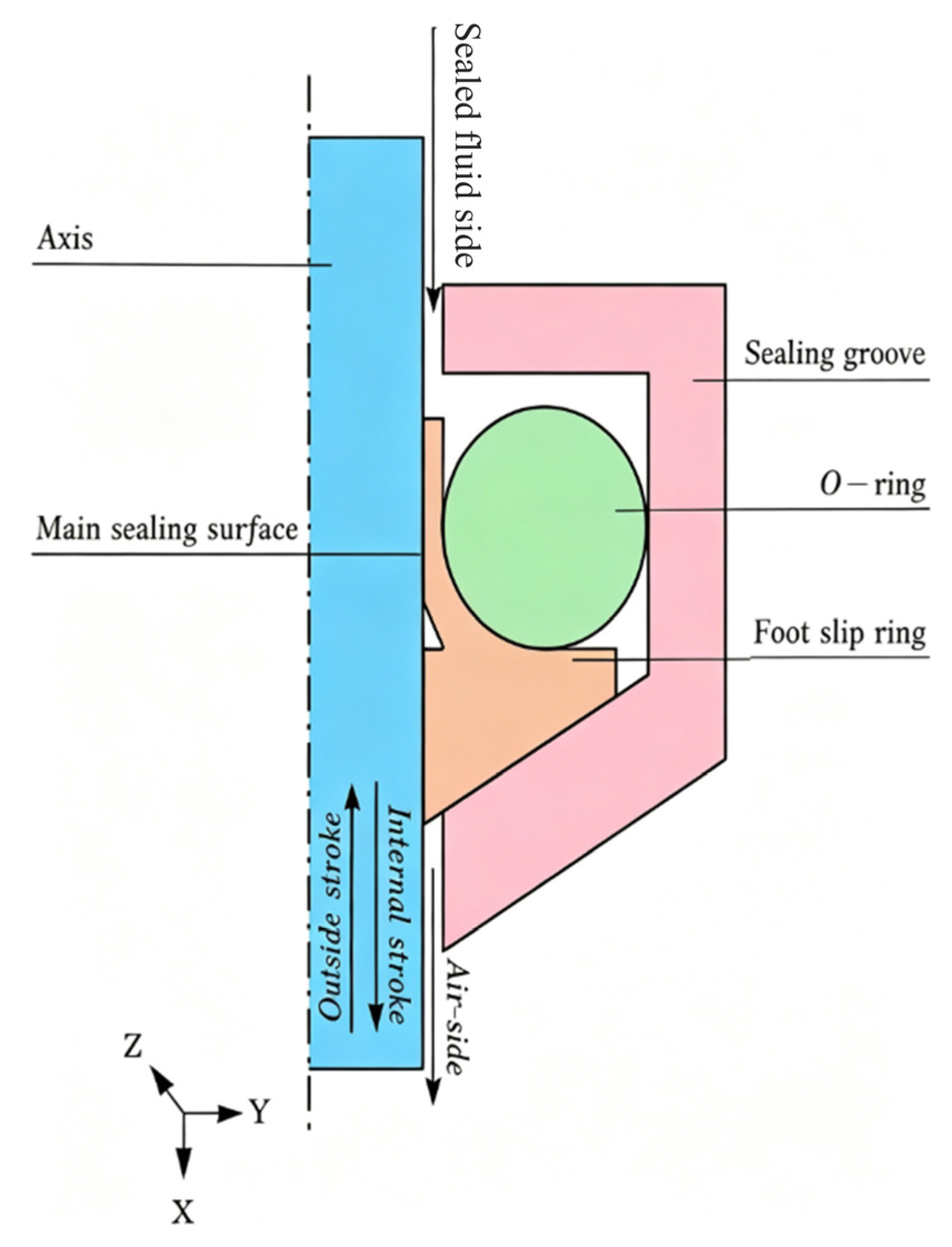
Figure 1. Foot slip ring sealing ring.
Processes 14 01936 g001
Figure 2. Foot slip ring sealing ring section.
Processes 14 01936 g002
Figure 3. Pressure penetration.
Processes 14 01936 g003
Figure 4. Fluid pressure permeation simulation loading.
Processes 14 01936 g004
Figure 5. Different mesh number models.
Processes 14 01936 g005
Figure 6. Von Mises stress nephogram of different mesh models at 30 MPa fluid pressure.
Processes 14 01936 g006
Figure 7. Contact pressure of main sealing surface under different mesh number.
Processes 14 01936 g007
Figure 8. Von Mises stress distribution of slip ring and O-ring with different slip ring thickness. (a) slip ring. (b) O-ring.
Processes 14 01936 g008
Figure 9. Contact stress distribution on the main sealing surface under two working conditions. (a) under precompression. (b) under medium pressure.
Processes 14 01936 g009
Figure 10. Maximum contact stress and maximum Von Mises stress at different slip ring thicknesses.
Processes 14 01936 g010
Figure 11. Maximum Von Mises stress distribution of slip ring and O-ring at different angles. (a) slip ring. (b) O-ring.
Processes 14 01936 g011
Figure 12. Contact stress distribution on the main sealing surface under two working conditions. (a) under precompression. (b) under medium pressure.
Processes 14 01936 g012
Figure 13. Maximum Von Mises stress distribution of slip ring and O-ring at different angles.
Processes 14 01936 g013
Figure 14. Maximum Von Mises stress distribution of slip ring and O-ring at different distances. (a) slip ring. (b) O-ring.
Processes 14 01936 g014
Figure 15. Contact stress distribution on the main sealing surface under two working conditions. (a) under precompression. (b) under medium pressure.
Processes 14 01936 g015
Figure 16. Maximum contact stress and maximum Von Mises stress at different distances.
Processes 14 01936 g016
Figure 17. Maximum Von Mises stress of slip ring and O-ring at different right-angle edge lengths. (a) slip ring. (b) O-ring.
Processes 14 01936 g017
Figure 18. Contact stress distribution on the main sealing surface under two working conditions. (a) under precompression. (b) under medium pressure.
Processes 14 01936 g018
Figure 19. Maximum contact stress and maximum Von Mises stress at different right-angle edge lengths.
Processes 14 01936 g019
Figure 20. Von Mises stress distribution of slip ring and O-ring with different upper plane lengths. (a) slip ring. (b) O-ring.
Processes 14 01936 g020
Figure 21. Distribution of contact stress along the contact length of the main sealing surface under two working conditions. (a) under precompression. (b) under medium pressure.
Processes 14 01936 g021
Figure 22. The upper end of the slip ring is warped.
Processes 14 01936 g022
Figure 23. Maximum contact stress and maximum Von Mises stress at different upper plane lengths.
Processes 14 01936 g023
Figure 24. Comparison of results before and after optimization. (a) Comparison of maximum contact pressure and Von Mises stress before and after optimization; (b) Distribution of contact stress along the contact path before and after optimization.
Processes 14 01936 g024
Figure 25. Maximum Von Mises stress distribution of seals under different working pressures.
Processes 14 01936 g025
Figure 26. Change trend of contact stress on main sealing surface under different working pressure.
Processes 14 01936 g026
Figure 27. Maximum Von Mises stress of combined seals under different working pressures.
Processes 14 01936 g027
Figure 28. Maximum Von Mises stress distribution of seals under different precompression rates.
Processes 14 01936 g028
Figure 29. Contact stress on the main sealing surface under different precompression amounts.
Processes 14 01936 g029
Figure 30. Maximum Von Mises stress of the combined seals at different precompression rates.
Processes 14 01936 g030
Figure 31. Maximum contact stress under different working pressures and moving speeds. (a) Internal stroke. (b) Outside stroke.
Processes 14 01936 g031
Figure 32. The maximum contact stress on the main sealing surface under different pre-compression and movement speed. (a) Internal stroke. (b) Outside stroke.
Processes 14 01936 g032
Figure 33. Maximum Von Mises stress under different working pressure and movement speed. (a) Internal stroke. (b) Outside stroke.
Processes 14 01936 g033
Figure 34. Maximum Von Mises stress under different pre-compression and movement speed. (a) Internal stroke. (b) Outside stroke.
Processes 14 01936 g034
Table 1. Foot slip ring size.
H0/mmH1/mmL0/mmL1/mmL2/mmα/°β/°R/mm
1.09.04.08.12.730605.0
Table 2. Comparison of structural parameters of slip rings before and after optimization.
NameH0/mmα/°L0/mmL1/mmL2/mm
Before optimization1.0304.08.12.7
After optimization0.7126.314.358.492.31
Table 3. Comparison of results before and after optimization.
NameMaximum Contact Pressures/MPaMaximum Von Mises Stress/MPa
Foot Slip RingFoot Slip RingO Ring
Before optimization108.562.849.896
After optimization75.2241.578.646
Disclaimer/Publisher’s Note: The statements, opinions and data contained in all publications are solely those of the individual author(s) and contributor(s) and not of MDPI and/or the editor(s). MDPI and/or the editor(s) disclaim responsibility for any injury to people or property resulting from any ideas, methods, instructions or products referred to in the content.