Article

Experimental Investigation on the Formation Mechanism of Liquid Bridges Between Wet Spherical Particles

School of Mechanical and Electrical Engineering, Guilin University of Electronic Technology, No. 1 Jinji Road, Guilin 541004, China
*
Author to whom correspondence should be addressed.
Processes 2026, 14(12), 1919; https://doi.org/10.3390/pr14121919 (registering DOI)
Submission received: 17 May 2026 / Revised: 8 June 2026 / Accepted: 9 June 2026 / Published: 12 June 2026
(This article belongs to the Special Issue Advances in Bed Reactors, Multiphase Flow, and CFD Simulation)

Abstract

Liquid bridge formation between wet granular governs a wide range of industrial processes. In experiments aimed at observing the volume and evolution of liquid bridges, the ability to form stable and uniform liquid films on particle surfaces is an essential prerequisite. However, existing experimental setups are incapable of maintaining such uniform coating, thereby precluding a complete characterization of the bridge evolution dynamics. To address this gap, a new experimental setup is developed in this work. Uniform liquid film coating on spherical particles is achieved for the first time. The formation process is captured by high-speed imaging, and the control variable method systematically quantifies the effects of liquid film thickness, distance between two particle surfaces, and particle radius ratio on the dimensionless liquid bridge volume. Quantitatively, increasing the dimensionless liquid film thickness by 0.01 raises the maximum dimensionless liquid bridge volume by 0.2; enlarging the dimensionless initial particle spacing from 0.067 to 0.133 and 0.200 reduces the maximum dimensionless liquid bridge volume by 3.0% and 4.9%, respectively; and a radius ratio of 6:4 lowers the maximum dimensionless liquid bridge volume by 10.9% compared to 6:6. The Reynolds number exhibits no discernible effect within the viscous-dominated regime investigated.

1. Introduction

Flows of highly saturated wet granular materials are widely encountered in engineering applications, particularly in the energy, pharmaceutical, and food industries [1,2,3]. The underlying liquid transport between particles is governed by viscous, capillary, evaporation, and condensation effects, making it extremely challenging to quantify and gain a comprehensive understanding of liquid bridge formation is essential for process control and optimization [4,5].
Research on liquid bridges dates back to Fisher, who first analyzed capillary forces in ideal soils [6,7]. Subsequent studies extended this to formation, rupture, stability, and capillary force calculation for unequal-sized particles [8,9,10]. With technological advances, liquid bridges have found applications in materials science, microfluidics, and biomedicine [11]. In engineering practice, liquid saturation varies with operating conditions, and liquid bridges sequentially exhibit pendular, funicular, capillary, and slurry morphologies [12]. Their formation is governed by the combined action of capillary and viscous forces; Rossetti and Simons proposed a capillary number-based criterion to assess their relative importance [13].
These theoretical works provide a framework for understanding liquid bridge mechanics, but their validity requires experimental verification. Researchers have designed experiments to observe formation, stretching, and rupture. For instance, Garcia-Gonzalez et al. identified fast and slow formation stages on viscous oil films [14]. Wang et al. examined gravity effects on liquid bridge geometry and post-rupture distribution [15]. Li et al. investigated liquid volume, separation, stretching velocity, and viscosity effects; Pu et al. measured forces and rupture distances for equal and unequal spheres [16]. Xiao et al. proposed a critical separation for the convex-to-concave transition [17] and Semprebon et al. revealed the bistability of pendular bridges among three particles [18], and Huang et al. experimentally examined rupture between a sphere and a concave surface [19].
Numerically, Wu et al. used the volume-of-fluid method to simulate dynamic transport, dividing the process into an initial rapid stage and a viscous filling stage [20,21]. Nguyen et al. developed a three-phase CFD–DEM model highlighting the role of wettability [22], and Wang et al. simulated funicular bridges and found that capillary force first increases then decreases with separation [23]. More recently, Chen et al. reported using VoF simulations that bridge volume decreases with increasing particle radius ratio [24], and Jia et al. identified two film thickness stages in droplet falling film evaporation, linking them to gravity-inertia-surface tension interplay [25].
Existing experimental studies mainly deal with liquid bridges formed by localized liquid in unsaturated systems. However, data for fully wetted, uniformly coated particles in high-saturation flows remain scarce. The ability to form a stable and uniform liquid film on particle surfaces is essential for quantitative and reproducible experimental studies of liquid bridge evolution. Without such uniformity, the nucleation position, growth rate, and rupture behavior of the bridge become sensitive to uncontrolled local variations, making it impossible to isolate the effects of key parameters such as film thickness, initial distance, or radius ratio. The present work addresses this gap with two novel contributions: (1) Conventional dip-coating suffers from a thickness gradient due to gravity, whereas static droplet deposition leads to localized non-uniformity from contact line pinning. To overcome these issues, the present setup employs motor-driven sphere rotation with pipette dispensing, aiming for a relatively uniform liquid film through the synergistic action of centrifugal, gravitational, and viscous forces; (2) systematic experiments are conducted to quantify the effects of liquid film thickness, initial inter-particle distance, and particle radius ratio on the dynamic evolution of dimensionless liquid bridge volume, revealing the governing mechanisms of growth rate and maximum achievable volume.
The structure of this paper is organized as follows: Section 2 describes the experimental apparatus, image processing techniques, and volume calculation method. Section 3 presents experimental results and discusses the effects of key parameters on liquid bridge volume evolution. Section 4 summarizes the main findings and conclusions.

2. Methodology and Setup

2.1. Scaling Analysis and Key Dimensionless Parameters

As shoown in Figure 1, we consider two spherical particles of radius R 1 and R 2 ( R 1     R 2 ) fixed in space, separated by an initial surface distance d . Each particle is coated with a uniform liquid film of thickness h . A liquid bridge forms when the liquid films contact. To generalize the results, key parameters are normalized using reference radius R r e f and reference time t r e f . The dimensionless parameters and reference scales are defined as:
R r e f = 2 R 1 R 2 R 1 + R 2
t r e f = μ l R r e f σ
R r = R 2 R 1
R r e f is the reference effective particle radius, defined as the harmonic mean of R 1 and R 2 , where R 1 is the radius of the small particle, R 2 is the radius of the larger particle. t r e f is reference time, defined by the dynamic viscosity of the liquid μ l and reference radius R r e f divided by the surface tension of the liquid σ . R r is the particle radii ratio between particle 1 and particle 2.
Re = σ R r e f ρ l μ l 2
h * = h R r e f
d * = d R r e f
V b * = V b R r e f
t * = t t r e f
Re is the Reynolds number, defined by the ratio of inertial forces to viscous forces in the liquid bridge flow, expressed as the surface tension of the liquid σ , reference radius R r e f , and density of the liquid ρ l , divided by the dynamic viscosity of the liquid μ l 2 . h * is dimensionless liquid film thickness, defined by the liquid film thickness h to the reference radius R r e f , d is dimensionless initial particle spacing, defined by the ratio of the initial surface distance d to the reference radius R r e f . V b is the dimensionless liquid bridge volume, defined by the ratio of the liquid bridge volume V b to the cube of the reference radius R r e f . t * is the dimensionless time, defined as the ratio of the actual time t to the reference time t r e f .

2.2. Experiment Set Up

The liquid used in the experiments was Dow Corning dimethyl silicone oil. The reasons for choosing dimethyl silicone oil are as follows: It offers a broad range of adjustable viscosities. Its low volatility ensures that the liquid volume does not change during prolonged experiments. These properties enable precise single-variable control of viscosity effects on liquid bridge evolution, free from interference by variations in fluid properties or evaporation. Furthermore, dimethyl silicone oil is chemically stable and exhibits excellent film-forming behavior, preventing abnormal pinning of the three-phase contact line and facilitating the formation of a uniform pre-coated liquid film on the particle surface. Its good optical transparency also provides strong support for high-speed quantitative imaging of the dynamic processes at the liquid bridge interface. The properties of the dimethyl silicone oil used in the experiments are shown in Table 1.
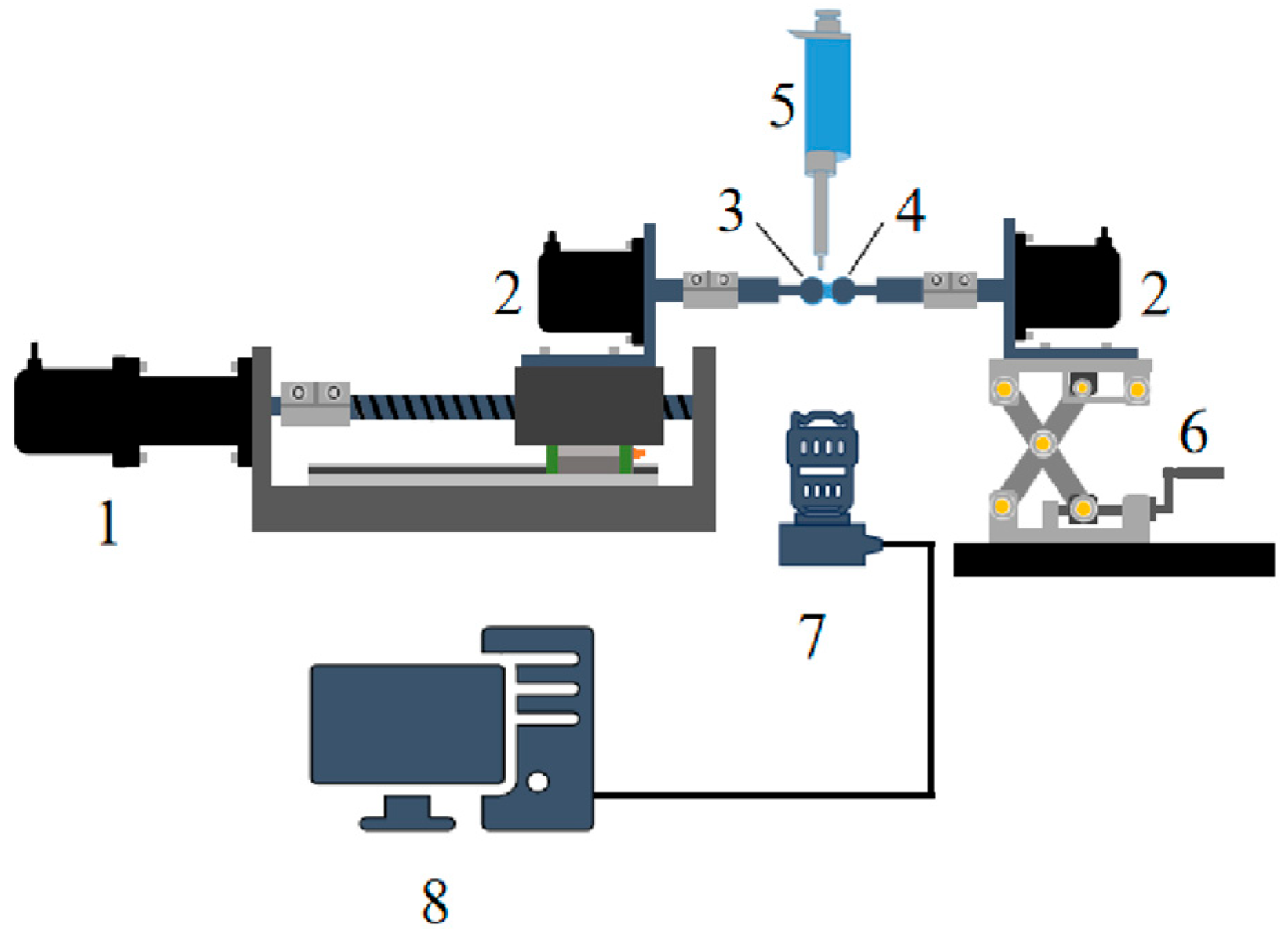
A schematic diagram of the experimental setup is shown in Figure 2, which primarily consists of three integrated systems: a drive system, a control system, and an image recording and processing unit. The drive system includes a lead screw and guide rail mechanism (1) with a planetary reducer (enabling 0.2 mm/s minimum speed) and a lifting platform (6); the control system uses two controllers to regulate stepper motor (2) rotation (60 r/min synchronous opposite operation) and horizontal movement of the lead screw mechanism; the image unit comprises a high-speed camera (7, 1280 × 800 resolution/50 fps frame rate) and a computer (8), with 1280 × 800 resolution/50 fps frame rate and a computer, supported by a 240 mm × 400 mm LED backlight panel behind the spheres. Spheres 3 and 4 are connected to motor shafts via stainless steel ball–rod couplings, with a 6 mm radius and dimensionless liquid film thickness h * controlled within 0.12–0.16 (selected to prevent gravity-induced sliding while ensuring measurement stability). Liquid coating is achieved by motor-driven sphere rotation combined with pipette dispensing, where centrifugal, gravitational, and viscous forces act synergistically to form uniform films. The main experimental conditions and their ranges are summarized in Table 2.

2.3. General Experimental Procedure

1. The two spheres were adjusted to be in central symmetry. The camera focus was optimized to obtain sharp sphere outlines, and dimensional calibration was performed using Matlab v2017 to determine the pixel-to-length ratio.
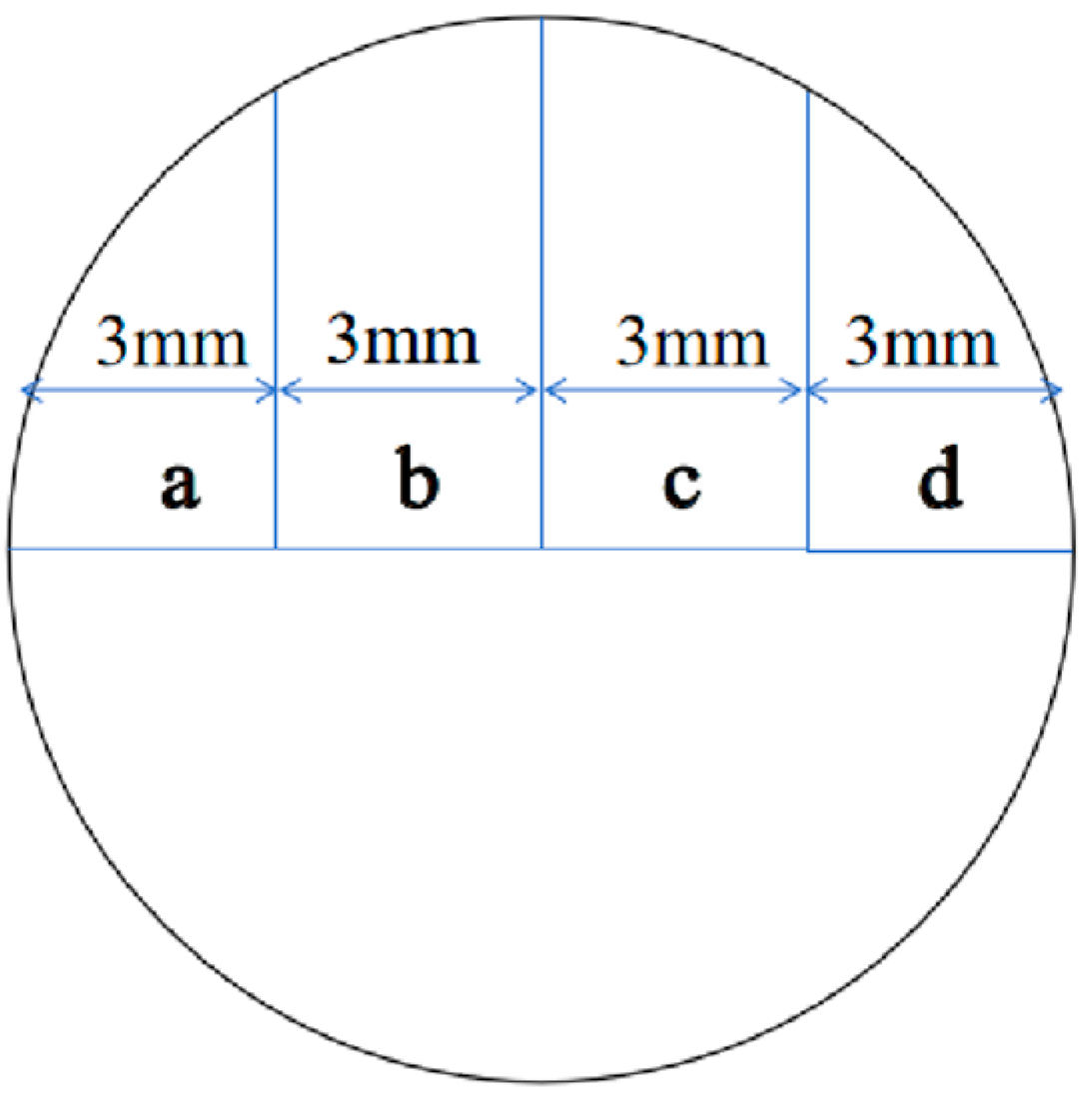
2. The two stepper motors were programmed to rotate the spheres synchronously in opposite directions at a constant speed of 60 rpm. Dimethyl silicone oil (dynamic viscosity: 0.97–9.74 Pa·s) was used as the working fluid. For spheres with a radius R = 6 mm, the dimensionless liquid film thickness h * ranged from 0.12 to 0.16, corresponding to a total liquid volume of 360–520 µL per sphere. To ensure precise liquid dispensing, a pipette (5–50 µL range) equipped with low-adsorption tips was employed using the reverse pipetting technique. Preliminary tests revealed a residual volume of ~1.5 µL in the tip after each operation; thus, the pipette was calibrated to 41.5 µL to deliver the target 40 µL. Each sphere was divided into four regions (a, b, c, d) for sequential dispensing (Figure 3). However, surface tension and viscous forces caused dispensed droplets to migrate toward adjacent regions, leading to non-uniformity. To mitigate this, preliminary tests were conducted to determine the optimal dispensing sequence. Coating was performed at the initial separation distance using varied sequences. Images were captured, and edge contours were extracted via a Matlab program. A circular reference contour of identical radius was superimposed to evaluate alignment. The sequence yielding the best overlap was selected for formal experiments.
3. After coating, Sphere 4 was fixed, and Sphere 3 can move to specified relative separation positions corresponding to dimensionless initial particle spacing d of 0.067, 0.133, and 0.200 (as shown in Figure 3).
4. Liquid bridge formation process was observed and recorded by a high-speed camera.
5. Sphere 3 was reset to the 8 mm separation position. Sphere surfaces were cleaned with anhydrous ethanol-moistened tissue and dried before reuse. Dimensional calibration was repeated prior to each experiment. Five replicates were performed under identical conditions, with data from three closely matched runs averaged for final results. All experiments were conducted at 25 ± 0.5 °C. The combined uncertainty from pipetting, coating sequence, and edge detection is estimated to be within ±5% for the dimensionless liquid bridge volume.

2.4. Image Processing Technology and Liquid Bridge Calculation Method

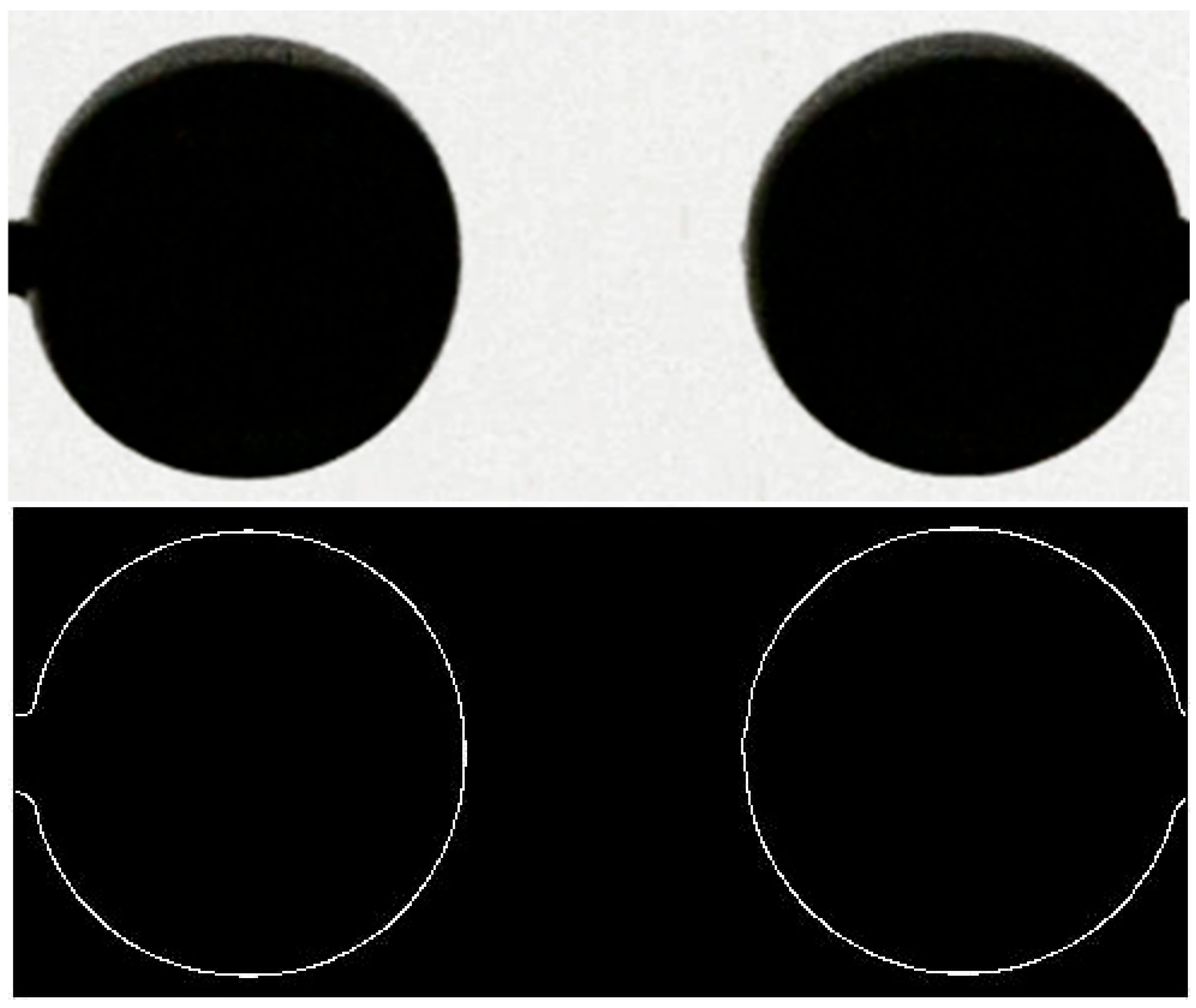
This study aimed to quantify the time-varying volume of the forming liquid bridge, necessitating precise extraction of the liquid film contour. As illustrated in Figure 4, the raw high-speed camera image (top) was processed using a Matlab algorithm (bottom) to enable contour analysis. Several common algorithms were evaluated for robust edge detection: the Roberts operator detects edges based on local gradient approximation but is highly sensitive to complex gray-level variations and uneven illumination, often causing false or missed detections. Sobel and Prewitt provide better noise suppression, yet they tend to produce thicker edges with lower localization accuracy and occasional discontinuities. In contrast, the Canny operator employs non-maximum suppression and double-thresholding, yielding thin, continuous, and precisely localized edges with a single response per true edge. Given our requirement for accurate liquid film contour extraction, the Canny operator was selected.
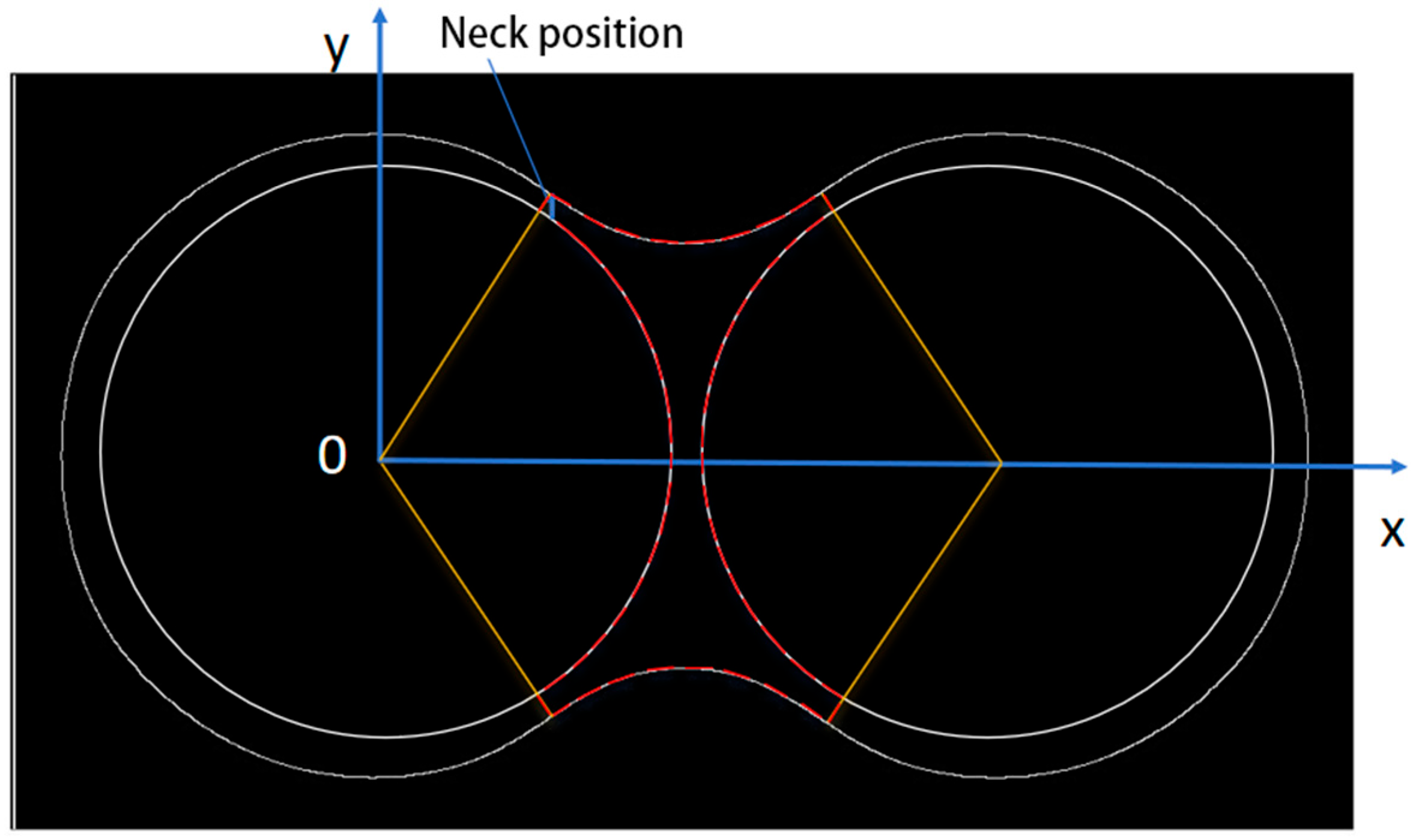
Once the edge contours were extracted, the next step was to define the liquid bridge region. As shown in Figure 5, a coordinate system was established with the sphere radius R = 6 mm. Vertical lines perpendicular to the x-axis were drawn at intervals of 0.1 mm. Each vertical line intersected both the sphere contour and the liquid film contour, yielding two intersection points. The neck position was defined as the x-coordinate at which the vertical distance Δy between these two points was minimal. The region indicated by the red dashed line in Figure 5 represents the liquid bridge. It should be noted that the neck position determined experimentally inherently deviates from that obtained from simulations due to experimental limitations. To ensure consistency, the neck position extracted from simulation data was adopted for experimental volume calculation. Subsequently, the liquid bridge volume was calculated by direct numerical integration implemented in Matlab. A comparison of the experimental and simulated volumes at each time step showed that the error remained within an acceptable range.
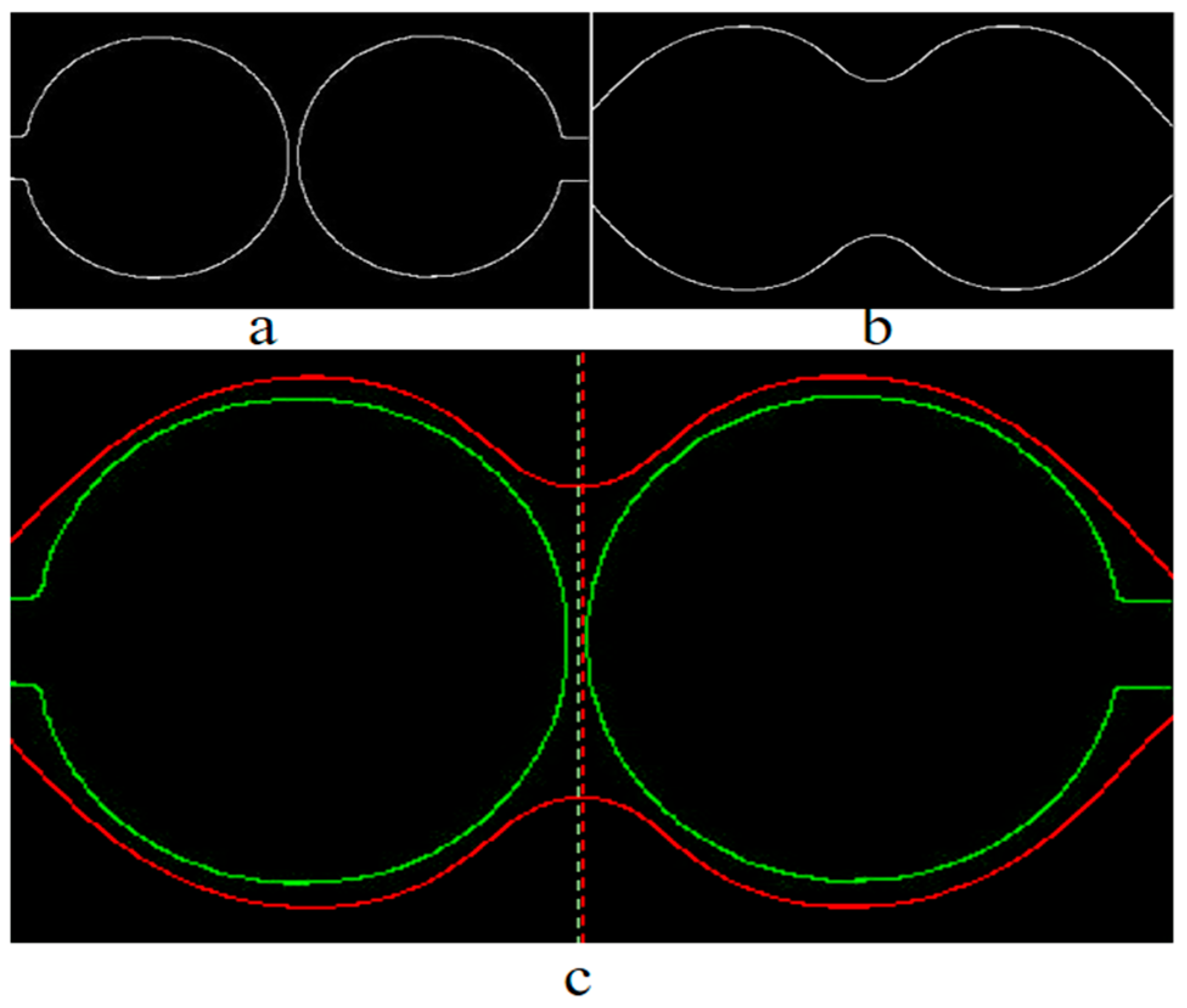
As shown in Figure 6c, the liquid film thickness was observed to be relatively uniform on the upper and lower portions of the sphere. Before calculating the liquid bridge volume, it was necessary to determine the sphere center and then identify the neck position. However, because the sphere was enveloped by silicone oil in the captured images, selecting a reference object was impractical, making determination of the sphere center challenging. To address this issue, a calibrated centerline method was adopted. In Figure 6c, the red contour line represents the experimental liquid film contour, and its centerline (red dashed line) was obtained via Matlab processing. The green contour corresponds to the uncoated sphere, and its centerline (green dashed line) was found to essentially coincide with the red dashed line. By locating the centerline, the sphere center and neck position could be determined with relatively small errors. Consequently, the centerline method was employed to identify the neck position and subsequently compute the liquid bridge volume.

3. Results and Discussion

3.1. The Effect of Film Thickness on the Volume of the Liquid Bridge

This study investigated the growth trend of the liquid bridge volume during the formation process under different liquid film thicknesses. Considering the constraints of the experimental conditions, experiments were conducted with dimensionless liquid film thickness ranging from h * = 0.12 to h * = 0.16. If the selected liquid film thickness is too small, liquid bridge formation becomes difficult. Substantial errors may also arise in the uniformity of the liquid coating on the spheres. This leads to significant experimental errors. Conversely, if the liquid film is too thick, gravity may cause the liquid to drip during bridge formation. This makes it impossible to calculate the complete liquid bridge volume. Therefore, through experimental testing, the film thickness range of h * = 0.12 to h * = 0.16 was ultimately selected.
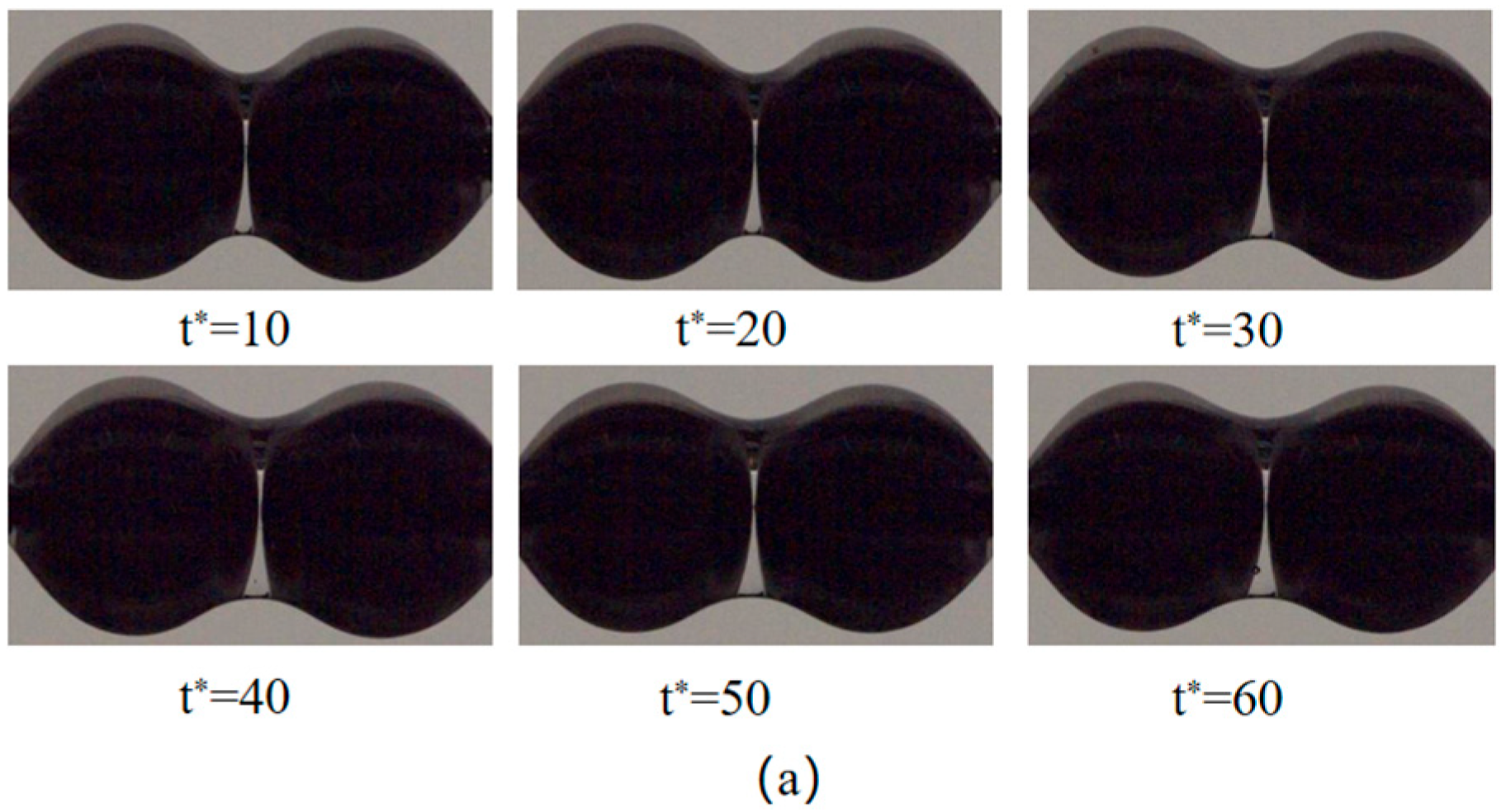
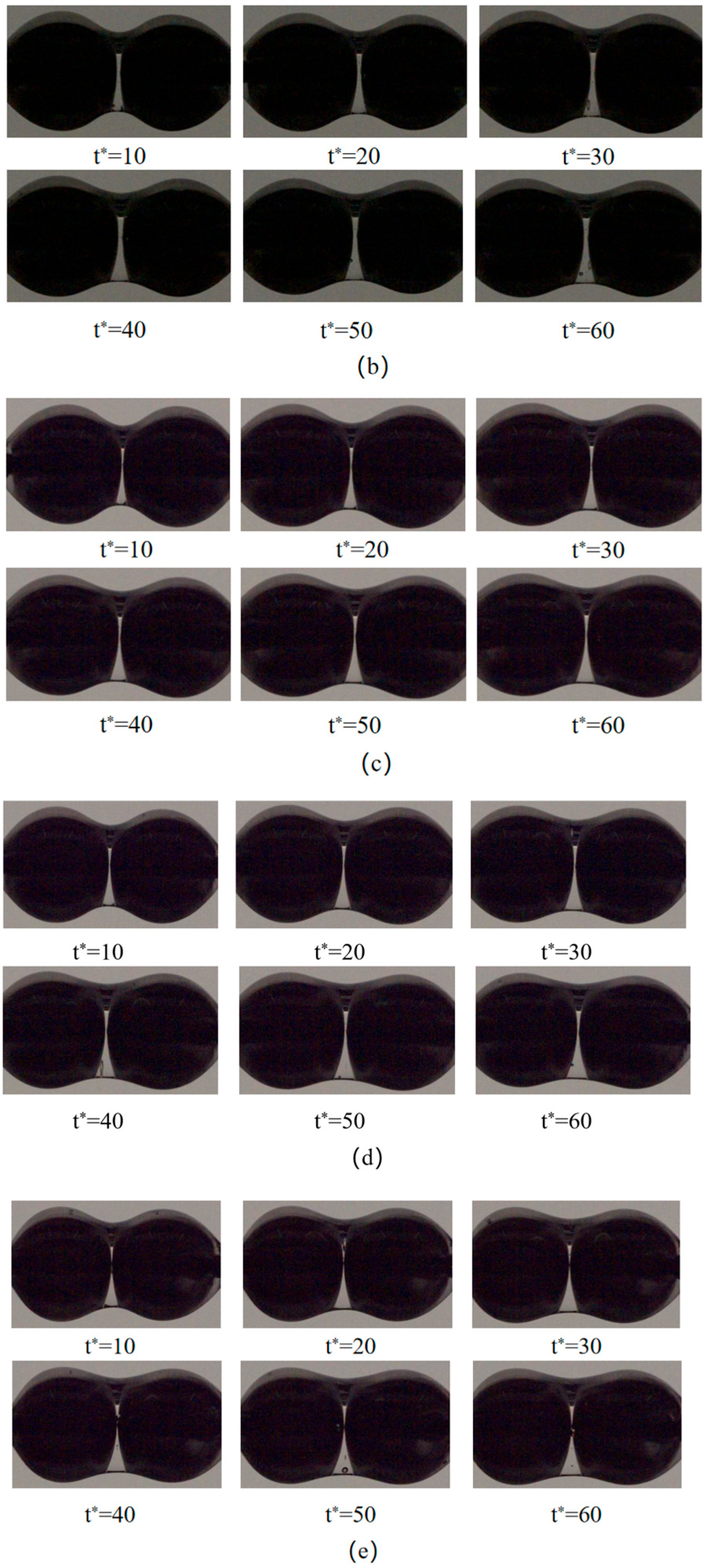
Figure 7 displays the morphologies of liquid bridges at different time instants under various dimensionless liquid film thicknesses h . By observing the variation in the curvature radius of the outer contour of the liquid bridge, the change in liquid bridge volume during the formation process can be discerned. A comparison of bridge morphologies with different h at the same dimensionless time t * reveals that the outer contour curvature radius increases with film thickness, indicating that a larger h leads to a greater liquid bridge volume.
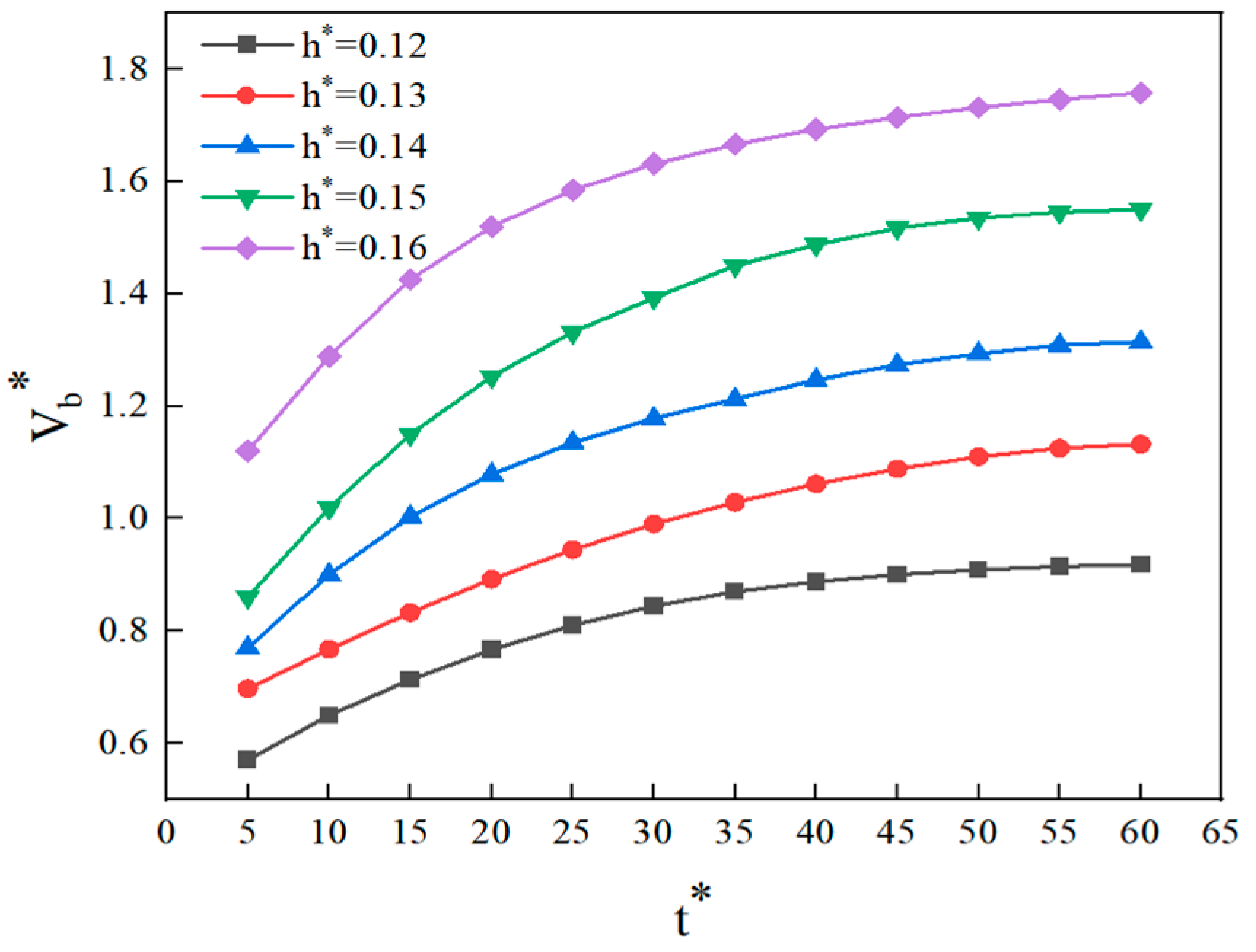
Figure 8 illustrates the variation trend of the dimensionless liquid bridge volume V b * with dimensionless time t * under different dimensionless liquid film thicknesses h . As shown in the figure, the liquid bridge volume grows rapidly until t * = 45, after which the growth begins to level off gradually and becomes extremely slow by t * = 60. Based on these observations, the formation process can be divided into two distinct phases: a rapid growth stage ( t * = 0–45) and a slow growth stage ( t *   45). Repeated experiments confirm that the liquid bridge volume essentially stops increasing at ( t * = 60); thus, all subsequent experimental results are reported up to this time point.
This two-stage evolution is qualitatively similar to the behavior observed by Garcia-Gonzalez et al. for bridges drawn from a thin viscous film on a flat substrate [14]. Jia et al. also observed a two-stage evolution (impact stage followed by metastable stage) for liquid film thickness in droplet falling film evaporation [25], which resembles the two-stage growth seen in our experiments.
From Figure 8, it is also evident that both the growth rate and the maximum volume of the liquid bridge increase with h . This is because a larger film thickness results in a larger outer contour radius of the liquid bridge at the same time instant. This in turn increases the pressure difference between the liquid bridge region and the spherical particle region. This enhancement can be further explained by a pressure-driven mechanism: a thicker film reduces the curvature of the liquid–air interface, lowers the Laplace pressure, and thus creates a larger pressure gradient that drives more liquid into the bridge. Furthermore, an analysis of the data in the figure reveals that for every increment of 0.01 in the liquid film thickness h * , the maximum dimensionless liquid bridge volume V b * increases by approximately 0.2.

3.2. The Effect of Initial Distance Between Particle Surfaces

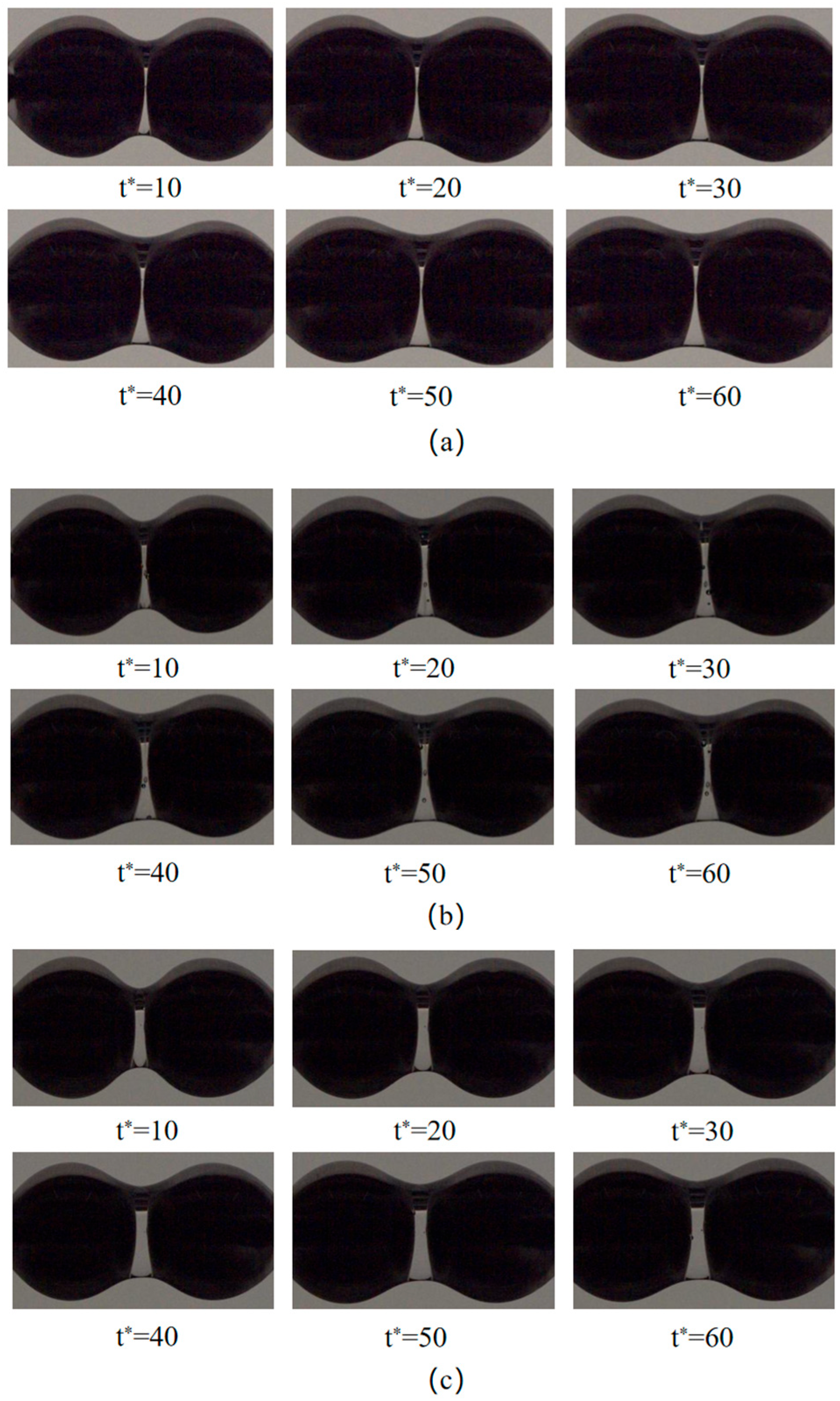
To investigate the growth trend of liquid bridge volume over time during the formation process under different initial inter-particle distances, this study conducted three sets of experiments with dimensionless initial particle spacing d * of 0.067, 0.133, and 0.200. By comparing the liquid bridge morphologies at different distances (Figure 9), it can be observed that, at the same time instant, the curvature radius of the outer contour of the liquid bridge decreases with increasing distance; that is, an increase in the initial inter-particle distance leads to a reduction in the liquid bridge volume. This occurs because a larger distance results in a smaller outer contour radius of the liquid bridge at the same time instant. This in turn reduces the pressure difference between the liquid in the bridge region and that on the particles. Hence, it lowers the liquid bridge formation rate.
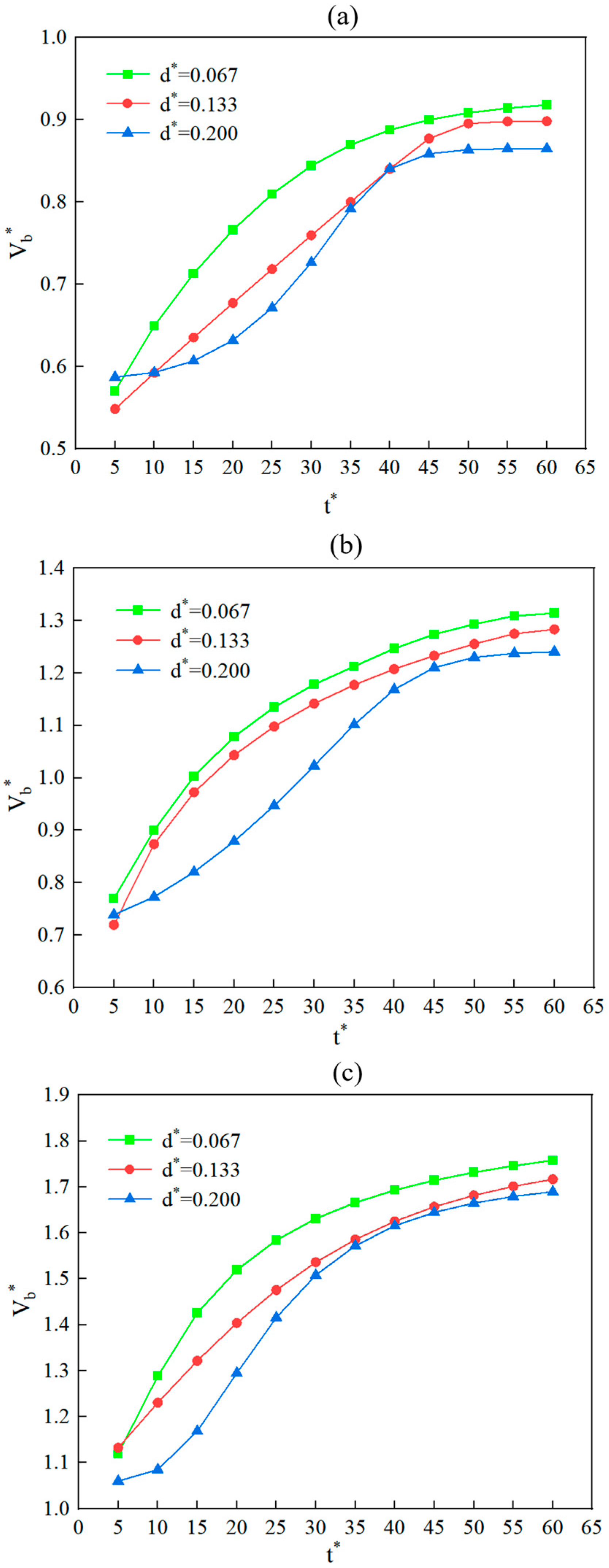
As shown in Figure 10, it can be clearly seen that as the distance increases, the growth rate of the liquid bridge volume decreases significantly, and the maximum liquid bridge volume also decreases accordingly. Combining the experimental data in Figure 10a–c, the maximum liquid bridge volumes at d * = 0.067, 0.133, and 0.200 for each film thickness were calculated to obtain the average reduction rate. It can be observed that when the distance increases from 0.067 to 0.133, the average reduction rate of the maximum liquid bridge volume is approximately 3.0%, and when the distance increases from 0.067 to 0.200, the average reduction rate is approximately 4.9%. These quantitative results confirm that a larger initial separation hinders the coalescence of liquid films, thereby reducing the final liquid bridge volume. This inverse relationship is consistent with the computational analysis of Wang et al. [15], who showed that an increased separation distance exacerbates the asymmetry of liquid distribution between two spheres, limiting the amount of liquid that can be transferred into the bridge.

3.3. The Effect of Reynolds Number on the Volume of Liquid Bridges

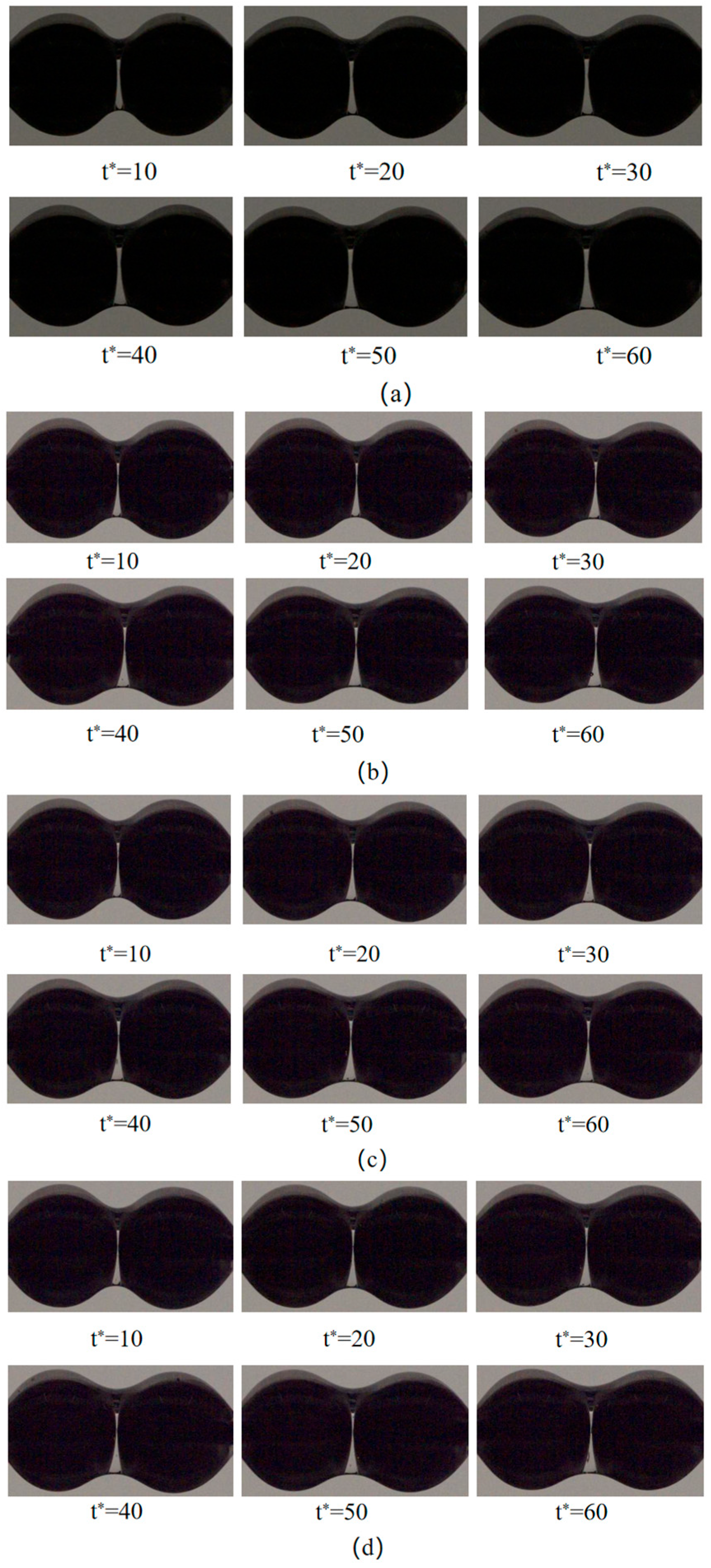
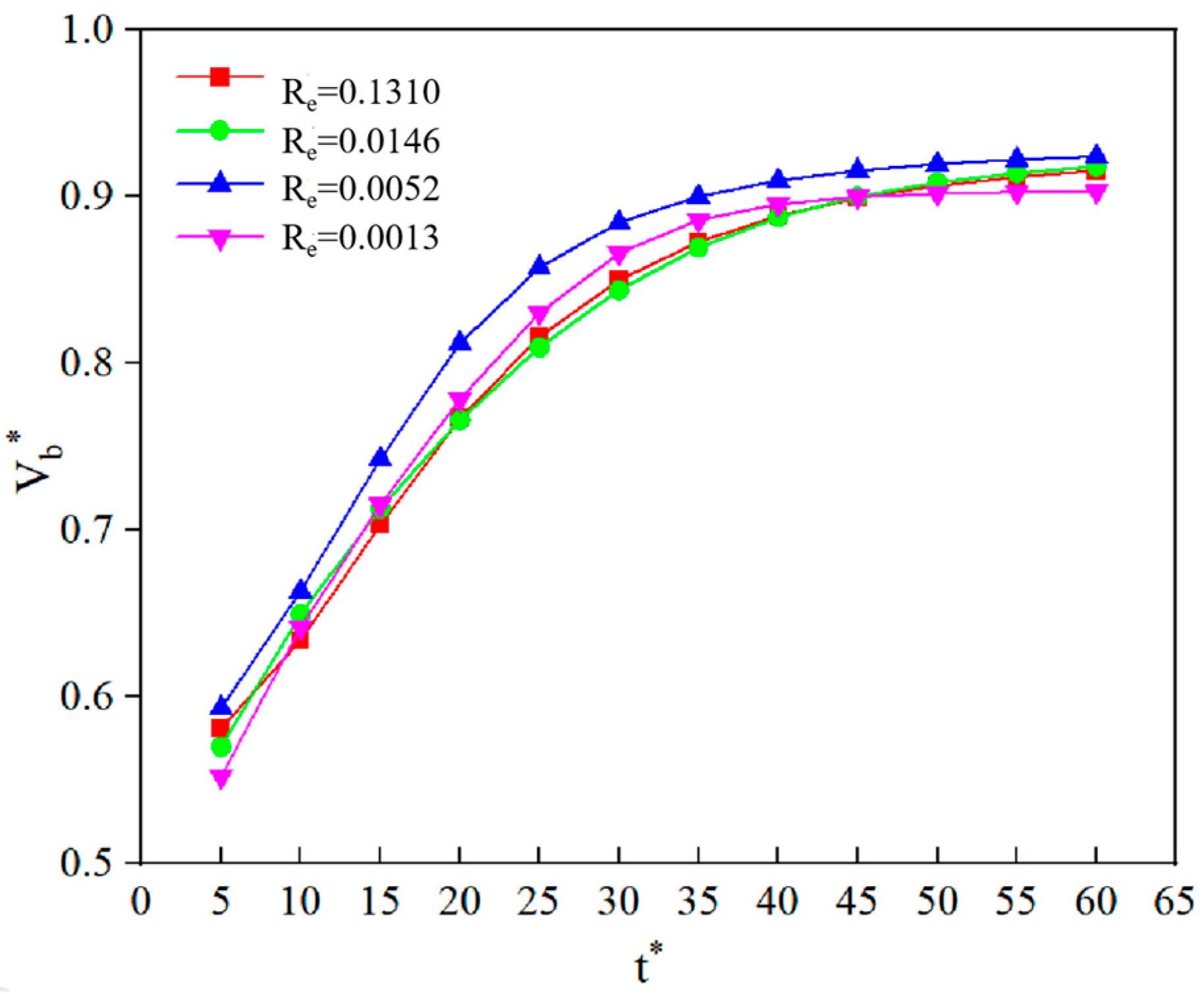
Under the conditions of an initial inter-particle distance d * = 0.067 and a film thickness h * = 0.12, this study further investigated the effect of the Reynolds number on the variation trend of the liquid bridge volume during the formation process. Experiments were conducted at four different Reynolds numbers: Re = 0.1310, 0.0146, 0.0052, and 0.0013. According to the defined dimensionless reference time t r e f formula, the actual formation time of the liquid bridge increases with decreasing Reynolds number. At Re = 0.0013, the actual time required to capture the liquid bridge formation process from dimensionless time t * = 0 to t * = 60 exceeded 160 s. At this point, the frame rate of the high-speed camera could no longer be maintained at 50 fps. A further reduction in Reynolds number would compromise the imaging precision of the high-speed camera. It would also introduce considerable errors in the calculated liquid bridge volume. Conversely, an excessively large Reynolds number led to liquid dripping during pipetting, making liquid bridge formation difficult. Therefore, the Reynolds number range of 0.0013 to 0.1310 was ultimately selected for the experiments. A comparison of the liquid bridge morphologies at different Reynolds numbers (Figure 11) was made. At the same dimensionless time t * , the curvature radius of the outer contour of the liquid bridge remains nearly unchanged as the Reynolds number varies. This indicates that the Reynolds number exerts no significant influence on the growth trend of the liquid bridge volume during the formation process.
As shown in Figure 12, the graph depicts the volume change trend of liquid bridges during the formation process under different Reynolds numbers. It can be observed that the four curves of liquid bridge volume changing over time have a consistent growth trend. The numerical variation is small. This means that the growth rate of liquid bridge volume over time and the maximum liquid bridge volume are almost the same. This indicates that changes in Reynolds number do not have a significant impact on the volume change trend of liquid bridges during the formation process. This observation is consistent with the direct numerical simulations of Wu et al. [21], which showed that under viscous-dominated conditions the Reynolds number has a negligible effect on bridge filling. This conclusion is limited to the viscous-dominated regime. Jia et al. studied droplet falling film evaporation at higher Reynolds numbers (Re = 80 and 160) [25] and found that the Reynolds number does affect droplet pulsation and film thickness. Therefore, the present finding of no discernible Re effect applies only to Re = 0.0013–0.1310. Extrapolation to higher Re requires caution.

3.4. The Effect of the Ratio of Particle Radii on the Volume of Liquid Bridges

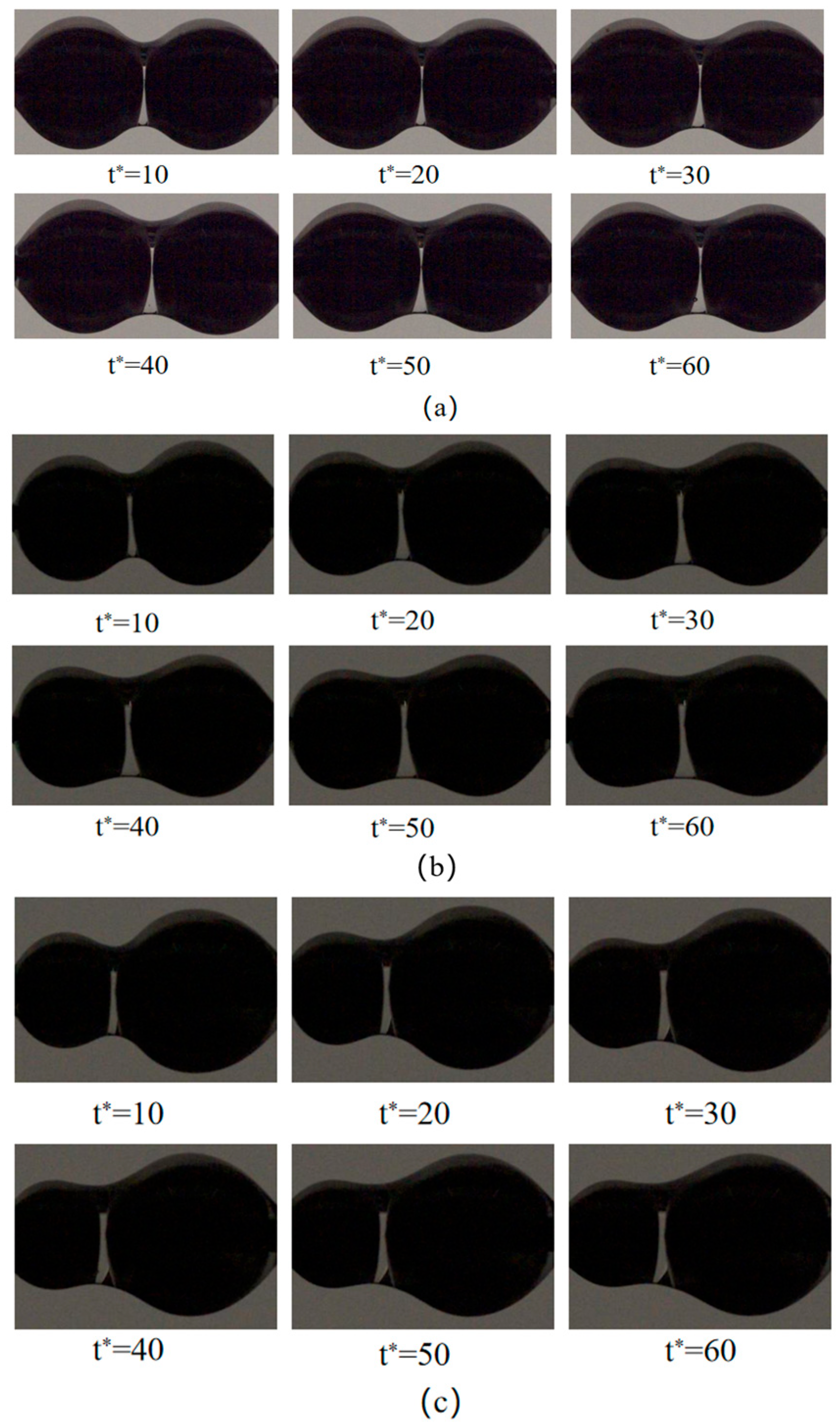
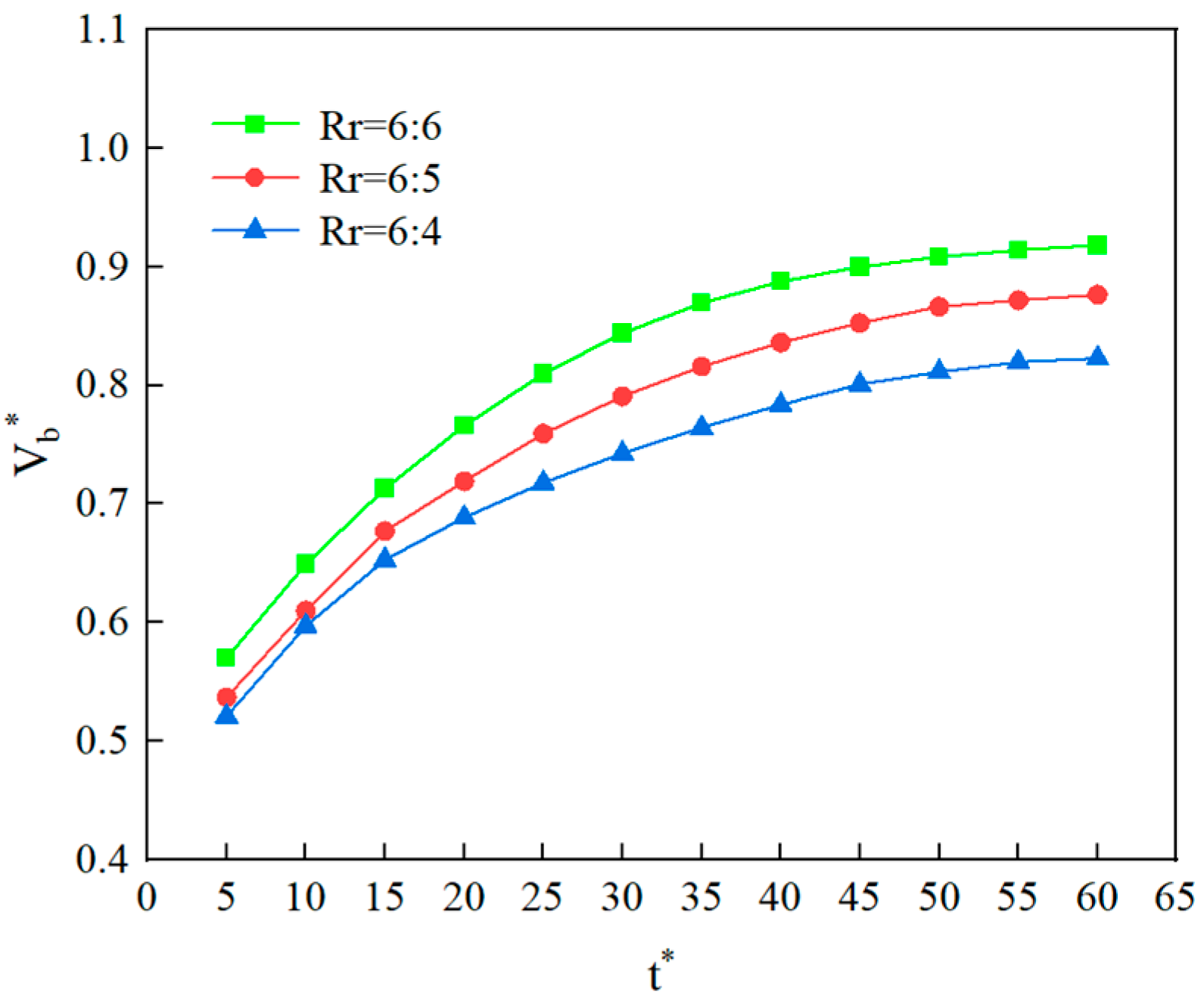
To investigate the influence of different particle radius ratios on the time-dependent variation of the liquid bridge volume during the formation process, this study conducted experiments with particle radius ratio R r of 6:6, 6:5, and 6:4. Due to experimental constraints, when the radius ratio was smaller than 6:4, it became difficult to achieve a uniform coating process. This led to significant experimental errors. Therefore, experiments were performed only at the aforementioned radius ratios. By comparing the morphologies of liquid bridges at different particle radius ratio (Figure 13), it can be observed that, at the same dimensionless time t * , the curvature radius of the outer contour of the liquid bridge increases with increasing radius ratio, indicating that the growth rate of the liquid bridge volume decreases as the radius ratio R r increases. Figure 14 illustrates the variation of the dimensionless liquid bridge volume V b * with dimensionless time t * under different particle radius ratios. It can be clearly seen from the figure that as the radius ratio increases, the growth rate of the liquid bridge volume declines significantly. The maximum liquid bridge volume also decreases. It can be found that the maximum liquid bridge volume at R r = 6:5 is reduced by 4.3% compared to that at R r = 6:6, and the maximum volume at R r = 6:4 is reduced by 10.9% compared to that at R r = 6:6. More recently, Chen et al. [24] performed VOF simulations of static liquid bridges under gravity and also observed a clear decreasing trend in bridge volume as the radius ratio increased. This reduction arises because a larger radius ratio shortens rupture distance [16], lowers liquid transport rate [20], and decreases the liquid transfer ratio [19]—all of which lead to a smaller liquid bridge volume. The present work provides the first direct experimental quantification of these effects: 4.3% and 10.9% reductions for R r = 6:5 and 6:4, respectively.

4. Conclusions

A new experimental apparatus was developed to achieve uniform liquid coating on spherical particles and to capture the dynamic formation of liquid bridges. The main findings are as follows:
(1) Liquid film thickness h exerts a dominant positive effect. Both the growth rate and maximum volume increase significantly with h ; every 0.01 increment in h raises the maximum dimensionless liquid bridge volume V b * by approximately 0.2.
(2) Increasing dimensionless initial particle spacing d suppresses liquid bridge formation. Dimensionless initial particle spacing d from 0.067 to 0.133 reduces the maximum volume by 3.0%, and from 0.067 to 0.200 by 4.9%.
(3) Reynolds number Re has no significant effect. Over the range Re = 0.0013 to 0.1310, the volume growth curves nearly overlap.
(4) A larger radius ratio R r reduces the liquid bridge volume. Compared with Rr = 6:6, the maximum volume decreases by 4.3% for R r = 6:5 and by 10.9% for R r = 6:4.
(5) Two distinct growth stages are observed: a rapid growth phase before t ≈ 45, followed by a slow growth phase.
In summary, h , d , and R r govern the liquid bridge volume evolution, whereas Re does not. The quantitative laws established here provide a robust experimental benchmark for modeling and optimizing industrial processes involving wet granular systems, such as pharmaceutical granulation, particle coating, and moist cargo transport. These quantitative models can serve as validation benchmarks for discrete element method (DEM) or computational fluid dynamics (CFD) models of wet granular flows, and can also guide the calibration of key parameters such as liquid bridge volume.
However, the present experiments are limited to a specific liquid (dimethyl silicone oil) with a narrow range of capillary numbers, complete wetting, and smooth spherical particles. The Reynolds number range is restricted to the viscous-dominated regime ( Re = 0.0013–0.1310). Future work should extend to higher Reynolds numbers to capture inertial effects, investigate partial wettability and contact angle hysteresis, examine non-spherical particles, and explore multiple-particle bridge configurations.

Author Contributions

Conceptualization, M.W.; methodology, M.W.; software, J.P.; validation, X.L. and Y.W.; formal analysis, X.L.; investigation, Y.W.; resources, J.P.; data curation, X.L.; writing—original draft preparation, X.L.; writing—review and editing, M.W.; visualization, M.W.; supervision, M.W.; project administration, M.W.; funding acquisition, M.W. All authors have read and agreed to the published version of the manuscript.

Funding

This research was funded by the Guangxi Natural Science Foundation (No. 2023GXNSFAA026480) and the National Natural Science Foundation of China (No. 22168014).

Data Availability Statement

The original contributions presented in this study are included in the article. Further inquiries can be directed to the corresponding author.

Conflicts of Interest

The authors declare no conflicts of interest.

References

  1. Wang, B.; Sun, X.; Xiang, J.; Guo, X.; Cheng, Z.; Liu, W.; Tan, S. A Critical Review on Granulation of Pharmaceuticals and Excipients: Principle, Analysis and Typical Applications. Powder Technol. 2022, 401, 117329. [Google Scholar] [CrossRef]
  2. Capece, M.; Silva, K.R.; Sunkara, D.; Strong, J.; Gao, P. On the Relationship of Inter-Particle Cohesiveness and Bulk Powder Behavior: Flowability of Pharmaceutical Powders. Int. J. Pharm. 2016, 511, 178–189. [Google Scholar] [CrossRef] [PubMed]
  3. Ly, A.; Achouri, I.E.; Gosselin, R.; Abatzoglou, N. Sequential Fixed-Fluidized Bed Foam Granulation (SFFBFG) and Drying: Multivariate Model Development for Water Content Monitoring with near–Infrared Spectroscopy. Chem. Eng. Sci. 2022, 262, 118039. [Google Scholar] [CrossRef]
  4. Wu, D.; Zhou, P.; Zhao, B.; Howes, T.; Wang, G. Liquid Redistribution upon the Liquid-Bridge Rupture between Two Unequal Particles with a Minimal Energy Method. Powder Technol. 2019, 354, 165–173. [Google Scholar] [CrossRef]
  5. Yan, C.; Su, B.; Shi, Y.; Jiang, L. Liquid Bridge Induced Assembly (LBIA) Strategy: Controllable One-Dimensional Patterning from Small Molecules to Macromolecules and Nanomaterials. Nano Today 2019, 25, 13–26. [Google Scholar] [CrossRef]
  6. Fisher, R.A. On the Capillary Forces in an Ideal Soil; Correction of Formulae given by W. B. Haines. J. Agric. Sci. 1926, 16, 492–505. [Google Scholar] [CrossRef]
  7. Fisher, R.A. Further Note on the Capillary Forces in an Ideal Soil. J. Agric. Sci. 1928, 18, 406–410. [Google Scholar] [CrossRef]
  8. Pepin, X.; Rossetti, D.; Iveson, S.M.; Simons, S.J.R. Modeling the Evolution and Rupture of Pendular Liquid Bridges in the Presence of Large Wetting Hysteresis. J. Colloid Interface Sci. 2000, 232, 289–297. [Google Scholar] [CrossRef]
  9. Orr, F.M.; Scriven, L.E.; Rivas, A.P. Pendular Rings between Solids: Meniscus Properties and Capillary Force. J. Fluid Mech. 1975, 67, 723–742. [Google Scholar] [CrossRef]
  10. Pitois, O.; Moucheront, P.; Chateau, X. Liquid Bridge between Two Moving Spheres: An Experimental Study of Viscosity Effects. J. Colloid Interface Sci. 2000, 231, 26–31. [Google Scholar] [CrossRef]
  11. Roisman, I.V.; Abboud, M.; Brockmann, P.; Berner, F.; Berger, R.; Rothmann-Brumm, P.; Sauer, H.M.; Dörsam, E.; Hussong, J. Forced Flows in Liquid Bridges. Curr. Opin. Colloid Interface Sci. 2023, 67, 101738. [Google Scholar] [CrossRef]
  12. Feng, C.L.; Yu, A.U. Effect of Liquid Addition on the Packing of Mono-Sized Coarse Spheres. Powder Technol. 1998, 99, 22–28. [Google Scholar] [CrossRef]
  13. Rossetti, D.; Simons, S.J.R. A Microscale Investigation of Liquid Bridges in the Spherical Agglomeration Process. Powder Technol. 2003, 130, 49–55. [Google Scholar] [CrossRef]
  14. Garcia-Gonzalez, D.; Hack, M.A.; Kappl, M.; Butt, H.J.; Snoeijer, J.H. Drawing Liquid Bridges from a Thin Viscous Film. Soft Matter 2023, 19, 1241–1248. [Google Scholar] [CrossRef] [PubMed]
  15. Wang, S.; Liu, F.; Pu, C.; Cui, J.; Zeng, Z. Mathematical Study on Gravity Effect of the Liquid Bridge between Two Rigid Spheres. Powder Technol. 2022, 407, 117662. [Google Scholar] [CrossRef]
  16. Pu, C.; Liu, F.; Wang, S. Liquid Force and Rupture Distance between Two Particles. Adv. Mater. Sci. Eng. 2021, 2021, 3542686. [Google Scholar] [CrossRef]
  17. Xiao, F.; Jing, J.; Kuang, S.; Yang, L.; Yu, A. Capillary Forces on Wet Particles with a Liquid Bridge Transition from Convex to Concave. Powder Technol. 2020, 363, 59–73. [Google Scholar] [CrossRef]
  18. Semprebon, C.; Scheel, M.; Herminghaus, S.; Seemann, R.; Brinkmann, M. Liquid morphologies and capillary forces between three spherical beads. Phys. Rev. E 2016, 94, 012907. [Google Scholar] [CrossRef] [PubMed]
  19. Huang, C.; Fan, Z.; Wang, H.; Li, J.; Wang, L.; Rong, W. Experimental Investigations of Liquid Bridge Rupture between a Sphere and a Spherical Concave. J. Phys. D Appl. Phys. 2023, 56, 355303. [Google Scholar] [CrossRef]
  20. Wu, M.; Radl, S.; Khinast, J.G. A Model to Predict Liquid Bridge Formation between Wet Particles Based on Direct Numerical Simulations. AIChE J. 2016, 62, 1877–1897. [Google Scholar] [CrossRef]
  21. Wu, M.; Khinast, J.G.; Radl, S. Liquid Transport Rates during Binary Collisions of Unequally-Sized Particles. Powder Technol. 2017, 309, 95–109. [Google Scholar] [CrossRef]
  22. Nguyen, G.T.; Chan, E.L.; Tsuji, T.; Tanaka, T.; Washino, K. Interface Control for Resolved CFD-DEM with Capillary Interactions. Adv. Powder Technol. 2021, 32, 1410–1425. [Google Scholar] [CrossRef]
  23. Wang, S.; Wang, J. Numerical Study on the Rupture Behavior of Funicular Liquid Bridge between Three Spheres. In Proceedings of the IOP Conference Series: Earth and Environmental Science; Institute of Physics: London, UK, 2024; Volume 1330. [Google Scholar]
  24. Chen, J.; Shen, J.; Guo, J.; Wang, G. Separation Efficiency of Liquid–Solid Undergoing Vibration Based on Breakage of Liquid Bridge. Particuology 2022, 61, 103–110. [Google Scholar] [CrossRef]
  25. Jia, B.; Zhao, Z.; Wang, X.; Chen, C.; Ma, X.; Wu, J.; Yang, L.; Politaeva, N. Local Film Thickness in Relation to the Droplet Topological Structure of Droplet Falling Film on Micro-Nano Structured Horizontal Tubes. Case Stud. Therm. Eng. 2026, 83, 108125. [Google Scholar] [CrossRef]
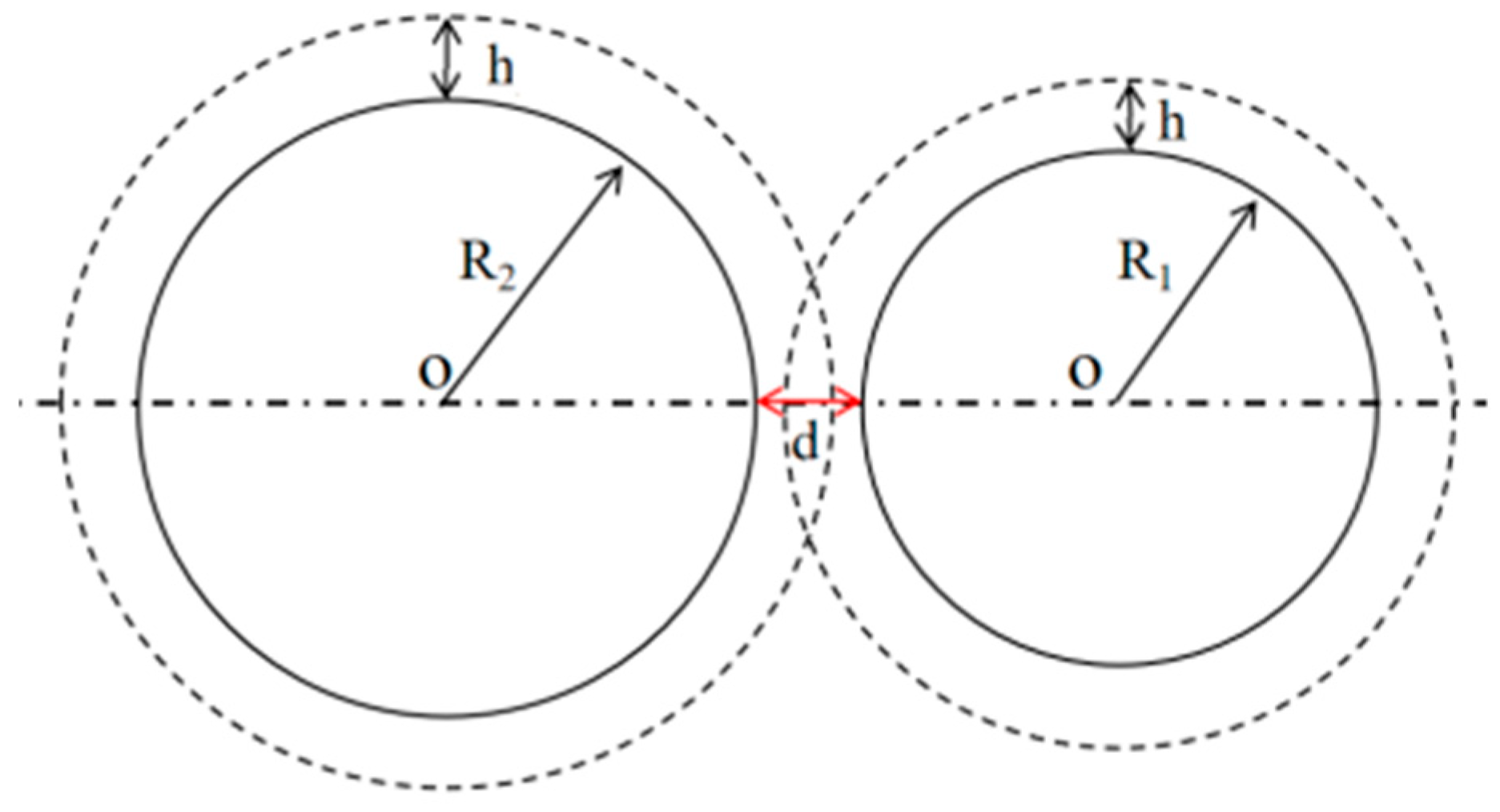
Figure 1. Schematic of the liquid bridge model between unequal-sized particles.
Processes 14 01919 g001
Figure 2. Schematic diagram of the experimental setup structure: 1. Screw rod guide mechanism, 2. Stepper motor, 3, 4. Stainless steel ball-rod, 5. Pipette, 6. Lifting platform, 7. High-speed camera, 8. computer.
Processes 14 01919 g002
Figure 3. Schematic diagram of micropipette titration on a coated film, showing the titrant being dripped onto the four areas a, b, c, and d during pipetting.
Processes 14 01919 g003
Figure 4. Comparison of photos taken by high-speed camera (top) and images recognized by the program (bottom).
Processes 14 01919 g004
Figure 5. Liquid bridge definition (the red dashed lines domain, yellow lines are neck position detecting lines).
Processes 14 01919 g005
Figure 6. Liquid bridge profile curves: (a) profile curve of the uncoated small ball, (b) profile curve of the coated film, (c) overlapping diagram of (a) and (b) (red line is liquid film contour line and green line is contour line of particle surface).
Processes 14 01919 g006
Figure 7. Illustration of the liquid bridge formation process at different film thicknesses. In the figure, the film thicknesses h * of images (a), (b), (c), (d), and (e) are 0.12, 0.13, 0.14, 0.15, and 0.16, respectively. The initial distance between particles d * = 0.067, Reynolds number Re = 0.0146.
Processes 14 01919 g007aProcesses 14 01919 g007b
Figure 8. Trend chart of liquid bridge volume changes during the formation process under different liquid film thicknesses, with an initial distance between particles d * = 0.067 and Reynolds number Re = 0.0146.
Processes 14 01919 g008
Figure 9. Process diagram of liquid bridge formation at different initial distances between particles. In the figure, the distances d * in subfigures (a), (b), and (c) are 0.067, 0.133, and 0.200, respectively. Reynolds number Re = 0.0146, liquid film thickness h * = 0.14.
Processes 14 01919 g009
Figure 10. Trend of liquid bridge volume change during the formation of liquid bridges at different liquid film thicknesses, Reynolds number Re = 0.0146, where the film thickness h * in (a), (b), and (c) are 0.12, 0.14, and 0.16, respectively.
Processes 14 01919 g010
Figure 11. Formation process of liquid bridge under different Reynolds numbers, with an initial distance between particles of d * = 0.067 and a film thickness of h * = 0.12. In the figure, the Reynolds numbers Re for subfigures (a), (b), (c), and (d) are 0.1310, 0.0146, 0.0052, and 0.0013, respectively.
Processes 14 01919 g011
Figure 12. Trend chart of liquid bridge volume variation during liquid bridge formation under different Reynolds numbers, with an initial distance between particles of d * = 0.067 and film thickness h * = 0.12.
Processes 14 01919 g012
Figure 13. Morphological changes during liquid bridge formation under different particle radius ratios ((a) Rr = 6:6; (b) Rr = 6:5; (c) Rr = 6:4), distance d * = 0.067, film thickness h * = 0.12, Reynolds number Re = 0.1310.
Processes 14 01919 g013
Figure 14. Trend chart of liquid bridge volume change during liquid bridge formation under different radius ratios.
Processes 14 01919 g014
Table 1. Dimethyl silicone oil properties.
Name of the LiquidDensity
ρ l /(kg/m3)
Reynolds Number
Re
Surface Tension
σ /(N/m)
Dimethyl silicone oil (1000 cst)9740.13100.0211
Dimethyl silicone oil (3000 cst)9740.01460.0213
Dimethyl silicone oil (5000 cst)9740.00520.0213
Dimethyl silicone oil (10,000 cst)9740.00130.0215
Table 2. Experimental conditions and parameter ranges.
ParameterSymbolValue/Range
Dimensionless liquid film thickness h * 0.12–0.16
Dimensionless initial particle spacing d 0.067, 0.133, 0.200
Reynolds number Re 0.0013, 0.0146, 0.0052, 0.1310
Particle radius ratio R r 6:6, 6:5, 6:4
Disclaimer/Publisher’s Note: The statements, opinions and data contained in all publications are solely those of the individual author(s) and contributor(s) and not of MDPI and/or the editor(s). MDPI and/or the editor(s) disclaim responsibility for any injury to people or property resulting from any ideas, methods, instructions or products referred to in the content.