1. Introduction
Fracturing technology, as a core method for enhancing the production capacity of low-permeability oil and gas reservoirs, has been widely applied in the development of oil and gas fields across China in recent years. With the large-scale exploration and development of low-permeability reservoirs, their geological characteristics have become increasingly complex and diverse, which has escalated the difficulty of fracturing operations and has placed higher demands on the technical sophistication of fracturing processes [
1,
2]. Notably, the widespread adoption of horizontal wells has emerged as a key approach to improving the exploration and development efficiency of low-permeability oil and gas fields [
3]. However, the effective transformation of horizontal wells continues to face several challenges, particularly the lag in the development of reservoir stimulation technologies and associated tools, which restricts the broader application of horizontal well technologies [
4]. The use of segmented fracturing techniques has proven to significantly enhance single-well productivity and reduce the risk of development failures, making it a focal point in both research and engineering practice.
Prior to the staged fracturing of shale gas wells, the establishment of the first fracturing stage directly impacts the success of subsequent fracturing operations. At present, continuous tubing perforation or casing-activated sliding sleeves are primarily employed to establish this initial stage. However, as the depth of shale gas reservoirs continues to increase (surpassing 3500 m) and well depths exceed 5500 m, traditional continuous tubing perforation technology has revealed several limitations, including depth restrictions, poor adaptability to wellbore trajectories, extended operation cycles, and high self-locking risks [
5]. Furthermore, continuous tubing operations typically require 5 to 8 days to complete, and in the event of a self-locking issue, costly metal drag-reducing agents are often needed to facilitate the operation, significantly escalating operational costs while potentially causing damage to the reservoir [
6].
In contrast, casing-activated sliding sleeve technology has gained certain traction in practical applications due to its simple structure and short operational process. However, the existing casing-activated sliding sleeves face several challenges, including unreliable structural pre-tightening and the risk of unintentional activation during cementing or pressure testing. Additionally, the design pressure of these sleeves is often higher than the wellbore pressure testing value, which limits the number of pressure tests and their duration, and can even lead to pressure drop effects, among other potential hazards [
7]. To address these issues, the development of a more reliable casing-activated sliding sleeve with an advanced activation mechanism has become a key focus of current research.
To ensure the reliability and efficiency of control signal transmission in this system, an efficient and stable communication mechanism must be established between the surface and the downhole. Various communication and control methods have been widely studied in the industry, including mechanical ball drop systems, cable or optical fiber communication, electromagnetic or acoustic wave communication, and pressure-wave communication [
8].
The ball-drop sliding sleeve is a mechanical ball-drop activation system that offers advantages such as simple structure, low cost, and high operational efficiency [
9]. It has become one of the most widely used tools for staged fracturing in the early development of unconventional oil and gas resources. The ball-drop sliding sleeve mainly consists of a top connector, sliding sleeve body, valve core, spring, sealing components, and a “fracturing ball.” The sliding sleeve body is equipped with a “ball seat” that matches the size of the fracturing ball, and the valve core is controlled by a spring or hydraulic pressure difference in its initial state [
10,
11]. The cable and fiber optic communication sliding sleeve is a core control tool in intelligent staged fracturing technology for oil and gas wells. By integrating cables or optical fibers as signal transmission media, it enables real-time, precise, and bidirectional control of the downhole sliding sleeve by the surface system. This breakthrough overcomes the technical limitations of traditional mechanical sliding sleeves, such as the ball-drop system, providing full lifecycle control and eliminating stage limitations [
12,
13].
Electromagnetic wave communication technology utilizes the surface control system at the wellhead to emit electromagnetic signals with specific encoding, which are transmitted downhole through the casing-formation system or liquid medium. The receiver module within the sliding sleeve decodes the signals and drives the control circuit to execute the operation. The transmission media mainly include three types: (1) casing as the shared electrode and formation as the propagation medium, suitable for various well types but with a complex receiver structure [
14]; (2) earth as the shared electrode and formation as the medium, with stable signal propagation but difficult grounding installation [
15,
16]; (3) liquid as the propagation medium, suitable for vertical wells, but with questionable propagation capabilities in horizontal wells and limited antenna design [
17,
18]. Acoustic wave communication technology, on the other hand, uses a surface acoustic transducer to emit encoded signals, relying on the wellbore fluid as the transmission medium. The signals are amplified and retransmitted via an acoustic wave repeater, and finally decoded by the receiver module within the sliding sleeve to trigger the sliding sleeve’s action. The advantage of this technology is that the liquid transmission path is clear, and the system has higher power, working effectively in vertical wells. However, it is limited by the size of the repeater and receiver, battery life, and adaptability to high-pressure environments [
19].
The pressure-pulse-activated sliding sleeve system, as the first-stage fracturing sliding sleeve, can be deployed downhole along with the casing and complete the cementing and pressure testing processes [
20]. This technology effectively overcomes the application bottleneck of traditional continuous tubing perforation in long horizontal wells, enhancing operational efficiency and reliability, and expanding its application scenarios in deep, ultra-deep, and complex trajectory wells [
21].
Pressure-wave communication technology generates pressure-wave signals with specific encoding at the surface by controlling the pump displacement and pressure relief valve opening. The wellbore fluid is used as the transmission medium to deliver the signal to the sliding sleeve control module. This technology does not require the installation of complex electromagnetic or acoustic wave receivers, making it suitable for downhole environments filled with fluid, particularly for applications where surface-to-downhole one-way startup commands need to be transmitted [
22]. Yue Yuanlong et al. [
23] proposed a pressure-wave-controlled water injection method based on Manchester encoding and decoding, which has the advantages of anti-interference and ease of decoding, effectively enabling communication between the wellhead and the downhole water distributor. Wang Weiliang et al. [
24] introduced a pressure wave lower-side constant envelope smooth-phase modulation method, which effectively controls the valve switching of the pressure wave generator. Yang Lezhao [
25] proposed a new pressure-wave pulse generator, which improved the technical research on pressure-pulse applications and provided better equipment support for pressure-pulse communication [
26].
Recent studies on underground engineering monitoring, structural response analysis, and data-driven prediction have shown that signal transmission, deformation response, and long-term reliability evaluation are critical issues in complex underground engineering systems. These studies provide useful methodological references for the modeling and reliability evaluation of downhole pressure-wave communication systems [
27,
28,
29].
The main contribution of this study is not limited to the mechanical design of a pressure-pulse sliding sleeve, but lies in the integrated design of a pressure-wave communication and control system for downhole sliding sleeve activation. Specifically, this work establishes a pressure-wave propagation model for the wellbore fluid channel, analyzes the effects of well depth, wellbore diameter, pump displacement, pump-on time, pressure-relief timing, and pressure-relief duration on the bottom-hole pressure response, proposes a bipolar NRZ-based coding and constant-threshold decoding scheme, and verifies the feasibility of the system through high-temperature/high-pressure laboratory tests and field application. This integrated framework provides a reliable surface-to-downhole command transmission method for first-stage fracturing in deep and long horizontal wells.
3. Channel Simulation
Based on the pressure-wave propagation model in the wellbore and pipeline, the propagation velocity of different pulse signals is analyzed. Using the principles of momentum and mass conservation, the propagation laws of pressure waves in the wellbore are studied. On this basis, combined with the working principle of the pressure-pulse-activated sliding sleeve, the channel characteristics of the liquid pulse signal are analyzed.
3.1. Analysis of Liquid Pulse Signal Velocity
Liquid pulse signals mainly include positive pulses, negative pulses, and continuous wave pulse signals. The propagation speed of negative pulses is the fastest, while the propagation speed of positive pulses is the slowest. Continuous waves fall in between, and they have a uniform energy distribution, strong controllability, and unique “fingerprint characteristics” in the bipolar waveform. Continuous waves also have strong noise resistance, symmetric waveforms, slow attenuation, and longer propagation distances. Therefore, continuous-pulse pressure waves are chosen for this study [
21].
3.2. Mathematical Model of the Ideal Liquid Pulse Signal Channel
Considering actual well conditions, the pulse signal is divided into two parts: high pressure is generated by pump activation, and low pressure is formed by pressure relief. At this point, the wellbore is closed, and when the pressure wave propagates to the bottom of the well, a strong reflection wave is generated. Similarly, when the reflection wave reaches the surface, different degrees of reflection occur. The reflection wave oscillates repeatedly in the wellbore until it decays to zero.
To facilitate the analysis of pressure-wave propagation in the wellbore, the following assumptions are made regarding the propagation process of pressure waves in the wellbore:
The pipeline and wellbore are rigid bodies.
The propagation speed of pressure waves is consistent and constant in both the surface pipeline and the wellbore.
Fluid flow in both the surface pipeline and the wellbore is one-dimensional.
It should be pointed out that these assumptions are used to simplify the analysis of low-frequency pressure command transmission and to describe the dominant propagation behavior of pressure waves. In ultra-deep wells, the wellbore temperature may vary significantly with depth, which can change the density, viscosity, compressibility, and bulk modulus of the wellbore fluid. As a result, the pressure-wave velocity, transmission delay, attenuation behavior, and pressure-threshold response may vary along the wellbore. In addition, in horizontal wells, if the drill string or downhole tubular contacts the wellbore wall, the local flow area and hydraulic diameter may be reduced, and additional wall friction and local energy dissipation may be introduced. Such contact may cause pressure-wave attenuation, local reflection, and waveform distortion. In the present model, these effects are not explicitly included, but their influence is partly reflected through equivalent hydraulic diameter, friction factor, and segmented wave velocity. A more detailed description of these effects will require a coupled pressure-wave model considering temperature-dependent fluid properties, tubular eccentricity, wall contact, and fluid–structure interaction.
3.2.1. Control Equation
Based on the above assumptions, the control equations for momentum and mass conservation can be described as follows for the fracturing fluid in the wellbore [
27]:
where v is the average velocity of the fluid at the flow interface; ρ is the density of the fluid; p is the pressure; g is the gravitation acceleration; τ is the average shear stress between the fluid and the pipe and wellbore walls; and d
h is the hydraulic diameter of the pipe and wellbore.
where f is the Fanning friction factor. Since the fracturing fluid is a slightly compressible fluid, the nonlinear terms of momentum and mass are ignored. The displacement commonly used in engineering is substituted into the above control equations, along with the friction factor, resulting in the following equations:
3.2.2. Solution of the Control Equation
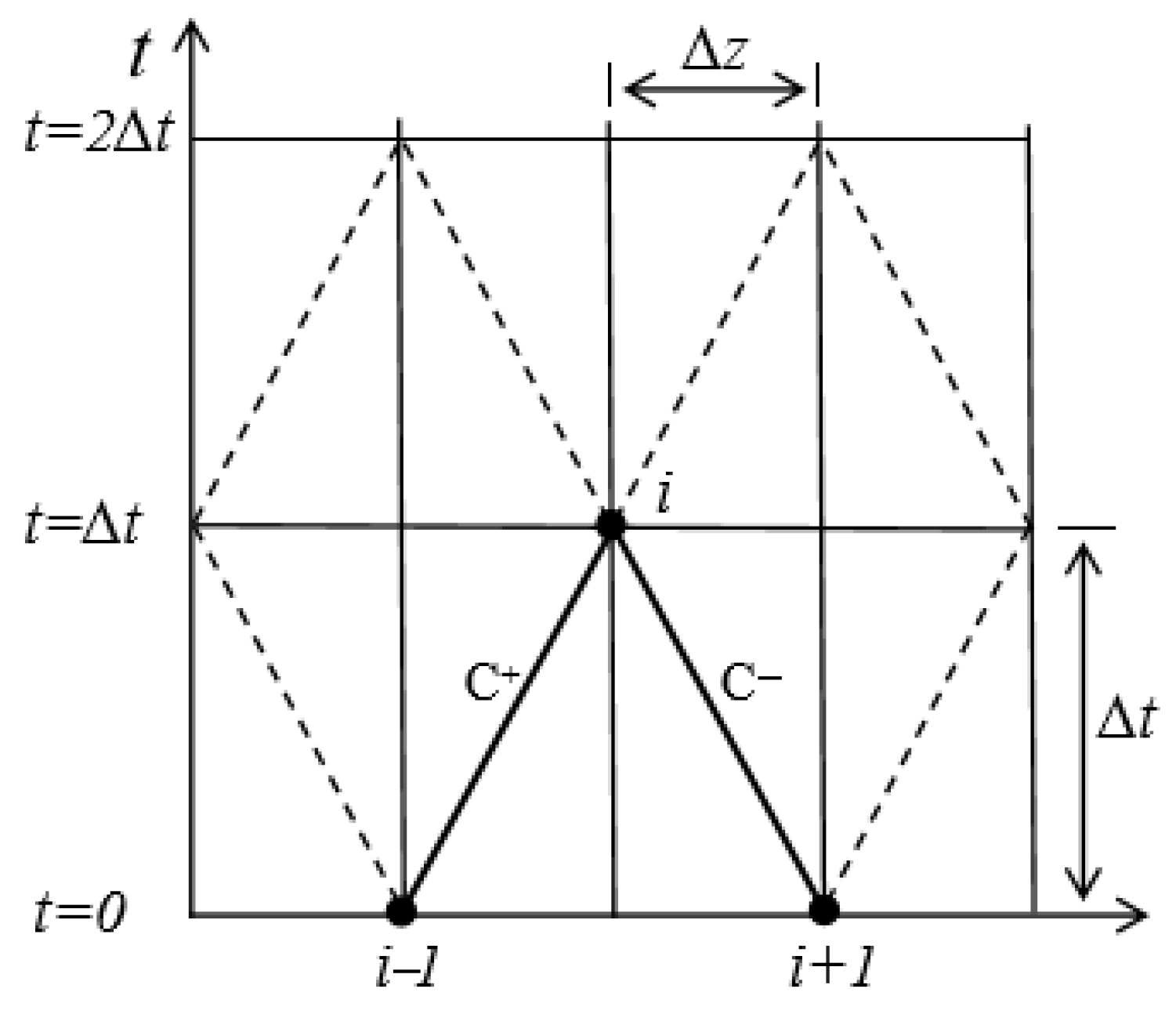
The control equations can be solved using the finite difference method, in which the pressure-wave fluctuations are typically solved using the method of characteristics. The characteristic grid diagram for the method of characteristics is shown in
Figure 4. Along the characteristic directions, the control equations can be discretized into ordinary differential equations, with the specific form as follows [
27]:
where g is the gravitational acceleration, v is the fluid velocity, z is the grid length, d
h is the hydraulic diameter, and q is the displacement.
Since the pump displacement is small, the average flow velocity in the cross-section of the pipeline and wellbore can be neglected without affecting the accuracy of the control equation solution.
3.3. Characteristics of Pressure-Wave Pulse Signal Channels
3.3.1. The Impact of Well Depth on Bottom-Hole Pressure Response
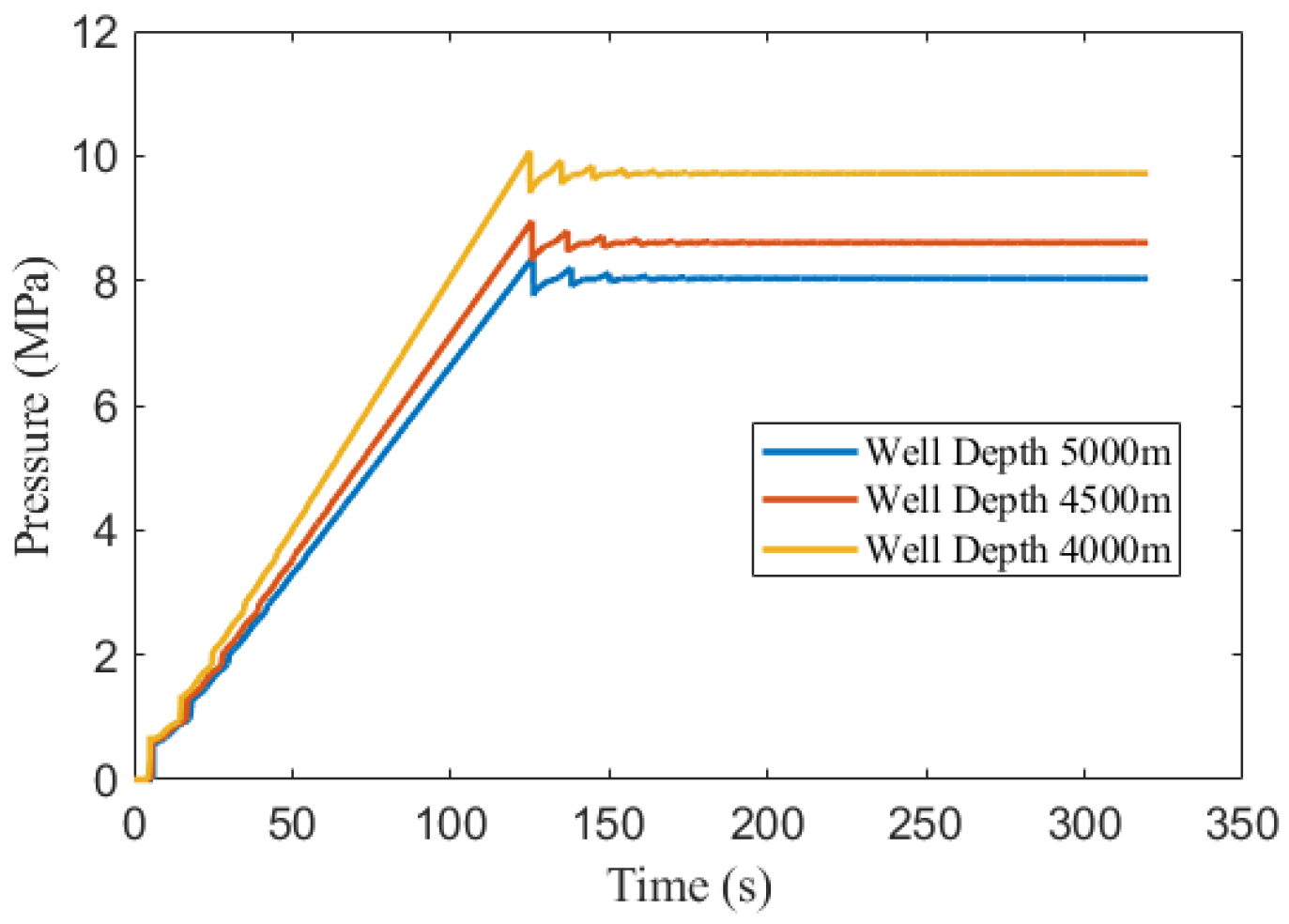
To analyze the impact of well depth on bottom-hole pressure response, the following simulation parameters were set: wave speed of 1250 m/s, wellbore diameter of 114.3 mm, fluid density of 1000 kg/m
3, pump displacement of 0.2 m
3/min, and fluid viscosity of 10 cP. Under the same pump displacement and pump-on time conditions, there is a significant difference in the steady-state bottom-hole pressure at different well depths. Simulation results in
Figure 5 show that an increase in well depth leads to a decrease in the steady-state bottom-hole pressure response, while shallower wells exhibit a larger pressure response. The steady-state numerical value of bottom-hole pressure in the wellbore increases from 8.1 MPa to 9.7 MPa with the increase in well depth. This pattern reveals that well depth is an important factor influencing the steady-state bottom-hole pressure.
3.3.2. The Impact of Wellbore Diameter on Bottom-Hole Pressure Response
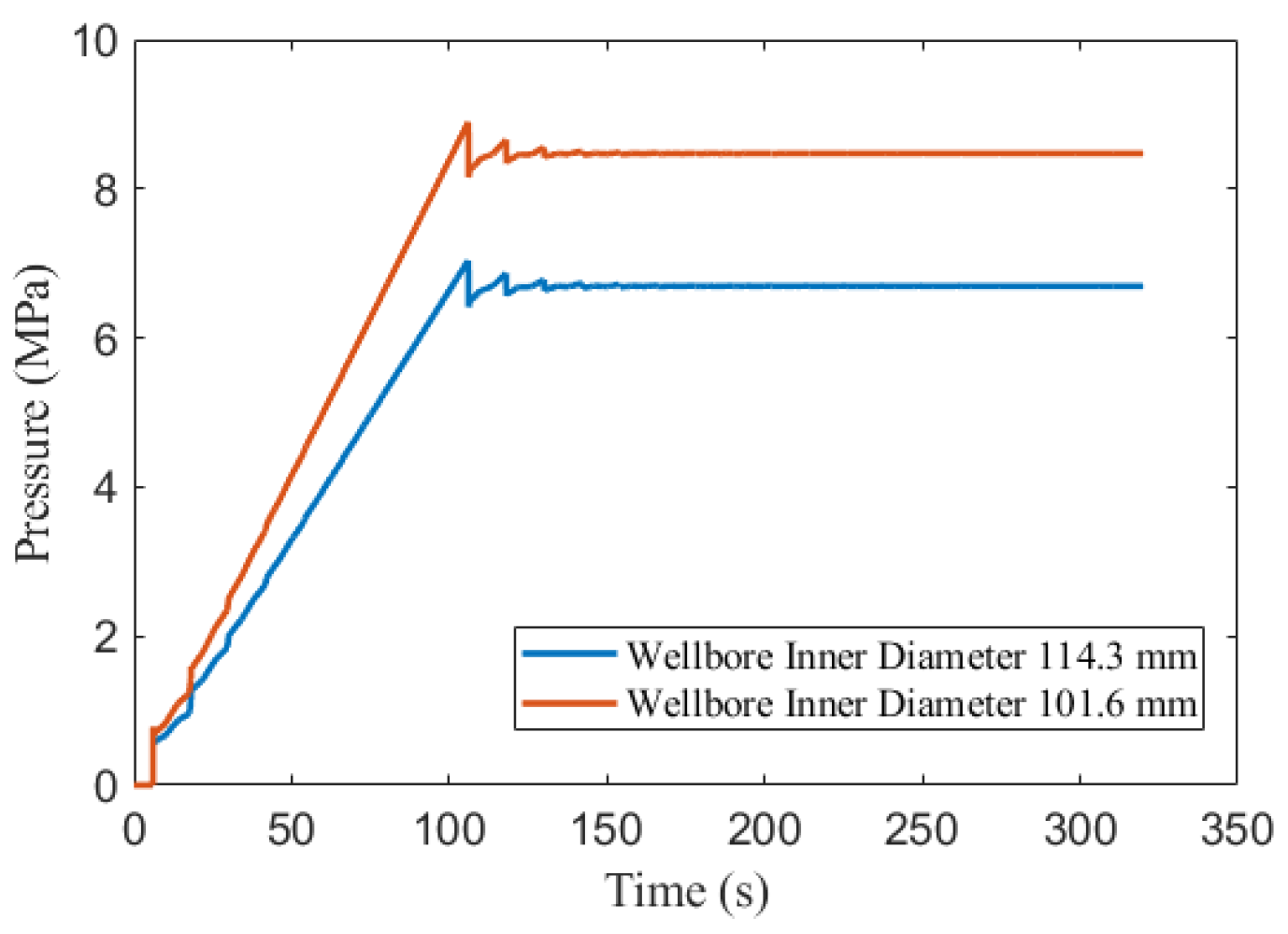
Under the condition of a well depth of 5000 m, the wellbore diameters are set to 114.3 mm and 101.6 mm, with the pump displacement kept at 0.2 m
3/min. As shown in
Figure 6, the larger the wellbore diameter, the greater the steady-state bottom-hole pressure response; conversely, the smaller the diameter, the smaller the steady-state pressure response. Furthermore, with the inner diameter increased by 12.7 mm, the steady-state bottom-hole pressure rises by 1.8 MPa. Comparing the sensitivity of well depth and wellbore diameter, it is found that the wellbore diameter has a significantly greater impact on steady-state pressure than well depth.
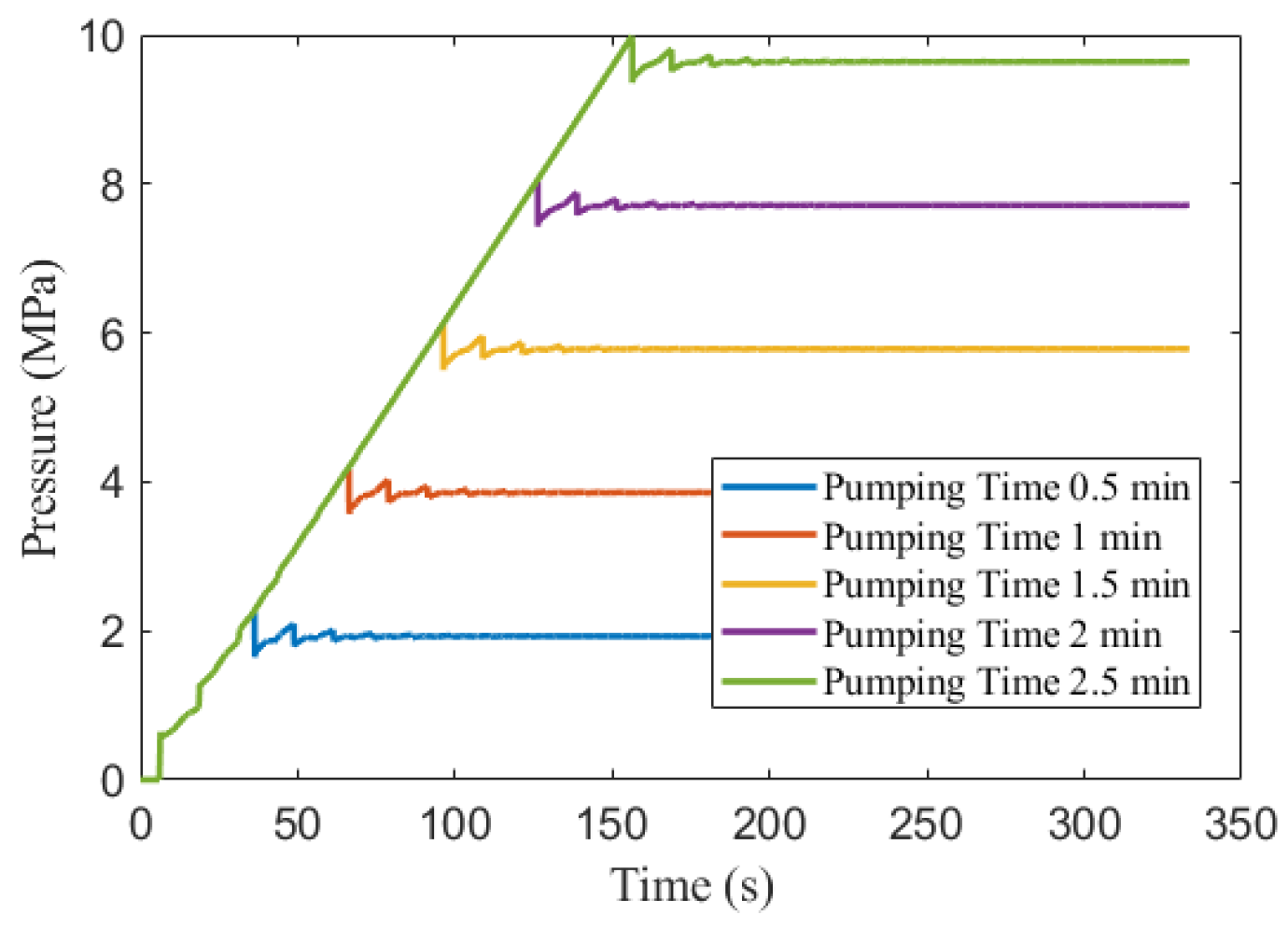
3.3.3. The Impact of Pump-On Time on Pressure Response
Based on the mathematical model of the ideal liquid pulse signal channel, the effect of pumping time on pressure response is further analyzed under real channel conditions. To more closely resemble actual operating conditions, the pressure-wave speed in the wellbore is set to vary in segments: 1200 m/s for the 0–1200 m section, 1250 m/s for the 1200–3700 m section, and 1300 m/s for the 3700–5000 m section. The fluid density is 1000 kg/m3, viscosity is 10 cP, and pumping times are set to 0.5 min, 1 min, 1.5 min, 2 min, and 2.5 min, with the pump displacement maintained at 0.2 m3/min.
In
Figure 7, simulation results show that the bottom-hole pressure response exhibits a certain time delay. Significant pressure fluctuations occur at both the start and stop of the pump, and the amplitude of the fluctuations gradually diminishes over time. The stable pressure amplitude is positively correlated with the pump-on time, reflecting the positive correlation between the injected fluid volume and the elastic energy changes in the wellbore.
3.3.4. The Impact of Pump Displacement on Pressure Response
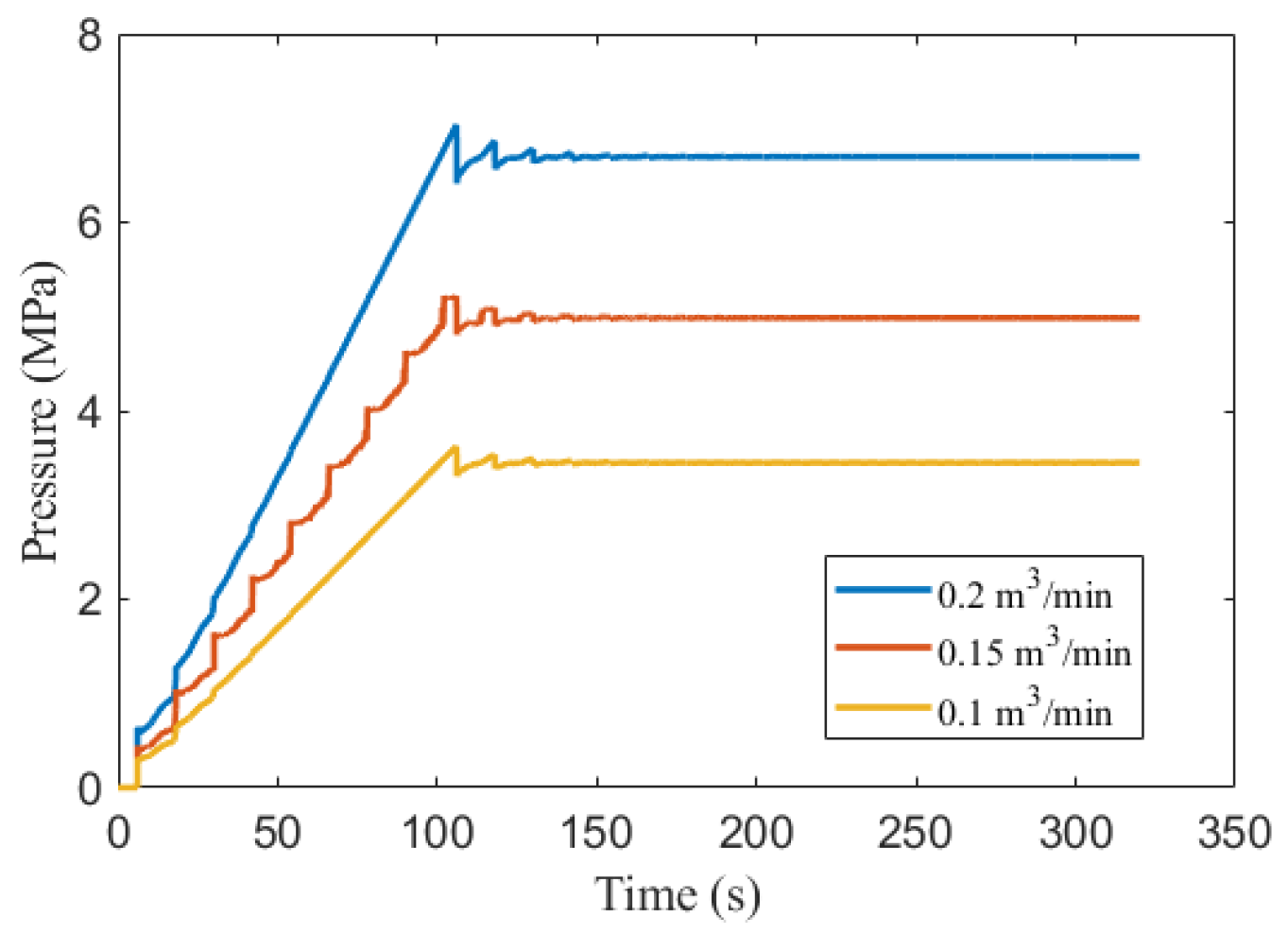
The pump-on time was set to 1.5 min, and the pump displacement values were 0.10 m
3/min, 0.15 m
3/min, and 0.20 m
3/min, with the wave speed distribution kept the same as previously mentioned. As shown in
Figure 8, the simulation results indicate that the greater the displacement, the larger the amplitude of the steady-state bottom-hole pressure response. At the same time, with higher displacement, the transient pressure fluctuations during the pump start/stop transition are also stronger. These fluctuations may increase the bit error rate during the decoding process, adversely affecting the accuracy of signal recognition.
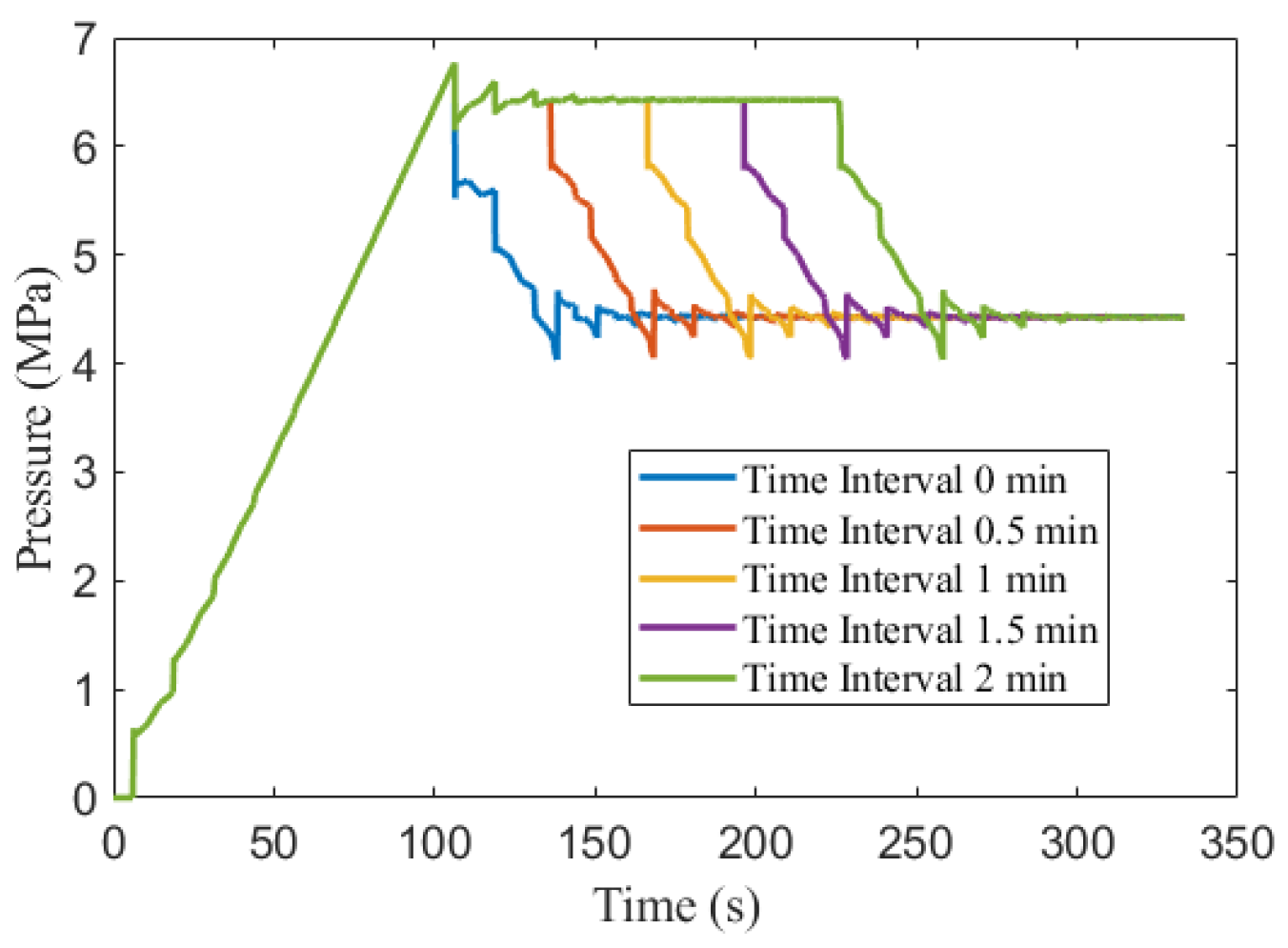
3.3.5. The Impact of Pressure Relief Start Time on Signal Recognition
To study the interference of pressure relief timing during the pump stop process on signal recognition, the following simulation parameters are set: pump operation time is 1 min, displacement is 0.2 m3/min, and wave speed distribution is the same as previously mentioned. The pressure relief valve start times are set at 0 min, 0.5 min, 1 min, 1.5 min, and 2 min after the pump stop, with a relief time of 0.5 min.
The results in
Figure 9 show that when the pressure relief valve start time is too close to the pump stop, the transient pressure fluctuations caused by the pump stop are likely to overlap with the pressure changes during the pressure relief process, thus interfering with signal recognition. Therefore, to improve recognition accuracy, the pressure relief process should be triggered after a delay following the pump stop to effectively avoid interference from displacement changes.
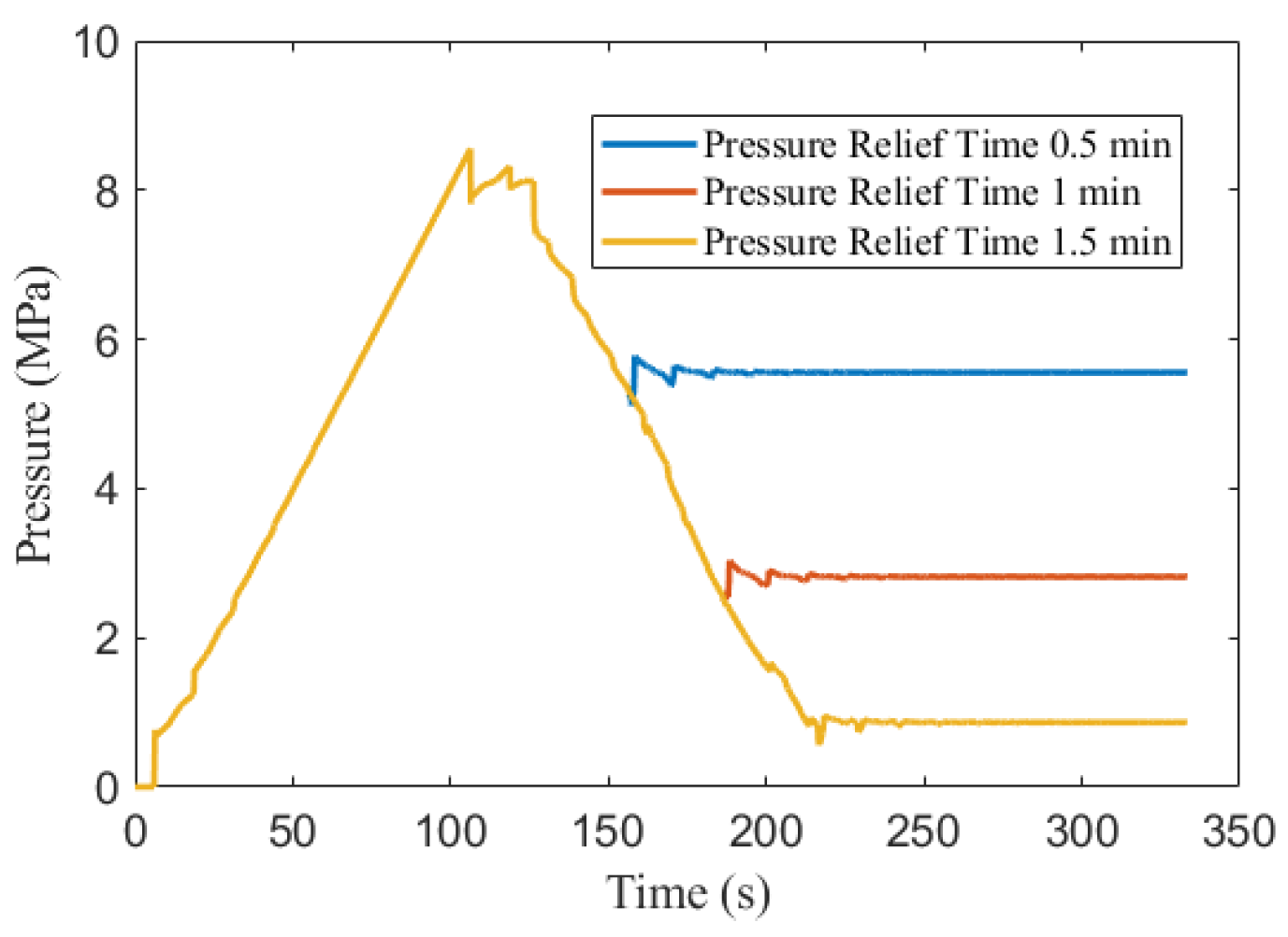
3.3.6. The Impact of Pressure Relief Time on Pressure Response
Under the previous conditions, the impact of pressure relief time (i.e., symbol duration) on bottom-hole pressure signals is further investigated. The pressure relief times are set to 0.5 min, 1 min, and 2 min.
Figure 10 shows that the shorter the pressure relief time, the smaller the bottom-hole pressure drop; the longer the pressure relief time, the greater the pressure drop. However, when the pressure relief time is relatively long, the difference in steady-state pressure amplitudes between different operating conditions decreases, indicating that the marginal effect of pressure relief time gradually weakens.
3.3.7. Analysis of Pressure-Wave Characteristics and Propagation Laws
In summary, the propagation characteristics of pressure waves are primarily influenced by a combination of pump-on time, pump displacement, pressure relief start time, and pressure relief duration, and they show a significant positive correlation with wellbore pressure response. Through frequency-domain analysis of the wellbore fluid channel’s impulse response, the following conclusions can be drawn:
Under the same displacement and fluid properties, the larger the wellbore fluid volume, the slower the pressure response rate and the smaller the steady-state pressure amplitude; conversely, the smaller the wellbore fluid volume, the faster the pressure response rate and the larger the steady-state pressure amplitude. Under the same well depth and pump-on time conditions, increasing the pump displacement accelerates the pressure response rate and increases the steady-state pressure; decreasing the displacement slows the pressure response and reduces the steady-state pressure. The pump-on time is linearly positively correlated with steady-state pressure amplitude; the longer the pump-on time, the larger the steady-state pressure. Excitation pressure fluctuations occur at the start and end of pressurization and at the end of pressure relief. The reflection waves from these fluctuations gradually attenuate to negligible levels after propagating through approximately three cycles in the wellbore.
3.4. Research on Liquid Pulse Signal Encoding
In order to analyze the transmission process of signals in a digital baseband transmission system, the frequency spectrum characteristics of digital baseband signals are first analyzed. There are countless types of digital baseband signals, and this paper takes baseband signals composed of rectangular pulses as an example. It analyzes several typical baseband signal waveforms and their applicable working conditions, providing a basis for the design of encoding and decoding schemes.
3.4.1. Typical Digital Baseband Signals
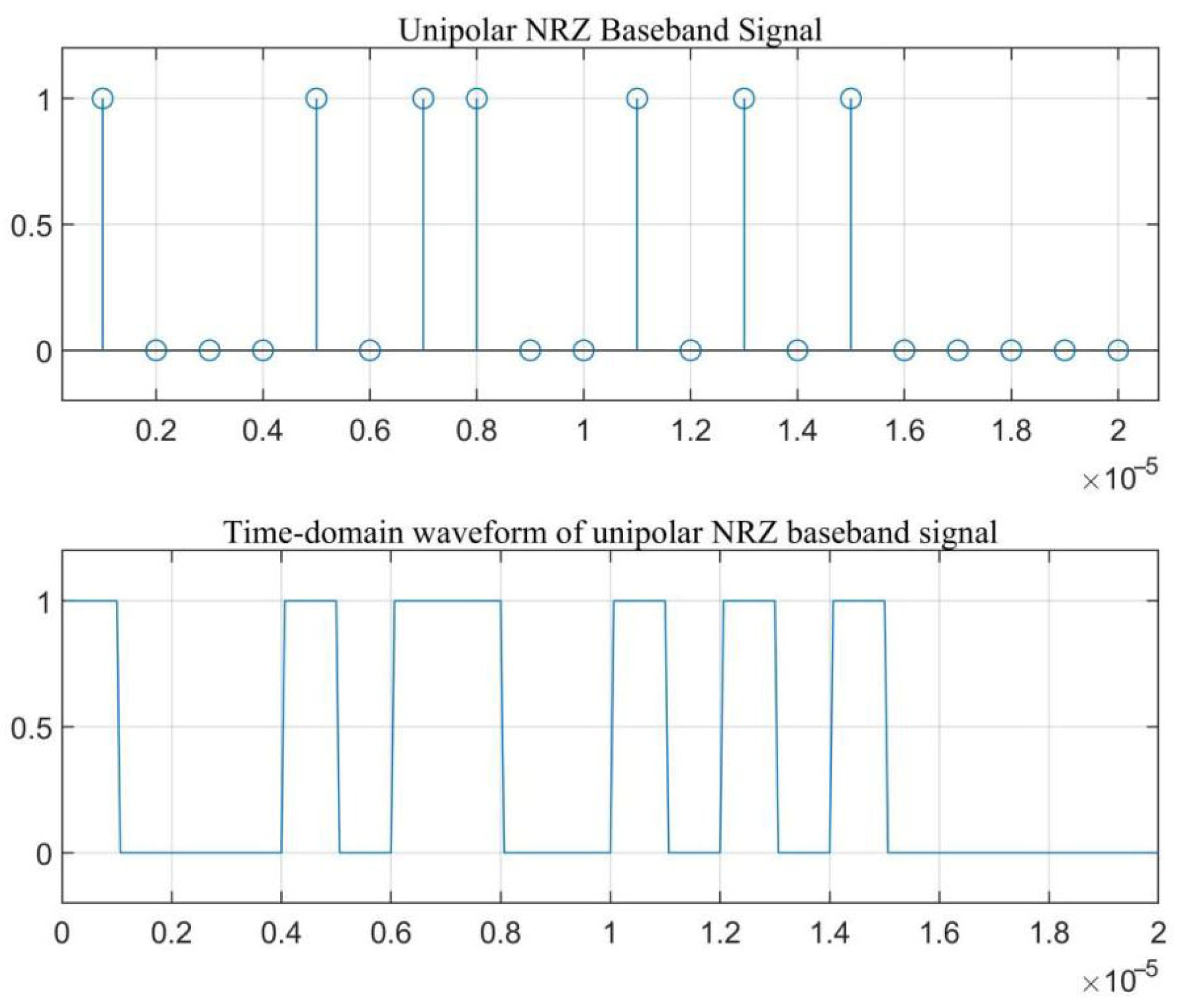
The waveform diagram of the unipolar non-return-to-zero (NRZ) code is shown in
Figure 11. It is composed of binary “0” and “1”, with the “0” voltage level and positive voltage level corresponding to the binary symbols “0” and “1”, respectively. From the unipolar code waveform, it can be observed that within one symbol time, there is either a signal or no signal, with no gaps between pulses and a single polarity.
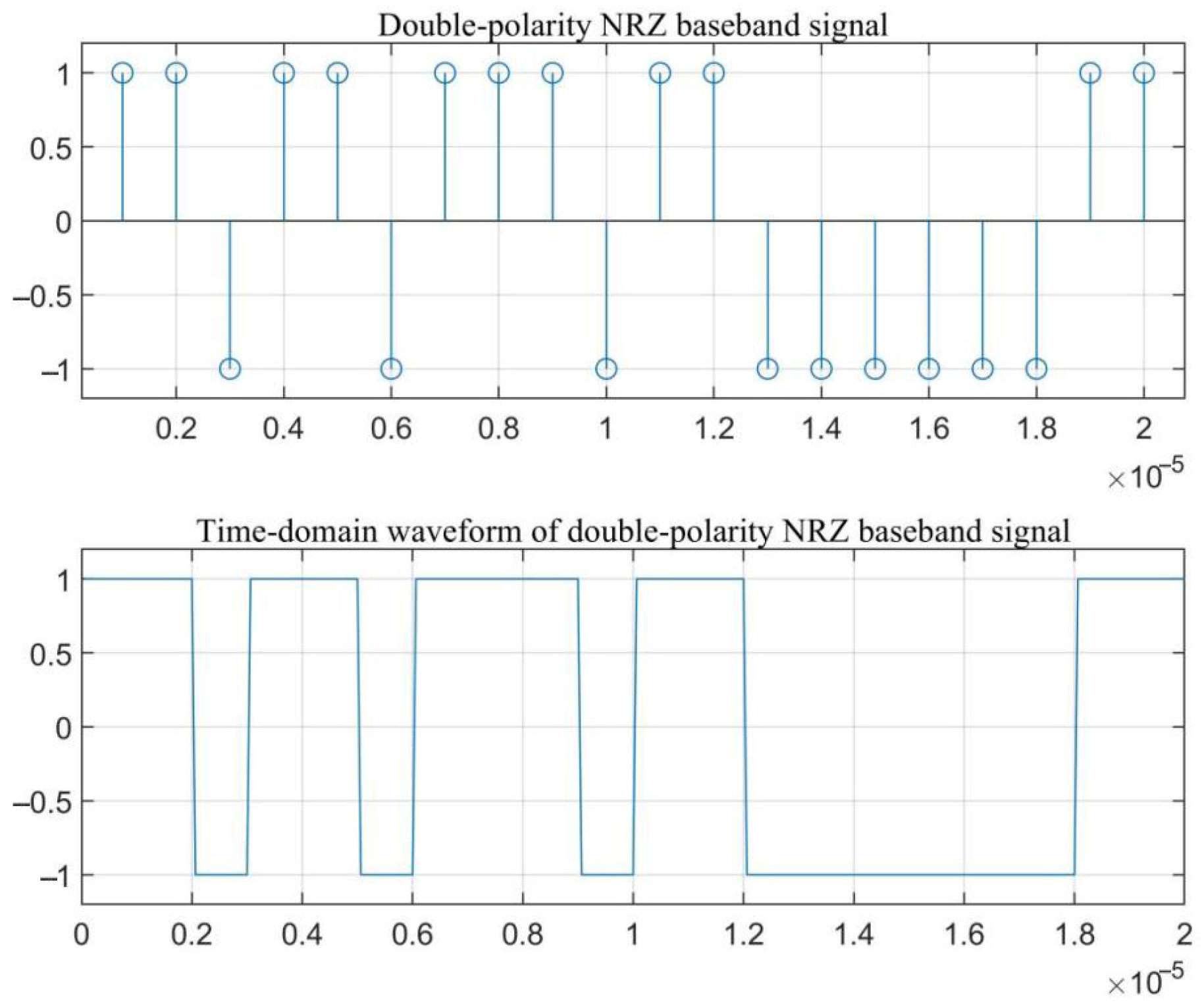
The waveform of the bipolar NRZ code is a waveform in which binary symbols 0 and 1 correspond to positive and negative voltage levels, respectively. The diagram is shown in
Figure 12. Like the unipolar NRZ code, there are no gaps between the electrical pulses. Since the binary symbols 0 and 1 appear with equal probability in the bipolar NRZ waveform, it will have no DC component.
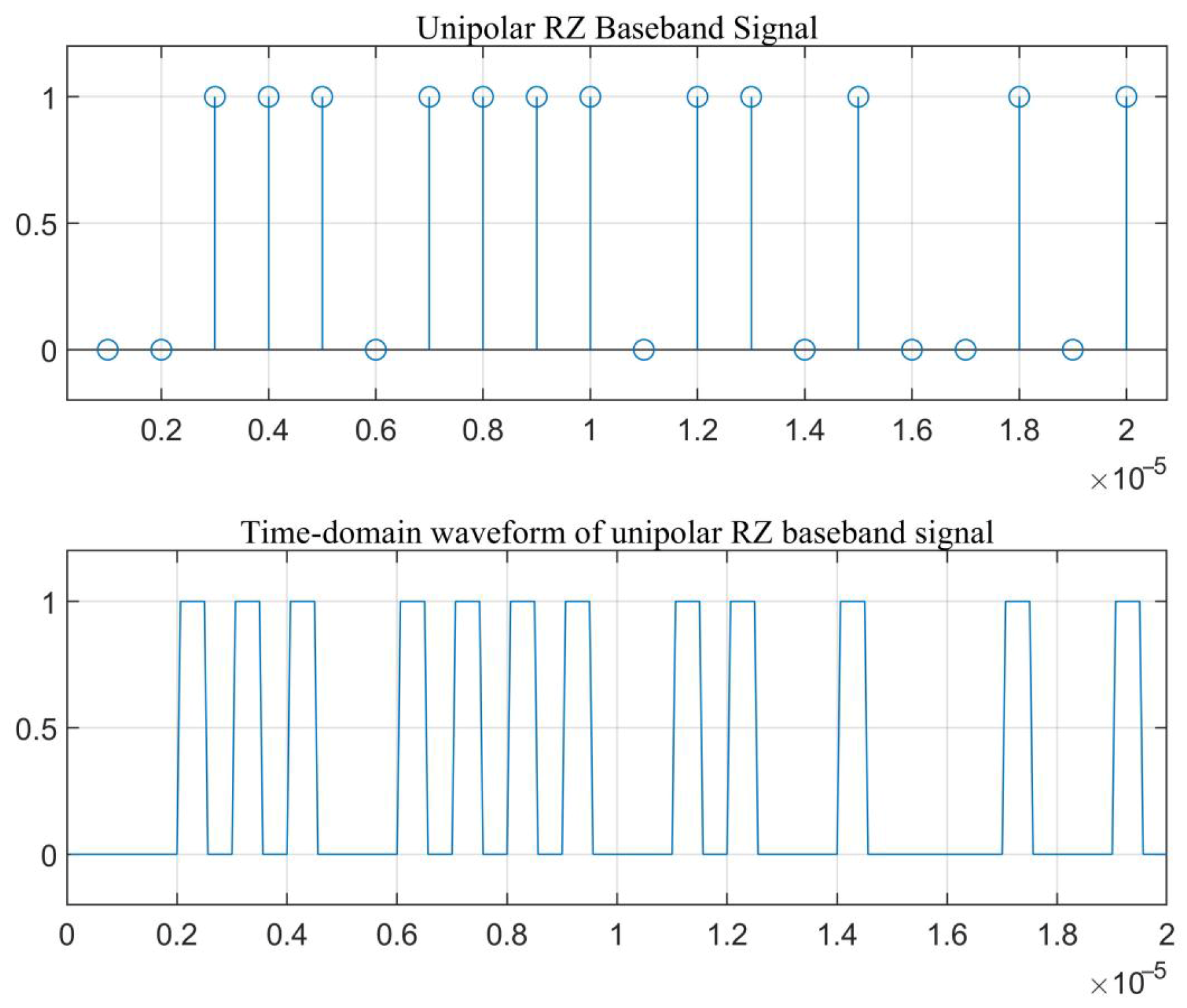
The waveform of the unipolar return-to-zero (RZ) code is shown in
Figure 13. Its characteristic is that the pulse width is narrower than the symbol width, and each pulse returns to the zero level.
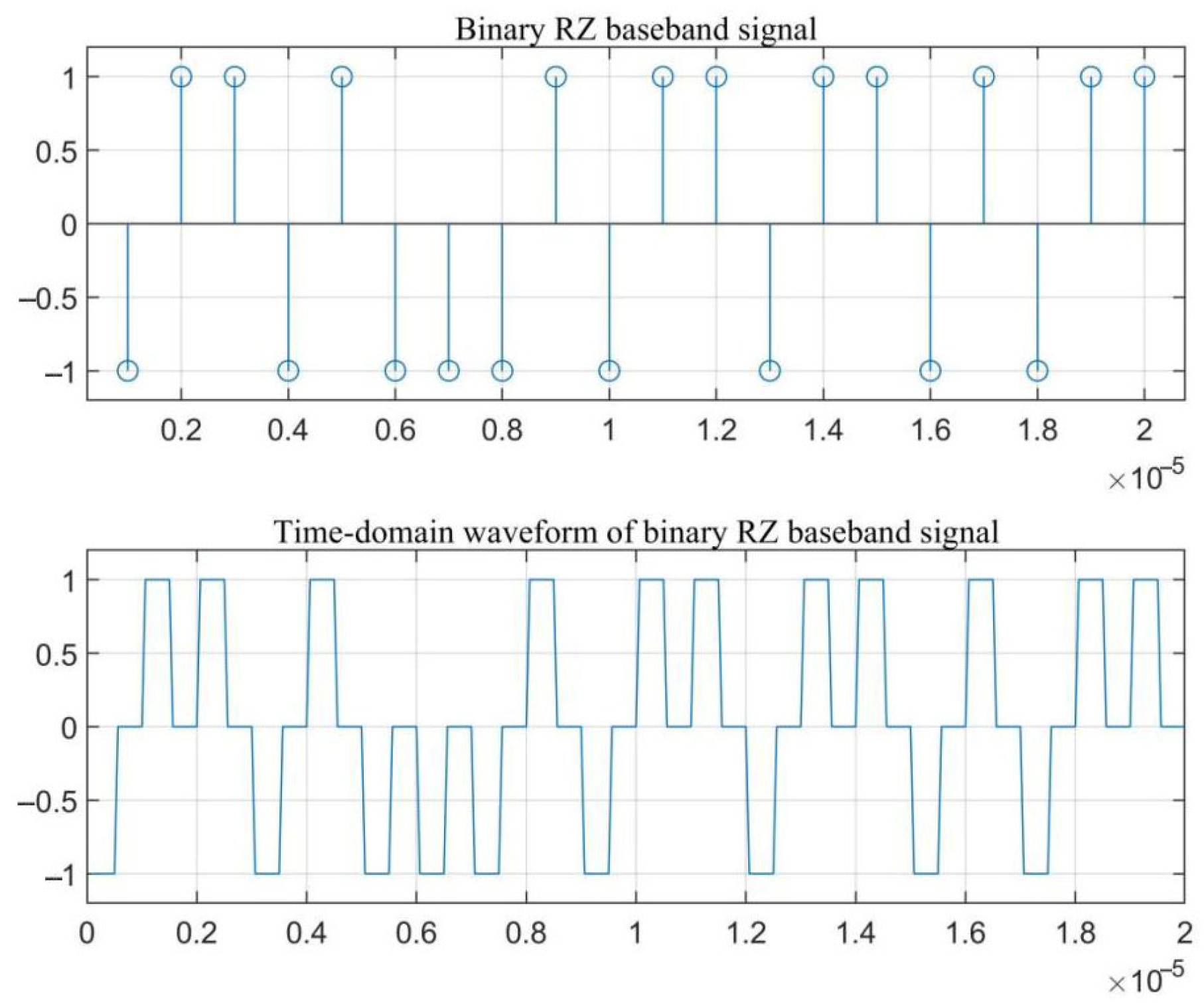
The waveform of the bipolar RZ code is shown in
Figure 14. For each symbol, a zero-voltage gap is generated, and there is always a zero-voltage interval between adjacent pulses.
3.4.2. Spectrum Characteristics
Source coding uses unipolar RZ code. According to the unipolar waveform, the following variables are set,
,
, and the power spectral density (two-sided) of the random pulse sequence is:
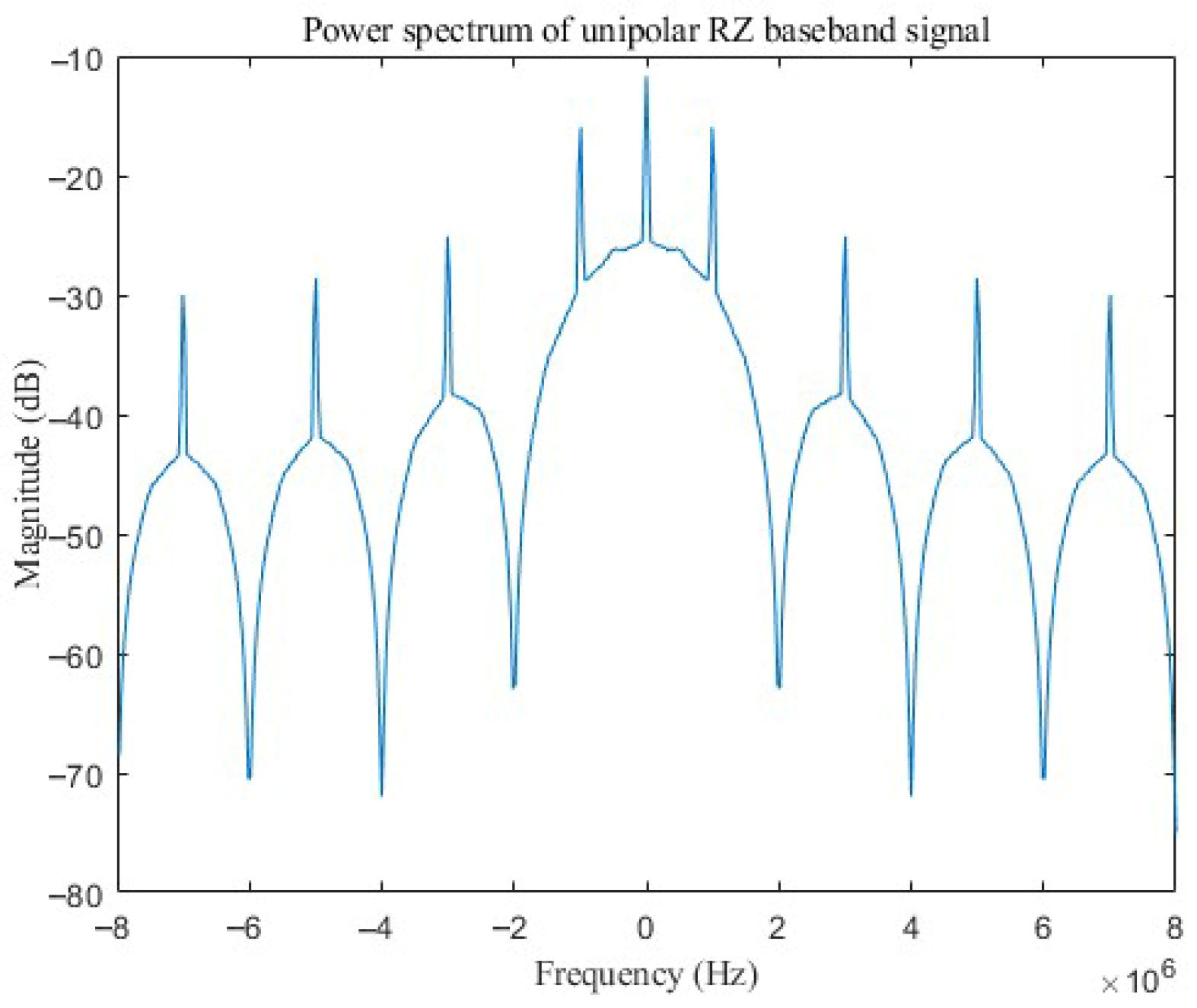
As shown in
Figure 15, the unipolar RZ code has discrete components in the frequency domain, containing timing components.
3.5. Channel Coding
Considering that the wellbore is a compressible fluid transmission medium with finite response time and significant delay characteristics, traditional codes such as RZ and Manchester require additional intermediate-level transitions in each symbol, leading to redundant time overheads and hindering the efficient transmission of more data per unit of time. Therefore, this study chooses bipolar NRZ as the communication encoding method.
Bipolar NRZ alternates between positive and negative polarities to represent “1” and maintains zero voltage for “0”. This method not only provides better DC balance and timing characteristics during transmission but also effectively suppresses signal distortion caused by low-frequency and baseline drifts. Moreover, this encoding method has a simple structure, low power consumption, and is suitable for real-time parsing of low-power downhole devices, meeting the comprehensive needs of reliability, real-time performance and energy efficiency in downhole communication systems.
3.6. Signal Decoding
In the wellbore fluid channel, due to phenomena such as delay, attenuation, and rapid dissipation of high-frequency components during pressure-wave propagation, the characteristics of pressure-pulse signals sent from the surface will undergo varying degrees of distortion at the bottom-hole receiver. Therefore, to accurately recover the effective information, a reasonable signal decoding method needs to be designed to improve the overall decoding accuracy and anti-interference capability of the system.
3.7. Bit Error Rate (BER) Analysis
Based on the Gaussian white noise probability density formula, we analyze the bit error rate (BER) formula for the communication protocol in this section. The Gaussian white noise probability density formula is as follows:
where
is the variance of the Gaussian distribution. When transmitting a “1”, the signal amplitude is A, the received signal amplitude is A + n(t), and the one-dimensional probability density function is:
When transmitting a “0”, the signal amplitude is A, the received signal amplitude is −A + n(t), and the one-dimensional probability density function is:
Assuming the decision threshold is |P+| = |P−| = P, the probability of deciding “1” as “0” is Pe1, and it can be expressed as:
The probability of deciding “0” as “1” is
, and it can be expressed as:
The probability of transmitting “1” is P(1), and the probability of transmitting “0” is P(0). The bit error rate can be expressed as:
From the above analysis, it can be concluded that the bit error rate for any communication system cannot be zero. From the above bit error rate formula, it can be inferred that increasing the pressure value for positive polarity and decreasing the pressure value for negative polarity can reduce the bit error rate in the communication process.
Based on the results from the first section, during the pressure rise and relief processes in the wellbore, the pressure value changes linearly with time. After determining the pressure values for positive and negative polarities, the slopes of the two curves can be obtained through testing. Considering that the influence of pressure waves propagating through the wellbore for three cycles can be neglected, the following formula for the symbol length is obtained:
where A
+ is a positive polarity steady-state pressure value; A
− is a negative polarity steady-state pressure value; k
+ is the pressure–time curve slope during the fracturing pump pressure rise process; k
− is the pressure–time curve slope during the pressure relief valve process; L is well depth; C is wave speed; T is symbol length; V
d is decision threshold; and σ is Gaussian noise distribution variance.
The BER-related analysis in this section is used as a theoretical criterion for the pressure-threshold decision rather than as a direct measurement of the communication error rate. In the proposed pressure-wave communication system, the transmitted symbols are represented by positive and negative pressure states. Due to pressure attenuation, background fluctuation, and measurement noise in the wellbore, the received pressure value may deviate from the ideal symbol amplitude. Therefore, the probability of misjudgment can be theoretically described based on the Gaussian noise assumption.
When the positive and negative pressure amplitudes are sufficiently separated, and the decision threshold is located near the midpoint of the two pressure states, the probability of symbol misjudgment can be reduced. This analysis provides a theoretical basis for selecting the pressure amplitude, decision threshold, and symbol duration. In particular, increasing the pressure difference between the positive and negative symbols and extending the symbol duration can improve the distinguishability of the received pressure states.
It should be noted that this study does not provide statistically measured BER curves, because the current experimental work mainly focuses on the feasibility of sliding sleeve activation rather than long-term bit-level communication performance evaluation. Therefore, the BER analysis is not used here as independent experimental evidence of communication reliability. Instead, the reliability of the proposed system is evaluated by combining theoretical decision analysis, laboratory repeatability tests, and field activation verification. Future work will include systematic BER tests under different noise levels, well depths, fluid properties, and pressure command sequences.
4. Design of Encoding and Decoding Schemes
4.1. Encoding Scheme
To adapt to actual operating conditions, the surface side excites the wellbore through pressurization and depressurization, forming positive and negative pressure pulses to carry the symbols. The encoding scheme follows the design principle of “simple and reliable.”
Considering that the communication link uses compressed wellbore fluid to propagate pressure waves, the effective transmission time is limited. If RZ or Manchester encoding is used, a zero section or bit inversion needs to be reserved within each symbol, introducing additional time overhead. In a “time-limited” pressure channel, this redundancy reduces the number of symbols that can be transmitted per unit time, thus limiting the symbol rate. Based on the above channel characteristics, this study selects bipolar non-return-to-zero (bipolar NRZ) as the channel encoding scheme: On one hand, its non-return-to-zero characteristic avoids the occupation of invalid time slots, thereby improving time efficiency; on the other hand, the symbols are symmetrically mapped with positive/negative polarities, making it more robust to low-frequency drift and some additive interference, which helps maintain the stability of the decision threshold in the strongly coupled wellbore elastic–inertial environment. Overall, bipolar NRZ not only balances implementation complexity and anti-interference performance but also better fits the efficient and robust transmission requirements under the ‘compressed wellbore fluid’ pressure propagation mechanism.
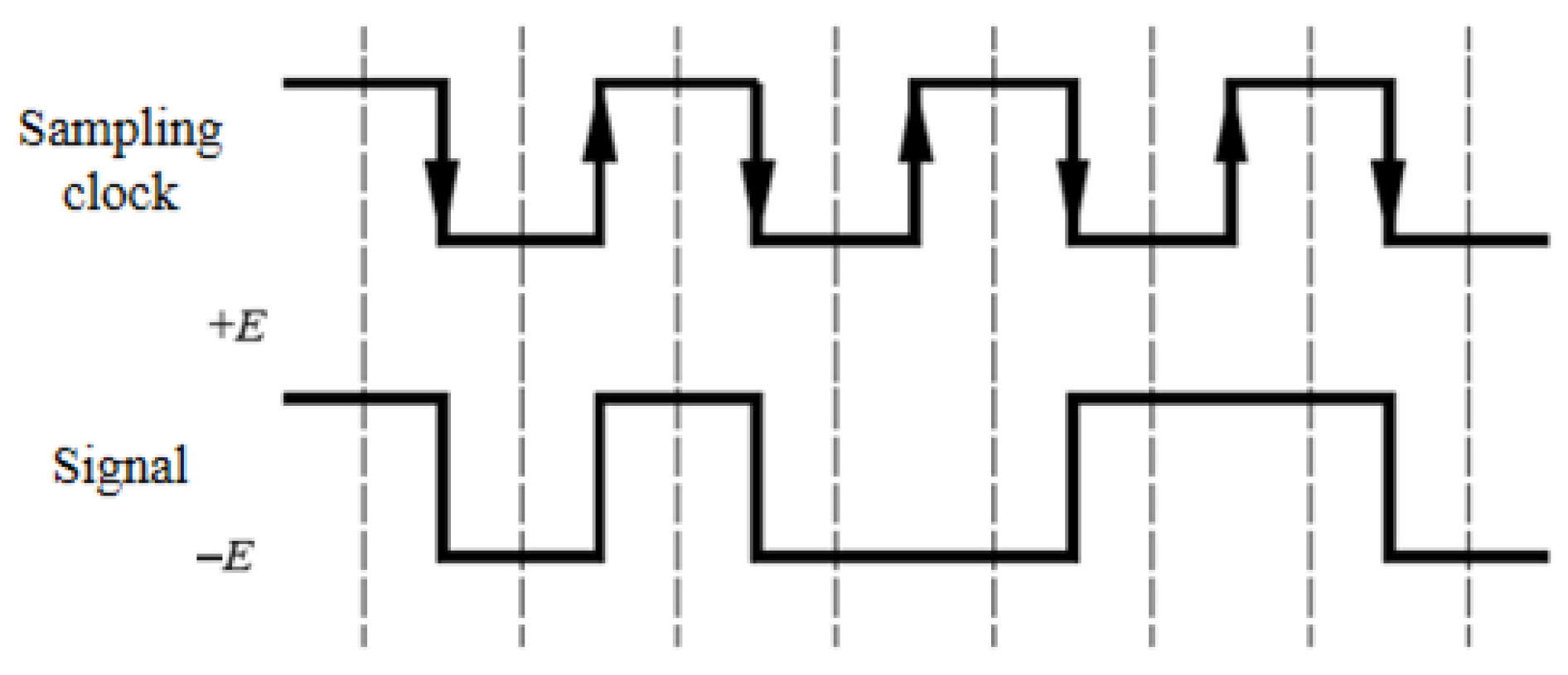
During data sampling, assume the valve is open for 1 and closed for 0, with a sampling frequency of 1 Hz (clock signal sampled at both edges), and 10 s is used as one time unit, as shown in
Figure 16. Pressure values are collected on the rising and falling edges of the sampling clock and converted to the corresponding data. As shown in the figure, the collected data is “10100110”.
4.2. Decoding Scheme
Bottom-hole pressure fluctuations are primarily low-frequency signals, typically below 0.1 Hz. Therefore, a finite impulse response (FIR) low-pass filter with a frequency around 0.1 Hz can be used as an estimator for the bottom-hole pressure to obtain the waveform. The bottom-hole pressure is then used to cancel out the bottom-hole pressure in the received signal, thus achieving the goal of eliminating bottom-hole pressure.
In this system, since the pressure signal generator is designed on the surface and the downhole equipment can only capture pressure pulses, the entire system operates as a half-duplex channel. The pressure pulses are generated in the wellbore through pressurization and depressurization, with positive and negative pulses used to transmit the information frame unidirectionally from the surface to the downhole. This setup is suitable for transmitting signals in deep wells.
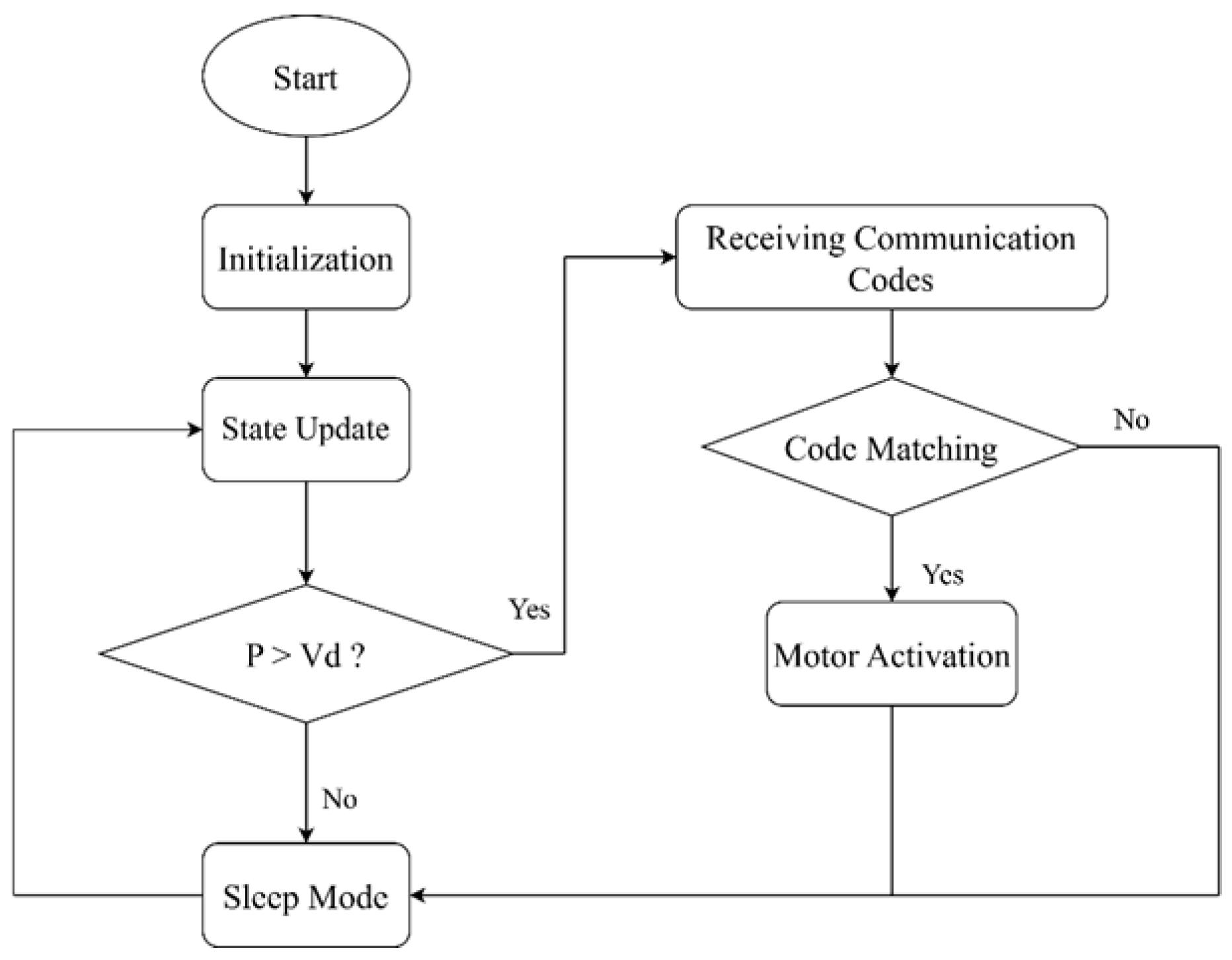
Given that the fluid transmission characteristics in the wellbore exhibit slow release of elastic energy and long transmission times, this study introduces a constant reference (Vd) method in the decoding decision process. Specifically, the surface end first sets the reference pressure Vd, and then switches between high- and low-pressure states through pressurization and depressurization operations. At any moment t(n), if the collected pressure value is P(n), it is determined that the symbol is “1” when P(n) > Vd, and “0” when P(n) < Vd. If the pressure value falls within a fuzzy range, the communication at that moment is considered to have failed.
In the decision mechanism, positive polarity pulse +E corresponds to the high-pressure state, and negative polarity pulse -E corresponds to the low-pressure state. When the decision threshold Vd is set to the midpoint of the positive and negative polarities, the bit error rate can be effectively minimized, thereby improving the reliability of the wellbore pressure signal transmission.
4.3. Communication Scheme
In the entire transmission process, the channel always operates in a half-duplex mode, with the only signal source being the surface pulse generator, while various downhole equipment only serves as the receiver, monitoring the channel data (i.e., fluid pressure signals) in real-time. Since communication only occupies a small portion of the total operating time in practical operations, and to meet low-power application requirements, the channel’s idle state is uniformly set to “0” in the design. When communication is required, a preamble is added to the transmission sequence to wake up the downhole equipment, prompting it to increase the sampling frequency and switch to communication mode.
Based on the transmission characteristics of the channel, this paper designs the data frame structure shown in
Figure 17, where data at different positions in the data frame contain different information. The steps of one communication process are described as follows:
Idle state: The channel does not transmit signals, and pressure is monitored every 5 min.
Preparation for communication: The preamble code “1” is transmitted first, lasting for 5 min, to wake up the low-power devices. After the device continuously detects high pressure three times, it enters the dense sampling stage with a sampling frequency of 10 Hz.
Processing the dense sampling data: The reference time is identified, and no signal is transmitted for 2–3 min.
Transmission of data frames: The data content and frame format are described later, with pressure being collected every 5 min.
End of transmission: The channel becomes idle, and signal “0” is transmitted.
This process describes a complete communication cycle (waking up the device, transmitting data, and entering sleep mode). The surface signal generator actively wakes up the downhole equipment, and after the communication ends, the downhole equipment completes its response and freely enters low-power mode.
As shown in
Figure 18, an example of the communication wake-up process is as follows: After the device is initially lowered into the well, it automatically detects the current channel pressure value as the condition for determining the channel’s idle state. Before each communication starts, the channel is restored to an idle state to allow the device to generate detection conditions.
The device is in sleep mode and checks the channel pressure every 5 min. If three consecutive high-pressure readings are detected, the device is immediately woken up, and the sampling rate is increased. When the sampling rate reaches one sample per second, communication begins, and the timed sampling is activated. After the data frame transmission ends, the device performs the response operation and then continues to sleep.
The communication frame structure was selected according to the low-power operating requirement of the downhole control module and the slow response characteristics of the pressure-wave channel. The idle state allows the receiver to remain in a low-power monitoring mode, while the preamble provides a reliable wake-up signal. The requirement of three consecutive high-pressure detections is introduced to avoid false triggering caused by random pressure fluctuation. The subsequent data frame is transmitted after the receiver enters dense sampling mode, which improves decoding reliability while reducing unnecessary energy consumption.
5. Communication Simulation
5.1. Channel Encoding Simulation
The transmission speed of liquid pulse signals is approximately 1100–1300 m/s. For a distance of 5000 m, the transmission time is about 4.2 s, meaning that after the signal is generated, it takes 4.2 s to reach the bottom of the well.
According to the overall design plan of the sliding sleeve, only one communication task needs to be completed, and the communication efficiency is not highly critical, but sufficient accuracy is required. Therefore, pressurization and depressurization methods are used to complete the transmission of surface signals to downhole information.
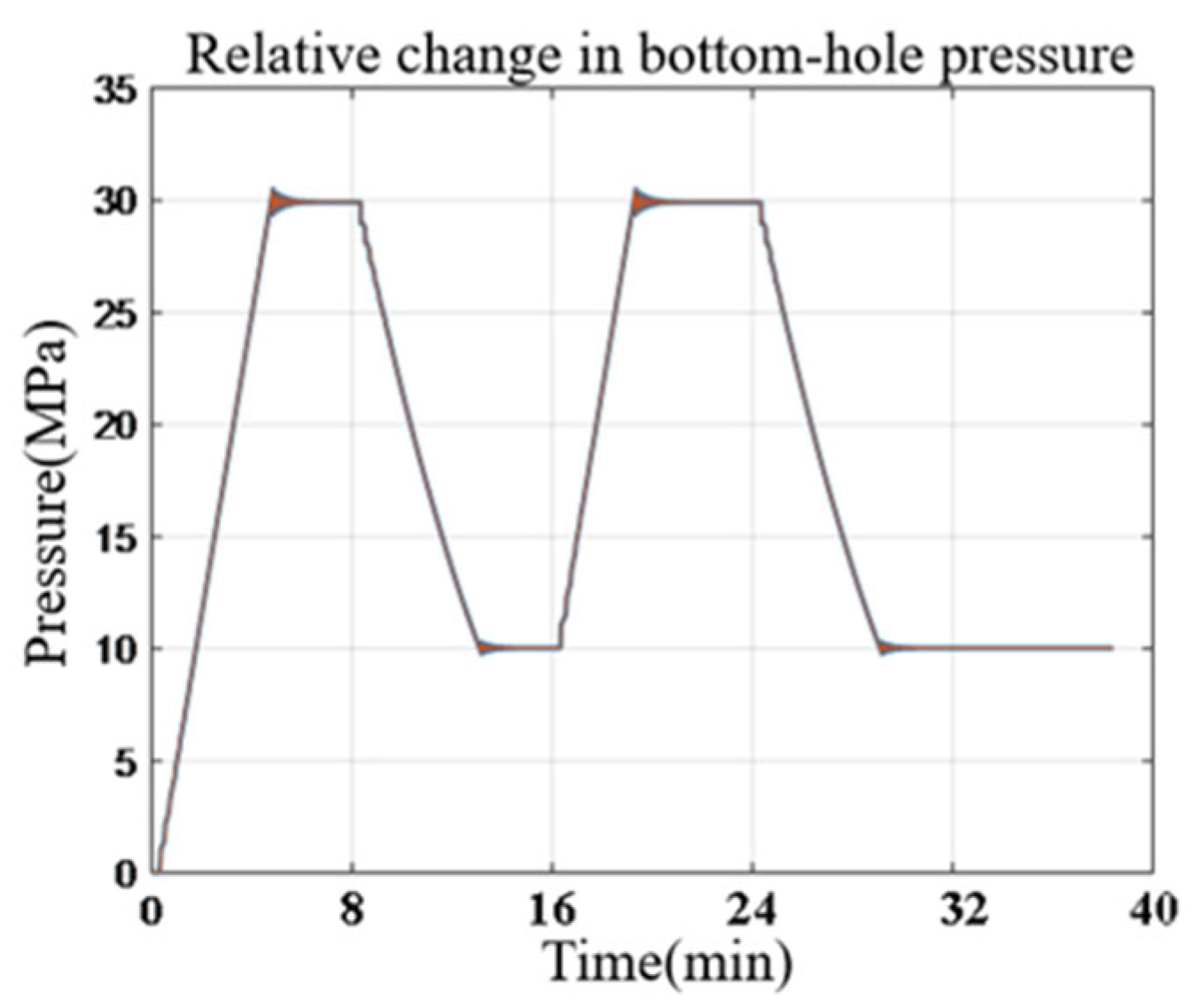
Using the established simulation model, the pressure relief valve symbol length was set to 8.3 min, with the encoding “1010”. The predefined encoding was executed 16 s after the pump was stopped, and the relative bottom-hole pressure changes are shown in
Figure 19. The variation in the surface overflow valve’s opening is well reflected in the bottom-hole pressure response, indicating that the digital baseband transmission method can effectively transmit surface signals to the downhole.
Based on the numerical simulation analysis, it can be concluded that, given the characteristics of this communication system—small data volume but high reliability requirements—priority should be given to increasing the pulse width to improve communication reliability. At the same time, on the basis of common baseband transmission coding schemes, the bipolar non-return-to-zero code is adopted as the transmission coding scheme, as it provides stronger noise resistance compared to unipolar codes. In addition, after receiving the liquid pulse signal, the pressure-pulse-activated sliding sleeve must perform signal filtering to decode the information carried in the pressure wave.
5.2. Communication Process Simulation
Based on the above encoding rules, sampling decision criteria, and the established model, the decoding process of pressure signals using downhole pressure variations is simulated. In this simulation, the high-pressure threshold is set to 30 MPa, the low-pressure threshold is set to 10 MPa, and the steady-state pressure is set to 20 MPa. During signal transmission, when the encoded bit is “1”, the pump is activated, and the pressure relief valve is closed; once the pressure exceeds the high-pressure threshold, the pump is stopped. Conversely, when the encoded bit is “0”, the pressure relief valve is opened, and once the pressure drops below 10 MPa, the valve is closed.
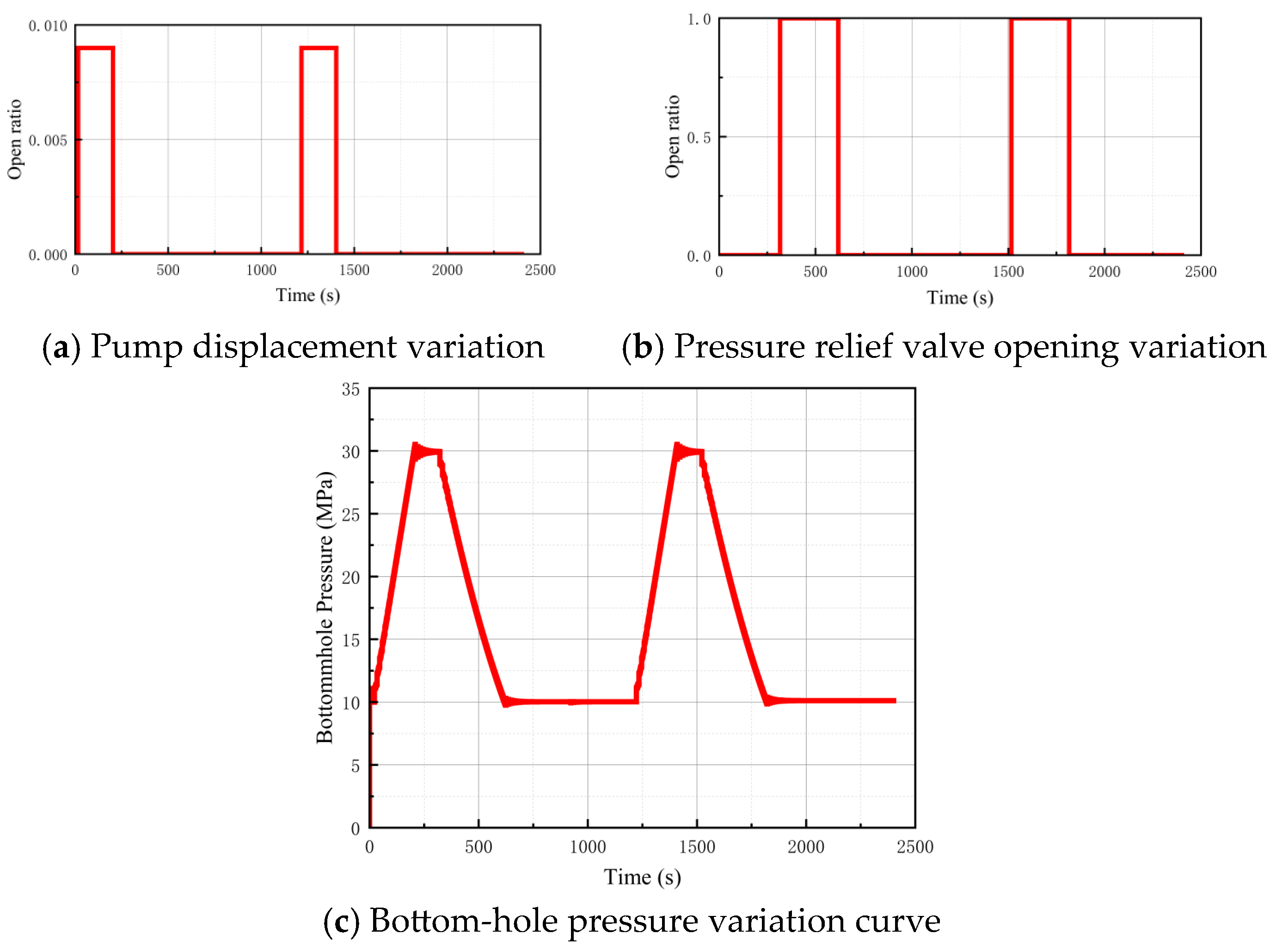
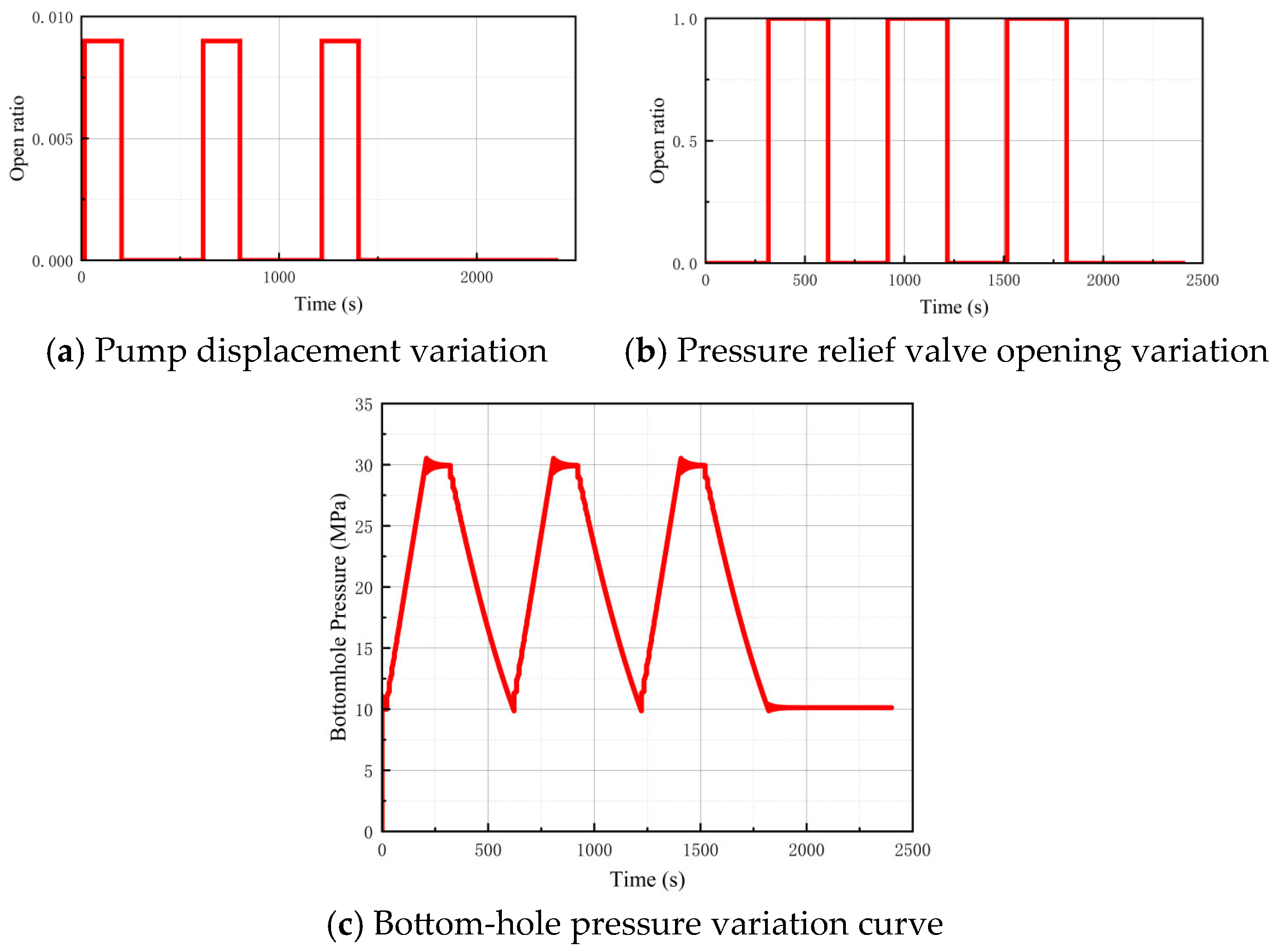
The three change curves in
Figure 20 illustrate the variation in pump displacement, pressure relief valve opening, and bottom-hole relative pressure when the encoding is “100010.” When the first “1” is decoded, the pump displacement increases in a pulsed manner, leading to an upward trend in bottom-hole pressure, which reaches 30 MPa before the pump is shut off, and the pressure stabilizes. When the second “0” is decoded, the pressure relief valve opening changes, and the bottom-hole pressure gradually decreases to 10 MPa. As the next two consecutive “0” codes arrive, the bottom-hole pressure falls below 10 MPa, and the pressure relief valve remains normally closed. The subsequent encoding continues similarly, effectively reflecting the changes in valve opening and pressure.
The three variation curves in
Figure 21 illustrate the changes in pump displacement, pressure relief valve opening, and bottom-hole relative pressure corresponding to the encoding “101010”. When the first bit “1” is decoded, the pump displacement exhibits a pulse-like increase, causing the bottom-hole pressure to rise. Once the pressure reaches 30 MPa, the pump is turned off, and the bottom-hole pressure remains stable. When the second bit “0” is decoded, the pressure relief valve opens, and the bottom-hole pressure gradually decreases until it reaches 10 MPa. The subsequent bits behave similarly to the previous ones, effectively reflecting the changes in valve opening and pressure response.
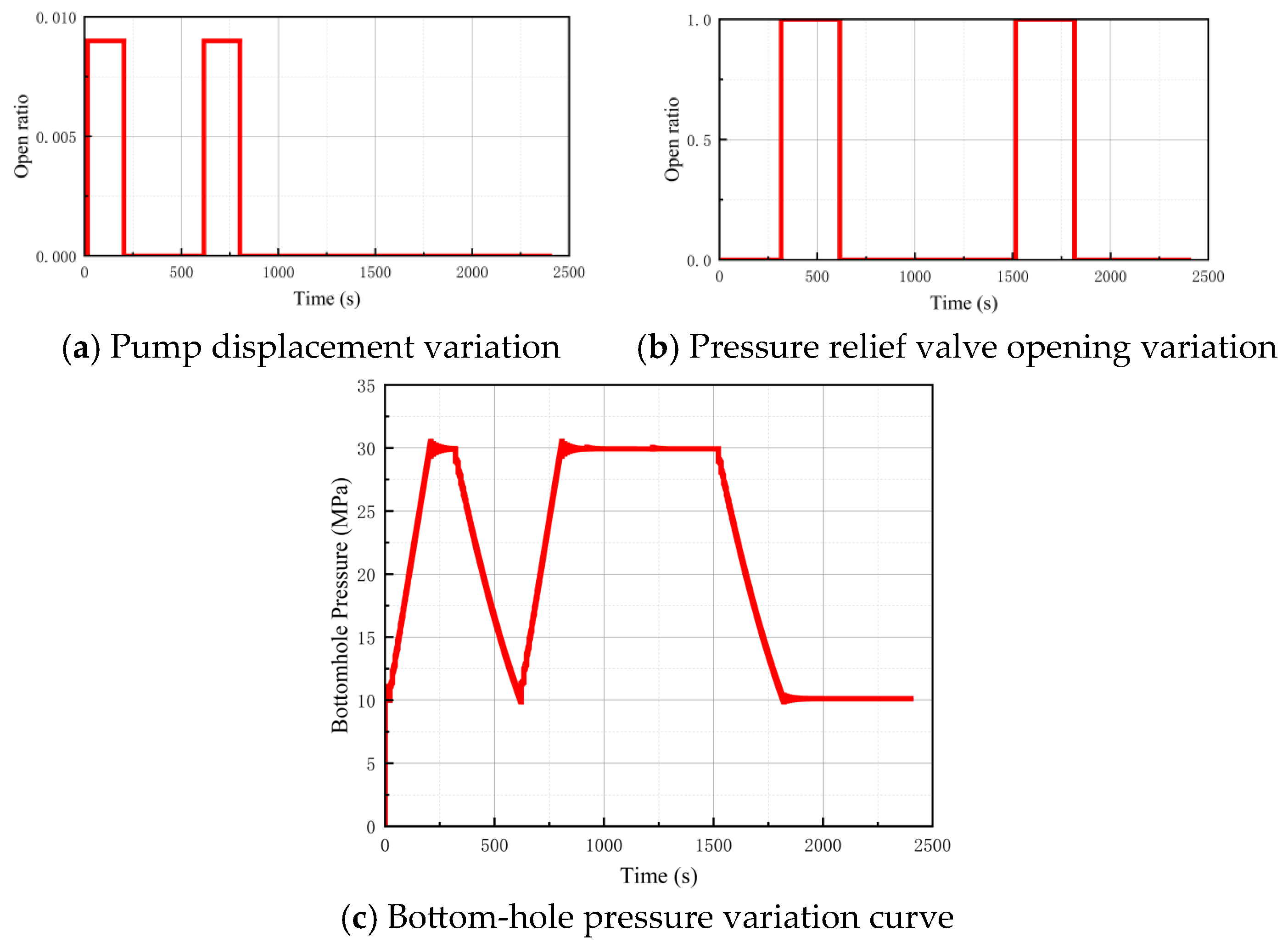
The three change curves in
Figure 22 illustrate the variation in pump displacement, pressure relief valve opening, and bottom-hole relative pressure when the encoding is “101110.” When the first “1” is decoded, the pump displacement increases in a pulsed manner, leading to an upward trend in bottom-hole pressure, which reaches 30 MPa before the pump is shut off, and the pressure stabilizes. When the second “0” is decoded, the pressure relief valve opening changes, and the bottom-hole pressure gradually decreases to 10 MPa. When the next “1” is decoded, the process repeats as before. As the next two consecutive “1” codes arrive, the bottom-hole pressure stabilizes at 30 MPa, and the pump remains normally closed. The subsequent encoding continues in the same manner, effectively reflecting the changes in valve opening and pressure.
This encoding sequence also incorporates parity check bits. The parity results demonstrate that this encoding method enables effective data transmission and preliminary error detection in wellbore pressure signal communication. It provides support for reliable signal transmission under downhole conditions and validates the applicability and effectiveness of using a bipolar NRZ code combined with parity checking in a simulated downhole environment.
7. Conclusions
This paper proposes a pressure-pulse-based sliding sleeve communication and control system to address the reliability issues of traditional cable-triggered or electromagnetic sliding sleeve systems in complex downhole environments with high temperature, high pressure, strong coupling, and signal attenuation. The simulation results indicate that well depth, wellbore diameter, pump displacement, pump-on time, pressure-relief timing, and relief duration jointly determine the bottom-hole pressure response. These results provide the basis for selecting the symbol duration, pressure threshold, and communication frame structure.
The adoption of bipolar NRZ coding is consistent with the slow-response and time-limited characteristics of the wellbore pressure channel. Compared with coding schemes requiring frequent transitions, bipolar NRZ reduces redundant time occupation and provides a clearer pressure-threshold decision margin. The BER analysis further indicates that increasing the separation between positive and negative pressure states and selecting an appropriate decision threshold can reduce the probability of misjudgment.
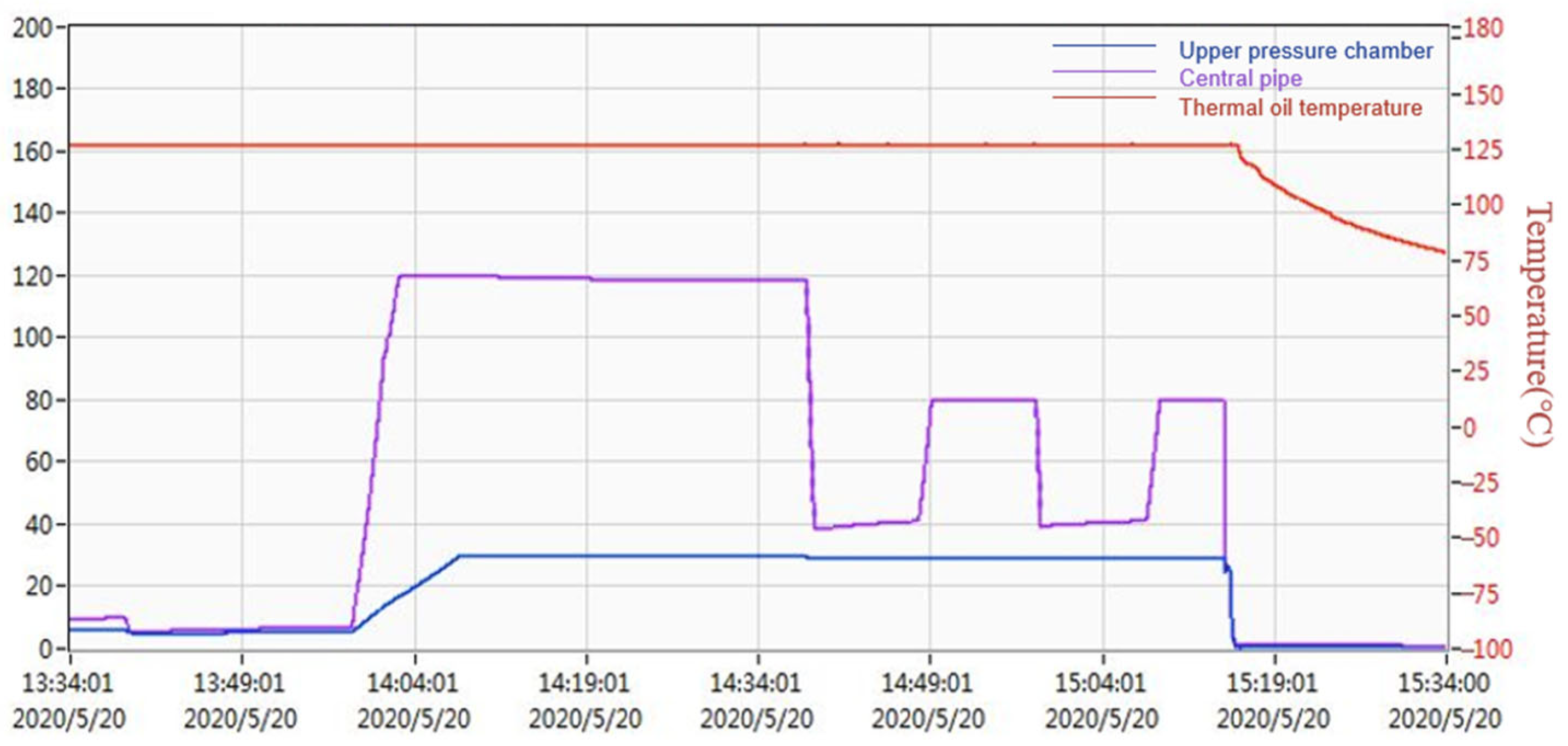
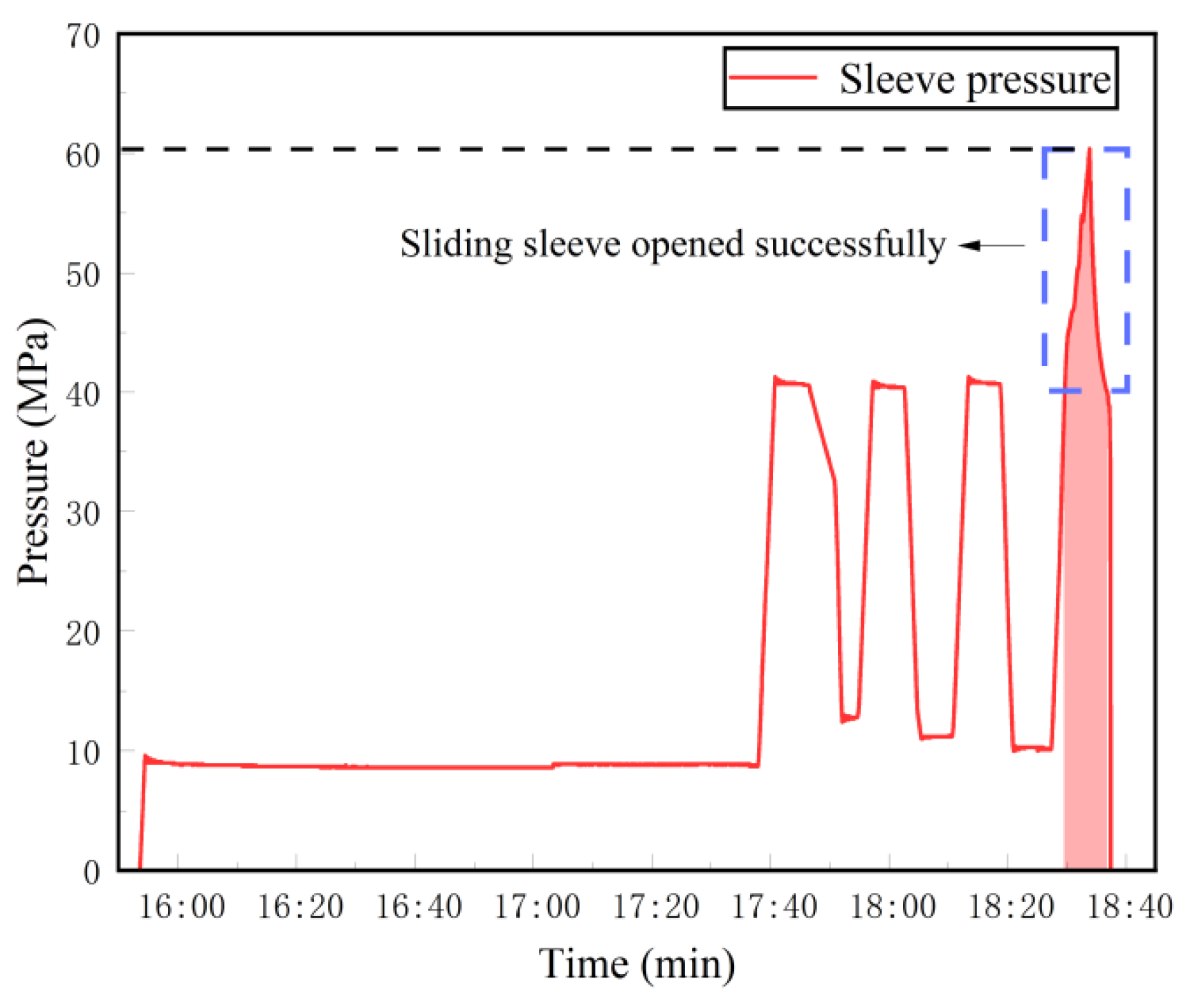
The laboratory tests verified that the downhole control system could receive and process pressure commands under 150 °C and 120 MPa conditions, while the repeated activation tests demonstrated good repeatability. The field test further confirmed that the designed pressure command sequence could be transmitted through the wellbore fluid and trigger the sliding sleeve opening. Therefore, the model, simulation, and experiments jointly support the feasibility of using surface-generated pressure pulses for downhole sliding sleeve activation.
8. Limitations and Future Work
Although the proposed pressure-wave sliding sleeve communication and activation system has been verified through simulation, laboratory tests, and field application, several limitations remain. First, the pressure-wave propagation model simplifies the wellbore as a one-dimensional fluid channel and does not fully consider casing elasticity, complex wellbore trajectory, multiphase flow, temperature-dependent fluid properties, tubular eccentricity, drill-string or downhole tubular contact with the wellbore wall, or local flow disturbances. Second, the BER analysis is mainly theoretical and simulation-based; more measured bit-level communication data are required to establish statistically reliable BER curves under different noise levels and operating conditions. Third, the field verification was conducted in a limited number of wells, and further field tests are needed to evaluate the adaptability of the system under different well depths, fluid properties, completion structures, and pressure environments.
Future work will focus on developing a more comprehensive pressure-wave channel model considering fluid–structure interactions and variable fluid properties, establishing a larger database of field pressure responses, optimizing adaptive threshold decoding algorithms, and conducting multi-well field tests to evaluate the robustness, operating limits, and long-term reliability of the system.