Article

AI-Assisted Systematic Layout Planning and Augmented Reality-Based Qualitative Spatial Assessment for the Design of a Cosmetic Emulsion Production Plant


by
Estela Guardado Yordi
1,
Reni Danilo Vinocunga-Pillajo
1,
Johnny Alejandro Cárdenas Bonifa
1,
Lenin Xavier Luzuriaga Ortiz
1,
Lianne León Guardado
2,
Matteo Radice
1,
Yailet Albernas Carvajal
3,
Reinier Abreu-Naranjo
1 and
Amaury Pérez Martínez
1,*
1
Facultad de Ciencias de la Vida, Universidad Estatal Amazónica, Puyo 160150, Pastaza, Ecuador
2
Independent Researcher, Miami, FL 33012, USA
3
Facultad de Química y Farmacia, Universidad Central “Marta Abreu” de Las Villas, Santa Clara 50100, Villa Clara, Cuba
*
Author to whom correspondence should be addressed.
Processes 2026, 14(11), 1809; https://doi.org/10.3390/pr14111809
Submission received: 15 April 2026 / Revised: 28 April 2026 / Accepted: 7 May 2026 / Published: 2 June 2026

Abstract

Transitioning toward efficient and digital industrial design requires preliminary tools that support early decision-making in plant layout studies. This qualitative and exploratory study analyzes an Artificial Intelligence (AI)-assisted and Augmented Reality (AR)-supported workflow within the Systematic Layout Planning (SLP) framework for the preliminary spatial evaluation of a cosmetic emulsion production plant. The study was developed as a case study based on a previously reported layout for obtaining cosmetic emulsions from Amazonian oils. A top-view layout was examined through structured prompts aligned with SLP criteria, including product journey, activity relationships, relational diagrams, and space requirements. ChatGPT was used only as a qualitative reasoning assistant, without optimization, prediction, mathematical modeling, or algorithmic functions. After the AI-assisted review, the refined layout was represented in three dimensions and visualized through AR in a real environment. The results identified potential improvements related to operational flow, traceability, critical area relationships, and spatial organization. AR-assisted visualization provided preliminary visual evidence of compatibility between the refined layout and the selected site, supporting an early review of circulation, access, and volumetric behavior. The sequential integration of SLP, AI, and AR is proposed as an exploratory workflow for early-stage layout evaluation, pending future quantitative validation studies and expert technical review.

1. Introduction

Currently, chemical industries, including agribusiness, recognize the importance of digital technologies because they redefine the way production facilities are designed and operated under Industry 4.0 principles [1,2]. This evolution is driven by the Internet of Things (IoT), artificial intelligence, big data, and collaborative robotics, and responds to the need to improve resources, reduce operating costs, increase productivity, and develop sustainable models that balance economic growth with environmental preservation [3,4]. Augmented reality (AR) and artificial intelligence (AI) are therefore transformative technologies that revolutionize the planning, operation, and modernization of agro-industrial systems [5].
AR has the ability to superimpose virtual elements onto real environments using mobile devices, thus providing an interactive visualization of digital data in real time [6,7]. This feature has demonstrated significant improvements in efficiency and accuracy in plant design, equipment assembly, construction supervision, technical training, and prototype validation [6]. For agro-industrial industries, AR offers opportunities for improving the technical and logistical configuration of production lines and identifying failures ahead of physical execution [8]. In the cosmetics industry in particular, this technology could be useful for validating layouts of critical areas such as formulation, emulsification, and packaging, thereby anticipating possible failures before physical construction.
For its part, AI can be applied in industrial process automation, even in routine tasks, advanced data analysis, pattern identification, intelligent monitoring, reduction in operational errors, and refinement of strategic decision-making [9,10]. In the design of cosmetic production plants, AI can add value by improving material flow, identifying potential bottlenecks, and suggesting more coherent spatial configurations in complex scenarios. This industry recognizes the need to be adaptable and innovative in the face of growing demand for high-quality, customized, and sustainable products [11]. These demands have forced a rethink of production methods and the supply chain, which in turn is driving the modernization of plant design.
In particular, the combination of AI-assisted reasoning with augmented reality for preliminary spatial evaluation of plant layouts has not yet been widely investigated in this industrial context. This gap is addressed here from a qualitative and exploratory perspective.
Although AR and AI are often discussed within broader digital twin frameworks, the present study does not develop a digital twin. Instead, it examines an AI-assisted layout evaluation workflow combined with AR-assisted visualization for preliminary spatial evaluation during early-stage plant design. This distinction is relevant because the proposed workflow does not include real-time data, simulation, control loops, or quantitative model calibration.
The design and layout of chemical plants is currently dominated by traditional methodologies that are characterized by their static nature, their dependence on approaches based on pre-established rules, and their limited ability to adapt to changing conditions [12]. Some of the most recognized methodologies for improving plant layout are approaches that seek to improve efficiency, functionality, and adaptability. These include that of [13], which incorporates general services and future expansions, and that of [14], whose systematic layout planning (SLP) establishes a structured framework for analyzing and improving spatial layout by considering material flows, operational interactions, and specific functional requirements [15], among others.
Nonetheless, these approaches remain essentially static. This limits their applicability in the cosmetics industry, which is undergoing a transition to Industry 4.0, characterized by dynamic processes and high regulatory requirements [16,17]. It has been suggested that design methodologies should contribute to the: (i) strategic location of equipment, (ii) efficient access to raw materials and supplies and safe circulation routes, (iii) operational logic that minimizes production times, and (iv) periodic renewal of machinery to avoid unscheduled downtime and ensure the continuity and efficiency of the production process [13,18]. Facility layout design (FLD) is another fundamental element in industrial planning. It has evolved from empirical methods (FLD 1.0) to mathematical optimization models (FLD 2.0), simulation tools (FLD 3.0), and, more recently, the integration of disruptive technologies specific to Industry 4.0 (FLD 4.0), supported by generative AI and digital twins [19].
From this perspective, generative AI can be incorporated as a qualitative reasoning support to assist engineers in evaluating layout alternatives, identifying potential inconsistencies in spatial organization, and refining early design decisions [20]. Similarly, augmented reality can provide an immersive mechanism to examine the spatial compatibility of proposed layouts within a real or simulated physical environment [21].
Consequently, it is necessary to examine how AR and AI may support early-stage plant design without presenting them as substitutes for engineering calculations, simulation, or expert validation. In this context, the present study analyzes a qualitative and exploratory SLP + AI + AR workflow for the preliminary spatial evaluation of a cosmetic emulsion production plant. The contribution of this work lies in showing how generative AI can assist qualitative reasoning during SLP-based layout review, while AR-assisted visualization provides an immersive mechanism for preliminary spatial inspection of the proposed plant configuration.

2. Materials and Methods

2.1. Procedure for Plant Design (Plant Layout)

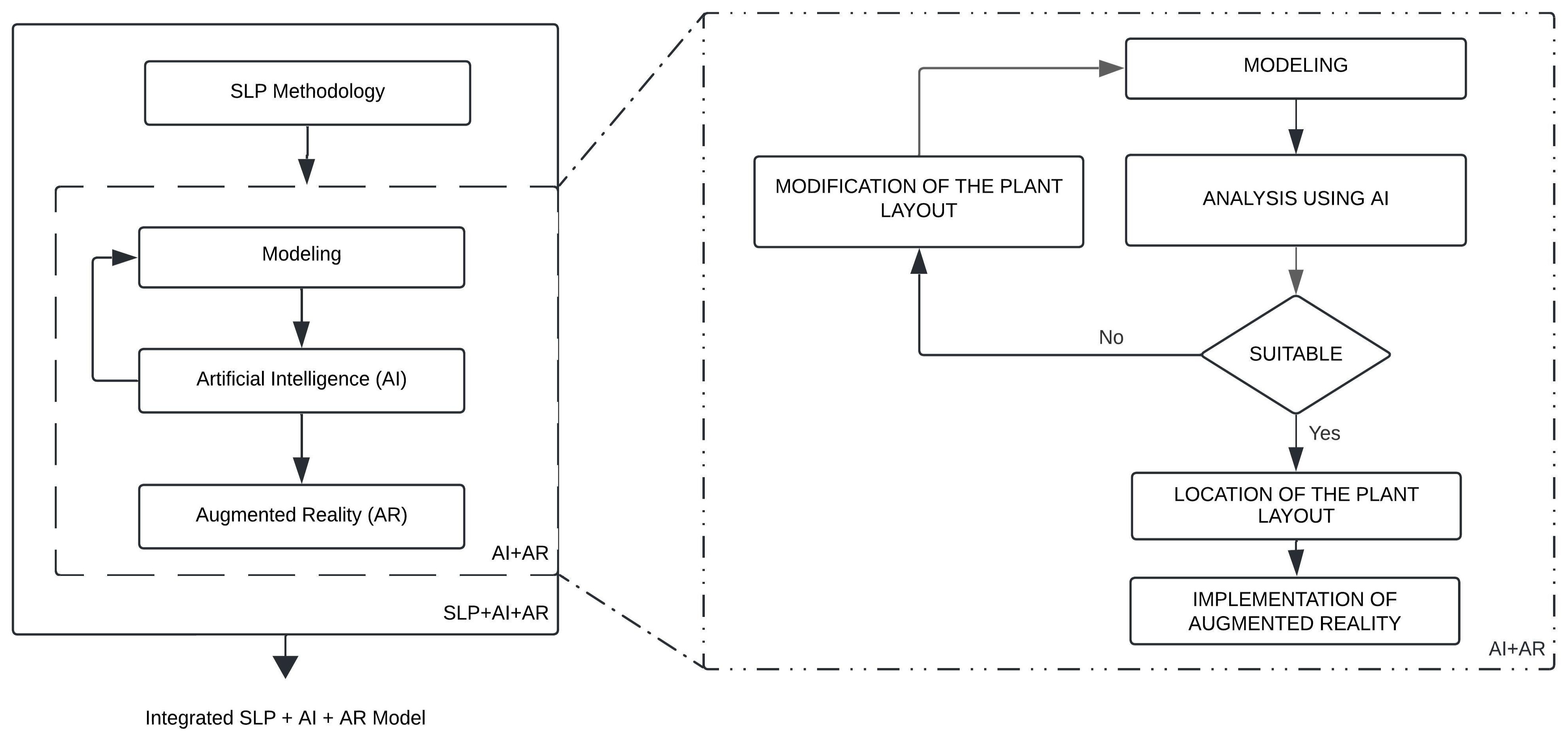
For the plant layout design, the SLP methodology proposed by [22] was applied and complemented with AI-assisted qualitative analysis and AR-assisted spatial visualization (Figure 1). The study was conceived as a qualitative and exploratory case study. The workflow was used as an early decision-support procedure and not as a mathematical, algorithmic, predictive, or optimization model.
Plant layout representation was performed using SketchUp Web 2025 software and focused on generating three-dimensional representations of the areas and equipment involved in the technology described in the case study (Section 2.2).

AI-Assisted Layout Evaluation and AR Visualization

The integration of AR and AI followed the workflow (Figure 1) and aimed to support a preliminary layout configuration according to the criteria established in the SLP methodology. The procedure was limited to qualitative spatial assessment, based on structured prompts, researcher interpretation, and AR-assisted visualization.
The process began with the plant layout representation, and an analysis was performed using AI, following these steps to interact with the AI (ChatGPT-4.5):
(1)
Upload the top view of the plant layout, taken from [23].
(2)
Structured prompts were formulated to interact with the AI system (ChatGPT-4.5).
The general prompt used was: “Act as an industrial design specialist. I need to perform a technical evaluation of the plant layout as seen from above. I need the analysis to include a review of operational flows, spatial distribution, and compliance with plant layout principles using SLP in order to identify opportunities for improvement.” This instruction enabled the AI to provide qualitative observations based on SLP principles. These outputs were not treated as quantitative results, predictions, or optimization outputs. Instead, they were interpreted by the researchers as AI-generated qualitative observations to guide the refinement of the layout (Table 1).
The AI outputs were used to qualitatively evaluate the plant layout (top view) according to the criteria established in the SLP methodology. To improve consistency, the prompts were repeated across the same SLP criteria, and the resulting observations were compared by the researchers. Only observations that remained coherent with the SLP criteria, the process logic, and the technical interpretation of the authors were considered for layout refinement. This procedure served as a qualitative consistency check based on repeated prompting, human review, and triangulation with SLP criteria.
ChatGPT was used only as a qualitative reasoning assistant. It did not optimize the layout, calculate distances, predict operational performance, estimate costs, simulate flows, or replace engineering judgment. The final decisions were made by the researchers based on SLP principles and the technical feasibility of the proposed arrangement.
The layout was then implemented in an appropriate AR environment using the following steps:
(1)
Identification of a space with the appropriate dimensions, where the layout was examined and evaluated through the implementation of AR.
(2)
Implementation of visualization systems using AR:
  • The three-dimensional layout was converted to the .glb (Graphics Language Binary) extension. This transformation was performed by installing the ARexporter plugin in the SketchUp Web 2025 software (Trimble 2025). The resulting .glb file was transferred to Google Drive for later access and viewing. The mobile device used met the hardware requirements for AR viewing [24].
  • The layout was viewed by opening the file in Google Drive, where the system offers the option of viewing through Google’s native viewer. This automatically generated a preview of the three-dimensional layout in the browser. To activate the AR experience, the “view in your space” option was selected, allowing the virtual layout to be projected and integrated into the desired physical environment, facilitating spatial evaluation and decision-making based on the immersive visualization of the proposed design.

2.2. Qualitative Spatial Assessment of AI and AR Integration in the Design of the Plant Layout

Case Study of the Layout of a Cosmetic Emulsion Production Plant

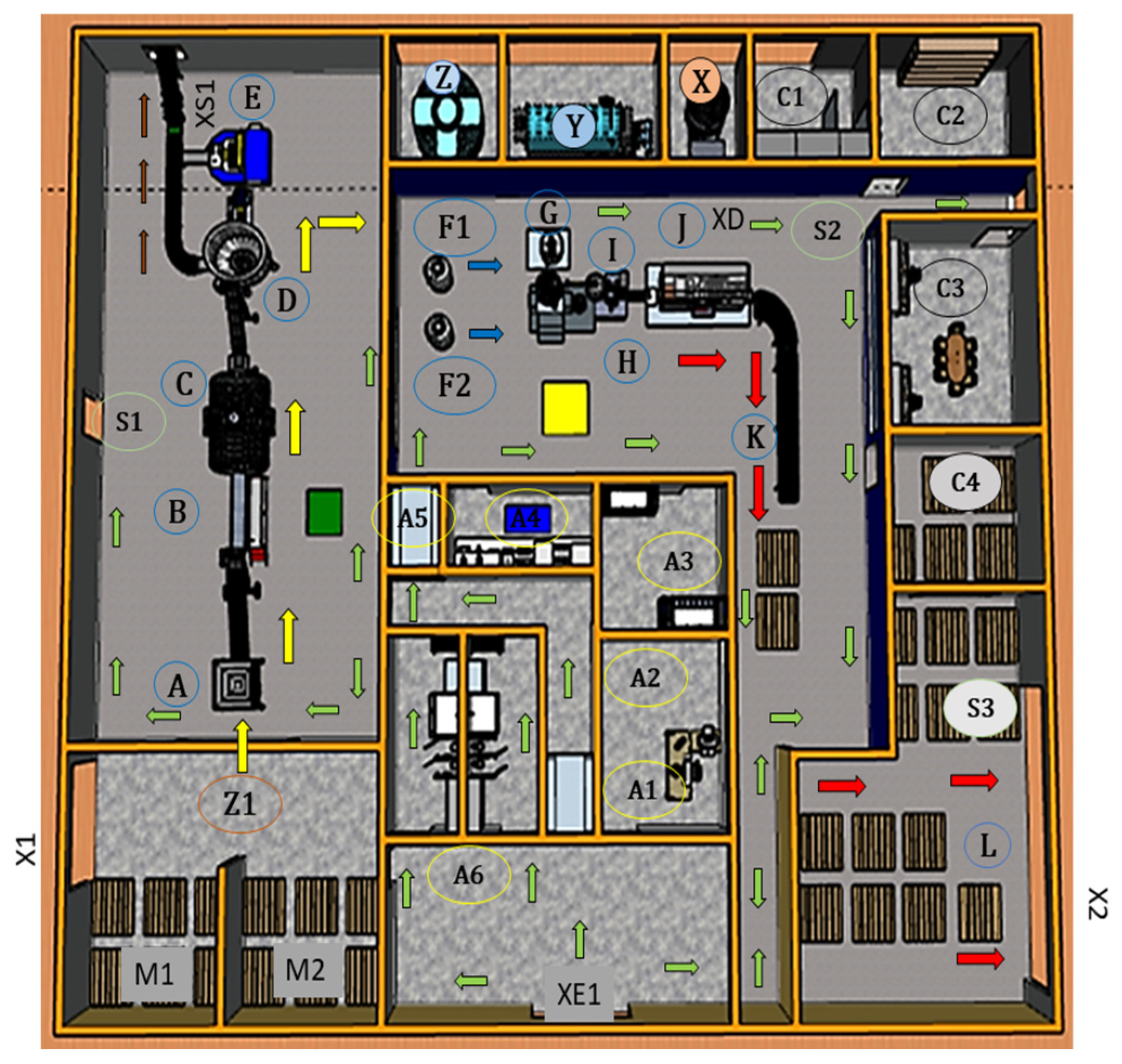
Following the above methodology, the proposed intensified plant layout [23] was taken as the basis for the research. This plant allows cosmetic emulsions to be obtained from the extraction of morete (Mauritia flexuosa L.f.) and ungurahua (Oenocarpus bataua Mart) oils. A structured approach without operational delays was employed, making use of the available space and including improvements in maintenance and process monitoring systems (Figure 2).
For the integration of AI, following the methodology in Figure 1, the top-view image of the plant layout from the case study [23] was used. The main areas were oil extraction, cream formulation, and finished product storage, which were integrated with complementary areas such as administration, control, and general services. To implement the layout in an appropriate AR environment, using this case study, we assessed the identification of a space with dimensions greater than the values obtained in the plant layout and that meets the appropriate requirements for its location, given that the raw materials (morete and ungurahua fruits) are found in that locality [25].

3. Results

3.1. Layout Refinement Informed by AI-Assisted Analysis

In the first iteration, the AI analyzed the base design developed using SLP for cosmetic emulsion technology and identified opportunities for refinement aimed at improving internal flow and traceability (Table 2). Within the Product Journey (PJ) criterion, the AI noted that the design could benefit from greater integration between raw material reception and the mixing stage by reducing the distance between the mixing and packaging areas, thereby supporting operational continuity. In response, the AI-assisted analysis indicated that spatial alignment adjustments could improve the connection between these areas while keeping the logic of the original layout intact.
Concerning the Relationship between activities (RBA) criterion, the AI outputs indicated that the base design could be enhanced by incorporating a more direct communication mechanism between the formulation and packaging areas (Table 2). This observation did not question the proposed structure but rather proposed an improvement in operational coordination to reduce possible variations in product specifications. To this end, the AI observations highlighted the potential benefit of integrating digital communication systems to facilitate synchronization between processing and storage.
The review of the relational diagram indicated that, in addition to improving spatial distances between key areas, it was necessary to improve the articulation between the production flow and the flow of quality control (Table 2). The AI-assisted analysis highlighted that shortening and clarifying these routes could improve coordination between production and quality control in order to ensure efficient sample transit and continuous supervision of the product being manufactured. This adjustment promotes consistency between the production process and control activities. Regarding the analysis of space requirements, the AI-assisted analysis also highlighted a complementary estimate of area distribution that served as a reference for adjusting dimensions without altering the original logic or the overall structure of the design (Table 2).
Based on this analysis, the AI-assisted qualitative evaluation indicated that the first iteration still required adjustments to improve the spatial consistency of the design. In contrast, the second iteration, once the indicated guidelines were integrated, was considered a refined layout from a qualitative SLP perspective, since no additional AI-generated observations remained after the consistency review (Table 2).

3.2. Final Plant Design After AI-Assisted Analysis

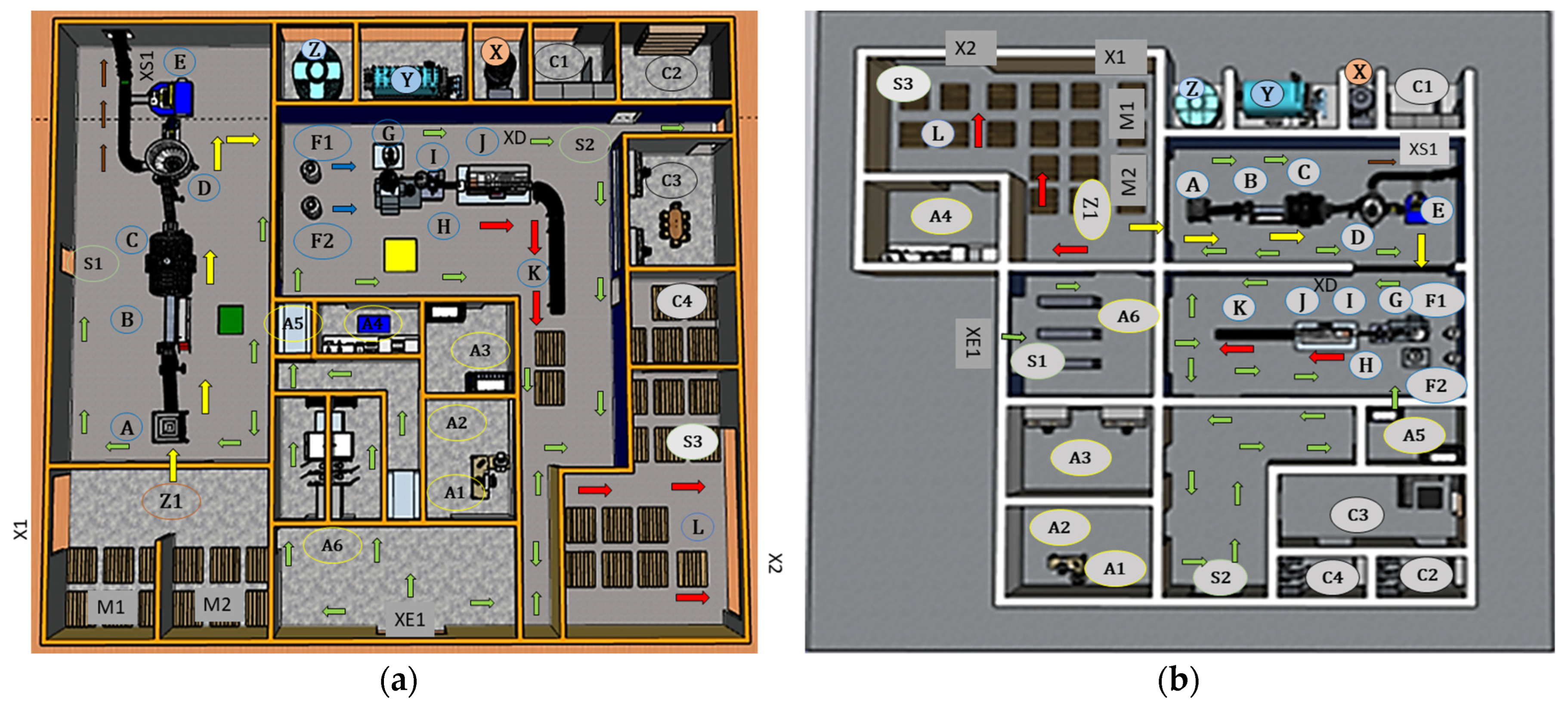
A comparison between the base design (Figure 3a) and the refined layout (Figure 3b) shows that the overall structure of the process remains unchanged, while the internal layout has been reorganized to facilitate a more fluid operational sequence and more direct connectivity between key areas. In the resulting layout, the aqueous and oily phases of the turboemulsifier are located closer to the packaging and labeling stages, which helps to reduce movement and to consolidate a continuous production flow.
Similarly, the support areas (laboratory, changing rooms, supplies, and administration) are laid out in a more orderly fashion, minimizing their interference with the main operating routes and creating a cleaner, more controlled auxiliary circuit. The spaces for maintenance, control, and storage are also grouped together in a more functionally coherent manner, improving their accessibility without compromising the movement of personnel or materials.
Overall, the second iteration was considered the refined layout after the AI-assisted qualitative assessment and human review. This interpretation should be understood as a preliminary design appraisal rather than as a quantitative confirmation of layout performance.
The 3D representation of the refined layout in SketchUp allowed the researchers to obtain a preliminary spatial reference of the plant layout. This representation was used to estimate the horizontal footprint required for the project and to support AR-assisted visualization. These spatial references were not interpreted as a detailed engineering validation because no quantitative simulation of flows, travel distances, construction constraints, or operational times was performed.

3.3. Preliminary Spatial Evaluation of the Design Through Static Review and AR-Assisted Visualization

3.3.1. Plant Location

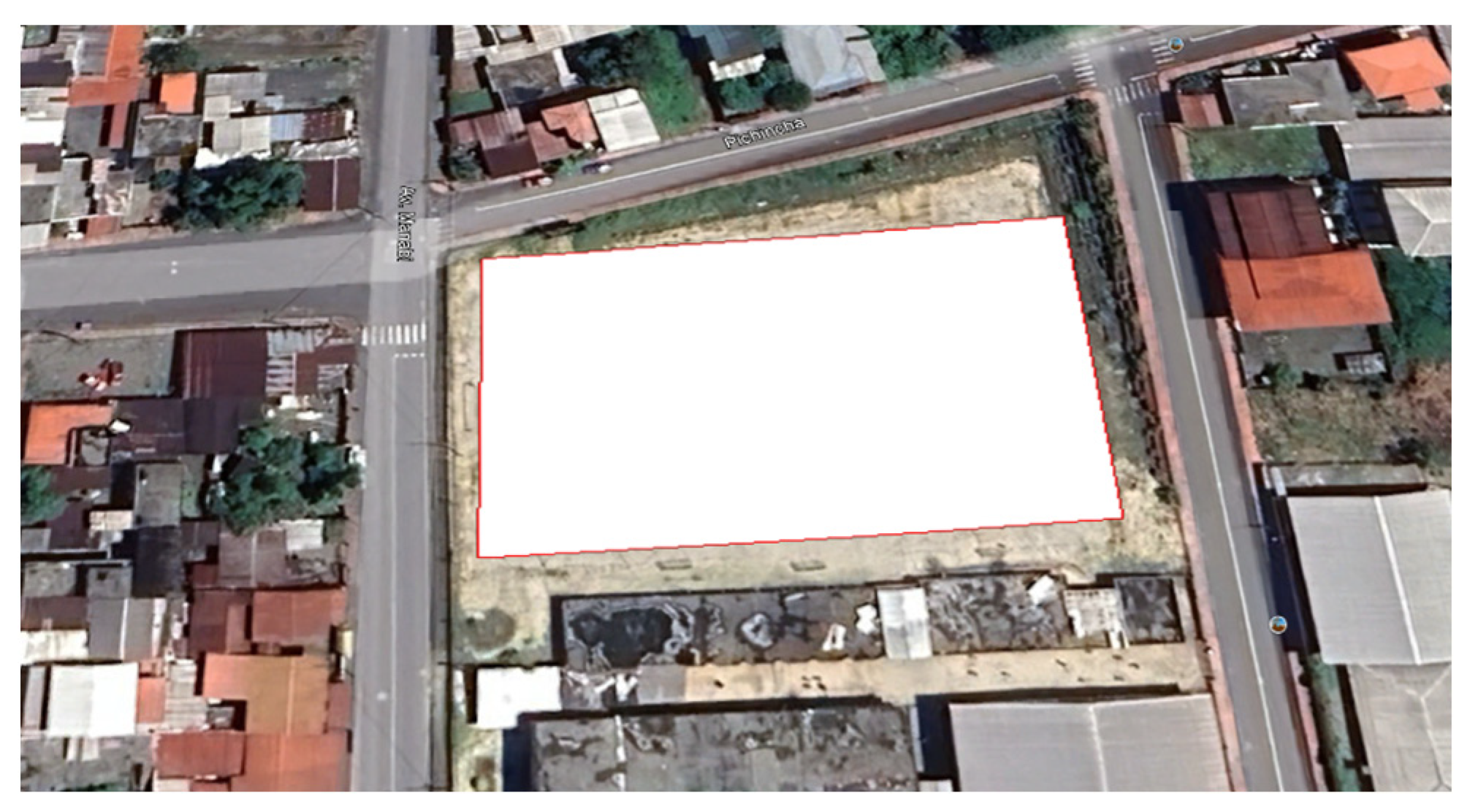
Overlaying the refined layout into actual images of the site provided preliminary visual evidence that the horizontal surface area required by the plant could be accommodated within the selected land (Figure 4). This review was qualitative and visual; therefore, it should not be interpreted as a cadastral, construction, or engineering validation of the site.
Moreover, the insertion of the design into the actual space supported an early qualitative reading of the relationship between operational flows and planned circulation areas. On this basis, the results provided a preliminary visual approximation of site compatibility and served as a basis for AR-assisted visualization.

3.3.2. AR-Assisted Three-Dimensional Visualization

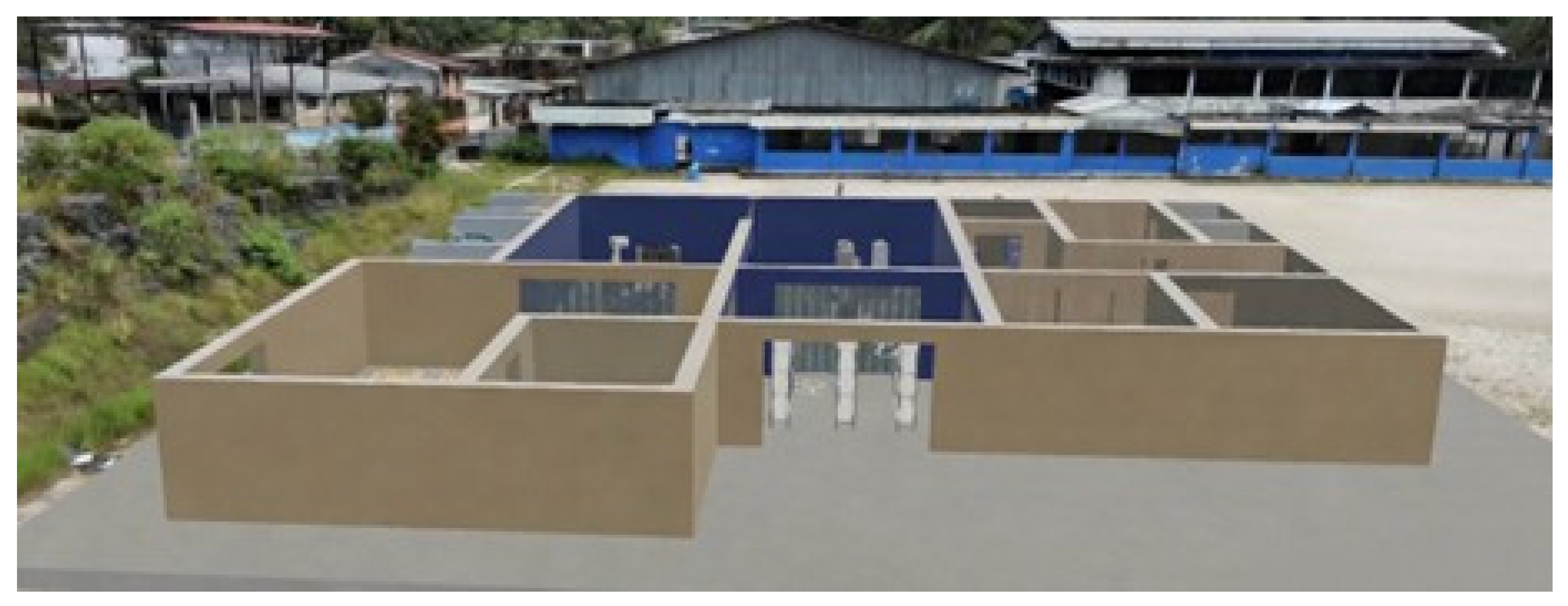
AR-assisted visualization allowed the three-dimensional layout of the plant to be projected into the real environment, providing an immersive representation of the building volume and internal layout on a real scale (Figure 5). The integration of the design into AR provided preliminary visual evidence of spatial compatibility between the layout, corridors, access points, and the physical context in which the plant could be located. The incorporated QR code provided access to an immersive virtual tour, facilitating a qualitative inspection of the design in its proposed location. Overall, AR supported preliminary spatial evaluation, but it did not provide quantitative validation of feasibility, performance, cost, safety, or constructability.
Overall, the integration of SLP with AI-assisted qualitative evaluation and AR-based visualization enabled a structured refinement of the plant layout and facilitated an early qualitative spatial assessment of its compatibility with the proposed site. These results provide the basis for discussing the role of AI-assisted reasoning and immersive visualization as complementary tools to support early-stage facility layout design.

4. Discussion

Integrated SLP + AI + AR

The comparative analysis between the base design developed with Muther’s SLP approach [22] and the AI-assisted observations shows that both complement each other. Conventional facility layout planning approaches are often time-consuming and difficult to adapt to dynamic production requirements, which motivates the integration of digital tools to support more flexible planning processes [26]. SLP provides the classic methodological structure (journeys, relationships, relational diagrams, and space requirements) that defines the logic of the production process. However, as noted by Neghabi [27] in the field of facility planning, the effectiveness of a layout also depends on its ability to integrate with contemporary operating conditions, where aspects such as traceability, digital coordination, and spatial flexibility take on a more decisive role. From this perspective, AI does not contradict the structure proposed by SLP but rather adds a level of analysis compatible with these modern principles and consistent with trends that highlight AI’s growing role in the refinement of industrial and agri-food processes [28].
AI-assisted analysis provides an additional layer of early evaluation for aspects that are recognized as essential in classical theory, but whose traditional verification is often postponed to later design stages. Aspects such as the proximity between critical stages, clarity in flows, or the interaction between production and quality control areas emerge here as fine adjustments that enrich [29], the suggested space values for each area were generated by AI and are similar to the values described by Febriandini [30] and strengthen the “operational relationships” that Tompkins, White et al. [31] consider decisive for flow efficiency. This early anticipation coincides with recent studies that describe the use of generative AI as a natural evolution of heuristic methods, capable of strengthening the consistency of a layout without altering its foundational logic [28]. In this way, AI-assisted analysis functions as a support layer that helps make visible aspects that conventional methodologies recognize but do not always allow engineers to examine in depth during the initial stages. The results suggest that integrating AI-assisted evaluation within the SLP framework can enhance the early-stage analysis of facility layouts by highlighting spatial relationships and operational flows that are traditionally assessed in later design stages [28].
At an industrial level, this behavior coincides with advanced planning analyses that highlight the value of AI when used to refine established distributions, especially in sectors where traceability and operational coordination are critical, such as the cosmetics industry [28]. Similarly, research on multilayer digital twin layouts shows that digitization provides a robust basis for complementing physical design decisions by integrating operational data and quality criteria into the analysis [32]. Although these approaches have a broader scope, both they and the present study share the premise that integrating AI-assisted evaluation with traditional planning systems may improve design consistency and adaptability.
Overall, the results indicate that AI-assisted evaluation does not replace the SLP-based design or quantitative facility layout methods. Its value in this study is limited to the generation of qualitative observations that helped researchers review spatial coherence, operational flow, and traceability during early-stage layout appraisal. This interpretation avoids presenting ChatGPT as an optimizer or predictor and places it as a decision-support tool within the SLP framework.
In line with these contributions, the experience presented in this study suggests that AR can help convert a 2D design or 3D layout into a full-scale immersive visualization. However, this contribution is interpreted as a preliminary spatial evaluation, not as a full technical validation. The present case adds a specific application to a cosmetic emulsion production plant and integrates AR-assisted visualization with a layout previously reviewed using SLP and AI-generated qualitative observations.
In addition, augmented reality provides an immersive mechanism that allows designers to visualize and verify the spatial behavior of the proposed layout directly within the projected site, supporting more informed early-stage decision-making [29]. From the perspective of classical facility planning, the validation of a layout depends on anticipating how functional relationships will behave in real spaces [33]. Likewise, the assessment of operational flows requires an early understanding of how the proposed arrangement will perform under realistic spatial conditions [34]. Nonetheless, both approaches rely on two-dimensional representations and conceptual three-dimensional interpretations, which limit the appreciation of the design’s three-dimensionality and volumetric interaction.
In this study, AR added a visualization instance that complemented the limitations of two-dimensional layout review by allowing the three-dimensional layout to be observed directly on the projected site. This visualization supported an early qualitative inspection of circulations, volumes, and transition zones, but it did not replace detailed engineering verification, CAD/GIS benchmarking, simulation, or expert-based validation.
Additionally, recent research in Agriculture and Industry 4.0 shows that the integration of AR with AI, IoT, and digital twins allows for the refinement of industrial processes, improved real-time monitoring, and support for early design validation [35,36,37]. Although these studies focus on other sectors, both they and the present study share the concept that AR offers an immersive interface capable of reducing uncertainty and anticipating adjustments with greater precision.
Overall, AR acts as a complementary visualization resource that extends the capacity of classical theoretical frameworks to examine the possible physical behavior of the layout at an early stage, without replacing the principles of SLP or Facilities Planning. It allows a preliminary reading of spatial operability and constructability, bringing conceptual planning closer to the visual experience of the productive space.
Although the AI-assisted evaluation provided useful qualitative insights for layout refinement, the approach has several limitations. First, it does not include quantitative performance indicators such as distances, flows, travel times, costs, productivity, safety indices, or statistical analyses. Second, it does not include process simulation or dynamic operational modeling. Third, it is based on a single case study, which limits generalizability. Fourth, no benchmarking with CAD, GIS, simulation software, or conventional facility layout optimization tools was performed. Fifth, the AR component was used as an exploratory visualization resource and not as a full technical validation method. Future research should incorporate quantitative flow metrics, distance matrices, time and cost analysis, discrete-event simulation, comparison with CAD/GIS-based workflows, expert validation, and evaluations with multiple industrial cases.

5. Conclusions

This qualitative and exploratory study shows that the sequential integration of the SLP methodology with AI-assisted analysis and AR-assisted visualization may support the early-stage evaluation of cosmetic production plant layouts. SLP provided the basic structure of the process, while AI-assisted analysis generated qualitative observations related to functional proximity, flow continuity, and spatial organization. In turn, AR-assisted visualization provided preliminary visual evidence of spatial compatibility between the refined layout and the selected site. These findings should not be interpreted as quantitative validation, optimization, or prediction, because the workflow does not include mathematical modeling, simulation, performance indicators, or benchmarking with specialized CAD/GIS tools.
The results suggest that the SLP + AI + AR workflow has potential as an early decision-support procedure for qualitative layout review. Future work should move from exploratory spatial assessment toward quantitative evaluation through flow metrics, travel distance analysis, operating time estimation, cost assessment, discrete-event simulation, comparison with CAD/GIS tools, and validation by experts in facility layout and cosmetic plant design. In addition, the workflow should be tested in multiple regulated industries, such as pharmaceuticals, foods, and biotechnology, to assess its reproducibility and practical value under different design conditions.

Author Contributions

Conceptualization, A.P.M. and E.G.Y.; methodology, A.P.M., L.L.G., J.A.C.B. and L.X.L.O.; software, J.A.C.B., L.X.L.O. and R.A.-N.; formal analysis, R.D.V.-P., M.R. and Y.A.C.; investigation, Y.A.C., L.L.G. and R.A.-N.; writing—original draft preparation, E.G.Y., R.D.V.-P. and L.L.G.; writing—review and editing, M.R. and A.P.M.; supervision, A.P.M. All authors have read and agreed to the published version of the manuscript.

Funding

This research received no external funding.

Data Availability Statement

The original contributions presented in this study are included in the article. Further inquiries can be directed to the corresponding author.

Acknowledgments

The authors wish to thank Helen Pugh for proofreading the article.

Conflicts of Interest

The authors declare no conflicts of interest.

References

  1. Chasipanta Baraja, A.J.; Corrales Bonilla, J.I. Perspectivas y Desafíos En La Industria 4.0 Para El Sector Agroindustrial de La Maná. Rev. Científica Multidiscip. G-Nerando 2023, 4, 848–869. [Google Scholar] [CrossRef]
  2. Peñalver-Higuera, M.J.; Rodríguez-Alegre, L.R.; López-Padilla, R.D.P.; Isea-Argüelles, J.J. Ingeniería de Prompts En La Industria 4.0: Optimización y Automatización Inteligente de Procesos Industriales. Ingenium Potentia 2025, 7, 35–49. [Google Scholar] [CrossRef]
  3. Gonzales-Zurita, O.; Rosero, R.; Llumiquinga, C.; Rosero, M. Diseño e Implementación de Una Aplicación de Realidad Aumentada Enfocada a Mejorar La Educación Tecnológica. I+D Tecnol. 2023, 19, 61–71. [Google Scholar] [CrossRef]
  4. Polkowski, Z.; Wierzbicka, A. Industry 4.0 in Cosmetic Companies. Azerbaijan J. High Perform. Comput. 2021, 4, 135–154. [Google Scholar] [CrossRef]
  5. Montalván-Vélez, C.L.; Mogrovejo-Zambrano, J.N.; Romero-Vitte, I.J.; Pinargote-Carrera, M.L.D.C. Introducción a La Inteligencia Artificial: Conceptos Básicos y Aplicaciones Cotidianas. J. Econ. Soc. Sci. Res. 2024, 4, 173–183. [Google Scholar] [CrossRef]
  6. Pérez Fernández, C.; del Mar Espinosa Escudero, M. La Realidad Aumentada Apoyo al Diseño. Técnica Ind. 2022, 332, 40–48. [Google Scholar] [CrossRef]
  7. Cuevas Magaña, J.J.; Najar Macías, D.G.; Cárdenas Magaña, J.A. Análisis Descriptivo de Aplicaciones de Realidad Aumentada En La Industria y Educación Técnica. Investig. Cienc. Apl. Ing. 2025, 8, 26–35. [Google Scholar]
  8. Medina Fonseca, D.F.; Lozano Gonzalez, J.S.; Barbosa Rodríguez, R.A. Implementación de La Realidad Aumentada En La Logística de Bodegas Automatizadas. Rev. Innov. Desarro. Sosten. 2023, 3, 21–28. [Google Scholar] [CrossRef]
  9. Ng, K.K.H.; Chen, C.-H.; Lee, C.K.M.; Jiao, J.R.; Yang, Z.-X. A Systematic Literature Review on Intelligent Automation: Aligning Concepts from Theory, Practice, and Future Perspectives. Adv. Eng. Inform. 2021, 47, 101246. [Google Scholar] [CrossRef]
  10. Soori, M.; Jough, F.K.G.; Dastres, R.; Arezoo, B. AI-Based Decision Support Systems in Industry 4.0, a Review. J. Econ. Technol. 2026, 4, 206–225. [Google Scholar] [CrossRef]
  11. Sagastume-Canova, R.; Fernández-Guarino, M. Emerging Trends in Facial Cosmetics: Innovation, Science, and Sustainable Beauty. Cosmetics 2026, 13, 58. [Google Scholar] [CrossRef]
  12. Kilari, S.D. Use Artificial Intelligence into Facility Design and Layout Planning Work in Manufacturing Facility. Eur. J. Artif. Intell. Mach. Learn. 2025, 4, 27–30. [Google Scholar] [CrossRef]
  13. Choi, H.; Yu, S.; Lee, D.; Noh, S.D.; Ji, S.; Kim, H.; Yoon, H.; Kwon, M.; Han, J. Optimization of the Factory Layout and Production Flow Using Production-Simulation-Based Reinforcement Learning. Machines 2024, 12, 390. [Google Scholar] [CrossRef]
  14. Kumar, V.; Naga Malleswari, V. Improvement of Facility Layout Design Using Systematic Layout Planning Methodology. J. Phys. Conf. Ser. 2022, 2312, 012089. [Google Scholar] [CrossRef]
  15. Arango-Serna, M.D.; Zapata, J.; Cáceres-Gelvez, S. Sistemas Prácticos Para El Diseño Del Layout de Plantas Industriales Con Celdas de Manufactura; Primera; Departamento de Ingeniería de la Organización, Universidad Nacional de Colombia, Facultad de Minas: Medellín, Colombia, 2024. [Google Scholar]
  16. Furlan, S. Industria 4.0 y Cosmética: Hacia Una Revolución En La Gestión de Competencias. Available online: https://merca.team/es/industrie-4-0-cosmetique-gestion-de-competencias/ (accessed on 3 December 2025).
  17. García-Mujica, R.; Benavides-Cedeño, G. Diseño de Una Planta a Escala Industrial Para La Elaboración de Ácido Láctico Mediante Fermentación Líquida. Rev. Científica INGENIAR Ing. Tecnol. Investig. 2020, 3, 25–34. [Google Scholar] [CrossRef]
  18. Bouramtane, K.; Kharraja, S.; Riffi, J.; El Beqqali, O.; Chraibi, A. A Comprehensive Review of Static and Dynamic Facility Layout Problems. Annu. Rev. Control 2024, 58, 100970. [Google Scholar] [CrossRef]
  19. Akar, N.; Turgay, S. Optimizing Cellular Manufacturing Facility Layout Design through Digital Twin Simulation: A Case Study. Ind. Eng. Innov. Manag. 2023, 6, 1–12. [Google Scholar] [CrossRef]
  20. Caduda, S.; Barroso, A. Generative Artificial Intelligence: Challenges and Opportunities for Systems Developers: A Systematic Mapping of Literature. Mach. Learn. Res. 2024, 9, 39–47. [Google Scholar] [CrossRef]
  21. Roberto, R.; Newnes, L.; Shokrani, A. Challenges to Deploy Augmented Reality in Manufacturing. Procedia CIRP 2024, 130, 381–386. [Google Scholar] [CrossRef]
  22. Muther, R. Planificación y Proyección de La Empresa Industrial: (Método S.P.L., Sistematic Layout Planning); Editores Técnicos Asociados S. A., Ed.; Primera; Richard Muther & Associates, Inc.: Barcelona, España, 1968. [Google Scholar]
  23. Scalvenzi, L.; Guardado Yordi, E.; Santamaría Caño, E.W.; Avilez Tolagasi, I.N.; Radice, M.; Abreu-Naranjo, R.; León Guardado, L.; Bravo Sánchez, L.R.; Pérez Martínez, A. The Design of an Intensified Process and Production Plant for Cosmetic Emulsions Using Amazonian Oils. Processes 2025, 13, 1923. [Google Scholar] [CrossRef]
  24. Augmented Reality for Enterprise Alliance AR Hardware Requirements: Inputs/Outputs: Sensors—Augmented. Available online: https://thearea.org/ar_requirement/ar-hardware-requirements-inputs-outputs-sensors-augmented/ (accessed on 4 December 2025).
  25. Balbontin, C.; Hensher, D.A. Understanding Business Location Decision Making for Transport Planning: An Investigation of the Role of Process Rules in Identifying Influences on Firm Location. J. Transp. Geogr. 2021, 91, 102955. [Google Scholar] [CrossRef]
  26. Tan, C.H.; Yap, H.J.; Musa, S.N.; Chang, S.W.; Sivadas, C.S.; Hisaburi, A.S.; Liew, K.E.; Ismail, A.H.; Baharudin, L.H. Augmented Reality Assisted Facility Layout Digitization and Planning. J. Mech. Sci. Technol. 2021, 35, 4115–4123. [Google Scholar] [CrossRef]
  27. Neghabi, H.; Ghassemi Tari, F. A New Concept of Adjacency for Concurrent Consideration of Economic and Safety Aspects in Design of Facility Layout Problems. J. Loss Prev. Process Ind. 2016, 40, 603–614. [Google Scholar] [CrossRef]
  28. Hu, F.; Wang, C.; Wu, X. Generative Artificial Intelligence-Enabled Facility Layout Design Paradigm. Appl. Sci. 2025, 15, 5697. [Google Scholar] [CrossRef]
  29. Li, Y.; Liao, P.; Song, Y.; Chi, H. A Systematic Decision-Support Approach for Healthcare Facility Layout Design Integrating Resource Flow and Space Adjacency Optimization with Simulation-Based Performance Evaluation. J. Build. Eng. 2023, 77, 107465. [Google Scholar] [CrossRef]
  30. Febriandini, I.F.; Yuniaristanto. Re-Design Facility Layout Using Systematic Layout Planning Method: A Case Study: Biopro Cosmeceutical Sdn. Bhd. IOP Conf. Ser. Mater. Sci. Eng. 2019, 495, 012027. [Google Scholar] [CrossRef]
  31. Tompkins, J.A.; White, J.A.; Bozer, Y.A.; Tanchoco, J.M.A. Facilities Planning, 4th ed.; Wiley: Hoboken, NJ, USA, 2010. [Google Scholar]
  32. A. Udugama, I.; Kelton, W.; Bayer, C. Digital Twins in Food Processing: A Conceptual Approach. Digit. Chem. Eng. 2023, 7, 100087. [Google Scholar] [CrossRef]
  33. Angeli, N.; Revolti, A.; Petitti, I.; Fraccaroli, D.; Dallasega, P. A Framework for Digital Factory Planning and Validation with Virtual and Augmented Reality: An Automotive Case Study. In Towards a Smart, Resilient and Sustainable Industry, Proceedings of the International Symposium on Industrial Engineering and Automation, Bolzano, Italy, 22–23 June 2023; Springer: Cham, Switzerland, 2023; pp. 50–60. [Google Scholar]
  34. Al-Jundi, H.A.; Tanbour, E.Y. Design and evaluation of a high-fidelity virtual reality manufacturing planning system. Virtual Real. 2023, 27, 677–697. [Google Scholar] [CrossRef]
  35. Peladarinos, N.; Piromalis, D.; Cheimaras, V.; Tserepas, E.; Munteanu, R.A.; Papageorgas, P. Enhancing Smart Agriculture by Implementing Digital Twins: A Comprehensive Review. Sensors 2023, 23, 7128. [Google Scholar] [CrossRef]
  36. Escribà-Gelonch, M.; Liang, S.; van Schalkwyk, P.; Fisk, I.; Long, N.V.D.; Hessel, V. Digital Twins in Agriculture: Orchestration and Applications. J. Agric. Food Chem. 2024, 72, 10737–10752. [Google Scholar] [CrossRef]
  37. Begout, P.; Kubicki, S.; Bricard, E.; Duval, T. Augmented Reality Authoring of Digital Twins: Design, Implementation and Evaluation in an Industry 4.0 Context. Front. Virtual Real. 2022, 3, 918685. [Google Scholar] [CrossRef]
Figure 1. Methodology proposal based on the SLP Methodology proposed by Muther [22] with the incorporation of AI-assisted evaluation and AR-based visualization for distribution analysis.
Processes 14 01809 g001
Figure 2. Plant layout for obtaining cosmetic emulsion. Taken from Scalvenzi et al. [23]. A. Selection; B. Washing; C. Softening; D. Pulping; E. Pressing and filtering; F1. Morete oil; F2. Ungurahua oil; G. Aqueous phase of the turboemulsifier; H. Oily phase of the turboemulsifier; I. Packaging machine; J. Labeling; K. Packaging; L. Storage; M1. Morete fruits; and M2. Ungurahua fruits. Administration area: A1. Secretary; A2. Administrator; A3. Supplies and ingredients; A4. Laboratory; A5. Disinfection room; and A6. Changing rooms. Maintenance and control area: C1. Electrical systems; C2. Maintenance storeroom; C3. Control room; and C4. Container and label storeroom. Complementary areas: X. Boiler fuel; X1. Unloading area; X2. Finished product unloading area; XE1. Main entrance; XD. Employee circulation area; XD. Waste exit point; Y. Boiler; Z. Water storage; S1, S2, and S3. Emergency exits; and Z1. Unloading area.
Processes 14 01809 g002
Figure 3. Plant design for the production of cosmetic emulsions (a) Base layout without AI-assisted refinement taken from Scalvenzi et al. [23] (b) Design of the plant layout for the production of cosmetic creams with the layout after AI-assisted evaluation. Production area: A. Selection; B. Washing; C. Softening; D. Pulping; E. Pressing and filtering; F1. Morete oil; F2. Ungurahua oil; G. Aqueous phase of the turboemulsifier; H. Oily phase of the turboemulsifier; I. Packaging machine; J. Labeling; K. Packaging; L. Storage; M1. Morete fruits; and M2. Ungurahua fruits. Administration area: A1. Secretary; A2. Administrator; A3. Supplies and ingredients; A4. Laboratory; A5. Disinfection room; and A6. Changing rooms. Maintenance and control area: C1. Electrical systems; C2. Maintenance storeroom; C3. Control room; and C4. Container and label storeroom. Complementary areas: X. Boiler fuel; X1. Unloading area; X2. Finished product unloading area; XE1. Main entrance; XD. Employee circulation area; XD. Waste exit point; Y. Boiler; Z. Water storage; S1, S2, and S3. Emergency exits; and Z1.
Processes 14 01809 g003
Figure 4. Preliminary location of the site, adjusted to the dimensions of the designed plant layout.
Processes 14 01809 g004
Figure 5. Scaled 3D layout (Augmented Reality) of the cosmetics plant integrated into the real environment and its internal layout.
Processes 14 01809 g005
Table 1. Prompts provided to the AI to obtain the refined layout under the SLP plant layout criteria.
SLP Analysis CriteriaImplemented Prompt
Product journey (PJ)What are the main deficiencies that can arise throughout a product’s journey within an industrial plant?
How does the absence of a traceability system influence the efficiency and control of the production process?
What criteria should AI consider when suggesting the appropriate location for receiving raw material?
Relationship between activities (RBA)How can the layout of critical areas, such as formulation and packaging, affect operational continuity?
What risks can arise from the inappropriate location of complementary areas, such as laboratories, staff access points, and common areas?
What advantages does the implementation of digital communication systems offer for the internal operations of an industrial plant?
Relational diagram of journeys and activitiesWhat types of deficiencies can be identified by using AI in relational diagrams of the production process?
What are the most common errors in the graphical representation of activities and journeys within a plant’s design?
What general recommendations does the AI analysis offer to improve the integration and fluidity of the production process?
Space requirementsWhat problems can arise from not properly scaling and sizing the spaces required in an industrial plant?
What general guidelines can AI offer for improving space distribution in different types of production processes?
Table 2. AI-assisted analysis for refining plant layout based on iterations of the SLP methodology.
IterationSLP Criteria Used in the PromptAI Analysis
Opportunities for Refinement IdentifiedAdjustment Suggestions
11. Product journey (PJ)Lack of a traceability system for cosmetic ingredients from raw material reception to mixing.
Inefficient connection between the mixing (processing) and packaging (storage and distribution) areas, affecting continuous production.
Relocate the raw material reception area in line with the first processing station.
Reorganize the layout to bring the mixing and packaging areas closer together, improving product transfer.
2. Relationship between activities (RBA)Limited communication between formulation (processing) and packaging areas, causing errors in specifications. Implement a digital communication system to coordinate formulation and packaging between processing and storage.
3. Relational diagram of journeys and activitiesIncomplete graphical representation, omitting key interactions between emulsification (processing) and quality control (laboratory) processes.Include all interactions, with emphasis on quality control points between processing and laboratory.
4. Space requirementsDetermination of the size required for each area, according to its function and operational load.Heuristic and AI-supported estimation of the relative area requirements, based on the function, operational load, frequency of use, and comparison with layout criteria reported in the literature. These values were used only as qualitative guidance and were not treated as exact calculations.
Decision-making/refined layoutAI response: NoAI response: Yes. If yes, changes are made.
21.No deficiencies identifiedNo adjustments required
2.No deficiencies identifiedNo adjustments required
3.No deficiencies identifiedNo adjustments required
4.No deficiencies identifiedNo adjustments required
Decision-making/refined layoutAI response: NoAI response: Yes
Disclaimer/Publisher’s Note: The statements, opinions and data contained in all publications are solely those of the individual author(s) and contributor(s) and not of MDPI and/or the editor(s). MDPI and/or the editor(s) disclaim responsibility for any injury to people or property resulting from any ideas, methods, instructions or products referred to in the content.