Article

Pyrolysis and In Situ Oxidation Process for Recycling Glass Fibers from Retired Wind Turbine Blades

1
CUCDE Environmental Technology Co., Ltd., Beijing 100032, China
2
School of Chemical Engineering, Beijing University of Chemical Technology, Beijing 100029, China
*
Authors to whom correspondence should be addressed.
Processes 2026, 14(11), 1739; https://doi.org/10.3390/pr14111739
Submission received: 11 February 2026 / Revised: 5 March 2026 / Accepted: 11 March 2026 / Published: 27 May 2026
(This article belongs to the Section Materials Processes)

Abstract

The impending wave of retired wind turbines has brought the issue of blade recycling to the forefront, presenting a major test for global sustainable resource management. Among the recycling methods, pyrolysis can be regarded as the most effective treatment approach, which can recycle the glass fibers that account for about 80% of the total weight of the blade. However, the pyrolytic char remaining on the fiber surface and the damage to the fiber structure caused by the excessively high pyrolysis temperature can both have a negative impact on fiber recycling. In this paper, a pyrolysis and in situ oxidation process with low treatment temperature is proposed for the recycling of glass fibers from the thermosetting epoxy resin–glass fiber composite material in the blades. Pyrolysis is performed at 450 °C, yielding a residual char content of 3.56%. Subsequently, in situ oxidation is conducted at the same temperature by switching the atmosphere to air, while the char content is reduced to below 0.01%, meeting the industrial recycling standard and achieving a glass fiber yield of 74%. Characterization reveals that the fiber structure and properties are well maintained. Additionally, through a series of characterization and density functional theory (DFT) calculations, the pyrolysis pathway from the resin repeating unit to various liquid phase products is supposed, and the corresponding pyrolysis mechanism is concluded. This paper provided a practical and feasible process scheme and theoretical basis for the efficient and clean resource recovery of retired wind turbine blades.

1. Introduction

In recent years, global wind power installation has been surging, cementing its role as a cornerstone of the clean energy transition and driving a significant shift in the world’s energy mix. However, early-commissioned wind turbines are accelerating into their decommissioning period, and the disposal of large quantities of retired wind turbine blades has become increasingly prominent. It is estimated that the total quantity of retired wind turbines will reach 3 × 10⁵ tons over the next decade, while the total amount of blades recovered by 2050 will reach 2.5 × 10⁵ tons [1]. Wind turbine blades are primarily composed of thermosetting composites, typically a glass fiber-reinforced polymer matrix, whose inherently stable chemical properties make them highly resistant to natural degradation [2]. As a result, traditional disposal methods such as landfilling or incineration, if not properly managed, pose significant risks of environmental pollution and resource wastage [3,4]. Hence, advancing practical recycling technologies that are both efficient and environmentally sound is key to realizing a circular economy and ensuring the long-term sustainability of the wind energy sector.
Currently, the recycling technologies of retired wind turbine blades mainly include mechanical crushing, chemical dissolution, and pyrolysis. Mechanical crushing involves crashing and sieving to recover glass fibers [5], but the products have low purity and limited added value, and the dust generated during the crushing process is prone to cause secondary pollution. Furthermore, the repurposing of large blade segments for civil engineering projects, such as noise barriers or artificial reefs, is an alternative end-of-life pathway, but it does not constitute true material recycling. Chemical dissolution uses organic solvents to degrade the resin matrix, which can yield high-purity glass fibers [6]. However, challenges such as difficulties in solvent recovery, high costs, and significant environmental risks limit its large-scale industrial application. Pyrolysis technology is regarded as an effective method for processing thermosetting composites [7]. Under oxygen-deficient conditions, pyrolysis decomposes organic polymer macromolecules into liquid fuels and small-molecule gases, while inorganic glass fibers remain in the system as solids [8,9]. This process offers advantages such as high resource recovery rates and low pollution emissions. Compared with other biomass or solid wastes like sludge, organic waste, cellulose, or pine wood, wind turbine blades exhibit lower pyrolysis activation energy [10], making them more prone to pyrolysis reactions and providing favorable conditions for efficient recycling.
Previous studies have extensively investigated the pyrolysis characteristics and product distribution of wind turbine blade composites, revealing several consistent trends in thermal decomposition behavior. Regarding pyrolysis conditions and oil yield, Ren et al. [11] demonstrated that a maximum pyrolysis oil yield of 49.72% could be achieved at 600 °C with a 20 min reaction time with phenolic compounds accounting for approximately 53% of the mass fraction; notably, elevated temperatures were found to promote the conversion of bisphenol A into monocyclic phenolic species. This temperature-dependent product evolution was further corroborated by Xu et al. [12], who observed lower bisphenol A content at 400 °C compared to 550 °C, attributing this phenomenon to enhanced oligomer fragmentation at higher temperatures. In terms of product composition, Chen et al. [10] identified C9~C16 compounds as the primary constituents of pyrolysis products, while Xu et al. [13] confirmed the presence of various phenolic compounds—including bisphenol A, phenol, and isopropylphenol—in pyrolysis oils derived from epoxy resin-based blades. Concerning gaseous products, Ma et al. [14] reported that CO2 and CH4 were the predominant species generated under nitrogen atmosphere, which were accompanied by minor amounts of C2 and C3 hydrocarbons. Collectively, these findings indicate that pyrolysis temperature serves as a critical parameter governing product distribution.
Nevertheless, less attention has been paid to the recycling and utilization of the solid fibrous products obtained from the pyrolysis of wind turbine blades. Fibers after pyrolysis often retain a certain amount of pyrolysis char on the surfaces. Excessive pyrolysis char has a detrimental effect on fiber performance, severely diminishing their mechanical strength, restricting their application in high-value-added fields and reducing their recycling value [15,16]. To obtain clean glass fibers suitable for reuse—typically required to have a char content below 0.01% for high-quality applications—it is necessary to post-treat the pyrolysis residues to deeply remove the surface pyrolysis char. The oxidation process has been proven to be an effective route to strip away the pyrolysis char coating from the solid product surfaces [17]. Mild oxidation conditions can ensure efficient char removal while avoiding structural and performance damage to the glass fibers caused by over-oxidation [18]. In contrast, pyrolysis in the presence of oxygen at temperatures above 550 °C results in the oxidation of fibers and a strong decrease in tensile strength and electrical conductivity, which should be avoided for fiber recycling [19,20].
Unlike conventional pyrolysis–oxidation processes documented in the literature, which necessitate stepwise treatment across different temperature ranges, this paper introduces a genuinely in situ continuous approach. By completing the entire process at a single mild temperature of 450 °C, this method completely avoids temperature cycling, leading to a substantial simplification of the treatment.
In this paper, a systematic study on the pyrolysis–oxidation synergistic process is conducted, and the retired wind turbine blades from a wind power station in China are used to undertake experiments on pyrolysis and in situ oxidation treatment with a focus on the changes of the char content in the solid products. Combining the energy barrier data of the pyrolysis reaction through thermodynamic calculations with the pyrolysis path analysis, a scientific basis for the optimization of the resource recovery process of retired wind turbine blades is provided.

2. Experimental

2.1. Materials and Characterization

This paper utilizes actual retired wind turbine blades in China as experimental materials. To facilitate their feeding into the reaction tube for pyrolysis and post-treatment, and to ensure the representativeness of the samples, the blades were cut into uniformly sized samples with dimensions of 10 cm × 2 cm × 1 cm. To ensure the uniformity of pyrolysis conditions given the relatively large sample size, two measures were adopted. First, all samples were cut from the same cross-section of a single blade to guarantee material consistency. Second, during the experiments, the samples were arranged in a single layer within the reactor to avoid stacking and ensure even heat and mass transfer. N2 (99.999%) and synthetic air (99.999%, 21% O2 in N2) were supplied from Beijing Haipu Gases Co., Ltd., Beijing, China.
An elemental analysis of raw material was performed on an elemental analyzer (Flash Smart CHNS/O, Thermo Fisher Scientific, Waltham, MA, USA). The moisture (M), ash (A), and volatile matter (V) contents of the raw material were determined according to the Chinese National Standard GB/T 3715-2022 [21]. Fourier transform infrared spectroscopy (FTIR) was conducted on the spectrometer (Thermo Nicolet 6700 spectrometer, Nicolet, Madison, WI, USA). For this analysis, 1 mg of sample was thoroughly ground with 100 mg of dried KBr powder, and the mixture was then pressed into a pellet. Signal collection was performed after air background subtraction with parameters set to 32 scans and a resolution of 4 cm−1. Thermogravimetric analysis (TGA) was carried out using a thermogravimetric analyzer (HTG-2, Beijing Hengjiu Co., Ltd, Beijing, China). A 10 mg sample is placed in a thermogravimetric crucible, and the pyrolysis conditions are set in the thermogravimetric software. Nitrogen is introduced at room temperature for 20 min to purge air from the system. The temperature program ramped from ambient to 1000 °C at a constant rate of 10 °C/min with a nitrogen purge maintained throughout the entire run. Simultaneously with the start of the thermogravimetric program, the mass spectrometry software is activated to scan for gaseous products. A qualitative analysis of pyrolysis oil was conducted using a gas chromatography–mass spectrometry (GC-MS). The instrument (Agilent7890B/5977A, Agilent Technologies, Santa Clara, CA, USA) was equipped with a mass spectrometer detector and an HP-5MS (30 m × 250 μm × 0.25 μm) column. A 1 μL sample was injected at a split ratio of 10:1. The column oven temperature program was as follows: held at 45 °C for 3 min, then increased at 10 °C /min to 105 °C, followed by a ramp to 210 °C at 5 °C/min, and finally raised to 300 °C at 10 °C/min and held for 6 min. The calorific value generated by the complete combustion of the pyrolysis oil was measured using a bomb calorimeter (HJRL-4000B, Beijing Hengjiu Co., Ltd, Beijing, China). Scanning electron microscopy (SEM) observations were made using a scanning electron microscope (German ZEISS Sigma 360, Carl Zeiss AG, Oberkochen, Germany) at a magnification of 500×.

2.2. Pyrolysis and Oxidation Experiments

The experimental system consists of a gas supply system, a fixed-bed reactor, a condensation and oil collection unit, and a gas collection unit, as shown in Figure 1. The fixed-bed reactor design ensured uniform gas flow distribution across the sample bed. In each experiment, the reaction tube containing the sample was rapidly placed into the preheated furnace once the target temperature was reached, ensuring instantaneous exposure to the set temperature environment. To systematically optimize the pyrolysis and oxidation conditions, we conducted pyrolysis and oxidation experiments separately. Specifically, approximately 25 g of sample was used in each pyrolysis run, and the resulting pyrolysis residue was cooled and subjected to char content determination. Under the optimized pyrolysis conditions, a larger batch of pyrolysis residue was prepared and subsequently used to investigate the oxidation parameters. This stepwise approach enabled independent evaluation of each stage and ultimately informed the development of the integrated in situ continuous process described below.

2.3. Proximate Analysis Method

This paper refers to the ISO 1887-2014 [22] standard and employs the oven-muffle furnace gravimetric method to determine the char content of blades at various stages. The specific steps are as follows: First, select a representative sample, weigh approximately 10 g, and record it as the initial mass m0. Secondly, place the sample in an electrothermal blowing dry box at 105 ± 3 °C for 60 min, and after cooling to room temperature, record its mass as m1. Then, put sample into a muffle furnace and calcine at 625 ± 20 °C until all combustible materials are completely burned off, and record the mass as m2. Finally, the char content in the sample is calculated using Equation (1).
C h a r   c o n t e n t   ( % ) = m 1     m 2 m 0   ×   100 %

2.4. Thermodynamic Analysis and Calculation

A thermodynamic analysis method is employed to calculate the energy possessed by each molecule during the pyrolysis process to assess the difficulty level of the reaction. The modeling and density functional theory (DFT) calculations were carried out using Materials studio 2019 software with the GGA-BLYP functional [23]. The specific calculation steps are as follows: first, optimize the structure of each individual molecule separately. Subsequently, place the molecules within a unified simulation box and subject them to further optimization to determine the global minimum energy configuration. Finally, plot a pathway diagram based on the calculated energy difference of each configuration to judge the spontaneity of the reaction.

3. Results and Discussion

3.1. Raw Material Analysis

The composition of the blade samples was characterized by proximate and ultimate analysis, and the results are presented in Table 1. As can be seen, in the air-dried basis sample, the content of solid fibers is approximately 74%.
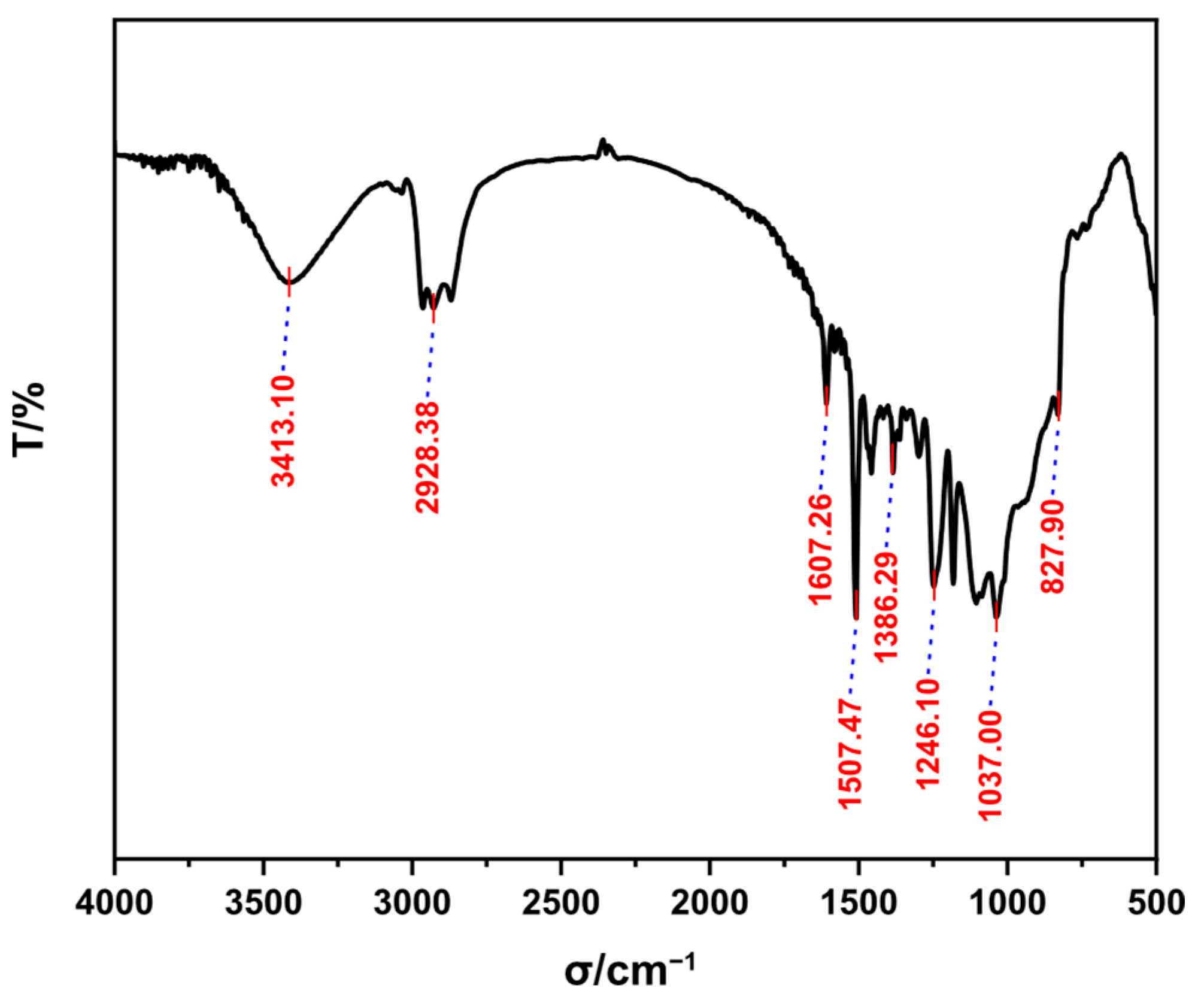
To determine the type of resin matrix in the blade, FT-IR spectra were conducted on the retired wind turbine blades, and the results are shown in Figure 2. The observed signal at 3413 cm−1 in the spectrum can be assigned to the O–H stretching vibration, primarily originating from hydroxyl groups in the resin matrix [24]. The peak at 2928 cm−1 is attributed to the C–H stretching vibration, arising from methyl (–CH3) or methylene (–CH2–) groups in the resin molecular chains. This characteristic peak reflects the organic carbon chain structure of the resin matrix and is a typical feature of polymer resins [25]. The distinct peaks observed at 1607 cm−1 and 1507 cm−1 are characteristic of aromatic C=C and C–C stretching vibrations, respectively, indicating the presence of aromatic ring structures in the resin matrix [26]. Comparing the spectral bands in the ranges of 1480~1440 cm−1 and 1380~1360 cm−1, the band at 1480~1440 cm−1 exhibits higher intensity. This observation suggests that the number of CH2 groups in the resin molecules is greater than that of CH3 groups, further confirming the polymer chain structure of the resin. The absorption at 1246 cm−1 is attributed to the C–O–C ether bond stretching vibration within the resin matrix, reflecting the molecular skeleton structure and serving as one of the key characteristic peaks of epoxy resin. Additionally, the absorption peaks at 1037 cm−1 and 827 cm−1 correspond to the characteristic peaks of Si–O bonds [27], confirming the presence of glass fibers in the composite material. Based on the characteristic peaks in the infrared spectrum, it can be concluded that the resin matrix of the retired blades is epoxy resin, which provides an important molecular structural basis for subsequent thermodynamic calculations.
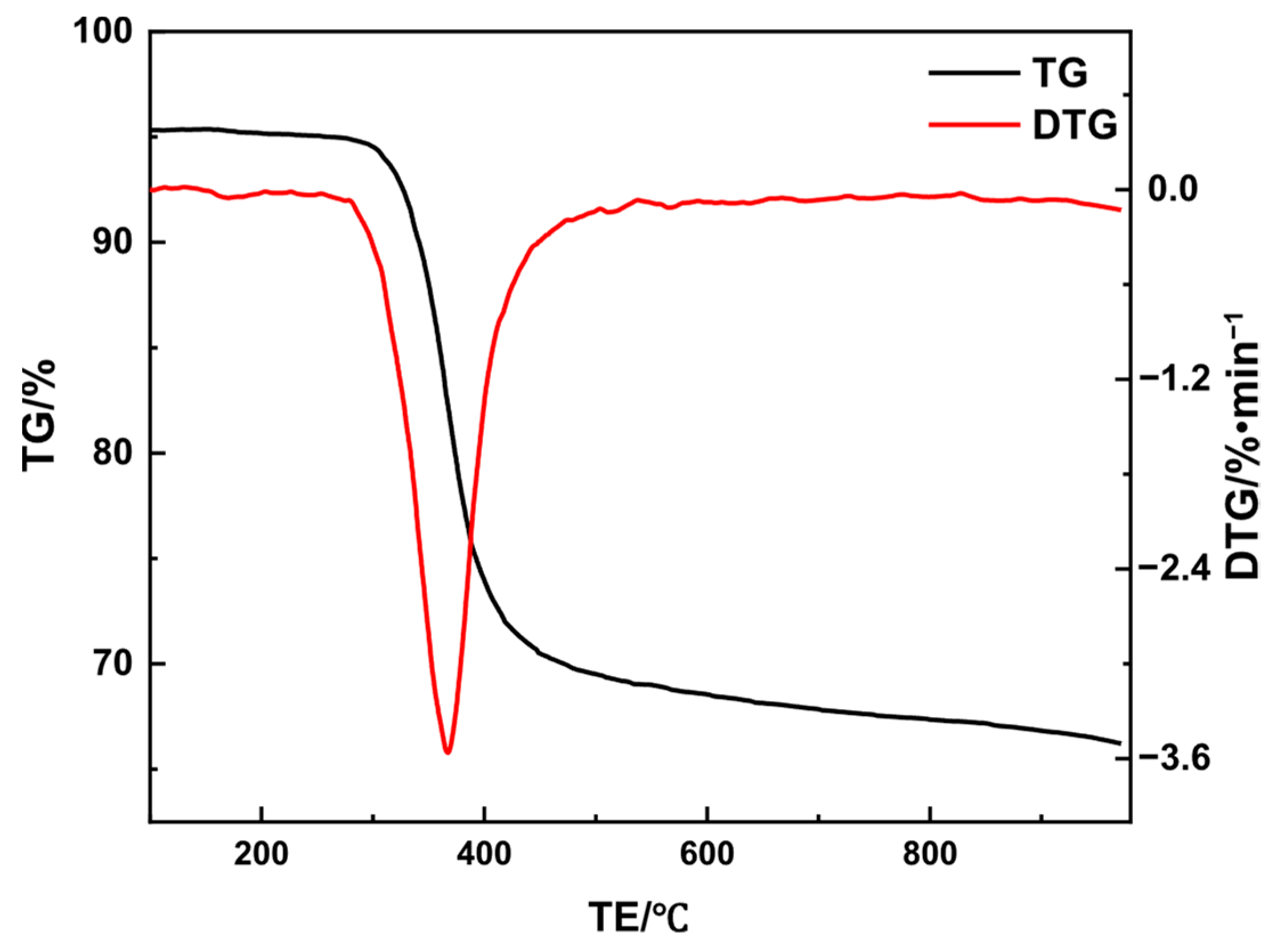
Thermogravimetric analysis provided insight into the thermal stability and decomposition profile of the blades under pyrolysis conditions [28], as shown in Figure 3. The thermogravimetric analysis results indicate that the pyrolysis process of wind turbine blades primarily consists of three stages. The first stage is the low-temperature moisture evaporation stage (room temperature to 200 °C). In this stage, the TG curve shows a slight decline, while the DTG curve exhibits a weak mass loss peak. The mass loss is driven primarily by the evaporation of both physically adsorbed and chemically bound water from the sample. The second stage is the main pyrolysis stage (200 to 600 °C), during which the mass loss is significant primarily due to the thermal decomposition reactions of the epoxy resin matrix. The resin molecular chains break down, generating small organic compounds that release, which is accompanied by a partial retention of char. The third stage is the high-temperature stabilization stage (above 600 °C). In this phase, the mass tends to stabilize, and the resin has essentially fully decomposed. The remaining substances are mainly glass fibers and a small amount of residual pyrolysis char [10,29].
Based on the thermogravimetric analysis results, we selected a temperature range of 300 to 600 °C to conduct rapid pyrolysis experiments at intervals of 50 °C [30] to systematically assess the effect of pyrolysis temperature, pyrolysis time, and inert gas flow rate on the residual char content. After the pyrolysis, the gas supply system was switched to air for the oxidation experiment. Building on reports that residual pyrolysis char in the blades decomposes between 300 to 600 °C [31], we selected a set of oxidation temperatures spanning 400 to 550 °C. This design allowed us to systematically evaluate the effect of temperature, time, and gas flow rate on the final char content.

3.2. Pyrolysis Process

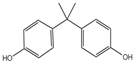
Pyrolysis can effectively break the chemical bonds between resin molecules, achieving the initial separation of resin from fibers and yielding approximately 75% solid products, 20% pyrolysis oil, and 5% gaseous products. The oil phase collected under the optimal pyrolysis conditions (obtained through subsequent exploration) was analyzed by GC-MS, and the results are shown in Table 2. The oil mainly consists of bisphenol A, phenol and its derivatives along with an amount of furan compounds [32]. Among these, bisphenol A is the most abundant component, serving as a characteristic degradation product of epoxy resin, which indicates that the pyrolysis oil has potential for recovery as chemical feedstocks [33]. The heat released from the complete combustion of pyrolysis oil is 32 MJ/kg.
The pyrolysis process of the sample is simulated using TG-MS to detect gaseous products during pyrolysis. The gases detected by mass spectrometry (MS) mainly included H2O, CO, CO2, CH4, and H2 [34] along with small amounts of small-molecule hydrocarbons such as acetylene, propylene, benzene, and butane. These are likely formed through dehydroxylation reactions of a larger molecular oil phase under higher temperatures, which is followed by further cracking, revealing the complex pyrolysis pathways of the resin [35]. The combustion of both oil and gas products can supply heat to support the pyrolysis and oxidation processes [30].
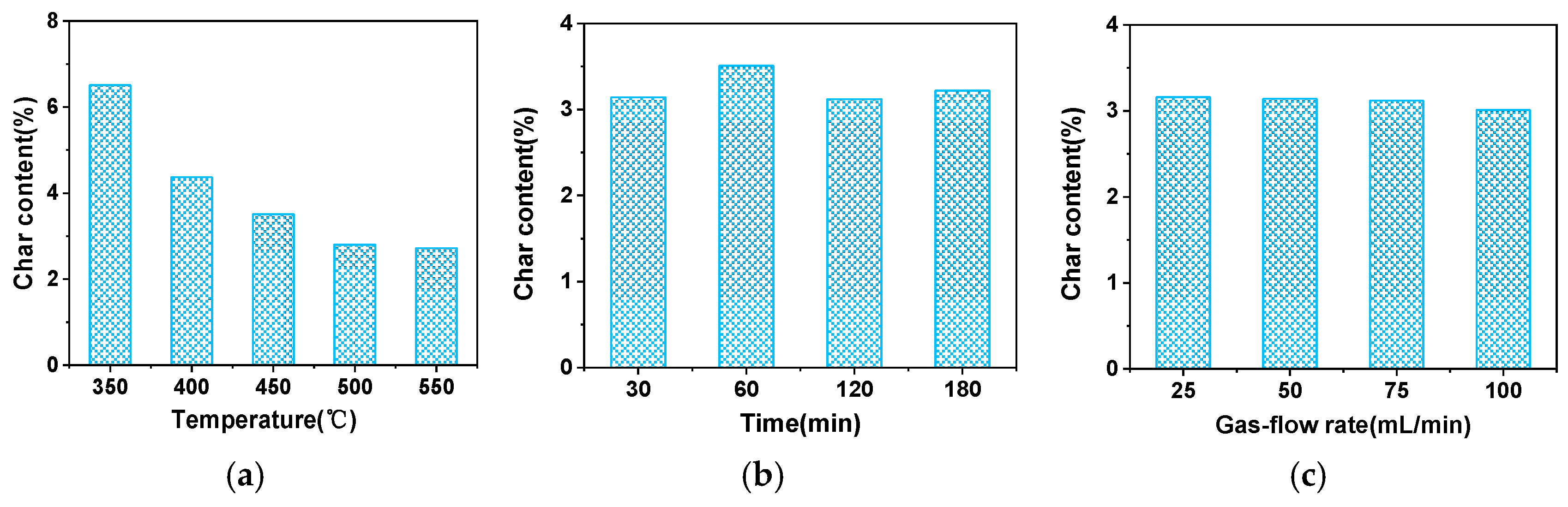
Pyrolysis temperature is a critical factor influencing the degree of resin matrix decomposition and the char content of the products. With the pyrolysis time fixed at 60 min and the inert gas flow rate maintained at 50 mL/min, the char content in the pyrolysis residues shows a variation trend across different temperatures, as shown in Figure 4a. As the temperature increases from 300 °C to 600 °C, the char content exhibits an initial rapid decline followed by a stabilization trend. At 350 °C, the resin matrix undergoes preliminary decomposition with an incomplete breakage of molecular chains, resulting in a significant amount of pyrolysis char remaining on the fiber surface with a char content as high as 6.51% (mass%, same as below). In the temperature range of 350 to 500 °C, corresponding to the main pyrolysis stage observed in the thermogravimetric analysis, higher temperature accelerates the breakage of resin molecular chains, which drives a significant decrease in char content. As the temperature continues to rise, the char content stabilizes at approximately 2.8%, indicating that the resin has been fully decomposed. Excessively high temperatures are detrimental to the fibers. Considering that the char content in the fibers shows little variation after 450 °C, combined with energy consumption factors, 450 °C is regarded as a relatively reasonable pyrolysis temperature.
When the pyrolysis temperature is set at 450 °C and the inert gas flow rate is held constant at 50 mL/min, the change in char content of the pyrolysis residues with varying pyrolysis time is presented in Figure 4b. The results indicate that the char content decreases sharply during the initial 30 min, after which the degradable organic carbon in the system becomes essentially depleted. Any further extension of pyrolysis time yields minimal change in char content.
The gas-flow rate range of 25 to 100 mL/min was selected based on preliminary experiments, aiming to balance two key considerations: ensuring a sufficiently high gas velocity to sweep volatile products out of the reaction zone and suppress secondary cracking reactions while avoiding excessive flow rates that could lead to significant heat loss or undesired particle entrainment. Holding the pyrolysis temperature at 450 °C and the pyrolysis duration at 30 min, the dependence of char content in the pyrolysis residues on inert gas flow rate is displayed in Figure 4c. The char content remains stable at approximately 3.1% across the tested flow rate range, indicating that the nitrogen flow rate exerts a negligible influence on the residual char content once pyrolysis conditions are established.
Aiming to assess the impact of oxidation parameters on surface pyrolysis char removal from pyrolysis residue in subsequent experiments, a large quantity of pyrolysis residue is obtained by repeating pyrolysis under the conditions of an N2 flow rate of 50 mL/min, temperature of 450 °C, and duration of 30 min. After thorough mixing, the initial char content is determined by proximate analysis to be 3.56%. The pyrolysis char formed after the pyrolysis of retired wind turbine blades is not solely graphitic carbon but rather a complex organic material composed of highly condensed aromatic clusters and thermally stable aliphatic chains. Its presence adversely affects the high-value recycling and utilization of glass fibers. Due to the structural stability of this carbonaceous residue, it is difficult to remove from the fibers through physical methods such as ultrasonic treatment or stirring, as higher energy input is required to break the covalent bonds [29].

3.3. Oxidation Process

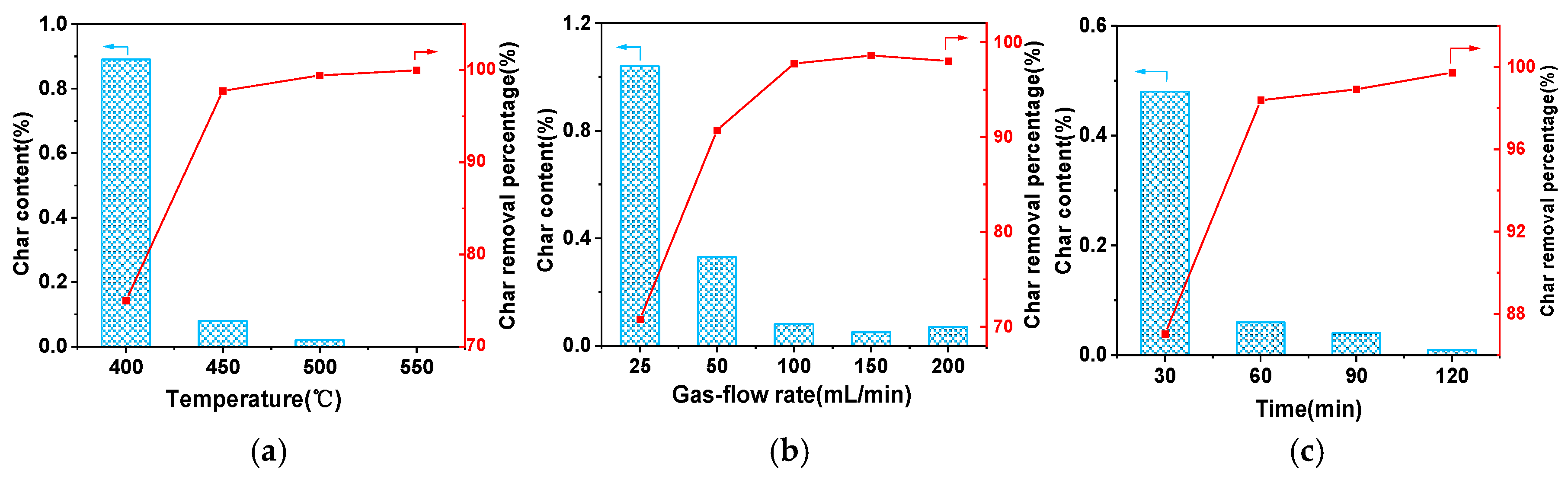
With the oxidation time held constant at 60 min and the gas flow rate fixed at 100 mL/min, the effect of different temperatures on the removal of pyrolysis char from the pyrolysis residue is shown in Figure 5a. As the oxidation temperature increased from 400 °C to 550 °C, the char content of the product decreased from 0.89% to 0%, achieving a removal efficiency of 100%. This is mainly due to the exothermic reaction between O2 and C (C + O2 = CO2, ΔH = −393.5 kJ/mol), which can proceed rapidly at low temperatures, with elevated temperatures further accelerating the reaction rate. However, excessively high temperatures would increase energy consumption and potentially damage glass fibers. Therefore, an oxidation temperature of 450 °C may be suitable for the removal of pyrolysis char from the pyrolysis residue. Considering that the pyrolysis reaction temperature is also 450 °C, a pyrolysis and in situ oxidation process can be formed.
Under the fixed conditions of an oxidation temperature of 450 °C and an oxidation time of 60 min, the influence of gas flow rate on the char content of the product is depicted in Figure 5b. Unlike the pyrolysis process, the increase in gas flow rate was found to significantly reduce the char content in the fibers. During the process where the gas flow rate varies from 25 to 100 mL/min, the char content of the pyrolysis residue significantly decreases from 1.04% to 0.08%. The flow rate continues to increase with a negligible effect on the char content, which remains stable at approximately 0.05%. This suggests that while adequate oxygen supply is essential for complete oxidation, excessive flow rates primarily may result in heat loss rather than removal efficiency improvement.
At a constant oxidation temperature of 450 °C and a flow rate of 100 mL/min, the relationship between oxidation time and the char content of the product is shown in Figure 5c. As the time increases from 30 to 120 min, the char content in the pyrolysis residue gradually decreases from 0.48% to 0.01% with the char removal effectiveness gradually enhancing and reaching the standard for fiber recovery.
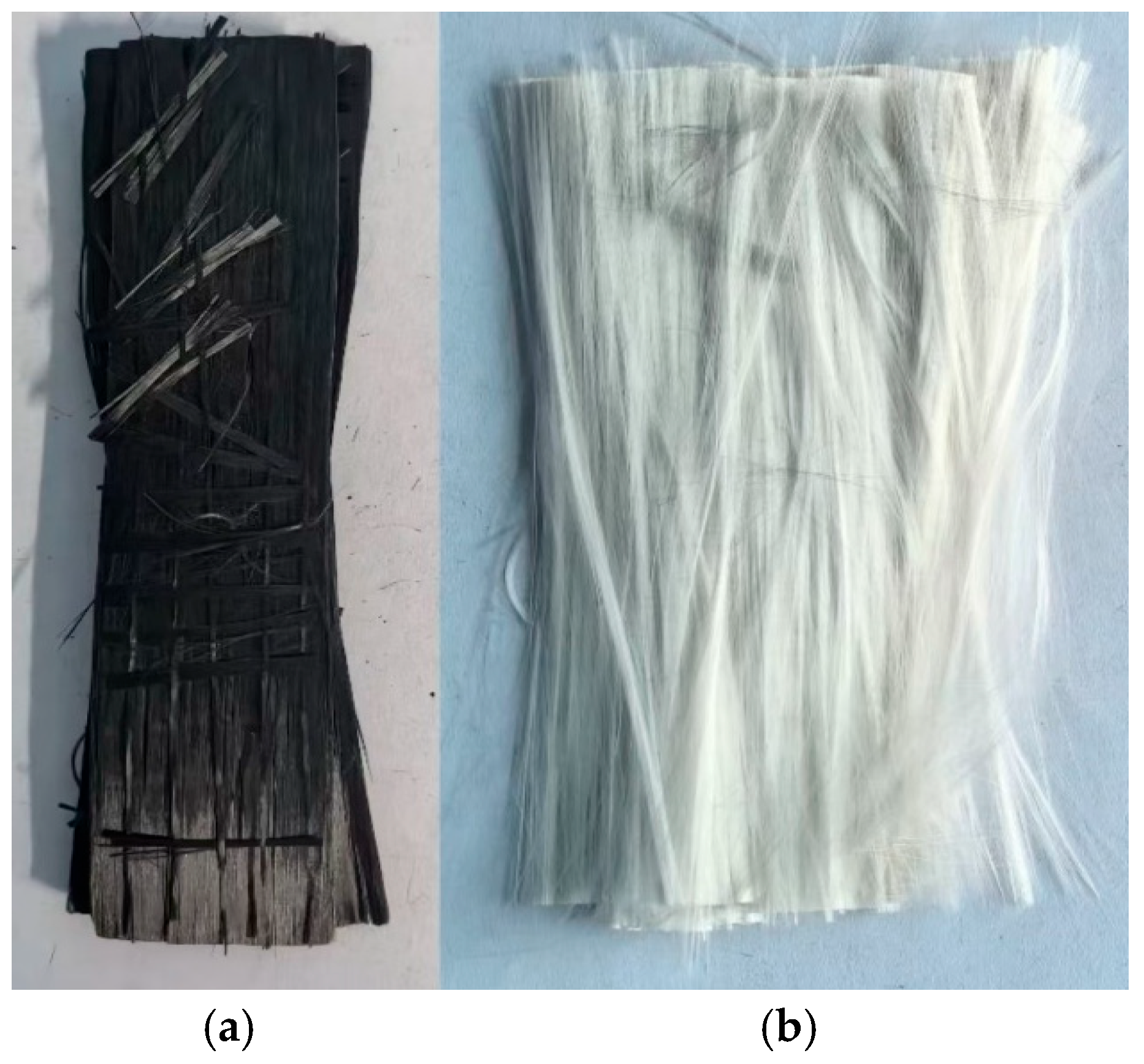
Considering all of the above, at the same air flow rate, two combinations achieve the recycling target: (i) 550 °C for 60 min or (ii) 450 °C for 120 min. Under both conditions, the char removal percentage reached over 99%. Previous studies indicated that extended oxidation time is well tolerated by the fibers, but increasing the temperature poses a greater risk to their mechanical performance [18]. Thus, the optimal oxidation conditions for meeting the recycling standard of the fibers are 450 °C and 120 min. Moreover, under these conditions, a key advantage is that pyrolysis and oxidation share the same optimal temperature of 450 °C. This allows the atmosphere to be switched directly to air upon completion of pyrolysis without any cooling step, thereby enabling seamless in situ oxidation and greatly simplifying the process. The changes in fiber properties resulting from the integrated pyrolysis and in situ oxidation treatment are presented in Figure 6. This approach is more conducive to the industrial-scale production and recovery of clean glass fibers.

3.4. Recycling of Glass Fibers

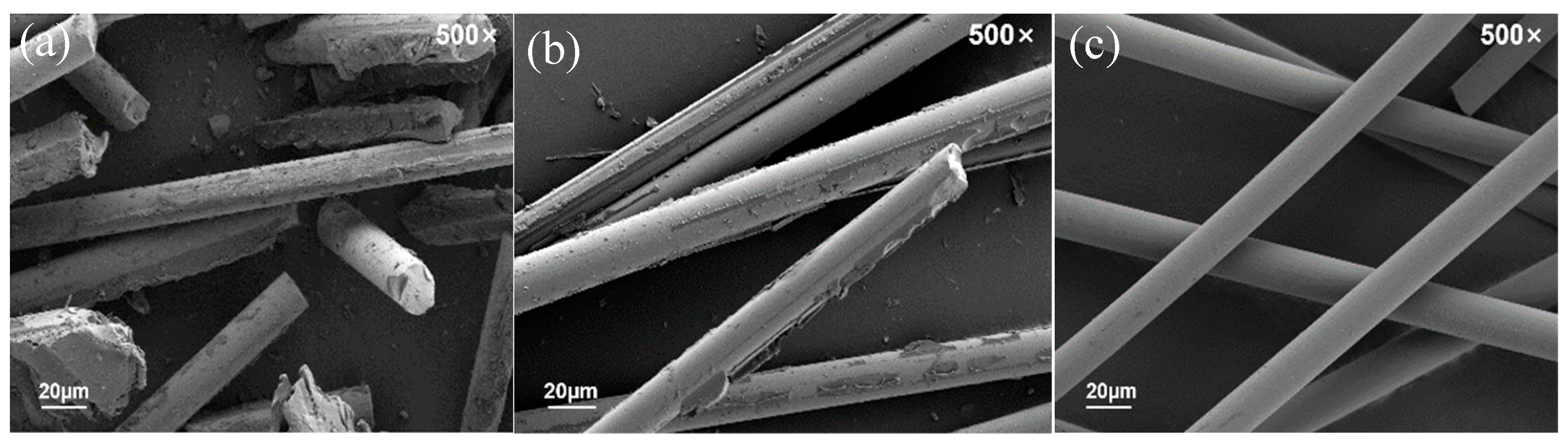
While a single-step oxidative process in air atmosphere can produce clean glass fibers, experimental results indicate that this approach severely compromises fiber tensile strength, retaining only 78% of its original value. In contrast, pyrolysis under an inert atmosphere is essential for preserving fiber integrity. A subsequent mild oxidation step is then employed to remove residual surface char. This integrated two-stage process enables fiber strength retention rates exceeding 90% [36]. During pyrolysis and oxidation treatment, the macroscopic and microscopic morphology of retired wind turbine blade fragments undergoes substantial transformation. Scanning electron microscopy (SEM) was used to characterize the microscopic morphology of the raw material, pyrolysis residue, and oxidation products. These observations provide direct visual evidence of resin decomposition and the progressive removal of surface char residues.
Figure 7a shows the microscopic morphology of the raw material. The fibers exhibit a continuous filamentous structure with dense, pore-free surfaces, which are characteristic of a homogeneous composite. The tight bonding between resin and fibers corroborates the epoxy resin–glass fiber composition identified by FTIR analysis. The epoxy resin matrix completely encapsulates the glass fibers, forming a robust protective layer that pyrolysis reactions must progressively degrade from both the surface and interior. After pyrolysis treatment, the sample surface undergoes fundamental changes, as shown in Figure 7b. The originally smooth surface is replaced by rough, irregular black carbonaceous deposits exhibiting random protrusions. These deposits represent pyrolysis char generated from the incomplete thermal decomposition of epoxy resin under inert atmosphere conditions. In certain areas, the exposed skeletal structure of the glass fibers that are not fully covered is visible, but the overall material remains enveloped or adhered by continuous carbon layers. This confirms that pyrolysis achieves a decomposition of organic components, yet residual char impedes complete fiber liberation. In Figure 7c, the microscopic morphology of the product after oxidation is depicted, clearly demonstrating the transformation of the fiber surface from rough to smooth. The black carbonaceous layer is essentially eliminated, revealing the white substrate with cleanly exposed glass fibers. The removal of pyrolysis char results in a loose fiber arrangement, facilitating subsequent recycling and utilization.
Furthermore, SEM images reveal that the fiber surface appears uniform and free from any damage after the pyrolysis and in situ oxidation treatment with no obvious change in the average fiber diameter. Such morphological integrity, characterized by smooth and damage-free surfaces, indirectly reflects a minimal degradation of fiber strength and stiffness, further supporting the suitability of the recovered fibers for high-value reutilization [19,37]. In summary, the evolution from the dense and smooth original composite material to the char-covered pyrolysis residue and finally to the clear and clean oxidation product directly demonstrates that this process can effectively detach the resin from the glass fiber reinforcement while eliminating residual pyrolysis char, thereby creating favorable conditions for the recycling and reuse of glass fibers.

3.5. The Reaction Path of the Pyrolysis Process

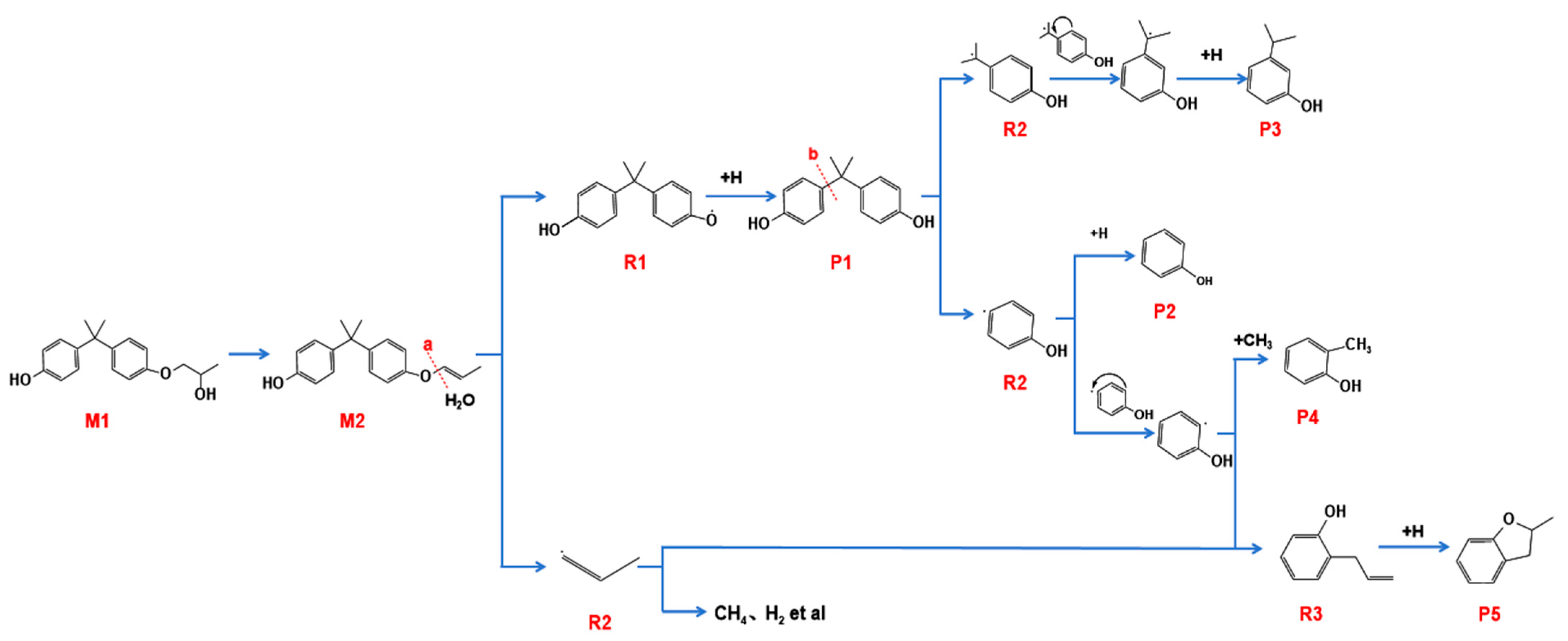
The proposed reaction pathway, inferred from the known oil phase products and pyrolysis characteristics, is illustrated in Figure 8. To verify the rationality of the reaction mechanism, the reaction free energies of key steps are calculated using DFT. As discussed in Section 3.1, the oil phase products mainly consist of phenolic compounds and minor amounts of furan derivatives. Phenolic compounds are primarily generated through radical cleavage and recombination reactions of the resin skeleton, while furans are derived from self-cyclization after the formation of specific phenolic intermediates [11,38].
Taking the structural repeating unit of bisphenol-A type epoxy resin as the initial monomer (M1), its pyrolysis transformation pathway begins at the low-temperature stage. During this stage, the cleavage of unstable groups such as terminal hydroxyl groups on the side chains occurs first, generating water molecules and intermediates (M2) and releasing energy with a calculated free energy change of −1.199 eV. This step is responsible for the minor mass loss peak observed in the DTG curve during the low-temperature stage in Figure 3, which is attributed to the removal of physically adsorbed and partially bound water as well as the cleavage of initial weak bonds. As the pyrolysis temperature increases, the process enters the main decomposition stage. Cleavage occurs at point a of the carbon chain, leading to the breakdown of long-chain macromolecules into active groups such as the rigid bisphenol-A skeleton (R1) and alkenes (R2) [11]. Most unstable alkene groups further decompose at high temperatures to form small gaseous molecules like H2 and CH4, which are released from the system [39]. Simultaneously, the rigid bisphenol-A skeleton can rapidly capture hydrogen radicals from the environment, undergoing reduction to form intact bisphenol-A molecules (P1), which constitute the main components in the oil phase. The significant decrease in free energy (−4.348 eV) indicates that this process is a highly spontaneous reaction.
At higher pyrolysis temperatures, random cleavage occurs at point b of the C–C bond connecting the benzene ring and the isopropyl group in bisphenol A, generating p-phenol radicals (R3) and p-isopropylphenol radicals (R4). Some p-phenol radicals combine directly with hydrogen radicals to form phenol (P2), with a reaction free energy of −6.064 eV, indicating an extremely strong driving force. However, in the high-temperature environment rich in radicals, simple hydrogen termination is not the only pathway. Because the radical center disrupts the perfect electronic structure of the benzene ring, p-phenol radicals become relatively unstable. Consequently, most p-phenol radicals undergo intramolecular rearrangement under radical induction, shifting the radical center to the ortho or meta position to form relatively stable ortho- or meta-phenol radicals(R5). Similarly, p-isopropylphenol radicals are also unstable; a portion of them convert via the same radical rearrangement mechanism into more stable m-isopropylphenol radicals (R6), which then capture hydrogen atoms to yield 3-isopropylphenol (P3)—a process with a free energy of −4.580 eV. Another fraction of p-isopropylphenol radicals undergo β-scission, where one methyl group from the isopropyl structure detaches together with an electron in the form of a methyl radical. These active methyl radicals in the system attack the benzene rings of other phenol radicals (particularly ortho-phenol radicals), allowing the ortho-phenol radicals to acquire a methyl group for stabilization, thereby completing methylation to form o-cresol (P4) [40]. The free energy change for this transformation is −3.927 eV.
In addition, the incompletely decomposed alkenyl groups in the system can react with ortho-phenol radicals to generate intermediates such as 2-allylphenol (R7), which feature unsaturated side chains at the ortho position. The free energy of this reaction is −4.234 eV, indicating that it proceeds spontaneously. Such intermediates serve as key precursors for the formation of furan-derived products. The oxygen atom in the phenolic hydroxyl group acts as a nucleophilic center that can intramolecularly attack the unsaturated C=C bond on the adjacent side chain, triggering a cyclization reaction. The oxygen atom adds to one carbon of the double bond, forming a dihydrobenzofuran structure containing a five-membered oxygen heterocycle fused with the benzene ring (P5). This fused ring possesses lower energy and exists in a more stable state. It is speculated that under more extensive pyrolysis conditions, this compound can undergo further dehydrogenation and aromatization to yield fully aromatized benzofuran derivatives.
In summary, the proposed reaction pathway comprehensively outlines the chemical blueprint from the epoxy resin repeating unit through a series of steps including radical initiation, bond cleavage, rearrangement, secondary addition, and cyclization, ultimately leading to the formation of all major oil phase products. The thermodynamic data provided by DFT calculations strongly support the spontaneity and feasibility of each key step under pyrolysis conditions, thereby allowing the proposed mechanism to be mutually corroborated with the experimentally observed product distributions.

4. Conclusions

This paper investigates a synergistic pyrolysis and in situ oxidation process for recycling retired wind turbine blades, focusing on the effect of key parameters on solid product char content and surface morphology. Supported by thermodynamic analysis, the epoxy resin decomposition pathways are clarified. Results show that near-complete resin decomposition is achieved at 450 °C under inert atmosphere, and subsequent in situ oxidation under air at the same temperature fully removes pyrolysis char while preserving glass fiber integrity. Notably, the process temperature remains constant during the atmosphere switch from inert gas to air, highlighting the advantage of the in situ oxidation strategy. The clean glass fibers obtained meet recycling standards, demonstrating industrial feasibility. Product analysis reveals that pyrolysis oil is rich in phenolic compounds, primarily bisphenol A, along with phenol, isopropylphenol, o-cresol, and benzofuran, indicating complex chain cleavage and secondary reactions. DFT calculations supported the thermodynamic spontaneity of the reaction pathways via radical cleavage, rearrangement, and cyclization. This paper validates the pyrolysis and in situ oxidation process for efficient resin removal and clean fiber recovery, providing a theoretical and experimental basis for the development of a pyrolysis and in situ oxidation process for wind turbine blade recycling. The optimized conditions identified here lay the groundwork for future pilot-scale studies and techno-economic evaluations, which will be necessary to fully assess industrial feasibility.

Author Contributions

X.B.: Writing—original draft, Investigation, Methodology. R.Y.: Investigation, Validation, Data curation. G.J.: Investigation, Validation. J.L.: Formal analysis, Data curation. Y.Q.: Investigation, Validation. X.Z.: Investigation. R.Z.: Formal analysis. F.L.: Resources. W.Z.: Investigation, Validation. N.X.: Investigation. T.Z.: Writing—review and editing, Supervision, Conceptualization. S.R.: Writing—review and editing, Project administration, Funding acquisition, Supervision, Conceptualization. All authors have read and agreed to the published version of the manuscript.

Funding

This research received no external funding.

Data Availability Statement

The original contributions presented in this study are included in the article. Further inquiries can be directed to the corresponding authors.

Acknowledgments

The authors thank the Long-Term Subsidy Mechanism from the Ministry of Finance and the Ministry of Education of PRC (BUCT) for the help of experiment platform.

Conflicts of Interest

Authors Xuguang Bai, Ran Yin, Guorui Jing, Jie Liu, Yao Qu, Xin Zhang, Ruirui Zhao and Feng Li were employed by the CUCDE Environmental Technology Co., Ltd. The remaining authors declare that the research was conducted in the absence of any commercial or financial relationships that could be construed as a potential conflict of interest. The CUCDE Environmental Technology Co., Ltd. had no role in the design of the study; in the collection, analyses, or interpretation of data; in the writing of the manuscript, or in the decision to publish the results.

References

  1. Hu, Y.M.; Zhang, Y.X.; Li, Y.C.; Wang, Y.; Li, G.; Liu, X. Wind turbine blade recycling: A review of the recovery and high-value utilization of decommissioned wind turbine blades. Resour. Conserv. Recycl. 2024, 210, 107813. [Google Scholar] [CrossRef]
  2. Beauson, J.; Madsen, B.; Toncelli, C.; Bech, J.I.; Brøndsted, P. Recycling of shredded composites from wind turbine blades in new thermoset polymer composites. Compos. Part A Appl. Sci. Manuf. 2016, 90, 390–399. [Google Scholar] [CrossRef]
  3. Kim, Y.N.; Kim, Y.O.; Jung, Y.C.; Park, M.; Kim, S.Y.; Yang, B.; Kim, J. Application of supercritical water for green recycling of epoxy-based carbon fiber reinforced plastic. Compos. Sci. Technol. 2019, 173, 66–72. [Google Scholar] [CrossRef]
  4. Zeng, Y.K.; Xue, Y.; Gong, X.; Gao, X.; E, J.; Chen, J.W.; Leng, E.W. Pyrolytic performance and kinetics study of epoxy resin in carbon fiber reinforced composites: Synergistic effects of epoxy resin and carbon fiber. J. Anal. Appl. Pyrolysis 2023, 176, 106255. [Google Scholar] [CrossRef]
  5. Pickering, S.J. Recycling technologies for thermoset composite materials—Current status. Compos. Part A Appl. Sci. Manuf. 2006, 37, 1206–1215. [Google Scholar] [CrossRef]
  6. Zhao, X.; Wang, X.L.; Tian, F.; An, W.L.; Xu, S.M.; Wang, Y.Z. A fast and mild closed-loop recycling of anhydride-cured epoxy through microwave-assisted catalytic degradation by trifunctional amine and subsequent reuse without separation. Green Chem. 2019, 21, 2487–2493. [Google Scholar] [CrossRef]
  7. Ge, L.C.; Xu, C.Y.; Feng, H.C.; Jiang, H.; Li, X.; Lu, Y.N.; Sun, Z.Y.; Wang, Y.; Xu, C. Study on isothermal pyrolysis and product characteristics of basic components of waste wind turbine blades. J. Anal. Appl. Pyrolysis 2023, 171, 105964. [Google Scholar] [CrossRef]
  8. Zhang, B.L.; Zhang, S.E.; Yang, Z.Y.; Liu, W.S.; Wu, B.Y.; Huang, M.T.; Liu, B. Pyrolysis process and products characteristics of glass fiber reinforced epoxy resin from waste wind turbine blades. Compos. Part B Eng. 2024, 287, 111803. [Google Scholar] [CrossRef]
  9. Yang, W.; Kim, K.H.; Lee, J. Upcycling of decommissioned wind turbine blades through pyrolysis. J. Clean. Prod. 2022, 376, 134292. [Google Scholar] [CrossRef]
  10. Chen, W.M.; Ye, M.Y.; Li, M.X.; Xi, B.D.; Hou, J.Q.; Qi, X.J.; Zhang, J.P.; Wei, Y.F.; Meng, F.H. Characteristics, kinetics and product distribution on pyrolysis process for waste wind turbine blades. J. Anal. Appl. Pyrolysis 2023, 169, 105859. [Google Scholar] [CrossRef]
  11. Ren, Q.Q.; Lei, Z.W.; Hu, S.; Ding, Y.; He, L.M.; Su, S.; Wang, Y.; Jiang, L.; Xu, J.; Xiang, J. Novel photothermal pyrolysis on waste fan blade to generate bisphenol A. J. Anal. Appl. Pyrolysis 2023, 169, 105828. [Google Scholar] [CrossRef]
  12. Xu, M.X.; Ji, H.W.; Meng, X.X.; Yang, J.; Wu, Y.C.; Di, J.Y.; Jiang, H.; Lu, Q. Effects of core materials on the evolution of products during the pyrolysis of end-of-life wind turbine blades. J. Anal. Appl. Pyrolysis 2023, 175, 106222. [Google Scholar] [CrossRef]
  13. Xu, M.X.; Ji, H.W.; Meng, X.X.; Wu, Y.C.; Di, J.Y.; Jiang, H.; Lu, Q. The pyrolysis of end-of-life wind turbine blades under different atmospheres and their effects on the recovered glass fibers. Compos. Part B Eng. 2023, 251, 110493. [Google Scholar] [CrossRef]
  14. Ma, C.; Sánchez-Rodríguez, D.; Kamo, T. A comprehensive study on the oxidative pyrolysis of epoxy resin from fiber/epoxy composites: Product characteristics and kinetics. J. Hazard. Mater. 2021, 412, 125329. [Google Scholar] [CrossRef]
  15. López, F.A.; Alguacil, F.J.; Martín, M.I.; Romero, M.; Rincón, M.; Centeno, T.A. Thermolysis of fibreglass polyester composite and reutilisation of the glass fibre residue to obtain a glass–ceramic material. J. Anal. Appl. Pyrolysis 2012, 93, 104–112. [Google Scholar] [CrossRef]
  16. Rahimizadeh, A.; Tahir, M.; Fayazbakhsh, K.; Lessard, L. Tensile properties and interfacial shear strength of recycled fibers from wind turbine waste. Compos. Part A Appl. Sci. Manuf. 2020, 131, 105786. [Google Scholar] [CrossRef]
  17. Guo, L.R.; Xu, L.; Ren, Y.R.; Shen, Z.G.; Fu, R.Z.; Xiao, H.; Liu, J.Y. Research on a two-step pyrolysis-oxidation process of carbon fiber-reinforced epoxy resin-based composites and analysis of product properties. J. Environ. Chem. Eng. 2022, 10, 107510. [Google Scholar] [CrossRef]
  18. Loris, G.; Tiziana, B.; Laura, M.; Chiara, L.; Giorgio, Z.; Giangiacomo, M.; Enrico, D.; Massimo, C.; Ivan, M.; Cristian, T. Recovery of Carbon Fibers From Cured and Uncured Carbon Fiber Reinforced Composites Wastes and Their Use as Feedstock for a New Composite Production. Polym. Compos. 2015, 36, 1084–1095. [Google Scholar] [CrossRef]
  19. Meyer, L.O.; Schulte, K.; Grove-Nielsen, E. CFRP-Recycling Following a Pyrolysis Route: Process Optimization and Potentials. J. Compos. Mater. 2009, 43, 1121–1132. [Google Scholar] [CrossRef]
  20. McKenzie, F.; Kandola, B.K.; Horrocks, A.R.; Erskine, E. Carbon fibres: Effect of various thermo-oxidative environments on structural and performance damage, both alone and in composites. Carbon 2024, 230, 119616. [Google Scholar] [CrossRef]
  21. GB/T 3715-2022; Terms Relating to Properties and Analysis of Coal. China National Standardization Administration: Beijing, China, 2022.
  22. ISO 1887-2014; Textile Glass—Determination of Combustible-Matter Content. International Organization for Standardization: Geneva, Switzerland, 2014.
  23. Dai, Y.S.; Song, X.L.; Wang, Z.R.; Ren, S.H.; Hou, Y.C.; Wu, W.Z. Oxidative absorption of H2S by functional ionic liquids mixtures. Chem. Eng. Sci. 2026, 320, 122566. [Google Scholar] [CrossRef]
  24. Chen, R.Y.; Li, Q.W.; Xu, X.K.; Zhang, D.D. Comparative pyrolysis characteristics of representative commercial thermosetting plastic waste in inert and oxygenous atmosphere. Fuel 2019, 246, 212–221. [Google Scholar] [CrossRef]
  25. Ge, L.C.; Li, X.; Feng, H.C.; Xu, C.Y.; Lu, Y.N.; Chen, B.; Li, D.Y.; Xu, C. Analysis of the pyrolysis process, kinetics and products of the base components of waste wind turbine blades (epoxy resin and carbon fiber). J. Anal. Appl. Pyrolysis 2023, 170, 105919. [Google Scholar] [CrossRef]
  26. Chen, R.Y.; Xu, X.K.; Lu, S.X.; Zhang, Y.; Lo, S.M. Pyrolysis study of waste phenolic fibre-reinforced plastic by thermogravimetry/Fourier transform infrared/mass spectrometry analysis. Energy Convers. Manag. 2018, 165, 555–566. [Google Scholar] [CrossRef]
  27. Yousef, S.; Eimontas, J.; Striūgas, N.; Abdelnaby, M.A. Pyrolysis kinetic behaviour and thermodynamic analysis of waste wind turbine blades (carbon fibres/unsaturated polyester resin). Energy Sources, Part A: Recovery. Util. Environ. Eff. 2023, 45, 10505–10522. [Google Scholar] [CrossRef]
  28. Yousef, S.; Eimontas, J.; Zakarauskas, K.; Striugas, N.; Stasiulaitiene, I. Recovery of energy and carbon fibre from wind turbine blades waste (carbon fibre/unsaturated polyester resin) using pyrolysis process and its life-cycle assessment. Environ. Res. 2024, 245, 118016. [Google Scholar] [CrossRef]
  29. Han, M.; Bai, Y.H.; Ma, Y.; Lv, P.; Song, X.D.; Wang, J.F.; Su, W.G.; Yu, G.S.; Wang, X.B. Thermal decomposition behavior of retired wind turbine blades: Kinetics, pyrolysis product distribution and characterization. J. Environ. Manag. 2025, 383, 125515. [Google Scholar] [CrossRef]
  30. Zhang, Y.L.; Zhang, Z.T.Y.; Ma, W.J.; Chen, P.; Bai, B.; Li, L.H.; Lai, Y.; Wang, X.B. Pyrolysis and oxidation characteristics and energy self-sustaining process design of retired wind turbine blades. J. Anal. Appl. Pyrolysis 2025, 185, 106872. [Google Scholar] [CrossRef]
  31. Wu, Y.Q.; Ge, Z.F.; Huang, C.; Zha, Z.T.; Zeng, M.X.; Ma, Y.N.; Sun, L.J.; Hou, Z.H.; Chu, S.; Zhang, H.Y. In-situ pyrolysis kinetic analysis and fixed-bed pyrolysis behavior of ex-service wind turbine blades. Waste Manag. 2023, 168, 54–62. [Google Scholar] [CrossRef]
  32. Xu, Y.; Wang, F.; Liang, D.H.; Lv, G.J.; He, F.Y.; Xue, S.R. A comparative pyrolysis study of different waste wind turbine blade parts: Kinetics, product distribution and evolution, and economics. Waste Manag. 2025, 200, 114782. [Google Scholar] [CrossRef] [PubMed]
  33. Chen, S.Q.; Liu, J.Y.; Lin, Z.T.; Lin, S.; Li, L.Z.; Chen, Y.; Evrendilek, F.; Li, W.X.; Huang, W.X.; Yang, C.Y.; et al. Atmosphere-dependent pyrolytic transformability of glass fiber/epoxy resin composites in waste wind turbine blades. Chem. Eng. J. 2025, 505, 159675. [Google Scholar] [CrossRef]
  34. Shen, Y.F.; Apraku, S.E.; Zhu, Y.P. Recycling and recovery of fiber-reinforced polymer composites for end-of-life wind turbine blade management. Green. Chem. 2023, 25, 9644–9658. [Google Scholar] [CrossRef]
  35. Cheng, L.L.; Chen, R.Z.; Yang, J.L.; Chen, X.R.; Yan, X.Y.; Gu, J.; Liu, Z.J.; Yuan, H.R.; Chen, Y. Mechanisms, technical optimization, and perspectives in the recycling and reprocessing of waste wind turbine blades: A review. Renew. Sustain. Energy Rev. 2025, 218, 115834. [Google Scholar] [CrossRef]
  36. Pimenta, S.; Pinho, S.T. Recycling carbon fibre reinforced polymers for structural applications: Technology review and market outlook. Waste Manag. 2011, 31, 378–392. [Google Scholar] [CrossRef]
  37. Jeantet, L.; Regazzi, A.; Perrin, D.; Pucci, M.F.; Corn, S.; Quantin, J.C.; Ienny, P. Recycled carbon fiber potential for reuse in carbon fiber/PA6 composite parts. Compos. Part B Eng. 2024, 269, 111100. [Google Scholar] [CrossRef]
  38. Ge, Z.F.; Wu, Y.Q.; Hou, Z.H.; Zhang, H.Y. Analysis on Degradation Mechanism and Product Recycle of Ex-service Wind Turbine Blades by Hydrothermal Liquefaction. ACS Omega 2024, 9, 47031–47041. [Google Scholar] [CrossRef]
  39. Xu, M.X.; Di, J.Y.; Xu, Y.C.; Meng, X.X.; Ji, H.W.; Jiang, H.; Li, J.H.; Lu, Q. Insights into the pyrolysis mechanisms of epoxy resin polymers based on the combination of experiments and ReaxFF-MD simulation. Chem. Eng. J. 2023, 473, 145404. [Google Scholar] [CrossRef]
  40. Yang, J.L.; Cheng, L.L.; Gu, J.; Tian, S.N.; Yang, J.; Huhe, T.L.; Yuan, H.R.; Chen, Y. Upcycling of epoxy resin from waste wind turbine blades: Pyrolysis-methylation tandem reaction to methylated phenols and hexamethylbenzene. J. Clean. Prod. 2024, 445, 140987. [Google Scholar] [CrossRef]
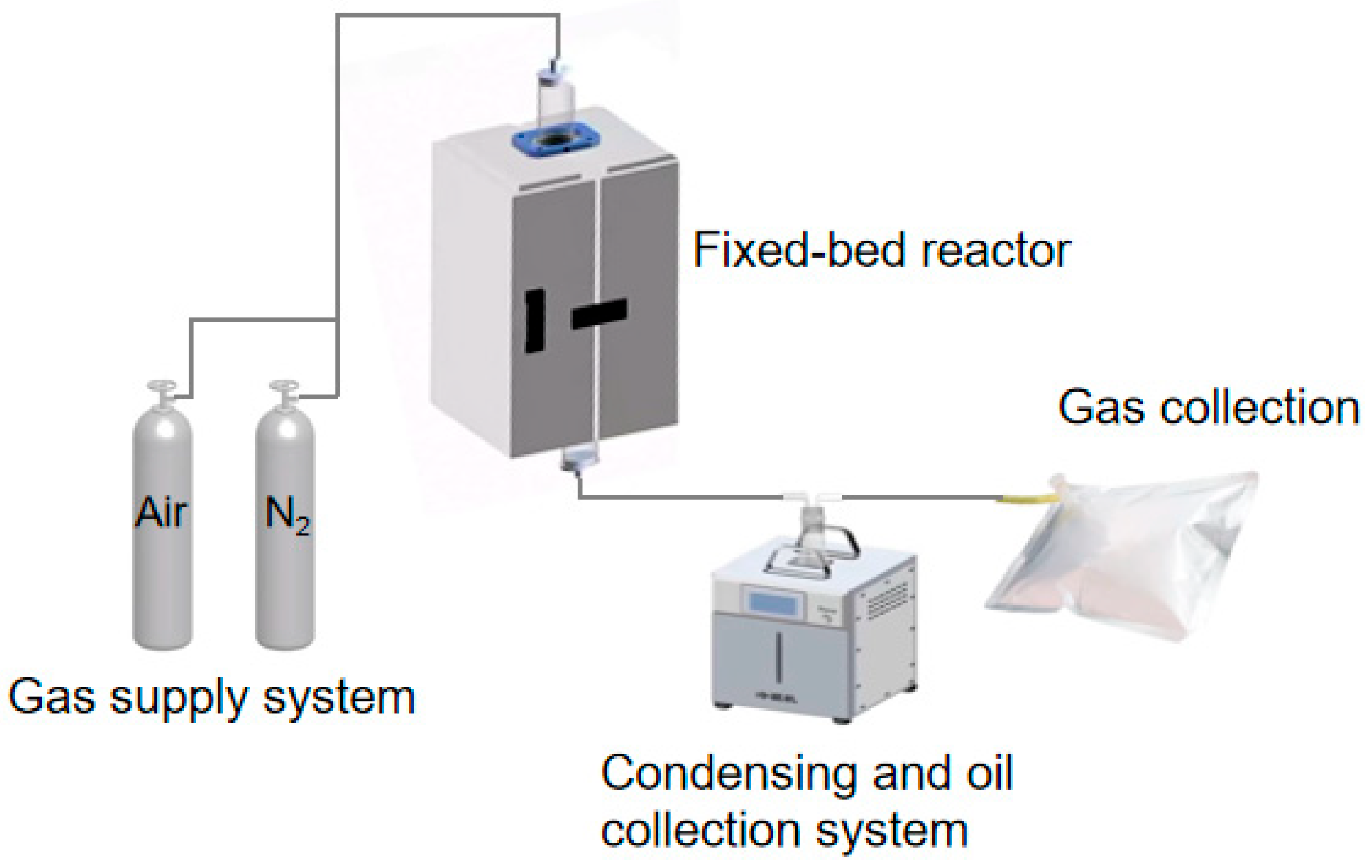
Figure 1. Schematic diagram of experimental system.
Processes 14 01739 g001
Figure 2. FT-IR of retired wind turbine blades.
Processes 14 01739 g002
Figure 3. Thermogravimetric curve of the sample (under nitrogen atmosphere with a heating rate of 10 °C/min).
Processes 14 01739 g003
Figure 4. The impact of different parameters on the char content of pyrolysis residues, (a) temperature, (b) time, and (c) gas flow rate.
Processes 14 01739 g004
Figure 5. The impact of different parameters on the char content and char removal percentage of products: (a) temperature, (b) gas flow rate, (c) time.
Processes 14 01739 g005
Figure 6. Changes in sample properties during processing: (a) after pyrolysis, (b) after oxidation.
Processes 14 01739 g006
Figure 7. SEM images of blade fragments: (a) raw materials, (b) pyrolysis residue, (c) oxidation products.
Processes 14 01739 g007
Figure 8. Epoxy resin matrix decomposition pathway.
Processes 14 01739 g008
Table 1. Proximate and ultimate analysis of retired wind turbine blades.
Proximate Analysis (ad, w%)Elemental Analysis (d, w%)
MAVFC *CHONS
0.0673.6124.841.4919.7052.0385.4690.561-
ad: air-dried basis, d: dry basis, * The fixed carbon (FC) was calculated as a difference.
Table 2. Main components and content of pyrolysis oil.
CompoundMolecular FormulaStructureContent
Bisphenol AC15H16O2Processes 14 01739 i00116.38
2,3-Dihydro-2-MethylbenzofuranC9H10OProcesses 14 01739 i0025.48
PhenolC6H6OProcesses 14 01739 i0035.28
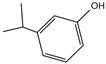
3-IsopropylphenolC9H12OProcesses 14 01739 i0043.41
o-CresolC7H8OProcesses 14 01739 i0051.46
Disclaimer/Publisher’s Note: The statements, opinions and data contained in all publications are solely those of the individual author(s) and contributor(s) and not of MDPI and/or the editor(s). MDPI and/or the editor(s) disclaim responsibility for any injury to people or property resulting from any ideas, methods, instructions or products referred to in the content.