Virtual Calibration of Steady-State Emissions for Heavy-Duty Diesel Engines Based on Regression Models

Abstract
1. Introduction
2. System Description
2.1. Engine Model
2.1.1. Intake and Exhaust Model
2.1.2. Turbocharger Model
2.1.3. Intercooler Model
2.1.4. EGR
2.1.5. Intake and Exhaust Valve Models
2.1.6. Pollutant Emission Model
2.2. The Test Benches
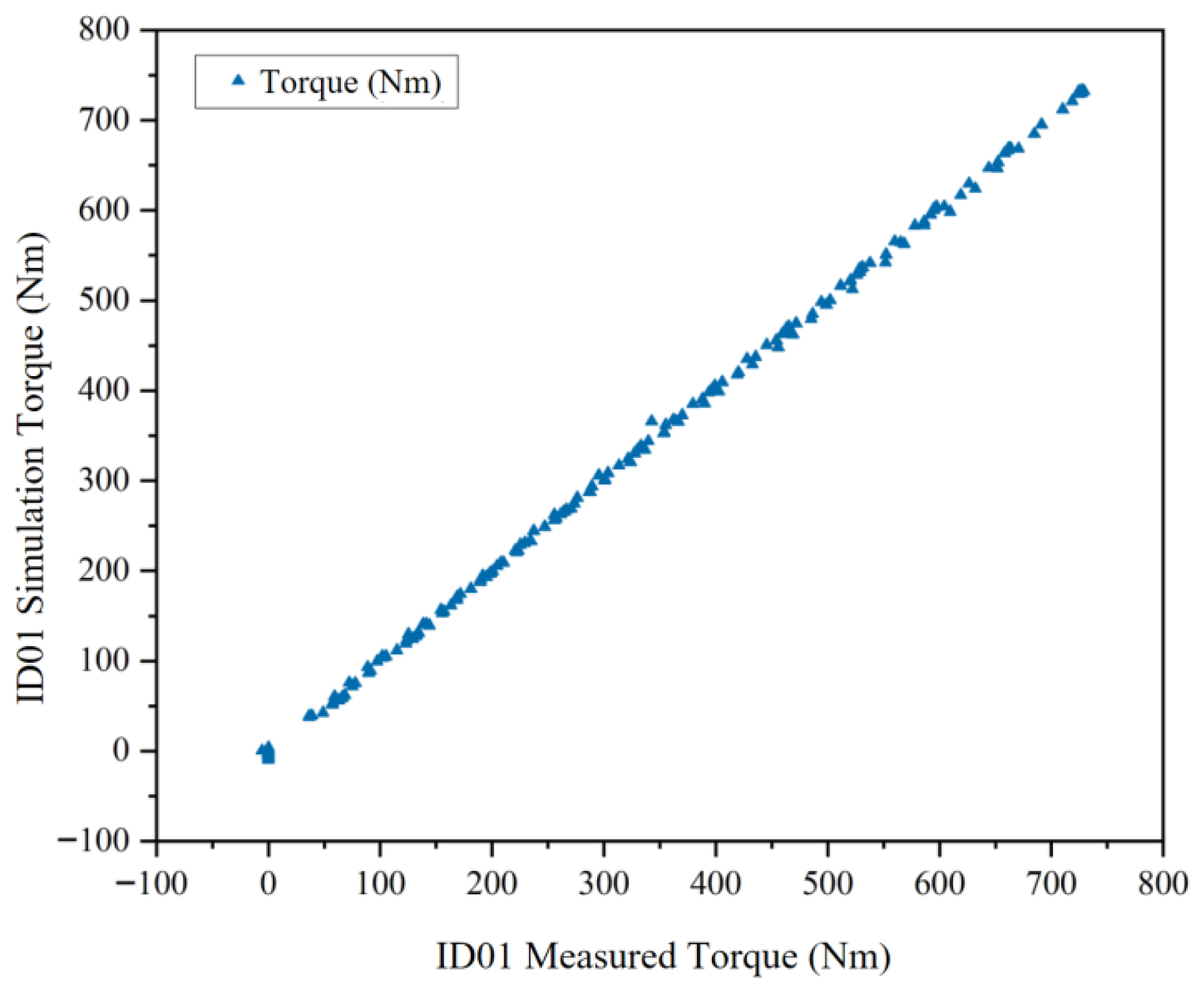
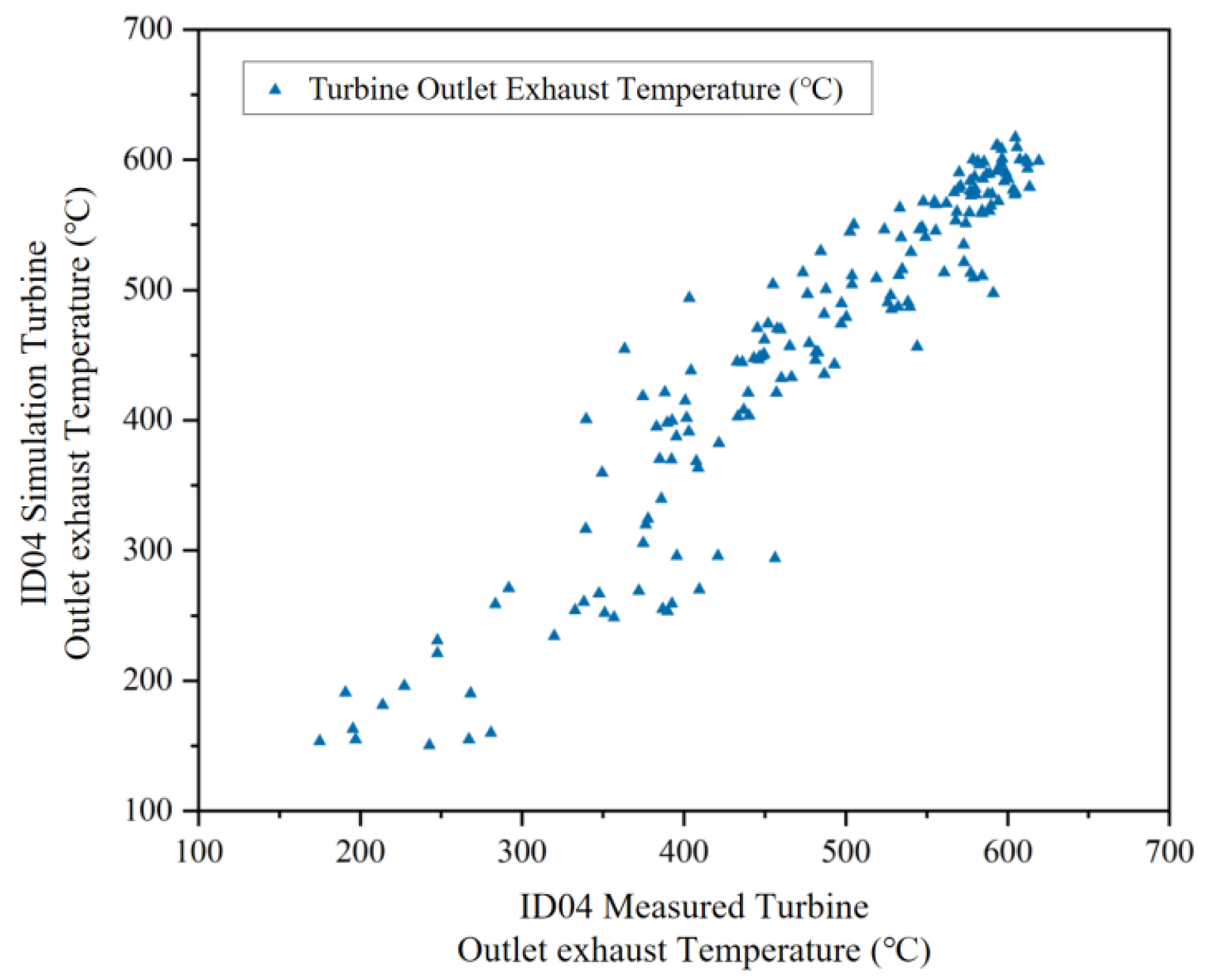
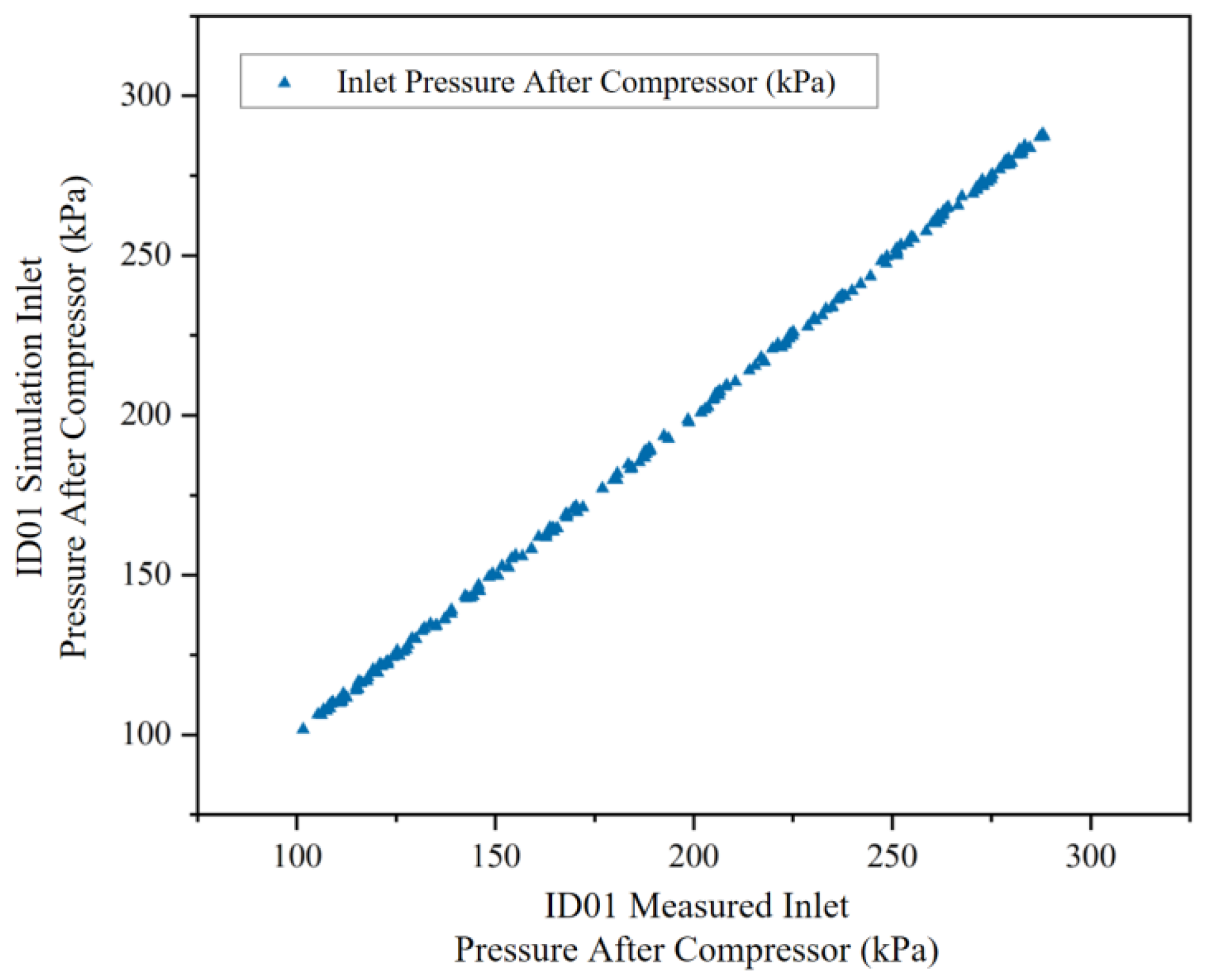
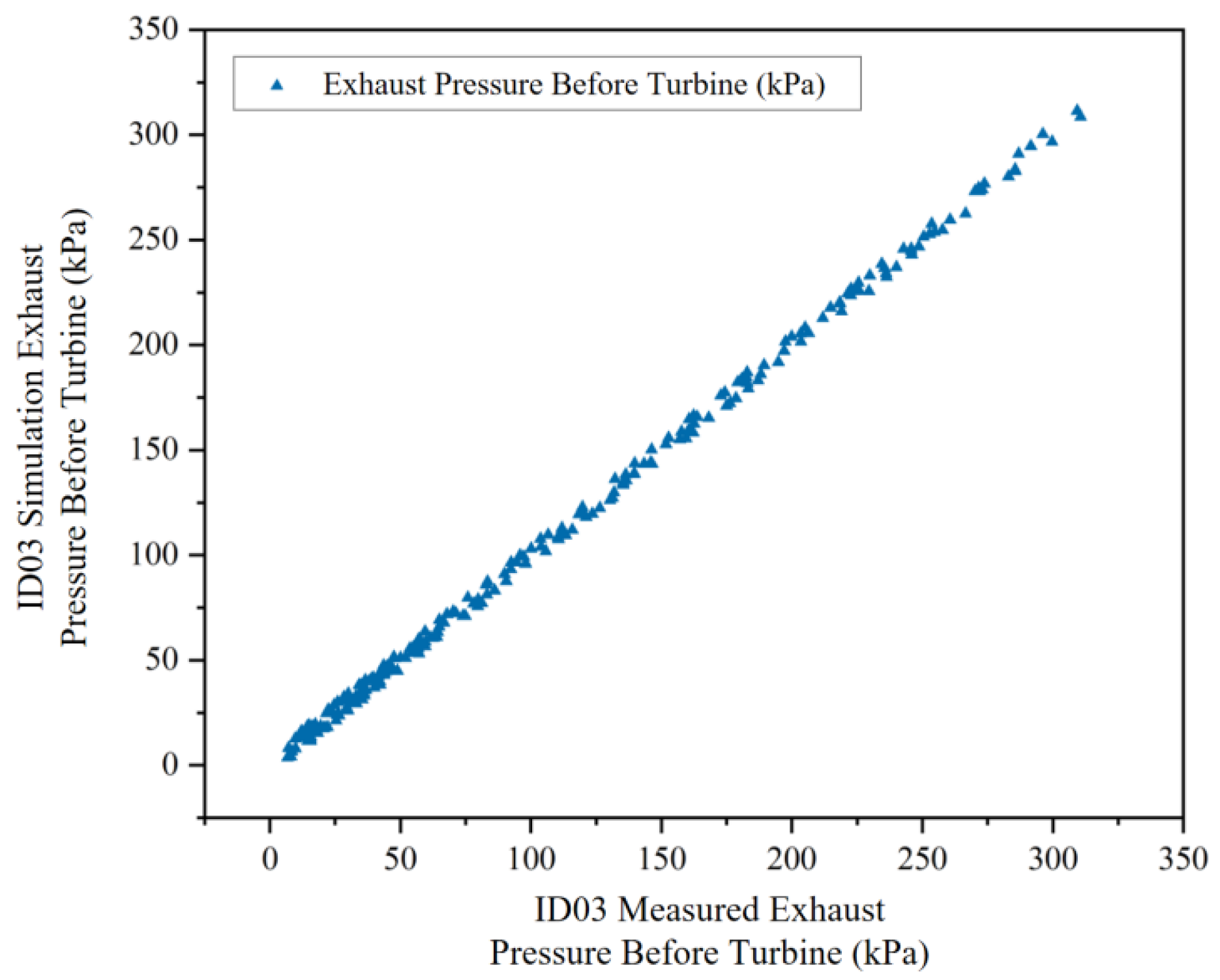
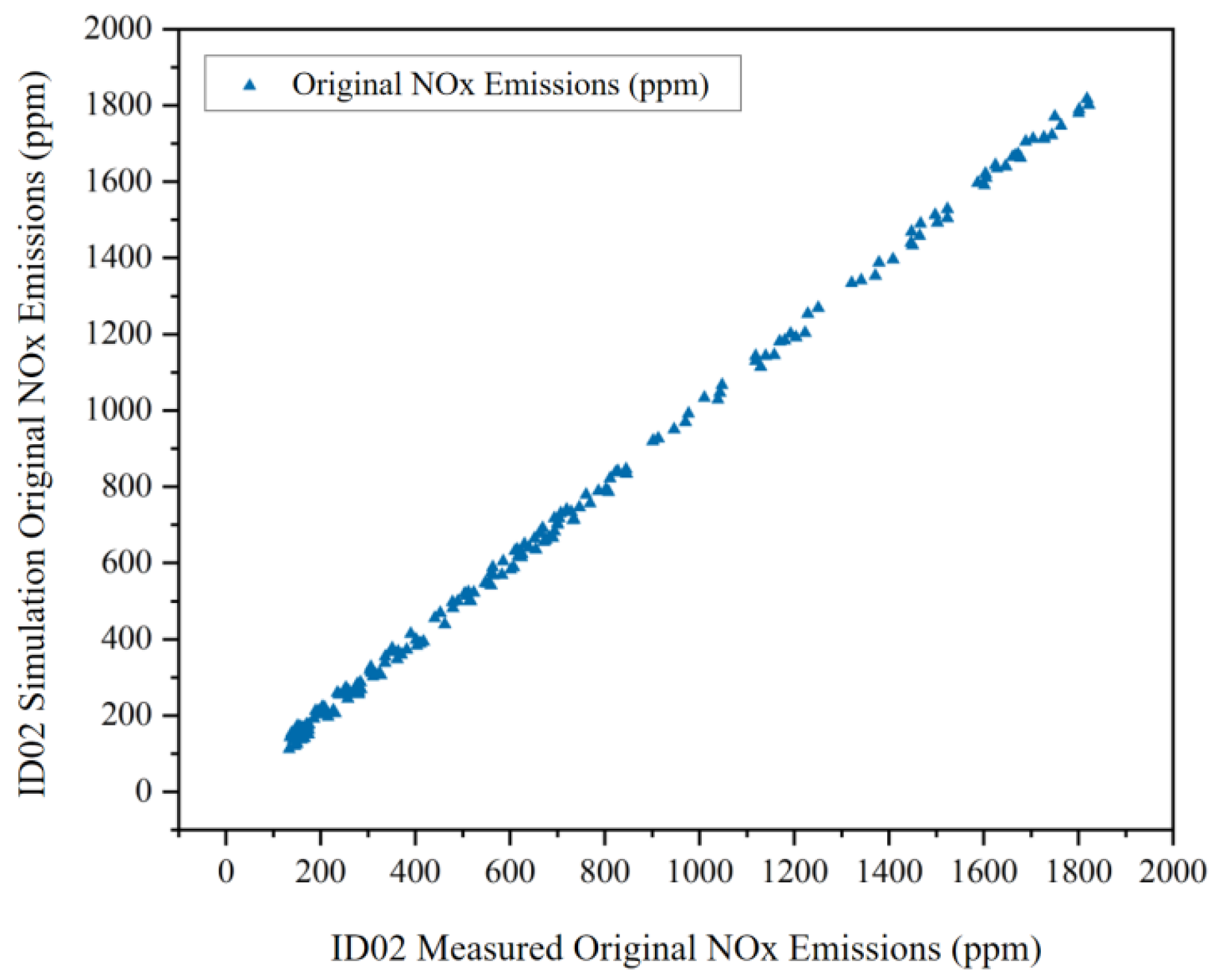
2.3. Model Accuracy and Validation
Static Model Calibration
3. Virtual Calibration Test Platform
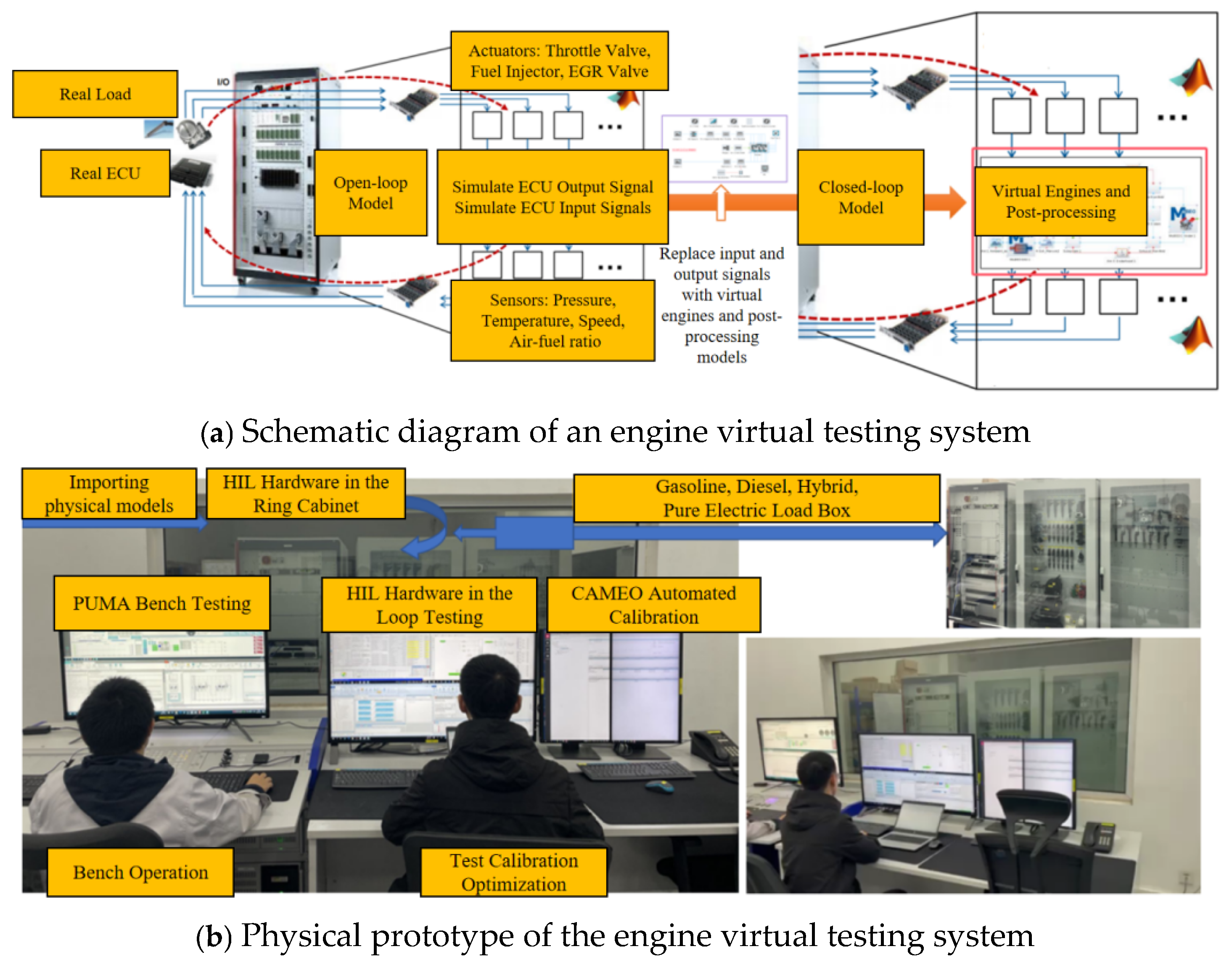
3.1. Overall Architecture and Development Logic
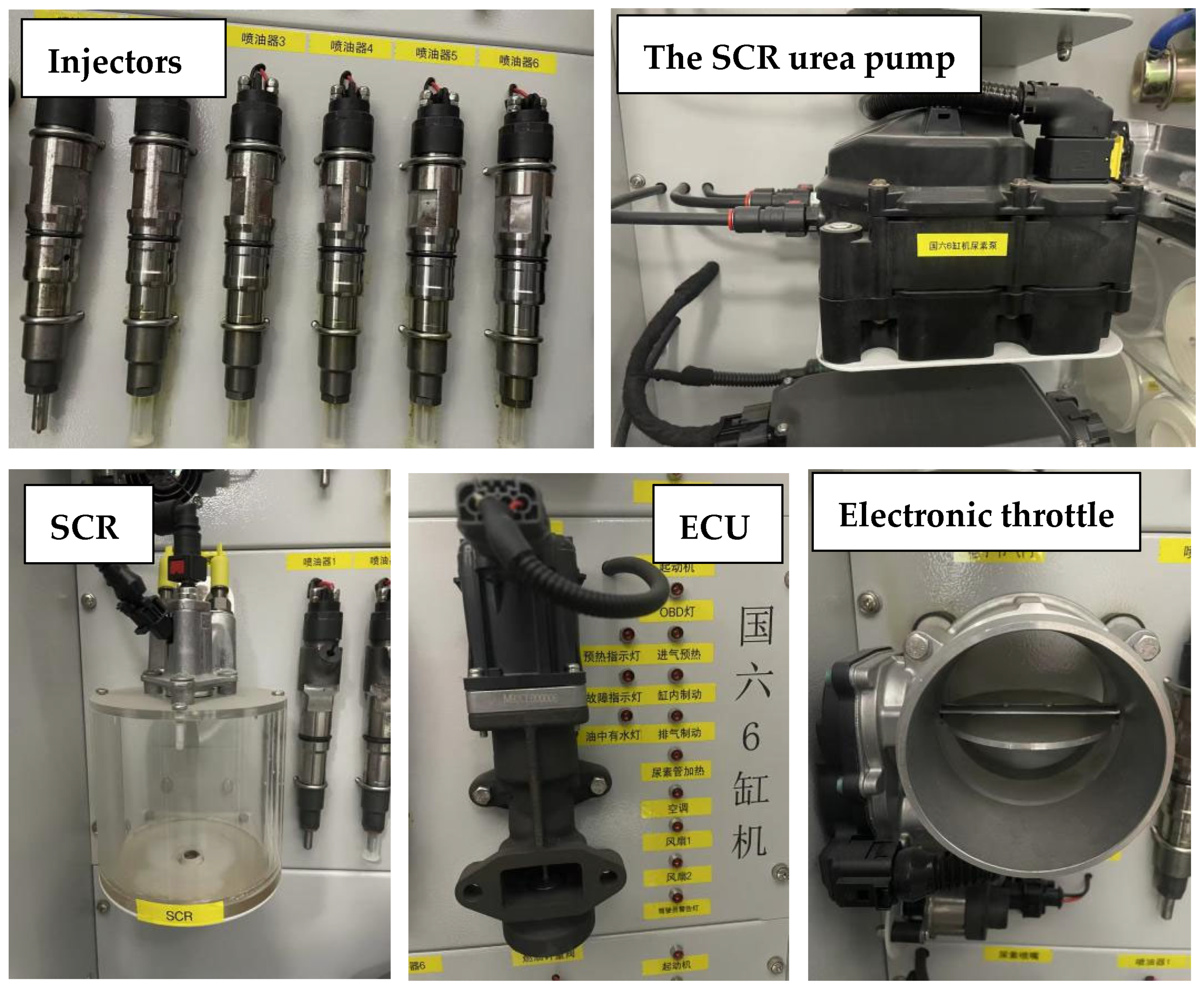
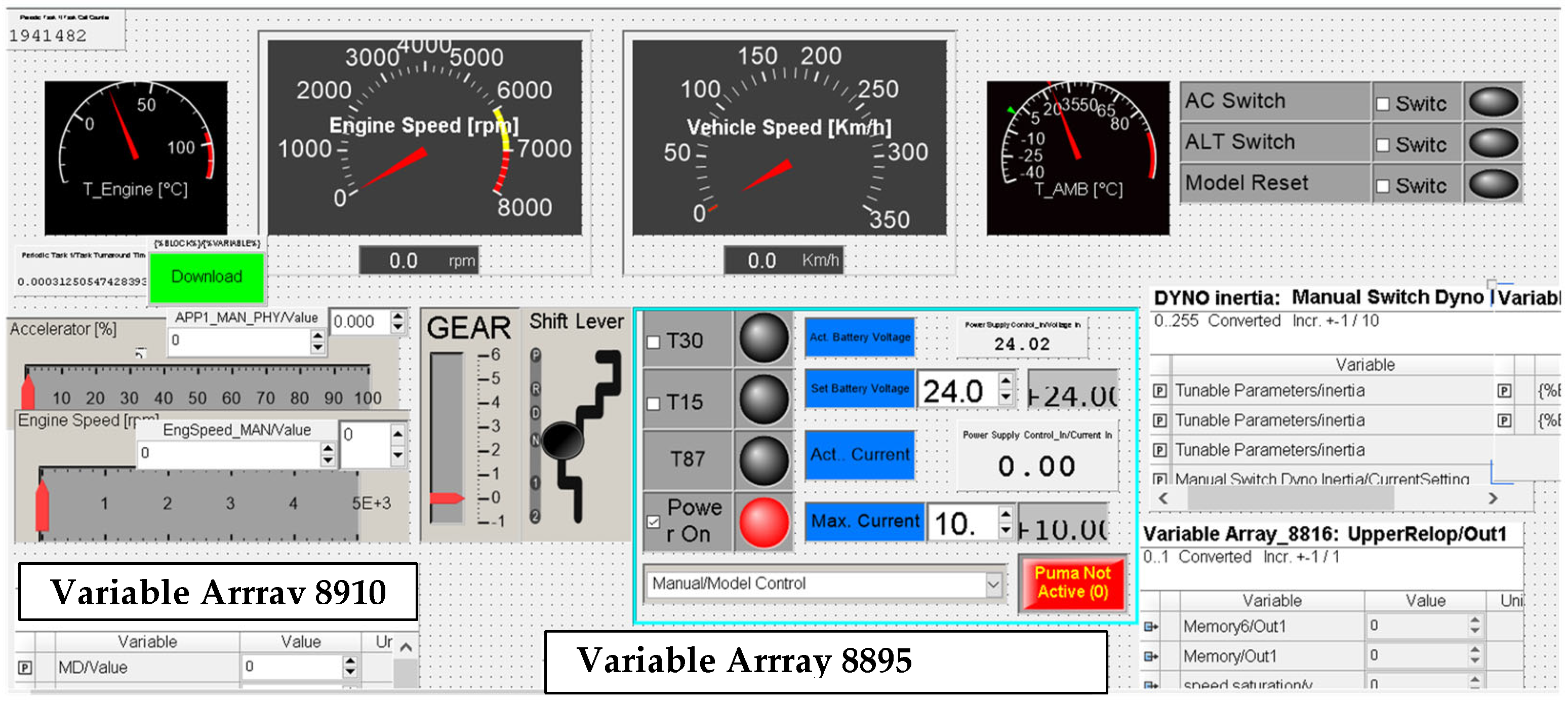
3.2. System Testing and Validation
4. Steady-State Optimization and Calibration
4.1. Calibration Methods and Procedures
4.2. Experimental Design Methods
4.3. Development of the Regression Model
4.4. Calibration and Optimization Results
4.4.1. Steady-State Performance Before CASC Cycle Calibration Optimization
4.4.2. Steady-State Performance After CASC Cycle Calibration Optimization
5. Conclusions
- A data-driven, semi-empirical and semi-physical simulation modeling method was proposed. By constructing core modules based on physical mechanisms and refining empirical parameters using experimental data, the method enhances computational efficiency while maintaining the prediction accuracy of key parameters. Additionally, a collaborative architecture combining physical actuators and virtual sensor signals was introduced, laying the foundation for the validity of virtual calibration. By innovatively introducing a closed-loop system with real actuators and virtual sensors, the dynamic response characteristics of the control system are faithfully reproduced, providing a reliable environment for validating the results of virtual calibration.
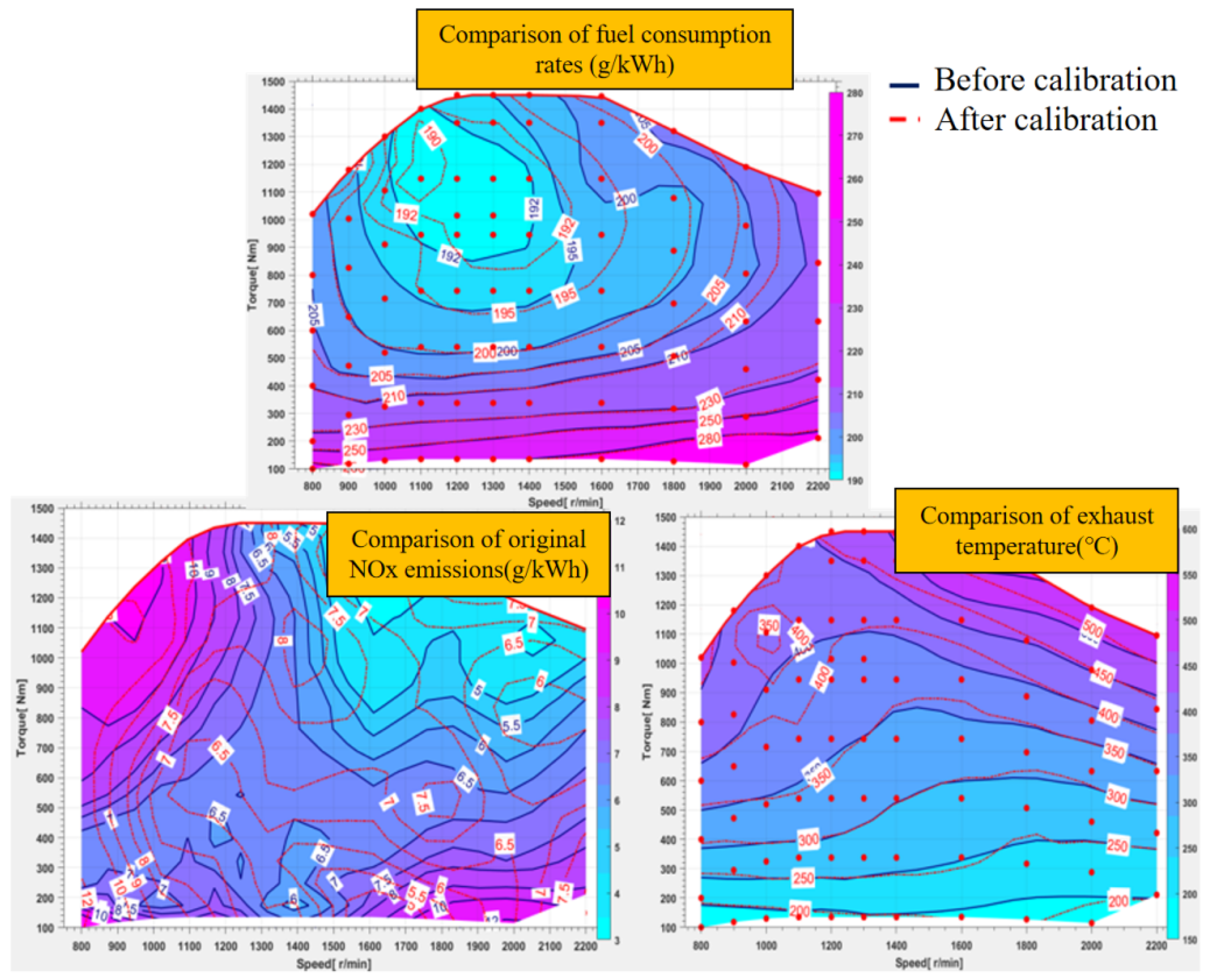
- Under the constraints of engine-out NOx and pre-turbine temperature, fuel consumption in the low-load range is reduced by 0.5–3 g/kW·h, NOx emissions are reduced by 0.5–3 g/kW·h, and exhaust temperature is increased by 10 °C. Compared to the pre-optimization calibration, fuel consumption in the CASC cycle decreased by 1.2%. Although NOx emissions increased by 14.8%, the post-optimization NOx emissions were 6.8 g/kWh. As long as the aftertreatment efficiency exceeds 95%, the engine meets emission regulations, and emission control under light-load conditions has significantly improved.
- By applying a model-based calibration method optimized for the emission zones typical of Chinese engine operating conditions, the fuel consumption and lower NOx emissions achieved reduced within the common operating conditions. The optimized data demonstrated superior vehicle adaptability compared to the original engine. This method shortens the calibration cycle and reduces the number of physical bench tests, providing the industry with a comprehensive calibration methodology tailored to engine operating conditions that is both reproducible and scalable.
Author Contributions
Funding
Data Availability Statement
Acknowledgments
Conflicts of Interest
Nomenclature
| Symbols | C2 | Compressor inlet | |
| A | Area (m2) | Liquid | Coolant |
| d | Diameter (m2) | Net | Net recovery power |
| h | Specific enthalpy (kJ·kg−1) | Out | Outlet |
| P | Pressure (MPa) | Pi | Outer diameter of the valve seat |
| μ | Flow coefficient (−) | In | Inlet |
| R | Universal gas constant (−) | Abbreviations | |
| β | Flow function (−) | ANN | Artificial Neural Network |
| T | Temperature (K) | BSFC | Brake-specific fuel consumption |
| λ | Thermal conductivity (mW·m−1·K−1) | DOE | Design of Experiments |
| W | Power (kW) | DPF | Diesel Particulate Filter |
| ρ | Density (kg·m−3) | EGR | Exhaust Gas Recirculation |
| k | The specific heat ratio | ECU | Electronic Control Unit |
| η | Efficiency (%) | HIL | Hardware-in-the-loop |
| m | Mass flow rate (kg·s−1) | LHS | Latin Hypercube Design |
| Cp | Specific heat capacity (kJ·kg−1·K−1) | RSM | Response Surface Modeling |
| Subscripts | WHSC | World Harmonized Stationary Cycle | |
| Cool | Intercooler | SCR | Selective Catalytic Reduction |
| C | Compressor | CHTC | China Heavy-duty Commercial Vehicle Test Cycle |
References
- Martin, J.; Arnau, F.; Piqueras, P.; Auñon, A. Development of an Integrated Virtual Engine Model to Simulate New Standard Testing Cycles; WCX World Congress Experience: Detroit, MI, USA, 2018. [Google Scholar] [CrossRef]
- Düzgün, M.T.; Frank Dorscheidt, F.; Krysmon, S.; Bailly, P.; Lee, S.Y.; Dönitz, C.; Pischinger, S. Virtual Multi-Criterial Calibration of Operating Strategies for Hybrid-Electric Powertrains. Vehicles 2023, 5, 1367–1383. [Google Scholar] [CrossRef]
- Andric, J.; Schimmel, D.; Heide, J. Calibration Procedure for Measurement-Based Fast Running Model for Hardware-in-the-Loop Powertrain Systems; WCX SAE World Congress Experience: Detroit, MI, USA, 2020. [Google Scholar]
- Lee, S.Y.; Andert, J.; Neumann, D.; Querel, C.; Scheel, T.; Aktas, S.; Miccio, M.; Schaub, J.; Koetter, M.; Ehrly, M. Hardware-in-the-Loop-Based Virtual Calibration Approach to Meet Real Driving Emissions Requirements. SAE Int. J. Engines 2018, 11, 1479–1504. [Google Scholar] [CrossRef]
- Pelletier, E.; Bai, W.; Alvarez Tiburcio, M.; Borek, J.; Boyle, S.; Earnhardt, C.; Gao, L.; Geyer, S.; Graham, C.; Groelke, B.; et al. In-Vehicle Validation of Heavy-Duty Vehicle Fuel Savings via a Hierarchical Predictive Online Controller. SAE Int. J. Adv. Curr. Pract. Mobil. 2021, 3, 2159–2169. [Google Scholar] [CrossRef]
- Klein, S.; Savelsberg, R.; Xia, F.; Guse, D.; Andert, J.; Blochwitz, T.; Bellanger, C.; Walter, S.; Beringer, S.; Jochheim, J.; et al. Engine in the loop: Closed Loop Test Bench Control with Real-Time Simulation. SAE Int. J. Commer. Veh. 2017, 10, 95–105. [Google Scholar] [CrossRef]
- Luigi, T.; Daniela, T.; Fabio, B. Development of a virtual calibration methodology for a downsized SI engine by using advanced valve strategies. Energy Procedia 2017, 126, 923–930. [Google Scholar] [CrossRef]
- Lv, H.; Li, J.Y.; Ling, J.; Wang, M. Research on Diesel Exhaust Aftertreatment System Modelling for Virtual Test Bed. IOP Conf. Ser. Earth Environ. Sci. 2021, 859, 012082. [Google Scholar] [CrossRef]
- Jacob, A.; Ashok, B. An interdisciplinary review on calibration strategies of engine management system for diverse alternative fuels in IC engine applications. Fuel 2020, 278, 118236. [Google Scholar] [CrossRef]
- Boccardo, G.; Piano, A.; Zanelli, A.; Babbi, M.; Cambriglia, L.; Mosca, S.; Millo, F. Development of a virtual methodology based on physical and data-driven models to optimize engine calibration. Transp. Eng. 2022, 10, 100143. [Google Scholar] [CrossRef]
- Özgül, E.; Şimşek, M.; Bedir, H. Use of thermodynamical models with predictive combustion and emission capability in virtual calibration of heavy duty engines. Fuel 2020, 264, 116744. [Google Scholar] [CrossRef]
- Park, J.; Lee, K.S.; Kim, M.S.; Jung, D. Numerical analysis of a dual-fueled CI (compression ignition) engine using Latin hypercube sampling and multi-objective Pareto optimization. Energy 2014, 70, 278–287. [Google Scholar] [CrossRef]
- Mathieu, R.; Baghdadi, I.; Briat, O.; Gyan, P.; Vinassa, J.M. D-optimal design of experiments applied to lithium battery for ageing model calibration. Energy 2017, 141, 2108–2119. [Google Scholar] [CrossRef]
- Ramin, M.; Arhonditsis, G.B. Bayesian calibration of mathematical models: Optimization of model structure and examination of the role of process error covariance. Ecol. Inform. 2013, 18, 107–116. [Google Scholar] [CrossRef]
- Gottorf, S.; Fryjan, J.; Leyens, L.; Picerno, M.; Habermann, K.; Pischinger, S. Lean Approach for Virtual Calibration Using Hardware-in-the-Loop and Electronic Control Unit (ECU)-Capable Engine Simulation. SAE Int. J. Engines 2021, 14, 531–542. [Google Scholar] [CrossRef]
- Jia, G.H.; Gao, S.; Shu, X.; Ren, B.; Zhang, B.; Ma, G.; Zhang, J.; Liu, H.; Li, D. Multi-objective optimization of emission parameters of a diesel engine using oxygenated fuel and pilot injection strategy based on RSM-NSGA III. Energy 2024, 293, 130661. [Google Scholar] [CrossRef]
- Yang, S.C.; Yu, M.J.; Wan, M.D.; Wang, Z.; Ma, Y.; Shen, L.; Chen, G.; Xu, Y. Comprehensive optimisation of the economy and emissions of diesel engines: A full factorial design approach combining the Kriging method, NSGA III, and TOPSIS. Results Eng. 2025, 27, 105719. [Google Scholar] [CrossRef]
- Bhattacharjee, D.; Ghosh, T.; Bhola, P.; Martinsen, K.; Dan, P.K. Data-driven surrogate assisted evolutionary optimization of hybrid powertrain for improved fuel economy and performance. Energy 2019, 183, 235–248. [Google Scholar] [CrossRef]
- Kim, H.J.; Park, S.H.; Lee, C.S. Impact of fuel spray angles and injection timing on the combustion and emission characteristics of a high-speed diesel engine. Energy 2016, 107, 572–579. [Google Scholar] [CrossRef]
- Katersnik, T.; Lund, H.; Kaiser, M.J. An advanced real-time capable mixture-controlled combustion model. Energy 2016, 95, 393–403. [Google Scholar] [CrossRef]
- Kim, K.S.; Ghandhi, J. A Simple Model of Cyclic Variation. In Proceedings of the Small Engine Technology Conference & Exhibition, Madison, WI, USA, 16–18 October 2012. [Google Scholar]
- Marsaglia, G.; Bray, T.A. A Convenient Method for Generating Normal Variables. Siam Rev. 1964, 6, 260–264. [Google Scholar] [CrossRef]
- Alexander, W.; Rolf, I. Semi-physical state and parameter estimation of diesel combustion phases for real-time applications. Int. J. Engine Res. 2020, 21, 1800–1818. [Google Scholar]
- Chen, Z.F.; Yao, C.D.; Wang, Q.G.; Han, G.P.; Dou, Z.C.; Wei, H.Y.; Wang, B.; Liu, M.J.; Wu, T.Y. Study of cylinder-to-cylinder variation in a diesel engine fueled with diesel/methanol dual fuel. Fuel 2016, 170, 67–76. [Google Scholar] [CrossRef]
- Chung, J.; Min, K.; Oh, S.; Sunwoo, M. In-cylinder pressure based real-time combustion control for reduction of combustion dispersions in light-duty diesel engines. Appl. Therm. Eng. 2016, 99, 1183–1189. [Google Scholar] [CrossRef]





| Project | Value |
|---|---|
| Engine Configuration | Inline-4, 4-valve |
| Displacement | 4.2 L |
| Rated Speed [rpm] | 2300 |
| Rated Power [kW] | 147 |
| Maximum Torque Speed [rpm] | 1200~1600 |
| Idle Speed [rpm] | 600 |
| Maximum Torque [N·m] | 720 |
| Name | Parameters | |
|---|---|---|
| Electric Dynamometer | AVL INDY P44 | Torque: ±0.3% F.S. Rotational speed: ±1 r/min |
| Dynamometer Operating | AVL PUMA 1.5.3 | |
| Engine Intake System | AVL ACS2400FH | Pressure: ±1 mbar Temperature: ±0.5 °C Humidity: ±3% |
| Gas Analyzer | AVL AMA i60 | ±2% |
| Particle Counter | AVL 489 | ±10% |
| Fuel Consumption Meter | AVL 753C/735S | ±0.12% |
| Particulate Matter Sampling | AVL SPC 472 | Response time: ≤0.3 s Flow rate: ≤±5% |
| Real-Time System | CONNECT™ (RT) | / |
| Coast-Down Evaluation | AVL Coastdown | / |
| Case | Fuel | NOx | CO | HC | Net Power |
|---|---|---|---|---|---|
| [g/kW·h] | [g/kW·h] | [g/kW·h] | [g/kW·h] | [kW] | |
| Original engine and WHSC | 207.60 | 5.60 | 0.27 | 0.13 | 30.25 |
| Original engine and CAS | 212.45 | 5.89 | 0.29 | 0.17 | 22.66 |
| Optimization and calibration | 209.81 | 6.76 | 0.27 | 0.16 | 22.63 |
Disclaimer/Publisher’s Note: The statements, opinions and data contained in all publications are solely those of the individual author(s) and contributor(s) and not of MDPI and/or the editor(s). MDPI and/or the editor(s) disclaim responsibility for any injury to people or property resulting from any ideas, methods, instructions or products referred to in the content. |
© 2026 by the authors. Licensee MDPI, Basel, Switzerland. This article is an open access article distributed under the terms and conditions of the Creative Commons Attribution (CC BY) license.
Share and Cite
Liu, D.; Wang, T.; Jiao, W.; Xu, X.; Xie, L. Virtual Calibration of Steady-State Emissions for Heavy-Duty Diesel Engines Based on Regression Models. Processes 2026, 14, 1670. https://doi.org/10.3390/pr14101670
Liu D, Wang T, Jiao W, Xu X, Xie L. Virtual Calibration of Steady-State Emissions for Heavy-Duty Diesel Engines Based on Regression Models. Processes. 2026; 14(10):1670. https://doi.org/10.3390/pr14101670
Chicago/Turabian StyleLiu, Dongwei, Tianyou Wang, Wenjian Jiao, Xiaowen Xu, and Liangtao Xie. 2026. "Virtual Calibration of Steady-State Emissions for Heavy-Duty Diesel Engines Based on Regression Models" Processes 14, no. 10: 1670. https://doi.org/10.3390/pr14101670
APA StyleLiu, D., Wang, T., Jiao, W., Xu, X., & Xie, L. (2026). Virtual Calibration of Steady-State Emissions for Heavy-Duty Diesel Engines Based on Regression Models. Processes, 14(10), 1670. https://doi.org/10.3390/pr14101670