Intelligent Fault Discrimination in Power Transformers: A Comprehensive Review of Methods



Abstract
1. Introduction
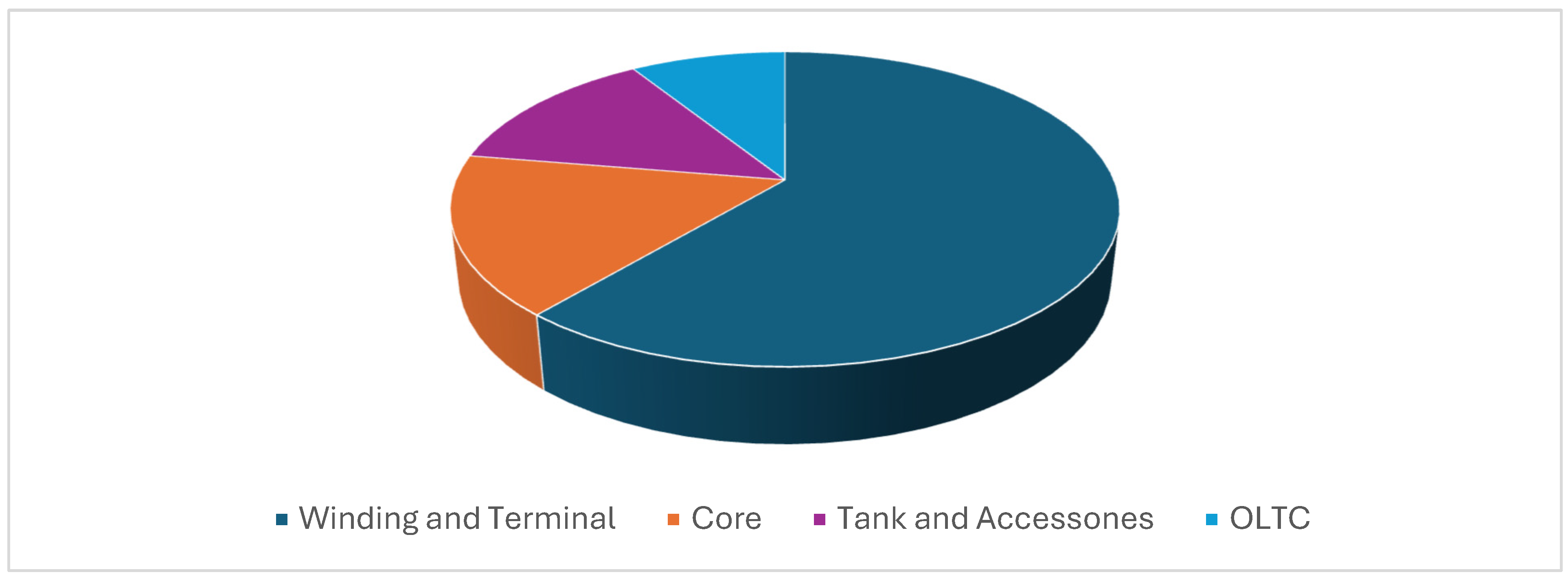
- Winding Failures, including inter-turn short circuits, phase-to-phase faults, and mechanical displacement.
- Core Faults, including insulation deterioration and short-circuited core laminations.
- Terminal faults, typically resulting from loose, corroded, or mechanically damaged connections.
- On-Load Tap Changer (OLTC) Malfunctions, which can impair voltage regulation and cause localized overheating.
- Tank and component failures, including oil leakage, bushing deterioration, and radiator damage.
- Abnormal operating conditions, such as sustained overloading, overvoltage, and insufficient cooling.
- External influences, including dielectric stresses caused by lightning and through-fault conditions.
1.1. Survey Methodology
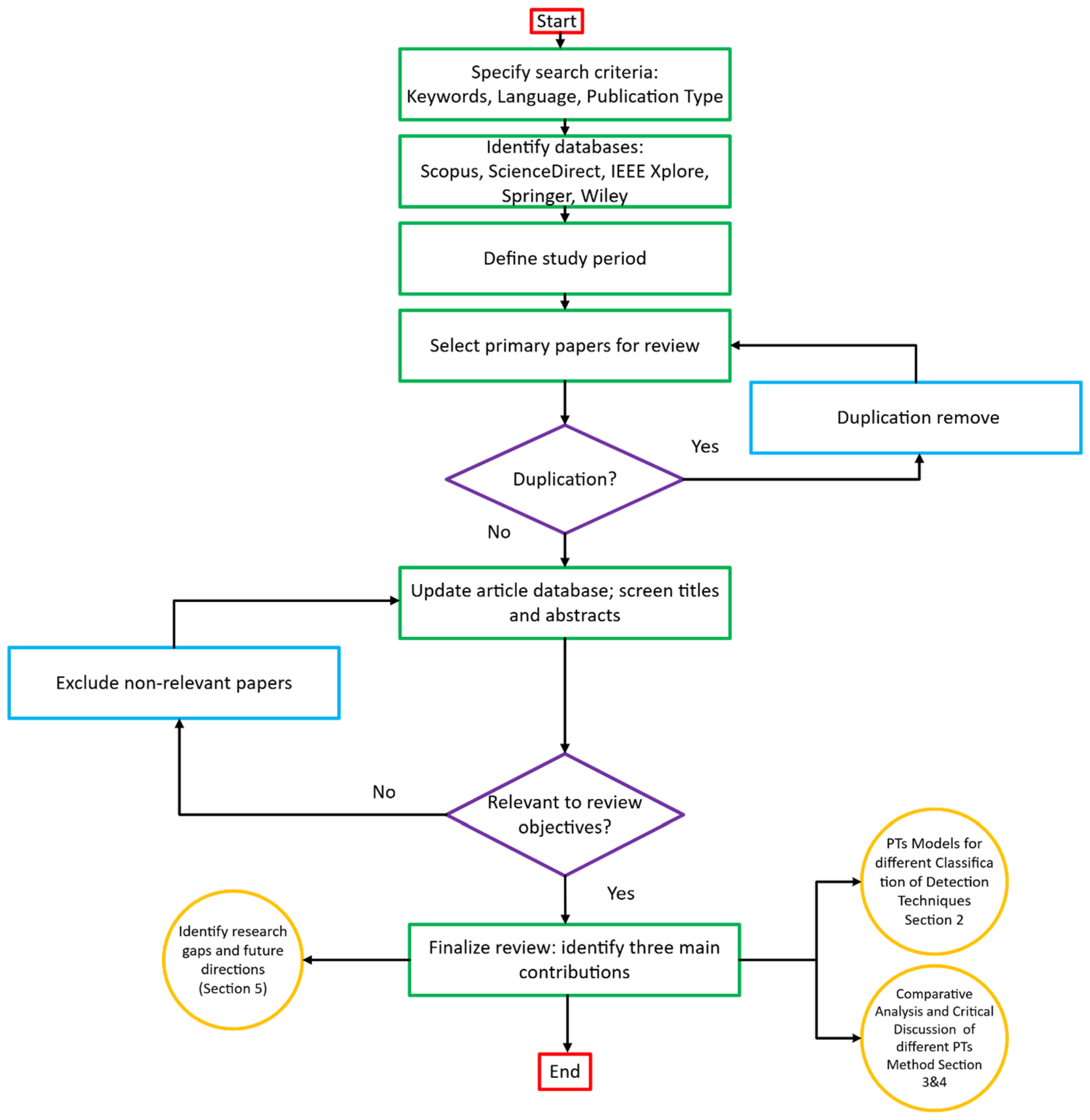
- Address power transformers used in transmission or distribution systems;
- Propose, analyze, or evaluate a method for distinguishing inrush currents from internal faults, including analytical, signal-processing-based, or AI-based methods;
- Provide sufficient technical detail, such as models, algorithms, or experimental/simulation setups, to allow meaningful comparison.
1.2. Related Work

| Technique | Data Type | Application Type | Accuracy/Performance | Key Limitations | Ref. |
|---|---|---|---|---|---|
| EGML (BPNN + GA/MEA) | 310 real DGA samples | Offline diagnosis/condition monitoring | 95.0% (MEA-EGML) | Single transformer scale | [17] |
| DT/RF/GB on PSCAD data | Simulated diff. currents | Real-time protection candidate | 100% (DT) detection | Pure simulation-based | [18] |
| EMD + XGBoost | 377 public DGA dataset | Offline diagnosis/condition monitoring | >90% sensitivity & accuracy | Depends on DGA data quality | [19] |
| ITD + XGBoost | 376 public DGA dataset | Offline diagnosis/condition monitoring | >95% accuracy | Similar dependency on data | [20] |
| Wavelet + MP + PSO/DMO + RF | 2400 samples, 41 features | Real-time protection candidate | 97.71–98.33% (RF) | Computational overhead | [21] |
| DWT + SVM (on FRA signals) | 5 real transformer FRA sets | Offline/periodic diagnostic assessment | Fast execution (<12 s/sample) | Offline only; limited deployment | [22] |
| FRA + SOA-KELM | Lab-measured FRA signals | Offline/laboratory diagnostic assessment | 100% (type), 97.83% (severity) | Lab-scale only | [23] |
| DWT + OMP + BA + SVM/ANN/k-NN | Lab fault current waveforms | Protection-oriented laboratory validation | 96% (SVM, 10-fold CV) | Lab study; no field testing | [24] |
2. Classification of Detection Techniques
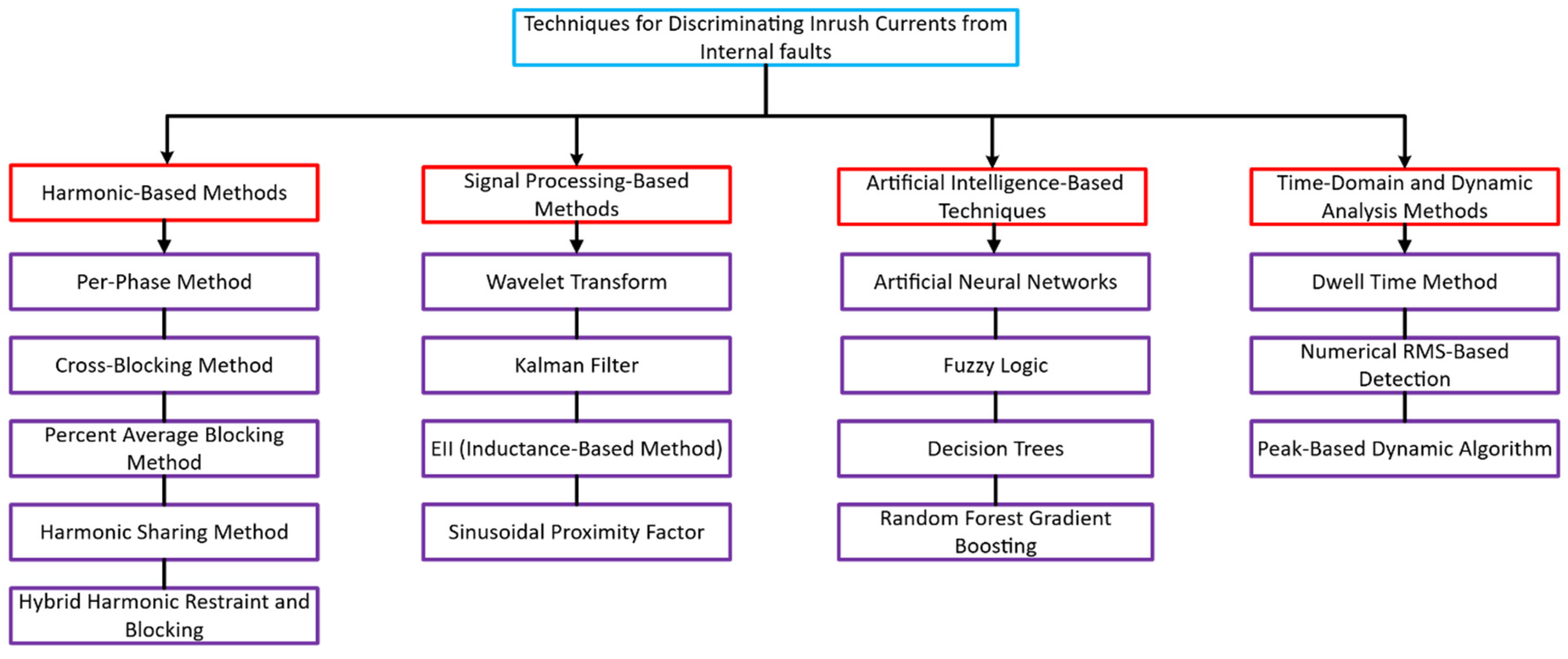
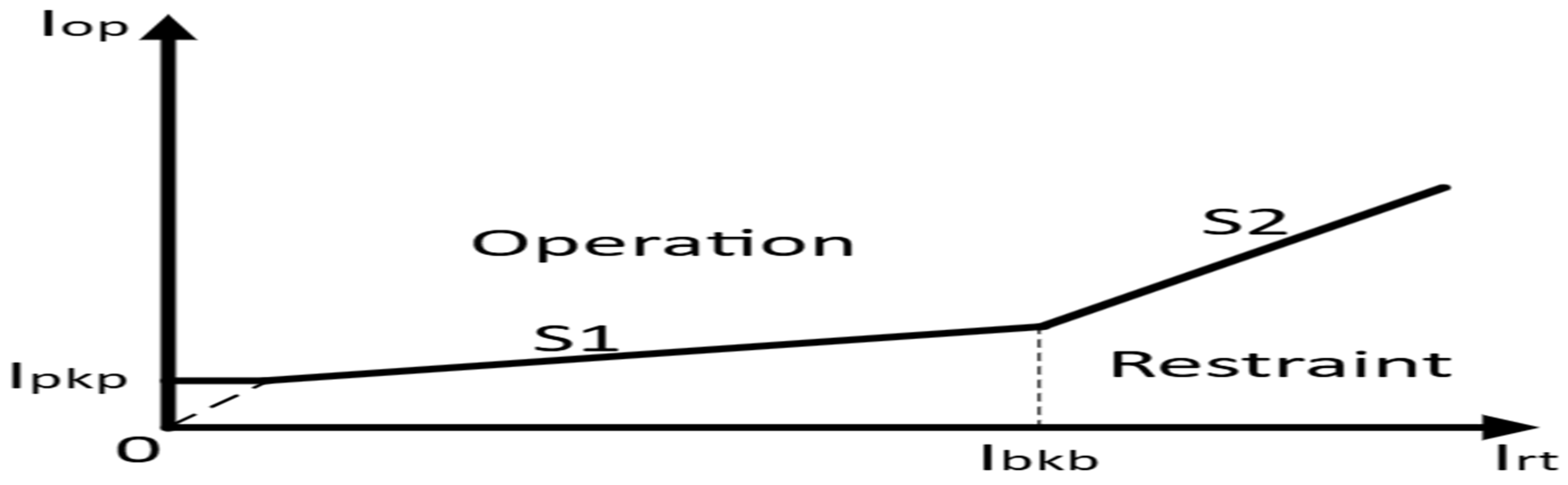
- Harmonic-based methods: extensions and refinements of the classical second-harmonic restraint method, including per-phase schemes, cross-blocking logic, and composite harmonic indices.
- Time-domain and dynamic methods: techniques that exploit the temporal evolution and waveform characteristics of the differential current, such as dwell-time criteria and RMS-based trend indices.
- Signal-processing-based methods: approaches that apply advanced time–frequency or model-based analysis, such as wavelet transform, instantaneous inductance estimation, and Kalman filtering, to extract discriminative transient features.
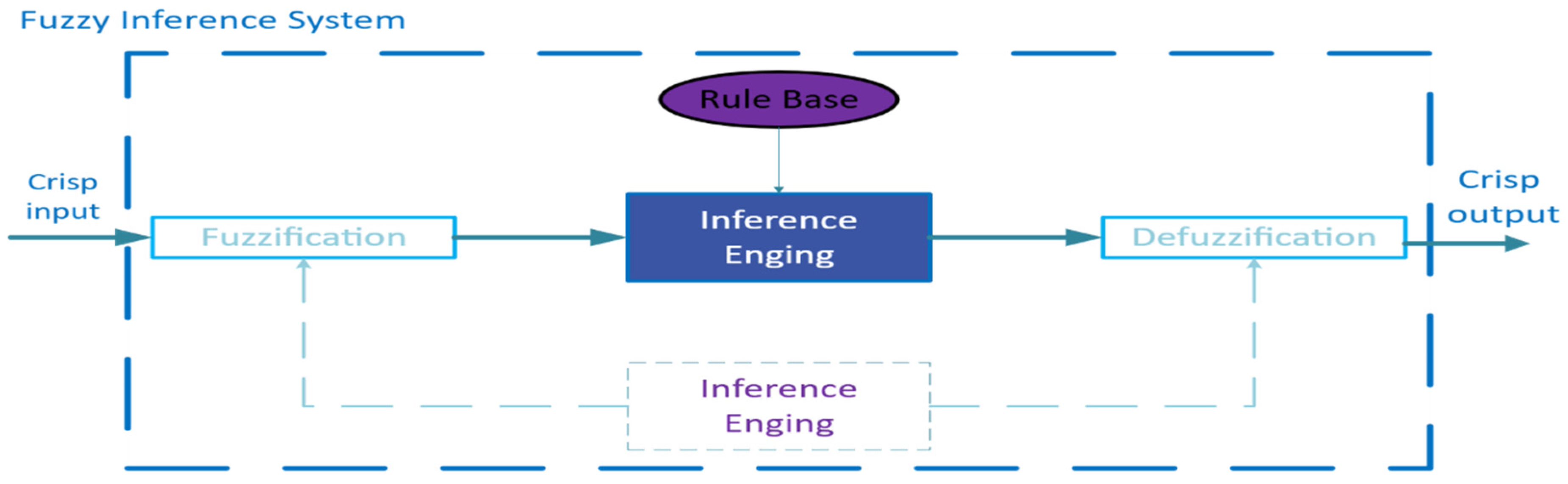
- Artificial intelligence-based techniques: data-driven classifiers, including artificial neural networks, fuzzy systems, and tree-based ensemble models, which learn decision boundaries from labelled examples.
- Hybrid and emerging approaches: multi-criteria frameworks that combine harmonic, time-domain, signal-processing, and AI-based features to improve robustness, adaptability, and decision reliability.
2.1. Conventional Harmonic-Based Methods
2.1.1. Per-Phase Method
2.1.2. Cross-Blocking Method
2.1.3. Percent Average Blocking Method
2.1.4. Harmonic Sharing Method
2.1.5. Hybrid Harmonic Restraint and Blocking
2.2. Time-Domain and Dynamic Analysis Methods
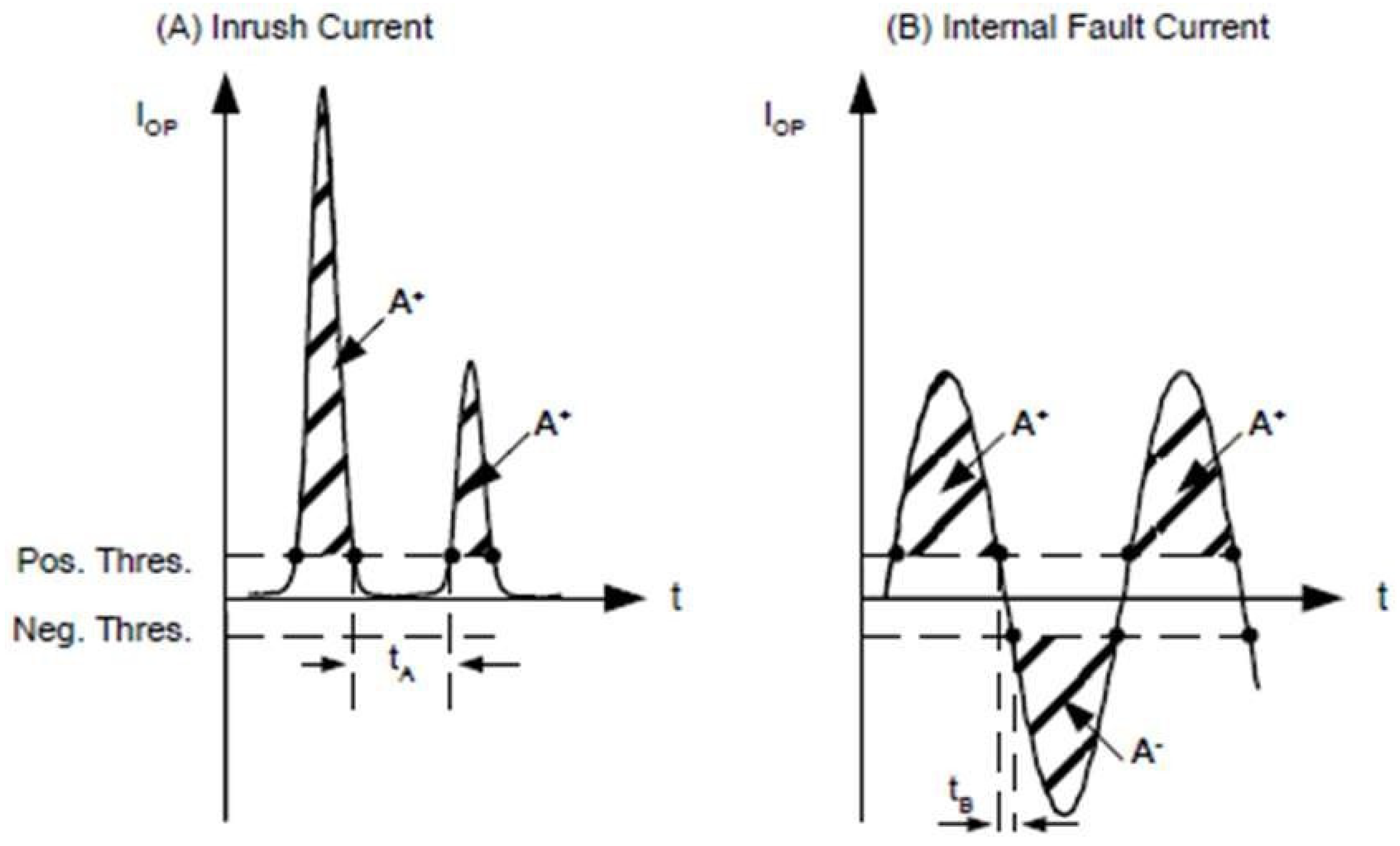
2.2.1. Dwell Time Method
2.2.2. Improved Correlation-Based Algorithm
2.2.3. Numerical RMS Differential Method
- Magnetizing Inrush, classified by a persistently decaying trend, where specified number of consecutive cycles .
- Internal Fault, identified by a sustained or increasing current level, where .
2.2.4. Dynamic Algorithm with Multi-Feature Classification
2.3. Signal Processing-Based Methods
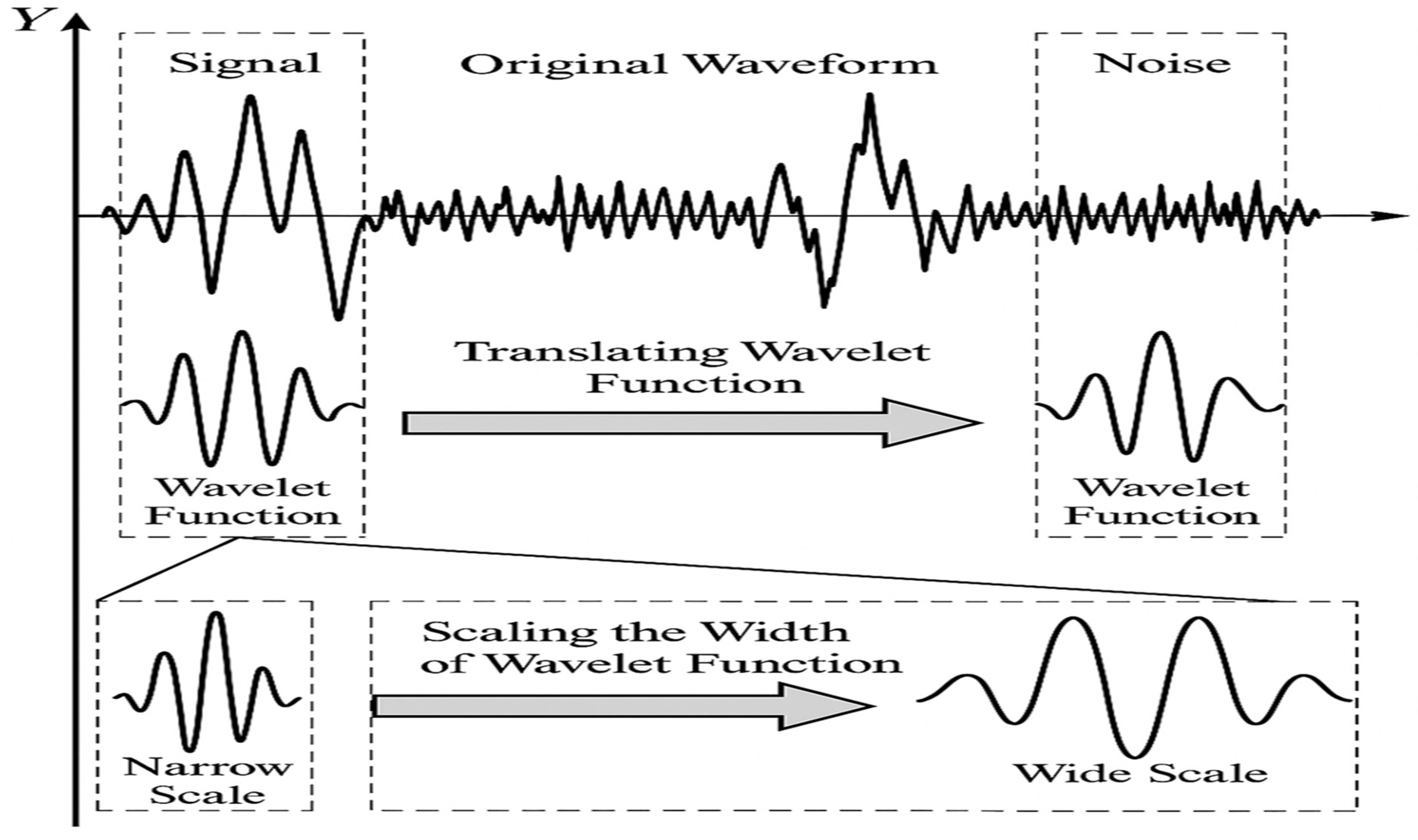
2.3.1. Wavelet Transform (WT) Method
2.3.2. Instantaneous Inductance-Based Methods
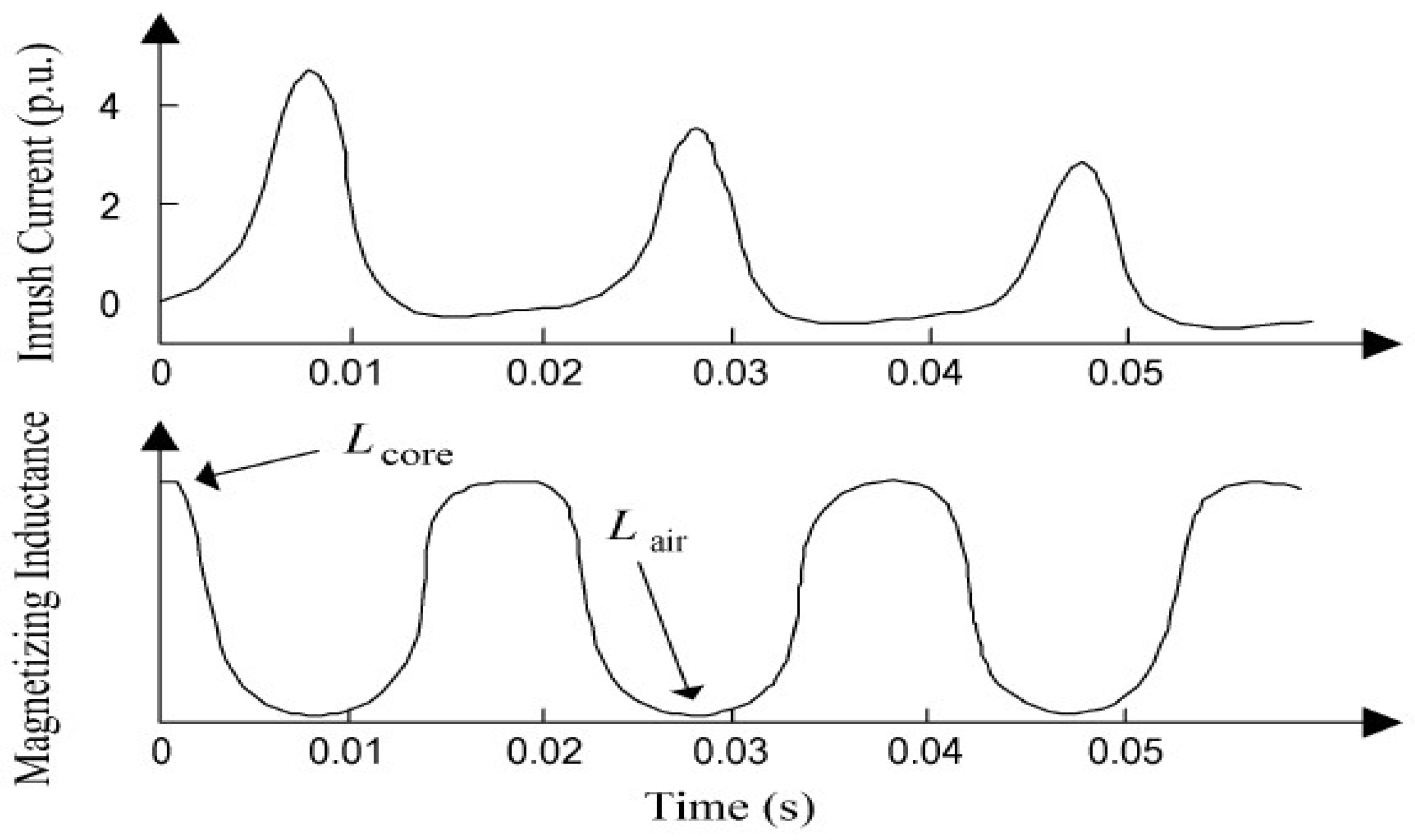
- Equivalent instantaneous inductance (EII) method: This approach tracks the instantaneous magnetizing inductance (IMI), which fluctuates significantly when the transformer core becomes saturated during inrush, but remains comparatively stable during internal faults. The calculated EII is then compared with a predefined threshold, either directly in the time domain or after basic spectral processing, to classify the event as either magnetizing inrush or an internal fault [55,56].
- Instantaneous inductance technique: In this method, the differential inductance is estimated directly from the measured terminal voltages and currents in each phase. A significant deviation of the calculated inductance from its expected healthy value is interpreted as evidence of a fault. One of the main advantages of this technique is its fast response, as decisions can typically be reached within approximately 5 ms, making it highly attractive for real-time protection applications. Reported studies have also demonstrated good robustness against practical complications, such as on-load tap changer operation and current transformer saturation [57,58].
2.3.3. Sinusoidal Proximity Factor (SPF) Method
2.3.4. Cross-Correlation Method
2.3.5. Extended Kalman Filter (EKF) Method
2.4. Artificial Intelligence-Based Techniques
2.4.1. Artificial Neural Networks (ANN)
2.4.2. Fuzzy Logic Systems
2.4.3. Tree-Based Classifiers (DT, RF, GB)
2.5. Hybrid and Emerging Methods
2.5.1. Hybrid Harmonic Restraint with Dynamic Features
2.5.2. Advanced Model-Based Techniques for Transformer Protection
2.5.3. Protection Based on Transient Components
2.5.4. Emerging Methods Using Mathematical Indicators
2.5.5. Digital Relaying Algorithms with Real-Time Estimation
3. Comparative Analysis
- operating speed;
- accuracy and robustness;
- sensitivity to current transformer behavior and other non-ideal operating conditions;
- implementation complexity;
- suitability for future, more dynamic power systems.
3.1. Operating Speed and Protection Security
- Harmonic-based methods usually require at least one cycle of data to estimate harmonic components reliably. This delay is acceptable in many practical applications; however, fixed threshold settings may lead to incorrect decisions when the harmonic content is unusually low or distorted. Adaptive and multi-harmonic schemes can improve performance, but they still depend on frequency-domain processing and may introduce additional delay [18,113,114].
- Time-domain methods, such as RMS trend analysis, dwell-time criteria, and instantaneous inductance-based techniques, can operate using shorter data windows and often provide very fast responses, sometimes within a fraction of a cycle. When their thresholds are carefully selected, these methods can offer a favorable balance between speed and security [115,116,117,118].
- Signal-processing methods, including wavelet- and S-transform-based approaches, generally fall between harmonic-based and time-domain methods in terms of operating speed. They typically require short data windows for decomposition and feature extraction, resulting in reasonable response times, although they are usually not as fast as the simplest time-domain indices [119,120,121].
- AI-based and hybrid schemes usually share the same measurement window as their underlying input features. Once the model has been trained, the classifier decision itself is typically very fast. Therefore, the overall operating speed of these schemes is governed mainly by the feature-extraction window and preprocessing stage [122,123,124,125,126].
3.2. Discrimination Accuracy and Robustness
- Harmonic-based schemes perform effectively under conventional operating conditions. However, their reliability can deteriorate when modern transformers produce inrush currents with low harmonic content or when internal faults contain higher harmonic components than expected. Residual flux, voltage distortion, and current transformer saturation can further intensify these limitations.
- Time-domain methods are less dependent on harmonic content and may therefore offer improved robustness in modern power networks. Nevertheless, noise, current transformer saturation, and complex transient conditions, such as simultaneous inrush and fault events or evolving faults, can distort the expected decay pattern or waveform shape and reduce decision reliability.
- Signal-processing methods, particularly wavelet-based techniques, often demonstrate strong discrimination performance in published studies. Their multi-resolution representation of the signal helps separate inrush and fault characteristics more effectively. However, their performance depends strongly on design choices, such as the selected mother wavelet, window length, and decomposition level.
- AI-based methods frequently achieve the highest reported accuracies on the datasets used in the literature, especially when supported by rich time–frequency features. They are also well suited to multi-class classification problems. The main concern, however, is generalization, since models trained primarily on simulated or limited laboratory datasets may not maintain the same performance in practical power network environments.
- Hybrid methods combine several complementary indicators and usually provide the most balanced performance. When one criterion becomes ambiguous, other features can support the final decision and improve overall robustness.
3.3. Sensitivity to CT Behaviour and System Non-Idealities
- Harmonic-based and other frequency-domain methods are relatively sensitive to current transformer saturation and voltage distortion, as both phenomena can directly alter the harmonic content of the measured currents.
- Time-domain methods may also be affected because current transformer saturation can distort the waveform shape and modify decay characteristics. However, some indices based on flux estimation or carefully designed trend features can be made relatively tolerant, provided that they are validated using realistic current transformer models.
- Signal-processing methods can partially suppress noise and localize disturbances in both time and frequency. This can improve robustness under certain conditions; however, severe current transformer saturation may still produce misleading features and reduce discrimination reliability.
- AI-based methods can, in principle, learn the behavior of current transformers and other non-ideal system components, provided that such cases are adequately represented in the training data. If these operating conditions are not included during training, the model may misclassify unusual or previously unseen events.
3.4. Implementation Complexity and Data Requirements
- Classical harmonic restraint and simple time-domain indices are relatively easy to implement in existing numerical relays. They require limited memory, modest processing capability, and comparatively simple setting procedures.
- Advanced signal-processing methods generally require higher sampling rates and greater computational resources. Although many modern relays can support these requirements, the algorithms must be optimized and carefully validated before practical deployment.
- AI-based approaches involve additional lifecycle requirements, including model training, model storage, validation, updating, and performance monitoring. Although online classification can be fast, the overall implementation process is more complex and may require new tools, procedures, and expertise within utilities.
- Hybrid schemes combine several analytical components and are therefore usually the most complex to implement. They are more suitable for new generations of intelligent electronic devices or centralized protection platforms than for older relay hardware with limited computational capability.
3.5. Summary of Comparative Findings
- No single method performs best under all operating conditions. Each family of techniques offers a different balance among operating speed, robustness, implementation complexity, and data requirements.
- Harmonic-based methods remain important as reference and backup schemes. However, they are not sufficient as standalone solutions for future grids characterized by low-harmonic inrush currents and more complex operating conditions.
- Time-domain methods are attractive because of their speed and relative simplicity. Nevertheless, they require careful tuning to maintain security under complex transient conditions and current transformer non-idealities.
- Signal-processing methods provide strong discrimination capability by exploiting time–frequency information. However, they are generally more complex and depend on the appropriate selection of processing parameters.
- AI-based and hybrid schemes currently offer some of the strongest reported performance on available datasets. Their successful application in real networks, however, depends on the quality and representativeness of the training data, model explainability, and rigorous validation.
- Many recent studies are converging toward multi-criteria or hybrid architectures, in which fast and physically intuitive indices are combined with more sophisticated decision logic.
4. Critical Discussion
4.1. Limitations of Traditional Harmonic Methods
- Signal integrity issues: The accuracy of harmonic measurement is sensitive to current transformer saturation, noise, and waveform distortion. These effects can either suppress the second-harmonic component during an internal fault or artificially increase it during other transient events, leading to unnecessary tripping or failure to operate [130,131].
4.2. Rise of Signal Processing and Feature Extraction
4.3. Emergence of AI-Based Solutions
- Decision transparency: Many widely used AI models operate as black boxes and provide limited insight into why a particular decision, such as inrush or fault classification, has been made. This lack of interpretability raises concerns in safety-critical applications such as transformer protection [143,144].
4.4. Growing Interest in Hybrid and Adaptive Approaches
- Contextual adaptation: Some proposed schemes dynamically adjust the decision logic according to operating conditions, such as transformer loading, system strength, or the presence of power-electronic equipment. This enables the protection system to respond more flexibly to real-time grid conditions [146].
4.5. Practical Challenges in Deployment
- Tight time requirements: In many applications, discrimination and tripping must be completed within approximately one power-frequency cycle to limit equipment stress and maintain system stability. Methods that rely on long data windows or computationally intensive processing must therefore be carefully optimized [148].
- Hardware constraints: Industrial relays are typically implemented using digital signal processors, embedded CPUs, or field-programmable gate arrays with finite processing and memory resources. Protection algorithms must be adapted to these platforms without compromising reliability, maintainability, or real-time performance [149].
- Measurement quality: Advanced schemes depend on high-fidelity and synchronized current and voltage measurements. In practice, current transformer saturation, noise, electromagnetic interference, and communication issues can degrade signal quality. These effects must therefore be considered during both the design and testing stages [150].
- Validation gap: Many promising methods are still validated mainly through simulations or controlled laboratory experiments. Comprehensive assessment under realistic field conditions, including a wide range of fault, inrush, and mixed transient scenarios, is often lacking [151].
5. Research Gaps and Future Directions
5.1. Lack of Standardized Benchmark Datasets
- A wide range of fault types and fault locations;
- Realistic energization scenarios, including asymmetric switching and residual flux;
- Different levels of current transformer saturation;
- Various noise, distortion, and measurement-quality conditions.
5.2. Fundamental Trade-Offs in Protection Scheme Design
- Developing feature extraction methods that are both informative and computationally light;
- Designing adaptive decision logic that remains suitable for resource-constrained relay hardware;
- Adopting multi-stage strategies, in which a simple and fast front-end initially screens events, while a more sophisticated back-end confirms the decision when necessary.
5.3. Insufficient Validation Under Real-World Operating Conditions
- Transformer ageing and parameter drift;
- Long-term load and voltage variations;
- Electromagnetic interference, measurement errors, and communication issues.
5.4. Narrow Scope in Fault-Type Discrimination
- Inter-turn faults and incipient winding defects;
- Over-excitation and ferroresonance;
- Current transformer saturation during external faults or system disturbances.
5.5. Imperative for Explainable AI and Human-Centric Design Frameworks
- Using more interpretable model families where possible;
- Applying post hoc explanation techniques, such as feature-importance analysis, saliency mapping, and rule extraction;
- Designing user interfaces that present AI-based decisions in a form that is meaningful and actionable for protection engineers.
5.6. Integration with Evolving Power System Architectures
- Relays interact with grid state estimation and wide-area monitoring tools;
- Dynamic settings or protection logic are adjusted according to real-time system conditions;
- Edge computing and intelligent sensors are used to process data closer to the equipment.
6. Conclusions
Funding
Data Availability Statement
Conflicts of Interest
References
- Thango, B.A.; Nnachi, A.F.; Dlamini, G.A.; Bokoro, P.N. A Novel Approach to Assess Power Transformer Winding Conditions Using Regression Analysis and Frequency Response Measurements. Energies 2022, 15, 2335. [Google Scholar] [CrossRef]
- Medeiros, L.H.; Maschio, G.; Oliveira, M.M.; Kaminski, A.M.; Bueno, D.M.; Bender, V.C.; Marchesan, T.B. Finite element analysis for calculation of total and distributed electromagnetic forces on power transformers windings arrangements. Electr. Eng. 2024, 106, 931–940. [Google Scholar] [CrossRef]
- Nasirpour, F.; Heidary, A.; Niasar, M.G.; Lekić, A.; Popov, M. High-frequency transformer winding model with adequate protection. Electr. Power Syst. Res. 2023, 223, 109637. [Google Scholar] [CrossRef]
- Mahmoud, R.A. Digital protection scheme based on Durbin Watson and Pearson similarity indices for current signals practically applied to power transformers. Sci. Rep. 2025, 15, 12214. [Google Scholar] [CrossRef] [PubMed]
- Liang, H.; Blagojević, N.; Xie, Q.; Stojadinović, B. Seismic resilience assessment and improvement framework for electrical substations. Earthq. Eng. Struct. Dyn. 2023, 52, 1040–1058. [Google Scholar] [CrossRef]
- Sun, Q.; Wu, Z.; Gu, W.; Dong, Z.; Liu, P.; Qiu, H.; Ghias, A.; Lu, Y.; Zheng, Y. Seismic-Resilient Planning for Integrated Energy System: A Risk-Economic Coordination Perspective. IEEE Trans. Power Syst. 2025, 40, 2568–2583. [Google Scholar] [CrossRef]
- Cicilio, P.; Glennon, D.; Mate, A.; Barnes, A.; Chalishazar, V.; Cotilla-Sanchez, E.; Vaagensmith, B.; Gentle, J.; Rieger, C.; Wies, R.; et al. Resilience in an evolving electrical grid. Energies 2021, 14, 694. [Google Scholar] [CrossRef]
- Hongtao, R. Simulation analysis of inrush current in no load closing of transformer in Hydropower Station. Energy Rep. 2021, 7, 1175–1181. [Google Scholar] [CrossRef]
- Sung, B.C.; Kim, S. Accurate transformer inrush current analysis by controlling closing instant and residual flux. Electr. Power Syst. Res. 2023, 223, 109638. [Google Scholar] [CrossRef]
- Alenezi, M.; Massoud, J.; Ghomeed, T.; Shouran, M. Bees Algorithm and PSO-Optimized Hybrid Models for Accurate Power Transformer Fault Diagnosis: A Real-World Case Study. Energies 2025, 18, 5964. [Google Scholar] [CrossRef]
- Ahmadi, H.; Vahidi, B.; Nematollahi, A.F. A simple method to detect internal and external short-circuit faults, classify and locate different internal faults in transformers. Electr. Eng. 2021, 103, 825–836. [Google Scholar] [CrossRef]
- Soni, R.; Mehta, B. Evaluation of power transformer health analysis by internal fault criticalities to prevent premature failure using statistical data analytics approach. Eng. Fail. Anal. 2022, 136, 106213. [Google Scholar] [CrossRef]
- Peng, F.; Gao, H.; Huang, J.; Guo, Y.; Liu, Y.; Zhang, Y. Power Differential Protection for Transformer Based on Fault Component Network. IEEE Trans. Power Deliv. 2023, 38, 2464–2477. [Google Scholar] [CrossRef]
- Saleh, S.A.; Zundel, E.W.; Meng, J.; Bourque, M.; Young-Morris, G.; Hill, E.F.S.; Brown, S. Impacts of Grounding Impedance on Second Harmonic Components Caused by GIC Flows in Power Transformers. IEEE Trans. Ind. Appl. 2025, 62, 617–627. [Google Scholar] [CrossRef]
- Saleh, S.A.; Zundel, E.W.; Jewett, D.; Hill, E.F.S.; Meng, J.; Morris, G.Y.; Brown, S. Investigating Harmonic Distortion in Power Transformers Due to Geomagnetically Induced Current Flows. In Proceedings of the 2023 IEEE/IAS 59th Industrial and Commercial Power Systems Technical Conference (I&CPS), Las Vegas, NV, USA, 21–25 May 2023; Institute of Electrical and Electronics Engineers Inc.: Piscataway, NJ, USA, 2023. [Google Scholar] [CrossRef]
- Abbasi, A.R. Fault detection and diagnosis in power transformers: A comprehensive review and classification of publications and methods. Electr. Power Syst. Res. 2022, 209, 107990. [Google Scholar] [CrossRef]
- Wu, Q.; Zhang, H. A novel expertise-guided machine learning model for internal fault state diagnosis of power transformers. Sustainability 2013, 11, 1562. [Google Scholar] [CrossRef]
- Pani, S.R.; Bera, P.K.; Kumar, V. Detection and Classification of Internal Faults in Power Transformers using Tree-based Classifiers. In Proceedings of the 2020 IEEE International Conference on Power Electronics, Drives and Energy Systems (PEDES), Jaipur, India, 16–19 December 2020; IEEE: Piscataway, NJ, USA, 2020. [Google Scholar] [CrossRef]
- Sami, S.M.; Bhuiyan, M.I.H. An EMD-based Method for the Detection of Power Transformer Faults with a Hierarchical Ensemble Classifier. In Proceedings of the 2020 11th International Conference on Electrical and Computer Engineering (ICECE), Dhaka, Bangladesh, 17–19 December 2020; pp. 206–209. [Google Scholar] [CrossRef]
- Sami, S.M.; Imamul, M.; Bhuiyan, H. Power Transformer Fault Diagnosis with Intrinsic Time-scale Decomposition and XGBoost Classifier. arXiv 2021, arXiv:2110.11467. [Google Scholar] [CrossRef]
- Alenezi, M.; Anayi, F.; Packianather, M.; Shouran, M. A Hybrid Machine Learning Framework for Early Fault Detection in Power Transformers Using PSO and DMO Algorithms. Energies 2025, 18, 2024. [Google Scholar] [CrossRef]
- Thango, B.A. Winding Fault Detection in Power Transformers Based on Support Vector Machine and Discrete Wavelet Transform Approach. Technologies 2025, 13, 200. [Google Scholar] [CrossRef]
- Wang, G.; Qiu, S.; Xie, F.; Luo, T.; Song, Y.; Wang, S. Diagnosing Fault Types and Degrees of Transformer Winding Combining FRA Method With SOA-KELM. IEEE Access 2024, 12, 50287–50299. [Google Scholar] [CrossRef]
- Abdusalam, O.; Ibrahim, A.; Anayi, F.; Packianather, M. New Hybrid Machine Learning Method for Detecting Faults in Three-Phase Power Transformers. Energies 2022, 15, 3905. [Google Scholar] [CrossRef]
- Tabrez, M.; Sadhu, P.K.; Lipu, M.S.H.; Iqbal, A.; Husain, M.A.; Ansari, S. Power conversion techniques using multi-phase transformer: Configurations, applications, issues and recommendations. Machines 2022, 10, 13. [Google Scholar] [CrossRef]
- Tabrez, M.; Sadhu, P.K.; Iqbal, A.; Husain, M.A.; Bakhsh, F.I.; Singh, S.P. Equivalent circuit modelling of a three-phase to seven-phase transformer using PSO and GA. J. Intell. Fuzzy Syst. 2022, 42, 689–698. [Google Scholar] [CrossRef]
- Kobet, G.L.; Patterson, R.W. Matlab â Analysis of Braytown Transformer Differential Inrush Misoperation 2000. Available online: http://www2.msstate.edu/~rwp1/matlab/ (accessed on 16 May 2026).
- Patterson, R.W.; Mccannon, W.P. A Consideration of Inrush Restraint Methods in Transformer Differential Relays 2000. Available online: http://www.mathsoft.com (accessed on 16 May 2026).
- Ghodrati, C. A New Method to Identify and Blocking Inrush Current in Transformer. In 2023 13th International Conference on Power, Energy and Electrical Engineering, CPEEE 2023, Tokyo, Japan, 25–27 February 2023; Institute of Electrical and Electronics Engineers Inc.: Piscataway, NJ, USA, 2023; pp. 311–315. [Google Scholar] [CrossRef]
- Wang, Z.; Guo, X.; Wang, R.; Xing, W. Research on Transformer Protection Configuration Suitable for Korean Power Grid. In Proceedings of the 16th Annual Conference of China Electrotechnical Society, Beijing, China, 24–26 September 2021; He, J., Li, Y., Yang, Q., Liang, X., Eds.; Lecture Notes in Electrical Engineering; Springer: Singapore, 2022; Volume 891, Available online: https://link.springer.com/bookseries/7818 (accessed on 16 May 2026). [CrossRef]
- Key, S.; Son, G.W.; Nam, S.R. Deep Learning-Based Algorithm for Internal Fault Detection of Power Transformers during Inrush Current at Distribution Substations. Energies 2024, 17, 963. [Google Scholar] [CrossRef]
- Faiz, J.; Lotfi-Fard, S. A novel wavelet-based algorithm for discrimination of internal faults from magnetizing inrush currents in power transformers. IEEE Trans. Power Deliv. 2006, 21, 1989–1996. [Google Scholar] [CrossRef]
- Golshan, M.E.H.; Saghaian-Nejad, M.; Saha, A.; Samet, H. A new method for recognizing internal faults from inrush current conditions in digital differential protection of power transformers. Electr. Power Syst. Res. 2004, 71, 61–71. [Google Scholar] [CrossRef]
- Yabe, K. Power differential method for discrimination between fault and magnetizing inrush current in transformers. IEEE Trans. Power Deliv. 1997, 12, 1109–1118. [Google Scholar] [CrossRef]
- De, G.; Corcoles, F.; Bogarra, S. A Novel Methodology to Estimate the Nonlinear Magnetizing Characteristic of Single-Phase Transformers Using Minimum Information. IEEE Trans. Power Deliv. 2022, 37, 2503–2513. [Google Scholar] [CrossRef]
- Sanati, S.; Ahmadi, S.A.; Sanaye-Pasand, M. An innovative harmonic-based approach for inrush current detection in low-loss transformers. IET Gener. Transm. Distrib. 2024, 18, 1303–1316. [Google Scholar] [CrossRef]
- Hamilton, R. Analysis of transformer inrush current and comparison of harmonic restraint methods in transformer protection. IEEE Trans. Ind. Appl. 2013, 49, 1890–1899. [Google Scholar] [CrossRef]
- Wang, J.; Hamilton, R. Analysis of Transformer Inrush Current and Comparison of Harmonic Restraint Methods in Transformer Protection. In Proceedings of the 2008 61st Annual Conference for Protective Relay Engineers, College Station, TX, USA, 1–3 April 2008; pp. 142–169. [Google Scholar] [CrossRef]
- Ngema, P.; Buraimoh, E.; Davidson, I. A New Technique for Improvement Differential Relay Performance in Power Transformers. In Proceedings of the 30th Southern African Universities Power Engineering Conference, SAUPEC 2022, Durban, South Africa, 25–27 January 2022; Institute of Electrical and Electronics Engineers Inc.: Piscataway, NJ, USA, 2022. [Google Scholar] [CrossRef]
- Chiesa, N. Power Transformer Modeling for Inrush Current Calculation. 2010. Available online: http://hdl.handle.net/11250/256440 (accessed on 9 November 2025).
- Ngema, P.; Davidson, I.E.; Buraimoh, E. Performance Evaluation of Percentage Differential Relays on Power Transformer and Reliability Assesment in HVDC Grid Protection Scheme. In Proceedings of the 2022 IEEE PES/IAS PowerAfrica, PowerAfrica 2022, Kigali, Rwanda, 22–26 August 2022; Institute of Electrical and Electronics Engineers Inc.: Piscataway, NJ, USA, 2022. [Google Scholar] [CrossRef]
- Domingo, D.; Kareem, A.B.; Okwuosa, C.N.; Custodio, P.M.; Hur, J.W. Transformer Core Fault Diagnosis via Current Signal Analysis with Pearson Correlation Feature Selection. Electronics 2024, 13, 926. [Google Scholar] [CrossRef]
- Lambert, M.; Martinez-Duro, M.; Mahseredjian, J.; De Leon, F.; Sirois, F. Transformer leakage flux models for electromagnetic transients: Critical review and validation of a new model. IEEE Trans. Power Deliv. 2014, 29, 2180–2188. [Google Scholar] [CrossRef]
- Mostafaei, M.; Faiz, J.; Venikar, P.A.; Ballal, M.S. Turn-to-turn fault monitoring methods in electrical power transformers—State of the art. Int. Trans. Electr. Energy Syst. 2018, 28, e2644. [Google Scholar] [CrossRef]
- Sun, D.; Ren, L.; He, X.; Li, H.; Yang, W.; Liu, L. DC bias identification method for transformer differential protection. Smart Power Energy Secur. 2025, 1, 97–103. [Google Scholar] [CrossRef]
- Zou, M.; Yang, M.; Wang, Z.; Yan, D.; Tang, X. Accurate transformer equivalent circuit for percentage differential protection simulation under DC bias. Electr. Power Syst. Res. 2024, 236, 110903. [Google Scholar] [CrossRef]
- Abdusalam, O.T.E. Detection and Discrimination of Inrush Current and Faults in Three-Phase Power Transformers Using Signal Processing and Machine Learning Technique. Doctoral Dissertation, Cardiff University, Cardiff, UK, 2023. [Google Scholar]
- Liu, X.; Xie, J.; Luo, Y.; Yang, D. A novel power transformer fault diagnosis method based on data augmentation for KPCA and deep residual network. Energy Rep. 2023, 9, 620–627. [Google Scholar] [CrossRef]
- Xing, Z.; He, Y. Multi-modal information analysis for fault diagnosis with time-series data from power transformer. Int. J. Electr. Power Energy Syst. 2023, 144, 108567. [Google Scholar] [CrossRef]
- Etumi, A.A.A.; Anayi, F.J. Current signal processing-based methods to discriminate internal faults from magnetizing inrush current. Electr. Eng. 2021, 103, 743–751. [Google Scholar] [CrossRef]
- Aljohani, O.; Abu-Siada, A. Application of Digital Image Processing to Detect Short-Circuit Turns in Power Transformers Using Frequency Response Analysis. IEEE Trans. Ind. Inform. 2016, 12, 2062–2073. [Google Scholar] [CrossRef]
- Kamble, S.; Chaturvedi, P.; Chen, C.J.; Borghate, V.B. Enhancing reliability and efficiency of grid-connected solid-state transformer through fault detection and classification using wavelet transform and artificial neural network. Electr. Eng. 2024, 106, 2525–2535. [Google Scholar] [CrossRef]
- Baroumand, S.; Abbasi, A.R.; Mahmoudi, M. Integrative fault diagnostic analytics in transformer windings: Leveraging logistic regression, discrete wavelet transform, and neural networks. Heliyon 2025, 11, e42872. [Google Scholar] [CrossRef]
- Shouran, M.; Alenezi, M.; Almutairi, S.; Alajmi, M. Hybrid Feature Extraction and Deep Learning Framework for Power Transformer Fault Classification–A Real-World Case Study. IEEE Access 2025, 3, 159077–159097. [Google Scholar] [CrossRef]
- Babaei, Z.; Moradi, M. Novel Method for Discrimination of Transformers Faults from Magnetizing Inrush Currents Using Wavelet Transform. Iran. J. Sci. Technol.-Trans. Electr. Eng. 2021, 45, 803–813. [Google Scholar] [CrossRef]
- Ge, B.; de Almeida, A.T.; Zheng, Q.; Wang, X. An equivalent instantaneous inductance-based technique for discrimination between inrush current and internal faults in power transformers. IEEE Trans. Power Deliv. 2005, 20, 2473–2482. [Google Scholar] [CrossRef]
- Arehpanahi, M.; Orouji, A.; Kelk, H.M. An improved online minor turn-turn winding fault diagnosis in a single-phase transformer based on instantaneous induced voltages and primary current locus. Measurement 2024, 226, 114153. [Google Scholar] [CrossRef]
- Lim, S.H.; Lee, J.H.; Lee, J.W.; Lee, S.W. Improved Fault Current Limiting Characteristics of Three-Phase Transformer Type SFCL With Non-Separated Secondary Windings Due to Unsymmetrical Ground Fault Types. IEEE Trans. Appl. Supercond. 2024, 34, 1–6. [Google Scholar] [CrossRef]
- Ma, J.; Ye, D.; Wang, Z.; Wu, J. Identifying inrush current using sinusoidal proximity factor. In Proceedings of the 2010 Conference Proceedings IPEC, Singapore, 27–29 October 2010; pp. 215–219. [Google Scholar] [CrossRef]
- Jaworski, M.; Jaeger, J. Sympathetic Transformer Inrush Detection and Relay Blocking During Power System Restoration. IEEE Trans. Power Deliv. 2023, 38, 2408–2417. [Google Scholar] [CrossRef]
- Ghanizadeh, A.J.; Gharehpetian, G.B. ANN and cross-correlation based features for discrimination between electrical and mechanical defects and their localization in transformer winding. IEEE Trans. Dielectr. Electr. Insul. 2014, 21, 2374–2382. [Google Scholar] [CrossRef]
- Rahmatian, M.; Vahidi, B.; Ghanizadeh, A.J.; Gharehpetian, G.B.; Alehosseini, H.A. Insulation failure detection in transformer winding using cross-correlation technique with ANN and k-NN regression method during impulse test. Int. J. Electr. Power Energy Syst. 2013, 53, 209–218. [Google Scholar] [CrossRef]
- Chothani, N.; Raichura, M.; Patel, D. Advancement in Power Transformer Infrastructure and Digital Protection; Springer Nature: Durham, NC, USA, 2023. [Google Scholar]
- Behdani, B.; Tajdinian, M.; Allahbakhshi, M.; Popov, M.; Shafie-Khah, M.; Catalão, J.P.S. Experimentally Validated Extended Kalman Filter Approach for Geomagnetically Induced Current Measurement. IEEE Trans. Ind. Electron. 2022, 69, 6316–6328. [Google Scholar] [CrossRef]
- Gunda, S.K.; Dhanikonda, V.S.S.S.S. Discrimination of transformer inrush currents and internal fault currents using extended kalman filter algorithm (Ekf). Energies 2021, 14, 6020. [Google Scholar] [CrossRef]
- Altayef, E.M. Application of Artificial Intelligence and Optimisation Techniques for Fault Detection and Classification in Power Transformers. Application of Fault Detection in Power Transformers Using Artificial Intelligent Based on Optimization Techniques for Classification Purpose. Ph.D. Thesis, Cardiff University, Cardiff, UK, 2022. [Google Scholar]
- Stulov, A.; Tikhonov, A.; Snitko, I. Fundamentals of Artificial Intelligence in Power Transformers Smart Design. In Proceedings of the 2020 International Ural Conference on Electrical Power Engineering (UralCon), Chelyabinsk, Russia, 22–24 September 2020; IEEE: Piscataway, NJ, USA, 2020; pp. 34–38. [Google Scholar] [CrossRef]
- Taha, I.B.M.; Ibrahim, S.; Mansour, D.E.A. Power transformer fault diagnosis based on DGA using a convolutional neural network with noise in measurements. IEEE Access 2021, 9, 111162–111170. [Google Scholar] [CrossRef]
- Roy, N.B.; Bhattacharya, K. Application of Signal Processing Tools and Artificial Neural Network in Diagnosis of Power System Faults; Taylor & Francis: London, UK, 2021. [Google Scholar]
- Valencia, F.; Arcos, H.; Quilumba, F. Prediction of stress in power transformer winding conductors using artificial neural networks: Hyperparameter analysis. Energies 2021, 14, 4242. [Google Scholar] [CrossRef]
- Zandbaaf, S.; Khorrami, M.R.K.; Afshar, M.G. Genetic algorithm based artificial neural network and partial least squares regression methods to predict of breakdown voltage for transformer oils samples in power industry using ATR-FTIR spectroscopy. Spectrochim. Acta A Mol. Biomol. Spectrosc. 2022, 273, 120999. [Google Scholar] [CrossRef]
- Shin, M.C.; Park, C.W.; Kim, J.H. Fuzzy logic-based relaying for large power transformer protection. IEEE Trans. Power Deliv. 2003, 18, 718–724. [Google Scholar] [CrossRef]
- Huang, Y.-C.; Ym, H.-T.; Member, I.; Huang, C.-L. Developing a New Transformer Fault Diagnosis System through Evolutionary Fuzzy Logic. IEEE Trans. Power Deliv. 1997, 12, 761–767. [Google Scholar] [CrossRef]
- Hosseinimoghadam, S.M.S.; Dashtdar, M.; Dashtdar, M. Improving the Differential Protection of Power Transformers Based on Clarke Transform and Fuzzy Systems. J. Control Autom. Electr. Syst. 2022, 33, 610–624. [Google Scholar] [CrossRef]
- Singh, A.K.; Saxena, A.; Roy, N.; Choudhury, U. Inter-turn fault stability enrichment and diagnostic analysis of power system network using wavelet transformation-based sample data control and fuzzy logic controller. Trans. Inst. Meas. Control 2021, 43, 2788–2798. [Google Scholar] [CrossRef]
- Hechifa, A.; Lakehal, A.; Nanfak, A.; Saidi, L.; Labiod, C.; Kelaiaia, R.; Ghoneim, S.S.M. Improved intelligent methods for power transformer fault diagnosis based on tree ensemble learning and multiple feature vector analysis. Electr. Eng. 2024, 106, 2575–2594. [Google Scholar] [CrossRef]
- Araujo, M.M.; Almeida, O.M.; Barbosa, F.R.; Menezes, A.G.C. Enhancing gas formation theory assessment in power transformers by using decision tree transparency and new guess into decomposition temperatures of insulating mineral oil. Neural Comput. Appl. 2023, 36, 3259–3266. [Google Scholar] [CrossRef]
- Barros, J.; De Apraiz, M.; Diego, R.I. Analysis and Visualization of Time-Varying Harmonics in Transformer Inrush Currents. In Conference Record-IEEE Instrumentation and Measurement Technology Conference, Glasgow, UK, 17–20 May 2021; Institute of Electrical and Electronics Engineers Inc.: Piscataway, NJ, USA, 2021. [Google Scholar] [CrossRef]
- Granados-Lieberman, D.; Huerta-Rosales, J.R.; Gonzalez-Cordoba, J.L.; Amezquita-Sanchez, J.P.; Valtierra-Rodriguez, M.; Camarena-Martinez, D. Time-Frequency Analysis and Neural Networks for Detecting Short-Circuited Turns in Transformers in Both Transient and Steady-State Regimes Using Vibration Signals. Appl. Sci. 2023, 13, 12218. [Google Scholar] [CrossRef]
- Hodder, S.; Kasztenny, B.; Fischer, N.; Xia, Y. Low second-harmonic content in transformer inrush currents-Analysis and practical solutions for protection security. In Proceedings of the 2014 67th Annual Conference for Protective Relay Engineers, CPRE 2014, College Station, TX, USA, 31 March–3 April 2014; IEEE Computer Society: Piscataway, NJ, USA, 2014; pp. 705–722. [Google Scholar] [CrossRef]
- Samet, H.; Shadaei, M.; Tajdinian, M. Statistical discrimination index founded on rate of change of phase angle for immunization of transformer differential protection against inrush current. Int. J. Electr. Power Energy Syst. 2022, 134, 107381. [Google Scholar] [CrossRef]
- Moradzadeh, A.; Moayyed, H.; Mohammadi-Ivatloo, B.; Gharehpetian, G.B.; Aguiar, A.P. Turn-to-Turn Short Circuit Fault Localization in Transformer Winding via Image Processing and Deep Learning Method. IEEE Trans. Ind. Inform. 2022, 18, 4417–4426. [Google Scholar] [CrossRef]
- Fei, L.; Ma, Z.; Cai, L.; Zhou, D.; Shu, X.; Liao, Z.; Lin, C.; Li, X. Analysis of interturn short circuit in regulating winding of power transformer based on field-circuit coupling. Front. Energy Res. 2024, 12, 1393436. [Google Scholar] [CrossRef]
- Wang, W.; Ma, G.; Liu, H.; Wang, L.; Fan, Z.; Du, H.; Zhou, S.; Qin, W. Fast Transient Measurement at Transformer Terminal Based on Built-In Capacitive Sensor. IEEE Trans. Instrum. Meas. 2024, 73, 1–8. [Google Scholar] [CrossRef]
- Mahtani, K.; Jimenez, R.P.; Guerrero, J.M.; Platero, C.A.; Talavera, D.; López, M.D. Optimal Sizing of Premagnetization Transformers to Mitigate the Inrush Current of Power Transformers. In Proceedings of the 2024 IEEE International Conference on Environment and Electrical Engineering and 2024 IEEE Industrial and Commercial Power Systems Europe (EEEIC/I&CPS Europe), Rome, Italy, 17–20 June 2024; IEEE: Piscataway, NJ, USA, 2024; pp. 1–6. [Google Scholar] [CrossRef]
- Saleh, S.A.; Meng, J.; Ozkop, E.; Valdes, M.E.; Hill, T.; Al-Durra, A. On the Assessment of Sampling Rate Impacts of the Sampling Rate on Responses of Digital Protective Relays. In Conference Record-Industrial and Commercial Power Systems Technical Conference; Institute of Electrical and Electronics Engineers Inc.: Piscataway, NJ, USA, 2023. [Google Scholar] [CrossRef]
- Saleh, S.A.; Meng, J.; Ozkop, E.; Valdes, M.E.; Hill, T.; Al-Durra, A. Effects of Sampled-Values Data Quality on Responses of Time-Frequency Based Digital Relays. In Conference Record-Industrial and Commercial Power Systems Technical Conference; Institute of Electrical and Electronics Engineers Inc.: Piscataway, NJ, USA, 2023. [Google Scholar] [CrossRef]
- Badri, J.A.; Ruiz, J.R.R.; Garcia, A.; Trujillo, S.; Marzabal, A. Predicting the Effect of Voltage Harmonic Phase Angle on Transformer Core Losses. IEEE Trans. Instrum. Meas. 2024, 73, 1–9. [Google Scholar] [CrossRef]
- Albert, D.; Würde, A.; Engelen, C. Voltage harmonics and DC detection on power transformers via vibration measurement analysis. Elektrotechnik Informationstechnik 2024, 141, 528–539. [Google Scholar] [CrossRef]
- Nițu, M.C.; Nicolae, I.D.; Dina, L.A.; Mircea, P.M. Power Transformer Inrush Current Analysis: Simulation, Measurement and Effects. Appl. Sci. 2024, 14, 10926. [Google Scholar] [CrossRef]
- Tarafdar-Hagh, M.; Hasanlouei, N.; Muttaqi, K.; Taghizad-Tavana, K.; Nojavan, S.; Abdi, M. Application of saturated core transformer as inrush current limiter. e-Prime-Adv. Electr. Eng. Electron. Energy 2024, 9, 100677. [Google Scholar] [CrossRef]
- Aires, M.N.O.; Medeiros, R.P.; Costa, F.B.; Silva, K.M.; Chavez, J.J.; Popov, M. A wavelet-based restricted earth-fault power transformer differential protection. Electr. Power Syst. Res. 2021, 196, 107246. [Google Scholar] [CrossRef]
- Geth, F.; Van Acker, T. Harmonic optimal power flow with transformer excitation. Electr. Power Syst. Res. 2022, 213, 108604. [Google Scholar] [CrossRef]
- Li, Z.; Xv, N.; Chen, X.; Zhang, Y.; He, A.; Jiao, Z. Blocking method with PSO-SVDD for differential protection of power transformer. Electr. Power Syst. Res. 2024, 237, 111016. [Google Scholar] [CrossRef]
- Islam, M.M.; Muttaqi, K.M.; Sutanto, D. A Saturated Amorphous Alloy Core-Based Inrush Current Limiter to Eliminate Inrush Currents and Restrain Harmonics during Transformer Energization. IEEE Trans. Ind. Appl. 2021, 57, 6634–6645. [Google Scholar] [CrossRef]
- Mo, C.; Ji, T.Y.; Zhang, L.L.; Wu, Q.H. Equivalent statistics based inrush identification method for differential protection of power transformer. Electr. Power Syst. Res. 2022, 203, 107664. [Google Scholar] [CrossRef]
- Wu, T.; Yang, F.; Farooq, U.; Li, X.; Jiang, J. An online learning method for constructing self-update digital twin model of power transformer temperature prediction. Appl. Therm. Eng. 2024, 237, 121728. [Google Scholar] [CrossRef]
- Zhang, H.; He, J.; Li, B.; Bo, Z. An improved transformer percentage restraint method based on transmission line information. In Proceedings of the 2009 International Conference on Sustainable Power Generation and Supply, Nanjing, China, 6–7 April 2009; pp. 1–4. [Google Scholar] [CrossRef]
- Htita, I.M.; Mousa, S.; Hasan, S. Sensitive relay for power auto-transformer protection based on fifth harmonic criteria. In Proceedings of the 2017 Nineteenth International Middle East Power Systems Conference (MEPCON), Cairo, Egypt, 19–21 December 2017; pp. 114–120. [Google Scholar] [CrossRef]
- Liang, Y.; Zhang, Z.; Li, K.J.; Li, Y.C. New correlation features for dissolved gas analysis based transformer fault diagnosis based on the maximal information coefficient. High Volt. 2022, 7, 302–313. [Google Scholar] [CrossRef]
- Gawrylczyk, K.M.; Banaszak, S. Recent developments in the modelling of transformer windings. Energies 2021, 14, 2798. [Google Scholar] [CrossRef]
- Elgamasy, M.M.; Zaky, M.S.; Zobaa, A.F.; Elsadd, M.A. Current transformer saturation detection by cross-correlation with independent target signal. Ain Shams Eng. J. 2025, 16, 103314. [Google Scholar] [CrossRef]
- Bardyk, E.I.; Bolotnyi, N. Improved Power Transformer Condition Assessment under Uncertainty using Fuzzy Logic. In Proceedings of the 2022 IEEE 8th International Conference on Energy Smart Systems, ESS 2022-Proceedings, Kyiv, Ukraine, 12–14 October 2022; Institute of Electrical and Electronics Engineers Inc.: Piscataway, NJ, USA, 2022; pp. 53–58. [Google Scholar] [CrossRef]
- Granados-Lieberman, D.; Razo-Hernandez, J.R.; Venegas-Rebollar, V.; Olivares-Galvan, J.C.; Valtierra-Rodriguez, M. Harmonic PMU and Fuzzy Logic for Online Detection of Short-Circuited Turns in Transformers. Electr. Power Syst. Res. 2021, 190, 106862. [Google Scholar] [CrossRef]
- Nezami, M.M.; Equbal, D.; Ansari, F.; Alotaibi, M.A.; Malik, H.; Márquez, F.P.G.; Hossaini, M.A. A novel artificial neural network approach for residual life estimation of paper insulation in oil-immersed power transformers. IET Electr. Power Appl. 2024, 18, 477–488. [Google Scholar] [CrossRef]
- Gifalli, A.; Neto, A.B.; de Souza, A.N.; de Mello, R.P.; Ikeshoji, M.A.; Garbelini, E.; Neto, F.T. Fault Detection and Normal Operating Condition in Power Transformers via Pattern Recognition Artificial Neural Network. Appl. Syst. Innov. 2024, 7, 41. [Google Scholar] [CrossRef]
- Gómez-Luna, E.; Candelo-Becerra, J.E.; Vasquez, J.C. A New Method for Complex Impedance Measurement of Power Transformers via a Continuous Wavelet Transform. Energies 2024, 17, 6056. [Google Scholar] [CrossRef]
- Kuznetsov, A.A.; Volchanina, M.A.; Gorlov, A.V. Wavelet Transformation for Recognizing Various Defects in Diagnosis of Power Transformers. In Proceedings of the 2024 International Russian Automation Conference (RusAutoCon), Sochi, Russian Federation, 8–14 September 2024; Institute of Electrical and Electronics Engineers Inc.: Piscataway, NJ, USA, 2024; pp. 478–483. [Google Scholar] [CrossRef]
- Zheng, T.; Chen, P.L.; Qi, Z.; Terzija, V. A novel algorithm to avoid the maloperation of UHV voltage-regulating transformers. IEEE Trans. Power Deliv. 2014, 29, 2146–2153. [Google Scholar] [CrossRef]
- Zhao, R.; Gu, J.; Wang, C.; Wang, Y. Online Identification of High-Frequency Transformer Short-Circuit Parameters Based on Instantaneous Phasor Method. IEEE J. Emerg. Sel. Top. Power Electron. 2022, 10, 3677–3684. [Google Scholar] [CrossRef]
- Al-Masri, W.; Wadi, A.; Abdel-Hafez, M.F.; Hashim, H.A.; El-Hag, A.H. Partial Discharge Localization in Power Transformers Using Invariant Extended Kalman Filter. IEEE Trans. Instrum. Meas. 2023, 72, 1–10. [Google Scholar] [CrossRef]
- Demirci, M.; Gözde, H.; Taplamacioglu, M.C. Improvement of power transformer fault diagnosis by using sequential Kalman filter sensor fusion. Int. J. Electr. Power Energy Syst. 2023, 149, 109038. [Google Scholar] [CrossRef]
- Shahbazi, N.; Bagheri, S.; Gharehpetian, G.B. Identification and classification of cross-country faults in transformers using K-NN and tree-based classifiers. Electr. Power Syst. Res. 2022, 204, 107690. [Google Scholar] [CrossRef]
- Hamouda, A.H.; Al-Anzi, F.Q.; Gad, H.K.; Gastli, A. Numerical differential protection algorithm for power transformers. In Proceedings of the 2013 7th IEEE GCC Conference and Exhibition (GCC), Doha, Qatar, 17–20 November 2013; pp. 440–445. [Google Scholar] [CrossRef]
- Wang, Q.; Zheng, M.; Yang, K.; Shang, C.; Luo, Y. Research and implementation of fault data recovery method for dry-type transformer temperature control sensor based on ISSA-LSTM algorithm. Measurement 2024, 228, 11433. [Google Scholar] [CrossRef]
- Mahmoud, A.M.; El-Naggar, M.F.; Shehab-Eldin, E.H. A new technique for power transformer protection based on transient components. Energy Procedia 2012, 14, 318–324. [Google Scholar] [CrossRef]
- Raichura, M.B.; Chothani, N.G.; Patel, D.D.; Mistry, K.D. Identification of Inrush and Fault Conditions in Power Transformer using Harmonic Distortion Computation. In Proceedings of the 2019 IEEE 1st International Conference on Energy, Systems and Information Processing (ICESIP), Chennai, India, 4–6 July 2019; IEEE: Piscataway, NJ, USA, 2019; pp. 1–6. [Google Scholar] [CrossRef]
- Saleh, S.A.; Zundel, E.W.; Meng, J.; Bourque, M.; Young-Morris, G.; Hill, E.F.S.; Brown, S. Second Harmonic-Based Approach to Identify a GIC Flow in Power Transformers. IEEE Trans. Ind. Appl. 2025, 61, 2313–2323. [Google Scholar] [CrossRef]
- Ahmadzadeh-Shooshtari, B.; Rezaei-Zare, A. Transformer Differential Protection During Geomagnetic Disturbances: A Hybrid Protection Scheme and Real-Time Validation Tests. IEEE Trans. Power Deliv. 2024, 39, 13–28. [Google Scholar] [CrossRef]
- Moravej, Z.; Ebrahimi, A.; Pazoki, M.; Barati, M. Time domain differential protection scheme applied to power transformers. Int. J. Electr. Power Energy Syst. 2023, 154, 109465. [Google Scholar] [CrossRef]
- Vatsa, A.; Hati, A.S. Enhanced Transformers Insulation Assessment of Noise-Affected Time-Domain Spectroscopy Using Hybrid EMD-en-de-LSTM. IEEE Trans. Instrum. Meas. 2025, 74, 1–11. [Google Scholar] [CrossRef]
- Lee, B.; Lee, K.; Park, C.; Ryu, S.; Chung, J. Load noise prediction of a power transformer. JVC/J. Vib. Control 2021, 28, 3719–3727. [Google Scholar] [CrossRef]
- Etumi, A.A.A.; Anayi, F.J. The application of correlation technique in detecting internal and external faults in three-phase transformer and saturation of current transformer. IEEE Trans. Power Deliv. 2016, 31, 2131–2139. [Google Scholar] [CrossRef]
- Simões, L.D.; Costa, H.J.D.; Aires, M.N.O.; Medeiros, R.P.; Costa, F.B.; Bretas, A.S. A power transformer differential protection based onsupport vector machine and wavelet transform. Electr. Power Syst. Res. 2021, 197, 107297. [Google Scholar] [CrossRef]
- Chai, J.; Zheng, Y.; Pan, S. Dual Model Equivalent Inductance Method for Identifying Transformer Inrush Current. Prot. Control Mod. Power Syst. 2025, 10, 42–57. [Google Scholar] [CrossRef]
- Ahmadzadeh-Shooshtari, B.; Rezaei-Zare, A. A Waveform-Based Approach for Transformer Differential Protection Under GIC Conditions. IEEE Trans. Power Deliv. 2022, 37, 5366–5375. [Google Scholar] [CrossRef]
- Ramadan, H.; Hossam-Eldin, A.; Elserougi, A. Health Index Calculation of Power Transformer Using Different Neural Network Structures with Efficiency Evaluation of the Calculated Indices. J. Electr. Eng. Technol. 2025, 20, 3041–3052. [Google Scholar] [CrossRef]
- Li, Z.; Zhang, Y.; Abu-Siada, A.; Chen, X.; Li, Z.; Xu, Y.; Zhang, L.; Tong, Y. Fault diagnosis of transformer windings based on decision tree and fully connected neural network. Energies 2021, 14, 1531. [Google Scholar] [CrossRef]
- Mateus, B.C.; Farinha, J.T.; Mendes, M. Fault Detection and Prediction for Power Transformers Using Fuzzy Logic and Neural Networks. Energies 2024, 17, 296. [Google Scholar] [CrossRef]
- Koca, A.; Senturk, O.; Çolak, A.B.; Bacak, A.; Dalkilic, A.S. Artificial neural network-based cooling capacity estimation of various radiator configurations for power transformers operated in ONAN mode. Therm. Sci. Eng. Prog. 2024, 50, 102515. [Google Scholar] [CrossRef]
- Balan, A.; Srujan, T.L.; Manitha, P.V.; Deepa, K. Detection and Analysis of Faults in Transformer using Machine Learning. In Proceedings of the IDCIoT 2023-International Conference on Intelligent Data Communication Technologies and Internet of Things, Bengaluru, India, 5–7 January 2023; Institute of Electrical and Electronics Engineers Inc.: Piscataway, NJ, USA, 2023; pp. 477–482. [Google Scholar] [CrossRef]
- Huo, C.; Yang, Y. A Novel Residual Magnetism Detection Method of Power Transformer Cores Based on Magnetization Time. IEEE Sens. J. 2024, 24, 2647–2656. [Google Scholar] [CrossRef]
- Saroha, S.; Shekher, V.; Kumar, P.; Kumar, S. Review of Transformer Core and Winding Design with Material Used. In Advances in Materials and Mechanical Engineering; Pandey, C., Goyat, V., Goel, S., Eds.; Lecture Notes in Mechanical Engineering; Springer: Singapore, 2021. [Google Scholar] [CrossRef]
- Medeiros, R.P.; Costa, F.B.; Silva, K.M.; Muro, J.D.J.C.; Junior, J.R.L.; Popov, M. A Clarke-Wavelet-Based Time-Domain Power Transformer Differential Protection. IEEE Trans. Power Deliv. 2022, 37, 317–328. [Google Scholar] [CrossRef]
- Saleh, S.A.; Zundel, E.W.; Cardenas, J.; Hill, E.F.S.; Meng, J.; Morris, G.Y.; Brown, S. Effects of Loading Levels on Harmonic Distortion in Power Transformers Due to GIC Flows. In Proceedings of the 2023 IEEE Industry Applications Society Annual Meeting, IAS 2023, Nashville, TN, USA, 29 October–2 November 2023; Institute of Electrical and Electronics Engineers Inc.: Piscataway, NJ, USA, 2023. [Google Scholar] [CrossRef]
- Ji, T.Y.; Mo, C.; Zhang, L.L.; Wu, Q.H. Duty Cycle-Based Differential Protection Scheme for Power Transformers. IEEE Trans. Power Deliv. 2022, 37, 1380–1390. [Google Scholar] [CrossRef]
- Ahmadzadeh-Shooshtari, B.; Rezaei-Zare, A. Advanced Transformer Differential Protection Under GIC Conditions. IEEE Trans. Power Deliv. 2022, 37, 1433–1444. [Google Scholar] [CrossRef]
- Bhalja, H.; Bhalja, B.R.; Agarwal, P.; Malik, O.P. Time-Frequency Decomposition Based Protection Scheme for Power Transformer-Simulation and Experimental Validation. IEEE Trans. Ind. Electron. 2024, 71, 5296–5306. [Google Scholar] [CrossRef]
- Nicolae, P.M.; Nicolae, M.S.; Nitu, C.M.; Nicolae, I.D. Analysis and Experiments Concerning Surges Transferred Between Power Transformer Windings Due to Lightning Impulse. In 2020 IEEE International Symposium on Electromagnetic Compatibility and Signal/Power Integrity, EMCSI 2020, Virtually, 4–20 August 2020; Institute of Electrical and Electronics Engineers Inc.: Piscataway, NJ, USA, 2023; pp. 293–297. [Google Scholar] [CrossRef]
- Nițu, M.C.; Dina, L.A.; Nicolae, I.D.; Nicolae, M.Ş.; Mircea, P.M. Overvoltages Transmitted in the Transformer Windings on the Lightning Impulse—An Analytical Method for Determination and Experimental Measurements. Appl. Sci. 2025, 15, 5861. [Google Scholar] [CrossRef]
- Chen, Y.; Zhao, Z.; Liu, J.; Tan, S.; Liu, C. Application of generative AI-based data augmentation technique in transformer winding deformation fault diagnosis. Eng. Fail. Anal. 2024, 159, 108115. [Google Scholar] [CrossRef]
- Ezziane, H.; Houassine, H.; Moulahoum, S.; Amara, A. Evaluating the Severity of Transformer Winding Faults using FRA and Artificial Intelligence. Russ. Electr. Eng. 2023, 94, 138–142. [Google Scholar] [CrossRef]
- Askari, M.; Tarimoradi, H. A new approach towards more accurate modeling of mechanical defects in power transformer windings. Measurement 2025, 240, 115651. [Google Scholar] [CrossRef]
- Alenezi, M.; Anayi, F.; Packianather, M.; Shouran, M. Enhancing Transformer Protection: A Machine Learning Framework for Early Fault Detection. Sustainability 2024, 16, 10759. [Google Scholar] [CrossRef]
- Huerta-Rosales, J.R.; Granados-Lieberman, D.; Garcia-Perez, A.; Camarena-Martinez, D.; Amezquita-Sanchez, J.P.; Valtierra-Rodriguez, M. Short-circuited turn fault diagnosis in transformers by using vibration signals, statistical time features, and support vector machines on fpga. Sensors 2021, 21, 3598. [Google Scholar] [CrossRef]
- Akbariavaz, K.; Fazel, S.S.; Khosravi, M. Fully FPGA-based implementation of a modified control strategy for power electronic transformer in railway traction applications. IET Power Electron. 2021, 14, 1904–1919. [Google Scholar] [CrossRef]
- Ezziane, H.; Houassine, H.; Moulahoum, S.; Chaouche, M.S. A Novel Method to Identification Type, Location, and Extent of Transformer Winding Faults Based on FRA and SMOTE-SVM. Russ. J. Nondestruct. Test. 2022, 58, 391–404. [Google Scholar] [CrossRef]
- Chiradeja, P.; Pothisarn, C.; Phannil, N.; Ananwattananporn, S.; Leelajindakrairerk, M.; Ngaopitakkul, A.; Thongsuk, S.; Pornpojratanakul, V.; Bunjongjit, S.; Yoomak, S. Application of probabilistic neural networks using high-frequency components’ differential current for transformer protection schemes to discriminate between external faults and internal winding faults in power transformers. Appl. Sci. 2021, 11, 10619. [Google Scholar] [CrossRef]
- Solak, K.; Rebizant, W.; Mieske, F.; Boehme, K. ANN Stabilization of Negative-Sequence Integral Protection of Power Transformers for Turn-to-Turn Winding Faults. In Proceedings of the 2024 24th International Scientific Conference on Electric Power Engineering, EPE 2024, Kouty nad Desnou, Czech Republic, 15–17 May 2024; Institute of Electrical and Electronics Engineers Inc.: Piscataway, NJ, USA, 2024. [Google Scholar] [CrossRef]
- Aslam, M.; Haq, I.U.; Rehan, M.S.; Ali, F.; Basit, A.; Khan, M.I.; Arbab, M.N. Health Analysis of Transformer Winding Insulation through Thermal Monitoring and Fast Fourier Transform (FFT) Power Spectrum. IEEE Access 2021, 9, 114207–114217. [Google Scholar] [CrossRef]
- Li, H.; Zhang, Q.; Lei, L.; Geng, Y.; Wang, J. Thermal-flow characteristics analysis of a novel resilient capacity ceramic insulated winding dry type transformer. AIP Adv. 2024, 14, 045042. [Google Scholar] [CrossRef]



| Issue | Criterion |
|---|---|
| Sector | Electrical power systems/Power transformers (PTs) |
| General Topic | Power transformer protection and condition monitoring |
| Discipline | Power system protection, high-voltage engineering |
| Very Specific Topic | Techniques for discriminating magnetizing inrush currents from internal faults in PTs |
| Keywords I | Power transformers, transformer protection, inrush current, internal fault, differential protection, harmonic restraint, transient analysis |
| Keywords II | Inrush discrimination, energization inrush, sympathetic inrush, CT saturation, wavelet transform, time–frequency analysis, intelligent relays, machine learning, artificial intelligence |
| Language | English |
| Availability | Online, peer-reviewed publications available in full text |
| Databases | IEEE Xplore, Scopus, ScienceDirect, SpringerLink, Wiley Online Library, Taylor & Francis, IET Digital Library, MDPI, and other reputable publishers’ platforms |
| Publication type | Journal articles, conference papers, technical reports, and relevant international standards/guides |
| Type of Source | Count | Proportion (%) |
|---|---|---|
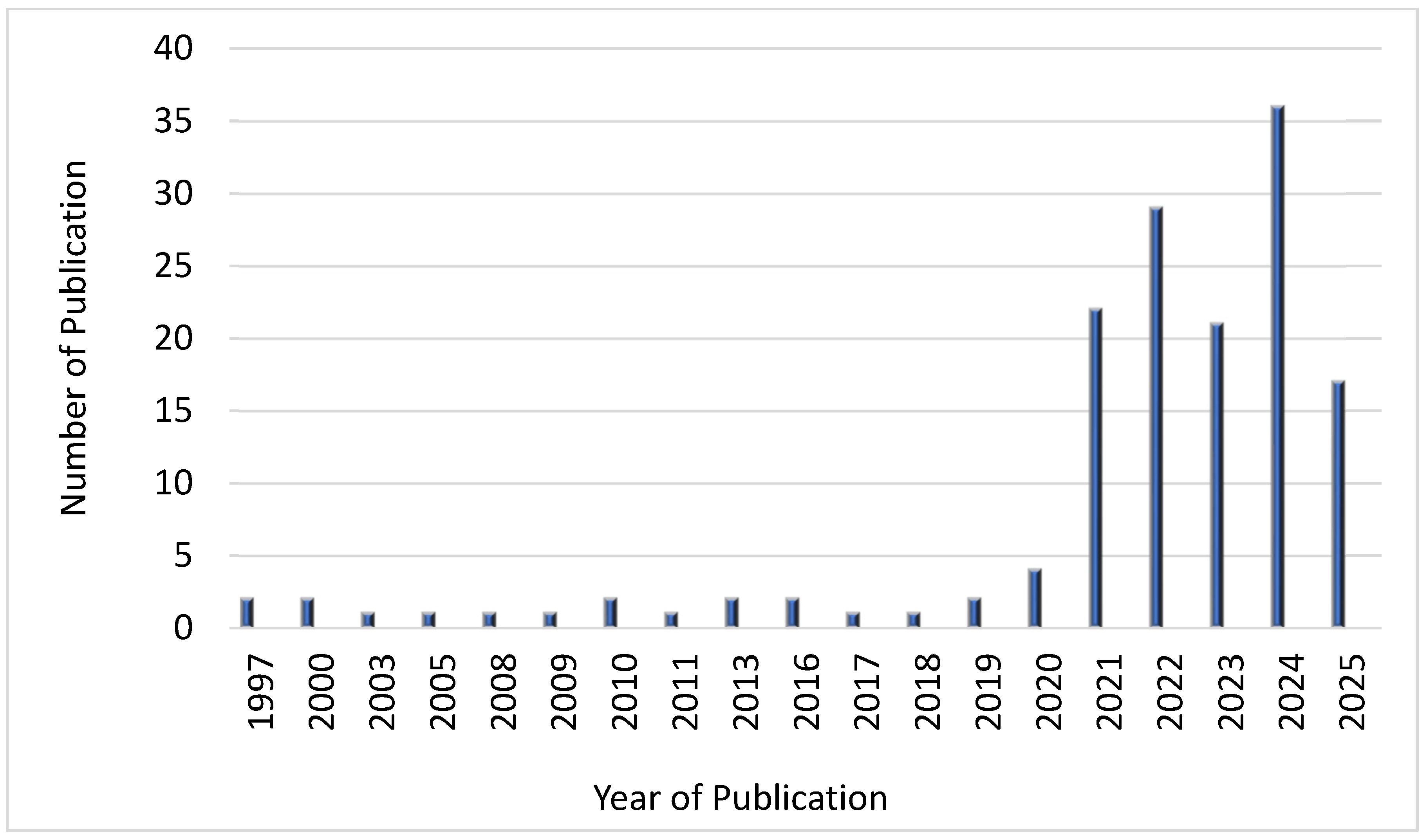
| Journal articles | 115 | 75.16% |
| Conference papers | 33 | 21.57% |
| PhD Thesis | 3 | 1.96% |
| Books and book chapters | 2 | 1.31% |
| Total | 153 | 100% |
| Method | Principle/Technique Used | Reported Accuracy/Performance | Detection Time/Data Window | Validation Type | Main Advantage | Main Limitation | Ref. |
|---|---|---|---|---|---|---|---|
| Per Phase Method | Phase-wise 2nd harmonic blocking | Not consistently reported | Typically, about one cycle | Relay logic/simulation/practical relay studies | Simple and per-phase accurate | May trip if one phase has low 2nd harmonic | [88,89] |
| Cross-Blocking Method | Phase cross-blocking for harmonics | Not consistently reported | Typically, about one cycle | Relay logic/simulation | Effective for symmetrical faults | Can misoperate for unsymmetrical faults | [90,91] |
| Percent Average Blocking | Average harmonic ratio from 3 phases | Not consistently reported | Typically, about one cycle | Relay logic/simulation | Improved security over cross-blocking | Fails if 2-phase harmonic ratio is high | [92] |
| Harmonic Sharing | Summed harmonic magnitude | Not consistently reported | Typically, about one cycle | Relay logic/simulation | Minimizes false tripping | Dependent on harmonic level consistency | [93] |
| Traditional vs Improved Relays | Hybrid of blocking and restraint | Method-dependent | About one cycle or more | Relay comparison/simulation | Combines strengths of two techniques | Trade-off between speed and security | [94] |
| New Inrush Restraining Algorithm | Complex harmonic ratio with phase angle | Method-dependent | About one cycle | Simulation/relay-oriented study | Enhanced inrush/fault separation | Requires angle comparison of components | [95,96] |
| Digital Dynamic Algorithm | Multiple criteria including time constant decay | Method-dependent | Short detection time; feature-window dependent | Simulation/digital relay study | Multi-feature decision with improved speed | Estimate-based, not rule-driven | [97] |
| Dwell Time Method | Dead angle comparison () | Method-dependent | Sub-cycle to one cycle | Simulation/laboratory validation | Utilizes inherent waveform behaviours | Needs accurate dwell time thresholds | [98,99] |
| Improved Correlation Algorithm | Dwell-angle based detection | Method-dependent | Longer than simple time-domain methods; often requires part of the next half-cycle | Simulation/laboratory validation | Angle-based distinction accuracy | Affected by CT saturation, longer delay | [100] |
| Practical Winding Fault Detector | Voltage equation mismatch detection | Method-dependent | Fast if voltage/current measurements are available | Model-based/simulation/experimental validation | Physically based fault indication | Difficult to get delta winding current | [101] |
| Digital Relaying Algorithm | Linear electromagnetic modelling | Method-dependent | Feature- and model-dependent | Simulation/model-based validation | Models real transformer behaviours | Precision in modelling is hard to verify | [87] |
| Cross-Correlation Method | Short-time correlation function | Method-dependent | Usually requires about one full cycle | Simulation/signal-processing validation | Captures transient asymmetry | Needs full cycle to decide | [102] |
| Fuzzy Logic Method | Harmonic ratio + fuzzy decision | Method-dependent; often high in reported studies | Feature-window dependent | Simulation/laboratory validation | Increased reliability and stability | Threshold tuning needed | [103,104] |
| ANN Method | Neural networks and AI | Often high in reported datasets; usually dataset-dependent | Feature-window dependent; classifier inference is fast | Simulation/laboratory/offline training | Learns fault patterns automatically | Needs large, diverse dataset | [105,106] |
| Wavelet Method | Wavelet decomposition (WT) | Often above 90% in reported studies | Typically quarter-cycle to one cycle | Simulation/laboratory validation | Time-frequency domain analysis | Noise sensitive, needs ≥¼ cycle | [107,108] |
| EII-Based Method | Instantaneous magnetizing inductance | Method-dependent | Fast; short data window | Simulation/signal-based validation | Differentiates IMI characteristics | Requires threshold setting | [109] |
| Instantaneous Inductance | Voltage/current-based inductance calc. | Method-dependent | Very fast; reported around a few milliseconds in some studies | Simulation/relay-oriented validation | Fast, suitable for CT saturation | Sensitive to tap/fault resistance | [110] |
| Sinusoidal Proximity Factor | Signal vs. pure sine wave comparison | Method-dependent | Short-window dependent | Simulation/waveform-based validation | Good for low-current faults | May fail under noisy signals | [59] |
| Extended Kalman Filter (EKF) | Absolute Residual Signal (ARS) | Method-dependent | Fast/sub-cycle possible depending on implementation | Simulation/model-based validation | Fast and adaptive classification | ARS may not always exceed threshold | [111,112] |
| Tree-Based Classifiers | Decision Tree/Random Forest/GB | Often high; some studies report near-perfect accuracy on limited datasets | Feature-window dependent; inference is fast | Simulation/dataset-based validation | Effective for classification tasks | Does not address all fault types | [18,113] |
| Numerical Differential Algorithm | Cycle-to-cycle RMS difference | Method-dependent | Requires at least one cycle or multi-cycle trend | Simulation/numerical validation | Simple logic using RMS change | Fails during energization sometimes | [114,115] |
| Transient Components Method | Modal transient component detection | Method-dependent | Usually requires more than one cycle | Simulation/signal-processing validation | Handles both primary/secondary faults | Needs >1 cycle, slow for fast protection | [116] |
| Method Family | Typical Computations | Memory Requirement | Hardware Suitability | Engineering Comment | Ref. |
|---|---|---|---|---|---|
| Harmonic-based methods | Filtering, DFT/FFT, harmonic ratio calculation | Low | Existing numerical relays | Mature and easy to deploy, but less adaptive | [117,119] |
| Time-domain methods | RMS, dwell time, waveform trend, threshold logic | Low to moderate | DSP/embedded CPU | Fast and practical if thresholds are robust | [120,123] |
| Signal-processing methods | WT, S-transform, EKF, time–frequency decomposition | Moderate to high | High-performance DSP/FPGA | Accurate but requires optimized implementation | [124,126] |
| AI-based methods | Feature extraction + trained classifier inference | Moderate | Embedded CPU/DSP/FPGA | Training is offline, but field validation is critical | [127,128] |
| Hybrid methods | Multiple features + decision fusion + possible AI model | High | Advanced IEDs/centralized platforms | Strong performance but more complex to certify and maintain | [78,81,118] |
Disclaimer/Publisher’s Note: The statements, opinions and data contained in all publications are solely those of the individual author(s) and contributor(s) and not of MDPI and/or the editor(s). MDPI and/or the editor(s) disclaim responsibility for any injury to people or property resulting from any ideas, methods, instructions or products referred to in the content. |
© 2026 by the authors. Licensee MDPI, Basel, Switzerland. This article is an open access article distributed under the terms and conditions of the Creative Commons Attribution (CC BY) license.
Share and Cite
Alenezi, M.; Anayi, F.; Packianather, M.; Shouran, M. Intelligent Fault Discrimination in Power Transformers: A Comprehensive Review of Methods. Processes 2026, 14, 1662. https://doi.org/10.3390/pr14101662
Alenezi M, Anayi F, Packianather M, Shouran M. Intelligent Fault Discrimination in Power Transformers: A Comprehensive Review of Methods. Processes. 2026; 14(10):1662. https://doi.org/10.3390/pr14101662
Chicago/Turabian StyleAlenezi, Mohammed, Fatih Anayi, Michael Packianather, and Mokhtar Shouran. 2026. "Intelligent Fault Discrimination in Power Transformers: A Comprehensive Review of Methods" Processes 14, no. 10: 1662. https://doi.org/10.3390/pr14101662
APA StyleAlenezi, M., Anayi, F., Packianather, M., & Shouran, M. (2026). Intelligent Fault Discrimination in Power Transformers: A Comprehensive Review of Methods. Processes, 14(10), 1662. https://doi.org/10.3390/pr14101662