Article

Separation of Butterfat from Waste Ice Cream Using Enzymatic Digestion and Disc Bowl Centrifugation

Dairy and Functional Foods Research Unit, United States Department of Agriculture, Agricultural Research Service, Eastern Regional Research Center, Wyndmoor, PA 19038, USA
*
Author to whom correspondence should be addressed.
Processes 2026, 14(10), 1596; https://doi.org/10.3390/pr14101596
Submission received: 20 March 2026 / Revised: 8 May 2026 / Accepted: 9 May 2026 / Published: 14 May 2026
(This article belongs to the Section Food Process Engineering)

Abstract

Wasted ice cream products contain many valuable food components, most notably butterfat, which has potential for recovery. Disk bowl centrifugation, widely used in milk processing, has not been previously used with ice cream. In comparison to milk, ice cream has larger variations in fat content, smaller fat globule sizes, and the presence of additives and emulsifiers. An Armfield FT15 lab-scale disk bowl centrifuge was used to separate samples of five ice creams containing 1.25 kg melted ice cream each at temperatures ranging from 30 °C to 80 °C, while incorporating enzymatic digestion from four enzymes to encourage fat separation. Results showed that fat capture from ice cream is aided by enzymatic digestion. Rennet was the most effective enzyme tested. Although some varieties performed better without processing compared to 1 h incubation, all ice creams benefitted from processing after 4 h of incubation, with at least 40% fat (weight basis) and high total recovery. Optimal conditions were found with a 4 h rennet incubation, with four of five ice cream varieties showing greater than 90% fat recovery and a fat concentration of 37% wet basis or higher.

1. Introduction

Even though ice cream manufacturers minimize and prevent waste of their products through efficient processing methods, a small portion of the products is lost due to product changeover, quality defects, or packaging errors. The quantity of lost ice cream has been estimated at around 5% of ice cream production [1]. The wasted product is typically fed to animals, spread on fields, or treated and discarded. In addition, this approach can have negative ecological consequences such as depletion of dissolved oxygen [2]. Ice cream waste contains many valuable components such as butterfat, which can range from 0.7% fat for non-fat ice creams to 20% for super premium ice creams [3], along with protein, lactose, and other sugars The ice cream manufacturing industry would benefit from an efficient recovery of wasted components, particularly butterfat, and the profitability of the recovery process would be greatly enhanced if it could be done in a food-grade process, as butterfat and other components are worth substantially more if they can be marketed to humans.
Ice cream has a complex colloidal structure containing a multi-phase dispersion of liquid and gas components [4]. In comparison to milk, melted ice cream generally contains a higher fat content and has a wider variation across products in fat, sugar, protein, and other solids. In addition, ice cream has added stabilizers and emulsifiers that are not present in whole milk. All of these differences could have a significant effect on fat removal both within ice cream and in comparison to raw milk. In addition, additives and their quantities differ between brands of ice cream and are specifically designed to influence emulsion strength and stability. A high variability between ice cream products and the rate of fat separation over time was clearly demonstrated by Garcia et al. [5]. Garcia et al. demonstrated that a wide range of emulsion stabilities exist between ice cream formulations, and that rates of separation are affected by external factors such as temperature. Due to this wide variability between milk and ice cream, and in individual ice cream stability, prospective separation techniques must consider performance variation between ice cream varieties.
Many types of centrifuge exist and can be used with dairy processing, such as solid bowl centrifuges and decanting centrifuges [6], however disk bowl centrifugation is the dominant method of milk fat separation. This technology is already widely used for separating milk fat from stable emulsions, is well-established, commercially available, and offers efficient and rapid fat separation [7]. While the disk bowl centrifuge is a mature technology, its position as a simple and effective cream separation technique has sustained enough interest to spur further theoretical and simulation work [8,9], as well as continued experimentation to further optimize the technology [10,11]. While disk bowl centrifuge processing has a long history of use in milk processing, it has not been demonstrated in work with melted ice cream, waste ice cream, or ice cream mix.
Work with raw milk in disk bowl centrifuges is often conducted with a milk temperature around 55 °C [12,13]. However, these works record no analysis demonstrating ideal temperature of operation. One analysis found was that of Sharp [14] who concluded that a separation temperature near 40 °C was ideal as higher temperatures would show diminishing returns to operation efficacy. Dhungana et al. [15] concluded that a maximum fat globule size would be achieved at 25 °C, a temperature which had been shown to cause partial crystallinity in fat globules, which promotes coalescence [16]. Yashin et al. [16] included temperature in their analysis and concluded that 44 °C was the optimal temperature for cream separator performance, although they limited the search to temperatures between 35 and 45 °C. Jukkola et al. [17] achieved maximum fat separation of 38% wet basis with total fat liberation values of 85, 92, and 93% with three successive centrifugations of a 10% cream/90% water mix between 50 and 55 °C. As no analysis of disk bowl centrifugation on ice creams has been conducted, and Garcia et al. [5] demonstrated that increased temperature is an important factor for increasing the rate of melted ice cream separation, the efficacy of temperature adjustment on the separation of ice cream should also be studied.
In addition to optimizing the temperature, there are a number of other options that can be pursued in order to obtain the most effective process. Many disk bowl centrifuges are sold with a cream screw. A cream screw is a small screw that can be inserted to choke off the flow of the fat fraction to varying degrees, theoretically increasing residence time and improving separation. Feed rate is also something that can influence the effective separation of milkfat in a cream separator, as it can affect the throughput time of the samples [18,19].
Enzymatic digestion of ice cream has been studied as a way of breaking down proteins that form the amphiphilic membranes around fat globules, leading to an increase in the natural separation of the fat and water phases [20], where flavourzyme, alcalase, and chymotrypsin were shown to effectively destabilize the ice cream emulsion of four tested ice creams. Rennet is one of the most well-known dairy enzymes, commonly utilized for cheese making. Rennet works by first breaking down casein micelles via the hydrolysis of k-casein [21], in order to damage its emulsification properties. Rennet also induces coagulation, however, which may have negative side effects. Alcalase and chymotrypsin similarly act to hydrolyze casein and also on whey protein [22]. Flavourzyme is a commercially available peptidase preparation that includes a variety of anti-casein enzymes [23]. Further exploration demonstrated a mechanism to separate free fat from ice cream using rennet [24]. The process identified, however, used high powered centrifuges that operated in small quantities on a batch basis, which is not industrially applicable. The demonstration of the role of enzymatic breakdown combined with centrifugation makes the prospect of combining enzymatic digestion of proteins with disk bowl centrifugation a promising potential treatment for the separation of fat from waste ice cream.
The goals of this research are to evaluate the prospect of using a disk bowl centrifuge to produce a concentrated milk fat product from waste or melted ice cream. Given that this technology is experimental and is not at the optimization stage, priority was given to understanding individual effects as much as possible. The effects of differing process temperatures, inclusion and positioning of a cream screw, use of different brands and qualities of ice cream, and efficacy of enzymatic digestion as a tool to aid fat separation of waste ice cream.

2. Materials and Methods

2.1. Ice Cream Selection

Five vanilla ice creams from Garcia et al. [5] were chosen to represent a range of products and fat contents, ranging from 9.8 to 11.7% fat, as seen in Table 1.

2.2. Disk Bowl Centrifuge Processing

Ice cream samples were melted in a water bath at 40 °C and then heated on a hot plate with a stir bar until they reached processing or enzymatic reaction temperature. Once ready, approximately 1250 g of sample was weighed and passed through an Armfield FT-15 disk bowl centrifuge (Armfield, Clarksburg, NJ, USA) at the highest speed setting of 10,000 rpm. Ice cream was fed into the disk bowl centrifuge by gravity filling the intake hopper. Melted ice cream was poured into the hopper to create a half-inch level of reserve and continually refilled at the usage rate. This was done so that excess hopper reserve did not create a weight difference that would result in changes to the feed rate. The feed rate was kept constant by using gravity feeding. Operation time was 1 min plus or minus 5 s and was kept consistent by this method. Residence time inside the equipment was consistent at around 10 s. The fat (top outlet of high fat concentration) and skim (lower outlet of low fat concentration) fractions were then weighed and samples were taken for analyses of microscopy, viscosity, and fat content as described below.

2.3. Enzymatic Treatment

Four enzymes were chosen based on previous enzymatic work [20,24], in which they were shown to promote fat flocculation and coalescence, potentially aiding separation. These were flavourzyme, chymotrypsin, alcalase (Novozymes, Franklinton, NC, USA), and rennet (Creative Enzymes, Shirley, NY, USA). All melted ice cream samples were incubated in an incubator shaker (brand) at 100 rpm for 1 h unless otherwise specified. Samples with flavourzyme, chymotrypsin, and alcalase were incubated at 50 °C in 2 L sealed flasks, corresponding to their most active temperature, while the rennet-treated sample was incubated at 40 °C, since the most active temperature is around 40 °C. An initial screen run of all enzymes was conducted, with duplicates being run for the more promising enzymes and all extended incubation samples The data sheets report their activities as 140 KMTU/g for chymotrypsin, 1100 LAPU/g for flavourzyme, 4 AU/g for alcalase, and 20,000 µ/g for rennet. All enzymes were administered by weight in proportion to the protein content of the respective ice creams, receiving 1% w/w enzyme/protein. Protein content of ice creams had been previously determined by the Kjeldahl method [5]; those selected for this investigation were in the range of 2.9–4.8%.

2.4. Fat Content Determination

Fat content was measured in one of two ways. For initial temperature testing, the fat was determined using a specialized FTNIR instrument (Milkoscan FT1, FOSS Analytical, Eden Prairie, MN, USA), as described in Garcia et al. [5]. After enzymatic digestion was added and viscosity increases caused clogging problems in the FTNIR instrument, the fat content analysis was determined by an Oracle fat analyzer (CEM Corporation, Charlotte, NC, USA) for the remainder of the experiment, as described by Garcia et al. [5].

2.5. Viscosity Measurement

The viscosity of the top phase following disk bowl centrifugation was measured using a rotational viscometer (DVNext, Rheometer, Ametek Brookfield, Middleborough, MA, USA) with a small sample adapter and a magnetic spindle SC4-18 at a fixed speed of 100 rpm, corresponding to an approximate shear rate of 132 s−1. Viscosity readings were obtained at a temperature of 60 °C, which is approximately the temperature immediately following disk bowl centrifugation, utilizing a Brookfield circulating bath (TC-650, Ametek Brookfield, Middleborough, MA, USA). The initial reading was recorded after 10 secs, allowing the viscosity values to stabilize, and subsequent measurements were recorded at 1 min intervals up to 3 min.

2.6. Confocal Laser Microscopy

Microscopic images of enzymatically treated and disk bowl centrifuged samples were viewed on a Leica DMI4000B confocal microscope (Leica microsystems, Boston, MA, USA). Images were captured with Leica LAS-X software v5.2.0.26130 (Leica Microsystems, Mannheim, Germany). Protein and fat were stained with Fast green and Nile red, respectively. To label fat/protein in samples, 2 uL of each of Fast green (1% aqueous) and Nile Red (1 mg/mL in EtOH) was added to 1 mL of sample. Images were captured with Leica LAS-X software (Leica Microsystems, Mannheim, Germany). A total of 4 uL was added to a slide and a coverslip was placed on top. Samples were viewed with a 100× objective. Images for each dye were measured using ImageJ (win64) software [25]. Data were imported to Microsoft Excel.

2.7. Statistical Analysis

Statistical analysis of the data was performed using the JMP software package (JMP 16, Cary, NC, USA). Error bars represent ± one standard deviation. Statistical significance was assessed using pairwise Tukey’s HSD tests with a significance of 0.05. Three replicates were used. Analysis of variance was also performed using the JMP software package with a significance of 0.05.

3. Results and Discussion

3.1. Temperature

In order to investigate the effect of temperature on the effectiveness of ice cream separation in a disk bowl centrifuge, 1250 g of one ice cream, P, selected from Garcia et al. [5] was tested at 30, 40, 50, 60, 70, and 80 °C. Originally, tests were also conducted at 90 °C, but problems with processing the ice cream were detected, such as the smell of burning and fouling on pans occurring, which hindered the efficacy of the testing. Therefore, temperatures above 80 °C were not included in the rest of the testing. As depicted in Figure 1, a small volume of separation was achieved at 30 °C, with only a 0.66% of the sample being recovered at the top. While the highest fat percentage (4.1%) was achieved at 40 °C, the recovered fat yield remained relatively low, at only 11.0% of the total. As the temperature continued to increase, the amount of sample that entered the ‘top’ fraction increased steadily, while the total fat concentration in that product stream fluctuated. At 80 °C, the amount of fat recovered reached its highest level, 35.9%, and the fat concentration remained at 30% wet basis. For comparison, Jukkola et al. [17] achieved a 35% fat concentration after 3 separations of a 10% cream/90% deionized water mix, operating between 50 and 55 °C. While Eden et al. [13] achieved a high fat portion of 44% at 55 °C, despite a lower fat portion in whole milk, this study lacked information on total fat recovery or optimal top fraction size. Still, none of the temperatures chosen were able to achieve that level of fat concentration for P ice cream using only temperature.
The most effective temperature tested may have been 80 °C due to loss of milk fat globule membrane emulsion stability. Milk fat globule membrane emulsions were found to become unstable at 85 °C (there were no readings taken between 75 and 85 °C), while emulsions with only milk proteins became unstable at 65 °C [26]. Garcia et al. [6] showed the best separation at 50 °C, the highest temperature tested, although there was high variation between ice cream varieties.

3.2. Centrifuge Parameters

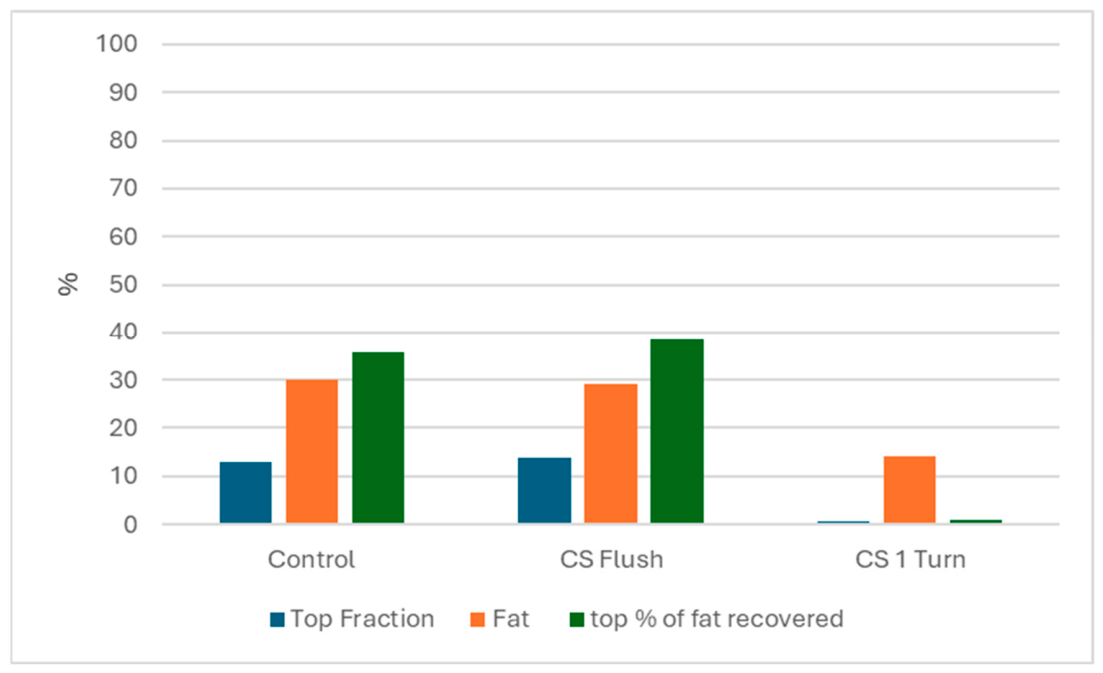
The second type of factor to be considered in separation efficacy were factors pertaining to centrifuge operation. For the purpose of this study, the speed setting on the centrifuge was not modified. However, the retention time could be of importance to the operation of the centrifuge. The main mechanism for controlling retention time in the disk bowl centrifuge was the cream screw, a small screw inserted into the exit that can be set to different levels to reduce the area of the exit and cause increased retention in the machine. Three cream screw configurations were tested: no screw, flush with the wall, and one full turn inwards. Additional screwing caused failure of the machine. As shown in Figure 2, the results from no cream screw and cream screw at the flush configuration are very similar, with no cream screw having a slightly higher fat content in the top fraction, and the flush configuration recovering slightly more of the total fat. The one turn configuration led to a sharp drop in the amount of fat recovered and size of the top fraction, as well as a moderate drop in fat content in the top fraction. These results indicate that changes in the cream screw configuration had little benefit until the point where the screw was too tight, in which case it caused negative effects. Therefore, the cream screw configuration was abandoned as a potential mechanism for improving centrifuge performance.
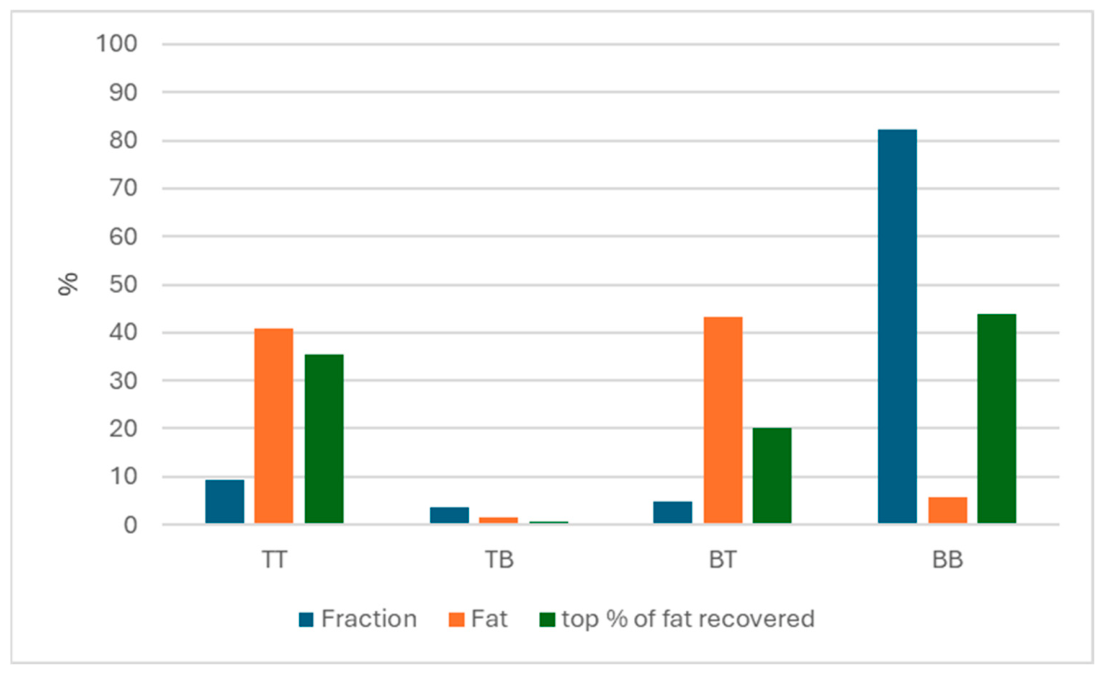
An alternative strategy to extend retention time involved running samples through the centrifuge twice, as shown in Figure 3. This test included a second run, in which the top (fat) and bottom (skim) products were run through the centrifuge as well, creating four product streams. Interestingly, the stream of fat that was taken out of the reprocessing of the skim phase had a similar fat content as that taken from a reprocessing of the fat phase. The product of two skim phases had the highest volume out of all samples, and low-fat content, while the skim phase product from the initial fat phase had almost no fat and a very low volume. In total, this result indicates that reprocessing the skim phase particularly would improve the fat separation results, with an additional 20% of the overall fat being separated with no loss of fat content in the stream. With reprocessing, the overall capture of fat increased from 35.5% to 55.7% without a loss of fat concentration in the product stream.

3.3. Ice Cream Variety

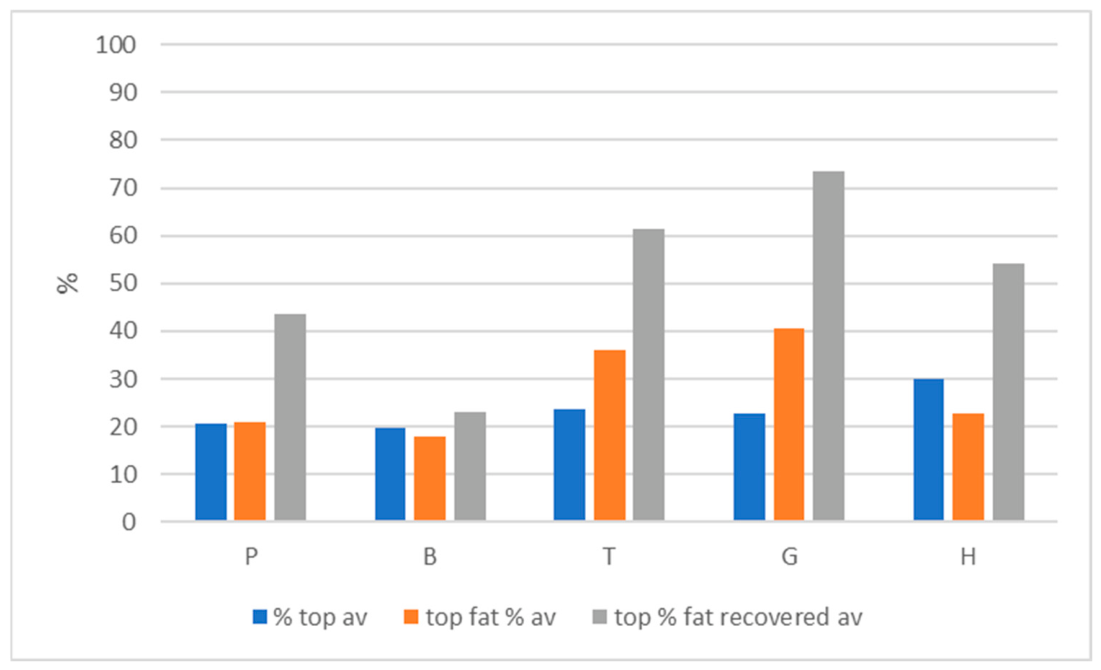
As the best results for ice cream separation was found at 80 °C, this temperature was used throughout this study as the ideal temperature, and the 80 °C tests with no enzymes were repeated for each ice cream in the trial. Reported results in Figure 4 are those determined by the Oracle method. Compared to P, higher fat concentrations were found in three of the other four ice creams, reaching above 35% wet basis in two of the five tested ice cream varieties. T and G showed good separation with above 60% of the total fat harvested at more than 35% fat concentration. Of the other two varieties, B showed a low yield and fat concentration, while H liberated a high amount of the total fat, at 22.6% concentration. It is clear that ice cream variety has a strong effect on its behavior in the disk bowl centrifuge process.
The ice cream performance did not, however, show a clear connection to the emulsion strength as discussed by Garcia et al. [5]. In fact, ice cream B was found previously to have the weakest emulsion of all ice creams in the previous study, separating readily into fat and non-fat layers under passive conditions. Yet this ice cream did not perform well in the non-enzymatic tests. The T ice cream was found to have a very stable emulsion in the previous study but showed the second best results with the disk bowl centrifuge. In Garcia et al.’s study [5], the relative ranking from least to most strong emulsion was B, G, P, T, H; however, in terms of disk bowl centrifuge separation, the relative ranking of resistance to separation was G, T, H, P, B. Syed et al. [27] discussed the influence of sugar concentrations on melt and drip times for ice creams at room temperature, and found that increases in sugar concentration increased melt and drip times. This result was not clearly replicated in this work, as sugar and sucrose concentrations did not predict the stability of melted ice creams to separation, with the G ice cream containing the lowest sucrose levels, but resisting separation the best out of the tested ice cream varieties.
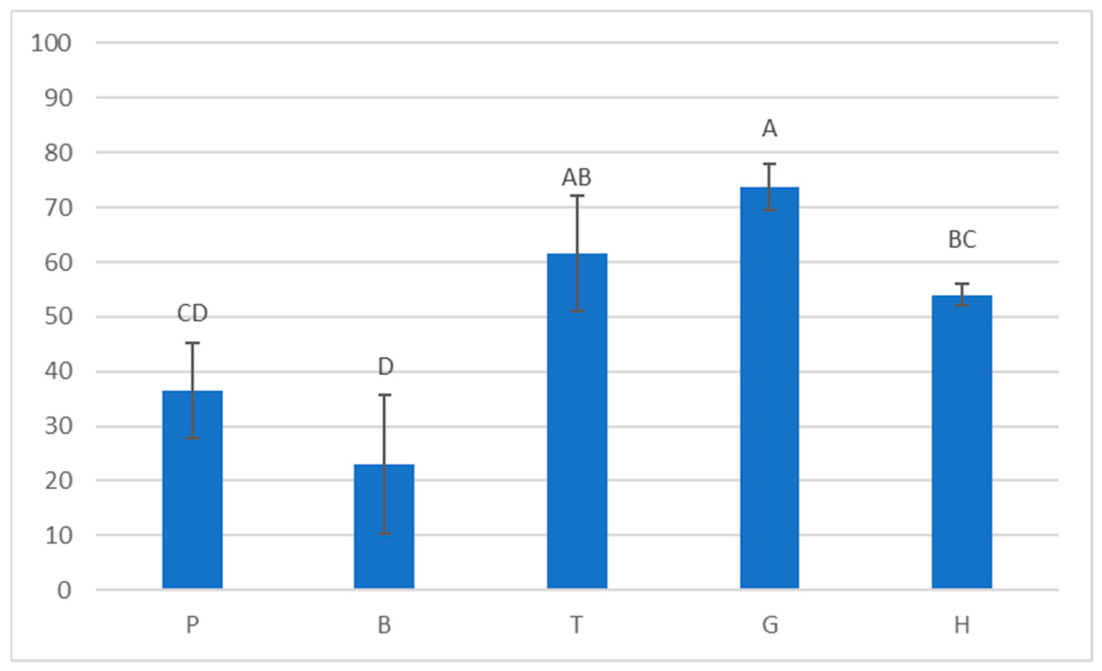
These tests were performed in four replicates. A number of replicates were performed in order to give an understanding of variability in the process. The variability in the general process was high, with none of the samples showing statistically significant differences in % top. For top fat %, ice cream G was significantly different from all other ice creams except T, with no other significant differences. However, there was much less variation in the top % recovered average, as seen in Figure 5. Variations in the previous two categories often occurred in opposite directions, and had the effect of partially canceling out, leading to more consistent values for fat recovery. This might suggest that although the amount of fat that can be easily separated out by disk bowl centrifuge is somewhat variable, a greater amount of variability is due to the amount of non-fat retention the layer has. Anova testing showed that %top (0.67) and %fat (0.074) were not significantly determined by ice cream variety, but that top fat recovered (<0.001) was determined by ice cream variety.

3.4. Effect of Enzymes

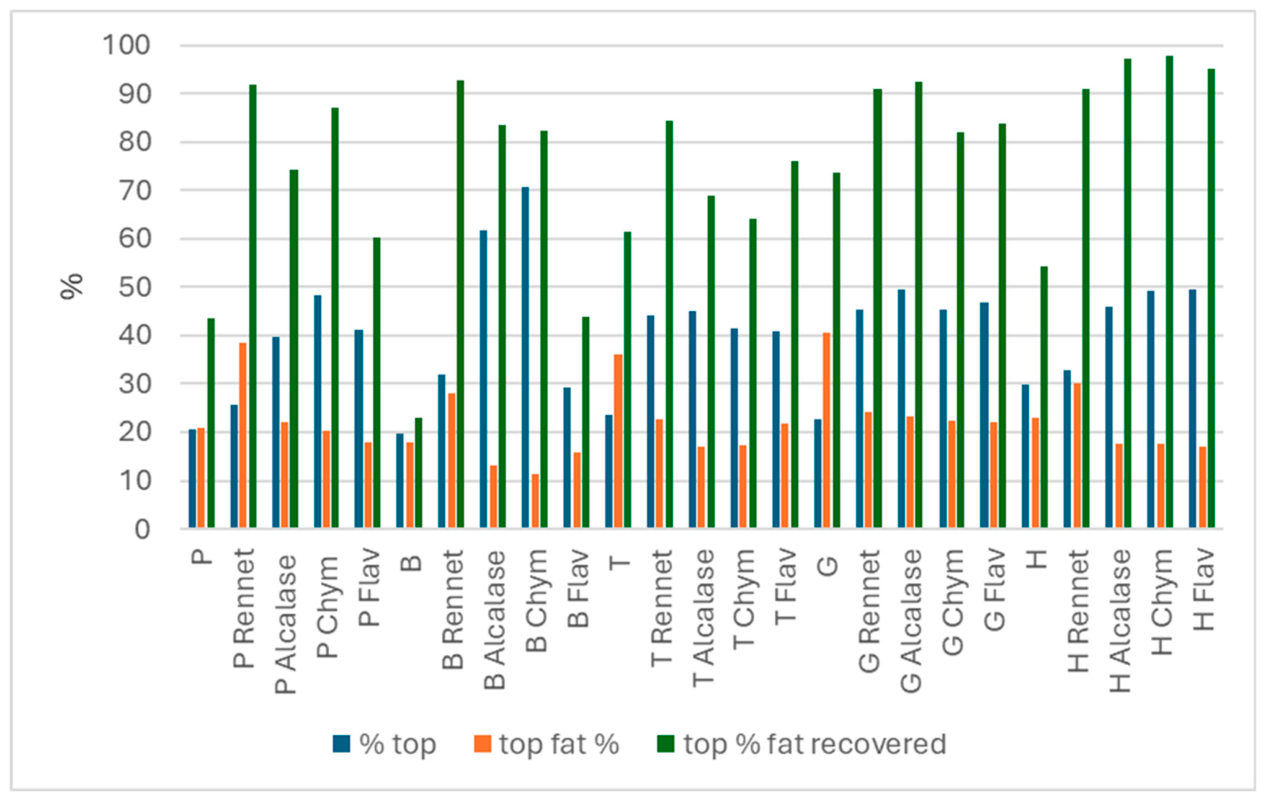
Previous experiments [20,24] demonstrated the ability of enzymes to assist in destabilizing the emulsion and assist in fat separation. Results of the disk bowl centrifuge of each ice cream after 1 h treatment with rennet, alcalase, chymotrypsin, and flavorzyme, as well as the untreated ice cream samples, are shown in Figure 6. The heat treatment of the melted ice cream to bring the sample up to 80 °C prior to testing is more than enough to deactivate the enzymes and stop enzymatic activity. Various sources show chymotrypsin is deactivated at 52.8 °C [28], rennet at 70 °C in less than 2 min [29], and flavourzyme and alcalase are both inactivated at 75 °C [30]. The most consistent result is that enzymatic treatment substantially increased the amount of material that ended up in the fat fraction, in turn substantially increasing the percentage of the fat recovered, in some cases to above 97% of the total fat. Other processes involving the reduction in emulsion stability through ethanol use resulted in highly pure fat (98% d.b.), but were only successful at recovering 50% of the milk fat available [31].
While this is a beneficial outcome, this remarkable capture of available fat is often associated with a corresponding decrease in fat concentration of the top layer. With T and G ice creams, this pattern is seen with every enzyme tested, whereas with P, B, and H ice creams, this pattern is seen in every treatment with the exception of the enzyme rennet, which showed an increase in fat concentration in the product stream in addition to an increased size of the product stream and corresponding increase in total recovery. Furthermore, rennet-treated ice cream had the highest percent of fat capture in P, B, and T ice creams, while still being near the highest in the other two.
Optimizing separation conditions necessitates balancing the competing goals of achieving a highly concentrated fat stream and maximizing overall fat recovery. In general, with the enzymatically treated ice creams, rennet treatment performed the best. The two possible exceptions to rennet treatment are with T and G ice creams. For these two ice creams, no enzyme treatment debatably performed better due to its reasonably high fat capture and higher fat concentration than the rennet-treated ice cream.
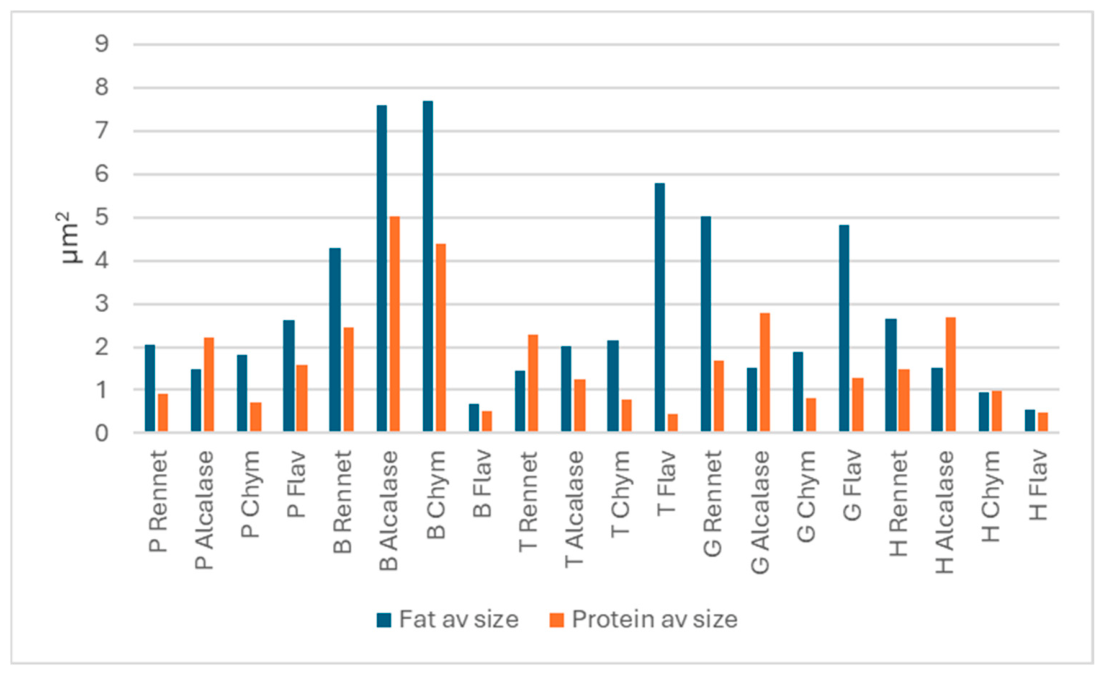
In order to better understand the effect of the enzymes on the separated product, samples from each enzyme-treated separation were analyzed with light microscopy. In addition, milk fat globule size has been shown to influence chemical composition, health benefits, and taste and mouth feel [15], so changes in size due to digestion may be of interest to processors. Five individual images were used to analyze the average size of stained fat and protein particles after separation (Figure 7). One might assume that the best separation results would be associated when fat particles are separated into large independent groups where the density differences will be most telling, or that well-separated samples would easily coalesce into large oil droplets. Dhungana et al. [15] found in a modified cream centrifuge that more effective separation of milk fat caused an increase in fat particle diameter. This result would make sense as a larger particle would have a higher proportion of fat to surface protein, as found by Lu et al. [32], and therefore a lower density.
However, this result was not replicated here, as the treatments resulting in the three highest recorded average fat particle diameters were treatments that were not particularly effective at separation. The highest two combinations for fat particle size were B alcalase and B chymotrypsin, whose separation was characterized by low fat separation. These same two samples also recorded the highest average protein aggregate size. For the most part, the most effective rennet treatments do not have a clear pattern in terms of relative size of fat or protein particles. There was also no clear pattern of fat and protein size in the skim fractions tested. Luo et al. [33] concluded that an increase in the particle size of milk fat globules hindered fat globule movement and increased the necessary time for enzymatic activity to complete, which might counteract a natural tendency for a larger globule size to increase separation efficacy.

3.5. Incubation Time

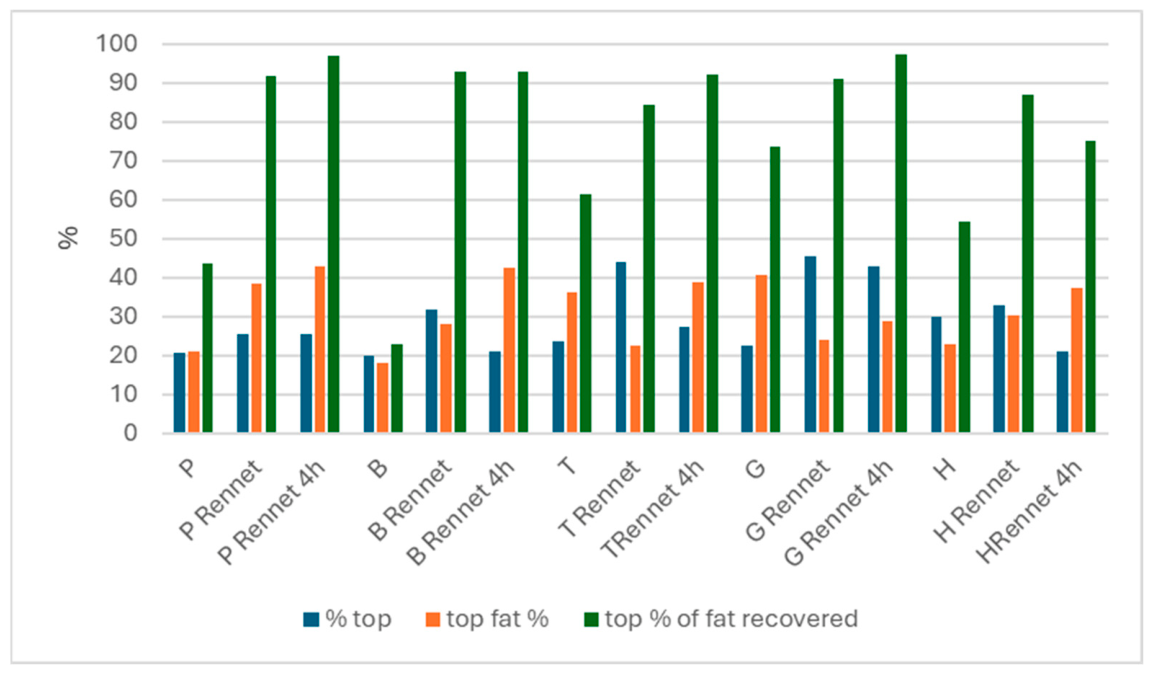
In order to monitor the effect of increased enzymatic activity, trials were conducted with rennet, the best performing enzyme, with a 4 h incubation instead of a 1 h incubation. The results are shown in Figure 8. The 4 h treatments of rennet had a generally positive impact on the separation of fat. In all ice creams, the 4 h treatment resulted in higher fat concentrations in the top fraction. In ice creams P, T, and G, the longer treatment caused increases in total recovered fat over the 1 h treatment, while B had the same total fat recovered. In all ice creams, the extended treatment also resulted in a decrease in the amount of product in the top fraction compared to the 1 h treatment. The amount of product in the top fraction consistently increased with 1 h treatment.
The increase in fat fraction size can be contributed to by fat flocculation and coalescence. Protein aggregation is led by enzymatic treatment, which promotes fat flocculation. The extended hydrolysis, however, may dissociate protein aggregates, which leads to the dissociation of fat flocculants and the reduction in the quantity of product that ends in the top fraction. Salvador et al. [34] detail several stages of casein aggregation in the presence of rennet. First, partial hydrolysis of k casein, then the aggregation of casein micelles, followed by the formation of a rennet coagulum. It is possible that the changing trends in % top and % fat reflect the effects of different stages of rennet effect. Additionally, Renan et al. [35] observed the formation of micelle-bound aggregates when applying a heat treatment after rennet, which may influence separation in relation to the degree of rennet activity.

3.6. Effect of Viscosity on Processing

Li and Zhao [36] demonstrate that viscosity can change over time due to rennet treatment and show how factors such as heat or acidification can affect viscosity. There was concern about whether the enzymatically digested ice cream would cause clogging in the disk bowl centrifuge, making the enzyme treatment a non-viable method for separating fat from ice cream. In this experiment, it was observed that the high fat fraction increased in viscosity when certain enzyme and ice cream combinations were used, resulting in a lack of clean flow from the top bowl of the machine. This caused an accumulation of product inside the top bowl during testing that had to be transferred along the chute into the collection container.
In order to understand this problem better, the viscosity of the sample for the fat fraction of separated ice cream was measured immediately after disk bowl processing. The skim fractions were not tested for viscosity as no clogging behavior was observed in the low-fat fractions. Results can be seen in Table 2. The results indicate that the highest viscosity values were found in samples treated with rennet. The greatest buildup of product was also observed in samples treated with flavorzyme and rennet. However, in no case did the buildup stop the entire sample from being processed. Flavorzyme-treated ice cream demonstrated a decrease in yield of almost 2.7 percentage points, most of was is due to the product sticking to the centrifuge walls. In contrast, all other treatments recorded yields within 1 percentage point of the untreated sample. However, this was not the case for other ice creams. In most cases, enzymatic treatment improved yield, even when an increase in viscosity was observed. Due to the low reduction in yield and the ability to process the whole sample without interruption, it seems likely the buildup did not cause a clog and would continue to flow as long as there was sample flowing through the centrifuge. Additionally, industrial centrifuge systems will operate on a continual flow basis and have access to advanced clean-in-place systems [4], which are two advantages not shared by the bench top models. Nevertheless, the potential threat to centrifuge operation will be a concern to monitor.
For normal skim milk, the aggregation of casein occurs when 85–90% of the macropeptide is released [37]. Additionally, heat can impair rennet coagulation [36]. Therefore, it is possible that the processing heat delayed the coagulation of rennet-treated samples enabling continued processing. It was observed in samples taken after processing that the top fraction of rennet-treated ice cream samples formed gels of varying strengths after processing and storage in a refrigerator. This coagulation may in turn cause difficulties in further processing, but it also may cause more problems with centrifugation if the processing is conducted at lower temperatures.

4. Conclusions

The efficacy of separating fat from melted ice cream using a disk bowl centrifuge was tested on three ice cream varieties, with digestion from four different enzymes. The data indicate that concentration of milk fat using a disk bowl centrifuge is possible, with wet basis fat percentages exceeding 40%, with fat recovery exceeding 90% with at least one treatment method across four out of five ice cream varieties. Rennet was the most effective enzyme tested, and all enzymes tested and digestion results improved with an increase in digestion time. There is strong variability between the performance of different ice creams, particularly in performance without enzyme treatment. This outcome shows that disk bowl centrifugation is not capable of concentrating fat from WIC sufficiently to make a pure fat product in one step. However, it is capable of concentrating fat as a first stage separation or for uses that do not require pure fat, such as animal feed. This result is particularly important for dairy processing as it was achieved using continuous-flow disk bowl centrifuges of the type commonly used in dairy processing and high-powered batch centrifuges typically used in research labs.

Author Contributions

B.M.P. conceived of and led the research, as well as conducted most experiments, analyzed the data, and wrote the manuscript. C.L. (Chen Liang) performed the experiments and analyzed data related to enzyme activity. C.L. (Changhoon Lee) performed experiments and analyzed data related to viscosity of products. R.A.G. provided general guidance, and proofread and helped with the manuscript assembly. All authors have read and agreed to the published version of the manuscript.

Funding

This study was funded under National Program 306, project 8072-41000-114 “Reclaiming Value from Coproducts of Dairy Food Manufacture”.

Data Availability Statement

The raw data supporting the conclusions of this article will be made available by the authors on request.

Acknowledgments

We would like to thank Joseph Uknalis for the microscope examinations and staining.

Conflicts of Interest

Mention of trade names or commercial products in this publication is solely for the purpose of providing specific information and does not imply recommendation or endorsement by the U.S. Department of Agriculture. USDA is an equal opportunity provider and employer.

References

  1. Ice Cream Research. International Dairy Foods Association. 2026. Available online: https://www.idfa.org/ice-cream-research (accessed on 15 April 2026).
  2. Ahmad, T.; Aadil, R.M.; Ahmed, H.; Rahman, U.; ur Soares, B.C.V.; Souza, S.L.Q.; Pimentel, T.C.; Scudino, H.; Guimarães, J.T.; Esmerino, E.A.; et al. Treatment and utilization of dairy industrial waste: A review. Trends Food Sci. Technol. 2019, 88, 361–372. [Google Scholar] [CrossRef]
  3. Marshall, R.T.; Goff, H.D.; Hartel, R.W. Ice Cream; Springer Science & Business Media: Berlin/Heidelberg, Germany, 2003. [Google Scholar]
  4. Goff, H.D. Colloidal aspects of ice cream A review. Int. Dairy J. 1997, 7, 363–373. [Google Scholar] [CrossRef]
  5. Garcia, R.A.; Plumier, B.M.; Lee, C.; Liang, C. Passive separation of waste ice cream. Int. Dairy J. 2023, 139, 105570. [Google Scholar] [CrossRef]
  6. Verma, R.; Chauhan, N.; Sharma, D.; Thakur, K.; Bhat, F.M. Separation Technologies: Filtration and Centrifugation for Food and Dairy Processing. In Engineering Solutions for Sustainable Food and Dairy Production: Innovations and Techniques in Food Processing and Dairy Engineering; Springer Nature: Cham, Switzerland, 2025; pp. 159–188. [Google Scholar]
  7. Walstra, P.; Wouters, J.T.M.; Geurts, T.J. Dairy Science and Technology; CRC Press: Boca Raton, FL, USA, 2005. [Google Scholar]
  8. Fernández, X.R.; Nirschl, H. Multiphase CFD simulation of a solid bowl centrifuge. Chem. Eng. Technol. 2009, 32, 719–725. [Google Scholar] [CrossRef]
  9. Iatan, R.I.; Dan Pasat, G. Theoretical And Experimental Studies On Disks Centrifugal Separators. Period. Polytech. Serbian Mech. Eng. 1998, 42, 103–116. [Google Scholar]
  10. Halder, K.; Sahu, J.K.; Naik, S.N.; Kumar, A. Production of cream with size differentiated milk fat globules—Modified centrifugal separation approach. J. Food Process. Preserv. 2022, 46, e17275. [Google Scholar] [CrossRef]
  11. Yashin, A.; Polyvyanii, Y.; Shukov, A.; Horev, P. Results of Studies on Justification of a Device for Production of Ecologically Pure Cream. Sci. Pap. Ser. D. Anim. Sci. 2021, 1, 496–500. [Google Scholar]
  12. Goff, H.D. Dairy product processing equipment. In Handbook of Farm, Dairy and Food Machinery Engineering; Academic Press: Cambridge, MA, USA, 2019; pp. 245–265. [Google Scholar]
  13. Edén, J.; Dejmek, P.; Löfgren, R.; Paulsson, M.; Glantz, M. Native milk fat globule size and its influence on whipping properties. Int. Dairy J. 2016, 61, 176–181. [Google Scholar] [CrossRef]
  14. Sharp, P.F. Physical Constants of the Milk as Influencing the Centrifugal Separation of Cream at Various Temperatures. J. Dairy Sci. 1928, 11, 259–264. [Google Scholar] [CrossRef]
  15. Dhungana, P.; Truong, T.; Palmer, M.; Bansal, N.; Bhandari, B. Size-based fractionation of native milk fat globules by two-stage centrifugal separation. Innov. Food Sci. Emerg. Technol. 2017, 41, 235–243. [Google Scholar] [CrossRef]
  16. Fredrick, E.; Walstra, P.; Dewettinck, K. Factors governing partial coalescence in oil-in-water emulsions. Adv. Colloid Interface Sci. 2010, 153, 30–42. [Google Scholar] [CrossRef]
  17. Jukkola, A.; Hokkanen, S.; Kämäräinen, T.; Partanen, R.; Heino, A.; Rojas, O.J. Changes in milk fat globules and membrane lipids under the shear fields of microfiltration and centrifugation. J. Membr. Sci. 2019, 573, 218–225. [Google Scholar] [CrossRef]
  18. Kessler, H.-G. Food Engineering and Dairy Technology; Verlag A. Kessler: Freising, Germany, 1981; pp. 59–81. [Google Scholar]
  19. Towler, C. Developments in cream separation and processing. In Modern Dairy Technology; Volume 1 Advances in Milk Processing; Robinson, R.K., Ed.; Springer: Boston, MA, USA, 1994; pp. 61–105. [Google Scholar]
  20. Liang, C.; Garcia, R.A.; Plumier, B.M.; Lee, C.; Huynh, F.N.D.; Uknalis, J. Proteolytic treatment of waste dairy ice cream to accelerate milk fat separation. Int. Dairy J. 2023, 145, 105702. [Google Scholar] [CrossRef]
  21. Winwood, J. Rennet and rennet substitutes. Int. J. Dairy Technol. 1989, 42, 1–2. [Google Scholar] [CrossRef]
  22. Kilara, A.; Panyam, D. Peptides from milk proteins and their properties. Crit. Rev. Food Sci. Nutr. 2003, 43, 607–633. [Google Scholar] [CrossRef] [PubMed]
  23. Merz, M.; Eisele, T.; Berends, P.; Appel, D.; Rabe, S.; Blank, I.; Stressler, T.; Fischer, L. Flavourzyme, an enzyme preparation with industrial relevance: Automated nine-step purification and partial characterization of eight enzymes. J. Agric. Food Chem. 2015, 63, 5682–5693. [Google Scholar] [CrossRef]
  24. Garcia, R.A.; Plumier, B.M.; Liang, C.; Lee, C.; Bumanlag, L.; Renye, J.; Tomasula, P. A prototype process for demulsification of waste ice cream. Food Bioprod. Process. 2024, 13, e4626. [Google Scholar] [CrossRef]
  25. Abràmoff, M.D.; Magalhães, P.J.; Ram, S.J. Image Processing with ImageJ. Biophotonics Int. 2004, 11, 36–42. [Google Scholar]
  26. He, M.; Sun, J.; Jiang, Z.Q.; Yang, Y.X. Effects of cow’s milk beta-casein variants on symptoms of milk intolerance in Chinese adults: A multicentre, randomised controlled study. Nutr. J. 2017, 16, 72. [Google Scholar] [CrossRef] [PubMed]
  27. Syed, Q.A.; Anwar, S.; Shukat, R.; Zahoor, T. Effects of different ingredients on texture of ice cream. J. Nutr. Health Food Eng. 2018, 8, 422–435. [Google Scholar]
  28. Rezaei-Ghaleh, N.; Ebrahim-Habibi, A.; Moosavi-Movahedi, A.A.; Nemat-Gorgani, M. Role of electrostatic interactions in 2, 2, 2-trifluoroethanol-induced structural changes and aggregation of α-chymotrypsin. Arch. Biochem. Biophys. 2007, 457, 160–169. [Google Scholar] [CrossRef]
  29. Struble, E.B.; Sharp, P.F. Effect of heat and pH on the inactivation of rennin in whey. J. Dairy Sci. 1940, 23, 587–591. [Google Scholar] [CrossRef]
  30. Dent, T.; Campanella, O.; Maleky, F. Enzymatic hydrolysis of soy and chickpea protein with Alcalase and Flavourzyme and formation of hydrogen bond mediated insoluble aggregates. Curr. Res. Food Sci. 2023, 6, 100487. [Google Scholar] [CrossRef] [PubMed]
  31. Lee, C.; Garcia, R.A.; Bumanlag, L.P.; Liang, C. Recovery of milk fat from waste ice cream through ethanol-induced emulsion destabilisation. Int. J. Dairy Technol. 2025, 78, e13166. [Google Scholar] [CrossRef]
  32. Lu, J.; Argov-Argaman, N.; Anggrek, J.; Boeren, S.; van Hooijdonk, T.; Vervoort, J.; Hettinga, K.A. The protein and lipid composition of the membrane of milk fat globules depends on their size. J. Dairy Sci. 2016, 99, 4726–4738. [Google Scholar] [CrossRef]
  33. Luo, J.; Wang, Y.; Guo, H.; Ren, F. Effects of Size and Stability of Native Fat Globules on the Formation of Milk Gel Induced by Rennet. J. Food Sci. 2017, 82, 670–678. [Google Scholar] [CrossRef]
  34. Salvador, D.; Acosta, Y.; Zamora, A.; Castillo, M. Rennet-Induced Casein Micelle Aggregation Models: A Review. Foods 2022, 11, 1243. [Google Scholar] [CrossRef]
  35. Renan, M.; Guyomarc’h, F.; Chatriot, M.; Gamerre, V.; Famelart, M.H. Limited enzymatic treatment of skim milk using chymosin affects the micelle/serum distribution of the heat-induced whey protein/κ-casein aggregates. J. Agric. Food Chem. 2007, 55, 6736–6745. [Google Scholar] [CrossRef]
  36. Li, Q.; Zhao, Z. Acid and rennet-induced coagulation behavior of casein micelles with modified structure. Food Chem. 2019, 291, 231–238. [Google Scholar] [CrossRef] [PubMed]
  37. Sandra, S.; Alexander, M.; Dalgleish, D.G. The rennet coagulation mechanism of skim milk as observed by transmission diffusing wave spectroscopy. J. Colloid Interface Sci. 2007, 308, 364–373. [Google Scholar] [CrossRef]
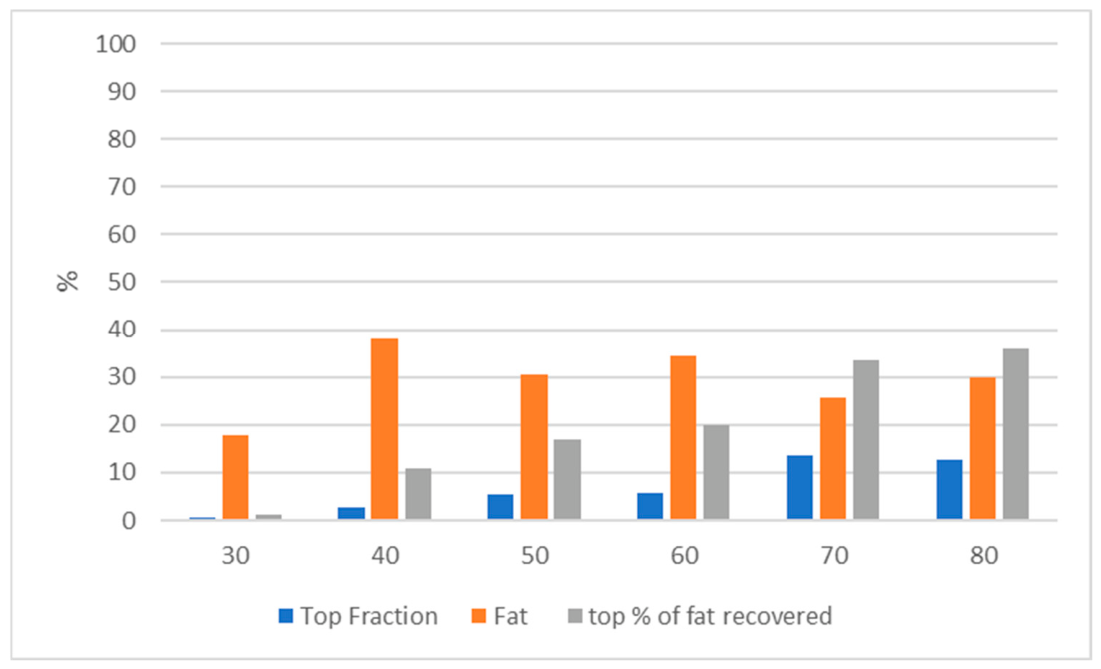
Figure 1. The effect of temperature on disk bowl centrifuge efficacy of ice cream P, showing percentages of the output that passed through the top fraction, the wet basis fat percentage of top fraction output, and the percentage of total fat recovered through the top fraction.
Processes 14 01596 g001
Figure 2. The effect of cream screw configuration on disk bowl centrifuge efficacy of ice cream P, showing percentages of the output that passed through the top fraction, the wet basis fat percentage of top fraction output, and the percentage of total fat recovered through the top fraction.
Processes 14 01596 g002
Figure 3. The effect of repeated centrifugation on disk bowl centrifuge efficacy of ice cream P, showing percentages of the output that passed through the fraction, the wet basis fat percentage of fraction output, and the percentage of total fat recovered four fractions: TT, product that passed through the top twice; TB, product that passed through the top first, then the bottom; BT, product that passed through the bottom first, then the top; and BB, product that passed through the bottom twice.
Processes 14 01596 g003
Figure 4. The effect of ice cream variety on disk bowl centrifuge efficacy at 80 °C, showing percentages of the output that passed through the top fraction, the wet basis fat percentage of top fraction output, and the percentage of total fat recovered through the top fraction for five total ice creams.
Processes 14 01596 g004
Figure 5. The effect of ice cream variety on disk bowl centrifuge efficacy at 80 °C, showing only percentage of total fat recovered with error bars and statistical significance for five total ice creams.
Processes 14 01596 g005
Figure 6. The effect of enzyme activity on disk bowl centrifuge efficacy at 80 °C, showing percentages of the output that passed through the top fraction, the wet basis fat percentage of top fraction output, and the percentage of total fat recovered through the top fraction for five total ice creams after treatment with four different enzymes.
Processes 14 01596 g006
Figure 7. The effect of enzyme activity on fat and protein aggregate size, in µm, after disk bowl centrifugation at 80 °C, with results for four enzyme treatments and five ice cream varieties.
Processes 14 01596 g007
Figure 8. The effect of 1 h and 4 h enzymatic digestion on disk bowl centrifuge efficacy at 80 °C, showing percentages of the output that passed through the top fraction, the wet basis fat percentage of top fraction output, and the percentage of total fat recovered through the top fraction for five total ice creams after treatment with four different enzymes.
Processes 14 01596 g008
Table 1. Composition of chosen ice cream varieties from [5].
Total Solids (%)Fat (%)Protein (%)Lactose (%)Sucrose (%)Product CategoryEmulsifiers and Stabilizers
P37.610.33.25.811.6StandardMono and diglycerides, guar gum, xanthan gum, polysorbate 80, carrageenan
B35.89.83.95.316.1EconomyVegetable gum (tara)
T39.511.74.86.515.8Standard/PremiumMono-diglycerides, guar gum, locust bean gum, polysorbate 80, carrageenan
G3610.12.95.19.3StandardCellulose gel, cellulose gum, mono-diglycerides, carrageenan
H39.310.345.217.6Standard/PremiumPasteurized egg yolk, cellulose gum, locust bean gum, carrageenan, guar gum
Table 2. Viscosity in mP S of the fat fraction from five disk bowl centrifuge processed ice creams using four different enzymes.
RennetFlavourzymeChymotrypsinAlcalase
P275.117.0728.1730.42
B255314.8524.924.18
T25.2615.4512.6614.22
G58.149.5119.7423.79
H18,5108.2220.1946.98
Disclaimer/Publisher’s Note: The statements, opinions and data contained in all publications are solely those of the individual author(s) and contributor(s) and not of MDPI and/or the editor(s). MDPI and/or the editor(s) disclaim responsibility for any injury to people or property resulting from any ideas, methods, instructions or products referred to in the content.