Article

Process Simulation and Technical Evaluation of Dual Oil and Biochar Co-Production from Native Avocado Using the Extended Water–Energy–Product Approach


by
Tamy Carolina Herrera-Rodríguez
1,
Vianny Parejo-Palacio
1,
Jesus David De Hoyos-Montiel
1,
Segundo Rojas-Flores
2 and
Ángel Darío González-Delgado
1,*
1
Nanomaterials and Computer Aided Process Engineering Research Group (NIPAC), Chemical Engineering Department, Universidad de Cartagena, Avenida del Consulado Calle #30 No. 48 152, Cartagena 130015, Bolívar, Colombia
2
Institutos y Centros de Investigación, Universidad Cesar Vallejo, Trujillo 13001, Peru
*
Author to whom correspondence should be addressed.
Processes 2026, 14(10), 1586; https://doi.org/10.3390/pr14101586
Submission received: 15 April 2026 / Revised: 10 May 2026 / Accepted: 12 May 2026 / Published: 14 May 2026

Abstract

Avocados produced in Colombia’s Caribbean region represent a biomass with high potential for valorization beyond fresh consumption, particularly when their fractions are exploited as sources of value-added compounds. This study proposes a dual-production system integrating oil extraction from the pulp and biochar generation from the seed under a process approach aimed at maximizing raw material utilization. The process performance was evaluated through the application of the Extended Water–Energy–Product (E-WEP) methodology, which allows for a comprehensive assessment of water, energy, and material consumption, as well as product generation efficiency, based on computer simulation results. The findings indicate an overall process yield of 14.20%, limited by the high raw material demand, although a high oil recovery efficiency of 83.95% was achieved. Water consumption reached 17.84 m3/t, with 99.25% converted into wastewater, highlighting the need for improved water management strategies. The process exhibited an energy demand of 3613.19 MJ/h, predominantly covered by natural gas consumption, which led to an energy intensity of 23,192.65 MJ/t. Furthermore, the obtained NER and EUI values of 0.53 and 2.84, respectively, suggest that the system does not operate under energy self-sufficiency conditions. Nevertheless, the resulting products still present considerable potential for energy recovery and subsequent valorization processes.

1. Introduction

The Antillean native avocado is one of the most significant varieties in the Caribbean region of Colombia, particularly in areas such as the Montes de María, where agroclimatic conditions favor its large-scale cultivation throughout much of the year. This variety stands out not only for its adaptability and productivity but also for its physicochemical composition, characterized by a high lipid content in the pulp and a structure rich in lignocellulosic compounds in the seed. These characteristics give it high potential for industrial use in multiple processing lines [1]. However, despite these advantages, a significant portion of production continues to be directed toward fresh consumption or is lost due to limitations in marketing and postharvest handling, which restricts the generation of added value and limits the development of more sophisticated agro-industrial schemes in the region [2]. Within this framework, the Montes de María region emerges as a strategic territory not only due to its productive capacity but also because of the need to strengthen its value chains through the incorporation of processing technologies and the comprehensive utilization of biomass. The implementation of production processes based on avocados allows for the valorization of fractions traditionally considered waste, such as the seed and the peel, converting them into raw materials for the production of commercially viable products. This approach not only increases the crop’s profitability and diversifies the range of derivative products but also helps reduce environmental effects related to the accumulation of organic waste, promoting more sustainable production models aligned with circular economy principles [3].
Under this approach, integrating processes for the simultaneous generation of avocado oil and biochar represents a technological strategy focused on improving the utilization of the whole fruit. In this scheme, the pulp is used for oil extraction using conventional solvent-based techniques [4], while the seed undergoes thermochemical processes, such as pyrolysis, to generate biochar with potential applications in soils, carbon sequestration, and energy processes [5]. This configuration not only allows for the diversification of the product portfolio derived from a single raw material but also improves the overall system efficiency through reducing losses and valorizing secondary streams, opening new application opportunities in key sectors such as energy, agriculture, and the environment.
The design and assessment of integrated biomass conversion systems increasingly depend on digital process engineering tools capable of predicting system behavior before industrial implementation. In this context, process simulation software such as Aspen Plus® enables the rigorous representation of unit operations through thermodynamic modeling and detailed mass and energy balances. These simulation environments support the evaluation of operating conditions, resource requirements, and process interactions, facilitating the identification of operational limitations and improving the reliability of scale-up analyses. Consequently, simulation-based approaches have become essential for reducing experimental uncertainty and supporting process optimization during early design stages [3].
Finally, conducting technical analyses of processes such as the one proposed in this study is essential for comprehensively evaluating their performance, efficiency, and viability from a sustainability perspective. Methodologies such as the Extended Water–Energy–Product (E-WEP) assessment allow the simultaneous evaluation of water consumption, energy demand, and product generation efficiency within integrated production systems. Unlike conventional technical analyses focused exclusively on mass or energy balances, the E-WEP approach provides a multidimensional perspective that facilitates the identification of inefficiencies associated with resource consumption and process integration. This methodology has recently been applied in the technical evaluation of systems such as crude palm oil production and extractive avocado biorefineries, where it has demonstrated its usefulness for diagnosing operational limitations and supporting optimization strategies under sustainability criteria [6]. In this context, the application of E-WEP in agro-industrial systems based on native avocado biomass remains limited, especially in regional production scenarios such as the Colombian Caribbean. Consequently, its application in the present study establishes a structured basis for evaluating the technical performance of an integrated system designed for the simultaneous production of oil and biochar, contributing to the understanding of resource utilization, operational efficiency, and sustainability within emerging avocado biorefinery schemes. Table 1 shows some studies in the literature that, despite developing models and simulations for avocado processing, do not include technical evaluations as this study does.

2. Materials and Methods

2.1. Process Capacity Estimation

The processing capacity of the plant was defined using the total avocado production reported for the Montes de María region, estimated at nearly 35,000 tons per year [10]. For process design purposes, it was considered that approximately 30% of this production is affected by postharvest deterioration, fungal presence, and commercialization constraints, according to the conditions described for the regional avocado supply chain [10]. These factors limit the commercialization of the fruit for fresh consumption and result in its rejection from the conventional market chain. Based on this scenario, the oil extraction facility was designed to process the fraction corresponding to that 30% of regional production, taking advantage of fruit that does not satisfy commercial quality standards but still contains compounds with potential for industrial valorization.
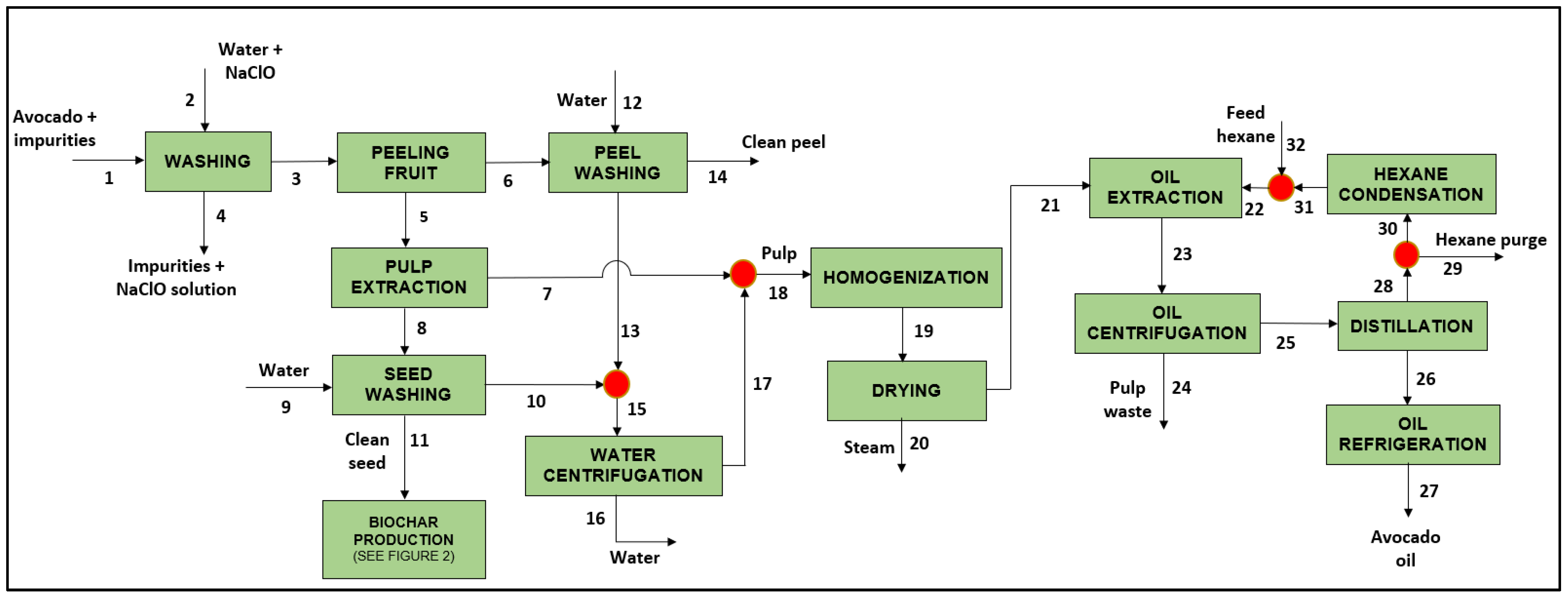
Figure 1 illustrates the integrated configuration proposed for the simultaneous production of avocado oil and biochar from Antillean native avocados. In this process, hexane is employed as the solvent in the oil extraction section, whereas the seed fraction is directed to pyrolysis for biochar generation. Initially, the fruit enters a washing operation where a sodium hypochlorite (NaClO) solution (stream 2) is used to remove impurities and contaminants from the surface. The cleaned material is subsequently transferred to peeling and pulping stages, allowing the separation of the peel (stream 6) and seed (stream 8). Afterwards, both fractions are subjected to supplementary washing operations intended to recover residual pulp remaining after mechanical separation, generating streams 10 and 13. These streams are later processed through centrifugation to reduce their moisture content.

2.2. Simulation of the Oil Production Stage from Creole-Antillean Avocado Pulp

The pulp recovered from the initial separation step (stream 7), together with the material obtained after centrifugation (stream 17), is blended to produce a homogeneous mixture that subsequently undergoes a drying operation to lower its moisture level. This dehydration stage is performed at 70 °C and 1 bar. After drying, stream 21 is brought into contact with hexane to extract the avocado oil. The resulting stream is then processed in an additional centrifugation step to separate suspended solids, generating residual pulp (stream 24) and an oil–hexane mixture (stream 25). The liquid fraction is subsequently transferred to a flash distillation unit, where the oil stream (stream 27) is separated from the solvent. Afterwards, the recovered hexane is condensed and recycled back into the extraction section. Under these operating conditions, the process achieves a production of 1000.01 t/year of avocado oil, while approximately 97% of the hexane recovered in stream 28 is recirculated within the process configuration.
Table 2 and Table 3 present the mass balance corresponding to the oil production process from Creole-Antillean avocado pulp, including the operating pressure and temperature conditions associated with each process stream together with their respective mass flow rates. The compositional changes identified throughout the process are associated with the operating conditions and the separation stages involved during oil recovery. In the washing and pulping operations, the streams exhibit elevated water content because of the sodium hypochlorite solution and the washing procedures employed. Later, during the drying stage, moisture is substantially reduced, promoting the concentration of lipid compounds before solvent extraction [12]. During extraction and centrifugation, the oil-rich fraction becomes concentrated in the hexane phase, whereas the remaining solid streams are mainly composed of carbohydrates, residual moisture, and non-extracted organic matter. Finally, the flash distillation operation allows the separation and recovery of hexane from the oil phase, producing a final stream characterized by a high fatty acid content and low residual solvent concentration.
Table 4 presents the natural gas and electrical energy requirements of the equipment involved in the oil production process from Antillean avocados, expressed in MJ/h. These energy requirements were established based on industrial operating considerations associated with the selected equipment and the processing capacity defined in the simulation. In the fruit washing and peeling stage, only electrical energy is reported because washing was modeled using a pumping system for the sodium hypochlorite solution, while peeling was represented through an industrial peeling unit, both operating electrically. Similarly, the pulp extraction and seed washing stage considers the use of an industrial pulping unit and a pumping-based washing system, which also require electrical energy. In the peel washing and water centrifugation stage, electricity is consumed by both the pumping system and the centrifugal separation equipment. In contrast, the homogenization and drying stage requires both energy sources because thermal energy supplied by natural gas is employed to decrease the moisture content of the pulp during the drying stage, while electrical energy is consumed by the homogenization and auxiliary equipment associated with mixing and material handling operations. For the oil extraction and centrifugation stage, electrical energy is used in both operations, since oil extraction was modeled using an agitated extraction tank operating under process conditions that do not require additional external heating, while the centrifugation stage employs an electrically driven disc centrifuge. Likewise, the distillation and oil refrigeration stages involve the use of both energy sources, since natural gas is required to provide thermal energy for the distillation operation, whereas electrical energy is associated with the refrigeration system used to reduce the oil temperature through a heat exchanger. Finally, the hexane condensation stage only requires electrical energy because the cooling system associated with the heat exchanger operates using electrically powered refrigeration equipment.

2.3. Modeling of the Biochar Production Section from Creole-Antillean Avocado Seed

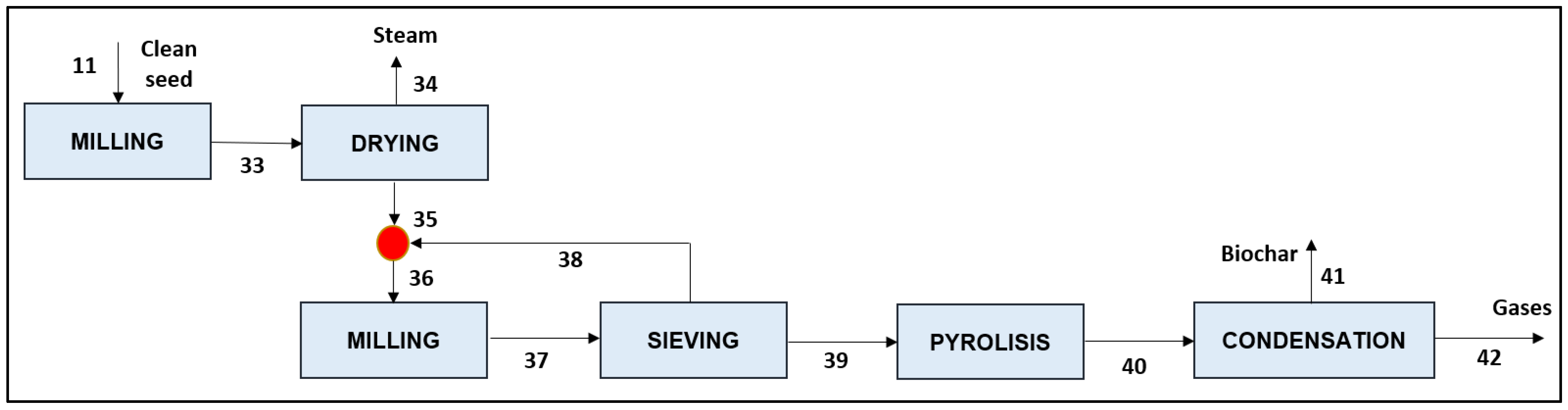
For the production of the biochar illustrated in Figure 2, stream 11 is generated after the washing and residual pulp removal stages, corresponding to the cleaned avocado seed. This stream is subsequently fed into a grinding unit to decrease particle size and enhance moisture removal efficiency during the subsequent drying stage. Once dehydrated, the seed (stream 35) is fed back into a mill to further reduce the material’s size. Subsequently, stream 37 passes through a screen to classify the particle size. In this stage, particle sizes of 2.3 and 0.85 mm were considered according to the conditions reported in the literature for avocado seed preparation prior to pyrolysis [10]. Material that does not meet the required dimensions is recirculated to the mill as stream 38, while the fraction that does meet the appropriate size is directed to the pyrolysis process. At this stage, biochar (stream 41) and gases are generated, which are subsequently condensed for treatment. The pyrolysis reactor operated at 400 °C, the temperature at which the highest conversion of biomass to biochar is achieved, and was fed with 100 cm3/min of nitrogen to ensure an inert atmosphere inside and thus obtain the desired sample quantity [13].
Figure 2. Process diagram for obtaining biochar from the seed of native avocados grown in Montes de María, Colombia. Adapted from ref. [11].
Processes 14 01586 g002
Table 5 summarizes the model developed for the biochar production process from Creole-Antillean avocado seeds, including the process mass balance together with the operating temperature and pressure conditions of the streams and their corresponding mass flow rates. The compositional changes observed during the biochar production process are strongly influenced by the drying and pyrolysis operating conditions. Initially, the seed stream presents a high organic content associated with lignocellulosic material and residual moisture. During the drying stage, water content is reduced to improve thermal conversion efficiency in the subsequent pyrolysis process. Under the inert atmosphere and elevated temperature conditions of pyrolysis, the organic matrix undergoes thermal decomposition, leading to the formation of a carbon-rich solid phase corresponding to biochar, while volatile compounds are released as gaseous products. As a result, the biochar stream exhibits a high carbon content and ash fraction, whereas the gas stream contains lighter compounds generated during biomass decomposition. In addition to the production of biochar, the gaseous streams generated during pyrolysis present potential for energetic valorization within the integrated process. These volatile compounds, mainly composed of light hydrocarbons and permanent gases, could be used as supplementary fuel sources in thermal operations such as drying or heating stages, thereby reducing the external natural gas demand of the system. Although this type of energy integration was not considered within the scope of the present simulation, its incorporation could enhance the overall energy performance of the process and promote a more sustainable use of biomass-derived streams.
Table 6 presents the energy requirements of the equipment employed for biochar production from Antillean avocados, expressed in MJ/h. These energy requirements were estimated considering industrial operating conditions and the processing capacity established in the simulation. In the seed milling and drying stage, both natural gas and electrical energy are required because the drying operation uses thermal energy to reduce the moisture content of the seed, while electrical energy is associated with the milling equipment and auxiliary systems involved in particle size reduction and material handling. Similarly, the seed milling and sieving stage consumes electrical energy due to the operation of grinding and screening equipment. In contrast, the pyrolysis stage requires thermal energy supplied by natural gas to maintain the reactor at the operating temperature of 400 °C, whereas the condensation stage involves electrical energy associated with the cooling system used for volatile stream treatment.

2.4. Computer-Aided Process Simulation

Process simulation was performed in Aspen Plus® software (Version 12) to represent the behavior of the proposed system. Initially, an appropriate thermodynamic approach was selected to describe the interactions between the different species involved in the process. The NRTL-RK package was adopted, using the NRTL model to represent liquid-phase behavior and the Redlich–Kwong equation of state for the vapor phase. This thermodynamic configuration was selected considering the presence of polar non-electrolyte compounds within the system. Once the simulation environment was defined, the processing stages associated with the pulp, peel, and seed streams were incorporated together with their respective operating conditions, including temperature (T), pressure (P), and the corresponding material and energy balances.
The simulation stage started with the definition of the system processing capacity. For this analysis, an annual production of 35,000 tons of Creole-Antillean avocado from the Montes de María region was taken as the reference basis [14]. Subsequently, the avocado fractions corresponding to pulp, peel, and seed were incorporated into Aspen Plus® as heterogeneous solid streams using components available in the simulator database, according to the composition described in Table 7. The seed stream was represented through compounds including leucine, glucose, calcium oxide, oleic acid, tannins, flavonoids, and phenolic compounds. For the peel fraction, the selected representation considered leucine, glucose, calcium oxide, and oleic acid, whereas the pulp stream was mainly defined by higher proportions of palmitic acid, oleic acid, and glucose [7].

2.5. Extended Water–Energy–Product (E-WEP) Technical Evaluation of the Process

The initial phase of the E-WEP assessment applied in this study focuses on the rigorous simulation and technical characterization of the integrated process for obtaining value-added products from Creole-Antillean avocado residues. This stage was developed using Aspen Plus® software, allowing the process behavior to be represented through the integration of preliminary material balances, physicochemical information of the involved species, and process resource requirements related to water and energy consumption [15]. Consequently, the simulation provides detailed technical information regarding raw material usage, utility requirements, operating variables such as temperature and pressure, and the generation of both products and byproducts throughout the system. The information obtained during this stage constitutes the foundation for the subsequent technical evaluation of the process. In addition, the methodology incorporates economic parameters associated with industrial utility consumption in order to support the assessment of process feasibility from a techno-economic perspective. In this regard, potable water and energy consumption costs were considered, adopting values of 1.2 USD/m3 for water, 0.41 USD/kWh for electricity, and 10 USD/MMBTU for natural gas [16]. Furthermore, the higher heating value (HHV) of both the feedstock and the generated products was determined because these parameters are essential for evaluating the energy performance of the process. Specifically, avocado presented an HHV of 14.32 MJ/kg, while values of 39.50 MJ/kg and 26.27 MJ/kg were considered for avocado oil and biochar, respectively [17]. These parameters enable the quantification of energy conversion efficiency within the integrated production system. By integrating indicators associated with water consumption, energy demand, and product generation, the E-WEP methodology enables a more comprehensive understanding of the process performance beyond conventional mass and energy balances. This approach facilitates the identification of operational bottlenecks, inefficiencies in resource utilization, and potential opportunities for process optimization, thereby supporting technical decision-making from a sustainability-oriented perspective.
During the second phase of the methodology, the information previously obtained from the simulation regarding water consumption, energy demand, and product generation is used to determine nine key process parameters. For the feedstock, the analysis considers the inlet mass flow as the main reference variable, whereas for the products, both the useful product streams and the residual non-converted fractions are evaluated in order to identify potential inefficiencies associated with biomass utilization. Regarding water management, the methodology assesses freshwater intake together with wastewater generation, allowing the sustainability of water use within the process to be analyzed. Likewise, the energy assessment incorporates total energy demand, natural gas consumption, and electricity requirements to characterize the overall energy behavior of the integrated system.
Based on these parameters, the third phase of the methodology establishes eleven technical indicators aimed at evaluating process performance from different perspectives. As presented in Table 8, the indicators include metrics associated with product generation efficiency, water resource management, and energy performance. Specifically, the evaluation considers production efficiency and unconverted material generation, freshwater consumption and wastewater production, as well as total energy demand, energy intensity, energy balance, energy efficiency, and utility consumption rates related to steam and electricity usage. Additionally, the unconverted material indicator was determined considering avocado oil as the reference product because residual traces of this compound remain in some waste streams generated during the separation and recovery stages of the process.
The indicators evaluated previously are compared in order to obtain an initial assessment of the degree to which the process meets the established objectives. Based on the values reported in Table 9, this analysis enables the preliminary identification of both the strengths of the system and the potential deviations associated with its performance. To ensure a consistent evaluation, the technical indicators undergo a standardization process based on reference parameters defined from extreme scenarios (most favorable and least favorable), which facilitates their direct comparison regardless of their original units or scales. This approach allows the process behavior to be situated within a clearly defined performance range, providing a solid basis for interpreting results, identifying opportunities for improvement, and guiding decisions in subsequent optimization stages.
No comparison with the literature on NER and EUI indicators is provided because these are used to analyze the energy performance of products relative to the energy input into the process, and to assess the potential of products to be used as fuel sources or feedstocks for fuel production, respectively.

3. Results and Discussion

3.1. Modeling and Computer-Aided Process Simulation

3.1.1. Results for Simulation of Oil Production Stage

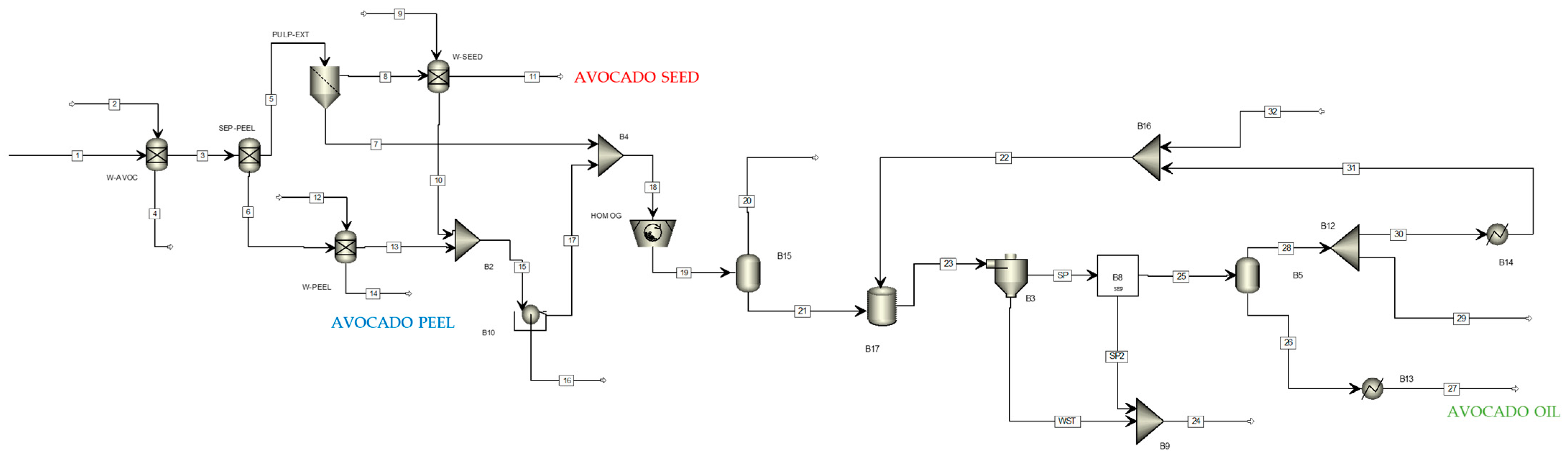
Figure 3 illustrates the simulated configuration proposed for avocado oil production from Creole-Antillean avocado pulp. The system is fed with 10,605 t/year of ripe avocado through stream 1. Initially, the raw material enters the washing unit (W-AVOC), where a sodium hypochlorite solution is employed to remove impurities from the fruit surface, considering a water consumption of 200 L per 97 kg of processed avocado [18]. The cleaned fruit is then transferred to the peeling stage (SEP-PEEL), followed by the pulping operation (PULP-EXT), where separation between pulp (stream 7) and seed (stream 8) takes place. Afterwards, the peel and seed fractions are subjected to washing operations intended to recover residual pulp remaining after the mechanical separation stages. These operations generate streams 10 and 13, associated with recovered pulp and process water, respectively. Subsequently, both streams are processed in centrifugation unit B10 to decrease their water content.
The stream generated after centrifugation (stream 17) is mixed with the pulp previously obtained from stream 7 and then directed to the homogenization stage (HOMOG). The homogenized pulp (stream 19) undergoes drying at 70 °C to reduce moisture prior to extraction [4]. Afterwards, the dehydrated material is contacted with hexane in extraction unit EXTR, operating at 70 °C [4]. This operation generates a mixture composed mainly of oil, solvent, and residual solids (stream 23). The resulting stream is subsequently treated in centrifuge B7 to separate the solid fraction from the oil–hexane phase (stream 25). The recovered liquid mixture is then processed in a flash distillation unit (FLASH), where hexane is separated from the oil fraction. Finally, the oil stream is cooled to 18 °C to minimize oxidative degradation associated with elevated temperatures [14]. Under these operating conditions, the process produces 1000.01 t/year of avocado oil in stream 27, while approximately 97% of the hexane recovered in stream 28 is recycled back into the extraction stage.
Table 10 presents the comparison between the technical indicators obtained in the present study and values previously reported in the literature for similar agro-industrial and biomass valorization systems. The approximation values reported in Table 10 were estimated through a proportional relationship between the values obtained in the simulation and the corresponding reference values reported in the literature. This approach was used to evaluate the relative similarity of the simulated process performance to previously reported operating conditions. The approximation percentage was calculated according to Equation (12), in which the literature value was taken as the reference parameter and divided by the value obtained in the present study, multiplied by 100.
  A p p r o x i m a t i o n % = L i t e r a t u r e   v a l u e × 100 V a l u e   o b t a i n e d   i n   t h i s   s t u d y
The hexane-based extraction process simulated in this study resulted in an avocado oil recovery of 65.19%. This value is close to the 64.76% reported by Reddy et al. (2012) [19] for an oil extraction process performed using solvent extraction techniques applied to avocado pulp. The referenced study operated at 69.1 °C under atmospheric pressure conditions. Based on the proportional comparison established in Equation (12), the obtained recovery value corresponds to an approximation of 99.34% relative to the literature-reported result.
In addition, the physical properties predicted through Aspen Plus® were compared with values available in previous studies in order to evaluate the consistency of the simulation results. As indicated in Table 10, the density estimated in the present study was slightly below the value reported by Macías and Rodríguez (2021) [20], who determined avocado oil density from a thermally assisted extraction process at 25 °C. The comparison between both values produced an approximation of 98.29%, indicating a strong agreement between the simulated and literature-reported properties. These results support the suitability of the selected thermodynamic configuration and the assumptions adopted during process simulation.

3.1.2. Simulation of the Biochar Production Stage from Creole-Antillean Avocado Seed

The production of biochar required the incorporation of avocado seed treatment into the integrated oil extraction process in order to enable the valorization of this residual biomass stream. This configuration was proposed to combine both oil and biochar generation within the same processing scheme. The conditioning stage begins with stream 11, corresponding to the cleaned seed fraction, which is initially subjected to size reduction prior to drying to improve moisture removal efficiency. During the drying operation, an air stream at 110 °C is introduced to facilitate water removal from the biomass [22].
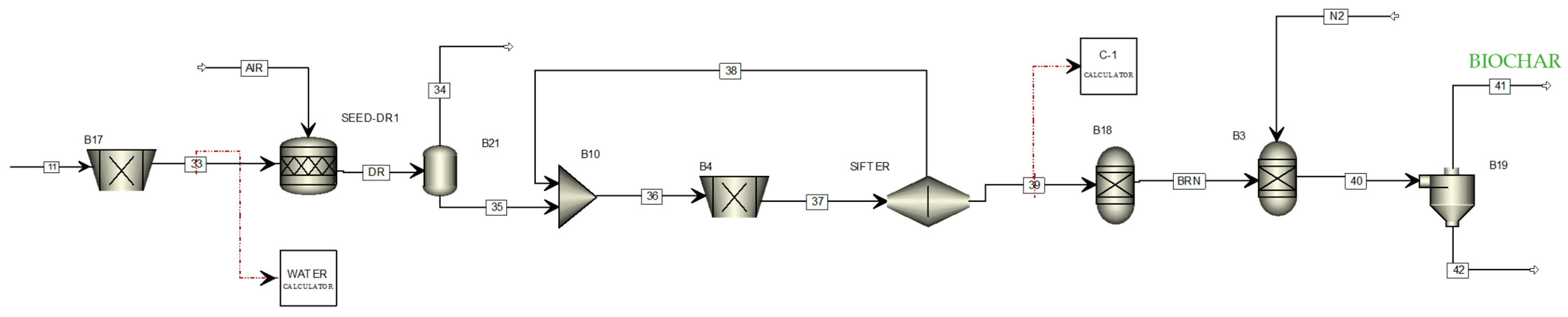
After dehydration, the resulting seed stream (stream 35) undergoes an additional milling step to further decrease particle size. The processed material is subsequently directed to a screening stage, where particles with unsuitable dimensions are returned to the mill through stream 38, while the fraction meeting the selected particle size requirements is transferred to the pyrolysis unit. This stage produces the biochar fraction of interest in the study (stream 42), together with volatile gaseous products generated during thermal decomposition (stream 41). The pyrolysis reactor was simulated at 400 °C, corresponding to the operating condition at which the highest biomass-to-biochar conversion has been reported without catalyst addition. In addition, a nitrogen flow of 100 cm3/min was supplied to maintain inert operating conditions within the reactor and ensure the desired biochar production [13]. Figure 4 presents the simulation scheme developed for the biochar production process using Aspen Plus®.
During the simulation procedure, the airflow and nitrogen requirements associated with seed drying and pyrolysis operations were incorporated into the model. The operating conditions were defined according to the data reported by Xue et al. (2018) [22], who established an airflow rate of 50 mL/min for every 0.04 kg of avocado seed processed. The drying section was represented using an R-Stoic reactor followed by a solid separation stage, allowing the seed moisture content to be reduced to 10 wt% [23]. Subsequently, the pyrolysis operation was simulated using two R-YIELD reactors, where the first reactor represented the decomposition of the seed into its constituent compounds. Under the simulated operating conditions, the system considered an annual feed capacity of 10,605 t/year of ripe avocado, producing 1000.01 t/year of avocado oil together with 504.78 t/year of biochar.
Based on these results, the simulated biochar yield reached 26.12%. This value is close to the 26.75% yield reported by Durak and Aysu (2015) [12] during the production of bio-oil and biochar from avocado seeds. The proximity between both values suggests a strong consistency between the simulated results obtained in this work and the experimental information previously reported for avocado seed pyrolysis processes.

3.2. E-WEP Technical Evaluation of the Process

3.2.1. E-WEP Technical Evaluation Parameters

The E-WEP technical assessment was applied to evaluate the management of process resources together with the operational efficiency of the integrated oil and biochar production system based on Creole-Antillean avocados cultivated in northern Colombia. This analysis enabled a structured examination of raw material utilization and overall process behavior, facilitating the interpretation of technical performance and sustainability-related aspects. In this context, Table 11 summarizes the information required to calculate the nine parameters associated with water use, energy demand, and product generation within the integrated process.
According to Table 11, the predominant feedstock in the process is avocados, taking into account its seed, pulp, and husk fractions as a whole; however, the husk is classified as waste within the system. To achieve a total production of 155.79 kg/h, corresponding to the combined production of oil and biochar, a feed rate of 1091.50 kg/h is required, from which 103.49 kg/h of avocado oil and 52.30 kg/h of biochar are obtained under the proposed operating conditions. These values were determined based on the overall conversion of the feedstock into the desired products within the integrated process, which highlights the magnitude of the raw material needed and allows for inferences regarding the overall efficiency of the process. Regarding the third parameter, the amount of oil produced based on the oil content in the avocados, only this product is considered because there are traces of oil in the process’s waste streams, which prevents full production; the opposite is true for biochar, since the byproducts in this process are volatile gases that, if recirculated, would not generate any further desired product. Regarding the management of industrial resources, particularly water, the system operates with a supply of 3.40 m3/h, of which 3.37 m3/h is converted into wastewater, suggesting a high level of effluent generation and highlighting the need for optimization and recirculation strategies. Finally, in terms of energy consumption, the process relies on both electricity and natural gas, reaching a total requirement of 3613.19 MJ/h a figure that includes the energy demands associated with the cooling and heating stages and is key to evaluating the system’s energy efficiency and operating costs.

3.2.2. E-WEP Technical Evaluation Indicators

Table 12 presents a summary of the E-WEP technical indicators calculated for the dual production process of oil and biochar from the Creole-Antillean avocado. This summary presents the eleven indicators analyzed in the evaluation, providing a clear and structured view of the system’s performance in terms of resource use, operational efficiency, and product utilization, which facilitates overall interpretation and the identification of potential opportunities for improvement within the process.
The overall production yield obtained in this process is 14.20%, a figure that is directly influenced by the large amount of raw material required to achieve the established oil and biochar production rates. This behavior is characteristic of production schemes where the entire biomass is used, meaning that only a fraction of the input material is converted into products of interest, while the rest is distributed into secondary streams or process residues. In contrast, studies reported in the literature show higher yields when the production systems are optimized for a single target product. For example, Malagón-Romero et al. (2026) reported avocado oil yields of up to 69% in processes specifically focused on oil extraction [9]. Similarly, Flores-Izquierdo et al. (2025) reported biochar yields between 33% and 48% under pyrolysis conditions optimized for solid product generation [24]. These differences are mainly associated with the fact that such processes focus on specific fractions of the avocado and on operating conditions optimized to maximize a single product, unlike the integrated multiproduct approach proposed in the present study.
Additionally, the failure to utilize avocado peel as a raw material for obtaining a value-added product contributes to increased waste generation and, consequently, to a decrease in the system’s overall yield. Unlike the processes reported in the literature, where strategies for intensification and selective utilization of biomass are applied, the present scheme prioritizes a multiproduct configuration without full integration of all waste streams. In this regard, incorporating the peel into valorization pathways could significantly improve the overall efficiency of the process, bringing the yield closer to the higher values reported in studies of optimized biorefineries. Additionally, the current configuration does not incorporate the avocado peel into a specific valorization pathway, despite its potential use in thermochemical conversion, recovery of bioactive compounds, or organic waste treatment processes [25]. Similarly, the residual pulp generated after oil extraction still contains traces of oil and organic matter that could potentially be recirculated, reprocessed, or integrated into complementary valorization stages. The incorporation of these residual streams into future process configurations could contribute to improving overall system integration, reducing waste generation, and increasing the global yield of the proposed biorefinery scheme.
On the other hand, although the overall production of the process is relatively low, the efficiency in extracting the oil contained in the avocado used as feedstock reaches 83.95%, which represents favorable performance from a technical standpoint. However, the remaining 16.05% corresponds to oil that remains in the pulp residues generated as waste from the process, indicating significant product losses. This residual fraction represents a clear opportunity for improvement, as its utilization through recovery or reprocessing strategies would allow for an increase in total oil production and, consequently, optimize the overall yield and efficiency of the system.
Regarding indicators related to water consumption within the process, for the production of 1000.01 t/year of crude avocado oil and 504.78 t/year of biochar, the process requires a fractional consumption of 17.84 m3/t of demineralized water for the washing stages described above. Although this FWC value is high, it is lower than that reported for an avocado biorefinery producing oil, chlorophyll, and biopesticide, which consumes 23 m3/t for the production in question [16]; on the other hand, there are reported processes that achieve proper distribution of water entering horticultural and energy production processes from avocados, with water consumption of 9 m3/t [26], which encourage further study of dual production to optimize water consumption. Based on this, it is recognized that the total cost of water used in the oil and biochar production process is 80.03 USD/day, a very reasonable figure that facilitates production without generating excessive additional costs. Although the FWC and TCF values fall within acceptable ranges for similar processes reported in the literature, this process generates an excessively high volume of wastewater, 99.25%, since all the water entering the washing stages exits as wastewater due to the lack of mass and energy integration that would allow for the reuse of these effluents.
Regarding energy indicators, once the natural gas and electricity consumption required at each stage of the process have been determined, as shown in Table 4 and Table 6, it is established that the greatest energy demand corresponds to the use of natural gas (3348.90 MJ/h). This predominance not only defines the system’s energy structure but also enhances its economic performance, as it entails a daily cost of 1484.24 USD/day, considerably lower than the scenario in which electricity was used exclusively, whose cost would amount to 9876.06 USD/day. In this regard, the NGCI and EECI indicators confirm the distribution of the process’s energy consumption, representing 92.69% and 7.31%, respectively, which demonstrates a high dependence on natural gas as the primary energy source. Overall, while the process is economically attractive due to the type of energy used, the specific energy intensity (ESI) reaches a value of 23,192.65 MJ/t, indicating high energy demand. However, this value falls within ranges comparable to other similar processes reported in the literature [27,28], suggesting that, although intensive, energy consumption is not atypical within this type of system. This highlights the importance of implementing energy optimization strategies that reduce intensity without compromising productivity.
Finally, the dimensionless indicators NER and EUI allow for interpreting the energy characteristics of the process and the potential of the products obtained. An NER of 0.53 indicates that the energy content of the generated products—namely, the oil and biochar—is lower than the energy required to operate the process, highlighting limitations in terms of energy self-sufficiency [29]. On the other hand, an EUI of 2.84 suggests that both products have significant potential as fuel sources or as feedstocks for fuel production, opening the possibility of integrating them into energy recovery or biorefinery schemes, thereby improving the sustainability of the system as a whole [30].

3.2.3. Performance of the E-WEP Technical Assessment Indicator

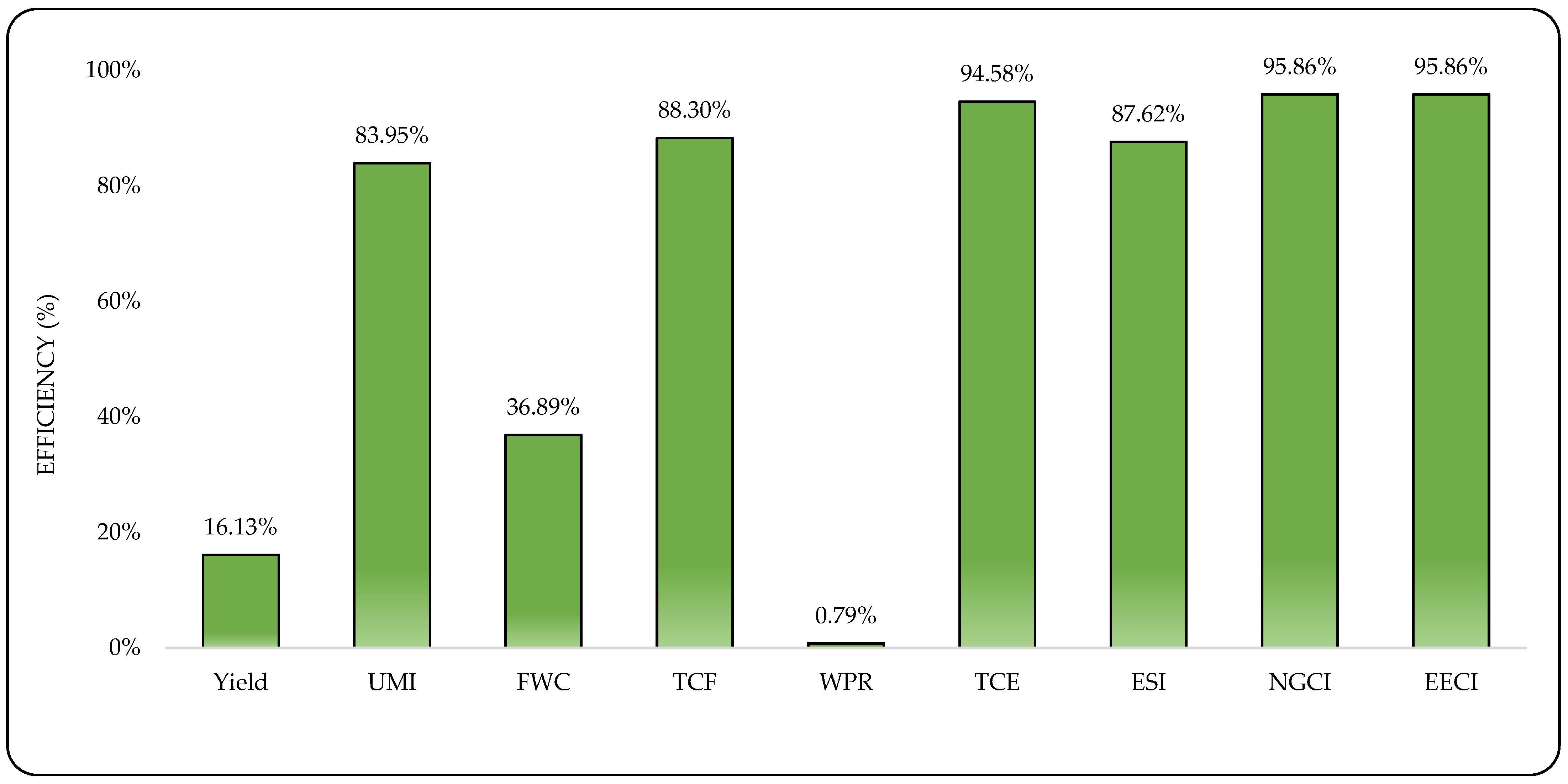
Figure 5 illustrates the efficiency associated with the nine indicators evaluated for the integrated oil and biochar production process from Creole-Antillean avocado biomass, excluding the NER and EUI indicators. These two indicators were not included because their calculation procedures and interpretation criteria do not produce values that can be normalized on a percentage basis, making direct comparison with the remaining evaluated metrics unsuitable. Consequently, their inclusion would not provide relevant information for the quantitative interpretation of the process’s performance. For their part, the remaining indicators allow for a comprehensive evaluation of the system’s efficiency from the energy, mass, and production perspectives, providing a more complete view of the process’s behavior. This analysis facilitates the identification of trends, as well as potential inefficiencies in resource use, which is key to understanding the system’s overall performance.
Based on how the indicators perform compared to the best- and worst-case scenarios reported in the literature, it is evident that the energy indicators show high levels of efficiency, which is directly related to the nature of the process and its heavy reliance on natural gas. This characteristic allows for a significant reduction in operating costs compared to a system based primarily on electricity, making the process more competitive from an economic standpoint. However, this strong energy performance contrasts with the results obtained for indicators related to water use, which reveal significant limitations in terms of sustainability. In particular, indicators related to fresh water consumption and wastewater generation reveal a critical issue within the oil and biochar production process. An FWC value of 36.89% indicates high water consumption to achieve desired production levels, reflecting low water efficiency. In turn, the fact that only 0.79% of the water entering the system is reused highlights the absence of recirculation or stream integration strategies, which increases effluent generation and limits the use of this resource. In this regard, it is essential to propose alternatives that allow for the reuse of these water streams, whether to meet energy demands or to improve the overall efficiency of the process and reduce the environmental impact associated with wastewater discharge. Previous studies have demonstrated that strategies such as water recirculation, process water integration, and reuse of treated effluents in washing operations can significantly reduce freshwater consumption and wastewater generation in agro-industrial systems [31,32].
On the other hand, production yield, which reaches only 16.13%, is significantly affected by the lack of comprehensive utilization of the raw material, particularly because the avocado peel is not incorporated into the production of value-added products. This result is also influenced by the type of feedstock used, since processing the whole avocado rather than first separating the pulp and pit prevents the maximization of each fruit component. However, when specifically analyzing the extraction efficiency of the oil contained in the avocado, a value of 83.96% is obtained, indicating that, despite the low overall oil content in the raw material, the process is highly efficient in recovering this compound. This suggests that the system performs well at the unit-level, but requires improvements in the integration and utilization of all avocado components to increase its overall yield.

4. Conclusions

This study focuses on the comprehensive utilization of the Antillean native avocado produced in the Montes de María region, a raw material with high agro-industrial potential that has traditionally been underutilized under linear production systems. In this context, a process aimed at the dual production of oil and biochar was proposed and evaluated using computer simulation, incorporating a technical approach through E-WEP analysis. This integration allowed not only for quantifying the system’s performance in terms of energy quality but also for analyzing the use of key resources such as water, energy, and raw materials in a structured manner, laying a solid foundation for the sustainability assessment of the process.
The results show that the system has an overall production yield of 14.20%, which reflects the complex nature of comprehensive biomass utilization, where only a fraction of the feedstock is transformed into high-value-added products. However, this result contrasts with a high oil extraction efficiency (83.95%), demonstrating that, at the unit operation level, the process is technically efficient, although it requires improvements in the overall integration of the system. Additionally, the high rate of unconverted material suggests clear opportunities for the valorization of waste streams, especially the husk, whose incorporation could significantly increase the overall performance of the process.
In terms of resource use, the technical evaluation reveals a marked discrepancy between the system’s energy and water performance. On the one hand, energy indicators show favorable performance, supported by a high reliance on natural gas (92.69% of energy consumption), which reduces operating costs and positions the process as economically competitive. However, this advantage is accompanied by high energy intensity (23,192.65 MJ/t), indicating that, although competitive, the process remains energy-intensive. On the other hand, the system presents significant limitations in water use, with a consumption of 17.84 m3/t and wastewater generation of 99.25%, which highlights the absence of recirculation strategies and constitutes one of the main bottlenecks in terms of sustainability.

Author Contributions

Conceptualization, T.C.H.-R., V.P.-P., Á.D.G.-D. and S.R.-F.; methodology, T.C.H.-R., V.P.-P. and J.D.D.H.-M.; software, T.C.H.-R., V.P.-P. and J.D.D.H.-M.; validation, T.C.H.-R., V.P.-P. and J.D.D.H.-M.; formal analysis, T.C.H.-R., V.P.-P. and J.D.D.H.-M.; investigation, T.C.H.-R., V.P.-P. and J.D.D.H.-M.; resources, Á.D.G.-D. and S.R.-F.; data curation, T.C.H.-R., V.P.-P. and J.D.D.H.-M.; writing—original draft preparation, T.C.H.-R., V.P.-P. and J.D.D.H.-M.; writing—review and editing, T.C.H.-R., V.P.-P., J.D.D.H.-M. and Á.D.G.-D.; visualization, Á.D.G.-D. and S.R.-F.; supervision, Á.D.G.-D.; project administration, Á.D.G.-D.; funding acquisition, Á.D.G.-D. and S.R.-F. All authors have read and agreed to the published version of the manuscript.

Funding

This research was funded by the University of Cartagena through the project “Desarrollo de una topología de biorefinería para el aprovechamiento sostenible del aguacate (Laurus persea L.) producido en la región de los Montes de María”, developed by the Research Group in Nanomaterials and Computer-Aided Process Engineering (NIPAC), approved by Resolution 02007 of 2018 and commitment act No. 090 of 2018.

Data Availability Statement

The data that support the findings of this study are available from the corresponding author, Á.D.G.-D., upon reasonable request.

Acknowledgments

The authors thank Universidad Cartagena for funding this research presented in the ninth call for visible research groups (categorized or recognized) on the Scienti platform of the Ministry of Science, Technology, and Innovation. Ángel Darío González-Delgado thanks Luis Angel González-Fontalvo for providing curiosity, motivation and inspiration for continuing research during these 11 months.

Conflicts of Interest

The authors declare no conflicts of interest.

References

  1. Solarte-Toro, J.C.; Ortiz-Sanchez, M.; Cardona Alzate, C.A. Environmental life cycle assessment (E-LCA) and social impact assessment (SIA) of small-scale biorefineries implemented in rural zones: The avocado (Persea americana var. americana) case in Colombia. Environ. Sci. Pollut. Res. 2023, 30, 8790–8808. [Google Scholar] [CrossRef]
  2. Nascimento, A.P.S.; Duarte, M.E.M.; Rocha, A.P.T.; Barros, A.N. Bioactive compounds, technological advances, and sustainable applications of avocado (Persea americana Mill.): A critical review. Foods 2025, 14, 2746. [Google Scholar] [CrossRef] [PubMed]
  3. Towler, G.; Sinnott, R. Chemical Engineering Design: Principles, Practice and Economics of Plant and Process Design, 2nd ed.; Elsevier: Oxford, UK, 2013. [Google Scholar]
  4. Ariza Ortega, J.A.; López Valdez, F.; Coyotl Huerta, J.; Ramos Cassellis, M.E.; Díaz Reyes, J.; Martínez Zavala, A. Efecto de diferentes métodos de extracción sobre el perfil de ácidos grasos en el aceite de aguacate (Persea americana Mill. var. Hass). Rev. Venez. Cienc. Tecnol. Aliment. 2011, 2, 263–276. [Google Scholar]
  5. Hasan, M.M.; Rasul, M.G.; Jahirul, M.I.; Mofijur, M. Fuelling the future: Unleashing energy and exergy efficiency from municipal green waste pyrolysis. Fuel 2024, 357, 129815. [Google Scholar] [CrossRef]
  6. Zarei, S.; Bozorg-Haddad, O.; Singh, V.P.; Loáiciga, H.A. Developing water, energy, and food sustainability performance indicators for agricultural systems. Sci. Rep. 2021, 11, 22831. [Google Scholar] [CrossRef]
  7. Herrera-Rodriguez, T.; Parejo-Palacio, V.; González-Delgado, A. Computer-aided simulation of avocado oil production in North Colombia. Chem. Eng. Trans. 2022, 92, 415–420. [Google Scholar] [CrossRef]
  8. Malagón-Romero, D.H.; León-Caballero, N.D.; Velasco-Peña, M.A.; Arrubla-Vélez, J.P.; Quintero-Naucil, M.; Aristizábal-Marulanda, V. Pyrolysis of Hass avocado (Persea americana) seeds: Kinetic and economic analysis of bio-oil, gas, and biochar production. BioEnergy Res. 2025, 18, 33. [Google Scholar] [CrossRef]
  9. Malagón-Romero, D.H.; Velasco-Peña, M.A.; Arrubla-Vélez, J.P.; Clavijo-Barreto, L.F.; Barrera-Mendoza, I.N.; Jiménez-Montero, E.D. Valorization of Colombian native avocado (Persea americana cv. papelillo): Biochar, bio-oil, biogas, and edible oil production. Clean. Waste Syst. 2026, 13, 100458. [Google Scholar] [CrossRef]
  10. Mallarino-Miranda, L.P.; Tejeda-Benítez, L.M.; Jiménez-Escalante, M.; González-Delgado, Á.; Tejeda-Benítez, L.P. Aprovechamiento Sostenible del Aguacate (Laurus persea) para la Obtención de Productos de Valor Agregado en los Montes de María en el Departamento de Bolívar-Colombia. RIADS Rev. Investig. Agropecu. Desarro. Sustent. 2021, 5, 32–38. [Google Scholar]
  11. Herrera-Rodríguez, T.; Parejo-Palacio, V.; González-Delgado, Á. Technoeconomic analysis of dual oil and biochar production from Creole avocado in North-Colombia. Chem. Eng. Trans. 2022, 92, 403–408. [Google Scholar] [CrossRef]
  12. Durak, H.; Aysu, T. Effect of pyrolysis temperature and catalyst on production of bio-oil and bio-char from avocado seeds. Res. Chem. Intermed. 2015, 41, 8067–8097. [Google Scholar] [CrossRef]
  13. Dos Santos, M.A.Z.; Alicieo, T.V.R.; Pereira, C.M.P.; Ramis-Ramos, G.; Mendonça, C.R.B. Profile of bioactive compounds in avocado pulp oil: Influence of the drying processes and extraction methods. J. Am. Oil Chem. Soc. 2014, 91, 19–27. [Google Scholar] [CrossRef]
  14. Medina, A.T.R. Caracterización Fisicoquímica de Diferentes Variedades de Aguacate (Persea americana Mill.) e Implementación de un Método de Extracción del Aceite de Aguacate como Alternativa de Industrialización. Master’s Thesis, Universidad Nacional de Colombia, Bogotá, Colombia, 2017. [Google Scholar]
  15. Baleta, J.; Mikulčić, H.; Klemeš, J.J.; Urbaniec, K.; Duić, N. Integration of energy, water and environmental systems for a sustainable development. J. Clean. Prod. 2019, 215, 1424–1436. [Google Scholar] [CrossRef]
  16. Ubando, A.T.; Felix, C.B.; Chen, W.H. Biorefineries in circular bioeconomy: A comprehensive review. Bioresour. Technol. 2020, 299, 122585. [Google Scholar] [CrossRef]
  17. Tauro, R.; Velázquez-Martí, B.; Manrique, S.; Ricker, M.; Martínez-Bravo, R.; Ruiz-García, V.M.; Ramos-Vargas, S.; Masera, O.; Soria-González, J.A.; Armendáriz-Arnez, C. Potential use of pruning residues from avocado trees as energy input in rural communities. Energies 2022, 15, 1715. [Google Scholar] [CrossRef]
  18. Moreno, M.C.A. Evaluación y Escalamiento del Proceso de Extracción de Aceite de Aguacate Utilizando Tratamiento Enzimático. Master’s Thesis, Universidad Nacional de Colombia, Bogotá, Colombia, 2011. [Google Scholar]
  19. Reddy, M.; Moodley, R.; Jonnalagadda, S.B. Fatty acid profile and elemental content of avocado (Persea americana Mill.) oil: Effect of extraction methods. J. Environ. Sci. Health B 2012, 47, 529–537. [Google Scholar] [CrossRef] [PubMed]
  20. Macías Fuyo, D.A.; Rodríguez Parra, D.F. Sustitución de Grasa por Aceite de Aguacate en la Elaboración de Salchicha tipo Frankfurt. Bachelor’s Thesis, Universidad de La Salle, Bogotá, Colombia, 2021. [Google Scholar]
  21. Fassinou, W.F. Higher heating value (HHV) of vegetable oils, fats and biodiesels evaluation based on their pure fatty acids’ HHV. Energy 2012, 45, 798–805. [Google Scholar] [CrossRef]
  22. Xue, J.; Chellappa, T.; Ceylan, S.; Goldfarb, J.L. Enhancing biomass + coal co-firing scenarios via biomass torrefaction and carbonization: Case study of avocado pit biomass and Illinois No. 6 coal. Renew. Energy 2018, 122, 152–162. [Google Scholar] [CrossRef]
  23. Ebrahimi, A.; Houshfar, E. Thermodynamic analysis and optimization of the integrated system of pyrolysis and anaerobic digestion. Process Saf. Environ. Prot. 2022, 164, 582–594. [Google Scholar] [CrossRef]
  24. Flores-Izquierdo, M.A.; Carrera, C.J.O.; Gaviria-Restrepo, J.; Flores-Espinoza, B.C. Thermochemical conversion of avocado agro-industrial waste: Influence of operating conditions on biochar yield and properties. Bioresour. Technol. Rep. 2025, 32, 102418. [Google Scholar] [CrossRef]
  25. Avalos-Viveros, M.; Santolalla-Vargas, C.-E.; Santes-Hernández, V.-F.; Martínez-Flores, H.-E.; Torres-García, E.; López-Meza, J.-E.; Virgen-Ortiz, J.-J.; Pérez-Calix, E.; García-Pérez, M.-E. Valorization of avocado peels by conventional extraction and hydrothermal carbonization for cosmeceutical applications. Sustain. Chem. Pharm. 2023, 36, 101335. [Google Scholar] [CrossRef]
  26. Langat, K.; Njogu, P.; Kamau, J. Biogas energy potential from co-digestion of avocado pulp with cow manure in Kaitui location, Kericho County, Kenya. Int. Res. J. Innov. Eng. Technol. 2018, 2, 28–34. [Google Scholar]
  27. Wright, M.M.; Brown, R.C.; Boateng, A.A. Distributed processing of biomass to bio-oil for subsequent production of Fischer–Tropsch liquids. Biofuels Bioprod. Biorefin. 2008, 2, 229–238. [Google Scholar] [CrossRef]
  28. Vlysidis, A.; Binns, M.; Webb, C.; Theodoropoulos, C. A techno-economic analysis of biodiesel biorefineries: Assessment of integrated designs for the co-production of fuels and chemicals. Energy 2011, 36, 4671–4683. [Google Scholar] [CrossRef]
  29. Markussen, M.V.; Pugesgaard, S.; Oleskowicz-Popiel, P.; Schmidt, J.E.; Østergård, H. Net-energy analysis of integrated food and bioenergy systems exemplified by a model of a self-sufficient system of dairy farms. Front. Energy Res. 2015, 3, 49. [Google Scholar] [CrossRef]
  30. Saidur, R.; BoroumandJazi, G.; Mekhilef, S.; Mohammed, H.A. A review on exergy analysis of biomass based fuels. Renew. Sustain. Energy Rev. 2012, 16, 1217–1222. [Google Scholar] [CrossRef]
  31. Klemeš, J.J.; Varbanov, P.S.; Walmsley, T.G.; Jia, X. New directions in the implementation of Pinch Methodology (PM). Renew. Sustain. Energy Rev. 2018, 98, 439–468. [Google Scholar] [CrossRef]
  32. Casani, S.; Rouhany, M.; Knøchel, S. A discussion paper on challenges and limitations to water reuse and hygiene in the food industry. Water Res. 2005, 39, 1134–1146. [Google Scholar] [CrossRef] [PubMed]
Figure 1. Process diagram for obtaining avocado oil and biochar from native avocados grown in Montes de María, Colombia. Adapted from ref. [11].
Processes 14 01586 g001
Figure 3. Simulation of the avocado oil production process from Creole-Antillean avocado pulp implemented in Aspen Plus®.
Processes 14 01586 g003
Figure 4. Simulation of the biochar production process from Creole-Antillean avocado seed implemented in Aspen Plus®.
Processes 14 01586 g004
Figure 5. Performance of nine of the indicators evaluated for the dual production of oil and biochar from Creole-Antillean avocado.
Processes 14 01586 g005
Table 1. Comparison of previous studies related to avocado valorization.
ProcessModelingSimulationE-WEP MethodologyReference
Computer-aided Simulation of Avocado Oil Production in North ColombiaYesYesNo[7]
Pyrolysis of Hass Avocado (Persea americana) Seeds: Kinetic and Economic Analysis of Bio-Oil, Gas, and Biochar ProductionYesYesNo[8]
Integrated Valorization of Native Avocado (Persea americana) for Oil and Biochar ProductionYesYesNo[9]
Process Simulation and Technical Evaluation via Extended Water–Energy–Product of Dual Production of Oil and Biochar from Native Avocado in Northern ColombiaYesYesYesThis work
Table 2. Material balance of the oil extraction process from Creole-Antillean avocado pulp.
Operating Conditions1249111214
Temperature (°C)30.0030.0030.0030.0030.0030.0030.00
Pressure (bar)1.001.001.001.001.001.001.00
Mass flow (kg/h)1097.502240.952099.96103.49210.46434.65126.81
Composition in mass fraction
Hexane0.00000.00000.00000.00000.00000.00000.0000
Sodium hypochlorite0.00000.00020.00020.00000.00000.00000.0000
Water0.56560.99980.99461.00000.03871.00000.2422
Leucine0.01260.00000.00000.00000.00000.00000.0478
Glucose0.11050.00000.00000.00000.00000.00000.6710
Calcium oxide0.01590.00000.00520.00000.00000.00000.0120
Lauric acid0.00000.00000.00000.00000.00000.00000.0000
Myristic acid0.00020.00000.00000.00000.00000.00000.0000
Palmitoleic acid0.04140.00000.00000.00000.00000.00000.0000
Heptadecanoic acid0.00000.00000.00000.00000.00000.00000.0000
Stearic acid0.00130.00000.00000.00000.00000.00000.0000
Oleic acid0.04250.00000.00000.00000.00000.00000.0270
Linoleic acid0.02170.00000.00000.00000.00000.00000.0000
Linolenic acid0.00320.00000.00000.00000.00000.00000.0000
Arachidic acid0.00060.00000.00000.00000.00000.00000.0000
Seed0.18430.00000.00000.00000.96130.00000.0000
Table 3. Material balance of the oil extraction process from Creole-Antillean avocado pulp (Continuation).
Operating Conditions162024272932
Temperature (°C)30.0070.0052.2018.0070.0030.00
Pressure (bar)1.000.311.001.001.051.00
Mass flow (kg/h)603.65670.3382.57103.4911.3232.00
Composition in mass fraction
Hexane0.00000.00000.23660.01101.00001.0000
Water0.99201.00000.03260.00000.00000.0000
Leucine0.00030.00000.09160.00000.00000.0000
Glucose0.00150.00000.42690.00000.00000.0000
Calcium oxide0.00020.00000.06040.00000.00000.0000
Lauric acid0.00000.00000.00000.00020.00000.0000
Myristic acid0.00000.00000.00040.00190.00000.0000
Palmitic acid0.00000.00000.00000.00020.00000.0000
Palmitoleic acid0.00220.00000.05780.38010.00000.0000
Heptadecanoic acid0.00000.00000.00010.00040.00000.0000
Stearic acid0.00010.00000.00200.01180.00000.0000
Oleic acid0.00220.00000.05230.36230.00000.0000
Linoleic acid0.00120.00000.03280.19730.00000.0000
Linolenic acid0.00020.00000.00530.02910.00000.0000
Arachidic acid0.00000.00000.00120.00560.00000.0000
Table 4. Energy demand by processing stage during oil extraction from Creole-Antillean avocado pulp.
StageNatural Gas
Heat Duty (MJ/h)
Electric Energy
Heat Duty (MJ/h)
Fruit washing and peeling-9.11
Pulp extraction and seed washing-3.64
Peel washing and water centrifugation-10.44
Homogenization and drying1685.0415.05
Oil extraction and centrifugation-66.20
Distillation and oil refrigeration163.694.65
Hexane condensation-114.25
Table 5. Material balance of the oil extraction process from Creole-Antillean avocado seed.
Operating Conditions11344142
Temperature (°C)30.00110.00400.00400.00
Pressure (bar)1.001.001.001.00
Mass flow (kg/h)210.46730.29867.8752.30
Composition in mass fraction
Water0.03870.01410.00000.0198
Seed0.96130.00000.00000.0000
Nitrogen0.00000.77890.00010.8313
Hydrogen0.00000.00000.00000.0075
Carbon0.00000.00000.84940.0000
Oxygen0.00000.20700.00000.0744
Carbon monoxide0.00000.00000.00000.0214
Carbon dioxide0.00000.00000.00000.0061
Methane0.00000.00000.00000.0020
Methyl oleate0.00000.00000.00000.0206
Methyl palmitate0.00000.00000.00000.0169
Seed ash0.00000.00000.15040.0000
Table 6. Energy demand associated with each stage of the biochar production process from Creole-Antillean avocado seed.
StageNatural Gas
Heat Duty (MJ/h)
Electric Energy
Heat Duty (MJ/h)
Seed milling and drying60.7015.16
Seed milling and sieving-20.40
Pyrolisis1439.48-
Condensation5.40-
Table 7. Representation of avocado-derived streams within the Aspen Plus® simulation environment.
MaterialType of ComponentComponent Available in the Aspen Plus® Database?
SeedSolid mixtureYes
PeelSolid mixtureYes
PulpSolid mixtureYes
Table 8. Description of the technical indicators of the process.
IndicatorEquationDescriptionNo.
Production Yield (%) γ i = P r o d u c t   f l o w R a w   m a t e r i a l   f l o w × 100 % Product generation relative to feed input(1)
Unconverted Material
Ratio (%)
U M I = E x t r a c t e d   p r o d u c t   f l o w P r o d u c t   c o n t a i n e d   i n   r a w   m a t e r i a l   f l o w × 100 % Amount of product extracted from the feed stream(2)
Fractional Water
Consumption (m3/t)
F W C = V o l u m e t r i c   f l o w   o f   f r e s h w a t e r P r o d u c t   m a s s   f l o w Water required for product generation(3)
Total Cost of Freshwater (USD/day) T C F = F r e s h w a t e r   f l o w   c o n s u m e d × C o s t   o f   f r e s h w a t e r Total freshwater consumption cost per unit time(4)
Wastewater Production Ratio (%) W P R = W a s t e w a t e r   v o l u m e t r i c   f l o w V o l u m e t r i c   f l o w   o f   f r e s h w a t e r × 100 % Difference between freshwater consumption and wastewater generation(5)
Total Cost of Energy (USD/day) T C E = T o t a l   e n e r g y   c o n s u m e d × E n e r g y   c o s t Total cost of energy consumed per unit
of time
(6)
Energy Specific Intensity (MJ/t) R E S I = T o t a l   e n e r g y   c o n s u m e d P r o d u c t   m a s s   f l o w Energy consumed per ton of product(7)
Natural Gas
Consumption Index (m3/t)
N G C I = T o t a l   n a t u r a l   g a s   c o n s u m e d P r o d u c t   m a s s   f l o w Quantity of gas consumed per ton of product(8)
Electric Energy
Consumption Index (kWh/t)
E E C I = T o t a l   e l e c t r i c i t y   c o n s u m e d P r o d u c t   m a s s   f l o w Kilowatt-hours consumed per ton of product(9)
Net Energy Ratio
(Dimensionless)
N E R = ( P r o d u c t   c a l o r i f i c   p o w e r × p r o d u c t   m a s s   f l o w ) T o t a l   e n e r g y   c o n s u m e d + ( f e e d s t o c k   c a l o r i f i c   p o w e r × m a i n   f e e d s t o c k   m a s s   f l o w ) Relationship between the energy contained in the products and the energy introduced into the process(10)
Energy Usability Index
(Dimensionless)
E U I = ( p r o d u c t   c a l o r i f i c   p o w e r × p r o d u c t   m a s s   f l o w ) T o t a l   e n e r g y   c o n s u m e d Represents the relationship between the potential energy recoverable from the product and the energy consumed during its production process(11)
Table 9. Benchmark values for technical indicators.
IndicatorBest-Case ScenarioWorst-Case Scenario
Production Yield88%0%
UMI0%100%
FWC9 m3/t23 m3/t
TCF1 $/m35 $/m3
WPR5% of used water100% of used water
TCE10 $/MMBTU (98% of energy derives from natural gas)0.5 $/kWh (100% of the energy derived from an electrical source)
ESI22,420 MJ/t28,655 MJ/t
NGCI97% of the energy entering the process0%
EECI3% of the required energy100%
Table 10. Comparison between simulated avocado oil properties and literature-reported values.
Parameter[19]This WorkApproximation (%)
Yield (%)64.76%65.19%99.34%
Parameter[20]This workApproximation (%)
Density (g/cm3)0.8960.88198.29%
Parameter[21]This workApproximation (%)
HHV (kJ/g)40.2739.5098.09%
Table 11. E-WEP technical parameters for the dual production of oil and biochar from Creole-Antillean avocados.
ParameterUnitDescriptionValue
Raw material mass flowkg/hAvocados’ total flow entering the process1097.50
Products mass flowkg/hProducts’ total flow leaving the process155.79
Avocado oil mass flowkg/hAvocado oil total flow produced from the raw material oil content102.36
Total freshwater volumetric flowm3/hFreshwater volume used in the process3.40
Total wastewater volumetric flowm3/hWastewater volume generated in the process3.37
Total energy consumedMJ/hOverall energy demand throughout the process3613.19
Total electricity consumedMJ/hOverall electricity consumption during the process264.30
Total natural gas consumedMJ/hOverall natural gas consumption throughout the process3348.90
Table 12. Results of the technical evaluation of the dual production of oil and biochar from Creole-Antillean avocados.
IndicatorUnitValue
Production Yield%14.20
UMI%83.95
FWCm3/t17.84
TCFUSD/day80.03
WPR%99.25
TCEUSD/day1484.24
ESIMJ/t23,192.65
NGCIm3/t92.69
EECIkWh/t7.31
NERDimensionless0.53
EUIDimensionless2.84
Disclaimer/Publisher’s Note: The statements, opinions and data contained in all publications are solely those of the individual author(s) and contributor(s) and not of MDPI and/or the editor(s). MDPI and/or the editor(s) disclaim responsibility for any injury to people or property resulting from any ideas, methods, instructions or products referred to in the content.