Article

Numerical Simulation Study on the Natural Temperature Recovery Characteristics of Reservoirs After Shutdown in a Dual-Well Enhanced Geothermal System

1
Research Institute of Petroleum Engineering, Sinopec Northwest Oilfield Company, Urumqi 830011, China
2
State Key Laboratory of Enhanced Recovery for Fracture-Cave Oil Reservoir, Sinopec Northwest Oilfield Company, Urumqi 830011, China
3
National Engineering Research Center for Oil & Gas Drilling and Completion Technology, School of Petroleum Engineering, Yangtze University, Wuhan 430100, China
4
State Key Laboratory of Oil and Gas Drilling and Production Engineering, Yangtze University, Wuhan 430100, China
5
State Key Laboratory of Thermo-Fluid Science and Engineering of MOE, School of Energy and Power Engineering, Xi’an Jiaotong University, Xi’an 710049, China
*
Author to whom correspondence should be addressed.
Processes 2026, 14(1), 75; https://doi.org/10.3390/pr14010075 (registering DOI)
Submission received: 5 November 2025 / Revised: 16 December 2025 / Accepted: 22 December 2025 / Published: 25 December 2025
(This article belongs to the Section Energy Systems)

Abstract

In the context of energy structure transition, Enhanced Geothermal Systems (EGSs) represent a core technology for developing hot dry rock (HDR) resources. However, the ultra-long-term natural recovery patterns of reservoir temperature after heat extraction cessation remain unclear, hindering sustainable lifecycle assessment of the system. This study establishes a dual-well EGS numerical model based on the finite element method to simulate the impact mechanisms of flow rate, injection temperature, initial reservoir temperature, and well spacing on natural reservoir temperature compensation during a 1000-year shut-in period following 40 years of heat extraction. Results indicate that reservoir temperature fails to recover to its initial state after shut-in, with final recovery rates ranging from 60.63% to 89.51% of the initial temperature. Each parameter exerts nonlinear control over recovery: lower flow rates yield higher final recovery temperatures (87.62% at 20 kg/s versus 60.63% at 100 kg/s); increased injection temperature from 10 °C to 70 °C reduces the absolute recovery magnitude from 10.65 °C to 7.05 °C but raises the final recovery rate from 78.16% to 86.07%; higher initial reservoir temperatures from 100 °C to 260 °C significantly enhance absolute recovery temperatures from 79.48 °C to 199.58 °C; reduced well spacing from 500 m to 100 m improves final recovery rates from 72.77% to 89.51%. After shut-in in dual-well EGS, the vertical fracture configuration recovered to 78.16% of the initial temperature, the horizontal fracture to 74.39%, and the no-fracture configuration only to 67.87%. Due to optimal heat flow and thermal compensation efficiency, vertical fractures exhibit the best recovery performance, while the no-fracture configuration shows the worst. This study reveals the dynamic mechanism of heat recovery dominated by heat conduction in surrounding rocks, establishes a long-term temperature recovery evaluation framework for EGS, and provides novel scientific evidence and perspectives for the sustainable development and research of geothermal systems.

1. Introduction

Energy serves as a core strategic resource in a nation’s modernization process. Throughout the technological evolution since the Industrial Revolution, every scientific advancement has been intrinsically linked to development opportunities arising from energy transitions [1,2]. With the rapid progress of science and technology in modern times, population growth and economic expansion have surged, driving correspondingly massive human demand for energy. Current energy consumption remains predominantly reliant on traditional fossil fuels, resulting in substantial emissions of carbon dioxide and other greenhouse gases into the atmosphere. The increasingly evident problem of global warming caused by the greenhouse effect now poses a significant threat to human development [3,4]. Globally, accelerating the transformation of energy structures to identify renewable, pollution-free alternatives to fossil fuels is critically important for the current energy transition [5]. Reducing dependence on conventional fossil fuels through the development of clean renewable energy has become an international consensus [6,7]. Renewable energy broadly refers to energy forms that are naturally replenished and continuously regenerated without human intervention, including solar, wind, tidal, and geothermal energy. As a low-carbon, environmentally friendly non-fossil energy source, geothermal energy exhibits notable characteristics such as high resource abundance, wide spatial distribution, and strong environmental compatibility [8,9]. Compared to other renewables, it offers superior spatiotemporal stability in energy output, unaffected by geographical latitude or meteorological cycles, and provides consistent thermal flow [10,11]. Owing to these advantages, geothermal energy is recognized as one of the most promising and valuable new energy sources for development and application in the 21st century [12,13].
Geothermal resources are typically categorized as hot dry rock (HDR), hydrothermal, or shallow geothermal resources [14]. Development techniques include closed-loop and open-loop geothermal systems [15]. HDR resources refer to high-temperature rock formations buried deep underground with minimal water or steam content. Recent breakthroughs in drilling and hydraulic fracturing technologies within the oil and gas sector, coupled with maturing low-temperature geothermal power generation techniques, have significantly advanced the utilization of HDR resources. According to China’s geological survey assessments, the total geothermal resources from HDR within depths of 3 to 10 km exceed 800 trillion tons of coal equivalent [16,17]. Given the great depth and dense nature of HDR formations, EGS represent an effective method for harnessing this energy [18]. Currently, EGS remains in its early development phase and has not yet achieved commercial scale. Numerical simulation methods are widely applied in EGS research. Wang et al. [19] confirmed that inlet-outlet pressure differential, matrix thermal expansion coefficient, and initial fracture permeability dominate system behavior, using production temperature, heat extraction rate, and ORC net power as evaluation criteria; injection flow rate exerts significantly stronger control over ORC power generation than production pressure, while well spacing simultaneously determines the performance ceiling for both EGS and ORC by governing thermal sweep efficiency. Asai and Moore [20], through a proxy model, noted that although increased well spacing captures more reservoir heat, simplified assumptions may overestimate thermal decline buffering, indicating this factor requires reassessment coupled with reservoir heterogeneity. Aliyu and Chen [21], using finite element decomposition to separate anthropogenic and natural variables, emphasized the nonlinear contribution of parameter interactions to production temperature; they found that while porosity shows no direct correlation with productivity, targeting high-porosity zones can substantially reduce drilling and completion costs. Lv et al. [22], employing embedded discrete fracture networks with production temperature and heat extraction efficiency as objective functions, demonstrated that fracture quantity and connectivity are primary controlling factors for heat extraction performance in dual horizontal well EGS, providing quantifiable boundaries for wellfield layout optimization. Liu et al. [23] compared thermal-pressure-stress responses of three injection fluids under a fully coupled THM framework, revealing how fluid thermophysical property differences rank heat extraction efficiency and establishing fluid selection criteria.
In geothermal development, the dual objectives are maximizing heat extraction from the reservoir while ensuring the system achieves the longest possible operational lifespan [24]. Regardless of whether production is ongoing or has ceased, reservoirs experience “thermal rebound”—a process where surrounding rock and deep heat sources gradually reheat cooled zones. This rebound capacity directly determines whether reservoir temperatures can sustainably recover and represents a critical factor in evaluating long-term productivity and operational longevity of geothermal systems. Jiang et al. [24] developed a 3D transient thermo-hydrodynamic coupled model for EGS encompassing reservoir, caprock, and wellbore subdomains under a Local Thermal Non-Equilibrium (LTNE) assumption. Using the Finite Volume Method (FVM), they simultaneously solved mass and energy conservation equations. Numerical experiments revealed that: Heat conduction through caprock dominates thermal rebound, contributing approximately 6% over 30 years; A three-well configuration suppresses preferential flow paths, extending effective heat extraction lifespan by 34.5%; Compared to Local Thermal Equilibrium (LTE) frameworks, the LTNE model resolves transient rock-fluid heat exchange differences, providing quantifiable guidance for multi-well placement optimization. Ma et al. [25] established a thermo-hydrodynamic coupled numerical model for multi-well injection EGS in fractured HDR reservoirs. After conducting 30-year transient heat extraction simulations, they performed global sensitivity analysis on thermal rebound parameters using the Sobol method. Key findings include: Thermal rebound intensity monotonically increases with reservoir cooling severity; Injection pressure, temperature, and rate significantly control rebound utilization efficiency, with sensitivity indices reaching up to 0.42. Liu et al. [26] constructed a 3D thermo-hydrodynamic discrete fracture network model for CO2-EGS targeting the Xujiaweizi HDR reservoir in Songliao Basin, incorporating thermal rebound effects. Comparative analysis of temperature-pressure evolution showed: Basal heat flux (0.47 W/m2) is 1.96 times higher than caprock flux, establishing it as the primary heat recharge zone; Accounting for thermal rebound maintains production temperature at 390 K and heat extraction power at 5.90 MW over 30 years—representing 5.2% improvement over scenarios ignoring rebound (385 K, 5.61 MW); Enlarging fracture apertures and reducing dip angles enhance rock-fracture thermal-hydraulic coupling, significantly boosting rebound utilization efficiency and long-term performance.
Current research predominantly focuses on heat extraction phases or short-term recovery in EGS, critically neglecting ultra-long-term natural restoration dynamics (e.g., century-to-millennium scales) after shutdown. Furthermore, systematic investigation into the interactive effects of key parameters—such as flow rate, injection temperature, reservoir average temperature, and well spacing—during extended recovery remains absent. This creates major blind spots in assessing system sustainability across its full lifecycle. This study addresses these critical gaps by establishing a long-term thermal rebound evaluation framework through simulating a complete cycle: 40 years of production followed by 1000 years of shutdown. Our work provides essential scientific basis for developing sustainable production-restoration rotation strategies to prevent premature resource depletion—directly enhancing geothermal energy’s viability as a stable, scalable clean energy source. Crucially, we systematically uncover nonlinear parameter-coupling effects on temperature recovery rates and elucidate the dynamic evolution of caprock conduction’s dominant role. These findings establish the scientific foundation for optimizing system design and transitioning geothermal development from short-term high-efficiency extraction toward long-term cyclic utilization.

2. Mathematical Model

2.1. Model Assumptions

(1)
Heat transfer between water and the rock matrix primarily occurs through convection and conduction [27].
(2)
Fluid flow within the system conforms to Darcy’s law [28].
(3)
Rocks and fluids in local regions are in a state of thermal equilibrium [29], and this equilibrium relationship explains the heat transfer mechanism between them [30]. Meanwhile, assuming that low-temperature fluids do not dissipate rapidly and remain stationary during the shutdown phase of geothermal exploitation, the hypothesis of local thermal equilibrium remains valid.
(4)
It is assumed that no chemical reactions occur between the rock matrix and the circulating fluid, including dissolution, precipitation, redox reactions and other chemical processes. In addition, no additional heat is generated throughout the process, and the impact of thermal radiation is not considered for the time being [31].

2.2. Governing Equations

To describe the process of fluid mass transfer and flow in the reservoir, the mass conservation equation is used to characterize the spatiotemporal variation in fluid mass in the geothermal reservoir, while fluid flow in porous media adheres to Darcy’s law. It can be expressed as:
( ε p ρ f ) t + · ( ρ f u f ) = Q m
u f = k s μ f ( P · ρ f g )
In the formula, ε p represents the rock porosity, which is dimensionless; ρ f represents the fluid density, k g / m 3 ; Q m represents the mass source term, which can denote the mass increase or decrease caused by fluid injection, production, etc., in the geothermal reservoir, k g / ( m 3 · s ) ; μ f represents the dynamic viscosity of the fluid in the rock, P a · s ; k s represents the rock permeability, m 2 ; P represents the pressure of the pore fluid in the geothermal reservoir, P a ; g represents the gravitational acceleration, taken as g = 9.80   m / s 2 .
The heat transfer process of fluid in porous media is described by the energy conservation equation, which can be expressed as:
( ρ c p , f ) e f f T s t + ρ f c p , f u f · T s + · q = Q f , E
In the formula, ( ρ c p , f ) e f f represents the effective volumetric heat capacity (total heat capacity of the porous medium per unit volume), J / ( ° C · m 3 ) ; T s represents the temperature of the rock matrix, ° C ; c p , f represents the constant-pressure specific heat capacity of the circulating heat-extracting fluid, J / ( k g · ° C ) ; Q f , E is the energy source-sink term, representing the heat exchange between the rock matrix and the fluid, J .
In Equation (3), q represents the heat flux equation, which describes the thermal conduction behavior in geothermal reservoirs by establishing the proportional relationship between heat flux and temperature gradient. It is governed by Fourier’s law and can be expressed as:
q = λ e f f T r
In the formula, λ e f f is the effective thermal conductivity of the porous medium, W / ( m · ° C ) .
In Equation (3), ( ρ c p , f ) e f f is the effective volumetric heat capacity, which is mainly calculated by weighting the heat capacities of the pore fluid, rock matrix, and inclusion phases to obtain the comprehensive heat capacity of the porous medium, reflecting the heat storage capacity of the reservoir. It is expressed as:
( ρ c p , f ) e f f = ε p ρ f c p , f + θ s ρ s c p , s + θ i m f ρ i m f c p , i m f
In the formula, θ s is the volume fraction of the rock matrix, which is dimensionless; ρ s is the thermal conductivity of the rock matrix, W / ( m · ° C ) ; c p , s is the constant-pressure specific heat capacity of the rock, J / ( k g · ° C ) ; θ i m f is the volume fraction of the inclusion phase, which is dimensionless; ρ i m f is the thermal conductivity of the inclusion phase, W / ( m · ° C ) ; c p , i m f is the constant-pressure specific heat capacity of the inclusion phase, J / ( k g · ° C ) .

3. Model Development

3.1. Model Design and Initial Conditions

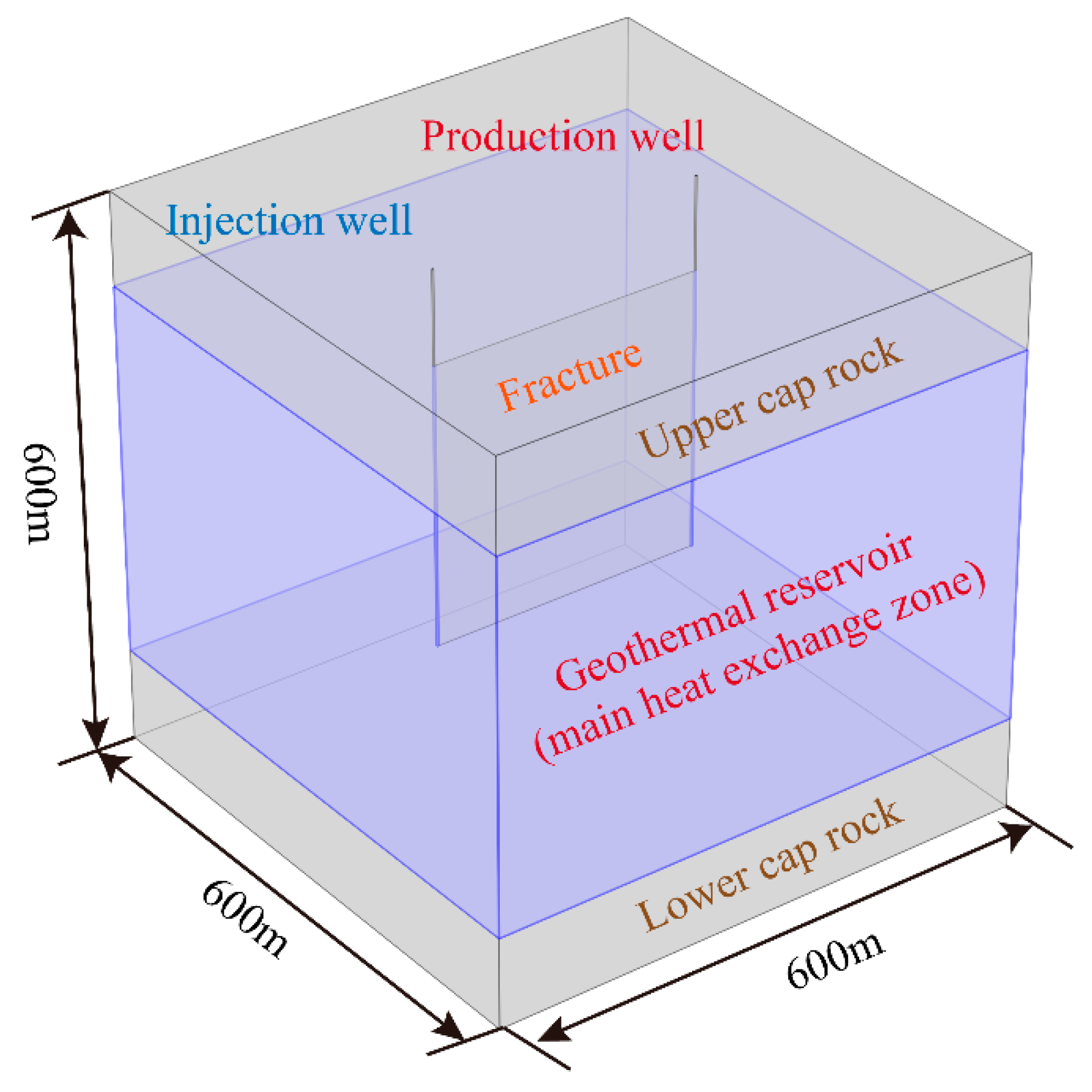
To investigate the impact of various parameters on the natural recovery of reservoir temperature following the cessation of heat extraction in EGS, this study establishes a 600 m × 600 m × 600 m model situated within geological formations at depths ranging from 3000 m to 3600 m. As shown in Figure 1, the model is essentially composed of an upper and a lower cap rock with a central geothermal reservoir. It includes one vertical injection well and one vertical production well, both with a depth of 400 m and a radius of 0.125 m. The initial well spacing is 300 m. A large fracture measuring 300 m by 300 m with an aperture of 0.001 m connects the injection and production wells. Additionally, the lateral boundaries of the model are impermeable, while the top and bottom boundaries are thermally insulated. The initial injection well pressure is 30 MPa [32], the initial production well pressure is 20 MPa [32], the initial reservoir pressure is 25 MPa [32], and the initial average reservoir temperature is 180 °C. Other relevant geological and fracture properties are provided in Table 1.
It should be noted that this model is an idealized theoretical model, which is established to reveal the core evolutionary characteristics of the natural temperature recovery of reservoirs from a mechanistic perspective. The boundary conditions, initial parameters and fracture morphology of the model are all set with reference to the general assumptions adopted in existing studies in this field, and do not fully correspond to the actual geological conditions of any specific field site. Therefore, this model has certain limitations. In subsequent research, the model can be modified by incorporating exploration data from specific EGS field sites to further improve its engineering applicability.
In this study, water is employed as the working fluid for heat extraction. To enhance the accuracy of the simulation results, the influence of subsurface conditions on the physical properties of water is fully accounted for, with the density and viscosity of water modeled using the following equations [33]:
ρ f = 1000 × ( 1 ( T c 3.98 ) 2 503570 ) × T c + 283 T c + 67.26 ) , 0 ° C T c 20 ° C 996.9 × 1 3.17 × 10 4 × ( T c 25 ) 2.56 × 10 6 × ( T c 25 ) 2 , 20 ° C < T c 250 ° C 1758.4 + 10 3 T 4.8434 × 10 3 + T ( 1.0907 × 10 5 T × 9.8467 × 10 9 ) , 250 ° C < T c 300 ° C
In the formula, ρ f is the fluid density, k g / m 3 ; T c represents the temperature of the heat transfer fluid, ° C ; T represents the thermodynamic temperature, K .
η f = 10 3 × 1 + 0.015512 × ( T c 20 ) 1.572 , 0 ° C T 100 ° C 0.2414 × 10 247.8 T c + 133.15 , 100 ° C < T 300 ° C
In the formula, η f is the viscosity of water, P a · s .
Table 1. Physical property parameters of the geological model in this study [30,34,35].
Case 1Density (kg/m3)Specific Heat Capacity (J/(kg·°C))Thermal Conductivity (W/(m·°C))PorosityPermeability (m2)
Upper cap rock (3000–3100 m)260010002.80.011.0 × 10−18
Geothermal reservoir (3100–3500 m)270010002.80.151.0 × 10−15
Upper cap rock (3500–3600 m)280010002.80.011.0 × 10−18
Fracture20008502.81.001.0 × 10−11

3.2. Model Validation

In geothermal numerical simulation studies, model validation is fundamental to ensuring the credibility of results. Given that the EGS configuration proposed in this study has not yet advanced to field testing or experimental implementation, direct validation against measured field data is not feasible. Consequently, a 2D single-fracture model was employed for verification—a methodology consistently utilized in numerous prior investigations [25,30,35,36,37]. This approach specifically involves deriving the theoretical solution for fluid temperature evolution within the fracture through analytical modeling, followed by direct comparison with numerical simulation outcomes to assess the accuracy of the numerical solution.
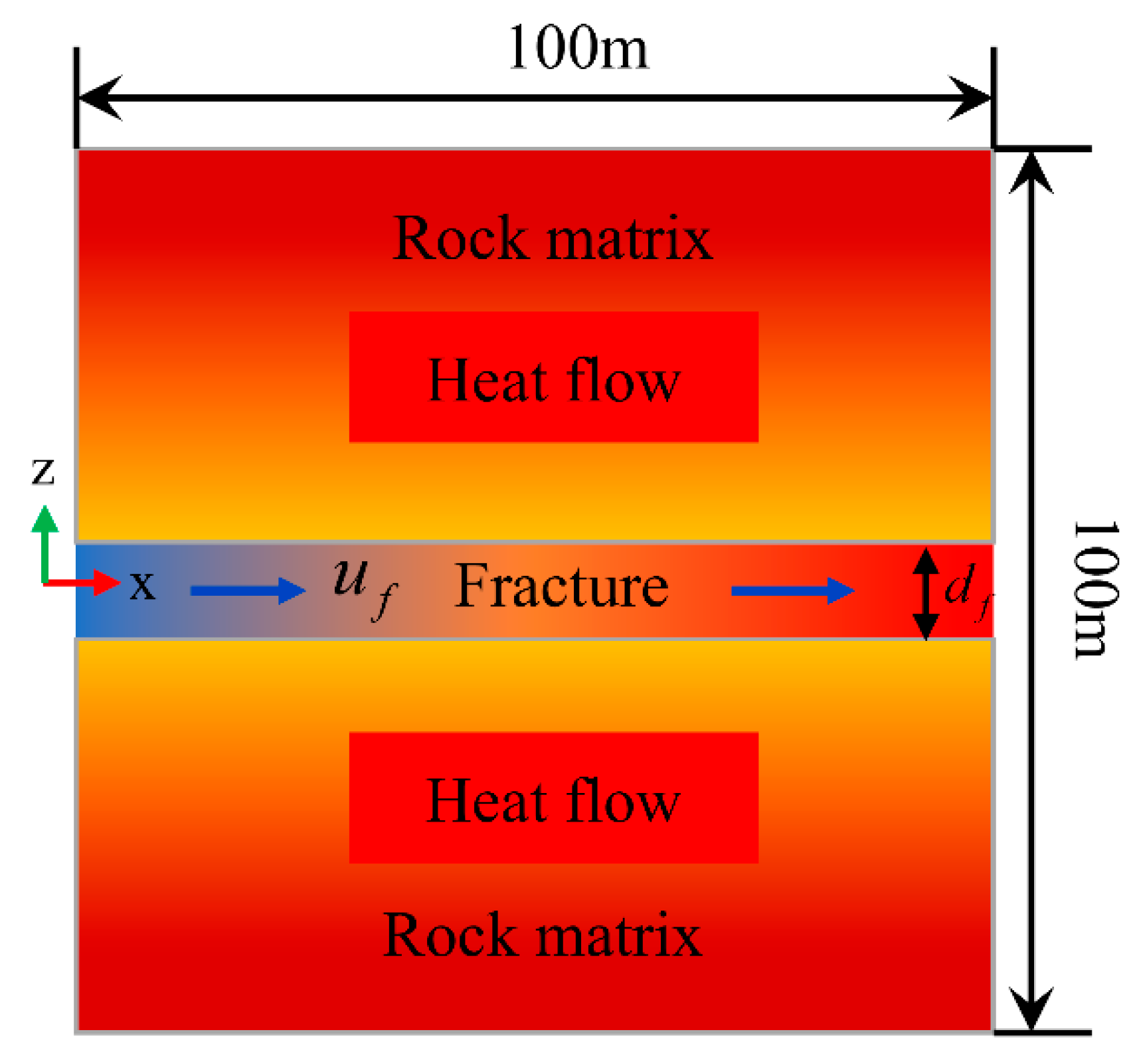
As illustrated in Figure 2, the 2D single-fracture model assumes infinite extent of the fracture and rock matrix in both the x- and z-directions. The initial and boundary conditions for this model are defined as follows: the rock matrix maintains a constant initial temperature; the water temperature at the fracture inlet is prescribed with a constant flow rate; and as fluid flows through the fracture, it exchanges heat with the surrounding rock matrix, resulting in a spatially varying fluid temperature distribution along the x-axis. The 2D single-fracture model focused on in this study features a small size. When conducting model validation with COMSOL 6.1, the “Extremely Fine” mesh mode (i.e., the most precise mesh generation scheme built into the software) was directly adopted from the mesh generation function of the software. A total of 26,164 meshes were generated for the model, which is sufficient to ensure the accuracy and stability of the calculation results. Within the analytical framework, the fluid temperature distribution along the x-axis at time t is expressed by the Lauwerier analytical solution [38]:
T ( x , t ) = T s + ( T i n T s ) e r f c λ s x / ( ρ f c f d f ) 2 u f ( u f t x ) λ s / ( ρ s c s ) U ( t x u f )
In the formula, T s is the initial temperature of the rock, ° C ; T i n is the injection temperature, ° C ; c s and c f are the specific heat capacities of the rock and water, respectively, J / ( k g · ° C ) ; λ s is the thermal conductivity of the rock mass, W / ( m · ° C ) ; ρ s and ρ f are the densities of the rock mass and water, respectively, k g / m 3 ; d f is the fracture width, m ; e r f c represents the complementary error function; U represents the unit step function.
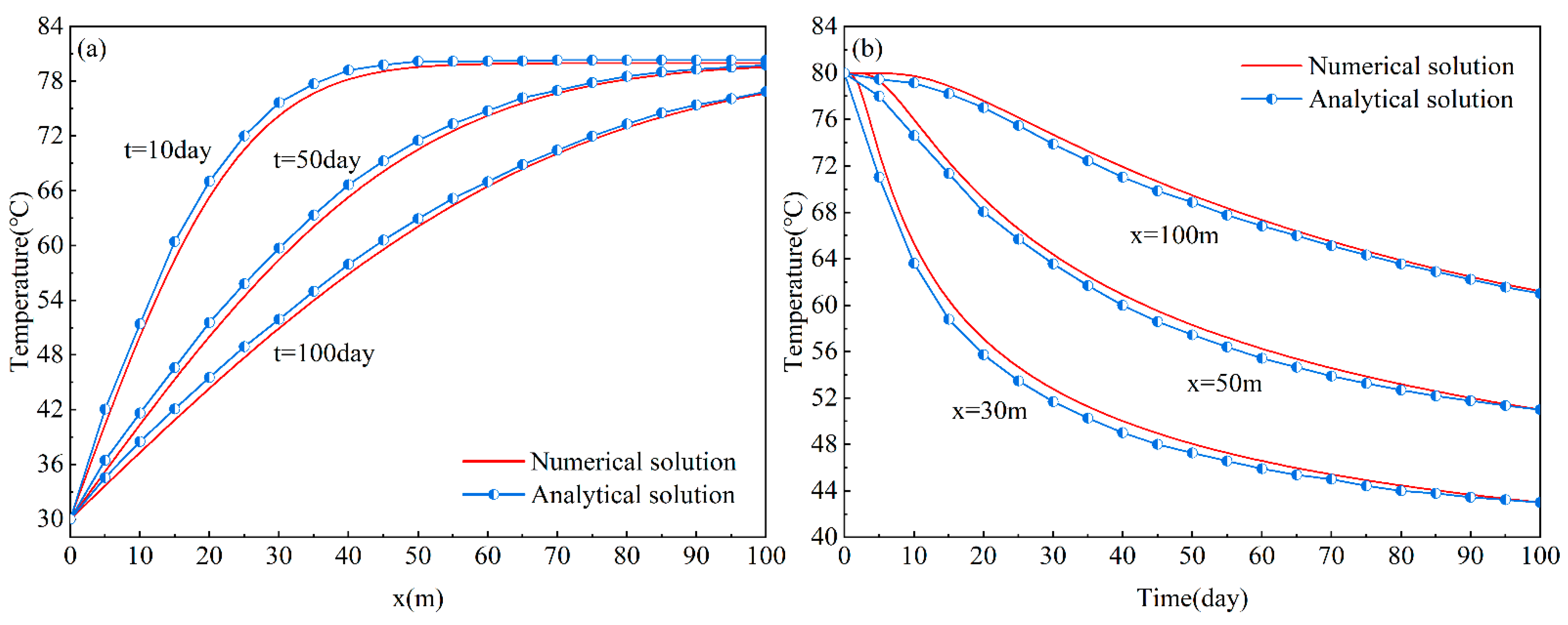
Table 2 presents the key parameter values employed in the model validation for this study. To verify the reliability of the numerical model, systematic validation was conducted at both spatial and temporal scales: Figure 3a compares the temperature distribution along the flow direction within the fracture at different time points, overlaying results from both analytical and numerical models. Figure 3b focuses on three critical locations (x = 30 m, x = 50 m, and x = 100 m), illustrating the temporal variations in temperature response. Analysis demonstrates excellent agreement between analytical and numerical solutions, with maximum relative error maintained below 1.32%. This outcome robustly validates the precision of the numerical model in parameter configuration and heat exchange process characterization, fully meeting the required computational accuracy standards for this research.

3.3. Grid Independence Analysis

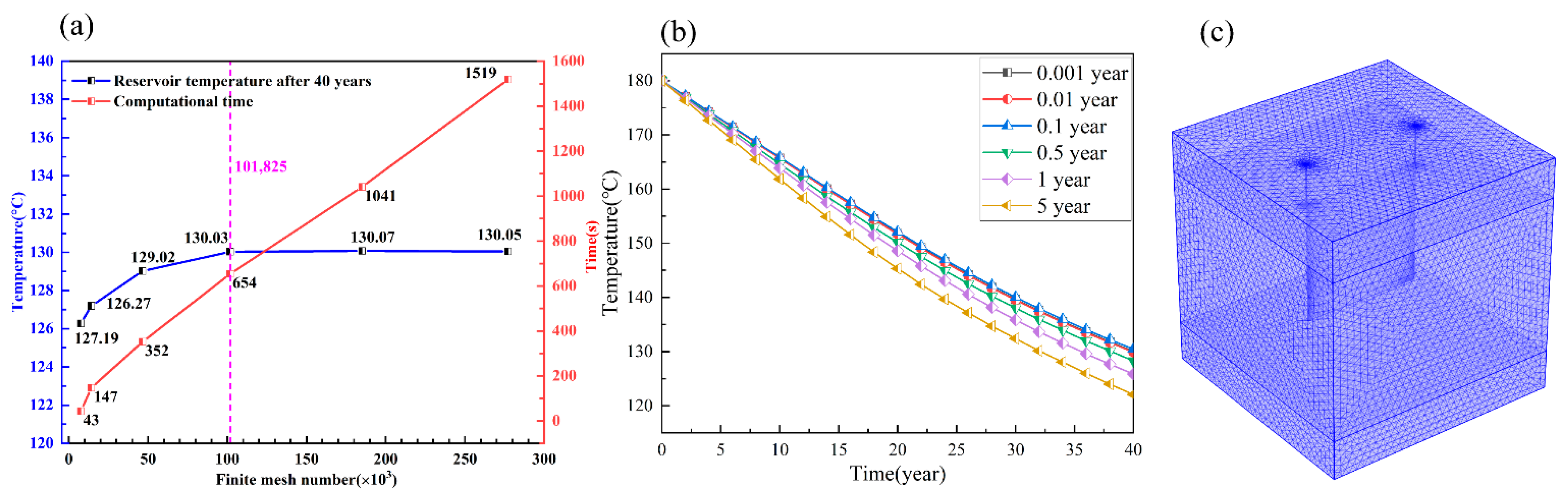
Mesh independence analysis is a critical step to ensure that the numerical simulation results are independent of mesh quantity and size, being determined solely by the physical model itself, thus guaranteeing the reliability and validity of the simulation outcomes. In this study, COMSOL Multiphysics 6.1 was employed to establish the model and conduct the mesh independence analysis. Specifically, the temperature variation in the geothermal reservoir over a 40-year production period was investigated under the conditions of a flow rate of 40 kg/s, an injection temperature of 10 °C, an initial reservoir temperature of 180 °C, a well spacing of 300 m, and a time step of 0.1 years, with different mesh densities applied to the model. Figure 4a presents the results of the mesh analysis, which indicate that the reservoir temperature stabilizes at approximately 130 °C when the mesh number reaches 101,825.
In addition, the time step is a key parameter in numerical simulation, directly affecting the accuracy, stability and computational cost of the results. To ensure that the time step exerts no impact on the research findings, the variation in the average reservoir temperature over the 40-year production period was examined under the conditions of a flow rate of 40 kg/s, an injection temperature of 10 °C, an initial reservoir temperature of 180 °C, and a well spacing of 300 m, with time steps set at 0.001, 0.01, 0.1, 0.5, 1, and 10 years, respectively. As shown in Figure 4b, which depicts the results of the time step analysis, the difference in the average reservoir temperature between the time step of 0.1 years and that of 0.001 or 0.01 years is less than 1 °C. However, as the time step increases further, the reservoir temperature begins to decrease, indicating that the corresponding numerical results are unreliable. Therefore, considering both computational efficiency and accuracy requirements, a mesh configuration with approximately 101,825 elements was uniformly adopted for subsequent studies, and the final time step used in the simulations was set at 0.1 years. Figure 4c shows the schematic diagram of the final mesh generation of the model.

4. Results and Discussion

4.1. Effect of Flow Rate on Reservoir Temperature Compensation

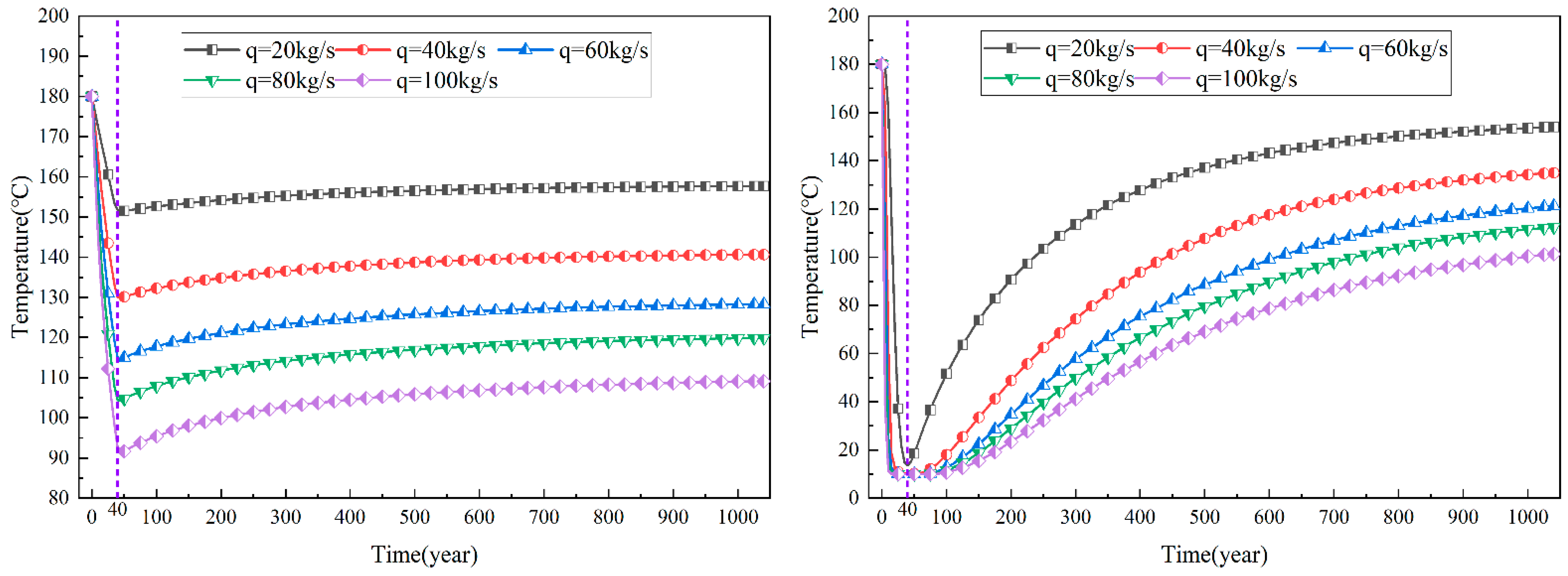
To investigate the effect of flow rate on reservoir temperature recovery after geothermal production shutdown, this study examined the impact under conditions where the inlet temperature is 10 °C, the initial reservoir temperature is 180 °C, the well spacing is 300 m, and flow rates are 20 kg/s, 40 kg/s, 60 kg/s, 80 kg/s, and 100 kg/s, over a 1000-year period. During the study, a temperature monitoring point was established at the model center, with coordinates (300 m, 300 m, 3300 m), to analyze reservoir temperature variations at the center under different parameter conditions.
Figure 5 illustrates the impact of different flow rates on natural reservoir temperature recovery (left panel) and temperature at the model center (right panel) over a 1000-year period following 40 years of geothermal production shutdown. As shown in the left panel, post-shutdown reservoir temperature exhibits distinct recovery trends across flow rates: at 20 kg/s, the reservoir temperature declines from an initial 180 °C to 151.73 °C after 40 years of production and subsequently recovers to 157.71 °C over 1000 years, representing a 5.98 °C increase, 3.94% recovery, and 87.62% of the initial temperature. At 100 kg/s, the temperature drops to 92.80 °C after production and recovers to 109.13 °C over 1000 years, a 16.33 °C rise, 17.60% recovery, and 60.63% of the initial temperature. The right panel reveals more pronounced temperature changes at the model center: under 20 kg/s, the center temperature rises from 13.68 °C to 154.06 °C within 1000 years, while at 100 kg/s, it increases from 10 °C to 101.41 °C. These results indicate that lower flow rates accelerate reservoir temperature recovery and yield higher final temperatures, whereas higher flow rates slow recovery and reduce final temperatures. This divergence stems from excessive heat extraction during production at high flow rates, causing severe thermal disturbance with broader and deeper thermal deficits. Post-shutdown recovery relies on thermal compensation from overlying and underlying caprocks via conduction; significant thermal deficits from high flow rates require extended time and greater heat input to replenish, resulting in slower recovery and lower final temperatures. Conversely, mild thermal deficits at low flow rates allow caprock compensation to restore temperatures near the initial state (180 °C) more rapidly, sustaining higher final recovery temperatures.
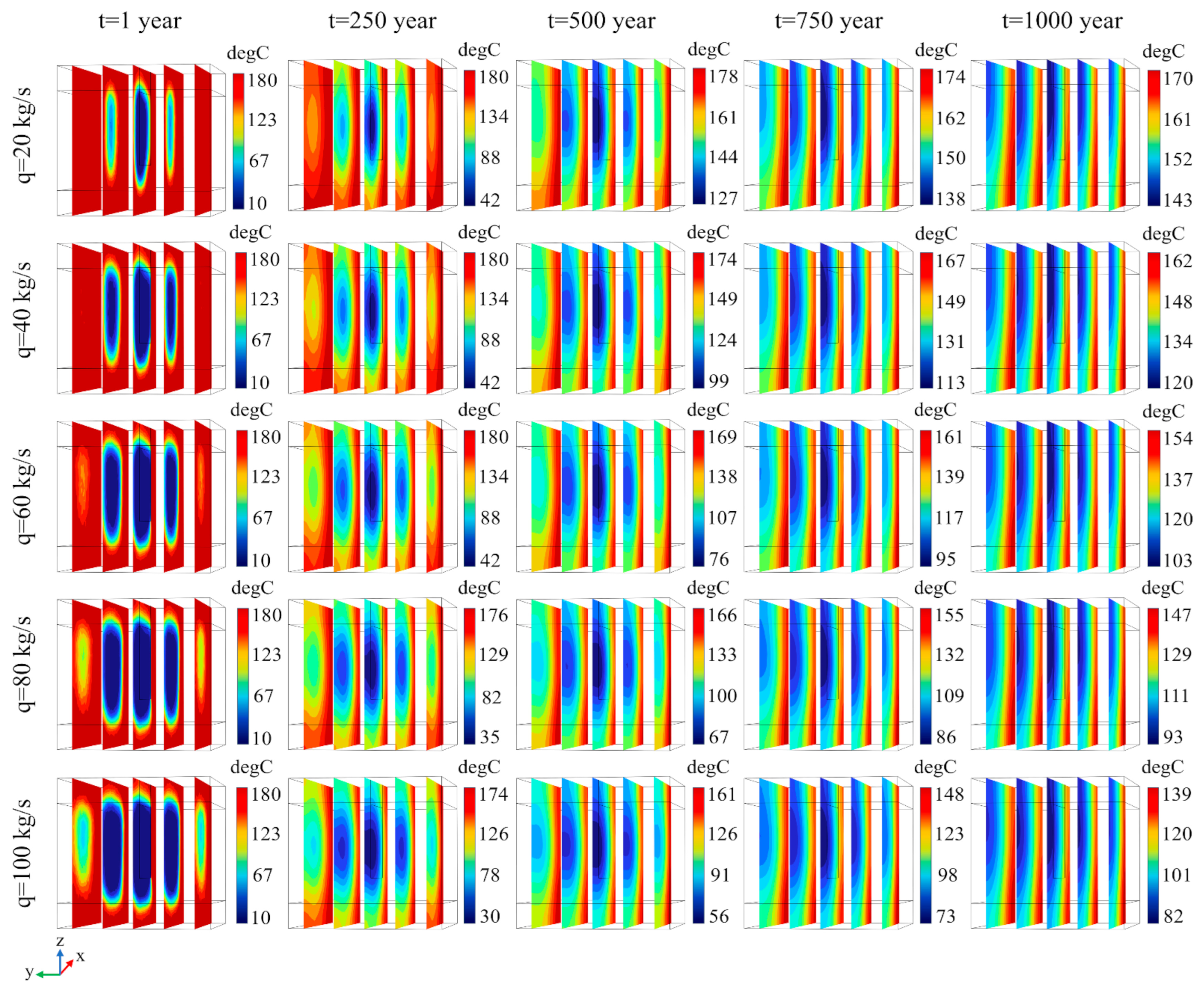
Complementing this, Figure 6’s temperature contour maps show that at low flow rates, the high-temperature core zone remains clearly visible one year post-shutdown, with gradual high-temperature area contraction over 250 to 500 years. At 100 kg/s, the high-temperature zone drastically shrinks within one year, low-temperature regions expand continuously after 250 years, and the reservoir approaches uniform low-temperature distribution by 1000 years. This occurs because high-flow-rate production intensifies convective and conductive heat losses, accelerating reservoir thermal homogenization. Post-shutdown, caprock compensation must overcome larger thermal gradients to restore temperatures, leading to spatial recovery characterized by “widespread cooling and delayed recovery.” Low flow rates preserve more of the reservoir’s original thermal structure, enabling efficient caprock compensation along existing gradients to maintain localized high-temperature zones over extended periods.

4.2. Effect of Injection Temperature on Reservoir Temperature Compensation

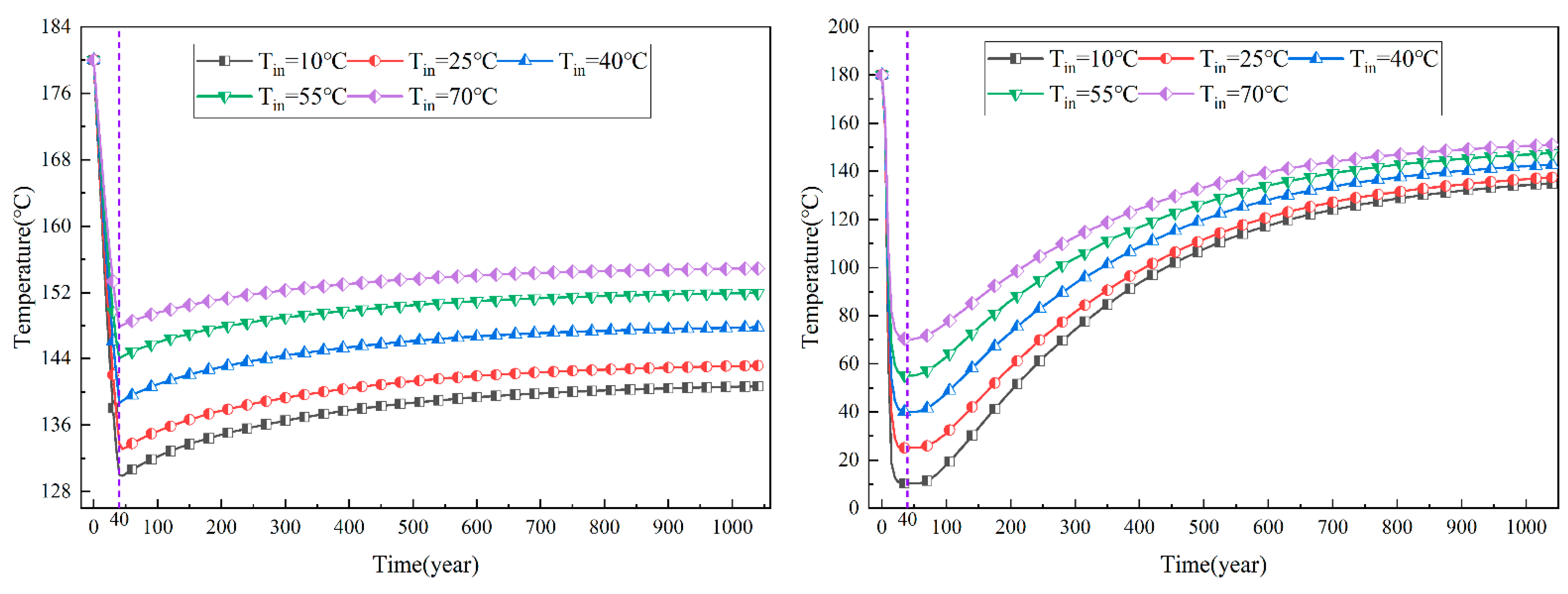
This section investigates the impact of injection temperature on reservoir temperature recovery following geothermal production shutdown over a 1000-year period, with flow rate fixed at 40 kg/s, initial reservoir temperature at 180 °C, well spacing at 300 m, and injection temperatures of 10 °C, 25 °C, 40 °C, 55 °C, and 70 °C. Figure 7 illustrates the effects of different injection temperatures on natural reservoir temperature recovery (left panel) and temperature at the model center (right panel) during the 1000-year period after 40 years of geothermal production. As shown in the left panel, injection temperature exerts significant control over reservoir temperature recovery: at 10 °C injection temperature, the reservoir temperature declines from 180 °C to 130.03 °C after 40 years of production and recovers to 140.68 °C over 1000 years post-shutdown, representing a 10.65 °C increase, 8.19% recovery, and 78.16% of the initial temperature. At 70 °C injection temperature, the reservoir temperature drops to 147.87 °C after production and recovers to 154.92 °C over 1000 years, indicating a 7.05 °C increase, 4.77% recovery, and 86.07% of the initial temperature. The right panel demonstrates more pronounced temperature variations at the model center: with 10 °C injection temperature, center temperature rises from 10.24 °C to 135.05 °C within 1000 years, while at 70 °C injection temperature, it increases from 70.15 °C to 151.09 °C.
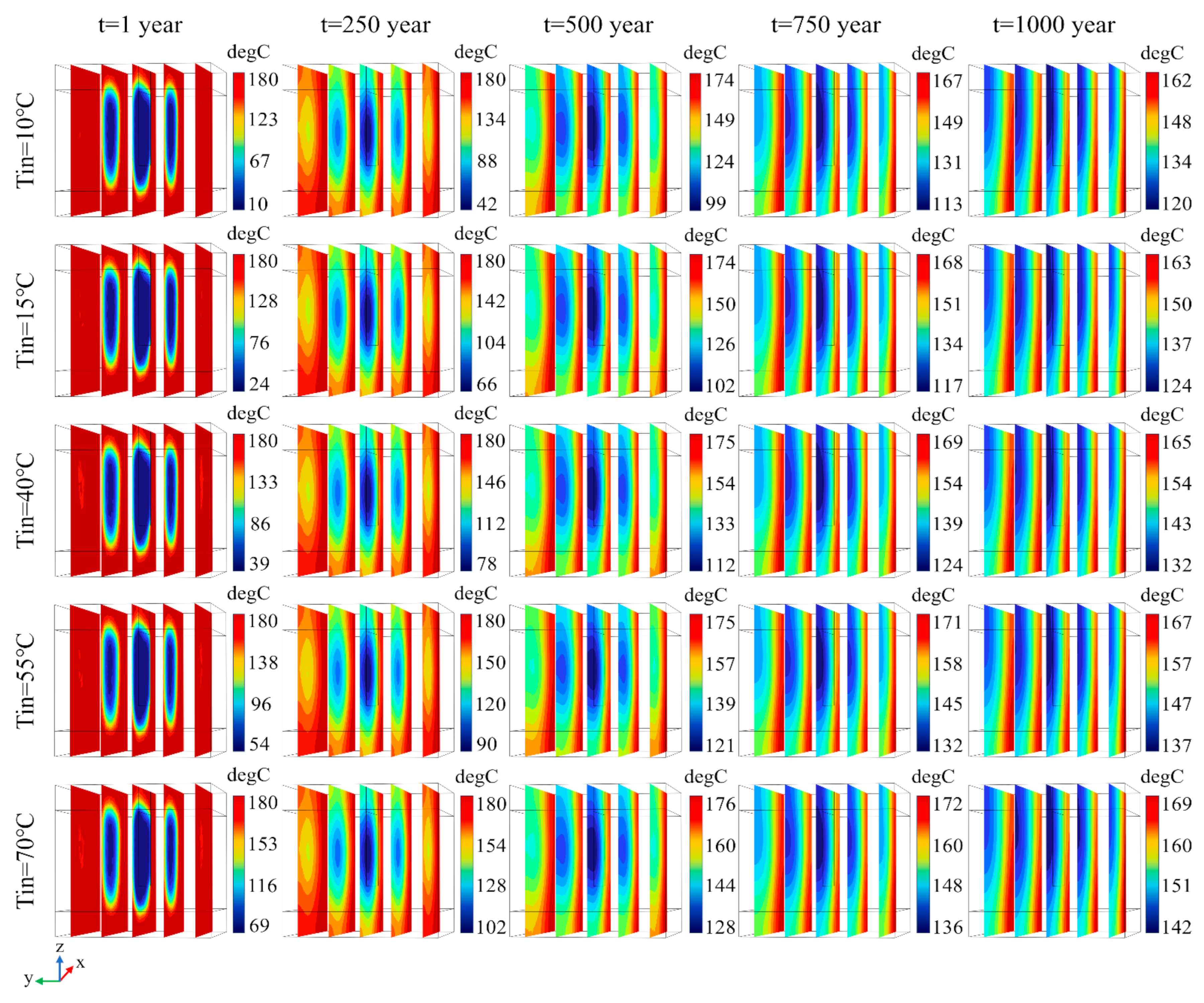
Figure 8 temperature contour maps reveal that lower injection temperatures enhance the reservoir’s subsequent warming potential. The substantial 170 °C temperature differential between 10 °C injected water and 180 °C native rock creates intense heat extraction during production, resulting in significant energy depletion. Following shutdown, the overlying and underlying caprocks must supply greater heat to compensate for this deficit, yielding the largest absolute temperature rebound. Under this scenario, the ≤100 °C low-temperature zone exhibits the widest spatial extent one year post-shutdown, with only gradual contraction over the subsequent 250–500 years, demonstrating profound cooling with slow recovery. Conversely, the 70 °C injection scenario reduces the temperature differential to 110 °C, causing minimal thermal structure disruption and limited energy loss during production. Caprock compensation then requires only minor heat adjustment, naturally resulting in smaller temperature increases. One year after shutdown, the reservoir maintains ≥70 °C across most areas with extremely slow temperature field attenuation, exhibiting shallow cooling with rapid stabilization. The fundamental mechanism lies in the temperature differential governing the driving force: larger differentials induce more aggressive heat extraction, creating greater thermal deficits that require extended caprock conduction over broader areas for recovery; smaller differentials preserve the reservoir’s thermal structure more intact, enabling caprocks to rapidly restore near-initial conditions through short-term conduction.

4.3. Effect of Initial Reservoir Temperature on Reservoir Temperature Compensation

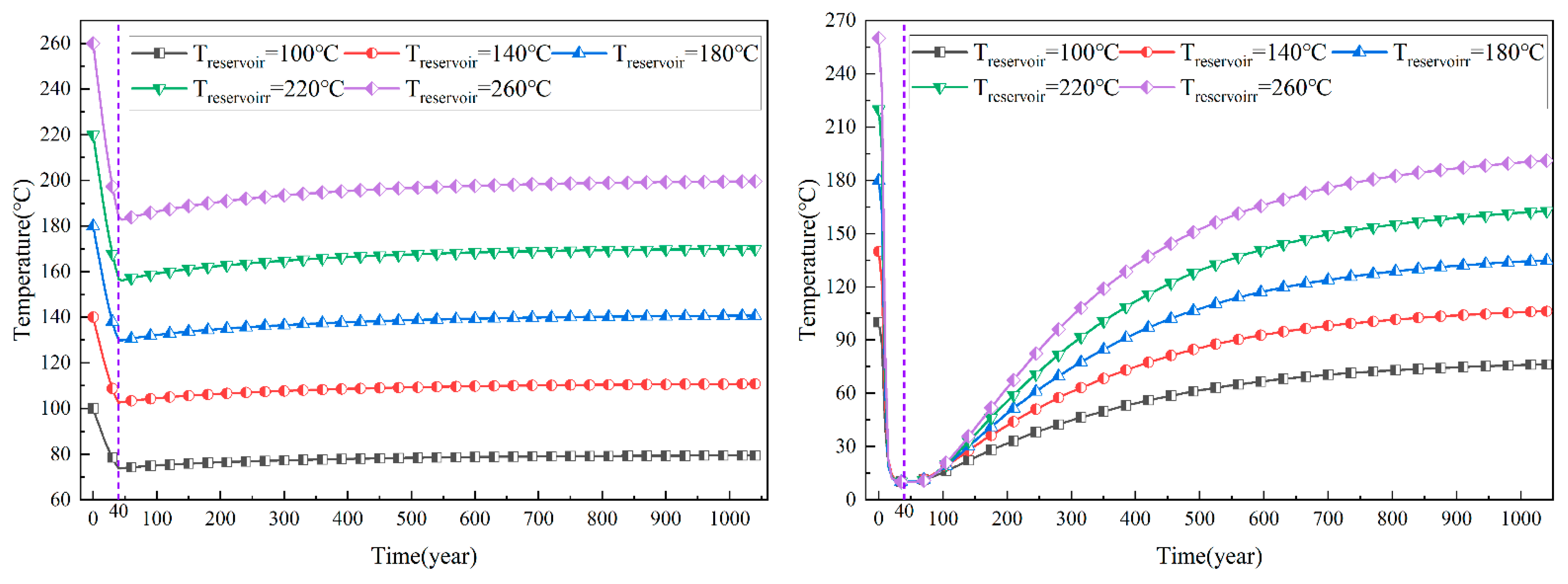
This section examines the impact of reservoir temperature recovery following geothermal production shutdown over a 1000-year period, with a flow rate of 40 kg/s, injection temperature of 10 °C, well spacing of 300 m, and initial reservoir temperatures of 100 °C, 140 °C, 180 °C, 220 °C, and 260 °C. Figure 9 shows the effects of different initial reservoir temperatures on natural reservoir temperature recovery (left panel) and temperature at the model center (right panel) during the 1000-year period after 40 years of geothermal production. As indicated in the left panel, higher initial reservoir temperatures yield more pronounced absolute temperature increases and relative recovery proportions post-shutdown: at an initial reservoir temperature of 100 °C, the reservoir temperature declines to 73.77 °C after 40 years of production and recovers to 79.48 °C within 1000 years after shutdown, representing a 5.71 °C rise, 7.74% recovery, and rebound to 79.48% of the initial temperature; when the initial reservoir temperature increases to 260 °C, the reservoir temperature drops to 184 °C after production and recovers to 199.58 °C within 1000 years, indicating a 15.58 °C rise, 8.47% recovery, and rebound to 76.76% of the initial temperature. Temperature variations at the model center are also notable in the right panel: with an initial reservoir temperature of 100 °C, the center temperature rises from 10.17 °C to 76.33 °C over 1000 years; with an initial reservoir temperature of 260 °C, it increases from 10.14 °C to 191.19 °C.
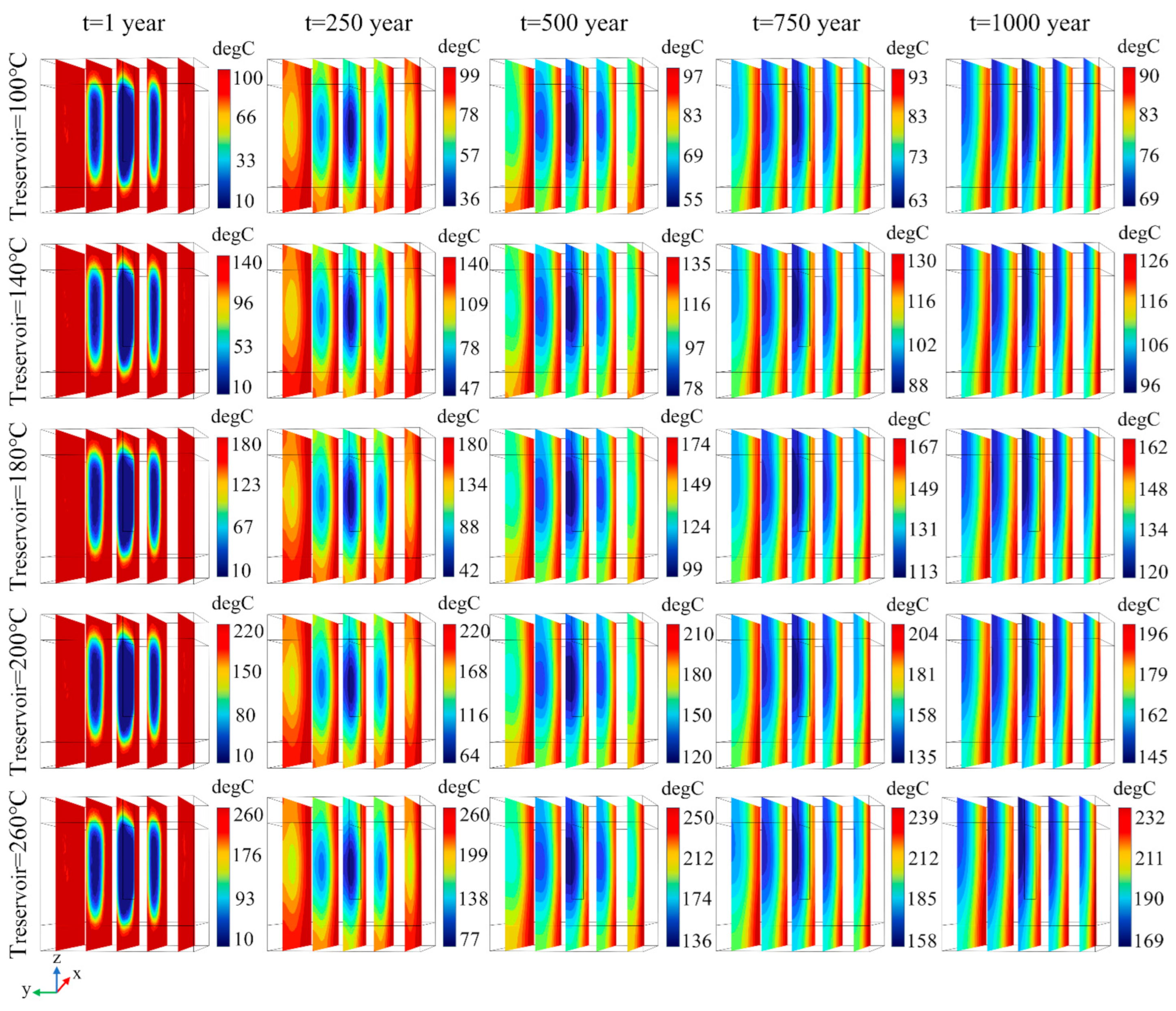
This section analyzes the temperature distribution visualization in Figure 10 to elucidate the recovery dynamics. Although the 260 °C initial temperature reservoir exhibits a slightly lower recovery percentage (8.47%) compared to the 100 °C reservoir (7.74%), the high initial temperature scenario demonstrates significant advantages in absolute temperature increase and final temperature levels: Following 1000 years of post-shutdown recovery, the 260 °C reservoir temperature rises by 15.58 °C from its post-production level to stabilize at 199.58 °C, whereas the 100 °C reservoir shows only a 5.71 °C increase, reaching a final temperature of 79.48 °C. This phenomenon stems from differential thermal capacity effects. Higher initial reservoir temperatures correspond to greater thermal energy density per unit volume and enhanced thermal capacity. Consequently, the relative thermal deficit during production is reduced, enabling caprock heat compensation to drive efficient temperature recovery from a higher baseline. Conversely, lower initial temperatures indicate diminished thermal capacity, leading to profound thermal depletion during production. Caprock heat compensation becomes constrained in such scenarios, resulting in minimal temperature recovery. The spatiotemporal evolution of temperature contours further validates this mechanism: The 100 °C reservoir immediately develops extensive low-temperature zones (≤80 °C) within one year post-shutdown, with continued expansion of these zones between 250 and 500 years, ultimately achieving a homogenized low-temperature state after 1000 years. In contrast, the 260 °C reservoir maintains predominantly high-temperature conditions one year after shutdown, exhibiting extremely slow thermal attenuation thereafter while preserving its high-temperature core region over extended periods. The underlying mechanism lies in divergent thermal gradient effects. High initial temperature reservoirs establish pronounced thermal gradients with adjacent caprocks, strengthening conductive heat transfer and enabling caprock compensation to effectively preserve thermal structural integrity. Low initial temperature reservoirs develop insufficient thermal gradients, weakening conductive driving forces. This renders the thermal structure vulnerable to production-induced damage and impedes recovery, culminating in the characteristic “homogenized low-temperature” profile. These findings conclusively demonstrate that initial reservoir temperature governs post-shutdown recovery efficiency and spatial distribution patterns through its coupled regulation of thermal capacity and thermal gradient dynamics.

4.4. Effect of Well Spacing on Reservoir Temperature Recovery

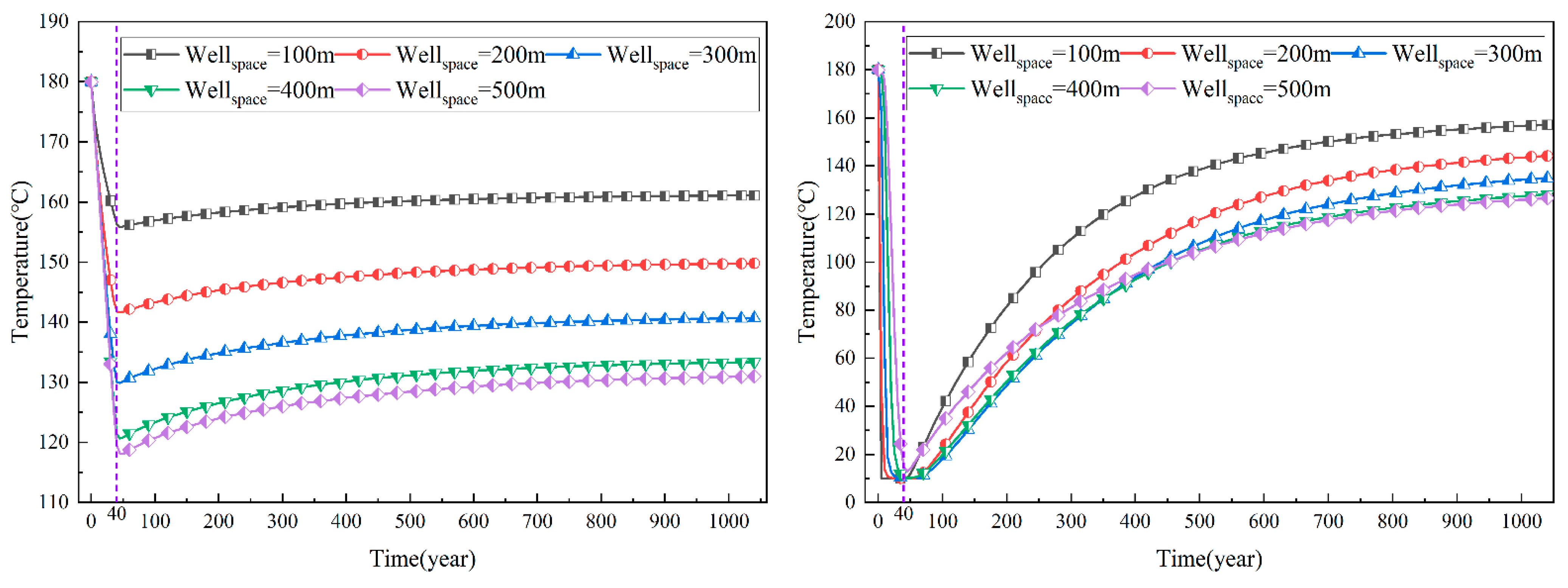
This section examines the impact of reservoir temperature recovery following geothermal production shutdown over a 1000-year period, with a flow rate of 40 kg/s, injection temperature of 10 °C, initial reservoir temperature of 180 °C, and well spacings of 100 m, 200 m, 300 m, 400 m, and 500 m. Figure 11 illustrates the effects of different well spacings on natural reservoir temperature recovery (left panel) and temperature at the model center (right panel) during the 1000-year period after 40 years of geothermal production. As shown in the left panel, larger well spacings yield higher absolute temperature increases and final temperature levels post-shutdown: at a well spacing of 100 m, the reservoir temperature declines from the initial 180 °C to 156.35 °C after 40 years of production and recovers to 161.11 °C within 1000 years after shutdown, representing a 4.76 °C rise, 3.04% recovery, and rebound to 89.51% of the initial temperature; when the well spacing increases to 500 m, the reservoir temperature drops to 119.5 °C after production and recovers to 130.98 °C within 1000 years, indicating a 11.48 °C rise, 9.61% recovery, and rebound to 72.77% of the initial temperature. Temperature variations at the model center are also evident in the right panel: with a 100 m well spacing, the center temperature rises from 10.01 °C to 157.16 °C over 1000 years; with a 500 m well spacing, it increases from 10.53 °C to 128.19 °C.
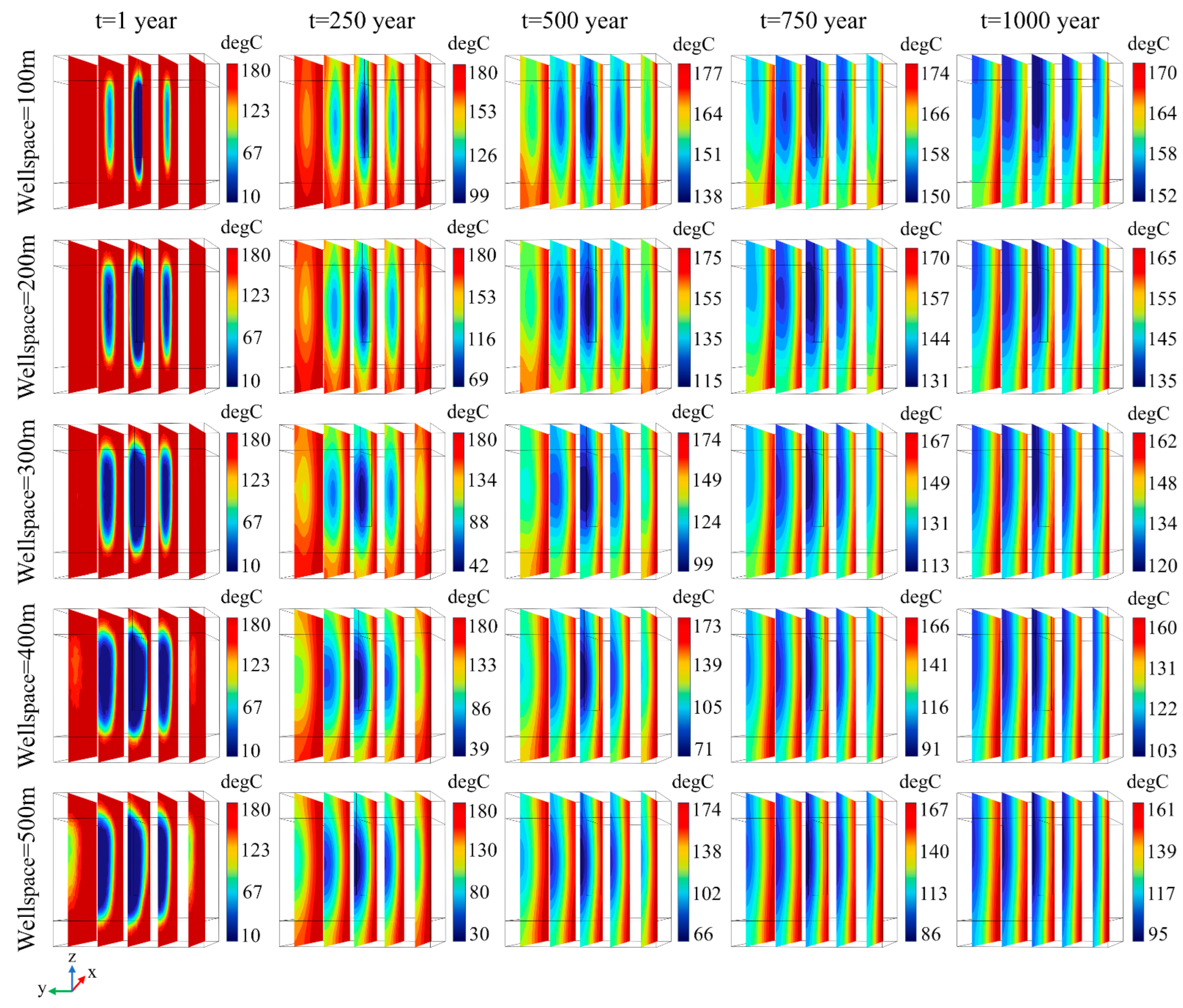
Based on the temperature distribution visualization in Figure 12, a detailed analysis reveals that, while the 500 m well spacing demonstrates a higher temperature recovery rate of 9.61% compared to 3.04% for the 100 m spacing, the smaller well spacing exhibits superior thermal compensation efficiency in absolute temperature terms following production shutdown. Specifically, after 1000 years of shut-in, the reservoir temperature reaches 161.11 °C (90% of initial temperature) for 100 m spacing, whereas the 500 m spacing yields only 130.98 °C, less than 72.77% of initial temperature. This divergence stems from the coupled effects of inter-well thermal interference during production and subsequent heat compensation during shut-in. Under tight well spacing (e.g., 100 m), significant thermal interference concentrates heat extraction within limited zones during production. Following shut-in, heat flux from the caprock efficiently conducts over short distances, enabling rapid temperature recovery. Conversely, wider spacing (e.g., 500 m) distributes thermal depletion across broader regions. During shut-in, the caprock heat flux must compensate over larger areas, suffering reduced effectiveness due to dilution effects. Spatiotemporal evolution of temperature contours further validates this mechanism. For 100 m spacing, high-temperature core zones remain extensive one year post-shut-in, gradually contract between 250 and 500 years, and maintain elevated temperatures at 1000 years. For 500 m spacing, high-temperature regions diminish significantly within one year, low-temperature zones expand continuously after 250 years, and temperatures homogenize at low levels by 1000 years. The underlying principle is that tight well spacing preserves localized thermal integrity, allowing caprock heat flux to precisely target and replenish discrete thermal deficits. Wider spacing causes systemic thermal degradation across the reservoir, where caprock heat flux cannot effectively compensate over large-scale depleted zones. This establishes the critical trend: tight spacing enables concentrated high-temperature recovery, while wide spacing results in uniformly low-temperature distribution.

4.5. Effect of Reservoir Configuration on Geothermal System Temperature Recovery

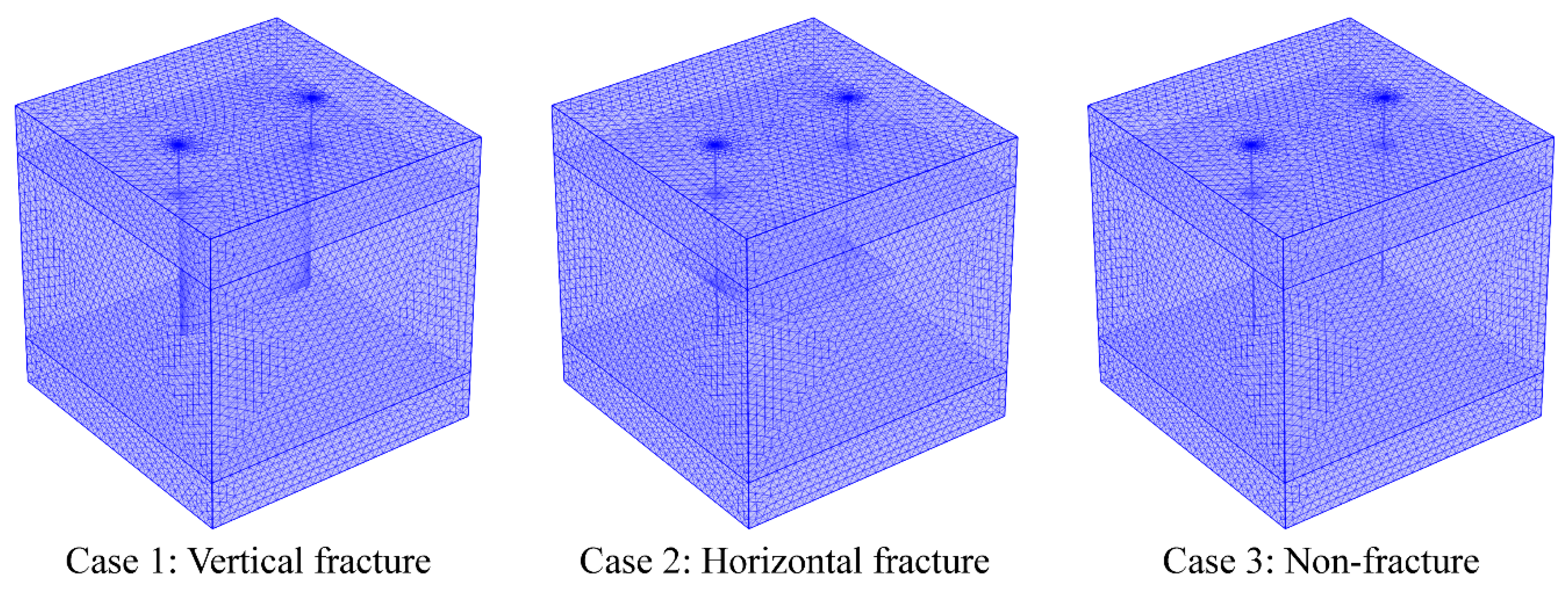
To investigate the impact of different fracture configurations and the presence of fractures on natural temperature recovery in geothermal reservoirs after production cessation, this section designs three distinct scenarios. Figure 13 illustrates the geothermal system schematics and mesh configurations for all three scenarios. Case 1 corresponds to the model used in prior studies, featuring a vertical fracture connecting the injection and production wells. Case 2 employs a horizontal fracture linking the injection and production wells, with identical fracture length, width, and aperture as Case 1. Case 3 consists solely of injection and production wells without any fracture.
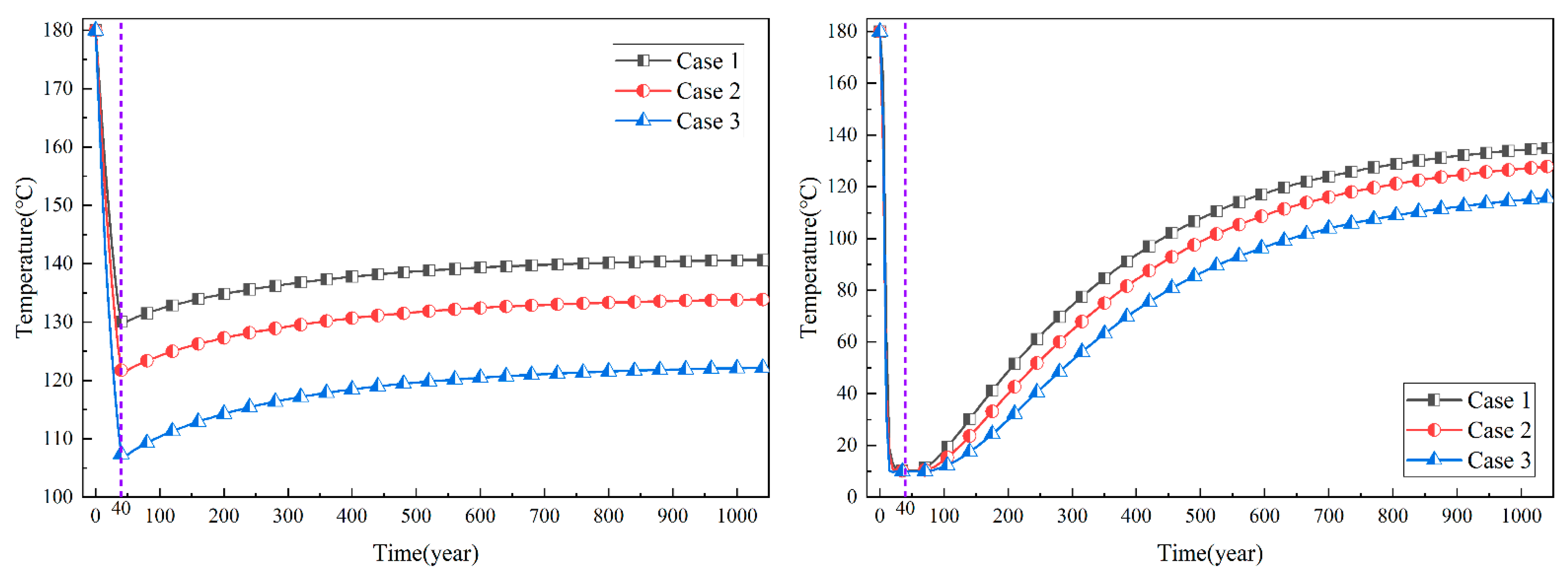
All injection and geological parameters remain consistent across scenarios: flow rate of 40 kg/s, injection temperature of 10 °C, average reservoir temperature of 180 °C, and well spacing of 300 m. The analysis examines reservoir temperature recovery over a 1000-year shut-in period following production. Figure 14 displays the natural temperature recovery (left) and temperature at the model center (right) for each scenario over 1000 years of shut-in after 40 years of production. The left plot reveals distinct temperature decline trends during the 40-year production phase and varying recovery patterns during shut-in. Among the scenarios, Case 1 exhibits the slowest reservoir temperature decline during production, while Case 3 shows the fastest. After 1000 years of shut-in, Case 1 recovers to 140.68 °C with a recovery magnitude of 10.65 °C, representing 78.16% of the initial temperature (180 °C). Case 2 recovers to 133.91 °C (12.15 °C recovery), reaching 74.39% of the initial temperature. Case 3, starting at 107.4 °C after 40 years of production, recovers to 122.17 °C (14.77 °C recovery), achieving 67.87% of the initial temperature. The right plot indicates Case 1 achieves faster and higher temperature recovery at the model center, ultimately reaching 135.05 °C, while Case 3 shows the opposite trend, recovering to 115.79 °C.
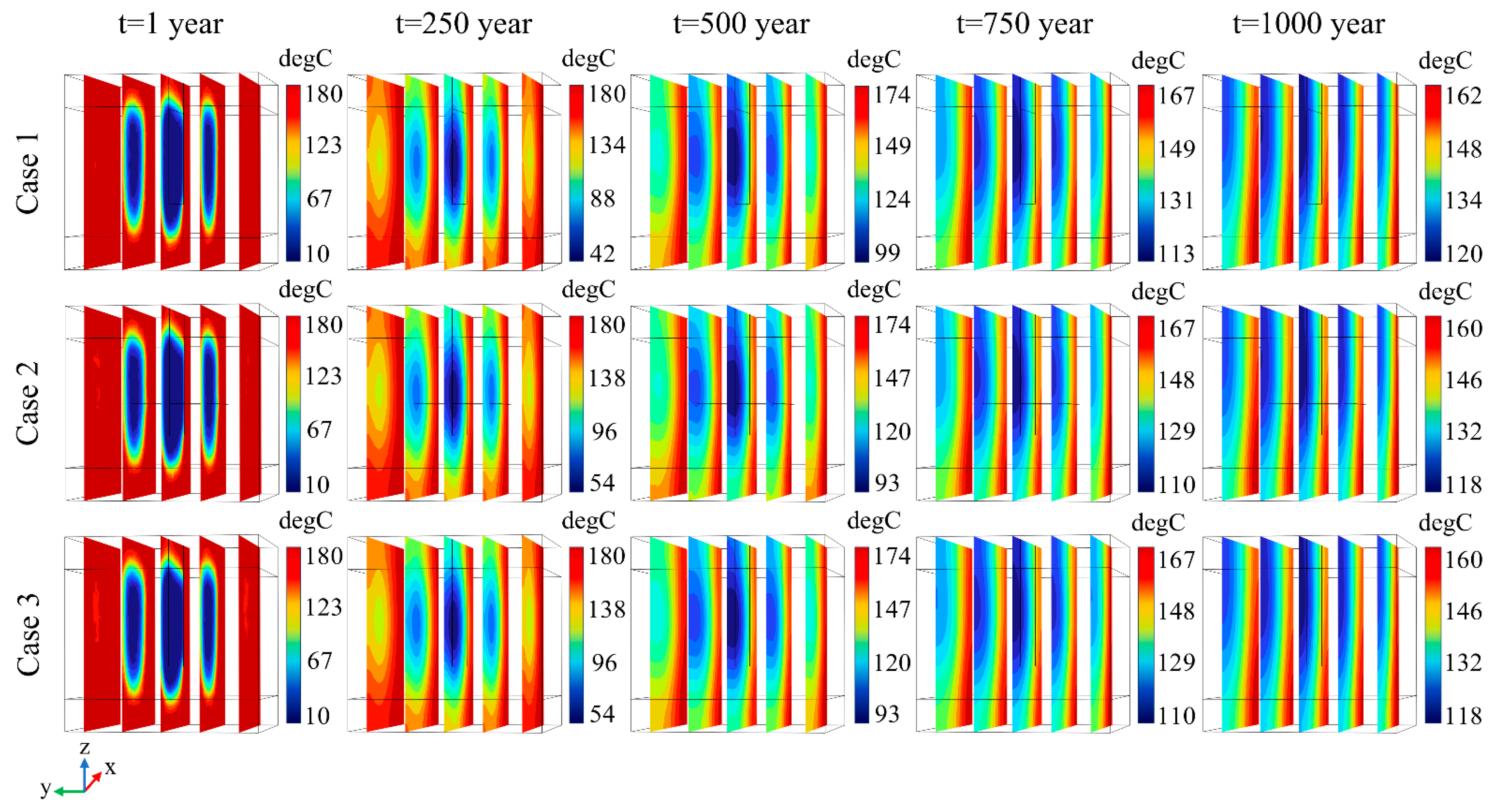
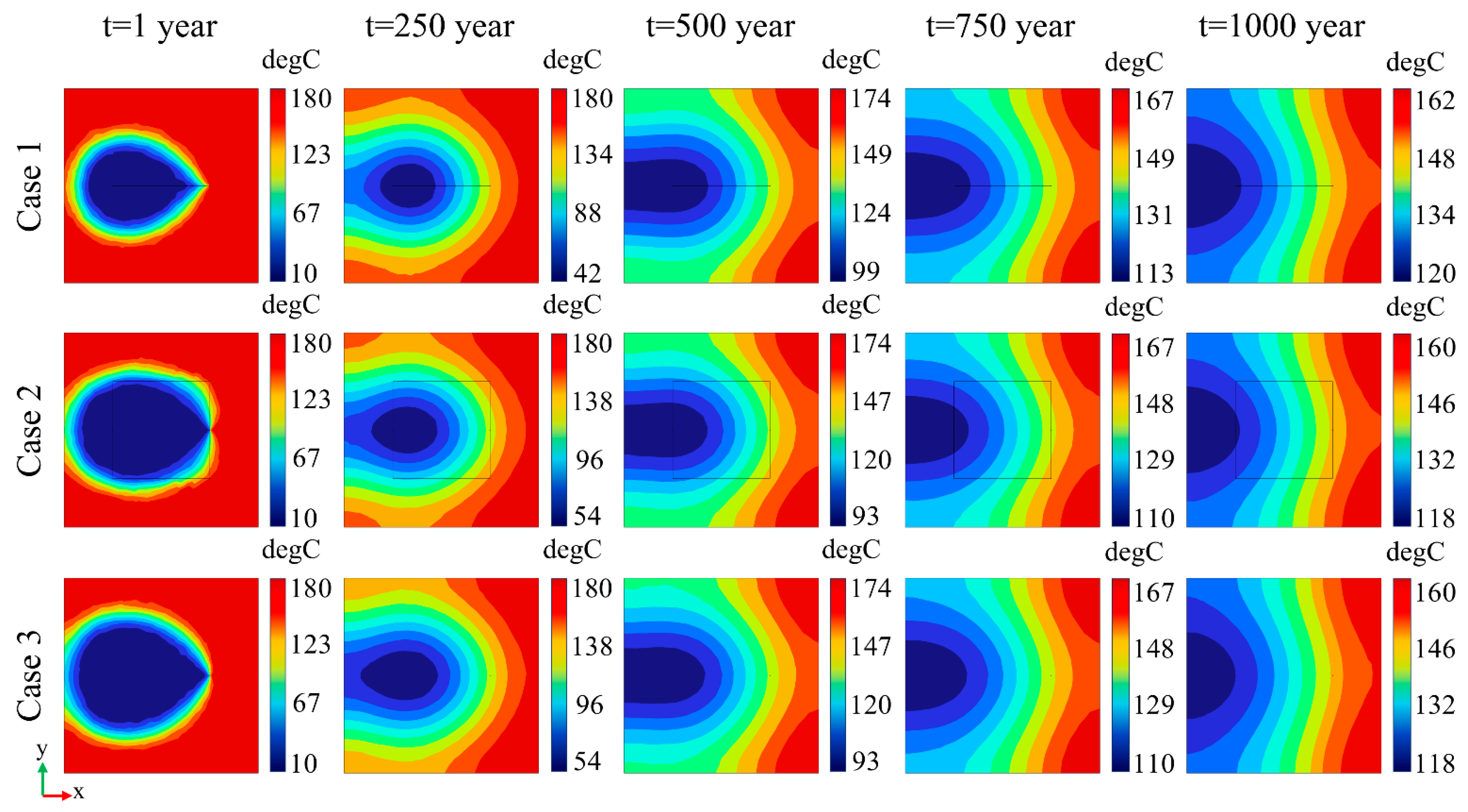
Analysis of spatial evolution in temperature distribution maps (Figure 15 and Figure 16) reveals correlations with fracture morphology. Case 1’s high vertical connectivity enables efficient convective heat transfer along the fracture during production, concentrating thermal depletion near the fracture. During shut-in, overburden heat compensation rapidly propagates along the low-resistance vertical pathway, resulting in slow contraction of the high-temperature core and sustained elevated temperatures after 1000 years. In Case 2, horizontal heat flow during production creates more dispersed thermal depletion. Shut-in heat compensation encounters greater lateral thermal resistance, reducing heat transfer efficiency and accelerating high-temperature zone contraction, yielding lower final recovery than Case 1. Case 3 experiences widespread thermal depletion due to slow matrix conduction during production. Shut-in heat compensation requires uniform diffusion across the entire reservoir, causing significant heat dilution. Consequently, the high-temperature zone substantially diminishes within one year of shut-in, leading to long-term temperature homogenization at lower levels. These differences stem from fracture morphology’s dual regulation of thermal disturbance during production and heat compensation during shut-in. Vertical fractures enable a “concentrated depletion–efficient replenishment” cycle for rapid, high-level temperature recovery. Horizontal fractures exhibit reduced compensation efficiency due to spatial constraints, while the absence of fractures results in slow, limited recovery from dispersed thermal depletion. This principle establishes fracture morphology as a critical determinant of reservoir temperature evolution throughout the EGS lifecycle, providing theoretical foundations for fracture-optimized long-term geothermal development design.

5. Conclusions

In this study, a dual-well EGS numerical model was primarily developed using the finite element method. This research focused on the effects of different parameters—flow rate, injection temperature, reservoir initial temperature, and well spacing—on the natural temperature compensation of the geothermal reservoir following 40 years of production and a subsequent 1000-year shut-in period. The key findings are as follows:
(1)
After 40 years of EGS geothermal production, natural temperature compensation over the 1000-year shut-in period fails to restore the reservoir temperature to its initial level. Under various parameter conditions, the temperature recovers only to 60.63–89.51% of the initial reservoir temperature.
(2)
Lower flow rates accelerate reservoir temperature recovery and yield higher final temperatures, while higher flow rates slow recovery and reduce final temperatures. When the flow rate increases from 20 kg/s to 100 kg/s, the temperature recovery rate rises from 3.94% to 17.6%. However, the final temperature relative to the initial reservoir temperature decreases from 87.62% to 60.63%.
(3)
As injection temperature increases from 10 °C to 70 °C, the temperature rebound during shut-in decreases from 10.65 °C to 7.05 °C, but the final recovered temperature improves from 78.16% to 86.07% of the initial temperature. The temperature differential between injection and reservoir dictates extraction intensity and thermal depletion. A smaller differential (70 °C injection) results in a lower rebound magnitude but preserves reservoir thermal integrity, achieving a higher final recovery ratio. A larger differential (10 °C injection) triggers a stronger rebound but causes deep thermal damage, limiting the ultimate recovery level.
(4)
Elevating the reservoir initial temperature from 100 °C to 260 °C increases the shut-in temperature rebound from 5.71 °C to 15.58 °C and raises the final recovered temperature from 79.48 °C to 199.58 °C. Higher initial temperatures (e.g., 260 °C) leverage greater thermal capacity and steeper thermal gradients to mitigate heat depletion during production and enhance post-shut-in heat compensation, resulting in more significant absolute temperature recovery. Thus, reservoirs with higher initial temperatures exhibit superior long-term thermal recovery potential.
(5)
Increasing well spacing from 100 m to 500 m raises the temperature rebound magnitude from 4.76 °C to 11.48 °C, but reduces the final recovered temperature from 89.51% to 72.77% of the initial temperature. Tighter spacing (100 m) causes localized thermal depletion but enables more efficient caprock heat compensation during shut-in, maintaining a higher final temperature of 161.11 °C. Wider spacing (500 m) yields a larger rebound magnitude but suffers from reduced compensation efficiency due to widespread thermal depletion, resulting in a final temperature of only 130.98 °C. Therefore, moderately reducing well spacing is more favorable for achieving effective long-term reservoir temperature recovery.
(6)
In the study of natural reservoir temperature recovery after heat extraction cessation in dual-well EGS, the vertical fracture configuration recovered to 140.68 °C (78.16% of initial temperature) following a 1000-year shut-in period, the horizontal fracture configuration to 133.91 °C (74.39%), and the no-fracture configuration to 122.17 °C (67.87%). Owing to efficient heat flow transmission and superior thermal compensation characteristics, the vertical fracture configuration achieved the fastest recovery and highest final temperature, with the horizontal fracture configuration performing moderately, while the no-fracture configuration exhibited the slowest recovery and lowest temperature due to dispersed heat loss and elevated resistance to thermal compensation.

Author Contributions

Conceptualization, M.Y.; Methodology, X.C.; Software, X.C.; Formal analysis, X.C.; Resources, J.Z. and W.Y.; Writing—original draft, J.Z., W.Y., M.Y. and X.C.; Writing—review and editing, J.Z., W.Y., M.Y. and X.C. All authors have read and agreed to the published version of the manuscript.

Funding

This research received no external funding.

Data Availability Statement

The original contributions presented in this study are included in the article. Further inquiries can be directed to the corresponding author.

Conflicts of Interest

Authors Jun Zhang and Weixing Yang were employed by the Research Institute of Petroleum Engineering, Sinopec Northwest Oilfield Company. Authors Jun Zhang and Weixing Yang were employed by State Key Laboratory of Enhanced Recovery for Fracture-Cave Oil Reservoir, Sinopec Northwest Oilfield Company. The remaining authors declare that this research was conducted in the absence of any commercial or financial relationships that could be construed as a potential conflict of interest.

References

  1. Carvalho, A.; Riquito, M.; Ferreira, V. Sociotechnical imaginaries of energy transition: The case of the Portuguese Roadmap for Carbon Neutrality 2050. Energy Rep. 2022, 8, 2413–2423. [Google Scholar] [CrossRef]
  2. Ediger, V.S. An integrated review and analysis of multi-energy transition from fossil fuels to renewables. Energy Procedia 2019, 156, 2–6. [Google Scholar] [CrossRef]
  3. Zou, C.; Zhao, Q.; Zhang, G.; Xiong, B. Energy revolution: From a fossil energy era to a new energy era. Nat. Gas Ind. B 2016, 3, 1–11. [Google Scholar] [CrossRef]
  4. Zou, C.; Xiong, B.; Xue, H.; Zheng, D.; Ge, Z.; Wang, Y.; Jiang, L.; Pan, S.; Wu, S. The role of new energy in carbon neutral. Pet. Explor. Dev. 2021, 48, 480–491. [Google Scholar] [CrossRef]
  5. Du, X.W. Thoughts on strategies and paths to achieve carbon peaking and carbon neutrality in China. Front. Energy 2023, 17, 324–331. [Google Scholar] [CrossRef]
  6. Olasolo, P.; Juárez, M.; Olasolo, J.; Morales, M.; Valdani, D. Economic analysis of Enhanced Geothermal Systems (EGS). A review of software packages for estimating and simulating costs. Appl. Therm. Eng. 2016, 104, 647–658. [Google Scholar] [CrossRef]
  7. Falcone, G.; Liu, X.; Okech, R.R.; Seyidov, F.; Teodoriu, C. Assessment of deep geothermal energy exploitation methods: The need for novel single-well solutions. Energy 2018, 160, 54–63. [Google Scholar] [CrossRef]
  8. Zhang, X.B.; Hu, Q.H. Development of Geothermal Resources in China: A Review. J. Earth Sci. 2018, 29, 452–467. [Google Scholar] [CrossRef]
  9. Zhang, R.; Wang, G.; Shen, X.; Wang, J.; Tan, X.; Feng, S.; Hong, J. Is geothermal heating environmentally superior than coal fired heating in China? Renew. Sustain. Energy Rev. 2020, 131, 110014. [Google Scholar] [CrossRef]
  10. Xia, L.; Zhang, Y. An overview of world geothermal power generation and a case study on China—The resource and market perspective. Renew. Sustain. Energy Rev. 2019, 112, 411–423. [Google Scholar] [CrossRef]
  11. Jain, C.; Vogt, C.; Clauser, C. Maximum potential for geothermal power in Germany based on engineered geothermal systems. Geotherm. Energy 2015, 3, 15. [Google Scholar] [CrossRef]
  12. Zhao, X.-G.; Wan, G. Current situation and prospect of China’s geothermal resources. Renew. Sustain. Energy Rev. 2014, 32, 651–661. [Google Scholar] [CrossRef]
  13. Olsthoorn, D.; Haghighat, F.; Mirzaei, P.A. Integration of storage and renewable energy into district heating systems: A review of modelling and optimization. Sol. Energy 2016, 136, 49–64. [Google Scholar] [CrossRef]
  14. Liu, Z.W.; Yang, W.J.; Xu, K.; Zhang, Q.; Yan, L.; Li, B.; Cai, X.; Yang, M. Research progress of technologies and numerical simulations in exploiting geothermal energy from abandoned wells: A review. Geoenergy Sci. Eng. 2023, 224, 211624. [Google Scholar] [CrossRef]
  15. Cai, X.L.; Liu, Z.W.; Xu, K.; Li, B.; Yang, M. Numerical simulation on converting abandoned wells into double-well open-loop geothermal system. Appl. Therm. Eng. 2024, 248, 123324. [Google Scholar] [CrossRef]
  16. Niu, Q.H.; Ma, K.Y.; Wang, W.; Pan, J.; Wang, Q.; Du, Z.; Wang, Z.; Yuan, W.; Zheng, Y.; Shangguan, S.; et al. Multifactor analysis of heat extraction performance of coaxial heat exchanger applied to hot dry rock resources exploration: A case study in matouying uplift, Tangshan, China. Energy 2023, 282, 128277. [Google Scholar] [CrossRef]
  17. Hou, X.; Zhong, X.; Nie, S.; Wang, Y.; Tu, G.; Ma, Y.; Liu, K.; Chen, C. Study on the heat recovery behavior of horizontal well systems in the Qiabuqia geothermal area of the Gonghe Basin, China. Energy 2024, 286, 129424. [Google Scholar] [CrossRef]
  18. Cai, X.; Liu, Z.; Xu, K.; Li, B.; Zhong, X.; Yang, M. Numerical simulation study of an Enhanced Geothermal System with a five-spot pattern horizontal well based on thermal-fluid-solid coupling. Appl. Therm. Eng. 2025, 258, 124649. [Google Scholar] [CrossRef]
  19. Wang, J.; Su, L.; Zhu, Q.; Niu, J. Numerical investigation on power generation performance of enhanced geothermal system with horizontal well. Appl. Energy 2022, 325, 119865. [Google Scholar] [CrossRef]
  20. Asai, P.; Panja, P.; McLennan, J.; Moore, J. Performance evaluation of enhanced geothermal system (EGS): Surrogate models, sensitivity study and ranking key parameters. Renew. Energy 2018, 122, 184–195. [Google Scholar] [CrossRef]
  21. Aliyu, M.D.; Chen, H.P. Sensitivity analysis of deep geothermal reservoir: Effect of reservoir parameters on production temperature. Energy 2017, 129, 101–113. [Google Scholar] [CrossRef]
  22. Lv, Y.X.; Yuan, C.; Gan, Q.; Li, H.; Zhu, X. Analysis of heat transfer based on complex Embedded Discrete Fracture Network (EDFN) for field-scale EGS. Geothermics 2022, 104, 102463. [Google Scholar] [CrossRef]
  23. Liu, F.; Kang, Y.; Hu, Y.; Chen, H.; Wang, X.; Pan, H.; Xie, J. Comparative investigation on the heat extraction performance of an enhanced geothermal system with N2O, CO2 and H2O as working fluids. Appl. Therm. Eng. 2022, 200, 117594. [Google Scholar] [CrossRef]
  24. Jiang, F.M.; Chen, J.L.; Huang, W.B.; Luo, L. A three-dimensional transient model for EGS subsurface thermo-hydraulic process. Energy 2014, 72, 300–310. [Google Scholar] [CrossRef]
  25. Ma, Y.; Li, S.; Zhang, L.; Liu, S.; Liu, Z.; Li, H.; Shi, E.; Zhang, H. Numerical simulation study on the heat extraction performance of multi-well injection enhanced geothermal system. Renew. Energy 2020, 151, 782–795. [Google Scholar] [CrossRef]
  26. Liu, B.; Hu, K.W. Effect of thermal compensation on the heat extraction performance of CO2 enhanced geothermal system. Appl. Therm. Eng. 2025, 278, 127178. [Google Scholar] [CrossRef]
  27. Han, S.C.; Cheng, Y.; Gao, Q.; Yan, C.; Zhang, J. Numerical study on heat extraction performance of multistage fracturing Enhanced Geothermal System. Renew. Energy 2020, 149, 1214–1226. [Google Scholar] [CrossRef]
  28. Ding, J.F.; Wang, S.M. 2D modeling of well array operating enhanced geothermal system. Energy 2018, 162, 918–932. [Google Scholar] [CrossRef]
  29. Guo, T.K.; Gong, F.C.; Wang, X.Z.; Lin, Q.; Qu, Z.; Zhang, W. Performance of enhanced geothermal system (EGS) in fractured geothermal reservoirs with CO2 as working fluid. Appl. Therm. Eng. 2019, 152, 215–230. [Google Scholar] [CrossRef]
  30. Song, X.Z.; Shi, Y.; Li, G.S.; Yang, R.; Wang, G.; Zheng, R.; Li, J.; Lyu, Z. Numerical simulation of heat extraction performance in enhanced geothermal system with multilateral wells. Appl. Energy 2018, 218, 325–337. [Google Scholar] [CrossRef]
  31. Zinsalo, J.M.; Lamarche, L.; Raymond, J. Sustainable electricity generation from an Enhanced Geothermal System considering reservoir heterogeneity and water losses with a discrete fractures model. Appl. Therm. Eng. 2021, 192, 116886. [Google Scholar] [CrossRef]
  32. Cai, X.; Deng, Q.; Xu, K.; Zhong, X.; Yang, M. Impact of dual-fracture location on heat extraction from Enhanced geothermal system in low-permeability reservoirs. Appl. Therm. Eng. 2025, 259, 124754. [Google Scholar] [CrossRef]
  33. Holzbecher, E.O. Modeling Density-Driven Flow in Porous Media: Principles, Numerics, Software; Springer Science & Business Media: Berlin/Heidelberg, Germany, 1998. [Google Scholar]
  34. Wang, G.S.; Song, X.Z.; Yu, C.; Shi, Y.; Song, G.; Xu, F.; Ji, J.; Song, Z. Heat extraction study of a novel hydrothermal open-loop geothermal system in a multi-lateral horizontal well. Energy 2022, 242, 122527. [Google Scholar] [CrossRef]
  35. Cao, W.; Huang, W.; Chen, J.; Li, Z.; Jiang, F. Numerical study on the heat extraction performance of HDR with a well-fracture-reservoir combined model. Renew. Energy 2023, 202, 370–380. [Google Scholar] [CrossRef]
  36. Zhou, L.M.; Zhu, Z.D.; Xie, X.H. Performance analysis of enhanced geothermal system under thermo-hydro-mechanical coupling effect with different working fluids. J. Hydrol. 2023, 624, 129907. [Google Scholar] [CrossRef]
  37. Zhang, H.Y.; Huang, Z.W.; Zhang, S.K.; Yang, Z.; Mclennan, J.D. Improving heat extraction performance of an enhanced geothermal system utilizing cryogenic fracturing. Geothermics 2020, 85, 101816. [Google Scholar] [CrossRef]
  38. Barends, F. Complete solution for transient heat transport in porous media, following Lauwerier’s concept. In Proceedings of the SPE Annual Technical Conference and Exhibition, Florence, Italy, 20–22 September 2010; SPE: Houston, TX, USA, 2010. Paper Number SPE–134670-MS. [Google Scholar]
  39. Li, Z.-W.; Feng, X.-T.; Zhang, Y.-J.; Zhang, C.; Xu, T.-F.; Wang, Y.-S. Experimental research on the convection heat transfer characteristics of distilled water in manmade smooth and rough rock fractures. Energy 2017, 133, 206–218. [Google Scholar] [CrossRef]
  40. Shi, Y.; Song, X.Z.; Wang, G.S.; Li, J.; Geng, L.; Li, X. Numerical study on heat extraction performance of a multilateral-well enhanced geothermal system considering complex hydraulic and natural fractures. Renew. Energy 2019, 141, 950–963. [Google Scholar] [CrossRef]
  41. Gu, F.; Li, Y.W.; Tang, D.Z.; Gao, Y.; Zhang, Y.; Yang, P.; Ye, H. Heat extraction performance of horizontal-well deep borehole heat exchanger and comprehensive comparison with the vertical well. Appl. Therm. Eng. 2022, 211, 118426. [Google Scholar] [CrossRef]
Figure 1. Dual-well EGS geological model.
Processes 14 00075 g001
Figure 2. Schematic of 2D single-fracture heat transfer model (100 m × 100 m).
Processes 14 00075 g002
Figure 3. Comparison of numerical and analytical solutions in model validation. (a) Temperature variations in fracture at different time points; (b) Temperature variations in fracture at different positions.
Processes 14 00075 g003
Figure 4. Mesh independence analysis, time step sensitivity analysis, and schematic diagram of model mesh generation. (a) Grid analysis diagram; (b) Time step analysis diagram; (c) Model meshing diagram.
Processes 14 00075 g004
Figure 5. Effect of different flow rates on reservoir temperature natural compensation (left) and temperature at model center (right) during 1000-year geothermal shut-in period.
Processes 14 00075 g005
Figure 6. Reservoir temperature distribution at year 1, 250, 500, 750, and 1000 under different flow rates during geothermal shut-in phase.
Processes 14 00075 g006
Figure 7. Effect of different injection temperatures on reservoir temperature natural compensation (left) and temperature at model center (right) during 1000-year geothermal shut-in period.
Processes 14 00075 g007
Figure 8. Reservoir temperature distribution at year 1, 250, 500, 750, and 1000 under different injection temperatures during geothermal shut-in phase.
Processes 14 00075 g008
Figure 9. Effect of different initial reservoir temperatures on reservoir temperature natural compensation (left) and temperature at model center (right) during 1000-year geothermal shut-in period.
Processes 14 00075 g009
Figure 10. Reservoir temperature distribution at year 1, 250, 500, 750, and 1000 under different initial reservoir temperatures during geothermal shut-in phase.
Processes 14 00075 g010
Figure 11. Effect of different well spacings on reservoir temperature natural compensation (left) and temperature at model center (right) during 1000-year geothermal shut-in period.
Processes 14 00075 g011
Figure 12. Reservoir temperature distribution at year 1, 250, 500, 750, and 1000 under different well spacings during geothermal shut-in phase.
Processes 14 00075 g012
Figure 13. Geothermal system schematics and mesh configurations for reservoir scenarios.
Processes 14 00075 g013
Figure 14. Effect of different scenarios on reservoir temperature natural compensation (left) and temperature at model center (right) during 1000-year geothermal shut-in period.
Processes 14 00075 g014
Figure 15. Reservoir temperature distribution at year 1, 250, 500, 750, and 1000 under three scenarios during geothermal shut-in phase.
Processes 14 00075 g015
Figure 16. Cross-sectional temperature distribution at z = 3300 m at year 1, 250, 500, 750, and 1000 under three scenarios during geothermal shut-in phase.
Processes 14 00075 g016
Table 2. Parameters for analytical and numerical model simulations [27,39,40,41].
ParametersValue
Initial reservoir temperature80 °C
Injection temperature30 °C
Rock density2700 kg/m3
Rock thermal conductivity2.8 W/(m·°C)
Rock specific heat capacity1000 J/(kg·°C)
Rock permeability5 × 10−17 m2
Fractures permeability1 × 10−10 m2
Water velocity0.01 m/s
Water viscosity0.001 Pa·s
Water specific heat capacity4200 J/(kg·°C)
Fracture aperture0.001 m
Disclaimer/Publisher’s Note: The statements, opinions and data contained in all publications are solely those of the individual author(s) and contributor(s) and not of MDPI and/or the editor(s). MDPI and/or the editor(s) disclaim responsibility for any injury to people or property resulting from any ideas, methods, instructions or products referred to in the content.