1. Introduction
Driven by global carbon neutrality goals, the rising penetration of volatile renewable energy poses severe challenges to the safe and stable operation of power systems [
1,
2,
3]. Integrated Energy Systems (IES), which enable the deep coupling and cascading utilization of multiple energy flows (electricity, heat, and gas), have emerged as a critical solution to enhance energy efficiency and promote renewable energy integration [
4,
5].
Accurately characterizing source-load uncertainty is the prerequisite for IES optimization. Although existing statistical or shallow clustering methods, such as K-medoids and Latin hypercube sampling, have been widely applied for scenario generation [
6,
7,
8], they remain limited in capturing the deep nonlinear characteristics inherent in long-term source-load data. While some studies have optimized the scenario generation process using copula functions [
9] or pseudo-F-statistic metrics [
10], the fidelity of generated typical scenarios still has room for improvement, necessitating more advanced feature extraction techniques.
In addressing these uncertainties, Distributionally Robust Optimization (DRO) has gained significant attention [
11]. Specifically, the framework established by Esfahani and Kuhn [
11] based on the Wasserstein metric provides a rigorous foundation for risk-averse decision-making. Recent reviews have highlighted the importance of high-fidelity scenario generation for robust dispatch [
12]. Researchers have extended DRO theory to multi-energy systems to characterize complex uncertainty correlations [
13,
14,
15]. However, most studies still rely on simplified sampling [
16,
17], and few have systematically integrated deep temporal feature extraction (e.g., LSTM-AE) with Wasserstein-metric DRO to mitigate tail risks in complex systems.
Furthermore, a well-developed market mechanism is crucial for guiding IES toward low-carbon operation [
18,
19]. While literature has explored tiered carbon trading or electricity-carbon coordination [
20,
21,
22,
23], systematic research remains lacking on the combined incentive effects of “Green Power Certificate (GPC)” and “carbon trading” [
24,
25,
26,
27,
28]. There is an urgent need to explore the “physical-market” synergy for carbon reduction by integrating these mechanisms with refined physical modeling.
Given the aforementioned limitations, this paper develops a data-driven distributionally robust optimization (DRO) scheduling framework for integrated energy systems (IES). The research first constructs an LSTM-AE-based feature extraction model to capture deep nonlinear temporal characteristics of source-load data, thereby significantly enhancing the fidelity and representativeness of generated scenarios compared to traditional clustering methods. This is complemented by a refined IES physical model that incorporates P2G waste heat recovery and is integrated with a joint green certificate and tiered carbon trading mechanism to synergistically optimize energy efficiency and carbon reduction. Ultimately, a multi-objective DRO model utilizing the Wasserstein distance and Conditional Value at Risk (CVaR) is formulated to balance economic costs with environmental sustainability while mitigating the excessive conservatism typically found in traditional robust optimization [
29].
2. Data-Driven Scene Generation Method Based on LSTM-AE
Integrated energy systems exhibit significant volatility and uncertainty on both the supply and demand sides. Wind and solar power generation output demonstrates strong randomness due to meteorological conditions, while electricity, heat, and gas loads exhibit complex time-dependent correlations influenced by user energy consumption behavior. Directly applying massive historical data for optimization scheduling would lead to computational complexity disasters, whereas traditional Monte Carlo sampling or simple clustering methods struggle to capture deep dynamic features within long-term time series data [
30]. Therefore, a data-driven scenario generation method combining Long Short-Term Memory Autoencoders (LSTM-AE) with K-Means clustering is proposed to extract nonlinear features from source-load time series data and generate highly representative typical operating scenarios [
31].
2.1. Source Uncertainty Analysis and Data Preprocessing
2.1.1. Data Normalization Processing
Due to significant differences in the dimensions and magnitude of wind power, photovoltaic output, and various loads, directly inputting these data into the model can hinder training convergence. To eliminate dimensional effects and enhance feature extraction efficiency, the maximum–minimum normalization method is employed to map all data types to the [0, 1] range. The normalization formula is as follows:
In the formula: is the raw data; , and represent the maximum and minimum values of the sample data, respectively; denotes the normalized data. After scene generation is complete, the data must be denormalized to restore the actual physical quantities for subsequent optimization and scheduling.
2.1.2. Time-Series Data Reconstruction
The operational optimization of integrated energy systems typically operates on a daily cycle. To capture the intraday fluctuation patterns of generation and load, continuous time-series data is sliced and reconstructed according to daily cycles. Let dataset package D contain data for days, with each day comprising T time steps (e.g., T = 288 corresponds to 5-min resolution), and the system include M types of characteristic variables (wind, solar, load, etc.). The reconstructed input matrix
is:
Each sample represents the source-load combined operation curve for day .
2.2. Deep Sequential Feature Extraction Based on LSTM-AE
Traditional linear dimensionality reduction methods (such as Principal Component Analysis, PCA) struggle to effectively handle the nonlinear temporal dependencies present in integrated energy system data. To address this, this paper constructs a feature extraction model based on LSTM-AE. This model consists of an encoder and decoder, utilizing the unique gating mechanism of LSTM units to capture long-range temporal dependencies [
32].
2.2.1. LSTM Unit Structure
The LSTM unit effectively addresses gradient vanishing and gradient explosion issues in long sequence training by introducing forget gates, input gates, and output gates to control information flow [
33]. At time step t, the update rule for the LSTM unit is as follows:
In the equation: is the input at the current time step, is the hidden state at the previous time step; is the cell state; , , represent the states of the forget gate, input gate, and output gate, respectively; and denote the weight matrix and bias term, respectively; is the Sigmoid activation function; denotes the Hadamard product.
2.2.2. Autoencoder Network Architecture
The core concept of LSTM-AE is to compress high-dimensional time-series data into low-dimensional latent feature vectors and train the network through reconstruction error.
The encoder receives raw time-series data
at the input layer. After processing through multiple layers of LSTM networks, it extracts a fixed-length latent vector
containing the primary information of the input sequence.
represents the mapping of the original data onto a low-dimensional feature space, highly summarizing the fluctuation patterns of the source load. The decoder replicates the latent vector
as the input sequence. Through a symmetric LSTM network structure, it reconstructs an output sequence
matching the dimension of the original input. The model training objective is to minimize the mean squared error (MSE) between the original input
and the reconstructed output
:
where
represents the total number of samples;
denotes the number of time steps per daily operation cycle;
indicates the number of characteristic variables, including wind power, photovoltaic output, and electrical load (
).
and
are the original normalized value and the reconstructed value, respectively. Through unsupervised training based on the minimization of Equation (9), when the loss function converges, the compressed latent vector
output by the encoder provides a high-fidelity and low-dimensional feature representation for the subsequent K-Means clustering process.
2.3. K-Means-Based Typical Scenario Generation
To summarize massive historical data into a finite number of typical scenarios for stochastic optimization, this paper applies the K-Means clustering algorithm [
27] in the feature space extracted by LSTM-AE.
2.3.1. Elbow Method for Determining Optimal Cluster Count
The choice of cluster count
directly impacts scenario generation quality. If
is too small, scenarios lack representativeness; if
is too large, computational complexity increases while scenario distinctiveness decreases. This paper employs the elbow method to determine the optimal
value. By calculating the sum of squared errors (SSE) for different K values and plotting the SSE curve as
varies, the optimal
is identified. The calculation formula is as follows:
In the formula: represents the -th cluster; denotes the center of that cluster. When increasing the rate of decrease in SSE to slow significantly (indicating an elbow), the corresponding is the optimal number of clusters.
2.3.2. Typical Scenarios and Probability Calculation
After determining the optimal cluster number
, cluster the latent feature vector set. Upon completion, extract all original daily scenario data within each cluster and compute their arithmetic mean as the daily curve for that scenario. Simultaneously, count the number of historical days
within each cluster and calculate the probability
of each typical scenario occurring, as shown in the following formula:
In the formula: represents the total number of days in the historical data. The resulting set of typical scenarios and their probability distribution will serve as the random input parameters for the subsequent multi-objective distribution robust optimization model.
3. IES Model Considering Multi-Energy Coupling and Joint Trading Mechanisms
To achieve low-carbon economic operation of the Integrated Energy System (IES), a system architecture incorporating multi-energy flow coupling of electricity, heat, gas, and hydrogen has been established [
34]. A refined model of electricity-to-gas conversion equipment with waste heat recovery capabilities has been developed. A combined market mechanism integrating green certificate trading and tiered carbon trading has been introduced to promote renewable energy consumption and effectively constrain the system’s carbon emissions.
3.1. Integrated Energy System Architecture
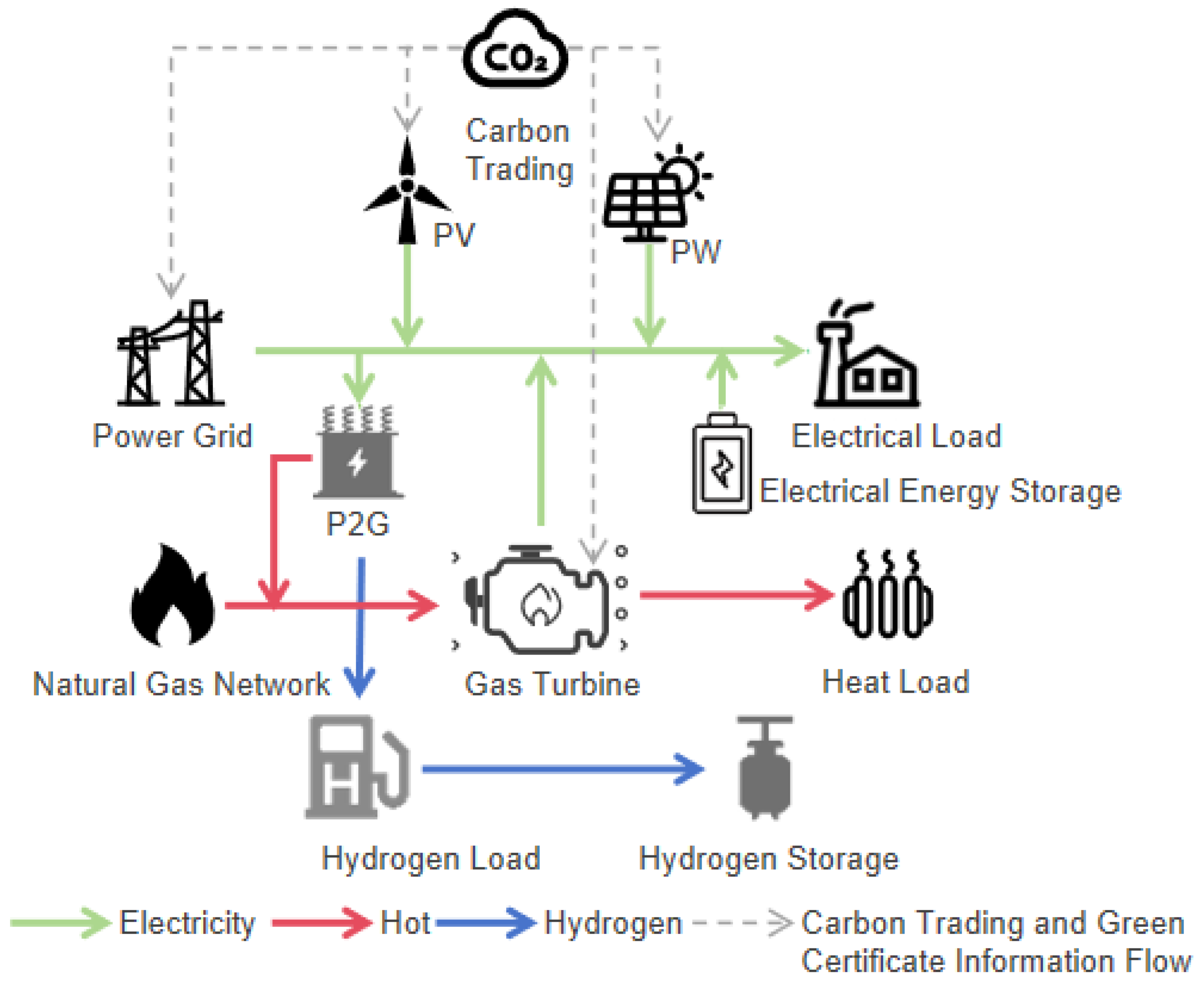
The IES studied in this paper comprises four core components: generation, grid, load, and storage, as illustrated in
Figure 1.
On the energy supply side, the system integrates renewable sources such as wind power (WT) and photovoltaic power (PV), while connecting to the upper-level grid and natural gas network to ensure stable energy provision. On the energy conversion side, gas turbines (GT) serve as the core coupling equipment, consuming natural gas to generate electricity and heat simultaneously; P2G equipment converts surplus electricity into hydrogen while recovering waste heat from the electrolysis process; electric boilers (EB) provide auxiliary heating. On the energy storage side, the system employs electrical energy storage (ES) devices to smooth fluctuations between generation and load. The load demand side encompasses diverse energy requirements including electrical, thermal, and hydrogen loads.
3.2. Mathematical Models of Key Equipment
3.2.1. Refined P2G Model Incorporating Waste Heat Recovery
To address the limitations of traditional Power-to-Gas (P2G) models that neglect energy losses during electrolysis, this study incorporates a refined model considering waste heat recovery [
35]. In the electrolysis process, a significant portion of electrical energy is converted into thermal energy. By establishing the conversion efficiencies for hydrogen production
and waste heat recovery
as 0.6 and 0.3 respectively, the mathematical relationships are expressed as:
Justification of Efficiency Improvement: The recovery of electrolysis waste heat allows the IES to directly supplement thermal load demands. This effectively reduces the output requirement and fuel consumption of gas-fired boilers. This cascaded utilization of electricity, hydrogen, and heat energy flows significantly enhances the overall primary energy efficiency of the system compared to models without heat recovery.
3.2.2. Gas Turbine Model
The gas turbine serves as the hub connecting the gas network, power grid, and heat network. The relationship between its electrical power output
, thermal power output
, and gas consumption
is as follows:
Simultaneously, the following climbing constraints must be satisfied:
In the formula: represents the thermoelectric ratio; denotes the power generation efficiency; denote the upper and lower ramp rate limits.
3.2.3. Electrical Energy Storage Model
The state of charge (SOC) of the energy storage system dynamically changes with charging and discharging power:
Constraints include capacity limitations and start-end state balance:
3.3. Green Certificate-Carbon Trading Joint Market Mechanism
To balance economic efficiency and low-carbon performance, this paper references [
7] to establish a joint mechanism combining Green Certificate Trading (GCT) with tiered carbon trading.
3.3.1. Green Certificate Trading Mechanism
Green certificates serve to certify renewable energy generation. The system earns green certificates by absorbing wind and solar power, which can be sold for profit; failing to meet absorption quotas requires purchasing green certificates. This paper simplifies the model by directly calculating the revenue generated from renewable energy absorption:
In the formula: represents curtailed wind and solar power capacity; denotes the unit price of green certificates.
3.3.2. Tiered Carbon Trading Mechanism
To strictly constrain carbon emissions and provide stronger economic incentives for low-carbon operation, this study implements a tiered carbon trading mechanism. The net carbon emissions
are calculated as the difference between actual emissions (from gas turbines and boilers) and the free emission allowances. The tiered carbon trading cost
is formulated as a piecewise function to provide a progressive economic penalty:
Economic Incentive Logic: This tiered structure creates a higher cost pressure as emissions increase, encouraging the IES to prioritize renewable energy accommodation and P2G operation during peak emission periods. This mechanism effectively aligns the operational strategy with the dual carbon goals.
3.4. Power Balance Constraints
The system must maintain real-time power balance among electricity, heat, and hydrogen multi-energy flows at all times.
The electrical power balance constraint, as shown in Equation (21), requires the total output from the source side to equal the total demand from the load side.
The thermal power balance constraint, as shown in Equation (22), requires that the total heat generation meets the thermal load demand.
The hydrogen power balance constraint is expressed as in Equation (23):
To address the uncertainty in the probability distribution of sources and loads, this paper constructs a Wasserstein distance-based ambiguity set
. Let
denote the empirical distribution obtained through the Long Short-Term Memory Autoencoder (LSTM-AE) scenario generation technique; the ambiguity set is defined as:
where
represents the set of all probability distributions on the uncertainty space
, and
denotes the Wasserstein distance between the true distribution
and the empirical distribution
. The ambiguity set radius is determined by the confidence level
, reflecting the robustness of the scheduling decisions. During the solution process, the aforementioned min-max robust optimization problem is transformed into an equivalent solvable form via duality theory to achieve expected cost minimization under the worst-case distribution.
To quantify tail risks under extreme uncertainty scenarios, this paper introduces Conditional Value at Risk (CVaR) into the objective function1. The distributionally robust scheduling objective minimizes the expected loss at a given confidence level
(set to 0.9 in the optimization model 2), formulated as:
where
represents the probability of scenario
;
denotes the Value at Risk (VaR); and
is an auxiliary variable defined by the following constraints:
Here, is the comprehensive objective value for scenario , which balances the expected operating costs and carbon emissions using weighting factors and .
4. Case Study Analysis and Validation
4.1. Parameter Settings
4.1.1. Data Sources and Preprocessing
To validate the effectiveness of the proposed data-driven scenario generation method and distributed robust optimization scheduling model, this study employs actual operational data from a region in California, USA. This area features high renewable energy penetration and pronounced fluctuations in generation and load characteristics, providing an effective testbed for evaluating the model’s adaptability under complex operating conditions.
Regarding specific source-load data sources, this paper utilizes the open-source database provided by NREL (National Renewable Energy Laboratory) as the basis for historical output data of wind farms and photovoltaic power plants. On the load side, data from the OASIS platform released by CAISO (California Independent System Operator) is employed, covering actual historical electricity load information for the region. The dataset’s sampling time span covers 8760 h throughout the year, with a sampling resolution set to 1 h.
Considering that different dimensionality of data may affect the training convergence of deep learning networks, the study employs the maximum–minimum normalization method to map the raw wind, solar, and load data to the [0, 1] interval. During the model training phase, the first 80% of the time-series data was allocated to the training set for feature extraction and parameter optimization of the LSTM-AE network. The remaining 20% served as the test set, primarily used to validate the probability distribution fitting accuracy of the generated scenarios. Additionally, the system simulation step size was set to 1 h, with a complete scheduling cycle defined as 24 h.
4.1.2. System Architecture and Key Equipment Parameters
To comprehensively evaluate the effectiveness of the proposed dispatch strategy, this paper constructs a campus-level integrated energy system simulation model. Based on an enhanced IEEE 33-node distribution network, the system couples a 7-node natural gas network and a regional district heating network. In terms of physical equipment configuration, the system integrates wind turbines and photovoltaic power plants as primary clean energy sources, supplemented by micro-gas turbines for combined heat and power generation.
As the key hub connecting different energy networks, power-to-gas (P2G) equipment and gas boilers jointly form the gas-heat coupling segment. Specifically, this study fully considers the waste heat recovery characteristics of the P2G equipment, directly injecting the thermal energy generated during hydrogen production into the district heating network to enhance the system’s energy utilization efficiency. The specific operating parameters of key internal equipment, including the capacity limits and energy conversion efficiencies of gas turbines, P2G equipment, and various energy storage devices, are detailed in
Table 1.
4.1.3. Market Mechanisms and Simulation Environment Configuration
At the economic dispatch level, a refined pricing mechanism serves as the core driver for guiding source-load interaction. To this end, this paper adopts a peak-off-peak time-of-use pricing mechanism, aiming to use price leverage to guide the system toward electricity procurement or hydrogen production during low-price periods. The specific time-of-use classification and pricing standards are shown in
Table 2.
Furthermore, to validate the advantages of the proposed multi-objective optimization model in low-carbon environmental protection, the study incorporates a dual incentive mechanism of green certificate trading and carbon trading. Specifically, the carbon trading market employs a tiered pricing model to penalize high-carbon emissions, while the green certificate market establishes a reasonable price range to quantify the environmental value of renewable energy. Relevant market economic parameters, gas prices, and transaction constraints are summarized in
Table 3.
The deep learning framework is implemented using Python 3.8 and PyTorch4. Specific hyper-parameters and training configurations for the LSTM-AE model are summarized in
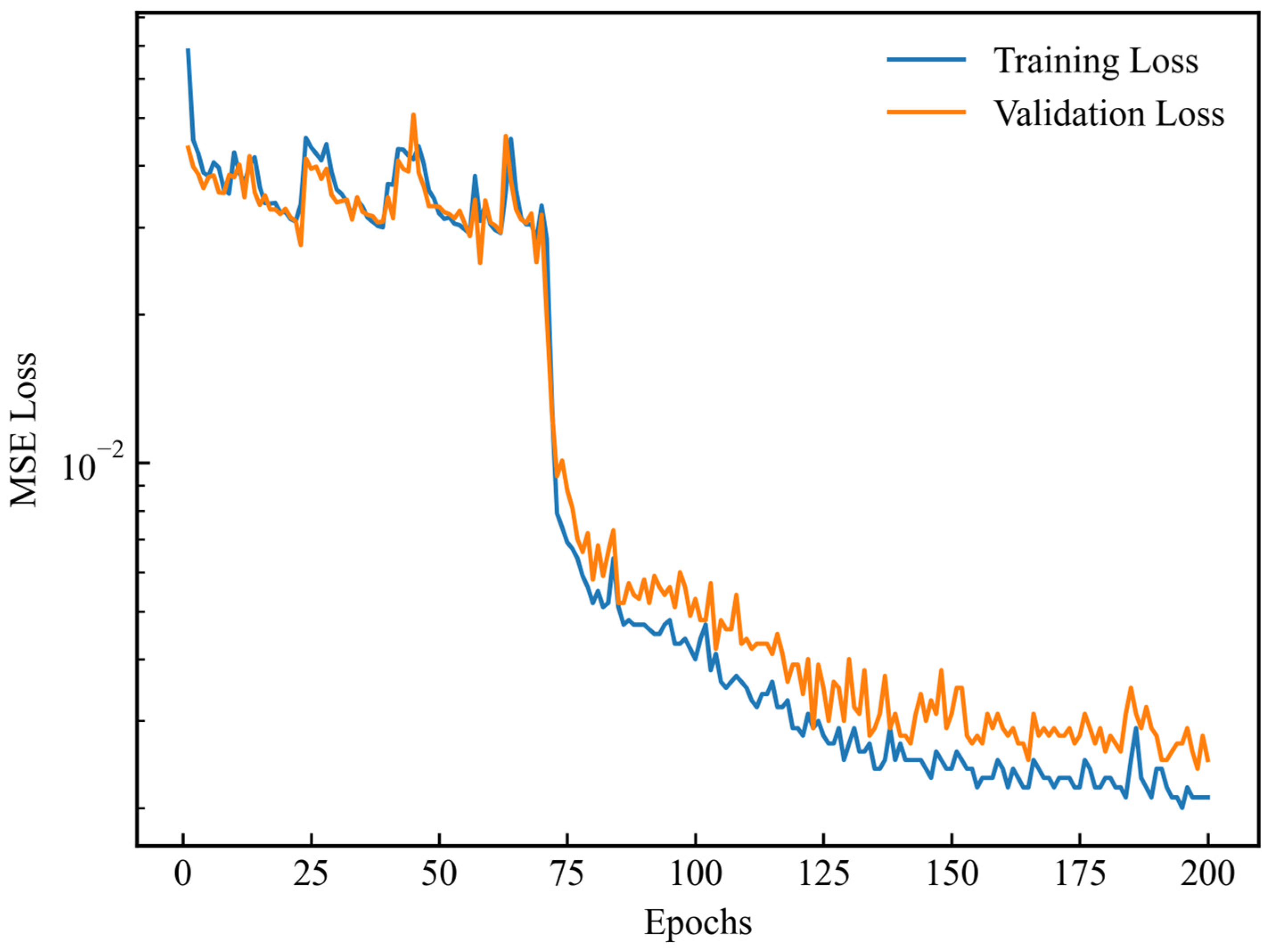
Table 4. During the training phase, the reconstruction error on the test set converges to approximately
. As illustrated in
Figure 2 (Figure_Loss_Curve), the MSE loss for both training and validation sets decreases rapidly and stabilizes after 150 epochs, which demonstrates that the model effectively captures the deep temporal features of the source-load data without overfitting. In the distributed robust optimization phase, to balance scheduling conservatism and cost-effectiveness, the Wasserstein distance confidence level was set to 0.957. The final model was solved using the Gurobi solver via the YALMIP toolbox.
4.2. Analysis of Source-Load Uncertainty Scenario Generation Results
4.2.1. Selection of Typical Scenario Quantity and Generation Results
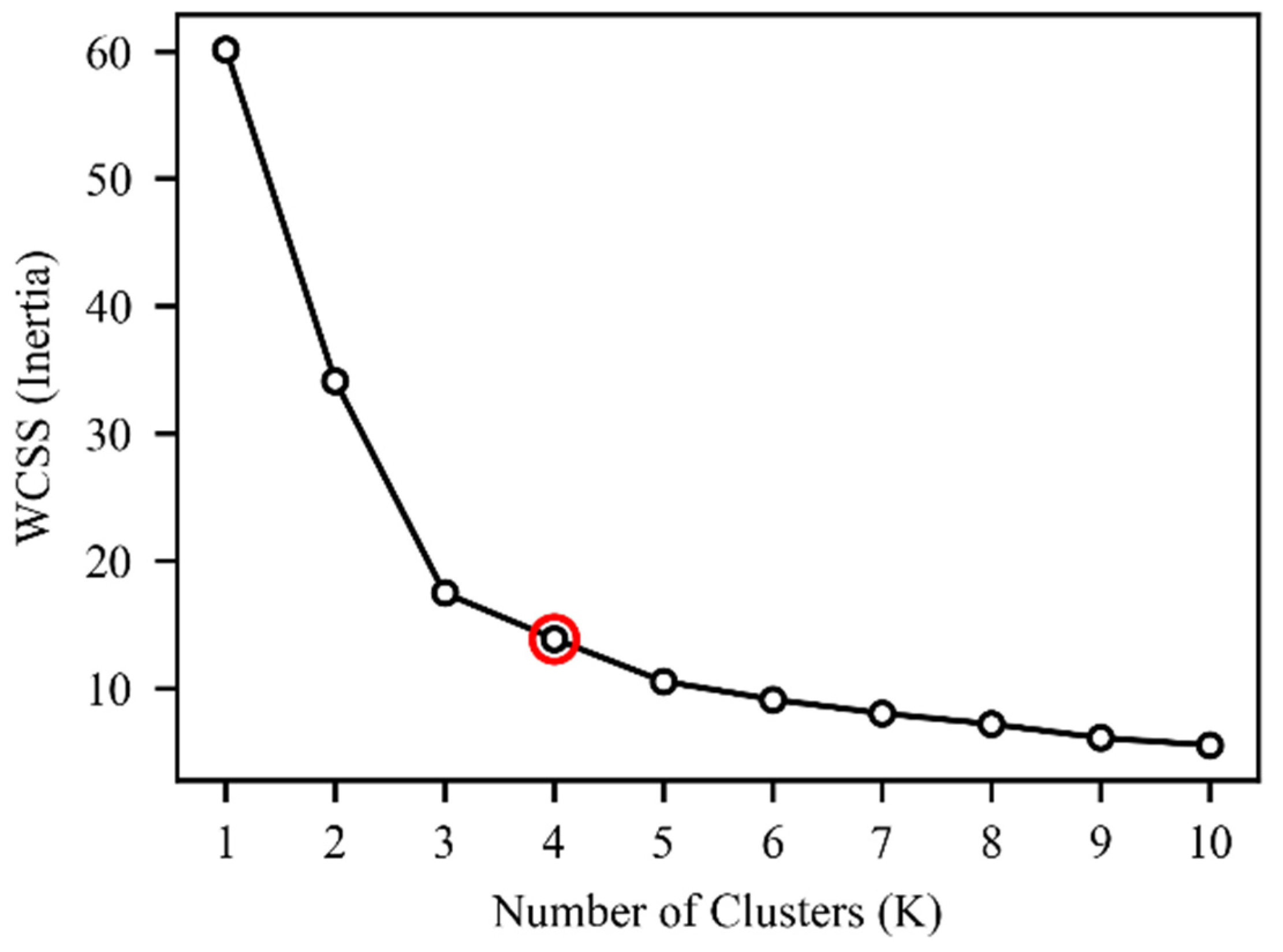
To balance scenario representativeness and computational efficiency for subsequent optimization scheduling, this study first employed the Elbow Method to determine the optimal clustering number
. As shown in
Figure 3, the weighted clustered sum of squares (WCSS) exhibits a monotonically decreasing trend as the clustering number
increases. Observing the slope change reveals that when
increases from 1 to 4, WCSS decreases significantly, indicating markedly improved clustering effectiveness. However, beyond K = 4, the curve flattens as the rate of error reduction narrows substantially.
This indicates that clustering source load uncertainties into four typical scenarios already covers the vast majority of operational conditions. At this point, further increasing the number of clusters yields only marginal benefits for feature extraction. Therefore, is ultimately selected as the optimal number of typical scenarios.
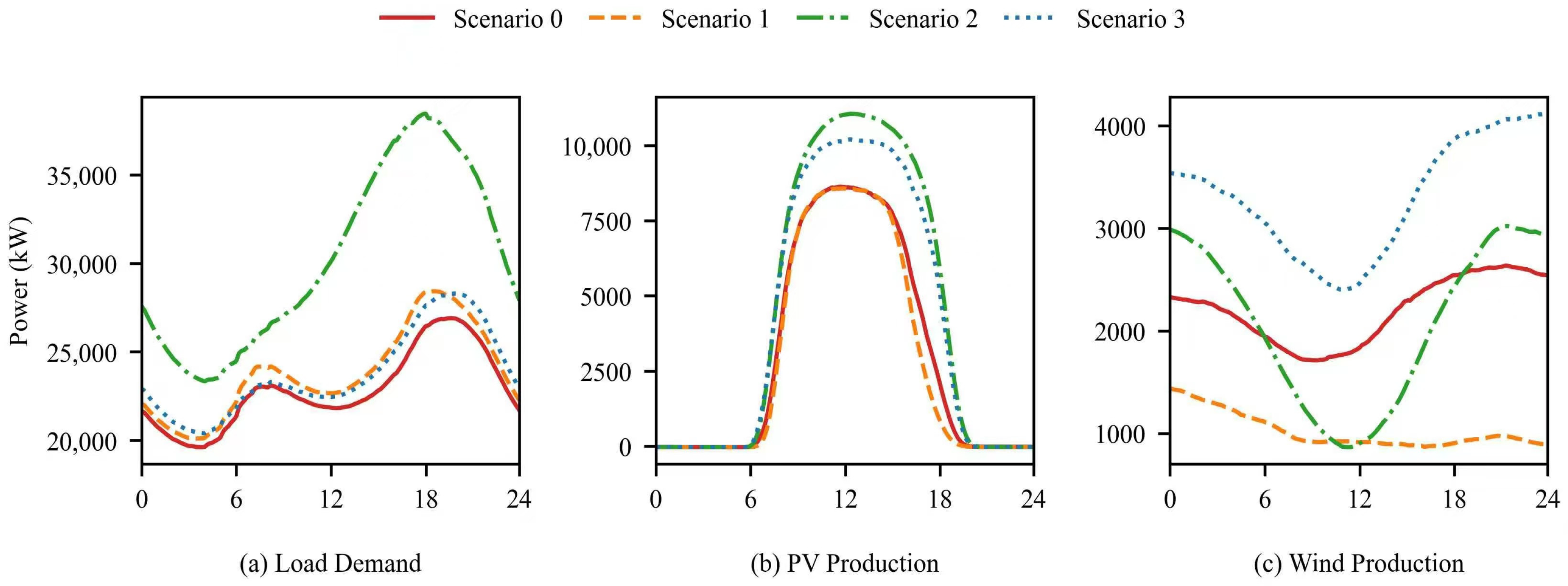
Based on the aforementioned parameter settings, the LSTM-AE network was employed to extract deep features, which were then combined with the K-Means algorithm to generate four typical daily scenarios encompassing wind power, photovoltaic power, and electrical load. Observation of the generated scenario curves reveals that this method successfully captures the fluctuation characteristics of source-load data across different time scales. This streamlined and representative scenario distribution not only avoids computational redundancy caused by excessive scenarios but also provides high-quality input samples for subsequent robust optimization.
4.2.2. Results of Typical Scenario Generation and Feature Analysis
Based on the optimal clustering number
determined in the previous section, this study utilizes the LSTM-AE network to extract deep temporal features from source-load data and combines it with the K-Means algorithm to generate four typical daily scenarios.
Figure 3 illustrates the intraday output characteristics of wind power, photovoltaic power, and electricity load under these four scenarios. Analysis of the probability distributions and morphological features across scenarios reveals that this method successfully captures the operational patterns of the system under varying meteorological conditions.
Based on statistical analysis of clustering results, Scenario 1 (orange dashed line) exhibits the highest occurrence probability at 33.6%. As shown in
Figure 4b, the PV output curve for this scenario demonstrates a pronounced midday peak characteristic, with the peak approaching rated capacity, representing typical summer sunny day operating conditions in this region. In stark contrast, Scenario 0 (red solid line) has an occurrence probability of 26.0%. Under this scenario, PV output is moderate, while wind power output exhibits certain random fluctuations, corresponding to conventional transitional season or winter operating modes.
Additionally, Scenario 2 (green dotted line) and Scenario 3 (blue dashed line) have similar occurrence probabilities of 20.3% and 20.2%, respectively, yet they represent distinctly different operational risks. Scenario 2 exhibits relatively smooth fluctuations in generation and load, representing a typical stable operating day. In contrast, Scenario 3, as shown in
Figure 4b, features extremely low PV output, nearly flat, clearly corresponding to consecutive rainy days or extreme adverse weather conditions. Simultaneously, in
Figure 4a, this scenario maintains high load demand during certain periods. This combination of low generation and high load constitutes a high-risk boundary condition for system operation. The proposed method utilizes this probability distribution as a reference, providing data support for constructing the Wasserstein ball center in subsequent distribution robust optimization models. This ensures scheduling strategies maintain robustness when covering such extreme scenarios.
4.3. Analysis of Dispatch Optimization Results
Comparison of Dispatch Results Across Optimization Methods
To validate the comprehensive advantages of the proposed distribution-robust optimization model in addressing source-load uncertainty, traditional stochastic optimization and robust optimization were selected as control methods. Under consistent system parameters and operational constraints, the dispatch results under the three different decision criteria are presented in
Table 5.
As shown in
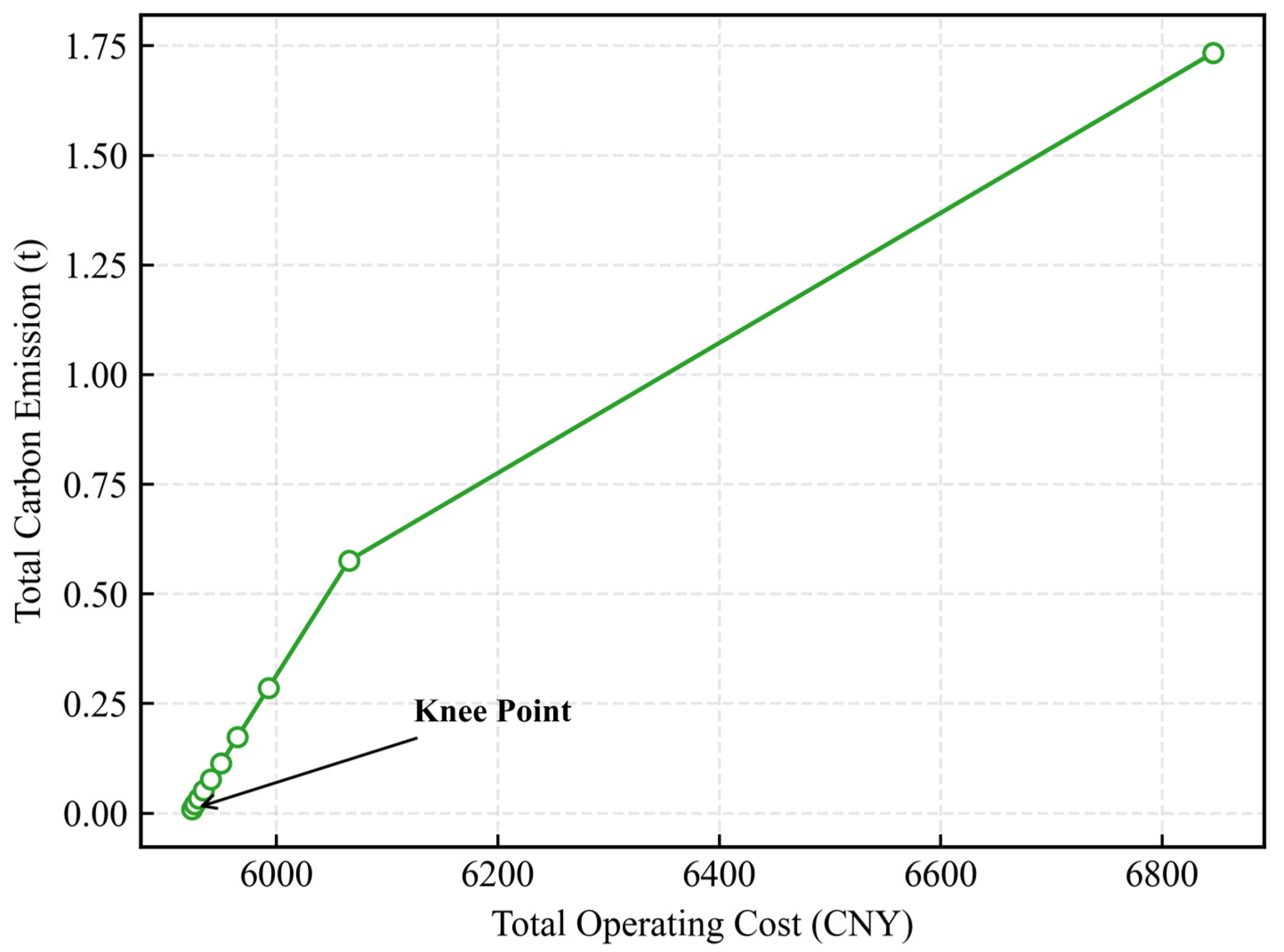
Table 5, the total operating cost of Stochastic Optimization (SO) is the lowest at 25.264 million yuan. This method bases decisions on predicted probability distributions without considering penalty costs from prediction errors. Robust Optimization (RO), which uses worst-case scenarios as the dispatch benchmark, incurs the highest total operating cost of 38.506 million yuan—a 52.4% increase over Stochastic Optimization. simultaneously achieving the highest carbon emissions of 2850.3 tons due to maintaining high gas turbine reserve capacity. The proposed distributed robust optimization (DRO) method achieves a total operating cost of 35.061 million yuan, positioned between the two approaches. Compared to robust optimization, DRO reduces costs by approximately 9.0% and lowers carbon emissions by 139.9 tons. The data indicates that the DRO method effectively balances economic efficiency and safety by constructing fuzzy sets to cover primary uncertainty risks. Additionally, regarding the performance of scenario generation, although traditional Monte Carlo (MC) sampling is widely utilized for uncertainty simulation, its large-scale random extraction in high-dimensional spaces often leads to a significant computational burden and struggles to capture the deep temporal characteristics of source-load fluctuations. In contrast, the LSTM-AE method employed in this study compresses complex data into a 32-dimensional latent feature space through dimensionality reduction. This approach not only significantly reduces the computational dimension during the scenario reduction process but also extracts nonlinear correlations via deep learning, thereby achieving higher fidelity with a minimal set of scenarios. Furthermore, to illustrate the trade-off between economic costs and carbon emissions within the proposed multi-objective optimization framework, the Pareto frontier is presented in
Figure 5. As shown in the figure, a clear competitive relationship exists between the two objectives: reducing carbon emissions necessitates an increase in total operating costs. The “Knee Point” identified on the curve represents the optimal compromise solution, where further reduction in emissions would lead to a disproportionate increase in costs. This frontier provides decision-makers with a flexible range of operational strategies depending on different policy priorities.
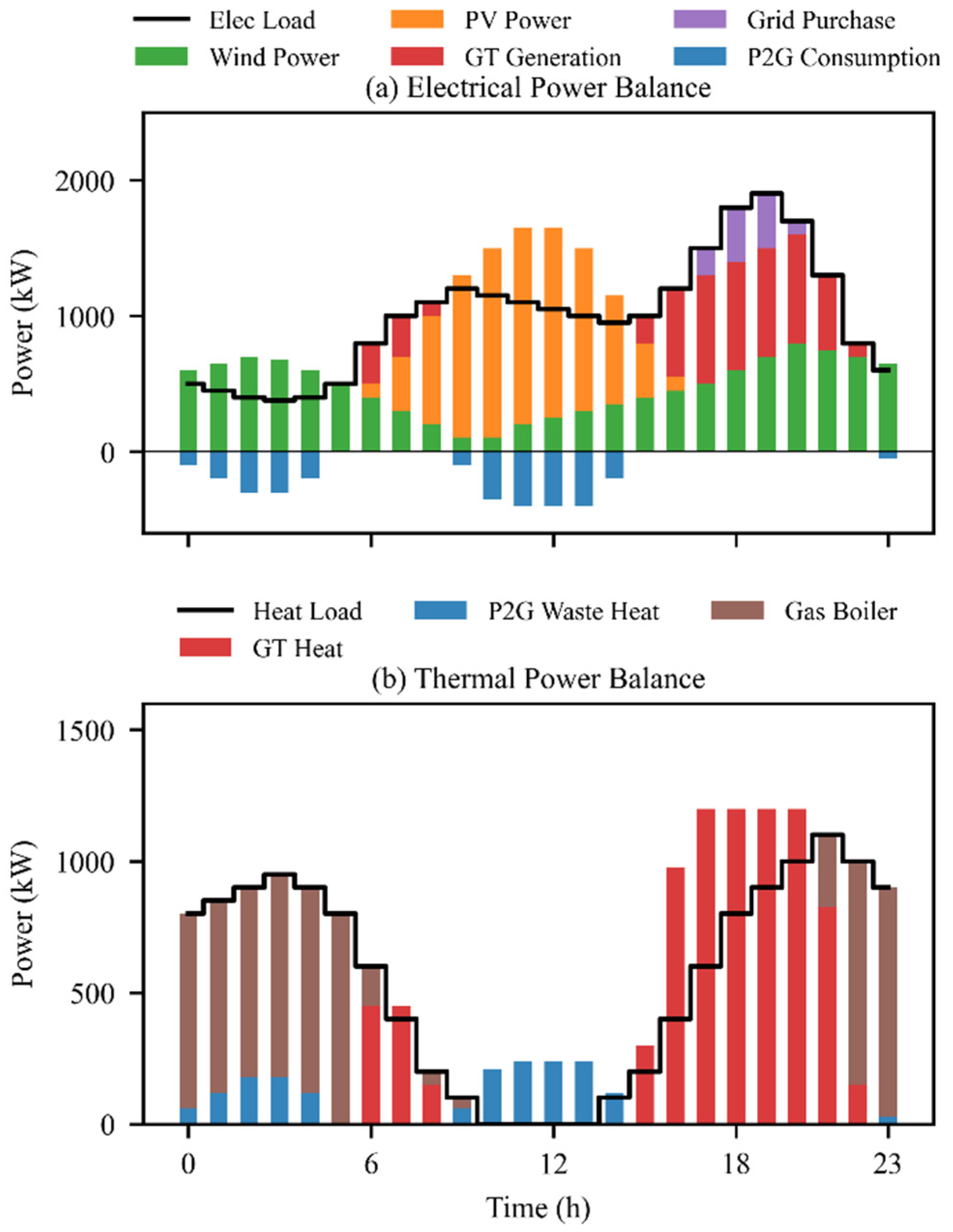
To further reveal the coupling mechanism of multi-energy flows within the system, a typical day with the highest occurrence probability (Scenario 1) was selected for analysis. The electrical and thermal power balance under this scenario is shown in
Figure 6.
Figure 6a illustrates the system’s electrical power balance. During the nighttime period of high wind power generation (00:00–06:00), the system experiences an electricity surplus. The dispatch strategy activates the P2G equipment (blue bars) to produce hydrogen through electrolysis, effectively utilizing the excess wind power. During the midday photovoltaic peak period (10:00–15:00), the system prioritizes utilizing photovoltaic output to meet load demands.
Figure 6b illustrates the thermal power balance. The residual heat generated by P2G equipment during nighttime operation (blue bars) is effectively recovered and injected into the thermal network, partially replacing gas boiler output. This demonstrates the role of multi-energy complementary mechanisms in enhancing energy efficiency.
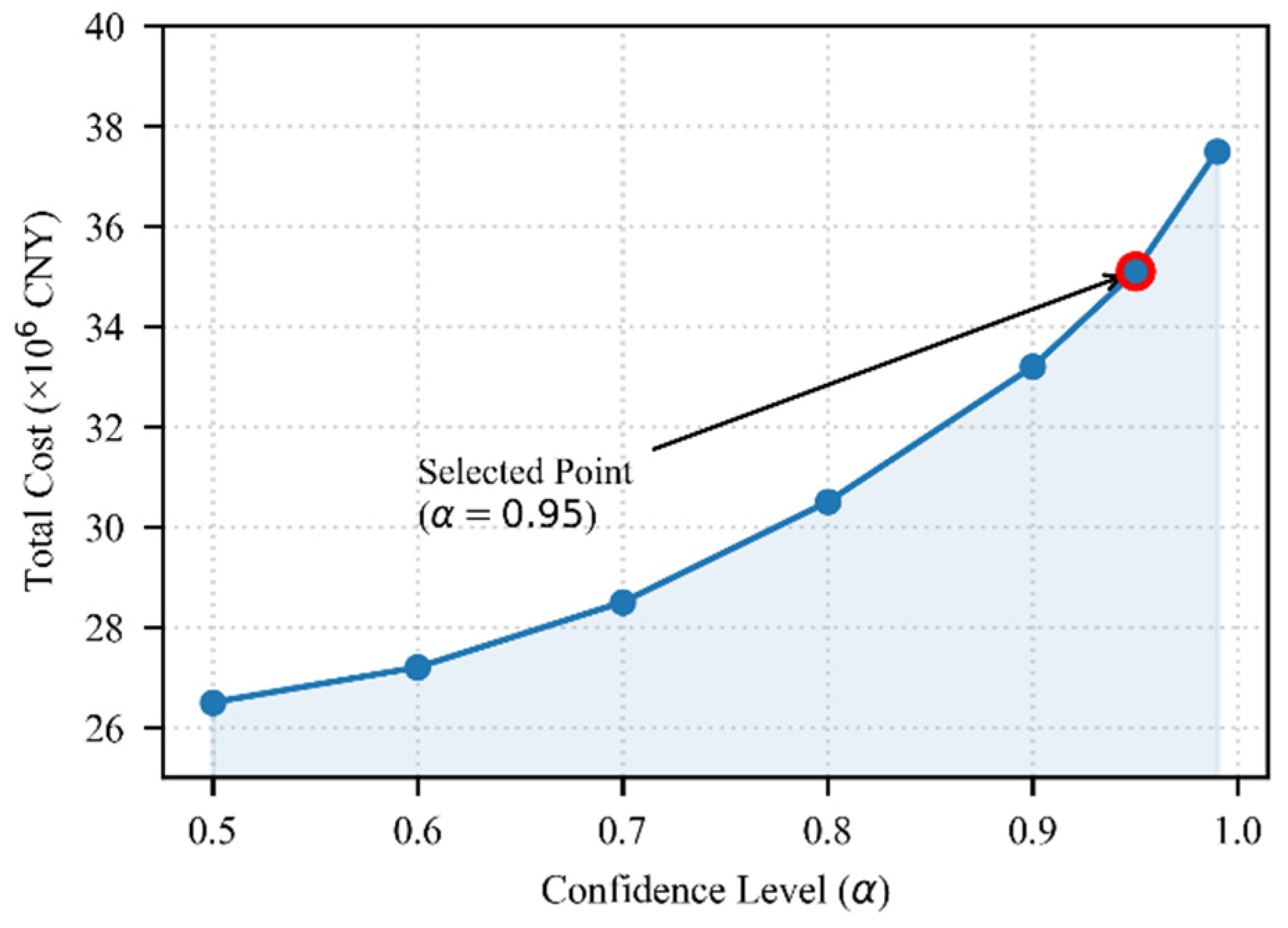
Additionally, to determine the optimal fuzzy set radius in the distributed robust model, the impact of confidence level
on system operating costs was analyzed, as shown in
Figure 7.
As shown in
Figure 7, as the confidence level
increases, the probability distribution range covered by the uncertainty set broadens, exposing the system to more severe scenarios and leading to a monotonically increasing operational cost. When
is low, the cost increase is relatively gradual, indicating that a modest increase in robustness costs can significantly enhance the system’s safety margin. Conversely, when
is high, the slope of the cost growth curve steepens markedly, signifying that pursuing extremely high reliability incurs disproportionate economic costs. Based on marginal benefit analysis, this paper ultimately selects
as the equilibrium point. At this level, the system achieves sufficient risk resilience while avoiding economic losses resulting from excessive conservatism.
4.4. Parameter Sensitivity Analysis
To evaluate the robustness of the proposed scheduling framework and address the trade-off between economic and environmental objectives, a multi-dimensional sensitivity analysis was conducted.
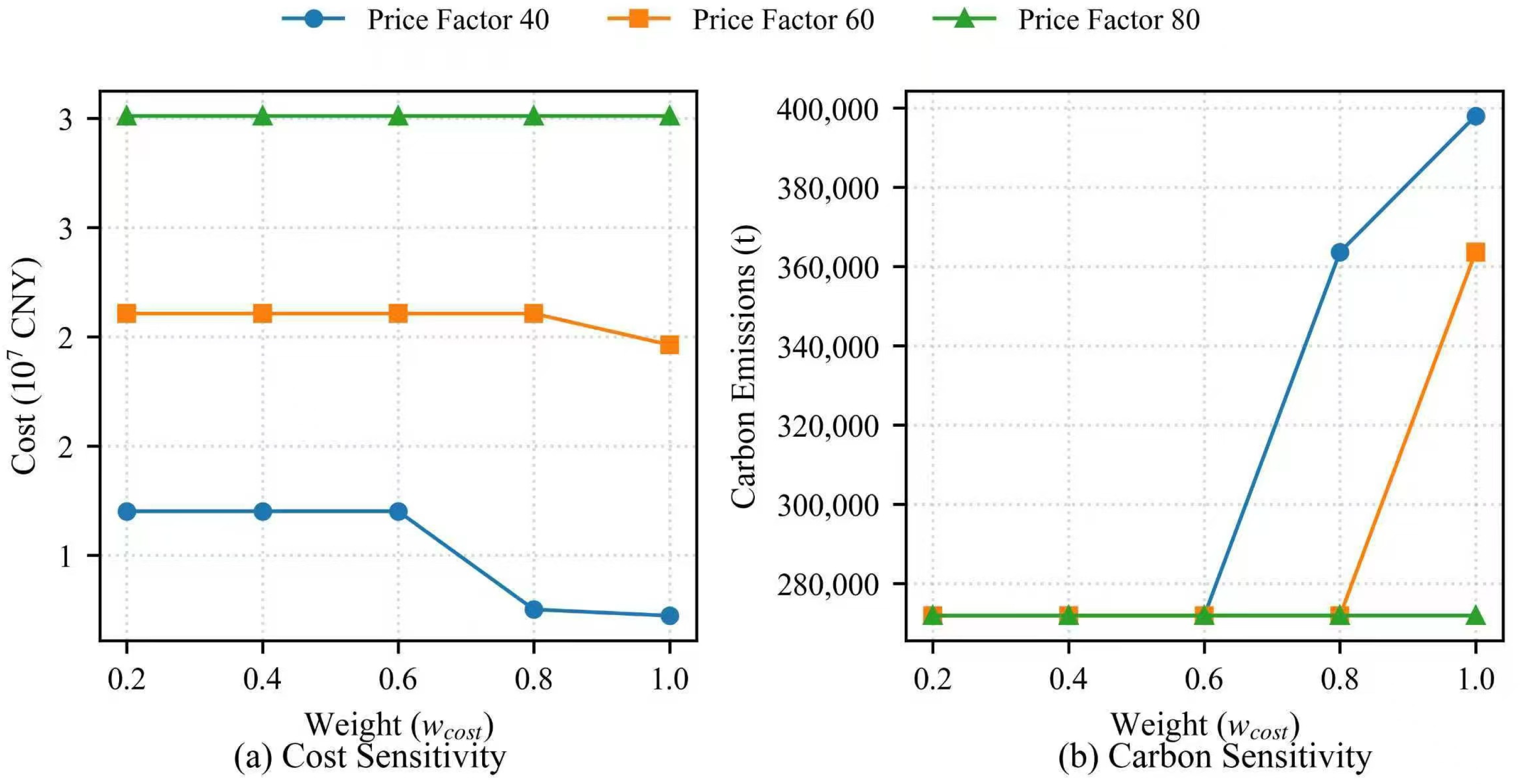
Figure 8 illustrates the impact of varying natural gas price factors (40, 60, and 80) and economic weighting factors (
) on the total system operating cost and carbon emissions. The detailed quantitative results across all simulated scenarios are summarized in
Table 6, providing a numerical foundation for the sensitivity trends observed in
Figure 8.
As shown in
Figure 8a, the total operating cost exhibits a linear growth trend as the natural gas price factor increases from 40 to 80. Quantitatively, when
, the total cost rises from
CNY to
CNY. Within each gas price scenario, increasing the economic weight
leads to a gradual reduction in total costs, demonstrating the model’s ability to adjust the dispatch strategy according to the decision-maker’s economic preference.
More importantly,
Figure 8b reveals a critical “threshold effect” in the system’s carbon reduction behavior. At a low gas price (factor 40), the carbon emissions are highly sensitive to the economic weight: when
increases beyond 0.6, the carbon emissions jump from 271.8 tons to 398.0 tons, representing a 46.4% increase. This indicates that at low fuel costs, economic benefits can easily override carbon reduction incentives. However, as the gas price rises to factor 80, the carbon emissions stabilize at a minimum level of 271.8 tons regardless of the weighting factor.
This statistical evidence confirms that the natural gas pricing mechanism acts as a powerful economic lever. It guides the system toward low-carbon operating modes by curbing gas turbine output and promoting renewable energy absorption through P2G conversion during high-price periods. By providing this grid-search-based quantitative analysis, the study offers a robust operational map for IES managers to balance profitability and sustainability under fluctuating market conditions.
5. Discussion
This paper addresses the dual uncertainties in generation and load, as well as low-carbon economic dispatch challenges faced by integrated energy systems under high renewable energy penetration. It proposes a dispatch method based on data-driven scenario generation and distributed robust optimization. By establishing an LSTM-AE deep clustering framework, a refined multi-energy coupling model, and a joint green certificate-carbon trading mechanism, the system achieves low-carbon economic operation and risk mitigation.
(1) Addressing source-load uncertainty modeling, a deep temporal scenario generation method based on LSTM-AE is proposed. The long short-term memory autoencoder extracts deep temporal features from source-load data, with the optimal number of clusters determined using the elbow method. Case studies demonstrate that the generated typical scenarios effectively cover diverse meteorological and load combinations during system operation. Notably, this method successfully identifies extreme high-risk scenarios with a 20.2% occurrence probability, providing a high-fidelity scenario set incorporating tail risks for subsequent optimization scheduling. This overcomes the limitation of traditional clustering methods in capturing long-term nonlinear features.
(2) At the system modeling and mechanism design level, this study constructs a comprehensive energy system dispatch model incorporating P2G waste heat recovery and integrated market mechanisms. By refining the modeling of energy conversion processes in power-to-gas equipment, the research enhances system energy efficiency through utilization of electrolysis waste heat. Additionally, it introduces green certificate trading and tiered carbon trading mechanisms to constrain carbon emissions. Parameter sensitivity analysis reveals that natural gas prices exert significant economic leverage on system operation strategies. At elevated gas prices, price signals effectively guide the system to reduce fossil fuel consumption, instead utilizing multi-energy coupling equipment to absorb renewable energy, achieving a nonlinear reduction in carbon emissions.
(3) To address the robustness issue in scheduling decisions, a multi-objective distributed robust optimization model based on Wasserstein distance was established. By constructing fuzzy sets incorporating actual probability distributions, this model achieves an effective trade-off between economic efficiency and low-carbon performance on the Pareto frontier. Comparative case study data indicates that the distribution robust optimization method achieves total operating costs of 35.061 million yuan, representing a reduction of approximately 9.0% compared to traditional robust optimization, while also decreasing carbon emissions by 139.9 tons. Although its costs are slightly higher than those of stochastic optimization, it effectively mitigates the risk of load shedding under extreme scenarios. This method successfully achieves a reasonable trade-off between economic benefits and operational safety at a confidence level of 0.95.
5.1. Regional Applicability of the Data and Model
Although this study utilizes renewable energy and load data from California (NREL/CAISO), the methodological framework is highly applicable to other regions, including China. California’s energy grid represents a “pioneer scenario” characterized by extremely high renewable penetration and significant source-load volatility. By testing our LSTM-AE and DRO models on this high-standard dataset, we demonstrate the system’s robustness under extreme conditions, providing a valuable reference for the rapidly evolving integrated energy systems in China and other developing regions.
5.2. Adaptability to Different Carbon Market Structures
The proposed joint Green Certificate-Carbon Trading (GCT-CT) mechanism is designed with modularity in mind. While the current model aligns with the “Cap-and-Trade” framework common in international markets, it can be easily adapted to different market structures, such as China’s national carbon emissions trading market. By adjusting the carbon quota benchmarks () and price sensitivity factors, the model remains effective across various regulatory environments, ensuring that the optimization logic promotes low-carbon transitions regardless of specific regional market rules.
Constrained by research time and objective conditions, this study still has room for improvement in the field of integrated energy system optimization and dispatch. Future work can explore the following dimensions in greater depth.
(1) Further research can enhance the precision of thermal system modeling. This paper primarily focuses on power balance constraints in district heating network modeling, simplifying the thermal inertia and transmission delay characteristics of the network. Subsequent studies could incorporate pipe storage effects and dynamic transmission equations to explore the network’s energy storage potential over longer time scales, thereby improving system flexibility in responding to short-term power fluctuations.
(2) The integrated demand response mechanism for source-load interaction warrants further exploration. The current scheduling strategy primarily addresses uncertainty on the supply side, while the potential for load-side response is mainly based on passive time-of-use pricing. Future research may incorporate incentive-based demand response or integrated demand response mechanisms, considering cross-elasticity of substitution among electricity, heat, and gas loads to establish a collaborative optimization framework for bidirectional source-load interaction. Furthermore, with the advancement of distributed energy resources, the scope of study can expand from single campuses to interconnected systems comprising multiple microgrids or regions. This would involve exploring collaborative scheduling strategies based on distributed algorithms like the alternating direction method of multipliers (ADMM) to address privacy protection and computational efficiency challenges in large-scale systems.
6. Conclusions
In this paper, a distributionally robust scheduling strategy for an Integrated Energy System (IES) is proposed to handle the dual challenges of source-load uncertainty and carbon emission reduction. The conclusions of this study are summarized as follows:
(1) The proposed LSTM-AE-Kmeans method effectively handles high-dimensional sequential data. By compressing complex temporal features into a 32-dimensional latent space, the model achieves high-fidelity scenario generation with a converged MSE of approximately .
(2) The Wasserstein-based DRO model provides a superior balance between robustness and economy. Simulation results in Chapter 5 demonstrate that the proposed strategy can mitigate tail risks via the CVaR objective, reducing operational costs by approximately 9.0% compared to traditional robust optimization (RO).
(3) The integration of a refined P2G model and tiered carbon trading provides a clear pathway for low-carbon transition. The recovery of electrolysis waste heat and the progressive economic penalty mechanism result in a substantial reduction of carbon emissions by 139.9 tons.
This research provides a practical framework for IES operators to optimize decision-making under uncertainty. Future studies will explore the scalability of this model in multi-energy microgrid clusters.
Author Contributions
Conceptualization, Y.C., W.W. and X.L.; methodology, Y.C.; validation, W.W., Y.C., X.L., S.Y. and M.Z.; formal analysis, Y.C., S.Y. and M.Z.; investigation, Y.C. and X.L.; resources, Y.C. and W.W.; writing—original draft preparation, Y.C.; writing—review and editing, Y.C.; visualization, Y.C. and S.Y.; supervision, W.W. and X.L. All authors have read and agreed to the published version of the manuscript.
Funding
This research was supported by the Xinjiang Uygur Autonomous Region Natural Science Foundation Project (2025D01C261), National Natural Science Foundation of China Project (52267005) and Innovation Fund Research Program Project of the Postdoctoral Research Station in Electrical Engineering, Xinjiang University (XJU-DQGCBSHLDZ-2025002).
Data Availability Statement
The data presented in this study are available upon reasonable request from the corresponding author due to ongoing research and institutional restrictions.
Conflicts of Interest
The authors declare no conflicts of interest.
References
- Zhou, X.; Zhao, Q.; Zhang, Y. Analysis of Development Trends in China’s Energy and Power System Under the Dual Carbon Goals: Green Electricity Substitution and Green Hydrogen Substitution. Trans. Chin. Soc. Electr. Eng. 2024, 44, 6707–6721. [Google Scholar]
- Li, Q.; Li, Z.; Sun, B. Multi-timescale Integration Method for Distributed Energy Resources in Active Distribution Networks Considering Uncertainty. Renew. Energy 2023, 41, 692–698. [Google Scholar] [CrossRef]
- Germeshausen, R.; Heim, S.; Wagner, U.J. Support for renewable energy: The case of wind power. J. Public Econ. 2025, 250, 105468. [Google Scholar] [CrossRef]
- Chen, M.; Chen, S.; Wei, Z.; Sun, G.; Zhou, Y. Optimal Scheduling of Electro-Gas-Hydrogen Hybrid Integrated Energy Systems Considering Seasonal Hydrogen Storage. Power Syst. Technol. 2025, 49, 32–40. [Google Scholar] [CrossRef]
- Zhang, Y.; Sun, P.; Meng, X.; Ji, X.; Yang, M.; Li, X. Low-Carbon Economic Dispatch of Integrated Energy Systems Based on Dual Response to Carbon Potential and Energy Prices. Autom. Electr. Power Syst. 2024, 48, 21–33. Available online: https://link.cnki.net/urlid/32.1180.TP.20230828.0831 (accessed on 31 December 2025).
- Chen, F.; Liu, L.; Lian, X.; Wu, R.; Lin, J. Robust Optimization of Microgrids and Shared Energy Storage for Uncertain Scenarios. Power Syst. Technol. 2025, 1–16. [Google Scholar] [CrossRef]
- Zhong, H.P.; Fan, Y.B.; Shui, J.J.; Wang, D.; Peng, D. Integrated energy system optimization scheduling considering source-load uncertainty and linear carbon trading. J. Syst. Simul. 2025, 37, 2485–2499. [Google Scholar] [CrossRef]
- Chen, J.; Wang, F.; Xu, T.; Zuo, C. Optimal Dispatch of Virtual Power Plants Considering Wind and Solar Uncertainty under Electricity-Carbon Markets. Distrib. Energy 2024, 9, 60–68. [Google Scholar] [CrossRef]
- Bo, L.; Zheng, H.; Cheng, X.; Wang, T.; Lu, C.; Xu, X. A Daily Bidding Optimization Model for Wind-Solar-Storage Integration Based on Kernel Density and Copula Functions. J. Nanjing Univ. Inf. Sci. Technol. 2025, 17, 731–739. [Google Scholar] [CrossRef]
- Zhang, K.; Feng, P.; Zhang, G.; Hou, J.; Xie, T.; Li, M.; He, X. Multi-objective optimization scheduling for CCHP-based microgrids considering source-load uncertainty. Prot. Control Electr. Syst. 2021, 49, 18–27. [Google Scholar] [CrossRef]
- Esfahani, P.M.; Kuhn, D. Data-driven distributionally robust optimization using the Wasserstein metric: Performance guarantees and tractable reformulations. Math. Program. 2018, 171, 115–166. [Google Scholar] [CrossRef]
- Li, J.; Zhou, J.; Chen, B. Review of wind power scenario generation methods for optimal operation of renewable energy systems. Appl. Energy 2020, 280, 115992. [Google Scholar] [CrossRef]
- Li, Y.; Wang, J.; Hou, Z. Data-driven distributionally robust optimization for integrated energy systems considering uncertainty correlation. Appl. Energy 2022, 306, 118115. [Google Scholar]
- Yu, X.; Chen, J.; Zheng, Z. A Review of Distributed Robust Optimization in Integrated Energy System Dispatch and Planning. Glob. Energy Interconnect. 2023, 6, 207–215. [Google Scholar]
- He, S.; Ruan, H.; Gao, H.; Su, Y.; Gong, Z.; Liu, H.; Jia, Q.; Wang, C. Theoretical Analysis and Application of Distributed Robust Optimization Methods in Power Systems: A Review. Autom. Electr. Power Syst. 2020, 44, 179–191. [Google Scholar] [CrossRef]
- Ning, Y.; Luo, C.; Zhao, Z.; Miao, Z.; Zeng, Z.; Ding, T. Two-stage Stochastic Optimization Dispatch for New Energy Power Systems Considering Nuclear Peak Shaving. Electr. Power Eng. Technol. 2020, 39, 66–74. [Google Scholar]
- Li, Y.; Zhang, Y.; Xu, Z.; Su, Y.; Gong, Z.; Liu, H.; Jia, Q.; Wang, C. Two-stage Robust Reserve Optimization for Data-Driven Electrothermal Integrated Energy Systems. Glob. Energy Interconnect. 2022, 5, 127–137. [Google Scholar]
- Yang, H.; Ou, B.; Huang, X.; Zheng, B.; You, J.; Yu, H. Comprehensive Energy Optimization and Scheduling Considering Hydrogen-Doped Natural Gas in Multi-Transaction Mechanisms. In Proceedings of the 2025 International Power and Sustainable Energy Technologies Conference (PSETC), Singapore, 22–24 August 2025; pp. 1–5. [Google Scholar] [CrossRef]
- Liu, X.; Nie, F.; Yang, D.; Wang, Y.; Xu, Y. Low-Carbon Economic Dispatch of Integrated Energy Systems Considering Green Certificate-Carbon Trading Mechanisms under Carbon Capture Power Plant-Power-to-Gas Combined Operation Mode. Power Syst. Technol. 2023, 47, 2207–2222. [Google Scholar] [CrossRef]
- Xu, Y.; Xu, Y.; Zhu, M. Distributed Robust Optimization of Hydrogen-Based Integrated Energy Systems Considering Green Certificates and Carbon Trading. Trans. Electr. Power Syst. Autom. 2025, 1–11. [Google Scholar] [CrossRef]
- Zhou, Y.; Li, J.; Chen, G.; Zhao, K.; Lin, W. Distributed Robust Optimization Modeling and Evaluation for Power System Reliability Considering High Wind Power Penetration. Prot. Control Electr. Syst. 2025, 53, 116–124. [Google Scholar]
- Li, J.; Sun, Q.; Wang, Q.; Ye, Y.; Hu, H.; Zhang, X. Data-Driven Distributed Robust Optimization Scheduling for Multi-Energy Microgrids Considering Uncertainty Correlation. Power Constr. 2025, 46, 22–33. [Google Scholar]
- Zhong, R.H.; Zhang, Y.C.; Zhu, S.; Xie, S. Research on Low-Carbon Operation Strategy for Virtual Power Plant Consortium and Distribution Grid Collaboration Based on Peer-to-Peer Electricity-Carbon Trading. Power Syst. Technol. 2024, 48, 3554–3563. [Google Scholar]
- Liang, H.S.; Ma, J. Data-driven resource planning for virtual powerplant integrating demand response customer selection and storage. IEEE Trans. Ind. Inform. 2022, 18, 1833–1844. [Google Scholar] [CrossRef]
- Su, Z.; Wang, L.; Liang, X.; Chen, T.; Zeng, S.; Yu, Z. Optimal Dispatch of Virtual Power Plants Considering Stepwise Carbon Trading and Integrated Demand Response. China Electr. Power 2023, 56, 174–182. [Google Scholar]
- Yang, F.; Wang, H.; Wang, Z. Optimization Strategy for Integrated Energy Virtual Power Plant Operation Based on Carbon Emission Production Priority. J. Electr. Power Sci. Technol. 2024, 39, 192–202. [Google Scholar] [CrossRef]
- Xuan, A.; Shen, X.W.; Guo, Q.L.; Sun, H. Two-stage planning for electricity-gas coupled integrated energy system with carbon capture, utilization, and storage considering carbon tax and price uncertainties. IEEE Trans. Power Syst. 2023, 38, 2553–2565. [Google Scholar] [CrossRef]
- Xie, H.; Guo, J.; Li, Y.; Liu, X.; Shen, Y. A price mechanism design for regional integrated energy market considering carbon emissions. Electr. Power Syst. Res. 2023, 218, 109197. [Google Scholar] [CrossRef]
- Rockafellar, R.T.; Uryasev, S. Conditional value-at-risk for general loss distributions. J. Bank. Financ. 2002, 26, 1443–1471. [Google Scholar] [CrossRef]
- Zhu, C.; Zhang, Y.; Yan, Z.; Zhu, J.; Zhao, T. Modeling Wind Power Sequences Using an Improved Markov Chain Monte Carlo Method. J. Electr. Eng. 2020, 35, 577–589. [Google Scholar] [CrossRef]
- Rahmani, S.; Amjady, N.; Shah, R. Application of Deep Learning Algorithms for Scenario Analysis of Renewable Energy-Integrated Power Systems: A Critical Review. Electronics 2025, 14, 2150. [Google Scholar] [CrossRef]
- Park, G.; Kim, J. Multivariate Variable-Based LSTM-AE Model for Solar Power Prediction. Int. J. Adv. Sci. Eng. Inf. Technol. 2025, 15, 293–299. [Google Scholar] [CrossRef]
- Deng, D.; Lü, Y.; Shi, Y.; Shi, Y.; Li, Z.; Ji, Z.; Liu, J. Low-Carbon Operation of Integrated Energy Systems Combining Electricity, Heat, Gas, Hydrogen, and Storage: Considering Two-Stage P2G-CCS Coupling and Source-Load Coordinated Optimization. Chin. J. Sol. Energy 2025, 46, 390–402. [Google Scholar]
- Yu, Z.; Zhao, Z.; Wang, J.; Cheng, C.; Su, Y. Short-Term Dispatch of Multi-Source Multi-Objective Wind-Solar-Hydro-Thermal Power Systems for Flexible Regulation and Low-Carbon Economic Operation. Power Syst. Technol. 2025, 49, 3104–3115. [Google Scholar] [CrossRef]
- Zhao, C.; Guan, Y. Data-driven risk-averse stochastic optimization with Wasserstein metric. Oper. Res. 2018, 66, 262–279. [Google Scholar] [CrossRef]
| Disclaimer/Publisher’s Note: The statements, opinions and data contained in all publications are solely those of the individual author(s) and contributor(s) and not of MDPI and/or the editor(s). MDPI and/or the editor(s) disclaim responsibility for any injury to people or property resulting from any ideas, methods, instructions or products referred to in the content. |