
Article

Sustainable Valorization of Tsipouro Liquid Waste via Fermentation for Hericium erinaceus Biomass Production
by
Eirini Stini
1,2,
Ilias Diamantis
1,2,
Stamatina Kallithraka
3,
Seraphim Papanikolaou
2 and
Panagiota Diamantopoulou
1,*
1
Laboratory of Edible Fungi, Institute of Technology of Agricultural Products, Hellenic Agricultural Organization—Dimitra, 1, Sof. Venizelou, 14123 Lykovryssi, Greece
2
Laboratory of Food Microbiology and Biotechnology, Department of Food Science and Human Nutrition, Agricultural University of Athens, 75 Iera Odos Street, 11855 Athens, Greece
3
Laboratory of Oenology and Alcoholic Drinks, Department of Food Science and Human Nutrition, Agricultural University of Athens, 75 Iera Odos Street, 11855 Athens, Greece
*
Author to whom correspondence should be addressed.
Processes 2026, 14(1), 168; https://doi.org/10.3390/pr14010168
Submission received: 24 November 2025 / Revised: 16 December 2025 / Accepted: 21 December 2025 / Published: 4 January 2026
(This article belongs to the Special Issue Resource Utilization of Food Industry Byproducts)

Abstract

This study investigates the potential of tsipouro liquid waste (TLW) as a sustainable substrate for cultivating the edible–medicinal mushroom Hericium erinaceus under static liquid fermentation. TLW naturally contains high glycerol levels and significant quantities of phenolic compounds; therefore, five media (0–50% v/v TLW) with varying phenolic concentrations and a standard initial glycerol level (~20 g/L) were prepared to simulate TLW-type substrates. Throughout fermentation, physicochemical parameters in the culture medium (pH, electrical conductivity, total sugars, free amino nitrogen, proteins, laccase activity, total phenolics, ethanol, glycerol) and biomass composition (intracellular polysaccharides, proteins, lipids, phenolic compounds, flavonoids, triterpenoids, antioxidant activity) were determined. Results showed that increasing TLW concentration enhanced biomass production and bioactive metabolite accumulation. The highest dry biomass (22.8 g/L) and protein (4.06 g/L) content were obtained in 50% v/v TLW, while maximum polysaccharides (6.8 g/L) occurred in 17% v/v TLW. Fungal growth led to a reduction of up to 74% in total phenolic content, indicating simultaneous bioremediation potential. Fruiting body formation—rare and uncommon in liquid cultures—occurred at the end of fermentation period. Fruiting bodies contained higher protein (24.5% w/w) and total phenolic compounds (13.36 mg GAE/g), whereas mycelium accumulated more polysaccharides (49% w/w). This study demonstrates that TLW can serve as a cost-effective, ecofriendly medium for producing high-value H. erinaceus biomass and bioactive metabolites, supporting circular bioeconomy applications in the alcoholic beverage sector.

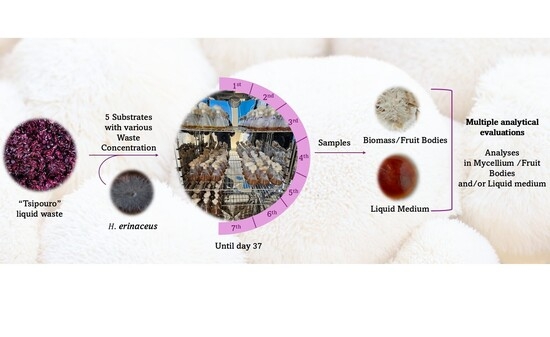
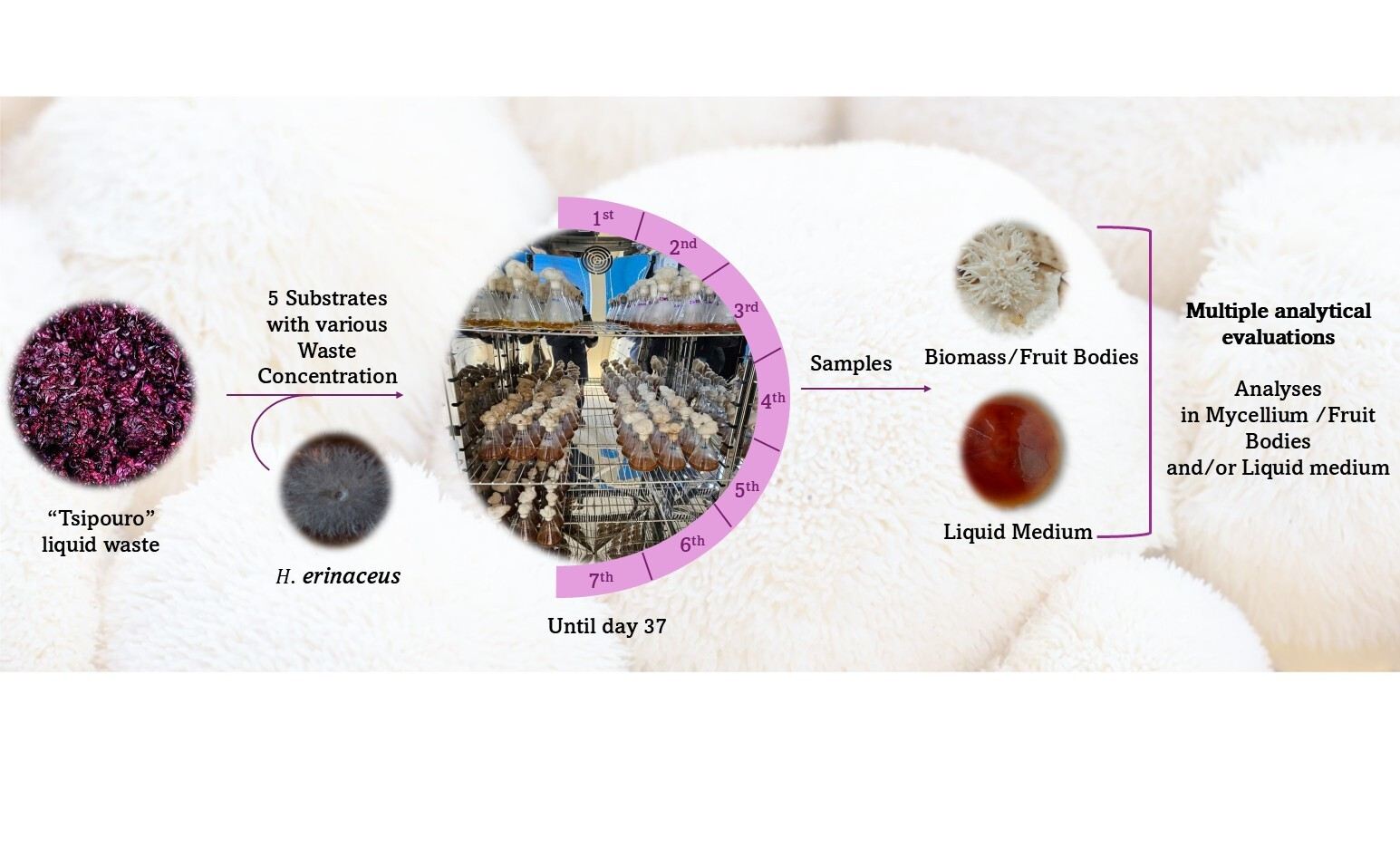
Graphical Abstract

1. Introduction

Tsipouro, also known as tsikoudia in Crete and the Cyclades, is a traditional Greek alcoholic spirit produced by distilling the residues of grape marc (skins, seeds, and stems) remaining after wine production [1]. These grape pomaces, rich in phenolic compounds and residual sugars, undergo spontaneous fermentation for two to four weeks, during which ethanol and small quantities of methanol and glycerol are produced. Following fermentation, the marc is distilled in copper to yield a transparent distillate typically diluted to an ethanol content of 40–45% v/v [2,3]. Tsipouro shares production principles and organoleptic similarities with other Mediterranean spirits such as Italian grappa, Spanish orujo, Cypriot zivania, Portuguese bagaceira and French eau-de-vie de marc [4]. Its distillation generates liquid effluents rich in organic load and phenolic compounds, forming what is referred to as tsipouro liquid waste (TLW) [5]. These effluents exhibit high organic load, acidity and phenolic content, the latter being environmentally problematic due to their antimicrobial activity and limited biodegradability [6,7,8,9]. Glycerol, a non-volatile by-product of alcoholic fermentation, accumulates in liquid wastewater and can reach concentrations exceeding 20 g/L depending on grape variety and fermentation conditions [10]. In fact, glycerol-containing residues (like these of the TLW type) can be generated in significant quantities, rendering glycerol as one of the most important side products and low-added-value products derived from several currently developed agro-industrial activities [11,12].
Traditional wastewater treatment approaches, such as solvent extraction, activated carbon absorption, or chemical oxidation, are costly and generate secondary residues [13]. Recent research has highlighted biological treatment as a more sustainable and eco-efficient approach, turning agro-industrial residues into valuable products [14] and has highlighted the feasibility of cultivating white-rot and edible fungi on liquid effluents. For example, Kachrimanidou et al. [15] used grape pomace extract as a substrate for fungal biomass and polysaccharide production of Trametes versicolor, and Fernandes et al. [16] achieved up to 100% pollutant removal by T. versicolor and Bjerkandera adusta, while Pilafidis et al. [17] successfully grew Pleurotus, Ganoderma and Hericium species on diluted vinasse media, producing mycelial biomass rich in β-glucans and other bioactive compounds. These findings indicate that TLW could serve as a nutrient source and substrate for sustainable fungal biomass production. The extracellular ligninolytic enzymes of white-rot fungi, such as laccases, manganese peroxidases and versatile peroxidases, enable degradation of phenolic compounds, thus integrating waste remediation with biomass valorization [11].
Hericium erinaceus (Bull.: Fr.) Pers., commonly known as lion’s mane mushroom, is an edible and medicinal basidiomycete belonging to the family Hericiaceae, order Russulales [18]. It naturally colonizes decaying hardwoods and forms noticeable cascading fruiting bodies resembling a lion’s mane [19,20]. The increasing global demand for functional foods and nutraceuticals has drawn significant attention to edible and medicinal mushrooms, particularly H. erinaceus, which produces bioactive metabolites like terpenes (hericenones, erinacines) with neuroprotective, antioxidant, immunomodulatory and antitumor properties [21]. The chemical composition of H. erinaceus varies with substrate and culture conditions but generally includes polysaccharides (notably β-glucans), proteins, fibres and bioactive terpenoids such as hericenones and erinacines [19,21,22].
The formation of fruiting bodies during submerged (or liquid) fermentation is considered an unusual phenomenon for higher fungi, as liquid cultivation systems are primarily designed to promote vegetative mycelial growth rather than reproductive development. In most cases, submerged cultivation favors biomass accumulation and metabolite production, while the differentiation into complex reproductive structures is suppressed due to the homogeneous and nutrient-rich environment [23,24]. Nevertheless, under specific conditions, a transition from the mycelial to the reproductive phase may occur, typically triggered by environmental and nutritional signals associated with the late stages of cultivation. Such signals include nutrient exhaustion (particularly nitrogen or free amino nitrogen depletion), as well as shifts in physicochemical parameters, which are known to activate developmental pathways leading to morphological differentiation in basidiomycetes [25,26]. Additionally, light has been recognized as an important regulatory indication in fungal morphogenesis. Even incidental or low-intensity light exposure can act as a secondary environmental signal influencing developmental responses, metabolism and differentiation in H. erinaceus, potentially contributing to the initiation of reproductive structures under otherwise non-inductive submerged conditions [27].
Given these characteristics, exploring alternative and sustainable cultivation substrates has become increasingly relevant. The rising interest in functional mushrooms reflects their diverse bioactive compounds and potential health benefits. Liquid-state fermentation has therefore emerged as a promising and scalable approach, providing improved process control and consistent metabolite production [28,29,30]. Among various agricultural by-products, grape pomace (or marc) has emerged as a valuable substrate due to its high lignocellulosic content and bioactive compounds [31]. Using grape pomace (or marc) derived from tsipouro (TLW) aligns with circular bioeconomy principles by converting waste into high-value fungal biomass and metabolites while reducing environmental impact [31,32].
The aim of this study was to investigate the feasibility of using TLW as a substrate in liquid-state fermentations for H. erinaceus biomass production and to examine the profile of bioactive metabolites in the produced mycelium and broth, evaluating its potential as a sustainable cultivation medium. Despite its biotechnological importance, H. erinaceus has never been systematically investigated in TLW-based liquid fermentations, representing a significant and unexplored research gap.

2. Materials and Methods

The strain H. erinaceus AMRL 361 was obtained from the Edible Fungi Laboratory of the Institute of Technology of Agricultural Products (Hellenic Agricultural Organization—Dimitra). The fungus was maintained on potato dextrose agar (PDA, Merck, Darmstadt, Germany) at 5.0 °C. Mycelial discs of 0.9 mm, excised from the edge of 15-day-old colonies, were used for inoculation.
Tsipouro liquid waste (TLW), a by-product from a tsipouro distillery in Lemnos, North Aegean Region, Greece, was collected from a single production batch and used as the main cultivation medium. After removal of insoluble solids by centrifugation (6000 rpm, 10 min, 4 °C), TLW was supplemented with commercial carbon sources (glycerol, 98% w/w, Prolabo Chemicals, Fontenay-sous-Bois, France and glucose, 95% w/w, Hellenic Sugar Industry S.A., Thessaloniki, Greece) and nitrogen sources (peptone and yeast extract, Fluka, Steinheim, Germany). Five liquid media were prepared using TLW diluted in the basal medium to achieve phenolic content concentrations of 0.6 (~13% v/v TLW), 0.8 (~17% v/v TLW), 1.19 (~25% v/v TLW) and 2.38 (~50% v/v TLW, g/L). The initial glycerol and glucose concentrations were adjusted to approximately 20 g/L and 5 g/L, respectively. An initial phenolic compounds concentration of 0.0 g/L was used for the control experiment (without TLW addition) (Table 1). The media were formulated, including the TLW-0 control, to achieve a final C/N ratio of ~33 suitable for mushroom growth, with initial glycerol and sugar concentrations closely matching those of the undiluted TLW. Sterilized 100 mL flasks (121 °C for 20 min), each containing 30 mL of medium, were inoculated and incubated at 26 °C for 37 days under natural ambient light conditions. The initial dry biomass concentration was estimated to be ~0.20 g/L; although pH and EC varied among substrates during incubation, interventions were kept to a minimum to allow the experiment to progress naturally. The initial pH for all media before and after sterilization was 4–6. Sampling occurred every 4 days, starting on day thirteen, when adequate mycelial growth was observed and ended with the total consumption of carbon sources. On days 33 and 37, in the flasks with fruiting body development (on the surface of the medium), both mycelium and fruiting bodies (fruiting bodies were identified based on macroscopic criteria) were collected. Mycelial mass and fruit bodies were collected by filtration under vacuum (using No. 2 Whatman filters, Kent, UK), washed twice with distilled water, freeze-dried (−20 °C; HetoLyoLab 3000, Heto-HoltenAls, Alleroed, Denmark), and ground in a Janke & Kunkel analytical mill (IKA-WERK, Staufen im Breisgau, Germany) to a fine powder for further analyses. Analytical measurements were conducted separately for the liquid culture medium and the collected biomass and fruiting bodies.
In the liquid medium, pH measurement (HI2002, Hanna Instruments, Woonsocket, RI, USA), electrical conductivity (EC, mS/cm; MC226, Mettler Toledo, Hellamco AE, Greece) and total sugars were determined according to the protocol described by Roukas [33]; free amino nitrogen (FAN) was determined according to the ninhydrin method [34]; protein content was determined according to the Bradford method [35]. Laccase activity was determined according to Ride [36] at three stages of the fermentation process (0, 21, 37 days) and total phenolics (Folin–Ciocalteu method [37]) were determined. Ethanol and glycerol concentrations were quantified using HPLC equipped with UV and RI detectors (Shimadzu, Tokyo, Japan). The separation was carried out on an ROA-Organic Acid H+ column (Phenomenex, Torrance, CA, USA). The mobile phase consisted of an aqueous solution of sulfuric acid (H2SO4, 10 mM) with a flow rate of 0.5 mL/min and the column temperature was maintained at 60 °C. The injection volume was 20 μL, and the total analysis time was 30 min.
For the harvested biomass and fruiting bodies, dry biomass was determined gravimetrically on a four-digit balance (Kern AGB, Breisgau, Germany). Intracellular polysaccharide (IPS) was quantified through acid hydrolysis as described by Diamantopoulou et al. [38]. Methanolic extracts were prepared as follows: an amount of 0.1 g of biomass mixed with 1.5 mL of 80% v/v methanol solution (1 h at 25 °C) was used to assess total phenolics [37] and antioxidant activity (DPPH˙ assay) according to Re et al. [39] with some modifications; flavonoid content was determined using the colorimetric method described by Barreira et al. [40], with slight modifications, and expressed as milligrams of rutin equivalents per gram of dry weight (mg RE/g d.w.). Triterpenoid content was measured according to the method of Fan and He [41], with minor modifications and expressed as milligrams of ursolic acid equivalents per gram of dry weight (mg UA/g d.w.). Additionally, protein content was measured using the Bradford method (protein extracts were prepared as follows: an amount of 50 mg was mixed with 1.5 mL of 50 mM ethylenediaminetetraacetic acid solution for 30 min), while lipid content was extracted from dry biomass using a chloroform/methanol mixture (2:1 v/v; Merck, Darmstadt, Germany) and quantified gravimetrically [42]. Fatty acid analysis, only at the final sampling point (37th day), was carried out using a Varian CP-3800 gas chromatograph equipped with a flame ionization detector (Agilent Technologies, Santa Clara, CA, USA) and an Agilent J&W Scientific DB23 capillary column (model no. 123–2332; 30.0 m × 0.32 mm, film thickness 0.25 μm). Helium served as the carrier gas at a flow rate of 2.0 mL/min. The oven temperature program was as follows: initially set at 150 °C, held for 18 min, and then increased to 185 °C at 5 °C/min and held for 2 min, followed by an increase to 210 °C at 5 °C/min, then held for 2 min, and finally, raised to 240 °C at 10 °C/min. The injector and detector temperatures were maintained at 260 °C and 270 °C, respectively. Fatty acid methyl esters were identified by comparing their retention times with those of an external standard mixture (Supelco 37 Component FAME Mix, CRM47885, Merck KGaA, Darmstadt, Germany). The results were expressed as the percentage of each identified fatty acid relative to the total fatty acid peak area in the chromatograms.

3. Data Analysis

Biological replication consisted of three independent flasks per experimental condition. Each data point represents the mean of these three biological replicates. No additional technical replicates were averaged at the analytical level; thus, the reported mean ± standard deviation reflects only biological variability. Variance analysis was performed by JMP 7.0.1. software (SAS, Cary Institute, Cary, NC, USA), using the least significant difference (LSD) test at 5% level of probability to compare mean values of parameters tested.

4. Results and Discussion

4.1. Tsipouro Liquid Waste (TLW)

Data concerning the physicochemical composition of TLW used in the experiments of this study are shown in Table 2. From the presented table, it can be concluded that glycerol was one of the major carbon sources found in this wastewater, while non-negligible concentrations of ethanol and sugars were also detected. More specifically, glycerol was measured at 17.2 ± 0.3 g/L, ethanol was measured at 16.5 ± 0.5 g/L, TPC was measured at 4.75 ± 0.09 g/L and FAN was measured at 88.7 mg/L. These findings are consistent with previous reports describing tsipouro liquid wastewater (TLW), vinasse, or wine distillery effluents as highly acidic, dark-colored streams with elevated organic load and increased biological and chemical oxygen demand (BOD and COD), typically ranging from 11 to 110 g/L and containing organic acids (tartaric, lactic, malic, and acetic acids), salts, yeast cells, proteins, polysaccharides, glycerol and phenolic compounds [6,7].
The glycerol content of distillery wastewater, known as vinasse, is reported from 1.5 up to 11.1 g/L and is a by-product of alcoholic fermentation, as well as of bioethanol and biodiesel producing facilities [9,18]. Its assimilation by several microorganisms has already been reported in many studies, although higher fungi are not very competent, except for the case of pretreatment of the substrate containing glycerol [9,14,43]. In fact, in several specific cases, when filamentous fungi are implicated as microbial cell factories, glycerol is considered as a non-adequate substrate due to the poor regulation of the first enzymes implicated into the glycerol entrance inside the microbial cells and the subsequent glycerol assimilation (referring mostly to the phosphorylation pathway that implicates the phosphorylation of glycerol, a reaction catalyzed by a glycerol kinase (GK) that yields the generation of 3-P-glycerol (G3P), which is subsequently oxidized by an NAD- or FAD-dependent glycerol 3-phosphate dehydrogenase (3-P-GDH) to yield the synthesis of 3-P-dihydroxyacetone (DHA-P) [12,44]). Most agro-industrial wastes present large variability in their physicochemical properties, mainly due to raw material, region and seasonality (e.g., olive mill wastewater, vinasses and wine distillery effluents; [17]) affecting the substrate composition and synthesis.

4.2. Biomass Production and Substrate Assimilation

The basic factors affecting biomass yield are substrate composition, fungal strain and availability of carbon and nitrogen sources, C/N ratio and pH, plus aeration during fermentation [23,38,45,46]. The carbon source in the culture medium plays a key role in mycelial growth and metabolite production, serving as a major source of metabolic energy. The common practice for cultivating edible fungi in submerged culture to obtain mycelial mass and metabolites (e.g., enzymes, polysaccharides and lipids) involves the use of simple carbon sources, preferably commercial and primarily glucose, while peptone and yeast extract serve as nitrogen sources. Although glycerol, as mentioned, could function as a carbon source for fungi, it is less frequently employed due to the incomplete regulation of enzymes responsible for its catabolism [9]. Furthermore, high glycerol concentrations may induce osmotic stress and disrupt cellular processes, thereby inhibiting growth [44,47]. However, in many investigations, a wide range of agro-industrial wastes has served as better growing substrate than the synthetic ones, enhancing not only fungal biomass but also metabolite synthesis [48,49]. Specific strains may favor different media or conditions as well.
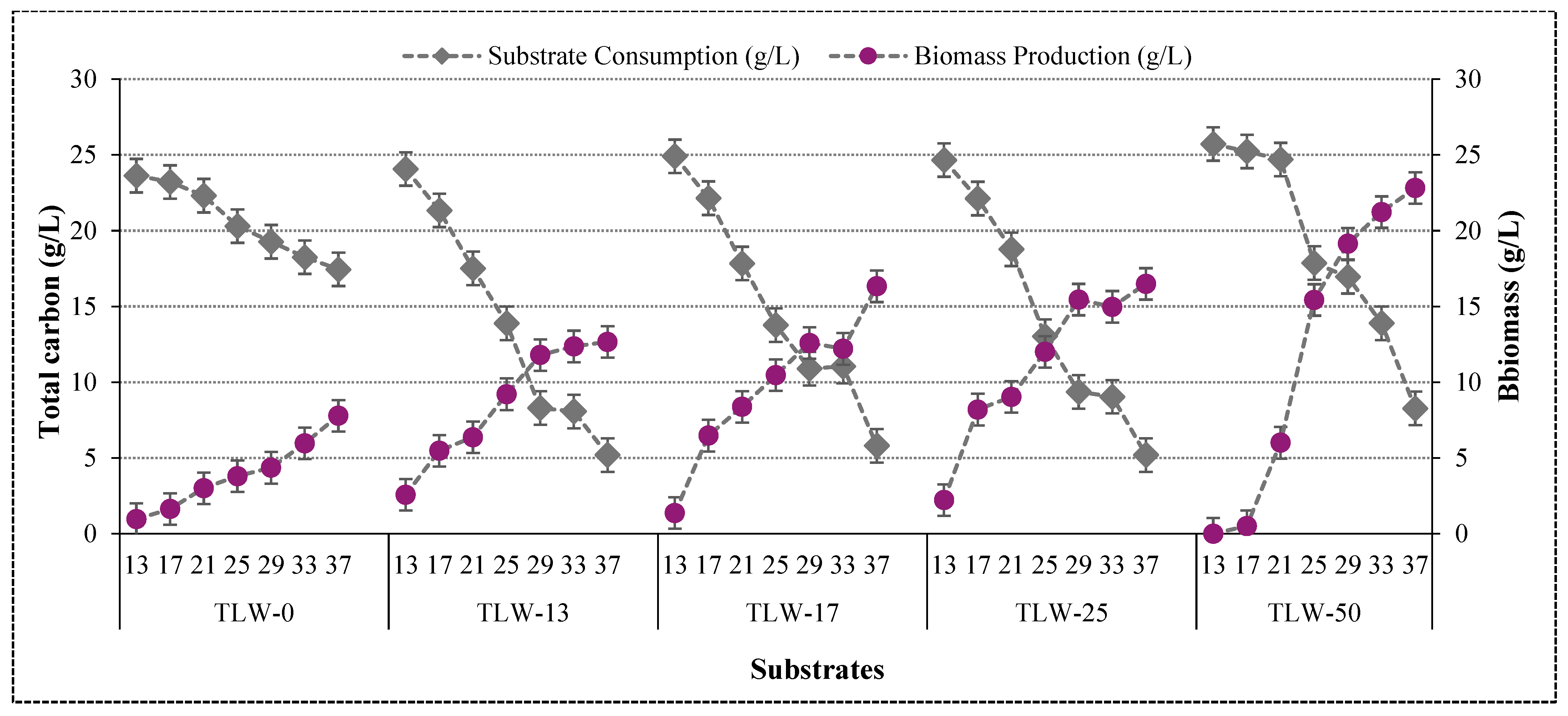
In this study, the fermentation process was not optimized, as it was the first attempt in the literature to examine the physiological behavior of H. erinaceus mushroom and TLW waste. The growth of H. erinaceus took place in substrates with low-value carbon sources supplemented with TLW; it was monitored over 37 days in static conditions and the effect of different concentrations of TLW on several biochemical properties of the fungus was investigated (Table 3). Agitation was not selected due to previous studies of H. erinaceus indicating doubling in biomass production in static growing conditions (16.3 versus 7.0 g/L [19]). The results demonstrated that enriching the substrate with liquid waste significantly enhanced biomass production (Figure 1). The lowest biomass yield was observed in the control substrate (TLW 0% v/v), with 7.8 g/L, while the highest was recorded in TLW 50% v/v, with 22.8 g/L on the 37th day of fermentation. Biomass production showed a consistent increase up to day 37 in all substrates, reaching 13 g/L for TLW-13, 16 g/L for both TLW-17 and TLW-25 and 22.8 g/L for TLW-50. The elevated concentration of waste and the associated TPC likely contributed to this enhanced growth, whereas glycerol did not seem to hinder biomass production. The different fungal strain and substrate synthesis may have resulted in greater biomass production than that reported by Pilafidis et al. [17] in undiluted wine distillery effluent and spent grain extract static fermentations (2.5 and 6.3 g/L, respectively). Malinowska et al. [50] reported a biomass yield of 22 g/L for H. erinaceus in shake-flask cultures with an initial glucose concentration of 50 g/L. When glycerol was used as the carbon source, biomass production reached about 18 g/L, demonstrating that the strain could also grow efficiently on alternative substrates. In the same study, cultivation in a bioreactor under glucose and CSP as the nitrogen source resulted in a maximal biomass concentration of 15.3 ± 2.3 g/L. Also, Khurana et al. [51] reported 34.44 g/L in potato dextrose broth (24 g) under optimized culture conditions (at a temperature of 24.4 °C, pH of 6.4 and 147.4 rpm agitation). On the other hand, Sarris et al. [52] investigated the growth of several ascomycetes (Morchella vulgaris, Morchella elata, Tuber aestivum) and basidiomycetes (Lentinula edodes, Agaricus bisporus) in media containing glucose (30 g/L), glycerol (30 g/L), or various industrial waste substrates and they reported that media with glycerol as the main carbon source resulted in lower biomass production (1.5–4.2 g/L) than those containing glucose (4.5–9.6 g/L) or waste-based substrates (10–14 g/L). In any case, TLW proved an effective substrate for H. erinaceus biomass production.
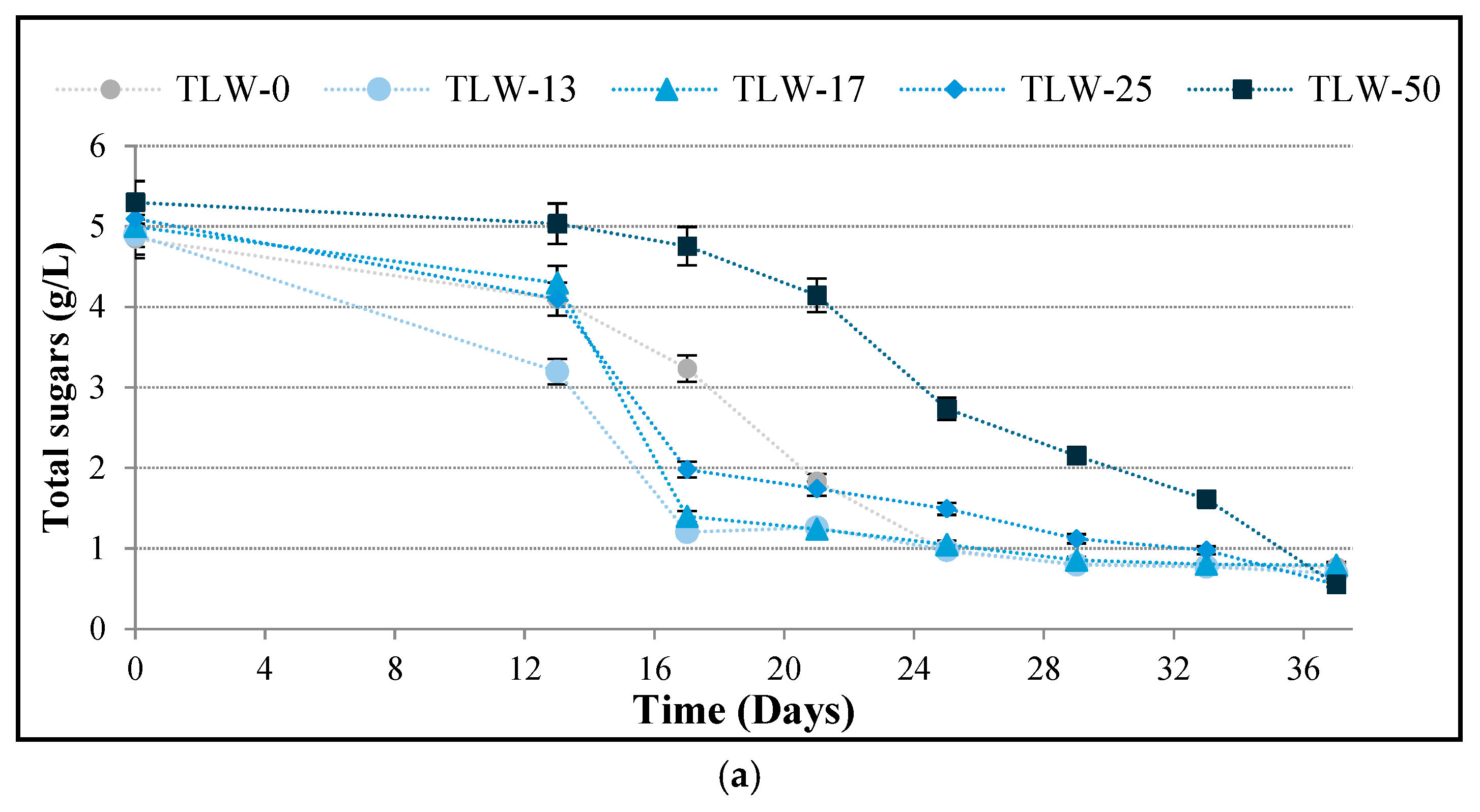
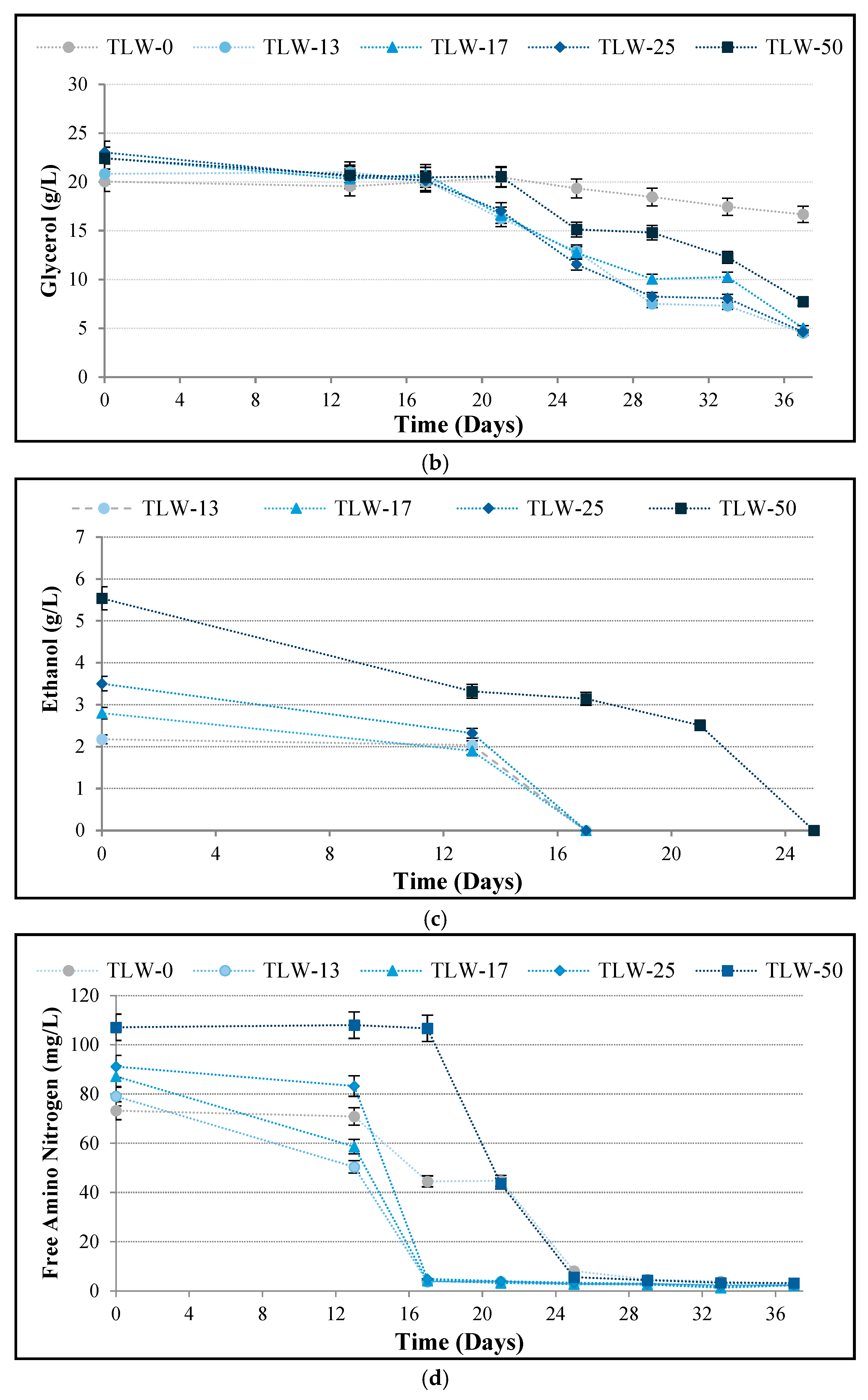
Although notable biomass production occurred, a portion of substrate remained unconsumed (Figure 2). As the growth media were not supplemented with minerals, it can be hypothesized that the waste from tsipouro distillation contained micro/macro elements that promoted the production of a high quantity of biomass and for this reason, growth was enhanced in the higher added concentrations of TLW in spite of the presence of inhibiting/recalcitrant substances (viz. TPC) that were also found into these media. Determination of total sugar concentration during fermentation revealed that initial sugar levels decreased gradually, with high consumption observed in the TLW-25 and TLW-50 substrates. Low consumption occurred in TLW-0 and TLW-17. The maximum sugar utilization occurred between days 29 and 37, peaking on day 37 with 4.8 g/L in the TLW-50 medium. Glycerol consumption followed a similar trend. The lowest consumption was in the control substrate (TLW-0, 16.8%), whereas TLW-25 and TLW-17 showed the highest consumption values (80 and 78%, respectively). Average glycerol utilization increased steadily during fermentation, indicating active metabolic adaptation of H. erinaceus to mixed carbon substrates. Overall, at the end of cultivation, all TLW-containing substrates exhibited glycerol consumption above 65%, in contrast to the control medium (17%). These findings indicate that in contrast to several types of filamentous fungi, in the present investigation, glycerol proved to be an adequate substrate and the co-existence of sugars and glycerol in the medium did not negatively affect the assimilation of the available polyol from the studied strain. This is in disagreement with several reports in the literature, whereby preferential (or even complete in many cases) consumption of glucose vs. glycerol has been revealed in co-fermentations of these substrates for the Crabtree-negative yeast Rhodosporidium toruloides [53], for the higher fungi Fusarium oxysporum [54] and Aspergillus niger [55], and for the lower fungi Rhizopus arrhizus [56] and Mortierella isabellina [57] due to catabolic repression or feedback inhibition of the enzymes involved in the primary metabolic steps of glycerol breakdown from the presence and/or catabolism of glucose. On the other hand, glycerol as the sole substrate was an adequate substrate for growth of mostly yeasts like Yarrowia lipolytica, Rhodosporidium kratochvilovae, and R. toruloides strains [43].
In addition to sugar and glycerol utilization, the presence of ethanol concentration in the media was also assessed. The initial ethanol levels (2.2–5.5 g/L) for most TLW-containing substrates dropped to zero by day 17, indicating complete consumption or volatilization. As far as we know, based on a search of the literature conducted for the fungus under examination, no reference was found indicating that it uses ethanol as a carbon source; therefore, it turns out that ethanol evaporated during this time and was not consumed by the fungus. To clarify whether ethanol removal was biological or physical, a non-inoculated control (blank) containing only TLW was also monitored. Ethanol disappearance in the blank occurred with similar kinetic profiles to the ones observed in the media with the presence of fungus, suggesting that ethanol was mostly evaporated during the bioprocesses performed. Biomass growth was observed across all treatments, suggesting that H. erinaceus exhibits tolerance to moderate ethanol concentrations.
Also, nitrogen is the second-most important nutrient in fungal fermentations, as it is essential for cellular metabolism. TLW has proven to be an efficient fermentation substrate in terms of biomass formation—probably due to its high content (88 mg/L) in FAN. The consumption of FAN was also assessed. H. erinaceus consumed more than 96% of FAN in all treatments, including in the medium with the highest TLW concentration (Figure 2). These findings are consistent with those of Pilafidis et al. [17], who reported almost complete FAN consumption during liquid cultivation of H. erinaceus in spent grain extract. Overall, this study indicates that increasing concentrations of TLW enhanced both carbon source consumption and biomass production of H. erinaceus. The substrate containing 50% v/v TLW provided the optimal conditions for mycelial growth, emphasizing the potential of liquid by-products as cost-effective carbon sources to produce bioactive biomass.

4.3. Reduction in TPC, Decolorization

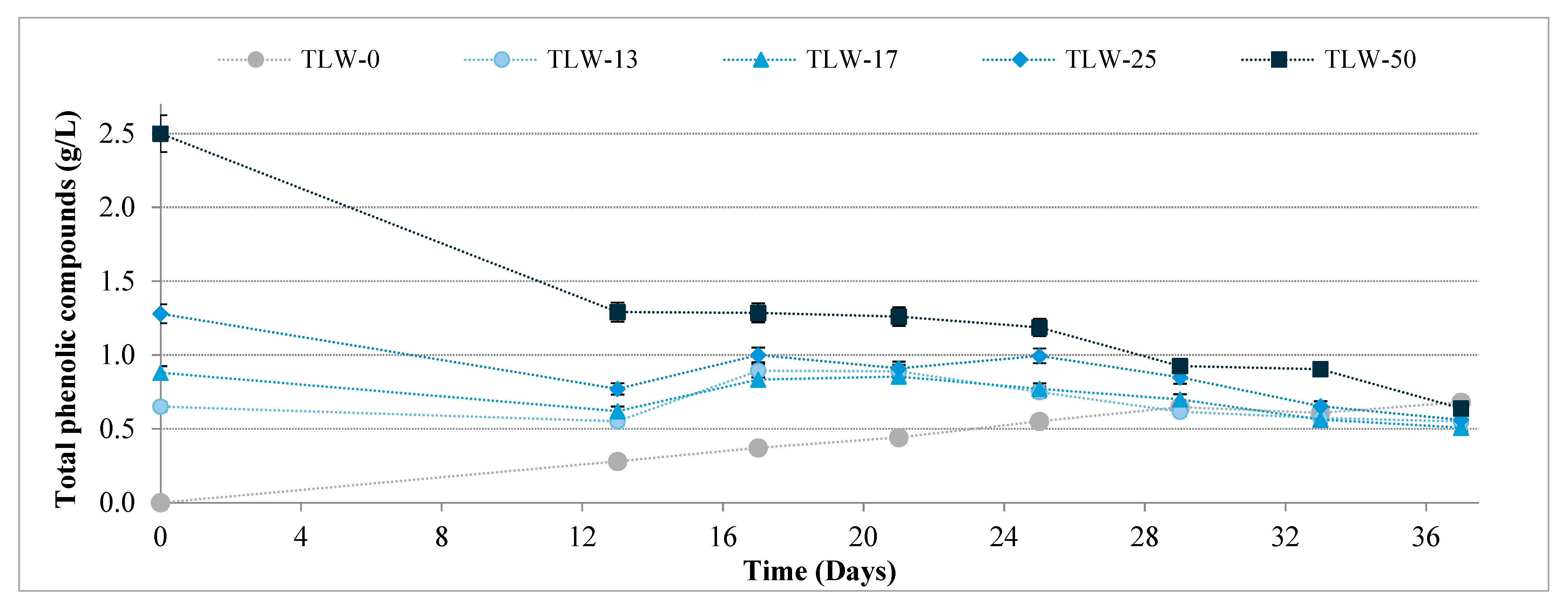
The potential of H. erinaceus to simultaneously reduce the TPC and decolorize TLW was explored in this study (Figure 3). In the control treatment (TLW-0), fungal cultivation resulted in the synthesis of phenolic compounds in the substrate (~0.6 g/L) and the fungus induced dark coloration at the control medium. In contrast, the addition of waste led to a reduction in TPC. In the substrate containing the maximum concentration of TPC (TLW-50), H. erinaceus achieved a reduction of more than 74% despite the fact that TPCs were probably also synthesized by the fungus. Several mushroom strains (Agrocybe cylindracea, Lentinula edodes, Pleurotus sapidus, Pleurotus sajor-caju, Flammulina velutipes, Ganoderma adspersum, T. aestivum and Tuber mesentericum) tested in previous studies have achieved significant reduction in the phenolic concentration of olive mill wastewater (80% at 15 and 35% v/v [58]), whereas H. erinaceus achieved only 45.6 or 50.7% at 25% v/v [59,60]. On the other hand, H. erinaceus grew in phenolic-rich or waste substrates (e.g., brewery or liquid residues, olive mill wastewater) and many studies reported a decrease in the phenolic content in these cases [17].
Regarding decolorization, experimental investigations into H. erinaceus’s capacity to decolorize liquid effluents are scarce. Koutrotsios et al. [59,60] reported a strong correlation of laccase production with substrate decolorization for several white-rot fungi, including H. erinaceus (29.1% at 30 days of culture and 64.7% at 35). In the present study, no significant color removal was observed in most substrates, except for TLW-17, where a reduction of 9% was recorded. According to Kim [61], a dark browning pigment in the extract derived from H. erinaceus, caused by the oxidation of endogenous polyphenol compounds by the polyphenol oxidase enzyme family, was reported. Another cause of the potential inability of H. erinaceus to decolorize a dark-colored substrate is the presence of laccase and several aromatic compounds, like hericenones, erinacines, alkalonides, lactones and their derivatives that could be converted to pigment-forming molecules. In some cases, enzymatic treatment with purified laccase alone reduced phenolics but increased color due to the formation of polymerized, color-rich compounds, highlighting that fungal metabolism can both degrade phenolics and generate pigmented metabolites [8]. On the other hand, as the mushroom contains high amounts of natural antioxidant compounds for the inhibition of tyrosinase and the scavenging of free radicals, the browning reaction may be decreased [61]. However, liquid cultivation of other fungi in wine liquid wastewater has shown significant dephenolization and color changes. For instance, submerged cultures of Trametes pubescens MB 89 treated wine liquid wastewater produced ~80% removal of TPC and a 71% decrease in color while simultaneously producing high levels of laccase [62]. Similarly, the white-rot fungi Ceriporiopsis subvermispora and Pycnoporus cinnabarinus demonstrated effective dephenolization and partial decolorization of wine liquid wastewaters under liquid fermentation conditions [62]. Along with the present findings, these studies confirm that fungal cultivation in winery wastewater can simultaneously reduce phenolic pollutants and contribute to coloration, sometimes due to the biosynthesis of fungal pigments or the formation of polymerized products.

4.4. Laccase Activity, pH and Electrical Conductivity

Mushrooms, particularly white-rot fungi, are potent producers of laccase in liquid cultures. Lignin peroxidase, versatile peroxidase and manganese-dependent peroxidase are other important enzymes oxidizing specific lignin- and/or phenol-type components. Production of these enzymes is highly dependent on media components and culture conditions [11]. In a recent investigation implicating another edible fungus cultured on glucose or glycerol in liquid fermentations (a Pleurotus ostreatus strain), it has been demonstrated that although higher mycelial mass production was obtained on glucose, significantly higher dye-decolorizing enzyme production was reported on glycerol-based media [63]. Concerning H. erinaceus, although laccase production has been reported on various substrates and under various culture conditions, no studies have examined its activity in liquid substrates derived from liquid effluents like those used in the present work (TLW). The maximum laccase concentration in all substrates with TLW appeared on the 37th day of cultivation, with the maximum value presented in TLW-17 (113 U/mL) and then in TLW-50 (108.3 U/mL) (Table 3); these were high values considering that the substrate was not optimized for laccase production (adding inducers like copper or aromatic compounds, using agitation, regulating the pH, etc.) [11]. In other relevant studies, Pinheiro et al. [64] cultivated T. versicolor in liquid substrates of vinasse and cotton gin waste and observed a laccase concentration of up to 5005.55 U/L. Elisashvili et al. [65] examined the laccase production of Cerrena unicolor, P. ostreatus, G. lucidum, Pycnoporus coccineus, Trametella trogii, and T. versicolor in agitated liquid cultures with olive mill wastewater. The maximum activity was 112.8, 23.4, 18, 18, 29.7 and 10.3 U/mL, respectively, lower than that of H. erinaceus. It is worth noting that the lowest amount of laccase was measured in the substrate without the addition of TLW (7.3 U/mL, 37th day), probably corresponding to the fact that native laccase production by Hericium in standard liquid fermentations might be lower or due to the fact that glycerol induced the biosynthesis of laccases, as was demonstrated for other oxidative enzymes in P. ostreatus [63]. However, the laccase activity of the strain was strongly associated with phenolic removal ability in TLW—as also shown by Koutrotsios et al. [59,60] in fermentations of H. erinaceus (and possibly other white-rot fungi) in 25% w/w olive mill wastewater and by Tsioulpas et al. [66] and Aggelis et al. [67] in fermentations of various Pleurotus strains at olive mile wastewaters in flasks and bioreactor. Additionally, biomass and laccase production of H. erinaceus were strongly correlated (R2 = 0.828, p = 0.05), as also stated in previous studies [59,60].
Also, in previous investigations, it has been shown that the maximum laccase activity of mushrooms cultivated in lignocellulosic wastes was displayed in the middle of the fermentation period [41,66,67] and this was the reason for choosing three sampling points (beginning, middle, end) in the present investigation. For example, on substrates with TPC (diluted olive mill waste), the maximum laccase activity of Pleurotus strains was measured on the 10–14th day after the inoculation of flasks (~0.2 U/mL [66]) or at ~200 h in the bioreactor (16 U/mL [67]). In addition, during the liquid cultivation of a wild-type Ganoderma resinaceum, the maximum laccase synthesis was observed in the middle of the fermentation period (14 U/mL [46]). However, in the present study, it was found that H. erinaceus produced its maximum values at the end of the fermentation time, probable due to the time needed for adaptation of the fungi to culture conditions and its genetic material. In conclusion, laccase concentration in mushrooms and the time of its synthesis can vary significantly between species and even within the same species, due to differences in the molecular and genetic level, in the growth conditions adopted and in the extraction methods applied in the study.
The pH value of the culture medium may affect the functions of the cell membrane, the cell morphology and the cell structure; the uptake of various nutritional sources and the biosynthesis of metabolites. For most basidiomycetes’ growth, the optimum pH values are 5–7 [18,68] and for H. erinaceus, it is typically around 6.0 [26], though optimal conditions can vary by strain and can range from acidic to slightly alkaline conditions [69]. In this study, the initial pH for the growing media after sterilization was 6.4 for the control and ~4 for those with TLW (Table 2). The pH values of substrates with TPC remained slightly acidic (4.5–5.0) through the fermentation, whereas they were reduced during fungal growth in the control cultures, finally reaching values of 4.5. This is in accordance with the pH values measured during the growth of H. erinaceus on olive mill wastewater [59] and glucose in shake-flasks, where the maximum values of biomass and polysaccharides (end-, exo-) were recorded [50]. Lee et al. [70], during the submerged cultivation of H. erinaceus in nutrient media containing glucose, observed that when the initial pH ranged between 3.0 and 5.0, it slightly increased during fermentation, whereas at an initial pH of 6.0–8.0, the pH decreased to approximately 5.0. Wolters et al. [71] also reported that the pH of fungal liquid cultures typically decreases at some stage of fermentation due to the secretion of organic acids as a component of primary metabolism, whereas Chutimanukul et al. [72] stated that mushroom cultivation led to a reduction in the pH in all treatments.
Direct studies on the optimal electrical conductivity (EC) for Hericium sp. in liquid culture are limited. However, studies optimizing nutrient media for H. erinaceus growth indicate a range between 1 and 5 mS/cm as a plausible starting point [72]. The EC of the media in the present study ranged from 4 (beginning) to 5 (end) for this, with the greatest amount of waste (TLW-50) and ~0.5 mS/cm (remaining constant throughout the fermentation period) for the control. H. erinaceus grew in a substrate with similar EC values (4 mS/cm) during a 20-day period fermentation in diluted olive mill wastewater [59].

4.5. IPS and Protein Synthesis

Fungal/mushroom polysaccharides that can be synthesized during liquid cultures are a promising source of bioactive compounds for functional foods and pharmaceuticals. Although the extraction, the purification, the structural characterization, the bioactivities, and the applications of H. erinaceus polysaccharides have been studied previously, the IPS production of H. erinaceus in liquid cultures has not been reported in the literature, making comparisons limited. In this study, it was observed that H. erinaceus cultivated on substrates supplemented with TLW exhibited significantly higher IPS quantities (in absolute values—g/L) compared to the control substrate (Table 3). On the other hand, relative values (% w/w in dry weight) seemed to somehow decrease with increased concentrations of TLW in the medium due to potential diversion of carbon flow towards the synthesis of other cellular storage compounds like lipids and/or proteins (Table 3). The highest IPS concentration (6.8 g/L) was recorded at TLW-17 on the 37th day, while a comparable value was obtained in TLW-50 (6.4 g/L)—these values were consistent with the highest values reported in the literature. Malinowska et al. [50] reported lower IPS levels in both shake-flask and bioreactor cultures when an initial carbon concentration of 50 g/L was used. IPS production generally increased throughout fermentation, reaching a maximum on day 37, apart from TLW-25, which showed a slight decrease between days 33 and 37. It was shown that IPS production increased with the glucose concentration in the growing medium; it was also shown that the presence of TPC enhances this biological activity (1–3 g/L of TPC and an initial concentration of glucose of 40 and 60 g/L; Pleurotus pulmonarius [49]). Similarly, Diamantopoulou et al. [46] showed that increasing glucose concentration up to 46% in the liquid medium of V. volvacea enhanced IPS production to final IPS values ≈12 g/L (in this case, though, in contrast to the present study, the increase of the initial concentration of glucose occurred with a constant initial concentration of nitrogen, resulting therefore in the preparation of media with higher initial C/N molar ratios, favoring the enhanced production of intracellular polysaccharides [46]). The IPS relative values ranged from 24.6 to 43% (w/w), with the maximum value being observed in TLW-13 and TLW-17 on day 25, reaching 43% (w/w). Additionally, IPS production was positively correlated to the total amount of biomass produced and a general reduction with time from the middle (25th) to the end of the cultivation time was observed, similar to the pattern presented in previous studies with higher fungi cultivated in liquid cultures in glucose, olive mill wastewaters, or glycerol [38,45,46,49,50].
In other studies, Meyer et al. [25] reported IPS production in liquid cultures of Morchella strains grown on sugar industry by-products (beet molasses), with values of 3.34, 4.24 and 4.80 g/L, respectively. Diamantis et al. [49] reported IPS production of up to 4.38 g/L in P. pulmonarius, while Diamantopoulou et al. [46] reported IPS synthesis of 5.2 g/L in G. resinaceum with glucose-enriched olive mill wastewaters employed as microbial substrates. Also, on liquid cultivation of several macromycetes in glucose-based media (initial glucose adjusted to 30 g/L) for 20 days, the highest IPS was yielded by A. aegerita, F. velutipes, and P. pulmonarius (5.8, 6.7 and 10.9 g/L, respectively), with IPS contents in dry biomass reaching 55.2, 51.4 and 48.4% (w/w), respectively, under agitation [38]. In contrast, M. esculenta and G. applanatum showed lower values (3.86 and 6.3 g/L, respectively), with IPS percentages of 30.4 and 40.9% (w/w) under static conditions. In another study, IPS concentrations up to 5.5 g/L in Volvariella volvacea strains cultivated in static liquid cultures were produced [45]. Taken together, the literature indicates that the IPS levels obtained in the present study are comparatively high, underscoring the strong biosynthetic capacity of H. erinaceous under the tested culture conditions.
Mushrooms may produce many bioactive proteins and peptides with immunomodulatory and antitumor activities; following the study of polysaccharides and terpenoids, these proteins and peptides have been studied in recent years [21,73]. However, until now, little has been published about the proteins from H. erinaceus, particularly during its cultivation in liquid cultures. Most research has focused on extracting proteins from fruiting bodies rather than on the mycelia grown in liquid culture, but liquid culture methods are most suitable for large-scale protein production because they optimize the culture medium and process. In the present study, where H. erinaceus was cultivated on a winey liquid waste, the amount of protein was high (Table 3). Across all substrates, the highest protein concentrations were recorded after the 21st day of cultivation and it seemed that the presence of waste enhanced protein production (g/L). The highest protein concentration was observed in substrate TLW-50 on the 37th day, reaching 4.06 g/L. When expressed as a percentage of dry mycelial weight, the highest protein content was recorded in TLW-0 on the 21st day, reaching 29.4% (w/w). For this treatment, the protein content remained elevated up to the 25th day of fermentation before declining during the later stages (25th–37th day). A similar pattern was observed for the cultures grown on TLW-13 and TLW-17, with maximum values of 27.2 and 23.9% (w/w), respectively, followed by a gradual decrease after the 21st day of cultivation. This suggests a shift in the composition of the fungal mycelia; due to nutrient limitation or metabolic stress, protein synthesis seemed to be reduced, while the production or accumulation of structural polysaccharides continued or was even enhanced. Such a shift may reflect a physiological adaptation whereby cells prioritize the synthesis of extracellular or structural polysaccharides (such as IPS) over general protein accumulation, potentially to maintain cell integrity or prepare for stationary phase survival. Protein synthesis is energetically costly, as it requires ATP for amino acid activation and ribosomal translation, as well as NADPH for amino acid biosynthesis. In contrast, the production of polysaccharides such as IPS generally demands less energy per monomer unit. Comparable protein values have been reported in previous relevant studies. Pilafidis et al. [17] reported a protein content of 22.4% w/w in H. erinaceus cultivated under static liquid fermentation using brewery waste substrate and 19.6% for fungus fermented on liquid waste substrate. Yang et al. [74] examined submerged mycelial culture of H. erinaceus on glucose which had a protein content of 8.8%.

4.6. Lipid Content and Identification of Lipid Fatty Acids

During the cultivation of H. erinaceus, biomass was collected for the quantification of lipid concentration and fatty acid composition (Table 3). Lipid values were determined at the last four sampling points and they ranged from 0.64 to 5.0 g/L. The lowest lipid concentration was observed in the control treatment (TLW-0), without liquid waste, reaching 0.64 g/L on day 25. The correlation between lipid synthesis and the phenolic content of the substrates remained consistently strong throughout the experiment (R2 = 0.84–0.94, p = 0.05), in accordance with similar types of experiments where other microorganisms (i.e., yeasts like Yarrowia lipolytica) were cultivated on phenol-containing wastewaters and lipid synthesis was enhanced on high phenol-content media [75]. Also, a significant increase in lipids was observed throughout the cultivation period. The maximum lipid concentration per treatment was recorded on different days: an amount of 1.76 g/L in TLW-0 (day 37), 1.94 g/L in TLW-13 (day 29), 2.30 g/L in TLW-17 (day 29), 2.80 g/L in TLW-25 (day 37) and 5.00 g/L in TLW-50 (day 33). Among all treatments, the highest lipid content was recorded on the last day of fermentation (37), in TLW-50 (4.4 g/L), while the lowest concentration consistently appeared in the control cultures (1,76 g/L).
The highest lipid percentage in dry biomass was found in TLW-50 on day 33, reaching 23% (w/w), a value that was higher than anticipated considering the low lipid accumulative ability of mushrooms, which are not considered as typical oleaginous microorganisms [46,76]; across all treatments, lipid content varied from 6.9 to 23.4% (w/w). These values are higher than those reported by Rodrigues et al. [77], who found 1.94% (w/w), and by Kurtzman [78], who found 1.6–8.0% lipid content in H. erinaceus. Bakratsas et al. [24] reported that L. edodes mycelium contained 20% (w/w) lipids compared to only 4% (w/w) in the fruiting body, indicating that substantial differences may occur depending on the culture type and fungal morphology. Similarly, Diamantopoulou et al. [76] investigated the liquid cultivation of several fungi (P. ostreatus, Ganoderma lucidum, L. edodes and V. volvacea) in glucose-based media and reported a broad lipid range (2.5–18.5%), with the highest values comparable to those obtained in the present study. In a subsequent study, Diamantopoulou et al. [45] found lipid contents of 3–12% (w/w) in V. volvacea mycelium, further supporting the variability in lipid accumulation among fungal species and culture conditions.
The fatty acids identified in the biomass and their percentage contribution to the total fatty acid content of the mycelium are presented in detail Table 4. The fatty acid profile of H. erinaceus was analyzed for all substrates on the final (37th) day of fermentation. Levels of saturated, monounsaturated, and polyunsaturated fatty acids were determined. The saturated fatty acids detected included lauric, myristic, pentadecanoic, palmitic, stearic, arachidic, behenic and tricosanoic acid. Palmitic acid was among the predominant saturated fatty acids in all cases. The monounsaturated fatty acids identified were oleic and nervonic acid, while the polyunsaturated fatty acids included cis-4,7,10,13,16,19-docosahexaenoic acid, linoleic acid and eicosadienoic acid, with the latter two belonging to the ω-6 fatty acid group. Oleic acid consistently represented the major monounsaturated fatty acid, while linoleic acid was the dominant polyunsaturated ω-6 fatty acid across all substrates.
Statistically significant higher proportions of saturated fatty acids per total lipid content were observed in the TLW-50 with 33.6% (w/w). This was followed, at the same level of significance, by the control (TLW-0) and TLW-13, with values of 26.4–26.5% (w/w), respectively. The fungi grown on TLW-17 and TLW-25 substrates exhibited lower percentages of saturated fatty acids, with the lowest content observed in the fungus cultivated on TLW-17 (20.92% w/w). The lipid fraction of H. erinaceus cultivated on the glycerol-based TLW substrates contained higher levels of polyunsaturated fatty acids. The addition of liquid waste increased the proportion of polyunsaturated fatty acids in the fungal biomass (up to 68% in the fungus grown on TLW-17), except for the fungus cultivated on TLW-50, which showed a lower value (47.07% w/w). In general, the presence of TPC into the growth medium seems to have a positive result on the increase of the unsaturated fatty acid content in several oleaginous and non-oleaginous microorganisms [79], in accordance with the findings recorded in the present study. The main ω-6 fatty acid detected was linoleic acid, ranging from 39 to 61% (w/w). Overall, the predominance of linoleic acid and the high proportion of polyunsaturated fatty acids in H. erinaceus cultivated on liquid waste substrates suggest that this fungus could serve as a promising source of health-promoting lipids with nutritional and functional potential.

4.7. TPC and Antioxidant Properties of Biomass

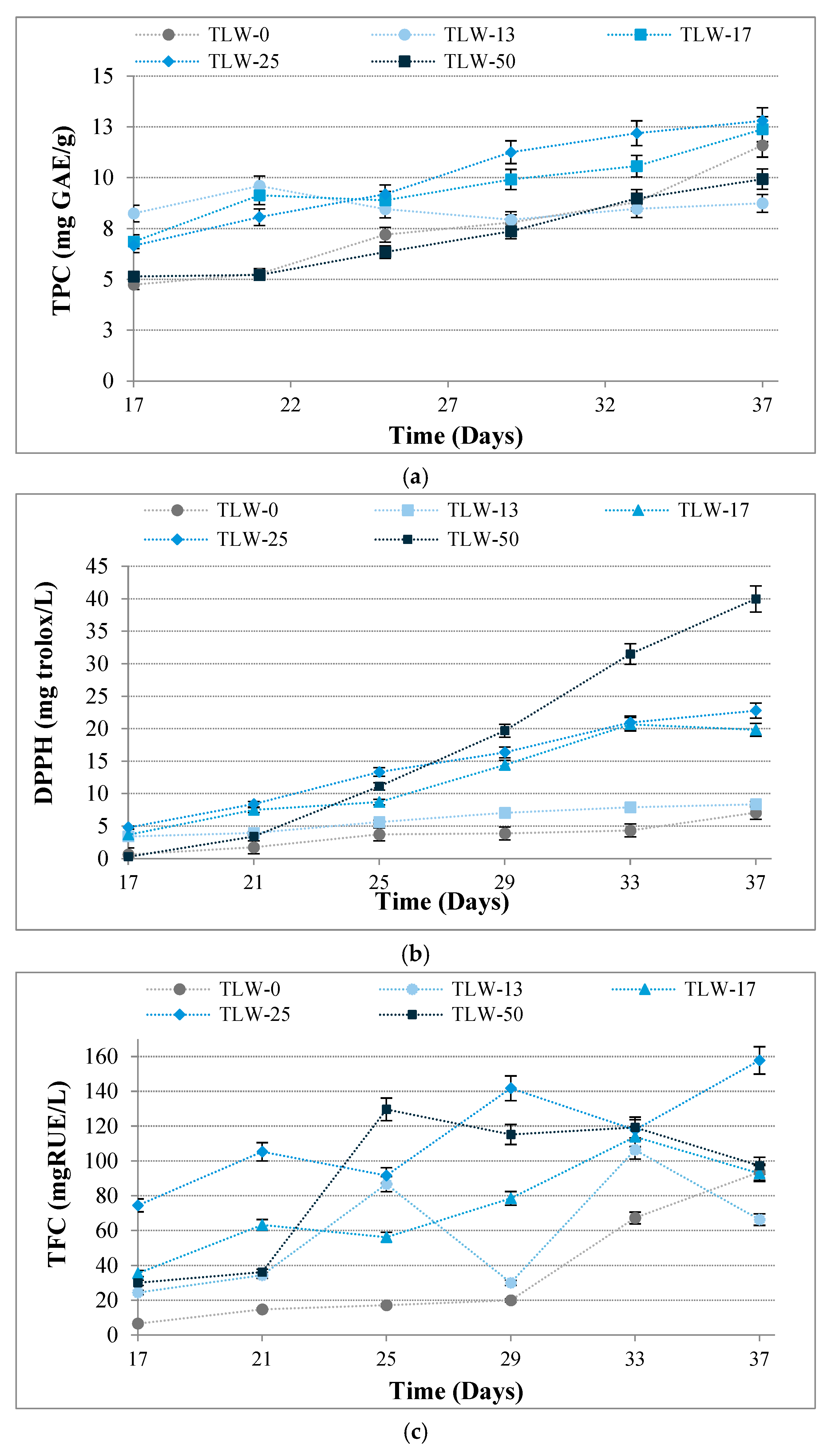
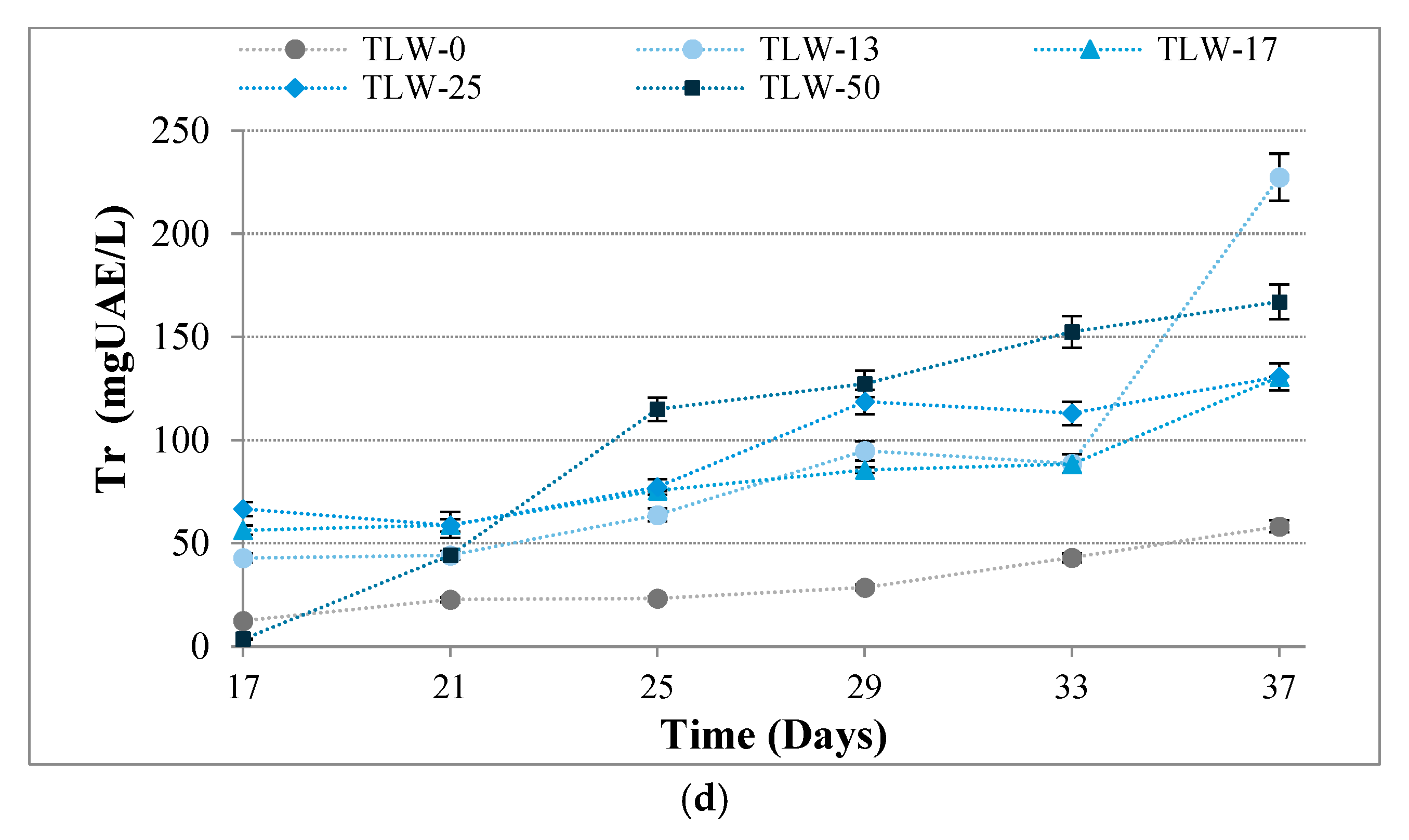
Biomass was also analyzed for its total phenolic content, antioxidant capacity, flavonoids and triterpenoids (Figure 4). TPCs are responsible for the antioxidant activity of Hericium mushrooms, as they function as reducing agents that can scavenge free radicals. Flavonoids are also present, usually in smaller amounts than phenolics and contribute to the mushroom’s antioxidant capacity. Regarding the highest content of TPC (12.8 mg GAE/g) and flavonoids (14.4 mg/g), they were both recorded in the biomass produced on substrate TLW-25 on the 37th day. The phenolic compound content increased proportionally with protein concentration in the biomass (R2 = 0.782, p = 0.05), suggesting that TPCs may act as metabolic modulators enhancing fungal protein synthesis during fermentation. This interaction could lead to an improvement in the functional and antioxidant properties of both the protein and the TPC. DPPH scavenging activity is often correlated with the total phenolic content (in this study, R2 = 0.722, p = 0.05). The DPPH˙ concentration increased throughout the fermentation period, reaching its maximum value on the 37th day. Moreover, the lowest DPPH˙ antioxidant activity on the 37th day was observed in the biomass cultivated on the control substrate (TLW-0), with a value of 7 mg/L, while the highest was recorded on the TLW-50 substrate (40 mg/L). According to a study by Doğan et al. [79], the mycelium of H. erinaceus from broth with initial 20 g/L light malt extract contained 3.82 ±0.32 mg GAE/g amounts of TPC and lower antioxidant activity than the findings of the present study (25.5 mg/g). According to Sevindik et al. [80], antioxidant capacity may vary with the extraction method, with optimized conditions obtaining TPC 59.75 mg GAE/g and 73.36 mg trolox/g. The effectiveness of DPPH˙ scavenging is attributed to the bioactive compounds within the mushroom, such as polysaccharides and TPC (correlated). However, the DPPH· antioxidant activity of the biomass in the present study was relatively low: below 2 mg/g for all substrates. The triterpenoid content in H. erinaceus mycelium varies significantly depending on the strain and cultivation conditions, but it is a key source of bioactive compounds like erinacines. The highest triterpenoid content was found in the fungus cultivated at TLW-17 (8.71 mg/g) on the 17th day.
The results confirm that the use of phenolic-rich liquid waste substrates enhances the biosynthesis of antioxidant and bioactive metabolites in H. erinaceus biomass.

4.8. Comparative Composition of Mycelium and Fruiting Body

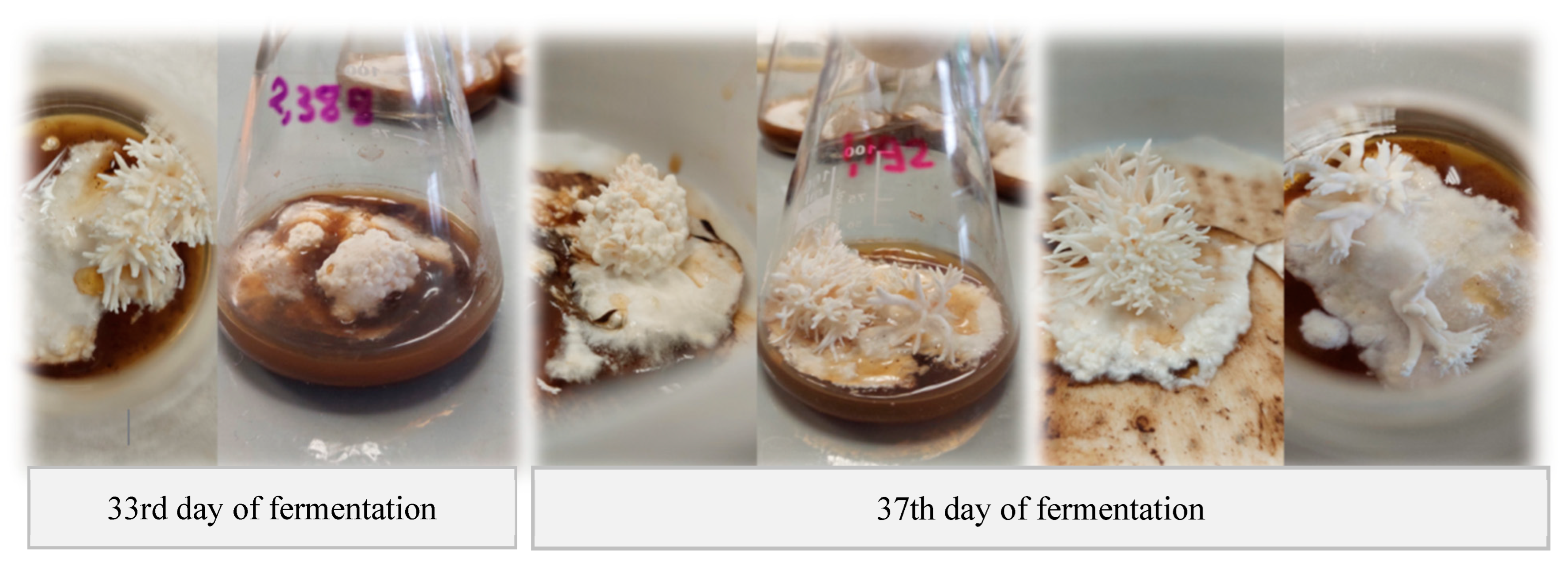
In the present study, during the liquid culture of H. erinaceus, fruiting body formation was observed in addition to mycelial growth in some flasks at the 33rd and 37th day of fermentation (Table 5, Figure 5) and the differences between the mycelium and the (immature) fruiting body that was developed in the liquid culture on the TLW substrate were examined. The formation of fruiting bodies under liquid fermentation conditions is unusual and it may be attributed to specific environmental signals that trigger the transition from the vegetative (mycelial) phase to the reproductive phase, often in response to nutrient exhaustion (particularly FAN depletion) or changes in environmental conditions towards the end of the culture period (gradual pH decline and incidental light exposure during sampling). The control cultures did not exhibit any fruiting body development at any stage of fermentation; therefore, the development of carposomes in TLW may have been an indication that the culture had gone beyond its optimal vegetative growth phase. As shown in Table 5, fruiting body production occurred across all TLW substrates, particularly these over 0.8 g/L of phenolics (TLW-17), with the highest yield recorded on the 37th day in substrate TLW-17 (60% w/w), followed by TLW-50 (51.5% w/w).
Table 6 presents the detailed results obtained for the 33rd and 37th days of fermentation for both the mycelium and the fruiting body biochemical properties. The fruiting body of H. erinaceus exhibited a higher protein content (% w/w). Specifically, the protein level of the fruiting body was higher than that of the mycelial biomass. For the fungus grown on the TLW-17 substrate, the highest protein content was recorded on day 37, reaching 24.5% w/w in the fruiting body and 13.9% w/w in the mycelium. These findings align with those of Atila et al. [81], who reported protein contents ranging from 11.38 to 20.24% in fruiting bodies, depending on the substrate (oak sawdust, cottonseed, and olive mill waste). Mau et al. [82] found 22.5% protein and Rodrigues et al. [77] reported 18.8% protein on beech sawdust. Similarly, Cohen et al. [83] observed 20.8% protein in the fruiting body and 42.5% in the mycelium. In contrast, the mycelium contained a higher polysaccharide content (% w/w). In the TLW-17 substrate on day 37, IPS reached 49% w/w in dry mycelium mass compared with 26% w/w in the dry fruiting body mass. Comparable findings have been reported: Koutrotsios et al. [60] recorded IPS levels of 60.6–64.6% w/w in carposomes from olive mill waste, while Rodrigues et al. [80] reported 61.3% IPS in fruiting bodies cultivated on beech sawdust. Cohen et al. [83] also noted higher carbohydrate levels in the fruiting body (61.1%) relative to the mycelium (42.9%). Regarding lipid content, the mycelium also showed higher values than the fruiting body. In the TLW-50 substrate on day 33, the mycelium contained 26.0% lipids, whereas the fruiting body contained 20.0%. Cohen et al. [83] similarly reported that the fruiting body of H. erinaceus contained 5.1% fat in the fruiting body and 6.3% in the mycelium, while Rodrigues et al. [77] reported 2.9% lipids in fruiting bodies grown on beech sawdust.
A total fatty acid composition analysis took place for the samples of the last day of fermentation (Table 6). The fatty acid pattern was generally similar across samples, with two exceptions: palmitic acid was present at higher levels in the fruiting body from TLW-50, whereas linoleic acid was more abundant in the biomass from the TLW-25. In cultures grown on TLW-13 and TLW-17, data are presented as overall means due to the absence of significant differences between the mycelium and fruiting body, whereas for TLW-25 and TLW-50, results are shown separately for each treatment. The ratio of unsaturated fatty acids (mono- + poly-) to saturated fatty acids in H. erinaceus is generally high (around 2.0–3.8), which is considered beneficial for overall cardiovascular and brain health. Mono-unsaturated fatty acids can help lower LDL cholesterol and improve blood sugar control, whereas polyunsaturated fatty acids are crucial for heart health, brain function and immune system regulation [84]. The predominant fatty acid in the fungus across all substrates containing TLW was linoleic acid, ranging from 39% w/w (in the fruiting body on TLW-50) to 61% w/w (in the mycelium on TLW-25) of total lipids. This was followed by palmitic acid, which ranged from 11% w/w (on TLW-17) to 23% w/w (in the fruiting body on TLW-50), and oleic acid, ranging from 8% w/w (on TLW-17) to 24% w/w (in the mycelium on TLW-50). Yeong et al. [85] stated that the fatty acid composition varies among different mushroom species; however, they concluded that linoleic acid predominates in the fatty acid profile of most mushrooms. The major saturated fatty acids reported include myristic, palmitic, stearic and arachidic acids, while oleic acid is the most common monounsaturated fatty acid, followed by eicosenoic and palmitoleic acids. The predominant polyunsaturated fatty acids identified were linoleic and α-linolenic acids. According to Rodrigues et al. [77], the fatty acid composition of H. erinaceus fruiting bodies consisted of 27.56% saturated, 32.94% monounsaturated and 39.50% polyunsaturated fatty acids. Also, Rodrigues et al. [86] reported that H. erinaceus biomass exhibited a lipid profile dominated by oleic acid (862.08 mg/100 g DW) and linoleic acid (658.35 mg/100 g DW), with monounsaturated (891.01 mg/100 g DW) and polyunsaturated fatty acids (724.71 mg/100 g DW) occurring in higher amounts than saturated fatty acids (510.88 mg/100 g DW), resulting in an unsaturated/saturated fatty acid ratio of 3.40. Mykchaylova et al. [27] also reported that the main fatty acids present in H. erinaceus were oleic acid, palmitic acid and linoleic acid, results that are consistent with the findings of the present study. Salvatore et al. [87] reported that the fatty acid profile of G. lucidum consisted of 21.3% palmitic acid, 60.1% oleic acid and 3% linoleic acid. Cellular lipid similarities in the composition with H. erinaceus and common cellular fatty acids (i.e., C16:0, C18:0, C18:1, C18:2), having been identified and quantified, were recorded for several Ascomycetous and Basidiomycetous yeasts cultivated on renewable carbon sources, including glycerol; therefore, Diamantopoulou et al. [48] and Diamantis et al. [49] investigated the growth of several yeast strains belonging to the species/genera Y. lipolytica, Metschnikowia sp., Rhodotorula sp., R. toruloides and R. kratochvilovae cultivated in liquid fermentations under nitrogen-limited conditions using raw glycerol as a substrate in shake-flasks. The predominant fatty acids identified were stearic acid (3.4–10.1%), palmitic acid (9.4–22.4%), oleic acid (8.3–50.6%) and linoleic acid (3.2–68.1%).
In some cases, in the present study (Table 6), the total phenolic content of the fruiting body was higher than that of the mycelium, like in the fruiting body from the TLW-50 substrate on day 37, when a concentration of 13.32 mg/g was observed compared to 6.34 mg/g in the mycelium. Similarly, the DPPH· content of the fruiting body was higher than that of the mycelium; in the same substrate (TLW-50, day 37), the fruiting body showed 2.80 mg/g, while the mycelium contained 0.6 mg/g. The triterpenoid and flavonoid contents (% w/w) of the H. erinaceus mycelium did not differ statistically significantly from those of the fruiting body. Terpenoids can be found in both the fruiting body and the mycelium of the mushroom Hericium species, and they are rich in unique diterpenoids and sesquiterpenoids (erinacines and hericenones), which are the main active neuroprotective compounds. Valu et al. [88] examined the recovery of TPC from H. erinaceus fruiting bodies, reporting total phenolics of 11.1–22.3 mg/g DW, flavonoids of 0.59–3.26 mg QE/g DW and antioxidant activity expressed as IC50 = 92.4 μg/mL. Abdullah et al. [89] determined the total phenolic concentration of H. erinaceus extracts at 10.2 mg/g and Rodrigues et al. [86] reported that the phenolic composition of H. erinaceus biomass consisted of 30.57 mg GAE/100 g DW. According to a study by Doğan et al. [79], the fruiting body of H. erinaceus contains higher amounts of TPC and antioxidants compared to the mycelium (5.87 ± 0.4 mg GAE/g DW and DPPH activity of 43.11 µmol TE/g) supporting the findings of the present study—that the fruiting body exhibits greater antioxidant potential than the mycelium. Chutimanukul et al. [90,91] studied the solid-state cultivation of H. erinaceus supplemented with coconut water and reported bioactive compound levels comparable to those of the present study, with total phenolics ranging from 16.62 to 17.39 mg/g DW and triterpenoids from 67.87 to 89.24 mg UA/g DW. Furthermore, they examined cultivation on soybean meal, obtaining triterpenoid contents of 56.78–69.15 mg UA/g DW, total phenolics of 15.52–16.07 mg/g DW, and antioxidant activity with IC50 values between 0.67 and 1.08 mg/mL.
Overall, the results and information derived from the present study, turning a waste product into a valuable resource, would be beneficial to the production of high-quality mycelium and H. erinaceus mushrooms for consumption and to be used as value-added products.

5. Conclusions

This study demonstrates the feasibility of utilizing winery wastewater, like TLW, as a sustainable substrate for H. erinaceus cultivation under static liquid fermentation. Increasing TLW concentration in the culture medium promoted higher biomass yields, enhanced consumption of carbon and nitrogen sources and stimulated the biosynthesis of IPS, proteins, and lipids. The fungus effectively reduced phenolic content by up to 74%, confirming its potential in bioremediation and waste valorization. Among all tested substrates, TLW-50 supported the highest biomass and protein production, while TLW-17 yielded the highest IPS concentration. Importantly, the appearance of fruiting bodies under submerged static conditions represents a rare and noteworthy phenomenon, highlighting a novel morphological response of H. erinaceus to phenolic-rich liquid environments. Comparative analysis between the mycelium and fruiting body revealed that the latter contained higher protein and antioxidant levels, whereas the mycelium accumulated greater amounts of polysaccharides and lipids. Overall, H. erinaceus demonstrated efficient adaptation to liquid waste media rich in glycerol and phenolics, converting an environmental pollutant into bioactive fungal biomass with nutraceutical potential. These findings highlight a dual environmental and industrial benefit, supporting the integration of fungal biotechnology into the circular management of agro-industrial effluents. However, the scaling up of the process, the inherent variability in TLW composition between production cycles and potential thresholds of phenolic toxicity represent important limitations that should be addressed in future studies. Future work should investigate optimized TLW ratios, scaling up under bioreactor conditions, and the mechanisms regulating fruiting induction and phenolic transformation to better define industrial applicability.

Author Contributions

E.S.: formal analysis, data curation; I.D.: methodology, data curation, writing of original draft; S.K.: resources, supervision; S.P.: resources, supervision; P.D.: conceptualization, supervision, writing—review. All authors have read and agreed to the published version of the manuscript.

Funding

This research received no external funding.

Data Availability Statement

All data presented in this paper are original for this study. The data used to support the findings of this study are available from the corresponding author upon request.

Conflicts of Interest

The authors declare no conflicts of interest.

References

  1. Karathanos, A.; Soultani, G.; Kontoudakis, N.; Kotseridis, Y. Impact of different wood types on the chemical composition and sensory profile of aged tsipouro: A comparative study. Beverages 2024, 10, 76. [Google Scholar] [CrossRef]
  2. Giannakourou, M.; Strati, I.F.; Manika, E.M.; Resiti, V.; Tataridis, P.; Zoumpoulakis, P. Assessment of phenolic content, antioxidant activity, colour and sensory attributes of wood aged “Tsipouro”. Curr. Res. Nutr. Food Sci. J. 2018, 6, 318–328. [Google Scholar] [CrossRef]
  3. Kokoti, K.; Kosma, I.S.; Tataridis, P.; Badeka, A.V.; Kontominas, M.G. Volatile aroma compounds of distilled “tsipouro” spirits: Effect of distillation technique. Eur. Food Res. Technol. 2023, 249, 1173–1185. [Google Scholar] [CrossRef]
  4. Geroyiannaki, M.; Lopez-Vázquez, C.; Badeka, A. Fast determination of principal volatile compounds in Greek traditional alcoholic beverages from varietal fermented grape pomace (Vitis vinifera L.). Food Res. Int. 2007, 40, 681–689. [Google Scholar]
  5. Soufleros, E.H.; Natskoulis, P.; Mygdalia, A.S. Discrimination and risk assessment due to the volatile compounds and the inorganic elements present in the Greek marc distillates Tsipouro and Tsikoudia. OENO One 2005, 39, 31–45. [Google Scholar] [CrossRef]
  6. Bustamante, M.A.; Paredes, C.; Moral, R.; Moreno-Caselles, J.; Pérez-Espinosa, A.; Pérez-Murcia, M.D. Uses of winery and liquid effluents in agriculture: Characterisation of nutrient and hazardous components. Water Sci. Technol. 2005, 51, 145–151. [Google Scholar] [CrossRef] [PubMed]
  7. Wolmarans, B.; De Villiers, G.H. Start-up of a UASB effluent treatment plant on liquid wastewater. Water SA 2002, 28, 63–68. [Google Scholar] [CrossRef]
  8. Strong, P.J.; Burgess, J.E. Treatment methods for wine-related and liquid wastewaters: A review. Bioremediation J. 2008, 12, 70–87. [Google Scholar] [CrossRef]
  9. Papanikolaou, S.; Rontou, M.; Belka, A.; Athenaki, M.; Gardeli, C.; Mallouchos, A.; Kalantzi, O.; Koutinas, A.A.; Kookos, I.K.; Zeng, A.; et al. Conversion of biodiesel-derived glycerol into biotechnological products by yeast and fungal strains. Eng. Life Sci. 2017, 17, 262–281. [Google Scholar] [CrossRef]
  10. Šehović, Đ.; Petravić, V.; Marić, V. Glycerol and wine industry glycerol determination in grape must and wine. Kem. Ind. 2004, 53, 505–516. [Google Scholar]
  11. Diamantopoulou, P.; Aggelis, G.; Papanikolaou, S. Renewable carbon sources as microbial substrates for the production of amylases and lignocellulases. Carbon Resour. Convers. 2026; in press. [Google Scholar] [CrossRef]
  12. Sarris, D.; Papanikolaou, S. Biotechnological production of ethanol: Biochemistry, processes and technologies. Eng. Life Sci. 2016, 16, 307–329. [Google Scholar] [CrossRef]
  13. Lante, A.; Crapisi, A.; Krastanov, A.; Spettoli, P. Biodegradation of phenols by laccase immobilised in a membrane reactor. Process Biochem. 2000, 36, 51–58. [Google Scholar] [CrossRef]
  14. Diamantopoulou, P.; Filippousi, R.; Antoniou, D.; Varfi, E.; Xenopoulos, E.; Sarris, D.; Papanikolaou, S. Production of added-value microbial metabolites during growth of yeast strains on media composed of biodiesel-derived crude glycerol and glycerol/xylose blends. FEMS Microbiol. Lett. 2020, 367, fnaa063. [Google Scholar] [CrossRef]
  15. Kachrimanidou, V.; Alexandri, M.; Papapostolou, H.; Papadaki, A.; Kopsahelis, N. Valorization of grape pomace for Trametes versicolor mycelial mass and polysaccharides production. Sustainability 2023, 15, 15080. [Google Scholar] [CrossRef]
  16. Fernandes, J.M.; Sousa, R.M.O.; Fraga, I.; Sampaio, A.; Amaral, C.; Bezerra, R.M.; Dias, A.A. Fungal biodegradation and multi-level toxicity assessment of vinasse from distillation of winemaking by-products. Chemosphere 2020, 238, 124572. [Google Scholar] [CrossRef]
  17. Pilafidis, S.; Tsouko, E.; Sougleri, G.; Diamantopoulou, P.; Gkatzionis, K.; Ioannou, Z.; Sarris, D. Submerged cultivation of selected macro-fungi to produce mycelia rich in β-glucans and other bioactive compounds, valorizing side streams of the food industry. Carbon Resour. Convers. 2024, 7, 100198. [Google Scholar] [CrossRef]
  18. Thongbai, B.; Rapior, S.; Hyde, K.D.; Wittstein, K.; Stadler, M. Hericium erinaceus, an amazing medicinal mushroom. Mycol. Prog. 2015, 14, 91. [Google Scholar] [CrossRef]
  19. Bisen, P.S.; Baghel, R.K.; Singh, R.; Tuli, H.S. Medicinal mushroom (Hericium erinaceus): Ethnomedicinal, phytochemical and pharmacological review. World J. Pharm. Res. 2010, 3, 498–512. [Google Scholar]
  20. Stamets, P. Growing Gourmet and Medicinal Mushrooms, 3rd ed.; Ten Speed Press: Berkeley, CA, USA, 2000. [Google Scholar]
  21. Friedman, M. Chemistry, nutrition and health-promoting properties of Hericium erinaceus (Lion’s Mane) mushroom fruiting bodies and mycelia and their bioactive compounds. J. Agric. Food Chem. 2015, 63, 7108–7123. [Google Scholar] [CrossRef] [PubMed]
  22. Kostanda, E.; Musa, S.; Pereman, I. Unveiling the chemical composition and biofunctionality of Hericium spp. fungi: A comprehensive overview. Int. J. Mol. Sci. 2024, 25, 5949. [Google Scholar] [CrossRef]
  23. Fazenda, M.L.; Seviour, R.; McNeil, B.; Harvey, L.M. Submerged culture fermentation of “higher fungi”: The macrofungi. Adv. Appl. Microbiol. 2008, 63, 33–103. [Google Scholar]
  24. Bakratsas, G.; Polydera, A.; Katapodis, P.; Stamatis, H. Recent trends in submerged cultivation of mushrooms and their application as a source of nutraceuticals and food additives. Future Foods 2021, 4, 100086. [Google Scholar] [CrossRef]
  25. Meyer, V.; Basenko, E.Y.; Benz, J.P.; Braus, G.H.; Caddick, M.X.; Csukai, M.; de Vries, R.P.; Endy, D.; Frisvad, J.C.; Gunde-Cimerman, N.; et al. Growing a circular economy with fungal biotechnology: A white paper. Fungal Biol. Biotechnol. 2020, 7, 5. [Google Scholar] [CrossRef] [PubMed]
  26. Imtiaj, A.; Jayasinghe, C.; Lee, G.W.; Shim, M.J.; Rho, H.S.; Lee, H.S.; Hur, H.; Lee, M.W.; Lee, U.Y.; Lee, T.S. Vegetative growth of four strains of Hericium erinaceus collected from different habitats. Mycobiology 2008, 36, 88–92. [Google Scholar] [CrossRef] [PubMed]
  27. Mykchaylova, O.; Dubova, H.; Lomberg, M.; Negriyko, A.; Poyedinok, N. Influence of low-intensity light on the biosynthetic activity of the edible medicinal mushroom Hericium erinaceus (Bull.: Fr.) Pers. in vitro. Arch. Biol. Sci. 2023, 75, 489–501. [Google Scholar] [CrossRef]
  28. Ryu, S.H.; Kim, S.H.; Lee, S.J. Optimization of submerged culture conditions for mycelial growth and exo-polysaccharide production by Hericium erinaceus. J. Microbiol. Biotechnol. 2015, 25, 238–246. [Google Scholar]
  29. Lee, J.S.; Kim, M.J.; Park, J.H.; Lee, S.H. Submerged culture of Hericium erinaceus for the production of bioactive metabolites: Current status and future perspectives. Biotechnol. Adv. 2020, 43, 107573. [Google Scholar]
  30. Niego, A.G.; Rapior, S.; Thongklang, N.; Raspé, O.; Jaidee, W.; Lumyong, S.; Hyde, K.D. Macrofungi as a nutraceutical source: Promising bioactive compounds and market value. J. Fungi 2021, 7, 397. [Google Scholar] [CrossRef]
  31. Antonić, B.; Jančíková, S.; Đorđević, D.; Tremlová, B. Grape pomace valorization: A systematic review and meta-analysis. Foods. 2020, 9, 1627. [Google Scholar] [CrossRef]
  32. Nayak, A.; Bhushan, B.; Rosales, A.; Turienzo, L.R.; Cortina, J.L. Valorisation potential of Cabernet grape pomace for the recovery of polyphenols: Process intensification, optimisation and kinetics study. Food Bioprod. Process. 2018, 109, 74–85. [Google Scholar] [CrossRef]
  33. Roukas, T. Ethanol production from non-sterilized beet molasses by free and immobilized Saccharomyces cerevisiae cells using fed-batch culture. J. Food Eng. 1996, 27, 87–96. [Google Scholar] [CrossRef]
  34. Lie, S. The EBC-ninhydrin method for determination of free alpha amino nitrogen. J. Inst. Brew. 1973, 79, 37–41. [Google Scholar] [CrossRef]
  35. Bradford, M.M. A rapid and sensitive method for the quantitation of microgram quantities of protein utilizing the principle of protein-dye binding. Anal. Biochem. 1976, 72, 248–254. [Google Scholar] [CrossRef]
  36. Ride, J.P. The effect of induced lignification on the resistance of wheat cell walls to fungal degradation. Physiol. Plant Pathol. 1980, 16, 187–196. [Google Scholar] [CrossRef]
  37. Slinkard, K.; Singleton, V.L. Total phenol analysis: Automation and comparison with manual methods. Am. J. Enol. Vitic. 1977, 28, 49–55. [Google Scholar] [CrossRef]
  38. Diamantopoulou, P.; Papanikolaou, S.; Komaitis, M.; Aggelis, G.; Philippoussis, A. Patterns of major metabolites biosynthesis by different mushroom fungi grown on glucose-based submerged cultures. Bioprocess Biosyst. Eng. 2014, 37, 1385–1400. [Google Scholar] [CrossRef] [PubMed]
  39. Re, R.; Pellegrini, N.; Proteggente, A.; Pannala, A.; Yang, M.; Rice-Evans, C. Antioxidant activity applying an improved ABTS radical cation decolorization assay. Free Radic. Biol. Med. 1999, 26, 1231–1237. [Google Scholar] [CrossRef] [PubMed]
  40. Barreira, J.C.M.; Ferreira, I.C.F.R.; Oliveira, M.B.P.P.; Pereira, J.A. Antioxidant activities of the extracts from chestnut flower, leaf, skins and fruit. Food Chem. 2008, 107, 1106–1113. [Google Scholar] [CrossRef]
  41. Fan, J.-P.; He, C.-H. Simultaneous quantification of three major bioactive triterpene acids in the leaves of Diospyros kaki by high-performance liquid chromatography method. J. Pharm. Biomed. Anal. 2006, 41, 950–956. [Google Scholar] [CrossRef]
  42. Folch, J.; Lees, M.; Stanley, G.H.S. A simple method for the isolation and purification of total lipides from animal tissues. J. Biol. Chem. 1957, 226, 497–509. [Google Scholar] [CrossRef]
  43. Diamantis, I.; Papanikolaou, S.; Michou, S.; Anastasopoulos, V.; Diamantopoulou, P. Yeast lipids from crude glycerol media and utilization of lipid fermentation wastewater as maceration water in cultures of edible and medicinal mushrooms. Processes 2023, 11, 3178. [Google Scholar] [CrossRef]
  44. Klein, M.; Swinnen, S.; Thevelein, J.M.; Nevoigt, E. Glycerol metabolism and transport in yeast and fungi: Established knowledge and ambiguities. Environ. Microbiol. 2017, 19, 878–893. [Google Scholar] [CrossRef] [PubMed]
  45. Diamantopoulou, P.; Papanikolaou, S.; Katsarou, E.; Komaitis, M.; Aggelis, G.; Philippoussis, A. Mushroom polysaccharides and lipids synthesized in liquid agitated and static cultures. Part II: Study of Volvariella volvacea. Appl. Biochem. Biotechnol. 2012, 167, 1890–1906. [Google Scholar] [CrossRef] [PubMed]
  46. Diamantopoulou, P.; Papanikolaou, S.; Aggelis, G.; Philippoussis, A. Adaptation of Volvariella volvacea metabolism in high carbon to nitrogen ratio media. Food Chem. 2016, 196, 272–280. [Google Scholar] [CrossRef] [PubMed]
  47. Li, J.; Chroumpi, T.; Garrigues, S.; Kun, R.S.; Meng, J.; Salazar-Cerezo, S.; Aguilar-Pontes, M.V.; Zhang, Y.; Tejomurthula, S.; Lipzen, A.; et al. The sugar metabolic model of Aspergillus niger can only be reliably transferred to fungi of its phylum. J. Fungi 2022, 8, 1315. [Google Scholar] [CrossRef]
  48. Diamantopoulou, P.; Gardeli, C.; Papanikolaou, S. Impact of olive mill wastewaters on the physiological behavior of a wild-type new Ganoderma resinaceum isolate. Environ. Sci. Pollut. Res. 2021, 28, 20570–20585. [Google Scholar] [CrossRef]
  49. Diamantis, I.; Melanouri, E.M.; Dedousi, M.; Panagopoulou, I.; Papanikolaou, S.; Stoforos, N.G.; Diamantopoulou, P. Sustainable and eco-friendly conversions of olive mill wastewater-based media by Pleurotus pulmonarius cultures. Fermentation 2022, 8, 129. [Google Scholar] [CrossRef]
  50. Malinowska, E.; Krzyczkowski, W.; Łapienis, G.; Herold, F. Improved simultaneous production of mycelial biomass and polysaccharides by submerged culture of Hericium erinaceus: Optimization using a central composite rotatable design (CCRD). J. Ind. Microbiol. Biotechnol. 2009, 36, 1513–1527. [Google Scholar] [CrossRef]
  51. Khurana, S.; Sindhu, A.; Sindhu, S.C.; Kumar, V.; Singh, A. Optimization of vegetative growth conditions for submerged cultivation of edible medicinal mushroom Hericium erinaceus by resonance surface. Mushroom Res. 2022, 31, 171–180. [Google Scholar] [CrossRef]
  52. Sarris, D.; Philippoussis, A.; Mallouchos, A.; Diamantopoulou, P. Valorization of low-cost, carbon-rich substrates by edible ascomycetes and basidiomycetes grown on liquid cultures. FEMS Microbiol. Lett. 2020, 367, fnaa168. [Google Scholar] [CrossRef]
  53. Bommareddy, R.R.; Sabra, W.; Maheshwari, G.; Zeng, A.P. Metabolic network analysis and experimental study of lipid production in Rhodosporidium toruloides grown on single and mixed substrates. Microb. Cell Fact. 2015, 14, 36. [Google Scholar] [CrossRef]
  54. Castro, I.M.; Loureiro-Dias, M. Glycerol utilization in Fusarium oxysporum var. lini: Regulation of transport and metabolism. J. Gen. Microbiol. 1991, 137, 1497–1502. [Google Scholar] [CrossRef] [PubMed]
  55. Iyyappan, J.; Bharathiraja, B.; Baskar, G.; Jayamuthunagai, J.; Barathkumar, S.; Anna Shiny, A. Malic acid production by chemically induced Aspergillus niger MTCC 281 mutant from crude glycerol. Bioresour. Technol. 2018, 251, 264–267. [Google Scholar] [CrossRef] [PubMed]
  56. Zhou, Y.; Nie, K.; Zhang, X.; Liu, S.; Wang, M.; Deng, L.; Wang, F.; Tan, T. Production of fumaric acid from biodiesel-derived crude glycerol by Rhizopus arrhizus. Bioresour. Technol. 2014, 163, 48–53. [Google Scholar] [CrossRef]
  57. Dritsas, P.; Aggelis, G. Studies on the co-metabolism of glucose and glycerol in the fungus Umbelopsis isabellina. Carbon Resour. Convers. 2023, 6, 326–333. [Google Scholar] [CrossRef]
  58. Diamantis, I.; Stamatiadis, S.; Melanouri, E.M.; Papanikolaou, S.; Diamantopoulou, P. From screening to laboratory scale-up: Bioremediation potential of mushroom strains grown on olive mill wastewater. Biomass 2025, 5, 50. [Google Scholar] [CrossRef]
  59. Koutrotsios, G.; Zervakis, G.I. Comparative examination of the olive mill wastewater biodegradation process by various wood-rot macrofungi. BioMed Res. Int. 2014, 2014, 482937. [Google Scholar] [CrossRef] [PubMed]
  60. Koutrotsios, G.; Larou, E.; Mountzouris, K.C.; Zervakis, G.I. Detoxification of olive mill wastewater and bioconversion of olive crop residues into high-value-added biomass by the choice edible mushroom Hericium erinaceus. Appl. Biochem. Biotechnol. 2016, 180, 195–209. [Google Scholar] [CrossRef]
  61. Kim, S. Antioxidant compounds for the inhibition of enzymatic browning by polyphenol oxidases in the fruiting body extract of the edible mushroom Hericium erinaceus. Foods 2020, 9, 951. [Google Scholar] [CrossRef]
  62. Strong, P.J.; Burgess, J.E. Bioremediation of a wine liquid wastewater using white rot fungi and the subsequent production of laccase. Water Sci. Technol. 2007, 56, 179–186. [Google Scholar] [CrossRef]
  63. Cuamatzi-Flores, J.; Nava-Galicia, S.; Esquivel-Naranjo, E.U.; Munguia, A.L.; Arroyo-Becerra, A.; Villalobos-López, M.A.; Bibbins-Martínez, M. Regulation of dye-decolorizing peroxidase gene expression in Pleurotus ostreatus grown on glycerol as the carbon source. PeerJ 2024, 12, e17467. [Google Scholar] [CrossRef]
  64. Pinheiro, V.E.; Michelin, M.; Vici, A.C.; de Almeida, P.Z.; Teixeira de Moraes Polizeli, M.D.L. Trametes versicolor laccase production using agricultural wastes: A comparative study in Erlenmeyer flasks, bioreactor and tray. Bioprocess Biosyst. Eng. 2020, 43, 507–514. [Google Scholar] [CrossRef]
  65. Elisashvili, V.; Kachlishvili, E.; Asatiani, M.D. Efficient production of lignin-modifying enzymes and phenolics removal in submerged fermentation of olive mill by-products by white-rot basidiomycetes. Int. Biodeterior. Biodegrad. 2018, 134, 39–47. [Google Scholar] [CrossRef]
  66. Tsioulpas, A.; Dimou, D.; Iconomou, D.; Aggelis, G. Phenolic removal in olive oil mill wastewater by strains of Pleurotus spp. in respect to their phenol oxidase (laccase) activity. Bioresour. Technol. 2002, 84, 251–257. [Google Scholar] [CrossRef]
  67. Aggelis, G.; Iconomou, D.; Christou, M.; Bokas, D.; Kotzailias, S.; Christou, G.; Tsagou, V.; Papanikolaou, S. Phenolic removal in a model olive oil mill wastewater using Pleurotus ostreatus in bioreactor cultures and biological evaluation of the process. Water Res. 2003, 37, 3897–3904. [Google Scholar] [CrossRef]
  68. Elisashvili, V.; Kachlishvili, E.; Penninckx, M. Effect of growth substrate, method of fermentation, and nitrogen source on lignocellulose-degrading enzyme production by white-rot basidiomycetes. J. Ind. Microbiol. Biotechnol. 2008, 35, 1531–1538. [Google Scholar] [CrossRef]
  69. Gonkhom, D.; Luangharn, T.; Hyde, K.D.; Stadler, M.; Thongklang, N. Optimal conditions for mycelial growth of medicinal mushrooms belonging to the genus Hericium. Mycol. Prog. 2022, 21, 82. [Google Scholar] [CrossRef]
  70. Lee, J.S.; Wee, J.W.; Lee, H.Y.; An, H.S.; Hong, E.K. Effects of ascorbic acid and uracil on exo-polysaccharide production with Hericium erinaceus in liquid culture. Biotechnol. Bioprocess Eng. 2010, 15, 453–459. [Google Scholar] [CrossRef]
  71. Wolters, N.; Schembecker, G.; Merz, J. Erinacine C: A novel approach to produce the secondary metabolite by submerged cultivation of Hericium erinaceus. Fungal Biol. 2015, 119, 1334–1344. [Google Scholar] [CrossRef] [PubMed]
  72. Chutimanukul, P.; Phatthanamas, W.; Thepsilvisut, O.; Chantarachot, T.; Thongtip, A.; Chutimanukul, P. Commercial scale production of Yamabushitake mushroom (Hericium erinaceus (Bull.) Pers. 1797) using rubber and bamboo sawdust substrates in tropical regions. Sci. Rep. 2023, 13, 13316. [Google Scholar] [CrossRef] [PubMed]
  73. Xu, X.; Yan, H.; Chen, J.; Zhang, X. Bioactive proteins from mushrooms. Biotechnol. Adv. 2011, 29, 667–674. [Google Scholar] [CrossRef]
  74. Yang, B.K.; Park, J.B.; Song, C.H. Hypolipidemic effect of an exo-biopolymer produced from a submerged mycelial culture of Hericium erinaceus. Biosci. Biotechnol. Biochem. 2003, 67, 1292–1298. [Google Scholar] [CrossRef]
  75. Sarris, D.; Stoforos, N.G.; Mallouchos, A.; Kookos, I.K.; Koutinas, A.A.; Aggelis, G.; Papanikolaou, S. Production of added-value metabolites by Yarrowia lipolytica growing in olive mill wastewater-based media under aseptic and non-aseptic conditions. Eng. Life Sci. 2017, 17, 695–709. [Google Scholar] [CrossRef] [PubMed]
  76. Diamantopoulou, P.; Papanikolaou, S.; Kapoti, M.; Komaitis, M.; Aggelis, G.; Philippoussis, A. Mushroom polysaccharides and lipids synthesized in liquid agitated and static cultures. Part I: Screening various mushroom species. Appl. Biochem. Biotechnol. 2012, 167, 536–551. [Google Scholar] [CrossRef]
  77. Rodrigues, D.M.; Freitas, A.C.; Rocha-Santos, T.A.; Vasconcelos, M.W.; Roriz, M.; Rodríguez-Alcalá, L.M.; Gomes, A.M.P.; Duarte, A.C. Chemical composition and nutritive value of Pleurotus citrinopileatus var cornucopiae, P. eryngii, P. salmoneo stramineus, Pholiota nameko and Hericium erinaceus. J. Food Sci. Technol. 2015, 52, 6927–6939. [Google Scholar] [CrossRef]
  78. Kurtzman, R.H., Jr. Mushrooms as a source of food proteins. Protein Nutr. Qual. Foods Feeds 1975, 2, 305–318. [Google Scholar]
  79. Doğan, N.; Doğan, C.; Atila, F. Parts from life-cycle of H. erinaceus: Response surface methodology approach to optimize extraction conditions and determination of its antioxidant, antidiabetic and antimicrobial effect. J. Med. Food 2021, 10, 1–12. [Google Scholar]
  80. Sevindik, M.; Gürgen, A.; Khassanov, V.T.; Bal, C. Biological activities of ethanol extracts of Hericium erinaceus obtained as a result of optimization analysis. Foods 2024, 13, 1560. [Google Scholar] [CrossRef]
  81. Atila, F.; Tuzel, Y.; Fernández, J.A.; Cano, A.F.; Sen, F. The effect of some agro–industrial wastes on yield, nutritional characteristics and antioxidant activities of Hericium erinaceus isolates. Sci. Hortic. 2018, 238, 246–254. [Google Scholar] [CrossRef]
  82. Mau, J.L.; Lin, H.C.; Ma, J.T.; Song, S.F. Non-volatile taste components of several speciality mushrooms. Food Chem. 2001, 73, 461–466. [Google Scholar] [CrossRef]
  83. Cohen, N.; Cohen, J.; Asatiani, M.D.; Varshney, V.K.; Yu, H.T.; Yang, Y.C.; Li, Y.H.; Mau, J.L.; Wasser, S.P. Chemical composition and nutritional and medicinal value of fruit bodies and submerged cultured mycelia of culinary-medicinal higher Basidiomycetes mushrooms. Int. J. Med. Mushrooms 2014, 16, 273–291. [Google Scholar] [CrossRef] [PubMed]
  84. Simopoulos, A.P. Omega-3 fatty acids in inflammation and autoimmune diseases. J. Am. Coll. Nutr. 2002, 21, 495–505. [Google Scholar] [CrossRef]
  85. Yeong, T.R.; Ilham, Z.; Wan, W.A.A.Q.I.; Halim-Lim, S.A.; Usuldin, S.R.A.; Ahmad, R.; Adlim, M. Mushroom oils: A review of their production, composition and potential applications. Heliyon 2024, 10, e31594. [Google Scholar] [CrossRef]
  86. Araújo-Rodrigues, H.; Tavaria, F.; Relvas, J.; Pintado, M. Characterization of bioactive compounds in biomass of Hericium erinaceus (Hericium-MRL). Presented at the XXII EuroFoodChem, Belgrade, Serbia, 14–16 June 2023; Centro de Biotecnologia e Química Fina, ESB, Universidade Católica Portuguesa: Porto, Portugal, 2023. [Google Scholar]
  87. Salvatore, M.M.; Elvetico, A.; Gallo, M.; Salvatore, F.; DellaGreca, M.; Naviglio, D.; Andolfi, A. Fatty acids from Ganoderma lucidum spores: Extraction, identification and quantification. Appl. Sci. 2020, 10, 3907. [Google Scholar] [CrossRef]
  88. Valu, M.V.; Soare, L.C.; Sutan, N.A.; Ducu, C.; Moga, S.; Hritcu, L.; Boiangiu, R.S.; Carradori, S. Optimization of ultrasonic extraction to obtain erinacine A and polyphenols with antioxidant activity from the fungal biomass of Hericium erinaceus. Foods 2020, 9, 1889. [Google Scholar] [CrossRef]
  89. Abdullah, N.; Ismail, S.M.; Aminudin, N.; Shuib, A.S.; Lau, B.F. Evaluation of selected culinary-medicinal mushrooms for antioxidant and ACE inhibitory activities. Evid.-Based Complement. Altern. Med. 2012, 2012, 464238. [Google Scholar] [CrossRef]
  90. Chutimanukul, P.; Sukdee, S.; Prajuabjinda, O.; Thepsilvisut, O.; Panthong, S.; Ehara, H.; Chutimanukul, P. Exogenous application of coconut water to promote growth and increase the yield, bioactive compounds and antioxidant activity for Hericium erinaceus cultivation. Horticulturae 2023, 9, 1131. [Google Scholar] [CrossRef]
  91. Chutimanukul, P.; Sukdee, S.; Prajuabjinda, O.; Thepsilvisut, O.; Panthong, S.; Athinuwat, D.; Chuaboon, W.; Poomipan, P.; Vachirayagorn, V. The effects of soybean meal on growth, bioactive compounds and antioxidant activity of Hericium erinaceus. Horticulturae 2023, 9, 693. [Google Scholar] [CrossRef]
Figure 1. Kinetics of substrate consumption (g/L) and biomass production (g/L) during the cultivation of H. erinaceus in liquid cultures with tsipouro liquid waste (TLW) containing 0, 0.6, 0.8, 1.19, and 2.38 g/L TPC and initial concentration of sugars of 5 g/L and glycerol of 20 g/L (TLW-0, TLW-13, TLW-17, TLW-25, TLW-50; see Table 2). Each point is the mean value of at least three independent measurements, SD < 5%.
Processes 14 00168 g001
Figure 2. Kinetics of (a) total sugars consumption (g/L), (b) glycerol consumption (g/L), (c) ethanol reduction (g/L) and (d) nitrogen consumption (mg/L) during the cultivation of H. erinaceus in liquid cultures with tsipouro liquid waste (TLW) containing 0, 0.6, 0.8, 1.19 and 2.38 g/L TPC, initial concentration of sugars of 5 g/L and 20 g/L glycerol (TLW-0, TLW-13, TLW-17, TLW-25, TLW-50; see Table 2). Each point is the mean value of at least three independent measurements, SD < 5%.
Processes 14 00168 g002aProcesses 14 00168 g002b
Figure 3. Reduction in TPC (g/L) during the cultivation of H. erinaceus in liquid cultures with tsipouro liquid waste (TLW) containing 0, 0.6, 0.8, 1.19 and 2.38 g/L phenolic compounds, initial concentration of sugars of 5 g/L and 20 g/L of glycerol (TLW-0, TLW-13, TLW-17, TLW-25, TLW-50; see Table 2). Each point is the mean value of at least three independent measurements, SD < 5%.
Processes 14 00168 g003
Figure 4. TPC (expressed as gallic acid equivalents, GAE mg/g d.w.) (a), DPPH˙ scavenging activity (b), total flavonoid content (TFC) expressed in mg rutin/g d.w. (c), and total triterpene (Tr) expressed as mg ursolic acid equivalents (d) during the cultivation of H. erinaceus in liquid cultures with tsipouro liquid waste (TLW) containing 0, 0.6, 0.8, 1.19 and 2.38 g/L TPC, initial concentration of sugars of 5 g/L and 20 g/L of glycerol (TLW-0, TLW-13, TLW-17, TLW-25, TLW-50, see Table 2). Each point is the mean value of at least three independent measurements, SD < 5%.
Processes 14 00168 g004aProcesses 14 00168 g004b
Figure 5. Biomass production of H. erinaceus (mycelium, mycelium, and fruit body) at the last two sampling points (33rd and 37th day of fermentation) on substrates containing tsipouro liquid waste (TLW) with glycerol as the main carbon source.
Processes 14 00168 g005
Table 1. Composition of the substrates used in liquid state fermentation experiments (before inoculation).
Culture MediaTLW-0TLW-13TLW-17TLW-25TLW-50
Total phenolic content (g/L)00.60.81.192.38
TLW (% v/v)013172550
Glucose (g/L)55555
Yeast extract (g/L)1.51.51.51.51.5
Peptone (g/L)1.51.51.51.51.5
Glycerol (g/L)2020202020
pH6.424.114.023.923.89
EC (mS/cm)0.3971.5621.8912.5204.100
Table 2. Characteristics of tsipouro liquid waste used in the present study.
Chemical Composition of TLW
Moisture (%)93.9 ± 0.2
pH3.73 ± 0.1
Electrical conductivity (mS/cm)5.10 ± 0.1
Total Sugars (g/L)10.0 ± 0.9
Total phenolic content (g/L)4.75 ± 0.1
Proteins (g/L)1.03 ± 0.1
Glycerol (g/L)17.2 ± 0.3
Ethanol (g/L)16.5 ± 0.5
FAN (mg/L)88.7 ± 0.9
Table 3. Data of H. erinaceus AMRL 361 originated from kinetics on fermentation in static liquid cultures with 0.6, 0.8, 1.19 and 2.38 g/L phenolic substances (substrates TLW-0, TLW-13, TLW-17, TLW-25, TLW-50). Representation of dry biomass (X, g/L), total intracellular polysaccharides (IPS; g/L, % w/w), total lipids (L; g/L, % w/w), total proteins (P; g/L; % w/w) and laccase activity (U/mL) at different fermentation points when the maximum amount of the following were produced: (a) biomass (Xmax, g/L), (b) total intracellular polysaccharides in absolute values (IPSmax, g/L), (c) total intracellular polysaccharides in dry weight (IPSmax, % w/w), (d) total lipids in dry weight (Lmax, % w/w) and e) total proteins in dry weight value (Pmax, % w/w) (mean ± SD).
Culture
Media
TPC (g/L) DayX
(g/L)
IPS
(g/L)
IPS
(% w/w)
L
(g/L)
L
(% w/w)
P
(g/L)
P
(% w/w)
Laccase
(U/mL)
TLW-00a, b, c, d377.8 ± 0.43.0 ± 0.138.2 ± 11.76 ± 0.0823.0 ± 0.91.16 ± 0.0114.9 ± 0.27.32 ± 0.04
e213.0 ± 0.11.0 ± 0.132.0 ± 10.65 ± 0.0321.6 ± 0.30.88 ± 0.0129.4 ± 0.15.83 ± 0.10
TLW-130.6a, b3713.0 ± 0.94.9 ± 0.237.9 ± 11.79 ± 0.0814.2 ± 0.71.90 ± 0.0315.0 ± 0.254.1 ± 0.11
c259.2 ± 0.44.0 ± 0.242.9 ± 11.34 ± 0.0614.5 ± 0.71.93 ± 0.0121.0 ± 0.5nm *
d, e216.4 ± 0.32.5 ± 0.138.9 ± 11.28 ± 0.0420.0 ± 0.81.73 ± 0.0227.2 ± 0.22.29 ± 0.10
TLW-170.8a, b3716.0 ± 0.86.8 ± 0.342.0 ± 12.20 ± 0.0913.7 ± 0.62.77 ± 0.0117.0 ± 0.3113.0 ± 0.12
c2510.5 ± 0.54.5 ± 0.243.0 ± 20.73 ± 0.036.9 ± 0.32.21 ± 0.0121.2 ± 0.1nm
d2913.0 ± 0.64.7 ± 0.237.2 ± 12.30 ± 0.0118.1 ± 0.92.24 ± 0.0117.8 ± 0.03nm
e218.4 ± 0.43.2 ± 0.138.0 ± 10.67 ± 0.058.0 ± 0.42.05 ± 0.0224.5 ± 0.312.66 ± 0.02
TLW-251.19a3716.0 ± 0.85.7 ± 0.235.1 ± 12.80 ± 0.0916.8 ± 0.82.96 ± 0.0618.0 ± 0.493.7 ± 0.09
b, d2915.5 ± 0.16.1 ± 0.139.7 ± 12.60 ± 0.0817.1 ± 0.92.39 ± 0.0215.5 ± 0.2nm
c3315.0 ± 0.76.0 ± 0.340.0 ± 12.00 ± 0.0813.6 ± 0.72.54 ± 0.0517.0 ± 0.3nm
e178.2 ± 0.42.6 ± 0.131.9 ± 11.30 ± 0.0515.4 ± 0.62.05 ± 0.0425.0 ± 0.7nm
TLW-502.38a, b3722.8 ± 0.96.4 ± 0.328.1 ± 14.40 ± 0.0919.0 ± 0.94.06 ± 0.0317.8 ± 0.3108.3 ± 0.13
c, e2515.0 ± 0.75.2 ± 0.234.0 ± 12.70 ± 0.0917.5 ± 0.83.27 ± 0.0721.2 ± 0.5nm
d3321.0 ± 0.96.1 ± 0.329.0 ± 15.00 ± 0.0923.4 ± 0.93.63 ± 0.0817.1 ± 0.3nm
* nm: not measured. Culture conditions: growth in 100 mL flasks; initial pH = 5.2–5.7; initial glucose, 5 g/L; glycerol, 20 g/L; incubation temperature, T = 26 ± 1 °C; cultivation period, 37 days. Each point is the mean value of three independent measurements.
Table 4. Fatty acid composition of lipids synthesized at the end (37th day) of H. erinaceus static liquid cultures (26 ± 1 °C) with TLW containing 0, 0.6, 0.8, 1.19 and 2.38 g/L TPC, initial concentration of total sugars of 5 g/L and glycerol of 20 g/L (TLW-0, TLW-13, TLW-17, TLW-25, TLW-50; see Table 2). Each point is the mean value of at least three independent measurements (mean ± SD).
Fatty Acids (% w/w)TLW-0TLW-13TLW-17TLW-25TLW-50
Saturated fatty acids26.4 ± 0.9 b26.5 ± 0.6 b20.9 ± 0.2 d24.1 ± 0.5 c33.6 ± 0.6 a
Lauric acid (C12:0)0.8 ± 0.1 a0.9 ± 0.3 a0.3 ± 0.2 b0.4 ± 0.1 b0.4 ± 0.1 b
Myristic acid (C14:0)0.3 ± 0.2 a0.4 ± 0.2 a0.3 ± 0.1 a0.5 ± 0.2 a0.2 ± 0.1 a
Pentadecanoic acid (C15:0)1.5 ± 0.1 b2.0 ± 0.4 a0.4 ± 0.1 d1.0 ± 0.3 c0.5 ± 0.2 d
Palmitic acid (C16:0)14.7 ± 0.9 b15.1 ± 1.0 b12.4 ± 1.2 c15.8 ± 1.1 b18.3 ± 1.2 a
Stearic acid (C18:0)7.4 ± 0.5 b5.9 ± 0.5 c5.9 ± 0.5 c4.8 ± 0.6 d12.1 ± 1.1 a
Arachidic acid (C20:0)0.7 ± 0.1 b0.8 ± 0.2 b0.4 ± 0.1 c1.0 ± 0.2 a1.2 ± 0.3 a
Behenic acid (C22:0)0.4 ± 0.2 a0.4 ± 0.1 a0.5 ± 0.1 a0.2 ± 0.2 a0.2 ± 0.2 a
Tricosanoic acid (C23:0)0.5 ± 0.2 c1.1 ± 0.3 a0.7 ± 0.2 b0.4 ± 0.2 c0.6 ± 0.2 c
Unsaturated fatty acids73.6 ± 3.2 b73.5 ± 3.1 b79.1 ± 2.2 a75.9 ± 1.9 b66.4 ± 2.0 c
Monounsaturated fatty acids24.0 ± 0.6 a14.3 ± 0.8 c11.2 ± 0.6 d13.9 ± 0.5 c19.3 ± 0.9 b
Oleic acid (C18:1, cis-9)23.3 ± 0.9 a13.8 ± 0.9 c8.7 ± 0.9 d13.2 ± 1.3 c19.2 ± 1.4 b
Nervonic acid (C24:1,cis-15)0.7 ± 0.2 b0.5 ± 0.1 c2.5 ± 0.8 a0.7 ± 0.2 b0.1 ± 0.1 d
Polyunsaturated fatty acids49.6 ± 2.2 c59.2 ± 1.0 b67.9 ± 2.7 a62.0 ± 1.2 b47.1 ± 1.9 d
Linoleic acid47.0 ± 2.2 d57.7 ± 1.1 c67.0 ± 2.5 a61.1 ± 1.3 b46.6 ± 1.1 d
cis-11,14-Eicosadienoic acid (C20:2), n60.3 ± 0.1 a0.5 ± 0.2 a0.3 ± 0.1 a0.5 ± 0.1 a0.3 ± 0.2 a
cis-4,7,10,13,16,19-Docosahexaenoic acid (C22:6)2.3 ± 0.5 a1.0 ± 0.3 b0.6 ± 0.2 c0.4 ± 0.2 c0.1 ± 0.1 d
Unsaturated/saturated2.82.83.83.12.0
* Rows not sharing the same letters are significantly different according to LSD post hoc test at p = 0.05.
Table 5. Relative biomass composition (% w/w) of mycelial and fruiting body fractions of H. erinaceus during its fermentation (days 33 and 37) in liquid cultures with TLW containing 0.6, 0.8, 1.19, and 2.38 g/L TPC, initial concentration of total sugars of 5 g/L and glycerol of 20 g/L (TLW-13, TLW-17, TLW-25, TLW-50, see Table 2).
Culture MediaDayMycelium (% w/w)Fruiting Body (% w/w)
TLW-133388.211.8
3780.319.7
TLW-173367.432.6
3739.860.2
TLW-253365.434.6
3764.036.0
TLW-503356.443.6
3748.551.5
Table 6. Percentage (% w/w, d.w.) of protein, IPS, TPC, DPPH˙, triterpenoids, flavonoids, and lipids in the mycelial biomass and fruiting body of H. erinaceus cultivated in static liquid cultures (26 ± 1 °C) with TLW (TLW-0, TLW-13, TLW-17, TLW-25, TLW-50; see Table 2). Data correspond to the last two sampling points (33rd and 37th day of cultivation). Each point is the mean value of at least three independent measurements, (mean ± SD).
Culture MediaDayProtein
(% w/w)
Lipid
(% w/w)
C16:0
(% w/w)
Δ9C18:1
(% w/w)
Δ9,12C18:2
(% w/w)
IPS
(% w/w)
TPC
(mg GAE/g)
DPPH˙
(mg trx/g)
Triterpenoids (mg UA/g)Flavonoids
(mg RU/g)
TLW-13Mycelium3319.2 ± 0.1 e *14.0 ± 0.7 d, enm **nmnm39.0 ± 0.8 b, c8.46 ± 0.05 d, e0.50 ± 0.03 d7.2 ± 0.9 a8.6 ± 0.4 c
3713.4 ± 0.1 h14.2 ± 0.7 d, e14.01 ± 0.3 b12.89 ± 0.5 b53.66 ± 0.7 b38.8 ± 0.5 b, c8.73 ± 0.02 b, c, d, e0.50 ± 0.03 d7.6 ± 0.6 a5.2 ± 0.3 e, f
Fruiting body3324.1 ± 0.7 a, b13.9 ± 0.6 d, enmnmnm30.0 ± 0.9 e, f, g8.53 ± 0.01 c, d, e1.30 ± 0.07 b7.2 ± 0.1 a8.6 ± 0.4 c
3722.5 ± 0.6 c14.1 ± 0.5 d, e13.85 ± 0.5 b11.74 ± 0.4 b54.28 ± 0.3 b34.5 ± 0.3 c, d, e8.79 ± 0.03 b, c, d, e1.20 ± 0.06 b, c7.2 ± 0.1 a5.3 ± 0.3 e, f
TLW-17Mycelium3314.7 ± 0.1 f, g, h21.0 ± 0.9 bnmnmnm47.0 ± 0.8 a8.82 ± 0.07 b, c, d, e0.60 ± 0.03 d8.2 ± 0.6 a13.2 ± 0.7 b
3713.9 ± 0.1 g, h13.7 ± 0.7 d, e10.81 ± 0.4 c7.60 ± 0.7 d58.25 ± 0.8 a49.0 ± 0.9 a12.20 ± 0.06 a0.70 ± 0.04 d8.5 ± 0.8 a5.4 ± 0.3 e, f
Fruiting body3323.0 ± 0.6 b, c16.4 ± 0.8 c, d, enmnmnm34.0 ± 0.5 d, e, f11.72 ± 0.03 a, b2.40 ± 0.09 a6.6 ± 0.7 a6.8 ± 0.3 c, d, e
3724.5 ± 0.7 a13.8 ± 0.7 d, e11.03 ± 0.3 c8.10 ± 0.5 d57.49 ± 0.5 a26.0 ± 0.7 g, h12.76 ± 0.03 a2.40 ± 0.01 a7.0 ± 0.5 a6.3 ± 0.3 c, d, e, f
TLW-25Mycelium3314.3 ± 0.1 f, g, h12.7 ± 0.6 enmnmnm44.0 ± 0.8 b11.53 ± 0.01 a, b, c0.70 ± 0.04 d8.2 ± 0.8 a7.9 ± 0.4 c, d
3715.7 ± 0.2 f17.8 ± 0.9 b, c, d14.44 ± 0.7 b10.21 ± 0.9 c60.69 ± 0.9 a38.0 ± 0.7 c, d12.61 ± 0.09 a0.80 ± 0.04 c, d8.4 ± 0.8 a13.3 ± 0.7 b
Fruiting body3321.0 ± 0.5 d15.4 ± 0.8 d, enmnmnm32.9 ± 0.4 d, e, f13.36 ± 0.05 a2.60 ± 0.03 a6.5 ± 0.5 a7.9 ± 0.4 c, d
3724.0 ± 0.7 a, b15.0 ± 0.8 d, e14.30 ± 0.5 b15.67 ± 0.5 b48.02 ± 0.5 b, c28.9 ± 0.4 e, f, g13.15 ± 0.01 a2.40 ± 0.07 a7.1 ± 0.2 a6.5 ± 0.8 a
TLW-50Mycelium3315.0 ± 0.1 f, g26.0 ± 0.9 anmnmnm30.0 ± 0.9 e, f, g7.64 ± 0.01 e0.80 ± 0.04 c, d7.7 ± 0.8 a5.6 ± 0.3 d, e, f
3714.4 ± 0.1 f, g, h22.0 ± 0.8 a, b13.65 ± 0.7 b24.44 ± 0.5 a46.93 ± 0.5 c33.5 ± 0.3 c, d, e6.34 ± 0.02 e0.60 ± 0.03 d7.7 ± 0.5 a3.9 ± 0.2 f
Fruiting body3319.8 ± 0.7 d, e20.0 ± 0.7 b, cnmnmnm27.5 ± 0.2 f, g, h10.70 ± 0.03 a, b, c, d2.40 ± 0.09 a6.5 ± 0.6 a5.7 ± 0.3 d, e, f
3721.0 ± 0.6 d15.4 ± 0.8 d, e23.19 ± 0.9 a11.75 ± 0.7 c39.36 ± 0.7 d23.0 ± 0.6 h13.32 ± 0.01 a2.80 ± 0.07 a6.9 ± 0.3 a4.6 ± 0.2 e, f
* Columns not sharing the same letters are significantly different according to LSD post hoc test at p = 0.05.** nm: not measured; fatty acids were not measured on day 33 and were analyzed only at the final sampling point.
Disclaimer/Publisher’s Note: The statements, opinions and data contained in all publications are solely those of the individual author(s) and contributor(s) and not of MDPI and/or the editor(s). MDPI and/or the editor(s) disclaim responsibility for any injury to people or property resulting from any ideas, methods, instructions or products referred to in the content.