Research on the Multi-Layer Optimal Injection Model of CO2-Containing Natural Gas with Minimum Wellhead Gas Injection Pressure and Layered Gas Distribution Volume Requirements as Optimization Goals

 , and
, and
Abstract
1. Introduction
- Limited Applicability: Most models are designed for pure CO2, exhibiting insufficient applicability to the more commonly encountered multi-component natural gas containing CO2 in actual production. Furthermore, there is a lack of targeted research on the potential two-phase gas–liquid flow within the wellbore and formation layers.
- Insufficient Coupling: Research has predominantly focused on simulating isolated processes (either the wellbore or the formation). Consequently, there is an inadequate investigation into the dynamic coupling mechanisms of the complete “Wellbore–Distributor–Formation” system.
- Lack of Optimization: Traditional methods emphasize post-construction simulation calculations for nozzle size adjustments. There is a scarcity of multi-layer collaborative optimization research aimed at engineering objectives, such as minimizing wellhead pressure and meeting gas distribution requirements.
- Expanded Scope: The simulation object is extended from pure CO2 to multi-component natural gas with varying CO2 content, significantly enhancing the model’s field applicability. Furthermore, we overcome the limitations of traditional single-segment simulation by establishing a dynamic coupling flow model for the “Wellbore–Distributor–Formation” system, incorporating calculation models for potential two-phase gas–liquid flow across different segments.
- Optimization Methodology: Building upon this, a multi-layer collaborative gas distribution optimization method is constructed. This method takes the minimum wellhead injection pressure and layer-wise gas distribution requirements as optimization objectives, thereby addressing the shortcomings of traditional research—namely, simple composition, single flow phase, and localized simulation scope.
2. Materials and Methods
2.1. Calculation Method for PVT Properties of CO2-Containing Natural Gas
2.1.1. Experimental Testing Scope
2.1.2. Experimental Equipment
2.1.3. Experimental Process
- (1)
- Assemble a high-temperature and high-pressure reactor and evacuate the reactor to prevent air from causing gas impurity.
- (2)
- Introduce the gas from the gas tank into the high-temperature and high-pressure reaction kettle.
- (3)
- Place the high-pressure piston pump into the high and low temperature alternating experimental chamber and adjust the temperature to room temperature.
- (4)
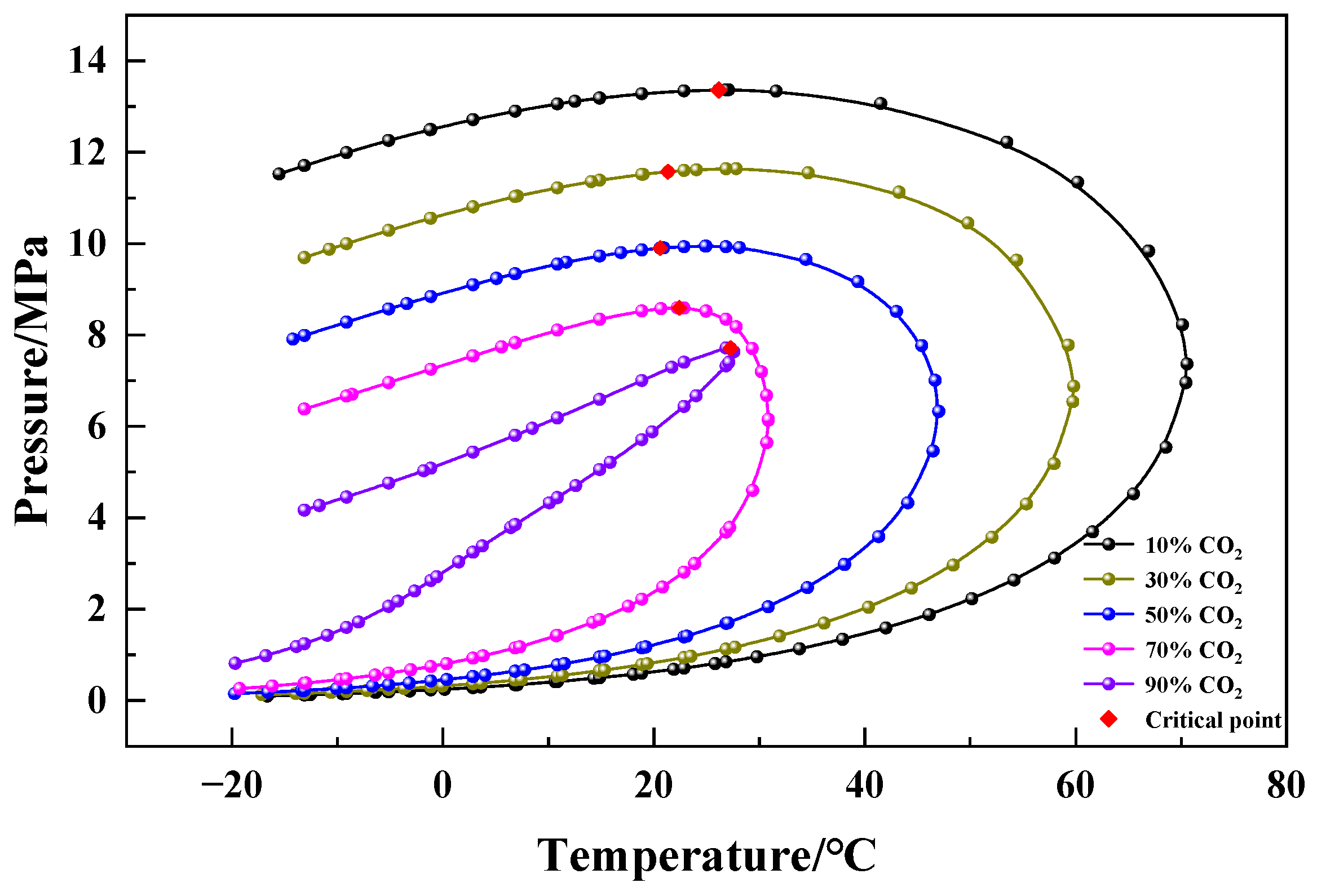
- Keep the temperature constant, slowly reduce the pressure, and observe the phase change until the first droplet or bubble appears. Record the pressure at this time as the dew point pressure (bubble point pressure) at the temperature.
- (5)
- Increase the temperature and repeat steps 4 to 5 to finally obtain the dew point pressure (bubble point pressure) at different temperature points.
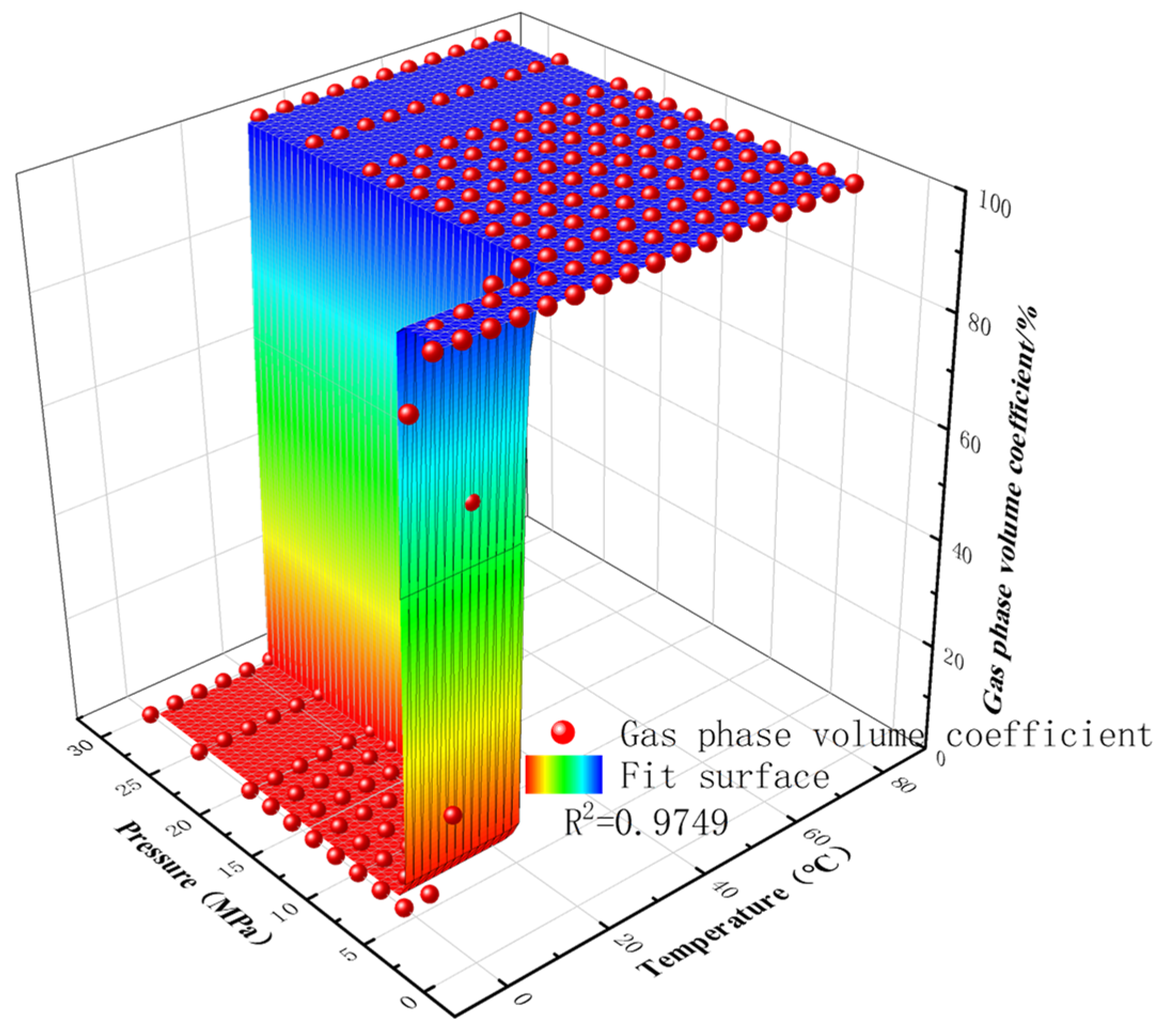
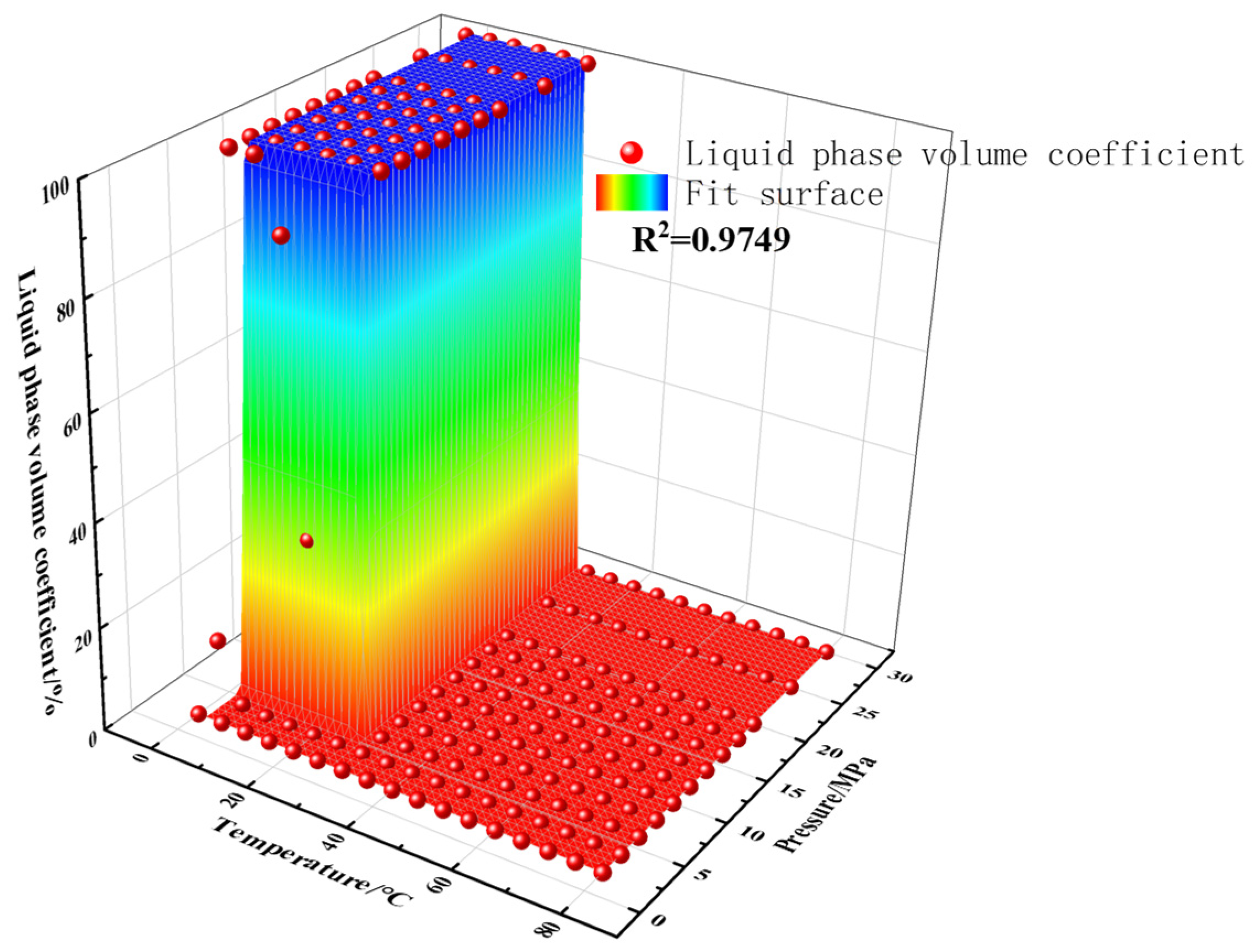
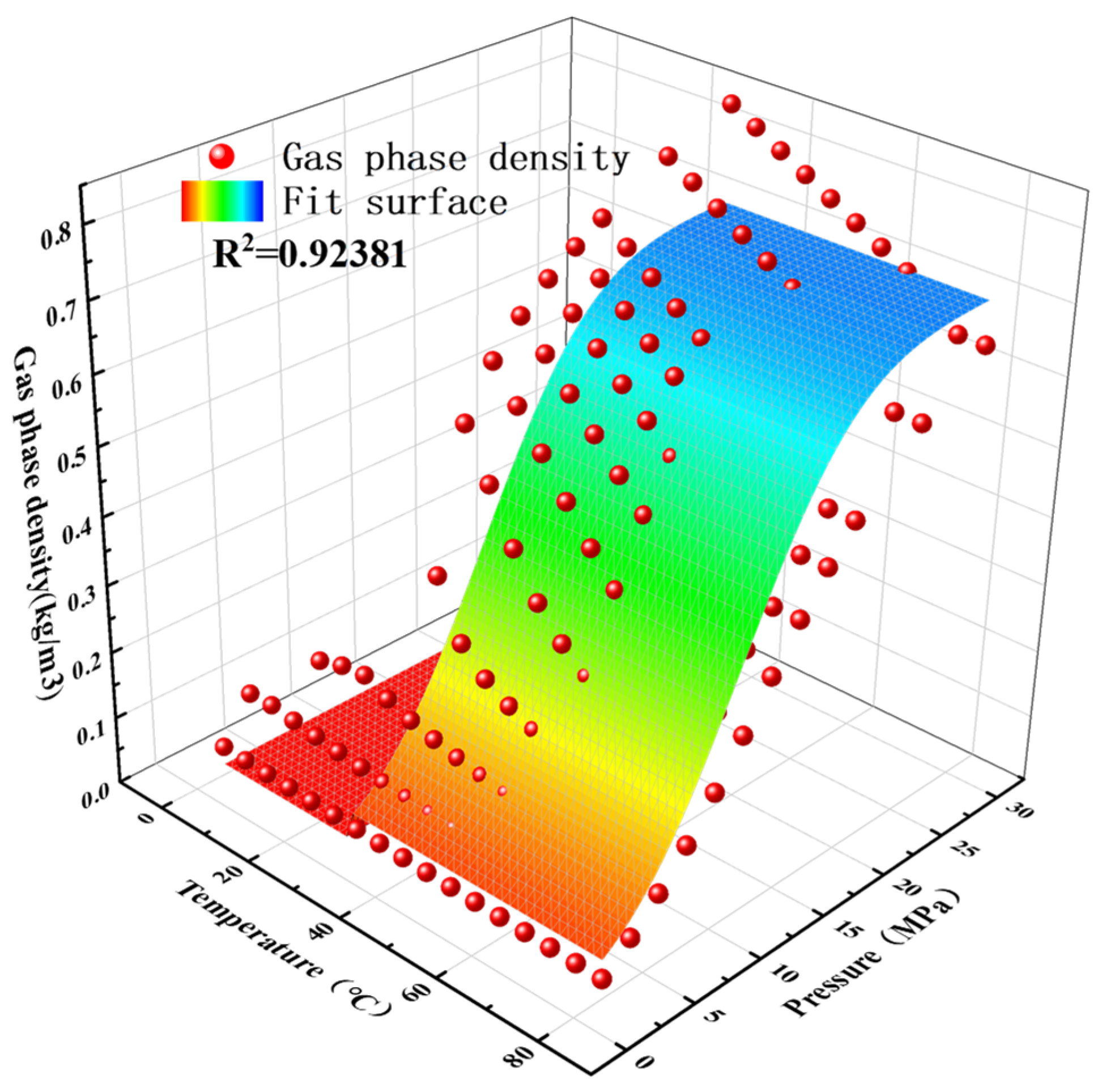
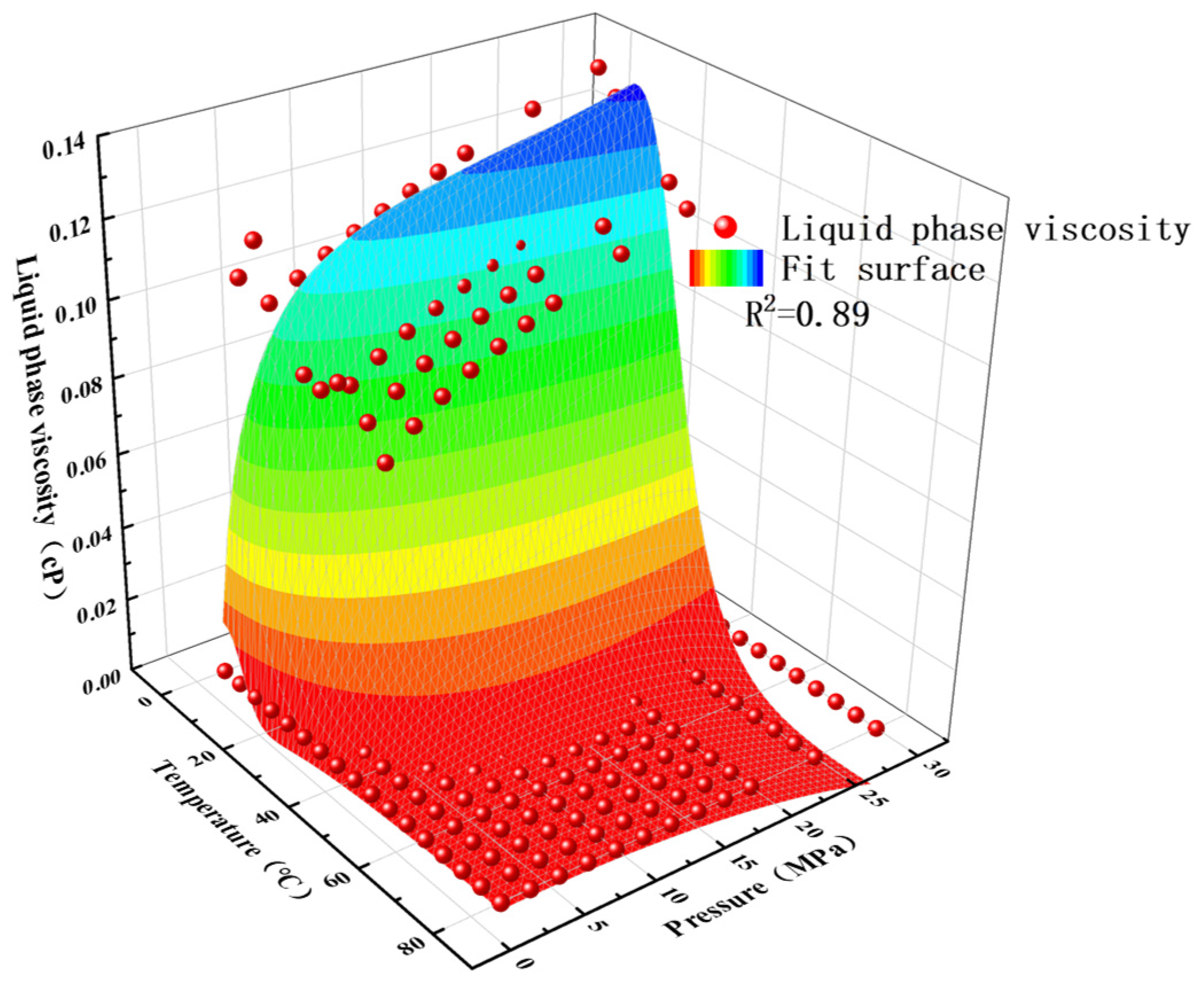
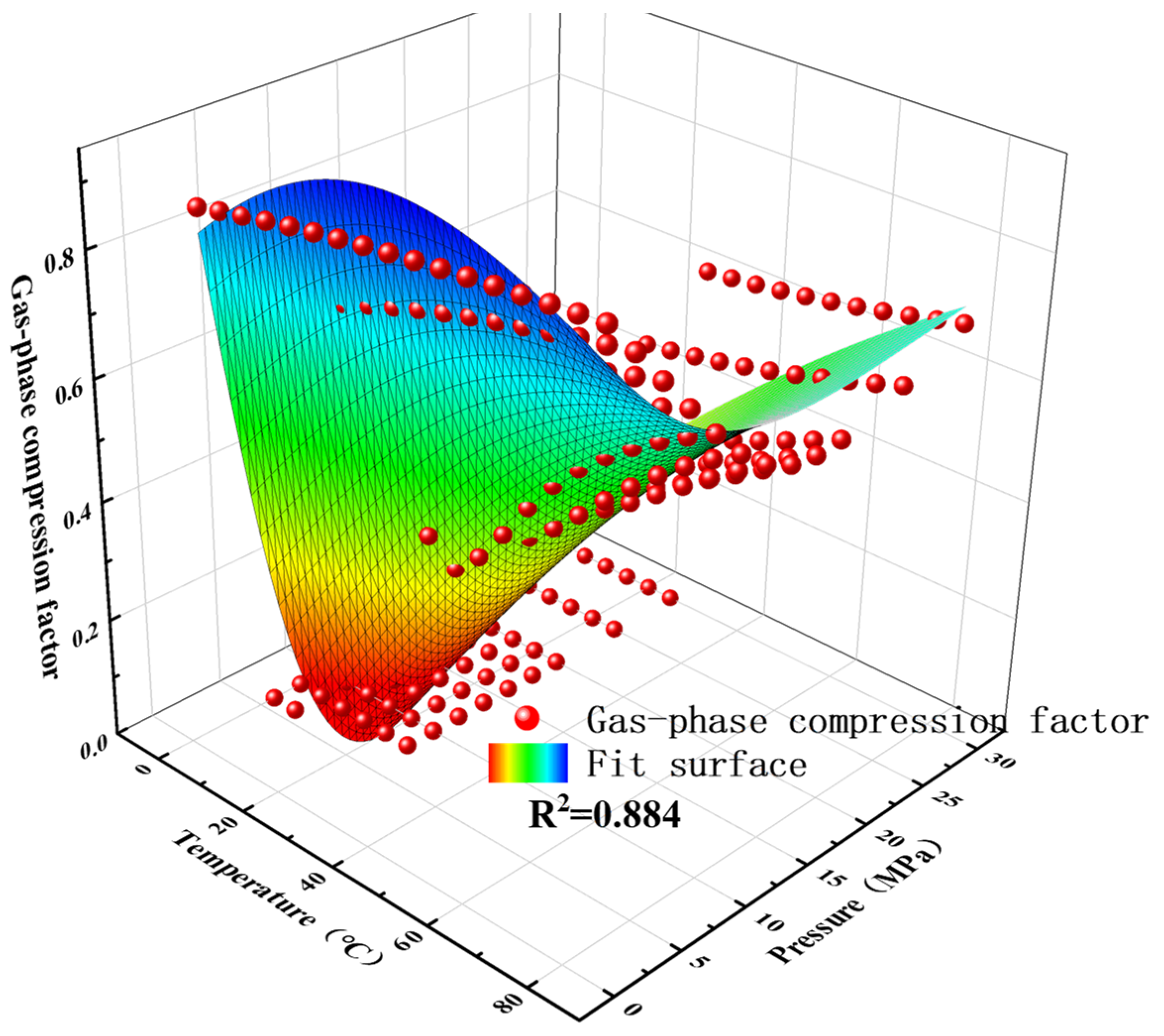
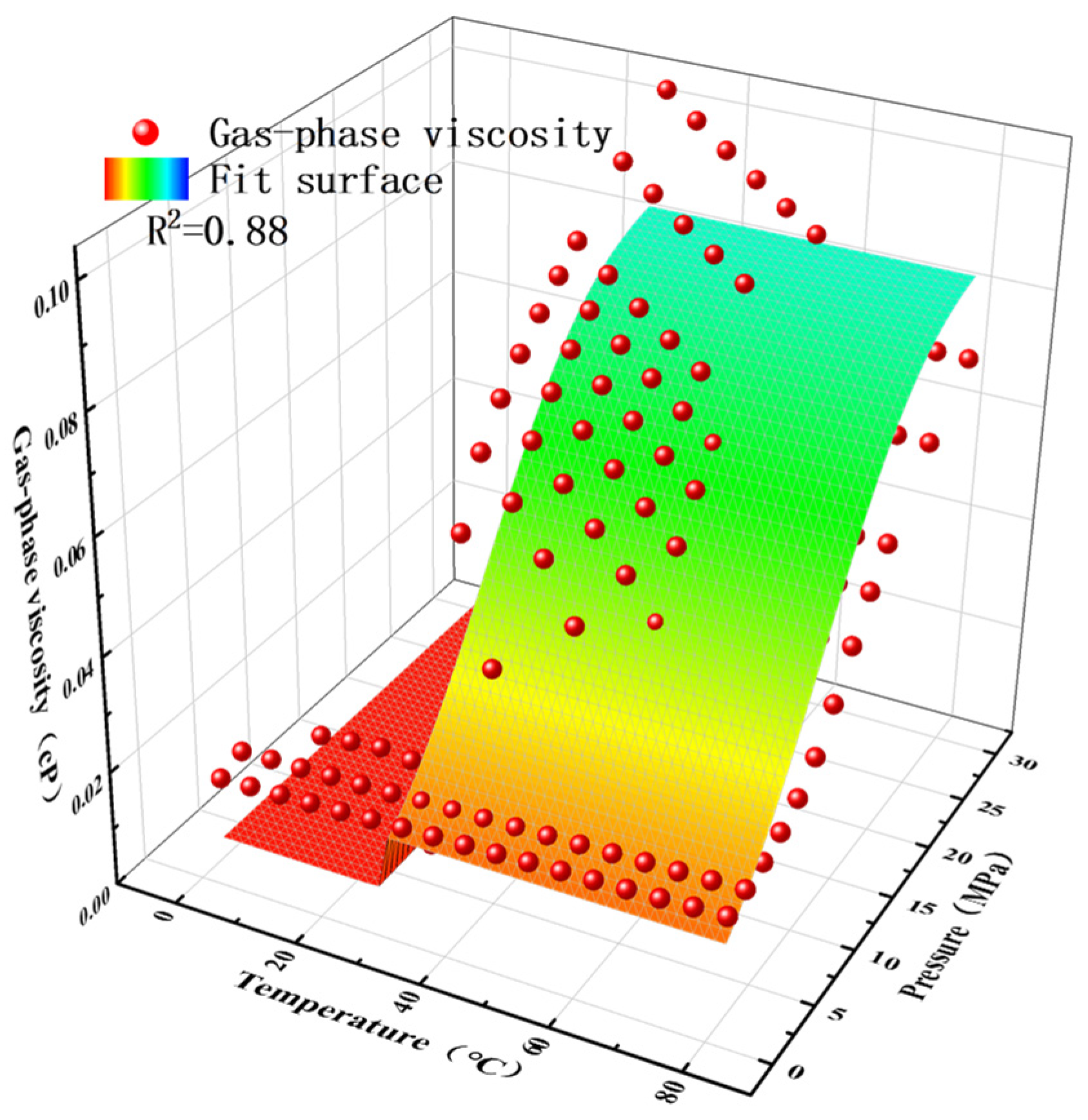
2.1.4. Phase Diagram Drawing and Calculation Formula Fitting
- (1)
- Gas-phase volume fraction
- (2)
- Liquid-phase volume fraction
- (3)
- Gas-phase density
- (4)
- Liquid-phase density
- (5)
- Gas-phase compressibility factor
- (6)
- Gas-phase viscosity
2.2. Wellbore Multiphase Flow Pressure and Temperature Calculation Method
2.3. Three-Phase (Oil–Gas–Water) Throttle Calculation Model for Gas Distribution Nozzles
2.4. Formation Injection Capacity Prediction Method
3. Calculation Example
3.1. Basic Parameters of Gas Injection Well
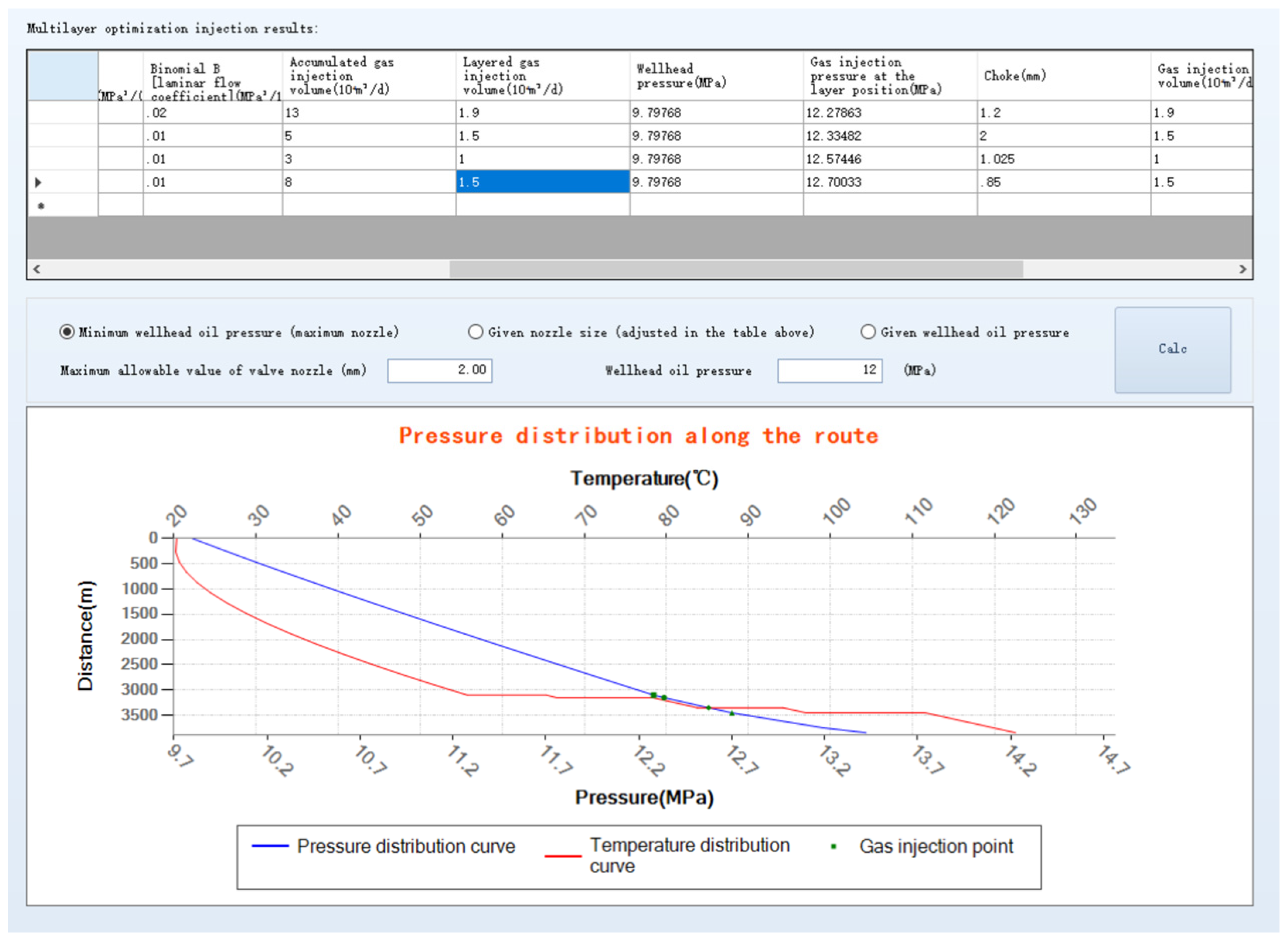
3.2. Optimization Results of Multi-Layer Gas Injection
4. Discussion
5. Conclusions
- (1)
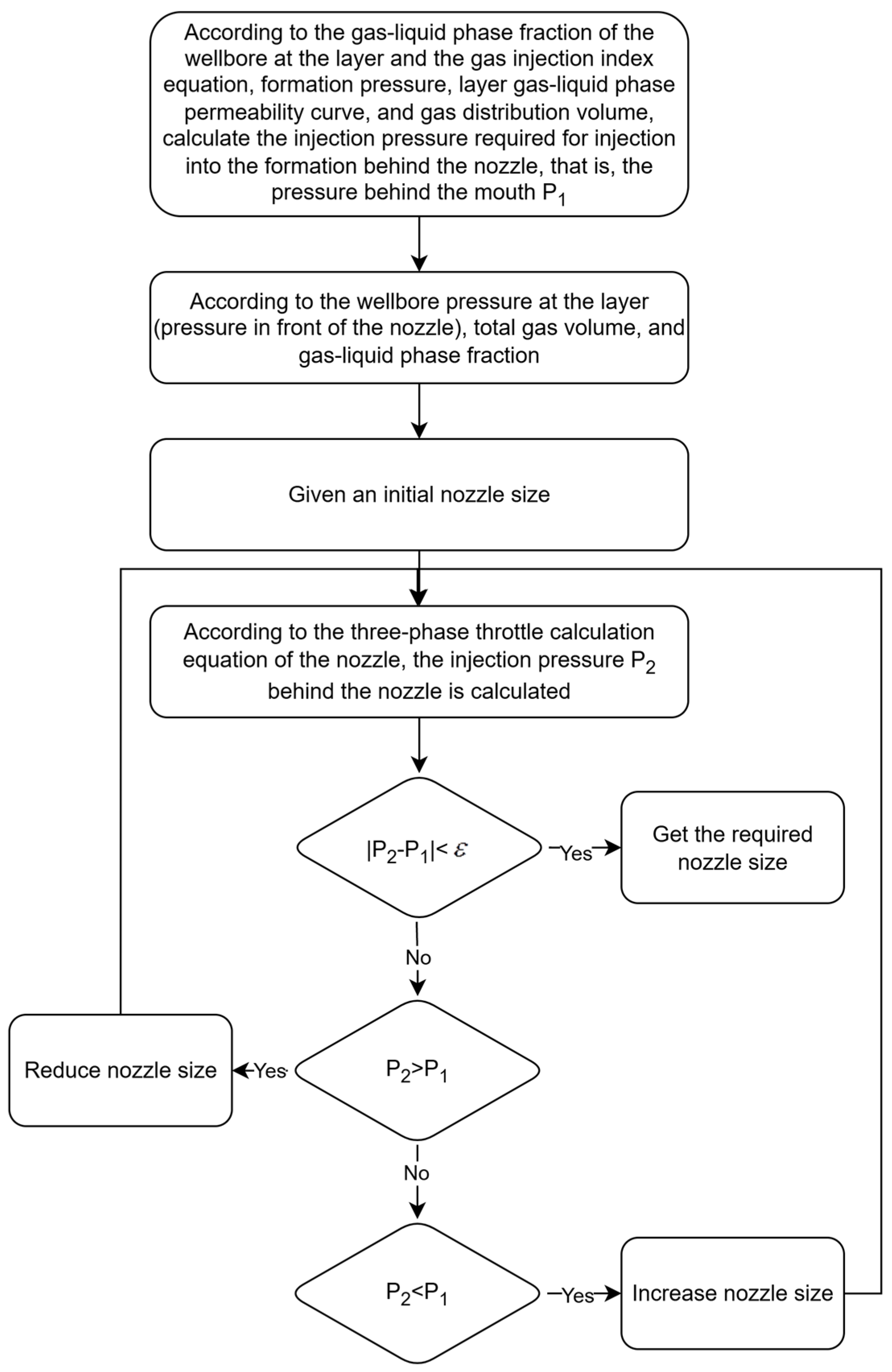
- Based on the mass and energy conservation equations of wellbore pipe flow, a coupled “separate layer gas injection wellbore–gas distribution nozzle–formation” flow simulation model was established. This model can calculate the gas temperature distribution through the radial heat transfer equation and modify flow parameters by combining the property mixing rules of multi-component gases, achieving full-system flow simulation of natural gas with different CO2 contents under multiphase flow conditions and solving the problems in traditional models where different flow segments are decoupled and only a single gas component (CO2) is considered.
- (2)
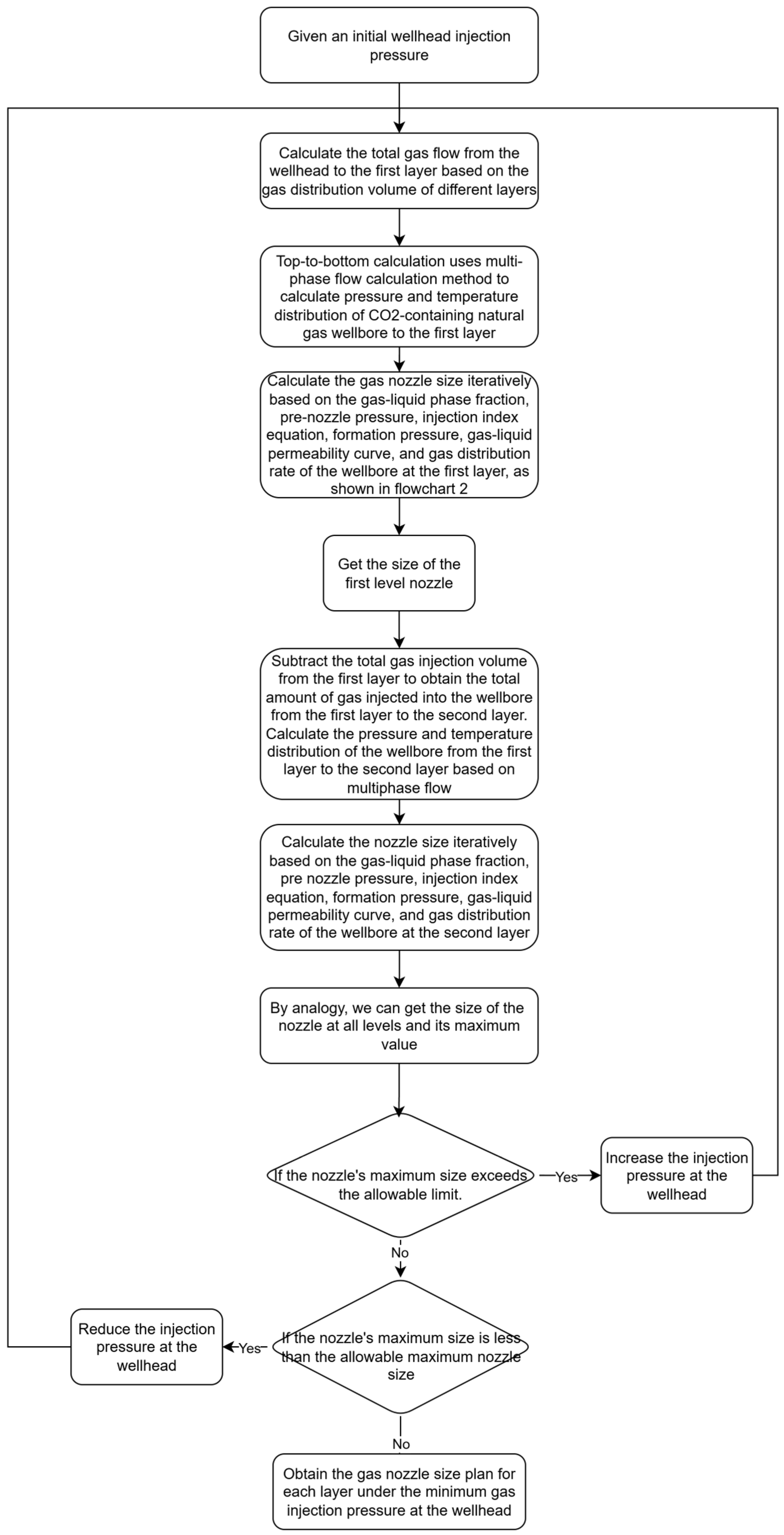
- Taking the maximum allowable gas nozzle size as the boundary condition and the minimum wellhead pressure as the optimization objective, the optimal combination of gas nozzle sizes for each layer’s gas distributor and the wellhead pressure was obtained through iterative solution. This not only avoids the risk of gas nozzle blockage but also reduces gas injection energy consumption, significantly improving the efficiency and injection allocation accuracy of multi-interval allocation.
- (3)
- Through the example validation of Well XXX, based on the minimum wellhead pressure multi-layer separate injection collaborative allocation optimization method, under the condition of a maximum allowable gas nozzle size of 2 mm, the layered gas allocation optimization was performed for this well according to the gas allocation of each interval. The calculated gas nozzle size for each interval can meet the injection allocation requirement under the current gas injection pressure condition.
- (4)
- The results of this study provide a solid theoretical foundation and efficient solution for the refined and intelligent allocation of CO2-containing natural gas separate injection wells, and have far-reaching theoretical and engineering significance for improving the gas injection development effect in complex reservoirs such as low-permeability and offshore ultra-shallow layers.
- (5)
- It is recommended to record the gas injection volume and update the cumulative injection volume of the layer in real time with the downhole measuring instrument, and then combine it with the cumulative production volume and production rate of the layer generation reasonably to estimate the new formation pressure changes and gas saturation based on the material balance equation, so as better to calculate the injection capacity parameters of the layer.
Author Contributions
Funding
Data Availability Statement
Conflicts of Interest
References
- Li, X. Research on supercritical CO2 separate layer injection technology in ultra-low permeability reservoirs. Oil Prod. Eng. 2021, 79–84+99–100. Available online: https://qikan.cqvip.com/Qikan/Article/Detail?id=00002HCD5B907JP0MNDO7JP16DR&from=Qikan_Search_Index (accessed on 3 November 2025).
- Wu, H.; Wu, X.D.; Wang, Q.; Zhu, M.; Fang, Y. A wellbore flow model of CO2 separate injection with concentric dual tubes and its affecting factors. Acta Pet. Sin. 2011, 32, 722–727. Available online: https://d.wanfangdata.com.cn/periodical/syxb201104025 (accessed on 3 November 2025).
- Li, P.Z.; Huang, Q.H.; Sun, L.; Qian, S.; Xie, M. Application of node analysis method in stratified gas injection. Fault-Block Oil Gas Field 2014, 21, 121–124. [Google Scholar]
- Ramey, H.J. Wellbore Heat Transmission. J. Pet. Technol. 1962, 14, 427–435. [Google Scholar] [CrossRef]
- Yasunami, T.; Sasaki, K.; Sugai, Y. CO2 Temperature Prediction in Injection Tubing Considering Supercritical Condition at Yubari ECBM Pilot-Test. J. Can. Pet. Technol. 2010, 49, 44–50. [Google Scholar] [CrossRef]
- Wu, X.D.; Wang, Q.; He, Y.F. Temperature-pressure field coupling calculation model considering phase behavior change in CO2 injection well borehole. J. China Univ. Pet. (Nat. Sci. Ed.) 2009, 33, 73–77. [Google Scholar] [CrossRef]
- Dou, L.B.; Li, G.S.; Shen, Z.H.; Wu, C.F.; Bi, G. Wellbore Pressure and Temperature Prediction Model and Its Affecting Factors for CO2 Injection Wells. Pet. Drill. Tech. 2013, 41, 76–81. [Google Scholar] [CrossRef]
- Zhang, Y.G.; Luo, Y.; Liu, Y.L.; Lu, Y.L.; Wei, K.P. Research and application of wellbore temperature and pressure distribution models for CO2 injection well. Lithol. Reserv. 2014, 26, 108–113. [Google Scholar] [CrossRef]
- Liu, Z.L.; Feng, L. Calculation of Temperature and Pressure in CO2 Injection Wells. Inn. Mong. Petrochem. Ind. 2016, 42, 55–58. [Google Scholar] [CrossRef]
- Paterson, L.; Lu, M.; Connell, L.D.; Ennis-King, J. Numerical Modeling of Pressure and Temperature Profiles Including Phase Transitions in Carbon Dioxide Wells. In Proceedings of the Paper Presented at the SPE Annual Technical Conference and Exhibition, Denver, CO, USA, 21–24 September 2008. [Google Scholar] [CrossRef]
- Yang, Z.; Cheng, J.; Li, Z.; Yang, Y.; Tang, L.; Wei, W. Unsteady Flow Dynamics and Phase Transition Behavior of CO2 in Fracturing Wellbores. Fluid Dyn. Mater. Process. 2025, 21, 2149–2176. [Google Scholar] [CrossRef]
- Zhao, G.Y.; Li, Y.; Yang, S.K.; Qin, X.F.; Liao, Z.H.; Hao, T. Research on the flow law of multicomponent gas injection wellbore in offshore oilfields. J. Petrochem. Ind. Appl. 2025, 44, 31–37. [Google Scholar]
- Lu, M.; Connell, L.D. Transient, thermal wellbore flow of multispecies carbon dioxide mixtures with phase transition during geological storage. Int. J. Multiph. Flow 2014, 63, 82–92. [Google Scholar] [CrossRef]
- Chen, H.; Cao, Y.F.; Xing, X.S.; Zou, M.H.; Yu, J.F.; Du, X.Y.; Wang, Y.; Peng, J.L. Experimental study on the changes of physical parameters of high CO2-Content multi-component gas. In Proceedings of the 2023 International Field Exploration and Development Conference (2023IFEDC), Wuhan, China, 20–22 September 2023; pp. 1–18. Available online: https://d.wanfangdata.com.cn/conference/10876793 (accessed on 3 November 2025).
- Yang, W.J.; Lu, D.T.; Li, Y.C. Adjustment of Respective Layer Flow Rate in Injection Well Through Coupling of Wellbore Pipe-Flow and Straturm Filtering Flow. Daqing Pet. Geol. Dev. 2009, 28, 79–83. [Google Scholar] [CrossRef]
- Liu, Y.H.; Luo, C.C.; Zhang, L.H.; Wang, F.; Xin, T. Research on the Model of Separate Layer CO2 Injection Well System. J. S. Pet. Univ. 2015, 37, 123–127. [Google Scholar] [CrossRef]
- Lai, H.; Chen, P.; Lv, L.; Lu, S. Construction and Application of a Coupled Temperature and Pressure Model for CO2 Injection Wells Considering Gas Composition. Energies 2025, 18, 1238. [Google Scholar] [CrossRef]
- Kumar, P.; Sanderse, B.; Esquivel, P.I.R.; Henkes, R.A. A new temperature evolution equation that enforces thermodynamic vapour–liquid equilibrium in multiphase flows—Application to CO2 modelling. Comput. Fluids 2025, 289, 106524. [Google Scholar] [CrossRef]
- Mukherjee, H.; Brill, J.P. Pressure Drop Correlations for Inclined Two-Phase Flow. J. Energy Resour. Technol. 1985, 107, 549–554. [Google Scholar] [CrossRef]
- Perkins, T.K. Critical and subcritical flow of multiphase mixtures through chokes. SPE Drill. Complet. 1993, 8, 271–276. [Google Scholar] [CrossRef]



| Component/Mole Fraction | C1 | C2 | C3 | iC4 | nC4 | iC5 | nC5 | C6+ | N2 | CO2 |
|---|---|---|---|---|---|---|---|---|---|---|
| 1 | 52.1 | 10.27 | 8.19 | 2.81 | 3.82 | 1.79 | 1.45 | 1.45 | 8.09 | 10.03 |
| 2 | 40.52 | 7.99 | 6.37 | 2.18 | 2.97 | 1.39 | 1.13 | 1.13 | 6.29 | 30.03 |
| 3 | 28.94 | 5.71 | 4.55 | 1.56 | 2.12 | 0.99 | 0.81 | 0.81 | 4.49 | 50.02 |
| 4 | 17.36 | 3.42 | 2.73 | 0.93 | 1.27 | 0.59 | 0.48 | 0.48 | 2.69 | 70.05 |
| 5 | 5.78 | 1.14 | 0.91 | 0.31 | 0.42 | 0.19 | 0.16 | 0.16 | 0.89 | 90.04 |
| No. | Device Name | Device Model | Main Technical Indicators |
|---|---|---|---|
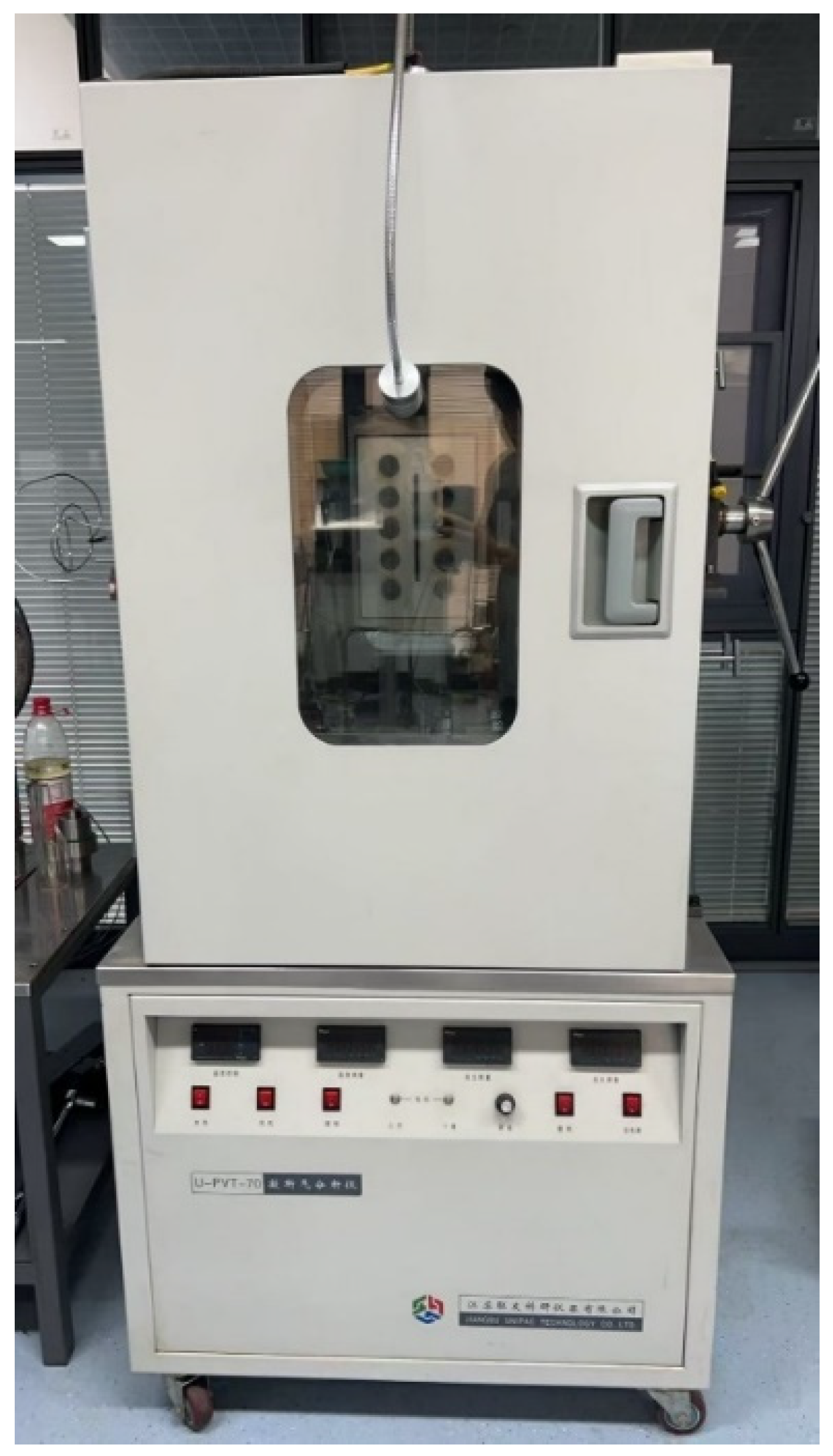
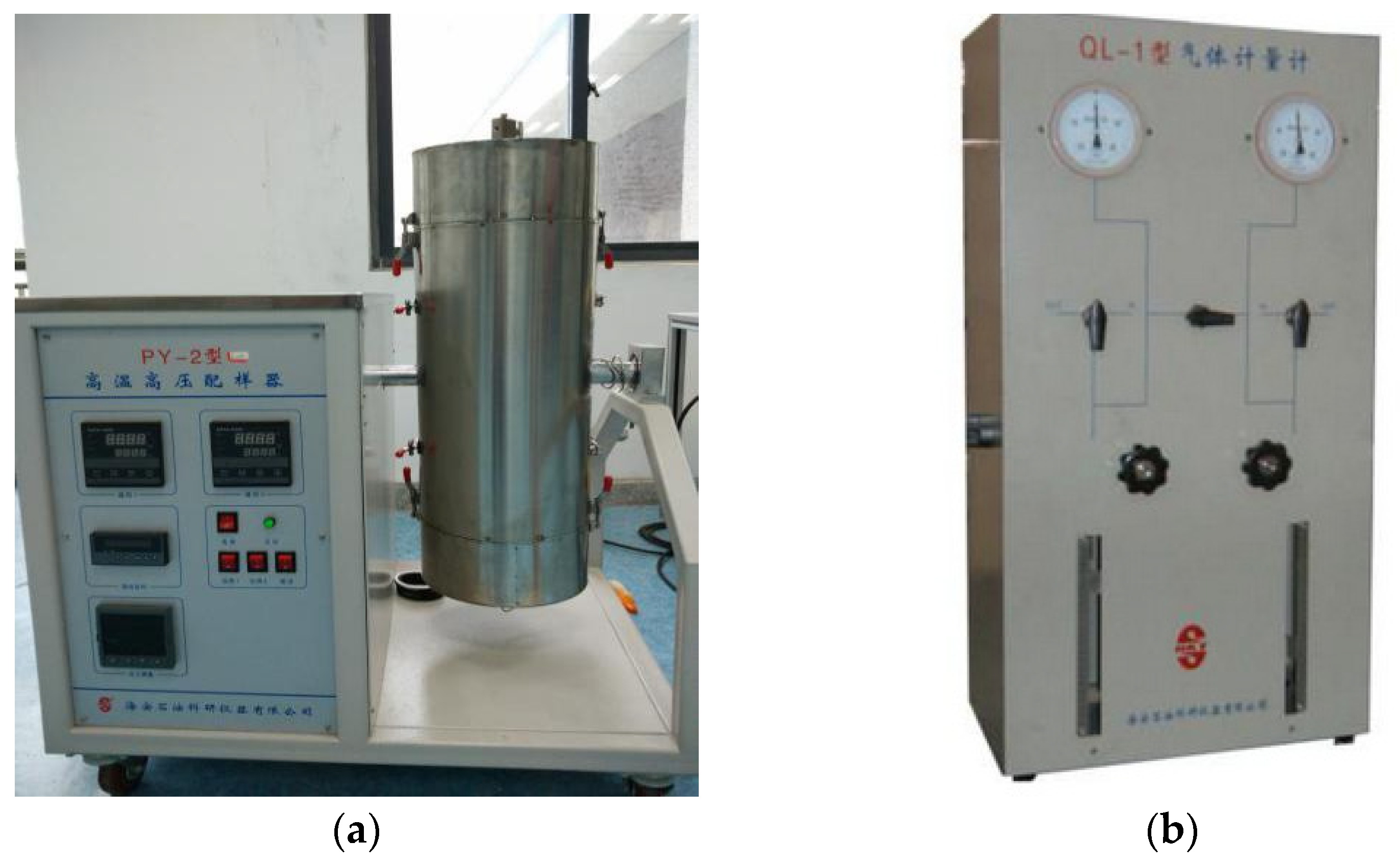
| 1 | High-temperature and high-pressure sampler | PY-2 (Hai’an County, Jiangsu Province, China) | Effective volume: 1000 mL Maximum pressure resistance: 100 MPa Maximum temperature resistance: 200 °C Temperature control accuracy: 0.1 °C Stirring speed: 10 rpm/min Stirring angle: 180° |
| 2 | High-pressure displacement pump | BY100-II (Hai’an County, Jiangsu Province, China) | Effective volume of single pump body: 500 mL Maximum pump pressure: 100 MPa Pressure control accuracy: 0.1% Flow range: 0.001–30 mL/min Applicable temperature: normal temperature Mode: constant voltage, constant current, and quantitative |
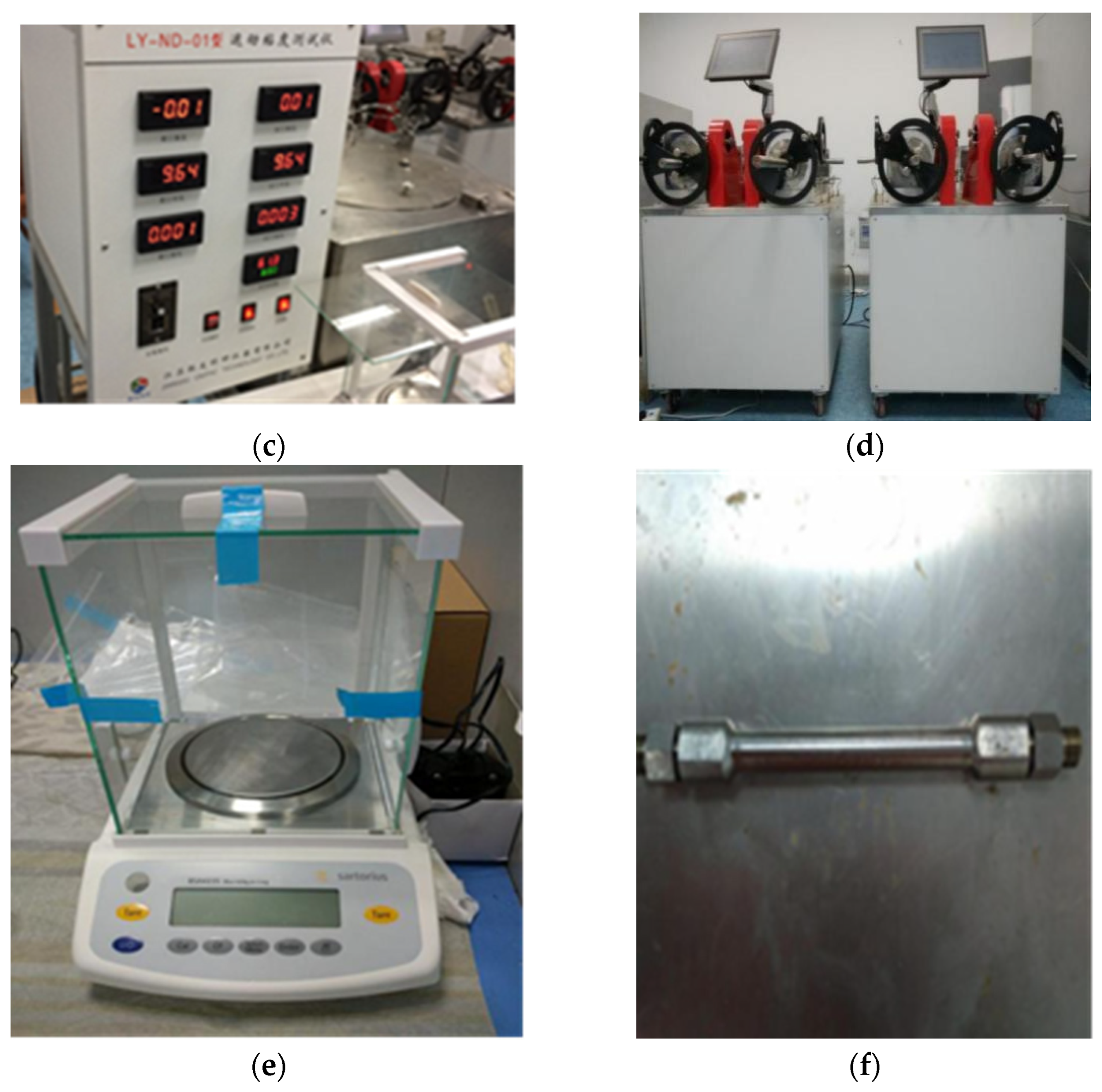
| 3 | Kinematic viscosity tester | LY-ND-01 (Hai’an County, Jiangsu Province, China) | Working temperature: normal temperature ~150 °C Maximum pressure resistance: 69 MPa |
| 4 | Gas meter | QL-I (Hai’an County, Jiangsu Province, China) | Effective volume: 1000 + 1000 mL Volume accuracy: 1 mL |
| 5 | Electronic balance | BSA423 (Beijing, China) | Max = 420 g d = 0.001 g |
| 6 | Gas chromatograph | Agilent 6890 (Beijing, China) | Measurement components: CO2, N2, O2, C1–C8 |
| 7 | Gas chromatograph | Agilent 7890 (Beijing, China) | Measurement components: C1-C50 |
| 8 | Viscometer | LQ-III (Hai’an County, Jiangsu Province, China) | Test pressure: 0.1–70 MPa Test temperature: room temperature −200 °C Test angle: 23°, 40°, 70° Test time: 0–9999 s |
| Well ID | Well XXX | |
|---|---|---|
| Tubing Inner Diameter | mm | 50.6 |
| Tubing Depth | m | 3500 |
| Casing Inner Diameter | mm | 114.3 |
| Reservoir Temperature | °C | 100 |
| Surface Temperature | °C | 15 |
| Formation Water Specific Gravity | - | 1.02 |
| Gas Specific Gravity | - | 1.15 |
| CO2 Molar Content | % | 50 |
| Well Depth (MVD/TVD) | m | 3843/3843 |
| Maximum Allowable Nozzle Size | mm | 2.0 |
| Well ID | Interval No. | Interval Top (m) | Interval Bottom (m) | Effective Thickness (m) | Gas Saturation (%) | Formation Pressure (MPa) | Gas Injection Index (104 m3/d/MPa2) | Interval Gas Allocation (104 m3/d) |
|---|---|---|---|---|---|---|---|---|
| Well 1 | 1 | 3000 | 3200 | 50 | 90 | 10 | 0.05 | 1.9 |
| 2 | 3100 | 3200 | 50 | 90 | 10 | 0.03 | 1.5 | |
| 3 | 3300 | 3400 | 50 | 90 | 10 | 0.02 | 1 | |
| 4 | 3400 | 3500 | 50 | 90 | 10 | 0.05 | 1.5 |
| Gas Saturation (Sg) | Liquid-Phase Permeability (Kl) | Gas-Phase Permeability (Kg) |
|---|---|---|
| 100 | 0 | 5 |
| 90 | 0.1 | 4.8 |
| 80 | 0.5 | 3.8 |
| 70 | 1 | 3 |
| 60 | 1.3 | 2.7 |
| 50 | 1.6 | 2.5 |
| 40 | 2 | 2.3 |
| 30 | 1.8 | 2 |
| 20 | 2.2 | 1.8 |
| 10 | 2.5 | 1.3 |
| 0 | 2.7 | 0 |
| Well ID | Interval No. | Interval Top (m) | Interval Bottom (m) | Effective Thickness (m) | Gas Saturation (%) | Formation Pressure (MPa) | Gas Injection Index (104 m3/d/MPa2) | Interval Gas Allocation (104 m3/d) | Wellhead Pressure (MPa) | Injection Pressure at Interval (MPa) | Gas Nozzle (mm) | Calculate the Gas Injection Volume Under the Condition of the Gas Nozzle (104 m3/d) | Accuracy of Air Distribution Volume Under Nozzle Conditions (%) |
|---|---|---|---|---|---|---|---|---|---|---|---|---|---|
| Well 1 | 1 | 3000 | 3200 | 50 | 90 | 10 | 0.05 | 1.9 | 9.80 | 12.28 | 1.2 | 1.9 | 100% |
| 2 | 3100 | 3200 | 50 | 90 | 10 | 0.03 | 1.5 | 9.80 | 12.33 | 2.0 | 1.5 | 100% | |
| 3 | 3300 | 3400 | 50 | 90 | 10 | 0.02 | 1 | 9.80 | 12.57 | 1.0 | 1 | 100% | |
| 4 | 3400 | 3500 | 50 | 90 | 10 | 0.05 | 1.5 | 9.80 | 12.70 | 0.9 | 1.5 | 100% |
Disclaimer/Publisher’s Note: The statements, opinions and data contained in all publications are solely those of the individual author(s) and contributor(s) and not of MDPI and/or the editor(s). MDPI and/or the editor(s) disclaim responsibility for any injury to people or property resulting from any ideas, methods, instructions or products referred to in the content. |
© 2026 by the authors. Licensee MDPI, Basel, Switzerland. This article is an open access article distributed under the terms and conditions of the Creative Commons Attribution (CC BY) license.
Share and Cite
Wang, B.; Ma, Y.; Ji, Y.; Yu, J.; Zhang, X.; Liao, R.; Luo, W.; Wang, J. Research on the Multi-Layer Optimal Injection Model of CO2-Containing Natural Gas with Minimum Wellhead Gas Injection Pressure and Layered Gas Distribution Volume Requirements as Optimization Goals. Processes 2026, 14, 151. https://doi.org/10.3390/pr14010151
Wang B, Ma Y, Ji Y, Yu J, Zhang X, Liao R, Luo W, Wang J. Research on the Multi-Layer Optimal Injection Model of CO2-Containing Natural Gas with Minimum Wellhead Gas Injection Pressure and Layered Gas Distribution Volume Requirements as Optimization Goals. Processes. 2026; 14(1):151. https://doi.org/10.3390/pr14010151
Chicago/Turabian StyleWang, Biao, Yingwen Ma, Yuchen Ji, Jifei Yu, Xingquan Zhang, Ruiquan Liao, Wei Luo, and Jihan Wang. 2026. "Research on the Multi-Layer Optimal Injection Model of CO2-Containing Natural Gas with Minimum Wellhead Gas Injection Pressure and Layered Gas Distribution Volume Requirements as Optimization Goals" Processes 14, no. 1: 151. https://doi.org/10.3390/pr14010151
APA StyleWang, B., Ma, Y., Ji, Y., Yu, J., Zhang, X., Liao, R., Luo, W., & Wang, J. (2026). Research on the Multi-Layer Optimal Injection Model of CO2-Containing Natural Gas with Minimum Wellhead Gas Injection Pressure and Layered Gas Distribution Volume Requirements as Optimization Goals. Processes, 14(1), 151. https://doi.org/10.3390/pr14010151