Article

Development and Characterization of Pinhão Extract Powders Using Inulin and Polydextrose as Prebiotic Carriers


by
Karine Marafon
1,*,
Ana Caroline Ferreira Carvalho
1,*,
Amanda Alves Prestes
1,
Carolina Krebs de Souza
2,
Dayanne Regina Mendes Andrade
3,
Cristiane Vieira Helm
4,
Fernanda Nunes Pereira
5,
Paola Tedeschi
6,
Jefferson Santos de Gois
5 and
Elane Schwinden Prudencio
1,7,*
1
Postgraduate Program in Food Engineering, Technology Center, Federal University of Santa Catarina, Trindade, Florianópolis 88040-900, SC, Brazil
2
Department of Chemical Engineering, University of Blumenau, 3250 São Paulo Street, Blumenau 89030-000, SC, Brazil
3
Postgraduate Program in Food Engineering, Federal University of Paraná, Jardim das Américas, Curitiba 82590-300, PR, Brazil
4
Brazilian Agricultural Research Corporation (Embrapa Florestas), Estrada da Ribeira, km 111, Guaraituba, Colombo 83411-000, PR, Brazil
5
Department of Analytical Chemistry, Rio de Janeiro State University, Rio de Janeiro 20550-900, RJ, Brazil
6
Department of Chemical, Pharmaceutical and Agricultural Sciences, University of Ferrara, 44121 Ferrara, Italy
7
Department of Food Science and Technology, Federal University of Santa Catarina, Itacorubi, Florianópolis 88034-001, SC, Brazil
*
Authors to whom correspondence should be addressed.
Processes 2026, 14(1), 119; https://doi.org/10.3390/pr14010119 (registering DOI)
Submission received: 20 November 2025 / Revised: 19 December 2025 / Accepted: 24 December 2025 / Published: 29 December 2025
(This article belongs to the Section Food Process Engineering)

Abstract

Araucaria angustifolia produces seeds known as Pinhão, which are valued for their nutritional composition and potential use in functional foods. This study investigated the production and characterization of spray-dried Pinhão extracts using inulin (E1) and polydextrose (E2) as carrier agents. The formulations were assessed for physicochemical composition, physical properties, rehydration behavior, morphology, phenolic profile, and mineral content. Spray drying resulted in yields of 67.7% (E1) and 60.6% (E2). E1 exhibited higher carbohydrate (37.02 g/100 g) and fiber contents (34.11 g/100 g), as well as lower moisture (1.35 g/100 g) and water activity (0.16), yielding powders with greater stability and lighter color. E2 demonstrated a superior rehydration performance, with higher wettability and dispersibility, attributed to the amorphous and hydrophilic nature of polydextrose. The matrix formed by inulin and polydextrose during spray drying was equally effective in preserving the low contents of phenolic compounds, demonstrating the suitability of the technique for stabilizing these heat-sensitive bioactive compounds. Only very low levels of phenolic compounds were detected in both samples, which is consistent with the naturally low phenolic content of the Pinhão almond. Mineral analysis showed greater calcium and magnesium retention in E1, whereas E2 contained higher levels of potassium, phosphorus, iron, and zinc. Overall, inulin enhanced powder stability and compactness, while polydextrose improved rehydration behavior and mineral preservation, supporting the potential application of Pinhão extract powders in functional and health-oriented food products.

1. Introduction

The term Pinhão refers to the seeds of the Araucaria angustifolia tree, consisting of two parts: a shell (or tegument) and the almond. The almond is composed of the endosperm and the embryo. The almond is the edible, nutritious part of the Pinhão and can also be called the Pinhão almond or the seed/pulp. The almond is divided into endosperm and embryo. The endosperm is the seed’s storage tissue and is the largest edible part of the Pinhão. It is rich in nutrients, such as carbohydrates, fiber, protein, and minerals. The embryo is located inside the endosperm, and, like the endosperm, is also rich in nutrients (proteins and minerals). The shell, in turn, is a residue and is not edible. (Figure 1). However, this tree is currently listed as endangered, with less than 2% of its original distribution remaining.
Despite the species’ vulnerability, the Pinhão is a high-nutritional-value seed, rich in carbohydrates, fiber, minerals, and bioactive compounds. Its relevance and reputation make it a promising ingredient for the development of new functional and healthy energy products, which, in turn, encourages the sustainable valorization of the species and its native resources [1,2,3]. The bioactive compounds and minerals present in pine nuts have demonstrated positive effects on metabolic health. However, for these compounds to be efficiently incorporated into food, it is essential to develop and apply technological strategies that guarantee their stability and bioavailability during processing, application, and storage [4].
The food industry has focused on retaining bioactive compounds and reducing losses through concentration techniques. Among these, spray drying has widely developed due to its ability to ensure good stability, produce synthetic particles, and offer low operating costs. This technology involves atomizing a liquid in a drying chamber where it comes into contact with hot air, resulting in rapid powder formation. The method is considered efficient for protecting heat-sensitive compounds, since the short contact time with high temperatures minimizes thermal manipulation [5,6,7,8]. If the air inlet temperature to the atomizer is high, rapid water evaporation keeps the droplet temperature relatively low. In heated air streams, droplet temperatures remain close to the wet-bulb temperature, even when the surrounding air temperature is high. This condition helps protect heat-sensitive compounds and promotes their stability during processing [6]. One of the most critical aspects for process efficiency and the final product properties is the choice of carrier material.
The use of fibers as carrier agents in spray drying offers the advantage of protecting bioactive compounds and forming particles with enhanced physicochemical properties. Among the compounds used, inulin and polydextrose stand out for their dual purpose: providing technological protection and serving as important functional ingredients. Both are defined as soluble fibers, resistant to digestion in the small intestine and subsequently fermented in the colon. It is this prebiotic functionality that contributes to the balance of the intestinal microbiota. In addition to these physiological benefits, its use helps improve the nutritional profile of products without compromising sensory characteristics [9,10,11,12].
Despite the recognized nutritional potential of Pinhão and the effectiveness of spray drying in stabilizing extracts, optimizing the stability and quality of the powder for industrial applications remains a challenge. There is a lack of knowledge regarding the comparative influence of carrier agents with prebiotic functionality, such as inulin and polydextrose, on the preservation of the bioactive compounds of Pinhão and on the physicochemical properties of the resulting powder.
In this context, the present study aims to explore the potential of the Pinhão almond extract as a source of bioactive compounds, evaluate its properties via spray drying, and comparatively analyze the use of inulin and polydextrose as carrier agents in the drying process, with a focus on obtaining extracts with improved quality characteristics. This research contributes to the development of functional, innovative foods with high nutritional value, meeting the growing demand for healthy products.

2. Materials and Methods

2.1. Materials

The raw Pinhão seed in natura were provided by the Brazilian Agricultural Research Corporation—Embrapa Florestas, located in Colombo, State of Paraná, Brazil (25°17′30″ S, 49°13′27″ W; 1027 m altitude). The seeds of Araucaria angustifolia were obtained from the germplasm bank of this institution, from the 2024 harvest, collected in June at the mature stage (newly opened pine cones). After collection, the seeds were immediately processed. All certified standard solutions used for the calibration curves of mineral elements, as well as the analytical standards of polyphenols, were purchased from Sigma-Aldrich (St. Louis, MO, USA). All other reagents used were of analytical grade.

2.1.1. Preparation of the Extract from Pinhão Almond

The Pinhão almond was used to obtain an extract. Therefore, 1 part of raw almond was mixed with 10 parts of distilled water at 55 ± 1 °C. The mixture was blended using a domestic blender (Philips Walita, 1200 W, São Paulo, Brazil) for 2 min. After processing, the resulting suspension was filtered through a cloth filter, separating the liquid extract from the solid residue. Both fractions were then stored by complete indirect freezing in a freezer at −20 ± 2 °C (Brastemp, model BRM44H, São Paulo, Brazil).

2.1.2. Preparation of the Extract for Drying

For the drying process, wall materials were added to the extract to facilitate its atomization. The percentage shown in Table 1 corresponds to the mass/mass (m/m) ratio of the carrier in relation to the liquid extract, defined to ensure thermal and structural stability during the process. The proportions were determined based on preliminary tests that identified the best performance conditions in terms of powder formation and recovery. The proportions were determined based on preliminary tests that identified the optimal conditions for achieving high powder recovery after drying. Two prebiotic compounds were used as carrier agents: inulin (Tate & Lyle, São Paulo, SP, Brazil) and polydextrose (SweetMix, Sorocaba, SP, Brazil). The selection of these materials aimed to reduce the amount of added sugars in the final products and to enhance the nutritional and functional appeal of the dehydrated extracts. Additionally, carboxymethyl cellulose (CMC) (Dinâmica Química Contemporânea, Indaiatuba, SP, Brazil) was incorporated to improve product flow within the main drying chamber. The mixture of the extract and carrier agents was homogenized using a high-shear mixer (Turrax, model TE-102, Tecnal, Piracicaba, SP, Brazil) at 14,000 rpm for 5 min.
The drying process was carried out in a counter-current spray dryer (Spray Process, São Paulo, Brazil). The two feed solutions were stirred magnetically at room temperature and pumped into the atomizer, which was equipped with a 1.2 mm nozzle. The equipment operated with an inlet temperature of 170 ± 1 °C, an outlet temperature of 80 ± 1 °C, a drying-air flow rate of 2 L/h, and a compressor pressure of 0.7 MPa. The powder samples were collected at the base of the cyclone and transferred to sterile plastic containers, where they were stored until analysis.

2.2. Physicochemical Characterization of the Powders

The protein content (g/100 g) was determined using the Kjeldahl method, which measures the total nitrogen present in the samples [13]. The carbohydrate content was calculated by difference, following the methodology of Chever et al. [14]. The total dietary fiber content was determined using the official enzymatic method of Prosky et al. [15], employing approximately 1 g of sample. This method involves the hydrolysis of proteins using a protease, followed by starch hydrolysis with thermostable α-amylase and amyloglucosidase (glucoamylase) enzymes (Megazyme®, Irishtown, Ireland). After enzymatic hydrolysis, the total fibers were separated from the hydrolysate, forming the residual fibrous mass. The residue was then dried in an oven at 70 ± 1 °C, cooled in a desiccator at room temperature, and weighed. The total fat content (g/100 g) was determined using the Soxhlet method, according to the procedure described by the Instituto Adolfo Lutz (IAL, 2008).
The moisture content of the powders was determined according to the methodology recommended by the International Dairy Federation [16], using oven drying at ±102 °C until a constant weight was achieved. Water activity (aw) was measured at ±25 °C after 15 min of sample stabilization using an Aqualab 4TE analyzer (Decagon Devices, Pullman, WA, USA). The pH of the sample was determined using a digital pH meter (AKSO 5323051003, São Leopoldo, RS, Brazil) that had been previously calibrated.
The color was determined using the CIE Lab* method, in which lightness (L*) ranges from black (0) to white (100), a* represents the chromatic axis from red (+a*) to green (−a*), and b represents the axis from yellow (+b*) to *blue (−b*). The measurements were performed using a sphere spectrophotometer (model SP60 Series, X-Rite Inc., Grand Rapids, MI, USA).
E = ( L ) 2 + ( a ) 2 + ( b ) 2
where ΔL represents the difference in lightness, Δa is the difference in the a* parameter, and Δb represents the difference in the b* parameter between the two samples.

2.3. Powder Properties

2.3.1. Density

The density of the samples was measured using the aerated bulk density and tapped bulk density, according to the method described by Reddy et al. [17], with modifications. The aerated bulk density was determined by placing approximately 2 g of sample in a graduated cylinder and calculating it using Equation (2).
A e r a t e d   b u l k   d e n s i t y = s a m p l e   m a s s   ( g )   s a m p l e   v o l u m e   ( c m 3 )
To determine tapped density, the sample was placed in a graduated cylinder, and mechanical tapping was applied to promote compaction until no further volume change was observed. The tapped density was then calculated using Equation (3).
T a p p e d   d e n s i t y = s a m p l e   m a s s   ( g )   V o l u m e   a f t e r   m e c h a n i c a l   t a p p i n g   ( c m 3 )

2.3.2. Fluidity and Cohesiveness

To evaluate fluidity and cohesiveness, the Carr Index (CI) (Equation (4)) and the Hausner Ratio (HR) (Equation (5)) were used, both calculated from the previously obtained density values. The methodology applied was described by Reddy et al. [17]:
C a r r   I n d e x   ( I C ) = A e r a t e d   b u l k   d e n s i t y     T a p p e d   d e n s i t y A e r a t e d   b u l k   d e n s i t y   ×   100   ( % )
H a u s n e r   R a t i o   ( H R ) = A e r a t e d   b u l k   d e n s i t y   T a p p e d   d e n s i t y

2.3.3. Flowability

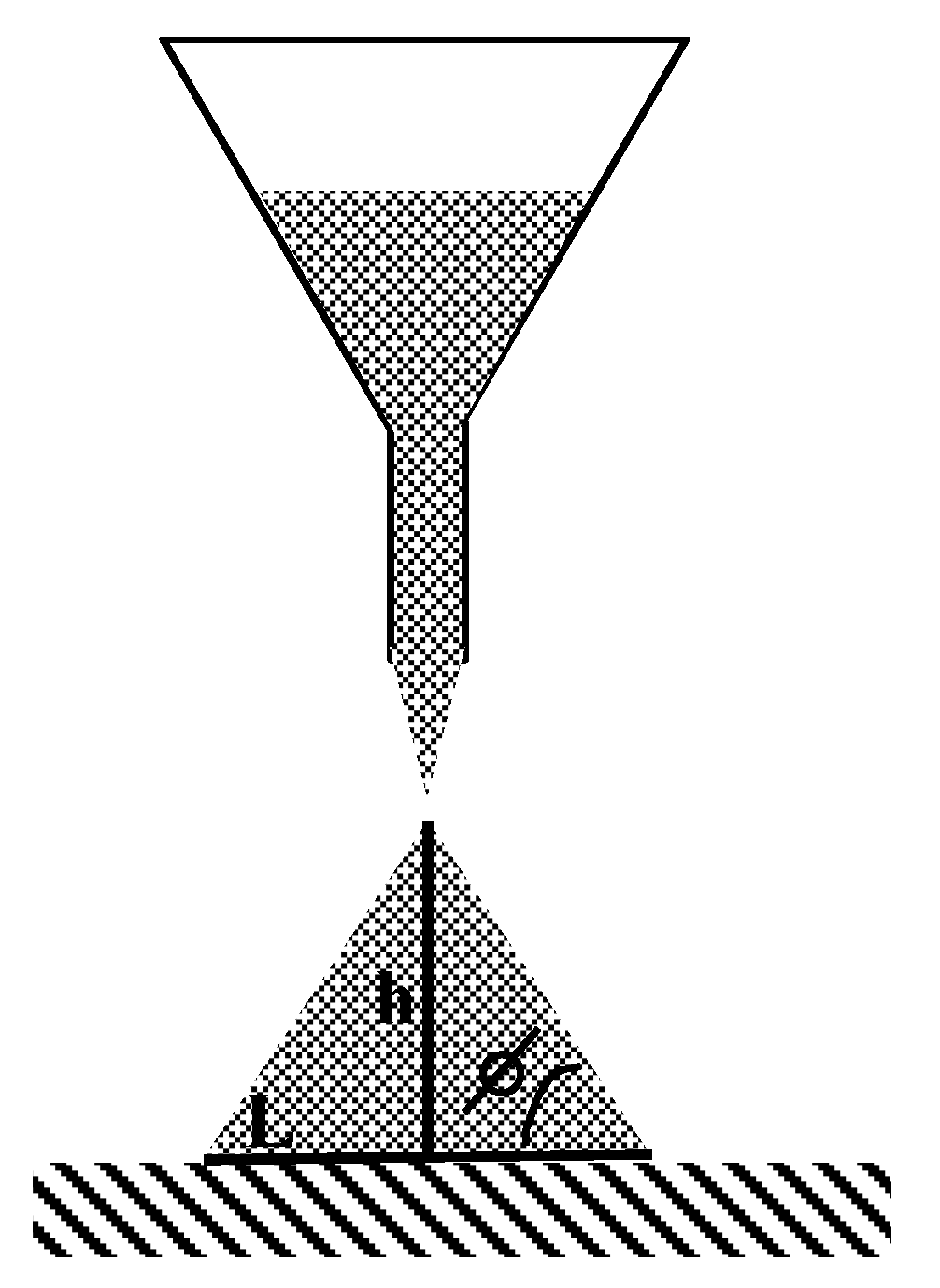
The flowability of the samples was determined through the angle of repose, calculated according to Reddy et al. [17] using the diameter in Equation (6), with a wall angle of 65°. The funnel was positioned at a fixed distance above a smooth surface, and the samples were poured using gravity, as illustrated in Figure 2. The diameter (L) and height (h) of the resulting conical pile were measured, and Equation (6) was used to calculate the angle of repose.
= a r c t g   h L 2
The criteria for classifying powder flow were established based on the angle of repose, as shown in Table 2.

2.4. Rehydration Properties

2.4.1. Wettability (WI)

The wettability index was determined according to the methodology described by Chever et al. [14], where 13 g of dry-based sample was added to 100 g of water at ±40 °C without stirring. This index is defined as the time required for the powder to become completely wet. Wettability results exceeding 120 s should be considered for informational purposes only.

2.4.2. Solubility

The water solubility was determined according to the methodology described by Fernandes et al. [19]. One gram of the dried powder was added to 25 mL of distilled water and stirred for 5 min using a magnetic stirrer. After complete dissolution of the powder, the mixture was centrifuged at 760 g for 10 min. Then, 20 mL of the supernatant was transferred to a pre-weighed Petri dish and dried in an oven at ±105 °C overnight. The solubility was calculated using Equation (7).
S o l u b i l i t y = D r i e d   s u p e r n a t a n t I n i t i a l   a m o u n t   o f   p o w d e r

2.4.3. Dispersibility

For the dispersibility analysis, the procedure described by Cunha et al. [20] was followed. 1.00 g of sample was added to 10 mL of water at 40 ± 1 °C, and the mixture was manually stirred for 15 s, performing approximately 25 complete movements. The sample was then poured through a 250 µm mesh sieve, and 2 mL of the filtrate was transferred to a crucible and dried in an oven at 105 ± 1 °C until a constant weight was reached. The dispersibility was calculated using Equation (8).
D % = m 2 × 5 × 100 m 1
where D is the dispersibility, m1 is the initial sample mass, and m2 is the dispersed sample mass.

2.5. Powder Yield

The drying yield was obtained based on the recovery of solids fed into the atomizer, the procedure described by Tong et al. [21]. The yield (Y) was calculated as the ratio between the mass of powder obtained after drying and the theoretical mass of solids in the formulation, according to Equation (9):
Y %   = mp me × 100
where mp is the mass of powder obtained after drying and me is the theoretical mass of solids in the formulation, which is obtained by summing all the solids present in the liquid feed, including the solid fraction of the extract and the solids from the carrier agents. Therefore, me is determined by the following Equation (10):
me = mc + ( mEL × mSE )
where mc is the total mass of carrier added, mEL is the mass of the liquid extract fed, and mSE is the total mass of solids in the extract

2.6. Scanning Electron Microscopy (SEM)

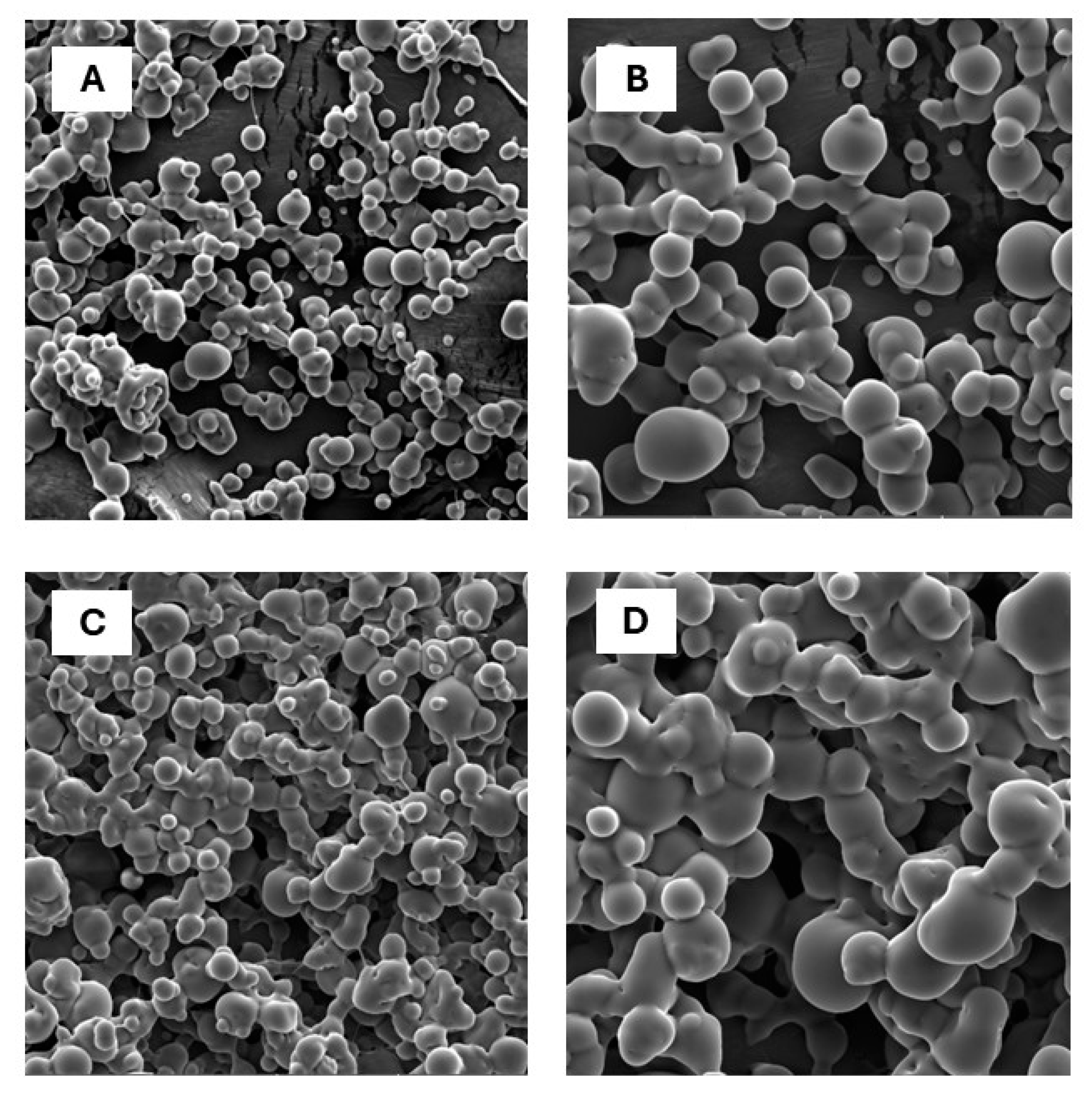
The surface morphology of the samples was examined using a scanning electron microscope (SEM) (model VEGA 3, Tescan, Brno, Czech Republic). The samples were gold-coated using a vacuum sputter coater (Leica, model EM SCD 500, Wetzlar, Germany) and analyzed at an acceleration voltage of 10 kV. The microstructure of the surfaces was observed at magnifications of 50×, 300×, and 1000×.

2.7. Individual Phenolic Compounds

In this study, for the extraction process, approximately 1.00 g of sample was mixed with 10.0 mL of 80% (v/v) methanol (UV/HPLC grade, Dinâmica Química Contemporânea, Indaiatuba, SP, Brazil) in water. This ratio was selected to ensure complete solubilization of the extractable phenolic fraction under the conditions used (1 h in an ultrasonic bath 7 LAB, at room temperature ± 25 °C) and to maintain analytical consistency across treatments. The procedure was designed for the quantification of individual phenolics and not for determining extraction efficiency; therefore, extraction yield was not calculated. The standardized approach allowed reliable comparison between samples without the need for yield-based adjustments. The samples were then filtered through a syringe filter (0.45 µm), and the phenolic compound determinations were subsequently performed.
The phenolic compounds were quantified by peak area using an HPLC–DAD system (Agilent 1260 Infinity, Agilent, Santa Clara, CA, USA) equipped with an autosampler, gradient elution system, and a diode-array detector (DAD) operating at 280, 320, and 360 nm. Separation was achieved on a Pursuit 5 C18 column (250 × 4.6 mm i.d., 5 µm particle size). The flow rate was set at 1.0 mL·min−1, with an injection volume of 20 µL, and analyses were performed at room temperature.

2.8. Multi-Element Profile

To determine the multielemental profile, an inductively coupled plasma optical emission spectrometer (ICP–OES) (model iCAP 6000, Thermo Analytica, Waltham, MA, USA) was used, with argon gas (99.95%) (Linde, Blumenau, Santa Catarina, Brazil) as the main plasma gas. The operating parameters are described in Table S1, and the emission lines used for each element are listed in Table S2.
Samples were previously digested using a microwave digestion system (Microwave Reaction System/Multiwave PRO, Anton Paar, Graz, Austria). For digestion, 5 mL of sample and 3 mL of 65% nitric acid were added, applying a power of 1500 W with the following time/temperature (°C) program: 3/85, 5/125, and 22/160, followed by a 16 min ventilation step. After digestion, the solutions were brought to a final volume of 20 mL with ultrapure water [22].
Calibration curves were prepared using standard solutions at 100 mg/L, diluted in 1% nitric acid. The samples were stored under refrigeration, analyzed at room temperature, and diluted at ratios of 1:2, 1:5, 1:10, 1:50, and 1:100 before analysis.

2.9. Statistical Analysis

All analyses were performed in triplicate, using a single batch of powder obtained from each treatment. Statistical analysis was conducted using the STATISTICA 13.3 software (TIBCO Software Inc., Palo Alto, CA, USA), and the results were expressed as mean ± standard deviation. Significant differences (p < 0.05) were evaluated by ANOVA followed by the Tukey’s HSD test, along with Pearson correlation (95% confidence).

3. Results and Discussion

3.1. Physicochemical Characterization of the Powders

In spray-dried extracts, the choice of carrier agent is of great importance, as it directly influences the visual appearance, hygroscopicity, stability, and the product’s functional and technological performance. Among the carrier agents commonly used in the food industry, inulin and polydextrose stand out. These compounds reduce the need for added sugars, exhibit good solubility, and possess prebiotic properties, thereby broadening their potential applications across different formulations.
As shown in Table 3, the protein content analysis revealed that both extracts presented similar values, with no significant difference (p < 0.05). This low concentration is characteristic of Pinhão seeds, which naturally contain a small amount of protein. However, this content may vary depending on the origin and growing conditions of the seeds. Some studies report values close to 3.85 g/100 g [3], 3.42 g/100 g [2], and 3.85 g/100 g [4] in species found in South America. Regional and genetic variations in the composition of this raw material have been reported. The extraction method can significantly influence the protein content obtained, as a considerable portion of the protein fraction tends to remain retained in the solid residue. In the absence of thermal disruption, the release of these proteins into the liquid phase becomes limited, thereby reducing the amount effectively transferred to the extract [2,23].
The E1 sample, carried with inulin, showed higher values of carbohydrates (37.00 g/100 g) and fibers (34.10 g/100 g) compared to the E2 sample, carried with polydextrose, which presented (26.14 g/100 g) of carbohydrates and (24.40 g/100 g) of fibers. These differences can be mainly attributed to the properties of the carrier agents used. Although both are soluble, inulin has a greater ability to form gels and retain dissolved solids, which contributes to the higher carbohydrate and fiber content in the extracts. On the other hand, polydextrose has a lower gel-forming and solid-retention capacity, which explains the lower values observed. According to Silva et al. [23], the carbohydrate content in raw Pinhão seeds ranges from 34.5 to 46.2 g/100 g. Castrillon et al. [2], in a recent review, reported values of 48.42 g/100 g of carbohydrates and 1.29 g/100 g of fibers, while Embrapa Florestas [4] reported 40.88 g/100 g of carbohydrates and 4.78 g/100 g of fibers. The more pronounced difference in fiber content between the extracts is directly related to the type of carrier agent used, as in this study fibers (inulin and polydextrose) were employed as carriers rather than sugars, a practice commonly adopted in conventional formulations. The high fiber content of the extracts is particularly advantageous, as it can enhance the nutritional value of the final product, contribute to improved gastrointestinal function, and support the development of formulations with added functional properties.
The extracts showed no detectable lipids (Table 3), which can be attributed to the naturally low lipid content of the raw seeds. Studies by Embrapa Florestas [4] report an average lipid content of 1.53 g/100 g in Pinhão seeds. In addition to the low initial concentration, the technological processes employed, such as drying and aqueous extraction, also contribute to the reduction in lipophilic fractions, as the hydrophilic extraction method used does not fully extract nonpolar compounds. This occurs because the lipid matrix of Pinhão is predominantly composed of unsaturated fatty acids, which are poorly soluble in aqueous media. The reduced lipid content in the extracts represents a nutritional advantage, particularly for applications in low-calorie products with greater oxidative stability. These characteristics are desirable in functional and health-oriented formulations [1,2].
Regarding moisture content and water activity (aw) (Table 3), higher values were observed for the E2 sample, with 1.83 g/100 g and 0.22, respectively. In contrast, the E1 sample showed lower values, with 1.35 g/100 g for moisture and 0.16 for aw. These results indicate that E2 exhibits greater hygroscopicity and a higher water-binding capacity, characteristics attributed to polydextrose. The lower moisture content and aw observed in E1 suggest greater physical and microbiological stability of the dried extracts, minimizing potential losses in flowability due to agglomeration, color changes, or oxidative processes. These findings highlight the importance of selecting an appropriate carrier agent, as it directly influences powders’ stability and, consequently, the shelf life of the formulated products, especially in systems that are more sensitive to moisture. Silva et al. [23] evaluated the use of inulin and polydextrose as carrier agents in the spray-drying process of Bougainvillea glabra extracts. They observed lower moisture levels in the inulin samples than in the polydextrose samples.
Regarding aw, the authors reported similar values for both carrier agents, with no statistically significant differences (p > 0.05). Similarly, Silva et al. [23] studied the spray drying of pineapple juice using inulin as a carrier agent at different inlet temperatures and obtained values similar to those found in this study. Although comparisons with the literature are limited due to differences in plant matrices, the results observed are consistent and reinforce the trend of lower moisture retention in formulations containing inulin.
The ash content showed no significant difference (p > 0.05) between samples E1 and E2, with values of 0.54 g/100 g and 0.52 g/100 g, respectively, indicating similar mineral content in the extracts. Regarding pH, a slight acidification was observed in sample E2 (4.72) compared to E1 (4.80). This difference may be attributed to the presence of polydextrose, which, under certain conditions, can undergo partial hydrolysis, leading to the formation of organic acids. This slight reduction in pH should be considered during the development of food products, especially in formulations where increased acidity is undesirable, as it may influence the product’s sensory profile and final texture [9,11,24].
The color of the powder is an important characteristic for assessing its applicability in different products and can also indicate possible changes that occurred during processing. As shown in Table 3, a significant difference was observed in lightness (L*) values, with sample E1 showing a higher value (96.67) than E2 (93.52). Lourenço et al. [24], when studying the spray drying of Bougainvillea glabra extract, reported similar results, with higher L* values for samples containing inulin (42.17) than for those containing polydextrose (40.76). Verruck et al. [12] also found similar lightness values (96.04) when inulin was used as the carrier agent.
Regarding the chromatic parameters a* and b*, the E2 sample showed higher values (2.75 and 11.05, respectively), indicating a more reddish and yellowish coloration. This hue may be associated with the spray-drying process, during which yellowish-colored compounds are formed as a result of Maillard reactions. The presence of polydextrose can promote these reactions when it interacts with reducing sugars [8,12,25,26]. Kuhn et al. [25] observed that the interaction between inulin and the plant matrix may also contribute to the occurrence of these reactions, depending on the composition of the extract. Despite the differences in L*, a*, and b* values, both extracts showed low total color difference (ΔE*) values. According to Marafon et al. [8], ΔE values greater than 2 indicate color differences perceptible to the naked eye. In this study, the samples showed ΔE values of 6.90 (E1) and 3.25 (E2), confirming that the color variations are visible but remain within an acceptable range for this type of product. Overall, the spray-dried extracts exhibited a homogeneous coloration consistent with that expected for food powders, with E1 showing a more neutral tone and E2 displaying slightly yellowish and reddish hues. These visual characteristics are favorable for the application of the extracts in various food formulations, without compromising the final appearance of the product [25,26].

3.2. Properties of the Powders

The physical properties of the powders are presented in Table 4. Density is an essential parameter in the characterization of powdered materials, as it directly influences the volume occupied during storage. This attribute has practical importance from both technological and economic standpoints, as it affects packaging, transportation, and, consequently, the product’s final cost. The values of loose bulk density and tapped bulk density were higher for extract E1 (0.46 and 0.54 g/cm3, respectively) compared to extract E2 (0.42 and 0.49 g/cm3). The use of inulin as a carrier agent resulted in powders with a smaller occupied volume, indicating higher apparent density and better particle packing, with reduced void spaces between particles. This behavior is consistent with the findings of Verruck et al. [12] and de Liz et al. [11], who reported that microcapsules produced with carrier agents derived from oligofructans exhibited higher apparent density, attributed to reduced intermolecular spaces and greater particle aggregation.
The flow properties are essential parameters for evaluating the flow behavior of powders. The Hausner ratio and the Carr index are indirect methods commonly used to quantify these characteristics. The Carr index classifies powder flowability into specific ranges: below 10% indicates excellent flow, 10–15% is considered good, 16–20% suggests fair, and above 32% is regarded as very poor [27]. In this study, the flowability was classified as good for both samples, with values of E1 (15.36%) and E2 (12.86%). For the Hausner ratio, values ≤ 1.25 indicate freely flowing powders, while values ≥ 1.25 indicate poorly flowing powders [27]. The results obtained, E1 (1.18) and E2 (1.14), indicate good cohesiveness and no tendency toward excessive compaction, desirable characteristics for powders that need to be easily handled and processed. Both samples showed satisfactory and acceptable flowability, a behavior that may be related to the molecular structure of the components, which affects the interparticle friction and cohesive forces. The reduction in these forces results in lower Carr and Hausner index values, thus improving powder flowability [12,20,27].
The angle of repose is an essential parameter for evaluating the flowability and handling characteristics of the powders obtained, as it directly influences their storage and processing behavior. In general, the smaller the angle of repose, the better the flowability and the lower the particle friction. The lowest angle of repose was observed for extract E1 (25.46°), classified as very free-flowing, while extract E2 (37.70°) was classified as free-flowing. These results indicate that the extract carried within inulin exhibited a looser, less hygroscopic behavior, which favors powder flow. In contrast, E2, formulated with polydextrose, showed greater resistance to flow, which can be attributed to its higher hygroscopicity and the formation of more irregular particles during drying [12,18,20].
Regarding the wettability parameter (Table 4), powders formulated with polydextrose (E2) exhibited significantly faster and more homogeneous dilution in water than those formulated with inulin (E1) (p < 0.05). The addition of polydextrose likely enhanced the interaction between the powder surface and water molecules, facilitating hydration and improving the overall reconstitution behavior of the product. This effect is attributed to the amorphous, randomly branched structure of polydextrose, which increases the accessibility of its hydroxyl groups and reduces the formation of intermolecular aggregates. In contrast, the linear chains of inulin tend to associate through hydrogen bonding, generating a more viscous network that restricts water diffusion and slows hydration [28].
Regarding solubility, no significant differences were observed between samples. Although the polydextrose-enriched powder (E2) presented a significantly shorter wettability time, both formulations reached similar solubility values. This suggests that polydextrose primarily influences rehydration kinetics by accelerating water penetration and dispersion, rather than the thermodynamic solubility equilibrium. Both fibers are highly hydrophilic carbohydrates and, under identical experimental conditions, tend to achieve comparable maximum dissolution values [29]. However, a significant difference in dispersibility was observed, with E2 showing higher values (65.50 ± 1.08%) than E1 (57.83 ± 2.24%). This result indicates that polydextrose not only improves wetting but also promotes more effective particle dispersion in the aqueous medium. Its amorphous and less aggregated structure facilitates particle separation and uniform distribution, reducing clumping and enhancing reconstitution efficiency. Conversely, the linear chains of inulin promote molecular associations that hinder particle breakup and maintain small agglomerates, thereby reducing dispersibility. Similar results were reported by Lourenço et al. [24], who observed higher dispersibility and solubility in plant extract powders produced with polydextrose as a carrier compared to those produced with inulin, attributing this effect to polydextrose’s greater structural flexibility and hydration capacity [30].

3.3. Power Yield

The yields obtained for the formulations with inulin (67.7%) and polydextrose (60.6%) are within the expected range for spray drying of highly diluted and sugar-rich extracts, especially in bench-top dryers, where losses due to adhesion to surfaces are frequent. These values are mainly due to the low solid content of the pine nut extract, which favors the formation of a matrix with a reduced glass transition temperature, making the material stickier during the process and increasing internal deposition in the equipment. The difference between the carriers also explains the yield variation, as inulin, with a higher glass transition temperature and lower hygroscopicity, tends to form more stable and less adhesive particles, while polydextrose, being more hygroscopic, intensifies adhesion to the walls, reducing the final recovery. These results emphasize that the choice of carrier directly influences the stability of the matrix during drying and the yield obtained [31,32,33].

3.4. Scanning Electron Microscopy

The starch granules of Pinhão exhibit a predominantly oval or spherical morphology, with smooth, nonporous surfaces ranging from 5 to 35 μm in diameter. This compact and homogeneous structure is characteristic of starches [34].
Inulin forms compact, irregular particles with rough surfaces (Figure 3C,D) that tend to cluster after spray-drying (E1). During drying, structural collapse occurs, meaning the particles lose their original shape due to polymer matrix shrinkage as water is removed. In addition, particle adhesion promotes aggregate formation. These effects reduce the surface area, wettability, and dispersibility of the powders. Microscopic images of the Pinhão extract with inulin showed spherical, homogeneous particles that aggregated, confirming this structural tendency [35].
Polydextrose forms spherical and homogeneous particles (Figure 3A,B), resulting in stable solid matrices with uniform surfaces (E2). As a carrier, it enhances powder rehydration by facilitating water contact. Microscopic analysis of the Pinhão extract with polydextrose revealed spherical and aggregated structures, indicating good integration between the carrier and the extract compounds [30].

3.5. Individual Phenolic Compounds

The detection of individual phenolic compounds was confirmed in both samples carried with inulin (E1) and polydextrose (E2). The choice of carrier agent did not affect the identified phenolic profile, as both extracts showed statistically equivalent values for all compounds. Therefore, the data presented in Table 5 represent both systems, given the absence of significant variation observed between them.
The values obtained are consistently low and are aligned with the natural composition of the pine nut kernel. The almond is a tissue structurally adapted for the storage of reserves (starch) and, consequently, has a low content of bioactive compounds. In the Pinhão, these compounds are predominantly concentrated in the cascade and the outer tegument, structures that act as protective barriers and accumulate higher levels of phenolics [10,33,36,37]. Since the samples in this study did not come into contact with these external structures, their phenolics did not migrate into the almond during processing, which explains the low levels detected. However, although the spray drying process uses a high inlet temperature, it is characterized by an extremely short contact time (milliseconds) between the droplets and the hot air.
The main protection is provided by the carbohydrate matrix (inulin and polydextrose), which quickly forms a glassy shell around the extract during drying [5]. This shell encapsulates the bioactives, limiting heat transfer to the particle core and protecting them from oxidation and thermal manipulation. The fact that the levels of phenolic compounds, especially flavonoids such as quercetin and hydroxycinnamic acids such as trans-cinnamic acid (which are more susceptible to manipulation), were maintained at consistent and detectable levels in both treatments suggests that spray drying was a suitable method for preserving these constituents in the almond matrix.
The absence of a significant difference between samples E1 (inulin) and E2 (polydextrose) confirms that, under the operating conditions used, both carriers were equally effective in forming the encapsulation matrix and protecting the phenolics in the Pinhão. Complete detection of these compounds required specific hydrolysis steps, which were not applied in this study [1,38,39]. Thus, the presence of phenolics at low, relatively consistent levels across treatments is fully consistent with the chemical and structural characteristics of the Pinhão almond and with the encapsulation efficiency of the spray-drying technique.
The low concentrations observed, many close to the LOQ and LOD, are consistent with the known chemical distribution of Araucaria angustifolia seeds, in which phenolics are mainly located in the seed coat rather than in the almond fraction used here. Nonetheless, it is possible that part of the phenolic fraction underwent partial thermal or oxidative degradation during spray drying, even though this technique typically minimizes such losses due to its short residence time. Similar reductions in labile phenolics during drying have been reported for other plant matrices [31,40]. The combination of naturally low initial levels and the sensitivity of these compounds helps explain the small amounts detected in both powders.

3.6. Multi-Element Profile

The mineral profile of spray-dried Araucaria angustifolia almond extracts formulated with different prebiotic carriers (inulin—E1; polydextrose—E2) revealed notable variations in elemental composition, highlighting the essential role of carrier agents in nutrient stabilization during thermal processing (Table 6).
Calcium (Ca) content was significantly higher in the inulin-based extract (42.60 µg/g) compared to the polydextrose formulation (36.50 µg/g) (p < 0.05). This result supports previous evidence that inulin enhances the solubility and bioavailability of divalent cations such as Ca and Mg, primarily through fermentation-driven production of short-chain fatty acids that promote mineral absorption [40]. Similarly, magnesium (Mg) was more abundant in E1 (82.80 µg/g) than in E2 (73.80 µg/g), reinforcing the prebiotic fiber’s well-documented ability to improve mineral retention and utilization [31]. Such findings are relevant to the development of fortified dairy or plant-based beverages that make greater contributions to bone and metabolic health.
On the other hand, the polydextrose-based extract (E2) exhibited higher levels of potassium (1379.80 µg/g) and phosphorus (271.40 µg/g) than E1 (1209.60 µg/g and 236.20 µg/g, respectively). Polydextrose is a soluble fiber with film-forming and water-retention properties that may help protect hydrophilic minerals during spray drying, minimizing their thermal degradation [30]. In addition, E2 displayed higher iron (25.00 µg/g) and zinc (12.50 µg/g) concentrations relative to E1 (9.40 µg/g and 4.30 µg/g, respectively). These minerals are essential micronutrients, involved in oxygen transport, enzymatic catalysis, and immune function, and their enhanced stability in polydextrose-based powders reinforces the carrier’s suitability for targeted mineral fortification strategies [31].
The compositional differences observed between E1 and E2 highlight the importance of carrier-mineral interactions in determining the nutritional quality of spray-dried products. Recent studies on encapsulation of fruit and vegetable extracts have shown that carbohydrate-based carriers, including inulin and polydextrose, provide differential protection depending on the physicochemical nature of the encapsulated compound [30,41]. In this context, the higher Ca and Mg retention in E1, and the superior stabilization of K, P, Fe, and Zn in E2, suggest that the selective use of carriers can optimize the nutritional profile of functional powders for specific health-related claims. Furthermore, the absence of toxic elements such as Cd, Pb, and Cr in both extracts is of significant importance for food safety and consumer acceptance, confirming Araucaria angustifolia as a safe raw material for the development of novel functional ingredients. These findings are in line with recent analyses linking the geographical origin of Pinhão seeds from southern Brazil to their mineral composition and nutritional quality [42].
From a technological perspective, the use of prebiotic carriers, such as inulin and polydextrose, during spray drying contributes to product stability, reduced stickiness, and improved powder flowability, as previously demonstrated for fruit and vegetable extracts. The addition of carboxymethyl cellulose (CMC) in both formulations further enhanced particle handling, mitigating common operational issues such as wall deposition [43,44].
In summary, the present findings reinforce the crucial role of carrier type in shaping the elemental composition of spray-dried Pinhão extracts. While inulin appears more effective in preserving Ca and Mg, polydextrose supports higher stability of K, P, Fe, and Zn, offering potential for customized nutritional applications. These insights are particularly relevant for developing functional beverages and plant-based products, where consumers increasingly value mineral fortification and clean-label claims.
The results obtained clearly show that the characteristics of the powders strongly depend on the type of carrier chosen. Each material carries specific structural features, such as molecular weight, branching degree, and glass transition temperature, which ultimately influence both the drying process and the incorporation of solids into the final product [25,26,30].
In the case of inulin, its more linear structure favors the formation of rigid and less hygroscopic matrices, which reduces moisture uptake and contributes to greater powder stability. Polydextrose, on the other hand, has a more branched chain and interacts more easily with water molecules. This characteristic explains its higher moisture content and the more hygroscopic and dispersible behavior observed in our results [6,8,24].
Another important point is that matrices with higher glass transition temperatures tend to better protect sensitive compounds, while more hydrophilic materials facilitate the retention of soluble minerals. Thus, variations in bulk density, agglomeration tendency, and hygroscopicity are not isolated phenomena; they depend on how each carrier responds to the temperature gradient and water migration during drying [12,35].
The choice of carrier influences several powder attributes, and these effects arise from the combination of the molecular properties of the carrier, the particularities of the extract used, and the applied operational conditions. Therefore, the differences observed between the samples are expected and consistent with the behavior described in the literature [25,26,30].
From a sustainability point of view, the Araucaria angustifolia, a species from the Atlantic Forest, is currently endangered and depends on initiatives that promote its responsible use. The pine nut, its seed, is a non-timber forest resource of cultural and economic relevance and has been identified as an important element in sustainable management strategies for these areas. This study aims to contribute to the valorization of this raw material by presenting a way to transform pine nut extract into functional powders through the application of prebiotic carriers. This approach expands the industrial use possibilities of the seed and can support the strengthening of productive chains associated with local biodiversity. Thus, the technology explored here offers a concrete alternative for the full utilization of pine nuts, reinforcing their potential within regional bioeconomy and contributing to efforts focused on the conservation and sustainable use of the species [3,10].
From a nutritional perspective, the absolute mineral contents measured in the powders are modest, but they can be better appreciated when expressed at a realistic consumption level. Assuming a portion of 30 g of powder incorporated into a beverage or bakery product, the polydextrose-based extract (E2) would provide approximately 0.75 mg of iron and 0.38 mg of zinc per serving, corresponding to around 4% and 3–4% of the adult Daily Values (18 mg and 11 mg, respectively), while also contributing small amounts of potassium and phosphorus. In turn, the inulin-based extract (E1) supplies slightly higher levels of calcium and magnesium, although still as a complementary source when compared with recommended intakes [45,46]. These findings suggest that Pinhão extracts are better positioned as supportive ingredients in multi-component formulations, where they can help reduce micronutrient gaps alongside other raw materials, in line with current strategies for mineral fortification and bioaccessibility improvement in plant-based foods. Recent studies have emphasized the importance of processing and matrix design for mineral retention and absorption, as well as the potential of prebiotic fibers such as inulin to modulate calcium and magnesium utilization and overall mineral balance in the gut [32,40,41,43,47,48].
Pinhão extract powders have potential for various industrial applications, especially in systems requiring rapid reconstitution or stability during storage. The formulation with polydextrose, due to its greater dispersibility and hydration, is suitable for instant beverages, dairy compounds, and powdered culinary mixes. The extract with inulin, being more stable and less hygroscopic, can be incorporated into baked goods and desserts, including brownies made with Pinhão flour and enriched with the extract powder, where the fiber contributes to texture, nutritional content, and functional appeal [46].
In nutritional terms, the distinct mineral profiles between the formulations allow for targeted uses: inulin favors applications focused on calcium and magnesium intake, while polydextrose offers greater retention of potassium, phosphorus, iron, and zinc, useful in products aimed at energy metabolism and immune support. Furthermore, transforming Pinhão nuts into a powdered ingredient contributes to the sustainable use of a native resource, reduces post-harvest losses, and strengthens production chains linked to Araucaria angustifolia, aligning technological, environmental, and economic benefits.

4. Conclusions

Based on the results, it can be concluded that the type of carrier used during spray drying significantly influences the structural, functional, and physicochemical properties of Pinhão extracts. Inulin stood out for promoting greater stability, with lower moisture and water activity values, a more neutral color, and more compact particle formation. In contrast, the extract formulated with polydextrose exhibited better rehydration properties, with higher wettability and dispersibility, and enhanced retention of minerals such as potassium, iron, and zinc.
These findings highlight the importance of selecting an appropriate carrier as a technological strategy to optimize the desired characteristics of each powder type. Therefore, the Pinhão extracts produced in this study show great potential as natural ingredients for the development of functional, nutritionally enriched foods, aligned with the growing demand for healthier, more sustainable products. In practical terms, these powders can be incorporated into instant beverages, dairy-based preparations, nutritional mixes, and bakery products such as brownies formulated with Pinhão flour, where they contribute to both technological performance and nutritional enrichment. Moreover, the valorization of Araucaria angustifolia seeds as spray-dried ingredients supports regional bioeconomy initiatives, reduces post-harvest losses, and encourages the sustainable use of a native resource.

Supplementary Materials

The following supporting information can be downloaded at: https://www.mdpi.com/article/10.3390/pr14010119/s1, Table S1: Operating parameters for mineral analysis (ICP-OES); Table S2: Emission lines used for each element for the determination of elemental minerals profile.

Author Contributions

Conceptualization, K.M., A.C.F.C., A.A.P. and E.S.P.; methodology, K.M., A.C.F.C., A.A.P. and E.S.P.; validation, C.V.H., C.K.d.S., J.S.d.G. and E.S.P.; formal analysis, K.M., A.C.F.C., A.A.P., J.S.d.G., D.R.M.A., F.N.P., C.V.H., C.K.d.S. and E.S.P.; investigation, C.V.H., C.K.d.S., P.T., J.S.d.G. and E.S.P.; resources, J.S.d.G., C.V.H., P.T., C.K.d.S. and E.S.P.; data curation, K.M., A.C.F.C., A.A.P., J.S.d.G., D.R.M.A., C.V.H., C.K.d.S. and E.S.P.; writing—original draft preparation, K.M., A.C.F.C., A.A.P. and E.S.P.; writing—review and editing, K.M., A.A.P., A.C.F.C. and E.S.P.; visualization, K.M. and E.S.P.; supervision, C.V.H., C.K.d.S., P.T., J.S.d.G. and E.S.P.; project administration, E.S.P.; funding acquisition, J.S.d.G. and E.S.P. All authors have read and agreed to the published version of the manuscript.

Funding

This research was funded by CNPq (National Council for Scientific and Technological Development, Brazil) [CNPq, 303069/2022-8; 174429/2023-1; 302867/2023-6], a scholarship from CAPES (Coordination of Improvement of Higher Education Personnel, Brazil—Finance Code 001), and Fundação de Amparo à Pesquisa do Rio de Janeiro (FAPERJ). Elane Schwinden Prudencio, Jefferson Santos de Gois, and Carolina Krebs de Souza have a research grant from CNPq. Jefferson Santos de Gois has a research grant from UERJ (Programa Pró-Ciência).

Data Availability Statement

The original contributions presented in this study are included in the article/Supplementary Material. Further inquiries can be directed to the corresponding author.

Acknowledgments

The authors thank CAPES (Coordination of Improvement of Higher Education Personnel, Brazil—Finance Code 001) by the scholarship, CNPq (National Council for Scientific and Technological Development, Brazil) with financial support, Fundação de Amparo à Pesquisa do Rio de Janeiro (FAPERJ) and Embrapa florestas.

Conflicts of Interest

Author Cristiane Vieira Helm was employed by the company Brazilian Agricultural Research Corporation (Embrapa Florestas). The remaining authors declare that the research was conducted in the absence of any commercial or financial relationships that could be construed as a potential conflict of interest. The company had no role in the design of the study; in the collection, analyses, or interpretation of data; in the writing of the manuscript, or in the decision to publish the results.

References

  1. Barbosa, J.Z.; dos Santos Domingues, C.R.; Poggere, G.C.; Motta, A.C.V.; dos Reis, A.R.; de Moraes, M.F.; Prior, S.A. Elemental Composition and Nutritional Value of Araucaria Angustifolia Seeds from Subtropical Brazil. J. Food Sci. Technol. 2019, 56, 1073–1077. [Google Scholar] [CrossRef]
  2. Castrillon, R.G.; Helm, C.V.; Mathias, A.L. Araucaria Angustifolia and the Pinhão Seed: Starch, Bioactive Compounds and Functional Activity—A Bibliometric Review. Ciência Rural 2023, 53, e20220048. [Google Scholar] [CrossRef]
  3. Salvadori, N.M.; da Conceição das Mercês, Z.; Evangelista, S.M.; Cochlar, T.B.; de Oliveira Rios, A.; de Oliveira, V.R. Overview of the Potential of Pine Nuts (Araucaria angustifolia) in New Food Options and Films: An Approach on Quality, Versatility and Sustainability. Int. J. Food Sci. Technol. 2024, 59, 6916–6924. [Google Scholar] [CrossRef]
  4. Embrapa Florestas Valor Nutricional do Pinhão. Available online: http://www.infoteca.cnptia.embrapa.br/infoteca/handle/doc/1108204 (accessed on 21 October 2025).
  5. Rezende, Y.R.R.S.; Nogueira, J.P.; Narain, N. Microencapsulation of Extracts of Bioactive Compounds Obtained from Acerola (Malpighia emarginata DC) Pulp and Residue by Spray and Freeze Drying: Chemical, Morphological and Chemometric Characterization. Food Chem. 2018, 254, 281–291. [Google Scholar] [CrossRef]
  6. da Silva Júnior, M.E.; Araújo, M.V.R.L.; Martins, A.C.S.; dos Santos Lima, M.; da Silva, F.L.H.; Converti, A.; Maciel, M.I.S. Microencapsulation by Spray-Drying and Freeze-Drying of Extract of Phenolic Compounds Obtained from Ciriguela Peel. Sci. Rep. 2023, 13, 15222. [Google Scholar] [CrossRef]
  7. de Paula Silva, C.R.; de Abreu Figueiredo, J.; Campelo, P.H.; Silveira, P.G.; das Chagas do Amaral Souza, F.; Yoshida, M.I.; Borges, S.V. Spray Drying of Aqueous South American Sapote (Matisia cordata) Extract: Influence of Dextrose Equivalent and Dietary Fiber on Physicochemical Properties. Food Bioproc. Tech. 2025, 18, 4658–4671. [Google Scholar] [CrossRef]
  8. Marafon, K.; Pereira-Coelho, M.; da Silva Haas, I.C.; da Silva Monteiro Wanderley, B.R.; de Gois, J.S.; Vitali, L.; Luna, A.S.; Canella, M.H.M.; Hernández, E.; de Mello Castanho Amboni, R.D.; et al. An Opportunity for Acerola Pulp (Malpighia emarginata DC) Valorization Evaluating Its Performance during the Block Cryoconcentration by Physicochemical, Bioactive Compounds, HPLC–ESI-MS/MS, and Multi-Elemental Profile Analysis. Food Res. Int. 2024, 176, 113793. [Google Scholar] [CrossRef]
  9. Hosseinipour, S.L.; Ghanbarzadeh, B.; Mofid, V.; Soltani, M.; Hosseini, H. Low-calorie Functional Dairy Dessert Enriched by Prebiotic Fibers and High Antioxidant Herbal Extracts: A Study of Optimization and Rheological Properties. Food Sci. Nutr. 2024, 12, 7829–7841. [Google Scholar] [CrossRef]
  10. Lutz, M.; Álvarez, K.; Loewe, V. Chemical Composition of Pine Nut (Pinus pinea L.) Grown in Three Geographical Macrozones in Chile. CyTA J. Food 2017, 15, 284–290. [Google Scholar] [CrossRef]
  11. de Liz, G.R.; Verruck, S.; Canella, M.H.M.; Dantas, A.; Garcia, S.G.; Maran, B.M.; Murakami, F.S.; Prudencio, E.S. Stability of Bifidobacteria Entrapped in Goat’s Whey Freeze Concentrate and Inulin as Wall Materials and Powder Properties. Food Res. Int. 2020, 127, 108752. [Google Scholar] [CrossRef]
  12. Verruck, S.; de Liz, G.R.; Dias, C.O.; de Mello Castanho Amboni, R.D.; Prudencio, E.S. Effect of Full-Fat Goat’s Milk and Prebiotics Use on Bifidobacterium BB-12 Survival and on the Physical Properties of Spray-Dried Powders under Storage Conditions. Food Res. Int. 2019, 119, 643–652. [Google Scholar] [CrossRef]
  13. Lynch, J.M.; Barbano, D.M. Kjeldahl Nitrogen Analysis as a Reference Method for Protein Determination in Dairy Products. J. AOAC Int. 1999, 82, 1389–1398. [Google Scholar] [CrossRef]
  14. Chever, S.; Méjean, S.; Dolivet, A.; Mei, F.; Den Boer, C.M.; Le Barzic, G.; Jeantet, R.; Schuck, P. Agglomeration during Spray Drying: Physical and Rehydration Properties of Whole Milk/Sugar Mixture Powders. LWT–Food Sci. Technol. 2017, 83, 33–41. [Google Scholar] [CrossRef]
  15. Prosky, L.; Asp, N.-G.; Furda, I.; Devries, J.W.; Schweizer, T.F.; Harland, B.F. Determination of Total Dietary Fiber in Foods and Food Products: Collaborative Study. J. AOAC Int. 1985, 68, 677–679. [Google Scholar] [CrossRef]
  16. IDF Standard 26A:1993; Dried Milk and Dried Cream—Determination of Water Content. International Dairy Federation: Brussels, Belgium, 1993.
  17. Reddy, R.S.; Ramachandra, C.T.; Hiregoudar, S.; Nidoni, U.; Ram, J.; Kammar, M. Influence of Processing Conditions on Functional and Reconstitution Properties of Milk Powder Made from Osmanabadi Goat Milk by Spray Drying. Small Rumin. Res. 2014, 119, 130–137. [Google Scholar] [CrossRef]
  18. Escudeiro, R.L.; Ferreira, M.C. Avaliação de índices de escoabilidade de pós obtidos a partir da secagem de suspensões em leitos de jorro. In Proceedings of the Anais do X Congresso Brasileiro de Engenharia Química; Editora Edgard Blücher: São Paulo, Brazil, 2014; pp. 312–317. [Google Scholar]
  19. Fernandes, R.V.d.B.; Borges, S.V.; Botrel, D.A. Gum Arabic/Starch/Maltodextrin/Inulin as Wall Materials on the Microencapsulation of Rosemary Essential Oil. Carbohydr. Polym. 2014, 101, 524–532. [Google Scholar] [CrossRef]
  20. da Cunha, T.M.P.; da Silva Haas, I.C.; da Costa, M.A.J.L.; Luna, A.S.; de Gois, J.S.; Amboni, R.D.D.M.C.; Prudencio, E.S. Dairy Powder Enriched with a Soy Extract (Glycine max): Physicochemical and Polyphenolic Characteristics, Physical and Rehydration Properties and Multielement Composition. Food Res. Int. 2022, 162, 112144. [Google Scholar] [CrossRef] [PubMed]
  21. Tong, S.C.; Siow, L.F.; Lee, Y.Y. Yield Optimization of Clean Label Palm Kernel Milk Powder Produced Using Dehumidified Air Spray Drying Technique through Response Surface Methodology: Comparison of Powder Characteristics with Conventional Spray Drying. Powder Technol. 2025, 467, 121512. [Google Scholar] [CrossRef]
  22. Juranović Cindrić, I.; Kunštić, M.; Zeiner, M.; Stingeder, G.; Rusak, G. Sample Preparation Methods for the Determination of the Antioxidative Capacity of Apple Juices. Croat. Chem. Acta 2011, 84, 435–438. [Google Scholar] [CrossRef]
  23. Silva, E.F.R.; da Silva Santos, B.R.; Minho, L.A.C.; Brandão, G.C.; de Jesus Silva, M.; Silva, M.V.L.; dos Santos, W.N.L.; dos Santos, A.M.P. Characterization of the Chemical Composition (Mineral, Lead and Centesimal) in Pine Nut (Araucaria angustifolia (Bertol.) Kuntze) Using Exploratory Data Analysis. Food Chem. 2022, 369, 130672. [Google Scholar] [CrossRef] [PubMed]
  24. Lourenço, S.C.; Moldão-Martins, M.; Alves, V.D. Microencapsulation of Pineapple Peel Extract by Spray Drying Using Maltodextrin, Inulin, and Arabic Gum as Wall Matrices. Foods 2020, 9, 718. [Google Scholar] [CrossRef]
  25. Kuhn, F.; Azevedo, E.S.; Noreña, C.P.Z. Behavior of Inulin, Polydextrose, and Egg Albumin as Carriers of Bougainvillea Glabra Bracts Extract: Rheological Performance and Powder Characterization. J. Food Process Preserv. 2020, 44, e14834. [Google Scholar] [CrossRef]
  26. López-Castejón, M.L.; Bengoechea, C.; Espinosa, S.; Carrera, C. Characterization of Prebiotic Emulsions Stabilized by Inulin and β-Lactoglobulin. Food Hydrocoll. 2019, 87, 382–393. [Google Scholar] [CrossRef]
  27. Gómez-Narváez, F.; Medina-Pineda, Y.; Contreras-Calderón, J. Evaluation of the Heat Damage of Whey and Whey Proteins Using Multivariate Analysis. Food Res. Int. 2017, 102, 768–775. [Google Scholar] [CrossRef] [PubMed]
  28. Parthasarathi, S.; Anandharamakrishnan, C. Enhancement of Oral Bioavailability of Vitamin E by Spray-Freeze Drying of Whey Protein Microcapsules. Food Bioprod. Process. 2016, 100, 469–476. [Google Scholar] [CrossRef]
  29. Srisuvor, N.; Chinprahast, N.; Prakitchaiwattana, C.; Subhimaros, S. Effects of Inulin and Polydextrose on Physicochemical and Sensory Properties of Low-Fat Set Yoghurt with Probiotic-Cultured Banana Purée. LWT Food Sci. Technol. 2013, 51, 30–36. [Google Scholar] [CrossRef]
  30. Ren, J.; Liao, M.; Qian, Y.; Yuan, X.; Li, J.; Ma, L.; Miao, S.; Reitmaier, M.; Kharaghani, A.; Först, P.; et al. Toward Improving the Rehydration of Dairy Powders: A Comprehensive Review of Applying Physical Technologies. Compr. Rev. Food Sci. Food Saf. 2025, 24, e70154. [Google Scholar] [CrossRef]
  31. Rahman, N.F.N.N.A.; Zubairi, S.I.; Hashim, H.; Yaakob, H. Revolutionizing Spray Drying: An In-Depth Analysis of Surface Stickiness Trends and the Role of Physicochemical Innovations in Boosting Productivity. J. Food Qual. 2024, 2024, 8929464. [Google Scholar] [CrossRef]
  32. Wu, S.; Miao, S. Physical Properties and Stickiness of Spray-Dried Food Powders. In Spray Drying for the Food Industry; Woodhead Publishing: Sawston, UK, 2024; pp. 551–571. [Google Scholar]
  33. Sundararajan, P.; Moser, J.; Williams, L.; Chiang, T.; Riordan, C.; Metzger, M.; Zhang-Plasket, F.; Wang, F.; Collins, J.; Williams, J. Driving Spray Drying towards Better Yield: Tackling a Problem That Sticks Around. Pharmaceutics 2023, 15, 2137. [Google Scholar] [CrossRef]
  34. Zortéa-Guidolin, M.E.B.; Demiate, I.M.; de Godoy, R.C.B.; Scheer, A.d.P.; Grewell, D.; Jane, J. Structural and Functional Characterization of Starches from Brazilian Pine Seeds (Araucaria angustifolia). Food Hydrocoll. 2017, 63, 19–26. [Google Scholar] [CrossRef]
  35. Caparino, O.A.; Tang, J.; Nindo, C.I.; Sablani, S.S.; Powers, J.R.; Fellman, J.K. Effect of Drying Methods on the Physical Properties and Microstructures of Mango (Philippine ‘Carabao’ Var.) Powder. J. Food Eng. 2012, 111, 135–148. [Google Scholar] [CrossRef]
  36. Gao, Y.; Ma, S.; Wang, M.; Feng, X.-Y. Characterization of Free, Conjugated, and Bound Phenolic Acids in Seven Commonly Consumed Vegetables. Molecules 2017, 22, 1878. [Google Scholar] [CrossRef]
  37. Dai, J.; Mumper, R.J. Plant Phenolics: Extraction, Analysis and Their Antioxidant and Anticancer Properties. Molecules 2010, 15, 7313–7352. [Google Scholar] [CrossRef]
  38. da Silva, C.M.; Zanqui, A.B.; Souza, A.H.P.; Gohara, A.K.; Gomes, S.T.M.; da Silva, E.A.; Filho, L.C.; Matsushita, M. Extraction of Oil and Bioactive Compounds from Araucaria angustifolia (Bertol.) Kuntze Using Subcritical n-Propane and Organic Solvents. J. Supercrit. Fluids 2016, 112, 14–21. [Google Scholar] [CrossRef]
  39. Şen, A.U.; Correia, R.; Longo, A.; Nobre, C.; Alves, O.; Santos, M.; Gonçalves, M.; Miranda, I.; Pereira, H. Chemical Composition, Morphology, Antioxidant, and Fuel Properties of Pine Nut Shells within a Biorefinery Perspective. Biomass Convers. Biorefin. 2024, 14, 14505–14517. [Google Scholar] [CrossRef]
  40. Manzoor, M.F.; Ali, A.; Ain, H.B.U.; Kausar, S.; Khalil, A.A.; Aadil, R.M.; Zeng, X.-A. Bioaccessibility mechanisms, fortification strategies, processing impact on bioavailability, and therapeutic potentials of minerals in cereals. Future Foods 2024, 10, 100425. [Google Scholar] [CrossRef]
  41. Bakirhan, H.; Karabudak, E. Effects of Inulin on Calcium Metabolism and Bone Health. Int. J. Vitam. Nutr. Res. 2023, 93, 85–96. [Google Scholar] [CrossRef]
  42. Kuhn, F.; Santos Dorneles, M.; Pelayo Zapata Noreña, C. Accelerated Stability Testing and Simulated Gastrointestinal Release of Encapsulated Betacyanins and Phenolic Compounds from Bougainvillea Glabra Bracts Extract. Food Chem. 2022, 393, 133391. [Google Scholar] [CrossRef]
  43. Malta, D.S.; de Lima, G.G.; Arantes, M.S.T.; de Lacerda, A.E.B.; Mathias, A.L.; Magalhães, W.L.E.; Helm, C.V.; Masson, M.L. Linking Geographical Origin with Nutritional, Mineral, and Visual Proprieties of Pinhão (Araucaria angustifolia Seed) from the South of Brazil. J. Food Sci. 2022, 87, 4738–4750. [Google Scholar] [CrossRef] [PubMed]
  44. Kucharska-Guzik, A.; Guzik, Ł.; Charzyńska, A.; Michalska-Ciechanowska, A. Influence of Freeze Drying and Spray Drying on the Physical and Chemical Properties of Powders from Cistus creticus L. Extract. Foods 2025, 14, 849. [Google Scholar] [CrossRef]
  45. U.S. Food and Drug Administration. Daily Value Nutrition and Supplement-Facts Labels. Available online: https://www.fda.gov/food/nutrition-facts-label/daily-value-nutrition-and-supplement-facts-labels (accessed on 4 December 2025).
  46. Whisner, C.M.; Castillo, L.F. Prebiotics, Bone and Mineral Metabolism. Calcif. Tissue Int. 2018, 102, 443–479. [Google Scholar] [CrossRef] [PubMed]
  47. Yoo, S.; Jung, S.-C.; Kwak, K.; Kim, J.-S. The Role of Prebiotics in Modulating Gut Microbiota. Int. J. Mol. Sci. 2024, 25, 4834. [Google Scholar] [CrossRef] [PubMed]
  48. Mandura Jarić, A.; Haramustek, L.; Nižić Nodilo, L.; Vrsaljko, D.; Petrović, P.; Kuzmić, S.; Jozinović, A.; Aladić, K.; Jokić, S.; Šeremet, D.; et al. A Novel Approach to Serving Plant-Based Confectionery—The Employment of Spray Drying in the Production of Carboxymethyl Cellulose-Based Delivery Systems Enriched with Teucrium montanum L. Extract. Foods 2024, 13, 372. [Google Scholar] [CrossRef] [PubMed]
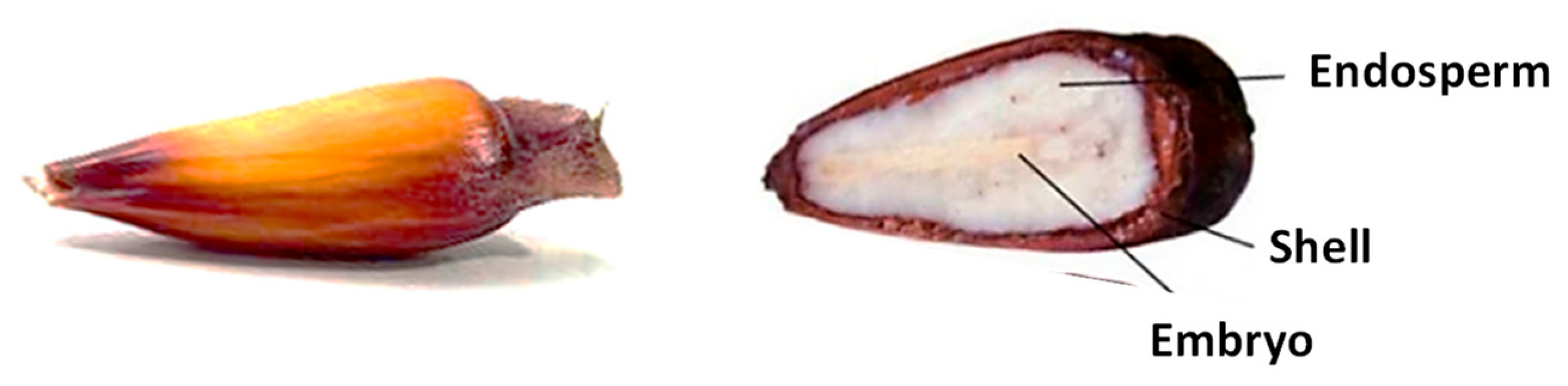
Figure 1. Pinhão and Pinhão cut in half, showing their parts: shell, endosperm, and embryo.
Processes 14 00119 g001
Figure 2. Scheme of measuring the angle of repose of powder samples.
Processes 14 00119 g002
Figure 3. Micrographs resulting from scanning electron microscopy (SEM): (A) E1 sample at magnification of 500 × (Working distance = 415 µm); (B) E1 sample at magnification of 1000 × (Working distance = 208 µm); (C) E2 sample at magnification of 500 × (Working distance = 415 µm); (D) E2 sample at magnification of 1000 × (Working distance = 208 µm).
Processes 14 00119 g003
Table 1. Carrier agents content used in each formulation.
% CMC% Inulin% Polydextrose
E10.330
E20.3 30
Table 2. Flow criteria for powders using the angle of repose calculation.
Angle of Repose (°)Flow Criteria
25–30Very free
31–38Free
39–45Fair
46–55Cohesive
>55Very difficult
Source: Escudeiro et al. [18].
Table 3. Results found for both extracts E1 (inulin) and E2 (polydextrose) for the physicochemical characterization.
Physicochemical ParametersE1E2
Proteins (g/100 g)0.07 a ± 0.100.07 a ± 0.12
Lipids (g/100 g)NDND
Carbohydrates (g/100 g)37.00 a ± 0.2026.14 b ± 0.10
Fibers (g/100 g)34.10 a ± 0.3024.40 b ± 0.10
Moisture (g/100 g)1.35 b ± 0.081.83 a ± 0.12
Water activity0.16 b ± 0.120.22 a ± 0.10
Asher (g/100 g)0.54 a ± 0.130.52 a ± 0.02
pH4.80 a ± 0.154.72 b ± 0.10
Color parameters
L*96.67 a ± 0.1393.52 b ± 0.21
a*2.25 b ± 0.082.75 a ± 0.11
b*7.92 b ± 0.2011.05 a ± 0.21
∆E6.90 a ± 0.203.25 b ± 0.14
E1 represents the extract carried in inulin, and E2 represents the extract carried in polydextrose. Note: Results expressed as mean ± standard deviation (n = 3). a,b On the same line, different lowercase letters indicate a difference between the samples (p < 0.05). ND: Not detected. The L* value represents lightness, ranging from dark (0) to light (100). The a* parameter indicates the shift between red (+a*) and green (−a*), while b* varies from yellow (+b*) to blue (−b*). ΔE represents the overall color difference between two samples.
Table 4. Physical properties of powders and their rehydration characteristics.
Physical PropertiesE1E2
Loose bulk density (g/cm3)0.46 a ± 0.110.42 b ± 0.10
Tapped bulk density (g/cm3)0.54 a ± 0.200.49 b ± 0.15
Flowability (Carr’s index) (%)15.36 a ± 2.0012.86 b ± 0.25
Cohesiveness (Hausner ratio)1.18 a ± 0.101.14 a ± 0.18
Powder Flow (º)25.46 b ± 0.3137.70a ± 0.29
Rehydration Properties
Solubility (%)39.11 a ± 0.1039.55 a ± 0.16
Wettability (s)213 b ± 3.55551 a ± 7.87
Dispersibility (%)57.83 b ± 2.2465.50 a ± 1.08
E1 represents the extract carried in inulin, and E2 represents the extract carried in polydextrose. Note: Results expressed as mean ± standard deviation (n = 3). a,b On the same line, different lowercase letters indicate a difference between the samples (p < 0.05).
Table 5. Quantification of phenolic compounds in extracts carried in inulin (E1) and polydextrose (E2).
Phenolic CompoundsE1; E2LOQLOD
Gallic acid (µg/g)0.08 ± 0.050.07 ± 0.010.02 ± 0.001
Protocatechuic acid (µg/g)0.07 ± 0.010.06 ± 0.010.02 ± 0.001
Vanillic acid (µg/g)0.81 ± 0.020.60 ± 0.010.20 ± 0.001
Syringic acid (µg/g)0.60 ± 0.010.50 ± 0.010.20 ± 0.001
Transcinnamic acid (µg/g)0.53 ± 0.030.40 ± 0.010.10 ± 0.001
Caffeic acid (µg/g)0.007 ± 0.0010.006 ± 0.0010.002 ± 0.0001
Coumaric acid (µg/g)0.09 ± 0.030.07 ± 0.010.02 ± 0.001
Rutin (µg/g)0.05 ± 0.020.03 ± 0.010.01 ± 0.001
Quercetin (µg/g)0.70 ± 0.010.60 ± 0.010.20 ± 0.001
E1 represents the extract carried in inulin, and E2 represents the extract carried in polydextrose. Note: Results expressed as mean ± standard deviation (n = 3). LOQ = limit of quantification; LOD = limit of detection.
Table 6. Results of the mineral characterization of the powdered samples.
Elements (μg/g)E1E2
Ca 42.60 a ± 0.8036.50 b ± 0.30
CuPresentPresent
Fe9.40 b ± 2.6025.00 a ± 1.80
K1209.60 b ± 9.701379.80 a ± 22.80
Mg82.80 a ± 2.0073.80 b ± 0.70
MnPresentPresent
Na614.70 a ± 5.70600.20 b ± 8.60
P236.20 b ± 7.50271.40 a ± 4.50
SPresentPresent
Sr<LOD<LOD
Zn4.30 b ± 1.4012.50 a ± 1.60
Al<LOD<LOD
Cd<LOD<LOD
Co<LOD<LOD
Cr<LOD<LOD
Pb<LOD<LOD
Se<LOD<LOD
E1 represents the extract carried in inulin, and E2 represents the extract carried in polydextrose. Note: Results expressed as mean ± standard deviation (n = 3). a,b On the same line, different lowercase letters indicate a difference between the samples (p < 0.05). Limit of detection (LOD) (Sr = 0.1 µg/g; Al = 5.0 µg/g; Cd = 3.6 µg/g; Co = 2.8 µg/g; Cr = 2.4 µg/g; Pb = 13.0 µg/g; Se = 11.0 µg/g). Limit of quantification (LOQ) (Cu = 1.5 µg/g; Mn = 1.2 µg/g; S = 189.0 µg/g). The term “present” indicates that the element was identified in the sample at a level above the detection limit but below the quantification limit, meaning it is detectable but not measurable with precision.
Disclaimer/Publisher’s Note: The statements, opinions and data contained in all publications are solely those of the individual author(s) and contributor(s) and not of MDPI and/or the editor(s). MDPI and/or the editor(s) disclaim responsibility for any injury to people or property resulting from any ideas, methods, instructions or products referred to in the content.