Review

Graphene-Based Metal–Organic Frameworks for Advanced Wastewater Treatment: A Review of Synthesis, Characterization, and Micropollutant Removal


by
Yahya El Hammoudani
1,*,
Iliass Achoukhi
1,
Khadija Haboubi
1,
Abdellah El Youssfi
2,
Chaimae Benaissa
3,
Abdelhak Bourjila
1,
Abdelaziz Touzani
1,
Kawthar El Ahmadi
1,
Hasnae El Allaoui
1,
Achraf El Kasmi
1 and
Fouad Dimane
1
1
Laboratory of Engineering Sciences and Applications (LSIA), National School of Applied Sciences (ENSAH), Abdelmalek Essaadi University, Al-Hoceima 32003, Morocco
2
Applied Chemistry Team, Chemistry Department, Faculty of Sciences and Techniques of Al Hoceima, Abdelmalek Essaadi University, Tetouan 93030, Morocco
3
Geosciences Research Team on Natural Risks, Faculty of Science and Technology of Tangier, Abdelmalek Essaadi University, Tetouan 93030, Morocco
*
Author to whom correspondence should be addressed.
Processes 2026, 14(1), 117; https://doi.org/10.3390/pr14010117 (registering DOI)
Submission received: 12 October 2025 / Revised: 8 November 2025 / Accepted: 12 November 2025 / Published: 29 December 2025
(This article belongs to the Special Issue Sediment Contamination and Metal Removal from Wastewater)

Abstract

The integration of graphene-based materials with metal–organic frameworks (G@MOFs) has emerged as a promising strategy for advanced wastewater treatment owing to their synergistic physicochemical properties. This review systematically compiles and critically analyzes recent advances in the synthesis, structural characterization, and application of G@MOFs for the removal of organic and inorganic micropollutants. Special emphasis is placed on how the unique combination of high surface area, tunable pore structures, and abundant active sites in G@MOFs enhances adsorption, photodegradation, and catalytic degradation mechanisms. Compared to conventional adsorbents and standalone MOFs, G@MOFs exhibit superior removal capacities, stability, and reusability. This paper also identifies key challenges in large-scale applications, regeneration, and potential environmental risks, providing a future outlook on optimizing synthesis routes and tailoring functional composites for sustainable water treatment technologies. The novelty of this review lies in providing the first dedicated, systematic evaluation of G@MOFs for wastewater micropollutant removal, integrating synthesis strategies, performance benchmarking, techno-economic aspects, environmental safety, and future application prospects into a unified framework.

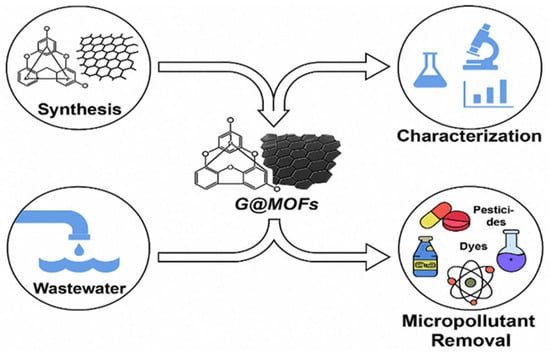
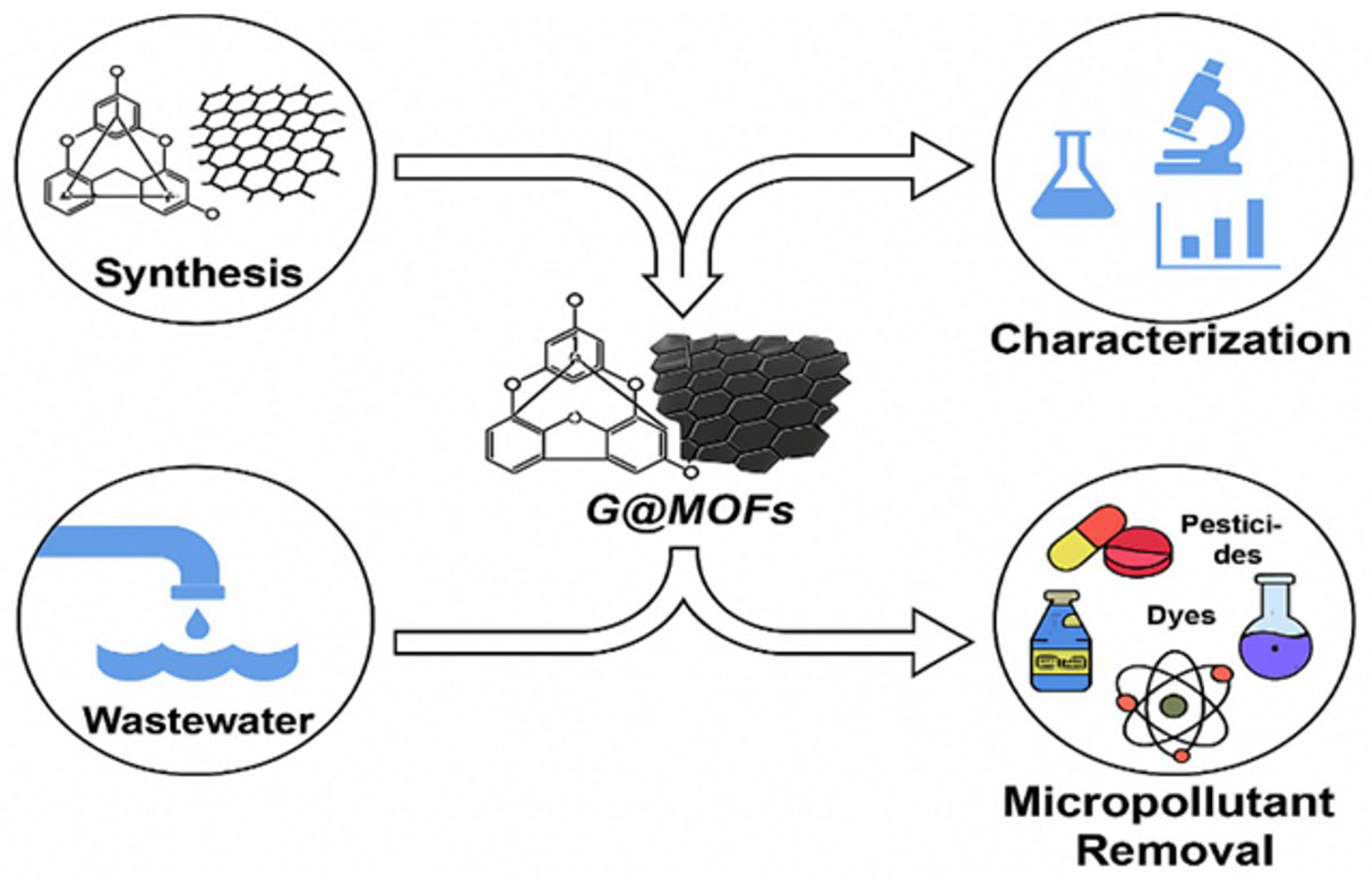
Graphical Abstract

1. Introduction

Increasing levels of water pollution from persistent organic and inorganic micropollutants—including pharmaceuticals, dyes, pesticides, and heavy metals—pose serious threats to environmental and human health [1,2,3,4,5,6]. Conventional wastewater treatment technologies often fail to efficiently remove these contaminants, necessitating the development of novel, high-performance materials for advanced treatment applications [7,8]. Metal–organic frameworks (MOFs), a class of porous crystalline materials constructed from metal ions and organic ligands, have attracted considerable attention due to their large surface areas, tunable porosity, and chemical versatility [9,10].
In recent years, the integration of graphene-based materials with MOFs (G@MOFs) has emerged as an innovative approach for enhancing the efficiency of water treatment systems. Graphene’s exceptional surface area, electrical conductivity, and mechanical strength complement the high porosity and adsorption capabilities of MOFs, leading to hybrid materials with synergistic properties [11,12,13,14,15,16]. Although several studies have reviewed MOFs and graphene-based composites individually, and some works have briefly discussed G@MOFs, there remains a need for a focused and critical evaluation specifically addressing their role in micropollutant removal. The present review aims to fill this gap by critically discussing recent synthesis strategies, characterization techniques, and the application potential of G@MOFs in wastewater treatment. This work distinguishes itself by offering a comparative and mechanistic analysis of G@MOFs as advanced adsorbents and catalysts for micropollutant removal, outlining the key challenges and future opportunities in translating laboratory-scale findings into real-world applications [17,18,19].
In addition, the design of G@MOFs can be optimized to enhance their recyclability and stability in various aquatic environments, making this approach not only more environmentally efficient but also economically viable for a wide range of wastewater treatment applications. G@MOFs thus represent a significant advance towards the realization of more sustainable and efficient water purification systems, capable of meeting the challenges posed by micropollutant pollution in aquatic environments [20,21,22,23].
The introduction of G@MOFs to the field of wastewater treatment marks a significant advance towards innovative approaches to the challenges posed by micropollutants [24,25,26,27,28]. Thanks to their unique properties, including high specific surface area, tunable porosity, and ability to be functionalized with a multitude of active chemical groups, G@MOFs offer a versatile platform for the design of tailor-made treatment systems [29,30,31,32]. These systems are capable of selectively targeting and removing low-level contaminants that often escape conventional treatment methods. This selective removal capability is particularly valuable in today’s context, where the presence of pharmaceutical residues, endocrine disruptors, heavy metals and other harmful substances in water poses a growing risk to public health and aquatic biodiversity [33,34,35,36].
G@MOFS have shown significant potential in addressing environmental challenges, particularly in the removal of micropollutants from wastewater. Micropollutants, including pharmaceuticals, pesticides, dyes, and endocrine-disrupting compounds, are characterized by their low concentrations in water and persistent nature, which makes them difficult to remove using conventional treatment methods [35,37,38,39]. These contaminants often exhibit high chemical stability, low biodegradability, and the potential to cause adverse effects on ecosystems and human health even at trace levels. Recent studies have demonstrated the efficacy of G@MOFS in adsorbing and degrading such pollutants [40]. For example, G@MOFS have been employed to remove pharmaceutical residues like antibiotics and non-steroidal anti-inflammatory drugs, as well as synthetic dyes from industrial effluents. Their high surface area, tunable pore structures, and functional groups enable strong interactions with a variety of micropollutants, making G@MOFs a promising solution for environmental remediation [41,42,43,44,45].
By harnessing G@MOFs for wastewater treatment, it is possible not only to improve water quality but also to contribute meaningfully to safeguarding water resources against persistent and emerging micropollutants. This progress aligns with the global imperative to develop more efficient, sustainable, and environmentally responsible water treatment technologies capable of addressing current and future water resource management challenges.
Despite the growing number of studies on MOFs and graphene-based nanomaterials, comprehensive reviews focusing specifically on the synthesis, characterization, and environmental application of G@MOF hybrids for micropollutant removal remain scarce. Existing reviews either address MOFs or graphene-based composites separately or focus narrowly on adsorption mechanisms without integrating regeneration performance, scale-up feasibility, or environmental safety considerations.
The novelty of this review lies in offering a dedicated, up-to-date review of G@MOFs in the context of wastewater micropollutant removal, systematically summarizing recent advances in material design, performance benchmarking, and multifunctional applications. Furthermore, this review critically evaluates comparative performance metrics, techno-economic challenges, environmental risks, and life cycle impacts (areas often overlooked in earlier reports). By highlighting both current achievements and unresolved challenges, this review marks an important milestone in consolidating knowledge and guiding future research directions for the practical implementation of G@MOFs in sustainable water treatment.

2. A Summary on Structure and Properties

2.1. Metal–Organic Frameworks (MOFs)

Metal–organic frameworks (MOFs) represent a fascinating category of hybrid materials that blend organic and inorganic elements, creating structures with metal ions or clusters linked by multifunctional organic molecules [46,47,48,49]. These materials are known for their remarkable characteristics, such as extremely high surface areas (with some reaching up to 10,000 m2/g), low weights, complex pore configurations, and customizable properties [50]. This versatility offers significant improvements over traditional porous materials like zeolites and activated carbon, making MOFs highly valuable for a wide range of uses, including gas storage and separation, sensing, energy applications, catalysis, and drug delivery [51,52]. The interest in MOFs has surged, with research expanding rapidly; over 20,000 varieties had been documented by 2013, and recent estimates suggest the number has grown to over 100,000 [53,54]. Their unique ability to tailor-make their structure through the choice of metal ions and organic linkers or by employing various manufacturing techniques stands out. Yet, the application of MOFs is sometimes constrained by their sensitivity to moisture and instability under extreme conditions. Strategies to enhance their durability, such as combining MOFs with functionalized graphene or similar two-dimensional materials, are being explored to unlock their full potential, with promising results for creating robust, hybrid materials [55,56].

2.2. Graphene

Graphene, a two-dimensional carbon material, was first isolated in 2004 through a process called mechanical exfoliation from graphite [57,58]. Although this method yields high-quality graphene, it is not suitable for mass production. Large graphene sheets can be produced using chemical vapor deposition (CVD) or obtained through chemical methods like electrochemical exfoliation of graphite or reduction of graphene oxide [59]. Graphene’s unique structure of sp2-bonded carbon atoms in a honeycomb lattice endows it with remarkable properties, such as optical transparency, absorbing only 2.3% of white light, semimetal characteristics due to its band structure, and superior electrical and thermal conductivities [60,61]. These properties, however, can be significantly altered by impurities, dopants, and the number of graphene layers stacked together. Graphene’s high surface area, flexibility, strength, and chemical resistance, along with its inability to allow atoms or molecules to pass through and its hydrophobic nature, make it versatile for various applications [62]. For specific uses in sensing, electronics, and biology, graphene’s properties can be modified through functionalization, either covalently changing its structure and properties or noncovalently for milder adjustments, enhancing its application potential in different fields [63].
Researchers have been introducing chemical functionalities along the edges and surfaces of graphene sheets to enable covalent connections. This process changes the carbon atoms from sp2 to sp3 configuration, affecting graphene’s electrical properties by creating potential scattering centers and causing a reduction in conductivity and possibly inducing magnetism. To achieve this, graphene is treated with highly reactive substances like cold atomic plasma, ozone, or free radicals [64].
We can find several Graphene derivatives (Figure 1). Graphene oxide (GO) is a key derivative formed by oxidizing graphene, introducing oxygen-containing groups that make it water-dispersible but nonconductive. Its conductivity can be restored via chemical or thermal reduction processes, yielding reduced graphene oxide (rGO) and thermally reduced GO (trGO) with fewer oxygen groups, enabling them to be conductive yet still capable of forming composites [33]. Other derivatives like fluorographene (FG), which is nonconductive and hydrophobic, allow for further chemical modifications, creating a variety of functionalized graphene materials [65]. These derivatives, including graphene acid (GA) with a high content of carboxylic groups, are promising for creating cross-linked, conductive composites and have been used in novel applications like electrochemical devices and in combination with metal–organic frameworks (MOFs) for enhanced material properties.
Doping graphene with other elements, such as boron, nitrogen, or transition metals, introduces new properties like magnetism or catalytic centers, by altering its band gap [66]. These doped graphenes, prepared through various methods including chemical vapor deposition and chemical treatments, offer unique features for nanocomposites, expanding the potential applications of graphene-based materials [67].

2.3. Graphene/MOFs

MOFs boast properties beneficial for various applications but are hindered by issues like low conductivity, environmental instability, and mechanical challenges [68]. Enhancing MOFs with materials such as graphene and its derivatives, which offer high conductivity and chemical stability, can mitigate these limitations. Graphene, with its flexible, flat structure, is especially suited for creating diverse graphene/MOF composites with enhanced features [69]. For instance, graphene oxide (GO) and reduced graphene oxide (GO/rGO) have been used to structure MOFs, leading to composites with controlled porosity and improved stability. Early work utilized GO as a scaffold for MOF growth, creating layered composites that enhance interaction and facilitate crystal growth. This method has been expanded to include other graphene derivatives, like benzoic acid-functionalized rGO, which not only support MOF structure but also introduce electrical conductivity to the composites, broadening their application in fields like electrocatalysis and gas adsorption [70,71,72,73,74].
Recent advances include creating composites with specific graphene derivatives, such as graphene acid, to produce materials with hierarchical porosity and functional groups beneficial for applications like CO2 sensing. These composites are typically formed using straightforward one-pot methods, mixing MOF precursors with graphene derivatives, though other techniques like layer-by-layer deposition and membrane formation via dip-coating and rubbing methods have been explored for specific applications, including hydrogen separation. These innovations in MOF/graphene composite preparation open new avenues for enhancing MOF functionality and application potential [60,75,76,77].

2.4. Specific Examples of G@MOFs for Water Treatment

In the realm of water purification, G@MOFS emerge as highly versatile and effective materials. Their standout feature lies in the strategic synthesis process, where metals and organic ligands are carefully chosen and combined to enhance their functional properties. A prime example is the zirconium-based G@MOFS (Zr-GMOFs), celebrated for their exceptional chemical resilience in water [78]. This quality makes them superbly suited for both capturing and breaking down a variety of organic and inorganic micropollutants. Their structural advantages-namely, a highly porous makeup and vast specific surface area—allow for a broad and effective engagement with pollutants, ensuring their thorough elimination.
The strategic addition of sulfonated ligands to G@MOFS marks a significant advancement, bolstering these materials’ capacity to attract and bind heavy metals and certain water-repellent organic pollutants. This adjustment significantly enhances G@MOFS’s utility in purifying wastewater from both industrial and municipal sources by focusing on particularly persistent contaminants. Moreover, aluminum-based G@MOFS (Al-GMOFs) that are functionalized with ligands capable of acting as photosensitizers are adept at photocatalytic degradation tasks targeting organic pollutants. Activated by light, these G@MOFS can produce reactive oxygen species, effectively leading to the breakdown of organic pollutants [79].
These instances highlight GMOFs’ adaptability and efficacy in addressing water contamination issues. They underscore the pivotal role of selecting appropriate metals and ligands to tailor these materials for specific pollutant challenges. Achieving the optimal mix of these components is crucial, ensuring that G@MOFS remain stable in aqueous environments and are highly effective in capturing and decomposing a broad spectrum of pollutants.

3. Synthetic Strategies for GMOFs

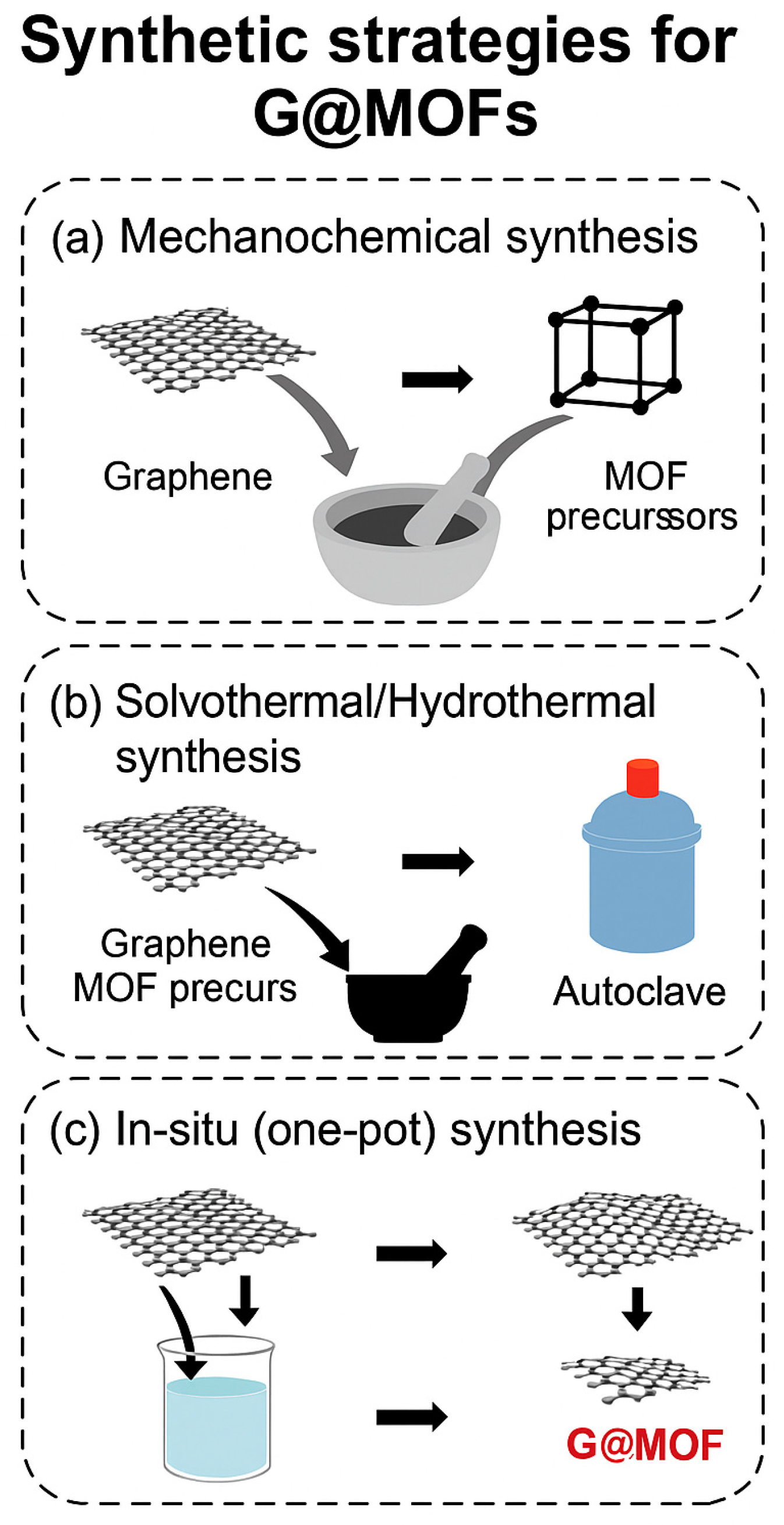
In the last ten years, a variety of methods have been used to create GMOFs, as illustrated in Figure 2. These synthesis techniques range from innovative approaches to traditional single-step and multistep methods, with the one-pot synthesis being particularly favored for its straightforwardness. Nevertheless, more sophisticated techniques have also been introduced, enabling the production of hybrids with customized properties for specific uses. The subsequent parts will detail the established techniques for fabricating GMOFs, highlighting their diversity and adaptability to different application needs (Table 1) [33].
Mechanochemical synthesis offers a straightforward approach for creating G@MOFS hybrids through mechanical mixing, such as grinding in a mortar or using ball mills. Though simple, this method sometimes leads to products with inferior performance compared to those created by more sophisticated techniques like solvothermal synthesis, which can produce more uniform and effective materials. For example, hybrids made by physically grinding MOF UiO-66-NH2 with graphene acid (GA) showed less specific capacitance than those made solvothermally, highlighting the importance of method choice on the final product’s quality. Similarly, in situ synthesis of MOFs in graphene solutions has proven to generate better adsorption capacities due to the formation of additional pores at the graphene-MOF interface [80,81].
Despite these drawbacks, physical mixing has yielded G@MOFS hybrids with promising properties in some cases. For instance, a wet ball-milling technique was used to prepare an N-doped graphene and ZIF-8 hybrid that displayed electrochemical catalytic performance comparable to platinum/carbon catalysts. The method involved grinding ZIF-8 and N-doped graphene in deionized water, followed by centrifugation and drying, with the optimal conditions being determined by the grinding speed. Additionally, simple mortar and pestle mixing has been successfully employed to produce hybrids for detecting volatile organic compounds (VOCs) and for use in high-performance supercapacitors, demonstrating that, under certain conditions, mechanical synthesis can still be a viable route for fabricating functional G@MOFS materials [82,83,84].
The one-pot or in situ synthesis method is highly favored for creating G@MOFS hybrids due to its straightforward and efficient approach. This process involves mixing graphene or its derivatives with precursors of MOFs in a solution, which is then heated to a specified temperature for a certain duration. The conditions of the reaction, such as the reactant concentrations, temperature, time, and choice of solvent, play crucial roles in determining the structural and physicochemical characteristics of the resulting hybrid material. The simplicity of this method, alongside its ability to significantly influence the final product’s properties, makes it a popular choice for synthesizing G@MOFs hybrids with tailored functionalities.
This synthesis technique was first introduced by Bandosz and Petit in 2009 [85], marking a milestone in the development of MOF-5 and graphene oxide (GO) hybrids. Their pioneering work involved a solvothermal process where GO was dissolved with MOF precursors in DMF, leading to the formation of layered hybrids after specific washing and drying procedures. This method proved effective in producing hybrids with controlled integration of GO, enhancing their structural properties. Subsequent research has expanded on this approach, experimenting with different graphene derivatives and MOFs to fabricate hybrids for a variety of applications, including environmental remediation, energy storage, and sensing. The one-pot synthesis method thus remains a cornerstone in the field of materials science, enabling the creation of innovative materials with enhanced performance and diverse functionalities [86].
Overall, synthesis route selection is not merely procedural but performance-defining. For water-treatment applications, solvothermal and in situ routes generally achieve higher efficiency due to stronger interfacial bonding and optimized pore architecture, while mechanochemical methods are more suited for scalable or energy-storage applications.

4. G@MOFs Characterization and Importance

The characterization of G@MOFS plays a crucial role in the evaluation and optimization of their properties for effective application in wastewater treatment, particularly for the eradication of micropollutants. This in-depth characterization enables us to understand the structural, chemical and physical characteristics of G@MOFS, essential for their functionalization and performance under various environmental conditions. Here is an overview of the main characterization techniques used in the study of G@MOFS and the importance of these methods in improving their effectiveness.

4.1. Characterization Techniques

4.1.1. X-Ray Diffraction (XRD)

X-ray diffraction is a fundamental technique for determining the crystal structure of G@MOFS. It identifies the periodicity and organization of atoms in the material, providing valuable information on pore size, pore distribution and orientation of crystal structures. XRD is essential for confirming the successful synthesis of G@MOFS and for studying their structural stability in aqueous media [20].

4.1.2. Spectroscopy

Fourier Transform Infrared Spectroscopy (FTIR) is used to identify the functional groups present on organic ligands and the chemical interactions within G@MOFS. This technique reveals the presence of specific bonds and the success of material functionalization [87]. Complementary to FTIR, Raman spectroscopy provides information on carbon bonds and graphene integration in G@MOFS, essential for understanding the material’s electrical conductivity and chemical reactivity [87].

4.1.3. Electronic Microscopy

Scanning Electron Microscopy (SEM) and Transmission Electron Microscopy (TEM) are key techniques in the characterization of graphene-based organometallic frameworks (GMOFs), offering an in-depth understanding of their morphology and internal structure. SEM reveals particle shape, surface porosity and the distribution of graphene nanoparticles, essential aspects for assessing the effectiveness of G@MOFs in adsorbing micropollutants. At the same time, TEM provides high-resolution images detailing the arrangement of pores and channels within G@MOFS, crucial information for understanding their adsorption capacity [88,89,90].

4.1.4. Nitrogen Adsorption–Desorption Analysis

This method is used to determine the specific surface area, volume and pore size distribution of G@MOFS. Nitrogen adsorption–desorption isotherms provide crucial clues to the porosity and adsorption capacity of the material, directly related to its effectiveness in removing micropollutants.
Beyond conventional methods such as XRD, SEM, and BET, advanced theoretical approaches, including density functional theory (DFT) and molecular dynamics (MD) simulations, provide atomic-level insights into adsorption energetics and electronic interactions in G@MOFs. These computational tools complement experimental characterization and enable predictive material design.

4.2. Importance of Characterization

Detailed characterization of G@MOFs is essential to optimize their properties for the eradication of micropollutants in wastewater. By precisely identifying the structure, chemical composition and physical properties of G@MOFS, researchers can fine-tune synthesis to improve stability, adsorption capacity and contaminant degradation efficiency. This systematic approach enables the development of tailor-made materials capable of specifically targeting a wide range of micropollutants, from pharmaceutical residues to heavy metals, thus offering advanced solutions for wastewater treatment.

5. Environmental Applications of GMOFs

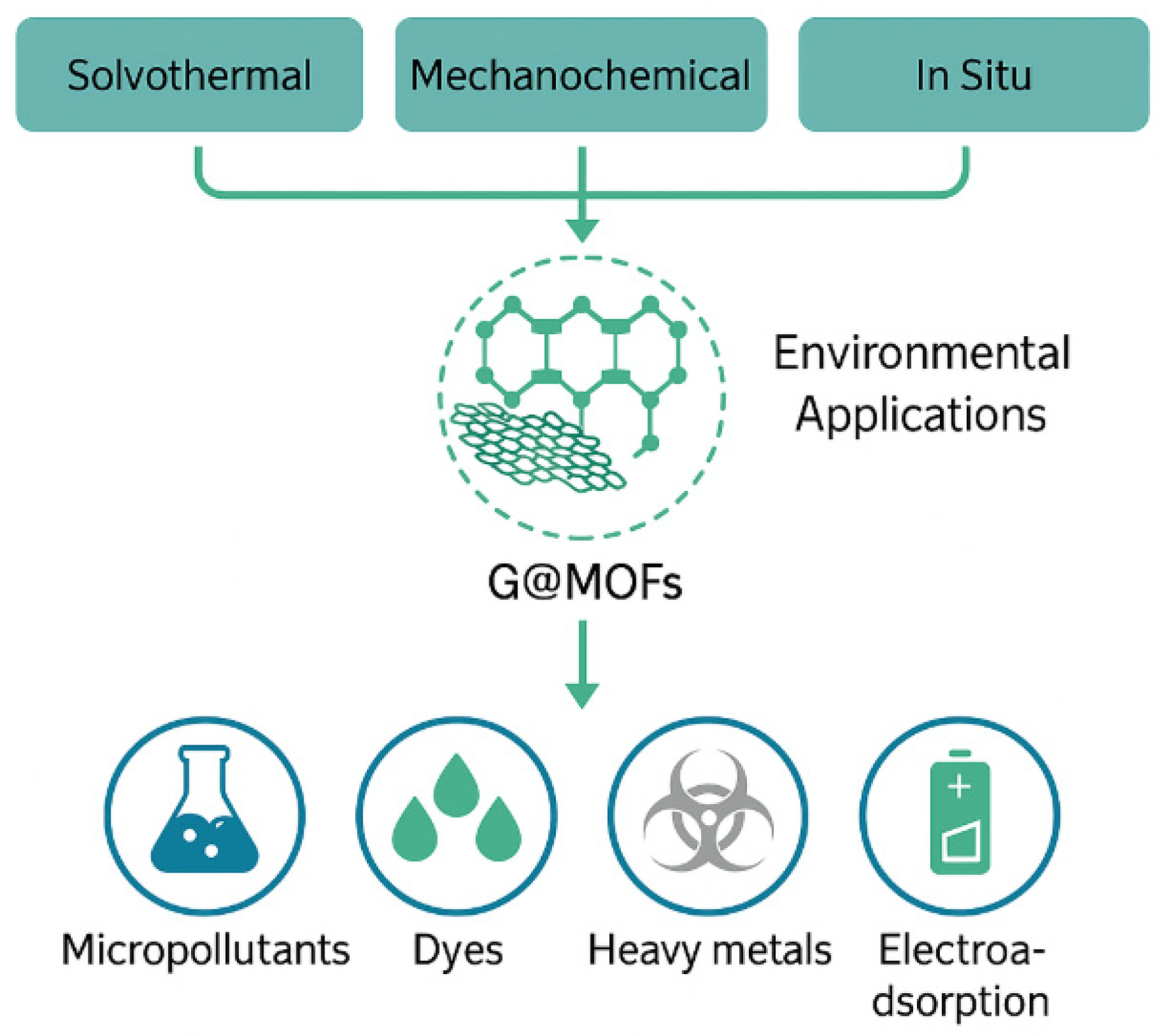
Combining the unique properties of MOFs and graphene has led to powerful solutions for environmental challenges [91]. These hybrids capitalize on the structural flexibility of MOFs and the expansive surface area of graphene, making them especially suitable for tasks such as cleaning air and water—key objectives aligned with the United Nations Sustainable Development Goals on sanitation, energy, innovation, and climate (Figure 3).
Compared to standalone MOFs, G@MOFS demonstrate notably enhanced water stability, pollutant selectivity, and adsorption capacities due to the synergistic interactions between graphene’s high surface area and the tunable porosity of MOFs. Furthermore, unlike traditional adsorbents such as activated carbon, CNTs, or biochar, G@MOFS offer customizable pore structures and functionalized active sites, which enable them to efficiently target a broader range of micropollutants under varying environmental conditions.
The quest for efficient environmental cleanup technologies is hampered by the limitations of existing adsorbents, including MOFs and zeolites, which suffer from suboptimal performance, environmental instability, and prohibitive costs due to their sensitive metal-ligand bonds and nonspecific adsorption interactions. G@MOFs composites, with their hierarchical porosity, offer a promising avenue by enhancing adsorption efficiency and stability, thereby addressing the drawbacks of each component when used separately.
This approach not only improves the environmental viability of these systems but also brings us closer to developing adsorbents that can effectively purify water and air with reduced energy consumption. While no single adsorbent currently meets all the specified UN goals, the ongoing research into MOF-graphene hybrids holds significant potential for advancing sustainable environmental remediation technologies, a key focus of this discussion [92,93,94].
In the quest for effective carbon capture solutions, MOF-graphene hybrids have emerged as a promising avenue, particularly for point-source carbon dioxide removal in postcombustion and precombustion processes [33]. These hybrids benefit from the even distribution of MOF crystallites on graphene oxide (GO) layers, enhancing adsorption through dense, dispersive environments. The addition of oxygen-containing functional groups from graphite oxidation—such as epoxy, hydroxyl, and carboxylic acid groups—further bolsters dispersive interactions between the adsorbate and the hybrid material. The selectivity for CO2 adsorption in these composites can be fine-tuned through the careful selection of MOF building blocks, including metallic centers and organic ligands, optimizing the system for reactive CO2 adsorption through enhanced oxidation processes and the presence of oxygen vacancies and terminal hydroxyl groups.
Moreover, despite MOFs’ extensive surface areas, their effectiveness for trace gas and CO2-specific capture hinges on the creation of densely packed binding sites within pores that closely match the size and chemical attributes of CO2 [95]. Ideal gas adsorption occurs in ultramicropores, with diameters smaller than 7 Å, necessitating precise control over the GO and MOF ratios within the composite to modify graphene sheet distortion and adjust pore characteristics for improved adsorption. Early studies, such as the 2013 creation of a GO@HKUST-1 composite by Liu et al., demonstrated significant enhancements in CO2 and H2 sorption capacities due to the uniform distribution of nanosized HKUST-1 crystals across GO layers. Subsequent research has built on this foundation, developing mixed-matrix membranes (MMMs) that incorporate G@MOFS hybrids for even higher CO2 capture efficiencies, showcasing the potential of G@MOFS hybrids in advancing carbon capture technologies [33]. Although carbon nanotube composites and graphene-based adsorbents also display potential for CO2 capture, their comparatively lower active site densities and limited structural tunability restrict their selectivity and long-term performance. GMOF-based hybrids, by contrast, benefit from hierarchical porosity and enhanced dispersive interactions, which enable superior adsorption kinetics and capacity.
Research into methane storage within G@MOFs hybrids has been limited but shows promising potential for enhancing CH4 adsorption through optimized interlayer spacing in graphene and graphene oxide (GO) materials. In 2018, Rezaei’s team innovatively synthesized three MOF@GO hybrids: HKUST-1 combined with pristine GO, reduced GO (rGO), and carboxylic acid-functionalized GO (fGO). Their findings indicated significant improvements in both the Brunauer–Emmett–Teller (BET) surface areas and pore volumes of these hybrids compared to unmodified HKUST-1, with the HKUST-1@rGO variant, incorporating 10 wt% rGO, showcasing a remarkable increase in methane deliverable capacity. Specifically, this hybrid demonstrated a deliverable capacity of 193 cm3 (STP)/cm3 over a pressure range of 5.8–65 bar at 298 K, marking a 30% enhancement over pristine HKUST-1. The methane storage capabilities for the HKUST-1@GO and HKUST-1@fGO variants were also notable, with capacities of 181 and 162 cm3 (STP)/cm3, respectively. This research not only highlights the beneficial synergistic effects between MOFs and GO in methane storage but also positions MOF@GO nanocomposites as potentially efficient adsorbents for adsorbed natural gas (ANG) applications, suggesting a promising avenue for future advancements in energy storage technologies [96]. It is noteworthy that while MOF-carbon nanotube composites have shown improved methane adsorption, G@MOFS generally outperform them in terms of adjustable interlayer spacing, specific surface area, and functional site density, making them more effective for optimizing gas storage capacity under controlled conditions.
Overall, G@MOFS combine the high performance of MOFs with the mechanical and electrical properties of graphene-based materials, surpassing other advanced adsorbents like CNTs and biochars in pollutant selectivity, structural stability, and multifunctional capability, positioning them as strong candidates for scalable environmental remediation technologies.
Although this review primarily focuses on aqueous systems, G@MOFs also demonstrate potential in solid-phase extraction and air purification. Their tunable surface chemistry enables the capture of volatile organic compounds (VOCs) and CO2, broadening their environmental relevance beyond water remediation.

6. Micropollutant Removal with GMOFs

Wastewater treatment is a critical issue worldwide, with over 2 billion people consuming contaminated water and 4 billion experiencing water scarcity for at least one month each year. This challenge is underscored by the World Health Organization’s 2025 forecast and the United Nations Sustainable Development Goal 6 (SDG6), which both highlight the urgent need for innovative solutions to mitigate wastewater pollution. The problem extends beyond developing nations, with Europe’s water bodies also contaminated by various organic and inorganic anthropogenic pollutants. This has led to stringent wastewater purity targets within the European Economic Area (EEA), as detailed in the briefing “Urban wastewater treatment for 21st-century challenges”. Many of these pollutants are resistant to degradation and pose significant ecotoxicological risks, even at low concentrations ranging from μg·L−1 to ng·L−1.
In response to this pressing environmental issue, next-generation porous materials, notably G@MOFs hybrids, have been identified as promising for the efficient capture and/or detection of wastewater contaminants. Thanks to their high surface areas, customizable pore structures, durability, and the potential for cost-effective large-scale production, G@MOFs hybrids offer a viable pathway toward achieving cleaner wastewater. Their ability to selectively adsorb a wide range of pollutants makes them a valuable tool in the quest to improve water quality and address the challenges outlined by both the WHO and the UN’s sustainability goals.
The exploration of G@MOFs hybrids for pollutant removal has become a highly active and crowded field of research. Given the vast number of studies, pinpointing a single foundational report that spearheaded this research area proves challenging. For the sake of clarity and focus, we categorize the literature from the past five years based on the type of pollutants addressed—either organic or inorganic. This recent body of work is systematically organized in chronological order across three tables in our review. Each table provides succinct summaries of the hybrids studied, the specific pollutants targeted, and the key characteristics of the hybrids that contribute to pollutant removal.
Table 2 summarizes the applications of G@MOFs composites in pollutant remediation, focusing on the removal of both heavy metals and organic dyes from contaminated water. The composites integrate graphene-based materials with metal–organic frameworks, combining the high surface area and functional group versatility of graphene with the porosity and selective adsorption properties of MOFs.
A significant trend observed is the removal of heavy metal ions such as Cu (II), Pb (II), Cd (II), U (VI), and Cr (VI). These composites exhibit high efficiency due to mechanisms like electrostatic interactions, chemical adsorption, and π-conjugation between the MOF functional groups and the metal ions. For instance, IRMOF-3/GO leverages improved dispersive forces for enhanced Cu (II) adsorption, while GO-COOH/UiO-66 removes U (VI) through chelation and ion exchange. The porosity of these materials, mostly microporous or mesoporous, further enhances their adsorption capabilities.
Fluoride (F) contamination is another pressing issue in many regions, particularly in groundwater systems. Graphene-enhanced Al- and Zr-based MOFs have demonstrated strong metal–fluoride coordination, resulting in high selectivity and stability during fluoride adsorption. These findings highlight the potential of G@MOFs in addressing a wider range of inorganic pollutants beyond conventional heavy metals.
Another focus area is the degradation of organic dye pollutants, such as methylene blue, Congo red, and azo dyes. The composites achieve this through a variety of interactions, including electrostatic forces, acid-base interactions, and π-π stacking. For example, Fe-MIL-88B/GO exhibits photocatalytic degradation of reactive red dye due to the synergistic effects of Fe-MIL-88B and graphene oxide. Similarly, MIL-101/GO effectively removes azo dyes by utilizing hydroxyl and carboxyl groups to interact with the dyes’ functional groups.
Table 2 also highlights the role of specific properties that contribute to pollutant removal efficiency. High surface area, pore size optimization, and functional group interactions are recurring features. ZIF-8/rGA, for instance, demonstrates the importance of a high surface area in removing Pb (II) and Cd (II). Similarly, MIL-53(Al)-GO removes arsenates through strong electrostatic affinity, showcasing the importance of specific chemical properties.
Overall, the diversity of pollutants addressed, including metals, dyes, and even total phosphorus, underscores the versatility of G@MOFS composites in water treatment. The integration of graphene not only enhances adsorption capacity but also improves mechanical and chemical stability, making these materials highly promising for sustainable environmental applications.
As shown in Table 3, G@MOFS composites display a range of adsorption behaviors and reuse performances that can guide material selection for specific treatment goals. MIL-100(Fe)/Graphene Aerogel combines the highest qmax (450 mg·g−1) with the fastest uptake (30 min) and excellent recyclability (5 cycles under UV regeneration), making it ideal for rapid, high-throughput dye removal. ZIF-8/rGA achieves the highest removal efficiency (99%) for Pb (II) and Cd (II) at pH 5.5, while retaining performance over five ethanol-wash cycles. GO-COOH/UiO-66 and MIL-100(Fe)/Aerogel both operate near neutral pH (6.0–6.5), reducing the need for pH adjustment in real wastewater. Fe-MIL-88B/GO and MIL-53(Al)-GO, despite slightly lower capacities and recyclability (4 and 3 cycles, respectively), still achieve ≥95% removal, highlighting a trade-off between structural robustness and adsorption speed. Overall, this comparative analysis underscores how differences in metal centers, functionalization, and composite architecture influence capacity, kinetics, pH adaptability, and long-term stability. In addition to these performance indicators, it is essential to note that adsorption selectivity in G@MOFs is strongly influenced by the interaction mechanisms between the functional groups (e.g., –COOH, –NH2) and target pollutants. For instance, π–π stacking and electrostatic interactions dominate dye removal, whereas chelation and metal–ligand coordination govern heavy-metal adsorption. Compared to classical adsorbents such as activated carbon and biochar, G@MOFs exhibit higher adsorption rates and enhanced regeneration stability due to synergistic pore structures and improved electron-transfer pathways. However, their performance can vary significantly under real wastewater matrices because competing ions and natural organic matter can block active sites. Therefore, future studies should provide systematic benchmarking under realistic effluent conditions, complemented by techno-economic and life-cycle analyses to evaluate full-scale applicability.
While laboratory investigations have established the promising adsorption and catalytic performance of G@MOFs, their practical deployment depends heavily on economic viability, regeneration efficiency, and performance in real wastewater treatment scenarios. However, comprehensive techno-economic analyses specific to G@MOFs remain limited in the current literature. Existing cost projections for MOF production, which can serve as a baseline, suggest that optimized large-scale synthesis of MIL-100(Fe) could reduce costs to under US$30 per kilogram through improved reaction efficiencies and solvent recovery strategies [116]. Similarly, techno-economic assessments for MOFs in hydrogen storage indicate that the economic feasibility of MOF-based systems can be competitive when produced at industrial volumes [117].
Regeneration efficiency is another key parameter for practical water treatment applications. Various studies have demonstrated that MOFs can retain 85–95% of their adsorption capacity over multiple cycles, depending on regeneration protocols. For instance, MOF materials designed for gas adsorption have been effectively regenerated using thermal, solvent-based, or vacuum-assisted methods, maintaining high removal performance over repeated use [118]. Although specific regeneration data for G@MOFs remain sparse, it is expected that incorporating graphene-based supports would enhance mechanical stability and allow for easier regeneration through UV, chemical washing, or mild thermal treatments.
Regarding real-world validation, pilot-scale and continuous flow applications of MOFs in water treatment are emerging. A notable study by Argyropoulos et al. (2014) piloted membrane-based advanced wastewater treatment processes integrating adsorptive materials for micropollutant removal at municipal treatment plants, providing a model for potential integration of MOF or G@MOFs composites [119]. While direct pilot-scale studies involving G@MOFs have yet to be reported, these foundational works illustrate the operational and economic factors critical for future scale-up efforts.
Further research should focus on bridging this gap by conducting continuous synthesis optimizations, low-energy regeneration studies, and pilot trials using realistic wastewater matrices to assess long-term operational stability and cost-effectiveness.

7. Future Prospects and Developments

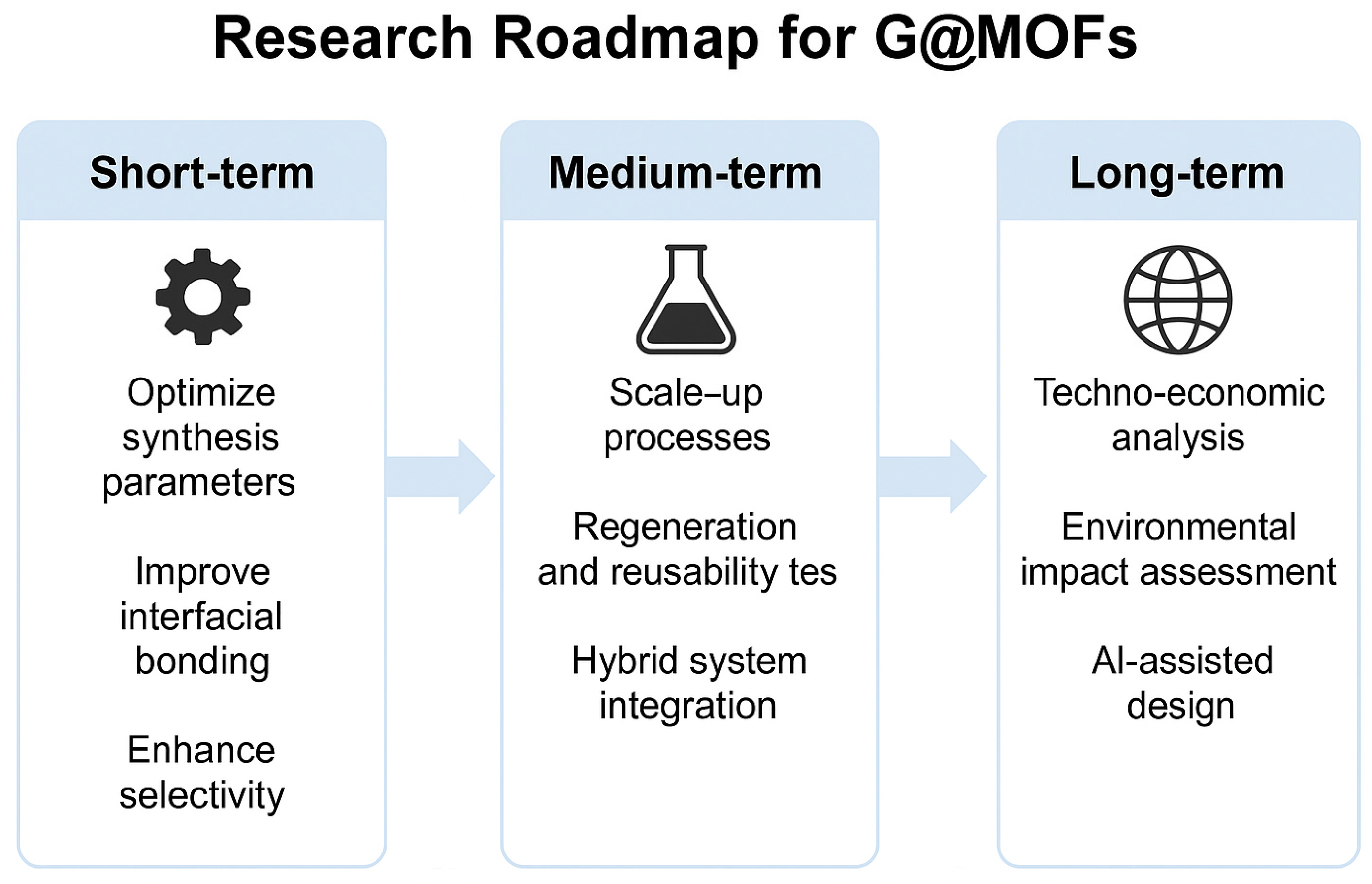
Research into graphene-based metal–organic frameworks (G@MOFs) for wastewater treatment is a rapidly advancing field, offering significant potential to enhance water purification technologies (Figure 4). Current innovations are centered on improving the capacity of G@MOFs to target and remove a broader range of micropollutants while enhancing their stability, reusability, and operational effectiveness under diverse environmental conditions. A key research priority involves the development of novel synthesis and functionalization strategies for G@MOFs, enabling the creation of materials with adjustable pore sizes, increased surface areas, and tailored active sites for the selective adsorption or degradation of specific pollutants. The integration of photocatalytic functionalities -through the incorporation of semiconductors or noble metals- also presents promising opportunities for the efficient degradation of organic contaminants under light irradiation. Despite their potential, the large-scale implementation of G@MOFs in wastewater treatment faces several challenges. Chief among these is achieving economically viable production costs, integrating these materials into existing treatment infrastructures, and managing their life cycles to minimize environmental risks. Durability is another critical consideration, particularly the resistance of G@MOFs to degradation under repeated use and their capacity for effective regeneration or recycling after saturation. In response to these challenges, current efforts are focused on developing ecologically sustainable synthesis routes, utilizing green solvents, mild reaction conditions, and energy-efficient processes. Additionally, investigating effective recovery, regeneration, and reuse strategies for G@MOFs is essential for promoting circularity in material use. Comprehensive life cycle assessments (LCAs) and optimization of the overall environmental footprint of these materials will be vital to ensure their adoption contributes positively to the sustainable management of water resources.
Future prospects for G@MOFs in wastewater treatment are therefore highly promising, provided that a multidisciplinary approach is adopted—combining materials science, environmental chemistry, process engineering, and sustainability assessment. By addressing these interlinked challenges, G@MOFs have the potential to significantly improve current wastewater treatment practices, offering tailored, sustainable, and high-performance solutions to meet the world’s escalating water purification needs. As hybrid nanomaterials, G@MOFs also raise important questions regarding their ecological and human health risks, which must be carefully evaluated prior to widespread environmental deployment. While the toxicological profiles of individual components such as graphene oxide (GO) and various MOFs have been explored, data specific to G@MOF hybrids remain limited. Graphene-based materials, particularly at the nanoscale, have demonstrated pro-oxidant activity, membrane disruption, and inflammatory effects in aquatic organisms and mammalian cells at concentrations exceeding 5–10 mg/L [120]. Similarly, MOFs are known to release metal ions such as Zn2+, Fe3+, or Cu2+ upon degradation, which can contribute to aquatic toxicity depending on concentration, exposure duration, and matrix conditions.
The combined toxicological and environmental effects of G@MOFs remain largely unexplored. Preliminary findings suggest that immobilizing MOFs within graphene matrices may reduce ion leaching and improve composite stability, while graphene’s inherent toxicity at environmentally relevant concentrations appears relatively low [121]. Nevertheless, concerns persist regarding nanoparticle aggregation, environmental persistence, sediment accumulation, and potential trophic transfer, common to many engineered nanomaterials, including G@MOFs.
Life cycle assessment (LCA) studies conducted on MOF-based adsorbents have highlighted the significant environmental impacts associated with energy-intensive synthesis processes, especially solvent use and post-synthetic modifications [122]. The adoption of continuous flow, solvent-free, or green synthesis techniques, as proposed for graphene-supported MOFs, offers a practical means to reduce these impacts. However, comprehensive LCAs specifically evaluating G@MOFs are currently lacking, representing a critical research gap. Moving forward, priority should be given to eco-toxicological evaluations in aquatic and soil environments, long-term leaching studies under realistic wastewater conditions, and comprehensive cradle-to-grave LCAs encompassing synthesis, operational use, regeneration, and end-of-life disposal. Sustainable design approaches—emphasizing biocompatible linkers, environmentally benign metal centers, and low-toxicity graphene derivatives—will be essential to ensure the safe and responsible application of G@MOFs in water and wastewater treatment. By addressing these critical scientific and engineering challenges, G@MOFs stand poised to become key materials in the future of sustainable, high-performance, and scalable wastewater treatment solutions.

8. Conclusions

Graphene-based metal–organic frameworks (G@MOFs) have emerged as a highly versatile and efficient class of hybrid materials for addressing the growing issue of micropollutant contamination in wastewater. Their exceptional properties, combining the high surface area, mechanical strength, and electrical conductivity of graphene with the tunable porosity and chemical versatility of MOFs, provide synergistic advantages for the selective adsorption and catalytic degradation of a wide range of organic and inorganic contaminants. This review has presented a comprehensive analysis of recent advances in the synthesis strategies, structural characterization, and environmental applications of G@MOFs, with a particular focus on their performance in removing persistent micropollutants such as pharmaceuticals, dyes, pesticides, and endocrine-disrupting compounds. The ability of G@MOFs to enhance adsorption efficiency, improve structural stability in aqueous environments, and enable multifunctional remediation processes, positions them as promising candidates for next-generation water treatment systems. Nevertheless, significant challenges remain, particularly in relation to the scalability of synthesis, cost-effectiveness, long-term stability, and the regeneration and environmental safety of these materials. Future research should focus on the development of green, scalable fabrication methods, the integration of multifunctional properties, and comprehensive life-cycle assessments to ensure their environmental viability. By addressing these challenges, G@MOFs hold strong potential for contributing to the development of sustainable, high-performance wastewater treatment technologies capable of meeting both current and future water quality demands.

Author Contributions

Conceptualization, Y.E.H. and K.H.; methodology, Y.E.H., I.A. and A.T.; software F.D.; validation, K.H., A.E.Y. and A.B.; formal analysis, I.A. and A.B.; investigation, C.B., K.E.A., H.E.A. and F.D.; resources, A.E.Y. and A.T.; data curation, K.E.A., H.E.A. and C.B.; writing—original draft preparation, I.A. and Y.E.H.; writing—review and editing, K.H., A.B., A.E.K. and Y.E.H.; visualization, A.E.K. and F.D.; supervision, Y.E.H. and F.D.; project administration, Y.E.H.; funding acquisition, Y.E.H. All authors have read and agreed to the published version of the manuscript.

Funding

This research received no external funding.

Data Availability Statement

The original contributions presented in this study are included in the article. Further inquiries can be directed to the corresponding author.

Conflicts of Interest

The authors declare no conflicts of interest.

References

  1. Shinde, S.K.; Kim, D.Y.; Kumar, M.; Murugadoss, G.; Ramesh, S.; Tamboli, A.M.; Yadav, H.M. MOFs-graphene composites synthesis and application for electrochemical supercapacitor: A review. Polymers 2022, 14, 511. [Google Scholar] [CrossRef]
  2. Yao, L.; Tang, Y.; Cao, W.; Cui, Y.; Qian, G. Highly efficient encapsulation of doxorubicin hydrochloride in metal–organic frameworks for synergistic chemotherapy and chemodynamic therapy. ACS Biomater. Sci. Eng. 2021, 7, 4999–5006. [Google Scholar] [CrossRef] [PubMed]
  3. Ajdari, F.B.; Kowsari, E.; Shahrak, M.N.; Ehsani, A.; Kiaei, Z.; Torkzaban, H.; Ershadi, M.; Eshkalak, S.K.; Haddadi-Asl, V.; Chinnappan, A. A review on the field patents and recent developments over the application of metal organic frameworks (MOFs) in supercapacitors. Coord. Chem. Rev. 2020, 422, 213441. [Google Scholar] [CrossRef]
  4. Bouhout, S.; Haboubi, K.; El Abdouni, A.; El Hammoudani, Y.; Haboubi, C.; Dimane, F.; Hanafi, I.; Elyoubi, M.S. Appraisal of Groundwater Quality Status in the Ghiss-Nekor Coastal Plain. J. Ecol. Eng. 2023, 24, 57–66. [Google Scholar] [CrossRef]
  5. Arya, A.K.; Joshi, K.K.; Bachheti, A.; Vashishth, D.S. Impact of water pollution on waterbirds: A Review. Environ. Conserv. J. 2025, 26, 661–666. [Google Scholar] [CrossRef]
  6. Georgin, J.; Ramos, C.G.; de Oliveira, J.S.; Dehmani, Y.; El Messaoudi, N.; Meili, L.; Franco, D.S.J.S. A critical review of the advances and current status of the application of adsorption in the remediation of micropollutants and dyes through the use of emerging bio-based nanocomposites. Sustainability 2025, 17, 2012. [Google Scholar] [CrossRef]
  7. Peñafiel, R.; Flores Tapia, N.E.; Mayacela Rojas, C.M.; Lema Chicaiza, F.R.; Pérez, L. Electrocoagulation Coupled with TiO2 Photocatalysis: An Advanced Strategy for Treating Leachates from the Degradation of Green Waste and Domestic WWTP Biosolids in Biocells. Processes 2025, 13, 1746. [Google Scholar] [CrossRef]
  8. Alazaiza, M.Y.D.; Alzghoul, T.M.; Nassani, D.E.; Bashir, M.J.K. Natural Coagulants for Sustainable Wastewater Treatment: Current Global Research Trends. Processes 2025, 13, 1754. [Google Scholar] [CrossRef]
  9. Cao, Y.; Li, X.; Yu, G.; Wang, B. Regulating defective sites for pharmaceuticals selective removal: Structure-dependent adsorption over continuously tunable pores. J. Hazard. Mater. 2023, 442, 130025. [Google Scholar] [CrossRef]
  10. Yuan, N.; Gong, X.; Sun, W.; Yu, C. Advanced applications of Zr-based MOFs in the removal of water pollutants. Chemosphere 2021, 267, 128863. [Google Scholar] [CrossRef]
  11. Al-Gethami, W.; Qamar, M.A.; Shariq, M.; Alaghaz, A.N.M.; Farhan, A.; Areshi, A.A.; Alnasir, M.H. Emerging environmentally friendly bio-based nanocomposites for the efficient removal of dyes and micropollutants from wastewater by adsorption: A comprehensive review. RSC Adv. 2024, 14, 2804–2834. [Google Scholar] [CrossRef]
  12. Jin, E.; Lee, S.; Kang, E.; Kim, Y.; Choe, W. Metal-organic frameworks as advanced adsorbents for pharmaceutical and personal care products. Coord. Chem. Rev. 2020, 425, 213526. [Google Scholar] [CrossRef]
  13. John, J.; Ramesh, K.; Chellam, P.V. Metal-organic frameworks (MOFs) as a catalyst for advanced oxidation processes—Micropollutant removal. In Advanced Materials for Sustainable Environmental Remediation; Elsevier: Amsterdam, The Netherlands, 2022; pp. 155–174. [Google Scholar]
  14. Liang, J.; Liang, K. Nanobiohybrids: Synthesis strategies and environmental applications from micropollutants sensing and removal to global warming mitigation. Environ. Res. 2023, 232, 116317. [Google Scholar] [CrossRef] [PubMed]
  15. Achoukhi, I.; El Hammoudani, Y.; Dimane, F.; Haboubi, K.; Bourjila, A.; Haboubi, C.; Benaissa, C.; Elabdouni, A.; Faiz, H. Investigating Microplastics in the Mediterranean Coastal Areas—Case Study of Al-Hoceima Bay, Morocco. J. Ecol. Eng. 2023, 24, 12–31. [Google Scholar] [CrossRef]
  16. Rani, M.; Zaheer, B.; Sajid, F.; Ibrahim, A.; Shah, A.A.; Chandio, A.D. Exploring the Synergistic Effects of Ni-MOF@ PANI/GO Ternary Nanocomposite for High-Performance Supercapacitor Electrodes. J. Inorg. Organomet. Polym. Mater. 2025, 1–16. [Google Scholar] [CrossRef]
  17. Ahmed, M.; Mashkoor, F.; Nasar, A. Development, characterization, and utilization of magnetized orange peel waste as a novel adsorbent for the confiscation of crystal violet dye from aqueous solution. Groundw. Sustain. Dev. 2020, 10, 100322. [Google Scholar] [CrossRef]
  18. Saleh, T.A.; Mustaqeem, M.; Khaled, M. Water treatment technologies in removing heavy metal ions from wastewater: A review. Environ. Nanotechnol. Monit. Manag. 2022, 17, 100617. [Google Scholar] [CrossRef]
  19. Touzani, A.; El Hammoudani, Y.; Dimane, F.; Tahiri, M.; Haboubi, K. Characterization of Leachate and Assessment of the Leachate Pollution Index—A Study of the Controlled Landfill in Fez. Ecol. Eng. Environ. Technol. 2024, 25, 57–69. [Google Scholar] [CrossRef]
  20. Yan, X.; Du, G.; Chen, H.; Zhao, Q.; Guo, Q.; Wang, J.; Wang, Z.; Song, W.; Sheng, Q.; Luo, Y. Label-free fluorescence aptasensor for the detection of patulin using target-induced DNA gates and TCPP/BDC-NH2 mixed ligands functionalized Zr-MOF systems. Biosens. Bioelectron. 2022, 217, 114723. [Google Scholar] [CrossRef]
  21. Sun, C.; Wu, S.; Wu, Y.; Sun, B.; Zhang, P.; Tang, K. Lipase AK from Pseudomonas fluorescens immobilized on metal organic frameworks for efficient biosynthesis of enantiopure (S)− 1-(4-bromophenyl) ethanol. Process Biochem. 2023, 124, 132–139. [Google Scholar] [CrossRef]
  22. Abouabdallah, A.; El Hammoudani, Y.; Dimane, F.; Haboubi, K.; Rhayour, K.; Benaissa, C. Impact of Waste on the Quality of Water Resources—Case Study of Taza City, Morocco. Ecol. Eng. Environ. Technol. 2023, 24, 170–182. [Google Scholar] [CrossRef]
  23. Kazemi, A.; Manteghi, F. Metal-organic framework composites for water splitting. In Applications of Metal-Organic Framework Composites; Elsevier: Amsterdam, The Netherlands, 2025; pp. 277–310. [Google Scholar]
  24. Wen, Y.; Sun, D.; Li, J.; Ostovan, A.; Wang, X.; Ma, J.; You, J.; Muhammad, T.; Chen, L.; Arabi, M. The metal-and covalent-organic frameworks-based molecularly imprinted polymer composites for sample pretreatment. TrAC Trends Anal. Chem. 2024, 178, 117830. [Google Scholar] [CrossRef]
  25. Li, S.; Ma, J.; Cheng, J.; Wu, G.; Wang, S.; Huang, C.; Li, J.; Chen, L.J.L. Metal–Organic Framework-Based Composites for the Adsorption Removal of Per-and Polyfluoroalkyl Substances from Water. Langmuir 2024, 40, 2815–2829. [Google Scholar] [CrossRef] [PubMed]
  26. Wang, X.; Duan, W.; Ma, H.; Su, J.; Liu, S.; Qiao, Y.; Zheng, R.; Zhao, X.; Wang, Y. Enhanced prediction of tetracycline adsorption capacity in metal–organic frameworks using cross-layer ResNet. Sep. Purif. Technol. 2025, 378, 134707. [Google Scholar] [CrossRef]
  27. Martínez Salazar, M. Adsorption of Methylene Blue, Congo Red, and Methyl Orange in Aqueous Solutions by MOF Co-Cl and Co-Br. Ph.D. Thesis, Universidad Autónoma de Nuevo León, Nuevo León, Mexico, 2025. [Google Scholar]
  28. Chen, L.; Zhou, Y.; Yuan, P.J.C.; Physicochemical, S.A.; Aspects, E. Optimization of electrospun amidoximated siliceous mesocellular foam-cellulose membranes for selective extraction of uranium. Colloids Surf. A Physicochem. Eng. Asp. 2025, 707, 135898. [Google Scholar] [CrossRef]
  29. Khademi, G.; Mohammadi, H.; Simon, D. Gradient-based multi-objective feature selection for gait mode recognition of transfemoral amputees. Sensors 2019, 19, 253. [Google Scholar] [CrossRef]
  30. Yusuf, V.F.; Malek, N.I.; Kailasa, S.K. Review on Metal–Organic Framework Classification, Synthetic Approaches, and Influencing Factors: Applications in Energy, Drug Delivery, and Wastewater Treatment. ACS Omega 2022, 7, 44507–44531. [Google Scholar] [CrossRef] [PubMed]
  31. Wu, G.; Ma, J.; Li, S.; Li, J.; Wang, X.; Zhang, Z.; Chen, L. Functional metal–organic frameworks as adsorbents used for water decontamination: Design strategies and applications. J. Mater. Chem. A 2023, 11, 6747–6771. [Google Scholar] [CrossRef]
  32. Ma, J.; Li, S.; Wu, G.; Arabi, M.; Tan, F.; Guan, Y.; Li, J.; Chen, L. Preparation of magnetic metal-organic frameworks with high binding capacity for removal of two fungicides from aqueous environments. J. Ind. Eng. Chem. 2020, 90, 178–189. [Google Scholar] [CrossRef]
  33. Jayaramulu, K.; Mukherjee, S.; Morales, D.M.; Dubal, D.P.; Nanjundan, A.K.; Schneemann, A.; Masa, J.; Kment, S.; Schuhmann, W.; Otyepka, M. Graphene-based metal–organic framework hybrids for applications in catalysis, environmental, and energy technologies. Chem. Rev. 2022, 122, 17241–17338. [Google Scholar] [CrossRef]
  34. Barik, D.; Rakhi Mol, K.; Anand, G.; Nandamol, P.; Das, D.; Porel, M. Environmental pollutants such as endocrine disruptors/pesticides/reactive dyes and inorganic toxic compounds metals, radionuclides, and metalloids and their impact on the ecosystem. In Biotechnology for Environmental Sustainability; Springer: Berlin/Heidelberg, Germany, 2025; pp. 391–442. [Google Scholar]
  35. Thakur, S.; Chandra, A.; Kumar, V.; Bharti, S. Environmental pollutants: Endocrine disruptors/pesticides/reactive dyes and inorganic toxic compounds metals, radionuclides, and metalloids and their impact on the ecosystem. In Biotechnology for Environmental Sustainability; Springer: Berlin/Heidelberg, Germany, 2025; pp. 55–100. [Google Scholar]
  36. Zaidi, N.; Mir, M.A.; Chang, S.K.; Abdelli, N.; Hasnain, S.M.; Ali Khan, M.A.; Andrews, K. Pharmaceuticals and personal care products as emerging contaminants: Environmental fate, detection, and mitigation strategies. Int. J. Environ. Anal. Chem. 2025, 1–29. [Google Scholar] [CrossRef]
  37. Latosińska, J.; Grdulska, A. A Review of Methods for the Removal of Endocrine-Disrupting Compounds with a Focus on Oestrogens and Pharmaceuticals Found in Wastewater. Appl. Sci. 2025, 15, 6514. [Google Scholar] [CrossRef]
  38. Tarigan, M.; Raji, S.; Al-Fatesh, H.; Czermak, P.; Ebrahimi, M. The occurrence of micropollutants in the aquatic environment and technologies for their removal. Processes 2025, 13, 843. [Google Scholar] [CrossRef]
  39. Jagatee, S.; Priyadarshini, S.; Kumbhar, M.M.; Tudu, J.; Das, A.P. An insight into implementing advanced techniques for the removal of emerging micropollutants from wastewater. In Decarbonization of Wastewater Pollutants as a Sustainable Solution; Elsevier: Amsterdam, The Netherlands, 2026; pp. 331–352. [Google Scholar]
  40. Li, J.; Sun, D.; Wen, Y.; Chen, X.; Wang, H.; Li, S.; Song, Z.; Liu, H.; Ma, J.; Chen, L. Molecularly imprinted polymers and porous organic frameworks based analytical methods for disinfection by-products in water and wastewater. Environ. Pollut. 2024, 124249. [Google Scholar] [CrossRef]
  41. Ye, Z.; Schukraft, G.E.; L’Hermitte, A.; Xiong, Y.; Brillas, E.; Petit, C.; Sirés, I. Mechanism and stability of an Fe-based 2D MOF during the photoelectro-Fenton treatment of organic micropollutants under UVA and visible light irradiation. Water Res. 2020, 184, 115986. [Google Scholar] [CrossRef]
  42. Chen, D.; Chen, C.; Shen, W.; Quan, H.; Chen, S.; Xie, S.; Luo, X.; Guo, L. MOF-derived magnetic porous carbon-based sorbent: Synthesis, characterization, and adsorption behavior of organic micropollutants. Adv. Powder Technol. 2017, 28, 1769–1779. [Google Scholar] [CrossRef]
  43. Heu, R.; Ateia, M.; Awfa, D.; Punyapalakul, P.; Yoshimura, C. Photocatalytic degradation of organic micropollutants in water by Zr-MOF/GO composites. J. Compos. Sci. 2020, 4, 54. [Google Scholar] [CrossRef]
  44. Wu, G.; Ma, J.; Li, S.; Wang, S.; Jiang, B.; Luo, S.; Li, J.; Wang, X.; Guan, Y.; Chen, L. Cationic metal-organic frameworks as an efficient adsorbent for the removal of 2,4-dichlorophenoxyacetic acid from aqueous solutions. Environ. Res. 2020, 186, 109542. [Google Scholar] [CrossRef]
  45. Haboubi, K.; El Abdouni, A.; El Hammoudani, Y.; Dimane, F.; Haboubi, C. Estimating biogas production in the controlled landfill of fez (morocco) using the land-gem model. Environ. Eng. Manag. J. 2023, 22, 1813–1820. [Google Scholar] [CrossRef]
  46. Chuhadiya, S.; Suthar, D.; Patel, S.; Dhaka, M. Metal organic frameworks as hybrid porous materials for energy storage and conversion devices: A review. Coord. Chem. Rev. 2021, 446, 214115. [Google Scholar] [CrossRef]
  47. Abednatanzi, S.; Derakhshandeh, P.G.; Depauw, H.; Coudert, F.X.; Vrielinck, H.; Van Der Voort, P.; Leus, K. Mixed-metal metal–organic frameworks. Chem. Soc. Rev. 2019, 48, 2535–2565. [Google Scholar] [CrossRef]
  48. Li, Y.; Mahy, J.G.; Lambert, S.D. Adsorption and Photo(electro)catalysis for Micropollutant Degradation at the Outlet of Wastewater Treatment Plants: Bibliometric Analysis and Challenges to Implementation. Processes 2025, 13, 1759. [Google Scholar] [CrossRef]
  49. Chen, L.; Li, P.; Li, K.; Zhao, S.; Chen, M.; Pan, W.; Liu, Y.; Li, Z. Zeolite Imidazole Frame-67 (ZIF-67) and Its Derivatives for Pollutant Removal in Water: A Review. Processes 2025, 13, 1724. [Google Scholar] [CrossRef]
  50. El Hankari, S.; Bousmina, M.; El Kadib, A. Biopolymer@ metal-organic framework hybrid materials: A critical survey. Prog. Mater. Sci. 2019, 106, 100579. [Google Scholar] [CrossRef]
  51. Cai, G.; Yan, P.; Zhang, L.; Zhou, H.C.; Jiang, H.L. Metal–organic framework-based hierarchically porous materials: Synthesis and applications. Chem. Rev. 2021, 121, 12278–12326. [Google Scholar] [CrossRef] [PubMed]
  52. Singh, G.; Lee, J.; Karakoti, A.; Bahadur, R.; Yi, J.; Zhao, D.; AlBahily, K.; Vinu, A. Emerging trends in porous materials for CO2 capture and conversion. Chem. Soc. Rev. 2020, 49, 4360–4404. [Google Scholar] [CrossRef] [PubMed]
  53. Yang, S.; Peng, L.; Bulut, S.; Queen, W.L. Recent advances of MOFs and MOF-derived materials in thermally driven organic transformations. Chem. A Eur. J. 2019, 25, 2161–2178. [Google Scholar] [CrossRef]
  54. Wang, H.; Zhu, Q.L.; Zou, R.; Xu, Q. Metal-organic frameworks for energy applications. Chem 2017, 2, 52–80. [Google Scholar] [CrossRef]
  55. Huang, Q.; Zeb, A.; Xu, Z.; Sahar, S.; Zhou, J.E.; Lin, X.; Wu, Z.; Reddy, R.C.K.; Xiao, X.; Hu, L. Fe-based metal-organic frameworks and their derivatives for electrochemical energy conversion and storage. Coord. Chem. Rev. 2023, 494, 215335. [Google Scholar] [CrossRef]
  56. Reddy, R.C.K.; Lin, J.; Chen, Y.; Zeng, C.; Lin, X.; Cai, Y.; Su, C.Y. Progress of nanostructured metal oxides derived from metal–organic frameworks as anode materials for lithium–ion batteries. Coord. Chem. Rev. 2020, 420, 213434. [Google Scholar] [CrossRef]
  57. Xu, M.; Liang, T.; Shi, M.; Chen, H. Graphene-like two-dimensional materials. Chem. Rev. 2013, 113, 3766–3798. [Google Scholar] [CrossRef]
  58. Bianco, A.; Cheng, H.M.; Enoki, T.; Gogotsi, Y.; Hurt, R.H.; Koratkar, N.; Kyotani, T.; Monthioux, M.; Park, C.R.; Tascon, J.M. All in the graphene family–A recommended nomenclature for two-dimensional carbon materials. Carbon 2013, 65, 1–6. [Google Scholar] [CrossRef]
  59. Zhang, Y.; Zhang, L.; Zhou, C. Review of chemical vapor deposition of graphene and related applications. Acc. Chem. Res. 2013, 46, 2329–2339. [Google Scholar] [CrossRef]
  60. Saeed, M.; Alshammari, Y.; Majeed, S.A.; Al-Nasrallah, E. Chemical vapour deposition of graphene—Synthesis, characterisation, and applications: A review. Molecules 2020, 25, 3856. [Google Scholar] [CrossRef]
  61. Sun, B.; Pang, J.; Cheng, Q.; Zhang, S.; Li, Y.; Zhang, C.; Sun, D.; Ibarlucea, B.; Li, Y.; Chen, D. Synthesis of wafer-scale graphene with chemical vapor deposition for electronic device applications. Adv. Mater. Technol. 2021, 6, 2000744. [Google Scholar] [CrossRef]
  62. Kumar, S.S.A.; Bashir, S.; Ramesh, K.; Ramesh, S. A comprehensive review: Super hydrophobic graphene nanocomposite coatings for underwater and wet applications to enhance corrosion resistance. FlatChem 2022, 31, 100326. [Google Scholar] [CrossRef]
  63. Chinnaiah, K.; Gurushankar, K.; Kannan, K.; Asadi, A.; Dinesh, S.; Thangamani, C. Magnetic nanoparticles for immobilization of enzyme and their applications—A review. Int. J. Pharm. Res. 2020, 12, 2689–2699. [Google Scholar] [CrossRef]
  64. Guo, S.; Garaj, S.; Bianco, A.; Ménard-Moyon, C. Controlling covalent chemistry on graphene oxide. Nat. Rev. Phys. 2022, 4, 247–262. [Google Scholar] [CrossRef]
  65. Singh, P.K.; Singh, P.K.; Sharma, K. Electrochemical synthesis and characterization of thermally reduced graphene oxide: Influence of thermal annealing on microstructural features. Mater. Today Commun. 2022, 32, 103950. [Google Scholar] [CrossRef]
  66. Denis, P.A. Heteroatom Codoped Graphene: The Importance of Nitrogen. ACS Omega 2022, 7, 45935–45961. [Google Scholar] [CrossRef]
  67. Yan, Y.; Shin, W.I.; Chen, H.; Lee, S.M.; Manickam, S.; Hanson, S.; Zhao, H.; Lester, E.; Wu, T.; Pang, C.H. A recent trend: Application of graphene in catalysis. Carbon Lett. 2021, 31, 177–199. [Google Scholar] [CrossRef]
  68. Haider, S.N.U.Z.; Qureshi, W.A.; Ali, R.N.; Shaosheng, R.; Naveed, A.; Ali, A.; Yaseen, M.; Liu, Q.; Yang, J. Contemporary advances in photocatalytic CO2 reduction using single-atom catalysts supported on carbon-based materials. Adv. Colloid Interface Sci. 2024, 323, 103068. [Google Scholar] [CrossRef]
  69. Hardyanti, N.; Susanto, H.; Kusuma, F.A.; Budihardjo, M.A. A Bibliometric Review of Adsorption Treatment with an Adsorbent for Wastewater. Pol. J. Environ. Stud. 2023, 32, 981–989. [Google Scholar] [CrossRef]
  70. Zhang, Y.; Li, K.; Zang, M.; Cheng, Y.; Qi, H. Graphene-based photocatalysts for degradation of organic pollution. Chemosphere 2023, 341, 140038. [Google Scholar] [CrossRef] [PubMed]
  71. Joshi, B.; Khalil, A.M.; Zhang, S.; Memon, F.A. Investigating the Potential of Greener-Porous Graphene for the Treatment of Organic Pollutants in Wastewater. C 2023, 9, 97. [Google Scholar] [CrossRef]
  72. Berrahal, M.; Belouatek, A. Application of synthesized graphene in the treatment of wastewater. Desalination Water Treat. 2023, 306, 33–38. [Google Scholar] [CrossRef]
  73. Tang, X.; Gu, Y.; Tang, P.; Liu, L. Electrochemical Sensor Based on Magnetic Molecularly Imprinted Polymer and Graphene-UiO-66 Composite Modified Screen-printed Electrode for Cannabidiol Detection. Int. J. Electrochem. Sci. 2022, 17, 220562. [Google Scholar] [CrossRef]
  74. da Silveira, P.H.P.M.; Ribeiro, M.P.; Silva, T.T.; Lima, A.M.; Lemos, M.F.; Oliveira, A.G.B.A.M.; Nascimento, L.F.C.; Gomes, A.V.; Monteiro, S.N. Effect of Alkaline Treatment and Graphene Oxide Coating on Thermal and Chemical Properties of Hemp (Cannabis sativa L.) Fibers. J. Nat. Fibers 2022, 19, 12168–12181. [Google Scholar] [CrossRef]
  75. Khan, W.A.; Arain, M.B.; Soylak, M. Nanomaterials-based solid phase extraction and solid phase microextraction for heavy metals food toxicity. Food Chem. Toxicol. 2020, 145, 111704. [Google Scholar] [CrossRef]
  76. Hu, Y.; Wang, M.; Hu, F.; Wu, J.; Xu, L.; Xu, G.; Jian, Y.; Peng, X. Controllable construction of hierarchical TiO2 supported on hollow rGO/P-HC heterostructure for highly efficient photocatalysis. Colloids Surf. A Physicochem. Eng. Asp. 2020, 598, 124831. [Google Scholar] [CrossRef]
  77. Mokoena, D.R.; George, B.P.; Abrahamse, H. Enhancing breast cancer treatment using a combination of cannabidiol and gold nanoparticles for photodynamic therapy. Int. J. Mol. Sci. 2019, 20, 4771. [Google Scholar] [CrossRef]
  78. Valenzuela, L.; Amariei, G.; Ezugwu, C.I.; Faraldos, M.; Bahamonde, A.; Mosquera, M.E.G.; Rosal, R. Zirconium-based Metal-Organic Frameworks for highly efficient solar light-driven photoelectrocatalytic disinfection. Sep. Purif. Technol. 2022, 285, 120351. [Google Scholar] [CrossRef]
  79. Fan, W.; Wang, K.Y.; Welton, C.; Feng, L.; Wang, X.; Liu, X.; Li, Y.; Kang, Z.; Zhou, H.C.; Wang, R. Aluminum metal–organic frameworks: From structures to applications. Coord. Chem. Rev. 2023, 489, 215175. [Google Scholar] [CrossRef]
  80. Li, Z.; Liu, C.; Frick, J.J.; Davey, A.K.; Dods, M.N.; Carraro, C.; Senesky, D.G.; Maboudian, R. Synthesis and characterization of UiO-66-NH2 incorporated graphene aerogel composites and their utilization for absorption of organic liquids. Carbon 2023, 201, 561–567. [Google Scholar] [CrossRef]
  81. Nangare, S.; Patil, S.; Patil, A.; Deshmukh, P.; Patil, P. Bovine serum albumin-derived poly-l-glutamic acid-functionalized graphene quantum dots embedded UiO-66-NH2 MOFs as a fluorescence ‘On-Off-On’magic gate for para-aminohippuric acid sensing. J. Photochem. Photobiol. A Chem. 2023, 438, 114532. [Google Scholar] [CrossRef]
  82. Talukder, N.; Wang, Y.; Nunna, B.B.; Lee, E.S. N-Doped Graphene (NG)/MOF (ZIF-8)-Based/Derived Materials for Electrochemical Energy Applications: Synthesis, Characteristics, and Functionality. Batteries 2024, 10, 47. [Google Scholar] [CrossRef]
  83. Szczęśniak, B.; Borysiuk, S.; Choma, J.; Jaroniec, M. Mechanochemical synthesis of highly porous materials. Mater. Horiz. 2020, 7, 1457–1473. [Google Scholar] [CrossRef]
  84. Zhang, X.; Zhang, S.; Tang, Y.; Huang, X.; Pang, H. Recent advances and challenges of metal–organic framework/graphene-based composites. Compos. Part B Eng. 2022, 230, 109532. [Google Scholar] [CrossRef]
  85. Petit, C.; Seredych, M.; Bandosz, T.J. Revisiting the chemistry of graphite oxides and its effect on ammonia adsorption. J. Mater. Chem. 2009, 19, 9176–9185. [Google Scholar] [CrossRef]
  86. Petit, C.; Bandosz, T.J. MOF–graphite oxide composites: Combining the uniqueness of graphene layers and metal–organic frameworks. Adv. Mater. 2009, 21, 4753–4757. [Google Scholar] [CrossRef]
  87. Li, Y.Y.; Luo, D.; Wu, K.; Zhou, X.P. Metal–organic frameworks with the gyroid surface: Structures and applications. Dalton Trans. 2021, 50, 4757–4764. [Google Scholar] [CrossRef]
  88. Hadidi, M.; Rostamabadi, H.; Moreno, A.; Jafari, S.M. Nanoencapsulation of essential oils from industrial hemp (Cannabis sativa L.) by-products into alfalfa protein nanoparticles. Food Chem. 2022, 386, 132765. [Google Scholar] [CrossRef]
  89. Zhang, Y.; You, Z.; Hou, C.; Liu, L.; Xiao, A. An electrochemical sensor based on amino magnetic nanoparticle-decorated graphene for detection of cannabidiol. Nanomaterials 2021, 11, 2227. [Google Scholar] [CrossRef]
  90. Inkson, B.J. Scanning electron microscopy (SEM) and transmission electron microscopy (TEM) for materials characterization. In Materials Characterization Using Nondestructive Evaluation (NDE) Methods; Elsevier: Amsterdam, The Netherlands, 2016; pp. 17–43. [Google Scholar]
  91. Mkilima, T.; Zharkenov, Y.; Utepbergenova, L.; Abduova, A.; Sarypbekova, N.; Smagulova, E.; Abdukalikova, G.; Kamidulla, F.; Zhumadilov, I. Harnessing graphene oxide-enhanced composite metal-organic frameworks for efficient wastewater treatment. Water Cycle 2024, 5, 86–98. [Google Scholar] [CrossRef]
  92. Mkilima, T.; Zharkenov, Y.; Utepbergenova, L.; Smagulova, E.; Fazylov, K.; Zhumadilov, I.; Kirgizbayeva, K.; Baketova, A.; Abdukalikova, G. Carwash wastewater treatment through the synergistic efficiency of microbial fuel cells and metal-organic frameworks with graphene oxide integration. Case Stud. Chem. Environ. Eng. 2024, 9, 100582. [Google Scholar] [CrossRef]
  93. de Jesus, J.R.; de Sousa Pereira, M.V.; Ribeiro, I.S.; de Araújo Andrade, T.; de Carvalho, J.P.; de Tarso Garcia, P.; Junior, C.A.L. Multifunctional and eco-friendly nanohybrid materials as a green strategy for analytical and bioanalytical applications: Advances, potential and challenges. Microchem. J. 2023, 194, 109331. [Google Scholar] [CrossRef]
  94. Al-Sakkaf, M.K.; Basfer, I.; Iddrisu, M.; Bahadi, S.A.; Nasser, M.S.; Abussaud, B.; Drmosh, Q.A.; Onaizi, S.A. An Up-to-Date Review on the Remediation of Dyes and Phenolic Compounds from Wastewaters Using Enzymes Immobilized on Emerging and Nanostructured Materials: Promises and Challenges. Nanomaterials 2023, 13, 2152. [Google Scholar] [CrossRef]
  95. Martin, C.; Pavlish, J. Novel dry cooling technology for power plants. Conc. Sol. Power Program Rev. 2013, 2013, 39. [Google Scholar]
  96. Kausar, A.; Ahmad, I. Graphene-MOF hybrids in high-tech energy devices—present and future advances. Hybrid Adv. 2024, 5, 100150. [Google Scholar] [CrossRef]
  97. Rao, Z.; Feng, K.; Tang, B.; Wu, P. Surface decoration of amino-functionalized metal–organic framework/graphene oxide composite onto polydopamine-coated membrane substrate for highly efficient heavy metal removal. ACS Appl. Mater. Interfaces 2017, 9, 2594–2605. [Google Scholar] [CrossRef]
  98. Yang, P.; Liu, Q.; Liu, J.; Zhang, H.; Li, Z.; Li, R.; Liu, L.; Wang, J. Interfacial growth of a metal–organic framework (UiO-66) on functionalized graphene oxide (GO) as a suitable seawater adsorbent for extraction of uranium (VI). J. Mater. Chem. A 2017, 5, 17933–17942. [Google Scholar] [CrossRef]
  99. Mao, J.; Ge, M.; Huang, J.; Lai, Y.; Lin, C.; Zhang, K.; Meng, K.; Tang, Y. Constructing multifunctional MOF@ rGO hydro-/aerogels by the self-assembly process for customized water remediation. J. Mater. Chem. A 2017, 5, 11873–11881. [Google Scholar] [CrossRef]
  100. Cheng, J.; Liang, J.; Dong, L.; Chai, J.; Zhao, N.; Ullah, S.; Wang, H.; Zhang, D.; Imtiaz, S.; Shan, G.; et al. Self-assembly of 2D-metal–organic framework/graphene oxide membranes as highly efficient adsorbents for the removal of Cs+ from aqueous solutions. RSC Adv. 2018, 8, 40813–40822. [Google Scholar] [CrossRef]
  101. Samuel, M.S.; Subramaniyan, V.; Bhattacharya, J.; Parthiban, C.; Chand, S.; Singh, N.P. A GO-CS@ MOF [Zn (BDC)(DMF)] material for the adsorption of chromium (VI) ions from aqueous solution. Compos. Part B Eng. 2018, 152, 116–125. [Google Scholar] [CrossRef]
  102. Chowdhury, T.; Zhang, L.; Zhang, J.; Aggarwal, S. Removal of arsenic (III) from aqueous solution using metal organic framework-graphene oxide nanocomposite. Nanomaterials 2018, 8, 1062. [Google Scholar] [CrossRef]
  103. Samantaray, P.K.; Madras, G.; Bose, S. Water remediation aided by a graphene-oxide-anchored metal organic framework through pore-and charge-based sieving of ions. ACS Sustain. Chem. Eng. 2018, 7, 1580–1590. [Google Scholar] [CrossRef]
  104. Samantaray, P.K.; Baloda, S.; Madras, G.; Bose, S. Nanodelivery in scrolls-based nanocarriers: Efficient constructs for sustainable scavenging of heavy metal ions and inactivate bacteria. ACS Sustain. Chem. Eng. 2019, 7, 18775–18784. [Google Scholar] [CrossRef]
  105. Wei, N.; Zheng, X.; Li, Q.; Gong, C.; Ou, H.; Li, Z. Construction of lanthanum modified MOFs graphene oxide composite membrane for high selective phosphorus recovery and water purification. J. Colloid Interface Sci. 2020, 565, 337–344. [Google Scholar] [CrossRef]
  106. Wang, Z.; Zhao, D.; Wu, C.; Chen, S.; Wang, Y.; Chen, C. Magnetic metal organic frameworks/graphene oxide adsorbent for the removal of U(VI) from aqueous solution. Appl. Radiat. Isot. 2020, 162, 109160. [Google Scholar] [CrossRef] [PubMed]
  107. Vu, T.A.; Le, G.H.; Vu, H.T.; Nguyen, K.T.; Quan, T.T.; Nguyen, Q.K.; Tran, H.T.; Dang, P.T.; Vu, L.D.; Lee, G.D. Highly photocatalytic activity of novel Fe-MIL-88B/GO nanocomposite in the degradation of reactive dye from aqueous solution. Mater. Res. Express 2017, 4, 035038. [Google Scholar] [CrossRef]
  108. Wu, Z.; Yuan, X.; Zhong, H.; Wang, H.; Jiang, L.; Zeng, G.; Wang, H.; Liu, Z.; Li, Y. Highly efficient adsorption of Congo red in single and binary water with cationic dyes by reduced graphene oxide decorated NH2-MIL-68 (Al). J. Mol. Liq. 2017, 247, 215–229. [Google Scholar] [CrossRef]
  109. Ma, J.; Guo, X.; Ying, Y.; Liu, D.; Zhong, C. Composite ultrafiltration membrane tailored by MOF@GO with highly improved water purification performance. Chem. Eng. J. 2017, 313, 890–898. [Google Scholar] [CrossRef]
  110. Abdi, J.; Vossoughi, M.; Mahmoodi, N.M.; Alemzadeh, I. Synthesis of metal-organic framework hybrid nanocomposites based on GO and CNT with high adsorption capacity for dye removal. Chem. Eng. J. 2017, 326, 1145–1158. [Google Scholar] [CrossRef]
  111. Zhao, S.; Chen, D.; Wei, F.; Chen, N.; Liang, Z.; Luo, Y. Removal of Congo red dye from aqueous solution with nickel-based metal-organic framework/graphene oxide composites prepared by ultrasonic wave-assisted ball milling. Ultrason. Sonochem. 2017, 39, 845–852. [Google Scholar] [CrossRef] [PubMed]
  112. Tanhaei, M.; Mahjoub, A.R.; Safarifard, V. Sonochemical synthesis of amide-functionalized metal-organic framework/graphene oxide nanocomposite for the adsorption of methylene blue from aqueous solution. Ultrason. Sonochem. 2018, 41, 189–195. [Google Scholar] [CrossRef]
  113. Zhao, S.; Chen, D.; Wei, F.; Chen, N.; Liang, Z.; Luo, Y. Synthesis of graphene oxide/metal–organic frameworks hybrid materials for enhanced removal of Methylene blue in acidic and alkaline solutions. J. Chem. Technol. Biotechnol. 2018, 93, 698–709. [Google Scholar] [CrossRef]
  114. Li, L.; Shi, Z.; Zhu, H.; Hong, W.; Xie, F.; Sun, K. Adsorption of azo dyes from aqueous solution by the hybrid MOFs/GO. Water Sci. Technol. 2016, 73, 1728–1737. [Google Scholar] [CrossRef]
  115. Wan, Y.; Wang, J.; Huang, F.; Xue, Y.; Cai, N.; Liu, J.; Chen, W.; Yu, F. Synergistic effect of adsorption coupled with catalysis based on graphene-supported MOF hybrid aerogel for promoted removal of dyes. RSC Adv. 2018, 8, 34552–34559. [Google Scholar] [CrossRef] [PubMed]
  116. Steenhaut, T.; Hermans, S.; Filinchuk, Y. Green synthesis of a large series of bimetallic MIL-100 (Fe,M) MOFs. New J. Chem. 2020, 44, 3847–3855. [Google Scholar] [CrossRef]
  117. Anastasopoulou, A.; Furukawa, H.; Barnett, B.R.; Jiang, H.Z.; Long, J.R.; Breunig, H.M. Technoeconomic analysis of metal–organic frameworks for bulk hydrogen transportation. Energy Environ. Sci. 2021, 14, 1083–1094. [Google Scholar] [CrossRef]
  118. Furukawa, H.; Cordova, K.E.; O’Keeffe, M.; Yaghi, O.M. The chemistry and applications of metal-organic frameworks. Science 2013, 341, 1230444. [Google Scholar] [CrossRef] [PubMed]
  119. Argyropoulos, G.; Zampetoglou, K.; Spachos, T.; Soupilas, A.; Papadakis, N.; Grammatikopoulos, G. Pilot-Scale Study of Advanced Wastewater Treatment Processes by EYATH SA. Available online: https://www.researchgate.net/profile/Georgios-Argyropoulos/publication/262818454_Pilot-scale_study_of_advanced_wastewater_treatment_processes_by_EYATH_SA/links/54273f440cf2e4ce940a2e5e/Pilot-scale-study-of-advanced-wastewater-treatment-processes-by-EYATH-SA.pdf (accessed on 12 October 2025).
  120. Seabra, A.B.; Paula, A.J.; de Lima, R.; Alves, O.L.; Durán, N. Nanotoxicity of Graphene and Graphene Oxide. Chem. Res. Toxicol. 2014, 27, 159–168. [Google Scholar] [CrossRef] [PubMed]
  121. Arsenov, D.; Beljin, J.; Jović, D.; Maletić, S.; Borišev, M.; Borišev, I. Nanomaterials as endorsed environmental remediation tools for the next generation: Eco-safety and sustainability. J. Geochem. Explor. 2023, 253, 107283. [Google Scholar] [CrossRef]
  122. Wen, Y.; Zhang, P.; Sharma, V.K.; Ma, X.; Zhou, H.C. Metal-organic frameworks for environmental applications. Cell Rep. Phys. Sci. 2021, 2, 100348. [Google Scholar] [CrossRef]
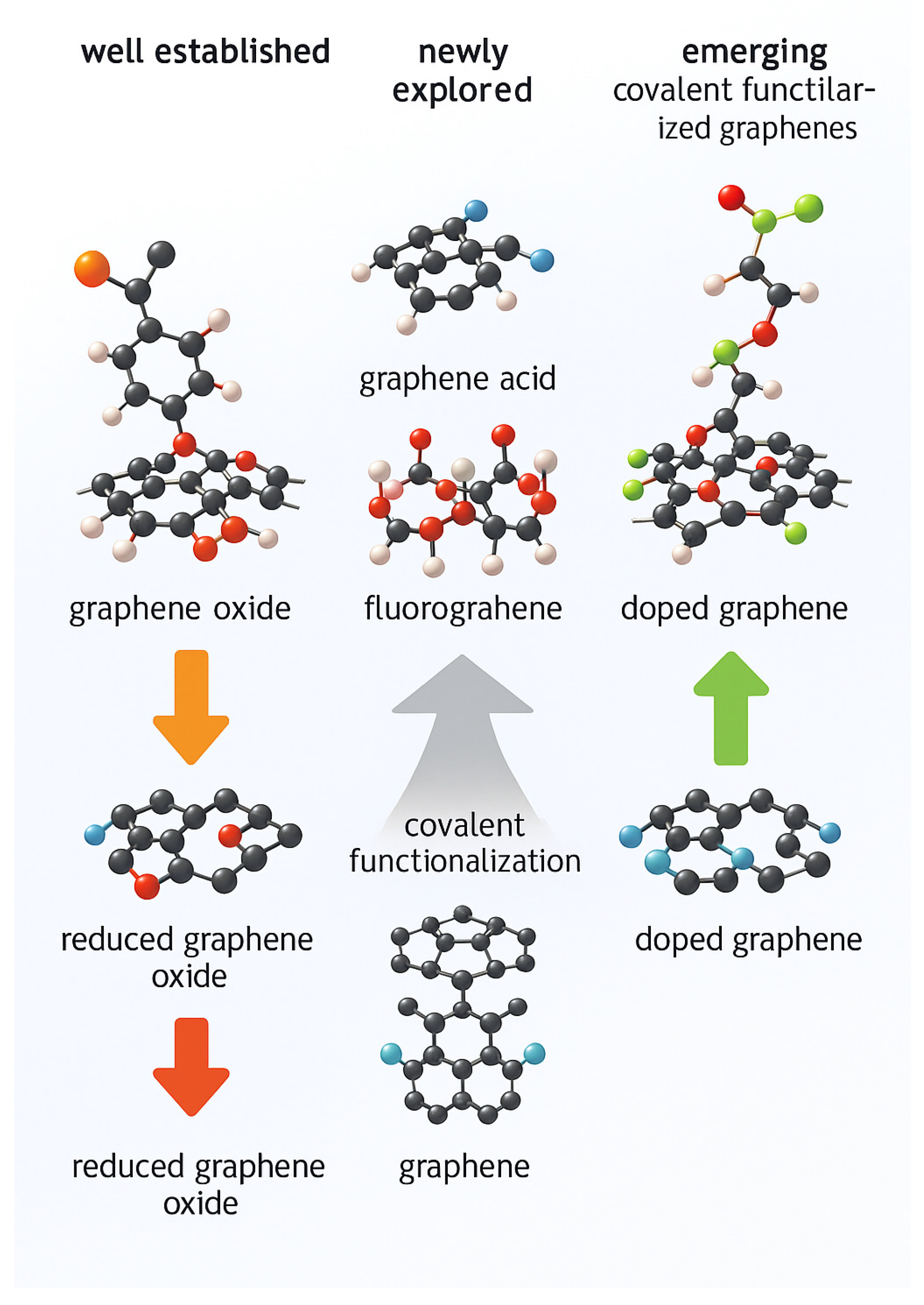
Figure 1. Graphene derivatives schematic depiction [33].
Processes 14 00117 g001
Figure 2. G@MOFs synthetic approaches [33].
Processes 14 00117 g002
Figure 3. Graphical summary of G@MOF synthesis routes and environmental applications.
Processes 14 00117 g003
Figure 4. Conceptual roadmap for future research on G@MOFs, highlighting short-term (synthesis optimization and interfacial tuning), medium-term (scaling-up and regeneration evaluation), and long-term (techno-economic and environmental risk assessment) objectives.
Processes 14 00117 g004
Table 1. Comparative summary of synthesis strategies for G@MOFs highlighting the key characteristics, advantages, limitations, and representative applications.
Synthesis MethodMain PrincipleAdvantagesLimitationsTypical Applications
Mechanochemical (solid-state)Grinding of MOF precursors with graphene or its derivatives using mortar, pestle, or ball-millingSimple, solvent-free, fast, and environmentally friendly; easily scalableOften yields lower crystallinity and weaker MOF–graphene bonding; limited control of morphologyEnergy storage devices, gas adsorption, simple adsorbents
Solvothermal/
Hydrothermal
Reaction of metal salts and organic linkers with dispersed graphene materials in solvent under elevated temperature and pressureProduces highly crystalline structures with strong interfacial bonding; tunable porosity and functionalizationSolvent-intensive; time-consuming; potential agglomeration if poorly dispersedAdsorption of dyes and pharmaceuticals; photocatalysis; sensing
In situ/One-pot growthSimultaneous formation of MOF on graphene surface through coordination between metal ions and oxygen groups of graphene oxideStrong chemical interface; uniform MOF growth; good reproducibility---------Catalysis, pollutant degradation, and electrochemical applications
Table 2. G@MOFs Composites used to remediate pollutants from wastewater.
Removed PollutantG@MOFS CompositeReferences
Cu (II)IRMOF-3/GO[97]
U(VI) (ppb and ppm level removal)GO-COOH/UiO-66[98]
Pb (II), Cd (II)ZIF-8/rGA[99]
Cs+ (192.14 mg·g−1)GO/2D-Co-MOF-60 membrane[100]
Cr (VI)GO-CS@MOF [Zn (BDC)(DMF)][101]
As (III)MIL-53(Al)-GO[102]
Na (I), Ca (II), Mg (II)P+GO-anchored HKUST-1[103]
As (III), Pb (II)dpGNS-encapsulated DMOF-1[104]
Total phosphorusLa-mof-1 GO membrane[105]
U (VI)Fe3O4@HKUST-1/GO[106]
Methylene blueZIF-8/rGA[99]
Reactive red dye (RR195)Fe-MIL-88B/GO[107]
Congo redNH2-MIL-68(Al)/RGO[108]
Methyl orange, direct red 80UiO-66@GO/PES membrane[109]
Malachite greenZIF-8@GO[110]
Congo RedNi BTC@GO[111]
Methylene blueGO-TMU-23c[112]
Methylene blue6% GO/Ni-BTC[113]
Azo dyes: amaranth, sunset yellow, carmineMIL-101/GO[114]
Methylene blueMIL-100(Fe)/graphene hybrid aerogel (MG-HA)[115]
Table 3. Comparative Performance Metrics of Representative G@MOFs.
G@MOFS Compositeqmax (mg·g−1)Removal Efficiency (%)pHContact Time (min)Recyclability (Cycles)Regeneration MethodReference
ZIF-8/rGA332995.5605Ethanol wash[99]
GO-COOH/UiO-66250956.0455pH adjustment[98]
Fe-MIL-88B/GO200957.01204Thermal treatment[107]
MIL-53(Al)-GO150985.0903Acid/base cycling[102]
MIL-100(Fe)/Graphene Aerogel450976.5305Ultraviolet irradiation[115]
Disclaimer/Publisher’s Note: The statements, opinions and data contained in all publications are solely those of the individual author(s) and contributor(s) and not of MDPI and/or the editor(s). MDPI and/or the editor(s) disclaim responsibility for any injury to people or property resulting from any ideas, methods, instructions or products referred to in the content.