Review

Technology Readiness Level Assessment of Pleurotus spp. Enzymes for Lignocellulosic Biomass Deconstruction


by
Dinalva Schein
1,
Olimpio C. Escosteguy
1,
Gustavo N. Pezzini
1,
João H. C. Wancura
2,* and
Marcio A. Mazutti
1
1
Department of Chemical Engineering, Federal University of Santa Maria (UFSM), 1000 Roraima Av., Camobi, Santa Maria 97105-340, RS, Brazil
2
Laboratory of Biomass and Biofuels (L2B), Federal University of Santa Maria (UFSM), 1000 Roraima Av., Building 9B, Camobi, Santa Maria 97105-340, RS, Brazil
*
Author to whom correspondence should be addressed.
Processes 2026, 14(1), 112; https://doi.org/10.3390/pr14010112
Submission received: 1 December 2025 / Revised: 18 December 2025 / Accepted: 26 December 2025 / Published: 29 December 2025
(This article belongs to the Special Issue Biomass Treatment and Pyrolysis Processes)

Abstract

The valorization of lignocellulosic biomass has been attracting interest in several industrial areas due to its potential to produce high-value-added compounds. Among these products, lignocellulosic enzymes stand out, capable of degrading biomass into fermentable polysaccharides, essential to produce second-generation ethanol and other bioproducts. The genus Pleurotus spp., a macrofungus with a high enzyme production capacity, has been consolidating itself as a promising alternative in the bioconversion of lignocellulosic residues. Contextually, this review explores for the first time the level of technology readiness associated with the production of enzymes by Pleurotus spp., in addition to addressing advances in patent filings and the role of these enzymes in the conversion of lignocellulosic biomass. Through a technological analysis based on a critical evaluation of 250 studies indexed in the database Scopus® between 2015 and 2025, from which 16 studies were selected for a detailed and rigorous assessment of enzyme production by Pleurotus spp., it was observed that technological progress remains at the laboratory scale, in TRL 3 and 4, with few studies at the TRL 5 scale. In addition, the factors that may be affecting the increase in technological readiness of microbial enzyme production at pilot and industrial scales are discussed. The valorization of lignocellulosic biomass and the production of enzymes by macrofungi represent a promising path towards sustainability and cost reduction; however, significant challenges remain related to pilot-scale studies and increasing the level of technological maturity of these processes by Pleurotus spp., requiring further investigation of these processes to standardize and enable their industrial scale-up.

1. Introduction

The global enzyme market was valued at 13.9 billion U.S. dollars in 2024, and is expected to grow to around 18.3 billion U.S. dollars in 2030 [1]. Lignocellulolytic enzymes compose more than 20% of the market [2]. Lignocellulosic biomass has been widely explored for biofuel production, requiring the conversion of cellulose and hemicellulose into fermentable sugars through chemical, physicochemical, or biotechnological routes. In enzymatic hydrolysis, multiple enzymes act synergistically, often accessing their active sites only after prior pretreatment [3]. An efficient pretreatment step is essential to improve biomass digestibility and reduce lignin interfaces. Among pretreatment strategies, biological methods using fungi or bacteria have gained attention due to their lower energy demand, reduced formation of harmful compounds, and elimination of toxic solvents, despite typically requiring longer processing times [4].
White-rot basidiomycete fungi represent the most known wood-decaying species currently investigated. These microorganisms are known for their capability to degrade the three major components of lignocellulosic biomass (cellulose, hemicellulose, and lignin) through the production and action of many extracellular enzymes [5,6]. Edible mushrooms, the fruiting body of some basidiomycete fungi, are considered a highly nutritious and healthy food source that are largely grown and commercialized worldwide. However, apart from the fruiting body, these fungi can produce a wide range of enzymes, with several applications for many industries [7]. In addition, the fungal biomass produced through the fermentation of these species is also edible, rich in protein, fiber, and other nutrients. Contextually, edible mycelium has attracted attention due to its potential as an accessible, scalable, and sustainable high-quality protein source [8]. Accordingly, Pleurotus spp., such as Pleurotus eryngii and Pleurotus ostreatus, stand out for its biotechnological potential as microbial enzyme sources [9], since they are able to produce a diverse enzymatic cocktail containing laccases, lignin peroxidase, manganese peroxidase, endocellulase, exocellulase, xylanase, and other lignocellulolytic enzymes [9].
Solid-state fermentation has been frequently considered in scientific research for white-rot fungi since this process simulates the environmental conditions in which the fungi are found. This method usually has higher efficiency and productivity of lignocellulolytic enzymes when compared to submerged fermentation. It provides a better enzyme–substrate contact, without the dilution in the liquid media [10]. However, submerged fermentation is the preferred method on an industrial scale, since it offers advantages that are important when scaling up to an industrial scale, such as better control of process parameters, easier product recovery, uniformity, and reproducibility. In contrast, solid-state fermentation at larger scales will present gradients of temperature, oxygen concentration, pH, nutrients, and moisture. These parameters are crucial to microbial growth and enzyme production, where small alterations can drastically impact the targeted product yield [11].
Analyzing scientific publications regarding the production of microbial enzymes for lignocellulosic biomass deconstruction from Pleurotus spp. It is possible to observe that a major part of the research is limited to laboratory Erlenmeyer flask experiments. The factors involved in this low level of scaling must be critically evaluated. A form of assessing and comparing the technological development of a process or product is the technology readiness level (TRL) methodology, developed by National Aeronautics and Space Administration (NASA) researchers in the 1970s. It consists of a scale ranging from level 1 to level 9, corresponding to the lowest and highest levels of maturity, respectively. This methodology can be employed to evaluate and compare advances in a certain field of research, based on established guidelines according to the nature of the assessment [12]. Therefore, this paper presents a critical review assessing the maturity and potential of recent research regarding the production through submerged fermentation of lignocellulolytic enzymes from Pleurotus spp., applying an adaptation of the TRL scale. As far as we know, it is the first time that this approach has been applied to such a theme. Initially, a discussion is presented regarding lignocellulosic biomasses and the main enzymes involved in their deconstruction. Co-cultivation is also discussed as an alternative to improving enzyme production, where there are few publications approaching the submerged co-fermentation of Pleurotus spp. with other strains. Finally, a patent database search and bibliometric investigation are presented, applying TRL analysis to scientific studies published in the literature, concerning the production of enzymes by Pleurotus spp. through submerged fermentation.

2. Lignocellulosic Biomasses

Lignocellulosic biomass has been the subject of several studies in recent years as a source of polysaccharides for obtaining microbial enzymes [13,14]. It is composed mainly of cellulose, hemicellulose, and lignin, forming the lignocellulosic complex, in addition to containing small amounts of minerals, acetyl groups, and phenols [15]. It is a natural resource widely available in the world, with high potential for the production of biofuels and high-value-added products [16].
The valorization of biomass encompasses several chemical, physical, and biological processes that aim to convert its complex structure into smaller polysaccharides. Several techniques are used to increase the accessibility of cellulose and hemicellulose, but still there are technical and economic barriers that need to be overcome in large-scale implementation of lignocellulosic biomass valorization [17,18]. The composition and structure of lignocellulosic biomass are an obstacle to the hydrolysis and release of products of interest [19]. Cellulose, the most abundant D-glucose polymer in plants, provides rigidity and firmness to plant structures. Hemicellulose, the second most abundant natural polymer in plant cells, is composed of pentoses, hexoses, as well as glucuronic and mannuronic acids that act as a bridge, linking lignin to cellulose fibers. Lignin, in turn, is responsible for the resistance of lignocellulosic biomass to hydrolysis processes, making it difficult to access cellulose and hemicellulose, which are of greater interest for biotechnological applications [20,21].
The main source of lignocellulosic biomass is agricultural and forestry residues, whose availability has increased proportionally to the growth of agricultural and industrial activities [22]. Lignocellulosic biomass also has great potential for inducing the synthesis of lignocellulolytic enzymes. Due to the complex structure of the material, it persuades microorganisms to produce enzymes capable of degrading cellulose, hemicellulose, and lignin. However, it is essential to evaluate the lignocellulosic composition of each material to select the most suitable lignocellulosic biomass for the processes of interest. Biomasses with very high lignin content make it difficult to access cellulose and hemicellulose, consequently hindering the enzymatic production for the degradation of these polysaccharides. Figure 1 represents the composition of lignocellulosic biomass, highlighting its main structural fractions—cellulose, hemicellulose, and lignin—and the respective enzymes involved in degradation: cellulases, hemicellulases, and lignin-modifying enzymes.

2.1. Enzymes Involved in Lignocellulosic Biomass Degradation

2.1.1. Cellulases

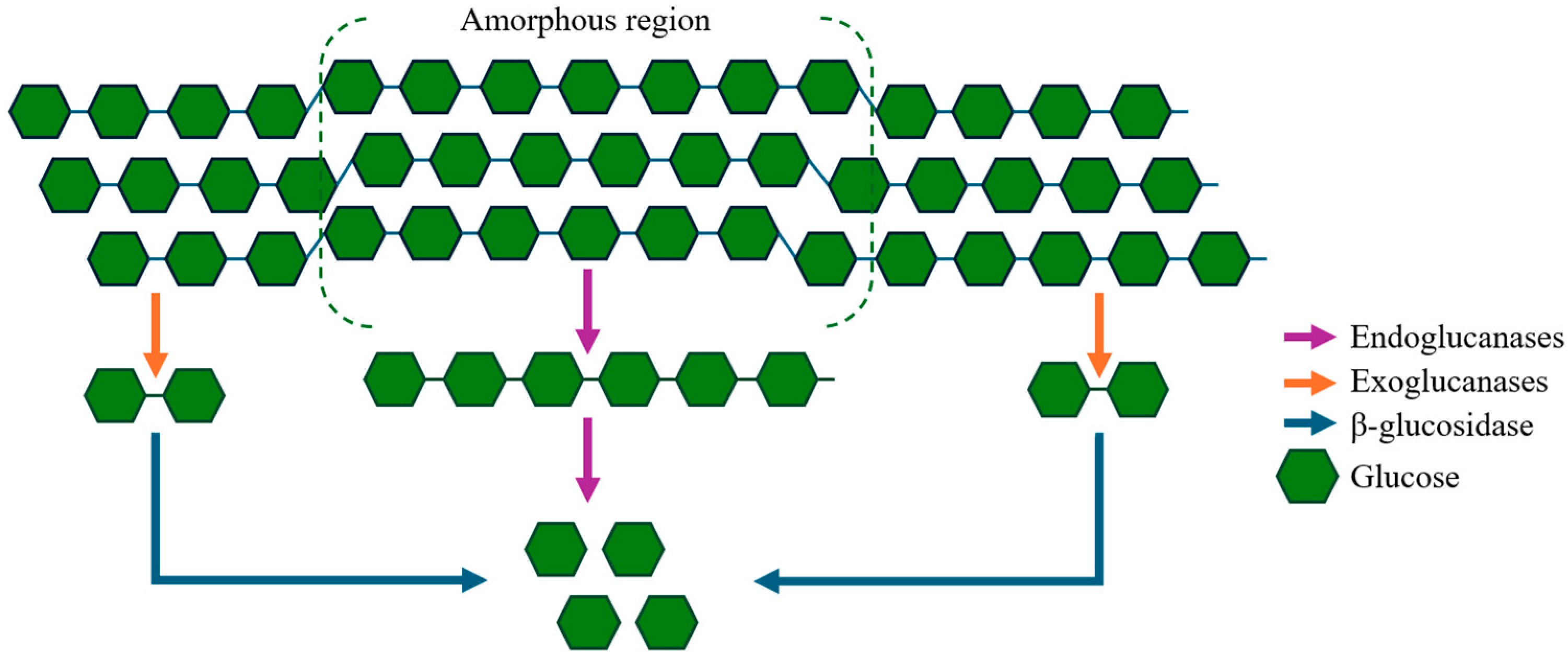
Cellulose is a polymer of D-glucose, whose units are linearly linked by β-1,4 glycosidic bonds, presenting both reducing and non-reducing ends. Each glycosidic bond forms through the elimination of water, producing cellobiose units [23]. Accordingly, cellulases are enzymes that hydrolyze β-1,4 bonds in cellulose chains through endo- and exo- cleavages [24]. Cellulases have applications in various industries and stand out as the third most widely used industrial enzyme, accounting for about 20% of the global enzyme market [25]. In the pulp and paper industry, cellulases are employed to enhance bleaching, reducing the use of chemicals and minimizing environmental impacts [26]. These enzymes play a fundamental role in textile finishing [27] and are also used for juice extraction, fruit maceration, and the improvement of fiber digestibility [28]. In animal feed and agriculture, they contribute to the pretreatment of feeds and silages, enhancing nutrient availability [29]. Additionally, in the biofuel industry, cellulases enable the conversion of cellulose into fermentable sugars, a crucial step in bioethanol production [30,31]. The catalytic modules of cellulases are classified into families based on their amino acid sequences and crystal structures [25]. Belonging to the glycosyl hydrolases (GH) family, they comprise three enzymes: endoglucanases (EC 3.2.1.4), exoglucanases (EC 3.2.1.91), and β-glucosidase (EC 3.2.1.21) [25,31], as represented in Figure 2.
Endoglucanase, also called CMCase or endocellulase, acts by breaking the internal bonds of cellulose and exposing the cellulose polysaccharide units, producing oligosaccharides of different lengths. Its main function is to shorten cellulose polymers. Exoglucanases, also known as exocellulases or cellobiohydrolases, are categorized as exo-acting enzymes, cleaving small polysaccharide units from the exposed chain ends into disaccharides, producing cellobiose [32].
In this context, the breakdown of cellulose by cellulase enzymes occurs through two stages: (i) primary hydrolysis—the generation of soluble sugars of up to six glucose units, through the combined action of endoglucanase and exoglucanase to produce cellobiose. The catalytic efficiency of both enzymes acting synergistically is enhanced compared to their isolated action [25,33,34]; (ii) secondary hydrolysis—performed by β-glucosidase (cellobiase), which acts on cellobiose molecules, breaking them into individual glucose monomer units and hydrolyzing the β-1,4 bond in cellobiose to release two glucose molecules [34,35].

2.1.2. Hemicellulases

Hemicellulose can have a linear or branched structure, composed of homopolymers or heteropolymers. Unlike cellulose, hemicellulose is amorphous and more easily hydrolyzed, since its sugar units are not crystalline [36]. Hemicellulose is mainly composed of pentoses linked by β-1,4 bonds, with side chains containing hexose units and residues of galacturonic acid and glucuronic acid, making the chain a heteropolymer [37]. The primary polysaccharide in hemicellulose is xylan, which consists mainly of D-xylopyranoside residues linked by β-1,4 bonds. The second most common polysaccharide in hemicellulose is mannans, which consist of a free chain of D-mannose linked by β-1,4 bonds. They can also form glucomannose, composed of D-mannose and D-glucose, and are strongly associated with other components of plant cell walls [38].
Hemicellulases are enzymes composed of glycoside hydrolases (GHs), which break glycosidic bonds, and esterases, which hydrolyze ester bonds of side groups. Glycosidic hydrolases include xylanases, β-xylosidases, β-mannanases, β-mannosidases, α-L-arabinofuranosidases, and β-D-glucuronidases. Xylanases (EC 3.2.1.8), also called endo-β-1,4-D-xylanases, hydrolyze β-1,4 bonds in the xylan structure, producing short xylooligomers. β-xylosidases (EC 3.2.1.37), or exo-1,4-β-D-xylosidases, release xylose monomers from the non-reducing ends, transforming them into small xylose molecules [39].
In the degradation of xylan, accessory enzymes act to remove the branches and substituents of the different types of xylan, facilitating the action of classical enzymes. These enzymes can be glycoside hydrolases or esterases, contributing significantly to the preparation and release of sugars. α-L-arabinofuranosyl removes substituent and xylose units, acting from the non-reducing end to release the arabinofuranose. α-1,2-glucuronidases and α-glucuronidases (EC 3.2.1.31) cleave the α-1,2-glycosidic bonds of the side chains of glucuronic acid or 4-O-methyl-D-glucuronic acid of xylans. Esterases include acetylxylan esterases (EC 3.1.1.72), which hydrolyze xylopyranose residues and their acetyl substituents, and feruloyl esterases (EC 3.1.1.73), which hydrolyze the ester bonds between arabinose and ferulic acid substitutions [40,41].
Enzymes such as β-mannanases (EC 3.2.1.78), β-mannosidases (EC 3.2.1.25), and β-glucosidases (EC 3.2.1.21) act to degrade mannans. β-mannanases are endohydrolases that break bonds between D-mannose residues in the structure, generating smaller polymers and new ends. β-mannosidases are exo-enzymes that release D-mannose or D-glucose from non-reducing ends. β-glucosidases facilitate the release of D-glucose units from the non-reducing ends of oligomers released by β-mannanase, producing small mannose units. Other auxiliary enzymes also act on mannan branches, such as α-galactosidases (EC 3.2.1.22) and acetylmannan esterases (EC 3.2.1.72). α-galactosidases are exohydrolase enzymes that release galactose molecules linked to α-1,6 bonds of galacto-oligosaccharides, and acetylmannan esterases act on the deacetylation of mannan oligomers [40,41].

2.1.3. Lignin-Modifying Enzymes

Lignin is responsible for providing structural support and protection to plant tissue; therefore, it represents a major obstacle to the breakdown of lignocellulosic materials. It is a complex and amorphous heterobiopolymer, insoluble in water, and consists of phenylpropane units linked by carbon-carbon and aryl-ether linkages. Lignin is formed by the coupling of three monolignols, forming the following monomeric units: p-hydroxyphenyl, guaiacyl, and syringyl [4].
Enzymes responsible for lignin degradation are usually classified into two groups: lignin-degrading auxiliary enzymes (LDAE) and lignin-modifying enzymes. LDAEs cannot completely degrade lignin without the aid of other enzymes. Diverse proteins act sequentially to enable degradation, during which the oxidative generation of H2O2 may occur. The following enzymes are classified as LDAE: cellobiose dehydrogenase, glucose oxidase, glyoxal oxidase, pyranose 2-oxidase, and aryl alcohol oxidases. Lignin-modifying enzymes or ligninases are divided into phenol oxidase (laccases) and heme-containing peroxidases, such as manganese peroxidase (MnP), lignin peroxidase (LiP), versatile peroxidase (VP), and dye-decolorizing peroxidases [5,42].
Laccases are one of the most important enzymes of the ligninolytic complex due to their high redox potential. These enzymes are able to depolymerize lignin generating phenolic groups and other compounds, where they are capable of oxidizing a wide range of molecules, including some inorganic and organic metal compounds [5,6]. Fungal ligninolytic enzymes have industrial applications, mainly regarding wastewater treatment. Through a biorefinery approach, fungi can convert nutrients and pollutants from wastewater into value-added products [43]. Many studies regarding microbial degradation of lignin focus on fungal species; however, there are also reports of bacterial strains capable of breaking down lignin. Bacterial lignin degradation is slower and less efficient when compared to fungal strains. White rot Basidiomycete fungi (e.g., Pleurotus spp. and Ganoderma spp.) represent most known wood-decaying species and are considered the most efficient lignin degraders. However, aerobic white rot fungi are the only known species capable of completely degrading lignin. Oxygen or its partially reduced species are necessary for the enzymatic reaction that cleaves the aromatic rings of lignin [5,6].

3. Technological Maturity of the Platform

3.1. A Prospection on Patent Bases

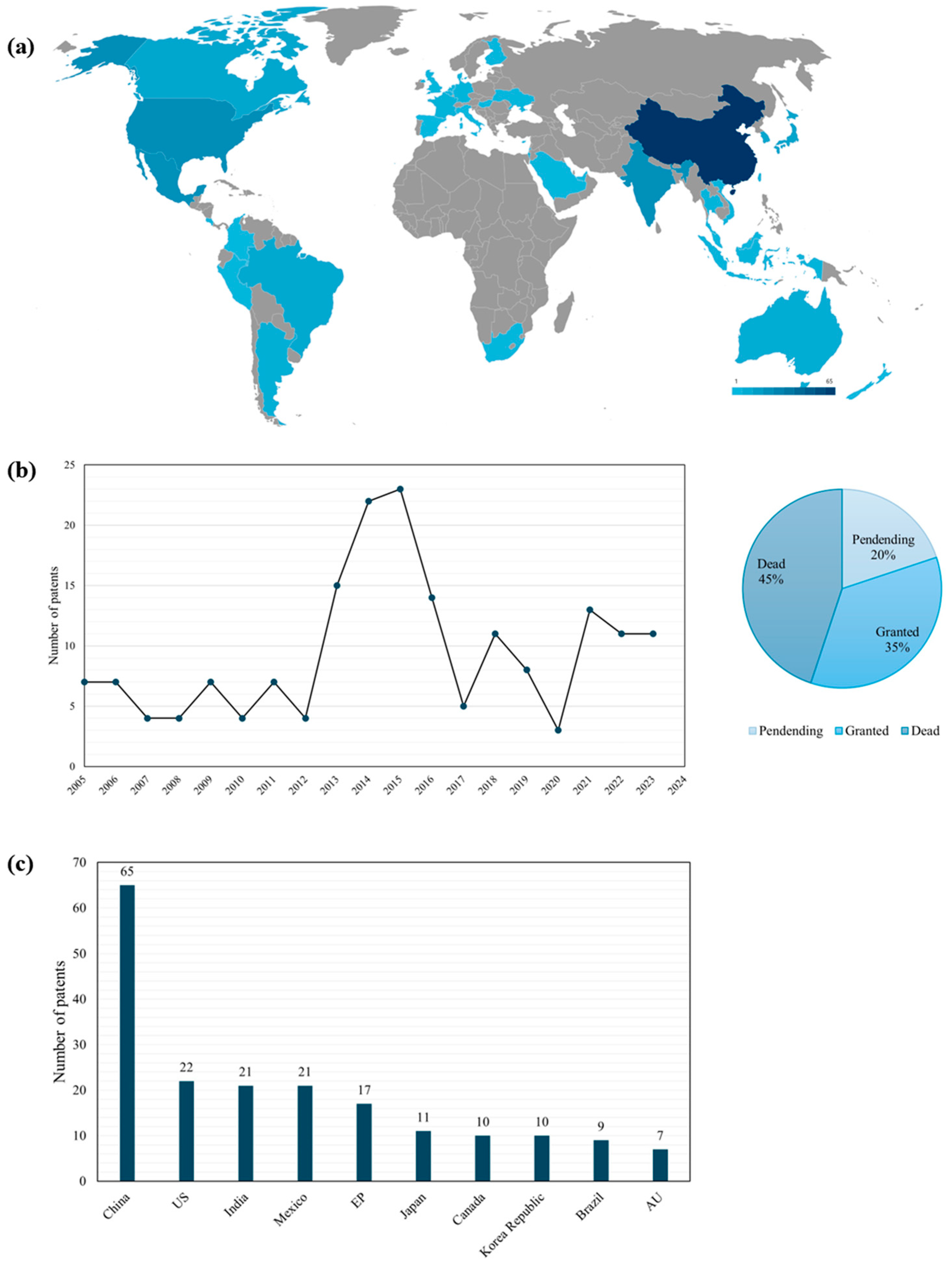
An interesting way to assess the evolution of research involving enzyme production by macrofungi such as Pleurotus spp. is by analyzing the number of patents filed in recent years. Using the patent database of the Questel Orbit Intelligence system, a platform capable of reporting documents registered in more than 100 countries and applying the search Pleurotus AND cellulase* OR hemicellulase OR xylanase OR laccase AND submerged fermentation OR liquid fermentation AND enzym*, in titles, abstracts, and concepts, 196 filings were found since 2005 (search date: April 2025). No other filters were applied. The main information obtained in the search is presented in Figure 3, which presents an overview of the main depositing countries and the number of patents published over the years. Figure 3a,c show China as the country that has filed the most patents in recent years, accounting for approximately 33% of registered patents, and the second country, the United States, with 11%. Another important point that can be assessed with the data in Figure 3b is the evolution of technological investment in recent years when it comes to the production of lignocellulosic enzymes by Pleurotus spp. From these data, it is possible to verify an increase in production between 2013 and 2015, reaching the maximum number of deposits in 2015 with 23 relatives deposited. However, it is possible to observe a decrease in the number of deposits from 2015 onwards, with fluctuations in the number of filings from 2017 to the present year. Until the month of the survey (April 2025), no patent filings had been made, indicating that the number of registrations will probably be lower than in previous years.
Considering that patent registration determines the technological expansion of the production of lignocellulosic enzymes by Pleurotus spp., this fluctuation may indicate a tendency towards stabilization, if there are no major advances in the area. This scenario may also be associated with the fact that part of the research is still in the laboratory phase. In this context, of the total number of registered patents, approximately 45% are dead filings, compared with 35% of the granted filings, while only 20% are in the process of being granted. This finding highlights that most of the patents filed during this period are already inactive and commercially unviable, indicating a major challenge in the production of Pleurotus spp. products by submerged fermentation.
A granted patent to Ding et al. [44] addresses a method for laccase production using white rot fungi, P. ferulae, in liquid culture. The seed culture was inoculated in submerged fermentation with an inoculum size of 4% and grown at 22–26 °C for 7 days, and the culture medium was composed of 15 to 20 g L−1 glucose, 10 to 20 g L−1 corn flour, 10 to 15 g L−1 wheat bran, 3 g L−1 KH2PO2 and 2 g L−1 MgSO2·7H2O, with an initial pH of 7.0–9.0. This method yields higher levels of laccase production compared to other fungi of the genus Pleurotus spp. An interesting patent for the preparation of an enzymatic liquid from P. ostreatus was proposed by Qi et al. [45]. The invention consists of a step containing a lignocellulosic matrix and the performance of a static culture, followed by the addition of a nutritional culture and agitation. The maximum laccase activity of P. ostreatus through this method is 11.6 times higher than that obtained in solid fermentation and 8.2 times higher than in liquid fermentation. And the production of enzymes such as xylanase and cellulase also showed superior results compared to conventional methods. Another method for the production of laccase with high activity in liquid fermentation culture was filed by Dongai et al. [46]. The invention aims to provide a method for the cultivation of laccase by P. eryngii, combining solid-state culture with liquid culture at different periods and the addition of copper ions. Following the line of ion induction, a patent was granted that aimed to improve the laccase activity of P. ostreatus in induction culture medium containing metal ions.

3.2. A Bibliometric Assessment

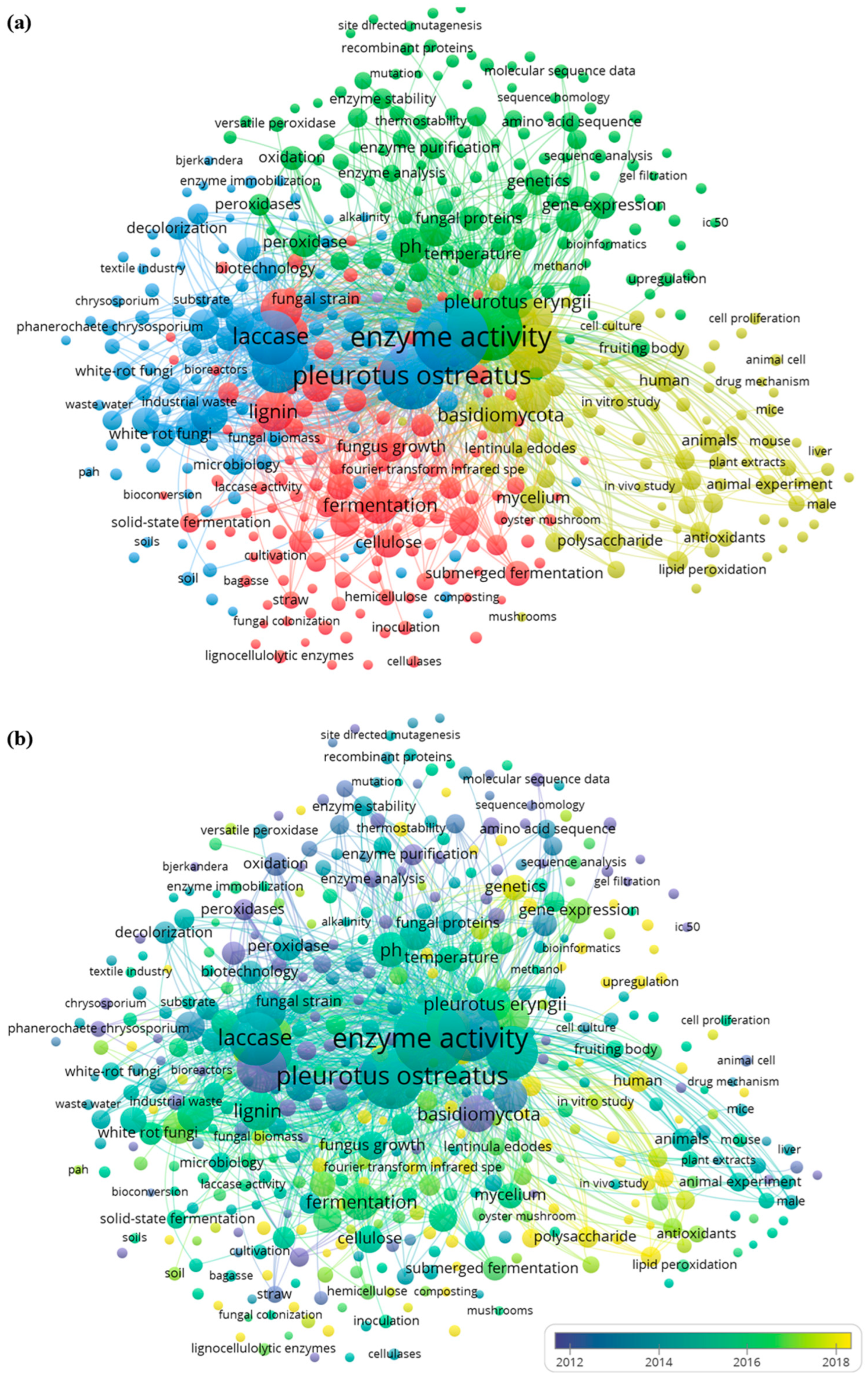
Bibliometric analyses are frequently used to identify research trends, monitor scientific developments on a given topic, as well as explore collaborations, and map knowledge. Thus, using the Scopus® database, a bibliometric study of scientific documents, including review and research articles, and book chapters, involving enzyme production by Pleurotus sp., was performed and is presented in this section. The bibliographic data were evaluated using the VOSViewer® software (version 1.6.20) for graphical representation. To select the maximum number of works concerning the topic, the following keywords were used: “Pleurotus” AND “submerged fermentation*” OR “cellulase*” OR “hemicellulase*” OR “lignase*” OR “xylanase*” OR “enzyme activity”. The search resulted in 1474 documents published between 1990 and 2025 (database accessed in January 2025). Figure 4a,b represent the data obtained regarding network, periodic, and temporal information, respectively, based on the keywords frequently used by the authors in the documents. Some filters were defined to improve the understanding of the graphs and the set of information in the graphs. The minimum number of occurrences of keywords was set to 15 occurrences; that is, they had to appear at least 15 times within the analysis period to be included. Consequently, 476 keywords were considered, grouped into five clusters, with the largest cluster containing 129 keywords. The mains keywords observed were “enzyme activity” (926 occurrences), “Pleurotus ostreatus” (712), “Pleurotus” (660), “laccase” (498), “controlled study” (468), “fungi” (432), “metabolism” (334), “enzymes” (289), and “lignin” (272). Some keywords that were not significant to the proposed work were removed: “article”, “non-human fruit”, “unclassified”, “priority journal”, “Tramets versicolor”, “Phanerochete”, “phenol derivative”, and “Zea mays”.
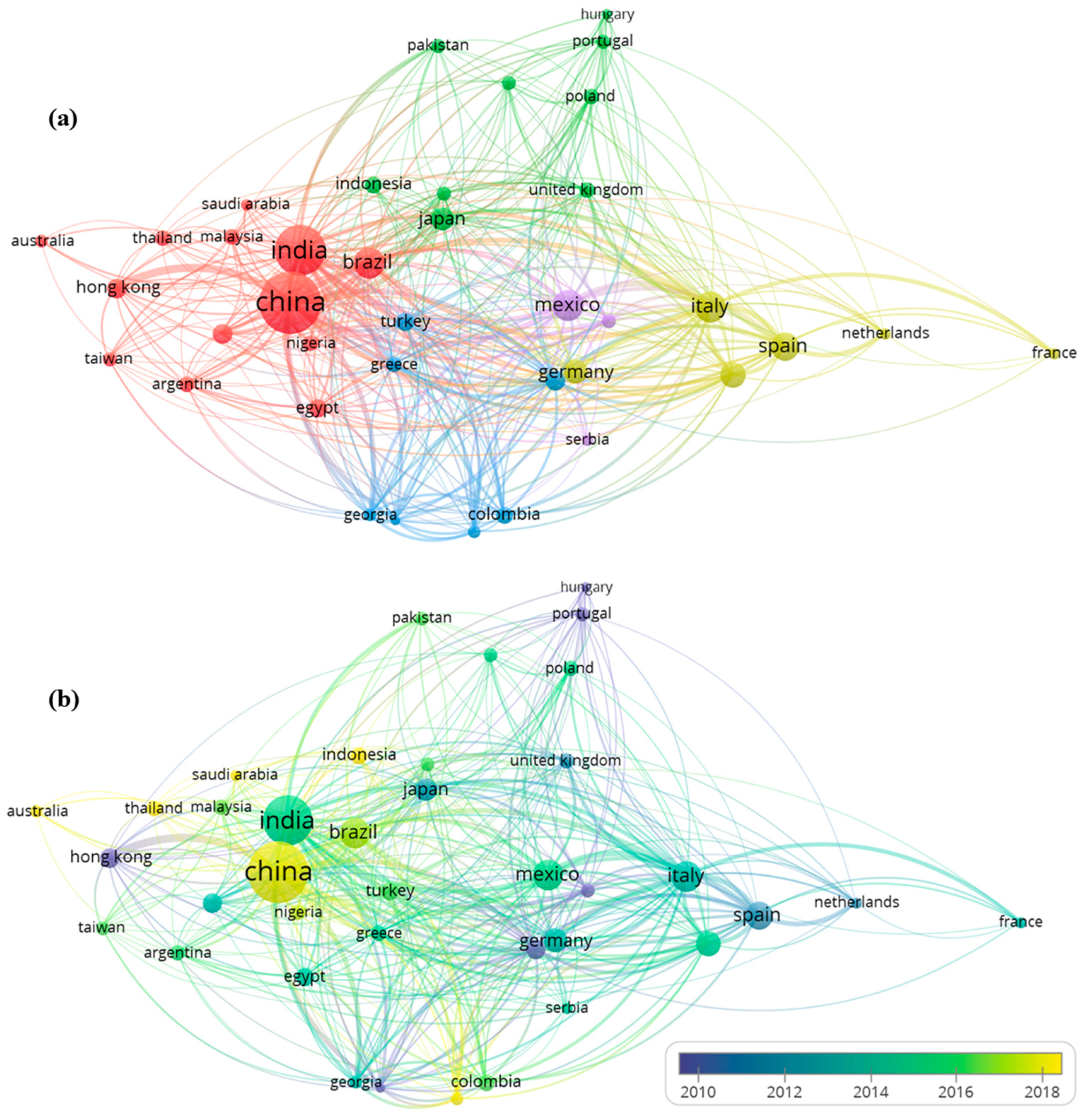
For the evaluation of the countries, the maximum number of nations per document was considered to be 25, and each country was required to have at least 10 documents, totaling 38 countries, divided into five clusters. The largest cluster covered 13 members. China (316 documents, 7353 citations), India (212 documents, 5329 citations), Brazil (83 documents, 2137 citations), Italy (80 documents, 3526 citations), Mexico (79 documents, 1704 citations), Spain (65 documents, 3210 citations), United States (56 documents, 1800 citations), Germany (48 documents, 1894 citations), and Japan (45 documents, 1490 citations) are the main countries that conduct research on the considered topic. Accordingly, Figure 5 illustrates the network of collaborations from 1990 to 2025.
Bibliographic analysis allows the assessment of the network of studies on the subject, conducted by several collaborators around the world. The division into clusters represents the intensity with which the studies are interconnected. It is possible to observe a strong scientific link between China, India, and Brazil, in addition to other countries in Oceania, Asia, Africa, and South America. European countries, such as Germany, Italy, and Spain, together with the Netherlands and France, also have strong alliances. For example, a study conducted by Brazilian and American researchers examined the enzymatic activities of a complex produced by P. ostreatus, with assessments of pH and application rates of these complexes. The main results showed that enzymatic activities were affected by pH, with an optimal pH of 5 for laccase and 4 for manganese peroxidase and LiP [47]. The collaboration of Brazilian and American researchers contributed to the investigation of the enzymatic complex produced by P. ostreatus in whole-plant corn silage, produced on a large scale in Brazil. Partnerships between Brazil and Italy have obtained promising results in the production of laccases and in the delignification of sugarcane bagasse by P. ostreatus [48]. Another study, conducted by the same countries, was successful in optimizing P. ostreatus for sugar production using a Plackett–Burman design [49]. These scientific links reinforce the importance of internationalization and the sharing of technical and scientific knowledge between South American and European countries.
In addition, a study carried out between Germany and China evaluated the efficiency of fermentations of Lentinus edodes, Lentinus sajor-caju (Fr.), Flammulina filiformis, Hericium erinaceus, P. pulmonarius, and Monascus kaoliang B6 using tea residues for the degradation of cellulose, hemicellulose, and lignin [50]. Countries in East and South Asia have investigated the production of laccase by Aspergillus oryzae using agricultural waste, achieving a higher laccase activity of 623.16 U mL−1 with optimized conditions of pH, temperature, and substrate, among other factors [51]. The set of data available in the literature demonstrates the expansion of the theme in terms of technological innovations and the advancement in strategies to improve the production of enzymes by Pleurotus spp., and the collaboration between different countries shows the strengthening and international consolidation of efforts in the search for advances in the area.

3.3. Technology Readiness Level

This methodology is employed by several companies, government agencies, and researchers around the world. The TRL scale can be a form of evaluating and comparing advances regarding a certain area of research. Accordingly, Table 1 presents the description employed by NASA for each maturity level of the TRL scale and also an adaptation, relating the NASA description to the scaling levels of biotechnological processes, for a clearer understanding of the guidelines employed to determine the TRL level of bioprocesses, specifically in the production of lignocellulosic enzymes by Pleurotus spp. This type of approach is still little considered in scientific articles for the analysis of a given technology, although some reports have been published in recent years.
Sales et al. [52] applied the scale when reviewing the maturity level of microbial plastics degradation, ranking promising technologies. It demonstrated that the analyzed PET degradation most promising works were at a more advanced stage (TRL 4–5) compared to polyolefins microbial degradation reports (TRL 3). The authors reported that this difference was probably due to the polyolefins (PP and PE) higher recalcitrance, leading to an even more challenging biodegradation. The TRL scale was also employed by Pinsky et al. [53] to compare several hydrogen production technologies with potential to be applied at nuclear hybrid energy systems (NHESs) and also the most common commercially operating hydrogen production method (steam methane reforming). As demonstrated by the study, the TRL of evaluated NHES is below commercial scale and is not currently cost effective. A review on the technology readiness level of carbon capture technologies was elaborated by Hekmatmehr et al. [54] elucidating the advantages, disadvantages, and economic aspects of such technologies. Perkins et al. [55] assessed the readiness of different liquefaction technologies for the production of liquid hydrocarbon fuels produced from biomass and carbonaceous wastes. The authors stated that most of the technologies were at the TRL level 6 (pilot scale); however, there was a lack of published performance data and economic evaluations.
From this, a search for academic research published between 2015 and 2025 (research date: April 2025) was carried out using the Scopus® database. The keywords “Pleurotus” AND “submerged fermentation*” OR “cellulase*” OR “hemicelullase*” OR “lignase*” OR “xylanase*” OR “enzyme activity” were used, limiting the search to scientific articles. Additional filtering by the keywords “enzyme activity”, “Pleurotus”, “laccase”, “cellulase”, “ligninolytic enzyme” resulted in a total of 554 articles. Of these, 250 articles were individually analyzed regarding the topic of enzyme production, clarity of the data presented, and relevance of the results obtained. At the end of the screening, the articles that presented the most clarity in the data and the scale used were selected. Sixteen studies were selected to compose the individual analysis, carried out by the authors of this work, regarding the TRL of enzyme production by Pleurotus sp. The evaluation of the criteria for quantifying the TRL level of the articles was conducted through a rigorous analysis of the experimental data, reactor volumes, and optimizations performed in the studies. Table 2 presents the information on the process, pH, temperature, agitation, aeration, cultivation time, as well as the results of different lignocellulosic enzymes and the classification given by the authors regarding the TRL level. Regarding the identified TRL levels observed in the analyzed articles, a predominance was observed in the initial stages of technological development. Seven articles were classified as TRL 3, another seven as TRL 4, and only two reached TRL 5.
Studies classified as TRL 4 and 5 presented advances related to process optimization and the performance of bench-scale experiments, with increased fermentation volume. The study reported by Bakratsas et al. [56] advanced the process to scale up at the bench level. The studies described in Zhu et al. [57], Fernandes et al. [58], and Araújo et al. [59] investigated variables that influence and optimize the enzyme and biomass production process. The remaining studies classified as TRL 3 remained at flask-scale volumes.
Table 2. Process conditions and results of enzyme production by Pleurotus spp. in articles published in the last ten years, with an evaluation of the TRL assigned in this work.
MicroorganismCarbon Source/InducerpHT (°C)Agitation (rpm)Aeration
(vvm)
DaysFPase
(U mL−1)
CMCase (U mL−1)Xylanase (U mL−1)Laccases (U mL−1)LiP
(U mL−1)
MnP
(U mL−1)
TRLYearRef.
P. pulmonariusMalt extract-24150-3-50.060.0-14-32024[34]
P. pulmonariusMalt extract + CMC-Na-24150-3-85.0----32024[34]
P. pulmonariusMalt extract + xylan-24150-3--60.0---32024[34]
P. pulmonariusMalt extract + lignin-24150-3-- -12-32024[34]
P. pulmonariusMalt extract-24150-7-15.030.0-11-32024[34]
P. pulmonariusMalt extract + CMC-Na-24150-7-40.0----32024[34]
P. pulmonariusMalt extract + xylan-24150-7--65.0---32024[34]
P. pulmonariusMalt extract + lignin-24150-7----37-32024[34]
P. ostreatus 202Toquilla straw + glucose-30100-14---1261.11 1--32024[60]
P. sajor cajuSucrose6.528150-7---13.70 1--32024[61]
P. ostreatus 2175Mandarin peels6.027160-14-3.401.8010.20--32018[62]
P. ostreatus 2175Olive tree sawdust6.027160-14-4.107.805.80--32018[62]
P. ostreatus 2175Olive pomace6.027160-14-2.02.108.40--32018[62]
P. ostreatus 2175Olive mill wastewater + sup.6.027160-14-0.40.2021.90--32018[62]
P. ostreatusCMC5.527120-1034.1-----32017[63]
P. ostreatusMolasses6.225150-10---10.18 114.31.332021[64]
P. floridaGlucose-28150-21---12.11·10−619.56·10−6~13·10−632021[65]
P. djamorGlucose-28150-21---14.05·10−610.64·10−619.19·10−632021[65]
P. ostreatusGlucose-28150-21---~9·10−6~10.5·10−616.36·10−632021[65]
P. citrinopileatus U16–23Glucose + green light-28--121.111.3611.3312.73--42021[59]
P. djamor U16–20Glucose + green light-28--12--2.3410.99--42021[59]
P. djamor U16–25Glucose + green light-28--12--3.8133.52--42021[59]
P. djamor U16–28Glucose + green light-28--12-0.054.2729.41--42021[59]
P. eryngii U16–30Glucose + green light-28--120.590.329.3810.57--42021[59]
P. eryngii U16–22Glucose + green light-28--121.011.6414.1322.12--42021[59]
P. pulmonarius U16–21Glucose + green light-28--121.211.9013.7221.01--42021[59]
P. eryngiiTannic acid4.0-------748.55 1--42021[66]
P. floridaTannic acid4.5-------736.88 1--42021[66]
P. sajor caju2,6 Dimethoxyphenol4.530180-25---725.44 1--42021[66]
P. eryngii2,6 Dimethoxyphenol4.030180-25---709.80 1--42021[66]
P. florida2,6 Dimethoxyphenol4.530180-25---718.33 1--42021[66]
P. sajor caju2,6 Dimethoxyphenol4.530180-25---725.64 1--42021[66]
P. eryngiiCopper sulphate4.530180-25---589.91 1--42021[66]
P. floridaCopper sulphate4.030180-25---574.50 1--42021[66]
P. sajor cajuCopper sulphate4.530180-25---525.74 1--42021[66]
P. eryngii KS004Cu2+6.026150-8---381.10 1--42024[67]
P. sajor cajuPulp wash from orange5.028180-8---126.50-16.142020[58]
P. foridanusDe-oiled microalgal biomass4.924.7115-15---80.50--42022[68]
P. eryngii-3Corn flour6.027150-7---6.10--42022[69]
P. ostreatus M2191Kraft lignin7.520-22100-3-- 446.30 1--42025[70]
P. ostreatus LGAM 1123Wine lees + glucose6.028200211---54.80--52024[56]
P. ostreatus 9506Glucosenatural2830048---2.27--52015[57]
1 U L−1.
No research was identified at the most advanced levels (TRL 6 to 9), indicating limited progression of Pleurotus spp.-based cellulase production processes towards the demonstration and commercialization phases. A similar pattern was observed in the patent landscape, which in recent years has shown a low number of filings related to the fermentative production of enzymes using Pleurotus spp. This limited progression may be related to several factors inherent to the fermentative process itself, which will be discussed in the next section, as well as a shift in preference towards alternative microorganisms with greater industrial acceptance, such as filamentous fungi traditionally used in the production of these enzymes. However, the scarcity of publicly available evidence at technology maturity levels (TRL) 6 to 9 highlights a persistent gap between laboratory-scale research and the demonstrative or commercial application of Pleurotus spp.-based cellulase production processes, reinforcing the need for strategies that facilitate technology translation and industrial validation.
Although enzyme production data in distinct studies demonstrate promising potential, most research remains in experimental validation stages, with a low level of technological maturity, but has achieved results in enzyme production through carbon source inductions under different process conditions. For example, Zhang et al. [50] tested different strains and inducing media for the production of CMCase, xylanase, and laccases, obtaining promising results in just three days of cultivation, but the scale of the study remained at TRL 3. Similarly, Hewage et al. [70] evaluated the potential of P. ostreatus in the production of laccase in situ in different types of water and nutritional conditions, reaching TRL 4. One of the few studies that advanced to TRL 5 was that of Bakratsas et al. [56], who investigated the production of biomass and laccase in submerged cultivation of P. ostreatus LGAM 1123 with wine biomass. Initially, they performed the optimization with different parameters such as initial pH, wine biomass concentrations, glucose, and yeast extract concentrations (TRL 4). Subsequently, they scaled up the enzyme production in a 3.5 L stirred tank bioreactor, reaching 54.8 U m L−1, which characterized the study as TRL 5. Another interesting study developed at TRL 4 was that by Araújo et al. [59], which evaluated the influence of green light on the growth of mycelial biomass and enzymatic activity. Although green light reduced mycelial growth, it increased cellulolytic and xylanolytic activity. The authors suggest the use of light at specific wavelengths as a strategy to intensify enzyme production. However, this approach has limited viability at laboratory scale, since at higher TRL levels, this alternative would require significant adaptations in the design and materials of the bioreactors used, when compared to conventional ones.
The level of technological maturity of research on enzyme production by Pleurotus sp. is still limited. Most of the studies remain at TRL 3 and 4, with few advances to higher stages of development. Thus, although there are promising research and results on a laboratory scale with potential for application, there is still a gap in the transition to an industrial scale, reinforcing the need for validation on a pilot scale and the development of scalable processes.

3.4. What Factors Hinder the Advancement of the TRLs?

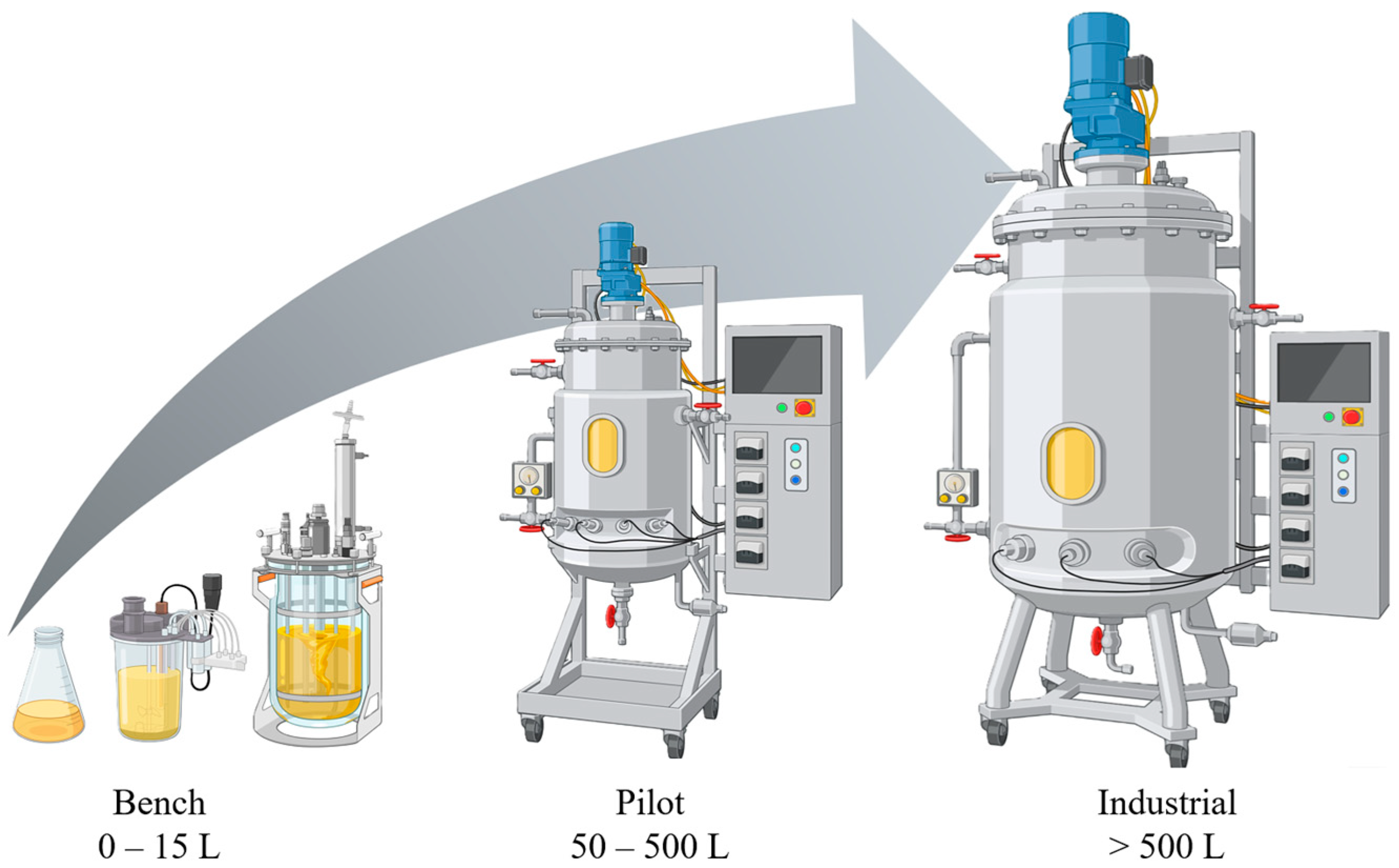
Scaling up is a crucial process for the evolution of products, from bench scale to industrial level and market reach. This stage is traditionally divided into three stages: bench, pilot, and industrial scale. For each of them, different types of bioreactors are developed to meet the specific requirements of the process. At the bench scale, the process is conducted at the laboratory level, with 50 to 500 mL flasks or 1 to 15 L bioreactors. This stage allows the maximization and optimization of critical variables of the fermentation process, such as temperature, pH, agitation, and aeration. It is a crucial phase where the physiological limits of the organism are understood, and optimal operational conditions are established [71]. The pilot scale involves the use of larger bioreactors, with a maximum capacity of 500 L. At this stage, the conditions that were determined in the previous stage are maintained, but process viability and agitation conditions with shear force are evaluated [71]. Finally, the industrial scale represents the consolidation of all previous stages. In this phase, previously standardized conditions are applied on a large scale, ensuring reproducibility, safety, and economic viability to meet market demand [72]. Figure 6 illustrates the submerged fermentation scaling steps, with representations of the different operational levels: bench, pilot, and industrial.
Submerged fermentation is a dynamic process influenced by a series of physical, chemical, and biological factors. Understanding these factors is essential, as each macrofungus can respond differently to environmental and operational variations. Therefore, many studies seek to design experiments to identify and quantify the impact of these variables during the process [69,73,74]. The main factors that influence the growth of macrofungi in submerged fermentation and their implications for the technological advancement and the success of the biotechnological process are discussed below.

3.4.1. Infrastructure and Costs

Technological maturity levels are not usually discussed in articles. Studies with great technological potential often stall at the research stage and do not increase the maturity level. This fact may be related to the lack of financial and material resources for the development of pilot-scale research, since enzyme production and fermentation processes have high investment costs. Few research laboratories have the infrastructure to enable the scaling up of processes, a fact that should be considered when assessing the maturity level of the research developed. In view of this, in addition to the process limitations discussed in the following sections, the lack of adequate infrastructure for scaling, combined with the high cost involved in the production of enzymes in larger volumes, may limit the advancement of promising technologies, preventing the transition to higher levels of technological maturity.

3.4.2. Physical Factors

In submerged fermentation processes, temperature directly influences several variables, such as growth rate, dissolved oxygen tension, evaporation rates of the medium, pellet formation, and metabolite production [75,76,77]. Each microorganism has a cell growth rate associated with an optimal temperature, and thermal fluctuations can directly affect this multiplication rate [78]. On a laboratory scale, temperature control is relatively simple; however, in medium- and large-scale bioreactors, this control can be a challenge. In larger volumes, temperature gradients may arise due to inefficient agitation and heat exchange, which compromises the viability of the microorganism. In addition, cultures with high cell density and intense metabolic activity tend to produce heat, which needs to be removed to avoid overheating [79]. The design and positioning of the cooling coils, agitators, and air injection points directly influence the thermal control of the process [79]. The vast majority of macrofungi grow at temperatures between 24 and 35 °C [80,81]. The influence of temperature on the production of cellulolytic enzymes by P. ostreatus was demonstrated by Snajdr and Baldrian [80], who evaluated a temperature range for the production of laccases and manganese peroxidase, where temperatures of 25–30 °C showed the greatest increase in enzymatic activity. Increasing temperatures affect metabolic rates and dissolved oxygen solubility; small variations can directly impact productivity, making process standardization difficult [82]. In the production of laccase, for example, the production temperature in the presence of light is 25 °C, and in the absence of light, the ideal temperature is 30 °C [83].
In addition to temperature, the agitation rate also plays an important role in fermentation processes, influencing the growth rate, mixing, and mass and heat transfer [75,76,84]. In agitated processes, a concentration gradient occurs between the inside and outside of the cells due to diffusion rates, which ensures a satisfactory supply of nutrients to the cells, facilitates the removal of residual gases and other by-products, and improves oxygen availability in aerobic processes [76,85]. However, the intensity of agitation in the processes must be adjusted and evaluated for each organism and process, since the shear forces generated can directly impact the structure of the mycelium, potentially damaging its structure, causing changes in morphology and consequently variations in the growth rate and product formation [76,86]. High agitation rates can reduce and limit the formation of pellets in the process, influencing the density, thickness, and branching of hyphal filaments [87,88]. Thus, the modification of morphology has significant implications for the process, as it can alter the viscosity of the broth, oxygen transfer, and the release of metabolites. The formation of filamentous morphology can favor the production of enzymes due to the increase in the surface area of exchange with the medium; however, it can intensify the demand for oxygen and compromise the efficiency of aeration [89,90]. On the other hand, the formation of very large pellets can generate anoxic zones within them, impairing cell viability. In larger bioreactors, controlling morphology through agitation becomes challenging, since the distribution of shear forces is homogeneous. Therefore, efficient agitation on a laboratory scale is not always reproducible on a pilot and industrial scale, making standardization and scaling difficult [90].
In addition to agitation, aeration is another essential factor to meet the oxygen demands of the cells, which is a fundamental factor in aerobic fermentation and essential in the advancement of TRL [76]. Oxygen regulates biosynthetic enzymes and can significantly influence final product yields, in addition to affecting cell growth and nutrient absorption rates [91,92]. In addition, the type of cells needs to be taken into account, as some microorganisms may be more sensitive to high agitation rates [92]. In benchtop bioreactors, maintaining dissolved oxygen levels is usually achieved through combinations of agitation and efficient aeration. However, at larger scales, one of the main challenges is the reduction in oxygen transfer efficiency, which can lead to the formation of low oxygenation zones. In addition, in cultures with filamentous microorganisms, the viscosity of the medium increases, which further compromises oxygen diffusion [93]. Another challenge to be considered due to high agitation and aeration rates is the formation of foam during fermentation, which can interfere with the monitoring and control of process conditions [94]. However, this problem can be minimized in large-scale fermentations with the moderate addition of antifoaming agents; however, they can negatively affect oxygenation and cell morphology, reducing mass transfer and increasing the costs of the product purification and analysis steps [95]. Valencia et al. [96] evaluated the influence of agitation and aeration on laccase production and found that P. ostreatus growth was markedly enhanced when cultivation was performed at high agitation levels (5.9 kW/m3 s) combined with an aeration rate of 0.5 vvm.
Finally, the cultivation time in submerged fermentation generally determines the final quality of the product and should be investigated for each species [97]. The definition of the optimal cultivation time depends on the growth kinetics of the microorganism. During the cell growth process, microorganisms go through different physiological phases, and the production of metabolites is associated with specific phases. Prolonged cultivation times can result in the accumulation of undesirable byproducts, decreased productivity, and increased energy costs. Determining the cultivation time on a larger scale is more complex, since growth and production do not occur homogeneously throughout the bioreactor volume due to the presence of oxygen, pH, temperature, and nutrient gradients, resulting in distinct physiological phases occurring simultaneously, which makes it difficult to define the ideal time.

3.4.3. Chemical Factors

Among the chemical factors, pH stands out as one of the most important in the submerged cultivation of macrofungi [98]. As described by Dudekula et al. [75], pH directly influences cell structures and morphology, salt solubility, substrate absorption rates, compound production, and the formation of biomass and metabolites. Since pH is determined by the composition of the medium, its variation during fermentation can significantly impact fungal growth and metabolite production, as pH deviations occur due to the consumption of nutrients throughout fungal growth. In addition, the ideal pH varies according to the strain used, but in general, macrofungi are capable of developing over a wide pH range [99]. pH control during scale-up is more complex than in benchtop bioreactors due to physical limitations, mixing dynamics, and instrument sensitivity. In large volumes, mixing time is longer, which leads to delays in homogenization and favors the formation of high and low pH zones, which can impact cell viability in these regions. Since the response time in the pH adjustment system is slower, the addition of corrective agents needs to be performed gradually to avoid sudden and difficult-to-compensate oscillations. Another factor that affects control on a larger scale is the accumulation of ions and salts in the medium, which can affect microbial metabolism. In addition, pH electrodes are subject to dirt accumulation, calibration drift, and slow response, especially in viscous or foaming media [100].
Another essential parameter is the composition of the medium, which plays a fundamental role in the growth and development of macrofungi [75,99]. Studies indicate that, when using waste as a carbon source, there is often a need for mineral and nitrogen supplementation [98]. The carbon-to-nitrogen ratio (C:N) has a significant impact on process yield [101], and high concentrations of carbohydrates are generally necessary for greater mycelial growth [88]. In addition, the addition of mineral and inorganic salts can promote mycelium growth [102]. Thus, optimizing carbon, nitrogen, and micronutrient concentrations is a key step to maximizing macrofungal growth [103]. However, each strain may have specific nutritional requirements; there is no universal ideal medium.
One of the main components of the culture medium is the carbon source, which is essential for the cultivation of macrofungi. The use of these sources varies according to the species and can be simple sugars, such as glucose, sucrose, and maltose, or more complex sources, such as lignocellulosic materials, including sugarcane bagasse, rice bran, brewery waste, soybean, corn, and wheat residues [104,105]. With the use of certain lignocellulosic substrates, the viscosity of the medium may be altered, influencing enzyme production, as reported in the study conducted by Elisashvili et al. [106]. In this study, the production of CMCase and laccase by P. dryinus IBB 903 using tangerine peels was evaluated. The authors observed that increasing the concentration of this substrate led to lower enzyme production due to increased medium viscosity and the consequent reduction in mass and oxygen transfer.
The composition of the nitrogen source also influences the morphology of the macrofungus and the production of fungal metabolites [98]. The main nitrogen sources include nitrate, nitrite, ammonium salts, peptone, amino acids, and yeast extract [107,108,109]. In addition, agro-industrial waste, such as corn steep liquor, sugarcane molasses, and whey powder, can also be used [88,110,111]. Despite the advances, many studies indicate that the complexity of the culture media often makes it difficult to evaluate the effect of each component in isolation [88].
On a laboratory scale, pure and easily controllable raw materials are used. However, when scaling up, the costs and availability of raw materials are a challenge. In larger volumes, it is preferable to use lower-value inputs, such as agro-industrial residues and hydrolysates, which present variability in composition and may contain inhibitors, resulting in low reproducibility.

3.4.4. Biological Factors

Finally, biological factors also exert a significant influence on fermentation processes and hinder fermentation at higher TRL [88]. The quantity, type, age, and viability of the inoculum directly influence the fermentation of macrofungi, impacting cell morphology, pellet formation, and the type of pellets that are produced [98]. Morphology plays a crucial role in mass and oxygen transfer. When the fungus grows in a filamentous form, the culture broth has high viscosity and non-Newtonian behavior. When growth occurs in the form of pellets, the viscosity of the medium is reduced, and the fluid behaves like a Newtonian liquid, facilitating the transfer of oxygen to the surface of the pellet [112,113]. The parameters already discussed, such as pH, agitation, and aeration, affect the morphology of the microorganism, and for this reason, it is essential to control these parameters for technological advancement [91].

4. Final Considerations and Future Perspectives

The increasing search for sustainable alternatives for the use of lignocellulosic biomass, especially in pretreatment and enzyme production by macrofungi of the genus Pleurotus, has faced important challenges related to process scaling. In this sense, it is essential to identify and understand those factors that hinder the efficiency of the fermentation process during scale-up. In this article, several studies published in the scientific literature were analyzed, as well as patent applications from recent years. As a result, it was observed that most research on enzyme production by Pleurotus spp. remains concentrated at TRL 3 and 4. This limitation is associated with several factors, including production control, chemical, physical, and biological variables, in addition to restrictions regarding infrastructure, costs, and the feasibility of large-scale testing. Thus, although there are promising studies in the area, barriers persist that prevent the advancement of the level of technological maturity. Validation of processes at the pilot scale, as well as the development of techniques such as co-cultivation, tends to be increasingly explored, contributing to the improvement of lignocellulosic enzyme production by Pleurotus spp. Furthermore, evaluations regarding production costs and life cycle analysis need to be explored, and encouraging public–private partnerships aimed at financing pilot and industrial-scale testing will be essential to boost technological readiness levels.

Author Contributions

Conceptualization: D.S., O.C.E. and J.H.C.W.; methodology: D.S., O.C.E. and G.N.P.; writing—original draft preparation: D.S., O.C.E., G.N.P. and J.H.C.W.; writing—review and editing: D.S., O.C.E., G.N.P., J.H.C.W. and M.A.M.; visualization: J.H.C.W.; supervision: M.A.M.; project administration: M.A.M. All authors have read and agreed to the published version of the manuscript.

Funding

The authors declare that no funds, grants, or other support were received during the preparation of this manuscript.

Data Availability Statement

All data generated or analyzed during this study are included in this published article.

Acknowledgments

D. Schein, O. C. Escosteguy, G. N. Pezzini, and J. H. C. Wancura are grateful for the scholarships of the Human Resources Program of the Brazilian Agency for Petroleum, Natural Gas, and Biofuels—PRH/ANP through the Human Resources Training Program for Petroleum and Biofuels Processing (PRH 52.1).

Conflicts of Interest

The authors declare no conflicts of interest.

References

  1. Grand View Research Enzymes Market Size, Share & Trends Analysis Report By Type (Industrial, Specialty), By Product (Carbohydrase, Proteases), By Source (Plants, Animals), By Region, And Segment Forecasts, 2025–2033. Available online: https://www.grandviewresearch.com/industry-analysis/enzymes-industry/request/rs1 (accessed on 26 September 2025).
  2. Huang, J.; Wang, J.; Liu, S. Advances in the Production of Fungi-Derived Lignocellulolytic Enzymes Using Agricultural Wastes. Mycology 2024, 15, 523–537. [Google Scholar] [CrossRef] [PubMed]
  3. Lv, Y.; Liu, X.; Zhou, S.; Yu, Q.; Xu, Y. Microbial Saccharification–Biorefinery Platform for Lignocellulose. Ind. Crops Prod. 2022, 189, 115761. [Google Scholar] [CrossRef]
  4. Sharma, H.K.; Xu, C.; Qin, W. Biological Pretreatment of Lignocellulosic Biomass for Biofuels and Bioproducts: An Overview. Waste Biomass Valorization 2019, 10, 235–251. [Google Scholar] [CrossRef]
  5. Janusz, G.; Pawlik, A.; Sulej, J.; Świderska-Burek, U.; Jarosz-Wilkołazka, A.; Paszczyński, A. Lignin Degradation: Microorganisms, Enzymes Involved, Genomes Analysis and Evolution. FEMS Microbiol. Rev. 2017, 41, 941–962. [Google Scholar] [CrossRef]
  6. Petraglia, T.; Latronico, T.; Pepe, A.; Crescenzi, A.; Liuzzi, G.M.; Rossano, R. Increased Antioxidant Performance of Lignin by Biodegradation Obtained from an Extract of the Mushroom Pleurotus Eryngii. Molecules 2024, 29, 5575. [Google Scholar] [CrossRef]
  7. Corrêa, R.C.G.; Brugnari, T.; Bracht, A.; Peralta, R.M.; Ferreira, I.C.F.R. Biotechnological, Nutritional and Therapeutic Uses of Pleurotus Spp. (Oyster Mushroom) Related with Its Chemical Composition: A Review on the Past Decade Findings. Trends Food Sci. Technol. 2016, 50, 103–117. [Google Scholar] [CrossRef]
  8. Holt, R.R.; Munafo, J.P.; Salmen, J.; Keen, C.L.; Mistry, B.S.; Whiteley, J.M.; Schmitz, H.H. Mycelium: A Nutrient-Dense Food to Help Address World Hunger, Promote Health, and Support a Regenerative Food System. J. Agric. Food Chem. 2024, 72, 2697–2707. [Google Scholar] [CrossRef]
  9. Villani, A.; Fanelli, F.; Mulè, G.; Moretti, A.; Loi, M. Shedding Light on Pleurotus: An Update on Taxonomy, Properties, and Photobiology. Microbiol. Res. 2025, 295, 128110. [Google Scholar] [CrossRef]
  10. Chmelová, D.; Legerská, B.; Kunstová, J.; Ondrejovič, M.; Miertuš, S. The Production of Laccases by White-Rot Fungi under Solid-State Fermentation Conditions. World J. Microbiol. Biotechnol. 2022, 38, 21. [Google Scholar] [CrossRef] [PubMed]
  11. Singh, A.; Bajar, S.; Devi, A.; Pant, D. An Overview on the Recent Developments in Fungal Cellulase Production and Their Industrial Applications. Bioresour. Technol. Rep. 2021, 14, 100652. [Google Scholar] [CrossRef]
  12. Manning, C.G. Technology Readiness Levels-National Aeronautics and Space Administration (NASA). Available online: https://www.nasa.gov/directorates/somd/space-communications-navigation-program/technology-readiness-levels/ (accessed on 25 March 2025).
  13. Fang, W.; Zhang, P.; Zhang, X.; Zhu, X.; van Lier, J.B.; Spanjers, H. White Rot Fungi Pretreatment to Advance Volatile Fatty Acid Production from Solid-State Fermentation of Solid Digestate: Efficiency and Mechanisms. Energy 2018, 162, 534–541. [Google Scholar] [CrossRef]
  14. Schneider, W.D.H.; Gonçalves, T.A.; Uchima, C.A.; dos Reis, L.; Fontana, R.C.; Squina, F.M.; Dillon, A.J.P.; Camassola, M. Comparison of the Production of Enzymes to Cell Wall Hydrolysis Using Different Carbon Sources by Penicillium Echinulatum Strains and Its Hydrolysis Potential for Lignocelullosic Biomass. Process Biochem. 2018, 66, 162–170. [Google Scholar] [CrossRef]
  15. Kassaye, S.; Pant, K.K.; Jain, S. Synergistic Effect of Ionic Liquid and Dilute Sulphuric Acid in the Hydrolysis of Microcrystalline Cellulose. Fuel Process. Technol. 2016, 148, 289–294. [Google Scholar] [CrossRef]
  16. Blasi, A.; Verardi, A.; Lopresto, C.G.; Siciliano, S.; Sangiorgio, P. Lignocellulosic Agricultural Waste Valorization to Obtain Valuable Products: An Overview. Recycling 2023, 8, 61. [Google Scholar] [CrossRef]
  17. Usmani, Z.; Sharma, M.; Awasthi, A.K.; Lukk, T.; Tuohy, M.G.; Gong, L.; Nguyen-Tri, P.; Goddard, A.D.; Bill, R.M.; Nayak, S.C.; et al. Lignocellulosic Biorefineries: The Current State of Challenges and Strategies for Efficient Commercialization. Renew. Sustain. Energy Rev. 2021, 148, 111258. [Google Scholar] [CrossRef]
  18. Singhvi, M.S.; Gokhale, D.V. Lignocellulosic Biomass: Hurdles and Challenges in Its Valorization. Appl. Microbiol. Biotechnol. 2019, 103, 9305–9320. [Google Scholar] [CrossRef] [PubMed]
  19. Rezania, S.; Oryani, B.; Cho, J.; Talaiekhozani, A.; Sabbagh, F.; Hashemi, B.; Rupani, P.F.; Mohammadi, A.A. Different Pretreatment Technologies of Lignocellulosic Biomass for Bioethanol Production: An Overview. Energy 2020, 199, 117457. [Google Scholar] [CrossRef]
  20. Xu, N.; Zhang, W.; Ren, S.; Liu, F.; Zhao, C.; Liao, H.; Xu, Z.; Huang, J.; Li, Q.; Tu, Y.; et al. Hemicelluloses Negatively Affect Lignocellulose Crystallinity for High Biomass Digestibility under NaOH and H2SO4 Pretreatments in Miscanthus. Biotechnol. Biofuels 2012, 5, 58. [Google Scholar] [CrossRef] [PubMed]
  21. Karagoz, P.; Bill, R.M.; Ozkan, M. Lignocellulosic Ethanol Production: Evaluation of New Approaches, Cell Immobilization and Reactor Configurations. Renew. Energy 2019, 143, 741–752. [Google Scholar] [CrossRef]
  22. Roy, S.; Dikshit, P.K.; Sherpa, K.C.; Singh, A.; Jacob, S.; Chandra Rajak, R. Recent Nanobiotechnological Advancements in Lignocellulosic Biomass Valorization: A Review. J. Environ. Manag. 2021, 297, 113422. [Google Scholar] [CrossRef]
  23. Liao, Y.; de Beeck, B.O.; Thielemans, K.; Ennaert, T.; Snelders, J.; Dusselier, M.; Courtin, C.M.; Sels, B.F. The Role of Pretreatment in the Catalytic Valorization of Cellulose. Mol. Catal. 2020, 487, 110883. [Google Scholar] [CrossRef]
  24. Bhati, N.; Shreya; Sharma, A.K. Cost-effective Cellulase Production, Improvement Strategies, and Future Challenges. J. Food Process Eng. 2021, 44, e13623. [Google Scholar] [CrossRef]
  25. Ranjan, R.; Rai, R.; Bhatt, S.B.; Dhar, P. Technological Road Map of Cellulase: A Comprehensive Outlook to Structural, Computational, and Industrial Applications. Biochem. Eng. J. 2023, 198, 109020. [Google Scholar] [CrossRef]
  26. Devi, A.; Jaryal, R.; Bhatia, C.; Singh, N. Elucidating the Potential of Cellulases Isolated from a Locally Isolated Strain (NSF-2) in Paper and Pulp Industry. Clean. Mater. 2022, 6, 100139. [Google Scholar] [CrossRef]
  27. Korsa, G.; Konwarh, R.; Masi, C.; Ayele, A.; Haile, S. Microbial Cellulase Production and Its Potential Application for Textile Industries. Ann. Microbiol. 2023, 73, 13. [Google Scholar] [CrossRef]
  28. Ozyilmaz, G.; Gunay, E. Clarification of Apple, Grape and Pear Juices by Co-Immobilized Amylase, Pectinase and Cellulase. Food Chem. 2023, 398, 133900. [Google Scholar] [CrossRef]
  29. Behera, B.C.; Sethi, B.K.; Mishra, R.R.; Dutta, S.K.; Thatoi, H.N. Microbial Cellulases–Diversity & Biotechnology with Reference to Mangrove Environment: A Review. J. Genet. Eng. Biotechnol. 2017, 15, 197–210. [Google Scholar] [CrossRef]
  30. Jayasekara, S.; Ratnayake, R. Microbial Cellulases: An Overview and Applications. Cellulose 2019. [Google Scholar] [CrossRef]
  31. Bhardwaj, N.; Kumar, B.; Agrawal, K.; Verma, P. Current Perspective on Production and Applications of Microbial Cellulases: A Review. Bioresour. Bioprocess. 2021, 8, 95. [Google Scholar] [CrossRef]
  32. Hasunuma, T.; Okazaki, F.; Okai, N.; Hara, K.Y.; Ishii, J.; Kondo, A. A Review of Enzymes and Microbes for Lignocellulosic Biorefinery and the Possibility of Their Application to Consolidated Bioprocessing Technology. Bioresour. Technol. 2013, 135, 513–522. [Google Scholar] [CrossRef] [PubMed]
  33. Sharma, A.; Tewari, R.; Rana, S.S.; Soni, R.; Soni, S.K. Cellulases: Classification, Methods of Determination and Industrial Applications. Appl. Biochem. Biotechnol. 2016, 179, 1346–1380. [Google Scholar] [CrossRef]
  34. Zhang, Z.; Xing, J.; Li, X.; Lu, X.; Liu, G.; Qu, Y.; Zhao, J. Review of Research Progress on the Production of Cellulase from Filamentous Fungi. Int. J. Biol. Macromol. 2024, 277, 134539. [Google Scholar] [CrossRef]
  35. Chandel, A.K.; Chandrasekhar, G.; Silva, M.B.; Silvério Da Silva, S. The Realm of Cellulases in Biorefinery Development. Crit. Rev. Biotechnol. 2012, 32, 187–202. [Google Scholar] [CrossRef]
  36. Akram, F.; Fatima, T.; Ibrar, R.; Shabbir, I.; Shah, F.I.; ul Haq, I. Trends in the Development and Current Perspective of Thermostable Bacterial Hemicellulases with Their Industrial Endeavors: A Review. Int. J. Biol. Macromol. 2024, 265, 130993. [Google Scholar] [CrossRef]
  37. Tsujibo, H.; Takada, C.; Wakamatsu, Y.; Kosaka, M.; Tsuji, A.; Miyamoto, K.; Inamori, Y. Cloning and Expression of an α-L -Arabinofuranosidase Gene (StxIV) from Streptomyces Thermoviolaceus OPC-520, and Characterization of the Enzyme. Biosci. Biotechnol. Biochem. 2002, 66, 434–438. [Google Scholar] [CrossRef] [PubMed]
  38. Malgas, S.; van Dyk, J.S.; Pletschke, B.I. A Review of the Enzymatic Hydrolysis of Mannans and Synergistic Interactions between β-Mannanase, β-Mannosidase and α-Galactosidase. World J. Microbiol. Biotechnol. 2015, 31, 1167–1175. [Google Scholar] [CrossRef] [PubMed]
  39. Collins, T.; Gerday, C.; Feller, G. Xylanases, Xylanase Families and Extremophilic Xylanases. FEMS Microbiol. Rev. 2005, 29, 3–23. [Google Scholar] [CrossRef]
  40. Poria, V.; Saini, J.K.; Singh, S.; Nain, L.; Kuhad, R.C. Arabinofuranosidases: Characteristics, Microbial Production, and Potential in Waste Valorization and Industrial Applications. Bioresour. Technol. 2020, 304, 123019. [Google Scholar] [CrossRef]
  41. Méndez-Líter, J.A.; de Eugenio, L.I.; Nieto-Domínguez, M.; Prieto, A.; Martínez, M.J. Hemicellulases from Penicillium and Talaromyces for Lignocellulosic Biomass Valorization: A Review. Bioresour. Technol. 2021, 324, 124623. [Google Scholar] [CrossRef]
  42. Parmar, M.; Patel, S.A.H.; Phutela, U.G.; Dhawan, M. Comparative Analysis of Ligninolytic Potential among Pleurotus Ostreatus and Fusarium Sp. with a Special Focus on Versatile Peroxidase. Appl. Microbiol. 2024, 4, 1348–1361. [Google Scholar] [CrossRef]
  43. Sar, T.; Marchlewicz, A.; Harirchi, S.; Mantzouridou, F.T.; Hosoglu, M.I.; Akbas, M.Y.; Hellwig, C.; Taherzadeh, M.J. Resource Recovery and Treatment of Wastewaters Using Filamentous Fungi. Sci. Total Environ. 2024, 951, 175752. [Google Scholar] [CrossRef]
  44. Ding, C.; Chen, Y.; Peng, L.; Gu, Z.; Zhang, L.; Shi, G.; Zhang, K. Method for Preparing Laccase by Liquid Fermentation of Pleurotus Ferulae. Available online: https://patents.google.com/patent/CN102604902A/en (accessed on 18 August 2025).
  45. Qi, A.; Jing, S.; Meiling, H.; Baokai, C.; Fei, Z.; Ruifeng, M.; Yucheng, D. Enzyme Liquid Containing High-Activity Lignocellulolytic Enzymes and Preparation Method of Enzyme Liquid. Available online: https://worldwide.espacenet.com/patent/search/family/056730603/publication/CN105886486A (accessed on 13 October 2025).
  46. Dongai, R.; Jisheng, N.; Qianxiang, B.; Junxiu, Z.; Linzhu, W. Method for Culturing Laccase Based on Pleurotus Eryngii Liquid State Fermentation. Available online: https://worldwide.espacenet.com/patent/search/family/091606949/publication/CN118256461A (accessed on 10 October 2025).
  47. Agustinho, B.C.; Daniel, J.L.P.; Zeoula, L.M.; Ferraretto, L.F.; Monteiro, H.F.; Pupo, M.R.; Ghizzi, L.G.; Agarussi, M.C.N.; Heinzen, C.; Lobo, R.R.; et al. Effects of Lignocellulolytic Enzymes on the Fermentation Profile, Chemical Composition, and in Situ Ruminal Disappearance of Whole-Plant Corn Silage. J. Anim. Sci. 2021, 99, skab295. [Google Scholar] [CrossRef]
  48. Karp, S.G.; Faraco, V.; Amore, A.; Letti, L.A.J.; Thomaz Soccol, V.; Soccol, C.R. Statistical Optimization of Laccase Production and Delignification of Sugarcane Bagasse by Pleurotus Ostreatus in Solid-State Fermentation. Biomed Res. Int. 2015, 2015, 181204. [Google Scholar] [CrossRef]
  49. Liguori, R.; Ionata, E.; Marcolongo, L.; Vandenberghe, L.P.d.S.; La Cara, F.; Faraco, V. Optimization of Arundo Donax Saccharification by (Hemi)Cellulolytic Enzymes from Pleurotus Ostreatus. Biomed Res. Int. 2015, 2015, 951871. [Google Scholar] [CrossRef]
  50. Zhang, Y.; Lu, Y.; Pan, D.; Zhang, Y.; Zhang, C.; Lin, Z. Efficient Conversion of Tea Residue Nutrients: Screening and Proliferation of Edible Fungi. Curr. Res. Food Sci. 2024, 9, 100907. [Google Scholar] [CrossRef] [PubMed]
  51. Vasudhevan, P.; Kalaimurugan, D.; Ganesan, S.; Akbar, N.; Dixit, S.; Pu, S. Enhanced Biocatalytic Laccase Production Using Agricultural Waste in Solid-State Fermentation by Aspergillus Oryzae for p-Chlorophenol Degradation. Int. J. Biol. Macromol. 2024, 281, 136460. [Google Scholar] [CrossRef] [PubMed]
  52. Sales, J.C.S.; Santos, A.G.; de Castro, A.M.; Coelho, M.A.Z. A Critical View on the Technology Readiness Level (TRL) of Microbial Plastics Biodegradation. World J. Microbiol. Biotechnol. 2021, 37, 116. [Google Scholar] [CrossRef]
  53. Pinsky, R.; Sabharwall, P.; Hartvigsen, J.; O’Brien, J. Comparative Review of Hydrogen Production Technologies for Nuclear Hybrid Energy Systems. Prog. Nucl. Energy 2020, 123, 103317. [Google Scholar] [CrossRef]
  54. Hekmatmehr, H.; Esmaeili, A.; Pourmahdi, M.; Atashrouz, S.; Abedi, A.; Ali Abuswer, M.; Nedeljkovic, D.; Latifi, M.; Farag, S.; Mohaddespour, A. Carbon Capture Technologies: A Review on Technology Readiness Level. Fuel 2024, 363, 130898. [Google Scholar] [CrossRef]
  55. Perkins, G.; Batalha, N.; Kumar, A.; Bhaskar, T.; Konarova, M. Recent Advances in Liquefaction Technologies for Production of Liquid Hydrocarbon Fuels from Biomass and Carbonaceous Wastes. Renew. Sustain. Energy Rev. 2019, 115, 109400. [Google Scholar] [CrossRef]
  56. Bakratsas, G.; Antoniadis, K.; Athanasiou, P.E.; Katapodis, P.; Stamatis, H. Laccase and Biomass Production via Submerged Cultivation of Pleurotus Ostreatus Using Wine Lees. Biomass 2023, 4, 1–22. [Google Scholar] [CrossRef]
  57. Zhu, H.; Sun, J.; Tian, B.; Wang, H. A Novel Stirrer Design and Its Application in Submerged Fermentation of the Edible Fungus Pleurotus Ostreatus. Bioprocess Biosyst. Eng. 2015, 38, 509–516. [Google Scholar] [CrossRef]
  58. Fernandes, C.D.; Nascimento, V.R.S.; Meneses, D.B.; Vilar, D.S.; Torres, N.H.; Leite, M.S.; Vega Baudrit, J.R.; Bilal, M.; Iqbal, H.M.N.; Bharagava, R.N.; et al. Fungal Biosynthesis of Lignin-Modifying Enzymes from Pulp Wash and Luffa Cylindrica for Azo Dye RB5 Biodecolorization Using Modeling by Response Surface Methodology and Artificial Neural Network. J. Hazard. Mater. 2020, 399, 123094. [Google Scholar] [CrossRef]
  59. Araújo, N.L.; Avelino, K.V.; Halabura, M.I.W.; Marim, R.A.; Kassem, A.S.S.; Linde, G.A.; Colauto, N.B.; do Valle, J.S. Use of Green Light to Improve the Production of Lignocellulose-Decay Enzymes by Pleurotus Spp. in Liquid Cultivation. Enzyme Microb. Technol. 2021, 149, 109860. [Google Scholar] [CrossRef]
  60. Martínez, K.; Hidrobo, G.; Félix, N.E. Delignification of Toquilla Straw Pulp (Carludovica Palmata) with a Ligninolytic Enzyme Extract Obtained from Pleurotus Ostreatus and ABTS as a Mediator. Waste Biomass Valorization 2024, 15, 6121–6129. [Google Scholar] [CrossRef]
  61. Kalia, S.; Samuchiwal, S.; Dalvi, V.; Malik, A. Exploring Fungal-Mediated Solutions and Its Molecular Mechanistic Insights for Textile Dye Decolorization. Chemosphere 2024, 360, 142370. [Google Scholar] [CrossRef]
  62. Elisashvili, V.; Kachlishvili, E.; Asatiani, M.D. Efficient Production of Lignin-Modifying Enzymes and Phenolics Removal in Submerged Fermentation of Olive Mill by-Products by White-Rot Basidiomycetes. Int. Biodeterior. Biodegrad. 2018, 134, 39–47. [Google Scholar] [CrossRef]
  63. Okereke, O.E.; Akanya, H.O.; Egwim, E.C. Purification and Characterization of an Acidophilic Cellulase from Pleurotus Ostreatus and Its Potential for Agrowastes Valorization. Biocatal. Agric. Biotechnol. 2017, 12, 253–259. [Google Scholar] [CrossRef]
  64. Ambatkar, N.; Jadhav, D.D.; Deshmukh, A.; Sattikar, P.; Wakade, G.; Nandi, S.; Kumbhar, P.; Kommoju, P.-R. Functional Screening and Adaptation of Fungal Cultures to Industrial Media for Improved Delignification of Rice Straw. Biomass Bioenergy 2021, 155, 106271. [Google Scholar] [CrossRef]
  65. Illuri, R.; Kumar, M.; Eyini, M.; Veeramanikandan, V.; Almaary, K.S.; Elbadawi, Y.B.; Biraqdar, M.A.; Balaji, P. Production, Partial Purification and Characterization of Ligninolytic Enzymes from Selected Basidiomycetes Mushroom Fungi. Saudi J. Biol. Sci. 2021, 28, 7207–7218. [Google Scholar] [CrossRef]
  66. Mathur, P.; Sanyal, D.; Dey, P. Optimization of Growth Conditions for Enhancing the Production of Microbial Laccase and Its Application in Treating Antibiotic Contamination in Wastewater. 3 Biotech 2021, 11, 81. [Google Scholar] [CrossRef]
  67. Sharghi, S.; Ahmadi, F.S.; Kakhki, A.M.; Farsi, M. Copper Increases Laccase Gene Transcription and Extracellular Laccase Activity in Pleurotus Eryngii KS004. Braz. J. Microbiol. 2024, 55, 111–116. [Google Scholar] [CrossRef]
  68. Chenthamara, D.; Sivaramakrishnan, M.; Ramakrishnan, S.G.; Esakkimuthu, S.; Kothandan, R.; Subramaniam, S. Improved Laccase Production from Pleurotus Floridanus Using Deoiled Microalgal Biomass: Statistical and Hybrid Swarm-Based Neural Networks Modeling Approach. 3 Biotech 2022, 12, 346. [Google Scholar] [CrossRef]
  69. Liu, C.; Feng, J.; Wang, S.; Cao, Y.; Shen, Y. Enhancement of Hyphae Growth and Medium Optimization for Pleurotus Eryngii-3 under Submerged Fermentation. Agronomy 2022, 12, 2413. [Google Scholar] [CrossRef]
  70. Hewage, I.S.R.; Golovko, O.; Hultberg, M. Spawn-Based Pellets of Pleurotus Ostreatus as an Applied Approach for the Production of Laccase in Different Types of Water. J. Microbiol. Methods 2025, 229, 107092. [Google Scholar] [CrossRef]
  71. de Mello, A.F.M.; de Souza Vandenberghe, L.P.; Herrmann, L.W.; Letti, L.A.J.; Burgos, W.J.M.; Scapini, T.; Manzoki, M.C.; de Oliveira, P.Z.; Soccol, C.R. Strategies and Engineering Aspects on the Scale-up of Bioreactors for Different Bioprocesses. Syst. Microbiol. Biomanuf. 2024, 4, 365–385. [Google Scholar] [CrossRef]
  72. Du, Y.-H.; Wang, M.-Y.; Yang, L.-H.; Tong, L.-L.; Guo, D.-S.; Ji, X.-J. Optimization and Scale-Up of Fermentation Processes Driven by Models. Bioengineering 2022, 9, 473. [Google Scholar] [CrossRef] [PubMed]
  73. Papaspyridi, L.-M.; Katapodis, P.; Gonou-Zagou, Z.; Kapsanaki-Gotsi, E.; Christakopoulos, P. Optimization of Biomass Production with Enhanced Glucan and Dietary Fibres Content by Pleurotus Ostreatus ATHUM 4438 under Submerged Culture. Biochem. Eng. J. 2010, 50, 131–138. [Google Scholar] [CrossRef]
  74. Reihani, S.F.S.; Khosravi-Darani, K. Influencing Factors on Single-Cell Protein Production by Submerged Fermentation: A Review. Electron. J. Biotechnol. 2019, 37, 34–40. [Google Scholar] [CrossRef]
  75. Dudekula, U.T.; Doriya, K.; Devarai, S.K. A Critical Review on Submerged Production of Mushroom and Their Bioactive Metabolites. 3 Biotech 2020, 10, 337. [Google Scholar] [CrossRef]
  76. Zhou, Y.; Han, L.-R.; He, H.-W.; Sang, B.; Yu, D.-L.; Feng, J.-T.; Zhang, X. Effects of Agitation, Aeration and Temperature on Production of a Novel Glycoprotein GP-1 by Streptomyces Kanasenisi ZX01 and Scale-Up Based on Volumetric Oxygen Transfer Coefficient. Molecules 2018, 23, 125. [Google Scholar] [CrossRef]
  77. Perveen, I.; Bukhari, B.; Sarwar, A.; Aziz, T.; Koser, N.; Younis, H.; Ahmad, Q.; Sabahat, S.; Tzora, A.; Skoufos, I. Applications and Efficacy of Traditional to Emerging Trends in Lacto-Fermentation and Submerged Cultivation of Edible Mushrooms. Biomass Convers. Biorefinery 2024, 14, 29283–29302. [Google Scholar] [CrossRef]
  78. Price, P.B.; Sowers, T. Temperature Dependence of Metabolic Rates for Microbial Growth, Maintenance, and Survival. Proc. Natl. Acad. Sci. USA 2004, 101, 4631–4636. [Google Scholar] [CrossRef]
  79. Radchenkova, N.; Yaşar Yıldız, S. Advanced Optimization of Bioprocess Parameters for Exopolysaccharides Synthesis in Extremophiles. Processes 2025, 13, 822. [Google Scholar] [CrossRef]
  80. Šnajdr, J.; Baldrian, P. Temperature Affects the Production, Activity and Stability of Ligninolytic Enzymes InPleurotus Ostreatus AndTrametes Versicolor. Folia Microbiol. 2007, 52, 498–502. [Google Scholar] [CrossRef] [PubMed]
  81. Lang, E.; Gonser, A.; Zadrazil, F. Influence of Incubation Temperature on Activity of Ligninolytic Enzymes in Sterile Soil ByPleurotus Sp. AndDichomitus Squalens. J. Basic Microbiol. 2000, 40, 33–39. [Google Scholar] [CrossRef]
  82. Aquinas, N.; Chithra, C.H.; Bhat, M.R. Progress in Bioproduction, Characterization and Applications of Pullulan: A Review. Polym. Bull. 2024, 81, 12347–12382. [Google Scholar] [CrossRef]
  83. Kunamneni, A.; Ballesteros, A.; Plou, F.J.; Alcalde, M. Fungal Laccase—A Versatile Enzyme for Biotechnological Applications Fungal Laccase—A Versatile Enzyme for Biotechnological Applications. In Communicating Current Research and Educational Topics and Trends in Applied Microbiology; Formatex Research Center: Badajoz, Spain, 2007. [Google Scholar]
  84. Germec, M.; Turhan, I. Effect of PH Control and Aeration on Inulinase Production from Sugarbeet Molasses in a Bench-Scale Bioreactor. Biomass Convers. Biorefinery 2023, 13, 4727–4739. [Google Scholar] [CrossRef]
  85. Mantzouridou, F.; Roukas, T.; Kotzekidou, P. Effect of the Aeration Rate and Agitation Speed on β-Carotene Production and Morphology of Blakeslea Trispora in a Stirred Tank Reactor: Mathematical Modeling. Biochem. Eng. J. 2002, 10, 123–135. [Google Scholar] [CrossRef]
  86. Giavasis, I.; Harvey, L.M.; McNeil, B. The Effect of Agitation and Aeration on the Synthesis and Molecular Weight of Gellan in Batch Cultures of Sphingomonas Paucimobilis. Enzyme Microb. Technol. 2006, 38, 101–108. [Google Scholar] [CrossRef]
  87. Suárez Arango, C.; Nieto, I.J. Cultivo Biotecnológico de Macrohongos Comestibles: Una Alternativa En La Obtención de Nutracéuticos. Rev. Iberoam. Micol. 2013, 30, 1–8. [Google Scholar] [CrossRef]
  88. Fazenda, M.L.; Seviour, R.; McNeil, B.; Harvey, L.M. Submerged Culture Fermentation of “Higher Fungi”: The Macrofungi. Adv. Appl. Microbiol. 2008, 63, 33–103. [Google Scholar]
  89. Shen, K.; Liu, Y.; Liu, L.; Khan, A.W.; Normakhamatov, N.; Wang, Z. Characterization, Optimization, and Scaling-up of Submerged Inonotus Hispidus Mycelial Fermentation for Enhanced Biomass and Polysaccharide Production. Appl. Biochem. Biotechnol. 2025, 197, 1534–1555. [Google Scholar] [CrossRef]
  90. Krull, R.; Wucherpfennig, T.; Esfandabadi, M.E.; Walisko, R.; Melzer, G.; Hempel, D.C.; Kampen, I.; Kwade, A.; Wittmann, C. Characterization and Control of Fungal Morphology for Improved Production Performance in Biotechnology. J. Biotechnol. 2013, 163, 112–123. [Google Scholar] [CrossRef]
  91. Papagianni, M. Fungal Morphology and Metabolite Production in Submerged Mycelial Processes. Biotechnol. Adv. 2004, 22, 189–259. [Google Scholar] [CrossRef]
  92. Zhong, J.-J. Recent Advances in Bioreactor Engineering. Korean J. Chem. Eng. 2010, 27, 1035–1041. [Google Scholar] [CrossRef]
  93. Cerrone, F.; O’Connor, K.E. Cultivation of Filamentous Fungi in Airlift Bioreactors: Advantages and Disadvantages. Appl. Microbiol. Biotechnol. 2025, 109, 41. [Google Scholar] [CrossRef]
  94. Delvigne, F.; Lecomte, J. Foam Formation and Control in Bioreactors. In Encyclopedia of Industrial Biotechnology; Wiley: Hoboken, NJ, USA, 2010; pp. 1–13. [Google Scholar]
  95. Tiso, T.; Demling, P.; Karmainski, T.; Oraby, A.; Eiken, J.; Liu, L.; Bongartz, P.; Wessling, M.; Desmond, P.; Schmitz, S.; et al. Foam Control in Biotechnological Processes—Challenges and Opportunities; Springer International Publishing: Berlin/Heidelberg, Germany, 2024; Volume 4, ISBN 0123456789. [Google Scholar]
  96. Tinoco-valencia, R.; Gómez-cruz, C.; Galindo, E.; Serrano-carreón, L. Toward an Understanding of the Effects of Agitation and Aeration on Growth and Laccases Production by Pleurotus Ostreatus. J. Biotechnol. 2014, 177, 2014. [Google Scholar] [CrossRef] [PubMed]
  97. Nazir, M.; Iram, A.; Cekmecelioglu, D.; Demirci, A. Approaches for Producing Fungal Cellulases Through Submerged Fermentation. Front. Biosci. 2024, 16, 5. [Google Scholar] [CrossRef] [PubMed]
  98. Iram, A.; Özcan, A.; Yatmaz, E.; Turhan, İ.; Demirci, A. Effect of Microparticles on Fungal Fermentation for Fermentation-Based Product Productions. Processes 2022, 10, 2681. [Google Scholar] [CrossRef]
  99. Elisashvili, V. Submerged Cultivation of Medicinal Mushrooms: Bioprocesses and Products (Review). Int. J. Med. Mushrooms 2012, 14, 211–239. [Google Scholar] [CrossRef]
  100. Xu, S.; Chen, H. High-Density Mammalian Cell Cultures in Stirred-Tank Bioreactor without External PH Control. J. Biotechnol. 2016, 231, 149–159. [Google Scholar] [CrossRef]
  101. Rogalski, J.; Szczodrak, J.; Janusz, G. Manganese Peroxidase Production in Submerged Cultures by Free and Immobilized Mycelia of Nematoloma Frowardii. Bioresour. Technol. 2006, 97, 469–476. [Google Scholar] [CrossRef] [PubMed]
  102. Włodarczyk, A.; Krakowska, A.; Sułkowska-Ziaja, K.; Suchanek, M.; Zięba, P.; Opoka, W.; Muszyńska, B. Pleurotus Spp. Mycelia Enriched in Magnesium and Zinc Salts as a Potential Functional Food. Molecules 2020, 26, 162. [Google Scholar] [CrossRef]
  103. Pérez-Contreras, S.; Avalos-de la Cruz, D.A.; Lizardi-Jiménez, M.A.; Herrera-Corredor, J.A.; Baltazar-Bernal, O.; Hernández-Martínez, R. Production of Ligninolytic and Cellulolytic Fungal Enzymes for Agro-Industrial Waste Valorization: Trends and Applicability. Catalysts 2024, 15, 30. [Google Scholar] [CrossRef]
  104. Sharma, V.; Tsai, M.-L.; Nargotra, P.; Chen, C.-W.; Kuo, C.-H.; Sun, P.-P.; Dong, C.-D. Agro-Industrial Food Waste as a Low-Cost Substrate for Sustainable Production of Industrial Enzymes: A Critical Review. Catalysts 2022, 12, 1373. [Google Scholar] [CrossRef]
  105. Mussatto, S.I. Brewer’s Spent Grain: A Valuable Feedstock for Industrial Applications. J. Sci. Food Agric. 2014, 94, 1264–1275. [Google Scholar] [CrossRef]
  106. Elisashvili, V.; Penninckx, M.; Kachlishvili, E.; Asatiani, M.; Kvesitadze, G. Use of Pleurotus Dryinus for Lignocellulolytic Enzymes Production in Submerged Fermentation of Mandarin Peels and Tree Leaves. Enzyme Microb. Technol. 2006, 38, 998–1004. [Google Scholar] [CrossRef]
  107. Haq, I.U.; Bilal Saeed, M.; Nawaz, A.; Mustafa, Z.; Akram, F. Strain Improvement of Aspergillus Oryzae for Enhanced Biosynthesis of Phytase through Chemical Mutagenesis. Pakistan J. Bot. 2022, 54, 2347–2354. [Google Scholar] [CrossRef]
  108. Cruz, S.H.; Cilli, E.M.; Ernandes, J.R. Structural Complexity of the Nitrogen Source and Influence on Yeast Growth and Fermentation. J. Inst. Brew. 2002, 108, 54–61. [Google Scholar] [CrossRef]
  109. Datsomor, O.; Yan, Q.; Opoku-Mensah, L.; Zhao, G.; Miao, L. Effect of Different Inducer Sources on Cellulase Enzyme Production by White-Rot Basidiomycetes Pleurotus Ostreatus and Phanerochaete Chrysosporium under Submerged Fermentation. Fermentation 2022, 8, 561. [Google Scholar] [CrossRef]
  110. Ungureanu, N.; Vlăduț, V.; Biriș, S.-Ș. Sustainable Valorization of Waste and By-Products from Sugarcane Processing. Sustainability 2022, 14, 11089. [Google Scholar] [CrossRef]
  111. Zhou, K.; Yu, J.; Ma, Y.; Cai, L.; Zheng, L.; Gong, W.; Liu, Q. Corn Steep Liquor: Green Biological Resources for Bioindustry. Appl. Biochem. Biotechnol. 2022, 194, 3280–3295. [Google Scholar] [CrossRef] [PubMed]
  112. Veiter, L.; Rajamanickam, V.; Herwig, C. The Filamentous Fungal Pellet—Relationship between Morphology and Productivity. Appl. Microbiol. Biotechnol. 2018, 102, 2997–3006. [Google Scholar] [CrossRef]
  113. Sánchez, Ó.J.; Montoya, S.; Vargas, L.M. Polysaccharide Production by Submerged Fermentation. In Polysaccharides; Springer International Publishing: Cham, Switzerland, 2015; pp. 451–473. [Google Scholar]
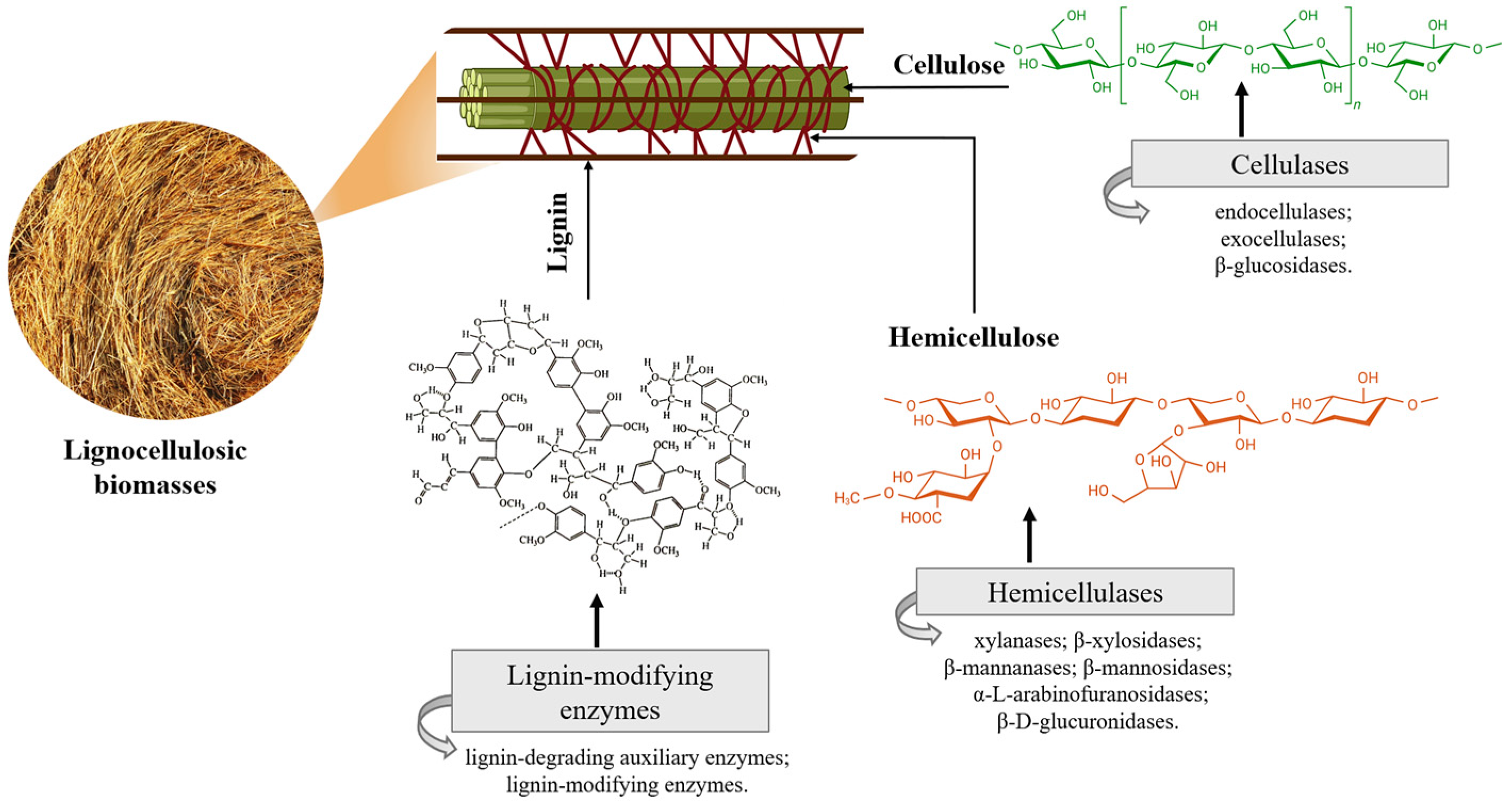
Figure 1. Structure of lignocellulosic biomass and its main fractions, as well as the main enzymes that degrade cellulose, hemicellulose, and lignin for the formation of fermentable sugars.
Processes 14 00112 g001
Figure 2. Action mechanism endoglucanases, exoglucanases, and β-glucosidases in the cellulose chain.
Processes 14 00112 g002
Figure 3. Density of patents protected worldwide (a), the trend of investment in technology over the last 20 years, the legal status of patents (b), and the main inventor countries of technologies related to the topic considered (c). Source: data collected from Questel Orbit Intelligence®.
Processes 14 00112 g003
Figure 4. Periodic (a) and temporal (b) VOSviewer® design of co-occurrence of authors’ keywords used in scientific papers published from 1990 to January 2025, based on the scientific platform Scopus®.
Processes 14 00112 g004
Figure 5. Periodic (a) and temporal (b) VOSviewer® representation of bibliographic coupling of nations with at least ten publications from 1990 to January 2025, based on the scientific platform Scopus®.
Processes 14 00112 g005
Figure 6. Schematic representation of the scaling of biotechnological processes, from the bench scale to the pilot scale and industrial scale levels.
Processes 14 00112 g006
Table 1. TRLs described by NASA and authorial adaptation proposed in this study for fermentation processes.
TRL LevelNASA Description [12]Requirements Proposed in This Paper 1
1Basic principles observed and reportedBibliographic review and research ideation
2Technology concept and/or application formulatedResearch planning
3Analytical and experimental critical function and/or characteristic proof-of-conceptFlask scale experiments
4Component and/or breadboard validation in laboratory environmentFlask scale optimization
5Component and/or breadboard validation in relevant environmentBench scale experiments
6System/subsystem model or prototype demonstration in a relevant environment (ground or space)Pilot scale experiments
7System prototype demonstration in a space environmentProduction on industrial environment
8Actual system completed and “flight qualified” through test and demonstration (ground or space)Bioproduct or process introduced to the market
9Actual system “flight proven” through successful mission operationsBioproduct or process accepted by consumers
1 Authorial adaptation for application in bioprocesses.
Disclaimer/Publisher’s Note: The statements, opinions and data contained in all publications are solely those of the individual author(s) and contributor(s) and not of MDPI and/or the editor(s). MDPI and/or the editor(s) disclaim responsibility for any injury to people or property resulting from any ideas, methods, instructions or products referred to in the content.