Article

Solubility and Exsolution Behavior of CH4 and CO2 in Reservoir Fluids: Implications for Fluid Compositional Evolution—A Case Study of Ledong 10 Area, Yinggehai

1
CNOOC China Limited, Hainan Branch, Haikou 570312, China
2
CNOOC Hainan Oil and Gas Energy Academician Workstation, Haikou 570312, China
3
Key Laboratory of Deep Sea Deep Formation Energy Engineering of Hainan Province, Haikou 571900, China
*
Author to whom correspondence should be addressed.
Processes 2025, 13(9), 2979; https://doi.org/10.3390/pr13092979
Submission received: 12 August 2025 / Revised: 11 September 2025 / Accepted: 16 September 2025 / Published: 18 September 2025
(This article belongs to the Section Chemical Processes and Systems)

Abstract

The lack of ultra-high temperature and ultra-high pressure (U-HTHP) experimental devices makes the data of CO2-CH4 solubility and exsolution insufficient under U-HTHP conditions, which leads to an unclear competitive solubility-exsolution mechanism of CH4-CO2 miscible natural gas. This study systematically investigates fluid-phase characteristics in the LD10-X gas field, the impacts of mixing ratio, sequence, temperature, and pressure on CO2/CH4 solubility, and the CO2/CH4 exsolution patterns. Mixing ratio experiments showed that CH4 does not appear in the mixed solution when CO2 mole fraction exceeds 7%. Solubility sequence tests revealed that CH4 is no longer dissolved when CO2 reaches solubility equilibrium. However, CO2 continues to dissolve when CH4 reaches the solubility equilibrium. Solubility with temperature and pressure experiments showed that solubility of both CO2 and CH4 increased with rising temperature and pressure. In addition, the exsolution amount increased slowly and then increased rapidly with the increase in the pressure difference for the CO2 in the CO2 and CH4 phase. In addition, these laws were employed to explain the changes in CH4 and CO2 concentrations during the drill steam testing of wells LD10-X-10 and LD10-X-12, mainly because the extraction capacity of CO2 decreased after pressure reduction. Additionally, CO2 produced by chemical equilibrium movements extracted excess CH4 again. This study provides guidelines for the design of CO2 storage schemes and enhanced CH4 recovery.

1. Introduction

The solubility and exsolution of CO2 and CH4 in formation water are important parts of global carbon cycle research, which occupy a significant position in the research of natural gas reservoir exploration, development, and CO2 geological storage [1,2,3,4,5]. Under high temperature and high pressure, CH4 is distributed in dissolved state, dispersed free state, and continuous free state, respectively. Solution gas will gradually precipitate and migrate to the high part with the attenuation of reservoir pressure, which will form a new free gas reservoir [6,7,8]. At present, the laws of hydrocarbon–water solubility and exsolution under formation conditions are mostly obtained by physical simulation experiments [9,10,11], thermodynamic calculations [12,13,14,15], or molecular dynamics simulations [16,17,18]. The solubility of natural gas in formation water has been carried out early by foreign scholars. In the 1960s, many scholars measured the solubility of hydrocarbon gases in water and proposed the possibility of forming water-soluble gas reservoirs [19,20,21]. The effects of temperature, pressure, and salinity were systematically analyzed by Yang et al. It was found that the increase in pressure significantly increased the solubility, while the effect of temperature on solubility was complex and nonlinear [22]. In recent years, the research on the solubility of natural gas has gradually shifted from atmospheric gas reservoirs to the solubility of natural gas in water under the conditions of high pressure and high temperature gas reservoirs [6,23,24,25]. Many scholars have also carried out research on the solubility characteristics of non-hydrocarbon gases [26,27,28,29]. By adjusting the chemical composition of temperature, pressure, and water, Hemmati-Sarapardeh (2020) found that an increase in pressure significantly increased the solubility of carbon dioxide, but did not further explore the multi-factor interactions [30]. Under the condition of high temperature and high pressure, hydrocarbons are miscible with water, and organic–inorganic interaction occurs. The presence of CO2 will promote a stronger degree of miscibility between hydrocarbons and water [31,32,33]. The main reason is that CO2 produced and exsolved during the chemical equilibrium movements of CO2 re-extracts the excess CH4, resulting in a significant solubility of CH4 components and an increase in CH4 concentration [33,34,35]. Xie et al. (2014) [36] conducted a comprehensive analysis of hydrocarbon component dissolution-exsolution dynamics across distinct sedimentary facies, establishing critical correlations between lithological characteristics and gas-phase behaviors. They found that the properties of formation water, rock mineral composition, and other factors in the sedimentary environment will affect the solubility and exsolution behavior of natural gas components. The adsorption of heavy hydrocarbon components in natural gas in clay-rich strata is enhanced, which affects the solubility and solubility process of natural gas in water [36]. There are many reports on the solubility process of CH4 and CO2 under single-phase and mixed-phase conditions at different temperatures and pressures. However, the lack of ultra-high temperature and ultra-high pressure experimental devices makes data on CO2-CH4 solubility and exsolution insufficient under U-HTHP conditions, which leads to an unclear competitive solubility-exsolution mechanism of CH4-CO2 miscible natural gas [37,38,39,40]. In this work, the fluid phase characteristics of the LD10-X gas field, the effects of mixing ratio, mixing sequence, temperature, and pressure on the solubility of CO2 and CH4, and the exsolution law of CO2 and CH4 were studied, respectively. At the same time, the solubility and exsolution law of CO2 and CH4 were employed to explain the reasons for the changes in CH4 and CO2 concentrations during the drill steam testing of wells LD10-X-10 and LD10-X-12 in the ultra-high temperature and pressure gas field. This study provides technical guidelines for the evaluation of natural gas reservoir geological reserves and CO2 geological storage abundance.

2. Geological Characteristics of the LD10-X Gas Field

The LD10-X gas field is located in the southern part of the Yinggehai Depression slope zone, in the western part of the northern continental shelf of the South China Sea. The water depth within the gas field ranges from 87.0 m to 90.5 m. The Huangliu Formation in the LD10-X gas field represents a structural-lithologic gas reservoir. The lithology is mainly mudstone and argillaceous siltstone. The burial depth of the central part of the gas reservoir is 3894.6~4273.3 m. It is vertically divided into six gas-bearing layers: H1IV, H2I, H2II, H2III, H2IV, and H2V gas groups. Planar analysis reveals that sand bodies have been truncated to form structural-lithologic gas reservoirs with varied gas-water systems (Figure 1). The formation pressure coefficient ranges from 2.174 to 2.305, indicating an abnormal high-pressure system. The original formation pressure spans from 84.289 MPa to 93.598 MPa, with original formation temperatures ranging from 190.11 °C to 208.63 °C. Furthermore, the geothermal gradient is 4.89 °C/100 m, which is an abnormally high temperature system. The gas reservoir drive type is mainly elastic drive, followed by weak edge water drive, and individual bottom water drive [41,42,43]. In summary, the Huangliu Formation of LD10-X gas field is a structural-lithologic gas reservoir with abnormal high-pressure elastic water drive.
The genesis of high-temperature and high-pressure fluids in the LD10-X area is associated with undercompaction overpressure caused by rapid sedimentation, fluid expansion overpressure formed after fluid injection, and late-stage deep thermal fluid activities. There were three main periods of significant fluid injections, with the first two periods involving high-pressure hydrocarbon fluids and the third period involving CO2-rich high-pressure thermal fluids. Microfractures in mudstone interlayers opened during the injection of CO2-rich high-pressure thermal fluids influenced by diapir structural activities, which led to variations in natural gas composition, gas saturation, and the relative proportion of CO2 among different gas groups. The relative density of natural gas in the LD10-X gas field ranges from 0.670 to 1.258. Overall, the methane concentration varies between 24.58% and 82.97%, and carbon dioxide concentration spans from 6.18% to 70.99%. The distribution pattern of natural gas properties among different gas groups indicates that the concentration of CO2 increases with depth vertically, with the H2III gas group serving as a distinct boundary. Above the H2III gas group, the concentration of CO2 is relatively low (6.18–23.49%). In contrast, the concentration of CO2 in the H2IV gas group and deeper layers below the H2III gas group ranges from 43.43% to 70.99%. There is a gradual increase in the concentration of CO2 from the lower structural parts to the higher structural areas and further to the elevated sections of the eastern branch channel on the slope.

3. Materials and Methods

3.1. Materials

The ultra-high temperature and high-pressure reactor used in the experiment was produced by Dustec Hochdrucktechnik company, Wismar, Germany. The Agilent 7890B gas chromatograph employed in the study was obtained from Agilent Technologies, America. The 2331-D gas measurement used in the experiment was produced by Jiangsu Lianyou Scientific Research Instrument Co., Ltd., China.

3.2. Methods

3.2.1. Measurement of CO2 Solubility

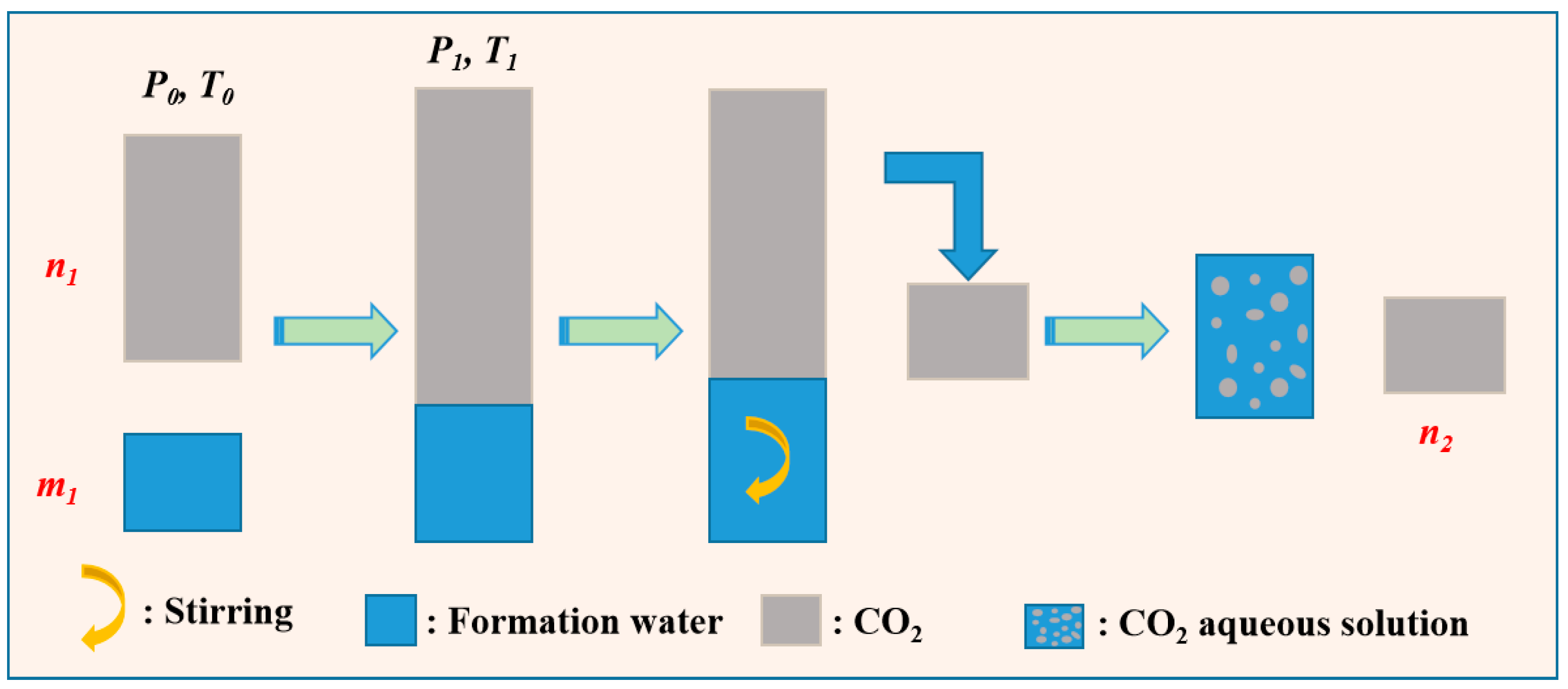
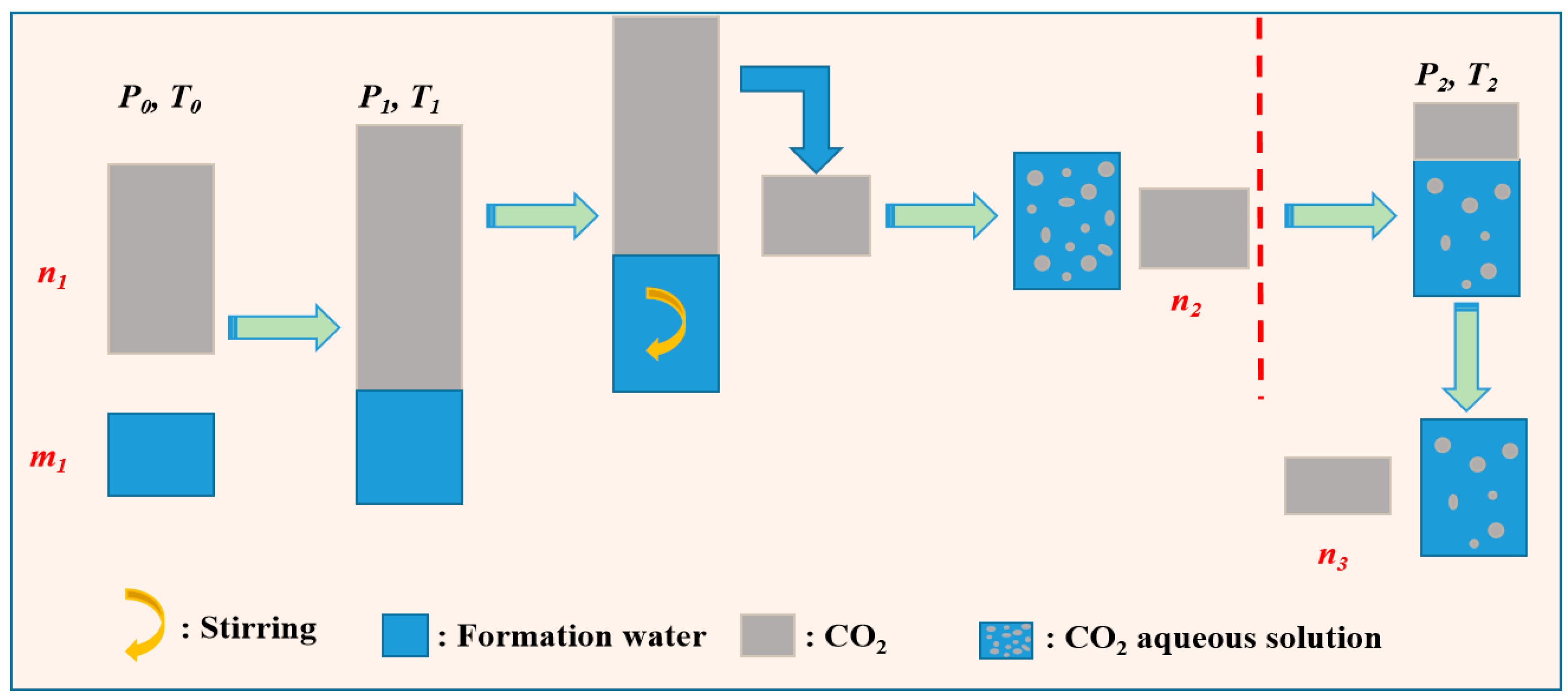
The formation water solution of LD10-X was loaded into the ultra-high temperature and high-pressure reactor, and the experimental temperature and pressure were adjusted to P1 and T1. Excess CO2 (purity: 99.9%, flow rate: 20 mL/min) was injected into the formation aqueous solution and stirred at 100 rpm/min for 24 h to ensure complete gas–liquid contact. After the gas-liquid equilibrium of the reactor was stable, the excess free gas was discharged. The concentration of each component was measured by an Agilent 7890B gas chromatograph, and the amount of CO2 gas discharged was measured by a 2331-D gas measurement. Table 1 depicts the characteristics of formation water in X-1 reservoir. Figure 2 demonstrates the ion composition of the formation water of LD10-X gas field. The solubility of CO2 is shown in Equation (1) [44,45].
S = n 1 n 2 m 1  
where S represents the solubility of CO2 (m3/m3), n1 and n2 represent the mole fractions of injected and free gas of CO2, respectively (m3), and m1 is the initial volume of formation water (m3).

3.2.2. Measurement of CH4 Solubility

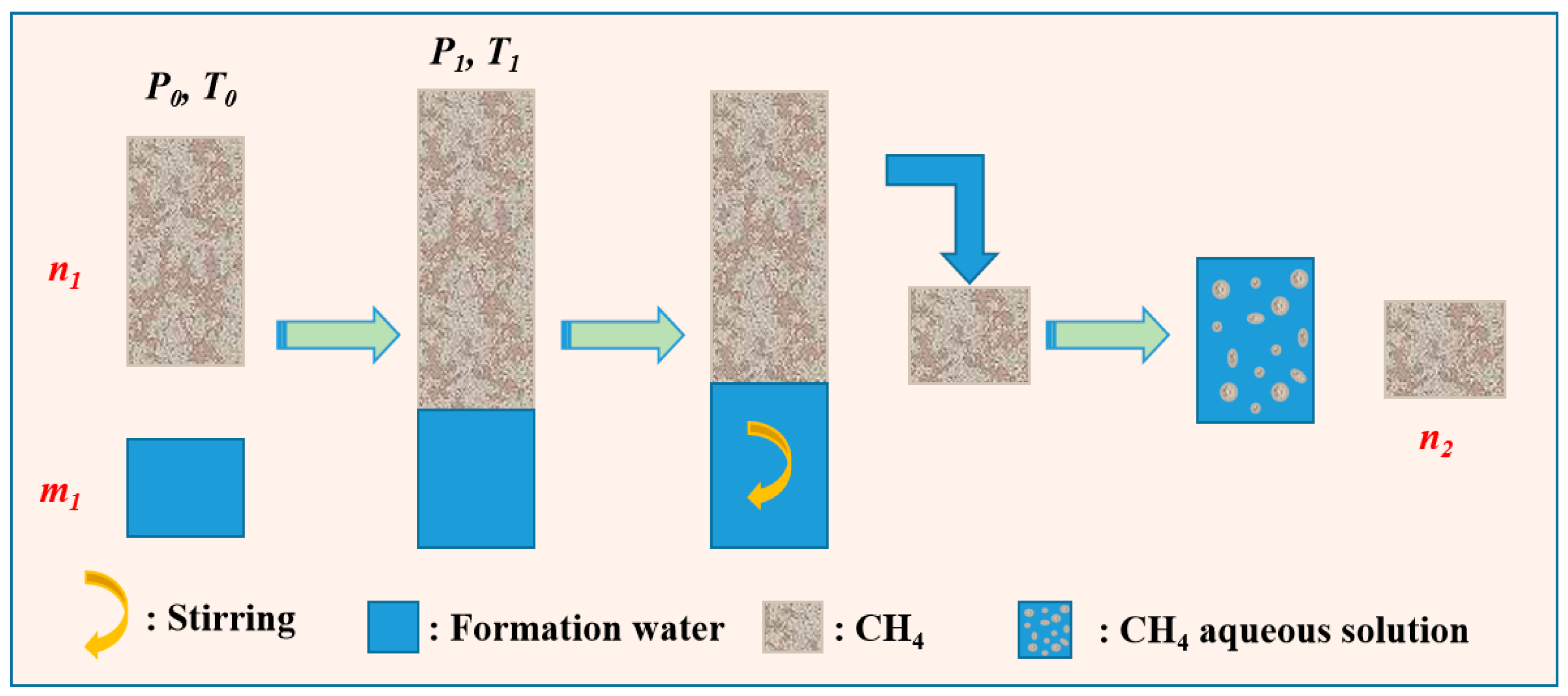
The formation water solution from LD10-X was transferred into the ultra-high temperature and high-pressure reactor, and the experimental conditions were set to the predetermined values of P1 and T1. A predetermined volume of excess CH4 (purity: 99.9%, flow rate: 20 mL/min) was then injected into the formation aqueous solution, followed by continuous stirring at 100 rpm/min for 24 h to ensure complete gas–liquid contact. Once the system reached gas-liquid equilibrium, the excess free gas was carefully discharged. The concentrations of all components were determined by an Agilent 7890B gas chromatograph, and the volume of CH4 gas released was measured using a 2331-D gas measurement. Figure 3 depicts the experimental diagram of CH4 solubility in the formation water. The solubility of CH4 is shown in Equation (2).
S = n 1 n 2 m 1
where S is the solubility of CH4 (m3/m3), n1 and n2 are the mole fractions of injected and free gas of CH4, respectively (m3), and m1 represents the initial volume of formation water (m3).

3.2.3. Measurement of Exsolution of CO2

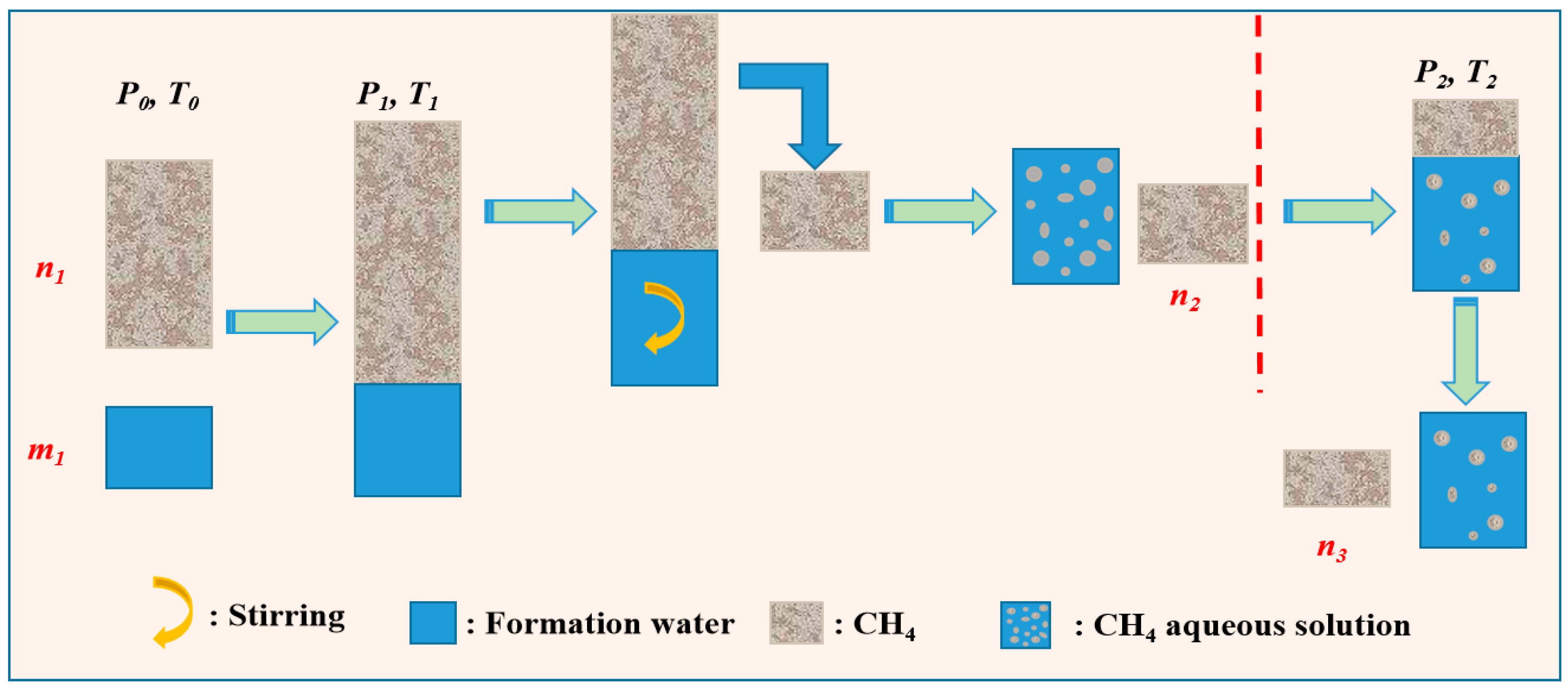
The CO2 exsolution experiment was conducted based on the solubility of CO2 experimental foundation. The experimental methodology was primarily grounded in the principle of mass conservation, focusing on the equilibrium of CO2 and formation water before and after the experiment. Following the completion of the CO2 solubility test under P1 and T1 conditions, the excess gas was carefully discharged to transition the fluid into the ultra-high temperature and high-pressure reactor from a supersaturated to a saturated state. The system was then brought to P2 and T2 conditions by gradually reducing the temperature and pressure. Once the gas-liquid phase equilibrium of the ultra-high temperature and high-pressure reactor was stabilized, the exsolution free gas was slowly released under constant pressure conditions, and the volume of released gas was measured by a 2331-D gas measurement. Figure 4 demonstrates the experimental diagram of CO2 exsolution in formation water. Equation (3) depicts the exsolution of CO2 in formation water [46].
P = n 3 m 1
where P represents the dissolved amount of CO2 (m3/m3), n3 is the dissolved free gas under P2 and T2 conditions (m3), and m1 is the initial volume of formation water (m3).

3.2.4. Measurement of Exsolution of CH4

The solubility experiment of CH4 was carried out on the basis of CH4 solubility experiment. The experimental principle was mainly based on the principle of mass conservation of CH4 and formation water before and after the experiment. After the solubility test of CH4 was completed under P1 and T1 conditions, the excess gas was discharged to change the fluid in the ultra-high temperature and high-pressure reactor from supersaturated to saturated. The temperature and pressure were reduced to P2 and T2 conditions. After the gas-liquid phase equilibrium of the ultra-high temperature and high-pressure reactor was stable, the dissolved free gas was slowly discharged at constant pressure, and the amount of gas was measured using a 2331-D gas measurement. Figure 5 depicts the experimental diagram of CH4 exsolution in formation water. The exsolution of CH4 is shown in Equation (4).
P = n 3 m 1  
where P is the dissolved amount of CH4 (m3/m3), n3 represents the dissolved free gas under P2 and T2 conditions (m3), and m1 represents the initial volume of formation water (m3).

4. Results and Discussion

4.1. Study on Fluid Phase Characteristics of the LD10-X Gas Field

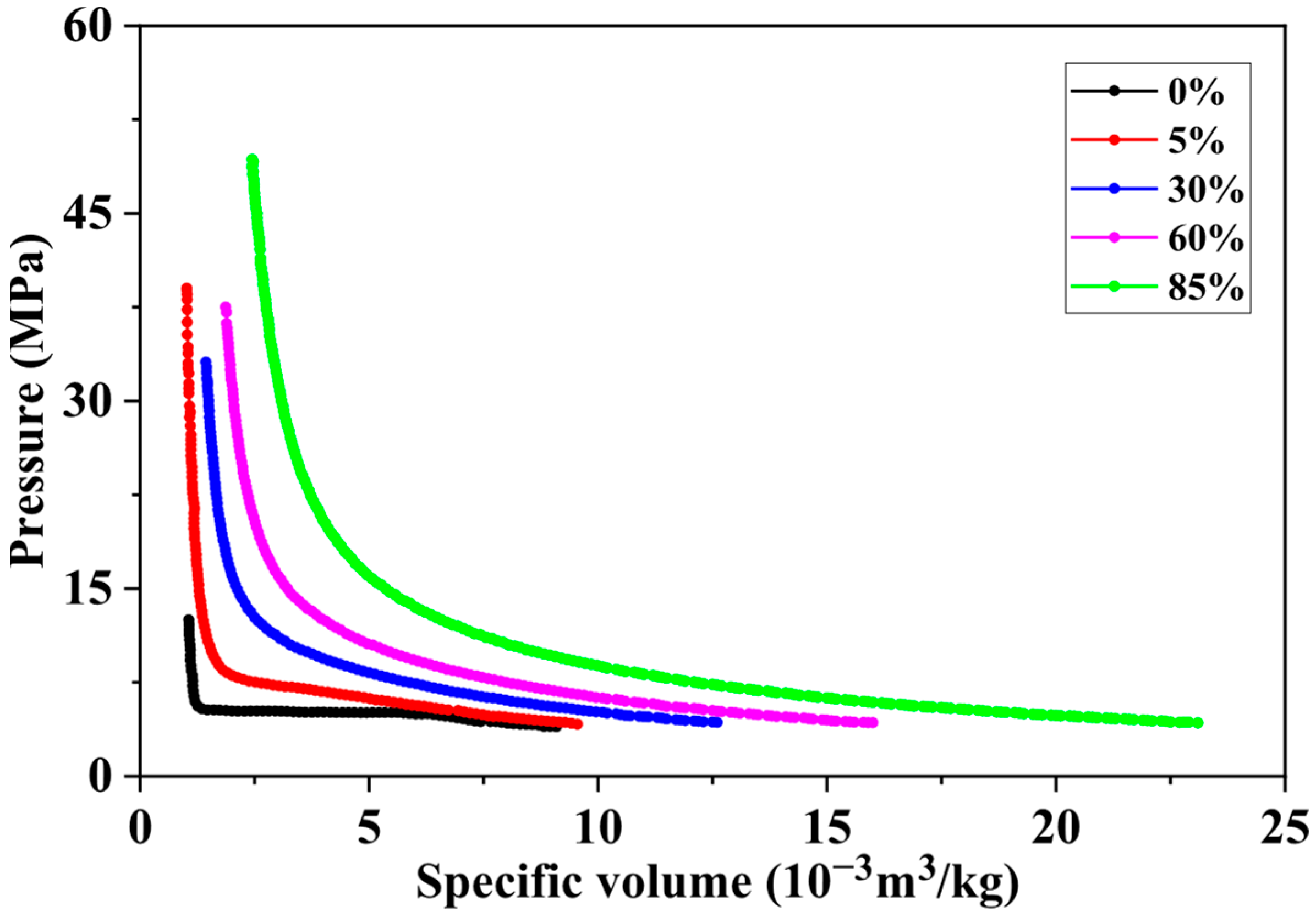
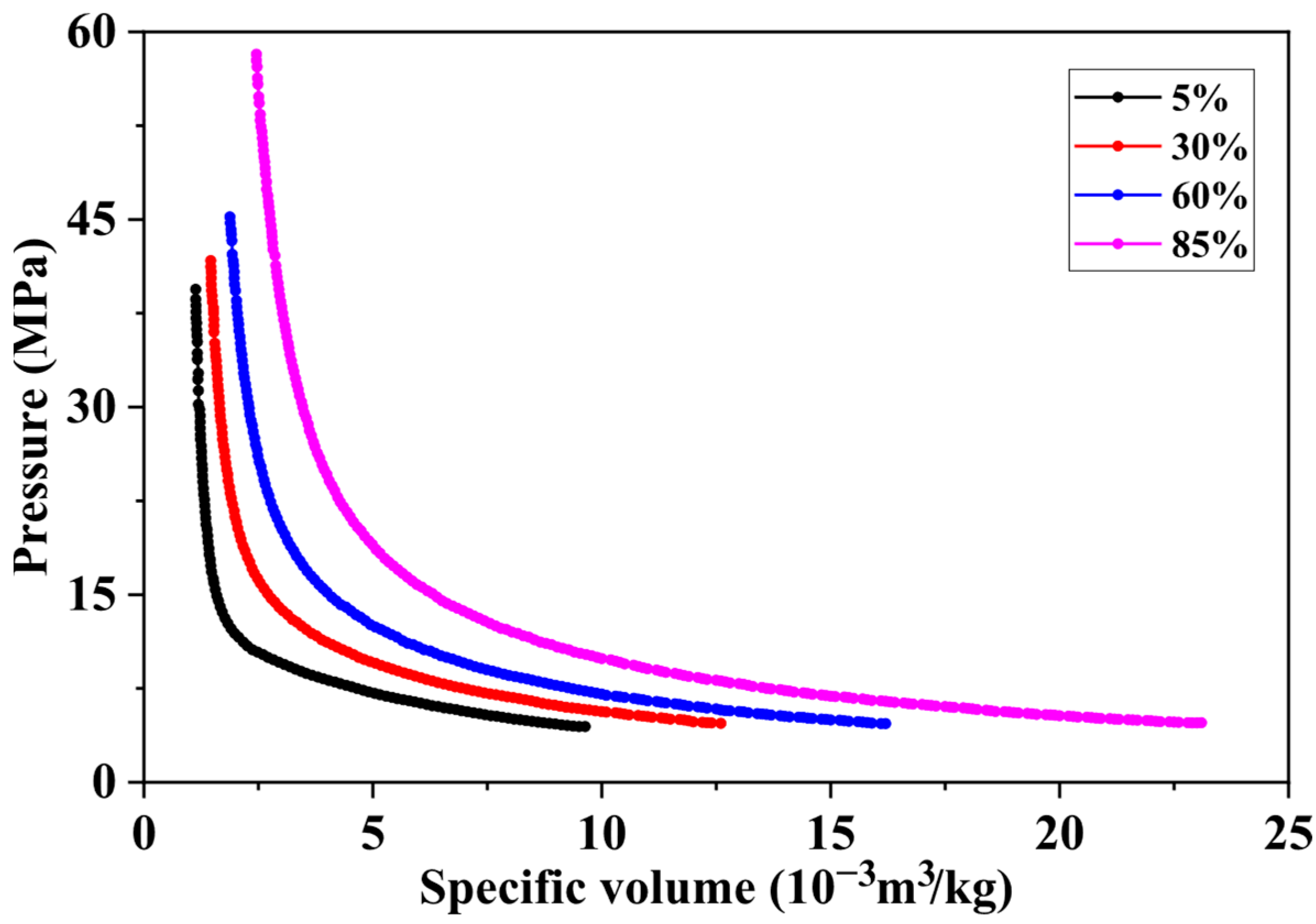
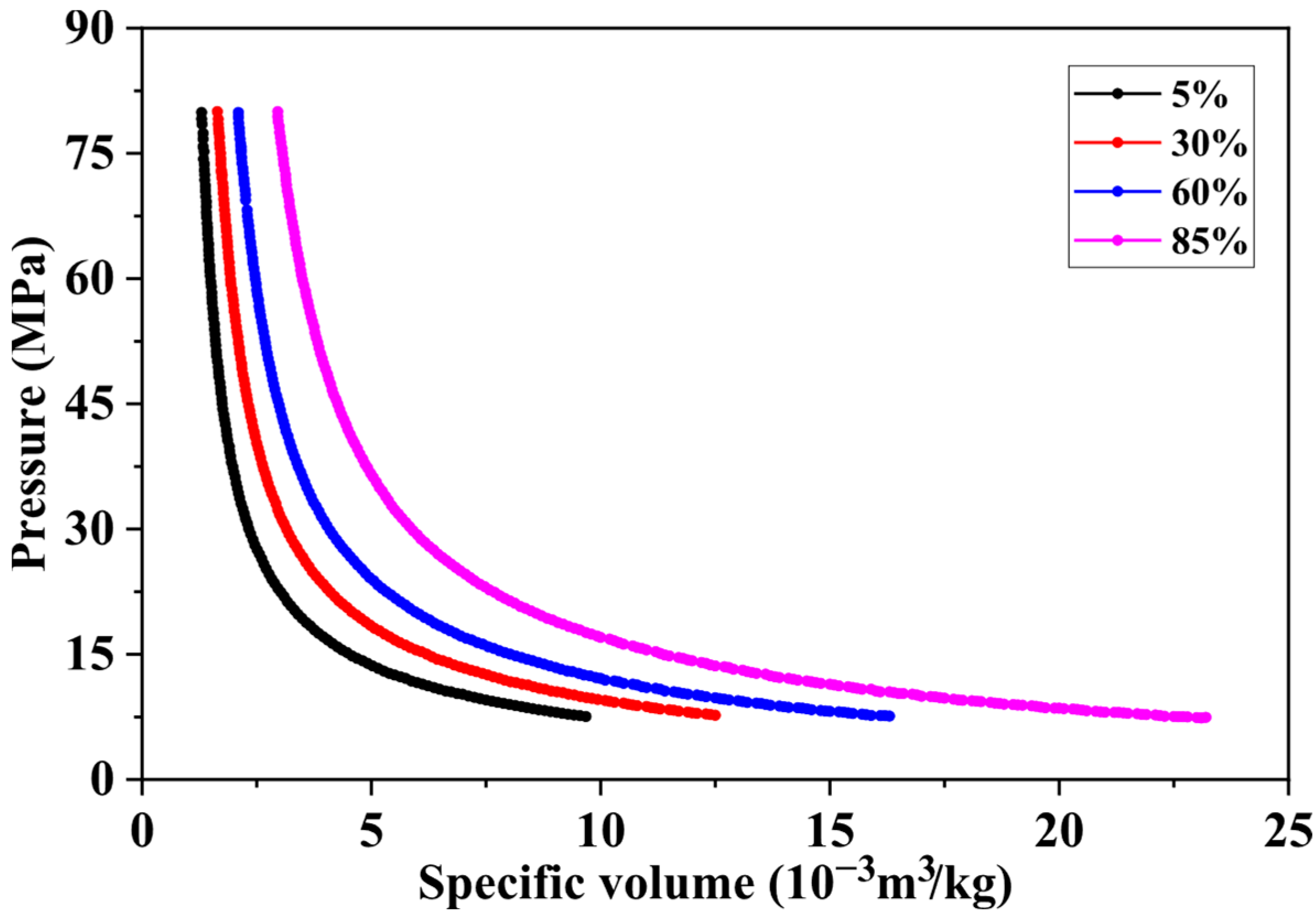
Within the temperature and pressure range of 20–210 °C and 0.1–100 MPa, CO2 exhibits distinct phases, including gas, liquid, and supercritical states [47,48], while CH4 primarily exists in gas and supercritical phases [49,50,51]. The basic physical properties of CO2 and CH4 fluids in different phase states change significantly. The analysis of CO2 and CH4 fluid properties has confirmed that these properties are closely related to solubility. Therefore, the phase state of CO2 and CH4 significantly influences their solubility in formation water. The effects of varying component concentrations and temperature–pressure conditions on phase transitions were systematically investigated. In the CO2 and CH4 phase experiment, the fluids were configured according to the CH4 mole fraction of 5%, 30%, 60%, and 85%. The P–T–V relationship under different mixing ratios was tested, and the specific volume–pressure curves under different miscible ratios were plotted (Figure 6). When the temperature and pressure are constant, the specific volume of CO2 and CH4 increases with the increase in CH4 mole fraction. In addition, the phase shifts to the gaseous state. The pure component CH4 changes from gas phase to liquid phase with the decrease in specific volume at 25 °C. The ‘platform’ (an angle of nearly 90° on the P–V curve) was used as the phase transition marker on the P–V phase diagram (Figure 6). When CH4 was mixed with a small amount of CH4 (5%), the phase transition platform disappeared immediately. At low pressure, CO2 and CH4 exist in a gas state, with specific volume decreasing linearly as pressure increases. Under high-pressure conditions, CO2 and CH4 transition into a liquid–supercritical or liquid–supercritical–gas phase. After the phase is completely changed into a liquid–supercritical phase, the specific volume decreases linearly with the increase in pressure. Therefore, the addition of CH4 at low temperature makes the phase transition marker in the mixed P–V phase diagram change from a ‘platform’ to a ‘smooth curve’. CO2 and CH4 remain in the gas state at low pressure when the temperature is higher than the critical temperature of CH4 (Figure 7 and Figure 8). With the increase in pressure, CO2 and CH4 successively enter the critical region, and CO2 and CH4 will be in the gas–supercritical phase. Due to supercritical CH4 extraction, CH4 and CO2 form unstable ‘transient clusters’ in the appropriate region with an increase in pressure and becomes a single phase. Furthermore, both CO2 and CH4 enter the supercritical region and form a supercritical fluid in the high-pressure region.
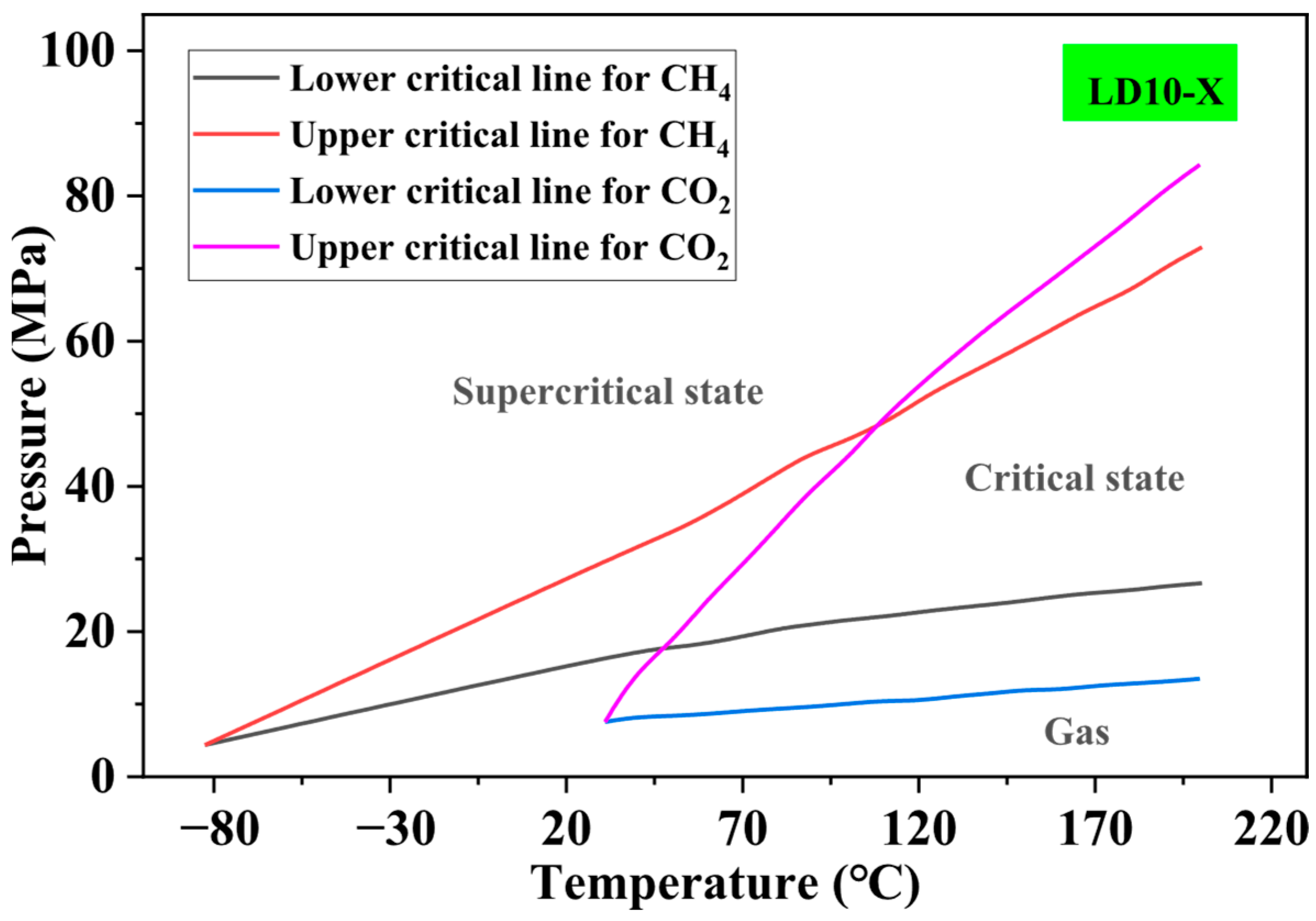
For the gas–supercritical phase transition process (Figure 9), the phase transition conditions of CO2 are lower than those of CH4 at temperatures below 110 °C. However, at temperatures above 110 °C, the supercritical phase transition conditions of CO2 exceed those of CH4. Within the gas–critical region, CO2 consistently exhibits lower phase transition conditions compared to CH4 throughout the experimental temperature and pressure range. The results indicate that as the CH4 mole fraction increases, the critical phase transition point in the miscible system shifts toward higher pressures. For the H2IV gas group of LD10-X gas and deeper formations, both CH4 and CO2 enter the supercritical region, which is a supercritical miscible fluid.

4.2. Study on the Solubility Law of CH4 and CO2 in Formation Water

The coexistence of CH4 and CO2 in mixed gas reservoirs is commonly encountered under actual geological conditions. It is of great significance to study the solubility law of CH4 and CO2 to avoid the risk of CO2. The solubility of CH4 and CO2 under different mixing ratios and solubility sequences was studied. In addition, the change in the solubility of CH4 and CO2 phase with temperature and pressure was also studied.

4.2.1. The Effect of CO2 and CH4 Mixing Ratio on Solubility

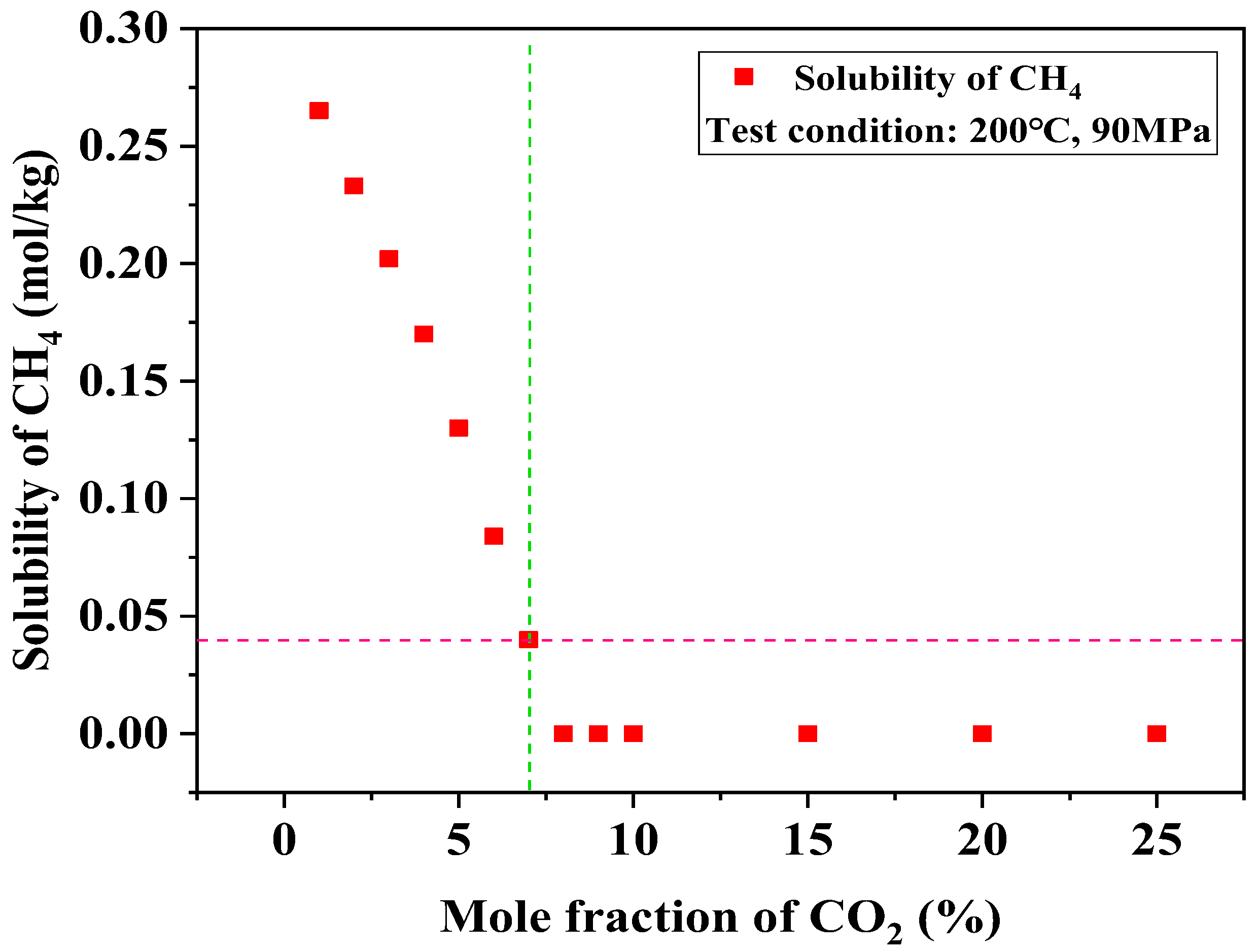
Different mixing ratios of CO2 and CH4 were used to experimentally simulate the differences in CO2 and CH4 in real formations caused by the third-stage fluid injection. At 200 °C and 90 MPa, the mole fraction of CH4 in the mixed phase of CO2 and CH4 was set to 5%, 30%, 60%, and 85%, respectively. The experimental results revealed that there was only CO2 in the solution and no CH4 was found. When the molar fraction of CO2 in the mixed phase was further reduced to less than 7%, CH4 was detected in the solution after solubility equilibrium (Figure 10). The main reason is that CO2 is in the supercritical phase and in a multi-molecular aggregation state, which has a strong extraction ability for CH4. When the CO2 in the free phase is sufficient, CH4 is completely bound to supercritical CO2 and will no longer be dissolved in water. Conversely, there are free-moving CH4 molecules in addition to the part of CH4 extracted by CO2 when the CO2 in the free phase is insufficient; these molecules can be dissolved in water. Furthermore, some CO2 will dissolve in pure water due to the chemical equilibrium of CO2 solubility, which is not constrained by its molecular morphology. The experimental results indicate that the extraction capacity of CO2 to CH4 is 13.28 times (93%/7% = 13.28) at 200 °C and 90 MPa. In other words, 1 mol CO2 will extract 13.28 mol CH4.

4.2.2. The Effect of CO2 and CH4 Solubility Sequence on Solubility

The effect of different solubility sequences of CO2 and CH4 on the solubility was studied. In formation water, the CO2 at equilibrium is dissolved first, and then CH4 is dissolved at 200 °C and 90 MPa. CO2 was dissolved and balanced for 24 h to keep the sample stable. The free CO2 gas was discharged and injected into CH4 to reach the same experimental conditions. The solubility equilibrium was performed twice for 24 h, and the sample was tested. The experimental results show that CH4 will no longer dissolve when CO2 reaches the solubility equilibrium. At this time, there is no excess space in the CO2 aqueous solution to accommodate CH4. However, when the CH4 at equilibrium is dissolved first, and then CO2 is dissolved in formation water at 200 °C and 90 MPa, CO2 continues to dissolve when CH4 reaches the solubility equilibrium. There may be two reasons for this phenomenon. One is that the solubility equilibrium of CH4 is only a phase equilibrium, while CO2 has chemical equilibrium in addition to phase equilibrium. Therefore, CO2 will continue to dissolve through chemical equilibrium after CH4 reaches the solubility equilibrium. On the other hand, the CO2 in the free phase is in a supercritical state, which has the ability to extract the dissolved CH4. At this time, the CH4 dissolved through the phase equilibrium part will be returned to the free phase again, but it will be captured by supercritical CO2 and cannot return to the liquid phase [52,53].

4.2.3. The Solubility of CO2 and CH4 with Temperature and Pressure

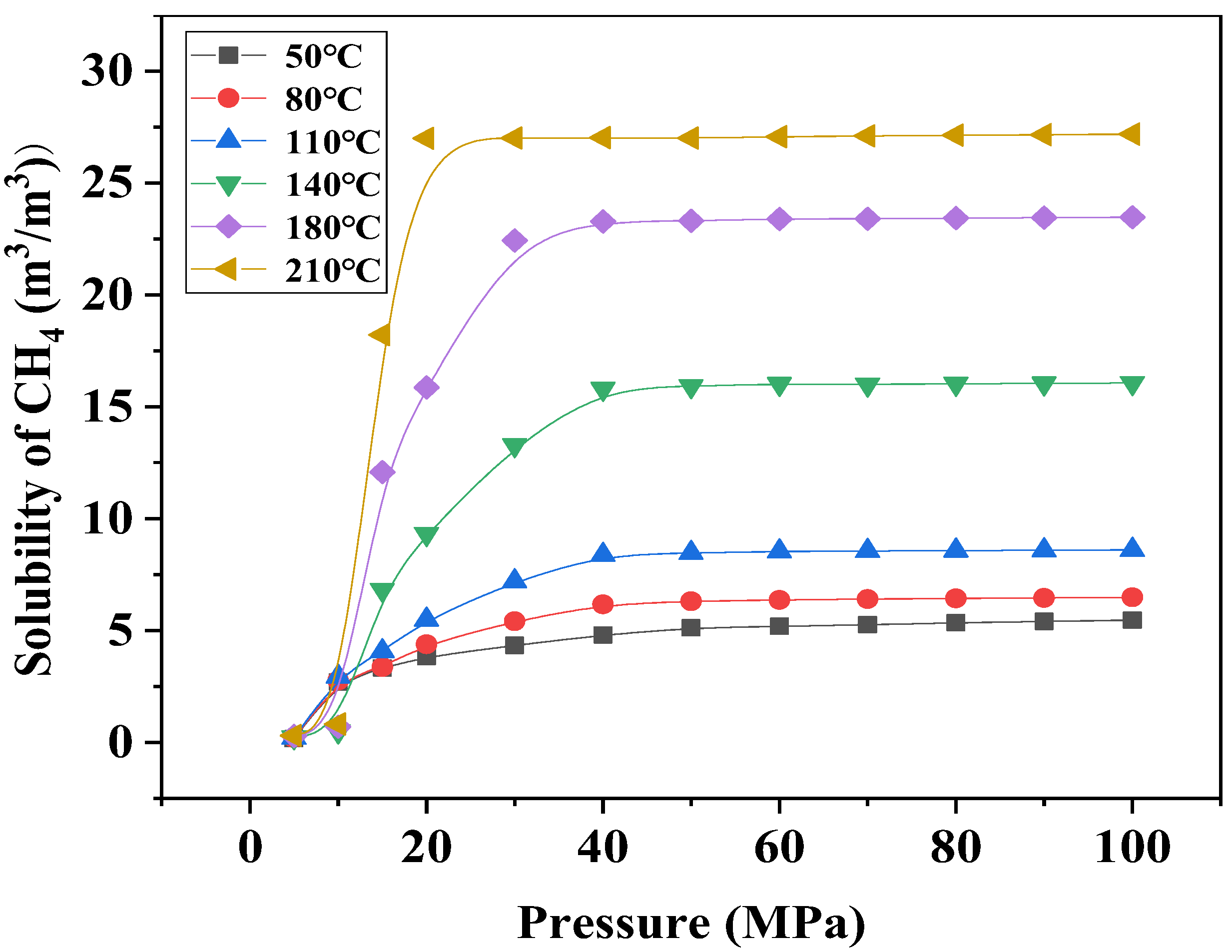
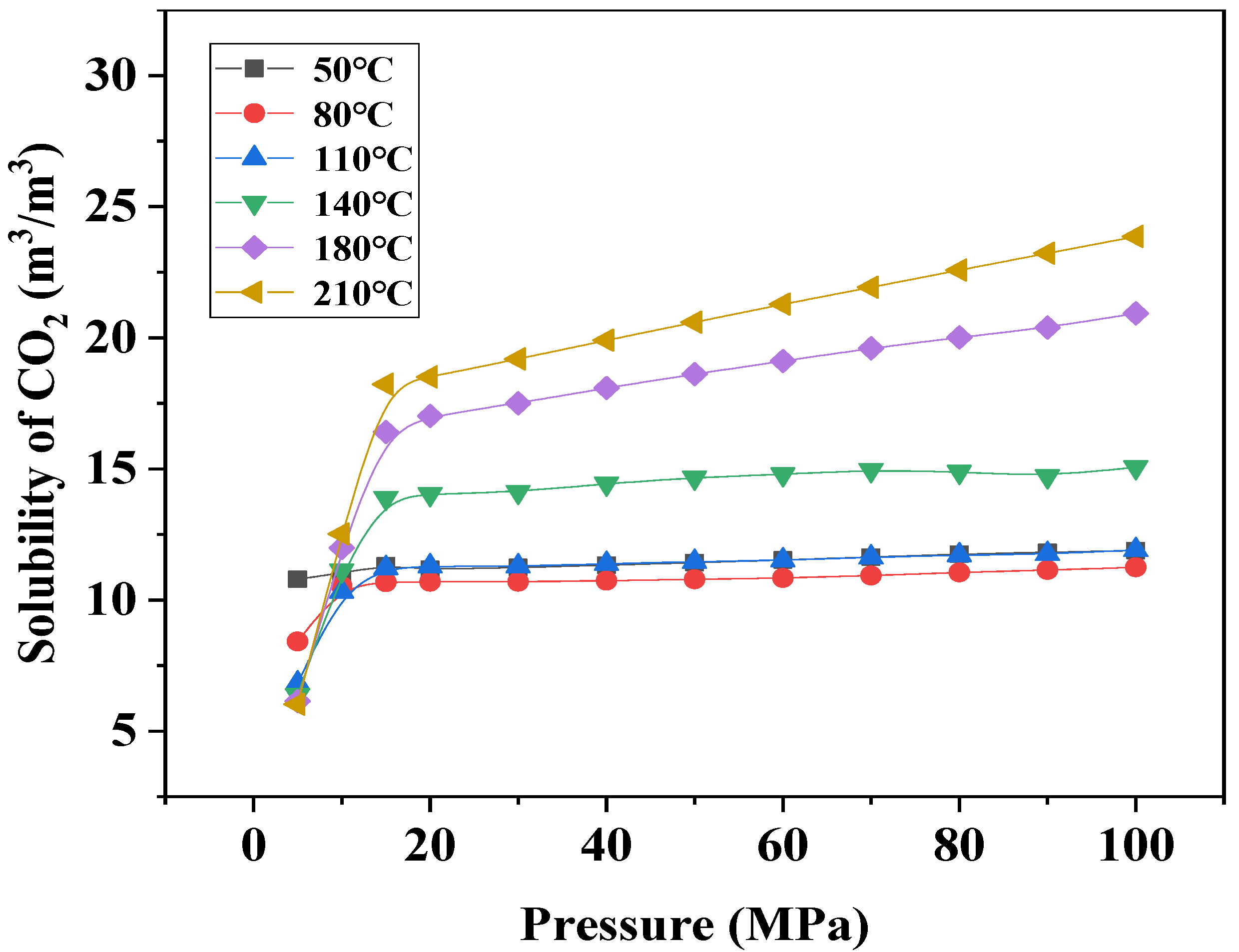
The solubility of CO2 and CH4 in LD10-X’s formation water was investigated under varying temperature and pressure conditions, with a fixed CO2 mole fraction of 5%. The experimental results revealed that the solubility of both CH4 and CO2 in formation water was significantly influenced by pressure and temperature. Specifically, the solubility of both CO2 and CH4 increased with rising pressure. Temperature also played a role in enhancing solubility, though its effect was minimal below 100 °C. Above this threshold, the impact of temperature on solubility became more pronounced. Figure 11 indicates that CH4 dissolves rapidly when the experimental pressure is lower than 40 MPa. When the pressure is higher than 40 MPa, the solubility of CH4 almost ceases to increase. The higher the temperature, the earlier the solubility of CH4 reaches the inflection point. This phenomenon is mainly determined by the extraction of supercritical CO2 in the mixed phase. CO2 will dissolve quickly when the pressure is lower than 20 MPa. When the pressure is higher than 20 MPa, the solubility of CO2 increases slowly with the increase in pressure. In addition, the solubility of CO2 increases with the increase in temperature (Figure 12). From another perspective, it can be explained as at lower pressures, the solubility of gases in water can be approximated by Henry’s law, which assumes that solubility is directly proportional to pressure. However, as pressure increases beyond a certain threshold, Henry’s law becomes less accurate due to the non-ideality of the gas phase and the onset of intermolecular interactions. At higher pressures, the gas phase becomes compressed, and the density of the gas increases significantly, leading to deviations from Henry’s law. This explains why the solubility of CH4 stabilizes when the pressure exceeds 40 MPa and why CO2 solubility increases more slowly above 20 MPa. These deviations from linearity are consistent with the limitations of Henry’s law under high-pressure conditions [54,55].

4.3. Study on the Exsolution Law of CO2 and CH4

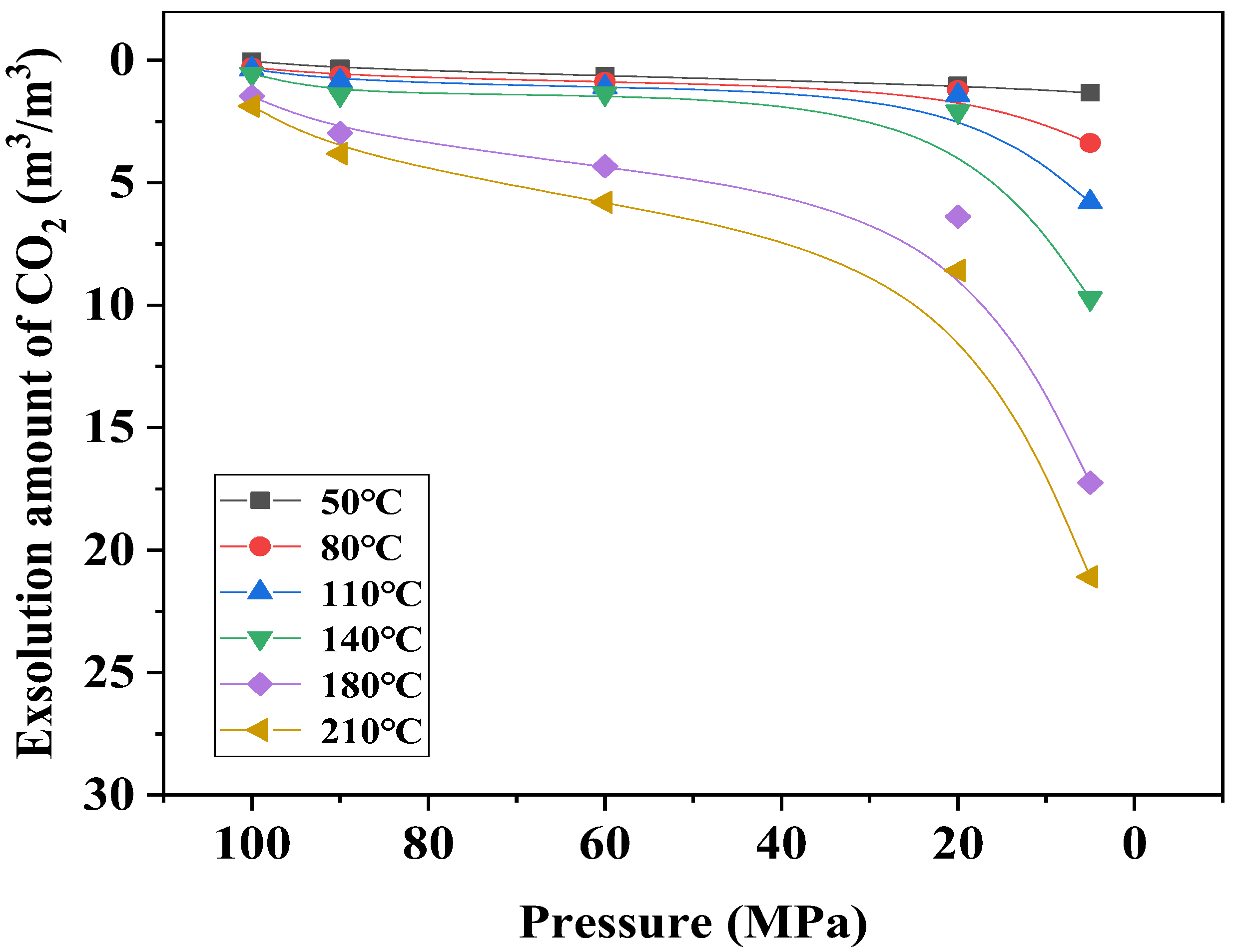
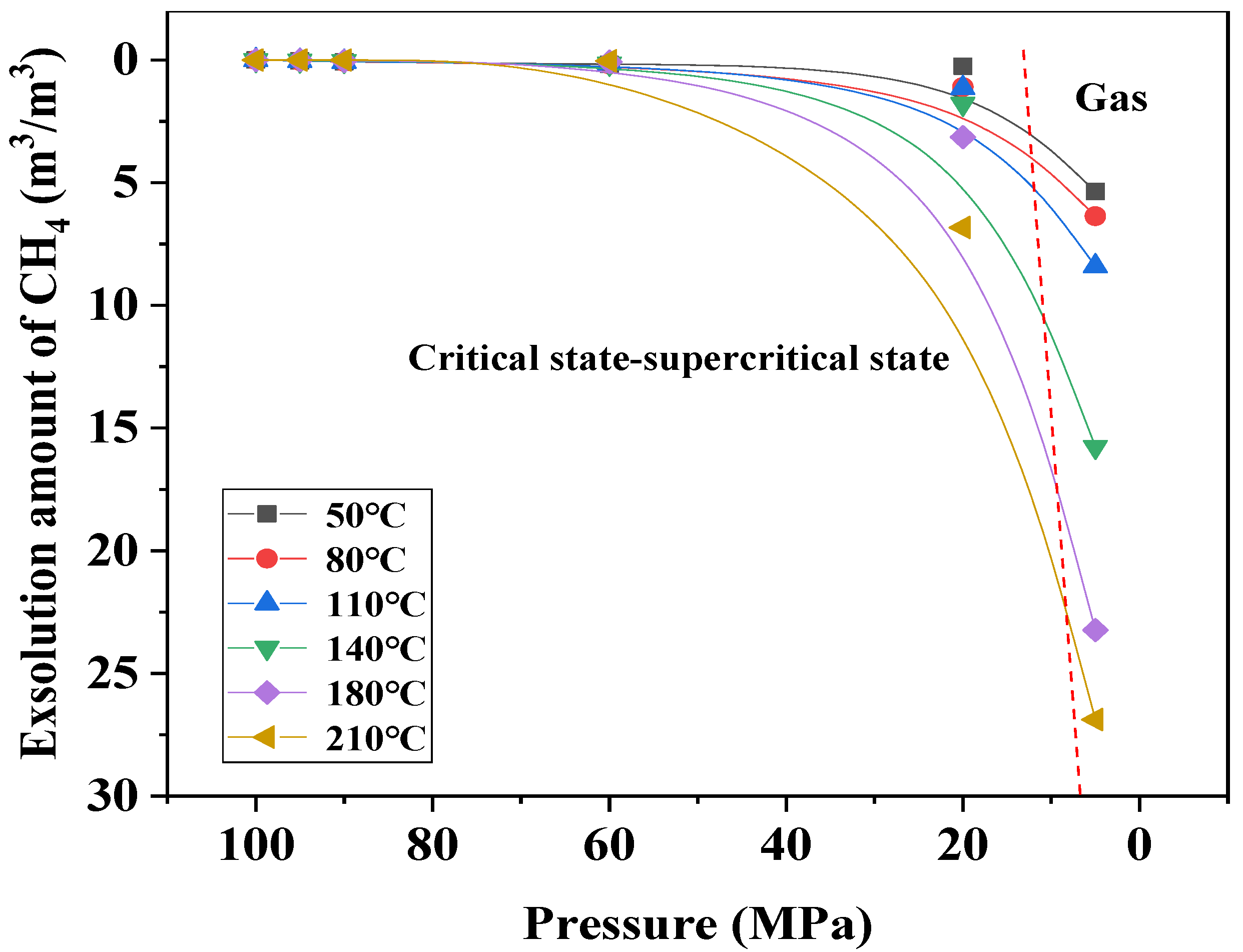
The exsolution law of CO2 and CH4 in formation water was systematically investigated under initial saturation equilibrium temperatures ranging from 50 °C to 210 °C at 90 MPa. The experimental results demonstrate that, under constant temperature conditions, the exsolution amounts of both CO2 and CH4 increase proportionally with the pressure difference. Furthermore, when the pressure difference remains constant, the exsolution amounts of both components exhibit a positive correlation with temperature. For the CO2 in the CO2 and CH4 phase, the exsolution amount increases slowly and then increases rapidly with the increase in the pressure difference. The inflection point of the exsolution law is near the pressure of 20 MPa (Figure 13). In contrast, the CH4 component in the phase of CO2 and CH4 is almost insoluble when the pressure is higher than 60 MPa. However, when the pressure is lower than 60 MPa, CH4 begins to exsolute rapidly (Figure 14).
The difference in the exsolution of CO2 and CH4 in the phase of CO2 and CH4 is mainly caused by the extraction of CO2. Initially, under the equilibrium conditions, CO2 exists in a supercritical state while CH4 remains dissolved in the solution. As the pressure decreases, a portion of the dissolved CO2 is released into the free phase, shifting the chemical equilibrium toward further CO2 generation. This process results in the continuous production of free CO2, which is subsequently removed from the system. Notably, CH4 remains in a dissolved state throughout this stage and does not undergo exsolution. Consequently, during the high-pressure exsolution process, CO2 exsolution dominates while CH4 exsolution is negligible. The extraction capacity of CO2 in the solution began to decrease when the pressure was further reduced, and the CO2 produced by the chemical equilibrium of CO2 dissolved and extracted the excess CH4 again. At this time, the exsolution amount of CH4 began to increase significantly. However, the exsolution law of CO2 has not changed obviously at this stage, mainly because it is from the chemical equilibrium movement. In the process of pressure reduction, the compression coefficients of CH4 and CO2 components become larger, and the free phase CO2 also begins to dissolve. At this time, the exsolution rate is higher than that under high pressure due to the change of CO2 concentration in the liquid phase system. CH4 and CO2 will be exsolved simultaneously when the pressure is lower than the critical state phase transition pressure at this temperature. It has little influence on each other and mainly depends on the change in compression coefficient.

4.4. Application Analysis

Natural gas is distributed in solution gas and free gas under the condition of high temperature and high pressure. As the reservoir pressure decays, the solution gas will gradually precipitate and migrate to higher parts. Table 2 depicts the characteristic parameters of different wells in the LD10-X gas field.
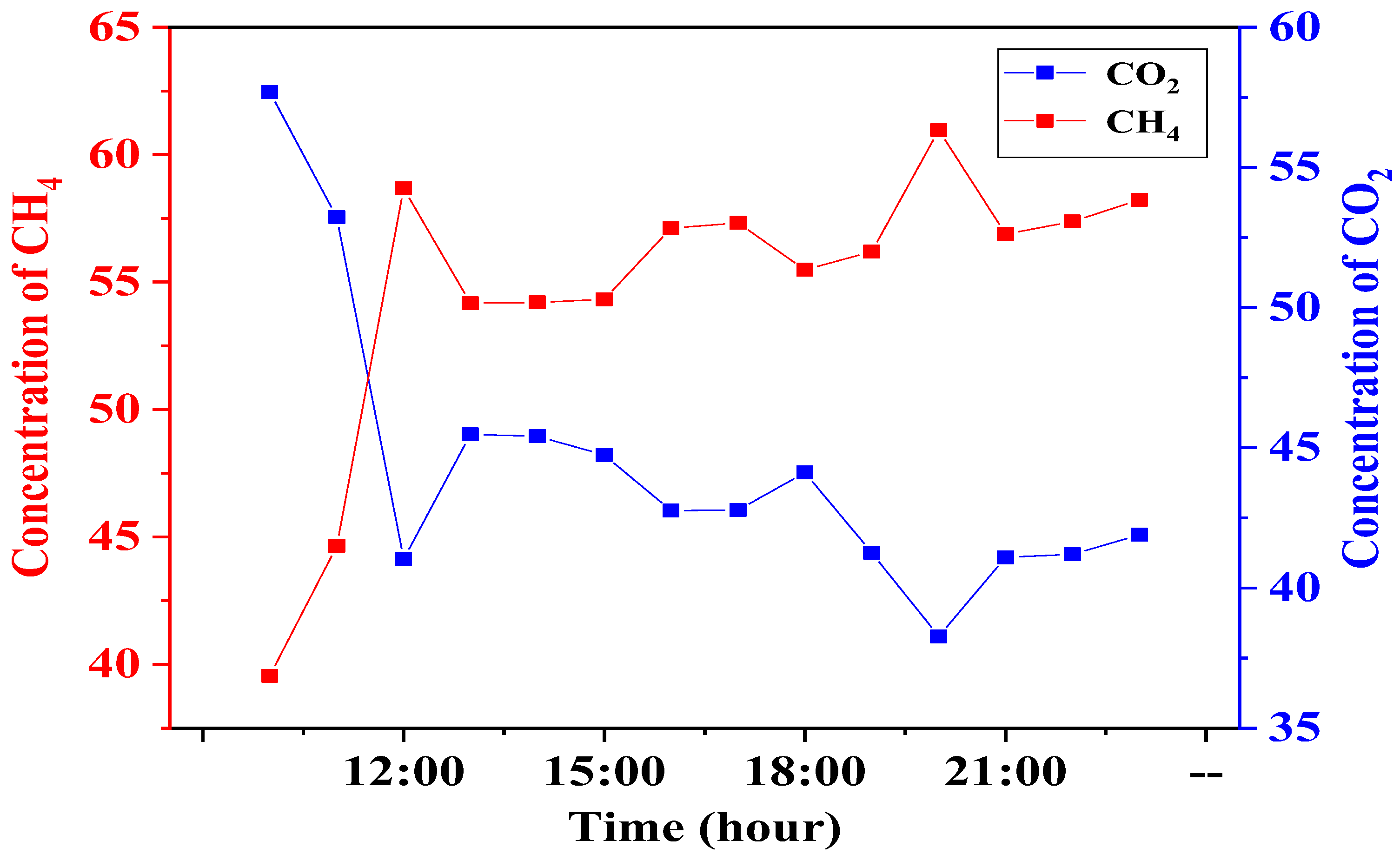
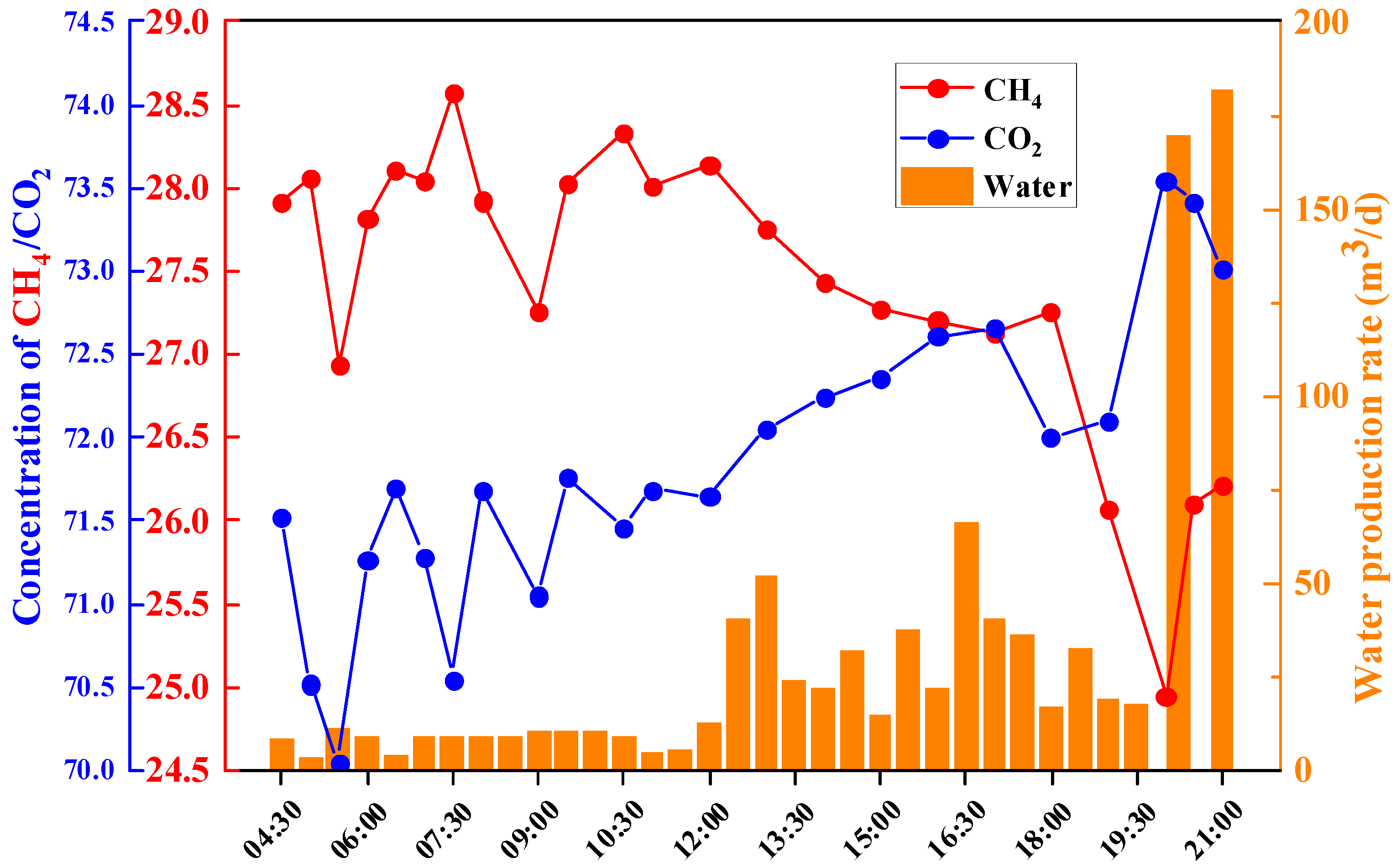
Figure 15 illustrates the variations in CH4 and CO2 concentrations during the drill stem testing in the LD10-X-10 well. The results demonstrate that as water output increased, the CO2 concentration exhibited an upward trend, while the CH4 concentration decreased correspondingly. This phenomenon can be attributed to the higher solubility of CO2 in water under supercritical extraction conditions. Conversely, in the LD10-X-12 well, the trend was reversed (Figure 16). During the testing period, CO2 concentration decreased and CH4 concentration increased. The reason can be attributed to the mixed gas exsolution from water, and the extraction capacity of CO2 in the solution decreases after the pressure is reduced. In addition, the CO2 produced by the chemical equilibrium movement of CO2 and exsolution will extract the excess CH4 again. CH4 exsolution leads to an increase in CH4 concentration.

5. Conclusions

A series of experimental investigations have been conducted to study solubility and exsolution law of CO2 and CH4 and their influence on the fluid composition in the ultra-high temperature and pressure gas field of LD10-X. The results are as follows: Fluid phase characteristics experiments showed that the critical phase transition point in the miscible system shifts toward higher pressures with an increase in the CH4 mole fraction. For the H2IV gas group of LD10-X gas and deeper formations, both CH4 and CO2 enter the supercritical region, which is a supercritical miscible fluid. Mixing ratio experiments depicted that when the CO2 mole fraction exceeded 7%, CH4 will not appear in the mixed solution due to the high extraction ability of supercritical CO2 for CH4, which was 13.28 times greater. The solubility sequence demonstrated that CO2 continued to dissolve even after CH4 reached solubility equilibrium, while CH4 became insoluble when CO2 reached its solubility equilibrium. Both CO2 and CH4 solubility increased with rising temperature and pressure. The exsolution amount of CO2 in the CO2 and CH4 phase increased slowly at first and then rapidly near the pressure of 20 MPa, whereas CH4 remained almost insoluble above 60 MPa. Drill stem testing of the LD10-X-10 well showed an upward trend in CO2 concentration, while CH4 concentration decreased due to higher solubility of CO2 in water under supercritical conditions. In contrast, CO2 concentration decreased and CH4 concentration increased in the LD10-X-12 well. This study provides a foundation for understanding the competitive solubility-exsolution mechanism of CH4-CO2 miscible natural gas under ultra-high temperature and ultra-high-pressure conditions and offers guidelines for optimizing CO2 geological storage and enhancing CH4 recovery in mixed-gas reservoirs.

Author Contributions

J.L.: Conceptualization, Data Curation, Formal Analysis, Investigation, Writing—Original Draft, Writing—Review and Editing. H.L.: Data Curation, Investigation, Methodology, Writing—Review and Editing. G.L.: Investigation, Methodology, Project Administration, Supervision, Visualization, Writing—Original. All authors have read and agreed to the published version of the manuscript.

Funding

This research was funded by the Chinese Academy of Engineering Technology Strategy Consultancy Project (2025-XZ-47).

Data Availability Statement

The original contributions presented in the study are included in the article. Further inquiries can be directed at the corresponding author.

Conflicts of Interest

Author Jin Liao, Hao Liang qnd Gang Li were employed by the company CNOOC China Limited, Hainan Branch. The remaining authors declare that the research was conducted in the absence of any commercial or financial relationships that could be construed as a potential conflict of interest.

References

  1. Kurnia, K.A.; How, C.J.; Matheswaran, P.; Noh, M.H.; Alamsjah, M.A. Insight into the molecular mechanism that controls the solubility of CH4 in ionic liquids. R. Soc. Chem. 2020, 44, 354–360. [Google Scholar] [CrossRef]
  2. Li, R.; Jiang, P.X.; He, D.; Chen, X.; Xu, R. Experimental investigation on the behavior of supercritical CO2 during reservoir depressurization. Environ. Sci. Technol. 2017, 15, 8869–8876. [Google Scholar] [CrossRef]
  3. Oldenburg, C.M.; Doughty, C.; Spycher, N. The role of CO2 in CH4 exsolution from deep brine: Implications for geologic carbon sequestration. Greenh. Gases Sci. Technol. 2013, 3, 359–377. [Google Scholar] [CrossRef]
  4. Xu, R.; Li, R.; Ma, J.; He, D.; Jiang, P. Effect of mineral dissolution/precipitation and CO2 exsolution on CO2 transport in geological carbon storage. Acc. Chem. Res. 2017, 50, 2056–2066. [Google Scholar] [CrossRef]
  5. Gao, G.; Huang, Z.L.; Huang, B.J.; Yuan, J.; Tong, C. The solution and exsolution characteristics of natural gas components in water at high temperature and pressure and their geological meaning. Pet. Sci. 2012, 9, 25–30. [Google Scholar] [CrossRef][Green Version]
  6. Huang, X.; Guo, X.; Zhou, X.; Shen, C.; Lu, X.; Qi, Z.; Xiao, Q.; Yan, W. Effects of water invasion law on gas wells in high temperature and high pressure gas reservoir with a large accumulation of water-soluble gas. J. Nat. Gas Sci. Eng. 2019, 62, 68–78. [Google Scholar] [CrossRef]
  7. Xie, W.; Wang, M.; Wang, H. Adsorption characteristics of CH4 and CO2 in shale at high pressure and temperature. ACS Omega 2021, 6, 18527–18536. [Google Scholar] [CrossRef]
  8. Zhou, G.Z.; Duan, X.G.; Chang, J.; Bo, Y.; Huang, Y. Investigation of CH4/CO2 competitive adsorption-desorption mechanisms for enhanced shale gas production and carbon sequestration using nuclear magnetic resonance. Energy 2023, 278, 127964. [Google Scholar] [CrossRef]
  9. Gao, T.; Shen, T.T.; Lin, W.S.; Gu, A.; Ju, Y. Experimental determination of CO2 solubility in liquid CH4/N2 mixtures at cryogenic temperatures. Ind. Eng. Chem. Res. 2012, 51, 9403–9408. [Google Scholar] [CrossRef]
  10. Bruusgaard, H.; Beltran, J.G.; Servio, P. Solubility measurements for the CH4 + CO2 + H2O system under hydrate–liquid–vapor equilibrium. Fluid Phase Equilibria 2010, 296, 106–109. [Google Scholar] [CrossRef]
  11. Liu, G.F.; He, L.Y.; Fan, Z.Q.; He, Y.; Wu, Z.; Wang, Z. Investigation of gas solubility and its effects on natural gas reserve and production in tight formations. Fuel 2021, 295, 120507. [Google Scholar] [CrossRef]
  12. Kapoor, U.; Shah, J.K. Monte Carlo simulations of pure and mixed gas solubilities of CO2 and CH4 in nonideal ionic liquid-ionic liquid mixtures. Ind. Eng. Chem. Res. 2020, 58, 22569–22578. [Google Scholar] [CrossRef]
  13. Zhao, Y.; Yu, J.; Shi, H.; Guo, J.; Liu, D.; Lin, J.; Song, S.; Wu, H.; Gong, J. Study of methane solubility calculation based on modified Henry’s law and BP neural network. Processes 2024, 12, 1091. [Google Scholar] [CrossRef]
  14. Zirrahi, M.; Azin, R.; Hassanzadeh, H.; Moshfeghian, M. Mutual solubility of CH4, CO2, H2S, and their mixtures in brine under subsurface disposal conditions. Fluid Phase Equilibria 2012, 324, 80–93. [Google Scholar] [CrossRef]
  15. Li, L.; Ye, J.; Li, M.; Pan, L.; Zhang, Y. Investigation of the law of natural gas phase behavior during the migration and reservoir formation. Geofluids 2022, 2022, 8013034. [Google Scholar] [CrossRef]
  16. Kvam, O.; Sarkisov, L. Solubility prediction in mixed solvents: A combined molecular simulation and experimental approach. Fluid Phase Equilibria 2019, 484, 26–37. [Google Scholar] [CrossRef]
  17. Liu, F.; Han, C.; Yu, L.; Wang, Y.; Gao, X.; Yang, K.; Zhang, L. Solubility of H2S-CH4 mixtures in calcium chloride solution: Insight from molecular dynamics simulations. J. Mol. Liq. 2024, 407, 125225. [Google Scholar] [CrossRef]
  18. Shi, J.H.; Zhang, T.; Sun, S.Y.; Gong, L. Ab initio insights into the CO2 adsorption mechanisms in hydrated silica nanopores. Chem. Eng. Sci. 2025, 313, 121741. [Google Scholar] [CrossRef]
  19. O’Sullivan, T.D.; Smith, N.O.; Nagy, B. Solubility of natural gases in aqueous salt solution nitrogen in aqueous NaCl at high pressures. Geochim. Cosm. Acta 1966, 30, 617–619. [Google Scholar] [CrossRef]
  20. Duffy, J.R.; Smith, N.O.; Nagy, B. Solubility of natural gases in aqueous salt solutions—I: Liquids surfaces in the system CH4-H2O-NaCl2-CaCl2 at room temperatures and at pressures below 1000 psia. Geochim. Cosm. Acta 1961, 24, 23–31. [Google Scholar] [CrossRef]
  21. Smith, N.O.; Kelemen, S.; Nagy, B. Solubility of natural gases in aqueous salt solutions—II: Nitrogen in aqueous NaCl, CaCl2, Na2SO4 and MgSO4 at room temperatures and at pressures below 1000 psia. Geochim. Cosm. Acta 1962, 26, 921–926. [Google Scholar] [CrossRef]
  22. Yang, K.; Zhou, J.P.; Xian, X.F.; Jiang, Y.; Zhang, C.; Lu, Z.; Yin, H. Gas adsorption characteristics changes in shale after supercritical CO2-water exposure at different pressures and temperatures. Fuel 2022, 310, 122260. [Google Scholar] [CrossRef]
  23. Ma, J.; Huang, Z. Experiments of methane gas solubility in formation water under high temperature and high pressure and their geological significance. Aust. J. Earth Sci. 2017, 64, 335–342. [Google Scholar] [CrossRef]
  24. Gao, J.; Zheng, D.Q.; Guo, T.M. Solubilities of methane, nitrogen, carbon dioxide, and a natural gas mixture in aqueous sodium bicarbonate solutions under high pressure and elevated temperature. J. Chem. Eng. Data 1997, 42, 69–73. [Google Scholar] [CrossRef]
  25. He, H.K.; Sun, B.J.; Sun, X.H.; Wang, Z.; Li, X.; Peng, Y. Prediction method for methane solubility in high-temperature and high-pressure aqueous solutions in ultra-deep drilling. Geoenergy Sci. Eng. 2023, 223, 211522. [Google Scholar] [CrossRef]
  26. Nabipour, N.; Qasem, S.N.; Salwana, E.; Baghban, A. Evolving LSSVM and ELM models to predict solubility of non-hydrocarbon gases in aqueous electrolyte systems. Measurement 2020, 164, 107999. [Google Scholar] [CrossRef]
  27. Neisani Samani, N.; Miforughy, S.M.; Safari, H.; Mohammadzadeh, O.; Panahbar, M.H.; Zendehboudi, S. Solubility of hydrocarbon and non-hydrocarbon gases in aqueous electrolyte solutions: A reliable computational strategy. Fuel 2019, 241, 1026–1035. [Google Scholar] [CrossRef]
  28. Nakhaei-Kohani, R.; Taslimi-Renani, E.; Hadavimoghaddam, F.; Mohammadi, M.-R.; Hemmati-Sarapardeh, A. Modeling solubility of CO2-N2 gas mixtures in aqueous electrolyte systems using artificial intelligence techniques and equations of state. Sci. Rep. 2022, 12, 3625. [Google Scholar] [CrossRef] [PubMed]
  29. Zoghi, A.T.; Feyzi, F.; Zarrinpashneh, S.; Alavi, F. Solubility of light reservoir gasses in water by the modified Peng-Robinson plus association equation of state using experimental critical properties for pure water. J. Pet. Sci. Eng. 2011, 78, 109–118. [Google Scholar] [CrossRef]
  30. Hemmati-Sarapardeh, A.; Amar, M.N.; Soltanian, M.R.; Dai, Z.; Zhang, X. Modeling CO2 solubility in water at high pressure and temperature conditions. Energy Fuels 2020, 34, 4761–4776. [Google Scholar] [CrossRef]
  31. Guang, W.F.; Zhang, Z.Y.; Zhang, L.; Ranjith, P.; Hao, S.; Liu, X. Confinement effect on transport diffusivity of adsorbed CO2-CH4 mixture in coal nanopores for CO2 sequestration and enhanced CH4 recovery. Energy 2023, 278, 1873–6785. [Google Scholar] [CrossRef]
  32. Song, Y.; Jiang, B.; Lan, F.J. Competitive adsorption of CO2/N2/CH4 onto coal vitrinite macromolecular: Effects of electrostatic interactions and oxygen functionalities. Fuel 2019, 235, 23–38. [Google Scholar] [CrossRef]
  33. Zhang, C.L.; Wang, E.Y.; Chen, Y.X. Laboratory experiments of CO2-enhanced coalbed methane recovery considering CO2 sequestration in a coal seam. Energy 2023, 262, 23–38, 125473. [Google Scholar] [CrossRef]
  34. Dhima, A.; De Hemptinne, J.C.; Jose, J. Solubility of hydrocarbons and CO2 mixtures in water under high pressure. Ind. Eng. Chem. Res. 1999, 38, 3144–3161. [Google Scholar] [CrossRef]
  35. Jeon, P.R.; Lee, H.H.; Keffer, D.J.; Lee, C.-H. Statistical mechanic and machine learning approach for competitive adsorption of CO2/CH4 on coals and shales for CO2-enhanced methane recovery. Chem. Eng. J. 2024, 495, 153200. [Google Scholar] [CrossRef]
  36. Xie, Y.H.; Huang, B.J. Characteristics and accumulation mechanisms of the Dongfang 13-1 high temperature and overpressured gas field in the Yinggehai Basin, the South China Sea. Sci. China-Earth Sci. 2014, 57, 2799–2807. [Google Scholar] [CrossRef]
  37. Taggart, I. Extraction of dissolved methane in brines by CO2 injection: Implication for CO2 sequestration. SPE Reserv. Eval. Eng. 2010, 13, 791–804. [Google Scholar] [CrossRef]
  38. Wu, Y.; Li, P. The potential of coupled carbon storage and geothermal extraction in a CO2-enhanced geothermal system: A review. Geotherm. Energy 2020, 8, 19. [Google Scholar] [CrossRef]
  39. Li, Z.B.; Wang, S.R.; Wei, G.M.; Wang, H.; Zhao, H.; Liang, R. The seepage driving mechanism and effect of CO2 displacing CH4 in coal seam under different pressures. Energy 2024, 293, 130740. [Google Scholar] [CrossRef]
  40. Li, Z.B.; Sun, X.D.; Zhao, K.K.; Lei, C.; Wen, H.; Ma, L.; Shu, C.-M. Deformation mechanism and displacement ability during CO2 displacing CH4 in coal seam under different temperatures. J. Nat. Gas Sci. Eng. 2022, 108, 104838. [Google Scholar] [CrossRef]
  41. Fan, C.; Cao, J.; Luo, J.; Li, S.; Wu, S.; Dai, L.; Hou, J.; Mao, Q. Heterogeneity and influencing factors of marine gravity flow tight sandstone under abnormally high pressure: A case study from the Miocene Huangliu formation reservoirs in LD10 area, Yinggehai Basin, South China Sea. Pet. Explor. Dev. 2021, 48, 1048–1062. [Google Scholar] [CrossRef]
  42. Yu, J.F.; Song, R.Y.; Pei, J.X.; Wu, Q.; Shao, Y.; Zhang, W. CO2 fluid flow patterns near major deep faults: Geochemical and 3D seismic data from the Ying-Qiong basin of the south China sea. Geofluids 2022, 2022, 9962343. [Google Scholar] [CrossRef]
  43. Liu, R.; Heinemann, N.; Liu, J.; Zhu, W.; Wilkinson, M.; Xie, Y.; Wang, Z.; Wen, T.; Hao, F.; Haszeldine, R.S. CO2 sequestration by mineral trapping in natural analogues in the Yinggehai basin, south China sea. Mar. Pet. Geol. 2019, 104, 190–199. [Google Scholar] [CrossRef]
  44. Mojtaba, M.; Ali, S.; Abaee, M.S. Experimental study on solubility of CO2 and CH4 in the ionic liquid 1-benzyl-3-methylimidazolium nitrate. J. Supercrit. Fluids 2023, 2, 105963. [Google Scholar] [CrossRef]
  45. Longe, P.O.; Danso, D.K.; Gyamfi, G.; Tsau, J.S.; Alhajeri, M.M.; Rasoulzadeh, M.; Li, X.; Barati, R.G. Predicting CO2 and H2 Solubility in Pure Water and Various Aqueous Systems: Implication for CO2-EOR, Carbon Capture and Sequestration, Natural Hydrogen Production and Underground Hydrogen Storage. Energies 2024, 17, 5723. [Google Scholar] [CrossRef]
  46. Xu, R.N.; Li, R.; Ma, J.; Jiang, P. CO2 Exsolution from CO2 Saturated Water: Core-Scale Experiments and Focus on Impacts of Pressure Variations. Environ. Sci. Technol. 2015, 49, 14696–14703. [Google Scholar] [CrossRef]
  47. Sun, Y.; Lin, R.Y.; Pan, Y.; Sun, L.; Tang, Y. Experimental analysis and numerical simulation of the stability of geological storage of CO2: A case study of transforming a depleted gas reservoir into a carbon sink carrier. ACS Omega 2021, 6, 34832–34841. [Google Scholar] [CrossRef]
  48. Zhang, X.F.; Song, X.H.; Li, X.Y.; Liu, S.; Wang, J.; Wei, J.; Zhang, M. Supercritical CO2 injection-induced fracturing in longmaxi shales: A laboratory study. Energies 2025, 18, 855. [Google Scholar] [CrossRef]
  49. Wang, J.; Wang, Z.S.; Wang, Y.B.; Liu, Z.; Li, Y. CO2 replacing CH4 behaviors and supercritical conditions. Energy Fuels 2020, 34, 4353–4365. [Google Scholar] [CrossRef]
  50. Li, L.L. Solubility and Exsolution Study of CO2 and CH4. Ph.D. Dissertation, China University of Geosciences, Wuhan, China, 2018. [Google Scholar]
  51. Han, S.J.; Sang, S.X.; Duan, P.P.; Zhang, J.-C.; Xiang, W.-X.; Xu, A. The effect of the density difference between supercritical CO2 and supercritical CH4 on their adsorption capacities: An experimental study on anthracite in the Qinshui Basin. Pet. Sci. 2022, 19, 1516–1526. [Google Scholar] [CrossRef]
  52. Prajapati, A.; Sartape, R.; Rojas, T.; Dandu, N.K.; Dhakal, P.; Thorat, A.S.; Xie, J.; Bessa, I.; Galante, M.T.; Andrade, M.H.S.; et al. Migration-assisted, moisture gradient process for ultrafast, continuous CO2 capture from dilute sources at ambient conditions. Energy Environ. Sci. 2022, 15, 680–692. [Google Scholar] [CrossRef]
  53. Ivanov, M.V.; Bushmin, S.A. Separation of Salts NaCl and CaCl2 in Aqueous-Carbon Dioxide Deep Fluids. Petrology 2024, 32, 249–257. [Google Scholar] [CrossRef]
  54. Martynov, S.B.; Porter, R.T.J.; Mahgerefteh, H. Henry’s Law Constants and Vapor-Liquid Distribution Coefficients of Noncondensable Gases Dissolved in Carbon Dioxide. ACS Omega 2022, 7, 8777–8788. [Google Scholar] [CrossRef] [PubMed]
  55. Blath, J.; Christ, M.; Deubler, N.; Hirth, T.; Schiestel, T. Gas solubilities in room temperature ionic liquids—Correlation between RTiL-molar mass and Henry’s law constant. Chem. Eng. J. 2011, 172, 167–176. [Google Scholar] [CrossRef]
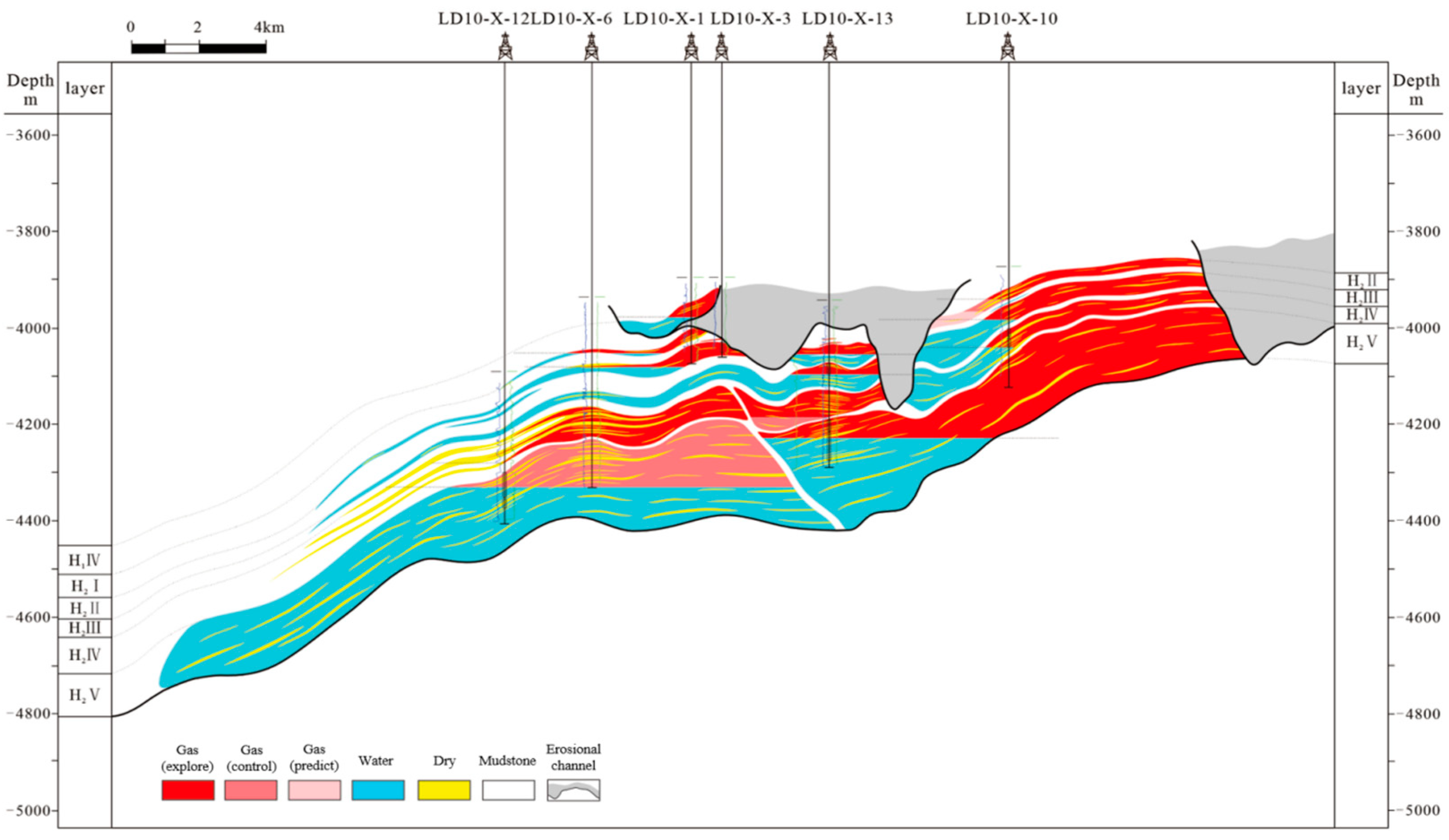
Figure 1. Gas reservoir profile of LD10-X.
Processes 13 02979 g001
Figure 2. Experimental diagram of CO2 solubility in formation water.
Processes 13 02979 g002
Figure 3. Experimental diagram of CH4 solubility in formation water.
Processes 13 02979 g003
Figure 4. Experimental diagram of CO2 exsolution in formation water.
Processes 13 02979 g004
Figure 5. Experimental diagram of CH4 exsolution in formation water.
Processes 13 02979 g005
Figure 6. Pressure–specific volume relationship of CO2 and CH4 at different CH4 mole fractions at 25 °C.
Processes 13 02979 g006
Figure 7. Pressure–specific volume relationship of CO2 and CH4 at different CH4 mole fractions at 80 °C.
Processes 13 02979 g007
Figure 8. Pressure–specific volume relationship of CO2 and CH4 at different CH4 mole fractions at 205 °C.
Processes 13 02979 g008
Figure 9. Comparison diagram of CH4 and CO2 gas–supercritical phase transition line.
Processes 13 02979 g009
Figure 10. Solubility of CH4 under different mixing ratios.
Processes 13 02979 g010
Figure 11. P–S–T diagram of CH4 in formation water.
Processes 13 02979 g011
Figure 12. P–S–T diagram of CO2 in formation water.
Processes 13 02979 g012
Figure 13. P–S–T diagram of CO2 exsolution in CO2 and CH4 miscible formation water.
Processes 13 02979 g013
Figure 14. P–S–T diagram of CH4 exsolution in CO2 and CH4 miscible formation water.
Processes 13 02979 g014
Figure 15. CH4 and CO2 concentration changes during drill stem testing in LD10-X-10 well.
Processes 13 02979 g015
Figure 16. CH4 and CO2 concentration changes during drill stem testing in LD10-X-12 well.
Processes 13 02979 g016
Table 1. The ion composition of formation water from the LD10-X gas field.
Ion TypeNa+ + K+Mg2+Ca2+ClSO42−HCO3Total
Salinity
Ion Content
(mg/L)
4884632177121710014,848
Table 2. Characteristic parameters of different wells in the LD10-X gas field.
WellLayerPressure (MPa)Temperature
(K)
CH4CO2Cl (mg/L)Solubility (m3/m3)Proportion of Solution Gas (%)Gas Type
LD10-X-10H2IV87.079468.4227.0570.98500047.60.54free gas
LD10-X-12H2V93.985488.3553.0142.93540041.25100solution gas
Disclaimer/Publisher’s Note: The statements, opinions and data contained in all publications are solely those of the individual author(s) and contributor(s) and not of MDPI and/or the editor(s). MDPI and/or the editor(s) disclaim responsibility for any injury to people or property resulting from any ideas, methods, instructions or products referred to in the content.