Article

Enhancing Oil Recovery in Vertical Heterogeneous Sandstone Reservoirs Using Low-Frequency Pulsating Water Injection


by
Osmund Mwangupili
* and
Chunsheng Pu
Department of Oil Production Engineering, China University of Petroleum, Qingdao 266580, China
*
Author to whom correspondence should be addressed.
Processes 2025, 13(2), 296; https://doi.org/10.3390/pr13020296
Submission received: 9 December 2024 / Revised: 27 December 2024 / Accepted: 29 December 2024 / Published: 21 January 2025
(This article belongs to the Section Energy Systems)

Abstract

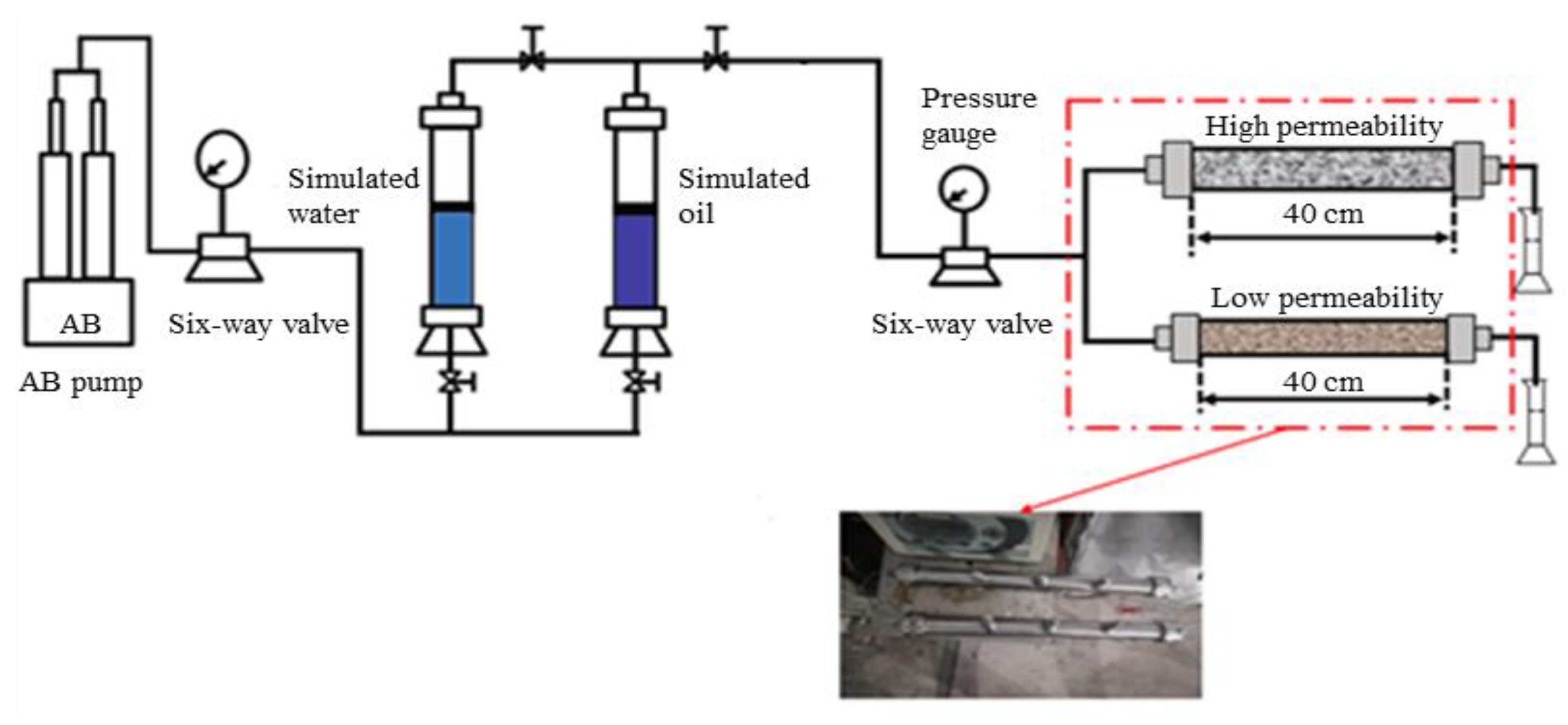
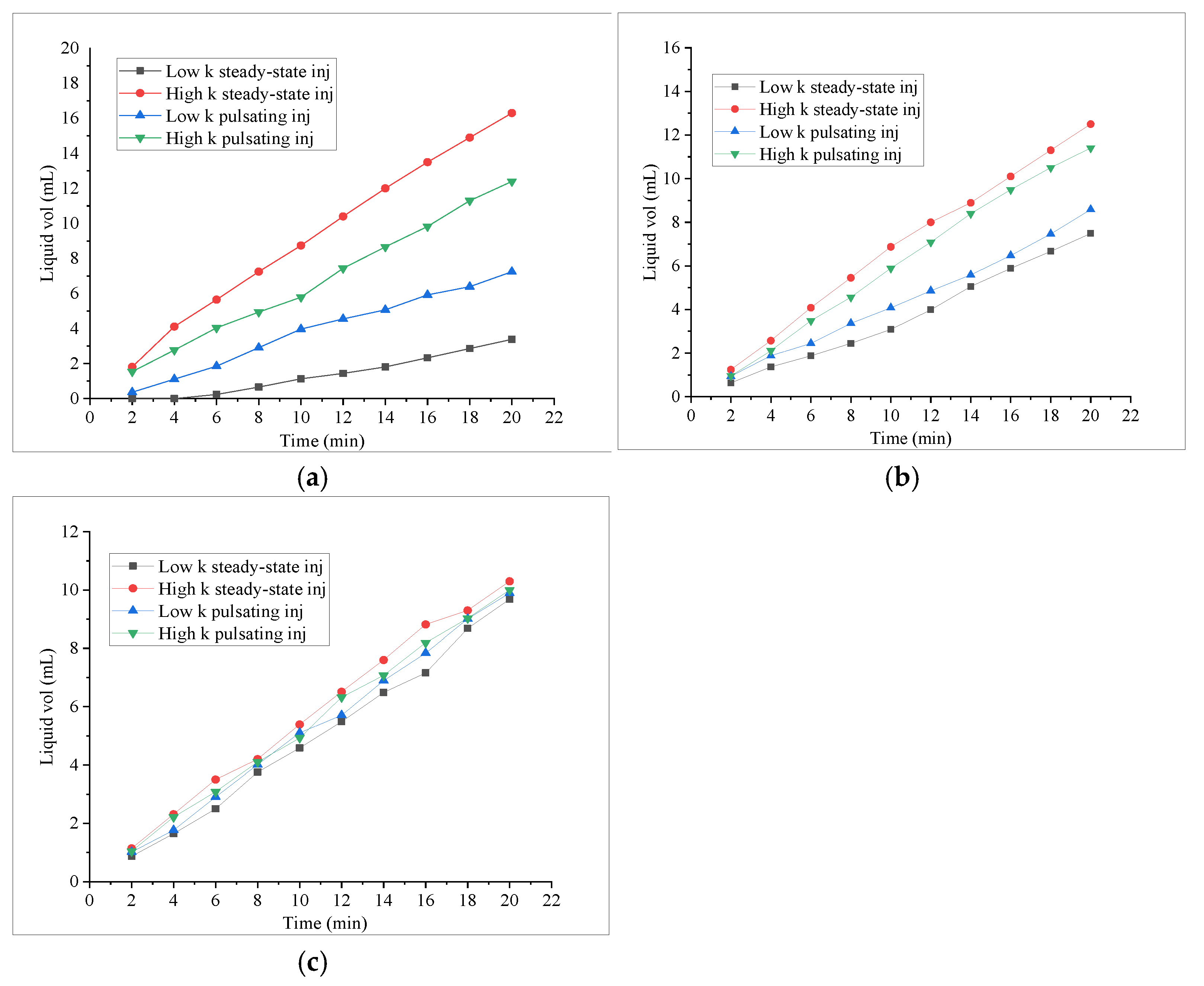
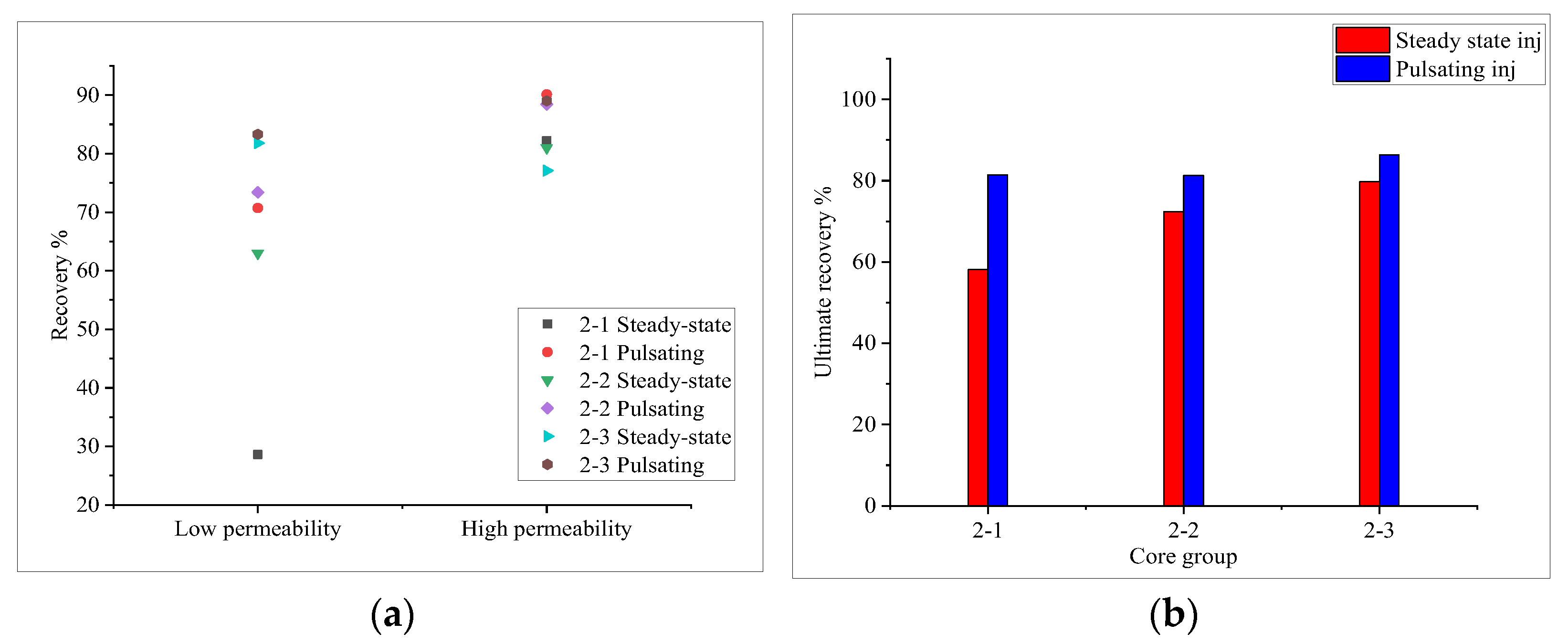
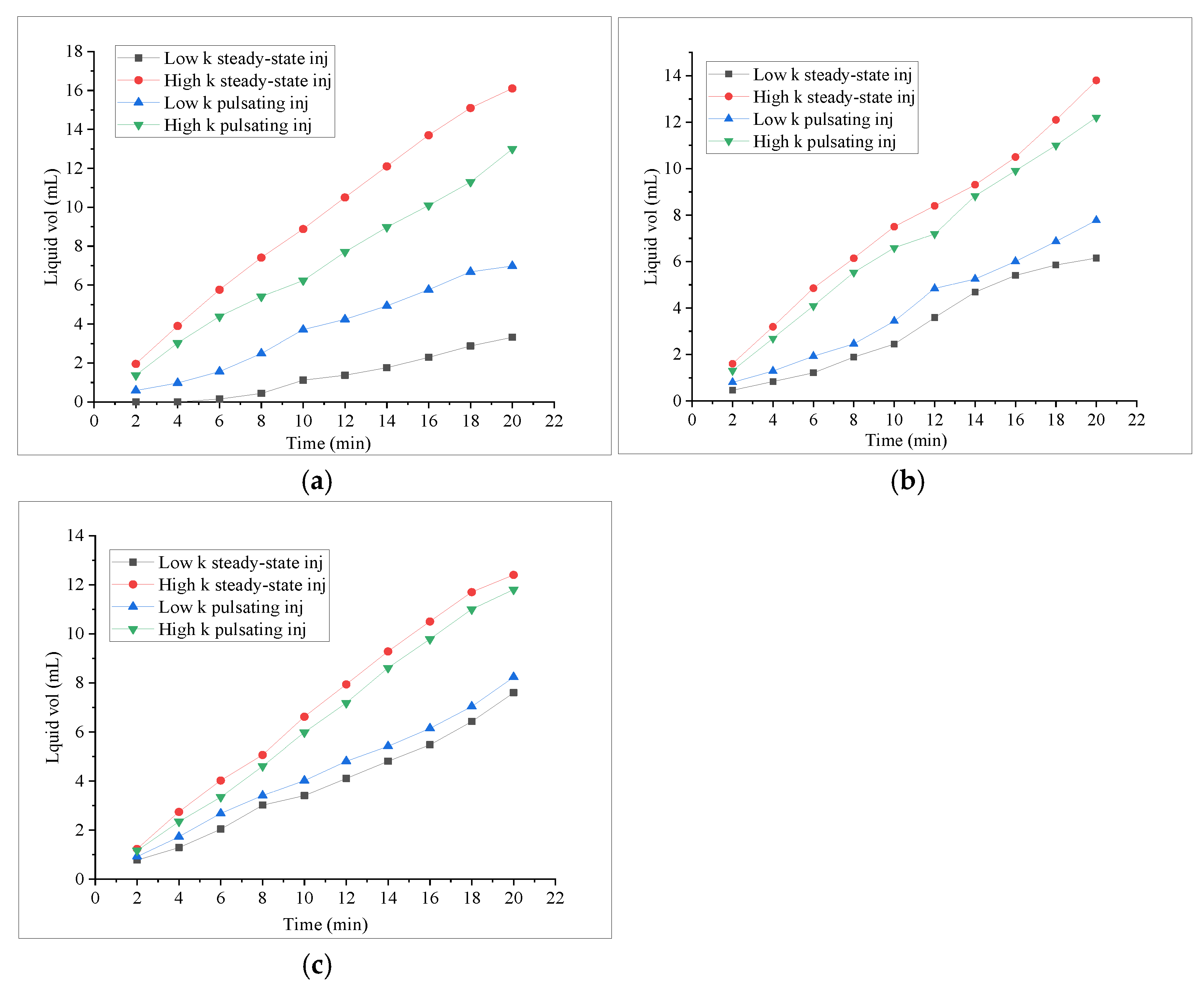
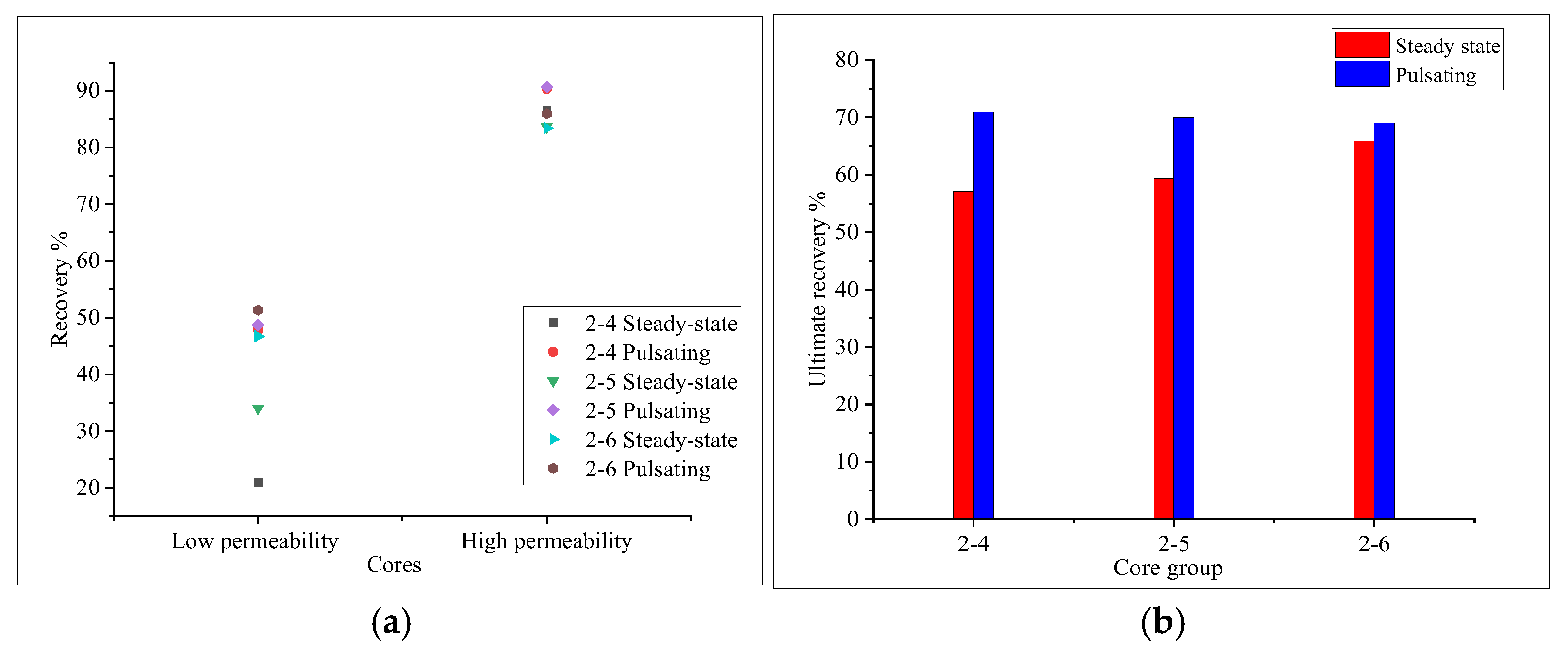
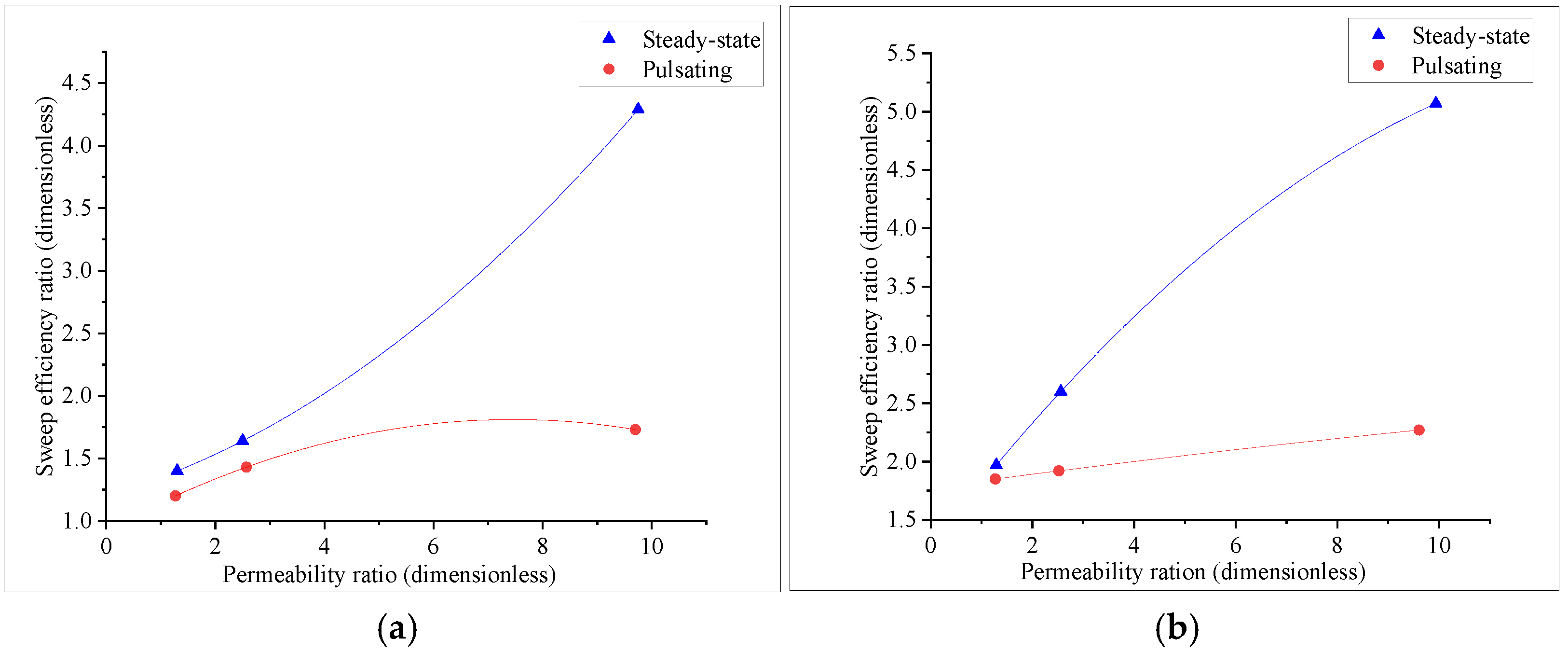
Enhanced oil recovery (EOR) techniques, such as water flooding, often face significant challenges in heterogeneous reservoirs, mainly due to permeability variations that hinder effective oil displacement. This study investigated the impact of pulsating water flooding on oil recovery in reservoirs with vertical heterogeneity, focusing on interlayer and inlayer permeability variations. Laboratory experiments were conducted using cylindrical sand pack models with varying permeability to compare steady-state and pulsating water injection methods. The results demonstrated that pulsating water flooding significantly improved vertical sweep efficiency (VSE) and overall oil recovery, particularly in low-permeability zones. Pulsations helped mobilize trapped oil and redistributed injected water more evenly, mitigating the adverse effects of early water breakthrough and enhancing sweep efficiency. For interlayer heterogeneity, pulsating water injection increased total recovery by 23.2%, 8.9%, and 6.6% for core groups with permeability contrasts of 307.9 × 10⁻3 μm2, 193.9 × 10⁻3 μm2, and 73.25 × 10⁻3 μm2, respectively. For inlayer heterogeneity, recovery factors improved by 13.9%, 10.6%, and 3.1%, respectively. Core groups with higher permeability contrasts (i.e., larger differences between high and low permeability) experienced lower recovery under steady-state conditions, while pulsating injection mitigated these effects, resulting in higher recovery in more heterogeneous reservoirs than steady-state flooding. These findings suggest that pulsating water flooding is an effective and cost-efficient technique for enhancing oil recovery in heterogeneous reservoirs. It improves short-term and long-term recovery by increasing displacement efficiency, particularly in low-permeability regions, and effectively mitigates the challenges of permeability variations. As such, pulsating water flooding offers a significant improvement over steady-state flooding, providing valuable insights for EOR practices in complex reservoirs.
Keywords: low-frequency; oil recovery; vertical heterogeneity; oil mobility; water channeling low-frequency; oil recovery; vertical heterogeneity; oil mobility; water channeling