The Eulerian–Lagrangian Model for Simulating the Moisture Content Effect on the Characteristics of MSW Combustion in a 50 T/D Grate Incinerator

 ,
, 
Abstract
1. Introduction
2. Material and Methods
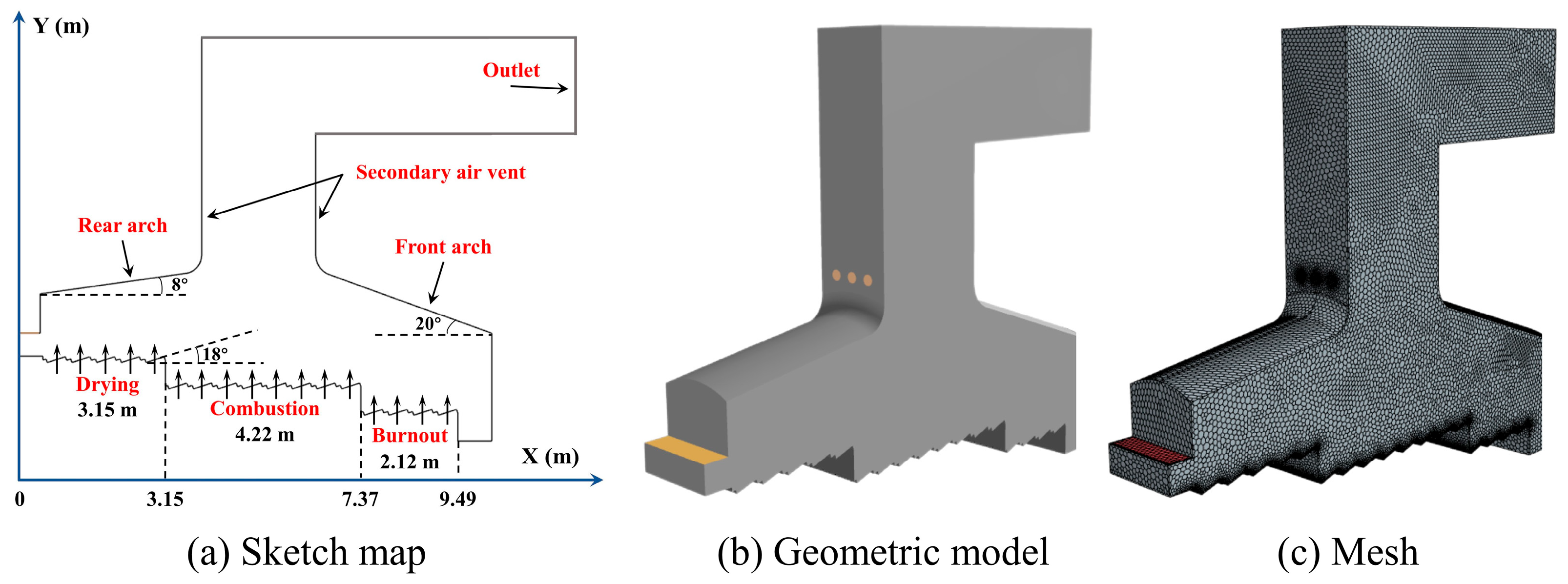
2.1. Incinerator Operating Conditions and MSW Properties
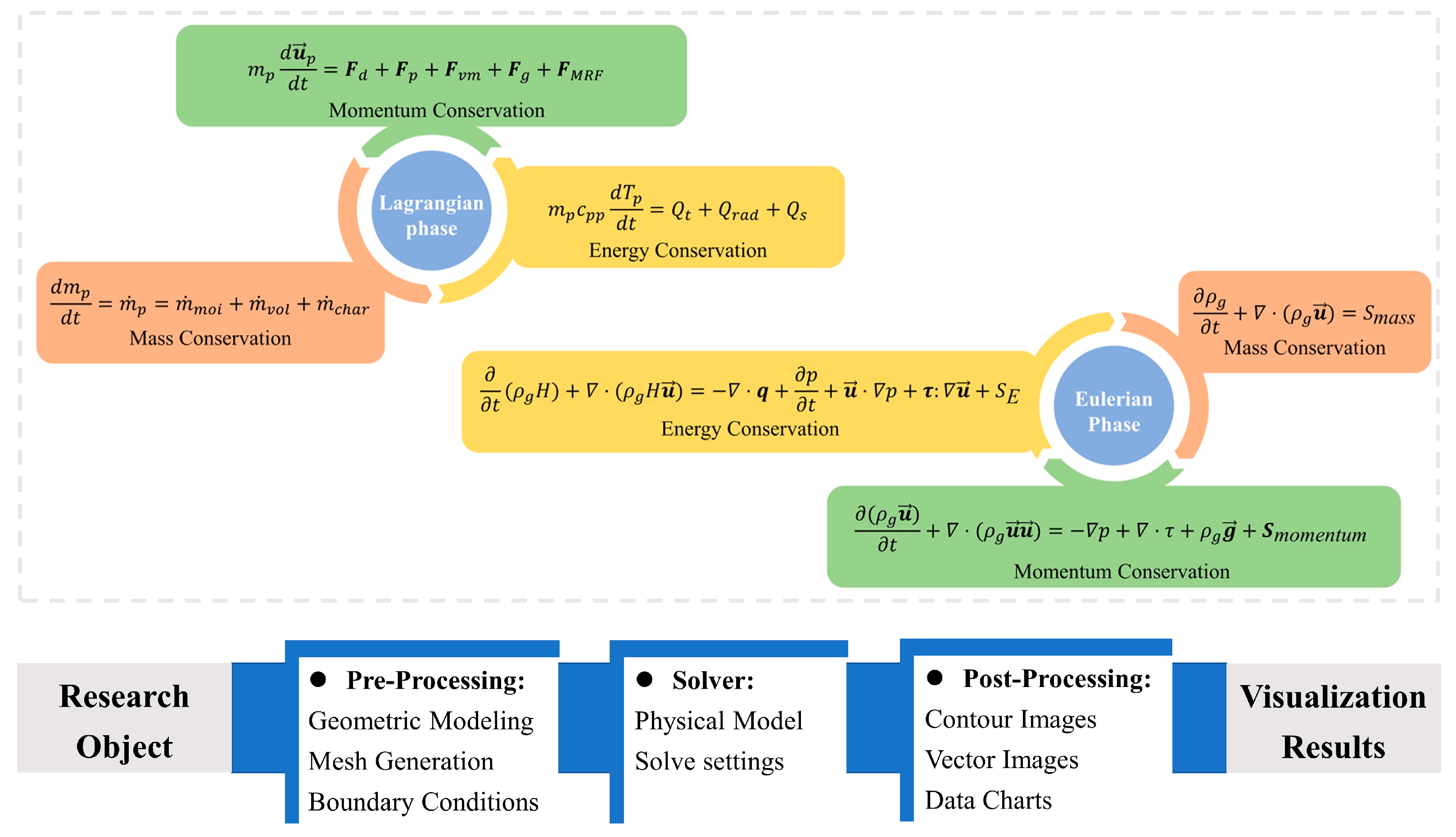
2.2. Methods
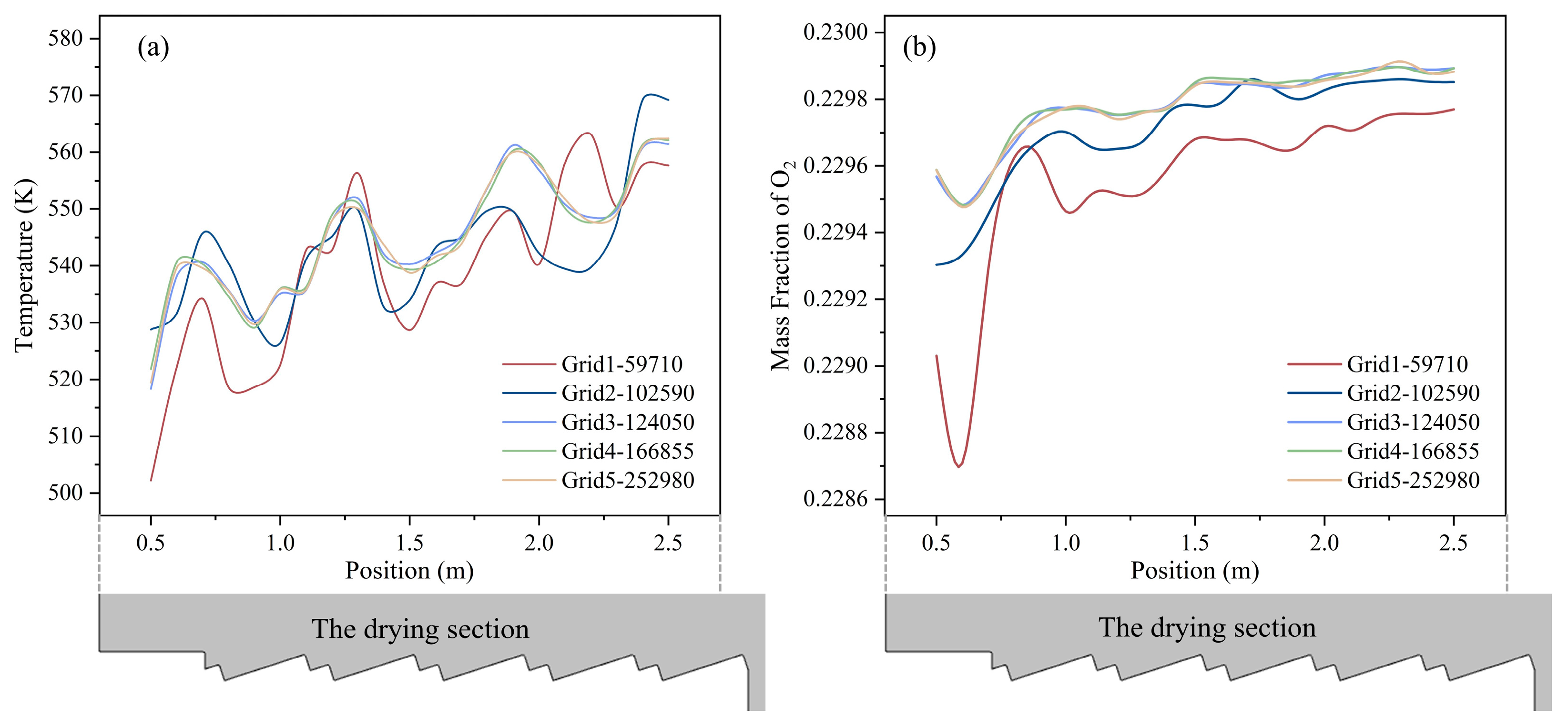
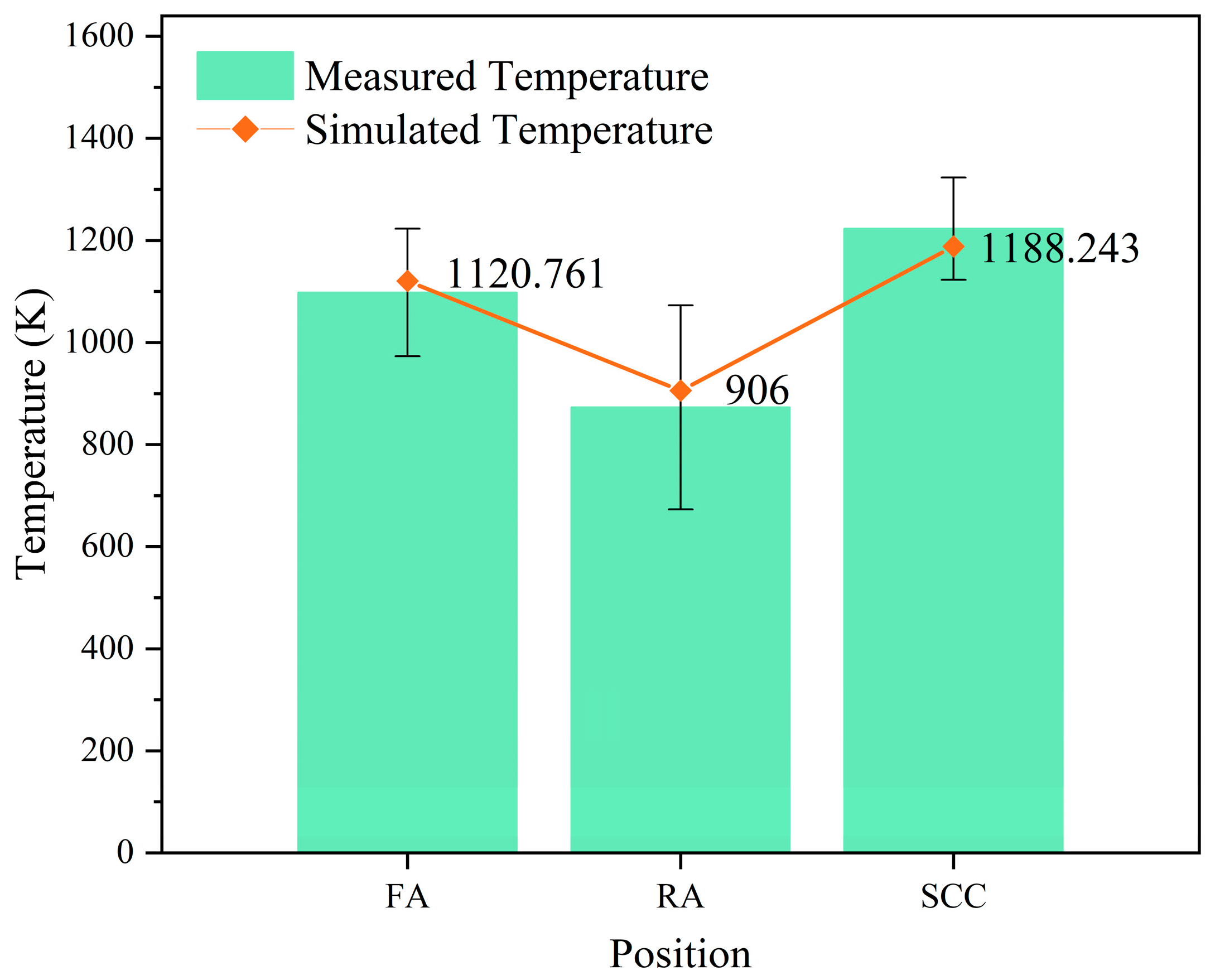
2.3. Grid–Independent Verification and Model Validation
3. Mathematical Model
3.1. Model Assumption
3.2. Transport Equations
- (1)
- Mass conservation equation
- (2)
- Momentum equation
- (3)
- Energy equation
3.3. Solid Bed Combustion Mechanism
3.3.1. Moisture Evaporation
- (1)
- Heat Transfer Limited Evaporation
- (2)
- Vapor Diffusion Limited Evaporation
3.3.2. Volatile Pyrolysis
3.3.3. Char Combustion

| Reaction Rate | (1/s) | (J/kmol) | |
|---|---|---|---|
| 2.3 | 9.29 × 10⁷ | 0 | |
| 1.33 | 1.47 × 10⁸ | 0 | |
| 3.149 | 1.3 × 10⁸ | 0 |
3.4. Incinerator Gas Combustion Mechanism
4. Results and Discussion
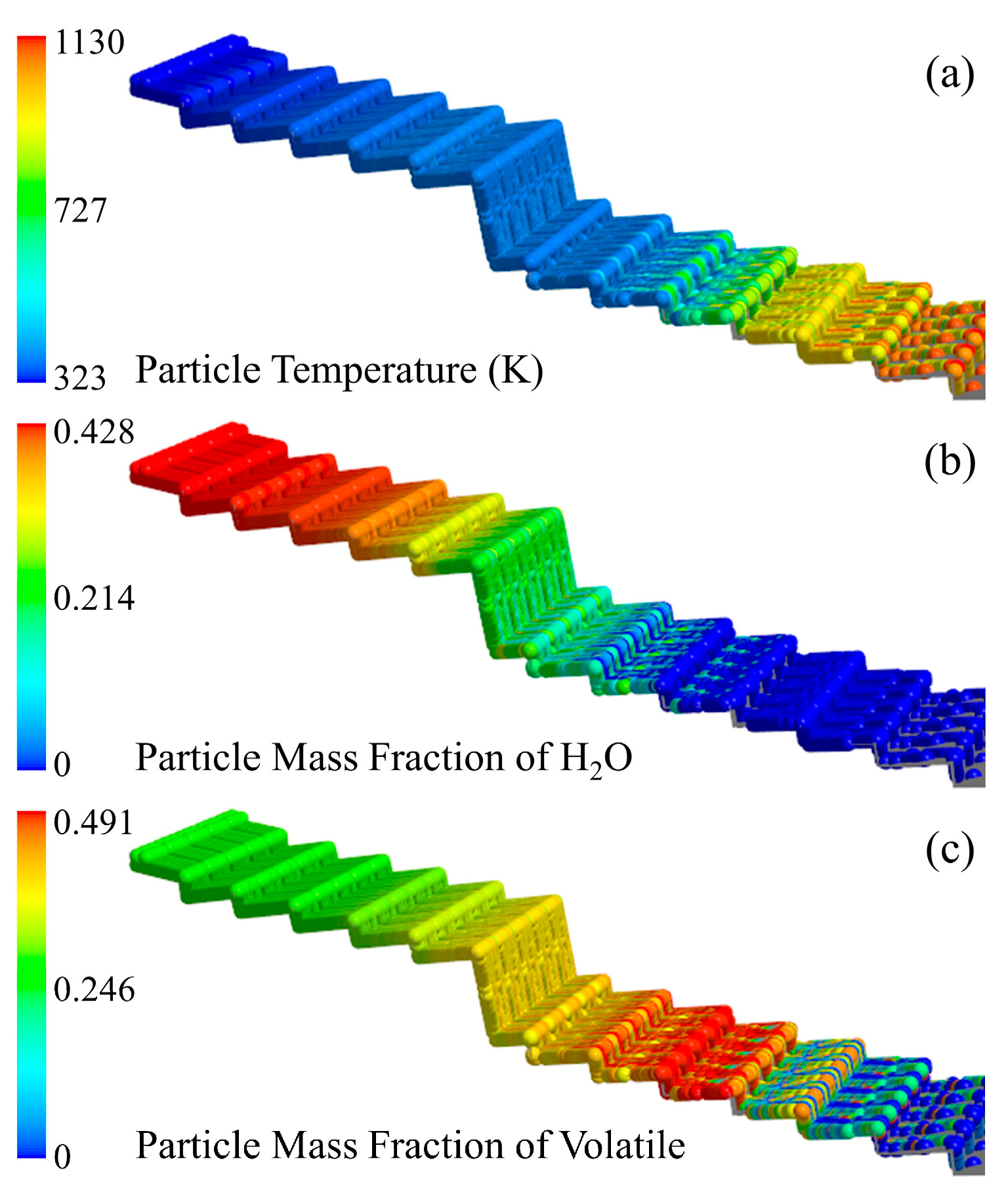
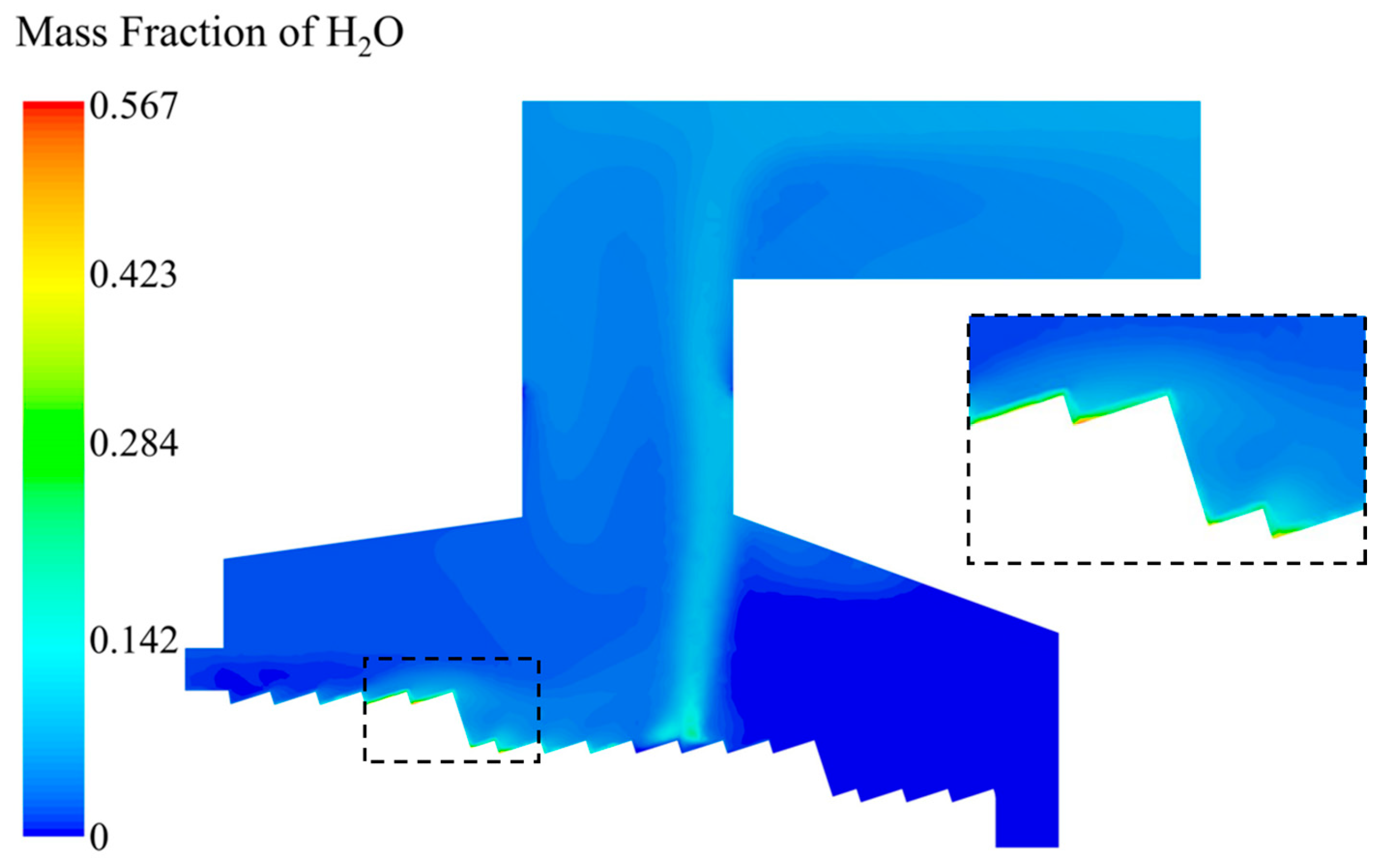
4.1. Solid Bed Component Distribution
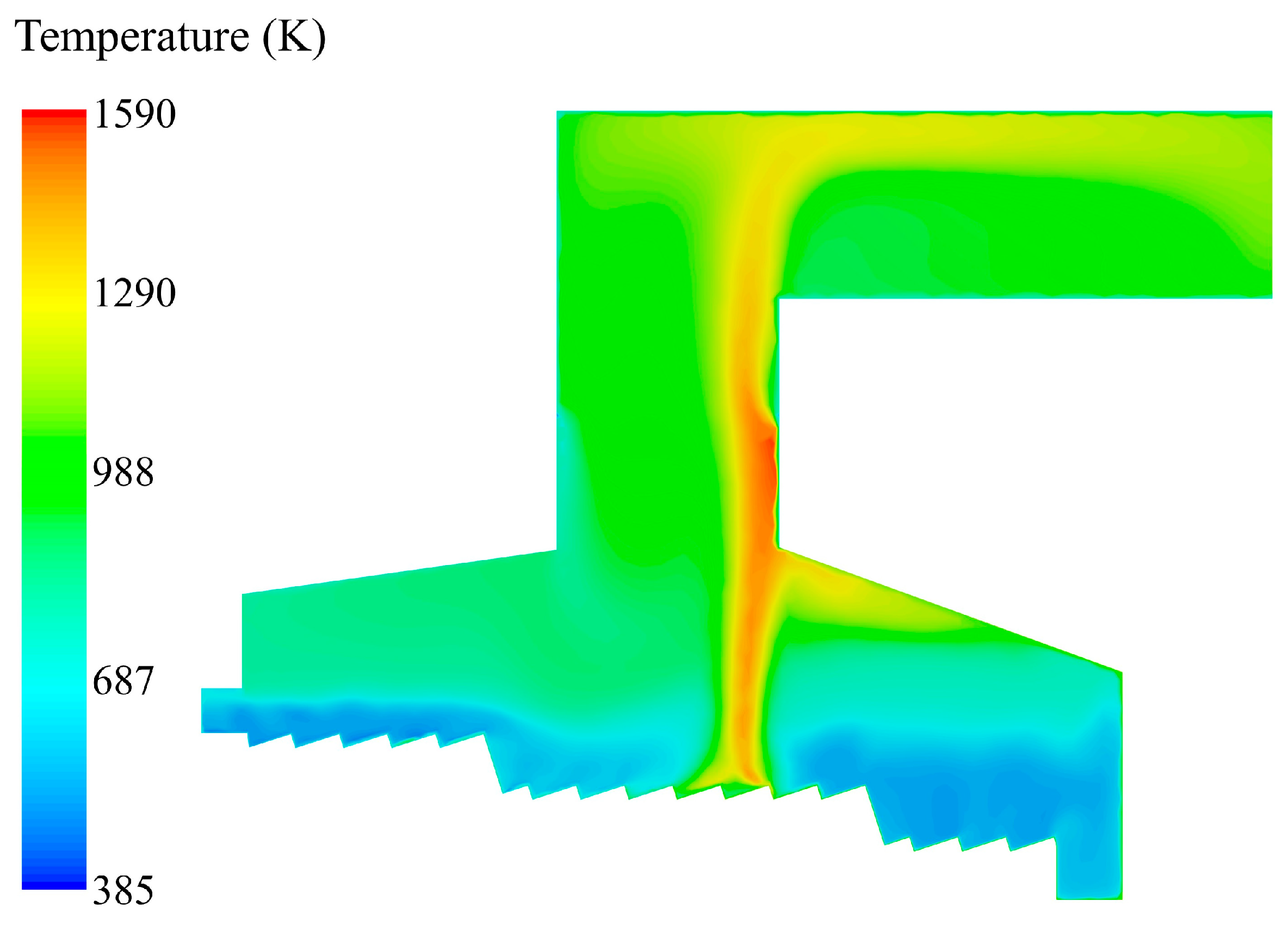
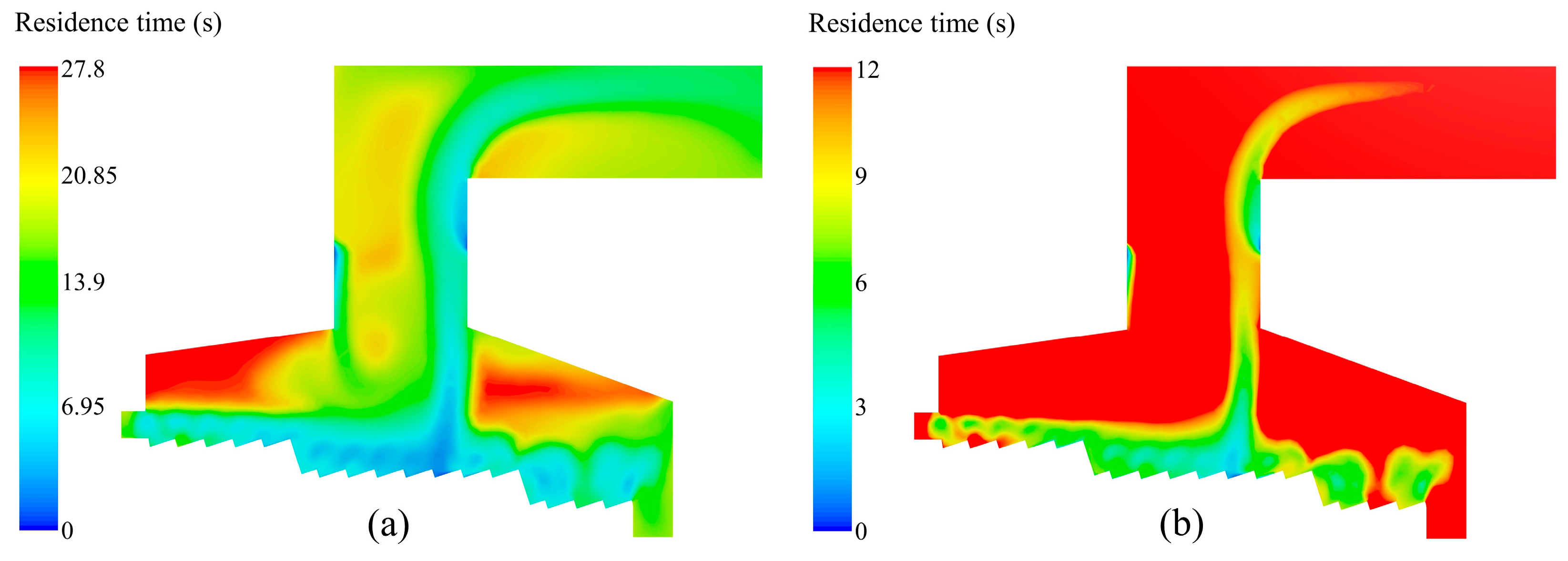
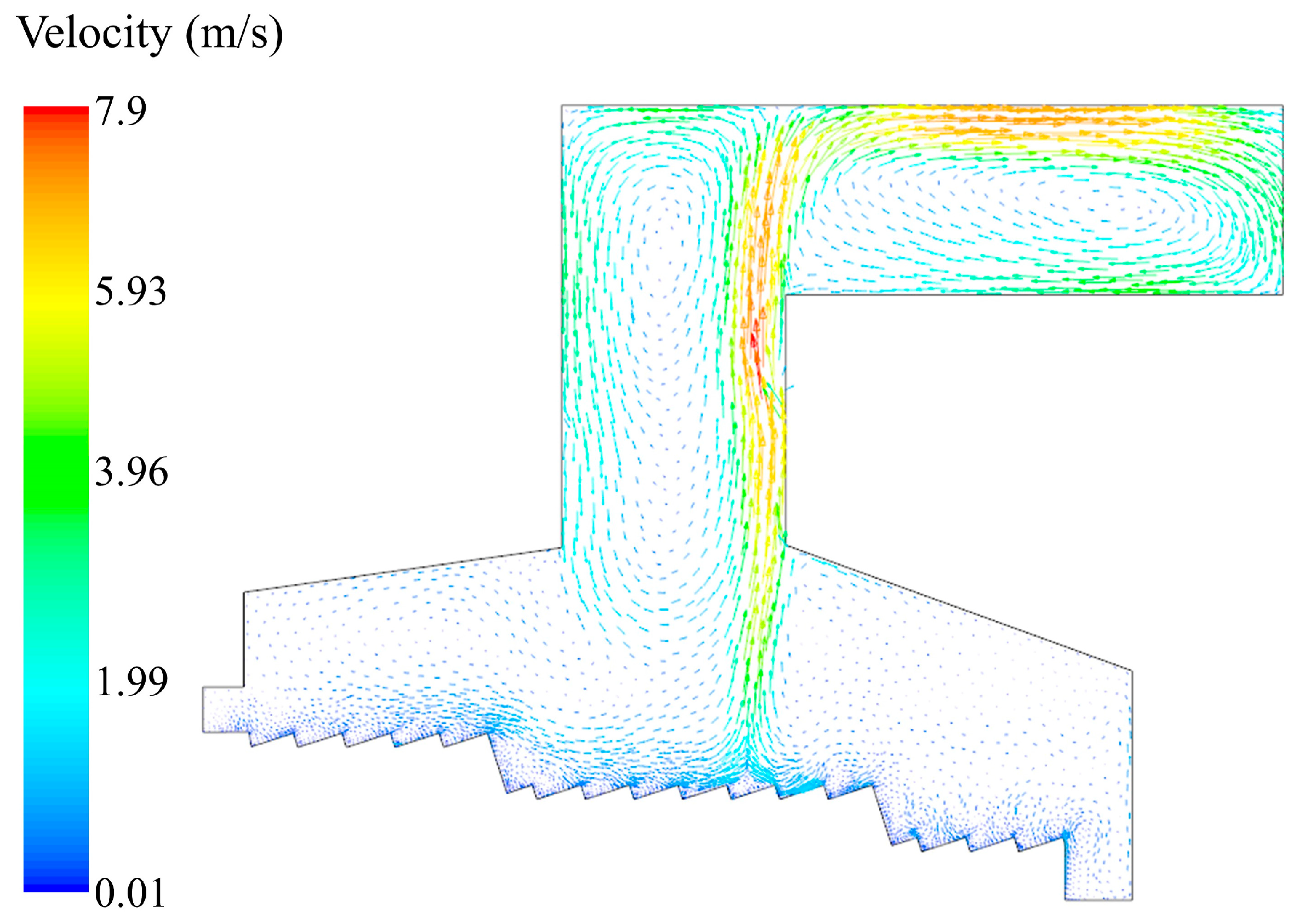
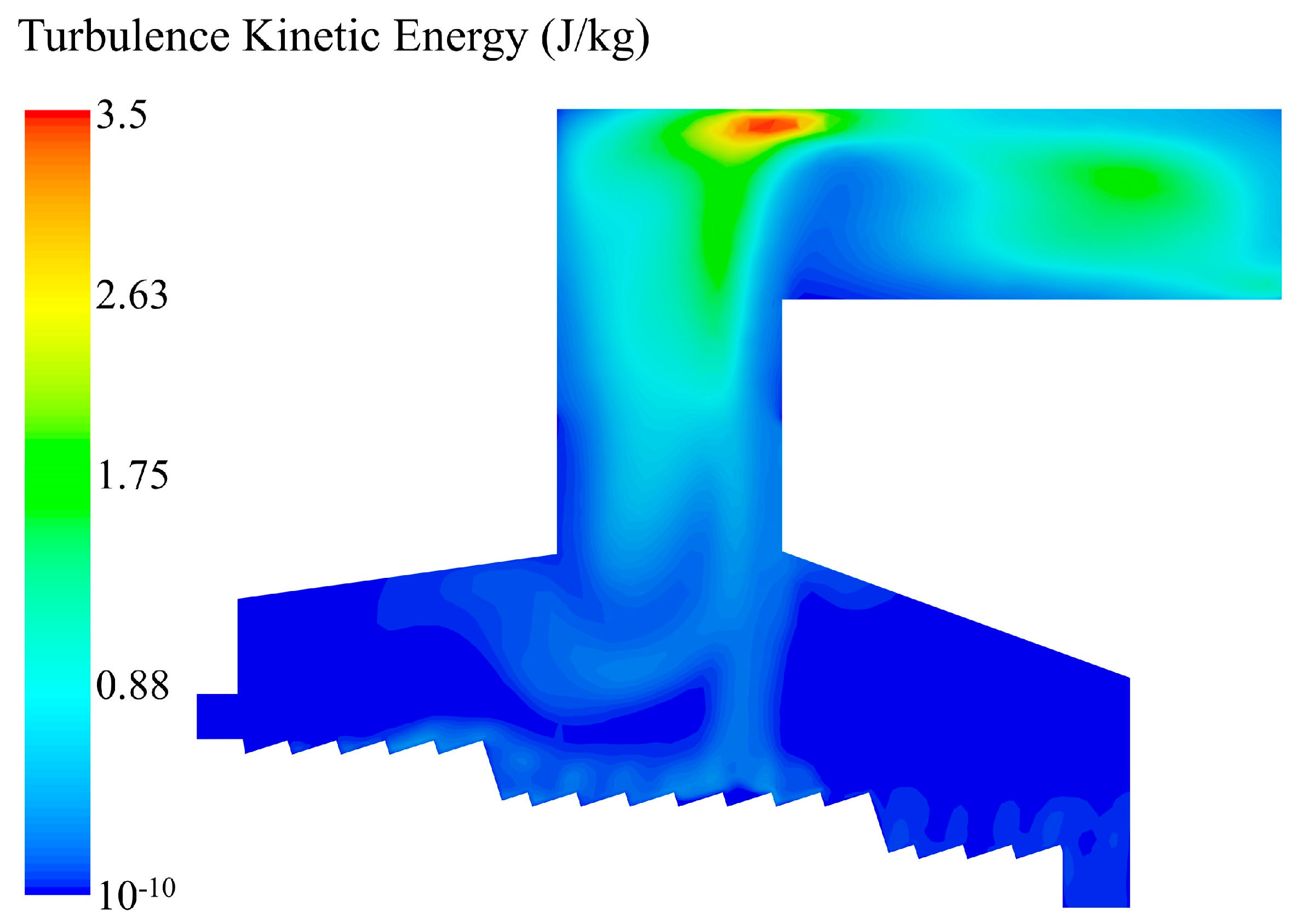
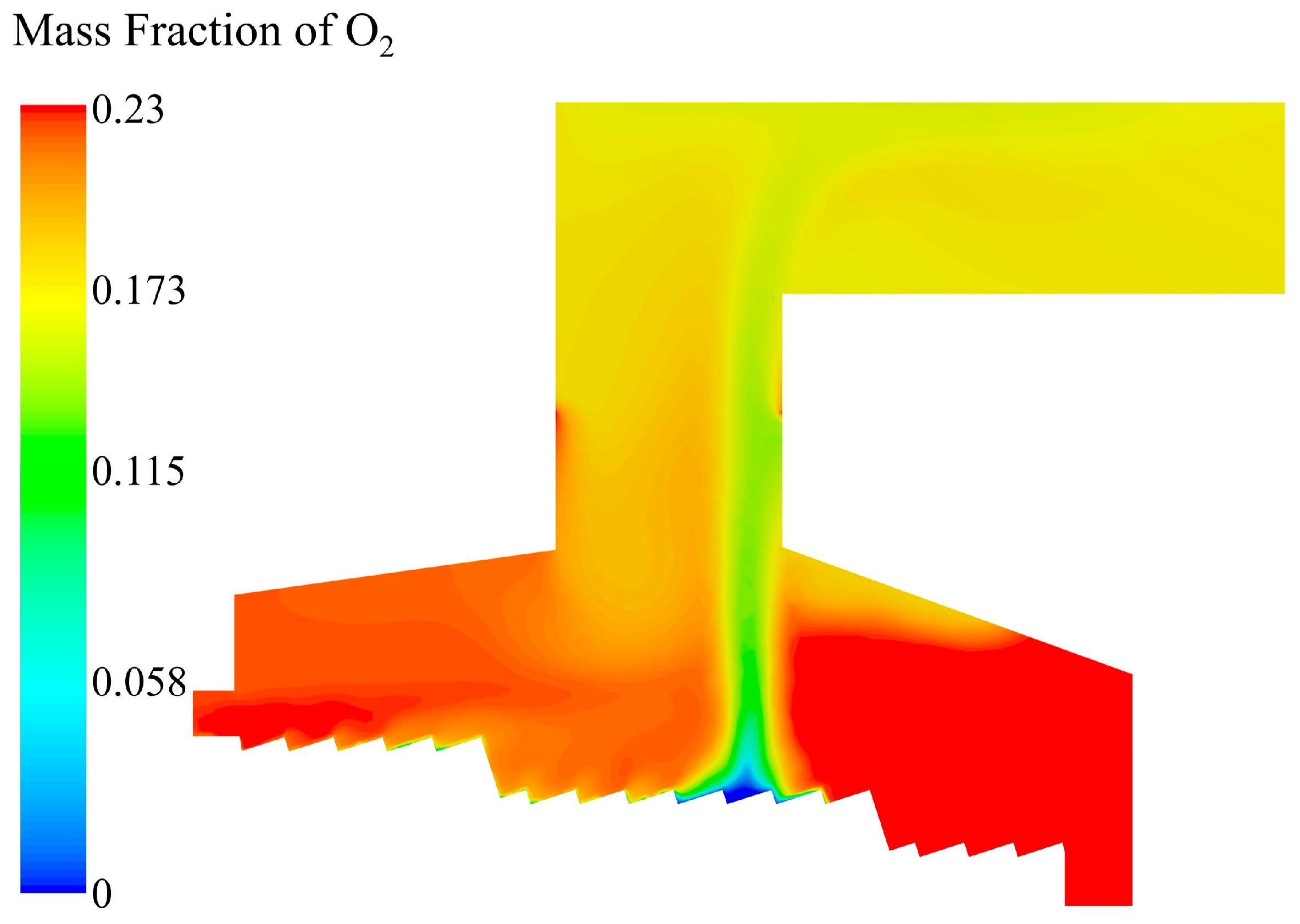
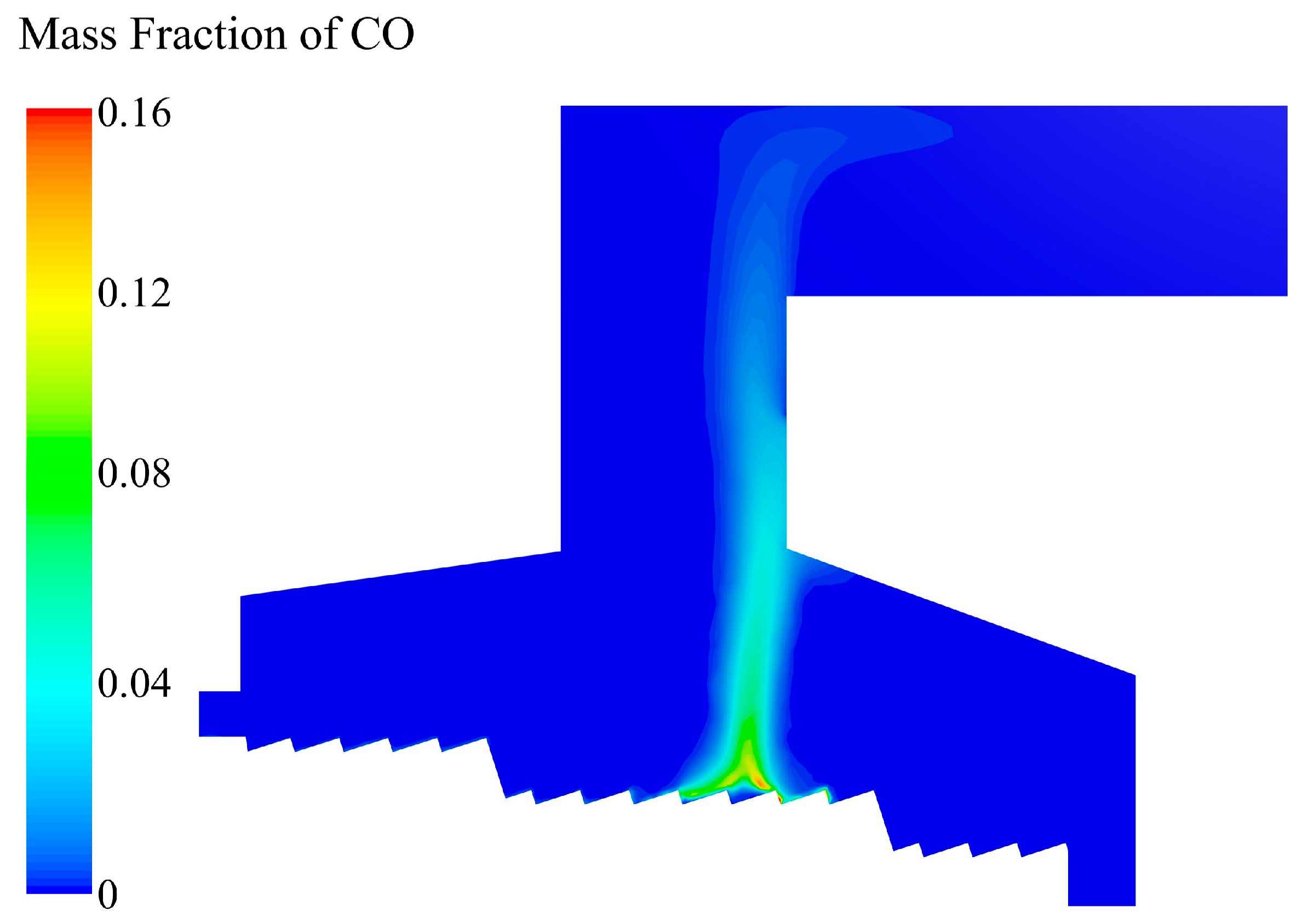
4.2. Distribution of Thermal and Fluid Dynamic Properties
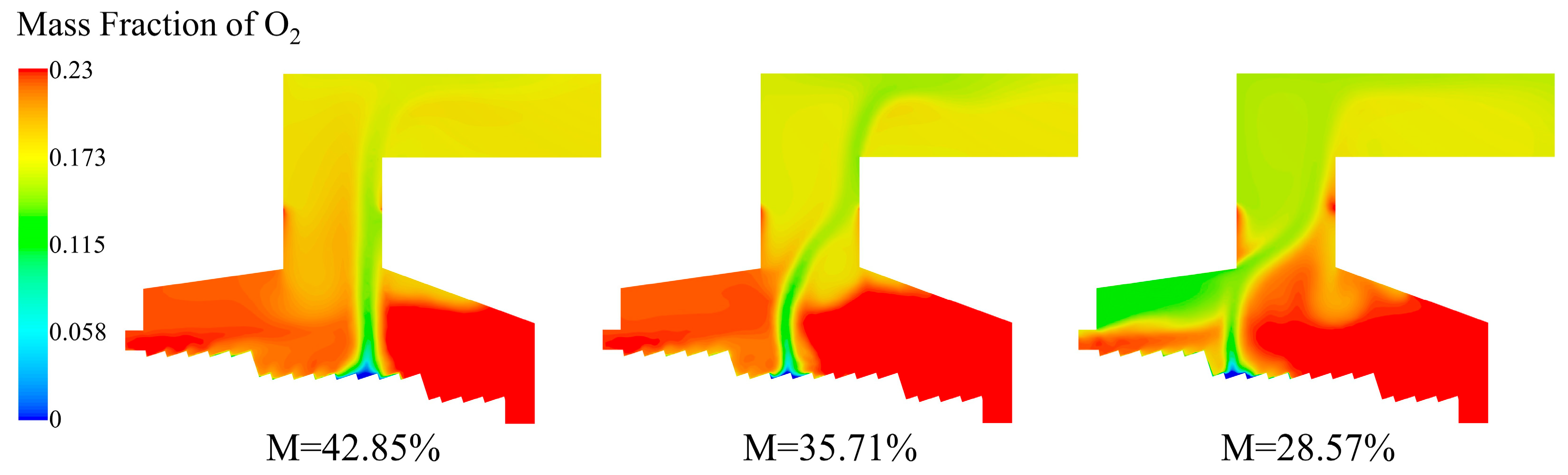
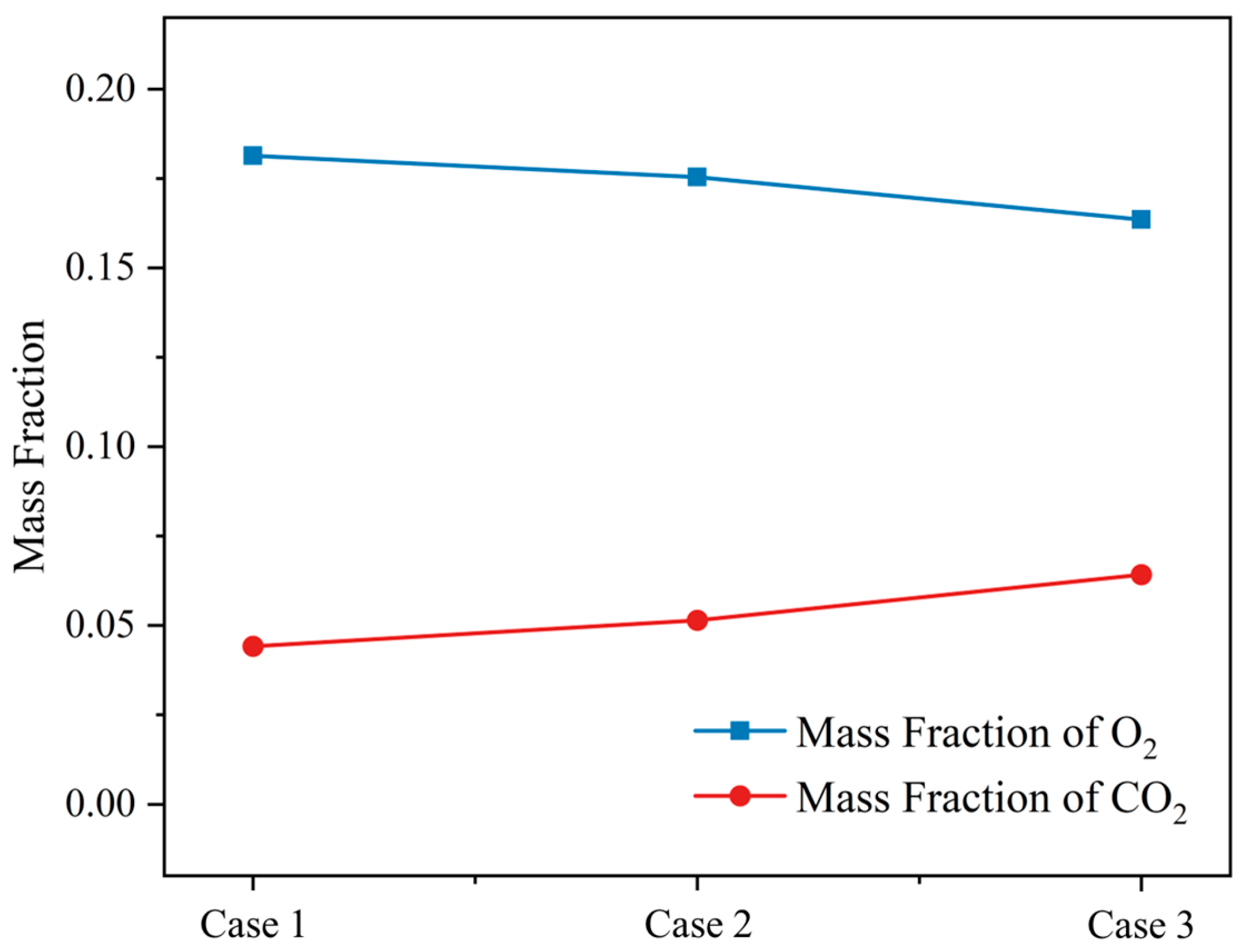
4.3. Comparison of Simulation Results of Different Moisture Content
4.4. Moisture Content Suggestions
5. Conclusions
Author Contributions
Funding
Data Availability Statement
Acknowledgments
Conflicts of Interest
Nomenclature
| mass of MSW particles, kg | |
| rate of mass change in MSW particle, kg/s | |
| rate of mass change in moisture in MSW particle, kg/s | |
| rate of mass change in volatiles in MSW particle, kg/s | |
| rate of mass change in char in MSW particle, kg/s | |
| time, s | |
| instantaneous particle velocity, m/s | |
| gravity force, N | |
| drag force, N | |
| pressure gradient force, N | |
| virtual mass force, N | |
| particle slip velocity, m/s | |
| projected area of the particle, m2 | |
| drag coefficient of the particle | |
| volume of the particle, m3 | |
| static pressure in the continuous phase, Pa | |
| virtual mass coefficient | |
| specific heat capacity of particles, J/(kg·K) | |
| constant pressure heat capacity of the continuous phase, J/(kg·K) | |
| temperature of particle | |
| rate of convective heat transfer to the particle from the continuous phase, W | |
| particle surface area, m2 | |
| mass transfer correction | |
| heat transfer coefficient, W/(m2·K) | |
| particle Nusselt number | |
| Prandtl number of the continuous phase | |
| rate of radiative heat transfer, W | |
| incident radiative heat flux, W/m2 | |
| Spalding transfer number | |
| mass transfer conductance | |
| moisture latent heat of vaporization, (J/kg) | |
| vapor mass fraction | |
| surface equilibrium vapor mass fraction | |
| molecular weight of vapor at the MSW particle surface | |
| molecular weight of gas mixture at the MSW particle surface | |
| molecular diffusivity of the vapor, m2/s | |
| Sherwood number of particle | |
| Schmidt number of the continuous phase | |
| molecular diffusivity of the continuous phase, m2/s | |
| reaction rate constants of pyrolysis process at low temperature | |
| reaction rate constants of pyrolysis process at high temperature | |
| pre-exponential factors of pyrolysis process at low temperature, 1/s | |
| pre-exponential factors of pyrolysis process at high temperature, 1/s | |
| activation energy of pyrolysis process at low temperature, J/mol | |
| activation energy of pyrolysis process at high temperature, J/mol | |
| gas constant | |
| molecular weight of char | |
| concentration of oxidant, kmol/m3 | |
| mass transfer coefficient, m/s | |
| molecular diffusivity of oxidant | |
| pre-exponential factor of gas phase reaction, 1/s | |
| activation energy of gas phase reaction, J/kmol | |
| EBU coefficient | |
| Stefan–Boltzmann constant | |
| volatile fraction at low temperature | |
| volatile fraction at high temperature | |
| ratio of stoichiometric number of solid phase and gas phase reactants |
References
- National Bureau of Statistics of People’s Republic of China. China Statistical Yearbook. 2023. Available online: https://data.stats.gov.cn/index.htm (accessed on 18 November 2024).
- Sarabhorn, P.; Sitthichirachat, P.; Siripaiboon, C.; Khaobang, C.; Somkeattikul, K.; Ding, L.; Areeprasert, C. Community-scale co-incineration of pre-sorted MSW with wood pellet using a decoupling gasifier and integrated burner for syngas combustion. J. Clean. Prod. 2025, 487, 144588. [Google Scholar] [CrossRef]
- Cheng, S.; Ding, X.; Dong, X.; Zhang, M.; Tian, X.; Liu, Y.; Huang, Y.H.; Jin, B. Immigration, transformation, and emission control of sulfur and nitrogen during gasification of MSW: Fundamental and engineering review. Carbon Resour. Convers. 2023, 6, 184–204. [Google Scholar] [CrossRef]
- Blasenbauer, D.; Huber, F.; Mühl, J.; Fellner, J.; Lederer, J. Comparing the quantity and quality of glass, metals, and minerals present in waste incineration bottom ashes from a fluidized bed and a grate incinerator. Waste Manag. 2023, 161, 142–155. [Google Scholar] [CrossRef] [PubMed]
- Smith, J.D.; Sreedharan, V.; Landon, M.; Smith, Z.P. Advanced design optimization of combustion equipment for biomass combustion. Renew. Energy 2020, 145, 1597–1607. [Google Scholar] [CrossRef]
- Tang, J.; Zhuang, J.; Aljerf, L.; Xia, H.; Wang, T.; Gao, B. Numerical simulation modelling on whole municipal solid waste incineration process by coupling multiple software for the analysis of grate speed and air volume ratio. Process Saf. Environ. Prot. 2023, 176, 506–527. [Google Scholar] [CrossRef]
- Ismail, T.M.; Abd El-Salam, M.; El-Kady, M.A.; El-Haggar, S.M. Three dimensional model of transport and chemical late phenomena on a MSW incinerator. Int. J. Therm. Sci. 2014, 77, 139–157. [Google Scholar] [CrossRef]
- Álvarez-Bermúdez, C.; Chapela, S.; Gómez, M.A.; Porteiro, J. CFD simulation of a 4 MW biomass grate furnace using an Eulerian fixed-bed model: Validation of in-bed and freeboard results. Fuel 2025, 387, 134378. [Google Scholar] [CrossRef]
- Zhang, H.; Okuyama, K.; Higuchi, S.; Soon, G.; Lisak, G.; Law, A.W.-K. CFD-DEM simulations of municipal solid waste gasification in a pilot-scale direct-melting furnace. Waste Manag. 2023, 162, 43–54. [Google Scholar] [CrossRef]
- Scherer, V.; Wirtz, S.; Krause, B.; Wissing, F. Simulation of Reacting Moving Granular Material in Furnaces and Boilers an Overview on the Capabilities of the Discrete Element Method. Energy Procedia 2017, 120, 41–61. [Google Scholar] [CrossRef]
- Eslami, A.; Kazemi, S.; Hamidani, G.; Zarghami, R.; Mostoufi, N. CFD-DEM modeling of biomass pyrolysis in a DBD plasma fluidized bed. Int. J. Hydrogen Energy 2025, 196, 152553. [Google Scholar] [CrossRef]
- Yang, Y.B.; Goh, Y.R.; Zakaria, R.; Nasserzadeh, V.; Swithenbank, J. Mathematical modelling of MSW incineration on a travelling bed. Waste Manag. 2002, 22, 369–380. [Google Scholar] [CrossRef] [PubMed]
- Ma, W.; Liu, X.; Ma, C.; Gu, T.; Chen, G. BASIC: A Comprehensive Model for SOx Formation Mechanism and Optimization in Municipal Solid Waste (MSW) Combustion. ACS Omega 2022, 7, 3860–3871. [Google Scholar] [CrossRef]
- Simsek, E.; Brosch, B.; Wirtz, S.; Scherer, V.; Krüll, F. Numerical simulation of grate firing systems using a coupled CFD/discrete element method (DEM). Powder Technol. 2009, 193, 266–273. [Google Scholar] [CrossRef]
- Wissing, F.; Wirtz, S.; Scherer, V. Simulating municipal solid waste incineration with a DEM/CFD method—Influences of waste properties, grate and furnace design. Fuel 2017, 206, 638–656. [Google Scholar] [CrossRef]
- Yan, M.; Antoni; Wang, J.; Hantoko, D.; Kanchanatip, E. Numerical investigation of MSW combustion influenced by air preheating in a full-scale moving grate incinerator. Fuel 2021, 285, 119193. [Google Scholar] [CrossRef]
- Liu, J.; Xie, Z.; Guo, B.; Xu, Y.; Wang, Q.; Guo, X.; Bai, L.; Long, J. The effect of air distribution on the characteristics of waste combustion and NO generation in a grate incinerator. J. Energy Inst. 2024, 117, 101827. [Google Scholar] [CrossRef]
- Xia, H.; Tang, J.; Aljerf, L.; Chen, J. Unveiling dioxin dynamics: A whole-process simulation study of municipal solid waste incineration. Sci. Total Environ. 2024, 954, 176241. [Google Scholar] [CrossRef]
- Yang, X.; Liao, Y.; Ma, X.; Zhou, J. Effects of air supply optimization on NOx reduction in a structurally modified municipal solid waste incinerator. Appl. Therm. Eng. 2022, 201, 117706. [Google Scholar] [CrossRef]
- Yang, X.; Liao, Y.; Wang, Y.; Chen, X.; Ma, X. Research of coupling technologies on NOx reduction in a municipal solid waste incinerator. Fuel 2022, 314, 122769. [Google Scholar] [CrossRef]
- Wang, Y.; Ma, H.; Zeng, W.; Bu, Q.; Yang, X. Influence of moisture content and inlet temperature on the incineration characteristics of municipal solid waste (MSW). Appl. Therm. Eng. 2025, 258, 124677. [Google Scholar] [CrossRef]
- Gu, T.; Ma, W.; Berning, T.; Guo, Z.; Andersson, R.; Yin, C. Advanced simulation of a 750 t/d municipal solid waste grate boiler to better accommodate feedstock changes due to waste classification. Energy 2022, 254, 124338. [Google Scholar] [CrossRef]
- Xu, F.; Teng, L.; Yang, M.; Ye, N.; Yin, L.; Liu, Z.; Chen, D. Research on combustion characteristics and parameter optimization of a 500 t/d municipal solid waste incinerator. Energy 2025, 331, 137074. [Google Scholar] [CrossRef]
- Lin, T.; Liao, Y.; Dai, T.; Ma, X. Investigation on co-disposal technology of sludge and municipal solid waste based on numerical simulation. Fuel 2023, 343, 127882. [Google Scholar] [CrossRef]
- Liu, J.; Xie, Z.; Xu, Y.; Zhang, Q.; Han, Y.; Wang, Q.; Cui, E.; Chen, G. Synergetic effect of sludge co-combustion and flue gas recirculation in a waste incinerator: Combustion optimization and NOx reduction. Fuel 2026, 407, 137454. [Google Scholar] [CrossRef]
- Zhang, D.; Anjum, T.; Chu, Z.; Cross, J.S.; Ji, G. Simulation of multiphase flow with thermochemical reactions: A review of computational fluid dynamics (CFD) theory to AI integration. Renew. Sustain. Energy Rev. 2025, 221, 115895. [Google Scholar] [CrossRef]
- Artemov, V.; Beale, S.B.; de Vahl Davis, G.; Escudier, M.P.; Fueyo, N.; Launder, B.E.; Leonardi, E.; Malin, M.R.; Minkowycz, W.J.; Patankar, S.V.; et al. A tribute to D.B. Spalding and his contributions in science and engineering. Int. J. Heat Mass Transf. 2009, 52, 3884–3905. [Google Scholar] [CrossRef]
- Wisniak, J. Historical development of the vapor pressure equation from dalton to antoine. J. Phase Equilibria 2001, 22, 622–630. [Google Scholar] [CrossRef]
- Sirignano, W.A. Fluid Dynamics and Transport of Droplets and Sprays. J. Fluids Eng. 2000, 122, 190. [Google Scholar] [CrossRef]
- Kobayashi, H.; Howard, J.B.; Sarofim, A.F. Coal devolatilization at high temperatures. Symp. Combust. 1977, 16, 411–425. [Google Scholar] [CrossRef]
- Smoot, L.D.; Smith, P.J. Coal Combustion and Gasification; Plenum Press: New York, NY, USA, 1985; Volume 64, 480p. [Google Scholar] [CrossRef]
- Chen, C.; Horio, M.; Kojima, T. Numerical simulation of entrained flow coal gasifiers. Part I: Modeling of coal gasification in an entrained flow gasifier. Chem. Eng. Sci. 2000, 55, 3861–3874. [Google Scholar] [CrossRef]
- Su, Y.; Chen, C.; Su, A. Simulation of High Temperature Air Combustion with modified Eddy-Break-Up combustion model. Energy Procedia 2012, 14, 127–132. [Google Scholar] [CrossRef][Green Version]
- Holler, T.; Komen, E.M.J.; Kljenak, I. The role of CFD combustion modelling in hydrogen safety management—VIII: Use of Eddy Break-Up combustion models for simulation of large-scale hydrogen deflagration experiments. Nucl. Eng. Des. 2022, 388, 111627. [Google Scholar] [CrossRef]
- Wu, Y.; Smith, P.J.; Zhang, J.; Thornock, J.N.; Yue, G. Effects of Turbulent Mixing and Controlling Mechanisms in an Entrained Flow Coal Gasifier. Energy Fuels 2010, 24, 1170–1175. [Google Scholar] [CrossRef]


| Proximate Analysis | Content (wt.% ar) | Ultimate Analysis | Content (wt.% daf) | LHV (kJ/kg) |
|---|---|---|---|---|
| Moisture | 42.85 | C | 54.5 | 7200 |
| Volatile | 27.7 | O | 34.6 | |
| Fixed Carbon | 9 | H | 7.8 | |
| Ash | 20.45 | N | 1.9 | |
| S | 0.3 |
| Reaction Rate | Stoichiometric Coefficient | (1/s) | (J/kmol) | ||
|---|---|---|---|---|---|
| 3.12 × 10⁵ | 7.6 × 10⁷ | 2.6 | 0.5 | ||
| [CH4]0.5 [O2]1.25 | 4.4 × 10¹¹ | 1.25 × 10⁸ | 11.5 | 2.75 | |
| [H2]0.5 [O2]2.25 [H2O]−1 | 2.5 × 10¹⁶ | 1.68 × 10⁸ | 2.5 | 0.75 | |
| [CO]1.5 [O2]0.25 | 3.16 × 10¹² | 1.67 × 10⁸ | 2.1 | 0.53 | |
| [CO]0.5 [H2O] | 5.0 × 10¹² | 2.83 × 10⁸ | 4.0 | 0.50 | |
| [CO2] [H2]0.5 | 2.3 × 10⁵ | 4.05 × 10⁷ | 4.0 | 0.50 |
| Case 1 | Case 2 | Case 3 | |
|---|---|---|---|
| Moisture | 42.85% | 35.71% | 28.57% |
| Volatile | 27.70% | 31.17% | 34.62% |
| Fixed Carbon | 9.00% | 10.12% | 11.25% |
| Ash | 20.45% | 23.00% | 25.56% |
Disclaimer/Publisher’s Note: The statements, opinions and data contained in all publications are solely those of the individual author(s) and contributor(s) and not of MDPI and/or the editor(s). MDPI and/or the editor(s) disclaim responsibility for any injury to people or property resulting from any ideas, methods, instructions or products referred to in the content. |
© 2025 by the authors. Licensee MDPI, Basel, Switzerland. This article is an open access article distributed under the terms and conditions of the Creative Commons Attribution (CC BY) license (https://creativecommons.org/licenses/by/4.0/).
Share and Cite
Dai, J.; Du, Y.; Xie, Y.; Zhang, D.; Liu, L.; Gui, Y.; Ji, G. The Eulerian–Lagrangian Model for Simulating the Moisture Content Effect on the Characteristics of MSW Combustion in a 50 T/D Grate Incinerator. Processes 2025, 13, 3928. https://doi.org/10.3390/pr13123928
Dai J, Du Y, Xie Y, Zhang D, Liu L, Gui Y, Ji G. The Eulerian–Lagrangian Model for Simulating the Moisture Content Effect on the Characteristics of MSW Combustion in a 50 T/D Grate Incinerator. Processes. 2025; 13(12):3928. https://doi.org/10.3390/pr13123928
Chicago/Turabian StyleDai, Jiacheng, Yingnan Du, Yuanbo Xie, Dongkuan Zhang, Li Liu, Yang Gui, and Guozhao Ji. 2025. "The Eulerian–Lagrangian Model for Simulating the Moisture Content Effect on the Characteristics of MSW Combustion in a 50 T/D Grate Incinerator" Processes 13, no. 12: 3928. https://doi.org/10.3390/pr13123928
APA StyleDai, J., Du, Y., Xie, Y., Zhang, D., Liu, L., Gui, Y., & Ji, G. (2025). The Eulerian–Lagrangian Model for Simulating the Moisture Content Effect on the Characteristics of MSW Combustion in a 50 T/D Grate Incinerator. Processes, 13(12), 3928. https://doi.org/10.3390/pr13123928