
Article

Multiscale Pore Structure and Heterogeneity of Deep Medium-Rank Coals in the Eastern Ordos Basin

1
School of Resources and Safety Engineering, Wuhan Institute of Technology, Wuhan 430070, China
2
The First Exploration Team of Shandong Coalfield Geologic Bureau, Qingdao 266427, China
3
Shandong Engineering Research Center of Mine Gas Disaster Prevention, Qingdao 266427, China
4
State Key Laboratory of Hydraulics and Mountain River Engineering, College of Water Resource & Hydropower, Sichuan University, Chengdu 610065, China
5
Faculty of Engineering and Environment, Northumbria University, Newcastle upon Tyne NE1 8ST, UK
6
Nottingham Geospatial Institute, Jubilee Campus, University of Nottingham, Nottingham NG7 2TU, UK
*
Authors to whom correspondence should be addressed.
Processes 2025, 13(12), 3912; https://doi.org/10.3390/pr13123912
Submission received: 12 November 2025 / Revised: 25 November 2025 / Accepted: 28 November 2025 / Published: 3 December 2025

Abstract

The pore–fracture system in coal reservoirs is a critical factor controlling coalbed methane (CBM) productivity. This study focuses on deep coal samples from the Benxi and Taiyuan formations in the southeastern margin of the Ordos Basin. Using low-pressure CO2 and N2 adsorption experiments combined with fractal theory (Song and FHH models), the pore structure and heterogeneity of micropores (<2 nm) and mesopores (2–100 nm) were systematically analyzed. The results indicate that ash content is the primary inhibiting factor for pore development, showing significant negative correlations with micropore specific surface area, pore volume, and mesopore volume. The influence of macerals exhibits scale-dependent effects: vitrinite is the main contributor to micropore development, while vitrinite and ash content show a synergistic positive correlation with the volume proportion of 10–50 nm mesopores. Thermal maturity has no significant impact on pore volume but notably enhances mesopore heterogeneity. This study reveals an “ash-dominant, vitrinite-assisted” pore development pattern in low- to medium-rank coals, providing a theoretical basis for the efficient development of deep CBM.

1. Introduction

Recent years have witnessed remarkable progress in deep coalbed methane (CBM) exploration in the eastern margin of the Ordos Basin. The successful exploitation of deep CBM at depths of 1800–2200 m in blocks such as Daning–Jixian has established deep CBM as a key contributor to increasing reserves and production of unconventional natural gas in China. Deep coal seams are generally characterized by high temperature, high pressure, and high gas content, resulting in more complex pore structures compared to shallow coal seams. Furthermore, heightened stress sensitivity leads to significant evolution of porosity and permeability during drainage, while adsorption–desorption behaviors exhibit greater sensitivity to pressure changes. These factors collectively impede the development of deep CBM compared to shallow and mid-depth resources. Therefore, systematically delineating the pore types, scale-dependent architecture, and their control on gas adsorption and occurrence in deep coal reservoirs has become a critical prerequisite for promoting the efficient development of deep CBM in this region.
In recent years, scholars have conducted extensive multi-scale pore–fracture research on deep coal reservoirs in the eastern margin of the Ordos Basin. Zhang et al. analyzed the macrolithotype, macerals, industrial composition, and pore characteristics of deep coal in the Benxi Formation, confirming significant vertical heterogeneity in its pore characteristics, with considerable variations in total pore volume, specific surface area, and pore size distribution. The upper section exhibits the highest porosity, with abundant macropores and micropores [1]. Fang et al. studied the No. 8 deep Carboniferous coal seam in the Yulin area of the Ordos Basin. Based on core drilling test results, they comprehensively analyzed the physical characteristics and variation patterns of the coal reservoir. The results indicate that the pore morphology is dominated by wedge-shaped/slit-shaped pores and well-connected open airways, which are favorable for coalbed methane storage and transport [2]. Liu et al. characterized the pore–fracture system and mineral occurrence in deep coal from the Daji Block of the Ordos Basin using multiple qualitative and quantitative analytical techniques. The study revealed that high-rank, medium-to-low ash deep coal exhibits a complex dual-pore fracture structure with a notable cross-scale effect [3]. Zhang et al. investigated coal samples from the Shanxi and Taiyuan Formations in the Daning–Jixian Block of the eastern Ordos Basin. Using low-pressure CO2/N2 adsorption (LP-CO2/N2 GA) and high-pressure mercury intrusion porosimetry (HPMI), they analyzed pore volume, specific surface area, and pore size distribution, finding that the comprehensive fractal dimension decreases with increasing pore volume and specific surface area [4]. Wang et al. studied coal samples from typical deep coalbed methane wells in the Yan’an Gas Field of the Ordos Basin, analyzing the gas-bearing characteristics of deep coal. The results demonstrate that gas content is jointly controlled by total organic carbon content, minerals, pore structure, and other factors [5]. Liu et al. conducted low-field nuclear magnetic resonance (LF-NMR) displacement and micro-computed tomography (μ-CT) experiments on coal and tight sandstone samples from the Permian Shanxi Formation in the Yan’an area. The results show a significant reduction in pore seepage water during the low displacement pressure stage [6]. Ouyang et al. compared the full-scale pore structure of coal reservoirs using field emission scanning electron microscopy (FE-SEM), high-pressure mercury intrusion, and low-temperature nitrogen adsorption experiments. The results indicate that coal pores are predominantly organic matter-hosted, with pore sizes significantly larger than those in transitional marine-continental shale and marine shale [7]. Liu et al. performed full-scale pore size analysis of medium-rank coal in the Zijinshan area of the eastern Ordos Basin using high-pressure mercury intrusion (HPMI), scanning electron microscopy (SEM), and low-pressure CO2 adsorption (LP-CO2) experiments. The results demonstrate that methane adsorption in deep coal reservoirs is jointly controlled by geological conditions, organic matter composition, and pore structure [8].
Above all, an extensive study has been conducted on the pore and fracture structure of deep coal seams in the study area. However, there are still the following issues. The research on pore and fracture structures mainly focuses on the detailed description of full-scale pore volume, and the influencing factors of deep coal seam pore and fracture structures, especially the evolution laws of pore and fracture structures constrained by industrial components such as ash content, need to be explored.
In summary, the deep coal reservoirs of the Benxi and Taiyuan Formations in the eastern margin of the Ordos Basin possess distinctly different characteristics in terms of pore structure, adsorption properties, and stress response. To further elucidate the occurrence mechanisms and mobility patterns of deep coalbed methane, this study will focus on representative deep coal samples from the Benxi and Taiyuan Formations. Multi-scale characterization techniques will be employed to systematically analyze the pore–fracture structure and investigate its controlling effects on adsorption behavior. The findings aim to provide a theoretical foundation for understanding the enrichment patterns and promoting efficient development of deep coalbed methane in the study area.

2. Geological Setting and Experiments Methods

2.1. Geological Setting

The study area is situated in the structural junction zone at the southeastern margin of the Ordos Basin, spanning the southern segment of the Jinsxi Flexural Fold Belt and the eastern part of the Yishan Slope. Administratively, it belongs to Daning County and Ji County in Shanxi Province, adjacent to the Yanchuannan CBM block to the south [9,10,11,12]. The regional structure is primarily controlled by a monoclinal structure trending NNE and dipping gently NW, accompanied by a set of NE-striking reverse faults. Stratigraphic records reveal a complete Permian paralic depositional sequence, including the Benxi, Taiyuan, and Shanxi Formations [13,14,15,16]. The Shanxi Formation is dominated by deltaic depositional systems, while the Taiyuan and Benxi Formations show distinct sedimentary facies zonation, transitioning north to south from delta facies to lagoon, tidal flat, and shallow shelf facies [17,18,19,20]. The vertical sequence is characterized by frequent interbedding of mudstone, coal seams, and sandstone, with pure mudstone sections being underdeveloped [21,22,23,24,25,26,27,28,29,30].
The Benxi Formation coal seams (5–12 m thick) and the Taiyuan Formation coal seams (1–6 m thick) are the main CBM exploration targets in the area. Among them, the No. 8 coal seam of the Benxi Formation is characterized by wide distribution, significant single-layer thickness, continuous extension, and stable occurrence. Its distribution area within the burial depth range of 2000–3500 m is approximately 6.9 × 10³ m2, making it the most favorable target layer for deep CBM exploration in the Ordos Basin (Figure 1).

2.2. Experimental Methods

For this study, 13 coal samples of 25 × 25 × 25 cm were collected from the coal seams of the Benxi and Taiyuan formations on the southeastern margin of the Ordos Basin. After collection, the samples were wrapped in polyethylene plastic film and transported to the laboratory for preliminary testing following standard GB/T 19222-2003 [31]. Macroscopic lithotype identification was carried out according to the Chinese national standard GB/T 18023-2000 [31]. Polished sections of 3 cm × 3 cm were prepared based on GB/T 6948-1998 for maceral analysis. Proximate analysis of all coal samples was performed using standard GB/T 212-2001 [31].
Low-pressure N2 gas adsorption (LPN2 GA) experiment was conducted using approximately 5 g of coal samples that were crushed and sieved to 40–60 mesh. Prior to testing, the samples underwent degassing pretreatment at 77 K. The adsorption/desorption measurements were performed using a Micromeritics ASAP 2460 physical adsorption analyzer (Micromeritics Instrument Corporation, Georgia, USA). During the testing procedure, the relative N2 pressure (P/P0) was gradually raised from 0 to 1, with an equilibration interval of 10 s at each pressure point. The specific surface area was determined from the obtained adsorption isotherms using the Brunauer–Emmett–Teller (BET) method, while the pore volume and pore size distribution of mesopores (2–100 nm) were calculated based on the Barrett–Joyner–Halenda (BJH) model [32]. The degassing temperature is usually 110 °C, and the degassing time is 10 h. Under the degassing temperature and vacuum degree, if the pressure change rate is less than a certain threshold (such as 2 µ bar/min) and maintained for 30 min, it can be considered as degassing completed. The analysis bath temperature is −195.8 °C (boiling point of liquid nitrogen at standard atmospheric pressure). The relative pressure range is 0.01~0.99.
Low-pressure CO2 Gas Adsorption (LPCO2 GA) experiment was performed on 2–5 g coal samples crushed and sieved to 40–60 mesh. Prior to measurement, the samples underwent degassing pretreatment under vacuum at 273.15 K. CO2 adsorption/desorption isotherms were measured using an ASAP 2460 physical adsorption analyzer within the relative pressure range of 0–0.1, with a 10-s equilibration interval at each pressure point. The pore volume and size characteristics of micropores (pore width < 2 nm) were determined from the CO2 adsorption data using the Density Functional Theory (DFT) model. This methodology specifically targets the characterization of micropore structural parameters [33].

2.3. Fractal Theories

The Frenkel–Halsey–Hill (FHH) model represents the most widely employed fractal approach for interpreting low-temperature nitrogen adsorption data. Within this theoretical framework, the fractal dimension is derived through linear regression analysis of the relationship between adsorption capacity and relative pressure. Building upon the fundamental principles of low-pressure N2 adsorption methodology, this model enables quantitative characterization of pore heterogeneity across the mesopore range (2–100 nm). The mathematical expression for determining the fractal dimension is presented as follows:
l n ( V V m ) = C + A l n l n ( P 0 P ) , D = 3 A + 3 D = A + 3
In Equation (1), V represents the adsorbed volume corresponding to the equilibrium pressure P, cm3·g−1; Vm represents the adsorption volume of a monolayer of gas, cm3·g−1; P0 is saturated vapor pressure, MPA; C is a constant; A is the power-law exponent, whose value depends on the fractal dimension (D) and the adsorption mechanism.
Based on the CO2 adsorption test results, the non-uniformity of micropores (pore size < 2 nm) was investigated using the fractal model derived by Lai et al. [34]. This formula can be expressed as:
l n S r = l n ( S 0 K s ) + C   l n r
In Equation (2), Sr is the total specific surface area, m2·g−1; Ds is the slope of this equation, dimensionless; r is the pore radius, nm; the surface fractal dimension Ds = 2 + C or Ds = (C − 3)/3.

3. Results and Discussion

3.1. Basic Geological Characteristics

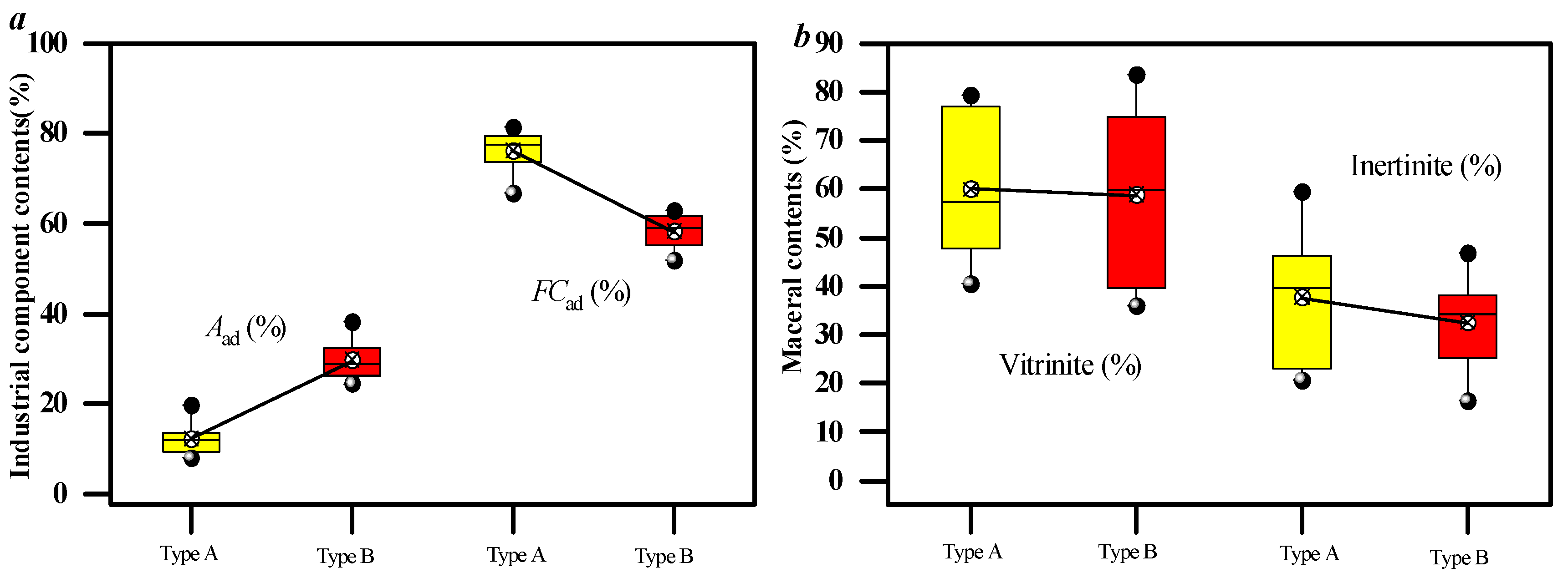
The 13 samples were classified into two types based on ash content. Type A samples, with ash content between 5% and 20%, are designated as medium-ash coal. Type B samples have ash content primarily ranging from 20% to 40% and are classified as high-ash coal. The fundamental characteristics of the coal samples are summarized in Table 1. The ash content was found to be distributed between 7.95 and 38.29%. The vitrinite content was identified as the dominant component, ranging from 36.01 to 83.59%, while the inertinite content was measured between 16.41 and 59.42%. Liptinite content, however, was only detected in samples S1, S3, S9, S12, and S13, with values ranging from 2.42 to 25.87%. The mean maximum vitrinite reflectance (Ro,max) values for all samples were determined to be within the range of 1.02 to 2.02%. Based on this parameter, the coal samples are collectively classified as being of low to medium maturity.
The industrial and maceral compositions of samples with different ash contents are displayed in the box plots of Figure 2a and Figure 2b, respectively. The analysis shows a negative correlation between ash content and fixed carbon content, with medium-ash coals generally having higher fixed carbon than high-ash coals. Regarding macerals, the vitrinite content is higher in medium-ash coals, whereas the inertinite content shows the opposite trend. Furthermore, the ratio of vitrinite to inertinite in high-ash samples exhibits greater dispersion, indicating more complex paleoenvironmental conditions and subsequent geological alterations.

3.2. Adsorption Pore Distribution and Heterogeneity

3.2.1. Microporous Structure of All Samples with Different Ash Content

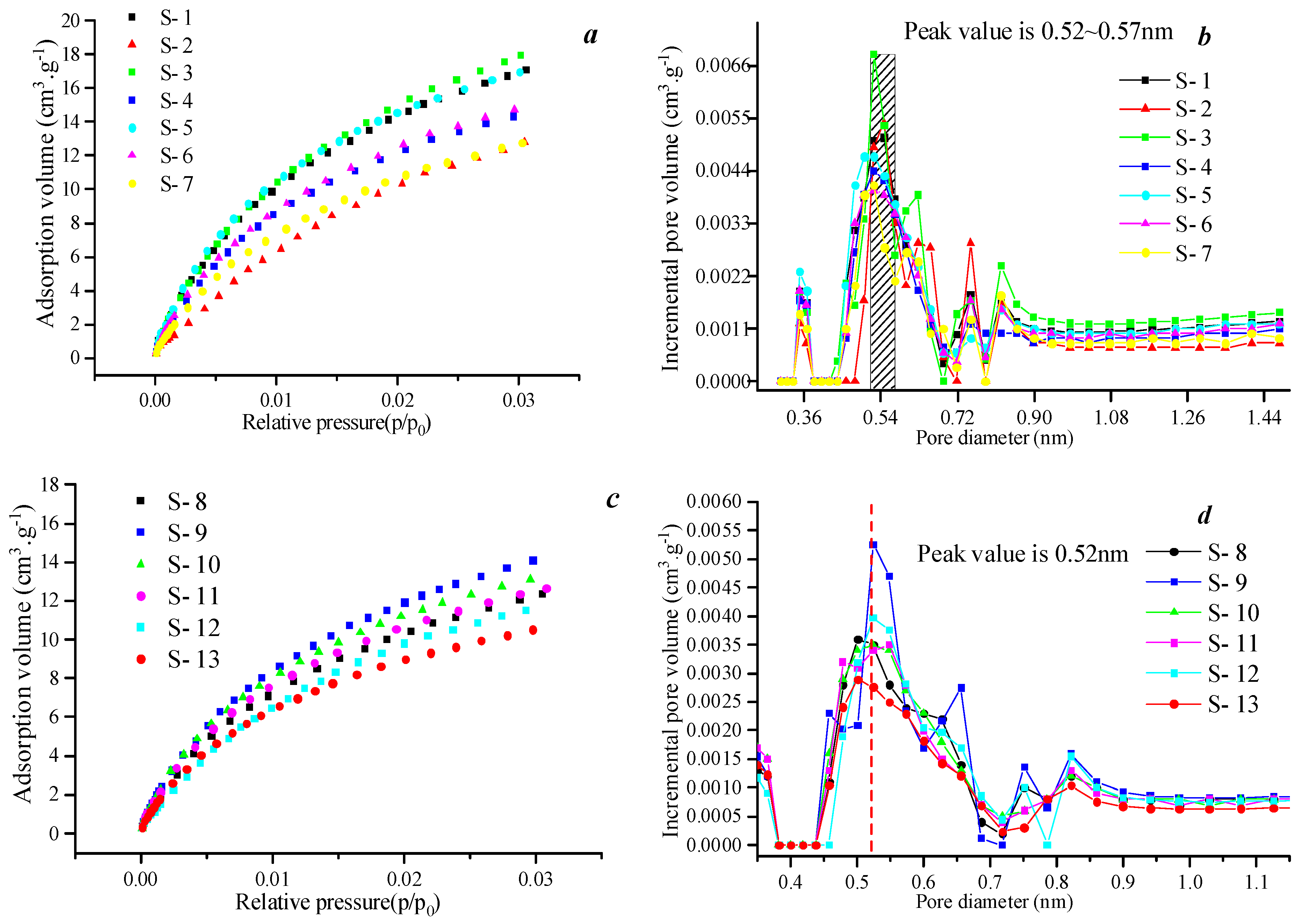
Figure 3 presents the CO2 adsorption isotherms and micropore size distributions. All samples show a rapid increase in CO2 adsorption volume at low relative pressures (P/P0), followed by a gradual approach to saturation as pressure increases. This pattern indicates monolayer adsorption and micropore filling as the dominant adsorption mechanisms in micropores. The pore size distribution curves reveal that micropores are mainly concentrated in the 0.4–1.1 nm range, with pores of 0.6–1.1 nm constituting the dominant fraction. The medium-ash coals (Type A) demonstrate generally higher CO2 adsorption capacities than the high-ash coals (Type B), suggesting that ash content may inhibit micropore development.
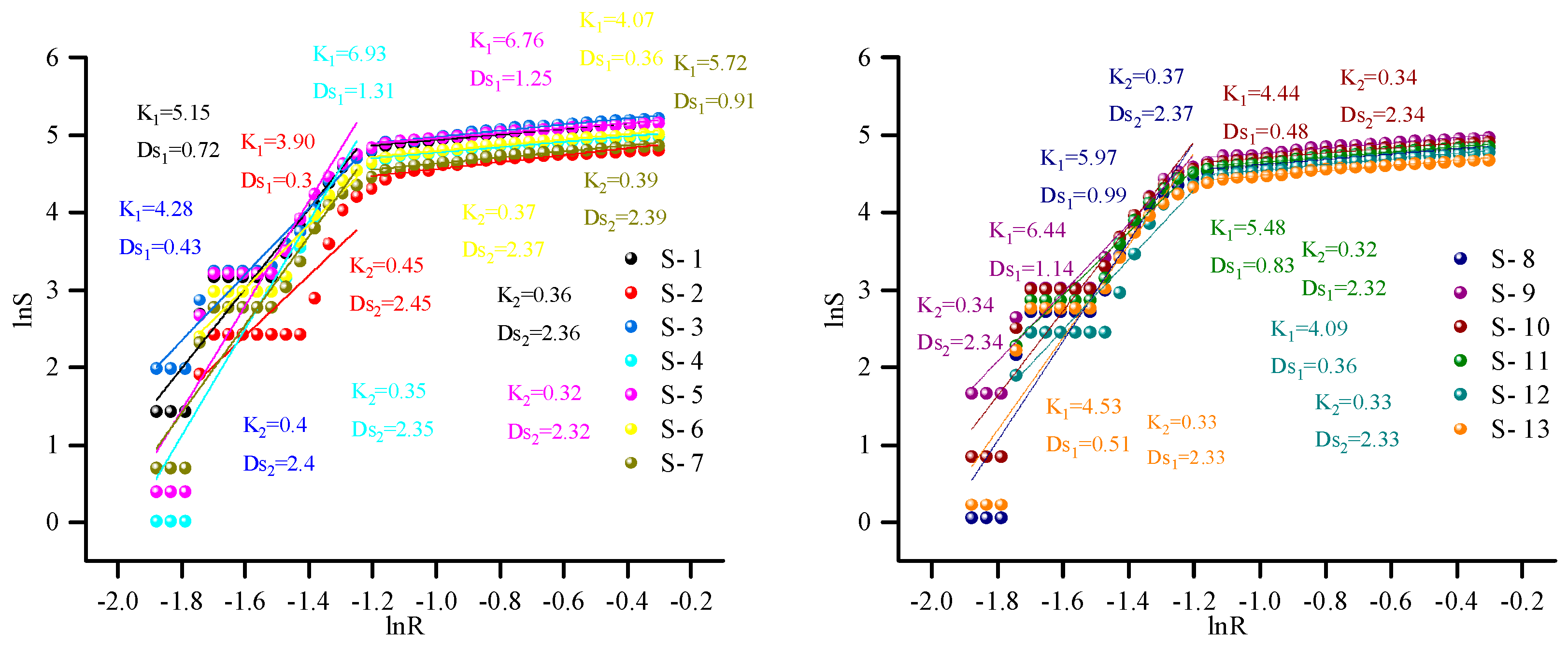
Figure 4 shows that there is a clear turning point at 0.6 nm. This two-segment pattern means the micropores in the 0.4–0.6 nm and 0.6–1.1 nm ranges have different heterogeneity. The fractal dimension Ds2 for the 0.6–1.1 nm range is between 2.717 and 2.796. Its average is 2.752. A higher fractal dimension means stronger heterogeneity. Therefore, the 0.4–0.6 nm micropores have more complex structures. High-ash coals have higher fractal dimensions in both ranges than medium-ash coals. This suggests ash content may increase micropore heterogeneity.
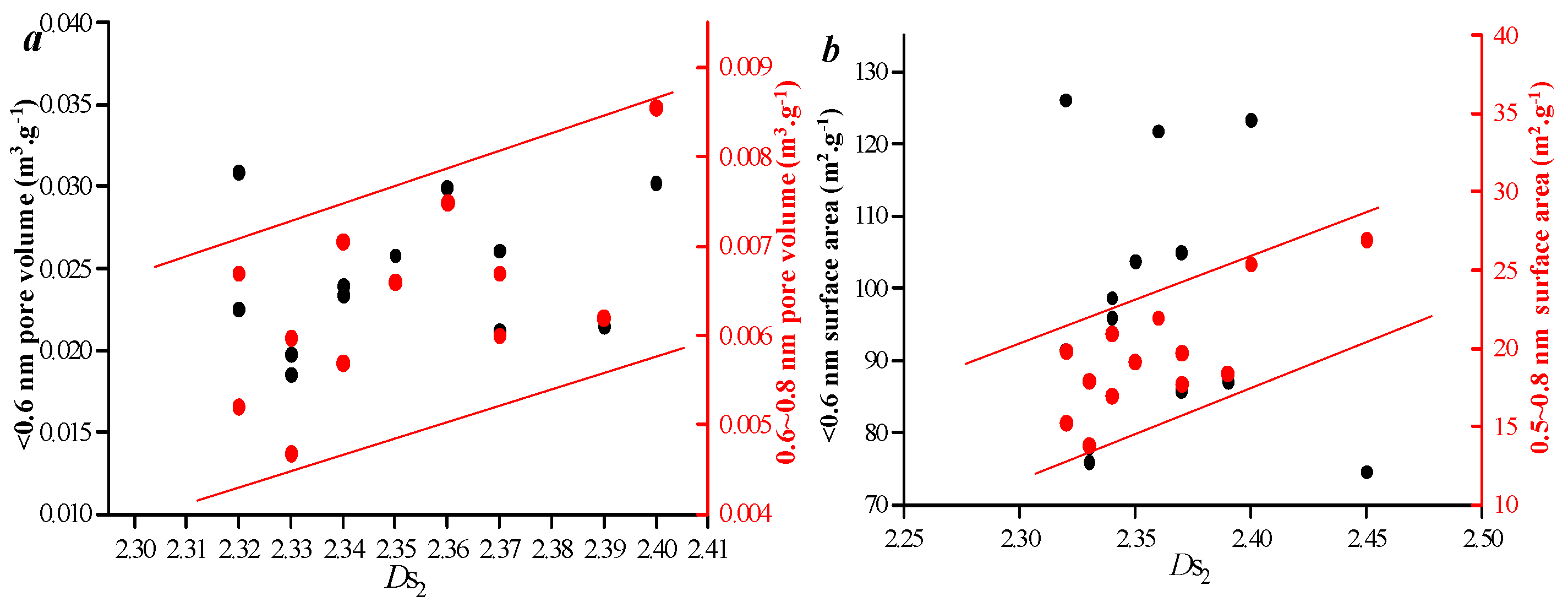
The correlations between the fractal dimension and micropore structure parameters are shown in Figure 5. Figure 5a shows that Ds2 has a strong positive correlation with the pore volume of <0.6 nm pores and a weak positive correlation with the pore volume of 0.6–0.8 nm pores. This indicates that stronger heterogeneity corresponds to better-developed micropore volume. Figure 5b shows that Ds2 has a strong positive correlation with the specific surface area of <0.6 nm pores and a weak correlation with the specific surface area of 0.6–0.8 nm pores. This demonstrates that the increase in micropore specific surface area mainly depends on the smaller micropores (<0.6 nm) which have stronger heterogeneity.
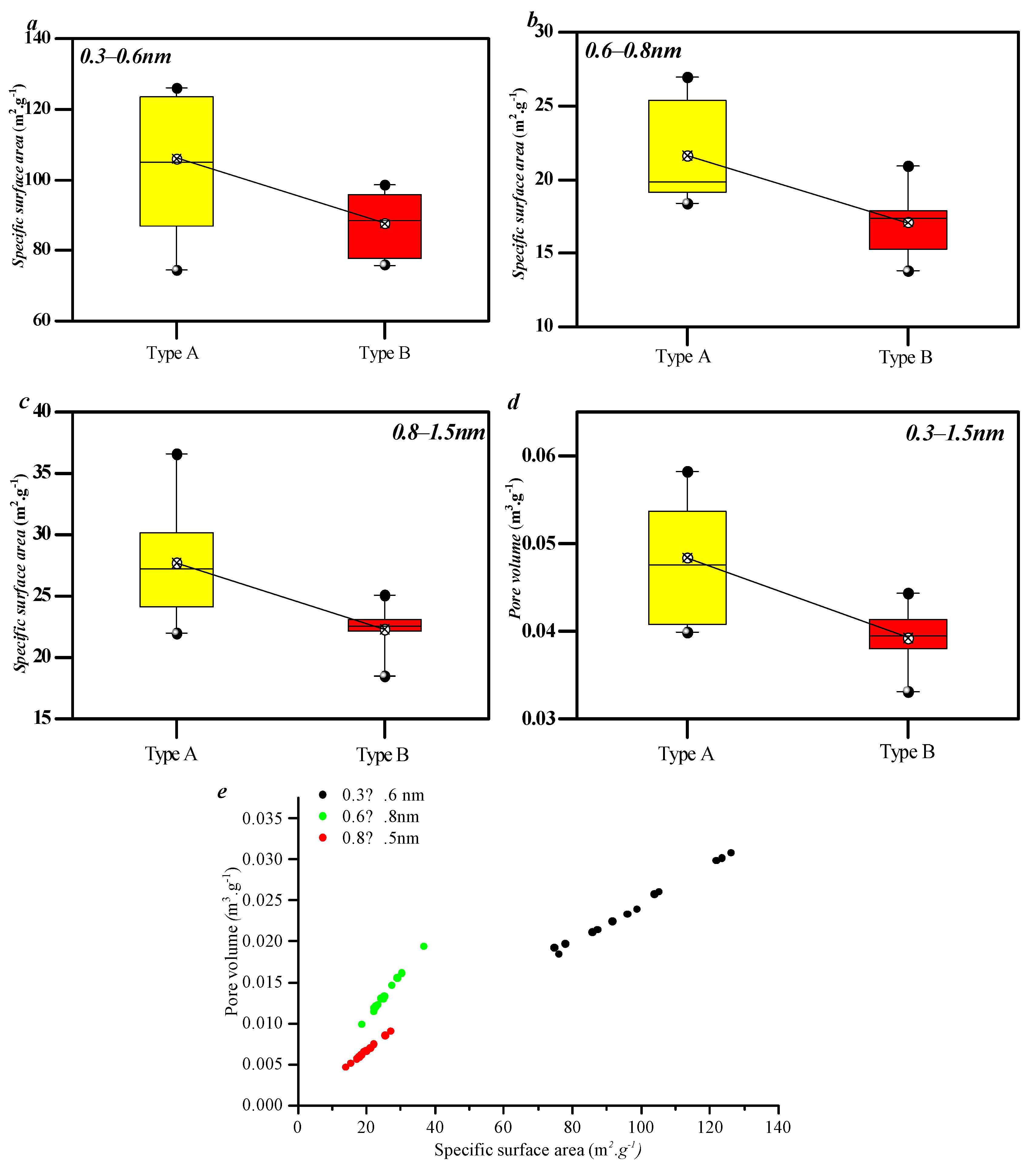
Figure 6 shows the distribution characteristics of micropore specific surface area in samples with different ash contents. The medium-ash coals (Type A) exhibit an average micropore specific surface area of 12.8 m2/g, while the high-ash coals (Type B) show a significantly lower average value of 8.3 m2/g. This demonstrates the inhibitory effect of ash content on micropore specific surface area. As an inorganic component, ash fills or blocks micropore channels, reducing the effective micropore space. This effect is further intensified by the relatively lower vitrinite content in high-ash coals, since vitrinite serves as the primary host for micropore development, further contributing to the reduction in micropore specific surface area.
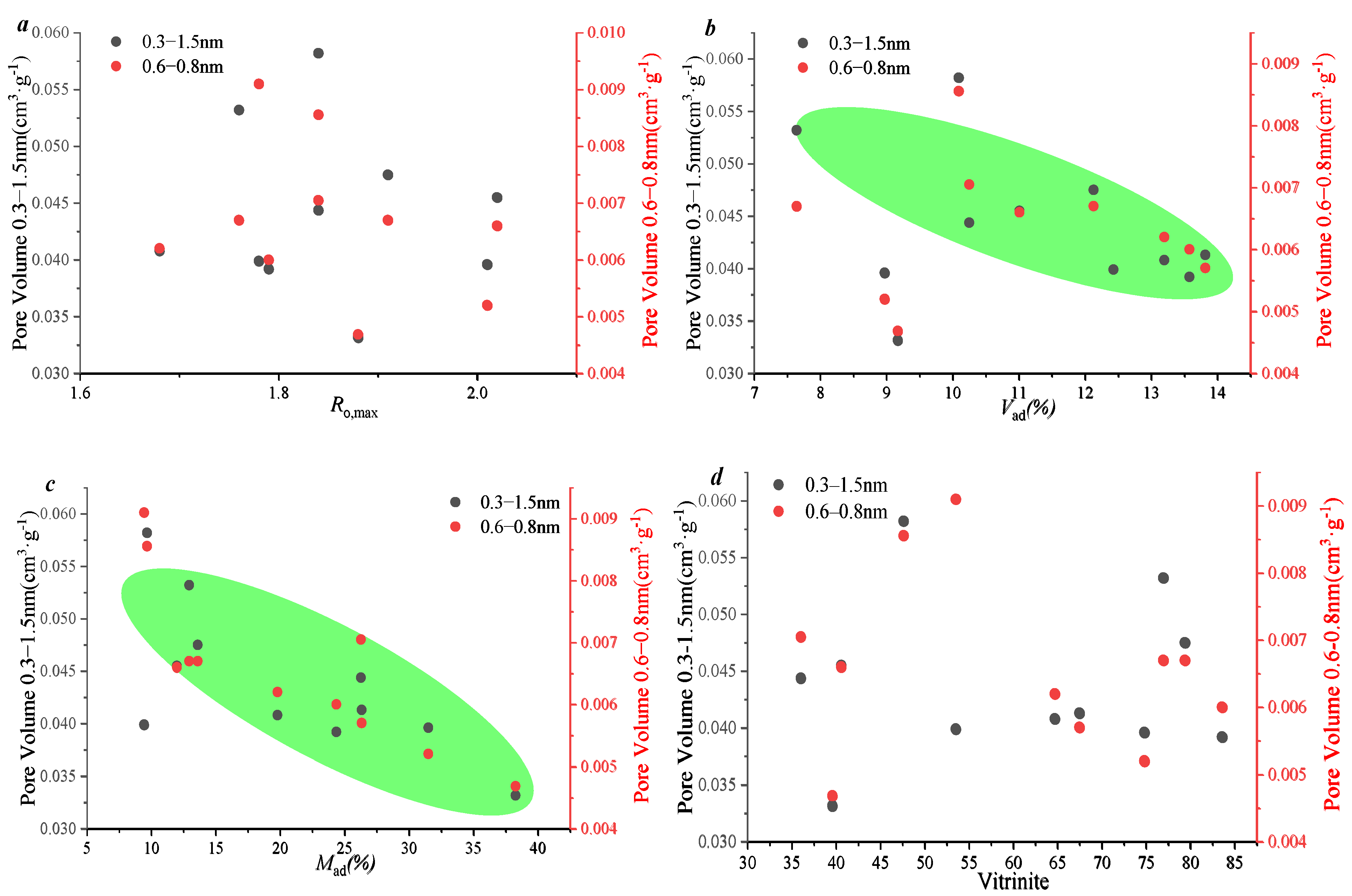
Figure 7 shows the correlation between proximate analysis and micropore volume. Ash content demonstrates a strong negative correlation with micropore volume, establishing it as the primary inhibiting factor for micropore development. This trend aligns with coal maturation characteristics: higher fixed carbon content, indicating greater coalification degree, corresponds to better-developed micropores. While both the filling effect of ash and the residues from volatile matter release can indirectly affect micropore volume, the inhibitory effect of ash is most significant. In contrast, no significant correlation is observed between micropore volume and either thermal maturity or vitrinite content, while the inhibitory effect of moisture appears relatively minor.

3.2.2. Mesoporous Structure of All Samples with Different Ash Content

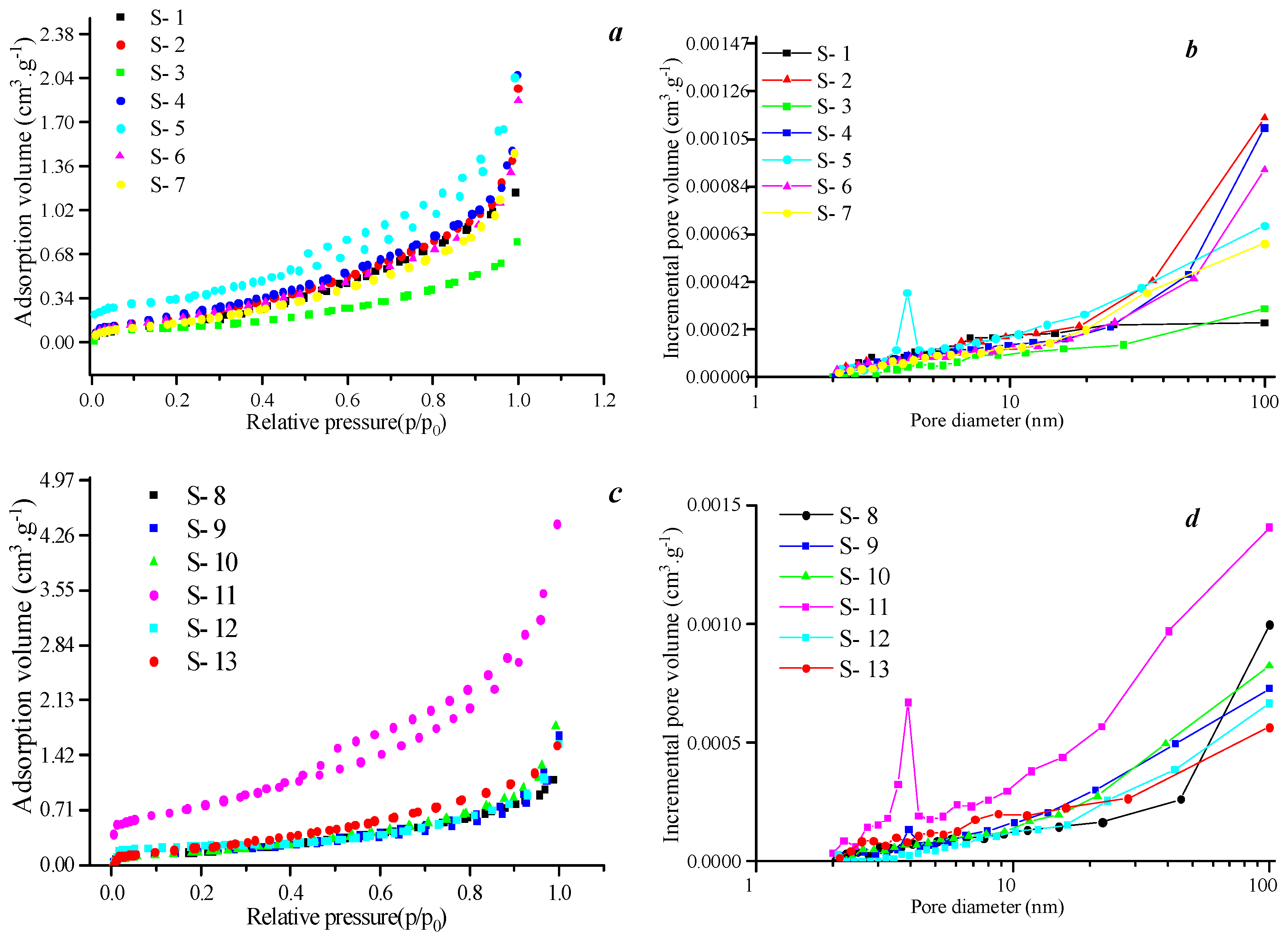
Based on LPN2 GA experimental data, the N2 adsorption–desorption isotherms and mesopore distributions are shown in Figure 8. The adsorption–desorption curves exhibit distinct morphological differences among samples with different thermal evolution degrees. Medium-ash coals show pronounced hysteresis loops at P/P0 = 0.5, indicating the predominance of “ink-bottle shaped” mesopores with poor connectivity. In contrast, some high-ash coals with advanced thermal evolution (S7, S11) exhibit nearly overlapping adsorption–desorption curves with insignificant hysteresis loops, suggesting the dominance of slit-shaped pores with better connectivity. The pore size distribution curves reveal that mesopores are mainly concentrated in the 10–100 nm range, accounting for 75% of the total mesopore volume with an average value of 0.0038 cm3/g, while the 2–10 nm mesopores contribute only 25%. This distribution pattern may be related to the overall low-to-medium maturity of the samples, where inadequate thermal evolution results in underdeveloped mesopores.
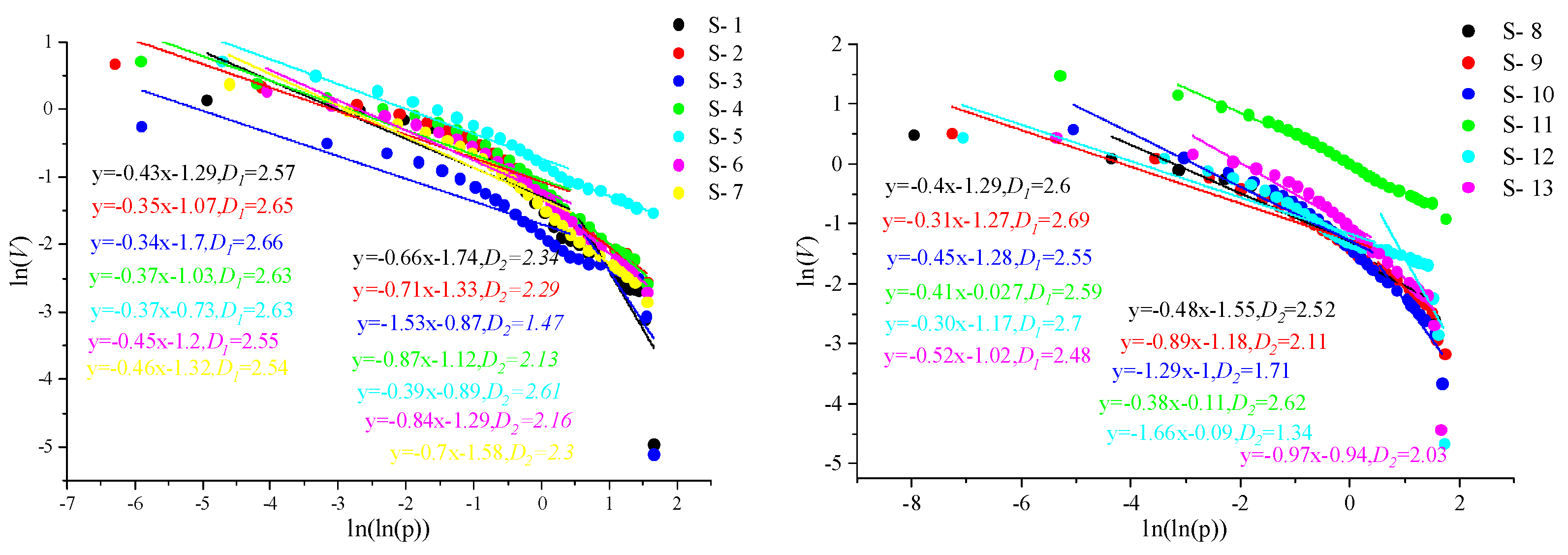
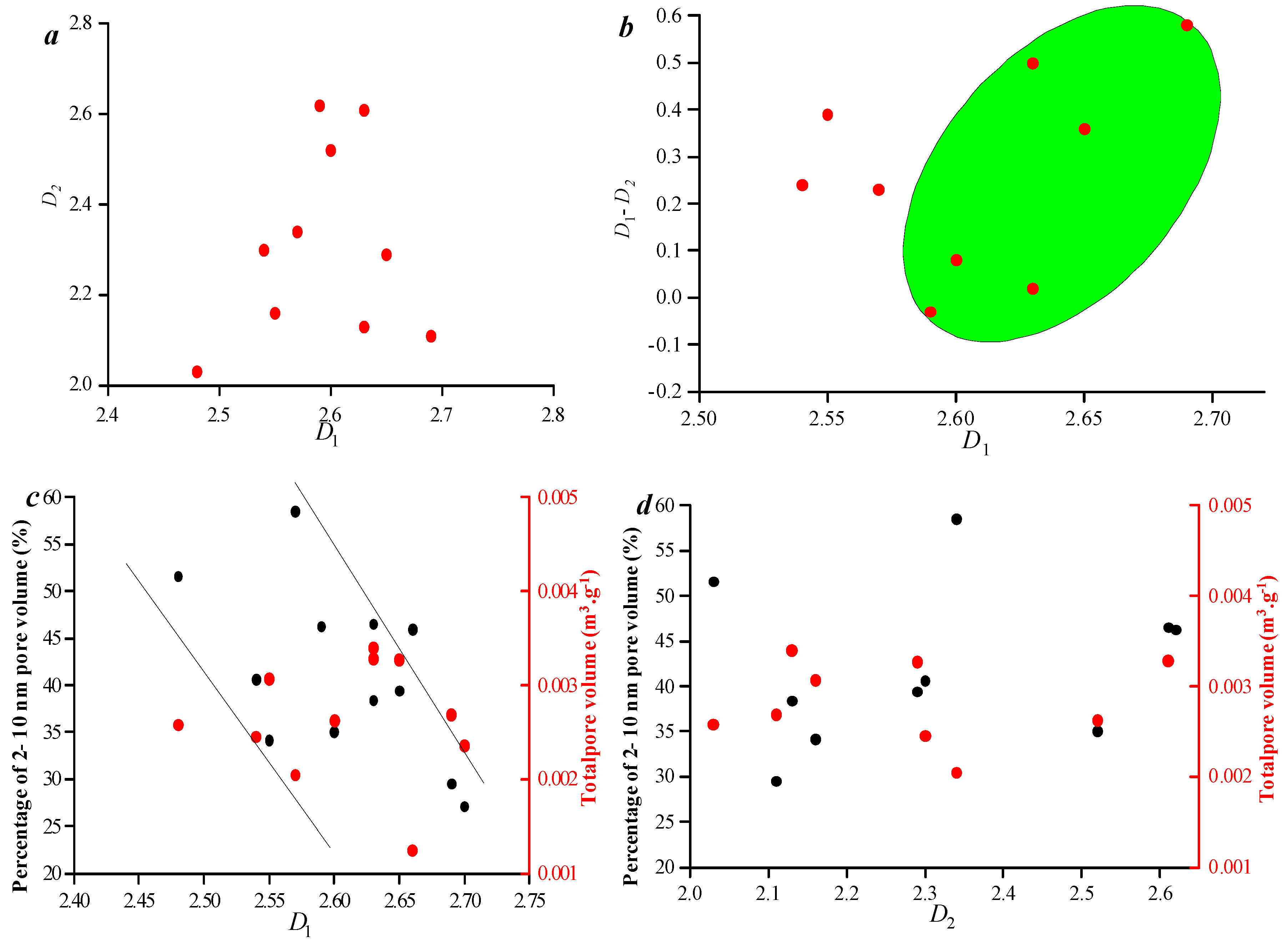
The N2 adsorption data were fitted using the FHH model to obtain the mesopore single fractal curves (Figure 9). The results show two distinct types of fractal curves. Type A (medium-ash coals) displays continuous fractal curves with fractal dimension (D) values ranging from 2.13 to 2.66, indicating relatively homogeneous mesopore size distribution. Type B (high-ash coals with high thermal evolution) shows segmented fractal curves divided at a relative pressure of 0.5, corresponding to pore size ranges of >4 nm and <4 nm. The fractal dimension D1 for the >4 nm range varies between 2.4 and 2.69, while D2 for the <4 nm range ranges from 1.79 to 2.62. The relationship D1 > D2 demonstrates that the heterogeneity of larger mesopores (4–100 nm) is significantly stronger than that of smaller mesopores (2–4 nm). This characteristic is associated with the combined effects of mineral filling and thermal evolution modification in high-ash coals.
The correlations between fractal dimensions and mesopore structural parameters are shown in Figure 10. Figure 10a shows a weak positive correlation between D1 and D2, indicating that the heterogeneity of both large and small mesopores is controlled by common factors (such as ash content and thermal maturity), though to different degrees. Figure 10b shows a strong positive correlation between D1 and the D1D2 difference, demonstrating that higher D1 values correspond to more pronounced heterogeneity differences between large and small mesopores. Figure 10c,d show that D1 is negatively correlated with both total mesopore volume and the specific surface area percentage of 2–10 nm mesopores, while D2 shows a weak positive correlation with total mesopore volume. These relationships indicate that stronger heterogeneity in large mesopores corresponds to smaller total mesopore volume, while greater uniformity in small mesopores favors the development of mesopore volume.
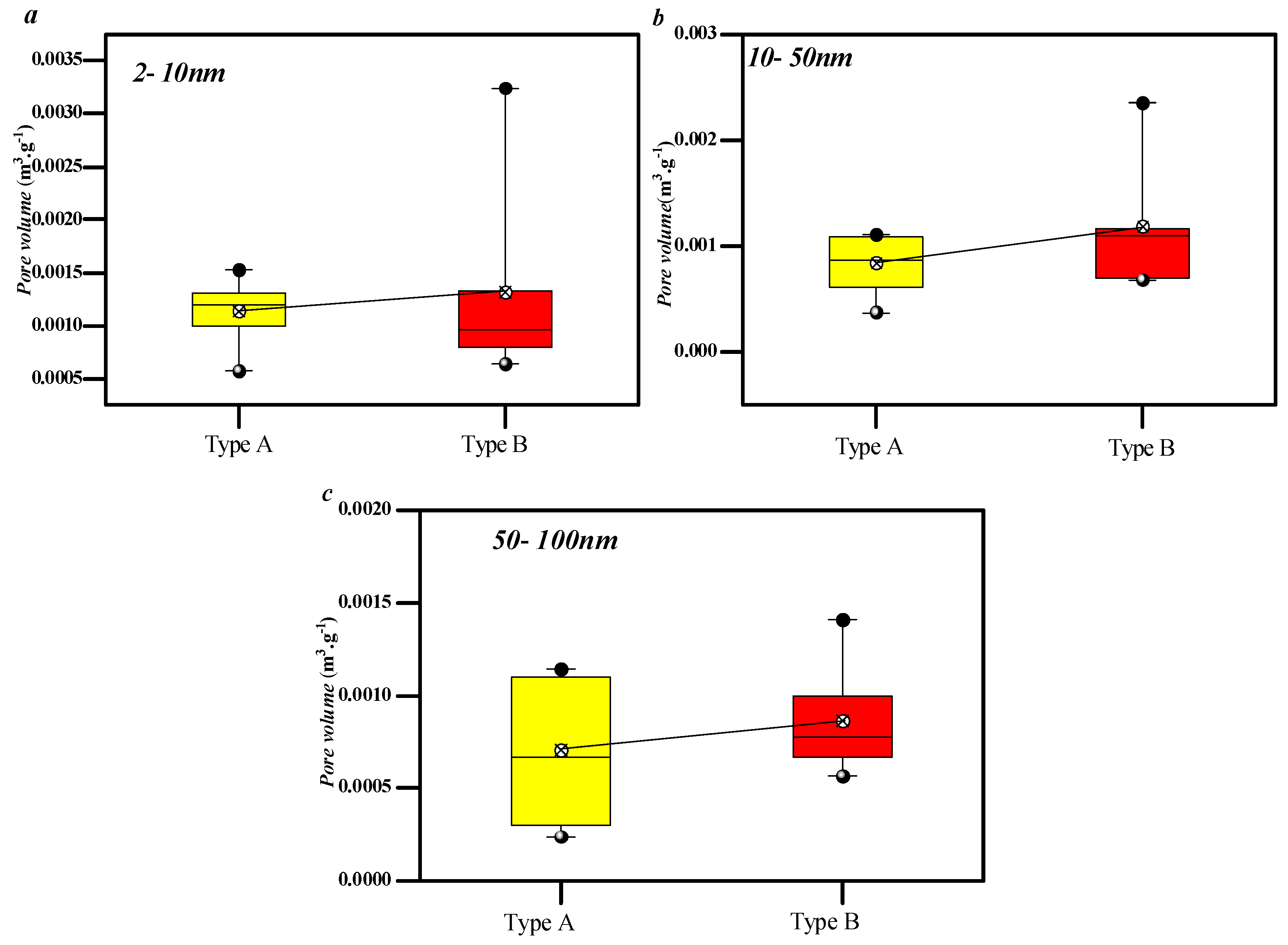
Figure 11 shows the mesopore volume distribution characteristics of samples with different ash contents. The medium-ash coals (Type A) exhibit an average mesopore volume of 0.0045 cm3/g, significantly higher than the 0.0031 cm3/g observed in high-ash coals (Type B). This difference is attributed to two factors: first, inorganic minerals (such as clay minerals and quartz) in high-ash coals tend to clog mesopore channels, reducing their effective connectivity; second, the relatively lower vitrinite content in high-ash coals further limits mesopore development, as vitrinite serves as the main organic component facilitating mesopore formation during thermal evolution. These dual effects collectively restrain mesopore development in high-ash coals.
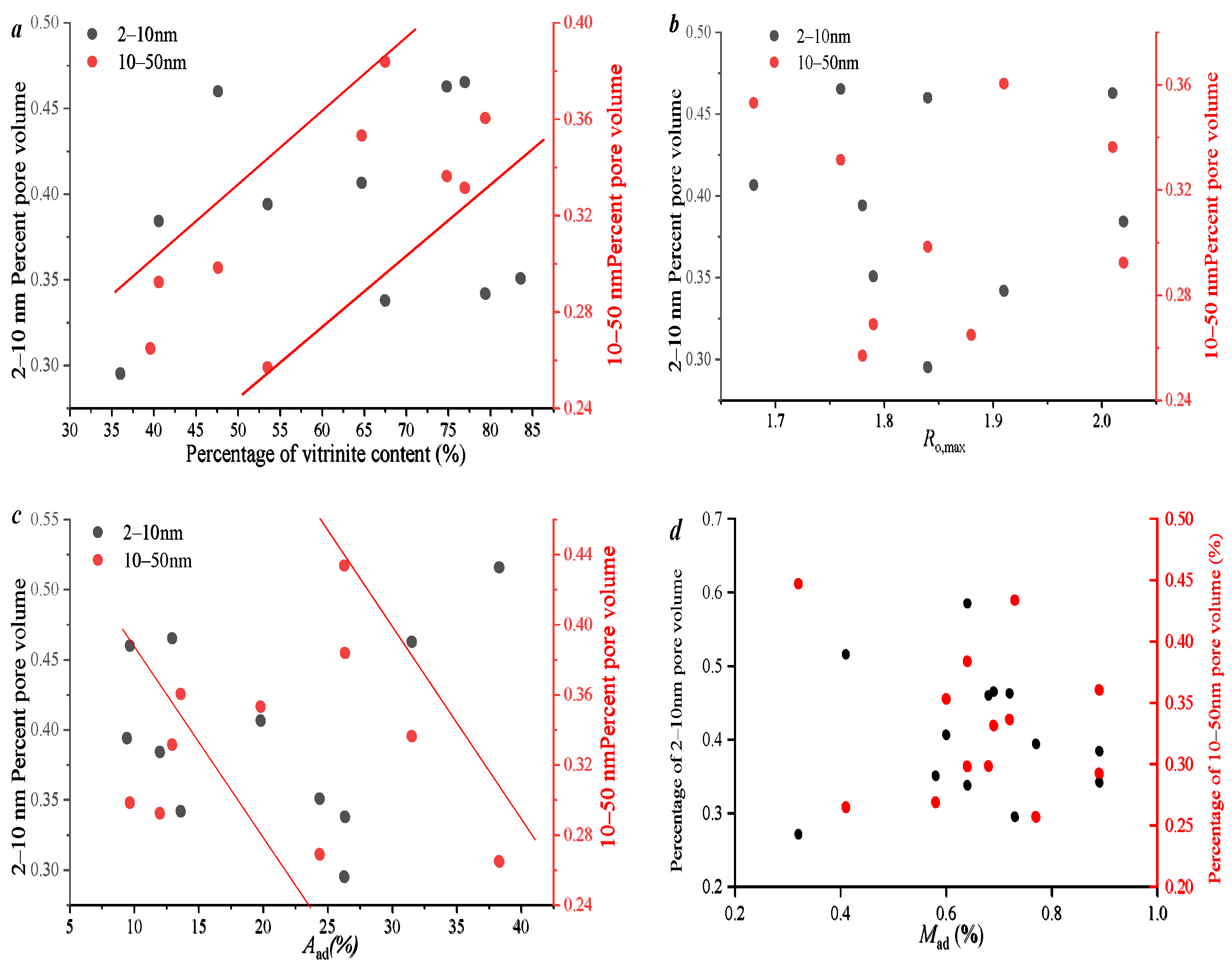
Figure 12 shows the correlation between proximate analysis and mesopore volume. A weak correlation was observed between Ro,max and mesopore volume, while ash content showed a significant negative correlation with mesopore volume. Vitrinite content demonstrated a positive correlation with mesopore volume, and moisture content exhibited no clear correlation. The results indicate that maceral composition and ash content jointly govern the volume proportion of 10–50 nm mesopores, while thermal maturity and moisture content show no significant regulatory effect on mesopore volume, further highlighting the differential response mechanisms of micropores and mesopores to ash content. This further highlights the differential response mechanisms of micropores and mesopores to ash content. Vitrinite content provides a plastic organic matrix that facilitates pore preservation, while ash components (such as clay minerals) directly fill mesopore spaces, blocking mesopore channels and reducing effective pore volume. Alternatively, high ash content may lead to relatively lower organic matter content, resulting in insufficient source material for thermal evolution to form mesopores.

4. Conclusions

  • There is a significant negative correlation between ash content and both the specific surface area and volume of micropores, while a clear diminishing effect on mesopore volume is also demonstrated. These effects are primarily attributed to the filling and blocking by inorganic minerals, which constitute the main mechanism for the reduction in pore space.
  • A clear primary–secondary relationship exists in the influences of industrial and maceral components. Among the proximate analysis components, only ash content plays a dominant regulatory role in pore structure, while the effects of moisture and volatile matter are weak or non-existent. Among maceral components, vitrinite specifically regulates mesopore development without significantly affecting micropores. This further clarifies the “ash-dominant, vitrinite-assisted” pattern governing pore development in low-to-medium maturity coals.
  • The results indicate that the ash content of deep coal samples in the study area constrains the microporous structure of coal samples and has a significant impact on the methane adsorption and desorption characteristics of deep coal samples. Under the same conditions, the influence of thermal evolution degree on the pore and fracture structure of deep coal samples is relatively weak. This also means that in the process of deep coalbed methane development, special attention should be paid to the industrial components caused by differences in coal forming environments, which have a significant impact on the gas content in coal.

Author Contributions

Methodology, Z.Q., L.C., J.J. and J.Y.; Software, L.C.; Validation, Z.L., V.A. and S.G.; Formal analysis, G.X. and L.D.; Funding, Z.Q. All authors have read and agreed to the published version of the manuscript.

Funding

This research was supported by Hubei Provincial Key R&D Program (No. 2023BCB084), the Scientific Research Foundation of Wuhan Institute of Technology (No. K2023039), the National Science and Technology Major Project (No. 2025ZD1010906) and the Research Fund of Shandong Coalfield Geological Bureau (2022-003).

Data Availability Statement

The original contributions presented in this study are included in the article. Further inquiries can be directed to the corresponding authors.

Conflicts of Interest

The authors declare no conflicts of interest.

References

  1. Zhang, Y.X.; Wu, C.J.; Li, Y.; Li, J.B.; Feng, C.J.; Li, B.; Wen, Z.G.; Liu, X.N. Coal-forming sedimentary model and its control on vertical reservoir heterogeneity of the upper carboniferous Benxi formation in Ordos basin, China. Sci. Rep. 2025, 15, 28676. [Google Scholar] [CrossRef] [PubMed]
  2. Fang, X.L.; Qiu, F.; Shu, L.Y.; Huo, Z.G.; Li, Z.T.; Cai, Y.D. Reservoir Properties and Gas Potential of the Carboniferous Deep Coal Seam in the Yulin Area of Ordos Basin, North China. Energies 2025, 18, 3987. [Google Scholar] [CrossRef]
  3. Li, Z.W.; Chen, S.D.; Tang, D.Z.; Hou, K. Occurrence, Origin, and Infill Modification Effects of Minerals in Deep Coals in the Ordos Basin, China. Energy Fuels 2024, 38, 22885–22903. [Google Scholar] [CrossRef]
  4. Zhang, B.X.; Wang, H.C.; Sun, B.; Ouyang, Z.Y.; Dou, W.; Wang, B.; Lai, P.; Hu, Z.P.; Luo, B.; Yang, M.M.; et al. Pore Size Distribution and Fractal Characteristics of Deep Coal in the Daning-Jixian Block on the Eastern Margin of the Ordos Basin. ACS Omega 2024, 9, 32837–32852. [Google Scholar] [CrossRef]
  5. Wan, Y.P.; Wang, Z.C.; Hu, D.P.; Wang, Y.; Huo, M.X.; Mu, X.Y.; Han, S.B. Gas-bearing evaluation of deep coal rock in the Yan’an gas field of the Ordos Basin. Front. Earth Sci. 2024, 12, 1438834. [Google Scholar] [CrossRef]
  6. Li, J.; Cui, M.R.; Zhang, J.J.; Liu, L.H.; Qu, J.; Li, W. Experimental study on dynamic occurrence and migration of gas and water in deep coal measure reservoirs in Yan’an area of Eastern Ordos Basin. Fuel 2026, 405, 136654. [Google Scholar] [CrossRef]
  7. Ouyang, M.K.; Wang, B.; Yu, X.N.; Tang, W.; Yu, M.N.; You, C.L.; Yang, J.H.; Wang, T.; Deng, Z. Comparative Study on Full-Scale Pore Structure Characterization and Gas Adsorption Capacity of Shale and Coal Reservoirs. Processes 2025, 13, 2246. [Google Scholar] [CrossRef]
  8. Li, H.; Cai, Y.D.; Liu, D.M.; Wang, H.; Zhang, K.C.; Jiang, K.; Zhang, X.B.; Sun, X.L.; Wei, H.P. Full-scale pore structure and its impact on methane adsorption in deep coal reservoirs of the Zijinshan area, Eastern Ordos Basin. Phys. Fluids 2025, 37, 086618. [Google Scholar] [CrossRef]
  9. Zhao, B.; Liu, D.M.; Cai, Y.D.; Zhao, Z.; Sun, F.R. Geological Control Mechanism of Coalbed Methane Gas Component Evolution Characteristics in the Daning-Jixian Area, Ordos Basin, China. Energy Fuels 2023, 37, 19639–19652. [Google Scholar] [CrossRef]
  10. Yan, T.; He, S.; Zheng, S.; Bai, Y.; Chen, W.; Meng, Y.; Jin, S.; Yao, H.; Jia, X. Critical tectonic events and their geological controls on deep buried coalbed methane accumulation in Daning-Jixian Block, eastern Ordos Basin. Front. Earth Sci. 2023, 17, 197–217. [Google Scholar] [CrossRef]
  11. Yan, T.T.; Yang, C.; Zheng, S.; Bai, Y.D.; Chen, W.; Liu, Y.F.; Tian, W.G.; Sun, S.S.; Jin, S.W.; Wang, J.H.; et al. Geochemical characteristics of produced fluids from CBM wells and their indicative significance for gas accumulation in Daning-Jixian block, Ordos Basin. Front. Earth Sci. 2023, 17, 661–678. [Google Scholar] [CrossRef]
  12. Wang, X.M.; Hou, S.H.; Wang, X.J.; Yuan, Y.D.; Dang, Z.; Tu, M.K. Geological and hydrological controls on the pressure regime of coalbed methane reservoir in the Yanchuannan field: Implications for deep coalbed methane exploitation in the eastern Ordos Basin, China. Int. J. Coal Geol. 2024, 294, 104619. [Google Scholar] [CrossRef]
  13. Jiang, F.J.; Jia, C.Z.; Pang, X.Q.; Lin, J.; Zhang, C.L.; Ma, X.Z.; Qi, Z.G.; Chen, J.Q.; Hong, P.; Tao, H.; et al. Upper Paleozoic total petroleum system and geological model of natural gas enrichment in Ordos Basin, NW China. Pet. Explor. Dev. 2023, 50, 281–292. [Google Scholar] [CrossRef]
  14. Zhang, Y.; Tang, D.Z.; Li, S.; Cao, D.Y.; Liu, J.C. Deciphering multiple controls on mesopore structural heterogeneity of paralic organic-rich shales: Pennsylvanian-Lower Permian Taiyuan and Shanxi formations, Weibei Coalfield, southwestern North China. J. Pet. Sci. Eng. 2020, 195, 107613. [Google Scholar] [CrossRef]
  15. Zhang, L.F.; Dong, D.Z.; Qiu, Z.; Wu, C.J.; Zhang, Q.; Wang, Y.M.; Liu, D.X.; Deng, Z.; Zhou, S.W.; Pan, S.Q. Sedimentology and geochemistry of Carboniferous-Permian marine-continental transitional shales in the eastern Ordos Basin, North China. Palaeogeogr. Palaeoclimatol. Palaeoecol. 2021, 571, 110389. [Google Scholar] [CrossRef]
  16. Chen, M.; Wang, B.; Tian, H.N.; Sun, J.Y.; Liu, L.; Liang, X.; Chen, B.L.; Yu, B.S.; Zhang, Z. Multilayer Gas-Bearing System and Productivity Characteristics in Carboniferous-Permian Tight Sandstones: Taking the Daning-Jixian Block, Eastern Ordos Basin, as an Example. Energies 2025, 18, 2398. [Google Scholar] [CrossRef]
  17. He, J.X.; Zhang, X.L.; Ma, L.; Wu, H.C.; Ashraf, M.A. Geological Characteristics of Unconventional Gas in Coal Measure of Upper Paleozoic Coal Measures in Ordos Basin, China. Earth Sci. Res. J. 2016, 20, Q1–Q5. [Google Scholar] [CrossRef]
  18. Lv, D.W.; Shen, Y.Y.; van Loon, A.; Raji, M.; Zhang, Z.H.; Song, G.Z.; Ren, Z.H.; Wang, Y.J.; Wang, D.D. Sequence stratigraphy of the Middle Jurassic Yan’an formation (NE Ordos Basin, China), relationship with climate conditions and basin evolution, and coal maceral’s characteristics. Front. Earth Sci. 2023, 10, 1086298. [Google Scholar] [CrossRef]
  19. Wang, L.J.; Lv, D.W.; Hower, J.C.; Zhang, Z.H.; Raji, M.; Tang, J.G.; Liu, Y.M.; Gao, J. Geochemical characteristics and paleoclimate implication of Middle Jurassic coal in the Ordos Basin, China. Ore Geol. Rev. 2022, 144, 104848. [Google Scholar] [CrossRef]
  20. Niu, X.B.; Fan, L.Y.; Yan, X.X.; Zhou, G.X.; Zhang, H.; Jing, X.Y.; Zhang, M.B. Enrichment conditions and resource potential of coal-rock gas in Ordos Basin, NW China. Pet. Explor. Dev. 2024, 51, 1122–1137. [Google Scholar] [CrossRef]
  21. Miao, H.Y.; Veerle, V.; Zhang, J.J.; Chen, S.B.; Chang, X.C.; Du, Y.; Wang, Y.; Wei, C.T.; Luo, J.H.; Quan, F.K.; et al. Control mechanism of pressure drop rate on coalbed methane productivity by using production data and physical simulation technology. Fuel 2026, 406, 137060. [Google Scholar] [CrossRef]
  22. Yao, P.; Zhang, J.; Lv, D.; Vandeginste, V.; Chang, X.; Zhang, X.; Wang, D.; Han, S.; Liu, Y. Effect of water occurrence in coal reservoirs on the production capacity of coalbed methane by using NMR simulation technology and production capacity simulation. Geoenergy Sci. Eng. 2024, 243, 213353. [Google Scholar] [CrossRef]
  23. Zhao, Z.; Yang, W.; Zhao, Z.Y.; Xu, W.L.; Gong, D.Y.; Jin, H.; Song, W.; Liu, G.; Zhang, C.L.; Huang, S.P. Research progresses in geological theory and key exploration areas of coal-formed gas in China. Pet. Explor. Dev. 2024, 51, 1435–1450. [Google Scholar] [CrossRef]
  24. Wang, J.Y.; Xiao, L.; Li, P.; Arbuzov, S.I.; Ding, S.L. Occurrence mode of selected elements of coal in the Ordos Basin. Energy Explor. Exploit. 2019, 37, 1680–1693. [Google Scholar] [CrossRef]
  25. Al-Yaari, A.; Ching, D.L.C.; Sakidin, H.; Muthuvalu, M.S.; Zafar, M.; Haruna, A.; Merican, Z.M.A.; Yunus, R.B.; Al-Dhawi, B.N.S.; Jagaba, A.H. The effects of nanofluid thermophysical properties on enhanced oil recovery in a heterogenous porous media. Case Stud. Chem. Environ. Eng. 2024, 9, 100556. [Google Scholar] [CrossRef]
  26. Xu, S.B.; Li, Q.; Sun, F.R.; Yin, T.T.; Yang, C.; Wang, Z.H.; Qiu, F.; Zhou, K.Y.; Chen, J.M. Geological Controls on Gas Content of Deep Coal Reservoir in the Jiaxian Area, Ordos Basin, China. Processes 2024, 12, 1269. [Google Scholar] [CrossRef]
  27. Li, Y.F.; Wang, H.S.; Dilcher, D.L.; Bugdaeva, E.; Tan, X.; Li, T.; Na, Y.L.; Sun, C.L. Middle Jurassic Plant Diversity and Climate in the Ordos Basin, China. Paleontol. J. 2019, 53, 1216–1235. [Google Scholar] [CrossRef]
  28. Wu, S.J.; Wang, J.; Liu, B.; Dong, J.L.; Zhang, M.H. Deep coal seams and water-bearing structures detection with CSAMT lateral constraint inversion technique in Ordos basin. Appl. Geophys. 2025. [Google Scholar] [CrossRef]
  29. Tang, Y.Q.; Ji, P.; Lai, G.L.; Chi, C.Q.; Liu, Z.S.; Wu, X.L. Diverse microbial community from the coalbeds of the Ordos Basin, China. Int. J. Coal Geol. 2012, 90, 21–33. [Google Scholar] [CrossRef]
  30. Pan, B.; Wang, K.L.; Dong, G.D.; Zhou, X.Z.; Chen, Y.H.; Zhuang, Y.P.; Gao, X.; Du, X.W. Geochemical Characteristics and Paleoenvironmental Significance of No. 5 Coal in Shanxi Formation, Central-Eastern Ordos Basin (China). Minerals 2025, 15, 177. [Google Scholar] [CrossRef]
  31. Zhang, J.J.; Wei, C.T.; Luo, J.H.; Lu, G.W.; Quan, F.K.; Zheng, K.; Peng, Y.J. Volume and Surface Distribution Heterogeneity of Nano-pore in Coal Samples by CO2 and N2 Adsorption Experiments. Acta Geol. Sin.-Engl. Ed. 2020, 94, 1662–1675. [Google Scholar] [CrossRef]
  32. Liu, S.M.; Sun, H.T.; Zhang, D.M.; Yang, K.; Li, X.L.; Wang, D.K.; Li, Y.N. Experimental study of effect of liquid nitrogen cold soaking on coal pore structure and fractal characteristics. Energy 2023, 275, 127470. [Google Scholar] [CrossRef]
  33. He, X.X.; Cheng, Y.P.; Hu, B.; Wang, Z.Y.; Wang, C.H.; Yi, M.H.; Wang, L. Effects of coal pore structure on methane-coal sorption hysteresis: An experimental investigation based on fractal analysis and hysteresis evaluation. Fuel 2020, 269, 117438. [Google Scholar] [CrossRef]
  34. Lai, J.; Wang, S.; Wang, G.W.; Shi, Y.J.; Zhao, T.P.; Pang, X.J.; Fan, X.C.; Qin, Z.Q.; Fan, X.Q. Pore structure and fractal characteristics of Ordovician Majiagou carbonate reservoirs in Ordos Basin, China. Aapg Bull. 2019, 103, 2573–2596. [Google Scholar] [CrossRef]
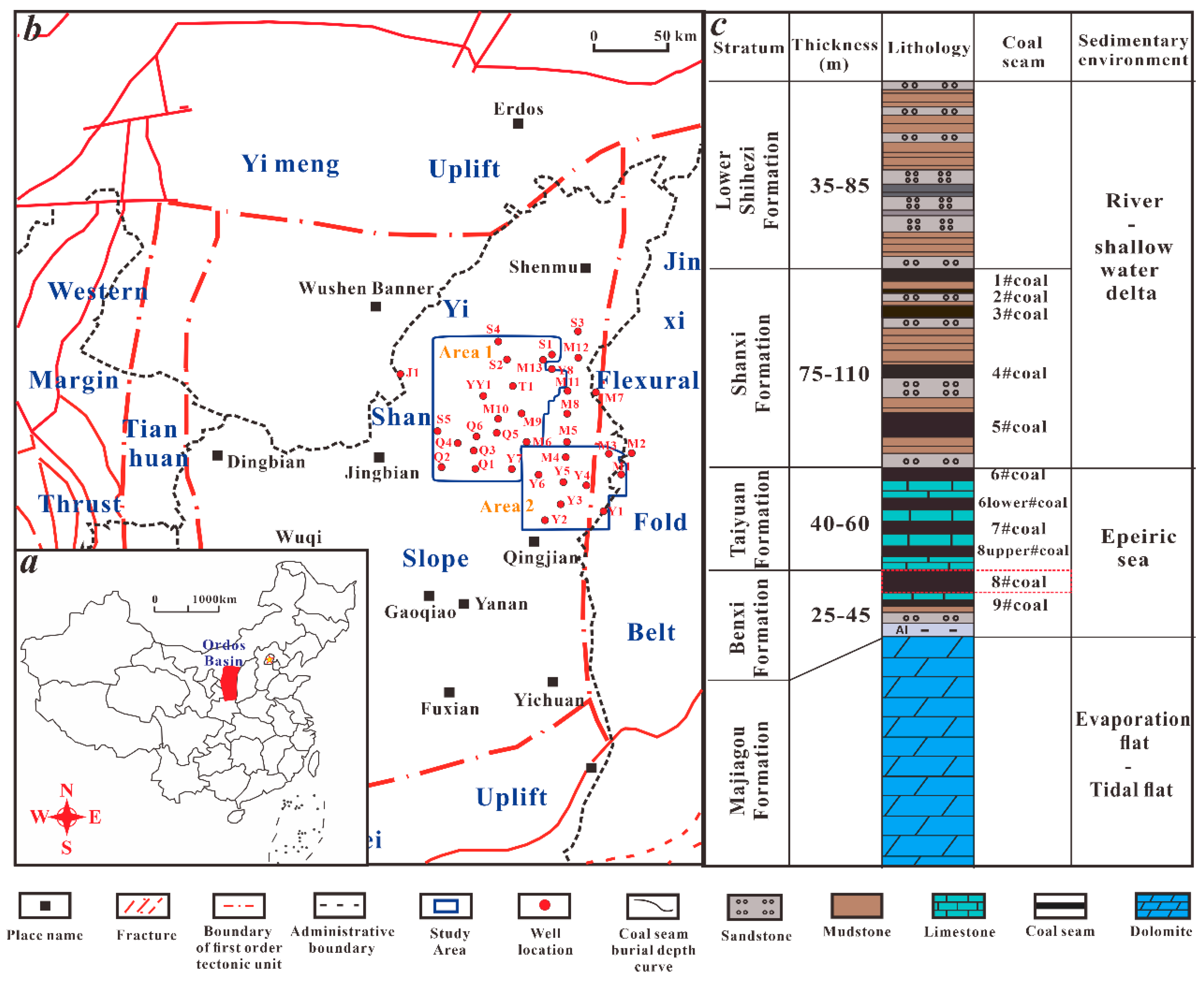
Figure 1. (a) Location of the Ordos Basin; (b) Location of the study area; (c) Stratigraphy of the Benxi Formation.
Processes 13 03912 g001
Figure 2. Industrial and microscopic component content variation under different ash content types of samples: (a) Variations in the content of Aad and FCad for different ash content types; (b) Variations in the content of Vitinite and Inertinite for different ash content types.
Processes 13 03912 g002
Figure 3. CO2 adsorption curves and micro-pore diameter distribution: (a,b) CO2 adsorption curves and micro-pore diameter distribution of Type A; (c,d) CO2 adsorption curves and micro-pore diameter distribution of Type B.
Processes 13 03912 g003
Figure 4. Single fractal dimension curves of micro-pore.
Processes 13 03912 g004
Figure 5. Relationship between fractal dimension and pore structure: (a) Ds2 versus pore volumes of <0.6 nm and 0.6−0.8 nm pores; (b) Ds2 versus specific surface areas of <0.6 nm and 0.6−0.8 nm pores.
Processes 13 03912 g005
Figure 6. Distribution characteristics of micropore specific surface area derived from CO2 adsorption isotherms for samples with different ash contents: (a) Specific surface area of 0.3–0.6 nm; (b) Specific surface area of 0.6–0.8 nm; (c) Specific surface area of 0.8–1.5 nm; (d) Pore volume of 0.3–1.5 nm; (e) The relationship between the pore volume of micropores and their specific surface area.
Processes 13 03912 g006
Figure 7. Correlation between proximate analysis and micro-pore volume: (a) Distribution of pore volume with Ro,max for pore diameter ranges of 0.3–1.5 nm and 0.6–0.8 nm; (b) Distribution of pore volume with Vad for pore diameter ranges of 0.3–1.5 nm and 0.6–0.8 nm; (c) Distribution of pore volume with Mad for pore diameter ranges of 0.3–1.5 nm and 0.6–0.8 nm; (d) Distribution of pore volume with Vitrinite content for pore diameter ranges of 0.3–1.5 nm and 0.6–0.8 nm.
Processes 13 03912 g007
Figure 8. N2 adsorption curve and mesopore distribution: (a,b) N2 adsorption curve and mesopore distribution of Type A; (c,d) N2 adsorption curve and mesopore distribution of Type B.
Processes 13 03912 g008
Figure 9. Mesoporous single fractal curve.
Processes 13 03912 g009
Figure 10. Relationships between fractal dimensions and mesopore structural parameters: (a) D1 versus D2; (b) D1 versus D1–D2 difference; (c) D1 versus total pore volume and specific surface area percentage of 2–10 nm pores; (d) D2 versus total pore volume and pore volume percentage of 2–10 nm pores.
Processes 13 03912 g010
Figure 11. Mesopore volume distribution characteristics derived from N2 adsorption isotherms for samples with different ash content types (a) Pore volume of 2–100 nm distribution; (b) Pore volume of 10–50 nm distribution; (c) Pore volume of 50–100 nm distribution.
Processes 13 03912 g011
Figure 12. Analysis of factors affecting mesoporous volume (a) Distribution of pore volume with vitrinite content for pore diameter ranges of 2–10 nm and 10–50 nm; (b) Distribution of pore volume with Ro,max for pore diameter ranges of 2–10 nm and 10–50 nm; (c) Distribution of pore volume with Aad for pore diameter ranges of 2–10 nm and 10–50 nm; (d) Distribution of pore volume with Mad for pore diameter ranges of 2–10 nm and 10–50 nm.
Processes 13 03912 g012
Table 1. Basic information of coal samples.
Sample ClassificationDepth (m)Sample No.AadMadFCadVitriniteLiptiniteInertiniteRo,max
A3083.18S17.950.7781.3257.442.4240.141.9
3401.7S29.430.7377.4153.52046.3481.85
3100.95S39.660.8979.3647.6212.5939.81.88
3403.8S411.980.7276.2940.57059.421.84
3260.12S512.940.8978.5376.96023.061.84
3403.42S613.60.6473.6379.38020.761.76
3404.57S719.80.3266.6864.7035.292.01
B3405.6S824.370.4161.6483.59016.411.02
3109.74S926.280.6962.7836.0125.8738.111.78
3400.83S1026.330.5859.2767.48032.541.91
3261.67S1131.510.658.9274.81025.132.02
3065.9S1232.440.6455.1652.4711.4136.121.68
3094.08S1338.290.6851.8639.5813.43471.79
Mad is moisture content; Aad is ash content; FCad is fixed content.
Disclaimer/Publisher’s Note: The statements, opinions and data contained in all publications are solely those of the individual author(s) and contributor(s) and not of MDPI and/or the editor(s). MDPI and/or the editor(s) disclaim responsibility for any injury to people or property resulting from any ideas, methods, instructions or products referred to in the content.