Article

Numerical Simulation Study of Air Flotation Zone of Horizontal Compact Swirling Flow Air Flotation Device


1
Shandong Provincial Key Laboratory for Treatment of Oilfield Produced Water and Environmental Pollution, Dongying 257026, China
2
Sinopec Petroleum Engineering Design Co., Ltd., Dongying 257026, China
3
College of Pipeline and Civil Engineering, China University of Petroleum, Qingdao 266580, China
*
Author to whom correspondence should be addressed.
Processes 2025, 13(12), 3848; https://doi.org/10.3390/pr13123848
Submission received: 13 October 2025 / Revised: 6 November 2025 / Accepted: 13 November 2025 / Published: 28 November 2025
(This article belongs to the Section Separation Processes)

Abstract

Air flotation separation technology has emerged as one of the core techniques for oily wastewater treatment in oilfields, owing to its advantages of high throughput, high separation efficiency, and short retention time. Originally applied in mineral processing, this technology was first introduced to oilfield produced water treatment by Shell in 1960. With the optimization of microbubble generators, advances in microbubble generation technology—characterized by small size, high stability, and uniformity—have further expanded its applications across various wastewater treatment scenarios. To optimize the separation performance of a horizontal compact closed-loop cyclonic air flotation unit, this study employs CFD numerical simulation to investigate two key aspects: First, for the flotation zone, the effects of structural parameters (deflector height, inclination angle) and operational parameters (gas–oil ratio, bubble size, inlet velocity) on flow patterns and gas distribution were systematically examined. Device performance was evaluated using metrics such as gas–oil ratio distribution curves and flow field characteristics, enabling the identification of operating conditions for stratified flow formation and the determination of optimal deflector structural parameters. Second, based on the Eulerian multiphase flow model and RSM turbulence model, a numerical simulation model for the oil–gas–water three-phase flow field was established. The influences of key parameters (bubble size, throughput, gas–oil ratio) on oil–water separation efficiency were investigated, and the optimal operating conditions for the unit were determined by integrating oil-phase/gas-phase distribution characteristics with oil removal rate data. This research provides theoretical support for the structural optimization and engineering application of horizontal compact closed-loop cyclonic flotation units.

1. Introduction

With the continuous development and progress of society, the demand for crude oil—an essential liquid fuel and chemical feedstock—has been steadily increasing. In response, China has intensified its efforts in petroleum exploration and extraction. As onshore oil resources gradually deplete, offshore oil reserves have become a critical component of the country’s crude oil production. Notably, as oil extraction progresses, the water cut in crude oil (i.e., the proportion of water in the produced oil) steadily increases, eventually reaching 80% to 90% or even higher. This results in the generation of massive volumes of oily wastewater, which, if not treated to meet regulatory standards, can cause severe environmental pollution [1]. For existing offshore oil production platforms, the treatment capacity and efficiency of conventional water treatment processes or equipment often fail to meet stringent discharge requirements. While upgrading and retrofitting these platforms is urgently needed, such measures are often constrained by the limited space available on offshore platforms and the high costs of modification. These challenges place greater demands on the compactness of oil-contaminated wastewater treatment units and the simplicity of their system workflows. Consequently, developing advanced and reliable oil-contaminated wastewater treatment technologies is crucial. Such technologies can effectively address production challenges—such as the large volumes of produced fluids and the inadequate performance of conventional processes—while also ensuring the stable operation of offshore oil production, reducing extraction costs, and protecting marine environmental safety.
Traditional oil-contaminated wastewater treatment technologies, including gravity sedimentation, biological treatment, filtration, and flotation, are often plagued by issues such as high chemical consumption, prolonged processing times, large spatial footprints, and substantial investment and maintenance costs. These drawbacks ultimately increase the overall expenses associated with offshore oil extraction [2]. In contrast, integrated cyclonic flotation technology—characterized by a compact structure, minimal space requirements, lightweight design, and high treatment efficiency—offers high compatibility with the operational needs of offshore platforms. This technology utilizes centrifugal force to enhance the collision and adhesion between bubbles and oil droplets, thereby accelerating the separation of oil-bubble aggregates from water. It fully exploits the synergistic effect of weak swirl fields on flotation efficiency, overcoming the limitations of conventional wastewater treatment technologies. Currently, this technology has reached international maturity, evolving into multiple generations of serialized products that exhibit excellent oil–water separation performance.
Against this backdrop, conducting design and flow field simulation studies on horizontal compact closed-loop cyclonic air flotation units (CFUs) provides theoretical guidance for optimizing their internal structures and flow patterns. Specifically, this research elucidates the correlation between oil removal performance and key flotation parameters in cyclonic flotation units, supporting the selection of optimal structural designs and operating conditions to maximize oil removal efficiency. Enhancing the separation performance and refining the core design parameters of CFUs will not only provide theoretical and technical references for the domestic manufacturing of low-intensity cyclonic air flotation wastewater treatment equipment, but also contribute to the development of efficient, economical, and environmentally friendly oilfield wastewater treatment technologies. Ultimately, this will further advance the localization and industrialization of horizontal compact closed-loop cyclonic air flotation units in China.
In 1960, Shell first applied this technology to oilfield-produced water treatment [3]. Subsequently, advancements in microbubble generator optimization allowed for the production of smaller, more stable, and uniform microbubbles, which led to the widespread adoption of air flotation in various wastewater treatment applications [4,5]. Currently, dissolved air flotation (DAF) technology, characterized by high capacity, efficient separation, short residence times, a compact design, and effective separation of fine and light particles, has been extensively studied, developed, and applied in major oil fields for treating oily wastewater.
The dissolved air flotation (DAF) separation device is a system that facilitates the flotation separation of bubble–oil copolymers and the water phase. Numerous studies have been conducted to investigate the flow characteristics and flotation efficiency in DAF units. Lundh et al. [6] utilized an acoustic Doppler tonometer to measure local water flow velocity and explored the internal flow characteristics of a DAF experimental setup. They introduced the concept of stratified flow, demonstrating that this flow pattern enhances the air flotation separation process. Lakghomi et al. [7,8] developed an analytical model for particle removal in DAF, considering the effects of stratified flow and bubble particle aggregation. Their research highlighted the impact of operational conditions and the formation of stratified flow on particle removal. Two-phase simulations revealed that stratified flow significantly improved particle removal efficiency, and an increase in air fraction further promoted flow stratification, thereby enhancing bubble removal.
Edzwald et al. [9,10] provided a comprehensive summary of DAF principles, identifying key variables and technical challenges that influence the design and operation of the DAF contact zone. Their research indicated that the flow pattern in the separation zone deviates from vertical plunger flow and exhibits stratified flow characteristics. Factors such as the cross-flow velocity above the baffle, hydraulic surface load, aspect ratio, outlet water mode, and bubble suspension above the separation zone were found to significantly affect the separation efficiency. Sun et al. [11] conducted a series of air flotation experiments and determined that residence time, dissolved air pressure, and bubble size significantly impact oily wastewater treatment efficiency. They found that when the pressure range is between 0.3 and 0.44 MPa, the desired bubble size of 40 μm is achieved, resulting in optimal air flotation performance.
Sun [12] examined the factors influencing oil removal efficiency in a closed-loop circulating air flotation device through orthogonal testing. The study concluded that the oil concentration, coagulant concentration, demulsifier concentration, and pH value impact the oil removal rate in descending order of significance. Wang [13] found that adding a water baffle to the pressurized reflux DAF unit increased bubble water volume, improved bubble distribution, and enhanced the device’s sewage separation efficiency. Zhang et al. [14] demonstrated, through experimental research, that the pressure-based DAF system exhibited strong adaptability to variations in inlet oil concentration. Although increasing return flow and reducing vessel pressure reduced dissolved air release, the effect was minimal.
Zhang [15] investigated the interaction between microbubbles, oil droplets, and the water phase, as well as the microbubble distribution in a flat-flow air flotation tank. The study revealed that air holdup in the contact area increased with higher dissolved air pressure, peaking and then decreasing with increasing height. The width of the contact zone was found to greatly influence the collision and adhesion between oil droplets and bubbles, with a wider contact zone leading to more pronounced reflux. The optimal oil removal performance was achieved with a contact zone width of 100 mm, where higher bubble density and air holdup resulted in more effective oil removal. Wang [16] studied the treatment of oil-bearing wastewater via DAF and found that oil removal efficiency increased with higher dissolved air pressure and sodium dodecyl sulfate concentration. However, after reaching a certain threshold of dissolved air pressure and surfactant concentration, the oil removal rate plateaued. The study also demonstrated that the oil removal performance of inorganic flocculant polyaluminum chloride outperformed that of organic flocculant polyacrylamide in the flotation unit.
With the development and maturation of computational fluid dynamics (CFD) technology, an increasing number of researchers have applied numerical simulation methods to the study of dissolved air flotation (DAF). Lundh et al. [17] experimentally investigated the flow structure in the contact zone of a DAF device and examined how the structure of the contact zone influences the flow. They found that the height of the baffle significantly affects the flow in the separation zone. Specifically, when the baffle height is low, stratified flow does not form, and the tilt angle of the baffle has minimal impact on the flow characteristics. Yang et al. [18] conducted a numerical simulation to explore the effect of internal structure on the flow characteristics in a DAF unit. They compared various baffle designs—such as flat, long flat, single semi-circular corrugated, single trapezoidal transverse corrugated, and multi-trapezoidal transverse corrugated baffles—on the flow behavior of the DAF tank. Their results showed that the single trapezoidal transverse corrugated baffle provided the best performance, balancing and reducing the total coalescence rate.
Babaahmadi [19] utilized the Lagrangian model to simulate the two-phase flow of bubbles and water in a DAF system, revealing that a countercurrent is generated at the outlet when it is placed very close to the contact area. Haarhoff et al. [20] emphasized the crucial role of bubble size in determining the efficiency of the contact zone in DAF. Smaller bubbles enhance the performance of the contact zone, and the presence of stratified flow allows the DAF device to operate under higher hydraulic loads. Chen et al. [21] found that bubble size has a significant impact on the distribution of the air phase in the DAF system. Increasing bubble size reduces the range of regions with high air holdup, and the formation of stratified flow is most beneficial when the bubble size is between 30 and 50 μm.
Lee [22] suggested that excessive increases in the inlet volume fraction, size, and velocity of microbubbles may not effectively remove pollutants from wastewater. Wang et al. [23] used Reynolds experiments and Fluent simulations to analyze the collision between flocs and bubbles of varying sizes, finding that the probability of collision is inversely related to the size of the floc. Smaller flocs contribute to improved separation efficiency during flotation. Bondelind et al. [24,25] applied the Euler–Lagrange reference system to simulate the two-phase flow of water and air in DAF, demonstrating that bubble size has a greater impact on the flow in the separation zone than in the contact zone. The introduction of the air phase in the system alters the flow characteristics in the tank.
Kostoglou [26] showed that higher flow rates, smaller bubble sizes, and vertical baffles contribute to higher removal efficiency. Huang et al. [27] found experimentally that excessively high oil concentrations or low air flows reduce oil removal efficiency, whereas oil removal efficiency increases with larger oil droplet sizes. Several studies have explored the coalescence behavior of microbubbles and the influence of turbulence models on the collision probability between oil droplets and bubbles, bubble distribution, and flow pattern changes in DAF systems. Chen [28] demonstrated that the population balance model, incorporating vortex trapping and velocity gradient mechanisms, can accurately predict bubble diameter and size distribution. Rodrigues et al. [29] combined the population balance equation (PBE) with the interaction model, revealing that bubble agglomeration, rather than bubble breakage, has a more significant impact on flow field distribution. The Luo model of agglomeration increases the distribution range of larger bubbles in the flotation cell. Yang et al. [18] found that vortex trapping is the dominant mechanism for bubble coalescence in the contact area, while velocity gradient and turbulence induction mechanisms play critical roles in regions of intense airflow and downstream of the nozzle, respectively.
Vortex-based gas–liquid separation and micro/nano bubble technology are critical advancements in gas–liquid mass transfer and separation processes. These technologies have found extensive applications in chemical engineering, environmental protection, energy, and other fields due to their high efficiency and broad applicability. Furthermore, Computational Fluid Dynamics–Population Balance Equation (CFD-PBE) and Volume of Fluid (VOF) numerical simulation techniques offer essential support for understanding the underlying mechanisms and optimizing processes. Research outcomes in these areas have culminated in a comprehensive framework that integrates “technology development, mechanism analysis, and numerical validation”.
In the field of vortex-based gas–liquid separation, key breakthroughs have centered on flow field regulation and structural innovation. By optimizing geometric parameters of vortex generators—such as the helix angle and guide vane curvature—researchers have achieved precise control over centrifugal field intensity, increasing separation efficiency by 30–50% compared to traditional gravity-based separation. These advancements are particularly pronounced in systems with low gas–liquid phase contact. Moreover, combined numerical simulations and experimental studies have confirmed that the coupled interaction between primary and secondary vortices within the vortex field plays a critical role in enhancing gas–liquid separation. Effectively suppressing re-mixing phenomena reduces separation residence time, thus providing a theoretical foundation for the design of compact separation equipment.
Research on micro/nano bubble technology has focused on optimizing generation mechanisms and expanding application domains. In terms of generation techniques, synergistic innovations in ultrasonic cavitation, hydraulic shear, and membrane dispersion have enabled precise control over bubble size (ranging from 50 nm to 50 μm), significantly improving bubble stability and extending their half-lives to several hours. In applied research, micro/nano bubbles have demonstrated 2–3 times higher treatment efficiency in applications such as advanced wastewater treatment (e.g., oxidation of recalcitrant organic compounds) and enhanced oxygen mass transfer in bioreactors. These improvements are attributed to the bubbles’ large specific surface area and the enhanced radical generation resulting from interfacial effects.
Advancements in CFD-PBE and VOF numerical simulation technologies have provided critical tools for optimizing these processes. The VOF method, with its accurate representation of gas–liquid interfaces, has become the standard approach for visualizing flow fields and predicting separation processes within vortex-based separation equipment. It offers a quantitative description of interface morphology evolution and hydrodynamic characteristics. The CFD-PBE model, by coupling the collective equilibrium equations governing bubble coalescence and breakup, allows for dynamic prediction of micro/nano bubble size distribution. Its simulation results show over 85% agreement with experimental data. In recent years, the integration of machine learning algorithms with numerical models has further improved the accuracy of predictions for key parameters, such as mass transfer coefficients and separation efficiency, in complex systems. This integration provides an efficient pathway for the scaling design of industrial-scale equipment.
In summary, the law of bubble size distribution in the air flotation device has an essential influence on the research and optimization of the air flotation device. The research of dissolved air flotation devices mainly focuses on the experimental research of air flotation devices and the numerical simulation of air–water two-phase flow. In terms of experiment, the influence of operating parameters on the efficiency of oil removal is analyzed from the macroscopic point of view. The effects of different numerical models, 2D and 3D models, bubble microscopic mechanism, bubble particle size, operating conditions, and device structure parameters on the flotation effect were discussed in numerical simulation. Most scholars used the same bubble size in the simulation, ignoring the influence of microscopic factors such as bubble accumulation and rupture and less considering the influence of device structure layout on flow field characteristics. Only a few scholars use the population balance model to explore the influence of the convergence model on flow field bubbles. In the study of the influence of inlet parameters and structural parameters on the flow characteristics of the dissolved air flotation device, although the stratified flow pattern is obtained, the range of conditions for the formation of stratified flow under each parameter is not clear, and not all air flotation devices can form stratified flow. There are few relevant numerical simulation studies on the flow field characteristics of various factors in the dissolved air flotation device.
The structure and inlet parameters of the dissolved air flotation (DAF) separation device significantly influence the formation of stratified flow and the separation performance of oil-bearing wastewater. Therefore, using the CFD numerical simulation method, this study systematically investigates the flow field distribution and oil–water separation performance of a self-designed horizontal compact swirling flow air flotation device. Factors such as air holdup, bubble particle size, inlet velocity, baffle height, and inclination angle are systematically analyzed. The conditions for the formation of stratified flow are determined by examining the distributions of air holdup and the flow field. This research provides a theoretical basis for improving the separation performance of dissolved air flotation devices.

2. Model Development

2.1. Geometric Model Building

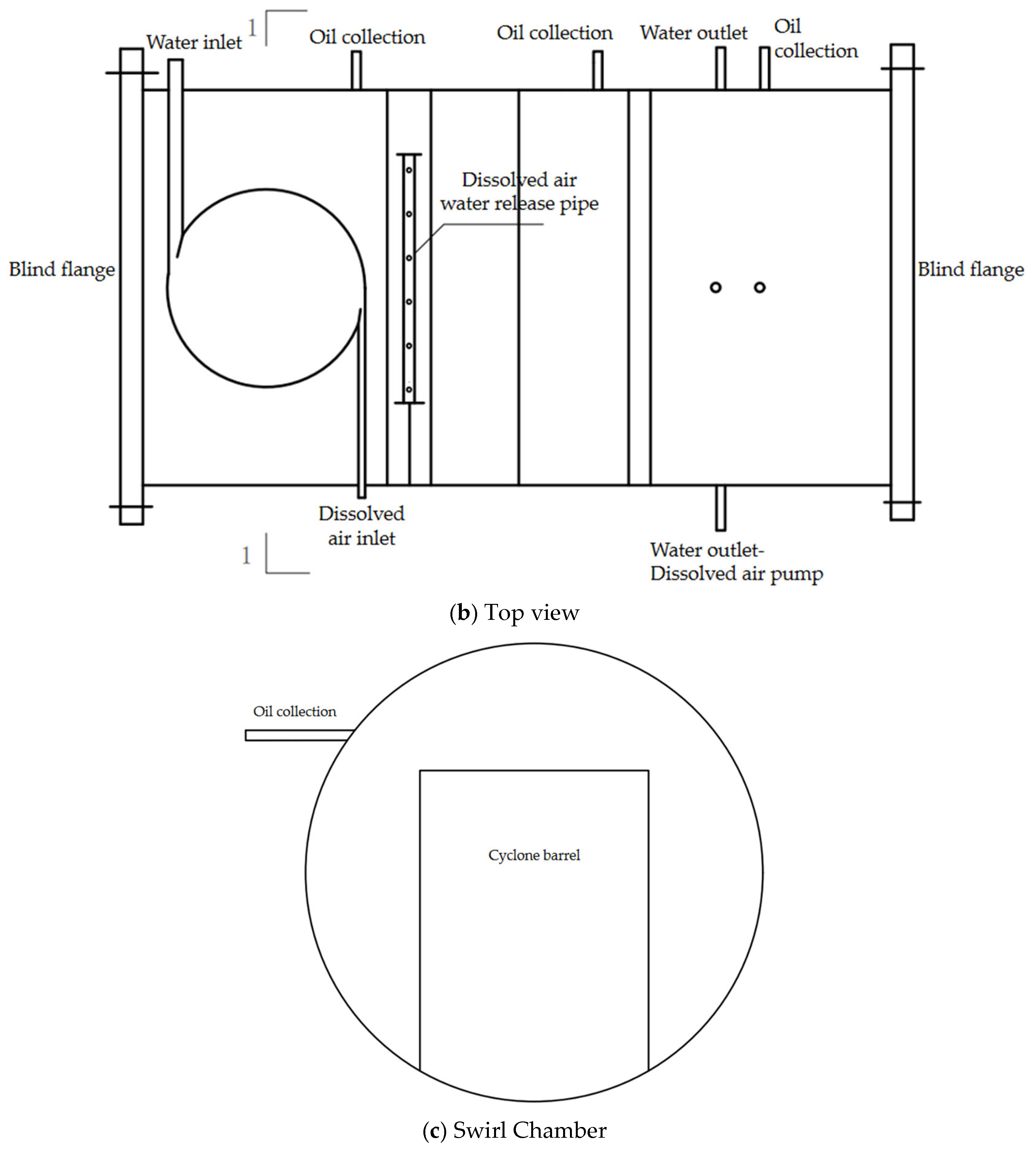
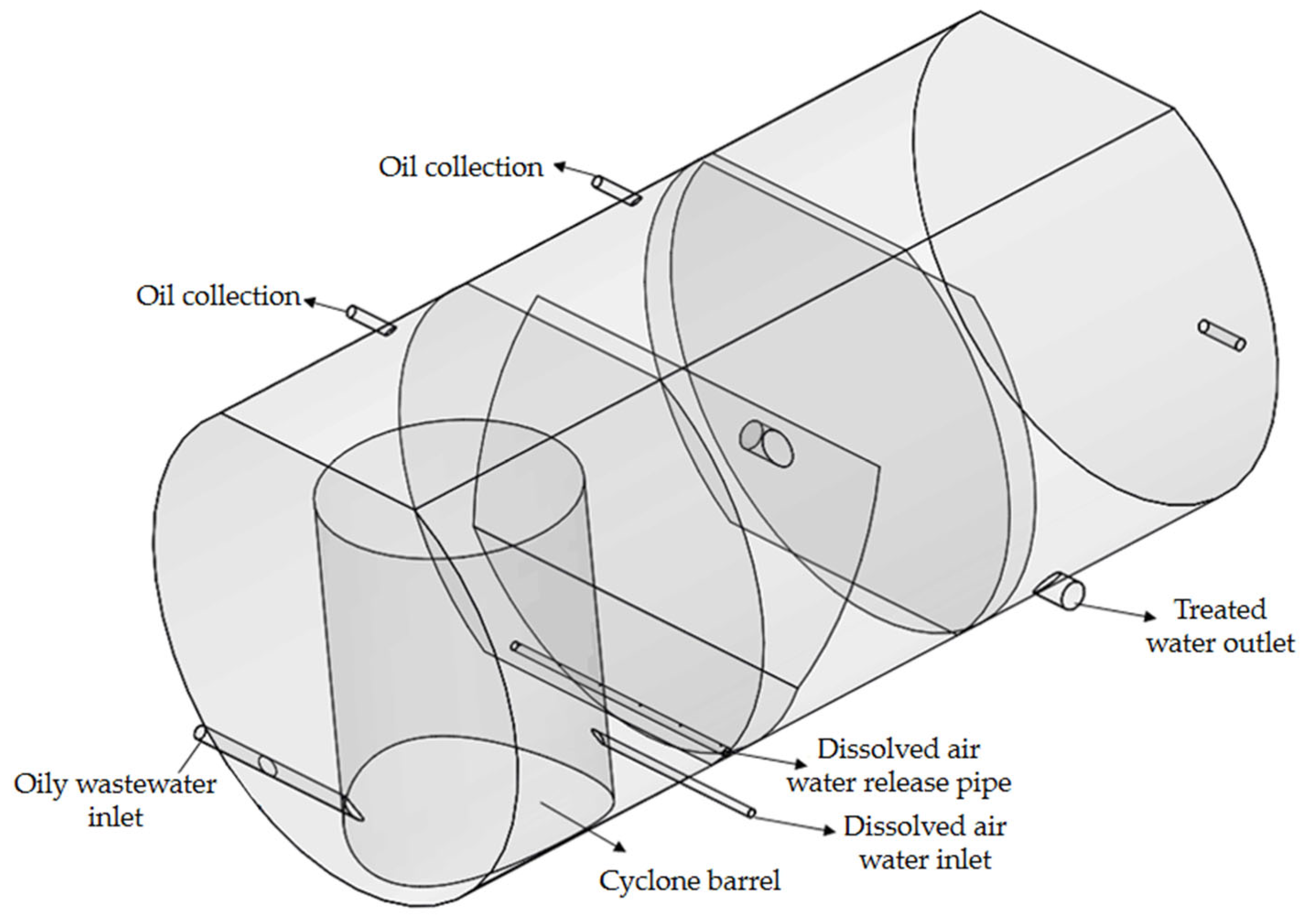
Based on the oil removal principles of vortex flotation technology and flotation separation technology, this paper designs a horizontal compact sealed vortex flotation unit. The unit primarily consists of a vortex zone, a flotation zone, and a buffer zone. The structural layout of the unit is shown in Figure 1.
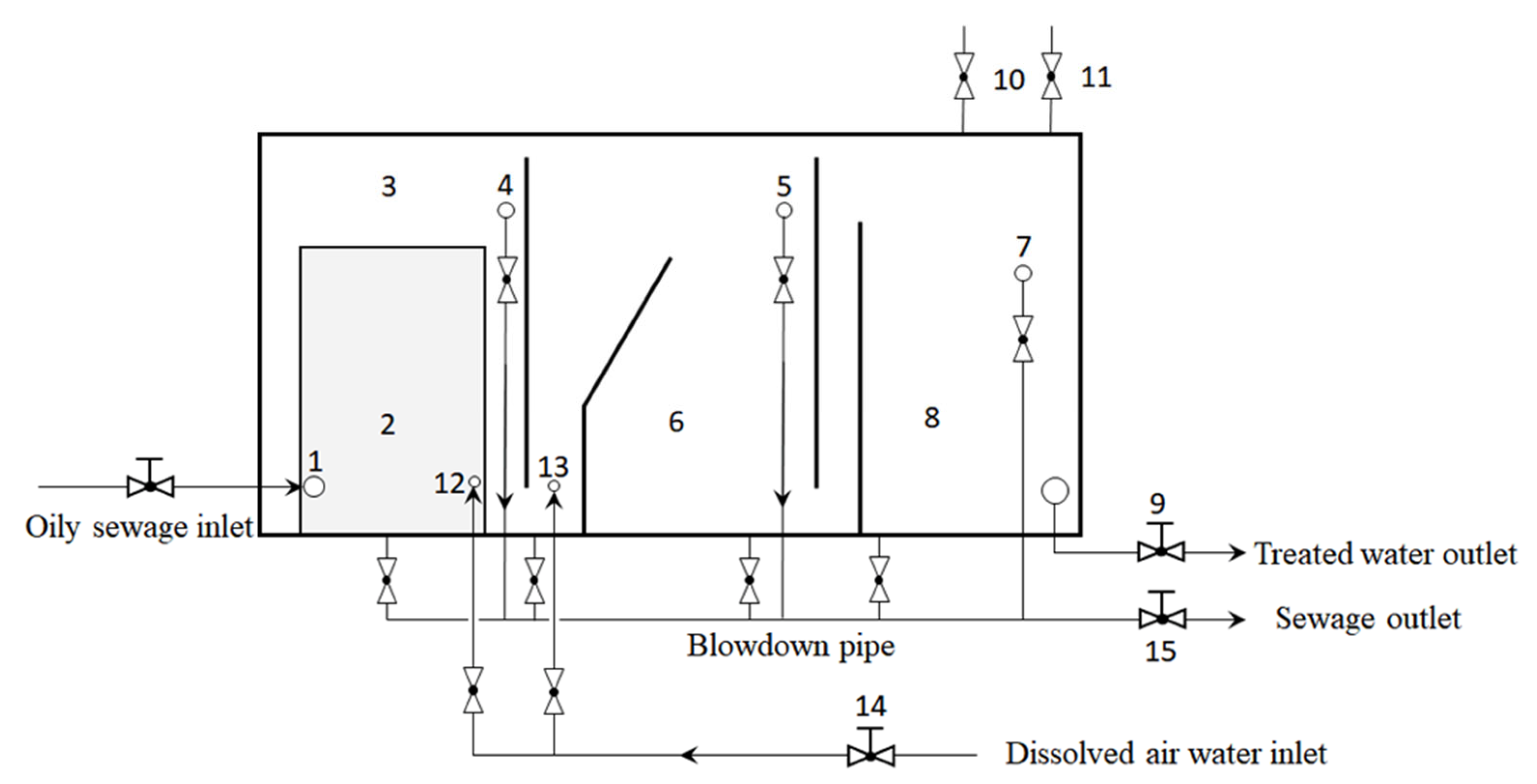
Working Principle, as shown in Figure 2: Clean water enters the swirling flow air flotation device through the oily sewage inlet pipe (1). The intake valve (11) vents air to pressurize the system, while the treatment water outlet valve (9) is adjusted to control the water surface height, ensuring it does not exceed the overflow pipe. The oily sewage and dissolved air water are directed into the swirl cylinder via the tangential pipe at the lower part of the cylinder (2), providing the kinetic energy required for fluid rotation. The fluid moves upward along the cylinder’s wall, and the flow direction of the oily sewage aligns with that of the fine bubbles, thus preventing the downward water flow from impacting the flotation process. This configuration improves bubble utilization and reduces the disruption of aggregates.
In the presence of a swirling centrifugal force field, density differences, and fine bubbles, the bubbles and oil droplets continuously collide and adhere to one another, decreasing the density of the oil droplets and increasing the density difference between the oil and water. The resulting larger oil droplets, bubbles, and their copolymers float towards the center, forming a scum and foam-like oil phase enrichment layer on the liquid surface. This layer then flows into the sewage pipe via the primary overflow pipe (4), achieving the initial separation of oil and water.
After the sewage undergoes preliminary separation in the swirling air flotation zone, it exits the swirl cylinder and falls back to the lower part of the device due to gravity. It then flows into the air flotation zone (6), where it collides with and adheres to numerous tiny bubbles released by the tubular release device (13). In this zone, the secondary air flotation process occurs, enabling the remaining oil droplets and particles to float to the surface and form another scum and oil phase enrichment layer. This layer is discharged to the sewage pipe through the two-stage overflow pipe (5), achieving secondary separation of the oily sewage.
The treated sewage is then directed to the buffer zone, where, after a period of accumulation, the oil slick on the water surface is discharged through the three-stage overflow pipe (7). The purified oily sewage finally exits the system through outlet (9), completing the treatment process.
The horizontal compact swirling flow air flotation device has a large volume, and numerical simulation consumes substantial computing resources and time, making convergence difficult. Therefore, the compact rotary air flotation device is simulated in two parts: the swirling flow zone and the air flotation zone. The content of this paper is the flow field distribution in the floating area of the horizontal compact swirling flow air flotation device. Therefore, this paper mainly studies the flow field distribution in the air-floating region.
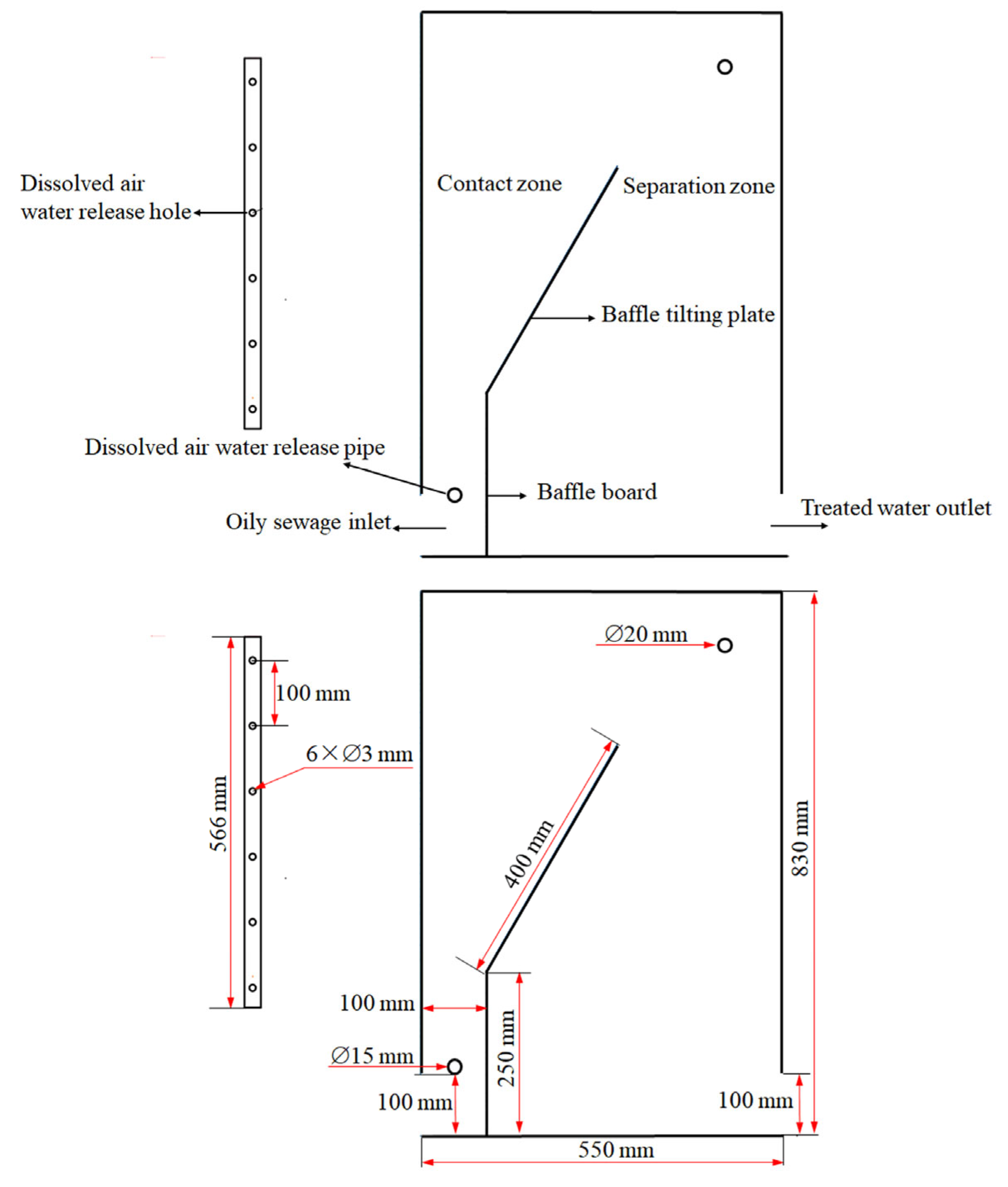
The baffle plate separates the air floating area into the contact area and the separation area. The contact zone provides an opportunity for collision adhesion between the oily sewage coming in from below and the tiny bubbles released by the dissolved air release pipe. The water flow carries the suspended matter of flocculated bubble aggregates, free bubbles, and unattached flocculated particles to the separation area of the device. In the separation zone, free air bubbles and bubble aggregates rise to the tank’s surface to be removed, achieving separation. The clarified water circulates in the tank and sinks to the lower part of the separation area to flow to the outlet.
The main structural dimensions of the air flotation zone are shown in Figure 3. In the process of modeling, the air flotation zone is adjusted locally. The structure of the air floating zone mainly consists of the contact zone and the separation zone. During the modeling process, localized adjustments were made to the air flotation zone. Its dimensions are 550 mm in length, 900 mm in width, and 830 mm in height. The dissolved air water release pipe has a diameter of 15 mm, with six dissolved air release holes each measuring 3 mm in diameter. The combined area of the influent and effluent zones is 0.03863 square meters, with a perimeter of 1.18 m. The straight baffle plate measures 250 mm in length, while the inclined baffle plate extends 400 mm.

2.2. Meshing and Grid Independence Verification

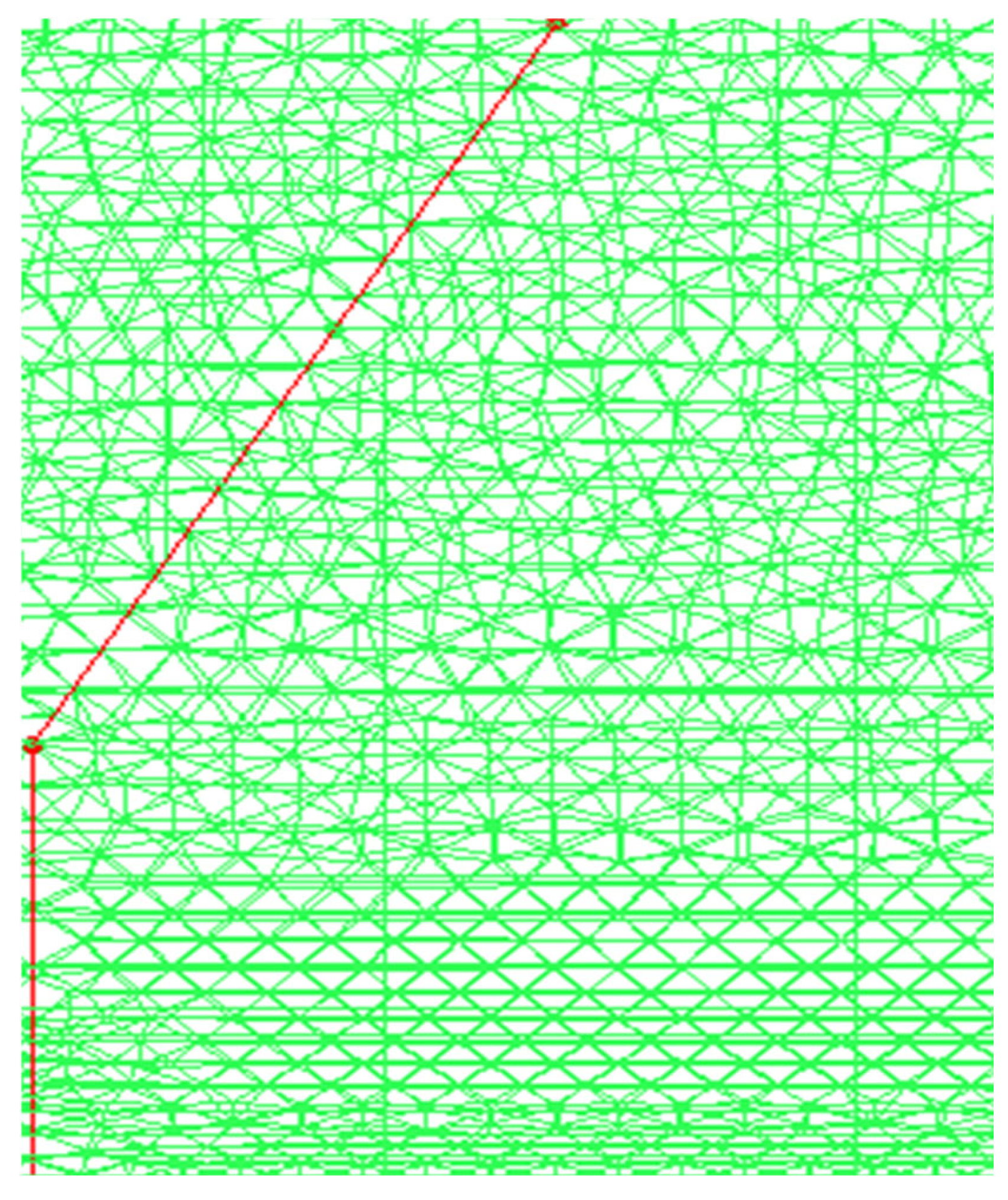
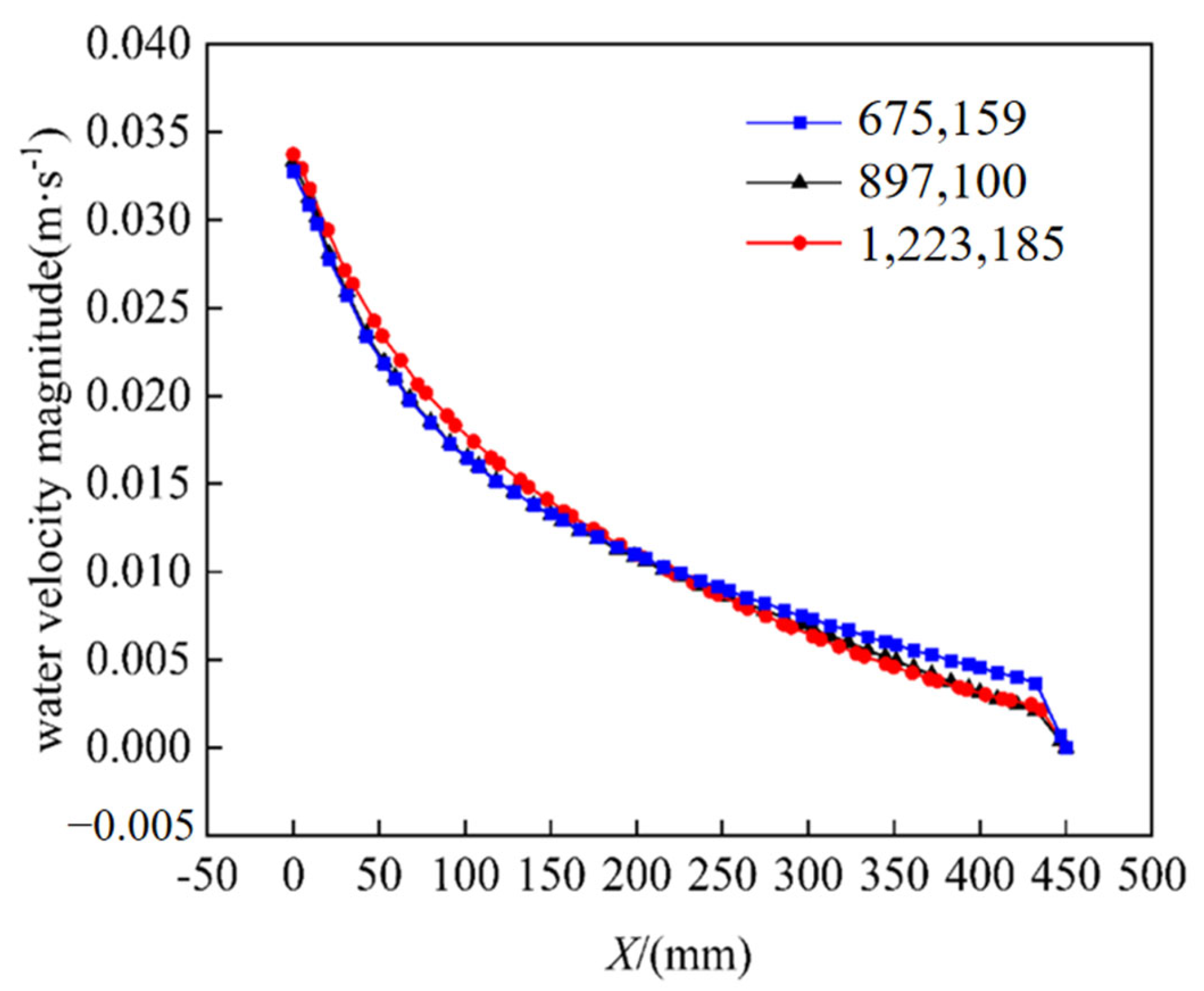
As shown in Figure 4, the air flotation zone was meshed using ICEM software, with mesh refinement applied to the dissolved air water pipeline to enhance calculation accuracy. To ensure the reliability of the results, a grid independence test was conducted. For verification, the water phase velocity distribution at an outlet height of 50 mm was selected under the same inlet conditions. As illustrated in Figure 5, when the number of grids exceeds 897,100, further grid refinement has a negligible effect on the water phase velocity, indicating that grid independence has been achieved. While finer meshes provide more detailed flow field information, to optimize computational efficiency, the mesh with 897,100 cells was chosen for the simulations in this study.

3. Numeric Calculation Method

3.1. Multiphase Flow Model

The selection of an appropriate multiphase flow model is critical for enhancing simulation accuracy, reducing computational time, and improving overall efficiency. Fluent 15.6, a widely used computational fluid dynamics (CFD) software, provides a range of multiphase flow models tailored to describe gas–liquid two-phase flow, with each model optimized for distinct application scenarios. The Volume of Fluid (VOF) model determines the evolution of phase boundaries by solving separate momentum equations for each phase, thereby enabling the accurate calculation of interphase interface positions. This model is particularly well-suited for phase boundary tracking and capture, and is commonly applied to simulate stratified flow and free-surface flow systems. The Mixture model simplifies the Eulerian framework by treating all phases as a single homogeneous mixture. Instead of solving individual momentum equations for each phase, it only solves a single momentum equation for the mixture. The relative motion of the dispersed phase with respect to the continuous phase is derived from balancing drag forces and buoyancy forces—two key forces induced by density differences between the phases. This model is ideal for simulating processes such as particle settling and discrete phase behaviors in cyclone separators.
The Eulerian model is more mathematically complex than the aforementioned two models. It solves the momentum equation and continuity equation independently for each phase, while coupling interphase parameters (e.g., pressure and interfacial transfer coefficients) to explicitly account for phase interactions. Although this model achieves higher simulation accuracy compared to the Mixture model, it requires more advanced computational hardware and incurs longer computation times. It is typically employed for simulating complex multiphase systems, including sedimentation processes, flows with suspended particles, bubble-driven flows, and systems with highly dispersed phases.Given the characteristics of the multiphase flow under investigation in this study, the Eulerian model was selected for the subsequent simulations.

3.2. Turbulence Model

In multiphase flow simulation calculations, the standard k-ε model is widely used and performs well for turbulent flows without separation, incompressible flows, and high Reynolds number flows. However, it is less effective for high shear rate and high curvature flow problems. The RNG k-ε model incorporates rotational effects to enhance computational accuracy in this regard, yet it retains the vortex viscosity assumption, thus limiting its predictive capabilities. In contrast, the RSM model represents the most sophisticated turbulence model. This model completely abandons the eddy viscosity assumption, fully solving the differential transport equations for Reynolds stresses to obtain each stress component while accounting for the wall’s influence on Reynolds stress distribution. It is particularly suited for three-dimensional flows with strongly curved streamlines, vortices, rotation, and rapidly changing stresses, offering higher precision potential for complex fluids. Given that this chapter’s simulations involve flow between oil droplets, gas bubbles, and water—three distinct phases—the turbulence model must meet stringent requirements for accuracy and precision. The horizontal compact closed-loop cyclonic air flotation unit integrates three distinct zones: the cyclonic zone, the air flotation zone, and the buffer zone, resulting in a highly complex flow field. Compared to the standard k-ε model and RNG k-ε model, the RSM model demonstrates superior simulation capability, effectively capturing the combined vortex characteristics and making it highly suitable for this simulation scenario. Furthermore, the RSM model exhibits better agreement with experimental data than the RNG k-ε model. Therefore, the RSM model is selected for computations in this chapter [30,31].

3.3. Effect of Air Holdup on Flow Field

The inlet medium consists of oil–gas–water three-phase flow. Due to limitations in simulation software, no accurate theoretical model currently exists to describe the interaction between bubbles and oil droplets. Therefore, the collision and adhesion process between bubbles and oil droplets is neglected, and the simulation employs oil–water and gas–water two-phase flows. If the separation efficiency is satisfactory under oil–water two-phase flow conditions, the oil–water separation performance should improve further when bubbles are introduced. All inlets are velocity inlet conditions. The initial pressure at the tangential inlet of the cyclone is 0.3 MPa, while the top outlet is a pressure outlet condition with an outlet pressure of 0.1 MPa. The wall surface employs a no-slip boundary condition (wall). During numerical simulation, the water phase density is 998.2 kg·m−3, with a viscosity of 1.003 mPa·s; the oil phase density is 880 kg·m−3, with a viscosity of 80 mPa·s. Oil droplet size is 40 μm, and the inlet oil content is 0.05%. Bubble size is 40 μm, air density is 1.225 kg·m−3, viscosity is 0.017894 mPa·s, and the inlet gas content is 0.1.
The inlet boundary conditions are specified as velocity inlet conditions, with no-slip boundary conditions applied. The outlet is treated as a free boundary, and the top outlet is set as a frictionless wall, while all other walls are designated as solid walls. The wall is set as a no-slip boundary, and the water surface is under a smooth wall condition. The entire simulation process is an isothermal process with no heat transfer. Due to the lack of a mature theoretical model describing the interaction between bubbles and oil droplets, the trapping process of bubbles by oil droplets is not considered in the simulation. Instead, the two-phase flow of bubbles and water is simulated. The density and viscosity of clean water are set as ρx = 1000 kg·m−3 and μx = 0.001 Pa·s, respectively. The double Eulerian model is employed for the CFD simulations. The aqueous phase inlet velocity is set at 0.018 m·s−1, and the dissolved air water inlet velocity is 1.57 m·s−1. The water phase is treated as the primary phase, and the air phase as the secondary phase. The governing equations for the two-phase flow are solved using the finite volume method, with the Phase Coupled SIMPLE pressure–velocity coupling scheme selected. The momentum, turbulent kinetic energy, and turbulent dissipation rate are discretized using the second-order upwind scheme. The entire simulation process is isothermal, with no heat transfer considered. Convergence is achieved when the residuals fall below a predefined threshold, and a stricter convergence criterion of five orders of magnitude is applied. For comparison of air volume fraction results, the same criterion used by Chen et al. [31] is adopted, with the air concentration profile plotted as a function of tank height (450 mm) along the vertical axis.

3.4. Grid Verification

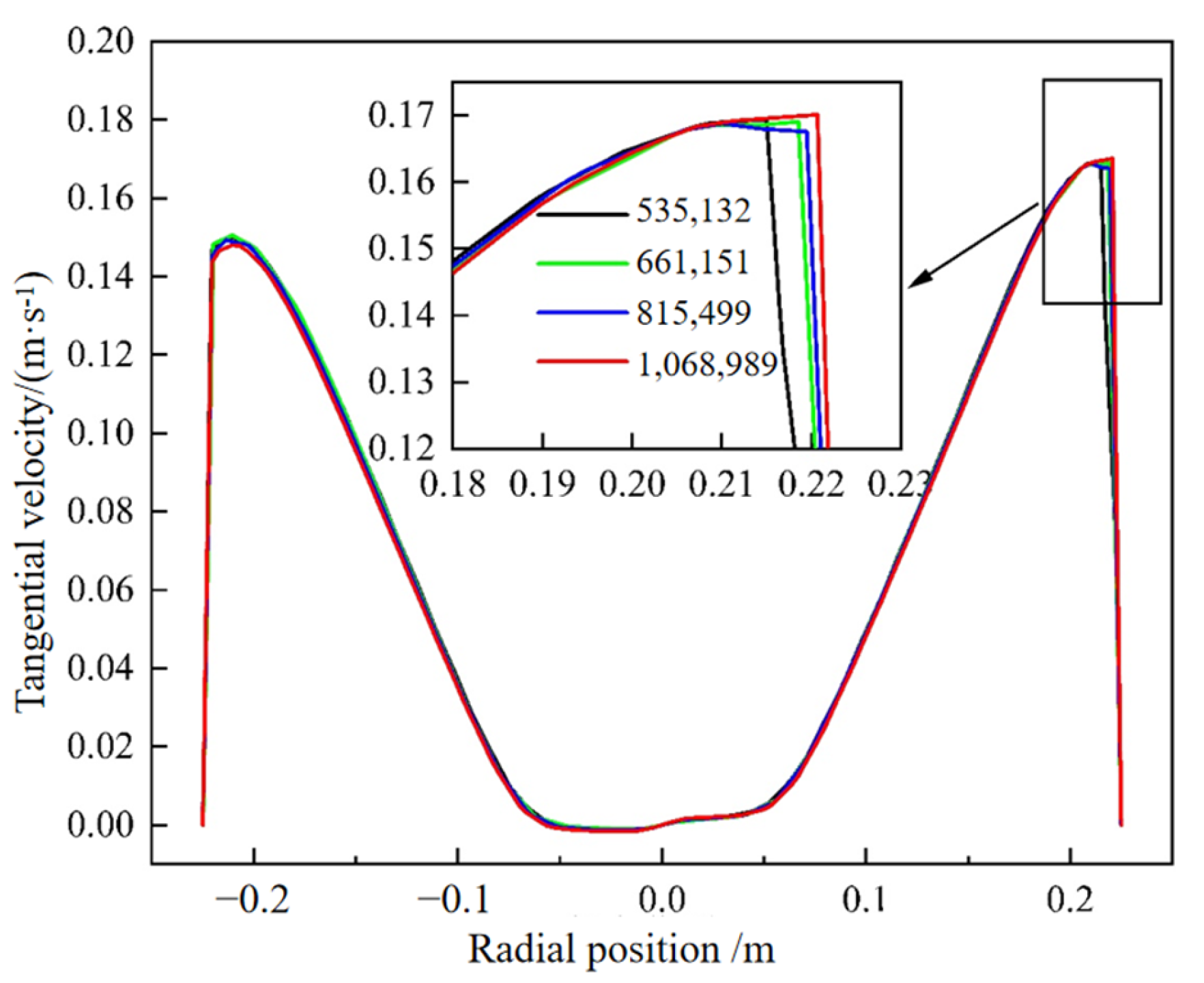
To mitigate the impact of mesh quality on computational results and ensure the accuracy of numerical calculations, mesh independence verification is required. Using Model A for mesh independence testing under single-phase flow conditions—with wastewater inlet velocity at 2 m·s−1 and bubble-water inlet oil velocity at 1.25 m·s−1—the following four mesh sizes were validated: 535,132, 661,151, 815,499, and 1,068,989. The tangential velocity distribution at the Z = 500 mm position was selected for inspection. Figure 6 shows the tangential velocity distributions at the same position for the four mesh configurations. As shown in Figure 6, when the mesh count exceeds 661,151, the variation in tangential velocity becomes negligible, satisfying the independence requirement. To optimize computational resource utilization, the model employs the 661,151 mesh count for subsequent calculations.

4. Results: Distribution Characteristics of Flow Field in Air Flotation Zone

4.1. Effect of Air Holdup on Flow Field

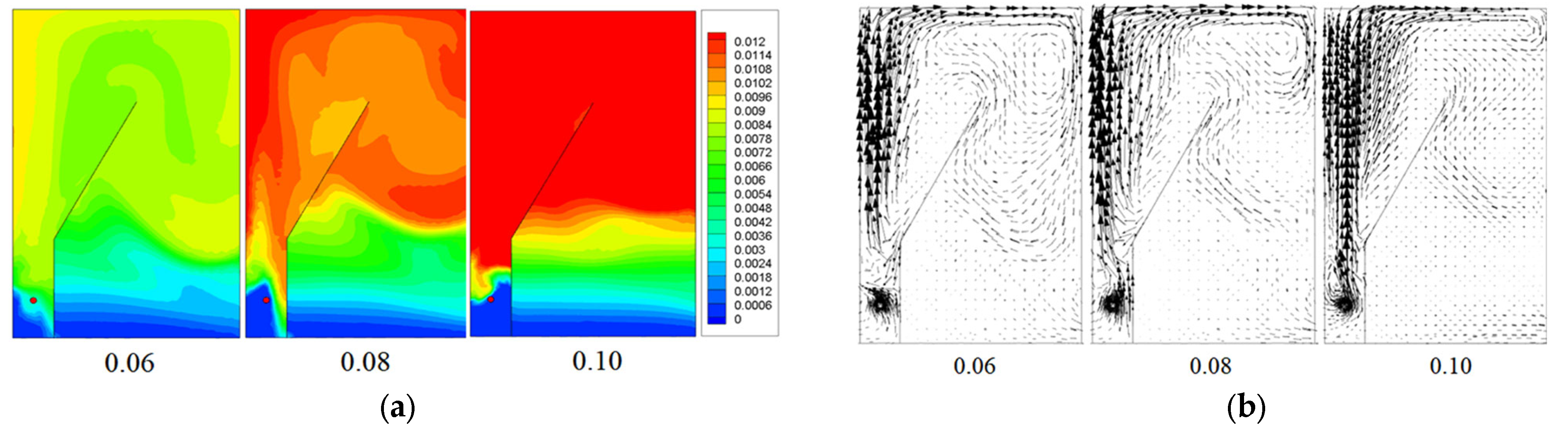
Under the same conditions, the influence of the flow field distribution was investigated by varying the air holdup at the inlet. As shown in Figure 7a, with the increase in air holdup, the distribution range of bubbles in the air flotation tank becomes broader and more uniform. When the air holdup increases from 0.06 to 0.1, the air phase concentration in the separation zone gradually increases, and the flow pattern at the top of the separation zone transitions from a small swirling vortex to a horizontal stratified flow. The flow behavior within the air flotation zone remains similar, with the highest velocity observed at the inlet wall. Upon reaching the top surface, the fluid flows to the right, impacts the wall, and then flows downward. Part of the fluid flows to the left, reaches the baffle, and then flows upward to form a vortex, while the remaining fluid flows downward toward the outlet. When the inlet air holdup is between 0.06 and 0.08, the density gradient is small, making it difficult to form a stratified flow. As a result, a vortex forms at the top of the separation zone. Under the influence of this vortex, the air continues to diffuse downward, expanding the air phase distribution range. When the air holdup is increased to 0.1, the air phase concentration in the middle of the separation zone increases, the distribution becomes more uniform, and stratified flow appears in the upper part of the separation zone.
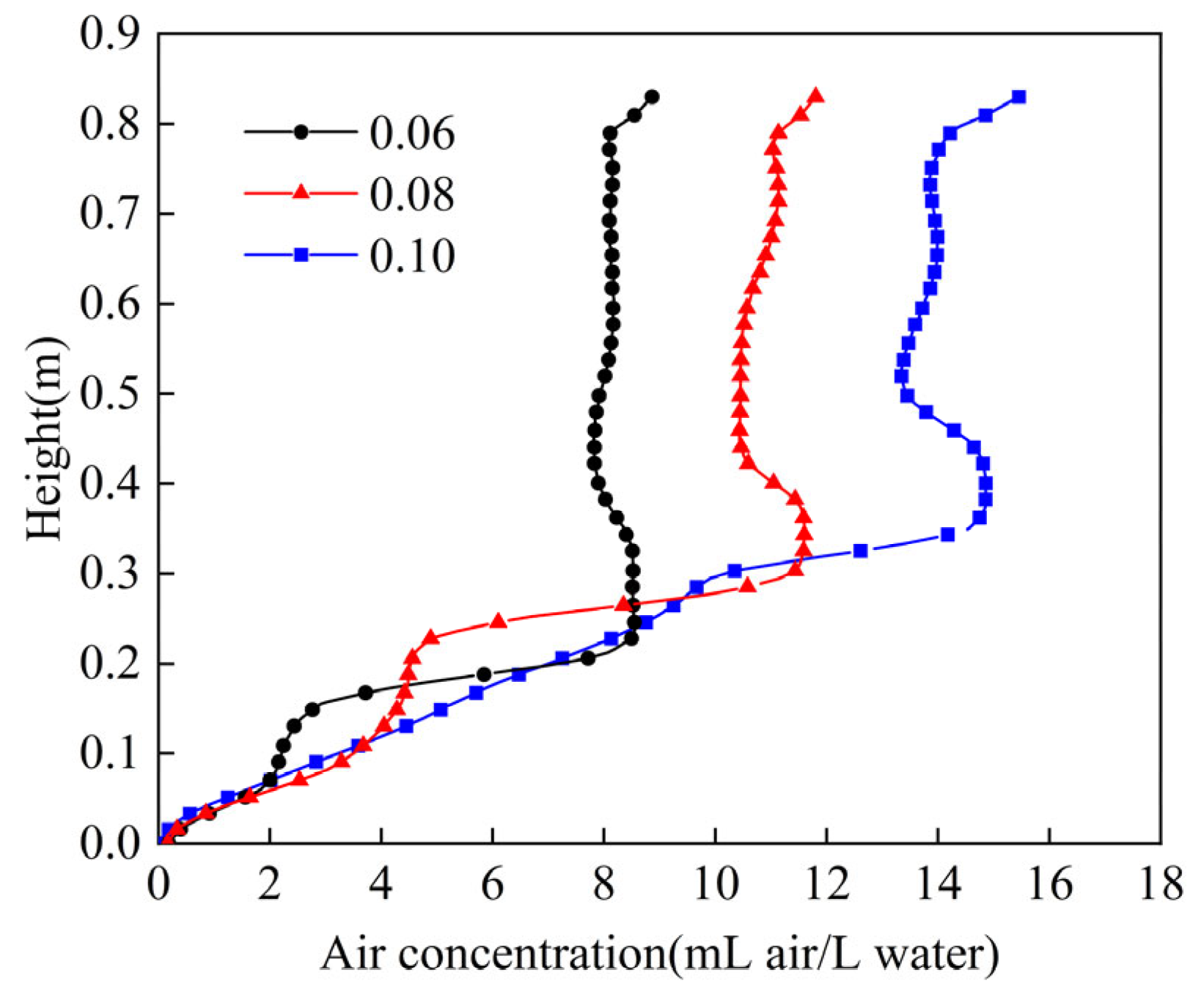
The distribution of air concentration with height at 450 mm within the separation zone was analyzed. Figure 7 illustrates the variation in air concentration with height for different inlet air holdups. As shown in the figure, the air holdup distribution follows a similar trend across all inlet conditions: air holdup increases with height. When the air holdup increases from 0.06 to 0.10, the surge point for air holdup shifts from 0.15 m at lower heights to 0.22 m, and then to 0.27 m. At an air holdup of 0.06, the high-air-content region extends above 0.2 m, with a broader range than observed for air holdups of 0.08 and 0.10. As the inlet air holdup increases, the area with high air holdup gradually decreases. This behavior is attributed to the vortex at the top of the separation zone, which causes the air to flow downward when the air holdup is low, thus expanding the bubble distribution range.
As can be seen from Figure 8, with higher inlet air holdup, the air phase concentration increases, improving the density gradient in the separation zone, which facilitates the formation of stratified flow. Additionally, as bubble aggregation occurs, the particle size increases, and the bubble flotation rate improves, preventing the high air holdup area from extending into the lower portion of the separation zone. Consequently, when the inlet air holdup reaches 0.1, the air holdup in the separation zone is higher, promoting the formation of stratified flow.

4.2. Effect of Bubble Size on the Flow Field

Bubble size is a critical parameter in a dissolved air flotation (DAF) tank, as it significantly influences the flotation performance by directly affecting the collision probability with oil droplets, adhesion efficiency, and bubble flotation velocity. Therefore, in this study, bubble particle sizes of 30 μm, 40 μm, 50 μm, 60 μm, and 70 μm were selected to investigate the effect of bubble size on the flow field distribution within the air flotation zone.
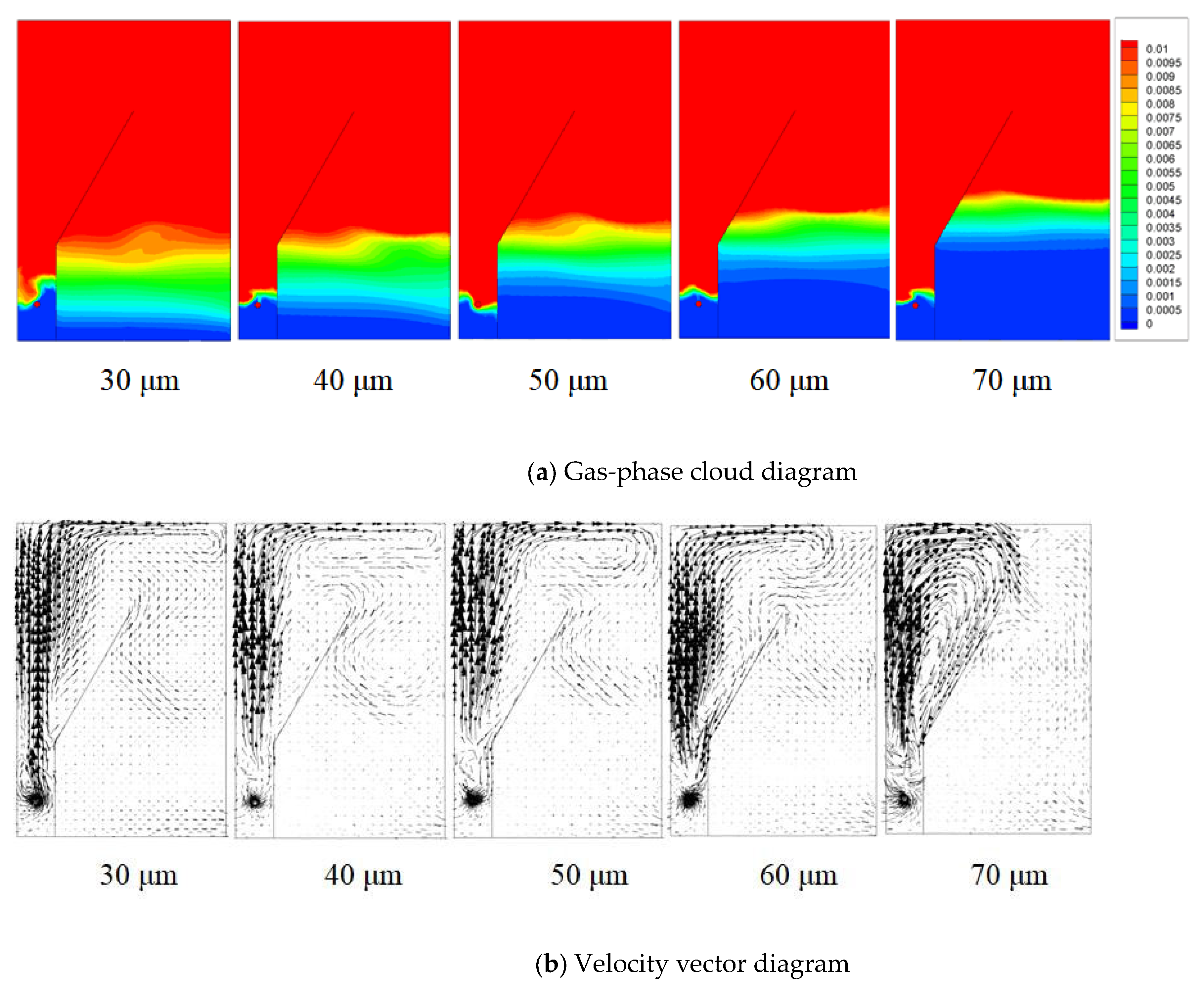
As shown in the air phase distribution diagram in Figure 9a, when the bubble particle size is small, the bubbles occupy both the middle and lower parts of the separation zone. However, as the bubble particle size increases, the bubbles tend to concentrate in the middle and upper regions of the separation zone. For bubble sizes of 30 µm and 40 µm, the bubbles almost fill the entire zone, with a more uniform distribution and higher air holdup in the middle and upper regions. In contrast, for bubble sizes of 50 µm, 60 µm, and 70 µm, the air holdup in the lower part of the separation zone decreases. This phenomenon occurs because smaller bubbles are more easily influenced by the surrounding fluid, allowing them to flow with the water phase toward the outlet, thereby increasing the distribution range of the air phase. Larger bubbles, on the other hand, have higher flotation velocities and are less affected by the fluid, resulting in less downward spread and lower air holdup in the lower part of the separation zone, with air holdup approaching zero at the bottom.
As seen in Figure 9b, the movement distribution of different bubble sizes in the air flotation device is similar, though there are slight differences based on particle size. When the particle size increases from 30 µm to 50 µm, the fluid near the inlet wall of the contact zone rises into a flat push flow, and the fluid in the deflected oblique plate of the contact zone returns to form a small circulation flow. The horizontal flow in the separation zone gradually becomes more pronounced. This circulatory flow is beneficial as it increases the local residence time and the likelihood of collisions between microbubbles, flocs, and aggregates. When the particle size reaches 60 µm, the horizontal flow in the upper part of the separation zone returns to the contact zone before reaching the outlet wall, and the horizontal flow area is small, which weakens the removal of bubbles and particle aggregates in the separation zone. When the particle size is 70 µm, the fluid at the top of the contact zone no longer forms horizontal flow, and the larger the particle size of the bubble, the faster the upward escape velocity. When the fluid reaches the water surface along the wall, it returns due to the action of the density difference.
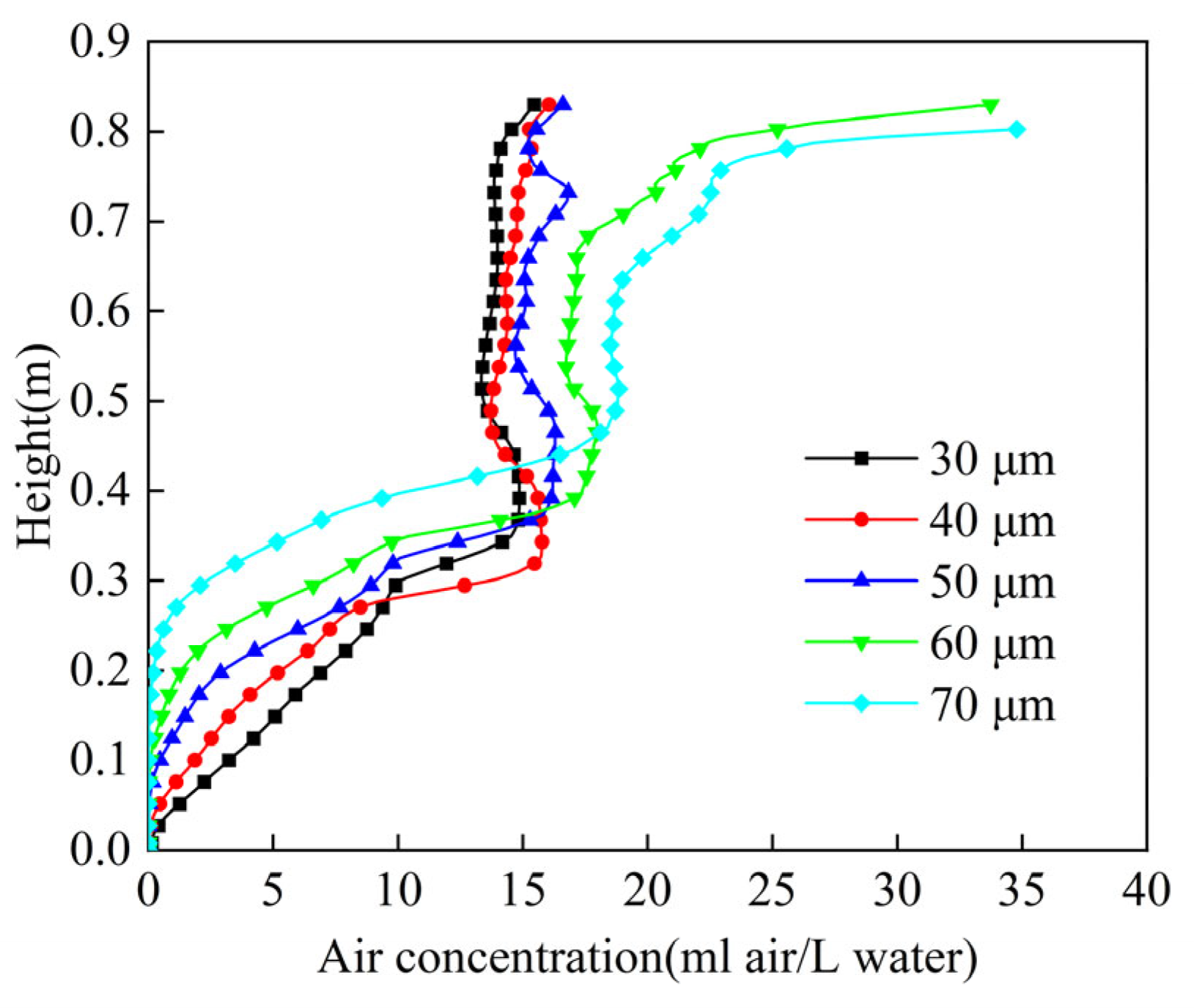
As can be seen from Figure 10, when the particle size is greater than 50 μm, the air holdup is zero in the area below 0.1 m in height. When the height is below 0.35 m, the larger the particle size is, the smaller the air holdup is. When the height is greater than 0.35 m, and the particle size is 30 μm, 40 μm, and 50 μm, the air holdup changes little, but the air holdup continues to increase when the particle size is 60 μm and 70 μm. Therefore, the flow field distribution is better when the particle size is 50 μm.

4.3. Effect of Treatment Capacity on the Flow Field

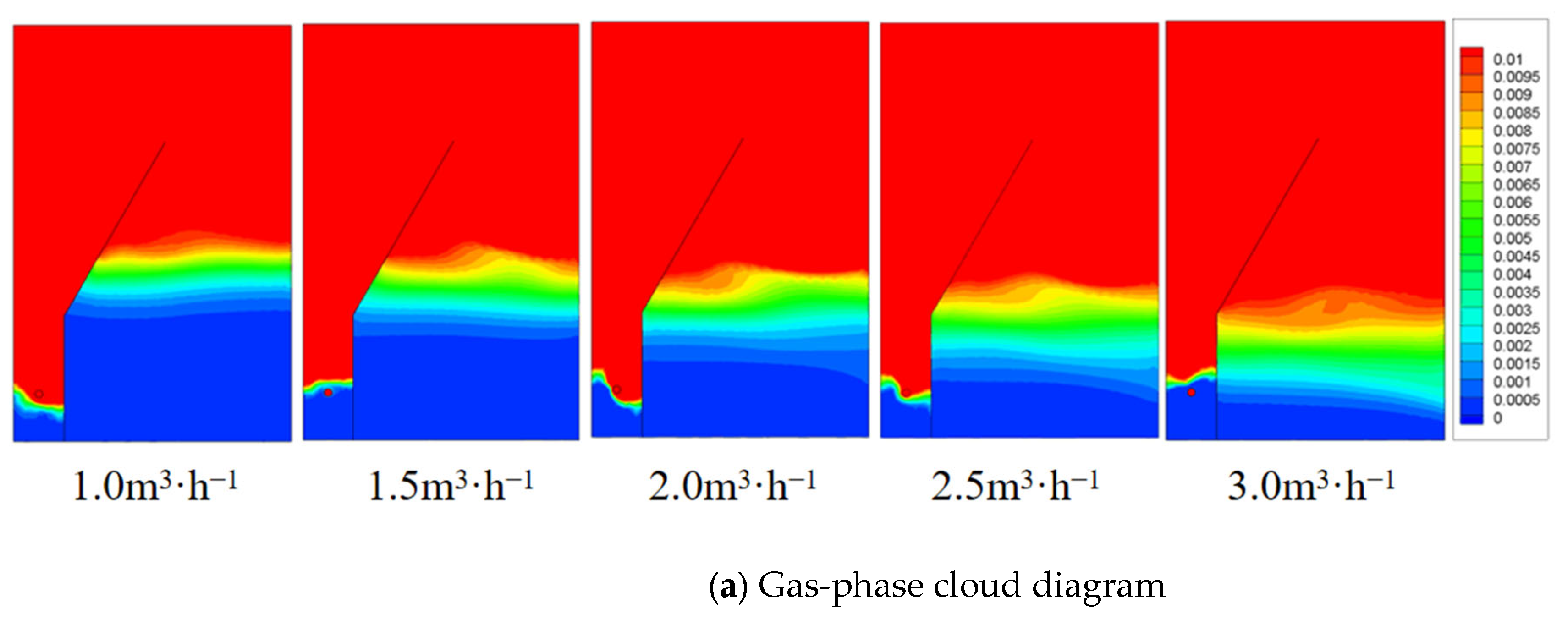
Under identical conditions, the impact of inlet processing capacity on the flow field distribution was investigated. As shown in the air phase distribution diagram in Figure 11a, an increase in treatment capacity results in a broader air phase distribution range. The air phase is more uniformly distributed within the contact area, with higher air phase concentration in the middle and upper parts of the separation zone. Additionally, the air–water boundary layer becomes more pronounced, shifting downward as the treatment capacity increases. This can be attributed to the increased inlet flow rate, which reduces the flotation time of the bubbles, causing them to more easily flow toward the outlet along with the fluid.
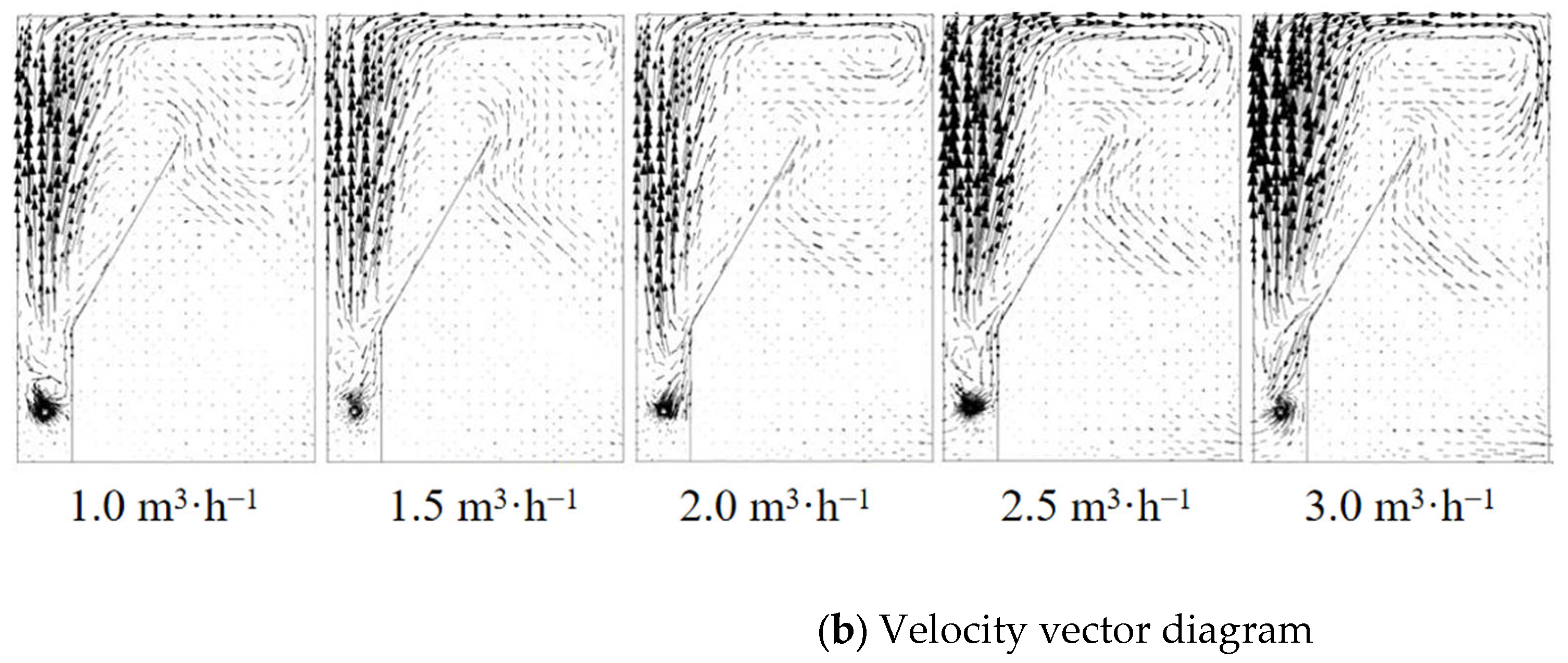
The flow field distribution, as shown in Figure 11b, reveals similar flow behavior. The air holdup at the inlet of the contact area is high, leading to a significant overall density difference that promotes the formation of backflow. This backflow, combined with the release pipe of the dissolved air water, disrupts the flow of the floating sewage, creating chaotic flow patterns and high velocities. The fluid moves upward along the inlet wall, then flows to the right toward the outlet wall after reaching the water surface. As the inlet flow rate increases, the water surface velocity also increases, leading to the formation of an apparent horizontal flow. When the processing capacity is 1.0 m3·h−1, a small vortex forms at the top of the separation zone. However, when the processing capacity exceeds 2.0 m3·h−1, the small vortex evolves into a distinct layered flow pattern at the top of the separation zone.
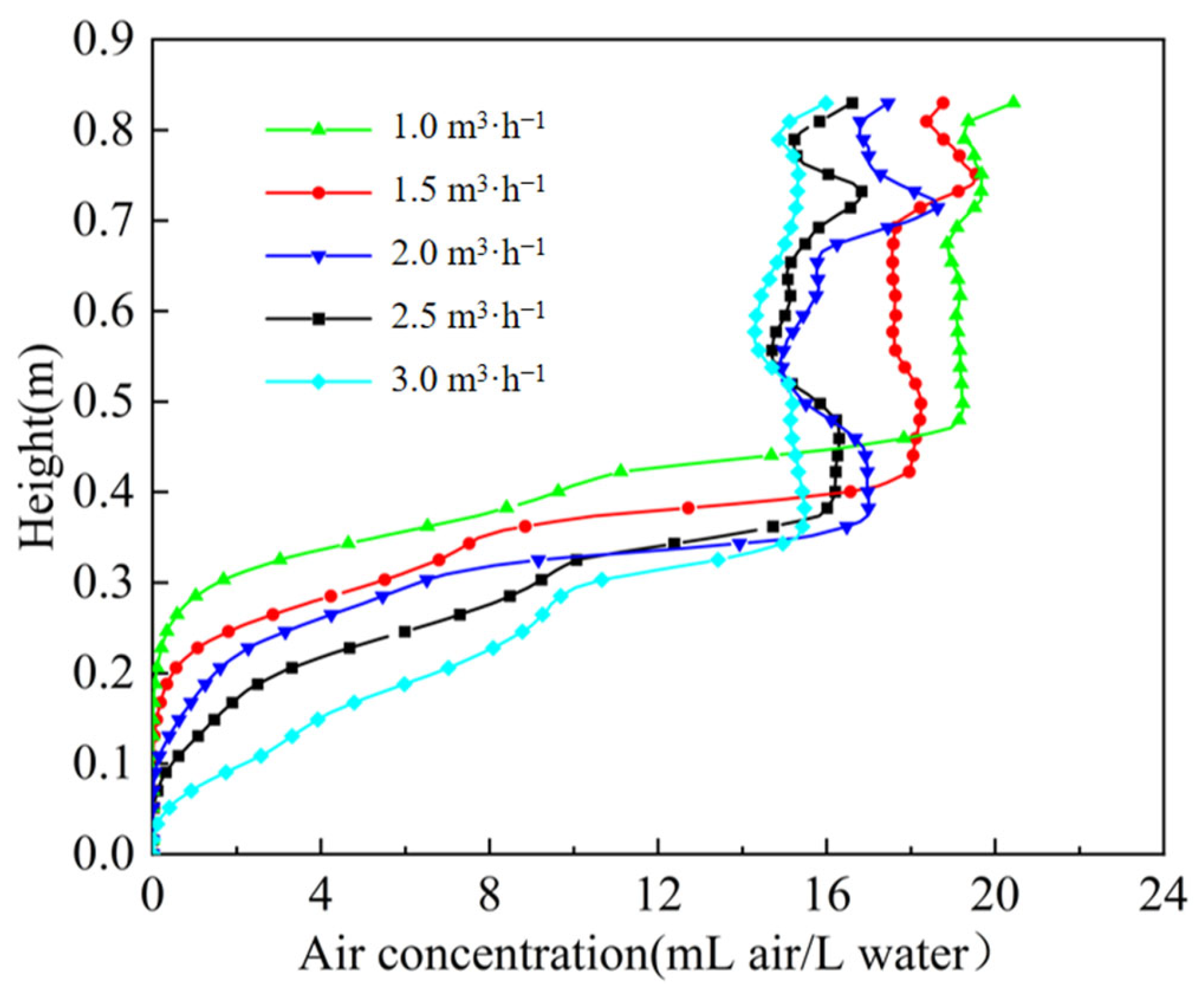
Figure 12 shows the air holdup curve of different treatment capacities with height. As can be seen from the figure, increasing the inlet processing capacity will increase the inlet speed, and the maximum air holdup in the separation zone will decrease. However, the range of high air holdup in the upper part of the separation zone will increase with the processing capacity. When the treatment capacity is 1 m3·h−1, 1.5 m3·h−1, 2 m3·h−1, 2.5 m3·h−1, and 3 m3·h−1, the maximum air holdup is 20.43, 18.74, 17.45, 16.56 and 15.98 mL air/L water, respectively. When the height is less than 0.34 m, the air holdup increases with the increase in treatment capacity. It increases rapidly with the increase in height, and the density gradient changes significantly. When the height is more significant than 0.46 m, the air holdup decreases with the increase in the treatment capacity and increases slowly with the increase in the height. This is because the processing capacity is small and the inlet fluid velocity value is low, which provides sufficient time for the flotation of bubbles, improves the collision and aggregation probability between bubbles, increases the bubble size, and increases the bubble floating speed. Therefore, the upper part of the separation area has a significant air holdup, and the bubbles do not easily flow to the exit of the separation area. When the processing capacity is larger, the inlet fluid velocity value is at a larger value, and the bubble flotation time is shorter, which makes the bubbles flow downward with the water flow before surfacing to the water surface, increasing the air holdup rate in the lower part of the separation zone, and at the same time reducing the air holdup rate in the upper part of the separation zone. In summary, good stratified flow can be formed in the separation zone when the treatment rate is 2 m3·h−1.

4.4. Effect of Dissolved Air Water Velocity on the Flow Field

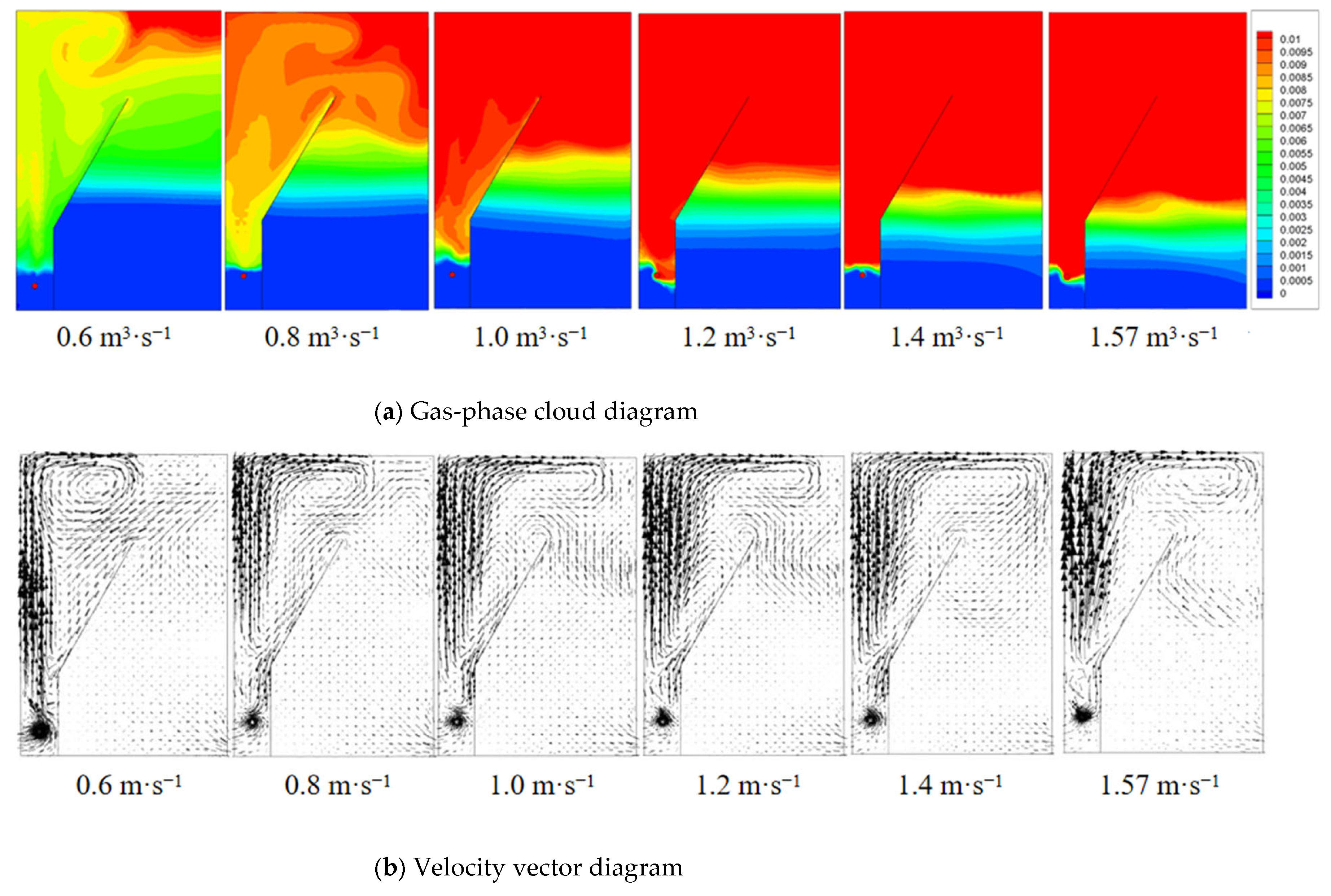
The inlet velocity of the dissolved air water is varied by adjusting the flow rate of the dissolved air–water mixture. As shown in Figure 13, with an increase in the dissolved air–water velocity, the air phase distribution becomes more uniform. A distinct air–water boundary layer is formed, which gradually shifts downward. At the top of the contact area, an apparent vortex is observed. As the dissolved air–water velocity increases, the vortex flow pattern gradually transitions into a stratified flow. This is because, at lower dissolved air–water flow rates, the inlet velocity is also low, resulting in lower air holdup in the flow field. Consequently, the air phase distribution in both the contact and separation zones is uneven, with the air holdup at the top of the separation zone being higher than that at the top of the contact zone.
This creates a density difference between the top of the contact zone and the entrance to the separation zone. The low-density, high-air-content water, pushed downward, lacks sufficient momentum to penetrate the high-density water below, causing the flow to deviate from the entrance zone and generate significant backflow, forming a vortex at the top of the contact zone. As the dissolved air flow rate increases, the air holdup in the contact zone also increases, and the air phase becomes more thoroughly mixed with the water phase at the top of the contact zone. The reduced density difference makes it more difficult for a vortex to form.
In the separation zone, a distinct stratified flow pattern emerges due to the continuous precipitation and upward flotation of bubbles. As the fluid flows to the right, the density of the fluid reaching the outlet wall exceeds that of the high-air-content fluid at the entrance to the separation zone. Under the influence of the density gradient, the fluid returns to the entrance of the separation zone, creating a well-defined stratified flow pattern. Therefore, when the dissolved air–water velocity exceeds 1.4 m·s−1, the stratified flow pattern in the upper part of the separation zone is more pronounced.
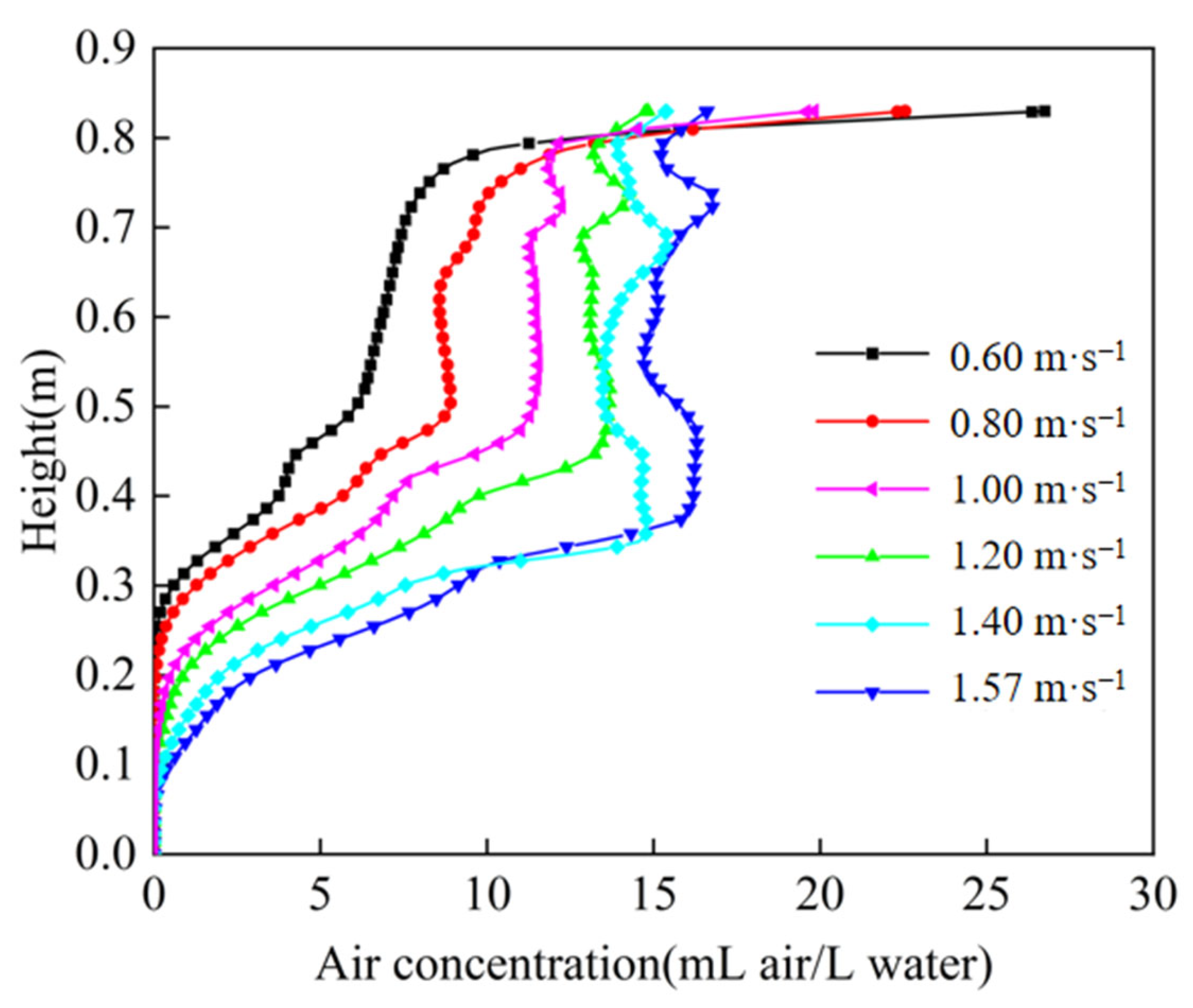
Figure 14 shows the variation curve of air holdup at the separation zone x = 450 mm with height under different dissolved air water velocities. As can be seen from the figure, the higher the dissolved air water velocity, the higher the overall air holdup in the separation area, which makes the air holdup in the lower part of the separation area gradually increase, which is consistent with the law of the previous cloud image.

4.5. Effect of Baffle Height on the Flow Field

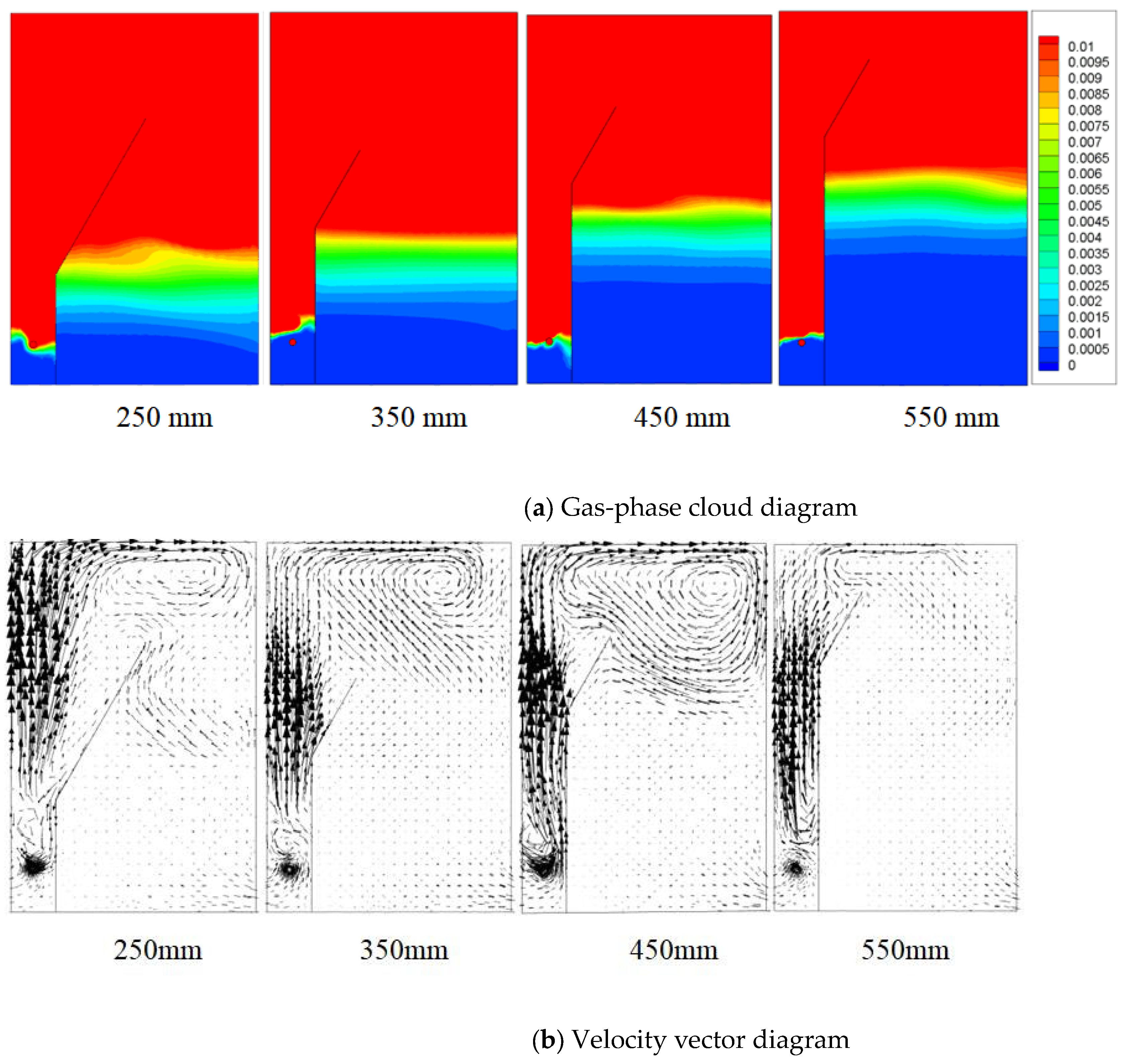
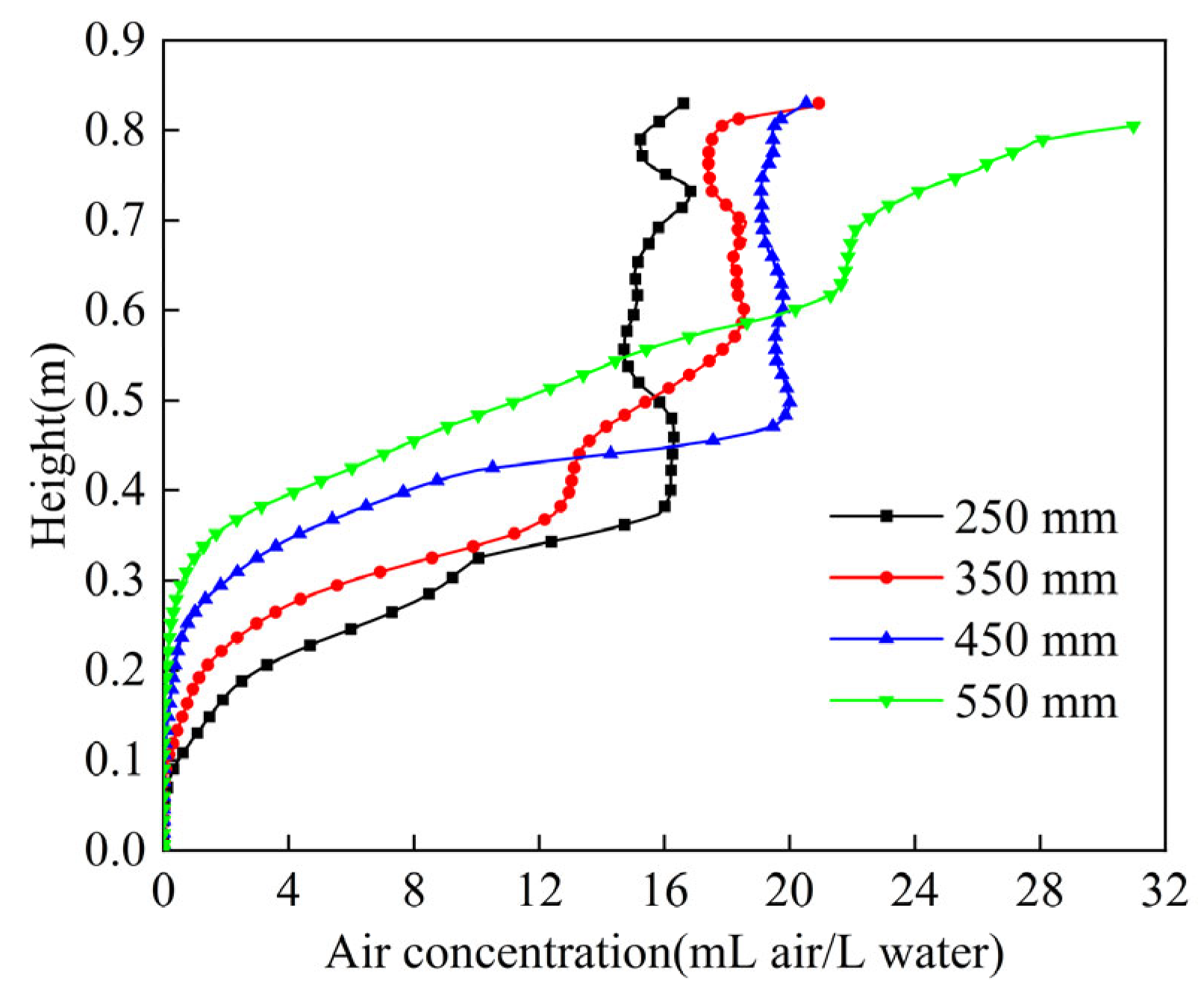
In order to study the influence of baffle height on flow field distribution, the baffle heights of 250 mm, 350 mm, 450 mm, and 550 mm were selected for analysis. Figure 15 shows the air phase distribution cloud and velocity vector of baffles of different heights. As can be seen from Figure 15a, the higher the height of the baffle, the smaller the air phase distribution zone in the separation zone, and the more difficult it is for bubbles to diffuse downward.
It can be seen from the flow field distribution in Figure 15b that when the height of the baffle is 250 mm, the inclined part of the baffle is longer, and the separation zone is more minor. When the flow rate in the contact zone is constant, the bubbles are more likely to flow to the bottom of the separation zone with the water flow, and the air phase concentration in the lower part of the separation zone is increased. From the flow field distribution, it can be seen that the fluid rises uniformly along the wall and reaches the water surface, where the velocity of the flow to the right is more significant, and the flow to the right reaches the right wall and returns to form an apparent stratified flow area. When the height of the baffle is 350 mm and 450 mm, the fluid flows to the right to the wall. Then, it flows to the left under the action of the density difference, in which the bubbles continue to gather up and spread so that the fluid flows upward, forming a vortex at the top of the separation zone. When the height of the baffle is 450 mm, part of the reflux fluid does not return to the upper left corner under the action of the baffle, which reduces the influence on the horizontal flow pattern near the water surface and forms an apparent horizontal flow in the upper part of the separation zone. When the height of the baffle is 550 mm, the water stratosphere is not obvious.
Figure 16 shows the variation curve of the air holdup of the baffle with different heights. It can be seen from the figure that the higher the height of the baffle, the higher the air holdup at the top of the separation area, but the range of high air holdup decreases. When the height is less than 0.4 m, the air holdup decreases with the increase in the height of the baffle, and the entrance of the separation zone is closer to the bottom outlet so that the bubbles are more easily diffused with the water flow to the lower area under the action of the vortex. Therefore, when the height is 250 mm, the air holdup of the middle and lower part of the separation zone is much higher than that of other models. When the height is more significant than 0.4 m, the air holdup increases with the increase in the height of the baffle. When the height of the baffle is 250, 350, and 450 mm, the air holdup increases slowly with the increase in the height of the device, and the air holdup changes little, while when the height of the baffle is 550 mm, the air holdup increases rapidly with the increase in the height of the device. According to the previous analysis, when the height is 550 mm, many bubbles gather at the top of the bubble, which do not flow downward easily, which is not conducive to the formation of stratified flow. Therefore, the air holdup of the upper part of the separation area is much larger than that of other heights. Therefore, the best baffle height is 450 mm.

4.6. Effect of Baffle Inclination on the Flow Field

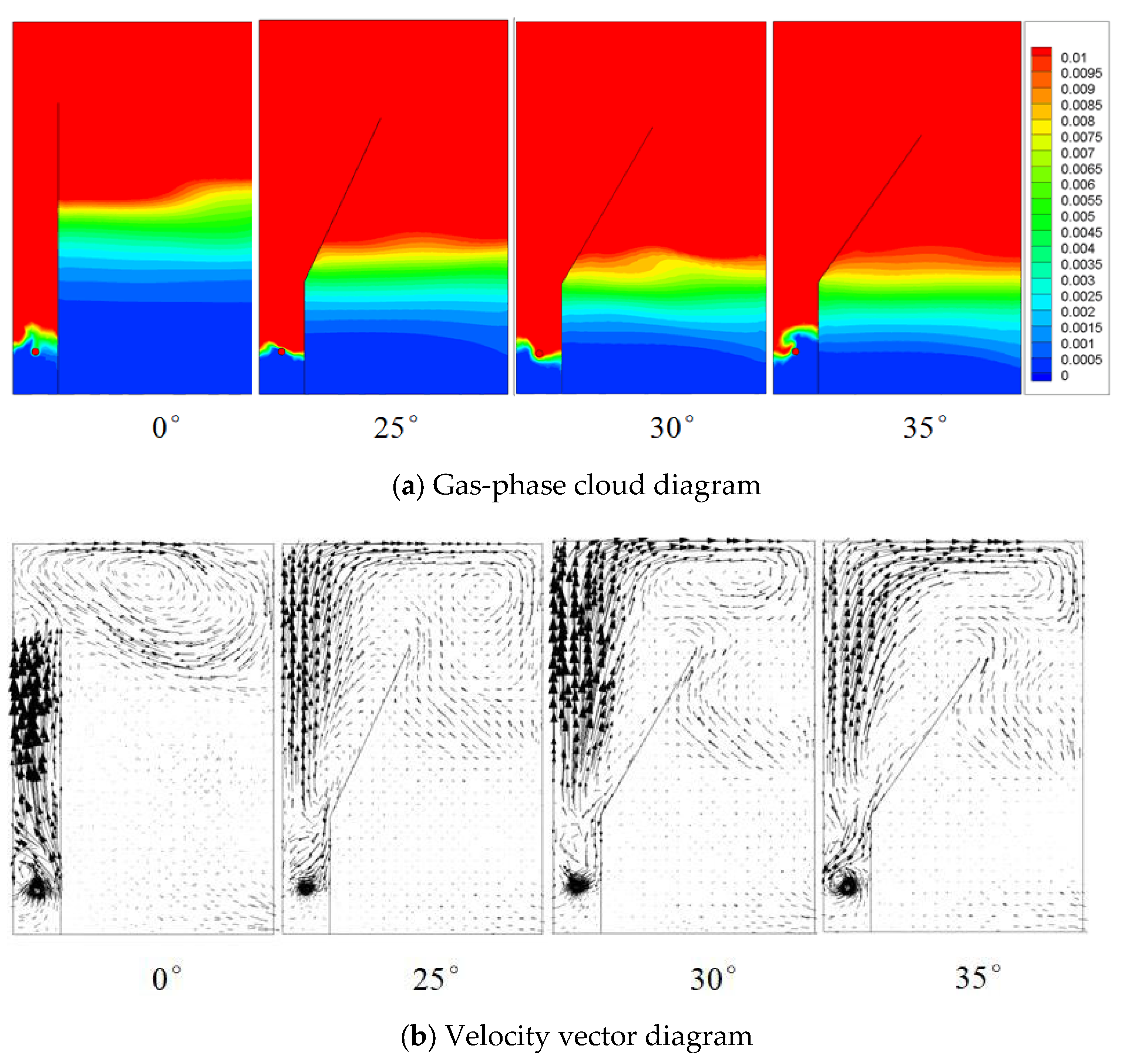
The influence of baffle inclination angle on the flow field distribution and air phase distribution is investigated by varying the baffle inclination angle. As shown in Figure 17a, the air phase distribution for inclination angles of 25°, 30°, and 35° is similar. However, the high air holdup area in the separation zone increases with the incline angle. The middle and upper parts of the separation zone are more densely populated with bubbles. Compared to the 0° baffle, the inclined baffle brings the entrance of the separation zone closer to the lower exit, allowing air to diffuse more easily into the lower part of the separation zone. As a result, the high air holdup area in the 0° baffle is primarily concentrated in the upper portion of the separation zone, preventing some bubbles and flocs from flowing to the exit. This reduces bubble wastage and improves the separation speed of the device.
As shown in Figure 17b, when the baffle inclination angle increases from 25° to 35°, the fluid at the inlet wall of the contact zone rises vertically, forming a uniformly distributed, flat push flow pattern. With the increased length of the contact zone near the baffle, backflow in this region forms a circular flow due to the density difference. This circulating flow in the contact zone increases the residence time of the local fluid, providing more opportunities for collisions between microbubbles, flocs, and aggregates. The lower part of the contact area, where the bubbles and sewage first mix, has a lower overall density. Near the dissolved air water release pipe, the flow rate is high, and the flow direction in the lower part of the contact area becomes chaotic due to the influence of refluxing fluid, forming a turbulent region.
When the baffle is set to 0°, the turbulent region at the bottom is smaller, and the contact zone length remains unchanged. The narrower contact zone forces the fluid to flow uniformly upward, creating a flat push flow pattern. The separation zone with a 0° baffle forms a distinct, thick layered flow, whereas the separation zone with a 25° baffle forms a vortex, and the separation zones with 30° and 35° baffles create thinner layered flows. In summary, the flow field distribution with a 0° baffle is superior to that of partially inclined baffles.
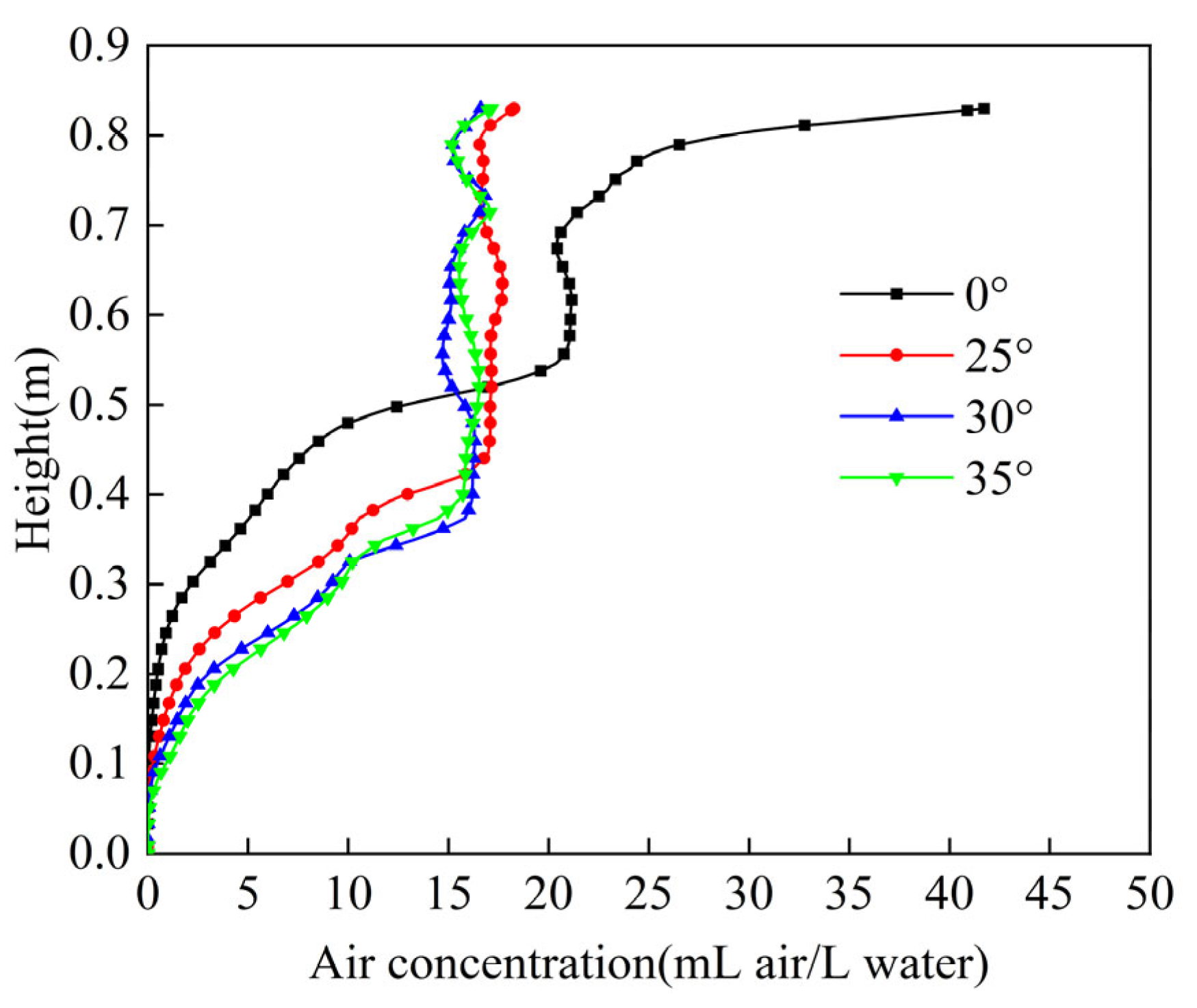
Figure 18 shows the variation curve of air holdup with height at different baffle angles. It can be seen from the figure that when the height is below 0.4 m, the smaller the baffle angle is, the smaller the air holdup is. When the height is more than 0.4 m, the air holdup of the baffle angles of 30° and 35° is similar, while the air holdup of the 25° baffle is slightly greater than 30 and 35°. This is because the flow pattern distribution in the 30° and 35° baffle separation zones is similar, and the air holdup distribution does not change much, while the existence of a vortex in the 25° baffle separation zone increases the air holdup in the upper part of the separation zone. In summary, the change in baffle angle greatly influences the air phase distribution in the separation zone, and the air holdup distribution and stratified flow pattern are better when the baffle angle is 0°. Therefore, the optimal baffle angle is 0°.

5. Oil–Gas–Water Three-Phase Flow Field Simulation

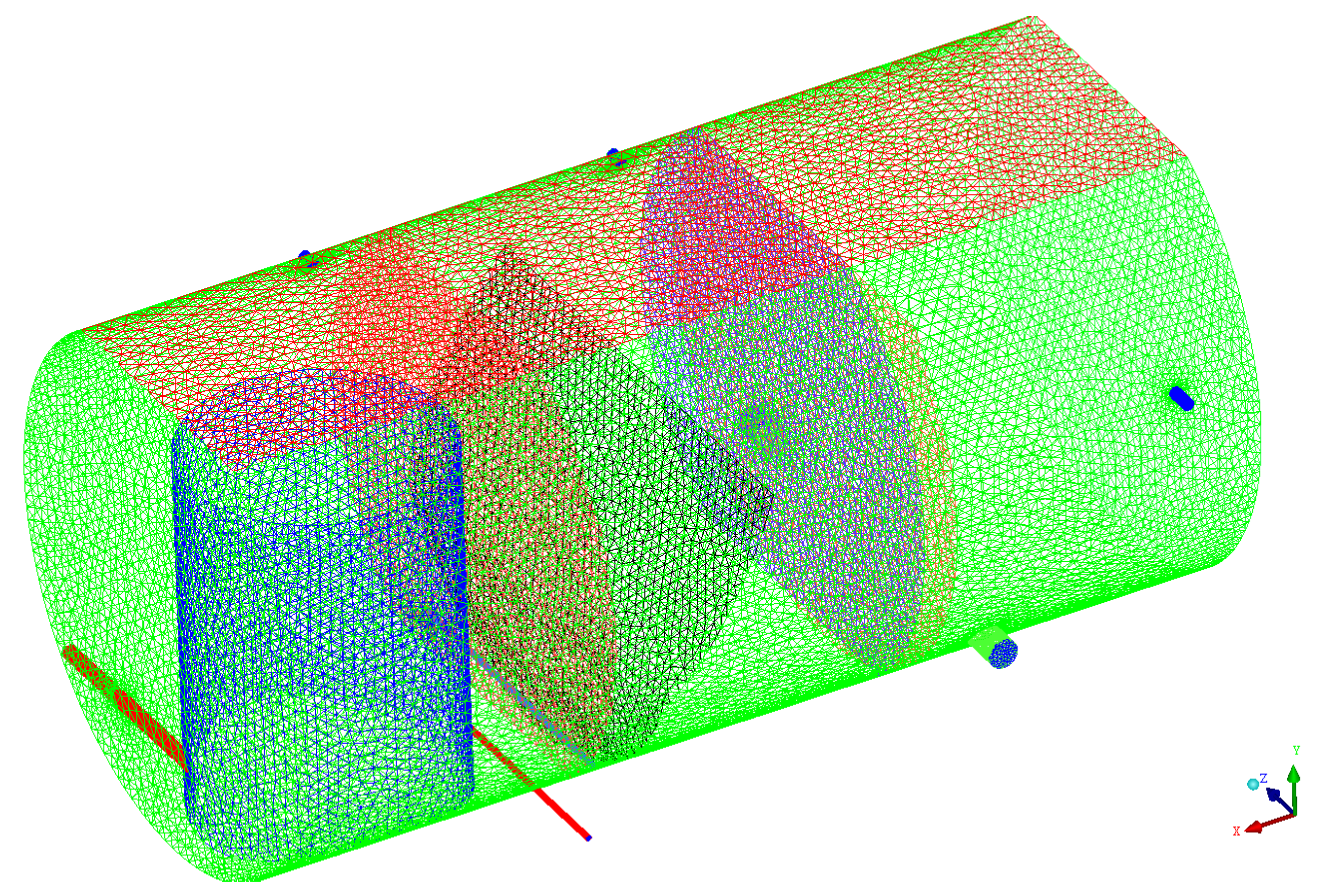
Based on the previous simulation of the flotation zone, a three-dimensional solid model of the main equipment was constructed in the modeling software according to the structural diagram of the horizontal compact closed-loop vortex flotation unit shown in Figure 1 of Section 2.1. To better capture the fluid dynamics within the flow region of the apparatus, other external components and gas-phase spaces were omitted, as illustrated in Figure 19.
The grid size and partitioning are identical to those described in Section 3.4 of this paper. The internal flow domain was subdivided as illustrated in Figure 20, with additional mesh refinement applied to the walls of the dissolved air water release pipe, the tangential wastewater inlet pipe, and the outlet pipeline. Following grid independence validation, a total of 1,666,480 grid cells were selected for the numerical simulation.

5.1. Numerical Calculation Method

5.1.1. Multiphase Flow Model

Same as Section 3.1 of this paper.

5.1.2. Turbulence Model

Model selection is the same as in Section 3.2.

5.1.3. Effect of Air Holdup on Flow Field

All inlet ports were set as velocity inlet boundary conditions, with the oil collection outlet and treated water outlet configured as free outflow ports. Wall surfaces were defined as no-slip boundaries, and the water surface was specified as a smooth wall condition. The entire simulation process was treated as isothermal with no heat transfer involved. The properties of the oil–water phases were as follows: water density = 998.2 kg·m−3, viscosity = 1.003 mPa·s; oil phase density = 880 kg·m−3, viscosity = 0.08 Pa·s; air density = 1.225 kg·m−3. The oil volumetric fraction at the inlet was 0.05%. Water was modeled as the continuous phase, whereas bubbles and oil droplets were treated as discrete phases, and the simulation duration was consistent across all phases.

5.2. Flow Field Distribution Characteristics

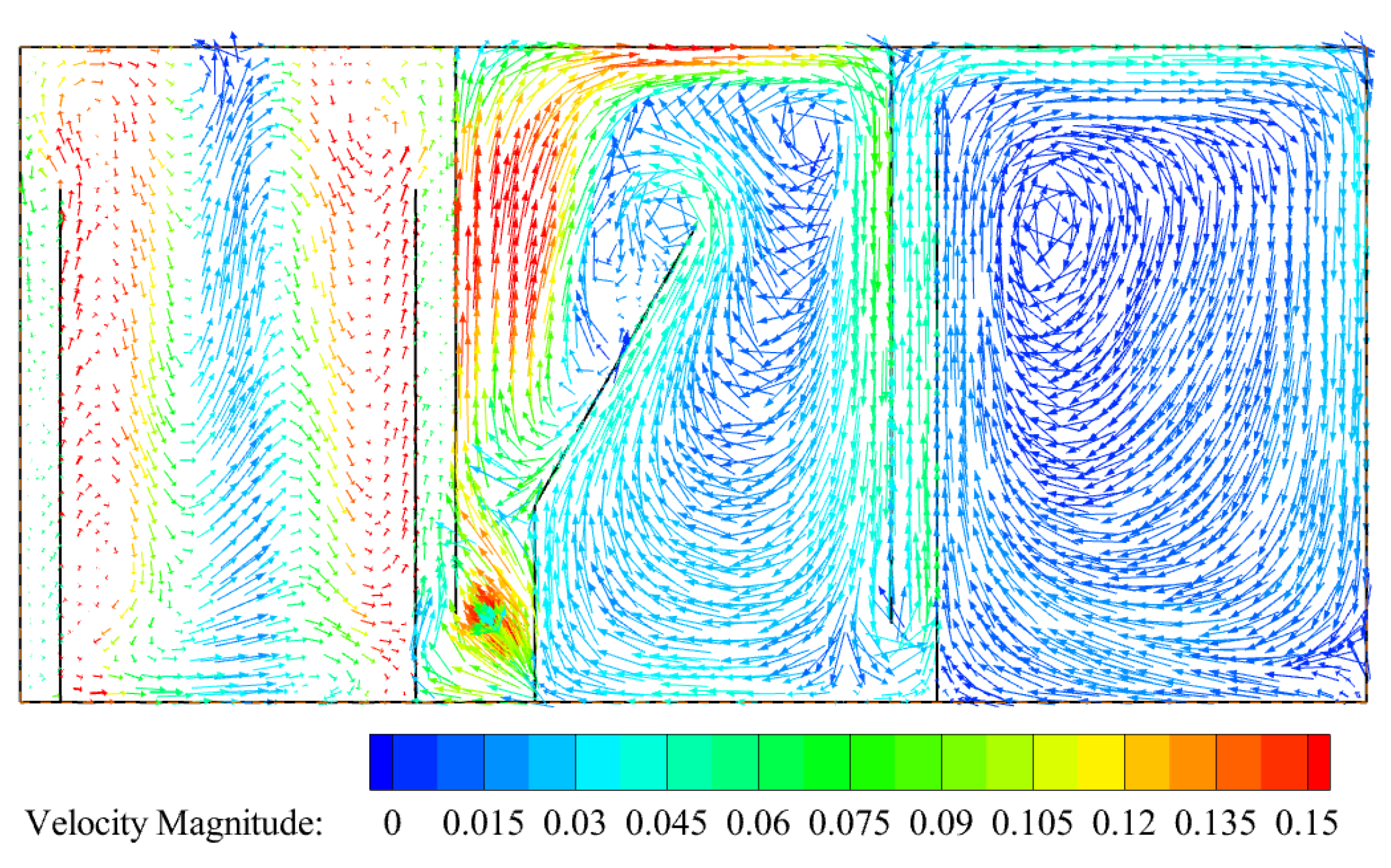
Single-phase water was used to simulate the flow field distribution inside a horizontal compact vortex flotation unit. As illustrated in the velocity vector distribution of the unit’s front view (Figure 21), the water phase within the vortex cylinder rises along the cylinder wall in a swirling motion. The velocity is highest near the wall surface and lower at the rotational center. In the flotation zone, the fluid rotates along the wall: in the contact zone, the velocity peaks at the wall surface, and as the water flows rightward toward the right wall, the velocity gradually decreases before the fluid flows downward along the wall to the bottom of the separation zone. A portion of the fluid flows leftward back to the baffle plate, then moves upward along the baffle to the upper part of the separation zone. Another portion flows into the buffer zone, where the narrow channel forces the fluid to flow uniformly upward, forming a horizontally distributed flow with uniform velocity. Upon entering the buffer zone, the fluid rotates along the wall surface. This flow behavior is consistent with the velocity vector distribution patterns observed by Lundh M. [6] in experiments on air flotation devices, where local flow velocities were measured using an acoustic Doppler velocimeter (ADV).
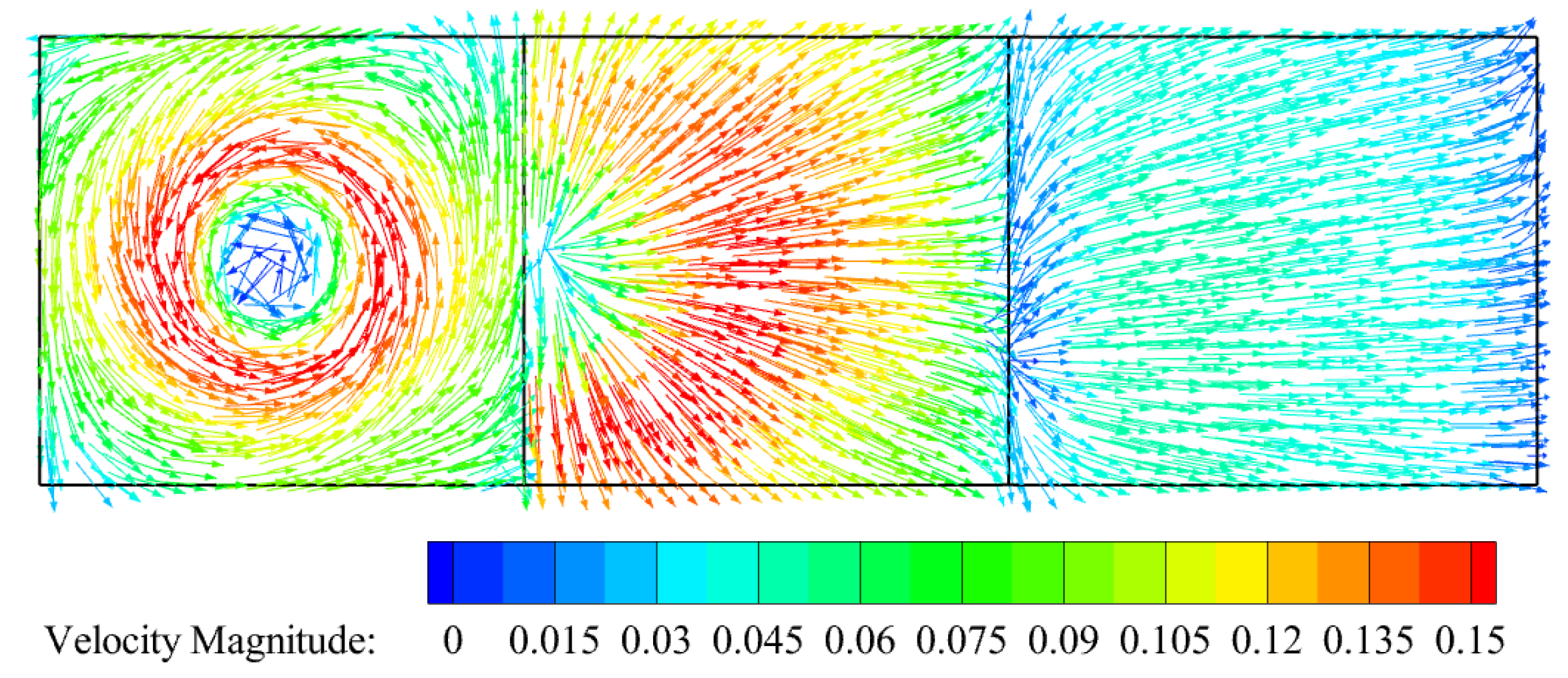
Figure 22 presents the velocity vector distribution near the water surface inside the vortex flotation device. As observed in the figure, velocities are higher in the vicinity of the vortex cylinder. The kinetic energy carried by the water phase exiting the vortex cylinder sustains a certain degree of vortex flow at the water surface, driving the near-surface water phase to move away from the rotational center and flow toward the surrounding walls. In the flotation zone, the fluid flows radially toward the walls. Meanwhile, the fluid at the water surface in the buffer zone flows uniformly toward the right wall, which is consistent with the velocity vector distribution pattern observed at the front face of the device.
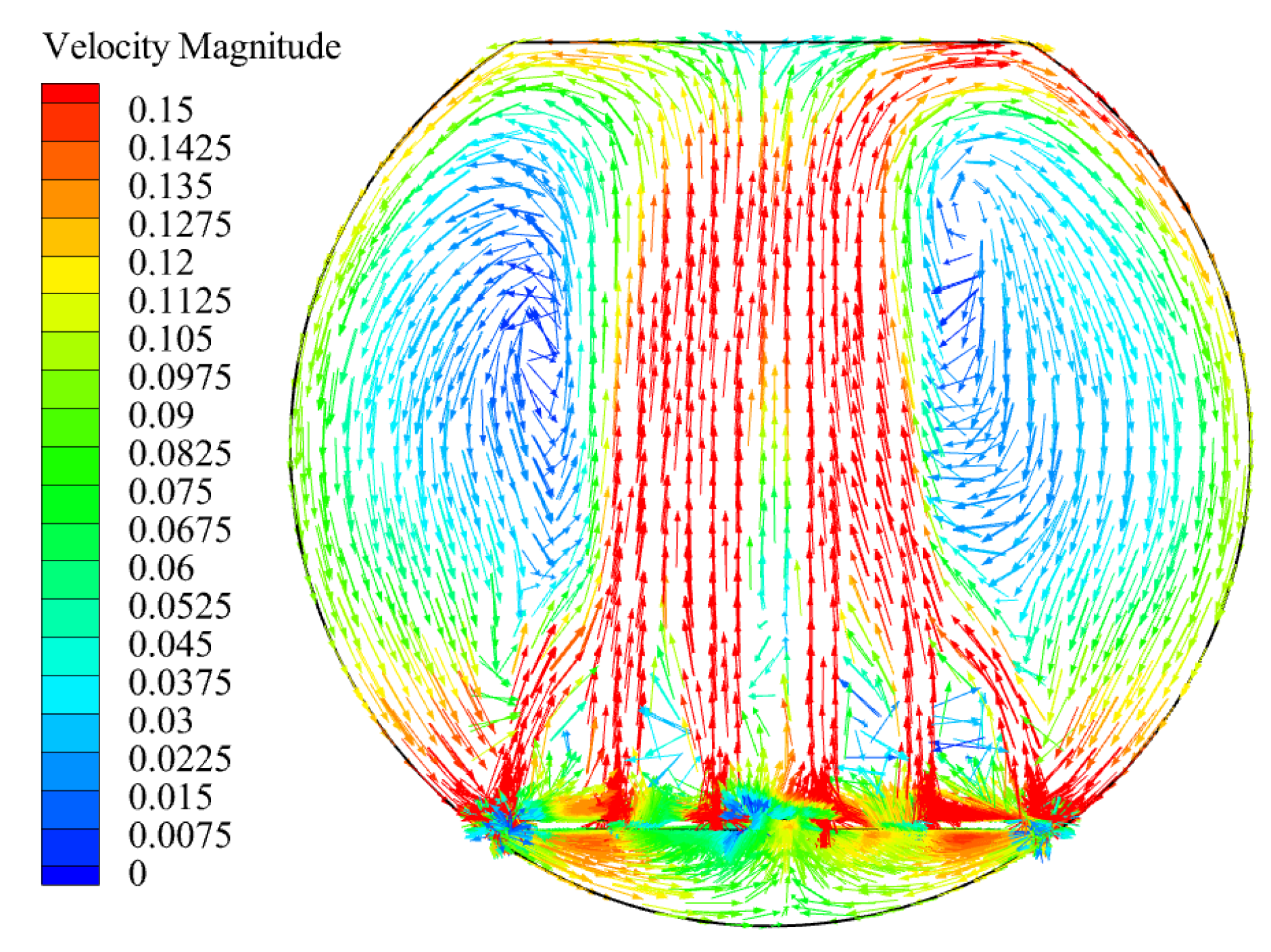
Figure 23 presents the velocity vector diagram of the cross-section of the dissolved air release pipe in the contact zone of the vortex flotation unit. As observed in the figure, the aqueous phase near the central release orifice of the dissolved air release pipe rises uniformly. In contrast, the aqueous phase near the peripheral release orifices first flows toward the center of the release pipe before rising uniformly. Upon reaching the water surface, this phase flows toward the wall, then flows back along the wall to the vicinity of the release pipe in the contact zone under the influence of gravity. This backflow squeezes the flow direction of the water discharged from the peripheral orifices, forcing it to flow toward the center of the release pipe. This phenomenon explains why the velocity vector diagram of the water surface in the cyclonic dissolved air flotation unit exhibits radial flow patterns in the flotation zone. Additionally, the returning aqueous phase and the upward-flowing aqueous phase from the central release orifice form two symmetrically distributed vortices in the contact zone.

5.3. Influence of Inlet Parameters on Oil Removal Efficiency

5.3.1. Treatment Capacity

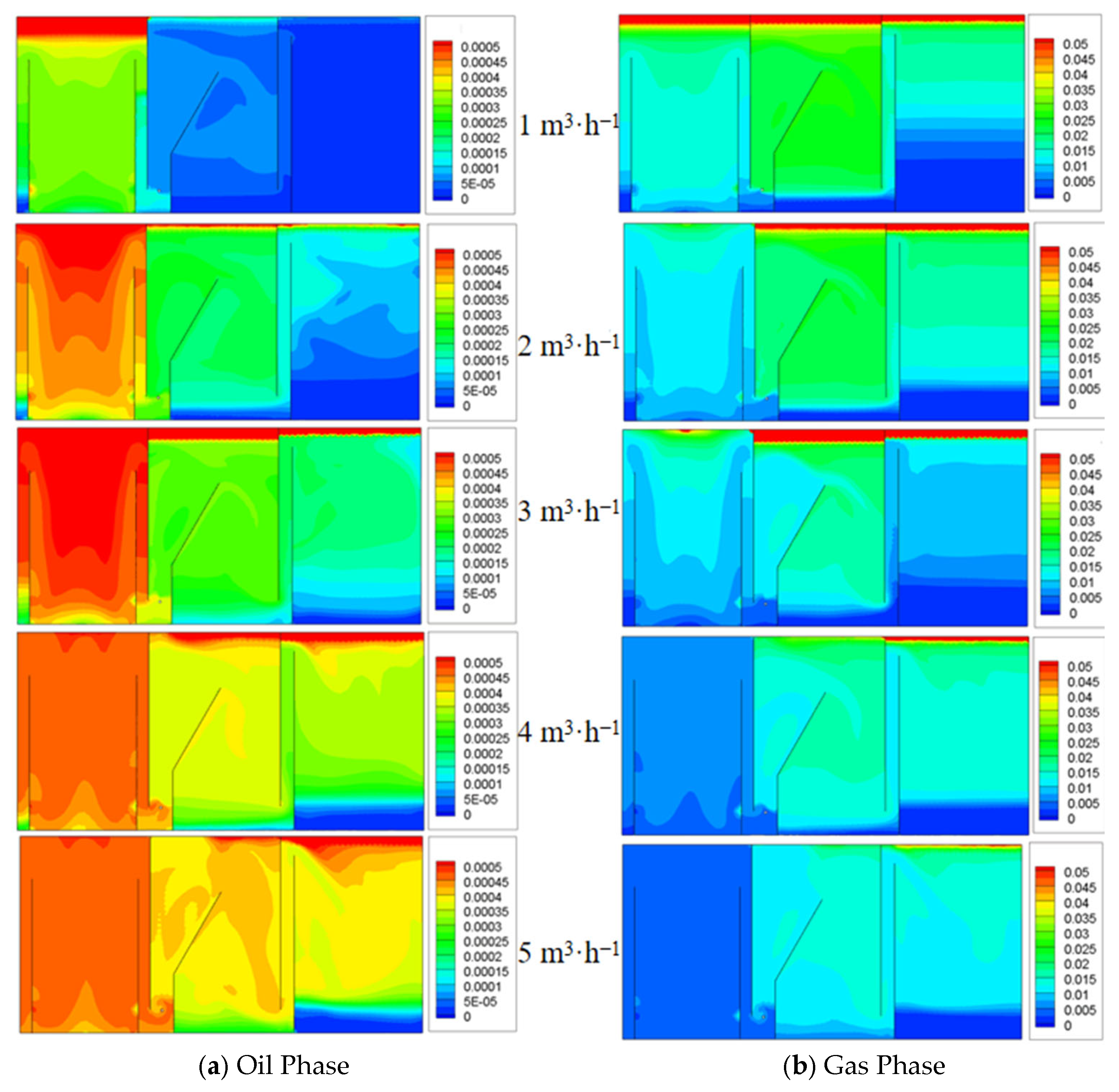
Treatment capacity exerts a significant influence on the tangential inlet velocity of wastewater and the retention time of oily wastewater within the unit. Figure 24 presents the phase distribution diagram of a horizontal compact closed-type cyclonic flotation unit under different treatment capacities. The oil phase distribution indicates that as treatment capacity increases, the oil phase distribution range expands, and the oil phase concentration at the outlet gradually rises.
At a treatment capacity of 1 m3·h−1: (1) a thick oil layer forms on the water surface in the swirl zone; (2) a small portion of the oil phase flows into the flotation zone for secondary flotation; (3) a distinct gas phase layer forms near the water surface across all three zones. At this capacity, the inflow velocity of oily wastewater is low, resulting in a longer retention time. However, the stability and intensity of the swirl field are reduced, weakening its promotional effect on air flotation. Consequently, the oil phase volume fraction in the central swirl-flotation zone shows no significant difference compared to that near the wall. At this point, oil droplets experience minimal turbulent shear stress and are less prone to emulsification. Under the combined effects of low swirl intensity and gravity, oil droplets and bubbles have sufficient time to collide and adhere, forming larger aggregates that ascend to the surface over an extended period. As a result, the oil phase concentration at the buffer zone outlet is low, leading to a high oil removal rate.
When treatment capacity ranges from 2 m3·h−1 to 3 m3·h−1, oil droplets and bubbles collide and adhere within the centrifugal force field of the vortex, then flow toward the center of the vortex cylinder—where the oil phase concentration is higher than at the cylinder wall. Compared to a capacity of 1 m3·h−1, the oil phase concentrations in both the flotation zone and buffer zone increase. The elevated inlet velocity enhances swirl intensity in the swirl zone, promoting collision and adhesion between oil droplets and bubbles, which leads to the formation of a thicker oil layer on the water surface. However, due to the limited number of bubbles in the swirl zone, oil droplets not captured by bubble flotation flow with the water into the flotation zone and buffer zone. The gas phase concentration in the air flotation zone is higher than that in the swirl zone; under the flotation effect of microbubbles here, unflotated oil droplets collide with and adhere to bubbles, ascending to the water surface to form an oil layer thinner than that in the swirl zone. The gas phase is more widely distributed in the separation sub-zone of the flotation zone, with some bubbles flowing into the buffer zone to collide with and capture oil droplets discharged from the flotation zone. This forms an oil layer and a bubble layer on the buffer zone water surface, both thinner than those in the flotation zone. At a treatment capacity of 2 m3·h−1, the gas phase concentration and coverage in the buffer zone are lower than at 3 m3·h−1. This is because the limited number of oil droplets and suboptimal oil concentration prevent full utilization of bubbles, causing them to flow toward the outlet. At 3 m3·h−1, the increased oil phase concentration in the device enables full bubble utilization: oil droplets collide with and adhere to bubbles, ascending to form an oil layer. Thus, the thickness of the oil and gas phase layers on the buffer zone water surface at 3 m3·h−1 is greater than at 2 m3·h−1. However, the oil phase concentration at the buffer zone’s treated water outlet is higher at 3 m3·h−1 than at 2 m3·h−1, resulting in lower oil–water separation efficiency at 3 m3·h−1.
When the flow rate ranges from 4 m3·h−1 to 5 m3·h−1, the oil phase concentration in the cyclone zone is lower than that at 3 m3·h−1. Only a high-concentration oil film forms at the center of the rotating water surface, while the majority of the oil phase flows toward the flotation zone. At a flow rate of 4 m3·h−1, distinct oil and gas layers are present in the flotation and buffer zones. However, when the flow rate increases to 5 m3·h−1, the oil layer on the surface of the flotation zone becomes unstable, causing a significant amount of oil phase to flow into the buffer zone and form an oil layer thicker than that at 4 m3·h−1. This phenomenon occurs because higher flow rates shorten the residence time, preventing sufficient contact between bubbles and oil droplets. The reduced collision probability results in oil droplets flowing to subsequent zones before adequate bubble–oil adhesion can occur, thereby increasing the oil concentration in the buffer zone. Simultaneously, the increased inlet flow velocity intensifies the emulsification of oil droplets under high-speed shear and turbulence, which hinders droplet–bubble collision and adhesion and further complicates oil separation. Consequently, higher throughput also elevates the oil phase concentration at the buffer zone outlet, leading to a significant reduction in the unit’s oil removal efficiency.
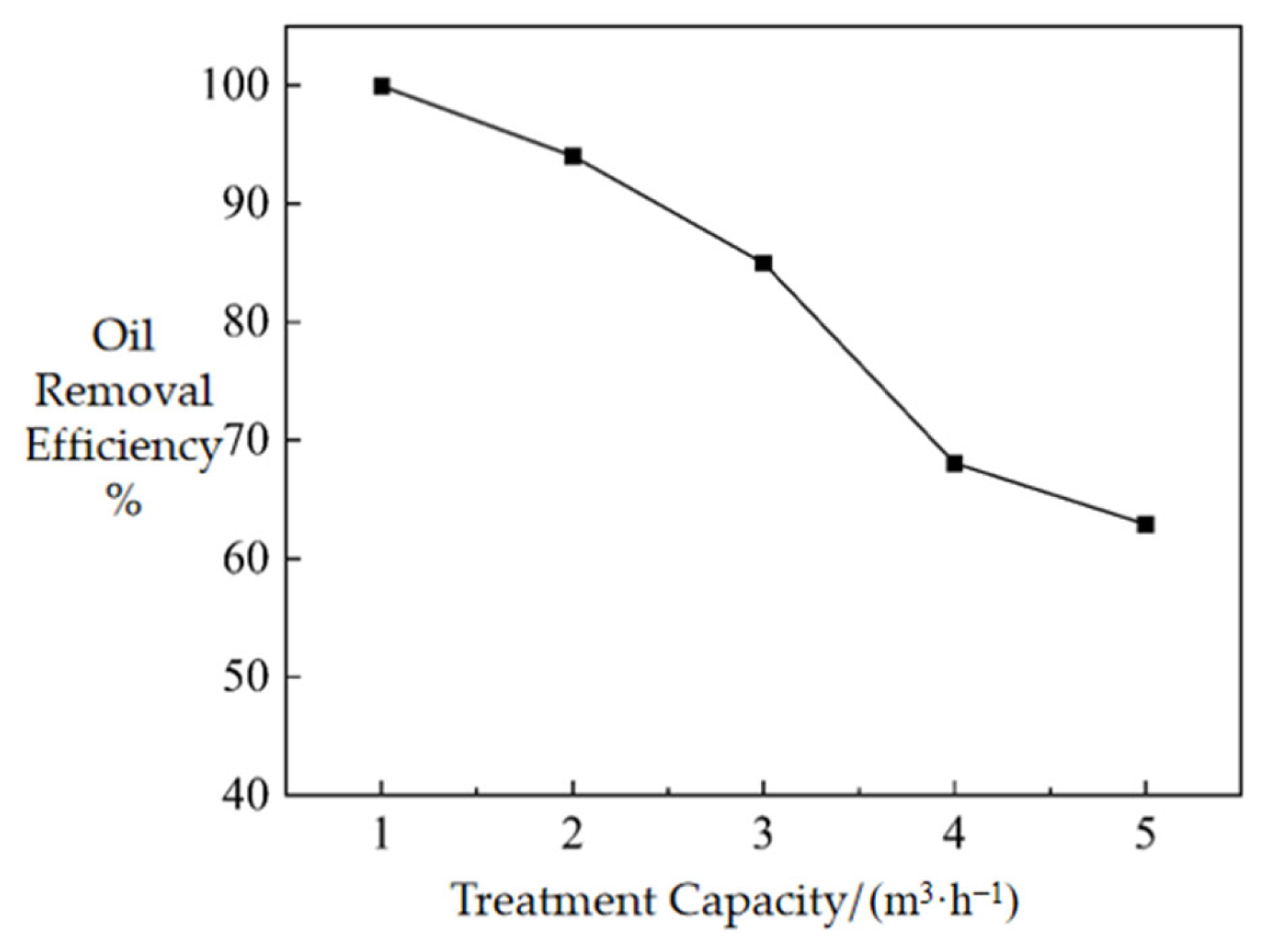
By combining the oil removal rate variation curve at different flow rates (shown in Table 1 and Figure 25) with the aforementioned oil-phase and gas-phase distribution patterns, it is found that the oil removal rate decreases as the flow rate increases. At a flow rate of 1 m3·h−1, the inflow velocity of oily wastewater is relatively low, resulting in a longer residence time but reduced swirl intensity. This weakens the promotional effect on flotation, indicating that the optimal flow rate range is around 2 m3·h−1.

5.3.2. Bubble Size

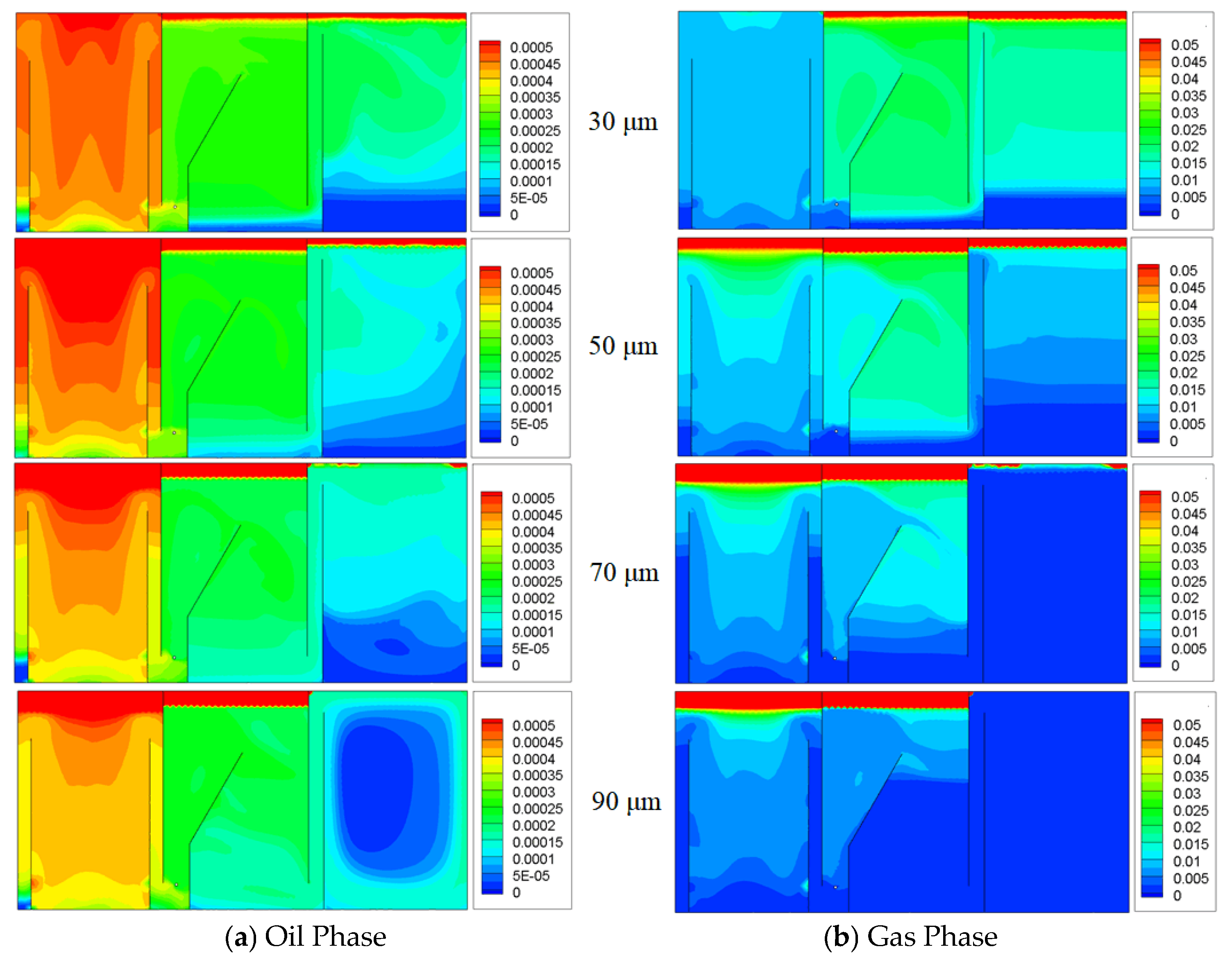
The size of microbubbles in dissolved air water directly influences the collision, adhesion, and destabilization processes of oil droplets, thereby exerting a significant impact on the system’s flotation efficiency. Microbubbles of different sizes exhibit distinct buoyancy and collision-adhesion capabilities. Excessively small bubbles impose higher requirements on the microbubble generator and dissolved air pressure, while overly large bubbles rise too rapidly, exhibit weaker adhesion, and cause water disturbance—all of which impair flotation separation. Therefore, the influence of bubble sizes (30 μm, 50 μm, 70 μm, and 90 μm) on oil removal efficiency was investigated. Figure 26 presents the oil and gas phase distributions at different bubble sizes over the same time period.
As shown in Figure 26a (oil phase distribution), a distinct oil-enriched layer forms on the water surface. The centrifugal force field within the vortex zone drives oil-bubble aggregates toward the center of the vortex cylinder, resulting in a higher oil volume fraction at the cylinder core than at its walls. The oil volume fraction distribution in the vortex zone mirrors that of the gas phase. From the swirl zone to the buffer zone, the oil phase volume fraction gradually decreases, and the thickness of the surface oil-enriched layer diminishes progressively. When the bubble diameter increases from 30 μm to 70 μm, the thickness of the oil-enriched layer in the first two zones gradually increases. However, when the diameter reaches 90 μm, the oil-enriched layer thickness on the swirl zone surface decreases, while the change in thickness on the flotation zone surface is relatively small. The oil-enriched layer in the buffer zone thins with increasing bubble diameter and eventually disappears.
As illustrated in the gas phase distribution (Figure 26b), the gas phase volume fraction near the water surface is significantly higher than in other regions. This is because bubble–oil droplet aggregates rise to the surface and accumulate over time to form a foamy oil-phase layer. The oil phase distribution on the water surface follows the same pattern as the gas phase. As bubble size increases, the thickness of the gas layer on the swirl zone surface gradually increases; similarly, the gas layer thickness on the flotation zone surface increases gradually, but its distribution range shrinks. Meanwhile, the gas layer on the buffer zone surface gradually diminishes.
At a bubble diameter of 30 μm, the rise velocity is low, allowing bubbles to be easily carried from the swirl zone to subsequent regions. This results in a lower maximum gas volume fraction in the swirl zone compared to the flotation and buffer zones, with bubbles in the flotation zone more prone to diffusing downward into the buffer zone.
At 50 μm, a distinct gas layer forms on the swirl zone surface, though its thickness is slightly less than that in the flotation zone. Compared to the 30 μm case, the gas layer thickness in the flotation zone increases significantly, while the buffer zone surface gas layer shows minimal change. Below the gas layer, the gas volume fraction decreases progressively from top to bottom relative to the 30 μm scenario.
At 70 μm, the gas layer thickness on the surface of the first two zones continued to increase. The gas volume fraction in the lower region of the flotation zone decreased, while the gas layer thickness on the buffer zone surface reduced significantly. At this larger diameter, bubbles rose more rapidly and were less likely to be carried downward by the water flow into subsequent zones.
At 90 μm, the gas phase concentrates exclusively in the first two zones, forming a thick surface gas layer, while the gas volume fraction in the buffer zone drops to zero. In summary, a bubble diameter of 70 μm results in the greatest oil phase enrichment on the surface of both the vortex and flotation zones, forming the thickest oil layer and achieving the highest oil–water separation efficiency.
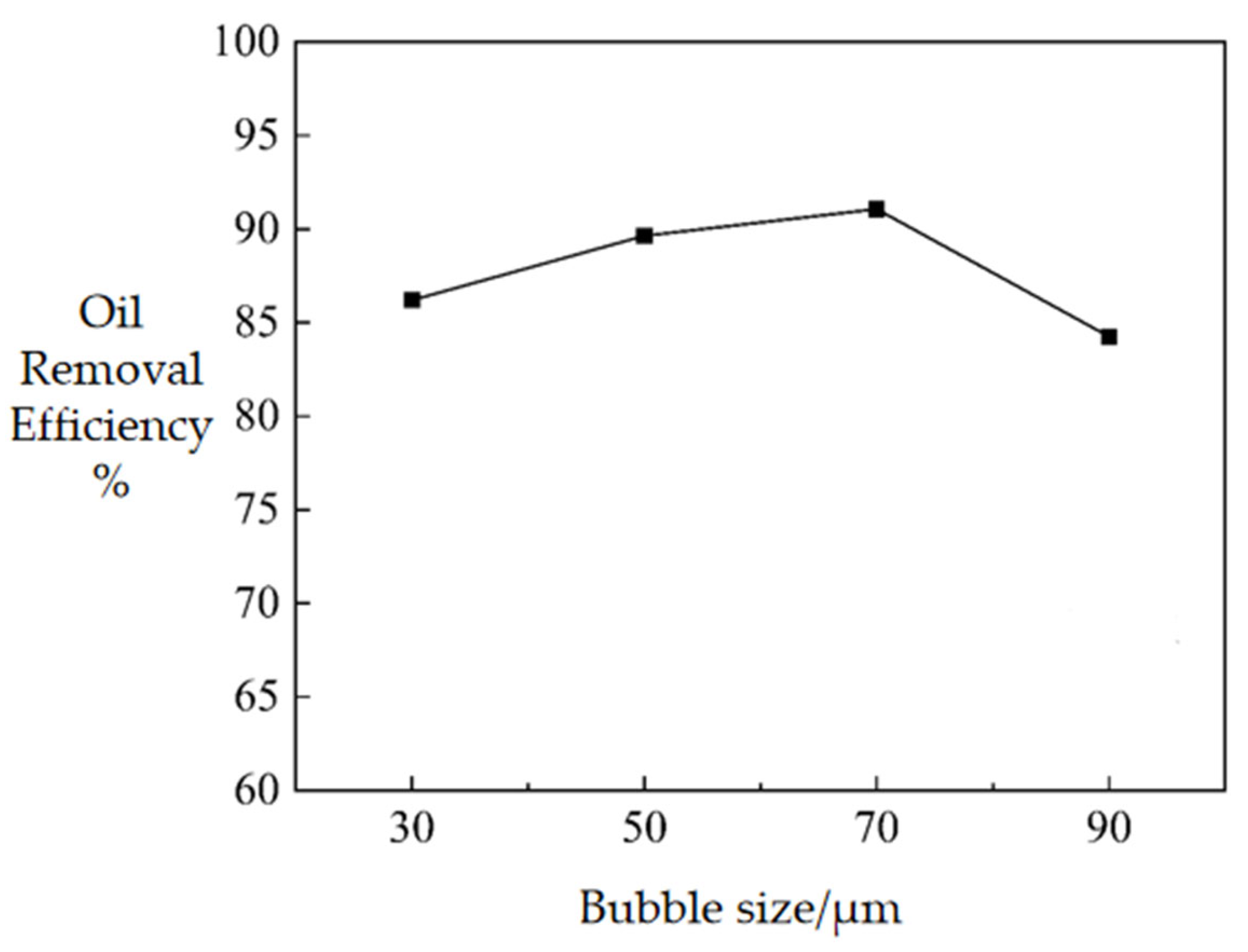
When the dissolved air volume is constant, an increase in bubble diameter causes the number of microbubbles within the device to decrease continuously, reducing the bubble density. Only a portion of oil droplets can be captured by bubble flotation, while the remaining unflotated droplets flow to the next section or the water treatment outlet, hindering effective flotation separation. Therefore, larger bubbles can rise rapidly to the surface without being disturbed by the water flow, preventing bubbles from escaping from the bottom. However, this approach fails to achieve an optimal bubble distribution, thereby affecting the flotation efficiency of the unit. This also explains why, when the bubble size increases from 70 μm to 90 μm, the thickness of the oil phase enrichment layer at the surface of the swirl zone decreases, while the oil layer thickness in the flotation zone shows no significant change. The buffer zone fails to form a distinct oil-phase enrichment layer. The oil-phase volume fraction at the buffer zone wall exceeds that in the central region. This occurs because the gas-phase volume fraction in the buffer zone is zero. Oil droplets entering the buffer zone cannot be floated, lacking bubbles to provide upward buoyancy. Consequently, oil droplets flow along the buffer zone wall with the aqueous phase, resulting in higher oil-phase concentration at the outlet. As shown in the oil–water separation efficiency curves for different bubble sizes in Figure 27, the separation efficiency of the device first increases and then decreases with bubble size. The maximum efficiency is achieved at a bubble size of 70 μm, consistent with the results of the contour analysis in Figure 26.
The optimal bubble size determined from the oil–gas–water three-phase simulation is 70 μm. As shown in Table 2 and Figure 27, increasing the bubble size from 50 μm to 70 μm increased the oil removal rate from 89.64% to 91.07%, indicating a relatively modest improvement in oil removal efficiency. In contrast, the optimal bubble size for the flotation zone alone was 50 μm. At 70 μm, the significant density difference induced substantial backflow from the separation zone to the upper contact zone, which hindered the formation of stratified flow—conditions beneficial for flotation. The probable cause of this discrepancy is that the addition of the oil phase increases the overall density of the contact zone, weakening the density gradient between the separation zone and the upper contact zone. Consequently, when the bubble diameter is 70 μm, the fluid driven by the larger residual density gradient to flow from the upper contact zone toward the separation zone recirculates back to the contact zone. This redirects the oily wastewater into a horizontal flow toward the separation zone wall, which then flows horizontally leftward under the combined effects of the wall and density gradient to form stratified flow. This mechanism results in superior flotation efficiency at a bubble size of 70 μm, with the thickness of the oil-enriched layer at the water surface slightly exceeding that at 50 μm. Accordingly, the oil removal rate at 70 μm is marginally higher than that at 50 μm.

5.3.3. Inlet Gas Fraction

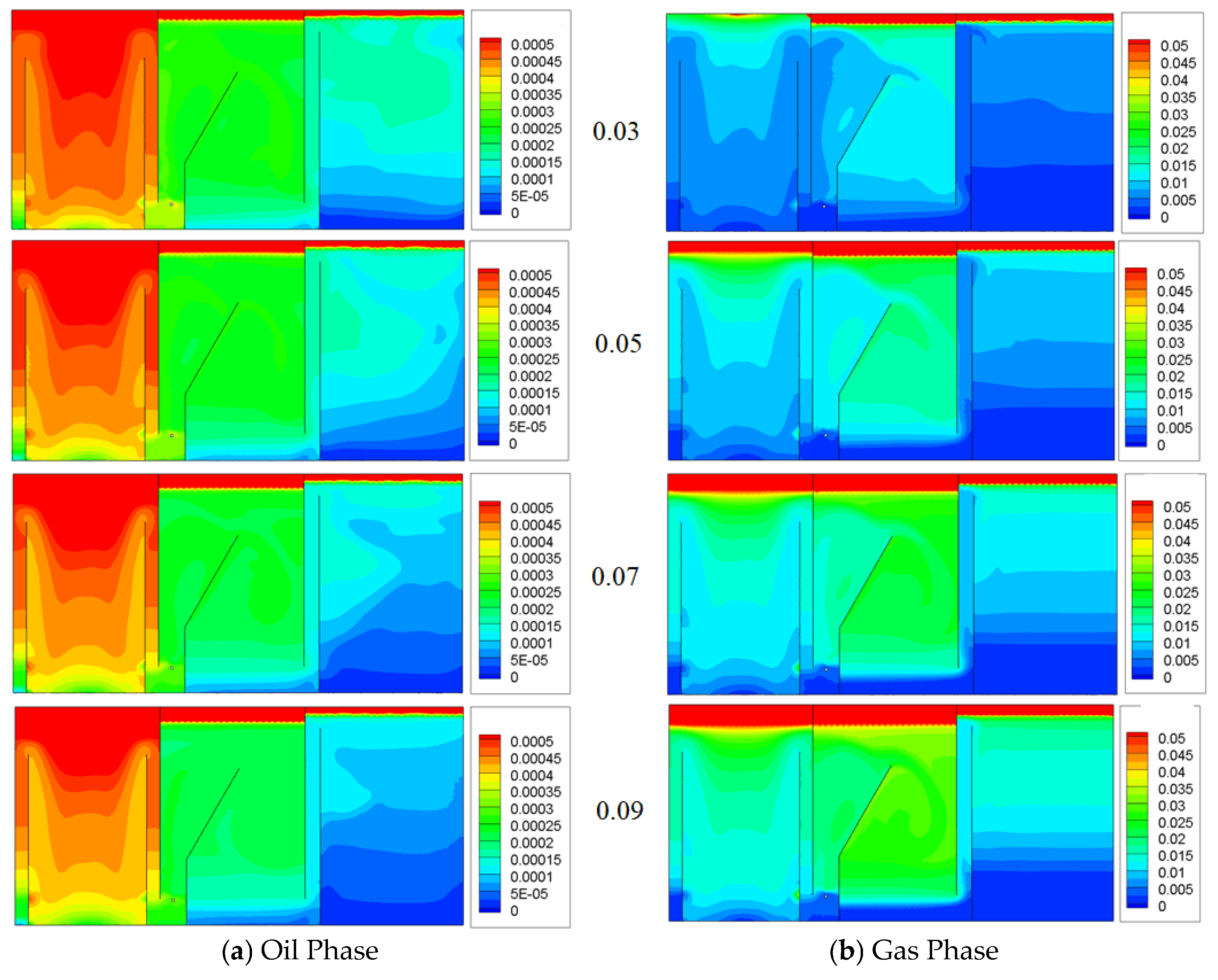
With the treatment capacity maintained at 2.5 m3·h−1, bubble diameter fixed at 50 μm, and inlet oil phase volume fraction set to 0.0005, the inlet gas–oil ratio was adjusted to 0.03, 0.05, 0.07, and 0.09, respectively, to investigate the effect of the gas–oil ratio on the flow field.
As illustrated in the oil phase distribution (Figure 28a), increasing the inlet gas holdup leads to a decrease in oil phase concentration in the lower region of the cyclone chamber within the swirl zone, while the oil concentration in the upper region increases—resulting in a thicker oil layer on the water surface. Most of the oil phase is removed in the swirl zone, which reduces the amount of oil entering the flotation zone. Consequently, the increase in oil layer thickness on the water surface of the flotation and buffer zones is relatively modest. Thus, at a gas–oil ratio of 0.09, the oil phase volume fraction at the buffer zone outlet is minimized, yielding the highest oil–water separation efficiency.
As illustrated in the gas phase distribution (Figure 28b), the gas phase concentration within the unit increases with rising inlet gas holdup. In the swirl zone, the gas phase transitions from initially being present only at the rotational center of the water surface to forming a high-concentration gas layer on the surface. The higher the gas holdup, the thicker the gas layer on the water surface, exhibiting a distribution pattern similar to that of the oil phase. The thickness of the gas layer on the flotation zone surface also increases with increasing gas holdup, while the gas layer thickness on the buffer zone surface shows minimal change. At a gas–oil ratio of 0.09, the gas concentration gradually increases beneath the surface gas layer, expanding its distribution range. This phenomenon occurs because most oil droplets float in the first two zones, leaving the gas in the buffer zone unutilized; the unused gas then flows toward the outlet with the water, increasing the gas volume fraction in the lower part of the buffer zone.
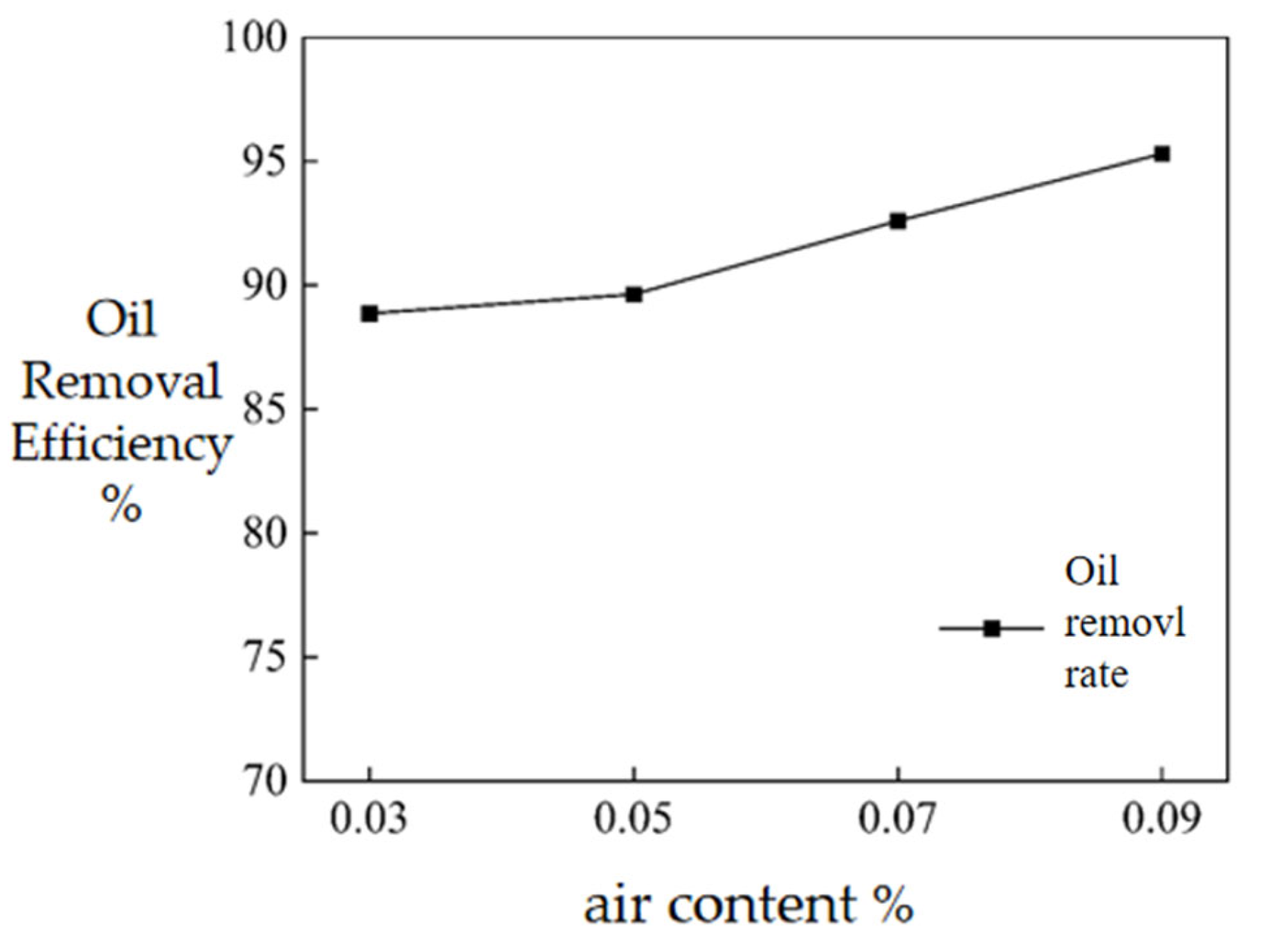
Figure 29 and Table 3 present the oil removal efficiency at different gas–oil ratios. The figure shows that oil–water separation efficiency increases with the inlet gas–oil ratio. Within the simulated range, the maximum oil–water separation efficiency occurs at a gas–oil ratio of 0.09. This is consistent with the oil phase distribution pattern shown in Figure 28 and is close to the optimal gas–oil ratio of 0.1 for the flotation zone.
In summary, when the oil volume fraction in the inlet oily wastewater is 0.0005, the oil–water separation efficiency increases with the inlet gas–oil ratio, with the optimal inlet gas–oil ratio determined to be 0.09.

6. Experimental Verification

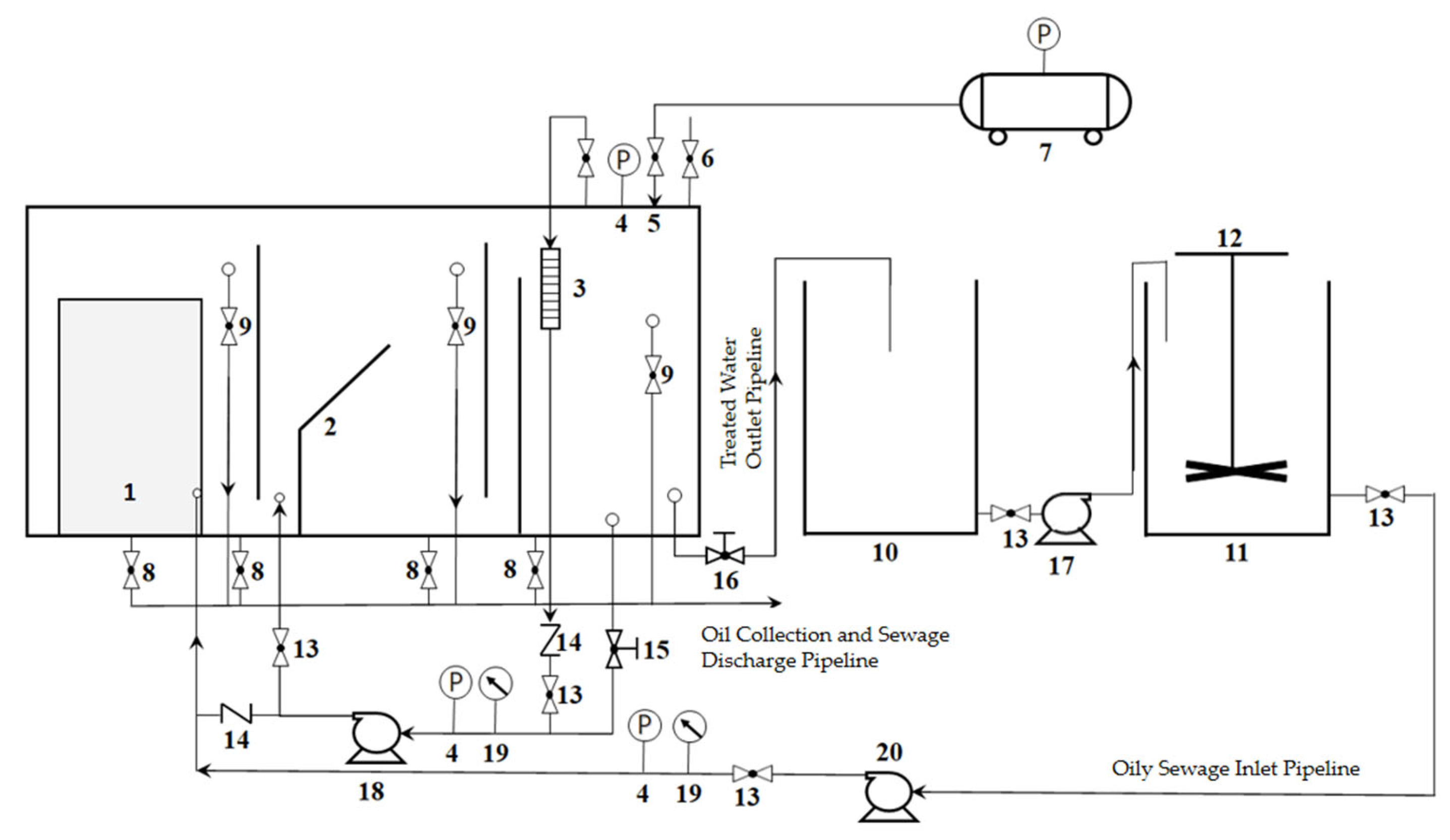
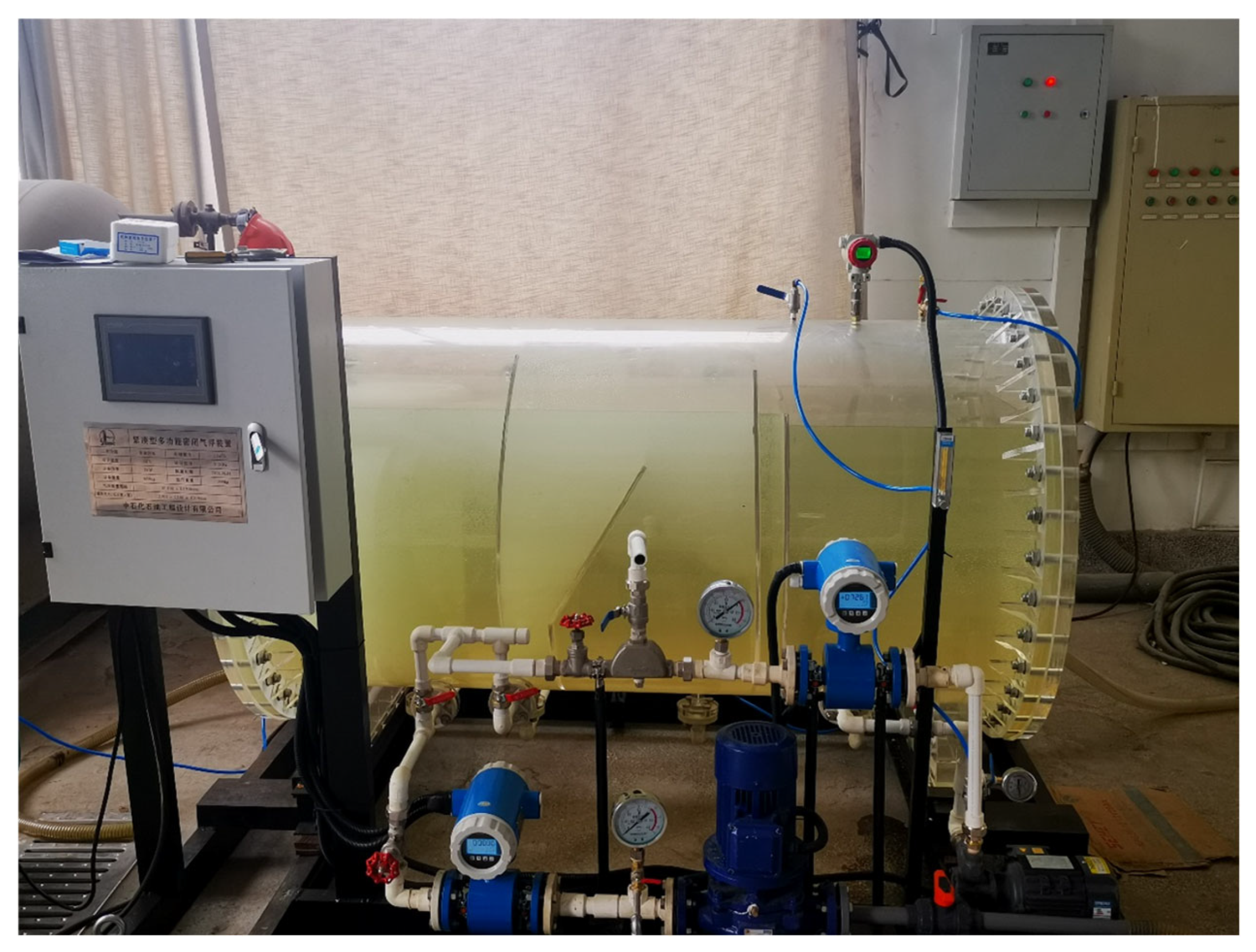
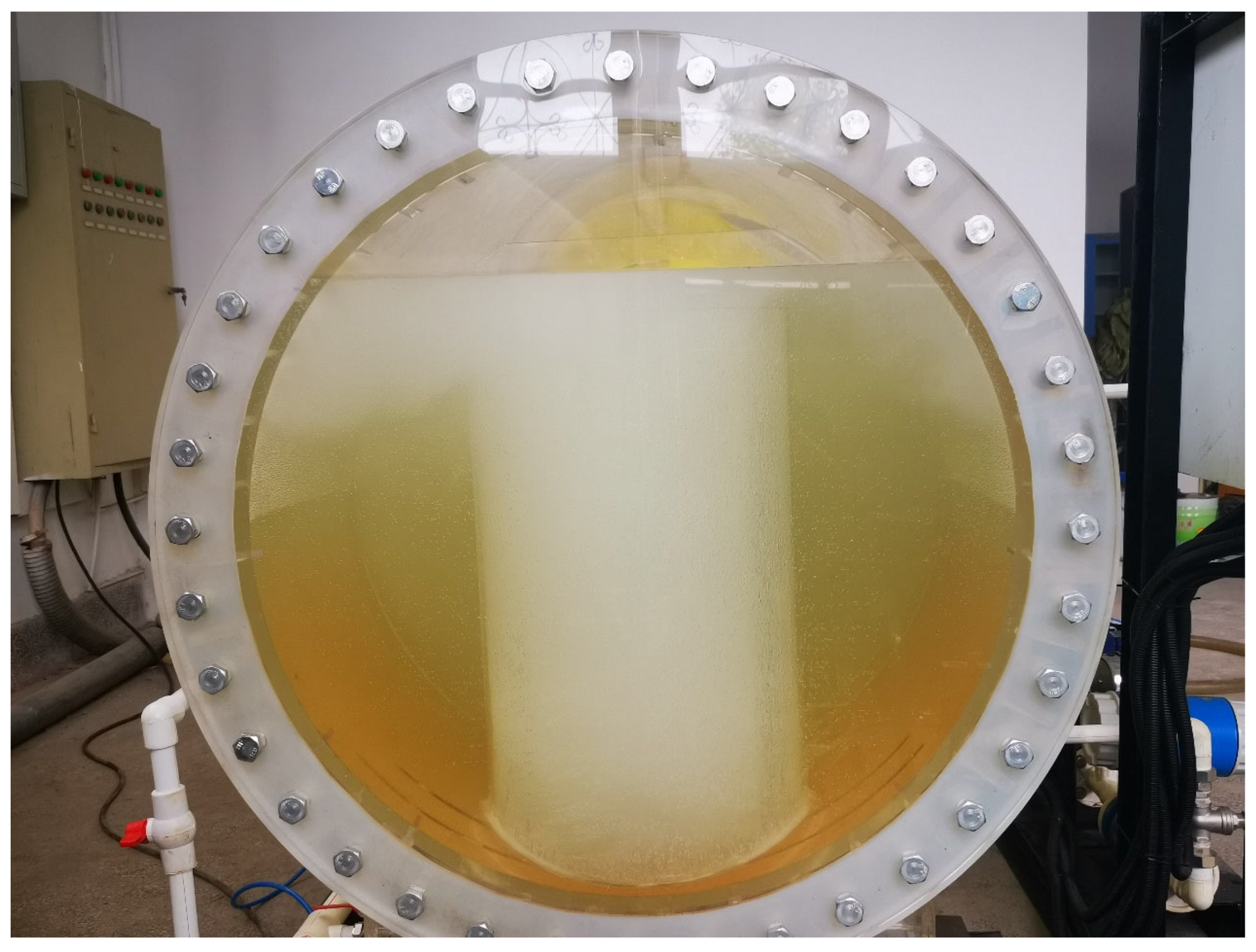
To validate the accuracy of the experimental setup and the selected simulation model, a vertical indoor water-ring generation experimental platform was independently constructed, as illustrated in Figure 30 (system flowchart) and Figure 31 (physical setup diagram). The horizontal compact cyclonic air flotation system mainly comprises an oily wastewater preparation tank, mixer, dissolved air pump, lift pump, air compressor, horizontal compact closed-loop cyclonic air flotation unit, and treated water collection tank. Compressed air from the air compressor mixes with the return water from the shut-off valve of the closed-loop cyclonic air flotation unit via the dissolved air pump to produce dissolved air water. A portion of this mixture combines with oily wastewater from the preparation tank and enters the inner cyclonic chamber, while the remainder flows directly into the flotation zone.
As shown in Figure 32, a large number of microbubbles are generated under reduced pressure and interact with the wastewater within the unit, leading to foam–oil separation through bubble attachment. The surface oil is then collected via a pressure discharge device. A small fraction of the treated effluent is recirculated to mix with air in the dissolved air pump, generating new dissolved air water, while the majority flows into the treated water collection tank. The treated water is subsequently pumped back to the oily wastewater preparation tank via a recirculation pump, allowing continuous recycling of oil and water within the system.
The temporal variation of the surface foam–oil layer is illustrated in Figure 33. During operation, the cyclonic and flotation zones are densely filled with microbubbles. The oily wastewater enters the cyclonic chamber tangentially, generating a swirling motion. The kinetic energy of the discharged flow sustains the rotational motion of the foamy oil layer on the water surface. Due to its higher density, the water phase possesses greater inertia, making it more likely to escape the rotational field and flow outward. As the water phase moves away from the rotational center, it exerts an outward pushing force on the oil phase, causing the foamy oil to concentrate near the rotational core. Over time, the foam–oil layer accumulates above the cyclone center, while both the water and oil phases at the core exhibit an increasing tendency to move outward. As the denser water migrates toward the surrounding walls, it entrains part of the oil phase, leading to its adhesion near the wall surfaces.
As shown in the figure, with increasing operating time, the area of the stagnant foam–oil phase on the water surface progressively expands and gradually merges with the rotating-center foam–oil phase, forming an oil-enriched layer. This observation is consistent with the simulation results, thereby confirming the reliability of the numerical model.
Due to on-site conditions and experimental time constraints, field tests were conducted with a controlled treatment capacity of 2000 m3·d−1 and influent oil content ranging from 500 to 1000 mg·L−1. The primary focus was to investigate the oil removal efficiency of the horizontal compact closed-type cyclonic air flotation unit during continuous operation under varying influent flow rates and oil concentrations. As shown in Figure 34, the horizontal compact closed-type cyclonic air flotation unit demonstrated a high oil removal rate during continuous operation. Combined with Figure 35, the treated effluent appeared clear, with most oil phase removed, indicating strong adaptability to flow fluctuations and variations in oil concentration.

7. Conclusions

Based on simulations of the flotation zone, this study investigates the distribution characteristics of the bubble–oil droplet–water three-phase system in a horizontal compact closed-loop cyclonic flotation unit and the influence of various factors on oil–water separation efficiency. The key findings are as follows:
(1)
Oil removal efficiency decreases with increasing unit throughput. At a flow rate of 1 m3·h−1, the promotional effect on air flotation is minimal. Thus, the optimal flow rate is 2 m3·h−1, which is consistent with the optimal flow rate obtained for the flotation zone.
(2)
Oil removal efficiency first increases and then decreases with increasing bubble diameter, with the highest oil–water separation efficiency achieved at a bubble diameter of 70 μm.
(3)
Oil removal efficiency increases with increasing inlet gas holdup. Within the simulated range, the maximum oil–water separation efficiency occurs at a gas–oil ratio of 0.09, which is close to the optimal gas–oil ratio of 0.1 for the flotation zone.

Author Contributions

Conceptualization, L.Z. and X.X.; methodology, M.Y.; software, L.H.; formal analysis, H.M.; investigation, L.H.; writing—original draft preparation, L.H.; writing—review and editing, L.Z., X.X., M.Y. and Y.L.; visualization, W.J.; supervision, Y.L. All authors have read and agreed to the published version of the manuscript.

Funding

This research was funded by the Open Research Fund Program of Shandong Provincial Key Laboratory of Oilfield Produced Water Treatment and Environmental Pollution Control (Grants No. 10205363-21-ZC0607-0004).

Data Availability Statement

The original contributions presented in this study are included in the article. Further inquiries can be directed to the corresponding author, Jiang Wenming.

Acknowledgments

The authors would like to express their gratitude to Shandong Provincial Key Laboratory for Treatment of Oilfield Produced Water and Environmental Pollution for their contribution and support for this paper.

Conflicts of Interest

Author Lei Zhang was employed by Sinopec Petroleum Engineering Design Co., Ltd. Author Xiaolong Xiao was employed by Sinopec Petroleum Engineering Design Co., Ltd. Author Mingxiu Yao was employed by Sinopec Petroleum Engineering Design Co., Ltd. The remaining authors declare that the research was conducted in the absence of any commercial or financial relationships that could be construed as a potential conflict of interest.

References

  1. Al-Ghouti, M.A.; Al-Kaabi, M.A.; Ashfaq, M.Y.; Da’na, D.A. Produced water characteristics, treatment and reuse: A review. J. Water Process Eng. 2019, 28, 222–239. [Google Scholar] [CrossRef]
  2. Arvoh, B.K.; Asdahl, S.; Rabe, K.; Ergon, R.; Halstensen, M. Online estimation of reject gas and liquid flow rates in compact flotation units for produced water treatment. Flow Meas. Instrum. 2012, 24, 63–70. [Google Scholar] [CrossRef]
  3. Shang, C.; Chen, J.; Wang, C.; Han, X.; Kong, H.; Liang, C. Research on the centrifugal flotation technique and its application in oily wastewater treatment. Environ. Eng. 2011, 29, 32–40. [Google Scholar]
  4. Su, K. Experimental Research on Bubble Distribution and Performance of Swage Oil Removal in Closed Flotation Device; China University of Petroleum: Qingdao, China, 2018. [Google Scholar]
  5. Sport, M.C. Design and operation of dissolved-gas flotation equipment for the treatment of oilfield produced brines. J. Pet. Technol. 1970, 22, 918–920. [Google Scholar] [CrossRef]
  6. Lundh, M.; Jönsson, L.; Dahlquist, J. Experimental studies of the fluid dynamics in the separation zone in dissolved air flotation. Water Res. 2000, 34, 21–30. [Google Scholar] [CrossRef]
  7. Lakghomi, B.; Lawryshyn, Y.; Hofmann, R. Importance of flow stratification and bubble aggregation in the separation zone of a dissolved air flotation tank. Water Res. 2012, 46, 4468–4476. [Google Scholar] [CrossRef]
  8. Lakghomi, B.; Lawryshyn, Y.; Hofmann, R. A model of particle removal in a dissolved air flotation tank: Importance of stratified flow and bubble size. Water Res. 2015, 68, 262–272. [Google Scholar] [CrossRef]
  9. Edzwald, J.K. Dissolved air flotation and me. Water Res. 2010, 44, 2077–2106. [Google Scholar] [CrossRef]
  10. Edzwald, J.K. Developments of high rate dissolved air flotation for drinking water treatment. J. Water Supply Res. Technol. AQUA 2007, 56, 399–409. [Google Scholar] [CrossRef]
  11. Sun, T.; Liu, G.; Li, R.; Zhou, J. Study on influencing factors of gas flotation oily wastewater treatment process. J. Filtr. Sep. 2010, 20, 15–18. [Google Scholar]
  12. Sun, Y. Experimental Research of Closed Circulation Flotation Degreasing Device; China University of Petroleum: Qingdao, China, 2018. [Google Scholar]
  13. Wang, P. Research on Advection-Type Pressurized Dissolved Air Flotation Water Treatment; Zhengzhou University: Zhengzhou, China, 2013. [Google Scholar]
  14. Zhang, D. Experimental Study of Oily Wastewater Treatment with Multiphase Pump Dissolved Air Flotation; China University of Petroleum: Qingdao, China, 2010. [Google Scholar]
  15. Zhang, Y. Research on Oil-water Separation Technology with the Advection-type Pressurized Dissolved Air Flotation; China University of Petroleum: Qingdao, China, 2019. [Google Scholar]
  16. Wang, Z.; Chen, A.; Yang, W.; Zhang, Y.; Ren, X. Influencing factors and mechanism of separation of emulsified oil by dissolved air floatation. Technol. Water Treat. 2017, 43, 27–30. [Google Scholar] [CrossRef]
  17. Lundh, M.; Jönsson, L.; Dahlquist, J. The influence of contact zone configuration on the flow structure in a dissolved air flotation pilot plant. Water Res. 2002, 36, 1585–1595. [Google Scholar] [CrossRef] [PubMed]
  18. Yang, M.; del Pozo, D.F.; Torfs, E.; Rehman, U.; Yu, D.; Nopens, I. Numerical simulation on the effects of bubble size and internal structure on flow behavior in a DAF tank: A comparative study of CFD and CFD-PBM approach. Chem. Eng. J. Adv. 2021, 7, 100131. [Google Scholar] [CrossRef]
  19. Babaahmadi, A. Dissolved Air Flotation-Numerical Investigation of the Contact Zone on Geometry, Multiphase Flow and Needle Valves; Chalmers University of Technology: Gothenburg, Sweden, 2010. [Google Scholar]
  20. Haarhoff, J.; Edzwald, J.K. Dissolved air flotation modelling: Insights and shortcomings. J. Water Supply Res. Technol. AQUA 2004, 53, 127–150. [Google Scholar] [CrossRef]
  21. Chen, A.; Wang, Z.; Yang, J. Influence of bubble size on the fluid dynamic behavior of a DAF tank: A 3D numerical investigation. Colloids Surf. A Physicochem. Eng. Asp. 2016, 495, 200–207. [Google Scholar] [CrossRef]
  22. Lee, K.H.; Kim, H.; Kuk, J.W.; Chung, J.D.; Park, S.; Kwon, E.E. Micro-bubble flow simulation of dissolved air flotation process for water treatment using computational fluid dynamics technique. Environ. Pollut. 2020, 256, 112050. [Google Scholar] [CrossRef]
  23. Wang, Y.; Jin, X.; Yang, S.; Wang, G.; Xu, L.; Jin, P.; Shi, X.; Shi, Y. Interactions between flocs and bubbles in the separation zone of dissolved air flotation system. Sci. Total Environ. 2021, 761, 143222. [Google Scholar] [CrossRef]
  24. Bondelind, M.; Sasic, S.; Pettersson, T.J.R.; Karapantsios, T.D.; Kostoglou, M.; Bergdahl, L. Setting up a numerical model of a DAF tank: Turbulence, geometry, and bubble size. J. Environ. Eng. 2010, 136, 1424–1434. [Google Scholar] [CrossRef]
  25. Bondelind, M.; Sasic, S.; Kostoglou, M.; Bergdahl, L.; Pettersson, T.J. Single-and two-phase numerical models of Dissolved Air Flotation: Comparison of 2D and 3D simulations. Colloids Surf. A Physicochem. Eng. Asp. 2010, 365, 137–144. [Google Scholar] [CrossRef]
  26. Kostoglou, M.; Karapantsios, T.D.; Matis, K.A. CFD model for the design of large scale flotation tanks for water and wastewater treatment. Ind. Eng. Chem. Res. 2007, 46, 6590–6599. [Google Scholar] [CrossRef]
  27. Huang, Q.; Long, X. Analysis of the influencing factors on oil removal efficiency in large-scale flotation tanks: Experimental observation and numerical simulation. Energies 2020, 13, 927. [Google Scholar] [CrossRef]
  28. Chen, A.; Yang, W.; Geng, S.; Gao, F.; He, T.; Wang, Z.; Huang, Q. Modeling of Microbubble Flow and Coalescence Behavior in the Contact Zone of a Dissolved Air Flotation Tank Using a Computational Fluid Dynamics–Population Balance Model. Ind. Eng. Chem. Res. 2019, 58, 16989–17000. [Google Scholar] [CrossRef]
  29. Rodrigues, J.P.; Batista, J.N.M.; Béttega, R. Application of population balance equations and interaction models in CFD simulation of the bubble distribution in dissolved air flotation. Colloids Surf. A Physicochem. Eng. Asp. 2019, 577, 723–732. [Google Scholar] [CrossRef]
  30. Wang, H.; Yang, W.; Yan, X.; Wang, L.; Wang, Y.; Zhang, H. Regulation of bubble size in flotation: A review. J. Environ. Chem. Eng. 2020, 8, 104070. [Google Scholar]
  31. Wang, R. Numerical Simulation of Oil-Water Separation Process in Combined Three-Phase Separator; China University of Petroleum: Qingdao, China, 2018. [Google Scholar]
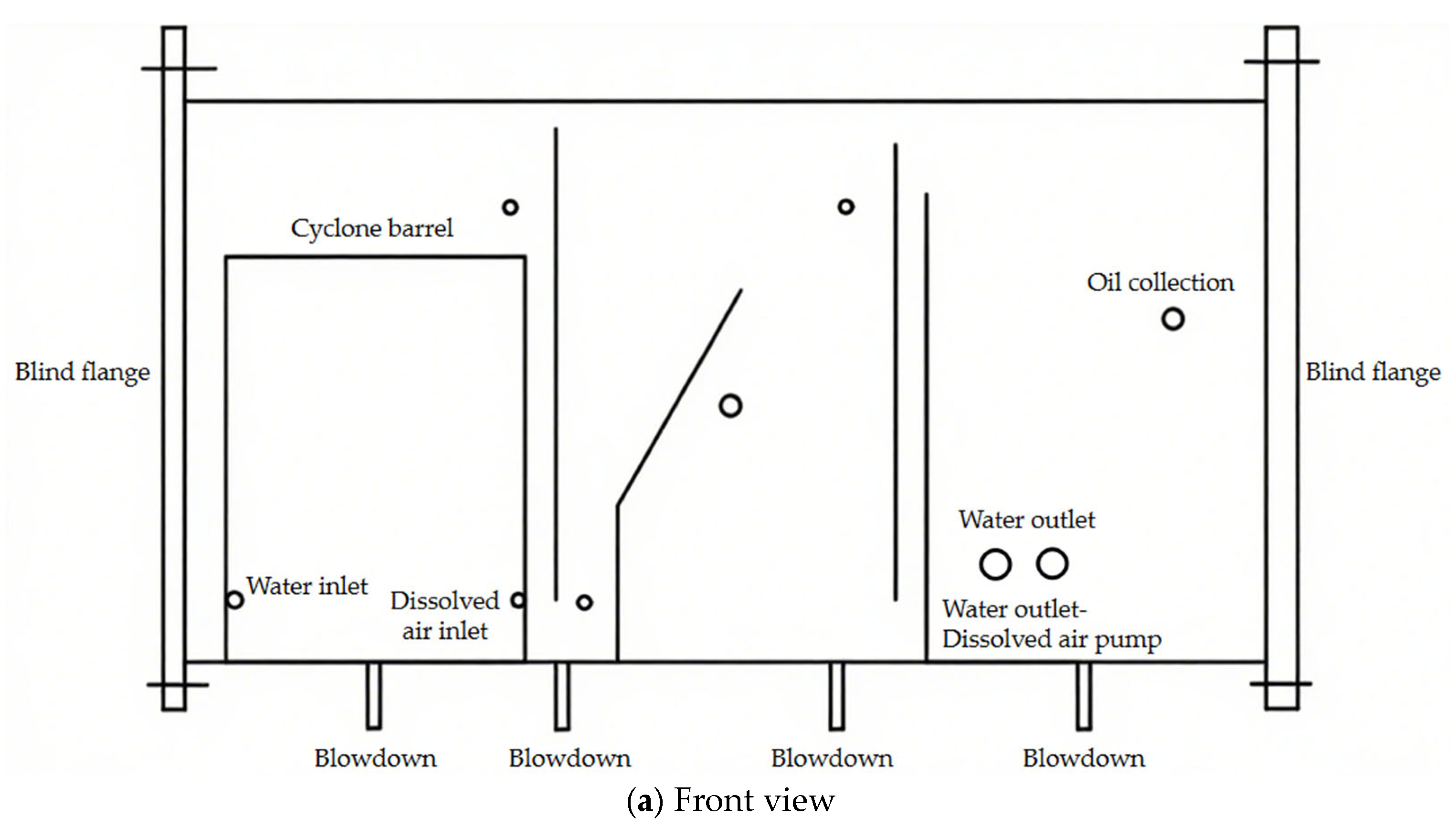
Figure 1. Horizontal type compact swirling air flotation device structure diagram.
Processes 13 03848 g001aProcesses 13 03848 g001b
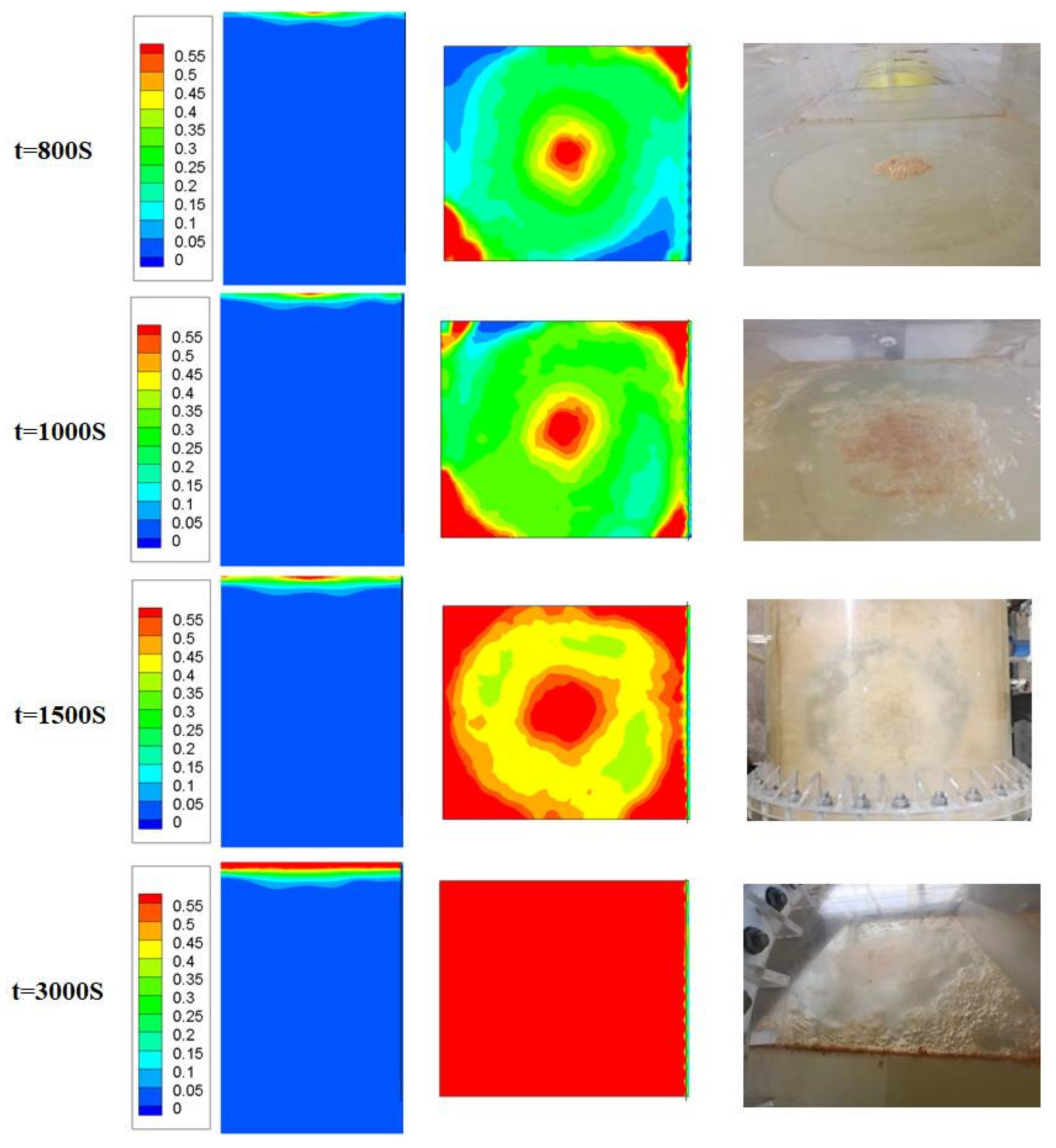
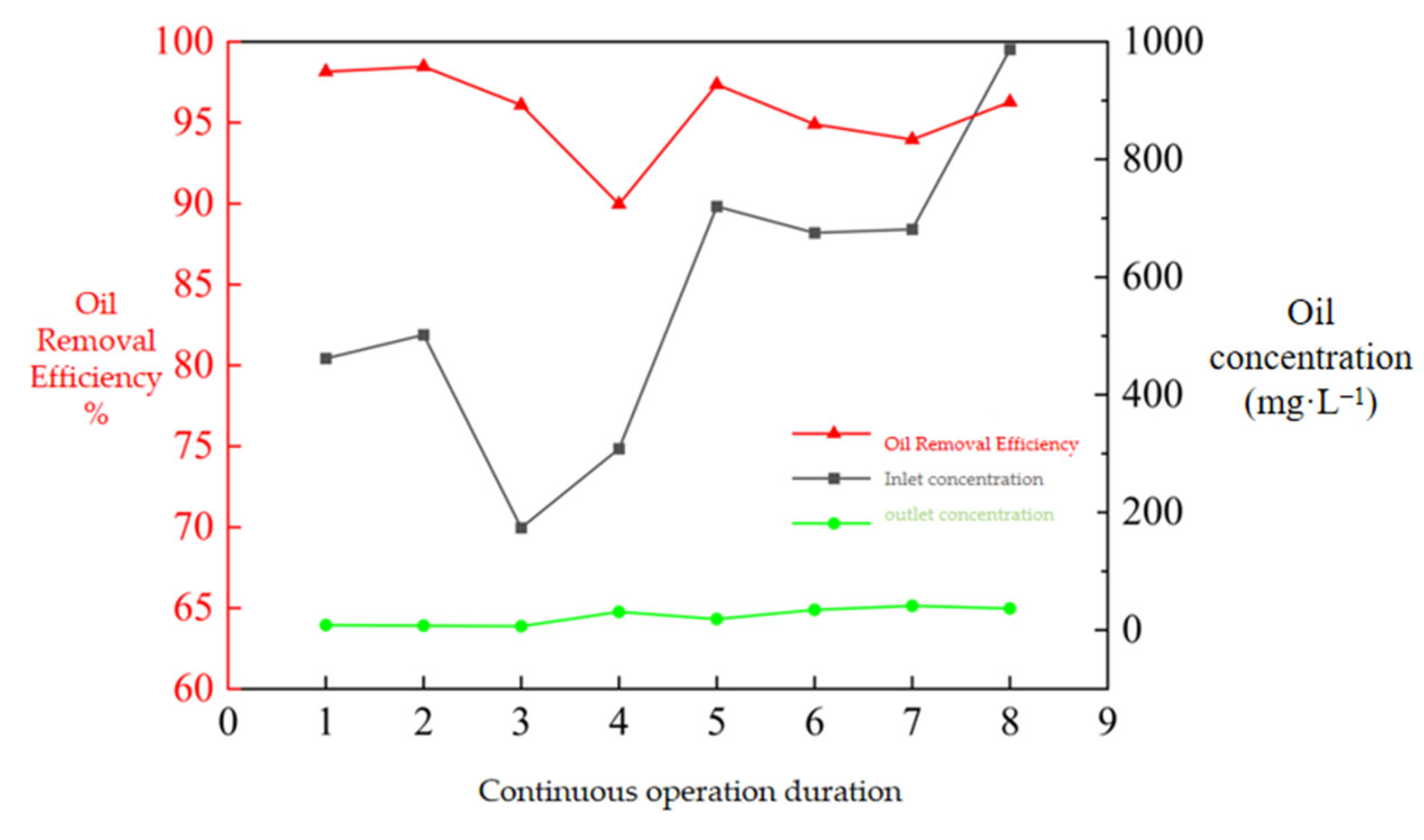
Figure 2. Horizontal compact swirling flow air flotation device schematic diagram. 1—the tangential inlet of oily sewage; 2—swirl straight cylinder; 3—swirling air flotation zone; 4—first-class overflow pipe; 5—two-stage overflow pipe; 6—air flotation zone; 7—three-stage overflow pipe; 8—buffer area; 9—treated water outlet; 10—the vent valve; 11—intake valve; 12—tangential inlet of dissolved air water; 13—dissolved air water release pipe; 14—dissolved air water inlet; 15—sewage outlet.
Processes 13 03848 g002
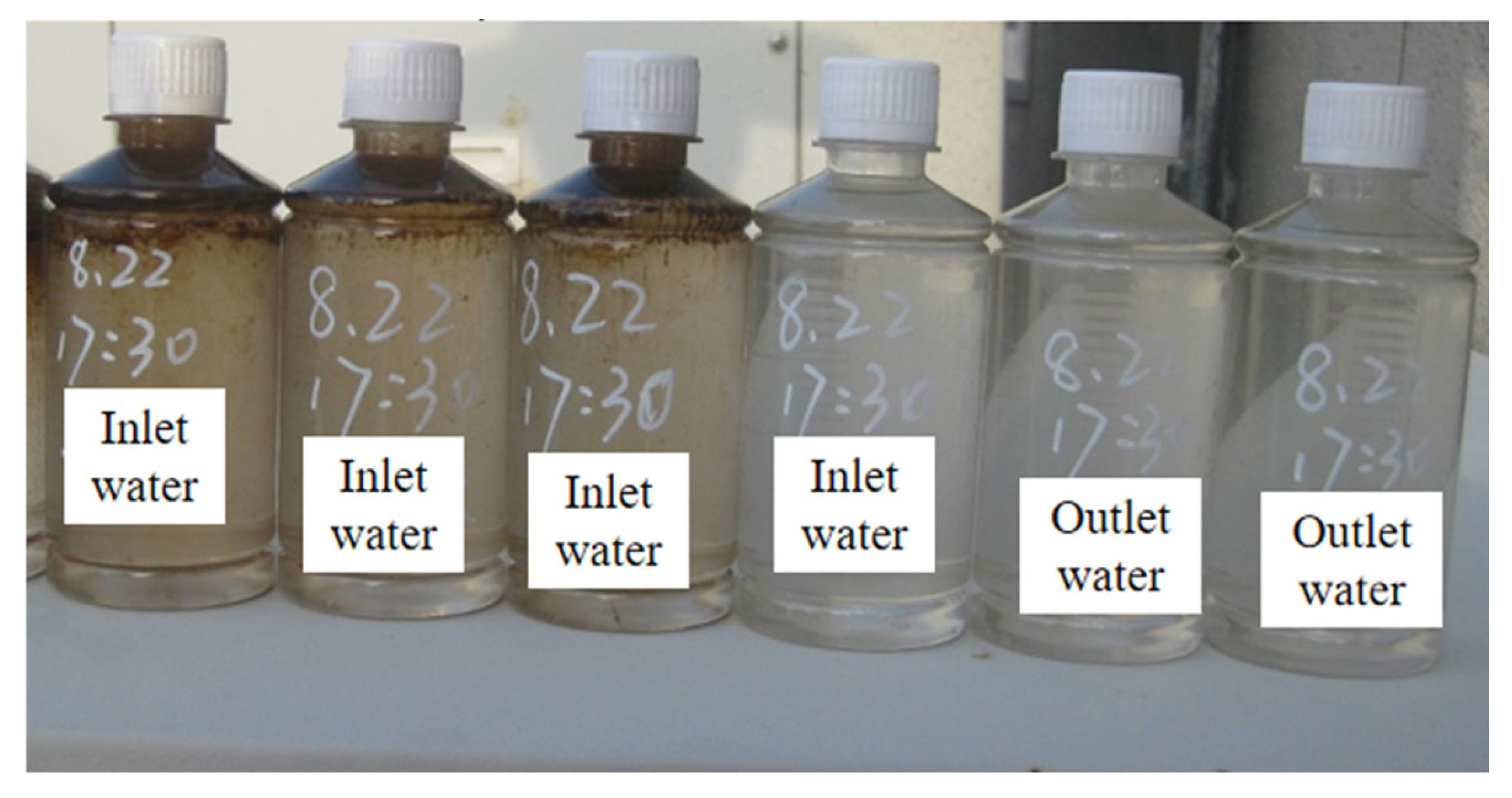
Figure 3. Air flotation zone structure diagram.
Processes 13 03848 g003
Figure 4. Air floating zone meshing.
Processes 13 03848 g004
Figure 5. Grid validation.
Processes 13 03848 g005
Figure 6. Mesh independence validation.
Processes 13 03848 g006
Figure 7. Cloud map (a) and velocity vector map (b) with different inlet air holdup.
Processes 13 03848 g007
Figure 8. Distribution of air concentration with height for different inlet air holdups.
Processes 13 03848 g008
Figure 9. Air phase distribution cloud image and velocity vector image of different bubble size.
Processes 13 03848 g009
Figure 10. Distribution of air concentration with height for different bubble sizes.
Processes 13 03848 g010
Figure 11. Air cloud image and velocity vector image of different treatment capacity.
Processes 13 03848 g011aProcesses 13 03848 g011b
Figure 12. Distribution of air concentration with height for different treatment capacity.
Processes 13 03848 g012
Figure 13. Air cloud image and velocity vector image of different dissolved air water velocity.
Processes 13 03848 g013
Figure 14. Distribution of air concentration with height for different dissolved air water velocity.
Processes 13 03848 g014
Figure 15. Air cloud image and velocity vector image of flow field of different height baffles.
Processes 13 03848 g015
Figure 16. Distribution of air concentration with height for different height baffles.
Processes 13 03848 g016
Figure 17. Air cloud image and velocity vector image of the flow field of different angle baffles.
Processes 13 03848 g017
Figure 18. Distribution of air concentration with height for different baffle angles.
Processes 13 03848 g018
Figure 19. Schematic diagram of the overall model structure.
Processes 13 03848 g019
Figure 20. Mesh partition.
Processes 13 03848 g020
Figure 21. Vector diagram of the frontal velocity of a swirl flotation device.
Processes 13 03848 g021
Figure 22. Vector diagram of the surface velocity of a swirl flotation device.
Processes 13 03848 g022
Figure 23. Vector diagram of the cross-sectional velocity of the dissolved gas release tube in the contact zone.
Processes 13 03848 g023
Figure 24. Effect of throughput on the distribution of the oil phase and the air phase.
Processes 13 03848 g024
Figure 25. Oil removal rate for different treatment volumes.
Processes 13 03848 g025
Figure 26. Effect of bubble particle size on the distribution of oil phase vapor phase.
Processes 13 03848 g026
Figure 27. Oil removal rate at different bubble sizes.
Processes 13 03848 g027
Figure 28. Effect of air holdup on the distribution of oil and air phases.
Processes 13 03848 g028
Figure 29. Oil removal rate for different air holdup.
Processes 13 03848 g029
Figure 30. Flow chart of the experimental system of horizontal compact confined cyclone air flotation device.
Processes 13 03848 g030
Figure 31. Experimental system and physical drawings.
Processes 13 03848 g031
Figure 32. The swirl is filled with tiny bubbles.
Processes 13 03848 g032
Figure 33. Diagram of water surface foam oil as a function of running time.
Processes 13 03848 g033
Figure 34. The device runs continuously and the results of the experiment.
Processes 13 03848 g034
Figure 35. Water samples before and after treatment. The numbers on the bottles are 8.22 and 17:30.
Processes 13 03848 g035
Table 1. Mass concentration of oil phase at the inlet and outlet of different processing volumes.
Treatment CapacityOily Wastewater Inlet (kg·s−1)Oil Collection 1
(kg·s−1)
Oil Collection 2
(kg·s−1)
Treated Water Outlet
(kg·s−1)
Oil Removal Efficiency
1 m3·h−11.21 × 10−41.07 × 10−51.44 × 10−57.34 × 10−899.94%
2 m3·h−12.42 × 10−41.95 × 10−58.80 × 10−51.45 × 10−594.03%
3 m3·h−13.63 × 10−42.82 × 10−51.62 × 10−55.45 × 10−584.98%
4 m3·h−14.84 × 10−43.05 × 10−52.53 × 10−51.55 × 10−468.06%
5 m3·h−16.05 × 10−43.62 × 10−53.17 × 10−52.24 × 10−462.92%
Table 2. Mass concentrations of oil phase at the inlet and outlet of different bubble particle sizes.
Bubble sizeOily Wastewater Inlet
(kg·s−1)
Oil Collection 1
(kg·s−1)
Oil Collection 2
(kg·s−1)
Treated Water Outlet
(kg·s−1)
Oil Removal Efficiency
30 μm3.02 × 10−42.28 × 10−51.35 × 10−54.17 × 10−586.20%
50 μm3.02 × 10−42.51 × 10−51.20 × 10−53.13 × 10−589.64%
70 μm3.02 × 10−42.30 × 10−51.08 × 10−52.70 × 10−591.07%
90 μm3.02 × 10−42.12 × 10−59.94 × 10−54.76 × 10−584.26%
Table 3. Mass concentration of oil phase at the inlet and outlet of different air holdup.
Bubble SizeOily Wastewater Inlet
(kg·s−1)
Oil Collection 1
(kg·s−1)
Oil Collection 2
(kg·s−1)
Treated Water Outlet
(kg·s−1)
Oil Removal Efficiency
0.033.02 × 10−42.28 × 10−51.22 × 10−53.36 × 10−588.87%
0.053.02 × 10−42.51 × 10−51.20 × 10−53.13 × 10−589.64%
0.073.02 × 10−42.62 × 10−51.11 × 10−52.24 × 10−592.61%
0.093.02 × 10−42.71 × 10−51.04 × 10−51.42 × 10−595.31%
Disclaimer/Publisher’s Note: The statements, opinions and data contained in all publications are solely those of the individual author(s) and contributor(s) and not of MDPI and/or the editor(s). MDPI and/or the editor(s) disclaim responsibility for any injury to people or property resulting from any ideas, methods, instructions or products referred to in the content.