Article

New Polyfunctional Nanocatalysts for the Hydrogen-Free Processing of N-Alkanes and Gasoline Fractions


by
Saule B. Nurzhanova
*,
Galymzhan T. Saidilda
,
Annas Nurlan
,
Arlan Z. Abilmagzhanov
,
Aizada S. Nagashybayeva
and
Svetlana A. Tungatarova
D.V. Sokolsky Institute of Fuel, Catalysis and Electrochemistry JSC, 050010 Almaty, Kazakhstan
*
Author to whom correspondence should be addressed.
Processes 2025, 13(12), 3841; https://doi.org/10.3390/pr13123841
Submission received: 21 October 2025 / Revised: 13 November 2025 / Accepted: 22 November 2025 / Published: 27 November 2025
(This article belongs to the Special Issue Advances in Supported Nanoparticle Catalysts (Volume II))

Abstract

Studies were conducted on the hydrogen-free processing of model alkanes, straight-run gasoline, and catalytic cracking gasoline using a new synthesized Co-Mo-Ce/ZSM + Al2O3 nanocatalyst, which demonstrated high activity in desulfurization. Thus, the mass fraction of sulfur in the resulting gasoline was reduced by almost three times compared to the initial value of 0.0776% to 0.0354% as a result of hydrogen-free processing of straight-run gasoline. The amount of sulfur in the resulting product was reduced by almost an order of magnitude with hydrogen-free processing of catalytic cracked gasoline: from 0.1650 in the original gasoline to 0.0123%. The octane number of the refined straight-run gasoline was 77.9–80.9 according to the research method (RM) and 61.13–65.8 with the motor method (MM). Physical and chemical methods of analysis (BET, TPD-NH3, TEM, SEM, and XRD) revealed that nano-structured acid sites coexist with nano-dispersed metallic sites on the surface of the Co-Mo-Ce/ZSM + Al2O3 catalyst. The functioning of these two types of nano-active sites (metallic and acidic) ensures the polyfunctionality of the catalytic action of the nanoparticles. The following reactions occur simultaneously in the hydrogen-free processing: isomerization, dehydrogenation, dehydrocyclization. Hydrogen-free processing of low-octane gasoline fractions on nanosized zeolite-containing catalysts is one of the most promising methods to obtain high-octane motor gasoline.

1. Introduction

There is a constant trend of tightening the environmental characteristics in the global production of motor fuels. Straight-run gasolines and catalytic cracked gasolines are characterized by a low octane number, which greatly complicates their use as automotive fuel. A significant reduction in the content of sulfur, benzene, and aromatic and olefin hydrocarbons is required according to international standards. Catalytic processes of hydroprocessing conducted in the presence of hydrogen significantly improve the properties of low-grade gasoline and diesel fractions of motor fuels. Processes without the use of hydrogen-containing gas (or with a significant reduction in its quantity) require expensive catalysts in order to reduce economic and environmental factors in the processing of various types of carbohydrate raw materials to produce pure gasoline [1,2,3,4,5,6].
In this regard, increasing attention is being paid to the processes of hydrogen-free processing of various types of petroleum feedstocks, in particular, such as straight-run gasoline and catalytic cracking gasoline characterized by low octane numbers, as well as with a high content of harmful sulfur-containing compounds. Within petroleum fractions, sulfur is distributed unevenly, while it is present in distillate fractions (boiling up to 450–500 °C), and up to 75% of the total sulfur content is typically concentrated in heavier, residual fractions. Low-grade (high-sulfur) gasoline may contain a variety of organosulfur compounds, the composition and concentration of which depend on the origin of the crude oil and the extent of its refining. The principal types of sulfur-containing compounds that may be present in gasoline include the following:
-
elemental sulfur (S) and hydrogen sulfide (H2S), which can be dissolved in the fuel;
-
mercaptans (thiols)—organic compounds containing a thiol functional group (–SH);
-
sulfides (thioethers)—compounds of the general formula R–S–R′, where R and R′—organic radicals;
-
disulfides—compounds containing a disulfide linkage (–S–S–);
-
thiophenes and their derivatives, such as thiophane, thiophene, benzothiophene, and dibenzothiophene.
Low-grade gasoline is typically characterized by an elevated concentration of these sulfur impurities compared to high-quality fuels, in which the sulfur content is strictly regulated and minimized through advanced hydrotreating processes.
The need to improve gasoline quality makes it necessary to look for ways to develop more efficient hydroprocessing catalysts.
Therefore, the development of highly efficient technologies and catalysts for the conversion of gasoline and diesel fractions to produce clean motor fuels is an urgent scientific and practical challenge.
The production of motor fuels is currently undergoing serious changes due to the introduction of new, more stringent requirements for the content of harmful undesirable impurities. Hydroprocessing processes are mainly used for this purpose. They consume significant amounts of scarcely available hydrogen [7,8,9,10]. Due to the scarcity of the latter, methods of hydrogen-free processing of various types of hydrocarbon raw materials are of great value. The search for efficient catalysts for hydrogen-free processing of low-octane gasoline fractions active in dehydrogenation, isomerization, dehydrocyclization, and alkylation reactions is one of the most promising areas for solving this problem. This is confirmed by the great attention paid in recent years to the development of hydrogen-free processes for the production of high-octane motor gasoline on zeolite-containing systems [11,12,13].
The hydrogen-free processing of low-octane gasoline fractions on zeolite-containing catalysts, which exhibit high activity and selectivity in the reactions of isomerization, alkylation, dehydrogenation, and dehydrocyclization of hydrocarbons, is one of the most promising methods for producing high-octane gasoline with a low content of sulfur compounds [6,9]. Research on the hydrogen-free processing of low-octane gasoline fractions is currently aimed at developing new efficient and stable catalytic systems that can produce high-octane, low-sulfur gasoline. Polyfunctional catalysts make it possible to perform in depth hydroprocessing of petroleum gasoline fractions in one stage, while removing sulfur- and nitrogen-containing compounds during the hydrogenation of unsaturated and aromatic compounds. The hydroisomerization and selective hydrocracking of n-paraffin hydrocarbons take place at the same time [6,14,15,16,17]. Catalysts based on high-silica zeolites with the activity and selectivity determined by unique acid–base and molecular-sieve properties, are very promising here. The average diameter of the pores of these zeolites is such that it prevents the formation of hydrocarbons with more than 12 carbon atoms in the molecule. It ensures high selectivity in the process of conversion of paraffinic hydrocarbons and naphthenic hydrocarbons that are part of gasoline fractions. The selectivity of zeolite-based bifunctional catalysts depends on the ratio of their acidic and hydro-dehydrating functions. An effective way to regulate the hydrocracking activity of zeolite-containing catalysts is to introduce elements with variable valence into their composition. The concentration and strength of the acid centers of the catalyst can vary widely during inoculation with polyvalent cations.
Straight-run gasoline fractions of petroleum and catalytic cracking gasoline have low octane numbers and contain significant amounts of sulfur and other toxic impurities. Reactions occurring in the process of hydrogen-free processing on catalysts make it possible to split nitrogen- and sulfur-containing compounds at a lower temperature and at a low rate [18,19,20,21,22,23].
Research on the development of new promising catalysts and catalytic compositions, including optimizing their properties in the process of hydrogen-free refining and desulfurization, is aimed to solve problematic technological and technical problems of oil refining [24,25,26,27].
The purpose of this work was to develop new efficient polyfunctional catalysts for the process of hydrogen-free processing of hydrocarbon raw materials with the production of environmentally friendly motor fuels.
The novelty of this study is the synthesis of a new zeolite-containing catalyst, Co-Mo-Ce/ZSM + Al2O3, according to the author’s methodology in one stage with directed physico–chemical characteristics for the hydrogen-free process.
This article explores and discusses the catalytic processing of n-alkanes (C6–C10), straight-run gasoline fractions, and catalytic cracking gasoline using a newly developed modified catalyst containing zeolite-Co-Mo-Ce/ZSM + Al2O3 to better understand the processes occurring during the catalytic conversion of hydrocarbons in the absence of hydrogen.

2. Results and Discussion

The results of hydrogen-free processing of hexane and decane on the Co-Mo-Ce/ZSM + Al2O3 catalyst in the range of temperatures 320–400 °C, gas hourly space velocity 2 h−1, pressure (P)—2.0 atm.) and the duration of the process (2–2.5 h) are shown in Table 1.
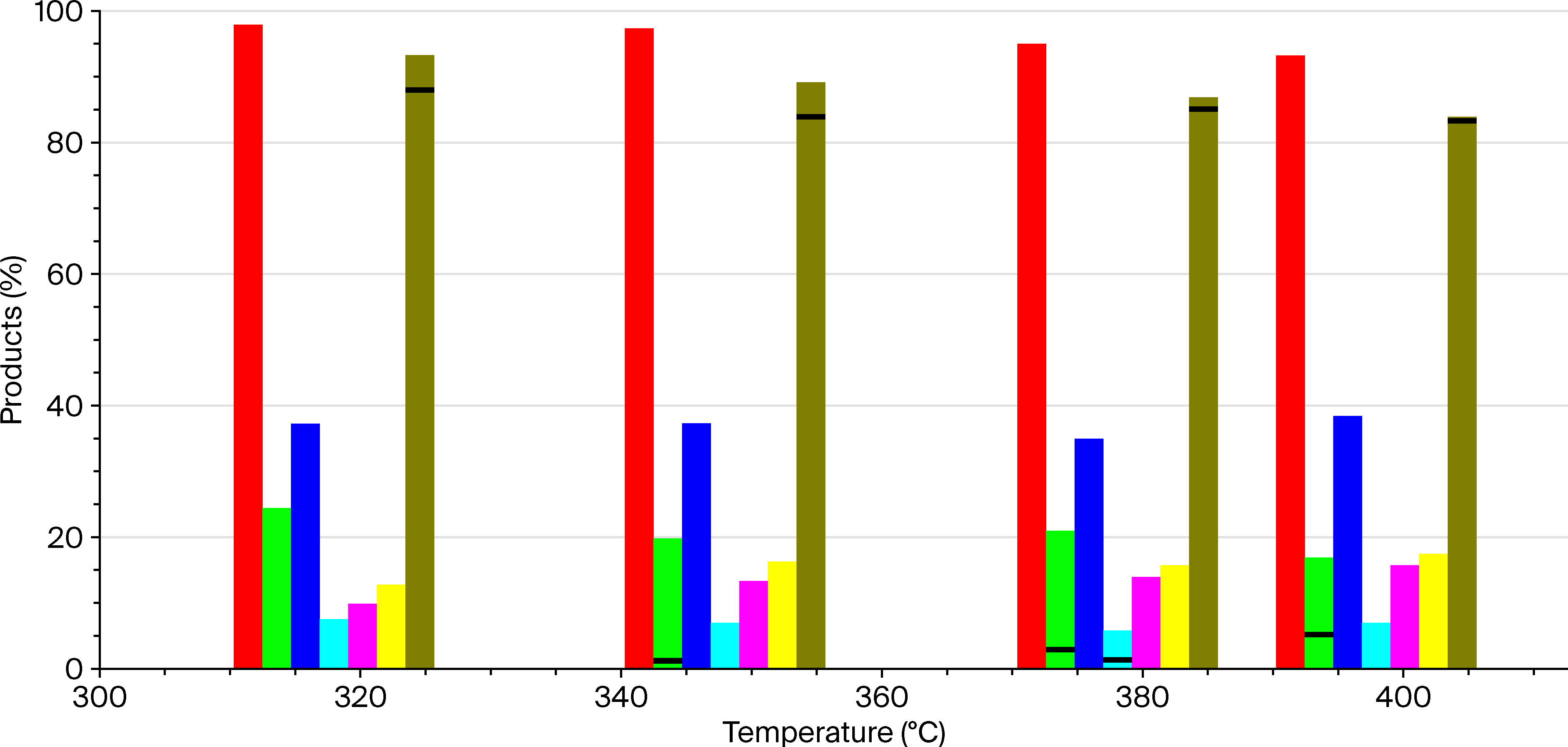
It follows from the data in Table 1 that the liquid hexane catalysate contains 22.9% paraffins, 24.2% iso-alkanes, 36.9% olefins, 6.7% aromatic hydrocarbons, and 9.3% naphthenic hydrocarbons at a temperature of 320 °C. The quantities of paraffins and aromatic hydrocarbons change and amount to 23.3% and 6.4%, respectively, with an increase in temperature to 400 °C. The concentration of naphthenic hydrocarbons (15.3%) and olefins (38.4%) increases (Table 1) It should be noted that olefin hydrocarbons in the process of catalytic cracking are primarily subjected to C–C bond cleavage reactions, double bond isomerization, skeletal isomerization, hydrogen transfer, disproportionation, cyclization, and polymerization [20,21,22,23]. In order to identify the behavior of heavier n-alkanes in the process of hydrogen-free processing, decane cracking on the catalyst was investigated (Table 1).
It was established that the amount and composition of gaseous products formed during the processing of decane on the Co-Mo-Ce/ZSM + Al2O3 catalyst under the same conditions do not differ significantly from those obtained during hydrogen-free processing of hexane: ethane (1.8–3.9%), ethylene (4.1–5.4%), propane (17.6–27.7%), isobutane (5.8–6.5%), butane (5.4–7.9%), isobutylene (1.1–2.8%), butene (2.1–4.0%), and a small amount of methane (<1.0%). In the range of 320–400 °C, the amount of light hydrocarbons increases from 12.0% to 17.0%, and the liquid phase decreases from 88.0% to 83.0%.
Hydrogen-free processing of hexane on the Co-Mo-Ce/ZSM + Al2O3 catalyst results in the formation of C1–C4 and C5–C6 iso- and n-alkanes, olefins, and aromatic and naphthenic hydrocarbons (Figure 1). An increase in the yield of light hydrocarbons and a decrease in the amount of liquid phase are observed during the processing of hexane on the Co-Mo-Ce/ZSM + Al2O3 catalyst in the range of 320–400 °C: from 7.0% to 16.0% and from 93.0% to 84.0%, respectively. The gas phase products of the processing of hexane in the range of 320–400 °C contain ethane (1.3–3.5%), ethylene (3.6–9.0%), propane (19.0–17.8%), isobutane (5.3–7.0%), butane (8.7–6.8%), isobutylene (2.4–7.5%), butene (about 4%), and a small amount of methane (<1.8%).
In contrast to hexane, paraffins prevail in the products of decane processing in liquid catalysate, the yield of which is slightly reduced in the range of 320–400 °C from 98.1% to 93.6%. The content of iso-alkanes in the catalysate increases from 0.4% to 4.5%, and the yield of olefins and aromatic and naphthenic hydrocarbons during the processing of the decane on Co-Mo-Ce/ZSM + Al2O3 is small and ranges from 0.6–1.0%, 0.2–0.6%, and 0.1–0.4%, respectively.
An analysis of the results obtained in a study of the process of hydrogen-free processing of C6–C10 hydrocarbons using the Co-Mo-Ce-/ZSM-Al2O3 catalyst shows that the qualitative and quantitative composition of the resulting liquid-phase compounds depends significantly on the molecular weight of the initial alkane. Their adsorption capacity probably changes due to the dependence on the length of the molecular chain of the alkanes, caused by the different energies of the C–C bonds, the possibility of breaking the C–C and C–H bonds, and the displacement of the CxHy structures [23,24,25].
The Co-Mo-Ce/ZSM + Al2O3 catalyst was also tested in the hydrogen-free processing of straight-run gasoline and catalytic cracked gasoline. Hydrogen-free processing of gasoline fractions was conducted at T of 320–400 °C, GHSV—2 h−1 and P—2.0 atm.
Results were as follows: hydrocarbon composition of the initial straight-run gasoline: paraffins—28.4%, iso-alkanes—35.5%, aromatic hydrocarbons—5.7%, naphthenes—26.2%, olefins—4.7%, octane number according to the research method of 66.8 and octane number according to the motor method of 62.0. The mass content of sulfur was 0.0776% (Figure 2).
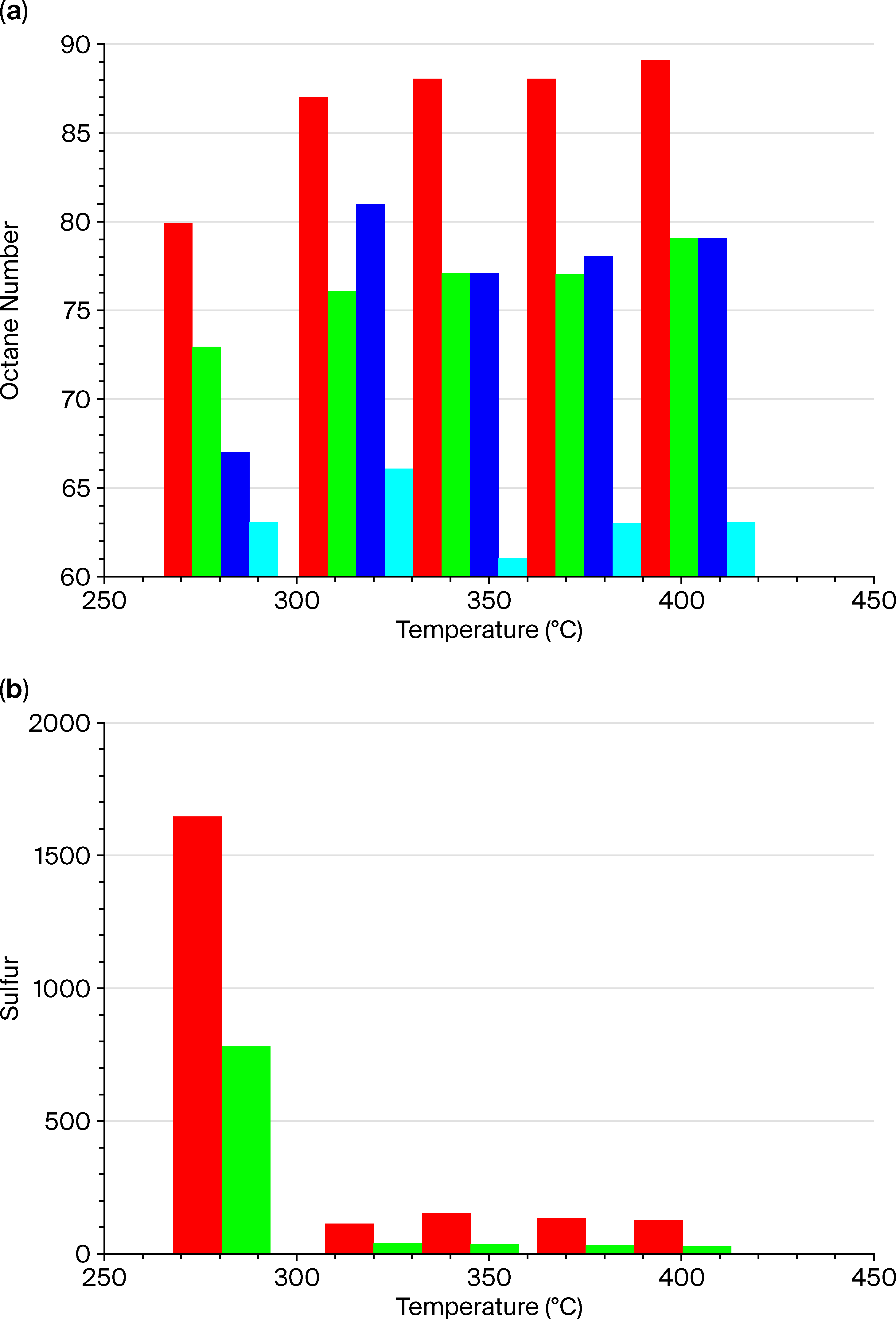
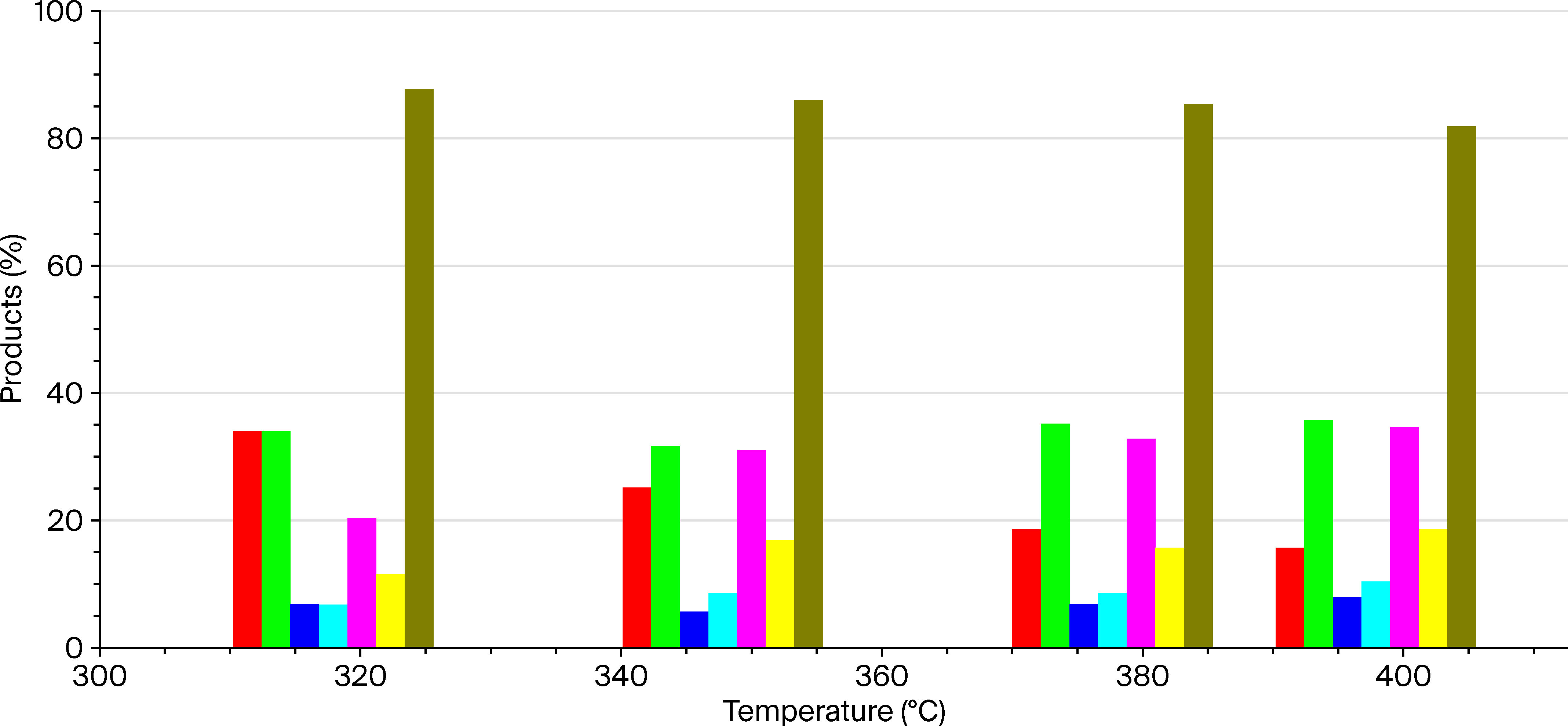
The liquid phase yield ranges from 82.0% to 89.0% during hydrogen-free refining of straight-run gasoline over the Co-Mo-Ce/ZSM + Al2O3 catalyst in the temperature range of 320–400 °C. Isoalkanes predominate in the reaction products. Their content increases from 33.5% to 35.2% with an increase in temperature from 320 to 400 °C, which causes an increase in octane number. The amount of aromatic and naphthenic hydrocarbons in the temperature range of 320–400 °C increases from 6.1% to 9.8% and from 19.9% to 34.4%, respectively. The concentration of olefinic hydrocarbons in the resulting catalysate is slightly higher than in the original gasoline (4.7%) and ranges from 5.3% to 7.9%. With an increase in temperature from 320 °C to 400 °C, a decrease in the proportion of paraffins is observed from 33.9% to 15.2%. The octane number of gasoline obtained at 320 °C is 81.1 (RM). It is significantly higher than the initial 66.8 (RM). However, its value decreases slightly to 73.7–77.9 (RM) at a higher processing temperature of 350–400 °C. The effect of temperature on the mass content of sulfur and the octane numbers in the process of straight-run gasoline and gasoline of catalytic cracking are shown in Figure 3a,b.
The mass fraction of sulfur in the resulting gasoline at 320 °C is almost two times less than the initial one—0.0354% and 0.0776%, respectively. An increase in the processing temperature to 380–400 °C is accompanied by a decrease in the amount of sulfur in the catalysate to 0.0028–0.0025% (Table 2).
The ref. [21] presents the results of experiments on hydrodesulfurization of petroleum fractions of various compositions in the presence of synthesized catalysts in a steel autoclave for 12 h, at the same time, the amount of sulfur-containing compounds in the initial composition of the fractions was 2159 ppm; after hydrotreating, the sulfur content did not exceed 600 ppm.
The catalysts developed in this article exhibit the same high activity in hydrodesulfurization as the catalysts of the hydrotreating process in the presence of hydrogen and can achieve a desulfurization rate of up to 98%
The process of hydrogen-free processing of catalytic cracked gasoline using the Co-Mo-Ce/ZSM + Al2O3 catalyst was studied (Table 3). The hydrocarbon composition of the original gasoline is as follows: paraffins—6.2%, iso-alkanes—57.7%, aromatic hydrocarbons—7.2%, naphthenes—22.6%, and olefins—10.6%. The octane number is 80.4 (RM) and 73.5 (MM), and the mass sulfur content—0.1650%
The results obtained in the study of the hydrogen-free processing of catalytic cracking gasoline on the Co-Mo-Ce/ZSM + Al2O3 catalyst, presented in Table 3, show that the yield of the liquid phase varies from 85.0% to 81.0% with an increase in temperature from 320 to 400 °C.
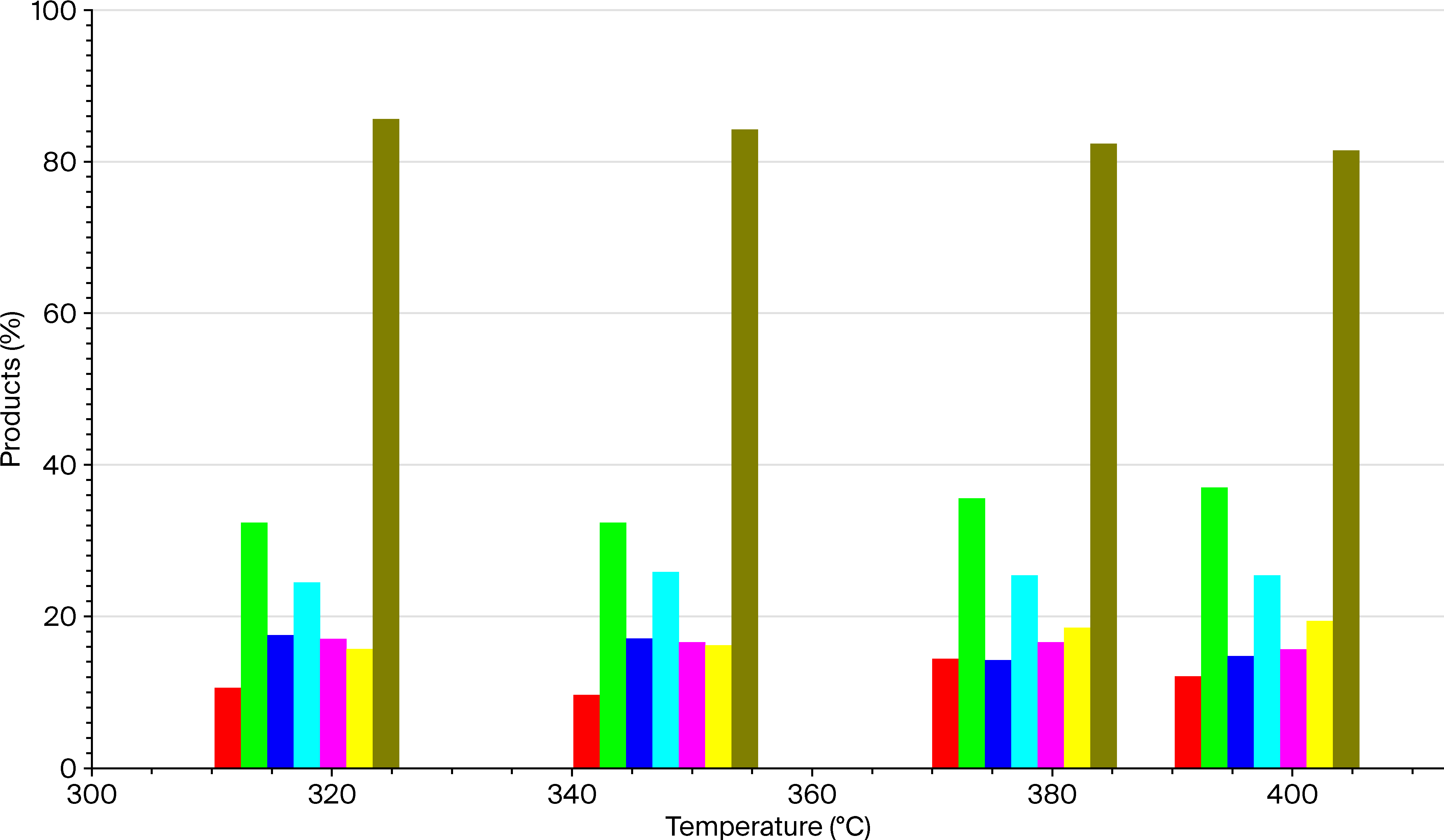
Under these conditions, the content of iso-alkanes in the resulting gasoline does not exceed 31.5–36.3%, while in the initial period the amount is much higher (53.7%). Hydrogen-free processing of catalytic cracked gasoline on the Co-Mo-Ce/ZSM + Al2O3 catalyst leads to an increase in the share of olefins and aromatic hydrocarbons in the catalysate to 14.6–17.4% and 24.3–25.2%, respectively. In the case of hydrogen-free processing of catalytic cracked gasoline on the Co-Mo-Ce/ZSM + Al2O3 catalyst in the range of 320–400 °C, a significant decrease in the mass fraction of sulfur in the resulting product is observed: up to 1178 ppm at 320 °C, to 1230 ppm at 400 °C, compared to 1650.0 in the original gasoline, i.e., almost by an order of magnitude.
It should be noted that olefins have high octane numbers and their content in gasoline, according to Euro-4, can reach 18.0%. The amount of naphthenic hydrocarbons is slightly lower than in the original gasoline (22.6%) and is equal to 15.0–16.5%. (Figure 4).
The octane number of gasoline increases with an increase in the process temperature according to the research method (RM) from 87.3 to 88.9 and according to the motor method (MM) from 75.6 to 78.9.
Study of the structure and state of the components of the active phase of the Co-Mo-Ce/ZSM + Al2O3 catalyst showed that the specific surface area of the catalyst determined by the BET method is 261.8 m2/g, and the total pore volume is 106.22 mL/g.
Using the TPD method, it was found that ammonia desorbs from the Co-Mo-Ce/ZSM + Al2O3 catalyst in two forms. The first form is desorbed at Tmax = 250 °C (30.8 × 10⁻⁴ mol/g catalyst). More tightly bound ammonia is desorbed at Tmax = 600 °C (1.38 × 10⁻⁴ mol/g catalyst). The total acidity is 32.2 × 10⁻⁴ mol/g catalyst. According to [26,27], the TPD spectrum region up to 0 °C is related to ammonia desorption from Lewis acid sites. In the range of 400–600 °C, ammonia is desorbed from stronger Brønsted sites. It should be noted that the energy characteristics of acid sites in zeolite-containing catalysts depend significantly on the process temperature. As shown in [20,27], the concentration of proton-donating groups in zeolites and the ratio of the concentrations of Brønsted and Lewis acid sites can change with increasing temperature.
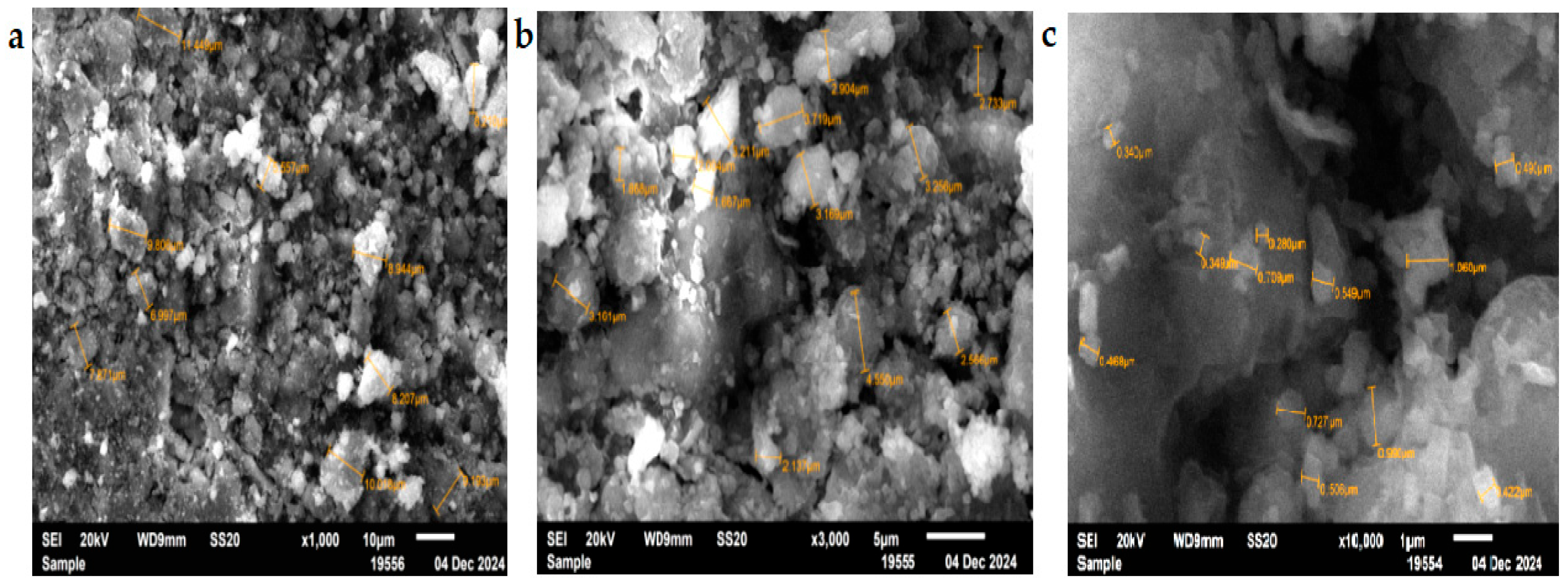
The structure and state of the active sites of the Co-Mo-Ce/ZSM + Al2O3 catalyst were studied using transmission electron microscopy (TEM) and scanning electron microscopy (SEM), which made it possible to establish the morphology, chemical and phase composition of particles, and their structure in polydisperse multiphase systems. The size range of the studied nanoparticles ranged from several hundred μm (SEM) to subnanometer clusters (TEM) [18,26].
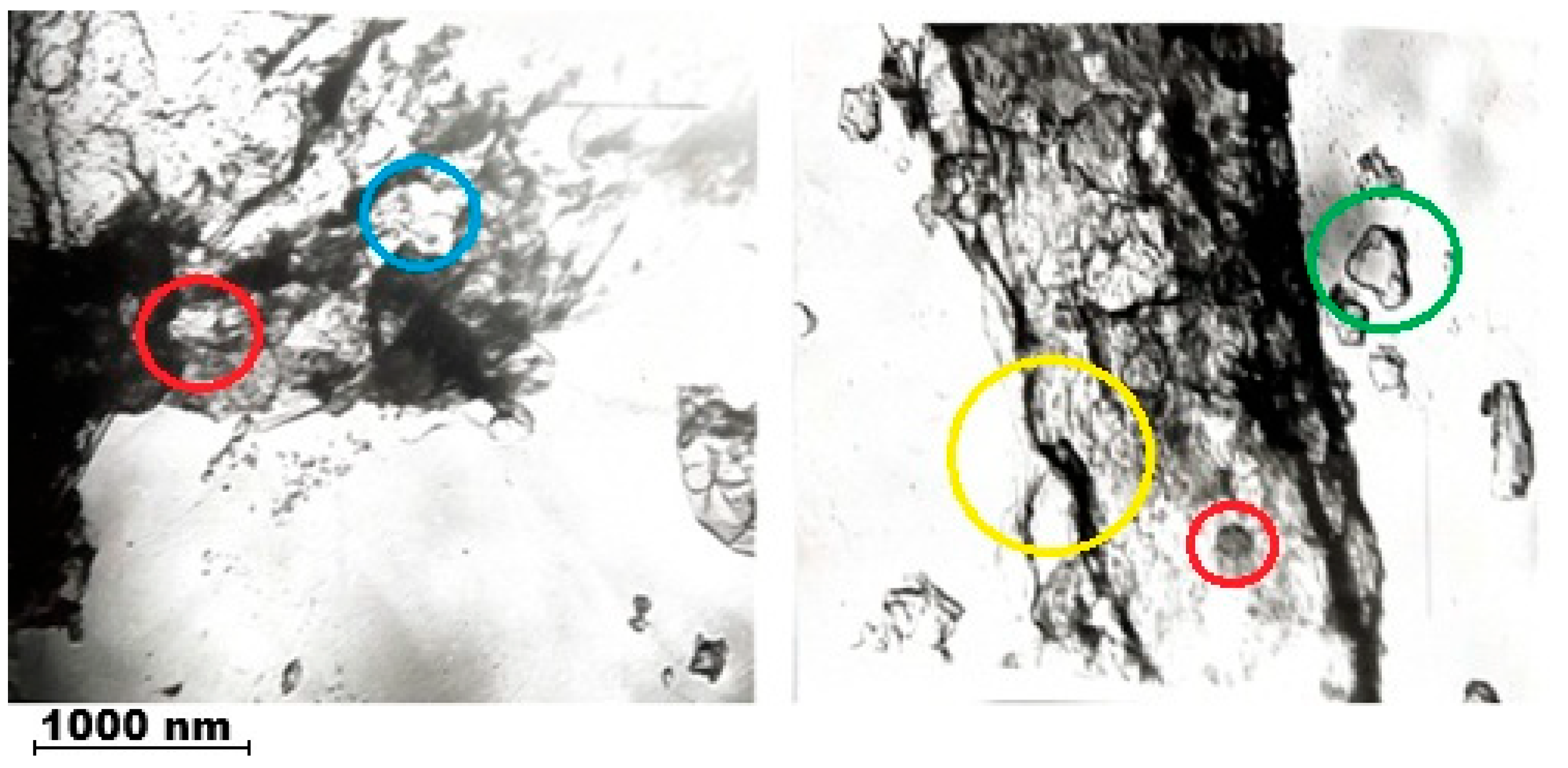
Transmission electron microscopy showed small dense aggregates up to 30.0–50.0 nm formed by accumulations of small particles of Ce6O11 mixed with MoO(OH)2 with a size of 5.0 to 8.0 nm on the surface of the Co-Mo-Ce/ZSM + Al2O3 catalyst. There were particles with D = 30.0–70.0 nm consisting of dense, smaller particles of Ce2O3 and in a mixture of Ce6O11 with Ce2O3 (Figure 5).
In addition, there are clusters of translucent and dense particles with D = 30.0–50.0 nm identified as a mixture of Mo3O5, AlMoO3, CoMoSi, Mo3Si, CoMoSi, and Mo3Si. There are particles with D = 20.0–30.0 nm on the catalyst surface. They consist of loose, smaller particles of a mixture of Ce6O11, CeO, CoSi, Mo5Si, and Ce24Co11. According to [27], structures of Mo3O5, AlO3, CoMoSi, Mo3Si, Mo(Si Al)2, CoSi, and Mo5Si can function as Lewis acid centers also found with the temperature-programmed desorption of ammonia (TPD-NH3).
Scanning electron microscopy methods have been widely studied, which make it possible to determine the phase composition and distribution of chemical elements on the surface based on the size and shape of structures (phases) on the catalyst surface [20,26].
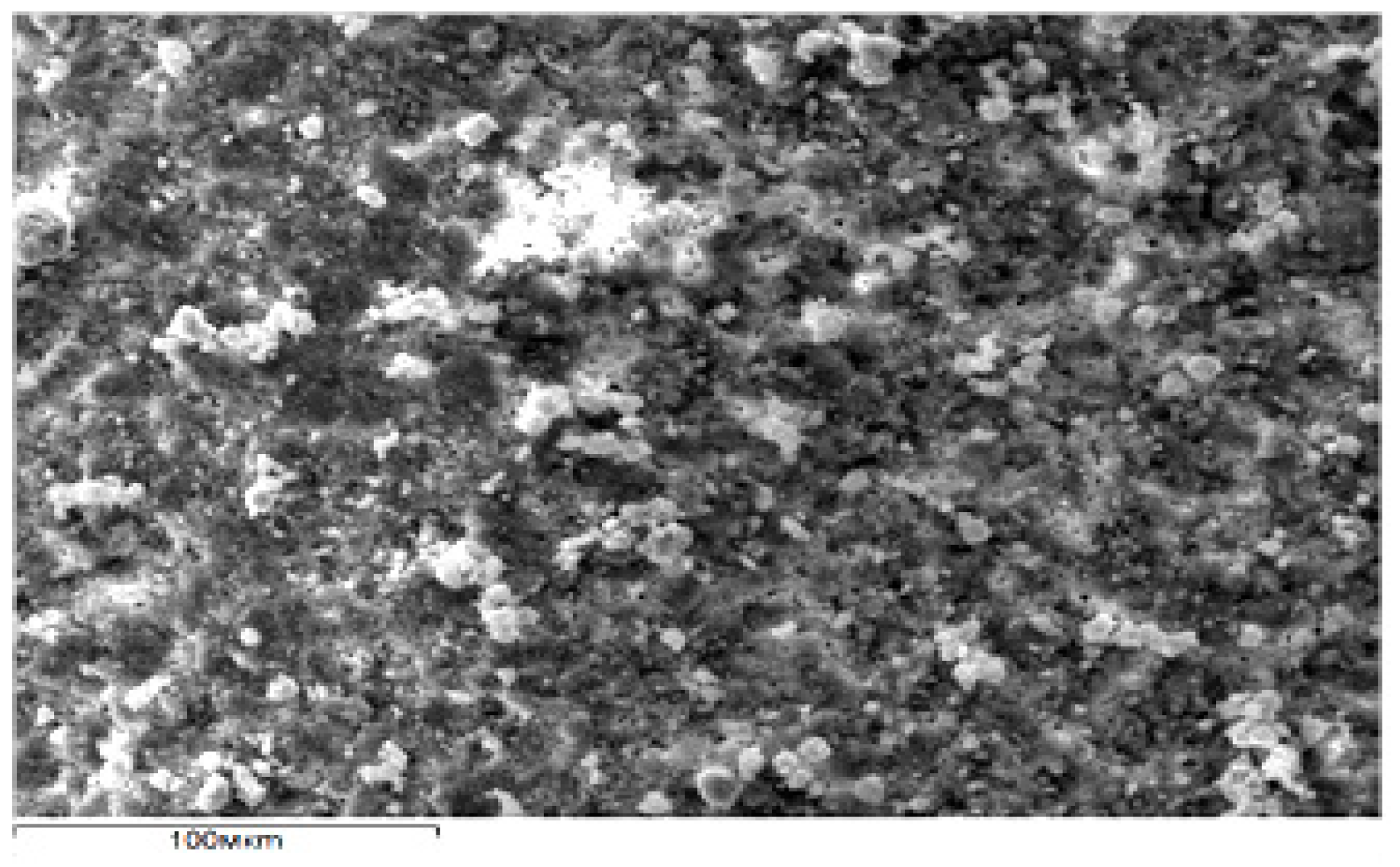
The sizes of aggregates on the surface of Co-Mo-Ce/ZSM + Al2O3 catalyst, determined by scanning electron microscopy, varied widely (Figure 6).
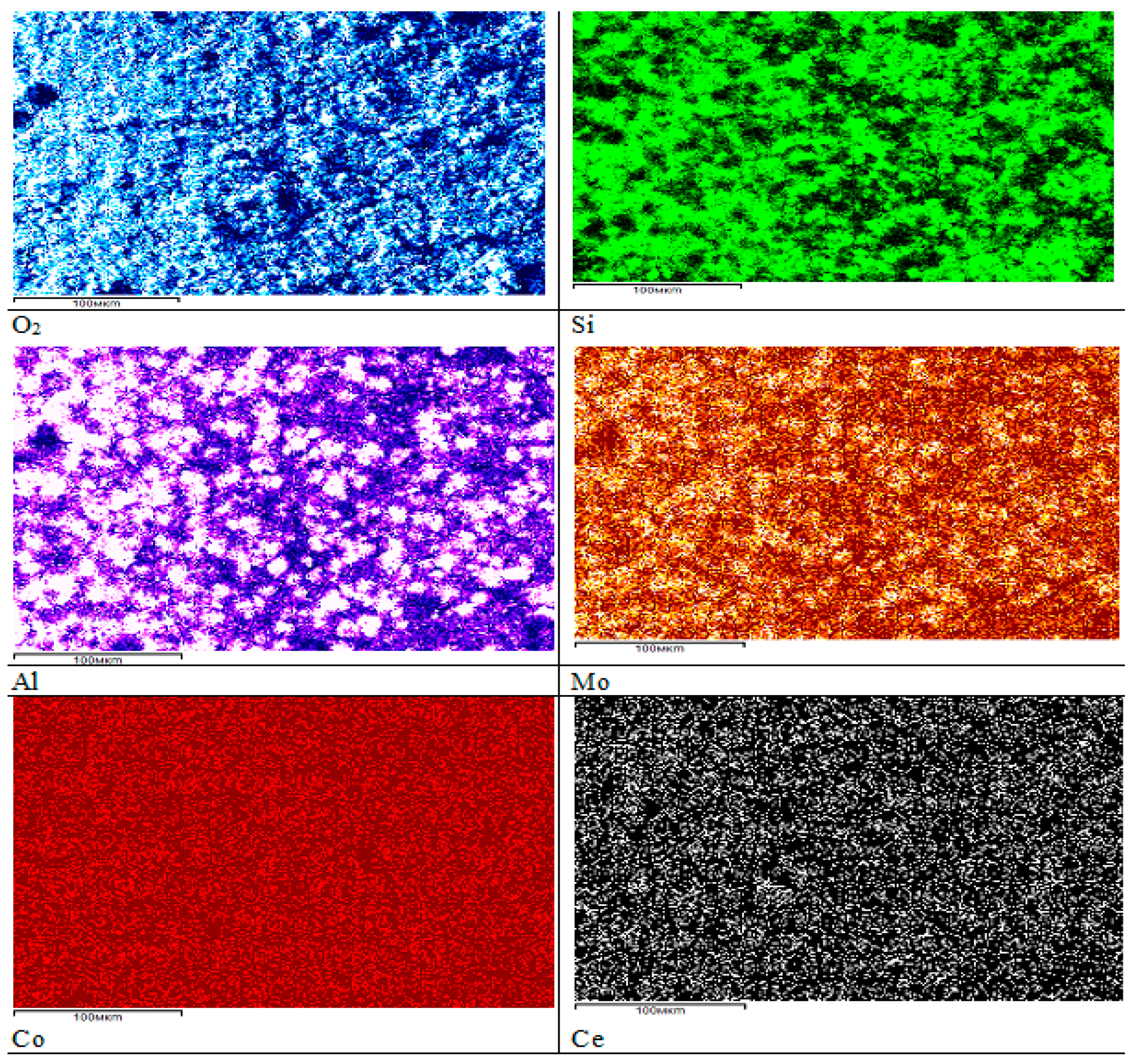
The distribution of elements (mapping) over the surface of the granulated Co-Mo-Ce/ZSM + Al2O3 catalyst was obtained (Figure 6 and Figure 7). Figure 7 shows a general view of the catalyst surface. Various irregularly shaped aggregates, similar to those shown in Figure 5, are clearly visible in the general view of the sample surface.
Figure 7 shows the distribution of each Co-Mo-Ce/ZSM + Al2O3 element over the surface of the catalyst pellet. It follows from the data that oxygen, cobalt, and cerium are evenly distributed over the surface. Silicon, aluminum, and molybdenum form areas of rarefaction and thickening. A comparison of the surface distribution of silicon and aluminum shows that the configuration of the condensation regions (light) for aluminum is often the same as the configuration of the rarefaction regions (dark) for silicon and vice versa [26,27].
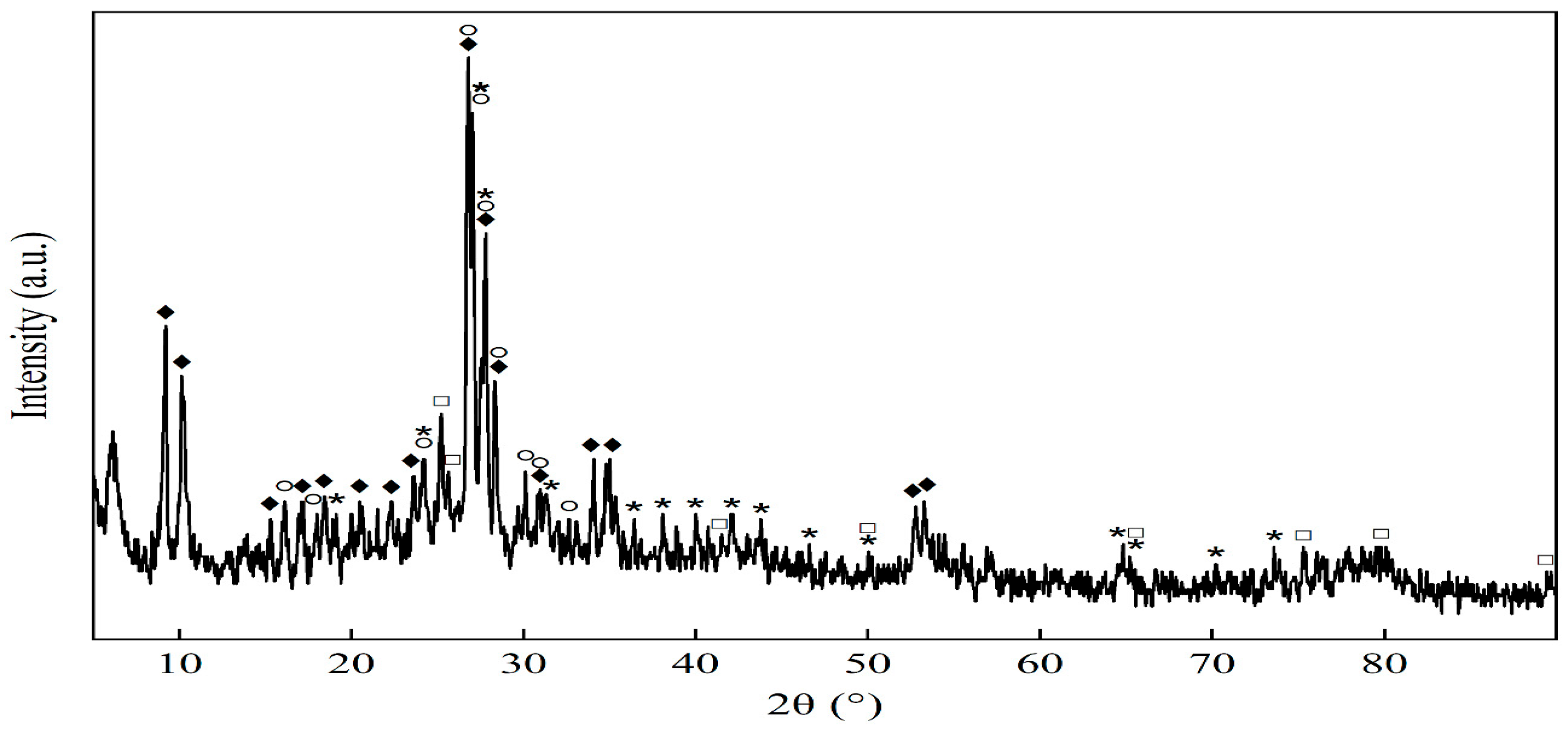
This may be due to the fact that silicon and aluminum are part of the same structure, such as the structure of zeolite. X-ray diffractometry of the Co-Mo-Ce/ZSM + Al2O3 sample was also performed. The diffractogram of the sample is shown in Figure 8.
The reflexes 6.18, 5.62, 4.27, 3.94, 3.84, 3.76, 3.73, 3.66, 3.45, 3.38, and 3.15 Å correspond to Al2(MoO4)3 (aluminum molybdate)—BETA; zeolite ZSM-11 (dehydrated) correspond to reflexes 11.15, 10.03, 7.49, 6.72, 6.01, 5.59, 5.17, 5.04, 4.63, 4.37, 3.86, 3.73, 3.61, 3.36, 3.07, 3.00, 2.01, and 2.00 Å; reflexes 4.14, 2.53, 2.16, 2.07, 1.64, 1.46, 1.38, 1.26, and 1.21 Å correspond to SiO2 (silicon dioxide); and reflexes:5.24, 4.33, 3.82, 3.71, 3.32, 2.66, 2.62, 2.50, 2.41, 2.16, 1.67, 1.65, 1.52, and 1.48 Å correspond to MoO3 (molybdenum oxide).
It can be seen based on the above data that the catalyst does contain a phase of Al2(MoO4)3 (aluminum molybdate), which includes aluminum and molybdenum, and, in addition, phases of MoO3, SiO2, and zeolite ZSM-11 (dehydrated).
There is an observed coincidence of the rarefaction and thickening regions of aluminum and molybdenum (Figure 9). This fact may be due to the formation of phases containing aluminum and molybdenum.
It follows from Figure 9 that cobalt and lanthanum are relatively evenly distributed over the surface of the pellet. At the same time, oxygen, silicon, aluminum, phosphorus, and molybdenum form rarefaction (dark) and thickening (light) regions, and the rarefaction and thickening regions for these elements on the surface of the granules of the catalyst sample practically coincide. This situation may be due to the fact that the elements are in one area (phase) or are located in close areas of the carrier.
Thus, acid centers coexist with metal centers on the surface of the Co-Mo-Ce/ZSM + Al2O3 catalyst according to TPD-NH3, TEM, and SEM methods. Acid centers may include metals in various degrees of oxidation, fixed both inside the zeolite cavities and on their outer side. This is confirmed by the data of the work of [26]. Electron microscopy and electron diffraction methods have found clusters, such as AlO3, CoMoSi, Mo3Si, and Mo(SiAl)2, CoSi, Mo5Si, etc., in catalysts. It indicates the direct interaction of matrix atoms with modifying metals.
The functioning of two types of centers (metallic and acidic) ensures the polyfunctionality of catalysts. The composition of the products formed during the processing of n-hexane, decane, and gasoline fractions testifies to this (Table 1, Table 2 and Table 3). The process of hydrocarbon transformation on the studied catalysts proceeds simultaneously and in parallel in several directions: cracking, cyclization, isomerization, dehydrogenation, dehydrocyclization. Depending on the nature of the catalyst active site, various directions of transformation develop with the participation of intermediate activated complexes [27].

3. Materials and Methods

3.1. Experimental Procedure and Preparation of Catalyst

The catalytic systems in this work were developed specifically for the process of hydrogen-free processing of n-alkanes, straight-run gasoline fraction and catalytic cracked gasoline, in order to obtain environmentally friendly gasolines and low-sulfur, low-solidification diesel fuels.
The catalytic activity of the synthesized catalysts was studied in the processing of model compounds—hexane, decane, gasoline fractions of oil—in a high-pressure flow-through unit with a stationary catalyst bed in the absence of hydrogen under the following conditions: in the temperature range of 320–400 °C, at pressure—2.0 atm, and GHSV—2 h−1.
New catalysts were synthesized by thermal decomposition of nitrate salts with varying zeolite carriers, including γ-Al2O3 + ZSM-5, HY, and BETA. The initial catalysts were modified with metals of variable valence: Mo, Co, rare-earth elements Ce. The synthesis of modified zeolite-based catalysts was performed by saturating a mixture of peptized aluminum hydroxide and zeolite ZSM-5 with aqueous solutions of metal salts. These included Co(NO3)3 × 6H2O (≥98%, Sigma-Aldrich, St. Louis, MO, USA), Ce(NO3)3 × 6H2O (98%, Sigma-Aldrich, St. Louis, MO, USA), (NH4)6Mo7O24 × 4H2O (Cherkasy chemical reagents plant, Cherkassy, Russia), and modifying additives.
The synthesis of catalysts was performed by impregnation of a mixture of aluminum hydroxide and zeolites with aqueous solutions of cobalt, cerium, and molybdenum salts. After impregnation, the catalyst samples were kept for 2 h at room temperature, then dried at 150 °C for 5 h and baked at 550 °C for 5 h. The most active Co-Mo-Ce/ZSM + Al2O3 catalyst was selected to further study the patterns of hydrogen-free refining of oil fractions.

3.2. Study of Samples

The specific surface area is a key parameter characterizing the adsorption properties of solids used as adsorbents for gases and vapors at low and medium relative pressures. The specific surface area and porous structure of the catalysts were determined by the Brunauer–Emmett–Teller (BET) method using the AccuSorb unit (Micromeritics, Norcross, GA, USA), and electron microscopy on an EM-125K, scanning electron microscope (JSM-6610, JEOL, Tokyo, Japan), using microdiffraction. Sample portions were placed in standard ampoules for surface area measurements. Prior to testing, the catalyst surface was cleaned under vacuum at 200 °C for 2 h. The sample was transferred to a standard ampoule to measure the surface.
The acid–base properties of the used catalysts were studied by the temperature-programmed ammonia desorption (TPD-NH3) method, since these characteristics mainly depend on the structure and state of the active sites and are essential for the processing of light hydrocarbons. The advantage of the TPD method is the ability to characterize the distribution of acidic centers by strength and determine their quantity, as well as to estimate the interaction energy of the adsorbed molecules with the active sites of the catalysts. Desorption was performed on a ThermoFisher Scientific S.p.A. instrument, Strada Rivoltana 20090 Rodano (Italy).
Scanning and transmission electron microscopy (SEM and TEM) methods can determine the size and morphology of crystals and/or aggregates, but they do not provide information about the size-distribution of particles throughout the material.
The surface morphology of the zeolites was investigated using SEM on a JSM-6490LV microscope (JEOL, Tokyo, Japan). Particle shape and size of the zeolites were determined using an EM-125K electron microscope (Russia) with a resolution of 15 Å, following standard sample preparation procedures.
The composition of the initial materials and products was analyzed by a gas chromatographic method using Chromatech-Crystal and Chrom 5 chromatographs with a katharometer and a flame ionization detector. A glass column 3 m long, 4 mm in diameter, filled with Al2O3 (Tdet—170 °C, Tcol—130 °C) was used for the analysis of hydrocarbons. “Chromos GC-1000” was used to analyze the results. The error of chromatographic measurements was 2–3%. The balance of products was ±3.0%.
The sulfur content and octane number (by both RM and MM) in the initial feedstock and products were analyzed at Oilsert International LLP (Almaty, Kazakhstan) according to GOST 8226-2015 (octane number) and sulfur content per ST RK ASTM D4294. Analysis of the sulfur content in the starting material and products was carried out on the SPECTROSCAN instrument.

4. Conclusions

The results of the study of the physical and chemical characteristics of the Co-Mo-Ce/ZSM + Al2O3 catalyst by TPD-NH3, transmission electron microscopy, and scanning electron microscopy made it possible to establish that acid centers coexist with metal centers on its surface. The functioning of two types of centers (metallic and acidic) ensures the polyfunctionality of the catalysts. The process of transformation of hydrocarbons was performed simultaneously and in parallel in several directions: cracking, cyclization, isomerization, dehydrogenation, dehydrocyclization. Subsequently, various directions of transformation were conducted depending on the nature of the active catalyst site with the participation of intermediate activated complexes.
The optimal conditions for the process of hydrogen-free processing of straight-run gasoline and catalytic cracking gasoline on the Co-Mo-Ce/ZSM + Al2O3 catalyst were determined: 400 °C, GHSV = 2 h−1, P = 2.0 atm. The octane number increased from 66.8 to 79.1 (RM) when refining straight-run gasoline under optimal conditions. The yield of finished gasoline was 82.0–89.0%. The octane number increased from 80.4 to 88.9 (RM), and the yield of finished gasoline was 81.0–85.0% when refining catalytic cracking gasoline under optimal conditions.
Analysis of the results obtained during the study of hydrogen-free refining of hydrocarbon feedstock showed that the Co-Mo-Ce/ZSM + Al2O3 catalyst has a high desulfurizing activity in the processing of both straight-run gasoline and catalytic cracked gasoline. Thus, as a result of hydrogen-free processing of straight-run gasoline, the mass fraction of sulfur in the resulting gasoline is reduced by almost three times compared to the initial gasoline (0.0776%) to 0.0248% at 400 °C. The mass fraction of sulfur is reduced by almost an order of magnitude (~10 times), from 0.1650% in the original gasoline to 0.0123% during hydrogen-free processing of catalytic cracking gasoline.

Author Contributions

Conceptualization, S.B.N.; methodology, S.B.N. and A.Z.A.; software, G.T.S.; validation, S.A.T.; formal analysis, S.B.N. and A.Z.A.; investigation, G.T.S. and A.N.; resources, A.S.N.; data curation, S.B.N. and A.Z.A.; writing—original draft preparation, S.B.N.; writing—review and editing, S.B.N. and S.A.T.; visualization, G.T.S., A.N. and A.S.N.; project administration, A.Z.A. All authors have read and agreed to the published version of the manuscript.

Funding

This research was funded by the Committee of Science of the Ministry of Science and Higher Education of the Republic of Kazakhstan, grant number BR 24992995 (2024–2026 years).

Data Availability Statement

The data presented in this study are available upon request from the corresponding author.

Acknowledgments

The authors are especially grateful to the staff of the Oilsert International LLP.

Conflicts of Interest

The authors declare no conflicts of interest.

Abbreviations

The following abbreviations are used in this manuscript:
GHSVGas Hourly Space Velocity
BETBrunauer–Emmett–Teller Method
MMMotor Method
RMResearch Method
PPressure
SEMScanning Electron Microscopy
TEMTransmission Electron Microscopy
TPD-NH3Temperature-Programmed Desorption of Ammonia
TmaxMaximum Temperature
XRFX-ray Fluorescence Spectrum

References

  1. Wang, Z.; Ke, M.; Song, Z.; Li, J.; Sun, J. Benzene reduction process simulation and optimization in catalytic cracking gasoline distillation. Processes 2023, 11, 151. [Google Scholar] [CrossRef]
  2. Chen, F.; Hao, J.; Yu, Y.; Cheng, D.; Zhan, X. The influence of external acid strength of hierarchical ZSM-5 zeolites on n-heptane catalytic cracking. Microporous Mesoporous Mater. 2022, 330, 575–582. [Google Scholar] [CrossRef]
  3. Tanimu, A.; Tanimu, G.; Alasiri, H.; Aitani, A. Catalytic cracking of crude oil: Mini review of catalyst formulations for enhanced selectivity to light olefins. Energy Fuels 2022, 36, 5152–5166. [Google Scholar] [CrossRef]
  4. Wang, J.; Mu, H.T.; Dai, T.L. Operatio industrialis FUDS-6 catalyst in fractione pellentesque hydrotreating plantae. Oleum Expolitio Petrochem. 2017, 43, 49–53. [Google Scholar]
  5. Verma, D.; Rana, B.S.; Kumar, R.; Sibi, M.G.; Sinha, A.K. Diesel and aviation kerosene with desired aromatics from hydroprocessing of jatropha oil over hydroprocessing over hydrogenation catalysts supported on hierarchical mesoporous SAPO-11. Appl. Catal. A Gen. 2015, 490, 108–116. [Google Scholar] [CrossRef]
  6. Chiosso, M.E.; Crespo, I.; Merlo, A.B.; Valle, B. Metal-doped HZSM-5 zeolite catalysts for catalytic cracking of raw bio-oil: Exploring activity toward value-added products. Catalysts 2023, 13, 1198. [Google Scholar] [CrossRef]
  7. Wei, Y.J.; Zhang, Y.J.; Zhu, X.D.; Gu, H.M.; Zhu, Z.Q.; Liu, S.H.; Sun, X.Y.; Jiang, X.L. Effects of diesel hydrocarbon components on cetane number and engine combustion and emission characteristics. Appl. Sci. 2022, 12, 3549. [Google Scholar] [CrossRef]
  8. Gao, L.; Shi, Z.; Etim, U.J.; Wu, P.; Han, D.; Xing, W.; Mintova, S.; Bai, P.; Yan, Z. Beta-MCM-41 micro-mesoporous catalysts in the hydroisomerization of n-heptane: Definition of an indexed isomerization factor as a performance descriptor. Microporous Mesoporous Mater. 2019, 277, 17–28. [Google Scholar] [CrossRef]
  9. Chebotova, V.I.; Ulanov, V.V. Depth of oil refining in Russia. Business J. Neftegaz Ru. 2021, 109, 14–18. [Google Scholar]
  10. Milina, M.; Mitchell, S.; Michels, N.L.; Kenvin, J.; Pérez-Ramírez, J. Interdependence between porosity, acidity, and catalytic performance in hierarchical ZSM-5 zeolites prepared by post-synthetic modification. J. Catal. 2013, 308, 398–407. [Google Scholar] [CrossRef]
  11. Alabdullah, M.; Rodriguez-Gomez, A.; Vittenet, J.; Sedjerari, A.B.; Xu, W.; Abba, I.; Gascon, J. Viewpoint on the refinery of the future: Catalyst and process challenges. ASC Catal. 2020, 1, 8131–8140. [Google Scholar] [CrossRef]
  12. Ji, Y.; Yang, H.; Yan, W. Strategies to enhance the catalytic performance of ZSM-5 zeolite in hydrocarbon cracking: A review. Catalysts 2017, 7, 367. [Google Scholar] [CrossRef]
  13. Bogdanov, I.; Altynov, A.; Kirgina, M. Hydrogen-free upgradingon ZSM-5 type zeolite catalyst—Efficient way to obtain low-freezing diesel fuel. S. Afr. J. Chem. Eng. 2022, 41, 1–8. [Google Scholar] [CrossRef]
  14. Solmanov, P.S.; Maximov, N.M.; Tomina, N.N.; Zanozina, I.I.; Pimerzin, A.A.; Verevkin, S.P. NiMoW/P-Al2O3 four-component catalysts with different Mo:W molar ratios and P2O5 contents: The effect of the composition and active phase morphology on the catalytic activity. React. Kinet. Mech. Cata. 2020, 129, 253–264. [Google Scholar] [CrossRef]
  15. Solntanali, S.; Mohaddesy, R.S.; Mashayekhi, M.; Rashidzadeh, M. Catalytic upgrading of heavy naphtha to gasoline: Simultaneous operation of reforming and desulfurization in the absence of hydrogen. J. Environ. Chem. Eng. 2020, 8, 104548. [Google Scholar] [CrossRef]
  16. Salim, M.A.-R.; Saed, U.A. Production of high-octane number gasoline from Basra low octane-number gas condensate and ethanol over modified Zn/ZSM-5 zeolite catalyst. Bull. Chem. React. Eng. Catal. 2023, 18, 59–70. [Google Scholar] [CrossRef]
  17. Kosinov, N.; Coumans, F.J.A.G.; Li, G.; Uslamin, E.; Mezari, B.; Wijpkema, A.S.G.; Pidko, E.A.; Hensen, E.J.M. Stable Mo/HZSM-5 methane dehydroaromatization catalysts optimized for high-temperature calcination-regeneration. J. Catal. 2017, 346, 125–133. [Google Scholar] [CrossRef]
  18. Gounder, R.; Iglesia, E. Catalytic hydrogenation of alkenes on acidic zeolites: Mechanistic connections to monomolecular alkane dehydrogenation reactions. J. Catal. 2011, 277, 36–45. [Google Scholar] [CrossRef]
  19. Standl, S.; Hinrichsen, O. Kinetic modeling of catalytic olefin cracking and methanol-to-olefins over zeolites: A review. Catalysts 2018, 8, 626. [Google Scholar] [CrossRef]
  20. Al Wasif-Ruiz, T.; Alvarez-Mateos, P.; Sanchez-Martín, J.A.; Guirado, M.; Barrios-Sánchez, C.C. Influence of fuel formulation on exhaust emissions from gasoline direct injection vehicle. Fuel Process. Technol. 2025, 272, 108215. [Google Scholar] [CrossRef]
  21. Akopyan, A.V.; Fedorov, R.A.; Andreev, B.V.; Tarakanova, A.V.; Anisimov, A.V.; Karakhanov, E.A. Oxidative desulfurization of hydrocarbon feedstock. Russ. J. Appl. Chem. 2018, 91, 457–471. [Google Scholar] [CrossRef]
  22. Kim, S.W.; Yeo, C.E.; Lee, D.Y. Effect of fines content on fluidity of FCC catalysts for stable operation of fluid catalytic cracking unit. Energies 2019, 12, 293. [Google Scholar] [CrossRef]
  23. Kong, J.; Dong, M.; Zhang, Z.; Yan, J.; Li, J.; Sun, L. Design and control of fluid catalytic cracking gasoline fractionator. Chem. Eng. Res. Des. 2024, 203, 663–687. [Google Scholar] [CrossRef]
  24. Li, J.; Xiong, L.; Ding, F.; Zhang, H.; Chen, X.F. Non-hydrogen catalytic dewaxing for oil production. Adv. Mater. Res. 2011, 1677, 418–420. [Google Scholar] [CrossRef]
  25. Otalvaro, N.D.; Sogne, G.; Delgado, K.H.; Wild, S.; Pitter, S.; Sauer, J. Kinetics of the direct DME synthesis from CO2 rich syngas under variation of the CZA-to-γ-Al2O3 ratio of a mixed catalyst bed. RSC Adv. 2021, 11, 24556–24569. [Google Scholar] [CrossRef]
  26. Tuktin, B.; Omarova, A.; Saidilda, G.; Nurzhanova, S.; Tungatarova, S.; Ongarbayev, Y. Modified polymetallic zeolite-based catalysts for hydroprocessing diesel oil fraction and tetradecane. Int. J. Technol. 2024, 15, 812–823. [Google Scholar] [CrossRef]
  27. Tuktin, B.; Saidilda, G.; Nurzhanova, S.; Ongarbayev, Y. Hydroprocessing of gasoline on modified alumina catalysts. Catalysts 2024, 14, 404. [Google Scholar] [CrossRef]
Figure 1. The effect of temperature on the yield of the liquid phase during the hydrogen-free processing of hexane on catalyst Co-Mo-Ce/ZSM + Al2O3 at GHSV = 2 h−1 and P = 2.0 atm. Paraffins—Processes 13 03841 i001, iso-alkanes—Processes 13 03841 i002, olefins—Processes 13 03841 i003, aromatic hydrocarbons—Processes 13 03841 i004, naphthenic hydrocarbons—Processes 13 03841 i005, gas-phase yield—Processes 13 03841 i006, liquid-phase yield—Processes 13 03841 i007.
Processes 13 03841 g001
Figure 2. Effect of temperature on the yield of the liquid phase in the hydrogen-free processing of straight-run gasoline on the Co-Mo-Ce/ZSM + Al2O3 catalyst at GHSV = 2 h−1 and P = 2.0 atm. Paraffins—Processes 13 03841 i001, iso-alkanes—Processes 13 03841 i002, olefins—Processes 13 03841 i003, aromatic hydrocarbons—Processes 13 03841 i004, naphthenic hydrocarbons—Processes 13 03841 i005, gas-phase yield—Processes 13 03841 i006, liquid-phase yield—Processes 13 03841 i007.
Processes 13 03841 g002
Figure 3. Effect of temperature on the octane number (a) in accordance with RM and MM and mass content of sulfur (b), in the process of hydrogen-free processing of straight-run gasoline (—; —); and gasoline of catalytic cracking (—; —) on a Co-Mo-Ce/ZSM + Al2O3 catalyst at GHSV = 2 h−1 and P = 2.0 atm, for sulfur (b) —catalytically cracked gasoline and —straight-run gasoline.
Processes 13 03841 g003
Figure 4. Effect of temperature on the composition and yield of catalysate in the hydrogen-free refining of catalytic cracked gasoline on the Co-Mo-Ce/ZSM + Al2O3 catalyst at GHSV = 2 h−1 and P = 2.0 atm. Paraffins—Processes 13 03841 i001, iso-alkanes—Processes 13 03841 i002, olefins—Processes 13 03841 i003, aromatic hydrocarbons—Processes 13 03841 i004, naphthenic hydrocarbons—Processes 13 03841 i005, gas-phase yield—Processes 13 03841 i006, liquid-phase yield—Processes 13 03841 i007.
Processes 13 03841 g004
Figure 5. Electron microscopic images of the Co-Mo-Ce/ZSM + Al2O3 catalyst (colors): 30.0–50.0 nm—green; 20.0–30.0 nm—blue, yellow; 5.0 to 8.0 nm—red.
Processes 13 03841 g005
Figure 6. Micrographs of the surface of the Co-Mo-Ce/ZSM + Al2O3 catalyst (granule) taken at different magnifications; micrographs of the surface of the catalyst granule taken at different magnifications: (a) 1000 times; (b) 3000 times; (c) 10000 times.
Processes 13 03841 g006
Figure 7. Overview of the surface of the Co-Mo-Ce/ZSM + Al2O3 catalyst (granule).
Processes 13 03841 g007
Figure 8. The X-ray diffractogram of the Co-Mo-Ce/ZSM + Al2O3 catalyst. (♦—ZSM–11, *—MoO3, ○—Al2(MoO4)3, □—SiO2).
Processes 13 03841 g008
Figure 9. Distribution of elements on the surface of the Co-Mo-Ce/ZSM + Al2O3 catalyst.
Processes 13 03841 g009
Table 1. Conversion of hexane and decane in an argon atmosphere on Co-Mo-Ce/ZSM + Al2O3 catalyst (gas hourly space velocity (GHSV)—2 h−1 and pressure (P)—2.0 atm.) at different temperatures.
Products (%)Temperature (°C)
320350380400
Hexane
Paraffins22.922.525.923.3
Iso-alkanes24.219.120.716.6
Olefins36.939.634.738.4
Aromatic hydrocarbons6.76.15.36.4
Naphthenic hydrocarbons9.312.713.415.3
Gas-phase yield7.011.013.016.0
Liquid-phase yield93.089.087.084.0
Octane number according to the RM93.192.695.992.2
Octane number according to the MM79.495.397.398.2
Decane
Paraffins98.197.595.193.6
Iso-alkanes0.40.72.44.5
Olefins0.60.71.11.0
Aromatic hydrocarbons0.10.20.70.5
Naphthenic hydrocarbons0.20.50.10.4
Gas-phase yield12.016.015.017.0
Liquid-phase yield88.084.085.083.0
Octane number according to the RM76.689.490.189.9
Octane number according to the MM51.895.397.398.2
Table 2. Conversion of straight-run gasoline in an argon atmosphere on Co-Mo-Ce/ZSM + Al2O3 catalyst (GHSV—2 h−1 and P—2.0 atm.) at different temperatures.
Products (%) Temperature (°C)
Original Gasoline320350380400
Paraffins28.433.924.818.315.2
Iso-alkanes35.033.531.434.835.2
Olefins4.76.55.36.47.9
Aromatic hydrocarbons5.76.17.88.39.8
Naphthenic hydrocarbons26.219.930.732.234.4
Gas-phase yield 11.014.015.018.0
Liquid-phase yield 89.086.085.082.0
Octane number according to the RM66.880.977.378.579.1
Octane number according to the MM62.665.861.362.763.0
Mass fraction of sulfur (ppm)776354283248253
Table 3. Transformation of catalytic cracked gasoline in an argon atmosphere on Co-Mo-Ce/ZSM + Al2O3 catalyst (GHSV—2 h−1 and P—2.0 atm) at different temperatures.
Products (%) Temperature (°C)
Original Gasoline320350380400
Paraffins6.210.29.59.48.9
Iso-alkanes53.731.932.035.236.3
Olefins10.617.116.914.014.6
Aromatic hydrocarbons7.224.325.525.125.2
Naphthenic hydrocarbons22.616.516.116.315.0
Gas-phase yield 15.016.018.019.0
Liquid-phase yield 85.084.082.081.0
Octane number according to the RM80.487.388.587.888.9
Octane number according to the MM73.575.676.777.178.9
Mass fraction of sulfur (ppm)1650.01178154012801230
Disclaimer/Publisher’s Note: The statements, opinions and data contained in all publications are solely those of the individual author(s) and contributor(s) and not of MDPI and/or the editor(s). MDPI and/or the editor(s) disclaim responsibility for any injury to people or property resulting from any ideas, methods, instructions or products referred to in the content.