
Bayesian Network Modeling for Risk-Based Water Quality Decisions with Sparse Data: Case Study of the Kiso River

Abstract
1. Introduction
- 1
- Quantify the influence of seasonality, rainfall, temperature, and river flow on key water quality parameters, including turbidity, electrical conductivity, pH, dissolved oxygen, ammonia, and organic pollution.
- 2
- Capture the causal dependencies among these indicators by developing and parameterizing a discrete Bayesian Network.
- 3
- Assess water quality risks under varying environmental conditions through probabilistic analysis.

| Method | Insights | References |
|---|---|---|
| Markov Chain Monte Carlo (MCMC) | Stochastic simulation: powerful in handling uncertainty but does not infer causality. | [31,32] |
| GLUE | Likelihood-based probabilistic method using behavioral thresholds. | [33,34,35] |
| Sensitivity Analysis | Useful for identifying key variables. | [36] |
| Bootstrap Methods | A data-driven resampling method for quantifying empirical uncertainty. | [37] |
| Probabilistic Neural Networks | Machine learning, able to model probabilistic classification. | [38] |
| Bayesian Networks (BNs) | Model probabilistic causal relationships. | [39] |
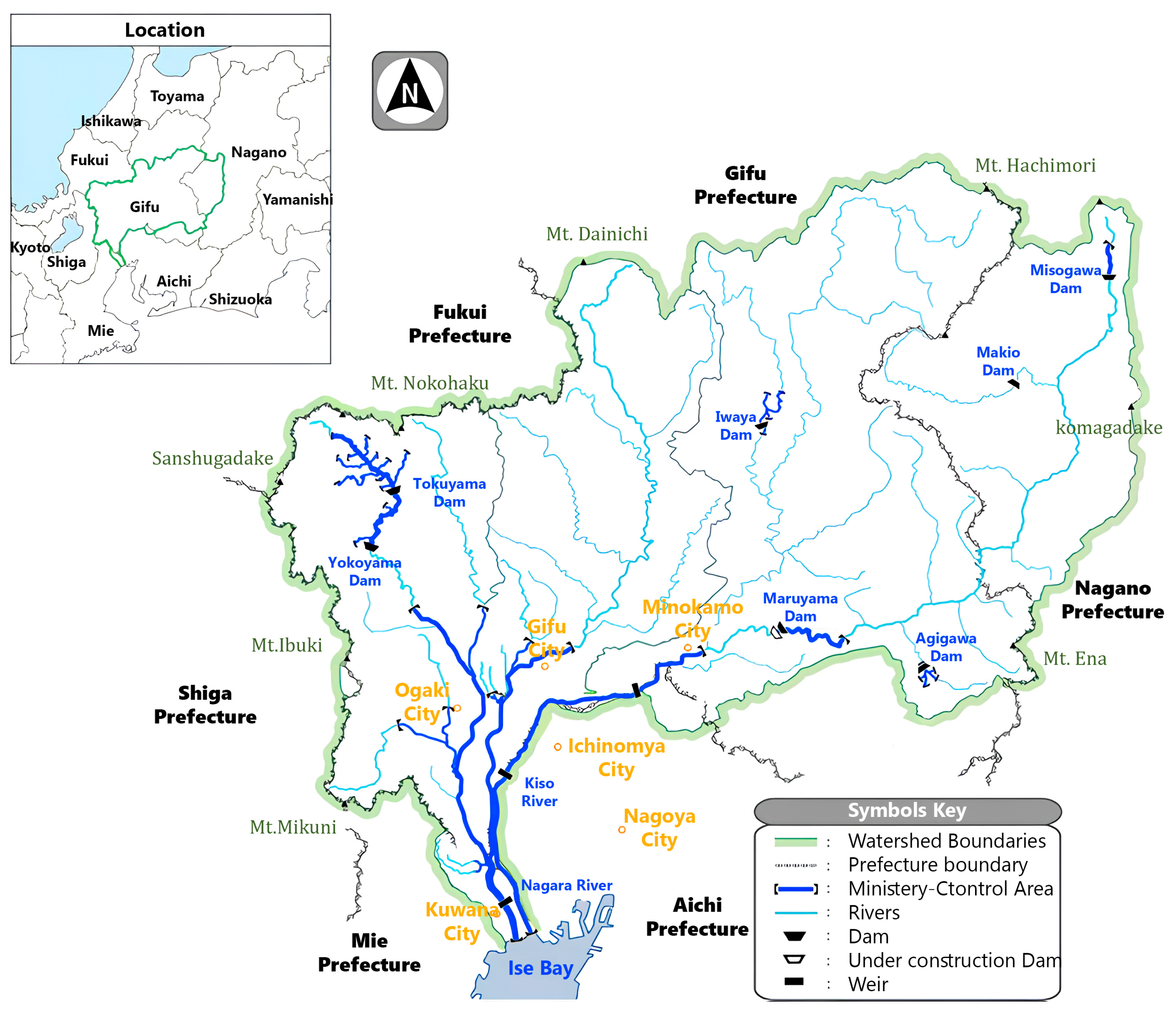
2. Study Area and Data Description
Preprocessing of Data
3. Bayesian Network (BN)
3.1. Data Preparation and Discretization
3.1.1. Hydrological and Climatic Data
Rainfall (mm/hour)
River Flow (m)
Air Temperature (°C)
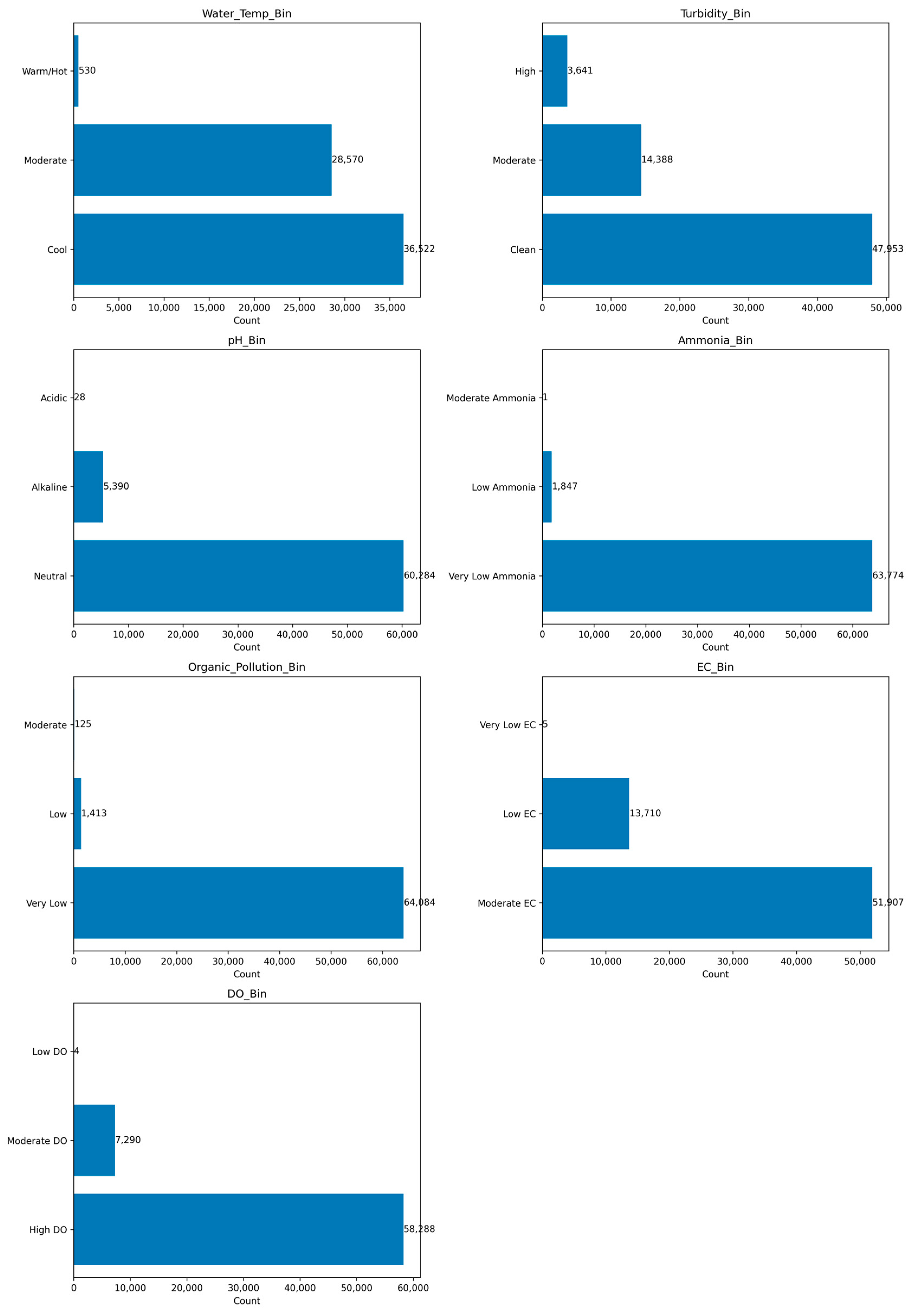
3.1.2. Water Quality Data
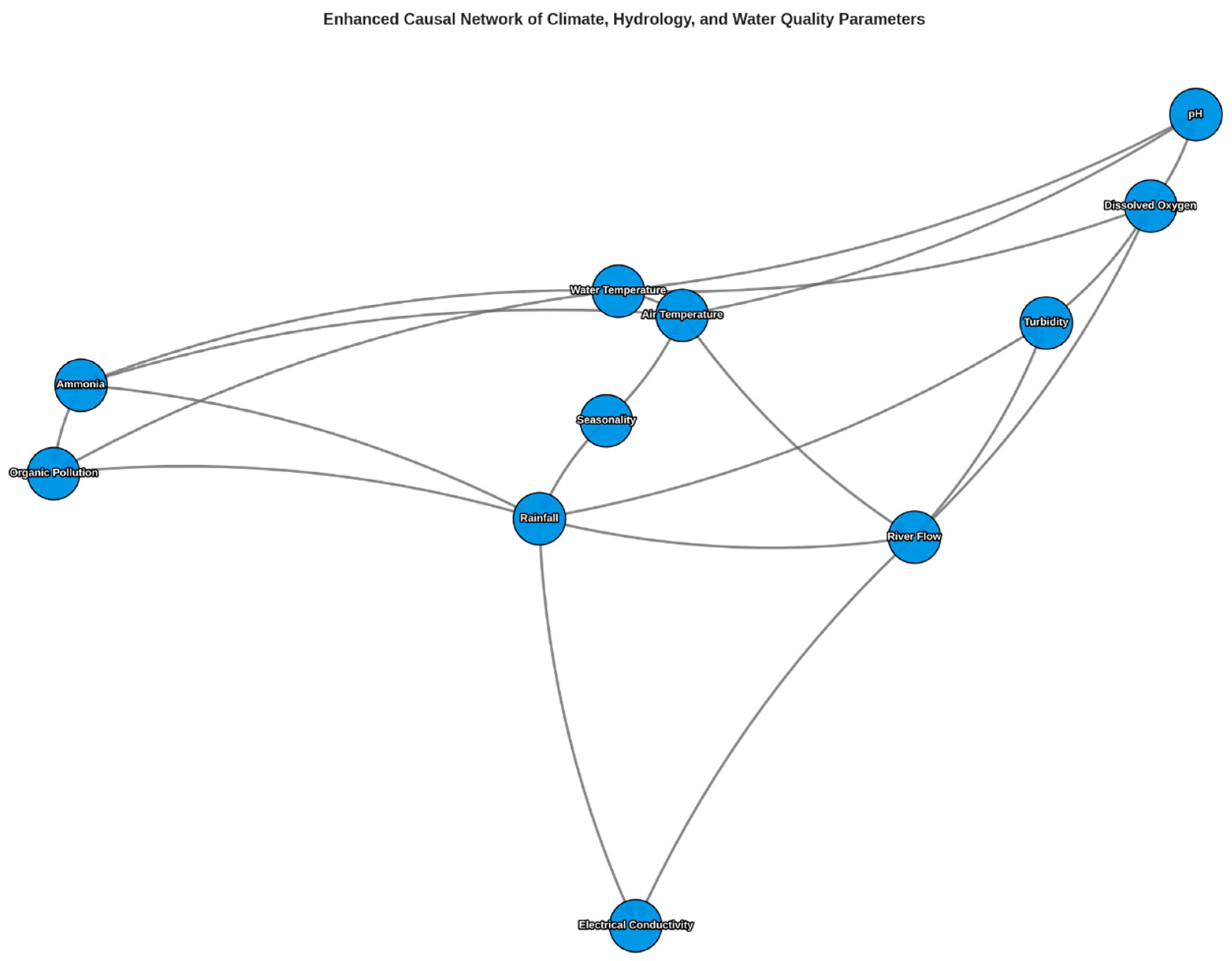
3.2. BN Structure and Causal Relationships
3.3. Parameter Learning Using Maximum Likelihood Estimation (MLE)
3.4. Assessment of Temporal Lag Effects
3.5. Validation
4. Results and Discussion
4.1. Parameter Learning Results
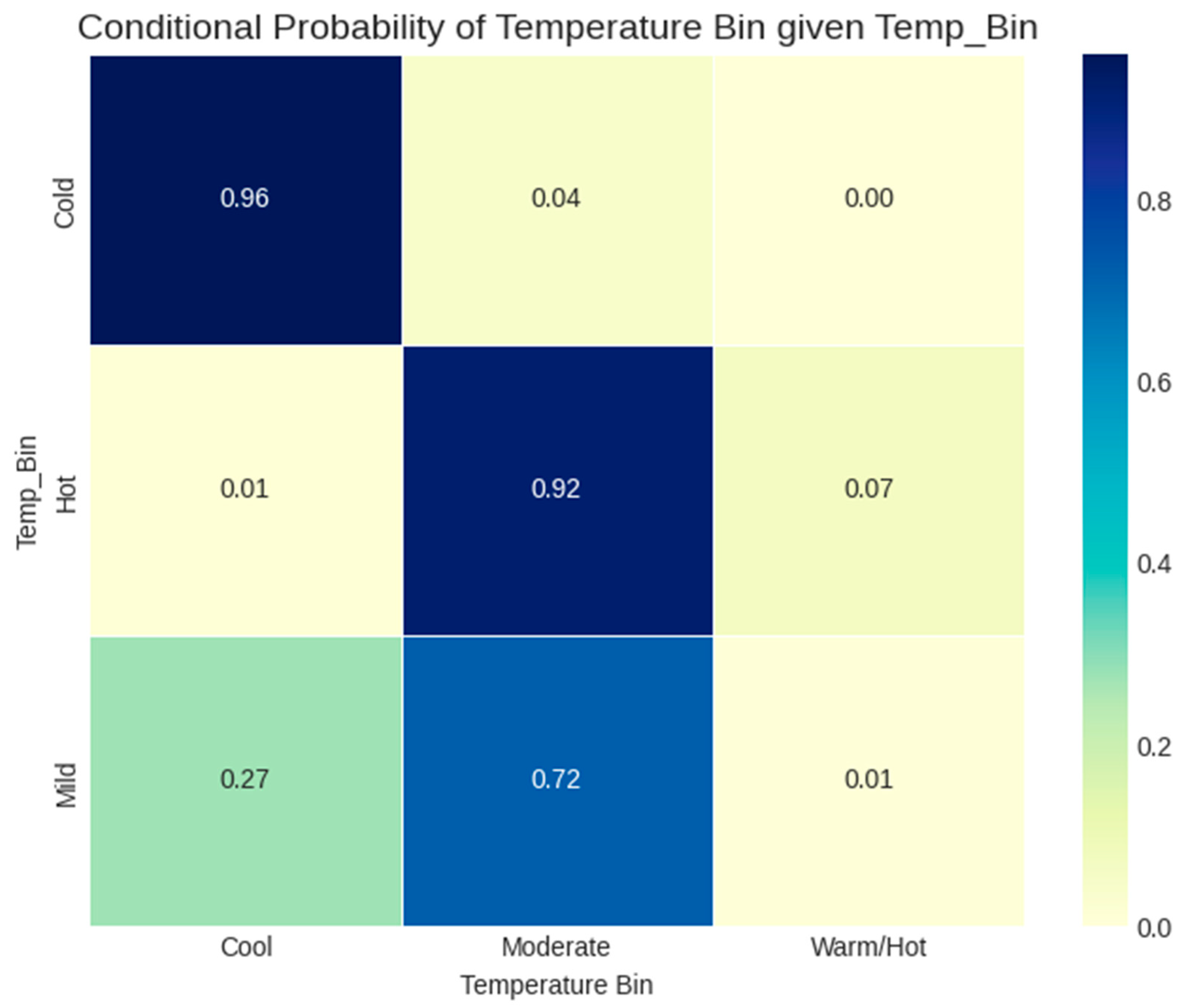
- Air Temperature Influence on Water Temperature
- 2.
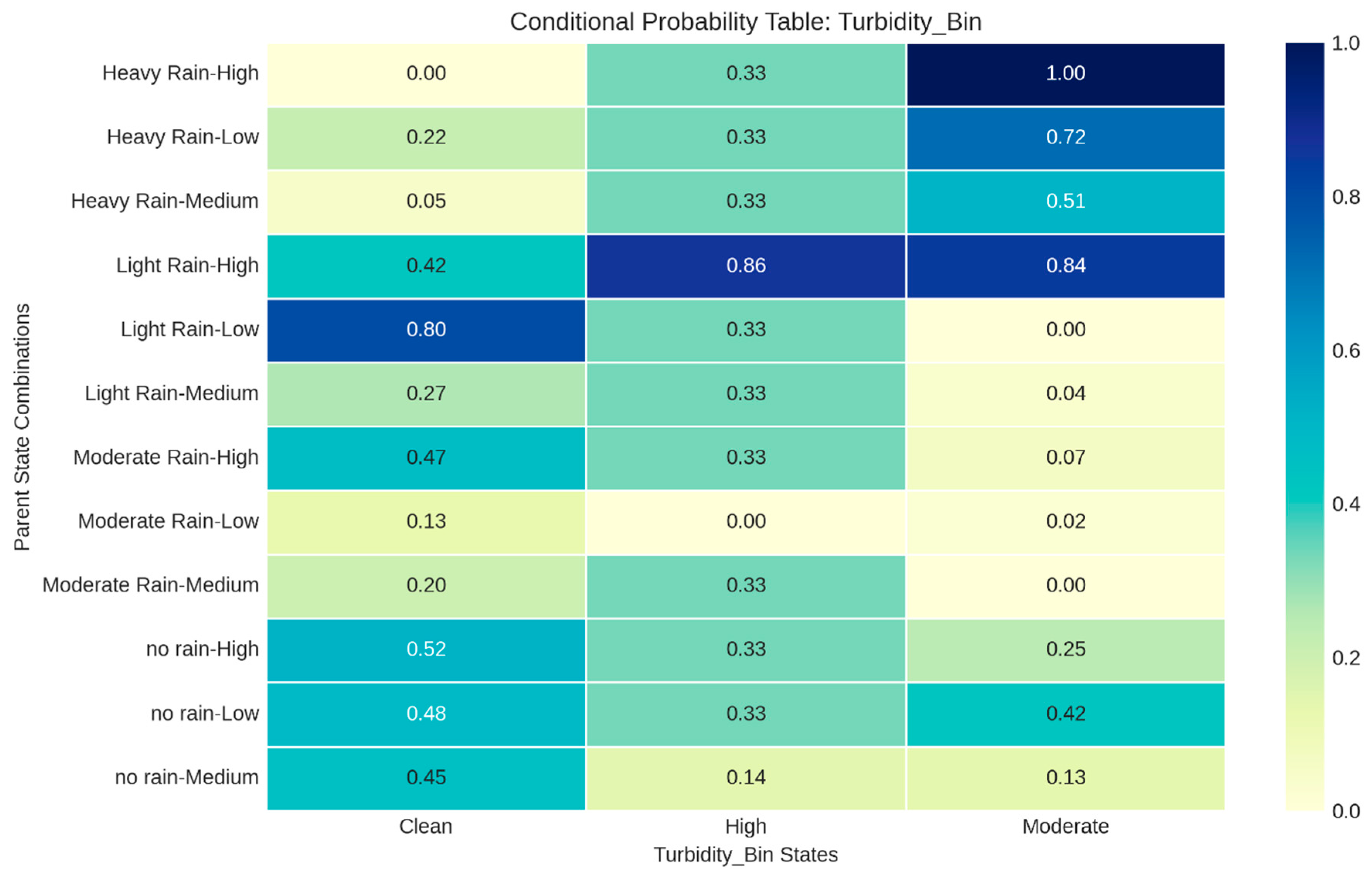
- Rainfall and River Flow Impact on Turbidity
- 3.
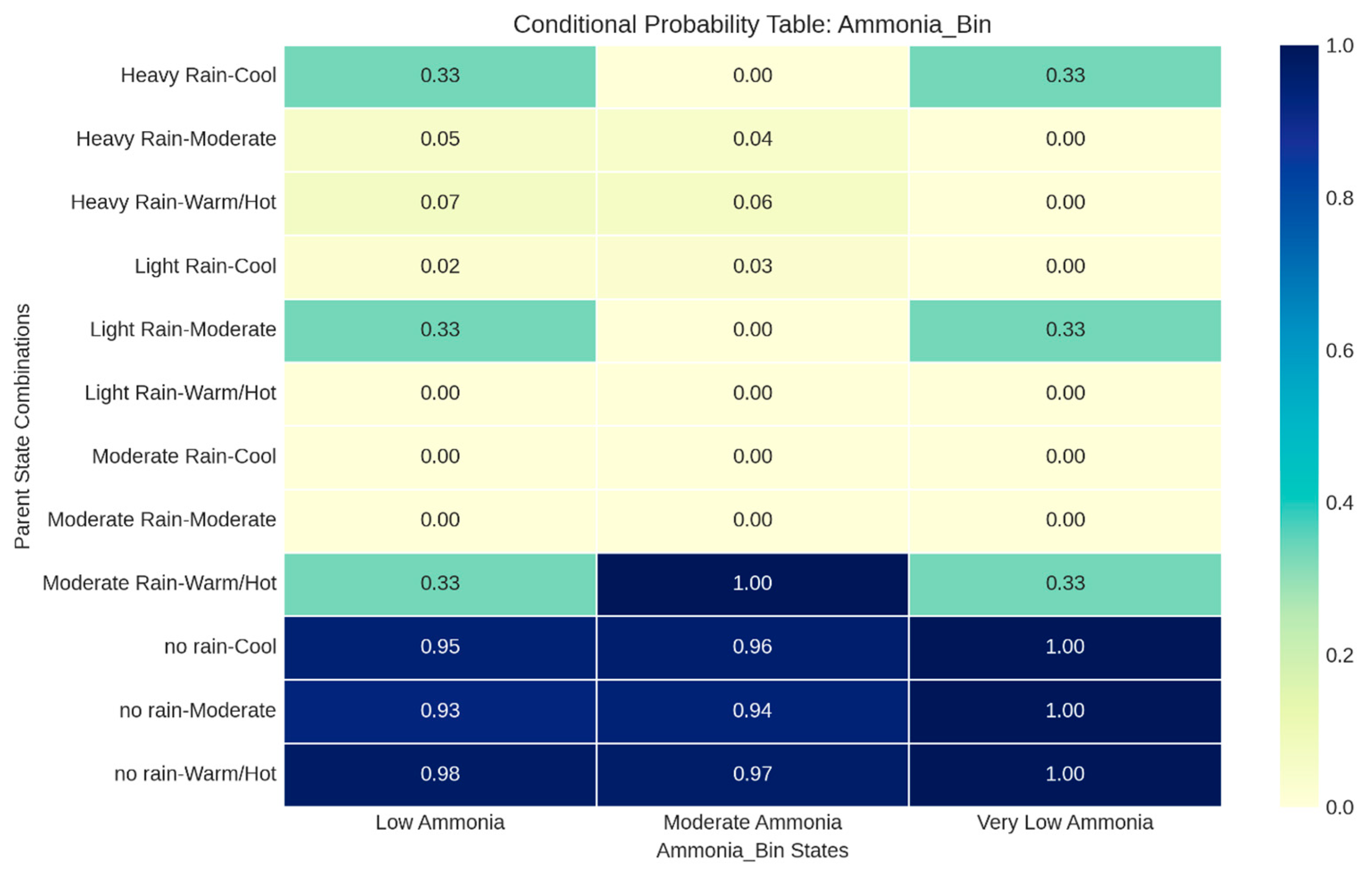
- Rainfall and Temperature Effects on Ammonia Levels
- 4.
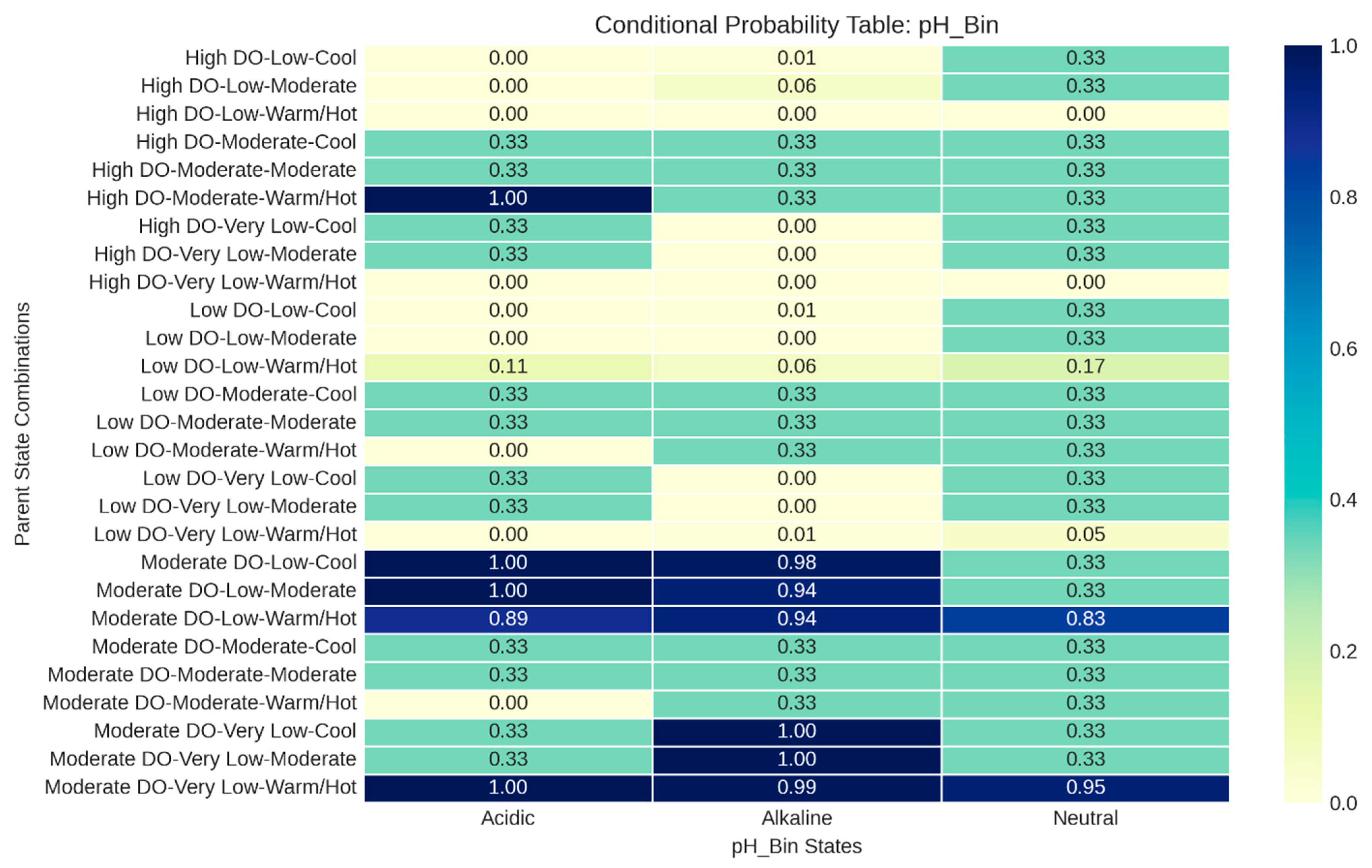
- Dissolved Oxygen, Organic Pollution, and Temperature Influence on pH
- 5.
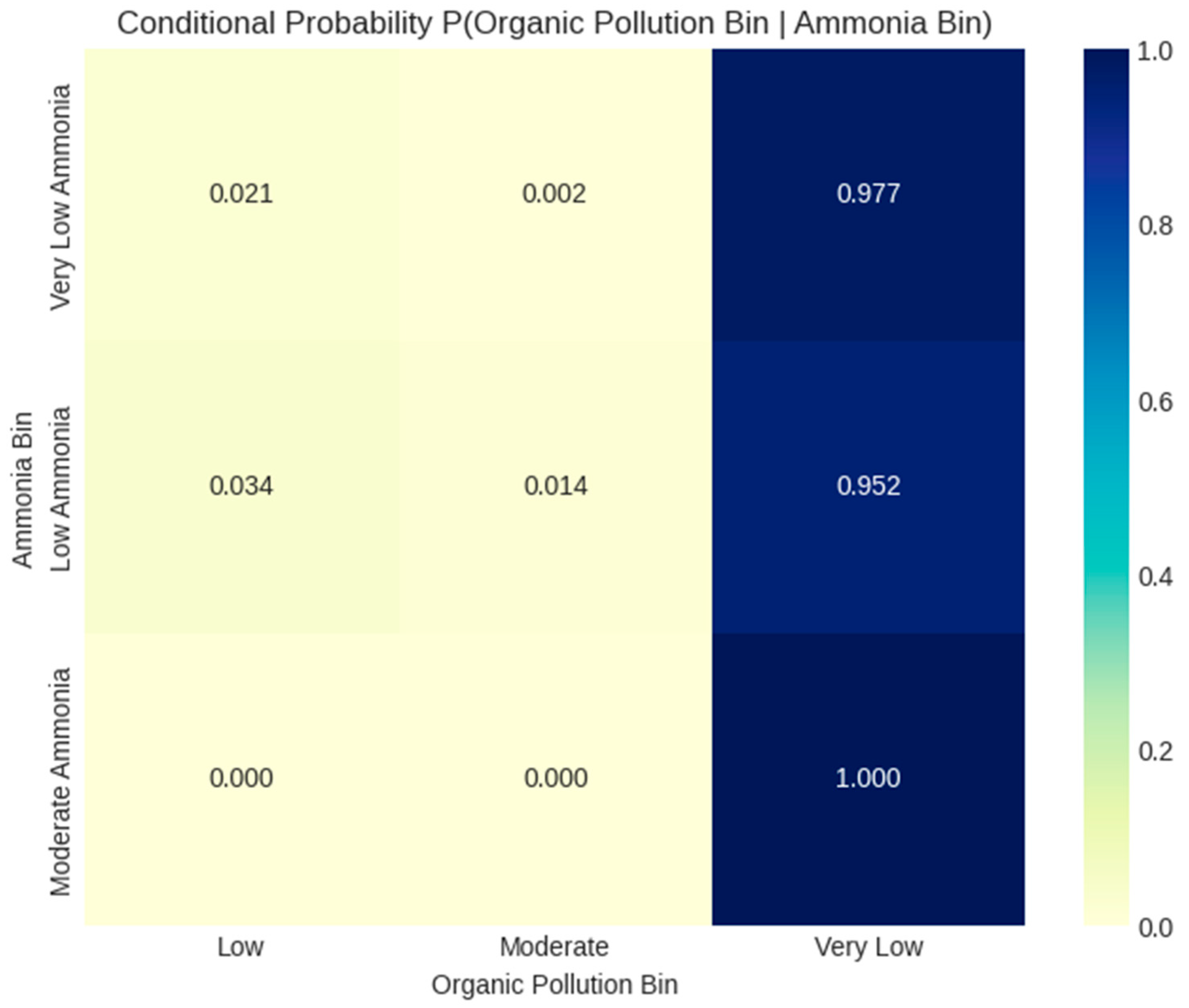
- Ammonia Contribution to Organic Pollution
- 6.
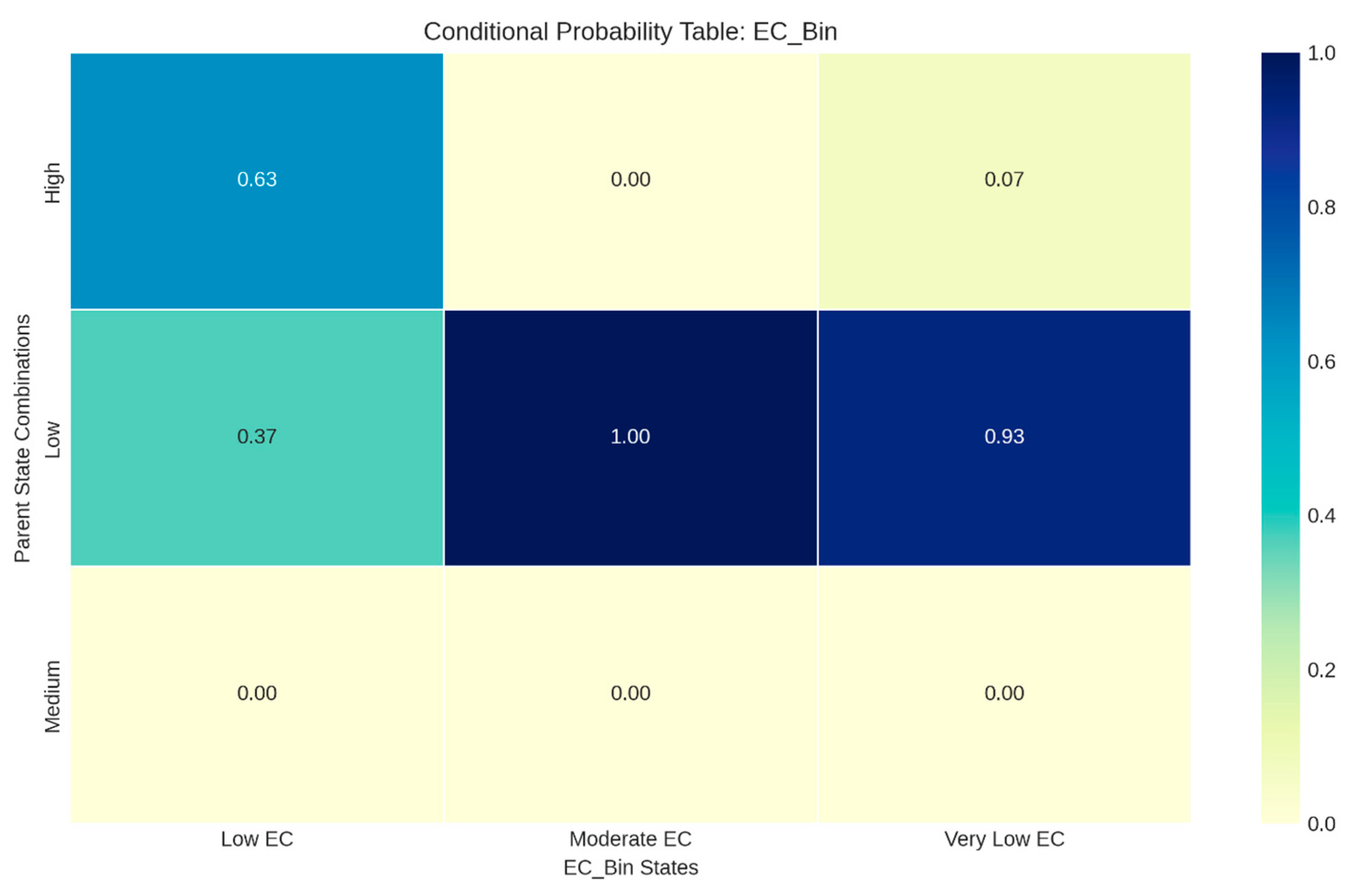
- River flow Effects on EC
- 7.
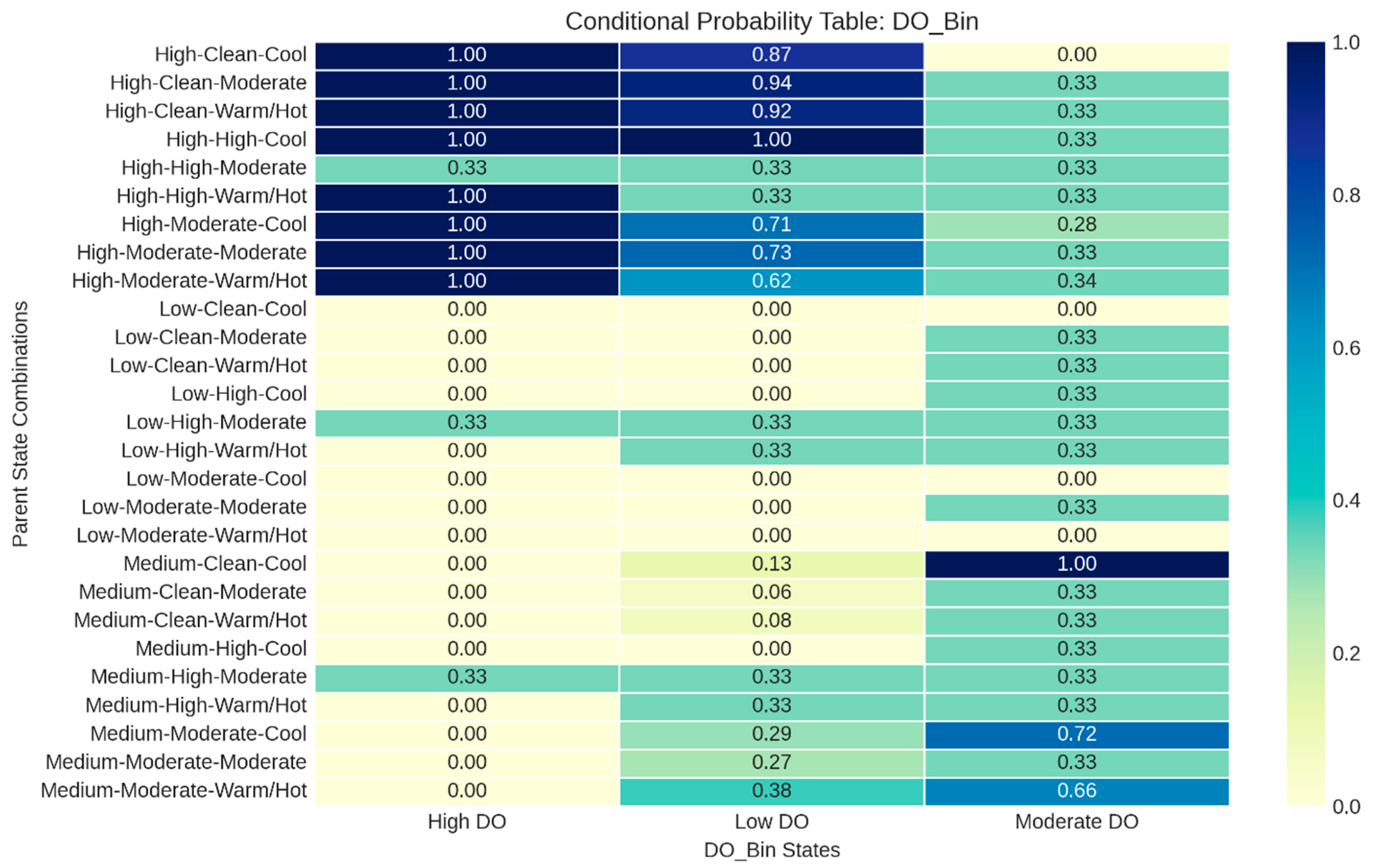
- Influence of River Flow, Turbidity, and Temperature on Dissolved Oxygen
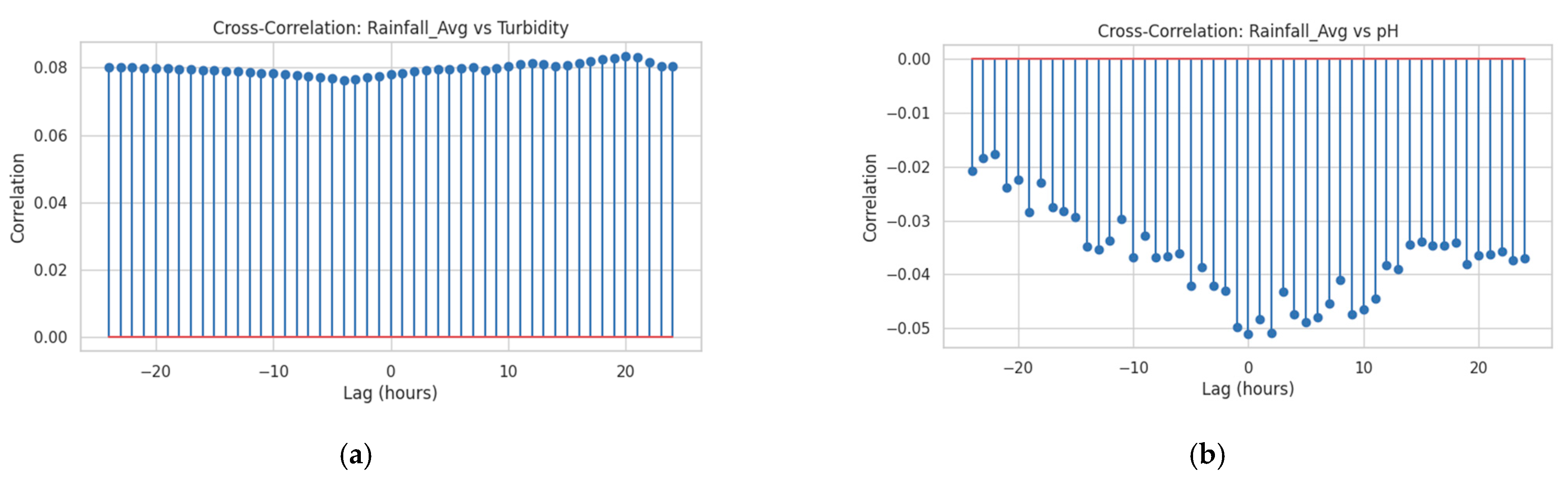
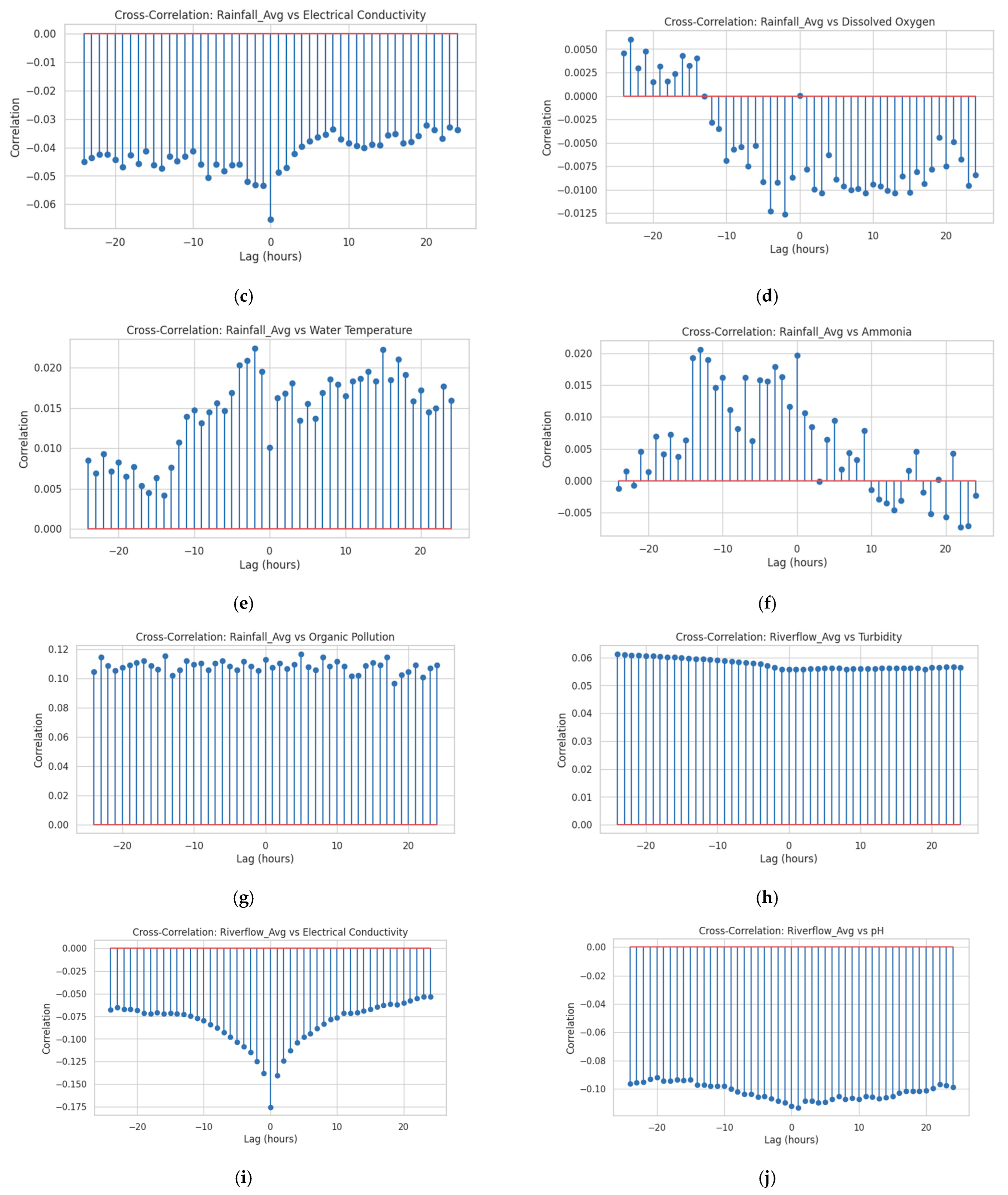
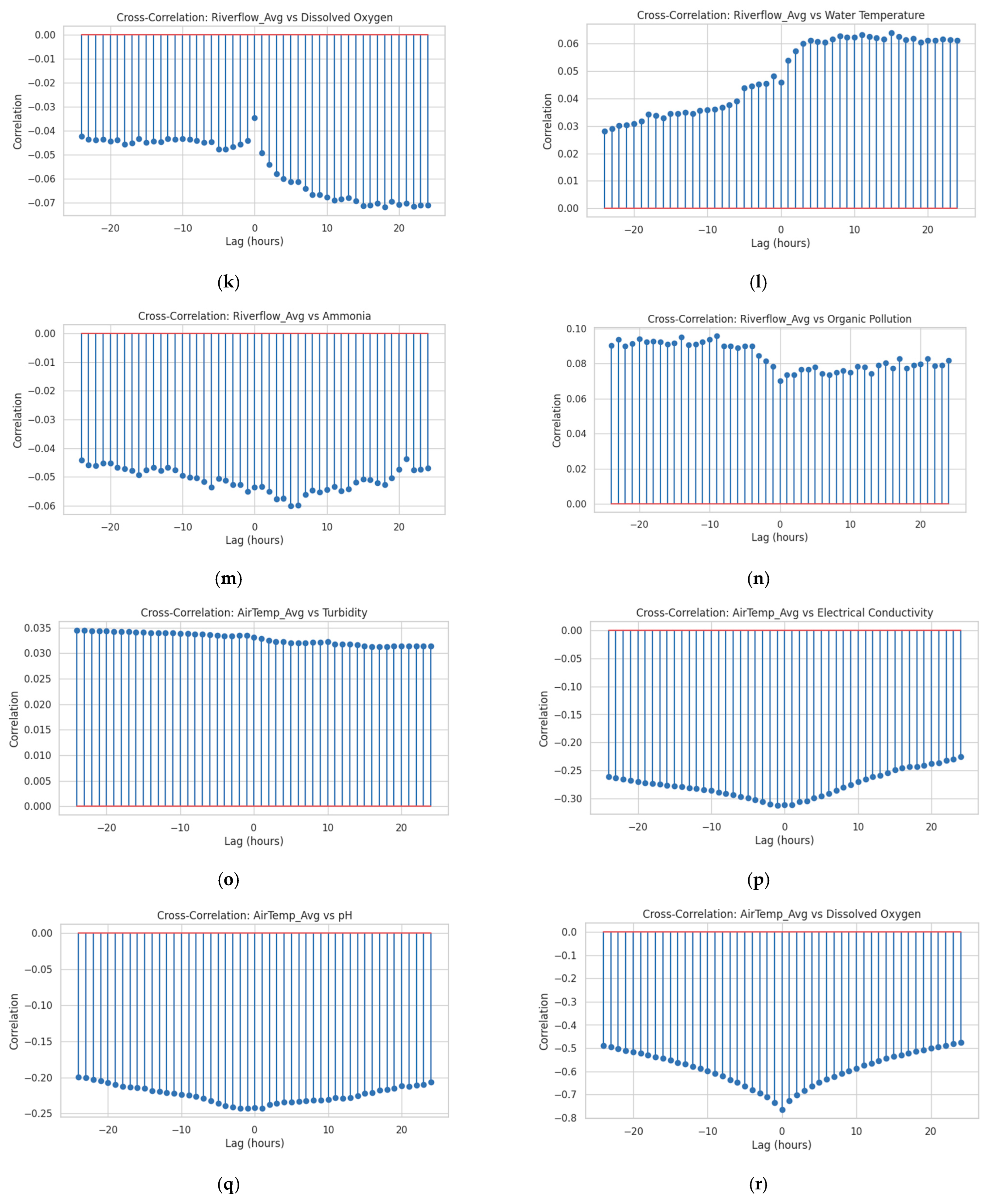
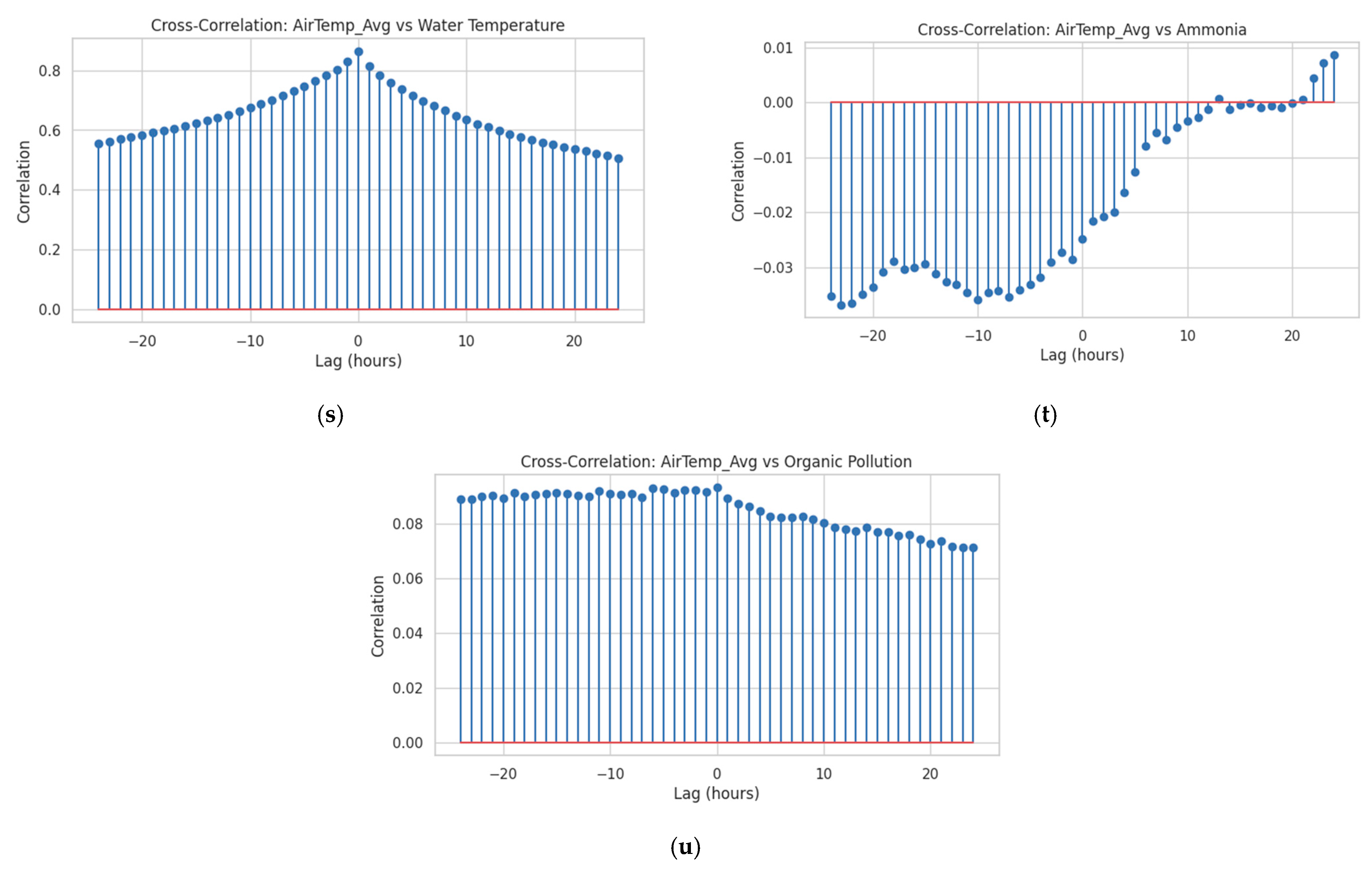
4.2. Short-Term Responses and Lag Effects
4.3. Model Validation
4.4. Recommendations and Policy Interventions
- Season-specific water temperature monitoring should be established during transitional seasons to overcome the variability in air temperature changes.
- Application of sustainable agriculture, reforestation, and robust land-use strategies is necessary to reduce sediment erosion during heavy precipitation events.
- Improving monitoring practices for ammonia and organic pollution during cold and wet conditions is warranted.
- Real-time water quality monitoring, such as IoT-based sensors, can be used for early detection of high levels of ammonia and changes in dissolved oxygen.
5. Conclusions
Author Contributions
Funding
Data Availability Statement
Conflicts of Interest
References
- Liu, C.; Hu, Y.; Sun, F.; Ma, L.; Wang, W.; Luo, B.; Wang, Y.; Zhang, H. Quantitative Analysis of the Driving Factors of Water Quality Variations in the Minjiang River in Southwestern China. Water 2023, 15, 3299. [Google Scholar] [CrossRef]
- Mummidivarapu, S.K.; Rehana, S.; Rao, Y.R.S. Mapping and assessment of river water quality under varying hydro-climatic and pollution scenarios by integrating QUAL2K, GEFC, and GIS. Environ. Res. 2023, 239, 117250. [Google Scholar] [CrossRef]
- Wan, L.; Wang, X.H.; Peirson, W. Impacts of Climate Change and Non-Point-Source Pollution on Water Quality and Algal Blooms in the Shoalhaven River Estuary, NSW, Australia. Water 2022, 14, 1914. [Google Scholar] [CrossRef]
- Schaffer-Smith, D.; DeMeester, J.E.; Tong, D.; Myint, S.W.; Libera, D.A.; Muenich, R.L. Landscape Pollution Source Dynamics Highlight Priority Locations for Basin-Scale Interventions to Protect Water Quality Under Hydroclimatic Variability. Earths Future 2023, 11, e2022EF003137. [Google Scholar] [CrossRef]
- Bastaraud, A.; Perthamei, E.; Rakotondramangai, J.M.; Mahazosaotra, J.; Ravaonindrina, N.; Jambouid, R. The impact of rainfall on drinking water quality in Antananarivo, Madagascar. PLoS ONE 2020, 15, e0218698. [Google Scholar] [CrossRef] [PubMed]
- Ye, H.; Yang, D.; Zhang, T.; Zhang, X.; Ladochy, S.; Ellison, M. The Impact of Climatic Conditions on Seasonal River Discharges in Siberia. J. Hydrometeorol. 2004, 5, 286–295. [Google Scholar] [CrossRef][Green Version]
- Salila, E.; Sharma, M.P.; Singh, R. Climate Change Impacts on Water Quality of Water Bodies-A Review. Int. J. Environ. Clim. Change 2020, 10, 26–37. [Google Scholar] [CrossRef]
- Surendra, P.; Saurabh, A.H. Impact Analysis of Urbanization and Industrialization on Water Quality of Vrishabhavathi River. Geogr. Anal. 2021, 10, 45–51. [Google Scholar] [CrossRef]
- Yang, X.; Tan, L.; He, R.; Fu, G.; Ye, J.; Liu, Q.; Wang, G. Stochastic sensitivity analysis of nitrogen pollution to climate change in a river basin with complex pollution sources. Environ. Sci. Pollut. Res. 2017, 24, 26545–26561. [Google Scholar] [CrossRef]
- Huang, J.; Huang, Y.; Zhang, Z. Coupled effects of natural and anthropogenic controls on seasonal and spatial variations of river water quality during baseflow in a coastal watershed of Southeast China. PLoS ONE 2014, 9, e91528. [Google Scholar] [CrossRef]
- Saranathan, A.M.; Werther, M.; Balasubramanian, S.V.; Odermatt, D.; Pahlevan, N. Assessment of advanced neural networks for the dual estimation of water quality indicators and their uncertainties. Front. Remote Sens. 2024, 5, 1383147. [Google Scholar] [CrossRef]
- Fonseca, A.; Botelho, C.; Boaventura, R.A.R.; Vilar, V.J.P. Evaluating the Effects of Parameter Uncertainty on River Water Quality Predictions. Resources 2024, 13, 106. [Google Scholar] [CrossRef]
- Zhang, C.; Nong, X.; Behzadian, K.; Campos, L.C.; Chen, L.; Shao, D. A new framework for water quality forecasting coupling causal inference, time-frequency analysis and uncertainty quantification. J. Environ. Manag. 2024, 350, 119613. [Google Scholar] [CrossRef]
- Roostaee, M.; Deng, Z. HSPF-based watershed-scale water quality modeling and uncertainty analysis. Environ. Sci. Pollut. Res. 2019, 26, 8971–8991. [Google Scholar] [CrossRef]
- Chawishborwornworng, C.; Luanwuthi, S.; Umpuch, C.; Puchongkawarin, C. Bootstrap approach for quantifying the uncertainty in modeling of the water quality index using principal component analysis and artificial intelligence. J. Saudi Soc. Agric. Sci. 2024, 23, 17–33. [Google Scholar] [CrossRef]
- Zheng, Y.; Han, F. Markov Chain Monte Carlo (MCMC) uncertainty analysis for watershed water quality modeling and management. Stoch. Environ. Res. Risk Assess. 2016, 30, 293–308. [Google Scholar] [CrossRef]
- Yan, X.; Lu, W.; An, Y.; Chang, Z. Uncertainty analysis of parameters in non-point source pollution simulation: Case study of the application of the Soil and Water Assessment Tool model to Yitong River watershed in northeast China. Water Environ. J. 2019, 33, 390–400. [Google Scholar] [CrossRef]
- Li, R.A.; McDonald, J.A.; Sathasivan, A.; Khan, S.J. A multivariate Bayesian network analysis of water quality factors influencing trihalomethanes formation in drinking water distribution systems. Water Res. 2021, 190, 116712. [Google Scholar] [CrossRef]
- Wei, Z.; Alam, S.; Verma, M.; Hilderbran, M.; Wu, Y.; Anderson, B.; Ho, D.E.; Suckale, J. Integrating water quality data with a Bayesian network model to improve spatial and temporal phosphorus attribution: Application to the Maumee River Basin. J. Environ. Manag. 2024, 360, 121120. [Google Scholar] [CrossRef]
- Vogel, K.; Riggelsen, C.; Korup, O.; Scherbaum, F. Bayesian network learning for natural hazard analyses. Nat. Hazards Earth Syst. Sci. 2014, 14, 2605–2626. [Google Scholar] [CrossRef]
- Scutari, M. Bayesian network models for incomplete and dynamic data. Stat. Neerl. 2020, 74, 397–419. [Google Scholar] [CrossRef]
- Krapu, C.; Stewart, R.; Rose, A. A Review of Bayesian Networks for Spatial Data. ACM Trans. Spat. Algorithms Syst. 2023, 9, 1–21. [Google Scholar] [CrossRef]
- Govender, I.H.; Sahlin, U.; O’Brien, G.C. Bayesian Network Applications for Sustainable Holistic Water Resources Management: Modeling Opportunities for South Africa. Risk Anal. 2022, 42, 1346–1364. [Google Scholar] [CrossRef] [PubMed]
- Marcot, B.G.; Penman, T.D. Advances in Bayesian network modelling: Integration of modelling technologies. Environ. Model. Softw. 2019, 111, 386–393. [Google Scholar] [CrossRef]
- Adams, K.J.; Macleod, C.A.J.; Metzger, M.J.; Melville, N.; Helliwell, R.C.; Pritchard, J.; Glendell, M. Developing a Bayesian network model for understanding river catchment resilience under future change scenarios. Hydrol. Earth Syst. Sci. 2023, 27, 2205–2225. [Google Scholar] [CrossRef]
- Phan, T.D.; Smart, J.C.R.; Stewart-Koster, B.; Sahin, O.; Hadwen, W.L.; Dinh, L.T.; Tahmasbian, I.; Capon, S.J. Applications of bayesian networks as decision support tools for water resource management under climate change and socio-economic stressors: A critical appraisal. Water 2019, 11, 2642. [Google Scholar] [CrossRef]
- Phan, T.D.; Sahin, O.; Smart, J.C.R. System Dynamics and Bayesian Network Models for Vulnerability and Adaptation Assessment of a Coastal Water Supply and Demand System. In Proceedings of the 8th International Congress on Environmental Modelling and Software (iEMSs 2016), Session D8: Innovative, Participatory and Integrated Modelling for Climate Change Assessments and Management, Toulouse, France, 11 July 2016. Available from BYU ScholarsArchive. [Google Scholar]
- Phan, T.D.; Smart, J.C.R.; Capon, S.J.; Hadwen, W.L.; Sahin, O. Applications of Bayesian belief networks in water resource management: A systematic review. Environ. Model. Softw. 2016, 85, 98–111. [Google Scholar] [CrossRef]
- Aguilera, P.A.; Fernández, A.; Fernández, R.; Rumí, R.; Salmerón, A. Bayesian networks in environmental modelling. Environ. Model. Softw. 2011, 26, 1376–1388. [Google Scholar] [CrossRef]
- Kaikkonen, L.; Parviainen, T.; Rahikainen, M.; Uusitalo, L.; Lehikoinen, A. Bayesian Networks in Environmental Risk Assessment: A Review. Integr. Environ. Assess. Manag. 2021, 17, 62–78. [Google Scholar] [CrossRef]
- Shi, P.; Yang, T.; Yong, B.; Xu, C.-Y.; Li, Z.; Wang, X.; Qin, Y.; Zhou, X. Some statistical inferences of parameter in MCMC approach and the application in uncertainty analysis of hydrological simulation. J. Hydrol. 2023, 617, 128767. [Google Scholar] [CrossRef]
- Jeremiah, E.; Sisson, S.; Marshall, L.; Mehrotra, R.; Sharma, A. Bayesian calibration and uncertainty analysis of hydrological models: A comparison of adaptive Metropolis and sequential Monte Carlo samplers. Water Resour. Res. 2011, 47, W07547. [Google Scholar] [CrossRef]
- Camacho, R.A.; Martin, J.L.; McAnally, W.; Díaz-Ramirez, J.; Rodriguez, H.; Sucsy, P.; Zhang, S. A Comparison of Bayesian Methods for Uncertainty Analysis in Hydraulic and Hydrodynamic Modeling. J. Am. Water Resour. Assoc. 2015, 51, 1372–1393. [Google Scholar] [CrossRef]
- Arhonditsis, G.B.; Perhar, G.; Zhang, W.; Massos, E.; Shi, M.; Das, A. Addressing equifinality and uncertainty in eutrophication models. Water Resour. Res. 2008, 44, W01420. [Google Scholar] [CrossRef]
- Tan, J.; Cao, J.; Cui, Y.; Duan, Q.; Gong, W. Comparison of the generalized likelihood uncertainty estimation and markov chain monte carlo methods for uncertainty analysis of the oryza_v3 model. Agron. J. 2019, 111, 555–564. [Google Scholar] [CrossRef]
- Sun, X.Y.; Newham, L.T.H.; Croke, B.F.W.; Norton, J.P. Three complementary methods for sensitivity analysis of a water quality model. Environ. Model. Softw. 2012, 37, 19–29. [Google Scholar] [CrossRef]
- Hirsch, R.M.; Archfield, S.A.; De Cicco, L.A. A bootstrap method for estimating uncertainty of water quality trends. Environ. Model. Softw. 2015, 73, 148–166. [Google Scholar] [CrossRef]
- Allawi, M.F.; Salih, S.Q.; Kassim, M.; Ramal, M.M.; Mohammed, A.S.; Yaseen, Z.M. Application of Computational Model Based Probabilistic Neural Network for Surface Water Quality Prediction. Mathematics 2022, 10, 3960. [Google Scholar] [CrossRef]
- Zhang, X.; Zhao, K. Bayesian Neural Networks for Uncertainty Analysis of Hydrologic Modeling: A Comparison of Two Schemes. Water Resour. Manag. 2012, 26, 2365–2382. [Google Scholar] [CrossRef]
- Shrestha, S.; Kazama, F. Assessment of surface water quality using multivariate statistical techniques: A case study of the Fuji river basin, Japan. Environ. Model. Softw. 2007, 22, 464–475. [Google Scholar] [CrossRef]
- Ren, J.Y.; Liu, H.M.; Ding, S.Y.; Cao, Z.H. Spatio-Temporal Variation Characteristics of Water Quality and Its Response to Climate: A Case Study in Yihe River Basin. J. Environ. Inform. Lett. 2021, 6, 10–22. [Google Scholar] [CrossRef]
- Coletti, C.; Testezlaf, R.; Ribeiro, T.A.P.; De Souza, R.T.G.; Pereira, D.D.A. Water quality index using multivariate factorial analysis. Rev. Bras. Eng. Agricola Ambient. 2010, 14, 517–522. [Google Scholar] [CrossRef]
- Ankan, A.; Textor, J. pgmpy: A Python Toolkit for Bayesian Networks. J. Mach. Learn. Res. 2024, 25, 1–8. [Google Scholar]
- Ministry of the Environment, Japan. Environmental Quality Standards for Water Pollution. n.d. Available online: https://www.env.go.jp/kijun/index.html (accessed on 30 June 2025).
- Beuzen, T.; Marshall, L.; Splinter, K.D. A comparison of methods for discretizing continuous variables in Bayesian Networks. Environ. Model. Softw. 2018, 108, 61–66. [Google Scholar] [CrossRef]
- Blåfield, L.; Marttila, H.; Kasvi, E.; Alho, P. Temporal shift of hydroclimatic regime and its influence on migration of a high latitude meandering river. J. Hydrol. 2024, 633, 130935. [Google Scholar] [CrossRef]
- Srinivas, R.; Singh, A.P.; Dhadse, K.; Magner, J. Hydroclimatic river discharge and seasonal trends assessment model using an advanced spatio-temporal model. Stoch. Environ. Res. Risk Assess. 2020, 34, 381–396. [Google Scholar] [CrossRef]
- Bolade, O.; Hansen, A.T. Inferring drivers of nitrate and sediment event dynamics from hysteresis metrics for two large agricultural watersheds. Hydrol. Process. 2023, 37, e14969. [Google Scholar] [CrossRef]
- Xiao, Y.; Zhang, C.; Zhang, T.; Luan, B.; Liu, J.; Zhou, Q.; Li, C.; Cheng, H. Transport processes of dissolved and particulate nitrogen and phosphorus over urban road surface during rainfall runoff. Sci. Total Environ. 2024, 948, 174905. [Google Scholar] [CrossRef]
- Huang, X.; Zhu, Y.; Lin, H.; She, D.; Li, P.; Lang, M.; Xia, Y. High-frequency monitoring during rainstorm events reveals nitrogen sources and transport in a rural catchment. J. Environ. Manag. 2024, 362, 121308. [Google Scholar] [CrossRef]
- Hu, J.; Ouyang, W.; Yang, Z. Impacts of extreme climate on nitrogen loss in different forms and pollution risk with the copula model. J. Hydrol. 2023, 620, 129412. [Google Scholar] [CrossRef]
- Wu, L.; Han, C.; Zhu, G.; Zhong, W.; Atomi, H. Responses of Active Ammonia Oxidizers and Nitrification Activity in Eutrophic Lake Sediments to Nitrogen and Temperature. Appl. Environ. Microbiol. 2019, 85, e00258-19. [Google Scholar] [CrossRef]
- Camargo, J.A.; Alonso, Á. Ecological and toxicological effects of inorganic nitrogen pollution in aquatic ecosystems: A global assessment. Environ. Int. 2006, 32, 831–849. [Google Scholar] [CrossRef]
- Nunes, P.; Roland, F.; Amado, A.M.; Resende Nda, S.; Cardoso, S.J. Responses of Phytoplanktonic Chlorophyll-a Composition to Inorganic Turbidity Caused by Mine Tailings. Front. Environ. Sci. 2022, 9, 605838. [Google Scholar] [CrossRef]
- Zhang, J.; Yue, K.; Liu, W. Learning and Inferences of the Bayesian Network with Maximum Likelihood Parameters; Springer: Berlin/Heidelberg, Germany, 2008. [Google Scholar]
- Xie, X.; Liu, Y.; Luo, Y.; Du, Q. Surface Water Quality Evaluation Based on Bayesian Network. J. Coast. Res. 2019, 93, 54–60. [Google Scholar] [CrossRef]
- Reijnen, C.; Gogou, E.; Visser, N.C.M.; Engerud, H.; Ramjith, J.; van der Putten, L.J.M.; van de Vijver, K.; Santacana, M.; Bronsert, P.; Bulten, J.; et al. Preoperative risk stratification in endometrial cancer (ENDORISK) by a Bayesian network model: A development and validation study. PLoS Med. 2020, 17, e1003111. [Google Scholar] [CrossRef] [PubMed]
- Tamiya, H. Four Seasons for Japan. In Proceedings of the General Meeting of the Association of Japanese Geographers; The Association of Japanese Geographers: Bunkyō, Japan, 2014; p. 67. [Google Scholar] [CrossRef]
- Takeda, M.; Kimura, I.; Matsuo, N.; Yamazaki, Y.; Fujita, A. Study on water temperature change and its numerical simulation model in kiso river Wando. Proc. Hydraul. Eng. 2002, 46, 1097–1102. [Google Scholar] [CrossRef][Green Version]
- Kaandorp, V.P.; Doornenbal, P.J.; Kooi, H.; Peter Broers, H.; de Louw, P.G.B. Temperature buffering by groundwater in ecologically valuable lowland streams under current and future climate conditions. J. Hydrol. X 2019, 3, 100031. [Google Scholar] [CrossRef]
- Onitsuka, K.; Yano, M.; Akiyama, J.; Nezu, I. Groundwater between adjacent rivers: Groundwater between Kiso and Nagara Rivers. J. Appl. Mech. 2004, 7, 929–936. [Google Scholar] [CrossRef][Green Version]
- Shirai, Y. Urbanization and land readjustment on the case of the lower basin of the Kiso river. Geogr. Rev. Jpn. 1967, 40, 66–86. [Google Scholar] [CrossRef]
- Rodríguez-Blanco, M.L.; Taboada-Castro, M.M.; Taboada-Castro, M.T. Suspended sediment dynamics during a period of consecutive explosive cyclogeneses in rural temperate catchments: A case study from small-sized catchments in NW Spain. Catena 2020, 187, 104316. [Google Scholar] [CrossRef]
- Wang, Y.; Dai, Q.; Ding, P.; Li, K.; Yi, X.; He, J.; Peng, X.; Yan, Y.; Zhao, M.; Yang, Y. Rapid Response of Runoff Carrying Nitrogen Loss to Extreme Rainfall in Gentle Slope Farmland in the Karst Area of SW China. Water 2022, 14, 3341. [Google Scholar] [CrossRef]
- Liu, J.; Li, T.; He, B.; Xi, P. Effects of quantitative fertilization and straw mulch on runoff nitrate- and ammonium-nitrogen losses under natural rainfall events in purple soil sloping croplands, Southwest China. Ecol. Eng. 2024, 201, 107196. [Google Scholar] [CrossRef]
- Berounsky, V.M.; Nixon, S.W. Temperature and annual cycle of nitrification in waters of Narragansett Bay. Limnol. Ocean. 1990, 35, 1610–1617. [Google Scholar] [CrossRef]
- Ylla, I.; Romaní, A.M.; Sabater, S. Labile and Recalcitrant Organic Matter Utilization by River Biofilm Under Increasing Water Temperature. Microb. Ecol. 2012, 64, 593–604. [Google Scholar] [CrossRef] [PubMed]
- Arango, C.P.; Beaulieu, J.J.; Fritz, K.M.; Hill, B.H.; Elonen, C.M.; Pennino, M.J.; Mayer, P.M.; Kaushal, S.S.; Balz, A.D. Urban infrastructure influences dissolved organic matter quality and bacterial metabolism in an urban stream network. Freshw. Biol. 2017, 62, 1917–1928. [Google Scholar] [CrossRef]
- Md Serajuddin, M.d.S.; Chowdhury, M.d.A.I.; Haque, M.d.M.; Khan, T.A. The Concentration of Organic & Ammonium Pollution and their Relationship in River Water: A Case Study. Sch. J. Eng. Technol. 2024, 12, 82–88. [Google Scholar] [CrossRef]
- Kurunc, A.; Yurekli, K.; Ozturk, F. Effect of Discharge Fluctuation on Water Quality Variables from the Yeşilırmak River. Tarım Bilim. Derg. 2005, 11, 189–195. [Google Scholar] [CrossRef][Green Version]
- Mano, H.; Iwasaki, Y.; Shinohara, N. Effect-based water quality assessment of rivers receiving discharges from legacy mines by using acute and chronic bioassays with two cladoceran species. Water Supply 2022, 22, 3603–3616. [Google Scholar] [CrossRef]
- Wei, W.; Han, Y.; Zhou, Y. Nutrients and sea surface temperature drive harmful algal blooms in China’s coastal waters over the past decades. Environ. Res. Lett. 2023, 18, 094068. [Google Scholar] [CrossRef]
- Ye, B.; Shu, H.; Cao, M.; Zeng, F.; Qiu, G.; Dong, J.; Zhang, W.; Shan, J. A Bayesian network method for quantitative evaluation of defects in multilayered structures from Eddy current NDT signals. Math. Probl. Eng. 2014, 2014, 405707. [Google Scholar] [CrossRef]


| Variable | Parameter | Unit | Source | Frequency |
|---|---|---|---|---|
| X1 | Rainfall | mm/hour | MLIT | Hourly |
| X2 | River Flow | m | MLIT | Hourly |
| X3 | Air Temperature | °C | JMA | Hourly |
| X4 | Water Temperature | °C | City of Nagoya Water and Sewerage Bureau | Hourly |
| X5 | Dissolved Oxygen (DO) | mg/L | City of Nagoya Water and Sewerage Bureau | Hourly |
| X6 | pH | – | City of Nagoya Water and Sewerage Bureau | Hourly |
| X7 | Electrical Conductivity (EC) | µS/cm | City of Nagoya Water and Sewerage Bureau | Hourly |
| X8 | Turbidity | NTU | City of Nagoya Water and Sewerage Bureau | Hourly |
| X9 | Ammonia (NH3–N) | mg/L | City of Nagoya Water and Sewerage Bureau | Hourly |
| X10 | Organic Pollution | mg/L | City of Nagoya Water and Sewerage Bureau | Hourly |
| Hourly Rainfall (mm/hour) | Category | Explanation |
|---|---|---|
| 0.0 | No Rain | No measurable precipitation. |
| >0 to ≤10 | Light Rain | Gentle rainfall, possibly including drizzle or intermittent rain. Not enough to cause flooding. |
| >10 to ≤30 | Moderate Rain | Rain strong enough to wet roads quickly and potentially impact visibility. |
| >30 | Heavy Rain | May cause localized flooding, especially in poor drainage areas. |
| Water Level (m) | Category | Note |
|---|---|---|
| <7.5 | Low | Typical river water level under normal conditions. |
| >7.5 to ≤10 | Medium | |
| >10 | High | Serious flood risk; evacuation orders are likely issued. |
| Air Temperature (°C) | Bins | Description |
|---|---|---|
| <15 °C | Cold | Typically observed during winter or early spring. Cooler conditions with reduced biological activity. |
| 15–25 °C | Moderate | Common in spring, autumn, and early summer. Comfortable temperatures, supporting stable ecosystems. |
| >25 °C | Warm/Hot | Seen during the summer months. Higher temperatures can increase evaporation and stress on water systems. |
| Parameter | Observed | Bins | Government Thresholds/Typical Values |
|---|---|---|---|
| pH | 4.0–8.14 | Acidic (<6.5) Neutral (6.5–7.5) Alkaline (>7.5) | 6.5–8.5 |
| Dissolved oxygen (DO) (mg/L) | 0.0–15.9 | Low (<4) Moderate (4–8) High (>8) | ≥7.5 mg/L |
| Electrical conductivity (µS/cm) | 0.0–117.3 | Very Low (<20) Low (20–50) Moderate (>50) | Typically, <300–500 µS/cm |
| Ammonia (NH3-N) (mg/L) | 0.0–0.03 | Very Low (<0.005) Low (0.005–0.02) Moderate (>0.02) | ≤0.02 mg/L |
| Turbidity (NTU) | 0.0–964.2 | Clear (≤5) Moderate (5–50) High (>50) | ≤5 NTU |
| Organic pollution (mg/L) | 0.0–0.5 | Very Low (≤0.1) Low (0.1–0.3) Moderate (>0.3) | Not explicitly regulated by the government threshold but divided based on actual data |
| Water temperature (°C) | 0.0–26.9 | Cold (<5) Cool (5–20) Warm (>20) | Seasonal range approx. 5–20 °C |
Disclaimer/Publisher’s Note: The statements, opinions and data contained in all publications are solely those of the individual author(s) and contributor(s) and not of MDPI and/or the editor(s). MDPI and/or the editor(s) disclaim responsibility for any injury to people or property resulting from any ideas, methods, instructions or products referred to in the content. |
© 2025 by the authors. Licensee MDPI, Basel, Switzerland. This article is an open access article distributed under the terms and conditions of the Creative Commons Attribution (CC BY) license (https://creativecommons.org/licenses/by/4.0/).
Share and Cite
Mohamed, O.; Hirayama, N. Bayesian Network Modeling for Risk-Based Water Quality Decisions with Sparse Data: Case Study of the Kiso River. Processes 2025, 13, 3636. https://doi.org/10.3390/pr13113636
Mohamed O, Hirayama N. Bayesian Network Modeling for Risk-Based Water Quality Decisions with Sparse Data: Case Study of the Kiso River. Processes. 2025; 13(11):3636. https://doi.org/10.3390/pr13113636
Chicago/Turabian StyleMohamed, Ola, and Nagahisa Hirayama. 2025. "Bayesian Network Modeling for Risk-Based Water Quality Decisions with Sparse Data: Case Study of the Kiso River" Processes 13, no. 11: 3636. https://doi.org/10.3390/pr13113636
APA StyleMohamed, O., & Hirayama, N. (2025). Bayesian Network Modeling for Risk-Based Water Quality Decisions with Sparse Data: Case Study of the Kiso River. Processes, 13(11), 3636. https://doi.org/10.3390/pr13113636