1. Introduction
In tunnel engineering, the ventilation system is the core for ensuring operational safety and environmental quality, and its performance is directly related to pollutant discharge efficiency, smoke extraction effectiveness during fires, and passenger comfort. Relevant research has long been a key focus in the industry, with existing achievements primarily concentrated in two directions: first, the design optimization under the independent action of mechanical wind (the current mainstream of research), which mostly centers on mechanical ventilation parameters—for instance, optimizing the spacing, angle, and power of jet fans by combining numerical simulation and on-site tests to enhance conveying efficiency. Additionally, phased achievements, such as the correction of fan characteristic parameters and the formulation of ventilation control standards, have been developed for scenarios including high-altitude tunnels, providing a reference basis for engineering design; second, the single-factor analysis of natural wind (which has also made certain progress). As a passive air flow within tunnels, natural wind is influenced by factors such as temperature differences between the inside and outside of tunnels, terrain slopes, and meteorological conditions. In medium- and short-distance tunnels, the steady-state flow characteristics of natural wind are relatively controllable, and some studies have attempted to utilize natural wind to improve air quality inside tunnels by adjusting tunnel cross-sectional forms and installing wind-shielding structures. However, with the advancement of tunnel construction toward ultra-long distances and complex geological conditions, the limitations of existing research have become increasingly prominent: on one hand, research on the “coupling effect of natural wind and mechanical wind” remains insufficient, as most studies analyze a single wind field in isolation without fully considering the interference and synergy between the two in ultra-long tunnels; on the other hand, research on the “unsteady characteristics” of natural wind in ultra-long tunnels (high-frequency fluctuations in wind speed and direction) is relatively weak. There is a lack of systematic understanding of the superposition effect and dynamic balance mechanism between this unsteady natural wind and mechanical wind, which leads to problems such as “excessive redundancy” (blindly increasing equipment to cope with extreme wind fields) or “insufficient regulation” (failure to adapt to dynamic changes in wind fields) in the actual design of ventilation systems.
In the field of conventional tunnel ventilation research, scholars have achieved a series of important developments. Based on traffic flow statistics and environmental monitoring of urban undersea tunnels, He X et al. [
1] proposed using the outdoor temperature one hour after the start of the evening peak (16:00–18:00) as the summer ventilation design benchmark. This method can reduce ventilation demand and energy consumption by more than 10%, effectively solving the time mismatch between traffic peaks and the traditional 14:00 design temperature. In full-scale ventilation measurements of the 1378-m-long Gdańsk Vistula River Tunnel, Małgorzata Król et al. [
2] systematically analyzed the interaction between natural air pressure and jet fans through 56 measuring points, and the results were cross-validated with tunnel toll system data, providing valuable insights for understanding the coupling effect between mechanical wind and natural wind. In research on ventilation system optimization methods, the combination of numerical simulation and experimental research has been widely applied. Through CFD simulation of long tunnel roadway ventilation, Yang S et al. [
3] found that jet fans form a main circulating airflow near the air intake tunnel; reasonably arranged ejector fans can eliminate wind walls formed by high-speed airflow in cross passages. Kaiyun Liu et al. [
4] confirmed through a scaled experimental model (1:50) that a systematic fan start-stop strategy can meet air volume requirements while controlling CO concentration within the standard range. Notably, Jiayun Sun et al. [
5] revealed the ventilation characteristics of multiple top exhaust outlets in tunnels with decentralized emission through CFD simulation, finding that outlet spacing determines air volume distribution—air exhaust volume increases downstream at small spacings (dominated by pressure surges) and decreases or even reverses to air intake at large spacings (dominated by along-distance losses). They also proposed an optimized staggered fan layout to minimize the maximum pollutant concentration. Significant progress has also been made in construction ventilation technology research. For high-altitude long tunnels, multiple studies have shown that optimizing ventilation parameters can significantly improve air quality. For example, Chen Feng et al. [
6] found that dust removal efficiency can be increased by up to 21.64% when the pressure duct wind speed is 22 m/s, placed 20 m from the working face, and with a guide fan installed at 170 m. Notably, in a high-altitude (3500 m) railway tunnel, Hui Wang et al. [
7] showed that two jet fans with a capacity of 2250 m
3/min can increase tunnel air pressure by 12.85 Pa, and pollutant airflow can be completely eliminated when the fan spacing is 350 m. These results provide important references for construction ventilation design of extra-long tunnels. Tu Huaiyu [
8] effectively compensated for the interference of mechanical wind on natural wind by optimizing the ventilation system design of extra-long tunnels. Field measurements showed that, after optimization, the carbon dioxide concentration in the tunnel decreased to 0.06% and dust was reduced by 62.5%, significantly improving the construction environment’s air quality and humidity conditions.
In ventilation theory research, several innovative achievements have emerged. Zhao D et al. [
9] analyzed the ventilation resistance characteristics of utility tunnels through a scaled experimental model, finding that pipeline layout has a significant impact on resistance coefficients. They established a fitting relationship between resistance coefficients, Reynolds numbers, and pipeline area ratios using polynomial regression (with an error < 10%). Xiaofeng Chen et al. [
10] proposed a modified Richardson number (Ri’) to define three flow patterns of fire smoke in inclined tunnels (unidirectional/transitional/bidirectional flow), revealing that the interaction between buoyancy and inertial forces dominates smoke movement. They also confirmed that slope and tunnel length synergistically affect ventilation speed, but height difference remains the decisive factor. These theoretical breakthroughs provide new analytical tools for ventilation system design. Important progress has also been made in research on ventilation safety under fire conditions. Nematollahi Sarvestani A et al. [
11] showed through theoretical models and numerical simulations that the reasonable arrangement of jet fans can prevent fatal smoke back-layering in the inlet section during fires. Shengzhong Zhao et al. [
12] analyzed smoke descent in naturally ventilated tunnel fires through theoretical models and numerical simulations, proposing the concept of critical time/distance. They found that smoke layer thickness increases along the tunnel length and is mainly affected by tunnel width (rather than heat release rate). Fengzhu Mei et al. [
13] showed through scaled tunnel fire experiments that a multi-point smoke exhaust system significantly affects smoke layer thickness and smoke entrainment. At a fixed heat release rate, the entrainment exhaust rate decreases with the increase in the number of exhaust outlets. These results provide a theoretical basis for fire ventilation design of extra-long tunnels. In terms of numerical calculation methods, CINGI P et al. [
14] proposed a finite volume integration numerical simulation method for one-dimensional mechanical energy and heat conservation equations in the pipeline network of the Mont Blanc Tunnel ventilation system. Jiang Xuepeng et al. [
15] studied the influence of natural wind speed and direction on the critical wind speed of jet fans, finding that natural wind has a significant impact on critical wind speed and that different wind directions have different effects. These methodological innovations provide new technical means for ventilation system simulation and analysis.
Recent studies have demonstrated significant advancements in tunnel fire ventilation control strategies, particularly in refined regulation under complex environmental factors. On the one hand, the latest research reveals that under pulsating environmental wind conditions, turbine ventilators (wind-driven roof extractors) in tunnels can effectively control fire smoke by improving exhaust efficiency, mitigating the suction effect, and inducing periodic fluctuations in the smoke plug-hole height [
16]. The theoretical model established based on this provides a critical foundation for the design and application of such natural ventilation systems. Meanwhile, in the field of mechanical ventilation, recent findings indicate that defining an optimal range of sub-critical ventilation velocities—which simultaneously controls smoke back-layering length and maintains stable smoke stratification—can optimize longitudinal ventilation strategies for occupant evacuation during the early stages of tunnel fires [
17]. These two studies, from the perspectives of natural ventilation and mechanical ventilation, respectively, deepen our understanding of smoke movement patterns in dynamic wind environments. Together, they offer important theoretical support and practical guidance for building safer and more efficient tunnel fire ventilation systems.
Against the above research background, this study is conducted for two core reasons: first, existing research on ventilation in extra-long tunnels is mostly limited to single-factor analysis of natural wind or mechanical wind, or simple coupling of these two factors. It lacks systematic explorations of the multi-factor coupling mechanisms involving traffic wind, structural factors (such as transverse passages), and other elements, and has an insufficient understanding of the “dynamic balance between energy efficiency and safety”, making it difficult to provide support for practical engineering. Second, the innovations of this study are reflected in three respects: establishing a multi-factor coupling research framework, clarifying the regulatory mechanism of structural factors on the flow field, and proposing a dynamic regulation strategy to address the challenge of balancing energy consumption and safety. In view of this, this study takes extra-long tunnels as the research object, explores the coupling characteristics of natural wind and mechanical wind through numerical simulation, reveals the evolution law of the flow field, and provides theoretical support for optimizing the ventilation system.
2. Flow Field Characteristics and Model Construction for the Coupling of Natural Wind and Mechanical Wind
2.1. Engineering Background and Tunnel Prototype Parameters
This study takes the Jinping Mountain Extra-long Tunnel as the research prototype; its ventilation system is designed to accommodate the complex regulation requirements of natural and mechanical winds, serving as a typical engineering carrier for exploring their coupling characteristics.
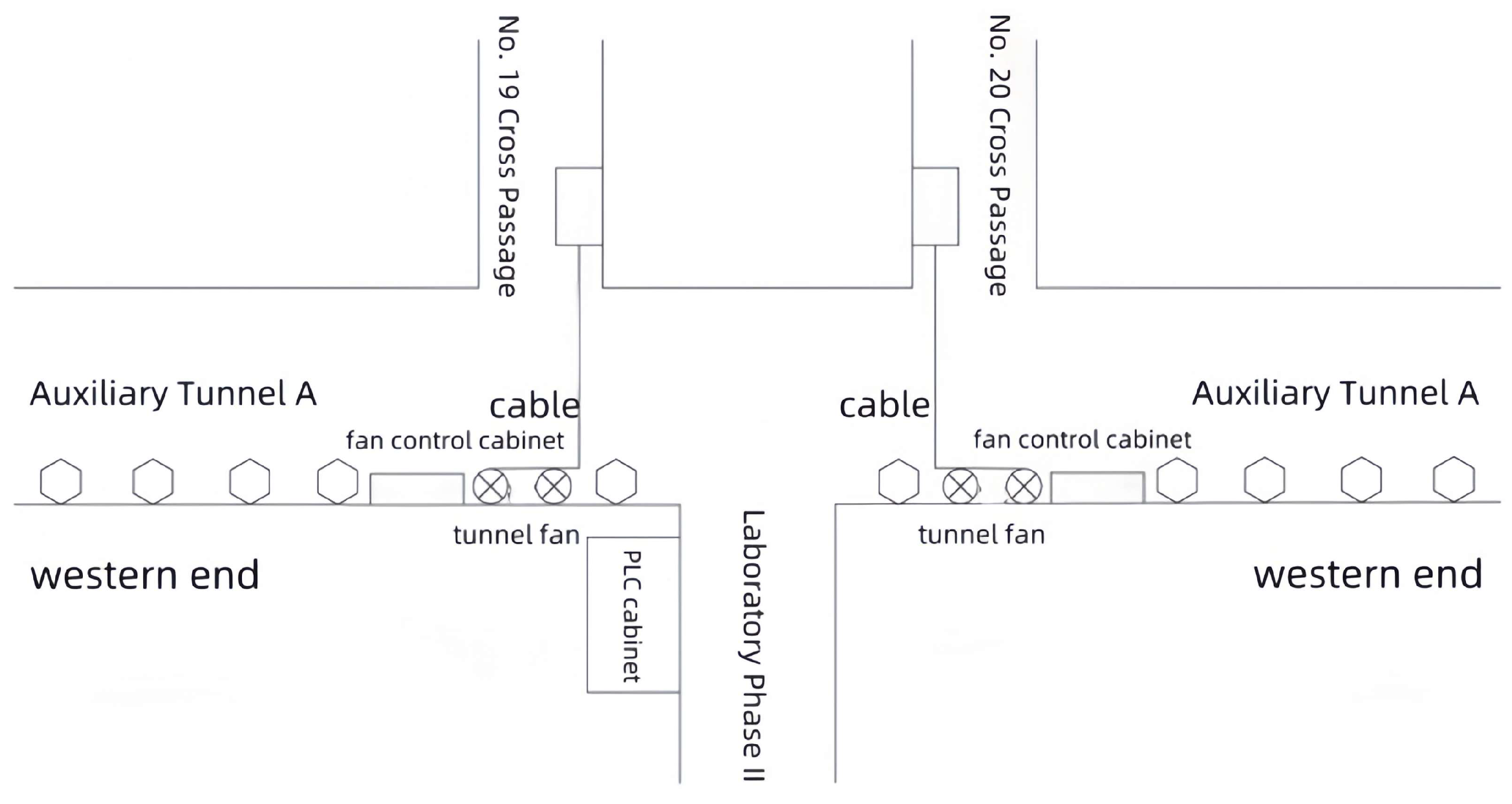
Transverse connecting passages are spaced at 500 m intervals between the two main tunnels (
Figure 1), with a net height of 5.71 m, a net width of 4.7 m, and a 40° oblique angle to the main tunnel axis. These passages act as “flow diversion outlets”: when natural and mechanical winds flow near the transverse passage, part of the airflow is diverted, creating eddy zones at the main tunnel–transverse passage junction due to sudden velocity changes and pressure redistribution. Such zones are key nodes for analyzing the fine characteristics of the coupled flow field.
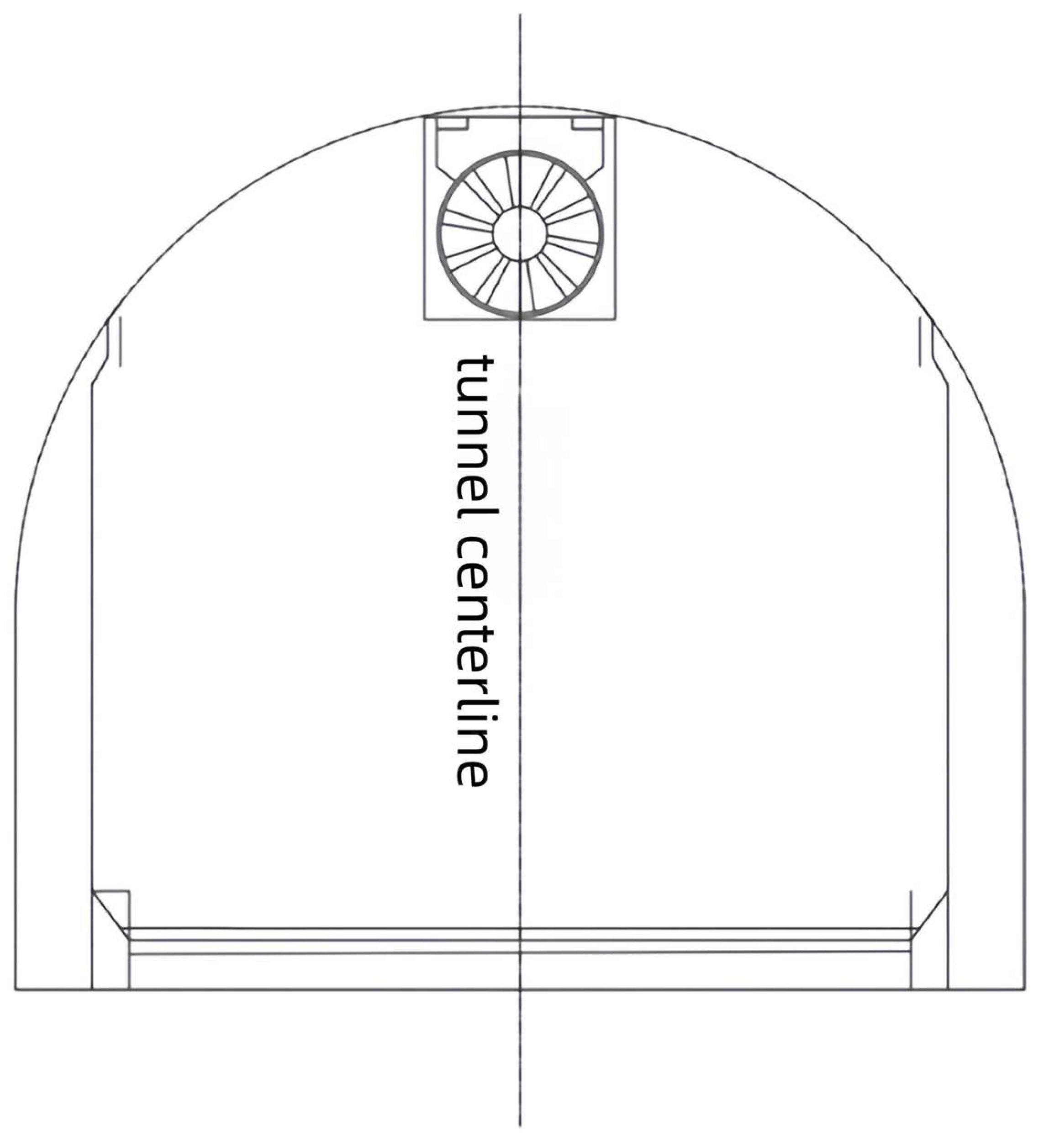
The north (Line B) and south (Line A) main tunnels exhibit significant dimensional differences (
Figure 2): the north tunnel has a net height of 6.25 m, a net width of 6.0 m, and a net cross-sectional area of 34.01 m
2; the south tunnel has a net height of 5.667 m, a net width of 5.5 m, and a net cross-sectional area of 28.60 m
2. The cross-sectional area difference shapes the coupled flow field via the “aerodynamic compression effect”—the small-cross-section south tunnel enhances mechanical wind kinetic energy through airflow compression, intensifying momentum exchange between natural and mechanical winds; the large-cross-section north tunnel features a more uniform flow field, with the coupling effect showing “weak disturbance and wide diffusion” characteristics.
The longitudinal section adopts a herringbone slope layout, with a maximum slope of 25%, a minimum of 2%, and an average of ~5.4%. Undulating slopes regulate natural wind flow via gravitational potential energy conversion: the “stack effect” accelerates airflow in downhill sections, while resistance decelerates it in uphill sections. Simultaneously, longitudinal slopes influence the attenuation rate of mechanical wind through a long-distance resistance distribution; attenuation is slower in downhill sections and intensified in uphill sections, making them a core topographic factor in the coupled flow field. Additionally, the absence of sidewalks reduces airflow obstacles, providing stable boundary conditions for capturing the essential characteristics of the coupled flow field.
2.2. Assumptions
The airflow inside tunnels is influenced by natural wind, mechanical wind, and environmental parameters, resulting in a complex flow field. To focus on the coupling laws of the two winds, this study simplifies the model to eliminate non-core interferences: only the two winds are taken as the flow field driving sources, excluding traffic wind and others; the tunnel interior is treated as a continuous computational domain, ignoring changes in temperature, humidity, and air pressure; air is defined as an incompressible fluid based on practical conditions to simplify calculations while ensuring accuracy. These assumptions lay the foundation for subsequent simulations of the coupled flow field.
2.3. Model Description
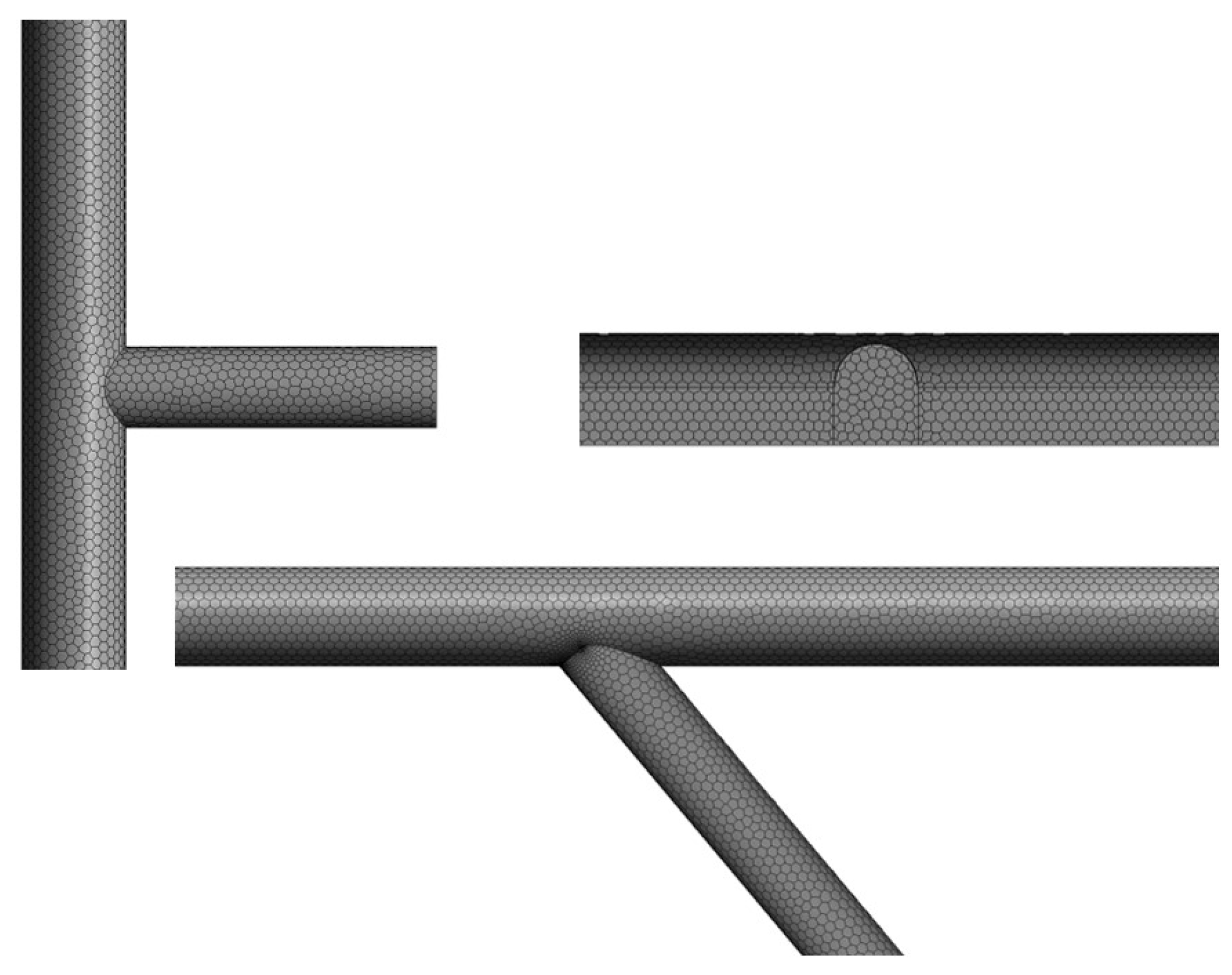
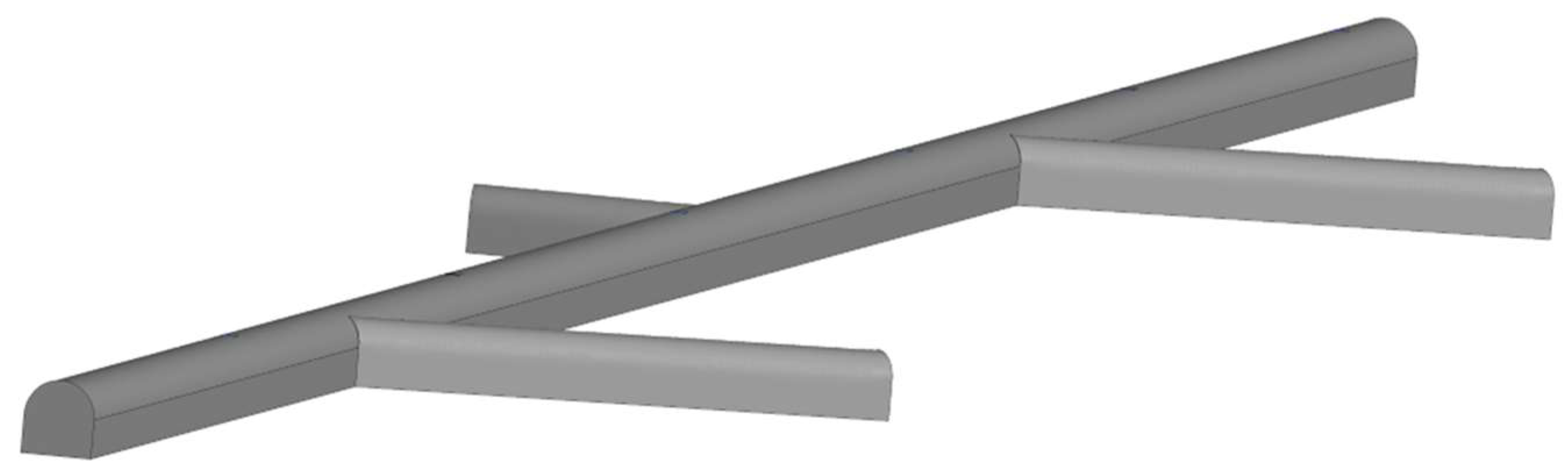
To intuitively present the structure of the tunnel model, a physical model is constructed at a 1:10 scale based on the Jinping Mountain Extra-long Tunnel (as shown in
Figure 3). The model shows the connection form of the main tunnel and transverse passages, clearly reproducing the spatial layout of the “main tunnel—transverse passage”. It provides an intuitive physical reference for subsequent mesh generation, boundary condition setting, and flow field analysis in numerical simulation.
The interference of natural wind and the compensation effect of mechanical wind in extra-long tunnels involve complex aerodynamic processes, including the superposition of natural wind turbulence, momentum transfer of mechanical wind jets, and flow field reconstruction at nodes such as transverse passages. Due to the high cost and uncontrollable environmental factors of on-site tests, it is difficult to fully reveal the compensation mechanism relying solely on field experiments. This study uses FLUENT2 software (v. 2020) for simulation; equipped with a comprehensive library of fluid physical models, it can efficiently and accurately capture the dynamic characteristics of the coupling between the two winds.
Among common turbulence simulation methods, the Reynolds-Averaged Navier-Stokes (RANS) model is selected for balancing computational accuracy and efficiency in engineering applications. After comparing RANS turbulence models in FLUENT and conducting preliminary simulations, this study adopts the standard k-ε two-equation model, which can effectively predict the turbulent characteristics of high-speed jets and momentum exchange between the two winds.
The flow field in the tunnel is governed by the time-averaged equations of the turbulence model, expressed in tensor form as follows.
Continuity equation:
where
is the fluid density, and
is the velocity vector of the fluid.
Momentum equation:
where
is the viscous shear stress, and
is the volumetric force.
Energy Conservation Equation:
where
is the specific heat capacity at constant pressure;
is the thermal conductivity of air;
is the viscous dissipation term.
To close the Reynolds stress term in the Reynolds-averaged momentum equation, this study adopts the widely used standard two-equation turbulence model in engineering. By solving the transport equations of turbulent kinetic energy () and its dissipation rate (), the model quantitatively describes the generation and dissipation processes of turbulent fluctuation energy in the tunnel. This model demonstrates good adaptability to typical tunnel ventilation scenarios, such as the turbulent development of high-speed jets from jet fans and the momentum exchange between natural and mechanical winds. The governing equations are as follows:
equation:
where
is the turbulent viscosity coefficient; The model constants are
,
,
,
, and
.
In this study, the computational domain is divided using unstructured grids. Both the main tunnel and the connection areas with transverse passages are constructed with mesh elements adapted to complex geometric configurations to accurately reproduce the spatial structure of the tunnel, with the specific distribution characteristics of the mesh shown in
Figure 4.
The spatial discretization of the momentum equation, continuity equation, and standard k-ε turbulence equation all employs the second-order upwind scheme, which ensures computational stability and accuracy while reducing numerical dissipation. The simulation mainly adopts steady-state calculation to analyze the evolution law of the coupled flow field under different natural wind speeds and fan outputs. Unsteady calculation is only enabled when analyzing the transient effect of traffic-induced wind caused by vehicle movement. In such cases, the first-order implicit Euler scheme is used for the time marching format, and the time step is dynamically adjusted based on the CFL condition to ensure computational convergence and the accuracy of capturing turbulent fluctuations.
2.4. Boundary Condition Settings for Tunnel Model
To accurately reproduce the coupled flow field characteristics of natural wind, traffic-induced wind, and mechanical wind in extra-long tunnels, this study, integrating engineering practice and the simplification principles of numerical simulation, sets the boundary conditions for key interfaces and core simulation parameters as follows. The specific parameter values are detailed in
Table 1.
The tunnel inlet adopts the velocity inlet boundary condition to simulate the inflow characteristics of natural wind. Referring to regional meteorological features and ventilation design conditions, inlet wind speed gradients of 0, 0.5, 1.0, 1.5, and 2.0 m/s are set to cover scenarios from calm wind to strong natural wind interference. The tunnel outlet and transverse passage outlets all use the pressure outlet boundary condition, with boundary pressure matching atmospheric pressure of 101.325 kPa to avoid interference of external airflow backflow on the internal tunnel flow field. The vehicle movement direction is consistent with the inlet natural wind direction, and the coupled dynamic grid and overset grid technology is used to simulate the forward coupling effect of traffic wind and natural wind, with reverse working conditions analyzable in extension.
The tunnel walls adopt the adiabatic no-slip wall boundary condition. Due to the high vehicle speed of 16.7 m/s, the impact of wall roughness on turbulent disturbance of the main flow field is negligible—as verified by preliminary sensitivity analysis, the impact ratio is less than 5%. Thus, the default wall material properties of the numerical software, equivalent to thermodynamic parameters of concrete, are used to ensure calculation accuracy while improving efficiency.
The fan outlet uses the velocity inlet boundary condition, with the maximum wind speed determined by the rated parameters of the fan at 32.6 m/s. To explore the attenuation law of mechanical wind compensation capacity, in the “natural wind-traffic wind-mechanical wind” coupled working conditions, fan efficiency gradients are set as 90% of the rated wind speed (29.3 m/s) and 80% (26.1 m/s) to simulate deterioration effects such as fan aging and blade dust accumulation.
This study takes the Jinpingshan Extra-Long Tunnel as the research prototype, with its core objective being to reveal the multi-factor coupling mechanism and analyze the evolution law of the longitudinal flow field. The tunnel is a closed structure, and the natural wind is mainly driven by the terrain pressure difference between the tunnel inlets and outlets. The wind speed distribution inside the tunnel cross-section is close to uniform, and there are no sidewalks to block the airflow, which further weakens the influence of the vertical wind speed gradient. Thus, the atmospheric boundary layer (ABL) profile is not a key controlling factor of the flow field. If the ABL profile were introduced, additional grid refinement and parameter calibration would be required, which would not only increase the computational load and reduce the simulation efficiency of multiple working conditions but also potentially interfere with the analysis of the core coupling relationship between the intensity of natural wind and the compensation effect of mechanical wind. This would be inconsistent with the model assumption of “focusing on core variables and simplifying unnecessary interferences”.
In existing similar studies focusing on the coupling of longitudinal flow fields, the uniform inlet velocity boundary condition is also widely adopted, which ensures the comparability of the conclusions of this study. Meanwhile, the preliminary sensitivity analysis has verified that neglecting the vertical wind speed gradient has a minimal impact on the accuracy of the main flow field. In conclusion, the adoption of the uniform inlet velocity boundary condition in this study is reasonable, as it can ensure the achievement of the research objectives and the accuracy of the simulation while taking into account the actual engineering conditions and computational efficiency.
3. Results of Numerical Analysis
3.1. Analysis of Tunnel Wind Speed Characteristics Under Natural Wind Conditions
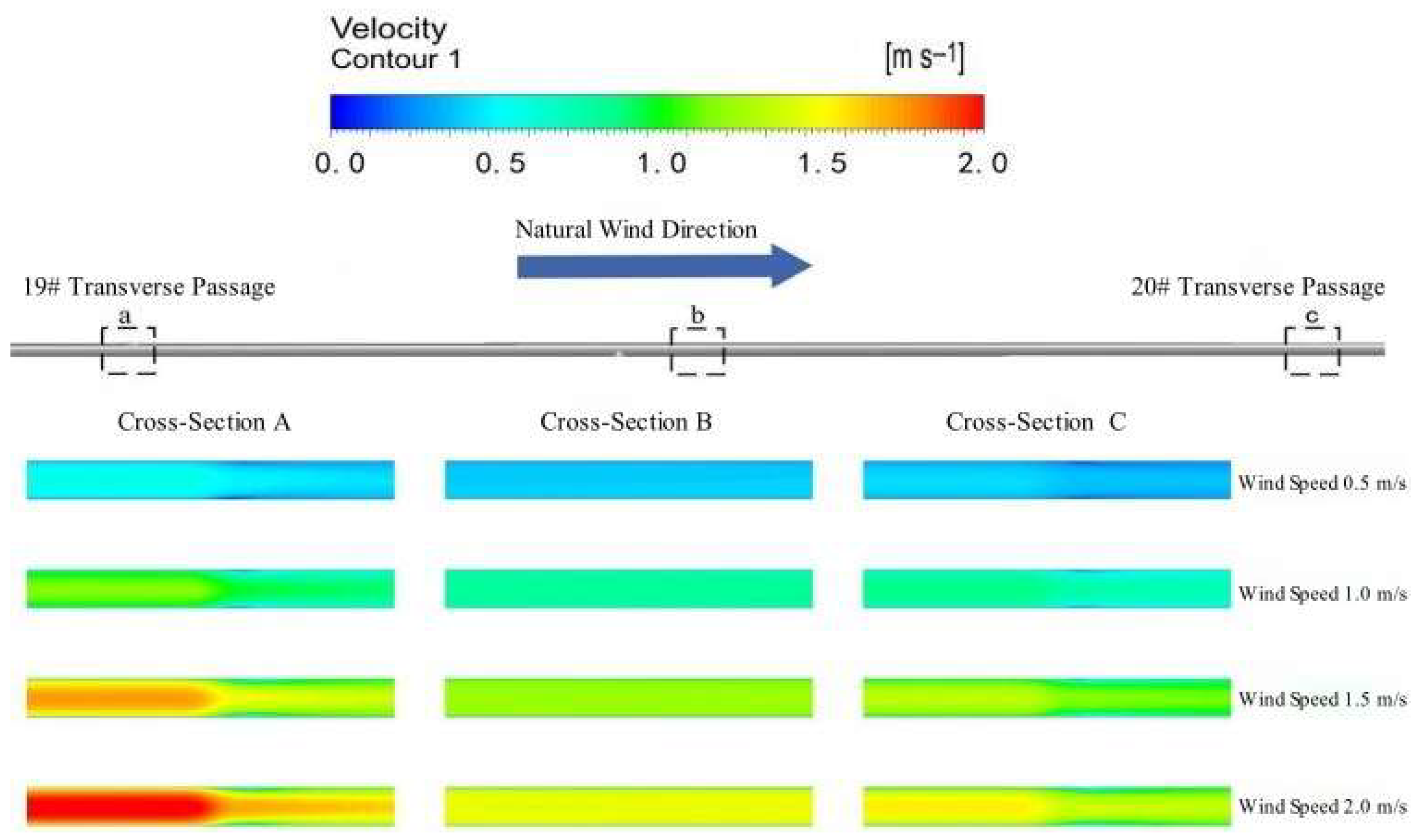
To investigate the regulatory mechanism of transverse passage pressure boundaries on the longitudinal wind speed distribution under natural wind conditions, typical cross-sections within a tunnel are selected for analysis, including the regions adjacent to transverse passages (on both sides) and the mid-region stable zone between two transverse passages (as shown in
Figure 5).
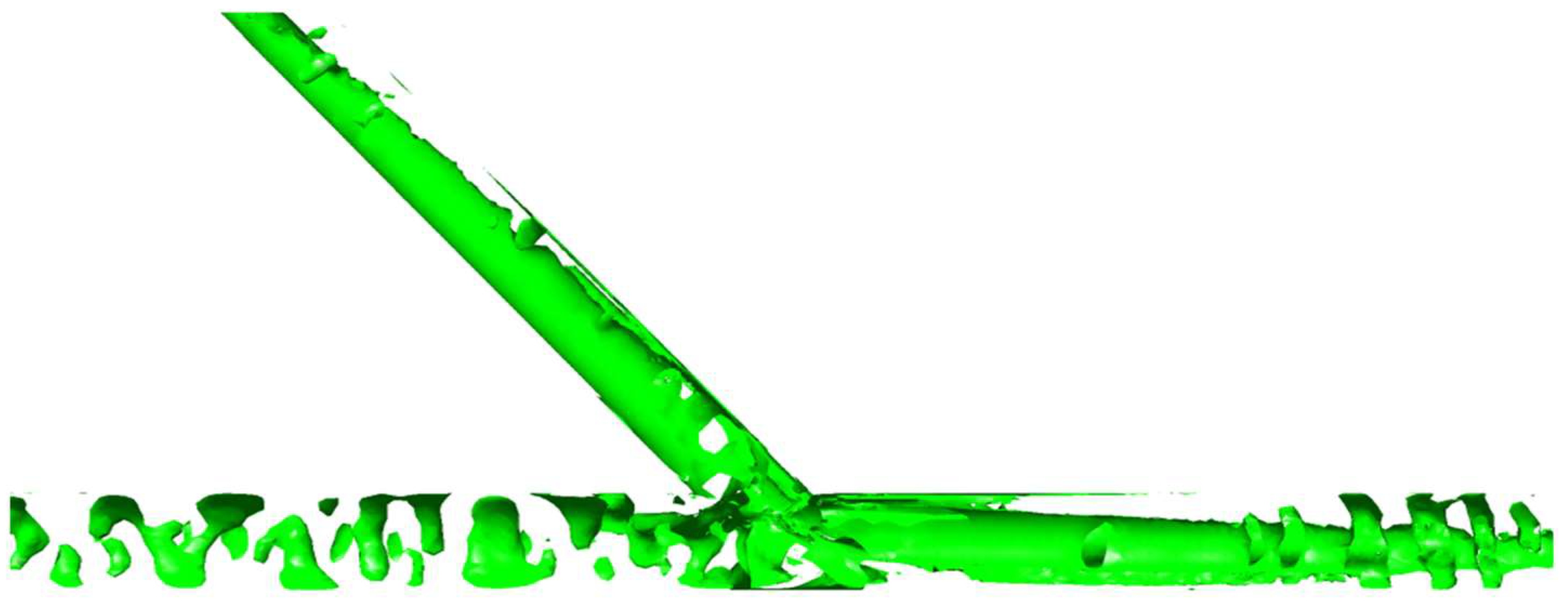
Figure 6 is used to present the three-dimensional visualization results of tunnel vortices based on the λ
2 criterion to assist in the research. The outlets of transverse passages are modeled as atmospheric pressure boundaries. When the natural wind flows downstream through the tunnel, the pressure difference between the main tunnel and the transverse passages induces lateral airflow diversion: as the airflow approaches a transverse passage, part of it diverts into the passage, causing a local decay in the wind speed in the main tunnel near the transverse passage. After diversion, the remaining airflow undergoes accelerative compensation within a short downstream distance due to pressure field reconstruction, and the greater the diversion intensity, the steeper the wind speed gradient. Influenced by the downstream momentum of the natural wind, the wind speed decay amplitude at the downstream transverse passage (the airflow outlet side) is weaker than that at the upstream one (the airflow inlet side), exhibiting an asymmetric disturbance characteristic.
In the mid-region far from the transverse passages, as the pressure disturbance attenuates with distance, the flow field presents a quasi-uniform characteristic: the continuous gradient of color bands in the velocity contours, without obvious distortion, reflects the stable wind speed distribution across the cross-section and weak turbulent fluctuations. When the inlet natural wind intensifies, the overall wind speed in the mid-region increases synchronously, yet the wind speed gradient remains gentle, demonstrating the attenuation and shielding effect of the far field on the transverse passage disturbances.
When the inlet natural wind speed increases, the wind speed disturbance near the transverse passages follows a pattern of “amplitude enhancement and range contraction”: the wind speed difference in the regions adjacent to the transverse passages (between the low-speed diversion zone and the acceleration zone) expands significantly, confirming the strengthening of the pressure difference/driven diversion effect with the increase in inlet momentum. Meanwhile, the spatial range of wind speed disturbance (the lateral extension of the low-speed and acceleration zones) contracts simultaneously, revealing the compressive effect of the high-momentum natural wind on the “diversion–acceleration” process.
The velocity contours and the three-dimensional vortex visualization results in
Figure 6 intuitively demonstrate the longitudinal wind speed reconstruction mechanism dominated by the transverse passage pressure boundary: the transverse passages disrupt the uniformity of the natural wind through “diversion–momentum compensation”, forming a segmented characteristic of “disturbance zone + stable zone”. Moreover, the higher the inlet wind speed, the more pronounced the disturbance amplitude and the more compact the range. This pattern provides core theoretical support for the design of tunnel ventilation systems, such as the regulation of transverse passage airflow and the zoning of pollutant control.
3.2. Study on Turbulent Characteristics of Tunnel Flow Field Under Natural Wind–Traffic Wind Coupling
In the operational environment of long tunnels, the interaction between random natural wind disturbances and traffic-induced airflow forms complex turbulent structures, profoundly impacting ventilation efficiency, harmful gas dispersion, and operational safety. To elucidate this coupling mechanism, this study employs the Realizable turbulence model with a standard wall function (constraining the near-wall dimensionless distance ) and CFD simulations. For a constant vehicle speed of 16.67 m/s, inlet natural wind speeds of 0, 1.0, 2.0, and 3.0 m/s are configured to systematically analyze the velocity distribution, vortex evolution, and turbulent energy features of the coupled flow field.
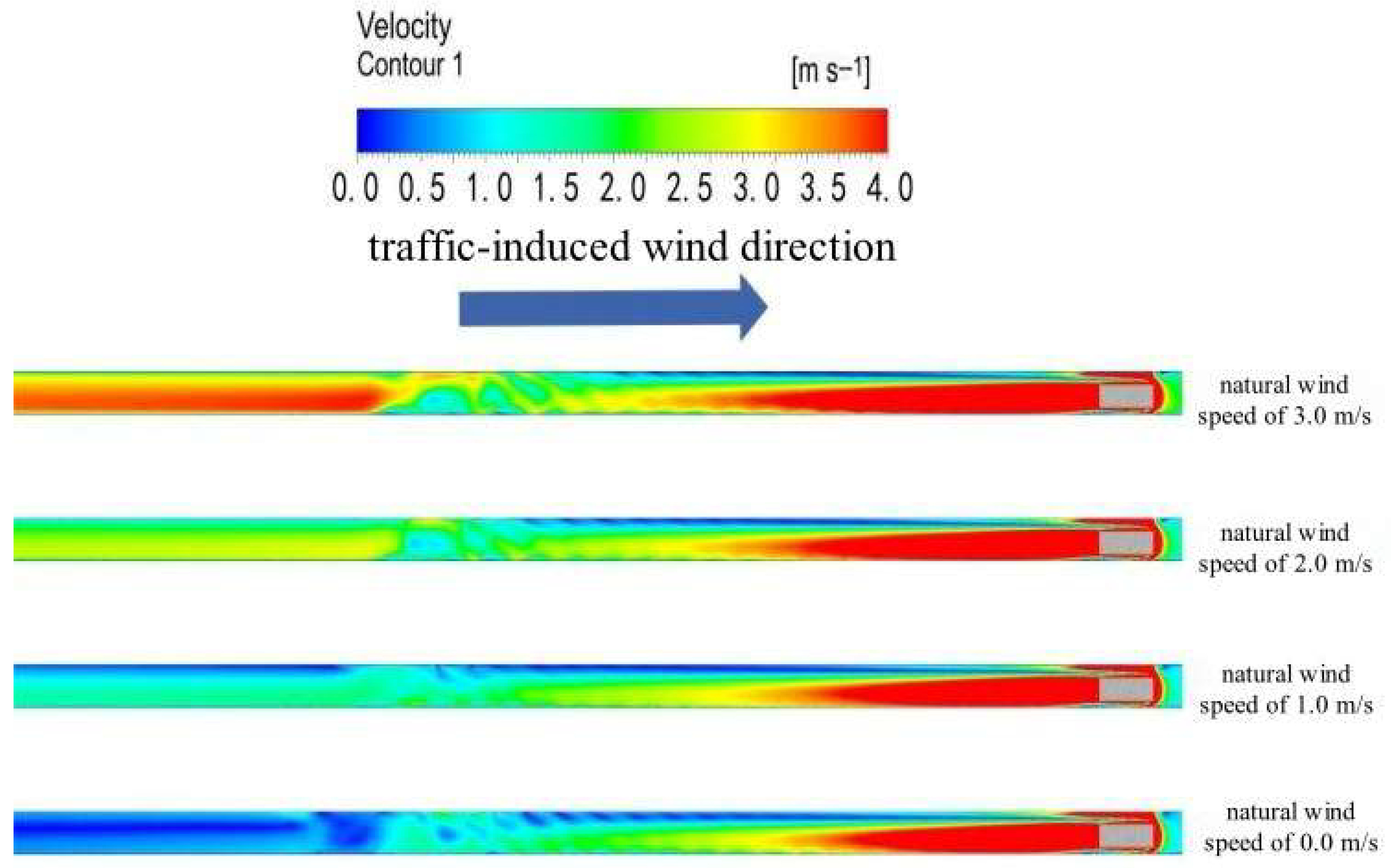
When a vehicle moves, air viscosity and pressure gradients drive surrounding airflow, generating a wake-coupling structure around the vehicle. A high-pressure stagnation zone forms on the windward side, where flow velocity approaches zero; the pressure gradient then induces airflow to bypass the vehicle sides, triggering small-scale separation bubbles and initial turbulent fluctuations. Downstream, airflow accelerates along the vehicle body, and negative pressure at the rear induces large-scale recirculating vortices in the wake—shown as dark-blue low-velocity zones in velocity cloud diagrams. The length and intensity of these wake vortices dictate the influence range of traffic wind, whose velocity decays exponentially with downstream distance, with peak turbulent kinetic energy k in the wake core reaching 3–5 times the incoming flow, highlighting strong pulsating characteristics.
The coupling between natural wind and traffic wind reflects momentum exchange between co-flow and counter-flow fields. As natural wind speed increases, the wake recirculation zone undergoes significant contraction—expanding notably under weak natural wind but compressing markedly with stronger winds—while the coupling zone shifts rapidly toward the vehicle rear. This compression stems from the continuous “scouring” effect of natural wind’s co-flow momentum on the wake, which suppresses recirculation development. Meanwhile, natural wind penetration disrupts the symmetry of wake vortices, inducing deflection of the vortex core (evident as shifts in the vortex center within velocity cloud diagrams) and triggering vortex breakdown through stretching and shearing. This process enhances local turbulence intensity (turbulent kinetic energy to a notable degree). Under strong natural wind, wake vortices fragment into multi-scale clusters, amplifying flow unsteadiness. The velocity gradient within the coupling zone steepens with increasing natural wind speed, boosting momentum transfer efficiency. This extends the “drag effect” of traffic wind upstream, expanding the high-velocity acceleration zone (observable as forward shifts of red high-velocity regions in velocity cloud diagrams).
These turbulent characteristics provide insights for tunnel ventilation design. When natural wind dominates, the compressed wake facilitates rapid discharge of harmful gases, allowing for reduced mechanical ventilation energy consumption. Conversely, under weak natural wind conditions, pollutants are prone to accumulating in the wake recirculation zone, necessitating enhanced operation of jet fans at an appropriate distance downstream of the vehicle rear. Jet fans should be positioned away from the wake coupling zone—where low-velocity recirculation interacts with high-velocity natural wind, leading to peak turbulent pulsations. Optimal placement involves locating them at a certain distance upstream of the coupling zone to avoid interference between fan jets and wake vortices, thereby minimizing energy loss and noise generation. Under strong natural wind, intensified flow pulsations elevate the risk of pulsating pressure impacts on structures such as cross-passage interfaces and fan supports. This underscores the need for flow-structure interaction analysis to assess potential vibration risks.
Velocity cloud diagrams (
Figure 7) reveal a core principle: natural wind speed dictates the spatial reconstruction of the coupled flow field. As natural wind strengthens, the “wake-dominated zone” of traffic wind compresses, replaced by a “momentum competition zone” between the two flows, with flow unsteadiness increasing exponentially. This mechanism provides a theoretical foundation for dynamic regulation and risk mitigation in long tunnel ventilation systems.
3.3. Wind Speed Distribution and Regulation Mechanisms in Tunnels Under the Coupling of Natural Wind, Traffic Wind, and Mechanical Wind
The control variable method was adopted to establish simulation scenarios, fixing co-directional natural wind and traffic wind conditions with a constant vehicle speed of 16.7 m/s, while setting mechanical fan output at three gradients (20%, 40%, and 60% of full capacity) to construct three-wind coupling cases. Through the baseline case (no natural wind and no vehicles), the effective influence range of mechanical wind alone under full fan capacity was determined to reach 200 m. Considering wind speed attenuation redundancy for smoke exhaust during fires, fan spacing was optimized to 160 m, ensuring overlap of wind speed fields between adjacent fans to eliminate ventilation blind zones.
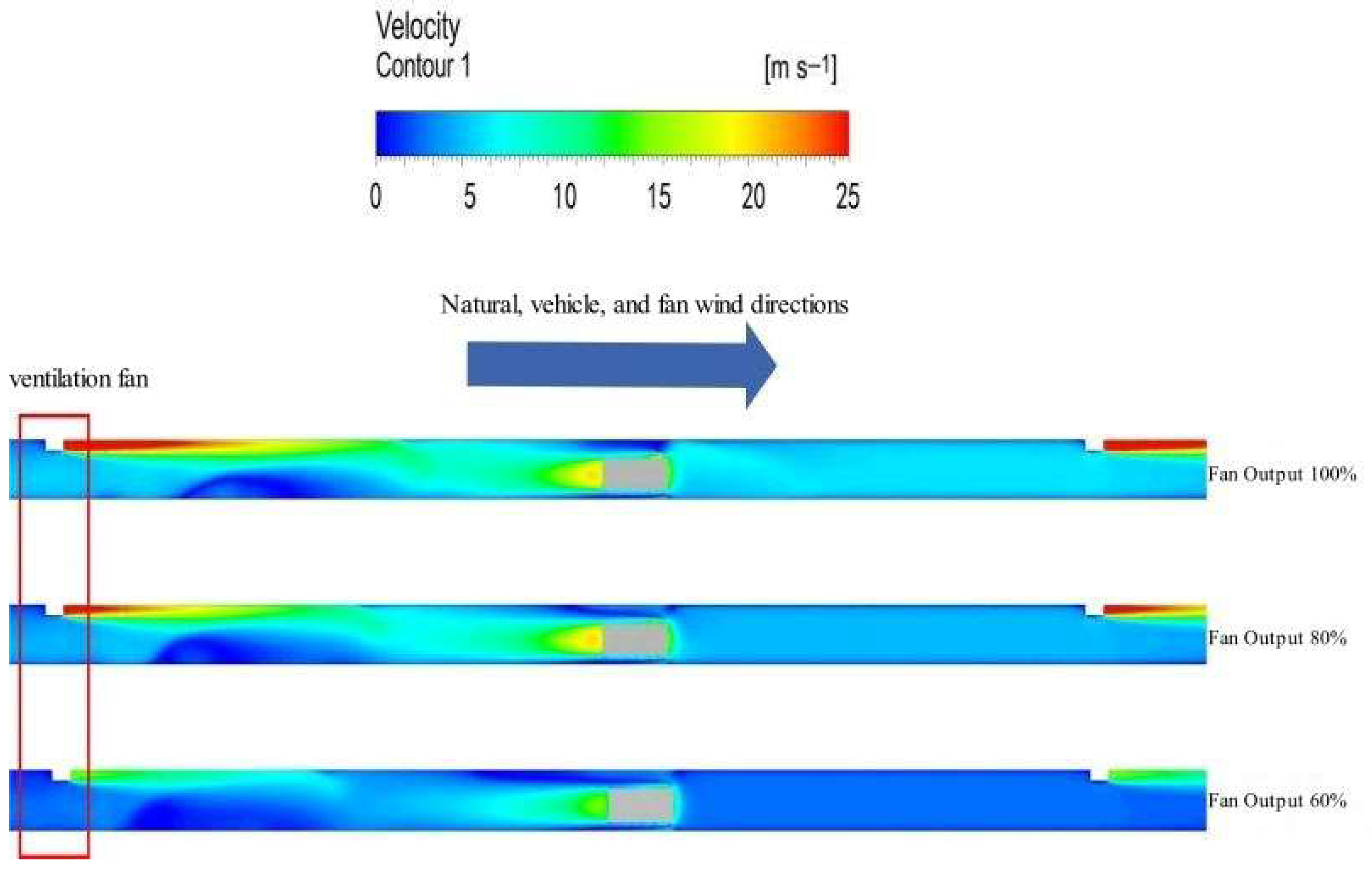
Based on simulation results (
Figure 8), flow field characteristics were analyzed from multiple perspectives. The high-speed zone of the fan jet originates from the momentum concentration effect of mechanical wind, where high-momentum airflow at the fan outlet extends jet-like with a steep velocity gradient. In contrast, the high-speed zone in the vehicle wake is driven by turbulent shear from traffic wind disturbances—the airflow around the vehicle forms a shear layer, triggering local high-speed fluctuations, indicating distinct physical mechanisms between the two. In the mid-region between the fan and vehicle, the mechanical jet undergoes flow separation upon encountering vehicle obstruction: mechanical wind blocked by the vehicle distorts the velocity profile, and the boundary layer separates downstream of the vehicle due to an adverse pressure gradient, forming a low-speed recirculation zone (characterized by dark blue regions in velocity contours). Simultaneously, turbulent fields of the fan jet and vehicle wake mutually penetrate, enhancing unsteady coupling characteristics—manifested as irregular color band distortion and pulsations in velocity contours. When fan output decreases from 100% to 60%, momentum decay of mechanical wind weakens both the range and intensity of flow separation, reducing the coupling region by approximately 30% compared to the full-capacity case, confirming the momentum-dominated coupling law. In regions unaffected by the vehicle, mechanical jet momentum dominates absolutely; combined with the boosting effect of co-directional natural wind, a “momentum superposition effect” emerges—higher fan output leads to a more significant increase in overall flow field wind speed.
Based on three-wind coupling laws, a dynamic balance between “energy efficiency and safety” can be achieved for tunnel ventilation. During peak traffic periods, as traffic wind dominance increases, reducing fan output suppresses flow field turbulence, balancing ventilation uniformity and energy consumption. In emergencies (e.g., fires), fan output should be increased to full capacity, leveraging the wide-coverage high-speed zone of mechanical wind for rapid smoke exhaust to prioritize safety. This mechanism analysis provides theoretical support for tunnel ventilation system design (fan spacing, output matching) and intelligent operation (dynamic regulation strategies). By quantifying coupling laws, it enables synergistic optimization of ventilation energy efficiency and safety assurance.
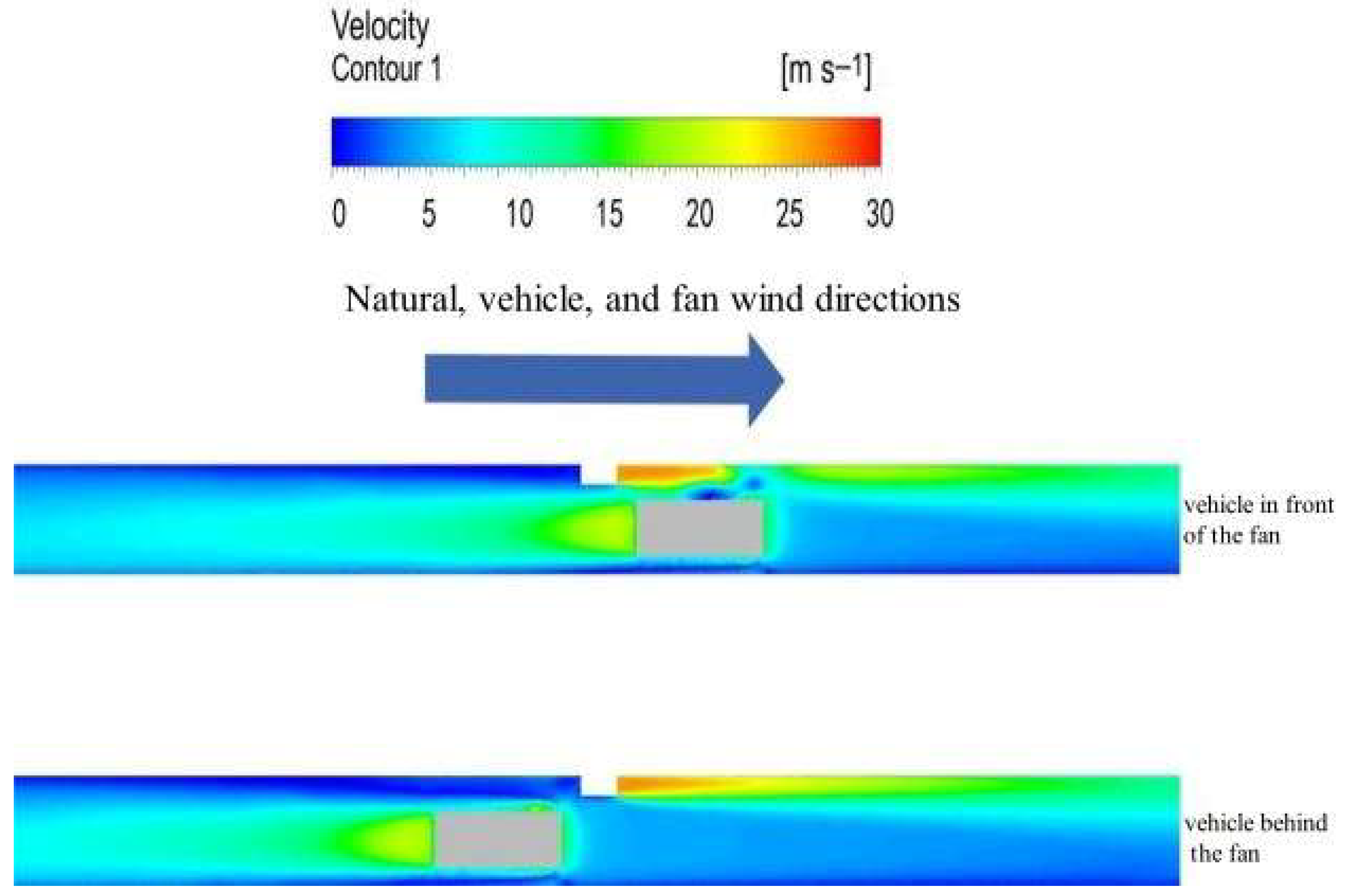
3.4. Mechanisms of Velocity Regulation in Tunnel Coupled Flow Fields Induced by Relative Positions Between Vehicles and Fans
For the tunnel velocity distributions under different relative positions between vehicles and fans shown in
Figure 9, an in-depth analysis can be conducted from the perspectives of flow field topological structure, momentum transfer laws, and turbulence generation characteristics. When a vehicle is positioned in front of the fan, the flow field exhibits a continuous evolutionary process characterized by “flow-around acceleration—wake extension—jet connection”: As airflow impinges on the vehicle body, a low-velocity zone forms on the windward side due to stagnation effects; the compressed flow channel on the side induces acceleration via the Venturi effect; a sudden pressure drop at the rear of the vehicle triggers wake separation, with initial turbulence developing within the separated shear layer. The separated wake extends longitudinally in a quasi-Gaussian distribution, with velocity decaying exponentially with distance but retaining kinetic energy higher than the incoming flow. Its width expands downstream, forming forward momentum coupling with the high-velocity zone of the fan jet—their shear layers are thin, ensuring good flow field continuity, and only weak turbulent pulsations are induced at the connection interface due to momentum gradients. The superposition of high momentum from the fan jet and residual kinetic energy from the wake results in a continuous increase in longitudinal wind speed along the sequence of “fan propulsion section → wake acceleration section.” Turbulence generation is concentrated in the vehicle separation zone and the jet-wake connection layer, leading to high overall flow field stability, with clear contour lines and smooth transitions in the velocity cloud diagrams.
When the vehicle is positioned behind the fan, the flow field triggers complex interactions characterized by “jet impact—flow-around blocking—turbulence surge”: the high-momentum airflow from the fan jet impinges on the windward side of the vehicle, forming a stagnation zone at the collision interface. As the jet flows around the vehicle sides, intense shear occurs with the boundary layer, inducing boundary layer separation, and the separated vortices continue to evolve downstream of the vehicle tail. A bidirectional velocity gradient forms in the “fan–vehicle” interval between the forward momentum of the jet and the reverse momentum of the vehicle’s surrounding flow. Turbulence within the strong shear layer generates rapidly and diffuses outward; pressure waves induced by jet impact reflect toward the fan and superimpose with the incoming flow, further exacerbating flow field fragmentation, as evidenced by “multi-scale vortex nesting” features in the velocity cloud diagrams between the fan and the vehicle. Reverse coupling causes significant conversion of kinetic energy into turbulent dissipation: the low-velocity zone not only covers the vehicle’s stagnation point but also extends toward the fan, compressing the effective range of the jet. The unsteadiness of the flow field intensifies sharply, with blurred contour boundaries and frequent pulsations in the velocity cloud diagrams, reflecting the evolution of turbulence from local generation to global disturbance.
The core difference between the two configurations lies in momentum direction and flow field continuity. In the forward configuration, the fan jet and wake momentum are in the same direction, with weak shear layers and localized turbulence, resulting in a “continuously enhancing” synergistic flow field. In the reverse configuration, opposing momentum induces strong shear, large-scale turbulence, and energy dissipation, leading to a “fragmented and attenuated” conflicting flow field. In velocity cloud diagrams, the forward configuration exhibits regular contours and smooth transitions, while the reverse configuration shows distorted contours and chaotic boundaries, intuitively reflecting the “synergy–conflict” topological transition of the flow field. This mechanism reveals the essence of momentum interaction between moving obstacles (vehicles) and active ventilation (fans) in tunnels, laying a foundation for analyzing unsteady flow field characteristics.