1. Introduction
Under the backdrop of the global energy structure’s low-carbon transformation, the deep implementation of China’s “double carbon” strategy necessitates enhanced natural gas peak shaving and supply protection capabilities [
1]. As a critical infrastructure ensuring stable natural gas supply, the safe and efficient operation of underground gas storage (UGS) is of paramount importance to national energy security [
2]. Unlike the one-time development process of conventional oil and gas reservoirs, UGS facilities function not only as gas supply sources, but also as storage sites [
3]. After gas withdrawal, the pressure gradually drops to a lower limit, completing a full injection-production cycle. UGS typically undergoes one or more injection-production cycles annually, characterized by high gas recovery rates and intensities. Consequently, UGS facilities must endure multi-cycle, high-intensity injection and production operations under long-term alternating pressure loads. Prolonged stress alternation will weaken the cementation between reservoir rock particles, leading to wellbore instability and formation failure [
4,
5]. Simultaneously, the high-velocity fluid flow through the wellbore during injection and production generates drag forces, inducing solid phase (sand) production. During UGS operation, especially under alternating injection and production conditions, reservoir solid phase production has become increasingly prominent, severely threatening wellbore integrity, reducing reservoir permeability, and restricting the peak shaving capacity and long-term safe operation of gas storage [
6]. These operational complexities necessitate a robust understanding and prediction of formation stability, with solid phase production identified as a primary geomechanical risk [
7,
8]. Severe solid phase production can lead to hole collapse and casing failure. The entrained solid particles can also erode wellbore lifting equipment, surface facilities, and wellhead equipment, potentially causing production decline or even cessation.
However, unlike clastic sandstone reservoirs, carbonate reservoirs like the Qianmi Bridge gas storage present unique challenges due to their complex pore structures, vugs, natural fractures, and diverse diagenetic histories. These characteristics can lead to highly variable rock strength, brittleness, and distinct failure modes under cyclic stress [
4,
5]. Furthermore, chemical alteration, such as that induced by acidizing treatments commonly employed in carbonate formations, can significantly degrade rock strength and alter near-wellbore stress states in ways distinct from sandstone, making them particularly vulnerable to solid phase production [
9,
10].
Throughout the history of oil and gas reservoir development, the problem of sand production has always been a widespread and extremely serious issue. Regarding the sand production problem under the alternating injection and production conditions of gas storage reservoirs, scholars at home and abroad have conducted a series of studies. In terms of the sand production mechanism, it has been shown that the weak mechanical strength of reservoir rocks is an intrinsic factor leading to sand production, and the increase in production pressure difference and confining pressure will significantly promote sand production [
7]. In terms of the influence of alternating injection and production conditions, complex operating modes and long-term high-flow injection and production alternation conditions are the key factors exacerbating the sand production problem in gas storage reservoirs. Alternating injection and production causes cyclic variations in formation stress, fluid flow direction, and gas-water interface, making the sand production mechanism more complex and having adverse effects on the peak regulation capacity and safety of gas storage reservoirs [
11,
12]. Studies have shown that under alternating load conditions, the mechanical properties of rocks will deteriorate, such as an increase in Poisson’s ratio and a decrease in Young’s modulus and uniaxial compressive strength, further exacerbating the risk of sand production [
8]. In terms of sand production prediction models, scholars have been dedicated to developing and optimizing sand production prediction models applicable to alternating injection and production conditions. Numerical simulation methods, especially models coupling the pore-plasticity control equations and the sand production erosion criterion, have been proven to be able to effectively predict sand production in reservoirs under alternating load conditions and improve prediction accuracy [
13]. In addition, empirical formulas and analytical models, such as the “C” formula method for reservoir rock strength and the Vaziri model method, as well as critical sand production warning models based on pressure monitoring, have also been applied in the prediction of sand production in gas storage reservoirs [
5,
6].
Yu Lijun et al. [
14] combined the engineering geological characteristics of gas reservoir storage and storage facilities to reveal the mechanism of reservoir damage during the completion and injection-production processes of gas reservoir-type storage facilities; that is, multiple cycles of strong injection and strong production are prone to induce stress sensitivity and particle migration, resulting in reservoir out-sand damage. Yuan Guangjie et al. [
15] analyzed the reasons for sand production in depleted oil and gas reservoir storage facilities; that is, the alternating loads generated during the injection-production process cause reservoir damage and destruction. The alternating flow direction causes rock particle cementation to fatigue, resulting in sand peeling and sand production. He believes that the sand production problem of depleted oil and gas reservoir storage facilities during injection-production is one of the technical priorities that need to be urgently addressed. Luo Tianyu et al. [
16] focused on the special production mode of the Huhoti Bei storage facility with strong injection-production, and based on a detailed analysis of the influencing factors, sand production mechanisms, and causes of sand production, combined the well logging data of the work area with the indoor triaxial in situ stress experiments to obtain the maximum principal stress and minimum principal stress of the study area. Through numerical simulation methods, the experimental parameters were calculated, and five numerical calculation models were obtained. The results show that the higher the reservoir pressure, the more stable the reservoir, and the less likely it is to produce sand. Zhang Yuda et al. [
17] conducted a quantitative sand production simulation experiment for storage facilities under alternating loads and flow rates. The experimental results show that the key parameters affecting the degree of core sand production are the upper and lower pressure limits of the alternating load, flow rate, and the number of alternating loads, and the alternating load will cause significant weakening of reservoir rocks. Si Yiyong et al. [
11] pointed out that alternating loads have a significant impact on sand production from injection-production wells of storage facilities. Through experimental simulation of the sand production laws of injection-production wells under strong injection-production conditions, the sand production cycle and degree were predicted using the modified sand production index formula. MA Lijun et al. [
18] conducted a high-pressure sand production simulation experiment for depleted oil and gas reservoir storage facilities. Through the study of two key pressures — equivalent initial sand production pressure (critical confining pressure) and TWC strength (collapse pressure) — the out-sand situation of the reservoir was systematically and quantitatively analyzed. Wen Haibo [
19] conducted a physical simulation experiment of reservoir core sand production in storage facilities. The results show that when the production pressure difference exceeds the critical value, the reservoir permeability will significantly decrease, and thus a large amount of sand production will occur. Song Rui et al. [
20,
21] conducted a high-pressure sand production simulation experiment for depleted oil and gas reservoir storage facilities. Through the study of the equivalent initial sand production pressure (critical confining pressure) and TWC strength (collapse pressure) as the two key pressures, the sand production situation of the reservoir was systematically and quantitatively analyzed. Wang Bin [
22] et al. proposed a method for evaluating the ultimate peak regulation capacity of injection-production wells, solving the problem of sand production risk assessment of storage facilities. This method provides effective technical support for the safe management of storage facilities, but it still faces limitations in application in different storage facility environments and difficulty regarding practical operation. In addition, previous studies have adopted various methods for predicting the critical sand production pressure difference during the sand production process, such as the Mohr-Coulomb criterion [
23], rock tensile strength method [
24], well wall stability [
16], etc. The combined use of these methods has led to a deeper understanding of the sand production behavior of storage facilities [
25]. The sand production phenomenon, especially the damage and sand particle detachment of sandstone reservoirs during the storage process due to stress changes or gas flow effects, seriously affects the long-term stability and safe operation of storage facilities, especially in high-pressure environments. The sand production phenomenon has a more significant impact on the reservoir [
26]. At present, the experimental research on sand production from gas storage reservoirs is not yet systematic, and the accuracy and applicability of theoretical predictions also have certain limitations. To effectively prevent the risk of sand production and improve the safety and economy of gas storage reservoirs, further conducting in-depth research on the sand production mechanism and establishing more accurate prediction models to better cope with various complex situations that the gas storage reservoirs may encounter during operation are urgently needed [
27]. Therefore, in order to minimize the risk of solid phase production from the strata of the Qianmi Bridge carbonate gas storage reservoir as much as possible and ensure the long-term, efficient, stable and normal operation of the gas storage reservoir, it is urgently necessary to carry out research on the prediction of solid phase production from the strata, so as to provide a scientific basis for the safe operation of the gas storage reservoir.
Although a large amount of research has been conducted in solid-phase production, especially in sandstone reservoirs [
15,
16,
17,
18,
19,
20,
21], there is still a significant gap in the development of a comprehensive, dynamic, and multi-model prediction framework specifically tailored for carbonate-type gas reservoirs. The research on the mechanism of sand production and prediction models under the alternating injection and production conditions of gas storage reservoirs still faces challenges. Existing studies mainly focus on case analyses of specific gas fields or lack comprehensive consideration of the entire operational life cycle, rock strength degradation mechanisms (such as due to acidification), and the complex interactions of dynamic stress and fluid flow under alternating loads. Further research is needed on the sand production patterns and prediction methods of different types of gas storage reservoirs, especially carbonate rock gas storage reservoirs, under alternating injection and production conditions. The unique geological and geomechanical characteristics of carbonates, combined with their susceptibility to chemical changes, make traditional sandstone-centered models potentially inadequate. Moreover, how to consider the heterogeneity of the reservoir, multiphase fluid flow, and the impact of dynamic changes more precisely in injection and production parameters on solid-phase production is still an important direction for future research. Therefore, to effectively prevent and mitigate the risk of solid-phase production in deep carbonate gas reservoirs (such as Qianmi Bridge), this study aims to develop a comprehensive multi-model method for predicting the solid-phase production risk of the reservoir throughout its dynamic operational life. This framework combines qualitative vulnerability assessment with quantitative models to predict key and final pressure differences, strictly considering important factors such as rock strength degradation, in situ stress changes, and dynamic fluid flow. The main purpose is to provide the necessary theoretical and technical basis for data-based operation control, ensuring the long-term safety, efficiency, and integrity of carbonate gas reservoir operations. This study focuses on deep carbonate gas storage reservoirs and reveals the solid-phase production mechanism and prediction methods of carbonate gas storage reservoirs. It systematically considers the rock strength characteristics, geostress characteristics, and fluid parameters of the Qianmi Bridge carbonate gas storage reservoir at different stages, builds a full life cycle solid-phase production risk prediction model for the gas storage reservoir based on multiple solid-phase production prediction methods, predicts the solid-phase production risk under specific operating environments throughout the life cycle of the gas storage reservoir, and combines case studies to comprehensively analyze the solid-phase production prediction results of the Qianmi Bridge gas storage reservoir, providing theoretical basis and technical support for the safe and efficient development of deep carbonate gas storage reservoirs.
2. Materials and Methods
Generally speaking, sand production prediction refers to the calculation of rock strength parameters by using logging data such as density, acoustic time difference, mud content, and well diameter, and then the size of sand index is calculated to predict the sand production of oil wells [
28,
29]. Scientific sand production prediction can provide a reliable decision-making basis for sand control.
According to the mechanical analysis, there are two main mechanisms of solid phase production. One is shear failure caused by the stress around the perforation, which is related to the low bottomhole pressure or the excessive production pressure difference [
30]. The other is that the drag force of the fluid on the formation particles around the perforation causes the tensile damage related to the excessive mining speed or the excessive fluid flow rate [
31]. The solution of the solid phase production problem belongs to the coupling problem of rock mechanics and fluid dynamics [
32]. During the whole life cycle from construction to the safe operation of the Qianmi Bridge carbonate rock gas storage well, the formation stress undergoes a complex change process. To predict the risk of solid phase production, this paper carries out research from three aspects: firstly, the strength of the original formation carbonate rock is considered; Secondly, the changes of in situ stress caused by reservoir reconstruction and other operations are considered. Finally, the influence of fluid flow in the injection and production process is considered.
2.1. Geological Background of the Qianmi Bridge Carbonate Rock Gas Storage Reservoir
The location of the Qianmi Bridge syncline structure is at the northeastern end of the North Baigang syncline structure belt in the central area of the Huanghua Depression. It is adjacent to the Qikou Depression to the east and the Bapai Depression to the west. It is sandwiched between the back-tilted coastal fault zone and the Dazhangtuo fault zone in a north-south direction. It is a basin-intrabasin basement uplift structural unit controlled by the superimposed and modified effects of multiple tectonic movements. It presents a medium–low-level ancient residual hill-type syncline structure. The top surface morphology of the Ordovician system is generally characterized by two near-north-south trending thrust anticline structures, and large anticline traps are developed inside. The main gas-bearing formations are the Ordovician Fengfeng Formation and the Shangmaijiahe Formation. The top surface generally presents a large semi-backward-sloping structure with a northward dip. The Qianmi Bridge syncline structure consists of the main syncline and the eastern syncline. The exploration area is 210 square kilometers. The Ordovician system develops anticline traps such as the Bangang 4, Bangang 7, and Bangang 8. The strata are generally higher in the west and lower in the east, and higher in the south and lower in the north. The structure controls the formation of the gas reservoirs in the Qianmi Bridge syncline structure. The fractures and karst reservoirs control it without a unified oil-water interface. The top of the syncline is severely weathered and eroded, resulting in significant changes in the residual stratum thickness. The production capacity of individual wells varies greatly. High-yield and high-efficiency wells are located at the structural high positions, while low-yield and low-efficiency wells are located at the wing parts of the structure or the low parts of the structural traps.
The Ordovician in the Qianmi Bridge carbonate gas storage reservoir has undergone multiple orogenies, with well-developed layer dissolution and pore spaces, and local fractures. The reservoir physical properties vary greatly and are highly heterogeneous. Fractures are important storage and seepage spaces in the Qianmi Bridge submountain condensate gas reservoir. The Qianmi Bridge submountain is mainly composed of high-angle fractures, with angles ranging from 50 to 80 degrees. The fracture surfaces are all composed of calcite.
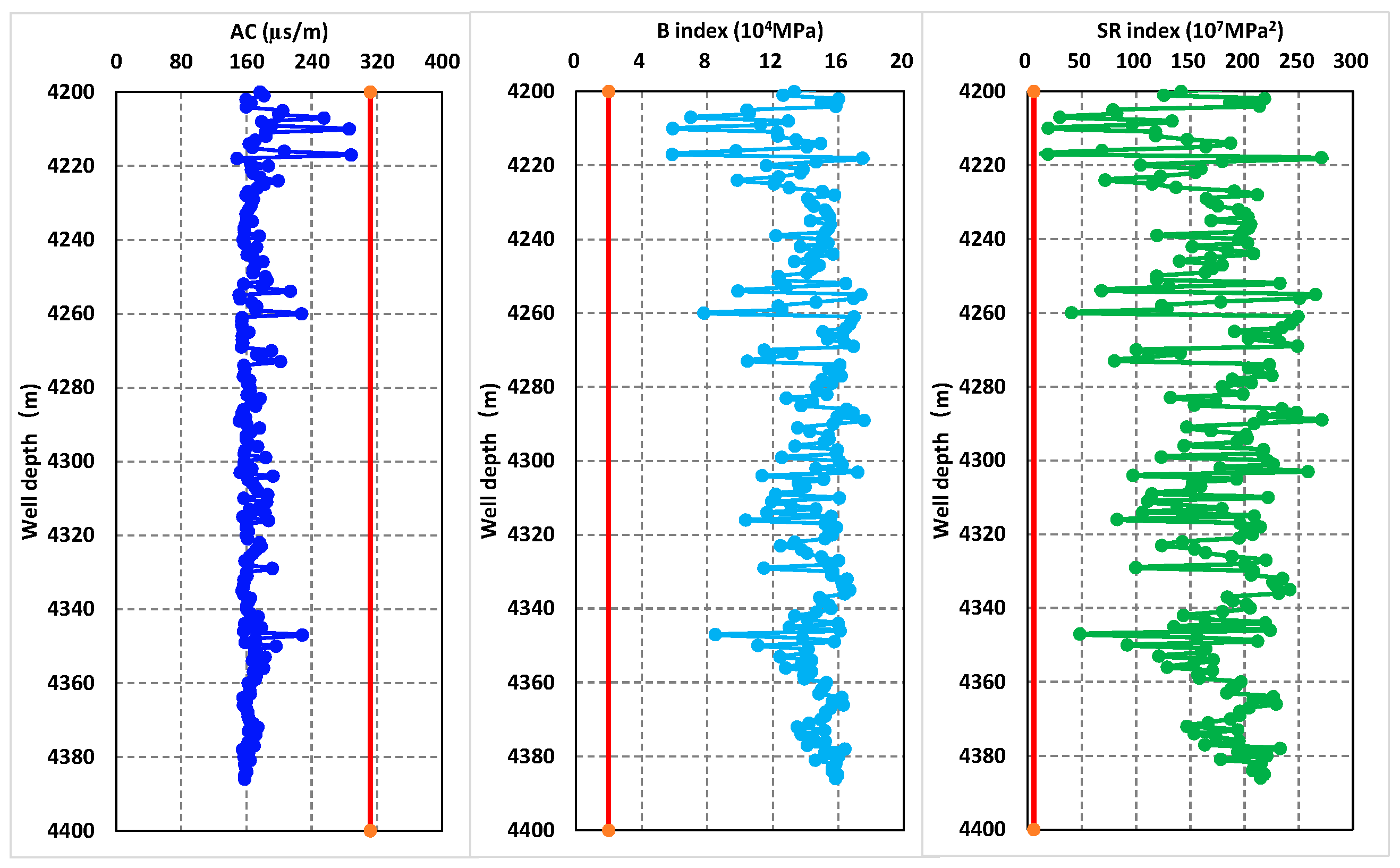
Table 1 presents the physical and mechanical properties of the Ordovician carbonate rock gas reservoir BS8 well in the Qianmiqiao area.
The Qianmi Bridge gas storage reservoir is an exhausted carbonate rock gas storage facility. The key feature of this storage facility is the presence of deep Ordovician carbonate rock layers, which typically have complex geological structures, diverse porosities (including caves and fractures), and uneven rock mechanical properties. The storage facility operates in a dynamic injection-production cycle mode, imposing significant alternating loads on the formation. This study focuses on a representative well within the facility–Well BS8, which has detailed logging data and operating parameters.
2.2. Solid Phase Production Prediction Methods
The prediction of solid-phase production possibility is mainly based on rock mechanical parameters. Currently, there are three methods for this purpose [
29]. By applying the following three solid-phase production possibility risk prediction methods to the carbonate rock gas storage reservoir of Qianmi Bridge, the solid-phase production prediction results of this gas storage reservoir were obtained.
2.2.1. Acoustic Wave Time Difference Method
The acoustic wave logging measurement of the acoustic wave time difference (
p-wave) has a good correlation with the porosity of the rock. A smaller acoustic wave time difference value indicates a low porosity, hard and high-density rock; a larger acoustic wave time difference indicates high porosity, as well as soft and low-density rock [
30]. The logging speed of the
p-wave reflects the cementation strength of the reservoir, and the smaller the
p-wave velocity, the greater the possibility of solid phase production in the reservoir. According to the research results of Total Company on the solid phase production acoustic threshold value of sandstone oil layers in a certain oilfield in the South China Sea:
When △t < 312 μs/m, stable non-solid phase production occurs;
When 312 μs/m ≤ △t ≤ 345 μs/m, possible solid phase production may occur;
When △t ≥ 345 μs/m, there is unstable sandstone, with an extremely high likelihood of solid phase production.
If the difference in the longitudinal wave logging is less than 312 μs/m, it indicates that there is less likelihood of solid phase production during the exploitation of the reservoir. Conversely, if the difference is greater, the possibility of solid phase production in the reservoir is higher, and corresponding measures to prevent solid phase production should be taken. Based on the logging acoustic wave time differences of each reservoir, the possibility of solid phase production in each reservoir can be evaluated.
2.2.2. B Index Method
Since the rocks of reservoirs with solid-phase production are often relatively loose and difficult to obtain intact, petroleum workers often use well logging data to predict whether the formation will produce solid phases. There are two main methods for predicting solid-phase production using well logging data: the B-index method and the Schlumberger solid-phase production index method.
The B-index method holds that the solid phase production tendency of reservoir rocks can be characterized by the following formula [
33]:
In the formula,
is the solid phase output index (MPa), and
and
are the rock elastic modulus (MPa) and rock Poisson’s ratio, respectively, which are obtained from the acoustic logging and density logging data.
In the formula, is formation density, is longitudinal wave velocity, and is transverse wave velocity.
Note on B-index definition: The B-index used in this study, as adopted from reference [
33], represents a combined modulus (K + G) calculated from the elastic modulus and Poisson’s ratio. It should be noted that in some of the literature, the term “B-index” specifically refers to the Bulk Modulus (K). Here, it serves as an indicator of rock stability.
This equation indicates that when the solid phase production index is large, the elastic modulus of the rock is also large, thus the rock has greater strength and better stability, and is less prone to solid phase production. Experience shows that when the
of the rock in the oil and gas reservoir under normal production methods, the possibility of solid phase production in the oil and gas reservoir is relatively small; when
, the possibility of solid phase production during production is relatively high. The smaller
is, the more severe the solid phase production is, and at this time, the production pressure difference and production speed should be controlled [
34].
2.2.3. S Index Method [35]
To more accurately estimate the strength of rocks, the concept of Schlumberger solid-phase production index method was introduced. The solid-phase production index is defined as the product of the volumetric elastic modulus
and the shear elastic modulus
:
In the formula, S represents Schlumberger’s sand production index, measured in MPa2.
For the Schlumberger solid-phase production index, it is generally believed that the larger the S value is, the greater the rock strength is, the better the formation stability is, and the less likely solid-phase production is to occur; when , there is a problem of solid-phase production in the formation.
The three solid-phase production prediction methods show good consistency in predicting the possibility of solid-phase production. Among them, the Schlumberger solid-phase production index calculation results have strong sensitivity to the well logging data.
2.3. Method for Predicting the Critical Pressure Difference for Solid-Phase Production
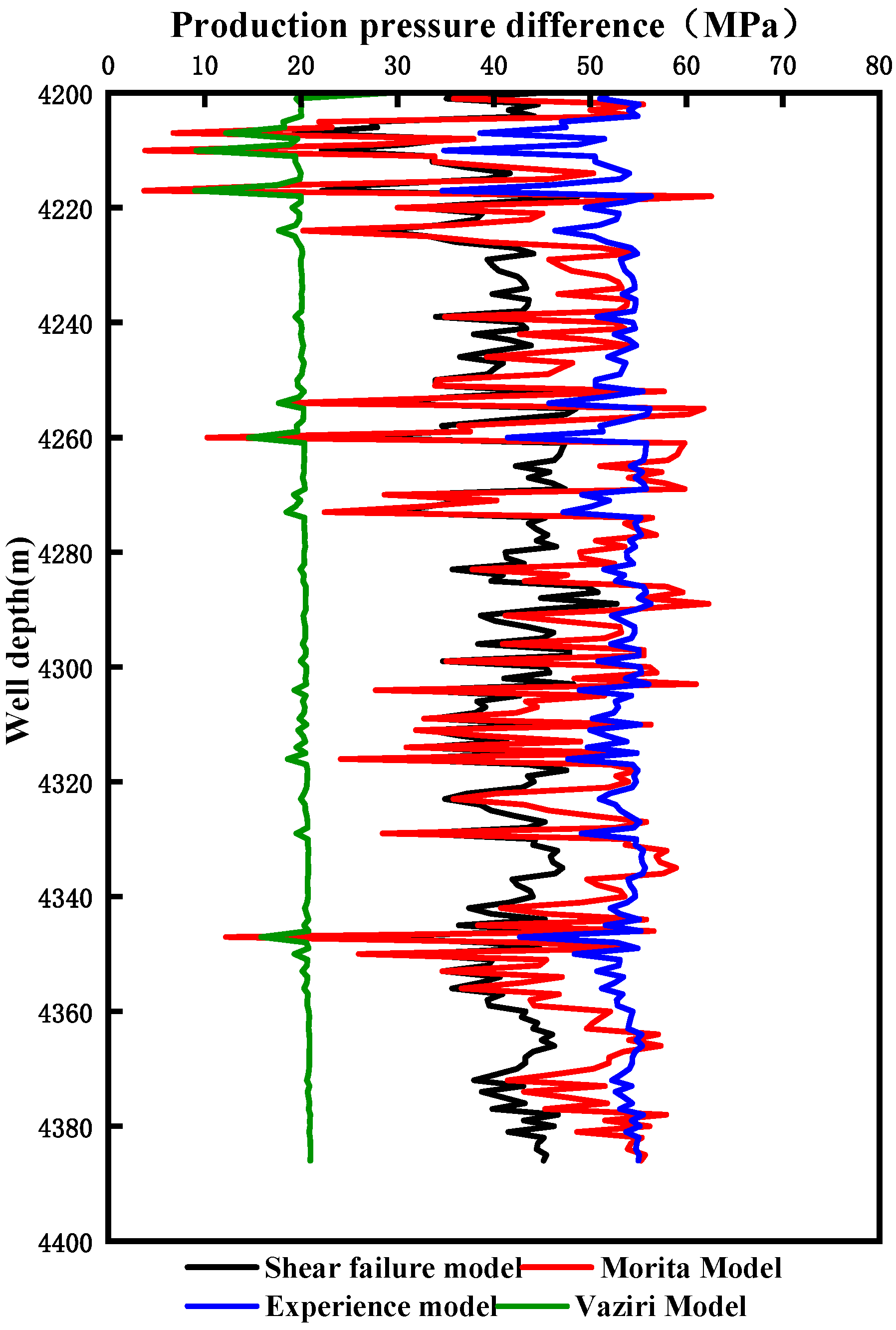
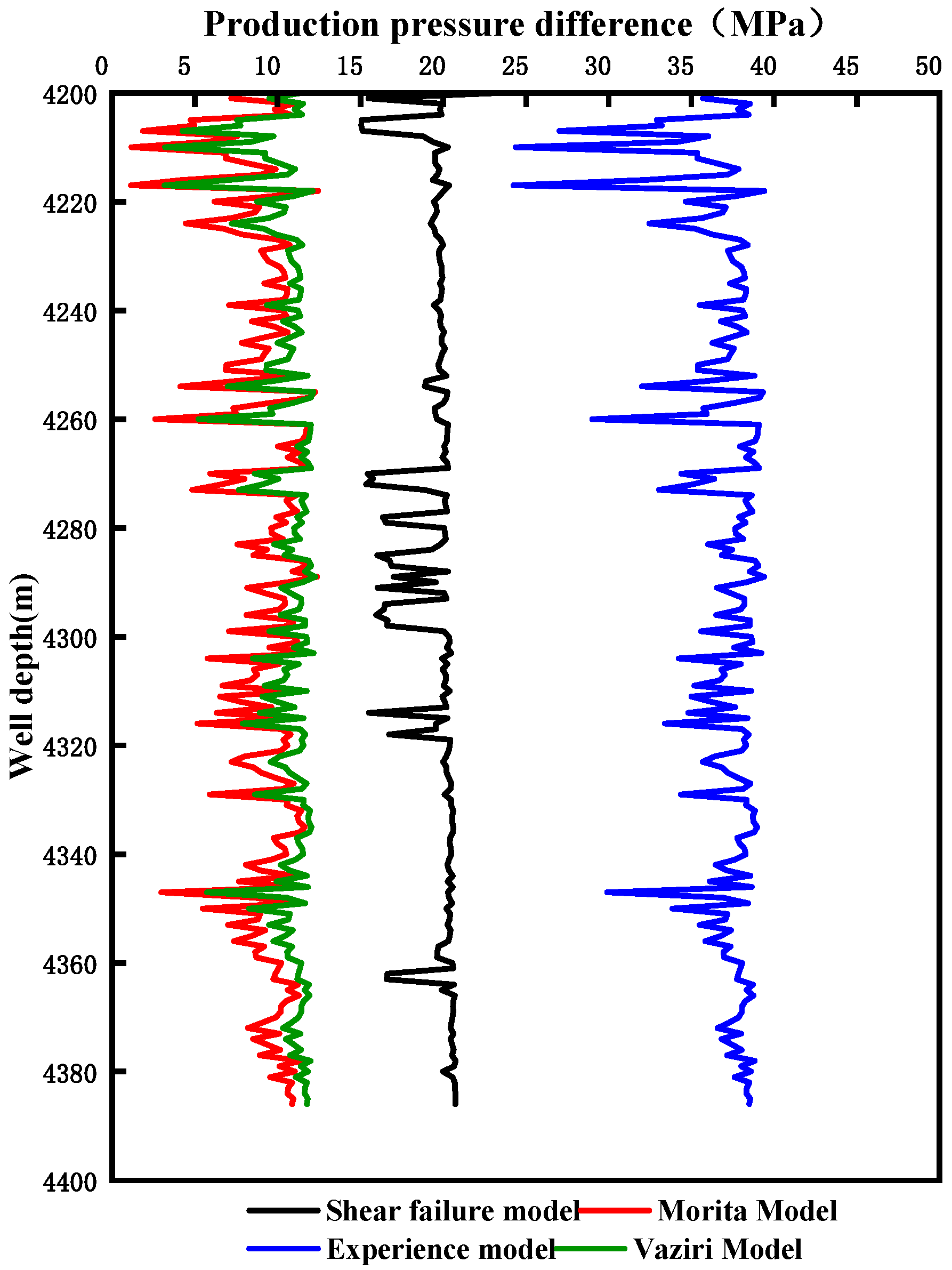
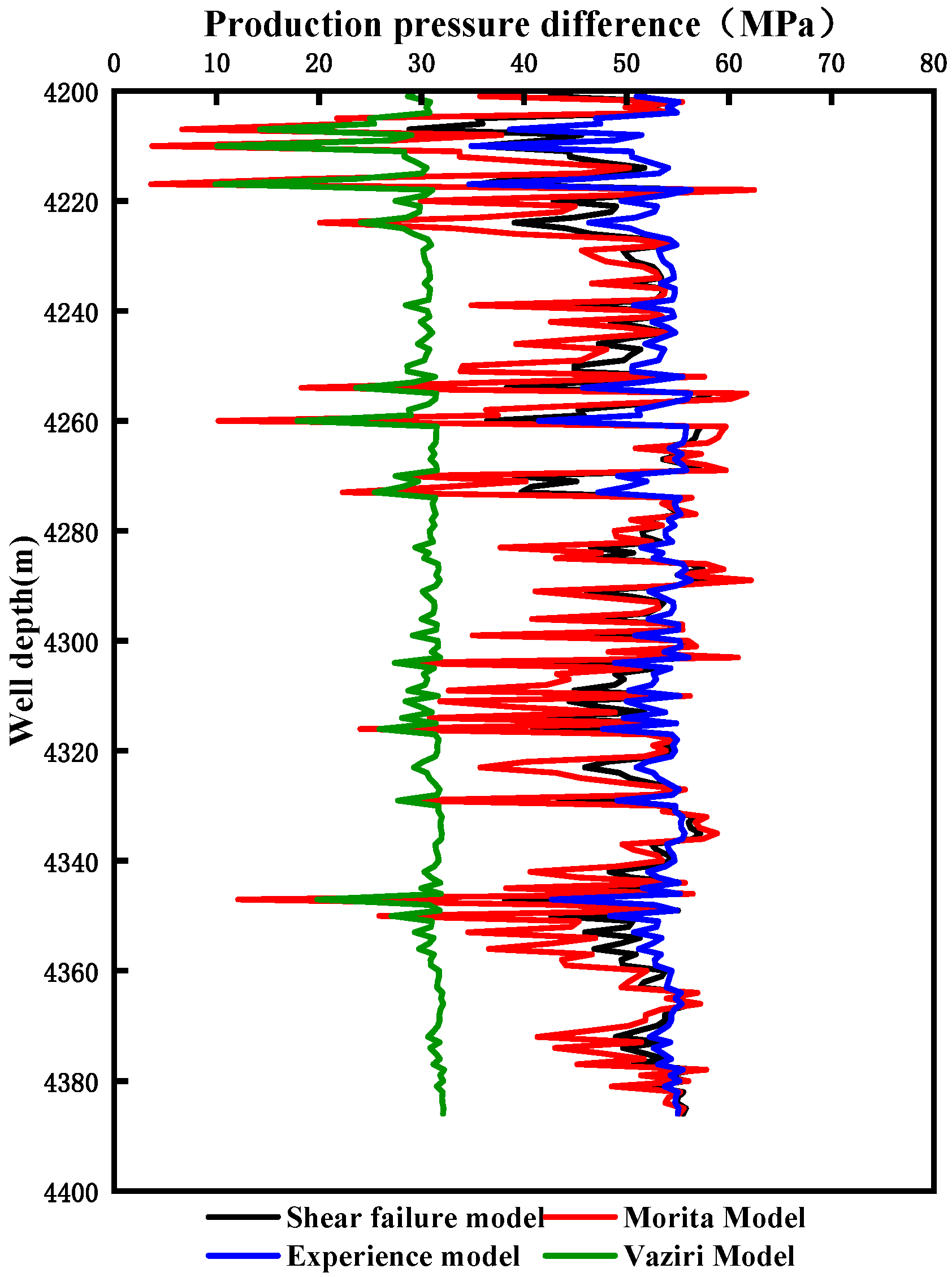
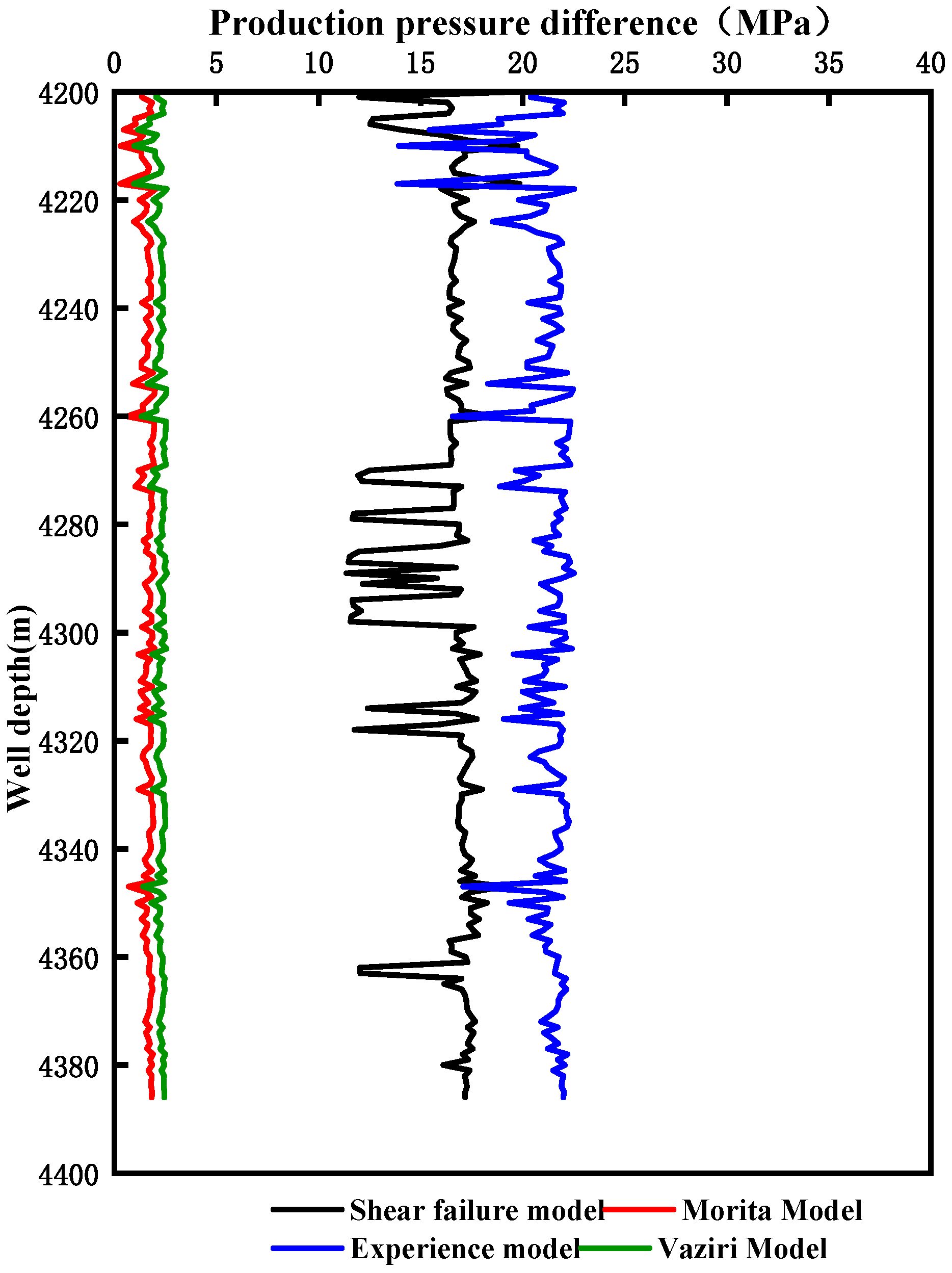
Since the solid phase production from the formation is an extremely complex process, a single method is difficult to accurately predict the solid phase production situation during the gas storage reservoir production process. The above qualitative solid phase production prediction models can only roughly determine the degree of solid phase production or whether the reservoir has solid phase production. To provide a robust and multi-faceted quantitative assessment, we selected four critical pressure difference models—shear failure model [
31], Morita model [
32], Vaziri model [
33], and empirical model [
34]—as they represent a spectrum of analytical approaches, from purely mechanical shear failure to more integrated elastic-plastic and empirical considerations. This selection allows for a comprehensive evaluation of solid phase production under various failure mechanisms and operational conditions, including the dynamic effects of rock weakening due to acidizing and cyclic loading. The models chosen are widely accepted in the industry and provide a balance between theoretical rigor and practical applicability, especially when considering the available logging and reservoir data.
2.3.1. Shear Failure Model
Wang Qintian and Zhao Yanchao [
36] and others ignored the influence of tectonic stress and assumed that a vertical well is drilled through a permeable horizontal oil layer. The rock of the oil layer was assumed to be isotropic, homogeneous, and elastic, the pores to be filled with fluids, and the pores in the formation to be connected. They conducted a mechanical analysis of the formation surrounding the oil well using elastic and elastoplastic theories, using the Mohr-Coulomb criterion as the solid phase production judgment criterion, and established a critical bottom hole pressure calculation model for preventing solid phase production in vertical oil wells:
Critical bottom-hole flowing pressure [
36]:
Critical pressure difference for solid-phase production:
In the formula, is the Biot constant, is the vertical stress at the outer boundary, is the pore pressure, is the Poisson’s ratio of the rock, is the internal friction angle, and is the cohesion of the rock.
This model is simple and easy to calculate. However, it can only be applied to straight wells with open-hole completion. It considers only mechanical factors and does not take fluid hydrodynamic factors into account. Moreover, it can only calculate the critical pressure difference at the initial moment, and cannot calculate the critical pressure difference after pressure exhaustion.
2.3.2. Morita Model
Morita et al. hypothesized that the rock was in an ideal plastic state. As the pressure gradually decreased, the main type of failure was shearing failure. Under the condition that the fluid flow rate was not particularly high and there was no sudden change in the production pressure difference, using the Druker-Prager criterion, a model for quickly estimating the critical production pressure difference under quasi-steady-state flow conditions was derived [
29]:
In the formula, , , , , , and .
Here, represents the elastic modulus, represents the Poisson’s ratio, represents the cohesion force, represents the internal friction angle, represents the average effective stress, and represents the material parameters.
This model can quickly estimate the critical pressure difference, but it is only applicable to vertical wells with perforation completion, and it does not consider the influence of fluid hydrodynamic factors.
2.3.3. Vaziri Model
Hans Vaziri and others conducted numerous indoor experiments and on-site comparative tests, based on different rock failure mechanisms, and proposed solid-phase output prediction models corresponding to those failure mechanisms.
Among them, represents the internal friction angle, C represents the cohesion, represents the current pore pressure of the reservoir, and .
This model is simple and requires few parameters. However, from a mechanical perspective alone, it does not consider the factors related to fluid hydrodynamics.
2.3.4. Experience Model
The Shell Company’s investigation of the critical pressure difference for solid phase output in many oil fields revealed that there is a linear relationship between the critical pressure difference and the uniaxial compressive strength. The mining experiences from both domestic and international sources also indicate that the critical pressure difference and the uniaxial compressive strength have the following relationship [
34]:
In the formula: ΔP is the critical production pressure difference, MPa; UCS is the uniaxial compressive strength, MPa; and L is the field experience coefficient of the oilfield, which is generally taken as 0.5 based on the statistical results from the field.
This model is simple, easy to calculate, and the parameters are readily available. It can also calculate the critical pressure difference after water invasion. However, due to the insufficient consideration of parameters, it is unable to predict the situation of special wells. The establishment of the empirical relationship requires statistical data after the mining process.
Since the solid phase production in the formation is an extremely complex process, it is difficult for a single method to accurately predict the solid phase production situation during the gas storage reservoir’s production process. The previous qualitative solid phase production prediction models (combination modulus method, solid phase production index method, acoustic time difference method) can only roughly determine whether the formation has solid phase production or the degree of solid phase production. The shear failure model, Morita model, Bavari model, and empirical model were selected to calculate the solid phase production pressure difference, thereby guiding the production and peak regulation of the Qianmi Bridge gas storage reservoir.
2.4. Prediction of Solid-Phase Production Limit Pressure Differential
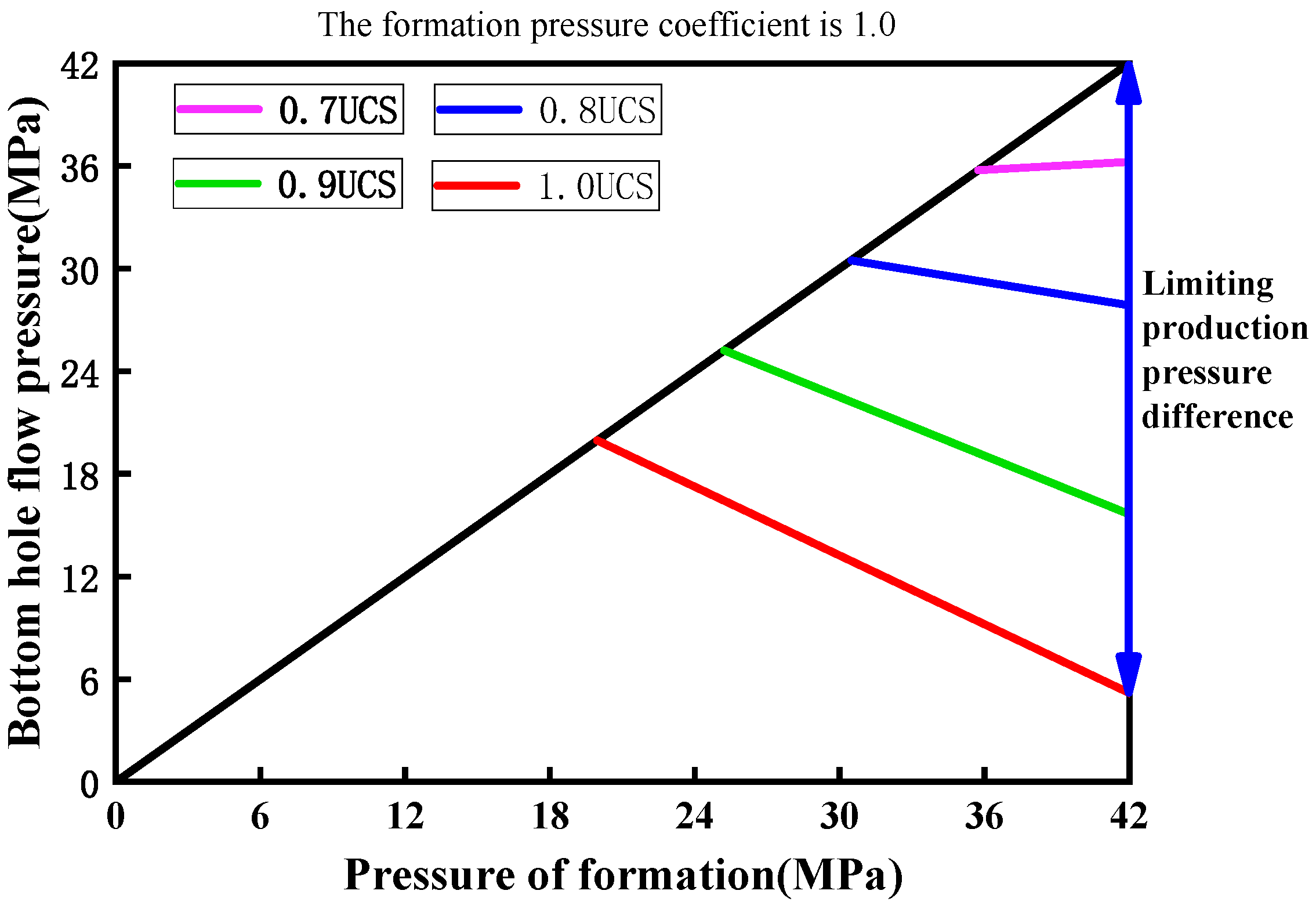
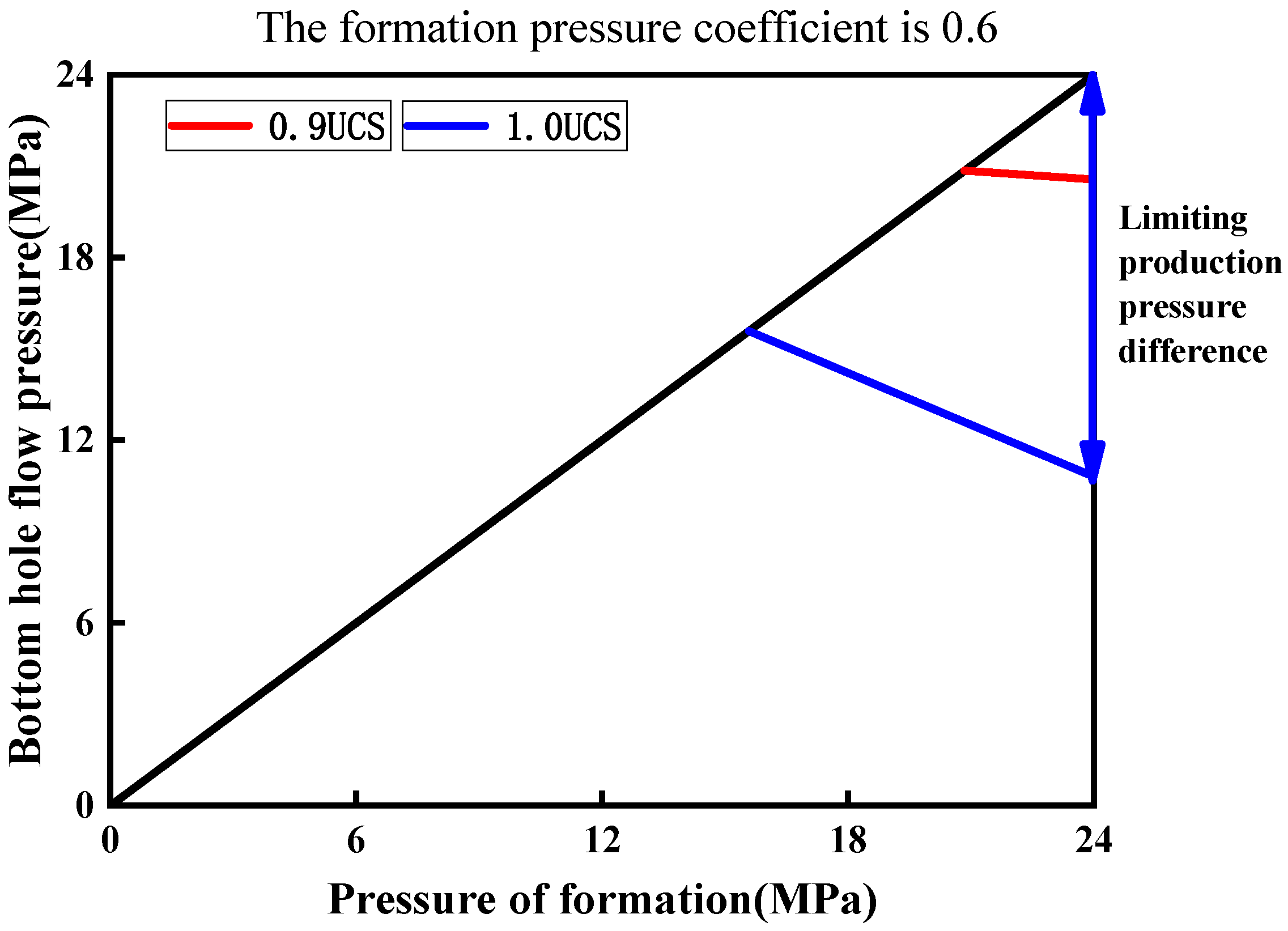
Many formations with moderate strength have high production rates in the initial stage of extraction. However, since the formations have not been damaged, solid-phase production does not occur initially. As production progresses, although the production rate decreases, due to factors such as pressure attenuation and water invasion, the formations are damaged and a large amount of solid-phase production occurs. This solid-phase production lasts for a long time and is difficult to prevent. Therefore, considering the prediction of the limit pressure difference for solid-phase production provides a theoretical basis for preventing solid-phase production.
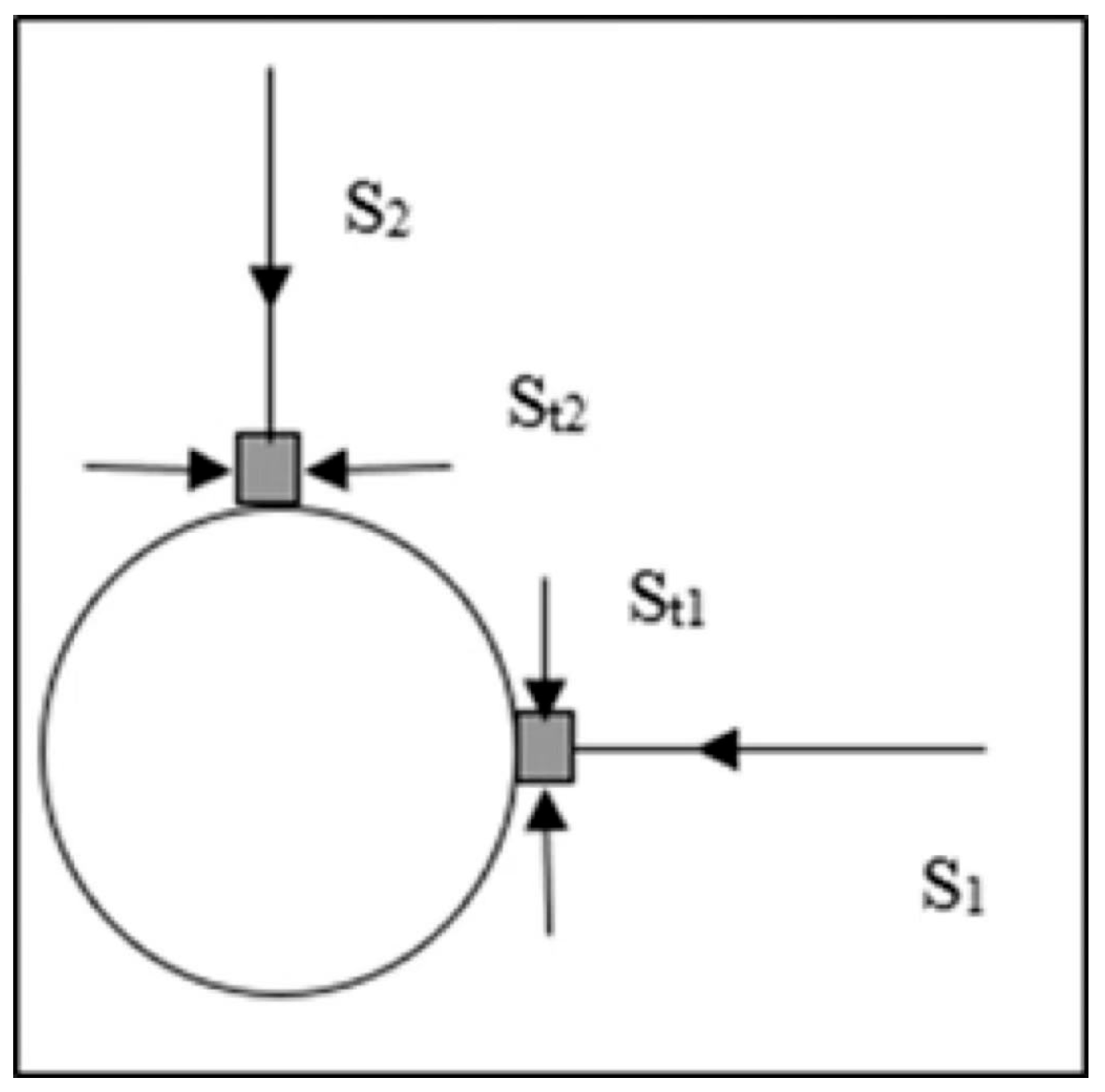
Assume that the total far-field overburden stress perpendicular to the wellbore or borehole is S1 and S2 (S1 > S2) (as shown in
Figure 1). For vertical open-hole completion reservoirs,
,
; for deviated wells or perforated completions,
,
. These are calculated based on the well deviation angle and borehole orientation through
,
, and
transformations.
,
, and
are the maximum and minimum horizontal principal stress, and the overburden rock pressure, respectively.
According to the small hole stress concentration and Biot effective stress theory, the tangential stress on the surface of the wellbore or blast hole is [
34]:
In the formula, represents the pressure within the wellbore or blast hole, is the current reservoir pressure, is the Poisson’s ratio, is the Biot constant, , is the rock matrix compression coefficient, and is the rock volume compression coefficient.
To prevent the solid phase from being produced from the formation, the maximum effective shear stress () should be less than the effective strength U of the formation.
The maximum bottom-hole pressure that can prevent the solid phase of the formation from being produced is as follows:
And the maximum production pressure difference is as follows:
In the initial stage of mining, the reservoir that does not produce solid phase gradually decreases from
to 0 as the reservoir pressure declines. At this point, the solid phase will be produced from the reservoir, and the reservoir pressure will drop to the critical reservoir pressure
: