Article

Research on Fault Diagnosis of Drilling Pump Fluid End Based on Time-Frequency Analysis and Convolutional Neural Network

by
Maolin Dai
1 and
Zhiqiang Huang
1,2,*
1
School of Mechatronic Engineering, Southwest Petroleum University, Chengdu 610500, China
2
Oil and Gas Equipment Technology Sharing and Service Platform of Sichuan Province, Southwest Petroleum University, Chengdu 610500, China
*
Author to whom correspondence should be addressed.
Processes 2024, 12(9), 1929; https://doi.org/10.3390/pr12091929
Submission received: 10 August 2024 / Revised: 30 August 2024 / Accepted: 2 September 2024 / Published: 8 September 2024
(This article belongs to the Special Issue Multiphase Flow and Optimal Design in Fluid Machinery)

Abstract

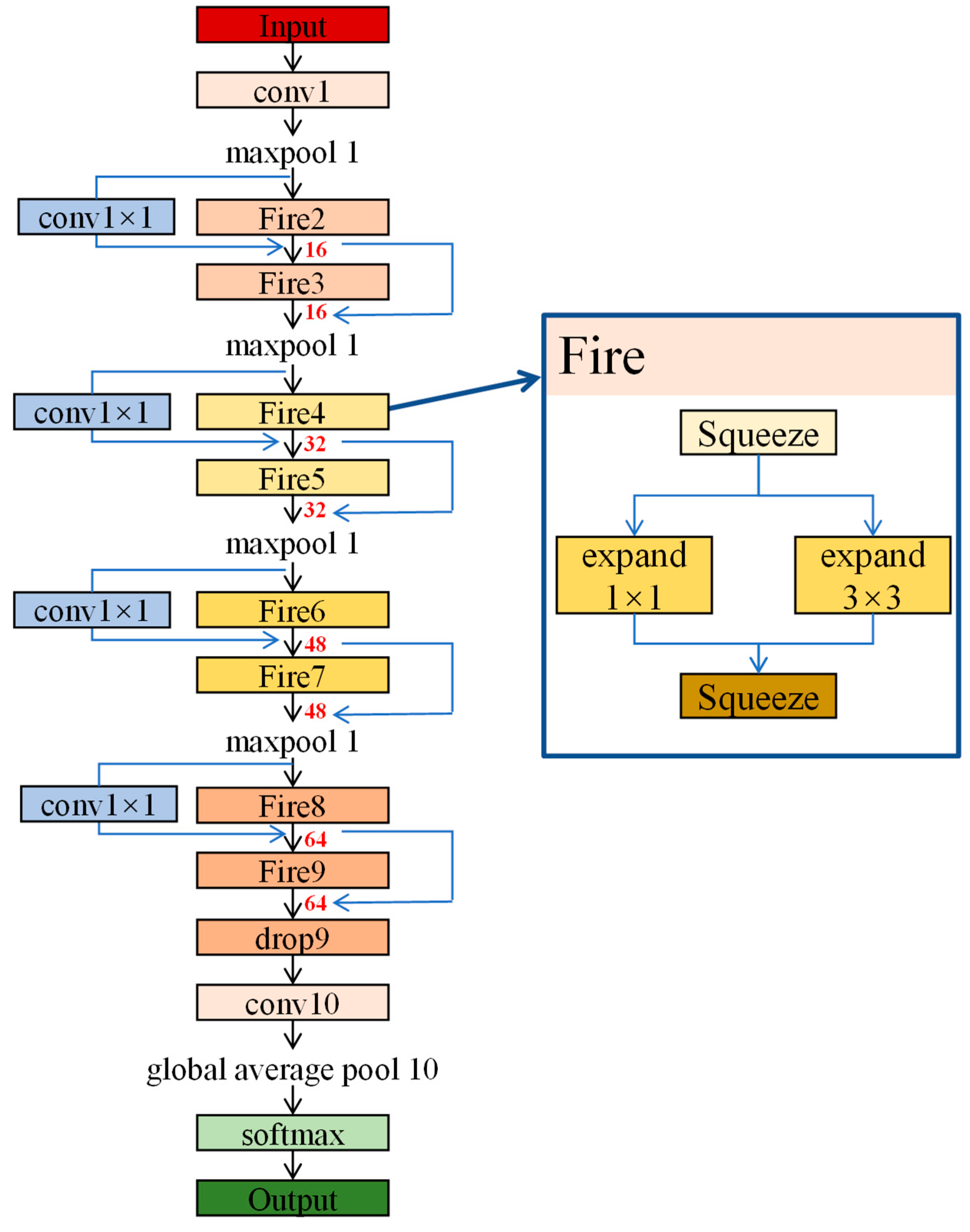
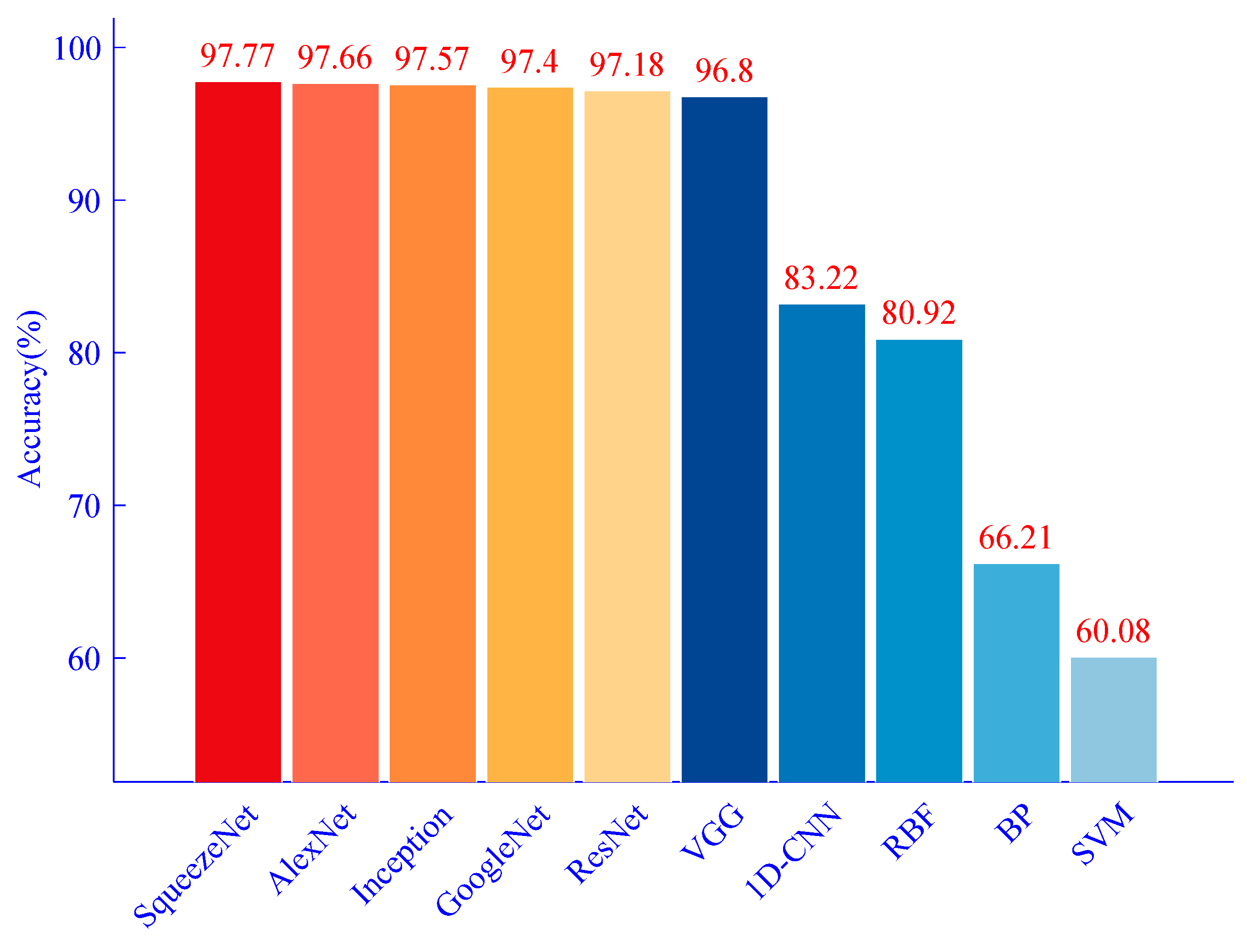
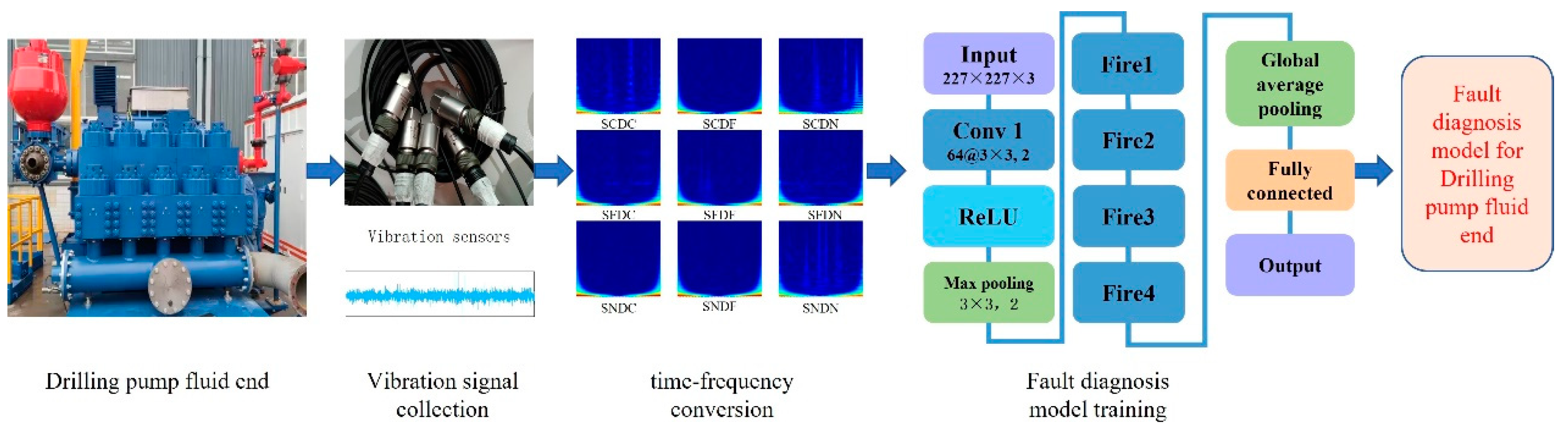
Operating in harsh environments, drilling pumps are highly susceptible to failure and challenging to diagnose. To enhance the fault diagnosis accuracy of the drilling pump fluid end and ensure the safety and stability of drilling operations, this paper proposes a fault diagnosis method based on time-frequency analysis and convolutional neural networks. Firstly, continuous wavelet transform (CWT) is used to convert the collected vibration signals into time-frequency diagrams, providing a comprehensive database for fault diagnosis. Next, a SqueezeNet-based fault diagnosis model is developed to identify faults. To validate the effectiveness of the proposed method, fault signals from the fluid end were collected, and fault diagnosis experiments were conducted. The experimental results demonstrated that the proposed method achieved an accuracy of 97.77% in diagnosing nine types of faults at the fluid end, effectively enabling precise fault diagnosis, which is higher than the accuracy of a 1D convolutional neural network by 14.55%. This study offers valuable insights into the fault diagnosis of drilling pumps and other complex equipment.
Keywords: drilling pump fluid end; fault diagnosis; continuous wavelet transform; SqueezeNet drilling pump fluid end; fault diagnosis; continuous wavelet transform; SqueezeNet