Article

CFD-DEM Simulation of Fast Fluidization of Fine Particles in a Micro Riser

1
School of Mathematics and Statistics, Chongqing Three Gorges University, Chongqing 404020, China
2
School of Mathematical Sciences, Yangzhou University, Yangzhou 225002, China
*
Author to whom correspondence should be addressed.
Processes 2023, 11(8), 2417; https://doi.org/10.3390/pr11082417
Submission received: 18 July 2023 / Revised: 29 July 2023 / Accepted: 4 August 2023 / Published: 11 August 2023
(This article belongs to the Special Issue 10th Anniversary of Processes: Women's Special Issue Series)

Abstract

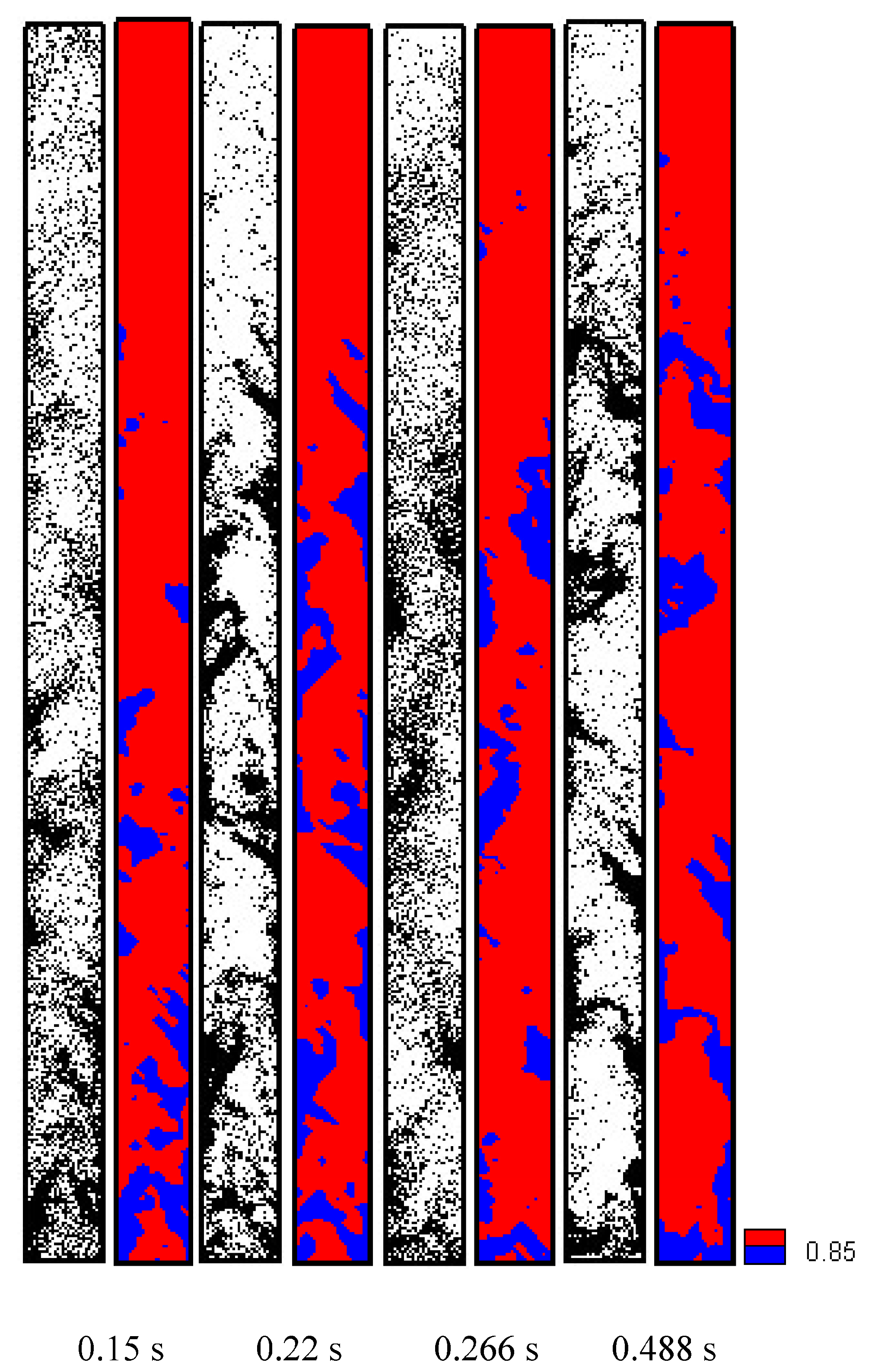
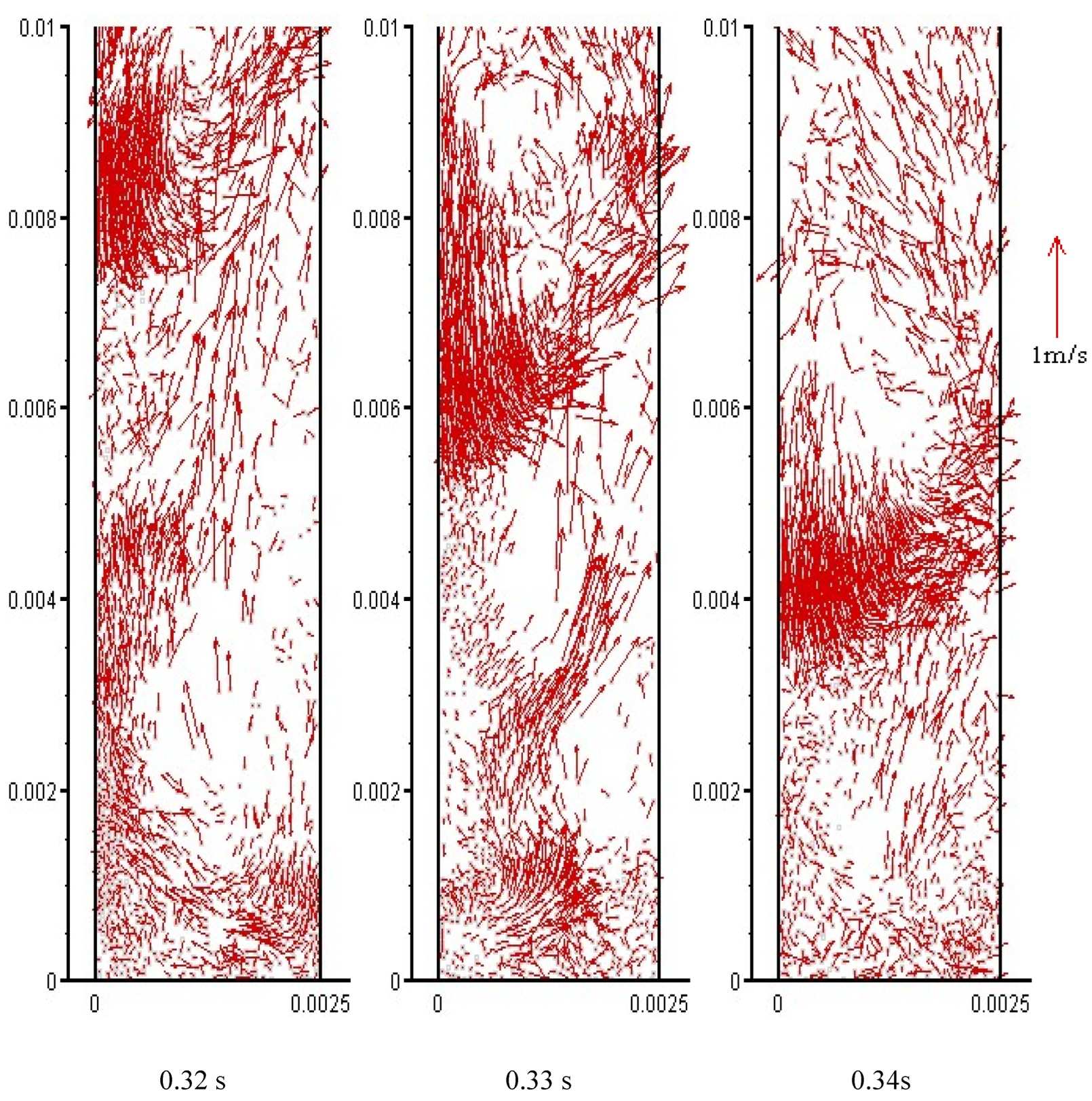
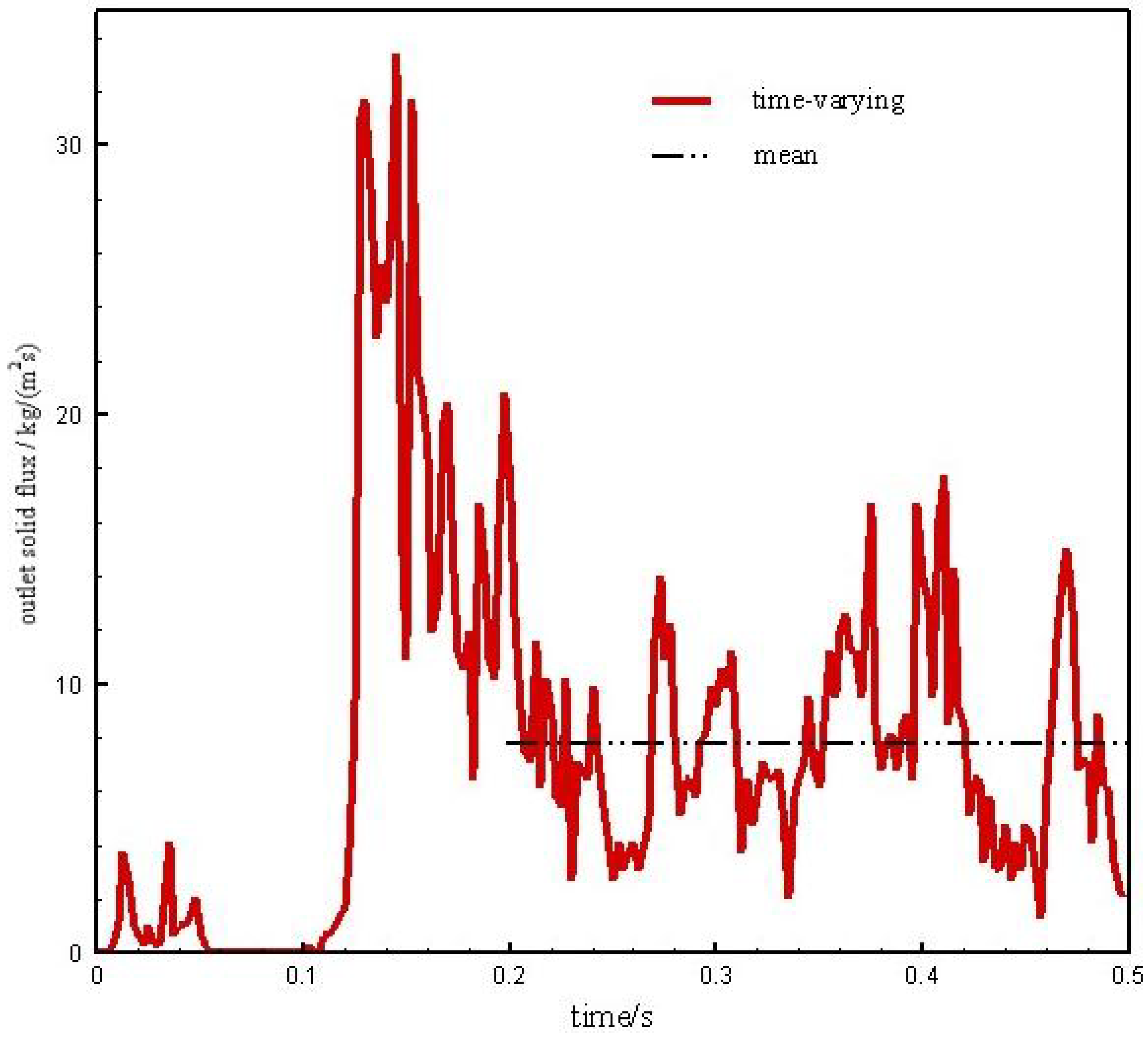
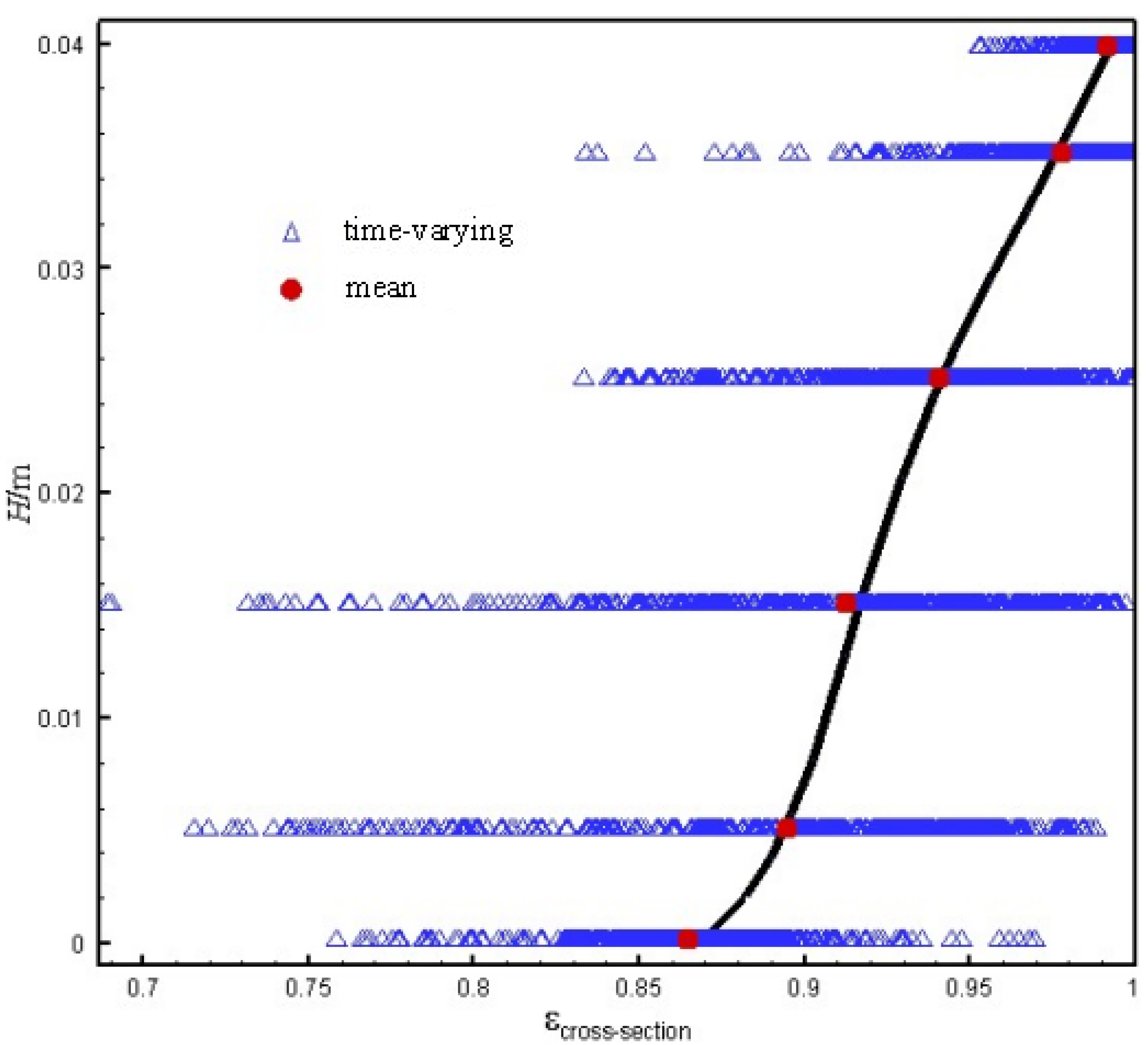
In recent years, the discrete element method (DEM) has gradually been applied to the traditional fluidization simulation of fine particles in a micro fluidized bed (MFB). The application of DEM in the simulating fast fluidization of fine particles in MFB has not yet received attention. This article presents a drag model that relies on the surrounding environment of particles, namely the particle circumstance-dependent drag model or PCDD model. Fast fluidization in an MFB of fine particles is simulated using DEM based on the PCDD model. Simulations indicate that the local structure in an MFB exhibits particle aggregation, which is a natural property of fast fluidization, forming a structure where a continuous dilute phase and dispersed concentrated phase coexist. There exists a strong effect of solid back-mixing in an MFB, leading to relatively low outlet solid flux. The gas back-mixing effect is, however, not so distinct. The axial porosity shows a monotonically increasing distribution with the bed height but does not strictly follow the single exponential distribution. The solid volume fraction at the bottom of the bed is significantly lower than the correlated value in CFB. The axial heterogeneous distribution of the cross-sectional average porosity in the lower half of the bed is also weakened. The radial porosity shows a higher distribution pattern in the central region and a lower one in the sidewall region.
Keywords: fluidized bed; DEM; numerical simulation; heterogeneous structure; cluster; back-mixing fluidized bed; DEM; numerical simulation; heterogeneous structure; cluster; back-mixing