Article

Feature Selection of Microarray Data Using Simulated Kalman Filter with Mutation

by
Nurhawani Ahmad Zamri
,
Nor Azlina Ab. Aziz
*,
Thangavel Bhuvaneswari
,
Nor Hidayati Abdul Aziz
and
Anith Khairunnisa Ghazali
Faculty of Engineering & Technology, Multimedia University, Melaka 75450, Malaysia
*
Author to whom correspondence should be addressed.
Processes 2023, 11(8), 2409; https://doi.org/10.3390/pr11082409
Submission received: 13 June 2023 / Revised: 24 July 2023 / Accepted: 31 July 2023 / Published: 10 August 2023

Abstract

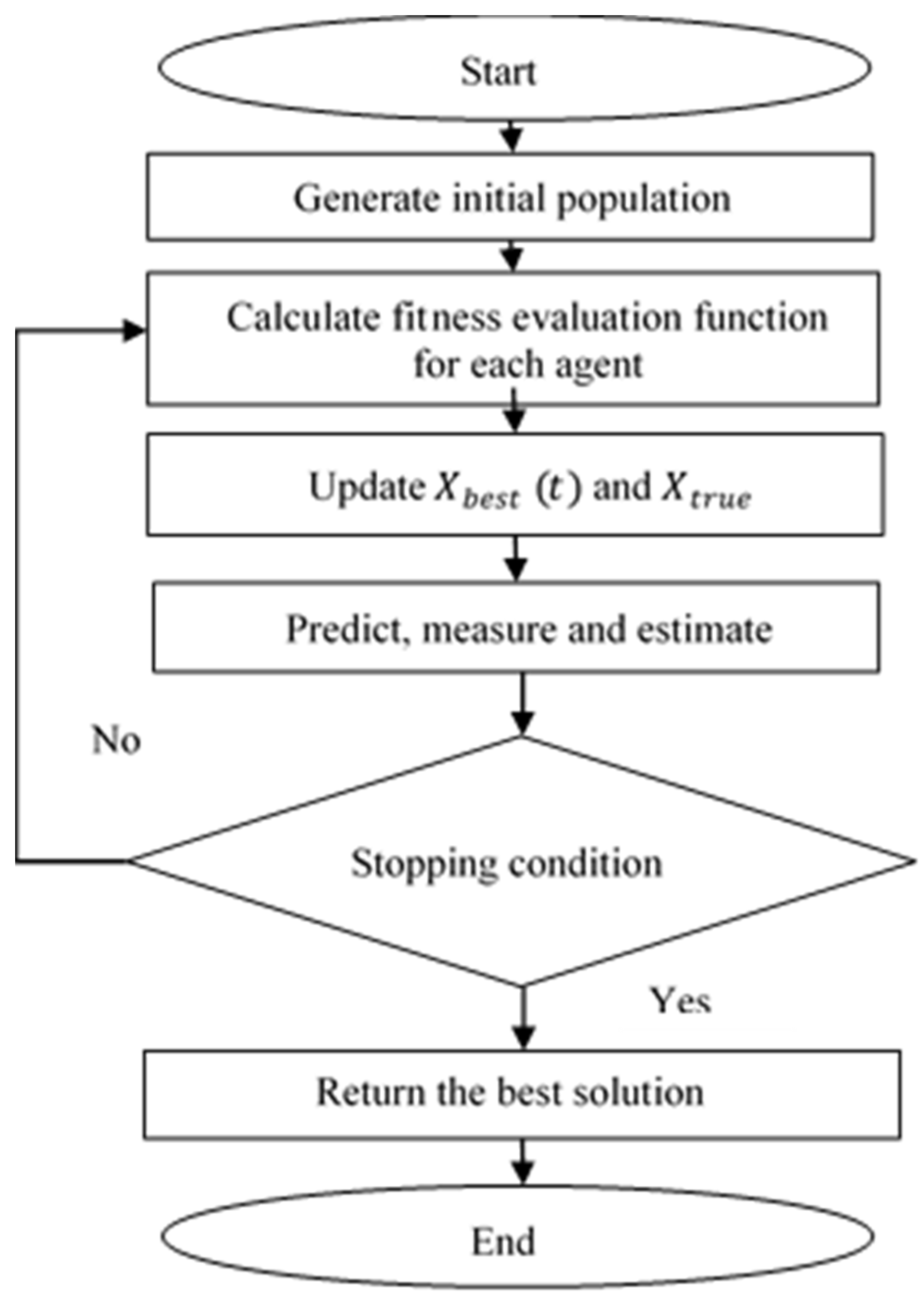
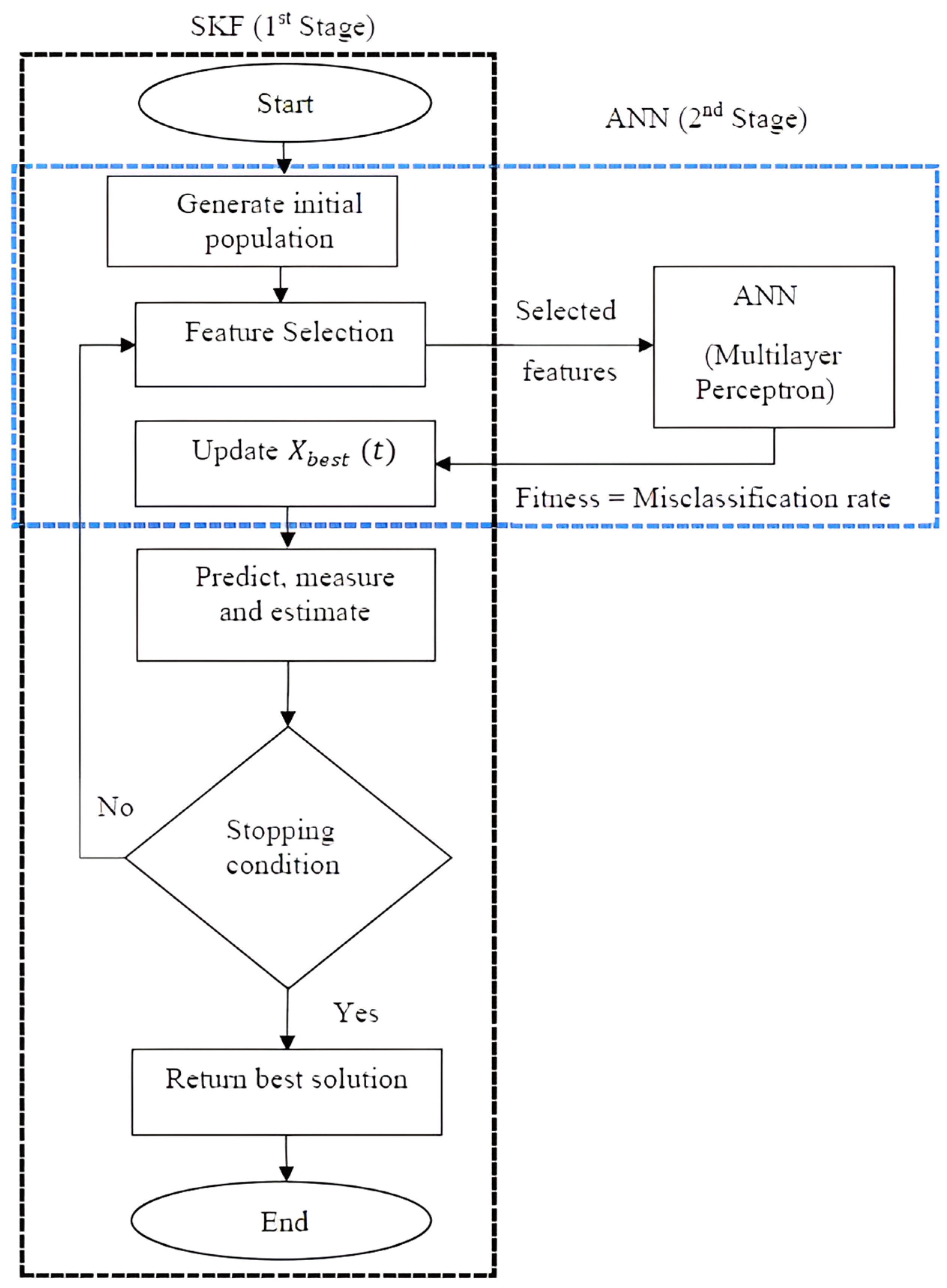
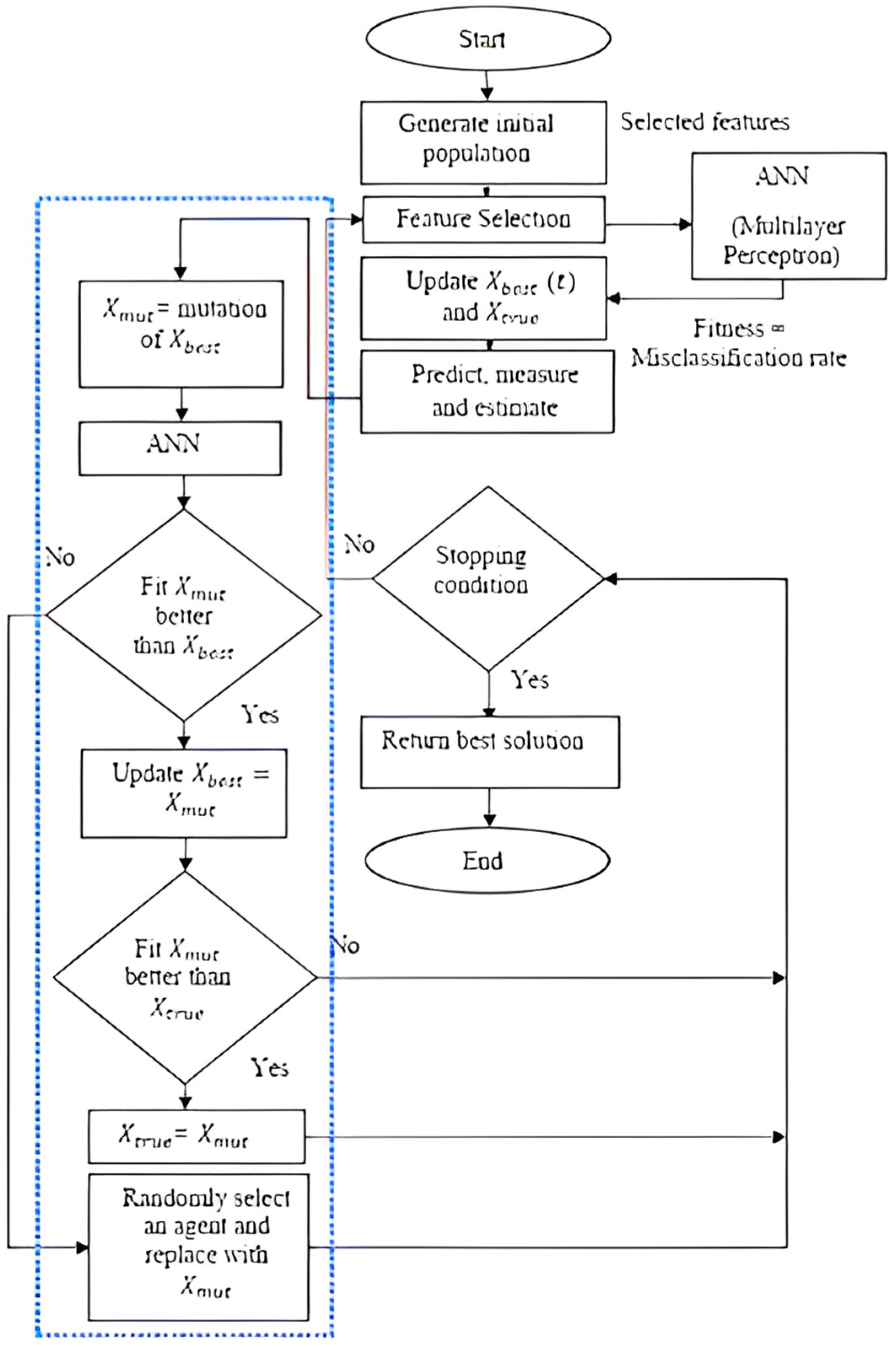
Microarrays have been proven to be beneficial for understanding the genetics of disease. They are used to assess many different types of cancers. Machine learning algorithms, like the artificial neural network (ANN), can be trained to determine whether a microarray sample is cancerous or not. The classification is performed using the features of DNA microarray data, which are composed of thousands of gene values. However, most of the gene values have been proven to be uninformative and redundant. Meanwhile, the number of the samples is significantly smaller in comparison to the number of genes. Therefore, this paper proposed the use of a simulated Kalman filter with mutation (SKF-MUT) for the feature selection of microarray data to enhance the classification accuracy of ANN. The algorithm is based on a metaheuristics optimization algorithm, inspired by the famous Kalman filter estimator. The mutation operator is proposed to enhance the performance of the original SKF in the selection of microarray features. Eight different benchmark datasets were used, which comprised: diffuse large b-cell lymphomas (DLBCL); prostate cancer; lung cancer; leukemia cancer; “small, round blue cell tumor” (SRBCT); brain tumor; nine types of human tumors; and 11 types of human tumors. These consist of both binary and multiclass datasets. The accuracy is taken as the performance measurement by considering the confusion matrix. Based on the results, SKF-MUT effectively selected the number of features needed, leading toward a higher classification accuracy ranging from 95% to 100%.
Keywords: feature selection; simulated Kalman filter; microarray data; classification; mutation feature selection; simulated Kalman filter; microarray data; classification; mutation