Article

A Methodology for Consolidation Effects of Inventory Management with Serially Dependent Random Demand


1
School of Industrial Engineering, Pontificia Universidad Católica de Valparaíso, Valparaíso 2362807, Chile
2
Eating Behavior Research Center, School of Nutrition and Dietetics, Faculty of Pharmacy, Universidad de Valparaíso, Valparaíso 2360102, Chile
3
Center of Micro-Bioinnovation, Faculty of Pharmacy, Universidad de Valparaíso, Valparaíso 2360102, Chile
4
COPPEAD, Universidade Federal de Rio de Janeiro, Rio de Janeiro 21941-918, Brazil
5
Centro de Estudios e Investigaciones Estadísticas, Escuela Superior Politécnica del Litoral, Guayaquil 090902, Ecuador
*
Author to whom correspondence should be addressed.
Processes 2023, 11(7), 2008; https://doi.org/10.3390/pr11072008
Submission received: 17 May 2023 / Revised: 20 June 2023 / Accepted: 22 June 2023 / Published: 5 July 2023

Abstract

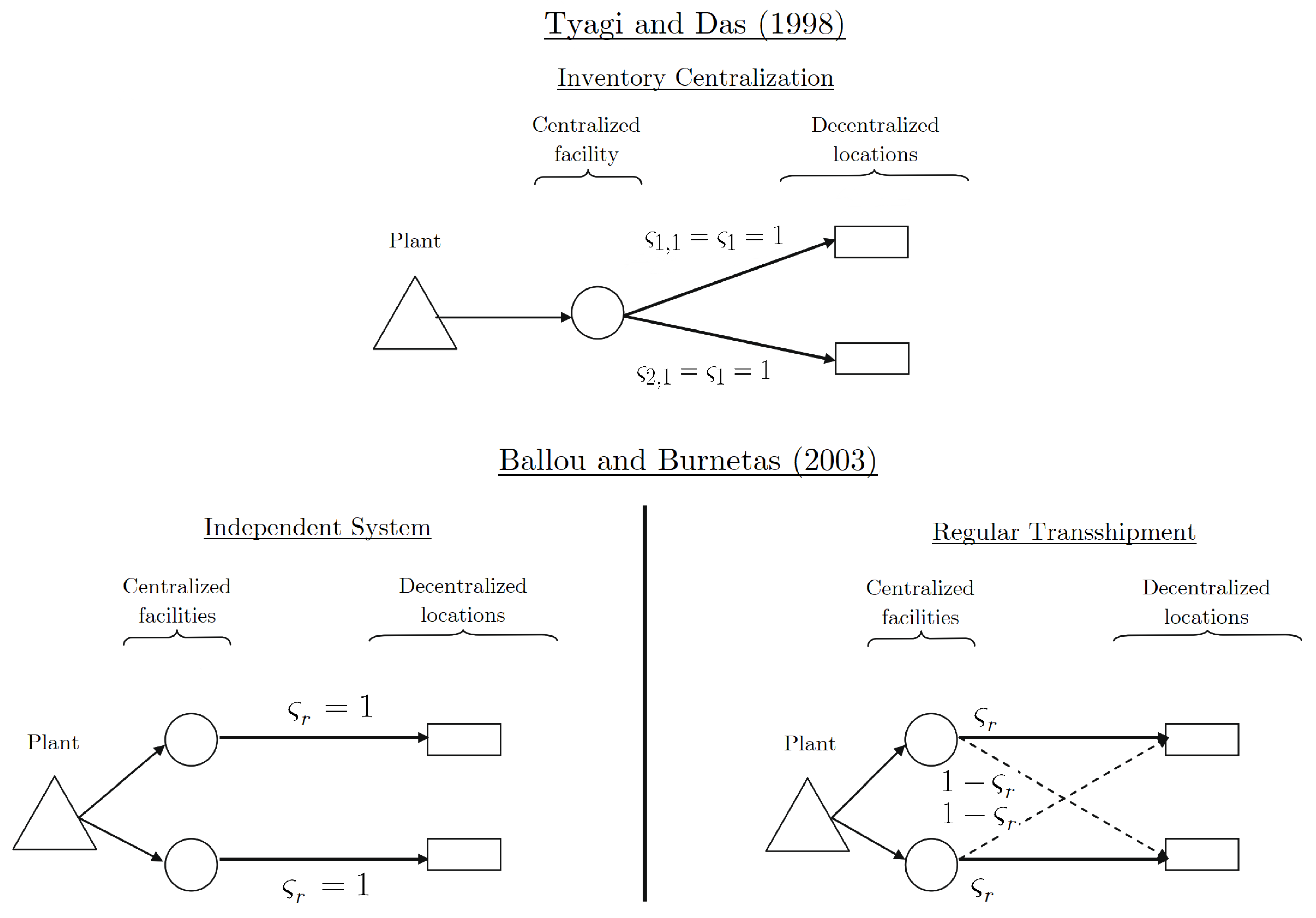
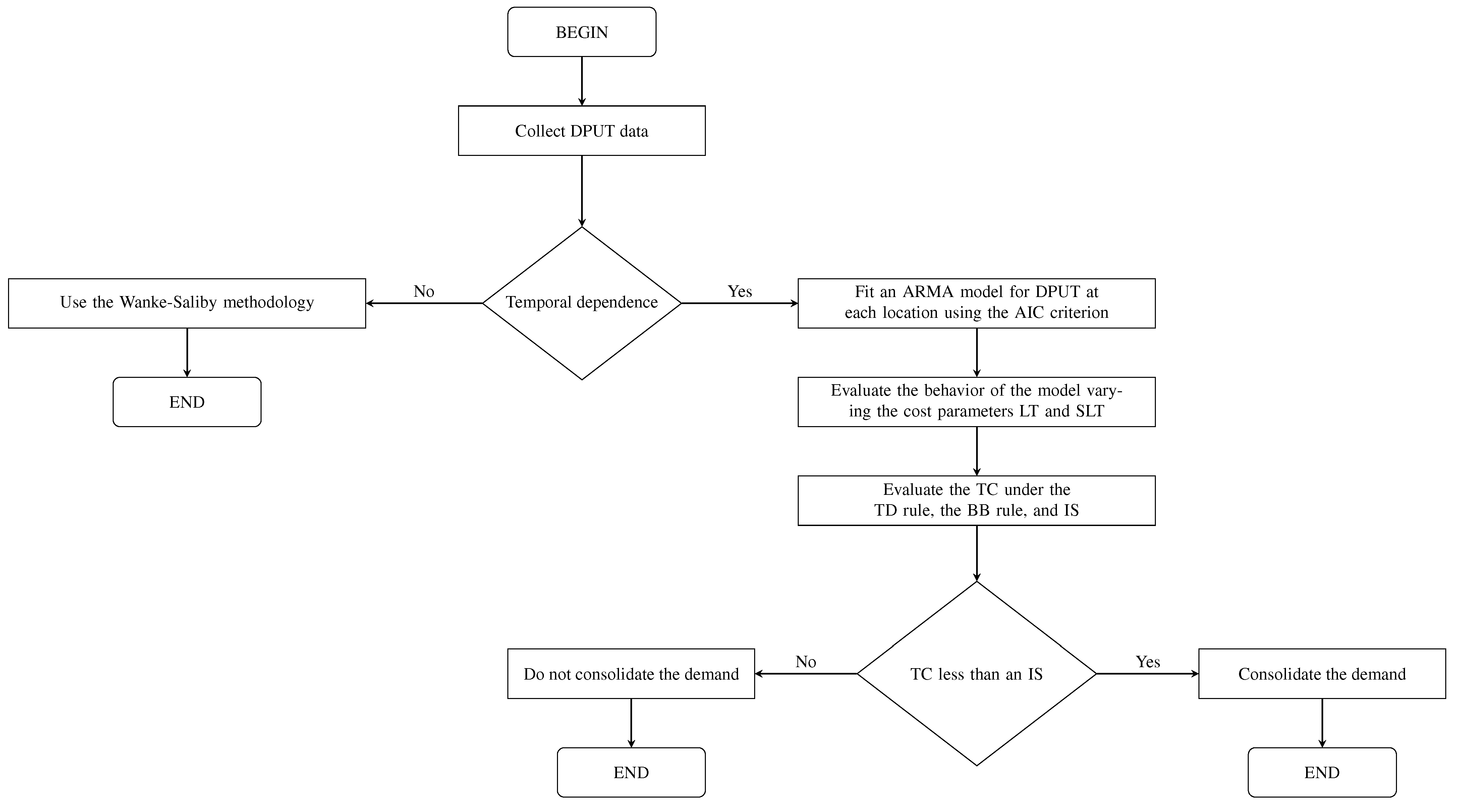
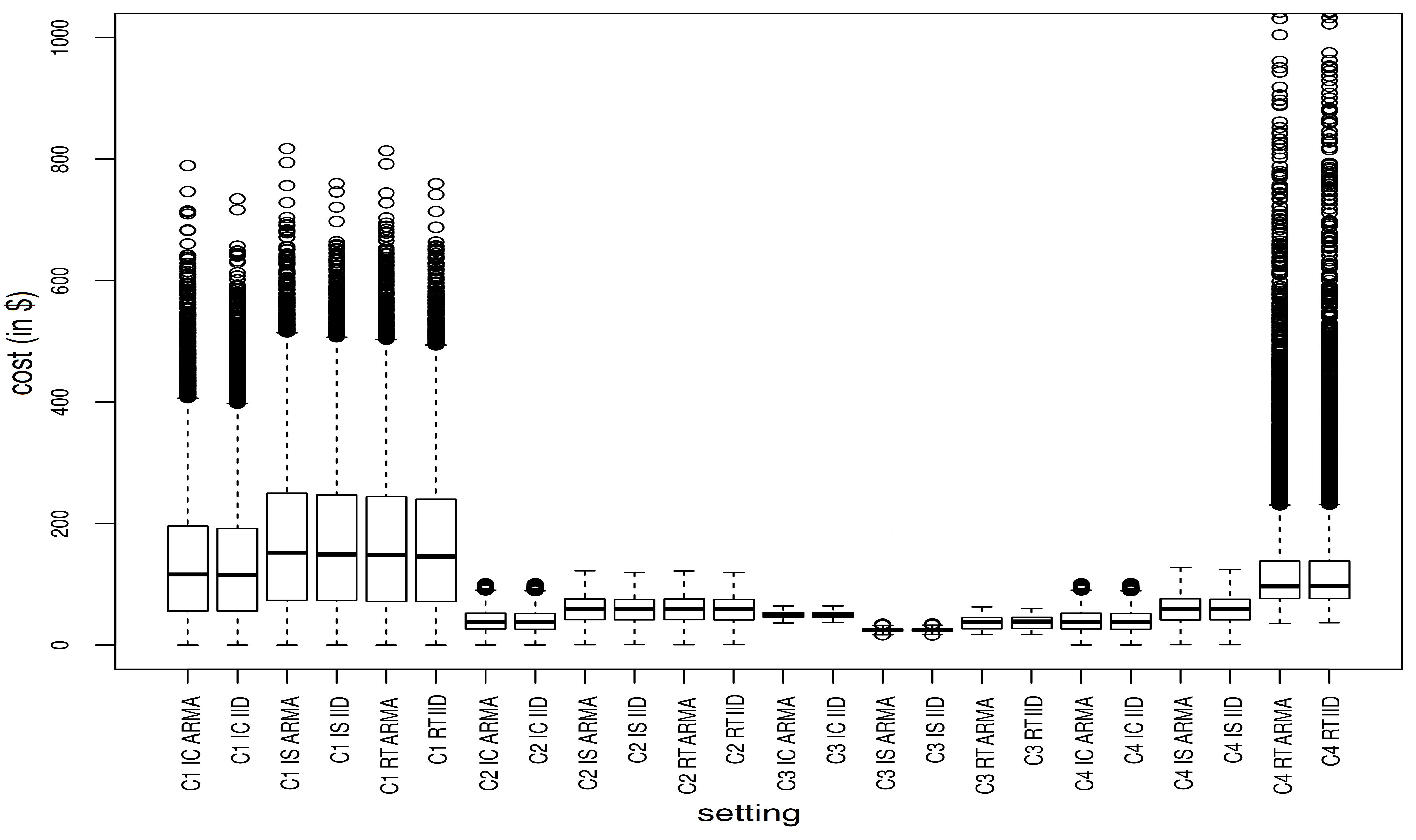
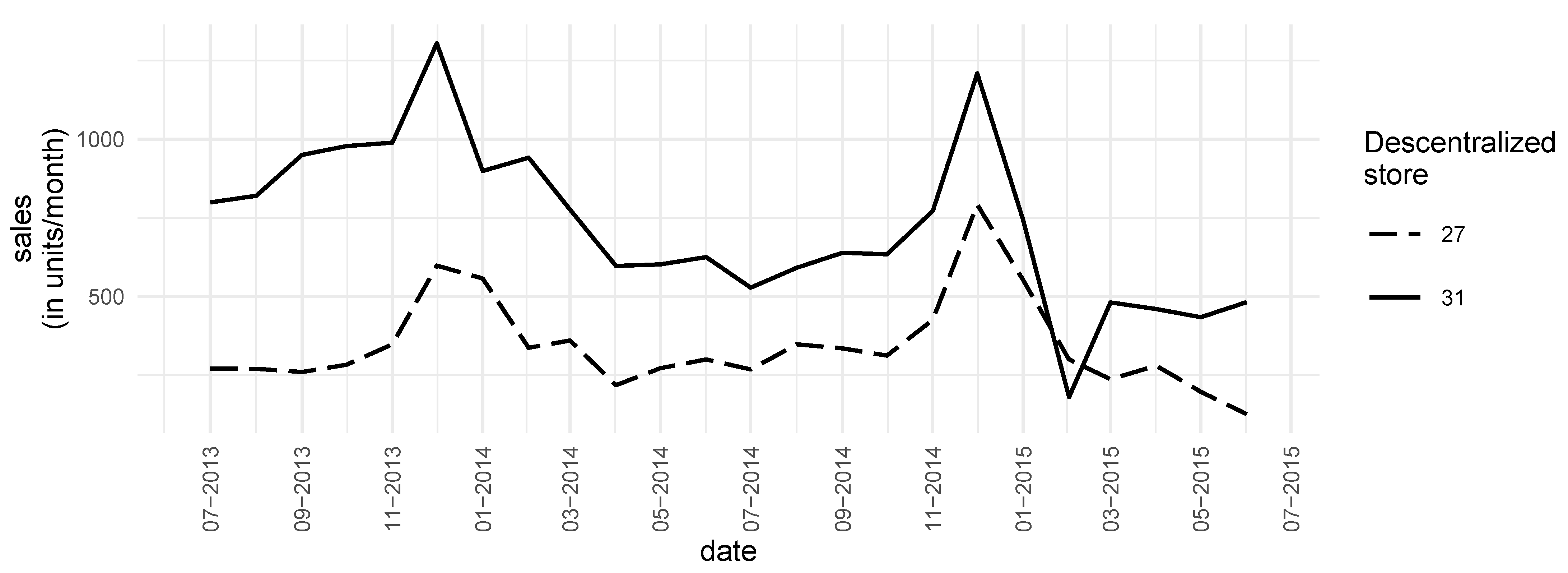
Most studies of inventory consolidation effects assume time-independent random demand. In this article, we consider time-dependence by incorporating an autoregressive moving average structure to model the demand for products. With this modeling approach, we analyze the effect of consolidation on inventory costs compared to a system without consolidation. We formulate an inventory setting based on continuous-review using allocation rules for regular transshipment and centralization, which establishes temporal structures of demand. Numerical simulations demonstrate that, under time-dependence, the demand conditional variance, based on past data, is less than the marginal variance. This finding favors dedicated locations for inventory replenishment. Additionally, temporal structures reduce the costs of maintaining safety stocks through regular transshipments when such temporal patterns exist. The obtained results are illustrated with an example using real-world data. Our investigation provides information for managing supply chains in the presence of time-patterned demands that can be of interest to decision-makers in the supply chain.
Keywords: allocation rules; ARMA models; copula method; dedicated facilities; mathematical programming; R software; regular transshipment; statistical methods allocation rules; ARMA models; copula method; dedicated facilities; mathematical programming; R software; regular transshipment; statistical methods