You are currently viewing a new version of our website. To view the old version click .
Processes
  • Article
  • Open Access

29 September 2023

Rheological Property for Nutritional Parameters Prediction of the Korla Pear

,
,
and
College of Mechanical and Electrical Engineering, Shihezi University, Shihezi 832003, China
*
Author to whom correspondence should be addressed.
These authors contributed equally to this work.
This article belongs to the Special Issue New Technologies for the Processing and Assessment of the Quality of Food Products

Abstract

This study aimed to investigate the feasibility of predicting nutritional parameters of the Korla pear using stress relaxation and creep parameters. A creep-recovery test and stress relaxation test were performed on the pear using a TA-XT plus Texture Analyzer. Creep and stress relaxation properties of the pear were characterized by a generalized Kelvin-Voigt model (six elements) and Maxwell model (seven elements), with coefficients of determination R2 of 0.992 and 0.998, respectively. The partial rheological parameters of the two models were significantly correlated with the total soluble solid (TSS), titratable acidity (TA), and solid acid ratio (RTT) of the pear (p < 0.05). Hence, the constructed stepwise multiple linear regression models can effectively predict three nutritional parameters (correlation coefficient r of prediction model > 0.7). The RMSE value of each nutritional parameters’ prediction model based on the creep parameters was smaller than that of the prediction models based on the stress relaxation parameters. Therefore, the models constructed using creep parameters are more stable and reliable for predicting the nutritional parameters of the Korla pear.

1. Introduction

The Korla pear is a bulk fruit of the Xinjiang forest fruit industry that generates foreign exchange and increases the income of farmers. The internal quality of pears after harvesting directly affects their economic value and market competitiveness. The grade of the Korla pear’s internal quality is assessed largely according to nutritional parameters, such as the total soluble solid (TSS), titratable acidity (TA), and solid acid ratio (RTT), among other factors. Currently, handheld refractometer and chemical reagent titration methods are typically used for testing (Hoehn et al., 2003) [1]. Because these nutritional parameters are tedious and time-consuming to determine, they are unable to meet the requirements of efficient multiple internal nutrient detection in the Korla pear.
The mechanical properties of fruits and vegetables greatly affect food quality. Stress relaxation and creep tests can determine the mechanical properties of a biological material and are also common rheological tests (Pereira and Gómez; Limanond et al., 2002, Wu et al., 2019) [2,3,4]. Rheology studies have been extensively performed on fruit and vegetables to understand the relationship among the structure, texture, and the changes induced by processing (Mohsenin, 1972; Edwards, 1999; Jack et al., 1995; Diamante and Umemoto, 2015) [5,6,7,8]. Wu and Abbott (2002) found that the hardness of tomatoes was correlated with their modulus of elasticity and relaxation time [9]. Ballabio et al. (2012) established the relationships between crispness and rheological parameters, predicting the apple crispness through a multivariate analysis [10]. Afkari-Sayyah et al. (2008) found that the creep characteristic parameters of apples were significantly correlated with their titratable acidity and soluble solids content [11]. López-Perea et al. (2012) showed that the β-glucan content, protein content, and malt extract content in barley seeds were significantly and positively correlated with the instantaneous elastic modulus, viscosity coefficient, and delay time of stress relaxation characteristics [12]. Subsequently, Nieto et al. (2013) found that the stress relaxation time of apples was significantly correlated with their SSC [13]. Based on these studies, Zhao et al. (2017) reported a correlation between the stress relaxation characteristic parameters of Fuji apples and their nutritional parameters and established a mathematical model for stress relaxation parameters to predict nutritional parameters [14]. Zhang et al. (2021) confirmed that the firmness, SSC, and crude fiber content of Chinese cabbage can be effectively predicted using relaxation parameters [15]. These studies show that the rheological characteristics of fruit are obtained by a compression measurement, which is expected to achieve the rapid detection of major nutritional parameters, such as total soluble solids content and titratable acidity of fruit.
There are few reports on the correlation between the rheological properties of the Korla pear and its nutritional parameters. Therefore, this study tested the rheological properties of the Korla pear; analyzed the correlation between creep characteristic parameters and stress relaxation characteristic parameters and TSS, TA, and RTT of Korla pear flesh; and constructed a mathematical model to predict these nutritional parameters for more efficient and accurate descriptions of the Korla pear. This study provides a research basis for the more efficient and accurate detection of multiple internal nutritional parameters in the Korla pear.

2. Materials and Methods

2.1. Samples

The pears were harvested at the green mature stage in September 2021 from an orchard in Korla, Xinjiang, China (41.45° N, 86.5° E). Samples with abnormal bruises or diseases were removed by an experienced fruit grower based on touch and visual inspection. The remaining fruits were immediately transported to a commercial cooling facility with temperatures ranging between −2 and 0 °C and 85–95% relative humidity (RH) for further testing. The basic physical properties of the pear samples are listed in Table 1.
Table 1. Material properties of the Korla pear sample.
The pear samples were randomly divided into 10 groups, each group containing 10 fruits, for a total of 100 fruit samples, stored at room temperature, and tested every three days. The nutritional compositions and rheological properties of the pear samples changed over time to ensure the diversity and universality of the samples. For each sample, the first rheological test was performed, followed by the nutritional parameters’ determination.

2.2. Rheology Test

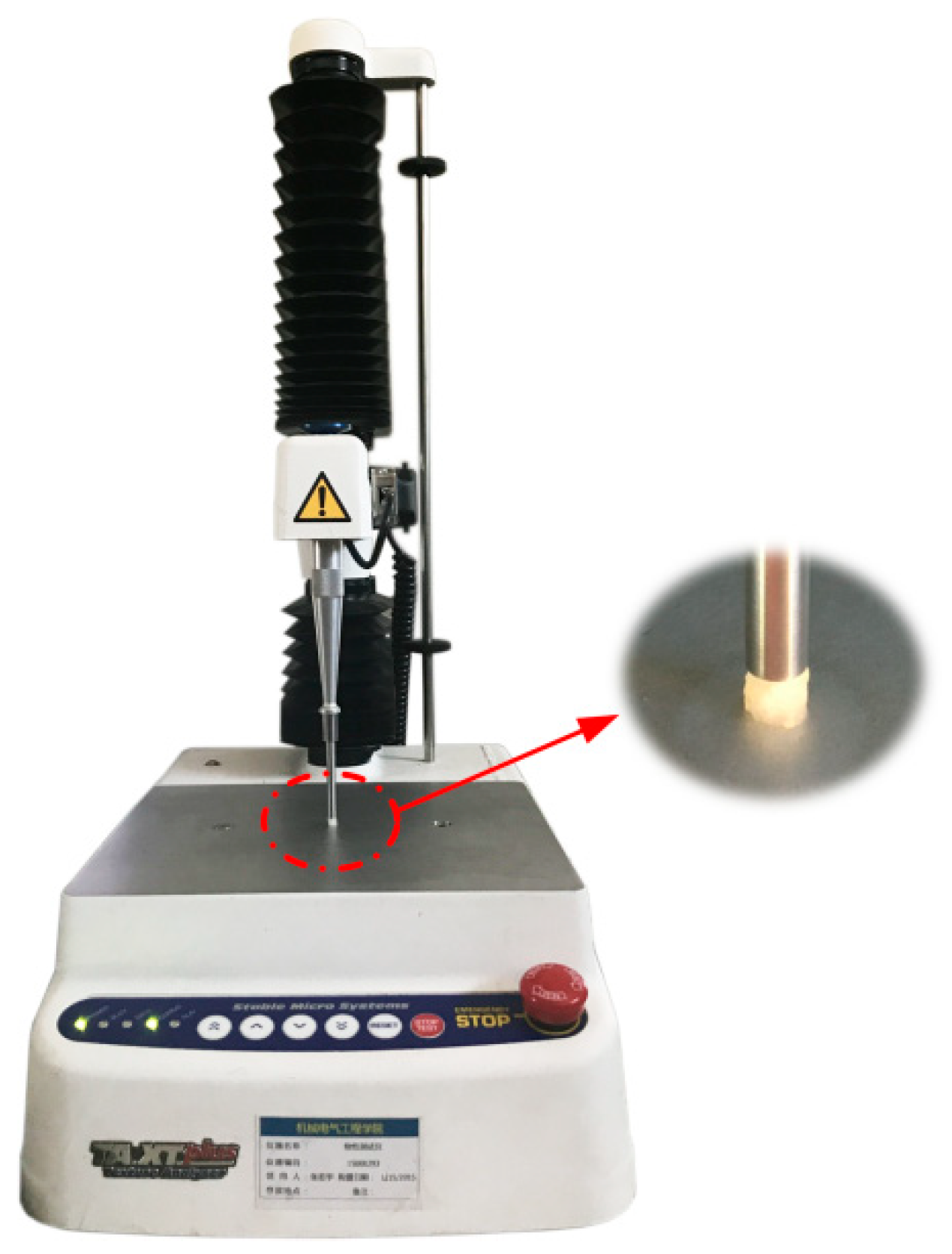
Six samples with a diameter of 5 mm and a height of 4 mm were taken from the equatorial part of the pear near the skin using a sampler, among which, three samples were used for a stress relaxation test and three samples were used for a creep test, and a special cutting tool was used to ensure that both ends of each sample were flush. A texture analyzer (TA.XT plus, Stable Micro System, Great Britain) with a cylindrical probe (5 mm diameter) was used for the rheology testing of the cylindrical sample (Figure 1).
Figure 1. Rheology test for the pear flesh.
During the creep test, to ensure that the deformation of the pear sample reached the maximum creep in the linear viscoelastic range, the pre-experiment determined a compressive load of 2 N, loading time of 180 s, unloading time of 180 s, speed of 1 mm/s before, during, and after the test, and a trigger force of 0.049 N.
For the stress relaxation test, to ensure that the deformation of the pear sample reaches the maximum elasticity in the linear viscoelastic range, the pre-experiment determined a compressive strain of 40%, a loading time of 180 s, a pre-test speed of 1 mm/s, a mid-test speed of 0.5 mm/s, a post-test speed of 10 mm/s, and a trigger force of 0.049 N.
For each test, silicone oil (Wu and Guo, 2010) was applied to the non-contacting side of the cylindrical sample and indenter before the test to prevent the sample from browning and experiencing water loss during the test [16].

2.3. Nutritional Parameters Measurements

The total soluble solid (TSS) content of the pear flesh was measured using a PR-101 handheld refractometer (ATAGO, Tokyo, Japan). The titratable acidity (TA) was titrated (Corollaro et al., 2014) [17] using an NaOH standard solution, and the solid acid ratio (RTT)was the ratio of total soluble solid (TSS) content and titratable acidity (TA). Each index was tested three times, and the average value was calculated.

2.4. Rheology Test Data Analysis

2.4.1. Creep Model

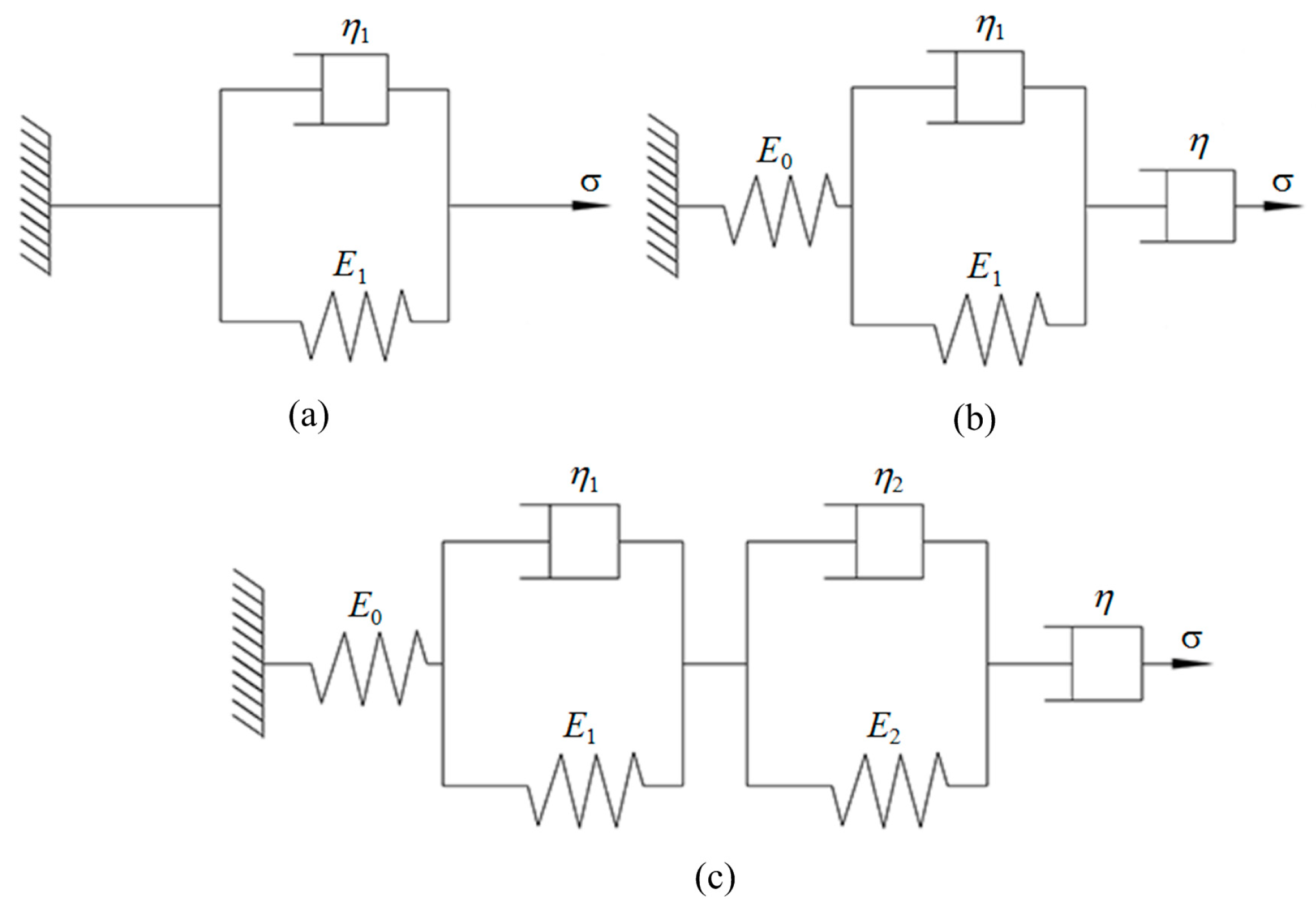
In this study, the Kelvin–Voigt model (Augusto et al., 2013) [18] (Figure 2a), the Burgers model (Cenkowski et al., 1991; Varith, 2008) [19,20] (Figure 2b), and the six-element generalized Kelvin–Voigt model (Martínez et al., 2007; Martínez et al., 2005; Wu and Guo, 2010) [16,21,22] (Figure 2c) were fitted to the pear flesh creep test data (Figure 2), and the model equation expressions are as follows:
ε c t = σ E 1 1 e t / T 1
ε t = σ E 0 + σ E 1 1 e t / T 1 + σ η t
ε t = σ E 0 + σ E 1 1 e t / T 1 + σ E 2 1 e t / T 2 + σ η t
where ε(t) is the corresponding strain at creep time t (%); t is the loading time (s); σ is the constant stress value (Pa); E0 is the instantaneous modulus of elasticity (Pa); E1 and E2 are the delayed moduli of elasticity (Pa); η is the viscosity coefficient of a Newtonian liquid (Pa·s); η1 and η2 are the viscosity coefficients of the Newtonian liquid in the Kelvin–Voigt cell (Pa·s); and T1 and T2 are the delay times (s, T1 = η1/E1, T2 = η2/E2).
Figure 2. Mechanical model for creep-recovery response of pear tissue: (a) Kelvin–Voigt model; (b) Burgers model; (c) Generalized Kelvin–Voigt model with six elements.

2.4.2. Stress Relaxation Model

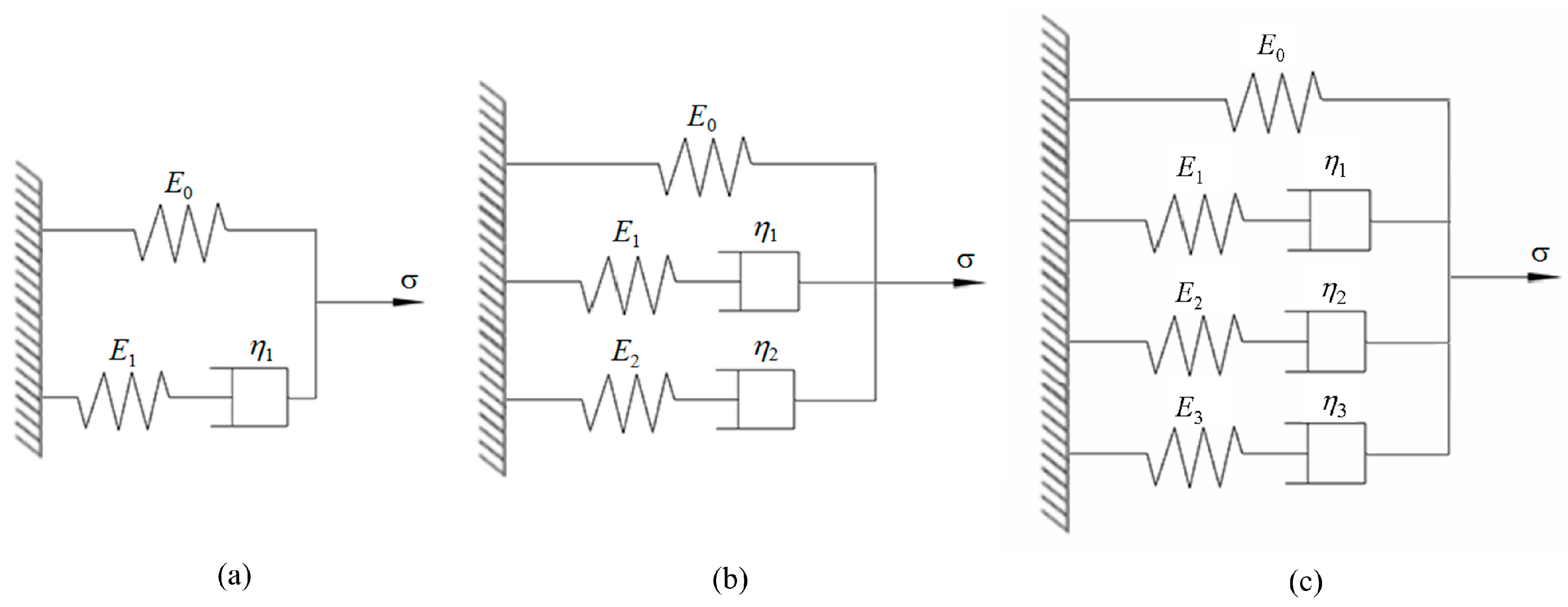
In this study, the three-element Maxwell model (Bargale et al., 1994; Gorji Chakespari et al., 2010) [23,24] (Figure 3a), the five-element generalized Maxwell model (Zhang et al., 2021) [15] (Figure 3b), and the seven-element generalized Maxwell model (Kaur et al., 2002; Hassan et al., 2005; Zhao et al., 2017) [14,25,26] (Figure 3c) were used to fit the stress relaxation test data of the pear flesh (Figure 3), and the model equation expressions can be defined as:
σ ( t ) = ε 0 E 0 + ε 0 E 1 e ( t / T 1 )
σ ( t ) = ε 0 E 0 + ε 0 E 1 e ( t / T 1 ) + ε 0 E 2 e ( t / T 2 )
σ ( t ) = ε 0 E 0 + ε 0 E 1 e ( t / T 1 ) + ε 0 E 2 e ( t / T 2 ) + ε 0 E 3 e ( t / T 3 )
where σε(t) is the stress value corresponding to the stress relaxation time t (Pa); t is the loading time (s); ε0 is the constant strain value (%); E0 is the instantaneous modulus of elasticity (Pa); E1, E2, and E3 are the delayed moduli of elasticity (Pa); η1, η2, and η3 are the viscosity coefficients of the Newtonian liquid in Maxwell cells (Pa·s); and T1, T2, and T3 are the delay times (s, T1 = η1/E1, T2 = η2/E2, T3 = η3/E3).
Figure 3. Mechanical model for the stress relaxation test of the pear tissue: (a) Maxwell model with three elements; (b) Generalized Maxwell model with five elements; (c) Generalized Maxwell model with seven elements.

2.5. Statistical Analysis and Construction Method of Prediction Model for Pear Nutritional Parameters

The aforementioned rheological models were used to fit the creep and stress relaxation test curves to obtain the corresponding rheological parameters. An amount of 100 fruit samples were divided into calibration and validation sets in a ratio of 3:1 (Zhang et al., 2014) [27]. The 75 samples in the calibration set were used to construct the prediction model for pear nutritional parameters, and the 25 samples in the validation set were used to verify this model. SPSS software (version 19.0) was used to analyze the correlation between the rheological characteristic parameters of the fruit samples and their nutritional parameters, and the correlation coefficients r and p were used to assess whether the correlations were significant (Gu et al., 2020) [28]. A stepwise multiple linear regression (SMLR) analysis was used to introduce each rheological parameter variable one by one into the regression equation shown below for F-testing, and variables with significance levels greater than 0.05 were excluded to obtain the best prediction model for the nutritional parameters.
Y = b 0 + b 1 X 1 + b 2 X 2 + + b n X n
where Y is the nutritional parameters, X1Xn are the rheological parameters, b0 is the intercept of the prediction model equation, and b1bn are the equation regression coefficients.
The reliability of the model was initially judged by the correlation coefficient r and standard error RMSE of the prediction model; the closer the correlation coefficient r was to 1 and the smaller the standard error RMSE, the more reliable the model. The error analysis and t-tests were performed on the measured values and the predicted values of the prediction model, and the stability of the prediction model of nutritional parameters was verified based on the results of the analysis of differences between groups.

3. Results and Discussion

3.1. Curve Fitting

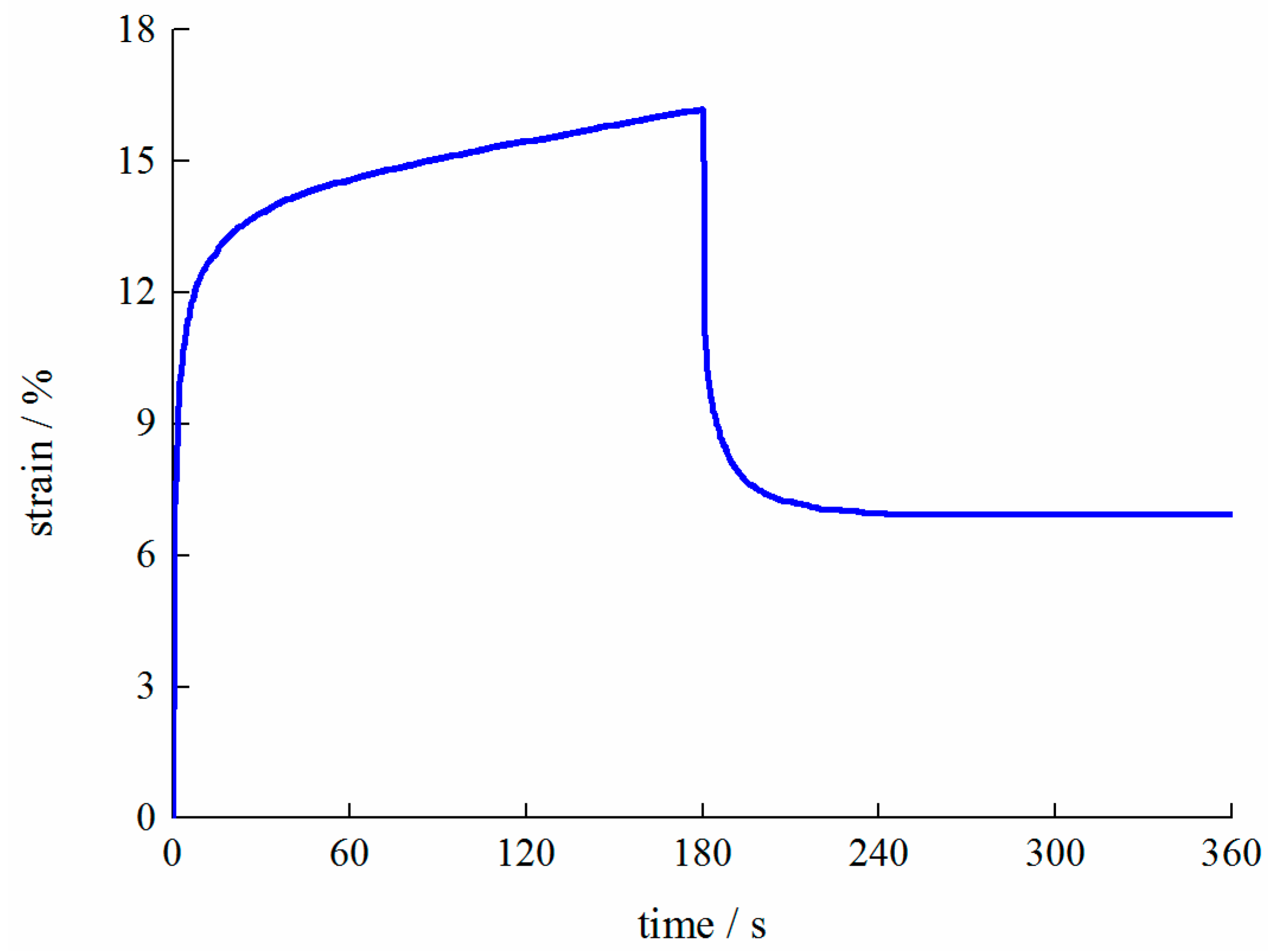
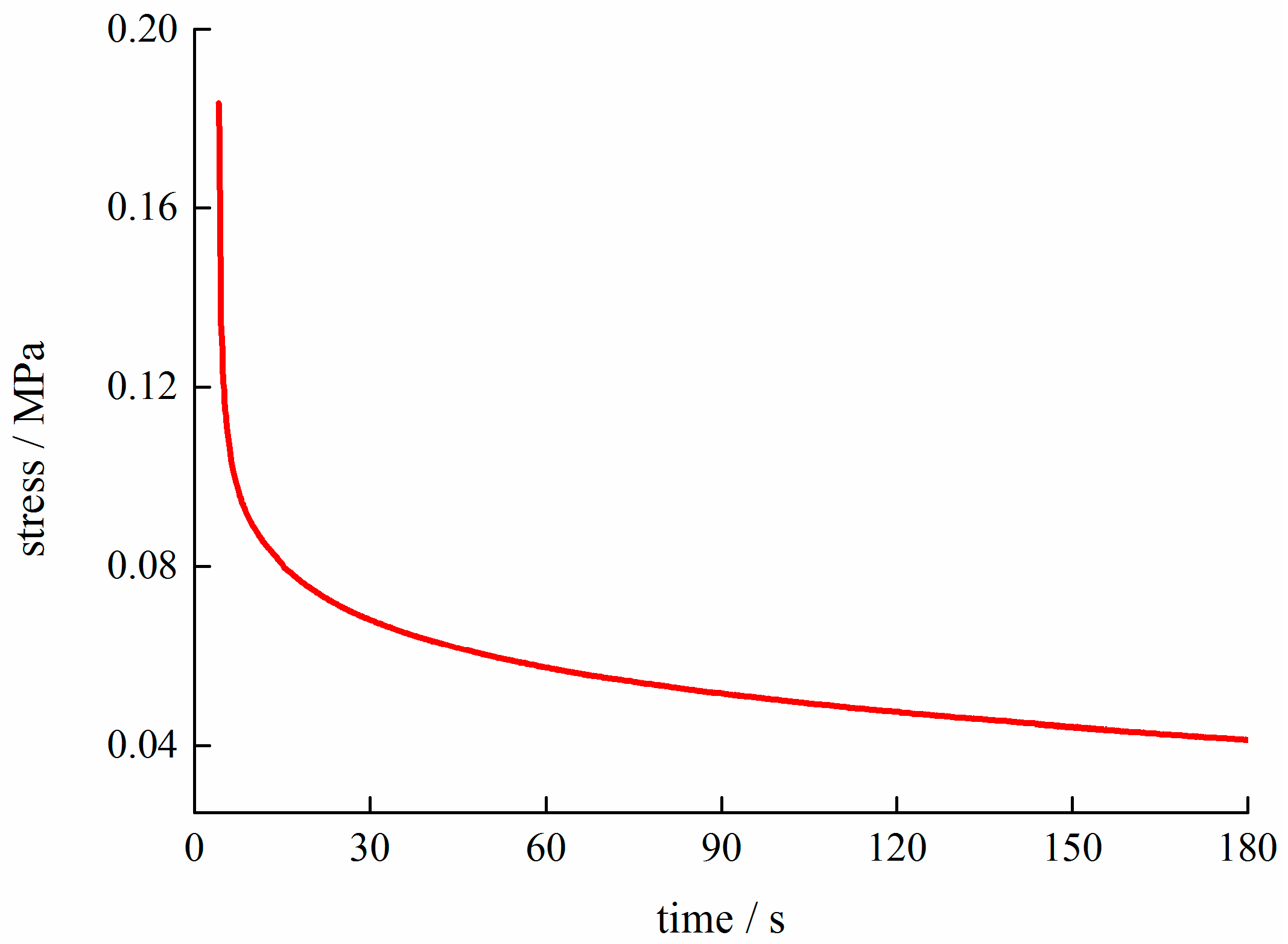
Figure 4 and Figure 5 depict the typical creep recovery and stress relaxation curves of the pear flesh, respectively. As Table 2 shows, for the creep curves, when the Kelvin–Voigt model, Burgers model, and Generalized Kelvin–Voigt model with six elements were, respectively, used to fit the creep segments, the mean value of the fitted coefficient of determination R2 for the Generalized Kelvin–Voigt model with six elements was 0.992, with the smallest coefficient of variation and the most stable model-fitting effect. For the stress relaxation curves, when the Maxwell model with three elements, Generalized Maxwell model with five elements, and Generalized Maxwell model with seven elements were used to fit the relaxation section, the average value of the fitted coefficient of determination R2 of the Generalized Maxwell model with seven elements was 0.998, with the smallest coefficient of variation and the most stable model fitting effect. Therefore, the rheological parameters fitted by the Generalized Kelvin–Voigt model with six elements and the generalized Maxwell model with seven elements were used to predict the nutritional parameters of the pear.
Figure 4. Typical creep-recovery curve of the pear flesh.
Figure 5. Typical stress relaxation curve of the pear flesh.
Table 2. Fitting results of creep and stress relaxation models.

3.2. Correlation between Rheological Property Parameters of the Pear

The Pearson correlation coefficient of two variables with correlation, which takes the range of −1 ≤ r ≤ 1, is used to measure the closeness of correlation between two variable factors. Correlation coefficients r and p (two-tailed) were used to assess the significance of the correlation. When the correlation coefficient r is positive, there is a positive correlation between the two variables; when r is negative, there is a negative correlation; the closer the absolute value of the correlation coefficient |r| is to 1, the higher the correlation between the two variables. When |r| ≥ 0.8, there is a strong correlation between the two variables; when 0.5 ≤ |r| < 0.8, there is a moderate correlation between the two variables; when 0.3 ≤ |r| < 0.5, there is a weak correlation between the two variables; and when 0 < |r| < 0.3, there is a very weak or no correlation between the two variables.
Table 3 shows that there is a highly significant correlation (p < 0.01) between the creep parameters of the pulp fraction of the balsam pear based on the Generalized Kelvin–Voigt model with six elements, with the highest correlation (r = 0.813) between the delayed elastic modulus E1 and the viscosity coefficient η1. This indicates that the nine creep parameters obtained by fitting the Generalized Kelvin–Voigt model with six elements also have a large amount of repetitive information expression for the rheological properties of pear.
Table 3. Correlation coefficients among the creep parameters of the pear flesh.
From Table 4, it can be seen that there is a significant correlation (p < 0.05) between some stress relaxation parameters of balsam pear pulp based on the generalized Maxwell model with seven elements, and the highest correlation (r = 0.857) between the delayed elastic modulus E3 and stress relaxation time T2. There is a highly significant correlation (p < 0.01) between some stress relaxation parameters, and the highest correlation between the delayed elastic modulus E2 and viscosity coefficient η2 (r = 0.982). This indicates that the ten stress relaxation parameters obtained by fitting the generalized Maxwell model with seven elements express a large amount of repetitive information on the rheological properties of the pear.
Table 4. Correlation coefficients among the stress relaxation parameters of the pear flesh.

3.3. Correlation of Rheological Characteristics Parameters of the Pear with Its Nutritional Parameters

As can be seen from Table 5, among the creep parameters obtained by fitting the Generalized Kelvin–Voigt model with six elements, the viscosity coefficient η was highly significantly positively correlated with the total soluble solids content TSS (p = 0.004 < 0.01), the delayed elastic modulus E1 was significantly positively correlated with it (p = 0.016 < 0.05), and both parameters were strongly correlated with TSS. Only the delayed elastic modulus E2 was significantly negatively correlated with TA (p = 0.045, 0.6 < |r| < 0.8), while the delayed elastic modulus E1 was highly significantly positively correlated with RTT (p = 0.005) and strongly correlated with it (|r| > 0.8), and the viscosity coefficient η2 was significantly positively correlated with it (p = 0.037, 0.6 < |r| < 0.8). This suggests that the three nutritional parameters of pear flesh can be predicted using the parameters of the Generalized Kelvin–Voigt model with six elements.
Table 5. Correlation analyses between creep parameters and nutritional parameters.
As can be seen from Table 6, among the stress relaxation parameters obtained by fitting the Generalized Maxwell model with seven elements, the delayed elastic modulus E1 (p = 0.042) and viscosity coefficient η1 (p = 0.040) were significantly negatively correlated with the TSS (0.5 < |r| < 0.8), and the stress relaxation time T1 (p = 0.018) was significantly positively correlated with it (0.5 < |r| < 0.8). In terms of TA, the delayed elastic modulus E2 (p = 0.023) and viscosity coefficient η2 (p = 0.028) were significantly positively correlated (0.5 < |r| < 0.8); for RTT, the delayed elastic modulus E2 (p = 0.034), viscosity coefficient η2 (p = 0.038), η3 (p = 0.014), stress relaxation time T1 (p = 0.033), and T3 (p = 0.036) were significantly correlated (0.5 < |r| < 0.8). This suggests that the three nutritional parameters of the pear flesh can be predicted using the delayed elastic moduli E1, E2, and E3, viscosity coefficient σ, η1, η2, η3, and delay times T1 and T3 obtained by fitting the generalized Maxwell model with seven elements.
Table 6. Correlation analyses between stress relaxation parameters and nutritional parameters.

3.4. Predictive Modeling of Pear Nutritional Parameters

The stepwise multiple linear regression (SMLR) analysis was performed with nine parameters in the generalized Kelvin–Voigt model with six elements and ten parameters in the generalized Maxwell model with seven elements as independent variables and nutritional parameters as dependent variables. The SMLR method was used to eliminate the problem of multicollinearity among rheological parameters and reduce the redundancy of rheological information expression to construct each model for predicting TSS, TA, and RTT (see Table 7). For the models of the creep parameter and stress relaxation parameter predicting the TSS and RTT of the pear, respectively, their correlation coefficients r were higher than 0.9; the models of rheological parameters predicting TA had slightly lower correlation coefficients, but they were also higher than 0.7; all models were statistically significant by significance test (p < 0.05), and they effectively predicted each nutritional parameter.
Table 7. Stepwise multi-linear regression for each nutritional parameters based on rheology parameters.
With the exception of the TA prediction model, each of the rheological parameter prediction models contained two variables. Because the delay time T (T = η/E) is the result of the calculation of the viscosity coefficient and elastic modulus, the viscosity and elasticity factors exist in all models, indicating that the elasticity and viscosity of pear flesh have a close relationship with its nutritional parameters and can comprehensively reflect the internal quality characteristics of the pear.
From the RMSE values of the standard errors in Table 7, it can be seen that the standard errors of the prediction of each nutritional parameters model constructed based on the creep parameters of pear are smaller than those of the prediction model constructed by stress relaxation parameters, and the dispersion degree is also smaller. Therefore, the prediction model of the nutritional parameters of pears constructed based on creep parameters is more stable and reliable.

3.5. Validation of the Prediction Model of Nutritional Parameters of Pear

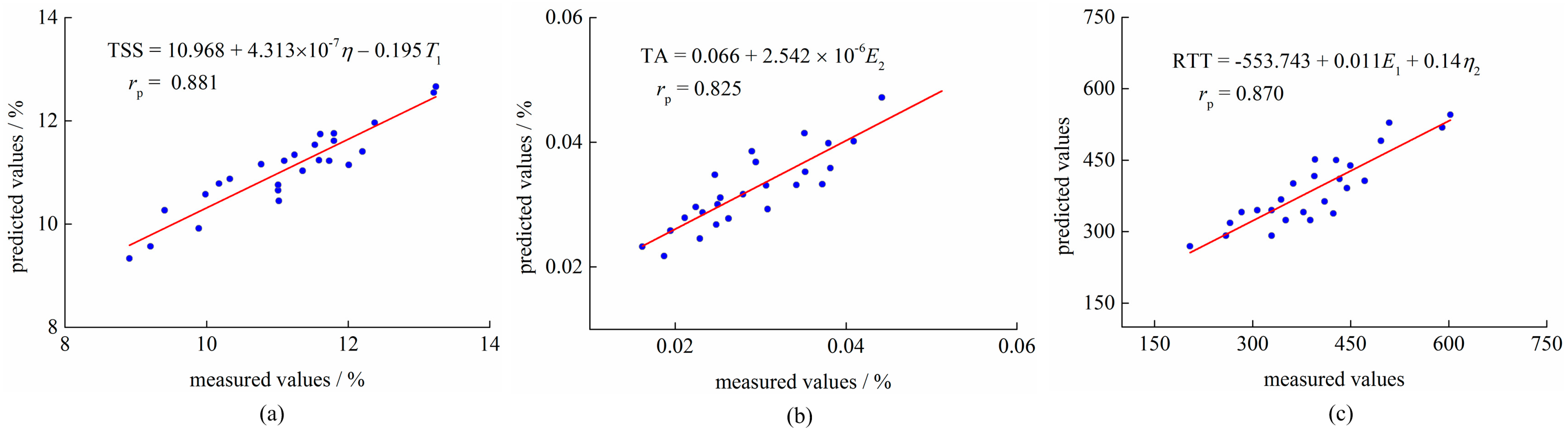
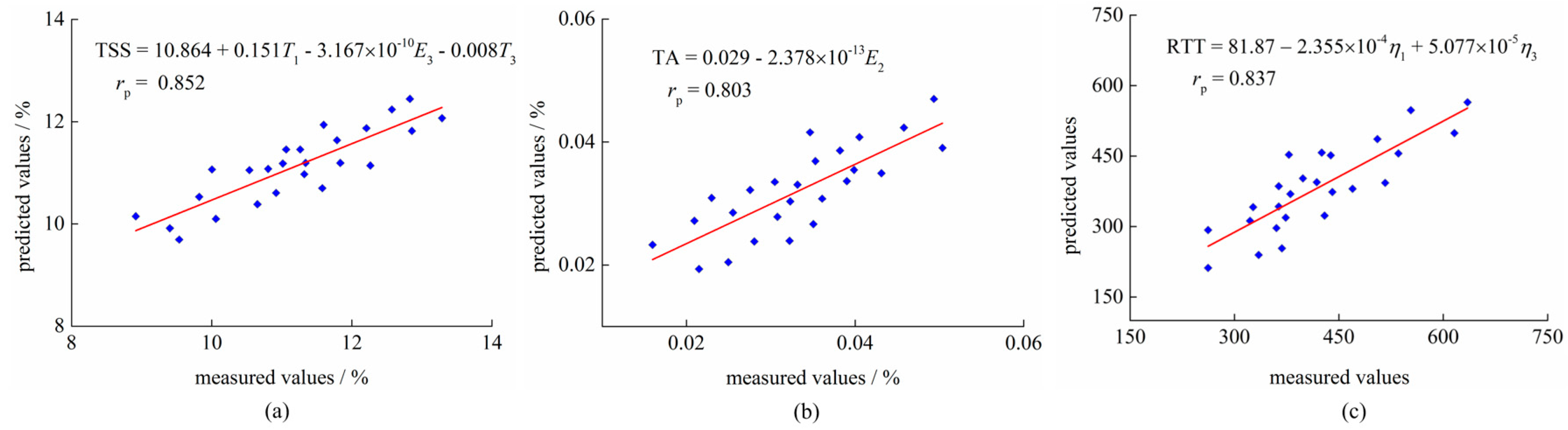
As can be seen from Figure 6, when the creep parameters are used to predict the TSS, TA, and RTT of the pear, the correlation coefficients between the predicted and measured values obtained from the prediction models are 0.881, 0.825, and 0.870, respectively, with a very strong correlation (r > 0.8), and the prediction accuracy of the models is high. Similarly, the stress relaxation parameters are shown in Figure 7; when predicting the TSS, TA, and RTT of the pear, the correlation coefficients between the predicted and measured values obtained from their corresponding prediction models were 0.852, 0.803, and 0.837, respectively, which also had a very strong correlation (r > 0.8). This indicates that the models constructed with creep and stress relaxation parameters can achieve good prediction results for the nutritional parameters of the pears.
Figure 6. Correlation between predicted values and measured values of different nutritional parameters of the pear based on creep parameters: (a) TSS; (b) TA; (c) RTT.
Figure 7. Correlation between predicted values and measured values of different nutritional parameters of the pear based on stress relaxation parameters: (a) TSS; (b) TA; (c) RTT.
The error analysis and t-tests were performed on the predicted values of the pear nutritional parameters’ prediction models constructed based on rheological parameters and the measured values using 25 samples from the validation set. As shown in Table 8, when the significance level α = 0.05, df = 24, and t0.05,24 = 2.064, the predicted values of TSS, TA, and RTT were constructed based on pear creep parameters and stress relaxation parameters, respectively. The t-test values of each prediction model were all smaller than t0.05,24, indicating that there was no significant difference between the predicted and measured values of each model. However, the mean, standard deviation, and standard error of the differences between the predicted and measured values of each prediction model based on creep parameters were smaller than those of the models based on stress relaxation parameters, and the correlation coefficients rp were higher than those of the corresponding models based on stress relaxation parameters, indicating that the prediction models based on creep parameters could predict these three nutritional parameters more accurately.
Table 8. The t-test results of each predictive equations’ nutritional parameters.

4. Conclusions

In this study, the relationships between the rheological property and nutritional parameters of the Korla pear were determined, and the predictive models for quality evaluation were established and verified using the rheological parameters. The results show: (1) The Generalized Kelvin–Voigt model with six elements can better describe the creep properties of the pear flesh, and the generalized Maxwell model with seven elements can better describe the stress relaxation behavior of the pear flesh. Both models have rheological parameters that are significantly correlated with the TSS, TA, and RTT of the pear. (2) Using a stepwise multiple linear regression mathematical model, both the creep parameter and stress relaxation parameter of the pear could effectively predict the TSS, TA, and RTT of pear, but the creep parameter was more suitable for predicting these three nutritional parameters of the pear.
The validity of the predictive models was further proved by the verification experiment. However, there are many factors which influence the accuracy of prediction models, such as cultivars, years, orchards condition, etc. It is necessary to carry out further investigations to verify and optimize the predictive models through a wide sample of different cultivars, years, and habitats.
This study only focuses on the main nutrient indexes of the balsam pear for the prediction of rheological parameters, and in the future, we can consider combining the rheological characteristics of the balsam pear with its texture TPA analysis, and carry out the prediction of balsam pear texture parameters based on the rheological parameters, so as to realize a more comprehensive detection of the internal quality of the balsam pear.

Author Contributions

Conceptualization, J.W. (Jiaping Wang), C.W. and J.W. (Jiaping Wang); experiments, J.W. (Jiaping Wang); data analysis, C.W. and X.M.; writing—original draft preparation, J.W. (Jiaping Wang) and C.W.; writing—review and editing, J.W. (Jie Wu); chart, J.W. (Jiaping Wang) and J.W. (Jie Wu). All authors have read and agreed to the published version of the manuscript.

Funding

This work was supported by the National Natural Science Foundation of China under Grant (31560476).

Data Availability Statement

Data sharing not applicable. No new data were created or analyzed in this study. Data sharing is not applicable to this article.

Conflicts of Interest

The authors declare no conflict of interest.

References

  1. Hoehn, E.; Gasser, F.; Guggenbühl, B.; Künsch, U. Efficacy of instrumental measurements for determination of minimum requirements of firmness, soluble solids, and acidity of several apple varieties in comparison to consumer expectations. J. Postharvest Biol. Technol. 2003, 27, 27–37. [Google Scholar] [CrossRef]
  2. Pereira, A.G.; Gómez, A.H. The use of physical properties to determine some quality parameters in fruit and vegetables. Rev. Cienc. Técnicas Agropecu. 2002, 11, 27–33. Available online: http://www.redalyc.org/articulo.oa?id=9321407 (accessed on 15 January 2018).
  3. Limanond, B.; Castell-Perez, M.E.; Moreira, R.G. Modeling the kinetics of corn tortilla staling using stress relaxation data. J. Food Eng. 2002, 53, 237–247. [Google Scholar] [CrossRef]
  4. Wu, X.H.; Wang, C.; Guo, Y.M. Effects of the high-pulsed electric field pretreatment on the mechanical. J. Food Eng. 2019, 274, 109837. [Google Scholar] [CrossRef]
  5. Mohsenin, N.N. Mechanical properties of fruits and vegetables review of a decade of research applications and future needs. J. Trans. ASAE 1972, 15, 1064–1070. [Google Scholar] [CrossRef]
  6. Edwards, E. Vegetables and fruit. In Food Texture: Measurement and Perception; Rosenthal, A.J., Ed.; An Aspen Publication: Frederick, MD, USA, 1999; pp. 259–281. [Google Scholar]
  7. Jack, F.R.; Paterson, A.; Piggott, J.R. Perceived texture: Direct and indirect methods for use in product development. J. Food Sci. Technol. 1995, 30, 1–12. [Google Scholar] [CrossRef]
  8. Diamante, L.; Umemoto, M. Rheological properties of fruits and vegetables: A review. Int. J. Food Prop. 2015, 18, 1191–1210. [Google Scholar] [CrossRef]
  9. Wu, T.; Abbott, J.A. Firmness and force relaxation characteristics of tomatoes stored intact or as slices. J. Postharvest Biol. Technol. 2002, 24, 59–68. [Google Scholar] [CrossRef]
  10. Ballabio, D.; Consonni, V.; Costa, F. Relationships between apple texture and rheological parameters by means of multivariate analysis. J. Chemom. Intell. Lab. Syst. 2012, 111, 28–33. [Google Scholar] [CrossRef]
  11. Sayyah, A.H.A.; Esmailpour, B. Apple firmness measurement based on visco-elastic properties. J. Food Agric. Environ. 2008, 6, 276–279. [Google Scholar]
  12. López-Perea, P.; Schwarz, P.B.; Figueroa, J.D.C.; Hernandez-Estrada, Z.J. Effect of beta-glucans on viscoelastic properties of barley kernels and their relationship to structure and soluble dietary fibre. J. Cereal Sci. 2012, 56, 595–602. [Google Scholar] [CrossRef]
  13. Nieto, A.B.; Vicente, S.; Hodara, K.; Castro, M.A.; Alzamora, S.M. Osmotic dehydration of apple: Influence of sugar and water activity on tissue structure, rheological properties and water mobility. J. Food Eng. 2013, 119, 104–114. [Google Scholar] [CrossRef]
  14. Zhao, W.; Fang, Y.; Zhang, Q.A.; Guo, Y.R.; Gao, G.T.; Yi, X. Correlation analysis between chemical or texture attributes and stress relaxation properties of ‘Fuji’ apple. J. Postharvest Biol. Technol. 2017, 129, 45–51. [Google Scholar] [CrossRef]
  15. Zhang, J.; Wang, J.; Gu, S.; Zheng, C.Y.; Du, D.D. Relaxation characteristics for quality evaluation of Chinese cabbage. J. Food Eng. 2021, 306, 110635. [Google Scholar] [CrossRef]
  16. Wu, J.; Guo, K.Q. Dynamic viscoelastic behaviour and microstructural changes of Korla pear (Pyrus bretschneideri rehd) under varying turgor levels. J. Biosyst. Eng. 2010, 106, 485–492. [Google Scholar] [CrossRef]
  17. Corollaro, M.L.; Aprea, E.; Endrizzi, I.; Betta, E.; Demattè, M.L.; Charles, M.; Bergamaschi, M.; Costa, F.; Biasioli, F.; Grappadelli, L.C.; et al. A combined sensory-instrumental tool for apple quality evaluation. J. Postharvest Biol. Technol. 2014, 96, 135–144. [Google Scholar] [CrossRef]
  18. Augusto, P.E.D.; Ibarz, A.; Cristianini, M. Effect of high pressure homogenization (HPH) on the rheological properties of tomato juice: Creep and recovery behaviours. J. Food Res. Int. 2013, 54, 169–176. [Google Scholar] [CrossRef]
  19. Cenkowski, S.; Bielewicz, J.; Britten, M.G. A single kernel creep and recovery test. J. Trans. ASAE 1991, 34, 2484–2490. [Google Scholar] [CrossRef]
  20. Varith, J.; Noochuay, C.; Khamdang, T.; Ponpai, A. Changes in viscoelastic properties of longan during hot-air drying in relation to its indentation. J. Maejo Int. J. Sci. Technol. 2008, 2, 320–330. [Google Scholar]
  21. Martinez, V.Y.; Nieto, A.B.; Castro, M.A.; Salvatori, D.; Alzamora, S.M. Viscoelastic characteristics of Granny Smith apple during glucose osmotic dehydration. J. Food Eng. 2007, 83, 394–403. [Google Scholar] [CrossRef]
  22. Martinez, V.Y.; Nieto, A.B.; Viollaz, P.E.; Alzamora, S.M. Viscoelastic behavior of melon tissue as influenced by blanching and osmotic dehydration. J. Food Sci. 2005, 70, E12–E18. [Google Scholar] [CrossRef]
  23. Bargale, P.C.; Irundayaraj, J.M.; Marquis, B. Some mechanical properties and stress relaxation characteristics of lentils-part II. pdf. J. Can. Agric. Eng. 1994, 36, 251–254. [Google Scholar]
  24. Chakespari, A.G.; Rajabipour, A.; Mobli, H. Anisotropic relaxation and creep properties of apple (cv. Shafi Abadi and Golab Kohanz). J. Adv. J. Food Sci. Technol. 2010, 2, 200–205. [Google Scholar]
  25. Kaur, L.; Singh, N.; Sodhi, N.S.; Gujral, H.S. Some properties of potatoes and their starches. I. Cooking, textural and rheological properties of potatoes. J. Food Chem. 2002, 79, 177–181. [Google Scholar] [CrossRef]
  26. Hassan, B.H.; Alhamdan, A.M.; Elansari, A.M. Stress relaxation of dates at khalal and rutab stages of maturity. J. Food Eng. 2005, 66, 439–445. [Google Scholar] [CrossRef]
  27. Zhang, W.; Cui, D.; Ying, Y.B. Nondestructive measurement of pear texture by acoustic vibration method. J. Postharvest Biol. Technol. 2014, 96, 99–105. [Google Scholar] [CrossRef]
  28. Gu, S.; Chen, W.; Wang, Z.H.; Wang, J.; Huo, Y.J. Rapid detection of Aspergillus spp. infection levels on milled rice by headspace-gas chromatography ion-mobility spectrometry (HS-GC-IMS) and E-nose. J. Lwt-Food Sci. Technol. 2020, 132, 109758. [Google Scholar] [CrossRef]
Disclaimer/Publisher’s Note: The statements, opinions and data contained in all publications are solely those of the individual author(s) and contributor(s) and not of MDPI and/or the editor(s). MDPI and/or the editor(s) disclaim responsibility for any injury to people or property resulting from any ideas, methods, instructions or products referred to in the content.

Article Metrics

Citations

Article Access Statistics

Multiple requests from the same IP address are counted as one view.