Article

An Integrated Multiple-Criteria Decision-Making Model for New Product Development: The Case of Taiwan Organic Light-Emitting Diode Industry


1
Department of Industrial Management, Chung Hua University, No. 707, Sec. 2, WuFu Rd., Hsinchu 30012, Taiwan
2
Ph.D. Program of Technology Management, Chung Hua University, No. 707, Sec. 2, WuFu Rd., Hsinchu 30012, Taiwan
*
Author to whom correspondence should be addressed.
Processes 2022, 10(6), 1205; https://doi.org/10.3390/pr10061205
Submission received: 9 May 2022 / Revised: 1 June 2022 / Accepted: 13 June 2022 / Published: 16 June 2022

Abstract

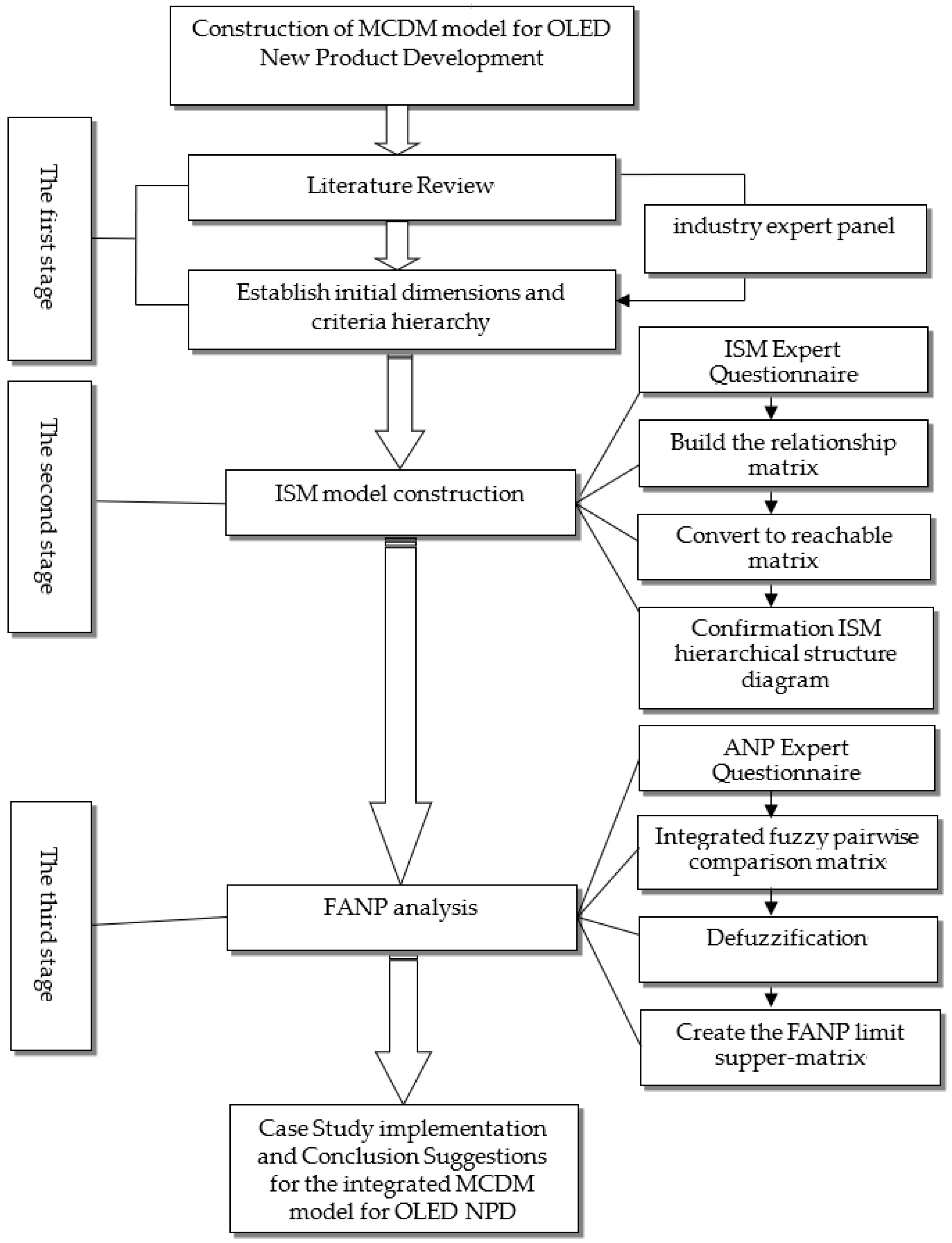
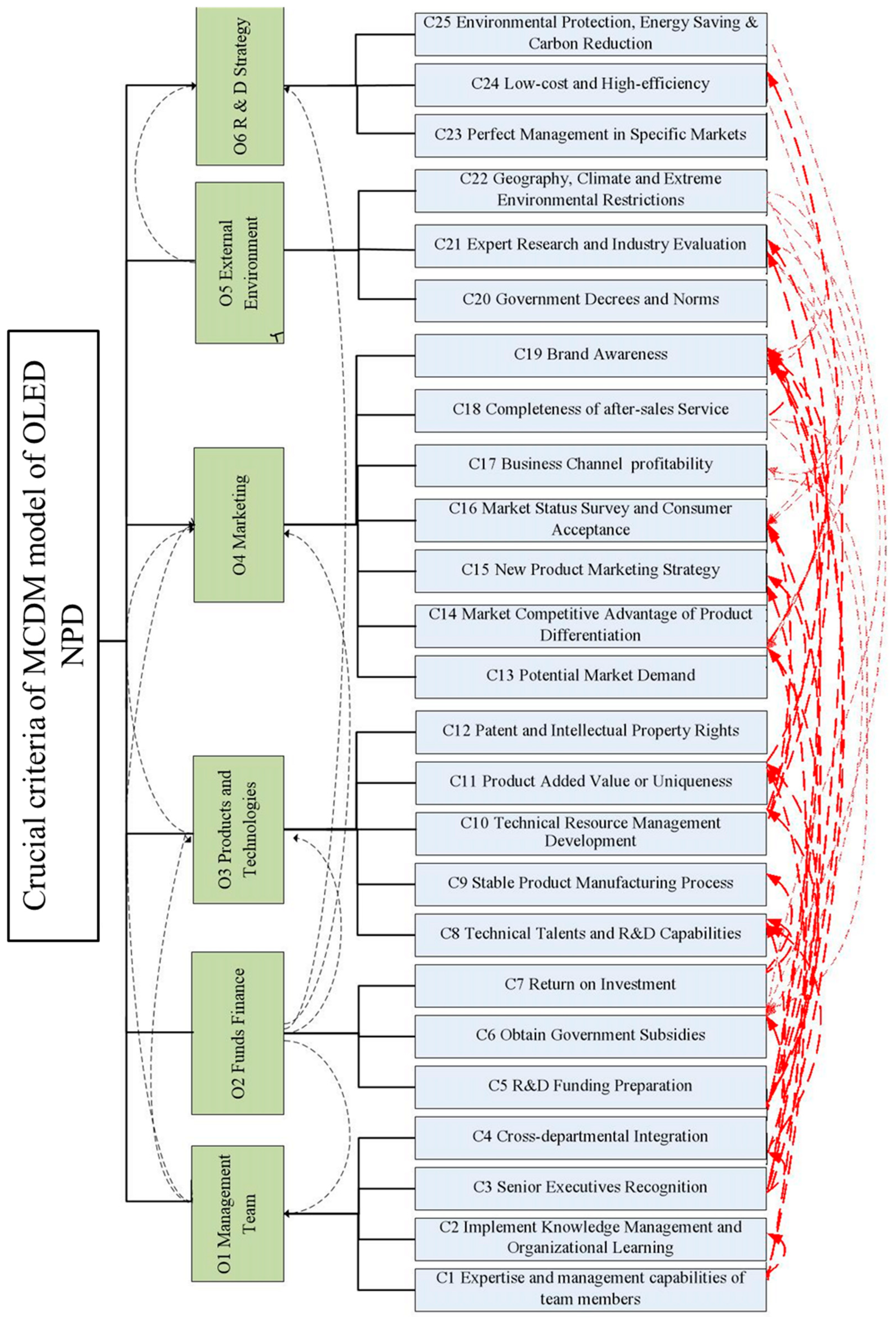
Due to the strong demand for organic light-emitting diode (OLED) display products and the highly competitive global market, OLED enterprises need to proactively make product innovations for presuming business competitive advantage, high sales, high profits, high customer consuming value, and the sustainability of the enterprise. A suitable multi-criteria decision-making (MCDM) model for OLED new product development (NPD) can help OLED enterprises’ R&D team to minimize risks and maximize the success rate of NPD. However, the literature reviews of the MCDM model for OLED NPD are very rare. This study aims to propose the approaches for establishing an integrated MCDM model for OLED NPD that apply three methodologies which include the literature review and expert panel, Interpretive structural modeling (ISM), and Fuzzy analytic network process (FANP). Meanwhile, after the implication of the proposed approaches in the case study of Taiwan OLED NPD, this study proposes an integrated MCDM model for OLED NPD in Taiwan. The research results reveal fifteen evaluation criteria of OLED NPD and their relative weight. Furthermore, the research results reveal the top three important criteria are return on investment, expert research and industry evaluation, and R&D funding preparation. The proposed approaches can be applied in other industries for establishing an integrated MCDM model for their own NPD. The proposed integrated MCDM model for OLED NPD in Taiwan can help enterprises in the Taiwan OLED industry to develop new OLED products in an efficient way and to boost sales, profits, and competitive advantages. Besides, this study enriches the research references of MCDM model for NPD and OLED field.
Keywords: new product development; organic light-emitting diode; ISM; FANP new product development; organic light-emitting diode; ISM; FANP