Systematic Review

Digital Transformation in Green Finance: A Systematic Review of Business Informatics Frameworks for Green Bond Monitoring in the Circular Economy


1
Department of Mathematics, Faculty of Mathematics and Natural Sciences, Universitas Padjadjaran, Jatinangor, Sumedang 45363, Indonesia
2
Faculty of Informatics and Computing, Universiti Sultan Zainal Abidin, Besut Campus, Besut 22200, Terengganu, Malaysia
3
Master Program in Mathematics, Faculty of Mathematics and Natural Sciences, Universitas Padjadjaran, Jatinangor, Sumedang 45363, Indonesia
4
Doctoral Program in Mathematics, Faculty of Mathematics and Natural Sciences, Universitas Padjadjaran, Jatinangor, Sumedang 45363, Indonesia
5
Communication in Research and Publications, Gede Bage, Bandung 40294, Indonesia
*
Author to whom correspondence should be addressed.
Informatics 2026, 13(7), 100; https://doi.org/10.3390/informatics13070100
Submission received: 29 April 2026 / Revised: 20 June 2026 / Accepted: 22 June 2026 / Published: 24 June 2026

Abstract

The rapid growth of the green bond market has intensified the need for transparent and reliable monitoring systems, particularly in circular-economy environments characterized by complex, multi-stakeholder, and dynamic interactions. However, existing monitoring approaches still rely heavily on static, issuer-driven disclosures, which sustain information asymmetry and increase the risk of greenwashing. This study systematically reviews the role of digital technologies in enhancing green bond monitoring within circular economy systems. A systematic literature review (SLR) was conducted using the Scopus database, covering publications from 2022 to 2026 and yielding 56 eligible studies. A bibliometric analysis using VOSviewer identified major research trends, thematic clusters, and collaboration patterns within the field. The findings reveal four dominant technological pillars—blockchain, artificial intelligence (AI), Internet of Things (IoT), and digital twin—that support data verification, automated analytics, real-time environmental monitoring, and system-wide integration. Although these technologies show significant potential, the literature remains fragmented and lacks comprehensive monitoring architectures that integrate technological, governance, and regulatory dimensions. This study contributes to the literature by synthesizing these technologies through a business informatics perspective and highlighting digital twin architectures as a promising foundation for integrated green bond monitoring. The findings provide practical insights for regulators, issuers, and investors seeking interoperable, transparent, and trustworthy monitoring ecosystems that strengthen accountability and credibility in sustainable finance.

1. Introduction

The global green bond market has experienced remarkable growth over the past decade, evolving into a major financial instrument for mobilizing private capital toward environmentally sustainable projects. Annual issuance volumes have grown at compound rates exceeding 40%, with cumulative outstanding values surpassing USD 4 trillion by 2023 [1,2]. This expansion reflects not only a quantitative increase in sustainable investments but also a broader structural transformation in global capital markets. Increasing regulatory pressure, alongside the mainstream integration of Environmental, Social, and Governance (ESG) criteria into portfolio management, has reshaped investment behavior at an institutional level. Nevertheless, substantial inconsistencies among ESG rating methodologies continue to create challenges for investors when evaluating sustainability performance and risk exposure, highlighting the need for more transparent monitoring mechanisms [3]. The formalization of sustainable finance regulations, such as the EU Green Bond Standard introduced in 2023, together with the emergence of national green taxonomies and circular economy policy frameworks across both developed and emerging economies, has further accelerated this transition [4,5,6]. Consequently, green bonds have become a central component of the global sustainable finance ecosystem, where transparency, accountability, and effective monitoring mechanisms are increasingly required.
Alongside this growth, the range of projects financed through green bonds has expanded considerably. While early issuances were primarily directed toward renewable energy infrastructure, recent investments increasingly support circular economy initiatives. Kirchherr et al. [1] define the circular economy as a regenerative system that minimizes resource consumption and waste generation through reuse, remanufacturing, recycling, and restoration strategies. Examples include industrial waste valorization, bio-based material production, closed-loop manufacturing systems, and urban mining practices [7]. As green bond financing moves into these areas, it also introduces significant challenges in evaluating, measuring, and verifying sustainability outcomes. As noted by Eisenreich et al. [7], circular economy systems create value through dynamic interactions among multiple actors, making environmental performance assessment substantially more complex than in conventional project-based investments.
The complexity of circular economy systems becomes even more evident when considering their non-linear and interconnected nature. Unlike standalone renewable energy projects, circular economy initiatives rely on networks of stakeholders whose interactions generate environmental benefits as emergent system outcomes rather than isolated project outputs. Friant et al. [8] argue that existing policy and measurement frameworks often struggle to capture these interdependencies in a standardized, measurable way. Consequently, conventional monitoring approaches based on periodic reporting and static disclosures are insufficient for representing real-time environmental performance across interconnected value chains. This mismatch between system complexity and reporting mechanisms creates substantial challenges for effective green bond monitoring [9,10].
One important consequence of this limitation is the persistence of information asymmetry between issuers and investors. Issuers generally have direct access to operational and environmental performance data, whereas investors and external stakeholders largely depend on delayed, aggregated disclosures [10]. Zhang et al. [9] demonstrate that such information asymmetry can distort green bond pricing and investment decisions. Similarly, Löffler et al. [10] suggest that the so-called “greenium” frequently reflects investor perceptions of issuer credibility rather than objectively verified environmental performance. This imbalance highlights the need for monitoring systems that improve transparency, strengthen data reliability, and reduce informational disparities among stakeholders.
Closely related to this information gap is the growing concern surrounding greenwashing. The credibility of green bond markets depends heavily on the accuracy and integrity of sustainability disclosures. However, in circular economy contexts, greenwashing is particularly difficult to identify because environmental impacts are often distributed across multiple processes and organizational boundaries. Pizzetti et al. [11] report that firms may selectively disclose favorable sustainability outcomes while omitting contextual information necessary for comprehensive evaluation. Supporting this observation, Davidescu et al. [12] demonstrate that machine learning-based text analysis can detect higher levels of greenwashing-related language in sectors characterized by complex supply chains. Beyond individual organizations, greenwashing incidents can undermine trust across the broader sustainable finance ecosystem and negatively affect market legitimacy.
Despite these concerns, current monitoring practices remain largely dependent on issuer-generated reports and periodic third-party assessments. Sun et al. [13] observe that green bond monitoring continues to rely heavily on annual sustainability reports and voluntary verification mechanisms. Moreover, less than one-third of publicly available reports provide sufficiently detailed project-level data to support rigorous investor evaluation [14]. The absence of standardized monitoring methodologies further complicates cross-project and cross-portfolio comparisons, particularly within circular economy initiatives where universally accepted performance metrics remain limited [15]. As a result, current monitoring approaches often fail to provide the level of transparency and accountability required by modern sustainable finance markets.
The increasing complexity of circular economy projects, combined with rising regulatory expectations and stakeholder demands for transparency, has intensified the search for more advanced monitoring solutions. In response, digital transformation technologies have emerged as promising tools to address many of the limitations of conventional reporting systems. Technologies such as the Internet of Things (IoT), blockchain, artificial intelligence (AI), and machine learning (ML) offer new capabilities for real-time data acquisition, secure information management, automated verification, and predictive analytics. Sisinni et al. [16] highlight the potential of IoT technologies to continuously capture environmental and operational data, while blockchain-based infrastructures provide immutable and auditable records of sustainability-related information. Furthermore, AI and ML techniques enable automated anomaly detection, performance forecasting, and large-scale sustainability assessment [17]. Collectively, these technologies create opportunities for developing more transparent, efficient, and trustworthy monitoring systems.
To translate these technological capabilities into practical monitoring solutions, a comprehensive conceptual perspective is required. Business informatics provides this perspective by focusing on the design, implementation, and governance of information systems in complex sociotechnical environments. According to Hess et al. [18] and Legner et al. [19], business informatics emphasizes the integration of technological infrastructures, organizational processes, stakeholder requirements, and governance mechanisms. This interdisciplinary orientation makes business informatics particularly relevant for green bond monitoring, where multiple stakeholders must coordinate around shared sustainability objectives while ensuring data integrity, transparency, and regulatory compliance [20].
Although scholarly interest in digital technologies for sustainable finance has grown substantially in recent years, existing research remains fragmented. Previous studies have investigated blockchain-based verification systems, natural language processing techniques for sustainability disclosure analysis, IoT-enabled compliance monitoring, and AI-driven sustainability assessment models [20,21,22]. However, most of these studies examine individual technologies in isolation rather than integrated monitoring architectures. Consequently, the literature provides limited guidance for designing monitoring systems that address the multidimensional challenges of circular economy projects [23].
The increasing complexity of circular economy initiatives, combined with rising demands for transparency, accountability, and regulatory compliance, creates an urgent need for integrated monitoring approaches. Although numerous studies have explored specific digital technologies, the literature still lacks a clear synthesis of how these technologies interact within broader monitoring ecosystems. This lack of integration across technologies and monitoring contexts motivates the present study.
Several important research gaps can be identified. First, there is a limited understanding of how business informatics frameworks can support green bond governance and monitoring within circular economy systems. Second, existing studies rarely examine the integration of multiple technologies within unified monitoring architectures. Third, the unique characteristics of circular economy projects, including dynamic system boundaries, complex stakeholder interactions, and distributed environmental impacts, remain insufficiently addressed. Finally, the alignment between digital monitoring systems and emerging regulatory frameworks, such as the EU Green Bond Standard, has received relatively limited attention [24].
Within this context, the concept of a digital twin has emerged as a promising approach for overcoming many of these challenges. A digital twin is a continuously updated virtual representation of a physical system that remains synchronized through real-time data flows. Recent studies suggest that digital twins can support dynamic monitoring, predictive analysis, automated compliance verification, and enhanced stakeholder transparency [25]. Moreover, integrating digital twins with IoT infrastructures, blockchain networks, and AI-driven analytics creates opportunities for establishing comprehensive monitoring ecosystems capable of representing complex circular economy processes in real time [25,26,27].
From a theoretical perspective, this study contributes to the business informatics literature by conceptualizing green bond monitoring as a sociotechnical system that requires integrating technological, organizational, and governance dimensions. Rather than treating digital technologies as isolated tools, this study views them as interconnected components of a broader information architecture designed to support transparency, accountability, regulatory compliance, and stakeholder coordination. This perspective extends existing literature by providing a holistic understanding of how integrated monitoring ecosystems can be developed for sustainable finance applications.
The originality of this study lies in its integration of green bond monitoring, circular economy systems, and business informatics perspectives within a single analytical framework. Unlike previous reviews that primarily focus on individual technologies, this study synthesizes how blockchain, AI, IoT, and digital twin technologies can collectively support the development of interoperable monitoring architectures. By adopting this integrated perspective, the study advances current knowledge beyond technology-specific analyses toward a more comprehensive understanding of digital monitoring systems in sustainable finance.
Building upon these considerations, this study seeks to address the identified gaps through the following research objectives:
(1)
To systematically review Scopus-indexed literature on business informatics and digital technologies applied to green bond monitoring within circular economy contexts.
(2)
To analyze and classify the system architectures, data flows, and governance mechanisms identified in the literature.
(3)
To evaluate the effectiveness of digital monitoring technologies in reducing information asymmetry and mitigating greenwashing risks.
(4)
To propose an integrated business informatics framework that supports future research and practical implementation of green bond monitoring systems.
By combining systematic literature review and bibliometric analysis, this study provides a comprehensive synthesis of technological, organizational, and governance perspectives within green bond monitoring research. The proposed framework contributes to the literature by consolidating fragmented knowledge across the domains of sustainable finance, circular economy, and business informatics, while offering practical guidance for regulators, issuers, investors, and system developers seeking to establish more transparent, interoperable, and trustworthy monitoring ecosystems.

2. Methods

2.1. Research Design

This study adopts a structured research design that integrates an SLR with bibliometric analysis using VOSviewer version 1.6.20, followed by the development of a conceptual framework informed by business informatics. The combination of these approaches is intended to support a systematic and transparent synthesis of the literature, while also providing a complementary overview of thematic patterns within the research domain.
The research process is initiated through the formulation of research objectives and the establishment of a review protocol. A comprehensive literature search is subsequently conducted in the Scopus database using predefined keyword combinations. The retrieved bibliographic data are then subjected to bibliometric analysis to explore keyword co-occurrence patterns and identify general thematic groupings. Following this, a structured study selection procedure based on the PRISMA 2020 framework is applied to ensure that only relevant and eligible studies are included for further analysis.
The selected articles are examined through a systematic data extraction process, which is followed by thematic analysis to identify recurring concepts related to monitoring systems, data governance, and the application of digital technologies in green finance. The results of this synthesis are used to indicate areas that remain underexplored and to inform the development of a conceptual framework. The overall sequence of methodological steps is presented in Figure 1, which outlines the research workflow from literature identification to the development of the conceptual framework in a clear and sequential manner.

2.2. Data Sources and Search Strategy

This study adopted an SLR approach following the Preferred Reporting Items for Systematic Reviews and Meta-Analyses (PRISMA 2020) guidelines to ensure transparency, reproducibility, and methodological rigor throughout the review process [28]. The literature search was conducted exclusively in the Scopus database, selected for its extensive multidisciplinary coverage, rigorous indexing standards, and strong representation of research in sustainable finance, circular economy, information systems, and business informatics. Scopus is widely recognized as one of the most comprehensive databases for bibliometric and systematic review studies and has been extensively used in prior reviews in the sustainability and digital transformation research domains. The use of a single curated database also ensured methodological consistency and reduced the risk of duplicate indexing across multiple sources.
Given the interdisciplinary nature of green bond monitoring within circular economy systems, a decomposed multi-query search strategy was employed rather than relying on a single broad search expression. This approach was designed to capture the conceptual intersections among four core domains: green finance, circular economy, digital technologies, and monitoring and governance systems. Accordingly, five complementary search queries were developed and executed independently before being combined through the Scopus Search History function using Boolean OR operators. This strategy enabled comprehensive coverage while preserving thematic specificity.
To ensure systematic keyword selection, the search process followed a structured keyword clustering approach. The first query focused on the intersection of green and sustainable finance with digital transformation technologies, incorporating terms such as “green bond(s),” “green finance,” “sustainable finance,” and “ESG” alongside “blockchain,” “Internet of Things,” “artificial intelligence,” “machine learning,” “digital twin,” “distributed ledger,” and “natural language processing.” The second query examined sustainable finance instruments in circular economy frameworks. The third query focused on digital monitoring mechanisms and governance-related outcomes, including transparency, reporting, compliance, and accountability. The fourth query focused on technology-enabled detection of greenwashing, while the fifth explored business informatics and information systems applications in sustainable finance and circular economy contexts.
All searches were conducted using the Scopus Advanced Search interface with TITLE-ABS-KEY restrictions to ensure substantive relevance to the study objectives. Additional filtering criteria were applied to improve dataset quality, including publication years between 2022 and 2026, English-language publications, and document types limited to journal articles and review papers. The selected time frame reflects a period of accelerated convergence between sustainable finance regulations and digital transformation initiatives, including the introduction of the EU Green Bond Standard and the rapid expansion of green taxonomy frameworks.
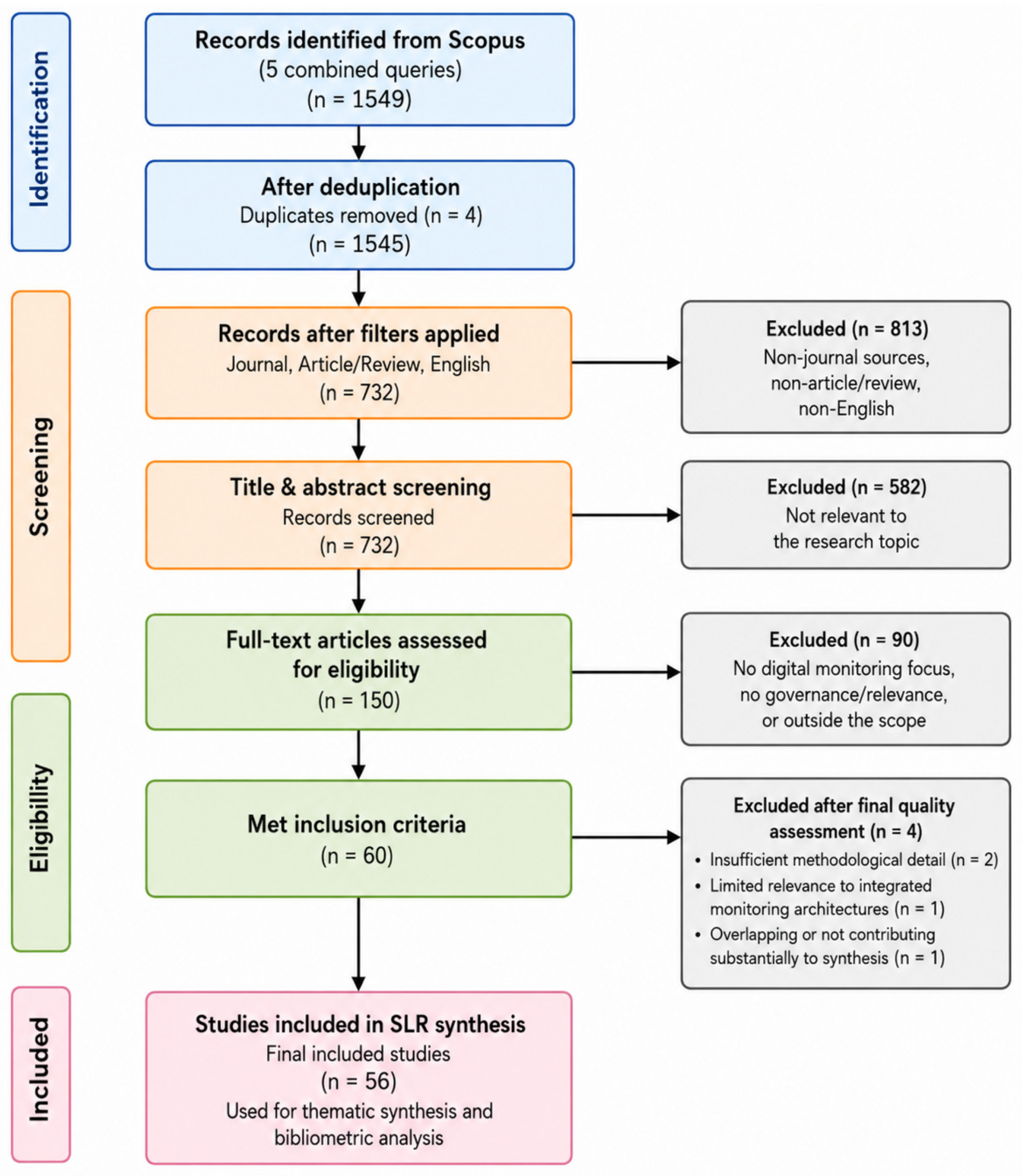
The complete search strings used in this study are provided in Supplementary Material S1 to facilitate transparency and reproducibility. The search process initially identified 1549 records. Following automatic and manual duplicate removal, 1545 records remained. Subsequent screening based on publication type, language, and source criteria reduced the dataset to 732 records. A full-text eligibility assessment was then conducted for 150 studies. Of these, 60 studies satisfied the predefined inclusion criteria. A final quality assessment stage excluded four studies due to insufficient methodological transparency or limited relevance to the study objectives, resulting in a final dataset of 56 studies included in the systematic review and thematic synthesis.
The finalized dataset was exported in both CSV and RIS formats for subsequent bibliometric analysis using VOSviewer and qualitative thematic synthesis [29]. The combined use of bibliometric mapping and systematic review techniques enabled both quantitative identification of research structures and qualitative interpretation of emerging themes, technological trends, and governance mechanisms within the literature.

2.3. Bibliometric Analysis

To complement the qualitative synthesis, a bibliometric analysis was conducted using VOSviewer version 1.6.20, a widely used software tool for constructing and visualizing bibliometric networks. Bibliometric techniques offer a quantitative perspective on a research field’s intellectual structure and are valuable for identifying thematic developments, influential publications, and relationships among research streams within interdisciplinary domains [29]. The analysis was performed using the final set of 56 studies and consisted of three complementary procedures. First, keyword co-occurrence analysis identified dominant research themes and emerging conceptual trends. Keywords meeting predefined thresholds were included to improve interpretability and reduce noise. The resulting network maps identified major thematic clusters and research directions.
Second, co-citation analysis was conducted to identify influential publications and the theoretical foundations underpinning the field. By examining references frequently cited together, this analysis revealed the intellectual structure of the research domain and highlighted key studies that have shaped current developments in digital technologies, sustainable finance, and circular economy monitoring. Third, bibliographic coupling analysis was applied to examine relationships among studies based on shared references. This technique identifies research clusters and thematic similarities among publications, providing insights into emerging research streams. Bibliographic coupling is useful for mapping recent literature because it captures relationships among studies that may not yet have accumulated substantial citation counts.
For all analyses, VOSviewer’s association-strength normalization method and default clustering algorithm were used to generate network visualizations and identify thematic groupings. In the resulting maps, nodes represent keywords, publications, authors, countries, or references depending on the type of analysis, while links represent co-occurrence, co-citation, or bibliographic coupling relationships. Node size reflects the relative frequency or influence of an item, whereas link strength indicates the degree of association between connected items. Different colors represent clusters generated automatically by the clustering algorithm, illustrating groups of conceptually related studies. The bibliometric analysis served two purposes. First, it provided a quantitative overview of publication trends, influential contributors, and thematic structures within the literature. Second, it informed the subsequent thematic synthesis and classification process by supporting the identification of major technological domains, governance mechanisms, and emerging research themes related to green bond monitoring in circular economy contexts.

2.4. Study Selection Process

The study selection process followed the Preferred Reporting Items for Systematic Reviews and Meta-Analyses (PRISMA 2020) framework to ensure transparency, consistency, and reproducibility throughout the review [28]. The complete workflow, encompassing identification, screening, eligibility assessment, quality appraisal, and final inclusion, is illustrated in Figure 2.
The identification stage yielded 1549 records from the Scopus database using the search strategy described in Section 2.2. A duplicate screening procedure was subsequently performed using DOI verification and bibliographic cross-checking, resulting in the removal of 4 duplicate records. As a result, 1545 unique studies were retained for further evaluation. The screening stage was then conducted to ensure the dataset’s relevance and quality. Publication filters were applied to retain only English-language journal articles and review papers published between 2022 and 2026. This process reduced the dataset to 732 records, while 813 records were excluded because they did not meet the predefined language, publication source, or document type requirements. The remaining studies underwent title and abstract screening to assess their relevance to the review objectives. Consequently, 582 studies were excluded because they did not address key themes within the scope of this review, including green bond monitoring, sustainable finance governance, circular economy systems, business informatics, or digital technologies.
Following screening, 150 studies proceeded to full-text eligibility assessment. Each article was examined in greater depth to determine its alignment with the research objectives and predefined inclusion criteria. During this stage, 90 studies were excluded because they lacked a substantive focus on digital monitoring systems, governance mechanisms, sustainability reporting, technology-enabled transparency, or integrated information systems supporting green finance and circular-economy initiatives. The eligibility assessment yielded 60 studies, which were retained for detailed synthesis. To further strengthen methodological rigor and thematic coherence, a final quality assessment was conducted. This assessment considered the methodological transparency, conceptual relevance, and substantive contribution of each study to the objectives of the review. Four studies were subsequently excluded due to insufficient methodological detail, limited relevance to integrated monitoring architectures, or minimal contribution to the thematic synthesis. Consequently, the final dataset comprised 56 studies, which served as the basis for the bibliometric analysis and thematic synthesis presented in this study. This corpus was considered sufficiently comprehensive to capture the major technological, governance, and business informatics developments associated with green bond monitoring in circular-economy contexts. To maintain consistency throughout the selection process, all studies were evaluated against predefined inclusion and exclusion criteria established prior to the review. These criteria are summarized in Table 1.

2.5. Data Extraction

A standardized data extraction template was systematically applied to all studies retained after the eligibility assessment to ensure consistency and facilitate structured cross-study comparison. The template captured key dimensions of each study, including bibliographic metadata (authorship, publication year, and journal source), research objectives and scope, types and configurations of digital technologies employed, system architecture and data flow characteristics, governance and reporting mechanisms, and principal findings and acknowledged limitations. This structured extraction process establishes a coherent analytical foundation, enabling systematic comparison across studies and supporting the subsequent thematic analysis and taxonomy development. The extracted information also served as the primary input for the thematic coding, classification, and taxonomy development procedures described in the subsequent analytical stage.

2.6. Data Analysis and Synthesis

The analytical process followed an iterative and integrative approach, combining qualitative thematic analysis with quantitative bibliometric mapping to ensure analytical depth and methodological rigor. Following the conceptual framework proposed by Braun and Clarke [30], the thematic synthesis was conducted through a multi-stage coding and classification procedure. In the first stage, all extracted studies underwent open coding. Relevant information related to digital technologies, monitoring functions, governance mechanisms, system architectures, reporting processes, and implementation contexts was systematically examined and assigned descriptive codes. This inductive coding process enabled the identification of recurring concepts and patterns across the literature without imposing predefined thematic categories. In the second stage, related codes were grouped into broader thematic categories through an iterative process of comparison and consolidation. Emerging themes were continuously refined by examining conceptual similarities, technological functions, and governance objectives across studies. This process identified higher-level themes that capture the dominant technological and organizational dimensions of green bond monitoring systems.
To enhance methodological transparency and analytical robustness, the preliminary themes were compared with the clusters generated through bibliometric mapping using VOSviewer. This triangulation process validated thematic consistency by assessing the alignment between qualitative findings and quantitative network structures. Themes that demonstrated substantial overlap with bibliometric clusters were retained, whereas ambiguous or weakly supported categories were re-evaluated and refined. This integrative approach is consistent with the Bibliometric-Systematic Literature Review (B-SLR) methodology proposed by Marzi et al. [31], which advocates combining bibliometric techniques with qualitative synthesis to strengthen theory development and interpretation.
In the final stage, a taxonomy development process was conducted following the iterative taxonomy-building approach proposed by Nickerson et al. [32]. Studies were classified according to three analytical dimensions: (i) monitoring system architecture, (ii) data governance and provenance mechanisms, and (iii) technology integration models. The classification process involved repeated comparison between individual studies and emerging categories until conceptual stability and mutual exclusivity were achieved. The resulting taxonomy facilitated the systematic organization of the literature and supported the identification of dominant technological configurations, governance approaches, and integration patterns within green bond monitoring systems.

3. Results

3.1. Bibliometric Overview of the Corpus

3.1.1. Publication Trends

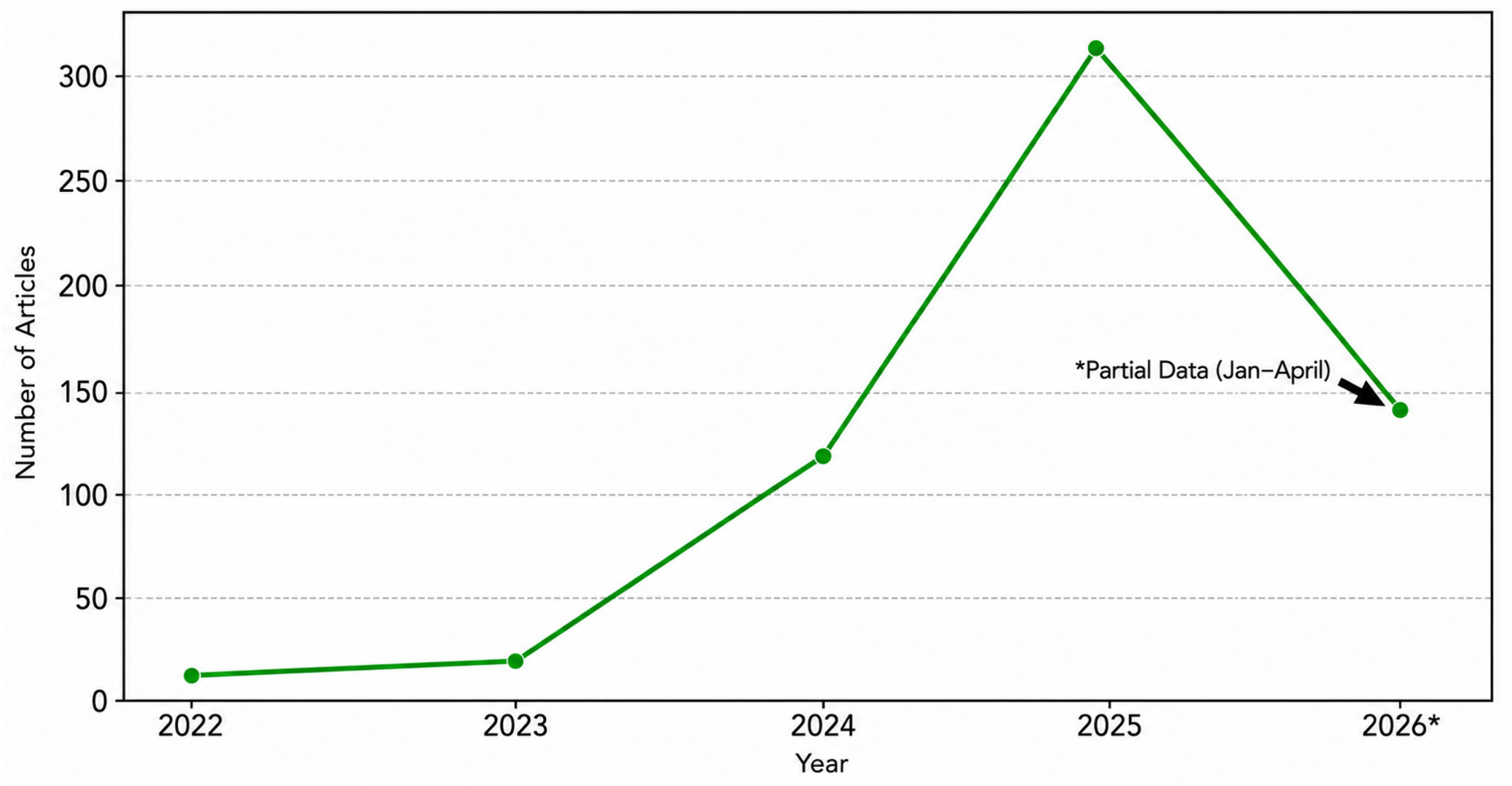
Figure 3 presents the annual distribution of publications over the 2022–2026 study horizon, revealing a substantial and sustained upward trajectory in scholarly output. The number of publications increased markedly from 63 articles in 2022 to a peak of 314 articles in 2025, corresponding to an estimated Compound Annual Growth Rate (CAGR) of approximately 70.5%. Although the 2026 count currently stands at 164 records, this figure reflects only partial-year coverage (January–April) and is therefore projected to exceed the 2025 total upon completion of the full publication cycle.
This pronounced expansion underscores the accelerating global research interest at the intersection of sustainable finance and digital innovation. The observed growth is strongly associated with the simultaneous emergence of regulatory and technological drivers, particularly the institutionalization of the EU Green Bond Standard in 2023, alongside rapid advancements in blockchain, AI, and IoT technologies. Collectively, these developments have intensified academic engagement with digitally enabled green finance systems.
The findings are consistent with Kumar et al. [27], who reported comparable exponential growth in sustainable finance scholarship facilitated by big data methodologies, and further support the broader digital transformation paradigm identified by Legner et al. [19]. Overall, the publication trend demonstrates that this research domain is evolving from an emerging niche into a rapidly expanding interdisciplinary field with increasing strategic relevance for policy, finance, and technological governance.

3.1.2. Geographic Distribution

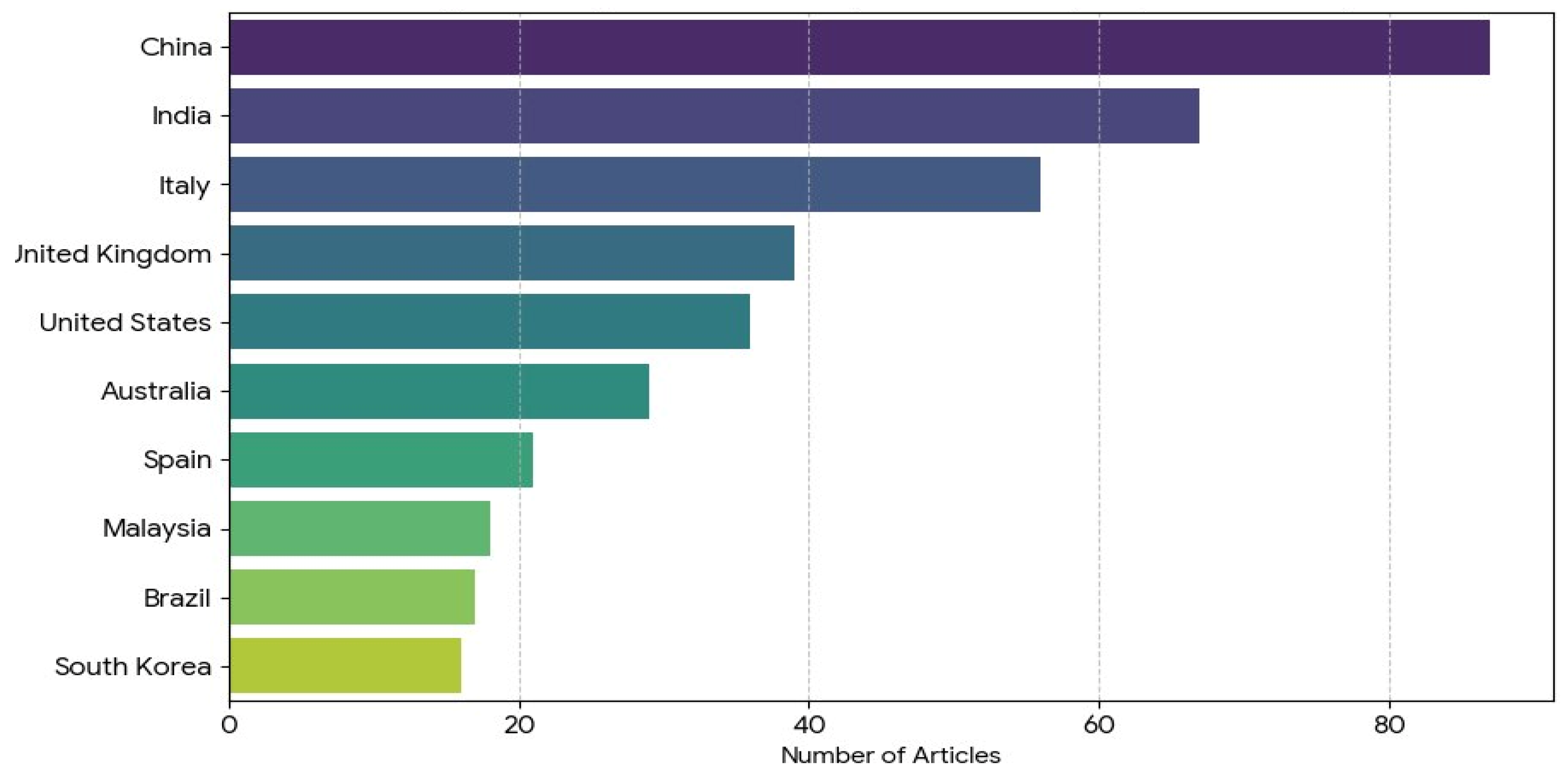
Country contributions were determined based on the institutional affiliations of the authors recorded in the Scopus metadata. For multi-country publications, all contributing countries were counted to reflect patterns of international research collaboration and knowledge production within the field. Figure 4 illustrates the geographic distribution of the top ten contributing countries within the analyzed corpus, highlighting the global diffusion of research on sustainable finance and digital innovation. China emerges as the leading contributor with approximately 87 publications, followed by India (67), Italy (56), the United Kingdom (39), and the United States (36). This distribution reflects the concentration of scholarly productivity in countries that combine strong regulatory initiatives, technological capacity, and substantial investment in green economic transformation.
China’s dominant position is closely associated with its large-scale commitment to green infrastructure development, national carbon neutrality objectives, and the accelerated integration of digital technologies into financial governance systems. Similarly, India’s substantial contribution reflects the country’s expanding sustainable finance agenda, increasing adoption of ESG frameworks, and strategic investments in digital public infrastructure. Italy’s notable presence can be attributed to its proactive implementation of circular economy policies, particularly through the National Circular Economy Programme, which has stimulated interdisciplinary research at the nexus of environmental policy and financial innovation.
Meanwhile, the United Kingdom and the United States maintain significant research output due to their longstanding institutional leadership in sustainable finance, advanced capital markets, and robust academic ecosystems. Their contributions continue to shape theoretical and policy-oriented discourse, particularly in areas related to green bonds, ESG disclosure, and financial technology governance.
Overall, the geographic distribution demonstrates that this research field is characterized by broad international engagement; however, important regional disparities remain evident. Contributions from Africa, Southeast Asia, and Latin America are comparatively limited despite these regions’ growing relevance in global green bond markets and climate finance implementation. This imbalance suggests that current academic discourse remains disproportionately centered on major economic powers, potentially overlooking context-specific challenges and opportunities in emerging economies. Addressing this geographic underrepresentation represents a critical avenue for future scholarship to ensure a more inclusive and globally representative knowledge base.

3.2. Bibliometric Mapping and Thematic Clustering

To complement the systematic review component, bibliometric mapping was conducted using the broader Scopus corpus of 732 records obtained after initial database filtering. This larger dataset was intentionally retained for quantitative network analysis in order to capture the macro-level intellectual structure, thematic evolution, and collaborative landscape of the field. In contrast, the final PRISMA-screened subset of 56 studies was reserved exclusively for in-depth thematic synthesis and qualitative interpretation. This dual-stage approach strengthens methodological rigor by combining large-scale bibliometric breadth with systematic review precision.
Using VOSviewer, three complementary network visualizations were generated: keyword co-occurrence, bibliographic coupling, and co-authorship analysis. Together, these analytical layers provide a structured understanding of dominant research themes, knowledge development trajectories, and scholarly collaboration patterns across the broader literature ecosystem.

3.2.1. Keyword Co-Occurrence Analysis

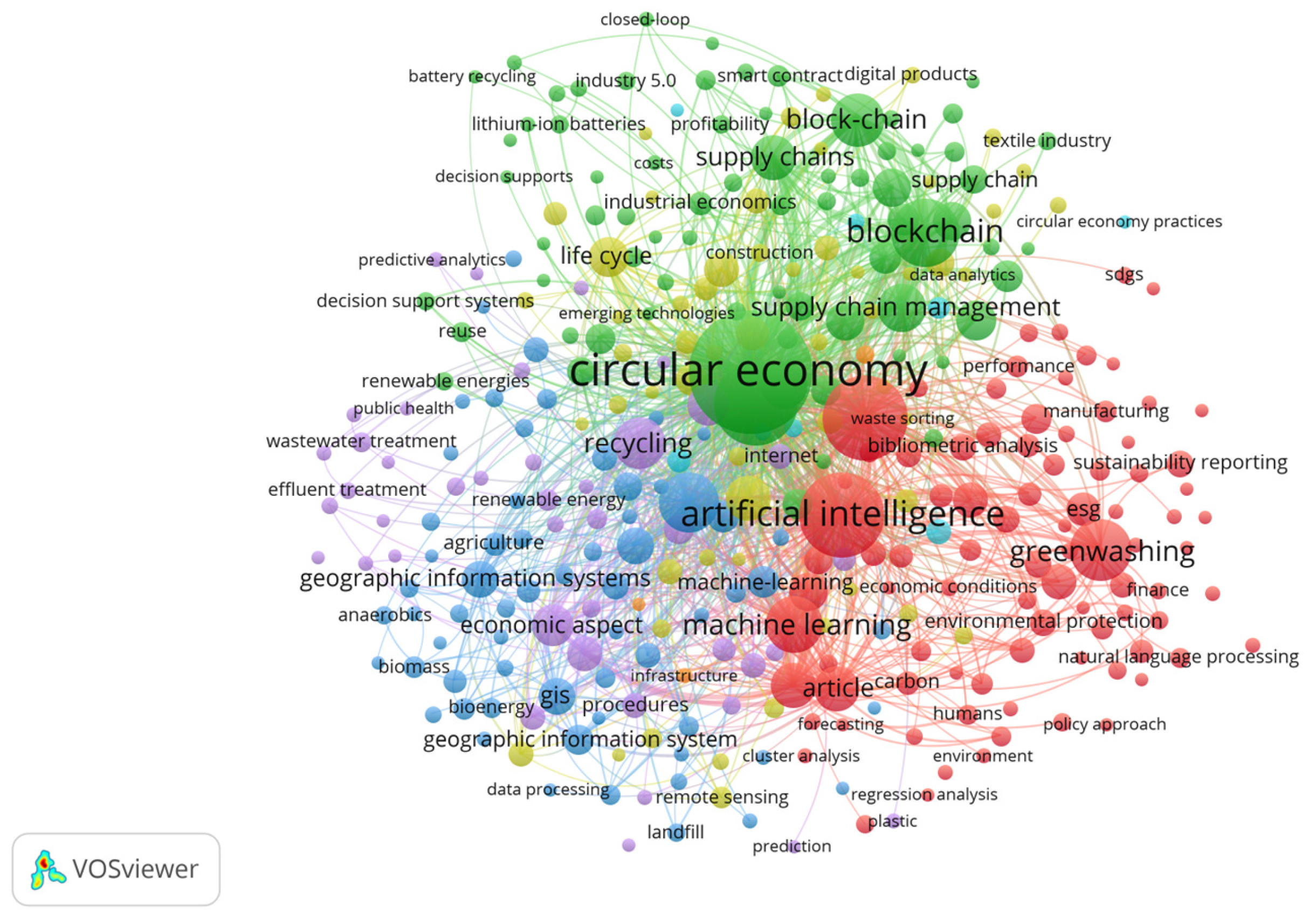
The keyword co-occurrence analysis was performed on the screening corpus (n= 732) using VOSviewer to identify dominant research themes and conceptual relationships within the literature. The resulting network visualization is presented in Figure 5.
As shown in Figure 5, the network reveals five major thematic clusters, each representing a distinct yet interconnected research trajectory. The largest cluster (green) centers on “circular economy,” “blockchain,” and “supply chain management,” with related concepts such as “life cycle,” “recycling,” and “supply chains.” This cluster reflects a dominant research stream focused on blockchain-enabled governance infrastructures designed to enhance transparency, traceability, and circular resource management across complex value chains. It also provides a foundation for the subsequent clusters, which extend this digital governance focus into other sustainability applications.
Building on this pattern, the second cluster (red) groups “artificial intelligence,” “machine learning,” “greenwashing,” “ESG,” and “sustainability reporting.” This thematic concentration reflects the increasing adoption of AI-driven analytical approaches for automated disclosure assessment, ESG verification, anomaly detection, and greenwashing identification. The prominence of these keywords suggests that artificial intelligence is becoming a critical enabler of accountability and transparency within sustainable finance ecosystems.
Extending the analysis further, the third cluster (blue) is characterized by keywords such as “geographic information systems,” “economic aspect,” and environmental assessment-related terms, highlighting the integration of geospatial intelligence, environmental monitoring, and socioeconomic analysis into sustainability governance and decision-support processes. The fourth cluster (purple) emphasizes “decision support systems,” “predictive analytics,” and “reuse,” reflecting an operational focus on data-driven optimization and resource-efficiency strategies within circular economy initiatives. The fifth cluster (yellow) includes keywords such as “industry 5.0,” “smart contracts,” and “digital products,” representing an emerging research frontier characterized by advanced automation, cyber-physical systems, and decentralized governance mechanisms.
To complement the network visualization, the most influential keywords, ranked by occurrence frequency and total link strength, are summarized in Table 2.
The quantitative indicators in Table 2 further support the thematic structure observed in the keyword co-occurrence network. “Circular Economy” emerged as the dominant concept, with the highest frequency of occurrences (366) and total link strength (6200), confirming its central role in the research landscape. “Artificial Intelligence” (171 occurrences; TLS = 3003), “Blockchain” (115 occurrences; TLS = 1655), and “Machine Learning” (77 occurrences; TLS = 1605) signal the growing integration of digital technologies into circular economy initiatives for data-driven decision-making, sustainability monitoring, and management. “Greenwashing” (93 occurrences; TLS = 1181) reflects concerns about the credibility of sustainability claims and the need for transparent verification mechanisms. “Supply Chain Management” (55 occurrences; TLS = 1025) underscores the importance of traceability and operational implementation, while “ESG” (27 occurrences; TLS = 276) points to research on sustainability reporting and performance assessment. Overall, these patterns show a field shaped by the convergence of digital technologies and sustainability governance, with emphasis on transparency, traceability, and accountability across the circular economy ecosystem.

3.2.2. Bibliographic Coupling Analysis

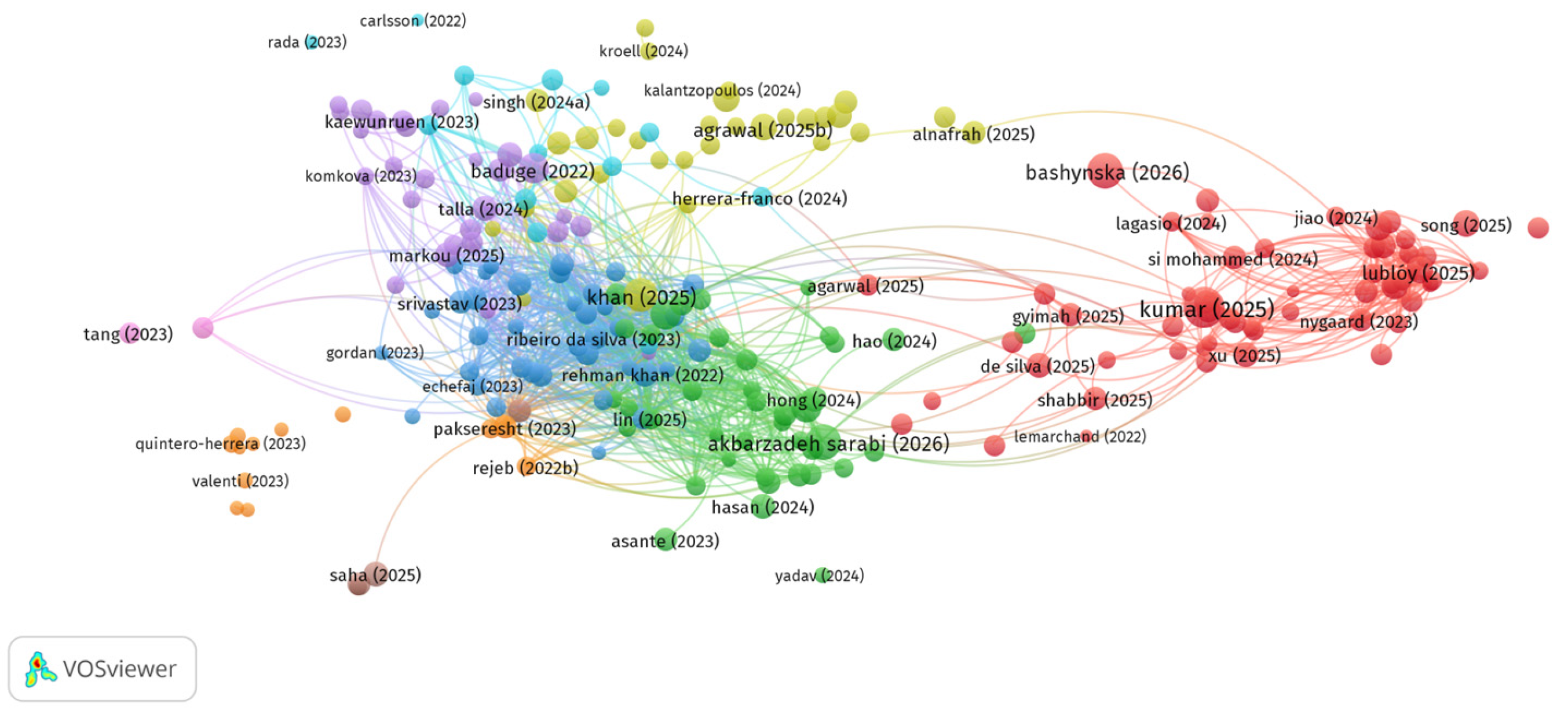
Bibliographic coupling analysis was conducted on the final set of studies included in the systematic literature review ( n = 56) to examine the field’s intellectual structure and identify groups of publications sharing common knowledge foundations. In bibliographic coupling networks, each node represents an individual publication, while links indicate the extent to which two studies cite the same references. Publications exhibiting stronger reference overlap are positioned closer together and are therefore more likely to reflect similar conceptual orientations, methodological approaches, or research priorities. The resulting network visualization is presented in Figure 6.
As shown in Figure 6, the bibliographic coupling network reveals several interconnected clusters representing distinct intellectual communities within the reviewed literature. Despite differences in thematic emphasis, the network exhibits substantial interconnectivity, suggesting that research on sustainable finance, circular economy systems, and digital technologies increasingly draws upon a shared body of foundational knowledge. The largest cluster centers on studies of artificial intelligence, machine learning, digital transformation, and sustainability-oriented applications. Representative publications include Baduge et al. [33], which explores artificial intelligence and smart vision technologies within construction environments, and Kurniawan et al. [34], which investigates the role of digitalization in supporting decarbonization within the waste recycling industry. These studies collectively illustrate the growing importance of data-driven technologies for improving operational efficiency, environmental performance, and sustainability management.
A second major cluster is associated with blockchain-enabled circular-economy systems and sustainable supply-chain governance [35]. Key contributions include Centobelli et al. [36], which highlights the role of blockchain in enhancing trust, transparency, and traceability across circular supply chains, and Khan et al. [37], which examines how blockchain technologies support organizational performance through circular economy practices. The prominence of this cluster reflects increasing scholarly interest in distributed ledger technologies as mechanisms for strengthening monitoring, accountability, and information integrity within complex sustainability-oriented value chains.
A third cluster focuses on sustainable finance, ESG disclosure, and research on greenwashing. Representative studies include Kumar et al. [27], which provides a comprehensive bibliometric perspective on sustainable finance scholarship, and Nygaard and Silkoset [38], which investigate the role of blockchain technologies in mitigating greenwashing and improving transparency for environmentally conscious stakeholders. Compared with the technology-focused clusters, this research stream places greater emphasis on disclosure quality, accountability mechanisms, and credibility within sustainability governance frameworks [39].
Several smaller yet distinct clusters are also evident. One cluster is associated with circular economy applications in the construction sector, represented by studies such as Yu et al. [40] and Talla and McIlwaine [41], which explore digital technologies to reduce construction waste and support circular construction practices. Another cluster is linked to geographic information systems (GIS), spatial analytics, and biomass resource assessment, represented by studies such as Parlato et al. [42] and Lovrak et al. [43]. These specialized clusters demonstrate the breadth of technological applications being explored across diverse sustainability contexts [44].
A notable characteristic of the network is the presence of several bridging publications positioned between major clusters. These studies connect otherwise distinct research communities and facilitate knowledge exchange across technological, environmental, and governance perspectives. Such intermediary positions suggest that the field is gradually moving beyond isolated technological or regulatory approaches toward integrated monitoring and decision-support frameworks capable of addressing multiple sustainability challenges simultaneously [45].
To complement the network visualization, the publications exhibiting the highest total link strength are summarized in Table 3.
As shown in Table 3, the strongest linkages are associated with publications discussing Industry 4.0 integration, blockchain-enabled circular supply chains, digital ESG transformation, and sustainable finance analytics. Khan [37] exhibits the highest total link strength (7541), indicating extensive co-references with other publications in the corpus and a central position in the network. Similarly, studies by Sarabi et al. [46] and Kumar et al. [27] demonstrate strong intellectual connectivity, highlighting their influence in shaping contemporary discussions around circular economy systems, blockchain governance, digital transformation, and sustainable finance. These highly connected publications serve as important knowledge hubs, connecting various thematic areas within the reviewed literature [49].
These results indicate that the bibliographic linkage structure in this field is evolving from relatively separate research streams of digital technologies, blockchain-enabled circular economy studies, and ESG governance research toward a more integrated interdisciplinary agenda. The increasing interconnectivity between clusters indicates growing academic interest in combining artificial intelligence, blockchain, Internet of Things technologies, and governance mechanisms within a unified sustainability monitoring framework. This convergence reinforces the study’s central premise: effective monitoring of green bonds in a circular economy context requires a cooperative digital ecosystem that addresses transparency, traceability, accountability, and regulatory compliance.

3.2.3. Co-Authorship Analysis

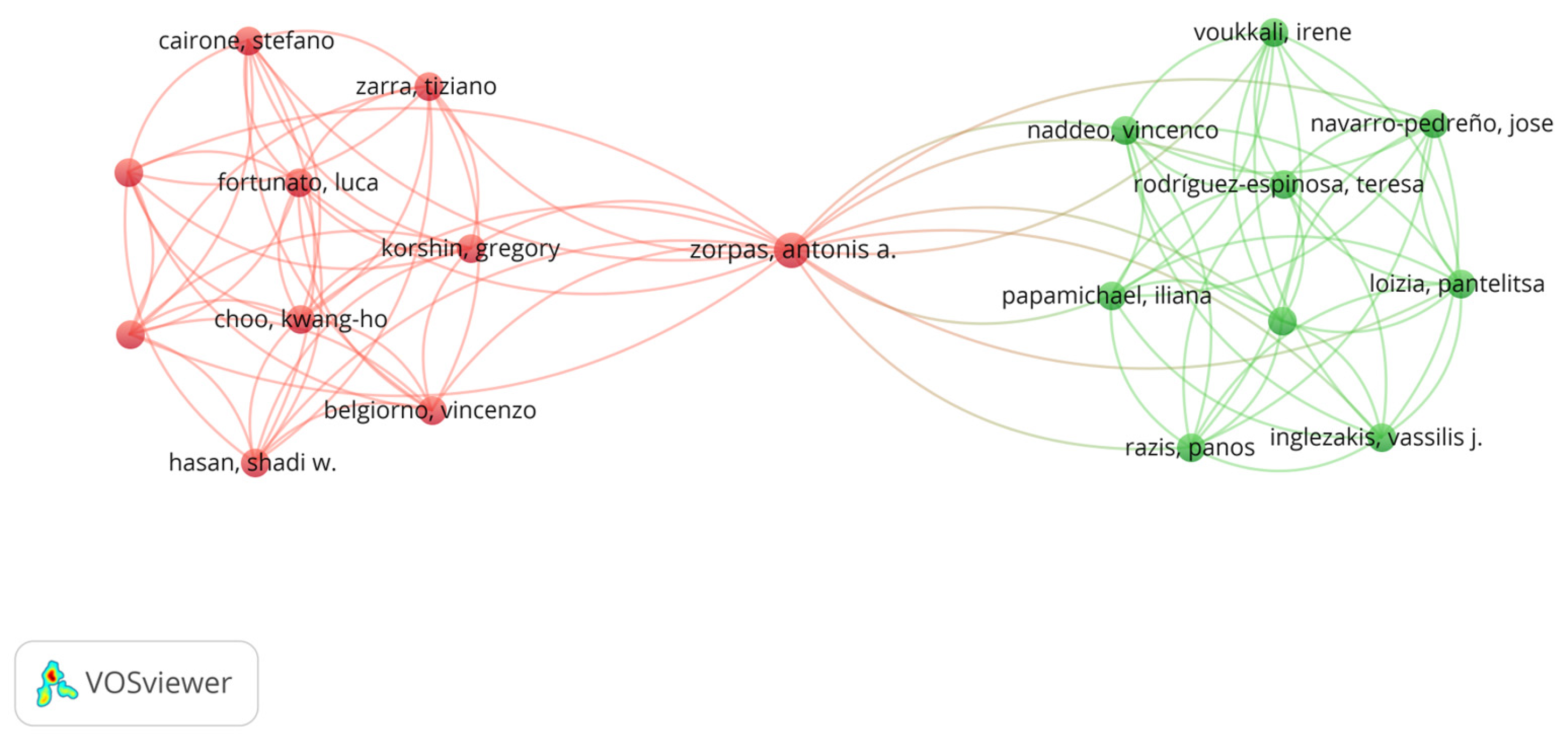
In the co-authorship network, nodes represent individual authors, while links indicate collaborative publication relationships. The network provides insight into the social structure of the research field and the extent of collaboration among scholars working in sustainable finance, circular economy systems, and digital technologies. Figure 7 presents a visualization of the network.
As shown in Figure 7, the co-authorship network consists of approximately 15 authors organized into two main collaborative communities, connected by a limited number of inter-cluster links. The red cluster contains seven authors, while the green cluster contains eight authors. The overall structure shows relatively strong collaboration within each cluster but weaker collaboration between clusters, indicating that research activity remains concentrated in a small number of established research groups.
The red cluster is centered on Zorpas, Antonis A., who occupies the most prominent link position in the network. This cluster includes authors such as Cairone, Stefano; Fortunato, Luca; Choo, Kwang-Ho; Belgiorno, Vincenzo; and Hasan, Shadi W., forming a tightly connected collaborative community. The high density of internal links indicates repeated co-authorship relationships and sustained research collaboration over time. The second main cluster (green) consists of authors including Voukkali, Irene; Naddeo, Vincenzo; Navarro-Pedreño, Jose; Inglezakis, Vassilis J.; Razis, Panos; Rodriguez-Espinosa, Teresa; and Papamichael, Liliana. Similar to the first cluster, this community exhibits a dense pattern of internal collaboration, indicating a well-established network of researchers working in sustainability and environmental management.
A notable feature of this network is the central position of Antonis A. Zorpas, who serves as the primary bridge connecting the two collaborative communities. Such bridge authors play a crucial role in facilitating knowledge exchange between separate research groups and in disseminating ideas across different areas of specialization. The limited number of bridge connections suggests that collaboration between research communities remains relatively limited despite increasing thematic convergence in this field. This pattern indicates that scientific collaboration is growing but remains somewhat fragmented. While strong collaborative ties exist within individual author groups, interactions across clusters are relatively limited. This pattern suggests opportunities for expanding international and interdisciplinary partnerships, particularly among researchers working on digital technologies, sustainability governance, and circular economy systems. Strengthening such collaboration could accelerate knowledge integration and support the development of more comprehensive and scalable monitoring frameworks for green finance and circular economy applications.

3.3. Thematic Synthesis: Technology Integration in Green Bond Monitoring

Based on the bibliometric mapping and full-text review of the 56 included studies, four dominant thematic categories were identified: (i) blockchain-based data governance and verification, (ii) AI and Natural Language Processing (NLP) for greenwashing detection and disclosure analysis, (iii) IoT-enabled real-time environmental monitoring, and (iv) digital twin architectures for integrated system representation. Table 4 provides a structured taxonomy of the included studies across these categories.

3.3.1. Blockchain and Distributed Ledger Technologies

Blockchain emerges as the most extensively studied technology within the corpus, appearing in 153 records (20.9% of the full dataset). Its application to green bond monitoring centers on three core functions: data immutability, decentralized verification, and automated compliance enforcement via smart contracts. Centobelli et al. [36] demonstrate that blockchain bridges trust, traceability, and transparency in circular economy supply chains, directly addressing the information asymmetry problem identified by Zhang et al. [9].
Wu et al. [50] extend this to a consortium blockchain-enabled ESG reporting platform incorporating token-based incentives for corporate sustainability disclosure, providing empirical evidence that distributed ledger governance reduces adverse selection risks. Malamas et al. [24] specifically address green bond issuance digitization, proposing a blockchain framework that integrates regulatory compliance checkpoints aligned with the EU Green Bond Standard. Despite these advances, studies consistently identify scalability constraints and the absence of standardized ontologies for circular economy impact data as key limitations impeding deployment at the portfolio level.

3.3.2. AI and NLP

AI and ML applications constitute the second largest thematic cluster, with 252 records across the full corpus (34.4%). Within the included studies, these tools are primarily deployed for two purposes: automated greenwashing detection and extraction of structured data from sustainability disclosures. Davidescu et al. [12] demonstrate the utility of NLP-based text analysis in identifying greenwashing language in ESG disclosures from Central and Eastern European firms, finding higher prevalence in sectors with complex supply chains, a pattern directly applicable to circular economy bond projects.
Moodaley and Telukdarie [51] conduct a systematic review of AI applications in greenwashing detection and sustainability reporting, concluding that transformer-based language models substantially outperform rule-based approaches in classification accuracy. Zhang and Zhou [52] further show that AI integration can establish causal pathways to curbing greenwashing in corporate sustainable growth strategies. Moodaley and Telukdarie [51] also raise an important counterpoint, noting that AI capabilities could also facilitate greenwashing on a large scale if regulatory oversight is inadequate, underscoring the dual-use nature of this technology. For green bond monitoring, the implication is that AI must be embedded within governance frameworks rather than deployed as a standalone solution.

3.3.3. IoT and Real-Time Environmental Monitoring

IoT technologies appear in 99 records across the corpus and are primarily deployed to address the fundamental limitation of periodic and static reporting identified in the introduction. Sisinni et al. [16] establish the theoretical foundation for Industrial IoT in continuous environmental data capture, while Hasan et al. [54] provide empirical evidence from smart agriculture applications, demonstrating that IoT-blockchain integration achieves trusted, tamper-proof data pipelines from production sites to investors. In the context of circular economy monitoring, Giwa et al. [55] show how IoT-enabled bioleaching and anaerobic digestion systems enable real-time optimization of material recovery processes, generating continuous performance data that could directly feed into green bond reporting architectures. A critical limitation identified across IoT studies is the challenge of sensor standardization and data interoperability across diverse circular economy actors, particularly in multi-stakeholder supply chain configurations where no single entity controls the full data infrastructure.

3.3.4. Digital Twin Architecture

Digital twin technology, despite representing the smallest thematic cluster (37 records; 5.1%), was identified as the most conceptually integrative approach to green bond monitoring in the context of the circular economy. Albrecht and Hofer [25] argue that digital twins serve as a driver for the development of a circular economy in the context of Industry 4.0 by providing a continuously updated virtual representation of physical systems. Kaewunruen et al. [56] demonstrated the application of digital twins to infrastructure monitoring, showing that real-time synchronization between physical asset performance and digital models enables predictive maintenance and verification of regulatory compliance.
Furthermore, Talla and McIlwaine [41] extended this to circular economy applications in the construction sector, proposing that design-stage digital technologies can reduce embodied carbon waste through dynamic lifecycle tracking. Collectively, these studies demonstrate that digital twin architectures are uniquely positioned to integrate IoT sensor feeds, blockchain-verified data, and AI-generated analytics within a unified systems model—precisely the integrative infrastructure identified by Schoenmaker and Schramade [26] as critical to the credibility of long-term sustainable finance.

3.4. Governance Mechanisms and Information Asymmetry Reduction

A cross-cutting finding across the thematic categories concerns the governance mechanisms through which digital technologies reduce information asymmetry between green bond issuers and investors. Three structural patterns are identified from the included studies. First, decentralized verification protocols implemented via blockchain eliminate the single-point-of-failure characteristic of issuer-controlled reporting, enabling multi-stakeholder validation of environmental performance claims [24,36].
Second, automated data extraction and classification powered by NLP remove the interpretive discretion that currently permits selective disclosure and greenwashing [12,51]. Third, standardized data schemas enforced through smart contracts create machine-readable compliance checkpoints that align with regulatory requirements such as the EU Green Bond Standard [24,41]. Centobelli et al. [36] provide evidence that blockchain-based information systems can effectively empower green consumers and investors, while Dong et al. [58] demonstrate in a logistics outsourcing context that blockchain transparency reduces greenwashing incentives even in the absence of direct regulatory enforcement. Together, these mechanisms constitute the core governance architecture of an effective green bond monitoring system.

3.5. Research Gaps and Synthesis

Despite the rapid expansion of scholarship across blockchain, AI, IoT, and related digital governance technologies, the systematic synthesis of the 56 studies included in this review identifies three persistent research gaps that continue to constrain both theoretical integration and practical implementation. These gaps collectively justify the development of a unified business informatics framework that can connect fragmented technological, governance, and operational perspectives.
The first gap concerns the limited development of integrated monitoring architectures. Across the reviewed studies, digital technologies are frequently examined in isolation. Blockchain is primarily investigated for transparency and traceability, AI for predictive analytics and ESG assessment, and IoT for real-time environmental monitoring. However, relatively few studies explain how these technologies can be combined within interoperable end-to-end monitoring systems. As a result, data interoperability, governance coordination, system integration, and cross-platform communication remain insufficiently addressed, particularly in circular economy environments where sustainability performance depends on continuous interactions among issuers, investors, regulators, auditors, and operational actors.
The second gap concerns the inadequate consideration of the circular economy’s complexity in monitoring frameworks. Circular economy systems involve non-linear resource flows, closed-loop production processes, distributed stakeholder participation, and multidimensional environmental impacts. Nevertheless, many existing monitoring approaches continue to rely on relatively linear assessment models and static reporting structures. Consequently, challenges associated with impact attribution, system-boundary definition, and dynamic sustainability outcomes remain only partially addressed. This observation is consistent with previous studies arguing that many sustainability governance frameworks continue to be influenced by linear economic assumptions despite being applied to inherently circular systems.
The third gap concerns the limited alignment between digital monitoring technologies and evolving regulatory frameworks. While policy initiatives such as the EU Green Bond Standard, national green taxonomies, and ESG disclosure requirements have expanded significantly, relatively few studies offer detailed mechanisms for integrating digital technologies into regulatory compliance processes. Although concepts such as transparency, auditability, and accountability are frequently discussed, practical implementation pathways remain underdeveloped. Consequently, the operational integration of digital monitoring systems with formal governance structures remains an important area for future research.
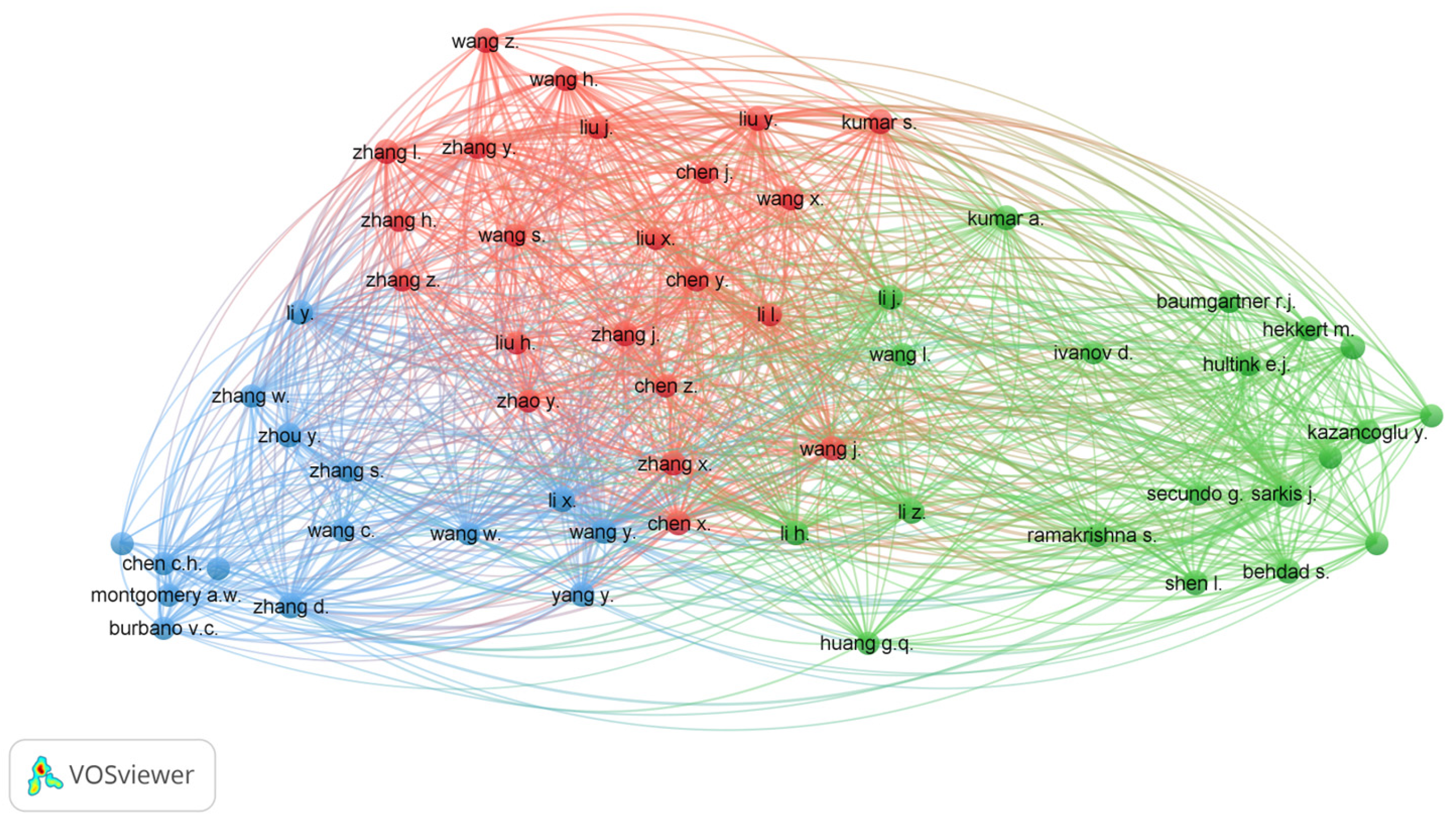
These findings are further supported by the co-citation network in Figure 8, which visualizes the intellectual structure underlying the identified gaps.
As shown in Figure 8, the co-citation network is organized into three major citation communities, indicating distinct yet interconnected intellectual traditions within the reviewed literature. The red cluster is dominated by references associated with digital transformation, sustainable finance, and technology-enabled governance. The green cluster primarily encompasses studies related to circular economy systems, sustainability management, and organizational transformation. Meanwhile, the blue cluster includes influential references focusing on environmental assessment, resource management, and sustainability evaluation frameworks.
Several highly connected authors, including Li, Wang, Liu, Chen, and Zhang, occupy central positions within the Figure 8 network, indicating their substantial influence across multiple research streams. The presence of these central nodes suggests that a relatively small group of foundational studies continues to shape scholarly discussions at the intersection of digital technologies, circular economy systems, and sustainable finance.
Although the three clusters remain distinguishable, the network exhibits substantial inter-cluster connectivity, reflecting intellectual convergence across previously separate research domains. Nevertheless, the clustering structure indicates that scholarship remains partially segmented, with studies focusing on digital technologies, sustainability governance, and circular economy implementation often relying on different theoretical foundations and citation traditions. This pattern suggests that interdisciplinary integration is progressing, but a fully unified conceptual foundation has yet to emerge.
This synthesis demonstrates that the literature is evolving from technology-specific investigations toward a more integrated, interdisciplinary approach. Future research should prioritize interoperable monitoring architectures, incorporate the unique characteristics of circular economy systems, and strengthen the integration of digital technologies with regulatory compliance mechanisms. The business informatics framework proposed in this study is positioned as an integrative solution that combines technological innovation, governance requirements, and sustainability objectives within a unified monitoring ecosystem for green bond applications in a circular economy context.

4. Discussion

The findings provide a comprehensive understanding of how digital technologies are reshaping green bond monitoring in circular-economy contexts. Although blockchain, AI, and IoT technologies have demonstrated considerable potential, the literature remains fragmented and largely focused on isolated technological applications. This observation supports the arguments of Friant et al. [8] and Kumar et al. [23], who emphasize that conventional monitoring approaches remain insufficient to address the complexity, dynamism, and multi-stakeholder nature of circular economy systems.
The reviewed studies consistently highlight the complementary roles of blockchain, AI, and IoT in enhancing transparency, accountability, and sustainability governance. Centobelli et al. [36] and Malamas et al. [24] demonstrate that blockchain improves traceability and data integrity through decentralized verification mechanisms, while Davidescu et al. [12] and Moodaley and Telukdarie [51] show that AI significantly strengthens ESG assessment and greenwashing detection through automated analytics. Similarly, Sisinni et al. [16] and Hasan et al. [54] emphasize the value of IoT in enabling continuous environmental monitoring through real-time data collection. However, this review’s findings indicate that the effectiveness of these technologies remains constrained when implemented independently. Consistent with the observations of Wamba et al. [20] and Soori et al. [22], persistent challenges related to interoperability, data standardization, and governance coordination continue to limit large-scale implementation.
Among the technologies identified, digital twin architectures emerge as the most promising integrative approach. Albrecht and Hofer [25] and Kaewunruen et al. [56] argue that digital twins enable continuous synchronization between physical systems and digital environments. The present findings extend this perspective by demonstrating that digital twins can integrate IoT-generated data, blockchain-based verification, and AI-driven analytics within a unified monitoring ecosystem. This aligns with the view of Schoenmaker and Schramade [26], who emphasize the importance of integrated, governance-oriented approaches to enhance transparency, accountability, and long-term value creation in sustainable finance.
Beyond synthesizing existing evidence, this study advances the literature in three important ways. First, it integrates green bond monitoring, circular economy systems, and business informatics perspectives within a single analytical framework. Second, unlike previous studies that primarily focus on individual technologies, it emphasizes interoperability and the complementary roles of blockchain, AI, IoT, and digital twin architectures. Third, it extends existing sustainable finance research by incorporating governance mechanisms, data provenance, system interoperability, and regulatory alignment as core dimensions of digital monitoring architectures. These contributions help bridge previously disconnected research streams and provide a foundation for future theory development and practical implementation.
From a theoretical perspective, the findings reinforce the relevance of business informatics as an interdisciplinary framework for managing complex sociotechnical systems by integrating technological innovation, organizational processes, and governance structures, as conceptualized by Hess et al. [18] and Legner et al. [19]. The results also provide empirical support for information asymmetry theory in sustainable finance. Consistent with Zhang et al. [9] and Henide [15], the review demonstrates that digital technologies can reduce informational asymmetries by enhancing transparency, automating verification, and enabling real-time monitoring. Nevertheless, their effectiveness ultimately depends on implementation within robust governance frameworks rather than standalone technological deployment.

Practical Implications

The findings have important implications for regulators, issuers, investors, and technology providers. For regulators, the absence of standardized digital reporting frameworks and interoperable data architectures remains a significant barrier to implementation. As noted by Azad and Tulasi Devi [4] and Malamas et al. [24], the alignment between sustainable finance regulations and digital monitoring infrastructures remains underdeveloped. Policymakers should therefore prioritize common reporting standards, interoperable data models, and mechanisms for automated compliance verification.
For issuers and investors, integrated monitoring systems offer opportunities to improve disclosure quality, reduce information asymmetry, and strengthen confidence in environmental performance claims. At the same time, technology providers can leverage the proposed framework as a reference architecture for developing platforms that integrate environmental, financial, and governance information within a unified ecosystem.
The study also confirms three persistent challenges in the literature: technological fragmentation, insufficient consideration of the complexity of the circular economy, and weak alignment between digital systems and regulatory frameworks. Addressing these limitations will require future research to focus on the empirical validation of integrated blockchain–AI–IoT architectures, the development of standardized governance and interoperability models, automated compliance mechanisms, and broader implementation studies in emerging economies. Overall, the findings suggest that the transformative potential of digital technologies for green bond monitoring lies not in individual technological capabilities but in their integration within holistic, interoperable, and governance-oriented monitoring ecosystems capable of supporting transparency, accountability, and long-term sustainability objectives.

5. Conclusions

This study provides a systematic and integrated review of digital technologies in green bond monitoring within circular economy contexts. Using a systematic literature review and bibliometric analysis, it synthesizes current research trends, dominant technological approaches, and persistent structural challenges. The findings show that blockchain, AI, IoT, and digital twin technologies improve transparency, traceability, data verification, and real-time monitoring. However, implementation remains fragmented, with most studies focusing on individual technologies rather than interoperable, end-to-end monitoring systems.
A central contribution of this study is identifying the gap between technological innovation and integrated governance design. Existing monitoring approaches rarely show how multiple technologies can be combined within a unified architecture for complex circular economy projects with dynamic resource flows, distributed stakeholders, and multidimensional sustainability outcomes. To address this gap, the study proposes a business informatics perspective that positions digital twin architecture as an integrative framework for synchronizing operational data, blockchain-based verification, AI-driven analytics, and governance processes within a single monitoring ecosystem.
From a theoretical perspective, the findings reinforce the relevance of business informatics as an interdisciplinary foundation for the design and management of complex digital monitoring systems in sustainable finance. The study also extends the literature on information asymmetry by demonstrating how digitally enabled monitoring infrastructures can shift green bond governance from periodic, disclosure-based reporting toward continuous, data-driven verification and accountability mechanisms. In doing so, the study contributes to the growing body of knowledge on the linkages among sustainable finance, digital transformation, and circular economy governance.
From a practical perspective, the findings highlight the importance of standardized data governance frameworks, interoperable system architectures, and alignment between digital technologies and evolving regulatory requirements, including green bond standards, sustainability taxonomies, and ESG reporting frameworks. For regulators, such integration can improve compliance monitoring and reporting consistency. For issuers and investors, it can enhance transparency, reduce information asymmetry, and strengthen confidence in environmental performance claims. More broadly, the findings suggest that effective green bond monitoring requires interdisciplinary governance ecosystems that integrate technological, organizational, and regulatory dimensions.
Several limitations should be acknowledged. The analysis was restricted to Scopus-indexed journal articles published between 2022 and 2026 and may not fully capture relevant contributions from other databases, grey literature, or earlier foundational studies. In addition, the study focuses on conceptual synthesis and does not empirically evaluate the proposed framework in real-world settings. Future research should prioritize empirical validation of integrated monitoring architectures that combine blockchain, AI, IoT, and digital twin technologies within operational green bond projects. Further studies should examine interoperability standards, automated compliance verification mechanisms, digital governance models, and cross-jurisdictional regulatory integration. Greater attention should also be paid to implementation challenges in emerging economies, where institutional capacities, data infrastructures, and regulatory environments may differ substantially from those in developed markets. In addition, longitudinal case studies and pilot implementations would provide evidence on the effectiveness, scalability, and governance implications of integrated monitoring systems.
In conclusion, the future of green bond monitoring lies in holistic, interoperable, and governance-oriented digital ecosystems rather than isolated technological innovations. Advancing such integrated architectures will be essential for enhancing transparency, reducing greenwashing risks, strengthening investor confidence, and supporting the long-term credibility and effectiveness of sustainable finance in accelerating circular economy transitions.

Supplementary Materials

The following supporting information can be downloaded at: https://www.mdpi.com/article/10.3390/informatics13070100/s1, File S1: PRISMA 2020 Checklist.

Author Contributions

Conceptualization, R., E.C. and M.P.A.S.; Data curation, E.C., M.P.A.S. and S.; Formal analysis, E.C., M.P.A.S. and S.; Funding acquisition, R.; Investigation, R., N.Z. and D.I.P.; Methodology, S., A.S.A. and N.Z.; Project administration, A.S.A., N.A.M. and M.P.A.S.; Resources, R., D.I.P. and N.A.M.; Software, N.A.M., M.P.A.S., A.S.A. and D.I.P.; Supervision, S., A.S.A. and M.P.A.S.; Validation, R., M.P.A.S. and S.; Visualization, A.S.A., D.I.P. and M.P.A.S.; Writing—original draft, D.I.P., R. and N.Z. Writing—review & editing, E.C., M.P.A.S. and S. All authors have read and agreed to the published version of the manuscript.

Funding

This research was supported by the Equity-WCU Review Article Grant (Number: 3972/UN6.3.1/PT.00/2025).

Institutional Review Board Statement

Not applicable.

Informed Consent Statement

Not applicable.

Data Availability Statement

The original contributions presented in this study are included in the article/Supplementary Materials. Further inquiries can be directed to the corresponding author.

Acknowledgments

The authors are grateful to Universitas Padjadjaran (Unpad) for providing Article Processing Charge (APC) support. The APC for this article was funded by Unpad through the Indonesian Endowment Fund for Education (LPDP) on behalf of the Indonesian Ministry of Higher Education, Science and Technology, and managed under the EQUITY Program (Contract No. 4303/B3/DT.03.08/2025 and 3927/UN6.RKT/HK.07.00/2025). The authors are also grateful to Sultan Zainal Abidin University for collaboration in the study fellow scheme with reference code: UniSZA.500-4/2/18 (91). Also thanks to the Research Center for Public Policy, National Research and Innovation Agency (BRIN) Jakarta, for providing facilities for this research.

Conflicts of Interest

The authors declare no conflicts of interest.

References

  1. Kirchherr, J.; Yang, N.-H.N.; Schulze-Spüntrup, F.; Heerink, M.J.; Hartley, K. Conceptualizing the circular economy (revisited): An analysis of 221 definitions. Resour. Conserv. Recycl. 2023, 194, 107001. [Google Scholar] [CrossRef] [Scilit]
  2. Agliardi, E.; Agliardi, R. Corporate green bonds: Understanding the greenium in a two-factor structural model. Environ. Resour. Econ. 2021, 80, 257–278. [Google Scholar] [CrossRef] [Scilit] [PubMed]
  3. Berg, F.; Kölbel, J.F.; Rigobon, R. Aggregate Confusion: The Divergence of ESG Ratings. Rev. Financ. 2022, 26, 1315–1344. [Google Scholar] [CrossRef] [Scilit]
  4. Azad, S.; Tulasi Devi, S.L. Green bonds in sustainable finance: A bibliometric and meta-analysis of research trends, challenges, and emerging market dynamics (2014–2023). Bus. Strategy Environ. 2026, 35, 2143–2166. [Google Scholar] [CrossRef] [Scilit]
  5. Pyka, M. The EU Green Bond Standard: A Plausible Response to the Deficiencies of the EU Green Bond Market? Eur. Bus. Org. Law Rev. 2023, 24, 623–643. [Google Scholar] [CrossRef] [Scilit]
  6. Sanz-Torró, V.; Calafat-Marzal, C.; Guaita-Martinez, J.M.; Vega, V. Assessment of European countries’ national circular economy policies. J. Environ. Manag. 2025, 373, 123835. [Google Scholar] [CrossRef] [Scilit] [PubMed]
  7. Eisenreich, A.; Füller, J.; Stuchtey, M.; Gimenez-Jimenez, D. Toward a circular value chain: Impact of the circular economy on a company′s value chain processes. J. Clean. Prod. 2022, 378, 134375. [Google Scholar] [CrossRef] [Scilit]
  8. Friant, M.C.; Vermeulen, W.J.V.; Salomone, R. Analysing European Union circular economy policies: Words versus actions. Sustain. Prod. Consum. 2021, 27, 337–353. [Google Scholar] [CrossRef] [Scilit]
  9. Zhang, H.; Gong, Z.; Yang, Y.; Chen, F. Dynamic connectedness between China green bond, carbon market and traditional financial markets: Evidence from quantile connectedness approach. Financ. Res. Lett. 2023, 58, 104473. [Google Scholar] [CrossRef] [Scilit]
  10. Löffler, K.U.; Petreski, A.; Stephan, A. Drivers of green bond issuance and new evidence on the “greenium”. Eurasian Econ. Rev. 2021, 11, 1–24. [Google Scholar] [CrossRef] [Scilit]
  11. Pizzetti, M.; Gatti, L.; Seele, P. Firms Talk, Suppliers Walk: Analyzing the Locus of Greenwashing in the Blame Game and Introducing ‘Vicarious Greenwashing’. J. Bus. Ethics 2021, 170, 21–38. [Google Scholar] [CrossRef] [Scilit]
  12. Davidescu, A.A.; Manta, E.M.; Bîrlan, I.; Miler, A.-M.; Niță, S.-C. Detecting Greenwashing in ESG Disclosure: An NLP-Based Analysis of Central and Eastern European Firms. Sustainability 2026, 18, 1486. [Google Scholar] [CrossRef] [Scilit]
  13. Sun, Y.; Hao, Y. Green bonds and corporate environmental performance: The role of third-party certification. Int. Rev. Econ. Financ. 2025, 104, 104621. [Google Scholar] [CrossRef] [Scilit]
  14. Hunt, J.P. Green Bond Reporting: John Patrick Hunt. Columbia Bus. Law Rev. 2024, 2024, 13004. [Google Scholar] [CrossRef] [Scilit]
  15. Henide, K. Voluntary disclosure and adverse selection: Bayesian game theoretical inference for green bond labelling regimes. Int. Rev. Financ. Anal. 2022, 83, 102248. [Google Scholar] [CrossRef] [Scilit]
  16. Sisinni, E.; Saifullah, A.; Han, S.; Jennehag, U.; Gidlund, M. Industrial Internet of Things: Challenges, Opportunities, and Directions. IEEE Trans. Ind. Inform. 2018, 14, 4724–4734. [Google Scholar] [CrossRef] [Scilit]
  17. Al-Sabahi, K.; Al Mabsali, Y.K.; Almaqtari, F.A.; Al-Rashdi, S.A.S. Transforming Sustainable Finance: The Impact of Artificial Intelligence. In AI Integration for Business Sustainability; Al Qamashoui, A., Al Baimani, N., Eds.; Contributions to Environmental Sciences & Innovative Business Technology; Springer: Singapore, 2025; pp. 49–65. [Google Scholar] [CrossRef] [Scilit]
  18. Hess, T.; Matt, C.; Benlian, A.; Wiesböck, F. Options for Formulating a Digital Transformation Strategy. MIS Q. Exec. 2020, 15, 123–139. [Google Scholar]
  19. Legner, C.; Eymann, T.; Hess, T.; Matt, C.; Böhmann, T.; Drews, P.; Mädche, A.; Urbach, N.; Ahlemann, F. Digitalization: Opportunity and Challenge for the Business and Information Systems Engineering Community. Bus. Inf. Syst. Eng. 2017, 59, 301–308. [Google Scholar] [CrossRef] [Scilit]
  20. Wamba, S.F.; Queiroz, M.M.; Trinchera, L. Dynamics between blockchain adoption determinants and supply chain performance: An empirical investigation. Int. J. Prod. Econ. 2020, 229, 107791. [Google Scholar] [CrossRef] [Scilit]
  21. Luccioni, A.S.; Baylor, E.; Duchêne, N. Analyzing Sustainability Reports Using Natural Language Processing. arXiv 2020, arXiv:2011.08073. [Google Scholar] [CrossRef] [Scilit]
  22. Soori, M.; Ghaleh Jough, F.K.; Dastres, R.; Arezoo, B. Blockchains for industrial Internet of Things in sustainable supply chain management of industry 4.0, a review. Sustain. Manuf. Serv. Econ. 2024, 3, 100026. [Google Scholar] [CrossRef] [Scilit]
  23. Kumar, N.M.; Chand, A.A.; Malvoni, M.; Prasad, K.A.; Mamun, K.A.; Islam, F.R.; Chopra, S.S. Distributed Energy Resources and the Application of AI, IoT, and Blockchain in Smart Grids. Energies 2020, 13, 5739. [Google Scholar] [CrossRef] [Scilit]
  24. Malamas, V.; Dasaklis, T.K.; Arakelian, V.; Chondrokoukis, G. A blockchain framework for digitizing securities issuance: The case of green bonds. J. Sustain. Financ. Invest. 2024, 14, 569–595. [Google Scholar] [CrossRef] [Scilit]
  25. Albrecht, R.M.; Hofer, A. Digital twins as enablers for circular economy development in the context of Industry 4.0. Gr. Interakt. Org. 2025, 56, 771–788. [Google Scholar] [CrossRef] [Scilit]
  26. Schoenmaker, D.; Schramade, W. Investing for long-term value creation. J. Sustain. Financ. Invest. 2019, 9, 356–377. [Google Scholar] [CrossRef] [Scilit]
  27. Kumar, S.; Sharma, D.; Rao, S.; Lim, W.M.; Mangla, S.K. Past, present, and future of sustainable finance: Insights from big data analytics through machine learning of scholarly research. Ann. Oper. Res. 2025, 345, 1061–1104. [Google Scholar] [CrossRef] [Scilit] [PubMed]
  28. Page, M.J.; McKenzie, J.E.; Bossuyt, P.M.; Boutron, I.; Hoffmann, T.C.; Mulrow, C.D.; Shamseer, L.; Tetzlaff, J.M.; Akl, E.A.; Brennan, S.E.; et al. The PRISMA 2020 statement: An updated guideline for reporting systematic reviews. BMJ 2021, 372, n71. [Google Scholar] [CrossRef] [Scilit] [PubMed]
  29. Donthu, N.; Kumar, S.; Mukherjee, D.; Pandey, N.; Lim, W.M. How to conduct a bibliometric analysis: An overview and guidelines. J. Bus. Res. 2021, 133, 285–296. [Google Scholar] [CrossRef] [Scilit]
  30. Braun, V.; Clarke, V. Conceptual and design thinking for thematic analysis. Qual. Psychol. 2022, 9, 3–26. [Google Scholar] [CrossRef] [Scilit]
  31. Marzi, G.; Balzano, M.; Caputo, A.; Pellegrini, M.M. Guidelines for Bibliometric-Systematic Literature Reviews: 10 steps to combine analysis, synthesis and theory development. Int. J. Manag. Rev. 2025, 27, 81–103. [Google Scholar] [CrossRef] [Scilit]
  32. Nickerson, R.C.; Varshney, U.; Muntermann, J. A method for taxonomy development and its application in information systems. Eur. J. Inf. Syst. 2013, 22, 336–359. [Google Scholar] [CrossRef] [Scilit]
  33. Baduge, S.K.; Thilakarathna, S.; Perera, J.S.; Arashpour, M.; Sharafi, P.; Teodosio, B.; Shringi, A.; Mendis, P. Artificial intelligence and smart vision for building and construction 4.0: Machine and deep learning methods and applications. Autom. Constr. 2022, 141, 104440. [Google Scholar] [CrossRef] [Scilit]
  34. Kurniawan, T.A.; Othman, M.H.D.; Liang, X.; Goh, H.H.; Gikas, P.; Kusworo, T.D.; Anouzla, A.; Chew, K.W. Decarbonization in waste recycling industry using digitalization to promote net-zero emissions and its implications on sustainability. J. Environ. Manag. 2023, 338, 117765. [Google Scholar] [CrossRef] [Scilit] [PubMed]
  35. Kouhizadeh, M.; Zhu, Q.; Sarkis, J. Circular economy performance measurements and blockchain technology: An examination of relationships. Int. J. Logist. Manag. 2023, 34, 720–743. [Google Scholar] [CrossRef] [Scilit]
  36. Centobelli, P.; Cerchione, R.; Vecchio, P.D.; Oropallo, E.; Secundo, G. Blockchain technology for bridging trust, traceability and transparency in circular supply chain. Inf. Manag. 2022, 59, 103508. [Google Scholar] [CrossRef] [Scilit]
  37. Khan, S.A.R.; Yu, Z.; Sarwat, S.; Godil, D.I.; Amin, S.; Shujaat, S. The role of block chain technology in circular economy practices to improve organisational performance. Int. J. Logist. Res. Appl. 2022, 25, 605–622. [Google Scholar] [CrossRef] [Scilit]
  38. Nygaard, A.; Silkoset, R. Sustainable development and greenwashing: How blockchain technology information can empower green consumers. Bus. Strategy Environ. 2023, 32, 3801–3813. [Google Scholar] [CrossRef] [Scilit]
  39. Longsheng, C.; Shah, S.A.A. A multi-method framework integrating ANP-ANN and PROMETHEE-GAIA for circular economy performance assessment: A case study of China. J. Clean. Prod. 2025, 501, 145311. [Google Scholar] [CrossRef] [Scilit]
  40. Yu, Y.; Yazan, D.M.; Junjan, V.; Iacob, M.-E. Circular economy in the construction industry: A review of decision support tools based on Information & Communication Technologies. J. Clean. Prod. 2022, 349, 131335. [Google Scholar] [CrossRef] [Scilit]
  41. Talla, A.; McIlwaine, S. Industry 4.0 and the circular economy: Using design-stage digital technology to reduce construction waste. Smart Sustain. Built Environ. 2024, 13, 179–198. [Google Scholar] [CrossRef] [Scilit]
  42. Parlato, M.C.M.; Porto, S.M.C.; Valenti, F. Assessment of sheep wool waste as new resource for green building elements. Build. Environ. 2022, 225, 109596. [Google Scholar] [CrossRef] [Scilit]
  43. Lovrak, A.; Pukšec, T.; Grozdek, M.; Duić, N. An integrated Geographical Information System (GIS) approach for assessing seasonal variation and spatial distribution of biogas potential from industrial residues and by-products. Energy 2022, 239, 122016. [Google Scholar] [CrossRef] [Scilit]
  44. Xing, C.; Shan, Y.G.; Yang, F.; Zhang, Y. The effect of CSR assurance on subsequent corporate greenwashing: Suggestion acquisition or opinion shopping? Br. Account. Rev. 2025, 58, 101744. [Google Scholar] [CrossRef] [Scilit]
  45. Zorpas, A.A.; Inglezakis, V.J.; Papamichael, I.; Razis, P.; Voukkali, I.; Pérez-Gimeno, A.; Naddeo, V.; Rodríguez-Espinosa, T.; Loizia, P.; Navarro-Pedreño, J. Planetary sustainability science and technology: Integrating Astro-soil, Astro-environmental engineering and Astro-habitat engineering for space exploration. Sci. Total Environ. 2025, 992, 179959. [Google Scholar] [CrossRef] [Scilit] [PubMed]
  46. Sarabi, M.A.; Taleizadeh, A.A.; Bhattacharya, A. Towards blockchain-enabled circular closed-loop supply chain and impact of consumers’ distrust in price, product greenness sensitivity and carbon tax and subsidy. Eur. J. Oper. Res. 2026, 328, 105–121. [Google Scholar] [CrossRef] [Scilit]
  47. Kumar, S.; Shah, P. Digital ESG as a catalyst for achieving the sustainable development goals: A systematic review and bibliometric analysis of digital transformation for a resilient future. Sustain. Futures 2025, 10, 101458. [Google Scholar] [CrossRef] [Scilit]
  48. Bashynska, I. Ethical aspects of AI use in the circular economy. AI Soc. 2026, 41, 575–593. [Google Scholar] [CrossRef] [Scilit]
  49. Cairone, S.; Hasan, S.W.; Choo, K.-H.; Lekkas, D.F.; Fortunato, L.; Zorpas, A.A.; Korshin, G.; Zarra, T.; Belgiorno, V.; Naddeo, V. Revolutionizing wastewater treatment toward circular economy and carbon neutrality goals: Pioneering sustainable and efficient solutions for automation and advanced process control with smart and cutting-edge technologies. J. Water Process Eng. 2024, 63, 105486. [Google Scholar] [CrossRef] [Scilit]
  50. Wu, L.; Guo, Y.; Han, X. Combating 3PCCL greenwashing with the blockchain technology under government enforcement. Sustain. Oper. Comput. 2026, 7, 17–32. [Google Scholar] [CrossRef] [Scilit]
  51. Moodaley, W.; Telukdarie, A. Greenwashing, Sustainability Reporting, and Artificial Intelligence: A Systematic Literature Review. Sustainability 2023, 15, 1481. [Google Scholar] [CrossRef] [Scilit]
  52. Zhang, L.; Zhou, B. The impact of AI on green finance: Evidence from China’s national pilot zones. Environ. Dev. Sustain. 2026, 1–37. [Google Scholar] [CrossRef] [Scilit]
  53. Zhang, D. The pathway to curb greenwashing in sustainable growth: The role of artificial intelligence. Energy Econ. 2024, 133, 107562. [Google Scholar] [CrossRef] [Scilit]
  54. Hasan, H.R.; Musamih, A.; Salah, K.; Jayaraman, R.; Omar, M.; Arshad, J.; Boscovic, D. Smart agriculture assurance: IoT and blockchain for trusted sustainable produce. Comput. Electron. Agric. 2024, 224, 109184. [Google Scholar] [CrossRef] [Scilit]
  55. Giwa, A.S.; Maurice, N.J.; Zelong, W.; Claire, M.J.; Vakili, M.; Mabi, A.; Liu, B.; Lv, F.; Memon, A.G. Advancing resource recovery from sewage sludge with IoT-based bioleaching and anaerobic digestion techniques. J. Environ. Chem. Eng. 2025, 13, 116293. [Google Scholar] [CrossRef] [Scilit]
  56. Kaewunruen, S.; O’Neill, C.; Sengsri, P. Digital twin-driven strategic demolition plan for circular asset management of bridge infrastructures. Sci. Rep. 2025, 15, 10554. [Google Scholar] [CrossRef] [Scilit] [PubMed]
  57. Martínez, L.; Dinçer, H.; Yüksel, S.; Eti, S. Entropy game-based information processing and Q-learning molecular fuzzy optimization of second-life battery investments for recycling solutions. Comput. Ind. Eng. 2026, 216, 111987. [Google Scholar] [CrossRef] [Scilit]
  58. Dong, C.; Huang, Q.; Pan, Y.; Ng, C.T.; Liu, R. Logistics outsourcing: Effects of greenwashing and blockchain technology. Transp. Res. Part E Logist. Transp. Rev. 2023, 170, 103015. [Google Scholar] [CrossRef] [Scilit]
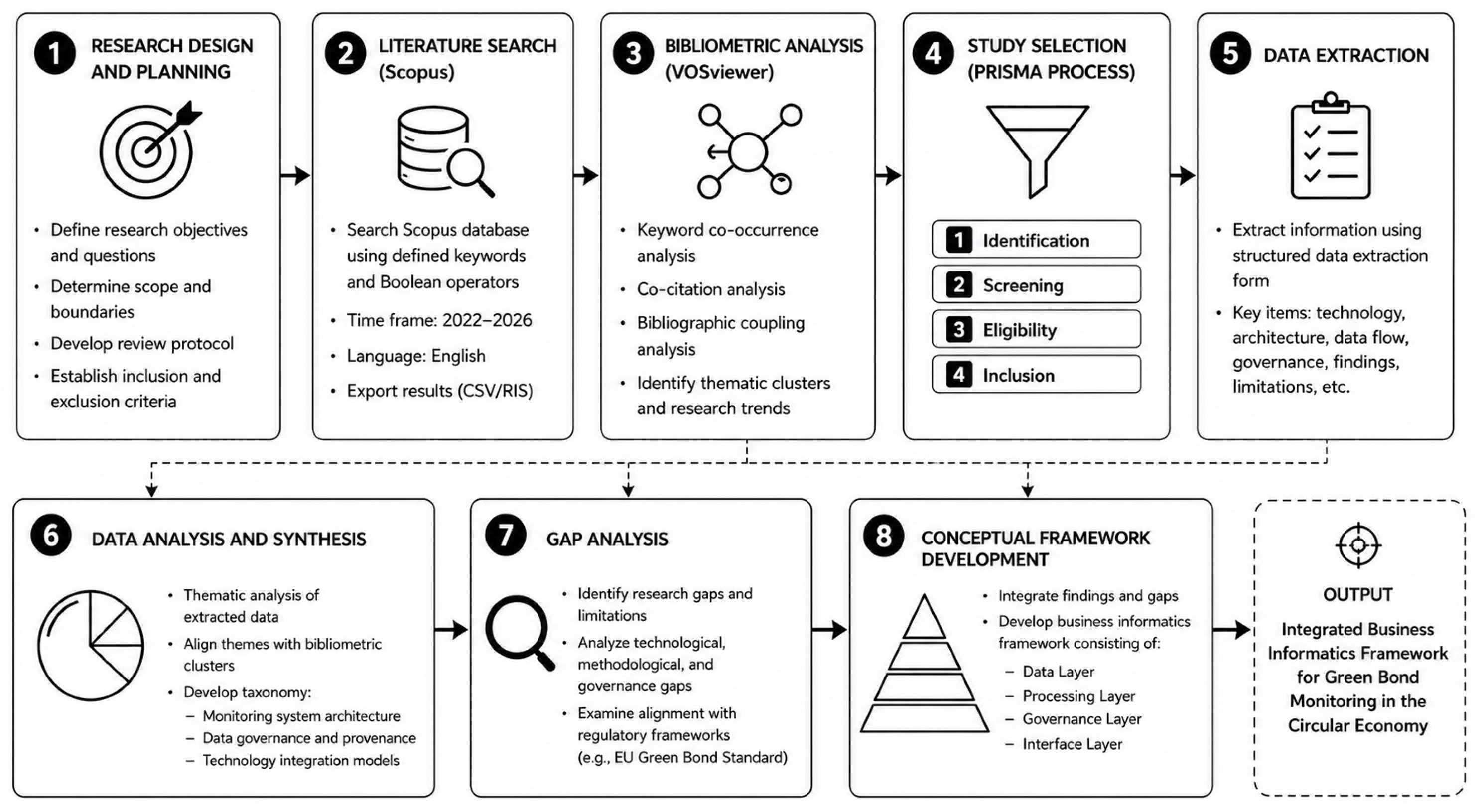
Figure 1. Systematic literature review workflow and research process.
Informatics 13 00100 g001
Figure 2. PRISMA 2020 flow diagram illustrating the sequential stages of identification, screening, eligibility assessment, quality appraisal, and final inclusion, resulting in a dataset of 56 studies selected from an initial corpus of 1549 records retrieved from Scopus.
Informatics 13 00100 g002
Figure 3. Annual publication trends in the Scopus database (2022–2026 *). * Data for 2026 represent partial-year records (January–April only).
Informatics 13 00100 g003
Figure 4. Top 10 countries by number of publications in the Scopus database.
Informatics 13 00100 g004
Figure 5. Keyword co-occurrence network generated using VOSviewer from the screening corpus ( n = 732), where node size indicates keyword occurrence frequency, link thickness reflects the strength of co-occurrence relationships, and colors represent thematic clusters identified through the VOSviewer clustering algorithm.
Informatics 13 00100 g005
Figure 6. Bibliographic coupling network generated using VOSviewer from the final SLR corpus ( n = 56), where nodes represent individual publications, links indicate shared references, and colors denote clusters identified through the VOSviewer clustering algorithm.
Informatics 13 00100 g006
Figure 7. Co-authorship network generated using VOSviewer from the final SLR corpus (n = 56), where nodes represent authors, links indicate co-authorship relationships, and colors denote collaborative clusters identified by the VOSviewer clustering algorithm.
Informatics 13 00100 g007
Figure 8. Co-citation network generated using VOSviewer from the final SLR corpus (n = 56), illustrating the intellectual structure of the reviewed literature, where nodes represent cited authors, link thickness indicates co-citation strength, and colors denote clusters identified through the VOSviewer clustering algorithm.
Informatics 13 00100 g008
Table 1. Inclusion and exclusion criteria.
Criteria TypeDescription
InclusionPeer-reviewed journal articles and review papers
Published in English between 2022–2026
Address green finance, circular economy, or ESG monitoring and governance
Engage with digital technologies (e.g., artificial intelligence, blockchain, Internet of Things, digital twin) or information systems
ExclusionConference papers, book chapters, editorials, and non-peer-reviewed outputs
Non-English publications or studies published before 2022
Studies without full-text availability
Not relevant to monitoring, governance, or system-level analysis
Purely technical studies without sustainability or information systems context
Table 2. Most frequent keywords in the keyword co-occurrence network (screening corpus, n = 732).
KeywordOccurrencesTotal Link Strength
Circular Economy3666200
Artificial Intelligence1713003
Blockchain1151655
Machine Learning771605
Greenwashing931181
ESG27276
Supply Chain Management551025
Table 3. Most influential publications in the bibliographic coupling network.
PublicationYearTotal Link Strength
Khan et al. [37]20257541
Sarabi et al. [46]20263357
Kumar and Shah [47]20252618
Kumar et al. [27]20252565
Bashynska [48]2026368
Table 4. Thematic taxonomy of included studies ( n = 56) by technology type and application domain.
Technology Categoryn (Studies)Primary ApplicationRepresentative Sources
Blockchain/Distributed Ledger Technology (DLT)18Data immutability, ESG verification, and token-based incentive mechanismsCentobelli et al. [36]; Wu et al. [50]; Malamas et al. [24]
AI/ML/NLP16Greenwashing detection, automated disclosure analysis, and anomaly detectionDavidescu et al. [12]; Moodaley and Telukdarie [51]; Zhang and Zhou. [52], Zhang [53]
IoT/Sensor Networks12Real-time monitoring of material flows and environmental compliance trackingSisinni et al. [16]; Hasan et al. [54]; Giwa et al. [55]
Digital Twin7Integrated system modeling and predictive compliance monitoringAlbrecht and Hofer [25]; Kaewunruen et al. [56]; Talla and McIlwaine [41]
Integrated/Multi-technology Systems3End-to-end monitoring architectures combining multiple digital technologiesKumar et al. [27]; Martínez et al. [57]; Wamba et al. [20]
Disclaimer/Publisher’s Note: The statements, opinions and data contained in all publications are solely those of the individual author(s) and contributor(s) and not of MDPI and/or the editor(s). MDPI and/or the editor(s) disclaim responsibility for any injury to people or property resulting from any ideas, methods, instructions or products referred to in the content.