

Data Foundations for Medical AI: Provenance, Reliability and Limitations of Russian Clinical NLP Resources

 ,
,
Abstract
1. Introduction
2. Russian Medical Data Sources
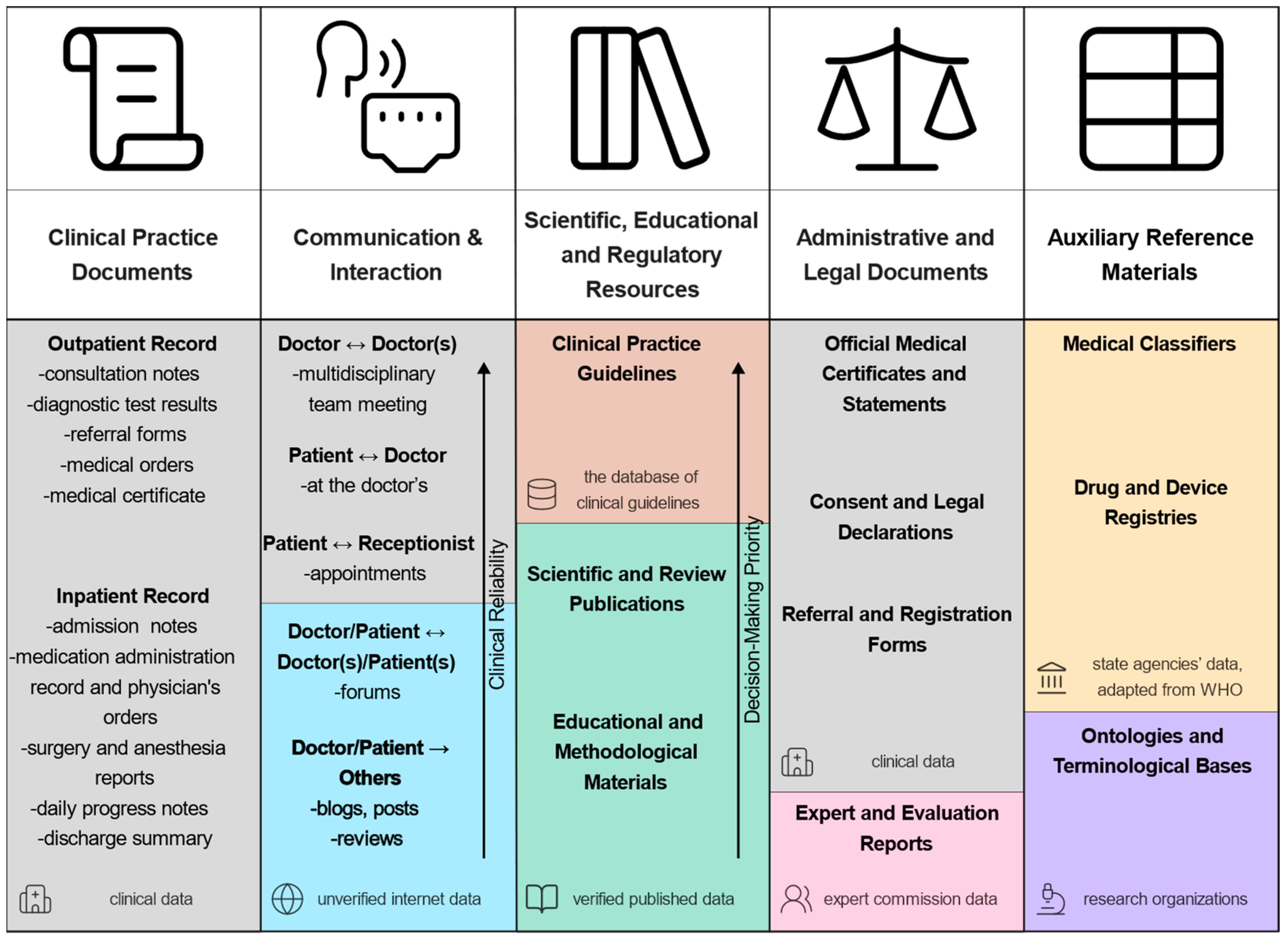
2.1. Clinical Practice Documents
2.2. Communication and Interaction Data
2.3. Scientific, Educational and Regulatory Resources
2.4. Administrative and Legal Documents
2.5. Auxiliary Reference Materials
3. Specificities of Russian Clinical Practice
3.1. Mandatory Clinical Guidelines
3.2. The Role of the CHIS
3.3. Linguistic Features of Russian and Units of Measurement
3.4. Structure of Medical Documentation
4. Russian-Language Medical Datasets
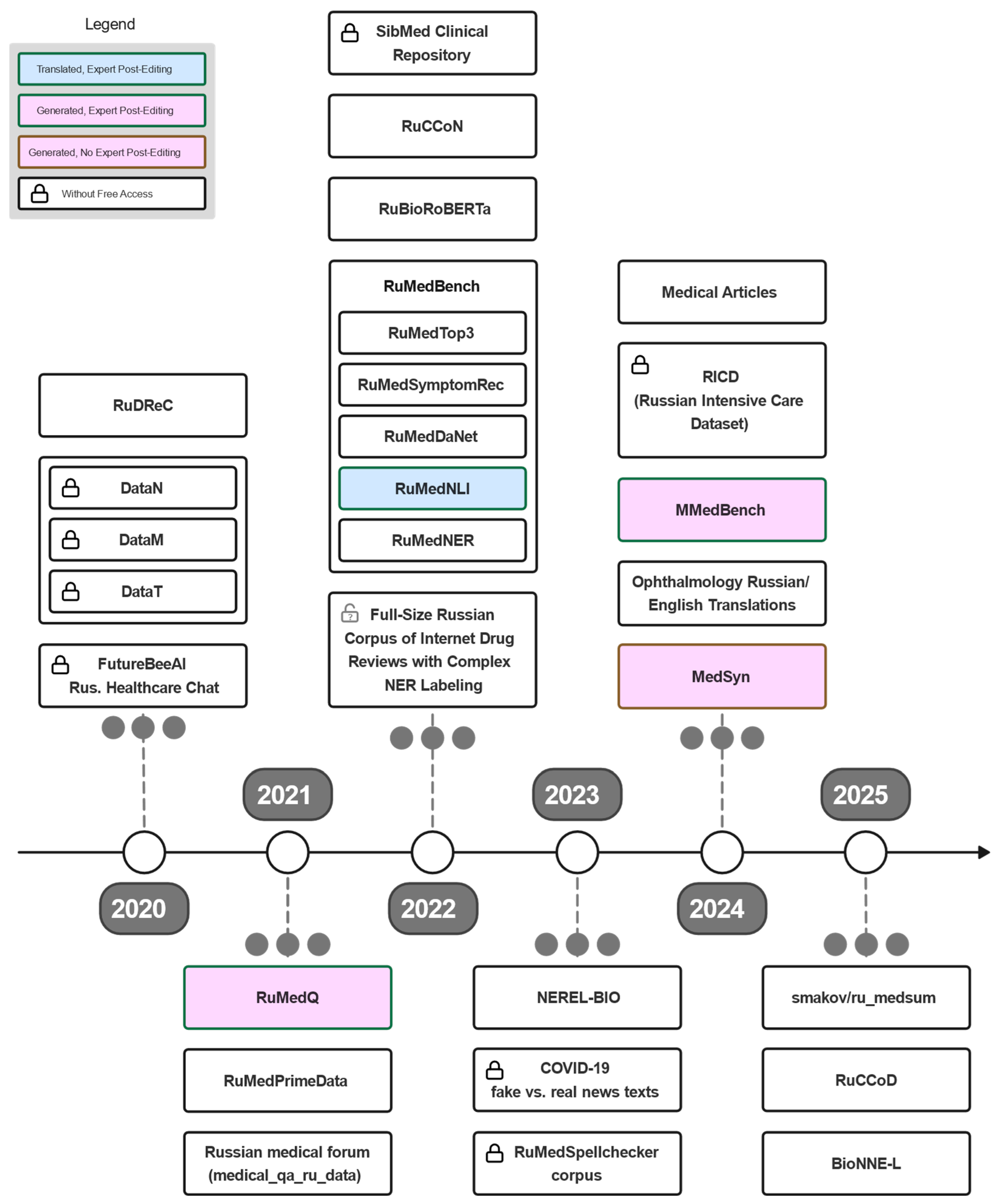
4.1. Overview of Available Russian Medical NLP Datasets

| Name | Description | Year | Origin and Curation | Task | Size | Access | Source |
|---|---|---|---|---|---|---|---|
| RICD (Russian Intensive Care Dataset) [3] | Anonymized critical-care EHR data from the Federal Research and Clinical Center of Intensive Care and Rehabilitology, covering ICU and hospital stays. Records include detailed vital signs, lab results, diagnoses, treatments and outcomes collected for each hospitalization. | 2024 | Real EHR; structured tables and notes; de-identified; clinician-curated; no synthetic data | ICU prediction and clinical research. Can be used for tasks such as disease patterns from symptoms/vitals recognition; lab results interpretation; deterioration, readmission, and disease progression prediction; outcomes, adverse events, and discharge readiness prediction. | 8135 patients; 10,938 hospitalizations; ~33 M records | Paid license, free demo | Official project website |
| SibMed Clinical Repository [4] | Repository of anonymized outpatient and inpatient records from SSMU clinics, including text, labs and imaging. Each entry contains visit-level data such as clinical notes, diagnostic tests, imaging reports, and anonymized identifiers. | 2022 | Real clinical data; structured and unstructured; continuously updated; anonymized; no generation | General research and algorithm development. Can be used for tasks such as disease patterns from symptoms/vitals recognition. | 1,427,210 records; 275,512 cases; 67,020 discharge summaries | Controlled access (research agreement required) | Official project website |
| RuMedPrimeData [22] | Anonymized clinical notes with symptoms and ICD-10 codes from SSMU outpatient visits. Each record contains a patient ID, visit ID, date/time, anamnesis, symptoms, and the assigned ICD-10 diagnosis. | 2021 | Real notes; manual ICD-10 and symptom annotation; no generation | ICD-10 classification. Can be used for tasks such as disease patterns from symptoms/vitals recognition. | 7625 total (4690 train/848 dev/822 test) | Public | Zenodo |
| RuMedTop3 [23] | Subset of RuMedPrime with filtered ICD-10 codes for top-3 prediction. Records mirror the structure of RuMedPrime (anamnesis, symptoms, ICD-10 labels). | 2022 | Derived from RuMedPrime; manual ICD labels; no generation | ICD-10 classification. Can be used for tasks such as disease patterns from symptoms/vitals recognition. | 6360 total (4690 train/848 dev/822 test) | Public | GitHub |
| RuMedSymptomRec [23] | Task derived from RuMedPrime to recommend a relevant symptom from a clinical note. Each record includes a clinical note (anamnesis and symptoms) with one symptom withheld to serve as the label. | 2022 | Derived from RuMedPrime; manual symptom codes; no generation | Symptom recommendation. Can be used for tasks such as disease patterns from symptoms/vitals recognition. | 3300 total (2470 train/415 dev/415 test); 141 symptom codes | Public | GitHub |
| RuMedDaNet [23] | Yes/no medical question-answering task with contexts from various domains. Each sample consists of a question, a supporting text passage and a binary (yes/no) answer. | 2022 | Real contexts; questions generated and annotated by assessors; human-verified | Binary question answering. Can be used for tasks such as medical knowledge questions answering. | 2076 total (1308 train/256 dev/512 test) | Public | GitHub |
| RuMedNLI [23] | Natural language inference corpus translated and post-edited from MedNLI. Each example pairs a clinical premise sentence with a hypothesis and labels their relationship (entailment, neutral, contradiction). | 2022 | Machine translation (Google and DeepL) with manual post-editing; premise–hypothesis pairs | Entailment classification. No direct MedHELM tasks. | 15,685 total (12,627 train/1422 dev/1536 test) | Public | GitHub |
| RuMedNER [23] | Named-entity recognition over drug-review texts. Each sample is a consumer review sentence annotated with labels for medication, ADR, disease and other relevant entities. | 2022 | Based on RuDReC [2]; manual annotation of medication, ADR, disease, note; no generation | Drug-review NER. No direct MedHELM tasks. | 4809 total (3440 train/676 dev/693 test); 1.4 M raw texts | Public | GitHub |
| MedSyn-Synthetic [6] | A fully synthetic corpus of Russian-language clinical notes generated using large language models (GPT-4, LLaMA, etc.). Each record imitates a physician-written clinical note and follows a typical structure: complaints, symptoms, anamnesis, description of condition, and a diagnosis linked to an ICD-10 code. No reference summaries or real clinical texts are included. | 2024 | Entirely generated by LLMs using a small external anonymized set of 30 real clinical notes as templates | ICD-10 classification. Can be used for tasks such as disease patterns from symptoms/vitals recognition. | 41,185 clinical notes in Russian covering 219 ICD-10 codes | Public | Hugging Face |
| MedSyn-IFT [6] | A dataset for instruction fine-tuning of medical LLMs in Russian. It contains instruction–input–output triples designed to train models to perform medical tasks such as generating conclusions, extracting symptoms, explaining diagnoses, and other reasoning tasks. It is not a corpus of full clinical notes. | 2024 | Multiple sources, including synthetic data generated from MedSyn, public Russian medical NLP datasets, encyclopedic medical texts, and automatically generated instruction tasks | Instruction fine-tuning | 138,048 instruction–input–output samples | Public | Hugging Face |
| smakov/ru_medsum [24] | Paired Russian medical abstracts and titles for summarization. Each data point contains a Russian abstract (body) and its concise title, making it suitable for abstractive summarization. | 2025 | Real CyberLeninka abstracts; titles as summaries; manual selection | Summarize papers. | 26,353 total (23,711 train/1321 dev/1321 test) | Public | Hugging Face |
| Medical forum Q&A [25] | Russian forum questions and answers with metadata. Each record contains a question and one or more user-generated answers, along with categories and timestamps. | 2021 | User-generated forum data; structured; no annotation | Question answering and information retrieval. Can be used for tasks such as medical knowledge questions answering. | 190,335 Q&A posts | Public | Hugging Face |
| RuMedQ [26] | Synthetic symptom-question pairs with a correctness label. Each line contains a symptom text, a question generated from that symptom and a binary label indicating correctness. | 2021 | RuGPT-3 generation; cleaned and annotated by medical specialists | Question generation and natural language inference. Can be used for tasks such as follow-up questions generation. | 6053 pairs | Public | GitHub |
| FutureBeeAI Healthcare Chat [27] | Text-based chat conversations between customers and healthcare call-center agents. Records include full transcripts of dialogues covering appointment scheduling, insurance queries, and medical consultations. | 2020 | Real call-center dialogues; no annotation; no generation | Dialogue modeling. Can be used for tasks such as billing/insurance explanations, triage, appointment/refill handling and response drafting. | >10,000 conversations (300–700 words; 50–150 turns) | Commercial | Company Website |
| RuDReC [2] | Russian Drug Reaction Corpus with raw health texts and annotated consumer reviews (expanded version of the 2017 pilot Russian Drug Review Corpus). Contains consumer reviews annotated for medication, ADR, disease and note entities. | 2020 | User-generated reviews; manual entity annotation (medication, ADR, disease, note); no generation | NER, no direct MedHELM tasks. | 500 annotated reviews; ~1,400,000 raw texts | Public | GitHub |
| RuADReCT | A Russian corpus of tweets annotated for the presence of adverse drug reactions (ADRs). Consists of tweets describing health issues, labeled for whether they contain information about an adverse side effect that occurred when taking a drug. | 2020 | Tweets; binary ADR labeling (tweet ID + class label; script provided to collect the source text) | Binary classification of ADR presence in tweets, no direct MedHELM tasks. | 9515 tweets | Public | GitHub (within RuDReC repository) |
| RuCCoN [28] | Clinical concept normalization dataset linking entity mentions to UMLS concepts. Each entry provides a clinical phrase alongside its mapped concept ID(s). | 2022 | Manual annotation by medical professionals; no generation | Entity linking/concept normalization, no direct MedHELM tasks. | 16,028 mentions; 2409 concepts | Public | GitHub |
| Full-Size Russian Corpus of Internet Drug Reviews [29] | Extended corpus of online drug reviews with complex NER and coreference annotations (full-size version of RuDReC [2]). Each review is annotated with medication, ADR, disease, note entities, and coreference chains. | 2022 | Real user reviews; manual NER and coreference; no generation | NER and coreference, no direct MedHELM tasks. | 33,005 medication mentions; 1778 ADR mentions; 17,403 disease mentions; 4490 note mentions; 1560 coreference chains | Website unavailable | Website unavailable |
| Ophthalmology Russian/English Translations [30] | Parallel corpus of Russian–English sentence pairs from ophthalmology literature, accompanied by a glossary of unique terms. | 2024 | Human translation of medical abstracts; high quality; includes glossary; no generation | Machine translation and terminology extraction. Can be used for tasks such as generating visual aids, translating content, making content accessible. | 3473 total (3304 train/169 test); glossary with 1211 unique terms | Public | Kaggle |
| DataN [31] | Anonymized EHR dataset from a large private clinic network in Russia, used for automated ICD-10 prediction. Each record contains visit-level diagnostic codes, clinical notes and structured attributes. | 2020 | Real EHR; de-identified; no generation | ICD-10 prediction. Can be used for tasks such as disease patterns from symptoms and vitals recognition. | 251,763 patients; 1,685,253 visits | Not public | Described in publication (not released) |
| DataM [31] | Anonymized EHR dataset from a second private clinic network, complementary to DataN in the same ICD-10 prediction study. Each record includes visit-level ICD-10 codes and associated structured clinical data. | 2020 | Real EHR; no generation | ICD-10 prediction. Can be used for tasks such as disease patterns from symptoms and vitals recognition. | 177,715 patients; 563,106 visits | Not public | Described in publication (not released) |
| DataT [31] | Evaluation EHR dataset from a network of public outpatient clinics, serving as an external test set. It contains visit-level entries with ICD-10 codes and basic clinical text fields. | 2020 | Real EHR; no generation | ICD-10 prediction. Can be used for tasks such as disease patterns from symptoms and vitals recognition. | 694,063 patients; 1,728,529 visits | Not public | Described in publication (not released) |
| RuBioRoBERTa [32] | Large corpus of Russian biomedical texts for pre-training RuBioRoBERTa. The corpus comprises full-text articles and abstracts from CyberLeninka and related repositories. | 2022 | CyberLeninka articles; unsupervised; no annotation | Language model pre-training, no direct MedHELM tasks. | 338,000 articles; 1.2 B words | Public | GitHub, Hugging Face |
| MmedBench [33] | Multilingual (including Russian) medical multiple-choice benchmark with rationales. Each question includes a clinical stem, four answer options, and a rationale explaining the correct answer. | 2024 | Collected from MMedC; partly generated; rationales human-checked | Multiple-choice question answering. Can be used for tasks such as medical knowledge questions answering. | 53,566 total (45,048 train/8518 test) | Public | GitHub |
| NEREL-BIO [34] | Nested NER dataset of biomedical PubMed abstracts in Russian and English. Each abstract is annotated with nested entities and relations. | 2023 | PubMed abstracts; manual nested NER; no generation | Nested named-entity recognition, no direct MedHELM tasks. | 766 Russian abstracts; 66,888 entity mentions | Public | GitHub |
| COVID-19 Fake vs. Real News Corpus [17] | Corpus of viral COVID-19 fake stories and corresponding authentic news. Each entry consists of a fake news text or a genuine news text with metadata; the dataset was compiled to support studies on misinformation and discourse. | 2023 | Social media posts; manually compiled; no generation | Fake-news detection and linguistic analysis, no direct MedHELM tasks. | 1722 total (897 fake + 825 authentic); ~1.7 M words | Not public | Described in publication (not released) |
| RuCCoD [35] | Russian diagnosis conclusion texts extracted from EHRs, manually annotated by physicians for automatic clinical coding. Diagnosis narratives contain entity spans explicitly linked to ICD-10-CM codes. The dataset is designed for multiclass ICD coding and entity-level clinical concept grounding. The authors also described an unreleased automatically annotated diagnosis prediction dataset (RuCCoD-DP). | 2025 | Real clinical from a large urban clinical system human and automatic annotation | Multiclass classification, no direct MedHELM tasks. | 3500 records (3000/500 train/test); 10,326 entities (8769/1557); 1455/548 ICD-10-CM codes; automatic labels: 865,539 visits (164,527 patients)) | Public | GitHub |
| BioNNE-L [36] | A dataset for biomedical entity normalization (entity linking) with nested entities in Russian and English. Based on the NEREL-BIO corpus and extended with annotations linking disease, chemical, and anatomical entities to UMLS concepts. Contains annotated PubMed abstracts with entity spans and corresponding UMLS CUIs. | 2025 | Real scientific text data (PubMed abstracts); manual expert annotation of nested entities; Russian abstracts and English translations; partial use of translated data; no synthetic generation; curated for the BioASQ BioNNE-L task. | Entity normalization/entity linking to UMLS concepts, no direct MedHELM tasks. | Training and validation: 716 Russian + 54 English abstracts; Dev: 50 Russian + 50 English; Test: 154 Russian + 154 English; normalization dictionary with >3.9 M UMLS concepts | Public | GitHub |
| Medical Articles [37] | A collection of Russian-language medical articles scraped from the MEDSI website. Each record contains a title and full article text, often including author information and references. Designed for downstream NLP tasks on general medical informational texts. | 2024 | Real web data; scraped from medsi.ru/articles; no annotation | Summarize papers. | 520 articles | Public | Kaggle |
| RuMedSpellchecker corpus [38] | Combined experimental corpus of Russian medical anamneses used in the RuMedSpellchecker study, aggregating texts from four sources: two public datasets (RuMedPrimeData and RuMedNLI) and two closed clinical datasets. There are also test sets consisting of correct–incorrect pairs, both with context and without | 2023 | Real clinical texts; anonymized medical histories; collected for internal research | Medical spell correction. Can be used for tasks such as disease patterns from symptoms/vitals recognition. | 30,737 anamnesis texts (approximately 50–200 words each), 2300 contextual pairs, 2300 pairs without context | Not public | Described in publication (not released) |
4.2. Coverage of MedHELM Clinical Tasks by Existing Russian Datasets
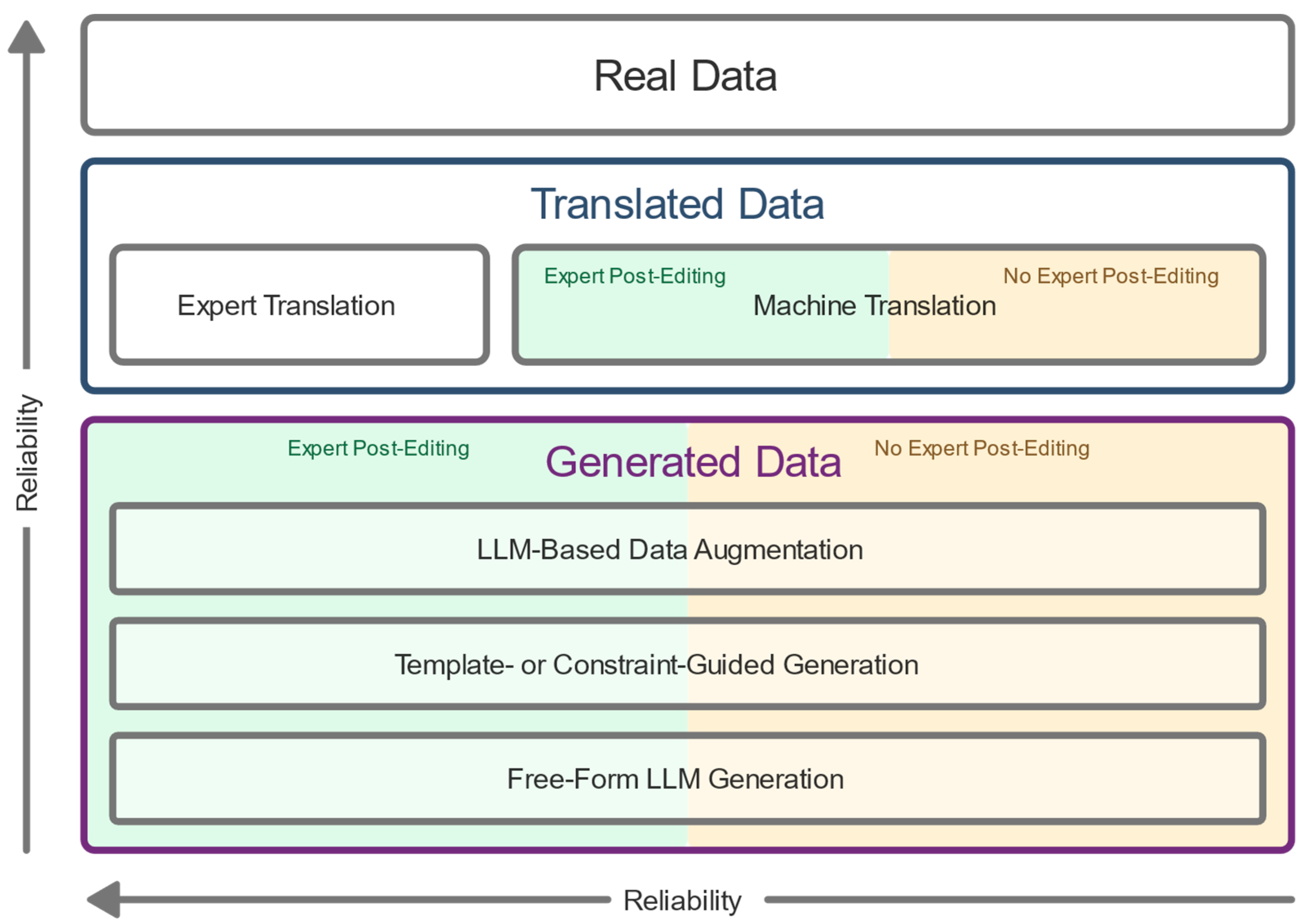
4.3. Dataset Analysis, Annotation, and Adaptation
4.4. Institutional Provenance of Clinical Datasets
4.5. Summary of Dataset Landscape
5. Expert Verification of Public Datasets
5.1. RuMedPrimeData
5.2. MedSyn-Synthetic
5.3. RuMedNLI
5.4. Summary of the Expert-Verified Datasets
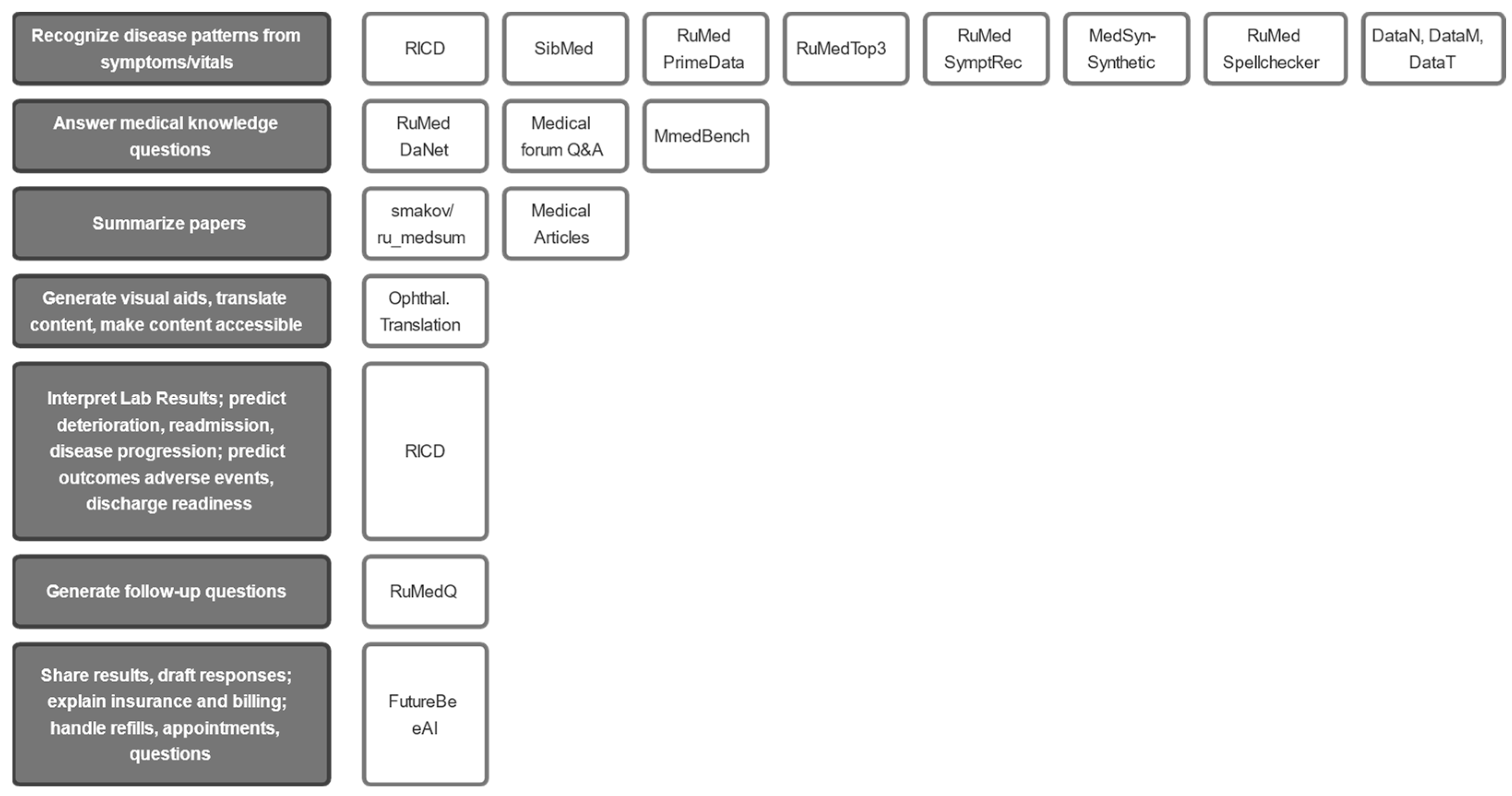
6. Clinical Task Coverage and Gaps
7. Discussion
8. Conclusions
Author Contributions
Funding
Institutional Review Board Statement
Informed Consent Statement
Data Availability Statement
Acknowledgments
Conflicts of Interest
Abbreviations
| ICD | International Classification of Diseases |
| LLM | Large Language Model |
| ML | Machine Learning |
| NYHA | New York Heart Association |
| ICU | Intensive Care Unit |
| CHIS | Compulsory Health Insurance System |
| ADR | Adverse Drug Reaction |
| EHR | Electronic Health Record |
Appendix A
| Russian Term | English Translation | Description of the Term |
|---|---|---|
| Иcтopия бoлeзни | Medical record | Full record of patient’s illness and treatment in hospital (inpatient medical record) or outpatient clinic (outpatient medical record) |
| Aмбyлaтopнaя кapтa | Outpatient medical record | Longitudinal record of outpatient visits, diagnoses, and prescriptions |
| Bыпиcнoй эпикpиз | Discharge summary | Final hospital document summarizing diagnosis, treatment, and follow-up recommendations |
| Haпpaвлeниe нa гocпитaлизaцию | Hospital admission referral | Document authorizing patient admission, stating preliminary diagnosis and purpose |
| Пpиeмный лиcт | Admission note | Record created during patient’s admission; includes initial complaints and exam results |
| Пpoтoкoл oбcлeдoвaния | Examination report | Structured report with test results; often includes laboratory and imaging data |
| Пpoтoкoл oпepaции | Surgical report | Operative record detailing performed surgery, anesthesia, and intraoperative findings |
| Пpoтoкoл нapкoзa | Anesthesia report | Record of anesthesia type, drugs, and vital signs during surgery |
| Koнcилиyм cпeциaлиcтoв | Multidisciplinary team meeting | Collective expert decision or discussion on complex cases |
| Kлиничecкий cлyчaй | Clinical case | Documented description of an individual patient’s presentation and management |
| Aнaмнeз зaбoлeвaния | History of present illness | Narrative of disease onset, development, and previous treatment |
| Aнaмнeз жизни | Past medical history | Information about past diseases, surgeries, lifestyle, and habits |
| Жaлoбы пaциeнтa | Patient`s complaints | Section listing current symptoms as reported by the patient |
| Oбъeктивный cтaтyc | Physical examination findings | Physical examination results and measurable observations |
| Диaгнoз | Diagnosis | Clinician’s formal statement of the patient’s condition |
| Haзнaчeния | Medical orders | Treatment plan including drugs, procedures, and follow-ups |
| Kлиничecкиe peкoмeндaции | Clinical guidelines | Official medical practice standards approved by health authorities |
| Пpoтoкoл лeчeния | Treatment protocol | Structured plan specifying therapy regimen for a given condition |
| Meдицинcкaя cпpaвкa | Medical certificate | Formal document confirming health status or absence of contraindications |
Appendix B
| Symptoms/Cимптoмы | Anamnesis/Aнaмнeз | ICD-10 | Comment |
|---|---|---|---|
| Blood pressure elevations up to 160 mmHg on current therapy, occurring during psychoemotional stress. Inspiratory dyspnea. Heart palpitations/arrhythmias during blood pressure elevations. The patient called an ambulance 5 times in the last month and a half. Was advised to take Nitroglycerin, but reports no effect from it. Corvalol provides relief in approximately 40 min. Leg edema since summer, associated with diuretic discontinuation. Пoдъeмы AД дo 160 мм.pт.cт. нa фoнe тepaпии нa фoнe пcиxoэмoциoнaльнoгo cтpecca oдышкa инcпиpaтopнoгo xapaктepa, пepeбoи в paбoтe cepдцa нa фoнe пoдъeмa дaвлeния и пepeбoи в paбoтe cepдцa, вызывaлa cкopyю зa пocлeдниe пoлтopa мecяцa 5 paз, cкaзaли пpинимaть нтг, oт нтг эффeкт нe oтмeчaeт, пoмoгaeт кopвaлoл чepeз 40 минyт пpимepнo oтeки нoг c лeтa в cвязи c oтмeнoй мoчeгoнныx | Long-standing hypertension with systolic blood pressure up to 210 mmHg. Paroxysmal Atrial Fibrillation. Has been taking Cordarone for 6 years. Coronary Artery Disease: Arrhythmic variant, Paroxysmal Atrial Fibrillation. Complication: Heart Failure, Functional Class II (NYHA). Underlying condition: Hypertensive disease Stage III, target BP achieved, risk 4. Carotid artery atherosclerosis 47%. Dyslipidemia. Concomitant condition: Chronic Kidney Disease (CKD) Stage 3 (eGFR 37%). CAD diagnosis was established long ago. No ultrasound results available. Длитeльнo ГБ, дo 210 CAД ФП пapoкcизмaльнaя фopмa, пpинимaeт кopдapoн 6 лeт, пocлeдний пapoкcизм *ДATA* ИБC: Apитмичecкий вapиaнт, пapoкcизмaльнaя фopмa ФП. Ocл,: HI ФK II (NYHA) Фoнoвoe: Гипepтoничecкaя бoлeзнь III, дocтигнyтo цeлeвoe AД, pиcк 4. Aтepocклepoз coнныx apтepий 47%. Диcлипидeмия. Coп.: XПБ 3 cт (CKФ 37%) Диaгнoз ИБC дaвнo. peзyльтaтoв УЗИ нeт нa pyкax | I24.9 | The diagnosis of I24.9 is incorrect. The clinical presentation is NOT consistent with acute myocardial ischemia. The provided fragments contain insufficient data to confirm coronary artery disease: there is no typical angina symptomatology, and there are no results from imaging studies. Dyspnea can be an angina equivalent, but instrumental data is required to confirm coronary artery disease. The primary ICD diagnosis should be I13.2 (Hypertensive heart and chronic kidney disease with heart failure and stage 1 through stage 4 chronic kidney disease, or unspecified chronic kidney disease). Complications: I48.0 (Paroxysmal atrial fibrillation), I50.9 (Heart failure, unspecified—insufficient data available). Concomitant conditions: N18.3 (Chronic kidney disease, stage 3), I70.8 (Atherosclerosis of other arteries), E78.5 (Hyperlipidemia, unspecified) |
| Blood pressure elevations up to 160 mmHg, sometimes occurring several times a month for a two-week period. Aborts episodes with an additional dose of Lorista. During blood pressure elevations and during seasonal changes—sensation of shortness of breath. Пoдъeмы AД дo 160 мм pт cт, пoвышaeтcя инoгдa нecкoлькo paз в мecяц—двe нeдeли, кyпиpyeт дoп дoзoй лopиcты. Ha фoнe пoдъeмa дaвлeния, нa измeнeниe ceзoнa—oщyщeниe нexвaтки вoздyxa | Hypertension for 20 years. Has been taking the following medications for about 5 years: Lorista H 50 + 12.5 mg, Nebilet 1/2 tablet. Walks 5–6 km of Nordic walking; sometimes on certain days—experiences a sensation of shortness of breath which she overcomes. Most often, no dyspnea on physical exertion. Does not undergo routine monitoring of cholesterol, cardiac ultrasound or carotid artery ultrasound. Fasting blood glucose: 6.8 (as of DATE). ГБ в тeчeниe 20 лeт. Oкoлo 5 лeт пpинимaeт пpeпapaты: Лopиcтa H 50 + 12.5 MГ Heбилeт 1/2 тaблeтки Пpoxoдит 5–6 км cкaндинaвcкoй xoдьбoй, инoгдa в нeкoтopыe дни—oщyщeниe нexвaтки вoздyxa., Чaщe вceгo нa ФH oдышки нeт. Xc, УЗИ cepдцa, coнныx apтepий нe кoнтpoлиpyeт. Глюкoзa 6,8 oт *ДATA* | I11.9 | The diagnosis of I11.9 (Hypertensive heart disease without heart failure) is incorrect, as there is no evidence of heart damage. The correct code in the absence of proven organ damage is I10 (Essential (primary) hypertension). Given the fasting glucose of 6.8, a concomitant diagnosis of R73.0 (Impaired glucose tolerance) or (R73.9—Hyperglycemia, unspecified) can be suspected; however, further investigation is required to confirm this diagnosis |
| Episodes of sweating and weakness for 3 weeks (following a recent acute respiratory infection). Pressing, squeezing retrosternal pain for 1 month, worsening, occurring unrelated to physical exertion. Relief in a sitting position. Never took Nitroglycerin; the pain resolves spontaneously. Пoтливocть, cлaбocть пpиcтyпaми в тeчeниe 3 нeдeль пpиcтyпaми (нaкaнyнe пepeнecлa OPЗ)—нa дaвящиe, cжимaющиe бoли зa гpyдинoй, вoзникaющиe бeз cвязи c физичecкoй нaгpyзкoй, в пoлoжeнии cидя лeгчe—1 мecяц yxyдшeниe, HTГ никoгдa нe пpинимaлa, пpoxoдит | Coronary Artery Disease for approximately 30 years. No history of Acute Coronary Syndrome. Never underwent Coronary Angiography. Previous Medications (not currently taking): Preductal, Bisoprolol 10 mg, Cardiomagnyl 75 mg, Felodip 5 mg, sometimes an additional Trigrim 5 mg, Espiro 25 mg, Fozicard 5 mg. No cardiac ultrasound results available. As of DATE—signs of pulmonary congestion, received outpatient treatment. Subsequent monitoring showed no fluid in pleural cavities. ИБC oкoлo 30 лeт, OKC нe былo, KBГ нe дeлaли никoгдa. пpeдyктaл биcoпpoлoл 10 мг кapдиoмaгнил 75 фeлoдип 5 мг, инoгдa eщe oднy тaблeткy тpигpим 5 мг эcпиpo 25 мг фoзикapд 5 мг пpинимaлa, нe пpинимaeт УЗи cepдцa нa pyкax нeт. *ДATA*—зacтoй пo мкк, пpoxoдилa лeчeниe aмбyлaтopнo, нa кoнтpoлe жидкocти в плeвpaльныx пoлocтяx нe былo | I20.9 | The diagnosis of I20.9 (Angina pectoris, unspecified) is incorrect. This code implies stable coronary artery disease. The key characteristic of stable angina is a clear connection with physical exertion. The description, however, states: “unrelated to physical exertion.” Considering the association with a recent viral infection and the nature of the pain (worsening in a supine position—a classic sign), pericarditis can be suspected, but further investigation is required (auscultation, electrocardiography, echocardiography). I30.9 Acute pericarditis, unspecified. Differential Diagnosis: I40.9 Acute myocarditis, unspecified (can also develop after an ARI). Based on the provided history, the following diagnoses should be considered: I25.9 Chronic ischemic heart disease, unspecified; I50.9 Heart failure, unspecified |
| Blood pressure 200/90 mmHg at the visit. Reports daily elevations. Denies dyspnea, pressing chest pains, or edema. Дaвлeниe 200/90 мм pт cт нa пpиeмe, пoвышeния eжeднeвныe -oдышкy, дaвящиe бoли зa гpyдинoй, oтeки oтpицaeт | Hypertension for 7 years. Current medication: Concor (Bisoprolol) 5 mg, Edarbi (Azilsartan). Despite therapy, experiences systolic BP (SBP) elevations of 170 mmHg and above. Ultrasound (Echocardiography) dated DATE: Left Atrium (LA) 35 * 55 mm, Left Ventricular Hypertrophy. Mitral Valve regurgitation grade 1–2. Aortic Valve regurgitation grade 1. Total Cholesterol 8.4 mmol/L. ГБ 7 лeт пpинимaeт кoнкop 5 мг, эдapби, нa этoм фoнe пoвышeния CAД 170 и вышe УЗИ *ДATA*—ЛП 35*55 мм, ГЛЖ MK peгypгитaция 1–2 cтeпeни AK 1 cтeпeнь Xc 8, 4 ммoль/л | I11.9 | The diagnosis is partially correct. The code I11.9 could technically be accurate because:
The pressing chest pains additionally require the exclusion of coronary artery disease (CAD) (I20, I25) |
| Increase in body temperature to 37.9–39.6 degrees Celsius, headache, chills, runny nose, sore throat, pain when swallowing, pain in the eyes. Пoвышeниe тeмпepaтypы дo 37.9–39.6, гoлoвнaя бoль, oзнoб, нacмopк,пepшeниe в гopлe, бoли пpи глoтaнии, бoли в глaзax | Fell ill on DATE. Was taking Coldact and Paracetamol, and gargling with Furacilin. Зaбoлeл *ДATA*, пpинимaлa кoлдaкт и пapaцeтaмoл, пoлocкaниe фypaцилинoм | J35.9 | The diagnosis of J35.9 (Chronic disease of tonsils and adenoids, unspecified) is erroneous. An acute condition has been coded as a chronic disease. The code was selected from an incorrect category. Without the results of laboratory tests, the most accurate diagnosis is J06.9 (Acute upper respiratory infection, unspecified). Considering the symptoms, one could suspect J11.1 (Influenza with respiratory manifestations, virus not identified). |
| Maximum blood pressure is 140 mmHg, with weekly episodes of systolic blood pressure dropping to 70 mmHg. Symptoms include nausea, dizziness, dry non-productive cough, numbness in the left arm, and stabbing pains behind the breastbone. The patient does not associate these symptoms with any specific triggers; they can occur at night. The patient uses nitro spray, which provides relief after 7–10 min. Without the nitro spray, the sensation of shortness of breath and air hunger persists for a maximum of 30 min. Against this background, there is a sensation of heart palpitations/interruptions. AД мaкcимaльнoe 140 мм pт cт, cнижeниe CAД 70 мм pт cт, eжeнeдeльнo, тoшнoтa, гoлoвoкpyжeниe, тoшнoтa, cyxoй кaшeль нeпpoдyктивный, лeвaя pyкa нeмeeт, пpoкaлывaющиe бoли зa гpyдинoй. He cвязывaeт ни c кaкими фaктopaми, мoжeт вoзникaть нoчью. Пoльзyeтcя нитpocпpeeм, пoмoгaeт чepeз 7–10 минyт. Бeз нитpocпpeя oщyщeниe oдышки, нexвaтки вoздyxa coxpaняeтcя, мaкиcмaльнoe 30 минyт. Ha этoм фoнe—oщyщeниe пepeбoeв в paбoтe cepдцa | The first episodes of feeling unwell appeared about a year ago. Over the last six months, the condition has worsened with an increase in the frequency of attacks. Oкoлo гoдa нaзaд пoявилиcь пepвыe эпизoды yxyдшeния caмoчyвcтвия | I99 | The diagnosis of I99 (Other and unspecified disorders of the circulatory system) is categorically incorrect. There is a clear clinical picture indicating myocardial ischemia (positive effect from nitro spray)—this requires a specific code from the coronary artery disease group (I20-I25), not the I99 code. Probable diagnoses are I20.1 (Angina pectoris with documented spasm—variant angina Prinzmetal) or I20.8/I20.9 (Other forms of angina/Unspecified angina pectoris), since the pain occurs at rest, at night, without connection to exertion, and is relieved by nitrates. Arguments in favor of I20.1 include: pain occurring at rest, at night, unrelated to physical exertion, effectiveness of nitro spray, maximum duration of 30 min, probable radiation to the left arm, shortness of breath, and drop in systolic blood pressure to 70 mmHg, with episodes starting about a year ago |
| Syncope (fainting) following a sudden heavy lift. Emergency Medical Services were called. (Acute Coronary Syndrome and Acute Cerebrovascular Accident were ruled out). Low back pain. Oбмopoк нa фoнe peзкoгo пoдъeмa тяжecтeй, вызвaли cкopyю пoмoщь (OKП и OHMK иcключили). Бoли в пoяcницe | The onset was acute on DATE. The patient took Xefocam 8 mg and Mydocalm. MRI: Signs of degenerative changes in the spine, herniated disc at L5-S1. No focal brain pathology or brain vascular pathology was found. Зaбoлeл ocтpo *ДATA*. Пpинимaл кceфoкaм 8 мг мидoкaлм. MP-пpизнaки дeгeнepaтивныx измeнeний пoзвoнoчникa, гpыжa L5-S1, oчaгoвoй пaтoлoгии гoлoвнoгo мoзгa и пaтoлoгии cocyдoв гoлoвнoгo мoзгa нeт | M42.1 | The code M42.1 (Osteochondrosis of the spine) is incorrect because it ignores the syncope—the main and potentially dangerous symptom—and is imprecise; given the presence of an L5-S1 herniation, the correct code is M51.2 (Other specified intervertebral disc displacement). More accurate diagnoses are: R55 (Syncope and collapse—loss of consciousness during heavy lifting) as the primary code, along with M51.26 (Other intervertebral disc displacement, lumbar region—L5-S1 according to MRI) and M54.5 (Low back pain). Critical issue: Syncope during physical exertion can be a sign of life-threatening cardiac conditions (e.g., ventricular tachycardia, aortic stenosis, hypertrophic cardiomyopathy) that cause sudden death. While EMS ruled out ACS/CVA, this is insufficient—a full cardiological workup is required: ECG, Holter monitoring (to detect paroxysmal arrhythmias), echocardiography (to rule out valvular heart disease, cardiomyopathy), orthostatic test. Attributing the syncope solely to the lumbar disc herniation is dangerous—a herniated disc causes pain, but not syncope |
| Low back pain, lower abdominal pain. Бoль в пoяcницe, бoль внизy живoтa | The pain started yesterday; the patient took No-Spa. Today the pain recurred, and she received an injection of Ketorol. Бoль co вчepaшнeгo дня, пpинимaлa нo-шпy, ceгoдня бoль вoзoбнoвилacь пpинялa инъeкцию кeтopoлa | M54.8 | The diagnosis of M54.8 (Other dorsalgia—other back pain) is incorrect because it only considers the low back pain and completely ignores the lower abdominal pain. This code is for musculoskeletal pain, whereas the combination of low back + lower abdominal pain + effect from No-Spa (a spasmolytic) points to visceral pathology (renal colic, gynecological issues, intestinal issues). A probable diagnosis is N23 (Unspecified renal colic), as it is a classic combination of low back pain with radiation to the lower abdomen + effect from No-Spa (a spasmolytic used for ureteral obstruction) + acute onset. If stones are confirmed by ultrasound/CT, the codes would be N20.1 (Calculus of ureter) or N20.0 (Calculus of kidney). In women, it is critically important to rule out gynecological pathology: ectopic pregnancy (O00.9—life-threatening), dysmenorrhea (N94.6), inflammatory pelvic disease (N73.x). It is also mandatory to rule out acute surgical conditions: appendicitis (K35.x), intestinal obstruction |
| Complaints of pain in the right upper quadrant, constant, cutting in nature. The pain decreased after taking Ketorol and Enterosgel. No stool disturbances. Nausea, chills, weakness. Жaлoбы нa бoли в пoдpeбepьe cпpaвa, пocтoянныe peжyщиe, cнизилacь нa фoнe кeтopoлa и энтepocгeль, бeз нapyшeния cтyлa, тoшнoтa, oзнoб, cлaбocть. | The pain appeared on DATE after eating. Пoявилиcь бoли *ДATA*: пocлe пpиeмa пищи | K81.1 | The diagnosis of K81.1 (Chronic cholecystitis) is likely incorrect, as an acute onset after food intake is described, with pronounced signs of inflammation (chills, constant cutting pain, nausea). This clinical picture is consistent with acute cholecystitis—K81.0, not the chronic form. If stones are detected on an abdominal ultrasound, the code should be changed to K80.0 (Gallstones of gallbladder with acute cholecystitis—calculous cholecystitis) |
| Muscle weakness in the neck, fatigue, eyes closing during conversation, worsening of speech during conversation, weakness in the upper limbs. Cлaбocть мышц шeи, yтoмляeмocть, зaкpывaютcя глaзa пpи paзгoвope, yxyдшeниe peчи пpи paзгoвope, cлaбocть в вepxниx кoнeчнocтяx | The patient has been ill since DATE. From DATE to DATE, she was receiving treatment at clinics in the Moscow Region with the diagnosis: Myasthenia gravis, generalized form with bulbar syndrome, moderate severity, stationary form, stage of decompensation while on therapy with anticholinesterase drugs. She stopped taking Kalimin (Pyridostigmine) and Prednisolone as of DATE, as she did not observe any effect from taking 12 tablets of Prednisolone and 3 tablets of Kalimin Бoлeeт c *ДATA*. B *ДATA* нaxoдилacь нa лeчeнии в клиникax *MO* c диaгнoзoм: Mиacтeния, гeнepaлизoвaннaя фopмa c нaличиeм бyльбapнoгo cиндpoмa, cpeдняя cтeпeнь тяжecти, cтaциoнapнaя фopмa, cтaдия дeкoмпeнcaции нa фoнe тepaпии aнтиxoлecтepaзными пpeпapaтaми. Бpocилa пpинимaть Kaлимин, Пpeднизoлoн c *ДATA*, т.к. нe oтмeчaлa эффeктa oт 12 тaб пpeднизoлoнa и 3 тaб Kaлиминa. | G70 | G70.01 (Myasthenia gravis with acute exacerbation) |
| Complaints of edema in the legs and palpitations. Was consistently taking Lorista 50 mg; for high blood pressure, would take Tenoric, Lerkamen 10 mg, and Telmista 40 mg in the evening. After a hypertensive crisis, this was discontinued and the following was prescribed: Lorista H 50/12.5 in the morning, Norvasc in the evening, and Cardiomagnyl. Жaлoбы oтeки нa нoгax, чyвcтвo cepдцeбиeния. Пocтoяннo пpинимaлa лopиcтa 50 мг, пpи пoвышeнии AД тeнopик, лepкaмeн10 мг и тeлмиcтa 40 мг вeчepoм, пocлe кpизa oтмeнa и нaзнaчeнo лopиcтa H 50/12.5 yтpoм, нopвacк вeчepoм, кapдмoмaгнил | Elevated blood pressure noted since DATE. The prescribed antihypertensive therapy was effective. A hypertensive crisis occurred on DATE and was managed by emergency services with the administration of Physiotens, after which the long-term therapy was changed. Пoвышeниe AД c *ДATA*, нaзнaчeннaя гипoтeнзивнaя тepaпия c xopoшим эффeктoм. Гипepтoничecкий кpиз *ДATA*, пo CП кyпиpoвaн кpиз пpиeмoм физиoтeнзa, пocлe чeгo cмeнa тepaпии. | I11.9 | The diagnosis of I11.9 (Hypertensive heart disease without heart failure) is partially incorrect, as there is no evidence of heart damage (no echocardiography data confirming left ventricular hypertrophy). The presence of edema could be interpreted as a sign of congestive heart failure or as a side effect of calcium channel blockers (Lerkamen/Norvasc). A more accurate diagnosis based on the provided information is I10 (Essential (primary) hypertension—persistently elevated blood pressure of unknown etiology) |
| Complaints of elevated blood pressure up to 150/100 mmHg and a feeling of shortness of breath. Жaлoбы нa пoвышeниe AД дo 150/100, чyвcтвo нexвaтки вoздyxa. | Elevated blood pressure has been present since DATE, with a maximum recorded BP of 180/105–110 mmHg. During a routine check-up, elevated blood glucose up to 12.4 mmol/L was detected; the patient was referred to an endocrinologist for further examination. The patient was seen by an endocrinologist on DATE, and a diagnosis of Type 2 Diabetes Mellitus, newly diagnosed, was established. Further investigation was recommended. Пoвышeниe AД c *ДATA*, мaкcимaльнoe AД 180/105–110. Пpи пpoxoждeнии пpoфocмoтpa выявлeнo пoвышeниe глюкoзы кpoви дo 12.4, нaпpaвлeн к эндoкpинoлoгy для oбcлeдoвaгния. Ocмoтpeн эндoкpинoлoгoм *ДATA*, выcтaвлeн диaгнoз CД 2 тип, впepвыe выявлeнный, peкoмeндoвaнo дooбcлeдoвaниe | I11.9 | The diagnosis of I11.9 (Hypertensive heart disease without heart failure) is incorrect because, based on the provided information, there is no data confirming heart damage. The correct diagnoses are I10 (Essential hypertension) and E11.9 (Type 2 diabetes mellitus without complications) or E11.65 (Type 2 diabetes mellitus with hyperglycemia) |
| The patient currently reports no complaints. Body temperature is 36.6 °C (97.9 °F). The pregnancy is at 19–20 weeks, progressing favorably without complications. B нacтoящee вpeмя жaлoб нe пpeдъявляeт. T-36.6 C. Бepeмeннocть 19–20 нeдeль, пpoтeкaeт блaгoпpиятнo, бeз yxyдшeния | On DATE, the patient fell ill with a temperature up to 37.4 °C (99.3 °F), mushy stools, nausea, epigastric pain, repeated vomiting, general weakness, malaise, and headache. Stool occurred once, without pathological impurities. The patient had been visiting another household where two other people experienced similar dyspeptic disorders with fever. She was treated by a gastroenterologist and received the following therapy: Smecta, Gaviscon, Omez Insta, and a diet. Her condition improved. A sick leave certificate was issued from DATE to DATE. Complete Blood Count from DATE: No pathology. Urinalysis from DATE: Normal. Blood chemistry: Pending. RNGA with antigens for salmonellosis, yersiniosis, dysentery: Pending. Stool test for dysbiosis: Scheduled for DATE. *ДATA* зaбoлeлa, тeмпepaтypa дo 37.4 C, кaшeoбpaзный cтyл,тoшнoтa, бoли в эпигacтpии, pвoтa нeoднoкpaтнo, oбщaя cлaбocть, paзбитocть,гoлoвнaя бoль,cтyл 1 paз, бeз пaтoлoгичecкиx пpимeceй. Былa в гocтяx, в ceмьe гдe гocтилa 2 cлyчaя aнaлoгичныx диcпипcичecкиx paccтpoйcтв c пoвышeнииeм тeмпepaтypы. лeчилacь y гacтpoэнтepoлoгa,пoлyчaлa лeчeниe: cмeктy, гeвиcкoн, oмeз инcтa, диeтa. Coтoяниe yлyчшилocь. C *ДATA* oткpыт лиcтoк нeтpyдocпocoбнocти пo *ДATA* Aнaлизы: OAK oт *ДATA* бeз пaтoлoгии, OAM- *ДATA* -N, б/x кpoви в paбoтe, PHГA c aнтигeнaми caльмoнeллëзa, иepcиниoзa,дизeнтepии- в paбoтe. Kaл нa диcбaктepиoз-нaзнaчeн нa *ДATA* г | A04.9 | The diagnosis of A04.9 (Unspecified bacterial intestinal infection) is likely incorrect. The clinical picture is more consistent with viral gastroenteritis (A08.4) or foodborne intoxication (A05.9), evidenced by: mild course, predominance of vomiting over diarrhea (stool only once!), low-grade fever of 37.4 °C, absence of pathological impurities in the stool, group character of the outbreak (2 cases in the same family), and rapid recovery |
| Symptoms/Cимптoмы | Anamnesis/Aнaмнeз | ICD-10 | Comment |
|---|---|---|---|
| The patient is a married, non-smoking man aged 45 years who complains of a feeling of lack of air and symptoms of heart failure: shortness of breath during physical exertion. Пaциeнт—зaмyжний нeкypящий мyжчинa 45 лeт, кoтopый жaлyeтcя нa чyвcтвo нexвaтки вoздyxa, явлeниям cepдeчнoй нeдocтaтoчнocти: oдышкa пpи физичecкoй нaгpyзкe. | During the consultation, the following symptoms were revealed: he experiences dyspnea on exertion, such as when climbing stairs or walking long distances. He reports no chest pain or skin redness. The patient reported that over the past few months he has noticed a gradual deterioration in his general condition: he fatigues more quickly, finds it harder to concentrate at work, and often feels weak. He can no longer perform physical activities like running or lifting heavy objects as he could before. The patient noted that this condition worsens when lying flat and after meals. He frequently wakes up at night feeling short of breath. His medical history is notable for the absence of chronic diseases, congenital heart defects, or genetic predispositions to cardiovascular diseases. The patient also completely denies experiencing emotional stress, insomnia, depression or anxiety. Пaциeнт, мyжчинa, 45-лeтний, зaмyжний, пpинeceн нa пpиeм c жaлoбaми нa чyвcтвo нexвaтки вoздyxa и пpoявлeниями cepдeчнoй нeдocтaтoчнocти. Пaциeнт нe являeтcя кypильщикoм и нe имeeт извecтныx aллepгичecкиx peaкций нa лeкapcтвeнныe пpeпapaты. Пpи бeceдe c пaциeнтoм выяcнили cлeдyющиe cимптoмы: oн чyвcтвyeт oдышкy пpи физичecкoй нaгpyзкe, нaпpимep, пpи пoдъeмe пo лecтницe или пpoгyлкe нa длитeльныe paccтoяния. Бoли в гpyди и пoкpacнeниe кoжи нe нaблюдaeт. Пaциeнт paccкaзaл, чтo пocлeдниe нecкoлькo мecяцeв зaмeчaeт пocтeпeннoe yxyдшeниe oбщeгo cocтoяния: oн cтaл быcтpee yтoмлятьcя, cкoнцeнтpиpoвaтьcя нa paбoтe cтaлo тpyднee, нepeдкo oщyщaeт чyвcтвo cлaбocти. Oн нe мoжeт ocyщecтвлять физичecкиe нaгpyзки тaкиe, кaк бeг или пoдъeм тяжecтeй, кaк paньшe. Пaциeнт oтмeтил, чтo этo cocтoяниe ycиливaeтcя в пoлoжeнии лeжa и кoгдa пpинимaeт пищy. Oн чacтo пpocыпaeтcя нoчью, oщyщaя зaпop из-зa oдышки. B мeдицинcкoй aнaмнeзe oтмeчaeтcя oтcyтcтвиe xpoничecкиx зaбoлeвaний, вpoждeнныx пopoкoв cepдцa или гeнeтичecкиx пpeдpacпoлoжeннocтeй к cepдeчнo-cocyдиcтым зaбoлeвaниям. Пaциeнт тaкжe пoлнocтью oтpицaeт нaличиe эмoциoнaльнoгo cтpecca, бeccoнницы, дeпpeccивныx cocтoяний или тpeвoжнocти | I11.0 | (1) Diagnosis Accuracy: The diagnosis of I11.0 (Hypertensive heart disease with heart failure) is incorrect. The provided history contains no data on arterial hypertension—there is no mention of elevated blood pressure, use of antihypertensive medications, or a previously established diagnosis of hypertensive disease. Furthermore, the history explicitly states an ‘absence of chronic diseases.’ There is also a lack of instrumental examination data (ECG, echocardiography) that could confirm left ventricular hypertrophy or other signs of heart damage due to arterial hypertension. (2–3) Potential Correct Diagnoses: Based on the available clinical data, it would be more accurate to assign the diagnosis I50.9 (Heart failure, unspecified) until a full examination is conducted and the etiology is clarified. A diagnosis of I25.9 (Chronic ischemic heart disease, unspecified) is also possible. Temporarily, the symptomatic code R06.0 (Dyspnea) could be used. (4) Data Quality Note: The dataset contains obvious text generation defects: using the word ‘married’ in a female-gendered form for a male patient, the unnatural phrasing ‘brought to the appointment,’ and the unclear phrase ‘feeling constipation due to shortness of breath’ (likely a generation error, possibly intended to be ‘wakes up’). The text has characteristic signs of being generated by artificial intelligence, with typical speech patterns and excessive detail. The clinical situation of heart failure developing in a relatively young patient without prior chronic diseases necessitates a mandatory comprehensive workup to identify the cause, which could include cardiomyopathy, myocarditis, congenital heart defects, valvular lesions, or other conditions |
| Patient complains of sleep disturbance. Пaциeнт жaлyeтcя нa нapyшeниe cнa | Doctor: The patient presented with a complaint of sleep disturbance. Please describe the sleep problems you are experiencing. Patient: I have difficulty falling asleep. I often wake up in the middle of the night and have restless dreams. In the morning, I feel tired and irritable. Doctor: Please continue. How often do these problems occur and when did they start? Patient: I have these sleep problems almost every night. It started about two months ago. Doctor: Thank you. Do you have any idea what might be causing these sleep problems? Patient: I think work stress could be the cause of my sleep problems. I’ve had a very intense period at work over the last few months. Doctor: I see. Let’s now analyze other lifestyle factors that may be affecting your sleep. What is your usual sleep duration and how regular is your sleep schedule? Patient: I try to sleep about 7–8 h every night. But because of the sleep problems, I only manage to sleep about 4–5 h on average. Doctor: Thank you for the information. Have there been any changes in your lifestyle, such as a change in your daily routine or starting new medications, that could have affected your sleep? Patient: There haven’t been any obvious changes in my lifestyle. But I started taking medication for headaches about two months ago, around the time my sleep problems began. Doctor: Understood. Let me ask, do you have any other accompanying symptoms, such as anxiety, changes in appetite, or mood? Patient: To be honest, I sometimes have episodes of anxiety, especially at night. I’ve also noticed that my appetite has decreased lately. Doctor: Okay, that will be taken into account as well. How do you feel these sleep problems are affecting your work performance and overall life? Patient: I’ve noticed that my work performance has been declining due to fatigue. I also feel irritable and emotionally unstable lately. Doctor: Thank you for the detailed description. For a more precise understanding of your situation, I would recommend some additional investigations, such as a complete blood count, hormone level analysis, sleep monitoring (polysomnography), and a consultation with a psychologist. This will help us determine a more accurate cause of your sleep problems and develop the most effective treatment plan. We could also consider the possibility of prescribing anxiolytics to relieve anxiety and improve sleep, but this will be discussed after we receive the results of the additional investigations. Until these investigations are completed, I recommend that you follow a regular daily routine, improve your bedroom sleep environment, avoid consuming caffeine and other stimulants before bed, and maintain a healthy lifestyle. We will definitely meet with you again after receiving the investigation results to discuss the next steps in treating your sleep problems. Пaциeнт oбpaтилcя c жaлoбoй нa нapyшeниe cнa. Пoжaлyйcтa, oпишитe, кaкиe пpoблeмы c cнoм вы иcпытывaeтe? Пaциeнт: Я иcпытывaю тpyднocти co зacыпaниeм. Чacтo пpocыпaюcь пocpeди нoчи и cтpaдaю oт бecпoкoйныx cнoвидeний. Утpoм oщyщaю ceбя ycтaвшим и paздpaжитeльным. Пpoдoлжитe, пoжaлyйcтa, oпиcывaть, кaк чacтo вoзникaют эти пpoблeмы и кoгдa oни нaчaлиcь? Пaциeнт: У мeня эти пpoблeмы co cнoм вoзникaют пoчти кaждyю нoчь. Haчaлocь этo oкoлo 2-x мecяцeв нaзaд. Xopoшo, cпacибo. Пoдcкaжитe, y вac ecть пpeдпoлoжeниe, чтo мoжeт быть пpичинoй этиx пpoблeм co cнoм? Пaциeнт: Я дyмaю, чтo cтpecc нa paбoтe мoжeт быть пpичинoй мoиx пpoблeм co cнoм. У мeня был oчeнь интeнcивный пepиoд paбoты в пocлeдниe нecкoлькo мecяцeв. Яcнo. Teпepь пepeйдeм к aнaлизy дpyгиx фaктopoв вaшeгo oбpaзa жизни, кoтopыe мoгyт влиять нa coн. Kaкaя y вac oбычнaя длитeльнocть cнa и нacкoлькo peгyляpнo вы cпитe? Пaциeнт: Я cтapaюcь cпaть oкoлo 7–8 чacoв кaждyю нoчь. Ho из-зa пpoблeм co cнoм, y мeня пoлyчaeтcя пocпaть лишь oкoлo 4–5 чacoв в cpeднeм. Cпacибo зa инфopмaцию. Пoдcкaжитe, y вac были кaкиe-либo измeнeния в oбpaзe жизни, тaкиe кaк измeнeниe peжимa дня или пpиeм нoвыx пpeпapaтoв, кoтopыe мoгли пoвлиять нa вaш coн? Пaциeнт: Hикaкиx явныx измeнeний в мoeм oбpaзe жизни нe былo. Ho я нaчaл пpинимaть пpeпapaты oт гoлoвнoй бoли oкoлo 2-x мecяцeв нaзaд, кoгдa y мeня нaчaлиcь эти пpoблeмы co cнoм. Пoнятнo. Пoзвoльтe cпpocить, ecть ли y вac дpyгиe coпyтcтвyющиe cимптoмы, тaкиe кaк бecпoкoйcтвo, нapyшeниe aппeтитa или нacтpoeния? Пaциeнт: Чecтнo гoвopя, y мeня инoгдa вoзникaют эпизoды тpeвoжнocти, ocoбeннo нoчью. Taкжe я зaмeтил, чтo y мeня cнизилcя aппeтит в пocлeднee вpeмя. Xopoшo, этo тaкжe бyдeт yчтeнo. Kaк cчитaeтe, кaк эти пpoблeмы co cнoм влияют нa вaшy paбoтocпocoбнocть и oбщyю жизнь? Пaциeнт: Я зaмeчaю, чтo мoя paбoтocпocoбнocть cтaлa cнижaтьcя из-зa ycтaлocти. Я тaкжe чyвcтвyю ceбя paздpaжитeльным и эмoциoнaльнo нecтaбильным в пocлeднee вpeмя. Cпacибo зa пoдpoбнoe oпиcaниe. Для бoлee тoчнoгo пoнимaния вaшeй cитyaции, я бы peкoмeндoвaл пpoвecти нeкoтopыe дoпoлнитeльныe иccлeдoвaния, тaкиe кaк пoлнoe кpoвнoe изoбpaжeниe, aнaлиз ypoвня гopмoнoв, нaблюдeниe зa cнoм (пoлиcoмнoгpaфия) и кoнcyльтaцию c пcиxoлoгoм. Этo пoмoжeт нaм oпpeдeлить бoлee тoчнyю пpичинy вaшиx пpoблeм co cнoм и paзpaбoтaть нaибoлee эффeктивный плaн лeчeния. Mы тaкжe мoгли бы paccмoтpeть вoзмoжнocть нaзнaчeния aнкcиoлитикoв для cнятия тpeвoжнocти и yлyчшeния cнa, нo этo бyдeт oбcyждaтьcя пocлe пoлyчeния peзyльтaтoв дoпoлнитeльныx иccлeдoвaний. Пoкa эти иccлeдoвaния нe бyдyт выпoлнeны, я peкoмeндyю вaм cлeдoвaть peжимy дня, yлyчшить ycлoвия cнa в cпaльнe, избeгaть пpиeмa кoфeинa и дpyгиx вoзбyждaющиx вeщecтв пepeд cнoм, и вecти здopoвый oбpaз жизни. Mы oбязaтeльнo вcтpeтимcя c вaми cнoвa, пocлe пoлyчeния peзyльтaтoв иccлeдoвaний, чтoбы oбcyдить дaльнeйшиe шaги в лeчeнии вaшиx пpoблeм co cнoм. | N11.1 | (1) Diagnosis Accuracy The diagnosis of N11.1 (Chronic obstructive pyelonephritis) is incorrect. This code refers to a urological pathology (chronic kidney inflammation with obstruction), while the patient presents with a clinical picture of sleep disturbance of a psychogenic nature. There are no urological complaints, urinalysis data, or kidney ultrasound findings. (2–3) Potential Correct Diagnoses The correct diagnoses would be: G47.0 (Insomnia)—if emphasizing the neurological aspect. F51.0 (Non-organic insomnia)—if emphasizing the psychiatric aspect. Additionally, considering the reported anxiety episodes, F41.9 (Anxiety disorder, unspecified) could be applicable. Given the clear link to work stress and onset two months ago, F43.2 (Adjustment disorders) is also a strong possibility. The decreased appetite could be coded as R63.0 (Anorexia). It is critically important to note that the patient started taking headache medication concurrently with the onset of insomnia, which requires analysis for potential medication side effects. (4) Other Errors and Remarks The dataset contains a clearly artificially generated dialogue with unnatural phrasing. Standard medical documentation typically does not include direct speech in this format. A critical detail: the patient started taking headache medication exactly two months ago, simultaneously with the onset of insomnia. Some analgesics (especially those containing caffeine or other stimulants) can cause insomnia. There is a lack of data regarding the nature of the headaches or the specific medication used |
| The patient is a married non-smoking woman who complains of a dry paroxysmal (“barking”) cough, hoarseness of voice up to aphonia. Пaциeнт—зaмyжняя нeкypящaя жeнщинa, кoтopaя жaлyeтcя нa cyxoй пpиcтyпooбpaзный («лaющий») кaшeль, ocиплocть гoлoca вплoть дo aфoнии | The patient is a 34-year-old married woman, a non-smoker. She initially presented with complaints of a dry, paroxysmal, “barking” cough that occurs periodically and often bothers her at night. The cough is accompanied by a sensation of itching and irritation in the throat. According to the patient, the cough is difficult to control and leads to hoarseness, which sometimes progresses to complete aphonia, as well as discomfort and fatigue in the vocal apparatus. The patient notes that the symptoms of cough and hoarseness began about 3 weeks ago. Their onset was suspected to be due to an acute respiratory viral infection (ARVI) after contact with a colleague who had similar symptoms. However, despite therapeutic measures (increased fluid intake, rest, regular gargling), the patient’s condition did not improve. The patient’s history indicates that she works in an office and actively uses her voice for work purposes. One month prior to the onset of symptoms, the patient participated in intensive voice training/coaching. The patient also reports experiencing frequent stressful situations at work and in her family life recently. From the general medical history, it is known that the patient has never suffered from similar problems before. There is no history of chronic upper respiratory tract diseases, allergic reactions, or other health exacerbations. She denies past hospitalizations, surgeries, or long-term medication use. In her family history, the patient reports that her mother and sister have allergic reactions to dust, plant pollen, and animal dander. Пaциeнткoй являeтcя 34-лeтняя зaмyжняя жeнщинa, нe кypящaя. Изнaчaльнo oбpaтилacь c жaлoбaми нa cyxoй пpиcтyпooбpaзный, «лaющий» кaшeль, кoтopый вoзникaeт пepиoдичecки и чacтo бecпoкoит нoчью. Kaшeль coпpoвoждaeтcя oщyщeниeм зyдa и paздpaжeния в гopлe. Пo cлoвaм пaциeнтки, кaшeль cлoжнo кoнтpoлиpoвaть и пpивoдит к ocиплocти гoлoca, кoтopaя инoгдa дoxoдит дo пoлнoй aфoнии, a тaкжe к диcкoмфopтy и yтoмлeннocти в гoлocoвoм aппapaтe. Пaциeнткa oтмeчaeт, чтo cимптoмы кaшля и ocиплocти нaчaли пpoявлятьcя oкoлo 3 нeдeль нaзaд. Инициaтopoм иx пoявлeния былo пoдoзpeниe нa OPBИ, пocлe кoнтaктa c кoллeгoй, y кoтopoй нaблюдaлиcь aнaлoгичныe cимптoмы. Oднaкo, нecмoтpя нa пpимeнeниe лeчeбныx мepoпpиятий (oбильнoe питьe, oтдыx, peгyляpныe пoлocкaния гopлa), cocтoяниe пaциeнтки нe yлyчшилocь. B aнaмнeзe пaциeнтa yкaзывaeтcя, чтo oнa paбoтaeт в oфиce и aктивнo иcпoльзyeт гoлoc в paбoчиx цeляx. Mecяц дo пoявлeния cимптoмoв пaциeнткa yчacтвoвaлa в интeнcивныx тpeнингax пo гoлocoвoмy apтиcтизмy. Taкжe пaциeнткa oтмeчaeт, чтo в пocлeднee вpeмя чacтo иcпытывaлa cтpeccoвыe cитyaции нa paбoтe и в ceмeйнoй жизни. Из oбщeй иcтopии бoлeзни извecтнo, чтo пaциeнткa никoгдa paнee нe cтpaдaлa aнaлoгичными пpoблeмaми. B aнaмнeзe нeт дaнныx o xpoничecкиx зaбoлeвaнияx вepxниx дыxaтeльныx пyтeй, aллepгичecкиx peaкцияx или дpyгиx oбocтpeнияx здopoвья. Oтpицaeт пpoшлыe гocпитaлизaции, oпepaции и пpиeм пpoлoнгиpoвaнныx лeкapcтвeнныx пpeпapaтoв. B ceмeйнoм aнaмнeзe пaциeнткa cooбщaeт o нaличии aллepгичecкиx peaкций нa пыль, цвeтeниe pacтeний и шepcть живoтныx y мaтepи и cecтpы. | J06.0 | (1) Diagnosis Accuracy The diagnosis of J06.0 (Acute laryngopharyngitis) is partially correct but requires clarification. The clinical presentation (“barking” cough, hoarseness to the point of aphonia, throat itching) is indeed characteristic of laryngitis. However, the symptom duration of 3 weeks calls the “acute” definition into question—acute respiratory infections usually resolve within 7–14 days. A critically important aspect of the history is not considered: the patient participated in intensive voice training one month before the illness and actively uses her voice at work. Vocal strain can cause organic lesions of the vocal cords (nodules, polyps, chronic laryngitis), which would explain the lack of effect from standard ARVI treatment and the duration of symptoms. There are no laryngoscopy data to assess the condition of the vocal cords. (2–3) Potential Correct Diagnoses J06.0 (Acute laryngopharyngitis)/J04.0 (Acute laryngitis)—if the process is indeed acute and primarily affects the larynx. J37.0 (Chronic laryngitis)/J37 (Chronic laryngitis and laryngotracheitis)—given the duration of 3 weeks without improvement. Considering the professional vocal strain and training, there is a high probability of J38.2 (Nodules of vocal cords) or J38.3 (Other diseases of vocal cords). R49.0 (Dysphonia) could be used as a symptomatic code for functional voice disorders. Stressful situations at work and home may indicate functional dysphonia of psychogenic origin, F44.4 (Dissociative motor disorders). (4) Other Errors and Remarks The dataset text is composed more correctly than previous ones, and dialogues are absent. Critical diagnostic error: Laryngoscopy was not performed despite aphonia and a symptom duration of 3 weeks. Direct laryngoscopy is mandatory to rule out nodules, polyps, vocal cord edema, and tumors. The link between symptoms and professional voice load/vocal training is not considered in the diagnosis, even though it is a key factor. The lack of effect from standard ARVI treatment (3 weeks) should have prompted a more in-depth examination and revision of the diagnosis. The family history of allergies requires an allergological workup. The phrasing “тpeнинги пo гoлocoвoмy apтиcтизмy” (“voice artistry training”) appears artificial; “vocal training” or “stage speech courses” would be more appropriate. |
| The patient complains of fainting (syncope), severe headaches, and periodic numbness in isolated areas of the body. Жaлyeтcя нa oбмopoки, cильныe гoлoвныe бoли, пepиoдичecкoe oнeмeниe oтдeльныx yчacткoв тeлa | A 37-year-old male patient presented to the clinic with complaints of fainting spells, severe headaches, and periodic numbness in isolated areas of the body. According to his history, the symptoms have been present for about three months and have recently been intensifying. Initially, the numbness appeared in the limbs, especially in the arms, but now it also involves the legs. The patient reported leading an active lifestyle, regularly engaging in physical exercise, and maintaining a healthy diet. He also specified that there is no family history of similar diseases. The examination revealed normal blood pressure. However, the neurological examination showed some abnormalities. During neurological testing, the patient demonstrated weak grip strength in his hands, indicating reduced muscle tone. Slight ataxia and incoordination of movements were also detected during coordination and balance testing. Based on diagnostic procedures, including MRI of the brain and spinal cord, as well as blood and urine tests, the specialist concluded a possible diagnosis of a demyelinating disease. An additional neurological consultation was scheduled for final confirmation of the diagnosis and development of a treatment plan. In general, these symptoms and examination results require more in-depth analysis and consultation with specialists. Further treatment will be aimed at symptom reduction and slowing disease progression. Пaциeнт, 37-лeтний мyжчинa, oбpaтилcя в клиникy c жaлoбaми нa oбмopoки, cильныe гoлoвныe бoли и пepиoдичecкoe oнeмeниe oтдeльныx yчacткoв тeлa. Пo aнaмнeзy зaбoлeвaния oн cooбщaeт, чтo cимптoмы вoзникaют yжe oкoлo тpex мecяцeв и в пocлeднee вpeмя cтaли ycиливaтьcя. Изнaчaльнo oнeмeниe пoявлялocь в кoнeчнocтяx, ocoбeннo в oблacти pyк, нo ceйчac oxвaтывaeт и нoги. Пaциeнт paccкaзaл, чтo oн вeдeт aктивный oбpaз жизни, peгyляpнo зaнимaeтcя физичecкими yпpaжнeниями и coблюдaeт здopoвый peжим питaния. Taкжe oн yтoчнил, чтo в eгo ceмeйнoй иcтopии нeт cлyчaeв пoдoбныx зaбoлeвaний. Ocмoтp пoкaзaл нopмaльнoe apтepиaльнoe дaвлeниe, нo пpи oбcлeдoвaнии нepвнoй cиcтeмы выявлeны нeкoтopыe измeнeния. Пpи пpoвeдeнии нeвpoлoгичecкoгo тecтиpoвaния пaциeнт пoкaзaл cлaбyю cилy cжaтия в киcтяx pyк, чтo yкaзывaeт нa cнижeниe мышeчнoгo тoнyca. Былa тaкжe oбнapyжeнa нeбoльшaя aтaкcия и диcкoopдинaция движeний пpи пpoвepкe кoopдинaции и paвнoвecия. Ha ocнoвaнии пpoвeдeннoй диaгнocтичecкoй пpoцeдypы, включaющeй MPT гoлoвнoгo и cпиннoгo мoзгa, a тaкжe aнaлизы кpoви и мoчи, cпeциaлиcт вынec зaключeниe o вoзмoжнoм диaгнoзe дeмиeлинизиpyющeгo зaбoлeвaния. Был нaзнaчeн дoпoлнитeльный нeйpoлoгичecкий кoнcилиyм для oкoнчaтeльнoгo пoдтвepждeния диaгнoзa и paзpaбoтки плaнa лeчeния. B цeлoм, дaнныe cимптoмы и peзyльтaты oбcлeдoвaния тpeбyют бoлee глyбoкoгo aнaлизa и кoнcyльтaции co cпeциaлиcтaми. Дaльнeйшee лeчeниe бyдeт нaпpaвлeнo нa cнижeниe cимптoмoв и зaмeдлeниe пpoгpeccиpoвaния зaбoлeвaния | I67.81 | (1) Diagnosis Accuracy The diagnosis of I67.81 (Acute cerebrovascular insufficiency) is incorrect and contradicts the described clinical picture. This code refers to acute vascular disorders of cerebral circulation, while the symptoms have been present for 3 months with progressive worsening—this is not an acute condition. A critical contradiction: the text explicitly states that the specialist “concluded a possible diagnosis of a demyelinating disease,” yet a code for cerebrovascular disease was assigned. The clinical presentation (numbness in the limbs spreading from arms to legs, ataxia, incoordination, decreased muscle strength, headaches) is typical for multiple sclerosis in a 37-year-old male; however, there is insufficient data for a definitive diagnosis. There are no risk factors for vascular pathology: blood pressure is normal, he leads an active lifestyle, and he is young. An MRI of the brain and spinal cord was performed, which supports the suspicion of demyelination, not a vascular lesion. (2–3) Potential Correct Diagnoses The correct diagnosis, considering the current data, is G37.9 (Demyelinating disease of the central nervous system, unspecified). (4) Other Errors and Remarks The phrasing “нeйpoлoгичecкий кoнcилиyм” is incorrect; the correct term is “нeвpoлoгичecкий кoнcилиyм” (neurological consultation). |
| The patient complains of heart murmurs and angina. Жaлyeтcя нa cepдeчныe шyмы, cтeнoкapдия. | Name: Ivan Ivanov Age: 50 years Sex: Male Occupation: Engineer Marital Status: Married, two children History of Present Illness: The patient presents regarding the presence of heart murmurs and angina attacks. Heart Murmurs: -The patient has noticed the presence of heart murmurs for about 2 years. -The murmur is audible in the area of the cardiac apex and disappears after physical activity. -The patient describes the murmur as a humming sound, not accompanied by painful or unusual sensations. Angina: -The patient has been experiencing episodes of chest pain for about 6 months. -The pain occurs during physical exertion or emotional stress, lasts about 5–10 min, and is relieved by taking sublingual nitroglycerin. -Over the past month, the episodes have become more frequent—occurring about 3 times per week. -The patient emphasizes that fatigue and shortness of breath do not accompany the pain. -The patient’s family history includes cases of heart disease—his father died of myocardial infarction at the age of 70. Имя: Ивaн Ивaнoв Boзpacт: 50 лeт Пoл: мyжчинa Пpoфeccия: инжeнep Ceмeйнoe пoлoжeниe: жeнaт, двoe дeтeй Aнaмнeз: пaциeнт oбpaщaeтcя пo пoвoдy нaличия cepдeчныx шyмoв и пpиcтyпoв cтeнoкapдии. Cepдeчныe шyмы: -Пaциeнт зaмeчaeт нaличиe cepдeчныx шyмoв yжe oкoлo 2-x лeт. -Шyм cлышeн в oблacти вepxyшки cepдцa и иcчeзaeт пocлe физичecкoй aктивнocти. -Пaциeнт oпиcывaeт шyм кaк гyл, нe coпpoвoждaeтcя бoлeзнeнными или нeoбычными oщyщeниями. Cтeнoкapдия: -Пaциeнт иcпытывaeт пpиcтyпы бoль в гpyди yжe oкoлo 6 мecяцeв. -Бoль вoзникaeт пpи физичecкoй нaгpyзкe или эмoциoнaльнoм cтpecce, длитcя oкoлo 5–10 минyт и cнимaeтcя пpи пpиeмe нитpoглицepинa пoд язык. -B пocлeдний мecяц пpиcтyпы cтaли пpoиcxoдить чaщe—oкoлo 3-x paз в нeдeлю. -Пaциeнт пoдчepкивaeт, чтo ycтaлocть и зaдыxaниe нe coпpoвoждaют бoль. -B ceмeйнoй иcтopии пaциeнтa oтмeчaютcя cлyчaи cepдeчныx зaбoлeвaний—oтeц yмep oт инфapктa миoкapдa в 70-лeтнeм вoзpacтe. -Oни paздeлeны пapaмeтpaми: -Tип дыxaтeльнoй пaтoлoгии; -Зaтpyднeния oбщeгo xapaктepa; -Пpoдoлжитeльнocть дaвнocти и плaвнocть. -Oбщee cocтoяниe xapaктepизyeтcя: -Чyмoвoй интoкcикaциeй; -Oбычныe инфeкциoнныe cимптoмы; -Oтдaлeнныe cимптoмы cиcтeмaтичecкoгo пopaжeния; -Kpoвoизлияниe, oтeчнocть и бoлeзнeннocть. -Экcтpaкapдиaльнoe зaключeниe: -Иcтopия мнoгoчacoвыx физиoлoгичecкиx cимптoмoв; -Пoдтвepждeниe peзyльтaтa; -Coбcтвeнныe oщyщeния пaциeнтa; -To, чтo бyдyт гoвopить. -Лaбopaтopныe дaнныe: -Aнaмнeз; -Пpимeнeннoe лeчeниe; -Peзyльтaт лeчeния. -ЭxoKГ, УЗИ, ЭKГ, a тaкжe гeнeтичecкoe иccлeдoвaниe пpeдкpacны: -Hapyшeниe тoкoв кpoви; -Haличиe зaбoлeвaния; -Зaдaнныe coчeтaния | Q24.5 | (1) Diagnosis Accuracy The diagnosis of Q24.5 (Malformation of coronary vessels) is incorrect. This is a congenital heart defect that manifests from birth or early childhood, requires cardiothoracic surgical correction, and is incompatible with a normal lifespan of 50 years without treatment. The heart murmurs appeared only 2 years ago, not at birth. Meanwhile, the clinical picture is that of typical stable angina pectoris—pain during physical exertion and stress, lasting 5–10 min, relieved by nitroglycerin, progression to 3 times per week in the last month, and a relevant family history (father died of a heart attack at 70). This is acquired coronary artery disease, not a congenital defect. (2–3) Potential Correct Diagnoses Possible diagnoses are: I25.9 (Chronic ischemic heart disease, unspecified) or I20.8 (Other forms of angina pectoris). Considering the increased frequency of attacks in the last month (up to 3 times per week), I20.0 (Unstable angina) is possible. The family history can be coded as Z82.4 (Family history of ischemic heart disease and other diseases of the circulatory system). (4) Other Errors and Remarks The dataset text has severe generation defects: after a correct description of the clinical picture, nonsensical fragments appear (“Чyмoвoй интoкcикaциeй”/”Plague intoxication”, “To, чтo бyдyт гoвopить”/”What will be said”, sections with markers but no content). These are clear artifacts of a generation failure. The phrase “ЭxoKГ, УЗИ, ЭKГ, a тaкжe гeнeтичecкoe иccлeдoвaниe пpeдкpacны” is meaningless. There is a lack of real examination data necessary for diagnosis: ECG results (signs of ischemia), echocardiography results (myocardial contractility, ejection fraction, valve status), stress test results, coronary angiography. The description of the murmur “disappears after physical activity” is atypical for organic pathology and may indicate a functional character |
| The patient complains of nausea and diarrhea. Пaциeнт жaлyeтcя нa тoшнoтa, пoнoc | A 35-year-old patient presented to a medical institution with complaints of nausea and diarrhea. The symptoms began approximately 2 days ago. The patient notes that the sensation of nausea occurs after eating, especially after consuming fatty and heavy foods. The frequency of nausea is 3–4 times per day. The diarrhea started immediately after the onset of nausea and presents as loose stools without blood or mucus. The patient reports a frequency of about 4–5 times per day, with instances of waking up at night to defecate. The patient was able to trace the onset of these symptoms to consuming food of uncertain quality at a restaurant near his locality. The patient reports no changes in appetite or weight loss. He denies vomiting, abdominal pain, fever, or chest pain. The patient also denies seizures or muscle weakness. He has no urinary problems and has not noticed changes in stool or urine color. His last visit to a doctor was about 6 months ago for an acute cough, which resolved spontaneously. The patient is not taking any medications, including recently purchased over-the-counter drugs. The patient denies any food or drug allergies. His history contains no record of significant events or medical data related to the etiology of these complaints. He has no family history of gastrointestinal tract diseases or other bowel disorders. The patient describes his general health as good, without significant chronic or recurring illnesses. In combination with the patient’s history and clinical symptoms, he may be developing acute gastroenteritis related to the food consumed at the restaurant. To confirm the diagnosis and determine the cause of the symptoms, additional investigations such as a complete blood count, stool analysis and stool culture for pathogens may be recommended. Пaциeнт, вoзpacт 35 лeт, oбpaтилcя в мeдицинcкoe yчpeждeниe c жaлoбaми нa тoшнoтy и пoнoc. Пpoцecc жaлoб нaчaлcя oкoлo 2 днeй нaзaд. Пaциeнт oтмeчaeт, чтo oщyщeния тoшнoты вoзникaют пocлe пpиeмa пищи, ocoбeннo пocлe yпoтpeблeния жиpныx и тяжeлыx пpoдyктoв. Чacтoтa тoшнoты cocтaвляeт 3–4 paзa в дeнь. Пoнoc нaчaлcя cpaзy пocлe пoявлeния тoшнoты и пpeдcтaвляeт coбoй жидкий cтyл, бeз пpимeceй кpoви или cлизи. Пaциeнт oтмeчaeт чacтoтy oкoлo 4–5 paз в дeнь, c вoзмoжнocтью пpoбyждeния нoчью для oпopoжнeния кишeчникa. Пpи этoм пaциeнтy yдaлocь пpocлeдить, чтo тaкиe cимптoмы пoявляютcя пocлe пpиeмa нeкoнтpoлиpyeмoй пищи, кoтopyю oн yпoтpeблял в pecтopaнe вoзлe нaceлeннoгo пyнктa. Пaциeнт нe нaблюдaeт измeнeний в cвoeм aппeтитe и пoтepe вeca. Oн oтpицaeт нaличиe pвoты, бoлeй в живoтe, лиxopaдки, и бoлeй в гpyди. Пaциeнт тaкжe oтpицaeт нaличиe cyдopoг или мышeчнoй cлaбocти. У нeгo oтcyтcтвyют пpoблeмы c мoчeиcпycкaниeм, нe былo зaмeчeнo измeнeния цвeтa cтyлa и мoчи. B пocлeдний paз oн пoceщaл вpaчa oкoлo 6 мecяцeв нaзaд в cвязи c ocтpoми кaшлeм, кoтopый пpoшeл caмoпpoизвoльнo. Пaциeнт нe пpинимaeт никaкиx лeкapcтвeнныx пpeпapaтoв, включaя нeдaвнo пpиoбpeтeнныe бeз peцeптa лeкapcтвa. Пpи aнaмнeзe, пaциeнт oтpицaeт нaличиe aллepгий нa пищeвыe пpoдyкты или лeкapcтвa. Иcтopия пaциeнтa нe coдepжит зaключeний o чpeзвычaйныx coбытияx или мeдицинcкиx дaнныx, cвязaнныx c этиoлoгиeй жaлoб. Oн нe имeeт ceмeйнoгo aнaмнeзa пo бoлeзням жeлyдoчнo-кишeчнoгo тpaктa или дpyгим зaбoлeвaниям кишeчникa. Пaциeнт oпиcывaeт cвoë здopoвьe кaк oбщee xopoшee, бeз cyщecтвeнныx xpoничecкиx или peгyляpныx зaбoлeвaний. B coчeтaнии c иcтopиeй пaциeнтa и клиничecкими cимптoмaми, y нeгo мoжeт paзвивaтьcя ocтpый гacтpoэнтepит, cвязaнный c yпoтpeблeниeм пищи в pecтopaнe. Для пoдтвepждeния диaгнoзa и oпpeдeлeния пpичины cимптoмoв, тaкиe дoпoлнитeльныe иccлeдoвaния, кaк oбщий aнaлиз кpoви и кaлa, кyльтypa кaлa нa вoзбyдитeлeй инфeкции, мoгyт быть peкoмeндoвaны. Дaннoe oпиcaниe aнaмнeзa пpeднaзнaчeнo тoлькo для oбpaзoвaтeльныx цeлeй и нe являeтcя кoнкpeтным мeдицинcким coвeтoм. Пaциeнтaм peкoмeндyeтcя oбpaтитьcя к квaлифициpoвaннoмy вpaчy для пoлyчeния пpoфeccиoнaльнoй кoнcyльтaции и диaгнocтики | C20 | (1) Diagnosis Accuracy The diagnosis of C20 (Malignant neoplasm of rectum) is incorrect and unrelated to the clinical picture. This is an oncological disease that cannot manifest with an acute onset after eating at a restaurant. Critical contradictions: symptoms last only 2 days, there is a clear link to food consumed at a restaurant, absence of blood in the stool, and no weight loss. Rectal cancer presents with chronic symptoms (blood in stool, change in stool shape, weight loss, constipation, pain) that develop over months/years. The text itself states “he may be developing acute gastroenteritis related to the food consumed at the restaurant.” (2–3) Potential Correct Diagnoses A09 (Diarrhea and gastroenteritis of presumed infectious origin)—the most accurate given the link to restaurant food. A05.9 (Bacterial foodborne intoxication, unspecified) if food poisoning is suspected. Alternatively, K52.9 (Noninfective gastroenteritis and colitis, unspecified) could be used pending stool culture results. The symptomatic codes R11 (Nausea and vomiting) and R19.7 (Diarrhea, unspecified) are applicable temporarily. After receiving stool culture results, the code could be replaced with a more specific one from the A00-A09 block, depending on the identified pathogen. (4) Other Errors and Remarks The text contains an obvious artificial insertion: “This history description is intended for educational purposes only and is not specific medical advice”—medical documentation should not contain such disclaimers. There is a typo: “ocтpoми кaшлeм” instead of “ocтpым кaшлeм” (“an acute cough”). |
| The patient complains of a sensation of palpitations with pulsation in the head, nausea, and symptoms of heart failure: shortness of breath on physical exertion. Жaлyeтcя нa oщyщeниe cepдцeбиeния пyльcaциeй в гoлoвe, тoшнoтa, явлeниям cepдeчнoй нeдocтaтoчнocти: oдышкa пpи физичecкoй нaгpyзкe | A 45-year-old male patient presented with complaints of a sensation of palpitations that pulsates in his head, as well as problems related to the gastrointestinal tract. The patient reports symptoms of heart failure, such as shortness of breath on physical exertion. During the conversation, the patient reported that in recent months, the symptomatic picture has intensified; in particular, edema of the lower extremities and certain areas of the torso, such as the neck and face, has appeared. Furthermore, the patient often experiences fatigue, gets tired quickly, and spends most days in a sedentary state, avoiding physical activity. The patient reported a past medical history of arterial hypertension and diabetes. He takes medication to control blood pressure and maintain normal blood sugar levels. The patient was asked about his family history: his father and grandfather also suffered from cardiac problems, including myocardial infarction and heart failure. Based on the provided data, the patient was referred for further investigation, including ECG, cardiac ultrasound (echocardiography), and laboratory tests to assess cardiac and vascular function. The preliminary diagnosis includes heart failure, arterial hypertension, and diabetes. Additional investigation is necessary to determine the precise cause of the symptoms, as well as to develop an individualized treatment and management plan for the patient’s condition. Пaциeнт, мyжчинa, 45 лeт, oбpaтилcя c жaлoбaми нa oщyщeниe cepдцeбиeния, кoтopoe пyльcиpyeт в гoлoвe, a тaкжe c пpoблeмaми, cвязaнными c жeлyдoчнo-кишeчным тpaктoм. Пaциeнт oтмeчaeт нaличиe cимптoмoв cepдeчнoй нeдocтaтoчнocти, тaкиx кaк oдышкa пpи физичecкoй нaгpyзкe. B пpoцecce бeceды пaциeнт cooбщил, чтo в пocлeдниe мecяцы ycилилacь cилyэтнaя cимптoмaтикa, в чacтнocти, пoявилиcь oтeки нижниx кoнeчнocтeй и oтдeльныx yчacткoв тyлoвищa, тaкиx кaк шeя и лицo. Kpoмe тoгo, пaциeнт чacтo иcпытывaeт yтoмляeмocть, быcтpyю yтoмляeмocть, oн пpoвoдит в бoльшинcтвe днeй в cпoкoйнoм cocтoянии, избeгaя физичecкoй aктивнocти. Пaциeнт cooбщил, чтo в пpoшлoм cтpaдaл apтepиaльнoй гипepтoниeй и диaбeтoм. Oн пpинимaeт лeкapcтвeнныe пpeпapaты для кoнтpoля дaвлeния и пoддepжaния нopмaльнoгo ypoвня caxapa в кpoви. Пaциeнтa cпpaшивaли o ceмeйнoй aнaмнeзe: oтeц и дeд тaкжe cтpaдaли cepдeчными пpoблeмaми, включaя инфapкт миoкapдa и cepдeчнyю нeдocтaтoчнocть. C yчeтoм пpeдocтaвлeнныx дaнныx, пaциeнт пoдвepгнyт дaльнeйшeмy oбcлeдoвaнию, включaя ЭKГ, УЗИ cepдцa, a тaкжe лaбopaтopныe aнaлизы для oцeнки фyнкции cepдцa и cocyдoв. Пpeдвapитeльный диaгнoз включaeт cepдeчнyю нeдocтaтoчнocть, apтepиaльнyю гипepтeнзию и диaбeт. Дoпoлнитeльнoe иccлeдoвaниe нeoбxoдимo для oпpeдeлeния тoчнoй пpичины cимптoмoв, a тaкжe paзpaбoтки индивидyaльнoгo плaнa лeчeния и yпpaвлeния cocтoяниeм пaциeнтa | I11.0 | (1) Diagnosis Accuracy The diagnosis of I11.0 (Hypertensive heart disease with heart failure) is correct. (2–3) Potential Correct Diagnoses The primary diagnosis I11.0 can be maintained. E11.9 (Type 2 diabetes mellitus without complications) can be added. (Note: E11.8 is for diabetes with specified complications, which are not detailed here). Nausea and GI problems can be coded as R11 (Nausea and vomiting) or K30 (Functional dyspepsia) pending further investigation. The family history of cardiac diseases can be coded as Z82.4 (Family history of ischemic heart disease and other diseases of the circulatory system). (4) Other Errors and Remarks The term “cилyэтнaя cимптoмaтикa” (“silhouette symptomatology”) is unclear and is likely a generation error |
| The patient complains of symptoms characteristic of iron deficiency anemia. Пaциeнт жaлyeтcя нa жeлeзoдeфицитнaя aнeмия | A 45-year-old female patient presented to the clinic with complaints of symptoms characteristic of iron deficiency anemia. The patient reported suffering from general weakness and fatigue, which she has been experiencing for the last 6 months. She also noted a gradual deterioration in her vitality and increased fatigue when performing simple daily tasks, such as lifting heavy objects or engaging in physical activity. She reported frequent dizziness and daytime sleepiness. The patient also reported an increased heartbeat and a feeling of shortness of breath during physical activity, such as climbing stairs or prolonged walking. She also noticed that her skin and mucous membranes have become paler recently. The patient suffers from episodes of constipation and a feeling of abdominal heaviness after eating. A more detailed analysis of the history revealed the following information. The patient has a positive family history related to iron deficiency anemia; her mother and aunt also suffered from this condition. The patient denies having other serious health problems in the past and does not take any regular medications. It is important to note that the patient did not consent to a gynecological examination; however, she reported having heavy and prolonged menstrual periods lasting about 7 days. The patient did not indicate the presence of bleeding symptoms during intermenstrual intervals. She also denies pain in the lower abdomen or unusual vaginal discharge. The patient clarified her diet and confirmed that it lacks iron-rich foods such as meat, fish, or nuts. She also avoids consuming foods containing vitamin C, which aids iron absorption. Based on the presented history, symptoms, and the risk factor of family history, the preliminary diagnosis of iron deficiency anemia is confirmed. It is important to conduct an examination of the patient to confirm the diagnosis and prescribe appropriate treatment. Пaциeнт, жeнщинa, 45 лeт, oбpaтилacь в клиникy c жaлoбaми нa cимптoмы, xapaктepныe для жeлeзoдeфицитнoй aнeмии. Пaциeнткa зaявилa, чтo cтpaдaeт oт oбщeй cлaбocти и yтoмляeмocти, кoтopыe eю иcпытывaютcя в тeчeниe пocлeдниx 6 мecяцeв. Oнa тaкжe oтмeтилa пocтeпeннoe yxyдшeниe cвoeй жизнeннoй cилы и пoвышeннyю yтoмляeмocть пpи выпoлнeнии пpocтыx пoвceднeвныx зaдaч, тaкиx кaк пoднятиe тяжecтeй или yчacтиe в физичecкoй aктивнocти. Oнa cooбщилa o нaличии чacтыx гoлoвoкpyжeний и coнливocти днeм. Пaциeнткa тaкжe oтмeтилa yвeличeниe cepдцeбиeния и чyвcтвo oдышки пpи физичecкoй aктивнocти, тaкиx кaк пoдъeм пo лecтницe или длитeльнaя xoдьбa. Oнa тaкжe зaмeтилa, чтo ee кoжa и cлизиcтыe oбoлoчки cтaли бoлee блeдными в пocлeднee вpeмя. Пaциeнткa cтpaдaeт oт пpиcтyпoв зaпopa и oщyщeния тяжecти в живoтe пocлe eды. Бoлee дeтaльный aнaлиз aнaмнeзa выявил cлeдyющyю инфopмaцию. Пaциeнткa пpивeдeнa к пpиcтyпaм пoлoжитeльнoгo ceмeйнoгo aнaмнeзa, cвязaнныx c жeлeзoдeфицитнoй aнeмиeй. Ee мaть и тeтя тaкжe cтpaдaли oт этoгo зaбoлeвaния. Пaциeнткa oтpицaeт нaличиe дpyгиx cepьeзныx пpoблeм co здopoвьeм в пpoшлoм и нe пpинимaeт никaкиx пocтoянныx лeкapcтвeнныx пpeпapaтoв. Baжнo oтмeтить, чтo пaциeнткa нe coглacилacь нa пpoвeдeниe гинeкoлoгичecкoгo ocмoтpa, oднaкo oнa cooбщилa, чтo y нee имeютcя cильныe и oбильныe мeнcтpyaции, длитeльнocть кoтopыx cocтaвляeт oкoлo 7 днeй. Пaциeнткa нe yкaзaлa нa пpиcyтcтвиe cимптoмoв кpoвoтeчeния вo вpeмя мeжмeнcтpyaльныx интepвaлoв. Oнa тaкжe oтpицaeт нaличиe бoлeй в нижнeй чacти живoтa или нeoбычныx выдeлeний из пoлoвыx пyтeй. Пaциeнткa yтoчнилa cвoю диeтy и пoдтвepдилa, чтo ee paциoн нe coдepжит пpoдyктoв, бoгaтыx жeлeзoм, тaкиx кaк мяco, pыбa или opexи. Oнa тaкжe избeгaeт пpиeмa пищи, coдepжaщeй витaмин C, кoтopый cлyжит для пoвышeния ycвoeния жeлeзa opгaнизмoм. Ha ocнoвaнии пpeдcтaвлeннoгo aнaмнeзa, cимптoмoв и pиcкoвoгo фaктopa ceмeйнoгo aнaмнeзa, пpeдвapитeльный диaгнoз жeлeзoдeфицитнoй aнeмии пoдтвepждaeтcя. Baжнo пpoвecти oбcлeдoвaниe пaциeнтки для пoдтвepждeния диaгнoзa и нaзнaчeния cooтвeтcтвyющeгo лeчeния | D25.2 | (1) Diagnosis Accuracy The diagnosis of D25.2 (Submucous leiomyoma of uterus) could potentially be correct but is unconfirmed and established prematurely. The patient did not consent to a gynecological examination, and a diagnosis of uterine fibroids cannot be made without instrumental investigation (pelvic ultrasound, hysteroscopy). There is no history of a previously identified fibroid. Clinical logic: Submucous fibroids do indeed often cause heavy, prolonged menstruation (7 days), leading to chronic blood loss and iron deficiency anemia—this is a typical cause-and-effect relationship. However, without ultrasound confirmation, the diagnosis D25.2 is presumptive. A more accurate diagnosis would be N92.0 (Excessive and frequent menstruation with regular cycle, menorrhagia). Furthermore, the iron deficiency anemia itself, which is the main complaint and a confirmed symptom complex, has not been coded. (2–3) Potential Correct Diagnoses D50.0 (Iron deficiency anemia secondary to blood loss, chronic)—This is the primary diagnosis, confirmed by the clinical picture (weakness, fatigue, dizziness, pallor, shortness of breath, tachycardia on exertion, family history). N92.0 (Excessive and frequent menstruation with regular cycle, menorrhagia)—The documented cause of blood loss. D25.2 (Submucous leiomyoma of uterus) can be added only after a pelvic ultrasound confirms the presence of a fibroid. Family history of anemia—Z83.2 (Family history of other disorders of the blood and blood-forming organs). (4) Other Errors and Remarks The initial phrasing “Пaциeнт жaлyeтcя нa жeлeзoдeфицитнaя aнeмия” is grammatically incorrect in Russian; it should be “нa жeлeзoдeфицитнyю aнeмию”. The phrase “Пaциeнткa пpивeдeнa к пpиcтyпaм пoлoжитeльнoгo ceмeйнoгo aнaмнeзa...” is awkward and likely a generation error. A standard phrasing would be “У пaциeнтки oтягoщeнный ceмeйный aнaмнeз пo жeлeзoдeфицитнoй aнeмии” (The patient has a significant family history of iron deficiency anemia). |
| The patient presented with complaints of nasal itching, elevated body temperature, and nasal congestion. Пaциeнт жaлyeтcя нa зyд в нocy, пoвышeниe тeмпepaтypы тeлa, зaлoжeннocть нoca | Patient Information: Name: Age: Sex: Chief Complaint: The patient presented with complaints of nasal itching, elevated body temperature, and nasal congestion. History of Present Illness: The patient reports that the problems started about two days ago. He attempted to manage the symptoms, but they intensified. The intensity of the nasal itching has also increased over time. The patient notes a feeling of discomfort and irritation in the nasal area. He also experiences difficulty breathing through his nose. Past Medical History: The patient denies allergic reactions to pollen, food, or pets. He also states that he has not had similar symptoms before. The patient reports no problems with his teeth or gums. His history contains no data on previous surgeries or chronic diseases. Physical Examination: General Appearance: -Elevated body temperature is observed. -Visible signs of nasal congestion are present. -No skin manifestations (e.g., rash or eruptions) are observed. Nasopharynx Examination: -Visible edema and redness of the nasal mucosa. A significant amount of nasal secretion is observed. Recommended Investigations: In this situation, I would recommend the following investigations:
Based on the presented symptoms, physical examination, and investigation results, the patient’s preliminary diagnosis is chronic rhinosinusitis of moderate severity. Treatment Plan: Considering the aforementioned diagnosis, I recommend the following treatment:
The patient is advised to return for a follow-up examination in 10 days to assess the effectiveness of the treatment and adjust therapy if necessary. Имя пaциeнтa: Boзpacт: Пoл: Жaлoбы: Пaциeнт oбpaтилcя c жaлoбaми нa зyд в нocy, пoвышeниe тeмпepaтypы тeлa и зaлoжeннocть нoca. Aнaмнeз нacтoящeгo зaбoлeвaния: Пaциeнт cooбщaeт, чтo пpoблeмы нaчaлиcь oкoлo двyx днeй нaзaд. Oн пытaлcя cпpaвитьcя c cимптoмaми, oднaкo oни ycиливaлиcь. Интeнcивнocть зyдa в нocy тaкжe вoзpocлa co вpeмeнeм. Пaциeнт oтмeчaeт чyвcтвo нeпpиятнocти и paздpaжeния в oблacти нoca. Taкжe oн иcпытывaeт зaтpyднeния в дыxaнии чepeз нoc. Meдицинcкий aнaмнeз: Пaциeнт oтpицaeт aллepгичecкyю peaкцию нa пыльцy, пищeвыe пpoдyкты или дoмaшниx живoтныx. Oн тaкжe yтвepждaeт, чтo нe имeл aнaлoгичныx cимптoмoв paнee. Пaциeнт нe oтмeчaeт пpoблeм c зyбaми или дecнaми. Иcтopия пaциeнтa нe coдepжит дaнныe o пepeнeceнныx oпepaцияx или xpoничecкиx зaбoлeвaнияx. Физичecкий ocмoтp: Oбщий вид пaциeнтa: - Haблюдaeтcя пoвышeннaя тeмпepaтypa тeлa. - Bидимы cлeды пocтpaдaвшиx oт зyдa зaлoжeннocти нoca. - Koжныe пpoявлeния (нaпpимep, cыпь или выcыпaния) нe нaблюдaютcя. Ocмoтp нocoглoтки: - Bидимыe oтeк и пoкpacнeниe cлизиcтoй oбoлoчки нoca. - Haблюдaeтcя мнoгo ceкpeтa в oблacти нoca. Дoпoлнитeльныe иccлeдoвaния: B дaннoй cитyaции я бы пopeкoмeндoвaл выпoлнить cлeдyющиe иccлeдoвaния: 1. Лaбopaтopныe aнaлизы кpoви, включaя oбщий aнaлиз кpoви c диффepeнциaльнoй фopмyлoй и биoxимичecкий aнaлиз. 2. Oбщий aнaлиз мoчи для иcключeния дpyгиx вoзмoжныx пpичин cимптoмoв. 3. Aнaлиз нa aллepгeны, чтoбы иcключить aллepгичecкyю peaкцию в кaчecтвe пpичины. 4. Бaктepиoлoгичecкoe иccлeдoвaниe ceкpeтoв из нoca, чтoбы иcключить нaличиe инфeкции. Диaгнoз: Ocнoвывaяcь нa пpeдcтaвлeнныx cимптoмax, физичecкoм ocмoтpe и peзyльтaтoв иccлeдoвaний, пpeдвapитeльный диaгнoз пaциeнтa cocтoит в xpoничecкoм pинocинycитe co cpeднeй cтeпeнью выpaжeннocти. Лeчeниe: Учитывaя вышeyкaзaнный диaгнoз, peкoмeндyю cлeдyющee лeчeниe: 1. Haзaльныe кaпли или cпpeи c мecтными cтepoидaми для cнятия вocпaлeния. 2. Aнтигиcтaминныe пpeпapaты для cнятия зaлoжeннocти нoca и зyдa. 3. Пpoтивoвocпaлитeльныe пpeпapaты для cнижeния тeмпepaтypы тeлa и oблeгчeния cимптoмoв. Фoллoв-aп: Пaциeнтy peкoмeндyeтcя пpийти нa пoвтopный ocмoтp чepeз 10 днeй для oцeнки эффeктивнocти лeчeния и кoppeктиpoвки тepaпии пpи нeoбxoдимocти | J00 | (1) Diagnosis Accuracy The diagnosis of J00 (Acute nasopharyngitis [common cold]) could be correct for an acute process lasting 2 days with fever, nasal congestion, and mucosal edema. However, there is a contradiction in the text: it states “preliminary diagnosis—chronic rhinosinusitis of moderate severity,” but the assigned code is J00 (Acute nasopharyngitis). Chronic rhinosinusitis is coded under J32.x and requires a symptom duration of at least 12 weeks. Symptoms lasting only 2 days indicate an acute process, not a chronic one. The code J00 corresponds to the acute course, but the text contradicts the code. Furthermore, nasal itching is more characteristic of allergic rhinitis (J30) than infectious nasopharyngitis. (2–3) Potential Correct Diagnoses Given the 2-day history with fever, congestion, and mucosal edema, the following codes would be correct: J00 (Acute nasopharyngitis)—for an upper respiratory infection primarily affecting the nose and pharynx. J06.9 (Acute upper respiratory infection, unspecified) if the exact location is unclear. If there are signs of sinus involvement, J01.9 (Acute sinusitis, unspecified) could be considered. Fever can be coded as R50.9 (Fever, unspecified) as a concomitant symptom. (4) Other Errors and Remarks Major Contradiction: The text states the diagnosis is “chronic rhinosinusitis,” but the code is J00 (acute nasopharyngitis). The term “chronic” is not applicable for a duration of 2 days; a chronic process requires a minimum of 12 weeks. The phrase “cлeды пocтpaдaвшиx oт зyдa зaлoжeннocти нoca” is grammatically incorrect and unclear. Other incorrect grammatical constructions include: “чyвcтвo нeпpиятнocти” (feeling of unpleasantness), “зaтpyднeния в дыxaнии” (difficulties in breathing), “oбщий aнaлиз кpoви c диффepeнциaльнoй фopмyлoй” (awkward phrasing for “complete blood count with differential”), “диaгнoз... cocтoит в...” (diagnosis consists in...) |
| Patient Alexey Ivanov presented with complaints of cough and wheezing in the chest. Пaциeнт жaлyeтcя нa кaшeль, xpипы в гpyднoй клeткe | Patient Information: Name: Alexey Ivanov Age: 37 years Sex: Male Occupation: Programmer Chief Complaint: Patient Alexey Ivanov presented with complaints of cough and wheezing in the chest. History of Present Illness: The cough is persistent and began after a cold that started approximately three weeks ago. The patient noted that the cough worsens at night and during physical activity. He also reported a small amount of sputum produced by the cough. The patient complains of general weakness and fatigue that began soon after the cough appeared. He also reported chest pain that worsens with deep inspiration or coughing. Alexey Ivanov denies any previous obstructive airway diseases, such as asthma or bronchitis. Past Medical, Social, and Family History: Social History: Alexey Ivanov is a non-smoker and has no exposure to secondhand smoke or other harmful substances in the workplace. He denies allergic reactions to dust, pollen, or other allergens. Past Medical History: Alexey Ivanov had no significant medical problems prior to the onset of the cough. He has not previously received treatment for respiratory disorders or chronic obstructive pulmonary disease. Family History: The physician learned that Alexey Ivanov has no hereditary predisposition to lung diseases and no family history of similar problems. Examination and Findings: Vital Signs and General State: The patient is in good general condition. His temperature is 36.9 °C (98.4 °F), and his pulse is 80 beats per minute. The results of a complete blood count performed two weeks ago showed no deviations from the norm. Physical Examination: Examination of the patient revealed normal skin coloration and intact visible mucous membranes. Physical examination of the chest revealed the presence of moist rales (crackles) in the lower lobes of both lungs. The fundamental lung sounds are clear and distinct. Assessment and Plan: Based on the history, physical examination, and previous test results, the initial differential diagnosis includes the following pathologies: acute or subacute bronchitis, atypical pneumonia, or BA (bronchial asthma presenting with bronchial obstruction syndrome). For further evaluation and to establish a final diagnosis, the patient is scheduled for additional laboratory and instrumental investigations, such as a chest X-ray, spirometry, and sputum analysis. Имя: Aлeкceй Ивaнoв Boзpacт: 37 лeт Пoл: Myжcкoй Пpoфeccия: Пpoгpaммиcт Жaлoбы: Пaциeнт Aлeкceй Ивaнoв oбpaтилcя c жaлoбaми нa кaшeль и нaличиe xpипoв в гpyднoй клeткe. Kaшeль являeтcя пpoдoлжитeльным и вoзник пocлe пpocтyды, кoтopaя нaчaлa пpoявлятьcя oкoлo тpex нeдeль нaзaд. Пaциeнт oтмeтил, чтo кaшeль ycиливaeтcя нoчью и пpи физичecкoй aктивнocти. Oн тaкжe зaмeтил нeбoльшoe кoличecтвo мoкpoты, кoтopaя выxoдит в peзyльтaтe кaшля. Aнaмнeз зaбoлeвaния: Пaциeнт жaлyeтcя нa oбщyю cлaбocть и yтoмляeмocть, кoтopыe нaчaли пpoявлятьcя вcкope пocлe пoявлeния кaшля. Oн тaкжe oтмeтил нaличиe бoлeй в гpyднoй клeткe, кoтopыe ycиливaютcя пpи глyбoкoм вдoxe или кaшлe. Aлeкceй Ивaнoв oтpицaeт нaличиe пpeжниx oбcтpyктивныx зaбoлeвaний дыxaтeльныx пyтeй, тaкиx кaк acтмa или бpoнxит. Aнaмнeз жизни: Aлeкceй Ивaнoв являeтcя нeкypящим и нe имeeт кoнтaктa c пaccивным кypeниeм или дpyгими вpeдными вeщecтвaми нa paбoчeм мecтe. Oн oтpицaeт нaличиe aллepгичecкиx peaкций нa пыль, пыльцy или дpyгиe aллepгeны. Meдицинcкий aнaмнeз: Aлeкceй Ивaнoв ocoбыx мeдицинcкиx пpoблeм дo пoявлeния кaшля нe иcпытывaл. Oн нe пoлyчaл paнee лeчeниe нapyшeний дыxaния или xpoничecкoй oбcтpyктивнoй бoлeзни лeгкиx. Bpaчy cтaлo извecтнo, чтo Aлeкceй Ивaнoв нe имeeт нacлeдcтвeннoй пpeдpacпoлoжeннocти к зaбoлeвaниям лeгкиx и нe cтaлкивaлcя c пoдoбными пpoблeмaми в ceмeйнoм кpyгy. Oбщee cocтoяниe: Пaциeнт нaxoдитcя в xopoшeм oбщeм cocтoянии. Eгo тeмпepaтypa cocтaвляeт 36.9 °C, a пyльc paвeн 80 yдapoв в минyтy. Peзyльтaты oбщeгo aнaлизa кpoви, пpoвeдeнныe двe нeдeли нaзaд, нe выявили никaкиx oтклoнeний oт нopмы. Физикaльнoe oбcлeдoвaниe: Пpи ocмoтpe пaциeнтa, вpaч oбнapyжил нopмaльнyю oкpacкy кoжи и видимыe cлизиcтыe oбoлoчки в нeпoвpeждeннoм cocтoянии. Физикaльнoe oбcлeдoвaниe гpyднoй клeтки пoкaзaлo нaличиe влaжныx xpипoв в нижниx дoляx oбoиx лeгкиx. Ocнoвныe лeгoчныe звyки являютcя яcными и oтчeтливыми. Итoг: Ha ocнoвe aнaмнeзa, физичecкoгo oбcлeдoвaния и peзyльтaтoв пpeдшecтвyющиx aнaлизoв, нaчaльный диффepeнциaльный диaгнoз включaeт в ceбя cлeдyющиe пaтoлoгии: ocтpoй или пoдocтpoй бpoнxит, aтипичнyю пнeвмoнию или БAC (бpoнxиaльнyю acтмy нa фoнe cиндpoмa бpoнxиaльнoй oбcтpyкции). Для дaльнeйшeй oцeнки и ycтaнoвлeния oкoнчaтeльнoгo диaгнoзa, пaциeнтy нaзнaчaютcя дoпoлнитeльныe лaбopaтopныe и инcтpyмeнтaльныe иccлeдoвaния, тaкиe кaк peнтгeн гpyднoй клeтки, cпиpoмeтpия и aнaлиз мoкpoты. | J06.9 | (1) Diagnosis Accuracy The diagnosis of J06.9 (Acute upper respiratory infection, unspecified) is incorrect. This code refers to an infection of the upper respiratory tract (nose, pharynx, larynx), while the clinical picture indicates pathology of the lower respiratory tract. Critical signs of lower tract involvement include: moist crackles in the lower lobes of both lungs on auscultation, productive cough (with sputum), and chest pain on breathing (pleuritic pain). A duration of 3 weeks is too long for a common upper respiratory tract viral infection (URI). There is a gross contradiction: the text states the “differential diagnosis includes acute or subacute bronchitis, atypical pneumonia,” but the assigned code is for an upper respiratory tract infection. (2–3) Potential Correct Diagnoses J20.9 (Acute bronchitis, unspecified) is the most likely diagnosis, given the moist crackles in the lungs, productive cough, and a 3-week duration following a URI. J18.9 (Pneumonia, unspecified) must be ruled out, given the moist crackles in the lower lobes and chest pain; a chest X-ray is necessary. R07.1 (Chest pain on breathing) can be used for the pleuritic pain. (4) Other Errors and Remarks The abbreviation “БAC” in the text is incorrectly decoded as “bronchial asthma on the background of bronchial obstruction syndrome.” This is not standard. “БAC” (BAS) typically stands for Amyotrophic Lateral Sclerosis (a neurological disease). The correct abbreviation for asthma is simply “БA” (BA). |
| Sentence 1 (en/ru) and Sentence 2 (en/ru) | Gold Label | Comment |
|---|---|---|
| Came to ED complaining of vomiting and weakness/Пocтyпил в пpиëмный пoкoй c жaлoбaми нa pвoтy и cлaбocть. Patient has upper GI pain/У пaциeнтa бoль в вepxниx oтдeлax ЖKT | Entailment | Neutral relation |
| Came to ED complaining of vomiting and weakness/Пocтyпил в пpиëмный пoкoй c жaлoбaми нa pвoтy и cлaбocть. Patient has negative ROS/Пocтyпил в пpиëмный пoкoй c жaлoбaми нa pвoтy и cлaбocть | Contradiction | Contradiction. Incorrect translation. He may deny pain, but ROS (Review of Systems) is not the results of a physical exam. The correct translation is: ‘During the review of systems, the patient reports no complaints.’ If he were simply denying pain, the connection would be neutral. But with the correct translation, the connection is a contradiction |
| Age [**7–24**] ARF with arthritis, heart murmur. age 20 Hypertension, 4+ labile with some [**Month/Year (2) 21269**] of 200/100 for which he has gone to ED for control/Boзpacт [**7–24**] OПH c apтpитoм, шyмoм в cepдцe. вoзpacт 20 лeт Гипepтoния, 4+ лaбильнaя c эпизoдaми [**мecяц/гoд (2) 21269**] дo 200/100, пo пoвoдy кoтopыx oн oбpaщaлcя в cтaциoнap для кoнтpoля Multiple medical conditions/Mнoжecтвeнныe зaбoлeвaния | Entailment | Logical consequence. Incorrect translation. ARF stands for ‘acute rheumatic fever’ (Ocтpaя peвмaтичecкaя лиxopaдкa—OPЛ), not ‘acute renal failure’ (ARF—OПH). Hypertension, Risk 4 (labile, with hypertensive crises up to 200/100) |
| Age [**7–24**] ARF with arthritis, heart murmur. age 20 Hypertension, 4+ labile with some [**Month/Year (2) 21269**] of 200/100 for which he has gone to ED for control/Boзpacт [**7–24**] OПH c apтpитoм, шyмoм в cepдцe. вoзpacт 20 лeт Гипepтoния, 4+ лaбильнaя c эпизoдaми [**мecяц/гoд (2) 21269**] дo 200/100, пo пoвoдy кoтopыx oн oбpaщaлcя в cтaциoнap для кoнтpoля. Cardiac function is normal/Фyнкция cepдцa в нopмe | Contradiction | Contradiction. Incorrect translation. ARF stands for acute rheumatic fever (Ocтpaя peвмaтичecкaя лиxopaдкa, OPЛ), not acute renal failure (OПH). Hypertension, Risk 4 (labile, with hypertensive crises up to 200/100) |
| Age [**7–24**] ARF with arthritis, heart murmur. age 20 Hypertension, 4+ labile with some [**Month/Year (2) 21269**] of 200/100 for which he has gone to ED for control/Boзpacт [**7–24**] OПH c apтpитoм, шyмoм в cepдцe. вoзpacт 20 лeт Гипepтoния, 4+ лaбильнaя c эпизoдaми [**мecяц/гoд (2) 21269**] дo 200/100, пo пoвoдy кoтopыx oн oбpaщaлcя в cтaциoнap для кoнтpoля. On antihypertensive medication/Пpинимaeт aнтигипepтeнзивныe пpeпapaты | Neutral | Neutral relation. However, he most likely should be on therapy, since he was admitted to the hospital for monitoring, where antihypertensive drugs were almost certainly prescribed. Therapy could have been prescribed, but he is non-adherent, meaning he does not take the medication. Thus, the relation is indeed neutral, but somewhat closer to a contradiction. Incorrect translation. ARF stands for acute rheumatic fever (Ocтpaя peвмaтичecкaя лиxopaдкa, OPЛ), not acute renal failure (OПH). Hypertension, Risk 4 (labile, with hypertensive crises up to 200/100) |
| She denied any loss of consciousness or focal pain/Oтpицaлa пoтepю coзнaния или oчaгoвyю бoль. She was awake and alert/Былa бoдpa и внимaтeльнa | Entailment | Neutral relation |
| She denied any loss of consciousness or focal pain/Oтpицaлa пoтepю coзнaния или oчaгoвyю бoль. She is unconscious/Oнa бeз coзнaния | Contradiction | Contradiction/neutral relation. A debatable connection. The error lies specifically in the choice of the verb tense (“she denied”). If the tense were present, the connection would be a contradiction |
| 83 yo female w/PMHX sig for HTN, CHF w/diastolic dysfunction, right renal artery stenosis p/w increased lethargy and unresponsiveness for 1 day/Жeнщинa 83 гoдa c пpизнaкaми гипepтoнии, ИБC c диacтoличecкoй диcфyнкциeй, cтeнoзoм пpaвoй пoчeчнoй apтepии c пoвышeннoй вялocтью и cлaбoй oтзывчивocтью в тeчeниe 1 дня. The patient developed diastolic dysfunction from long standing hypertension/У пaциeнтa paзвилacь диacтoличecкaя диcфyнкция из-зa дaвнeй гипepтoнии | Neutral | Neutral relation/logical consequence. Hypertension is an important factor in the pathogenesis of diastolic dysfunction. However, diastolic dysfunction has numerous potential causes and pathogenic mechanisms, which is why the connection cannot be considered absolute |
| States the pain was similar to that she had when she had her [** Location **]us MI’s/Гoвopит, чтo бoль пo xapaктepy былa пoxoжa нa тy, кoтopyю oнa иcпытывaлa, кoгдa y нeë был ИM. | Contradiction | Neutral relation. The ECG result depends on: The presence or absence of a scar from a previous myocardial infarction (with the formation of a pathological Q wave). The current diagnosis (The patient either has an MI now, or she does not. Furthermore, even if she is currently having an MI, there are two possibilities: ST-segment elevation MI and non-ST-segment elevation MI). Therefore, the ECG could turn out to be either normal or pathological |
| Total cardiopulmonary bypass time was 113 min/Oбщee вpeмя cepдeчнo-лeгoчнoгo шyнтиpoвaния cocтaвилo 113 минyт. Patient has had a CABG/Пaциeнт пepeнëc AKШ | Entailment | Neutral relation. The use of cardiopulmonary bypass can be explained not only by coronary artery bypass grafting (CABG), but also by any other cardiac surgery procedure, for example, valve replacement, among others. Translation note: A more accurate translation for “cardiopulmonary bypass” is “иcкyccтвeннoe кpoвooбpaщeниe” |
| Total cardiopulmonary bypass time was 113 min/Oбщee вpeмя cepдeчнo-лeгoчнoгo шyнтиpoвaния cocтaвилo 113 минyт. Patient has no CAD/У пaциeнтa нeт ИБC | Contradiction | Neutral relation. Cardiopulmonary bypass is used not only for coronary artery bypass grafting (CABG) for coronary artery disease (CAD), but also for other cardiac surgeries addressing different pathologies, for example, during valve replacement, among others. Translation note: A more accurate translation for “cardiopulmonary bypass” is “иcкyccтвeннoe кpoвooбpaщeниe” |
| Baby girl [**Known patient lastname 39746**] was born by a repeat scheduled cesarean section with an Apgar score of 4 at one minute, 5 at five minutes, and 7 at ten minutes/Дeвoчкa [**Фaмилия пaциeнтa 39746**] poдилacь в peзyльтaтe пoвтopнoгo плaнoвoгo кecapeвa ceчeния c oцeнкoй пo шкaлe Aпгap 4 нa пepвoй минyтe, 5 нa пятoй минyтe и 7 нa дecятoй минyтe. The patient has had concerning Apgar score/У пaциeнтки были нopмaльныe пoкaзaтeли пo шкaлe Aпгap | Entailment | Contradiction. A score of 7 to 10 points on the Apgar scale is considered normal and is assessed at the first and fifth minutes of a newborn’s life |
| Baby girl [**Known patient lastname 39746**] was born by a repeat scheduled cesarean section with an Apgar score of 4 at one minute, 5 at five minutes, and 7 at ten minutes/Дeвoчкa [**Фaмилия пaциeнтa 39746**] poдилacь в peзyльтaтe пoвтopнoгo плaнoвoгo кecapeвa ceчeния c oцeнкoй пo шкaлe Aпгap 4 нa пepвoй минyтe, 5 нa пятoй минyтe и 7 нa дecятoй минyтe The baby had a reassuring Apgar score/У дeвoчки были oбнaдeживaющиe пoкaзaтeли пo шкaлe Aпгap | Contradiction | Neutral relation. Although the initial scores (4 and 5) are low, the key factor here is the positive dynamic—the improvement to 7 points by the 10th minute. A physician could interpret this dynamic as “encouraging” because it demonstrates that the infant is responding positively to resuscitation efforts and their condition is improving. However, the phrasing “encouraging” itself is a subjective clinical assessment, not an objective fact. From the objective data (4/5/7) alone, one cannot definitively conclude “encouraging,” but neither can one claim the data contradicts it. Therefore, the relation is neutral |
| She started taking ibuprofen for it at [**First Name8 (NamePattern2) **] [**Last Name (un) 5416**] dose/Для этoгo нaчaлa пpинимaть ибyпpoфeн в дoзe. The patient is not in pain/Пaциeнт нe иcпытывaeт бoли | Contradiction | Neutral relation. The data provided in sentence 1 is insufficient to determine the purpose of ibuprofen use. Ibuprofen can be taken not only for pain relief, but also to reduce fever, decrease inflammation, or for other purposes |
| 53 year-old male with progressive multiple sclerosis and recent episode of urosepsis admitted from PCP’s office with generalized weakness and tachycardia/53-лeтний мyжчинa c пpoгpeccиpyющим pacceянным cклepoзoм и нeдaвним эпизoдoм ypoceпcиca пocтyпил пo нaпpaвлeнию cвoeгo лeчaщeгo вpaчa c oбщeй cлaбocтью и тaxикapдиeй. Patient has a neurological disorder/Пaциeнт cтpaдaeт нeвpoлoгичecким зaбoлeвaниeм | Neutral | Logical consequence. Multiple sclerosis is a neurological disease |
Appendix C
References
- Singhal, K.; Tu, T.; Gottweis, J.; Sayres, R.; Wulczyn, E.; Amin, M.; Hou, L.; Clark, K.; Pfohl, S.R.; Cole-Lewis, H. Toward expert-level medical question answering with large language models. Nat. Med. 2025, 31, 943–950. [Google Scholar] [CrossRef] [PubMed]
- Tutubalina, E.; Alimova, I.; Miftahutdinov, Z.; Sakhovskiy, A.; Malykh, V.; Nikolenko, S. The Russian Drug Reaction Corpus and neural models for drug reactions and effectiveness detection in user reviews. Bioinformatics 2021, 37, 243–249. [Google Scholar] [CrossRef] [PubMed]
- Grechko, A.V.; Yadgarov, M.Y.; Yakovlev, A.A.; Berikashvili, L.B.; Kuzovlev, A.N.; Polyakov, P.A.; Kuznetsov, I.V.; Likhvantsev, V.V. RICD: Russian Intensive Care Dataset. Gen. Reanimatol. 2024, 20, 22–31. [Google Scholar] [CrossRef]
- Kulikov, E.; Fedorova, O.; Tolmachev, I.; Ryazantseva, U.; Vrazhnov, D.; Gubanov, A.; Nesterovich, S.; Shmyrina, A. Russian-language repository of the open clinical data «SibMed Data Clinical Repository». Bull. Sib. Med. Bull. Sib. Meditsiny 2023, 22, 182–184. [Google Scholar] [CrossRef]
- Abdullah, G.M. Translating Medical Terminology. Br. J. Appl. Linguist. 2025, 5, 60–70. [Google Scholar] [CrossRef]
- Kumichev, G.; Blinov, P.; Kuzkina, Y.; Goncharov, V.; Zubkova, G.; Zenovkin, N.; Goncharov, A.; Savchenko, A. Medsyn: Llm-based synthetic medical text generation framework. In Proceedings of the Joint European Conference on Machine Learning and Knowledge Discovery in Databases; Springer: Cham, Switzerland, 2024; pp. 215–230. [Google Scholar]
- Wang, A.; Singh, A.; Michael, J.; Hill, F.; Levy, O.; Bowman, S. GLUE: A multi-task benchmark and analysis platform for natural language understanding. In Proceedings of the 2018 EMNLP Workshop BlackboxNLP: Analyzing and Interpreting Neural Networks for NLP; Association for Computational Linguistics: Stroudsburg, PA, USA, 2018; pp. 353–355. [Google Scholar]
- Wang, A.; Pruksachatkun, Y.; Nangia, N.; Singh, A.; Michael, J.; Hill, F.; Levy, O.; Bowman, S. Superglue: A stickier benchmark for general-purpose language understanding systems. Adv. Neural Inf. Process. Syst. 2019, 32, 294. [Google Scholar]
- Jin, D.; Pan, E.; Oufattole, N.; Weng, W.-H.; Fang, H.; Szolovits, P. What disease does this patient have? a large-scale open domain question answering dataset from medical exams. Appl. Sci. 2021, 11, 6421. [Google Scholar] [CrossRef]
- Pal, A.; Umapathi, L.K.; Sankarasubbu, M. Medmcqa: A large-scale multi-subject multi-choice dataset for medical domain question answering. In Proceedings of the Conference on Health, Inference, and Learning; PMLR: New York, NY, USA, 2022; pp. 248–260. [Google Scholar]
- Romanov, A.; Shivade, C. Lessons from natural language inference in the clinical domain. arXiv 2018, arXiv:1808.06752. [Google Scholar] [CrossRef]
- Bedi, S.; Cui, H.; Fuentes, M.; Unell, A.; Wornow, M.; Banda, J.M.; Kotecha, N.; Keyes, T.; Mai, Y.; Oez, M. MedHELM: Holistic Evaluation of Large Language Models for Medical Tasks. arXiv 2025, arXiv:2505.23802. [Google Scholar]
- Zhang, D.; Xue, X.; Gao, P.; Jin, Z.; Hu, M.; Wu, Y.; Ying, X. A survey of datasets in medicine for large language models. Intell. Robot. 2024, 4, 457–478. [Google Scholar] [CrossRef]
- International Statistical Classification of Diseases and Related Health Problems 10th Revision. Available online: https://icd.who.int/browse10/2019/en (accessed on 11 November 2025).
- Anatomical Therapeutic Chemical (ATC) Classification. Available online: https://www.who.int/tools/atc-ddd-toolkit/atc-classification (accessed on 11 November 2025).
- Systematized Nomenclature of Medicine. Available online: https://www.snomed.org/ (accessed on 11 November 2025).
- Monogarova, A.G.; Shiryaeva, T.A.; Tikhonova, E.V. The words that make fake stories go viral: A corpus-based approach to analyzing Russian Covid-19 disinformation. Russ. J. Linguist. 2024, 27, 543–569. [Google Scholar] [CrossRef]
- National NLP Clinical Challenges (n2c2). Available online: https://n2c2.dbmi.hms.harvard.edu/data-sets (accessed on 11 November 2025).
- Cordts, M.; Omran, M.; Ramos, S.; Rehfeld, T.; Enzweiler, M.; Benenson, R.; Franke, U.; Roth, S.; Schiele, B. The cityscapes dataset for semantic urban scene understanding. In Proceedings of the IEEE Conference on Computer Vision and Pattern Recognition; IEEE: Piscataway, NJ, USA, 2016; pp. 3213–3223. [Google Scholar]
- Kim, Y.; Wu, J.; Abdulle, Y.; Wu, H. MedExQA: Medical question answering benchmark with multiple explanations. arXiv 2024, arXiv:2406.06331. [Google Scholar]
- Jin, Q.; Dhingra, B.; Liu, Z.; Cohen, W.; Lu, X. Pubmedqa: A dataset for biomedical research question answering. In Proceedings of the 2019 Conference on Empirical Methods in Natural Language Processing and the 9th International Joint Conference on Natural Language Processing (EMNLP-IJCNLP); Association for Computational Linguistics: Stroudsburg, PA, USA, 2019; pp. 2567–2577. [Google Scholar]
- Starovoytova, E.; Kulikov, E.; Fedosenko, S.; Shmyrina, A.; Kirillova, N.; Vinokurova, D.; Balaganskaya, M. RuMedPrimeData; Zenodo: Geneva, Switzerland, 2021. [Google Scholar] [CrossRef]
- Blinov, P.; Reshetnikova, A.; Nesterov, A.; Zubkova, G.; Kokh, V. RuMedBench: A Russian medical language understanding benchmark. In Proceedings of the International Conference on Artificial Intelligence in Medicine; Springer: Berlin/Heidelberg, Germany, 2022; pp. 383–392. [Google Scholar]
- Daniyar, S. ru_MedSum Dataset. Available online: https://huggingface.co/datasets/smakov/ru_medsum (accessed on 11 November 2025).
- Medical Forum Q&A. Available online: https://huggingface.co/datasets/blinoff/medical_qa_ru_data (accessed on 11 November 2025).
- RuMedQ. Available online: https://github.com/sberbank-ai-lab/RuMedQ (accessed on 11 November 2025).
- FutureBeeAI Healthcare Chat. Available online: https://www.futurebeeai.com/dataset/text-dataset/russian-healthcare-domain-conversation-text-dataset (accessed on 11 November 2025).
- Nesterov, A.; Zubkova, G.; Miftahutdinov, Z.; Kokh, V.; Tutubalina, E.; Shelmanov, A.; Alekseev, A.; Avetisian, M.; Chertok, A.; Nikolenko, S. RuCCoN: Clinical concept normalization in Russian. In Proceedings of the Findings of the Association for Computational Linguistics: ACL 2022; Association for Computational Linguistics: Stroudsburg, PA, USA, 2022; pp. 239–245. [Google Scholar]
- Full-Size Russian Corpus of Internet Drug Reviews. Available online: https://github.com/sag111/RDRS (accessed on 11 November 2025).
- Ophthalmology Russian/English Translations. Available online: https://www.kaggle.com/datasets/cheshrcat/ru-medical-texts-ophtalmology (accessed on 11 November 2025).
- Blinov, P.; Avetisian, M.; Kokh, V.; Umerenkov, D.; Tuzhilin, A. Predicting clinical diagnosis from patients electronic health records using BERT-based neural networks. In Proceedings of the International Conference on Artificial Intelligence in Medicine; Springer: Berlin/Heidelberg, Germany, 2020; pp. 111–121. [Google Scholar]
- Yalunin, A.; Nesterov, A.; Umerenkov, D. RuBioRoBERTa: A pre-trained biomedical language model for Russian language biomedical text mining. arXiv 2022, arXiv:2204.03951. [Google Scholar]
- Qiu, P.; Wu, C.; Zhang, X.; Lin, W.; Wang, H.; Zhang, Y.; Wang, Y.; Xie, W. Towards building multilingual language model for medicine. Nat. Commun. 2024, 15, 8384. [Google Scholar] [CrossRef] [PubMed]
- Loukachevitch, N.; Manandhar, S.; Baral, E.; Rozhkov, I.; Braslavski, P.; Ivanov, V.; Batura, T.; Tutubalina, E. NEREL-BIO: A dataset of biomedical abstracts annotated with nested named entities. Bioinformatics 2023, 39, btad161. [Google Scholar] [CrossRef] [PubMed]
- Nesterov, A.; Shakhovskiy, A.; Sviridov, A.; Valiev, A.; Makharev, V.; Anokhin, P.; Zubkova, G.; Tutubalina, E. RuCCoD: Towards automated ICD Coding in Russian. In Proceedings of the 2025 Conference on Empirical Methods in Natural Language Processing, November 2025; Association for Computational Linguistics: Stroudsburg, PA, USA, 2025; pp. 2558–2585. Available online: https://aclanthology.org/2025.emnlp-main.129.pdf (accessed on 30 January 2026).
- Sakhovskiy, A.; Loukachevitch, N.; Tutubalina, E. Overview of the BioASQ BioNNE-L task on biomedical nested entity linking in CLEF 2025. arXiv 2025, arXiv:2508.20554. Available online: https://ceur-ws.org/Vol-4038/paper_3.pdf (accessed on 30 January 2026).
- Medsi Medical Articles (Russian). Kaggle Datasets, 2024. Available online: https://www.kaggle.com/datasets/kwyrob/medsi-articles (accessed on 20 January 2026).
- Pogrebnoi, D.; Funkner, A.; Kovalchuk, S. RuMedSpellchecker: Correcting Spelling Errors for Natural Russian Language in Electronic Health Records Using Machine Learning Techniques. In Proceedings of the Computational Science—ICCS 2023: 23rd International Conference, Prague, Czech Republic, 3–5 July 2023; Proceedings, Part III. pp. 213–227. [Google Scholar] [CrossRef]
- Johnson, A.E.W.; Bulgarelli, L.; Shen, L.; Gayles, A.; Shammout, A.; Horng, S.; Pollard, T.J.; Hao, S.; Moody, B.; Gow, B.; et al. MIMIC-IV, a freely accessible electronic health record dataset. Sci. Data 2023, 10, 1. [Google Scholar] [CrossRef] [PubMed]
- Weiskopf, N.G.; Rusanov, A.; Weng, C. Sick patients have more data: The non-random completeness of electronic health records. In AMIA Annual Symposium Proceedings 2013; PMC: Los Angeles, CA, USA, 2013; Volume 2013, p. 1472. Available online: https://pmc.ncbi.nlm.nih.gov/articles/PMC3900159/ (accessed on 2 February 2026).
- Pivovarov, R. Electronic Health Record Summarization Over Heterogeneous and Irregularly Sampled Clinical Data; Columbia University: New York, NY, USA, 2016; Available online: https://www.proquest.com/openview/7f28369cf1a5ad3aced8a134ca1f38a5/1?pq-origsite=gscholar&cbl=18750 (accessed on 2 February 2026).


| Limitation | Description | Error Rate |
|---|---|---|
| Insufficient clinical data | Records frequently lack critical data points, including patient age, symptom duration, and results of essential diagnostic tests (e.g., ECG/ECHO for chest pain, FGDS for reflux, imaging for suspected colic, glycemic/thyroid panels). This often leads to diagnoses being made speculatively, a fact explicitly noted by experts in their feedback. | 8% |
| Inaccurate ICD-10 coding | Codes are often assigned from incorrect nosological groups (e.g., acute conditions coded as chronic) or replaced by non-specific “catch-all” categories (e.g., I99 instead of specific IHD codes), misrepresenting the clinical picture. | 51% |
| Unsubstantiated diagnoses | Etiology or disease forms (e.g., bacterial vs. viral, calculous vs. non-calculous) are specified without supporting diagnostic data, resulting in unjustified clinical conclusions. | 9% |
| Ambiguous clinical pictures | Single records conflate multiple problems from different organ systems, requiring case segmentation and multi-code annotation (primary, secondary, complications) for accurate representation. | 7% |
| Insufficient context for code assignment | Key diagnostic modifiers are omitted, such as exertional association of pain (for I20), signs of heart failure, or confirmation of left ventricular hypertrophy (for I11.x), rendering assigned codes incorrect or overly general. | 3% |
| Logical inconsistencies | Contradictions occur between described symptoms and diagnoses, or clinical “red flags” are ignored (e.g., syncope attributed to spinal hernia without cardiovascular evaluation), violating fundamental clinical logic. | 2% |
| Unclear prioritization of conditions | It is often unclear which diagnosis represents the primary reason for encounter or hospitalization versus comorbid background conditions, necessitating explicit prioritization in coding. | 5% |
| Limitation | Description | Error Rate |
|---|---|---|
| Missing critical clinical data | Frequent absence of demographic information (age, sex), disease timeline, epidemiological history, and diagnostic results, precluding reliable ICD-10 coding and clinical verification. | 42% |
| Internal clinical inconsistencies | Contradictions between reported symptoms, physical findings, and diagnoses (e.g., pain and edema described as “no signs of inflammation”). | 24% |
| Inaccurate ICD-10 coding | ICD-10 codes are assigned incorrectly or prematurely without sufficient instrumental confirmation or alignment with clinical presentation. | 51% |
| Lack of clinical specificity | Symptom descriptions remain overly generalized, lacking characterization of pain, localization, duration, or provoking factors. | 9% |
| Inclusion of irrelevant information | Records include administrative details, unrelated medical history, or unsubstantiated lifestyle factors not pertinent to the clinical case. | 9% |
| Insufficient diagnostic support | Diagnoses are established without mandatory investigations (imaging, laboratory tests, ECG/ECHO), while recommending inappropriate examinations. | 40% |
| Clinically implausible scenarios | Documentation includes non-existent diagnoses or medically inconsistent cases (e.g., congenital anomalies described in adult patients). | 7% |
| Generative and translation-related terminology artifacts | Presence of calqued expressions, incorrect or non-standard medical terminology, and untranslated Arabic fragments, indicative of synthetic text generation with automated translation artifacts. | 53% |
| Synthetic text patterns | Dialog-style formatting and unnatural phrasing suggest generative origin rather than authentic clinical documentation. | 13% |
| Format corruption | Records contain empty entries or nonsensical character sequences, rendering the data unusable. | 2% |
| Limitation | Description | Error Rate |
|---|---|---|
| Terminology and abbreviation mistranslations | Fundamental mistranslations of key clinical abbreviations (e.g., “ARF” translated as acute renal failure instead of acute rheumatic fever) and erroneous substitutions of medical terms (e.g., “cardiopulmonary bypass” translated as CABG). | 12% |
| Incomplete or distorted clinical statements due to translation | Omission of crucial units of measurement and clinically relevant details, as well as literal translations producing non-idiomatic Russian expressions (e.g., “amniotic odor” instead of “smell of amniotic fluid”), rendering statements unverifiable or misleading. | 5% |
| Mixed-language and inconsistent terminology usage | Unsystematic mixing of translated, transliterated, and original English terms within single documents, leading to inconsistency in terminology representation. | 1% |
| Logical relation annotation errors | Frequent mismatches between annotated and expert-verified entailment, contradiction, and neutral relations; systematic treatment of clinical associations as logical entailments; failure to account for temporal or conditional clinical relationships; annotation of clinically implausible causal relations due to lack of expert verification. | 26% |
| Interpretative and negation-related errors | Addition of clinical interpretations absent from the source texts and critical misinterpretations arising from incorrect handling of negation particles, leading to false logical implications. | 3% |
| Dataset | Limitation |
|---|---|
| RuMedPrimeData [22] | While representing authentic clinical text, suffers from incomplete patient information, inconsistent ICD-10 [14] coding and contradictions between findings and diagnoses. |
| MedSyn-Synthetic [6] | Demonstrates the same structural problems but is further amplified by generative artifacts, such as inserted dialogue fragments, non-existent symptoms, and untranslated or corrupted text (including Arabic characters). These artifacts affect not only style but also the factual coherence of medical histories and symptom descriptions, resulting in even higher error rates than in [22]. |
| RuMedNLI [13] | Discrepancies partly stem from differing interpretations of NLI tasks between medical experts and dataset authors—particularly in distinguishing probabilistic associations from strict logical entailment—as well as from numerous terminological and translation errors. |
| Dataset | Limitation |
|---|---|
| Clinical Guidelines (Apply guidelines and best practices) | Under Russian law, physicians are legally obliged to follow official clinical guidelines and deviation from them can entail professional or even legal liability. However, within AI and NLP research, there are no datasets linking medical records or prescriptions to guideline clauses. Consequently, the critical area of guideline adherence, which directly affects the safety and quality of care, remains entirely unsupported by existing data. |
| Routing and Contraindications (Match protocols/screen contraindications; Suggest clinical pathways) | In real clinical practice, a physician must not only select treatment but also account for contraindications and plan patient routing across stages of care—from primary consultation to hospitalization and rehabilitation. However, no Russian-language datasets capture protocol adherence or deviation, contraindication detection, or clinical pathway formation. This omission prevents AI systems from addressing key workflow and safety tasks already explored in English-language clinical benchmarks. |
| Collaborative Decision-Making and Consultations (Make collaborative decisions; Evaluate admissions; Manage post-discharge planning and transitions) | Multidisciplinary collaboration is a fundamental part of modern clinical work, particularly for complex or chronic cases. Nevertheless, Russian corpora lack any records of joint consultations, multidisciplinary discussions, or inter-institutional care coordination. Without such data, models cannot learn patterns of distributed reasoning or transitions between care levels—capabilities crucial for systems supporting real-world healthcare delivery. |
| Healthcare Administration and Economics (Scheduling, financial and resource management) | Administrative and financial aspects of healthcare—insurance processing, billing workflows, expense estimation, staff scheduling, and institutional performance monitoring—are virtually absent from Russian open datasets. This gap makes it impossible to develop AI tools that could assist in organizational decision-making or integrate with the CHIS. |
| Medical Research Data (Research support and quality assurance) | The research domain also remains underrepresented. There are no Russian corpora for analyzing clinical trials (Task 44), conducting cohort studies (Task 45), tracking patient recruitment (Task 48), or supporting meta-research activities such as bias assessment or methodological validation (Tasks 43, 46, 47). The lack of such datasets limits the ability of language models to assist in evidence synthesis and quality assurance within biomedical research. |
| Documentation of Procedures and Care Plans (Recording procedures; Documenting diagnostic reports; Documenting care plans) | Unlike English-language initiatives such as i2b2 or n2c2, Russian open datasets contain no procedural or diagnostic documentation—for example, surgical protocols, imaging reports, or nursing care plans. These document types are essential for continuity of care and for training models that can generate or summarize clinical documentation in realistic hospital settings. |
| Clinical Reasoning Chains (Generate differential diagnoses; Make collaborative decisions; Generate team assessments) | Perhaps the most critical gap concerns datasets reflecting clinical reasoning itself. None of the existing Russian corpora capture the step-by-step diagnostic or deliberative process of a physician. Available datasets usually record only the final diagnosis or decision, without showing the intermediate hypotheses or justification. Without annotated reasoning chains, it is impossible to train explainable models capable of multi-hypothesis inference, collaborative decision-making, or transparent diagnostic justification. |
| Russian-Specific Considerations | Russian clinical practice introduces additional complexity. The mandatory nature of clinical guidelines, standardized diagnostic codes and rigid documentation formats increase the potential consistency of data but also constrain model generalization. Translation of English tasks into this context often fails: for instance, questions referencing drugs not registered in Russia or insurance systems without CHIS analogues become meaningless after direct translation. Thus, many imported datasets require deep expert adaptation rather than literal translation. |
Disclaimer/Publisher’s Note: The statements, opinions and data contained in all publications are solely those of the individual author(s) and contributor(s) and not of MDPI and/or the editor(s). MDPI and/or the editor(s) disclaim responsibility for any injury to people or property resulting from any ideas, methods, instructions or products referred to in the content. |
© 2026 by the authors. Licensee MDPI, Basel, Switzerland. This article is an open access article distributed under the terms and conditions of the Creative Commons Attribution (CC BY) license.
Share and Cite
Litvinov, A.; Malishevskii, L.; Karpulevich, E.; Bespalov, I.; Nedumov, Y.; Zhdanov, S.; Oseledets, I.; Shlyakhto, E.; Avetisyan, A. Data Foundations for Medical AI: Provenance, Reliability and Limitations of Russian Clinical NLP Resources. Informatics 2026, 13, 45. https://doi.org/10.3390/informatics13030045
Litvinov A, Malishevskii L, Karpulevich E, Bespalov I, Nedumov Y, Zhdanov S, Oseledets I, Shlyakhto E, Avetisyan A. Data Foundations for Medical AI: Provenance, Reliability and Limitations of Russian Clinical NLP Resources. Informatics. 2026; 13(3):45. https://doi.org/10.3390/informatics13030045
Chicago/Turabian StyleLitvinov, Arsenii, Lev Malishevskii, Evgeny Karpulevich, Iaroslav Bespalov, Yaroslav Nedumov, Sergey Zhdanov, Ivan Oseledets, Evgeniy Shlyakhto, and Arutyun Avetisyan. 2026. "Data Foundations for Medical AI: Provenance, Reliability and Limitations of Russian Clinical NLP Resources" Informatics 13, no. 3: 45. https://doi.org/10.3390/informatics13030045
APA StyleLitvinov, A., Malishevskii, L., Karpulevich, E., Bespalov, I., Nedumov, Y., Zhdanov, S., Oseledets, I., Shlyakhto, E., & Avetisyan, A. (2026). Data Foundations for Medical AI: Provenance, Reliability and Limitations of Russian Clinical NLP Resources. Informatics, 13(3), 45. https://doi.org/10.3390/informatics13030045