Article

The Impact of Gold, Silver, and Bitcoin Volatility on Banking Systemic Risk: Safe-Haven or Amplifier?


by
Mohamed Amin Chakroun
1,* and
Faten Abidli
2
1
Department of Business Administration, College of Business, University of Bisha, Bisha 61922, Saudi Arabia
2
Department of Finance, Ecole Superieure de Commerce de Tunis (ESCT) Business School, University of Manouba, Manouba 2010, Tunisia
*
Author to whom correspondence should be addressed.
Risks 2026, 14(6), 131; https://doi.org/10.3390/risks14060131
Submission received: 13 April 2026 / Revised: 25 May 2026 / Accepted: 2 June 2026 / Published: 10 June 2026
(This article belongs to the Special Issue AI for Financial Risk Perception)

Abstract

This study examines the dynamic interactions between precious metals (gold and silver) and cryptocurrencies (Bitcoin) in the context of banking systemic risk, by identifying the main banking factors of systemic vulnerability. The MES method was employed to estimate systemic risk, the DCC-GARCH model to assess dependency dynamics, and the VAR model to investigate causal relationships and impulse response functions. Empirical evidence shows that banking systemic risk has a unidirectional influence on gold and silver prices, reinforcing their role as safe-haven assets in times of financial stress. However, Bitcoin’s volatility dynamics amplify banking systemic risk, indicating that fluctuations in cryptocurrencies can increase financial uncertainty and affect the stability of the banking system. The findings of this study have several important implications for systemic risk management, portfolio diversification, and the assessment of the significant role of alternative assets in financial stability.
JEL Classification:
G21; G32; G33

1. Introduction

Systemic banking risk management is of particular importance to regulatory and supervisory authorities. Its analysis provides a better understanding of the interdependence of financial institutions, which helps to inform macroprudential regulatory decisions designed to strengthen the banking sector’s resilience (Stolbov and Shchepeleva 2024; Freixas et al. 2015). The management of this risk is the focus of recent regulatory reforms, such as the Dodd Frank Act in the United States and the Basel III standards, which aim to strengthen the stability of the banking system. Furthermore, the US authorities sought to mitigate the problem of systemically important institutions by monitoring them since 2010 through the Dodd-Frank Act, identifying the banks most likely to cause systemic risk and requiring them to comply with strict prudential supervision and regular stress tests (Usman 2023; Laeven et al. 2016).
Recently, there has been renewed interest in channels through which systemic risk is transmitted. Literature broadly distinguishes between two main categories of explanatory factors: internal factors, specifically related to financial institutions, and external factors, related to the economic and financial environment.
Empirical evidence highlights the significant role of bank-specific risks in the emergence of systemic risk and shows that these effects evolve over time. The findings of Li and Neng Lai (2024) show that the size of banking institutions is a systemic factor and capital adequacy ratios have a stabilizing effect for banks. The level of non-performing loan is also identified as a systemic fragility indicator.
Another strand of the literature emphasizes the importance of the interconnectedness and structure of the financial system. Systemic crises intensify through interbank links, cross-exposures between financial markets, and overlapping portfolios, which facilitate contagion mechanisms. Against this backdrop, high concentration in the banking sector or homogeneity in business models can amplify systemic risk by increasing the likelihood of synchronized responses to financial stress (Qiu et al. 2025; Li and Zhang 2024; Quirici and Moro-Visconti 2024; Armanious 2024).
In contrast, several studies incorporate macroeconomic and institutional factors to explain variations in systemic risk. The literature identifies multiple external factors, namely economic policy uncertainty, commodity prices, and geopolitical tensions. Economic policy uncertainty affects banking stability, which could increase systemic risk. This seems to be more evident for large banks with insufficient capital and liquidity. (Danisman and Tarazi 2024; Duan et al. 2022; Shabir et al. 2021). Yang et al. (2024) point out that political uncertainty and macroeconomic shocks have significant but variable effects on systemic risk over time. Ashraf and Qian (2026) suggest that economic policy uncertainty has an immediate positive effect on banking risk by increasing the probability of default. This risk may decrease over time if banks adopt more cautious lending strategies during periods of high uncertainty.
About commodities, the impact of a negative price shock on financial institutions can be amplified by causing potential losses that could significantly affect financial stability, particularly when banks are heavily exposed to sectors related to natural resources, commodity trade financing, and derivatives instruments related to these assets. A sharp decline in prices leads to a decrease in the collateral value held by financial institutions, which in turn causes a deterioration in the quality of credit portfolios, due mainly to the increased risk of default by corporate borrowers operating in these sectors. This situation is likely to be associated with an increase in loan loss provisions, which may give rise to a substantial negative impact on the profitability, liquidity, and solvency of banks. Stolbov and Shchepeleva (2024) suggest that despite the positive correlation between commodity prices and global systemic risk, specific commodities such as gold, silver, zinc, lead, and iron ore serve as portfolio diversification tools. Chakroun and Mensi (2025), Adekoya et al. (2023), and Wang et al. (2024) find that oil price fluctuations have a significant systemic impact on banking risk dynamics. Although recent literature suggests that geopolitical tensions have a significant impact on systemic banking risk (Gabbiadini et al. 2025; Wang et al. 2025; Topcu and Can 2025), authors point out that armed conflicts, international tensions, economic sanctions, and political crises are a major source of banking vulnerability, amplifying systemic risk. These events generate macroeconomic and financial uncertainty, causing uncertainty among market participants and destabilizing financial markets, all of which have repercussions on the solvency of banks and their interconnectedness across the financial system.
Currently, the accumulation of recent crises (such as the COVID-19 pandemic, geopolitical tensions, as well as the increasing financial market integration and convergence) has heightened stress on the financial system. In addition, uncertainties related to developments in the international political and economic environment, notably the consequences of the so-called Trump 2.01 period, characterized by a lack of confidence in fiat currencies, the postponement of financial risks to the future and sudden economic decisions, have heightened risk aversion (Julaiti et al. 2026). Considering this, investors, both individual and institutional, are encouraged to invest in safe-haven assets such as precious metals and cryptocurrencies. This interconnectedness has attracted growing interest in financial literature and has been the subject of some recent studies. Several empirical studies confirm the safe-haven characteristics of cryptocurrencies (notably Bitcoin) (Diniz-Maganini et al. 2021; Wang et al. 2019; Urquhart and Zhang 2019; Bouri et al. 2017). This ability is due in part to the fact that these assets operate outside the conventional financial system, which limits their direct exposure to systemic shocks (Dyhrberg 2016). However, other studies highlight that the interconnections between cryptocurrency market and financial markets are likely to have significant implications for financial stability and, in some respects, Bitcoin may be a source of systemic risk (Pacelli 2025; Gunay et al. 2023). Against this backdrop, Aryan et al. (2025), by examining the dynamic causality of Bitcoin, oil, gold, and economic policy uncertainty, reveal that oil and gold are closely linked to economic uncertainty, acting as potential sources of shocks to the economic system. On the other hand, the characteristics of Bitcoin as a haven seem to depend mainly on nature and duration of periods of tension. Along the same lines, Li and Liu (2026) point out that gold can serve as a hedge against systemic risk and that changes in its price provide valuable information for regulators seeking to anticipate financial stress.
Recent literature highlights a growing interaction between systemic banking risk, safe-haven assets, and the mechanisms through which volatility propagates across financial markets. Against this backdrop, alternative assets, such as precious metals and Bitcoin, play a potential role in risk management during periods of financial instability.
Previous studies show that gold retains its safe-haven characteristics during periods of financial turmoil, exhibiting a weak and sometimes negative correlation with financial markets (Będowska-Sójka and Kliber 2021). Gold’s stabilizing effect thus reinforces its role as a safe-haven asset, given its ability to mitigate contagion effects and, therefore, systemic banking risk.
However, the results regarding Bitcoin are inconclusive. Although some empirical studies confirm its role as a diversification tool and even as a safe-haven asset during periods of financial instability (Snene Manzli et al. 2026), other studies highlight its role in amplifying financial risks given its high volatility (Feder-Sempach et al. 2024). Furthermore, the work of Conlon and McGee (2020) questions Bitcoin’s role as a safe-haven asset, showing that it tends to behave more like a risky asset during periods of financial turbulence, particularly during the COVID-19 crisis. This divergence highlights how Bitcoin’s behavior depends on market conditions and the analysis period.
Furthermore, the literature on volatility transmission highlights the existence of strong interconnections between cryptocurrency markets, precious metals markets, and traditional financial markets. Kyriazis (2019) shows that Bitcoin contributes to the transmission of financial shocks to other asset classes. Furthermore, recent research confirms the existence of dynamic relationships between Bitcoin, precious metals, and banking indices, particularly during periods of geopolitical or financial crisis (Snene Manzli et al. 2026). These transmission mechanisms can increase the vulnerability of the banking system when volatility shocks spill over across financial markets.
However, the literature remains marked by several empirical and methodological inconsistencies. First, results depend on market conditions and the nature of the crises. For Bitcoin, for example, while some studies confirm its characteristics as a safe-haven asset, other research highlights its speculative nature (Feder-Sempach et al. 2024). Second, these differences can be largely attributed to the methodological approaches used. The GARCH and DCC-GARCH models, which are widely used, tend to capture average and relatively stable relationships, whereas more recent approaches such as TVP-VAR models, quantile analyses, or Wavelet Coherence make it possible to highlight nonlinear and time-dependent relationships (Snene Manzli et al. 2026). Third, most studies focus either on financial markets or on asset characteristics (Gökgöz et al. 2025). Only a few studies follow an integrated approach that simultaneously links alternative assets, volatility transmission, and banking systemic risk.
However, the literature still contains several major inconsistencies. The characteristics of Bitcoin remain highly controversial; in empirical literature, it is sometimes classified as a safe-haven asset (Bouri et al. 2017), a diversification tool (Demir et al. 2018), and a speculative asset (Klein et al. 2018). Furthermore, its characteristics depend heavily on the methodologies used and the time periods analyzed. Thus, financial crises tend to systematically amplify the effects of contagion and volatility transmission.
Finally, a major gap in the literature is the lack of an integrated framework that simultaneously links the internal and external determinants of systemic banking risk, precious metals (gold and silver), and digital assets such as Bitcoin. Most studies analyze the characteristics of assets, the transmission mechanisms of volatility shocks, and systemic banking risk separately, without offering an integrated approach that explains the interdependencies among these various aspects. This shortcoming underscores the need to adopt more integrated approaches to better understand how the volatility of alternative assets (gold, silver, and Bitcoin) affects the stability of the banking system.
This study aims to examine the effect of the volatility of gold, silver, and Bitcoin on the systemic risk of Globally systemically important banks (G-SIBs) in the United States, assessing their roles as safe havens or amplifiers of systemic banking risk.
Our paper has three key contributions:
First, compared to other studies that focus only on the relationship between cryptocurrencies, financial markets, and portfolio diversification, this research takes a comprehensive approach to examining the joint impact of two precious metals (gold and silver) and one cryptocurrency (bitcoin) on banking systemic risk. It focuses on the implications of various assets for the stability of the banking system, adopting a comparative perspective between traditional and digital assets.
Second, this study devotes particular attention to U.S. global systemically important banks (G-SIBs) to identify their specific role in the transmission and amplification of systemic risk, contrary to most studies, which are limited to analyzing market interconnections in general. This approach provides a more detailed view than aggregate market analyses by highlighting the banking channels through which shocks are propagated.
Third, compared to existing studies on systemic risk, which largely employ statistical approaches, this study stands out methodologically by using dynamic measures to capture the temporal evolution of interactions among different classes of assets.
Finally, against the backdrop of the rise of bitcoin-related financial products, particularly spot ETFs (Ex-change Traded Funds), this study offers relevant insights by analyzing the implications of this development on risk transmission mechanisms and financial stability.
To this end, in Section 2, we present the methodology adopted to identify the relationship between the dynamic volatility of gold, silver, and Bitcoin on systematic banking risk. Then, we present the data in Section 3. The results are presented in Section 4.

2. Methodology

2.1. Measurement of Systemic Risk by Marginal Expected Shortfall (MES)

The individual contribution of banks to systemic risk is estimated using the “Marginal Expected Shortfall” (MES) method. Under this approach, MES is defined as the marginal loss incurred by a financial institution during a period of market distress. This method has been employed by Chakroun and Mensi (2025), Chakroun and Gallali (2021), Chakroun and Gallali (2017), Acharya et al. (2017), and Brownlees and Engle (2016). According to these authors, crises occur when daily market returns fall below a threshold of −2%. The choice of this method is motivated by its ability to provide a reasonable economic interpretation, allowing us to derive the aggregate MES, which is the weighted sum of the individual MES’s.
We used dynamic conditional correlation (DCC-EGARCH) and Monte Carlo simulation to measure the systemic risk of each bank.
H t = D t R D t D t =   d i a g   ( h 11 t R t = ( d i a g Q t ) 1 2 Q t ( d i a g Q t ) 1 2 ,   h 22 t , ,   h N N t
where H t = D t R D t represents the variance and covariance matrix for both assets, D t is a diagonal matrix of time dynamic standard deviations collected from the estimated two univariate EGARCH models.
We use the EGARCH (p, q) model to generate the elements contained in D t :
H t = h i t 0 0 h 0 t 1 ρ i 0 , t ρ i 0 , t 1 h i t 0 0 h 0 t
h i t = w + p = 1 p { α i ( | Z t i E | Z t i | ) + γ i Z t i + q = 1 q β j L n ( σ 2 t j ) ;   i = 1 , 2
The matrix R t = [ ρ i j , t ] contains the constant coefficients of conditional correlation, Q t = [ q i j , t ] represents the covariance matrix of the standardized errors, which is symmetric, of dimension (N × N), and specified as positive.
q i j t = ρ ¯ i , j + α Z i , t 1 Z j , t 1 ρ ¯ i , j + β q i j t 1 ρ ¯ i , j
ρ ¯ i , j and ρ i j , t = q i j t q i i t q j j t represent, respectively, unconditional correlations and dynamic conditional correlations.
According to Yun and Moon (2014), stock returns of the bank depend on their risk level. The latter consists of market risk (systematic risk) and bank-specific risk. The equation can be derived as follows:
R i t = µ i t + σ i t ρ i t ϵ m t + σ i t 1 ρ 2 i t η i t = µ i t + C O V t _ 1 ( R m t ; R i t ) σ 2 m t ( R m t µ m t ) + σ i t 1 ρ 2 i t η i t = µ i t + β i t ( R m t µ m t ) + σ i t 1 ρ 2 i t η i t
The dynamic conditional parameter β i t represents the sensitivity of bank returns to the market index. Using the DCC model allows us to capture the time-varying dynamics of the variables.
According to Yun and Moon (2014), dynamic MES is presented as follows:
M E S i t c = E t 1 R i t R m t < C
with
R i t represents the daily banks’ stock price returns.
R m t represents market index returns of the economy.
C is a systemic event representing the presence of a situation of distress. The threshold of −2% is set with reference to Brownlees and Engle (2016).
For the market index µ m t and the dynamic conditional mean specification of bank returns µ i t , our approach follows that of Yun and Moon (2014). First, we estimate an AR (1) model to obtain the dynamic conditional mean. Second, a univariate EGARCH model is used to estimate the dynamic conditional volatility and the standardized residual. Finally, the dynamic conditional correlation ρ i t between bank stock returns and stock market index returns was estimated using a DCC-EGARCH model. From this point on, we can reformulate the returns of the bank as a two-variable process that depends on market risk and the specific risk of the bank. The performance of the market index and the share price of the bank are presented as follows:
R m t = µ m t + σ m t ϵ m t
R i t = µ i t + σ i t ρ i t ϵ m t + σ i t 1 ρ 2 i t η i t
The symbols ϵ m t and η i t refer to standardized error terms, assumed to be independent. They are estimated using a univariate EGARCH model based on filter residuals. In the same way, σ i t and σ m t correspond to the standard deviation of the dynamic conditional variance estimated from the univariate EGARCH model.
We chose the EGARCH model for this analysis as it considers how past shocks asymmetrically affect current volatility.
Following Yun and Moon (2014), the MES measure of systemic risk is estimated using conditional volatility, dynamic conditional correlation, and conditional expectations from the Monte Carlo model:
M E S i t c = E t 1 R i t R m t < C = µ i t + σ i t E t 1 ρ i t ϵ m t + 1 ρ 2 i t η i t ϵ m t < C µ m t σ m t = µ i t + σ i t ρ i t E t 1 ϵ m t ϵ m t < C µ m t σ m t + σ i t 1 ρ 2 i t E t 1 η i t ϵ m t < C µ m t σ m t = µ i t + σ i t ρ i t E t 1 ϵ m t ϵ m t < C µ m t σ m t
Finally, the estimation of dynamic MES involves two steps. First, we obtain the ϵ m t ^ from the DCC-EGARCH model, and then we incorporate the following Monte Carlo simulation on simulated draws to compute the conditional expectations.
E t 1 ϵ m t ϵ m t < C µ m t σ m t   1 T t = 1 T ϵ m t ^ I ϵ m t ^ < C µ m t σ m t
with I . an indicator function that takes 1 if the constraint is true and zero if not.
Then, we can compute the overall systemic risk index, which is the weighted sum of individual M E S i t .
I S G = t = 1 T α i t M E S i t
where α i t represents market capitalization of bank i at time t to total market capitalization. This ratio represents the weight of the bank in the banking system.

2.2. Relationship Between Specific Risks and Systematic Risk

Systemic risk, measured using the MES (Marginal Expected Shortfall) approach, represents the average expected loss of a financial institution when the market is under extreme stress. Systemic risk can be influenced by risk factors specific to each bank. We used ratios frequently discussed in the literature, including bank soundness, credit risk, liquidity funding risk, and solvency levels (see Table 1).
The model is presented as follows:
M E S i t = i + θ M i t + ϵ i t
where
-
M E S i t represents the average systemic risk for bank i during year t.
-
M j t represents a vector of bank-specific variables.
-
ϵ i t represents the error term.
Bank soundness represents a bank’s ability to withstand difficult situations thanks to its capital reserves. An increase in the financial independence ratio is equivalent to a bank’s ability to operate independent of external financing. Banks’ resilience to market shocks results in strong financial independence. One of the measures widely used as an indicator of banking stability is the equity-to-deposit ratio. Bank resilience to liquidity shocks results in high capitalization relative to deposits, thereby mitigating systemic banking risk. Conversely, a low level of this ratio indicates high exposure to deposit financing and therefore a higher risk of insolvency. It is commonly used in empirical studies as a proxy for bank stability and solvency.
In terms of bank solvency, two regulatory capital requirements were included in the analysis: The Capital Adequacy Ratio (CAR) and the Tier 1 Ratio. The CAR represents the total amount of a bank’s capital relative to its risk-weighted assets, which the bank must hold to absorb unexpected losses in adverse situations. Meanwhile, the Tier 1 capital adequacy ratio, which measures the proportion of a bank’s common capital, including share capital, reserves, and retained earnings, relative to its risk-weighted assets, reflects a more stringent approach to bank solvency. Therefore, using the total and Tier 1 capital ratios together allows us to grasp not only the quantity but also the quality of a bank’s solvency.
This implies a need to either raise capital or reduce risky assets. Regulatory capital ratios are fundamental to the prudential regulations of Basel I, II, and III, with minimum requirements to mitigate systemic risk. They are widely used in academic literature related to banking stability and risk management. (Miao et al. 2025; Bitar and Tarazi 2022; Modugu and Dempere 2020).
Regarding the analysis of funding risk, we have chosen to examine the total deposits to total assets ratio. This ratio serves as a key indicator for both the financial structure and the financial stability of banking institutions. Deposits are considered as a relatively stable and less costly source of financing. Therefore, to reduce liquidity risk and exposure to systemic shocks, banks are required to maintain a higher ratio of deposits’ total assets. In contrast, a low ratio is associated with a refinancing risk in times of crisis, as banks become more dependent on market or interbank funding (often more volatile) in such a case. This measure is often used in empirical literature as a proxy for funding stability and, to some extent, as a trigger for systemic risk (Antoniades 2016; Dagher and Kazimov 2015).
In terms of liquidity risk analysis, we chose to examine the Loan -to-deposits ratio. It is defined as the total amount of loans divided by the total amount of deposits. A high level of loans-to-deposits implies elevated risk-taking, which can increase systemic risk and compromise banking stability. A high level of lending relative to available deposits exposes banks to funding pressures (due to increased liquidity needs) that can lead to higher costs (Benigno and Robatto 2019; Soula 2017; Khan et al. 2017). In addition, to strengthen its capacity to withstand exogenous shocks, banks must ensure a sufficient level of liquidity (Lew and Lau 2022; Dahir et al. 2019; Elyasiani and Jia 2019).
Finally, with respect to the relationship between credit risk and systematic risk, we used the equity-to-loans ratio as a proxy. It allows the assessment of a bank’s ability to absorb losses incurred in its loan portfolio using its own funds. This ratio is positively associated with financial strength. A higher ratio reflects low reliance on debt and reduces sensitivity to adverse shocks. Increased credit risk can also affect the value of stock returns. Indeed, an increase in credit risk, which results in a deterioration of the loan portfolio, can affect stock values, thereby inducing investors to reallocate toward lower-risk assets (Fiordelisi et al. 2020).

2.3. Volatility Dynamics and the Interdependence Between Gold, Silver, Bitcoin and Systematic Risk

To examine the volatility of bank price returns and Gold, Silver and Bitcoin index returns, the diagnostic process is conducted in two stages. First, we check for autocorrelation and the ARCH effect in the squared residuals obtained from each of the estimated GARCH models under consideration. The second stage involves determining the contribution of the various versions of the GARCH family of models to the modeling of return volatility, using the AIC information criterion test. The aim is to measure the magnitude and rate of change in the asset’s price during the period from 2016 to 2025.
Subsequently, we use the VAR (vector autoregression) to confirm the existence of a dependency relationship between the dynamic volatility of gold, silver, and Bitcoin and the systematic risk of the banking system. This model allows us to examine causal relationships and analyze impulse response functions to determine the impact of shocks, given its capacity to account for the interdependencies among multiple time series. The model is presented as follows:
Y t = π + t = 1 P φ i Y t i + P N t + ϵ t
Y t = ( Y 1 t . , Y K t )
The endogenous variables that make up the autoregressive vector K depend on their own lagged values Y t i , as well as on those of the other variables in the system. Various criteria help determine the optimal order P of the VAR model under study, including AIC, SIC, Hannan-Quin, etc.
π = ( π 1 . , π K ) : Vectors of “k” constant terms of the system.
φ t = ( φ 11 . , φ K K ) Square matrix of order “k×k” of the coefficients.
P : Vectors of the coefficients associated with any exogenous variables ( N t ) inserted into the model.

3. Data

The empirical analysis relies on daily data covering the period from 1 January 2015, to 31 December 2025. The ten-year period selected for the study includes various episodes of stability and financial turbulence. Thus, the daily frequency of the data used allows for a more accurate capture of volatility dynamics as well as the mechanisms of shock transmission across markets. The data used is obtained from the DataStream database. For precious metals, the indices selected are “Gold, USD FX Comp” for gold and “Silver Commodity Cash Spot” for silver.
It should be noted that our study focuses on Global Systemically Important US Banks (G-SIBs), classified according to the Federal Reserve report in (Federal Reserve Board 2025). These institutions are pivotal to financial stability because of their size, interconnectedness, and the sophistication of their activities. Our sample of systemically important banks, whether domestic or foreign, shares comparable institutional characteristics. They are therefore required to comply with stricter specific prudential supervision. In fact, in addition to the higher regulatory capital requirements they must meet compared to other banks in the system, they have been subject to regular stress test exercises since 2010 to assess their resilience (Dodd-Frank Act Stress Test). This consistency ensures that the estimates are more robust. Thus, the selection of these banks to be included in the study is consistent with the study’s objective, which aims to identify determinants of systemic risk potentially transmitted throughout the system.
Table 2 shows little heterogeneity among the variables in the sample, particularly in terms of the mean values of the ratios. This difference can be explained by the diversity of our sample, which includes both local and foreign banks with different characteristics.
With regard to capitalization, foreign systemic banks hold, on average, slightly higher levels of regulatory capital than their local counterparts. The higher capital adequacy ratios reflect a more robust overall capital structure. However, this improved capitalization is associated with a riskier financing structure. The loan-to-deposit ratio is significantly higher for foreign banks, indicating increased dependence on sources of financing other than deposits.
In contrast, local banks have a higher deposit-to-asset ratio, suggesting a more stable funding structure. Moreover, capital ratios in relation to loans, assets, and deposits highlight more prudent financial leverage management.
Taken together, these descriptive statistics justify the implementation of differentiated empirical analysis based on bank type, given the gaps observed related to risks, which highlight structural differences between local and foreign banks.
Table 3 shows that, overall, banks’ return series are not normally distributed. The null hypothesis of normality is rejected since the probability of the Jarque–Bera test is less than 0.05. Skewness values confirm that marginal distributions are asymmetrical, to the right when values are positive and to the left when values are negative. The kurtosis coefficient is very high, i.e., well above 3. The high values of kurtosis suggest that these banks have heavy-tailed distributions. This phenomenon of excess kurtosis confirms the leptokurtic character of stock market returns.
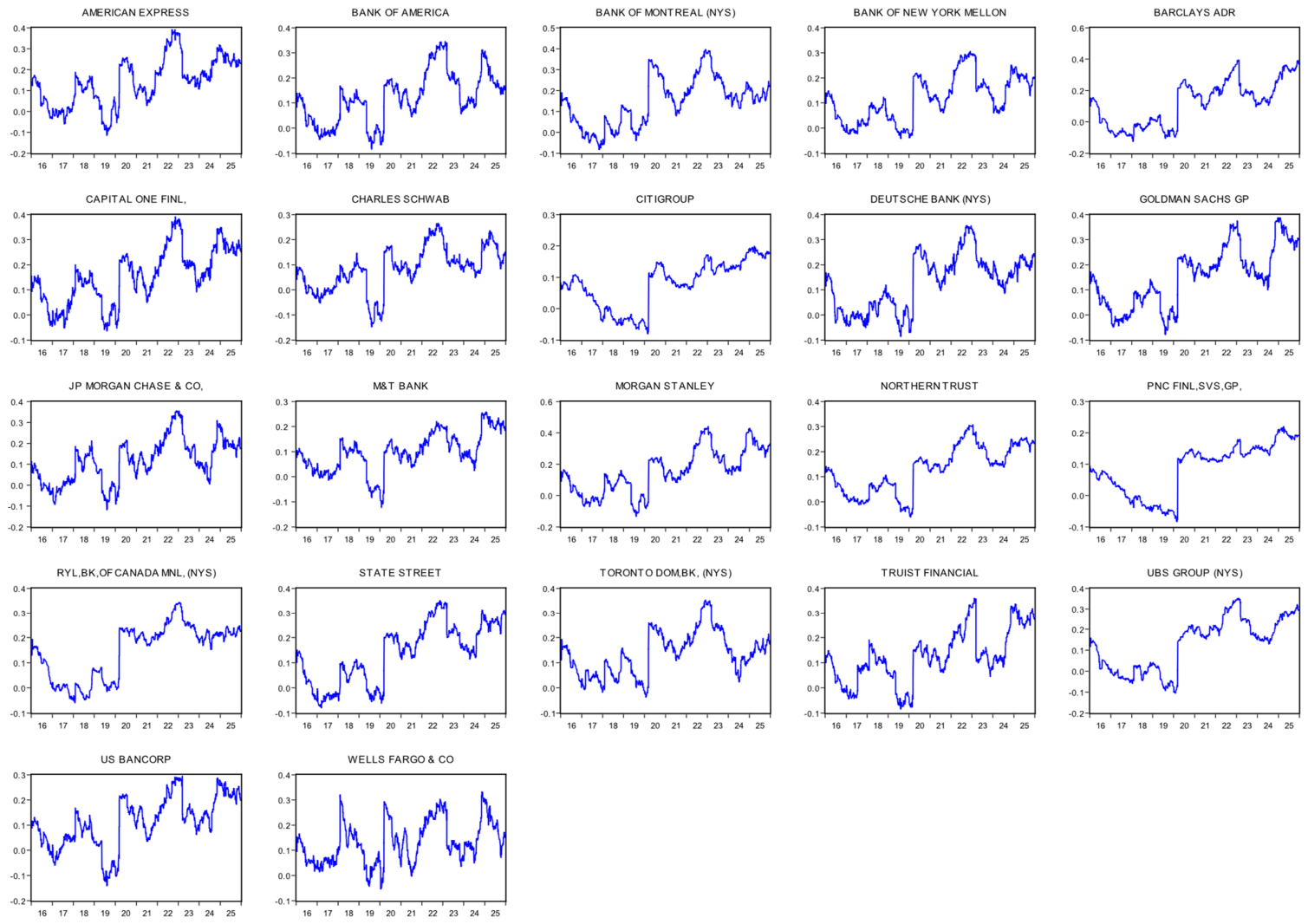
Figure 1 shows the trend in daily returns for both local and foreign banks in the sample from 2016 to 2025. The figure first shows that the return series fluctuate around an average value close to zero. This is consistent with the properties of high-frequency financial series. Furthermore, alternating high- and low-volatility are observed. This pattern reflects the phenomenon of volatility clustering that characterizes financial markets.
Episodes of extreme volatility occur concomitantly for much of the sample, reflecting the existence of common shocks and contagion mechanisms within the U.S. banking system. These spikes in volatility are more pronounced during times of financial stress, suggesting a temporary increase in banking systemic risk. The synchronization of fluctuations among U.S. systemically important banks also reflects a high degree of interdependence among them, which could amplify the propagation of financial shocks.
Finally, the high concentration of episodes of financial turbulence during periods of financial crisis suggests that macro-financial conditions and crisis events tend to intensify systemic banking risk. These results provide evidence that financial markets and alternative assets can influence banking stability through volatility transmission mechanisms.

4. Results

4.1. Analysis of Volatility

To analyze the volatility of bank stock returns, a two-step diagnosis must be established. The first step consists of testing for autocorrelations and ARCH effects on the squares of the residuals obtained from each of the estimates of the GARCH-type specifications considered. Step two involves testing the AIC information criteria to detect the contributions of different versions of GARCH family models to the modeling of return volatility. The test for autocorrelations, based on the Ljung–Box statistic applied to the various GARCH family models, confirms the null hypothesis of no autocorrelations in the residual squares. In fact, the various Ljung–Box statistics are below the critical value of the chi-square distribution, and the p-values of this test are above 5%.
As for the application of the ARCH effect test, it is based on Fisher’s heteroscedasticity test statistics. The last one permits testing for the existence of ARCH effects on the residual series. The values of the Fisher statistics are lower than the critical values. This suggests that the different GARCH specifications capture the ARCH effect across all series of banks’ stock returns.
Given these results, we can conclude that each of the GARCH specifications allows the data to be modeled appropriately. The decision on the most appropriate model is based on the value of the information criteria. The p and q order of return series is identified in order to satisfy the conditions already mentioned. The parameters for each model are estimated using the maximum likelihood method. In this study, the analysis focused on symmetric GARCH modeling and the GJR-GARCH and EGARCH models, which are asymmetric models. Each of these models is adjusted by using two distributions: the conditional normal distribution and Student’s distribution. The results of the parameter estimates are reported in Table 4:
Empirical analysis of the volatility of major US systemic banks over the period 2016 to 2025, based on GARCH family models, highlights significant differences between institutions with respect to their behavior in response to market shocks. Times of crisis, in particular the COVID-19 pandemic and macroeconomic tensions in 2022–2025, have accentuated fluctuations, generating significant spikes in volatility.
Given the estimated asymmetry coefficients (γ) and shock impact parameters (α), we show that the local bank CITIGROUP is more sensitive to adverse market developments. It has a negative coefficient (γ), and the parameter (α) estimated for it is higher than those estimated for its counterparts.
Although persistence of volatility is high, evidenced by the coefficient (β) for all banks, and similarity in volatility dynamics for both local and foreign systemic banks, which highlights a homogeneity of exposure to shock. Certain systemic banks, like the local bank Citigroup, are more sensitive to market fluctuations, contributing to the amplification of systemic banking risk during periods of financial instability and high volatility.
On the other hand, financial assets are not characterized by similar volatility profiles: as for Bitcoin, it is characterized by high volatility and pronounced asymmetry of shocks, confirming its high-risk profile. The S&P 500 shows significant but less asymmetric volatility, while gold and silver remain relatively stable and less sensitive to negative shocks. These findings underscore the importance of considering both volatility and asymmetry of shocks when assessing the systemic risk of financial institutions and assets in the markets.
Financial market disruptions, resulting from increased uncertainty, heightened risk aversion, and market volatility, can be attributed primarily to the COVID-19 health crisis and the outbreak of war in Ukraine, which have marked the recent period. An analysis of the impact of these two exogenous shocks on the volatility of financial assets provides a better understanding of the mechanisms by which systemic shocks are transmitted.
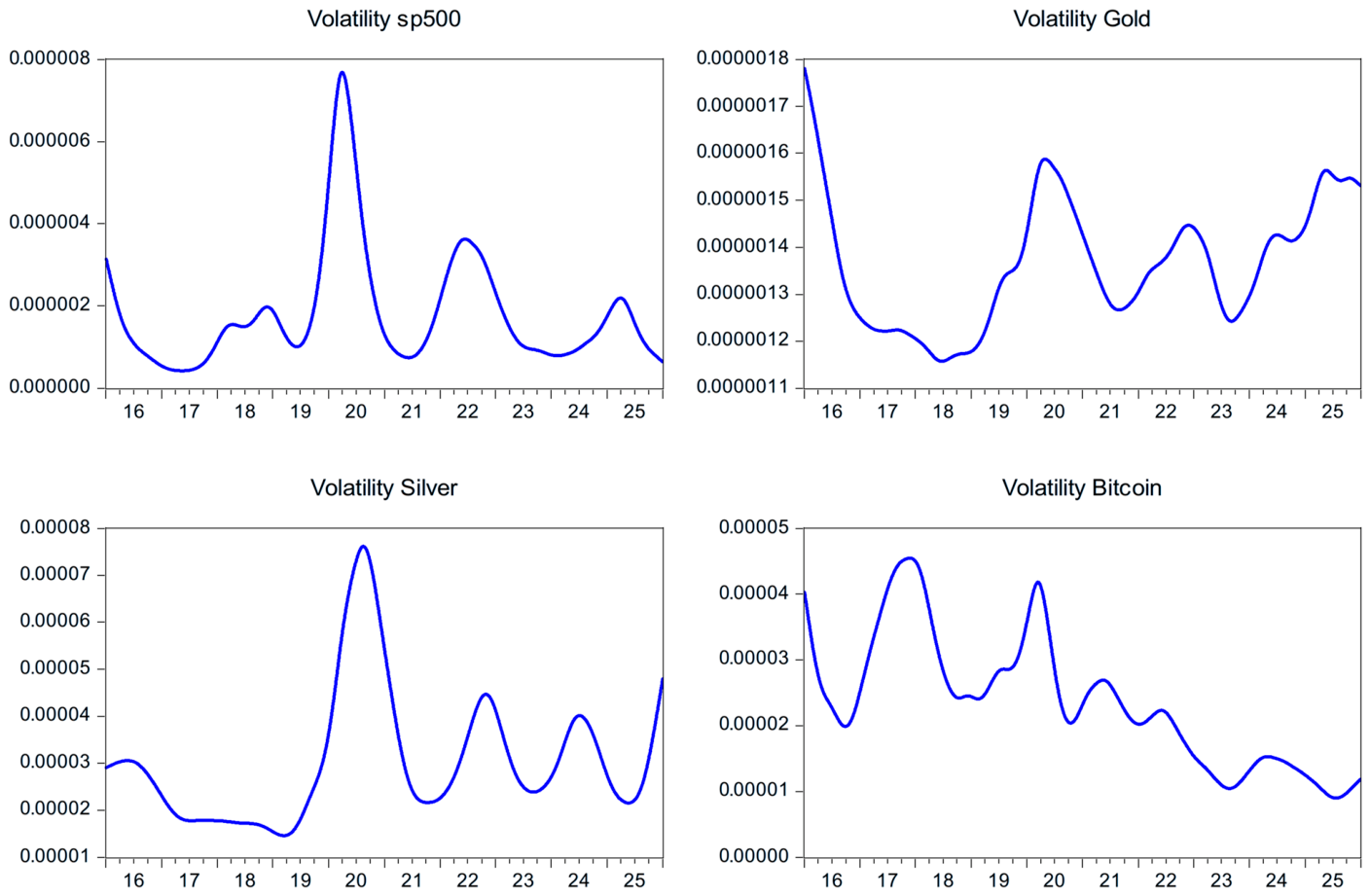
As shown in Figure 2, the impact of the COVID-19 health crisis on equity markets differs from that of the war in Ukraine. The pandemic crisis-related shock is associated with a significant contraction of the economy and high market volatility, due to heightened uncertainty. In contrast, the impact of the war-related shock, associated mainly with rising inflation and less persistent volatility, appears less pronounced.
Furthermore, these two exogenous shocks also have different effects on precious metals. Gold retained its safe-haven characteristics during the early stages of the health crisis, even though it showed significant volatility during this period. It subsequently benefited from the accommodative monetary policies introduced by central banks. The volatility of silver is higher, due to its role as both a precious metal and an industrial raw material and is strongly associated with the slowdown in global economic activity. During the war in Ukraine, investors relied on gold to protect their assets against geopolitical risks and inflation, while silver showed higher volatility relative to gold.
Regarding Bitcoin, its volatility during the COVID-19 pandemic is higher than during the outbreak of the war in Ukraine. During the pandemic, Bitcoin initially showed increased volatility with sharp price declines but then benefited from renewed interest, confirming its role as an alternative asset rather than a risky asset. Following the outbreak of war in Ukraine, it ceases to operate as a safe-haven asset, highlighting its speculative characteristics. This emerging digital asset proved to be more sensitive to global financial conditions and monetary tightening. These two crises, which were prominent during the last decade, showed significant differences in terms of the volatility dynamics of the different assets examined. Although the pandemic crisis has been characterized by extreme short-term volatility, structural factors such as inflation, energy tensions, and geopolitical uncertainty was instrumental in the persistent but widespread volatility during the war in Ukraine.

4.2. Interdependence of the Banking Sector, sp500, Gold, Silver and Bitcoin

Table 5 shows estimates from the DCC-GARCH model applied to the returns of banks and four classes of financial assets, namely the S&P 500, gold, silver, and Bitcoin. The Theta (1) and Theta (2) parameters measure, respectively, the sensitivity of the conditional correlation to recent shocks and their degree of persistence over time. All estimates indicate that the parameters are mostly positive and statistically significant, while the model stability condition is respected for all pairs examined, confirming the validity of the DCC framework for analyzing the dynamics of financial interdependencies.
The results for the conditional correlation between banks and the S&P 500 highlight that the banking sector is highly integrated into the equity market. The results highlight that the banking sector plays a major role in the transmission of systemic risk during periods of stress. This finding is grounded in the observed Theta (2) values close to unity, which reflect the high persistence of conditional correlation, suggesting that periods of strong interdependence between U.S. systemically important banks and the equity market tend to be sustained over time. Thus, for most U.S. systemically important banks, both local and foreign, Theta (1) values are relatively elevated, suggesting the rapid propagation of shocks affecting equity to the banking sector.
Regarding precious metals, contrary to the low Theta (1) coefficients for gold and silver, which suggest limited propagation of shocks from the banking sector to the precious metals markets, the high Theta (2) coefficients highlight the persistence of conditional correlations. Taken together, these results suggest that precious metals exhibit safe-haven characteristics that tend to decline during sustained periods of financial turmoil.
About Bitcoin, the results of the analysis highlight its gradual integration into the financial system. Despite its limited sensitivity to short-term shocks, evidenced by the very low estimated Theta (1) coefficients, conditional correlations are found to be highly persistent, given that the estimated Theta (2) coefficients are high. These results indicate that the emergence of interdependence between Bitcoin and U.S. systemically important banks tends to persist over time.
Overall, the results from the DCC-GARCH model confirm the safe-haven characteristics of gold and silver, which tend to diminish during prolonged periods of financial crisis. They also highlight significant integration between the banking sector and the equity market, as well as the gradual integration of crypto assets into the financial system. These findings underscore the need to consider alternative assets as part of the management of systemic banking risk given their potential to serve either as diversification instruments or as speculative assets that can amplify systemic banking risk under different economic and financial conditions. Thus, this research contributes to a better understanding of the interactions between asset classes and global financial stability.
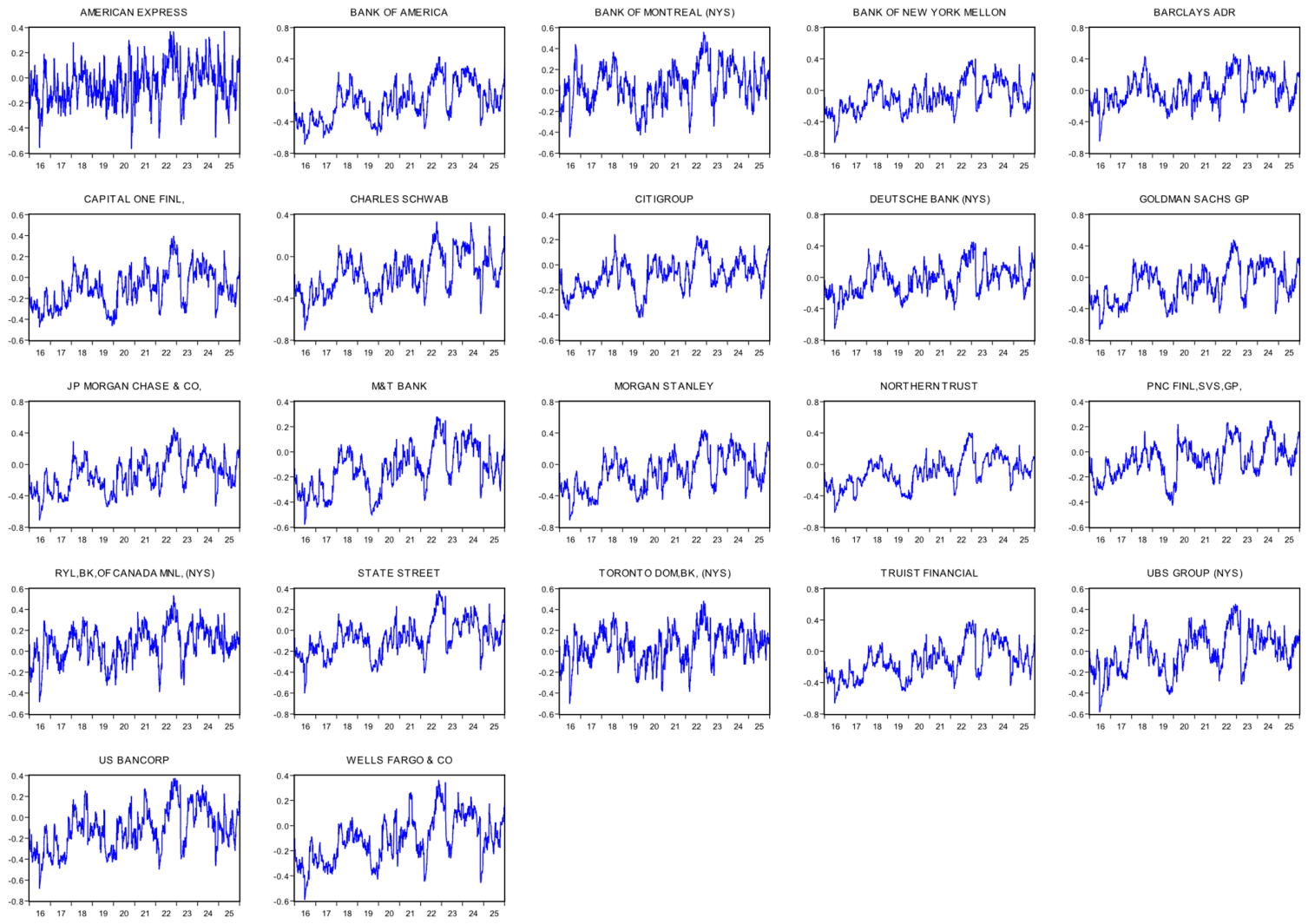
Figure 3 shows the dynamic correlation (DCCs) between the returns on gold and those of the banks in the sample between 2016 and 2025. It provides a basis for analyzing the temporal interconnections between gold, as a traditional alternative asset, and the banking sector as part of systemic risk analysis.
Overall, the results suggest that gold serves as a diversification tool for the banking system, as evidenced by the weak to moderate correlations that fluctuate over time. This low structural dependence suggests that gold has a limited ability to mitigate the transmission of financial shocks to the banking system. However, the dynamic structure of the correlations is not stable, considering the short-lived peaks of positive correlation observed between gold and the stocks of all the banks in the sample. These episodes, which reflect a temporary intensification of the correlation between gold and bank stocks, are generally seen during periods of financial stress. Consistent with the literature on markets in crisis, gold’s properties as a diversification tool diminish during periods of extreme financial stress, given that assets become more correlated due to convergent behavior of flight to liquidity or swift portfolio reallocation during periods of financial turmoil.
Furthermore, banks exhibit varying degrees of correlation with gold. Certain systemically important banks display higher and more persistent correlations, reflecting their heightened exposure to macroeconomic conditions. Explanations for this divergence may lie in internal determinants of systemic risk, such as asset structure, size, and international exposure.
Overall, gold continues to serve as a diversification tool; however, its characteristics deteriorate during periods of extreme financial stress due to increased correlations at such times. These findings imply that gold’s ability to reduce systemic risk depends significantly on the market regime.
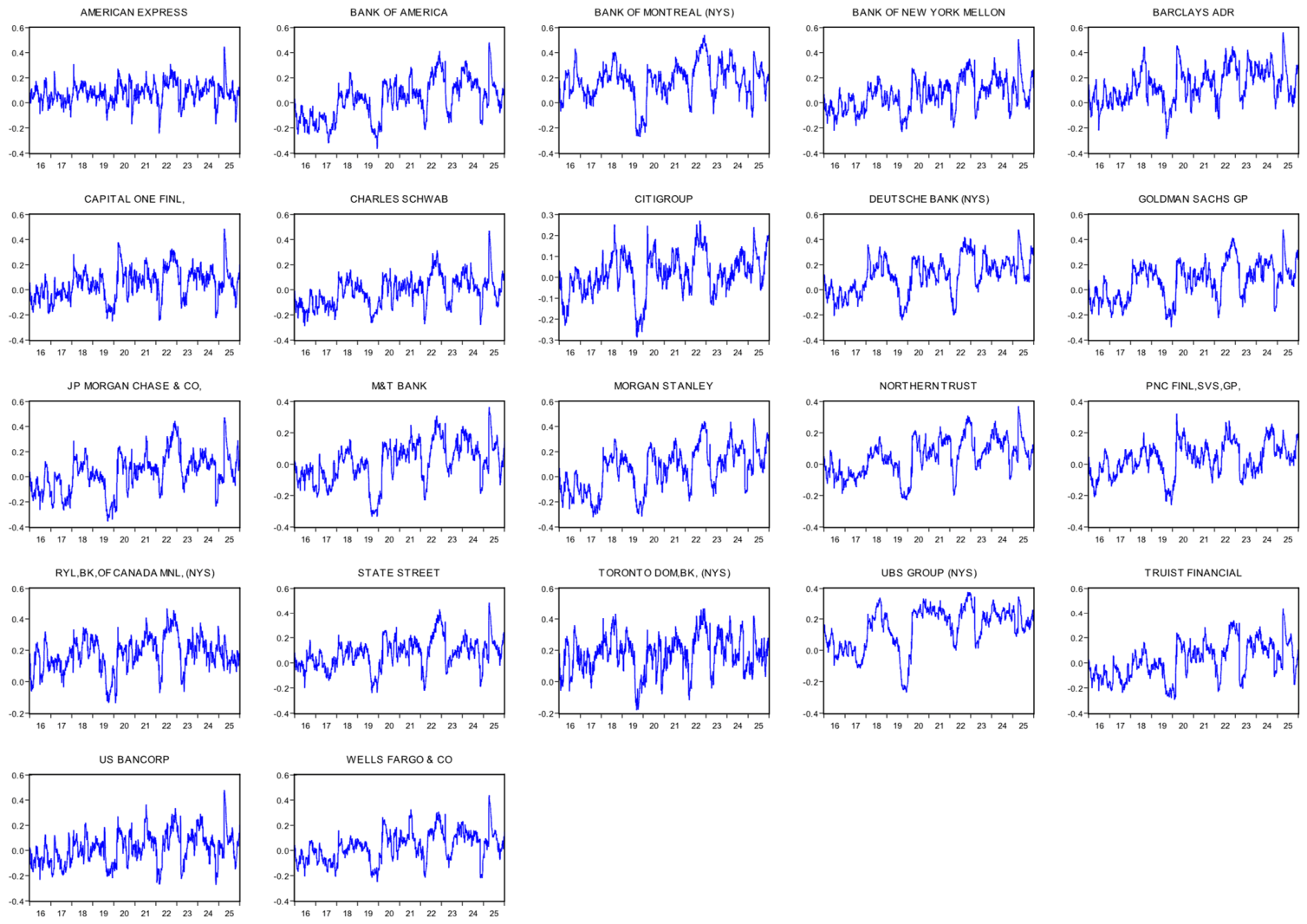
As shown in Figure 4, the dynamic conditional correlation between silver and bank stocks remains globally weak to moderate, with significant temporal variability. The relationship between Silver and the banking system is highly influenced by economic and financial conditions. The correlation between the two assets remains close to zero or slightly positive during periods of financial stability, reflecting a weak interdependence between the returns on silver and bank stocks. This finding suggests that fluctuations in the Argentine market are driven by factors other than those affecting the banking sector, including monetary conditions, inflation expectations, and commodity market dynamics. Conversely, the correlation between silver and bank stocks is negative and more pronounced during periods of financial stress, as investors shift their portfolios toward relatively safe assets in times of uncertainty. Thus, when bank returns decline due to increased systemic risk or deteriorating financial conditions, silver tends to hold its value better, thereby serving as a diversification tool and providing partial protection against banking risk.
Changes in the correlation over time also highlight the nonlinear and unstable nature of the interactions between the precious metals market and the banking sector. Episodes of negative correlation generally occur during periods of high volatility and heightened risk aversion, while a return to slightly positive levels typically accompanies periods of financial market normalization. Given these results, which highlight correlation coefficients that vary over time, it appears essential to adopt a dynamic approach to analyze the relationships between financial assets.
Figure 5, which illustrates the dynamic conditional correlation between Bitcoin returns and bank stock returns, shows that the degree of correlation depends primarily on financial conditions and market regimes. Overall, periods of economic stability are characterized by low volatility and a positive correlation between the two assets, reflecting a common exposure to liquidity conditions and investors’ risk tolerance. During periods of economic expansion, improved financial prospects promote investment in both stock markets and cryptocurrencies, which explains the strengthening of the positive correlation observed.
Furthermore, the correlation tends to decrease significantly and sometimes turns negative during periods of uncertainty and extreme financial stress. This suggests that Bitcoin does not consistently respond to the same fundamental factors as bank stocks. While the performance of systemic banks depends primarily on macroeconomic conditions, monetary policy, and credit risk, Bitcoin’s dynamics remain heavily influenced by speculative behavior, investor sentiment, and capital flows in digital markets.
One of the main reasons for this is Bitcoin’s structural independence from the traditional financial system. Unlike bank stocks, Bitcoin is not linked to any financial institution or monetary authority, which reduces its direct exposure to risks specific to the banking sector. This independence can lead to a partial decoupling from traditional financial assets during periods of systemic stress and enhance its attraction to investors looking for alternative diversification tools.
Furthermore, the high variability in the conditional correlation confirms Bitcoin’s hybrid nature. In one respect, it exhibits the characteristics of a speculative asset due to its high volatility and sensitivity to market expectations. In another respect, its ability to temporarily decouple from bank stocks during times of crisis suggests that it can serve as a partial hedge against certain financial risks. Overall, Bitcoin appears to serve simultaneously as both a risky asset and an alternative haven, although its role as a haven remains limited and less stable than that traditionally attributed to precious metals.

4.3. Systematic Banking Risk and Causality Analysis

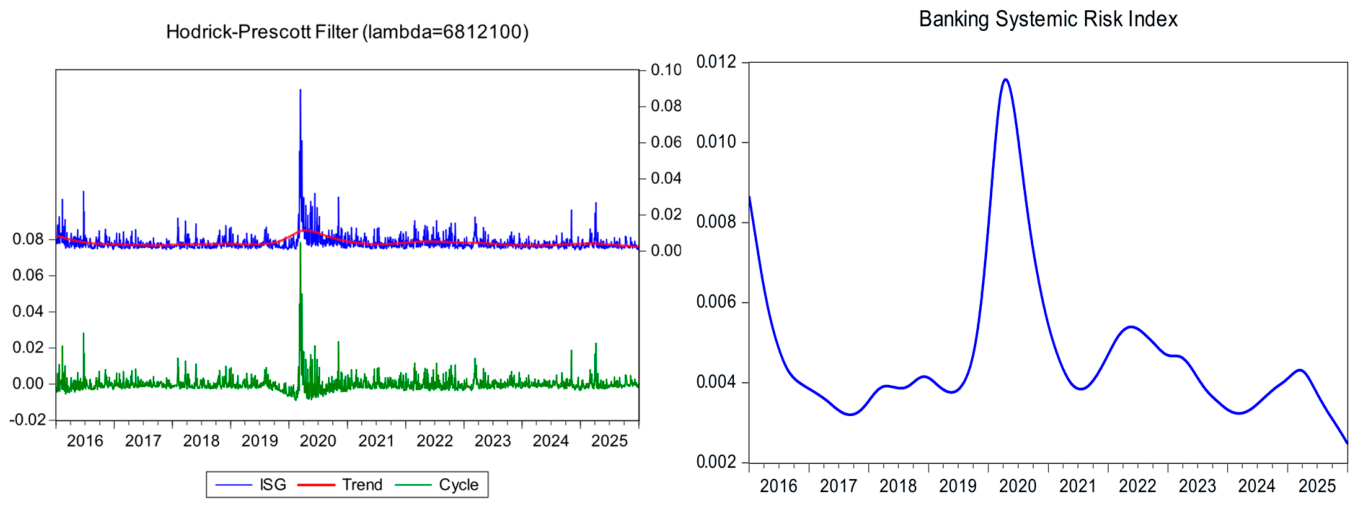
Figure 6 shows the trend in the systemic banking risk index between 2016 and 2025. This index measures the overall vulnerability of U.S. systemically important banks to financial and macroeconomic shocks. The results indicate a generally low level of systemic risk over the 2016–2018 period, reflecting a relatively stable macroeconomic environment and limited perceptions of contagion risk within the U.S. banking sector. The period was marked by improved resilience in the banking system, supported by a strengthened regulatory framework and favorable financing conditions.
From 2019 onward, the systemic risk index increased significantly, reaching an all-time high in 2020. This period, marked by disruptions linked to the COVID-19 crisis, primarily high market volatility, heightened financial tensions, and a simultaneous deterioration in the macroeconomic prospects, has been associated with an increase in interdependence among financial institutions. This high degree of interdependence has amplified contagion mechanisms, thereby increasing the transmission of systemic risk throughout the financial system. These results confirm the procyclical nature of systemic risk, which is particularly sensitive to extreme shocks and periods of widespread stress.
A downward trend in the index has been observed since 2021, reflecting a process of gradual normalization of the financial system. This development is primarily attributable to the implementation of accommodative monetary policies, the strengthening of macroprudential measures, and the liquidity support measures adopted by monetary and regulatory authorities. These measures were instrumental in restoring market confidence and reducing the banking system’s vulnerability to external shocks, thereby enhancing its risk-absorbing capacity.
Despite persistent uncertainty in the markets, driven primarily by geopolitical tensions, monetary policy adjustments, and inflationary pressures over the 2023–2025 period, the index is gradually converging toward intermediate levels. Volatility has subsided, highlighting the increased resilience of the U.S. banking system, due mainly to the effectiveness of the current prudential frameworks. However, it also shows that systemic risk remains sensitive to changes in the macroeconomic environment, even during periods of relative stability.
Taken together, the empirical results show that banking systemic risk depends on economic conditions and market regimes. Although it increases during periods of financial stress, systemic banking risk stabilizes during periods of financial stability, reflecting its procyclical nature. This highlights the importance of macroprudential policies and monetary authorities’ interventions in maintaining financial stability.
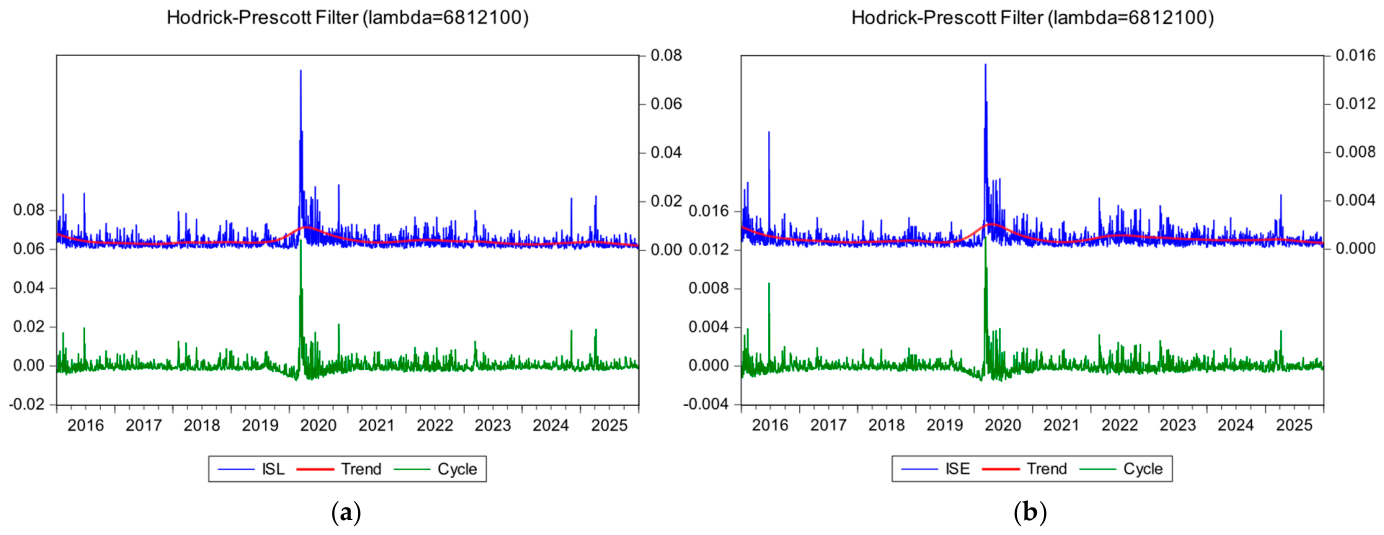
Figure 7 shows some degree of heterogeneity that appears significant between the two categories of local and foreign banks in terms of systemic risk. Local banks are more exposed to systemic risk due to their close ties to the domestic financial system and their direct exposure to U.S. market conditions, particularly the S&P 500 index. Their significant involvement in financial intermediation activities explains their contribution to the transmission and propagation of systemic risk at the national level.
In contrast, foreign systemically important banks are indirectly exposed to U.S. financial conditions and are characterized by greater geographic diversification of their activities. They exhibit a more moderate level of risk, reflecting their limited role in the transmission of shocks. These results suggest that foreign banks represent a secondary source of systemic risk amplification within the U.S. banking sector. Overall, local U.S. banks play a greater role in the proliferation of systemic risk than their foreign counterparts due to their direct exposure within the U.S. financial system. The findings also highlight the role of macroprudential supervision in strengthening the stability of the financial system by calling for stricter regulation of these banks.
To examine the interdependence between gold, silver, and bitcoin, we estimated a VAR model, an appropriate tool for determining the relationship between these different assets and systemic banking risk. Based on Granger’s causality test, the results suggest that the relationship between systemic banking risk and both gold and silver run in one direction only. Past values of systemic risk exert a significant effect on the contemporary returns of these precious metals. For Bitcoin, conversely, the relationship observed is the opposite: Granger causality suggests a one-way relationship from Bitcoin to systemic banking risk, implying that past changes in Bitcoin significantly affect banking systemic risk.
The results of the Granger causality analysis using the banking systemic risk index and gold and silver are presented in Table 6, respectively. In terms of Granger causality, the unidirectional relationship between systemic banking risk and these two precious metals implies that their current returns can be predicted based on information incorporated in past variations in systemic banking risk. In other words, historical fluctuations in systemic banking risk play a pivotal role in setting future prices for precious metals. Thus, significant fluctuations in gold and silver prices during periods of financial instability result from investor behavior, as investors tend to drive their portfolios in favor of these assets given their safe-haven characteristics to protect themselves against the increase in systemic risk. These findings confirm the role of precious metals as hedging and diversification tools against systemic risk for all banks, both foreign and local, highlighting the robustness of the relationship at the national and international levels.
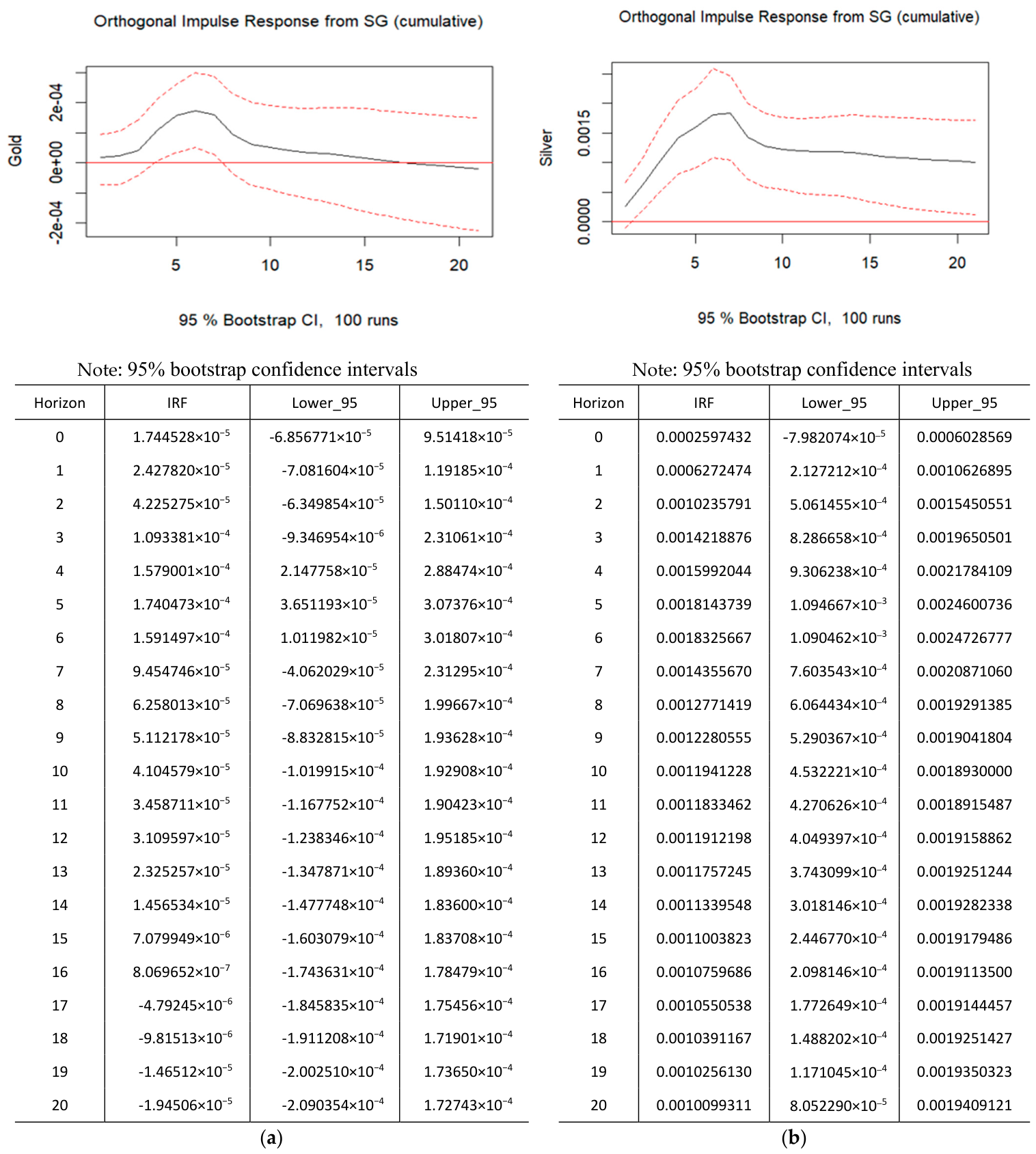
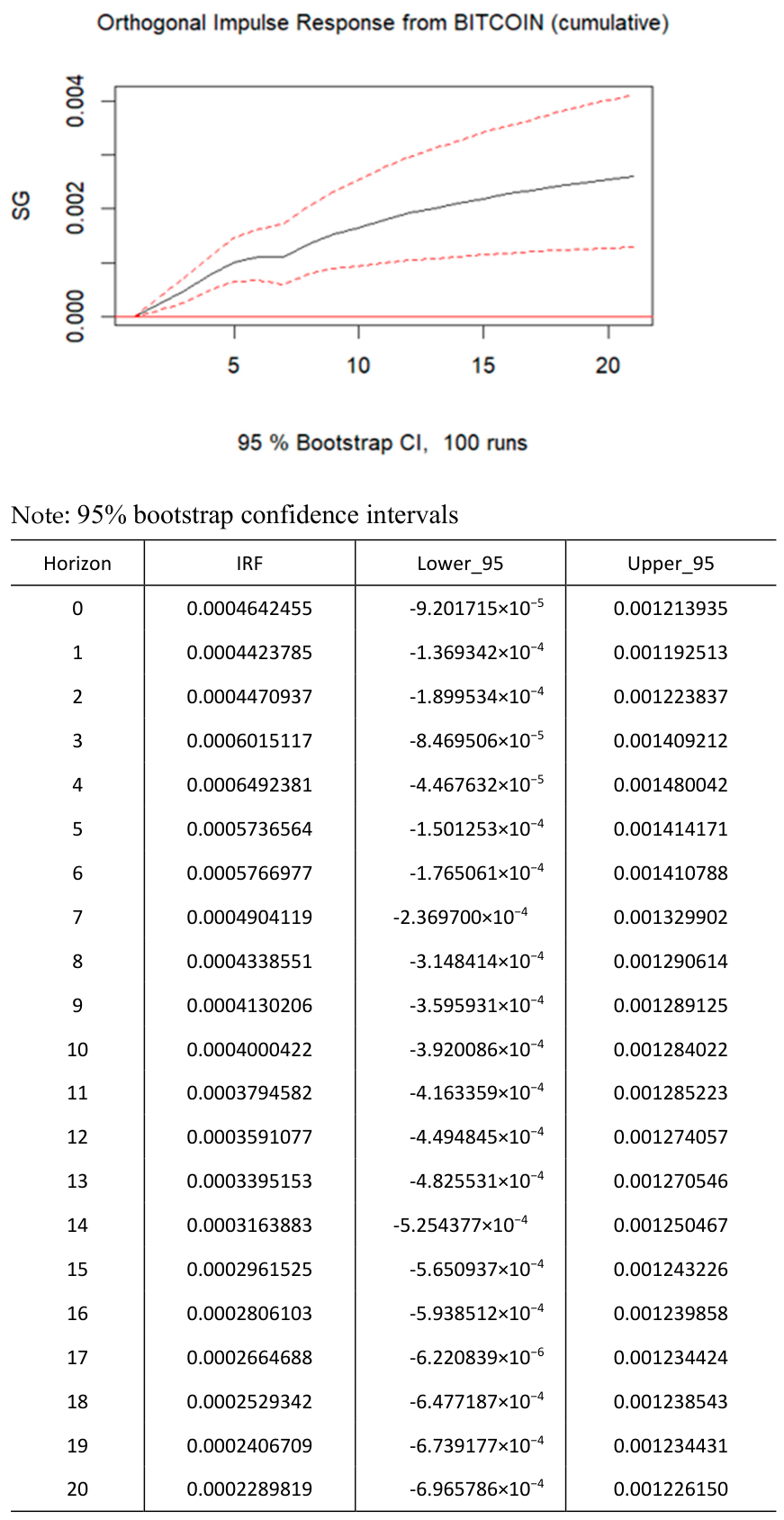
Stress test analysis is based on cumulative impulse response functions (cumulative IRFs) derived from a VAR model, which capture the endogenous dynamics of extreme shock transmission within the system. This approach is favored to the extent that it reflects the net and persistent effect of a systemic shock over time. A positive cumulative IRF of an asset in response to a systemic risk shock indicates that the asset’s value increases when systemic risk rises consistently with safe-haven properties. A negative cumulative IRF indicates that the asset loses value during systemic stress, which does not necessarily imply amplification. By contrast, amplification of systemic risk is evidenced when a shock to the asset (e.g., Bitcoin) generates a positive cumulative response in systemic risk itself.
According to Figure 8, empirical results show persistent positivity in the cumulative IRF for gold and silver, reinforcing the safe-haven characteristics of these precious metals. A comparative analysis between the two precious metals reveals that the systemic shock is significantly more persistent for silver than for gold. Indeed, Gold has the potential to absorb shocks more effectively than silver, given that the response of the former gradually converges towards zero, while that of the latter is slower, suggesting a more sustained propagation of stresses.
Figure 9 shows that any significant shock to the Bitcoin market leads to an increase in systemic risk in the banking sector. In terms of Granger causality, there is a one-way link from Bitcoin to systemic banking risk. This relationship has also been observed for both local US banks and listed foreign banks, reinforcing the robustness of the results. Bitcoin’s historical movements affect the future dynamics of systemic banking risk. The financial system’s exposure to cryptocurrency markets is growing as investors are incentivized to invest in these alternative assets. That explains the correlation between systemic banking risk and historical fluctuations in Bitcoin. Thus, significant fluctuations in Bitcoin, during periods of high volatility, can increase uncertainty in financial markets and lead to an increase in banking systemic risk. This finding highlights the growing role of Bitcoin as a factor that could affect financial stability, when banks are involved in activities related to crypto assets or derivatives based on these digital currencies.

4.4. Specific Risk Factors and Systematic Banking Risk

At a financial institution, risk-taking comes from the assets they hold and, more generally, the activities they carry out. Given the diversification of their asset portfolios, banks are exposed not only to the specific risk of each asset, but also to the risk of correlation between their portfolio holdings. It is worth emphasizing that the distinction between systematic risk and idiosyncratic risk is not a difference in nature. Indeed, risk is inherent to the financial system at hand, and its systemic nature depends on the interconnectedness and global dynamics of the system.
As shown in Table 7, the findings obtained highlight the heterogeneity of systemic banking risk, as measured by the Marginal Expected Shortfall (MES). Consistent with the theoretical framework developed by Acharya et al. (2017), the MES captures an institution’s marginal contribution to financial system losses during periods of stress, making the analysis of capital and liquidity particularly relevant. Indeed, the positive and significant relationship between the total capital adequacy ratio for all banks and local banks suggests that the aggregate level of regulatory capital does not necessarily guarantee reduced systemic risk. This result is consistent with evidence suggesting that banks with high capital ratios are more involved in systemic activities by directing their portfolios towards systemic activities, implicitly benefiting from their apparent solidity. On the other hand, our results are consistent with the requirements of Basel III regarding the strengthening of capital quality to ensure banking stability considering the negative relationship shown between the regulatory Tier 1 capital ratio and systemic risk.
In most specifications, the ratio of deposits to bank assets is negatively and significantly associated with systemic risk. This finding confirms the pivotal role of financing through deposits to absorb shocks thereby contributing to limiting the transmission of systemic risk. Our findings also show that the loan-to-deposit ratio exerts a negative impact on systemic risk, underscoring the important role of a well-balanced credit-deposit intermediation in mitigating systemic banking risk. Banks are also being called upon to increase their equity capital level relative to deposits to mitigate systemic risk, considering findings that show a negative association between the loan-to-deposit ratio and the systemic risk measured by the MES. In contrast, the equity-to-loan ratio appears to be insignificant, suggesting that its impact on systemic banking risk is negligible.
The results of the comparative analysis between local and foreign U.S. systemically important banks reveal significant structural dynamics. For foreign systemic banks, despite the decisive role that the ratio of deposits to assets plays in explaining systemic risk, capital ratios do not have a significant effect on the MES. In contrast to local banks, which are integrated into the domestic financial system due to their sensitivity to internal capitalization mechanisms, the systemic risk of foreign banks is influenced more by exogenous factors than by their local fundamentals.
Taken together, these results highlight, primarily, the need for banks to focus on strengthening the quality of their capital to mitigate systemic risk. Furthermore, to reduce their individual contributions to overall systemic risk, U.S. systemically important banks, both local and foreign, are required to adopt a differentiated approach based on the quality of their capital, the stability of their funding sources, and the institutional nature of the banks.

5. Conclusions

This paper aims to study the joint interactions between cryptocurrencies (Bitcoin) and precious metals (gold and silver) with systemic banking risk. Despite a large body of research on the characteristics of these assets as safe-haven assets or diversification tools, the research on their interactions with banking systemic risk remains limited. This study also contributes to existing literature by providing new evidence regarding the mechanisms through which shocks are transmitted between the banking system and alternative assets, while emphasizing the role of Bitcoin as an amplifier of systemic risk, as well as the conditional hedging characteristics of gold and silver.
The paper focuses on the analysis of volatility of Global Systemically Important Banks (G-SIBs). First, the interdependence of these banks in the precious metals market (gold and silver) and cryptocurrencies (Bitcoin) was investigated; subsequently, the causality and risk factors likely to amplify banking systemic risk are examined.
The results obtained from GARCH models show high volatility persistence for most systemic banks. Volatility persistence is observed throughout the period covered by the study (2016–2025), particularly during periods of stress such as the COVID-19 pandemic and recent macroeconomic disruptions. Despite a certain degree of homogeneity in terms of volatility among local and foreign systemic U.S. banks, the results highlight heterogeneity in their sensitivities to negative market shocks. This finding suggests that some banks, despite their relative stability—due mainly to their size and diversification—contribute to the amplification of systemic risk during periods of financial turmoil.
The results derived from the DCC-GARCH model highlight a strong interdependence between the U.S. banking sector and the cryptocurrency and precious metals markets, providing evidence of shock transmission during periods of financial instability. There is a dynamic interdependence between systemically important banks and the equity market, a limited hedging function provided by precious metals, and a limited but persistent relationship between bank stock returns and Bitcoin. In terms of Granger causality, precious metals (gold and silver) confirm their role as safe-haven assets during periods of financial stress, given that systemic banking risk exerts a unidirectional influence on precious metal prices. Conversely, Bitcoin’s past price movements exert a unidirectional effect on systemic risk, confirming its role in amplifying uncertainty. This result is observed for all local and foreign systemic banks. These findings provide a significant contribution to understanding the role of alternative assets in systemic risk management, as well as in portfolio diversification and enhancing financial stability.
The results also show that solvency and banking soundness are significant factors in systemic risk, given their ability to reduce banks’ vulnerability to crises, while underscoring the importance of improving the quality of capital.
Furthermore, banks’ liquidity levels and financial structures are associated with a decrease in systemic risk. The comparative analysis reveals that local systemic banks are mainly influenced by their internal capitalization, while the systemic risk of foreign banks depends primarily on their financing structure. These results suggest that macroprudential regulation should focus on strengthening capital quality, ensuring stable funding sources, and adjustment to institutional characteristics to reduce banking systemic risk effectively.
In addition, the dynamic volatility of gold, silver, and bitcoin should be considered in their assessments of financial stability, given the potential role of these assets as hedging instruments or factors that may amplify systemic banking risk. Banks are required to diversify their activities, which reduces idiosyncratic risks and, as a result, reduces the level of dependence on the assets held in their portfolios.

6. Discussion

This study falls within previous research on the interactions between alternative assets and financial stability, while contributing additional insights to the transmission mechanisms of banking systemic risk. More specifically, our results are consistent with those of Colombage et al. (2025), Ibrahim et al. (2024), Kayral et al. (2023), and Bouri et al. (2017) regarding the characteristics of precious metals. Gold and silver continue to serve as safe-haven assets during times of financial instability. In line with Będowska-Sójka and Kliber (2021), our results suggest that precious metals can be considered instruments that offer significant but limited diversification potential against systemic shocks. Thus, during periods of high volatility, the negative correlations between these assets and the banking system result in a shift by investors toward assets that are considered safer.
For Bitcoin, our findings align with those of Snene Manzli et al. (2026), Pacelli (2025), and Gunay et al. (2023), who suggest that cryptocurrencies have a dual nature. Given its dynamic and volatile correlation with systemic banking risk, this digital asset exhibits both the characteristics of a diversification tool with limited potential and those of a speculative asset that can amplify the transmission of shocks within the banking sector. The unidirectional influence of Bitcoin on systemic banking risk highlights its contribution to amplifying systemic risk, which results in investors’ speculative behavior and contagion effects. These, subsequently, can influence overall risk conditions. This result can be explained by the increasing integration of crypto assets into international financial markets and their high sensitivity to investor sentiment.
Furthermore, the findings regarding financial contagion mechanisms support the analysis by Feder-Sempach et al. (2024), which suggest that asymmetric shocks exist between traditional financial markets and alternative asset markets. The results show that precious metals help mitigate systemic banking risk during some phases of the economic cycle, contrary to Bitcoin. Thus, these relationships are highly dependent on macroeconomic and financial conditions.
Regarding the internal determinants of systemic banking risk, our results are consistent with those of Davydov et al. (2021), Chen et al. (2021), and Laeven et al. (2016). Solvency, capital quality, and funding stability are key factors in mitigating systemic banking risk. Sufficient capital levels and more stable funding structures must be ensured for banks to withstand extreme financial shocks. Furthermore, the heterogeneity observed between local and foreign systemic banks highlights the importance of the degree of integration into the U.S. financial system in the transmission of systemic risk.
However, although this study provides useful insights, the results must be interpreted with due caution given the limitations involved. First, as the study focuses on U.S. systemically important banks, the scope of the findings is limited to other banking systems that do not share the same institutional and regulatory characteristics. Second, the period examined includes various phases of the economy, including periods of financial stability and uncertainty. Periods of financial stress, such as the COVID-19 pandemic, can contribute to amplifying systemic risk and contagion effects of banking. Third, both traditional financial markets and alternative asset markets may be influenced by the unconventional monetary policies implemented following the COVID-19 pandemic, potentially affecting the temporal evolution of the estimated correlations between the different asset classes.
The results of the study hold particular interest for regulatory authorities, investors, and banking supervisors. First, for regulatory authorities, they must include digital assets and commodity markets in their macroprudential monitoring framework, given their potential to influence the dynamics of banking systemic risk. Second, for investors, the results point to dynamic portfolio management strategies because of the dependence of the characteristics of alternative assets, gold, silver, and Bitcoin, on volatility regimes. Finally, for banking supervisors, strengthening the quality of regulatory capital, the stability of funding structures, and the supervision of financial interconnections are recommended to limit the propagation of systemic banking risk and therefore maintain a more stable financial system.

Author Contributions

Conceptualization, M.A.C.; methodology, M.A.C.; Data collection, F.A.; software, M.A.C.; validation, M.A.C.; formal analysis, M.A.C.; investigation, M.A.C.; data curation, F.A.; writing—original draft preparation, M.A.C. and F.A.; writing—review and editing, M.A.C. and F.A. All authors have read and agreed to the published version of the manuscript.

Funding

This research received no external funding.

Data Availability Statement

The data supporting findings of this study are publicly available through commercial databases, specifically DataStream. All variables, transformations and sample selection procedures are detailed in the methodology to allow replication by researchers with access to these databases.

Conflicts of Interest

The authors declare no conflicts of interest.

Abbreviations

The following abbreviations are used in this manuscript:
G-SIBsGlobal Systemically Important Banks
MESMarginal Expected Shortfall

Note

1
The term “Trump 2.0” refers second presidential term of Donald Trump.

References

  1. Acharya, Viral V., Lasse H. Pedersen, Thomas Philippon, and Matthew Richardson. 2017. Measuring Systemic Risk. Review of Financial Studies 30: 2–47. [Google Scholar] [CrossRef]
  2. Adekoya, Oluwasegun B., Mahdi G. Asl, Johnson A. Oliyide, and Izadi Parviz. 2023. Multifractality and cross-correlation between the crude oil and the European and non-European stock markets during the Russia-Ukraine war. Resources Policy 80: 103134. [Google Scholar] [CrossRef]
  3. Antoniades, Adonis. 2016. Liquidity risk and the credit crunch of 2007–2008: Evidence from micro-level data on mortgage loan applications. Journal of Financial and Quantitative Analysis 51: 1795–822. [Google Scholar] [CrossRef]
  4. Armanious, Amir. 2024. Too-Systemic-to-Fail: Empirical Comparison of Systemic Risk Measures in the Eurozone Financial System. Journal of Financial Stability 73: 101273. [Google Scholar] [CrossRef]
  5. Aryan, Yalda, Seyfollah Soleimani, and Abbas Shojaee. 2025. Investigating the time-varying and conditional causality network among Bitcoin, oil, gold and economic uncertainty. Expert Systems with Applications 283: 127898. [Google Scholar] [CrossRef]
  6. Ashraf, Bader N., and Ningyu Qian. 2026. The Effect of Economic Policy Uncertainty on Banks: Distinguishing Short- and Long-Term Effects. Risks 14: 18. [Google Scholar] [CrossRef]
  7. Benigno, Pierpaolo, and Roberto Robatto. 2019. Private money creation, liquidity crises, and government interventions. Journal of Monetary Economics 106: 42–58. [Google Scholar] [CrossRef]
  8. Będowska-Sójka, Barbara, and Agata Kliber. 2021. Is there one safe-haven for various turbulences? The evidence from gold, Bitcoin and Ether. The North American Journal of Economics and Finance 56: 101390. [Google Scholar] [CrossRef]
  9. Bitar, Mohammad, and Amine Tarazi. 2022. A note on regulatory responses to COVID-19 pandemic: Balancing banks’ solvency and contribution to recovery. Journal of Financial Stability 60: 101009. [Google Scholar] [CrossRef]
  10. Bouri, Elie, Rangan Gupta, Aviral Kumar Tiwari, and David Roubaud. 2017. Does Bitcoin hedge global uncertainty? Evidence from wavelet-based quantile-in-quantile regressions. Finance Research Letters 23: 87–95. [Google Scholar] [CrossRef]
  11. Brownlees, Christian T., and Robert F. Engle. 2016. SRISK: A Conditional Capital Shortfall Measure of Systemic Risk. Available online: https://ssrn.com/abstract=1611229 (accessed on 6 January 2026).
  12. Chakroun, Mohamed A., and Mohamed I. Gallali. 2017. Contribution of Islamic banks to systemic risk. International Journal of Banking, Accounting and Finance 8: 52–92. [Google Scholar] [CrossRef]
  13. Chakroun, Mohamed A., and Mohamed I. Gallali. 2021. Dependence between Islamic banks and conventional banks and risk factors. International Journal of Banking, Accounting and Finance 12: 201–39. [Google Scholar] [CrossRef]
  14. Chakroun, Mohamed A., and Sami Mensi. 2025. Impact of crude oil price uncertainty on systematic risk in the Saudi Arabia banking sector. Cogent Economics & Finance 13: 2473998. [Google Scholar] [CrossRef]
  15. Chen, Lei, Li Hui, Frank H. Liu, and Yue Zhou. 2021. Bank regulation and systemic risk: Cross country evidence. Review of Quantitative Finance and Accounting 57: 353–87. [Google Scholar] [CrossRef]
  16. Colombage, Sisira, Jayawardhana Asanga, and Oatley Giles. 2025. Global Financial Stress and Its Transmission to Cryptocurrency Markets: A Cointegration and Causality Approach. Journal of Risk and Financial Management 18: 532. [Google Scholar] [CrossRef]
  17. Conlon, Thomas, and Richard McGee. 2020. Safe haven or risky hazard? Bitcoin during the COVID-19 bear market. Finance Research Letters 35: 101607. [Google Scholar] [CrossRef]
  18. Dagher, Jihad, and Kazim Kazimov. 2015. Banks’ liability structure and mortgage lending during the financial crisis. Journal of Financial Economics 116: 565–82. [Google Scholar] [CrossRef]
  19. Dahir, Ahmed M., Fauziah Mahat, Hisyam A. Razak Nazrul, and Amin N. Bany-Ariffin. 2019. Capital, funding liquidity, and banking lending in emerging economies: An application of the LSDVC approach. Borsa Istanbul Review 19: 139–48. [Google Scholar] [CrossRef]
  20. Danisman, Gamze O., and Amine Tarazi. 2024. Economic policy uncertainty and bank stability: Size, capital, and liquidity matter. Quarterly Review of Economics and Finance 93: 102–18. [Google Scholar] [CrossRef]
  21. Davydov, Denis, Vähämaa Sami, and Yasar Sara. 2021. Bank liquidity creation and systemic risk. Journal of Banking & Finance 123: 106031. [Google Scholar] [CrossRef]
  22. Demir, Ender, Gozgor Giray, Keung M. Lau Chi, and Samuel A. Vigne. 2018. Does economic policy uncertainty predict the Bitcoin returns? An empirical investigation. Finance Research Letters 26: 145–49. [Google Scholar] [CrossRef]
  23. Diniz-Maganini, Natalia, Eduardo H. Diniz, and Abdul A. Rasheed. 2021. Bitcoin’s price efficiency and safe haven properties during the COVID-19 pandemic: A comparison. Research in International Business and Finance 58: 101472. [Google Scholar] [CrossRef] [PubMed]
  24. Duan, Yuejiao, Xiaoyun Fan, and Yu Wang. 2022. Economic policy uncertainty and bank systemic risk: A cross-country analysis. Pacific-Basin Finance Journal 75: 101828. [Google Scholar] [CrossRef]
  25. Dyhrberg, Anne Haubo. 2016. Bitcoin, gold and the dollar–A GARCH volatility analysis. Finance Research Letters 16: 85–92. [Google Scholar] [CrossRef]
  26. Elyasiani, Elyas, and Jingyi (Jane) Jia. 2019. Relative performance and systemic risk contributions of small and large banks during the financial crisis. The Quarterly Review of Economics and Finance 74: 220–41. [Google Scholar] [CrossRef]
  27. Federal Reserve Board. 2025. Stress Test Results; Washington: Board of Governors of the Federal Reserve System. Available online: https://www.federalreserve.gov/publications/files/2025-dfast-results-20250627.pdf?utm (accessed on 6 January 2026).
  28. Feder-Sempach, Ewa, Szczepocki Piotr, and Bogołębska Joanna. 2024. Global uncertainty and potential shelters: Gold, bitcoin, and currencies as weak and strong safe havens for main world stock markets. Financial Innovation 10: 67. [Google Scholar] [CrossRef]
  29. Fiordelisi, Franco, Girardone Claudia, Minnucci Federica, and Ricci Ornella. 2020. On the nexus between sovereign risk and banking crisis. Journal of Corporate Finance 65: 101717. [Google Scholar] [CrossRef]
  30. Freixas, Xavier, Luc Laeven, and José-Luis Peydró. 2015. Systemic Risk, Crises, and Macroprudential Regulation. Cambridge: MIT Press Scholarship Online. [Google Scholar] [CrossRef]
  31. Gabbiadini, Mirko, Meoli Michele, and Vismara Silvio. 2025. Geopolitical risk and systemic risk in the European banking system. Finance Research Letters 86: 108796. [Google Scholar] [CrossRef]
  32. Gökgöz, Halilibrahim, Ben Salem Salha, Bejaoui Azza, and Jeribi Ahmed. 2025. Connectedness Structure and Volatility Dynamics Between BRICS Markets and International Volatility Indices: An Investigation. International Journal of Finance and Economics 30: 2981–3002. [Google Scholar] [CrossRef]
  33. Gunay, Samet, Buket K. Altınkeski, Emrah I. Çevik, and John W. Goodell. 2023. Quantifying systemic risk in the cryptocurrency market: A sectoral analysis. Finance Research Letters 58: 104586. [Google Scholar] [CrossRef]
  34. Ibrahim, Bassam A., Ahmed A. Elamer, Thamir H. Alasker, Marwa A. Mohamed, and Hussein A. Abdou. 2024. Volatility contagion between cryptocurrencies, gold and stock markets pre-and-during COVID-19: Evidence using DCC-GARCH and cascade-correlation network. Financial Innovation 10: 104. [Google Scholar] [CrossRef]
  35. Julaiti, Jiansuer, Yujia Li, and Ke Song. 2026. Gold vs. “digital gold”: Bitcoin’s market positioning in the Trump 2.0 era. Finance Research Letters 88: 109189. [Google Scholar] [CrossRef]
  36. Kayral, Ihsan E., Ahmed Jeribi, and Sahar Loukil. 2023. Are Bitcoin and Gold a Safe Haven during COVID-19 and the 2022 Russia–Ukraine War? Journal of Risk and Financial Management 16: 222. [Google Scholar] [CrossRef]
  37. Khan, Muhammad S., Harald Scheule, and Eliza Wu. 2017. Funding liquidity and bank risk taking. Journal of Banking & Finance 82: 203–16. [Google Scholar] [CrossRef]
  38. Klein, Tony, Hien P. Thu, and Thomas Walther. 2018. Bitcoin is not the New Gold—A comparison of volatility, correlation, and portfolio performance. International Review of Financial Analysis 59: 105–16. [Google Scholar] [CrossRef]
  39. Kyriazis, Nikolaos A. 2019. A Survey on Empirical Findings about Spillovers in Cryptocurrency Markets. Journal of Risk and Financial Management 12: 170. [Google Scholar] [CrossRef]
  40. Laeven, Luc, Lev. Ratnovski, and Tong Hui. 2016. Bank Size, Capital, and Systemic Risk: Some International Evidence. Journal of Banking & Finance 69: S25–S34. [Google Scholar] [CrossRef]
  41. Lew, Bao-Yi, and Wei-Theng Lau. 2022. Credit Risk and Commercial Bank Performance: Evidence from ASEAN. International Journal of Academic Research in Economics and Management and Sciences 11: 274–88. [Google Scholar] [CrossRef]
  42. Li, Bingqing, and Xiaoyuan Zhang. 2024. Systemic risk and financial networks. Quarterly Review of Economics and Finance 94: 25–36. [Google Scholar] [CrossRef]
  43. Li, Shun, and Yang Liu. 2026. A new perspective on gold as a risk hedge: Long-term impacts of bilateral political tensions between the U.S. and China. International Review of Economics and Finance 106: 104918. [Google Scholar] [CrossRef]
  44. Li, Zongyuan, and Rose Neng Lai. 2024. Are “too big to fail” banks just different in size?—A study on systemic risk and stand-alone risk. International Review of Financial Analysis 93: 103163. [Google Scholar] [CrossRef]
  45. Miao, Wenlong, Yuxian Wang, and Haoran Xu. 2025. Capital regulation, regulatory avoidance, and bank systemic risk. International Review of Financial Analysis 100: 105752. [Google Scholar] [CrossRef]
  46. Modugu, Kennedy P., and Juan Dempere. 2020. Country-level governance quality and stock market performance of GCC countries. The Journal of Asian Finance, Economics and Business 7: 185–95. [Google Scholar] [CrossRef]
  47. Pacelli, Vincenzo. 2025. Systemic Risk and Complex Networks in Modern Financial Systems. Berlin/Heidelberg: Springer. [Google Scholar] [CrossRef]
  48. Qiu, Yujiao, Xiaolei Sun, Xiong Xiong, and Shubin Si. 2025. Systemic financial risk analysis of the U.S. based on the complex network. Journal of Management Science and Engineering 10: 414–33. [Google Scholar] [CrossRef]
  49. Quirici, Maria C., and Roberto Moro-Visconti. 2024. Systemic Risks and Multilayer Financial Networks: From Contagion to Mitigation. Edited by Vincenzo Pacelli. Berlin/Heidelberg: Springer. [Google Scholar] [CrossRef]
  50. Shabir, Mohsin, Ping Jiang, Satar Bakhsh, and Zhongxiu Zhao. 2021. Economic policy uncertainty and bank stability: Threshold effect of institutional quality and competition. Pacific-Basin Finance Journal 68: 101610. [Google Scholar] [CrossRef]
  51. Snene Manzli, Yasmine, Naif Alsagr, and Ahmed Jeribi1. 2026. Testing safe haven properties of digital and financial assets: Wavelet coherence insights from G7 banking sector indices during crises. Humanities and Social Sciences Communications 13: 330. [Google Scholar] [CrossRef]
  52. Soula, Jean-Loup. 2017. Measuring heterogeneity in bank liquidity risk: Who are the winners and losers? The Quarterly Review of Economics and Finance 66: 302–13. [Google Scholar] [CrossRef][Green Version]
  53. Stolbov, Mikhail, and Maria Shchepeleva. 2024. Do commodity prices matter for global systemic risk? Evidence from ML variable selection. Journal of Finance and Data Science 10: 100144. [Google Scholar] [CrossRef]
  54. Topcu, Mert, and Ufuk Can. 2025. Political stability, geopolitical risks, and bank stability. Finance Research Letters 86: 108889. [Google Scholar] [CrossRef]
  55. Urquhart, Andrew, and Hanxiong Zhang. 2019. Is Bitcoin a hedge or safe haven for currencies? An intraday analysis. International Review of Financial Analysis 63: 49–57. [Google Scholar] [CrossRef]
  56. Usman, Muhammad. 2023. Bank contribution to financial sector systemic risk and expected returns: Evidence from large U.S. banks. Borsa Istanbul Review 23: 203–16. [Google Scholar] [CrossRef]
  57. Wang, Gang-Jin, Chi Xie, Danyan Wen, and Longfeng Zhao. 2019. When Bitcoin meets economic policy uncertainty (EPU): Measuring risk spillover effect from EPU to Bitcoin. Finance Research Letters 31: 75–86. [Google Scholar] [CrossRef]
  58. Wang, Kangsheng, Fenghua Wen, and Xu Gong. 2024. Oil prices and systemic financial risk: A complex network analysis. Energy 293: 130672. [Google Scholar] [CrossRef]
  59. Wang, Yu, Gaoya Song, and Yiming Lu. 2025. Geopolitical risk, bank regulation, and systemic risk: A cross-country analysis. Finance Research Letters 76: 106893. [Google Scholar] [CrossRef]
  60. Yang, Xite, Qin Zhang, Haiyue Liu, Zihan Liu, Qiufan Tao, Yongzeng Lai, and Linya Huang. 2024. Economic policy uncertainty, macroeconomic shocks, and systemic risk: Evidence from China. North American Journal of Economics and Finance 69: 102032. [Google Scholar] [CrossRef]
  61. Yun, Jaeho, and Hyejung Moon. 2014. Measuring systemic risk in the Korean banking sector via dynamic conditional correlation models. Pacific-Basin Finance Journal 27: 94–114. [Google Scholar] [CrossRef]
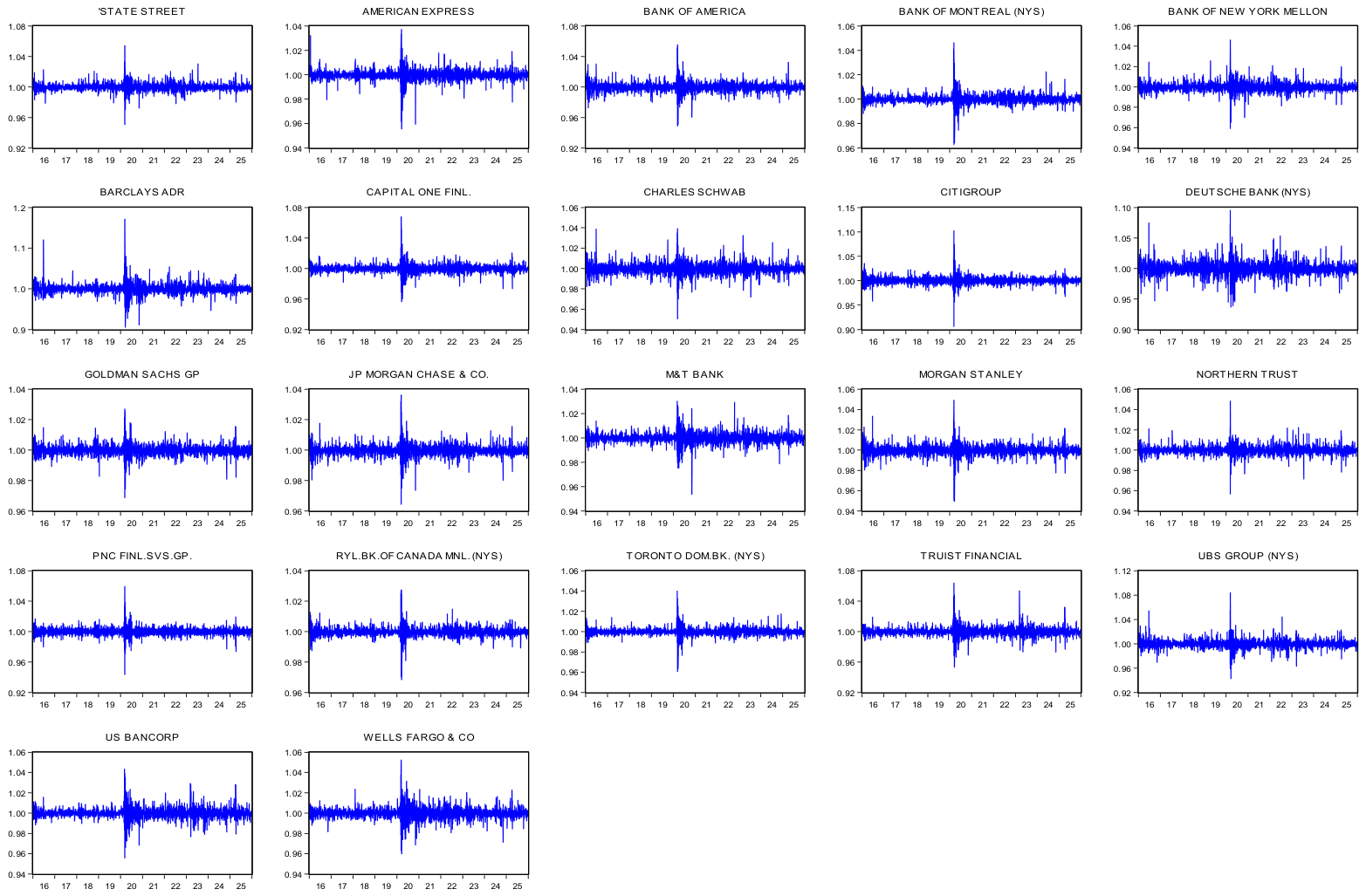
Figure 1. Bank returns.
Risks 14 00131 g001
Figure 2. Dynamic Conditional Variance Sp500, Gold, Silver and Bitcoin.
Risks 14 00131 g002
Figure 3. Dynamic conditional correlation between bank and Gold.
Risks 14 00131 g003
Figure 4. Dynamic conditional correlation between bank and Silver.
Risks 14 00131 g004
Figure 5. Dynamic conditional correlation between bank and Bitcoin.
Risks 14 00131 g005
Figure 6. Evolution of the systemic index of the banking sector. Note: ISG: Banking Systemic Risk Index, I S G =   t = 1 T α i t   M E S i t ; M E S i t is the Marginal Expected Shortfall (MES) by bank; α i t represents market capitalisation of bank i at time t to total market capitalization. This ratio represents the weight of the bank in the banking system.
Risks 14 00131 g006
Figure 7. (a) Evolution of the systemic index of the American local banks; (b) Evolution of the systemic index of foreign banks. Note: ISL: Systemic Risk in local banking system, I S L = t = 1 T α i t M E S i t l o c a l   b a n k s ISE: Systemic Risk in foreign banking system, I S E = t = 1 T α i t M E S i t f o r e i g n   b a n k s .
Risks 14 00131 g007
Figure 8. (a) Cumulative Impulse Response Stress Test of Systemic Risk on Gold; (b) Cumulative Impulse Response Stress Test of Systemic Risk on Silver.
Risks 14 00131 g008
Figure 9. Cumulative Impulse Response Stress Test of BITCOIN on Systemic Risk.
Risks 14 00131 g009
Table 1. Summary of variables used in empirical analysis.
CategoryVariableBrief Description
systemic riskMarginal Expected Shortfall (MES) methodMES measures the average loss of a financial institution when the market is under extreme stress.
Capital adequacyTotal Capital Adequacy RatioMeasures the overall strength of bank capital relative to risk-weighted assets.
Capital adequacyTier 1 RatioIndicates the quality of core capital (Tier 1 capital) relative to risk-weighted assets.
LiquidityLoan-to-Deposit RatioMeasures the proportion of loans financed by deposits, indicating the extent of credit transformation.
Funding structureDeposits-to-Assets RatioIndicates the share of deposits in total bank assets.
Capital structureEquity-to-Loans RatioMeasures the coverage of loans by equity, reflecting loss-absorption capacity.
Financial independenceEquity-to-Deposits RatioMeasures the bank’s dependence on deposits relative to its equity capital.
Source: Authors’ own study.
Table 2. Descriptive statistics.
All BanksLocal BanksForeign Banks
MeanStd. DevMinMaxMeanStd. DevMeanStd. Dev
Total Capital Adequacy Ratio0.16770960.03488280.1180.3980.16289930.03683910.1805370.0251135
Tier1 Ratio0.14843840.03645190.0980.3980.14545420.04010590.15639630.0225899
Loan-to-Deposit Ratio0.64778080.26339560.06661.2580.59656670.29110830.78435190.0556326
Deposits-to-Assets Ratio0.59929570.17137820.14427230.8696970.62753010.18092350.5240040.1136207
Equity-to-Loans Ratio0.7298750.80129220.12699855.6772480.88788940.88615140.30850350.1381453
Equity to-Assets Ratio0.17460310.06811680.06641530.37087030.1963510.06399920.11660860.0385141
Equity to Deposits Ratio0.37201540.36976530.09796882.2956860.42145570.41847660.24017450.1065713
Table 3. Descriptive statistics.
MeanMedianMaxMinStd. Dev.SkewnessJarque–BeraObs
STATE_STREET0.9999550.9999421.0542800.9505630.0048680.5502690.00002609
AMERICAN_EXPRES0.9998810.9999441.0372940.9553450.004083−0.3779120.00002609
BANK_OF_AMERICA0.9998831.0000001.0554120.9485710.0059470.2574720.00002609
BANK_OF_NEW_YO0.9999160.9998601.0464480.9588950.0044650.6396310.00002609
CAPITAL_ONE_FINL0.9999181.0000001.0679330.9562630.0051500.8447460.00002609
CHARLES_SCHWAB0.9999091.0000001.0393250.9502960.0054560.3234000.00002609
CITIGROUP1.0000300.9998871.1023320.9057580.0073880.8519670.00002609
GOLDMAN_SACHS0.9999031.0000001.0269540.9687180.0033210.2091610.00002609
JP_MORGAN_CHASE0.9998840.9999741.0361730.9643330.0036120.1440920.00002609
M_T_BANK0.9999700.9999801.0302240.9535420.004166−0.1923730.00002609
MORGAN_STANLEY0.9998580.9999711.0490930.9492580.0049960.1504660.00002609
NORTHERN_TRUST0.9999561.0000001.0485910.9566830.0042500.4326630.00002609
PNC_FINL_SVS_GP_1.0000150.9999741.0594000.9432920.0048430.3194380.00002609
TRUIST_FINANCIAL0.9999901.0000001.0640290.9532810.0057550.9265390.00002609
US_BANCORP0.9999911.0000001.0434140.9556830.0050700.3680210.00002609
WELLS_FARGO_CO0.9999661.0000001.0523060.9596650.0054300.3709570.00002609
BARCLAYS_ADR0.9999821.0000001.1712440.9053470.0120311.6998720.00002609
DEUTSCHE_BANK0.9999901.0000001.0954000.9366760.0106720.3799280.00002609
RYL_BK_OF_CANAD0.9999060.9998961.0275000.9683590.0029330.3345160.00002609
BANK_OF_MONTRE0.9999340.9999061.0464120.9627610.0035691.3868210.00002609
TORONTO_DOM_BK0.9999240.9999151.0401050.9604920.0034880.3970500.00002609
UBS_GROUP__NYS_0.9999261.0000001.0836810.9425810.0071200.9195290.00002609
BITCOIN0.9997700.9997741.0582170.9698230.0046850.8095210.00002609
GOLD0.9999300.9999291.0078050.9934660.0012060.2429300.00002609
SILVER0.9998290.9998231.0505490.9710040.0055660.5781630.00002609
S_P_5000.9999450.9999461.0164130.9885060.0013880.7824700.00002609
Table 4. Results of model parameter estimation (GARCH).
ARCHGARCHModel
CAR(P)MA(q)wΓβ
BANK OF AMERICA0.9999120.063763-−0.4374260.1448320.1143160.968813EGARCH (1; 1)
0.0000 ***0.0004 **0.0000 ***0.0000 ***0.0000 ***0.0000 ***
GOLDMAN SACHS GP0.9999020.703089−0.694378−0.5118880.1494790.0856410.965493EGARCH (1; 1)
0.0000 ***0.0000 ***0.0000 ***0.0000 ***0.0000 ***0.0000 ***0.0000 ***
PNC FINL.SVS.GP.0.999986−0.508004-1.73 × 10−60.223163-0.657978GARCH (1; 1)
0.0000 ***0.0000 ***0.0000 ***0.0000 ***0.0000 ***
JP MORGAN CHASE & CO.0.9998400.036175-−0.4378410.1578080.1189450.972227EGARCH (1; 1)
0.0000 ***0.0421 **0.0000 ***0.0000 ***0.0000 ***0.0000 ***
WELLS FARGO & CO0.9999840.039604-−0.3779550.1588640.0833920.975729EGARCH (1; 1)
0.0000 ***0.0441 **0.0000 ***0.0000 ***0.0000 ***0.0000 ***
MORGAN STANLEY0.9998560.036114-−0.4370980.1356460.0874320.969213EGARCH (1; 1)
0.0000 ***0.0338 **0.0000 ***0.0000 ***0.0000 ***0.0000 ***
CITIGROUP0.999879−0.493529-−1.2571400.401704−0.0580770.909969EGARCH (1; 1)
0.0000 ***0.0000 ***0.0000 ***0.0000 ***0.0324 **0.0000 ***
BANK OF NEW YORK MELLON0.9997620.689651−0.698194−0.2706320.1087620.0826810.983010EGARCH (1; 1)
0.0000 ***0.0000 ***0.0000 ***0.0000 ***0.0000 ***0.0000 ***0.0000 ***
M&T BANK0.9999530.673311−0.682385−0.3191340.1514140.0781180.981514EGARCH (1; 1)
0.0000 ***0.0000 ***0.0000 ***0.0000 ***0.0000 ***0.0000 ***0.0000 ***
US BANCORP0.9998760.908748−0.922570−0.2113680.1385940.0890980.990033EGARCH (1; 1)
0.0000 ***0.0000 ***0.0000 ***0.0000 ***0.0000 ***0.0000 ***0.0000 ***
TRUIST FINANCIAL0.9999820.995551−0.998708−0.2738390.1190090.1024640.983002EGARCH (1; 1)
0.0000 ***0.0000 ***0.0000 ***0.0000 ***0.0000 ***0.0000 ***0.0000 ***
STATE STREET0.9998060.825113−0.831053−0.2402680.1091980.0755290.985343EGARCH (1; 1)
0.0000 ***0.0000 ***0.0000 ***0.0000 ***0.0000 ***0.0000 ***0.0000 ***
NORTHERN TRUST0.9998530.475870−0.482507−0.2670660.0989480.0926010.982341EGARCH (1; 1)
0.0000 ***0.0115 **0.0100 **0.0000 ***0.0000 ***0.0000 ***0.0000 ***
CHARLES SCHWAB0.9998110.921174−0.929979−0.4275480.1707220.0947000.971278EGARCH (1; 1)
0.0000 ***0.0000 ***0.0000 ***0.0000 ***0.0000 ***0.0000 ***0.0000 ***
CAPITAL ONE FINL0.9998790.697553−0.709413−0.2860470.1509880.0870210.984207EGARCH (1; 1)
0.0000 ***0.0000 ***0.0000 ***0.0000 ***0.0000 ***0.0000 ***0.0000 ***
AMERICAN EXPRESS0.9998080.678929−0.691244−0.3239270.1371010.1089390.980445EGARCH (1; 1)
0.0000 ***0.0000 ***0.0000 ***0.0000 ***0.0000 ***0.0000 ***0.0000 ***
RYL.BK.OF CANADA MNL. (NYS)0.9998560.052558-−0.2662220.1101930.0957680.985006EGARCH (1; 1)
0.0000 ***0.0042 **0.0000 ***0.0000 ***0.0000 ***0.0000 ***
BANK OF MONTREAL (NYS)0.9998470.064361-−0.2482670.1271570.0802450.986995EGARCH (1; 1)
0.0000 ***0.0003 **0.0000 ***0.0000 ***0.0000 ***0.0000 ***
UBS GROUP (NYS)0.9998060.804280−0.793960−0.3052160.1330220.0820380.979557EGARCH (1; 1)
0.0000 ***0.0000 ***0.0000 ***0.0000 ***0.0000 ***0.0000 ***0.0000 ***
TORONTO DOM.BK. (NYS)0.9998210.053630-−0.2348780.1083320.0719410.986937EGARCH (1; 1)
0.0000 ***0.0018 **0.0000 ***0.0000 ***0.0000 ***0.0000 ***
DEUTSCHE BANK (NYS)0.9997340.972068−0.973494−0.2462370.1347700.0664240.983871EGARCH (1; 1)
0.0000 ***0.0000 ***0.0000 ***0.0000 ***0.0000 ***0.0000 ***0.0000 ***
BARCLAYS ADR 0.9996830.700507−0.707893−0.2196630.1326410.0654050.986746EGARCH (1; 1)
0.0000 ***0.0000 ***0.0000 ***0.0000 ***0.0000 ***0.0000 ***0.0000 ***
S_P_5000.999933−0.9990600.999291−0.6211010.1980160.1677340.965738EGARCH (1; 1)
0.0000 ***0.0000 ***0.0000 ***0.0000 ***0.0000 ***0.0000 ***0.0000 ***
GOLD0.999924−0.9993210.999021−0.4267090.107952−0.0487480.974410EGARCH (1; 1)
0.0000 ***0.0000 ***0.0000 ***0.0000 ***0.0000 ***0.0000 ***0.0000 ***
SILVER0.9999060.991799−0.996530−0.2658030.107864−0.0191090.982263EGARCH (1; 1)
0.0000 ***0.0000 ***0.0000 ***0.0000 ***0.0000 ***0.0000 ***0.0000 ***
BITCOIN0.999850−0.9900580.994459−0.8782350.2983940.0384940.937882EGARCH (1; 1)
0.0000 ***0.0000 ***0.0000 ***0.0000 ***0.0000 ***0.0000 ***0.0000 ***
Note: *, **, and *** denote statistical significance at the 10%, 5%, and 1% levels. Model and conditional distribution selection is based on the minimum values of the AIC and SIC selection criteria, the results of the residual autocorrelation test, and the heteroscedasticity test. In the EGARCH (Exponential Generalized Autoregressive Conditional Heteroskedasticity) model, the parameters α, γ, and β play specific roles in the dynamics of conditional volatility: α = sensitivity to shocks; γ = asymmetry (leverage effect); β = volatility persistence. These parameters allow the EGARCH model to capture the complex and asymmetric behavior of financial volatility.
Table 5. Dynamic conditional correlation between banks, sp500, Gold, silver and Bitcoin.
DCCS_P_500GOLDSILVERBITCOIN
BankTheta (1)Theta (2)Theta (1)Theta (2)Theta (1)Theta (2)Theta (1)Theta (2)
BANK OF AMERICA0.0534210.9029620.0327730.9602490.0212070.9710800.0069150.991988
0.0000 ***0.0000 ***0.0000 ***0.0000 ***0.0020 **0.0000 ***0.0639 *0.0000 ***
GOLDMAN SACHS GP0.0859310.8616910.0320960.9603340.0207110.9703340.0066110.993205
0.0000 ***0.0000 ***0.0000 ***0.0000 ***0.0008 **0.0000 ***0.0045 **0.0000 ***
PNC FINL.SVS.GP.0.0120770.9636630.0190800.9755330.0151720.9755350.0023360.998373
0.15040.0000 ***0.0003 **0.0000 ***0.0036 **0.0000 ***0.0051 **0.0000 ***
JP MORGAN CHASE & CO.0.0648640.8991860.0328410.9585210.0229050.9673990.0088830.988837
0.0000 ***0.0000 ***0.0000 ***0.0000 ***0.0016 **0.0000 ***0.0130 *0.0000
WELLS FARGO & CO0.0571190.9119300.0237990.9694790.0190190.9678360.0087180.985598
0.0000 ***0.0000 ***0.0003 **0.0000 ***0.0090 **0.0000 ***0.0659 *0.0000 ***
MORGAN STANLEY0.0799180.8692030.0327440.9599900.0227030.9721340.0080390.992062
0.0000 ***0.0000 ***0.0000 ***0.0000 ***0.0001 ***0.0000 ***0.0122 *0.0000 ***
CITIGROUP0.0080240.9807670.0194790.9739760.0165800.9735760.0028470.997928
0.0858 *0.0000 ***0.0002 **0.0000 ***0.0018 **0.0000 ***0.0108 *0.0000 ***
BANK OF NEW YORK MELLON0.0696410.8917670.0294830.9601230.0222450.9610290.0053980.994092
0.0000 ***0.0000 ***0.0000 ***0.0000 ***0.0064 **0.0000 ***0.0305 *0.0000 ***
M&T BANK0.0486440.9223280.0214260.9738020.0167260.9770960.0064220.991997
0.0000 ***0.0000 ***0.0001 ***0.0000 ***0.0026 **0.0000 ***0.0519 *0.0000 ***
US BANCORP0.0543760.9161520.0332430.9557190.0253380.9547770.0072150.991071
0.0000 ***0.0000 ***0.0000 ***0.0000 ***0.0033 **0.0000 ***0.0727 *0.0000 ***
TRUIST FINANCIAL0.0591060.8961650.0280640.9645700.0180300.9739920.0063790.993758
0.0000 ***0.0000 ***0.0000 ***0.0000 ***0.0102 *0.0000 ***0.0107 *0.0000 ***
STATE STREET0.0540850.9022350.0239300.9657880.0208380.9632610.0065670.993014
0.0001 ***0.0000 ***0.0001 ***0.0000 ***0.0008 **0.0000 ***0.0083 **0.0000 ***
NORTHERN TRUST0.0540470.9134760.0225490.9724920.0146670.9788840.0041320.996023
0.0000 ***0.0000 ***0.0002 **0.0000 ***0.0024 **0.0000 ***0.0193 *0.0000 ***
CHARLES SCHWAB0.0494030.9238300.0273390.9617700.0224540.9594400.0067430.991095
0.0000 ***0.0000 ***0.0001 ***0.0000 ***0.0042 **0.0000 ***0.29150.0000 ***
CAPITAL ONE FINL0.0553730.9158040.0257830.9670000.0043810.9571990.0086770.989844
0.0000 ***0.0000 ***0.0005 **0.0000 ***0.0015 **0.0000 ***0.0065 **0.0000 ***
AMERICAN EXPRESS0.0546880.9229220.0469970.9062010.0228400.9291810.0081220.990486
0.0000 ***0.0000 ***0.0020 **0.0000 ***0.0168 *0.0000 ***0.0018 **0.0000 ***
RYL.BK_OF CANADA MNL0.0602770.8357880.0349700.9448570.0217560.9609310.0043470.996096
0.0000 ***0.0000 ***0.0000 ***0.0000 ***0.0132 *0.0000 ***0.0099 **0.0000 ***
BANK OF MONTREAL 0.0338550.9288570.0366970.9476660.0225020.9685990.0064060.993554
0.0039 **0.0000 ***0.0001 ***0.0000 ***0.0042 **0.0000 ***0.0483 *0.0000 ***
UBS GROUP (NYS)0.0437800.9014770.0290440.9635430.0138360.9842310.0044420.996342
0.0000 ***0.0000 ***0.0000 ***0.0000 ***0.0006 **0.0000 ***0.0018 **0.0000 ***
TORONTO DOM.BK. (NYS)0.0226010.9607120.0375500.9358920.0276440.9515960.0057110.994253
0.0061 **0.0000 ***0.0001 ***0.0000 ***0.0010 **0.0000 ***0.11680.0000 ***
DEUTSCHE BANK (NYS)0.0366670.9008270.0335230.9538630.0209150.9708420.0073490.992173
0.0006 **0.0000 ***0.0000 ***0.0000 ***0.0004 **0.0000 ***0.0520 *0.0000 ***
BARCLAYS ADR0.0334940.9241280.0338630.9521750.0259470.9588830.0059910.995106
0.0005 **0.0000 ***0.0001 ***0.0000 ***0.0003 **0.0000 ***0.0012 **0.0000 ***
Note: *, **, and *** denote statistical significance at the 10%, 5%, and 1% levels. In the DCC–EGARCH (Dynamic Conditional Correlation—EGARCH) framework, the parameters θ1 and θ2 govern the dynamics of the conditional correlation matrix. The general DCC specification is given by:   Q t = ( 1 θ 1 θ 2 )   Q ¯ + θ 1 ε t 1 ε t 1 + θ 2 Q t 1 θ1 (Theta 1): measures the impact of recent shocks (innovations) on conditional correlations (short-run effect). θ2 (Theta 2): captures the persistence of past correlations (long-run or inertia effect). Stability condition: θ 1 + θ 2 < 1 .
Table 6. Granger causality analysis by Banking Systemic Risk index, GOLD, SILVER and BITCOIN.
Causality analysis: Banking Systemic Risk index and GOLD
Dependent variable: GOLDDependent variable: GOLDDependent variable: GOLD
ExcludedChi-sqDfProb.ExcludedChi-sqdfProb.ExcludedChi-sqdfProb.
ISG24.6786970.0009 **ISL22.6282670.0020 **ISE27.0997170.0003 **
All24.6786970.0009 **All22.6282670.0020 **All27.0997170.0003 **
causality results indicate a unidirectional relationship running from banking systemic risk to gold.
(Banking Systemic Risk ⟶ Gold)
Causality analysis: Banking Systemic Risk index and SILVER
Dependent variable: SILVERDependent variable: SILVERDependent variable: SILVER
ExcludedChi-sqDfProb.ExcludedChi-sqdfProb.ExcludedChi-sqdfProb.
ISG56.3728470.0000 ***ISL51.8521570.0000 ***ISE56.0573270.0000 ***
All56.3728470.0000 ***All51.8521570.0000 ***All56.0573270.0000 ***
The causality results indicate a unidirectional relationship running from banking systemic risk to SILVER.
(Banking Systemic Risk ⟶ SILVER)
Causality analysis: Banking Systemic Risk index and BITCOIN
Dependent variable: ISGDependent variable: ISLDependent variable: ISE
ExcludedChi-sqDfProb.ExcludedChi-sqdfProb.ExcludedChi-sqdfProb.
BITCOIN32.0822570.0000 ***BITCOIN30.4414570.0001 ***BITCOIN30.0752670.0001 ***
All32.0822570.0000 ***All30.4414570.0001 ***All30.0752670.0001 ***
The causality results indicate a unidirectional relationship running from BITCOIN to banking systemic risk.
(BITCOIN ⟶ Banking Systemic Risk)
Note: *, **, and *** denote statistical significance at the 10%, 5%, and 1% levels, respectively. VAR models: Maximum lag length/order = 10; optimal lag order = 7; Indicates lag order selected by the criterion: LR: sequential modified LR test statistic (each test at 5% level); FPE: Final prediction error; AIC: Akaike information criterion; SC: Schwarz information criterion; HQ: Hannan-Quinn information criterion.
Table 7. Analysis Banking Systemic Risk determinants.
All BanksLocal BanksForeign Banks
Systemic Risk (MES)Coefp > |z|Coefp > |z|Coefp > |z|
Total Capital Adequacy Ratio0.1213760.000 ***0.16944640.000 ***−0.0215474 0.599
Tier1 Ratio−0.11755720.000 ***−0.16601540.001 ***−0.0369218 0.395
Loan-to-Deposit Ratio−0.002760.040 **−0.00084990.473−0.02346930.112
Deposits-to-Assets Ratio−0.00930180.001 ***−0.00526850.095 *−0.0389385 0.000 ***
Equity-to-Loans Ratio−0.00002840.9730.00116120.116 −0.04070630.348
Equity to Deposits Ratio−0.00438280.036 **−0.00584470.009 **0.03836340.452
_cons0.01052360.001 ***0.00665260.019 *0.04654570.004 **
var(e.MES)7.58 × 10⁻⁶ 4.50 × 10⁻⁶ 7.80 × 10⁻⁶
Robust Std. Errvce(robust)vce(robust)vce(robust)
Wald chi2(7)39.97 28.68 81.90
Prob > chi20.0000 0.0000 0.0000
Mixed-effects GLMGaussian Gaussian Gaussian
Number of obs198 144 54
Note: *, **, and *** denote statistical significance at the 10%, 5%, and 1% levels, respectively.
Disclaimer/Publisher’s Note: The statements, opinions and data contained in all publications are solely those of the individual author(s) and contributor(s) and not of MDPI and/or the editor(s). MDPI and/or the editor(s) disclaim responsibility for any injury to people or property resulting from any ideas, methods, instructions or products referred to in the content.