1. Introduction
MSMEs are the main pillar of Indonesia’s economy, accounting for more than 97 percent of business units and contributing significantly to employment, income distribution, and economic resilience (
Abduh et al. 2024;
Tambunan 2023;
Harnida et al. 2024). Beyond their economic role, MSMEs also function as a social foundation that supports income equality, particularly for vulnerable groups with limited access to formal financial services (
Prasetyo 2020;
Maksum et al. 2020). Therefore, their sustainability is essential for achieving inclusive economic development (
Velmurugan et al. 2024). However, rapid digital advancement poses challenges for MSMEs, particularly in undergoing digital transformation, which requires not only technology adoption but also digital literacy, financial access, and sustainability awareness (
Peláez et al. 2023;
Zahoor et al. 2023;
Destrian and Sudarma 2024;
Jin and Spence 2021). Without addressing these aspects, digitalization efforts risk being uneven and ineffective (
Zahwa et al. 2025;
Nugroho et al. 2025).
These challenges are highlighted by the Global Findex Report 2025, which focuses on formal financial access worldwide, including Indonesia. Although access has improved since 2017 and 2021, Indonesia and several other countries still account for around 650 million of the 1.3 billion unbanked population globally (
Klapper et al. 2025), indicating relatively slow progress, particularly in developing economies. The report also emphasizes the urban–rural gap, where MSMEs in rural areas are facing barriers in accessing formal financial services and digital tools (
Lenin et al. 2025). This situation is complicated by digitalization, which offers opportunities to enhance productivity but may widen inequality without adequate literacy and access (
Nahid and Sarker 2023). Therefore, ensuring inclusive digital transformation is crucial to avoid marginalizing vulnerable groups.
In response to these challenges, the Indonesian government has introduced strategic initiatives such as the Red and White Cooperative (Koperasi Merah Putih) to strengthen financial inclusion at the village level, particularly for MSMEs (
Febriansyah et al. 2024). This program aims to integrate cooperatives and MSMEs to expand access to affordable financing while leveraging digital technologies adoption to improve efficiency and financial literacy (
Kamau et al. 2025;
Rani et al. 2025). It is expected to reduce the urban–rural gap and strengthen the role of cooperatives as community-based economic institutions (
Dinh et al. 2023).
Theoretically, the UTAUT model introduced by
Venkatesh et al. (
2016) is widely used to explain technology adoption, emphasizing four key constructs: performance expectancy, effort expectancy, social influence, and facilitating conditions. While this model is considered comprehensive, the evolving business environment, which marked the rise in digital financial literacy, artificial intelligence, and sustainability, necessitates its extension to better reflect current challenges (
Munawaroh and Widuri 2025;
Sakib et al. 2025;
Namatovu and Kyambade 2025;
Jimenez et al. 2024).
The need to extend this model is further supported by studies emphasizing the role of literacy in digital technology adoption among MSMEs. Financial literacy has been shown to significantly enhance MSMEs’ ability to adopt new technologies (
Nugraha et al. 2022;
Setiawan et al. 2023), while digital financial literacy strengthens business stability and resilience to economic shocks (
Rahman et al. 2024;
Sanusi et al. 2023) and expands access to financing and competitiveness (
Yadav et al. 2024). However, most studies still focus on basic literacy, with limited attention to more advanced and emerging dimensions such as artificial intelligence literacy, green self-identity, and perceived green finance.
The novelty of this study lies in extending FinTech adoption factors by incorporating green sustainability awareness within an expanded UTAUT framework (
Setiawan et al. 2024;
Igamo et al. 2024). This approach goes beyond conventional models that focus mainly on cognitive and social factors by integrating environmental dimensions that are increasingly relevant in the digital era. It contributes to the literature by offering a more comprehensive framework for understanding FinTech adoption among MSMEs (
Kohardinata et al. 2024), while also providing practical insights for policymakers and program designers aiming to align MSMEs’ digitalization with sustainability goals.
In this study, UTAUT is considered more appropriate than the Technology Acceptance Model (TAM) for analyzing FinTech adoption among MSMEs (
Gil-Fernández and Calderón-Garrido 2023;
Aldhi et al. 2024;
Andarwati et al. 2025). Compared to TAM, which primarily emphasizes perceived ease of use and usefulness, UTAUT provides a more comprehensive perspective by incorporating social influence and facilitating conditions. This broader framework has been extensively applied in studies on digital financial services and is supported by strong empirical evidence (
Xu et al. 2024;
Shaikh and Amin 2024). As such, UTAUT is better suited to capture the complex and context-dependent nature of technology adoption, particularly in settings characterized by diverse geographic conditions and varying levels of literacy (
Andarwati et al. 2025).
This study contributes both theoretically and practically. From a theoretical standpoint, it extends the UTAUT framework by integrating dimensions of digital literacy, artificial intelligence, and sustainability, thereby offering a more context-sensitive model. In practical terms, the findings provide useful insights for policymakers in designing targeted digital literacy initiatives, especially in the areas of AI and digital finance (
Boopathi 2024), as well as for financial institutions in developing green finance products that better meet the needs of MSMEs. For MSME practitioners, the study underscores the importance of adopting sustainability-oriented values and utilizing digital technologies to strengthen long-term competitiveness.
More broadly, the study contributes to achieving Sustainable Development Goal 8 (SDG 8), which focuses on decent work and economic growth. By enhancing digital and financial literacy, improving access to financial services, and integrating sustainability principles, MSMEs can play a more active role in fostering inclusive economic development (
Masdupi et al. 2024;
Harahap et al. 2024;
Kumar and Suppiah 2023). In this context, the study addresses a central question: what factors drive FinTech adoption among MSMEs in rural and urban areas, and how do literacy and sustainability dimensions shape these behaviors? This question is particularly important given the dominant role of MSMEs in Indonesia’s economy and the structural challenges they face, including limited literacy, unequal infrastructure, and constrained access to sustainable finance.
To answer this question, the study adopts a quantitative survey approach involving 632 MSMEs, consisting of 377 rural and 255 urban respondents in South Sumatra Province. This region provides a relevant empirical setting due to its diverse economic characteristics and the increasing use of digital financial services. Despite this progress, MSMEs in the region continue to face key challenges, such as inadequate digital infrastructure, uneven financial literacy levels, and limited access to formal financial systems. These conditions make South Sumatra a suitable context for examining how FinTech adoption contributes to digital transformation and financial inclusion across different socio-economic environments. Supporting this, data from the Indonesian Internet Service Users Association indicates that internet penetration in South Sumatra reached approximately 76.98 percent in 2025, reflecting a relatively strong foundation for digital adoption among MSMEs.
The remainder of this article is organized as follows.
Section 2 reviews the relevant literature and develops the research hypotheses.
Section 3 outlines the research methodology.
Section 4 presents the empirical results.
Section 5 provides a detailed discussion. Finally,
Section 6 presents the conclusions, outlines the theoretical and practical implications of the findings, and discusses the study limitations and directions for future research.
2. Literature Review
While prior studies have significantly advanced understanding of the role of literacy in technology adoption, the literature remains largely focused on basic forms such as general digital and financial literacy. However, the rapid evolution of technology and growing emphasis on sustainability call for a more comprehensive perspective that incorporates emerging dimensions (
Balcı et al. 2025;
Kapoor and Shushma 2024;
Bataleblu et al. 2024). Although these dimensions are becoming increasingly important, empirical evidence on the roles of artificial intelligence literacy, green self-identity, and perceived green finance in shaping MSMEs’ technology adoption remains limited. This gap highlights the need to examine more advanced and context-specific forms of literacy and value orientation in explaining adoption behavior, particularly across diverse socio-economic and geographical settings.
From a wider perspective, the relationship between digital financial inclusion and MSME performance can be understood through several interrelated pathways. Prior research indicates that improved access to financial services enhances MSMEs’ capacity to secure credit, utilize digital payment systems, and expand their market reach, thereby supporting business growth and profitability (
Febriansyah et al. 2024;
Ratnawati 2020;
Dou et al. 2024). In addition to access, technological advancements through FinTech, including the integration of artificial intelligence, contribute to greater efficiency in credit evaluation, risk management, and service delivery, ultimately improving operational outcomes. At the same time, financial and digital literacy play a crucial role in enabling MSMEs to effectively adopt and strategically utilize these technologies (
Al-shami et al. 2024;
Rohaeni et al. 2025;
Angeles 2022;
M. V. et al. 2024). However, these benefits are not evenly distributed, as their impact is influenced by differences in socio-economic conditions and infrastructural development, with more advanced regions typically gaining greater advantages (
Rohaeni et al. 2025;
Sun and Zhang 2024). Taken together, this body of literature suggests that digital financial inclusion enhances MSME performance through the combined influence of access, technological capability, and contextual readiness.
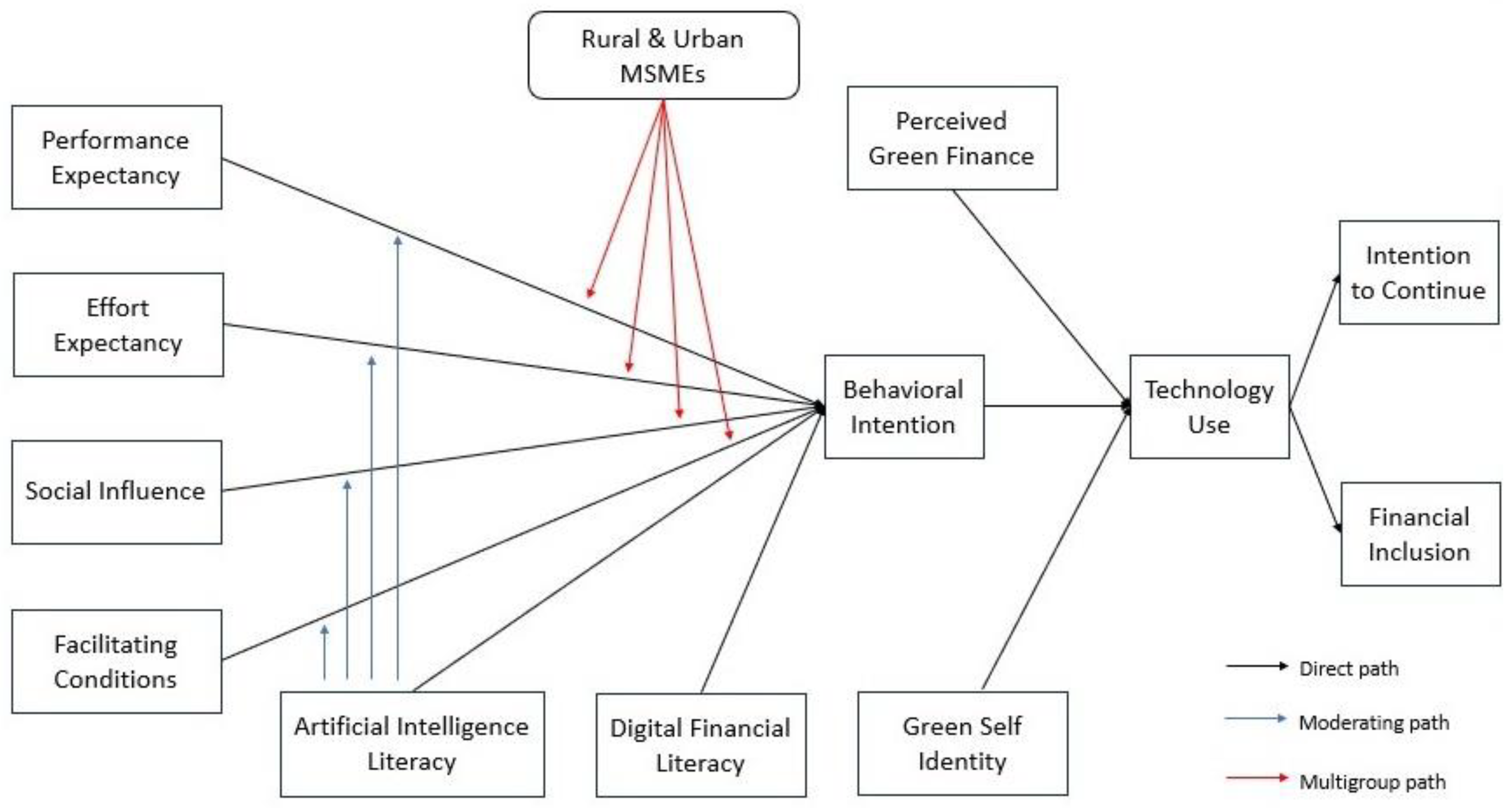
To address the identified gap, this study extends the UTAUT model by incorporating literacy and sustainability-oriented variables, namely digital financial literacy, artificial intelligence literacy, green self-identity, and perceived green finance. This extension aims to provide a more comprehensive explanation of FinTech adoption among MSMEs in both rural and urban contexts. By accounting for differences in social, economic, and infra-structural contexts, the study provides a more nuanced and contextualized understanding of adoption patterns across regions. Methodologically, a quantitative approach using PLS-SEM is employed to examine direct relationships, moderation effects, and group differences through MGA, as shown in
Figure 1. In doing so, the study bridges UTAUT with cognitive load theory and value–belief–norm theory, offering a more comprehensive explanation of technology acceptance in AI-enabled and sustainable digital finance ecosystems, while also highlighting rural–urban disparities and reinforcing its contribution to SDG 8 on inclusive and sustainable economic growth.
In line with this approach, the study strengthens the theoretical contribution of UTAUT by explicitly incorporating four emerging constructs: artificial intelligence literacy, digital financial literacy, green self-identity, and perceived green finance. While UTAUT explains behavioral intention through performance expectancy, effort expectancy, social influence, and facilitating conditions, the rapid evolution of artificial intelligence and sustainable digital finance necessitates an expanded perspective that captures not only technological perceptions but also cognitive capacity and environmental values. Drawing on cognitive load theory (
Mwakapesa 2025), this study argues that artificial intelligence literacy and digital financial literacy reduce users’ cognitive burden when interacting with complex digital systems (
Liu et al. 2025). As a result, individuals with higher levels of literacy are better able to process information, interpret system outputs, and evaluate benefits, thereby strengthening performance expectancy and effort expectancy as key determinants of behavioral intention (
Nurtanto et al. 2025). Thus, these literacy variables extend UTAUT by incorporating cognitive readiness as an important antecedent of technology acceptance in AI-driven and financial technology environments.
Extending beyond the cognitive dimension, this study also incorporates sustainability-oriented constructs grounded in value–belief–norm theory to enrich the UTAUT framework. In this study, green self-identity and perceived green finance introduce a value-driven perspective that is often overlooked in conventional technology acceptance models (
Becerra et al. 2023;
Marhadi et al. 2024). Green self-identity represents how individuals internalize environmental responsibility as part of their self-concept, which in turn shapes personal norms and influences their inclination to adopt sustainability-oriented technologies (
Kumar et al. 2023). At the same time, perceived green finance reflects how individuals assess financial technologies that generate environmental benefits, thereby connecting economic considerations with ecological awareness (
Mgadmi et al. 2026). By integrating these value-based dimensions, the study develops a more comprehensive model in which cognitive capability, financial literacy, and environmental values interact as key drivers of behavioral intention. In doing so, the research advances existing technology adoption frameworks by bridging UTAUT with both cognitive and normative perspectives, offering a more holistic explanation of technology acceptance within AI-driven and sustainable digital finance contexts.
Furthermore, the integration of AI-driven financial tools has become central in recent FinTech studies. Applications such as AI-based credit scoring, automated fraud detection systems, robo-advisory platforms, and chatbot-enabled financial services significantly enhance efficiency and inclusiveness by reducing information asymmetry and transaction costs. Importantly, these tools extend access to finance for MSMEs that are often excluded from traditional banking, especially in rural settings where collateral and credit history are limited. However, the literature also notes potential challenges, including algorithmic bias, transparency, and cybersecurity risks, which highlight the dual role of AI as both an enabler and a source of adoption barriers.
By integrating these perspectives, this study conceptualizes AI literacy not merely as a moderating variable in FinTech adoption but as a strategic capability that empowers MSMEs to effectively utilize and critically assess AI-driven financial innovations. In this way, the proposed model contributes to the broader discussion on strategic AI adoption by highlighting its role in enhancing sustainability, inclusiveness, and the transformative impact of digital technologies within financial ecosystems.
2.1. Hypothesis Development
2.1.1. PE on BI
PE is defined as the extent to which individuals believe that the use of a particular technology will enhance their performance (
Venkatesh et al. 2016). In the context of MSMEs, the perception of the benefits of using digital technology, such as increased operational efficiency, expanded market reach, and reduced transaction costs, becomes a critical factor in shaping behavioral intention to adopt that technology (
Feijoó-González et al. 2024;
Ognjanović et al. 2024;
Mazhar et al. 2024). Previous research by
Kumar et al. (
2023) and
Yahaya et al. (
2023) indicate that PE has a significant influence on the intention to adopt technology in the small business sector. MSMEs tend to be pragmatic; if they assess that the use of FinTech or digital platforms offers tangible benefits that are felt immediately, then the motivation to adopt it will become even stronger.
Although various studies have discussed technology adoption in general, there is still a need to delve deeper into how perceptions of performance benefits play a role in the specific context of MSMEs that often face challenges in the digital transformation. The UTAUT provides a relevant conceptual framework to explain this phenomenon by placing performance expectancy as one of the main determinants in shaping users’ behavioral intention. When MSMEs perceive that digital technology can truly enhance their productivity and business efficiency, the tendency to adopt it will be even higher. Based on this theoretical foundation and empirical findings, the following hypothesis is proposed:
H1: PE has a positive effect on BI.
2.1.2. EE on BI
EE is defined as individuals who believe that using a technology will be easy to understand and operate (
Venkatesh et al. 2016). The perception of ease of use becomes an important factor in forming the intention to adopt digital technologies, such as FinTech applications or online-based systems. For MSMEs, who generally have limitations in terms of resources and technical abilities, the assessment that a technology is easy to learn and use will impact their adoption decisions.
Empirical research by
Gupta et al. (
2023) and
Setiawan et al. (
2023) shows that EE has a significant impact on the intention to adopt new technology, particularly among small businesses. These findings reinforce the view that the perception of ease plays an important role in the technology adoption decision-making process. When perceived usage barriers are low, MSMEs are more likely to be confident in integrating technology into their operational activities. Thus, the easier the technology is to use, the greater the interest of SMEs in using it. Consequently, this research assumes:
H2: EE positively affects BI.
2.1.3. Social Influence on Behavioral Intention
SI is defined as individuals who believe that important people around them think they should use a certain technology (
Venkatesh et al. 2016). Social pressure often comes from various parties, such as business communities, trade associations, consumers, and business partners. This aspect becomes very essential as the decisions of MSMEs are often influenced by social norms and the expectations of their environment. Therefore, the perception that digital technology is supported and recommended by their social circles becomes a key factor in shaping the intention to adopt such technology.
Prior research conducted by
Andarwati et al. (
2025), and
Tatik and Setiawan (
2025) shows that SI plays a significant role in driving the adoption of digital technology, particularly FinTech, among MSMEs, especially in areas with a high level of social interaction. When business actors see their business partners or competitors successfully implementing digital technology, they are encouraged to do the same so as not to fall behind competitively. Thus, the stronger the perceived social influence, the greater the tendency for MSMEs to adopt digital technology in their business operations. In light of this, the study proposes:
H3: SI has a positive effect on BI.
2.1.4. FC on BI
FC refers to the individual’s belief that there is adequate technical support to adopt a technology (
Venkatesh et al. 2016). For MSMEs, this condition can include various forms of support, such as the availability of adequate digital infrastructure, access to training and mentoring, policy incentives from the government, and ease of obtaining funding for digital transformation. For MSMEs, which typically have limited resources, the presence of such supportive factors is pivotal to reducing the barriers to technology adoption and enhancing internal readiness to integrate digital solutions into business processes.
Utama et al. (
2024), and
Alam et al. (
2025) reveal that the availability of facilities and external support is significantly positively correlated with the intention of MSMEs to adopt technology. When entrepreneurs feel that there is a conducive ecosystem and accessibility to technical and non-technical support is guaranteed, their confidence in implementing digital technology increases. This emphasizes that facilitative conditions not only serve as complements but also become important prerequisites in shaping behavioral intentions for the sustainable adoption of technological innovations. Thus, this research assumes:
H4: FC has a positive influence on BI.
2.1.5. AIL on BI
AI literacy refers to the ability to understand the fundamental concepts, benefits, and risks associated with the use of AI-based technology (
Asrifan et al. 2024;
Velander et al. 2024). For MSMEs, such knowledge can enhance confidence in adopting AI-based services, such as customer service chatbots or automated financial analytics. Recent studies show that AI literacy encourages positive attitudes toward digital technology and increases openness to innovation (
Saklaki and Gardikiotis 2024). From a theoretical perspective, cognitive load theory suggests that individuals are more likely to adopt a system when the cognitive burden associated with understanding and using it is minimized. In this context, AI literacy enables users to better interpret AI functionalities, outputs, and potential risks, thereby reducing perceived complexity. As a result, individuals with higher AI literacy are more capable of processing information efficiently, which strengthens both performance expectancy and effort expectancy as key determinants of behavioral intention. Therefore, AI literacy is expected to be a pivotal factor in shaping the behavioral intention to adopt technology.
H5: AI literacy has a positive effect on BI.
2.1.6. DFL on BI
DFL refers to the ability to comprehend, use, and evaluate technology-based financial products and services (
Ravikumar et al. 2022;
Choung et al. 2023;
Choung et al. 2025;
Mir 2024). In the context of MSMEs, this capability is increasingly important as financial services are delivered through digital platforms such as e-wallets, mobile banking, and online lending systems. Prior studies show that digital financial literacy enhances users’ confidence and reduces the risk of misusing financial technology (
Jose and Ghosh 2024;
Abdallah et al. 2024;
Respati et al. 2023). Theoretically, cognitive load theory suggests that individuals are more likely to adopt a system when the cognitive burden associated with understanding and using it is reduced. In this regard, digital financial literacy equips MSMEs with the knowledge and skills to evaluate and utilize digital financial services effectively, thereby reducing uncertainty, perceived risk, and cognitive barriers. As a result, MSME practitioners with higher levels of digital financial literacy are better able to process financial information, make informed decisions, and develop greater confidence in using digital systems. This capability strengthens key UTAUT constructs such as performance expectancy and social influence, ultimately increasing behavioral intention to adopt financial technology. Following this, the study suggests:
H6: DFL has a positive effect on BI.
2.1.7. GSI on TU
GSI refers to the extent to which individuals perceive themselves as part of a group that cares about the environment (
Lalot et al. 2019). This identity plays an important role in shaping pro-environmental behavior, including the adoption of technologies that support sustainability. MSMEs with a strong green identity tend to perceive the use of environmentally friendly technologies as consistent with their personal values. Prior studies show that green self-identity is closely associated with the adoption of sustainable products and technologies (
Gravelines et al. 2022;
Klabi 2025;
Sharma et al. 2020). In the context of digital finance, this identity encourages MSMEs to adopt technologies that promote environmentally friendly practices, such as reducing paper usage through digital transactions. On a theoretical basis, this relationship can be explained through value–belief–norm theory, which posits that individual behavior is driven by internalized values, beliefs, and personal norms. Within this framework, green self-identity reflects an individual’s environmental self-concept, which activates personal norms that encourage environmentally responsible actions, including the adoption of sustainable technologies. Thus, MSMEs with stronger green self-identity are more likely to align their technology usage with their environmental values, leading to a higher likelihood of adopting FinTech solutions that support sustainability. Based on the evidence, this study assumes that:
H7: GSI has a positive influence on TU.
2.1.8. PGF on TU
PGF refers to individuals’ perception that the financial products and services offered are based on sustainability principles and environmentally friendly (
Sharma and Kautish 2023;
Selvakumar and Manjunath 2025;
Biju et al. 2024;
Behera and Nanda 2025). MSMEs that perceive digital financial services as supporting sustainability goals are more likely to adopt them. Prior studies show that such perceptions enhance the adoption of technologies that facilitate environmentally friendly business practices (
Aslam and Jawaid 2025;
Sharma et al. 2025;
Liu et al. 2023). For MSMEs, the use of green financial services, such as green loans or digital platforms for funding sustainable projects, not only improves financial efficiency but also aligns business activities with broader environmental objectives. From a theoretical standpoint, this relationship can be explained using value–belief–norm theory, which emphasizes that behavior is driven by values, beliefs, and personal norms. Perceived green finance extends this framework by incorporating both economic and environmental evaluations into decision-making. When MSMEs perceive financial technologies as contributing to sustainability, this perception reinforces pro-environmental attitudes and subjective norms, thereby increasing the likelihood of technology adoption. In addition, perceived green finance may strengthen the influence of personal norms by aligning financial incentives with environmental values, positioning it as a complementary driver within the value–belief–norm framework. Therefore, the higher the perception of a sustainability perspective in financial services, the greater the use of technology by MSMEs. In light of the results, the paper hypothesizes:
H8: Perceived green finance has a positive influence on technology use.
2.1.9. BI on TU
BI is considered a predictor of the actual use of a technology (
Venkatesh et al. 2016). When individuals have a strong intention to use a system, it is highly likely that they will implement it in their daily practices. Empirical research in prior studies has affirmed that behavioral intention consistently serves as a key determinant in the actual use of digital technology (
Rodríguez and Calderón 2024;
Shah and Zhongjun 2021). In the context of MSMEs, if entrepreneurs have developed a positive intention towards the use of digital financial services, they will apply it in business operations, such as payments through e-wallets or digital record-keeping. This intention serves as a bridge connecting psychological factors with actual behavior. Thus, the stronger the behavioral intention, the greater the likelihood of technology use by MSME practitioners. This study predicts that:
H9: BI has a positive effect on TU.
2.1.10. TU on ITC
Actual use of a technology often shapes experiences that impact the intention to continue using it (
Venkatesh et al. 2023). If MSME practitioners feel that digital technology is beneficial, easy to operate, and meets their business needs, then these experiences will strengthen their intention to continue using it.
Zhang et al. (
2022) and
Bergmann et al. (
2023) have proven that positive experiences in technology use enhance continuance intention. Conversely, negative experiences will decrease the interest in reusing. In the context of FinTech for MSMEs, the more frequently business actors use digital payment services, the more accustomed they become and see its long-term benefits, thus motivating them to continue using it. Therefore, technology use becomes a factor that influences the intention to continue. Then, this study assumes that:
H10: TU has a positive effect on ITC.
2.1.11. TU on FI
FI refers to the extent to which individuals and businesses have equal opportunities to access formal financial services, such as loans and insurance (
Sapre 2025;
Voptia and Stukalina 2024). In this context, digital technology, particularly FinTech, acts as an important catalyst that can reduce access barriers by offering services that are faster, cheaper, and accessible to business groups in various regions, including remote areas (
Klapper et al. 2025). Prior literature showed that the adoption of FinTech significantly contributes to the improvement of financial inclusion in developing countries (
Alhalwachi et al. 2025;
Mashoene et al. 2025;
Singh et al. 2025). This is because technology enables MSMEs to gain access to banking, financing, and even green investments that were previously hard to achieve. Therefore, the higher the use of digital technology, the greater the opportunity for MSMEs to achieve a higher level of financial inclusion. Following this, the study proposes:
H11: Technology use has a positive effect on financial inclusion.
2.1.12. AI Literacy as a Moderator Between PE and BI
PE describes a belief that using technology will enhance performance and productivity (
Venkatesh et al. 2016). For MSMEs, this expectation may involve increased transaction efficiency, market expansion, or better customer data management through digital platforms. However, the level of understanding of artificial intelligence (AI) technology will determine how they evaluate those benefits. AI literacy, which encompasses knowledge, skills, and understanding in effectively using AI, can strengthen this relationship (
Cui and Zhao 2024;
Cabero-Almenara et al. 2025). The study by
Culduz (
2024) and
Rahmi et al. (
2025) shows that high technology literacy helps entrepreneurs connect the future benefits of technology with real practices. With good AI literacy, MSME providers are better able to internalize the benefits of AI as a primary driving factor for their adoption of FinTech. Conversely, if literacy is low, the expected benefits tend to be perceived as abstract or unrealistic, so the promised performance of the technology does not automatically enhance behavioral intention. Thus, this study hypothesizes:
H12: AI literacy significantly moderates the relationship between PE and BI.
2.1.13. AI Literacy as a Moderator Between EE and BI
Effort expectancy refers to the extent to which a technology will be simplified to be used (
Venkatesh et al. 2016). Especially for MSMEs, it becomes important due to constraints related to time, resources, and labor. However, this perception of ease is heavily influenced by the literacy of business actors in understanding technology, particularly AI-based technology. AI literacy can reduce psychological and technical barriers that may arise when MSMEs face innovations. The findings of
Cui and Zhao (
2024),
Fang et al. (
2025), and
Cabero-Almenara et al. (
2025) emphasize that high technology literacy increases the perception of ease while also reducing uncertainty in the use of digital systems. Therefore, MSMEs with high AI literacy will more quickly see the affordability and flexibility of using technology as strong reasons to adopt it. In contrast, small business practitioners with low AI literacy will be more easily frustrated or feel hindered, so even though the technology is actually simple, their intention to adopt it does not grow significantly. Consequently, this research proposes:
H13: AI literacy significantly moderates the relationship of EE to BI.
2.1.14. AI Literacy as a Moderator Between SI and BI
SI is the perception of social expectations of others to use technology (
Venkatesh et al. 2016). This momentum for MSMEs can be influenced by stakeholders such as business partners, customer demands, community support, or government policies. Although social influence can drive adoption, its effectiveness largely depends on the user’s literacy readiness. AI literacy allows MSMEs to be more responsive to social pressures because they understand the relevance of technology in enhancing business sustainability.
Wang et al. (
2025), and
Du et al. (
2024b) found that digital literacy strengthens social influence in the technology adoption process. This means that when AI literacy is high, MSME actors can connect social drives with real opportunities, making social influence more effective in leading to behavioral intention. In contrast, if the MSMEs have lower AI literacy, social drives may be perceived as mere pressure without practical understanding, which weakens the relationship between SI and BI. Hence, the study proposes:
H14: AI literacy significantly moderates the relationship between SI and BI.
2.1.15. AI Literacy as a Moderator Between FC and BI
FC refers to the belief that there is adequate infrastructure and technical support to use technology (
Venkatesh et al. 2016). This includes internet access, hardware, digital payment systems, and support from communities or financial institutions. However, these supportive conditions will not be effective if business actors do not possess adequate literacy to utilize them. AI literacy plays a vital role in linking the presence of facilities with adoption intentions. Research by
Ning et al. (
2025) and
Al-Abdullatif and Alsubaie (
2024) emphasizes that technological literacy enables individuals to optimize available resources, thereby fostering stronger adoption behavior. Therefore, MSMEs with high AI literacy will be better able to leverage infrastructure support as a driving factor for the intention to use technology. Conversely, low literacy makes business actors struggle to extract benefits from existing facilities, so the presence of technical support does not automatically increase behavioral intention. Based on these findings, the study hypothesizes:
H15: AI literacy significantly moderates the relationship of FC to BI.
4. Data Analysis and Result
Data analysis in this study was conducted using SmartPLS 4 software, with a PLS-SEM, PLS-MGA, and IPMA to test the proposed hypotheses. PLS-SEM was utilized for its advantages in handling complex models with relatively small sample sizes, as well as having higher statistical power compared to covariance-based SEM (
Ringle et al. 2023). This method has been applied in research in the fields of management and social sciences, including in technology adoption studies (
Venkatesh 2025). Furthermore, PLS-SEM is selected due to the exploratory nature of this study and the extension of UTAUT with newly introduced constructs, which are better modeled as composite variables and require a prediction-oriented approach rather than strict theory confirmation (
Dash and Paul 2021). The results of the first analysis begin with the presentation of the profile of the respondents from MSMEs, which is detailed in
Table 1.
Table 1 shows the comparison of the percentage of respondents from urban and rural MSMEs based on generation, education, income, purpose, and frequency of FinTech usage. Generally, rural respondents are more dominated by Generation Z (42%) and Millennials (41%) compared to urban respondents (39% and 35%). In terms of education, there are more graduates in urban areas (50% vs. 47%), while respondents with lower education levels are more dominant in rural areas (39% vs. 29%). The majority fall into the middle-income category, both in urban (56%) and rural (53%) areas, but high-income respondents are larger in urban areas (21% vs. 17%). The purpose of using FinTech in rural areas is more for personal finance (56% vs. 47%), while in urban areas, it is more diverse, with a higher proportion for business (29% vs. 12%). In terms of frequency, rural respondents use FinTech more intensively, with 36% using it 2 to 4 times a week and 24% more.
Table 2 explains the results of the reliability and validity based on the standards set by
Hair et al. (
2019). Reliability is measured through CR. CR is used to assess the internal consistency of the indicators within each construct. To test convergent validity, OL and AVE values are used. Meanwhile, to test the discriminant validity, which shows how far a construct is truly different from other constructs, including the Fornell–Larcker Criterion, and cross-loading (
Hair et al. 2019). The results of the Fornell–Larcker Criterion are shown in
Table 3 for urban MSMEs and
Table 4 for rural MSMEs.
Furthermore, cross-loading is used to ensure that each indicator has the highest loading value on the intended construct, compared to other constructs. If an indicator shows a high loading value on more than one construct, it indicates a problem of discrimination between constructs. Thus, cross-loading helps identify whether the indicators are specific to the construct being measured. The cross-loading test was displayed in
Table 5 (urban MSMEs) and
Table 6 (rural MSMEs).
Table 7 highlights that the model in explaining behavioral intention to adopt FinTech is relatively balanced between MSMEs respondents in urban and rural areas, with coefficient determination (R
2) values of 0.356 and 0.370, respectively. In addition, there are significant differences in the factors that most influence this intention. In urban MSMEs, the factor of effort expectancy contributes the most to behavioral intention with an effect size (f
2) value of 0.085. Meanwhile, for rural MSMEs, the most dominant factor comes from facilitating conditions with an f
2 value of 0.052, reflecting the importance of the availability of support, infrastructure, and resources in driving the intention to use FinTech.
The findings further reveal clear contextual differences in the drivers of FinTech adoption between rural and urban MSMEs. For rural MSMEs, FC, such as access to infrastructure, training, and financial support, emerges as the most decisive factor influencing adoption. These findings underscore the importance of strengthening institutional support and soft infrastructure to reduce disparities between rural and urban MSMEs. While rural areas require greater investment in capacity building and foundational support, FinTech adoption in urban contexts is more strongly influenced by effort expectancy, highlighting the need for intuitive platforms and user-friendly digital interfaces that enhance usability and reduce complexity. In such settings, AI literacy further reinforces adoption dynamics, indicating that advanced digital capabilities are becoming increasingly essential in shaping modern business practices. Moreover, the results reveal that FinTech adoption not only promotes sustained technology use but also contributes to improved financial inclusion, thereby supporting broader sustainable development objectives. Taken together, these insights suggest that strategies to promote FinTech adoption must be context-specific, with rural initiatives focusing on infrastructure and capability development, and urban strategies emphasizing user experience, digital trust, and social influence to ensure continued adoption.
In addition, the predictive capability of the model regarding BI (Q
2) is also slightly higher in rural MSMEs (0.225) compared to urban (0.174), which indicates that the model is better at predicting user behavior in a rural context. Furthermore,
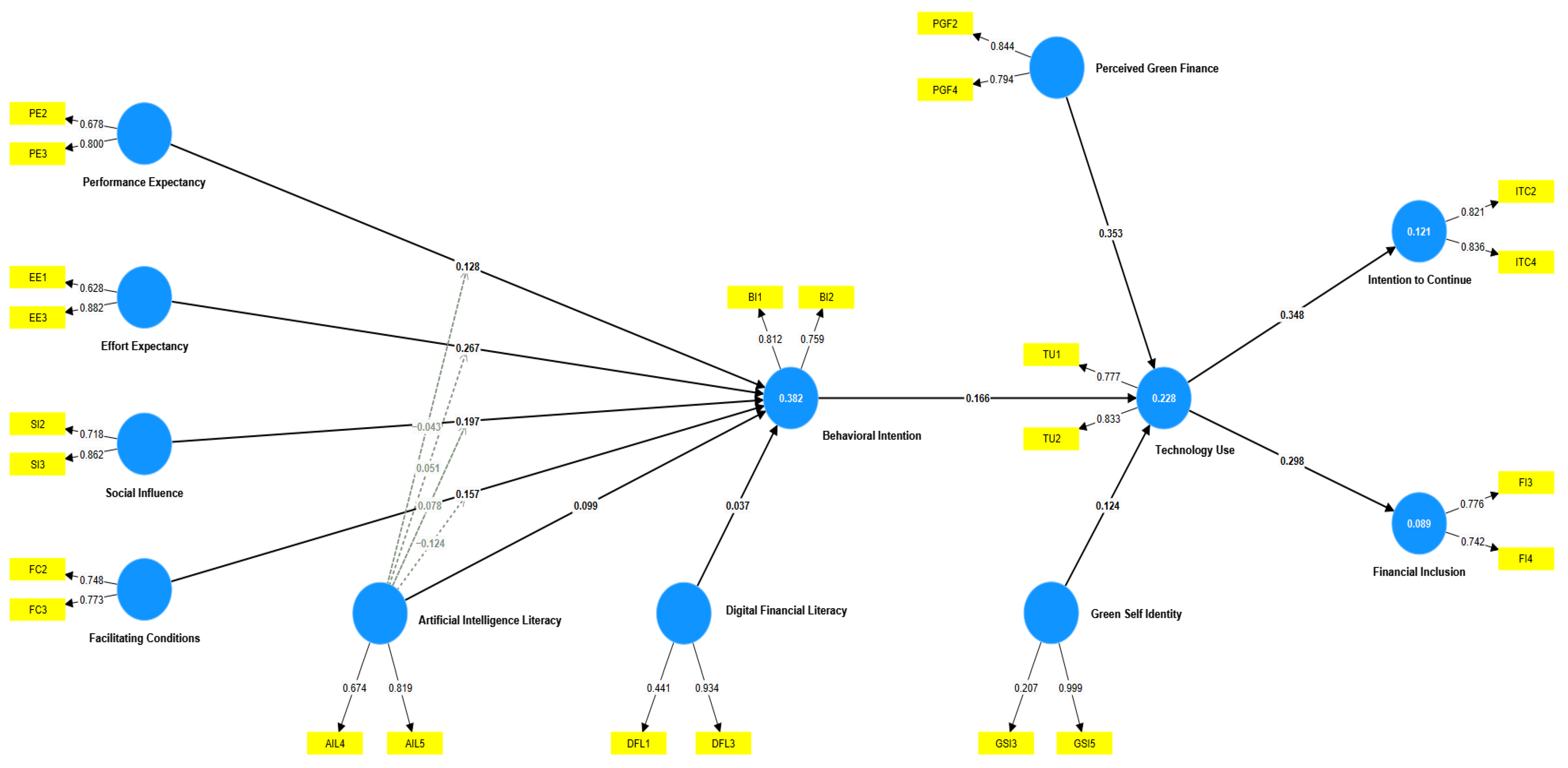
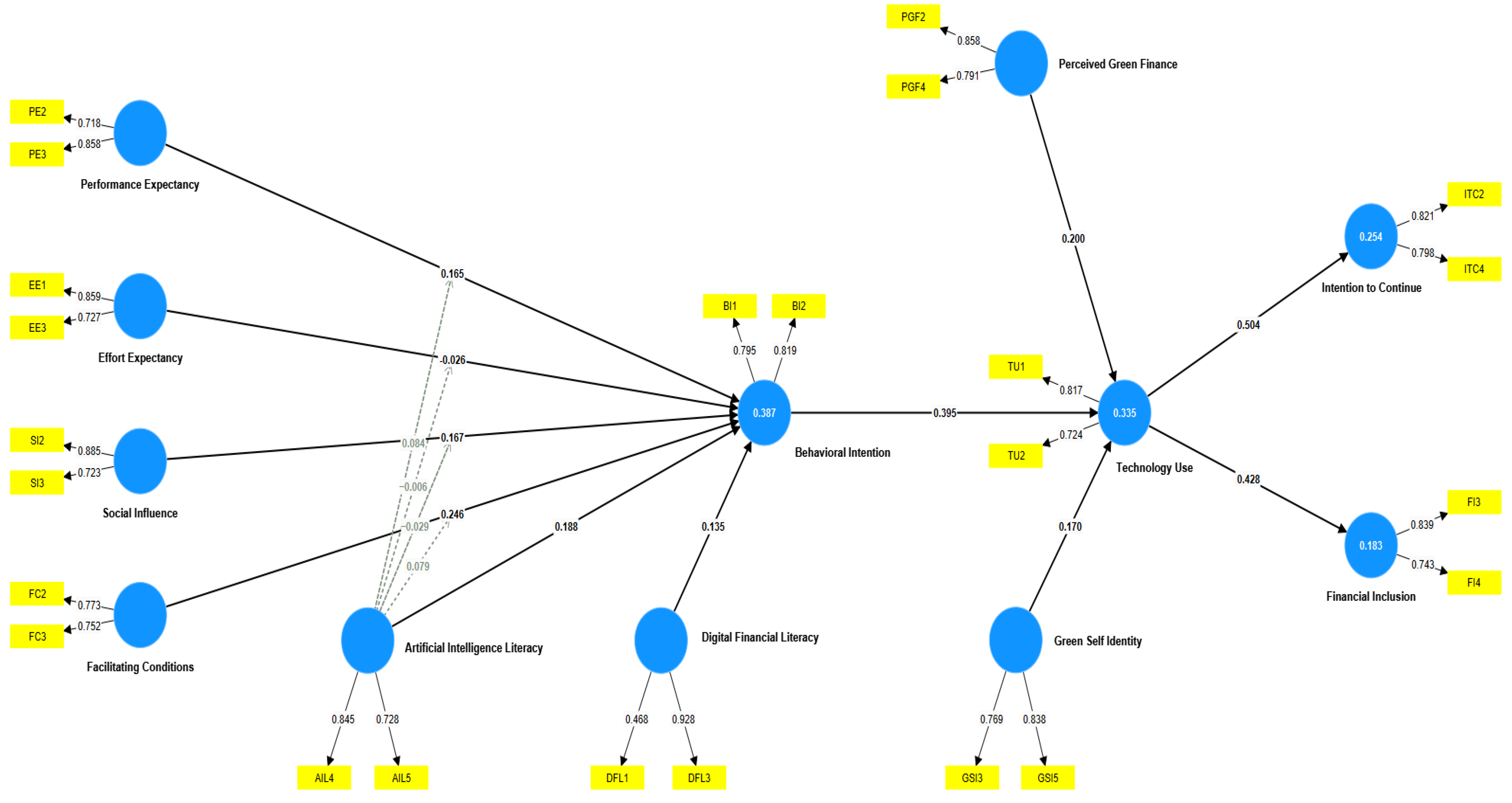
Figure 2 and
Figure 3 display the research framework results for urban and rural MSMEs.
The direct and indirect path analysis in
Table 8 shows that both in rural and urban MSMEs, the factors of SI and FC have a significant effect on BI. However, there is a noticeable difference between the two groups of respondents. In urban MSMEs, the influence of SI on BI is stronger, indicating that users are more motivated to adopt FinTech when the platforms are perceived as easy to use, intuitive, and capable of saving time in daily business operations. In contrast to rural MSMEs, FC shows a more prominent influence on BI, emphasizing the importance of infrastructure support, access to technology, and a supportive digital ecosystem in driving the adoption of digital behavior.
Important findings are also evident on the path of behavioral intention towards technology use, which is consistently significant in both groups, but more dominant in rural MSMEs. This highlights the evidence that when rural entrepreneurs have a strong intention, they are more consistent in translating it into the practice of technology adoption. The effect of perceived green finance on technology use is significant for both rural and urban respondents. The effect is stronger in urban areas, indicating that the level of technology utilization in urban settings is more sensitive to perceptions of green finance. Furthermore, the moderation analysis of AI Literacy on all main variables of the UTAUT model revealed no significant effects. This finding indicates that the level of AIL has not yet acted as a differentiating factor in strengthening the relationships between the core constructs and the intention to adopt FinTech, possibly because the understanding and practical application of AI among MSME actors remain limited.
The results of the PLS-MGA analysis in
Table 9 indicate that there are significant differences between MSMEs in rural and urban areas in shaping BI as well as the intention to continue using FinTech. Specifically, a significant difference was found between MSMEs in villages and cities in the relationship between EE and BI, BI and TU, and TU and ITC. These findings suggest that the level of FinTech adoption plays a different role depending on the geographical context.
Significant differences were also found in the relationship between technology use and the intention to continue among MSMEs in rural and urban areas. This finding indicates that the experience of using technology has different influences on the sustainability of use in both geographical contexts. In urban areas, MSMEs that are familiar with technology tend to have a stronger intention to continue utilizing it, supported by a more mature digital ecosystem and broader access to innovation. Meanwhile, in rural areas, although the use of technology may have started to be applied, limitations in infrastructure, mentoring, and trust in technology can hinder the formation of sustainable intentions.
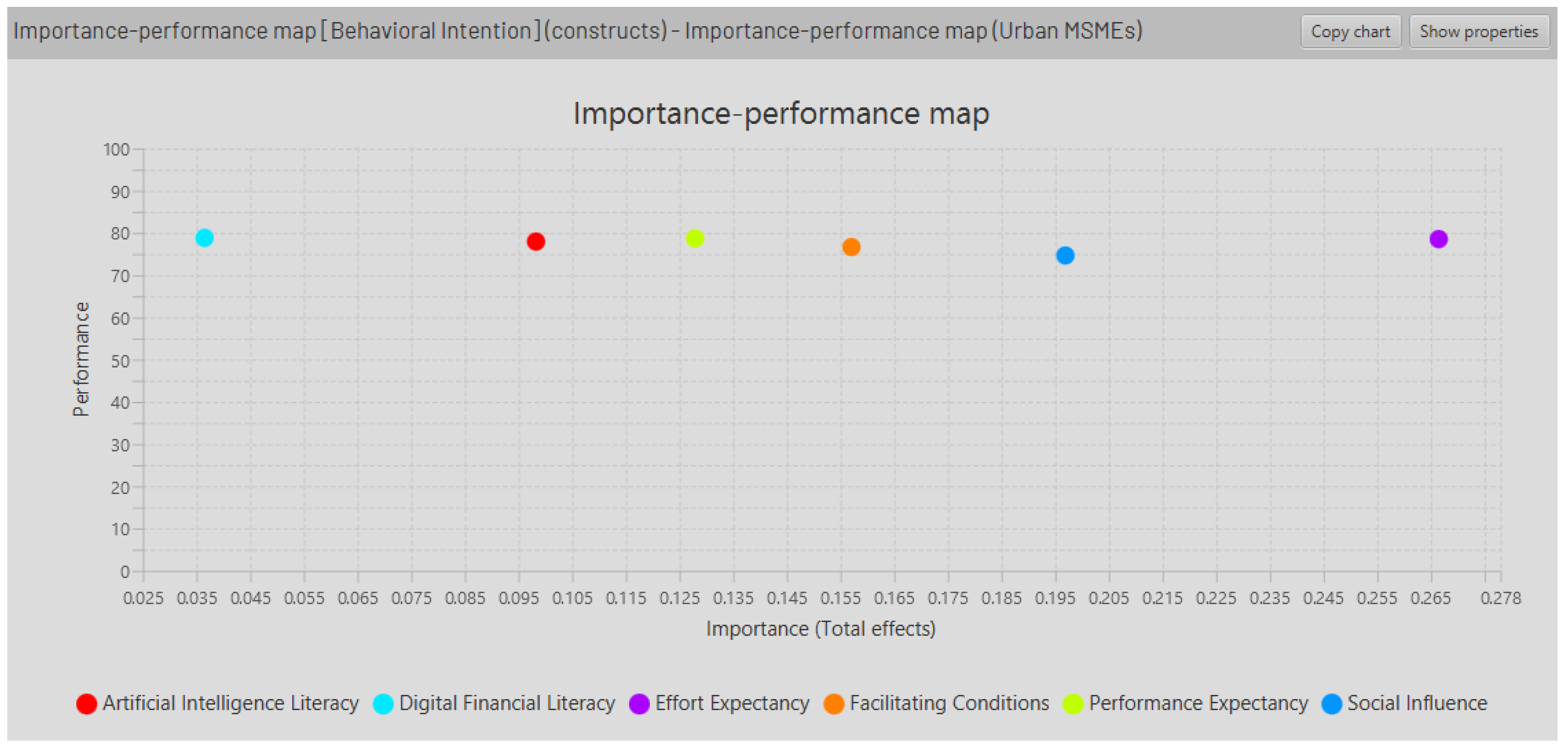
Based on the IPMA results for urban MSMEs in
Figure 4, EE shows the highest level of importance, indicating that the ease of use of FinTech is the main factor influencing adoption intention among urban MSMEs. This finding highlights the importance of enhancing user experience and developing more intuitive and efficient platform designs to strengthen the adoption and continued use of FinTech in urban areas.
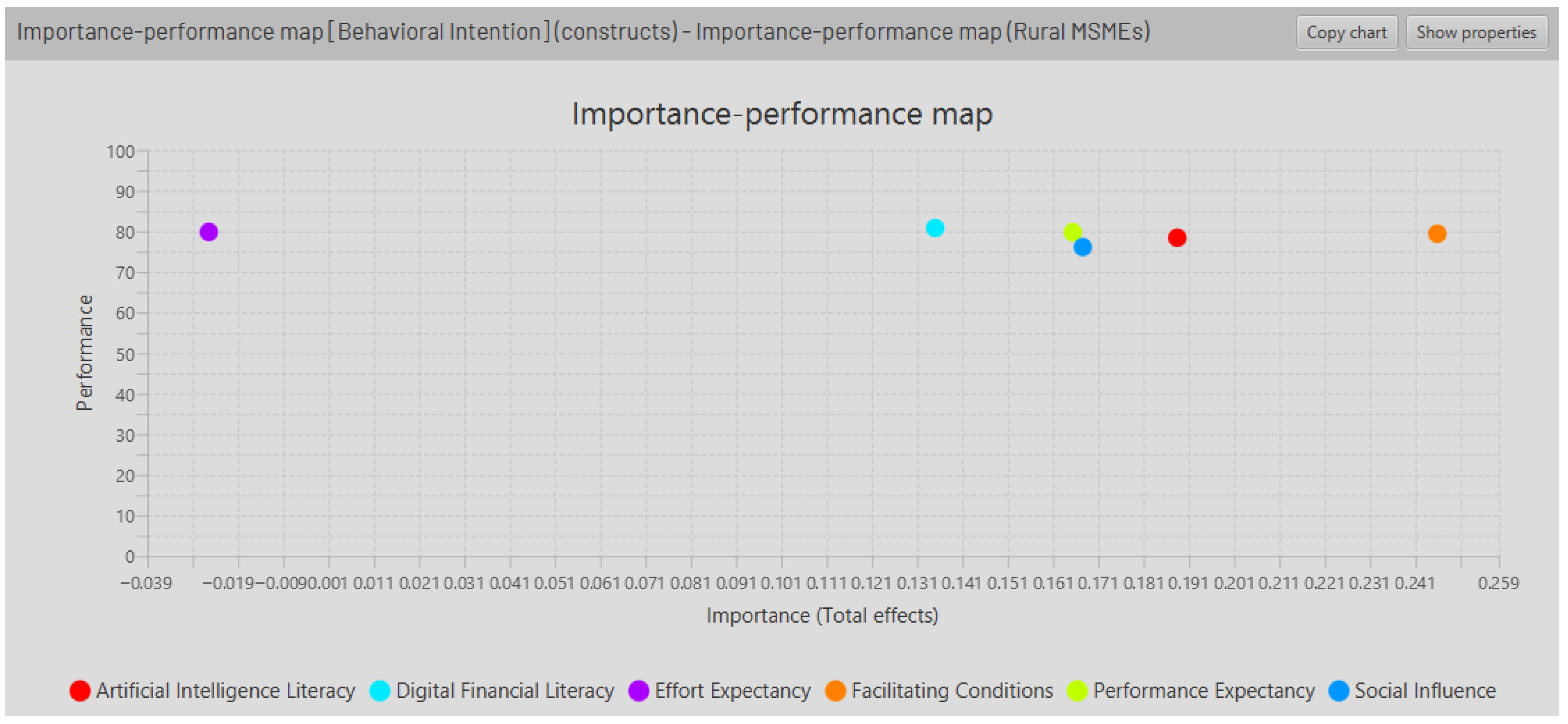
Furthermore, the IPMA results for rural MSMEs (
Figure 5) illustrate that facilitating conditions have the highest importance on behavioral intention to adopt FinTech. These findings highlight that improving infrastructure access, providing digital training, and strengthening institutional support should be prioritized to accelerate the adoption and utilization of FinTech in rural areas.
5. Discussion
This study develops the UTAUT model by integrating the variables AIL, DFL, GSI, and PGF in the context of FinTech adoption in urban and rural areas in Indonesia. Additionally, this study also explores the differences between regions using PLS-MGA analysis and identifies important variables and their performance through the IPMA approach.
Research findings indicate that PE has a positive and significant impact on BI only among rural MSMEs. This underscores that the perceived usefulness and expected benefits of FinTech play a crucial role in motivating rural entrepreneurs to adopt digital financial services. In rural contexts, where access to conventional financial institutions is often limited, the perception that FinTech can enhance business efficiency, simplify transactions, and improve financial management becomes a key driver of adoption (
Nugroho et al. 2025). These results align with prior studies emphasizing that the perceived performance benefits of technology are more influential in settings with lower digital maturity or infrastructure readiness, suggesting that increasing awareness of FinTech’s tangible value can further strengthen adoption intentions among rural users (
Aldhi et al. 2024). This finding can be explained by the fact that MSMEs in rural areas consistently make performance the main indicator in the decision-making process related to the application of technology.
This study also finds that effort expectancy does not significantly affect rural MSMEs, but plays a greater role in urban areas. This condition can be explained because business actors in rural areas are accustomed to facing resource limitations, making the ease of technology usage not a top priority (
Geng et al. 2023). In contrast, urban MSMEs are more sensitive to ease factors as they are used to a fast-paced business rhythm. Previous studies also emphasize this difference, where urban business actors value efficiency and convenience in technology usage more (
Aldhi et al. 2024;
Syanova and Fajar 2024). The reasoning from these results suggests that the more complex business environment in cities makes ease a key factor in shaping technology adoption intention.
Social influence is also found to be significant for both areas, but stronger among urban MSMEs compared to those in rural areas. This is rational because in urban areas, business decisions are often influenced by trends, networks, and business communities. Meanwhile, in rural areas, social relationships remain important but are more focused on local solidarity and trust rather than external trends. Recent research supports the function of SI as a dominant factor in urban environments (
Omar and Sulaiman 2024). This indicates that social interactions and business networks not only serve as a means of communication but also serve as a strategic role in accelerating the adoption process of technology among urban MSMEs. Thus, social influence becomes an important mechanism that strengthens the motivation and confidence of MSME practitioners to integrate new technologies into their operations.
Facilitating conditions have proven to have a significant impact in both locations, although their characteristics differ. MSMEs in rural areas heavily rely on basic infrastructure, such as stable internet access and reliable electricity supply. On the other hand, urban MSME players emphasize the importance of institutional support and regulations as the main supporting factors. Previous research also affirms that infrastructure readiness is a fundamental factor that facilitates technology adoption (
Vaithilingam et al. 2022;
Wiese et al. 2025). This difference can be explained by the contexts faced by each region, where rural areas are still struggling with basic aspects of infrastructure, while urban areas are more focused on strengthening support systems to ensure the sustainability of technology use.
The next findings underline the role of artificial intelligence literacy, which significantly influences behavioral intention in rural areas, indicating that an increased understanding of advanced technology can drive higher interest. This indicates that a deeper and more comprehensive understanding of advanced technology can be a major driving factor that increases their interest and readiness to adopt new technology. In contrast, for MSMEs in urban areas, the influence of artificial intelligence literacy on behavioral intention is not as strong as in rural areas, because in the urban context, the dynamics of the social environment and strong business networks tend to play a more dominant role in influencing technology adoption decisions. Recent studies further reinforce that overall digital literacy capacity is a crucial foundation in facilitating the readiness and ability of MSMEs to effectively adopt new technologies (
Setiawan et al. 2024;
Kim et al. 2024;
Raharjo et al. 2024). Therefore, it can be concluded that technology literacy not only serves as a mere tool of knowledge but also as a strategic bridge that enables rural MSMEs to overcome various digital challenges they face. Thus, improving technology literacy is a fundamental step in bridging the existing digital divide between rural and urban areas, and it is key to promoting equitable benefits of digital transformation across regions.
Digital financial literacy also shows a similar pattern. In rural areas, digital financial literacy serves as a crucial factor in encouraging technology adoption, while in urban areas, its impact is not significant. This can be understood because businesses in villages still face challenges in accessing and understanding digital financial services, and making improvements in literacy has a significant impact (
Khan et al. 2025). Conversely, businesses in cities are already more familiar with digital services, so this factor is no longer a primary determinant. These findings align with empirical studies that emphasize the importance of DFL in a rural context (
Wu and Peng 2024).
Green self-identity has shown a significant influence on technology use toward FinTech only in rural areas. This indicates that individuals in rural MSMEs who perceive themselves as environmentally responsible are more likely to engage with FinTech as part of their pro-environmental behavior. In rural contexts, the integration of green values with financial technology adoption may stem from increasing awareness of sustainable financial practices, such as paperless transactions and digital savings, which are perceived to reduce environmental impact. This finding suggests that FinTech adoption in rural areas is not solely driven by economic or functional motives but also by personal values and identity linked to environmental consciousness. Consistent with previous studies, this result highlights the growing relevance of psychological and moral dimensions in explaining technology use within sustainability-oriented communities (
Chen et al. 2024;
Raj et al. 2024). Therefore, promoting FinTech as an environmentally friendly innovation could further enhance its acceptance and utilization among rural MSMEs.
Moreover, perceived green finance has been shown to have a significant impact on TU by MSMEs in both rural and urban areas. This indicates that the beliefs of MSMEs regarding the ease of access to environmentally friendly financing are a major driving factor in their motivation to adopt relevant technologies that support business sustainability. These findings align with recent literature affirming the pivotal role of green financial instruments as catalysts in accelerating digital transformation in the MSME sector (
Liu and Ma 2023). Furthermore, the results of this research emphasize that access to sustainable capital not only enhances the financial capacity of MSMEs but also strengthens their ability to effectively integrate digital technology into business operations. Therefore, the availability of green financing can be considered one of the strategic factors that support the technology adoption process, while also promoting the sustainable development agenda in various geographic and social contexts.
BI has been proven to have a significant influence on TU among MSMEs both in rural and urban areas, indicating that the formed intentions play an important role in encouraging business actors to implement technology in their operations. In rural areas, the relationship between intention and technology use tends to be stronger because MSMEs in this region often show a high commitment to realizing their intentions despite facing various obstacles such as limited infrastructure, resources, and market access. This consistency reflects that strong intentions can be the main driving factor for technology adoption even in less supportive environmental conditions. Meanwhile, in urban areas, although intention remains an important factor in the use of technology, its influence is often affected by various external factors such as social pressure, regulatory policies, and the dynamics of business competition. These factors can strengthen the intentions of MSME actors to adopt technology, but on the other hand, they can also weaken their motivation, depending on the specific conditions they face. Therefore, a deep understanding of the different social and environmental contexts between rural and urban areas becomes very important. This is needed so that strategies designed to encourage technology adoption can be more effective and suited to the characteristics of each region. These findings are in line with the literature that emphasizes that intention is a direct predictor of technology adoption behavior, while also being influenced by the social context surrounding it (
Supramono et al. 2025;
Velasco-Morente et al. 2025).
Furthermore, technology use has also been shown to influence the intention to continue, both in rural and urban areas. This indicates that real experiences in using technology can build confidence and comfort, which in turn encourages the commitment of MSME actors to continue using it. This concept is supported by previous studies that emphasize that positive experiences are a key factor that reinforces the intention for sustainability in technology use (
Norris 2020;
Andarwati et al. 2025;
Fanelli 2021). The main explanation for this finding is that MSMEs that experience concrete benefits from technology tend to have higher motivation to maintain their use, regardless of geographical location differences. Thus, positive usage experience becomes a crucial element in promoting long-term technology adoption in various contexts.
The use of technology toward FinTech also impacts financial inclusion for MSMEs in both research locations. In rural areas, access to formal financial services has been limited due to infrastructure constraints and difficult geographical distances. FinTech has emerged as a solution that opens new avenues for MSME players to obtain various financial services, such as loans, digital payments, and savings, which were previously hard to acquire through conventional channels. Thus, FinTech not only facilitates access but also helps reduce financial disparities in the region. On the other hand, in urban areas, although access to financial services is better, FinTech technology plays a role in improving efficiency and transaction speed, which is important for a more competitive and rapidly changing business dynamic. Recent studies support the central role of technology in accelerating financial inclusion by overcoming geographical barriers and improving financial literacy (
Gupta et al. 2022). Therefore, digital financial services not only function as a productivity tool but also as a crucial bridge to connect MSMEs with formal financial services and enhance their capacity to manage finances more effectively.
When AI literacy was tested as a moderating variable for all main constructs of the UTAUT model (PE, EE, SI, and FC toward BI), the results were not significant. This indicates that the level of AI literacy among respondents does not strengthen or weaken the relationships between these key constructs and the intention to adopt FinTech. This phenomenon can be understood, considering that the adoption of AI-based technology is still relatively new for MSMEs in Indonesia, and understanding and trust in the technology are still in a developing stage. The lack of practical experience, minimal training, and limited access to information are factors that also influence the low effectiveness of literacy in promoting the use of AI. This result is in line with several studies indicating that the understanding of AI technology among small businesses is still limited, as noted by
Anwar et al. (
2024),
Arroyabe et al. (
2024), and
Wang et al. (
2024), highlighting the importance of improving digital literacy capacity to maximize the potential for AI adoption in the small business sector.
The interaction of AI literacy with effort expectancy is also not significant, both in rural and urban areas, indicating that an increase in understanding of AI is not sufficient to influence perceptions of the ease of using technology. Although AI literacy has made progress, this finding underscores that the ease of adopting technology is more influenced by other aspects, particularly the design and interface of the technology itself, rather than by the level of user literacy. In other words, even if someone understands the basic concepts of AI, it does not necessarily make them feel that the technology is easy to use in a business context. Previous research also supports this finding, where
Al-Emadi et al. (
2020),
Enshassi et al. (
2025), as well as
Kovács and Horváth (
2025) assert that the perception of ease is more influenced by technical characteristics and the ability of technology to be user-friendly. In other words, at the MSMEs level, AI literacy is still not strong enough to change users’ practical views on technology accessibility, so adoption enhancement strategies need to include simultaneous improvements in technology design.
The interaction of AI literacy with social influence shows an insignificant effect in both urban and rural areas. This finding indicates that the level of understanding and familiarity with artificial intelligence does not moderate the extent to which social norms, peer recommendations, or community opinions affect the intention to adopt FinTech. MSME practitioners possess high or low AI literacy; their decision to engage with FinTech appears to be shaped more by social persuasion and collective behavioral trends than by individual knowledge of AI-related concepts. Previous empirical research supports these findings, showing that technology literacy in urban areas often triggers the formation of more active and interconnected digital social networks (
Nuzzaci and Maviglia 2025;
Bernabeu-Bautista et al. 2022;
Torres-González et al. 2023). The effect of social influence appears to function independently of individuals’ level of technological literacy, highlighting the significant role of social networks and collective trust in shaping adoption decisions. From a practical standpoint, this suggests that initiatives such as awareness campaigns and community-based endorsements can remain effective in encouraging FinTech adoption, even among users with limited AI-related knowledge. However, improving general understanding of AI may still be important in strengthening user confidence and supporting more sustained and informed usage over time.
The moderation effect of AI literacy on facilitating conditions was found to be insignificant for both urban and rural respondents. This suggests that the level of understanding and knowledge about artificial intelligence does not substantially influence how respondents perceive the availability of infrastructure, technical support, or institutional readiness in adopting FinTech. This aligns with the findings of earlier studies that emphasize that facilitating conditions are likely viewed as external enablers rather than capabilities dependent on individual technological literacy (
Djatmiko et al. 2025;
Abaddi 2025;
Pérez-Campdesuñer et al. 2025). Thus, these findings further affirm that the efforts to expand FinTech adoption should not only focus on improving individual digital literacy but also on strengthening the broader ecosystem of support, particularly in rural areas where infrastructural and institutional gaps remain more pronounced.
The results of the PLS-MGA show a significant difference between rural and urban MSMEs in forming behavioral intention and technology use. Significant variations are observed in the relationships between EE and BI, BI and TU, and TU and ITC, indicating that the adoption dynamics of FinTech differ across locations. The variation in the EE–BI relationship suggests that the perceived ease of use plays a distinct role depending on the contextual environment in which MSMEs operate. In urban areas, where digital infrastructure, connectivity, and exposure to technology are more advanced, ease of use becomes a critical determinant of FinTech adoption, as users tend to prioritize convenience, speed, and efficiency in their business transactions (
Nugraha et al. 2022). Conversely, among rural MSMEs, the influence of Effort Expectancy is weaker, likely because users are still in the early stages of technological adaptation and place greater emphasis on accessibility, affordability, and system reliability rather than usability. These findings emphasize the need for differentiated FinTech development strategies that account for the digital maturity and infrastructural readiness of each context.
A significant difference is also observed in the relationship between BI and TU among rural and urban respondents in adopting FinTech. This disparity suggests variations in digital readiness, infrastructure availability, and exposure to technological developments between the two groups. MSMEs in urban areas generally benefit from greater access to training, resources, and institutional support, which strengthens both their intention to adopt and their actual use of technology. In contrast, rural MSMEs often encounter structural constraints, including limited connectivity, lower levels of digital literacy, and restricted access to support systems, which may impede both intention and usage. These findings are in line with prior research indicating that urban environments tend to accelerate technology adoption due to more supportive ecosystems (
Gerli et al. 2022). Conversely, in rural contexts, inadequate digital infrastructure and limited educational opportunities continue to hinder MSMEs in effectively utilizing FinTech solutions.
The findings also reveal an important distinction observed in the relationship between technology use and the intention to continue among MSMEs in rural and urban areas. This suggests that prior experience with technology contributes to sustained usage in different ways depending on the surrounding geographical and socio-economic conditions. In urban contexts, MSMEs with prior exposure to digital tools tend to demonstrate a stronger willingness to continue using them, supported by a more developed digital ecosystem, reliable infrastructure, and wider access to innovation and training opportunities. These results are consistent with previous studies indicating that urban MSMEs are generally better positioned to integrate technology into their business activities due to stronger institutional support and innovation-friendly environments (
Hernita et al. 2021;
Amornkitvikai et al. 2022). In contrast, although rural MSMEs have begun adopting digital technologies, the continuity of usage remains constrained by structural limitations, including inadequate infrastructure, limited access to training, and lower levels of trust in technology. These barriers can weaken the development of sustained adoption behavior, highlighting the importance of addressing contextual challenges to ensure long-term technology use. These results are in line with the study conducted by
Nugroho et al. (
2025), which shows that in rural regions, challenges such as poor internet connectivity and a lack of deep understanding of the benefits of technology can impede MSMEs from maintaining long-term technology use. Therefore, it is important to design policies and training programs that not only focus on the introduction of technology but also provide ongoing support that is more relevant to the challenges faced by MSMEs in rural areas.
A comparison of the results of IPMA between urban and rural MSMEs shows significant differences in the factors influencing behavioral intention to adopt FinTech. In rural MSMEs, facilitating conditions have the highest importance, although their performance is moderate, indicating that access to resources and external support is a major factor in driving FinTech adoption. This result is reinforced by
Chanda et al. (
2025), which shows that FC, such as access to electricity and digital skills, influence technology adoption in rural communities in Namibia. On the contrary, in urban MSMEs, effort expectancy is the most influential factor, indicating that urban entrepreneurs tend to favor technologies that minimize complexity and save time, as they often operate in competitive and fast-paced business environments where efficiency and convenience are highly valued. This aligns with the findings of
Setiawan et al. (
2023), which reveals the importance of effort expectancy in technology adoption in Indonesia.
6. Conclusions
This research successfully reveals the dynamics of FinTech adoption among MSMEs in Indonesia by comparing rural and urban respondents. The direct path analysis results show that PE, EE, SI, and FC have varying effects on BI in both contexts. Digital financial literacy, artificial intelligence literacy, and perceived green finance were proven to strengthen this relationship, but with variations in intensity between MSMEs in villages and cities. The moderating path analysis further reveals no significant effect in strengthening or weakening the relationships between AI literacy and the main UTAUT variables (PE, EE, SI and FC on BI) among urban MSMEs.
The PLS-MGA results show a significant difference between rural and urban areas in the moderating effect of AI literacy on the relationship between FC and BI. In urban areas, higher levels of AI literacy may enhance the effectiveness of facilitating conditions, as digitally literate MSME owners are more capable of utilizing available infrastructure, technical support, and digital services to adopt FinTech. In rural areas, the moderating effect of AI literacy appears weaker, possibly due to limited exposure to advanced technologies and insufficient training in AI-related applications. This finding suggests that improving AI literacy in rural contexts could strengthen the influence of facilitating conditions on FinTech adoption, bridging the digital gap between rural and urban MSMEs. Furthermore, it emphasizes the need for targeted digital education programs and policy interventions that align infrastructure development with AI competence building.
The IPMA results provide additional insight into the interpretation of the findings by highlighting priority areas for improvement. For rural MSMEs, facilitating conditions emerge as a critical yet still underdeveloped factor, indicating that access to information, training, and both hard and soft infrastructure plays a central role in supporting technology adoption. This suggests the need for continuous efforts to strengthen these conditions, including expanding social networks, improving digital infrastructure, and enhancing support from local financial institutions to guide and assist MSME practitioners. Meanwhile, for MSMEs in urban areas, effort expectancy stands out as a key strategic driver of adoption. Its relatively stronger influence indicates that ease of use, system efficiency, and user-friendly design are essential in encouraging continued engagement with FinTech solutions.
In conclusion, this research underscores the importance of implementing differentiated strategies to promote technology adoption among urban and rural MSMEs. Entrepreneurs in rural areas require support in the form of enhanced facilitating conditions in supporting digital infrastructure, while urban entrepreneurs place greater emphasis on effort expectancy, indicating the need for FinTech platforms that are more intuitive, user-friendly, and efficient to sustain continued adoption. Consequently, this research contributes to a deeper understanding of how rural–urban differences shape MSMEs’ engagement with technology, while highlighting the need for tailored policy frameworks that foster equitable empowerment and sustainable digital transformation across Indonesia’s MSME sector.
6.1. Implications for Theory
This study provides important contributions to the development of the UTAUT model by showing how variables such as PE, EE, SI, and FC operate differently in the context of rural and urban MSMEs in Indonesia. The findings indicate that SI and FC remain key predictors in both contexts, but PE is more pronounced in rural areas, while EE is more pronounced in urban areas. These findings suggest that UTAUT should not be treated as a universal framework, but rather as one that requires contextualization based on socio-economic and infrastructural conditions.
The study also extends UTAUT by integrating literacy-based constructs, particularly artificial intelligence literacy and digital financial literacy, which can be theoretically grounded in cognitive load theory. The findings show that AI literacy significantly enhances behavioral intention, especially in rural areas, indicating that improved cognitive capacity enables MSMEs to better process information, interpret digital systems, and reduce cognitive burden when adopting complex technologies. Similarly, digital financial literacy functions as a foundational capability that facilitates engagement with digital financial services, reinforcing the role of cognitive readiness as a key antecedent of technology adoption. These results highlight that beyond performance expectancy and effort expectancy, users’ cognitive capabilities play a crucial role in shaping adoption behavior, particularly in resource-constrained environments.
Furthermore, this study incorporates sustainability-oriented constructs such as green self-identity and perceived green finance which can be explained through value–belief–norm theory. The findings reveal that perceived green finance positively influences technology adoption in both rural and urban areas, suggesting that sustainability-oriented financial incentives can act as a catalyst for digital transformation. From a theoretical perspective, green self-identity reflects internalized environmental values that shape personal norms and influence technology adoption decisions, while perceived green finance links economic considerations with ecological awareness. This integration demonstrates that technology adoption is not solely driven by cognitive and functional evaluations, but also by value-based and normative motivations.
6.2. Implications for Practice
This study’s outcomes provide a strong foundation for formulating more contextual policies to facilitate the integration of digital technologies by MSMEs in Indonesia. The designed policies need to consider the differences in characteristics and needs between MSMEs in urban and rural areas. For rural MSMEs, the research results emphasize the need for interventions focused on improving digital infrastructure facilities as a pivotal initial step. This can be realized through the provision of stable and equitable internet access, increasing the availability of affordable digital devices, and strengthening human resource capacity through digital literacy training. This support is expected to create a conducive environment for innovation and digital transformation. Additionally, collaboration between the government, private sector, and local communities is essential to ensure the sustainability and effectiveness of the implemented programs.
Meanwhile, for urban MSMEs, practical policies should emphasize strengthening FinTech platforms to make them more intuitive, user-friendly, and time-efficient. The finding that Effort Expectancy plays a dominant role in urban areas indicates that users’ willingness to adopt and continue using FinTech largely depends on their perception of ease, convenience, and efficiency in daily transactions. This suggests that FinTech developers and policymakers need to focus on improving interface design, reducing technical barriers, and integrating seamless customer support systems. Moreover, enhancing the overall user experience through personalization, mobile responsiveness, and simplified onboarding processes can further increase satisfaction and encourage sustained engagement among urban users.
In addition, the findings of this study offer practical insights for financial institutions. The integration of perceived green finance has been proven to play a pivotal role in promoting the use of FinTech for rural and urban MSMEs. Banks and financial institutions need to develop inclusive financing schemes that are environmentally friendly and affordable for MSMEs. By providing access to affordable, sustainability-based capital, MSMEs in both rural and urban areas can be further encouraged to adopt digital technologies that not only enhance competitiveness but also promote sustainable economic growth.
6.3. Implications for Social
The outcomes of this research further carry important social implications, especially in the context of financial inclusion. The differences between rural and urban MSMEs indicate that efforts to improve access to formal financial services cannot be implemented with a one-size-fits-all approach. In rural areas, facilitating conditions has been proven to be more influential in encouraging BI, highlighting the importance of information accessibility and the ease of obtaining financial services. These conditions often manifest in the form of creating systems that are easily accessible, both in terms of information and transaction processes. In rural areas, the main challenges often consist of limited infrastructure, a lack of knowledge about financial products, and restricted access to financial institutions. Therefore, it is important for stakeholders to create educational and outreach programs that can address these barriers, as well as to enhance the diversity of financial products that meet the needs of the local community.
For urban MSMEs respondents, the research findings emphasize the dominance of effort expectancy in driving FinTech adoption, which means that the perceived ease of use and efficiency of FinTech applications are the key determinants influencing users’ behavioral intentions. Urban entrepreneurs tend to adopt technologies that simplify business operations, reduce transaction time, and require minimal effort to learn or operate. This highlights the need for FinTech service providers to focus on improving usability features, such as intuitive interfaces and integrated support tools, to enhance user satisfaction. Furthermore, ensuring a seamless digital experience and consistent platform performance can strengthen user trust and encourage long-term engagement with FinTech solutions in urban markets.
Furthermore, financial inclusion strengthened through a contextual strategy between rural and urban areas will directly contribute to achieving Sustainable Development Goal 8, which emphasizes inclusive and sustainable economic growth. Improving access for MSMEs to formal financial services not only drives business expansion and job creation but also strengthens local economic resilience. By positioning financial inclusion as a strategic social agenda, the government, financial institutions, and communities can collectively support equitable economic growth between rural and urban areas, thus minimizing economic disparities and optimizing the participation of MSMEs in national development.
6.4. Limitations and Future Research
This study acknowledges several limitations that should be considered when interpreting the findings. First, the analysis is limited to MSMEs in rural and urban areas within South Sumatra Province, which may restrict the generalizability of the results to other regions in Indonesia with different socio-economic and infrastructural conditions. Therefore, future research is encouraged to extend the analysis to other provinces to provide a more comprehensive understanding of FinTech adoption across diverse regional contexts. Second, although the research model integrates UTAUT variables with constructs such as digital financial literacy, artificial intelligence literacy, and perceived green finance, other potentially influential factors were not included, such as government regulations, trust in formal financial institutions, and psychological aspects like risk perception and individual resilience to uncertainty.
The third limitation relates to the methodological approach. This research uses a quantitative approach based on PLS-SEM, which, although effective for testing relationships between variables, has not fully captured deeper social dynamics, such as community norms or interactions among business actors in the technology adoption decision-making process. Future research could enrich these findings through the application of a mixed-methods design that integrates quantitative techniques with qualitative interviews or focus group discussions to gain a more holistic understanding of the behavioral differences in MSMEs in rural and urban areas.
The fourth limitation is the attachment of research results to a specific time period. The integration of technology behavior, digital financial literacy, and the role of the community can change along with the development of digital infrastructure, government policies, and changes in consumer patterns. Therefore, further research needs to consider longitudinal studies to track changes in MSMEs behavior in the long term, especially in the face of digital transformation and the global sustainability agenda.
Based on these limitations, future research can be directed towards several important agendas. First, expanding the scope of the study to include other Southeast Asian nations in order to compare social, cultural, and regulatory contexts in influencing the adoption of MSMEs technology. Second, integrating new variables such as financial risk perception, business resilience, or the adoption of environmentally friendly technology as part of the development of a more comprehensive theoretical framework. Third, exploring the role of public policies such as the Red and White Cooperative in Indonesia, tax incentives, or government digital literacy programs in strengthening MSMEs competitiveness. Thus, the results of subsequent research are expected to contribute more broadly to the development of theory and practice and contribute to the realization of SDG8.