Article

Board of Directors’ Characteristics, Political Connection and Risk Disclosure: Evidence from an Emerging Market Context

by
Ahmad Farhan Alshira’h
Department of Accounting, School of Business, The University of Jordan, Amman 11942, Jordan
Risks 2026, 14(4), 76; https://doi.org/10.3390/risks14040076
Submission received: 7 January 2026 / Revised: 6 March 2026 / Accepted: 16 March 2026 / Published: 1 April 2026

Abstract

This research examines Jordanian risk disclosure policies and how board size, meeting frequency, CEO duality, and board expertise affect them, exploring how political ties moderate the link between board features and risk disclosure. In 2014–2023, the research examined 90 non-financial enterprises registered on the Amman Stock Exchange, yielding 900 firm-year observations. Word-based manual content analysis quantifies risk disclosure. The postulated associations are tested using moderate regression. The board’s competence positively affects risk disclosure. CEO dual function hurts risk disclosure. However, the findings did not suggest that board size or meeting frequency affect risk disclosure. Political ties modify the board of directors’ relationship with business risk disclosure, according to the research. This research examines how board of directors’ characteristics affect risk disclosure processes in non-financial enterprises in Jordan, adding to the little knowledge. This research is one of the first empirical studies of political ties as a moderating factor in Jordan’s non-financial sector. The 2014–2023 study examines governance trends before and after the 2018 corporate governance rule reform. The findings improve understanding of board oversight systems and business risk disclosure.

1. Introduction

Recent advancements in politics, technology, and the global economy have markedly heightened unpredictability and complexity within the business landscape, complicating risk management and corporate governance (Duan et al. 2025). Organizations now encounter a diverse range of internal and external hazards, many of which are unprecedented, challenging management decision-making and strategic planning (Ge et al. 2025). Effective risk management has therefore become crucial for sustaining organizational viability and preserving stakeholder trust (Albitar and Gerged 2026). Clear financial reporting and thorough risk disclosure are essential for reducing information asymmetry, improving market discipline, and reinstating investor confidence (Feng and Huang 2025). Previous empirical studies indicate that enhanced openness in risk reporting facilitates superior decision-making and reduces uncertainty for stakeholders (Kurniawan et al. 2025). Regulatory authorities and policymakers have underscored the need of comprehensive disclosure frameworks to enhance corporate responsibility and economic stability (Enslin et al. 2025).
The theoretical underpinnings of corporate disclosure research are primarily based on agency theory and signaling theory, which together provide complementary perspectives on management disclosure behavior. Agency theory asserts that information asymmetry between managers and shareholders may lead to conflicts of interest, prompting managers to hide or selectively disclose information (Jensen and Meckling 1976). Risk disclosure may function as a method to mitigate agency costs by improving transparency and aligning management actions with shareholder interests. Signaling theory elucidates that firms exhibiting superior risk management strategies may freely release supplementary information to convey trust and competence to external stakeholders (Spence 1973). Such disclosures facilitate the differentiation of high-quality enterprises from their less transparent rivals, therefore reducing information asymmetry and enhancing market views. The amalgamation of these ideas provides a thorough framework for comprehending corporate risk disclosure methods and their governance ramifications (Duan et al. 2025).
In developing economies, disclosure methods may encounter institutional and governmental limitations that restrict openness. Jordanian enterprises have faced criticism for inadequate risk disclosure and little compliance with international reporting requirements (Sawalqa 2014). Inadequate corporate governance structures and the lack of thorough disclosure requirements have led to uneven reporting methods and informational deficiencies (Al-Akra and Ali 2012). These requirements provide managers with considerable latitude in deciding the scope and quality of risk information shared with stakeholders. Thus, competent boards of directors are anticipated to assume a crucial role in promoting openness and overseeing management conduct. Board attributes—namely, size, independence, experience, and meeting frequency—are acknowledged as essential factors influencing governance efficacy and disclosure quality. Examining the governance factors influencing risk disclosure in the Jordanian institutional environment is a significant subject for empirical investigation.
This research enhances the literature by analyzing the correlation between board features and risk disclosure policies, specifically highlighting the moderating influence of political ties. Previous studies have mostly concentrated on direct governance impacts, with little consideration of the role of informal power dynamics and political connections on corporate transparency. The research employs elite theory as an analytical framework, offering new insights into the influence of political elites and social networks on governance outcomes and disclosure behavior in developing countries. Elite theory posits that decision-making processes are often shaped by concentrated power structures, potentially impacting organizational transparency and accountability (Domhoff 2020). This paradigm facilitates a comprehensive understanding of the interplay between political ties and board characteristics in shaping risk disclosure policies. The research also makes methodological contributions by using rigorous text analysis approaches to quantify disclosure intensity, hence improving the accuracy and dependability of empirical results (Ibrahim and Hussainey 2019; Ismail and El-Deeb 2022). The following parts f this article delineate the theoretical framework, literature review, hypothesis formulation, methodology, empirical findings, and implications of the research.

2. Theoretical Framework, Literature Review and Hypotheses Development

2.1. Agency Theory

Jensen and Meckling (1976) articulated the initial theoretical framework of agency theory, defining the agency relationship as “a contract under which one or more persons (the principal(s)) engage another person (the agent) to perform some service on their behalf which involves delegating some decision-making authority to the agent” (p. 308). According to agency theory, business owners (principals) give managers (agents) the power to run the company. This agency relationship might create conflicts of interest among the people involved (Jensen and Meckling 1976). Investors (the principals) and managers (the agents) are primarily motivated by their own self-interest (Singh 2025), and managers are less driven to increase the wealth of the principals than if they were the principals themselves. This conflict may result in the agency dilemma when managers make decisions that align with their personal interests (Zhong and Jin 2025). Agency theory predicts two possible problems that could arise in the relationship between management and shareholders. The first issue is a moral hazard problem that comes up when agents know more than principals do (Arnold and de Lange 2004). This might make it harder for the principals to make sure that the agents are doing what is best for them. In this case, the managers may have an advantage because they have better access to information that could help them get richer. This shows that the agents in question have goals that benefit themselves and are likely to use information and opportunities to act against the interests of the owners within the organization. As a result, they don’t care about the principals’ growing wealth. The second issue is the problem of adverse selection, which happens when the agent makes wrong decisions about the organization’s rules. Moreover, the principals do not have access to all relevant information during managerial decision-making, which limits their ability to determine whether the managers’ actions are consistent with the company’s objectives (Lootah et al. 2025).
Agency theory asserts that, within a joint stock company, the interests of managers may be at odds with those of the principals (the owners) (Jensen and Meckling 1976). The solutions to this problem include putting rules in place that limit the power of managers and making corporate governance practices better so that they watch over management and make sure they are held accountable (Abraham and Cox 2007). Moreover, significant shareholders can exert substantial influence over a company by overseeing its financial reporting processes (Raimo et al. 2025), thereby enabling them to conceal any expropriation within annual reports. Consequently, ownership concentration markedly exacerbates information asymmetry (Al Maani et al. 2025). Effective corporate governance is the best way to deal with problems and conflicts that come up between managers and shareholders (Mallin 2019). Corporate governance systems are both ways to keep an eye on how agents act and ways to judge how well a business is doing overall. This includes making sure that financial reports are accurate and increasing the amount of information that is shared. From an agency standpoint, managers might be driven to prove that they are acting in the company’s best interest, with transparency seen as a useful way to do this (Turnbull 2002). Stakeholders need to know what kinds of risks businesses face, so they ask companies to share this information with them. Increasing transparency and risk disclosure helps stakeholders understand the full range of risks the company faces and protect their own interests. At the same time, it is expected that managers will have reasons to share more information about risks, such as to protect their reputation and pay (Guohong et al. 2025). In the end, risk disclosure is thought to be a good way to solve the agency problem because it can reduce information asymmetry and lower agency costs (Abraham and Cox 2007).
Linsley and Shrives (2006) posited that agency cost theory could clarify the rationale behind managers’ voluntary disclosure of risk information in annual reports, aimed at reassuring stakeholders regarding the presence of risk management systems and their congruence with stakeholder interests. As a result, risk information provided by managers may help reduce the difference in risk information, which in turn lowers agency costs. If management chooses not to include risk information in financial reports, the resulting information gap reduces the transparency of the annual report (Marshall and Weetman 2002), and the omission may suggest a potential conflict of interest between agents and principals. Empirical studies on risk disclosure have employed agency theory to clarify the motivations for organizations’ dissemination of risk information (e.g., Abraham and Cox 2007). This study was based on the agency theory. Linsley and Shrives (2006) posited that agency theory ought to function as the fundamental framework for risk disclosure. Consequently, this study employed agency theory to clarify the relationship between corporate governance structures and risk disclosure.

2.2. Signaling Theory

Spence (1973) describes signaling theory as a way to explain the information gap that exists in the job market. The job-market signaling hypothesis explains how highly educated workers are likely to use this information to show what they can do, which sets them apart from people with less education. In other words, the theory tries to show that when one party knows more than the other, their signal might help to balance out the information gap between the two parties in the market (Morris 1987). Signaling theory asserts that organizations exhibiting superior performance will communicate their success to the market. As a result, the signaling would help shareholders, investors, and other stakeholders figure out how much the company is worth and make smart choices. So, it is better for the organization (Nguyen 2025). In this context, transparency functions as a mechanism to mitigate adverse selection by diminishing information asymmetry (Morris 1987). As a result, signaling theory offers a logical explanation for why managers choose to include more information in their companies’ financial reports (Haniffa and Cooke 2002).
Previous studies have extensively analyzed the correlation between signaling theory and disclosure. The Signaling hypothesis is utilized to justify disclosure practices. Furthermore, transparency is considered an effective solution for information asymmetry. Elzahar and Hussainey (2012) assert that corporate managers will disclose supplementary information to demonstrate their proficiency in managing various company operations and to distinguish themselves from managers of competing firms. In relation to agency theory, current disclosure literature demonstrates a substantial convergence between signaling and agency theories. The agency theory perspective is consistent with signaling theory, indicating that their effective integration improves the predictive accuracy of a firm’s disclosure practices. Linsley and Shrives (2005) assert that agency theory and signaling theory represent the most effective frameworks for justifying voluntary risk management disclosures.
Signaling theory posits that improved risk disclosure is beneficial when the board of directors seeks to exhibit their proficiency in effectively managing these risks (Abraham and Cox 2007). When risks are high, companies like to give more information about them to explain why they are so dangerous (Linsley and Shrives 2006). When managers have bad information, they tend to be more eager to share it to show off their skills and ability to reduce future losses. This gives the organization a strong reason to share more risk-related information (Hassanein and Hussainey 2015). As a result, managers often use transparency to show how good the organization and its management are (He et al. 2025).

2.3. Resource Dependence Theory

Pfeffer and Salancik (2015) introduced the foundational theoretical framework of resource dependence theory (Hillman 2005). The resource dependency hypothesis posits that external directors have the reputation, connections, and experience required to link enterprises with the external environment. Pfeffer (1972) asserts that companies with more connections to the outside world need more outside directors. The resource dependency hypothesis thus supports a larger board comprising professional directors with varied experiences (e.g., international directors) to enhance beneficial interactions with the firm’s external environment (Erin et al. 2026). Salancik et al. (1978) asserted that a firm’s organizational success includes not only its ability to manage resources but also its skill in obtaining additional resources from the environment. The external directors link the company to outside factors that reduce reliance and uncertainty in the business world, which helps the company get important outside resources (Pfeffer 1972). Al Amosh and Khatib (2026) assert that a significant number of directors provide supplementary resources to their organization, encompassing specialized skills and relevant expertise. The board members’ reputations can help their businesses’ reputations. Pfeffer and Salancik (2015) assert that reliance on external entities creates uncertainty and risk, which may adversely affect the firm’s performance. On the other hand, companies that build strong relationships with outside sources may be able to reduce uncertainty (Hillman and Dalziel 2003; Pfeffer 1972; Thompson 1967). The resource dependency hypothesis posits that foreign board members contribute enhanced financial resources, facilitating a reduction in capital costs by bridging cross-border knowledge gaps, thus mitigating information asymmetry (Alodat et al. 2025).
According to resource dependency theory, the resources used by a company’s board affect its choices about hiring, firing, and sharing information. A large board with a mix of skilled and diverse members could give the business better competitive resources, help management with constructive advice, improve monitoring systems, and ultimately raise the quality of financial reporting. The businesses depend on the limited resources in the outside world to protect their growth and long-term viability. They compete with other businesses to get and use those resources. As a result, business risk disclosures could be a useful way to get those (Barakat and Hussainey 2013).

2.4. Board Size and Risk Disclosure

A larger board of directors is often associated with more management oversight, hence reducing the likelihood of managerial opportunism and agency-related conflicts (Bechihi and Nafti 2025). In this context, a larger board may be crucial for addressing conflicts of interest between controlling and minority shareholders, particularly in instances of concentrated ownership (Uba and Irina 2021). An appropriately sized board enhances monitoring techniques and information dissemination, hence reducing knowledge asymmetry within the organization. Agency theory posits that a larger board provides a broader array of talents and enhanced stakeholder participation, hence facilitating more precise and comprehensive financial disclosures, particularly those related to business risks. Previous research supports this perspective, indicating that board size positively influences the quality and breadth of company disclosures due to enhanced monitoring capacity and the collective experience of board members. Empirical evidence from. Samaha et al. (2015) corroborates a correlation between increased board size and the extent of risk-related disclosures, highlighting the board’s function in enhancing transparency. The actual findings, however, remain inconsistent. The influence of board size on disclosure procedures may depend on contextual factors, like regulatory settings, board makeup, or firm-specific attributes, as indicated by conflicting findings from various research. Certain research identified a robust correlation between board size and corporate risk disclosure (Barakat and Hussainey 2013), while others reported a negative or negligible association (Allegrini and Greco 2013). The present study, grounded on agency theory, posits that a larger board is more likely to enhance corporate risk disclosure by augmenting stakeholder representation and the quality of monitoring. Consequently, the subsequent hypothesis is proposed:
Hypothesis 1 (H1). 
There is a positive relationship between board size and the level of risk disclosure.

2.5. Board Meetings and Risk Disclosure

Boards of directors that convene more frequently tend to be more aggressive in overseeing managerial performance. Frequent meetings enhance the board’s capacity to supervise corporate operations and uphold operational transparency (Ahmed et al. 2022). Moreover, more frequent meetings intensify the need on management to provide timely and comprehensive disclosures to the board, promoting a culture of accountability and transparency. Regular board meetings not only reinforce the board’s monitoring function but are also often perceived as a demonstration of management’s commitment to improving information dissemination to shareholders. Moreover, regular meetings provide directors with increased opportunities to scrutinize and interrogate financial decisions, so aiding them in fulfilling their fiduciary responsibilities and enhancing the control of financial reporting processes. Agency theory posits that boards with increased meeting frequency are more effective in mitigating agency conflicts through enhanced advisory and monitoring functions (Jensen and Meckling 1976; Al-Matari et al. 2012). In contrast, the resource dependency hypothesis posits that board meetings provide access to external resources and expertise, hence enriching discussions and improving governance quality (Pfeffer and Salancik 2015; Hillman and Dalziel 2003). Empirical studies, including those by Chau and Gray (2010); Allegrini and Greco (2013); and Al-Janadi et al. (2013), indicate a positive correlation between the frequency of board meetings and the degree of voluntary risk disclosure. Based on agency theory and the preceding discussion, it is likely that the frequency of board meetings is positively associated with the level of risk disclosure. Consequently, the subsequent hypothesis is articulated:
Hypothesis 2 (H2). 
There is a positive relationship between the frequency of board’s meetings and the level of risk disclosure.

2.6. CEO Duality and Risk Disclosure

Consolidating the roles of Chief Executive Officer (CEO) and board chair under a single individual may elevate agency costs and restrict the board’s capacity for independent scrutiny (Fama and Jensen 1983). Agency theory posits that this dual role diminishes board independence and transparency (Lin et al. 2023) by augmenting administrative authority while undermining the board’s oversight function (Jackling and Johl 2009). Consolidating power in a single individual may facilitate opportunistic behavior and hinder the board’s capacity to safeguard shareholders’ interests. The CEO may prioritize management’s interests over those of shareholders while holding multiple roles, potentially leading to diminished corporate risk disclosure and less access to critical risk-related information (Allegrini and Greco 2013; Barako et al. 2006). Role duality undermines the board’s neutrality and capacity to enforce responsibility, exacerbating information asymmetry. The empirical research regarding the relationship between CEO duality and risk disclosure is inconclusive. Certain research indicate a positive correlation between role duality and heightened disclosure (Haniffa and Cooke 2002), implying that influential CEOs may opt to freely provide more information to get legitimacy. Conversely, several research have identified a negative correlation, contending that CEO duality leads to diminished transparency and worse disclosure standards (Ismail and El-Shaib 2012; Allegrini and Greco 2013). However, a third body of research does not provide a definitive correlation between the two variables (Ho and Taylor 2013). This research posits the following hypothesis based on the data and the principles of agency theory, which advocates for the segregation of the roles of CEO and chairman to facilitate effective supervision:
Hypothesis 3 (H3). 
There is a negative relationship between the CEO duality and the level of risk disclosure.

2.7. Board Expertise and Risk Disclosure

It is expected that boards of directors, composed of individuals with requisite expertise, will fulfill their oversight duties effectively (Erin et al. 2026). Individuals possessing such experience facilitate the generation of dependable and perceptive financial reports (Dahya et al. 1996) and improve the quality of disclosures (Williams and O’Reilly 1998). According to agency theory a board possessing diverse experience is more likely to function as an effective oversight mechanism. Fama and Jensen (1983) contend that the presence of directors with expertise and knowledge, particularly in accounting, finance, and information technology, lowers agency expenses and mitigates agency problems. Moreover, opportunistic managerial behavior is likely diminished when the board possesses strong monitoring skills (Anderson et al. 2004). According to resource dependency theory, an expansive board of qualified directors may provide a firm with vital competitive resources, offer valuable assistance to management, and enhance the monitoring system (Kiel and Nicholson 2003). Directors serving on several boards might provide external resources and knowledgeable perspectives that facilitate the firm’s engagement with external networks and assets. The advantageous impact of board competence is corroborated by empirical evidence. Agrawal and Chadha (2005) assert that directors possessing substantial expertise in finance and accounting are more proficient in generating precise financial reports and enhancing the quality of disclosure, correlation between the extent of risk disclosure and the proficiency of the directors and that the educational diversity of the board might adversely affect the level of risk disclosure. It is plausible to infer, grounded in agency theory, resource dependency theory, and prior empirical evidence, that directors’ expertise and competencies, especially in accounting and finance, enhance the board’s decision-making process and hence elevate the quality of risk disclosure. Therefore, the hypothesis of this investigation is as follows:
Hypothesis 4 (H4). 
There is a positive relationship between board expertise and the level of risk disclosure.

2.8. The Moderating Role of Political Connections

A firm is considered politically linked if at least one member of its board is or has been a politician, minister, or lawmaker (Al Amosh 2025). Political connections are seen as vital assets that facilitate firms in securing governmental assistance and advantages. Companies in underdeveloped countries sometimes include politicians on their boards to secure access to influential government networks (Sebastianelli et al. 2025). Hillman (2005) asserts that political linkages provide businesses with additional insights and guidance, so mitigating external uncertainties and subsequently improving their prospects for survival and success. Elmarzouky et al. (2025) identified a link between institutional investors and audit expenses in Malaysian enterprises, observing that this relationship is particularly significant in organizations with political affiliations. Zaidan and Melhem (2025) shown that Malaysian enterprises with political connections incur higher audit expenses, suggesting that auditors see these firms as riskier and hence require more extensive audit procedures, thereby diminishing the accuracy of financial reporting. The existence of political connections is associated with diminished judicial independence and increased corruption levels (Faccio 2006). Khanchel et al. (2025) assert that governmental entities are reluctant to reveal politically connected enterprises engaged in aggressive tax strategies, hence undermining the openness of financial reporting (Tee et al. 2017). Jibril (2025) found that countries characterized by pervasive corruption and ineffective legal systems exhibit a greater prevalence of enterprises with political connections. Khan et al. (2016) discovered in their study of Bangladeshi enterprises that politically connected firms incur higher agency costs than their unconnected counterparts; political interference diminishes the oversight of managerial decisions, rendering firm performance more reliant on politicians than on managers (Hu et al. 2025). Furthermore, Owolabi et al. (2025) found that Pakistani companies with political connections have inferior profits quality. Surya et al. (2026) examined empirical evidence and concluded that corporations with political affiliations generally have inferior financial reporting quality.
The influence of political connections on business disclosure remains underexplored and has yielded incongruous results. Anwar and Ardianto (2025) assert that Chinese enterprises emphasizing CSR to foster political connections have reaped advantages in government backing and enhanced performance. Hu et al. (2025) shown that political connections augment environmental disclosure among Nigerian corporations. Conversely, Khelil (2025) found that the involvement of politicians on boards hardly influences CSR disclosure in Malaysian enterprises. Jibril (2025) analyzed 4954 enterprises across 19 countries and concluded that firms with political connections exhibit lower-quality profitability. Furthermore, Almarayeh et al. (2025) identified a correlation between political affiliations and profits manipulation in Chinese enterprises. Furthermore, Khanchel et al. (2025) established that political connections adversely impact the quality of financial reporting. Al-Sraheen (2019) found that political ties adversely affect the profits quality of industrial firms in Jordan. Qasem (2025) discovered no significant distinction in corporate governance disclosure between politically linked and private Brazilian corporations. This research is among the initial studies to examine this relationship.
Elite theory offers a vital perspective on the influence of political connections on risk disclosure via CEO duality, board meetings, board size, and board experience. Board members with political affiliations often function as a “micro-elite,” using their roles to influence corporate decisions, perhaps favoring political agendas above governance objectives. Their existence can either amplify or reduce the advantageous effects of board characteristics on risk disclosure, contingent upon the use of political influence. The research suggests that political ties serve as a mitigating factor in the relationship among risk disclosure, board meetings, board size, CEO duality, and board expertise:
Hypothesis 5 (H5a). 
Political connections moderate the relationship between the board size and the level of risk disclosure.
Hypothesis 5 (H5b). 
Political connections moderate the relationship between the frequency of board meetings and the level of risk disclosure.
Hypothesis 5 (H5c). 
Political connections moderate the relationship between CEO duality and level of risk disclosure.
Hypothesis 5 (H5d). 
Political connections moderate the relationship between board expertise and the level of risk disclosure.

3. Methodology

3.1. Sample

This study sample includes Jordanian-listed companies from 2014 to 2023, as they significantly contribute to the enhancement of Jordan’s GDP (World Bank 2022). In recent years, the combined market value of these firms has constituted around 83% of Jordan’s GDP (ASE 2023). The years 2014 and 2023 were chosen to provide a ten-year longitudinal period based on the availability of complete and accessible annual reports. The Amman Stock Exchange (ASE) classifies publicly listed companies into three main sectors: finance, industry, and services. To investigate the correlation between risk disclosure, board of directors’ attributes, and the moderating variable of political connection, a thorough dataset was meticulously assembled, encompassing all active service and industrial firms listed on both the first and second markets of the ASE as of the end of 2024. The research deliberately omitted financial institutions because of their distinct disclosure obligations and varying corporate governance structures (Alshirah and Alshira’h 2026). The original sample comprised 52 industrial enterprises and 43 service enterprises. Data were then collected for the period from 2014 to 2023, sourced from the firms’ annual reports and the official ASE website. Observations with incomplete annual reports or deficient information concerning the attributes of the board of directors and risk disclosure were subsequently excluded. This rigorous method yielded a final dataset consisting of 900 observations from 90 enterprises, namely 48 industrial firms and 42 service firms (unbalanced panel data). A content analysis technique was employed to develop the risk disclosure index, consistent with prior research conducted in a comparable situation. The attributes of the board of directors (including board size, meeting frequency, CEO duality, and board expertise), together with political connections as a moderating variable, were manually retrieved from the annual reports provided from the official ASE website. The control variables were obtained from the ASE website.

3.2. Dependent Variable and Content Analysis

The content analysis methodology serves as a powerful instrument for synthesizing and critically evaluating quantitative data within textual documents (Neuendorf 2002), utilizing “replicable and valid methodologies for deriving inferences from observed communications” (Krippendorff 1980). Content analysis serves as a substantial reservoir of data, facilitating the identification of relationships that could otherwise remain obscure (Linsley and Shrives 2006). This technique has been used to investigate the extent or characteristics of risk disclosures, irrespective of the caliber of corporate risk communications (Elzahar and Hussainey 2012; Linsley and Shrives 2006). Different coding units—such as words, phrases, page segments, or paragraphs—are assigned for analytical reasons (Bowman 1984). In this investigation, the phrase is utilized as the coding unit, as a word constitutes the most fundamental unit inside a sentence and is insufficient for properly communicating an idea or message without its contextual framework. A word is devoid of meaning unless it is situated inside sentences that facilitate accurate inferences (Linsley and Shrives 2006; Milne and Adler 1999). The use of sentences as coding units mitigates the risk of double-counting identical sentences. A risk-related phrase is documented singularly, regardless of the number of words pertinent to risk disclosure it encompasses (Elzahar and Hussainey 2012). This research utilized a proxy methodology through a disclosure index approach, as defined by Ibrahim and Hussainey (2019) and Ismail and El-Deeb (2022), following the framework established by earlier risk disclosure studies (El-Deeb et al. 2024) to identify sentences related to risk and inform the reader of “any opportunity or prospect, or of any hazard, danger, harm, threat or exposure, that has already affected the company or may affect the company in the future or of the management of any such opportunity, prospect, hazard, harm, threat or exposure” (Ibrahim and Hussainey 2019; Ismail and El-Deeb 2022). This procedure entails the use of a defined set of decision rules established by Ibrahim and Hussainey (2019) and Ismail and El-Deeb (2022) to differentiate risk-related material in annual reports from other content (see Appendix A). To validate the coding processes employed for risk disclosure, this study utilized the risk categories proposed by El-Deeb et al. (2024), which have been applied in numerous risk disclosure studies (e.g., Elzahar and Hussainey 2012) (refer to Appendix A). The dependent variable, research and development (RD), is represented using a disclosure index methodology as outlined by Ibrahim and Hussainey (2019) and Ismail and El-Deeb (2022). This strategy was chosen due to its comprehensiveness and relative novelty in the Jordanian setting. Our study utilizes a comprehensive risk disclosure index consisting of 24 elements categorized into five types of risk: strategic (10 elements), operational (7 elements), financial (5 elements), damage (2 elements), and risk management (2 elements). The index is meticulously organized as it encapsulates significant risk indicators in Egyptian commerce. Annual reports are meticulously analyzed and evaluated with a binary scoring system, resulting in a cumulative score out of 24 points.
This academic study established a comprehensive risk disclosure score for each firm by aggregating the quantity of risk-related statements present in the annual reports of Jordanian companies (Elzahar and Hussainey 2012). Previous research has employed either automatic or manual methods for content analysis, or a combination of both approaches. Automated approaches are often used when the sample size is substantial. Moreover, the primary format of annual reports for Jordanian companies is scanned documents, thereby complicating the conversion from scanned files to PDF forms. The manual analysis necessitates careful examination and interpretation of all pertinent material, resulting in accurate outcomes. Moreover, human analysts possess a heightened capacity to interpret the contextual significance of statements relative to computer systems and display enhanced effectiveness and adaptability. Consequently, several research have adopted the manual analysis approach to implement the content analysis methodology (e.g., Beretta and Bozzolan 2004; Linsley and Shrives 2006). Consequently, this investigation employed the manual content analysis method.

3.3. Measurement Reliability

Due to the potential for subjective evaluation in content analysis, the coding procedure must be reliable and valid to derive credible results (Bowman 1984). The dependability of content analysis is enhanced when conducted by many individuals or at various periods (Neuendorf 2002). In accordance with the substantial corpus of prior research (e.g., Abraham and Cox 2007; Elzahar and Hussainey 2012; Linsley and Shrives 2006), a single coder, proficient in the domain and content analysis methodology, meticulously examined and independently coded the risk-related statements in the pilot study, which comprised 80 sentences (10.66%) of the total 900 annual reports, to ensure the validity and reliability of the coding approach. The researcher initially instructed the coder in the use of the decision rules established prior to the pre-testing of the coding methods. The objectives of the investigation were elucidated to the programmer as well. The outcomes of the two coders (the researcher and the coder) were juxtaposed to evaluate the consistency of rule application. The measurement is considered reliable if other scientists achieve identical results upon replication (Marston and Shrives 1991). The statistical test termed Cronbach’s Alpha was employed to evaluate the reliability of the measurement. The Cronbach’s alpha coefficient must exceed 70% in this regard (Pallant and Bailey 2005). A Cronbach’s Alpha score of 83.2% indicates a robust internal consistency between the outputs of the two coders, with no observable discrepancies. Consequently, the content analysis may be regarded as a reliable measure of the risk-related information disclosed by publicly listed companies in Jordan.

3.4. Models of the Study

The influence of the characteristics of the board of directors on the extent of risk disclosure inside the organization was analyzed via multiple regression models.
CRD = β0 + β1BSIZit + β2BMit + β3CEOit + β4BEXPit + β5 SIZEit + β6 SCTRit + β7 BIG4it + β8LEVERit + ε it
The impact of political connection on the relationship between the board of directors and business risk disclosure was analyzed using the regression model presented below.
CRD = β0 + β1BSIZit + β2BMit + β3CEOit + β4BEXPit + β5SIZEit + β6SCTRit + β7BIG4it + β8LEVERit + β9(PC × BSIZ)it + β10(PC × BM)it + β11(PC × CEO)it + β12 (PC × BEXP)it + ε it
For each company (i) and each year (t).
Definitions of all variables used in the current analysis are presented in Table 1.

4. Results

4.1. Descriptive Statistics

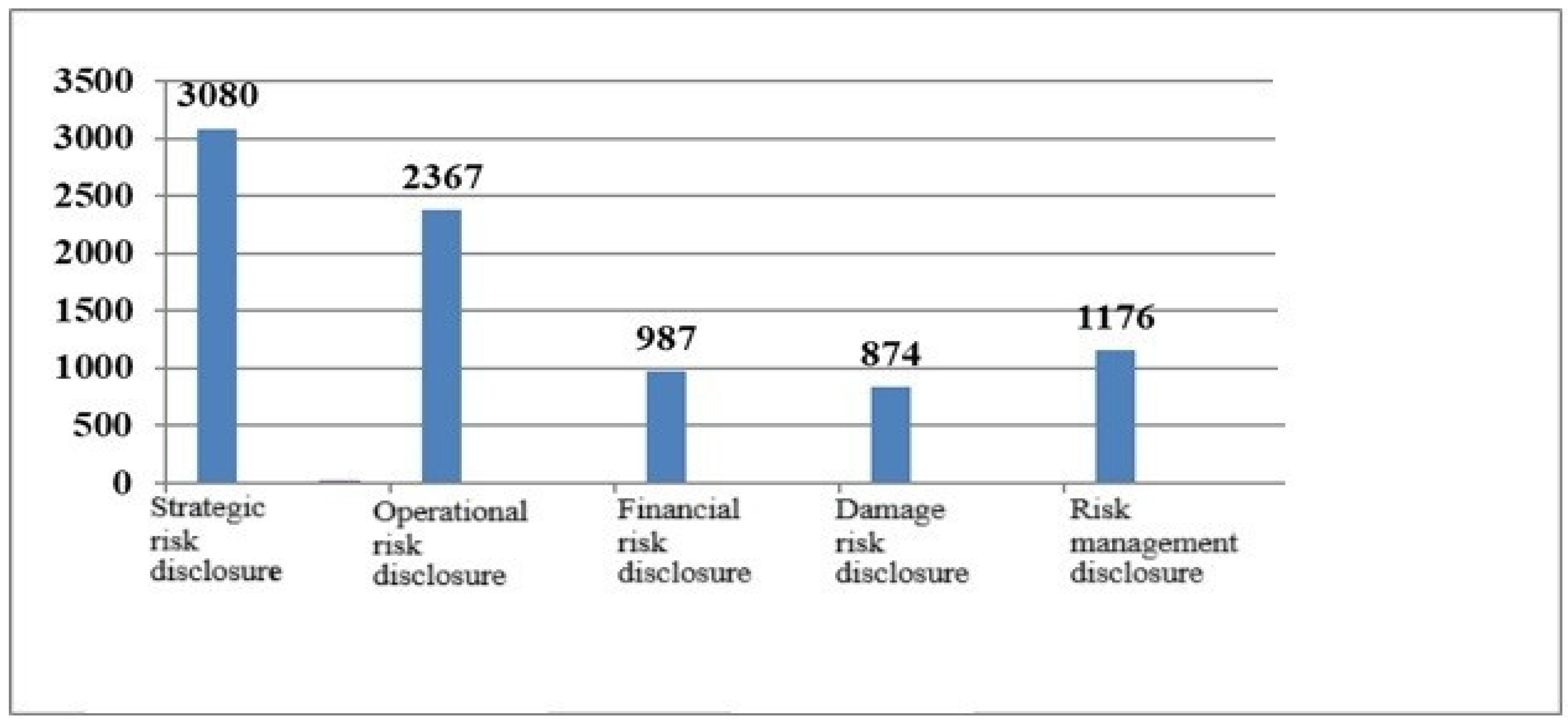
Table 2 presents the descriptive data for the total risk-related phrases and their frequency in the annual reports of 90 Jordanian enterprises from 2014 to 2023. All risk-related statements are classified into one of six risk categories and calculated as illustrated in Table 2. In Figure 1, the dependent variable is Research and Development (RD), which is proxied by a disclosure index methodology as per Ibrahim and Hussainey (2019) and Ismail and El-Deeb (2022). This approach was selected since it is more comprehensive and, to the best of our knowledge, relatively new in the context of corporate governance and risk disclosure studies in Jordan. Consequently, it contributes methodologically by applying a robust analytical framework that enhances understanding of disclosure practices within this emerging research setting. Our research used a comprehensive risk disclosure index consisting of 24 elements categorized into five types of risk: strategic (10 things), operational (7 items), financial (5 items), damage (2 items), and risk management (2 items). The index is constructed to highlight significant risk concerns in Jordanian companies. Annual reports are meticulously analyzed and evaluated with a binary scoring system, yielding a cumulative score out of 24 points.
Figure 1 illustrates the allocation of risk disclosure penalties across five principal groups. The findings indicate that strategic risk disclosure is the most commonly reported category, with 3080 statements, which represents around 36.46% of all risk disclosures. This signifies that Jordanian companies are acutely aware of long-term concerns including competition, market positioning, legislative changes, and innovation. This conclusion aligns with previous literature, including Linsley and Shrives (2006), who reported 31.7%. The second most reported category is operational risk, including 2367 sentences, which accounts for 28.02% of the total. This corresponds with other research in various situations, like Bufarwa et al. (2020), who documented 30% in Malaysian enterprises, and Lajili (2009), who noted 15.4% in Portuguese and Spanish organizations.
Financial risk disclosures, encompassing interest rate, credit, and liquidity issues, constitute 11.58% of all statements, totaling 978. Although this fraction is inferior to the strategic and operational categories in the present analysis, it remains noteworthy, especially as such risks are often encompassed by obligatory disclosures under IFRS. Prior studies by Al-Shammari (2014) and Linsley and Shrives (2006) reported comparable findings of 20.7% and 26.7%, respectively, indicating contextual and regulatory disparities among markets. Ultimately, damage risk disclosures, encompassing legal proceedings and insurance-related matters, represent the smallest fraction, at 10.03% (847 statements). This low proportion is common in emerging economies, as such disclosures are often voluntary and may be suppressed to prevent reputational damage. These findings align with Afza Amran and Ahmad (2009) who also noted the restricted disclosure of such categories among Malaysian enterprises. The distribution pattern indicates that Jordanian enterprises prioritize strategic and operational risks more significantly, while placing less importance on financial, damage-related, and governance-related disclosures. This gap may arise from the characteristics of Jordan’s regulatory framework, where some categories of risk reporting are optional and lack comprehensive enforcement tools.
Table 3 presents the descriptive statistics for the continuous variables, including mean, standard deviation, minimum, maximum, skewness, and kurtosis. The quantity of board members (BSIZ) ranges from 4 to 14, with a mean of 8.271 and a standard deviation of 2.44. Previous research in Jordan, including Alsmady (2018), which reported average board sizes of 8.795 and 8.51, respectively, corroborates this finding. Annually, there are between 4 and 19 board meetings, averaging 7.399 meetings with a standard deviation of 2.711. The average of 7.33 meetings per year aligns with the findings of Qadorah and Fadzil (2018), indicating that most Jordanian enterprises comply with the JCGC’s minimal mandate of six meetings annually. The mean percentage of board members possessing financial or accounting expertise is 41.4%, with a range from 0% to 87% and a standard deviation of 0.213, as assessed by the Board Financial Expertise (BEXP). This corresponds with the average financial competency levels of boards, around 31% and 29.6%, as reported by Makhlouf et al. (2018) and Daoud (2020), respectively. The natural logarithm of total assets, with values between 5.741 and 9.322, has a mean of 7.749 and a standard deviation of 0.718 for company size (SIZE). The statistics align with the findings of Alsmady (2018) and Mardini (2025), which reported typical firm sizes of 7.45, 7.217, and 7.90, respectively. The mean debt ratio for financial leverage (LEVER) is 31.327%, accompanied by a standard deviation of 22.994, a minimum of 0%, and a high of 105%. This aligns with other research, including Abu Qa’dan and Suwaidan (2019) and Makhlouf et al. (2018), which indicated average leverage ratios of 38.3%, 35%, and 35.9%, respectively.
Over fifty percent of Jordanian enterprises function within the industrial sector, as indicated by the statistic that 52.39% of all firms belong to this sector (SECTR). Daoud (2020) determined that 46% of Jordanian enterprises operate within the manufacturing sector, corroborating this finding. Table 4 illustrates the classification of audit firms, indicating that 147 company-years (39.36%) were audited by Big4 companies, whilst 225 company-years (60.64%) were audited by non-Big4 firms. Kikhia (2014) indicates that 37.1% of Jordanian enterprises underwent audits by Big4 firms, corroborating these findings. The average leverage value (LEVER) in this study is 32.273%, aligning with the average leverage values of 38.3% reported by Makhlouf et al. (2018). The descriptive data for CEO duality reveal that 32.45% of firms have amalgamated the positions of CEO and board chairman, signifying that about one-third of the enterprises exhibit role duality. Monsif Azzoz and Khamees (2016) reports that the incidence of CEO duality in Jordanian enterprises is around 39.8%. Regarding political connections (PC), 48.14% of the businesses are politically affiliated, indicating that almost half of the sampled enterprises have at least one board member who is or has been engaged in politics, such as serving as a minister or member of parliament. This result illustrates the substantial influence of political connections on Jordan’s corporate governance framework.

4.2. Diagnostic Tests

The data panel’s qualification must be confirmed by a number of tests. The correlations matrix test and a variance inflation factor (VIF) are used to assess multicollinearity. Table 5 displays the Pearson correlation coefficients between the independent variables. Since none of the variables correlate above 0.9, all the variables have a correlation of less than 0.483, indicating that there is no multicollinearity. As a result, there is no multicollinearity issue in this model. As seen in Table 6, the mean VIF of all independent variables in a regression is just 1.593, which is far lower than 10 and falls between 1.373 and 2.218. Thus, the fact that the VIFs are less than 10 (Kline 2017) suggests there is no multicollinearity issue.
Table 7 reports the Breusch–Pagan–Godfrey/Cook–Weisberg and Wooldridge tests. The heteroskedasticity test (chi2 = 1.82, p = 0.1985) and autocorrelation test (chi2 = 3.423, p = 0.0808) are both insignificant at the 0.05 level, indicating that the model satisfies the assumptions of homoskedasticity and no serial correlation.
A series of experiments is conducted to identify the optimal model for the study. The Lagrange Multiplier (LM) test assists in selecting between the pooled Ordinary Least Squares (OLS) model and the random effects model. The results of the LM test are statistically significant, as indicated in Table 8 (0.000 < 0.05). Consequently, the use of random effects is suitable for this study (Rahim et al. 2018). The Hausman specification test is employed to differentiate between the fixed effects model and the random effects model. The Hausman test lacks statistical significance, as seen in Table 8 (0.0775 > 0.05). Thus, it may be concluded that the random effect model is selected and employed for data analysis.

4.3. Regression Analysis Results

The model was computed via a multiple regression result technique. Table 9 presents the findings of the correlation between the dependent variable (business risk disclosure) and the independent factors (characteristics of the board of directors) as well as the control variables (company size, industry type, audit firm type, and leverage). The p-value of 0.000 and the R2 value of 0.442 indicate that the model is statistically significant and fits at the 1% level.
A negative correlation between board size (BSIZ) and risk disclosure (CRD) is not statistically significant (t = −0.02, p = 0.889) in Table 9, demonstrating that bigger boards do not enhance risk disclosure rules. This contradicts the idea that larger boards boost corporate risk disclosure. Conclusion: H1 is false. This contradicts resource dependency theory and agency theory, which claim that a larger board improves financial reporting by increasing stakeholder representation, managerial oversight, and skills. The result contradicts Ntim et al. (2013), who found a strong positive relationship between board size and corporate risk disclosure. This research agrees with Alsmady (2018), which found no correlation between board size and earnings management or annual report timeliness in Jordan. Khalil and Maghraby (2017), Htay et al. (2011), Elzahar and Hussainey (2012) concluded that board size does not affect corporate risk disclosure.
As per Lipton and Lorsch (1992) each member of a larger board relies on others for monitoring, reducing its drive to make decisions. The agency hypothesis states that smaller boards oversee management better due to less communication time and effort (Lipton and Lorsch 1992). Board size may not affect risk disclosure because directors’ knowledge and competences, which are vital to the board’s operation, may not be reflected in their number. Large boards sometimes operate as ceremonial seats for major owners rather than overseeing the administration’s activities (Hermalin and Weisbach 2001). Board size affects risk disclosure, according to Heinle and Smith (2017), an excessive number of directors may hinder information exchange and collaboration. Due to the many concerns, these directors may not be able to attend every board meeting, affecting decision-making. Management oversees financial reporting and decides how much risk information to present.
Table 9 shows that board meeting frequency (BM) does not correlate with corporate risk disclosure (CRD) (t = 1.74, p = 0.111). This research shows that board meeting frequency has little effect on corporate risk disclosure. Conclusion: H2 is rejected. The agency theory and the study’s premise—that frequent board meetings improve management supervision and reduce agency conflicts via transparency and accountability—are refuted by this outcome. Khlif and Samaha (2016) found a positive and statistically significant link between board meeting frequency and corporate transparency, contradicting this conclusion. However, the result supports previous research that found no statistically significant association between board meetings and business concern disclosure. In emerging markets, board meeting frequency and other board activities had no effect on voluntary disclosure. Jordanian firms’ concentrated ownership may restrict the board’s monitoring capabilities, explaining this insignificance. Significant shareholders may get information via informal channels or personal contacts with management, lowering their reliance on formal board meetings (Alodat et al. 2025). Enterprises may also have official meetings to comply with corporate governance regulations or informal meetings not included in annual reports. Thus, board meetings may contradict their intended purpose, explaining the weak empirical link between risk disclosure.
This research proposes a negative association between CEO dualism and corporate risk disclosure (CRD). Table 9 shows a negative correlation with CEO dualism and CRD (t = −1.85, p = 0.045), supporting Hypothesis 3. It seems that companies with distinct CEOs and chairs convey more risk information. Recent study shows that CEO dualism hurts openness and accountability. Agency theory states that CEO duality centralizes excessive authority in one person, reducing board effectiveness in managing management conduct and raising agency costs.
Business risk disclosure (CRD) and board competence were linked in this study. Table 9 shows a positive association between directors’ experience and risk disclosure (t = 2.23, p = 0.021), supporting H4. Agency theory and resource dependence theory suggest that directors with financial and accounting expertise provide valuable resources, informed oversight, and strategic advice, improving monitoring and financial reporting quality (Pfeffer and Salancik 2003). This supports the concept that financially knowledgeable board members improve risk communication and transparency. This matches developing market data, including that of Jordan. Alzoubi (2019) found that board accounting proficiency reduces earnings management, whereas Zaidan and Melhem (2025) showed that it improves voluntary disclosure, also noted that board education and professional experience increase transparency. These findings suggest that board competence improves financial reporting openness and trust.
SIZE does not significantly affect corporate risk disclosure (CRD) (t = 1.33, p = 0.333). This implies that although bigger firms may share risk-related data more, the impact is not statistically significant. Emerging country data supports this notion. In Jordanian listed businesses, company size did not affect voluntary or risk disclosure (Malahim 2023). According to Alawaqleh et al. (2022) found that firm size does not always affect disclosure in MENA markets, indicating that industry characteristics and regulatory enforcement may change this relationship. Table 9 shows a positive association between sector type (SECTR) and corporate risk disclosure (t = 2.45, p = 0.019), indicating industrial enterprises disclose risk-related information more than service-oriented firms. Recent study shows how sector-specific variables affect disclosure processes. Hermalin and Weisbach (2001) and Alshirah and Alshira’h (2026) found that capital-intensive or highly regulated industries like manufacturing and energy disclose more risk information than less regulated ones. Due to market volatility and increased reporting duties, Sinclair-Desgagne and Gozlan (2003) showed that Jordanian industrial enterprises publish more risk information.
The findings show a weak link between Big 4 audit firms (BIG4) and corporate risk disclosure (CRD) (t = 1.13, p = 0.271). This suggests that Big Four and non-Big Four enterprises disclose risk similarly. This conclusion supports previous emerging market findings that Big Four auditors do not consistently enhance reporting or disclosure procedures (Suwaidan et al. 2021). Alfaraih and Alanezi (2011) found no influence of Big Four audit firm affiliation on profit quality or corporate transparency in MENA nations, including Jordan. In addition, firm leverage (LEVER) has no effect on business risk disclosure (t = 0.76, p = 0.602). This suggests that powerful companies don’t always provide risk-related information. Other research has shown that risk disclosure and leverage in emerging economies are not statistically correlated. Aljammaz et al. (2025) found that leverage had no impact on voluntary disclosure and audit results in GCC nations.

4.4. The Moderating Effect of Political Connection

The research forecasts that political connections influence the correlation between the attributes of the board of directors and the extent of risk disclosure. Table 10 presents the results of the second model, which examines the moderating influence of political linkage. The coefficient of determination (R2) for this regression model is 0.500. In contrast to the result in the primary regression (direct association) presented in Table 9, which was 0.443, it is evident that R2 has significantly risen (from 0.443 to 0.500). Hair et al. (2019) assert that an increase in R2 signifies the importance of the moderator. The political link moderates the relationship between the board of directors and corporate risk disclosure.
Table 10 shows that board size and political connection (PC*BSIZ) positively affect corporate risk disclosure (CRD) (t = 2.51, p = 0.015). CRD and board size (BSIZ) are negatively correlated (t = −0.02, p = 0.889). This suggests that political ties reduce board size and risk disclosure. We support hypothesis H5a. This suggests that firms with significant political ties have bigger boards with more risk disclosure than those without. Politically connected board members may watch the board more to protect their reputational and political capital (Alshirah and Alshira’h 2026). Political directors often have better access to insider information and stronger regulatory relationships, which may encourage companies to disclose risk more transparently, especially in politically sensitive situations. This suggests that political linkages may improve board oversight of management behavior, lowering agency expenses and increasing openness (Wang 2006). Politically connected board members may also aim to avoid reputational harm that might hurt the business and their political organizations. Their presence may inspire the firm to submit more risk-related information to demonstrate compliance and legitimacy to regulators and stakeholders. Previous research from impoverished nations, notably Jordan, have shown that political connections affect financial reporting performance and governance procedures like board size.
Table 10 shows that political connection (PC) does not moderate the link between board meeting frequency (BM) and corporate risk disclosure (CRD) (t = 1.10, p = 0.247). This suggests that political ties do not affect risk disclosure and board membership. Thus, hypothesis H5b fails. This may be because politically connected shareholders, especially those with large ownership shares, prefer internal communication over formal disclosure. Political elites are often included in the firm’s governance framework, giving them direct access to risk-related information that can be shared with management informally rather than through board meetings or public disclosure channels. This may reduce the transparency-promoting usefulness and productivity of frequent board meetings. These settings allow politically connected shareholders and top executives to communicate sensitive information, undermining the board’s official oversight duty (Almarayeh et al. 2025). Thus, external users and minority shareholders are less likely to profit from risk-related conversations outside of official disclosures or annual reports. This suggests that political entrenchment may impair corporate governance and the board’s ability to improve transparency and accountability, particularly in developing countries with weak regulatory enforcement.
The study examined how political ties and CEO duality (PC*CEO) affect business risk disclosure. Political connection negatively and marginally significantly modifies CEO dualism and risk closure (t = −1.90, p = 0.081). This supports hypothesis H5c. This observation supports agency theory’s entrenchment notion. Politically connected persons may influence board composition and CEO appointments in businesses where they have consolidated ownership or evaded voting rights (Alshirah and Alshira’h 2026). These persons usually appoint trusted insiders or politically connected members to executive positions, sometimes combining the titles of CEO and chairman to create CEO duality. Such structures may reduce board independence and supervision. Even without political links for the CEO, politically affiliated directors may limit executive autonomy since political stakeholders influence strategic decisions. CEO duality, when the CEO also chairs the board, weakens accountability and threatens risk monitoring and disclosure (Harymawan et al. 2021; Almarayeh et al. 2025). Political ties and CEO duality have a negative association; thus, politically entrenched management may prefer opacity to protect their interests and discretion. This highlights the risks of power consolidation and political insulation, which may outweigh board or leadership governance benefits. This supports emerging economy studies showing that political ties may distort governance and reduce transparency.
Table 9 shows that board expertise is positively connected with corporate risk disclosure (CRD). Table 10 shows that the interaction between political connection and board expertise (PC*BEXP) does not affect CRD (t = 0.58, p = 0.661). Political ties reduce board expertise’s risk disclosure benefits. Hypothesis H5d fails. This confirms the agency idea that board members’ political affiliations may impede their monitoring and advising duties. Politically affiliated board members may lack the knowledge or financial acumen to properly manage (Sciascia and Mazzola 2008). Thus, political motivations in board interactions may offset the advantages of experienced directors, such as improved monitoring, risk appraisal, and stakeholder-oriented transparency. Companies with strong political ties may be less likely to hire skilled external directors because they have access to unique information that reduces the need for high-quality, open public disclosures. However, enterprises without political links have more diverse and professionally competent boards, promoting independence and objective risk disclosure. Specialist directors in politically related firms may be more symbolic than practical, signaling legitimacy rather than improving governance (Oh et al. 2019). Risk-sensitive situations turn board knowledge from a strategic benefit to a formal transparency necessity. This supports literature worries that political entrenchment may displace professional competence, weakening governance mechanisms that would increase disclosure quality.


5. Conclusions, Implications and Limitations

This study empirically examined the extent of corporate risk disclosure (CRD) among companies listed on the Amman Stock Exchange, focusing on the influence of board of directors’ characteristics—size, meeting frequency, CEO duality, and expertise—and the moderating role of political connections. The findings contribute to the literature by addressing an underexplored area in the Jordanian context and providing evidence on how governance mechanisms and political linkages shape transparency in risk reporting. Using content analysis of annual reports from 90 listed firms over the period 2014–2023, CRD was measured through the frequency of risk-related disclosures, and hypotheses were tested using a random effects regression model. The results reveal a positive and significant association between CRD and both industry sector and board expertise, indicating that directors with financial and strategic knowledge enhance the quality of risk reporting through improved oversight and decision-making. Conversely, CEO duality negatively affects disclosure, supporting agency theory’s argument that concentrated authority reduces board independence and monitoring effectiveness. Other variables—board size, meeting frequency, firm size, audit firm type, and leverage—did not exhibit significant effects on CRD. Moreover, political connections moderated certain governance–disclosure relationships, highlighting the complex interplay between internal governance structures and external political influences in shaping transparency outcomes. The study acknowledges several limitations that provide avenues for future research. First, governance variables were restricted to a limited set of board characteristics; future studies may incorporate additional attributes such as board independence, tenure, and gender diversity, alongside alternative ownership structures (institutional, family, or foreign ownership). Second, reliance on phrase counts as a measure of CRD may capture quantity rather than quality of disclosure; subsequent research could employ qualitative methods, including interviews with managers and investors, to better understand disclosure motivations and constraints. Third, the single-country design limits generalizability; comparative studies across jurisdictions would help elucidate the influence of institutional and regulatory differences on disclosure practices. Finally, the use of annual reports as the sole information source restricts the scope of analysis. Future studies may integrate multiple disclosure channels—interim reports, corporate websites, and sustainability reports—and adopt computer-assisted text analysis techniques to enhance measurement precision.
Theoretically, the findings extend agency theory by demonstrating that political connections can weaken board monitoring functions and exacerbate information asymmetry, thereby influencing disclosure behavior. In politically connected firms, reduced board independence and potential conflicts of interest may undermine governance effectiveness, emphasizing the importance of transparency mechanisms to mitigate agency costs. Practically, the results underscore the need for regulators and policymakers to strengthen governance frameworks and disclosure requirements, particularly for politically connected entities. Enhanced enforcement of international reporting standards and improved board independence are essential for promoting financial transparency and investor confidence. For investors and analysts, political linkages should be considered as an additional risk factor when evaluating governance quality and disclosure credibility.

Funding

This research received no external funding.

Data Availability Statement

The raw data supporting the conclusions of this article will be made available by the authors on request.

Conflicts of Interest

The author declares no conflicts of interest.

Appendix A. Risk Disclosure Categories Adopted from (Ibrahim and Hussainey 2019; Ismail and El-Deeb 2022)

Strategic Risk Disclosures
  • Market competition
  • Market areas
  • Technological developments
  • Regulatory changes
  • Economical changes
  • Mergers and acquisitions
  • Launch of new products
  • Business portfolio
  • Management of strategic risk
  • Research and development
Operational risk disclosure
  • Patents and other industrial property rights
  • Information technology risks
  • Reputation and brand name development
  • Environmental
  • Health and Safety
  • Project deliveries
Financial risk disclosure
  • Interest rate
  • Exchange rate
  • Liquidity
  • Credit
Damage risk disclosure
  • Insurances
  • Significant legal actions 2 Significant legal actions
Risk management disclosure
  • Risk management policy
  • Risk management organization Performance Measurement

References

  1. Abraham, Santhosh, and Paul Cox. 2007. Analysing the determinants of narrative risk information in UK FTSE 100 annual reports. The British Accounting Review 39: 227–48. [Google Scholar] [CrossRef]
  2. Abu Qa’dan, Mohammad Bassam, and Mishiel Said Suwaidan. 2019. Board composition, ownership structure and corporate social responsibility disclosure: The case of Jordan. Social Responsibility Journal 15: 28–46. [Google Scholar] [CrossRef]
  3. Afza Amran, Noor, and Ayoib Che Ahmad. 2009. Family business, board dynamics and firm value: Evidence from Malaysia. Journal of Financial Reporting and Accounting 7: 53–74. [Google Scholar] [CrossRef]
  4. Agrawal, Anup, and Sahiba Chadha. 2005. Corporate governance and accounting scandals. Journal of Law and Economics 48: 371–406. [Google Scholar] [CrossRef]
  5. Ahmed, Answer S., Scott Duellman, and Megan Grady. 2022. Political connections and the trade-off between real and accrual-based earnings management. Contemporary Accounting Research 39: 2730–57. [Google Scholar] [CrossRef]
  6. Al-Akra, Mahmoud, and Muhammad Jahangir Ali. 2012. The value relevance of corporate voluntary disclosure in the Middle-East: The case of Jordan. Journal of Accounting and Public Policy 31: 533–49. [Google Scholar] [CrossRef]
  7. Al Amosh, Hamzeh. 2025. Exploring the influence of accounting reporting complexity on ESG disclosure. Corporate Social Responsibility and Environmental Management 32: 5760–78. [Google Scholar] [CrossRef]
  8. Al Amosh, Hamzeh, and Saleh F. Khatib. 2026. Adversity and accountability: Unravelling the nexus between geopolitical risks and ESG performance in the USA. Competitiveness Review: An International Business Journal 36: 358–77. [Google Scholar] [CrossRef]
  9. Alawaqleh, Qasim Ahmad, Mohammad Hamdan, Ahmed Al-Jayousi, and Rana Airout. 2022. The moderating role of IFRS in the relationship between risk management and financial disclosure in Jordanian banks. Banks and Bank Systems 17: 167. [Google Scholar] [CrossRef]
  10. Albitar, Khaldoon, and Ali Meftah Gerged. 2026. Global Energy Corporations and Climate Change: The Role of Formal and Informal Institutions in Shaping Climate Change Risk Disclosure. Business Strategy and the Environment, 1–22. [Google Scholar] [CrossRef]
  11. Alfaraih, Mishari M., and Faisal S. Alanezi. 2011. Does voluntary disclosure level affect the value relevance of accounting information? Accounting and Taxation 3: 65–84. [Google Scholar]
  12. Aljammaz, Abdulaziz Ahmed, Suresh Ramakrishnan, Hamid Ghazi H. Sulimany, Saleh F. A. Khatib, Adnan Ali, Ehsan Almoataz, and Abdulrhman Atllah Alharbi. 2025. Mediating role of financial sustainability between board diversity and firms’ resilience: Evidence from Saudi listed firms. Humanities and Social Sciences Communications 12: 1946. [Google Scholar] [CrossRef]
  13. Al-Janadi, Yaseen, Rashidah Abdul Rahman, and Normah Binti Omar. 2013. Corporate governance mechanisms and voluntary disclosure in Saudi Arabia. Research Journal of Finance and Accounting 4: 25–36. [Google Scholar]
  14. Allegrini, Marco, and Giulio Greco. 2013. Corporate boards, audit committees and voluntary disclosure: Evidence from Italian listed companies. Journal of Management and Governance 17: 187–216. [Google Scholar] [CrossRef]
  15. Al Maani, Abdullah, Ola Buraik, Asmaa Al-Amarneh, and Mohammad Almashaqbeh. 2025. The Effect of the Audit Committee on the Voluntary Risk Disclosure in Jordanian Commercial Banks: The Moderating Role of Family Ownership. Journal of Risk and Financial Management 18: 133. [Google Scholar] [CrossRef]
  16. Almarayeh, Taha, Amneh Alkurdi, Esraa Esam Alharasis, Mohammad Alhadab, and Alaa Razia. 2025. Corporate board characteristics, audit fees and political connections: Evidence from Jordan. International Journal of Ethics and Systems, ahead-of-print. [CrossRef]
  17. Al-Matari, Yahya Ali, Abdullah Kaid Al-Swidi, Faudziah Hanim Bt Fadzil, and Ebrahim Mohammed Al-Matari. 2012. Board of directors, audit committee characteristics and the performance of Saudi Arabia listed companies. International Review of Management and Marketing 2: 241–51. [Google Scholar]
  18. Alodat, Ahmad Yuosef, Yunhong Hao, Haitham Nobanee, Hazem Ali, Marwan Mohammad Mansour, and Hamzeh Al Amosh. 2025. Board characteristics and cybersecurity disclosure: Evidence from the UK: AY Alodat et al. Electronic Commerce Research 25: 4717–35. [Google Scholar] [CrossRef]
  19. Al-Shammari, Bader. 2014. Kuwait corporate characteristics and level of risk disclosure: A content analysis approach. Journal of Contemporary Issues in Business Research 3: 128–53. [Google Scholar]
  20. Alshirah, Malek Hamed, and Ahmad Farhan Alshira’h. 2026. Moderating Role of Risk Management Committee on Board of Directors’ Characteristics and Corporate Risk Disclosure Nexus: Emerging Market Evidence. Journal of Risk and Financial Management 19: 188. [Google Scholar] [CrossRef]
  21. Alsmady, Ahnaf Ali. 2018. The effect of board of directors’ characteristics on the timeliness of financial reports in Jordan. International Journal of Business and Management 13: 276–87. [Google Scholar] [CrossRef]
  22. Al-Sraheen, Deaa Al-Deen. 2019. The role of the audit committee in moderating the negative effect of non-audit services on earnings management among industrial firms listed on the Amman Stock Exchange. Afro-Asian Journal of Finance and Accounting 9: 349–61. [Google Scholar]
  23. Alzoubi, Ebraheem Saleem Salem. 2019. Ownership structure and earnings management: Evidence from Jordan. International Journal of Accounting and Information Management 27: 451–72. [Google Scholar]
  24. Anderson, Ronald C., Sattar A. Mansi, and David M. Reeb. 2004. Board characteristics, accounting report integrity, and the cost of debt. Journal of Accounting and Economics 37: 315–42. [Google Scholar] [CrossRef]
  25. Anwar, Saiful, and Ardianto Ardianto. 2025. Leadership Networks, Gender-Inclusive Boards, and Corporate Environmental Transparency: The Influence of CEO Social Capital in Indonesian Firms. Business Strategy and Development 8: E70212. [Google Scholar] [CrossRef]
  26. Arnold, Beth, and Paul de Lange. 2004. Enron: An examination of agency problems. Critical Perspectives on Accounting 15: 751–65. [Google Scholar] [CrossRef]
  27. ASE. 2023. Annual Market Report 2023. Amman: Amman Stock Exchange. Available online: https://www.ase.com.jo (accessed on 10 July 2025).
  28. Barakat, Ahmed, and Khaled Hussainey. 2013. Bank governance, regulation, supervision, and risk reporting: Evidence from operational risk disclosures in European banks. International Review of Financial Analysis 30: 254–73. [Google Scholar] [CrossRef]
  29. Barako, Dulacha G., Phil Hancock, and H. Y. Izan. 2006. Factors influencing voluntary corporate disclosure by Kenyan companies. Corporate Governance: An International Review 14: 107–25. [Google Scholar] [CrossRef]
  30. Bechihi, Oumayma, and Olfa Nafti. 2025. Corporate governance and sharia board: Enhancing disclosure compliance in Islamic banks of MENA region. Journal of Financial Reporting and Accounting, ahead-of-print. [CrossRef]
  31. Beretta, Sergio, and Saverio Bozzolan. 2004. A framework for the analysis of firm risk communication. The International Journal of Accounting 39: 265–88. [Google Scholar] [CrossRef]
  32. Bowman, Edward H. 1984. Content analysis of annual reports for corporate strategy and risk. Strategic Management Journal 5: 259–72. [Google Scholar] [CrossRef]
  33. Bufarwa, Idris M., Ahmed A. Elamer, Collins G. Ntim, and Aws AlHares. 2020. Gender diversity, corporate governance and financial risk disclosure in the UK. International Journal of Law and Management 62: 521–38. [Google Scholar] [CrossRef]
  34. Chau, Gerald K., and Sidney J. Gray. 2010. Family ownership, board independence and voluntary disclosure: Evidence from Hong Kong. Journal of International Accounting, Auditing and Taxation 19: 93–109. [Google Scholar] [CrossRef]
  35. Dahya, J., A. A. Lonie, and D. M. Power. 1996. The case for separating the roles of chairman and CEO: An empirical study. Corporate Governance: An International Review 4: 71–77. [Google Scholar] [CrossRef]
  36. Daoud, Khaldoon Ahmad Al. 2020. An investigation into the effect of audit firm size, auditor tenure, institutional ownership, board characteristics on auditor independence. International Journal of Management Practice 13: 462–77. [Google Scholar] [PubMed]
  37. Domhoff, G. 2020. Who Rules America? The Triumph of the Corporate Rich. Oxfordshire: Routledge. [Google Scholar]
  38. Duan, Dingkang, Ran Wei, Chao Wang, and Bingyu Xia. 2025. Opportunity or obstacle? Climate risk disclosure and corporate ESG performance. International Review of Economics & Finance 100: 104101. [Google Scholar] [CrossRef]
  39. El-Deeb, Mohamed Samy, Alarabi Yomna, and Amal Mohamed. 2024. The role of audit committee characteristics in improving the risk disclosure of companies examining the moderating role of audit quality. Future Business Journal 10: 130. [Google Scholar] [CrossRef]
  40. Elmarzouky, Mahmoud, Khaled Hussainey, Khaldoon Albitar, and Fadi Alkaraan. 2025. The impact of Brexit disclosure on trade credit. International Journal of Finance and Economics 30: 2946–63. [Google Scholar] [CrossRef]
  41. Elzahar, Hany, and Khaled Hussainey. 2012. Determinants of narrative risk disclosures in UK interim reports. Journal of Risk Finance 13: 133–47. [Google Scholar]
  42. Enslin, Zack, Elda du Toit, and Mangwakong Faith Puane. 2025. The readability and narrative tone of risk and risk management disclosures for South African listed companies. Journal of Accounting in Emerging Economies 15: 224–41. [Google Scholar]
  43. Erin, Olayinka, Johnson Ifeanyi Okoh, and Nkiru Okika. 2026. Risk governance and risk disclosure quality: An empirical evidence. Journal of Financial Reporting and Accounting 24: 97–122. [Google Scholar]
  44. Faccio, Mara. 2006. Politically connected firms. American Economic Review 96: 369–86. [Google Scholar] [CrossRef]
  45. Fama, Eugene F., and Michael C. Jensen. 1983. Separation of ownership and control. Journal of Law and Economics 26: 301–25. [Google Scholar] [CrossRef]
  46. Feng, Lingbing, and Dasen Huang. 2025. Who gains favor with green investors amidst climate risk? China Finance Review International 15: 552–77. [Google Scholar] [CrossRef]
  47. Ge, Wenxia, Zhen Qi, Zhenyu Wu, and Li Yu. 2025. Abnormal temperatures, climate risk disclosures and bank loan pricing: International evidence. British Journal of Management 36: 726–44. [Google Scholar] [CrossRef]
  48. Guohong, Zheng, Xia Zhongwei, He Feng, and Xiao Zhongyi. 2025. The audit committee’s IT expertise and its impact on the disclosure of cybersecurity risk. Research in International Business and Finance 73: 102542. [Google Scholar] [CrossRef]
  49. Hair, Joseph F., Jeffrey J. Risher, Marko Sarstedt, and Christian M. Ringle. 2019. When to use and how to report the results of PLS-SEM. European Business Review 31: 2–24. [Google Scholar] [CrossRef]
  50. Haniffa, Roszaini M., and T. E. Cooke. 2002. Culture, corporate governance and disclosure in Malaysian corporations. Abacus 38: 317–49. [Google Scholar] [CrossRef]
  51. Harymawan, Iman, Aditya Aji Prabhawa, Mohammad Nasih, and Fajar Kristanto Gautama Putra. 2021. Risk management committee, auditor choice and audit fees. Risks 9: 156. [Google Scholar] [CrossRef]
  52. Hassanein, Ahmed, and Khaled Hussainey. 2015. Is forward-looking financial disclosure really informative? Corporate Ownership and Control 12: 451–61. [Google Scholar]
  53. Heinle, Mirko S., and Kevin C. Smith. 2017. A theory of risk disclosure. Review of Accounting Studies 22: 1459–91. [Google Scholar] [CrossRef]
  54. Hermalin, Benjamin, and Michael S. Weisbach. 2001. Boards of Directors as an Endogenously Determined Institution: A Survey of the Economic Literature (Working Paper 8161). Available online: https://www.nber.org/system/files/working_papers/w8161/w8161.pdf (accessed on 23 February 2026).
  55. He, Xiqiong, Tonglin Yang, Hao Liu, and Xiaowei Wu. 2025. Idiosyncratic risk disclosure of IPO firms and institutional investors’ withdrawals. Accounting and Finance 65: 399–428. [Google Scholar] [CrossRef]
  56. Hillman, Amy J. 2005. Politicians on the board of directors: Do connections affect the bottom line? Journal of Management 31: 464–81. [Google Scholar] [CrossRef]
  57. Hillman, Amy J., and Thomas Dalziel. 2003. Boards of directors and firm performance: Integrating agency and resource dependence perspectives. Academy of Management Review 28: 383–96. [Google Scholar] [CrossRef]
  58. Ho, Poh-Ling, and Grantley Taylor. 2013. Corporate governance and different types of voluntary disclosure: Evidence from Malaysian listed firms. Pacific Accounting Review 25: 4–29. [Google Scholar]
  59. Htay, Sheila Nu Nu, Hafiz Majdi Ab. Rashid, Muhammad Akhyar Adnan, and Ahamed Kameel Mydin Meera. 2011. Corporate governance and risk management information: Evidence from Malaysia. International Journal of Academic Research in Accounting, Finance and Management Sciences 1: 1–12. [Google Scholar]
  60. Hu, Yi, Hanjie Mao, Sichen Shen, and Gang Xiao. 2025. To disclose or not to disclose: Political connection and corporate risk disclosure. Asia-Pacific Journal of Accounting and Economics, 1–32. [Google Scholar] [CrossRef]
  61. Ibrahim, Awad Elsayed Awad, and Khaled Hussainey. 2019. Developing the narrative risk disclosure measurement. International Review of Financial Analysis 64: 126–44. [Google Scholar] [CrossRef]
  62. Ismail, Tariq H., and Mohamed Samy El-Deeb. 2022. The effect of corporate governance, dividend policy and informativeness of risk disclosure on the firm value: Egyptian evidence. Afro-Asian Journal of Finance and Accounting 12: 761–89. [Google Scholar] [CrossRef]
  63. Ismail, Tariq H., and Nesma Ahmed El-Shaib. 2012. Impact of market and organizational determinants on voluntary disclosure in Egyptian companies. Meditari Accountancy Research 20: 113–33. [Google Scholar] [CrossRef]
  64. Jackling, Beverley, and Shireenjit Johl. 2009. Board structure and firm performance: Evidence from India’s top companies. Corporate Governance: An International Review 17: 492–509. [Google Scholar] [CrossRef]
  65. Jensen, Michael C., and William H. Meckling. 1976. Theory of the firm: Managerial behavior, agency costs and ownership structure. Journal of Financial Economics 3: 305–60. [Google Scholar] [CrossRef]
  66. Jibril, Rabiu Saminu. 2025. Corporate ownership structure, energy and emissions disclosure: Does firm political connection encourage environmental sustainability in an emerging economy? International Journal of Disclosure and Governance 22: 1005–22. [Google Scholar] [CrossRef]
  67. Khalil, Ali, and Mona Maghraby. 2017. The determinants of corporate risk disclosure: Evidence from Egyptian listed companies. Journal of Finance and Accounting 5: 1–10. [Google Scholar]
  68. Khanchel, Imen, Naima Lassoued, and Oummema Ferchichi. 2025. Are political connections a curse for banks of the MENA region? The moderating effect of ownership structure. International Journal of Emerging Markets 20: 387–406. [Google Scholar] [CrossRef]
  69. Khan, Mozaffar, Serafeim George, and Aaron Yoon. 2016. Corporate sustainability: First evidence on materiality. The Accounting Review 91: 1697–724. [Google Scholar] [CrossRef]
  70. Khelil, Imen. 2025. Political connections and cost of debt: A meta-analysis. Journal of Financial Reporting and Accounting 23: 1114–29. [Google Scholar] [CrossRef]
  71. Khlif, Hichem, and Khaled Samaha. 2016. Audit committee activity and internal control quality in Egypt: Does external auditor’s industry specialization matter? Managerial Auditing Journal 31: 269–89. [Google Scholar]
  72. Kiel, Geoffrey C., and Gavin J. Nicholson. 2003. Board composition and corporate performance: How the Australian experience informs contrasting theories of corporate governance. Corporate Governance: An International Review 11: 189–205. [Google Scholar] [CrossRef]
  73. Kikhia, Hassan Y. 2014. Board characteristics, audit committee characteristics, and audit fees: Evidence from Jordan. International Business Research 7: 98. [Google Scholar] [CrossRef]
  74. Kline, Theresa J. 2017. Sample issues, methodological implications, and best practices. Canadian Journal of Behavioural Science/Revue Canadienne des Sciences du Comportement 49: 71. [Google Scholar]
  75. Krippendorff, Klaus. 1980. Content Analysis: An Introduction to Its Methodology. Beverly Hills: Sage Publications. [Google Scholar]
  76. Kurniawan, Dody, Nera Marinda Machdar, Adler Haymans Manurung, and Lukman Hakim Sangapan. 2025. Pengaruh enterprise risk management disclosure terhadap nilai perusahaan dengan profitabilitas sebagai variabel mediasi. Journal of Capital Markets and Banking 13: 1–20. [Google Scholar] [CrossRef]
  77. Lajili, Kaouthar. 2009. Corporate risk disclosure and corporate governance. Journal of Risk and Financial Management 2: 94–117. [Google Scholar] [CrossRef]
  78. Lin, Karen Jingrong, Khondkar Karim, Rui Hu, and Shaymus Dunn. 2023. Fifty shades of CEO duality: CEO personal risk preference, duality and corporate risk-taking. Journal of Applied Accounting Research 24: 425–41. [Google Scholar] [CrossRef]
  79. Linsley, Philip M., and Philip J. Shrives. 2005. Examining risk reporting in UK public companies. Journal of Risk Finance 6: 292–305. [Google Scholar] [CrossRef]
  80. Linsley, Philip M., and Philip J. Shrives. 2006. Risk reporting: A study of risk disclosures in the annual reports of UK companies. The British Accounting Review 38: 387–404. [Google Scholar] [CrossRef]
  81. Lipton, Martin, and Jay W. Lorsch. 1992. A modest proposal for improved corporate governance. The Business Lawyer 48: 59–77. [Google Scholar]
  82. Lootah, Manar, Kimberly Gleason, Deborah Smith, and Taisier Zoubi. 2025. Fraud risk of sovereign wealth funds: Fraud triangle and agency theory perspectives. Journal of Financial Crime 32: 515–29. [Google Scholar] [CrossRef]
  83. Makhlouf, Mohammed H., Fares Jamiel Al-Sufy, and Haitham Almubaideen. 2018. Board diversity and accounting conservatism: Evidence from Jordan. International Business Research 11: 130–41. [Google Scholar] [CrossRef]
  84. Malahim, Sari Sulaiman. 2023. The relationship between the risk disclosure and risk management committee on banks value: Empirical evidence from Jordan. International Journal of Professional Business Review 8: 23. [Google Scholar] [CrossRef]
  85. Mallin, C. A. 2019. Corporate Governance. Oxford: Oxford University Press. Glasgow: Bell and Bain, Ltd. [Google Scholar]
  86. Mardini, Ghassan H. 2025. The impact of boards of directors’ and audit committees’ characteristics on corporate innovation: Empirical evidence from the GCC countries. Journal of Accounting in Emerging Economies, Ahead of print. [CrossRef]
  87. Marshall, A. Marshall, and Pauline Weetman. 2002. Information asymmetry in disclosure of foreign exchange risk management: Can regulation be effective? Journal of Economics and Business 54: 31–53. [Google Scholar] [CrossRef]
  88. Marston, Claire L., and Philip J. Shrives. 1991. The use of disclosure indices in accounting research: A review article. The British Accounting Review 23: 195–210. [Google Scholar] [CrossRef]
  89. Milne, Markus J., and Ralph W. Adler. 1999. Exploring the reliability of social and environmental disclosures content analysis. Accounting, Auditing and Accountability Journal 12: 237–56. [Google Scholar] [CrossRef]
  90. Monsif Azzoz, Abdel Razeg Abdel, and Basheer Ahmad Khamees. 2016. The Impact of Corporate Governance Characteristics on Earnings Quality and Earnings Management: Evidence from Jordan. Jordan Journal of Business Administration 12: 187. [Google Scholar] [CrossRef]
  91. Morris, Richard D. 1987. Signalling, agency theory and accounting policy choice. Accounting and Business Research 18: 47–56. [Google Scholar] [CrossRef]
  92. Neuendorf, Kimberly A. 2002. The Content Analysis Guidebook. Thousand Oaks: Sage Publications. [Google Scholar]
  93. Nguyen, Van Ha. 2025. Corporate social responsibility disclosure and firm value: A signaling theory perspective. Journal of Economics and Development 27: 114–28. [Google Scholar] [CrossRef]
  94. Ntim, Collins G., Sarah Lindop, and Dennis A. Thomas. 2013. Corporate governance and risk reporting in South Africa. Corporate Governance: An International Review 21: 250–67. [Google Scholar]
  95. Oh, Won-Yong, Young Kyun Chang, and Aleksey Martynov. 2019. The effect of ownership structure on corporate social responsibility: An empirical examination of public vs. private firms. Journal of Business Ethics 158: 447–67. [Google Scholar]
  96. Owolabi, Ayotola, Mohammad Mahdi Mousavi, Giray Gozgor, and Jing Li. 2025. The impact of firm-level political risk on eco-innovation: The moderating effect of CEO power. Business Strategy and the Environment 34: 2650–66. [Google Scholar] [CrossRef]
  97. Pallant, Julie F., and Catherine M. Bailey. 2005. Assessment of the structure of the Hospital Anxiety and Depression Scale in musculoskeletal patients. Health and Quality of Life Outcomes 3: 82. [Google Scholar] [CrossRef]
  98. Pfeffer, Jeffrey. 1972. Merger as a response to organizational interdependence. Administrative Science Quarterly, 382–394. [Google Scholar] [CrossRef]
  99. Pfeffer, Jeffrey, and Gerald R. Salancik. 2003. The External Control of Organizations: A Resource Dependence Perspective. Stanford: Stanford University Press. [Google Scholar]
  100. Pfeffer, Jeffrey, and Gerald Salancik. 2015. External control of organizations—Resource dependence perspective. In Organizational Behavior 2. London: Routledge, pp. 355–370. Available online: https://www.taylorfrancis.com/chapters/edit/10.4324/9781315702001-24/external-control-organizations%E2%80%94resource-dependence-perspective-jeffrey-pfeffer-gerald-salancik (accessed on 10 July 2025).
  101. Qadorah, Almontaser A., and Faudziah Hanim Fadzil. 2018. The effect of board independence and board meeting on firm performance: Evidence from Jordan. Journal of Finance and Accounting 6: 105–9. [Google Scholar] [CrossRef]
  102. Qasem, Ameen. 2025. The association between institutional monitoring, political connections and audit report lag: Evidence from the Malaysian capital market. Journal of Accounting in Emerging Economies 15: 1–28. [Google Scholar] [CrossRef]
  103. Rahim, Abd., Diah Retno Dwi Hastuti, Dita Pradipta, Nurbaya Bustanul, and Nur Azizah. 2018. The influence of respondent characteristics and different areas on small-scale fisherman household income of urban coastal areas in Pare-Pare City, South Sulawesi. Journal of Socioeconomics and Development 1: 63–71. [Google Scholar] [CrossRef]
  104. Raimo, Nicola, Ilenia Fraccalvieri, Filippo Vitolla, and Candida Bussoli. 2025. Climate on the agenda: How board composition drives climate change disclosure in European banks. Business Strategy and the Environment 34: 7559–72. [Google Scholar] [CrossRef]
  105. Salancik, Gerald R., Jeffrey Pfeffer, and J. Patrick Kelly. 1978. A contingency model of influence in organizational decision-making. Pacific Sociological Review 21: 239–256. [Google Scholar] [CrossRef]
  106. Samaha, Khaled, Khaled Dahawy, Khaled Hussainey, and Pamela Stapleton. 2015. The extent of corporate governance disclosure and its determinants in a developing market: The case of Egypt. Advances in Accounting 31: 283–97. [Google Scholar] [CrossRef]
  107. Sawalqa, Fawzi. 2014. Risk disclosure in the annual reports of Jordanian banks: An exploratory study. International Journal of Business and Social Science 5: 206–18. [Google Scholar]
  108. Sciascia, Salvatore, and Pietro Mazzola. 2008. Family involvement in ownership and management: Exploring nonlinear effects on performance. Family Business Review 21: 331–45. [Google Scholar] [CrossRef]
  109. Sebastianelli, Rose, Nabil Tamimi, Ozgur Isil, and Vincent Rocco. 2025. Insights from analyzing corporate environmental and social disclosure. Management Decision 63: 803–23. [Google Scholar] [CrossRef]
  110. Sinclair-Desgagne, Bernard, and Estelle Gozlan. 2003. A theory of environmental risk disclosure. Journal of Environmental Economics and Management 45: 377–93. [Google Scholar] [CrossRef]
  111. Singh, Harmandeep. 2025. Voluntary cybersecurity risk disclosures and firms’ characteristics: The moderating role of the knowledge-intensive industry. Asian Journal of Accounting Research 10: 168–85. [Google Scholar] [CrossRef]
  112. Spence, Michael. 1973. Job market signaling. Quarterly Journal of Economics 87: 355–74. [Google Scholar] [CrossRef]
  113. Surya, Raja Adri Satriawan, Andreas Edyanus Herman Halim, and Arumega Zarefar. 2026. ESG Performance and Firm Value in Indonesia: Do Political Connections and External Assurance Matter? Journal of Risk and Financial Management 19: 131. [Google Scholar] [CrossRef]
  114. Suwaidan, Mishiel S., Abeer Fayez Al-Khoury, Ahmad Yousef Areiqat, and Samira Omrane Cherrati. 2021. The determinants of corporate governance disclosure: The case of Jordan. Academy of Accounting and Financial Studies Journal 25: 1–12. [Google Scholar]
  115. Tee, Chwee Ming, Ferdinand A. Gul, Yee-Boon Foo, and Chee Ghee Teh. 2017. Institutional monitoring, political connections and audit fees: Evidence from Malaysian firms. International Journal of Auditing 21: 164–76. [Google Scholar] [CrossRef]
  116. Thompson, Richard F. 1967. Foundations of physiological psychology. New York: Harper and Row. [Google Scholar]
  117. Turnbull, Shann. 2002. The science of corporate governance. Corporate Governance: An International Review 10: 261–77. [Google Scholar] [CrossRef]
  118. Uba, Adamu Musa, and Ivashkovskaya Irina. 2021. Corporate governance and risk disclosure in emerging countries. Кoрпoративные финансы 15: 5–17. [Google Scholar]
  119. Wang, Dechun. 2006. Founding family ownership and earnings quality. Journal of Accounting Research 44: 619–56. [Google Scholar] [CrossRef]
  120. Williams, Katherine Williams, and Charles A. O’Reilly. 1998. Demography and diversity in organizations: A review of 40 years of research. Research in Organizational Behavior 20: 77–140. [Google Scholar]
  121. World Bank. 2022. Jordan Economic Monitor, Spring 2022: Towards a More Resilient Economy. Washington, DC: World Bank. Available online: https://documents.worldbank.org/curated/en/099790007262220561 (accessed on 10 July 2025).
  122. Zaidan, Hala, and Muntaser J. Melhem. 2025. The impact of board diversity on corporate social responsibility disclosure in Jordan: The moderating role of political connection. Review of Accounting and Finance, ahead-of-print.
  123. Zhong, Wei, and Ling Jin. 2025. The impact of climate risk disclosure on corporate green technology innovation. Sustainability 17: 2699. [Google Scholar] [CrossRef]
Figure 1. Number of Risk Disclosure Sentences for Each Category of Risk.
Risks 14 00076 g001
Table 1. Measurement of Variables.
AcronymVariables Measurement
CRDCorporate Risk DisclosureMeasured by number of risk-related sentences that exist in the annual reports of the Jordanian companies.
BSIZBoard SizeMeasured by the total number of directors on the board.
BMBoard Meeting Measured by the number of board’s meetings held during the financial year.
CEOCEO DualityMeasured by 1 if CEO Chairman’s roles are combined; 0 if separated.
BEXP Board ExpertiseMeasured by the proportion of board members with financial or/and accounting expertise to the total board members.
PCPolitical ConnectionMeasured by a dummy variable, one for companies that have political connections and 0 otherwise.
SIZECompany Size Measured by the natural log of the total assets.
SECTRType of SectorClassified into industrial or services sector, and is measured by dummy variable, 1 if companies belong to an industrial sector, 0 otherwise.
BIG4Audit Firm TypeMeasured by dummy variable, 1 if audited by big 4 audit firm, 0 otherwise.
LEVERLeverage Measured by the total debt to the total assets.
Table 2. Descriptive statistics of risk disclosure.
Risk DisclosureSumMeanMinMaxPercentage
Strategic risk disclosure30808.21809402136.46%
Operational risk disclosure23676.31744401328.02%
Financial risk disclosure9782.68817701111.58%
Damage risk disclosure8472.33241401510.03%
Risk management disclosure11763.08930301013.92%
Total risk disclosure844828.6352692 91 100%
Table 3. Descriptive Statistics for Continuous Variables.
Variable Name Mean St.DevMinMaxSkewnessKurtosis
BSIZ8.2712.444 14 0.5142.521
BM7.3992.7114 19 1.5435.364
BEXP0.4140.21300.870.5462.52
SIZE7.7490.7185.7419.3220.3133.676
LEVER31.32722.9940 105 0.8723.062
Table 4. Descriptive Statistics of Dichotomous Variables.
Variable NameObservationFrequencyPercentage
1010
CEO 900 23549032.4567.55
SECTR 900 38034552.3947.61
PC 900 34937648.1451.86
BIG4 900 438 287 60.3739.63
Table 5. Correlations Matrix of Study Variables.
Variables(1)(2)(3)(4)(5)(6)(7)(8)(9)(10)
(1) CRD1.000
(2) BSIZ0.120 1.000
(3) BM0.214 0.0901.000
(4) CEO−0.483 −0.247 −0.0571.000
(5) BEXP0.433 −0.037−0.036−0.181.000
(6) PC−0.384 −0.194 −0.167 0.168 −0.0571.000
(7) SIZE0.400 0.408 0.251 −0.413 0.078−0.357 1.000
(8) SECTR0.303 −0.122 −0.276 −0.307 0.135 0.037−0.131 1.000
(9) BIG40.167 0.332 0.175 −0.168 −0.017−0.310 0.465 −0.087 1.000
(10) LEVER0.268 0.0760.433 −0.169 0.078−0.328 0.480 0.0340.175 1.000
Table 6. Standard Tests on VIF Results.
VariableVIF1/VIF
SIZE2.2180.586
BSIZ1.8480.627
LEVER1.6070.775
BIG41.5280.815
CEO1.4580.852
BM1.4590.853
BEXP1.4280.871
PC1.4180.876
SECTR1.3730.784
MeanVIF1.593
Table 7. Breusch–Pagan–Godfrey/Cook–Weisberg and Wooldridge Test.
chi2(1)Prob > chi2
Breusch–Pagan–Godfrey/Cook–Weisberg Test1.820.1985
Wooldridge Test3.4230.0808
Table 8. LM test and Hausman Test.
chi2(1)Prob > chi2
LM Test303.120.0000
Hausman Test24.300.0775
Table 9. Multiple Regression Results.
CRDCoef.Predict Signt-Valuep-ValueSig
BSIZ−0.004+−0.020.889
BM0.318+1.740.111
CEO−2.873−1.850.045*
BEXP7.158+2.230.021**
SIZE1.530+/−1.330.333
SECTR4.046+/−2.450.019**
BIG41.904+/−1.130.271
LEVER0.120+/−0.760.602
Constant5.401 0.420.459
Number of Obs 900
R- Squared 0.442
Prob > Chi2 0.000
** p < 0.05, * p < 0.1.
Table 10. The Moderating Effect of Political Connection.
CRDCoef.t-Valuep-ValueSig
BSIZ−0.572−1.300.321
BM0.2671.070.281
CEO−1.418−0.450.579
BEXP5.9420.790.357
SIZE1.5601.120.213
SECTR4.5812.770.009***
BIG41.6641.200.249
LEVER0.0090.370.712
PC×BSIZ0.0242.510.015**
PC×BM0.0071.100.247
PC×CEO−0.078−1.900.081*
PC×BEXP0.0810.580.661
Constant4.9000.410.659
Number of Obs 900
R-squared 0.500
Prob > chi2 0.000
*** p < 0.01, ** p < 0.05, * p < 0.1.
Disclaimer/Publisher’s Note: The statements, opinions and data contained in all publications are solely those of the individual author(s) and contributor(s) and not of MDPI and/or the editor(s). MDPI and/or the editor(s) disclaim responsibility for any injury to people or property resulting from any ideas, methods, instructions or products referred to in the content.