1. Introduction
Air Canada embedded a customer service chatbot on its website. The bot erroneously informed a traveler that he could retroactively apply a reduced “bereavement fare” to a regularly priced ticket purchased for travel following a family member’s death. This representation directly conflicted with Air Canada’s official policy page, the very page to which the bot also linked. Relying on the chatbot’s assurance, the traveler applied for the discount and was subsequently denied. He brought the dispute before the British Columbia Civil Resolution Tribunal, which on 14 February 2024, held Air Canada liable for damages for “failing to take reasonable care to ensure the accuracy of its website chatbot” (
Tran 2024). What is striking in this case is that the relevant liability did not arise from an abstract machine learning model, but from the way that a conversational artificial intelligence (AI) system was integrated into Air Canada’s customer-service operations and presented as an authoritative interface to contractual policy.
This type of integration is increasingly common. Sector-non-specific enterprise systems (such as large-scale Enterprise Resource Planning (ERP) and core operations platforms) run day-to-day business processes, while middleware and integration software connect these systems to AI- or algorithm-enabled decision tools that generate actions—for example, dynamic pricing updates, credit decisions, trading or hedging orders, and automated customer communications. In the financial sector, scoring models, robo-advisors, trading algorithms, fraud and Anti-Money Laundering (AML) systems, and risk engines are frequently embedded within such operational stacks. The resulting decisions only have real-world impact once they are executed through payment, settlement, booking, and customer-facing systems. Algorithmic operations liability (AOL) risk therefore arises not from the models alone, but from how they are embedded in end-to-end processes: how data are sourced and pre-processed, how training and monitoring are organized, how outputs are analyzed, checked, and recorded, and how resulting actions are ultimately carried out in production environments.
Within this broader AI operations landscape, fairness and discrimination have received particular attention, especially in employment, credit, insurance, and public-sector settings. A notable recent case involves the EdTech firm iTutorGroup, which configured its hiring software to automatically reject female applicants aged 55 or older and male applicants aged 60 or older; the U.S. Equal Employment Opportunity Commission (
EEOC 2023) sued, leading to the EEOC’s first settlement involving alleged discriminatory use of AI in employment decisions.
Obermeyer et al. (
2019) document how a widely used healthcare risk tool systematically disadvantaged Black patients, while Amazon abandoned its AI-driven hiring system after discovering that it favored male applicants, despite attempts to strip explicit gender indicators from the training data (
Dastin 2018). Outside employment, courts have intervened when algorithmic operational systems treated individuals unfairly in practice: for example, Deliveroo’s rider management algorithm down-ranked riders who missed pre-booked shifts without distinguishing between legally protected and unprotected reasons (
Keane 2021), and the Dutch childcare benefit scandal revealed that risk profiles embedding nationality and “foreign-sounding” names could lead to systematic wrongful accusations, severe financial hardship, and ultimately political fallout (
Olson 2025). These cases illustrate one important dimension of AOL risk: the possibility that algorithmically mediated operations produce outcomes that violate anti-discrimination rules or broader expectations of procedural fairness, with associated regulatory, litigation, and reputational consequences.
At the same time, focusing exclusively on fairness risks obscures other, equally material AOL exposures that are more tightly connected to financial risk perception. Algorithms used for pricing, credit approval, capital allocation, and risk management can misbehave in ways that have little to do with protected characteristics but directly affect loss distributions, tail risk, and solvency. Examples include model misspecification, data leakage, distribution shift, poor calibration of probabilities, and failures in machine learning operations (“MLOps”) pipelines or rollout controls. When such systems are tightly coupled with core operational platforms, small technical or process defects can scale into large numbers of mispriced contracts, mis-booked trades, or misclassified risks. From a financial risk perspective, the primary concern is then not only whether the system is “fair”, but whether the integration of AI into business operations changes the firm’s exposure to extreme losses, regulatory enforcement, or contractual disputes in ways that are hard to perceive ex ante.
This article examines this emerging challenge. It maps the evolving risk landscape associated with AOL by developing a simple taxonomy of AOL risk sources that explicitly distinguishes between model- and data-level issues, operational and governance failures, and ecosystem-level externalities, and by linking these sources to concrete financial and legal consequences. Against this backdrop, we develop a preliminary pricing framework in which AOL risk is treated as a liability exposure that can, in principle, be quantified and transferred. Recent market developments suggest growing demand for such AI-specific coverage: Lloyd’s market policies have begun to address losses arising from malfunctioning AI tools, including chatbots, using performance-based triggers (
Harris and Heikkilä 2025), and specialist managing general agents and brokers are introducing endorsements that extend beyond standard technology errors and omissions (E&O) products to cover algorithmic bias, regulatory breaches, and technical model errors (
Bracken et al. 2025). In light of these developments, and of the broader AI-tool-induced financial risk exposure, we focus on how AOL risk can be characterized in a way that is meaningful for risk managers and underwriters, and on how pricing and governance tools might be used to mitigate firms’ liability exposures arising from AI-enabled and automated operations.
2. A Simple Taxonomy of Algorithmic Operations Liability (AOL) Risk: Sources and How They Lead to Liability
We refer to Algorithmic Operations Liability (AOL) risk as the exposure to legally cognizable harms arising from the implementation of an algorithmic system in business practices and operational decision-making. What follows is a preliminary taxonomy of the major categories and sources of AOL risk. These categories are overlapping and complementary rather than mutually exclusive; a single adverse event (such as a discriminatory pricing decision or a safety incident) often implicates multiple risk sources simultaneously.
2.1. AOL Risk from Model Error and Bias
A foundational source of AOL risk is model error and bias. Even with high-quality data and benign intentions, algorithmic systems remain vulnerable to classic failures, such as misspecification, omitted variables, spurious correlations, and overfitting, that cause models to learn patterns that generalize poorly or are misaligned with legally and ethically relevant criteria. These are not merely technical issues: they can produce systematically misleading predictions or classifications that implicate rights, obligations, and regulatory compliance. The iTutorGroup and Amazon examples illustrate how such bias can translate directly into legal and ethical exposure.
Bias can be structural, when objectives prioritize efficiency or accuracy without incorporating fairness constraints or other normative guardrails, and statistical, when proxy variables inadvertently encode protected characteristics (e.g., race, gender, age, disability). Either form can generate unlawful or unethical disparities traceable to design choices, modeling assumptions, or dataset simplifications rather than malice. At the individual level, erroneous decisions, e.g., wrongful credit denials, incorrect fraud flags, unfair hiring rejections, or unsafe actions by cyber-physical systems, may trigger contract claims (quality, warranties, fitness for purpose) or resemble professional malpractice when models substitute for expert judgment in domains such as finance, medicine, or engineering.
At the organizational level, deploying flawed or biased models can produce systematic disparities across protected groups, exposing firms to anti-discrimination claims in employment, lending, housing, healthcare, and insurance, as well as regulatory enforcement and potential class litigation, especially when limitations were foreseeable under standard validation but left unaddressed. The Dutch Tax Authority’s childcare-benefits fraud system, which disproportionately flagged minorities using indicators such as dual nationality and “foreign-sounding” names, shows how biased modeling can escalate into litigation, public scandal, and political consequences (
Heikkilä 2022). Ultimately, what counts as “error” is defined not only by statistical metrics but also by legal and social standards of fairness, safety, transparency, and consumer protection. Reducing AOL risk therefore requires embedding these normative constraints into objectives, feature selection, validation, and ongoing monitoring.
2.2. AOL Risk from Data Risk
A substantial share of AOL risk originates not in model architecture but in the data on which models depend. One major issue is data contamination, e.g., mislabeled examples, corrupted records, or adversarially manipulated inputs. Training on contaminated data distorts learned relationships and can yield decisions that are misleading or unreliable. In regulated settings such as public administration, credit, insurance, and medical diagnostics, defects in data integrity and provenance can support allegations of arbitrary or procedurally defective decision-making and raise direct compliance concerns.
Weak data governance can also turn data defects into legal violations (e.g., statutory requirements for medical information integrity, financial reporting, or children’s data), and in commercial contexts it can undermine contractual representations and warranties about accuracy or reliability, giving rise to breach-of-warranty or misrepresentation claims. A second important risk is data leakage, where information available only during training or with hindsight inadvertently enters the model, inflating validation performance and masking fragility. For example, mortality prediction models trained on “whether a lab test was ordered” can inadvertently encode clinicians’ suspicion of severity, which is information not available at prediction time, and laboratory data bias may further distort performance across hospitals and patient groups (
Luu 2024). Such leakage increases exposure when optimistic internal metrics are communicated to regulators, clients, or investors.
A third source is non-representative data. Skewed samples can predictably reduce accuracy for underrepresented groups and generate discriminatory outcomes, increasing disparate-impact and negligence risk when developers fail to conduct reasonable bias assessments or robustness checks. Ultimately, data risk is both an input risk and an evidentiary risk: poor data can produce poor decisions, and logs, provenance records, and pipeline documentation may become central litigation evidence, especially if they show defects were foreseeable, known, or ignored.
2.3. AOL Risk from Distribution Shift and Concept Drift
A changing environment can create substantial AOL risk because algorithmic decisions are typically grounded in historical training data. When real-world conditions evolve, e.g., through economic shocks, shifts in user behavior, regulatory changes, technological innovation, or changes in underlying causal relationships, models may extrapolate from patterns that no longer hold. The resulting mismatch can degrade performance, generate erroneous or systematically biased outputs, and expose operators to liability for continuing to rely on systems whose assumptions have become outdated.
Distribution shift arises when the data-generating process changes (e.g., new user types, altered behavior, macroeconomic transitions, or adversarial adaptation). A related issue is concept drift, where the mapping from features to outcomes changes, for example, “creditworthiness” after a financial shock or “fraud” signatures as fraudsters learn to evade detection. The collapse of Zillow Offers illustrates how models that perform well in one regime can fail when market conditions shift, leading to large losses (
Gudigantala and Mehrotra 2024). Similarly, credit-scoring models can underperform during macroeconomic stress, such as in the post-pandemic auto-loan market, when borrower risk profiles depart sharply from the training baseline, increasing financial and regulatory exposure (
Breeden 2025).
Importantly, a model may be well-calibrated at deployment yet become unreliable over time. When operators lack adequate monitoring, drift detection, retraining, or decommissioning processes, deteriorating decision quality may be framed as ongoing negligence: the organization knew or should have known performance was degrading but failed to update, correct, or disable the system. In safety-critical domains (e.g., autonomous vehicles, medical devices, aviation, critical infrastructure), failure to anticipate or detect environmental change can be characterized as defective design or unsafe engineering. In contractual settings, drift can also trigger breaches of service level agreements (SLAs) or performance guarantees, especially when fallback mechanisms or human-in-the-loop safeguards were not implemented. From a liability perspective, the key question is often whether the operator met a duty to monitor: Were performance metrics tracked, thresholds set, and meaningful review or retraining schedules in place?
2.4. AOL Risk from Calibration and Uncertainty
Many modern systems generate probabilities or risk scores, estimating, for example, the likelihood of credit default, fraudulent activity, or the presence of disease. These outputs often appear authoritative but are frequently poorly calibrated. A prediction labeled as “90% likely” may not, in practice, come true 90% of the time. This gap between stated and actual likelihood is especially pronounced in rare, high-stakes, or out-of-distribution cases, where models are more prone to being confidently wrong (
Breeden 2025).
Standard training pipelines emphasize accuracy or discrimination metrics rather than calibration, and models built on small or unrepresentative datasets, or with excessive complexity relative to sample size, tend to produce unstable probability estimates (
Riley and Collins 2023). Despite the overconfident probabilities, subsequent decision-makers, whether human professionals, automated systems, or hybrid workflows, often interpret model outputs as if they were reliable probability estimates. This may lead to systematic excessive reliance: for example, clinicians deferring to a diagnostic score despite countervailing clinical indicators, or risk officers overweighting a model’s confidence while ignoring contextual red flags.
When operators market or implicitly present these probabilities as “highly accurate”, they risk claims of misrepresentation, particularly when uncertainty disclosures or caveats are missing. In regulated industries, failing to measure, calibrate, and communicate uncertainty may fall below the professional standard of care, especially when better-calibrated methods were readily available. Thus, AOL exposure arises not merely from being wrong but from being confidently and misleadingly wrong.
2.5. AOL Risk from Machine Learning Operations (Mlops) and Integration Failures
Even a well-designed model can cause harm when embedded in a complex operational pipeline. MLOps and integration risk include failures in data/feature pipelines, infrastructure, versioning, and deployment. Feature definitions may change upstream without notice; units or encodings can shift; feature stores may serve stale values; and schema or ETL updates can silently corrupt inputs. Because these issues often propagate through downstream systems before detection, operational weaknesses can be as consequential as model-level errors.
Deployment misconfigurations are also common in production environments.
Calefato et al. (
2024) identify deployment and model-management errors as key MLOps-specific risks. Organizations may inadvertently serve outdated or experimental models, disable safety constraints, or promote staging configurations to production, highlighting the need for disciplined change management, automated safeguards, and rigorous pre-deployment testing. Risk is amplified when rollout controls and observability are weak: without canary releases, phased rollouts, or A/B testing, failures are discovered only after wide exposure; without reliable rollback, small issues become major incidents; and without robust logging/telemetry, teams cannot diagnose errors, reconstruct decision paths, or demonstrate compliance. Weak incident detection and response further delay remediation when drift or pipeline failures emerge.
From a liability perspective, MLOps failures create multiple pathways to AOL. They can support process-negligence claims when integration errors quietly affect large volumes of decisions before detection, raising questions about whether safeguards, monitoring, and testing met industry standards. They may also be framed as defective integration or unsafe systems design, especially when model outputs affect safety-critical processes (e.g., industrial control, autonomous vehicles, medical devices). Finally, MLOps shortcomings often generate contractual liability in B2B settings where agreements specify uptime, performance, monitoring, and deployment obligations; bypassing mandated checks or rollout procedures can trigger breach claims, indemnity disputes, and liability shifting among developers, platform operators, and users. Overall, MLOps acts as a risk amplifier: small configuration or pipeline errors can cascade at scale into significant AOL exposure.
2.6. AOL Risk from Governance Gaps
AOL risk also arises when organizations lack a coherent governance framework for how algorithms are specified, validated, monitored, and overseen throughout their lifecycle. In many settings, institutional controls lag behind technical capability. Several governance gaps recur. First, documentation is often incomplete: the model’s intended use, training-data provenance, performance metrics (including subgroup or intersectional results), and known limitations may be poorly recorded. Without this baseline, organizations cannot reliably assess whether a model remains fit for purpose as conditions change. The COMPAS recidivism tool illustrates how limited transparency can impede oversight and invite scrutiny when independent audits reveal disparities.
Second, high-stakes systems are sometimes deployed with ad hoc accountability. Models may lack a designated owner, formal approval, and risk-assessment processes, or periodic reviews to detect drift, emerging harms, or regulatory changes. When responsibility for decisions such as retraining, restricting use, or decommissioning is unclear, harms can translate into liability. Air Canada’s chatbot case, where incorrect policy information created legal exposure, illustrates how weak oversight can turn operational mistakes into disputes.
Third, organizations frequently fail to make fairness, ethical, and policy trade-offs explicit. Choices about objectives, constraints, and acceptable error trade-offs may be made implicitly by engineers, product teams, or vendors rather than through a transparent process involving compliance, legal, ethics, and domain experts. Such unarticulated decisions can later appear arbitrary, biased, or misaligned with legal duties to protected groups.
Fourth, governance gaps often include weak audit trails and inadequate logging. Without detailed, tamper-resistant records of inputs, outputs, overrides, and key metadata, operators cannot reconstruct decisions, perform root-cause analysis, satisfy regulators, or defend system behavior in contested cases.
These gaps become liability catalysts, especially evidentiary ones. When documentation of testing, approvals, monitoring, or risk assessments is missing, courts or regulators may infer negligence or willful blindness, and unclear ownership complicates responsibility allocation across internal teams and vendors. As regulation increasingly emphasizes transparency, traceability, and human oversight, governance practices are becoming part of the legal standard of care. For AOL, governance is therefore not optional: it is a core component of risk control and a critical element of an operator’s liability defense.
2.7. AOL Risk from Externalities and Systemic Exposures
AOL is not purely idiosyncratic or firm-specific. Modern machine learning systems increasingly rely on shared infrastructure, for instance, foundation models, cloud platforms, third-party data vendors, open-source libraries, pre-trained embeddings, and community-maintained software stacks. This interconnectedness creates systemic and correlated risk, where failures can propagate across many organizations and sectors rather than remaining isolated.
Several mechanisms drive this exposure. First, defects in widely used components, such as a flawed foundation-model release, a buggy open-source library, or a corrupted data feed, can propagate simultaneously across many downstream systems. For example, security researchers reported instances of hidden backdoors embedded in widely shared open-source AI models hosted on public model repositories (e.g., Hugging Face or GitHub), creating the possibility of synchronized vulnerabilities across dependent applications (
Verma and Patel 2025). Second, common training datasets and benchmarks can embed shared biases and blind spots into otherwise unrelated models, producing correlated errors across lenders, insurers, employers, or healthcare providers. Third, algorithmic herding can arise when many actors respond similarly to comparable model outputs or signals, amplifying feedback loops and volatility (e.g., synchronized credit tightening or asset reallocations).
Correlated failures can generate large-scale harms, including market dislocations, widespread discriminatory impacts, public-sector misallocations, or disruptions to critical infrastructure, drawing not only private litigation but also heightened regulatory scrutiny and political pressure. Heavy reliance on a single vendor, platform, or model family can also be framed as concentration risk: if vulnerabilities were foreseeable and diversification or safeguards were available but ignored, firms may be criticized for weak contingency planning and fragile supply chain dependence. Systemic reliance further complicates standards of care: when many organizations adopt the same flawed tools, “everyone did it” may not be a defense, and widespread deployment can instead prompt regulators or courts to tighten expectations. The history of facial recognition deployment despite documented accuracy concerns, including wrongful arrest cases such as Robert Williams in Detroit, illustrates how sector-wide adoption can trigger litigation and shifting negligence standards (
Morioka 2024).
Taken together, AOL increasingly functions as a networked risk: firms are exposed not only to liabilities stemming from their own modeling and governance choices but also to vulnerabilities in the broader algorithmic ecosystem.
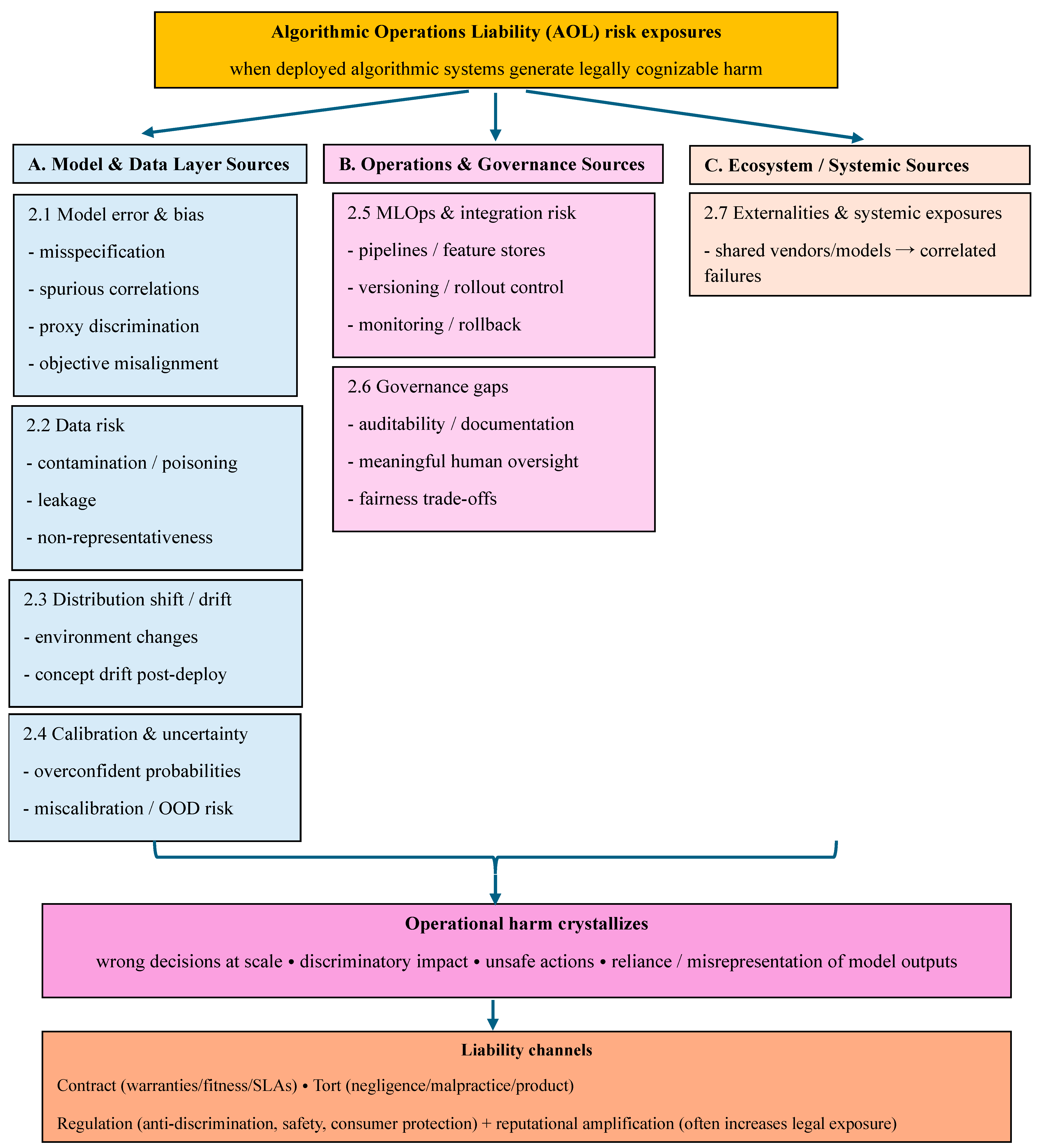
Figure 1 summarizes these AOL risk sources, and
Section 4 uses this taxonomy to motivate rating variables and risk-control questions for underwriting AOL coverage.
3. A Brief Literature Review
There is currently only a limited amount of literature examining organizations’ liability risk arising from algorithmic operations. Broadly, two strands can be distinguished: (i) legal analyses of how liability rules should apply to machine-made decisions and (ii) economic analyses of the insurability and pricing of algorithmic operations risk.
The first strand consists of legal studies on how existing and new liability regimes ought to respond to AI-driven decisions.
Diamantis (
2022) argues that deployed algorithms should be treated analogously to human employees for purposes of attributing liability to firms. Supporting this view,
Smith et al. (
2024), under existing U.S. tort and corporate liability frameworks, suggest that corporations deploying AI systems have a duty to anticipate and mitigate risks from their digital workforce, similar to the obligations imposed on employers for the actions of their human employees. On this view, plaintiffs and prosecutors can largely leverage existing employee-liability doctrines to address AOL claims.
Beckers and Teubner (
2023) examine how liability regimes should respond to “algorithmic misconduct.” They ask whether a single, unified liability regime is feasible or whether fragmented, sector-specific regimes are preferable. Drawing on typologies of machine behavior and sociological theories of legal personhood, they identify three emerging institutional forms: (i) non-human “algorithmic agents” acting on behalf of humans, (ii) human–machine associations functioning as hybrid social systems, and (iii) networks of distributed cognition formed by interconnected algorithms. For each, they propose a corresponding liability regime: “principal–agent liability” when an algorithm acts as an agent; “enterprise liability” when human and machine form a hybrid collective; and “fund liability” when fault stems from systemic interconnection rather than identifiable individual actors. This differentiated approach aims to strike a middle ground between a one-size-fits-all regime and purely sectoral patchworks, with important implications for the governance of algorithmic systems and the emerging digital public sphere.
Chagal-Feferkorn (
2019) contends that certain algorithmic decision-makers, particularly autonomous systems causing harm through defective outputs, should be treated as products rather than services for purposes of product liability law. Traditional negligence or malpractice frameworks, she argues, often fail to capture harm caused by opaque, self-learning, or unpredictable algorithms. The article proposes criteria for classifying an algorithm as a “product,” including its level of autonomy, foreseeability of misuse, and the developer’s ability to control risks. Applying product-liability doctrine, she suggests, would better incentivize safer algorithm design and provide clearer remedies for injured parties.
Kretschmer et al. (
2023) critique the EU’s draft Artificial Intelligence Act for relying predominantly on ex-ante, risk-based regulation and argue that liability should play a more central role in incentivizing safe AI design and deployment. They propose distinguishing between endogenous harms (stemming from choices by developers or deployers, such as biased data or flawed training) and exogenous harm (arising from environmental changes or misuse) and suggest allocating liability accordingly.
Fortes et al. (
2022) map the conceptual terrain of algorithmic regulation and propose a “prudential test” for assessing whether automated decision systems are appropriate for complex legal or regulatory settings. They emphasize risks such as bias, opacity, systemic error, and democratic disruption, and argue for regulatory safeguards and oversight. Their framework highlights that insurers and underwriters must evaluate not only technical performance but also regulatory context, governance mechanisms, deployment suitability, and alignment with public policy objectives.
Our article contributes to this legal literature on AOL by providing a more granular discussion of the various sources of AOL risk, analyzing how each can translate into liability, and using these insights to develop a simple taxonomy of AOL risk.
The second strand of related work consists of economic analyses of the insurability and pricing of algorithmic operations risk.
Frees et al. (
2025) propose treating liability exposures from automated or algorithmic decision systems as portfolio risks that firms can optimize, retain, or transfer, analogous to financial portfolios. They develop a data-driven framework using constrained optimization and copula models to help risk managers decide how much liability risk to keep versus how much to transfer (e.g., via insurance or reinsurance). Their approach offers a concrete method for assessing the risk-return trade-off of retaining algorithmic liability versus purchasing coverage and provides educational tools for improving decision-makers’ understanding of these exposures.
Bertsimas and Orfanoudaki (
2022) introduce the concept of algorithmic insurance by proposing a quantitative framework to estimate the liability exposure of machine-driven decision models, especially binary classifiers, for purposes of pricing insurance contracts. Their model links algorithmic characteristics, such as accuracy, interpretability, and generalizability, to expected financial loss, showing how insurers might underwrite risks specific to algorithmic operations rather than human decision-making. In doing so, they offer a foundational method for translating model performance and structural properties into underwriting metrics and pricing parameters.
We differentiate from these economic analyses that draw heavily on the simulation of scenarios by focusing on a simple conceptual framework of AOL risk pricing and discussing, in very general terms, the governance and underwriting controls to mitigate AOL risk.
4. A Preliminary Analysis of AOL Coverage Pricing and Underwriting Controls
In this section, we lay out a baseline pricing framework for AOL coverage as a starting point for developing more advanced approaches, and we discuss underwriting controls that can mitigate AOL risk.
4.1. Expected Loss, Distribution Drift, and Credibility-Weighted Rates
In a simplified setting, we examine the expected loss arising from false positives and false negatives produced by a binary classification algorithm. Let
be a probability space. Fix a rating period
. Let
denote the number of algorithmic decisions produced in period
(decision volume, used as an exposure proxy). We index these decisions by
. For each decision
, let
be
—valued random variables, where
denotes a negative case and
denotes a positive case, and
is the model’s predicted label for that decision. To allow heterogeneity across decisions, define the decision-specific prevalence as
. Define the decision-specific false positive and false negative probabilities by the conditional probabilities:
To model severity, let
and
be random severities (costs) incurred conditional on a false positive or false negative event, respectively, and assume the conditional means exist:
. These costs may include remediation expenditures, refunds, legal damages, etc. Define the event indicators
and define per-decision loss and aggregate loss as
Then by linearity of expectation and the law of total expectation, the expected aggregate loss is
A note on systemic risk is in place here: while (2) holds for the mean, dependence across , e.g., a common-cause model failure, corrupted upstream data, or a vendor outage, can materially increase and tail risk even when the mean remains unchanged.
Consider a simplified (with i.i.d. error rates across decisions) scenario where . (Note that in this particular example, if the rectifying costs are close then investing in rectifying false negatives is more efficient given the higher fraction of positives in the sample and the significantly more costly consequence of false negatives relative to false positives.) Then a first-order mean approximation of the expected loss is
In practice, the error rates
and
(and often the prevalence
) are estimated and can change under sampling error and distributional drift. We therefore distinguish two concepts: (i) estimation uncertainty around performance rates and (ii) stress performance deterioration under adverse scenarios (e.g., governance stress tests). Relying on point estimates can lead to under-pricing risk. To address this, we consider a robust pricing rule under a simplified case of i.i.d. error rates across decisions. Instead of using a single estimate
, let
be an uncertainty/stress set of plausible pairs
for period
. Given
, a conservative expected-loss input to pricing is the worst-case expected loss over
(pointwise worst-case over performance rates):
This provides a transparent cushion against model under-performance (
Angelopoulos and Bates 2023). Tail risk from dependence/heavy tails is handled separately (e.g., via tail capital charges in the subsequent
Section 4.2).
Moreover, in light of our previous discussion of distribution shift, we explicitly consider drift-loaded error rates. Let
be a drift index computed from production data in period
relative to a reference (training or recent stable period), where larger
indicates greater deviation. It is a scalar index intended to capture the magnitude of deviation between the data distribution observed during model training (or prior calibration) and the distribution encountered during deployment. A higher value of
indicates greater distributional shift, which is associated with deteriorating model performance and increased expected loss. We recognize that drift often affects error types asymmetrically. For instance, a shift in the score distribution mean might spike false positives while suppressing false negatives. Therefore, let
and
denote the distinct sensitivities of the false positive and false negative rates to drift, respectively. To ensure adjusted rates remain valid probabilities, define drift-loaded rates using a logit link:
and
where
and
The drift-loaded expected loss is then
Next, consider the effect of sample size and credibility of the data of an insured company and of the risk pool to which the insured company is classified on its AOL coverage premium rate. Let
denote an insured
’s observed loss rate (e.g., loss per decision) computed from its own experience over exposure
, and let
denote the pooled rate in the relevant class. A standard credibility-style shrinkage rule is
where
is a prior-strength parameter, i.e.,
is the exposure at which the insured’s experience receives a 50% weight (in other words, it measures how many data points the insured would need before its experience is weighted equally with the prior by the insurer). This is a pricing heuristic consistent with empirical Bayes credibility logic; it is particularly useful when
is small and idiosyncratic variation dominates.
When the insured has lots of data, i.e., is large relative to , is close to 1, implying that the insurer assigns a high level of trust towards the insured’s own experience in risk pricing. On the contrary, if is relatively small, the insured has little data, which is not much history for the exposure, and the insurer will lean its estimate rate on the portfolio average. For example, let and Then . Suppose and then the credibility-adjusted rate is .
4.2. Capital and Loss Surcharge
We now provide a preliminary analysis of how an insurer may incorporate into the premium rate (i) distribution drift excursions, (ii) stress scenarios, and (iii) extreme-tail capital charges. Define
as the aggregate loss over the rating period
. For solvency and capital calculations, it is useful to view
as an aggregate of individual claim events (not necessarily one-for-one with decisions), e.g.,
, where
is a claim count and
are claim severities; this representation makes tail measures such as TVaR well-defined. First, when distribution drift excursions above a threshold level
trigger significantly higher error rates in machine-driven decisions, it is reasonable for an insurer to include a
drift excursion surcharge in its premium rate. Let
be the drift index over future monitoring windows
, and define the maximum drift over the horizon as
. A drift-excursion surcharge can be written as
where
is a mitigation factor capturing monitoring/controls (lower
means faster detection and effective remediation, reducing losses conditional on a drift excursion). To operationalize this, estimate
from historical monitoring data and estimate
from episodes of elevated drift.
Intuitively, the drift surcharge equals the likelihood of a drift excursion, multiplied by the associated expected aggregate loss, and further adjusted by the insured’s operational resilience. This provides a pragmatic way to embed the insured’s monitoring sophistication and rollback capability directly into pricing. For example, if (the insured’s post-loss remediation halves the impact), probability of drift excursion is 0.3, and , then .
Second, we use a simplified version of
Bertsimas and Orfanoudaki (
2022) pricing formula to illustrate a
stress surcharge as a rate component. Let
index stress scenarios (e.g., combined parameter deterioration and operational shocks). Let
denote the aggregate loss under scenario
. A premium principle that combines baseline expected loss with a stress surcharge is
where
is a proportional loading (expenses/profit),
scales stress conservatism, and
denotes fixed expenses. Rates include a stress-loss add-on reflecting the worst loss within the stress scenarios set
.
Third, to incorporate solvency concerns driven by rare, high-severity AOL losses, one can include a
tail capital charge based on Tail Value-at-Risk (TVaR), which is the conditional expectation of
given that it exceeds
. For a confidence level
, define
in the standard way. A premium with an explicit cost-of-capital term can be written as
where
is a cost-of-capital factor applied to tail loss beyond the confidence level
. This is particularly relevant for AOL lines where legal damages and correlated failures can produce heavy-tailed aggregate losses that drive solvency considerations and hence exert a significant influence on pricing.
Take a simple non-negative (left-truncated) normal model for the rating-period aggregate loss with an underlying normal . Choose and . The truncation point in standard units is , so the retained mass is . The mean of a left-truncated normal is ; with , this gives For a tail capital charge at confidence level , the truncated-normal solves , so and . Because , the tail conditional mean under the truncated model equals the usual normal tail mean beyond : . With and , we have .
Now plug it into the premium principle in (8). For illustration, set the stress term aside (
) to isolate the tail capital charge, take an expense/profit loading
, a cost-of-capital factor
, and fixed expenses
. Then
Numerically, the tail term contributes to the premium: this is the explicit “capital cost” for protecting against extreme AOL realizations.
4.3. AOL Risk Control
The pricing elements in
Section 4.1 and
Section 4.2 treat AOL primarily as a
frequency-severity problem driven by model performance, drift, and portfolio tail risk. In practice, however, the insurability of AOL hinges just as much on the strength of risk controls surrounding the model as on the raw error rates themselves. Controls determine whether the expected loss and tail risk are bounded and observable enough for insurers to write sustainable coverage rather than managing exposure case-by-case through exclusions and tight sublimits. This subsection highlights several basic strategies for AOL risk control.
First, customer-facing and agency-substituting systems, such as chatbots, recommender systems, or automated decision tools, must be governed as if they “speak for the firm.” As illustrated in the introduction, courts are increasingly willing to treat chatbot outputs and automated messages as binding representations. Controls therefore include content governance (ensuring parity between official documentation and AI-generated answers), response guardrails, and fast correction workflows when errors are detected. For insurers, these controls directly affect severity by reducing the scale and duration of misrepresentations before remediation occurs.
Second, a recurring theme across our taxonomy is that “human in the loop” must be substantive, not merely procedural. Where algorithms support high-stakes decisions, for example, credit approvals, clinical triage, or employment screening, both regulators and courts are increasingly skeptical of nominal oversight that in practice defers to model outputs. Effective controls require clearly defined override powers, escalation paths for atypical or borderline cases, and accessible appeal mechanisms for affected individuals. These mechanisms reduce the frequency of harmful errors that actually crystallize into claims and also improve defensibility: when decision logs show that human reviewers engaged critically with model outputs, negligence or recklessness is harder to establish.
Third, safety and MLOps discipline are central to AOL risk control, particularly in cyber-physical applications. As noted in
Section 2.5, seemingly small integration errors, such as schema changes, unit mismatches, stale feature stores, or incorrect model versions, can silently corrupt large volumes of decisions. For insurers, these are classic operational-risk amplifiers: they simultaneously increase both the number of affected decisions and the difficulty of reconstructing what went wrong. Mature controls include stringent change management procedures, canary rollouts and staged deployments, automated rollback capabilities, comprehensive logging and telemetry, and regular chaos- or failure-mode testing. These practices naturally feed into underwriting questionnaires and can be scored to yield multiplicative credits on the base expected loss from
Section 4.1.
Fourth, documentation, auditability, and governance are cross-cutting controls that shape not only the underlying risk but also the evidentiary posture in litigation.
Section 2.6 and
Section 2.7 describe how missing documentation, unclear ownership, and weak audit trails magnify AOL exposure by making it difficult to demonstrate that the organization met a reasonable standard of care. From an insurance standpoint, this means that policies are increasingly underwriting governance failures alongside technical model errors. Model cards, data-sheet-style documentation, and versioned validation reports are not merely good practice; they are underwriting artifacts. Carriers can require them as prerequisites for higher limits and lower deductibles and use their presence and quality as proxies for unobserved aspects of organizational culture.
Finally, risk control has a portfolio and ecosystem dimension. As noted in
Section 2.7, many AOL failures are systemic, arising from shared infrastructure, widely deployed foundation models, or common datasets. At the insured level, diversification of critical vendors, contingency plans for major provider outages, and internal scenario exercises for “model-version shocks” reduce accumulation risk. At the insurer level, these same controls influence how much line can be put out on a given client or model family. Where systemic controls are weak, coverage may only be available on a tightly sublimited, claims-made basis; where they are strong, AOL risk looks more like a traditional, diversifiable operational line.
5. Conclusions
This article has taken a deliberately operational view of algorithmic liability. We began by defining algorithmic operations liability (AOL) risk as the exposure created when deployed algorithmic systems generate legally cognizable harm, and by developing a simple taxonomy of various AOL risk sources. This taxonomy connects technical failure modes to concrete liability channels in contract, tort, regulation, and reputational loss, and is intended to be usable by both underwriters and in-house risk managers.
Building on this taxonomy, we proposed a preliminary AOL pricing framework that remains close to standard actuarial practice. Starting from a confusion matrix, per-error severities, and the volume and class mix of decisions, we expressed the base expected loss of a binary classifier in frequency-severity form and then introduced three enhancements: (i) a small uncertainty set over false-positive and false-negative rates to guard against estimation error; (ii) drift-loaded error rates when distribution shift is measurable; and (iii) credibility-weighted rates that blend insured-specific experience with portfolio-level priors when insureds have limited history. We then showed how these ingredients can be augmented with stress and capital loadings, including a simplified Tail-Value-at-Risk-based capital charge that is especially relevant for low-frequency, high-severity AOL events.
AOL pricing, however, cannot be separated from AOL risk control.
Section 4.3 emphasized that insurability depends as much on surrounding governance, safety engineering, and operational discipline as on measured error rates. Controls such as meaningful human oversight, content and representation governance for customer-facing systems, strong MLOps and change-management practices, robust auditability and documentation, and diversification of critical vendors help bound both expected loss and tail exposure. These controls not only reduce the frequency and severity of AOL events but also influence insurers’ underwriting appetite by improving observability, defensibility, and resilience.
We have addressed a broad and heterogeneous space of algorithmic operations, including settings in which models are third-party tools, governance structures remain nascent, and insurers must underwrite based on high-level information about decision volumes, severities, drift indicators, and organizational controls. By articulating a unified conceptual framework that bundles technical failure modes with governance and operational considerations, we aim to help bridge legal and regulatory debates on AI liability with the practical design of insurance contracts. Our goal is to provide a foundation on which both insurers and insureds can build more rigorous, transparent, and scalable approaches to managing AOL risk as algorithmic systems become deeply embedded in commercial and institutional decision-making. Moreover, while our actuarial building blocks provide a tractable starting point, they do not capture the full dynamic nature of AOL risk. Developing more structural, dynamic models of AOL risk remains an important direction for future research.