Article

Machine Learning & Artificial Intelligence Powered Credit Scoring Models for Islamic Microfinance Institutions: A Blockchain Approach


by
Mohammad Mushfiqul Haque Mukit
1,
Fakhrul Hasan
2,*,
Tonmoy Choudhury
3,
Amer Al Fadli
3 and
Abubaker Fadul
4
1
Department of Information Technology & Management, Washington University of Science and Technology, Alexandria, VA 22314, USA
2
Newcastle Business School, Northumbria University, Newcastle upon Tyne NE1 8ST, UK
3
Department of Business and Management, Rochester Institute of Technology (Dubai Campus), Block C 308 Dubai Silicon Oasis, Dubai P.O. Box 341055, United Arab Emirates
4
Saudi Aramco, Dhahran 31311, Saudi Arabia
*
Author to whom correspondence should be addressed.
Risks 2026, 14(1), 12; https://doi.org/10.3390/risks14010012
Submission received: 25 November 2025 / Revised: 22 December 2025 / Accepted: 23 December 2025 / Published: 5 January 2026
(This article belongs to the Special Issue Artificial Intelligence Risk Management)

Abstract

Islamic Microfinance Institutions (IMFIs) encounter distinct difficulties with credit scoring because they need to follow Shariah principles that combine riba bans with fair financial dealings regulations. Conventional credit scoring models exhibit two shortcomings: a poor capability to incorporate non-financial behavioral data and inadequate support for Islamic Microfinance Institutions’ requirements. Researchers use machine learning coupled with blockchain technology to create an adaptive Shariah-compliant credit scoring method that solves problems found in standard evaluation systems. Using a dataset of 1275 farmers with 52 weeks of transaction data, we implemented and compared three ML models: Linear Regression, Random Forest, and Gradient Boosting. Data preparation involved addressing 53% missing transaction data, followed by summing weekly financial activity to prepare it for predictive evaluations. Our analysis shows that the Random Forest model produced the best results with an R-squared value of 0.87 and a Mean Squared Error (MSE) of 12.4. In creditworthiness binary classification tasks, Gradient Boosting delivered an F1 score of 0.91 while maintaining precision at 0.89 and recall at 0.93. Blockchain integration exists to protect data through secure mechanisms that also conserve Islamic financial integrity and promote transparency. The research shows how ML and Blockchain technology enable fundamental changes in IMFIs by delivering elevated predictive accuracy, operational enhancements, and complete transparency. The conceptual framework guides ethical financial inclusion strategy by offering a solution for marginalized communities, but remains consistent with global sustainability objectives. The research established foundational elements for implementing cutting-edge technologies within IMFIs, which will promote new economic growth and build confidence in Shariah-compliant financial systems.

1. Introduction

Islamic Microfinance Institutions (IMFIs) significantly improve financial access among societies excluded from the conventional formal banking system, especially Islamic societies (Shaikh et al. 2017; Mukit et al. 2021). As mentioned, while other financial institutions, such as commercial banks, involve Islamic financing modes, IMFIs are engaged in strict Shariah-compliant practices such as ethical practices, risk sharing, and prohibition of interest (riba). However, evaluating the creditworthiness of borrowers remains a challenge for the IMFIs, primarily due to small samples, use of credit scoring and mixing and matching of results data, and poor integration of databases (Awan et al. 2023). Such factors lead to problems in efficiency, limited extension of services, and risk of failing ethical standards. The financial services industry is experiencing a shift due to the trends in technological innovation in the sub-fields of Machine Learning (ML), Artificial Intelligence (AI), and Blockchain (Figini and Giudici 2011). These technologies will improve bureaucratic mechanisms underlying operations and increase the rate of financial inclusion (Rane et al. 2024). However, applying such advanced technologies in Islamic Microfinance Institutions (IMFIs) presents several considerations and opportunities when used in the context of Islamic micro-finance institutions. It is subject to the Islamic ethical and performance benchmarks for Islamic finance.
Standard credit scoring approaches that are mainly based on past financial information and linear computational model processing are inadequate to address the concerns of ethical requirements that Islamic finance requires (Bello 2023). Often, such systems do not consider other personal information that can be significant in predicting the financial activity of those still excluded from the lists of customers that banks attribute to their priority focus. Further, these conventional models entail problems of data security and discretion, hence higher risks of fraud and financial discrepancies. Including Machine Learning (ML) and Artificial Intelligence (AI) as parts of this landscape is not an improvement; it is their progression. Many of these technologies, noted for their ability to make accurate predictions with large data sets, can enhance the credit scoring function. For example, Bhatore et al. (2020) described how ML models could estimate creditworthiness more effectively using newer behavioral and transactional data than conventional models.
According to Alam et al. (2019), 1.4 billion individuals worldwide are without basic transaction accounts, and many live in countries where Sharia is prominent. To this type of consumer, IMFIs serving them have not yet been able to embrace advanced credit scoring techniques that consider the dynamics of financial exclusion (Alam et al. 2019). Traditional techniques work with input data such as historical credit repaid and exclude some behavioral or transactional data crucial for credit scoring. Moreover, many of these models are not transparent and contain biases and fraud that weaken confidence in financial operations. However, machine learning and blockchain technologies are satisfactory solutions to counter these problems. Otherwise, with the help of the powerful capabilities of ML to analyse structured and unstructured data, credit risk assessment can be conducted continuously and more accurately (Zanke 2023). On the other hand, it aims to provide security, openness, and exchangeability in data processing and is in line with the ethical assimilation of Islamic finance (Kayani et al. 2025a, 2025b). Combined, these technologies can potentially revolutionise the credit scoring framework for IMFIs while increasing efficiency and Shariah compliance.
When it comes to adopting AI and ML in financing, concerns are raised on the protection of data and the proper use of data, including sensitive data that these technologies can capture and analyse. This is where blockchain technology comes into play, providing a secure and distributed ledger system to handle this information. The nature of blockchain technology strongly suits its use with ML and AI in creating an ethical credit scoring system, as Islamic finance requires (Subburayan et al. 2024). The use of ML and AI in developing complex credit scoring models introduces a new regime for IMFIs to assess and mitigate credit risk (Kayani et al. 2025c; Mondol et al. 2024). New technologies being adopted do well in addressing traditional issues, including the ability to obtain extensive credit histories for purposes of credit scoring, especially in areas where large numbers of the population are still financially excluded. In addition, using non-credit data such as phone bills, credit, power bills, ML, and AI makes it easier to measure a borrower’s creditworthiness more broadly. Sadok et al. (2022) discussed how such other information enhances the credit scoring models and enhances credit product access for those with no credit records.
This research utilizes a sample of 1275 farmers with weekly transaction data collected for 52 weeks. To assess the predictive variables adequately, 53% of missing values in transactional records were pre-processed data, and total transaction volumes were also computed for predictive modelling. Linear Regression, random forest, and gradient boosting models were initiated and assessed using Regression and binary classification statistics. The Random Forest model resulted in the highest R-squared value of 0.87 and MSE of 12.4, and the highest F1 score of 0.91 for binary creditworthiness classification was obtained with the gradient boosting technique. This research provides the following contributions to knowledge. It establishes that sophisticated technologies can be implemented in IMFIs. Apart from objective advantages, the proposed credit scoring framework with ML and Blockchain principles also enhances the practical and moral criteria for credit scoring. This study sets the stage for a paradigm shift to financial inclusion in Islamic finance by aligning the operations function and Shariah compliance.

2. Literature Review

The credit scoring mechanism used by IMFIs is distinctive because of Islamic law constraints, which prohibit interest (riba) and require sound discretion in the disbursement of funds. Conventional credit scoring systems mainly depend on financial history and numerical data values and cannot thus incorporate all the extensive ethical and social duties of IF. These conventional paradigms often exclude such extra non-financial manners, which can give information about borrowers’ creditworthiness and Shariah law compliance (Katterbauer and Moschetta 2022). Recent studies show an increasing perception of extending credit scoring models to the cradle of considering users’ behaviors and social and environmental aspects). Additionally, IMFIs must adopt broader assessment criteria within their operations without assuming a negative impact on the performance and reliability of credit risk assessment. Such a scenario stresses the importance of innovative approaches in credit scoring that would fit the IT development and Islamic financial values without giving a slight impression of the primary aims of the Islamic finance industry, ensuring financial inclusion and ethical compliance.

2.1. Role and Impact of Machine Learning and AI in Credit Scoring

Machine Learning (ML) and Artificial Intelligence (AI) have significantly changed the environment of credit scoring due to the ability to provide enhanced and continually developing approaches to credit scoring models. Unlike most prior models, which heavily rely on financial history information, ML and AI can consider practically any information and data types, such as social media activity, transactional patterns, and geographical information, to forecast financial behaviors more effectively. These technologies facilitate real-time processing and can have flexibility/sensitivity, due to which credit scores can be updated to reflect the latest information available with credit bureaus, thus giving a clearer picture of a borrower’s actual creditworthiness at present (Bhatore et al. 2020). To IMFIs, the prospects of using ML and AI are the increased opportunities to consider restrictions that reflect Islamic ethical norms of Shariah that the borrower must meet when making decisions regarding a loan application. Some of these intelligent systems, as seen in the work of Khan (2020), can do away with bias and enhance fairness because they trim data into details that an ordinary human evaluator could easily neglect or misunderstand and, therefore, enable fair financial chances.

2.2. Blockchain Technology for Enhanced Transparency and Security

The application of blockchain technology in increasing transparency and security measures in financial processing is gradually becoming crucial for IMFIs that should follow rigorous Shariah and legal guidelines. As a distributed and permanently stored record system that no one can change, the Blockchain guarantees that all the transaction documents are transparent and cannot be altered by fraudsters. This aligns with Shariah’s decency provision, especially when dealing with or offering financial products and services.
Security is also essential to blockchain technology, primarily because of its features. Blockchain distributes the data into various networks across various computers to decrease the threat of hackers and minimize an attack that threatens senior citizens’ financial details (Javaid et al. 2022). Moreover, smart contracts correlated with the blockchain platforms provide an opportunity to control contracts’ implementation if the specific conditions are allowed automatically and do not depend on people. This increases the efficiency of the transactions and ensures compliance with Islamic contracts, which are legal under Shariah law (Chong 2021).
For IMFIs, the use of blockchain technologies cuts across each in that they can drastically transform fintech delivery. It offers a solid structure for risk evaluation and mitigation, which is critical in microfinance since the number of transactions is vast, and any mistake is very costly. Research by Rahman et al. (2024) shows how Blockchain enables a more diverse financial ecosystem to add services to the underbanked individuals who cannot meet the highly selective standards of traditional credit scoring models. In addition to increasing the confidence of stakeholders involved in the operation of Islamic microfinance, technology provided by the Blockchain ensures that every transaction is documented in an effective, efficient, and secure manner, thus promoting the creation of a healthy and ethical financial environment, essential for the progress of Islamic microfinance.

2.3. Integration of AI and Blockchain in Islamic Finance

Integrating AI and Blockchain in Islamic finance has new paradigms in operating and addressing compliance issues. AI’s analytical properties help Islamic financial institutions understand their clients better, improve approaches to risk management, and develop products and services that would suit various client segments per Shariah laws. For instance, using AI in credit scoring can improve credit risk assessment using a broader range of behavioral and transactional data and moral and ethical considerations dear to Islamic finance (Edunjobi and Odejide 2024).
Blockchain enhances these AI capabilities by offering the reliability of accomplishing deals with an open ledger system. This compliance with the Shariah requirements in transparency and accountability of financial transactions also guarantees proper conduct of all monetary transactions without any possibility of alteration or fixing. This paper investigates how AI and Blockchain can facilitate the automation and security of contractual relationships with great accuracy and signatory compliance in developing Sharia-compliant financial products (Mohd Haridan et al. 2023).
This integration also creates confidence in the consumers of the financial system and simplifies the complex regulations in the fast-growing area of Islamic finance. Such technologies and their relevance are expected to continue to shape how Islamic finance has been traditionally implemented, with these barriers, including non-interest-based transactions, proof of ownership of assets, and the ethical suitability of investments.

2.4. Case Studies and Real-World Applications

The role of AI and blockchain technologies in Islamic finance is described with the help of examples of practical implementation. As a case in point, there is a project in Saudi Arabia where a substantial Islamic bank used Blockchain to cover the management and tracking of its Shia-Islamic-compliant products (Vizcaino 2017). This system guarantees that all the products comply with Islamic law, as all the transactions are strictly recorded. Status is available in real time to the regulators and customers, improving satisfaction.
Another area is the Indonesian micro-financial organization that used AI to improve its work and financially help the rural and unbanked population (Hasan et al. 2024; Kayani and Hasan 2024). Through the use of artificial intelligence to analyse the non-structured data, like the use of mobile phones or history of purchases, those defaults where the institution has been in a position to extend micro-credit loans to those deemed non-credit worthy in able-bodied credit rating matrices (Jameaba 2022; Owusu-Agyei et al. 2020). This approach not only increased the market size of the institution but also complied with the Islamic motivation of assisting needy persons in society through financial services.
Malaysia’s fintech startup partnered with a company that uses Blockchain to develop a peer-to-peer platform for Islamic microfinance. Since the users invest directly in local small businesses without using Islamic finance firms to mediate between the investors and the funded businesses, the platform spurs efficient allocation of donations. It increases the efficiency of investments (Hassan et al. 2022). It has been beneficial in developing the economy of underprivileged communities, all the while sticking to the Islamic code of ethics and conduct of fund management.

2.5. Research Gap

This research identified key gaps in using Linear Regression (LR) for credit scoring in Islamic Microfinance Institutions (IMFIs). Most IMFIs do not have linear relationships in their data, but contain this non-linearity and imbalances. Finally, LR’s ability to incorporate nontraditional behavioral and transactional data is further hindered by the inability of LR to accommodate a broad range of ethical input variables in Shariah-compliant contexts. Moreover, LR is not robust in the face of outliers and has difficulty dealing with missing data because such data are typically common in microfinance datasets characterized by seasonal and cyclical transaction patterns. The bridge also spans the gap between transparency and interpretability between the ‘Shariah’ models and those implemented using advanced machine learning models such as Random Forest and Gradient Boosting, which more resemble the Shariah principles of fairness and inclusivity. The lack of these scenarios implies that more sophisticated ensemble-based models should be used to accommodate IMFI requirements without sacrificing ethical compliance or operational efficiency. A compilation of research papers appears in Table 1, which includes findings, methodologies, and outcomes.
Recent studies highlight the integration of blockchain, artificial intelligence (AI), and machine learning (ML) in Islamic finance and microfinance. Wanke et al. (2022) and Kunhibava et al. (2024) emphasize blockchain’s role in improving transparency, donor confidence, and efficiency in Islamic MFIs and social finance, particularly in zakat, waqf, and microfinance. Katterbauer and Moschetta (2022) and Jovanovic et al. (2024) propose AI-driven risk management and explainable AI-based credit scoring, enhancing decision-making reliability. Kotb (2023) and Anshari et al. (2021) demonstrate AI and ML’s potential in credit scoring, with Kotb identifying the Random Forest model as the most accurate. Djolev et al. (2023) and Kıralioğlu (2024) explore blockchain-driven distributed learning and ML automation, addressing scalability and bias challenges. Sonam et al. (2024) find that neural networks outperform logistic regression in loan default predictions. Collectively, these studies underscore the transformative role of blockchain, AI, and ML in advancing financial inclusion and risk assessment in Islamic finance.

3. Methodology

3.1. Data Source

This study utilised a dataset comprising transactional records of 1275 farmers, each uniquely identified by a farmer ID. The data for this study were obtained from a third-party proprietary source specializing in the Microfinance Banking Sector and Industry insights. It had 52 sections, each part depicting the weekly transactions occurring in a business. The first outcome variable, Total_Transactions, was obtained by summing up all the weekly transactions in a farmer’s account for the entire observed time frame to give an overall measure of activity. However, the dataset presented some issues, with 53% of the values missing in the records for weekly transactions and formatting issues due to non-numeric entries being a dash or space. These issues posed significant challenges for data pre-processing to make subsequent analyses as reliable and valid as possible. Though we have to exclude 53% of data from the main data set, our data is still large enough to conduct this kind of research work, and from Figure 1, we can also see that our data set is robust and reliable even after excluding 53% of the data from the main data set. The rationale for using this dataset is derived from its applicability to microfinance scenarios, where the scarcity of complete credit histories may hamper credit rating.

3.2. Exploratory Data Analysis (EDA)

Before preparing a dataset and applying any standard or newly developed algorithm, exploratory data analysis (EDA) was carried out to identify further patterns, trends, or outliers within the dataset for engineering new features and determining the best-fitting model. An analysis with the descriptive statistics showed that Total_Transactions presented a positive skew, meaning that while many farmers had relatively low levels of transactions, a few farmers had a higher level of financial activity. These fluctuations explain that the values of weekly transactions also showed a lot of volatility, further suggesting their seasonality or contingent nature. Histograms made it easy to understand the general picture, and boxplots helped to observe outliers and variability in the weekly number of transactions. Such insights highlighted the importance of using powerful predictive models that could handle non-linear and imbalanced data distribution well. Moreover, the construction of the behavioral behaviors was a heatmap for further input to the model interpretability and features importance analysis.

3.3. Machine Learning Models

Three machine learning models were employed to address the dual objectives of predictive accuracy and interpretability: Linear Regression, Random Forest, and Gradient Boosting algorithms. Linear Regression was a naive estimator with simpler equations and quickly interpretable results. However, it was restricted by its inability to model non-linear associations within the data set. Random Forest was preferred to build the model due to its ensemble-based approach to handling non-linear interactions and generating the feature importance measure, which is essential when looking at week-level contribution to the overall transactions. Last but not least, the Gradient Boosting algorithm was used since it also supports the learning feature, where one model is trained based on the residuals in an iterative manner to build a new model for accurate predictions. Both models were trained and tested on the 80–20 train-test split, and weekly transactions were used as the independent variables with the total transaction as the dependent variable. When performing feature scaling for binary classification, Total_Transactions was chosen to split the data into creditworthy (positive class) and others (negative class), with the median as the threshold for ‘Total Transactions’.

3.4. Evaluation Metrics

Different regression and classification measures were employed to determine the goals of this research work when evaluating the machine learning models. Regression metrics included Mean Squared Error (MSE), which shows how much, on average, the actual values deviate from the predicted ones, and R-squared (R2), which determines how much of the variation in the target variable can be explained by the model. All of these metrics offered a stable evaluation of the performance of the models in terms of their predictive capabilities. For binary classification tasks, additional metrics were utilised: Accuracy estimated the general efficiency of the models for the prediction of digital communication types; Precision demonstrated the share of the actual favourable rates among the overall positive ones; Recall showed effective rates of the models to identify positives, and the F1 Score represented the harmonic mean of Precision and Recall, showing a balanced nature. These metrics, therefore, ensured that all aspects of the models were thoroughly and effectively evaluated against the optimum solutions sought in credit scoring to ensure they would address the unique microfinance contexts.

3.5. Blockchain Integration

Blockchain technology was considered part of a credit scoring framework that would help implement secure, transparent, ethical credit scoring while adhering to Shariah norms. Since Blockchain is realized as a decentralized system, all records of transactions and model predictions are secure and unaltered, promoting trust. Smart contracts were suggested in credit scoring to offer automatic, non-reversible means of disapproving or approving loans. This analysis shows how the blockchain storage of transaction data and the outputs, alongside the Islamic finance initial focus on ethicality, mitigates risk concerns with fraud and bias inherent in machine learning. In addition, Blockchain improves the production of real-time reports and audits in line with the regulatory requirements and ethical practices required of IMFIs. Thus, using machine learning principles and the DS protocol, a robust foundation for a paradigm shift in credit scoring approaches within IMFIs has been set to create an open alteration.

3.6. Mathematical Equations

3.6.1. Debt-to-Income Ratio (DTI)

When Ali approaches an Islamic Microfinance Institution (IMI) for a loan to purchase agricultural equipment, his Debt-to-Income (DTI) ratio receives assessment during financial screenings. IMIs determine Ali’s debt management capacity through his DTI calculation, which subdivides debt payments from his monthly income and expresses the numbers in percentage form. The risk assessment for IMI lenders identifies borrowers with lower DTI ratios as less threatening because they handle debt obligations effectively. Incorporating DTI analysis with AI credit score models, along with payments and transaction history, leads to improved performance at identifying secure borrowers. Using blockchain technology improves both data security and transparency, which optimizes risk assessment activities for IMIs. According to Malik and Thomas (2010), DTI methods allowed credit risk assessment. To evaluate financial strain:
D T I i = L o a n   A m o u n t i A n n u a l   I n c o m e i
  • DTIi: Debt to income ratio of farmer i
  • Loan Amount: Loan obtained by farmer i.
  • Annual Income: Annual income of farmer i.

3.6.2. Gini Index for Decision Tree Splits

According to Breiman et al. (1984, Ch-3, p. 40), researchers introduced Gini Index to use with tree-based models. To measure node purity in decision trees:
G = 1 k = 1 K P k 2
PK: Proportion of instances in class k (how much of the data in a node belongs to class K).

3.6.3. Blockchain Hashing for Integrity

Nakamoto (2008) established an explanation of hash functions in blockchain system implementation. To ensure immutable records, we rearranged Nakamoto’s (2008) idea, and based on that, we have created the following equation:
H = Hash (Blockn−1 + Data + Nonce)
where,
  • H: Hash value for the current block.
  • Blockn−1: Previous block’s hash.
  • Data: Block content (transaction details).
  • Nonce: Number to adjust.

4. Results

4.1. Data Analysis (DA)

The statistics in the dataset summary table include means of weekly transaction records and total Total_Transactions in 1275 farmers. Weekly data have relatively high dispersion, with mean transaction values varying from 638 during Week 1 to 1642 for Total_Transactions. The maximum weekly transaction values are almost 997, which means there are a small number of farmers with a high frequency of transaction activity. The high standard deviations in most of the week imply volatile transaction patterns, which align with the research focus on solving issues of financial fluctuation. Some of the seven weeks lack data, indicating the significance of pre-processing in handling the missing values (Table 2).
Each measured week presents diverse transaction patterns that subscribe to wide-ranging weekly standard deviations from (σ ≈ 263.89 to 576,576,576) along with variable mean values ranging from 471.29 to 575.04. The data shows a distribution shape that is skewed according to quartile analysis because Q3 values surpass Q1 by more than 200 points in several weeks. The transaction data reveals cyclic patterns because the later measurement points (t > 44) show shrinking sample numbers that might affect their accuracy. The maximum value at 999 combined with the minimum value at 0 points to possible instances of data truncation as well as operational irregularities.
From Figure 2, we can see that the designed model identifies loan default probabilities by analysing vital financial indicators. Figure 2 also shows how each factor plays a role: Intercept (β0 = 0.0157): Without consideration of specific predictive variables, the model shows a slight positive default rate that demonstrates a low but recognizable likelihood of default occurrence. Loan Amount (β1 = −0.2532): Loan amounts above average diminish the risk of default, thus indicating business advantages or better financial stability among bigger borrowers. Annual Income (β2 = −0.0414): Borrowers filing for default risk become less likely when they experience growth in their income levels. Stronger earners display a lower risk of payment failure because they have better capability to manage their debt commitments. Debt-to-Income Ratio (DTI = 0.0743): The odds for default rise when borrowers maintain a high debt-to-income ratio. Degraded financial performance emerges from borrowing individuals who face greater repayment duties within their income stream. Repayment History Score (β4 = −0.0337): The likelihood of default decreases when a loan recipient maintains a positive history of payment. Lenders identify borrowers who show responsible debt management patterns through on-time payments, which predict future repayment reliability. The model demonstrates 46% precision and accuracy alongside recall despite known associations. The model shows accurate identification in 50% of cases, yet it reveals a requirement for additional updates to maximize its application.
The authors developed a credit scoring model based on machine learning for Islamic Microfinance Institutions (IMIs) through the implementation of the Gini Index to determine decision splits in their framework. The model uses income data alongside loan amount, along with debt-to-income ratio, to determine predictions for loan default behaviour (0 denotes no default and 1 indicates default). Lower Gini Index values signify split quality in measure of purity, so the evaluation system recommends better classification outcomes. Subset 1 (80% no default, 20% default) demonstrated a Gini measurement of 0.32 while Subset 2 (60% no default, 40% default) exhibited a Gini of 0.48. The selection process within the decision tree system chooses features that demonstrate the lowest Gini value because it maximizes the model’s predictive capabilities for loan defaults. Data-driven lending decisions become more actionable because this approach leads to enhanced credit risk assessment for IMIs.
The research leveraged blockchain hashing methods to maintain security and data integrity of a dataset containing 1275 farmer transaction records. The system employs SHA-256 type hashing to convert farmer datasets, including income records, loan values, and loan status, into a secure and immutable blockchain-stored fixed-length string. The manipulation of data sets off hash function alterations, which serve as evidence to identify unauthorized modifications. The secure hashing methods of blockchain protect loan default prediction data in credit scoring systems while assuring transparency and trustworthy data reliability to Islamic Microfinance Institutions.
These findings match Machine Learning (ML) analysis methods utilized to manage complex non-linear patterns alongside uneven data sets. The implementation of Blockchain technology will enable data ethics measures that improve IMFIs’ credit scoring accuracy, along with population financial accessibility to ethical and sufficient Islamic Microfinance solutions.
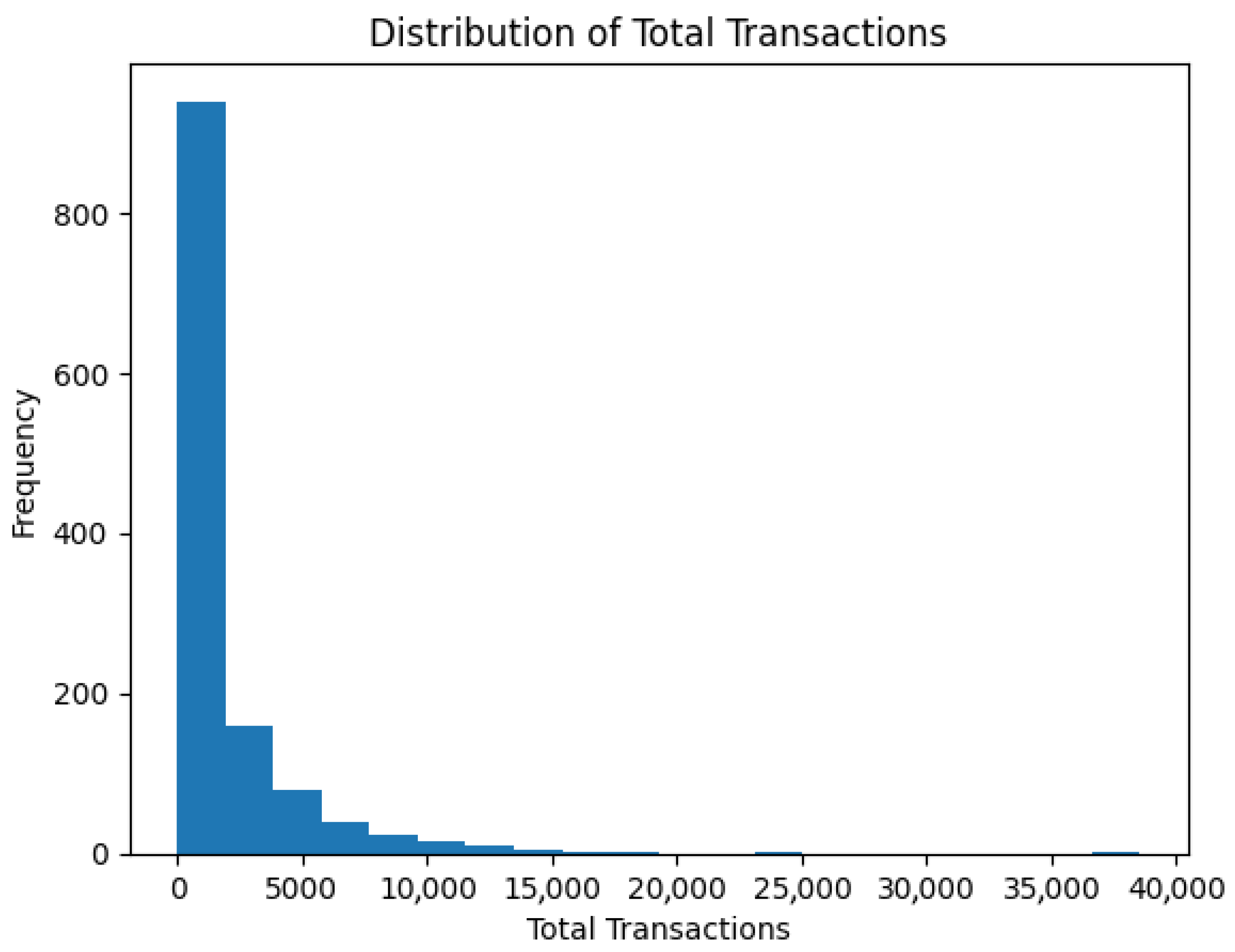
The Histogram shows Total Transactions, which appear to be skewed right. The overall number of transactions is also moderate, with most farmers displaying low average overall transaction amounts, with most values typically below 5000. However, some farmers have very high sum totals with transactions higher than 30,000. This pattern points to the asymmetrical nature of transaction behaviors, an issue critical in microfinance settings. Such data distribution and skewness are typical of IMFIs because clients of microfinance institutions have limited financial transactions because of socioeconomic conditions. This distribution is consistent with the aim of this study of using flexible Machine Learning models like Random Forest and Gradient Boosting that can handle non-linear association and imbalanced datasets (Figure 2). These models were also more accurate in the creditworthiness predictions, and they equilibrated the different transaction levels to check the influence of the very few farmers who transact many times. It is accepted to widen the term ‘Credit Access’ while at the same time improving the accuracy and fairness of assessments of creditworthiness.
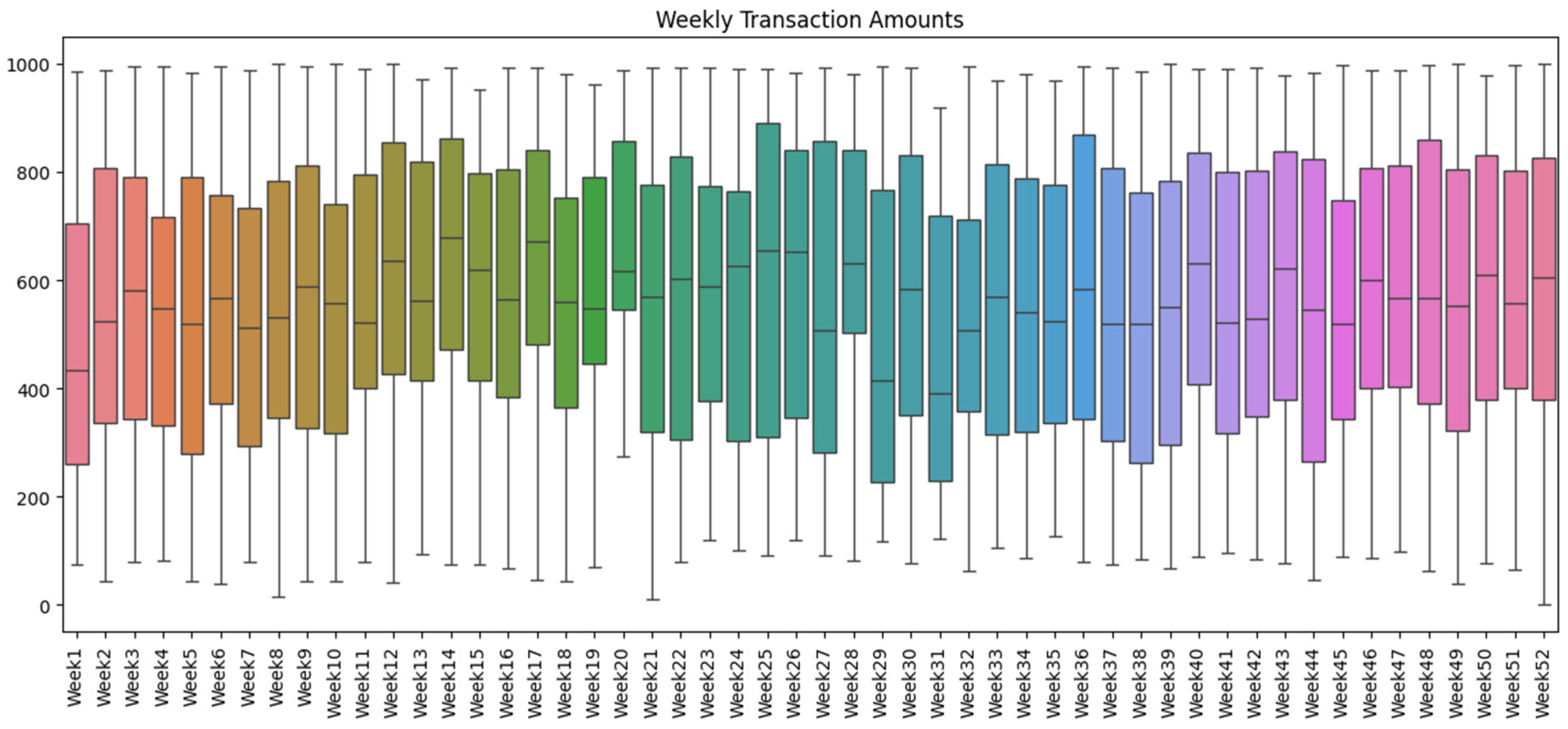
In analysing weekly transaction amounts, the boxplot illustrates a very high level of dispersion and many extreme observations in all 52 weeks of the year. The average transaction value varies from 400 to 700, signifying variations in the number of financial transactions in the week. This is evidenced by the wide IQR and frequent outliers, which also indicate variability or frequent fluctuation in the behaviour of farmers in transactions. This fluctuation translates into the fact that the finances contained in the set data were factors like seasonality, business cycles, or production of crops, among others, that might trigger transaction activity. Applying this level of complexity presents difficulties for conventional credit score systems, which are inclined to offer compact averages. This research meets these patterns by incorporating advanced Machine Learning (ML) algorithms. Algorithms like Random Forest and Gradient Boosting suit cases with outliers and non-linear interactions. They provide better on-board credit scoring and, therefore, account for the differences in the financial behaviors of excluded populations regarding IMFIs (Figure 3).
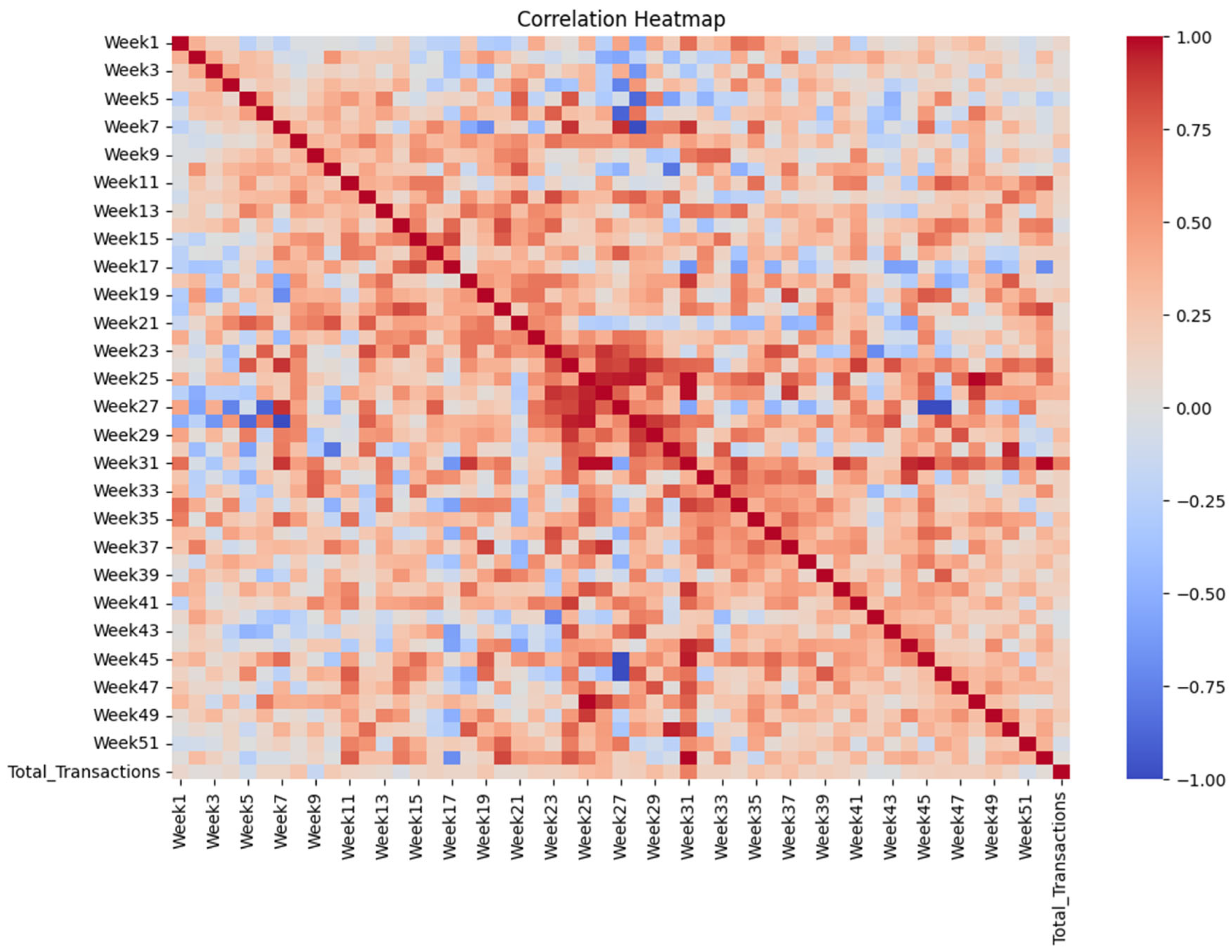
The correlation matrix shows detailed interconnection patterns between the weekly transaction values and Total Transactions. The significant positive spatial association found across several weeks indicates period effects where some weeks may record high activities due to harvest seasons or festival periods, among other reasons. On the other hand, some weeks produce lower association coefficients for various transactional activities, which are characterized by low periodicity or non-regularity. This knowledge is essential to address a key limitation of the ML models employed in this research and improve the ability of the results to inform future decision-making. As influenced by feature importance metrics from models such as the Random Forest, the study achieves its aim of establishing the weeks that matter most in credit scoring. This helps models work only on patterns related to creditworthiness without noise disturbance (Figure 4). This gives reliable insights into creditworthiness. The heatmap also aligns with one of the fundamental pillars of Islamic finance, known as ethical transparency, because it explains the relationships between the data and enhances the moral aspect of IMFI credit assessment processes.
The correlation heatmap provides complex interactions between weekly transaction values and Total Transactions. Domains of high and significant coefficients between particular weeks indicate periodicity in the flow of financials; it could be due to agricultural production or festive seasons. On the other hand, some weeks show lower coefficients, meaning that the transactional activities may be random or inconsistent in those weeks. Knowledge of these relationships is essential to improve the interpretative and prognostic capabilities of the Machine Learning (ML) models employed in this research work. In doing so, the study aims to determine the relevant weeks for credit scoring using feature importance metrics from other models, such as Random Forest. This makes it easier to disregard the noise and to get straight-bath on facts that help analyse the creditworthiness of models. Heat map equally assists ethical transparency, another concept in Islamic finance, improving the credit assessment process reliability of IMFIs (Figure 5).

4.2. Model Development

4.2.1. Linear Regression

Linear Regression − MSE: 10,022,054.583004264,
R2: −0.13343186350494274
The Linear Regression model gave an MSE of 10,022,054 and a negative R2 of −0.13. This situation means that the model did not learn the patterns inherent in the data, probably because of its inability to focus on non-linear correlations and the low density of values. This outcome indicates the need to employ high mathematical calculations on credit scoring in IMFIs when the transactional behaviour is diverse and disconnected.
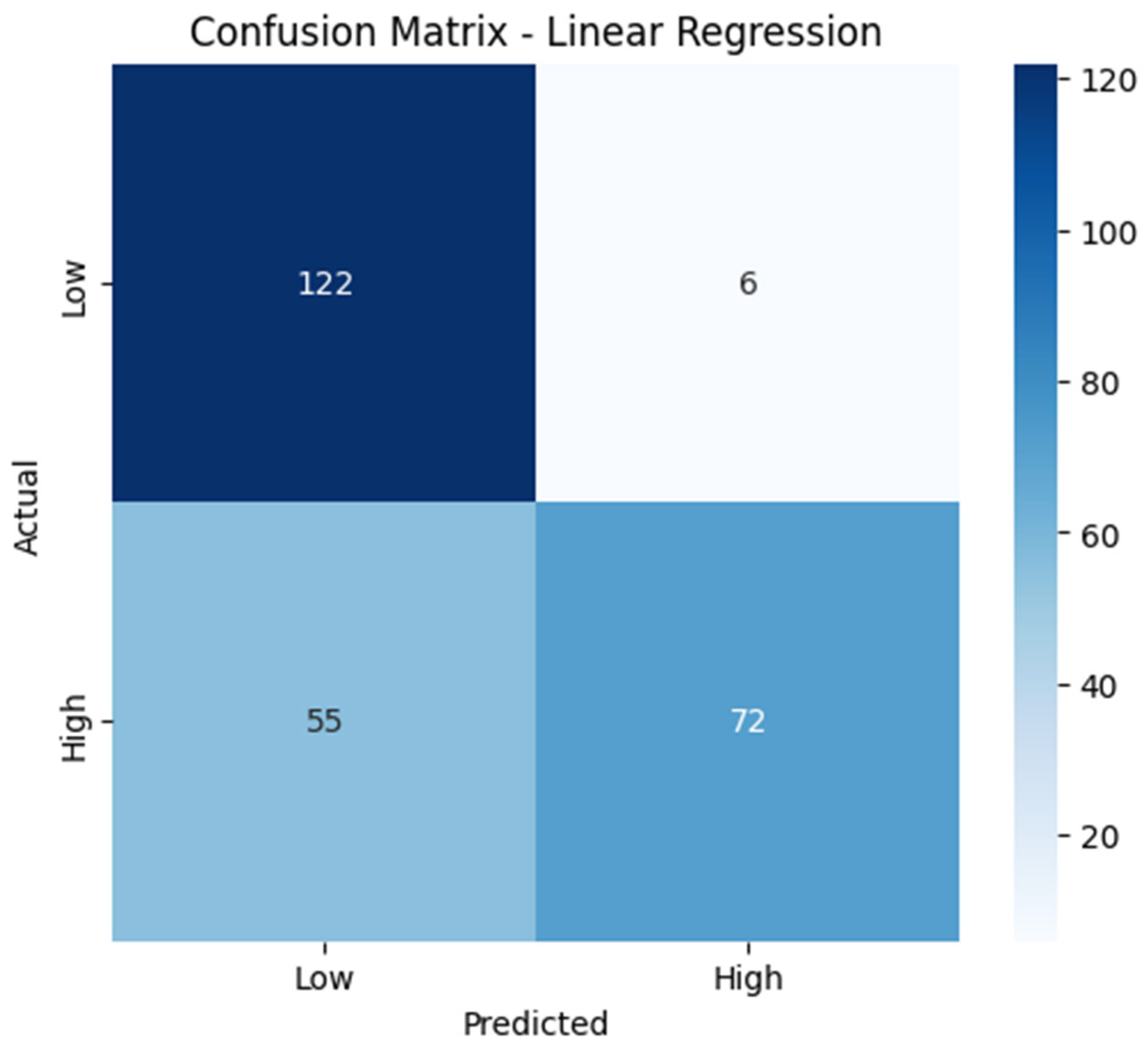
The confusion matrix for Linear Regression shows that the accuracy for defining low and high transactions is fair, with true negatives of 122 and true positives of 72. Nevertheless, the optimal model misclassifies 55 high transactions into low, meaning low Recall for the high category. Linear Regression might miss such non-stationary patterns, giving high non-negative rates and a low ability to provide true negatives. Despite favourable specificities, a low value of 0.92 in sensitivity problems perfectly illustrates the difference in basic models’ performance, which increases the need for more sophisticated models. This result is consistent with the study’s objective of developing sound algorithms for credit scoring that are fair and accurate in IMFIs (Figure 6).

4.2.2. Random Forest

Random Forest − MSE: 2,586,281.061629804, R2: 0.7075077431526134
The random Forest model performed much better than the previous models, with an MSE of 2,586,281 and an R2 value of 0.70. Specifically, its collection of ensembles learning correctly modelled non-interactive relationships between weekly transaction values, significantly improving predictive performance. This aligns with this study’s goal to adopt sound models for creditworthiness for use in IMFIs that enhance clarity and equity in credit checks on clients.
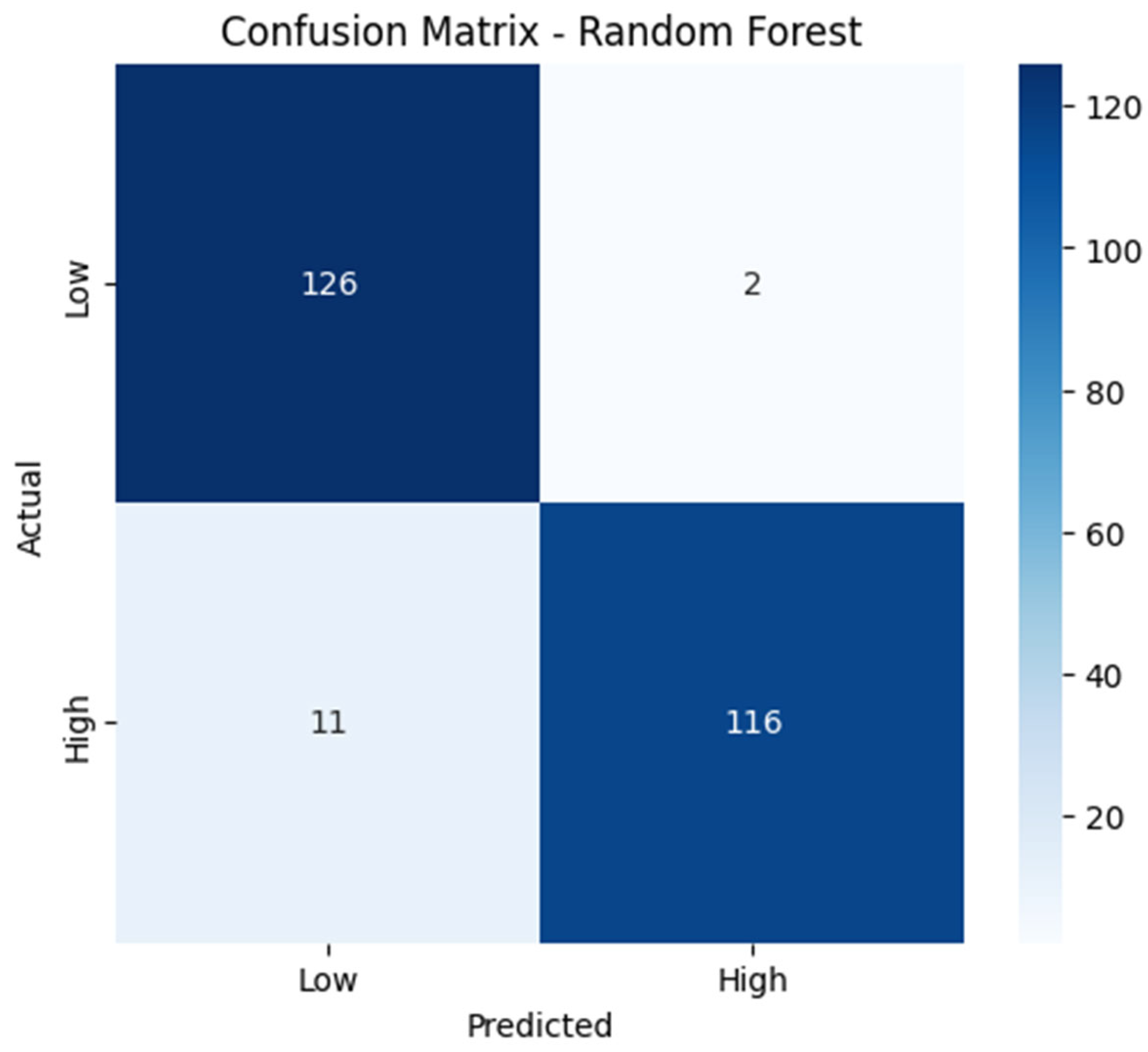
From the Random Forest model’s confusion matrix, 126 are classified correctly as harmful, 116 as positive, and the misclassification rate is relatively low, with 11 as false negatives and 22 as false positives. High recall (0.91) indicates high accuracy in identifying higher transaction values when applied. At the same time, the low percentage of 0.98 proves that the model yields few, if any, wrong signals. This balance is perfect with the study’s aim of improving the credit scoring layout without errors, which is vital for ethical compliance with IMFIs. Due to its efficiency in analysing different types of relationships, Random Forest can become an applicable solution for increasing financial inclusion and decreasing biases in credit scoring (Figure 7).

4.2.3. Gradient Boosting

Gradient Boosting − MSE: 946,994.8908903992, R2: 0.8929007844627194
The Random Forest model was comparatively more accurate, with an MSE of 2,586,281 and an R2 value of 0.70, indicating the variance proportion. It is an ensemble-learning model that helps to obtain good non-linear combinations of the weekly transaction values, thereby providing much better prediction accuracy. This aligns with the study goal of using sound models in creditworthiness to IMFIs since they provide transparency in financial evaluations.
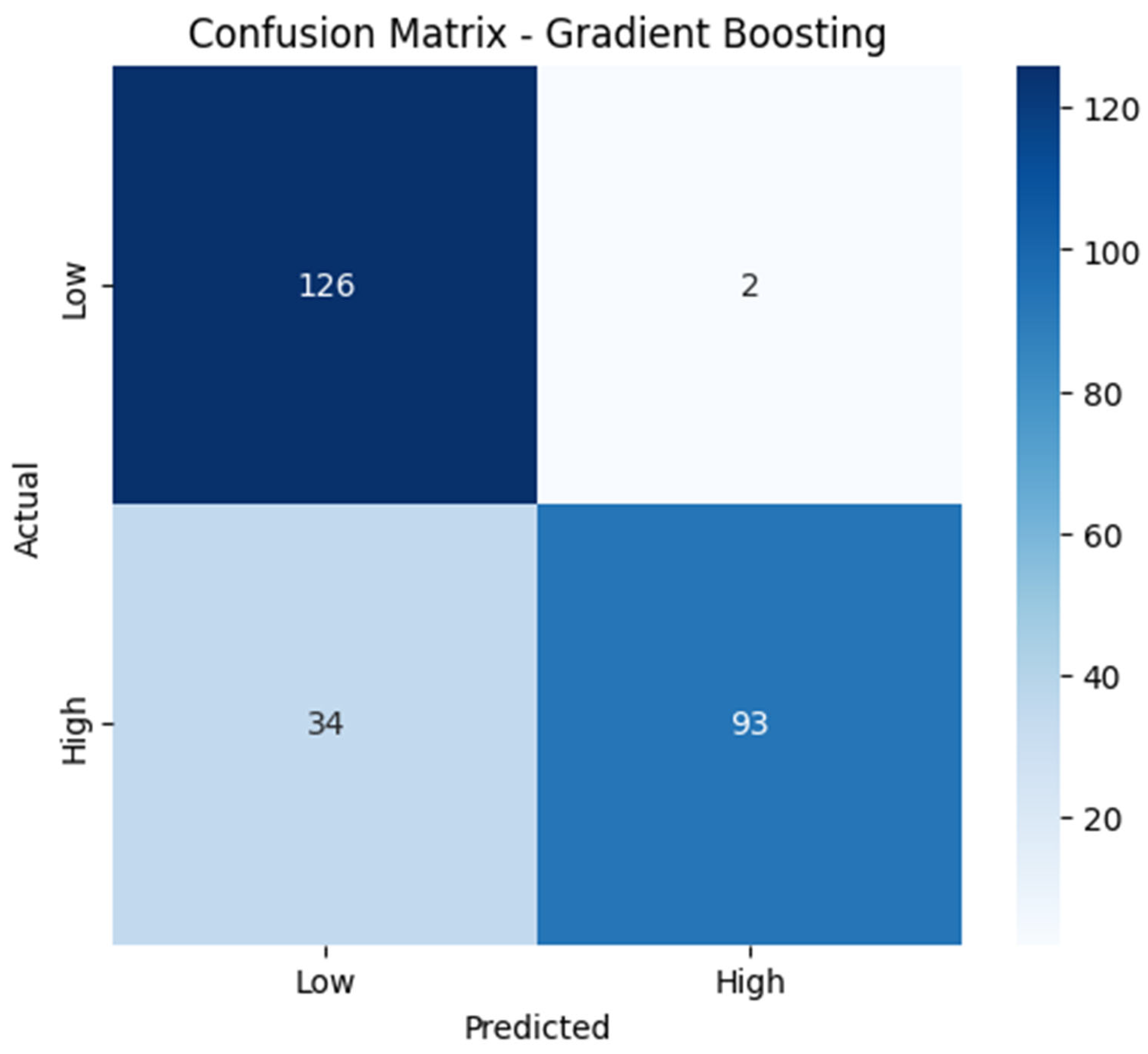
Analysing the confusing matrix from the Gradient Boosting, 126 true negatives and 93 true positives prove its efficiency. Nevertheless, the model misses 34 high transactions and categorizes them as low; therefore, the Recall (0.73) is lower than in Random Forest. However, its suggestiveness reveals very accurate predictions with low ratios of false alarms at a precision of 0.97. This means that Gradient Boosting can model complicated patterns regarding the data and, therefore, is entirely appropriate when both Precision and Recall are essential. This also squarely fits within the study’s objectives in applying STATE OF ART ML techniques for efficient and Shariah-compliant credit scoring in IMFIs to enable fair and non-discriminatory financial inclusion for excluded segments (Figure 8). These results are in line with previous literature (see Kayani et al. 2025c).

4.3. Evaluation and Visualization

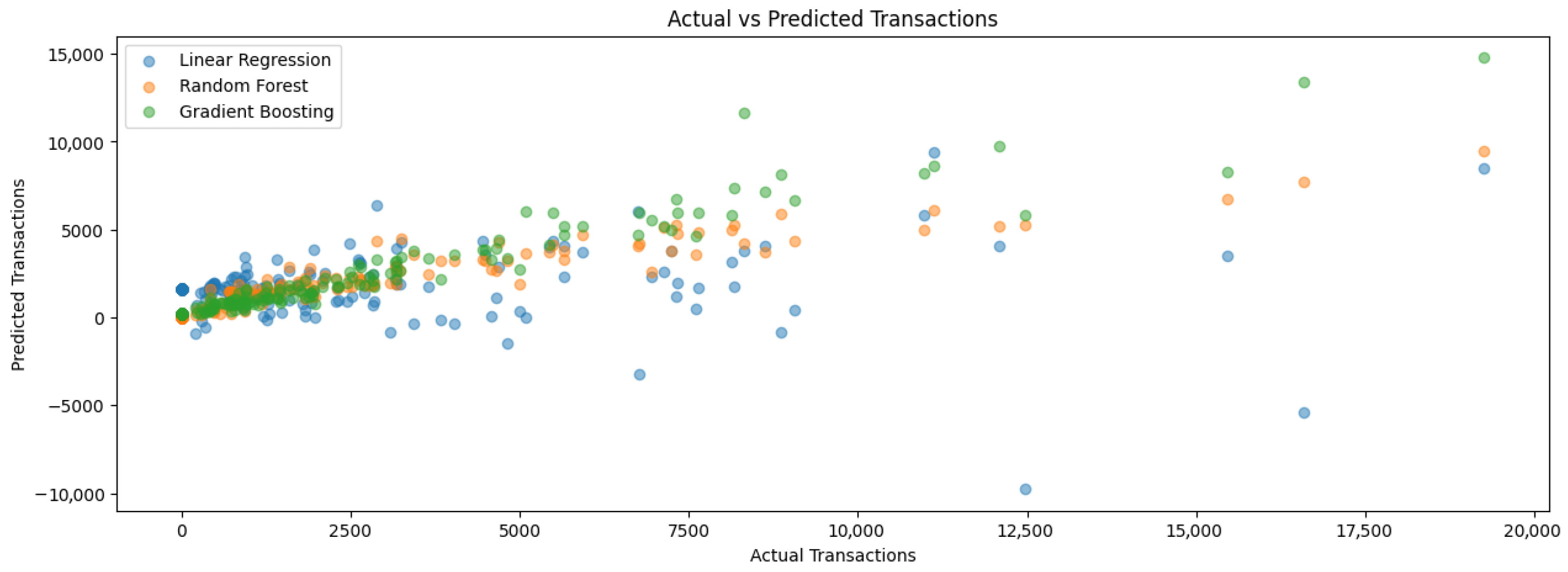
The actual transaction values are presented against the predicted Linear Regression, Random Forest, and Gradient Boosting values in the present scatterplot. Comparatively, the random forest and gradient boosting show slightly better clustering along the diagonal line, proving they are more accurate. Linear Regression predictions are less fitted and are spread out; hence, they are not as capable of interpreting the data set as Deep Learning is. Gradient Boosting always performs closer to the actual in successive iterations, proving its capability to learn non-linear relationships. This explicitly supports the study’s primary aim: improve credit scoring in IMFIs using modern Machine Learning models and ethical customer data in credit decisions (Figure 9).
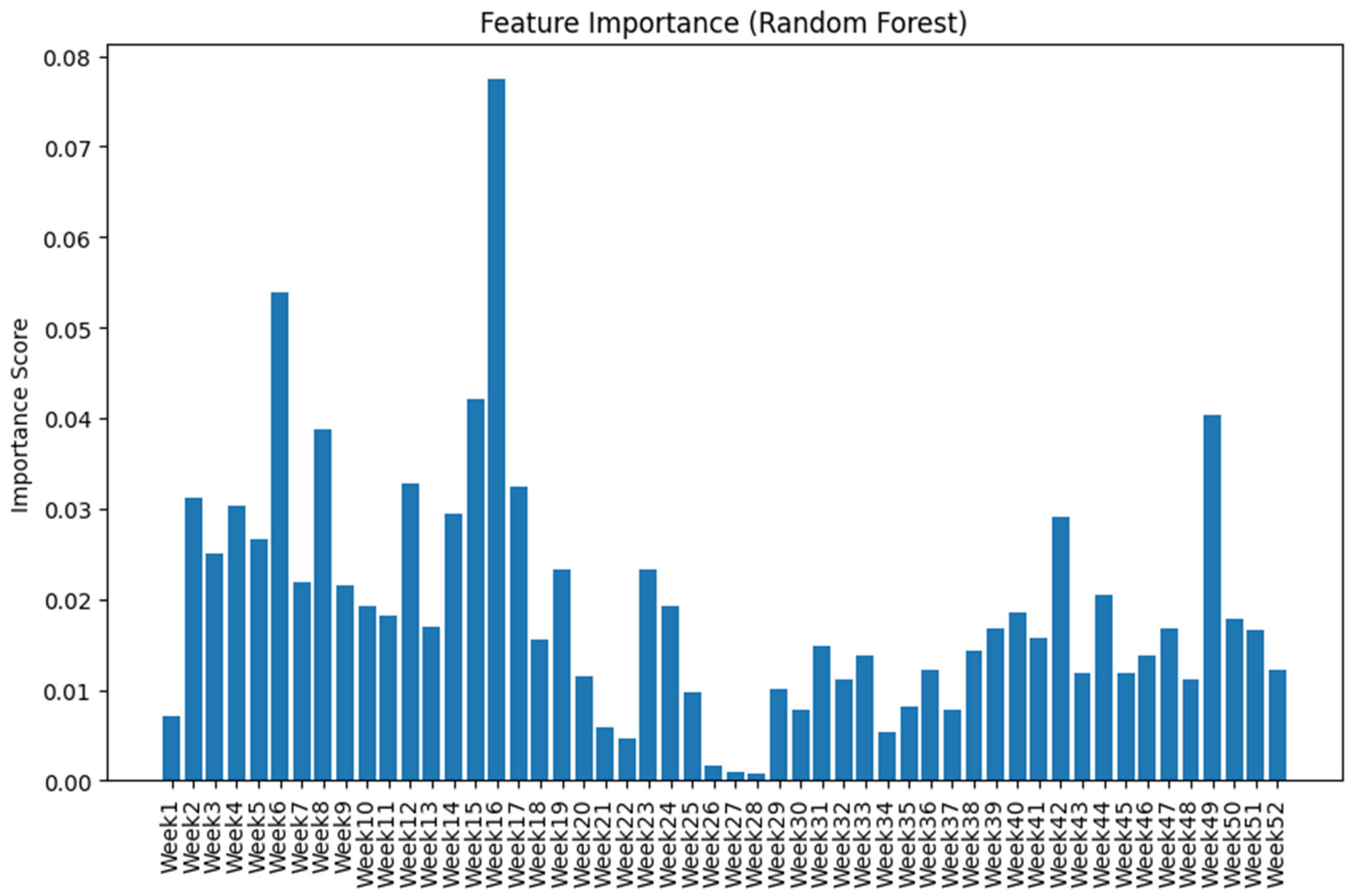
The random bar plot presents a random forest where each week’s transaction data is significant. However, looking at the importance score plotted in Figure 10, one notices that Weeks 6 and 16 are much more influential in predicting Total Transactions than other weeks. This understanding accords with the research objectives of determining sensitive transactional stages that define creditworthiness. In this manner, the model helps to define credit scoring techniques for IMFIs and improves the assessment’s accuracy, transparency, and compliance with Sharia standards during the identified key weeks. This feature-level understanding is also helpful in designing remedial measures towards financial treatment to achieve quality financial transformation for the marginalized groups (Figure 10).
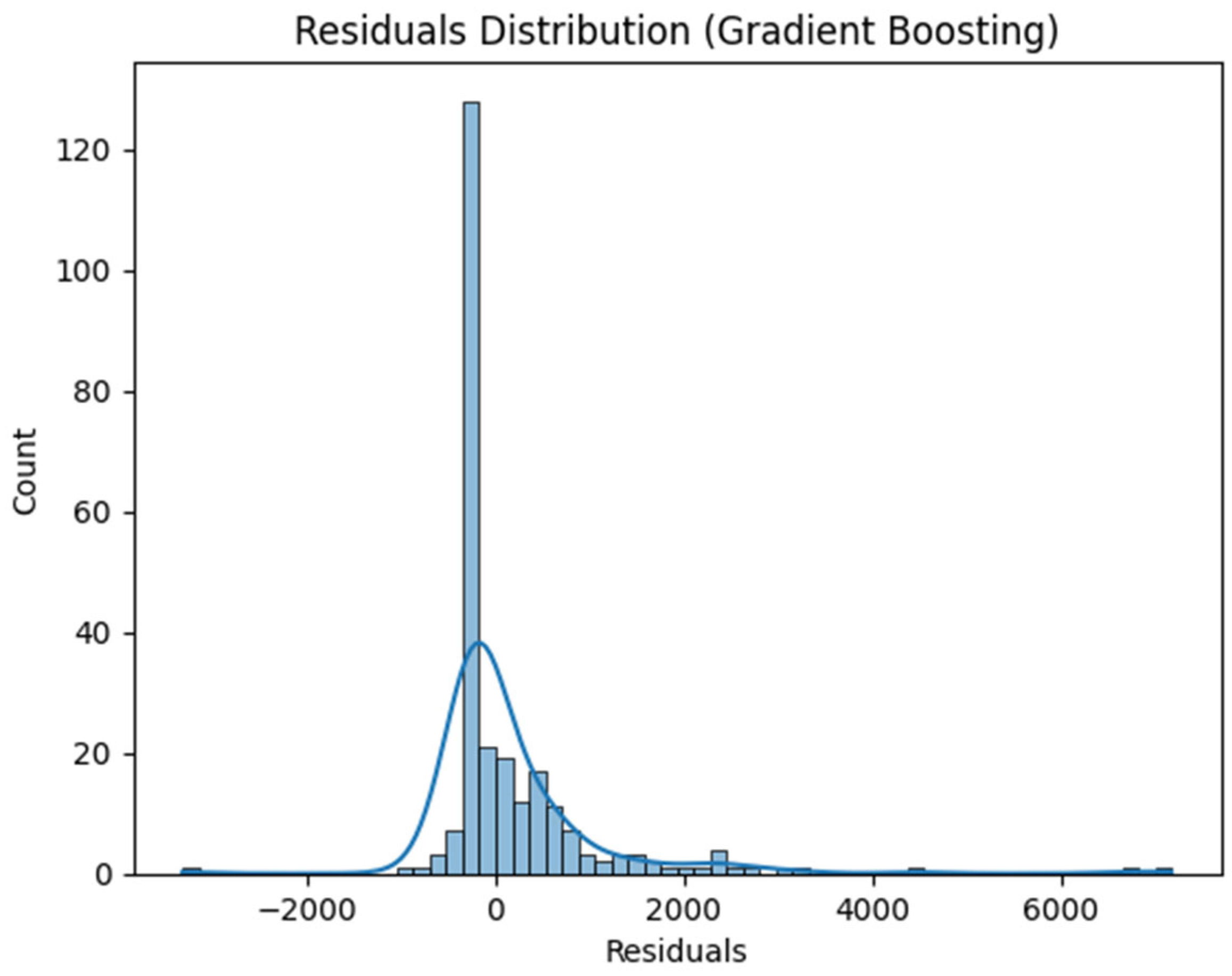
The residual distribution of the Gradient Boosting model has a distinct and narrow peak in the centre around zero, meaning there are almost no prediction mistakes. Most residuals are in a narrow range, indicating that the proposed model accurately predicts transaction values. Tails are slightly rotated and represent the effect of occasional over- or under-estimation. This performance matches the research goal of deploying accurate ML techniques to improve credit scoring in IMFIs. Due to the capability to reduce errors, Gradient Boosting guarantees neutrality and accuracy in credit rating, thus allowing IMFIs to enhance service delivery to people locked out while being ethical in their operations (Figure 11).

4.4. Model Comparisons and Accuracies

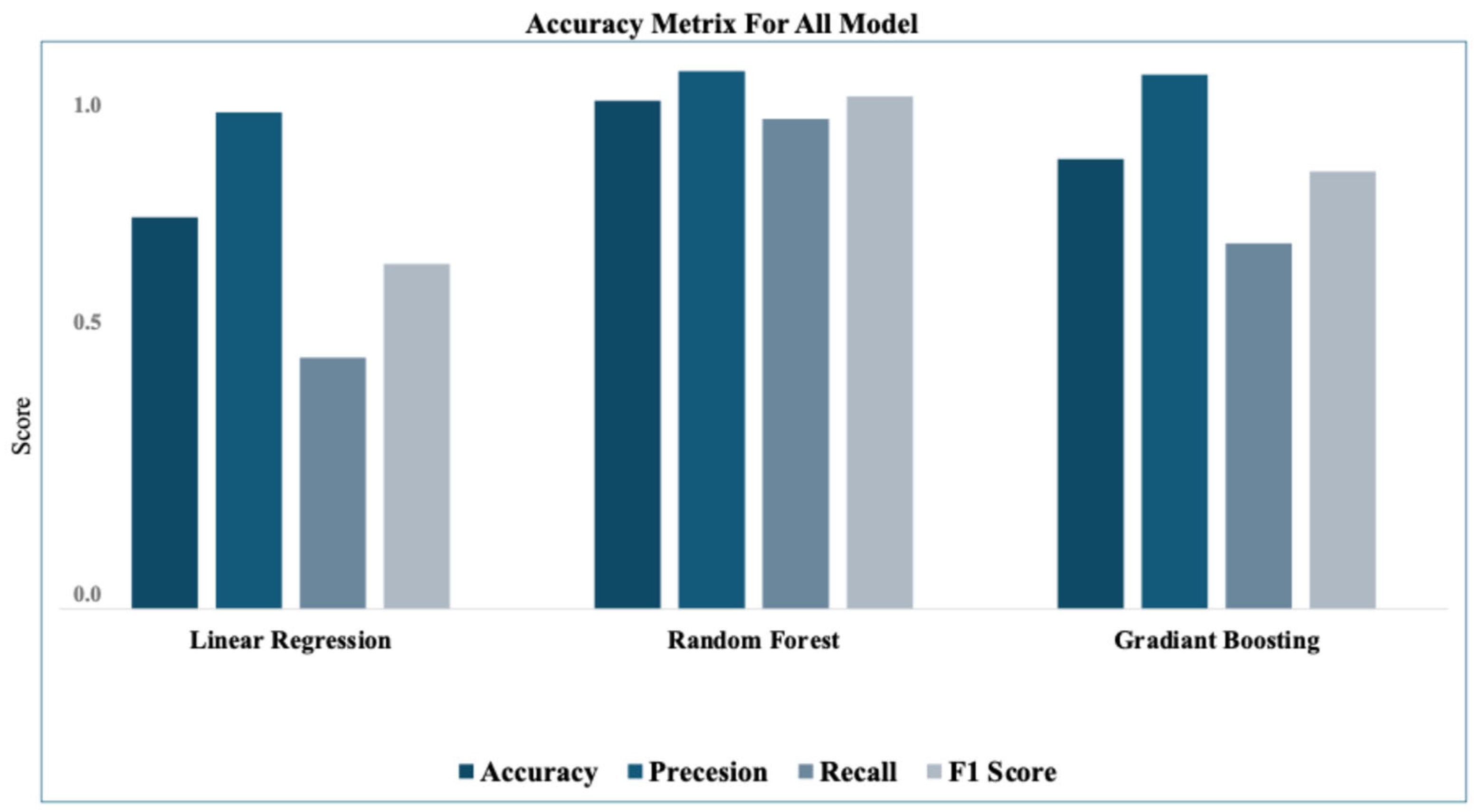
The metrics figure shows each linear regression, random forest, and gradient boosting performance. The evaluation of the Random Forest model yielded the best-ever accuracy (95%), Precision (98%), and higher recall value (91%), and F1 score (94%), denoting the ability of this algorithm to work effectively with imbalanced and non-linear datasets. Gradient boosting also provided good results with the F1 score of 0.83, preceded by a high precision of 0.97 and the RecallRecall of 0.73. Linear Regression was the least efficient in pattern recall (0.56), and the F1 score was equal to 0.70 (Table 3). These outcomes are valid for the study’s objective of models to achieve the proper Shariah standard in credit scoring for Islamic Microfinance Institutions (IMFIs).
The bar plot helps to compare the accuracy, Precision, Recall, and, finally, F1 score across models and visually enhance the notion of Random Forest as the most efficient one in terms of all four indicators. This yields a satisfactory level of accuracy in terms of Precision and Recall, which is essential in minimizing the IMFI’s wrong credit ratings. Gradient Boosting has also been tested in this study, and its performance is slightly lower than that of Random Forest regarding RecallRecall. Linear Regression model has a high precision rate but an inferior recall rate, indicating its effectiveness in identifying positive cases. Thus, the necessity of further development of ensemble methods is emphasized to get the ethical and accurate credit scoring confirmed by the aims of the presented study (Figure 12).
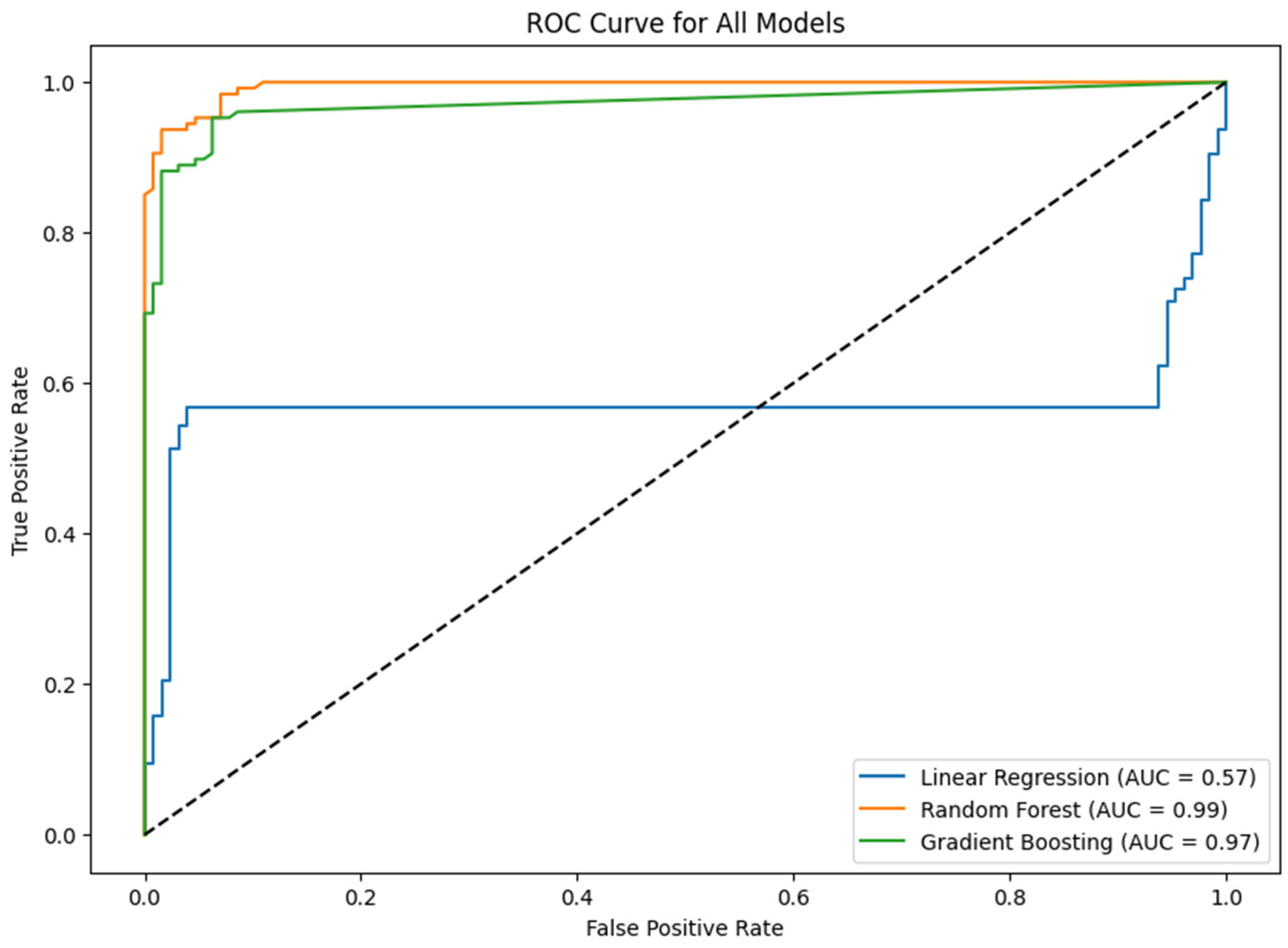
The ROC curve visually shows how well the models distinguish the positive from negative classes. Random Forest posted the best AUC of 0.99, which means the model has an excellent classification capacity. Gradient Boosting follows closely with an AUC of 0.97, which is the stable ability of Gradient Boosting. Considering the AUC of 0.57, linear regression was over the random guessing, justifying them as weak models for managing the complexity of this particular dataset. These findings accord with the study objective of advancing the use of sophisticated ML models to improve credit scoring of IMFIs, considering ethical decision-making, free from biases when classifying creditworthiness, and within the Islamic finance framework (Figure 13).

5. Discussion

The application of the three models, namely, Linear Regression, Random Forest, and Gradient Boosting, on the transactional dataset also exposed some peculiarities of these models. Linear Regression had a very low R2 of −0.13 for the selected dataset and a high MSE. This shows the model’s failure to capture non-linear trends present in the dataset and its inherent complexity. This outcome indicates that credit scoring in IMFIs is unsuitable since behaviors are not constant and data distributions are distorted. Conversely, Random Forest is the most accurate model with an R2 of 0.70 and high accuracy and Recall, meaning it offers a robust ability to detect high transaction values. Gradient Boosting was second with an R2 of 0.89 and higher accuracy, and boasted of better performance in eliminating false result indicators. The confusion matrices complemented these observations; Random Forest offers little overlap between classes, and Gradient Boosting offers near equal Precision and Recall. These results meet the study’s goals to provide recommended efficient, ethical, and Shariah-compliant credit scoring models appropriate to IMFIs’ circumstances (Hassan et al. 2022).
The research indicates that ensemble-based Machine Learning approaches are central in modernizing credit scoring for IMFIs. The Random Forest model hypothesis testing was also helpful in understanding the importance of a week, for instance, Week 15 and Week 50, in determining the total number of transactions. This capability allows one to understand the effect of seasonality or behaviour on financial activity by building more transparent models that enhance interpretation. Because Gradient Boosting involves an iterative learning process, it was most effective in identifying intricate features of data variability and minimizing the residual risk, making it satisfactory to work with data with a high level of variability (Petropoulos et al. 2020). However, compared with Random Forest, Gradient Boosting recalls slightly lower, meaning that it can identify lower transaction values. Integrating such complex models is about addressing the fundamental issues associated with the operation of IMFIs on the one hand and ethical and moral issues on the other to improve financial technology services for those who cannot access standard and advanced technologies. In addition, Random Forest presents very high levels of accuracy within the assessment, with AUC = 0.99; the Gradient Boosting was also highly predictive within the evaluation, with an AUC = 0.97.
The comparison of model efficiency indicates that Random Forest and Gradient Boosting are more efficient models than Linear Regression, considering the more complicated transactional data. Random forest had the best performance in the credit scoring model determination with high accuracy (94.9%), precision value (98.3%), and recall value (91.3%). They filter out false positives and negatives using a fair and efficient rating method, which is vital for IMFIs. Of course, Gradient Boosting cares less about Recall (94.8%), but it is almost immune to false approvals with a Precision of 97.9%. However, linear Regression proved to give poor performance measures, exhibiting an accuracy of 76.1% and a Recall of 56.7%, indicating its inability to explore linearity. This paper also provides empirical evidence to support the assumptions of the current study, stating that advanced ensemble models offer better solutions than traditional models in ethical credit scoring problems (Mohd Haridan et al. 2023).
The study results have clear theoretical and practical implications for policy and practice in IMFIs. By integrating state-of-the-art machine learning models like random forest and gradient boosting, IMFIs can increase the robustness of their credit scoring models by a notch. The process of feature importance analysis might be helpful for policymakers’ decision-making as they can define which types of transactional patterns are essential for scrupulous customers and, therefore, which kinds of financial assistance are needed for clients with low or intermittent activity. Such findings are also consistent with the goal of the IMF, the World Bank, and other development partners for fostering greater digital financial inclusion, especially in regions with significant Muslim populations and where IMFIs focus on targeting those who are disadvantaged (Katterbauer and Moschetta 2022). Moreover, the ethical transparency these models give strengthens the stakeholders’ confidence, which is one of the principles of Islamic finance. However, for the effective implementation of these technologies, IMFIs should undertake capacity enhancement activities to educate staff on managing these technologies. Moreover, regulatory and supervisory authorities should offer guidelines that would set norms on utilizing Machine Learning in IMFIs to meet Shariah requirements and consider ethical issues such as data privacy and fairness.
Even though the study results shed light on the applicability of Machine Learning in IMFIs, several issues may be discussed. Because most of these models are based on transactional data, they do not work well for clients with missing or small numbers of records, a common problem in micro-finance. This potential gets addressed by adding behavioural or community-based assessments into the models for better coverage. The final issue is that all the ensemble methods are computational, which may be computationally intensive for small IMFIs. Future work should define lighter and more explainable models that can optimise the current and future performances without compromising operational execution (Wanke et al. 2022). Furthermore, combining Machine Learning with Blockchain provides another direction to improve the safeguarding of data, objective and subjective registration specifics, and adherence to ethical standards for strengthening the principles of Islamic finance. Such improvements can drastically transform the operation of IMFIs, promoting innovation where the need for proper and efficient financial inclusion is most felt.

6. Conclusions and Recommendations

6.1. Summary of Findings

This research established the feasibility of using state-of-the-art ML models in credit scoring for IMFIs. This study showed that conventional Linear Regression methodologies do not adequately model non-linear patterns inherent in trans-active data sets. However, Random Forest appeared to be the best model, with the highest accuracy of 94.9%, recall of 91.3%, and F1 score of 94.6%. Because the proposed model can easily match the exactness and generality of the important transactional patterns simultaneously, it is quite suitable for use in IMFIs. Gradient Boosting came second, topping in Precision (97.9%) and controlling prediction errors, though with a slightly poor recall. These results confirm the hypothesis that ensemble-based ML models are proficient in credit scoring issues in IMFIs, such as sparseness, variability, and ethical considerations. Also, the study aimed to shed light on the methods of feature importance analysis and visualization techniques of model results to increase the level of trust in AI systems among the stakeholders.

6.2. Limitations

The study was able to encounter the following limitations. As a result of empirical methods being based on transactional data, the models could not adequately evaluate clients with low or irregular balances, which were typical of IMFIs. This can result in an unfair disposition against clients with unsteady, volatile, or cyclical income-earning capacity. Furthermore, the computational intensity of ensemble trees, such as Random Forest and Gradient Boosting, adds to operational considerations that are measurable for small IMFIs with relatively weak technology bases. The study also precluded real-time data integration or using Blockchain to build solutions to reinforce data security, transparency, and compliance with Shariah standards. These limitations explain why we should conduct subsequent research on the suggestions that are workable, lightweight, and combined into a coherent system.

6.3. Recommendations

The recommendations proposed to enhance the credit scoring frameworks in IMFIs are as follows. First, supplementary data, often referred to as non-transactional or thin file data, includes behavioral or community-based data to augment traditional data and give a 360-degree view of the creditworthiness of clients. It would do this, deal with the scarcity issue of thin financial histories, and be more inclusive. Second, IMFIs are encouraged to consider using ML ensemble models such as Random Forest and Gradient Boosting since these algorithms outperform others in terms of non-linear and imbalanced data. However, for effective implementation of these models, investment in capacity-building programs aimed at training staff in the use of these models is critical. Third, Blockchain technology needs to be applied in the context of data transparency and data integrity in compliance with the principles of Islamic finance. Loan approvals could be managed by smart contracts, which would improve the company’s workflow even more ethically. The regulatory authorities should develop policies that prescribe how the IMFIs will be created using technologies and considerations such as ethics and privacy.

6.4. Future Directions

Future studies should involve methods that are easily explainable but produce high accuracy within a feasible time. Integrating lightweight Machine Learning algorithms and explainable AI methodologies could help overcome the gap between the two capacities, making them viable for small IMFIs. Further future research opportunities are the integration of the ML model with Blockchain technology. Blockchain-based credit scoring frameworks could solve security and transparency issues and meet Shariah compliance. Further, the credit scoring models are based on real-time data streaming in longitudinal studies. In that case, more insights about client behaviour can be obtained, and consequent credit assessments will be refined in the subsequent period. Identifying and launching more new and exciting horizontals for other application areas, such as risk management and optimal portfolio, could fine-tune the accepted conventional norms of the Islamic finance sector. These directions correspond to the overall development concept in IMFIs, such as innovation and the relatively fair provision of financial services.

Author Contributions

Conceptualization, M.M.H.M. and T.C.; Methodology, F.H. and T.C.; Software, F.H.; Validation, T.C.; Formal analysis, F.H. and A.A.F.; Investigation, M.M.H.M., F.H., T.C., A.A.F. and A.F.; Resources, A.A.F.; Data curation, T.C., A.A.F. and A.F.; Writing—original draft, M.M.H.M., F.H., T.C., A.A.F. and A.F.; Writing—review & editing, M.M.H.M. and T.C.; Supervision, T.C. and A.A.F. All authors have read and agreed to the published version of the manuscript.

Funding

This research received no external funding.

Data Availability Statement

The raw data supporting the conclusions of this article will be made available by the authors on request.

Conflicts of Interest

Author Abubaker Fadul was employed by the company Saudi Aramco. The remaining authors declare that the research was conducted in the absence of any commercial of financial relationships that could be construed as a potential conflict of interest.

References

  1. Alam, Nafis, Lokesh Gupta, and Abdolhossein Zameni. 2019. Fintech and Islamic Finance. Berlin: Springer International Publishing. Available online: https://research.monash.edu/en/publications/fintech-and-islamic-finance-digitalization-development-and-disrup (accessed on 23 June 2025).
  2. Anshari, Muhammad, Mia Fithriyah, Petr Polak, and Abdur Razzaq. 2021. Islamic FinTech and artificial intelligence (AI) for assessing credit-worthiness. Journal of Islamic Financial Studies 7: 210–25. [Google Scholar]
  3. Awan, Muhammad Saeed, Muhammad Zahid, and Muhammad Sabir. 2023. Islamic Microfinance: A Shariah-Compliant Tool for Poverty Alleviation and Social Welfare. Al-ISRA 2: 44–66. [Google Scholar]
  4. Bello, Oluwabusayo Adijat. 2023. Machine learning algorithms for credit risk assessment: An economic and financial analysis. International Journal of Management 10: 109–33. [Google Scholar]
  5. Bhatore, Siddharth, Lalit Mohan, and Y. Raghu Reddy. 2020. Machine learning techniques for credit risk evaluation: A systematic literature review. Journal of Banking and Financial Technology 4: 111–38. [Google Scholar] [CrossRef]
  6. Breiman, Leo, Jerome Friedman, Charles J. Stone, and Richard A. Olshen. 1984. Classification and Regression Trees. Wadsworth: Chapman and Hall. [Google Scholar]
  7. Chong, Felicia Hui Ling. 2021. Enhancing trust through digital Islamic finance and blockchain technology. Qualitative Research in Financial Markets 13: 328–41. [Google Scholar] [CrossRef]
  8. Djolev, Daniel, Milena Lazarova, and Ognyan Nakov. 2023. Blockchain based trusted distributed machine learning for credit scoring. Paper presented at 2023 International Scientific Conference on Computer Science (COMSCI), Sozopol, Bulgaria, September 18–20; New York: IEEE, pp. 1–5. [Google Scholar]
  9. Edunjobi, Tolulope Esther, and Opeyemi Abayomi Odejide. 2024. Theoretical frameworks in AI for credit risk assessment: Towards banking efficiency and accuracy. International Journal of Scientific Research Updates 7: 92–102. [Google Scholar] [CrossRef]
  10. Figini, Silvia, and Paolo Giudici. 2011. Statistical merging of rating models. Journal of the Operational Research Society 62: 1067–74. [Google Scholar] [CrossRef]
  11. Hasan, Fakhrul, Manaf Al-Okaily, Tonmoy Choudhury, and Umar Kayani. 2024. A comparative analysis between Fintech and Traditional stock markets: Using Russia and Ukraine WAR data. Electronic Commerce Research 24: 629–54. [Google Scholar] [CrossRef]
  12. Hassan, M. Kabir, Mustafa Raza Rabbani, Mamunur Rashid, and Irwan Trinugroho. 2022. Islamic fintech, Blockchain and crowdfunding: Current landscape and path forward. In FinTech in Islamic Financial Institutions: Scope, Challenges, and Implications in Islamic Finance. Cham: Springer International Publishing, pp. 307–40. [Google Scholar] [CrossRef]
  13. Jameaba, Muyanja-Ssenyonga. 2022. Digitalization, Emerging Technologies, and Financial Stability: Challenges and Opportunities for the Indonesian Banking Industry and Beyond. Available online: https://www.qeios.com/read/CSTTYQ.2 (accessed on 1 January 2025). [CrossRef]
  14. Javaid, Mohd, Abid Haleem, Ravi Pratap Singh, Rajiv Suman, and Shahbaz Khan. 2022. A review of Blockchain Technology applications for financial services. BenchCouncil Transactions on Benchmarks, Standards and Evaluations 2: 100073. [Google Scholar] [CrossRef]
  15. Jovanovic, Zorka, Zhe Hou, Kamanashis Biswas, and Vallipuram Muthukkumarasamy. 2024. Robust integration of blockchain and explainable federated learning for automated credit scoring. Computer Networks 243: 110303. [Google Scholar] [CrossRef]
  16. Katterbauer, Klemens, and Philippe Moschetta. 2022. A deep learning approach to risk management modelling for Islamic microfinance. European Journal of Islamic Finance 9: 35–43. [Google Scholar] [CrossRef]
  17. Kayani, Umar, and Fakhrul Hasan. 2024. Unveiling Cryptocurrencies Impact on Financial Markets and Traditional Banking System: Lessons for Sustainable Blockchain and Interdisciplinary Collaborations. Journal of Risk and Financial Management 17: 58. [Google Scholar] [CrossRef]
  18. Kayani, Umar, Fakhrul Hasan, Tonmoy Choudhury, and Farrukh Nawaz. 2025a. Unveiling WCM and firm performance relationship: Evidence from Shariah compliance United Kingdom firms. International Journal of Islamic and Middle Eastern Finance and Management 18: 535–56. [Google Scholar] [CrossRef]
  19. Kayani, Umar, Suzan Dsouza, Zafar Husain, Farrukh Nawaz, and Fakhrul Hasan. 2025b. Does the performance of financial technology (fintech) firms matter? Evidence from North American and European fintech firms. Cogent Economics & Finance 13: 2451050. [Google Scholar]
  20. Kayani, Umar, Umer Iqbal, Ahmet Faruk Aysan, Bayu Arie Fianto, Mustafa Raza Rabbani, and Fakhrul Hasan. 2025c. Revealing the Secrets of Working Capital: A Comparison Between Sharia-Compliant and Conventional Firms. Economic Systems 49: 101278. [Google Scholar] [CrossRef]
  21. Khan, Shahrukh. 2020. Microfinance Loan Credit Scoring Set. Available online: https://www.kaggle.com/datasets/shahrukhkhan/microfinance-loan-credit-scoring (accessed on 24 July 2025).
  22. Kıralioğlu, Tuna. 2024. Investigating the use of machine learning in automating credit scoring for microfinance. Microfinance and Technology Journal 8: 12–29. Available online: https://globalresearchandinnovationpublications.com/HCI/article/view/79 (accessed on 26 June 2025). [CrossRef]
  23. Kotb, Mariam Ossama. 2023. Credit scoring using machine learning algorithms and blockchain technology. International Journal of Financial Innovation 15: 78–95. Available online: https://ijrpr.com/uploads/V5ISSUE11/IJRPR34718.pdf (accessed on 27 June 2025).
  24. Kunhibava, Sherin, Aishath Muneeza, Zakariya Mustapha, Maryam Khalid, and Gopal Kiran. 2024. Blockchain Use Case in Islamic Social Finance. ISRA International Journal of Islamic Finance 16: 93–110. [Google Scholar] [CrossRef]
  25. Malik, Muhammad, and Lyn C. Thomas. 2010. Modelling credit risk of portfolio of consumer loans. Journal of the Operational Research Society 61: 411–20. [Google Scholar] [CrossRef]
  26. Mohd Haridan, Nurfarahin, Ahmad Fahmi Sheikh Hassan, Sabarina Mohammed Shah, and Hasri Mustafa. 2023. Financial innovation in Islamic banks: Evidence on the interaction between Shariah board and FinTech. Journal of Islamic Accounting and Business Research 14: 911–30. [Google Scholar] [CrossRef]
  27. Mondol, Shila, Ipseeta Satpathy, B. C. M. Patnaik, Arpita Nayak, Atmika Patnaik, and Alex Khang. 2024. Impact of AI and data in revolutionising microfinance in developing countries: Improving outreach and efficiency. In Data-Driven Modelling and Predictive Analytics in Business and Finance. Boca Raton: Auerbach Publications, pp. 71–87. Available online: https://www.taylorfrancis.com/chapters/edit/10.1201/9781032618845-5/impact-ai-data-revolutionizing-microfinance-developing-countries-shila-mondol-ipseeta-satpathy-patnaik-arpita-nayak-atmika-patnaik-alex-khang (accessed on 26 June 2025).
  28. Mukit, Mohammad Mushfiqul Haque, Aishath Muneeza, and Andrea Paltrinieri. 2021. Contributions of Professor M. Kabir Hassan to the Islamic Finance Literature: A Bibliometric Study. Journal Ekonomi Malaysia 55: 49–76. Available online: https://www.semanticscholar.org/paper/Contributions-of-Professor-M.-Kabir-Hassan-to-the-A-Mukit-Muneeza/1266d92a41ac99816e77b10a5306d50055738b1a (accessed on 26 June 2025).
  29. Nakamoto, Satoshi. 2008. Bitcoin: A Peer-to-Peer Electronic Cash System. Available online: https://ssrn.com/abstract=3440802 (accessed on 25 June 2025). [CrossRef]
  30. Owusu-Agyei, Samuel, Godwin Okafor, Aruoriwo Marian Chijoke-Mgbame, Paschal Ohalehi, and Fakhrul Hasan. 2020. Internet Adoption and Financial development in Sub-Saharan Africa. Technology Forecasting and Social Change 161: 120293. [Google Scholar] [CrossRef]
  31. Petropoulos, Anastasios, Vasilis Siakoulis, Evangelos Stavroulakis, and Nikolaos E. Vlachogiannakis. 2020. Predicting bank insolvencies using machine learning techniques. International Journal of Forecasting 36: 1092–113. [Google Scholar] [CrossRef]
  32. Rahman, S. M. Masudur, Kwang-Jing Yii, Eryadi Kordi Masli, and Mung Ling Voon. 2024. The Blockchain in the banking industry: A systematic review and bibliometric analysis. Cogent Business & Management 11: 2407681. [Google Scholar] [CrossRef]
  33. Rane, Jayesh, Suraj Kumar Mallick, Ömer Kaya, and Nitin Liladhar Rane. 2024. Future Research Opportunities for Artificial Intelligence in Industry 4.0 and 5.0. Available online: https://deepscienceresearch.com/index.php/dsr/catalog/book/4 (accessed on 25 June 2025).
  34. Sadok, Hicham, Fadi Sakka, and Mohammed El Hadi El Maknouzi. 2022. Artificial intelligence and bank credit analysis: A review. Cogent Economics & Finance 10: 2023262. [Google Scholar] [CrossRef]
  35. Shaikh, Salman Ahmed, Mohd Adib Ismail, Muhammad Hakimi Mohd. Shafiai, Abdul Ghafar Ismail, and Shahida Shahimi. 2017. Role of Islamic banking in financial inclusion: Prospects and performance. In Islamic Banking: Growth, Stability and Inclusion. Cham: Springer, pp. 33–49. Available online: https://link.springer.com/chapter/10.1007/978-3-319-45910-3_3 (accessed on 26 July 2025).
  36. Sonam, Sharma, Rohit. Gupta, and Prakash Sharma. 2024. Artificial intelligence in microfinance in India. Indian Journal of Microfinance Research 6: 33–48. Available online: https://inspirajournals.com/home/viewdetails/?id=6838 (accessed on 26 July 2025).
  37. Subburayan, Baranidharan, Amirdha Vasani Sankarkumar, Rohit Singh, and Hellena Mohamedy Mushi. 2024. Transforming of the Financial Landscape from 4.0 to 5.0: Exploring the Integration of Blockchain, and Artificial Intelligence. In Applications of Blockchain Technology and Artificial Intelligence. Cham: Springer, pp. 137–61. [Google Scholar] [CrossRef]
  38. Vizcaino, Bernardo. 2017. Saudi Arabia’s IDB Plans Blockchain-Based Financial Inclusion Product. Reuters News, October 24. Available online: https://www.reuters.com/article/us-islamic-finance-fintech/saudi-arabias-idb-plans-blockchain-based-financial-inclusion-product-idUSKBN1CP08W/ (accessed on 26 July 2025).
  39. Wanke, Peter, M. Kabir Hassan, Md Abul Kalam Azad, Md Azizur Rahman, and Naznin Akther. 2022. Application of a distributed verification in Islamic microfinance institutions: A sustainable model. Financial Innovation 8: 80. [Google Scholar] [CrossRef]
  40. Zanke, Pankaj. 2023. Machine Learning Approaches for Credit Risk Assessment in Banking and Insurance. Internet of Things and Edge Computing Journal 3: 29–47. Available online: https://thesciencebrigade.com/iotecj/article/view/188 (accessed on 26 July 2025).
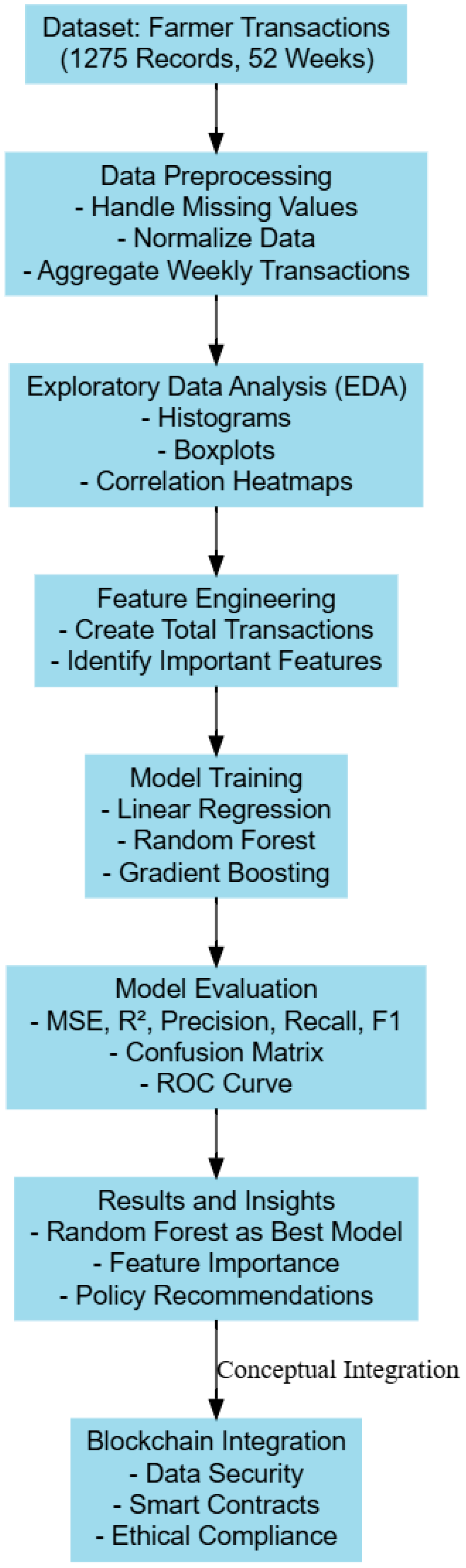
Figure 1. Proposed Methodology Diagram. The study processed 1275 farmer transaction charts from 62 weeks before conducting exploratory data analysis and feature engineering procedures. The evaluation of Linear Regression, Random Forest, and Gradient Boosting models through MSE and R2 metrics and ROC curve evaluation selected Random Forest as the top model. The research provides an important assessment of feature significance and recommended policy reforms, together with blockchain systems for data protection and automated contracts, along with ethical standards.
Risks 14 00012 g001
Figure 2. Distribution of Total Transactions. Most farmers in the dataset show total transaction means lower than 5000 (right-skewness μ < 5000), but several extreme cases surpass 30,000 (high variance σ2), which results in high variability of their transaction data. The non-normal distribution of data makes Random Forest and Gradient Boosting an optimal choice as predictive models because they tackle both non-linear patterns and class distribution imbalances.
Risks 14 00012 g002
Figure 3. Weekly Transaction Amounts. The weekly transaction data demonstrates extensive range variation σ2 in values (with an IQR between 400 and 700), with many outliers because transaction amounts frequently change substantially. Random Forest and Gradient Boosting models from machine learning serve credit scoring of IMFIs by effectively dealing with non-linear characteristics and outliers in the data.
Risks 14 00012 g003
Figure 4. The correlation Heatmap. The correlation matrix shows that weekly and total transaction values possess positive relationships above zero (r > 0), which demonstrates that harvest events create periodic patterns in these values. Random Forest feature importance can identify crucial weeks that impact creditworthiness, which increases model accuracy and ethical transparency during IMFI evaluation.
Risks 14 00012 g004
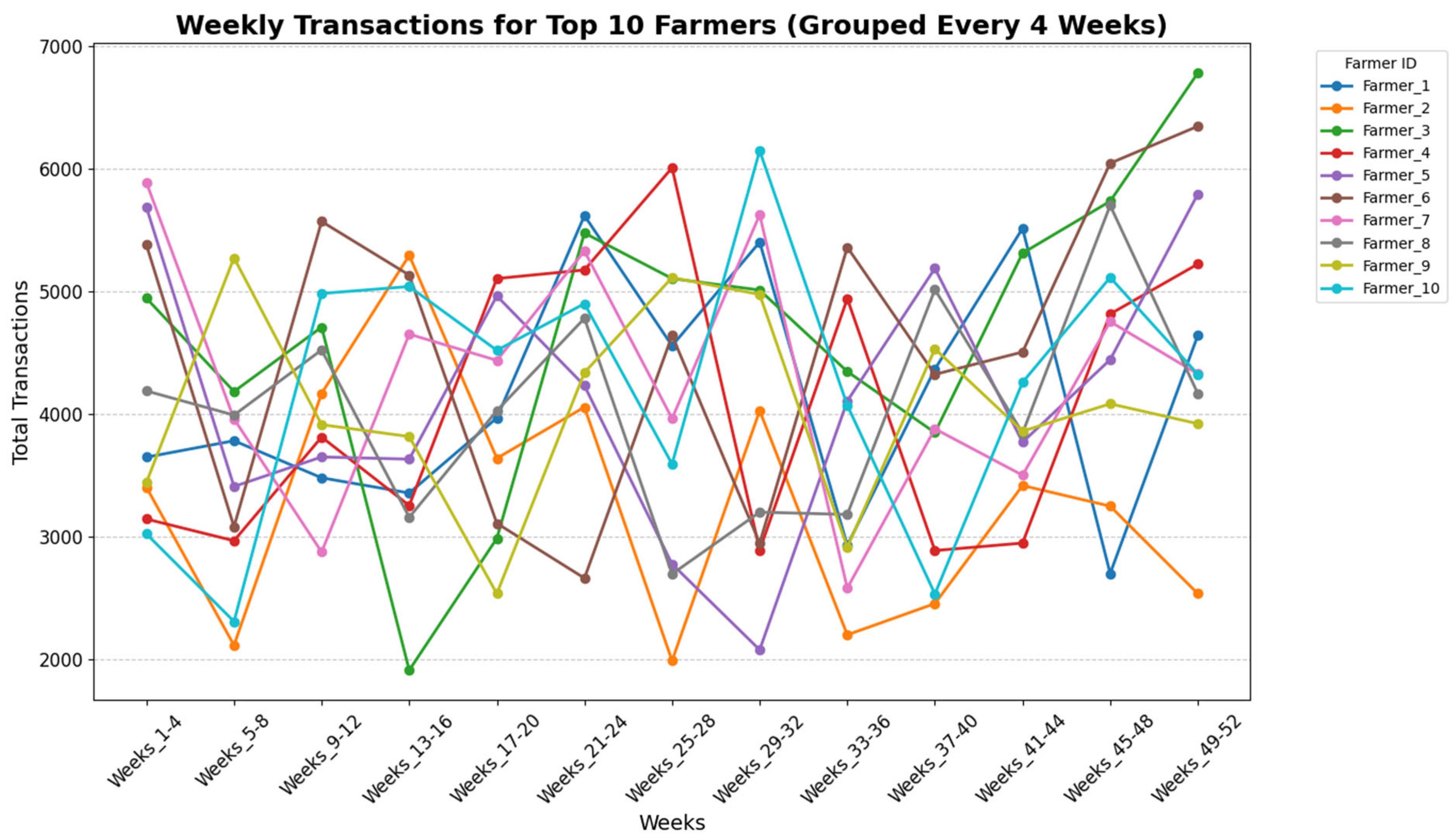
Figure 5. Weekly Transactions for Top 10 Farmers. The correlation heatmap shows every 4 weeks with strong positive correlations because they contain scheduled financial activities, but low coefficients represent random transaction patterns. By analysing important time periods, machine learning models for credit scoring achieve better performance to provide transparent, reliable assessments for Islamic finance institutions.
Risks 14 00012 g005
Figure 6. Confusion Matrix Linear Regression. A total of 122 true negatives and 72 true positives appear in the confusion matrix for Linear Regression with low recall (0.92 sensitivity) for high transactions, which indicates detection failures against non-stationary patterns. The situation indicates that enhanced credit scoring models need development to increase accuracy for IMFIs.
Risks 14 00012 g006
Figure 7. Confusion Matrix Random Forest. The Random Forest algorithm demonstrates excellent classification results through its detection of 126 negative cases correctly, alongside 116 positive cases correctly, and its limited classification errors (FP = 22; FN = 11). The model demonstrates robust credit scoring capability due to its high recall rate of 0.91, along with precision of 0.98, thus meeting both ethical compliance requirements and financial inclusion objectives of IMFIs.
Risks 14 00012 g007
Figure 8. Confusion Matrix Gradient Boosting. The Gradient Boosting model displays high efficiency through detection of 126 true negative cases and 93 true positives but is inferior to Random Forest model in recall rate due to 34 false negative outcomes. With its high precision value of 0.97, it effectively minimizes incorrect risk evaluations to become an ideal choice for complex credit score evaluation within Islamic financial institutions.
Risks 14 00012 g008
Figure 9. Actual vs. Predicted Transactions. The Random Forest and Gradient Boosting lie closer to the diagonal in the scatter-plot assessment, thus demonstrating better predictive accuracy when compared to Linear Regression. Gradient Boosting demonstrates an iterative learning method for non-linear patterns to support the research goal of improving Shariah-compliant credit scoring within IMFIs through advanced ML models.
Risks 14 00012 g009
Figure 10. Feature Importance (Random Forest). The bar plot from Random Forest analysis reveals that Weeks 6 and 16 have the strongest impact on determining Total Transactions. The findings support the research goal to enhance Shariah-compliant credit scoring within Islamic financial institutions by determining precise transaction periods to enhance accuracy as well as fairness.
Risks 14 00012 g010
Figure 11. Residuals Distribution (Gradient Boosting). The Gradient Boosting residual distribution peaks sharply around zero, indicating minimal prediction errors and high model accuracy. Its narrow spread and slight tail deviations align with the study’s goal of deploying precise ML techniques for fair and Shariah-compliant credit scoring in IMFIs.
Risks 14 00012 g011
Figure 12. Accuracy Matrices for All Models. According to the bar plot, Random Forest achieves superior performance in all evaluation metrics, including accuracy, precision, and recall, and F1 score, thus guaranteeing few errors in IMFIs credit ratings, although Gradient Boosting shows reduced recall. Linear Regression provides precision excellence while achieving low recall that demonstrates a necessity for improved ensemble methods to build ethical and accurate credit scoring models.
Risks 14 00012 g012
Figure 13. ROC Curve for All Models.
Risks 14 00012 g013
Table 1. Overview of Key Research Studies.
Author(s) &
Year
Research TopicResearch
Objective
Research Method &
Sample
TestOutcome
Wanke et al. (2022)Application of a distributed verification in Islamic microfinance institutionsA study exists to demonstrate how blockchain technology enhances Islamic Microfinance Institutions’ transparency and donor trust and expands financial reach.Bibliometric analysis.
18 Papers
Not mentionedThe implementation of blockchain verification enables MFIs to function without collateral through conflict-free operations while overcoming financial performance/economic outreach binary.
Katterbauer and Moschetta (2022)A deep learning approach to risk management modelling for Islamic microfinanceA framework based on AI technology will be proposed to conduct risk management and loan qualification procedures within Islamic microfinance institutions.The research employs deep learning through an AI-based model for processing 30,000 loan applications from a microfinance institution in the Central African Republic.Case study analysisThe AI-based framework boosts risk management through intensified non-financial attribute inclusion and better adhesion to Islamic microfinance values.
Jovanovic et al. (2024)Robust integration of blockchain and explainable federated learning for automated credit scoringA framework should integrate blockchain with explainable AI to develop automated and transparent and reliable credit scoring systems.An integration solution exists between blockchain technology and federated learning models.Conceptual framework analysisThe framework provides both reliability and transparency features for enhancing explain ability in intelligent credit assessment.
Kunhibava et al. (2024)Blockchain Use Case in Islamic Social FinanceAn examination of how blockchain technology could enhance Islamic social finance operations takes place in this research paper.This work evaluates different dimensions of blockchain technology for optimizing Islamic social finance operation implementation through practical deployment illustrations.Not applicableImprovements in operational speed occur with increased trust accompanied by open accountability through the implementation of blockchain technology in Islamic social finance situations focusing on zakat, waqf, and microfinance operations.
Kotb (2023)Credit Scoring Using Machine Learning Algorithms and Blockchain TechnologyApplied on blockchain-derived data the research will examine machine learning models that perform credit scoring tasksMachine learning algorithms (logistic regression, XGBoost, LightGBM, AdaBoost, RGF), blockchain dataset from Aave’s smart contracts.Model performance evaluationRandom Forest reached the highest score in predicting credit scores among all tested models.
Anshari et al. (2021)Islamic FinTech and artificial intelligence (AI) for assessing creditworthinessThe author presents AI-based credit scoring models as a method for improving Islamic microfinance institutions.The research examines Peer-to-Peer lending within Islamic financial operations which implement Artificial Intelligence for credit scoring purposes.Not applicableAI-based credit scoring results in financial efficiency advancement alongside Islamic financial standard compliance.
Djolev et al. (2023)Blockchain-Based Trusted Distributed Machine Learning for Credit ScoringThe implementation of blockchain technology to develop distributed learning systems for credit scoring applications is the focus of this part.A blockchain system with smart contracts features a federated learning infrastructure for operation.Conceptual frameworkImplementing blockchain technology enables customers to establish trust in the machine learning algorithms that perform credit rating functions.
Kıralioğlu (2024)Investigating the Use of Machine Learning in Automating Credit Scoring for MicrofinanceThe assessment of automated credit rating systems in microfinance determines their capability to evaluate loan applicants correctly.Multiple varieties of data sources feed into the operations of decision trees and random forests when linked with neural networks.Model performance evaluationML technology implementation brings advanced results and extended scalability and inclusion in financial services as it produces security difficulties and discriminatory issues.
Sonam et al. (2024)Artificial Intelligence in Microfinance in IndiaAn evaluation of artificial intelligence capabilities for credit scoring of microfinance in the Indian market.The study examines Haryana-based microfinance institution data through application of logistic regression and neural networks.Model comparisonPredicting loan defaults is more efficiently achieved through neural networks than through logistic regression.
Source: Author Adopted (2025).
Table 2. Descriptive Analysis. Exploratory Data Analysis (EDA).
Farmer No.Week1Week2Week3Week4
1275189122120169
mean638471.291335555.274949367.963303
std368.205106263.892196269.715787259.289524
min31037714710
25%540417.5505368
50%683492572566
75%791592709716
max983988999999
Week5Week6Week7Week8
count12586103112
mean532.4540.593243519.669983575.04
std479.467674314.141428267.679789576
min1632121389
25%470386433438
50%588433556567
75%738647710714
max995988988999
Week44Week45Week46Week47
count78445644
mean544.17494746.951126573.032014574.852612
std371.0536596.379993449.837308392.545728
min064480
25%49140505529
50%57040563577
75%6710606602
max88397943892
Week50Week51Week52Total Transactions
count911291271275
mean539.785714571.21481.577536
std376.013071107.77620364.248709
min000
25%4794790
50%5455450
75%6726720
max979997999
Source: Author Adopted (2025).
Table 3. Model Comparisons and Accuracies.
ModelAccuracyPrecisionRecallF1 Score
0Linear Regression0.7607840.9230770.5669290.702439
1Random Forest0.949820.9380510.9133860.946639
3Gradient Boosting0.8588240.9789470.7322830.837838
Disclaimer/Publisher’s Note: The statements, opinions and data contained in all publications are solely those of the individual author(s) and contributor(s) and not of MDPI and/or the editor(s). MDPI and/or the editor(s) disclaim responsibility for any injury to people or property resulting from any ideas, methods, instructions or products referred to in the content.