Article

Maternal Group B Streptococcal Rectovaginal Colonization after Intrapartum Antibiotic Prophylaxis


1
Department of Obstetrics and Gynecology, Peking University Shenzhen Hospital, Shenzhen 518036, China
2
Shenzhen Key Laboratory on Technology for Early Diagnosis of Major Gynecological Diseases, Shenzhen 518036, China
*
Author to whom correspondence should be addressed.
These authors contributed equally to this work.
Children 2022, 9(12), 1848; https://doi.org/10.3390/children9121848

Submission received: 13 October 2022 / Revised: 14 November 2022 / Accepted: 23 November 2022 / Published: 28 November 2022
(This article belongs to the Section Pediatric Neonatology)

Abstract

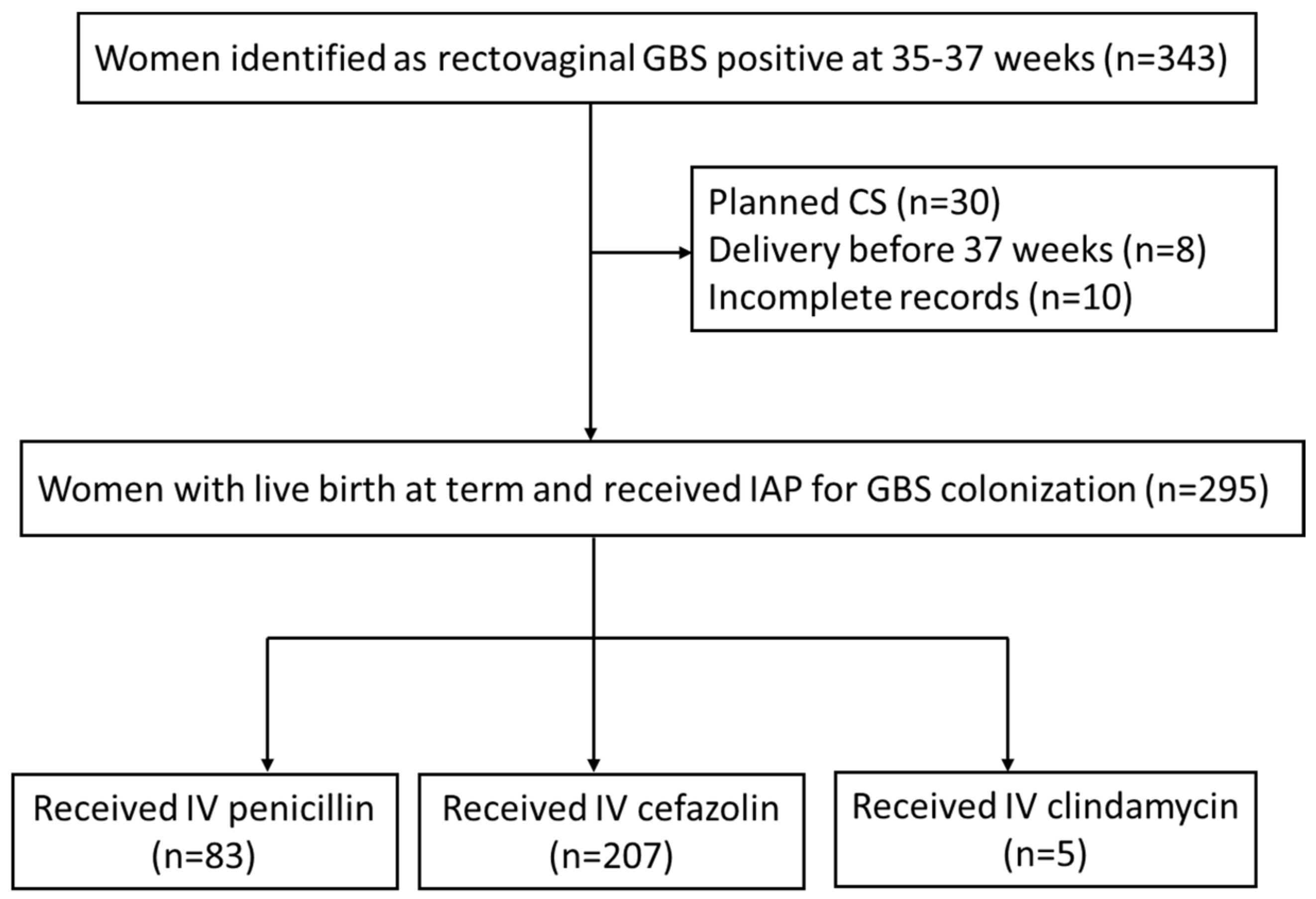
Maternal rectovaginal colonization with Group B Streptococcus (GBS) during labor is a prerequisite for neonatal early-onset GBS disease. Intrapartum antibiotic prophylaxis (IAP) has been proven to prevent GBS perinatal infection, while there are few studies on the evaluation of the effectiveness of different antibiotic prophylaxis regimens. This study aimed to assess the maternal rectovaginal GBS colonization status after IAP, antimicrobial susceptibility and maternal and neonatal outcomes among women administered different antibiotic prophylaxis regimens. A prospective study was conducted between June 2018 and June 2022. GBS carriers identified at 35–37 weeks of gestation were provided IAP (penicillin, cefazolin or clindamycin) at delivery based on the local protocol for GBS prevention. Rectovaginal samples were obtained from participants again after delivery. Antimicrobial susceptibility testing in GBS isolates was performed using the broth microdilution method. A total of 295 cases were included in this study. In the postpartum re-examination for GBS, the overall negative rectovaginal culture rate was 90.8% (268/295). Women who received cefazolin prophylaxis had the highest negative culture rate (95.2%, 197/207), which was followed by those who received penicillin (80.7%, 67/83) and clindamycin (80.0%, 4/5) (p = 0.001). All GBS isolates achieved sensitivity to penicillin and cefazolin, whereas resistance to clindamycin was shown in 21.4% of the strains. There were no significant differences in maternal and neonatal outcomes among the IAP groups. The use of IAP is highly effective in reducing the maternal rectovaginal GBS colonization. Cefazolin may offer equivalent efficacy and safety compared to standard penicillin prophylaxis.
Keywords: colonization; group b streptococcus; intrapartum antibiotic prophylaxis colonization; group b streptococcus; intrapartum antibiotic prophylaxis