Abstract
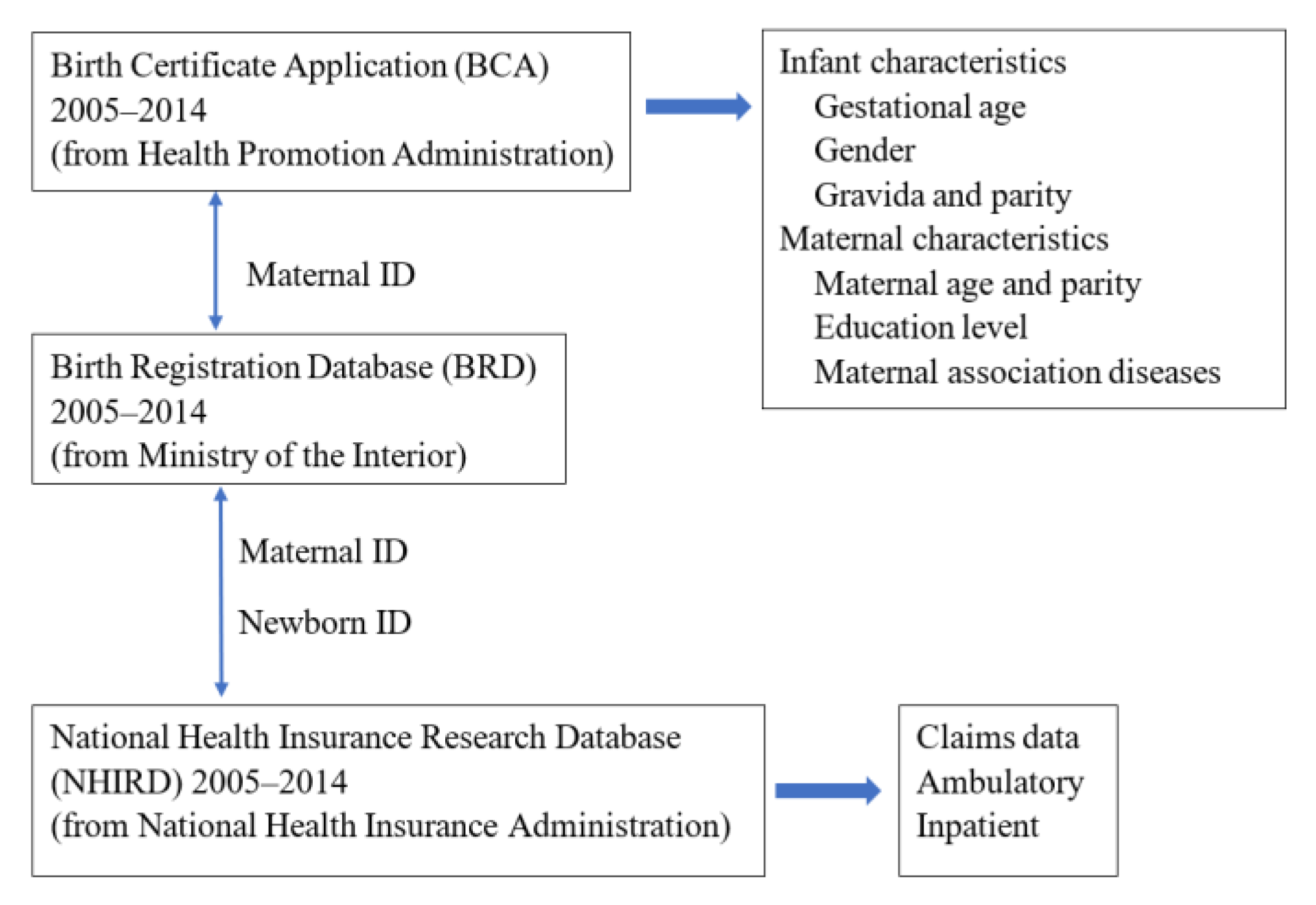
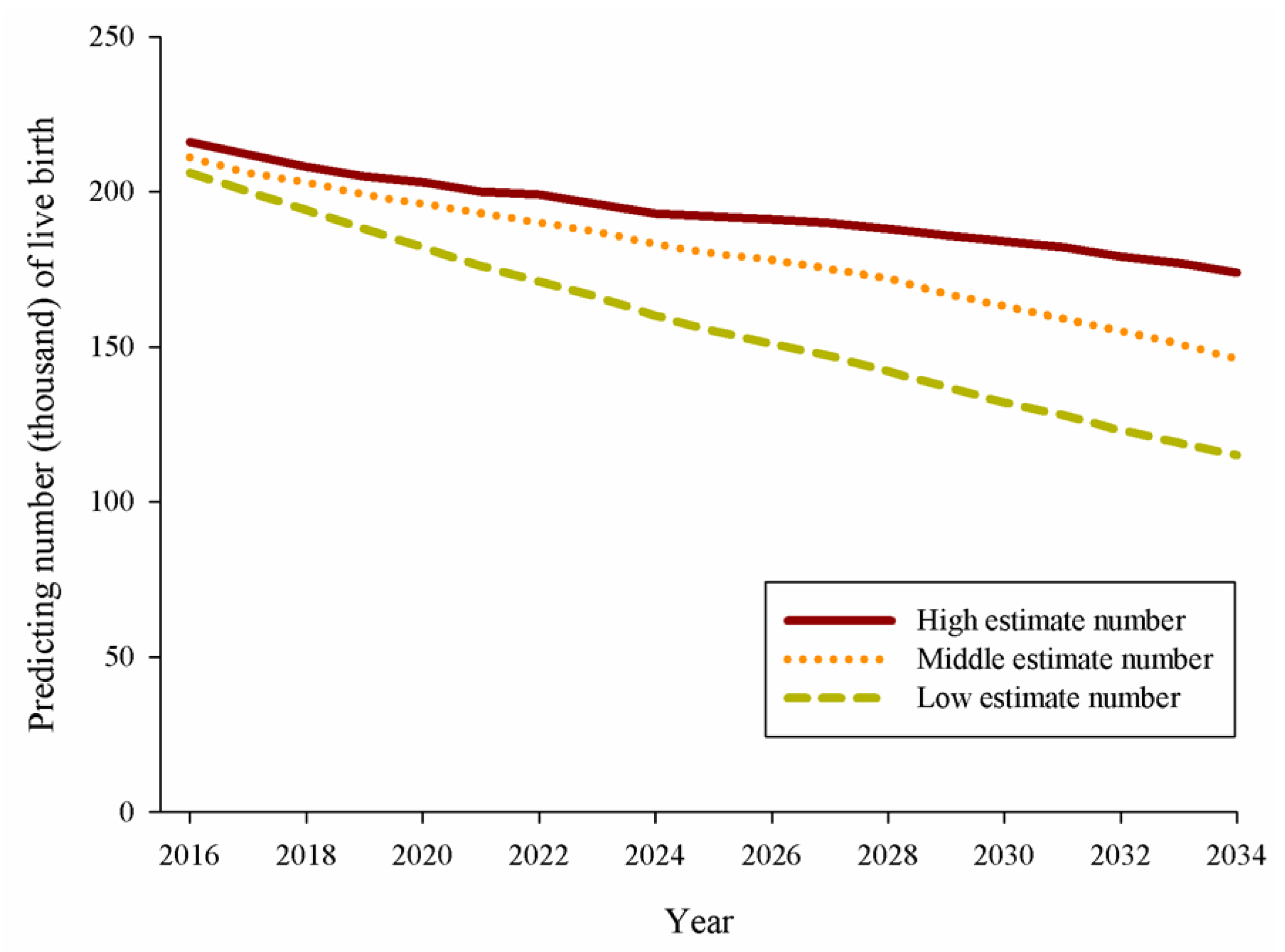
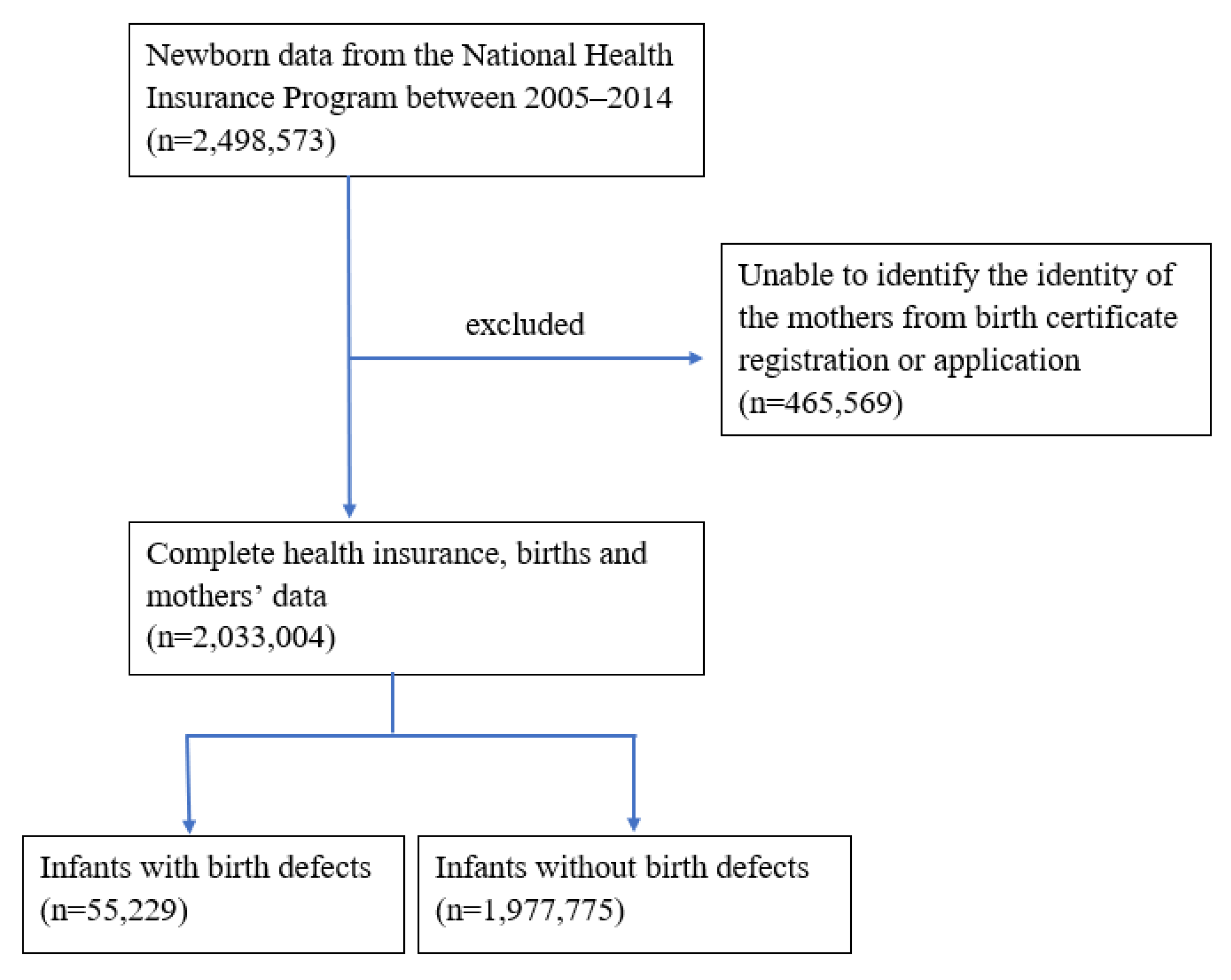
Birth defects (BDs) are an important cause of abortion, stillbirth, and infant mortality that may cause lifelong disability. The defects can be caused by genetics, environmental exposure, or maternal chronic diseases. We conducted a study to analyze the association between maternal chronic diseases and BDs and to evaluate the effect of decreasing the prevalence of maternal chronic diseases on reducing BDs. The data of newborns and their mothers were concatenated and analyzed from three national population databases: the National Health Insurance Research Database, the Birth Certificate Application, and the Birth Registration Database in Taiwan during the period of 2005 to 2014. Codes 740-759 of the International Classification of Diseases 9th Revision—Clinical Modification (ICD-9-CM) were used as the diagnosis of BDs. The prevalence of BDs was 2.72%. Mothers with cardiovascular diseases, hypertension, anemia, genitourinary tract infections, renal diseases, neurotic or psychotic disorders, gestational diabetes mellitus (DM), and pregestational type 1 or type 2 DM had a significantly higher prevalence of BDs. The population attributable risk percent (PAR%) of BDs was 1.63%, 0.55%, 0.18%, 1.06%, 0.45%, 0.22%, 0.48%, and 0.24% for maternal hypertension, cardiovascular disease, renal disease, genitourinary infection, anemia, neurotic and psychotic disorders, gestational DM, and pregestational type 1 or type 2 DM, respectively. The percentage change (−1%, −5%, and −10% of prevalence in 2034 compared with the prevalence in 2005–2014) of maternal disease and the predicted number of live births was used to estimate the decrease in the number of newly diagnosed BDs in 2034. By using the middle-estimated number of live births in 2034, we predicted that the number of BDs would decrease by 302, 102, 33, 196, 83, 41, 89, and 44 with a −5% prevalence of maternal hypertension, cardiovascular disease, renal disease, genitourinary infection, anemia, neurotic and psychotic disorders, gestational DM, and pregestational type 1 or type 2 DM, respectively. We conclude that mothers with chronic diseases, including cardiovascular diseases, hypertension, anemia, genitourinary tract infections, renal diseases, neurotic or psychotic disorders, gestational DM, and pregestational type 1 or type 2 DM, have a significantly higher (p < 0.01) prevalence of having offspring with BDs. Mothers with chronic diseases are associated with BDs. It is very important to set up a policy to decrease the prevalence of these maternal chronic diseases; then, we can reduce the incidence of BDs.



 ,
,