Article

Vitamin D Status and Its Role in First-Time and Recurrent Urinary Tract Infections in Children: A Case-Control Study

1
Department of Paediatrics I, “George Emil Palade” University of Medicine, Pharmacy, Sciences and Technology of Târgu Mureș, Gheorghe Marinescu Street No. 38, 540142 Târgu Mureș, Romania
2
Department of Paediatrics III, “George Emil Palade” University of Medicine, Pharmacy, Sciences and Technology of Târgu Mureș, Gheorghe Marinescu Street No. 38, 540142 Târgu Mureș, Romania
*
Author to whom correspondence should be addressed.
Children 2021, 8(5), 419; https://doi.org/10.3390/children8050419

Submission received: 20 April 2021 / Revised: 14 May 2021 / Accepted: 18 May 2021 / Published: 20 May 2021
(This article belongs to the Section Pediatric Nephrology & Urology)

Abstract

Vitamin D has emerged as a key factor in innate immunity. Its involvement in the pathogenesis of urinary tract infections (UTIs) has gained a lot of attention recently. The objective of this study is to investigate the association between serum 25-hydroxyvitamin D (25(OH)D) levels and first-time or recurrent UTIs in children. A prospective, case-control study was conducted on 101 pediatric patients, who were divided into two groups: 59 patients with UTIs and 42 age-matched healthy controls. Serum 25(OH)D was determined in each child and expressed in ng/mL. Vitamin D presented significantly lower values in study group subjects than in healthy controls (p < 0.01). Moreover, a significantly higher prevalence of vitamin D insufficiency and deficiency was found in children with UTIs (p < 0.01). Patients with recurrent UTIs presented significantly lower levels of vitamin D than those with first-time UTIs (p = 0.04). Urinary tract abnormalities did not seem to exercise an additional effect upon vitamin D levels within the study group. In conclusion, first-time and recurrent UTIs are associated with lower vitamin D levels. Further studies are necessary to validate our findings, as well as future longitudinal research regarding efficacy of vitamin D supplementation in children with UTIs.
Keywords: vitamin D; urinary tract infections; children; recurrence; deficiency vitamin D; urinary tract infections; children; recurrence; deficiency
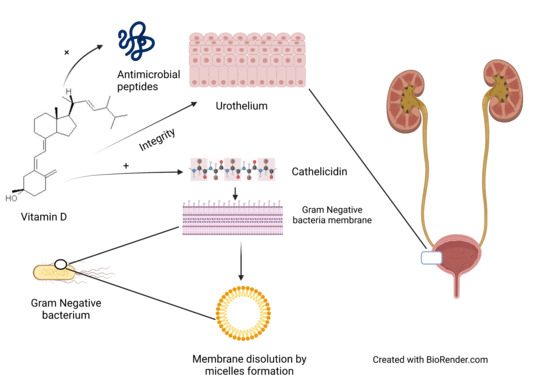
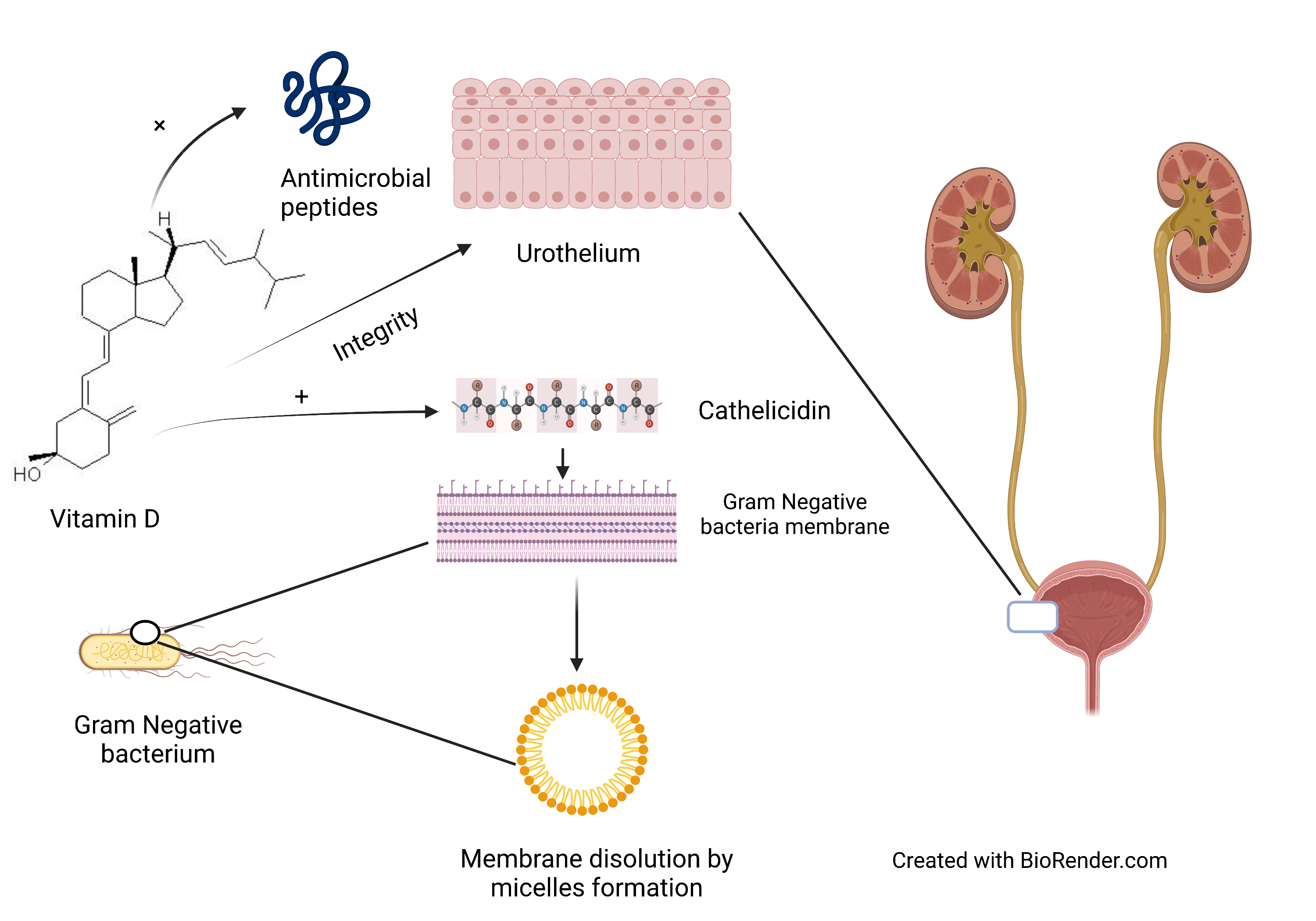
Graphical Abstract