Review

COVID-19 Lesson for Respiratory Syncytial Virus (RSV): Hygiene Works

1
Division of Pediatric Infectious Diseases, Department of Women’s and Children’s Health, University of Padua, 35128 Padua, Italy
2
Department of Pediatrics, Woman and Child Hospital, University of Verona, 37126 Verona, Italy
3
Department of Pediatrics, Wilhelmina Children’s Hospital, University Medical Center Utrecht, 3584 CX Utrecht, The Netherlands
4
Respiratory Syncytial Virus Network (ReSViNET) Foundation, 3703 CD Zeist, The Netherlands
5
Neonatal Intensive Care Unit, Department of Women’s and Children’s Health, University of Padua, 35128 Padua, Italy
6
Fondazione Istituto di Ricerca Pediatrica, 35127 Padua, Italy
*
Author to whom correspondence should be addressed.
Children 2021, 8(12), 1144; https://doi.org/10.3390/children8121144

Submission received: 27 October 2021 / Revised: 25 November 2021 / Accepted: 2 December 2021 / Published: 6 December 2021

Abstract

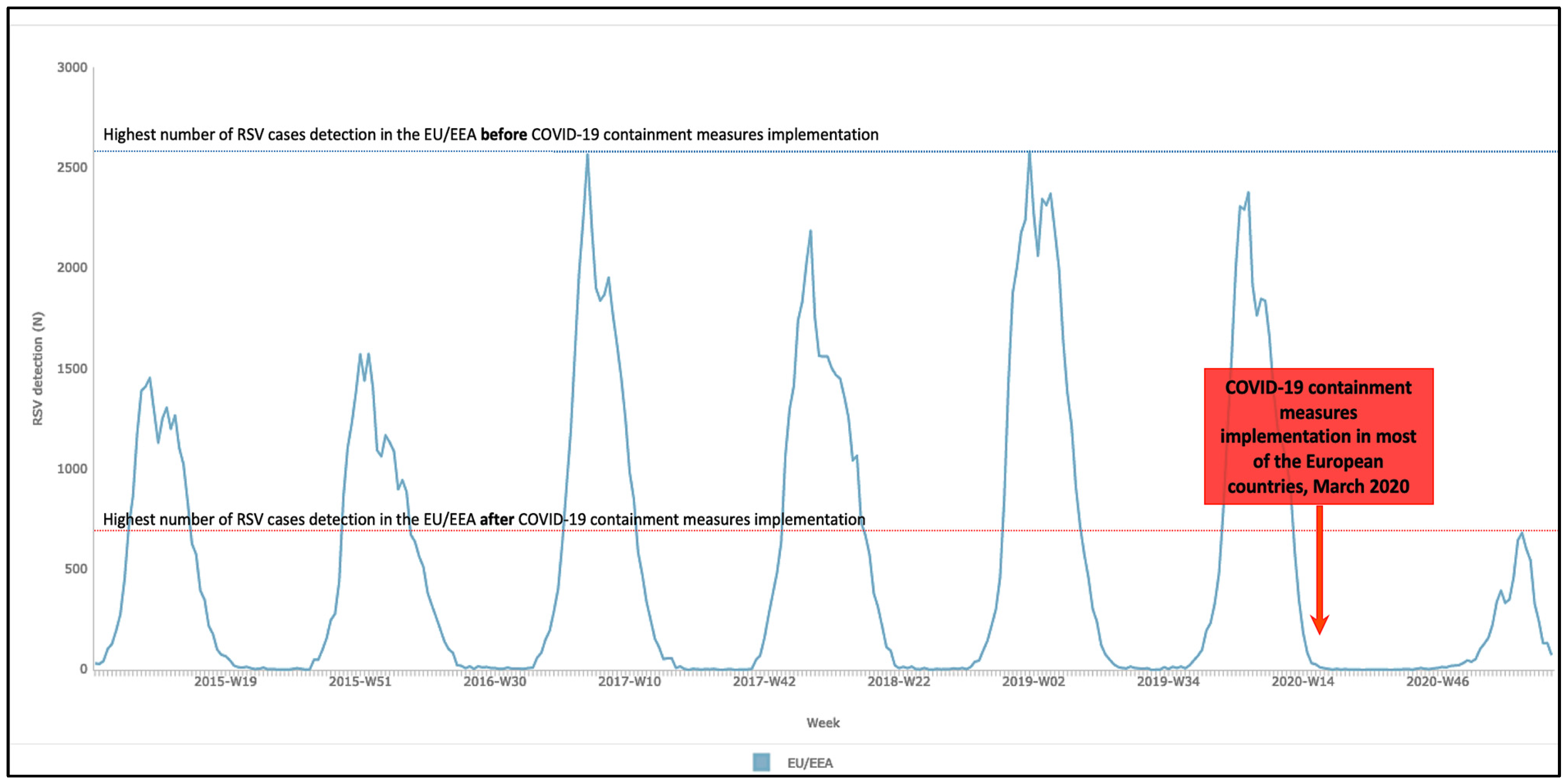
Respiratory syncytial virus (RSV) is a leading cause of acute lower respiratory tract infections (LRTIs) in infants worldwide. The global direct medical cost associated with RSV LRTIs reaches billions of dollars, with the highest burden in low–middle-income countries. Many efforts have been devoted to improving its prevention and management, including both non-pharmaceutical and pharmaceutical strategies, often with limited routine use in high-income countries due to high costs. During the ongoing COVID-19 pandemic, a dramatic decrease in RSV infections (up to 70–90%) has been reported around the globe, directly related to the implementation of containment measures (face masks, hand hygiene, and social distancing). Primary prevention has demonstrated the highest cost effectiveness ratio in reducing the burden of a respiratory infection such as RSV, never reached before. Thus, we emphasize the importance of non-pharmaceutical preventive hygiene measures that should be implemented and maintained even after the COVID-19 outbreak.
Keywords: respiratory syncytial virus; COVID-19; lower respiratory tract infection; children; infant primary prevention; hygiene respiratory syncytial virus; COVID-19; lower respiratory tract infection; children; infant primary prevention; hygiene