Influence of Socioeconomic Status on Knowledge of Obesity and Diabetes among Adolescents in Chennai, South India

Abstract
1. Introduction
2. Materials and Methods
2.1. Participants
2.2. Structure
2.3. Anthropometric Measures
2.4. Data Analysis
3. Results
3.1. Participant Characteristics
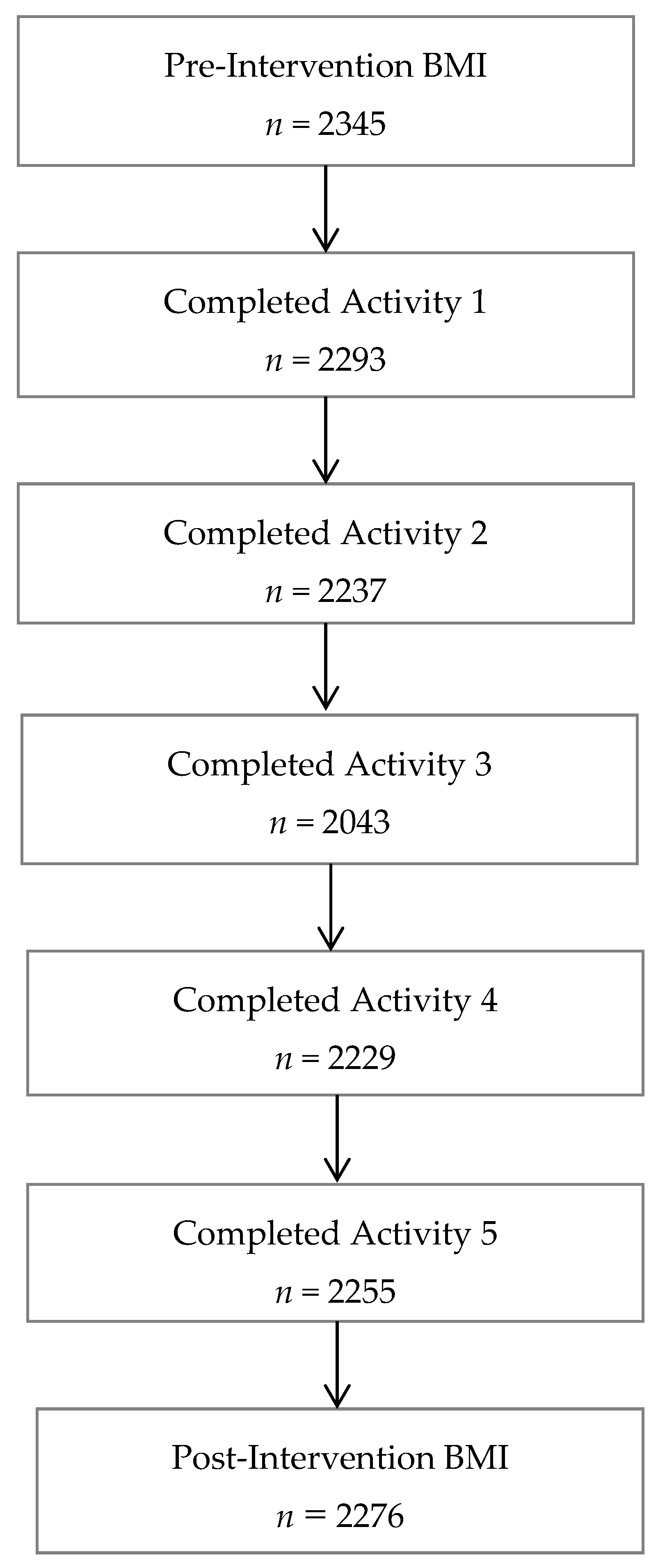
3.2. Pre- and Post- Intervention BMI
3.3. Activity Responses and Feedback from Peer Leaders and Teachers
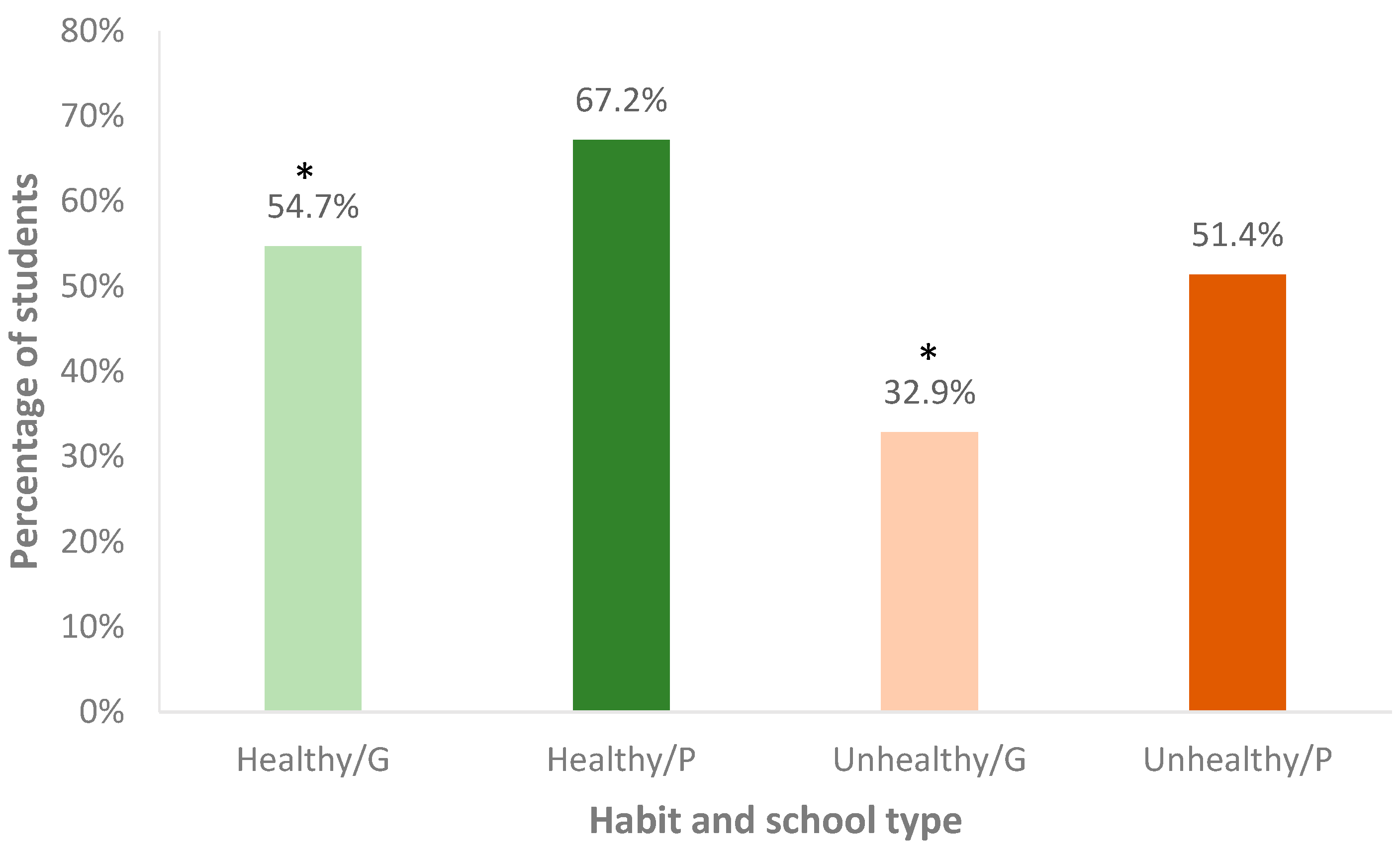
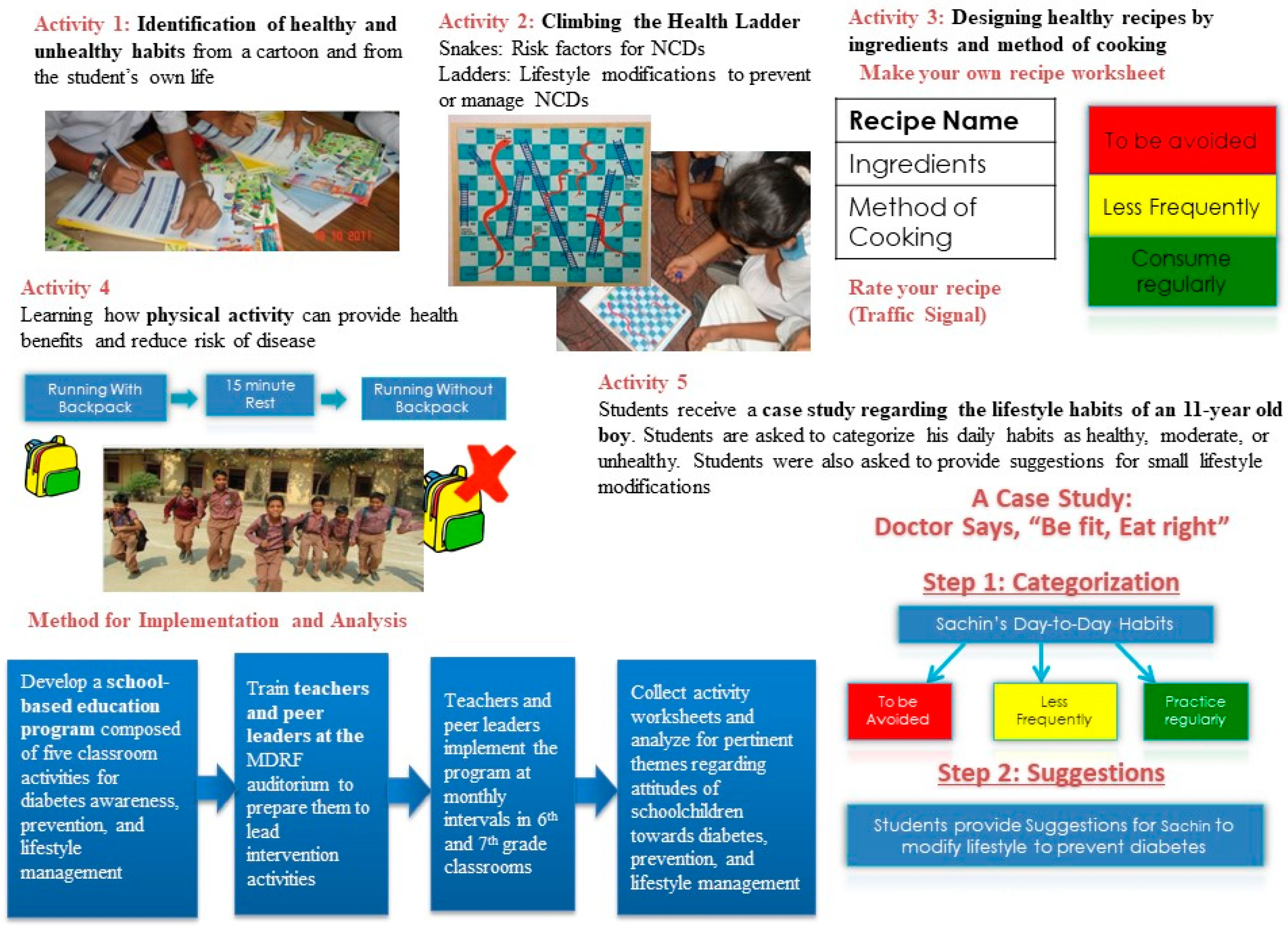
3.3.1. Activity 1: Way to Health
3.3.2. Activity 2: Climbing the Health Ladder
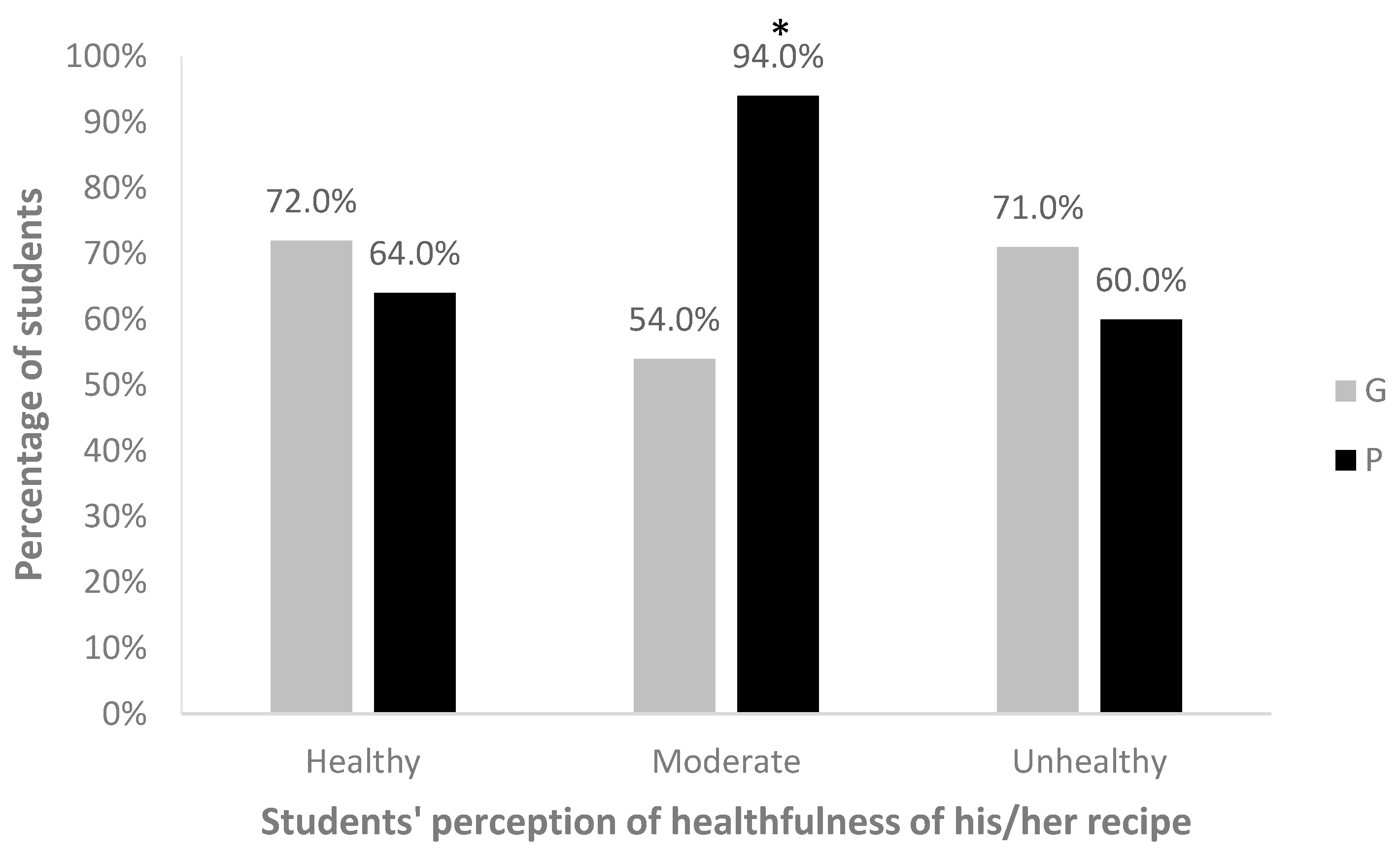
3.3.3. Activity 3: Pass It on-The Traffic Signal
3.3.4. Activity 4: Jump Forward and Race with Pace
3.3.5. Activity 5: Doctor Says “Be Fit, Eat Right”
4. Discussion
4.1. Strengths
4.2. Limitations
5. Conclusions
Key Messages
- A school-based co-curriculum program for educating adolescents about healthy lifestyle modifications to prevent diabetes and improve overall health status was well-received in a sample of government and private schools in Chennai, India.
- This study found divergences in comprehension of the diabetes education program between students from government (low socio-economic status (SES)) and private (high SES) schools.
- Intervention strategies must be adapted to the culture and socioeconomic status of students from different school settings.
Acknowledgments
Author Contributions
Conflicts of Interest
Appendix A
Appendix A.1. Activity 1
Appendix A.2. Activity 2
Appendix A.3. Activity 3
Appendix A.4. Activity 4
Appendix A.5. Activity 5
Appendix B

| Pre-Intervention | Post-Intervention | p-Value * | |
|---|---|---|---|
| Overall | 144.0 ± 8.2 | 147.0 ± 8.5 | <0.0001 |
| Height | |||
| Boy | 143.1 ± 8.2 | 146.1 ± 8.7 | <0.0001 |
| Girl | 145.2 ± 8.1 | 148.1 ± 8.0 | <0.0001 |
| Weight | |||
| Boy | 36.3 ± 10.3 | 38.9 ± 10.9 | <0.0001 |
| Girl | 38.3 ± 10.3 | 41.3 ± 10.8 | <0.0001 |
References
- International Diabetes Federation. IDF Diabetes Atlas, 7th ed.; International Diabetes Federation: Brussels, Belgium, 2015; Available online: http://www.diabetesatlas.org (accessed on 26 December 2016).
- Pradeepa, R.; Anjana, R.M.; Joshi, S.R.; Bhansali, A.; Deepa, M.; Joshi, P.P.; Dhandania, V.K.; Madhu, S.V.; Rao, P.V.; Geetha, L.; et al. Prevalence of generalized & abdominal obesity in urban & rural India—The ICMR-INDIAB Study (Phase-I) [ICMR-INDIAB-3]. Indian J. Med. Res. 2015, 142, 139–150. [Google Scholar] [CrossRef] [Scilit] [PubMed]
- Joshi, S.R.; Mohan, V.; Joshi, S.S.; Mechanick, J.I.; Marchetti, A. Transcultural Diabetes Nutrition Therapy Algorithm: The Asian Indian Application. Curr. Diabetes Rep. 2012, 12, 204–212. [Google Scholar] [CrossRef] [Scilit] [PubMed]
- Anjana, R.M.; Pradeepa, R.; Deepa, M.; Datta, M.; Sudha, V.; Unnikrishnan, R.; Bhansali, A.; Joshi, S.R.; Joshi, P.P.; Yajnik, C.S.; et al. Prevalence of diabetes and prediabetes (impaired fasting glucose and/or impaired glucose tolerance) in urban and rural India: Phase I results of the Indian Council of Medical Research-INdiaDIABetes (ICMR-INDIAB) study. Diabetologia 2011, 54, 3022–3027. [Google Scholar] [CrossRef] [Scilit] [PubMed]
- Ranjani, H.; Sonya, J.; Anjana, R.M.; Mohan, V. Prevalence of glucose intolerance among children and adolescents in urban South India (ORANGE-2). Diabetes Technol. Ther. 2013, 15, 13–19. [Google Scholar] [CrossRef] [Scilit] [PubMed]
- Jagadesan, S.; Harish, R.; Miranda, P.; Unnikrishnan, R.; Anjana, R.M.; Mohan, V. Prevalence of overweight and obesity among school children and adolescents in Chennai. Indian Pediatr. 2014, 51, 544–549. [Google Scholar] [CrossRef] [Scilit] [PubMed]
- Mohan, V.; Deepa, R.; Deepa, M.; Somannavar, S.; Datta, M. A simplified Indian Diabetes Risk Score for screening for undiagnosed diabetic subjects. J. Assoc. Physicians India 2005, 53, 759–763. [Google Scholar] [PubMed]
- Norris, S.L.; Engelgau, M.M.; Narayan, K.M. Effectiveness of self-management training in type 2 diabetes: A systematic review of randomized controlled trials. Diabetes Care 2001, 24, 561–587. [Google Scholar] [CrossRef] [Scilit] [PubMed]
- A Report From The Diabetes Summit for South-East Asia, Chennai, India, November 28th–30th, 2008. In Practical Diabetes International Supplement 2009; John Wiley & Sons: Hoboken, NJ, USA, 2008; Available online: https://www.worlddiabetesfoundation.org/sites/default/files/Report.Summit.India2008.pdf (accessed on 26 December 2016).
- Weber, M.B.; Ranjani, H.; Meyers, G.C.; Mohan, V.; Narayan, K.M. A model of translational research for diabetes prevention in low and middle-income countries: The Diabetes Community Lifestyle Improvement Program (D-CLIP) trial. Prim. Care Diabetes 2012, 6, 3–9. [Google Scholar] [CrossRef] [Scilit] [PubMed]
- The Diabetes Prevention Program Research Group. The Diabetes Prevention Program: Design and methods for a clinical trial in the prevention of type 2 diabetes. Diabetes Care 1999, 22, 623–634. [Google Scholar] [PubMed]
- Bantle, J.P.; Wylie-Rosett, J.; Albright, A.L.; Apovian, C.M.; Clark, N.G.; Franz, M.J.; Hoogwerf, B.J.; Lichtenstein, A.H.; Mayer-Davis, E.; Mooradian, A.D.; et al. Nutrition recommendations and interventions for diabetes—2006: A position statement of the American Diabetes Association. Diabetes Care 2006, 29, 2140–2157. [Google Scholar] [CrossRef] [Scilit] [PubMed]
- Ranjani, H.; Pradeepa, R.; Mehreen, T.S.; Anjana, R.M.; Anand, K.; Garg, R.; Mohan, V. Determinants, consequences and prevention of childhood overweight and obesity: An Indian context. Indian J. Endocrinol. Metab. 2014, 18 (Suppl. S1), S17–S25. [Google Scholar] [CrossRef] [Scilit] [PubMed]
- Balagopal, P.; Kamalamma, N.; Patel, T.G.; Misra, R. A community-based participatory diabetes prevention and management intervention in rural India using community health workers. Diabetes Educ. 2012, 38, 822–834. [Google Scholar] [CrossRef] [Scilit] [PubMed]
- Rosenbloom, A.L.; Young, R.S.; Joe, J.R.; Winter, W.E. Emerging epidemic of type 2 diabetes in youth. Diabetes Care 1999, 22, 345–354. [Google Scholar] [CrossRef] [Scilit] [PubMed]
- Sonya, J.; Ranjani, H.; Pradeepa, R.; Mohan, V. Obesity Reduction and Awareness and Screening of Noncommunicable Diseases through Group Education in Children and Adolescents (ORANGE): Methodology Paper (ORANGE-1). J. Diabetes Sci. Technol. 2010, 4, 1256–1264. [Google Scholar] [CrossRef] [Scilit] [PubMed]
- Ramachandran, A.; Snehalata, C.; Yamuna, A.; Murugesan, N.; Narayan, K.M. Insulin resistance and clustering of cardiometabolic risk factor in urban teenagers in southern India. Diabetes Care 2007, 30, 1828–1833. [Google Scholar] [CrossRef] [Scilit] [PubMed]
- Treviño, R.P.; Yin, Z.; Hernandez, A.; Hale, D.E.; Garcia, O.A.; Mobley, C. Impact of the Bienestar School-Based Diabetes Mellitus Prevention Program on Fasting Capillary Glucose Levels: A Randomized Controlled Trial. Arch. Pediatr. Adolesc. Med. 2004, 158, 911–917. [Google Scholar] [CrossRef] [PubMed]
- Bassi, S.; Gupta, V.K.; Chopra, I.; Ranjani, H.; Saligram, N.; Arora, M. Novel school-based health intervention program—A step toward early diabetes prevention. Int. J. Diabetes Dev. Ctries. 2015, 35, 460–468. [Google Scholar] [CrossRef] [Scilit]
- Narayan, K.M.; Fagot-Campagna, A.; Imperatore, G. Type 2 diabetes in children: A problem lurking for India? Indian Pediatr. 2001, 38, 701–704. [Google Scholar] [PubMed]
- Lau, R.R.; Quadrel, M.J.; Hartman, K.A. Development and change of young adults’ preventive health beliefs and behavior: Influence from parents and peers. J. Health Soc. Behav. 1990, 31, 240–259. [Google Scholar] [CrossRef] [Scilit] [PubMed]
- Janssen, I.; Boyce, W.F.; Simpson, K.; Pickett, W. Influence of individual- and area-level measures of socioeconomic status on obesity, unhealthy eating, and physical inactivity in Canadian adolescents. Am. J. Clin. Nutr. 2006, 83, 139–145. [Google Scholar] [PubMed]
- Lawton, J.; Ahmad, N.; Hanna, L.; Douglas, M.; Hallowell, N. “I can’t do any serious exercise”: Barriers to physical activity amongst people of Pakistani and Indian origin with type 2 diabetes. Health Educ. Res. 2006, 21, 43–54. [Google Scholar] [CrossRef] [Scilit] [PubMed]
- Verma, S.; Sharma, D.; Larson, R.W. School stress in India: Effects on time and daily emotions. Int. J. Behav. Dev. 2002, 26, 500–508. [Google Scholar] [CrossRef] [Scilit]
- Ahmed, S.M.; Lemkau, J.P. Cultural issues in the primary care of south Asians. J. Immigr. Health 2000, 2, 89–96. [Google Scholar] [CrossRef] [Scilit] [PubMed]
- Popkin, B.M.; Horton, S.; Kim, S.; Mahal, A.; Shuigao, J. Trends in diet, nutritional status, and diet-related noncommunicable diseases in China and India: The economic costs of the nutrition transition. Nutr. Rev. 2001, 59, 379–390. [Google Scholar] [CrossRef] [Scilit] [PubMed]

| Variables | No. of Participants (%) (n = 2276) | School Type | ||
|---|---|---|---|---|
| Private No. (%) (n = 1784) | Government No. (%) (n = 492) | p-Value | ||
| Age in years * (mean age = 11.1) | ||||
| 10 | 561 (24.7) | 452 (25.3) | 109 (22.2) | 0.0003 |
| 11 | 1016 (44.6) | 820 (46.0) | 196 (39.8) | |
| 12 | 601 (26.4) | 447 (25.1) | 154 (31.3) | |
| 13 | 98 (4.3) | 65 (3.6) | 33 (6.7) | |
| Gender * | ||||
| Boy | 1294 (56.9) | 944 (52.9) | 350 (71.1) | <0.0001 |
| Girl | 982 (43.2) | 840 (47.1) | 142 (28.9) | |
| Intervention Compliance * | ||||
| Compliant | 2181 (95.8) | 1748 (98.0) | 433 (88.0) | <0.0001 |
| Non-compliant | 95 (4.2) | 36 (2.0) | 59 (12.0) | |
| Anthropometric measures † (mean ± SD) | ||||
| Height (cm) | 147.0 ± 8.5 | 148.5 ± 8.0 | 141.3 ± 7.5 | <0.0001 |
| Weight (kg) | 39.9 ± 10.9 | 41.7 ± 10.7 | 33.5 ± 9.1 | |
| Pre-Intervention BMI | Post-Intervention BMI | p-Value * | |||
|---|---|---|---|---|---|
| n | Mean ± SD | n | Mean ± SD | ||
| Overall | 2276 | 17.7 ± 3.7 | 2276 | 18.3 ± 3.8 | <0.0001 |
| School | |||||
| Government | 492 | 15.9 ± 3.1 | 492 | 16.6 ± 3.4 | <0.0001 |
| Private | 1784 | 18.2 ± 3.7 | 1784 | 18.7 ± 3.8 | <0.0001 |
| Gender | |||||
| Boy | 1294 | 17.4 ± 3.6 | 1294 | 18.0 ± 3.8 | <0.0001 |
| Girl | 982 | 18.0 ± 3.7 | 982 | 18.6 ± 3.8 | <0.0001 |
| Theme | Common Outcomes | Rationale |
|---|---|---|
| Difficulty in distinguishing between a non-communicable and infectious disease among government school students | Misinterpretation of unsanitary, irresponsible, or irrespective habits as lifestyle behaviors causing diabetes. | Government school students often come from low-income families, who may struggle to think past their immediate needs (such as clean water and hygiene), and better comprehend the message of the intervention program. |
| Misinterpretation of a costly activity or meal as a healthy habit among private school students | Private school students often suggest eating at restaurants and riding cars as healthy lifestyle modifications to prevent diabetes. They may mistakenly associate wealth with a healthy lifestyle, and perceive certain unhealthy behaviors to be healthy. | Private school students come from higher income families, who can afford high-calorie restaurant food, television sets, video games, and other pleasures correlated with unhealthy eating and physical inactivity [22]. |
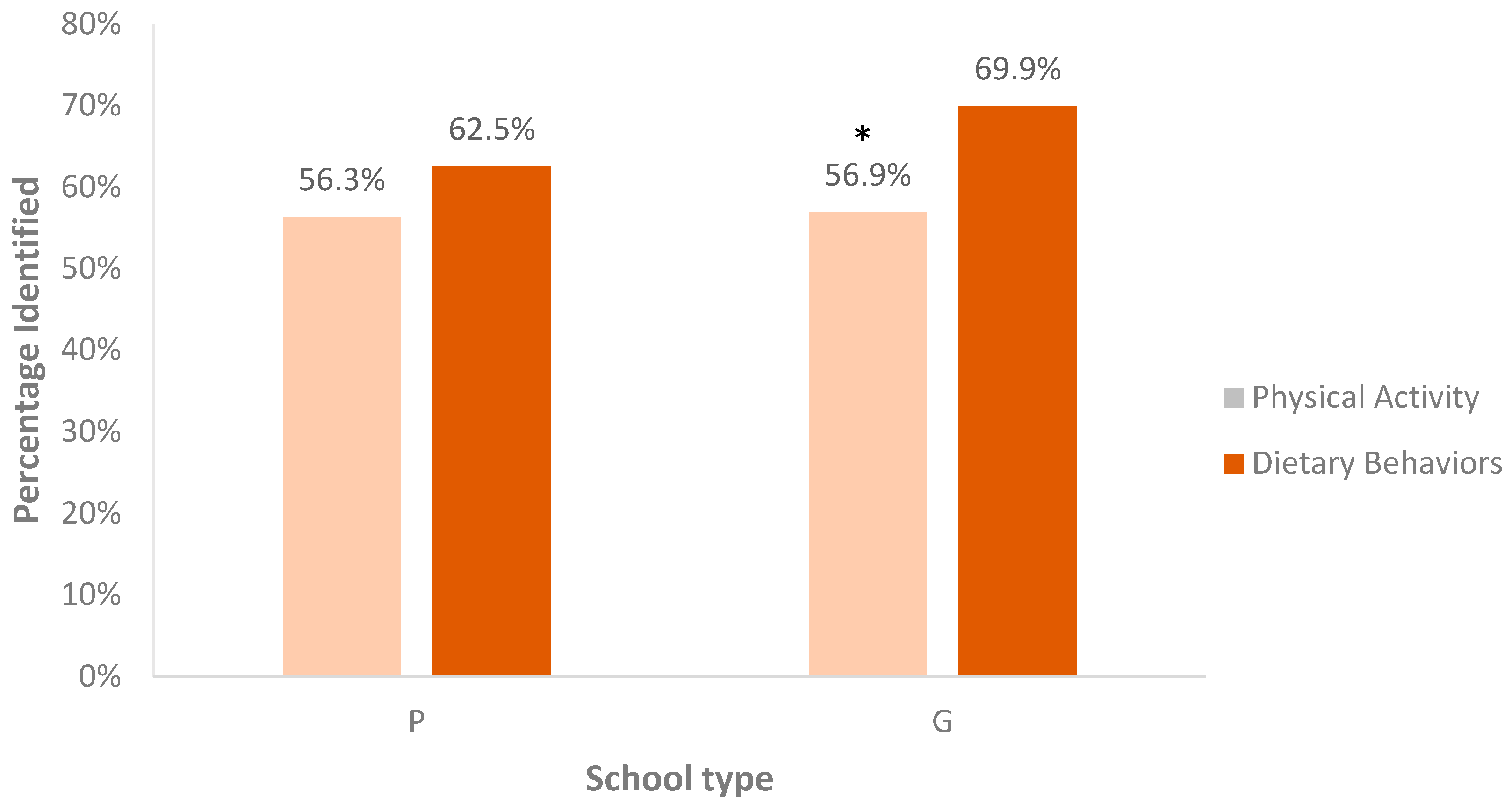
| Lack of awareness of physical activity and increased emphasis on dietary behaviors among both private and government school students | When asked to identify unhealthy lifestyle behaviors related to diabetes, more students correctly listed improper eating habits rather than physical inactivity or sedentary behaviors. Also, many students listed studying as a healthy lifestyle behavior to help prevent diabetes, even though it is a sedentary behavior. | It appears that children are unaware of how the built environment influences both their energy intake and energy expenditure. Certain barriers to exercise include inadequate places to exercise, or a desire to avoid pollution outdoors [23]. Familial pressure to succeed in school may also cause children to disregard studying as a sedentary behavior [24,25]. |
© 2017 by the authors. Licensee MDPI, Basel, Switzerland. This article is an open access article distributed under the terms and conditions of the Creative Commons Attribution (CC BY) license (http://creativecommons.org/licenses/by/4.0/).
Share and Cite
Panuganti, P.; Mehreen, T.S.; Anjana, R.M.; Mohan, V.; Mayer-Davis, E.; Ranjani, H. Influence of Socioeconomic Status on Knowledge of Obesity and Diabetes among Adolescents in Chennai, South India. Children 2017, 4, 61. https://doi.org/10.3390/children4080061
Panuganti P, Mehreen TS, Anjana RM, Mohan V, Mayer-Davis E, Ranjani H. Influence of Socioeconomic Status on Knowledge of Obesity and Diabetes among Adolescents in Chennai, South India. Children. 2017; 4(8):61. https://doi.org/10.3390/children4080061
Chicago/Turabian StylePanuganti, Pranati, T.S. Mehreen, Ranjit Mohan Anjana, Viswanathan Mohan, E. Mayer-Davis, and Harish Ranjani. 2017. "Influence of Socioeconomic Status on Knowledge of Obesity and Diabetes among Adolescents in Chennai, South India" Children 4, no. 8: 61. https://doi.org/10.3390/children4080061
APA StylePanuganti, P., Mehreen, T. S., Anjana, R. M., Mohan, V., Mayer-Davis, E., & Ranjani, H. (2017). Influence of Socioeconomic Status on Knowledge of Obesity and Diabetes among Adolescents in Chennai, South India. Children, 4(8), 61. https://doi.org/10.3390/children4080061