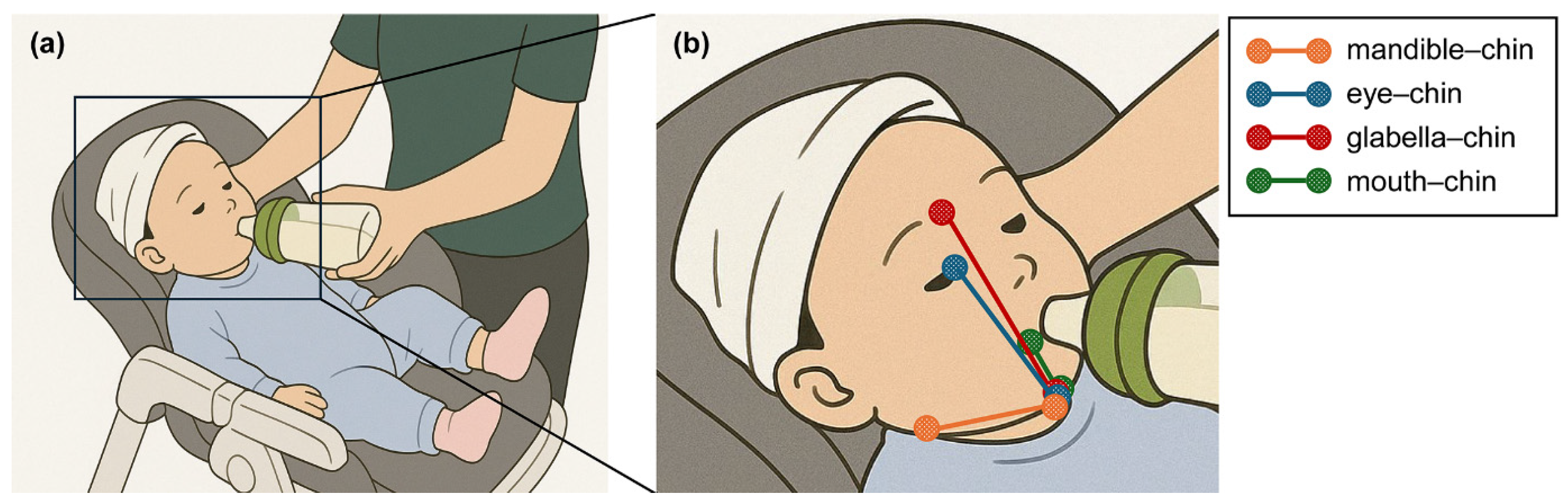
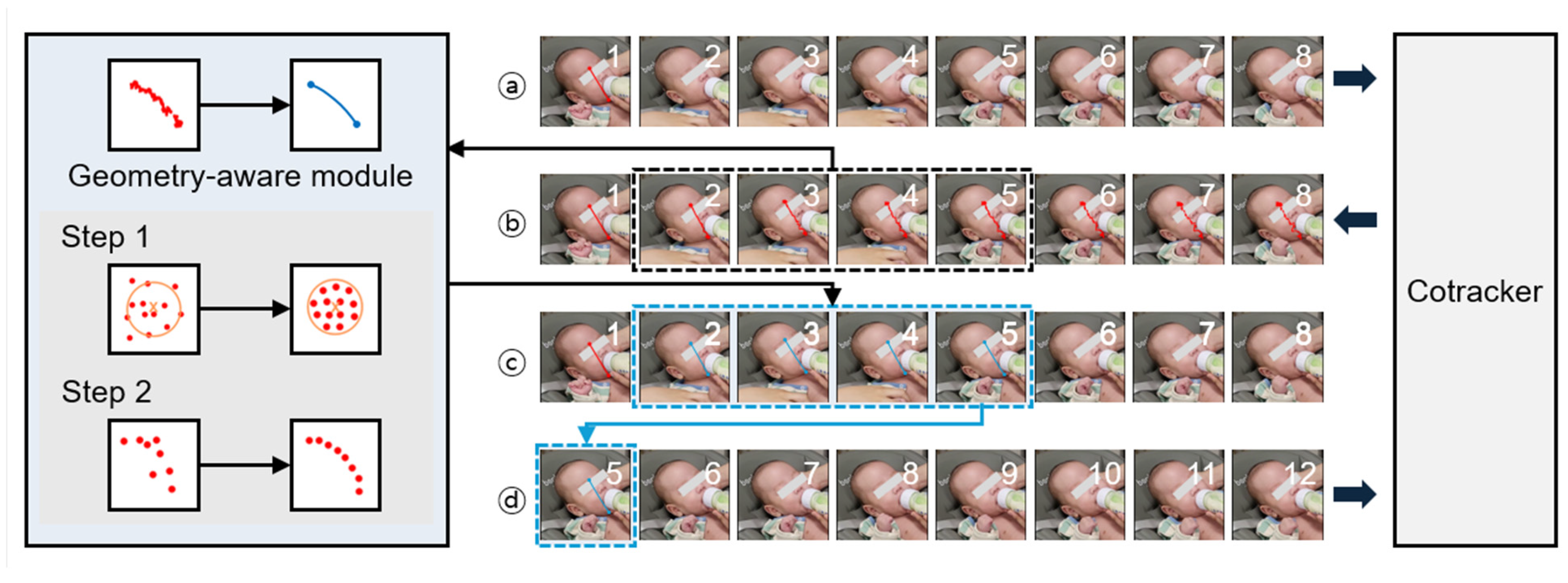
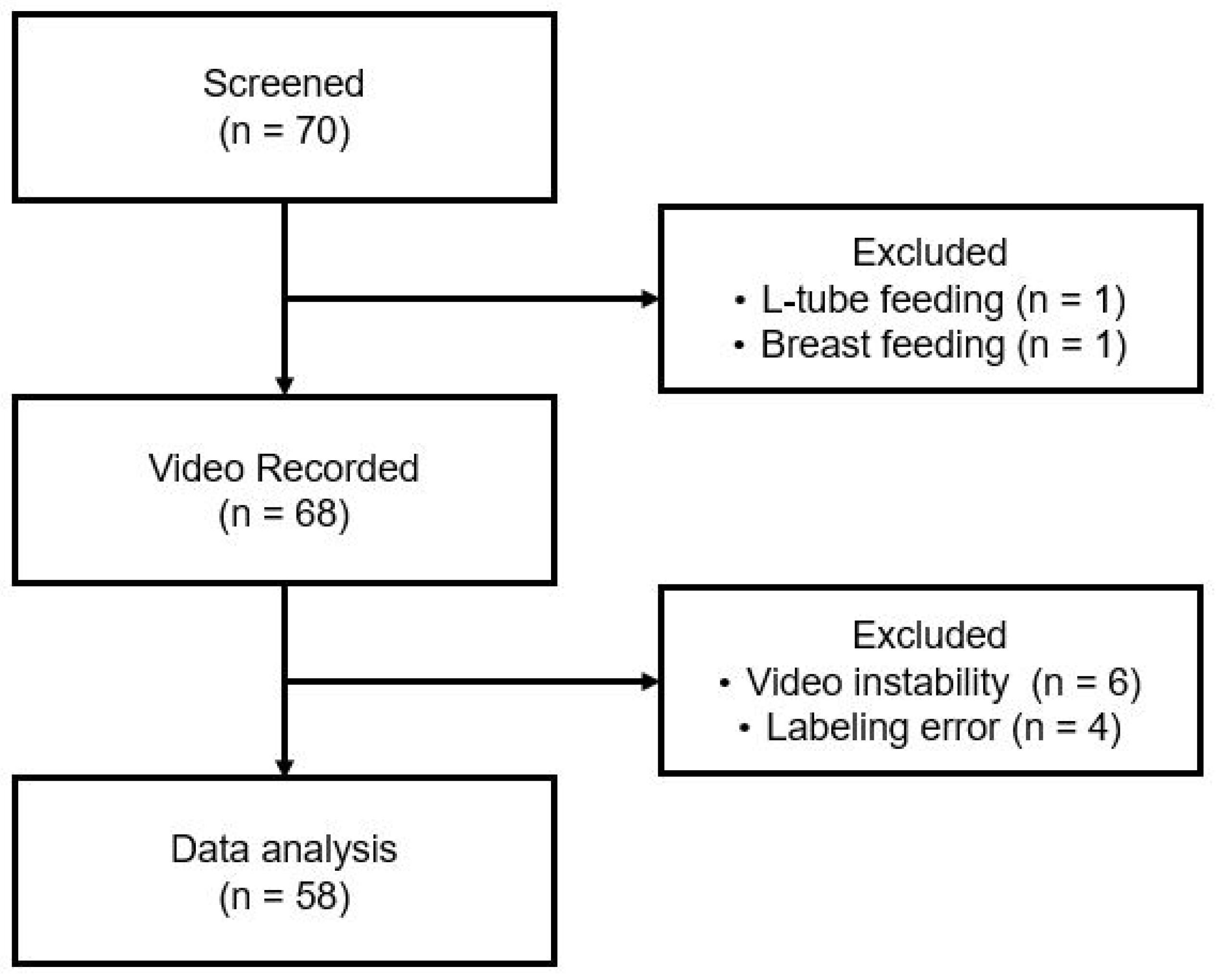
Artificial Intelligence-Based Video Analysis for Assessing Sucking Behavior in Preterm Infants: A Feasibility Study

 , , ,
, , , 
Highlights
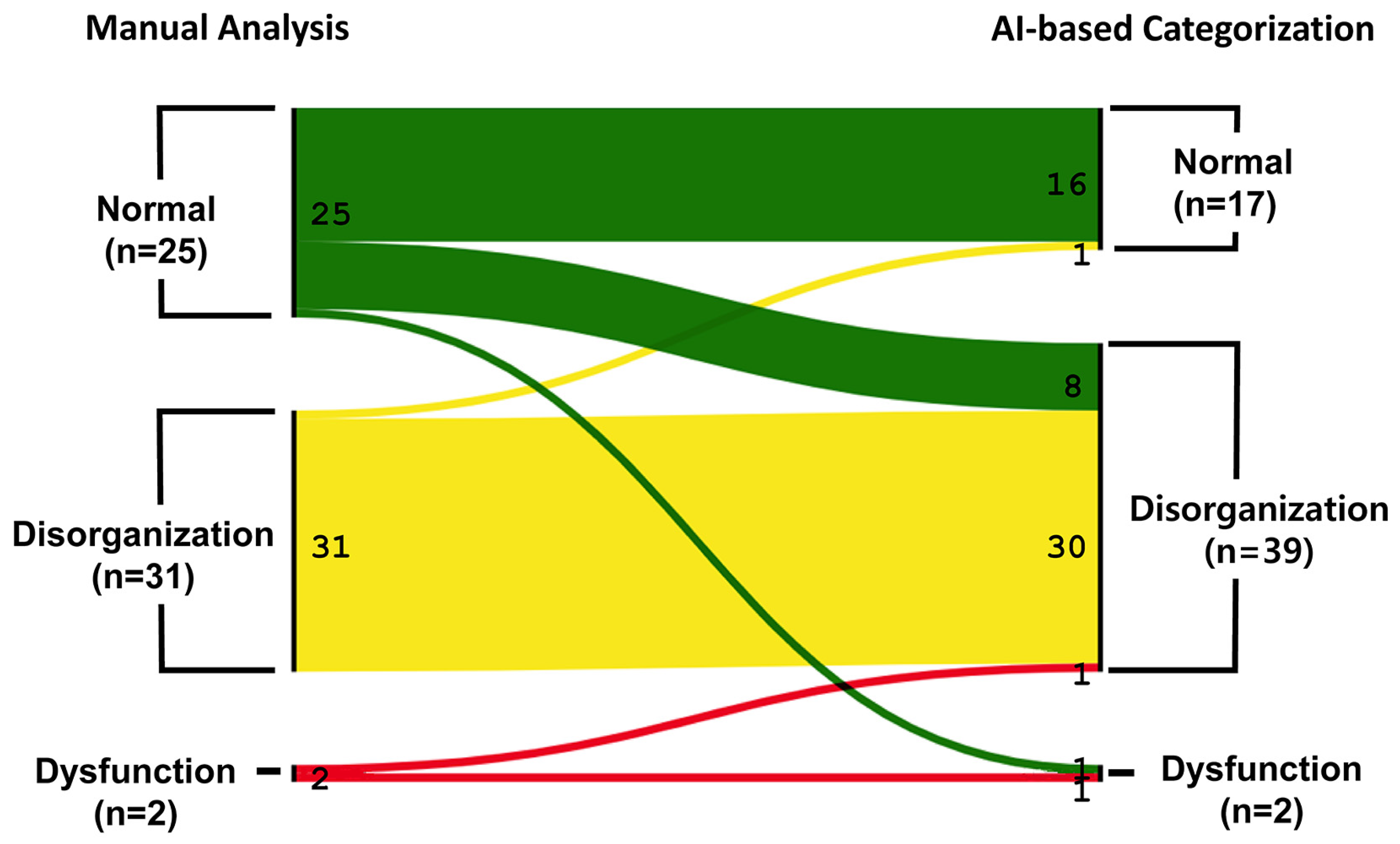
- An AI-based video analysis framework using facial keypoint tracking achieved an overall classification accuracy of 82.76% for Normal and Disorganization and 96.55% for Dysfunction in preterm infant feeding sessions compared to NOMAS expert evaluation.
- AI-based video analysis of bottle-feeding sessions offers a feasible, noninvasive alternative to conventional dysphagia screening tools, enabling objective assessment by non-specialists in NICU settings without radiation exposure.
Abstract
1. Introduction
2. Materials and Methods
2.1. Participants
2.2. Video Recording
2.3. NOMAS
2.4. Data Labeling
2.5. Label Tracking
2.6. Parameters
2.7. Tracking-Based Categorization of Feeding Sessions
2.8. Long-Term Development Follow up with Bayley Scales of Infant Development–II
2.9. Other Measurements
2.10. Statistical Analysis
3. Results
3.1. AI-Based Categorization Compared to the Manual Analysis of NOMAS
3.2. Neurodevelopmental Outcomes by NOMAS Classification
4. Discussion
5. Conclusions
Supplementary Materials
Author Contributions
Funding
Institutional Review Board Statement
Informed Consent Statement
Data Availability Statement
Conflicts of Interest
Abbreviations
| BSID-II | Bayley Scales of Infant Development, Second Edition |
| CA | Corrected Age |
| FEES | Fiberoptic Endoscopic Evaluation of Swallowing |
| TP | True positive |
| FP | False positive |
| TN | True negative |
| FN | False negative |
| NOMAS | Neonatal Oral Motor Assessment Scale |
| NNS | Non-Nutritive Suck |
| MDI | Mental Development Index |
| PDI | Psychomotor Development Index |
| VFSS | Videofluoroscopic Swallowing Study |
References
- Venkatesan, T.; Rees, P.; Gardiner, J.; Battersby, C.; Purkayastha, M.; Gale, C.; Sutcliffe, A.G. National trends in preterm infant mortality in the United States by race and socioeconomic status, 1995–2020. JAMA Pediatr. 2023, 177, 1085–1095. [Google Scholar] [CrossRef] [PubMed]
- American Academy of Pediatrics Committee on Fetus Newborn. Hospital discharge of the high-risk neonate. Pediatrics 2008, 122, 1119–1126. [Google Scholar] [CrossRef] [PubMed]
- Pickler, R.; McGrath, J.; Reyna, B.; Tubbs-Cooley, H.; Best, A.I.; Lewis, M.; Cone, S.; Wetzel, P. Effects of the neonatal intensive care unit environment on preterm infant oral feeding. Res. Rep. Neonatol. 2013, 3, 15–20. [Google Scholar] [CrossRef] [PubMed][Green Version]
- Bickell, M.; Barton, C.; Dow, K.; Fucile, S. A systematic review of clinical and psychometric properties of infant oral motor feeding assessments. Dev. Neurorehabilit. 2018, 21, 351–361. [Google Scholar] [CrossRef]
- Giannì, M.L.; Sannino, P.; Bezze, E.; Plevani, L.; di Cugno, N.; Roggero, P.; Consonni, D.; Mosca, F. Effect of co-morbidities on the development of oral feeding ability in pre-term infants: A retrospective study. Sci. Rep. 2015, 5, 16603. [Google Scholar] [CrossRef]
- Jadcherla, S.R.; Wang, M.; Vijayapal, A.S.; Leuthner, S.R. Impact of prematurity and co-morbidities on feeding milestones in neonates: A retrospective study. J. Perinatol. 2010, 30, 201–208. [Google Scholar] [CrossRef]
- Krugman, S.D.; Dubowitz, H. Failure to thrive. Am. Fam. Physician 2003, 68, 879–884. [Google Scholar]
- Horton, J.; Atwood, C.; Gnagi, S.; Teufel, R.; Clemmens, C. Temporal trends of pediatric dysphagia in hospitalized patients. Dysphagia 2018, 33, 655–661. [Google Scholar] [CrossRef]
- Dewi, D.J.; Rachmawati, E.Z.K.; Wahyuni, L.K.; Hsu, W.-C.; Tamin, S.; Yunizaf, R.; Prihartono, J.; Iskandar, R.A.T.P. Risk of dysphagia in a population of infants born pre-term: Characteristic risk factors in a tertiary NICU. J. Pediatr. 2024, 100, 169–176. [Google Scholar] [CrossRef]
- Reynolds, J.; Carroll, S.; Sturdivant, C. Fiberoptic endoscopic evaluation of swallowing: A multidisciplinary alternative for assessment of infants with dysphagia in the Neonatal Intensive Care Unit. Adv. Neonatal Care 2016, 16, 37–43. [Google Scholar] [CrossRef]
- Ko, M.J.; Kang, M.J.; Ko, K.J.; Ki, Y.O.; Chang, H.J.; Kwon, J.-Y. Clinical usefulness of schedule for oral-motor assessment (SOMA) in children with dysphagia. Ann. Rehabil. Med. 2011, 35, 477–484. [Google Scholar] [CrossRef] [PubMed]
- Braun, M.A.; Palmer, M.M. A pilot study of oral-motor dysfunction in “at-risk” infants. Phys. Occup. Ther. Pediatr. 2009, 5, 13–26. [Google Scholar] [CrossRef]
- Howe, T.H.; Lin, K.C.; Fu, C.P.; Su, C.T.; Hsieh, C.L. A review of psychometric properties of feeding assessment tools used in neonates. J. Obstet. Gynecol. Neonatal Nurs. 2008, 37, 338–349. [Google Scholar] [CrossRef] [PubMed]
- Longoni, L.; Provenzi, L.; Cavallini, A.; Sacchi, D.; di Minico, G.S.; Borgatti, R. Predictors and outcomes of the Neonatal Oral Motor Assessment Scale (NOMAS) performance: A systematic review. Eur. J. Pediatr. 2018, 177, 665–673. [Google Scholar] [CrossRef]
- Palmer, M.M.; Crawley, K.; Blanco, I.A. Neonatal Oral-Motor Assessment scale: A reliability study. J. Perinatol. 1993, 13, 28–35. [Google Scholar]
- da Costa, S.P.; van der Schans, C.P. The reliability of the Neonatal Oral-Motor Assessment Scale. Acta Paediatr. 2008, 97, 21–26. [Google Scholar] [CrossRef]
- da Costa, S.P.; Hubl, N.; Kaufman, N.; Bos, A.F. New scoring system improves inter-rater reliability of the Neonatal Oral-Motor Assessment Scale. Acta Paediatr. 2016, 105, e339–e344. [Google Scholar] [CrossRef]
- Zarem, C.; Kidokoro, H.; Neil, J.; Wallendorf, M.; Inder, T.; Pineda, R. Psychometrics of the neonatal oral motor assessment scale. Dev. Med. Child Neurol. 2013, 55, 1115–1120. [Google Scholar] [CrossRef]
- Moezzi, S.; Wan, M.; Manne, S.K.R.; Mathew, A.; Zhu, S.; Galoaa, B.; Hatamimajoumerd, E.; Grace, E.C.; Rowan, C.B.; Zimmerman, E.; et al. Classification of Infant Sleep-Wake States from Natural Overnight In-Crib Sleep Videos. In Proceedings of the 2025 IEEE/CVF Winter Conference on Applications of Computer Vision Workshops (WACVW); IEEE: New York, NY, USA, 2025; pp. 42–51. [Google Scholar] [CrossRef]
- Giordano, V.; Luister, A.; Vettorazzi, E.; Wonka, K.; Pointner, N.; Steinbauer, P.; Wagner, M.; Berger, A.; Singer, D.; Deindl, P. Comparative analysis of artificial intelligence and expert assessments in detecting neonatal procedural pain. Sci. Rep. 2024, 14, 20374. [Google Scholar] [CrossRef]
- Zhu, S.; Wan, M.; Manne, S.K.R.; Hatamimajoumerd, E.; Hayes, M.J.; Zimmerman, E.; Ostadabbas, S. Subtle signals: Video-based detection of infant non-nutritive sucking as a neurodevelopmental cue. Comput. Vis. Image Underst. 2024, 247, 104081. [Google Scholar] [CrossRef]
- Karaev, N.; Rocco, I.; Graham, B.; Neverova, N.; Vedaldi, A.; Rupprecht, C. CoTracker: It is better to track together. In Proceedings of the Computer Vision—ECCV 2024: 18th European Conference, Milan, Italy, 29 September–4 October 2024, Proceedings, Part LXII; Leonardis, A., Ricci, E., Roth, S., Russakovsky, O., Sattler, T., Varol, G., Eds.; Springer: Berlin/Heidelberg, Germany, 2025; pp. 18–35. [Google Scholar]
- Palmer, M.M.; Heyman, M.B. Developmental outcome for neonates with dysfunctional and disorganized sucking patterns: Preliminary findings. Infant-Toddler Interv. 1999, 9, 299–308. [Google Scholar]
- Swan, K.; Cordier, R.; Brown, T.; Speyer, R. Psychometric Properties of Visuoperceptual Measures of Videofluoroscopic and Fibre-Endoscopic Evaluations of Swallowing: A Systematic Review. Dysphagia 2019, 34, 2–33. [Google Scholar] [CrossRef] [PubMed]
- Park, W.Y.; Lee, T.H.; Ham, N.S.; Park, J.W.; Lee, Y.G.; Cho, S.J.; Lee, J.S.; Hong, S.J.; Jeon, S.R.; Kim, H.G.; et al. Adding endoscopist-directed flexible endoscopic evaluation of swallowing to the videofluoroscopic swallowing study increased the detection rates of penetration, aspiration, and pharyngeal residue. Gut Liver 2015, 9, 623–628. [Google Scholar] [CrossRef] [PubMed]
- Sazonov, E.; Imtiaz, M.H.; Bahorski, J.; Schneider, C.R.; Chandler-Laney, P. Design and testing of an instrumented infant feeding bottle. In Proceedings of IEEE Sensors; IEEE: New York, NY, USA, 2018. [Google Scholar] [CrossRef]
- Slattery, J.; Morgan, A.; Douglas, J. Early sucking and swallowing problems as predictors of neurodevelopmental outcome in children with neonatal brain injury: A systematic review. Dev. Med. Child Neurol. 2012, 54, 796–806. [Google Scholar] [CrossRef]
- Howe, T.H.; Sheu, C.F.; Hsieh, Y.W.; Hsieh, C.L. Psychometric characteristics of the Neonatal Oral-Motor Assessment Scale in healthy preterm infants. Dev. Med. Child Neurol. 2007, 49, 915–919. [Google Scholar] [CrossRef]
- Virtanen, P.; Gommers, R.; Oliphant, T.E.; Haberland, M.; Reddy, T.; Cournapeau, D.; Burovski, E.; Peterson, P.; Weckesser, W.; Bright, J.; et al. SciPy 1.0: Fundamental algorithms for scientific computing in Python. Nat. Methods 2020, 17, 261–272. [Google Scholar] [CrossRef]
- Provost, B.; Heimerl, S.; McClain, C.; Kim, N.-H.B.; Lopez, B.R.; Kodituwakku, P. Concurrent Validity of the Bayley Scales of Infant Development II Motor Scale and the Peabody Developmental Motor Scales-2 in Children with Developmental Delays. Pediatr. Phys. Ther. 2004, 16, 149–156. [Google Scholar] [CrossRef]
- Luttikhuizen dos Santos, E.S.; de Kieviet, J.F.; Konigs, M.; van Elburg, R.M.; Oosterlaan, J. Predictive value of the Bayley scales of infant development on development of very preterm/very low birth weight children: A meta-analysis. Early Hum. Dev. 2013, 89, 487–496. [Google Scholar] [CrossRef]
- Janssen, A.J.; der Sanden, M.W.N.-V.; Akkermans, R.P.; Tissingh, J.; Oostendorp, R.A.; Kollée, L.A. A model to predict motor performance in preterm infants at 5 years. Early Hum. Dev. 2009, 85, 599–604. [Google Scholar] [CrossRef]
- Selma Anne José, R.; van der Meulen, B.; Lutje Spelberg, H.C.; Smrkovsky, M. Bayley Scales of Infant Development, 2nd ed.; BSID-II; The Psychological Corporation: San Antonio, TX, USA, 2003. [Google Scholar]
- Sokolova, M.; Lapalme, G. A systematic analysis of performance measures for classification tasks. Inf. Process. Manag. 2009, 45, 427–437. [Google Scholar] [CrossRef]





| Variables | Values |
|---|---|
| Gestational age | |
| <28 weeks | 20 (34.4) |
| 28 ≤ GA < 32 weeks | 25 (43.1) |
| 32 ≤ GA < 37 weeks | 13 (22.4) |
| Birth weight (g) | 1189 ± 519 |
| Corrected Age (at the time of participation, weeks) | 5.1 ± 2.3 |
| Sex (Male: Female) | 38 (65.5): 20 (34.5) |
| Brain injury (n) | 33 (56.8) |
| MDI of BSID-II at CA 12 months | 86.0 ± 13.7 |
| PDI of BSID-II at CA 12 months | 78.1 ± 16.0 |
| Manual Classification | TP | FP | TN | FN | Sensitivity (%) | Specificity (%) | Accuracy (%) |
|---|---|---|---|---|---|---|---|
| Normal | 16 | 1 | 32 | 9 | 64 [44.5–79.8] | 96.97 [84.7–99.5] | 82.76 [71.1–90.4] |
| Disorganization | 30 | 9 | 18 | 1 | 96.8 [83.8–99.4] | 66.67 [47.8–81.4] | 82.76 [71.1–90.4] |
| Dysfunction | 1 | 1 | 55 | 1 | 50 [9.5–90.5] | 98.21 [90.6–99.7] | 96.55 [88.3–99] |
| Manual Analysis | |||||||
|---|---|---|---|---|---|---|---|
| Developmental Indices | Normal (n = 24) | Disorganization (n = 26) | Dysfunction (n = 2) | p-value † | p-value †† | p-value ††† | p-value †††† |
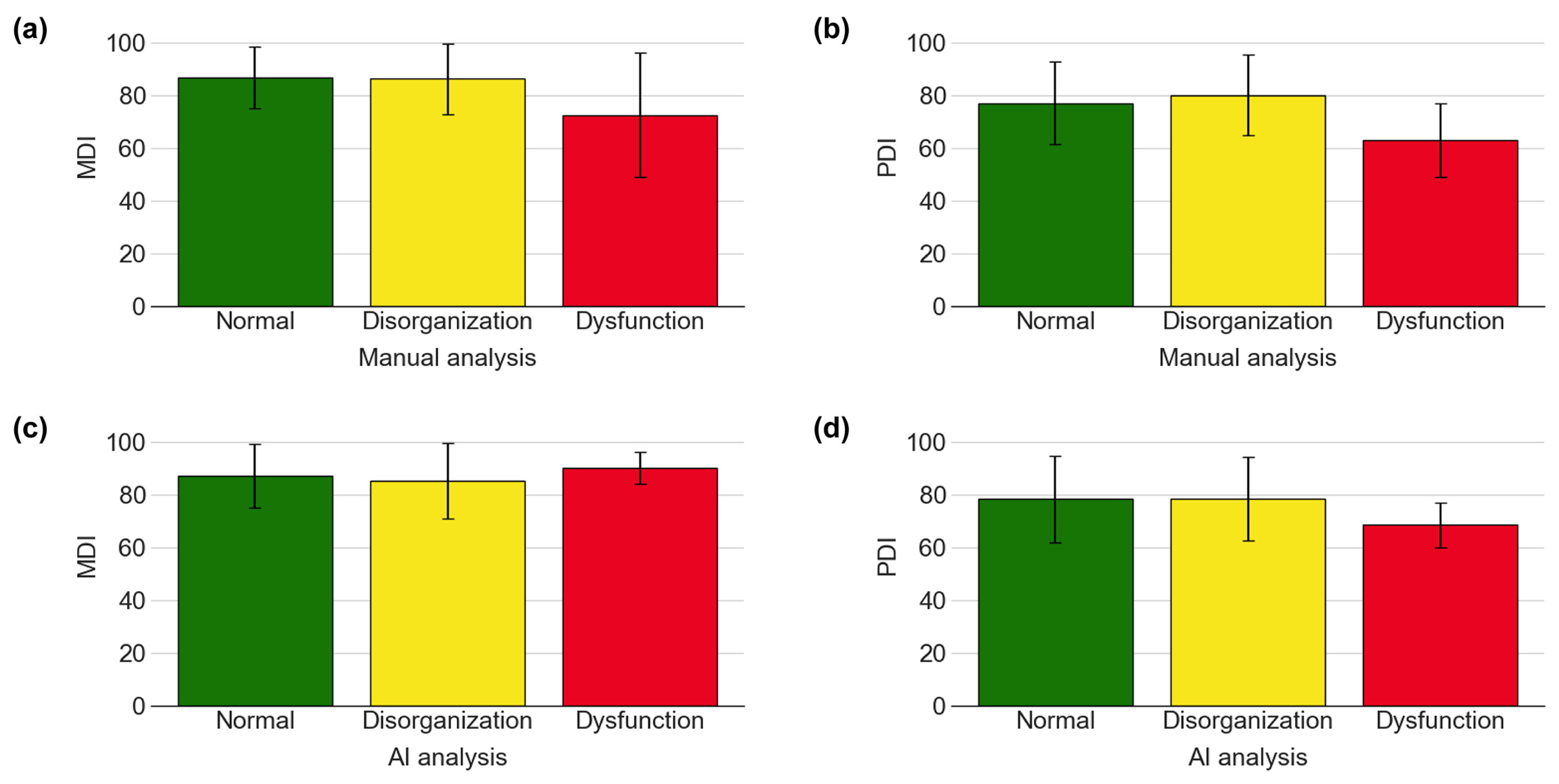
| MDI | 86.88 ± 12.00 | 86.19 ± 13.79 | 72.50 ± 33.23 | 0.853 | 0.615 | 0.655 | 0.364 |
| PDI | 77.13 ± 16.07 | 80.08 ± 15.66 | 63.00 ± 19.80 | 0.370 | 0.210 | 0.152 | 0.328 |
| AI Analysis | |||||||
| Developmental Indices | Normal (n = 16) | Disorganization (n = 34) | Dysfunction (n = 2) | p-value † | p-value †† | p-value ††† | p-value †††† |
| MDI | 87.18 ± 12.55 | 85.18 ± 14.56 | 90.00 ± 8.49 | 0.546 | 0.944 | 0.604 | 0.818 |
| PDI | 78.31 ± 17.00 | 78.50 ± 15.94 | 68.50 ± 12.02 | 0.958 | 0.324 | 0.282 | 0.698 |
Disclaimer/Publisher’s Note: The statements, opinions and data contained in all publications are solely those of the individual author(s) and contributor(s) and not of MDPI and/or the editor(s). MDPI and/or the editor(s) disclaim responsibility for any injury to people or property resulting from any ideas, methods, instructions or products referred to in the content. |
© 2026 by the authors. Licensee MDPI, Basel, Switzerland. This article is an open access article distributed under the terms and conditions of the Creative Commons Attribution (CC BY) license.
Share and Cite
Kim, J.A.; Chae, J.; Kim, S.M.; Lee, E.K.; Lee, S.H.; Cha, S.; Hong, G.; Kweon, J.; Ko, E.J. Artificial Intelligence-Based Video Analysis for Assessing Sucking Behavior in Preterm Infants: A Feasibility Study. Children 2026, 13, 479. https://doi.org/10.3390/children13040479
Kim JA, Chae J, Kim SM, Lee EK, Lee SH, Cha S, Hong G, Kweon J, Ko EJ. Artificial Intelligence-Based Video Analysis for Assessing Sucking Behavior in Preterm Infants: A Feasibility Study. Children. 2026; 13(4):479. https://doi.org/10.3390/children13040479
Chicago/Turabian StyleKim, Ji Ae, Jihye Chae, Su Min Kim, Eui Kyun Lee, Seung Hak Lee, Seungwoo Cha, Garam Hong, Jihoon Kweon, and Eun Jae Ko. 2026. "Artificial Intelligence-Based Video Analysis for Assessing Sucking Behavior in Preterm Infants: A Feasibility Study" Children 13, no. 4: 479. https://doi.org/10.3390/children13040479
APA StyleKim, J. A., Chae, J., Kim, S. M., Lee, E. K., Lee, S. H., Cha, S., Hong, G., Kweon, J., & Ko, E. J. (2026). Artificial Intelligence-Based Video Analysis for Assessing Sucking Behavior in Preterm Infants: A Feasibility Study. Children, 13(4), 479. https://doi.org/10.3390/children13040479